31ST ANNUAL SPRING SALE | 114 BULLS
WEDNESDAY 24TH SEPTEMBER 2025, 1PM ON PROPERTY AT RIVERVIEW, COOLAC
(Compared with Breed Average)
FERTILITY TRAITS:
64% below breed average BWgt
66% above breed average CED
75% below breed average GL
74% below breed average DTC
GROWTH TRAITS:
63% above breed average 200D
64% above breed average 400D & 600D
64% above breed average for MILK
With 60% below breed average for MCWgt
CARCASE TRAITS:
62% above breed average EMA
70% above breed average RIB & RUMP fat
90% above breed average for IMF
20 SONS BY TE MANIA SAVILLE S258 New Sire with Carcase Strength
12 SONS BY DUNOON SYNGEN S147 Outcross Bloodline with Power
9 SONS BY DUNOON QUICK DRAW MCGRAW Q1163 Exciting Group of Bulls
9 SONS BY ALPINE REAL DEAL Great Spread of Figures
9 SONS BY KNOWLA SO RIGHT S48 Phenotype with Genotype
7 SONS BY MURDEDUKE QUARTERBACK Q011 Reputation with High Carcase Merit
6 SONS BY PARINGA STATESMAN S115 Exciting New Sire with Consistency
5 SONS BY DUNOON DATA PLUS S603 First Sons to sell with Carcase
70% ABOVE FOR BREED AVERAGE INDEXES
$A AND $A–L
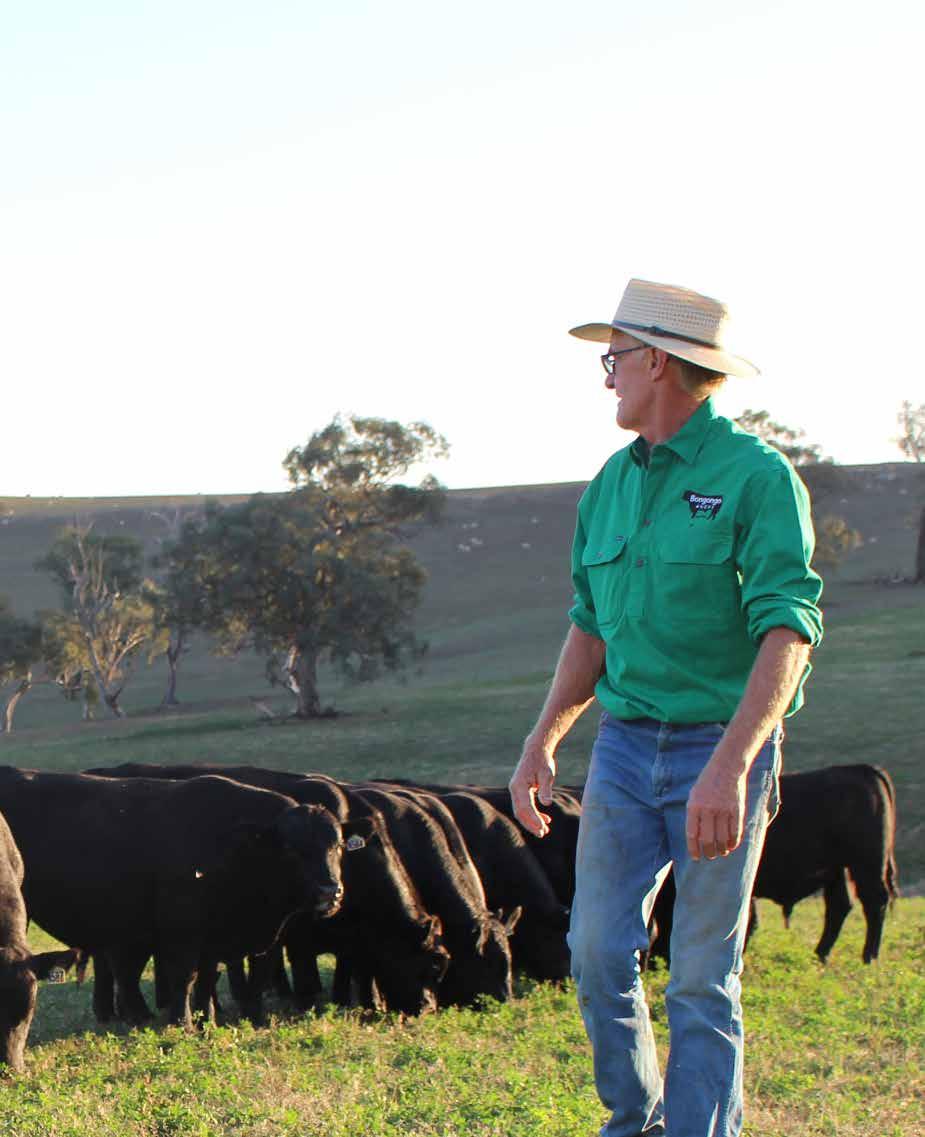
Welcome to our 2025 Spring Bull Sale marking the 99th year the Graham family have successfully and continually bred high quality Angus cattle. The sentiment and outlook surrounding beef remains strong despite very tough seasonal conditions here in 2025. One of the worst we have ever seen in Southern Australia however positively the outlook for beef remains bullish.
The recent purchase of two new sires into the Bongongo stud are exciting as we continue to invest in this great breed. Te Mania Ube U28, a son of Te Mania Neon and Landfall Rhynie U1706, a son of Te Mania Rhynie are both very impressive bulls with data to match. We look forward to their impact in our herd and more importantly the future of all your herds through genetic improvement.
Produced on grass and backed by excellent breeding and genetics we have 114 bulls in this catalogue. These young sons are from notable genetics and include impressive bulls by Te Mania Saville S258, Dunoon Syngen S147, Dunoon Quick Draw McGraw Q1163, Paringa Statesman whose progeny features heavily in the yearling group of bulls (Lots 101-114) amongst other Bongongo sires.
Of note are the 20 sons by Te Mania Saville S258. Our first group of Saville’s up for sale and they are bringing serious carcase merit along with consistency across their body shape, muscle pattern and easy doing nature.
90% of bulls in this catalogue are above breed average for IMF and 70% of bulls are above breed average for $A and $A-L indexes. This reflects our dedication to breeding quality, easy calving, fertile cattle ready for many different markets.
As a cattle veterinarian involved with all aspects of commercial and stud breeding for over four decades it is hard to comprehend how the overfeeding of bulls for sale is still an accepted practice. Sadly, this practice is becoming more popular. The cost is borne by the commercial bull buyer due to higher bull breakdowns backed by lesser than expected performance as they should be in ready to work condition at joining. Bull longevity in a herd is a critical fertility trait and profit driver.
The ability for breeders to select for key traits through ultrasonic scanning has been the single biggest development over the last thirty years giving Angus breeders an enormous benefit for carcase selection traits. Leading Angus sires that fit these criteria are used extensively through artificial breeding to improve the genetics of our herd so our client’s herds do the same.
The other big development in the last decade has been Genomics testing and all that it incorporates through the use of DNA. It is important to read and update your knowledge on the changes and developments of the breed indexes in the following pages. At Bongongo we are pleased to see these developments in the Angus breed as fertility traits and lower mature cow size have always been identified as the most important.
We invite you to take a closer look at our bulls at our Open Day on Thursday 18th September from 10am to 2pm. If this doesn’t suit please contact us to find a suitable time to inspect the bulls. The bulls were filmed on 2nd September by Rachael Lenehan (Rachael Lenehan Photography). They can be viewed on Auctions Plus and on our website.
Finally, at Bongongo we pride ourselves on our after sales service so please don’t hesitate to contact us if you have any problems or need assistance with your bull selection.
Thank you for your interest and support, Bill, Shauna and Georgia Graham
Thursday 18th September, 10am-2pm.
Our bulls will be sold by video auction, which is a growing trend in the seedstock industry and is a safer environment for all concerned. The bulls will be penned from 10.30am on sale day and we strongly recommend you allow enough time to make your selection.
The bulls in this catalogue were filmed for the sale on 3rd September. The photos, videos & their performance data are available to view on our website & through Auctions Plus. Register online prior to the sale and we will have your bidding card ready for you on the day! Prospective bidders must register at least 24 hours prior to sale with AuctionsPlus: (02) 9262 4222 www.auctionsplus.com.au
A 3% rebate will be offered to all outside agents who introduce the client in writing to the vendor at email billshauna@bongongoangus.com.au 24 hrs prior to the sale and who settle within 7 days of the sale day.
Complimentary morning tea and lunch will be available. Please note the delicious steaks we are supplying are Sunny Point Pastoral beef which is owned by the Mawhood family. They have won many prestigious awards including:
• Champion Virtual Taste Test steer (sired by Bongongo Q771)
• Carcase awards at the 2024 Sydney Royal Easter Show
• Reserve champion Riverine Premium Beef Champion pen at 2024 Beef Spectacular Feedback Trial. The Mawhood family are strong supporters of Bongongo Angus bulls which are known for their marbling. You can buy Sunny Point Pastoral beef at IGA Cootamundra and the Cootamundra Butchery. We would appreciate any donations which will go towards Cancer Council. A portaloo will be at the sale.
Will be available on sale day, including scrotal size measurements, weights and a map of the pens.
Mobile phones will operate via wifi calling at the sale venue. We encourage potential purchasers who are unable to attend the sale to make arrangements with the vendor or Agent if you wish to be contacted during the sale. Please make arrangements prior to sale day.
The vendors will provide delivery on all bulls to all major centres in NSW at their expense, as soon as possible following the sale. Verbal instruction will NOT be accepted. Written instructions are required using the slip in this catalogue.
It is suggested that buyers insure their purchases upon the fall of the hammer. Facilities for insurance will be available at the sale. Any insurance claims must be lodged within six (6) months from the sale date with vendor or agent.
All care is taken to ensure livestock pose minimum threat to us and our clients. However, we cannot predict nor guarantee their behaviour. All sale bulls have been assessed for temperment and are quiet to handle under normal circumstances. Sale day places bulls under stresses that are foreign to their normal routine.
Transfer of ownership of the bulls will be registered by the vendors with Angus Australia, provided accurate transferee details are supplied with the Buyers Instruction Form. With this form, please be sure to provide: PIC number & Angus Herd ID.
Animal details included in this catalogue, including but not limited to pedigree, DNA information, Estimated Breeding Values (EBVs) and Index values, are based on information provided by the breeder or owner of the animal. Whilst all reasonable care has been taken to ensure that the information provided in this catalogue was correct at the time of publication, Angus Australia will assume no responsibility for the accuracy or completeness of the information, nor for the outcome (including consequential loss) of any action taken based on this information.
Bongongo reserves the right to collect and market semen for on-farm and commercial use only, from all bulls sold. The collection of these bulls will be either on Bongongo premises, at the buyer premises, or at a registered facility to pose minimum risk to the bull. Bongongo will work with the purchaser to ensure the collection of the bull occurs at a timely manner and does not unreasonably interfere with the use of the bull/s by the purchases. Expenses will be covered by Bongongo.
All reasonable care has been taken by the vendor to ensure that the information provided in this catalogue is correct at the time of publication. However, neither the vendor nor the selling agents make no representations about the accuracy, reliability or completeness of any information provided in this catalogue and do not assume any responsibility for the use or interpretation of the information included in this catalogue.
At Bongongo we understand the key profit drivers of our commercial clients with fertility the most important. All bulls have undergone a bull breeding soundness examination (VBBSE) involving:
• Structural soundess
• Testicle palpation and measurement (scrotal size)
• Physical examination of internal and external genitalia. All Bongongo bulls and heifers are run in large contemporary groups, off grass and bred to perform in this cold temperate environment.
• All bulls tested negative for BVDV.
• All bulls during Winter 2025:
• Passed a VBBSE (Veterinary Bull Breeding Soundness Examination)
• Had a double Vibrovax vaccination
• Ultravac 7 in 1 booster vaccination
• DectomaxV drench in August 2025
• The rising 2 year old bulls of which some were used in Spring 2024 were also given the same as above in Autumn 2025 plus the following:
• Additional Vibrovax vaccination
• Intrapreputial irrigation with Metricure (R)
• Drenched with Flukazole drench for liver fluke
We do not push our bulls when preparing them for sale. Big weights are not a priority but longevity of the working life of our bulls is. Our bulls are sold in their ‘working clothes’. The article in this catalogue about mature cow weights (Pg. 61) has been strongly adhered to in the Bongongo herd for generations and it is a key profit driver. As a vet for over four decades this has been obvious across the industry, all breeds and within herds especially seeing in tough nutritional seasons many of the largest breeders cull themselves.
Over the last few years we have used GENOMIC testing (Zoetis HD50k) to enhance the accuracy and check the parentage of all our sale bulls. The future of breeding will involve more molecular testing through DNA. This is a great advance to develop our Breedplan EBV’s into an even better world leading program. DNA test results will be available by sale day regarding status of any bulls that are AM or NH “in doubt” in the catalogue. The bulls are Genomic tested through the HD50k Zoetis test. This testing will increase the accuracy of Breedplan EBV’s and checks the percentage. As well any bulls requiring testing for genetic defects AM, NH, CA or DD have been tested with results in the catalogue.
You will also notice that the indexes reported through Angus Australia TransTasman Angus Cattle Evaluation analysis have changed. Significant modifications have been applied to the calculation of all indexes via updating of the software used. Economic and production parameters used in the calculation of the indexes have been updated to reflect the current production systems and markets. The BreedObject software used to calculate the indexes has been updated with improvements in the modeling of young animal growth, cow weight and body condition throughout the year and carcase market specifications. The main message in a nutshell; more emphasis has been placed on mature cow weight EBVs within the indexes to better refleft the impact of increased cow weight on feed costs. As a result of these updates, the selection index values published on animals has changed considerably as has the spread of the values. We encourage you to refer to the Angus Australia EBV reference table to get a good handle on where each animal sits for each trait or index and how these indexes are calculated on the Angus Australia website.
Bongongo place great emphasis on selecting for quiet temperament. We often get feedback on the quietness of our cattle, and how easy they are to handle and work with. Temperament is highly heritable, it affects carcase quality, growth rate and handling. Any animal that shows bad temperament is culled.
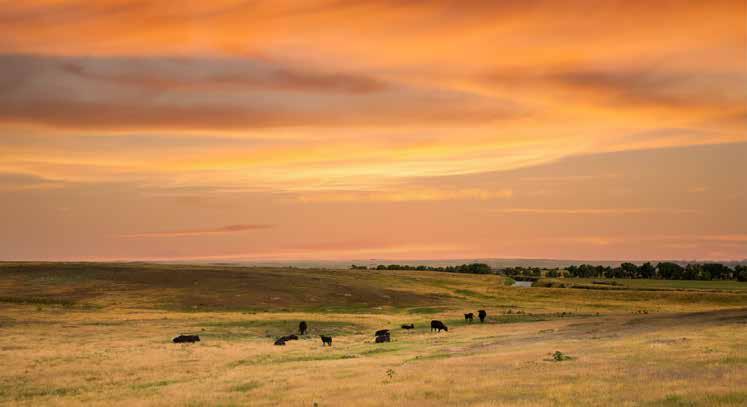
It is the policy of Bongongo to raise both stud and commercial cattle under similar conditions to those that are normal for commercial beef production. Under this system all cattle share the paddocks with sheep and supplementary feeding with hay or silage is provided under tight seasonal conditions.
When choosing bulls you need to use both the EBVs and visual assessment. Visual assessment is essential to assess physical and structural soundness and is a reasonable indicator of health and temperament. EBVs are a tool that will help you to make more educated decisions when you are choosing breeding stock. Do your homework well before the sale when you have plenty of time. New coding in both the EBVs, sale lots and reference sires:
BRA N C H M ANA G E R
Kim Williams | 0477 020 489
FARM SUPPLIES
Daniel McDonnell I Gundagai I 0418 979 243
daughter Georgia home into our farming business and to help run the Bongongo Angus stud. Georgia has a passion and strong interest in genetics backed by her combined science business degree, bringing new skills to our farming enterprise.
L I V E S T O C K
Rob Stubbs I 0417 4 78 886
114 ANGUS BULLS FOR SALE
Harrison Daley I 0428 977 437
Nick Gilvarry I 0438 871 653
Sale Day Wednesday 24th September, 1pm
Harry Waters I 0417 441 155
Open Day Thursday 18th September, 10am–2pm
Angus Wright | 0448 360 543
On Property at Riverview, Coolac (Map at back of catalologue) and interfaced with

Adelong | 02 6941 3100
Gundagai | 02 6944 1155
Tumut | 02 6981 3100
David Crooks I Adelong I 0407 632 34 7
Lachlan Hatton I Tumut I 0427 559 500
WOOL
Tim McMeekin I 0427 830 003
STUD STOCK
Elders
Michael Glasser | 0403 526 702
AGENTS:
Stud Stock
Ryan Bajada 0435 411 536
Ryan Bajada | 0418 218 328
Elders Gundagai (02) 6944 1155
Territory Sales Manager
Harry Waters 0417 441 155
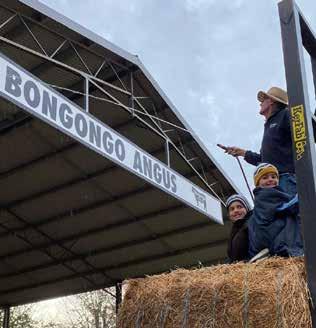
SALE PREP: CLEANING THE SIGN POPPY CHECKING THE HEIFERS
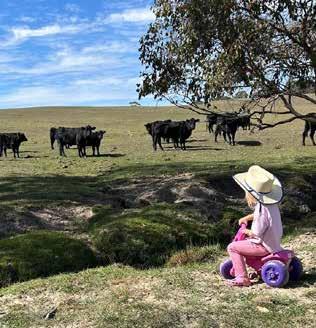
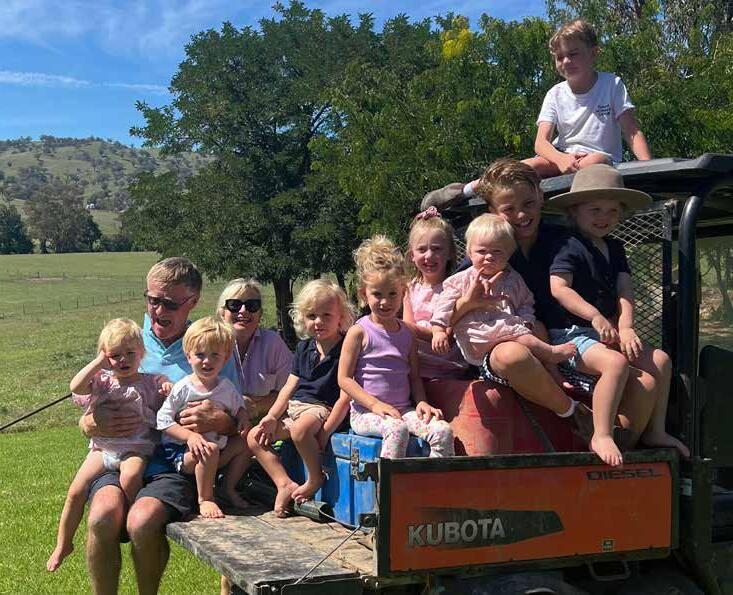
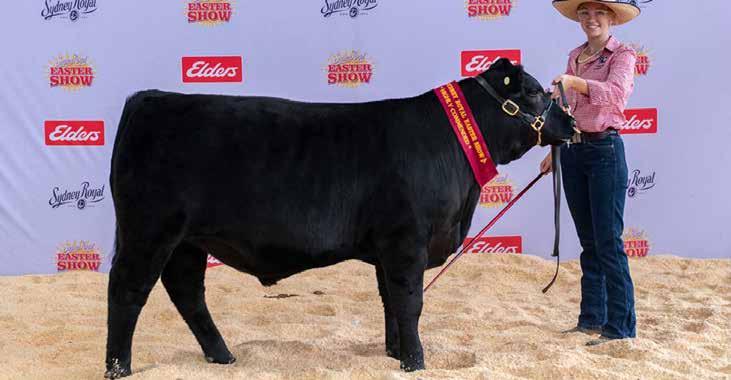
Backed by excellent breeding and genetics, we have had some great stories from both 2024 Beef Spectacular and 2024 Sydney Royal Easter Show this year.
You can find this excellent beef at IGA Supermarkets in Cootamundra, Oberon, Grenfell and the Cootamundra Butchery. It will also be served on sale day.
• Sunny Point Pastoral steers prepared by Scots All Saints College, Bathurst:
• Champion Virtual Taste Test Carcase (highest MSA index carcase) and bronze medal sired by Bongongo Q771, a Baldridge Beast Mode son. With a live weight of 399kg, the carcase measured 14mm rib and 9mm rump fat and had an EMA of 77cm sq.
• Bronze carcase medal for steer sired by KO Beast Mode P117.
• Awarded reserve champion Riverine Premium Beef Champion pen at 2024 Beef Spectacular Feedback Trial. All five steers entered in this group qualified for the top brand Riverine Premium Beef with MSA index of 63.82.
• Received a gold medal in eating quality and second highest MSA index of 65.08 overall.
• 9 out of the total 10 steers entered hit the Riverine Premium Beef brand.
CREEK STRUCTURAL PROGRAM
THE BEEF CLASS STRUCTURAL ASSESSMENT SYSTEM USES A 1-9 SCORING SYSTEM FOR FEET AND LEG STRUCTURE: A SCORE OF 5 IS IDEAL
4 AND 6 SHOWS SLIGHT VARIATION FROM IDEAL, but this includes most sound animals. An animal scoring 4 or 6 would be acceptable in any breeding program.
The 2025
3 AND 7 SHOWS GREATER VARIATION, but would be acceptable in most commercial breeding programs, however seedstock producers should be wary
REAR HIND LEG VIEW
2 AND 8 ARE LOW SCORING ANIMALS and should be looked at carefully before purchasing.
GOOD CATTLE STRUCTURE HAS A DIRECT IMPACT ON PRODUCER PROFITABILITY.
Objectively measuring structure, in conjunction with the use of performance recording, gives a greater picture of how an animal will perform. It gives insight into key profit drivers that affects the bottom line for commercial cattle breeders.
Issues with structure can affect bull and cow longevity. Our herd is assessed using a Beef Class Structural Assessment System, which is outlined here.
The 2025 Kenny’s Creek Angus sale bulls have been independently structurally assessed to maximise the quality of stock Any animals deemed inadequate have been removed from the sale draft. The Kenny’s Creek sale bulls were assessed Saunders of Precision Breeding on 9 and 10 July 2025.
Creek Angus sale bulls have been independently structurally Any animals deemed inadequate have been removed from the sale draft.


* The percentile band represents the distribution of EBVs across the 2023 drop Australian Angus and Angus-influenced seedstock animals analysed in the September
Cattle Evaluation

* The percentile band represents the distribution of EBVs across the 2023 drop Australian Angus and Angus-influenced seedstock animals analysed in the September 2025 TransTasman Angus Cattle Evaluation
ADVICE ON THE NUMBER ONE PROFIT DRIVER IN A COMMERCIAL BREEDING HERD FROM THREE OF THE COUNTRY’S MOST KNOWLEDGEABLE PEOPLE ON THE TOPIC HAS BECOME ONE OF THE BIGGEST TALKING POINTS IN THE CATTLE BUSINESS AT THE MOMENT. THE CHAPTER ON HERD FERTILITY IN THE 2023 AUSTRALIAN BEEF REPORT IS WIDELY BEING DESCRIBED AS THE MOST COMPREHENSIVE GUIDE TO REPRODUCTION MANAGEMENT PUBLISHED BUT IT’S ALSO RUFFLED A FEATHER OR TWO.
It’s written by Phil Holmes, John Bertram and Michael McGowan, all of whom have contributed significantly to the research on herd productivity across three extensive science careers furnished with decades of practical experience in the paddock and at the crush. They are also people known to call a spade a spade. Some of their pieces of advice, particularly in the ‘choosing seedstock sources’ section, have certainly got the industry talking.
DO THEY SHOW CATTLE?
Run like the wind if they do. They will often justify this on the basis it is an effective form of promotion. If they say that, run faster than the wind because they do not understand proper marketing principles either,” the chapter says.
DO THEY USE BREEDPLAN AS IT SHOULD BE USED?
That is, letting it guide their breeding decisions rather than just superficially enhancing sale bull descriptions.
DO THEY FEED BULLS UP TO STUPID LEVELS OF FATNESS FOR SALE, GLOAT ABOUT THE LIVE WEIGHT, TRIM THEIR FEET AND SHAMPOO THEM?
Offer them emotional help if you feel brave enough, otherwise run away.”
These comments, of course, are just a few hundred words amid thousands that address every aspect of what is arguably the most critical topic for a beef producer - fertility.
The Beef Report is published by Bush professionals in a comprehensive yet many producers have no idea how productive to their business.
Herd productivity is a measure of how are at doing that, he says. “Those who producers to understand their herd pasture eaten.”
Herd productivity is a combined outcome genetics won’t overcome sub-standard
The authors put forward these definitions.
A highly fertile southern herd will have no more than 2pc of bulls are used.
A highly fertile northern herd will have than 2pc of bulls are used. The authors week matings are also not always possible breeding cycle of 365 days. The authors
Is it bulls or cows that drive genetic change of the herd can be up to 30 right seedstock source is so important how to manage them.
While most of the genetic change in production, they say. The authors address her as a mature breeder, getting the
Topping all of this off is a discussion Andrew Miller, Braidwood at Jundah, knowledge of building and managing a
By Shan Goodwin
Bush Agribusiness, which says it’s purpose with this chapter was to capture the combined knowledge of three eminently qualified concise summary of herd fertility - the type of which had never before been published. Bush Agribusiness’ Ian McLean says productive their herd is, both in its own right & compared to the industry, and therefore have no idea how big a constraint it is
how efficiently herds convert grass into beef and there is a big difference between businesses in terms of how efficient they who are more efficient are producing and selling more beef than the rest, “ Mr McLean said. “It is therefore very important for productivity, primarily for the potential to increase income through producing more kilograms from the same amount of
outcome of management and genetics, the Beef Report argues. Mr McLean: “Management is arguably more important, as excellent sub-standard management. However, if management is on the ball, then genetics can leverage this for a superior outcome.”
HERD?
definitions.
have at least 90 per cent of mixed age breeders wean a calf every year from a mating that does not exceed six weeks and As well, at least 60pc of the calves will be born in the first three weeks of calving.
have at least 80pc of mixed age breeders wean a calf every year from a mating that does not exceed six weeks and no more authors acknowledge there are some northern areas where that is impossible but say that is what should be strived for. Six possible in the north and pregnancy testing can be used to reduce the window, they say. But that period is critical to achieve a authors say this is a critical point in reproductive management that even some seedstock producers do not fully grasp.
change in a herd? The obvious answer is 50:50 but the authors explain that the contribution of the bull to the genetic times that of the females & suggest that this is the relative importance that should be placed on each. They discuss why the important to your herd and provide some suggestions for identifying the right one. They also discuss how many bulls are needed &
in the herd comes from bulls, the females are the engine room of herd reproduction and how they are managed drives address the lifetime of the breeding female, setting her up as maiden, lifting her performance when on her first calf, managing herd structure right and reducing dystocia.
on animal health and specific diseases that affect herd fertility. One of the reviewers of the publication, Queensland producer Jundah, described the chapter as an exceptional summary of the topic and essential reading. Mr Miller has hard-won, firsthand a fertile herd.
The Trans Tasman Angus Cattle Evaluation (TACE) is the genetic evaluation program adopted by Angus Australia for Angus and Angus infused beef cattle.TACE uses Best Linear Unbiased Prediction (BLUP) technology to produce Estimated Breeding Values (EBVs) of recorded cattle for a range of important production traits (e.g. weight, carcase, fertility). TACE includes pedigree, performance and genomic information from the Angus Australia and New Zealand Angus Association databases to evaluate the genetics of animals across Australia and New Zealand.
TACE analyses are conducted by the Agricultural Business Research Institute (ABRI), using beef genetic evaluation software developed by the Animal Genetics and Breeding Unit (AGBU), a joint institute of NSW Agriculture and the University of New England, and Meat and Livestock Australia Limited (MLA).
An animal's breeding value can be defined as its genetic merit for each trait While it is not possible to determine an animal's true breeding value, it is possible to estimate it.These estimates of an animal's true breeding value are called EBVs (Estimated Breeding Values). EBVs are expressed as the difference between an individual animal's genetics and a historical genetic level (i.e. group of animals) within the TACE genetic evaluation, and are reported in the units in which the measurements are taken.
TACE EBVs can be used to estimate the expected difference in the genetics of two animals, with the expected difference equating to half the difference in the EBVs of the animals, all other things being equal ( e.g. they are joined to the same animal/s). For example, a bull with a 200 Day Growth EBV of +60 would be expected to produce progeny that are, on average, IO kg heavier at 200 days of age than a bull with a 200 Day Growth EBV of +40 kg (i.e. 20 kg difference between the sire's EBVs, then halved as the sire only contributes half the genetics).Or similarly, a bull with anIMF EBV of+ 3.0 would be expected to produce progeny with on average, I% more intramuscular fat in a 400kg carcase than a bull with a IMF EBV of+ 1.0 (i.e. 2% difference between the sire's EBVs, then halved as the sire only contributes half the genetics).
EBVs can also be used to benchmark an animal's genetics relative to the genetics of other Angus or Angus infused animals in Australia and New Zealand. To benchmark an animal's genetics relative to other Angus animals, an animal's EBV can be compared to the EBV reference tables, which provide:
• the breed average EBV
• the percentile bands table
The current breed average EBV is listed on the bottom of each page in this publication, while the current EBV reference tables are included at the end of these introductory notes. For easy reference, the percentile band in which an animal's EBV ranks is also published in association with the EBV
An accuracy value is published with each EBV, and is usually displayed as a percentage value immediately below the EBV The accuracy value provides an indication of the reliability of the EBV in estimating the animal's genetics (or true breeding value), and is an indication of the amount of information that has been used in the calculation of the EBV. EBVs with accuracy values below 50% should be considered as preliminary or of low accuracy, 50-74% as of medium accuracy, 75-90% of medium to high accuracy, and 90% or greater as high accuracy.
EBVs are calculated for a range of traits within TACE, covering calving ease, growth, fertility, maternal performance, carcase merit, feed efficiency and structural soundness. A description of each EBV included in this publication is provided on the following pages.
Each year, Angus Australia enhances the genetic evaluation by updating the TransTasman Angus Cattle Evaluation (TACE). During the 2024 TACE Enhancements, the mature cow height and mature body condition traits transitioned from Research Breeding Values (RBVs) to Estimated Breeding Values (EBVs). As part of this process the genetic correlations between mature cow traits and live ultrasound and carcase fat depth, measured in young animals were reevaluated, to aid breeders to make more informed decisions.
Profit drivers for beef producers are commonly linked to growth and carcase traits. However, to continue to make more informed selection decisions for overall herd profitability, consideration of mature cow traits that impact the performance of the cow herd are essential. Mature Body Condition (MBC), Mature Cow Height (MCH), and Mature Cow Weight (MCW) should be considered for their impact on the efficiency of the cow herd and tailored to your environmental conditions and market demands.
Current selection practices often rely on traits measured in younger animals, such as live ultrasound and carcase fat depth, to infer mature cow body condition and ‘doing ability’ of females. MBC EBV’s now provide a trait specifically for this selection pressure.
MCW has a strong positive correlation with both MCH (0.83) and MBC (0.87); while MCH and MBC have a weak positive correlation of 0.21. This means that increases in MCW are often associated with increases in MCH and MBC, and vice versa. However, increases in MBC are less likely to also increase MCH.
CEDir %
CEDtrs %
GL days
BW kg
200 Day kg
400 Day kg
600 Day kg
MCW kg
Milk kg
DtC days
SS cm
CWT kg
EMA cm2
Rib Fat mm
P8 Fat mm
RBY %
IMF %
NFI-F kg/day
Genetic differences in the ability of a sire’s calves to be born unassisted from 2 year old heifers.
Genetic differences in the ability of a sire’s daughters to calve unassisted at 2 years of age.
Genetic differences between animals in the length of time from the date of conception to the birth of the calf.
Genetic differences between animals in calf weight at birth.
Genetic differences between animals in live weight at 200 days of age due to genetics for growth.
Genetic differences between animals in live weight at 400 days of age.
Genetic differences between animals in live weight at 600 days of age.
Genetic differences between animals in live weight of cows at 5 years of age.
Genetic differences between animals in live weight at 200 days of age due to the maternal contribution of its dam.
Genetic differences between animals in the time from the start of the joining period (i.e. when the female is introduced to a bull) until subsequent calving.
Genetic differences between animals in scrotal circumference at 400 days of age.
Genetic differences between animals in hot standard carcase weight at 750 days of age.
Genetic differences between animals in eye muscle area at the 12/13th rib site in a 400 kg carcase.
Genetic differences between animals in fat depth at the 12/13th rib site in a 400 kg carcase.
Genetic differences between animals in fat depth at the P8 rump site in a 400 kg carcase.
Genetic differences between animals in boned out saleable meat from a 400 kg carcase.
Genetic differences between animals in intramuscular fat (marbling) at the 12/13th rib site in a 400 kg carcase.
Genetic differences between animals in feed intake at a standard weight and rate of weight gain when animals are in a feedlot finishing phase.
Doc % Genetic differences between animals in temperament.
Claw Set score
Foot Angle score
Leg
Angle score
$
Genetic differences in claw set structure (shape and evenness of claws).
Genetic differences in foot angle (strength of pastern, depth of heel).
Genetic differences in rear leg structure when viewed from the side (angle at front of the hock).
Genetic differences between animals in net profitability per cow joined in a typical commercial self replacing herd using Angus bulls. This selection index is not specific to a particular market end-point, but identifies animals that will improve overall net profitability in the majority of commercial, self replacing, grass and grain finishing beef production systems.
Genetic differences between animals in net profitability per cow joined in a typical commercial self replacing herd using Angus bulls. This selection index is not specific to a particular market end-point, but identifies animals that will improve overall net profitability in the majority of commercial, self replacing, grass and grain finishing beef production systems.
Higher EBVs indicate fewer calving difficulties in 2 year old heifers.
Higher EBVs indicate fewer calving difficulties in 2 year old heifers.
Lower EBVs indicate shorter gestation length.
Lower EBVs indicate lighter birth weight.
Higher EBVs indicate heavier live weight.
Higher EBVs indicate heavier live weight.
Higher EBVs indicate heavier live weight.
Higher EBVs indicate heavier mature weight.
Higher EBVs indicate heavier live weight.
Lower EBVs indicate shorter time to calving.
Higher EBVs indicate larger scrotal circumference.
Higher EBVs indicate heavier carcase weight.
Higher EBVs indicate larger eye muscle area.
Higher EBVs indicate more fat.
Higher EBVs indicate more fat.
Higher EBVs indicate higher yield.
Higher EBVs indicate more intramuscular fat.
Lower EBVs indicate more feed efficiency.
Higher EBVs indicate better temperament.
Lower EBVs indicate a lower score.
Lower EBVs indicate a lower score.
Lower EBVs indicate a lower score.
Higher selection indexes indicate greater profitability.
$A-L $
The $A-L index is similar to the $A index but is modelled on a production system where feed is surplus to requirements for the majority of the year, or the cost of supplying additional feed when animal feed requirements increase is low.
While the $A aims to maintain mature cow weight, the $A-L does not aim to limit the increase in mature cow weight as there is minimal cost incurred if the feed maintenance requirements of the female breeding herd increase as a result of selection decisions.
Higher selection indexes indicate greater profitability.
$D $
Genetic differences between animals in net profitability per cow joined in a commercial self replacing herd targeting the domestic supermarket trade. Steers are either finished using pasture, pasture supplemented by grain, or grain (e.g. 50 -70 days) with steers assumed to be slaughtered at 510kg live weight (280kg carcase weight with 12mm P8 fat depth) at 16 months of age.
Genetic differences between animals in net profitability per cow joined in a commercial self replacing herd targeting the domestic supermarket trade. Steers are either finished using pasture, pasture supplemented by grain, or grain (e.g. 50 -70 days) with steers assumed to be slaughtered at 510kg live weight (280kg carcase weight with 12mm P8 fat depth) at 16 months of age.
Higher selection indexes indicate greater profitability.
$D-L $
$GN $
The $D-L index is similar to the $D index but is modelled on a production system where feed is surplus to requirements for the majority of the year, or the cost of supplying additional feed when animal feed requirements increase is low.
While the $D aims to maintain mature cow weight, the $D-L does not aim to limit the increase in mature cow weight as there is minimal cost incurred if the feed maintenance requirements of the female breeding herd increase as a result of selection decisions.
Genetic differences between animals in net profitability per cow joined in a commercial self replacing herd targeting pasture grown steers with a 250 day feedlot finishing period for the grain fed high quality, highly marbled markets. Steers are assumed to be slaughtered at 800 kg live weight (455 kg carcase weight with 30 mm P8 fat depth) at 24 months of age, with a significant premium for steers that exhibit superior marbling.
Genetic differences between animals in net profitability per cow joined in a commercial self replacing herd targeting pasture grown steers with a 250 day feedlot finishing period for the grain fed high quality, highly marbled markets. Steers are assumed to be slaughtered at 800 kg live weight (455 kg carcase weight with 30 mm P8 fat depth) at 24 months of age, with a significant premium for steers that exhibit superior marbling.
Higher selection indexes indicate greater profitability.
$GN-L $
The $GN-L index is similar to the $GN index but is modelled on a production system where feed is surplus to requirements for the majority of the year, or the cost of supplying additional feed when animal feed requirements increase is low.
While the $GN aims to maintain mature cow weight, the $GN-L does not aim to limit the increase in mature cow weight as there is minimal cost incurred if the feed maintenance requirements of the female breeding herd increase as a result of selection decisions.
Higher selection indexes indicate greater profitability.
Higher selection indexes indicate greater profitability.
$GS $
$GS-L $
Genetic differences between animals in net profitability per cow joined in a commercial self replacing herd targeting pasture finished steers. Steers are assumed to be slaughtered at 650 kg live weight (350 kg carcase weight with 12 mm P8 fat depth) at 22 months of age. Emphasis has been placed on eating quality and tenderness to favour animals that are suited to MSA requirements.
Genetic differences between animals in net profitability per cow joined in a commercial self replacing herd targeting pasture finished steers. Steers are assumed to be slaughtered at 650 kg live weight (350 kg carcase weight with 12 mm P8 fat depth) at 22 months of age. Emphasis has been placed on eating quality and tenderness to favour animals that are suited to MSA requirements.
The $GS-L index is similar to the $GS index but is modelled on a production system where feed is surplus to requirements for the majority of the year, or the cost of supplying additional feed when animal feed requirements increase is low.
While the $GS aims to maintain mature cow weight, the $GS-L does not aim to limit the increase in mature cow weight as there is minimal cost incurred if the feed maintenance requirements of the female breeding herd increase as a result of selection decisions.
Higher selection indexes indicate greater profitability.
$PRO $
$T $
Genetic differences between animals in net profitability per cow joined in a commercial self replacing herd based in New Zealand that targets the production of grass finished steers for the AngusPure programme. Steers are assumed marketed at approximately 530 kg live weight (290 kg carcase weight with 10 mm P8 fat depth) at 20 months of age, with a significant premium for steers that exhibit superior marbling.
Genetic difference between animals in net profitability per cow joined in a situation where Angus bulls are being used as a terminal sire over mature breeding females and all progeny, both male and female, are slaughtered. The Angus Terminal Sire Index focusses on increasing growth, carcase yield and eating quality. Daughters are not retained for breeding and therefore no emphasis is given to female fertility or maternal traits.
Higher selection indexes indicate greater profitability.
Higher selection indexes indicate greater profitability.
Higher selection indexes indicate greater profitability.
This is information for bull buyers about the recessive genetic conditions, Arthrogryposis Multiplex (AM), Hydrocephalus (NH), Contractural Arachnodactyly (CA) and Developmental Duplications (DD).
PERSPECTIVE: All animals, including humans, carry single copies (alleles) of undesirable or “broken” genes. In single copy form, these undesirable alleles usually cause no harm to the individual. But when animals carry 2 copies of certain undesirable or “broken” alleles it often results in bad consequences.
KEY POINT: WITH TODAY’S DNA TOOLS, UNDESIRABLE GENETIC CONDITIONS CAN BE MANAGED!
KEY POINT:
THE NUMBER OF REPORTED OBSERVATIONS OF AM, NH, CA AND DD CALVES IS VERY LOW AND THERE IS CERTAINLY NO NEED FOR PANIC.
KEY POINT:
ANIMALS WITH ONLY ON COPY OF THE UNDESIRABLE ALLELE (AND ONE COPY OF THE NORMAL FORM OF THE ALLELE) APPEAR NORMAL AND ARE KNOWN AS “CARRIERS”.
KEY POINT: FOR THE CONDITION TO BE EXPRESSED THE UNDESIRABLE GENE NEEDS TO BE PRESENT ON BOTH SIDES OF THE PEDIGREE AND BOTH THE SIRE AND DAM NEED TO BE A CARRIER.
Advances in genomics have facilitated the development of accurate diagnostic tests to enable the identification and management of numerous undesirable or “broken” genes. Angus Australia is proactive in providing its members and their clients with relevant tools and information to assist them in the management of known undesirable genes and our members are leading the industry in their use of this technology.
AM, NH, CA and DD are all recessive conditions caused by “broken” alleles within the DNA of individual animals. When a calf inherits 2 copies of the AM or NH alleles their development is so adversely affected that they will be still-born. In other cases, such as CA and DD, calves carrying 2 copies of the broken allele may reach full-term. In such cases the animal may either appear relatively normal, or show physical symptoms that affect their health and/or performance.
Research in the U.S. and Australia indicates that AM, NH, CA and DD are simply inherited recessive conditions. This means that a single gene (or pair of alleles) controls the condition. For this mode of inheritance two copies of the undesirable allele need to be present before the condition is seen; in which case you may get an abnormal calf. A more common example of a trait with a simple recessive pattern of inheritance is black and red coat colour.
Carriers, will on average, pass the undesirable allele to a random half (50 %) of their progeny. When a carrier bull and carrier cow is mated, there is a 25% chance that the resultant calf will inherit two normal alleles, a 50% chance that the mating will result in a carrier (i.e. with just 1 copy of the undesirable allele, and a 25% chance that the calf will inherit two copies of the undesirable gene. If animals tested free of the undesirable gene are mated to carrier animals the condition will not be expressed at all. All calves will appear normal, but approximately half (50%) could be expected to be carriers.
DNA-based diagnostic tests have been developed which can be used to determine whether an individual animal is either a carrier or free of the alleles resulting in AM, NH, CA or DD. Angus Australia uses advanced software to calculate the probability of (untested) animals to being carriers of AM, NH, CA or DD. The software uses the test results of any relatives in the calculations and the probabilities may change as new results for additional animals become available. The genetic status of animals is being reported using five categories:
AMF Tested AM free
AMFU Based on pedigree AM free – Animal has not been tested
AM__% __% probability the animal is an AM carrier
AMC Tested AM-Carrier
AMA AM-Affected
For NH, CA and DD, simply replace AM in the above table with NH, CA or DD. Registration certificates and the Angus Australia webdatabase display these codes. This information is displayed on the animal details page and can be accessed by conducting an “Animal Search” from the Angus Australia website or looking up individual animals listed in a sale catalogue.
THE GENETIC STATUS OF AN ANIMAL IS SUBJECT TO CHANGE AND WILL BE RE-ANALYSED AND ADJUSTED EACH WEEK AS DNA TEST RESULTS OF RELATIVES ARE RECEIVED.
: Your decision on the importance of the genetic condition status of replacement bulls should depend on the genetics of your cow herd (which bulls you previously used) and whether some female progeny will be retained or sold as breeders.
Most Angus breeders are proactive and transparent in managing known genetic conditions, endeavouring to provide the best information available. The greatest risk to the commercial sector from undesirable genetic recessive conditions comes from unregistered bulls with unknown genetic background. The genetic condition testing that Angus Australia seedstock producers are investing in provides buyers of registered Angus bulls with unmatched quality assurance.
For further information contact Angus Australia’s Breed Development and Innovation Manager at (02) 6773 4602.
RENNYLEA L519PV
S: NGXR288 BONGONGO R288SV BONGONGO L399#

RENNYLEA K464PV
D: NGXP922 BONGONGO P922SV BONGONGO H761#


GB FIREBALL 672PV
S: NGX21S331 BONGONGO S331PV BONGONGO Q244PV SYDGEN ENHANCESV
D: NGXR1063 BONGONGO R1063SV BONGONGO J622# Calved:
MURDEDUKE BARUNAH N026PV
QUARTERBACK Q011PV
S: NGX21S995 BONGONGO S995PV BONGONGO M669SV
J45SV
D: NGXN663 BONGONGO N663PV BONGONGO K160PV
MERLEWOOD PONTING P8SV
S: BHR21S147 DUNOON SYNGEN S147SV DUNOON LOWAN N919# BONGONGO J723SV
D: NGXM231 BONGONGO M231# BONGONGO C97#


DUNOON Q943SV S: BHR21S603 DUNOON DATA PLUS S603PV DUNOON Q226SV
Always be considerate to your new bull/s and handle them with respect and kindness. Handle them quietly, walk them rather than rushing them, treat them with care and in a gentle manner and they will do likewise to you.
Bulls leaving Bongongo leave the security of a large mob, and will arrive in a strange environment at the purchaser’s property. When the bull/s are unloaded it is recommended you have a steer or cow as companion waiting for them in the yard.
A young bull can move in with older bulls and settle well, but remember, being the youngest, he will get the last of any feed available, because of the pecking order. The paddock needs to be reasonably large so he can keep away from the others and find adequate feed. Young bulls are still growing fast and need enough feed to maintain their growth pattern.
Bongongo bulls are used to being handled by stockmen with motorbikes, utes, dogs and horses. We pay utmost attention to bull temperment as being a critical trait.
When your new bull is joined to your females, inspect him at least weekly to ensure he is walking freely and his penis looks normal. If there is a problem take him out of the mob and contact your vet. Early treatment is vital. If you have any questions regarding the bulls, the progeny etc. please let us know.


VTM21S258 Te Mania Saville S258
BHR21S147
BHRQ1163
BLA21S48
CGKR163
50, 51, 52, 58, 59, 60, 72, 73, 74, 79, 80, 81, 82, 88, 89, 90, 91, 98, 99, 100
Dunoon Syngen S147 37, 38, 39, 40, 44, 45, 68, 69, 85, 86, 87, 102
Dunoon Quick Draw McGraw Q1163 6, 36, 61, 62, 63, 75, 76, 92, 93, 114
Knowla So Right S48 11, 12, 25, 26, 27, 56, 70, 71, 83, 84
Alpine Real Deal R163 2, 3, 4, 7, 8, 19, 20, 35, 53, 78
HKF21S115 Paringa Statesman S115 103, 104, 105, 106, 110, 111
BHR21S603
CSWQ011
Dunoon Data Plus S603 107, 108, 109, 112, 113
Murdeduke Quarterback Q011
14, 15, 16, 17, 23, 24
NZCP117 KO Beast Mode P117 10, 22, 29, 55, 66, 67
NGXR288 Bongongo R288 1, 47, 96, 97
NTVQ112 Booragul Bronc Q112 41, 42, 49, 57
NZCR57 Ko Prophet R57 32, 48, 94 TFAN90 Landfall New Ground N90
Bongongo R991
S1012
S814
S995
NGXQ227 Bongongo Be Quick Q227
NGXR574 Bongongo R574
NGXR974 Bongongo R974
64, 65
Calved: 21/07/2021 Genetic Status: AMF,CAF,DDF,NHF,DWF,MAF,MHF,OHF,OSF,RGF
G A R PROPHETSV S: VTMK138 TE MANIA KIRBY K138PV TE MANIA BEEAC H17SV TE MANIA MOJO M886PV D: VTMQ225 TE MANIA DANDLOO Q225PV TE MANIA DANDLOO N1126SV
Traits Observed: GL,CE,BWT,200WT,400WT,SC,Scan(EMA,Rib,Rump,IMF),DOC,Structure(Claw Set x 1, Foot Angle x 1),Genomics BREEDPLAN Statistics: Number of Herds: 8, Prog Analysed: 232, Genomic Prog: 82
Sire to Lots: 50, 51, 52, 58, 59, 60, 72, 73, 74, 79, 80, 81, 82, 88, 89, 90, 91, 98, 99, 100
Purchaser:
Traits Observed: BWT,200WT,400WT,SC,Scan(EMA,Rib,Rump,IMF),DOC,Genomics
BREEDPLAN Statistics: Number of Herds: 14, Prog Analysed: 484, Genomic
S: USA17960722 BALDRIDGE BEAST MODE B074PV BALDRIDGE ISABEL Y69# AYRVALE GENERAL G18PV D: NZCM67 KO MAY M67SV KO MAY K92# Calved: 03/08/2018
G A R PROPHETSV
Traits Observed: GL,BWT,200WT,600WT,SC,Scan(EMA,Rib,Rump,IMF),Genomics
BREEDPLAN Statistics: Number of Herds: 17, Prog Analysed: 486, Genomic Prog: 404 Sire
Observed: GL,BWT,200WT,400WT,SC,Scan(EMA,Rib,Rump,IMF),Genomics
Traits Observed: GL,BWT,200WT,400WT,Scan(EMA,Rib,Rump,IMF),Genomics
G A R SURE FIRE 6404# S: USA18690054 GB FIREBALL 672PV GB ANTICIPATION 432# BONGONGO M410SV D: NGXQ244 BONGONGO Q244PV BONGONGO N142SV
Observed: GL,BWT,200WT,400WT,Scan(EMA,Rib,Rump,IMF),Genomics BREEDPLAN Statistics: Number of Herds: 2, Prog Analysed: 10, Genomic Prog: 6 Sire to Lots: 13
Traits Observed: GL,BWT,200WT,400WT,Scan(EMA,Rib,Rump,IMF),Genomics BREEDPLAN Statistics: Number of Herds: 1, Prog Analysed: 9, Genomic Prog: 5 Sire
V A R DISCOVERY 2240PV S: TFAN90 LANDFALL NEW GROUND N90PV LANDFALL ELSA L88PV
Traits Observed: BWT,400WT,Scan(EMA,Rib,Rump,IMF),Genomics
BREEDPLAN Statistics: Number of Herds: 1, Prog Analysed: 17, Genomic Prog: 13 Sire to Lots: 30
Traits Observed: GL,CE,BWT,200WT,400WT,Scan(EMA,Rib,Rump,IMF),Genomics
R PROPHETSV
NGXN1399 BONGONGO N1399# BONGONGO K149#
Calved: 24/04/2019 Genetic Status: AMF,CAF,DDF,NHF,DWF,MAF,MHF,OHF,OSF,RGF
G A R PROPHETSV
S: USA18203854 BALDRIDGE FORECASTER B160PV BALDRIDGE PRATISSA W165#
Traits Observed: Genomics
BREEDPLAN Statistics: Number of Herds: 33, Prog Analysed: 898, Genomic Prog: 721 Sire to Lots: 18
Traits Observed: GL,BWT,200WT,DOC,Genomics
BREEDPLAN Statistics: Number of Herds: 28, Prog Analysed: 627, Genomic
HOOVER DAM# D: USA17770899 BALDRIDGE BLACKBIRD A030# BALDRIDGE BLACKBIRD X89#

P R O U D L Y S U P P O R T I N G
O U R L O C A L C O M M U N I T Y
B R A N C H M A N A G E R
Kim Williams | 0477 020 489
L I V E S TOC K
Rob Stubbs | 0417 478 886
Harrison Daley | 0428 977 437
Nick Gilvarry | 0438 871 653
Harry Waters | 0417 441 155
Angus Wright | 0448 360 543
Adelong | 02 6941 3100
Gundagai | 02 6944 1155
Tumut | 02 6981 3100
F A R M S U P P L I E S
Daniel McDonnell | Gundagai | 0418 979 243
David Crooks | Adelong | 0407 632 347
Lachlan Hatton | Tumut | 0427 559 500
W O O L
Tim McMeekin | 0427 830 003
S T U D S T O C K
Ryan Bajada | 0418 218 328
FINANCE
Karen Weymouth | 0400 532 019

There are a number of causes for this trend to develop. Firstly the on-going impact of poor to desperate seasons across Australia has focussed many producers on the nutritional challenges in maintaining larger cows. At the same time, the increased selection of bulls for growth and carcase weight has seen industry question the size of cattle being produced. As reported in Beef Central following this year’s Angus forum in Albury, keynote speakers highlighted the challenges for processors and retailers from increasing carcase size.
At the same conference, attendees heard from New Zealand’s Professor Dorian Garrick of the increase of mature cow sizes over the past 30 years. Professor Garrick, from Massey University, suggested mature cow weights had increase by 100 to 150kg since the 1970s.
As reported earlier by Beef Central, Professor Garrick told the Angus Conference the increase in cow size comes with additional costs for producers. He told the conference, “The cost of feeding the average Angus daughter in 2017 was $57/head more than the average Angus daughter in 1980.”
Increasing mature cow size is one of the outcomes for many producers continuing selection for growth. While increasing growth rate is an important contributor to producing cattle that can potentially achieve higher carcase weights at earlier ages, there are other outcomes to impact on the herd. The most obvious has been increased birth weights and larger mature cows.
While some producers have been able to accommodate an increase in mature cow size, the current drought has exposed many producers to the new reality that their feed reserves are insufficient to meet a herd of larger mature cows. Working with producers on their feeding programs highlights the impact increased cow size has on feed ration amounts.
As a typical example, an increase of 100kg liveweight, from 500kg to 600kg, will see producers needing to increase their ‘as fed’ ration weight by 15pc. The implication for many producers has been to see their feed reserves declining at a faster rate than budgeted for. In some cases it has resulted in cattle being underfed and losing weight at a rate that was unexpected. In either scenario, producers were forced to make new decisions on the management of their cows, at time much earlier than they expected.
Given the influence of sires used within herds extends over three generations, it’s likely that mature cow size in many herds may continue to increase. I’ve seen this increase described as ‘frame creep’, where mature cow size gradually increases over generations as a result of past genetic decisions, and the tendency at selection to choose larger females as replacements.
Having observed the gradual increase in mature cow size in northern NSW for the past two decades, I am fairly sure the increasing trend is a result of ‘frame creep’, rather than a specific approach by producers. However the flow-on impact has implications that industry is now grappling with, as focus is bought on both cow maintenance needs in drought and carcase weights for processors.
It is also important to highlight the economic impact ‘frame creep’ has over time within a herd. As highlighted earlier, the cost to maintain an Angus female has increased over the last 30 years by roughly $1.80/year. Other examples highlight that increasing mature cow size fails to increase returns per hectare.
Some interesting More Beef from Pastures work by Dr John Webb-Ware demonstrated that at low stocking rates, larger cows can be reasonably profitable, but once average or higher stocking rates are achieved, there is no real economic advantage to cows exceeding a 550kg mature weight. The inclusion of Mature Cow Weights within the EBVs for most breeds offers an opportunity for producers to consider and select for mature weights most appropriate for their country, and carrying capacities.
A key feature of BreedObject Version 6 is the creation of Indexes which include consideration of maintenance requirements for cows, and this will offer producers increased opportunity to select more appropriately-suited genetics.
While there may be a natural inclination to attempt to select larger animals for replacements, it is important to consider how much more feed larger animals demand and the impacts this has in nutritionally challenging times, as well as on the efficiency of the breeding herd in general.
by Genetics editor Alastair Rayner, October 29, 2019
We’re focused on your community’s growth
Proud to sponsor the Bongongo Angus Stud Sale
We’re an agribusiness bank. That’s why we’re committed to the growth of your communities and businesses. Our local experts live and work where you do. This exclusive focus is just one of the reasons we have the most satisfied clients in the industry, and it’s why we’re proud to sponsor the Graham Family. Rabobank. One focus.
Call us on 1300 30 30 33 or visit www.rabobank.com.au
ATTENTION BUYER
Animal details included in this catalogue, including but not limited to pedigree, DNA information, Estimated Breeding Values (EBVs) and Index values, are based on information provided by the breeder or owner of the animal. Whilst all reasonable care has been taken to ensure that the information provided in this catalogue was correct at the time of publication, Angus Australia will assume no responsibility for the accuracy or completeness of the information, nor for the outcome (including consequential loss) of any action taken based on this information.
The animals listed within this catalogue including its pedigree, are displaying a Parent Verification Suffix which indicates the DNA parent verification status that has been conducted on the animal. The Parent Verification Suffixes that will appear at the end of each animal’s name are as follows:
PV both parents have been verified by DNA
SV the sire has been verified by DNA
DV the dam has been verified by DNA
# DNA verification has not yet been conducted
E DNA verification has identified that the sire and/or dam may possibly be incorrect, but this cannot be confirmed conclusively.
and/or dam may possibly be incorrect, but this cannot be confirmed conclusively.
PRIVACY INFORMATION
In order for Angus Australia to process the transfer of a registered animal in this catalogue, the vendor will need to provide certain information to Angus Australia and the buyer consents to the collection and disclosure of that information by Angus Australia in certain circumstances. If the buyer does not wish for his or her information to be stored and disclosed by Angus Australia, the buyer must complete the form included below and forward it to Angus Australia. If the form is not completed, the buyer will be taken to have consented to the disclosure of such information.
OPTION TO OPT
If you do not complete this form, you will be taken to have consented to Angus Australia using your name, address and phone number for the purposes of effecting a change of registration of the animal(s) that you have purchased, maintaining its database and disclosing that information to its members on its website.
I, the buyer of animals with the following idents
from member (name) do not consent to Angus Australia using my name, address and phone number for the purposes of effecting a change of registration of the animals I have mentioned above that I have purchased, maintaining its database and disclosing that information to its members on its website.
Name:
Signature:
Please forward this completed consent form to Angus Australia, 86 Glen Innes Road, Armidale NSW 2350.
Date:
If you have any questions or queries regarding any of the above, please contact Angus Australia on (02) 6773 4600 or email office@angusaustralia.com.au
Purchaser Name:
Trading Name:
Address:
Phone Number: Mobile:
Email Address:
Property Manager or Stockman Phone No.:
Property Identification Code: (PIC , must be provided on day of sale):
Lots Purchased:
Insurance
Transport Arrangements/Instructions:
Agent: Signature:
If you elect to settle through an Agent who has nominated you, the Agent must sign. Date: 24th September 2024
Do you wish to have the Angus Society of Australia’s registration of your bull transferred into your name? YES NO
(To be handed to the settling office immediately after the sale)
We encourage all our potential bull buyers to consider registering before sale day. While this is greatly appreciated, it is not compulsory and you will still be able to register on sale day with Elders. Pre-registered attendees will simply ask at the desk for their bid card and go on their way. If you require any assistance, please contact Kim Williams at Elders on 0477 020 489.
Trading Name:
Contact Name:
Postal Address:
Property Address:
PCode:
PCode:
Mobile: Telephone:
Email Address:
PIC: EU Accredited? Yes No
Angus Australia Membership ID (if applicable):
Do you require society transfers? Yes No
Agents Trading Name: Town:
Prefix:
Insurance risk of any stud animal sold at auction transfers to the purchaser at the fall of the hammer. Any animal remaining on the vendor’s property is at the risk of the purchaser, it is advised as a minimum that a full loss of use insurance policy is taken at time of sale. Stud animals are not covered by commercial livestock transit insurance at any point.
By the signature below I/we acknowledge we have read, understood, and agree to be bound by the Terms & Conditions.
Signature:
Print Name:
PLEASE RETURN COMPLETED FORM TO:
Postal: 234 Sheridan St, Gundagai NSW 2722
Email: kim.williams@elders.com.au Fax: 02 69 441 931
Date:
Or visit www.bongongoangus.com.au to complete the online version of this form.
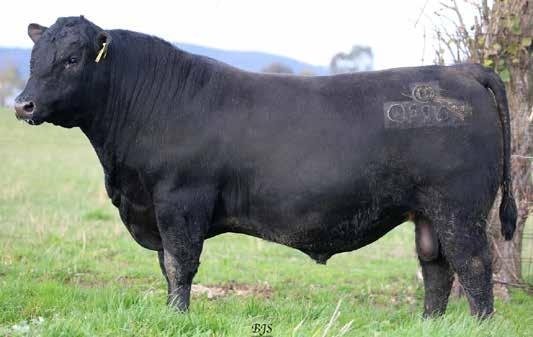
THE FULL PACKAGE! Temperament, phenotype, excellent muscle type and structure with the wow factor of +6.0 marbling.
Lots in the catalogue by Dunoon Quick Draw McGraw: 6, 36, 61, 62, 63, 75, 76, 92, 93, 114
DOB 04/09/2019
Sire ID BHRN394 Dam ID BHRK074
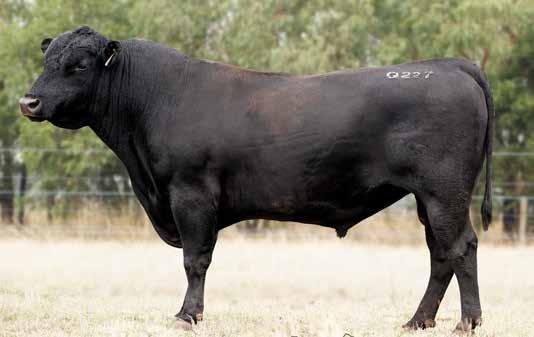
Study the progeny of Q227’s Grand Dam and Great Grandmas who recorded 7 progeny each for 7 years in a row!
Structurally sound, docile and stacked with carcase merit. Be Quick offers it all as an elite sire in the Angus breed.
acknowledges the funds provided by the Australian Government through the Meat & Livestock Australia Donor Company (MDC). This report was created as collaboration between Angus Australia and Meat & Livestock Australia Donor Company (MDC) (Project P.PSH.1063).
Lots in this catalogue by Bongongo Be Quick Q227: 34
DOB 03/08/2019
Sire ID VLYM518
DamID NGX N221

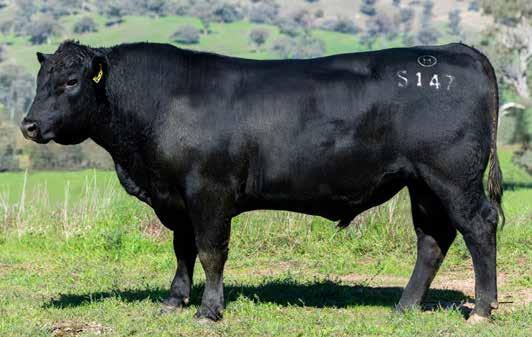
Syngen brings presence and style. A Merlewood Ponting son whose progeny keep standing out.
Lots in the catalogue by Dunoon Syngen S147: 37, 38, 39, 40, 44, 45, 68, 69, 85, 86, 87, 102.
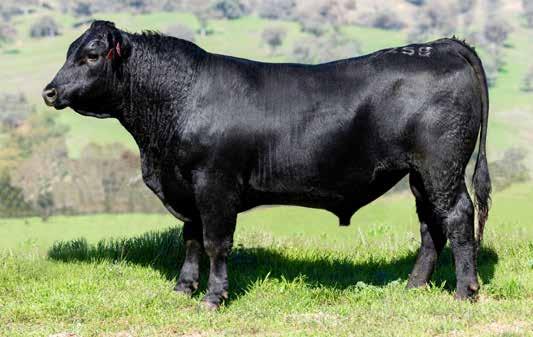
DOB 07/07/2021
Sire ID HODP8 Dam ID BHRN919
Australia Donor Company (MDC) (Project P.PSH.1063).
High genetic merit with this Kirby son. His first group of sons are up for sale in this catalogue and what consistency they bring in both phenotype and genotype. They are certainly worth a look.
Lots in the catalogue by Te Mania Saville S258: 50, 51, 52, 58, 59, 60, 72, 73, 74, 79, 80, 81, 82, 88, 89, 90, 91, 98, 99, 100
DOB 21/07/2021
Sire ID VTMK138 Dam ID VTMQ225

Page 1
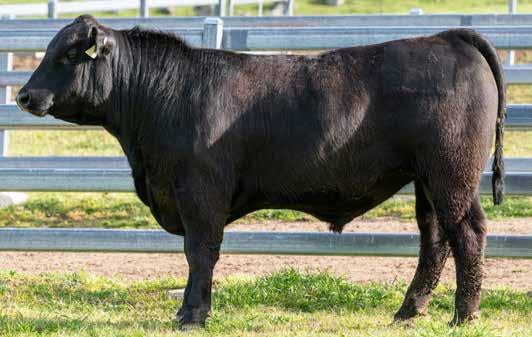
A son of Be Quick with Beast Mode and New Ground stacked on the dam side.
Genetically blessed, he brings serious muscle, impressive depth, flawless structure, and an easydoing nature.
DOB 01/08/2024
Sire ID NGXQ227
Dam ID NGX22T554
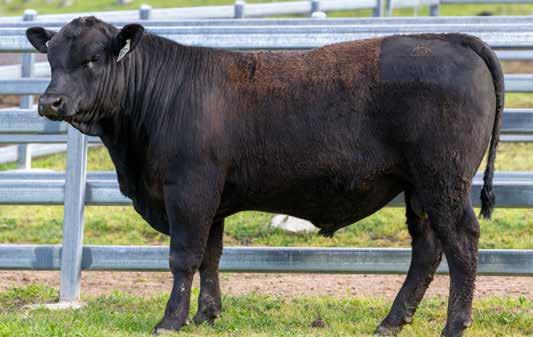
An impressive Paringa Statesman son.
Built with outstanding carcase traits, this sire exemplifies true Angus phenotype — deep-bodied, structurally sound, and bred for performance.
DOB 05/08/2024
Sire ID HKF21S115
Dam ID NGX22T494
A curve bender Alpine Real Deal son with serious eye appeal. Low birth with good growth, +12.6 EMA and +3.7 IMF. A bull fit to produce for many markets.
DOB 06/08/2023
Sire ID CGKR163
Dam ID NGX21S661
acknowledges the funds provided by the Australian Government through the Meat & Livestock Australia Donor Company (MDC). This report was created as collaboration between Angus Australia and Meat & Livestock Australia Donor Company (MDC) (Project P.PSH.1063).
A product of Angus Australia, developed with CSIRO and delivered in collaboration with Zoetis and Neogen.





Gobarralong
Take the left exit off Hume Highway to Pettit/Coolac then take first right to Adjungbilly and follow this road under highway, turn onto Gobarralong Rd for 12 kms. Take Crowes Rd to the left just before crossing the Murrumbidgee River, follow road for 12kms to Riverview.
Note: Do not take the Riverview Road sign stay on Crowes Road.
6km Jugiong Hopewood Road
Cooininee Road TO YASS
From Yass, head towards Jugiong. Take the Cooininee Rd approximately 6kms south of Jugiong. Riverview is 13km down that road. FROM