
Macey_Bollenbacher_Scrapbook_Portfolio_2024

Page 1

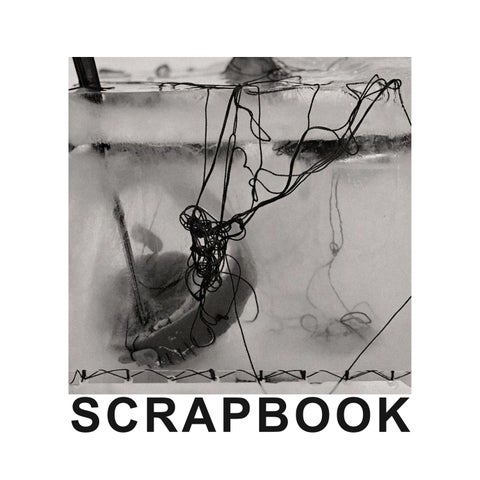
SCRAPBOOK

CONTENTS.

Macey Bollenbacher

University of Michigan 2024 Miami University 2022

(937) 760 - 6229

bollenml@umich.edu

Masters Portfolio

Copyright 2024

All content including text, photography, design, theory, models, and graphics were completed by the author unless indicated otherwise

01
01 TABLE OF CONTENTS 01-02 02 Institutions Studio INTRODUCTION 03-04 03 UNCONVENTIONAL 05-12 Fabrications 04 SECOND SPINE 13-20 Masters RELATIONS Masters 08 21-32 Propositions Studio THE BODY Masters REASSEMBLED Collectives Studio 05 PLAY BY THE RULES: 33-38 Masters WORK IN PROGRESS Outlooks: Spatial Narratives 06 THE WALLS HAVE 39-44 Masters FEELINGS UG Studio 02 07 IN RESIDENCY 45-52 Bachelors Peterson Rich Office 09 PIONEER WORKS 53-58 Professional OBSERVATORY 02

INTRODUCTION.

03

A scrapbook is a collection of pages containing photos, journal entries or other forms of text, ephemera, trinkets, clippings, and other objects. This book operates in a similar fashion by documenting the things I make, who I make them with, and all of the everyday things that helped me along the way. It records my efforts to rationalize, collaborate, make, test, research, analyze, and critique the built environment. It embraces layering, messiness, cataloging, and archiving, while recognizing the strength of restraint. I could not have done this without the support of my family, mentors, faculty, and friends. This is dedicated to them.

04
03_UR_101
05
The Construction of Brasilia by Marcel Gautherot

CATEGORY: Academic

DEGREE: Masters

STUDIO: Institutions

SITE: St. de Embaixadas, Brasilia, Brazil

PROJECT TYPOLOGY: Institution, Embassy

INSTRUCTOR: Peter Halquist

UNCONVENTIONAL

RELATIONS

This studio examined the nuanced ways in which the design of an embassy can center the diverse needs of its occupants, and in the process , extend the democratic principle of inclusivity to the built environment. Working off of the twin premises that architecture has a profound effect on those who inhabit it, and that good design is a basic human right. An embassy, through it’s physical presence in a foreign state, embodies it’s home country’s values, ideals, and cultural practices. Embassies help to bridge the geographical distance between two nations, and permit various forms of exchange, cultural or otherwise They can show, by contrasting example, a more appealing alternative to current realities in a host country. This project reimagines a new U.S. Embassy in the

modernist capital city of Brasilia, Brazil, which is currently facing an endangered democracy and a built environment unsuited to accomidate the high rates of disability among the countries population. After looking into current scholarship in disability studies, neurodivergent design, environmental design, and other relevant fields, this project imagines spaces that liberate and value diverse bodyminds, rather than merely going back to perpetuating a world designed for normative bodies and relationships. The current design of workplace environments is not only disabling for the differently abled bodymind, but for all bodyminds alike. The design of this embassy proposes two open air structures that support a series of suspended programatic spaces in an effort to facilitate new ways of working.

06
2022
1 2 3
07
08 03_UR_102 Embassy Complex Plan
First Floor Plan 09
03_UR_103
Third Floor Plan 03_UR_105 Transverse Section calling out the egress bridge
03_UR_104

03_UR_106

03_UR_107

03_UR_108

10
Suspension structure Egress network
Breathable
facade axon
skin
11
12 03_UR_109 Longitutidal Section through the Chancery building
13

CATEGORY: Academic

DEGREE: Masters STUDIO: Fabrications

2 3

COLLABORATORS: Tara Grebe

PROJECT TYPOLOGY: Furniture, Lighting

INSTRUCTOR: Christopher Humphry

SECOND SPINE

This course was designed to bring tacit knowledge in material making, consisting of techniques and methods for material manipulation, within a broader framework for design and assembly logic. Is architecture a ‘thing’ we make, or something we represent that someone else makes? Why do we study fabrication? What does it even mean to fabricate? Once fabricated, doesnt a thing come to represent something in the end, and what are the ways we use representation both analog and digital to do this? Design in general and architecture in particular is a complex entity and undertaking that is comprised of an assembly of parts incorporating various techniques, materials, and methods. Details are produced the moment that two parts

or two materials come together in an assembly. The ‘joint’ that is created is an opportunity for design whether articulated or masked. Tasked with the creation of a luminary interaction object, this project aims to study the dimensional relationship between the human body and made objects at the furniture scale. Arranged along a 6’ wooden dowel spine, a series of 3D printed vertebrae exist that hold various different appendage interventions. these appendages operate at customizable heights, depending on the dimensions of the individual user. The current spinal attatchments include a illuminated tray that allows for collection of handheld items like sunglasses or keys, two shoulders that come together to form a hanger for coats, and a lantern to illuminate the face.

14
2023
1

KIT OF PARTS

04_SS_202

Appendage

INDEX:

1. Muslin + Inner Facing

2. 1” Wooden Dowel

3. Single Sided Vertebrae

4. Double Sided Vertebrae

5. Plated Vertebrae

6. 1/4” Steel Rod

7. Hex Screws

8. Rounded Steel Spinal iiii Shaft Base

9. Slotted Flat Wood iiii Screws

10. Ada Fruit CBP Light

iiiiii Boards

11. Wood Framed Glass

iiiiii Plate

12. White Nylon Thread

13. Hand Sewn Circular

iiiiii Light Shade

14. Blue High Gloss Paint

15. Velcro Straps

15
and vertebrae attatchment

KEY:

1. Muslin + Inner Facing

2. 1” Wooden Dowel

3. Single Sided 3D Printed Collars

4. Double Sided 3D Printed Collars

5. Plated 3D Printed Collar

6. 1/4” Steel Rods

7. Hex Screws

8. Welded Steel Base

9. Slotted Flat Wood Screws

10. Adafruit CPB Light Boards

11. Wooden Frame + Glass Plate

12. White Nylon Thread

13. Hand Sewn Light Shade

14. Blue High Gloss Paint

16
13 6 4 5 3 11 8 9 7 10 14 12 1

ASSEMBLY

01 ROD BENDING

02 WELDING

03 3D PRINTING

17
04_SS_203 Manual and robotic fabrication process
18 04_SS_204 Vertebrae and appendage assembly

OPERATIONS

19
04_SS_205 Illumination appendage .01 at head height 04_SS_206 Collection appendage at hand height 04_SS_207 Illumination appendage .02 at waist height 04_SS_208 Shoulder appendage at shoulder height
20 04_SS_209 Final operational spine assembly
21

CATEGORY: Academic

DEGREE: Masters STUDIO: Collectives

SITE: North Corktown, Detroit, MI 48208

PROJECT TYPOLOGY: Mixed-Use Housing TEAM: Caitlyn Eckberg, Shravan S. Iyer

PLAY BY THE RULES:

WORK IN PROGRESS

Today definitions of household and family are myriad and constantly shifting, while limited forms of housing are built to serve a narrow set of demographics. This studio investigated housing types that could adapt to evolving household and communal formations over the generational life of buildings while serving a greater range of ages, incomes, and household formations. How might expendable, adaptable buildings accomidate evolving household groups and create diverse mixed-use neighborhoods? How can we use incremental building strategies to help make housing more attainable and affordable? By looking at building types, construction methods, and regulatory systems that allow owner agency and encourage small scale incremental development, adaptability, and communal

shared resources, we were able to reimagine a new strategy for building within the framework of North Corktown, Detroit. Tasked with five client situations including an age-inplace resident, a work from home couple, a pair of architects, an artist collective, and two young families, we implimented a catalog of building modules that could be deployed on any land parcel. Through the creation of a gameboard model and series of rules, we were able to study a variety of different densities within the existing land parcels of our focus area. Each of the living modules is grouped together through shared circulation cores, allowing for new possibilities of interaction between resident of each site. The proposed new density of each parcel serves as a way to radicalize existing zoning codes.

22
2023
1 2 3

MARTIN LUTHER KING JR. BOULEVARD

16th STREET

ASH STREET

15th STREET

BUTTERNUT STREET

14th STREET

WABASH STREET

PERRY STREET

ELM STREET

TEMPLE STREET

SPRUCE STREET

PINE STREET

0’100’50’ 200’ NORTH CORKTOWN SITE PLAN_FOCUS AREA 23 05_PBTR_302 Focus area site plan
24
strategy planning model
05_PBTR_303 Game
CATALOGUE core module: (n.) module used for shared services and amenities like laundry, circulation, etc. residential: (adj.) residential program only in module; multiple stories commercial: (adj.) commercial program only in module; single story mixed-use: (adj.) commercial program on ground floor & residential program above ground; multiple stories
W1.4296 W1.4296 C1.1025 1-Story Block (1 ) 10’X25’ ( 1025 ) C2.1025 2-Story Block ( 2) 10’X25’ ( 1025 ) C2.1030 2-Story Block ( 2) 10’X30’ (1030 ) C2.2020 2-Story Block ( 2) 20’X20’ (2020 ) C3.1030 3-Story Block (3 ) 10’X30’ (1030 ) C CORE MODULES Cn.X x Y C - Core Module, n - Stories X x Y - Length x Width C1.1025 C2.1025 C2.1030 C2.2020 C3.1030 L1.2525-G 1-Story Block (1 ) 25’X25’ Gable Roof ( G ) L2.2525-G 2-Story Block ( 2) 25’X25’ Gable Roof ( G ) L1.2020-P 1-Story Block (1 ) 20’X20’ Parapet ( P ) L2.2525-S 2-Story Block ( 2) 25’X25’ Shed Roof ( S ) L2.2020-G 2-Story Block ( 2) 25’X25’ Gable Roof ( G ) L2.2030-G 2-Story Block ( 2) 20’X30’ Gable Roof (G ) L2.2020-S 2-Story Block ( 2) 20’X20’ Shed Roof (S ) L2.2030-P 2-Story Block ( 2) 20’X30’ Parapet ( P ) L2.2020-P 2-Story Block ( 2) 25’X25’ Parapet ( P) L3.2030-G 3-Story Block (3 ) 20’X30’ Gable Roof (G ) L LIVING MODULES Ln.X x Y-R L - Living Module, n - Stories X x Y - Length x Width R - Roof Type L1.2525-G L1.2020-P L2.2020-G L2.2020-S L2.2020-P L2.2525-G L2.2525-S L2.2030-P L3.2030-G L2.2030-G CATALOGUE living module: (n.) module used for residential, commercial, or mixed-use programs core module: (n.) module used for shared services and amenities like laundry, circulation, etc. residential: (adj.) residential program only in module; multiple stories commercial: (adj.) commercial program only in module; single story mixed-use: (adj.) commercial program on ground floor & residential program above ground; multiple stories L L1.2525-G L1.2020-P 25
27
Second Floor Plan
05_PBTR_304 WFH
First Floor Plan
05_PBTR_305 WFH
05_PBTR_306 WFH Wall Section
29
30 05_PBTR_307 Stud Framing Model
31
AIP Second Floor Plan
05_PBTR_308
AIP First Floor Plan
05_PBTR_309
32 05_PBTR_310 AIP Wall Section
33

CATEGORY: Academic

DEGREE: Masters

STUDIO: Outlooks

PUBLISHING STATUS: Under Review

PROJECT TYPOLOGY: Book Design

INSTRUCTOR: Keith Mitnick

THE WALLS HAVE

FEELINGS

This course looked at contemporary architecture and it’s realationship to larger arenas of cultural theory and criticism, while providing a framework for discussions surrounding topics such as representation, abstraction, realness and fakeness, autonomy, and the rise of new models of inter-disciplinary thinking and practice. Through a focused study of narration of architectural themes in both words and images, we examined how some genres of work come to be associated with certain critical trends, and discover creative and potentially new methods of representation. over the course of the seminar, I investigated the narrative framework of collapse, at both a psychological and building scale, by looking at the works of Gordon Matta-Clark, Alvin Baltrop, Saul Leiter, Edgar Allen Poe, and Borges.

This books attempts to examine the societal pressures surrounding women in domestic spaces, and the collapse of the nuclear family in contemporary society. “The Walls Have Feelings” follows a couple who have recently moved to the suburbs following the death of their child, in an attempt to rebuild their relationship while simultaneously repairing their new home. As the family begins to settle in and begin repairs, the house grows to resent them for their failure to provide a loving family for it to house. The house begins to resist repair and continues to rot and decay, as the couple repeatedly fails to give it what it wants. The mental state of the wife begins to mirror the physical state of the house, as she looses the ability to differentiate herself from the societal roles intertwining her with the structure.

34
2023
1 2 3
This photograph is my proof. There was that afternoon when things were still good between us, and she ambraced me, and we were happy. It did happen. She did love me. Look, see for yourself. COLLAPSE again? how do again? we start Last night dreamt about you, though the details seem fuzzy now. I can hardly remember anything about it, or the past few weeks. All know is that we kept merging into one. You were me. was you. My body won’t leave this house. It won’t leave this bed. There are less eyes on me here, though the weight of them remains even here, inside. can feel them watching 35 06_TWHF_402 Accordian extended

06_TWHF_403

Narrative of the house

06_TWHF_404

Narrative of the residents

It’s you It’s us It’s me She won’t leave this house. I told her leave this house. One of the neighbors told me that the previous couple who owned this place had stopped renovations after her husband found her trying to eat the insulation out the walls. We shouldn’t have stayed here during construction. We should’nt stay here at all. This house has consumed everything that we are. need get us out of here before everything we’ve built collapses... It was you It was me It was us think i’m 36
37 06_TWHF_405 06_TWHF_406
38
06_TWHF_407 Book casing from back cover
39

CATEGORY: Academic

DEGREE: Bachelors

STUDIO: UG 02

IN RESIDENCY

For this project we were asked to design a mixed use apartment building in OTR for two artists of our choosing, in this instance, a watchmaker, and a landscape painter. At first glance, neither profession seem to have much in common, beyond the creative nature of their work. However, that could not be further from the truth. Both disciplines depend on time in their creative processes and final designs. The life of a watchmaker is dedicated to the passage of time much like the landscape painter studies the timelessness of a landscape and how time affects the world around them. As you enter through the foyer of the watchmaker’s residence, you are met with an open living space with a series of twelve bays along the back wall. These bays represent

SITE: Over The Rhine, Cincinnati, OH 45202

PROJECT TYPOLOGY: Mixed-Use Housing

INSTRUCTOR: Brian Delford Andrews

twelve hours on a clock face. In the center of the apartment sits a glass workshop that slowly rotates so that the direction the artist faces corresponds with the hour, and its position on the watch face. North is twelve, south is six and so on and so forth. The concept of conforonting the artist with their muse in their everyday life is also represented in the third floor apartment, the landscape painter residence. The apartmentis divided by a series of outdoor gardens encased in glass. These gardens serve as light wells that illuminate the space and endlessly inspire the artist in their work. These gardens are open to the elements and are therefore ever changing and timeless.

40
2019
1
2 3
No r th Se ct ion 19 41
07_IR_502
Longitudinal Section
20 42
07_IR_503 Watch-maker kitchen and Landscape artist wall section
First Floor Plan Second Floor Plan 21 Gallery Space Watchmaker Apartment 43 07_IR_504 First Floor Retail Plan
Third Floor Plan 22 Landscape Painter Apartment 44 07_IR_505 Second Floor Watchmaker Plan 07_IR_506 Third Floor Landscape Artist Plan
45

CATEGORY: Academic

DEGREE: Masters

STUDIO: Propositions

2 3

SITE: Taubman College, Ann Arbor, MI 48109

PROJECT TYPOLOGY: Research

INSTRUCTOR: Stratton Coffman

THE BODY

REASSEMBLED

As Ursula Le Guin pointed out, we have tended to overlook the life giving role of “the thing to put things in” in favor of the life ending pierce of the spear. Architecture is a meta-bag, containing other smaller bags holding together multiplicities of items, media, and lifeforms. Tasked with creating a bag for a series of five different objects paired together through various different relationships to eachother based on size, color, and memory, I began to question what autonomy both the object and the thing that held them contained. Holding is a mutual exchange between that which is held and t’s container. Some containers are highly specialized and exist purely to fit the object that they are destined to hold while others exist as neutral holders capable of holding

many things regardless of form or material. In this illusory exchange the container, or vessel, must commit itself to the role of mother and allow itself to know/experience the needs and desires of that which it is holding as if it were the desires of itself. To hold is also to be an actor. The vessel must for a period of time suppress the idea of itself apart from the held, or its child, and allow itself to fade out of perception as a singular entity. It is of course expected that the container will not be able to do so consistently, as it struggles and grows frustrated by suppressing its otherness. Holding does not require a close or loving relationship between the two parties, and can also be organized around rage or chaos. Through a system of puppeteering, these objects were strategically placed. As the ice melts autonomy is restored.

46
2023
1
47 08_TBR_602 Beginnings of bodily autonomy
48
08_TBR_603 08_TBR_604
49
50 08_TBR_605 Attatchments at various degrees of consiousness
51 08_TBR_606
held in disdain and affection
Objects

Desire actualized

52
08_TBR_607 08_TBR_608
53

CATEGORY: Professional

DEGREE: Internship

FIRM: Peterson Rich Office

3

SITE: 159 Pioneer Blvd, Brooklyn, NY 11231

PROJECT TYPOLOGY: Observatory

COLLABORATORS: Carmen Chan

PIONEER WORKS

OBSERVATORY

Pioneer Works (PW) is an artist and scientist-led 501(c) (3) nonprofit cultural center in Red Hook, Brooklyn that fosters innovative thinking through the visual and performing arts, technology, music, and science. They provide visual and performing artists, musicians, scientists, technologists, community organizers, and educators the resources and platform they need to expand their practices. Pioneer Works has three floors of interconnected studio, performance, exhibition, and multipurpose spaces, which cultivate collaborations past the boundaries of traditional institutions by placing makers and thinkers in proximity to each other. They support onsite production through our science, design, recording, and ceramics studios; media, virtual environment, and

technology labs; darkroom; and garden. Multi-disciplinary programs, exhibitions, residencies, and performances are presented to the public, of which the majority are free. Pioneer Works is a new model for cultural organizations that is free, open to all, and transcends disciplinary silos. Their programming explores alternative ways of facing societal challenges by leveraging the arts and sciences dynamically as both a lens and catalyst. This project aims to expand their mission with a new set of scientific and artistic study, connecting the people of New York City to the stars. This observatory, situated on top of the warehouse structure with a connection to the garden, will be the first public observatory in New York City, and will foster a new age of learning and collaboration.

54
2023
1 2
55
56 09_PWO_702 Mesh stair connection to roof
57 09_PWO_703 Observatory Perspective
58 09_PWO_704 Western garden perspective

Turn static files into dynamic content formats.
Create a flipbook
Macey_Bollenbacher_Scrapbook_Portfolio_2024 by bollenml - Issuu