



Around the world, law enforcement, policing, and justice have undergone transformation over the last few decades. Ireland is now at a key decision point as it looks to continue its transformation journey to modernise our policing and justice systems.

In Ireland, like many other countries, political and social shifts have driven the need for reform, including changes in immigration patterns, demographic shifts, changing nature of crime, and evolving citizen expectations.
EY’s policing and justice community of practice have identified five key trends
that are top of mind for policing organisations as they seek to innovate and modernise to meet the changing needs and demands of communities:
1. Community-oriented policing: Continued focus on working collaboratively with community members to solve problems and prevent crime in the community, rather than relying solely on law enforcement.
2. Optimisation of digital tools and technology – including AI and data: To support enhanced prediction of crime, better decision making and people empowerment, leading to better outcomes for communities, reduction in crime rates and more efficient work practices for staff.
3. Agility to embrace policy development across the criminal justice system: There is ongoing debate around the treatment of serious offenses versus minor infractions and how changes in policy are applied, which may impact work practices across policing organisations and the capabilities and capacity of staff.
4. Focus on people: The need to attract people that represent their communities and provide opportunities for fulfilling careers is as strong as ever, particularly with a global war for talent. As we emerge from the post-Covid era, leadership is challenged to establish organisational culture that values diversity, promotes innovation and recognises people, while ensuring appropriate allocation of resources to community need. Line managers need to be equipped to lead blended teams, drive positive work culture and performance, and ensure teams have the skills necessary to address the changing nature of crime.
5. Cross-sector partnerships: An ever-increasing recognition that cross government and multi-agency cooperation is critical to keeping people safe and to prevent and tackle crime. Systems are becoming more aware of the need to work closely across health, education, housing and the wider NGO sector to proactively keep communities safe.
Our experience supporting transformation across police and justice systems around the world has pointed to several key factors that are necessary to proactively respond to the opportunities and challenges these trends present –clarity on vision and plan, robust transformation management, and the strategic use of technology.
Transforming policing and justice systems requires a clear and welldefined vision and objective, and a robust ‘case for change’, endorsed by and advocated for by leaders. Proactive and visible sponsorship is a key success factor to delivering on transformation objectives. Given the wide range of stakeholders in the sector it is vital that there are robust communications to ensure that all understand the scope and goals of the project. Once the vision and objectives are clear, there is a need for a detailed project plan with timelines and milestones to achieve the vision. The project plan is the reference to benchmark progress, track deliverables and manage any delays or obstacles. It allows for regular monitoring and evaluation of transformation progress, which are essential for the project’s success and enables the early identification of issues that arise, and a plan to address them promptly.
Transformation is more successful when a transformation management office (TMO) is used as a central point of contact for all transformation-related activities. The most successful TMOs are responsible for developing strategies, frameworks and metrics to support overall transformation
“As threats to public safety mutate faster and faster, AI holds the promise of levelling the playing field for governments.”
objectives. The TMO can play a crucial role in delivering successful transformation across the policing and justice systems by driving accountability, standardisation and alignment, ensuring that all transformation initiatives are coordinated, measured, and executed efficiently.
One of the key drivers of transformation in policing is the use of technology and data. Technology has the power to revolutionise law enforcement and enable law enforcement agencies to become more efficient, but it must be deployed strategically. Body-worn cameras, number plate readers, facial recognition technology and predictive analytics are just some of the technologies that can be used to enhance decision-making and reduce crime rates.
Additionally, as threats to public safety mutate faster and faster, AI holds the promise of levelling the playing field for governments. AI technology holds the promise of improving safety across this spectrum. Its potential to reduce, prevent and respond to crimes, for example, creates a unique opportunity to establish safer communities.
AI can play an important role in areas of public safety as far-ranging as narcotics, crime deterrence, natural disaster response and crowd control. As organisations explore the promises AI offers, they must also consider its risks to civil liberty and privacy, as well as its mixed record on accuracy and bias.
It is clear that the transformation of policing and justice, like so many other sectors, will continue at pace over the coming decade, with changes extending from technology to community policing and beyond. These changes can help to build better public trust, a more proactive approach to law enforcement, better communication systems with the community, a reduction in crime rates, and an improved employee experience for staff.
However, work will be required to address challenges, such as ensuring the ethical use of technology, mitigating any negative perceptions of policing, ensuring equity and addressing concerns of racial bias, building positive and innovative organisation culture, and ensuring a strong pipeline of resources to address the areas of greatest need in our communities.
W: www.ey.com/ie/publicsector
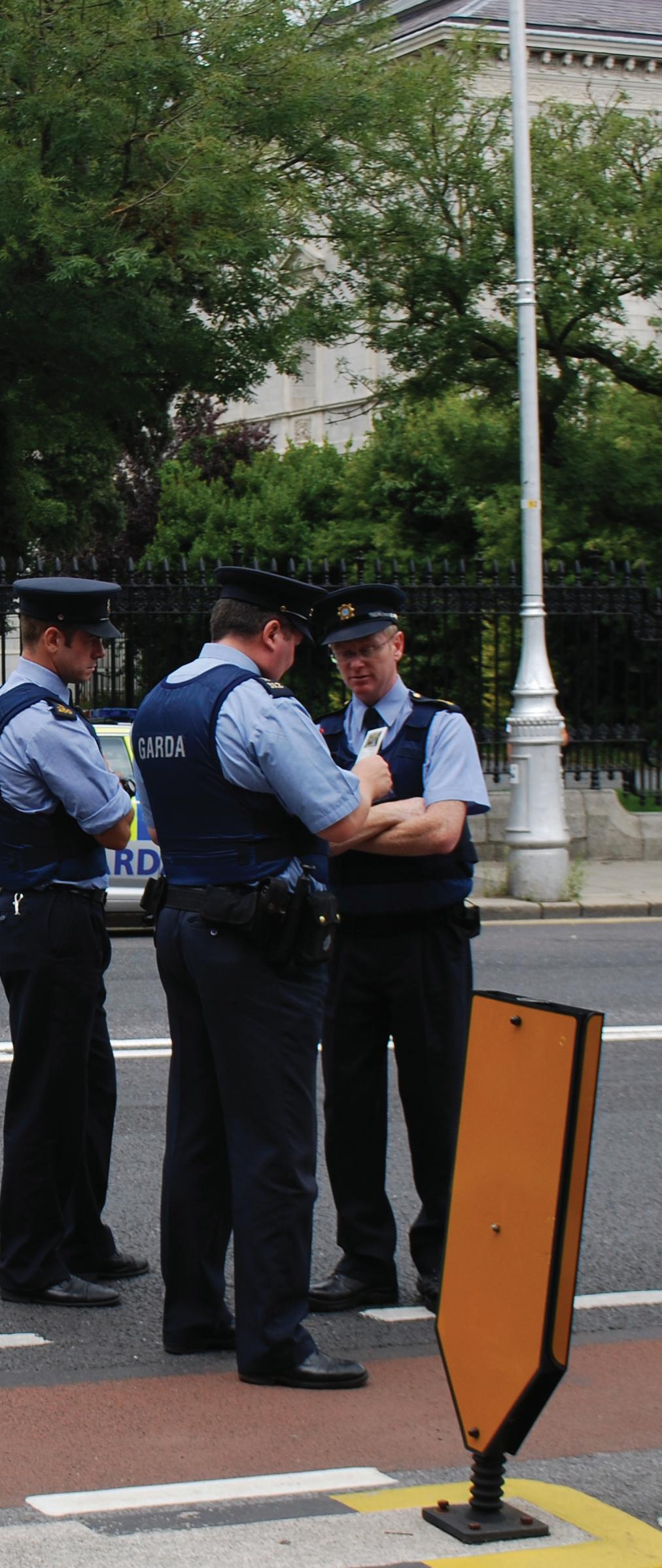
The Irish justice sector is undergoing significant change in every area under the aegis of A safe, fair and inclusive Ireland This change has not been without its growing pains, especially in policing.
The first goal of A safe, fair and inclusive Ireland pledges to “tackle crime, enhance national security, and transform policing” and it is the latter that been central to headlines about policing in 2023. A new operating model has been introduced, restructuring policing across the State and at regional and divisional levels and reducing the number of Garda regions from six to four and Garda divisions from 28 to 21. The number of divisions was originally set to be 19, but complaints from rank-and-file gardaí prompted a compromise in August 2023.
Each division will be headed by a divisional chief superintendent, who will oversee four new functional areas: business services; performance and assurance; crime; and community engagement. The changes in working patterns for gardaí associated with these changes have caused major disagreements between top-level gardaí and rank-and-file gardaí.
Under these reforms, gardaí would return to pre-pandemic working patterns of a six days on, four days off working roster that will see them work 10-hour shifts in units. In order for these units to be adequately staffed, gardaí have been reallocated from drug and community policing units to the response units. Local Garda Representative Association (GRA) representatives have protested that the winding down of community policing and drug squad units to staff these generalised units will negatively impact crime prevention and that the return to six-day weeks would mean an additional 47 days on duty per year for some members.
Tensions between Garda leadership and the GRA came to a head in September 2023 when the GRA voted on a no confidence motion on Garda Commissioner Drew Harris. 98.7 per cent of the 10,803 members who voted in the GRA’s first ever confidence vote on a commissioner responded no when asked: “Do you have confidence in the Garda Commissioner?”
In his initial reaction to the vote, Harris stated that the result was a “kick in the teeth” but that he would not resign his position and that the changes would proceed as planned from November 2023 onwards. In response, the GRA voted to withdraw voluntary overtime on all Tuesdays in October 2023 and to strike on 10 November if the dispute was not resolved before then. With the GRA seeking the retention of current working patterns of four days on, four days off in 12-hour shifts, Harris responded to the vote for strike action by indicating a willingness to compromise. The GRA has called for the Government to intervene, but the position of Minister for Justice Helen McEntee TD is that this is an internal Garda matter.
What could be key to the solving of this
impasse is the recruitment of new gardaí, but figures released by the GRA in May 2023 show recruitment figures to have been 32 per cent behind targets in the first half of the year. The first intake of 2023 in the Garda College at Templemore was due to have 200 new recruits, but only 134 took up their places, while the second intake in May was due to have 225, but only 154 took up their places.
Garda numbers were at a record high of 14,750 in March 2020 before the onset of the Covid-19 pandemic, but the Garda College was either closed or running at reduced capacity during the pandemic, resulting in a fall in Garda numbers to 14,000. The figures from the first half of 2023 make it unlikely that the Government’s target of recruiting 1,000 new gardaí in 2023 will be achieved, but accelerated progress towards this goal could go a long way towards smoothing tensions within An Garda Síochána.
Perhaps consistent with a declining number of gardaí is an increasing rate of crime, as is laid out in Central Statistics Office data for Q2 2023. The data found just one category of crime – fraud, deception, and other related offences, down 37 per cent annually – to have decreased since Q2 2022. Attempts/threats to murder, assaults, harassments, and related offences increased by 3 per cent; robbery, extortion, and hijacking offences increased by 21 per cent; theft and related offences increase by 25 per cent; and homicide and related offences increased by 31 per cent.
The second goal of A safe, fair and inclusive Ireland is to “improve access to justice and modernise the courts system”. Some of this modernisation has revolved around the judiciary itself, with efforts to reform the appointments to the judiciary through the Judicial Appointments Bill on hold for now, having been referred to the Supreme Court by Uachtarán na hÉireann Michael D Higgins (see page 47). Plans are also underway to increase the number of judges in Ireland from 173 to 217 by 2025 (see pages 62-63), with Ireland currently having the lowest rate of 4

judges per 100,000 people in the European Union.
Justice Plan 2023 outlines some of the key reform goals in this regard for the courts system, with the establishment of new courts for planning and environment and family law set to play a central role in the broadening of access to the courts system. Among the actions to be taken with regard to the establishment of a family court will be the “examination of the role of expert reports in the family law process and the proposal of recommendations regarding their future application and function”. The examination will “consider the commissioning and availability of these reports, including their content and future use”.
The Review of the Administration of Civil Justice in line with the Implementation Plan on Civil Justice Efficiencies and Reform Measures has been an important guiding document for enabling easier, more affordable, and quicker access to civil justice, with five actions to be undertaken throughout 2023. Perhaps the most important of these will be the development of the general scheme of the Civil Reform Bill, due to take place in Q4 2023.
The aforementioned increasing of judicial resources will be “complemented” by ongoing implementation of the Courts Service Modernisation Plan, which received additional funding for 2023, and the reforms to court operations with regard to frequency, location, and management of courts. Actions to be taken with regard to the Courts Service Modernisation Plan include the reform of the Abhaile Scheme, the publication of the Criminal Legal Aid Bill – for which the Oireachtas Joint Committee on Justice met for pre-legislative scrutiny in October 2023 – and the bringing of proposal to government to agree and commence reform of professional legal education, with a view to introducing independent oversight for the first time and removing barriers to becoming a solicitor or barrister.
The first half of the 2020s has marked an ambitious turn from a justice sector attempting to modernise across almost every area of work. Garda staffing disputes and the Judicial Appointments Bill show that these efforts have not been without their teething pains, but it is clear that when these reforms come to pass, Ireland will have a sector almost unrecognisable from the 2010s.

Uachtarán na hÉireann Michael D Higgins has referred the Judicial Appointments Bill, passed by both houses of the Oireachtas, to the Supreme Court to test its compatibility with Bunreacht na hÉireann.
Although the Judicial Appointments Commission Bill 2022 has passed through both the Dáil and the Seanad, Higgins, under powers granted to him under Article 26 of the Constitution, has referred the Bill to the Supreme Court having made the rare move of convening the Council of State to consider whether the Bill is in line with Bunreacht na hÉireann.
The Supreme Court will have until 12 December 2023 to make a final judgement on the constitutionality of the Bill. If it rules that the Bill is unconstitutional, Higgins will reserve the right to refuse the formally sign the Bill into legislation.
The Bill proposes that a new judicial appointments commission is established to replace the Judicial Appointments Advisory Board (JAAB). This new commission would be granted the power to recommend three
candidates for a judicial vacancy and the proposal that the Government can pick only from this list has been the subject of some concern. Currently, judges are appointed formally by the President, based on the “advice of the Government”.
In spite of Minister for Justice Helen McEntee TD’s claim that the legislation would “enable the continued appointment of excellent judges, which are a cornerstone of a strong, independent judiciary”, the proposed legislation has faced opposition from TDs on government benches.
Fianna Fáil justice spokesperson Jim O’Callaghan TD claims that the process of appointing judges in Ireland has been “pretty successful” to date and has said that the proposal to establish an appointments commission is a “controversial decision”.
Under objectives set out in Justice Plan 2023, the Bill was proposed by the Government following a recommendation by the Judicial Planning Working Group (JPWG), informed by an independent review of judicial resource needs by the OECD, to increase the number of judges in two phases, beginning with 24 additional judges in 2023.
The convening of the Council of State to decide the constitutionality of a bill is an infrequent use of checks and balances carried out by the President. The last time President Higgins convened a Council of State meeting was in 2015 to consider the International Protection Bill. The Supreme Court has 60 days from the date of submission (13 October 2023) to make a judgement on the legislation.
The Courts Service Modernisation Programme is about re-designing our services to meet user needs, leading with a digital first approach. Our user-centric and digital first goals aim to provide users with simpler and more consistent services.
Over the past two years, we have engaged extensively with users. Their feedback has given us invaluable insights and informed our thinking across many projects. We are starting to see the results of this approach, so here we share some of the highlights of the progress we have made.
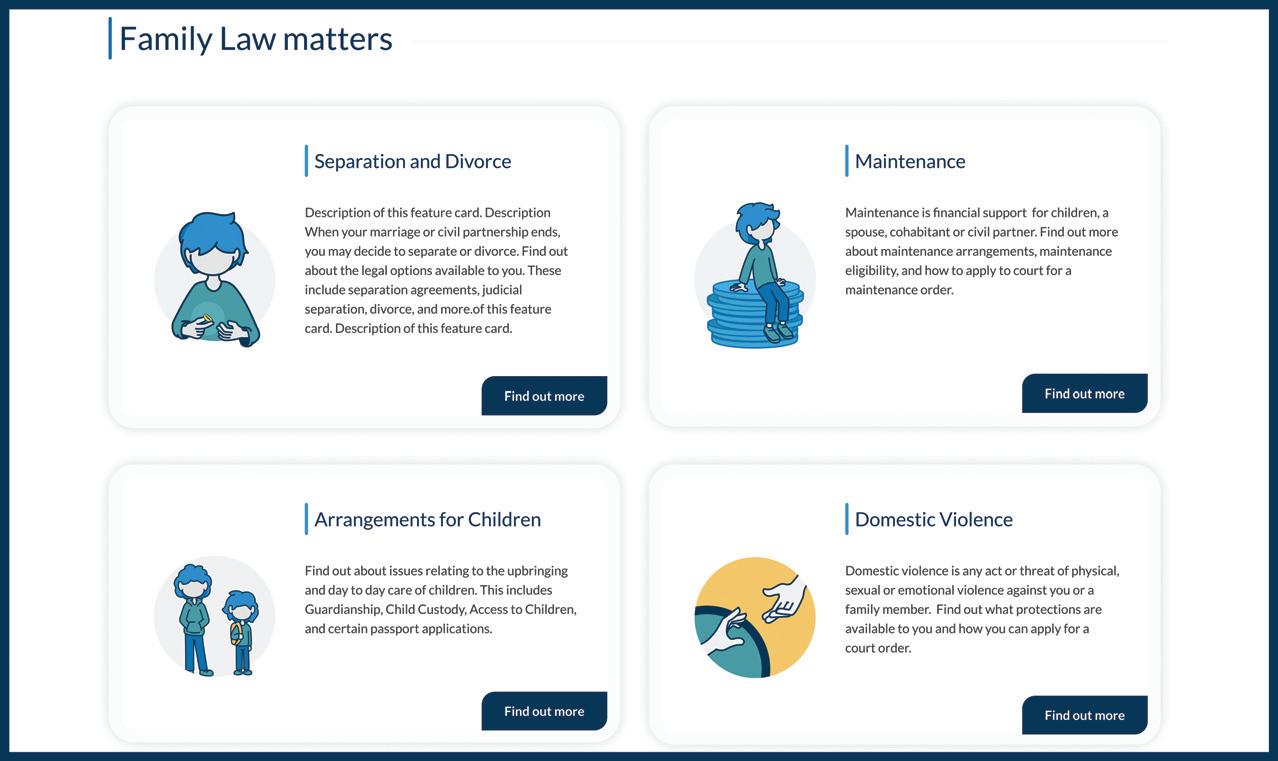
Working in collaboration with the National Adult Literacy Agency (NALA) we are rolling out a programme of plain language training across the organisation. Using this training, and supporting key actions from the Family Justice Strategy, we have developed new online family law plain language
information. This enables court users to access easy-to-understand information about family law matters. The content is written in plain language and helps users to understand options and matters they need to consider. In addition to signposting relevant advice and services, step-by-step guides on making applications to court are provided.
The newly rewritten information is also a valuable resource for Courts Service colleagues, and they frequently direct users to the information. Short videos were produced to highlight the key information available, an approach that was so successful that a version of the video has also been produced for professionals working in family law.
Since going live at the end of March 2023, the new information had been accessed by over 49,000 users by June 2023. The feedback has been positive and confirms we are meeting our goal for the information to be user-friendly and highly informative.
We are currently working on modernising and simplifying some District Court family law application forms, starting with guardianship. The aim is not just to reduce the number of forms but to also introduce forms which are user-friendly, and easy to understand and fill out, making them accessible and suitable for both paper and digital applications. We hope to expand this approach to other areas including civil debt forms.
To increase awareness and promotion of alternative dispute resolution processes, we have produced an animated video explaining benefits of mediation, what is involved in the mediation process, and how to access the support/service. An online training event on understanding mediation, run in collaboration with the Legal Aid Board, was attended by almost 100 Courts Service colleagues. Step-bystep guides have been developed which
“The
information available was amazing for my situation” – Family law applicant
“It is so user friendly. It somehow manages to make it seem approachable whilst still containing such a wide range of information within it” – Courts Service staff member
include a first step that outlines the benefits of mediation and signposting to services.
To support court users, and to provide them with improved information across a range of channels, we launched our 360°Virtual Tours earlier this year. The tours were developed to allow people to experience the look and feel of the courts in advance of attending court. This can reduce anxiety for many court visitors. The virtual tours demonstrate what to expect both outside and inside the building. By the time a person arrives in court they are better prepared to engage in the process. We developed the virtual tours as a direct response to user feedback and the Public Service Innovation Fund 2022 funded their development.
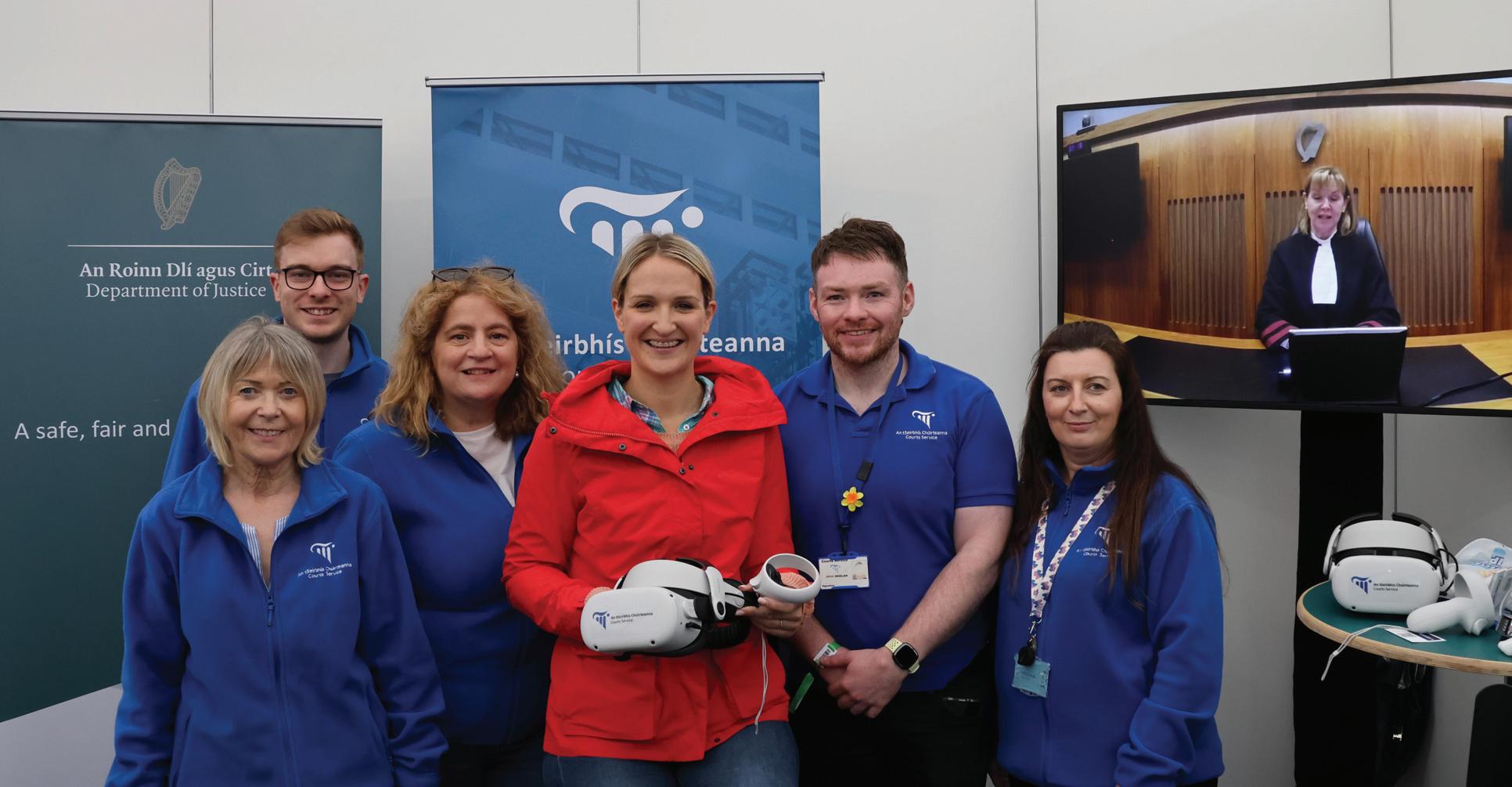
Another first for the Courts Service was the introduction of our virtual reality headset experience at the Ploughing Championships in September 2023. Our ‘Who’s who in the courtroom?’ virtual
reality experience is a unique opportunity for victims/witnesses to experience a real courtroom environment before their day in court and to learn about the various people who will be in the court. A number of Ministers dropped by to try the VR out, including Minister for Justice, Helen McEntee TD.
We shared this highly engaging experience for the second time at our Culture Night event in the Four Courts. Throughout this eventful week for Courts Service awareness, more than 400 people experienced our VR headset. We are also planning for our VR experience to go on tour during Public Service Transformation Week in October 2023.
A key element to redesigning our services to meet user needs, is engagement with user groups and other stakeholders. Key groups have been established such as the Judicial Modernisation Engagement Group, Legal Practitioner Engagement Group, and the Civic Society Forum, that meet regularly
“I found the Civic Society Forum a very interesting and useful space where Courts Service staff working on various aspects of the Family Justice Strategy and other improvements made themselves available to us victim support NGOs to answer detailed questions and listen to any new concerns or queries. It felt truly collaborative to me” – member of Safe Ireland.
to allow improved communication, sharing of information, and collaboration. An Access to Justice group has been formed for the purpose of engagement on civil topics.
We recently had the pleasure of sharing our information stand with some members of the Civic Society Forum at the National Ploughing Championships. It was a great opportunity to work with them and share information.
The Courts Service will continue to introduce digitally enabled services, make evidence-based decisions to transform how we interact with our users, and streamline ways of working. In doing so, we are transforming day-to-day operations across the Courts Service, working with our users to improve their experience and ultimately providing Ireland with a modern, high performing courts system.
For more information on the Courts Service visit www.courts.ie



‘I can actually breathe now’: A visit to the new
Ahead of its official opening in October 2023, Ciarán Galway visits the new Limerick Female Prison to speak with Governor Andrew McCarthy, members of staff, and prisoners about the new facilities, the experience of women in prison, and the challenges faced by those working and living there.
Situated on Mulgrave Street, south of the River Shannon in Limerick city, Príosún Luimnigh is the oldest functioning prison in Ireland. A closed, medium security facility, it is the committal prison for adult males in counties Clare, Limerick, and Tipperary, and females in the whole of Munster.
Limerick Female Prison is one of two female prisons in the State, the other being the Dóchas Centre within the Mountjoy Prison complex in Dublin. Until the new standalone prison was developed, Limerick Female Prison was simply a wing of the male prison. Comprising two long and narrow corridors, the old female prison was frequently overcrowded.
Walking through the outer gates, we mingle with the families – mostly women and children – and friends of visitors. We are required to leave all mobile phones behind in the locker room. Entering the control room through a heavy steel door parallel to the main gate, photo identification is mandatory. Beyond an antechamber of turnstiles and security scanners, we
enter the prison proper and, skirting a wing of the male prison, approach the female prison via an access yard. Topped with razor wire and anti-climb barriers, high limestone walls form the prisons octagonal outer boundary, enclosing men and women alike. But that is where most shared architectural legacies end. In fact, Limerick Female Prison is unlike any other prison in Ireland.
According to Architects’ Journal, Limerick Female Prison is now most akin to a Scandinavian correctional facility. This is in stark contrast to the old female prison, which was completed in 1821. It was one of five now mostly replaced spoke-like wings emanating from an administrative nucleus; highly innovative in its day, but totally unsuited to the 21st century.
Entering the reception area of the female prison to our immediate left are several cells, which are purposely left vacant. Not unlike the rooms of college
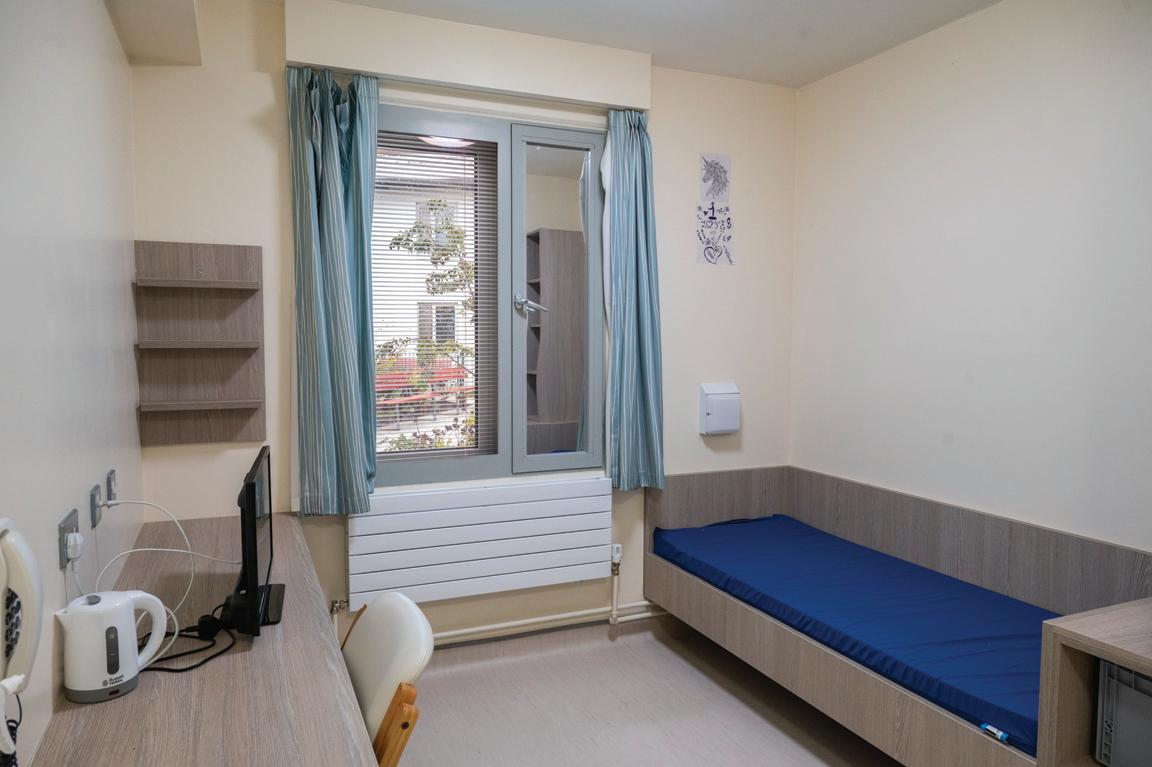
student accommodation, each cell has a desk, kettle, small television, a bed, and – in a major departure from traditional cells – a simple, but fully partitioned, toilet and shower. Some of the more typical features include the anti-ligature curtains and blinds, alongside a long mirror installed within the window itself. It is the default configuration known to the majority of the female prisoners in Limerick.
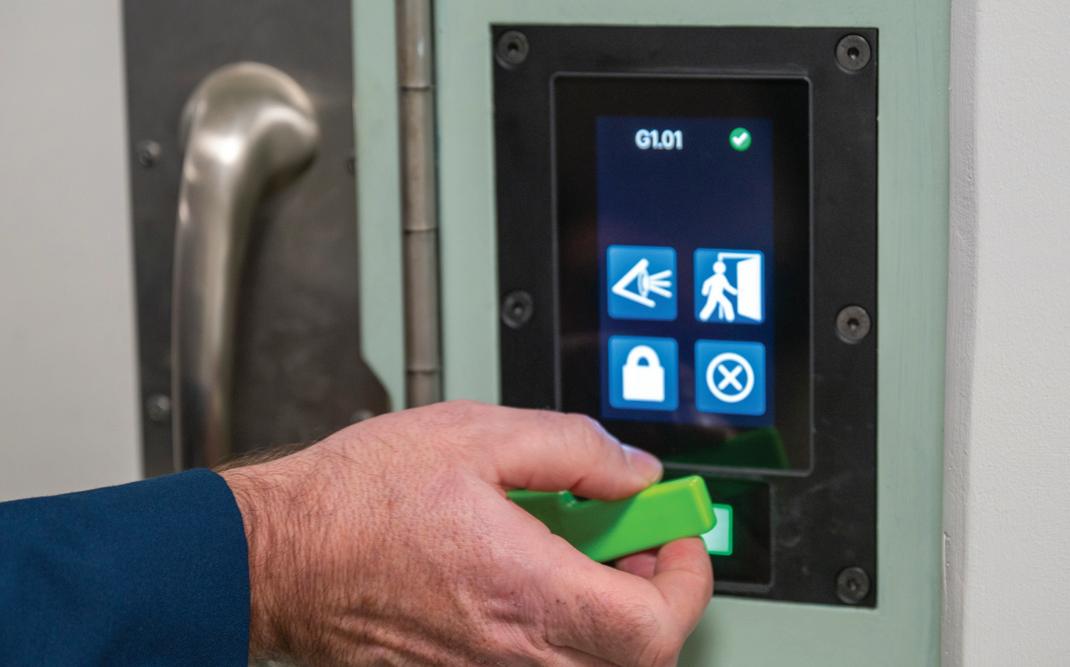
Traditional viewing hatches have been replaced with smart glass which is a default opaque diamond but becomes transparent at the touch of a coloured plastic fob. The same fob, mimicking the silhouette of a traditional key, unlocks each digitally enabled cell door (with a failsafe analogue backup).
These trauma informed features are intended to reduce noise, minimise disruption, and avoid retraumatising each cell’s inhabitant. It is a fact that 90 per cent of women within the Irish prison system have experienced serious trauma, while 80 per cent have experienced addiction challenges.

Overlooked by the cells and the gym, the open-air exercise yard is unlike any other in Ireland. A slightly curved rectangular central courtyard, with a meandering tarred path, it is dotted with adolescent trees and evergreen shrubs, while wooden benches line the perimeter. A large stone water feature bubbles in the background, the cascading water creating a relaxing aura. One section is dedicated to a small play area for visiting children.
“We call it an exercise garden because it is not a yard,” the Governor observes. “Everything here is geared towards the women feeling safe, happy, and creating a positive environment.” Indeed, in this space, the only hint of prison architecture is the security net which criss-crosses the sky above.
The ‘on protection’ female prisoners’ yard has been also designed with trauma in mind. The grey façade of the tall precast concrete wall which contains one side of the yard has been painted with a mural of a bright faceless bird, while plants line the base.
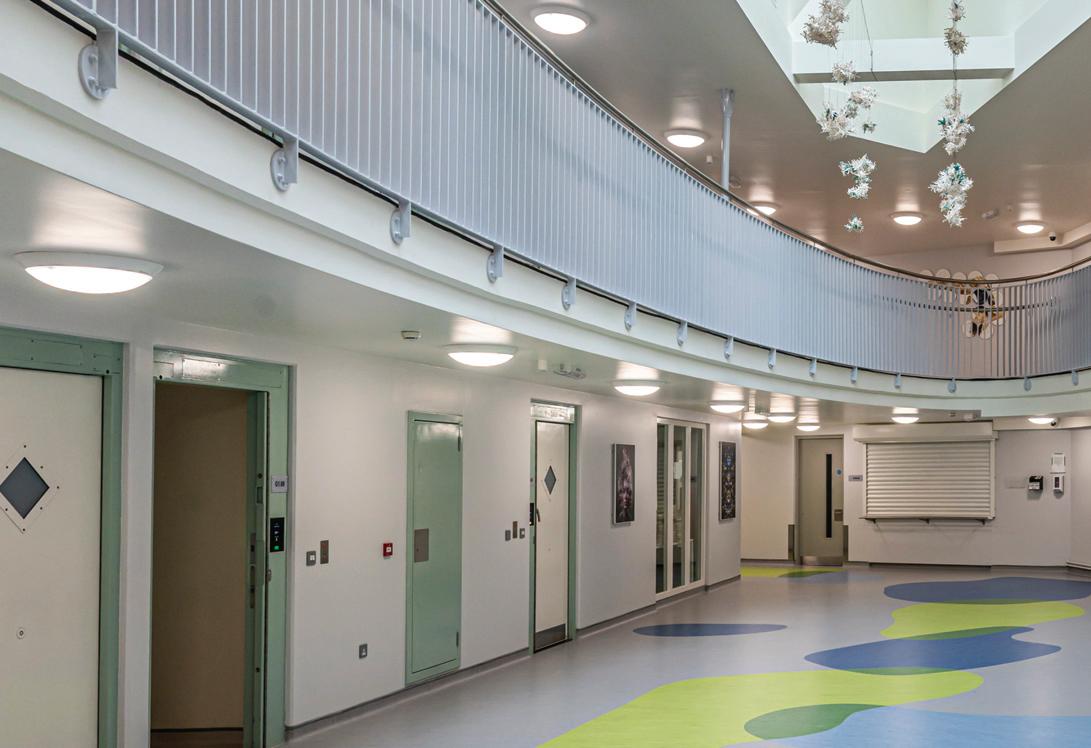
As we re-enter the building, prisoners and staff greet the Governor. He responds on a first name basis. If teleported into the centre of the oval atrium from the outside world, it might be difficult to immediately determine the exact function of the facility in which you had found yourself. The clinical atmosphere betrays the fact that it is a public facility. Perhaps a modern hospital, a cancer treatment centre, or a care facility.
Well-lit and spacious, it creates an ambience which blunts the reality.
Gentle curving white interior walls are adorned with artwork from students at the Limerick School of Art and Design. A large atrium invites sunlight to spill in, illuminating both levels of the wing. An internal safety net, a ubiquitous feature of prisons worldwide, is conspicuously absent. Vibrant splashes of colour break up the monotony of the floor.
Given a choice of incarceration in one of the State’s prisons, Limerick Female Prison would inevitably be most people’s selection. However, even an aesthetically pleasing prison is still a prison, and no amount of architectural camouflage can change that the women here exist behind locked doors, sometimes in solitude for up to 23 hours a day.
Just inside the prison walls, accompanied by a young Irish Prison
Service (IPS) press manager, stands an archetypal prison officer; a steely exterior with a deadpan delivery. A native of County Cork, with an accent to prove it, Andrew McCarthy is Governor of Limerick Female Prison.
Joining the IPS in 1987, McCarthy was stationed in Mountjoy Prison for a very short period before transferring to Cork Prison, where he remained for almost three decades. “I had some of the funniest days of my life in Cork Prison,” he recalls. “We had the banter; it was absolutely brilliant. I was with between 25 and 30 prisoners in a small workshop, and never had an ounce of bother. Those prisoners rarely, if ever, returned because, for the first time in their lives, they had structure and they developed a work ethic.”
In 2016, he moved to Limerick Prison with the intention of returning to Cork, but found: “The challenges, and the camaraderie with the staff and with the prisoners here is second to none in Limerick.” As such, rather than a 12minute commute, he opted to stay and “finish my time out here”.
Until McCarthy’s appointment, Limerick Female Prison did not have a standalone governor. With no governor and inadequate, overcrowded, and decrepit facilities, the female prisoners lacked access to the provision of many therapies and activities until the completion of the new prison.
Describing the old female prison as “a Dickensian facility”, McCarthy contextualises the construction of the new building. “What we wanted to create here, and what we put a lot of thought into, is a safe environment for the women so that when they go into


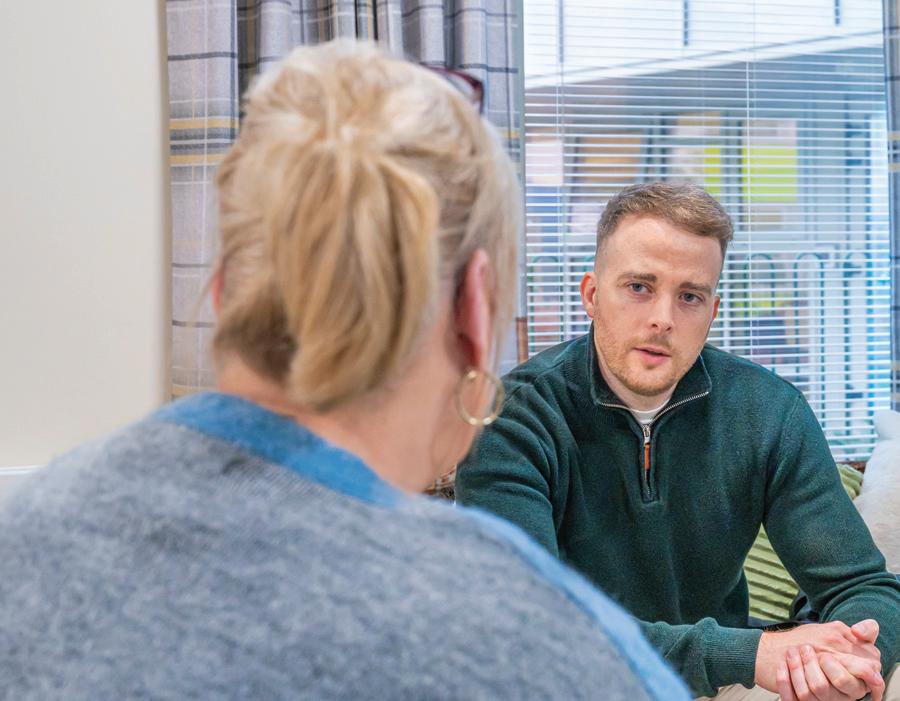
their rooms at nighttime, it is their safe place. Everything we do is for the good of the women in our custody. By doing what we are doing, it is also making conditions better for the staff.”
Tackling the challenges faced by prison staff in the course of their careers, McCarthy is plainspoken. “Working in a prison can be one of the most rewarding jobs because it can be tough, but when you see people come in the state they do and then you watch them leave as a better person – many of them,” he says.
“On the other hand, you will have challenges along the way. It is not nice for a member of staff to check a cell at nighttime and to see that a prisoner has taken their own life inside the cell. No matter how good you are, or how tough you are, you take that home with you. One of the bonuses for me being in Limerick is that I have a long drive home in the evening, so the job is gone by the time I arrive.”
Working in a female prison is different, the Governor asserts. “A raised voice can trigger a lot of emotion in here. You will very rarely hear a raised voice from a member of staff in here because we cannot have the trauma experienced by these women being triggered.
“Most of the women that come in here have suffered some form of trauma in the past, whether physical assault, sexual assault, or coercive behaviour, there is a whole realm of different forms of abuse and every one of them are
represented in here. We needed to put a plan in place to help the women cope both inside prison and outside. For the moment, we have it right,” the Governor comments.
“We went through years with a onesize-fits-all approach in the Irish Prison Service. Male and female prisoners were treated the same. In reality, it does not work like that. The female need is different from the male need. Though I am not saying that male prisoners have not experienced trauma, because many of them have.”
Now, Limerick Female Prison offers a wide range of services to prisoners, from trauma informed education courses and psychology, to rape crisis intervention. “We implemented the trauma informed practice, and Bedford Row Family Project ran it for us and brought in outside agencies, such as ADAPT Domestic Abuse Services,” McCarthy outlines, adding: “We found that after a few weeks, a lot of the emotions were coming out when the women went back to their cells. As staff, we had to deal with that. We have ADAPT providing training to our staff now so that they are fully capable of dealing with that challenge.
“We also invited Coolmine Therapeutic Community in for one day a month. Coolmine is preparing the women for residential treatment at the end of their sentences. We address the trauma sphere on the inside and begin addressing addiction challenges, a process which is then completed on the outside with residential treatment delivered by Coolmine.
“For the first time ever, in Limerick, we
are addressing the full spectrum of challenges faced by the female prisoners. We might not see instant results, but in six to 12 months, we anticipate drastic results in terms of reduced recidivism. While it will never totally dissipate, we are hoping that the work we are undertaking will ensure that many of these women will not return to prison.”
Beyond the centre are the enhanced prisoner suites which resemble immaculately kept studio apartments. Here we meet Martina. Martina is a life sentence prisoner who is 12 years into her sentence. In effect, Limerick Female Prison is her home.
“I am 11 years and two months in Limerick. I was several months in the Dóchas Centre. I knew I was coming to Limerick, and you hear so many bad things – because this was my first time in prison – about Limerick Prison. ‘Oh, it is a real jail,’ people said. Coming to the gate was a daunting experience to say the least because I had all these images in my head, but I would say that in less than 24 hours it was all alleviated,” she explains.
At that time, she was a second-year undergraduate student of applied social science and community work degree at University College Cork, Martina anticipated that her education would be cut short. “When I arrived, the head governor, Governor Kennedy, asked if I had any concerns and I said that I would like to continue my studies. Straight away he told me to go to the head teacher. That has been ongoing now. I am just starting my social science master’s degree, but I received a postgraduate diploma in psychology recently.”
Discussing the most significant challenge of coming into prison for the first time, Martina recounts: “From my own experience, aside from the guilt, it was the loneliness. That is why I keep so busy, to get rid of that loneliness. By night time I be exhausted. I do 30 hours of study a week on top of everything else. I treat it like the outside and keep busy all the time.”
Speaking to the female experience of prison, she suggests that “women have different emotions; we express our emotions more” whereas, she contends that through interacting with male
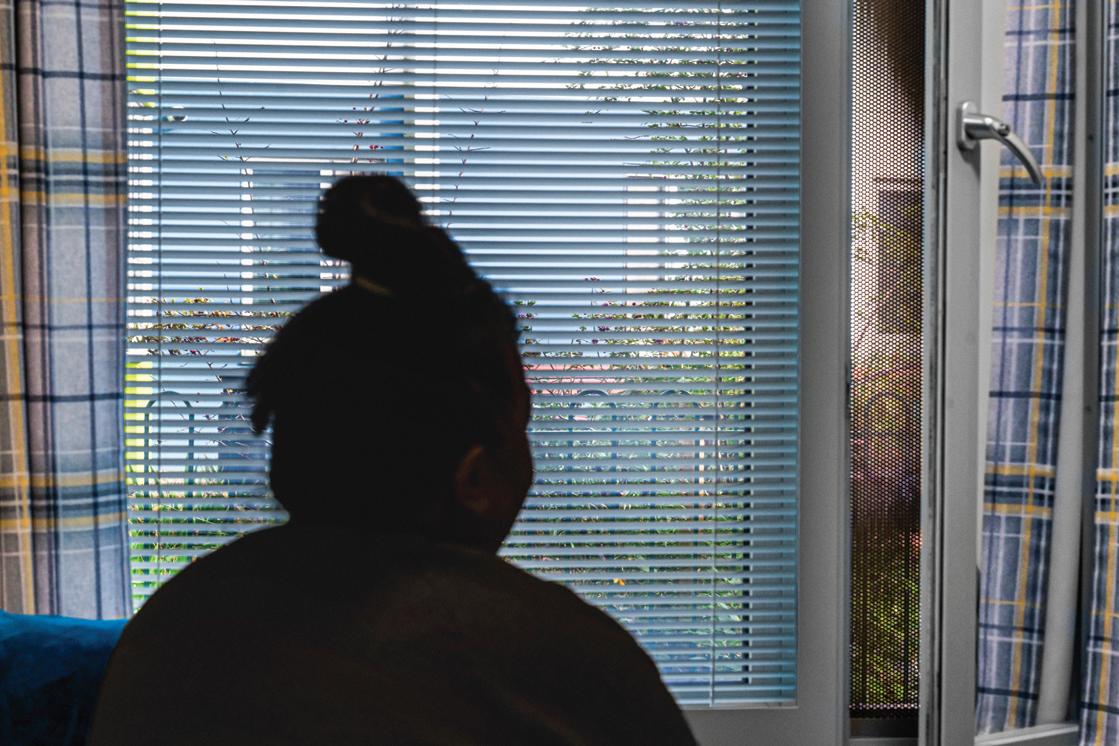

“We have windows to look out. It is like, ‘go to the window, Rachel, you can actually breathe now.’
To me, that is huge.” Rachel, female life sentence prisoner
prisoners the opposite tends to be true for men. “We [women] cannot hold back. It is innate. It is the way we are. I know that the governors have taken that onboard and that is why they have brought in so many different programmes for us. Outside of general studies, there are several different programmes going on here; domestic violence, the rape crisis counsellor, and a gynaecologist who comes in to do group discussions with us.”
Discussing her future, Martina indicates that she has “always had hope”, adding: “I am 12 years in, and I am doing a life sentence. But I just treat this as my home now. I know that I am in prison and people say there must be something bad. I can genuinely tell you that the day I came to prison it changed my life forever. I see the effort that the staff make – most of the staff. I could not ask for better.
“Several years ago, there was a time when I felt very low – I had suicidal thoughts, I was arranging it in my head – and Ms Crowley and another female officer, Ms Dwyer helped me through that. I could go to them. I will always be indebted to the staff. Always.”
Discussing moments of loneliness and frustration, or coping with unwelcome
news from her family outside, Martina is candid: “I sit back and say, ‘well look, this is my home for now.’ I do not know how long, and I do not think about it. It is better to not think about it and focus on what is happening to me now. I will be focused on my studies for the next eight months and then I will focus on whatever is next. Prison allowed me to face a lot of my challenges. It challenged me and I needed it.”
Next door, Martina’s neighbour is a Cork woman, Rachel. “This is my third [time in prison], but I would not have been in here since 2010,” she begins, adding: “When I came in, I was all over the place in the old jail, before we came over here. The statement I used when I was in the old jail was that you leave your dignity at the gate, and you collect it on your way back out. This [new facility] is bigger, open, and nicer.”
Elaborating on her impression of the new female prison, Rachel is reflective: “When I came over here [to the new prison], I was asked a question about the new building. I was doing a group [session] and we had to pick out pictures. So, I picked out an oldfashioned picture of someone looking
out a window. [The coordinator] asked what the picture meant to me. ‘For me,’ I said, ‘breath.’ I can actually breathe. We have windows to look out. It is like, ‘go to the window, Rachel, you can actually breathe now.’ To me, that is huge.”
Four years into her life sentence, the Cork native discusses her experience of fellow prisoners coming and going. “It can be challenging when you hear that people are going home. It can be. But I just try to park it. I park a lot of things. That is my way of coping and how I get through every day. I know I am in here for a crime, so I am going to use it [the time] to further my education. I go higher and higher.”
On a weekly basis, Rachel works two days in the laundry – Wednesdays and Saturdays – while studying ICT, business studies, and maths. On top of that, she is a Red Cross facilitator and a Listener, a role she believes is “really needed in prison”.
Delivered by Samaritans volunteers and supported by the Irish Prison Service, the Listener scheme is a peer-support programme which aims to reduce instances of suicide and self-harm. Specially selected by the Samaritan volunteers, prisoners are trained to offer confidential emotional support to fellow prisoners who are struggling to cope or feeling suicidal.
“People coming in for their first time, or even if they are here a while, are vulnerable. I can understand where the vulnerability comes from. At the moment, I am with a girl and trying to help her as I go along, letting her know that she is not alone and there is support in here.
“For me, personally, when I came in, I was not looking for any support in that I did not know how to go about it. But I am here four years now, I have found out who I am, what kind of a person I am. But I worked hard on myself to do this.”
Looking as far ahead into the future as she allows herself, Rachel concludes: “My personal experience of coming to jail, with the officers and governors, [is that] they are very respectful. Very. And I am very respectful back. You can lean on them if you have a problem; we all have certain officers that we pick.
Governor McCarthy took over as head governor and the courses that he has brought in for the women, including myself, are just fantastic.
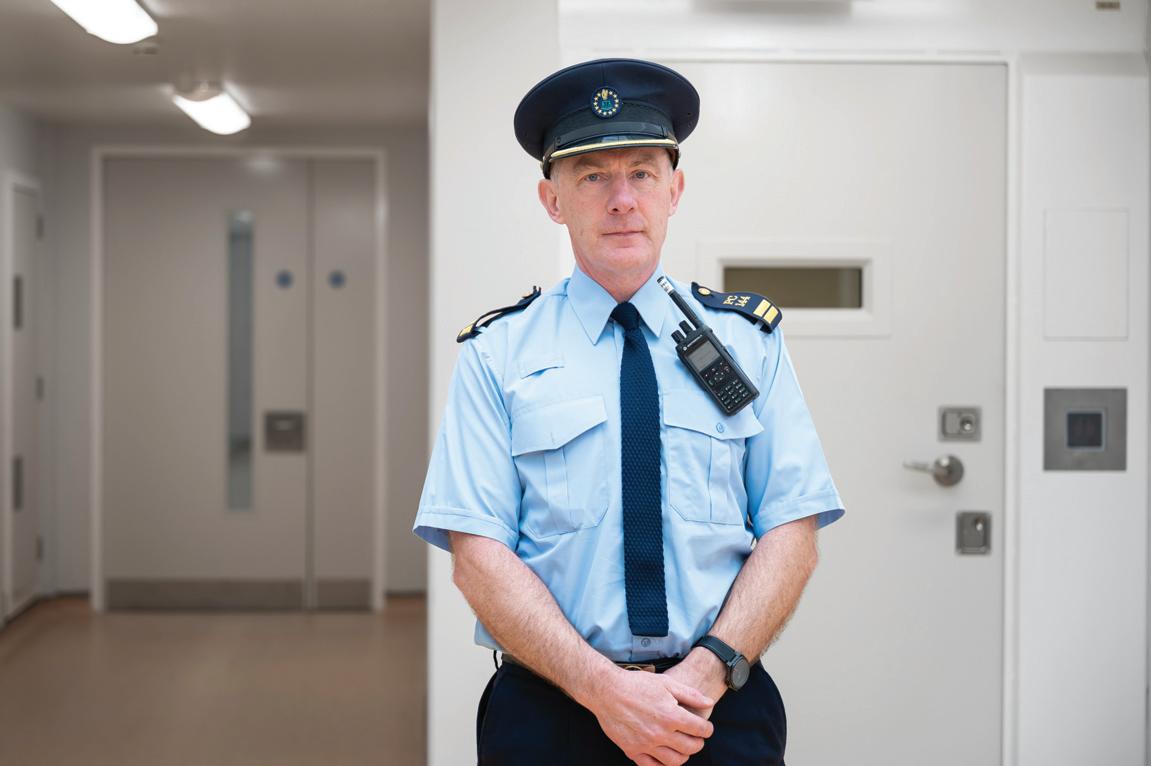

“It is not our job to punish people. Punishment enough is coming in these gates and hearing a steel door close behind you every night at 19:00.”
Martin Breen, Chief Officer
“The course that is running with ADAPT about domestic abuse and sexual abuse is fantastic for the girls, even for myself, because it brings you right back. Tomorrow is our last day so the girls will receive a certificate. That will boost their confidence. Plus, Governor McCarthy has a lot more courses coming up for the women in here, again including myself.”
Alongside Chief Clarke, Martin Breen is the Chief Officer in charge of Limerick Female Prison. “We supervise the dayto-day running of the new wing,” he begins, explaining: “We were both brought in specifically for the new wing. I spent the last five years in PSEC [Prison Service Escort Corp] and he [Chief Clarke] was in Portlaoise.”
Having joined the Irish Prison Service in 1989, the Laois man spent his first 10 years in Mountjoy Prison, before transferring to Limerick Prison in 1999. After a year working in Portlaoise Prison, he returned to Limerick in 2003 where he ascended to Acting Chief Officer. In 2018, he was promoted to Chief Officer and spent five years in charge of the Munster region with the
Prison Service Escort Corp (PSEC), liaising with all court escorts from Cork and Limerick prisons around the rest of Munster and the State.
Quietly spoken and quick to smile, Breen’s 33 years of experience working in the Irish Prison Service are etched on his face. Having spent many years in the old female prison, he had always intended to return to Limerick. “Having witnessed this place being built, I was looking forward to coming in here. It is one million times better than where we came from. It is a fantastic facility. I am back in here in Limerick for the foreseeable,” he remarks.
Reflecting on the old prison, he emphasises its unsuitability as both a working and a living environment.
“Now, you have seen the facility we have here. We have 56 beds and we have only one double cell at the moment. It is working. There is an air of calm around the place. It is noisy when it is unlocked; the noise travels. But there is an air of calm.
“The biggest challenge, or the biggest complaint we had from the women for the first two weeks when they first came over was that they were lonely.
They [the prisoners] were in rooms on their own; they had never been in cells on their own. They were used to being doubled up and trebled up in cells. It was our [the staff’s] biggest worry too; that the loneliness would be too much to bear for some of them. The staff, to their credit, kept a good eye to make sure that everyone was safe, day and night, and the checks were done.”
With regard to his role as “the Governor’s eyes and ears”, he explains:
“There is an Assistant Chief Officer in charge of the wing. If he has issues that he cannot deal with, he comes to me. If I cannot deal with them, I go the Governor, and vice versa. I have responsibility for the staff and the prisoners. I take that seriously. I look out for everyone.”
Describing the job as having evolved virtually beyond all recognition in three decades, he articulates his guiding principles: “We are not here to judge people. It is not our job to punish people. Punishment enough is coming in these gates and hearing a steel door close behind you every night at 19:00.
“While we are here, we look after them [the prisoners] as best as we can. In the 33 years, my number one rule has always been: be fair to people. Treat people the way you like to be treated yourself. I talk to the women on the landing the same way as I talk to you. Treat them as normal people. If they are entitled to something, give it to them. If you promise you are going to do something for someone then do it as best as you can. Do not make promises you cannot keep.”
Discussing the specific needs of female prisoners, the Chief Officer explains: “They are away from their children, their families, and their husbands. We also must remember that most of the women here are coming from experiences of domestic violence, sexual violence, physical violence on the streets, they are being pimped, they are trafficked into the country to steal or for prostitution. They have a distinct set of problems than the male prisoners. We must be cognisant of that.”
Naomi O’Dwyer, the Integrated Sentence Management (ISM) Coordinator in Limerick Female Prison, radiates the rare energy of someone
who genuinely loves their job. An ISM Coordinator is a prison officer who works with prisoners to provide a sentence plan which incorporates initial assessment, target setting for engagement with a range of prisonbased services, and periodic reviews to measure progress.
Achieving this requires collaboration with prison management and the prison-based multi-disciplinary team, comprising the psychology service, the education service, the work training service, the chaplaincy service, the Probation Service, the resettlement service, the addiction service, and the prison healthcare team.
“Generally, once a prisoner is sentenced, we meet with them and set up a sentence plan for their time here, what we can achieve with them, and setting up supports in the community afterwards,” the Limerick native explains.
“Another element of the job is getting them [the prisoners] out on early release schemes, if we think they are suitable, where they can go out and work in the community three or five days a week. I must have very strong links with external services as well as internal services. I was working in Cork Prison for the last four years, with the male prisoners. I would have set up a lot of connections in Cork which I have brought into Limerick Prison for the females; we have a significant percentage of women from Cork in Limerick Female Prison.”
“I love it. I love working with the women. A female can achieve more with a woman; spending more time with them and supporting them better. There are different boundaries when you are a woman working with male prisoners.”
Elaborating on this theme, O’Dwyer articulates her perspective than an allfemale prison is much more complex than an all-male prison setting. “When you walk into a female prison, it is louder, it is more vibrant. Women need more things every minute of each day. Much of this comes down to emotional support.
“Female prisoners require more attention because they are emotionally tied to the home. When they come in here, it is a lot harder for them. I am not saying that men do not miss their children, but the women carry more

guilt around when they come in. Part of the research I did a few years ago found that when men come in, they tend to leave their baggage at the gate. They come in, do their sentence, and put their head down. Women do not tend to do that.”
Governor McCarthy echoes this sentiment. “When a women comes into custody, she is basically forgotten about,” he comments, before detailing: “The first thing a man does when he comes in is ring his partner, wife, mother, or sister, asking for clothes and money. Within a few hours the women are up to the gate. When a woman comes in, often no one answers the phone. She is left on her own. She has the worry then. Are my children being taken care of? Will I have a house when I get out? Is the mortgage being paid? Is the rent being paid? The man does not have that, the woman does, and we must deal with all that. That is reality. Women are basically a forgotten species when they come to prison. They are on their own.”
On the new prison infrastructure, the ISM Coordinator believes that it has been mutually beneficial for prisoners and staff alike. “For the prisoners alone, it is amazing to have the space, the light, everything they have here. The difference is amazing. The mental health of staff and prisoners is hugely improved because of the working conditions.
“I am still getting used to it because I was in the old female prison for 15 years. It is a very small area; literally two corridors for all the prisoners and
the staff. It just makes it much harder, especially for staff because we are on top of each other, getting on each other’s nerves. When we are spaced out like we are now, it makes life a whole lot easier for everyone. It is running really well,” she concludes.
Completing our visit and speaking briefly on ambitions for his time as Governor of Limerick Female Prison, McCarthy provides a succinct response. “The simple answer is empty beds,” he insists. “If the same people are not coming back time and time again, that means we are doing our job.”
Indicating that he wishes to continue the work he has undertaken, expanding on the courses being made available to prisoners, he concludes: “I want to make Limerick Female Prison a university of life rather than a university of crime. That might sound clichéd but that is what we are trying to do here.
“You and I cannot fathom the chaotic lives these women have lived. I work with them every day and I still cannot get my head around some of the trauma that they have to deal with. Maybe it is a reflection on society. It is sad and you do feel sorry for many of them, but we just have to do our job and get on with it as best we can.”
*The names of the female life sentence prisoners have been changed.

Just over five years ago, An Garda Síochána was reeling from a series of significant controversies and failings that resulted in the Government appointing the Commission on the Future of Policing in Ireland to recommend major reforms of the organisation.
The Commission, which was chaired by the former Commissioner of Boston Police Kathleen O’Toole, outlined a series of measures to improve governance, ensure gardaí are supported in the work they do, enable policing to be information-led, and make sure An Garda Síochána was adaptive and innovative.
Just weeks before the publication of the Commission’s report, the Government appointed Drew Harris as Garda Commissioner following an international competition by the Policing Authority. Harris was mandated by government to implement its policing reform programme based on the Commission’s report, A Policing Service for Our Future
Fast forward five years and much has changed in An Garda Síochána. The
pace and scale of delivery of the reform programme has resulted in better equipment and systems; enhanced health and welfare supports for gardaí; improved services to the public, particularly the most vulnerable in society; and a range of measures to increase governance and accountability.
An Garda Síochána is also more open and transparent, has a much stronger emphasis on the importance of ensuring the human rights of everyone they come into contact with, and is more responsive to feedback from stakeholders.
For the public, there has been a strong focus on preventing and detecting key crimes such as domestic abuse, cybercrime, and drug dealing through the expansion of specialist units. For example, protective service units have
been set-up in every Garda division with 300 highly trained specialist gardaí investigating domestic abuse, sexual violence, and child abuse.
Following feedback from gardaí, there has been a number of measures introduced to support them. This has included an increase in welfare supports, a new operational uniform, the largest fleet in the organisation’s history, and more safety equipment.
There has also been a new, more transparent promotion system, and a large increase in the number of frontline supervisors.
In terms of information-led policing, major new ICT systems have increased efficiency and effectiveness, enhanced the safety of gardaí, and strengthened governance. These include a roster and
duty management system that enables supervisors to better deploy resources when and where they are needed most; a new nationwide dispatch system that improves the efficiency of how gardaí respond to calls for service from the public and enhances the safety of gardaí by giving them detailed information on potential high-risk calls; and an investigation management system that enables digital management of all material relating to an investigation.
In addition, over 13,000 gardaí have the world-leading Garda mobility app giving instant access to a wide-range of policing information, as well as the ability to dispense fixed charge notices at roadside. An Garda Síochána also has access to real-time police data and intelligence from 30 European countries after connecting to the Schengen Information System.
Organisationally, the most ambitious structural change programme in the history of An Garda Síochána is being implemented. The Operating Model will see a more localised policing service delivered based on local demand.
Up until recently, An Garda Síochána’s structure was the same as when it was founded 100 years ago. The Operating Model will enable An Garda Síochána to respond to the significant changes to Irish society and the nature of crime now and into the future. Seven of the 19 Garda Divisions are already fully live with the new structures, with the other divisions at different stages of advancement.
To ensure the highest standards of behaviour within An Garda Síochána, an Anti-Corruption Unit has been established. While the main focus of the unit is on compliance, it also investigates any potential misconduct by Garda personnel.
And there are more changes to come. Body cameras for Gardaí will begin to be trialled by mid-2024, a recruitment and retention strategy is being developed, and initiatives to promote community participation in policing are advancing.
Of course, in the midst of all this change was the Covid-19 pandemic. The delivery of a policing service in a national emergency based on An Garda Síochána’s ethos of policing by consent demonstrated the value of the organisation’s tradition of communityfocused policing.

“This has not been change for change’s sake. It has been focused on enhancing the service we deliver to the people and the State, and supporting gardaí in doing their jobs efficiently and effectively.”
“An Garda Síochána has delivered a significant amount of change over the last five years under A Policing Service for Our Future. But this has not been change for change’s sake. It has been focused on enhancing the service we deliver to the people and the State, and supporting gardaí in doing their jobs efficiently and effectively,” says Deputy Garda Commissioner, Strategy, Governance and Performance, Shawna Coxon.
The public appear to agree. At the height of the scandals and controversies, public trust had fallen considerably and the organisation was seen as outdated. Now, according to the 2022 Garda Public Attitudes Survey, An Garda Síochána has one of the highest public trust ratings of any police service in the world at 90 per cent.
In addition, 75 per cent of people say they are happy with the Garda service provided to them locally, 73 per cent believe that An Garda Síochána is
modern and progressive, and nearly 70 per cent say it is well-managed.
“However, despite all this modernisation and positive change, what will not change is our approach to policing. Our key strength throughout our 101-year history has been the strong connection we have with communities. If anything, we want to deepen that connection over the coming years,” adds Coxon.
W: www.garda.ie



A new bill that aims to place the principle of prison as a last resort in the sentencing process has moved a step closer following the publication of a policy paper on restorative justice.
Publishing Promoting and supporting the provision of Restorative Justice at all stages of the criminal justice system, Minister for State with responsibility for Law Reform and Youth Justice, James Browne TD, said that evidence of an almost 50 per cent reduction in restorative justice cases in the three years since 2019 highlights that “Ireland is yet to use restorative justice to its maximum potential”.
The policy publication is in response to the 2020 Programme for Government commitment to “work with all criminal
justice agencies to build capacity to deliver restorative justice, safely, and effectively”.
Restorative justice is defined in the Criminal Justice (Victims of Crime) Act 2017 as any scheme through which, with the consent of each party, a victim and an offender or alleged offender engage with one another to resolve, with the assistance of an impartial third party, matters arising from the relevant offence or alleged offence.
In Ireland, restorative justice is usually utilised with lower tariff offences as
part of diversion from prosecution or conviction. Significant geographical gaps in restorative justice service provision, and gaps identified at certain stages of the criminal justice process are not aligned with repeated expression from the judiciary for greater restorative justice options.
Government ambitions to increase the number of referrals to restorative justice services have yet to be realised. Use of the practice is now far lower than pre-pandemic levels, indicating that annual referrals in the last three years are almost half the figure recorded in 2019.
Excluding youth cautions, figures for which are not available for 2022, recent figures prepared by Restorative Justice Strategies for Change (RJS4C: Ireland) estimate 721 cases in 2019 compared to 340 in 2020, 395 in 2021 and 413 in 2022.
A review of the Criminal Justice (Community Sanctions) Bill 2014, which commenced in 2020, aims to place the principle of prison as a last resort on a statutory footing, “and to outline the full suite of community-based sanctions available to the judiciary during the sentencing process”.
Work to prepare the general scheme of the Bill is expected to begin once the review is approved.
“Following the agreement and publication of this policy paper on restorative justice, the Department of Justice is to examine the costs associated with next stages of the work. This will consist of examining current funding provisions with a view to considering the need to increase such funding as appropriate, particularly in light of the potential impact of the policy review of the Criminal Justice (Community Sanctions) Bill 2014.”
In December 2021, ministers of justice of the member states of the Council of Europe adopted the Venice Declaration, which supports making restorative justice available with all offences and at all stages of the criminal justice process.
A previous report carried out by the National Commission on Restorative Justice in 2007 estimated that between 3,265 and 7,250 cases of adults before the criminal courts alone could take place in Ireland every year if restorative justice practices were widely applied, resulting in an estimated 290 to 579 persons being diverted from a custodial sentence.
The outcome could be an estimated reduction of between 42 and 85 prison spaces per year, leading to a cost saving of between €4.1 million to €8.3 million.
Following a consultation with stakeholders on the most appropriate choice to develop a successful restorative justice service, which delivered four options for the delivery of restorative justices in Ireland, option one, to “strengthen existing capabilities within current structures”, was selected.
Commenting on the policy paper publication, Minister of State Browne said: “In light of the clear and positive benefits of restorative justice to victims, offenders, and the State, and mindful of the opportunity to increase current levels of provision of restorative justice services, the path forward that this paper identifies – to strengthen existing capabilities within current structures –provides the best prospect to make the most significant impact with the greatest efficiency.”

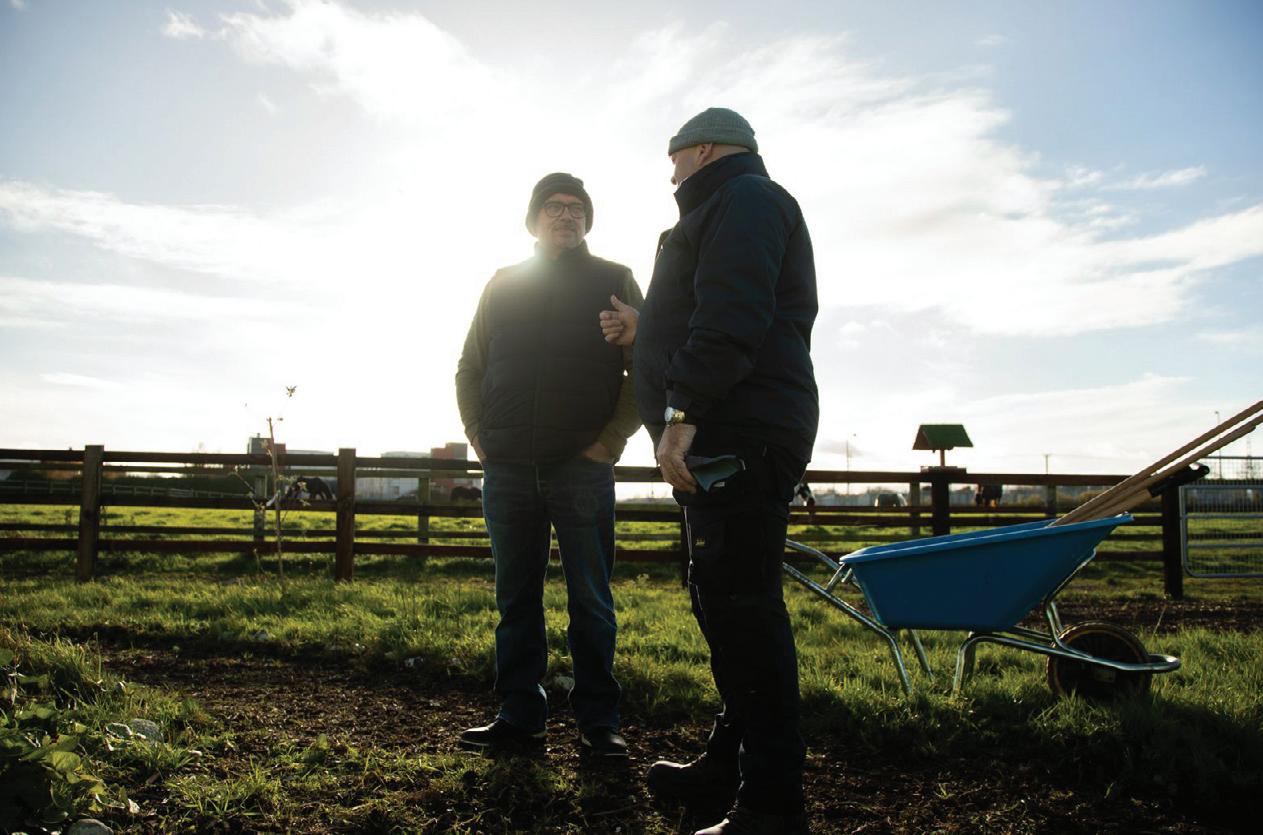
Probation Service Director of Operations, Fíona Ní Chinnéide outlines ambitious plans to increase the use and effectiveness of community service to reduce reoffending.

Community service is a communitybased sanction imposed by the judge as a direct alternative to prison. People subject to community service are required by the courts to perform between 40 and 240 hours of unpaid
work for the benefit of the local community. The scheme has been operational in Ireland for more than 40 years, since the enactment of the Criminal Justice (Community Service) Act 1983 and it is managed nationwide by the Probation Service.
There is broad national and international policy consensus that community sanctions, such as community service, are often more effective than custodial sentences in reducing reoffending. In Ireland, 75 per cent people who complete community service do not reoffend within one year. However, recent statistics from the Probation Service indicate a concerning 42 per cent reduction in the use of community service in Ireland over the past five years.
Fíona Ní Chinnéide, Director of Operations (Prisoners and Rehabilitation) in the Probation Service has strategic responsibility for the management of community service in Ireland. Appointed to the Service in 2022, she is the former Executive Director of the Irish Penal Reform Trust and has spent much of her career advocating for changes to penal policy which are focused on effective noncustodial responses to crime.
Ní Chinnéide firmly believes in the value of community service in supporting public safety and is determined to address its underutilisation as a sanction in Ireland.
“Evidence tells us that community sanctions are a more effective response to less serious offending. Community service ensures that people who have offended still maintain their connections with the community, while being held accountable for the harm they have caused through crime. There is also a highly beneficial ‘community payback’ element to community service which offers individuals who have committed offences the opportunity to repair damage to the wider community by undertaking unpaid work.”
In discussing the marked reduction in the use of community service in recent years, Ní Chinnéide acknowledges that “this is a trend witnessed internationally”. “It has been exacerbated by the Covid-19 pandemic which saw widespread disruption to community service sites due to health and safety restrictions,” she says.
“However, it is also due to a lack of awareness and public confidence in the efficacy of community sanctions in making communities safer through reduced reoffending. This is something we are eager to see change.”
In 2021, the Probation service conducted a comprehensive Evidence Review of Community Service which
examined community service policy, models of practice, research, and innovation in Ireland and internationally. This was subsequently followed in 2022 by an operational review which examined how the existing community service scheme is currently managed nationwide.
In addressing its key findings, Ní Chinnéide emphasises that while the principal finding of the operational review was that the community service is operating as intended, it highlighted challenges in how the scheme is organised and the extent to which it is understood by key stakeholders, which is diminishing its overall impact.
“Looking to the future, our strategy will focus on embedding and advancing the principles of desistence, restorative justice, and social justice across community service policy, practices, and structural innovations. This approach directly supports recommendations included within the Review of Policy Options for Prison and Penal Reform 2022-2024, which was published by the Department of Justice in 2022 and complements our existing values of practice within the Service. We are confident it will ensure the best possible outcomes for our clients and wider communities.”
The operational review also identified the need to address problems specific to rural areas through a partnership approach and to make greater use of individual community service placements to better meet the diverse needs of people, for example gender, disability, or other protected characteristics. It also highlighted the need to more effectively engage with key stakeholders, such as the judiciary and legal representatives, and build greater public awareness of the benefits of community service.
Part of this will involve promoting the many positive experiences of host organisations and people who have participated in community service and who have made lasting changes to their lives for the betterment of themselves and the wider community.
One such example is Tom who, last year was sentenced to 240 hours of community service in lieu of five months in prison and he completed his hours at Cherry Orchard Equine Centre in County Dublin. Tom had been out of work for several years before his conviction but describes his time in
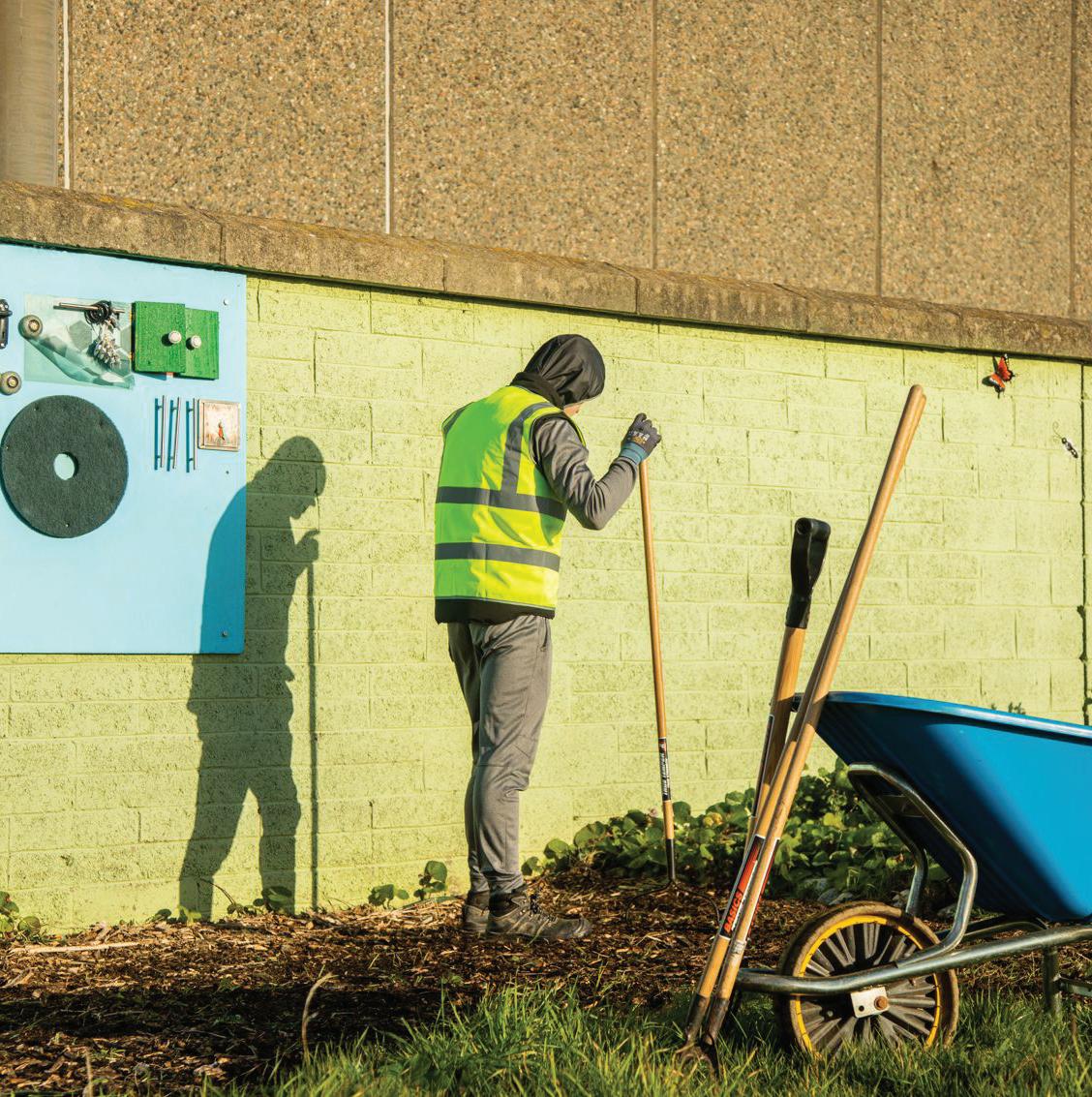
Cherry Orchard as “a gateway back into the workforce”. Having to report for work at the centre and turn up regularly, and spend all day on the job, got him back into the habit of working: “I loved my work, but I could never see myself getting back into employment… doing my community service hours changed that.”
Tom explains that completing his community service gave him a very strong sense of giving back to the community for the harm he had done: “I felt that something good came out of my mess that I was able to give something back to society and it got me out of a deep depression that I was heading in for.”
Tom’s experience demonstrates the many positive outcomes, both personal and societal, that can be achieved through community service and the Probation Service is seeking to ensure Tom’s experience is replicated for all community service participants across all counties.
In early 2024, the Probation Service will publish its three-year implementation plan which will chart the new directions for community service into the future. The plan addresses five critical work streams identified within the operational
review which include: communications and partnerships, organisational structure and governance, business development (including sites and facilities), data and evaluation, and process.
Ní Chinnéide, who will oversee the implementation of the plan, has a clear vision for the future of community service “as a robust sanction, which is used appropriately and consistently across all courts nationally, both rural and urban, and which supports a demonstrable reduction in offending, while promoting community payback and community reintegration”.
Partnership with communities across Ireland is essential to the realisation of this vision and the Probation Service is keen to connect with communities and organisations nationwide to discuss opportunities for future collaboration.
To speak to someone about how community service can benefit your community or organisation, please contact:
T: 01 817 3600
E: psinfo@probation.ie W: www.probation.ie


from 173 to 217, a move that will address Ireland’s status as the European state with the lowest amount of professional judges per capita.
In February 2023, then-Minister for Justice Simon Harris TD brought forward the Courts Bill 2023, which proposes increasing the number of sitting judges in the Court of Appeal, High Court, Circuit Court, and District Court, reflecting the recommendations made by the Report of the Judicial Working Group and the OECD report Modernising Staffing and Court Management Practices in Ireland
Harris stated: “We intend to increase the number of judges in two phases, beginning with 24 additional judges this year and a further 20 judges subject to an assessment of the impact of the initial appointments. This will ultimately increase the overall number of judges from 173 to 217.”
The Courts Bill 2023, enacted in May 2023, confirms the Government’s plans to take the recommendations of the reports into account and increase judiciary numbers in the State. The changes will see the number of Court of Appeal judges increase from 15 to 17; High Court judges from 42 to 48; Circuit Court judges from 40 to 45; and District Court judges from 20 to 28.
Stating that the increases in the number of Circuit Court
and District Court judges is “particularly welcome”, the Oireachtas Library and Research Service (OL&RS) says that the Judicial Working Group’s (JPWG) report notes that the total number of ordinary judges rose by 21 per cent in the last decade, almost double the rate of the population increase of 12 per cent and largely in line with the increase of 24 per cent in public sector employment numbers. Despite this increase in the overall number of judges, the increase occurred entirely in the Superior Courts, which experienced a 76 per cent increase in judge numbers, while there was no increase in the District Court or Circuit Court in the last decade.
The need for the increase in the number of overall judges in Ireland is made plain by the EU Justice Scoreboard 2022. As is noted in the OL&RS publication, Increasing the Number of Judges in Ireland, the scoreboard recorded that in the four years recorded (2012, 2018, 2019, 2020), Ireland consistently records the lowest number of judges per 100,000 inhabitants in the European Union. Top of the pile, with the most judges per capita, are Slovenia, Hungary, and Luxembourg, while Denmark, Malta, and France are next to Ireland at the bottom of the standings.
Professional judges per 100,000 inhabitants, 2020
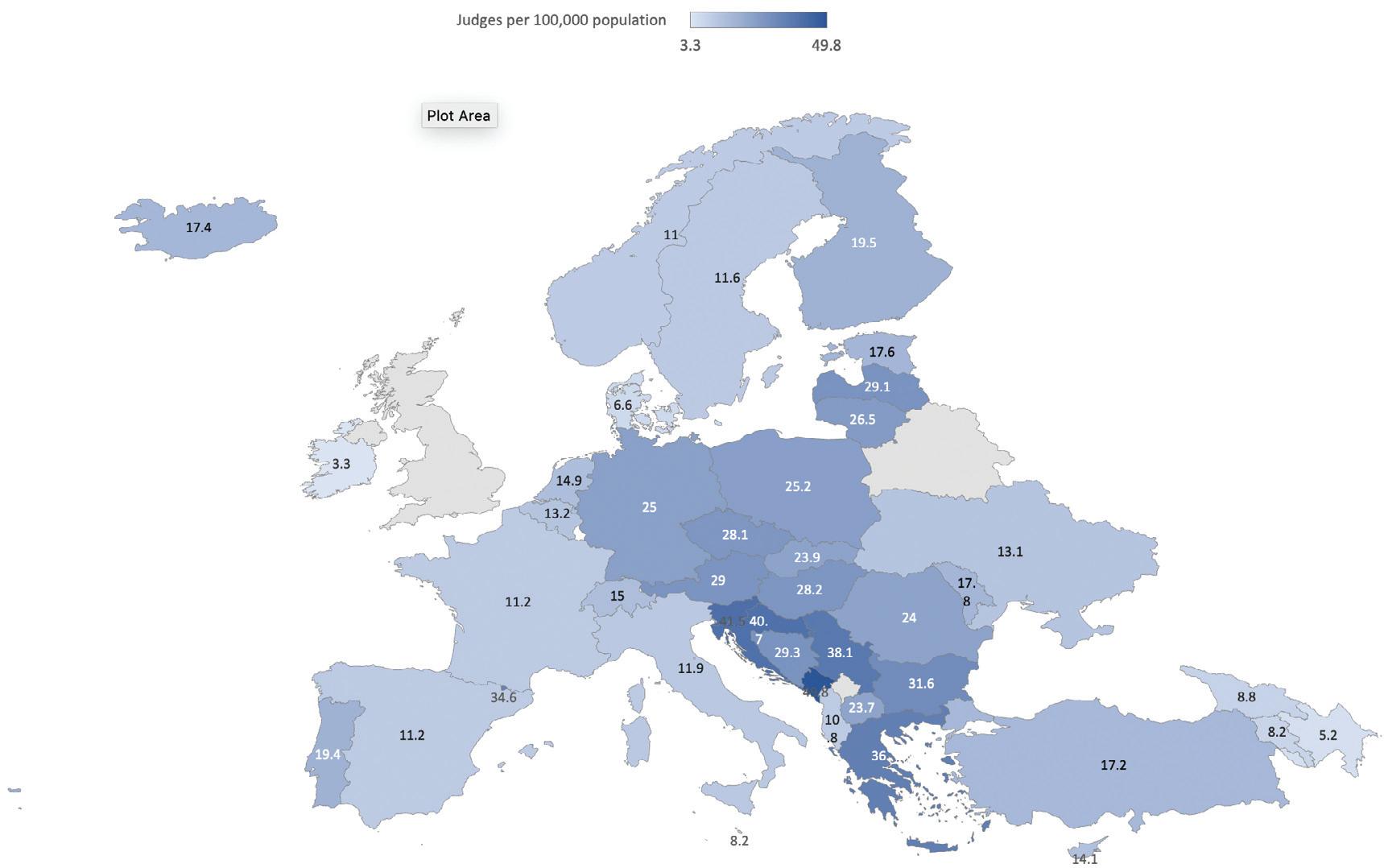
According to the European Commission for the Efficiency of Justice’s (CEPEJ) report evaluating European judicial systems, published in October 2022, Ireland has 3.3 professional judges per 100,000 inhabitants, making it the lowest of the states included in the ranking, with most having between 10 and 30 judges per 100,000, and only Scotland (3.7) and the North (3.9) recording similar figures. The European average is 17.6 judges per 100,000 people.
Prior to the publication of these figures, Ireland’s lack of judges per capita was already being remarked upon by European observers, with a 2021 European Commission report stating: “The number of judges remains low and the resources available for the training of judges appear limited. The number of judges per inhabitant remains the lowest in the EU, which could also affect the efficiency of the Irish justice system. While the Government has committed to review the numbers and types of judges needed to ensure the efficient administration of justice over the next five years, more immediate measures might address concerns also raised by stakeholders.”
The Government requested that the OECD undertake its research in order to compare the number of judges in member states, with the report that was returned
Source: CEPEJ
recommending an increase in the number of judges by between 36 and 108 extra judges. The assessment calls for more judges at every court level and identifies the need for an average minimum increase required of around 26.2 per cent. “This need may be exacerbated by the impact of upcoming legislative changes, such as the creation of new family law courts,” the OL&RS states.
As the Government came to terms with these issues, Minister for Justice Helen McEntee TD established the JPWG in order carry out an in-depth assessment of medium- to long-term judicial requirements, resulting in the group’s report, which returned 50 recommendations.
The key recommendations relating to the number of judges, which the Government has accepted, are that the recruitment of additional judges be split into two phases, with 24 judges to be recruited in the first phase and 20 in the second, making a total of 44 additional judges recruited. It is stated in the JPWG report that phase one should begin “as soon as practicable” and phase two before the end of 2024, with additional numbers in further phases to be determined by a review of judicial needs up to 2028, to be carried out in 2025.

As economies and communities adjust to the post-Covid world, policing and justice organisations are undergoing extensive transformation and reform. With that comes opportunity and challenges, none greater than attracting, recruiting, and retaining talent, writes Judith Crawford, EY Ireland Government and Public Sector Lead, Partner, People Consulting.

While they may be at different stages and levels of maturity, all organisations need to reflect on three key considerations:
Before planning to resource roles, organisations need to understand the capabilities they currently have and then ascertain what is needed to deliver for the future. Workforce planning is a
dynamic process that looks beyond the one-year horizon to five and 10 years to determine the capabilities needed to meet changing circumstances and emerging technology.
The World Economic Forum estimates that, to adapt to the new tech-enabled workplace, public sector workers will need to change around 40 per cent of their core skills in the next five years. This will see a need to not only upskill but reskill. This shift will not be limited to

“63 per cent of employees value connection between their role and an organisation’s purpose, over reward package”

Judith Crawford.
back-office functions but will include front line policing and justice staff, as new technology and tools are introduced.
We are seeing increased investment in the development of transferable skills across public sector organisations in a bid to ensure workforce agility and organisational resilience. Building a workforce with a suite of blended skills provides flexibility to the organisation, as well as providing varied career opportunities and ensuring staff feel productive and engaged.
With research showing 84 per cent of learners now prefer self-directed learning, there needs to be a shift to a more flexible approach that widens access to education, enabling people to learn at a time, place, and speed that suits them.
The well documented war for talent is only likely to intensify. For public sector organisations, this means an increased competition against private sector organisations with typically quicker recruitment processes and more flexible compensation. However, according to the EY 2022 Work Reimagined Survey, 63 per cent of ‘Gen Z’ employees said that, rather than compensation, they place a higher value on connection between their job and organisation purpose.
This is where public sector organisations can win out, showcasing a rewarding, purposeful and fulfilling career, where staff can make a tangible difference to people’s lives. Organisations are further maximising opportunities to engage with potential staff, streamlining recruitment processes and taking advantage of tools and digital accelerators to match candidate experience and expectations.
W: www.ey.com/ie/publicsector

The Government Legislative Programme for the 2023 autumn session contains within it four justice bills earmarked as priority legislation. The departments of justice and social protection have the joint second most priority bills, behind the Department of Housing, Local Government and Heritage.

The Coroners (Amendment) Bill is designed to ensure that four coroners “can continue to operate in the Dublin District” and that additional temporary coroners can be appointed to other districts as required. The Bill also aims to provide for the salaried coroners in the Dublin District.
While the Government states in its Legislative Programme, published in September 2023, that the heads of the Bill are in preparation, as of October 2023, no further progress has been reported. While this pace is not unusual or notable in a normal scenario, the Government’s own programme points out that the Dublin District will have to revert to just one coroner if the Bill is not enacted by February 2024.

The Defamation (Amendment) Bill aims to implement the recommendations of 2022’s Report of the Review of the Defamation Act 2009 and amend the Defamation Act 2009 in the process. Most notable among the recommendations of the report are the abolishment of juries in High Court defamation cases, the granting of jurisdiction to the Circuit Court to grant a Norwich Pharmacal Order, and the insertion of new anti-Strategic Lawsuits Against Public Participation (SLAPP) measures.
Pre-legislative scrutiny of the Bill was completed on 4 July 2023, with the Joint Committee on Justice publishing its report on 27 September 2023. The report contained within it 18 recommendations. Notably, it called for the removal of the proposal to abolish juries in High Court defamation actions “in order to make findings of fact and to make an indicative finding of an appropriate level of damages, where appropriate”. Further recommendations include the offer of training to judges with regard to SLAPP cases, which are defined as strategic and abusive uses of the legislation by a powerful entity or individual in order to deter public interest discussion, and that care is taken to ensure that anti-SLAPP measures align with the EU’s anti-SLAPP Directive.
Drafting of the Bill is now underway.

The Garda Síochána (Powers) Bill was introduced by then-acting Minister for Justice Heather Humphreys TD in June 2021, representing an effort by the Government to modernise and update policing in Ireland, with police powers to be consolidated, targeted reforms to be introduced, and new fundamental rights provisions to be included. The Bill is said to “have a strong focus on human rights”, for both the “rights of suspected or accused persons, as well as the human rights of all members of society”.
Measures in the Bill include: the introduction of a single power of arrest, increasing the scope of Garda arrest powers, but making the powers “subject to conditions to ensure the arrest is necessary in particular circumstances”; the placing of the Garda caution on a statutory basis; the introduction of a statutory right for an accused to have a lawyer present at their interview; the introduction of new Garda powers to compel a person to provide electronic device passwords when executing a search warrant; a requirement for written records of stop and search incidents; the drawing up of statutory codes of practice for Gardaí in using the Bill’s powers; and special measures for child suspects and suspects with impaired capacity.



The heads of the Sale of Alcohol Bill were approved in October 2022, with the drafting of the Bill starting in March 2023. The Bill seeks to codify the law relating to the sale and consumption of alcohol.
The report on the committee’s prelegislative scrutiny was published in March 2023. The committee heard from representatives of the Licensed Vintners Association, Give Us the Night, the Vintners’ Federation of Ireland, Independent Craft Brewers of Ireland, Music and Entertainment Association of Ireland, and officials from the Department of Justice in an effort to gauge views regarding the Bill that will create one single piece of legislation to regulate the sale of alcohol.
The committee’s report returned 27 recommendations, including the amendment of the Bill’s title to better reflect the broader impact of the legislation, the creation of a new type of venue license for dance venues separate from the seven-day publican’s license, and that consideration be given to the introduction of a form of ‘dry license’ for venues that are open during the night-time hours but not serving alcohol, along with hybrid licenses for venues that serve alcohol at certain times but wish to remain open
Throughout 2023 the Irish Prison Service has worked on drafting a new strategic plan. It has been informed through extensive consultation with staff and stakeholders, including the Department of Justice; the Office of the Inspector of Prisons; the Probation Service; staff representative bodies; the Visiting Committees, and people in our custody, writes Irish Prison Service Director Donna Creaven.

The implementation of the plan will be guided and underpinned by our vision, mission and values of teamwork, integrity, potential, safety, and support. The strategic plan has been informed by challenges we face and our experiences
in the context of current societal challenges and the evolving expectations of our stakeholders. As we look to the future, we will focus on a number of themes to support our aims to consolidate and increase the service capacity to people in our custody, making them more accessible, and to continue collaboration with our stakeholders to progress penal and public service reform.
We have learned much from our experience over the last strategic cycle. Throughout the last number of years, in parallel to the organisational response to managing the pandemic, we were successful in continuing to realise our goals, including completion of the new accommodation in Limerick Prison; repurposing a unit in Mountjoy Prison to accommodate older male prisoners who have special requirements as they age;
the completion of the installation of in-cell telephony, which provides an enhanced platform for prisoners to maintain links with their family, friends, and prisoner services; and the implementation of video link for family visits and court hearings.
We are facing many challenges with rising numbers in our custody: an ageing prisoner population; addressing the mental health needs of people in our custody and maintaining services during times of rising costs; and a tight labour market. As the prison population rises, we face increased demand for the provision of effective interventions and support aimed at promoting desistance and reducing reoffending.
The new strategy details the strategic pillars, initiatives and priorities, and outlines a timeframe in the roadmap for delivery whilst being cognisant of the short-term business needs of the Irish Prison Service:
• Prisoner pathways: We will evolve existing and develop alternate prisoner pathways to better reflect sentence types, increase capacity within the system, and achieve better outcomes for prisoners.
• Employee experience: We will continue to embed a personcentred innovative, collaborative, and transparent culture that reinforces our efforts to renew the organisation, underpinned by more efficient and effective people processes.
• New business processes: We will continuously improve the quality of services provided to our stakeholders through new business processes that place collaboration, innovation, and communication as the foundational principles for our ways of working.
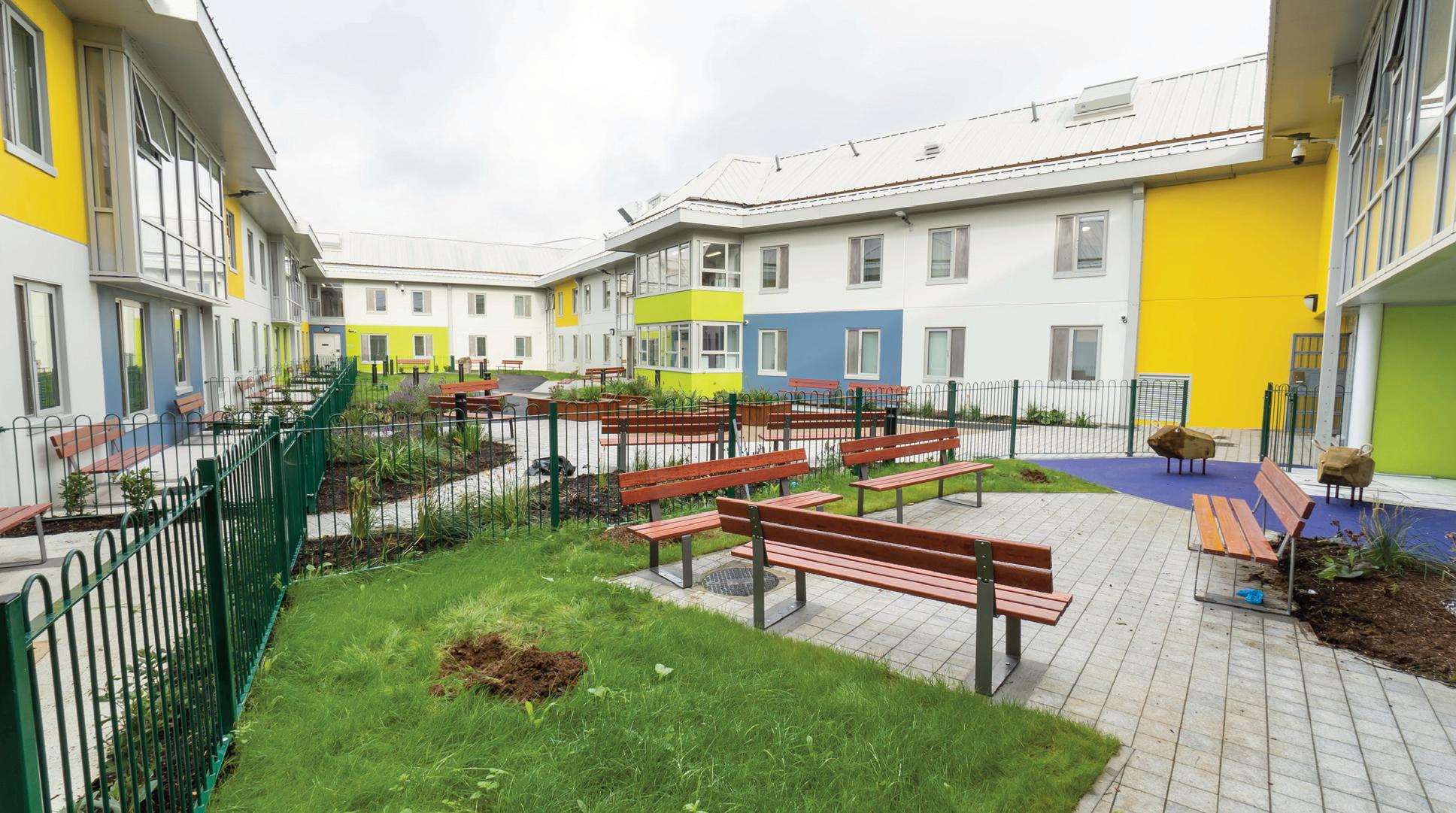
• Digital platforms: We will modernise our services through digital development that enable accessible, transparent, and tailored services, support innovation and improve effectiveness in a cohesive and holistic manner.
• Governance framework: We will strengthen our internal controls and governance arrangements to support corporate capacity and maintain and ensure consistency, transparency, and accountability for the services we provide on behalf of the State. This is a particular priority in the coming year as the Irish Prison Service prepares to go forward on a statutory footing as a scheduled office.
The new plan is ambitious, particularly under the digital transformation agenda. Digital transformation as a universal phenomenon has created a new reality in prisons. The use of technology in custodial settings transforms rehabilitation and services, promotes digital literacy, digital citizenship, social skills, self-esteem, and reintegration into society. Current rehabilitation practices and policies in our prisons are mostly offline and do not cater for the digital realms. The use of digital to support rehabilitation will facilitate transition back into society and ensure an improved post-prison quality of life in a technologically advanced society. The technology-dependent world that people
exiting custody must now re-enter requires the use of touch screens, computers, and the Internet, but many have not received training in how to operate these types of internet-enabled processes.
In recent years, we have pivoted our focus to how we can use technology to create and deliver modern services in our prisons. Four broad areas where technology supports a modern service include:
• digital service delivery for people in care;
• digital service delivery for staff and partners;
• electronic security of prisons; and
• digital prison building management.
Delivery and access to services for people in custody encompasses health and wellbeing; education; language; culture and identity; prison operations, such as biometric movement; selfserviced kiosks; and visits.
Digital service delivery for staff and partners includes the enablement of digital ways of working for staff and other people onsite in our prisons to help them do their jobs more safely, and accurately, for processes such as viewing essential prisoner information, prisoner sentence management, building maintenance, and inventory management.
Managing the long-term maintenance and sustainability of a prison, including optimising physical workflow can be supported through the use of digital tools
such as monitoring environmental conditions through sensors, and enable control and automation of operational processes, and optimisation of electricity usage within cells and other spaces.
The benefits under this agenda will support an improved safety environment in the prison through increasing time available for staff to have meaningful engagements with people in their care; and enable real-time access to information, reducing time spent completing paper-based tasks. Using digital to support rehabilitation will encourage people in our care to adapt to a digitally enabled environment and prepare them for using online learning tools and increase connectedness with the outside world and preparation for life outside in an easy to use and accessible format.
Our approach to implementing digitally supported service delivery is about using technology to make services available to people where and when they will make the most impact on that person’s life or work. For people in care, this should mean making the most of services we know have a humanising and rehabilitative impact, and ensuring they are available and accessible. For our staff and partners, greater use of technology in day-to-day activities will help improve safety and contribute to our wider drive to modernise our ways of working.
W: www.irishprisons.ie
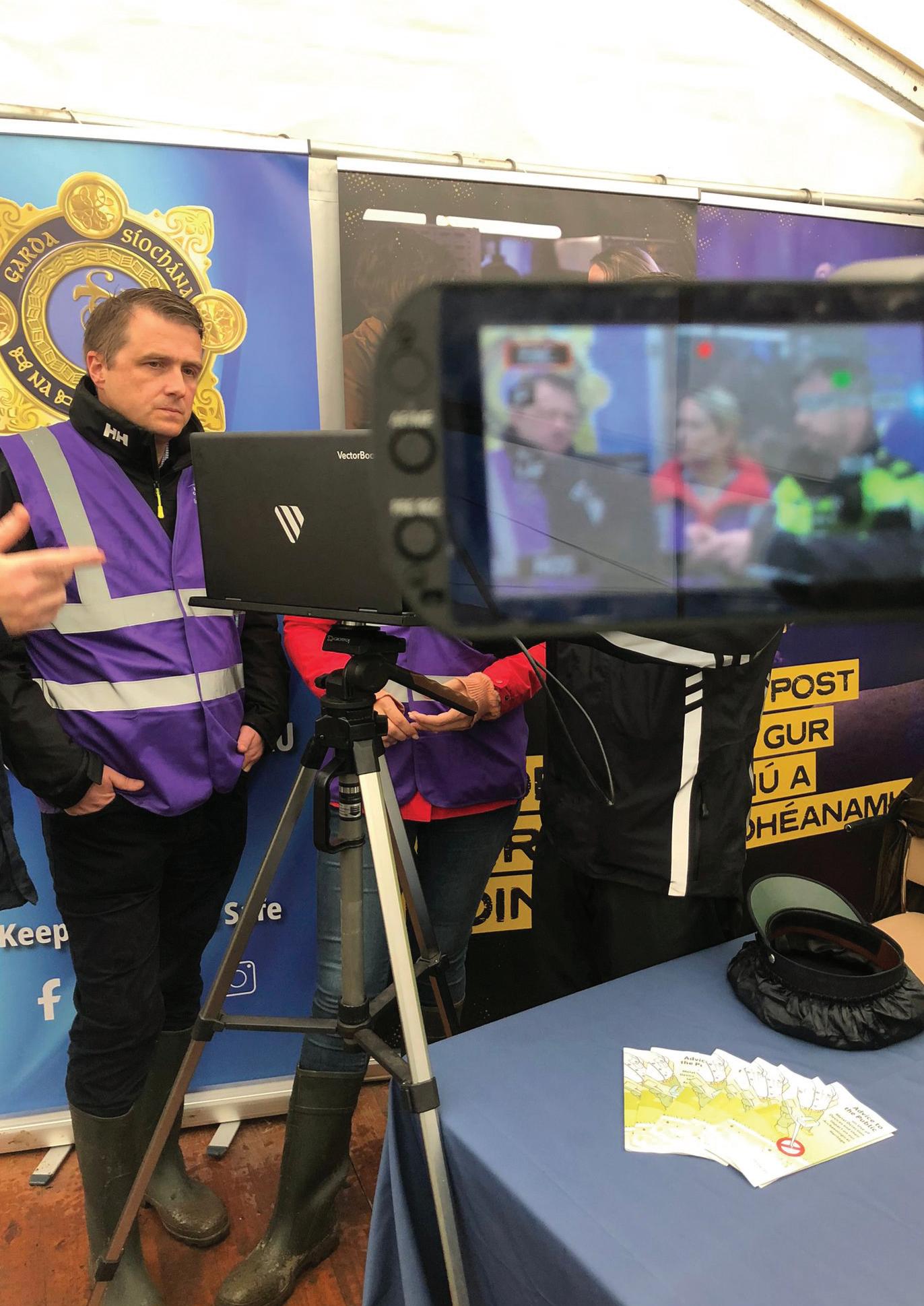

In June 2023, the Department of Justice launched the first evaluation project of youth diversion projects which has reported a positive impact in its goals of turning youths away from lives of crime.
The evaluation, undertaken by Research Matters Ltd in the period between December 2021 and November 2022, is the first of its kind. The Department of Justice has stated that the overall purpose of the evaluation is to generate policy-relevant knowledge concerning the structure, conduct, and impacts of youth diversion projects (YDPs).
The Youth Diversion Programme is provided for in the Childrens Act 2001. The Diversion Programme is supported by a network of youth diversion projects (YDPs).
YDPs are community-based multiagency crime prevention initiatives, which seek to divert young people who have become involved in crime and/or anti-social behaviour and to support wider preventative work within their community and with families at risk. At the time of publication, there are currently 105 YDPs running in the State, and a further 10 projects with a special focus (for example: more challenging children, family support).
Overall, the evaluation project report shows that YDPs are performing well in many areas and are known to impact positively on reducing crime.
The European Social Fund+ (ESF+) provides the European Union with the financial means to ‘invest in people’. The current round of funding was allocated in 2021 and will run until 2027.
The Department of Justice was allocated cofunding for Youth Diversion Projects through the ESF+ Programme 20212027 for the specific purpose of improving the education and employability prospects of young people engaged in the projects.
“Funding for these interventions is based on evidence that diverting young offenders from the criminal justice system, and preventative work with young people at risk, is to their longterm benefit and that of society as a whole,” the Department says.
The Evaluation of Youth Diversion Projects, published by the Department of Justice in June 2023, says that that governance of YDPs at national level “works well” and “while a small number of recommendations are made, these relate more to strategy and operational matters than governance”. “While views about the function of the local level structures are positive, some overlap and inconsistencies have been
mechanism for future work, though it is also clear that additional financial and personnel resources will be needed,” the report outlines.
In addition, the report finds that the relative allocation of funds to pay and non-pay costs presented in the budget files is “appropriate” given the nature of the work that takes place in YDPs. It explains:
“In some budgets, the allocation to pay costs is considerably lower (as low as 54 per cent of the budget) or considerably higher (as high as 84 per cent), which warrants further review. It is also concluded that some consideration needs to be given to greater equity in salary scales and, if possible, the introduction of some form of standardised approach.”
“The Youth Justice Strategy is seen as an empowering and integrative mechanism for future work, though it is also clear that additional financial and personnel resources will be needed.”
identified in this evaluation and recommendations are made to respond to these,” the report states.
The Department of Justice states that it actively promotes crime prevention policy through “focused educational interventions influencing positive development of young people towards becoming responsible citizens”.
It adds that there is a “willingness, an appetite and, indeed, an expectation” that the range of services offered by YDPs will be increased “in the coming years”. “Both the managers and the project committees are committed to this even if with slightly different priorities. The Youth Justice Strategy is seen as an empowering and integrative
Looking at allocation of funding, the report states all projects are not operating from the same budget base as some projects have their own transport whilst, in other projects, youth justice workers use their own cars to provide transport for participants. It explains that some projects have premises with very high specifications (e.g., in terms of space, warmth, facilities) while others have no premises at all. Some projects have greater disposable funding that can be allocated where crisis situations arise and there is a need to purchase additional services or products.
Concluding, the report evaluates that, whilst there has been a certain scope for success, that certain provisions are required to maximise successful outcomes, including specific premises where “participants can feel they belong; availability of, and access to, experienced and highly skilled personnel; and a range of options that can be employed in identifying and meeting the needs of participants in a tailored way”.

Work in the Garda Síochána Ombudsman Commission (GSOC), Ireland’s independent policing oversight body, has gathered pace in our preparation for the enactment of the Policing, Security and Community Safety Bill.
In 2018, the Commission on the Future of Policing published its report outlining a clear vision and roadmap for the reform of policing and policing oversight in Ireland, including sweeping changes to the composition and mandate of GSOC.
A key milestone in the resulting programme of reform was the Policing, Security and Community Safety Bill, published In November 2022. The draft bill proposes to replace GSOC with a new police complaints and oversight body with expanded powers, directly accountable to the Oireachtas. This represents a significant step forward in addressing a clearly-
defined and long-signalled gap in Ireland’s policing accountability infrastructure.
The Commission and our colleagues across GSOC's executive staff have engaged with the Department of Justice on the draft legislation, in the course of which we have outlined reasoned observations on gaps, practical issues of concern and other matters grounded in our experience of policing oversight to date.
In early 2023, the Bill began its passage through the Oireachtas and recently completed all stages in Dáil Éireann. It has now begun its passage through the Seanad. GSOC has been engaging with the houses

of the Oireachtas to communicate our views and observations on the Bill. These observations are available to read on GSOC’s website www.gardaombudsman.ie.
Over the past year, preparation for transition to a new complaints and oversight body has been a core focus of GSOC’s work.
Throughout 2022/2023, GSOC has been actively engaging with the Department of Justice’s inter-agency and cross-departmental implementation programme for the Bill. This is a complex multi-strand programme, involving the Department of Justice, An Garda Síochána, the Policing Authority, the Garda Inspectorate, the National Shared Services Office, and GSOC. In addition to being represented on the Programme’s Board and Implementation Steering Group, GSOC has been a core participant in two projects of particular strategic importance:
• The Operating Model project, to prepare the institutional and governance structures for GSOC’s successor agency, which will have an independent Oireachtas vote, a CEO who will be the accounting officer answerable directly to the Oireachtas, and an Ombudsman and Deputy Ombudsman replacing the present three-person Commission; and
• The Process Reform project, to establish, in close cooperation with An Garda Síochána, the reformed
systems, procedures, protocols, and agreed lines of communication necessary for effective inter-agency cooperation in the delivery of the new legislation’s statutory functions for GSOC’s successor agency.
Work has also commenced on the procurement of a new multi-functional case management system. This system is fundamental to the ability of the new police complaints and oversight body to fulfil its enhanced mandate. This is a complex project for which we are drawing on a well of external expertise and guidance. Once complete, it will enable the new police complaints and oversight body to enhance performance management, track the progress and timeliness of investigations, and crucially, to produce robust data on trends and patterns, on which we can base research.
To ensure GSOC meets the requirements proposed in the new legislation, we also commissioned an external organisational review to identify what a transformed and expanded police complaints and oversight body will require in terms of staffing, resourcing and expertise from day one, right through to the longer term as the new agency begins to roll out its work.
In the coming months:
• development of a corporate identity and online presence for the new agency will get underway, followed by the rollout of public awareness and information initiatives;
• we will progress the acquisition and development of a new case management system that supports the work of the new complaints body;
• the work of GSOC’s Transition Steering Group, and sustained staff and inter-agency communication and engagement on the Bill and the transition process, will continue and gather pace; and
• GSOC will undertake further engagement with the Houses of the Oireachtas to communicate our views and observations on the Bill.
It is our clear aim as a Commission and executive staff to do everything we can to ensure that the new police complaints and oversight body that succeeds GSOC is equipped to provide the service that the public expects: efficient, effective, human-rights-based policing oversight that promotes accountability, and the enhancement of trust in policing in Ireland, in line with the vision outlined by the Commission on the Future of Policing.
It is an exciting time for GSOC and we look forward to the opportunities and challenges ahead.
E: info@gsoc.ie
W: www.gardaombudsman.ie
X: @GardaOmbudsman


In January 2023, the Government launched the first Justice Sector Innovation Strategy, which it states aims to “lay the firm foundations which will support our people and organisations to respond innovatively to the challenges of an increasingly complex and uncertain world”.
An initiative under the aegis of the Civil Service 2030 Renewal Strategy, the innovation strategy aims to enable the justice sector to improve on current service delivery, enhance consistency, fairness and inclusion, reduce inefficiencies, and increase the resilience of the Department of Justice’s services and teams.
The Department of Justice states that the strategy’s metrics for success will be “if internal and external customers have benefitted from the better outcomes which have emerged as a result of the innovations or innovation models”.
The strategy document outlines eight justice sector innovation commitments and three delivery phases for the actions outlined in the innovation commitments.
The strategy outlines eight justice sector innovation commitments which, the Department of Justice states, “are developed in such a way that they can be taken by each agency and used to guide the work in their area”. The commitments are:
1. Enhanced collaboration and trust: Cross-sectoral collaboration will happen more frequently throughout innovation processes, with time allocated for trust and relationship building and collaborative planning as part of innovation initiatives;
2. Put the customer at the centre of innovation: Customer-centric innovation will mean that the identification of “customers” is key,
followed by in-depth analysis of their diverse needs through engagement, co-design, and testing of innovation with those customers before and after deployment;
3. Lead and encourage innovation: It is incumbent upon leadership and management at every level to encourage the sharing of new ideas to empower teams to engage in innovative processes, to try new ways of doing things, and to learn from mistakes made along the way. The sector is committed to creating clear pathways for the development and evaluation of ideas, and novel solutions to problems;
4. Constant incremental innovation: Innovation of the everyday – the improvement of the services already delivered, and the constant incremental optimisation and iteration of customer experiences will be encouraged, recognised, and supported across the sector;
5. Innovate transparently and engage stakeholders: The justice sector aims to innovate openly, involving those who are touched by and help deliver its evolving services. It will share successes, failures, and new knowledge across the sector and beyond, and will encourage and support replication of successful innovations;
6. Share knowledge and develop skills: The Department of Justice will identify, document, and share examples of innovation practice from across the sector to encourage replication where appropriate. It will also develop knowledge of potential models which might further support innovation. The Department will continue to support innovation with training, innovation management, innovation models and tools, benchmarking, and measurement;
7. Anticipate and respond to change: The Department committed to embedding strong feedback loops to drive innovation – allowing quantitative and qualitative measurement of the Department’s services’ performance, and iteration of those services in response. The Department will enable continuous optimisation, as well as step-changes where required, in response to the needs of policy and society. The department states that it does this to achieve better outcomes for those it serves; and
8. Move from outputs to outcomes: The Department will define and focus upon core outcomes towards which to innovate. Those outcomes will drive value for those the
justice sector serves. The Department will identify and work towards these outcomes in its innovation pilots and in the daily innovation of its operational services. These outcomes will drive its work and contribute to a safe, fair, and inclusive Ireland.
In order to support the implementation of the strategy, three key phases have been identified with specific actions:
1. Phase 1 – Building blocks and firm foundations (six months): The justice sector innovation team will lead phase one, expanding the existing justice sector innovation network. They will have initial responsibility for recruiting additional innovation ambassadors from the workforce across the sector, engaging with agencies and bodies, measuring the baseline innovation maturity across the sector, and enabling communication across the network on best practice, training, events, and supports. This is the foundation phase, after which the innovation strategy will be implemented across the sector, supporting and accounting for the autonomous actions of the agencies and bodies aligned to the innovation commitments.
2. Phase 2 – Implementing innovation (12-18 months): Agencies and bodies will utilise the training and resources on offer, and proactively collaborate with the innovation lab at the Department of Justice and the wider sector. There is a responsibility to note and measure incremental innovation and more disruptive innovation projects.
3. Phase 3 – Innovation as usual (six-12 months): This phase considers the progress made under previous initiatives and supports the proliferation of proven innovation practices across operations. There may be new commitments which emerge and require strategic support and attention. This is a responsive strategy and further actions may arise following phase one and phase two in response to new requirements.
Upon publication of the strategy in January 2023, Secretary General of the Department of Justice, Oonagh McPhillips, said: “This strategy builds on the work already being done across the sector to innovate and enhance services for the public, but for the first time puts all the agencies and bodies of the sector working on a common innovation pathway.”
Alternative dispute resolution mechanisms have never been of greater importance than they are at present. Within the last five years, mediation and access to qualified mediators have become an increasingly important, flexible method of resolving various disputes in the absence of court proceedings.
Mediation is a process where two or more parties try to resolve conflicts with the assistance of a neutral third party (the mediator). The mediator helps the parties agree on a solution without one of the parties having to go to court. It can foster a resolution through negotiation rather than confrontation. Mediation can create resolutions which last and promote well-being and happiness.
The process of mediation is voluntary, where all parties must want to mediate. It has to be impartial, where the mediator does not take sides and is always there for all parties involved. The mediator listens to all sides, asks questions, encourages dialogue, and tries to understand the parties’ respective views and needs in order to help all parties reach an agreement. Through the process of mediation, they can also help
preserve relationships, which is crucial in resolving conflicts. In addition, mediators can also help reach compromises that are satisfactory to all parties involved. In this way, they can create a long-term situation that leads to a more permanent solution to the conflict.
Becoming a mediator is one of the many ways to help people and businesses resolve conflicts and bring value to society in various circumstances, whether a formal legal dispute or a dispute between work colleagues or between members or volunteers of a club, society, or other body. As a mediator, you can improve communication between people, helping to clear up disputes and
misunderstandings. In addition, working as a mediator offers the opportunity to develop professionally and gain a wide range of highly sought-after skills you can use professionally and personally.
There are many career opportunities as qualified mediators with work in many different areas, including family disputes, employment disputes, neighbourhood disputes, conflict resolution, employer-toemployee negotiations, business-tobusiness negotiations, consumer-tobusiness disputes, student-to-university disputes, social conflicts, international conflicts, and more. People who work in various roles such as HR, business operations, communications, change management, finance, advocacy, and trade union officials have benefited from being a qualified mediator.
Why is mediation a great form of alternative dispute resolution?
Alternative dispute resolution is an effective way to resolve conflicts. Control is the most critical benefit of using mediation to resolve a dispute. People in dispute often feel like they are losing control of important parts of their lives, their workplace, family life, and finances. It is quick, inexpensive, and provides parties with an excellent opportunity to resolve their issues in a safe and fair manner. It is also a perfect way to improve the relationship between the parties, as the parties agree on a settlement and do not have to wait for a judge to decide.
It can also allow for better communication and building a support network among various stakeholders. It also provides a way to resolve disputes constructively and by mutual agreement. Subsequently, alternative dispute resolution can contribute to a better understanding of the parties’ respective interests, which are often suppressed during litigation.
What are the essential skills of a mediator?
To be successful as a mediator, it is important to have a strong understanding of complex conflict situations. A mediator must be able to analyse situations
objectively and impartially, identify problems and develop constructive solutions. Good empathy is also an advantage to support and advise the parties in a conflict situation. A mediator should also have good communication and interpersonal skills to lead the parties to an agreement. Mediators do not provide advice; they guide parties on legal principles and what all parties should think about. Mediators must remain confidential in their work, and above all, the mediator does not make any decisions; the parties work out the resolution they take forward.
As a mediator, your job is to intervene in and resolve conflict situations as a neutral party. You should try to encourage the parties to communicate constructively with each other in order to reach an effective and lasting solution. You should also try to create an atmosphere where all sides feel comfortable and willing to share their opinions and ideas.
To become a mediator, one must complete a training course. This can be completed at various institutions and usually includes theory and practice. The training varies depending on the provider and can be done online or in-person. In addition, specific requirements must be met in order to be recognised as a mediator. These usually include a university degree, a certain level of professional experience, and proof of participation in mediator training.
King’s Inns is renowned for professional legal education and training. Since 1541, it has been training people to become barristers, a vital role in the administration of justice. Barristers, who are advocates for their clients, require the appropriate legal knowledge, legal skills, professional competencies, and personal attributes, acting with independence and integrity.
In addition to training barristers, King's Inns also runs a wide range of advanced diploma courses for both lawyers and non-lawyers. Focusing on a range of legal knowledge and skills areas, these professional development courses at King's Inns are designed and delivered by lawyers who are subject matter experts, with input from members of the judiciary, and other appropriate experts.

Coordinated by barristers and accredited mediators Cathrina Keville and Teresa Blake, the highly rated mediation course at King’s Inns equips professionals with the practical skills required to act as a mediator in a range of circumstances.
Accredited by King's Inns, as well as the Mediators’ Institute of Ireland (the MII), the advanced diploma covers key mediation topics, including conflict, process phases of mediation, communication and negotiation skills, ethical principles of mediation, and online mediation.
Open to lawyers and non-legal professionals, this course is delivered through six in-person teaching days, whereby workshops are delivered in small group training sessions. This is delivered alongside a combination of online learning and self-study. The course takes place twice per academic year over a space of two to three months, including the recorded roleplay assessment, during which students can showcase the skills they have learned.
“A good mediator will have a sound understanding of the mediation process as well as excellent communication and interpersonal skills,” says Eimear Brown, Dean of School of Law at King’s Inns. “King’s Inns prides itself on the quality of its education and training, and our advanced diploma in mediation course combines high-quality course materials –including online lectures by leading experts in the field – with a high level of in-person contact hours in which
participants have the opportunity to work through a range of practical scenarios, guided by our experienced teaching team. We believe that this interactive, small group approach is the best way to acquire the skills of a competent mediator.”
In-person attendance over the six workshop days is compulsory as these sessions are designed to practise and hone skills, provide feedback, and develop participants to be able to practise as professional mediators in a range of settings.
Applications for this course are taken throughout the year. More information can be found on the King’s Inns website at www.kingsinns.ie/mediation
King’s Inns
Henrietta Street, Dublin 1 Ireland DO1 KF59 W: kingsinns.ie


Aimed at ensuring that prisoners are able to avail of opportunities to gain access to education and training courses, the Prison Education Taskforce aims to ensure that prisoners are better able to rehabilitate and gain access to employment upon release.
In 2022, 11 prisoners completed their Junior Certs and 64 completed Leaving Cert examinations. Additionally, around 1,400 prisoners achieved QQI certificates, a figure which includes 105 undertaking university course and five studying at postgraduate level.
The taskforce is comprised of representatives from the Department of Justice, the Department of Further and Higher Education, Research, Innovation and Science, the Irish Prison Service, SOLAS (the state agency which oversees the further education and training sector), the National Apprenticeship Office, Education and Training Boards Ireland, the Probation Service, and former prisoners.
Then-Minister for Justice, Simon Harris TD, oversaw the first meeting of the Prison Education Taskforce.
Speaking in the aftermath of the first Taskforce meeting, which took place on 31 May 2023 at Mountjoy Prison, then-Minister for Justice Simon Harris TD said:
“This taskforce has the potential to significantly improve labour market readiness for persons in custody on
A new taskforce, which is being co-chaired between the Department of Justice and the Department of Further and Higher Education, Research, Innovation and Science, is aiming to build on over 100 prisoners undertaking university courses.
release by realising the potential for greater alignment across the prison education and training services and tertiary provision.
“This is all about ensuring persons in custody can access education and training opportunities, and hopefully access employment, or indeed further or higher education, on release.”
Minister of State for Law Reform James Browne TD, who co-chaired the meeting alongside Harris, said:
“People who are given access to education and employment opportunities are more likely to go on to build crime free lives. The Taskforce that Minister Harris and I have led today will help ensure that we can continue to give people in custody the best opportunity to maximise their skills and their employment prospects post-release.
“The introduction of this taskforce was an objective identified in Justice Plan 2023 and I am very pleased to see it realised in such a swift manner.”
The Prison Education Taskforce will also develop targets and monitor the proportion of the prison population receiving education. The Department of Justice states that an outline of agreed actions and the next work programme will be brought to government by both departments “by the end of the year”.