The Housing Agency works to roll out affordable housing schemes across the country



The Housing Agency works to roll out affordable housing schemes across the country

Sponsored by

The Housing Agency works to roll out affordable housing schemes across the country
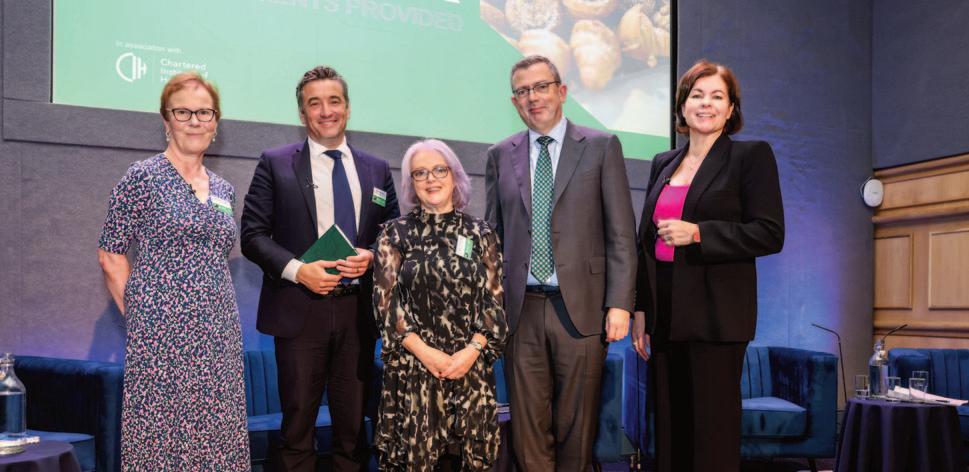
“Brave and effective leadership is what is required to solve Ireland’s housing crisis,” according to Bob Jordan, CEO of The Housing Agency who spoke recently at its Leadership in Housing conference in Dublin Castle. The purpose of the event was to bring together leaders in housing across the island of Ireland.
The conference provided an opportunity for attendees to stand back from their day-to-day role, think about how they are approaching leadership, and learn from experienced leaders who are solving complex problems, both in and outside of the housing sector.
Jordan said: “The challenges facing the housing sector in Ireland have been well documented. At The Housing Agency, we firmly believe that brave and thoughtful leadership is what is required to bring about real, positive change to meet our housing needs.”
Commenting on the conference, Michael
Carey, Chairman of the Housing Agency, said: “The Leadership in Housing conference was a real opportunity to bring together the best of our sector giving them an opportunity to share ideas and hear from expert speakers about the importance of effective leadership.
“Effective leadership is what drives progress and will result in good quality, affordable homes in sustainable communities. We must continue to be innovative in our solutions, promote policy changes, and foster collaboration among various stakeholders.”
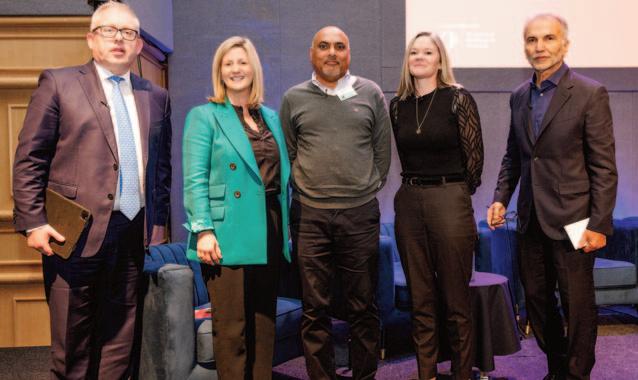
Conference speakers included expert leaders, from Ireland and abroad, drawing on their own experiences of bringing about change, motivating teams, and promoting diversity and inclusion. Panel discussions looked at the characteristics of effective and impactful leadership when facing complex issues.
Contributing to the conference, Noeline Blackwell, Chief Executive at the Dublin Rape Crisis Centre, spoke about the importance of maintaining a strategic focus in times of complexity or crisis.
“Although my experience is mostly outside the housing sector, the characteristics of a good leader are always the same,” she said. “What I have learned as a leader is the importance of keeping your focus on the bigger picture even when you are constantly reacting and are in a sector that somehow always feels like it is in crisis.”
With a wealth of experience as a housing professional, Eileen Patterson,
The Housing Agency works to roll out affordable housing schemes across the country
board member of Clanmil Housing and Circle VHA, emphasised the importance of effective leadership in times of change and growth, which currently characterise the housing sector.
“I have had a long career in the housing sector in Northern Ireland where I have seen many changes,” she said. “What stands out to me when we talk about good leadership is the ability to lead through periods of growth. Growth and change can be exciting, but also risky and as leaders we need to be able to express this to staff around us and lead them through it confidently.”
John Concannon, Director General –Global Ireland at the Department of Foreign Affairs, also observed the importance of authenticity in a leader’s message and discussed his experience of working on the Wild Atlantic Way project, which involved collaboration with many different stakeholders.
Secretary General of the Department of Housing, Local Government and Heritage, Graham Doyle, opened the second session of the day talking about impactful leadership. He examined how to create impact as a leader, and advised it is important for leaders to ensure that leadership is instilled in everyone else they work with. Having the right people and structures is vital, as well as having a clear plan.
Also speaking at the event was Mushtaq Khan, of the Housing Diversity Network, who relayed the importance of training when it came to becoming a diverse leader. Lucy Cronin, VP EU Public Policy at Amazon delivered an impassioned speech on the barriers women can face in leadership roles, and how organisations can strive to address these, and Sam Tsemberis, Founder of Housing First, discussed how social movements require leadership at every stage and the importance of representing the people you serve.
Despite the many issues facing the sector at present, Grainia Long, Chief Executive, of the Northern Ireland Housing Executive, said she was against the idea of it being in ‘permanent crisis’, and discussed why a positive mental attitude is important in order for real change to take place.
Commenting on his key takeaways from the conference, Jordan said “Leaders in the housing sector are passionate about what they do, however, in order to keep
“In the coming weeks, we will be announcing a new leadership in housing bursary award which will fund an emerging leader in the housing sector to undertake a diploma in leadership.”Bob Jordan, CEO of The Housing Agency
going through this enduring crisis, they need support to stay strategic and not get lost in the weeds. We, as leaders, need to maintain our own resilience when facing issues every day. There is no magic bullet, no single organisation has the solutions, and, most importantly, if you are not collaborating then you are not really solving the problems. Collaboration is not a luxury when it comes to solving the housing crisis, it is core. For me, working in The Housing Agency, everything we do involves collaboration, with local authorities, with approved housing bodies, the Department of Housing, state agencies and the private sector.”
Speaking further, Jordan said: “We want to build upon what we have achieved with the leadership conference. We asked attendees to identify areas of leadership where they required support and training. We are using this feedback to plan and implement a leadership in housing training programme in 2024.
“We also need to consider the next generation of leaders and actively support them to lead us to a more sustainable housing future. In the coming weeks, we will be announcing a new leadership in housing bursary award which will fund an emerging leader in the housing sector to undertake a diploma in leadership.”
Reflecting on the future of leadership in housing, Jordan said: “In the midst of challenges, the innovation, progress and leadership within the sector is sometimes overlooked. The work is complex and multi-faceted, and the issues we currently face will not be resolved with quick-fix solutions, but progress is happening. There are strong leaders across the entire sector who are working diligently and consistently to address housing needs.”
T: +353 1 656 4100
E: info@housingagency.ie
W: www.housingagency.ie
The Housing Agency works to roll out affordable housing schemes across the country

meet, if not exceed, Housing for All targets for 2023. Meanwhile, despite increases in both supply and planning permissions, residential property prices have climbed to all-time highs in 2023.
Government figures state that 6,716 new homes were completed in Q1 2023, meaning that 2023’s rate of new home completions should be on track to reach its target under Housing for All, assuming new home completion rates stay consistent with Central Statistics Office (CSO) data from 2011 onwards. While CSO data differs from the Government’s Housing for All progress report for Q2 2023 and records a total of 6,664 completions for Q1 2023, both represent increases on the totals recorded for Q1 2022, which also differ in official government and CSO datasets.
Both the Government’s and the CSO’s figures for Q1 2023 account for less than one-quarter of the Government’s target of 29,000 new home
completions for the year (23.2 per cent in the Government’s data and 23 per cent in the CSO’s), but encouragement will be taken from the fact that Q1 has accounted for the lowest number of new housing completions in every year since 2014, excluding 2020, when Covid-related shutdowns in Q2 caused a decrease in completion totals. This is borne out in CSO data for completions in Q2 2023, which states that 7,353 new homes were completed, bringing the total for 2023 thus far to 14,017, or 48.33 per cent of the annual target in the first half of the year. Q4 typically accounts for the bulk of new housing completions, being the quarter with the most new dwelling completions in every year since 2012.
Meeting the target of 29,000 for 2023 should be seen as the bare minimum for housing construction in Ireland,
given that 29,851 or 29,776 new housing units were completed in 2022 according to Government and CSO data respectively. Both figures far exceeded the Housing for All 2022 target of 24,000. 13,247 new homes were completed in the first half of 2022 according to CSO data, meaning the first half of 2023 recorded an increase 5.8 per cent. 2022’s first half accounted for 44.5 per cent of total completions, again an encouraging metric that the Housing for All target is one that could and should be far exceeded for the second year in a row, making it unsurprising that government figures have committed to scaling targets upwards as part of the ongoing National Planning Framework review.
With completions typically reaching their annual nadir in Q1 of each year, construction commencements tend to
The Housing Agency works to roll out affordable housing schemes across the country
Housing completions and commencements, planning permissions, and Residential Price Index, 2018-Q2 2023
be at their lowest in Q4 of each year, with 2022 no different according to data from The Housing Agency.
Construction activity in this regard has since recovered, with Q2 2023 seeing a total of 8,212 new commencements, the highest of any quarter since Q3 2021 and an annual increase of 14.8 per cent on Q2 2022 levels. Q1 2023 also recorded an increase of 4.7 per cent on Q1 2022.
What should also offer encouragement in terms of supply is the issuance of planning permission for 34,177 units overall in 2022 and 20,382 units in the first half of 2023. However, high levels of planning permissions issued have not always been an indicator of forthcoming commencements and completions: 2019 saw 38,461 units approved, 2020 saw 42,371, and 2021 saw 42,991. In the years following, Ireland has never exceeded 30,000 housing units built in a single year. In this context, 2022 totals for planning permissions are significant decreases, but still enough to meet Housing for All targets; the challenge appears to be one which has been raised often in recent times, that of unused planning permissions.
The CSO’s provisional data for production in residential building
shows Q2 2023 to have had a monthly decrease of 2.3 per cent and an annual decrease of 10.3 per cent despite the uptick in both completions and commencements. However, the Government will be encouraged by the fact that three of 2022’s quarter recorded decreases in the residential building production index but only one of these decreases resulted in a fall in overall completion numbers (Q3). More worrying will be the seemingly incessant climb of the CSO’s residential property price index, which set a record in July 2023. The residential property price index was recorded at 167.4 where 2015 prices are 100, a 2.3 increase on the index’s peak during the Celtic Tiger property boom in April 2007. The index hit its new peak (168.8) in December 2022, during the best quarter for new dwelling completions in recent memory.
The first five months of 2023 recorded successive decreases from that record level, before June and July recorded successive increases once again. January-May 2023 marked the first instance of successive decreases since December 2018-February 2019.
Despite the decreases in the first half of the year, July 2023’s residential price increase sits at a level 14.8 per cent higher than that of July 2021. At a time when delivery of new housing in
Sources: CSO and The Housing Agency.
Ireland has significant increases, the price of these houses has continued to increase, all while both homelessness and eviction notices are also on the increase (see pages 148-150). What the data appears to be telling us is that if supply is to be the answer to the many crises intersecting in the Irish housing sector, the significant increases of late will need to be significantly increased upon themselves.
• €150 million fund for tackling vacancy and dereliction in towns and cities introduced
• Roadmap for increased adoption of MMC in public housing delivery published
• Funding approved for 853 social homes and planning permission granted for 2,557 units on state lands in Dublin
• Review of the National Planning Framework commenced
• Phase 2 of Project Tosaigh commenced
• First contract under Croí Cónaithe (Cities) Scheme signed


STAR is a welcome initiative to engage the State with private developers in delivering cost rental housing.
A keen appetite has been demonstrated for cost rental housing based on the over-subscription to existing cost rental schemes and the expectation is that STAR will lead to a significant increase in the availability of cost rental housing, with the obvious associated benefits to those on lower and middle incomes.
Introduced in August 2023, STAR aims to assist private eligible households while also addressing viability
challenges for developments by providing equity investment to stimulate the creation of cost rental accommodation. Private providers, the LDA and AHBs can apply to provide cost rental homes under STAR and the State will make an equity investment in return for designation of the homes as cost rental for at least 50 years, at a rent which shall be at least 25 per cent below market rent.
The scheme aims to invest up to €750 million in the delivery of over 4,000 cost rental homes, which will benefit from secure tenancies and will be let below
market rental levels in high demand urban areas. STAR is managed by The Housing Agency and will operate from August 2023 until December 2027.
The main eligibility condition for prospective cost rental tenants is based on an annual net income limit at the outset of a tenancy. At the commencement of STAR, an income level of €66,000 net applies for Dublin and €59,000 net applies for the rest of the country, determined by the location of the property.
Units may be in any location of recognised demand. Priority will be given to proposals in respect of units located in urban centres. Proposals must relate to at least 10 units, newly constructed, not previously occupied, and must consist of at least two types of dwelling (one-bed, two-bed etc.) and must include two-bed dwellings.
Any potential providers of cost rental accommodation may apply, including consortiums. For example, a developer may apply by agreement with the intended long-term holder of homes, but the consortium must be led by the longterm owner, operator, and manager of the homes with demonstrable experience in the sector.
The approval process comprises three pre-contract stages:
Stage 1: Expression of Interest (EOI): submit proposal(s) to The Housing Agency in accordance with high-level criteria of the scheme.
Stage 2: Detailed due diligence process leading to eligibility involving a full assessment of costs.
Stage 3: Completion of cost rental investment and equity participation agreement.
The investment will be calculated via an objective open book assessment of developers’ costs and revenues, conducted by The Housing Agency.
Costs will be calculated on generally accepted accounting principles. All revenue derived from the operation of the units will be taken into consideration.
The developer will be entitled to a “reasonable profit” (namely the rate of return on capital that would be required by a typical undertaking considering whether or not to provide the service of general economic interest for the whole period of entrustment, taking into account the level of risk).
Investment will be made in the form of a cost rental investment and equity participation agreement with the developer (the Agreement).
Ownership of the properties will remain with the developer but a charge (subordinated to senior debt as required) will secure the State’s investment. There will be no interest or return payable to The Housing Agency during the term of the Agreement unless there is a breach of the Agreement.
The Agreement will include a right for The Housing Agency to receive a prescribed amount (Property Realisation Equity Share) (PRES), by reference to the following trigger events:
• at the end of the 50-year period, unless the property is again designated as cost rental at that time;
• if the property ceases to be used for cost rental, for whatever reason during the agreement (change in law, damage/destruction to fire etc); and
• breach of the Affordable Housing Act 2021 or the regulations made thereunder.
The PRES is calculated as a percentage of the overall property value, by
reference to the aggregate of the equity share contributed to the purchase by the developer and the investment.
As security for the repayment of the PRES, The Housing Agency will take a fixed charge over the property. If a commercial lender is involved in developing, buying or refinancing the purchase of the property, The Housing Agency will permit a first ranking charge for that lender and will take a second ranking charge, subject to intercreditor arrangements.
At the end of the term of the Agreement (50 years) there will be three options:
(i) extend the Agreement for an agreed period (with the dwellings remaining in cost rental usage);
(ii) make a repayment to The Housing Agency and exit cost rental designation; or
(iii) The Housing Agency may exercise an option to purchase the dwellings from the owner for market value, taking account of the State’s investment in the properties.
• Assignable – a property owner may assign their interest on notice to The Housing Agency provided the rights and obligations under the Agreement and the Cost Rental designation are fully assigned;
• Refinancing is permissible subject to a new intercreditor agreement and PRES being recalculated.
The LDA and AHBs have already successfully delivered the cost rental model but this welcome initiative aims to increase funding for these existing players as well as broaden the level of state investment to private developers in a bid to deliver cost rental on a wider scale.
There is likely to be substantial uptake from the existing players, but clarifications are required to determine the likely level of uptake from private developers who will be looking at this from a different lens. These include details around the ability of either party to unilaterally trigger any of the three end of term options, the definition of ‘household’ to broaden eligibility as well as the potential impact from a future change in law or lack of demand.
The devil will really be in the detail as private developers work their way through the nuances, terms and conditions of STAR and weigh up the potential limitations of long-term cost rental designation to their property.
Fidelma McManus, Partner & Head of Housing, Commercial Real Estate (f.mcmanus@beauchamps.ie)
Anne Doyle, Partner, Housing & Commercial Real Estate (a.doyle@beauchamps.ie)
The Housing Agency works to roll out affordable housing schemes across the country


Budget 2024 offers a broad set of initiatives which ultimately fail to tackle the root causes of Ireland’s housing crisis: supply, writes Joshua Murray.
In Budget 2024, it was announced that government will provide a tax relief to landlords to the tune of between €600 and €1,000 per year for the next four years. The measure will be in place for the next four years and is intended to ensure that landlords remain in the housing market. Minister Darragh O’Brien TD has previously told eolas Magazine of his fear of a “mass exodus of good landlords” out of the private rental market, further emphasising: “Whether people like it or not, we need a private rented sector.”
Announcing Budget 2024 on 10 October 2023, Minister for Finance Michael McGrath TD told the Dáil that the tax break for landlords will be
increased for each year that a landlord remains in the private rental market, further clarifying that the properties must remain in the market for the full four years, or else the tax will be clawed back.
The tax breaks have been criticised as counterintuitive to the Government’s ambition of making homes more affordable. Higher interest rates, which inevitably raise the cost of borrowing and therefore decreases the amount of money people can borrow, is recognised as a tool to mitigate the inflation of house prices.
Minister McGrath told the Dáil of how 86 per cent of landlords in the market own “just one or two properties,” which he claims is why the
The Housing Agency works to roll out affordable housing schemes across the country
Government is introducing a temporary tax relief, which will “primarily benefit small landlords”.
For tenants, Minister McGrath announced that rent tax credits will be increased from €500 to €750 in 2024, and that there will also be an amendment to the scheme to allow parents who are paying for their children in student accommodation to claim the credit. McGrath has clarified that this payment is to be backdated. Whilst this will undoubtedly be welcomed by renters, this is, in effect, another government subsidy for landlords and does not fulfil the Government’s objectives, set out in Housing for All, of making housing more affordable for renters as landlords remain free to raise rent.
The overall budget for the Department of Housing, Local Government and Heritage amounts to just under €7 billion, with around €5 billion of this earmarked for capital investment in housing itself. This investment in housing is made up of €2.6 billion in general exchequer funding, €978 million for the Land Development Agency (LDA), and €1.5 billion in funding for the Housing Finance Agency (HFA).
In order to tackle housing vacancy, the Government announced measures which will increase the rate of vacant property tax. Census 2022 reports that there are 166,752 vacant homes, meaning that there are enough vacant homes to house Ireland’s homeless population by a factor of at least 13, when compared to the Government’s latest homeless report which states that there are 12,691 homeless people in the State. However, the rate that is to be applied is a rate worth less than €500 for every property worth €500,000 or less, thereby calling into question the incentive to the owners of vacant homes to relinquish their assets.
Budget 2024 has allocated just under €1.9 billion to “support the delivery of social homes and approved housing bodies”, the allocation of which is to be split between the budgets for the Local Authority Housing, the Capital Advance Leasing Facility (CALF), and the Capital Assistance Scheme (CAS).
The Government’s wider suite of measures include an allocation of €525 million for the Housing Assistance Payment (HAP) which Minister McGrath claims will enable 8,800 new households to be supported in a tenancy in 2024 as well as continuing to support almost 58,000 households in tenancies at the end of 2023.
For the Rental Accommodation Scheme (RAS), the Government has allocated funding of €111 million which it believes will support a further 1,400 households in 2024, along with the ongoing cost of supporting over 16,000 households already in the scheme.
A €75 million allocation in Budget 2024 aims to fund more than 13,000 grants to adapt the homes of older people and people with a disability, with a further €25
million earmarked to support adaptation works to 1,800 existing social homes.
The Government has earmarked an allocation of around €50 million for the National Regeneration Programme which it states will benefit “some of the most economically disadvantaged communities”. This is in addition to €21 million to deliver Traveller-Specific Accommodation for members of the Traveller community.
Minister McGrath allocated €50 million for the Croí Cónaithe Fund, an increase of 66 per cent from 2023, including the Croí Cónaithe (Cities) element which supports the building of apartments for sale to owneroccupiers by activating planning permissions already in place for such homes, and the Croí Cónaithe (Towns) element which supports the refurbishment of vacant properties in cities, towns, and rural areas.
Sinn Féin finance spokesperson Pearse Doherty TD criticised Budget 2024, describing it as “further confirmation that they [the current government] are not the ones to fix it [the housing crisis]”. “We needed a budget for renters. Instead, we got a budget for landlords,” said Doherty.
This critique was echoed by People Before Profit TD Richard Boyd Barrett, who accused the Government of trying to “dazzle” the electorate with “one-off measures”. The Dún Laoghaire TD added that it was “very depressing” that the Government will not allocate “billions more” to tackle the housing and infrastructure deficits.
The Budget 2024 allocation of €7 billion for the Department of Housing, Local Government and Heritage is a record allocation, with the money earmarked for housing also representing a record government allocation. Reacting to the Budget, Minister Darragh O’Brien TD said: “Next year, we have the funding and focus to ensure that more homes will be built across the State for those who are looking to buy but we also have a budget that will allow us to help the most vulnerable and assist those who need help the most.”
In spite of the ostensibly positive news across different interests in Budget 2024, the measures taken by Government fail to tackle to root cause of Ireland’s house prices, which is supply. The measures being pursued in Housing for All anticipated a net migration level of 20,000 per year. Since the publication of the strategy, net migration has averaged 50,000 per year, in addition to the 100,000 Ukrainian refugees now resident in Ireland. Therefore, if supply is to meet demand, experts estimate that the ambitions of 30,000 homes being constructed per year in Housing for All ought to be revised to a figure of 50,000 per year.
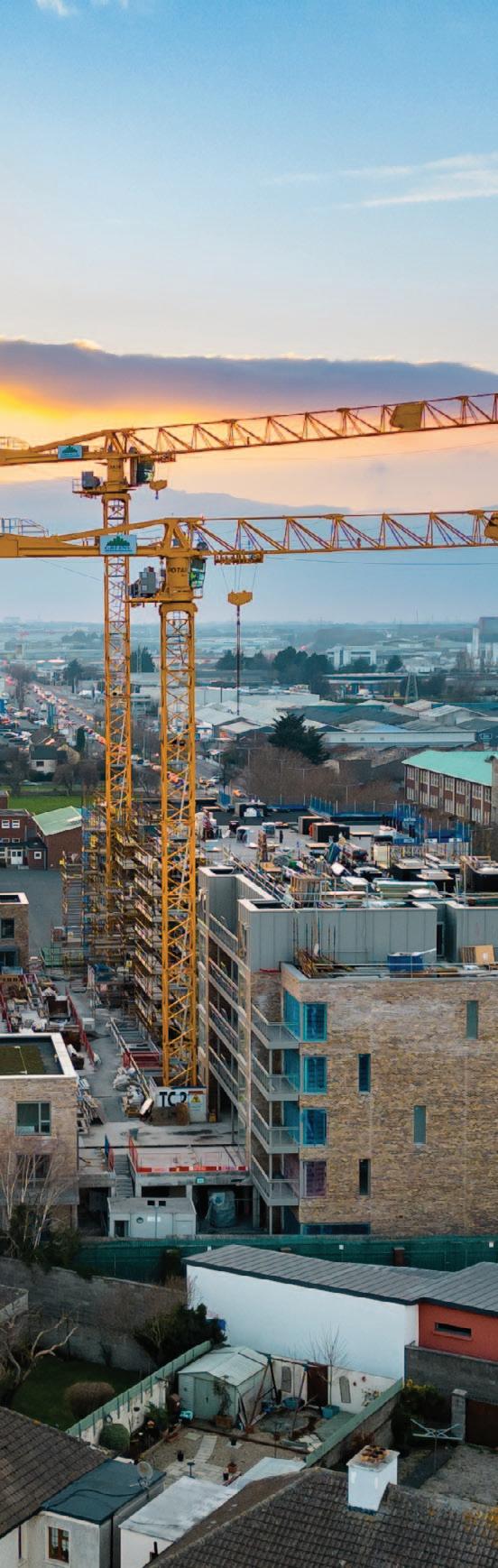

Respond, Ireland’s largest construction-led Approved Housing Body and service provider is on track to triple the number of social and cost rental homes it has in construction to over 4,300 by year end.
Respond is strategically increasing its construction program to €2 billion over the next 12 months, aiming to provide thousands of families with affordable and secure accommodation options in Dublin and Cork. This expansion is supported by local authorities and is facilitated through fixed price contracts with renowned developers and building contractors, ensuring the delivery of large mixed tenure housing developments.
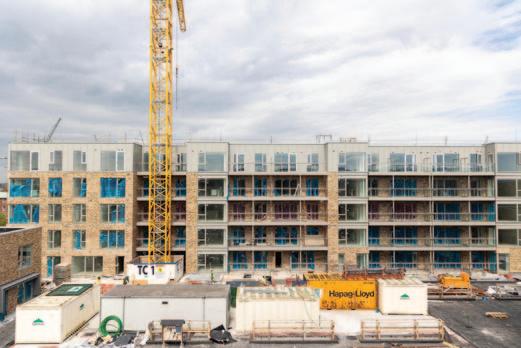

With the backing of the Government, Respond is poised to deliver 700 new homes within this year and projects an additional 900 homes by the end of 2024. Currently, Respond has 1,396 homes under construction nationwide.
85 per cent of Respond’s projects are construction-led, a strategy that allows for substantial savings, up to €60,000 per unit, compared to housing acquisitions. This approach involves purchasing sites outright and financing construction through fixed price contracts, ensuring cost-effective and quality-controlled development, delivering value for money for the State.
Respond has begun construction on 3,347 homes since March 2018, and now manages 7,084 properties providing homes for 16,541 tenants.
“85 per cent of Respond’s projects are construction-led, a strategy that allows for substantial savings, up to €60,000 per unit, compared to housing acquisitions.”
Respond’s spokesperson, Niamh Randall, emphasises the organisation's commitment to addressing the urgent need for more social and cost rental housing across Ireland. Respond’s collaboration with statutory partners, including the Department of Housing, Local Government and Heritage, local authorities, the Housing Finance Agency, and The Housing Agency, is crucial in addressing housing demands and ensuring the delivery of safe, secure, and affordable homes in high demand areas.
Respond’s projects are not just about constructing buildings; they are about building inclusive and sustainable communities. The organisation actively engages with local groups, tenants, and residents, providing support and resources that contribute to the overall wellbeing and development of these communities. The sites for new developments are meticulously selected,
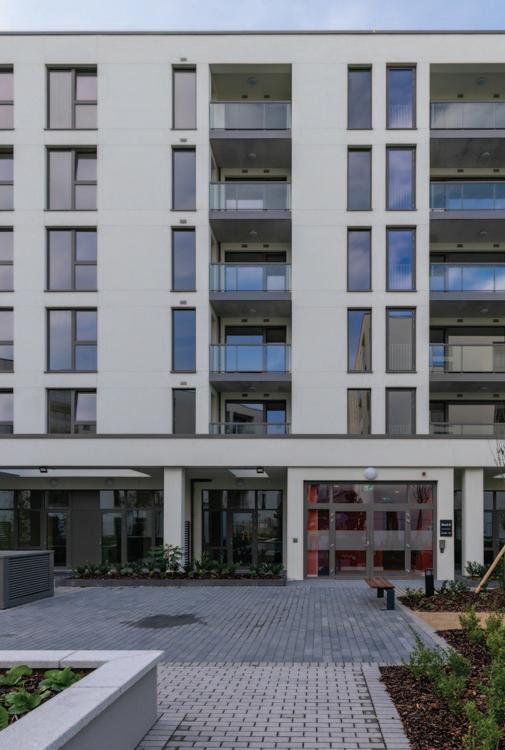

ensuring proximity to essential amenities, public transport routes, and commercial centres.
Providing excellent service to tenants is at the core of Respond’s mission, challenging the stigma associated with social housing by delivering high-quality, lifetime homes and professional services. Respond aims to create vibrant communities by engaging with tenants and offering services tailored to each estate, integrating with local communities and collaborating with local stakeholders to help new tenants become part of the wider community.
The large-scale development projects are designed to meet the need for homes and to build inclusive, long-term sustainable communities. They include community hubs and offer a range of community services, including early

learning and school age care services and services for older people, making them readily accessible for families.
Respond’s ambitious expansion plan is a strategic response to the pressing housing needs in Ireland, focusing on constructing over 4,300 new homes in high-demand areas. The organisation’s construction-led approach, strategic collaborations, and commitment to community building are pivotal in delivering secure, affordable housing solutions and in contributing to the overall development and wellbeing of communities across Dublin and Cork.
T: 01 808 7700
E: info@respond.ie
W: www.respond.ie

The Housing Agency works to roll out affordable housing schemes across the country


In late September, a Social Democrats’ affordable housing motion calling on the Government to publish figures for the delivery of affordable homes in 2023, build 10,000 affordable purchase and cost rental homes per annum, introduce a punitive tax on vacancy, reinstate the ban on no-fault evictions, and cease public spending in the delivery of private rental-only development, was debated in Dáil Éireann. A week later, Ciarán Galway sat down with the party’s housing spokesperson, Cian O’Callaghan TD to interrogate his policy priorities and critique of government delivery.
Over two years since the launch of Housing for All in September 2021, what is your analysis of the triparty Government’s housing policy and delivery?
Where it [the Government] has fallen down is on delivery. The more straightforward part of a process is setting targets and planning, but it is all about your delivery and implementation. One of the areas where delivery has been weakest is on affordable housing.
On the affordable purchase side, we are only at around 420 affordable
purchase homes under this government, well below targets. I think it is an example which goes to other areas as well. They [the Government] are not going into the detail around implementation.
If you talk to the people trying to deliver affordable housing, for example, the big barrier for them at the minute is that they do not have early-stage finance. That means that there is not funding available for planning and design and getting projects off the ground. They have to eat into their own resources and the problem with that is that a lot of them do not have their own resources. By not having the funding available for the early stages,
you are then going to limit the number of projects which get off the ground.
That kind of detail of not just making sure that there is not just a target in place and not just general funding in place but outlining the bottlenecks and the barriers not addressing those challenges in sufficient detail, in my opinion, is where a lot of things have been falling down.
There is no reason why there should not be a housing infrastructure mediation unit in The Housing Agency, or something like that. This would be able to mediate between housing providers.
The Housing Agency works to roll out affordable housing schemes across the country
What are you most significant priorities as the housing spokesperson for the Social Democrats?
A big priority for us is around affordable housing and affordable purchase housing as well. There is a large number of people who are currently renting but who do not want to rent. There are a large number of people still living with their parents who do not want to be in that situation, who want to get on with their lives, become independent, but are not necessarily able to afford the very high prices. There is a massive gap under provision of affordable purchase housing for people who do not qualify for social housing but who will not to be able to meet full market rates.
In my own constituency [of Dublin Bay North], Marino was built over 100 years ago as affordable housing. It is a very successful community to this day. Even the way it is designed, the neighbourhoods; we were able to do that when the country had basically no resources at all. We were just starting off as a state and we were able to do that.
There is an entire life story that emanates from that foundation of being able to have a good-quality, secure, and long-term housing arrangement. The fact that homeownership is in decline, that more and more people are locked out of housing or secure longterm housing has a real impact. That is the change that we want to see; giving that chance to more people through more affordable purchase housing, and more cost rental.
Ultimately, 7,433 new build social homes were delivered against a target of 9,000. The Minister portrayed this as the highest number of social homes delivered since 1975, but what is the Social Democrats’ perspective?
We were certainly disappointed in terms of the social housing need. The population is much bigger than 1975, so to compare the two is way off the mark. We have almost double the amount of need now. There are also challenges around how those social housing units are delivered. If you go back to 1975, they would have been direct new builds by local authorities
“The discussion in other European countries is around how to best support renters who fall behind in their rent and protect the tenancy for both the renter and the landlord.”
whereas now they are a mixture of that and a whole different bunch of acquisitions and long-term leases.
In terms of social housing need, we have a very high need, and we are seeing more of a hollowing out in urban areas where teachers, nurses, gardaí, social workers, people working in health, disability, and a whole range of different areas simply cannot afford to live now.
That has detrimental impact on the quality of their life. It is very hard for people to devote themselves to a job when the commutes are very long. Our services and schools are in urban areas but the people we need to deliver those services to are unable to afford to live in the areas they serve.
With regard to cost rental, again we have seen a massive shortfall compared to target, with just 684 in 2022 against a target of 4,100. How can cost rental be delivered at scale?
This is a difficulty. What is happening now in Ireland is not actually cost rental. Cost rental is designed to be delivered at scale where rent covers costs. In Ireland, it is being delivered at a lower rent with quite significant subsidies being put into it to make it work.
If an AHB is trying to deliver a cost rental scheme, there are two ways it can be done. It can acquire it from a private developer, or it can go through the approval process with the Department of Housing, Local Government and Heritage, buy land,
and then go through the whole planning and design process with government.
If going through a directly managed process, the whole approval process around social housing and affordable and cost rental is far too complicated, bureaucratic, and costly, which leads to delays. That must be streamlined so that those who want to be able to provide affordable rental and cost rental without bringing a large private developer can have a quick route to do that themselves. The whole approval process is archaic and must be streamlined.
Yes, [the Department] must have control over public expenditure and over standards, but there are other ways to exercise scrutiny over design.
It is fair to say there has been an overreliance on HAP tenancies. To what extent are people’s social housing needs being met by HAP?
For most people in social housing, [their need] is defined by security of tenure. Knowing that if they pay their rent that they will be in their home and can plan ahead, put down roots in the community, and get their kids into school. It is the knowledge of knowing that they can make plans with no eviction noticed or tenancies being revoked. It is the lack of security which is the problem with HAP tenancies. The State is shelling out a lot of money to meet people’s housing needs, but they still live with that insecurity of not knowing where they will be in years from now. That is the fundamental thing.
The Housing Agency works to roll out affordable housing schemes across the country

To what extent was the eviction ban a success?
The most successful initiative that any government has implemented to reduce homelessness in recent years was the eviction ban during Covid [27 March until 1 August 2020]. The second eviction ban [in winter 2022/2023] was a bit weaker, but it still gave us the only month in the last 20 where there was a drop in the number of homeless people. There is a time lag between it coming in and it taking real effect because people do not go straight into emergency accommodation as soon as people get evicted. They tend to have other scenarios like sofa-surfing, moving in with family, or other things. We were beginning to see it working overall though.
Most landlords have nothing to fear from this. The norm in European countries is for a landlord to simply sell [a unit] to their renters with tenants in place. There is no interruption for the renters themselves. Most landlords are genuinely worried about their renters and their welfare, they do not like the current situation where they are expected to evict them in order to make a sale. We need to make it standard practice that you do not do that here. If that culture was changed then it would take a lot of stress away from landlords who really do not want to be putting a family through hassle and turmoil.
In June 2021, with the support of the Government, the Minister signed the Lisbon Declaration on the European Platform on Combatting Homelessness.
“We have had nothing short of a revolution in housing in the country, but we have lost sight of that and what it means to people.”
Credit: Social Democrats
Is it realistic that homelessness be eradicated by 2030?
I think it is realistic, but we need to be decreasing the number of homeless people each month. If we changed to that European model of not evicting renters who pay their rent, then that would reduce the number of people becoming homeless each month. It would give us the ability to concentrate support into a smaller number of people.
In terms of the work that is being done, I think there are answers here and things that can be done but I am worried that we have an approach by government of just resigning to the number of homeless people increasing each month. They are not proposing to do anything about it and there is just an acceptance on their part that this is what is happening. That needs to change.
Where do the Social Democrats stand on the enshrining of a right to housing in the Constitution?
If we were in government, we would want that referendum to take place within a year. Clearly, it is not the solution to everything in housing, but it would be good to have that balance in terms of other right as well. It just means that legislation and policy going forward would have to give a right to housing proper consideration. It would be helpful.
I am absolutely convinced that within a matter of years, we will be a part of the European norm for renters; you pay your rent and that is your home. The
discussion in other European countries is around how to best support renters who fall behind in their rent and protect the tenancy for both the renter and the landlord. We are nowhere near that here. I have no doubt that we will get there, but the quicker we get there, the less trauma and hassle for people.
What is your overarching ambition for your party’s housing policy while in opposition?
Ireland, in terms of housing, has an incredibly rich and proud history with what we have done over the last 100 years and even before that with land distribution. If you go back over 100 years, most people did not own their own home. Most people were renting, either in a rural area or in towns and cities. There were terrible conditions.
We have had nothing short of a revolution in housing in the country, but we have lost sight of that and what it means to people. When social housing was first built, people were going from tenements into three-bedroom houses and front gardens. Utterly transformational. This really changed people’s lives in terms of the larger estates being broken up land wise.
The first ambition is to get Ireland’s proud housing history back into the public discourse. We have come out of terrible housing conditions before and turned things around and we are capable of doing that again. A lot of people have lost hope, so that is our goal.
The second goal, if we can get a better understanding of what goes on in other countries, we can see how they cope better even though they have bigger and more complicated rented sectors. They still get investment into the sector. It is not like in Switzerland that there is no housing being built because a landlord cannot kick out their tenant. It all works, and the sky does not fall down.
We have done this before, and we can do it again. It is common sense, using our resources wisely and making sure that they are mainly aimed at increasing supply and not having policies competing against one another. We want to win that argument and then be able to get into government to implement that.
Urgent policy intervention is needed to decarbonise construction at the scale required to achieve Ireland’s net zero targets by 2050, writes Joseph Kilroy, Policy and Public Affairs Manager for Ireland, Scotland and Wales for the Chartered Institute of Building (CIOB).
The built environment accounts for 37 per cent of Ireland’s carbon emissions. Heating, cooling, and lighting buildings –operational carbon – accounts for 23 per cent of national emissions, with the remaining 14 per cent attributable to embodied carbon. Embodied carbon results from mining, quarrying, transporting, and manufacturing building materials, in addition to construction activities, the repair, renovation, and final disposal of buildings.
Under Ireland’s current tax structure, a reduced rate of 13.5 per cent VAT is applied to demolition projects, creating a perverse environment where the embodied-carbon-hungry activities of demolition and replacement enjoy financial parity with the sustainable repair and restoration of Ireland’s built environment. This contradicts the principles outlined in the Circular Economy Act 2022, the Climate Action Act 2021, and the EU Taxonomy Regulation 2020 – an EU-wide classification system for sustainable activities.
To remedy this, the CIOB is proposing that the Government uses the tax system to incentivise the repair and restoration over the demolition of buildings, thereby reducing the embodied carbon footprint of Ireland’s built environment.
Specifically, we are calling for demolition to be charged at the standard rate of 23 per cent VAT, while repair and renovation

activities remain at the reduced rate of 13.5 per cent.
Rather than incentivising sustainable construction activities such as add, transform, and reuse, Ireland’s VAT structure is facilitating a culture of demolish and replace. New-build projects are an essential component of the built environment, but, from a sustainability perspective, the replacement of buildings should not be given taxation parity with repair, as retrofit buildings will often outperform new ones in terms of overall lifetime carbon emissions.
Internationally, regulatory measures have proven effective in undergirding similar types of sectoral culture shifts from demolish and rebuild to repair and reuse. Landfill taxes and the application of an aggregate levy facilitated a 70 per cent
decline in the amount of construction and demolition waste (CDW) disposed to landfills in the UK. Research in Spain has concluded that levies were more effective at CDW mitigation than financial incentives, achieving the targeted 30 per cent reduction in CDW two years sooner than expected and have the co-benefit of generating a new revenue stream.
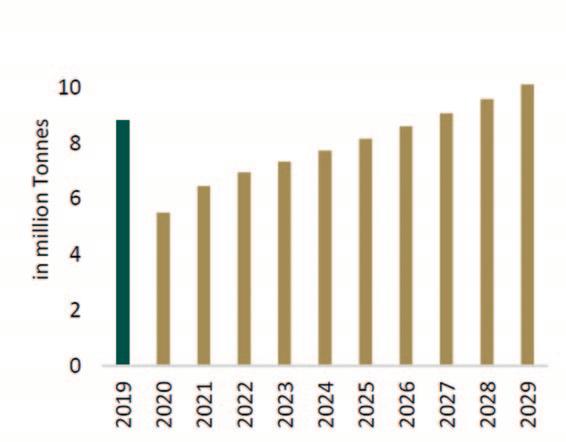
Figure 1 summarises national CDW projections to 2029, illustrating that the annual quantity of CDW generated in Ireland is projected to consistently increase over time. With the sector having experienced a remarkable resurgence since Covid-19, there is once again high demand for construction. The continual demand for development means action needs to be taken now to reduce the accompanying embodied carbon emissions from the built environment. Put simply, there is an upward trend forecasted for CDW from 2021 to 2029, and overall emissions are predicted to follow a downward trend, but embodied emissions are forecasted to increase. This is the space for policy intervention.
T: 087 119 4475
E: jkilroy@ciob.org
W: www.ciob.org
The Land Development Agency (LDA) launched its first Report on Relevant Public Land in March 2023. The report explores the potential of state-owned land to deliver much needed affordable and social housing into the future.
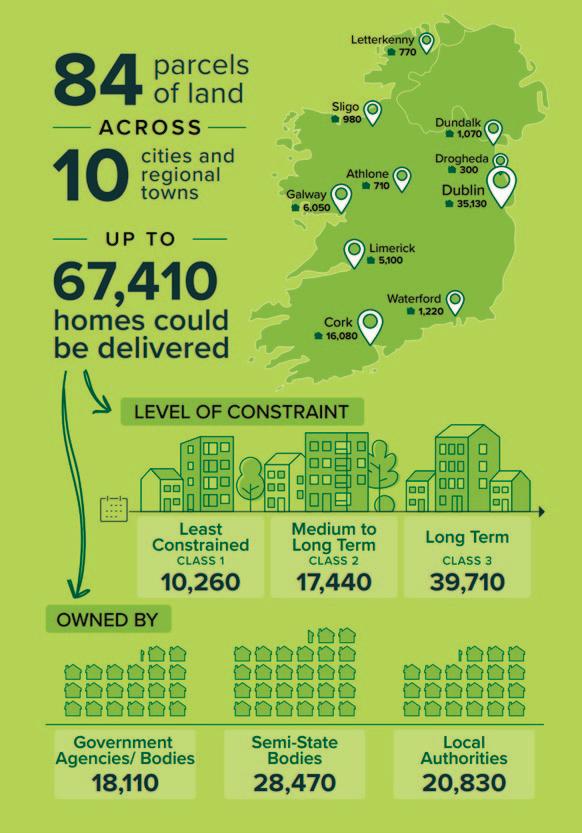
The report identifies 83 state-owned sites and assesses them as having the potential to deliver up to 67,000 homes in the medium to long term. The report utilises the findings of the Register of Relevant Lands which identifies all of the land owned by public bodies.
The report, the first of its kind, is a statutory report and advisory in nature. It is required by Section 52 of the LDA Act 2021 which states that the LDA is obliged to provide the Government with a report on “relevant public land”, which comprises land owned by “relevant public bodies”. The report identifies a potential pipeline of sites to support the delivery of affordable homes into the future.
Relevant public land is land owned by state bodies in settlements with a population of greater than 10,000 persons rounded to the nearest 500.
There are currently some 48 settlements meeting this criteria, ranging from Gorey, County Wexford (population: 9,822) to Dublin city and suburbs (population: 1,173,179). The number of settlements meeting these criteria is likely to increase as a result of Census 2022.
The report will comprise multiple phases, of which the version published in March is the first. The LDA will provide further reports at least every two years to government. To ensure a priority focus on areas of greatest need and projected future growth, the first report focused on the five cities – Dublin, Cork, Limerick, Galway, and Waterford – and the five regional growth centres – Drogheda, Dundalk, Athlone, Letterkenny, and Sligo.
In total, these cities and growth areas account for approximately 75 per cent of the relevant public land identified nationally. Focusing on these settlements in the first instance is consistent with the National Planning Framework objectives to achieve compact and sustainable growth and balanced regional development.
The remaining settlements with a population of over 10,000 will be considered as part of the LDA’s next report to Government, due in 2024.
To produce this report, the LDA examined all of the state-owned sites in the ten key urban areas. All sites not suitable for the delivery of new homes were removed and the remainder were assessed against criteria such as zoning, flood risk and proximity to transport and other facilities including schools and retail developments.
Subsequently, sites were given a classification depending on the levels of constraints that existed on each site. The classification indicates which parcels of land, in the LDA’s assessment, involve less or more constraints when it comes to their potential for the development of housing.
Class 1 sites are regarded as less constrained with potential for progression to development for residential delivery in the short to medium term. Class 2 sites are regarded as appropriate for development subject to overcoming certain constraints, for example, rezoning or relocation of existing uses. Class 3 sites are generally large and complex long-term sites that are considered to have the potential for residential development but involve several existing constraints. These sites generally require a plan led approach such as preparation of a framework or masterplan together with the provision of significant infrastructure to support unlocking. The availability of all sites is subject to further due diligence and a Government decision to progress the sites for delivery of housing.
High level estimates for the number of potential new homes, indicative costs of development and of infrastructure are all included in the report. The report does not include any costs involved in the purchase of land or for relocating existing premises if such action is required. The development costs are calculated estimates based on existing cost data and will require review and updating over time.
It should be noted that not all of the sites listed in the report will ultimately be developed for affordable housing. Many are currently in part or operational use and the public bodies involved may seek to retain the sites for existing operational purposes. By including sites in the report, the LDA is not stating that they
should be developed, but rather inviting consideration by government of their potential use for affordable and social housing delivery.
The LDA has also completed a national state lands database, which includes all land owned by the State nationally and which is also available online on the LDA website at www.lda.ie.
Relevant public land is defined in the LDA Act as: “All land within a census town owned by a relevant public body. A census town is any urban area with a population over 10,000 accurate to the latest census information.”
A relevant public body is defined in the LDA Act to include Schedule 1 bodies –non-commercial public bodies/agencies and government departments; Schedule
2 bodies – commercial public bodies/agencies; and Local Authorities.
The LDA Act 2021 allows for land to be treated in different ways depending on what schedule the owning body is in. The Act states that a relevant public body shall not dispose of relevant public land unless it has given notice and offered the land for sale to the LDA. In the case of Schedule 1 bodies, the government may decide that relevant public land identified in the Report on Relevant Public Land shall be acquired by the LDA.
T:
The Housing Agency works to roll out affordable housing schemes across the country


The eviction ban in place from November 2022 until the end of March 2023 did not lead to a reduction in homelessness numbers, but monthly increases in total numbers did slow and the number of homeless children decreased during the period.
Minister for Housing, Local Government and Heritage Darragh O’Brien TD told eolas Magazine in June 2023 that “certainly some elements” of the increase in homelessness was due to the lifting of the eviction ban brought in by the Residential Tenancies (Deferment of Termination Dates of Certain Tenancies) Act. This was confirmed with the publication of government homelessness data for April 2023, which showed that homelessness had increased in total numbers and among both adults and children.
The 12,259 total number of homeless people
recorded in April 2023 in the immediate aftermath of the ending of the ban was, at the time, a record for the State and a 2.3 per cent increase on the preceding March. 8,516 adults were recorded as homeless, a 1.8 per cent increase, and 3,594 children were recorded as homeless, a 3.5 per cent increase. While overall data for the period of the eviction ban shows that the measure did not stop the increasing number of homeless people in Ireland, it did slow the rate of increase from month-to-month and decrease the number of homeless children in the State. Comparing March 2023 and April 2023, the monthly increase rate in adult homelessness
The Housing Agency works to roll out affordable housing schemes across the country
stood static at 1.8 per cent, but the growth rate in child and total homelessness rose from 2.9 per cent to 3.5 per cent and 2.1 per cent to 2.3 per cent respectively.
March 2023 was itself an anomaly within the five months the eviction ban was in operation. The ban came into effect on 29 October 2022, meaning that November 2022 was the first operational month. While it is true to say that homelessness increased from November 2022 to March 2023, sharp increases in March skew some of this data.
Child homelessness, for example, slowed its rate of increase from 4.1 per cent in October 2022 to 0.4 per cent in November 2022 and then recorded decreases in December 2022, and January and February 2023 before once again increasing in the following March. There had been 3,494 homeless children recorded in November 2022, which fell to 3,373 in February 2023, but rose to 3,472 in March 2023. Overall, child homelessness decreased by 0.6 per cent in the five months of the eviction ban.
Adult homelessness in the same period rose by 5.8 per cent, with the overall homelessness numbers increasing by 3.9 per cent. In comparison, May 2022 to October 2022, the six months immediately preceding the ban, showed increases of 8.5 per cent, 14.9 per cent, and 10.4 per cent in adult, child, and total homelessness respectively. October 2022 showed the sharpest of increases during this period in each of the adult, child, and total categories.
It is not possible to calculate exactly how the number of notices to quit directly correlates to homelessness figures due to the fact that data on notices to quit served by landlords,
collected by the Residential Tenancies Board (RTB), is done on a quarterly basis with no monthly breakdown. Attempts to get to grips with the data are further complicated by the fact that changes in legislation regarding notices to quit render RTB data pre- and post-Q3 2022 incomparable. For example, Q2 2022 data states that 1,666 notices to quit were served, but that 4,741 were served in the following three months of Q3 2022. New legislation regulating evictions state that tenants must be given notice of at least 90 days to vacate a premises depending on the length of their tenure, meaning that any notice to quit issued should not see the tenant(s) leave a house or apartment until the next quarter at the earliest. Q4 2022 data is further complicated by the fact that the eviction ban began in the second of its months, although a notable decrease to 4,329 notices to quit served was recorded. The only quarter to be fully covered by the ban, Q1 2023, recorded an increase to 4,753. There were 8,582 notices to quit served across the final quarter of 2022 and the first quarter of 2023, with the vast majority of those likely to have been within the span of the evictions ban given that the ban was not operational in only one of the six months included.
While not every eviction results in homelessness, the combined data of the Department of Housing, Local Government and Heritage and the RTB does state that April 2023 – the first month in which these notices to quit could be enforced – showed both an overall increase in homelessness and an increase in the growth rate. This increase in the growth rate was most acutely felt in child homelessness.
The Housing Agency works to roll out affordable housing schemes across the country
Child homelessness has borne the brunt of the post-ban increases in homelessness, with the number of homeless children in the State increasing by 8.4 per cent between April and August 2023, the most recent month for which data is available. Adult homelessness rose by 1.5 per cent in the same period, with total homelessness increasing by 3.5 per cent.
Q2 2023 showed a 20.6 per cent increase in notices to quit served, a vast increase that appeared to translate immediately into Q3 homelessness figures. July showed a monthly increase of 2 per cent, a rate that is larger than the preceding May (1.5 per cent) and June (1.3 per cent). The total recorded in July – 12,847 people – is a State record.
August 2023 has, however, recorded a decrease in total homelessness, the first decrease since February 2023 and the first decrease outside of the eviction ban since June 2019. A decrease of 2.5 per cent was recorded in adult homelessness, leading to an overall decrease of 1.2 per cent. However, child homelessness did continue its post-ban trend of increasing, rising by 1.7 per cent and inching closer to 4,000 homeless children. While it may not be correct to equate notices to quit and homelessness, it does stand that
both notices to quit and homelessness figures have increased in both of the first two quarters of 2023. Other factors are clearly also at play here: quarters two, three, and four of 2022 showed annual increases (albeit from 2021, when construction was impacted by Covid) in new dwelling completions, but homelessness still increased to record levels. 2023 figures show an increase in quarter one, but a 3.5 per cent decrease in quarter two when compared to Q2 2022. Daft.ie rental market reports for the same quarters show the number of properties available to rent to have not exceeded 1,100 in the State during that time.
Discussing the end of the eviction ban, O’Brien stated that he had to ensure that any action “need not lead to further loss of property within the private rented sector”, because “we need a private rented sector”. The data appears to suggest that while the eviction ban did not halt the growth of homelessness, it did slow the rate of growth – a necessary first step towards the halting of growth – and stopped some tenants falling by the wayside after being forced out into a housing market and private rented sector that simply does not have the capacity or affordability to meet present demand.

The Housing Agency works to roll out affordable housing schemes across the country
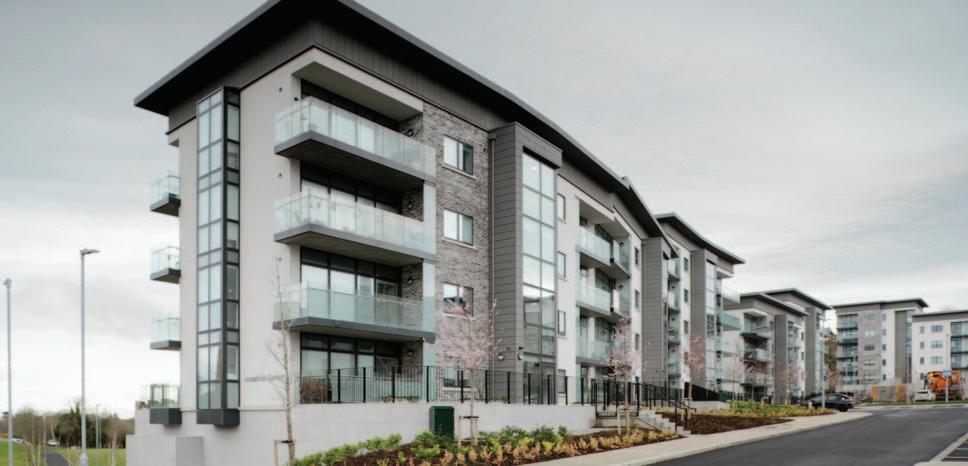
Affordability is at the core of the Government’s Housing for All policy, with a target of 6,000 affordable homes to be made available every year for purchase or rent by local authorities, approved housing bodies, and the Land Development Agency. The plan aims for the delivery of 54,000 affordable homes by 2030 and a number of different schemes to increase affordability.
The affordable housing unit within The Housing Agency supports the delivery of affordable homes by providing loans for cost rental homes and a loan underwriting service for local authorities. The team also provides guidance and support to local authorities, approved housing bodies, and the Land Development Agency. It assists the Department of Housing, Local Government and Heritage in the rollout of affordable schemes.
A number of affordable housing schemes have been introduced since the inception of Housing for All, and the
need to communicate the different supports and schemes available is now being supported by two new websites.
On 18 September, The Housing Agency, on behalf of the Department of Housing, Local Government and Heritage, launched a new information website for affordable housing schemes called Affordablehomes.ie. The website is available to the public to provide information on the affordable purchase and cost rental schemes as well as other supports available such as the Help to Buy scheme and the Local Authority Home Loan.
The Department of Housing, Local Government and Heritage has also launched the Doors Open campaign, which provides useful information on the supports and initiatives available to people who are looking to rent or buy.
A list of schemes and initiatives is available at www.gov.ie/doorsopen.
Under the Affordable Purchase Scheme, local authorities will make newly built homes available at a reduced price for first-time buyers who cannot afford to purchase a home at its open market value with a maximum mortgage and 10 per cent deposit.
The local authority will take a percentage equity share in the home equal to the difference between the open market value of the home and the reduced price paid. This means that if a person buys a home at a 20 per cent reduction on the open market value, the local authority will have a 20 per cent equity share in their home. A person can redeem or ‘buy out’ the equity share in part or in full at a
The Housing Agency works to roll out affordable housing schemes across the country
time of their choosing, but there is no obligation to do so.
Cost rental is a new housing tenure in Ireland, where rents are based on the cost of provision rather than market rents. The rent paid covers the cost of construction, management, and maintenance of homes. Approved housing bodies, the Land Development Agency and local authorities are offering cost rental homes to eligible applicants, aimed at people who have a net household income of €66,000 or below in Dublin or €59,000 or below in the rest of the country.
The provision of cost rental homes is funded by the Government through fixed rate loans provided by the Housing Finance Agency and the Cost Rental Equity Loan (CREL), provided by The Housing Agency for up to 45 per cent of the capital costs. CREL is a low-cost loan at 1 per cent simple interest that is not repayable until the end of the 40year loan period.
The Housing Agency worked with Respond, Tuath and Dún LaoghaireRathdown County Council to deliver the first cost rental scheme of 50 homes at Woodside, Enniskerry Road. A total of 694 cost rental homes have been delivered since the launch of Housing for All, with a further 409 scheduled for delivery up to the end of 2024.
In addition to providing cost rental equity loans to support the delivery of cost rental homes by approved housing bodies, The Housing Agency is involved with two other cost rental schemes: the Secure Tenancy Affordable Rental investment scheme (STAR) and the Cost Rental Tenant in-Situ scheme (CRTiS). The Housing Agency also plays a role in assessing Affordable Housing Fund applications for local authority cost rental homes, on behalf of the Department of Housing, Local Government and Heritage. The Affordable Housing Fund (AHF) was introduced to enable Local Authorities access funding to assist them to deliver affordable purchase and cost rental homes.
The Secure Tenancy Affordable Rental investment scheme (STAR) is intended to support the delivery of cost rental by the Land Development Agency and private sector entities. Approved housing bodies can also avail of this scheme. The scheme is managed by The


Housing Agency on behalf of the Department of Housing, Local Government and Heritage (DHLGH) and is intended to address challenges in the housing sector including construction inflation, increased financial costs and interest rate induced softening of yields.
Tenants for dwellings provided under this scheme may only be selected per the eligibility parameters for cost rental homes set out in part 3 of the AHA 2021 (as amended) and associated cost rental letting and eligibility regulations set out under S.I. 755/2021 (as amended) and in accordance with any guidance set out by the Minister in relation to cost rental homes.
The Housing Agency can be contacted on its dedicated email address STARIS@housingagency.ie
The Housing Agency is playing a key role in the new Cost Rental Tenant InSitu (CRTiS) Scheme to support tenants at risk of homelessness. The scheme has been in effect since 1 April 2023.
The scheme is available if the tenant household:
• is not able to purchase the property from the landlord;
• is at risk of homelessness;
• is not eligible for, or currently in receipt of social housing supports (that is in receipt of HAP or in the Rental Accommodation Scheme (RAS)); or
• must have net annual income of below €66,000 per annum for Dublin and €59,000 for everywhere else in the country.
If the local authority is satisfied that the applicant tenant household is eligible for CRTiS, it will pass the details of the tenant and the property to The Housing Agency for consideration for potential acquisition under the CRTiS Scheme. The Housing Agency will then engage with the tenant regarding the assessment of their eligibility for the scheme and the tenant’s landlord regarding the suitability of the property for the scheme, with a view to acquiring the property.
The Housing Agency is involved in a number of affordable housing schemes, including the Affordable Purchase Scheme, cost rental housing delivery, the Cost Rental Tenant in-Situ (CRTiS) Scheme, and the Secure Tenancy Affordable Rental investment scheme (STAR). The Housing Agency is working towards delivering sustainable and affordable housing for all.
If a tenant has a query about the Cost Rental Tenant in-Situ or the other measures introduced to assist tenants they can contact The Housing Agency:
T: 1800 000 024
E: tenantinsitu@housingagency.ie.
W: www.housingagency.ie
The Housing Agency works to roll out affordable housing schemes across the country

Affordability in the Irish housing market is not out of sync with European counterparts, but the country does have one of the largest gaps in homeownership rates between younger and older generations.
Worsening affordability pressures and falling homeownership rates are distinct challenges, but not wholly unique, according to research carried out by the ESRI.
The finding that Ireland’s renters have the lowest rentto-income ratio of 15 European countries analysed is surprising in the midst of the country’s affordability crisis, however, the finding is not fully reflective of how individual cohorts are faring in comparison to their counterparts.
For example, while Ireland has one of the highest rates of homeownership for households aged 40 and above (79 per cent), it is ranked 10th (34 per cent) in the highest rate of homeownership for households aged below 40, creating one of the largest gaps in ownership rates between younger and older generations.
Similarly, figures around homeownership are somewhat distorted. Around 54 per cent of households in the lowest income quintile own their home outright, driven by Ireland’s high rates of outright ownership for retirees (over 65s).
Housing affordability: Ireland in a cross-country context aims to better contextualise the housing affordability challenges faced in Ireland by examining how key affordability indicators such as housingpayment cost-to-income ratios for Irish households (across tenures, incomes, household composition, urbanisation, and age) compare with 14 other European countries.
The research paper highlights alterations to affordability in recent years, driven by a number of factors, not least government policy supports, such as the expansion of the Housing Assistance Payment (HAP). For example, 58 per cent of households had insufficient residual income after housing costs to meet minimum living costs in the market price private rental sector in 2017, but by 2019, this proportion had fallen to one-in-three households.
On average, Irish households pay around one-fifth of their net incomes on their housing payment costs, with only five countries displaying better average housing affordability (Norway, Denmark, Portugal, Austria, and Sweden).
Renters pay on average 20 per cent of their net income on rent, giving Ireland the lowest rent-to-income ratios (RTI) among the 15 countries analysed. The impact of government support can be seen by the fact that while on average Irish renters have better affordability relative to other countries analysed, renters in the fourth and fifth income quintiles face rent-to-income ratios that are on average two to three percentage points higher than their European peers. Essentially, HAP supports those of lowest incomes, the affordability challenge mainly falls on those of lower-middle income.
This is highlighted by the finding that since 2014, the share of renters in the bottom 25 per cent of the income distribution not in receipt of any form of long-term housing supports fell from over 45 per cent to 25 per cent. In the second quartile of the income distribution, this share also fell markedly from 2017 to 2019 by nearly 20 percentage points.
A further finding in the research is that Irish households have more dispersed rent-toincome ratios than their European counterpart, meaning some households face more extreme affordability burdens, and others less, in comparison. This is highlighted by the fact that in the third and fourth income quintile, where more than half of private renters not in receipt of housing supports are located, the largest share of
Share of households (%) with high housing-payment-cost-to-income ratios (30/35/40%)
households pay more than 30 per cent of their incomes on rental costs.
While the rent-to-income ratio appears on average to be lower in Ireland compared to elsewhere in Europe, Irish renters have a larger urban/non-urban divide than their counterparts. Ireland’s 5.5 percentage point gap is significantly larger than the 2 per cent gap evident across Europe. However, this gap is not as significant in relation to mortgage holders.
While most of Europe has followed a trend whereby rising affordability pressures have been primarily concentrated amongst the lowest income rental households, supports in Ireland have somewhat mitigated the effects for these households. However, while these supports have removed many lower income households from the market price rental sector, the affordability pressure challenge has not been resolved, but simply shifted. One-in-three rental households who do not receive state housing supports pay more than 30 per cent of their net income on rent, compared to 7 per cent of mortgaged households.

The Affordable Housing Act 2021 enacted on 8 July 2021 was described as “the most comprehensive standalone affordable housing legislation in the history of the State”.
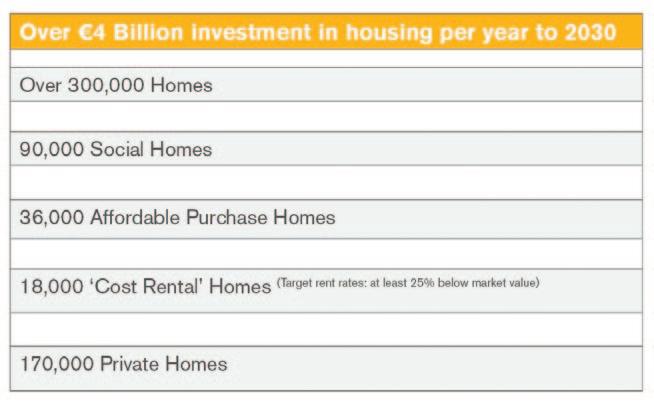
The Act provided for a range of new measures as part of a long-term strategy to target affordable housing and bring forward supply led policy measures supported by ambitious capital funding, with €4 billion overall allocated in Budget 2022, €2.6 billion of which being capital funding for 11,820 social homes. Since its enactment a series of schemes have been launched as part of the Housing for All strategy led by The Housing Agency on behalf of the Department of Housing, Local Government and Heritage.
Cost Rental Equity Loan (cost rental): The so-called “Vienna Model”, developed to support those people
earning above social housing limits (salary cap of €66,000 for properties in Dublin and €59,000 elsewhere) with long-term security of tenure where tenants can avail of rents at least 25 per cent below the private market. Cost rental loans are made available to approved housing bodies (AHBs) alongside debt finance from the Housing Finance Agency (HFA) under a coordinated arrangement whereby both the HFA and The Housing Agency jointly fund the purchase of cost rental homes in new build developments. Homes are designated as cost rental homes for a minimum period of 50 years thereby ensuring their long-term availability and affordability. By offering long-term debt
finance through both the HFA and The Housing Agency, AHBs are able to offer these homes at a discount to market rent. 719 cost rental homes have been delivered via AHBs since the commencement of the scheme in late 2021 with a significant number planned and under development.
The cost rental product is currently being expanded to provide an additional State equity investment alongside the existing cost rental loan following recommendations from a working group on cost rental.
First Home Scheme: a shared-equity scheme in partnership with participating banks (AIB, EBS, Haven, BOI, and PTSB) to assist first-time buyers to purchase new-build homes, whereby up to 30 per cent of the value of the home can be funded by the First Home Scheme under a shared equity arrangement subject to the entitlement
of the homeowner to repurchase or redeem the equity interest held by the scheme in the property.
Croí Cónaithe (Cities) Fund: a fund established to encourage greater activation of planning permissions for apartments of four floors or more than 40 units or more, by addressing construction viability in locations in Dublin, Cork, Limerick, Galway, and Waterford where there is a demonstrable viability gap in the cost of building the apartments. The scheme makes available a contribution of up to €120,000 per apartment to the developer as the apartments are completed. The funding provided enables the sale of the completed apartments to purchasers at a reduced cost, provided they live in the apartment for 10 years. If a purchaser sells the apartment within 10 years a clawback of funding support will be triggered based on a pro-rata calculation of the increased value of the apartment on sale against the funding amount provided to the apartment under the scheme.
Croí Cónaithe (Towns) Fund: a fund to support servicing sites and renovating vacant homes in regional towns and villages whereby grant funding or assistance is provided to homeowners:
• Vacant Property Refurbishment
Grant: a grant of up to €50,000 (with the possibility of an additional €20,000 where the property is listed on a Derelict Sites Register) to support the refurbishment of vacant and derelict properties. Provided a homeowner occupies the property or makes it available to rent for a period of 10 years no repayment of the grant is required. However, a clawback of the entire grant is required if the property is sold within five years or 75 per cent of the grant between years five and 10. The clawback is secured by a mortgage on the property, if there is an existing mortgage on the property the grant mortgage ranks as a second mortgage behind the mortgage lender.
• Ready to Build Scheme: involves the making available of a discount to market value on the purchase price of a serviced site by local authorities, to individual purchasers for the building of their home which will be their principal private residence. It is intended that local authorities will develop sites either in their control or via purchase and make them available for development by providing services and access to the sites. The level of
discount to the individual will depend on the level of servicing cost incurred by the local authority before the sale of the site with discounts up to a maximum of
€30,000. If the home is sold within 10 years, a clawback of the purchase discount is triggered (being 100 per cent of the discount if within five years or between years five and ten a clawback of 75 per cent of the discount applies).
Affordable Dwelling Purchase
Arrangements: this is a local authority affordable purchase scheme to allow Local Authorities to make new homes available for purchase by eligible applicants at reduced prices. In return, the local authority will take a percentage equity stake in the affordable purchase home. The council’s equity stake will be equal to the discount of the purchase price from the full market value of the home. If an eligible applicant purchases a home at a 20 per cent discount, the local authority will take a 20 per cent equity stake, and this will be documented in an affordable dwelling purchase agreement.
Local Authority Home Loan Scheme:
a Local Authority Home Loan is a government backed mortgage for firsttime buyers can make available up to 90 per cent of the market value of the property. The maximum loan amount is determined by where the property is located. Recently announced increased income limits apply of €70,000 for single applicants or €85,000 joint applicants.
Secure Tenancy Affordable Rental Investment Scheme (STAR): intended to offer cost rental dwellings at scale (minimum of 10 units), the scheme is supported by €750 million for the delivery of 4,000 cost rental homes by
2027. Under the STAR scheme an equity investment may be made by The Housing Agency of up to €175,000 per home in Dublin or €150,000 per home elsewhere (with a possible additional €25,000 available subject to the home satisfying certain sustainability criteria in line with the EU Taxonomy Regulation). As part of the approval and eligibility criteria the assessment will involve an open book assessment of the development and operational costs to ensure a transparent review of the costs and revenues.
The scale of State investment in housing and housing supports being made available under Housing for All is unprecedented, but equally the challenges being faced in terms of the housing crisis, the war in Ukraine, inflation and rising interest rates are equally significant. Housing delivery is increasing and there are signs that the pipeline supply of homes through the combination of supports has the potential to deliver on the significant pledges made under Housing for All
Simon O’Neill, a partner in the Banking and Finance team in Philip Lee LLP, is advising on a number of housing projects and the schemes made available under Housing for All and the Affordable Housing Act 2021.
Contact us
T: 01 237 3700
E: info@philiplee.ie
W: www.philiplee.ie

The Housing Agency works to roll out affordable housing schemes across the country
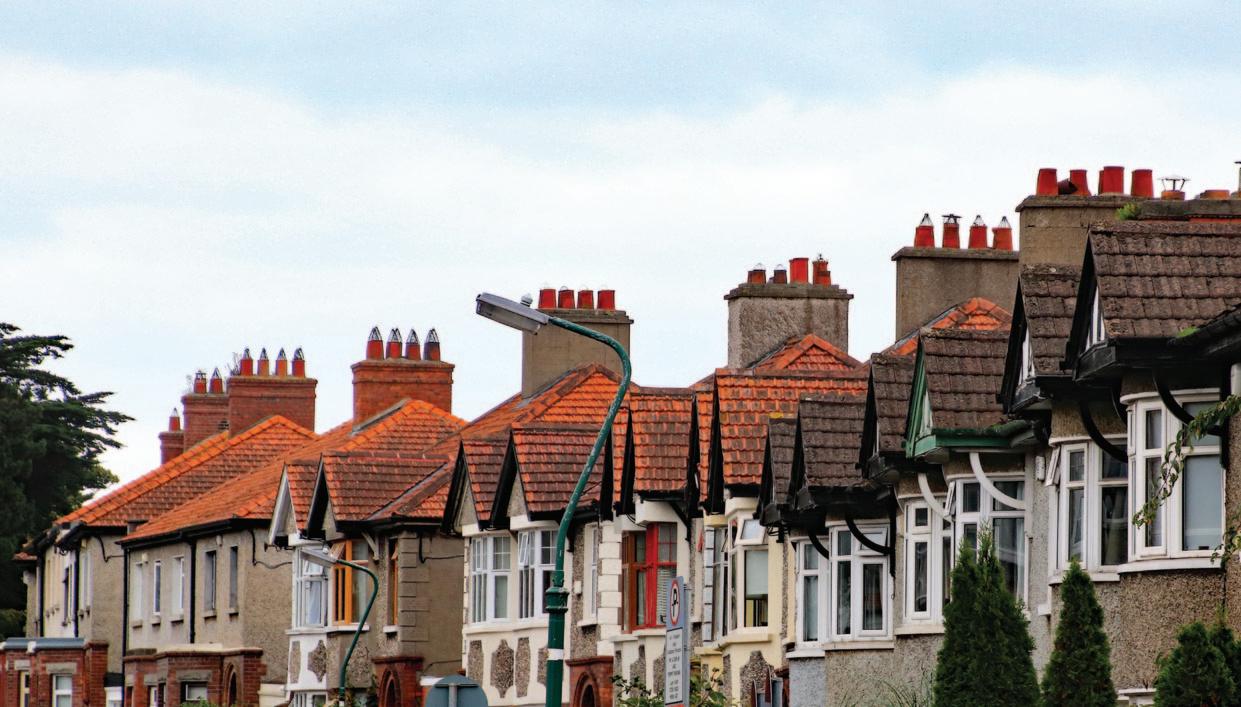
Census 2022 housing figures demonstrate how relatively stagnant wages in Ireland are exacerbating the inaccessibility of homeownership for young people in Ireland, with house prices increasing at a rate far above wage growth in real terms.
In July 2023, the CSO released the results of phase two of Census 2022, which shows that the rate of homeownership has continued to decline in the State, a trend which has been consistent in every census since 1991.
At the time Housing for All was launched in September 2021, Minister for Housing, Local Government and Heritage Darragh O’Brien TD stated that the strategy “puts forward a new vision that places homeownership back in the hands of ordinary working people”.
Census 2022 shows that that Ireland’s rate of homeownership stands at 66 per cent, a slight decline from the figure of 68 per cent in 2016.
Although Minister O’Brien has stated that the trend of declining homeownership is “starting to reverse”, Census 2022 figures outline a significant decline in homeownership from 1991, when the rate was recorded at 79.3 per cent. Furthermore, in all of the recent censuses (1991,
2002, 2006, 2011, 2016, and 2022), the rate of homeownership has declined compared to the rate recorded in the prior census.
Another long-term trend recorded by the Census is the age at which the Irish population become homeowners. In 1991, the average age at which Irish people became homeowners was 26 years old, however, the Census 2022 figures show that this has increased to an average age of 36 years old. Census 2022 also shows a significant increase between 1991 and 2022 in the age at which two-thirds of homeowners owned their own houses, with the average age having increase from 28 years old in 1991 to an average age of 44 years in 2022.
In an Ireland in which, according to Oxfam, two individuals have more wealth – €15 billion –than the poorest 50 per cent of the population, it is notable that whilst wages in real terms have increased 56 per cent between 1991 and 2022, house prices have increased at a rate of 466 per
The Housing Agency works to roll out affordable housing schemes across the country
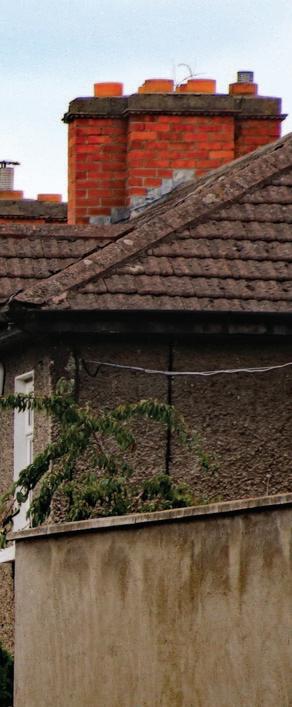
cent, exemplifying the new challenges facing the 2022 would-be Irish homeowner.
Whilst the number of people acquiring their first mortgage is in a seemingly perpetual decline, Census figures conversely show that the number of dwellings owned without a mortgage or loan was up 11 per cent between 2016 and 2022 to nearly 680,000, with the overall rate of mortgages declining in some regions of the State.
Every county in the State recorded a rise in the number of dwellings owned outright between 2016 and 2022. The number of dwellings owned with a mortgage or loan decreased by 1 per cent to 531,207. The largest falls in mortgaged properties were in Donegal (down 10 per cent) and Tipperary (down 8 per cent), where housing growth was slowest. There was an increase in the number of mortgaged properties in some counties, particularly in counties within commuting distance of Dublin where housing growth was strong, such as in Meath (up 9 per cent) and Kildare (up 6 per cent).
Speaking with eolas Magazine in June 2023, Minister O’Brien rationalised his government’s lifting of the winter eviction ban as being motivated by a desire to prevent “a mass exodus of good landlords out of the market”.
However, Census 2022 has reported that, contrary to the Minister’s apparent worries about a decrease in the size of the private rented market, more than 330,000 homes are rented from a private landlord, which is an
increase of 7 per cent from Census 2016.
There was also a significant increase in the number households with people aged 65 and over renting from a private landlord to almost 17,000 households, up by 83 per cent since 2016. For households headed by a person aged 60 to 64 years, this was up by 69 per cent.
Nationally, more than 52,000 households were paying €400 or more per week in rent to private landlords in April 2022, compared with just 13,232 households in 2016. In Dublin city, the number of households paying €400 or more per week in rent was almost 23,000, up from 6,775 in 2016
Furthermore, the average weekly rent paid to private landlords continues to increase. In 2011 it was €171, rising to €200 in 2016, and to €273 in Census 2022. Between 2011 and 2022, this equates to a 59 per cent increase over the period, and a 37 per cent increase between 2016 and 2022.
Whilst government aims to implement measures such as increasing supply, and Census 2022 shows that the number of houses being built is increasing, the disparity between wages, wealth inequality, and house prices demonstrates the influence of an inflated private housing market which lacks the impetus of a state to act as a check on rising prices. Therefore, until the trend of disparity between house prices and wages starts to reverse, it is likely that homeownership will become an increasingly distant prospect for a new generation of Irish people.
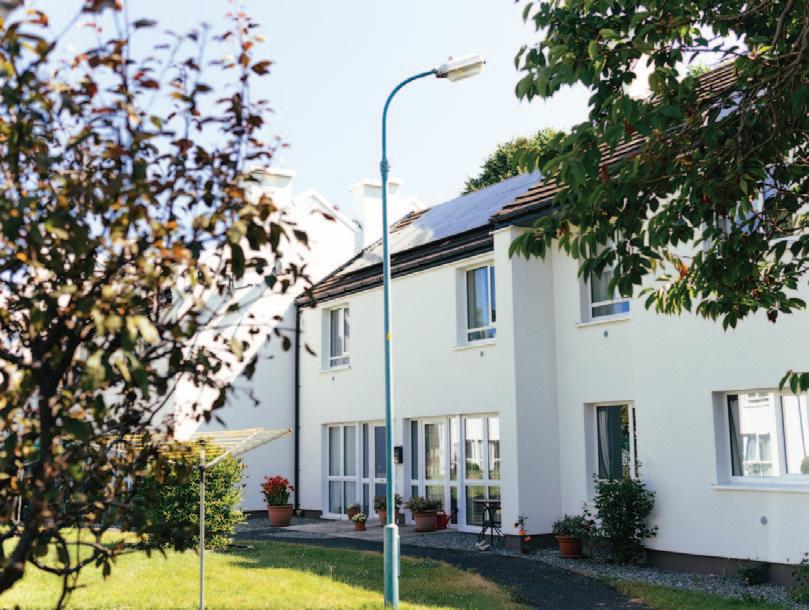
“Retrofitting is an investment in the home, and not just a long-term investment,” says Hobbs. “In the context of the current cost-of-living crisis, priorities on spending in households remain sharply in focus.
Consumers are understandably wary of engaging with seemingly complex projects with perceived large costs but engaging with SSE gives them a sense of assurance. A completed retrofit upgrade has many benefits: a warmer home that costs less to heat, a potential increase in the future sale value of the property, and knowing you are reducing your carbon footprint and helping to tackle climate change.”
“Our dedicated teams in SSE AES evaluate customers’ needs to guide them through the process from start to finish. The Generation Green Home Upgrade cuts through the complexity by providing a whole-home retrofit solution alongside straightforward lowcost finance options.”
“We offer a one-stop shop and provide project management from pre-project energy assessments, contractor management to grant application and completion, simplifying and streamlining the whole process.”
Part of the Climate Bill includes a national retrofit program aiming to see 500,000 homes, one-third of Ireland’s housing stock, retrofitted to a B2 building energy rating by 2030. SSE Airtricity Energy Services (SSE AES) is supporting the retrofit of an additional 30,000 homes in Ireland over the next 10 years, with around 4,000 upgrades already completed. These works will drastically reduce the emissions of thousands of homes, saving millions on energy costs for consumers and making their homes warmer, healthier, and safer. Once delivered, this will equal approximately €20 million in reduced energy costs every year.
Stuart Hobbs is the Director of SSE
AES, a business dedicated to building and home energy upgrades and utilising energy efficiency technologies to deliver a cleaner greener environment. SSE AES offers home energy upgrades under three different programmes: Warmer Homes, OneStop Shop and Local Authority EERP retrofit programs. These upgrades typically include external wall insulation, energy efficient windows and doors, heat pumps, solar PV and battery systems, and electric vehicle (EV) charging points. Hobbs explains the importance of the national retrofit program and how it has real and tangible impacts on householders and their quality of life.
“We have seen from recent partnerships that local authorities are leading the way driving for green change in their local communities, to the benefit of the whole community.”
“SSE can and do support this leadership role for local authorities when it comes to retrofitting and upgrading their social housing stock and this fits with SSE’s overall sustainability goals.”
SSE Airtricity has been providing home energy upgrades since 2012, working with SEAI, local authorities and other housing bodies on joint initiatives. In 2022, SSE AES partnered with two local authorities, to help deliver their respective DHLGH funded Energy Efficency Retrofit Program (EERP)
The Irish Government introduced its Climate Bill in 2021, which sets out the agenda for how Ireland will reduce carbon emissions and achieve a climate-neutral economy by 2050.
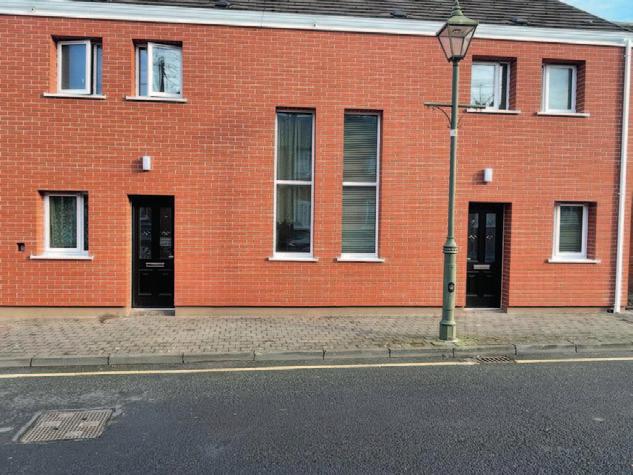
SSE AES partnered with LCCC to complete the significant domestic energy upgrade work to 54 local authority homes under the EERP programme.
Most of the homes lacked reliable heat sources, insulation, and ventilation which left them with an average BER of G and resulted in the homes being cold, damp, and expensive to heat. Through extensive community engagement, residents were informed about the advantages of this retrofit program and how it would benefit them. Residents were also shown how to operate their new heating systems (mainly heat pumps) to ensure they knew how to heat their homes effectively and efficiently. In total there was an 80 per cent reduction in the energy usage across all units, due to the energy upgrades.
In addition, costs associated with oil and solid fuels have been eliminated, providing additional savings to the residents. Improved air quality due to new mechanical ventilation systems means the homes are healthier and more comfortable to live in and cost efficient to run. This in turn helps both the tenants and the council to achieve their EERP targets and deliver on their aims in reducing energy usage as part of Climate Action policies.
SSE AES worked with DLR to upgrade 82 local authority vulnerable and fuel poor homes, under the EERP program. The properties had a BER rating of between E and F and were upgraded to B2 and above. The units upgraded included 58 OAP residential apartments in Beaufort. Typical upgrade works for deep retrofit included attic and external insulation, new A-rated windows and doors, solar PV, heating controls, and installation of heat pumps. The unique aspect of the apartment upgrades involved the first installed 14 kW cascade heat pump system, grouping 8 (14kW) Ecodan units, to replace three centralised gas fired boilers. This gave increased resilience and better certified energy efficiency per unit than installing a larger commercial heat pump system, with higher temperature outputs as the hot water in each unit was delivered via Solar PV and i-Boost systems.
The upgrades are projected to deliver 80 per cent energy savings across all units. All works were carried out with the residents remaining in their homes.
The Housing Agency works to roll out affordable housing schemes across the country

The Government has formally launched its Implementation Plan for the National Housing Strategy for Disabled People 2022-2027, which sets no specific targets for housing for disabled people.
Published in June 2023, the Implementation Plan for the National Housing Strategy for Disabled People 2022-2027 states that the Department of Housing, Local Government and Heritage will review housing delivery action plans (HDAPs) in order to promote “a whole of community approach to housing for disabled people when planning the provision of housing, including infrastructure, transport, education, and employment”.
The strategy is set out under six themes and each theme has a set of outcomes and initial actions. The National Housing Strategy for Disabled People 2022-2027
required that an implementation plan be prepared. The Department says that the implementation plan builds on the outcomes and actions of the strategy.
The implementation plan covers 27 outcomes, each of which has a set of key actions that will be required to deliver it, with 107 actions overall. Responsibility has been assigned to a lead organisation, with other partners identified. Timelines and key performance indicators (KPIs) are also set. The implementation plan outlines six key themes, accompanied by a desired outcome.
The first theme is for an increase in the accessibility of housing and communities for disabled people. The desired outcome, according to the implementation plan, is for an “increase in the provision of accessible housing for disabled people by the setting of local, need-related targets for all social housing providers using a universal design approach, as appropriate”. To achieve this, the Department states that it will review housing delivery action plans (HDAPs) and ensure targets for delivery of housing for disabled people are being met. Where these targets are not being met, the Department outlines
The Housing Agency works to roll out affordable housing schemes across the country
a need to ensure that “the HDAPs are revised to meet that target within the lifetime of the HDAP”.
The second theme outlined in the implementation plan is the need for increased interagency collaboration and the increased provision of supports for disabled people. The desired outcome, according to the implementation plan document is that disabled people have a clear pathway to accessing housing and support services. To enable this, each local authority will nominate a representative from its housing department to “work closely with a person nominated by each community healthcare organisation (CHO) mental health and disability services” to ensure that housing and support services are “aligned as appropriate and to develop an early notification system so that housing will be available and support applications are processed accordingly”.
The third theme is a general vision for the increased affordability of housing, in which disabled people have access to affordable housing schemes “including to purchase a home or rent at an affordable price”. Crucial to this is the Government’s cost rental scheme, according to the implementation plan, although its targets are vague in that they focus on measures such as “[examining] ways to increase the accessibility of the cost rental scheme for disabled people” and to “prepare and circulate information on cost rental in accessible formats and ensure that access to schemes or application processes are in an accessible format”.
On the fourth theme of communication and access to information, the implementation plan outlines the objective of ensuring that a “proactive and consistent approach” is
“taken by agencies in the provision of information which is coordinated by The Housing Agency”. The document further states the aim of ensuring that there is an “increase in the communication between state agencies and disabled people regarding their housing opportunities both from a housing and support perspective”.
The fifth theme focuses on knowledge, capacity, and expertise, outlining the desired outcome of ensuring that local authorities, the HSE, and approved housing bodies have “the knowledge base, expertise, and capacity to provide services and relevant information to disabled people”. The Department further states the importance of ensuring that “knowledge and expertise regarding disability issues are integrated into all relevant organisations” as well as ensuring that there is “an understanding of each other’s roles among the various stakeholders which results in an improved service to disabled people”.
The sixth and final theme is around ensuring that there is alignment on policies for disabled people between the Government’s numerous ongoing housing policies, with the Department outlining the goal of ensuring that the strategy is underpinned by Housing for All and the new Local Delivery Action Plans established under its framework.
The Department of Housing, Local Government and Heritage has stated that it will publish a progress report on the implementation plan by Q4 2024. However, given the vague metrics through which success can be measured, what this progress report will entail remains unclear.
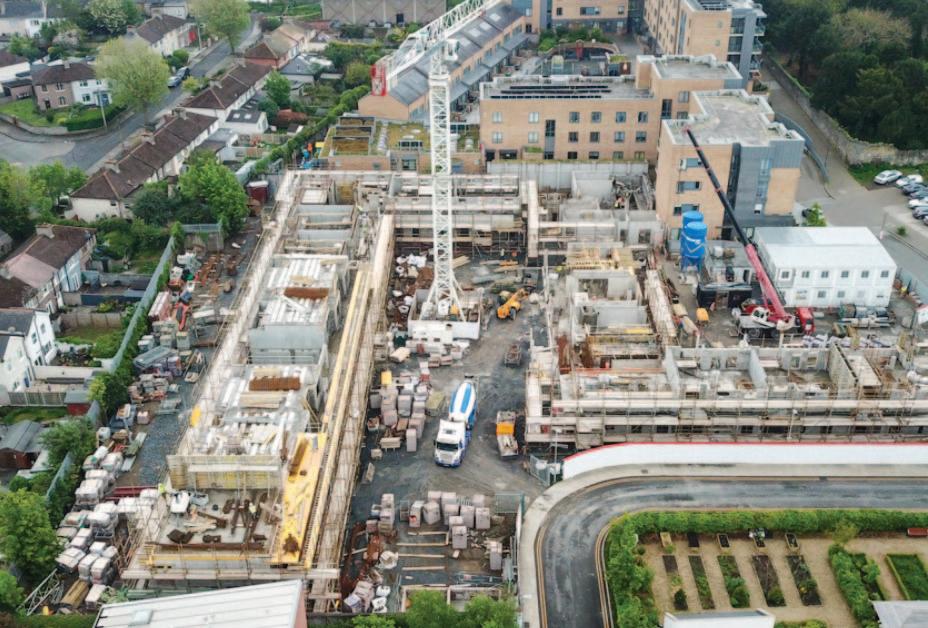
Addressing the need for affordable and quality social housing in Ireland requires a design-focused approach that considers the wellbeing of its tenants.
Designing good social housing involves understanding the challenges and opportunities, while delivering it at scale necessitates effective strategies to meet the increasing demand we are currently facing. Within this article, Chris White, Development Manager at Circle, explores what he believes are the key elements that make for good social housing and discusses key strategies that could be used to deliver at scale in the appropriate locations.
A good home design starts with
providing adequate space and functionality. Each home should be designed to accommodate the needs of residents, offering well-proportioned rooms, efficient layouts, and sufficient storage space. Ensuring functionality includes considering the placement of amenities and utilities, such as kitchens, bathrooms, and utility rooms, to maximise convenience and ease of use.
Social housing should be designed with accessibility and inclusivity in mind. Incorporating features such as step-free
entrances, wide doorways, and accessible bathrooms ensures that individuals with disabilities or mobility challenges can comfortably navigate and use the space. Furthermore, designing common areas and outdoor spaces to be inclusive promotes social interaction and engagement among residents of diverse backgrounds and abilities.
Using high-quality materials and finishes is crucial to create durable and visually appealing social housing. Quality
materials contribute to the longevity and maintenance of the building, reducing costs in the long run for the local authorities and approved housing bodies. Additionally, thoughtfully selected finishes can enhance the aesthetic appeal and overall ambiance, creating a pleasant living environment for residents. This is key for establishing quality neighbourhoods which residents will enjoy living in.
Integrating energy-efficient and sustainable features into social housing design benefits both residents and the environment. Taking a fabric first approach alongside energy-efficient appliances, and renewable energy sources can help reduce utility costs for residents and minimise the ecological footprint of the development. Implementing sustainable design practices, such as green roofs, can further enhance the environmental sustainability of social housing projects.
Designing good social housing involves providing communal spaces and amenities that foster a sense of community and improve residents’ quality of life. These spaces can include common rooms, playgrounds, gardens, and shared outdoor areas. Integrating amenities such as childcare crèches, healthcare facilities, and community centres within the development enhances convenience and supports the wellbeing of residents, thus creating thriving and sustainable communities for individuals and families.
1. Collaborative partnerships: Establishing collaborative partnerships between governments, developers, architects, contractors, and AHBs is crucial for delivering social housing at scale. Effective collaboration ensures that all angles are considered, resources are optimised, and expertise is leveraged in order to increase delivery to assist the national housing emergency in Ireland.
2. Streamlined planning and approval processes: Efficient planning and approval processes
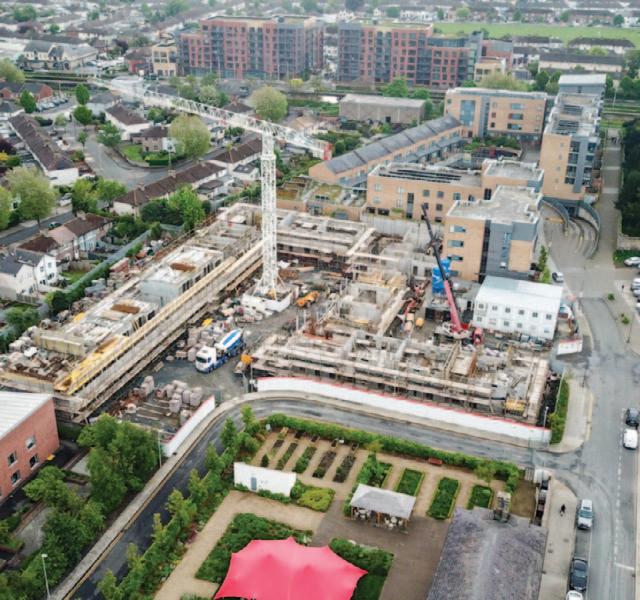
are essential to deliver social housing at scale. Streamlining bureaucratic procedures, expediting planning permissions, and establishing clear guidelines for social housing developments can accelerate the delivery timeline and ultimately reduce costs associated with delays.
3. Adaptive reuse and brownfield development: The repurposing of existing buildings and the redevelopment of brownfield sites can help to further increase the delivery of social housing at scale. These approaches maximise the use of available resources, reduce construction times, and contribute to the revitalisation of existing neighbourhoods.
In conclusion, designing and delivering good social housing at scale in Ireland requires an integrated and thoughtful approach to design, community integration, sustainability, and adaptability. By considering the specific needs and aspirations of future tenants, leveraging collaborative partnerships, and streamlining processes, we can ensure the successful delivery of highquality social housing that addresses the pressing need for social and affordable homes in Ireland within these challenging times.
Circle Voluntary Housing Association has delivered over 2,500 homes and has supported over 5,000 people. With
over 2,240 social and affordable homes in their pipeline for delivery in the next three years. Circle delivers quality homes unique models of social housing by utilising the key considerations referred to within this article, this has given Circle the opportunity to deliver unique and first-of-its-kind model of social housing such as our Housing with Supports (HWS) Inchicore project. HWS will deliver 52 homes to older people aged 55 and over in collaboration with Alone located in Dublin 8. These homes are underpinned by age-appropriate housing and universal design principles including own-door living with onsite staff support.
T: +353 1 407 2110
E: info@circlevha.ie
Development Enquries contact
E: developmentteam@circlevha.ie
W: www.circlevha.ie
The Housing Agency works to roll out affordable housing schemes across the country
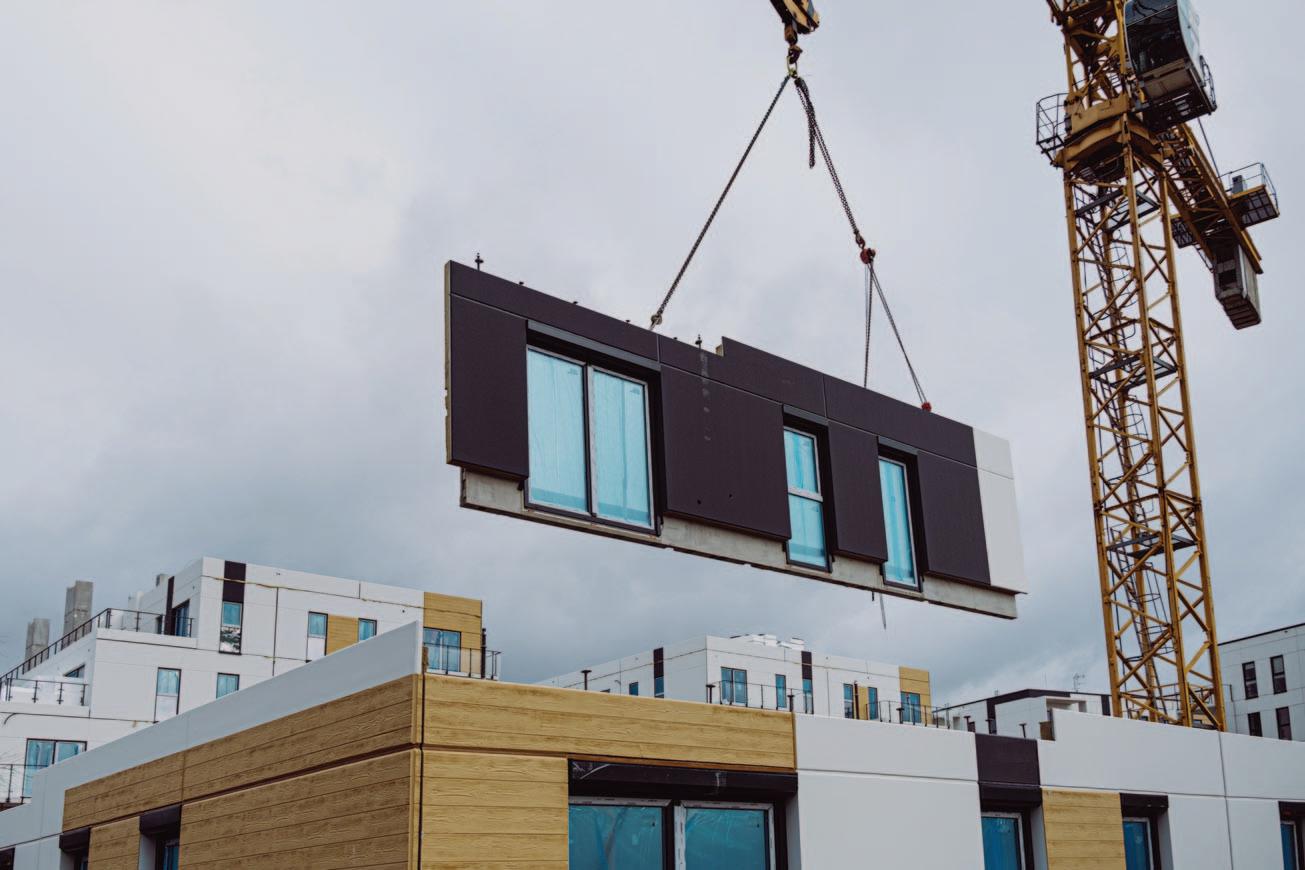
A government guide to encourage new housing construction and design processes has been underpinned by a €3.35 million allocation in Budget 2024.
The allocation in Budget 2024 towards Enterprise Ireland’s Modern Methods of Construction Demonstration Park and Innovation Investment on the Construct to Innovate Technology Centre is the latest government commitment to promote modern methods of construction.
Housing for All encourages the use of modern methods of construction (MMC) to improve, support and accelerate the delivery of housing, in recognition of the potential to help address Ireland’s significant housing crisis. Housing policy objective 23 of Housing for All is to “drive economic sustainability and reduce construction costs”.
An industry term used to describe a range of manufacturing and innovative alternatives to traditional construction, in July 2023, the Department of Housing, Local Government and Heritage, alongside the Department of Enterprise, Trade and Employment, published an introductory guide to modern
methods of construction aimed at informing the general public about potential uses and benefits.
A 2022 Construction Industry Federation (CIF) report states that timber frames account for 25 per cent of the market already and that MMC is “the future and will increase modular and offsite manufacturing to higher standards of design, fabrication, testing, and certification”.
The CIF states within its report that there is a “good regional distribution” of offsite material providers across Ireland, with the largest concentration of facilities for such located in Cavan, Cork, Dublin, Galway, Kildare, Limerick, and Meath.
MMC are recognised for not only their ability to boost productivity and efficiency of housing delivery, but also increase the environmental sustainability of new housing delivery.
The Housing Agency works to roll out affordable housing schemes across the country
The Government estimates that through MMC techniques, such as offsite construction, delivery of construction projects can be sped up by between 20 per cent to 60 per cent in timeframe. Similarly, the use of factory standard precision can improve structure quality to ensure the 60 year “performance and durability requirements”.
MMCs can reduce construction costs, with the aim that the reduction is passed on to purchasers or tenants for more affordable housing. However, Central Statistics Office (CSO) wholesale price indices show that the materials most often used in MMC – timber and steel frames and precast concrete – have seen large increases in price during the last few years, some in line with overall material cost rises and some outstripping the pace of overall rises.
Another highlighted benefit is the emission improvement offered by not only building standards, but also waste and energy reduction, and improving circularity.
Made in factories and then delivered to site, these 3D units can vary in finish from a basic structure to turnkey type options, once connected to pre-installed services. Interestingly, these units, while providing single dwellings, can also be combined to make up a building, or flexibly incorporate other pre-manufactured items, such as a bathroom or roof.
Various materials can be used to make up flat panelled units, made in factories but assembled onsite. Components are mainly walls, roofs, and floors, but can also include insulation, cladding, frames, and doors.
Utilised mostly in relation to pods, specifically for kitchens and bathrooms, use of this method includes partition wall systems, and weatherproofing or insulation roofing finish assemblies.
Relating to onsite construction, these methods include the use of drones, robotics, and insulated concrete formwork, for example, to improve construction outcomes. Examples provided include weatherproofing, building information modelling, and driverless construction vehicles such as cranes.
Importantly, MMC constructions are bound by Irish building regulations and building control; regulations, ensuring a durability of at least 60 years. New building products, materials, techniques, and equipment are certified by the National Standards Authority of Ireland (NSAI Agrément), to ensure that they are fit for purpose in accordance with Irish building regulations.

Hooke & MacDonald research has tracked the composition of purchasers of new homes in Ireland from 2015 to 2022. First-time buyers have consistently been the lead purchasing group, averaging 32 per cent of all purchases in the last three years, writes Ken MacDonald, Managing Director of Hooke & MacDonald.
First-time buyers are followed by other owner occupiers who averaged 25 per cent; next came social housing at 22 per cent with purchases by local authorities, charities, approved housing bodies, The Housing Agency and the LDA. The increasing level of purchases of new houses by AHBs and the LDA for social housing occupiers, while necessary, is inevitably going to lead to a decrease in supply available to first-time buyers and other owner occupiers.
Purchases by pension funds and institutional investors averaged 11 per cent of total purchases over the past three years – which is much lower than the public perception and misinformed narrative of the extent and importance of such purchases in boosting the supply of rental accommodation. The State can only fund a limited proportion of the €20 billion annual funding required in support of new homes supply, so it is imperative that the conditions are created for
pension funds and institutional investors to make up the difference in funding requirements.
The Hooke & MacDonald research is based on CSO and Eurostat data relating to executed contracts, i.e., sale closures, so the increased activity of forward purchases by public sector bodies evident in the latter half of 2022 and into 2023 will only be reflected in sale closure executions in 2024 and 2025 when taking into account the time lag between contracting to buy and sale closures after completion of construction. Conversely, the reduced level of forward purchases by pension funds and institutions will also become evident two years hence.
The reduced involvement of the private sector in funding the housing delivery programme is very bad news for bringing stability to the dysfunctional rental market and the plight of tenants seeking good quality modern accommodation. It is estimated that approximately €20 billion of funding per year is required to deliver the higher housing requirement figures which the Housing Commission recently published, between 50,000-62,000 per year. If the Government increase their funding from €4 billion to €8 billion annually this still leaves a shortfall of €12 billion. The only parties that can bridge this gap are longer-term international funders and investors.
Some politicians have said that the shortfall could be bridged by credit unions and the European Investment Bank (EIB). The credit unions have a total of €3 billion in funds and they would only ever be allowed by the regulator to lend a fraction of this and when it is gone, it is gone, whereas the funding requirement is for every year for many years to come. Similarly, the involvement of the EIB is not practical as if they were to lend €12 billion annually, it would have to go on the State balance sheet, and this is not a viable long-term option. In any case the interest rate that the EIB
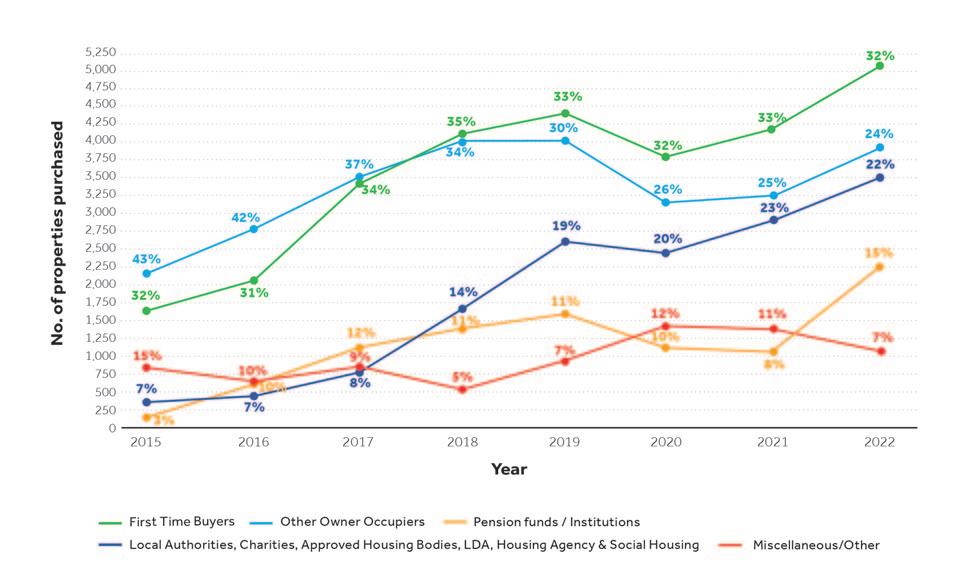
Sources: CSO. Eurostat. Analysis: Hooke & MacDonald Research.
would charge would not differ much from what the institutional investor/pension funds will charge.
The reality is that institutional investors/pension funds have been responsible for funding over 15,000 apartments in Ireland in the past six years. If these had not been built, the rental market would now be in a far worse position than it currently is.
The sharp slowdown in apartment construction in Dublin and other cities is a direct result of the lack of viability due to rising interest rates and construction cost inflation and the disconnect between what end users can afford to pay for apartments and what they need to be sold for to make an economic return. Other countries, such as the US, have dealt with this by tax incentives and subsidisation of higher density apartment development in urban areas.
The Irish Government are gradually introducing measures to enable apartment delivery to be increased but these are only impacting the owner occupier market and much more radical measures are needed, including measures that foster development for the rental market. The funding of the subsidies needs to be front loaded to
enable development to commence rather than attempting to have payment made when projects are completed, which is not feasible for developers.
Construction costs have increased to unprecedented levels over the last four years. Also, as highlighted by the Society of Chartered Surveyors Ireland in their July 2022 Construction Tender Price Index report, the construction industry is reportedly “near peak capacity”, and as a result, increasing new supply further will be a challenge. It is not surprising that apartment commencements are not matching consents.
The most recent cycle for apartment construction started in circa 2016 and while many parties with land have sought to improve the developability of the land by securing a planning consent over the last four or five years, unlike in the 1990s and early 2000s when funding and purchasers were freely available and commencements followed planning consents, most of these new planning permissions will not be built as a result of the lack of funding and viability.
The funding and development model for apartments in Ireland is broken and has been for a number of years. It has only been through the development for the
private rental sector that most apartments have been built. As a result of the new development environment (higher finance and construction costs) this avenue for delivery is now very limited. While many parties see this as an opportunity for the State to step in and boost supply in terms of social and affordable housing, the country also needs a substantial level of new properties for private rental and sale.
Hooke & MacDonald
118 Baggot Street Lower
Dublin 2
PSRA No. 001651
T: 086 256 3851
E: ken@hmd.ie
W: www.hmd.ie
The Housing Agency works to roll out affordable housing schemes across the country

The Department of Health has concluded a series of pilot projects for the rollout of the Healthy Age Friendly Homes initiative and will now roll out the next phase of the plan.
Launched in 2021, by Minister of State for Mental Health and Older People Mary Butler TD and former Minister of State at the Department of Housing, Local Government and Heritage Peter Burke TD, the Healthy Age Friendly Homes Programme is delivered by local government through the Age Friendly Ireland Shared Service hosted by Meath County Council.
The initiative is aimed at supporting older adults to remain living in their own homes and communities.
The first phase of the scheme concluded in April 2023, and Minister of State for Mental Health and Older People Mary Butler TD has announced that the completion of the pilot programme will, under funding secured in Budget 2023, enable the expansion of the Healthy Age Friendly Homes Programme to all of the State’s 31 local authorities.
Funded by Sláintecare for its pilot phase in 2021, the programme has been operational in nine local authority sites across the State. These are: Dublin City Council; South Dublin County Council; Fingal County Council; Tipperary County Council; Cork County Council; Longford County Council; Westmeath County Council; Galway County and City Council; and Limerick County and City Council.
The pilot phase of the programme had the objective of reaching “up to” 4,500 homes across nine local authority areas until the conclusion of this phase in April 2023. These older people were identified by decision-makers as having “significant social care needs” and were seen as “at risk of hospitalisation or premature entry into long-term residential care”.
The Housing Agency works to roll out affordable housing schemes across the country
Over the duration of the pilot, from May 2021 to April 2023, the Healthy Age Friendly Homes Programme had:
• 2,911 referrals of older people into the programme;
• 3,500 home visits by local coordinators; and
• 6,250 supports provided.
The objective of the programme is to target supports to improve the living conditions of older people and enhance access to continued health and social care and tailored community supports. The local coordinator role has been designed to support older people and their families to navigate the services by proactively linking them to the appropriate supports and services.
The Department of Health outlines how the Healthy Age Friendly Homes initiative is strategically aligned with a number of government policies, including:
• the Programme for Government (universal healthcare, climate action);
• the shared Department of Health and Department of Housing policy statement Housing Options for our Ageing Population;
• Sláintecare;
• Housing for All;
• the Healthy Communities Programme; and
• the World Health Organization’s Housing and Health Guidelines.
The Department provides a case study which demonstrates the impact of the initiative. ‘Geraldine’, a pseudonym for a 65-year-old woman living alone in her own home in an urban area, was referred into the programme by a HSE occupational therapist in her primary care team.
Geraldine has complex health issues, suffering from rheumatoid arthritis severely affecting her mobility. Her medical conditions restricted her from using the stairs in her home, meaning she had a bed in her sitting room and used a commode.
After the Healthy Age Friendly Homes initiative was launched, a local coordinator visited Geraldine’s home and carried out a needs assessment, putting an individualised support plan and actions in place:
• they assisted her in making an application for a Housing Adaptation Grant for a stair lift and an accessible shower in her bathroom. The application grant was approved, and the works have now been completed;
• other supports provided to Geraldine include assistance in making an application under the Department of the Environment, Climate and Communications local authority bin waiver scheme; liaising with the local care and repair team to have two smoke alarms and a carbon monoxide alarm fitted free of charge; submitting an application for the Senior Alert Scheme for a monitored personal alarm through the family resource centre; submitting an application for the State pension which was approved and will be received once Geraldine turns 66; and installation of a monitored pendant alarm; and
• Geraldine’s accessible bathroom was completed and her stairlift installed allowing Geraldine access to her bedroom and use of the bathroom within her own home for the first time in over two years. She also feels safer in her home with the use of a fall detector and alarms.
Expressing her satisfaction with the service provided by the local coordinator, Geraldine says: “Before the coordinator visited me, I felt I was losing my selfworth. If people were made aware of the help provided, they would be better able to survive.”
Although challenges remain in areas such as maximising accessibility to the scheme, Minister of State Mary Butler TD has said that she is satisfied with the initial outcome of the scheme and has pressed ahead for its continuation.
The Waterford TD says: “This is a really important initiative that focuses on the wider determinants of health for our older people, acknowledging that good health and wellbeing goes beyond just healthcare. The report published last year on the pilot showed the programme is having a positive impact on the quality of life for our older people and providing trusted, expert advice for a range of issues.”
This year, after 22 years, Oaklee Housing ceased to be a member of the Choice Housing Group and is now an independent stand-alone Approved Housing Body (AHB) with an ambitious corporate
strategy for 2023 to 2025 targeting growth and great services for their current and future tenants.
The independence that this separation affords is an exciting milestone and a potential game-changer for Oaklee Housing as it embraces this new and opportunistic position.
The annual AGM in September 2023 marked the end of one and the beginning of another financial year for Oaklee Housing. The successes of 2022 have ensured that, heading into a new financial year, it is in the strongest possible financial position. Securing a new borrowing facility with AIB Corporate Banking through the refinance of an existing portfolio of five Leinster-based scheme assets allows it to continue to invest in its homes to meet the required high standards of fire, health and safety, and property compliance into 2023.
The recently published annual report documents the significant operational focus on tenants and tenant engagement. Working alongside Supporting Communities, the team at Oaklee crafted its most targeted Tenant Engagement Strategy to date. With a life cycle of three years, this strategy sets out a multi-point action plan aimed at ensuring that the tenant voice is central to the continuous improvement of the services provided by Oaklee Housing.
Looking forward, preparing its team for the future has been a target for each of the departments to achieve through 2022 and into 2023 meaning that it is fully prepared for the increased delivery of homes and services into 2024 and beyond.
Increasing capacity while building skills in preparation for the first
year as a stand-alone company, the organisation has an impressive team of over 50 talented professionals working together with a collective ambition centred around increased delivery of homes and the on-going provision of exceptional customer services for its tenants.
With a shift in priorities towards an own-build model of delivery, there is an impressive pipeline of projects for future years. This aligns with its priority for the next three years to deliver more homes and to make a significant contribution to increasing the supply of social and affordable housing.
The success of this plan relies on many factors: as well as being dependent on fostering strong relationships with stakeholders, it also relies on the strength of Oaklee Housing’s reputation as well as its ability to stand out and deliver.
Looking forward, its new three-year Corporate Strategy documents big and bold plans for success with a team primed and ready to deliver more homes, create sustainable communities and change lives, the future is bright for Oaklee Housing.
T: 01 400 2650
E: development@oakleehousing.ie
W: www.oaklee.ie
 Millteog, Athboy, County Meath.
The Housing Agency works to roll out affordable housing schemes across the country
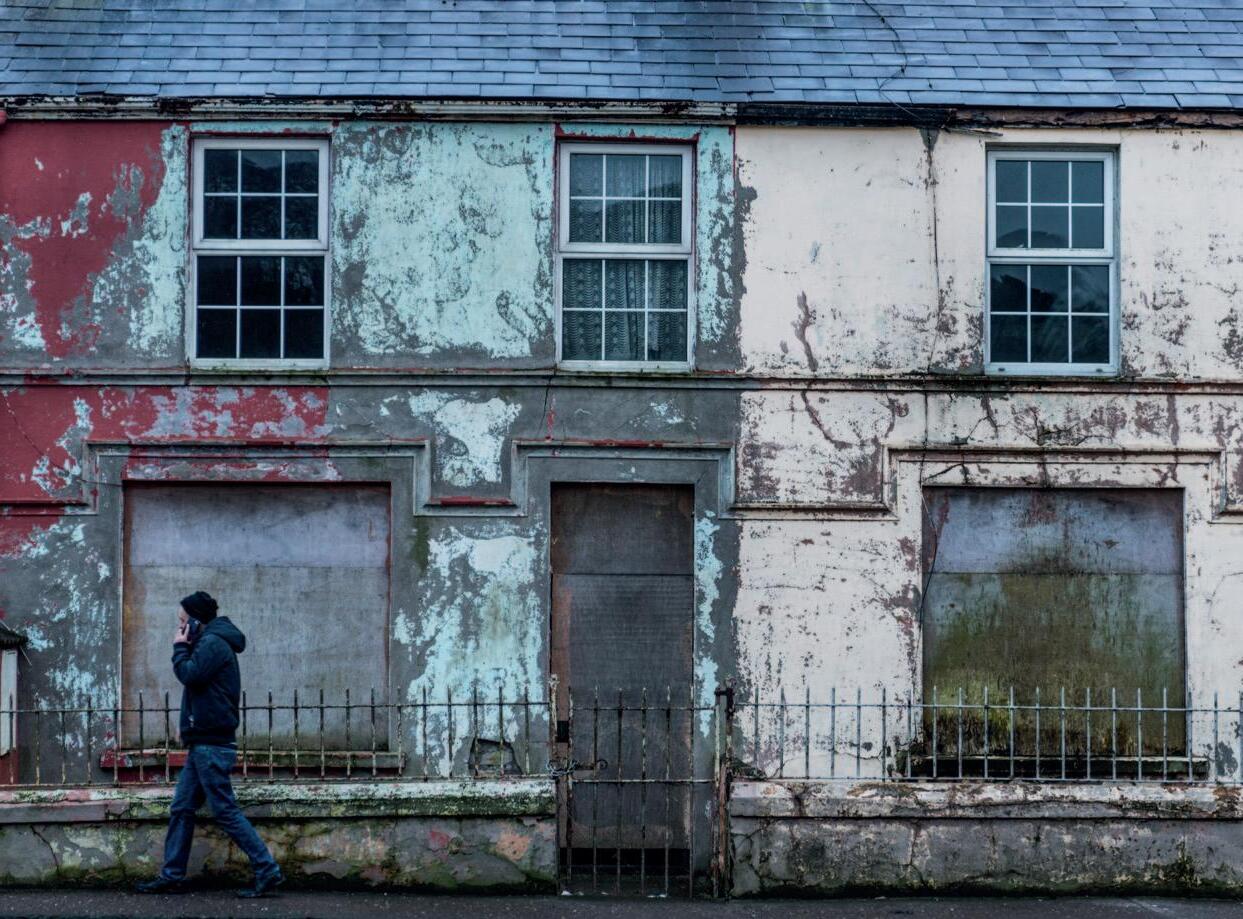

The introduction of a new property tax under Budget 2024 is the latest move by the Government to try to increase the State’s housing supply and comes shortly after publication of the Vacant Homes Action Plan.
Effective from 1 November 2023, the vacant homes tax will be increased from three times to five times a property’s existing base Local Property Tax liability.
Included in Budget 2024, the new tax incorporates almost an additional 60,000 homes from the previous policy and is the latest government initiative aiming to increase the housing supply to rent or buy.
Ireland’s vacant property problem is longstanding. Census 2022 recorded over 166,000 vacant properties in the State, only a 9 per cent decrease from
2016 figures despite the scale of the housing crisis.
While properties recorded in the census do not necessarily represent long-term vacancies, the fact that over 90 per cent of vacant dwellings could be linked back to the 2016 Census, and 85 per cent back to the 2011 Census, is evidence of a failure to address the problem to date.
Criticism has been levelled that the latest tax increase is not high enough to incentivise faster resolution of vacant properties. It is estimated that the property tax on a house valued at
€300,000 would be less than €1,000.
Further criticism has been aimed at the levels of exemptions that exist on properties under the new tax. Although the amount of homes the tax potentially applies to has been broadened, it is estimated that holiday homes and properties being refurbished make up around 40 per cent of recorded properties, both of which are largely exempt from the new tax.
The tax will only apply to homes that can be lived in, meaning derelict homes, for which Ireland also has a high
The Housing Agency works to roll out affordable housing schemes across the country
percentage, are excluded. Additionally, any home that has been stayed in for 30 days or more in a 12-month period will not apply.
Exemptions also apply to a home that changes ownership in the 12-month period, if the property has been rented for at least 30 days, whether it is listed for rent or sale, or if the property is unoccupied due to the owner’s illness or death.
The level of exemptions has led some to suggest that administrating the new tax may eventually cost more than is gathered.
The Government’s Vacant Homes Action Plan 20232026, published in January 2023, outlines an ambition to return as many recoverable vacant properties back to viable use as possible, increase the supply of housing available, and revitalise the vibrancy of local communities.
One potential conundrum outlined by the Government in the Vacant Homes Action Plan is that the ownership of the property in question must be clarified when the home is being brought back into use, presenting a potential legal grey area for government.
The action plan says: “A key consideration when working to bring empty properties back into use is the reason why a particular property has been left empty. These are varied and multifaceted and can relate at a broad level to migration, urbanisation, loss of industry, and employment and at an individual property level to financial, ownership, personal, or property issues.”
The report further states: “Properties can be for sale, in between rental periods, undergoing renovation, or in some cases the owner may be in hospital or in nursing home care. A lack of investment can lead to some properties being vacant for long periods and if these properties are not addressed in a timely manner, they can ultimately become derelict. The reasons for vacancy influence the measurement of vacancy and must also be taken into account in considering measures to address vacancy.”
Given that the vast majority of Ireland’s derelict homes are situated in relatively rural counties such as Leitrim, Roscommon, and Mayo, two government strategies are of immense importance if vacant homes are to be used in a serious manner to take on the homelessness crisis. These are the National Planning Framework (NPF) and Our Rural Future
The Vacant Homes Action Plan states that the NPF will “guide the future development of Ireland, taking into account a projected one million increase in population over 2016 levels and the need for 550,000 more homes by 2040”.
The paper continues: “The NPF growth strategy aims to shift the spatial pattern of development by concentrating a greater proportion of new development in cities, towns, and other settlements where the required services, employment, and infrastructure can be provided for citizens.”
The Government’s Our Rural Future policy addresses the challenges facing rural areas and the opportunities that it believes rural economies and communities can benefit from in the coming years.
The Vacant Homes Action Plan states that one of the key objectives of Our Rural Future is to support the regeneration, repopulation, and development of rural towns and villages to contribute to local and national economic recovery, and to enable people to live and work in a high-quality environment.
In particular, the Government has identified the role of local authorities in tackling levels of vacancy and dereliction. One of the core components of the action plan is a €150 million Urban Regeneration and Development Fund (URDF) which will enable local authorities to acquire properties or sites and carry out work to make it more attractive for reuse or sale. Proceeds received will then replenish the fund, allowing for a rolling programme.
The Government also plans to publish compulsory purchase orders by local authorities, initially focused on derelict properties, while rolling out a data collection project across all local authorities to capture the number of vacant and derelict properties. Finally, the action plan says that the Government will continue to support and develop the full-time role of a Vacant Homes Officer across local authorities.
Introducing the policy, Minister for Housing, Local Government and Heritage, Darragh O’Brien TD, said: “The most efficient home to deliver is the one which already exists and there is so much potential within our vacant stock to provide more homes for so many of our citizens.”
O’Brien added: “While significant work remains to be done, real progress is being made in addressing vacancy. Our sense of urgency remains, and we are determined to build on what we have achieved to date.”
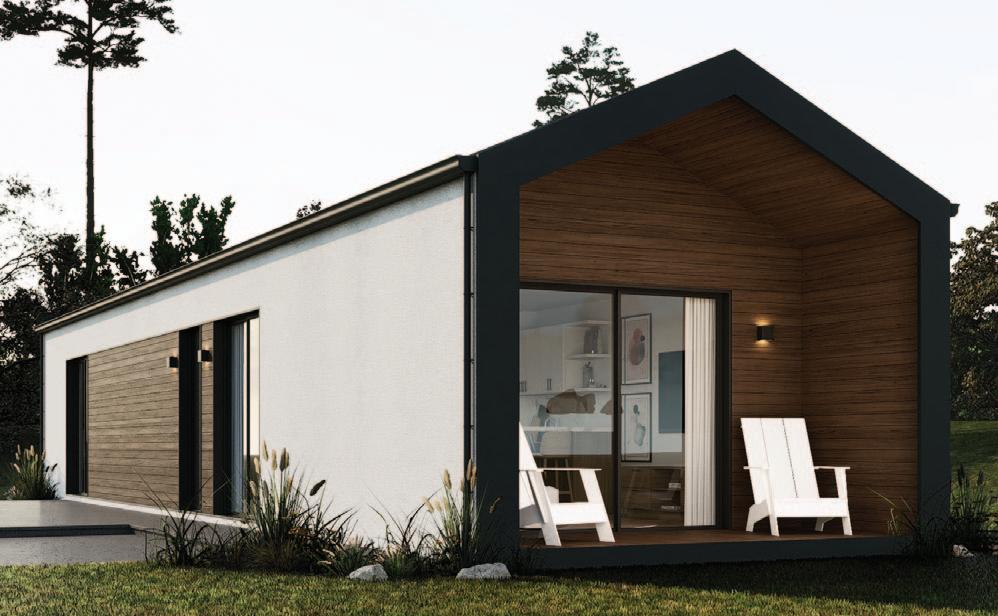
Ireland’s housing crisis is no secret. With a pressing need for sustainability, innovation, and intelligent solutions, Hapi Homes has emerged as a trailblazer in pre-engineered housing. This global concept, gaining traction, brings numerous advantages. Hapi Homes leverages cutting-edge technology and engineering expertise to design and fabricate housing modules that are aesthetically pleasing but also energy-efficient and cost-effective.
Hapi Homes is leading the way in demonstrating how innovative, pre-engineered housing can address the housing shortage while reducing its environmental impact. These homes, manufactured off-site and assembled on location, present a new paradigm in housing development that aligns perfectly with sustainability, affordability, and rapid construction goals.
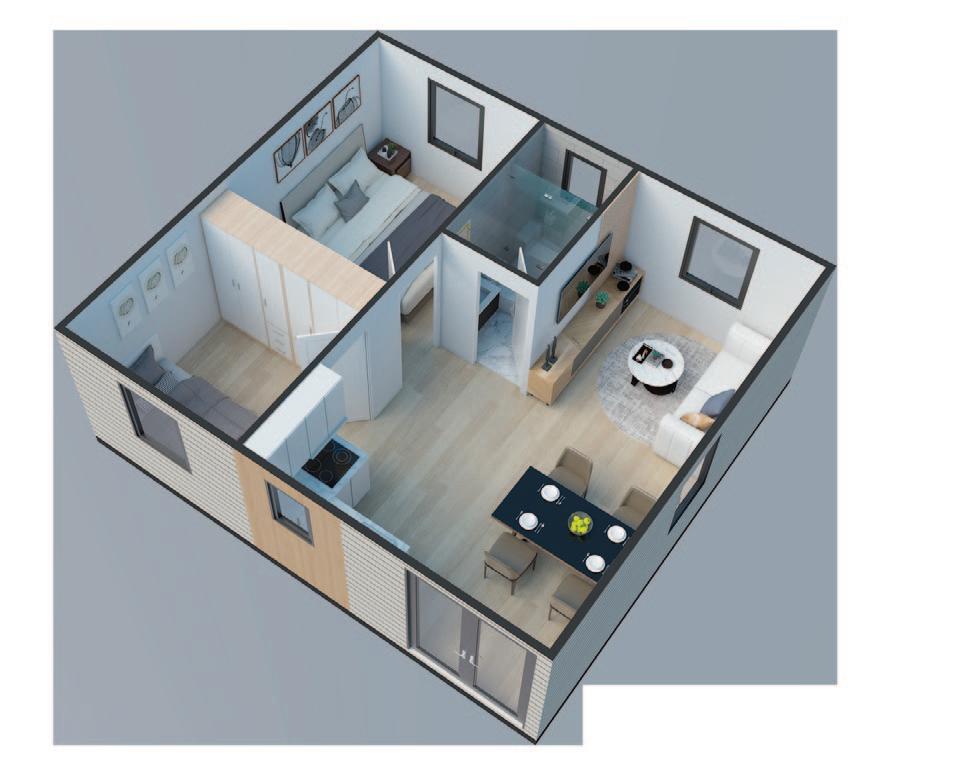
Innovative prefabrication: Hapi Homes uses advanced prefabrication techniques to produce high-quality building components in a controlled factory environment. This method dramatically reduces construction time and costs while maintaining exceptional quality standards. From a unique foldable, 420 sq ft two-bed-home setup in less than eight hours to multi-story, multi-dwelling options, Hapi Homes has the capability of a wide range of buildings suited to multiple needs, with more than 30 designs and the ability to build our client’s plans.
Affordability: One of the most attractive features of Hapi Homes is their affordability. By streamlining the construction process and minimising onsite labour, these homes offer a costeffective alternative to traditional housing, making homeownership a reality for many. The innovative light steel structure saves a minimum of 25 per cent on building costs compared to conventional building materials.
Time-saving: The construction of a family home, on average 8 months, can now be streamlined to a mere 2.5 months, thanks to innovative construction
techniques and technologies. This reduction in construction time means that families can move into their homes faster, bringing substantial cost savings. Beyond individual homes, these time-saving advancements are reshaping the construction industry, increasing efficiency, and enabling developers to complete projects more rapidly, ultimately benefiting homeowners and the broader community.
Customisation: Hapi Homes understands that one size does not fit all. Their modular designs allow for customisation, ensuring that each home meets the unique needs and preferences of its occupants.
Community integration: Hapi Homes also recognises the importance of community development. Their housing solutions are designed to integrate with existing neighbourhoods, promoting social cohesion seamlessly.
Social housing initiatives: Preengineered homes could accelerate the development of social housing units, providing a solution for those most needing affordable and stable accommodation.
Hapi Homes’ pre-engineered housing solution offers a faster, more affordable, and environmentally friendly alternative to traditional construction methods. The collaboration between an Irish company, Hapi Homes, and governments in other countries, such as the US, UK, Bulgaria, Greece, the Caribbean, and Ukraine, signifies a forward-looking approach to addressing national housing challenges, aiming to provide safe, sustainable, and affordable homes for all.
Embracing these innovative systems is a wise investment in the present and a step towards a more efficient and sustainable future for the construction industry. Considering pre-engineered building solutions is a decision that promises long-term benefits for both your bottom line and the environment.
For more information, visit: E: hello@hapihomes.com
W: www.hapihomes.com