
Sponsored by
Sponsored by

Never before have we been at such a crucial juncture in terms of planning and infrastructure in Ireland, writes Alan Dillon TD, Minister of State for Local Government and Planning at the Department of Housing, Local Government and Heritage.
The first draft revision of the National Planning Framework (NPF) since it was published in 2018, and the recent signing by President Higgins on 17 October 2024 of the landmark Planning and Development Act 2024, mark a pivotal moment in our collective efforts to ensure we have a planning system that is fit for purpose, both now and into the future.
The planning system is significant to nearly every aspect of people’s lives, from housing delivery to critical infrastructure and to future proofing our country to meet the complex economic, demographic, climate, and environmental changes which are already in train.
The new Planning and Development Act 2024 will introduce a number of key reforms to the system, to include greater mandatory alignment of all aspects of planning from both a policy and legislative perspective; improvements to the planning judicial review processes; clearer, more consistent policies and guidance and – longer term – more strategic, 10-year development plans for local authorities and the creation of urban development zones, which will facilitate a
more plan-led approach to development and increase certainty at the master-planning stage.
Ultimately, the new legislation provides clarity, consistency and certainty for all users and planning system which matches our strong ambitions for housing delivery, climate action, and critical infrastructure over the coming decades. Arrangements are being put in place to commence the Act on a phased basis to allow for the smooth operational transition of this legislation across the planning system.
In tandem, a well-resourced, sustainable, and robust planning system is critically important to support this transformation and to meet the requirements on the system that have grown in recent years and my department is actively working with key stakeholders, including An Bord Pleanála (the Board) and our local planning authorities, to ensure they have the staff and resources to underpin this transformation.
In January 2024, the Government appointed Peter Mullan as the Chairperson of An Bord Pleanála for a seven-year term. Furthermore, nine new full term board members have been

“We will leave no stone unturned when seeking to build a robust planning system and the planning workforce we need for the Ireland of tomorrow.”
Minister of State for Local Government and Planning, Alan Dillon TD
appointed to date, bringing the current board membership to 17, with a mixture of full-term and temporary members.
These new full-term board members, bring to the board a vast range of experience throughout both the public and private sector in a range of disciplines including in planning, architecture, environment, corporate services, local government, governance, and legal affairs.
Critically, there are now more professionals working at the Board than at any time previously. When all approved posts are filled, over 300 people will be employed, representing an increase in excess of 50 per cent since before 2021.
At a local level, my department, in conjunction with the local government sector, is actively working on a programme of support to increase staffing levels, on a phased basis, across the sector. In October 2023, funding was made available for 101 new posts across the 31 local planning authorities under phase one of the programme. A second phase of the programme is being advanced to provide further additionality to the sector.
Significantly, in recognition of the increasing demands on the planning system and the need to ensure present and future staffing needs can be met, Minister Darragh O’ Brien TD and I published a Ministerial Action Plan on Planning Resources on 15 October 2024. We are committed to ensuring that we have a planning system that can deliver on our priorities in the years ahead and this action plan is another vital piece in the jigsaw that will ensure that we can fully deliver on investment and decision-making in key areas such as housing, climate action, and critical infrastructure.
The Action Plan is rooted in a cross-sectoral response to help to ensure that Ireland’s planning system is fighting fit for the future. Developed in close partnership with the sector including local authorities, the Board, the Office of the Planning Regulator, as well as wider stakeholders; the Action Plan sets out 14 high-level actions that provide a coordinated approach to ensuring a sustainable pipeline of planning and related expertise to deliver on our priorities in the years ahead.
Specifically, the Action Plan addresses the educational pathways to becoming a professional planner with consideration of traditional and new educational pathways. It looks at initiatives relating to recruitment (domestic and international), training, and staff development with the aim of building capacity and resilience within the planning system overall, and considers also measures to encourage greater innovation and improve efficiency across the system. Focusing on the needs of the public sector in the first instance, the plan also takes into account the needs of a growing private sector that is critical to the operation of the system.
My department will shortly be establishing a series of working groups to progress grouped actions of the plan on a priority basis.
Whether it is creating more avenues for professional training, enticing Irish professionals abroad to return home, or making planning a more attractive career option, we will leave no stone unturned when seeking to build a robust planning system and the planning workforce we need for the Ireland of tomorrow.

The National Planning Framework (NPF) is the overarching policy and planning framework for the social, economic and cultural development of Ireland. The purpose of the NPF is to ensure that as the population of Ireland grows, it does so in a way that is sustainable in terms of its economic, social and environmental impact.
Work undertaken by the ESRI and published in June 2024 shows that the population of Ireland grew by 9 per cent, (422,000 people), from 2016-2022 and may grow by a further 922,000 people up to 2040.
The report finds that net migration is a key driver of this growth and that while all regions are expected to see population increases, these will be stronger in the eastern and midlands region than in western and southern regions, which are expected to experience relatively lower population growth.
The NPF cautions against failure to take a more strategic approach to planning, with consequences including continued sprawl, as well as an ongoing shift in population and jobs towards the east of the country. Urban sprawl is associated with greater car dependency, loss of agricultural land, longer commuting times and higher CO2 emissions.
To avoid urban sprawl, planning for compact development is essential. Compact development, sometimes called compact growth or smart growth, means the development of housing and businesses within or near existing settlements. Compact growth is a National Strategic Outcome in the NPF.
The Housing Agency’s publication Case Study Analysis for Sustainable Compact Development is the culmination of research, undertaken by Indecon, on how other countries, with a proven track record in compact development, manage to achieve their outcomes.
The research examines compact development in countries or regions that are considered to be good models. Four case studies were identified:
• Aspern Seestadt in Vienna, Austria;
• Nordhavn in Copenhagen, Denmark;
• The Pearl District in Portland, Oregon, USA; and
• Vauban in Freiburg, Germany.
The analysis examined the development process for each site, undertaking interviews with stakeholders, gathering insights on how developments were financed, the obstacles encountered along the way, and how these challenges were overcome. The research investigated what, if any, policy incentives were used to encourage compact development.
The success of sustainable compact development can be seen in The Pearl District in Portland. The report notes: “Within decades, through collaboration between public and private entities, the redubbed ‘Pearl District’ has become one of the most sought-after neighbourhoods in the city, as well as one of the most well-known examples of ‘urban renewal’ and ‘compact growth’ in the United States. The area is characterised by the preservation and rejuvenation of many of its original buildings, as well as the presence of trees and small green spaces within its densely populated, urban environment. The district is zoned as mixed-use, and is home to apartment blocks, grocery stores, and coffee shops, as well as office buildings, loft conversions, and recreational spaces.”

The research found that in the case studies examined:
• Most cities impose greenbelts that make development of greenfield sites challenging.
• Significant public investment in transport and other enabling infrastructure is usually required to facilitate large scale compact urban growth developments.
• Districts contain a mix of residential and commercial development, as well as an appropriate mix of private and social/affordable housing. This is staged to ensure an element of ‘organic’ growth in both, rather than commercial development following residential or vice versa.
• Establishment of a development company with the powers and resources to facilitate and coordinate work on large-scale compact urban growth developments was an important factor in success.
• Public investment via development companies is financed by a form of land value sharing. This has allowed the developments considered in the research to finance infrastructure development, pooling of land, land remediation, and other site preparation costs.
• Compact urban growth developments often centre around public amenities such as, a lakeshore, riverside, or harbour. Amenities such as these provide a sense of identity and improve the placemaking and liveability of the developments.
What lessons can Ireland learn from this research?
The research found that the availability of public transport was crucial to the success of these developments and would indicate that in Ireland highdensity compact development would have the most success where there is good public transport and other public infrastructure.
In addition, the existence of a development company was seen as key. These development companies have a focus on delivering specific compact urban growth projects. Previous examples in Ireland include the Dublin Docklands Development Authority and the Cork Docklands Delivery Office.
The research also highlighted the benefits of implementing mechanisms of land value capture, and supportive landuse policies that facilitate land value capture.
Finally, the report provides valuable insights for policymakers in Ireland, as to what may constitute best practice when it comes to achieving compact development.
To learn more about The Housing Agency’s publications: www.housingagency.ie/publications
The publication of a revision of Housing for All, which had been expected to update the Government’s housing supply target, has been delayed and will likely not be published until after the 2024 general election.
The update to Housing for All was expected to account for new delivery targets recommended following reviews by the Economic and Social Research Institute (ESRI), the Report of The Housing Commission, as well as an update to the draft revision of the National Planning Framework, which both recommend that the Government’s housing delivery targets increase to account for higher-than-expected demand.
The Department had been expected to publish its housing delivery revision at the end of October, but this has not taken place and there is no indication that this will take place prior to the calling of a general election, with the Dáil expected to be dissolved by 8 November at the latest.
Speaking to eolas Magazine, a spokesperson from the Department of Housing, Local Government and heritage said that the delayed update to Housing for All is “being finalised”, and “will be published in due course”, while saying that the Department is not prepared to comment on when the update will be published.
Speaking to eolas Magazine in June 2024, Minister Darragh O’Brien TD said there will probably be upward revision of the Government’s housing targets.
While O’Brien said that “targets have never been the ceiling”, and have instead “been the floor”, he specified that “it is important that we reset [delivery targets] based on the increasing population”.
Sinn Féin spokesperson on Housing, Eoin Ó Broin TD accused the Minister of “what looks like a massive U-turn”, which he said was “hard to understand given the fact that the data on which the new targets should be set was published by both the ESRI and The Housing Commission months ago”.
Ó Broin further accused the Minister of wanting to make it to the general election without publishing the new figures: “What is the Minister hiding? What does he not want the voters to see? Is it that he knows he cannot significantly increase the targets for social and affordable homes and now wants to conceal that fact from the electorate,” he said.
Three recent publications – two designed to inform government policy and one draft revision of government policy – have recommended an upward revision of the Government’s housing delivery targets.
The Report of The Housing Commission, released in May 2024, asserts that there is an existing housing deficit of 235,000 units which should be resolved by 2034. This would require building numbers to increase by an average of 50 per cent per annum in comparison with current numbers. The Commission further recommends that this could be enabled by the establishment of a housing delivery oversight body.
Alongside the existing housing deficit and future demand, the Commission also notes that, while the Government did deliver 32,000 new homes in 2023, that this is set against a backdrop where housing supply previously peaked at close to 90,000 in 2007.
The ESRI’s report, Population projections, the flow of new households and structural housing demand, published in July 2024, has revised figures set out in 2020 by the ESRI which informed the targets set by the Government under Housing for All
The report determines that between 35,000 and 53,000 new dwellings will need to be constructed per annum by 2040, considering different models of population projections, the projected structure of households, and future economic growth.
The draft First Revision to the National Planning Framework (NPF) – the planning framework for socioeconomic and cultural development of the State out to 2040 – anticipates the need for ~50,000 additional homes each year.
Published for public consultation on 10 July 2024, the draft review intends to update the NPF to reflect changes in government policy, not least in climate action, regional development, demography, and digitalisation. With the consultation having closed in September, O’Brien had previously told
eolas Magazine that he wanted to see the revised NPF “implemented in September [2024]”.
At the time of writing, it is not yet clear when the election will be called, although Taoiseach Simon Harris TD and Tánaiste Micheál Martin have said it will be before the end of 2024, and Green Party leader Roderic O’Gorman TD has said it will likely be held on 29 November, which means that 8 November is a likely date for the dissolution of the Dáil.
Housing was the dominant topic in the 2020 election, and led to neither Fine Gael or Fianna Fáil winning the popular vote for the first time in the history of the State, which meant that when the two parties – along with the Green Party –coalesced for the first time, housing became a priority challenge for the Government.
Temporary measures, such as the eviction bans over Covid and the two following winters amid the inflation crisis, proved popular with the public and delivered results by the way of homelessness reductions when they were in place.
The underlying challenge to Ireland’s housing crisis has always been supply challenges. These emanate from a number of key areas, namely that there has been a shortage in construction workers since the Great Recession and collapse of the Irish housing market in 2007.
Housing delivery numbers remain just over onethird of what was delivered in 2007, in spite of the significant increase in demand. While the Government’s Budget 2025 housing measures are specifically targeted towards supply increases, the results of these policies are unlikely to be felt in the short term, meaning that housing is a topic of public discourse which is not going away anytime soon.
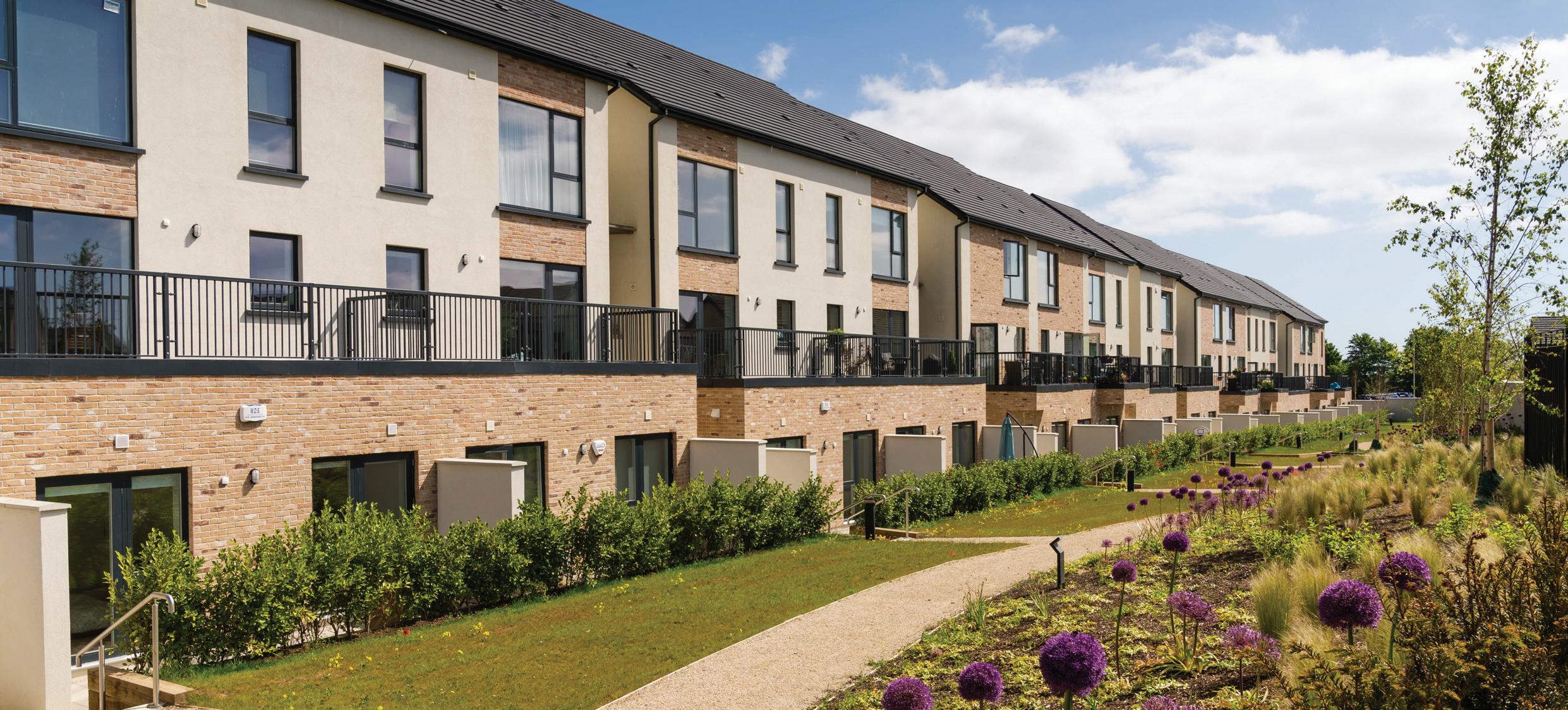

The private rental sector, the sector of housing which has seen the largest growth since the 1990s, is facing challenges of meeting the demand for affordable housing, a government review says.
The review, published by the Department of Housing, Local Government and Heritage in July 2024, states that the private rental market plays a “pivotal role” in accommodating over 330,000 households, making up 18 per cent of all housing in Ireland. Since the early 1990s, the sector has grown considerably, largely due to changing demographics, economic migration, and urbanisation.
Despite its growth, the sector faces persistent challenges such as affordability challenges and rising demand. In recent years, rent levels have surged, exacerbating financial pressures on renters. Nationally, new tenancy rents rose by 9.1 per cent as of the fourth quarter of 2023, while existing tenancies increased by 5.9 per cent.
Although rent has risen across the country, the report highlights the stark difference between rents in and outside Dublin. In Dublin, the average rent for new tenancies reached €2,098 per month, compared to €1,280 outside of Dublin. This disparity reflects the city’s concentrated demand and constrained supply, leading to a critical need for policy intervention to address affordability and supply bottlenecks, particularly in urban centres.
The review outlines several policy objectives essential for a wellfunctioning rental market. These include creating economic conditions favourable to investment, ensuring security of tenure, maintaining affordability, enforcing property standards, and implementing effective regulation.
1. Encouraging investment and supply: The review acknowledges that sustaining a functional private rental sector depends on a steady flow of new housing stock, particularly in high-demand urban areas. Housing for All targets an annual delivery of 33,000 new homes, with specific incentives for cost rental schemes. However, inflation in construction costs, highdensity planning requirements and a labour shortage in the construction market have presented challenges. As a response, the review calls on government to pursue policies to attract both domestic and international investors to boost the rental market.
2. Affordability initiatives: Aiming to address the affordability crisis, the Government introduced the Cost
Rental Scheme, offering below market rates to qualifying tenants. The review recommends expanding eligibility for this scheme to include households slightly above the income limits for social housing. Rent control policies, such as the rent pressure zones (RPZs), are also under evaluation to assess their effectiveness in controlling rents without discouraging investment.
3. Security of tenure: The review encourages the adoption of policies that strengthen security for renters, particularly by reducing no-fault evictions and incentivising landlords to offer longer-term leases, especially in cases where institutional investors own large property portfolios.
4. Property standards: Ensuring the quality of rental properties remains a priority. Local authorities are required to inspect 25 per cent of properties annually to verify compliance with safety and maintenance standards. Furthermore, new energy efficiency standards, starting in 2025, will require rental properties to meet a minimum Building Energy Rating (BER).
Source: DHLGH
5. Strengthening regulation: The review calls for a periodic assessment of the Residential Tenancies Board (RTB) to ensure its effectiveness in handling disputes and enforcing regulations. It also advocates for increased resources and authority for the RTB to monitor and address compliance issues in a timely manner.
In response to persistent rental inflation, the report identifies several avenues for policy reform:
• Incentives for long-term investment: Acknowledging the high costs associated with highdensity developments, particularly in Dublin, the review recommends incentives for long-term capital investment in the rental sector, including potential tax reforms for non-corporate landlords.
• Revamping rent control: While RPZs have moderated rental increases in certain areas, the review highlights their mixed impact, with instances where they may act as target prices instead of ceilings. The Government recently extended RPZs until the end of 2025 but has committed to a comprehensive review to evaluate their long-term effectiveness.
• Periodic review of the RTB: Recognising the RTB’s critical role, the review suggests routine evaluations to address any operational gaps and to adapt to the evolving needs of the sector.
• Raising awareness and compliance: With 89 per cent of rental properties found noncompliant upon initial inspection, a recommendation is made for the RTB to enhance its educational
efforts toward landlords, ensuring better adherence to rental standards and reducing the incidence of disputes.
Overall, in the context of rising rents, limited housing stock, and ongoing regulatory challenges, the review asserts that the private rental sector requires a “balanced approach to support renters and landlords alike”.
The review emphasises that policies should be aimed not only at regulating the market but also at fostering a stable environment for investment, ensuring sustainable affordability, and safeguarding tenants’ rights. By prioritising these policy objectives, the review says that a future revision to Housing for All will aim to create a fair, resilient, and accessible rental market.
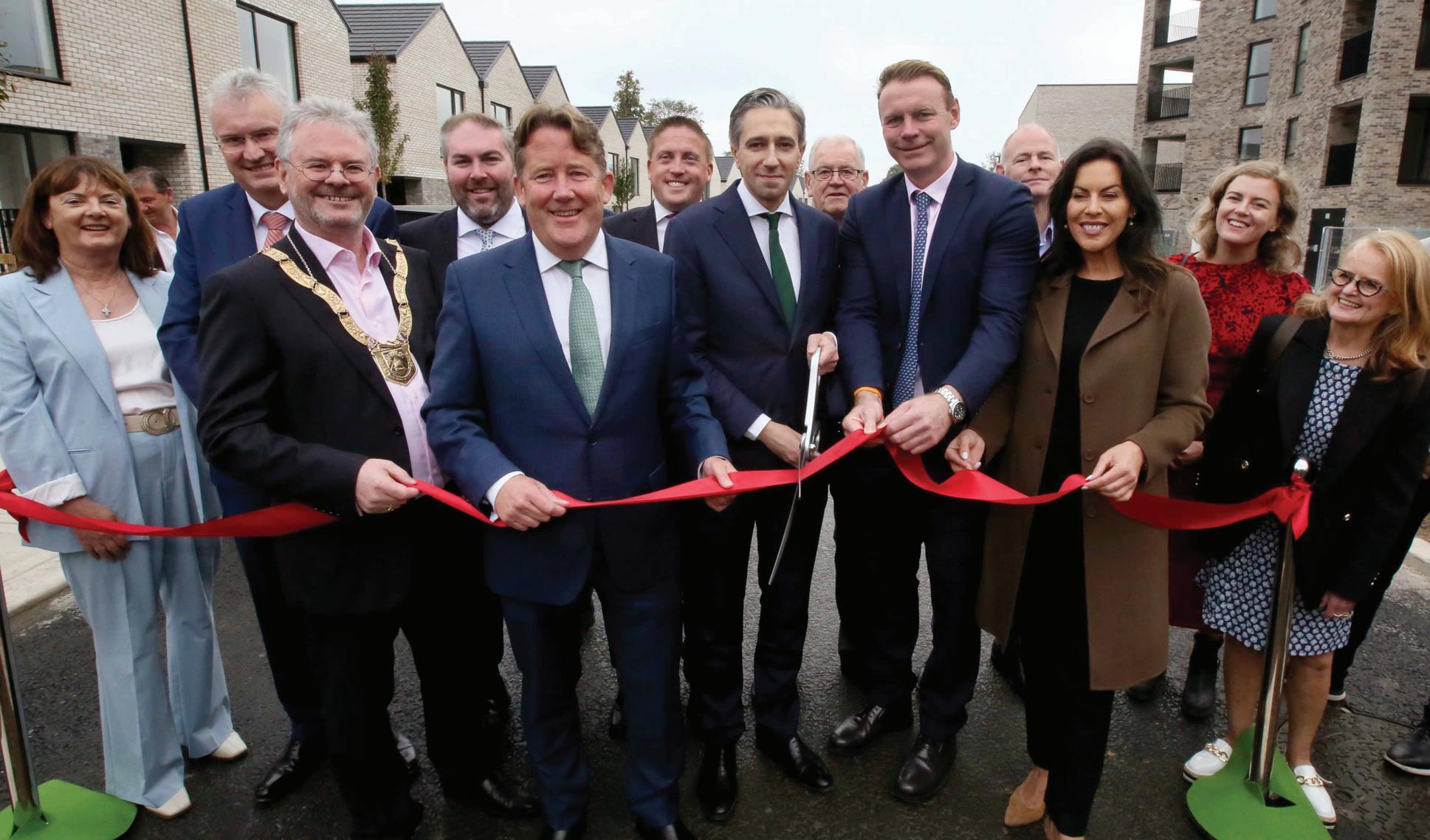
The Land Development Agency’s first affordable housing project on state-owned land is a ‘testament’ to what can be achieved.
On 20 September 2024, Taoiseach Simon Harris TD and Housing Minister Darragh O’Brien TD, officially launched the first phase of Shanganagh Castle Estate near Dublin’s Shankill.
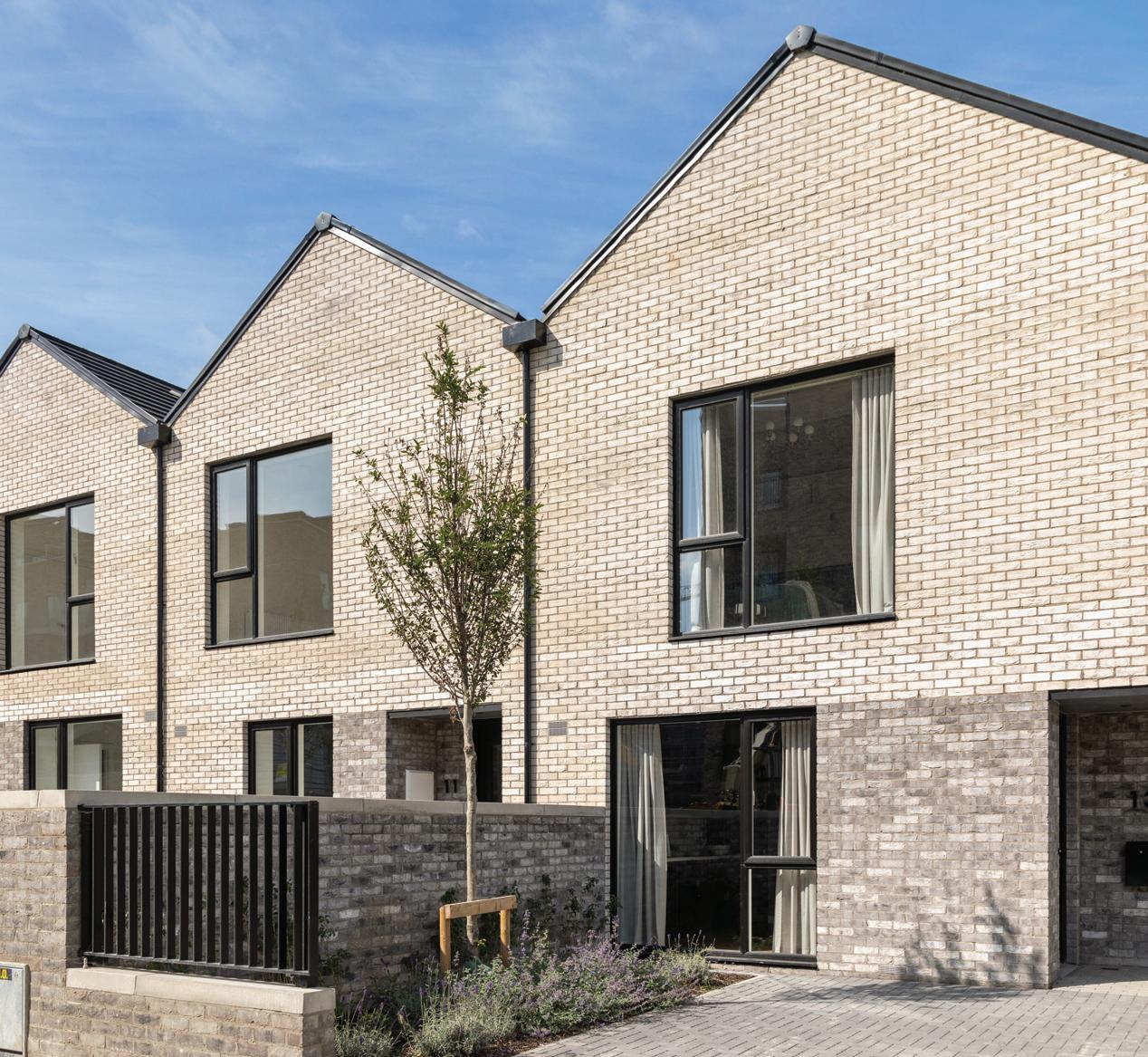
The new housing development is a joint project between the Land Development Agency (LDA) and Dún LaoghaireRathdown County Council (DLR). It consists of 597 affordable purchase, cost rental and social homes and its delivery is a landmark moment for the LDA for two key reasons.
The estate is the largest state-delivered housing project in decades and the first to be directly delivered by the Agency on state-owned land. It also serves as a tangible example of the LDA’s vision and its mission to develop not just new homes, but new, high quality, well-served and sustainable communities.
The first phase of the estate had been delivered on time and on budget, just two years after the sod-turning event on the DLR-owned site. Shanganagh is just one of a significant pipeline of LDA developments that can deliver at least
18,000 homes in the coming years.
The State’s affordable housing body delivers through two main channels. The first is direct delivery and involves the development of housing on state-owned or acquired land in which the LDA either oversees the entire project or partners with local authorities to build on land they own.
The second involves housebuilder partnerships, where the LDA partners with homebuilders and provides the financial impetus required to complete housing projects.
Significant progress is now being made on both fronts. The latest update shows there are 20 direct delivery projects involving over 10,000 homes at various stages from design and planning though to enabling works and construction.
In addition to Shanganagh, work is well underway at St Kevin’s Hospital in Cork and Devoy Barracks in Kildare. By year end, construction will have started on at least two further sites at St Teresa’s Gardens and Cromcastle in Dublin.
Meanwhile, the LDA has already delivered or is in the process of delivering over 3,000 homes through its homebuilder partnerships with a further 5,000 planned by 2028.
At the same time, the Agency continues to access more land through transfers from state bodies, market acquisitions and increasingly through partnerships with local authorities.
This level of activity means the LDA will soon become the country’s largest homebuilder and highlights the Agency’s ability to assist in meeting the country’s housing need.
But it is not just a numbers game. In keeping with its role and remit, the LDA seeks to maximise the potential of the land it accesses to deliver the right type of housing in the right place at the right price, something it has clearly achieved in Shanganagh Castle Estate.
Of the 597 homes involved, 200 are social apartments and 51 are affordable purchase homes. There are also 40 affordable purchase and 306 cost rental apartments. The housing mix includes homes suitable for individuals, couples and families, with a total of 99 threebedroom houses and apartments.
With the application of government supports through equity contributions, prices for the affordable purchase homes in Shanganagh will start at €334,600, which is significantly below their full market price. Rents for the cost rental apartments start from €1,175 a month, which is at least 30 per cent lower than equivalent market rates.
Eligible candidates will have the opportunity to secure a new home in a superb location next to Shanganagh Park and near to both Shankill and Bray. There will be a creche, café and community facilities within the estate with a host of shops, services, gyms, sports clubs and golf courses nearby.
Households will enjoy mountain and sea views while those with active lifestyles can explore the area’s hiking trails,
coastal walks and beaches. The estate is next to the N11 and M50 roads and is well-served by public transport. There are regular buses running to and from the city centre and Dún Laoghaire with a new Bus Connects route planned.
The nearby Shankill DART station provides access to Dublin city centre, and a new station is being developed at Woodbrook, which is a 10 minute walk from the estate on a dedicated route through Shanganagh Park.
There are also a number of primary and secondary schools in the area, including Scoil Mhuire, Woodbrook College, St Gerard’s School, Presentation College, St. Killian’s, and Loreto Secondary School.
In addition to a wonderful location, residents should also enjoy low-cost living in what will be one of Europe’s largest passive housing schemes, once fully completed.
While the apartments are passive, the houses are all A-rated, with features such as heat recovery ventilation and air to water heat pumps. They are also wellinsulated with excellent indoor air quality.
Active travel and community integration was a key consideration for both the LDA and DLR, with a focus on bicycle parking provision, working from home features, communal green and play spaces.
The LDA’s focus on sustainability was also a key factor in the construction
methods used to deliver the development.
Walls Construction, the contracted developer, deployed precast concrete and other prefabricated elements to reduce labour and improve efficiency. This resulted in fewer deliveries to the site, reduced waste and increased precision with less cutting and drilling needed on site.
The materials excavated in the construction process were reused to develop roads, promoting circularity while great care was taken to prioritise and protect the location’s plants and wildlife to the point where the development is expected to have a net positive impact on the area’s biodiversity.
Speaking at the launch event, LDA Chief Executive John Coleman said the project was a major development for the LDA. He thanked both DLR and Walls Construction for their work in delivering the project and the government for funding the LDA’s work.
Taoiseach Simon Harris TD said the delivery of affordable housing on stateowned land was a priority for the government and that Shanganagh Castle Estate was a “testament to what can be achieved”.
For more information: W: www.lda.ie
The Government, research bodies, housing experts, and opposition parties have established a consensus on increasing unit delivery to solve the State’s housing crisis. However, the publication of several reports on housing demand, as well as the stances of the different political parties, means that there is ambiguity as to what exactly the housing delivery target should be.
The ESRI’s report, Population projections, the flow of new households and structural housing demand, published in July 2024, has revised figures set out in 2020 by the ESRI which informed the targets set by the Government under Housing for All
The report determines that between 35,000 and 53,000 new dwellings will need to be constructed per annum by 2040, considering different models of population projections, the projected structure of households, and future economic growth. The report further specifies that the bulk of this new demand will be in Ireland’s cities, specifically Dublin, with minimal population growth anticipated in rural parts of the State out to 2040. This piece of research carried out by the ESRI has been used by the Government to inform the draft revision of the National Planning Framework.
The Government’s housing measures in Budget 2025 are focused on the key theme of increasing housing supply. At the time of writing, the Government’s housing delivery target remains at 33,000 per year, under the auspices of the Government’s flagship housing policy, Housing for All
However, an update, due to be published in Autumn 2024, to Housing for All is likely to include an updated target. Indeed, the recentlypublished draft revision of the National Planning Framework –currently out for public consultation – has projected an average housing need of 50,000 per year to 2040.
The Report of the Housing Commission, released in May 2024, asserts that there is an existing housing deficit of 235,000 units which should be resolved by 2034. This would require building numbers to increase by an average of 50 per cent per annum on current numbers. The Commission further recommends that this could be enabled by the establishment of a housing delivery oversight body.
The Commission does not specify what the number of homes built per annum should be but does state that it needs to be “scaled up”, and recommends enhancing the powers and resources of local authorities, in particular, it calls for local authorities to develop ‘land activation units’ “to facilitate and promote strategic development of public and private housing”. Meanwhile, also proposed is a “whole of government” programme of infrastructure delivery aligned with strategic ‘housing delivery zones’.
Alongside the existing housing deficit and future demand, the Commission also notes that, while the Government did deliver 32,000 new homes in 2023, that this is set against a backdrop where housing supply previously peaked at close to 90,000 in 2007.
The draft First Revision to the National Planning Framework (NPF) – the planning framework for socioeconomic and cultural development of the State out to 2040 – anticipates the need for ~50,000 additional homes each year.
Published for public consultation on 10 July 2024, the draft review intends to update the NPF to reflect changes in government policy, not least in climate action, regional development, demography, and digitalisation. With the consultation having closed in September, Minister for Housing Local Government and Heritage Darragh O’Brien TD has told eolas Magazine that he wanted to see the revised NPF “implemented in September [2024]”. At the time of writing, however, this has not taken place.
Of the opposition parties, Sinn Féin, the Social Democrats, and the Labour Party have published housing plans with specific delivery targets, while Independent Ireland, People Before Profit, and Aontú have not established housing delivery targets in their housing policy documents.
In Sinn Féin’s alternative housing plan, A Home of Your Own: Sinn Féin’s Plan to make Housing Affordable, released in September 2024, the party has proposed delivery of 300,000 houses by 2030, with 46,500 built in 2025, 53,000 in 2026, 59,750 in 2027, 66,750 in 2028, and 74,000 being built in 2029. The party further states that these figures “must be revised regularly and amended as new information becomes available, including levels of private sector output, demographic change, and economic conditions”.
The Sinn Féin plan further recommends the establishment of a housing needs demand assessment group which would include representation from the Central Statistics Office, the ESRI, and The Housing Agency to monitor progress and assess demand on a continual basis.
The Social Democrats, in their affordable housing strategy, Homes Within Reach, published in October 2024, have said that they would deliver 50,000 affordable purchase homes and 25,000 cost rental homes over five years, and that this would be “in addition to private sector delivery and a ramping up of the construction of social housing”.
The Labour Party has called for the delivery of one million new homes over “the next decade”. This would involve construction of 50,000 new houses per annum for 10 years, as well as the deep retrofit and restoration of 50,000 vacant and derelict properties per annum. Census 2022 records that there are around 166,000 vacant houses in the State.
The Government’s Housing for All plan set out the target of increasing supply to 33,000 per annum annually until 2030, based on ESRI projections for housing demand in 2020. While the Government has met this target, which actually exceeds the 26,000 initially proposed by the ESRI, subsequent studies have shown that there is an overwhelming consensus on the need to revise the Government’s targets.
The opposition parties have a shared consensus that at least 50,000 homes per annum are needed. Speaking to eolas Magazine in June 2024, Minister for Housing, Local Government and Heritage Darragh O’Brien TD said: “When I took over as Minister, we were in a situation where there were less than 20,000 homes delivered a year. We were in a situation where we had 10 years of very significant undersupply. In the first two years of Housing for All, we have exceeded the target substantially and we have built 110,000 new homes at the end of Q1 this year [2024].”
O’Brien added that the Government’s priority is “to accelerate that progress, keep the strong focus on social housing delivery”, and outlined that his target for 2024 was 34,500.
However, with the publication of the next Housing for All progress report due in the autumn of 2024, it is certain that there will be an upward revision of this target set by the Minister.
Exactly what this target will be, however, is unclear, as the opposition, sectoral experts on The Housing Commission, and – under some projection models – the ESRI, have recommended a significant upward move on the Government’s supply targets. While it is safe to assume the Government will revise its targets upwards, anything less than a target of 50,000 per annum may be met with scepticism by the opposition and housing experts.

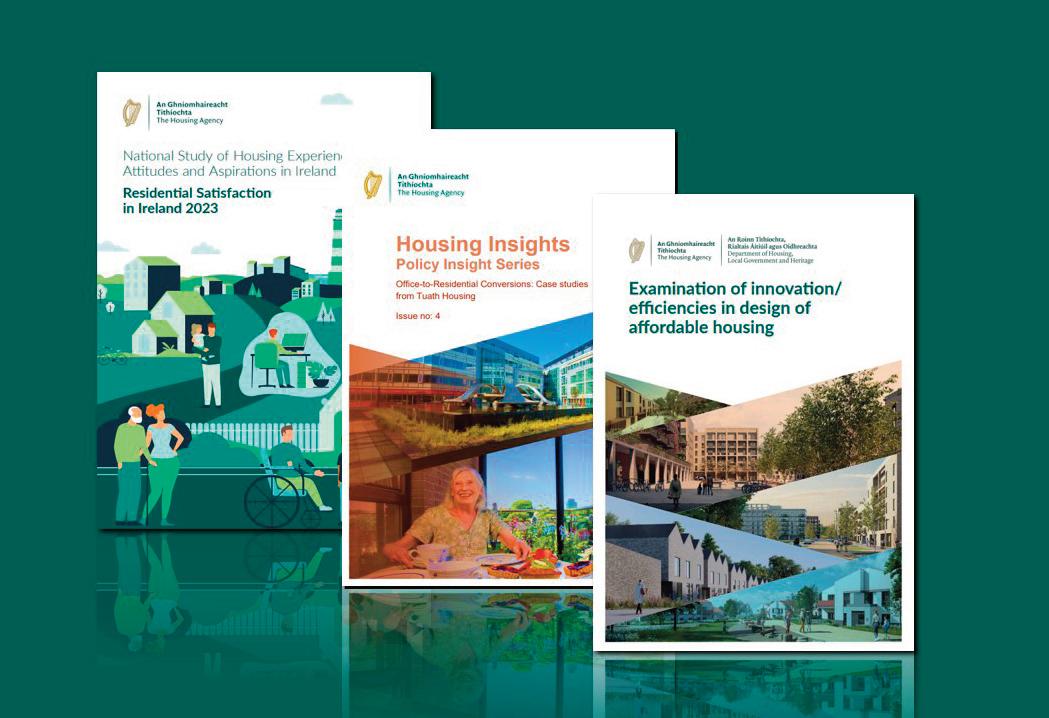
Research plays a critical role in shaping effective policy and serves as the foundation upon which sound decisions are built.
Being a centre of housing knowledge and helping to inform policy and practice have been among The Housing Agency’s strategic objectives since its establishment. By grounding policy in thorough research, it leads to strategies that are practical, sustainable and responsive to the needs of society.
At The Housing Agency, we balance proactive research such as the Survey of Attitudes, Experiences and Aspirations with reactive work such as the annual Summary of Social Housing Needs Assessments which we carry out with local authorities for the Department of Housing, Local Government and Heritage. We also balance the work we do in-house with commissioned work from outside researchers through our Research Support Programme.
The Programme was established four years ago to support research that could help inform policy or practice. Each year, the themes it supports are linked to The Housing Agency’s strategic objectives. So far, the Agency has funded over 20 projects on a variety of topics such as sustainability, homelessness, cost rental and energy deprivation.
Another feature of our research that is important to us is around dissemination. Our research is available on our website and we submit survey data to the data archive so that others can use it.
It is also important to bring researchers together to discuss their work. With this in mind, in September The Housing Agency hosted our inaugural Research Seminar to share research about housing and build networks within the housing
research community. Delegates from NGOs, public agencies, private corporations, and universities attended.
David Silke, Director of Insights and Operations at the Agency and Interim CEO, opened the Plenary session with an overview of the Agency’s Research Support Programme. There then followed thought-provoking presentations by Paula Mayock of Trinity College Dublin and Ken Gibb of the University of Glasgow and the UK Collaborative Centre for Housing Evidence (CaCHE). Mayock described the unique role that qualitative research plays in providing deep insights to inform policy and practice. Gibb shared housing research from Scotland.
The seminar also included workshops which discussed housing solutions to support inclusive communities, sustainable supply, the private rented sector, and compact development planning. Delegates discussed collaboration and identified a gap in housing data, with a need for a centralised repository. Developing a network of housing researchers was also discussed.
Regarding research dissemination, delegates identified a need to deliver and consume easily digestible updates to reach both wider and more targeted audiences via channels such as podcasts and blogs. Delegates expressed an eagerness for the Housing Agency Research Seminar to become a regular event and to provide opportunities to network and exchange research.
Details of the Agency’s research, Data Insights series, and Research Support Programme are available: www.housingagency.ie

Dara Turnbull, research coordinator at Housing Europe, compares the housing context in Ireland with exemplar EU member states.
Speaking on behalf of Housing Europe, the European federation of public, cooperative, and social housing, Turnbull unpacks Delivering on housing in Ireland: A European policy perspective. Commissioned by the European Parliament’s Renew Europe group, the report examines the context of the State’s housing sector relative to other European states and offers potential solutions for decision-makers.
Ireland’s housing crisis has several elements, but the most consistent theme is that the cost of housing is outweighing wage growth, thereby making home ownership and rents inaccessible or unaffordable for many Irish residents.
For prospective homeowners, for example, statistics from the Central Statistics Office (CSO) and the
Department of Housing, Local Government and Heritage, show that the average house price increased from €40,283 in 1990 to €311,514 in 2022, a growth of almost a factor of seven or a 673 per cent increase.
Meanwhile, the average annual earnings in the Republic in the same period grew from €25,811 to €66,914, a 159 per cent increase. This disparity between wage growth and house prices has meant that, whereas in 1990 the average house price was around 56 per cent higher than annual earnings, house prices are now around 4.65 times greater than annual earnings.
Housing Europe’s report determines that Rebuilding Ireland, the Irish Government’s previous housing strategy, had a goal of building 25,000
new homes per year, but that “actual output was only around 76 per cent of that”.
Although the housing crisis is being exacerbated by undersupply, delving into these building statistics, Turnbull asserts that the area of most significant underdelivery was primarily in private sector construction.
“A relative overdelivery by the public sector has helped to compensate for an underdelivery by the private sector,” he says.
“Government needs to be more aware of the direct policy levers that it has over public housing policy versus demand side incentives and schemes which are not necessarily leading to delivery of infrastructure.”
Examining Ireland’s housing market compared to those of Austria, Denmark, and the Netherlands on housing affordability specifically, Turnbull explains that in Ireland in 2022, around 9 per cent of the total housing stock was classified as social and affordable housing. This figure is significantly below figures of 24 per cent in Austria, around 20 per cent in Denmark, and just under 30 per cent in the Netherlands.
Comparing Dublin with the exemplar state’s capital cities, Turnbull states that the “disparity is even greater”. Around 11.3 per cent of Dublin’s housing stock is classified as being “social or affordable”, while this figure surpasses 40 per cent in Amsterdam and Vienna.
The Housing Europe research coordinator explains that this disparity may well be down to the European practice known as ‘build and retain’. “They build social housing and the objective is to retain the system in perpetuity,” he outlines.
Contrasting this model with Ireland, Turnbull states: “The majority of publicly supported and publicly built housing that we have constructed in the State since the 1930s is now privately owned. We have been very good at building public housing in this state, but we have not been very good at holding onto it, so that is a missed opportunity.”
To meet the challenge of under delivery by the private sector in housing supply, Turnbull cites a cooperative model utilised in Sweden which could be adapted for the Irish market.
Essentially based on what Turnbull describes as a ‘cost purchase’ principle, the Swedish model is backed up by a national cooperative housing guarantee fund, which enables newly forming local housing cooperatives to unlock the necessary construction loans from commercial banks, which would otherwise not be possible given a lack of collateral to ‘back up’ such lending.
“A local housing cooperative can come together and pool their resources to build new housing. When the development loan is repaid, that lending is refinanced as standard mortgage lending,” Turnbull explains.
As a result, around one in four Swedish primary residences are part of the cooperative housing sector.
In 2023, the Government met its overall housebuilding target under its Housing for All policy of constructing 30,000 homes, and Minister for Housing Darragh O’Brien TD has expressed his confidence that a similar number will be achieved in 2024.
Turnbull warns of a potential “dark cloud” for construction, as the raising of interest rates by the European Central Bank may prevent private construction from playing an optimal role in house building due to prospective inadequate yields.
As interest rates are likely to reduce through the course of 2024 as inflation is projected to decline, there may be long-term optimism that supply will increase in the Irish housing sector which is the ultimate key to solving the state’s housing crisis.
However, Turnbull states that even if interest rates do decline towards the end of 2024, or in early 2025, they will nevertheless be much higher than in the preceding decade. Thus, other investment will remain more attractive,
Dara Turnbull
Sources: CSO/DHLGH
meaning real-estate will not be as attractive as prior to the ongoing inflation crisis.
He continues: “Given strong protections for tenants, which are completely justified, the long-term return on things like build-to-rent are not as attractive as in the past, when there was effectively no clear limit to potential returns. As a result, the capital value of BTR apartments is today, and will remain in the future, below the actual cost of construction. This effectively means that such projects are not viable.
“Even if interest rates decline, it does not suddenly mean that residential construction kicks back into gear. I think the dark clouds over the sector will not lift so easily. Having said that, it seems that in the Republic, large Approved Housing Bodies have become important purchases of residential developments that had originally been earmarked for large corporate investors.
“The State may be able to pick up some of the development already in the pipeline, but it is not clear how this pans out over the longer term,” he concludes.
Dara Turnbull is the research coordinator at Housing Europe – the European federation of public, cooperative, and social housing, where he has worked since 2019. He is responsible for managing various research projects, and working to promote the uptake of new approaches and best practices by housing providers.



As we transition to a greener economy, there is an increasing demand in Ireland for green skills in the construction sector, which is already experiencing a significant skills shortage.
The need for new housing and the increasing requirements of environmental performance standards such as nearly zero energy buildings (NZEB) are significantly impacting the sector. These demands also place the FET sector in a leading role to address critical skills and
labour shortages in the construction industry. Research commissioned by SOLAS, the further education and training authority in 2022, outlined the need for over 50,000 new entrants to the construction sector up to 2030. Not only is there a requirement for new entrants but
also for upskilling workers in the newly emerging aspects of construction such as retrofitting and modern methods of construction (MMC).
Future green skills for construction are an integral part of the first National Further Education and Training (FET) Strategy for the Green Transition. Developed by SOLAS in partnership with KPMG, Green Skills 2030 identifies the critical skills gaps impacting Ireland’s ability to transition to a climate across other crucial sectors including agriculture, transport, energy, hospitality, and finance.
In collaboration with key industry stakeholders including professional representative bodies, the 16 education and training boards (ETBs), higher education institutes, public bodies and government departments, the strategy outlines a significant opportunity for the FET sector to bridge the gap between the skills needs of industries such as construction and the ability of our FET system to deliver on those needs.
Green Skills 2030 can empower individuals through targeted training programmes, upskilling opportunities, with industry and tertiary partnerships to support and accelerate the green transition, providing a pathway for workers to ensure no one is left behind as industries evolve.
SOLAS, the state agency responsible for FET, the Safepass scheme, construction skills schemes, and the coordinating provider for craft apprenticeships in Ireland, is working with key partners to drive transformation in the sector and to respond to the critical skills needs of the country as we come towards the end of our ambitious FET Strategy, Transforming Learning
FET and apprenticeships have seen significant growth in demand, with figures from 2023 indicating that one in ten adults in Ireland are involved in either an apprenticeship, construction scheme or another further education course. The FET sector continues to play a key role in driving the national training infrastructure available to deliver on critical NZEB and retrofitting commitments. Fast becoming the go-to place for the development of specialist skills for some of Ireland’s critical industries, FET and apprenticeships are acknowledged as a
crucial resource to meet Housing for All and climate action targets.
Collaborations with these key partners are driving enhancement of the construction training infrastructure and the implementation of new and comprehensive construction skills pathways for NZEB, MMC, Certified Passive House construction and digital construction skills.
A critical focus has been to ensure that FET can adequately support the delivery of future green skills for construction. Key developments have included the establishment of the Modern Methods of Construction demonstration park at the National Construction Campus at Mount Lucas, as well as a network of six centres of excellence focusing on NZEB and retrofitting upskilling. These specialist skills centres are located in City of Dublin ETB, Cork ETB, Laois and Offaly ETB, Limerick and Clare ETB, Mayo, Sligo and Leitrim ETB, and Waterford and Wexford ETB.
The network of NZEB Centres of Excellence provide a diverse range of upskilling in NZEB and retrofit. Developed with industry, for industry, courses are delivered in short bursts, with blended learning models available where possible to limit time spent on site.
In addition, the NZEB Mobile Training Unit developed by the National Construction Training Centre at Mount Lucas demonstrates NZEB training nationwide.
There are now over 5,000 people across Ireland trained in NZEB, which is crucial to meeting the target of delivering the retrofitting skills required to retrofit 500,000 homes by 2030.
SOLAS also supports a number of initiatives to meet Ireland’s retrofitting targets, such as the Domestic Heat Pump Installation Incentivisation Scheme. Recently launched by Minister for Further and Higher Education, Research, Innovation and Science, Patrick O’Donovan TD, the Domestic Heat Pump Installation Incentivisation Scheme provides a financial incentive which will support plumbers to take time off work to upskill as SEAI-registered heat pump installers.
The scheme provides the opportunity for small and medium contractors to upskill their staff, develop additional capacity in this sector, which is experiencing increasing demand, and will ultimately offer an opportunity to current plumbers to future-proof their careers.
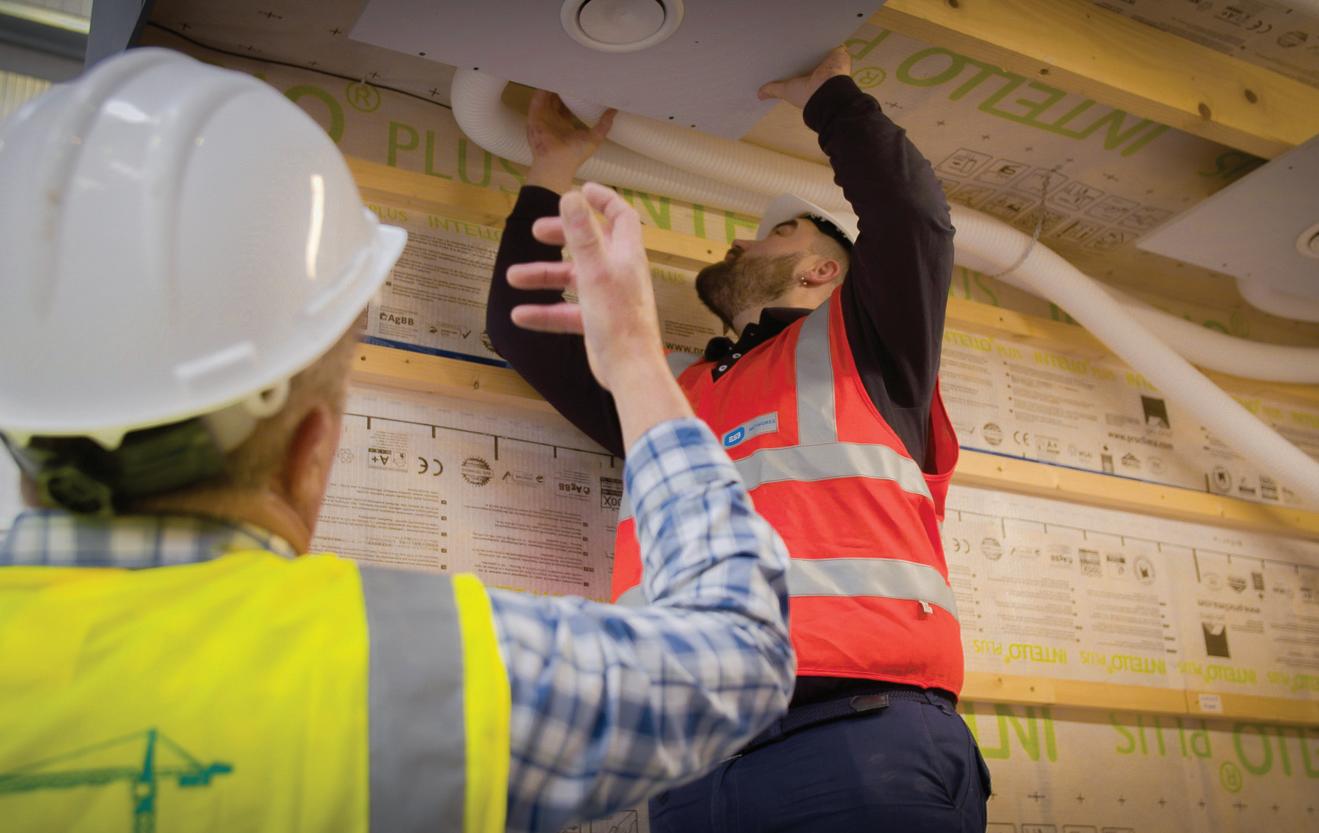

Aligned with the Government’s target of installing 400,000 heat pumps by 2030 under the National Retrofit Plan, the scheme is funded by the Department of Further and Higher Education, Research, Innovation and Science, via SOLAS, and is administered by Laois and Offaly Education and Training Board. Through the scheme, learners are receiving funding to undertake the Domestic Heat Pump Installation courses delivered by Laois and Offaly ETB, City of Dublin ETB, and Waterford and Wexford ETB. The scheme is open until 1 December 2024.

Construction remains one of the most important sectors where new labour and new skills are required to meet Housing for All and climate action targets. SOLAS is committed to ensuring that the construction sector has the right skills supply necessary to thrive in this changing economy, and that learners have the chance to develop sustainable, meaningful careers.
Find out more at solas.ie/greenskills


Between 35,000 and 53,000 dwellings must be built per year until 2040 in order to meet projected housing demand, researchers from the Economic and Social Research Institute (ESRI) have asserted.
The research, published in July 2024, finds that structural housing demand is projected to be around 44,000 per year from 2023-2030, and around 40,000 per year over the 2030-2040 period.
As international migration is the key driver of population growth in Ireland, additional scenarios are explored that incorporate higher and lower international migration assumptions than in the baseline scenario.
Informed by data including Census 2022, international trends, and ESRI research evidence, the researchers assert that, in a baseline population scenario, estimated structural housing demand in the period 2023-2030 ranges from around 38,000 to 50,000 per year depending on assumptions
around household size and obsolescence rates.
In a high migration scenario, the estimates range from around 41,000 to 53,000 per year, while in a low migration scenario, the estimates range from 35,000 to 47,000 per year.
The ESRI’s findings present significant challenges and opportunities for policymakers. The expected rise in housing demand, particularly in urban areas, calls for a proactive approach to ensure adequate supply. Key considerations include:
• Aligning housing supply with demographic trends: Rapid population growth and smaller household sizes will necessitate a diverse range of housing options,
particularly in areas experiencing higher growth.
• Addressing obsolescence: With a significant portion of the housing stock ageing, policies must focus on maintaining and upgrading existing housing while ensuring enough new supply.
• Planning for regional disparities: Policymakers must account for the uneven geographic distribution of demand, ensuring that rural and urban areas receive appropriate levels of investment in housing infrastructure.
Ireland has experienced one of the highest rates of population growth in
“Around 44,000 new units a year are necessary to keep with population growth.”
Adele Bergin, Associate Research Professor, ESRI
the EU, with a 9 per cent increase from 2016 to 2022. This surge has been largely fuelled by net migration, which remains a volatile and significant driver of demographic changes.
The report outlines three population scenarios – baseline, high, and low migration – to project future population growth. Under the baseline scenario, the State’s population is expected to increase by 922,000 people by 2040, reaching 6.1 million. However, projections are sensitive to migration trends, with population figures ranging from 5.9 million to 6.3 million depending on the range of migration projections.
At a regional level, the eastern and midlands region, especially the Dublin and mid-east areas, is expected to experience the highest population growth. Conversely, the northern and western regions are anticipated to see slower growth. This uneven distribution will place varying pressures on regional housing markets, with areas like Dublin requiring significantly more housing infrastructure.
Household formation, which is influenced by headship rates – the proportion of individuals heading a household, is cited by the researchers as a key metric in determining housing demand. Household size is inversely related to headship rates; a decline in household size leads to an increase in headship rates, thereby increasing the demand for housing units.
Between 1996 and 2022, the State recorded a modest rise in headship rates, but this trend has plateaued since 2016.
The report outlines two key scenarios for headship rates moving forward: a “current trends” scenario where household size remains stable at 2.6, and a “fall in household size”
scenario, which would see average household size fall by 0.16 over the period.
The second scenario aligns with patterns observed in other European countries and would suggest a higher demand for housing if it materialises. The underlying drivers of household size include demographic factors like fertility and age structure, but housing supply constraints could also impact the pace of household formation.
Another critical component in housing demand projections is the rate of housing stock obsolescence – the natural depreciation of existing housing stock. Obsolescence occurs as buildings age and require replacement to maintain a functional housing market. However, estimating obsolescence rates in Ireland is challenging due to limited data.
The ESRI report utilises several methods to estimate obsolescence, including examining the change in housing stock between censuses and incorporating the number of housing reconnections. It estimates obsolescence rates at between 0.25 per cent and 0.5 per cent annually, with higher rates in rural counties. This contributes to the overall need for new housing units, as dwellings lost to obsolescence must be replaced to meet ongoing demand.
Adele Bergin, an author of the report and an Associate Research Professor at the ESRI, says: “Housing demand, both now and in the future, has significant implications for housing policy in terms of the number of housing units required and the areas they are needed. Our research shows that on average, across a range of scenarios, around 44,000 new units a year are necessary to keep with population growth.”


Respond, Ireland’s largest construction-led Approved Housing Body (AHB) and service provider, plays a crucial role in addressing the housing crisis by building homes and fostering sustainable, inclusive communities.
With a commitment to providing high quality homes, Respond is focused on scaling housing solutions through its construction-led model. With 82 per cent of its housing activity focused on construction, Respond is a leader in driving the national housing supply, currently managing over 7,761 homes for 17,000 tenants. By the end of 2024, Respond is on track to expand its housing portfolio with 4,000 social and cost-rental homes under construction nationwide.
Respond’s construction-led model is key to its ability to deliver homes at scale. By purchasing sites and managing construction through fixedprice contracts, Respond saves up to €65,000 per home compared to turnkey properties. This allows
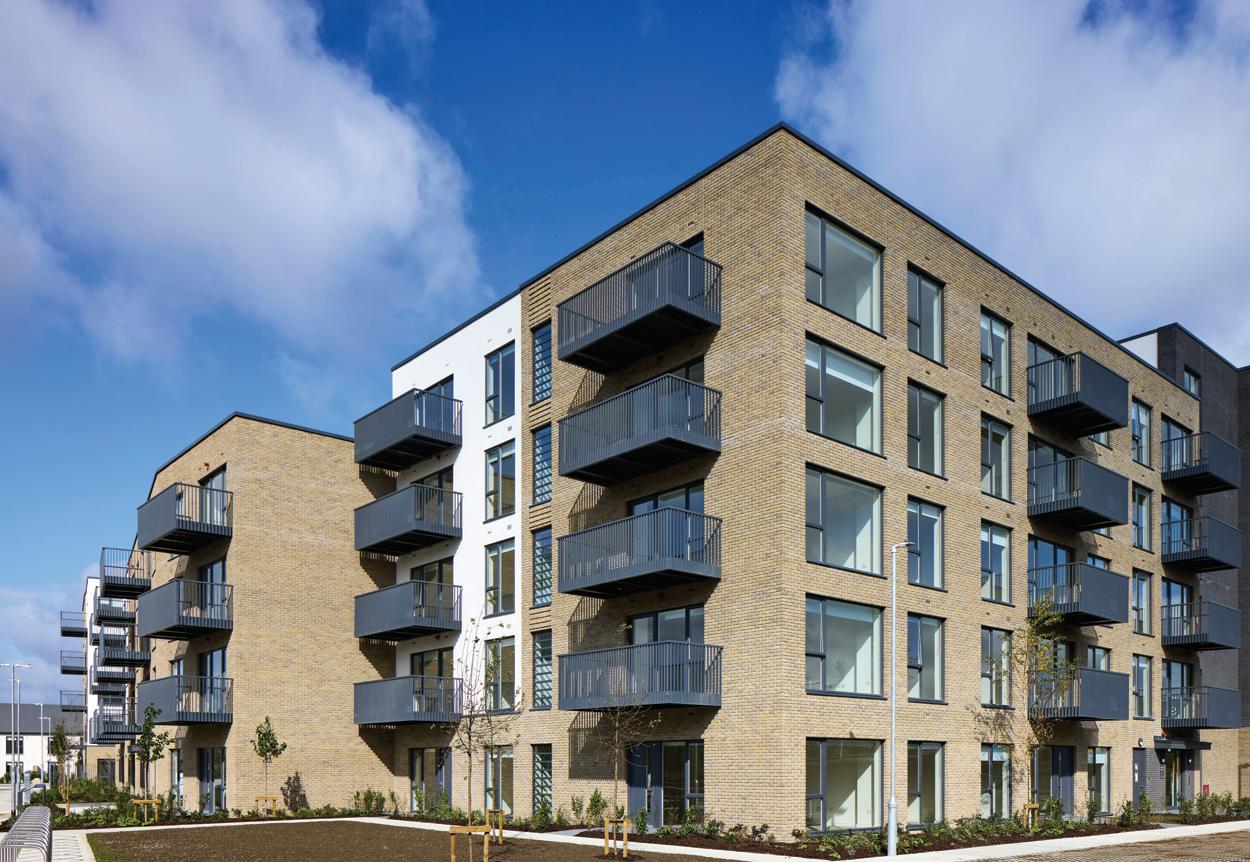

for greater financial control while ensuring high-quality standards.
A dedicated in-house team of architects, planners, quantity surveyors, and construction managers ensures that projects are delivered on time and within budget. The organisation’s €2 billion housing programme aims to provide high-quality homes for thousands of families as part of a long-term strategy to address the housing shortage and create sustainable communities.
Respond’s large-scale Dublin developments are central to its housing strategy, focusing on high-demand areas with a mix of social and costrental homes. Among these, Airton Road in Tallaght is a standout project. Developed with Ardstone and Walls Construction, this project will deliver 502 apartments, ranging from one to three bedrooms, across six blocks. The development also features retail units, a crèche, open spaces, and energyefficient designs, making it a prime example of Respond’s integrated community-focused approach.
Parkleigh in Seven Mills, located along the Grand Canal, is another major development. This project is part of the Clonburris Strategic Development Zone (SDZ) and will deliver 372 homes split
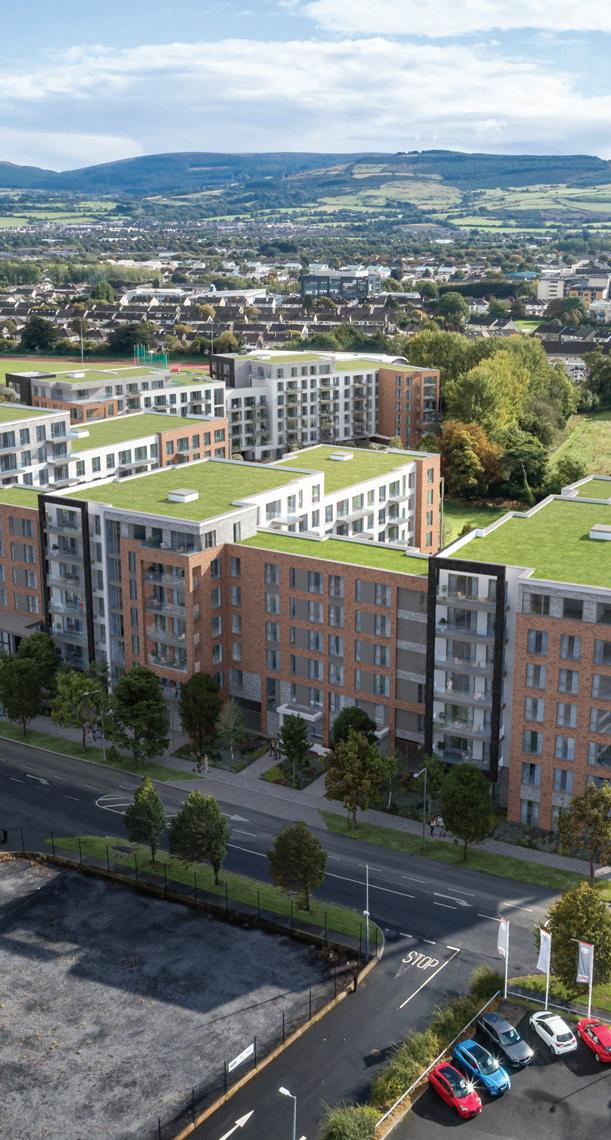
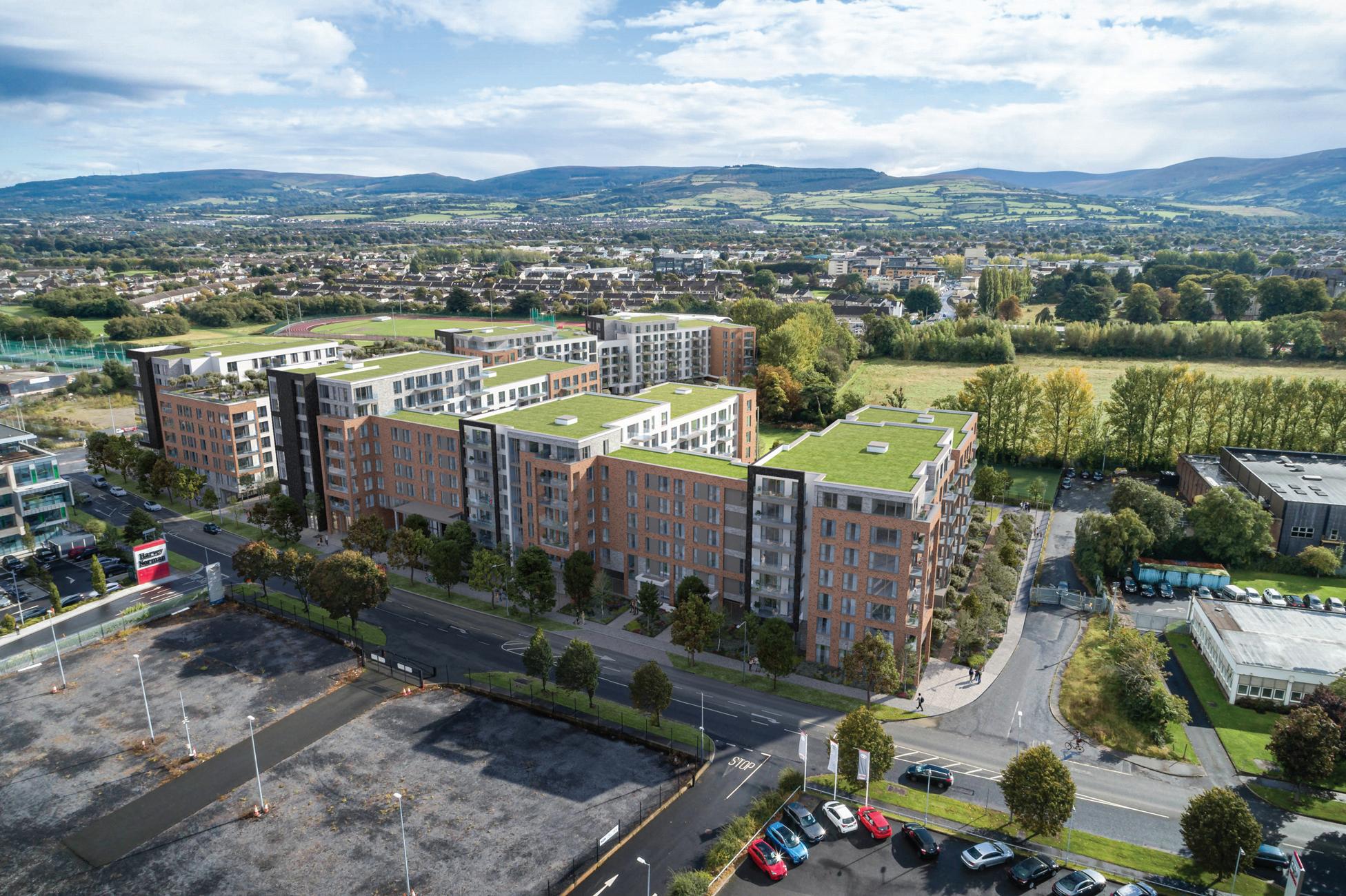
between social and cost-rental tenures. These A2-rated energy-efficient homes are family-friendly and located minutes from Liffey Valley Shopping Centre, offering residents convenience alongside modern living.
Rathbourne Wharf in Ashtown is Respond’s largest development, delivering 725 homes upon completion. Of these, 326 will be social homes, and 399 cost-rental units. The mixed-use site also includes commercial spaces such as a food store, café, and crèche, with public open spaces for residents. This project combines residential and commercial needs, enhancing its appeal as a community hub.
Other key developments include Griffin Point on Hole in The Wall Road, with 397 homes (244 social and 153 cost rental), and Piper’s Square in Charlestown, comprising 590 homes built to Passive House standards, including facilities like a crèche, retail units, and a medical care facility. These projects reflect Respond’s broader goal of delivering 2,785 homes in Dublin by 2024, with a mix of 1,460 social and 1,325 cost-rental homes.
These five developments in Dublin are part of Respond’s wider goal to deliver 2,785 new homes in the capital. This total includes 1,460 social homes and
1,325 cost-rental homes, ensuring that a significant number of high quality homes are made available to meet the city’s demand.
While Dublin remains a focal point, Respond’s impact extends nationwide, with 3,015 homes currently under development across Ireland. Respond’s ability to deliver at scale is supported by its partnerships with the Department of Housing, Local Government and Heritage, the Housing Finance Agency, the Housing Agency, and local councils. These collaborations ensure that Respond has the necessary support to continue expanding its housing supply.
Respond is set to deliver 567 new homes in Dublin by the end of 2024, a significant milestone in its mission to address the housing crisis. These homes will be built through Respond’s construction-led model, which emphasises creating mixed-tenure communities designed to stand the test of time. The organisation’s commitment to placemaking is evident in its Urban Village Placemaking approach, which fosters small, pedestrian-friendly neighbourhoods within larger urban areas, providing not only homes but also
a sense of belonging and community for residents.
Respond’s construction-led approach, combined with its commitment to building large-scale, mixed-tenure developments, positions it as a leader in tackling Ireland’s housing crisis. By focusing on delivering social and costrental homes, Respond is creating diverse, inclusive communities that meet the needs of a wide range of people. As the organisation continues to expand its housing portfolio, it remains dedicated to building sustainable, high-quality homes that will serve generations to come.
T: 01 808 7700
E: info@respond.ie
W: www.respond.ie

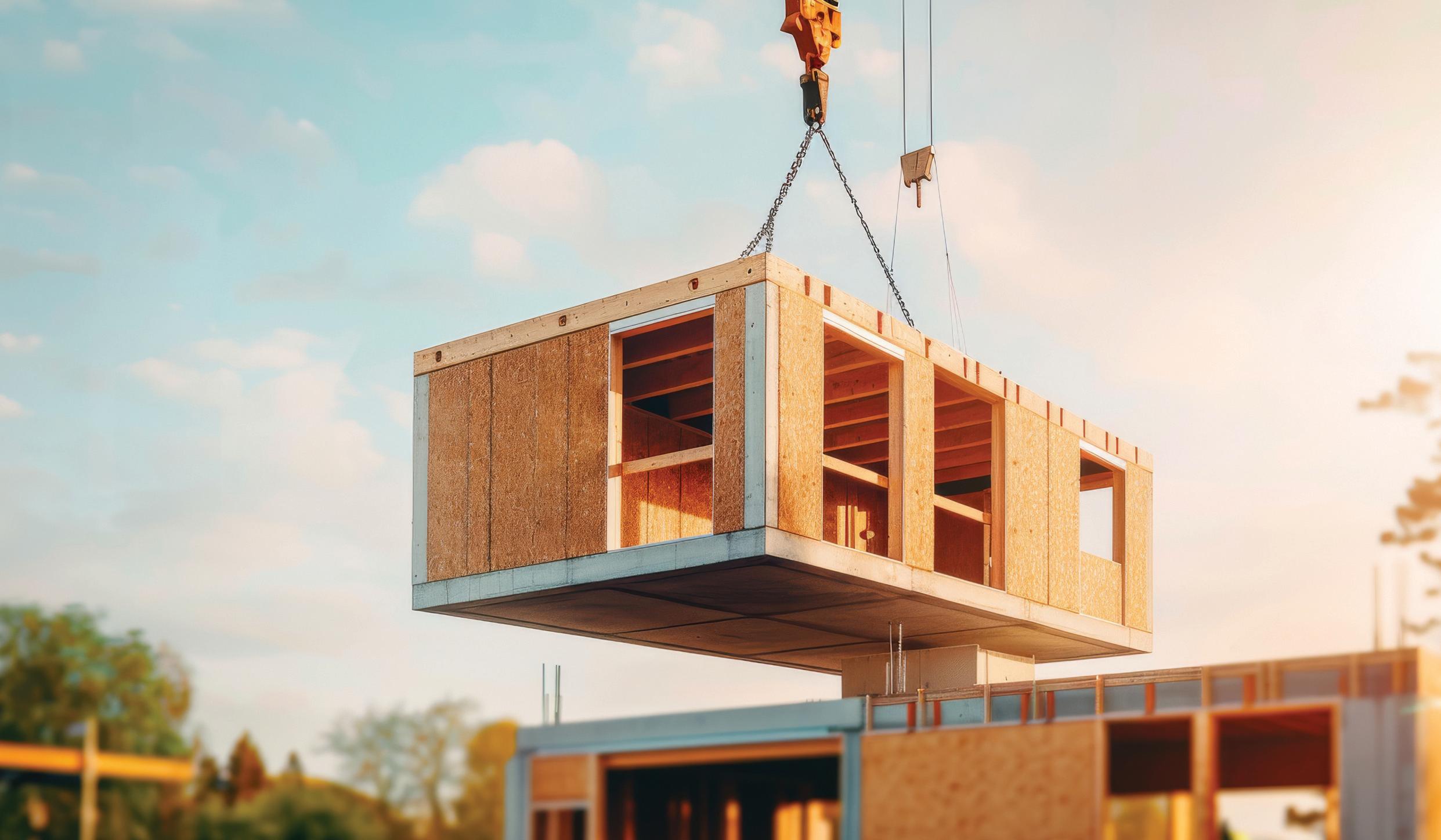
The promotion of modern methods of construction (MMC) in the residential sector can be a “game changer” in increasing annual housing supply, a report by the National Economic and Social Council (NESC) has stated.
Published to track progress under the Government’s Roadmap for increased adoption of MMC in Public Housing delivery, the report examines the benefits and challenges associated with MMC, and finds that greater potential exists to substantially increase housing supply, while also helping to meet the environmental goal of decarbonising housing stock.
However, also highlighted are a number of existing challenges to the development of MMC for housing in Ireland including, most prominently, that the benefits of MMC are not fully understood, meaning “negative perceptions exist among consumers, developers, funders, and insurers”.
While MMC is a broad category for technological advances and new product development in housing delivery, its distinct characteristic is the offsite manufacture of buildings and their components in a factory setting, alongside follow-on transportation, onsite assembly, and fabrication.
Ireland is projected to need an additional 44,000 units of housing supply per year between 2023 to 2030, and 40,000 units per year between 2030 to 2040, beyond current demand. The 2024 Housing Commission report estimated that to eliminate pent-up demand for housing by 2034, housing completions would need to increase by 50 per cent on average. Despite this, take up of MMC in Ireland is low, with
only 7 per cent of firms saying offsite manufacturing is their main activity.
The report notes that despite a general industry acceptance that MMC can help reduce construction costs, propositions for scaled offsite manufacture will remain unfunded as there are not enough credible projects to bring industrialised MMC housing to market.
Highlighting industry feedback that the market for MMC in housing remains “fragmented and undercapitalised”, there is also evidence of industry optimism that this situation could change quickly with the right investment decisions.
The Chair of MMC Ireland, Declan Wallace, has suggested that MMC and
onsite manufacturing companies can quickly increase annual housing output by 25,000 dwelling units, with an MMC pipeline in place to provide certainty.
Of the opportunities that exist in the further adoption of MMC identified by NESC are the expansion of MMC by established Irish homebuilders “to capture its productivity and environmental benefits, especially for timber-based MMC”, the potential to increase inward investment by international MMC companies, and the growth of Irish MMC businesses to supply both domestic and export markets.
However, multiple identified challenges have been identified for the development of MMC for housing in Ireland. Alongside negative perceptions that exist, the NESC report explains that there is a need to work closely with insurance underwriters and experts in relation to emerging and new technologies, to make sure risks are understood, particularly with regard to fire safety and insulation.
Additionally, challenges to further expansion in the use of timber relate primarily to the fire safety and material strength performance for the use of timber in residential construction. The NESC report identifies a call from industry for the need to “reframe the overall public procurement process for MMC in housing to better include specified and designated standard housing typologies”.
Finally, NESC identifies the substantial differences in the finance model for MMC compared to traditional methods of construction, highlighting how the MMC value chain often requires substantial upfront investment in their fixed assets.
“Industry interviewees welcome the Government’s Growth and Sustainability Loan Scheme, although a majority also confirmed that a dedicated policy to build a finance model supporting MMC real estate development activity was not yet forthcoming,” the report says.
Acknowledging the range of current policy, structures, and processes that have been created to support the expansion of MMC in Ireland, NESC identifies six lines of action to further the expansion of MMC:
MMC and onsite manufacturing companies could increase annual housing output by 25,000 dwelling units.
Institutional leadership: Working through more resourced existing structures, develop new MMC initiatives to address impediments to greater adoption in housing supply and renovation; reinforce and strengthen increased supply pipelines of sufficient scale, particularly social and affordable housing; and enable greater State and market collaboration on critical development issues such as standards, housing typology, finance, transport and logistics, and skills and education.
Standards and innovation: Use the Government’s Capital Works Management Framework and procurement process to shape greater housing market adoption of MMC; and research the potential role of a collaborative approach between industry and research bodies for testing and performance requirements for innovative systems.
Targets: Increase the targets and funding for new public housing using MMC under an expanded Social Housing Accelerated Delivery Programme (ADP); set more binding targets around reduced carbon footprints; and assess the investment and development of the human resources required to meet revised targets among public housing delivery partners.
Innovative finance: Consider the creation of a dedicated forward-funding arrangement for MMC in housing to lever increased investment in offsite manufacturing (OSM); guide environmental, social, and governance (ESG) investment towards MMC in housing using fiscal instruments and mechanisms; and expand the role of Ireland’s credit union sector to deliver a dedicated aggregator structure to pool financing from approved housing
bodies (AHBs) for new MMC housing developments.
New employment opportunities: Provide additional supports and incentives to facilitate further upskilling for MMC roles; increase co-ordination and additional resourcing of organisations’ training programmes; and develop and fund more dedicated apprenticeship and internship options for MMC in housing.
Positive promotion: Showcase examples of quality MMC housing typologies, particularly mid- and highrise apartments with efficient circulation including deck-access; deliver new promotional materials to challenge stigmas attributed to prefabrication; make clear that temporary use does not mean poor quality; and, request study and report by Dublin City Council on recent ‘volumetric’ housing schemes in Dublin 8 and 20, where the reception to them is considered to be positive.
Concluding, the report says that beyond the opportunity provided by MMC to deliver housing in a new, adaptive, and sustainable way, additional export and job creation benefits run in parallel with the opportunity to transition to a more circular economy.
“There is a clear need for the State to develop and promote additional MMCspecific initiatives to address impediments to its wider adoption by industry, to facilitate the knowledgesharing among public and private sector stakeholders that can resolve regulatory obstacles and other issues, and to demonstrate the potential benefits of the sector to the construction industry and the wider public,” the report states.
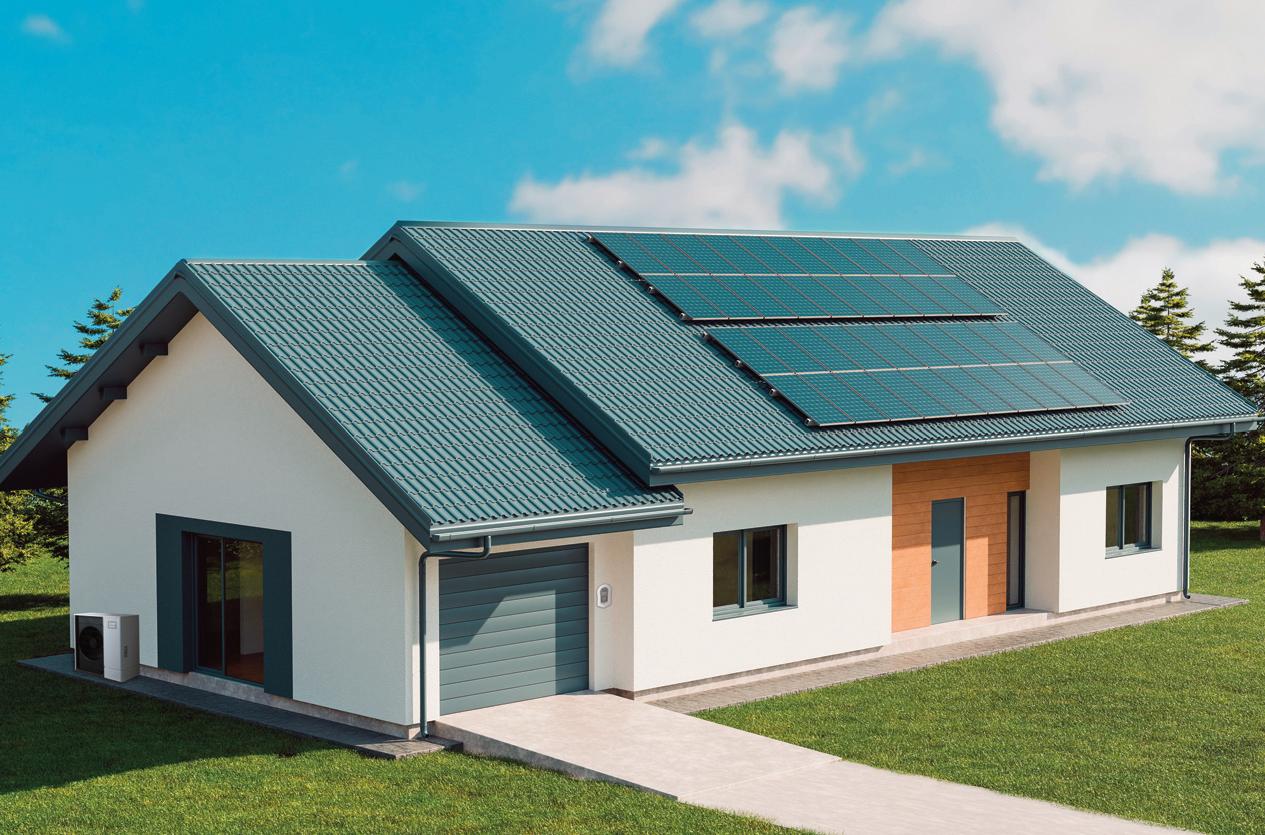
SSE Airtricity is working with governments, local authorities, and domestic customers to support the decarbonisation of homes across the island of Ireland.

As a leading provider of cleaner, greener energy for homes and businesses across Ireland, we are all about making Ireland a more sustainable place.
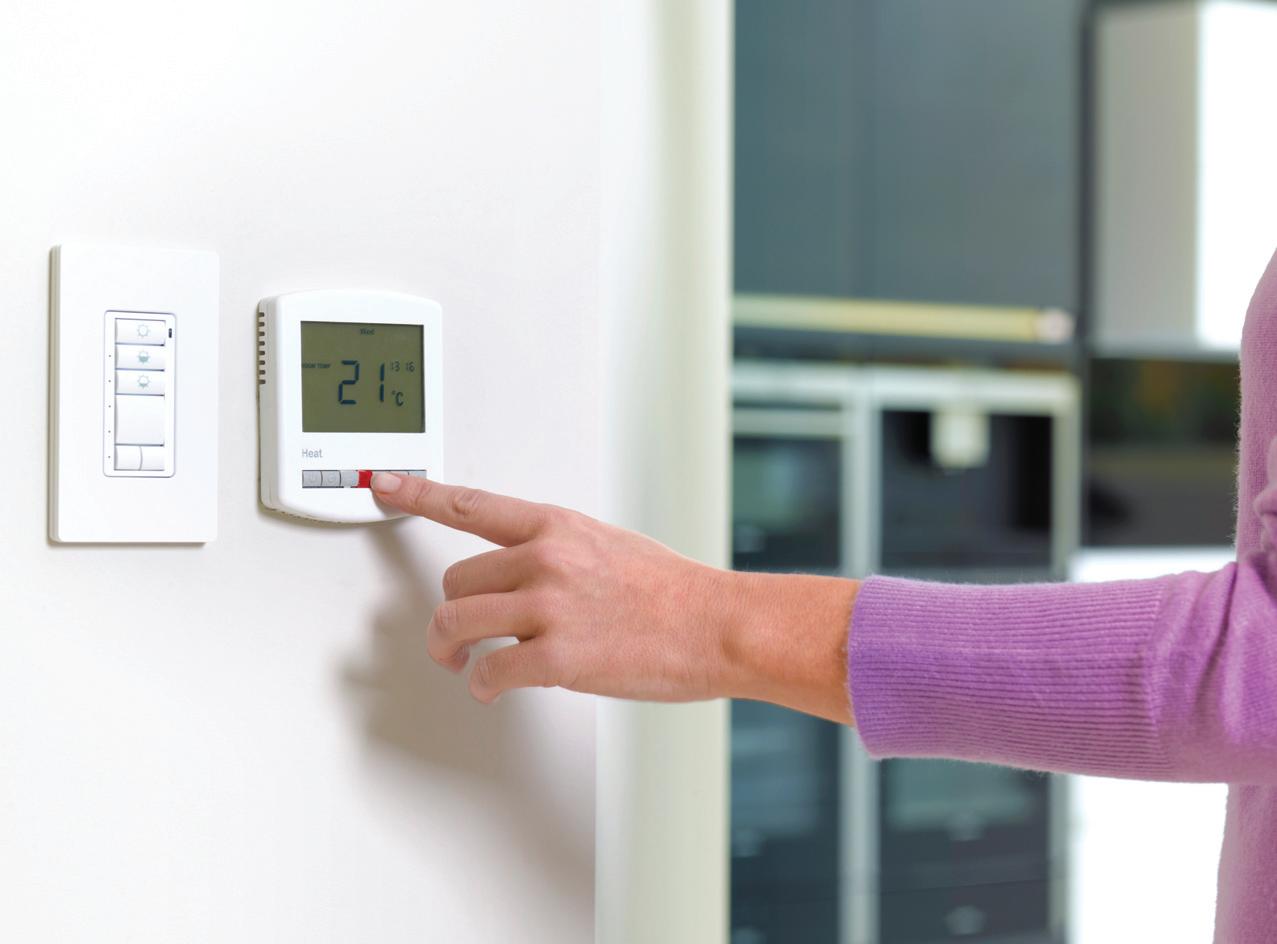
Stuart Hobbs is the Director of SSE Airtricity Energy Services (AES), a business dedicated to delivering home energy upgrades and utilising energy efficiency technologies to deliver a cleaner greener environment. SSE AES offers home energy upgrades under a number of different government-funded programmes: SEAI One Stop Shop retrofit programmes, Better Energy Homes, local authority energy efficiency retrofit programmes (EERP), and SEAI Warmer Homes. Up to 1.5 million homes in Ireland are in need of energy upgrades by 2050, as energy efficient buildings are essential to meet our climate action targets. These upgrades typically include external wall insulation, energy efficient windows and doors, attic insulation, heating controls, heat pumps, solar PV and battery systems, and electric vehicle (EV) charging points.
Part of the Irish Government’s Climate Action Plan includes a national retrofit programme aiming to see 500,000 homes, one-third of Ireland’s housing stock, retrofitted to a B2 building energy rating by 2030. SSE AES is supporting the retrofit of 40,000 homes in Ireland over the next 10 years, with around 4,000 upgrades already completed. These works will drastically reduce the emissions of thousands of homes, saving millions on energy costs for consumers and making their homes warmer, healthier. Once delivered, this will equal approximately €20 million in reduced energy costs every year.
A Generation Green Home Upgrade from SSE Airtricity is the perfect way to upgrade your home. Hobbs states: “We offer an award-winning retrofit service with a full range of home upgrade options, expert project management and a streamlined grant application process. We have partnered with Ireland’s leading experts in energy efficiency upgrades. From solar PV to windows and doors, internal and external insulation, heat pumps, and EV chargers, we only work with the best. Our customers receive a free home consultation to discuss their home upgrade requirements and receive expert recommendations from our team of specialists. It is one call, it is one job, it is one point of contact.”
SSE Airtricity has been providing home energy upgrades since 2012, working with SEAI, local authorities and other housing bodies on joint initiatives. SSE AES help local authorities deliver their Energy Efficiency Retrofit Program (EERP) obligations by taking a lot of the hassle and complexity away, enabling
them to deliver larger projects at a better cost and with more flexibility than their own resources might allow. “Over the last decade, we have delivered significant energy upgrades to fuel poor and social housing units, and we have significant ambitions to expand and increase these partnerships. SSE AES’s award-winning service provides a full EERP turnkey solution for local authorities, managing the works from start to finish on a partnership basis with local authorities or housing bodies. We offer pre- and postBERs, full project design, guidance and preparation and management of all tender documents to be fully compliant with EU procurement requirements, including full end-to-end project management.” SSE AES also compiles all certificates and associated paperwork for the local authorities to make a successful claim to the department. In addition, SSE offers financial support to the project in the form of energy credits generated, as well as offering bridging finance for local authority EERP projects. SSE AES has a body of retrofit contractors and resources ready and able to deliver in all 26 counties in the Republic of Ireland.
Warmer Homes is a nationwide retrofit scheme administered by the SEAI delivering free energy upgrades for households in receipt of certain government benefits. Energy retrofit measures delivered under this scheme include high energy efficiency heating
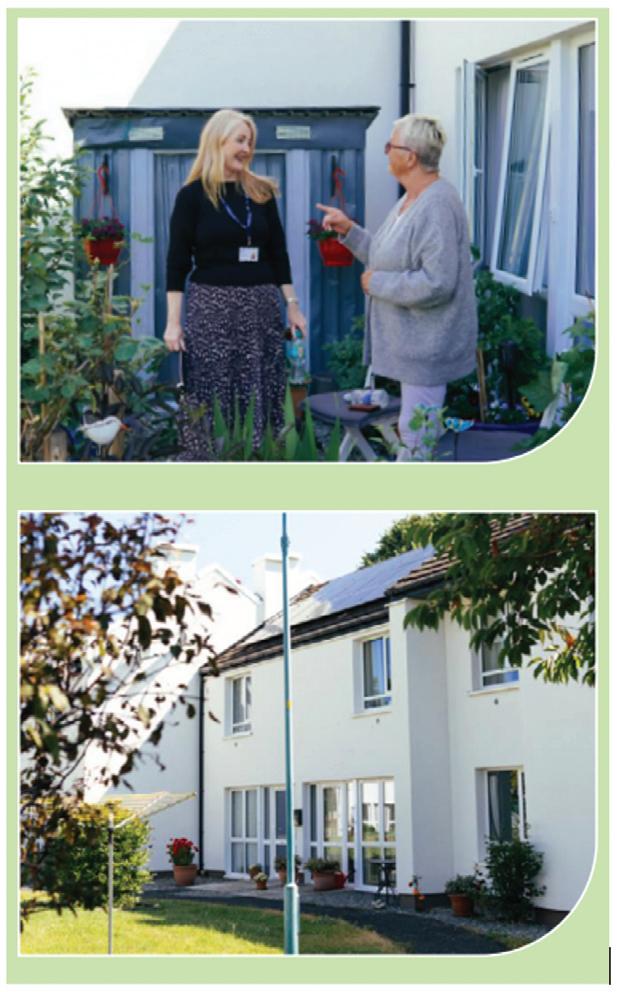
systems, ventilation, external wall insulation, attic insulation and in some cases windows and doors – making these homes warmer, healthier, and more economical to run. SSE AES is a registered SEAI Warmer Homes contractor to deliver energy upgrades under this national scheme. SSE AES has delivered over 270 home energy upgrades under this scheme since 2020 across a range of shallow and deep retrofit measures and have recently been successfully reappointed to the SEAI 2023 Warmer Homes Contract, to continue delivering energy retrofit upgrades on behalf of SEAI over the next four years.
SSE AES retrofit programs received awards and recognitions over the past few years for their various retrofit services. Last year alone SSE AES received nominations and secured wins
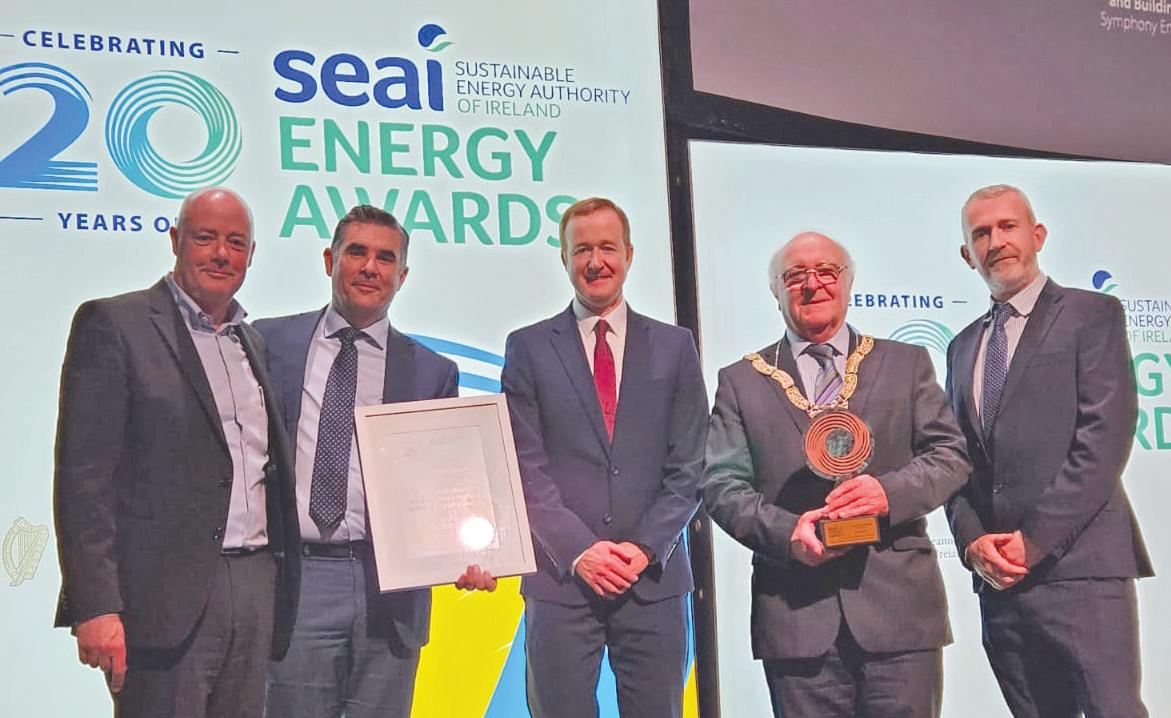
alongside their local authority partner, Dún Laoghaire-Rathdown, for their upgrade to 58 units in Beaufort OAP Complex in Glasthule. These included winning the Residential Energy Upgrades Awards category at the SEAI Energy Awards 2023, the Local Authority Innovation Award category at the Chambers Ireland Excellence in Local Government Awards, and achieving the gold award in the Energy Initiative/Project of the Year at the All-Ireland Sustainability Awards. Also our One Stop Shop Service won the "Best Retrofit Service" at the 2024 Bonkers Awards.
For further information on SSE AES programme supports, contact Stuart Hobbs on: T: 087 923 6404 E: stuart.hobbs@sse.com W: www.sseairtricity.com

In September 2024, Sinn Féin published its alternative housing plan, A Home of your Own: Sinn Féin’s Plan to make Housing Affordable, in which it pledges that a Sinn Féin government would deliver 300,000 homes in five years.

Housing is – self-evidently – Sinn Féin’s single most potent policy platform. Speaking at the launch of her party’s plan, Sinn Féin president Mary Lou McDonald TD insisted that it “has the answers for the rental sector, for public housing, and also for the private market”. “We are making a very, very big commitment to people that for a Sinn Féin government this is the number one priority,” she emphasised.
With an emphasis on working people, home ownership, and affordability, the 110-page policy document is a direct challenge to the Government’s Housing for All plan. Across six chapters, the document explores Sinn Féin’s overarching vision and its perspective on housing need; public housing; private purchase housing; adequate housing (including homelessness and sustainability); and housing delivery.
Summary
At a macro level, A Home of Your Own commits a Sinn Féin
government to “make housing affordable and to bring homeownership within reach of working people”. This, the party suggests, entails a holistic transformation of housing in Ireland from how housing is understood and planned, to how communities are established, and to how homes are constructed.
Sinn Féin’s figure for annual housing delivery is 60,000, totalling 300,000 homes over five years. During this period, the party’s projected total cost of its public housing programme between €39 billion and €37 billion for a new build programme and €2 billion for an acquisitions programme. Average annual expenditure, it says, would total €7.8 billion.
The total figure, Sinn Féin says, would be provided for via €25.3 billion in voted capital expenditure (requiring annual Dáil approval) from the Exchequer and €13.7 billion in nonvoted expenditure (not requiring annual Dáil approval) made up of loans from the Housing Finance Agency and others. Annually, this would average €7.8 billion, of which an
average of €5.1 billion would be voted and €2.7 billion would be non-voted.
Forming the basis of these costings are the most recent figures available (adjusted for inflation) from DHLGH and Department of Children, Equality, Disability, Integration and Youth on social, affordable, and modular housing delivery. These figures – determined via a series of parliamentary questions submitted by Eoin Ó Broin and Patricia Ryan TD to the relevant ministers –indicate an average Public Housing Fund contribution of €103,000 per affordable purchase home and an average Public Housing Fund contribution of €155,000 per affordable cost rental home.
Affordability, as defined by A Home of Your Own, “means selling homes to eligible purchasers at prices between €250,000 and €300,000 depending on size and location”. This price range, it says, would be reviewed and adjusted according to several variables including “the movement of wages, construction sector inflation, and interest rates”.
Central to its plan for social and affordable housing is a new model for public housing known as affordable leasehold purchase. This plan was covered in some detail in the previous issue of eolas Magazine (65, September 2024).
In a lengthy interview, Ó Broin outlined: “I have conversations with people all around the country about this. The overwhelming majority of people want to buy a home for them, their children, and their grandchildren, at a price they can afford. They are not, in the first instance, buying it and thinking of the windfall gains in 20 years.
“Our scheme allows them to do it; they own the home. The bricks and mortar are theirs, but the land is the State’s, as is the cost of site servicing. Whether you buy an affordable home or you acquire your tenant purchase home, that property is yours and you have all the same rights as any other owner. The only difference is that the State owns the land.”
In short, Sinn Féin asserts that “everyone should have a home of their own”. Looking beyond the narrowest
Sinn Féin’s major housing commitments
• Deliver 300,000 homes between 2025 and 2030
• introduce a new model for public housing known as affordable leasehold purchase
• Create a Public Housing Fund
• Immediately cease long-term leasing for social housing delivery
• Establish a publicly owned building contractors via the four Dublin local authorities
• Introduce a three-year ban on rent increases
• Temporary (six-month initially) emergency ban on no-fault evictions
• Develop a ‘use it or lose it’ principle for land zoning
• Stamp duty exemption for first-time buyers below €450,000 threshold
• 100 per cent redress for defective block homes and Celtic Tiger-era defects
• End long-term homelessness
• Establish an Active Land Management Agency
• Create an online platform cataloguing all vacant/derelict properties
“The overwhelming majority of people want to buy a home for them, their children, and their grandchildren, at a price they can afford.”
Eoin Ó Broin TD, housing spokesperson, Sinn Féin
definition of a housing unit as a metric, the party recognises the contribution of homes to individual, familial, communal, and national wellbeing.
Simultaneously, the party emphasises its commitment to “bringing homeownership back within reach for working people” and indicates a desire of “halting the decline in homeownership”.
Its vision of a “balanced housing system” means a shift away from the current context in which 84 per cent of all housing is ‘private for profit’ and 10 per cent social to one in which nonprofit public housing constitutes 30 per cent of the system.
While acknowledging that “the role of government is not to promote one form of tenure over another”, A Home of Your Own insists that “its role should be

SINN



to ensure that through the delivery of public housing and the regulation and activation of private housing there is a sufficient supply of secure, adequate, and affordable homes to meet society’s needs”.
This means delivering a “sufficient volume” of public homes to meet social and affordable need.
Sinn Féin also articulates its belief that “having a home of your own is a fundamental human right” and as such should be – pending a referendum –enshrined into Bunreacht na hÉireann. This, it asserts, would have four benefits:
1. clarifying the balance of constitutional rights as per property rights and the right to a home;
2. placing a legal obligation on government to vindicate the right;
3. creating a context of action; and
4. providing those excluded from the housing system with access via a legally enforceable right.
On overall housing need, Sinn Féin disputes the 2020 ESRI projection of between 26,000 and 33,000 new homes needed to meet population growth each year. Based on the 2016 census, this
figure excluded pent up demand or unmet need. Regardless, in 2024, the Government’s current housing delivery target is almost universally acknowledged to be hopelessly inadequate. As such, an update to Housing for All, as per the first revision of the National Planning Framework had been anticipated to set a new target. However, the annual update to Housing for All, which had originally been scheduled to be published in October 2024 (ahead of a general election) has been delayed. In late October 2024, a spokesperson for the Department of Housing, Local Government and Heritage told eolas Magazine: “It is being finalised. It will be published in due course.”
Meanwhile, the June 2024 Report of The Housing Commission outlined that an estimated range of unmet need (between 212,500 and 256,000 homes) should be included in the Government’s baseline target.
The following month, in July 2024, the ESRI produced an update to its 2020 housing need assessment which – as per government terms of reference –did not include unmet demand. In the ESRI’s assessment, the structural demand informed by demographic change necessitated an average annual delivery of 44,000 new homes from 2024 to 2030 and 40,000 from 2030 to 2040.
As such, Sinn Féin has “accepted The Housing Commission’s assessment of overall need requiring the delivery of 300,000 homes from 2025 to 2030. Of these, it says, “at least 125,000... must be public homes to meet social and affordable housing need” while the “remaining 175,000 homes would be delivered by the private sector”. One interesting proposal is the establishment of a “Housing Needs Demand Assessment group” comprising the CSO, ESRI, and The Housing Agency to update overall housing need data annually.
Conceding that “government cannot control private sector output in the same way as it can with public sector output”, the opposition party proposes a “rebalancing of private sector output in favour of homes for sale to owner occupiers”. In pursuing this, Sinn Féin indicates that it will “work with the private residential development sector to reduce the size of the private rental sector as a percentage of overall stock with the objective of delivering an annual average of 23,000 owner occupier homes, 7,000 private rental homes and 5,000 self-build homes.”
Criticising the absence of “comprehensive data” on homelessness (including rough sleepers, those living in emergency accommodation, and the hidden homeless), Sinn Féin has pledged to reconvene the National Homelessness Consultative Committee (NHCC) data subgroup which would agree a “methodology to provide an accurate count of all those people experiencing homelessness” and report quarterly alongside DHLGH’s monthly report on those accessing emergency accommodation.
The party has also committed to a departmental five-year action plan “detailing how the objectives of the Lisbon Declaration will be achieved by 2030”, a temporary (six-month initially) emergency ban on no-fault evictions which would be removed “when the numbers in emergency accommodation have fallen significantly”, a doubling of new Housing First tenancies to 500 per annum, and the phasing out of shared emergency accommodation and an end to the use of hotels and B&Bs as emergency accommodation.
Sinn Féin supports The Housing Commission’s proposal to establish a Housing Delivery Oversight Executive and, upon entry into government, commits to establishing it “immediately on a non-statutory basis while preparing the necessary legislation”.
On land management, the party suggests that the State requires an “Active Land Management Agency” with a sole focus on the strategic management of public land with ad hoc intervention in the private land market. This body would be equipped with “comprehensive compulsory purchase order powers” and would replace the Land Development Agency (LDA), which the party says, “[has] neither the legal powers nor the singular focus to fulfil its land management function” because, in its assessment, the LDA’s remit had expanded to become a “state-wide residential developer”.
In Sinn Féin’s plan, the LDA’s residential functions and assets would be transferred to an off-balance sheet designated activities company “owned by the local authorities in which the LDA properties are situated”. The rationale is to enable the Active Land Management Agency “to focus solely on land supply and activation without causing any disruption to the current pipeline of developments and contracts currently underway within the LDA”.
Responding to the alternative plan, senior government figures have been critical.
Speaking to the media in Dublin the day that Sinn Féin’s policy was published, Taoiseach Simon Harris TD accused the party of making “miserly” proposals which are “just downright mean to firsttime buyers”.
“In relation to the opposition party’s proposals, if you can call them that... I think there is a reason they call the document ‘A Home of Your Own’ rather than ‘A Home You Own’ because it is an almost Frankenstein arrangement here in terms of what exactly is the model,” he said.
“So, are we talking about a situation where you can own a home, but you will not own the land on which the home is built? ... We are going to have a house now that you think you own, you will not
own the land on which it is built, and when you go to sell the house, do you need Eoin Ó Broin’s permission? Who can I sell it to? How much can I sell it for? When can I sell it? This is a long way from the home ownership model that is engrained in people in this country. And, of course, all of that, Eoin, is if you can get a loan in the first place in relation to your proposition.”
The following day, on X, Housing Minister Darragh O’Brien TD asserted: “Sinn Féin’s housing plan means they will control how you sell your home, who you sell your home to and at what price. Without owning the land it is on, that is not ‘A Home of Your Own’.”
Speaking on RTÉ’s Prime Time that night, he added: “I have looked at the [Sinn Féin] plan... If I was a first-time buyer watching in this evening, I would be very very concerned because all of the supports that have been brought in place by me and by this government... €100,000 of supports which thousands of people are accessing, Sinn Féin would abolish it, in one fell swoop they would abolish it... and what would they replace it with? A stamp duty measure that is worth about €4,500.”
Furthermore, the Minister’s main thrust of critique is based on the assertion that the affordable leasehold purchase proposal at the core of Sinn Féin’s plan raises challenges relating to the mortgageability of associated properties.
However, talking to eolas Magazine ahead of the report’s publication, Ó
Broin emphasised: “The interesting thing, of course, is that under the Government’s Help to Buy scheme, you do not own your home because they own €100,000 worth of equity in it.”
Indeed, in recent months he has indicated that through his party’s engagement with the Banking and Payments Federation Ireland (BPFI), mortgage finance options under the affordable leasehold purchase scheme have been outlined by the representative body.
Originally scheduled to be published in September 2024, BPFI’s “detailed proposal” on Sinn Féin’s alternative plan – including any challenges relating to mortgageability that are identified –remains highly anticipated though unlikely to be published this side of a general election, in spite of Minister O’Brien’s interventions.
In the meantime, the forthcoming general election will force the electorate to make a decision on the direction of travel for housing policy in the State. As Ó Broin summarised in a discussion with this publication, the coming weeks and months “are going to be about is a debate about two housing plans – the Government’s and ours – and who has the most credible set of propositions for delivering those plans.”
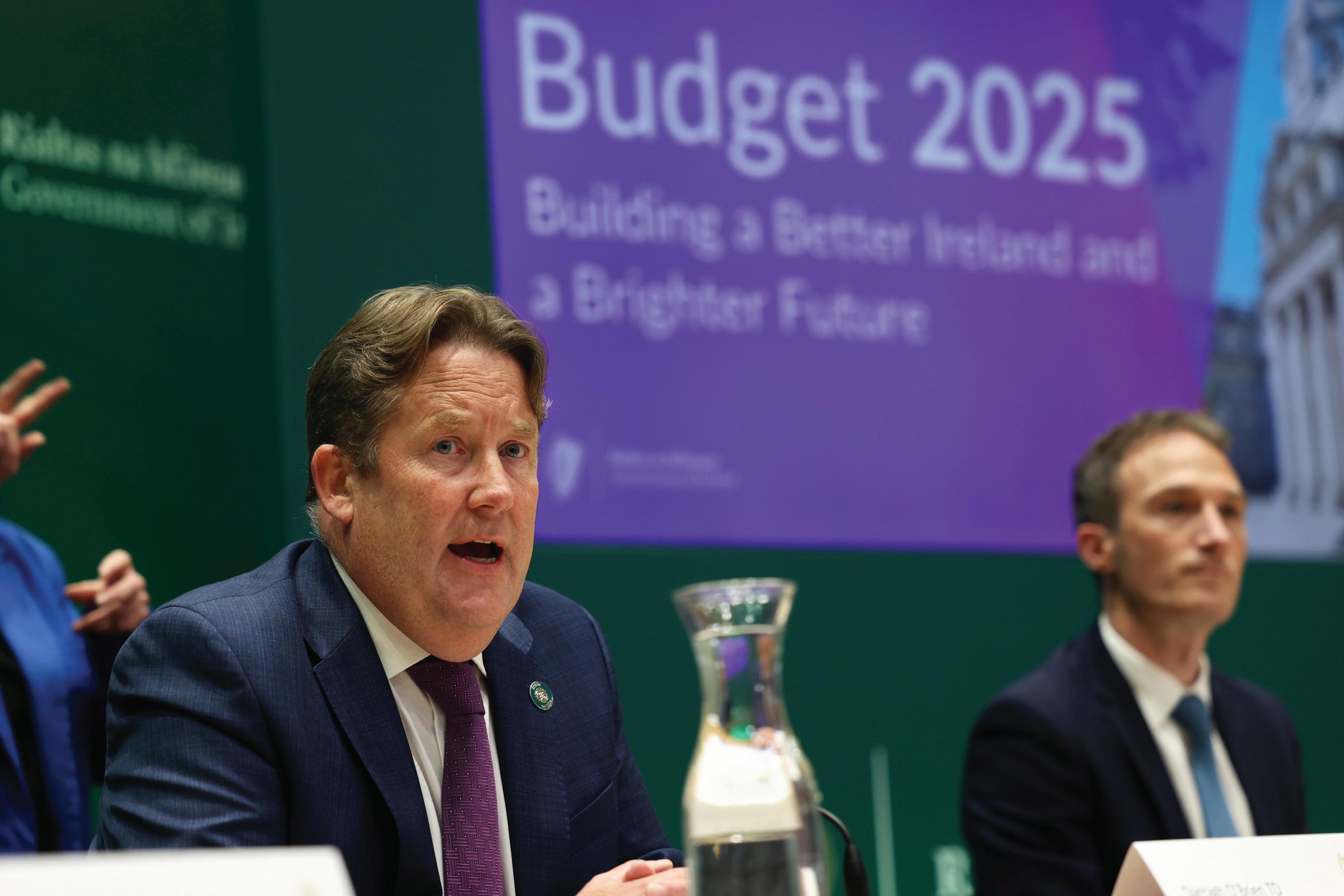
In its final budget before the dissolution of the Dáil, the Government has focused its housing measures on increasing commencement figures. However, in spite of record levels, there has been no substantial increase in funding for tackling homelessness.
The Government has allocated €6 billion of capital investment for housing, with the most specified target of increasing supply in the aftermath of an ESRI report which called on the Government’s construction targets under Housing for All (30,000 per annum) to be increased to between 35,000 per annum and 53,000 per annum.
Of this €6 billion, the Government has allocated €3.1 billion in exchequer funding, €1.25 billion to the Land Development Agency (LDA), and €1.65 billion to the Housing Finance Agency (HFA).
Minister for Finance Jack Chambers TD, delivering his first budget since he assumed the role in June 2024, emphasised the Government’s aim of increasing housing supply, with Budget
2025 allocating capital funding of just under €2.2 billion (an increase of €257 million on 2024) with the objective of delivering 10,000 new-build social homes (700 additional homes on 2024), under the Social Housing Investment Programme (SHIP), Capital Advance Leasing Facility (CALF), and Capital Assistance Scheme (CAS).
In addition, government has increased funding to the Cost Rental Equity Loan Mechanism by €145 million, which aims to support the delivery of 1,000 Approved Housing Body Homes under the cost rental scheme.
The Government asserts that 2,165 new social homes will be delivered through various leasing schemes (including Mortgage to Rent and Repair and Lease), delivered by local authorities and Approved Housing
Bodies, a projected increase of 35 from what was outlined in budget 2024.
Sinn Féin finance spokesperson Pearse Doherty TD said that there is a need for government to expand the delivery of social and affordable homes to 21,000 per year.
Although homelessness currently stands at a record high of 14,486, the Government has not allocated any increase for transitional and emergency accommodation for those experiencing homelessness, maintaining the €12 million allocation from Budget 2024. Furthermore, the Government has reduced the allocation for the Rental Accommodation Scheme by €10 million.
One unexpected measure was the announcement by Minister Chambers of a 6 per cent increase on stamp duty
for high-value residential property (houses with a value of €1 million or above) of 6 per cent on every cent above the €1 million mark.
However, Social Democrats Housing Spokesperson Cian O’Callaghan TD said that the Government needs to introduce a 100 per cent stamp duty rate on any bulk bought houses.
“Allowing existing homes to be bought in bulk drives up house prices, locks out first-time buyers and adds nothing to our overall housing stock. This tokenistic 5 per cent [sic] increase is another example of a government that is all about optics but unwilling to actually stand up to the investment funds,”
O’Callaghan said.
Under the SEAI National Retrofit Scheme, which commenced in May 2022, the Government is committed to ensuring that 500,000 homes are retrofitted to a B2 or above ‘BER’ rating by 2030, as well as the installation of 400,000 heat pumps in homes through the same time period.
Minister for the Environment, Climate and Communications Eamon Ryan TD has expressed his satisfaction that over 1,000 homes are being retrofitted per week, with SEAI’s National Retrofit Scheme Q1 report projecting that just under 52,000 will be retrofitted by the end of 2024.
In Budget 2025, the Government has allocated €100 million to adapt the homes of older people and disabled people, an increase of €25 million allocated in Budget 2024.
This has been complemented by €25 million allocation aiming to support adaptation works of 1,800 local authority social homes.
For the Voids Programme, the Budget has allocated €31 million aiming to support the continued transition to a strategic planned maintenance programme for local authority social housing and the remediation of 2,300 void units.
The Government has maintained the €90 million allocation from Budget 2024 to support the retrofitting of 2,500 local authority homes under the Social Housing Retrofit Programme.
Commenting on the Budget’s allocation to residential environmental measures, Minister Ryan says: “There is a sea-change in how we view the environment and this record investment for the department represents a real commitment to making sure that climate
action is working for each and every household in Ireland.”
Budget 2025’s allocation of €105 million for the remediation of homes affected by defects, although marking an increase of €35 million from what was allocated in Budget 2024, has been met with scepticism by the opposition.
Sinn Féin finance spokesperson Pearse Doherty TD, who has called for “100 per cent redress for those living with defective blocks in Celtic Tiger apartments”, said that “not one penny more has been provided for those schemes, despite them being expanded”.
“For regeneration of inner-city flat complexes and those communities that have been waiting for decades, there is nothing from this Government,” Doherty said.
With Budget 2025 marking the final budget of the Fine Gael-Fianna Fáil-Green administration’s term, most analysis have characterised this as a ‘giveaway budget’, aimed at securing support for the Government ahead of the general election soon to come.
Most new funding aims to increase supply, apparently in line with recommendations made by the ESRI, although the Government’s housing policy, Housing for All, formally maintains the target of 30,000 homes being constructed per annum.
Also notable is that, although homelessness is now at a record high, the Government has not installed any new measures to reduce homelessness, in spite of the Government’s formal objective of “eradicating” homelessness by 2030.
The Government’s allocation for spending on increasing supply will likely not bear any fruit before a general election is called, as there is simply not enough time between the budget allocation and the when polls are expected to open at the end of November.
Therefore, if the Government’s objective was to portray an image to the general public of the housing crisis being solved, it is doubtful that this will be the perception among the gerneral public, and housing will be one of the most highly-debated topics as the people of Ireland head to the polls to elect their next government.
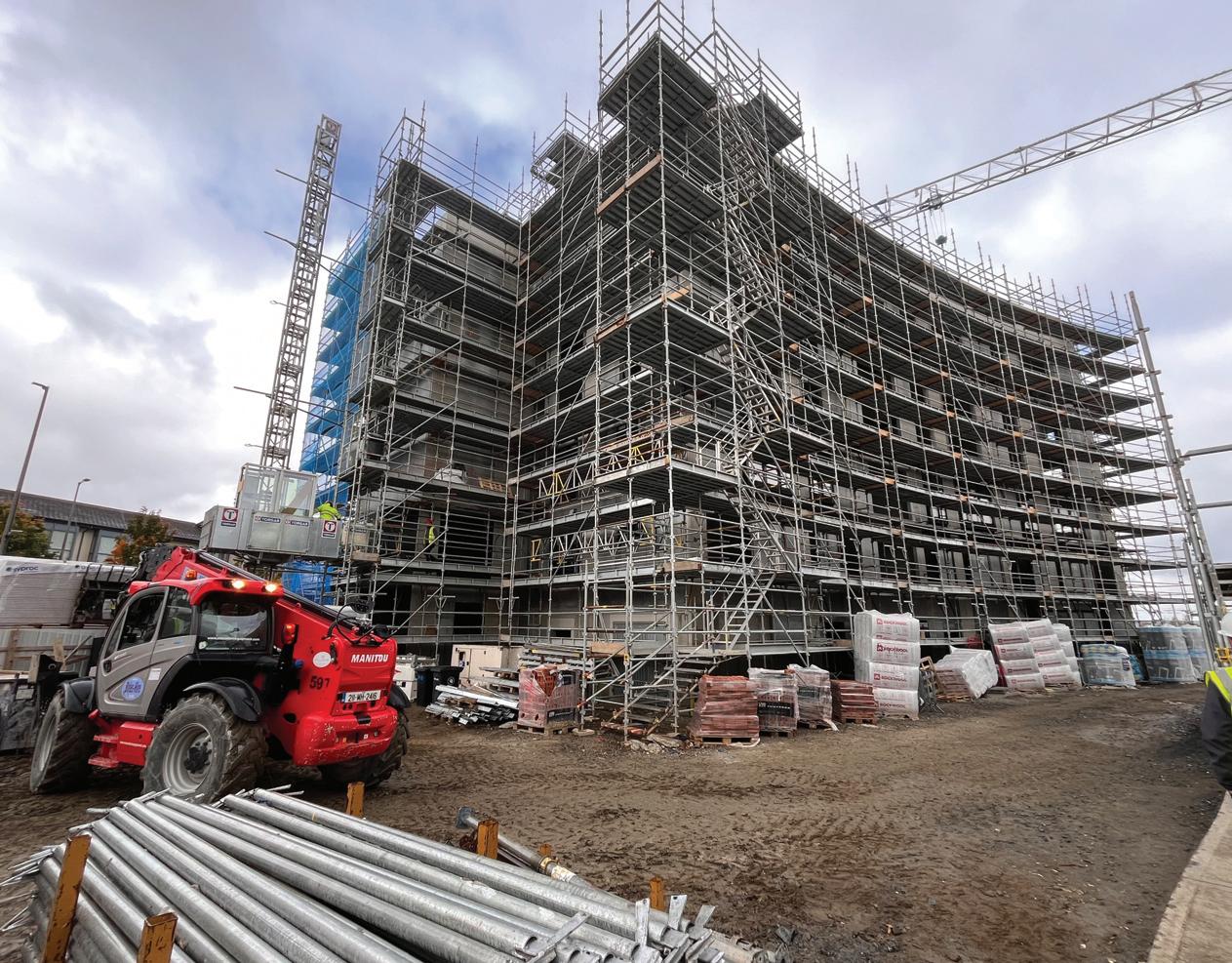
In 2023, Tuath Housing brought a record 2,482 new homes into management for more than 7,000 people, across 16 local authorities nationwide.
Tuath currently has some 5,000 homes on site and in the development pipeline, and is working with its partners to further invest in people, places, and communities. With 14,000 homes in management across Ireland, Tuath has housed 37,000 people nationwide since the not-for-profit housing association let its first built home in 2006.
The organisation underlined its commitment to cost rental housing, growing its cost rental housing stock to more than 600 homes. Tuath has an additional 2,000 homes currently on site, complementing the association’s social housing programme.
Cost rental housing is a new housing tenure in Ireland, established under the Affordable Housing Act 2021. It provides long-term, secure rental homes to households who are above the income threshold for social housing eligibility, but whose net income is under €66,000 (Dublin) or €59,000 (outside Dublin).
The rent is based on the long-term cost of building, managing and maintaining the homes on a not-for-profit basis. Rents are calculated over a 40-year period and are a minimum 25 per cent below market rents for comparable new properties.
Tuath delivered 371 cost rental homes in 2023, as we work towards a target of 3,000 homes by end of 2027. This new housing tenure offers a long-term, secure rental option that will contribute to the development of a sustainable housing market and facilitate the creation of mixed tenure communities throughout Ireland.
The positive impact of Cost Rental homes was measured and reported recently in The Impact of Cost Rental Housing: Security, Affordability and Place, a research piece completed by Michael Byrne (University College Dublin), Cian O’Callaghan (Trinity College Dublin), Sarah Sheridan, and Robert Sweeney. It was published earlier in 2023 in association with Clúid Housing, Respond, and Tuath Housing.
As affordable housing remains a pressing issue in Ireland, the research aimed to establish the impact of cost rental housing on the wellbeing of residents, exploring this through the lenses of affordability, security, and place.
Its survey data showed that 80 per cent of residents feel very secure, and 73 per cent say they ‘never’ or ‘rarely’ worry about eviction. Qualitative data underlines this, with many residents describing their housing as a ‘forever home’ and one describing themselves as ‘having won the lottery’.
Tuath’s Chief Commercial and Development Officer, Martin Loughran, echoed the findings of the research: “Cost rental has provided a vital alternative to the private rental sector and offers long-term security to tenants at an affordable rent in high-quality energy efficient homes. These homes and communities are already proving to have a positive impact on the wellbeing of residents.”
Just some of this year’s cost rental projects include 49 homes at Mount Neil, a brand new development located in Waterford City, 61 homes in Farranshock Park in Westmeath, 50 in Folkstown Park in Dublin, 28 in Foxwood Barn, Citywest, a development which will comprise 167 cost rental homes in total on completion and 83 in Hollystown in Dublin, part of 250 cost rental homes in this development. On completion of the Kilcarbery Grange scheme in Dublin, Tuath will manage 200 cost rental homes in this development of 1,000 homes, with rents 40 per cent below the average local area rent.
The first cost rental homes in Dublin City were recently launched by Dublin City Council and Tuath Housing at De Verdon Place. As one of the largest public housing developments in the country, it will cater for the needs of over 600 people. Featuring multiple community spaces, including rooftop gardens, an outdoor playground facility and crèche; families, couples and individuals have been moving into their new homes. The 77 A-rated cost rental homes at De Verdon have rents 31 per cent below the local area average.
By collaborating with employees, residents and stakeholders, Tuath Housing is committed to sustainable business practices.
The establishment of a Sustainability Team in 2022 signals Tuath’s commitment to build upon strong foundations already established within the organisation. Tuath’s aim is to integrate sustainability across all aspects of its operations and to play a
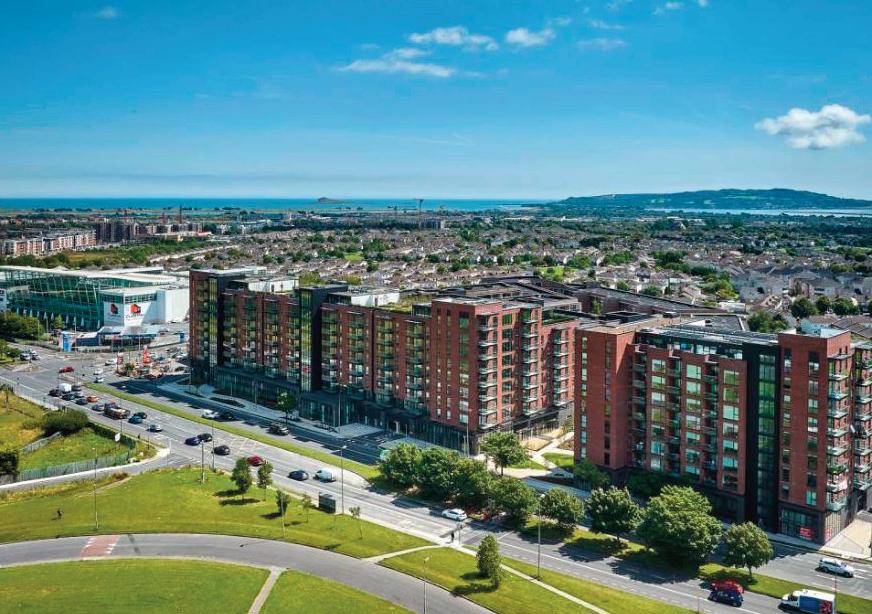
“As we look to the future, Tuath remains dedicated to pioneering new approaches in the provision of housing.”
Sean O’Connor, CEO, Tuath Housing
role in shaping the sustainable development of the AHB sector.
In 2023, despite having record breaking growth, Tuath recorded a 5 per cent reduction in its carbon footprint on a per property basis. 41 per cent of the stock added to Tuath’s management portfolio in the year was delivered using timber frame or modern methods of construction (MMC), both lower carbon solutions. It also completed energy upgrade works on an additional 185 homes under its retrofit programme and joined Circular Reno, an EU-funded project aiming to implement scalable bio-based deep energy retrofit packages of facade and roof systems using various bio-based materials.
Tuath is a proven expert at working in partnership, collaborating with local authorities, developers, and financial institutions to leverage all available resources to develop locally tailored, high-quality housing solutions on the ground.
Partnerships play a crucial role in providing large scale, mixed tenure developments. These developments typically include a mix of cost rental, social, and private housing, creating balanced communities.
Tuath’s CEO, Sean O’Connor, commented: “As we look to the future, Tuath remains dedicated to pioneering new approaches in the provision of housing. Our focus on cost rental housing, large-scale mixed tenure developments, utilising modern construction methods and environmentally sustainable practices will continue to drive our efforts to create vibrant, inclusive communities across Ireland.
“We are committed to working closely with all our stakeholders and the communities we serve to ensure that everyone has access to choice and a safe, affordable home.”
To find out more: W: www.tuathhousing.ie
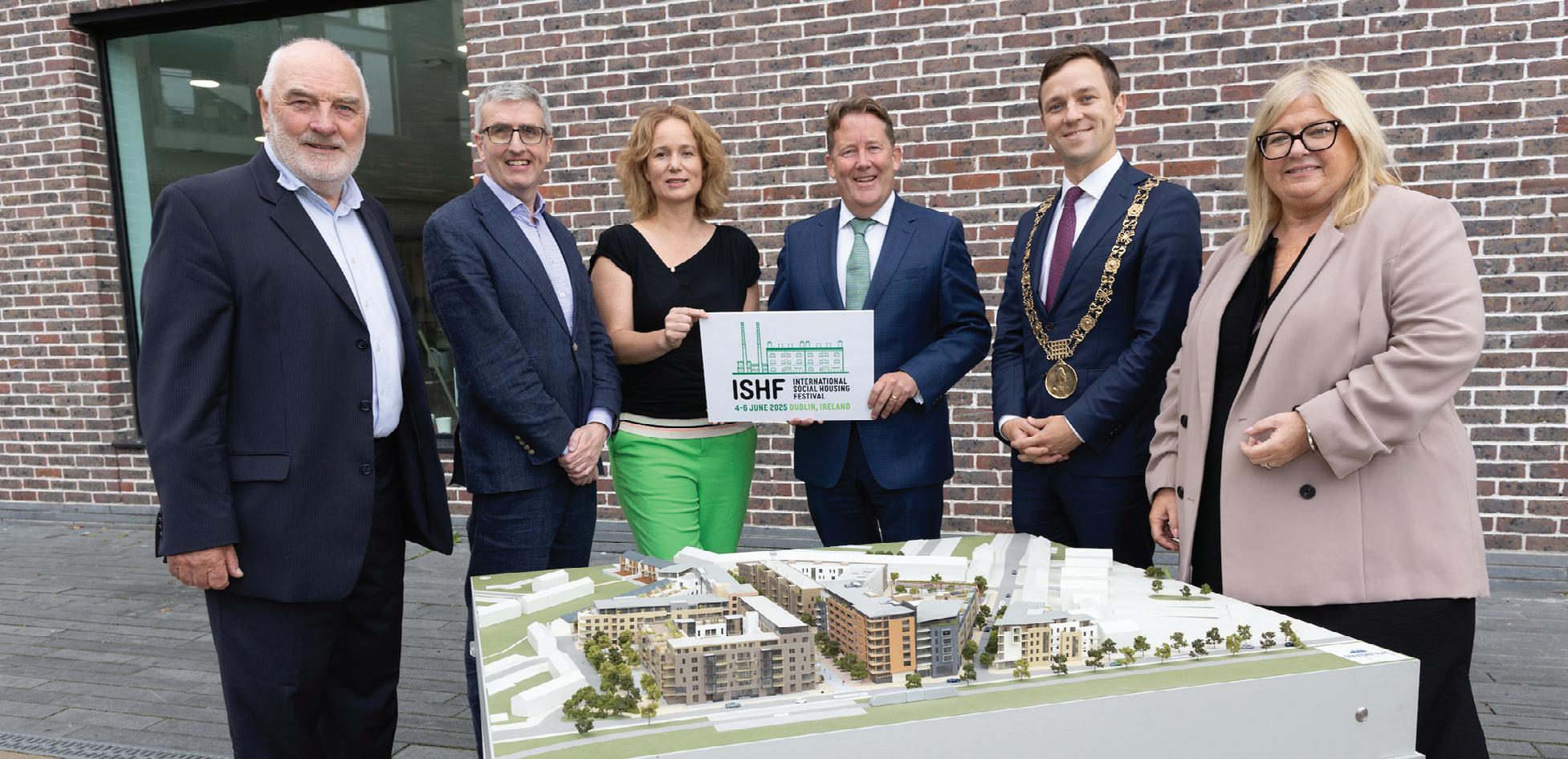
While housing is a national competency and not a competency of the European Union or any international institution, there are a number of key activities that are occurring in the coming year that the housing sector in Ireland should be aware of, and seek to have an active role in, writes Dónal McManus, CEO, Irish Council for Social Housing (ICSH).
Two of these important milestones include the official appointment of the new European Commissioner on Energy and Housing in the coming weeks, and the International Social Housing Festival (ISHF) which will be held for the first time in Dublin on between 4th June and 6th June 2025.
The focus on housing as part of a new European Commission brief on Energy and Housing is significant. It is a reflection what is happening in many
parts of the EU, particularly in cities which has manifested in many member states with severe housing affordability problems for certain target groups, the increased need for social and affordable housing, increased levels of homelessness, and the need for energy retrofits in the housing sector to meet climate action targets both nationally and within the EU. Many Individuals and families are facing new housing realities where they are seeking housing support from the state that they did not previously need state support to meet their housing need. It is estimated by Housing Europe based on Eurostat statistics that 9.6 million full-time workers
in the EU aged between 25 and 34 still lived with their parents in 2020, one-infive of this group. Ireland had a particularly high level living with their parents.
Although delivery of housing is not a EU competence under the treaties, there is a significant spill over from EU directives and programmes that impact directly on the housing sector and its delivery. EU public procurement, energy requirements, social inclusion and competition and state aid rules are a range of measures that the Government and housing sectors have to consider in the delivery of new homes and eligibility of households for social and affordable
housing at national level. There has been a somewhat Europeanisation of housing in recent decades in certain areas. The Informal Meeting of EU Ministers responsible for Housing, now reactivated sharing information, the establishment of active European housing and related networks such as Housing Europe, Feantsa, Eurocities, ENHR (EU housing research network) have provided a focus on key housing challenges and often were the catalyst in establishing new programmes and initiatives at Commission level.
The ICSH is an active member of Housing Europe who have sought to ensure the new Energy and Housing Commissioner will undertake concrete measures to support the housing sector to complement and add to what has been undertaken at individual member state level. The call for concrete action includes the European Affordable Housing Plan, an Investment Platform for affordable and sustainable housing, revised state aid rules to reflect wider housing market failure and increase and double social cohesion investment. An additional challenge for Ireland for consideration is the reclassification of the AHB sector in 2018 being included on the state’s balance sheet by Eurostat. With an increased and expanded AHB sector in future, and increased levels of financing required, EU accounting rules and changing rules on expenditure and debt will have an impact on housing delivery mechanisms.
Any new Commissioner on Energy and Housing requires a budget for agreed programmes of measures to implement. It is important that it is not a case of old wine in new bottles for funding but new targeted investments and supports. Ireland can point to previous history of both local authorities and AHBs in successfully utilising EU funding programmes ranging from structural funds, social funds and Interreg programmes to name a few. They have supported everything from upgrading vacant properties to more recently developing new innovation on energy projects.
Between 4th June and 6th June 2025, Dublin will host the International Social
Housing Festival (ISHF). Dublin follows on from previous ISHF events in Amsterdam, Lyon, Helsinki and Barcelona. The main hub for the festival will be the Dublin Convention Centre and will also include site locations and events around the four Dublin local authority areas. In recent years there have been a range of new social and affordable housing projects in Dublin delivered by local authorities, AHBs and the LDA. The event is effectively the World Expo for social and affordable housing and will include delegates, speakers and participants attending from Europe and throughout the world.
In Barcelona in June 2023, Dublin was conferred with the right to host the next ISHF in Dublin 2025. Minister Darragh O’Brien TD, Minister for Housing, Local Government and Heritage accepted the handover on behalf of Dublin from the organisers in Barcelona. The ICSH led the initiative for the ISHF Dublin 2025 with support from Housing Europe and CHI as well as additional support from The Housing Agency, the HFA, HDCO, four Dublin local authorities (DCC, SDCC, Fingal CC, Dún Laoghaire Rathdown, Fáilte Ireland, and UCD to promote Dublin as a host City for the international festival. The festival will be an inclusive event and will include a range of stakeholders with an interest in social and affordable housing ranging from the public and private sectors to
local communities. To date, there has been huge support and assistance from the Minister, his officials, the local authorities, AHBs, communities as well as public and private bodies, all interested in ensuring that Dublin ISHF 2025 will be a highly successful global event for social and affordable housing. It is timely, as many countries throughout the world are collectively experiencing significant challenges with social and affordable housing and homelessness, yet there are major programmes and new initiatives being developed in countries to meet these challenges and these can be shared at Dublin ISHF 2025.
It is important that all stakeholders are aware and promote this event as it is a one opportunity for Dublin and Ireland to host this global event and have major mutual exchanges of a range of housing-related challenges.
For more information contact:
Dónal McManus
CEO, Irish Council for Social Housing and Chair of Housing Europe EonFin and Internal Market Working Group
W: www.socialhousingfestival.eu
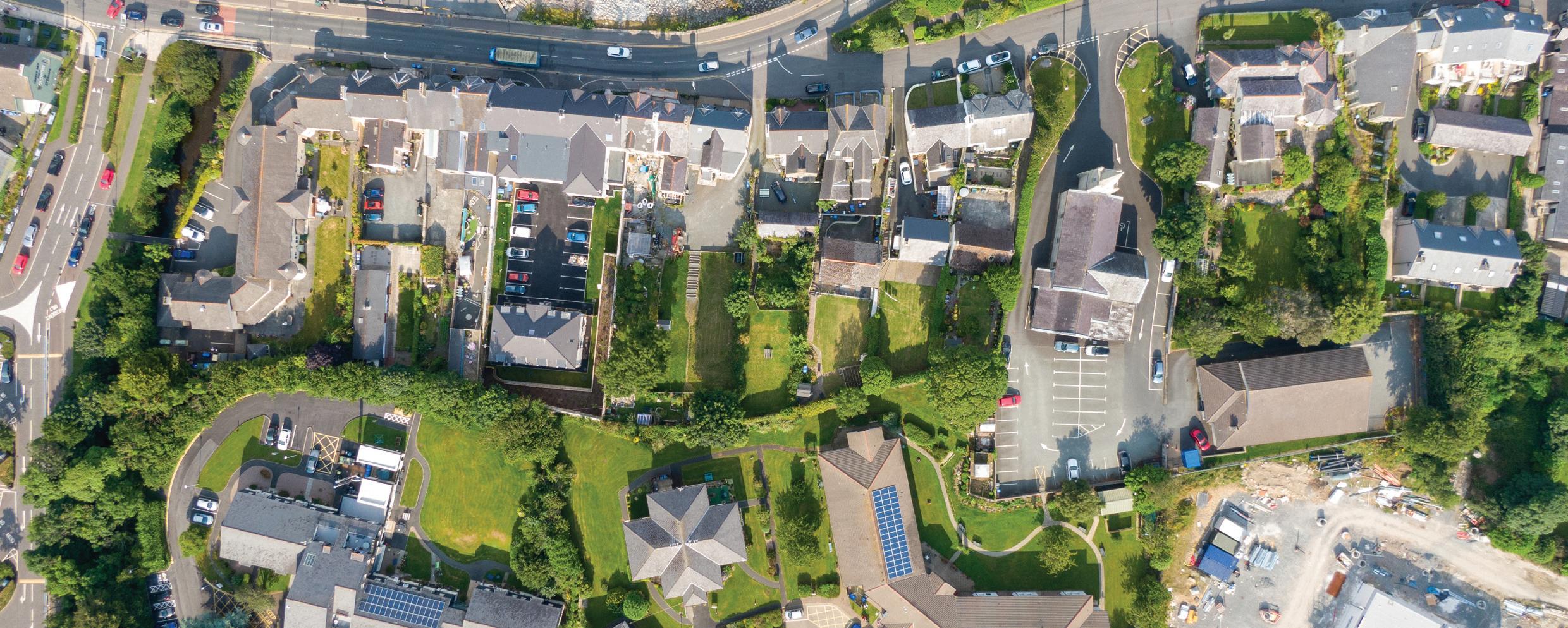
235,659 people – 4.4 per cent of the State’s population – have an ongoing housing need, of which 92,116 (or 39 per cent) are children, according to a report by the Parliamentary Budget Office (PBO).
In its report, Social Housing – Ongoing Need 2023, published in August 2024, the PBO estimates that at the end of 2023 there was a minimum of 235,659 people making up the households with an ongoing need, this equates 4.4 per cent of the total population (as per Census 2022).
Within the 235,659 figure are an estimated 92,116 dependent children (under the age of 18) equivalent to 6.6 per cent of all children aged 18 or under in the State.
Within the ongoing need, children account for 39 per cent of individuals living in either HAP funded accommodation or in households on a social housing waiting list.
‘Ongoing need’ is a term introduced by the Parliamentary Budget Office (PBO) in 2022 which aims to capture “the cohort of households eligible for, but not yet in receipt of, social housing”. It quantifies the number of households on the social housing waiting lists and lists households in receipt of Housing Assistance Payment (HAP).
The PBO report estimates that there were 115,425 households with an ‘ongoing need’ for permanent, statesupported housing at end-2023 comprising of 58,824 eligible households on the main social housing waiting list, plus, 56,601 active HAP
tenancies. This was down from 116,886 households at the end of 2022 (-1.25 per cent).
The report estimates a cost of €34.95 billion to build new, appropriate, permanent social housing for everyone with an ongoing need. This is an estimated decrease of €57 million from 2022, the net result of higher year onyear construction costs being partially offset by a reduction in households with an ongoing need.
At the end of 2023, there was a minimum of 235,659 people (4.4 per cent of the total population) making up the households with an ongoing need including an estimated 92,116 dependent children (under the age of 18). This is equivalent to 6.6 per cent of all children aged 18 or under in Ireland.
11.8 per cent of all households in the Galway City Council area had an ongoing need, the highest percentage share in Ireland. Dublin City Council is next at 10.4 per cent.
27.4 per cent of applicants for social housing and HAP recipients, combined, are over the age of 50. 12.2 per cent (6,882 households) of total HAP recipients in Ireland are single and over the age of 50. With this cohort more likely to continue to require state support for housing in future, the costs of providing appropriate housing will
only increase in line with the recipient’s age, as more specialist housing and adaptations may be required.
The report acknowledges that there is a significant disparity between average HAP and new private monthly rents being paid across all counties, demonstrating the difficulties that exist for HAP tenants to source suitable and affordable accommodation.
On a national level, the PBO estimates that the State would need to increase its existing social housing stock by 56 per cent to accommodate all households with an ongoing need. The required increase in Fingal is 105 per cent – the highest in the country.
Currently, there is no published report which sets out the total number of active local authority tenancies in a given year. As such, the PBO recommends that detailed statistics relating to all forms of social housing –new and existing – are published annually.
Speaking to eolas Magazine in June 2024, Minister for Housing, Local Government and Heritage Darragh O’Brien TD said that the Government has fallen short on social housing delivery targets “due to the post outbreak of the war on Ukraine in supply chain and on increased costs”.


As Ireland’s population ages, the issue of older people’s housing has never been more important.
Older people are more likely than other groups to live in poor housing. They are also particularly affected by poor housing conditions as they often spend more time at home and therefore face greater exposure to hazards such as falls or being affected by the cold.
In this context, a group of researchers investigated the link between common housing conditions and hazards and the health and wellbeing of older people.
The project was funded by The Meath Foundation and involved a team from Tallaght University Hospital (TUH), Age Friendly Ireland, TrinityHaus, and Building Research Establishment who partnered with a range of organisations
including The Housing Agency, Age Action, South Dublin County Council, Meath County Council, and the Centre for Excellence in Universal Design at the National Disability Authority.
Their report, Housing Conditions and Integrated Care for Older People, was recently launched by The Housing Agency.
The research highlighted three main topics:
• the serious implications that poor housing conditions have for older people in Ireland, the consequences for health and wellbeing outcomes, and the impact this has on the integrated care for older people;
• the urgent need for better housing data, national housing condition surveys and centralised data platforms; and
• the need to support and expand integrated approaches to housing and the care of older people by bringing together key partners including hospitals, the Integrated Care Programme for Older People, local authorities and the Healthy Age Friendly Homes Programme.
The researchers worked closely with the Integrated Care Team at Tallaght University Hospital and held focus groups, conducted expert interviews and gathered case studies.
The hazards facing older people ranged from excessive cold, damp and mould growth to lack of ground floor bathrooms and the risk of falls on stairs or steps.
Despite the importance of housingrelated data, and a relatively high volume of data being gathered by a range of Irish organisations, the researchers found there is no centralised database that collates key data on the condition of Irish housing stock. They say there is a clear need for a housing conditions survey of the housing stock in Ireland at least every five years. In advance of any largescale nationwide survey, they recommend a pilot project involving 1,000 homes across a variety of locations.
Read the full report: www.housingagency.ie/publications

Everyone in politics and wider society is acutely aware of the challenges we face as a state when it comes to housing. The vast majority of the public also understand that catchy soundbites, slogans, and accusations that only certain parties and policies have the ability to be able to change the dial are very far from reality, writes Senator John Cummins, Fine Gael spokesperson on housing, local government and heritage.
Housing by its nature is multifaceted, with so many interconnected parts. I am always mindful when I listen to ideological and academic debates at the Joint Oireachtas Committee or on our airwaves that they do not get a single house built.
My party Fine Gael is not hung up on ideology, we do not mind who delivers housing so long as it gets built, be that local authorities, AHBs, co-operative trusts, the LDA, public private partnerships or the private sector.
I do not subscribe to the narrow view that state delivery is good and private delivery is bad. All housing units delivered have a positive impact. If three workers who are in a house share move into a purpose-built rental complex, they free that house up for a family, the same goes for purpose-built student accommodation. No segment of housing can be looked at in isolation and what happens in one area can greatly impact another.
The case my party is putting forward is one of progress on key metrics like housing commencements, completions and first time buyers, but we are not blind to the fact that things are far from perfect, just like nothing is perfect in any country when it comes to housing.
The challenges we face from a labour shortage perspective, rising costs of construction and a rapidly growing population are being faced by many countries across the globe.
When Fine Gael came into government in 2011, there was record levels of unemployment, our construction sector
had essentially collapsed, mass emigration of our tradespeople occurred, ghost estates littered our country and fewer than 7,000 housing units were being built in the entire country each year from 2011 to 2014 because no finance was available for construction, developers had gone bust and there were no workers available.
Contrast that to last year when 32,700 housing units were completed. In the last 12 months alone just shy of 50,000 housing units commenced construction, meaning the future pipeline of completions is very strong. 500 first time buyers every single week are purchasing their first home – these are real people, getting keys and moving into their first home.
Housing For All is the Government’s housing policy since 2021. It is the successor to Rebuilding Ireland which laid much of the foundations on which the current policy is built.
Schemes like ‘Help to Buy’ have provided 50,000 individuals and families with up to €30,000 of their taxes back to enable them to have a deposit to purchase or build a new home have been invaluable. While we have expanded and extended the scheme until 2029, opposition parties propose to scrap it.
Similarly, under the First Home Scheme 5,500 people have been issued with approvals, and unlike opposition schemes you do have the ability to have outright ownership of your own home. This is a scheme which was derided by some before the parameters had even been established but has
proven to be an essential support in bridging the gap to home ownership.
The vacant property refurbishment grant provides up to €70,000 in state support to an individual or couple who wish to turn a derelict property into their home. 5,500 applications have been approved under what is a very popular scheme and we want to see this support continue.
On the sharpest edge of the housing challenges we face are those in homeless accommodation. This is why we continue to increase our social housing output. In 2023, 12,000 social housing units were delivered by local authorities and AHBs, the highest level since 1975.
Despite this, it is true to say our homeless figures have remained stubbornly high but within these figures which are real people, we see that the numbers of exits from homelessness and prevention measures implemented to stop people entering homelessness continues to rise each quarter.
Cost rental, a new tenure scheme for middle income earners is now starting to show a good pipeline within the LDA, AHBs and some local authorities like my own in Waterford. Affordable purchase options again are starting to come on stream at scale both through direct build and via partnership arrangements with developers. Croi Cónaithe Cities and the STAR scheme have been implemented to support higher cost apartment development which have viability challenges.
In summary, as a government and as a party, we are acutely conscious that we need to do much more and that is why in the coming weeks we will outline new and more ambitious housing targets.
But targets alone do not ensure delivery, it is about having certainty that schemes and policies that have been developed over the last six years and beyond will continue so that our construction sector can plan within a stable environment so they can continue to grow their output.

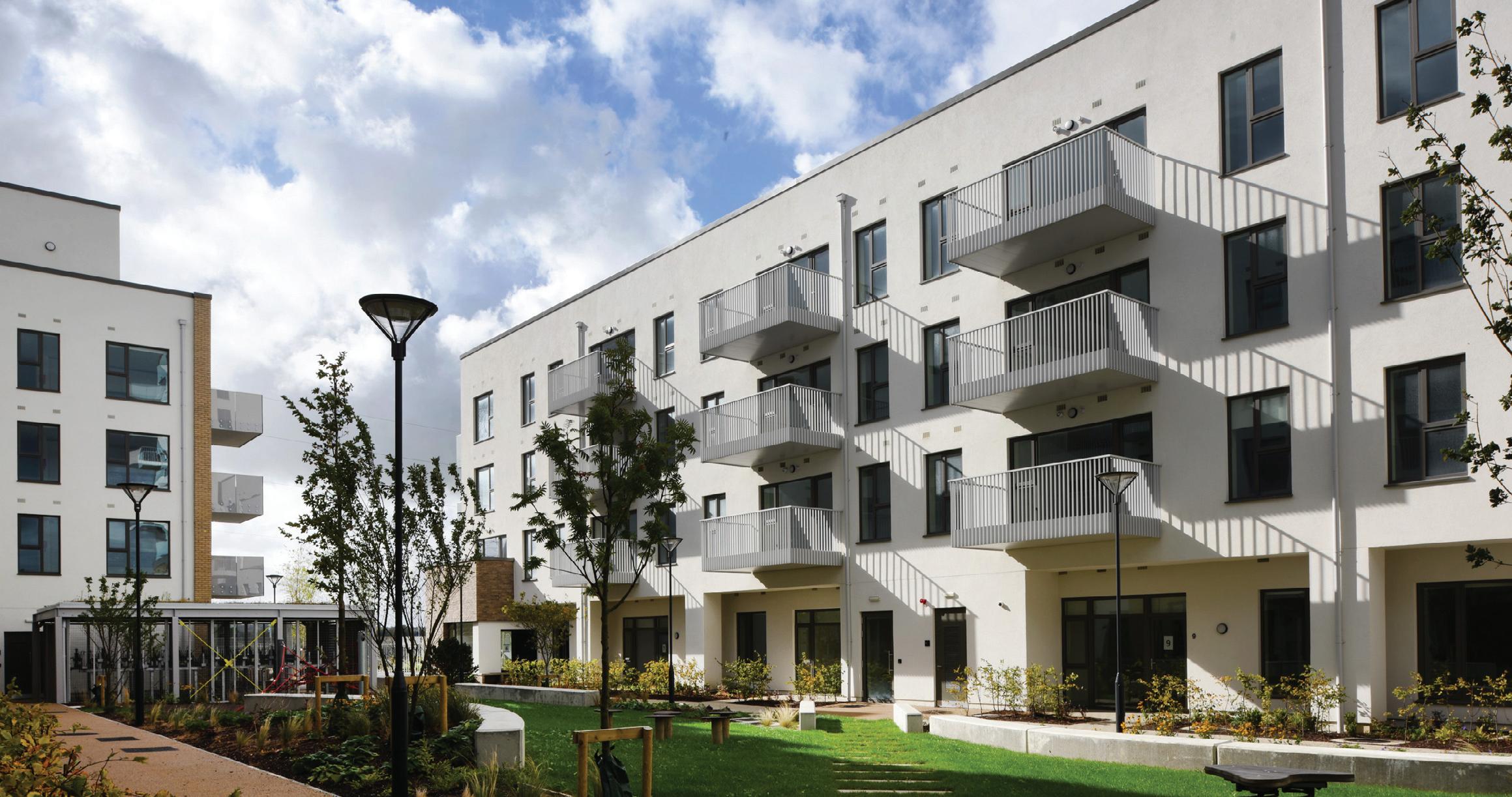
The report highlights a 10 per cent growth in group revenue and a significant delivery pipeline of 1,295 homes at the end of the company’s financial year.
Oaklee recently launched its 2023/24 annual report at the company’s AGM, showcasing the organisations continued commitment to addressing Ireland’s housing needs. The report highlights its focus on building and managing highquality, affordable homes for families, older individuals, and those with specific support needs.
Commenting on the report, Oaklee CEO Sharon Cosgrove said: “This annual report showcases the unique achievements made in 2023/24 across the business, ensuring the continuous provision of social and affordable housing in the years to
come and a financially stable future for Oaklee.”
The report also emphasises Oaklee’s efforts in contributing to broader governmental housing policies, leveraging initiatives like the Capital Assistance Scheme, CREL, and the Government’s Social Housing Current Expenditure Programme, a system which currently places heavy reliance on the use of debt finance.
Utilising these funding models has led to a very promising year for the Oaklee Development Team. We have closed several schemes across Dublin and the
midlands with several already fully tenanted. as per the end of our 2023/24 financial year we had a pipeline of 1,295 (mixture of in signed, in contract, and in negotiation).
The report also highlights the significant improvement in resident engagement services. Working alongside Supporting Communities and The Housing Agency, a working group comprising staff and residents was established and crafted our most targeted Resident Engagement Strategy to date. With a three-year 14-point action plan, we set out to ensure that tenant voices are central to the continuous improvement of the services provided by Oaklee.
During the year, we grew our Oaklee team from 49 to 58, to enhance our capacity and skills and build on the foundations of our independence. We are fortunate now to have an impressive team of talented professionals
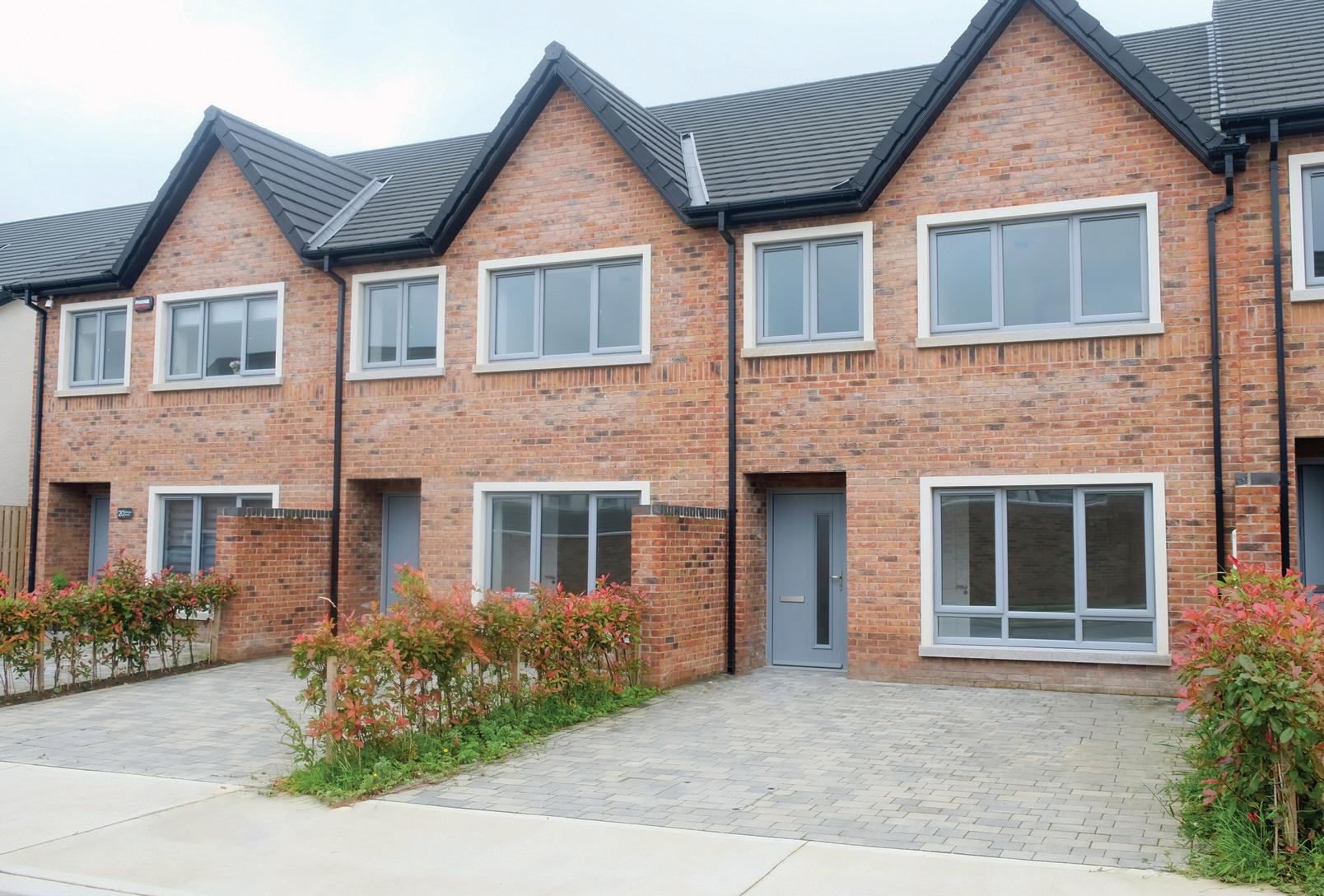
working together whose collective ambition is centred around increased delivery of homes and the on-going provision of exceptional customer services for our residents.
Increased delivery of more homes is a top priority for the board in 24/25 and in the current three-year corporate strategy. The delivery of social housing at scale, with strong counterparties and with cost rental is contained in the corporate plan for 2023-2025 and the growth plan approved by the board in June 2023.
The landscape has changed in the last year, with local authorities across the country requiring mixed tenure developments of both social and cost rental and a condition of their approval to AHBs for medium and larger developments.
For that reason, Oaklee’s pipeline grew during 2023/24 with more mixed tenure projects now being assessed by the team, and in turn are beginning to come through the Housing Delivery Committee and Board for consideration. Taking this change into account, embracing the opportunities presented for mixed tenure, the targets in our business plan propose an increase in delivery for 2024/25 and beyond.

Increased delivery of more homes is a top priority for the board in 2024/25 and in the current threeyear corporate strategy. The delivery of social housing at scale, with strong counterparties is contained in the growth plan approved by board. We have already made significant progress increasing delivery throughout the second half of 2024 with new homes delivered in Portlaoise, Kill, Cloverhill, and Greystones. The most significant with funding recently granted for 262 homes across Fingal County Council and South Dublin County Council including 154 cost rental homes. This represents a significant milestone for Oaklee as we build on the strategic objective of delivering more homes through strong partnerships including cost rental homes in mixed tenure developments.
As we work to deliver against our objectives, our corporate values are what guide our behaviour and make sure every action, every decision, every word or promise we make leads to more and better homes for those who need one.
Great homes, thriving communities.
T: 01 400 2650
E: enquiries@oaklee.ie
W: www.oaklee.ie

Conor Steen, Associate Director, Hooke & MacDonald.
Hooke & MacDonald Research has tracked the composition of purchasers of new homes in Ireland from 2015 to 2023.
First time buyers have consistently been the leading purchasing group. In the latest statistics released by the CSO first time buyers increased their percentage of new home purchases from 32 per cent to 33 per cent. Other owner occupiers constituted 23 per cent, down from 24 per cent in the previous year.
The biggest mover in the latest figures is the public sector category which includes the LDA, Approved Housing Bodies (AHB), local authorities, and The
Housing Agency. This has now become the second biggest purchaser of new homes, at 26 per cent of the total, increasing from 22 per cent in 2022 and an 86 per cent increase from 14 per cent in 2018. At the present rate of activity in the various sectors, it is likely that the public sector will be the leading purchaser of new housing stock within two years.
The CSO figures for purchasers of new homes are based on sale closures so
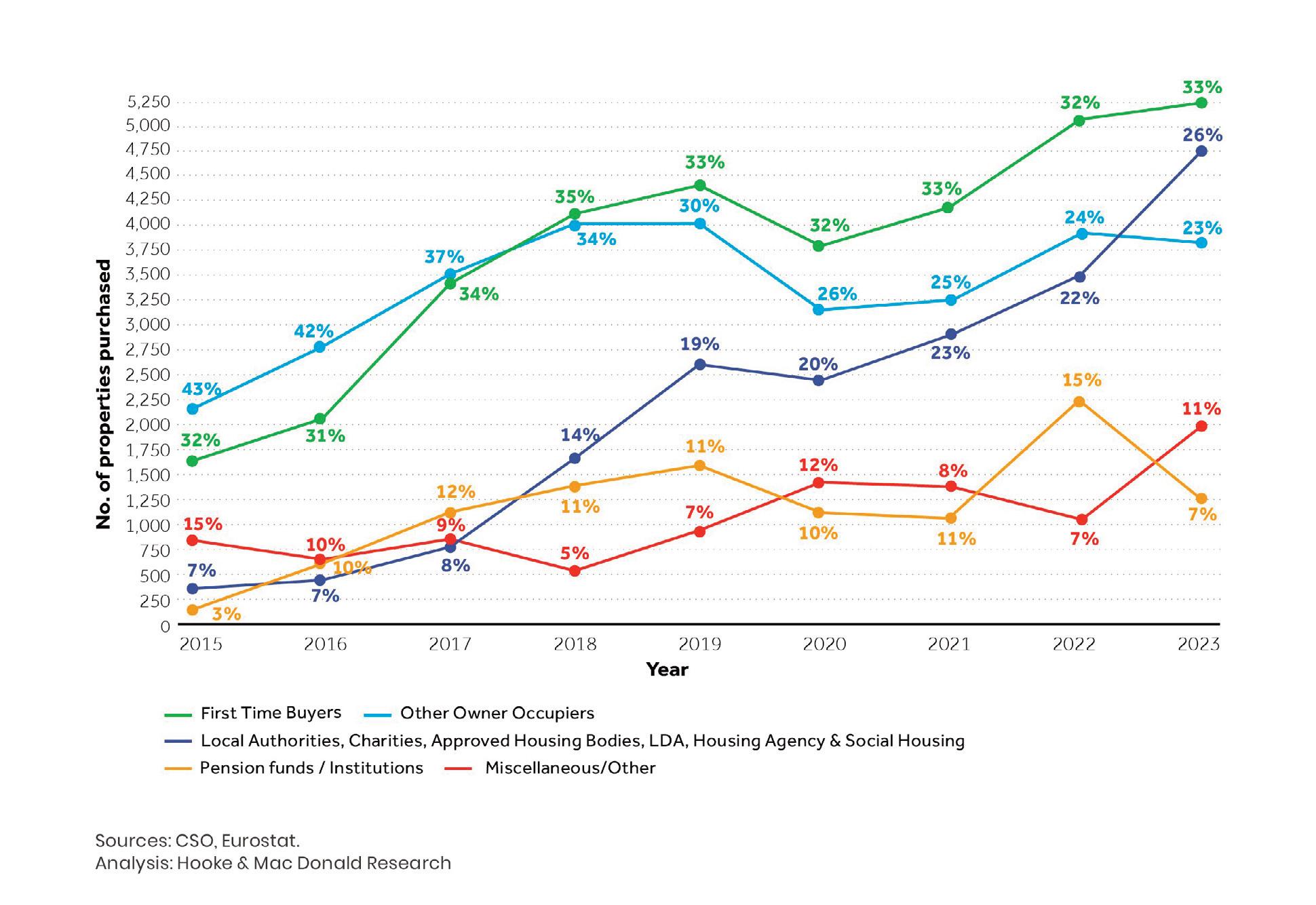
there is a time lag between date of purchase and date of sale closure. This can conceal trends in the marketplace, for instance in the case of forward purchases of apartment blocks in 2021 and 2022, which only appear in 2023, 2024 or later. This is reflected in the purchases of properties by pension funds and institutional entities/funders, both domestic and foreign, whose share of purchases in the CSO figures has fallen by 53 per cent from 15 per cent in 2022 to 7 per cent in 2023. However, the reality is that purchases by this category is heading for zero due to the unfavourable conditions in Ireland for private funding of the housing market.
The dramatic movement by private funders away from the Irish housing market as shown by these latest figures is a disaster for the Irish housing market and particularly for the private rented sector, which is already negatively impacting on the supply and cost of accommodation and which is on course to deteriorate further this year and in the coming years. The reality is that institutional entities have been responsible for funding the construction of over 20,000 apartments, mostly in Dublin, in the past seven years providing accommodation for approximately 50,000 people based on an estimated occupancy of 2.5 persons per property. If these had not been built the rental market would now be in a far worse position than it currently is in terms of supply – these properties would not have been built if it were not for these sources of capital.
The State can only fund less than half of the €20 billion required annually for the funding for a minimum of 50,000 new homes so it is imperative that conditions are created as a matter of urgency
for institutional funding to re-enter the market and make up the difference in the funding shortfall. The damage done by the 2 per cent rent cap is now plain to see. It needs to be ended now. The convoluted replacement for it proposed by The Housing Commission would be most unhelpful and unwieldy.
Funding by the Government for the different typologies of housing needing in the public sector is an absolute necessity and must continue. It is such a pity that funding for the private sector is being impeded by misguided and failed policies preventing private institutions from supporting the private rental market in Ireland.
The Department of Finance has produced a report which contains a very significant and honest analysis of how the housing programme for the State has to be funded. If supply is to be ramped up to meet the housing supply targets, measures need to be introduced to counter the alarming inactivity of institutional funders in the industry and to actively encourage and substantially increase their involvement.
Hooke & MacDonald 118 Baggot Street Lower Dublin 2 PSRA No. 001651
T: 01 661 0100
E: info@hmd.ie
W: www.hmd.ie


Energy Ireland® National Retrofitting Conference 2024, in partnership with the Sustainable Energy Authority of Ireland (SEAI) and sponsored by SSE Airtricity, is taking place on Thursday 28 of November 2024. The Government has developed an area-based and one-stop-shop approach to retrofitting in order to upgrade at least 500,000 homes to a B2 energy rating by 2030. This year’s conference will be the fourth gettogether of all the key stakeholders involved in the delivery of the programme.



Speakers include:





Ciaran Byrne Director of National Retrofit
Sustainable Energy Authority of Ireland
Barry Quinlan Assistant Secretary Department of the Environment, Climate and Communications Evelina Gunnarsson Associate Manager & Behavioural Economist Ramboll Sweden
Paul Kenny Director General European Heat Pump Association (EHPA)

Catherine Keenan Director of Housing Dún LaoghaireRathdown County Council

John Curtis Head of the Economics Research Division
The Economic and Social Research Institute (ESRI)

Stuart Hobbs Director of Energy Services Ireland SSE Airtricity

Sinéad Hughes Director of Innovation & Programme Manager on ENACT Irish Green Building Council (IGBC)
There are a limited number of opportunities for interested organisations to partner with the conference as an exhibitor. This is an excellent way for organisations to raise their profile with a key audience of senior decision-makers from across Ireland’s energy sector. For more information on packages available at the event contact us on 01 661 3755 or email info@energyireland.ie








‘Sobering’ link to house price rises and relaxed credit channels
An established link between credit availability and rising house prices in the residential housing market, last seen prior to the financial crisis, is once again evident in Ireland, say the ESRI.
The average loan-to-income ratio, within the Irish mortgage market, has returned to multiples last seen at the peak of the Celtic Tiger boom and there is strong evidence to suggest that the credit channel is once again having an influential impact on Irish house prices.
Since 2012, nominal house prices in Ireland have risen by 126 per cent, while rent levels have increased by 108 per cent – largely fuelled by demand outstripping supply for over a decade.
However, an ESRI report assessing the contribution of changing credit standards to recent house price developments has highlighted some concerns that part of the recent price
increase across the residential market may be “unsustainable in nature or that it may be fuelled once again by a mortgage credit-house price spiral”.
Although outlining their finding that “exogenous movements” in credit conditions, which have been notable since 2021, are consequently now having an impact on house prices, the report’s authors are quick to point out a “crucial difference” of scale between the present and the Celtic Tiger period.
“A significant number of mortgages were issued in the 2005 to 2007 period when credit conditions were loosened considerably, whereas fewer are available now,” the report states,

adding that at this point, the risk “does not appear to be systemic in nature”.
However, it warns that in the context of a growing cohort of mortgage holders in the Irish residential market taking out highly leveraged positions, “a significant deterioration in economic fundamentals such as reduced income levels or higher mortgage rates could result in these households experiencing some difficulties in repaying their mortgages”.
To this end, the report’s authors recommend careful monitoring of the changing credit conditions and their impact on house prices.
At the time of the global financial crash of 2007/08, Ireland’s financial sector, like many countries across Europe, was especially vulnerable due to its substantial liabilities in the property market. The Celtic Tiger period had seen a large boost in activity coupled with major credit market liberalisation and subsequently, an increase in mortgage credit which fuelled a housing bubble.
Included in the cost of the crisis was a fall in house prices by some 54 per cent between 2007 and 2012, leading to the eventual overhaul of financial regulation at both a national and an EU level. However, the ESRI says that the Central Bank’s decision to soften mortgage lending rules for first-time buyers in 2022 has contributed to rising house prices.
On the changes which included a movement of maximum loan-to-income ratios for first-time buyers from 3.5 to four times income as well as changes allowable to loan-to-value ratios for
second and subsequent buyers from 80 per cent to 90 per cent, the report says: “Enabling prospective house buyers to borrow more at a time when there was considerable savings already built up in the Irish economy due to Covid-19 has almost certainly put upward pressure on house prices.”
Interestingly, the report flags potential learnings for other European countries in Ireland’s circumstances. Despite uneven recovery in European markets following the financial crash, an economic legacy of the Covid-19 pandemic was a widespread acceleration of house price inflation. Three-quarters of over 60 countries were recorded by the IMF’s Global House Price Index were recorded as witnessing price increase in 2020 and in to 2021, with over onethird of these countries recording rises greater than 5 per cent.
The report notes that house prices have not experienced such a sustained increase since the period before the financial crash, concluding: “While there is not yet a systemic risk to the domestic financial system, it is important that this trend in changing credit conditions and the resulting impact on house prices be carefully monitored.”
Adding: “It is particularly important that any upward movements in house prices are not additionally fuelled by changes in credit condition.”
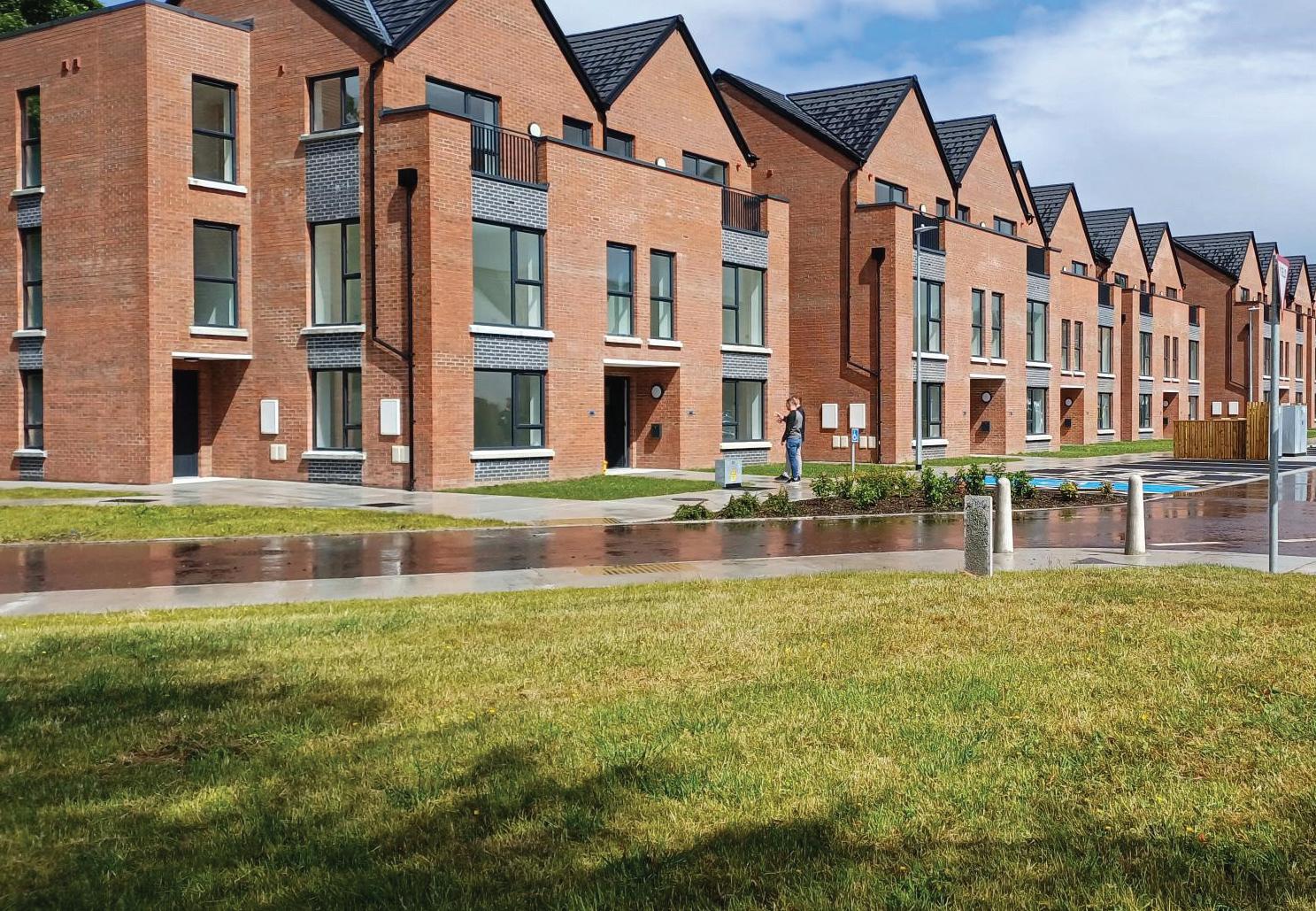
“Construction is a massive part of what we do, and we have been working to increase our construction pipeline, year on year. We have developed a number of innovative processes to grow our construction arm,” Clúid Housing’s Chief Commercial Officer, Eibhlin O’Connor, explains. “Having a healthy construction pipeline is important to us for a number of reasons. Primarily, it gives us a much greater level of control over the design and specification of the homes, the cost, and when they will be delivered. It also adds to overall housing stock in the country and allows us to innovate and push boundaries in areas like sustainability.”
Working in partnership with the Department of Housing, Local Government and Heritage, local authorities, The Housing Agency and the Housing Finance Agency, Clúid delivers and manages social and affordable homes across the country, and has more than 31,000 residents in 12,000 homes. Clúid currently has 1,140 homes on-site under construction, with a further 771 homes due to commence on site in the next four months. The Approved Housing Body (AHB) also has an additional 2,189 homes at various stages of prestart on-site assessment.
“We use a number of different approaches to get shovels in the ground and homes built,” outlines O’Connor, “Some of our construction projects, like 112 homes at Green Lane in Blackpool, Cork City, and 81 homes at The Weir on Whitestown Way, Tallaght in Dublin 24 are on local authority land, with Clúid essentially acting as the developer. We have also had great success with our innovative Developer Design and Build Approach, which we introduced a number of years ago. Developers approach us with sites with planning permission which they have been unable to activate. Clúid
buys the sites upfront and provide them with stage payments to build it out.”
At Parkside, Belmayne, Dublin 13, Clúid is partnering with Cairn Homes to deliver 375 homes this year via its Developer Design and Build approach. They recently completed 127 homes with GEM Construction and 185 homes with Andrews Construction, among others. The Clúid team is also excited about Oscar Traynor Woods, Coolock, Dublin 15, where they are working closely with Glenveagh to deliver 853 homes, of which 320 will be delivered via its Developer Design and Build arrangement.
Another area where Clúid is breaking ground is with their Innovative Partnership. “At its most basic,” O’Connor explains, “this is a new approach to procurement, which will streamline processes to help us get on site quicker.” But for Clúid there are also additional benefits to this new Innovative Partnership, such as early contractor engagement. O’Connor is a huge proponent of Lean Construction and is driving a greater emphasis on reducing waste within Clúid. “Having the contractor on board from the beginning means that we are planning and making decisions together with the experts in the room. For instance, we are not including elements in the design that will be difficult to manage and maintain, time-consuming or costly to deliver. Instead, we are troubleshooting at an earlier stage, so we get the most suitable solution included from the offset, rather than trying to implement a work-around at a later stage.”
O’Connor also details how the innovative partnership has provided many opportunities for professional development within her team. Members of Clúid’s commercial development team have been undertaking Lean training alongside their counterparts at GEM, the innovative partner. She believes that coming together for the training has been helpful: “We are on this journey together to streamline our way of working and reduce waste. We do not want to pretend we have all the answers already. This partnership is about learning and improving together.”
When asked about scaling up their output, O’Connor is positive: “We have certainly got the ambition, the capacity and the experience in Clúid.” AHBs like Clúid are an increasingly important solution to the housing crisis. In 2023, AHBs delivered 5,924 new social and cost rental homes – nearly two thirds of the total delivered that year. “Clúid delivered more than 1,000 of those homes, and we are on track to deliver at least 1,200 new homes this year,” she adds. “We know with the right support that we can deliver in even greater numbers going forward. We are working with our partners to address any challenges, but what we need is more land. We want to partner with local authorities and developers who have land, to bring our 30 years of experience to create great homes and communities.”
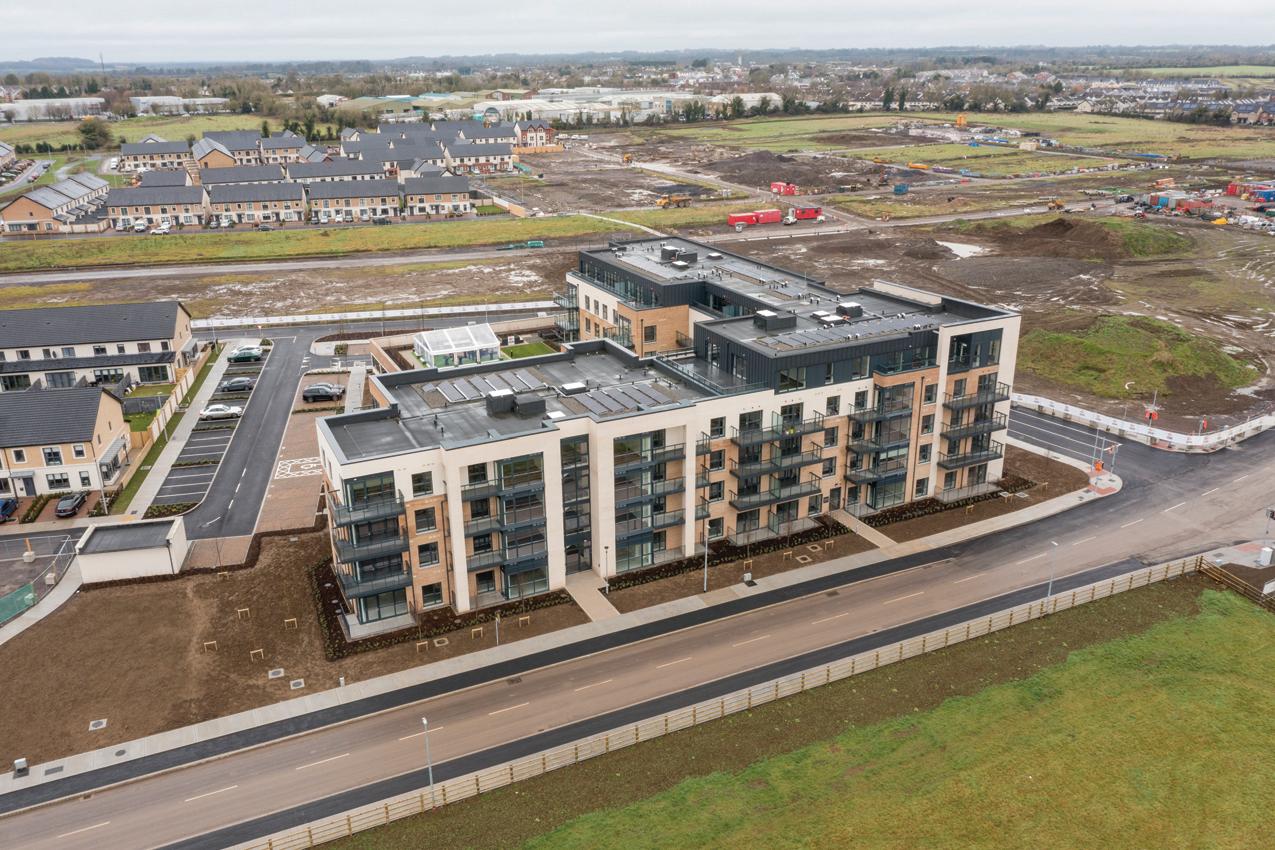
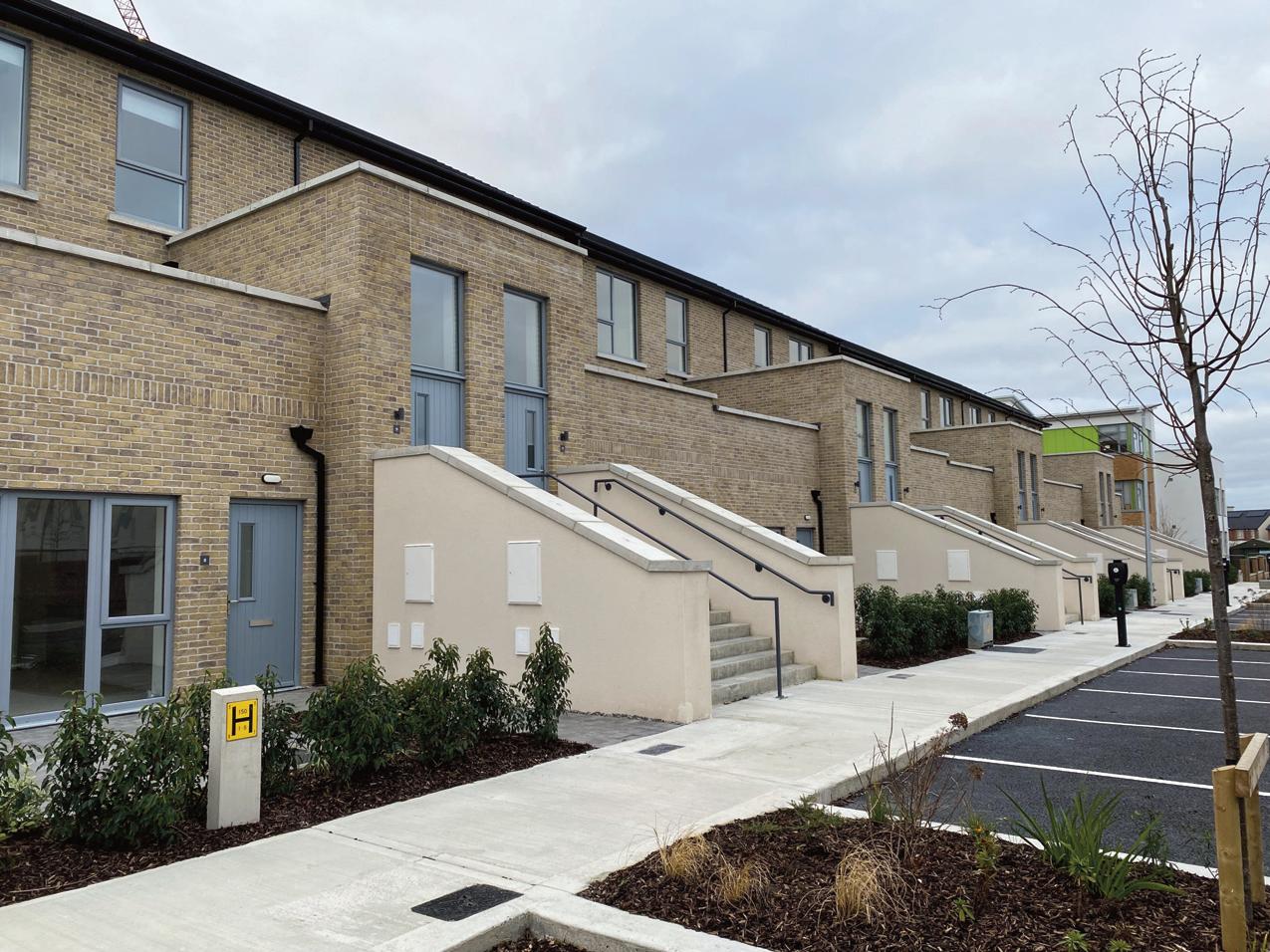
Parkside, Belmayne, Dublin – in partnership with Cairn and Fingal County Council
A mixed tenure scheme of 375 homes, general needs, age-friendly social homes, and 80 cost rental homes, delivered via their Developer Design and Build programme. Residents will be moving into their new homes from December 2024.
Bethany House, Sandymount, Dublin – in partnership with Dublin City Council
These 62 age-friendly apartments are being delivered by Clúid in partnership with Dublin City Council at Bethany House, Sandymount, Dublin 4. The original residents, along with new neighbours, are eagerly looking forward to moving into their A-rated homes in February 2025.
Coill na Giúise, Gorey, and Beechfield, Wexford Town – in partnership with Wexford County Council
Clúid is working with Byrne and Byrne, using their Developer Design and Build framework, to deliver 136 homes on two sites in Wexford in the coming years. Work has begun on both sites, with Beechfield due in spring 2026 and Coill na Giúise following in the summer of that year.

With the appointment of a first ever housing commissioner and new policy initiatives, the new European Commission is set to take an unprecedented interest in housing policy across its member states.
In March 2024, the European Union (EU) announced the Liège Declaration, at a conference of member states’ housing ministers in Liège, Belgium. The declaration affirmed that access to “affordable, decent, and sustainable housing for all in the European Union” is a fundamental right of EU citizens.
With recognition that housing policy will be a matter for member state governments to determine, the declaration instead calls on national governments to work towards the expansion of affordable housing by ensuring that they place more public investment into housing, that they adopt a “better governance approach”, and foster innovation between the public, private, and third sectors.
The declaration contains a call for a European new deal for affordable and social housing which, according to reports from Politico, is expected to be published by early 2025.
While details of the Commission’s new deal for housing have yet to be published, the declaration asserts that this new deal should be in line within the framework of the Commission’s Social Rights Framework Action Plan 2021-2030
At the Liège conference, member state housing ministers called on the
Commission, working with the European Parliament, European Economic and Social Committee, and the European Committee of the Regions, to organise an annual EU summit on social and affordable housing. This forum, the ministers argue, would enable stakeholders across Europe to exchange practices in compliance with the “principle of subsidiary”.
The ministers further determined that the Commission should establish an EU platform to “urgently support national, regional, and local partnership to end housing exclusion”.
Under this proposition, the Commission would strengthen its cross-sectional support for national, regional, and local policies in the housing sector by simplifying access to information on the possibilities for support from European instruments, including access to funding.
The ministers agree that the Commission must “take better account of the repercussions of EU policies on access to housing and housing exclusion in its impact assessments”.
They also assert that the European Investment Bank needs to “reinforce its support to [the] social and affordable housing sector, renewing its lending to
social and affordable housing providers,” and provide advisory services to member states in order to address supply shortage.
“Ministers responsible for housing, with respect for the principle of subsidiary, call for a European new deal for affordable housing and social support to development of policies to facilitate access to affordable, decent and sustainable housing for all based on a multi-level governance and sharing best practices and experiences from different member states with the support of the European institutions,” the declaration states.
In October 2024, Politico reported that President of the European Commission Ursula von der Leyen intends to publish the Commission’s housing plan within the first 100 days of her new mandate.
Politico reports that a leaked draft of the document states that the EU is “suffering from a widespread housing crisis”, further specifying that rent prices and house purchase prices have seen “significant acceleration during the [Covid-19] pandemic”.
The leaked plan also reportedly contains proposals to generate funding for the Commission to support member states in their housing programmes, including guarantees from the InvestEU programme and an investment platform coordinated with the European Investment Bank. The plan also reportedly calls for measures to open up spending on retrofitting of homes for decarbonisation purposes.



Recent investigations by the Charities Regulator have highlighted the importance of tendering for the supply of goods, services and works contracts to ensure the good governance of charities.
This is particularly so for Approved Housing Bodies (AHBs) to ensure transparency, fairness, and value for money. AHBs must adhere to specific public procurement rules when entering into contracts. Public Procurement is governed by EU Directive 2014/24/EU and SI No 204/2016. The Department of Housing, Local Government and Heritage has also provided AHBs with Public Procurement Guidelines for AHBs to assist in ensuring their compliance with public procurement rules.
There are different procedures for AHBs to follow depending on the value of the contract for the supply of goods and services:
• Below €50,000: A simplified procurement process can be adopted, and it is recommended that AHBs seek at least three quotes to ensure value for money.
• Above €50,000: Contracts in this range must be advertised and awarded through a competitive
process on eTenders. Typically, AHBs use the ‘open’ or ‘restricted’ procedures.
The Capital Works Framework Management provides guidance for work contracts and the threshold for the simplified procurement process is below €200,000 and the competitive process should be used for contracts in excess of €200,000.
The most utilised procedures are the open procedure and restricted procedure. The open procedure allows all interested suppliers submit bids. This is a straightforward and transparent method suitable for many contracts. The restricted procedure is used for more complex contracts and involves a two-stage process where interested suppliers are first screened before submitting detailed bids.
Other procedures available to AHBs include a competitive dialogue procedure or a negotiated procedure.
AHBs must adhere to the key principles in their procurement
activities which include transparency, non-discrimination and equal treatment, proportionality, and competition.
AHBs should also seek to incorporate ethical considerations in their procurement processes, such as sustainability, local economic impact and supplier diversity.
Public procurement rules for Approved Housing Bodies in Ireland are designed to promote efficiency, transparency, and fairness in the procurement process. By adhering to these regulations, AHBs can ensure they provide the best possible value for public funds while also contributing to the broader goals of sustainability and community development. As housing needs continue to evolve, so too will the frameworks governing procurement, requiring AHBs to stay informed and compliant with changing regulations.
Please note that this does not constitute legal advice and AHBs should always seek advice from their legal advisors in relation to the procurement process.
T: + 353 1 676 4488
E: collete.cassidy@oclegal.ie
E: ruth.oconnor@oclegal.ie
W: www.oclegal.ie

In a first-of-its-kind appointment, Dan Jørgensen, is set to become the first European Commissioner with a policy remit focused on housing.
With housing expected to be a priority area for the incoming Commission, a new role of Commissioner for Housing and Energy has been established at the behest of European Commission President Ursula von der Leyen. This Commissioner will lead the Commission’s remit on housing.
The Commissioner for Housing and Energy is tasked with helping to bring down energy prices, invest in clean energy and ensuring that the EU reduces its energy dependencies. Jørgensen will be the first ever Commissioner for Housing – looking at all aspects from energy efficiency to investment and construction.
The new commissioner will be tasked with preparing a European affordable housing plan, as well as the development of an EU strategy for housing construction to support housing supply, reduce building costs, ensure supply of skilled workers, and improve productivity and environmental performance of construction.
Jørgensen has been the Danish Minister for Development Cooperation since 2022, having previously served as Minister of Energy and Climate between 2019 and 2022, and Minister for Food, Agriculture, and Fisheries between 2013 and 2015.
Speaking to eolas Magazine in October 2024, Sorcha Edwards, Secretary General of Housing Europe said that while the new role is “an opportunity to achieve better finance and better regulation for AHBs in their different guises across Europe”, that “there are no EU-level silver bullets to tackle our housing crises”.
“Contexts vary hugely and key levers like tenant protection and planning are local and should stay local. At EU level, we need more coherence to prevent, for instance, EU limits on national debt from stopping financial support for social or cost rental housing,” Edwards says.
“We see this as an opportunity to achieve better finance and better regulation for AHBs in their different guises across Europe so that they can thrive and grow in their role to help achieve housing models that tackle housing exclusion for the good of the society and the economy. Our first step will be to ensure our members benefit from the announced increase in EU funding.”
Currently the Commissioner Designate, Jørgensen’s ratification as Housing Commissioner is subject to a hearing in the European Parliament, which is scheduled to take place on 5 November 2024.
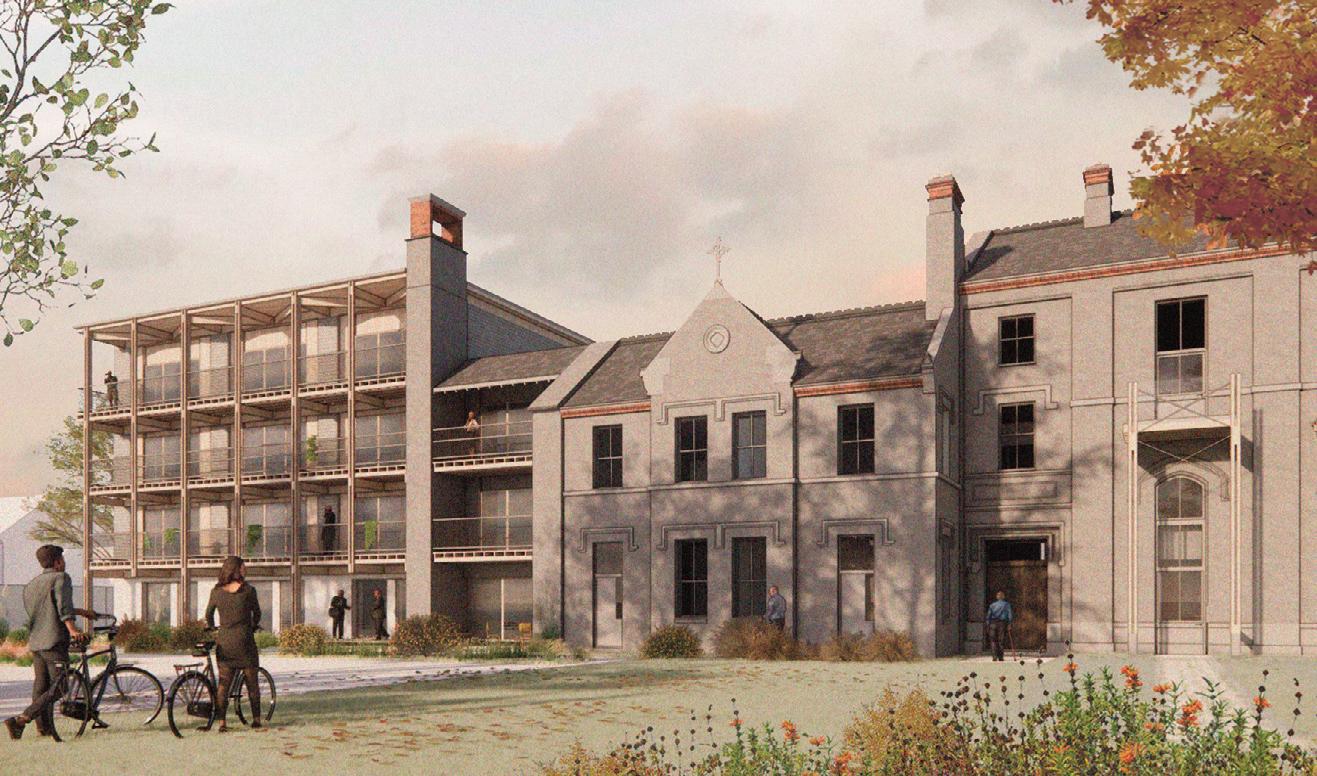
Having marked its 30th anniversary in 2023, North & East Housing Association continues to grow and develop its reach and offering to stakeholders and partnerships.
During the period of the current strategic plan, the Association has expanded its housing activities and proposals in particular in counties Cavan, Laois, and Monaghan, bringing its local authority operational areas to 13. The Association is on track to deliver 70 homes in 2024, with commitments and construction underway for more than 100 further new homes during 2025.
A significant emphasis is placed on quality and sustainability, as well as maximising delivery opportunities, employing a blended approach to delivery of acquisition and construction turnkey via CALF and HFA funded borrowings.
Turnkey delivery under forward funded development agreements is proposed in the upcoming strategic plan period, as the association considers this approach important in terms of delivering opportunities which are underpinned by quality, programme and cost efficiency outcomes with stakeholder partnerships, to support addressing local authority Housing Delivery Action Plan targets.
Apart from new housing and apartment delivery, a strong emphasis and value has been placed by local authority partnerships on brownfield and repurposing/regeneration in provincial high street locations, and development with proximity to town centre amenities.
Thus, promoting sustainable communities in terms of tenure mix, access to and supporting town and village centres, and reduction on carbon footprint through accessibility to existing/improving public transport and pedestrian links.
These supply characteristics have been recognised by awarding bodies for developments in both County Louth and County Meath during the present strategy period. A further recent example of this approach is Birch Court, Ballybay, County Monaghan, which provides four ‘A’ rated upgraded apartments within the town centre, with the premises also accommodating a municipal library service.
North & East continues to progress its supply locations under employer led direct construction through the Capital Assistance Scheme. Present supply initiatives are being undertaken at Garristown, Balbriggan, and Castleblaney, with both Fingal and Monaghan county councils. These combined locations will provide 50 houses/apartments with an emphasis on older person accommodation with universal design (UD), and UD+ features.
The Town Centre Living initiative, and preservation of protected structures are further locational features. As such, a blend of important end user outcomes and policy initiatives are being addressed in these construction areas, which will deliver from 2026 onward.
For more information, please contact the development team E: info@neha.ie W: www.northandeast.ie

In what are likely to be the last homelessness numbers released by the current government before the Dáil is dissolved for a general election, it has been revealed that a new record of 14,760 people are living in homeless emergency accommodation.
Since the Government came to power in June 2020, homelessness has been recorded at the end of every month, and the latest release by the Department of Housing, Local Government and Heritage, marks the 23rd time that homelessness has reached a record high in the lifetime of the incumbent administration, for which 51 months of data are available.
The figures, which cover the week from 23 to 29 September 2024, show that 14,760 are accessing emergency accommodation, of which 10,199 are adults and 4,561 are children.
The trends of the Government’s homelessness numbers have been consistent through its term. The vast majority of the State’s homelessness is concentrated around the capital, Dublin.
Furthermore, around half of those in emergency accommodation are not recorded as Irish citizens. 53 per cent hold Irish citizenship, while 22 per cent are from the European Economic Area (EEA) or UK, and the remaining 25 per cent are from outside the EEA.
The Department of Housing, Local Government and Heritage has released
monthly homelessness reports since May 2014. Figure one shows the monthly homelessness trends since Enda Kenny began his second term as Taoiseach.
Since the current administration took power in June 2020, homelessness has seen significant declines in three distinct periods. The Covid-19 pandemic and resultant ban on evictions, as well as the winter eviction bans which took place in the winters of 2021 and 2022.
The Government ended the last winter eviction ban in March 2023. Although government figures argued at the time that this would lead to a decrease in homelessness, homelessness has consistently increased in almost every single month since the ban was ended.
Ending homelessness by 2030 is a formal government policy under Housing for All
Enda Kenny begins second term
Leo Varadkar becomes Taoiseach
Covid/current government take office
Source: DHLGH
Housing Association for Integrated Living (HAIL) will mark our 40-year anniversary in 2025. Over the past four decades, we have been providing high quality social housing and mental health tenancy sustainment services to support our tenants and clients to live independently in their homes and communities.
We are proud of the impact of our work and of our staff, who have helped positively change the lives of so many of our tenants and clients. We see everyday through our work, just how transformative having a stable and secure home is to support people with their mental health recovery.
We have grown significantly since 1985 as the demand for our housing and support services continues to increase. In 2023, we supported our highest ever number of clients for the third consecutive year.
Under our current strategic plan 20242028, we are planning to expand further so that we can support more people and strengthen the impact of our work.
As part of our growth plans, we are aiming to deliver an additional 300 new homes by 2028 and expand our mental health tenancy sustainment services into more communities across Ireland. Forming more partnerships with other organisations across the sector will be key to support us reach these targets.
We are actively seeking more partnership opportunities with property developers, local authorities, and other approved housing bodies to work with us in providing more homes. Our professional and highly experienced development team have a strong track record of successfully delivering development projects. We are primarily seeking development partners to work with us on delivering multi-unit developments. We are also focusing on repurposed projects of up to 50 units, Part V opportunities, and sustainable new builds.
In addition to this, we are looking to expand our mental health tenancy sustainment services into more local authority areas. This service supports people who have a mental health difficultly, who are living in private rented accommodation, local authority, or
social housing, sustain their tenancy and live independently. We currently have a presence in 16 local authority areas and our aim is to expand this service over the next five years.
We would be delighted to hear from property developers, local authorities, and other Approved Housing Bodies about opportunities for us to partner and expand our housing and support services as we embark on the next chapter in our mission to provide the key to independent living for people with mental health difficulties.
Martina Smith, HAIL CEO
To discuss partnership opportunities please find our contact details on: W: www.hail.ie