Workforce of the future report


Workforce of the future report
Better Public Services, the new transformation strategy for the public service seeks to establish a public service workforce that is better equipped to meet the current and future needs of people in Ireland, writes Shirley Comerford, Assistant Secretary, Public Service Workforce Division, Department of Public Expenditure, NDP Delivery and Reform.

The Better Public Services (BPS) public service transformation strategy to 2030 provides the direction for strategic reform in the public service with a vision for inclusive, high-quality, and integrated public service provision that meets the needs and improves the lives of the people of Ireland. The strategy recognises the crucial role that people play in driving workplace innovation, change and organisational success in an increasingly dynamic world of work.
The Workforce and Organisation of the Future pillar of the strategy commits to developing a more diverse, agile, and inclusive workforce that is skilled for the future and positions the public service as an employer of choice for employees seeking interesting and rewarding careers.
The strategy sets out three key actions that public service organisations are asked to prioritise as part of their

people strategies to realise this ambition:
1. improve equality, diversity and inclusion to create workplace cultures where every individual can thrive;
2. upskill and reskill staff to meet current and future needs; and
3. develop and implement progressive HR policies to position the public sector as an employer of choice.
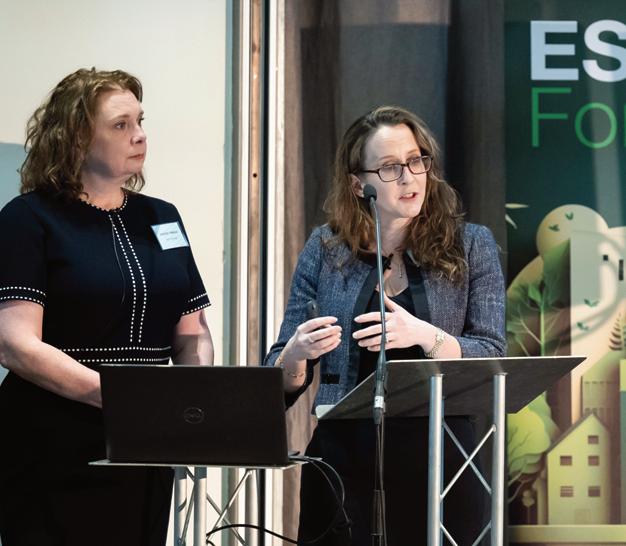
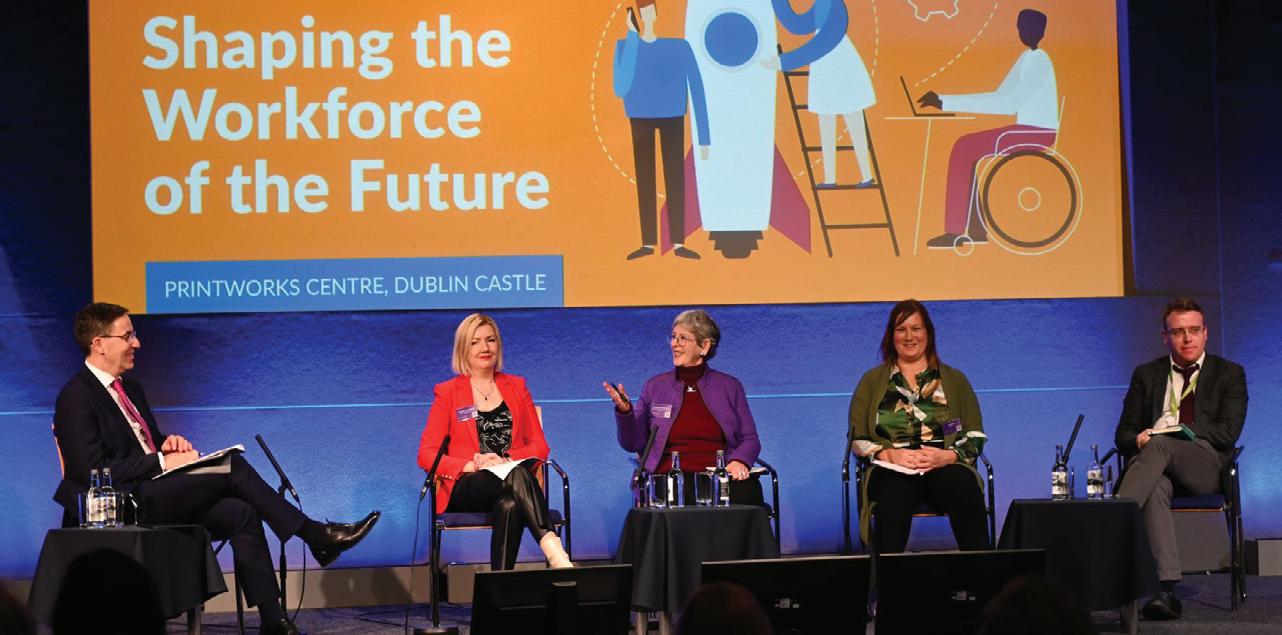
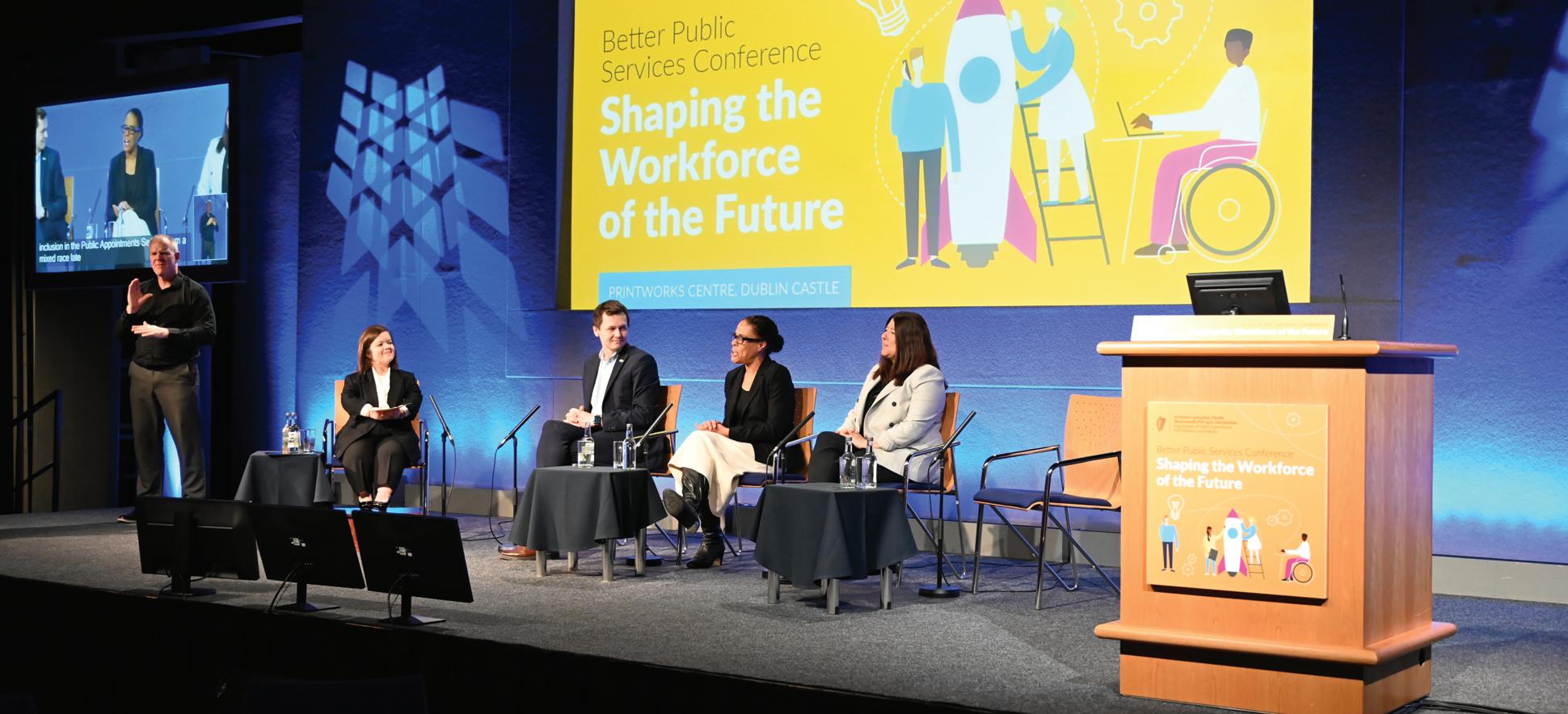
In February 2024, the Department of Public Expenditure, NDP Delivery and Reform hosted a Better Public Services: Shaping the Workforce of the Future conference in Dublin Castle which was attended by over 400 public servants across the sector. This event represented a culmination of all of the great work which is taking place under the Workforce and Organisation of the Future pillar of the BPS 2030 strategy.
Key themes which were highlighted at the conference included developing people practices and strengthening the HR profession, tackling inequality and work in society, neurodiversity in the workplace, integrating the Irish language into workplaces, the Public Service Apprenticeship Plan and navigating the landscape of future skills.
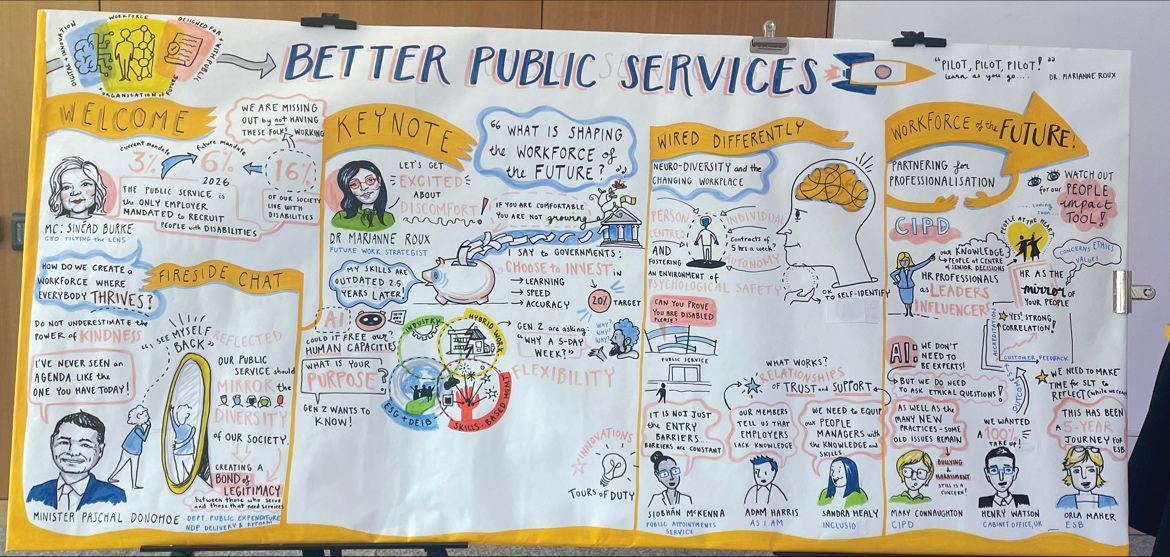
The MC for the day was the brilliant Sinéad Burke, CEO of Tilting the Lens.
Founded in 2020, Tilting the Lens is a consultancy service which advises major global brands and organisations on creating more accessible practices, policies, products, and services.
Burke and the team at Tilting the Lens have been working closely with DPENDR and Public Jobs to review disability inclusion policies across the sector, an initiative funded through DPENDR’s Innovation Fund. This collaboration will create a blueprint for the provision of reasonable accommodation at the recruitment and on-boarding stages of entry to the civil service.
The overarching theme which ran through all sessions throughout the conference was that of inclusion. As Minister Paschal Donohoe TD noted in his opening speech: “In shaping the workforce of tomorrow, we must ensure that no one is left behind, that every individual has the opportunity to contribute their unique talents and perspectives and by harnessing those contributions, we will be able to provide world class services to the people of this country.”
Marianne Roux of Roux Consulting gave the well-received keynote speech on ‘What is shaping the Future of Work?’ This thought-provoking speech framed the current landscape of work in terms of how much change and innovation has occurred in recent years and went on to show how the nature of work may change, but it will be the people working in organisations that will ultimately make a difference in providing excellent public services.
Roux touched on AI and automation, hybrid working, skills-based approaches and shifting workforce demographics and presented some case studies from public service employers in Canada, the US, and Latvia.
Creating a workforce that is skilled for the future is vital to the success of any sector and this is something which forms a central component of the Better Public Services strategy. Three flagship initiatives of the strategy designed to upskill and reskill existing staff, as well as attract and develop new talent, are:

• the Public Service Apprenticeship Plan;
• the establishment of a centre for excellence in learning and development for the public service with the Institute of Public Administration (IPA); and
• investing in the professionalisation of HR across the sector.
The Public Service Apprenticeship Plan was launched in August 2023 and sets a target of 750 registered apprentices across the public service in 2025. In addition to traditional craft apprenticeships (e.g. carpentry and plumbing), there are now apprenticeships on offer in areas such as ICT, accounting, engineering, and recruitment with more on the way in areas such as social work, digital media, planning and business management.
Expanding and modernising apprenticeship programmes within the public service creates additional pathways to entry for individuals from all backgrounds. In addition, it fosters a culture of lifelong learning and skills development for existing public servants who can re-skill through apprenticeship programmes.
Centre of excellence for learning and development
Another key initiative of the Better Public Services strategy has been the establishment of a centre of excellence for learning and development for the public service in the Institute of Public Administration (IPA), which saw the
transfer of the civil service Senior Public Service (SPS) and OneLearning to the IPA. This will enable a shared, central, and strategic approach to building capability and capacity within the public service, while also making learning and development scalable across the public sector.
The integration will optimise synergies, reduce duplication, and will provide better value for money. This expansion of learning and development offerings in a strategic and scalable manner places our public service at the forefront of best practice for international public service learning and development provision.
Fulfilling the objectives of the Workforce and Organisation of the Future pillar would not be possible without professional and dedicated HR units. Another key initiative of the pillar has therefore been to ensure that civil service HR professionals are supported and developed themselves in order to drive the future workforce forward. The civil service has partnered with the Chartered Institute of Personnel and Development (CIPD) to develop people practices and strengthen the HR profession in the sector.
Inclusion and diversity run through all aspects of our approach to shaping the public service workforce of the future. It is essential that that the public service fosters a workforce that has a diverse range of perspectives and a diverse range of skills. To do this, it is essential that the workforce is reflective of the people who use its services and where
all talents and perspectives are sought out and included.
Several recent initiatives have been progressed under the Organisation and Workforce of the Future pillar which support the objective of improving equality, diversity, and inclusion (EDI) in the future public service.
The eligibility criteria for entry to the civil service has been expanded to include all categories of Stamp 4 visa holders, which includes some 325,000 people.
Supported by the public service innovation fund, the Public Appointments Service, in collaboration with Tilting the Lens, developed a blueprint for enhancing the experience for people with disabilities at the assignment and onboarding stage to roles within the public service.
A number of progressive HR policies have recently been developed for the civil service which can be scaled across the broader public service, including the Menopause in the Workplace Framework and the Civil Service Domestic Violence and Abuse Policy.
In addition, work is well advanced on a Blended Working Framework Evaluation Model, as well as proactive implementation of legislative changes around remote and flexible working, including the Work Life Balance and Miscellaneous Provisions Act, 2023
The public service needs to reflect the population it serves. Our sector’s people strategies, policies and practices will enable us to cultivate a more diverse, inclusive and agile workforce who possess the skills needed to provide first class public services.

Recruiting in today’s challenging and continuously evolving jobs market is no easy feat. The competition for talent is at its highest level in over 20 years.
An Garda Síochána is rising to this challenge as it seeks to not only expand its Garda numbers, but also its civilian staff.
What An Garda Síochána has got going for it is that it offers a job of purpose and work of purpose. To quote one Garda staff member, it is “a job worth doing”.
It offers an attractive proposition, a job where you can make a real difference to individuals, to communities and ultimately to the State.
Beyond that, An Garda Síochána offers variety, interesting and specialised work, competitive salary, opportunities to diversify, to upskill, and to advance – all attributes people want and aspire to in a career.
It is a career in service to the people of Ireland, requiring dedication and commitment to keeping them safe. That in itself brings its own rewards.
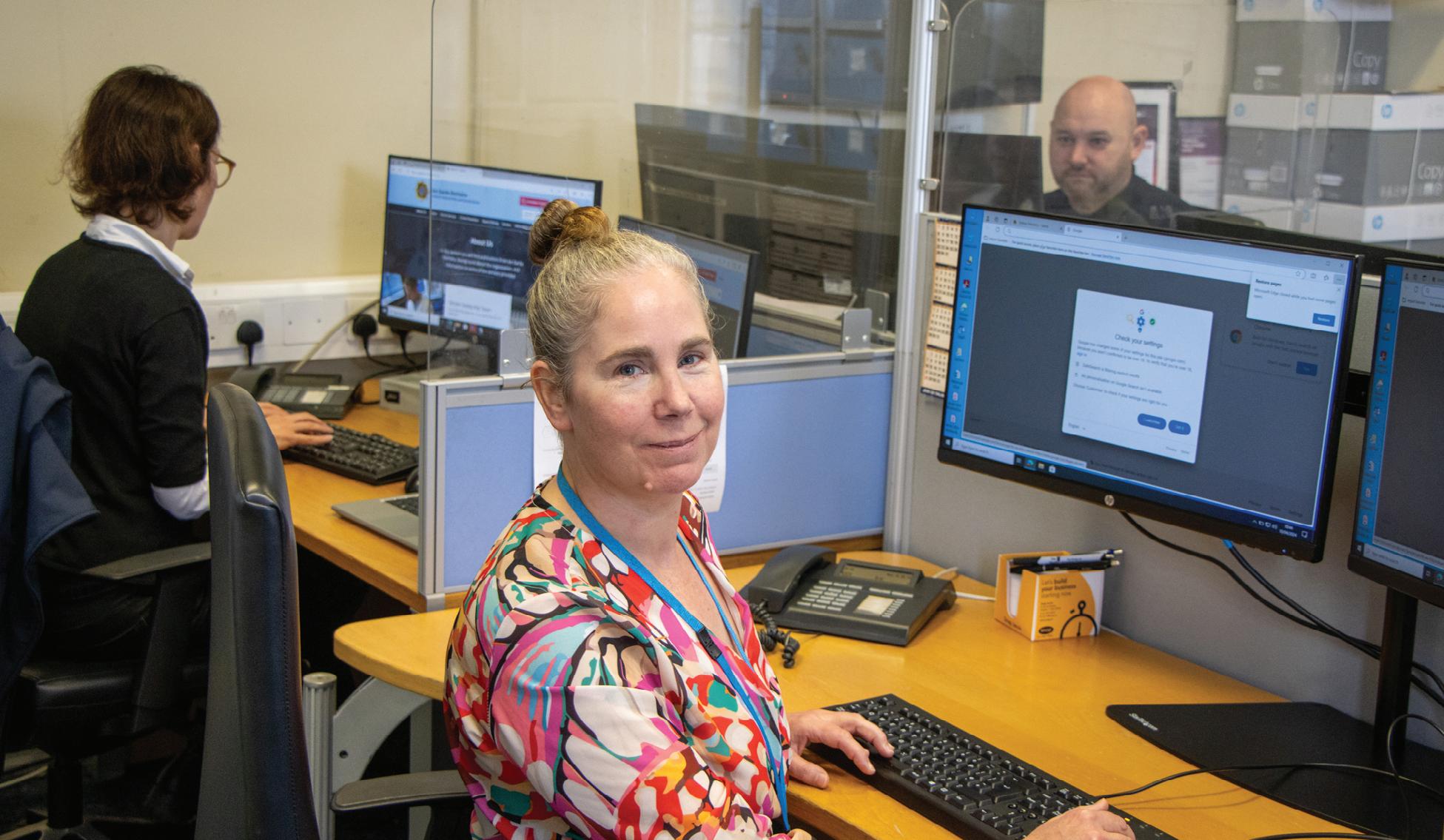
There are almost 3,500 Garda staff working within An Garda Síochána currently. Its civilian workforce is fundamental to the organisation, and brings a wealth of knowledge, skills and outside expertise to their roles in An Garda Síochána.
Garda staff support An Garda Síochána’s mission of keeping people safe by performing administrative and technical duties to support the work of operational colleagues.
This includes processing vetting applications; handling crime-reporting
calls from Gardaí; dealing with fixedcharge penalty notices; developing and running IT systems to aid crime investigation; keeping Gardaí informed of the latest policing developments; supporting the mental and physical health of Gardaí; and providing analysis of crime trends.
This civilianisation over the last number of years has resulted Gardaí returning to frontline duties, and Garda staff are currently taking on more functions to release further Gardaí.
At local level, they are essential to the operation of police work in each Operational Division. Here Garda Staff provide administration support in the Divisional Office, the Performance Assurance Function Area, the Community Engagement Functional Area and the Crime Functional Area. Meanwhile, the Business Service Functional Area is fully resourced by Garda Staff to provide HR, finance, logistics and administration functions.
To assist in its civilian expansion, An Garda Síochána has recently partnered with Staffline who have been awarded a contract to offer end-to-end recruitment solutions across a number of Garda staff grades. This partnership is aimed at finding avenues to the right talent. An Garda Síochána will also continue to recruit via the Public Appointments Service.
And, as we look to the future, An Garda Síochána will be looking to recruit top talent across a wide range of skilled roles in an environment that is implementing strategic growth and development. These include in Communications; Legal; Business; Finance; HR; Information Technology; Strategic Transformation; Crime; Community Engagement; and Administration functions.
Right now is an exciting time for anyone considering a career in An Garda Síochána as we are undergoing a transformation process, which seeks to expand and diversify our service.
Each of these roles offer the potential for greater career prospects through promotion but also lateral moves to positions in other sections and functional areas enabling upskilling and career diversification.
Among the areas which is expanding is in the Garda Press Office. As one of the busiest press offices in the country this office delivers for the organisation by highlighting crime investigation appeals, issuing public safety and crime prevention advice, and creating awareness of Garda activities.
Evan O’Leary, an Executive Officer attached to the Garda Press Office in Dublin, explains what his job entails.
“Typically my role involves drafting press releases or lines against queries for media; liaising with senior Gardaí if there is a major incident; and looking after our social media. If you have an interest in current affairs and have a sense of urgency, I think this is a role that could suit you.
“It is a dynamic office that keeps you connected to what is going on within the organisation and also society,” he said.
Meanwhile, Brendan Callaghan, who is also part of the Garda Press Office, works on the internal communications team.
“Most my time is spent researching and writing articles for Newsbeat. This is the digital organisational newsletter that goes out twice a week. The work gives me a great overview of the organisation.
I get to deal with people from different sections and bureaus in different parts of the country. It helps to foster good organisational culture and I like to think that the stories we put out acknowledge the great work being done by personnel every day”.
Brendan adds that for anyone coming into An Garda Síochána, no matter what role, they should prepare themselves “to be landed right in the centre of one of the most important and impactful organisations in the country. There’s never a dull day and there is always something happening”.
Another area which is expanding is the Garda Síochána Analysis Service (GSAS). This is the centre of expertise for turning internal and externally sourced data into information and insight that both directly supports investigations and data driven management decisions.
Crime and Data Analysts work to provide specialist expertise to operational policing including criminal investigations as well as analytical support for the development of policing operations to target specific issues; and strategic policing where they work to identify crime threats and support the development of national strategies and plans.
Further to this as An Garda Síochána embarks on a journey to become an information led and digital police service, it has an ambitious digital strategy which requires the delivery of extensive frontline policing systems. To support these goals, ICT specialists are also being recruited in the area of cyber security; infrastructure and operations; networks; service-delivery; software development; digital transformation; and technical architecture.
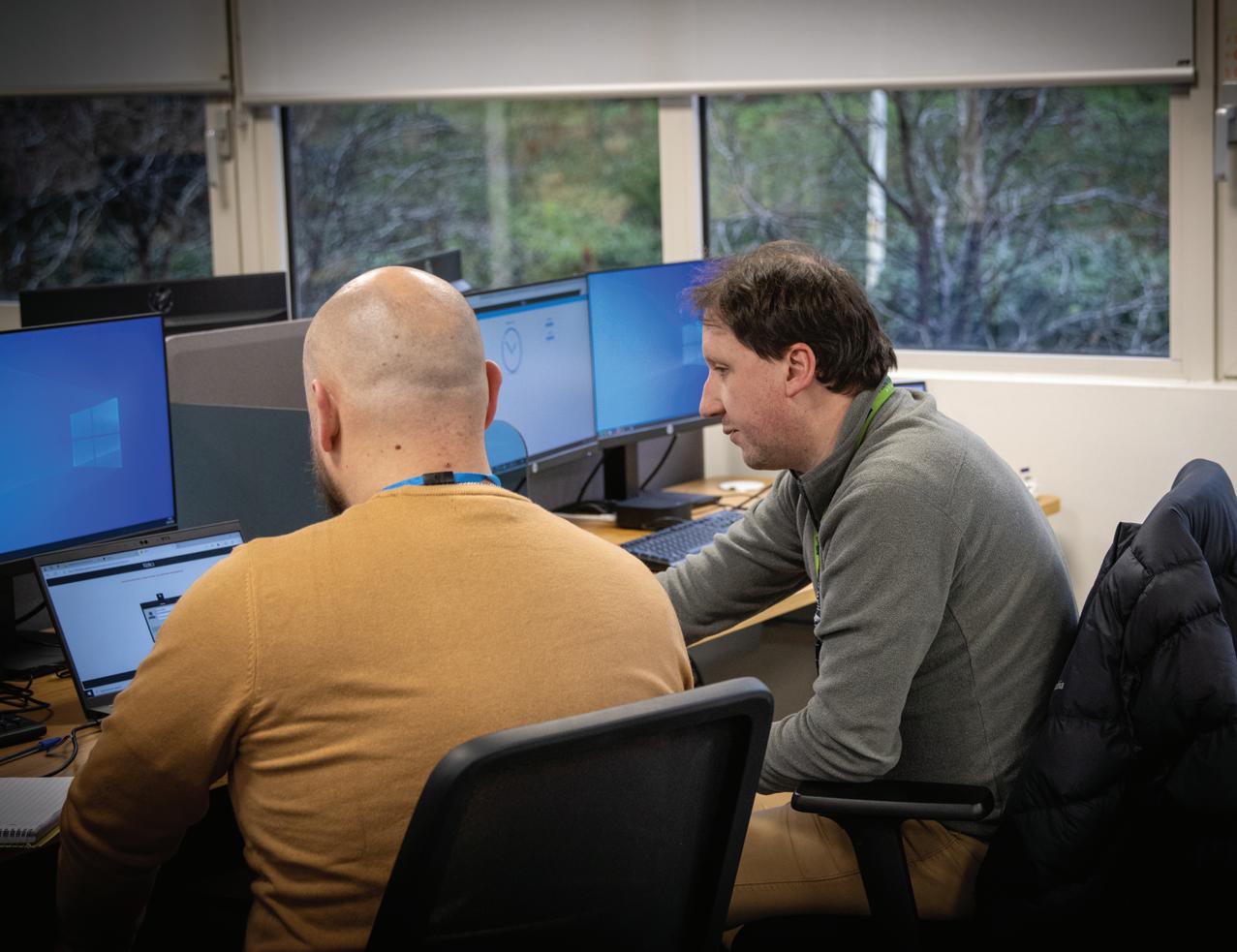
Florin Coste is an ICT specialist in An Garda Síochána and he outlines the opportunities that have been available to him since joining the civil service.
“My role is really interesting and challenging. It includes keeping up to date with ICT trends, analysing suspicious activity and training the rest of the organisation on security precautions. Ever since I joined An Garda Síochána, the support I received from my colleagues has been excellent. The ICT department was good at showing me the ropes and giving me a good understanding of An Garda Síochána key objectives. An Garda Síochána has a good support structure for further development and keeping up to date with new technologies. This includes offering ongoing development of staff knowledge and skills for the benefit of both the individual and the organisation”.
Further opportunities available within An Garda Síochána include roles in Garda Control Rooms; Garda Internal Audit Service; the Garda Information Services Centre; and Garda Vetting.
These are not just jobs but opportunities to make a tangible impact on the safety and security of the State.
To find out more about career opportunities in An Garda Síochána visit:
www.publicjobs.ie; www.staffline.getgotjobs.ie www.garda.ie/en/careers
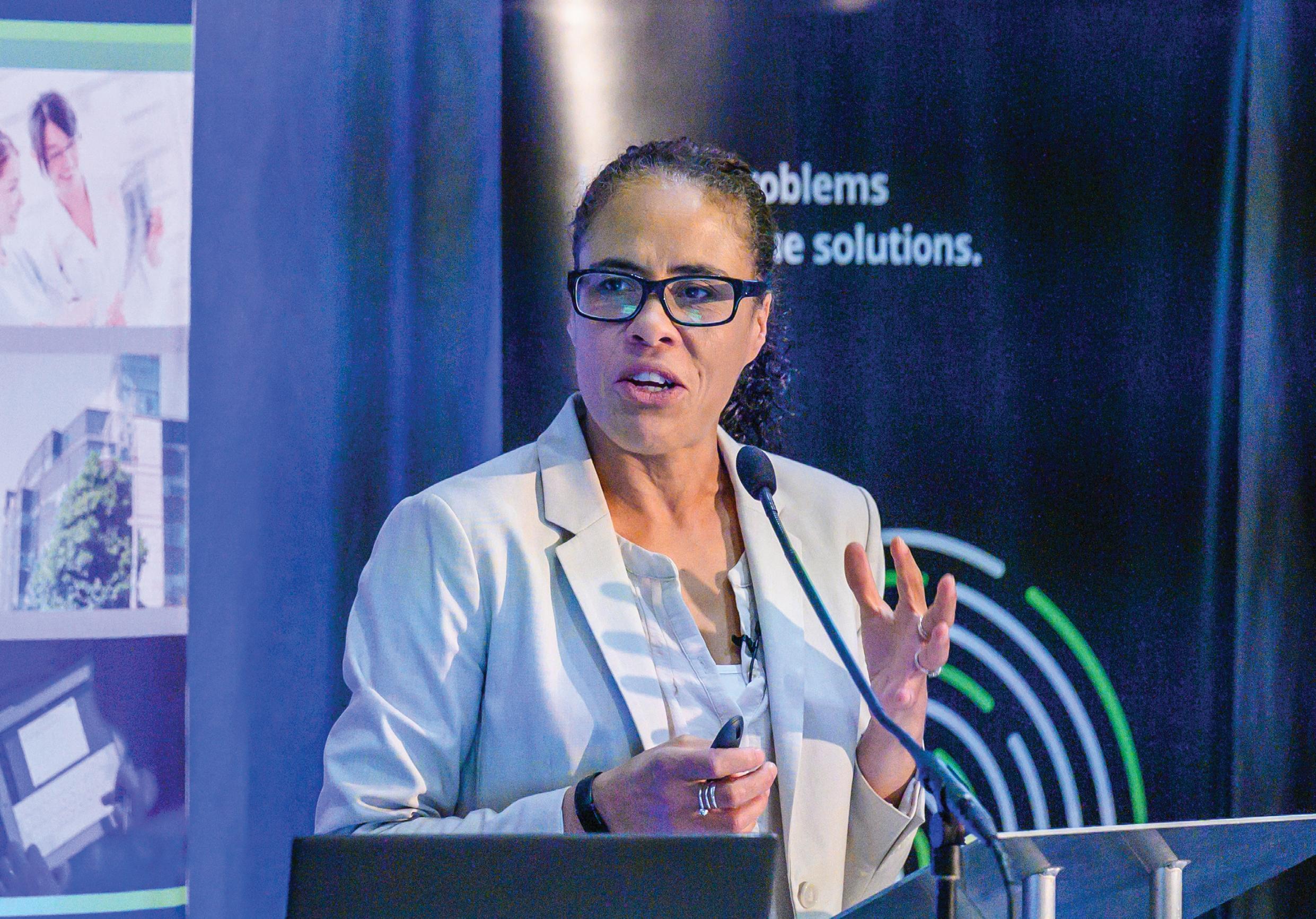

Head of Equality, Diversity, and Inclusion (EDI) at the Public Appointments Service/ publicjobs.ie – the centralised recruiter for the civil and public sector –Siobhán McKenna, highlights challenges in ensuring public sector workplaces are equitable and inclusive and how embedding EDI will help shape the workforce of the future.
With the size of the public sector workforce growing annually at a rate of 3.6 per cent since 2014, projected figures for total people employed in the civil service by 2031 are approximately 70,0001. In this context, McKenna suggests that the civil service must embrace EDI as a key driver in shaping both the workplace and workforce of the future.
The Randstad Workmonitor 2023 report identifies the five key priorities of the current global workforce when seeking employment:
1. job security;
2. work life balance;
3. values;
4. flexibility; and
5. purpose, meaning and belonging.
McKenna believes that the workforce of the future is becoming more values driven. “Whether it is due to social movements such as #MeToo and Black Lives Matter, or the inequality exposed by the Covid pandemic, we are more focused on our values than ever before,” she explains.
Citing a recent Hayes Ireland Workplace Diversity, Equity and Inclusion Report, McKenna notes that half of people surveyed would only consider applying to an organisation if it had a public commitment to EDI.
“One in two people surveyed by Hayes Ireland indicated that they would consider leaving their current organisation if it did not demonstrate a clear commitment to EDI and only 12
per cent of professionals believe their organisation’s workforce demographic is a fair reflection of today’s society,” she says.
McKenna also highlights that one of the key areas for improvement within the public sector is tackling ethnic or racial discrimination. In general, “people with an ethnic minority background have fewer promotional opportunities than their ethnic majority colleagues, a scenario that is replicated in workforces and sectors across Ireland,” she states.
To enhance EDI, McKenna contends that the public service of the future must be forward-looking, flexible, and fulfilling, while also equipped with new and emerging skillsets.
Suggesting that the workforce of the future will be multi-generational, with a “vastly different approach to work and work-life balance” across those
generations, she determines: “The workforce of the future will be looking for inclusive and culturally competent leaders; people who understand the power and value of diversity and how to make it work for the people of Ireland.”
In the Better Public Services: Public Service Transformation 2030 Strategy, under Pillar Two – Workforce and Organisation of the Future, the Government states its commitment to ensuring “a Public Service that is more diverse, agile and inclusive and reflects Irish society, to better serve the Government and the public.”
To support this ongoing effort, the Public Appointments Service/ publicjobs.ie launched its EDI strategy in 2021, outlining three key change areas of focus to ensure inclusive recruitment for all candidates, including:
1. getting better data and insights on who is applying for and securing roles in the civil and public sector;
2. developing better processes to ensure an equitable recruitment experience for all candidates; and
3. influencing and encouraging clients, partners and stakeholders to support inclusive recruitment and more equitable workplaces.
“We commissioned the ESRI to analyse thousands of data sets from application and assignment across gender, disability and ethnicity between 2019 and 2021,” McKenna says, adding that the findings of which reveal low representation of people with an ethnic minority background and those who are disabled.
To combat the underrepresentation of candidates with disabilities, the Public Appointments Service has long supported the delivery of Ahead’s wellestablished Willing Able and Mentoring (WAM) work placement programme. This programme aims to promote access to the labour market for graduates with disabilities. In 2022 a pathway to a permanent job after the placement was developed for the first time. Reflecting on its impact, McKenna outlines: “In 2022, out of a total of 22 work placements, 17 people subsequently secured roles across the service”, confirming for McKenna that different models of recruitment should be encouraged to attract and support the skills required for our future public services.
“We need to continue to create inclusive workplaces so people from diverse backgrounds will want to stay, thrive and commit to our organisations.”
Siobhán McKenna, Head of Equality, Diversity, and Inclusion, Public Appointments Service/publicjobs.ie
Furthermore, the Public Appointment Service/publicjobs.ie secured significant funding in 2023 from the Public Service Innovation Fund to take a co-design approach to re-imagining the reasonable accommodations process for candidates with disabilities, focusing on the assignment and onboarding stage.
Project partners, Tilting the Lens, a disability-led consultancy, brought over 100 people, from 30 organisations across the civil and public sector, together to participate in a collaborative design methodology – this included clients, candidates, design experts, disability advocates and unions. Two civil service-wide town halls were convened as part of this project with over 700 employees in attendance.
The Blueprint for Welcoming and Supporting Disabled Employees in the Civil and Public Sector addresses key challenges identified at the assignment and onboarding stages. The blueprint includes nine recommendations (across people and culture, process and systems, and policy and governance) that are designed to help public bodies implement and report on transparent actions to achieve long-term positive change in the assignment and onboarding of candidates with disabilities.
In relation to creating opportunities in the public sector for people with migrant background, McKenna highlights that the restrictive immigration eligibility criteria as an ongoing “structural barrier” for this group. “In response,” she continues, “prompted by research we commissioned through Open Doors and Fragomen, an interdepartmental working group reviewed the immigration eligibility criteria with a view to broadening it”. The civil service now accepts Stamp 4 and 5
permissions which McKenna says she hopes will help open the service up to a more diverse talent pool to drive creativity, innovation and productivity in our public services, so that “we deliver for all of Ireland’s communities.”
The Public Appointments Service/ publicjobs.ie also increased engagement with clients, partners, and public policy to enhance equality, diversity, and inclusion in the public sector, through strategic partnerships, external engagement and sponsorship including sponsorship of National Diversity and Inclusion Awards and the Exchange House Traveller Education Achievement Awards.
The leading EDI work of Public Appointments Service/publicjobs.ie has been recognised, with the CIPD inaugural Diversity Champion Award in 2023 and its partnership role a Civil Service Excellent Award for the groundbreaking Oireachtas Work Learning (OWL) Programme in 2023. While in addition the innovative Public Jobs Schools Resource Kit made significant inroads into demystifying careers within the civil service and public service and inspiring students from diverse backgrounds across state secondary schools to consider a public service career.
Summarising, McKenna insists that the public service must continue to create inclusive workplaces so that people from diverse backgrounds will want to stay, can thrive, and commit to our public sector bodies and services.
“We need better data, we need better processes, and we need to challenge the status quo. And I suspect that if we lead with empathy, we cannot go wrong,” she concludes.

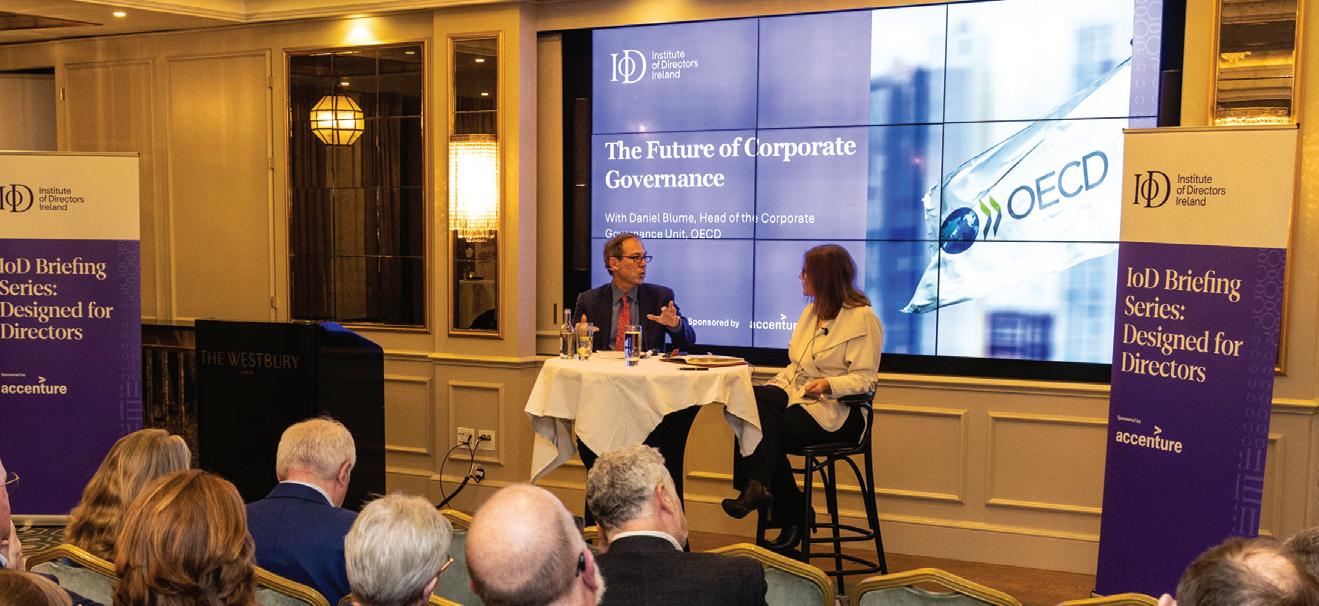
IoD Ireland’s vision is to make Ireland an exemplar in corporate governance by supporting directors and business leaders to lead successfully in an everchanging world.
Every organisation has unique characteristics, and the board of directors must evolve the governance infrastructure to suit organisational context with regard to maturity, size, competition, geographical spread, and ownership, among other things.
Boards of directors must formulate and oversee the execution of strategy within clearly defined risk parameters, operating with an effective system of internal control. They must do so with imperfect information and the uncertainty of a global macro-economic environment.
Corporate Governance codes, such as the UK Corporate Governance Code (2018), provide a critical benchmark against which organisations can develop their governance infrastructure. These components include: board composition; matters reserved for board decision; composition and terms of reference of
board committees; board policies; system of internal governance; processes of accountability; and reporting to and from the board.
However, the business landscape is constantly changing with developments in technology (e.g. artificial intelligence), the digital economy and cyber security creating both opportunities and threats for organisations and their boards. The ESG agenda, emanating from the objectives of the Paris Agreement and the related UN Sustainable Development Goals (SDGs), is changing the governance landscape, and significantly influencing the issues requiring board discussion and judgement.
The IoD Ireland Continuing Professional Development (CPD) Framework for Directors supports board directors and senior executives in the exercise of their governance responsibilities. It provides a
blueprint that describes the competencies needed by boards, directors, and senior executives to ensure strong governance and highperforming leadership in the fast-paced and demanding environment that organisations must respond to.
“It is our aim to propel Ireland forward as an exemplar of corporate governance,” commented IoD Ireland CEO, Caroline Spillane. “We are committed to providing cutting-edge resources and expert insights to help Ireland’s directors succeed. Our CPD Framework is designed for directors by directors.
“The most successful leaders and directors are those who are always open to learning, new ideas, and are inquisitive. They work with their executive teams effectively to ensure a clear understanding of the business needs so they can help support and foster the business and create a good culture.
“These leaders and directors do not see learning and development as a simple tick-boxing exercise but see it as a genuine opportunity to upskill and learn, so they can give a greater contribution to their board and, in turn, their organisation.”
The idea behind the IoD CPD Framework is the belief that a board is always learning and always growing; indeed, a board’s effectiveness is optimised by a collective commitment by directors to keep abreast of the changing business environment.
The learning opportunities afforded through the IoD CPD Framework for Directors are designed with the needs of board members in mind. Spillane noted: “Directors are exceptionally busy people, but need to keep learning as the environment changes. We recognise this and aim to give them that knowledge in portions that work for them, whether it is through bite size learning via events/resources and/or workshops, or via more in-depth learning opportunities, like our Chartered Director Programme.
“The framework can be applied by both individual directors to identify their own
educational needs so you can contribute to the collective strength of the board; but equally, boards can utilise the framework for their skills assessment, or for succession planning, both at board and at senior management level.”
The evolving nature of the CPD Framework is shaped by IoD Ireland’s unique strength as a membership-based organisation. Spillane noted: “Our members are the beating heart of IoD Ireland. Realtime member feedback and insight allow us to explore and evolve our director and board supports and offerings, including our learning and development opportunities (events/workshops/programmes, such as the Chartered Director Programme), member and board services (including board evaluations, boardroom centre, and in-house learning and development), and our research, policy, and advocacy work. The strength of our membership base feeds into everything we do, and proudly makes us different.”
The CPD framework is developed around four main dimensions.
The first dimension is the governance framework, which explores the essential duties and responsibilities of directors to keep internal governance practices to code. With the regulatory and legal landscapes within which companies operate always evolving, this is a
particularly important part of the framework.
The second dimension unpacks the technical knowledge and skills directors need to fine-tune board decisions, ensuring optimal outcomes in compliance, risk management, control and corporate performance. This covers areas such as cyber, AI, ESG, and financial literacy.
The third dimension is creative strategy formulation, which looks at the methodologies and creative thinking needed to shape strategies that meet short- and long-term business goals. The final dimension is the psychology of the boardroom. This dimension recognises that corporate governance is about human behaviour as much as
structures and processes. It encompasses the practical realities of boardroom behaviour and dynamics with a view to enhancing individual director and overall board effectiveness.
This innovative framework proves once again IoD Ireland’s aim to deliver all that directors need to lead in times of ceaseless change. It is a critical element of our mission to always champion innovation, life-long learning, and good governance to shape a dynamic future from the inside of Irish business out.
Learn more about the Institute of Directors Ireland: W: www.iodireland.ie


The total number of employees working from home increased to 750,000 people in 2022 according to the CSO, with one-third of workers indicating they now work from home for at least part of their week.
Figures from Census 2022 suggest that four out of five business, media, and public service professionals avail of home working, with the proportion of workers in science, research, engineering, and technology professionals group who work from home also sitting at 78 per cent.
It comes as no surprise that in order to support these increased numbers, the Work Life Balance and Miscellaneous Provisions Act, as well as the new Code of Practise with the Workplace Relations Commission has been established.
A new law on the right to request remote working is set out in part three of the Act. From 7 March 2024, all employees now have the new legal right to request

remote working. To avail of remote working, an employee must have six months of continuous service before the arrangement can start. However, employees are legally entitled to request remote working from their first day in a new job.
Furthermore, the law sets out that if an employee leaves their job but returns to the employer within 26 weeks, the intervening period does not count towards the six month requirement.
To request remote working, the application to the employer must specify the total days and which days are requested, the proposed starting date, and the reasons for requesting remote working.
Reasons can vary, but could include optimising quality of life, personal or domestic circumstances, reducing daily commutes, facilitating neurodiversity or special medical needs that would require a quiet working environment.
To accompany the new legislation, following a request from then-Minister for Enterprise, Trade and Employment, Simon Coveney TD, the Workplace Relations Commission has prepared the Code of Practise for Employers and Employees Right to Request Flexible Working and Right to Request Remote Working.
Prepared by representations from trade unions, employer representative bodies and the Irish Human Rights and Equality Commission, the new code aims to provide practical guidance to employers, employees, and any other persons as to the steps that may be taken for complying with one or more provisions required by the Work Life Balance and Miscellaneous Provisions Act 2023.
Specifically, the purpose of the Code is to:
• set out the detail of the processes regarding making and managing requests for remote working including when changes are sought or made to the agreed arrangement;
• support employers in objective, fair and reasonable decision-making when considering requests for remote working;
• offer practical guidance on best practice to employers, employees and/or their representatives to
ensure compliance with the legislation;
• assist in developing workplace policies and procedures for dealing with flexible working and remote working requests so as to provide clarity, transparency, and consistency for both employees and employers;
• provide guidance for the resolution of disputes in relation to requests for remote working insofar as it relates to the processing of the requests; and
• provide information to the public in relation to the relevant enactments.
According to the new code, after a request has been produced, the employer must respond as soon as “reasonably practicable” but no later than four weeks.
Additionally, within four weeks of receiving the request, the employer must approve the request, refuse it, or provide notice in writing that they need more time. This extended period cannot exceed eight weeks.
Furthermore, the employer should consider a request in an “objective, fair, and reasonable manner” before making their decision.
Owen Reidy, General Secretary of the Irish Congress of Trade Unions (ICTU) reflected on the recent changes to

legislation and code of practise: “It is good for businesses who get to retain valuable and often highly-trained staff. It is good for society and for the economy too. It will help close the gender gaps in employment, care, pay and pensions. Everyone wins.”
Maeve McElwee on Director of Employee Relations of the Irish Business and Employers Confederation (Ibec) also commented on the legislation for remote working, and emphasised: “The concept of remote working remains an evolving one, the benefits and challenges of which will continue to emerge in the postpandemic workplace. Where legislation is enacted in this area, it must be sufficiently agile to enable employers and employees alike to reap the benefits remote working can offer.”
Speaking on the publication of the Code, Audrey Cahill, Director General of the Workplace Relations Commission said: “I wish to acknowledge the assistance of ICTU and Ibec for their collaboration during the process, to ensure that the extensive stakeholder information was factored into the Code to produce the comprehensive final version that we believe will support all those to whom it is relevant.”
In 2019, Fingal County Council became the first local authority in Ireland to develop a skills strategy and five years on it is making a real impact across the county.
The purpose of the strategy is to identify gaps between the skills of Fingal’s workforce and skills that employers need. It sets out specific actions, such as developing new training courses, increasing course provision, and building relationships with employers, educational institutions and other stakeholders.
Analysis carried out in 2018 showed a skills gap of up to 7,600 roles per annum up to 2023. These were broken down across sectors and occupations with six key sectors identified for the county:
• commerce and trade;
• professional services;
• transport and logistics;
• manufacturing/biopharma;
• agri-food; and
• construction.
The strategy set out recommendations to be carried out by both the public and private sector working in partnership. Implementation was disrupted by the Covid-19 pandemic but in 2021, the Skills Strategy Implementation Group convened to review developments in key sectors in a post-Covid environment and drive activities to facilitate skills development and increase awareness of training and education opportunities.
Fingal County Council actively engaged with education providers and industry stakeholders to establish four sectoral subgroups in construction, transport and
logistics, green skills, and services to focus on the specific needs of businesses in that sector. The Council has ambitious plans to expand the membership of existing subgroups and break into new sectors with companies eager to replicate the success of the companies already involved.
As a result of these engagements, involving over 40 individual businesses and 12 education providers, a feedback mechanism has been developed. This gives organisations a means to communicate their needs to education providers through the adaptation of existing courses, signposting to provision, and through increased opportunities.
One of those companies was the Swords-based Riot Games. Discussions with the company facilitated by the council and Fingal Chamber Skillnet identified their immediate and future skills needs. This has led to Dublin City University and Technological University Dublin exploring delivery of a special purpose award for a short intensive course to upskill degree graduates from broadcast engineering disciplines in order to meet Riot Games’ business needs.
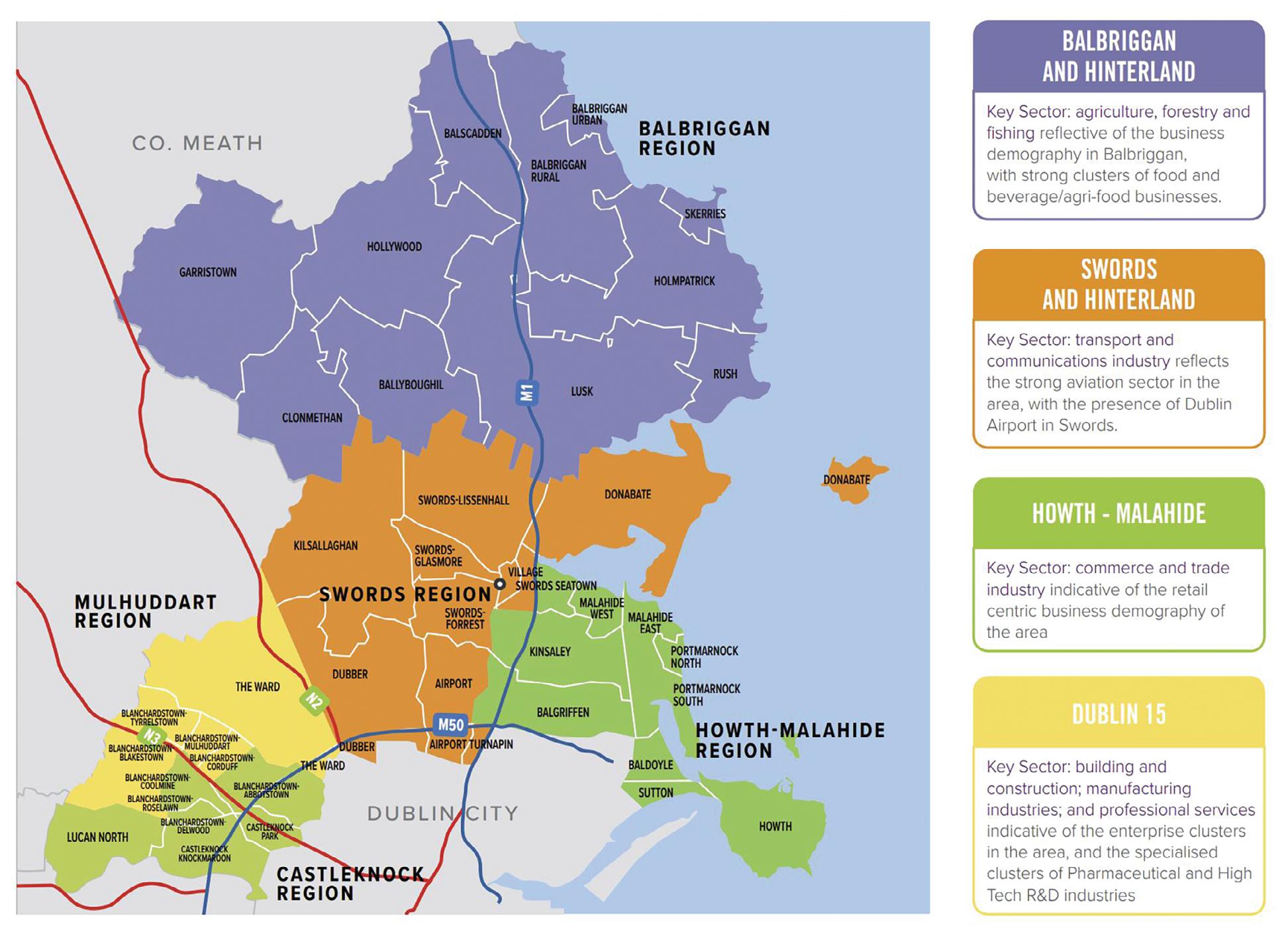
The Mayor of Fingal, Adrian Henchy, said: “As investment in Fingal continues to grow, it is very important that we safeguard this with a pipeline of workers with the right skills to fill future vacancies. With the county’s young age profile and competitive advantages in terms of enterprise, Fingal is very well placed to capitalise on this work. The strategy also puts in place a roadmap for people who may not have a high level of educational attainment, but who wish to embark on employment or upskill through further education.”
Secondary school students who are deciding on what career they should pursue after completing their Leaving Certificate are also being supported through the Skills Strategy. A pilot mentoring programme was run in four secondary schools in Balbriggan with 12 volunteers from local businesses in Fingal being trained in the Trinity Access Programme to mentor students and make them aware of future potential career options.
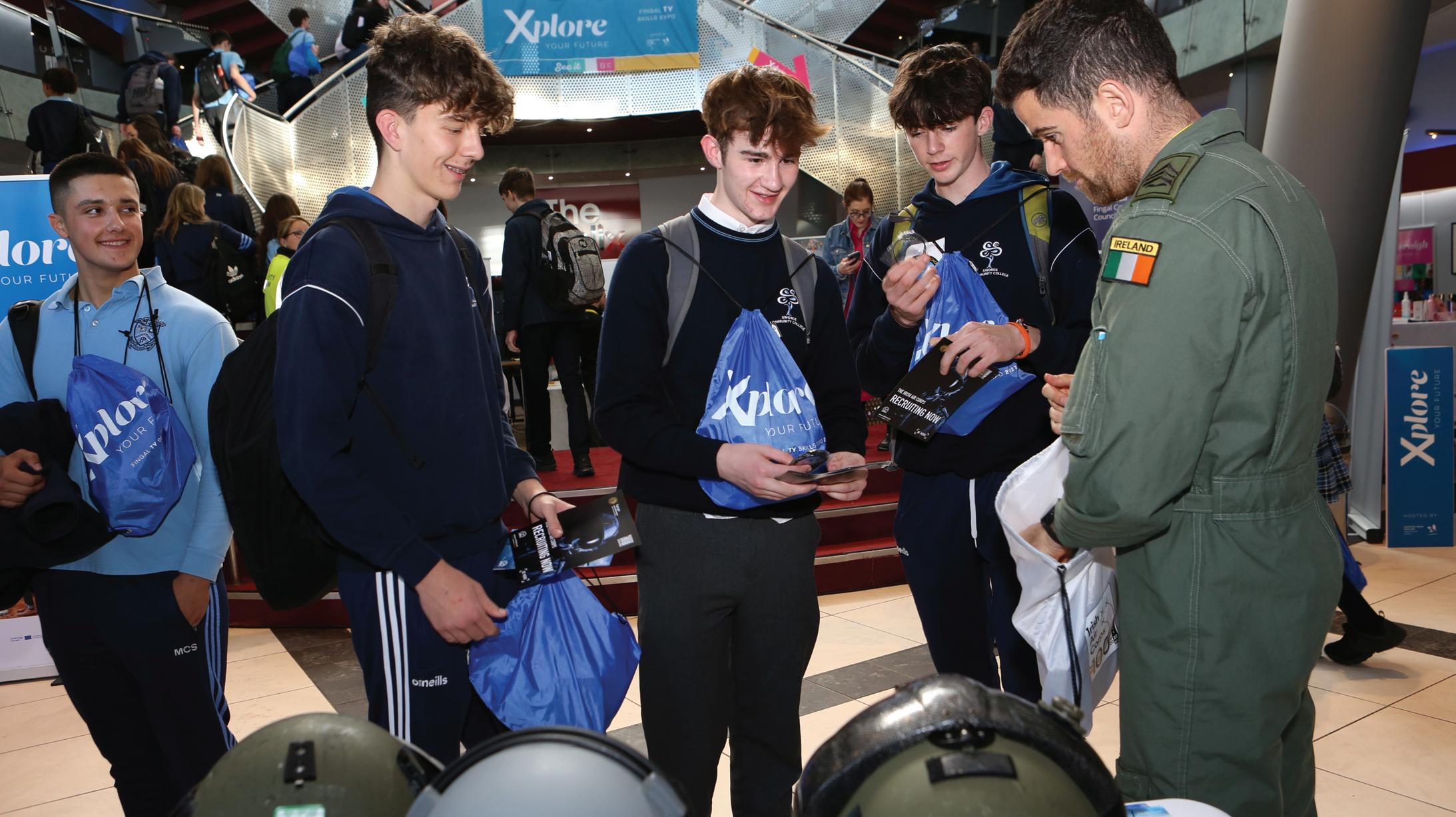
In October 2023, Fingal County Council, in partnership with Dublin City University (DCU), Dublin Regional Skills Forum (DRSF), Solas, NTO, DDLETB, CTETB and TU Dublin hosted the inaugural Xplore Your Future Skills Expo at The Helix. The ground-breaking initiative, organised as part of the Fingal Skills Strategy and the European Year of Skills
2023, attracted some 1,600 Transition Year students from Fingal and encouraged them to consider their educational and career prospects.
The Expo featured a diverse range of more than 70 exhibitors, including leading education providers, industry professionals, and career experts from private companies, all eager to share their knowledge and insights with the attendees.
The Fingal Skills Strategy was initially funded by Fingal County Council but the Council has been successful in accessing Interreg Europe funding to review and refresh the Fingal Skills Strategy as a partner in Project SKYLA. Project SKYLA is a consortium of 11 regional partners, led by Italy and including organisations from Sweden, Poland, Lithuania, Bulgaria, Greece, Belgium, and Fingal in Ireland.
Over a time horizon to 2027, Project SKYLA seeks to boost and adapt the role of Vocational Education Training in territorial innovation ecosystems and
smart specialisation strategies through the exchange and implementation of good practices between the partners. This partnership is bearing fruit, building new relationships with DDLETB, Fingal Chamber and Fingal LEO and European partners in a new Erasmus project to upskill SME’s in Corporate Digital Responsibility.
The Chief Executive of Fingal County Council, AnnMarie Farrelly, says: “In order to retain and attract companies that can provide employment within our county it is important we have a labour pool with the skills that are needed. The Fingal Skills Strategy has allowed us to identify where the gaps and opportunities are and our education partners have responded by providing the necessary courses to upskill people. It is a great example of what can be done when you bring the right people together to address an issue.”
W: www.fingal.ie/skills-strategy


Measuring the impact of mental health interventions in workplaces is essential for the wellbeing of employees, according to the World Economic Forum (WEF).
Measuring What Matters: Assessing Workplace Mental Health and Wellbeing, published by the WEF in February 2024, draws on studies carried out by mental health experts on the economic consequences of mental health challenges among employees.
The WEF states that the most realistic goal for employers should be to reduce the prevalence of common mental health conditions that affect wellbeing and productivity and are influenced by work, both quality and quantity.
“Although well-recognised, and validated scales to assess common conditions such as depression and anxiety exist, the World Health Organization (WHO) concluded that the evidence of benefit from disease screening followed by targeted intervention for depression and anxiety was inconclusive,” the report states.
The WEF further recommends the use of an integrated measurement approach by employers to their
employees’ mental health, citing the following advantages when employers adopt this integrated approach to measurement:
• a summative, single trackable measure of overall subjective wellbeing can be a valuable barometer of mood in an organisation;
• employers have direct influence over work culture and increased incentives to address aspects identified that are bad for business and mental health;
• bullying, discrimination, harassment, lack of autonomy, excessive workloads, and the inability to achieve a work-life balance are all shown to impact mental health negatively;
• by identifying entity-wide and local “hotspots”, employers can prioritise interventions based on common themes and/or organisational units; and
• an organisation can focus on the promotion of good work, the development of skills that promote psychological wellbeing and the facilitation of support pathways for employees who are struggling.
Looking at ESG requirements currently being introduced by governments around the world, the WEF states that increasing scrutiny of ESG practices of organisations, particularly by investors to determine investment and advocacy positions, is driving a need to demonstrate impactful improvements in employee wellbeing.
The report states: “ESG index organisations are integrating measures of employee wellbeing within their benchmarking indices.
“Measuring the impact of mental health interventions at work is essential for the wellbeing of employees, legal compliance, improved productivity, cost savings, and the overall success of an organisation.”
The Public Service Transformation 2030 Strategy marks a significant step forward in how public service organisations cater to the dynamic and changing needs of modern Ireland.
It is evident that public service organisations can only provide a quality service by fostering diversity and inclusivity. Not only that, but research indicates that inclusive workplaces are more innovative and more likely to enable people to be at their best and to thrive. Whilst meaningful progress has been made on diversity, more is required to ensure every part of the workforce – across all grades and all regions – is reflective of the communities it serves.
To ensure Ireland maintains its position amongst leading economies, now is the time for public service leaders to take meaningful action. Research has repeatedly demonstrated the positive impact that diversity, equity and inclusion have on organisational performance and outcomes. However, the barriers to progress include a lack of reliable culture and people data, a lack of senior leadership buy-in, and unconscious bias in decision-making. inclusio can help your organisation overcome these and other challenges.
Sandra Healy, Founder and CEO of inclusio, says: “inclusio is not a tick box. We help you understand all dimensions of diversity, equity and inclusion by deploying digital evidence-based solutions. With a team dedicated to helping you measure, track and take action, we link culture to your priorities.”
Teagasc | Engaging our people to deliver DEI strategy with inclusio
Teagasc’s success with inclusio serves as a model for public sector organisations.
Teagasc partnered with inclusio to track DEI performance, respond to public sector duty reporting and develop dataled action plans based on the voices of their people. Deploying inclusio’s digital technology and scientific culture framework empowered Teagasc to demonstrate tangible impact.
Teagasc had developed its DEI strategy, however, it was unable to demonstrate and measure its impact. Getting
feedback and input from staff on culture and diversity was an important step in the implementation strategy.
With inclusio data insights, Teagasc learned that 73 per cent of their people feel a strong sense of belonging, 5 per cent of staff have a disability and over 10 per cent identify as neurodiverse, to support strategy implementation, the inclusio team delivered 280 hours of specialist eLearning and delivered a leadership development programme for managers.
The data and initiatives provided Teagasc with a comprehensive picture of their workforce and enabled them to develop relevant, meaningful and measurable action plans resulting in higher levels of staff engagement and buy-in for DEI across all levels.
“We understand that a positive experience at work is critical to attract, retain, and motivate the best people,” says Valerie Farell, Head of Human Resources, Teagasc.
For a free 30 minute consultation on how inclusio can help you and your organisation – visit:
W: www.inclusio.io nd Reform.
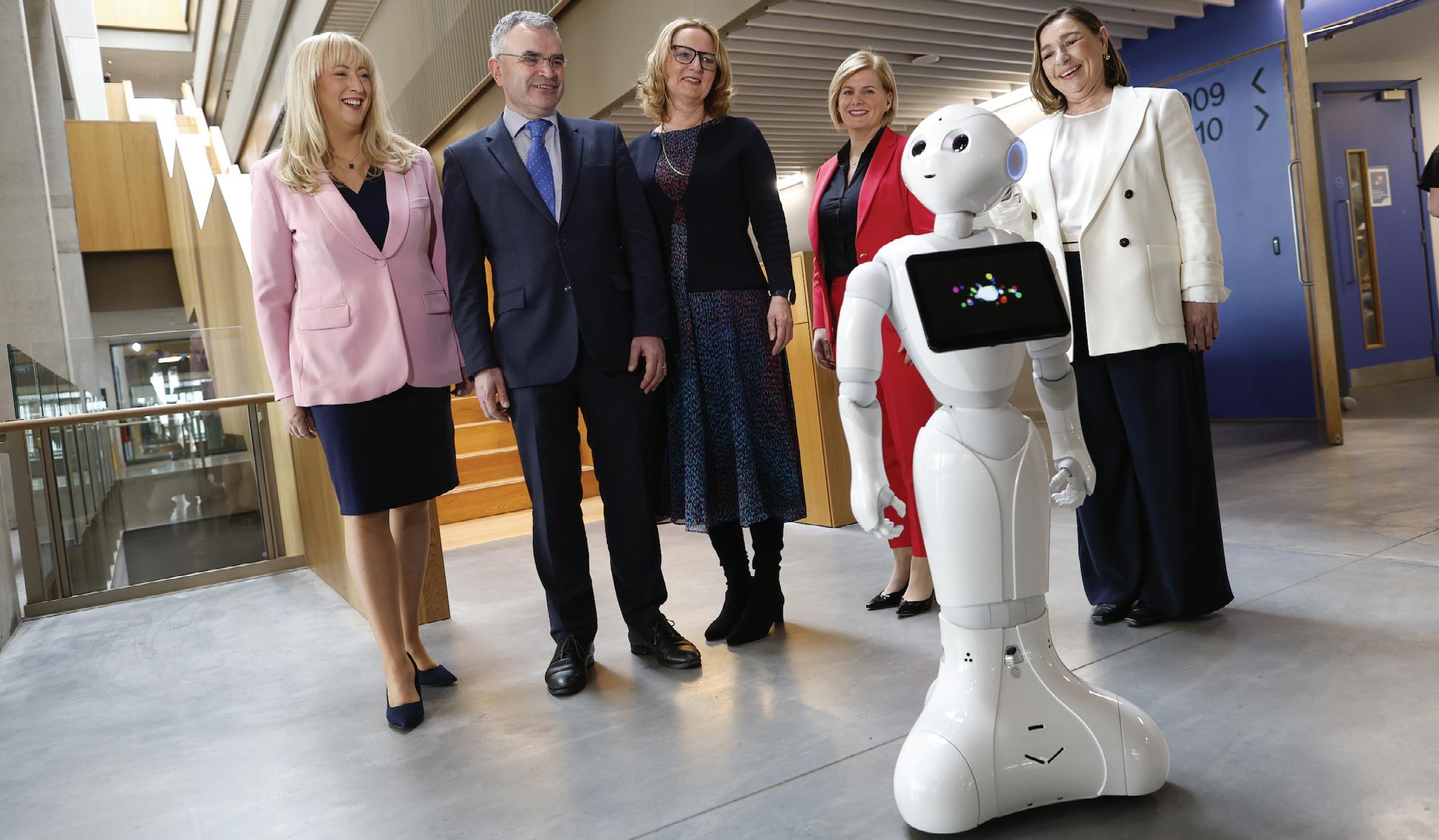
Skillnet Ireland Director of Policy and Communications, Tracey Donnery, discusses the future of work and the emerging opportunities for businesses offered by AI and the twin digital and green transitions.

Looking to the future of work in Ireland, the twin digital and green transitions are going to be increasingly important to the success of individual businesses and the Irish economy as a whole. Over the coming decades, digital technologies will play a major role in shaping competitiveness, productivity, and sustainability across the globe. Supporting Ireland’s highly skilled workforce to develop the right skillsets to drive the digital transition will be key to maintaining Ireland’s competitive edge. As the national talent development agency for enterprise, Skillnet Ireland focuses on ensuring that Ireland has a future-ready workforce to navigate the digital and green transitions and enabling companies to bolster their competitiveness in these rapidly evolving areas.
A recent European Commission report entitled Pact for Skills: Analysing of Upskilling and Reskilling Policy Initiatives and Identifying Best Practices ranked Skillnet Ireland first out of 47 upskilling initiatives in benchmarking based on overall average key performance metrics, as well as topping the analysis for impact on businesses and impact/contribution to the economy including to the digital and climate agenda. The report assessed best-practice upskilling initiatives for enterprise in all EU member states, the United States, UK, Canada, China, Singapore, Japan, South Korea, India and South Africa. The report was conducted by PwC and commissioned by the European Innovation Council (EIC) which was established under the EU Horizon Europe programme which supports innovation across the EU.
“We are pleased with this very positive outcome recognising Skillnet Ireland. This result reinforces Ireland’s reputation for leading-edge workforce development policies and business supports. This success is made possible by the excellent work of the many industry partners, academic institutions and enterprise agencies that work collaboratively with Skillnet Ireland to support enterprise-led talent development across all regions and sectors,” says Donnery.
The EU Pact for Skills not only addresses immediate needs but also sets a strategic direction for the future of work and skill development in Europe, and developing a resilient, skilled workforce capable of navigating the challenges brought forth by the digital and green transitions. It emphasises the importance of upskilling and reskilling the working-age population, leveraging existing EU cooperation initiatives, and promoting a culture of lifelong learning.
Ireland has set out its ambition to be a digital leader at the heart of European and global digital developments, explains Donnery: “We know that digitalisation is a key priority for Irish business. In our National Talent Landscape report, we assessed the skills needs of 500 business leaders in Ireland with over 65 per cent of all businesses stating that their staff would require some form of digital upskilling in the coming years.
“The report highlights that Irish businesses recognise both the challenges and opportunities that accelerated digitalisation brings, and crucially, they recognise the importance of equipping their workforces with the necessary skillsets to navigate this landscape.
“Over 40 per cent of large businesses see the huge potential for AI skills to grow their businesses over the coming years. We are also seeing the same trend emerging from SMEs, with more than 20 per cent seeing AI skills as a critical growth area. There is a growing awareness across businesses of all sizes about the opportunities that AI can bring.”
Skillnet Ireland plays a crucial role in facilitating the necessary upskilling and talent development initiatives needed to support Irish enterprise, and particularly SMEs, in the digital transition. Through its numerous Digital and Technology Skillnet Business Networks and national initiatives, Skillnet Ireland supported over 13,000 workers undertaking digital skills programmes with a two-pronged focus on specialised talent for new or emerging technologies, and in enabling digital transformation within the SME sector.
Every organisation, regardless of its industry and offering is now an information company. From relationships with external partners and customers to internal operations, digital technologies and platforms are impacting and transforming every job function within every firm and industry.
The unique thing about the Skillnet Ireland model is that the upskilling programmes provided are industry-led, so they are designed to meet the
specific needs of businesses of all sizes and sectors. Within the AI space, Skillnet Ireland has expanded its range of supports in recent years, from specialist masters in artificial intelligence with UL and DCU, to AI skills for machine visioning systems and predictive maintenance in advanced manufacturing, to UX Design for immersive technologies and sports analytics, technology, and innovation.
In delivering the ambitious Climate Action Plan targets to halve emissions by 2030 and become carbon neutral by 2050, businesses across every region and sector face the challenge of integrating climate change considerations, and long-term sustainability, into their business models and culture. Talent therefore, is at the very forefront of the green transition.
Over 1,800 businesses and 5,800 employees benefit from climate and sustainability upskilling programmes delivered by Skillnet Ireland annually across a range of areas including energy management, offshore wind, water stewardship, biodiversity management and efficiency in building systems.
Launched in 2021, the Skillnet Climate Ready Academy works closely with key industry stakeholders and agencies, including Uisce Éireann, IDA Ireland, Enterprise Ireland, Bord Bia, SEAI and the EPA, to ensure impactful, best in class training is delivered to companies seeking to enhance their sustainability. Since 2021, over 1,000 businesses and 3,500 individuals have progressed through the Academy, collectively committing to delivering over 2,500 sustainability actions.
The Skillnet Climate Ready Academy has also developed the first series of stackable micro-credential programmes in energy management, waste and circular economy, biodiversity and others to bridge the skills gaps in organisations and improve enterprise productivity as well as enabling career development and progression for employees.
“The stackable nature of the microcredentials gives employees the opportunity to gain a level 7 university accredited certificate in the fundamentals
of sustainable resource management from the University of Limerick. This has proven to be a significant factor in our engagement with businesses. In June 2024, over 80 learners will graduate and be awarded Ireland’s first stackable micro-credential Certificate in Sustainability, all having made a concrete impact on sustainability practices within their business,” Donnery says.
Ireland’s international reputation and profile as an innovative, agile and highperforming economy is critically dependent on its talented and highly skilled workforce. The digital and green transitions are some of the greatest challenges businesses will face, and those that embrace the transformation are set to benefit from the opportunities it affords. This transformation demands a robust and durable supply of talent and highly skilled workers. Skillnet Ireland works closely with enterprise and the tertiary sector to design and deliver innovative and impactful talent development programmes that meet the needs of businesses. As the national talent development agency for enterprise, Skillnet Ireland actively promotes lifelong learning and supports over 24,000 businesses and 92,000 learners with training and upskilling needs annually through its 70 Business Networks and national initiatives including Skillnet Climate Ready Academy, Skillnet Innovation Exchange and MentorsWork.
“Businesses enjoy working with Skillnet Ireland because they have a high degree of control and influence over the process. Our deep roots with enterprise allow us to respond to skills challenges in a proactive and agile manner. We understand the importance of upskilling and lifelong learning to the digitalisation of the economy, while also appreciating the real difficulties businesses face. Therefore, we partner with industry and educational providers to develop workforce upskilling solutions that work for businesses,” Donnery adds.
T: 01 207 9630
E: info@skillnetireland.ie
W: www.skillnetireland.ie

The Department of Further and Higher Education, Research, Innovation and Science is pursuing multiple strategies which aim to increase the scope for apprenticeships as a path to employment in the public, private, and third sectors.
2022 saw a total of 373 apprentices registered with public sector employers such as the civil service, the Defence Forces and local authorities. This was an increase of 46 per cent on 2021 registrations.
The Public Service Apprenticeship Plan, published in the summer of 2023, outlines government ambitions to reach 750 apprentice registrations in the public sector per year by 2025. The Public Service Apprenticeship Plan is key deliverable under the Action Plan for Apprenticeship 2021-2025, which was published in 2021.
Key areas where the Department is aiming to optimise use of apprenticeships are in ICT skills expansions, housing, healthcare, emergency services, and the Irish language.
To increase the role of apprenticeships in the private sector, the Department of Further and Higher Education, Research, Innovation and Science has announced it will roll out 17 new apprenticeship programmes in 2024. The new apprenticeship programmes are intended to start from mid-2024 and later in the academic year.
The scheme is part of an ambition outlined by the Department of Further and Higher Education, Research, Innovation and Science to reach 10,000 new apprentices by 2025, which is also being done under the auspices of the Action Plan for Apprenticeships
2023 saw a record 8,712 apprentices registered for training in 2023, 2,124 of which are on consortia-led programmes, and 6,588 are in crafts.

17 apprenticeship programmes are proposed for 2024, including four in construction, while a further six in areas such as firefighting and paramedics are in development.
The announcement comes as figures show the apprenticeship population has increased to 27,470, with a record 8,712 new registrations in 2023.
Speaking at the time of the announcement in January 2024 prior to his becoming Taoiseach, then-Minister for Further and Higher Education Simon Harris TD said: “The future of this country will be safeguarded by our skilled apprentices so we must put all the tools at the disposal of young people to avail of these opportunities and get trained in areas where there is need for an increase in workers.”
Minister of State at the Department of Further and Higher Education, Research, Innovation and Science Niall Collins TD says that he is “incredibly proud” of the effort being made to expand apprenticeship programmes in the private sector.
“We know what our targets are, and we know that we need to make them if we are to deliver the skills the country needs in order to tackle the challenges we face in the areas of housing, climate, and other rapidly changing areas.
“We need to keep spreading the message that there is a huge variety of careers available through apprenticeships – sustainable jobs that will answer the skills needs of the country, and also many that will help drive the Government’s Housing for All strategy.”
Mary-Liz Trant, Director of the National Apprenticeship Office, says that the National Apprenticeship Office is “delighted to support employers and the enterprise community in meeting skills needs and supporting talent development and retention through the apprenticeship route”.
“Close to 10,000 training places for phase two craft apprentices are planned for 2024, which is almost double the capacity in 2023. The objective in 2024 is to eliminate the delays in full, working closely monthon-month with ETB [Education and Training Board], TU [technological universities], and IoT [Internet of Things] training providers, and with the support of industry,” Trant states.

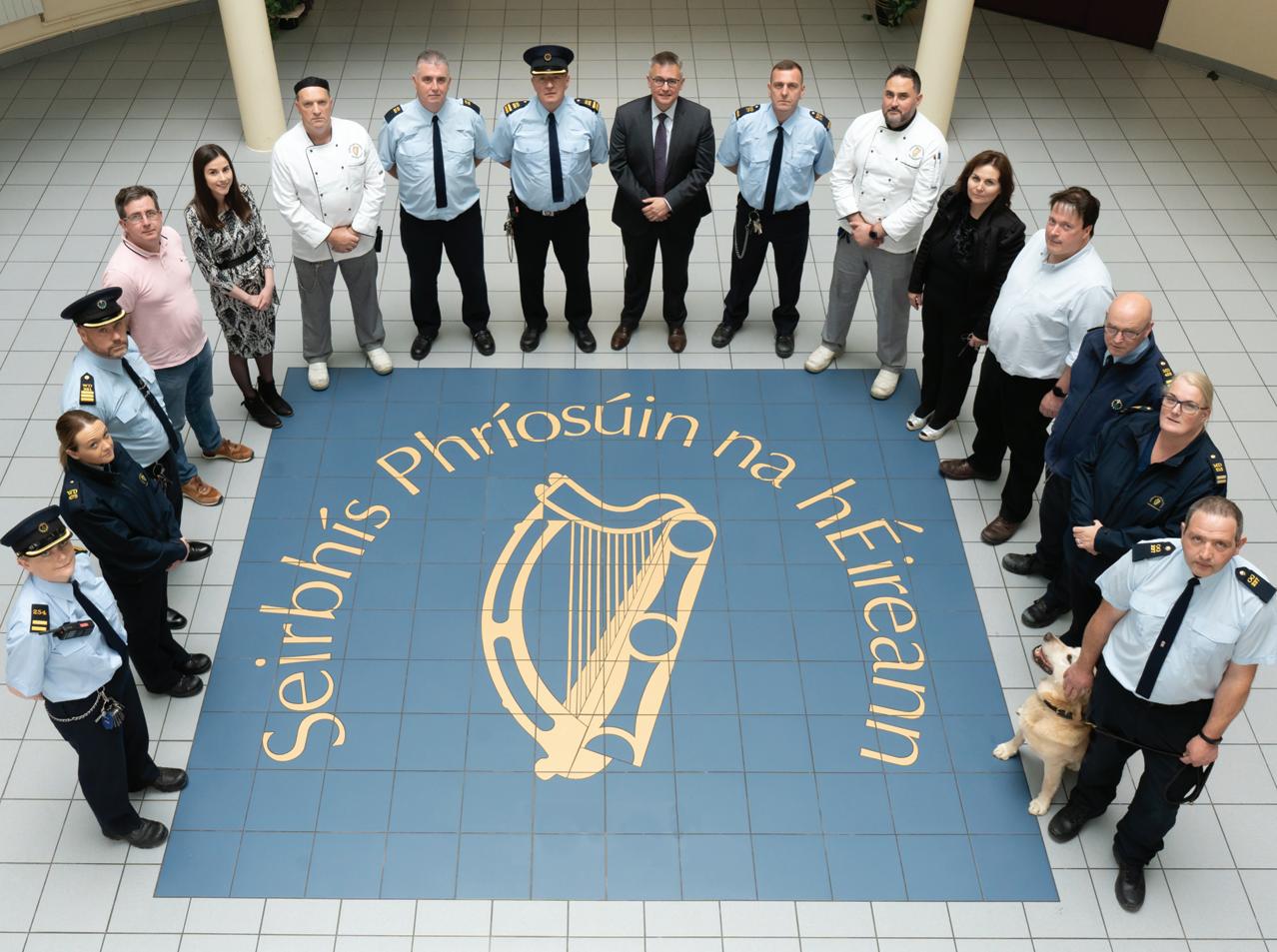
The Irish Prison Service offers some of the most interesting and rewarding clinical work in the country, writes Emma Regan, Director of Care and Rehabilitation.
I am a clinical psychologist and more recently Director of Care and Rehabilitation with the Irish Prison Service. The clinical and professional grades I work with include general practitioners, general nurses, psychologists, dentists, psychiatric nurses, social workers, psychiatrists, pharmacists, addiction counsellors, opticians, physiotherapists, and soon, occupational therapists.
One thing we all have in common is that when we started training in our respective professions, it is unlikely any of us thought we would spend at least some, if not the majority of our career working in prisons. However, once you get past the wall and the airport style security, the work, the offices, the clinical environment and clinical need are very similar to the community.
There are almost 5,000 people in custody in the Irish Prison Service at the point of writing (April 2024). Of this, almost 1,000 are on remand, with the remainder serving sentences from
months to life imprisonment. The Irish Prison Service accommodates people over the age of 18, right through to people who are in their 80s and 90s. Approximately five per cent of the population are women and they are accommodated in both Dóchas Centre in Dublin and Limerick Female Prison. There is a significant cohort of young people aged 18-24, as well as an older age population, defined in prisons internationally as over the age of 55 owing to the level of comorbidity and life expectancy of people who have contact with the prison system.
Some clinicians, such as those who inreach to prisons from the Central Mental Hospital, are employed by the HSE. Others are employed through various non-profit organisations. Most clinicians working within prisons are employed directly by the Irish Prison Service and therefore a particular clinical – prison expertise has developed, which is internationally recognised and regarded. Countries as
far away as Singapore, in addition to the highly regarded Norwegian Prison Service have planned or are planning visits to Ireland to learn more about the way in which the Irish Prison Service model of care operates. Significantly, a medical model is not the dominant model of care. A biopsychosocial, recovery-based model is favoured, and is experienced as refreshing and empowering by many clinicians working within the service.
When someone enters custody, they are seen within particular timeframes by prison primary healthcare including nursing staff and a general practitioner for initial assessment. Following this assessment, and an interview with Work-Training Integrated Sentence Management Officers, a plethora of referrals are made, depending on the risks and needs highlighted. Some people remain under the care of primary care only. Others will receive referrals to and from various services within the prison including psychology (mental health and/or offending behaviour work), addiction counselling, psychiatry, social work, physiotherapy, dental and so on. The person serves their sentence, interacting with clinical services in prison as required. Our aim is that people leave custody and return to the community both healthier and safer. It is truly satisfying to see someone transition from being ravaged by the impact of addiction, homelessness, physical and psychological distress, and poor accountability, to someone who is physically and psychologically healthier, takes responsibility for their offending and is willing to continue to seek support to lead a safer life upon release.
People’s clinical presentations are the same as you might expect in the community, albeit there is significantly more comorbidity leading to more extreme presentations. People tend to have led chaotic lives from childhood to imprisonment and it is often only when they come to prison that the physical, mental health and other difficulties they face are highlighted and dealt with. Three key challenges include mental health difficulties, addiction, and poor dental health. Dual diagnoses or cooccurring mental health and addiction difficulties are the norm rather than the exception.
Mental health presentations include anxiety and related difficulties such as panic attacks, post-traumatic stress disorder (PTSD), complex PTSD, selfharm and suicidal behaviour, eating disorders, personality difficulties, depression, bipolar disorder, psychosis and schizophrenia, and addiction. In
addition, people present with autistic spectrum disorders, foetal alcohol syndrome, intellectual difficulties, attention deficit hyperactivity disorder, cognitive decline (including dementia) and traumatic brain injury. Physical health presentations include everything from the provision of ante-natal care to the treatment of acute injuries and illnesses, the management of chronic disease and increasingly, due to the ageing prison population, the provision of palliative care to those experiencing terminal illness.
The biggest challenge for clinicians working in prisons is that we work in an environment which is traditionally ‘nontherapeutic’ i.e. it is operational, and security takes precedence. That said, each discipline navigates its way through this complex and unfamiliar territory through good working relationships with uniformed staff and management, and the Prison Officers Association. Good working relationships are also critical with the HSE including primary, secondary and tertiary care services, community based GPs, nongovernmental organisations. People in custody continue to use some community based services when their needs stretch beyond what prison services can provide, and of course often require ongoing community services on release.
The Irish Prison Service has a complex set of responsibilities, including providing safe and secure custody, and challenging people to take responsibility for the harm they have caused, and at the same time supporting recovery and rehabilitation so that people are prepared for a life back in the community where they can prosper and do no more harm.
People often ask me why do I work in prisons and not in a ‘nice job’? I have one simple answer: in my work, I think about my daughter, and I think about your children, your nieces, nephews, cousins, brothers, sisters, loved ones, neighbours, and friends. If any of those most precious to you were sitting on a bus beside someone who had just left custody, who do you want them sitting beside? Someone who we locked up, and threw away the key until the day of their release? Or, someone who we worked hard to positively impact, so that they left custody less angry and more connected to their community, less dependent on addiction, and psychologically and physically healthier. For me, the answer is clear.
The crimes that people in custody have committed are often heinous and abhorrent. Working with people who
commit such crimes does not mean that clinicians and professional grades excuse the crimes; not at all. However, clinicians and professional grades want to be part of making Ireland safer through their contribution in the Irish Prison Service.
Prison clinical and professional services do not struggle with retention so much as struggle with initial recruitment for the very reason highlighted above. When we train, we think about our future career within a hospital, surgery, primary care service, community mental health team or otherwise. The hidden nature of prisons is our biggest recruitment problem. Certainly, there are clinical and professional grades who will choose not to work in prison, possibly because of the nature of the client group and their offending. I understand this decision in the same way I understand clinicians choosing not to work with adults, or children, or choosing one specialist route rather than another – oncology over cardiology; it is personal/professional preference. Others may choose not to work in prisons because they believe it might be a frightening place to work. In relation to the issue of safety, I think most of us would agree that we feel safer working in the Irish Prison Service than in the community. Others still, might just acknowledge prisons were never on their radar. My suggestion is to reach out to the Irish Prison Service so that we can discuss opportunities and dispel myths via the contact details below. Much work is being done to support recruitment of clinicians and professional grades to prisons. Each discipline has its own bespoke recruitment strategy that fits with the training and career
trajectory of that discipline. In order to make prisons a more obvious choice, we need to engage people early in their career. To that end, our psychology service now provides its academic input within a prison rather than in the respective university for the majority of Ireland’s clinical psychology training programmes as well as the counselling psychology programme. This input includes a full tour of the prison and work environment, in addition to meeting with people in custody. It is only when people witness first-hand the reality of working in a prison, including the prospective client or patient group, will it become a viable career option. In addition, I am hopeful that this article provides some understanding of the truly great work being done by clinical and professional grades behind the walls of our prisons every day.
W: www.irishprisons.ie
X: @IrishPrisons
LinkedIn: www.linkedin.com/company/irishprison-service
Facebook: www.facebook.com/irishprisonservice
Instagram: www.instagram.com/irishprisons



Ireland will need to build adaptability into the National Skills Strategy if it is to keep pace with a rapidly evolving labour market.
Ireland has achieved relatively strong skills performance in many areas. Youth are achieving high levels of skills performance; the tertiary attainment level among young adults is among the highest across the OECD; and Ireland performs better than the EU average in terms of digital skills, with strong growth in recent years. Ireland also does a good job at activating people’s skills in the labour market, and their skills contribute to high levels of innovation.
However, Ireland still faces a number of important skills challenges. A challenge raised by the OECD is that many Irish adults do not have the skills to succeed in economies and societies of the future, and participation in lifelong learning lags behind top European Union (EU)
performers. Skills imbalances in the labour market are also relatively high, and workplaces could be better designed to stimulate the use of workers’ skills. Furthermore, the governance of Ireland’s skills system is complex and requires strong collaboration and coordination across government and with stakeholders.
The OECD Skills Strategy Ireland: Assessment and Recommendations, published in 2023, identifies four priority areas for action and provides tailored recommendations for improving Ireland’s skills outcomes.
These four priorities are:
1. securing a balance in skills through a responsive and diversified supply of skills;
2. fostering greater participation in lifelong learning in and outside the workplace;
3. leveraging skills to drive innovation and strengthen firm performance; and
4. strengthening skills governance to build a joined-up skills ecosystem.
In the context of rapidly changing skills needs, the OECD states that it will be essential for Ireland to develop a skills system that helps to secure a balance between skills demand and supply.
“Ireland needs to ensure that its skills system is flexible and responsive to address skills shortages and mismatches as they emerge and plan for future skills needs. A diversified supply of skills is also needed to build adaptability and resilience in the face of societal and economic change.”
To better secure a balance in skills in Ireland, the OECD makes three recommendations for the Government:
1. improve information and guidance for individuals on learning and career pathways;
2. strengthen learning and career pathways over the life course; and
3. make education and training provision more responsive to changing skills needs.
The report asserts that encouraging a culture of lifelong learning is “crucial to ensuring that individuals actively engage in adult learning after leaving the compulsory education system”.
“In turn, participation in different forms of adult learning results in a wide range of benefits, including higher wages for individuals, higher productivity for firms, and higher levels of social trust. Across countries, there is a growing need to upskill and reskill regularly over the life course to adapt to labour market and societal developments.”
To foster greater participation in lifelong learning in and outside the workplace, the OECD states that Ireland should:
• strengthen incentives to participate in lifelong learning for individuals;
• strengthen incentives to participate in lifelong learning for employers; and
• make lifelong learning more flexible and accessible.
“Optimally using people’s skills is associated with higher wages and job satisfaction for employees, high rates of productivity and innovation within firms, and stronger growth of the economy,” the OECD states.
The organisation further asserts that better leverage of skills will be central to supporting economic growth, promoting resilience to global megatrends, and ensuring Ireland can achieve its aims of digital leadership and a just transition.
To better leverage skills to drive innovation and strengthen firm performance, the OECD recommends that the Government:
• better utilise Ireland’s research talent and public research and innovation system to drive innovation within firms;
• promote the continuous improvement of leadership and management skills within enterprises; and
• incentivise and enable enterprises to make better use of the skills of their workers through innovative workplace solutions.
Outlining that well-functioning skills governance arrangements are the bedrock of a “joined-up” skills
ecosystem, where skills policy design, implementation, monitoring, and evaluation are impactful, mutually reinforcing and rooted in an extensive and robust evidence base, the OECD outlined the importance of recognising “complexity associated with skills policies, compounded by the uncertain and rapidly changing environment in which skills policy decisions are made, makes strong skills governance essential”.
To strengthen skills governance for a more joined-up skills ecosystem, the OECD states that the State should:
• promote a whole-of-government and strategic approach to skills policy;
• support effective engagement with stakeholders throughout the skills policy cycle; and
• strengthen the collection, exchange, and use of skills information.
Speaking at the time of the publication of the report, OECD Secretary General Mathias Cormann said: “A strong focus on skills has been central to Ireland’s strong economic performance and improvements in wellbeing.

“However, there are significant challenges ahead with labour shortages, slowing productivity growth and the need to successfully navigate the skills implications of the green and digital transformation of our economies, while dealing with the impact of population ageing.
“Ireland can and must build on its strengths by better balancing skills demand and supply, by fostering greater participation in lifelong learning, leveraging skills to drive innovation, and strengthening skills governance.”
workforce of the future:
The future of work for organisations is a story not yet fully written but there are enough plotlines to point towards a broadly defined first draft, writes Barry Winkless of the Future of Work Institute (FOWI).
Things look vastly different in the world of work. At a macro level, businesses and governments alike are dealing with mega challenges – environmental catastrophe, economic inequality, and a growing skills chasm.
At a business level, the very essence of what ‘work’ is, what constitutes a ‘job’ or what represents an ‘organisation’ is evolving at a rapid rate. Digital technologies are rewriting the rules of engagement and delivery and there are exponential challenges for organisations trying to attract and retain the best talent globally as employee expectations have evolved (most recently popularised as the ‘Great Resignation’ or ‘Great Evaluation’).
Whatever lens we look at the future of work through, it suffices to say that it means one thing for organisations: Seismic change. And, as with all change, there is an opportunity for organisations to strategically embrace it and to design for it.
changing expectations of the workforce
Employees’ expectations have now changed when it comes to work. This has been partly accelerated by Covid-19 but has as much to do with a growing awareness of self, an appreciation of the mega connectivity of the world around us and a greater focus on meaningful work fulfilment. We have options far beyond the previous generational constructs of what work is and needs to be. We are also more discerning when it comes to the organisations we work for. From a study conducted by Cpl Future of Work Institute (FOWI) in 2022, a candidate will review more than 10 sources whilst investigating a potential new employer. There are also more work options available to us as individuals – we can work as freelancers, part-timers, contractors and gig workers. More and more of us have a portfolio career with a mix of employers and projects.
We are moving beyond the work-as-a-job and work-as-career models of thinking. It is very
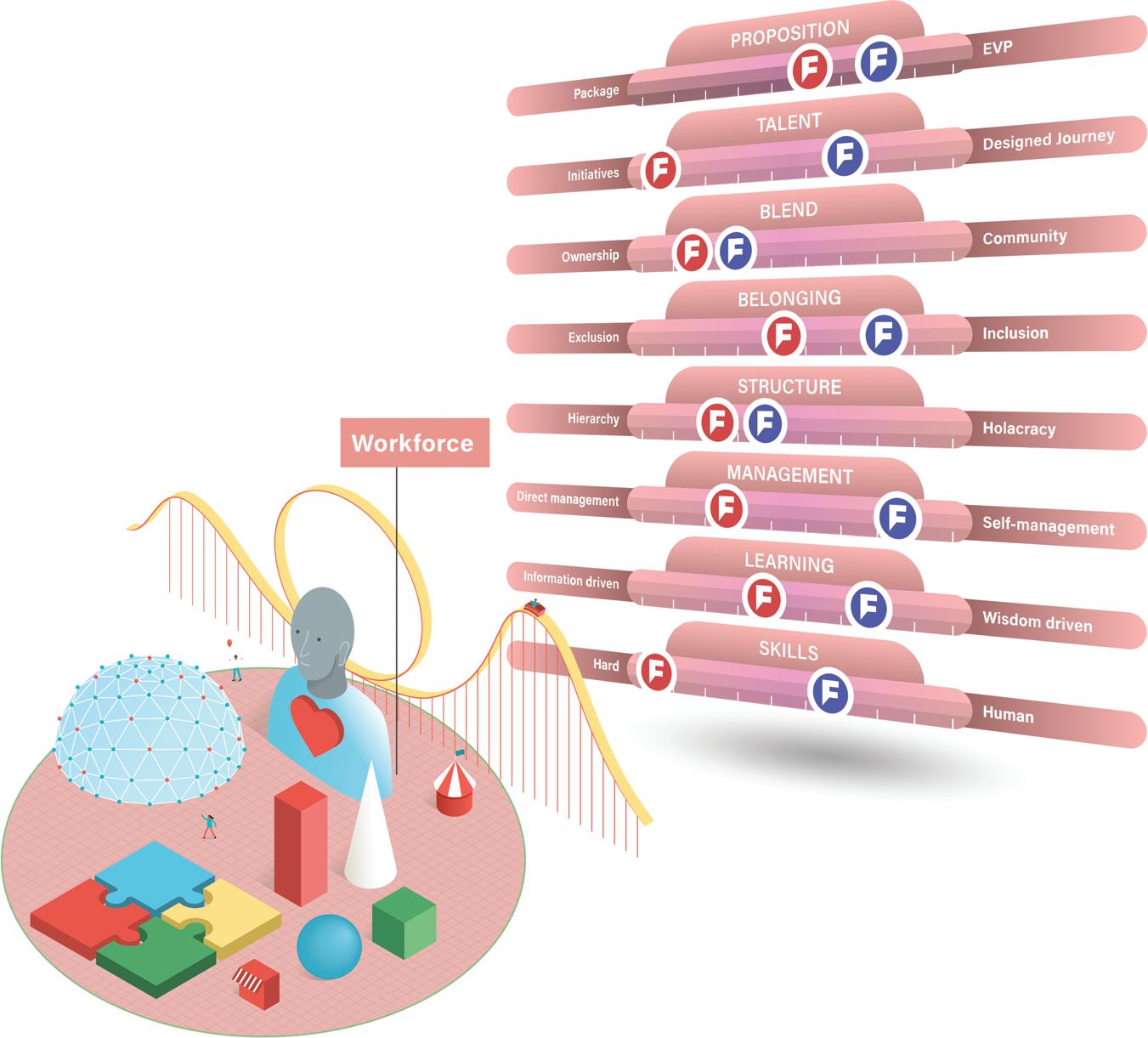
much work as personal experience, work as personal transformation. From FOWI research conducted in 2023, this broadly aligns with the concept of the ‘Experience Economy’ first posited by Pine and Gilmore in 1999.
From a FOWI upcoming study on the changing expectations of work and life (2024), we know, for example, that flexible and hybrid working has become the most desired, and indeed, expected workplace benefit, with 38 per cent of respondents would not even consider a new role without a hybrid option. Of those surveyed who were considering leaving their current roles, finding ‘more meaningful and stimulating work’ was a top three driver. Very tellingly, respondents highlighted leadership, values and behaviours as the second most important factor when seeking an employer. Many younger generations (under 30) will not even consider joining an organisation unless it has a significant and authentic approach to ESG.
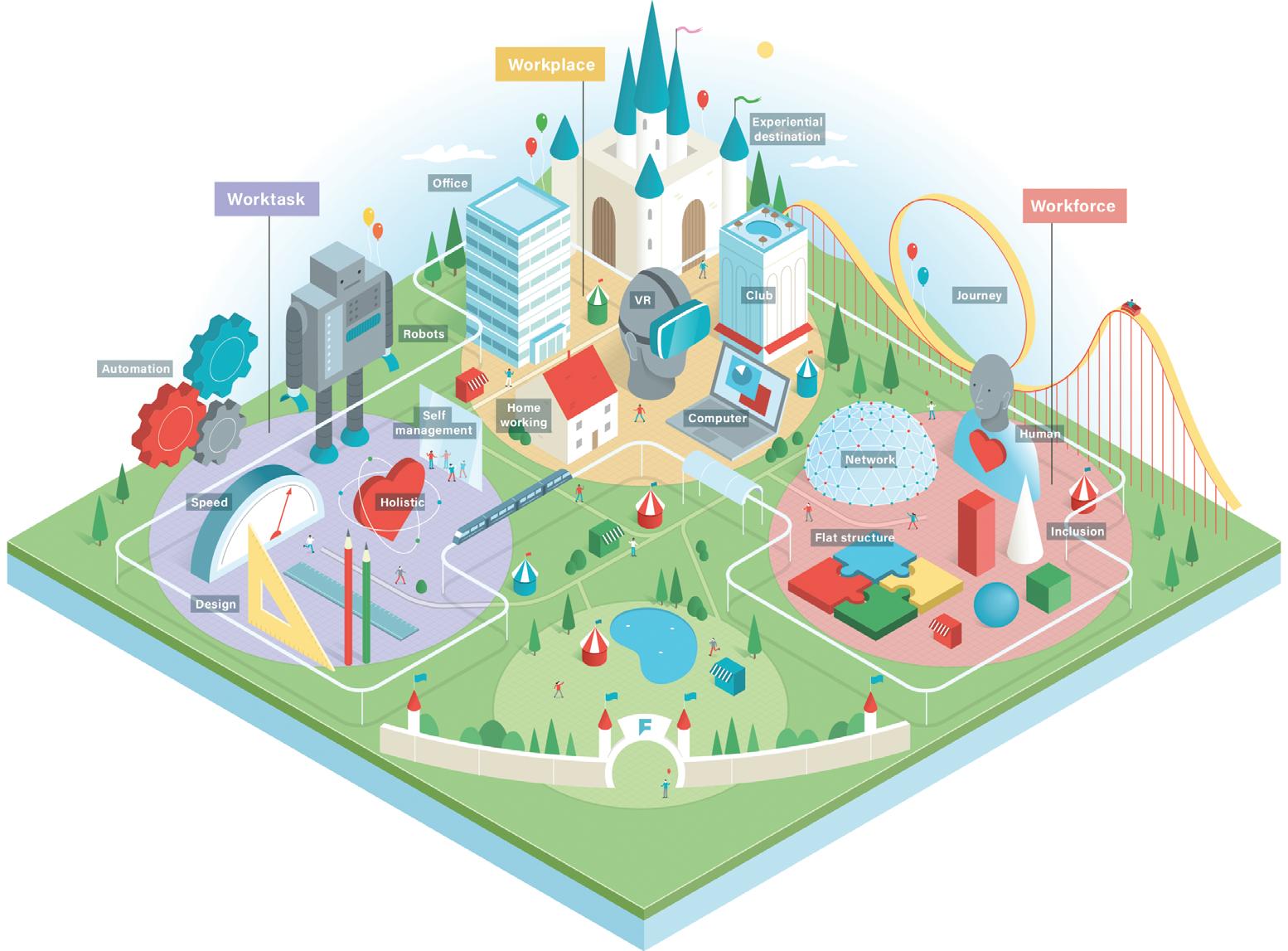
So, how must organisations evolve to better meet the changing expectations of the workforce and drive sustained growth into the future? From FOWI’s Future Work World research at the Future of Work Institute with over 100 participating organisations (and counting), we have derived a Future of Work model – the 3W model – that can
help form a coherent and structured approach to evolving the future of work firm. The 3W’s are workplace, workforce and worktask:
• Workplace – Where the work takes place across physical and virtual space;
• Workforce – How the overall workforce is designed and managed; and
• Worktask – The methods, tools and mindsets that deliver the work.
These 3W’s comprise of 18 continuums organisations can design to gain new collaborative advantages Within the Workforce ‘W’, there are eight continuums, one being, for example, the evolution from providing a good package to employees to a more intentionally designed employee value proposition that combines various forms of remuneration, benefits and more broadly defined perks and supports. Every organisation has the opportunity to create a unique future of work blueprint that aligns with the evolving expectations of the workforce of the future. From our work with multiple organisations, we often find a lack of shared definition, connected thinking and integrated strategy when it comes to the future of work, and this in itself will lead to unforeseen future challenges.
From this research, we can see that leading organisations are evolving their value system design of businesses towards a more human, technologically advanced and societal-centred model. (More than 57 per cent of businesses are aiming to be more human-centric,
over 90 per cent expect emerging technologies to reshape operations, and over 80 per cent are more societycentric in the next five years).
Given the current challenges and changes facing us, surely now is time to create exemplar future fit organisations that are beacons for the next generation of work and talent. It is the populist thing to say that the future of work is already here – it is not, but it is in a state of becoming – and it is up to us to harness the change and build something fundamentally better for our colleagues, customers, and communities alike. It offers a genuine opportunity to create the next collaborative advantage for those organisations willing to fully harness it. Let us not squander the opportunity. Over to you.
W: www.cpl.com

: https://ie.linkedin.com/in/barrywinkless-7357094
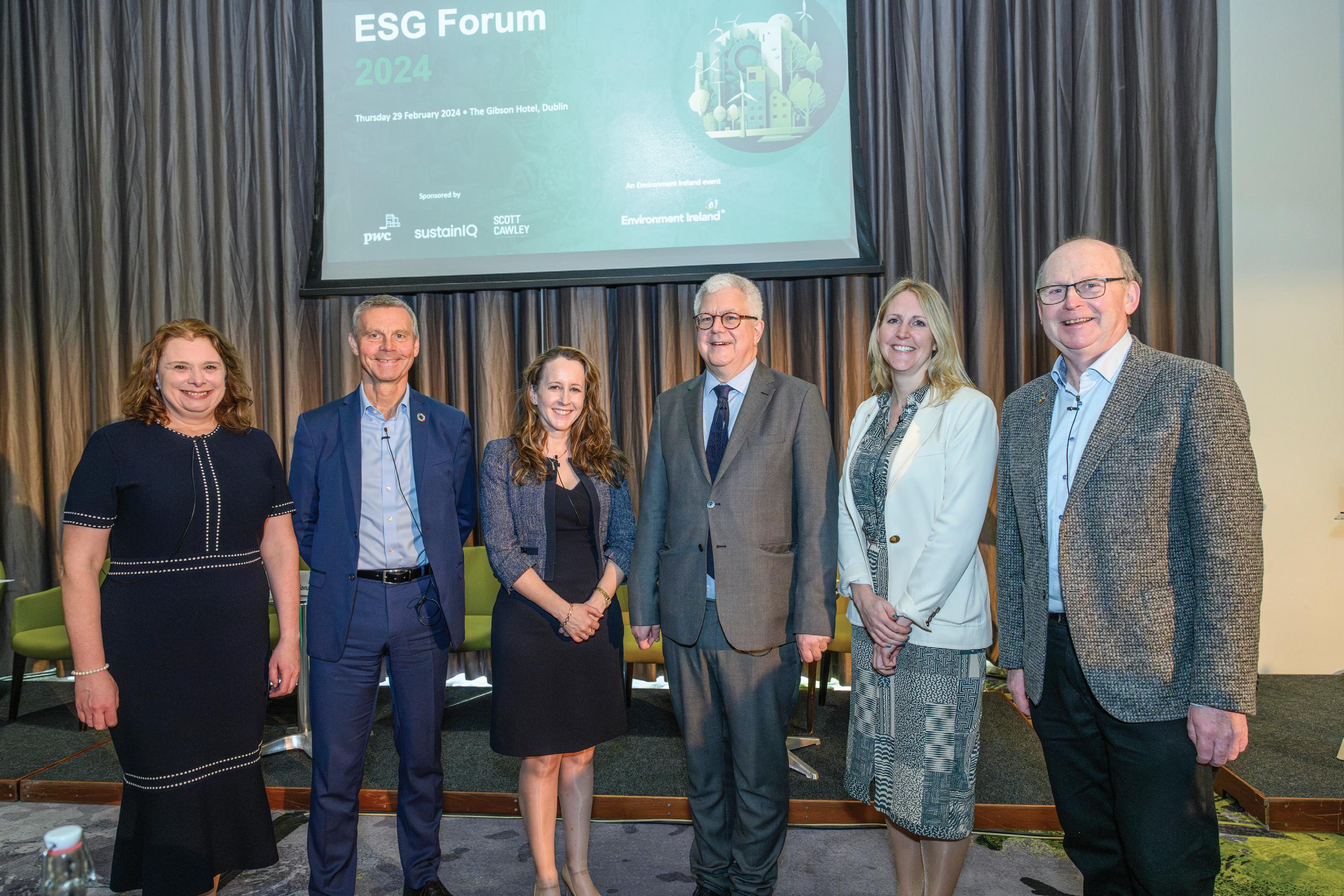

The ESG Forum 2024, sponsored by PwC, SustainIQ, and Scott Cawley took place on Thursday 29 February at The Gibson Hotel, Dublin. The forum brought 200 key stakeholders together to discuss the challenges and opportunities of ESG. The forum explored what ESG means for an organisation, and the benefits it can bring for both the private and public sectors.
Delegates heard from speakers, both visiting and local, from organisations including the European Commission; Nestlé; PwC Ireland; SustainIQ; Scott Cawley; Irish Green Building Council; and Bus Éireann.