Future of policing report

Sponsored by

An Garda Síochána
Ireland’s NaƼonal Police and Security Service

Sponsored by
An Garda Síochána
Ireland’s NaƼonal Police and Security Service

Justice Minister Helen McEntee TD: ‘The next chapter in Irish policing, security, and community safety’
Policing, Security and Community Safety Act 2024 provides for the most significant policing reform in 20 years, writes Justice Minister Helen McEntee TD.
When we think of the Irish criminal justice system, An Garda Síochána is probably what first comes to mind for most of us. We all recognise the Garda logo, our local Garda station, or gardaí that we see at various community and sporting events in our towns and villages, or on foot patrol in our urban areas. We know that An Garda Síochána is available to us if we need its assistance.
Less visible is the work required behind the scenes to ensure that An Garda Síochána, like any other large public service organisation, is fully supported, equipped and accountable to deliver policing services to the public and the communities it serves.
At the beginning of 2024, the Policing, Security and Community Safety Act 2024 was passed by the Houses of the Oireachtas. This landmark Act provides an important new framework for policing, security, and community safety in the State and introduces a new internal governance, external oversight, and accountability policing framework. Many of these changes are based on recommendations made by the Commission on the Future of Policing (CoFPI) who published their report in 2018.
Internal governance of An Garda Síochána is being strengthened by the introduction of a new nonExecutive Garda Board.
Independent external oversight will be provided by the new Policing and Community Safety Authority, which will merge the broad-ranging oversight functions of the existing Policing Authority and the inspection functions of the Garda Síochána Inspectorate. GSOC is being restructured as Fiosrú – the Office of the Police Ombudsman with an expanded remit to investigate complaints against Garda members.
We are also establishing two new Offices – the National Office for Community Safety and the Office of the Independent Examiner of Security Legislation.
“The most significant benefit for ordinary people will be the changes we make to community safety structures.”
The National Office for Community Safety will promote inter-agency collaboration and community engagement to improve community safety nationwide. It will also work closely with local community safety partnerships (which we have piloted in Dublin’s north east inner city, Waterford, and Longford), setting and overseeing targets to evaluate their effectiveness.
Ensuring that people are safe and feel safe in their own community so that communities can thrive, and flourish is a priority for me. Community safety goes beyond traditional, high visibility policing. It requires a whole-ofgovernment approach, and the input of those within communities who know best the dynamics, strengths and challenges of their localities, working together to build safer and stronger communities.
I recently opened the call for applications to the Community Safety Fund for 2024. This Fund reinvests the value of proceeds of crime seized by the Criminal Assets Bureau directly back into communities via projects that support and improve community safety.
This year, total funding of €3.75 million is available in grants ranging from €20,000 to €150,000 for groups on issues relevant to community safety and youth justice. I encourage groups to consider making an application before the fund closes on 26 July 2024.
The Independent Examiner of Security Legislation is an entirely new role and represents a significant development in enhancing our national security infrastructure – providing for an independent review of security legislation and security arrangements. Preparations for the establishment and restructuring of these bodies is well underway in the Department of Justice. Working closely with our key Programme Partners – An Garda Síochána, GSOC, the Policing Authority, and the Garda Síochána Inspectorate – our implementation team has been planning for the commencement of this legislation in parallel with its passage through the Houses of the Oireachtas.
The Act requires 24 office holders, senior executives, and board/authority members to be appointed for
commencement. The necessary recruitment and appointment processes are coming to a close and I expect to be announcing successful candidates in the coming weeks. I want to thank our colleagues in the Public Appointments Service for their support during this intensive process.
There will then be a short period for on-boarding new personnel and to operationalise the new and reconstituted bodies in preparation for commencement of the Act. This additional time will also be utilised to finalise some of the more complex pieces of secondary legislation required for commencement, including the necessary consultations.
Our Programme Partners are working hard to ensure that the necessary processes and procedures are in place to support the new and restructured organisations and appointed personnel from the outset.
I know that the benefits of changes to the structure and working procedures of large organisation such as An Garda Síochána can seem intangible to those from the outside. So, I understand when people ask: What will this new legislation do for me?
Outside of improving the performance and accountability of our police service, I think the most significant benefit for ordinary people will be the changes we make to community safety structures. I truly believe these changes, overseen by a National Office, will make a tangible difference to those working on the ground and will help communities tackle headon some of the challenges that have arisen in recent times, including anti-social behaviour.
This new legislation provides for the most wide-ranging and coherent reform of policing in the last 20 years. The changes that are happening will really make a positive and material difference to our policing services now and into the future.
It is the result of an enormous amount of research and collaborative work with the aim of developing a new approach to ensuring modern and dynamic policing in Ireland.
I very much look forward to this next chapter in Irish policing, security, and community safety.
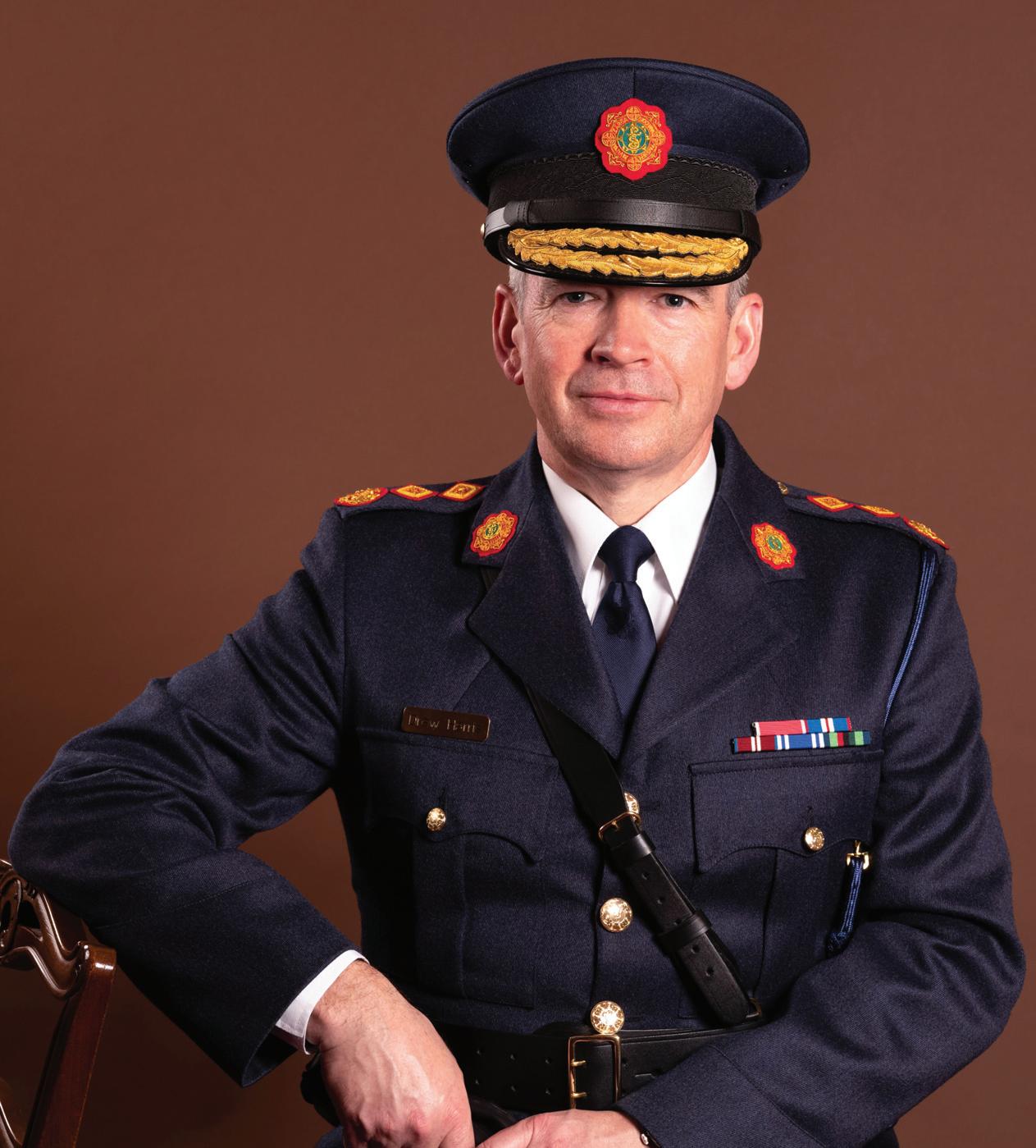
Drew Harris has held the position of Garda Commissioner since September 2018, and here he discusses An Garda Síochána’s Community Policing approach, and how policing in Ireland is adapting to respond to the needs of a modern and diverse society.
An Garda Síochána has a long established tradition of working closely with communities all across Ireland.
By fostering and maintaining effective community partnerships, An Garda Síochána works to reduce crime and the fear of crime in communities.
The general direction and control of An Garda Síochána is the responsibility of the Garda Commissioner who is appointed by the Government.
In the very early days of An Garda Síochána, 102 years ago now, the first Garda Commissioner delivered the following words that changed policing in Ireland for ever:
“The Garda Síochána will succeed not by force of arms or numbers, but on their moral authority as servants of the people.”
That statement by Commissioner Michael Staines in 1922 was in the midst of a bloody civil war that split families and at time when armed groups were pledged to overthrow the newly founded State and were as prophetic as they were brave.
Those words have been An Garda Síochána’s guiding star ever since.
We police with the people for the people. We police with their consent.
For An Garda Síochána, this means that outside of detectives and specialised armed response units, we are a largely unarmed police service. Being unarmed led An Garda Síochána to become trusted by both sides of the civil war as the independent guardians of the peace. This led to An Garda Síochána becoming embedded in communities, where they were seen as an integral part of the community, and that, I am glad to say, continues today.
Gardaí are members of local sports clubs; visit schools; volunteer with
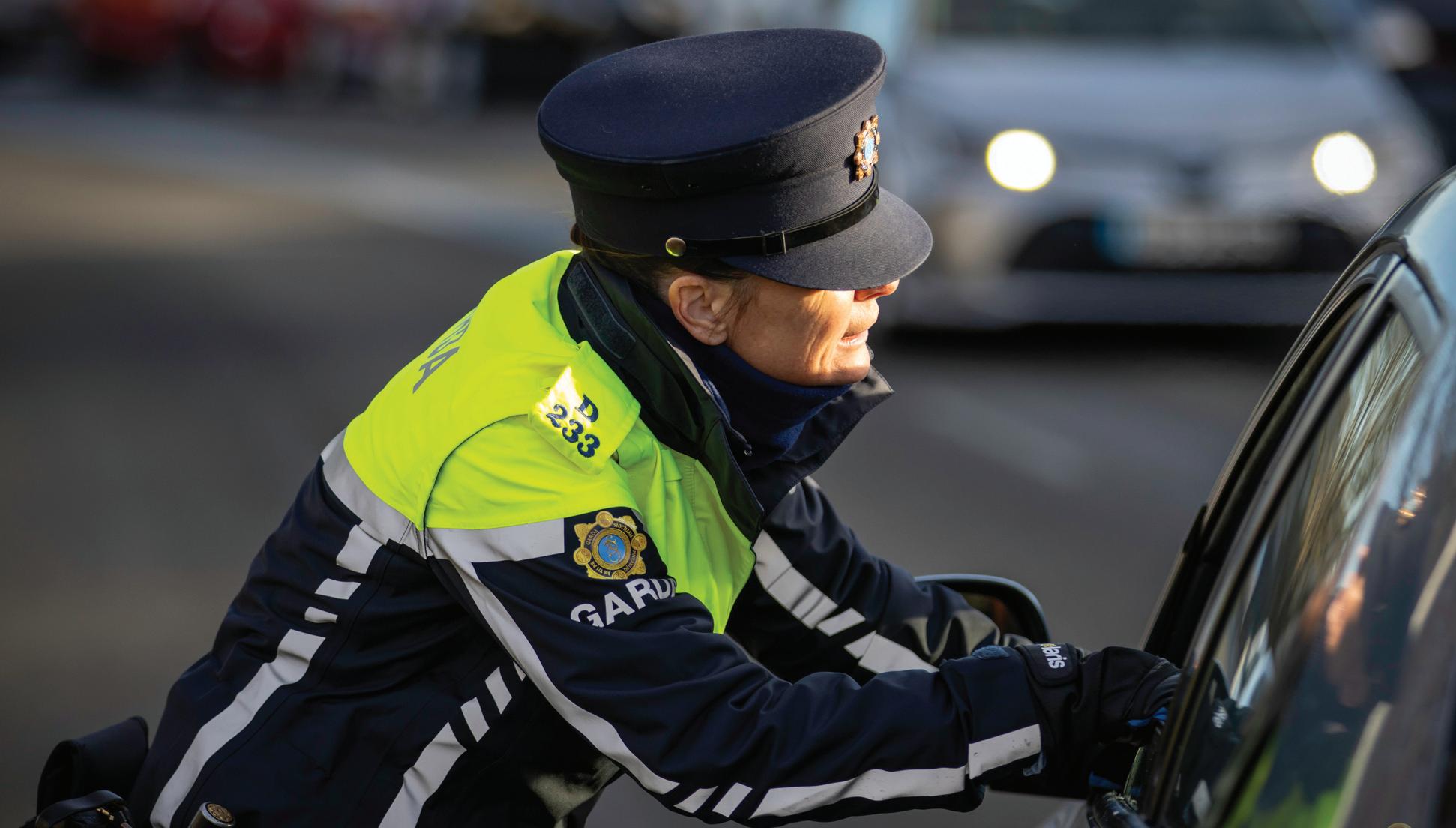
community groups. They lend a helping hand to the needy. They treat individuals with empathy and respect, and they try to sort out issues before an arrest or criminal justice intervention is required.
This activity came to the fore during Covid-19 when there was significant public fear and concern, and rapidly changing rules and regulations. Our role in policing the public health situation brought with it the potential to erode those strong bonds with communities. However, in providing public reassurance, supporting the vulnerable, being highly visible and available to people – with enforcement as a last resort, we saw public trust in An Garda Síochána increase.
I must stress though, that it is important not to confuse community policing with being ‘soft and fluffy’.
It is true that community engagement involves attending events, having a cup of tea and a chat with people, but this enables our gardaí to build a relationship with communities, earning their trust. It enables us to do what needs to be done to best serve those communities, whether that’s through community groups flagging concerns, or individuals coming to us in confidence about suspected criminal activity.
Now, at a time when policing legitimacy is under intense scrutiny, having the public’s trust is vital. We understand this more than most, because public trust in
“I consider myself very fortunate to lead an organisation with such dedicated, committed and professional personnel who on a daily basis go above and beyond.”
Drew Harris, Garda Commissioner
An Garda Síochána was not always as high as it is currently. We have had to rebuild that trust, through a major policing reform programme.
Under that reform programme, we have placed a strong emphasis on humanrights in policing. Garda personnel respecting and protecting the human rights of all individuals we come into contact with, actively enables us to keep people safe and helps ensure a just outcome for all.
Further to this, approximately 4,000 personnel will have completed a human rights and policing course we have developed with the University of Limerick, by the end of 2024.
Also through the Government reform programme we continue to strengthen
our community links through our local community policing teams. These are made up of local Gardaí and community groups and work to identify and tackle crimes impacting their locality.
Meanwhile, community engagement units work within communities to tailor responses to their needs. And now, under the biggest restructuring of the organisation in its history, we have Superintendents in each Garda Division dedicated solely to community engagement.
This restructuring is also seeing police services that were solely delivered by national units now provided at local level in areas such as sexual crime and child abuse; cybercrime; and economic crime. This provides a higher quality of service
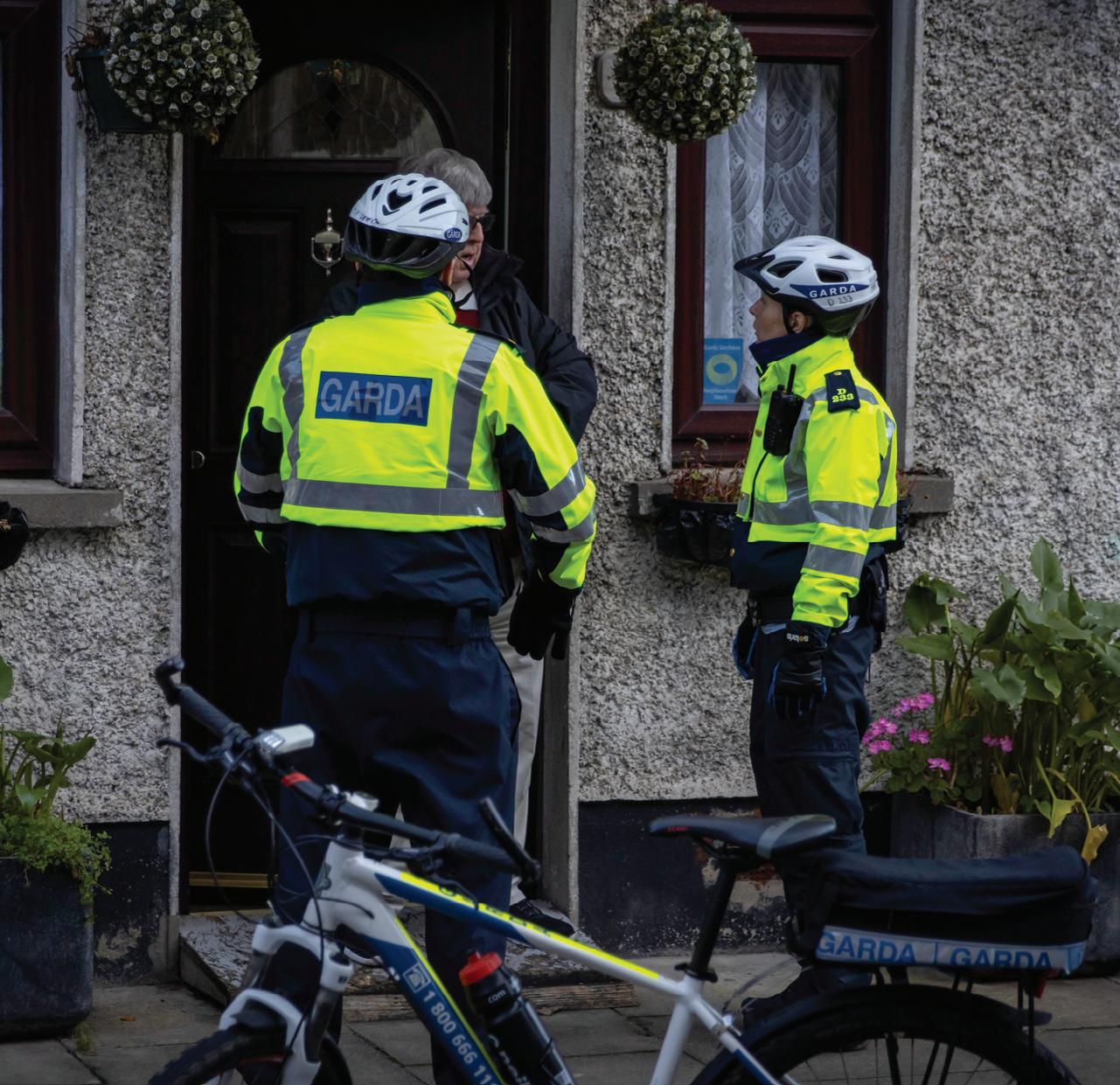
locally delivered by highly trained experts in these fields.
One key element of community engagement not to be overlooked is victim support. While statutory obligations set out how we must deal with victims, we recognise we need to go beyond this.
In 2015, we introduced victim liaison offices across the country to ensure victims get key information on their cases and available support services.
However, we do know from our Public Attitude Survey, many victims are not satisfied with the service we provide to them. This is something we are working to address.
One example is in the area of domestic abuse, where we know victims of crime are suffering behind closed doors and are reluctant to disclose to us.
In recognition of this, An Garda Síochána has introduced a policy where all those who report as a victim of domestic abuse receive a call-back within five working days.
Last year, we received nearly 60,000 domestic abuse calls, which represents a 10 per cent increase on the previous year. This indicates to us that confidence in reporting domestic abuse has gone up.
We have also invested in tailored training and more than 90 per cent of Gardaí who are first line responders to domestic abuse incidents are now trained to identify coercive control.
Of course as criminality evolves in a modern society, we too must be cognisant that in our ultra-connected world, local crime is often linked to international crime.
For instance, an online fraud that sees a pensioner in Dublin robbed of their life savings could be run by an international crime gang operating outside of Ireland, or a cyber-attack that cripples a local business might be orchestrated by hackers working from multiple foreign locations.
It is vital, therefore, that we work in partnership with our international policing colleagues to accelerate the sharing of intelligence and information, and utilise our combined expertise and experience, because as I have said many times, it takes a network to defeat a network.
One such example is our ongoing work with international colleagues in the US, UK, Spain and Europol to bring an end to the Kinahan Organised Crime Gang.
This OCG began in the 1980s as a small drug dealing gang in inner-city
Dublin but has grown into an organised crime cartel operating in multiple countries with an estimated worth of €1 billion.
This wealth has been accumulated through murder and violence, and has brought misery to individuals and communities not only in Ireland, but in many other countries through drug dealing, intimidation, forced prostitution and human trafficking.
In recent years, An Garda Síochána has made significant in-roads into the gang through arrests of key figures and large drug seizures, cash and firearms. However, given its international scale, we knew that we would really impact on the very top of the organisation through co-operation with colleagues abroad.
In 2022, close to where the Kinahan Crime Gang first started to operate in Dublin, we announced a transnational effort to put this gang out of business including financial rewards for information leading to the arrest of its leadership.
Collectively, working closely with international colleagues including the Dubai Police, we continue to make major inroads towards bringing them to justice.
Of course, this is not to say that An Garda Síochána is perfect. We are not.
There are challenges we still need to address. Ireland is a rapidly changing society and we need to keep up with this. For instance, it is clear that the personnel make-up of An Garda Síochána is not reflective of the society we police.
We know when minority communities look at us, they go not see themselves reflected back, and for us this is something we are keen to address.
An Garda Síochána was one of the first police services in the world to establish a dedicated Diversity Unit, and today there are more than 500 diversity officers throughout the country actively engaging with minority communities and individuals, providing re-assurance and working to address concerns.
Meanwhile, our uniform policy has been updated to allow the wearing of official headwear for religious, cultural reasons and beliefs including the turban and hijab.
We have a Pride community car showing support for the LGBTQ+
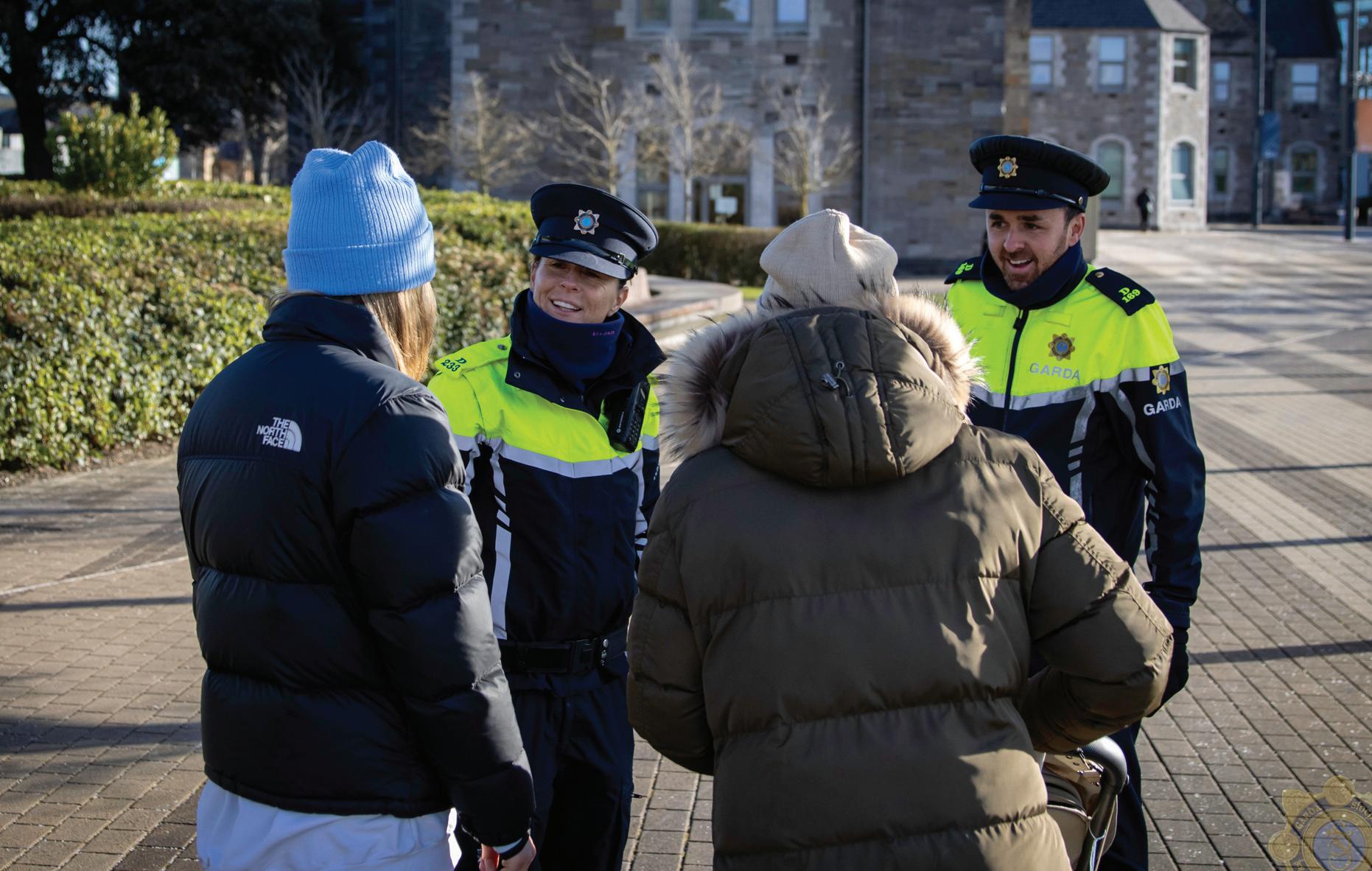
community, and we have produced public safety information in multiple languages.
But the biggest difference we could make is to have more people from different communities and backgrounds join An Garda Síochána.
Our recent recruitment campaigns have placed a strong focus on attracting diverse candidates and it is starting to make a difference, but the reality is that it will take time before we can be truly reflective.
Of course the type of crime we are dealing with is changing too, and increasingly we are responding to threats posed to community harmony by the far-right, including the November 2023 riot in Dublin which, saw looting, vandalism, arson, and attacks on Gardaí, but thankfully no loss of life.
We are also seeing an increase in public disorder linked to sites and locations intended to house migrants.
We are having to adapt to respond to these situations, where we are working with local communities, community leaders and political representatives to marginalise the far-right’s impact, particularly to mitigate against the spread of mis- and dis-information.
As society changes and we see
increasing numbers moving away from rural communities to urban areas, there is the potential for greater rural isolation. And we are committed to ensuring that vulnerable people do not get left behind.
This is why we are looking to modernise how we connect with communities. Be it face-to-face or in-station, contact remains critical and hopefully always will. However, we do need to provide an avenue for those who want to connect with us online. For instance, providing a mechanism for the public to send footage of road traffic incidents to us.
We are making improvements in this area and our world-leading mobility app is in the hands of every front-line officer, giving them instant access to a range information while on patrol.
We have also begun a proof-of-concept for body-cams that will provide protection to citizens and Gardaí. And when proposed legislation is passed, a digital evidence management system
will enable the public to upload videos. At the same time, we cannot and will not lose the human touch.
An Garda Síochána has built trusted relationships within communities by listening and learning; by engaging with empathy and respect; by being approachable and open and by ensuring our engagements are of the highest ethical standard that protects the human rights of all.
But, none of this is possible without having the right people. And in this regard, I consider myself very fortunate to lead an organisation with such dedicated, committed and professional personnel who on a daily basis go above and beyond.
W: www.garda.ie
Ireland’s NaƼonal Police and Security Service
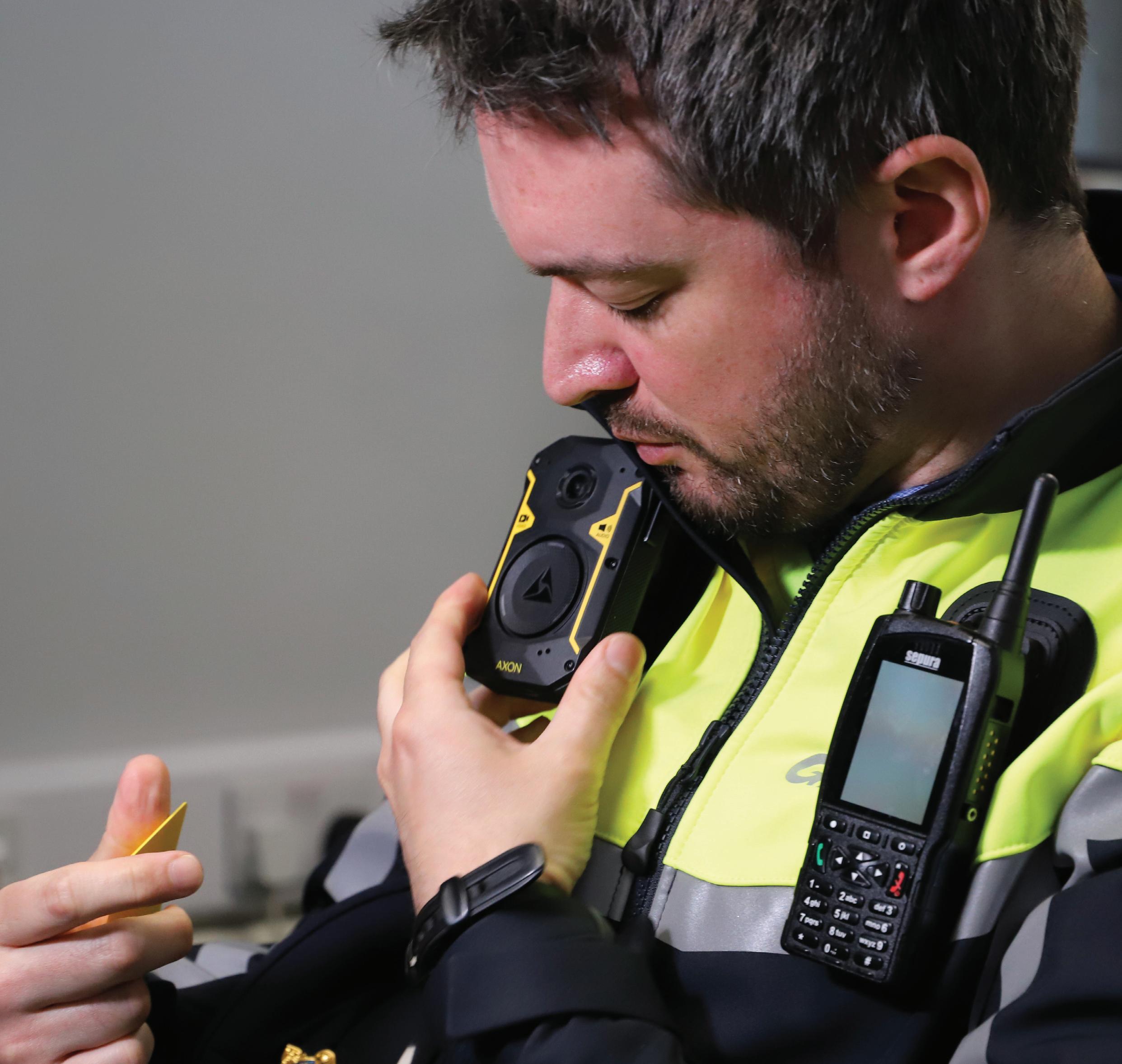
An Garda Síochána has commenced a pilot phase of body-worn cameras for frontline members.
On 31 May 2024, An Garda Síochána launched the first phase of its proof of concept for body-worn cameras as well as the supporting Digital Evidence Management System (DEMS).
Each body-worn camera has the capacity to record footage to its own internal encrypted storage, which will be uploaded when the garda docks the camera in a Garda station. Body-worn camera footage is uploaded at the end of a shift with the objective of ensuring that it can either be used as evidence at court or is deleted after an agreed time period if it is not required as evidence.
As recommended in the Commission on the Future of Policing in Ireland report: “Modern policing organisations around the world have found that body cameras can help to improve front line capability with the accurate recording of incidents, expedite analysis, enhance situational awareness, and sometimes protect police from harm.”
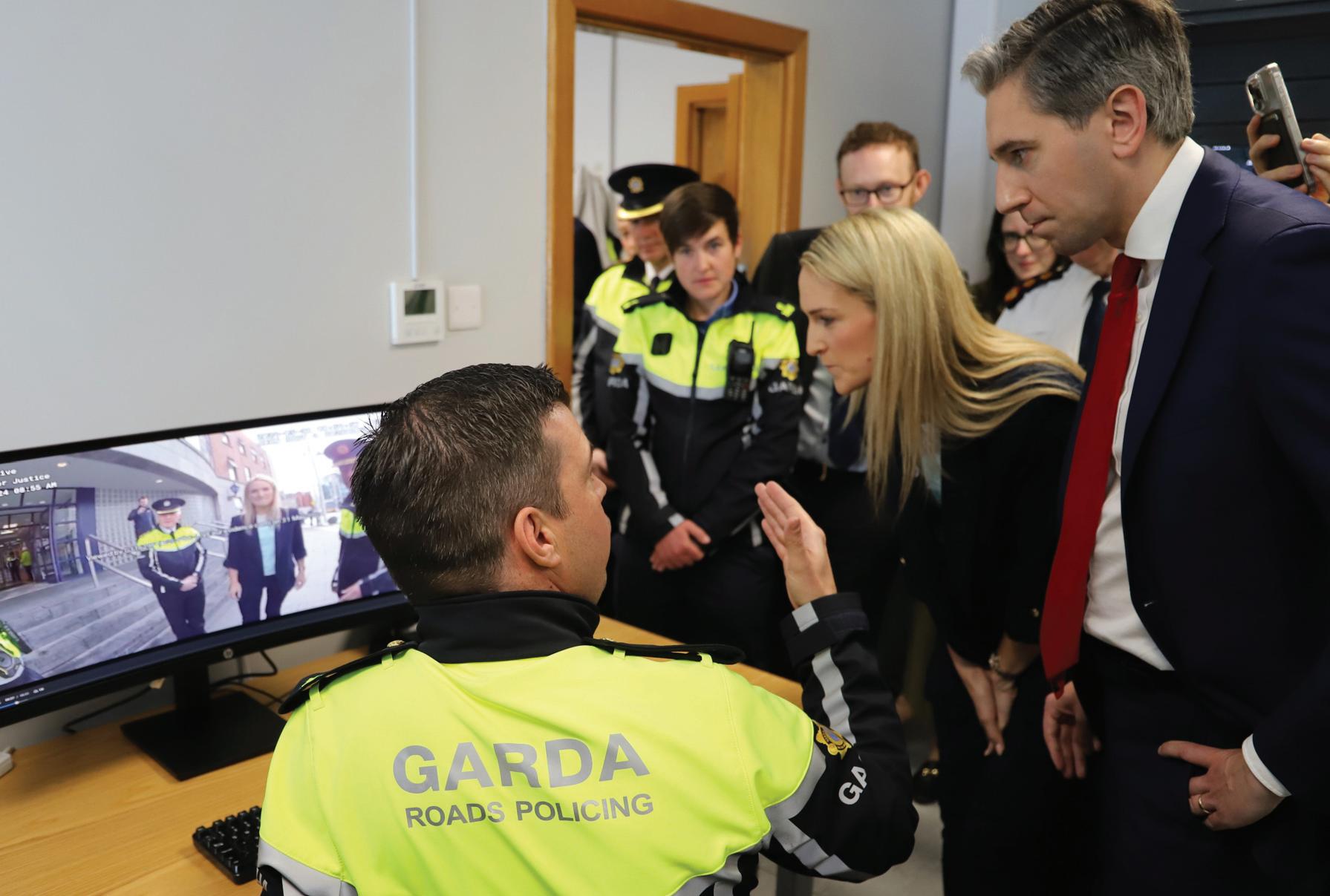
The Garda Síochána (Recording Devices) Act 2023 was signed into law on 5 December 2023. Subsequently, the Garda Síochána (Recording Devices) Act 2023 (Code of Practice) Order 2024 was signed by the Minister for Justice. An Garda Síochána has since been working to introduce body-worn cameras for members in accordance with this Code of Practice.
An Garda Síochána is undertaking three phased introductions as part of its proof of concepts stage. Each phase involves the use of a range of body-worn cameras by frontline gardaí in specific locations throughout the State.
The three proof of concept phases are designed to test the technical aspects of each camera, how they will be used operationally in addition to the training, Code of Practice, and governance of their use.
Phase one of these three phased introductions has now commenced in Dublin. There are currently 100 frontline Gardaí working at Pearse Street Garda Station, Kevin Street Garda Station, and Store Street Garda Station respectively who are fully trained in the use of body-worn cameras, and the cameras are now both visible on their uniforms and in use while on-duty.
It is anticipated that by the end of June 2024, between 350 and 400 frontline gardaí in Dublin will be fully trained and have the cameras in use.
An Garda Síochána states that it continues to engage with stakeholders and the communities it serves as it develops its Codes of Practice and in advance of the full deployment of body-worn Cameras.
At the launch, Garda Commissioner Drew Harris said:
“From today [31 May 2024], gardaí in three Dublin stations – Store Street, Pearse Street and Kevin Street –will begin using
body-worn cameras, with two other stations in Limerick and Waterford cities to follow in the coming months.
“The ability of An Garda Síochána to securely acquire and process digital evidence is a key feature of modern policing.”
He said that the launch of a proof of concept for bodyworn cameras and the supporting digital evidence management system (DEMS) is “an important milestone for An Garda Síochána towards the implementation of information-led policing”.
“Body-worn cameras, supported by the underlying legislation, technology and training will act as an important evidentiary tool. International experience has also shown that body-worn cameras will increase safety for gardaí and the public. Now through this proof of concept we will be able to refine our systems and processes for body-worn cameras based on experience and feedback.”
The Garda Commissioner Harris was joined at the launch at Store Street Garda Station by the Taoiseach, Simon Harris TD, and the Minister for Justice, Helen McEntee TD.
The Taoiseach said: “Body-worn cameras are vital to protecting gardaí on the beat as they experience an increase of attacks which will not be tolerated.
“Too often, gardaí find themselves in situations where they are being recorded in tense situations with footage often edited to suit a particular narrative. This technology will offer protection both to gardaí and to the public with accurate recording of incidents.”
The pilot roll-out of body-worn cameras is a first step which, it is hoped, will continue later this year in Limerick and Waterford. When complete, the three-phased pilot will inform their introduction in garda stations nationwide.

Murder or manslaughter
• 67% male
• 33% female
Physical assault and related offences
• 60% male
• 40% female
Sexual offences
• 19% males
• 81% females
63% or sexual crimes reported in 2022 occurred in the previous 12 months, whilst 21% occurred more than ten years prior
In 2022, one-fifth of sexual offence crimes had a male offender and a male victim
Source: CSO, April 2024.
20% decrease in homicide and related offences
1% decrease in attempts/threats to murder, assaults, harassments, and related offences
3% decrease in fraud, deception and related offences
12% increase in theft and related offences
Virtually no change in incidents of controlled drug offences between 2023 and 2022
Source: CSO, March 2024.
€57 million in drug seizures by the Garda National Drugs and Organised Crime Bureau
54,000 domestic abuse incidents attended to by An Garda Síochána during 2022 compared to just under 50,000 incidents in 2021
There has been increase of 36% of property crime observed in 2022
During 2022 fatal road traffic collisions increased by 20%, with over 7,750 drivers for Driving while intoxicated offences.
Source: An Garda Síochána, Provisional Crime Statistics 2022, March 2023
Passed by both Houses of the Oireachtas in February 2024, the Policing, Security and Community Act has created a new board of An Garda Síochána. In another significant change, the Act provides for the independence of the Garda Commissioner in relation to the performance of their functions.
The Policing, Security and Community Safety Act aims to:
• make community safety a whole-ofgovernment and multi-agency responsibility;
• strengthen and consolidate independent, external oversight of An Garda Síochána;
The recently-passed Policing, Security and Community Safety Act 2024 aims to “strengthen the governance of An Garda Síochána and to provide for clear and effective oversight and accountability of An Garda Síochána”.
• enhance the internal governance of An Garda Síochána by establishing a new non-executive board, Bord an Gharda Síochána, which is a corporate governance standard across the public and private sectors; and
• strengthen independent review of security legislation and the delivery of security services by providing for the establishment of an Independent Examiner of Security Legislation.
The new Act aims to establish a suite of new institutions to account for the transfer of powers.
The new Local Community Safety Partnerships (LCSPs) aim to provide a forum for state agencies and local community representatives to “work together to act on community concerns”. These groups will have a broader remit and broader membership than the joint policing committees they will replace. Three pilot LCSP schemes have been running since 2021 in Dublin’s north inner city, Waterford, and Longford.
The Department of Justice states that learnings from these pilot programmes have informed the drafting of the Bill and the plans for the rollout of the LCSPs across the country.
The new legislation introduces independent external oversight of An Garda Síochána through the establishment of An tÚdarás Póilíneachta agus Sábháilteachta Pobail (the new Policing and Community Safety Authority), which will combine the existing oversight function of the Policing Authority and the functions of the Garda Inspectorate.
A reformed police complaints body – Fiosrú – Oifig an Ombudsman Póilíneachta (the new office of the Police Ombudsman) will be established to replace the Garda Síochána Ombudsman Commission (GSOC) and reformed processes and procedures will be put in place relating to the handling of complaints and the conduct of investigations into allegations of wrong doing on the part of members of Garda personnel.
The Act also aims to support the internal capacity of An Garda Síochána to manage itself effectively, deliver reform, increase diversity, and improve outcomes for communities.
A report by the Commission on the Future of Policing in Ireland identified that much of the work of Gardaí relates to the non-crime activity of “preventing harm to people with addiction or mental health conditions, resolving issues for those who are homeless, the elderly, children and others at risk”. Under the new legislation, the prevention of harm will be a specific statutory objective of An Garda Síochána.
In tandem with this, the new Act embeds a key principle from the Commission’s report that preventing crime and harm and making communities safer does not rest with An Garda Síochána and the Department of Justice alone.
The Department of Justice states that when it comes to the prevention of crime, there will be a “whole of government responsibility” with departments and agencies such as health and social services, education authorities and local authorities, the Gardaí and the wider community working in tandem with shared objectives.
Speaking in January 2024, when the then-Bill had been voted for by the Houses of the Oireachtas but prior to final sign-off from President Michael D Higgins, Minister for Justice Helen McEntee TD said: “This Bill recognises that responsibility for community safety does not rest with An Garda Síochána alone but requires other government departments and state agencies to work together.
“Importantly, this legislation has communities at its heart, recognising that it is the people living in a community who know that community best.”
New bodies created under Policing, Security and Community Safety Act 2024
• Bord an Gharda Síochána (Board of An Garda Síochána)
• An Oifig Náisiúnta um Shábháilteacht Pobail (National Office for Community Safety)
• An Grúpa Stiúrtha Náisiúnta um Shábháilteacht Pobail (National Community Safety Steering Group)
• An tÚdarás Póilíneachta agus Sábháilteachta Pobail (Policing and Community Safety Authority)
• Coimisiún Ombudsman an Gharda Síochána (Garda Síochána Ombudsman Commission)
• Oifig an Scrúdaitheora Neamhspleách um Reachtaíocht Slándála (Office of Independent Examiner of Security Legislation)
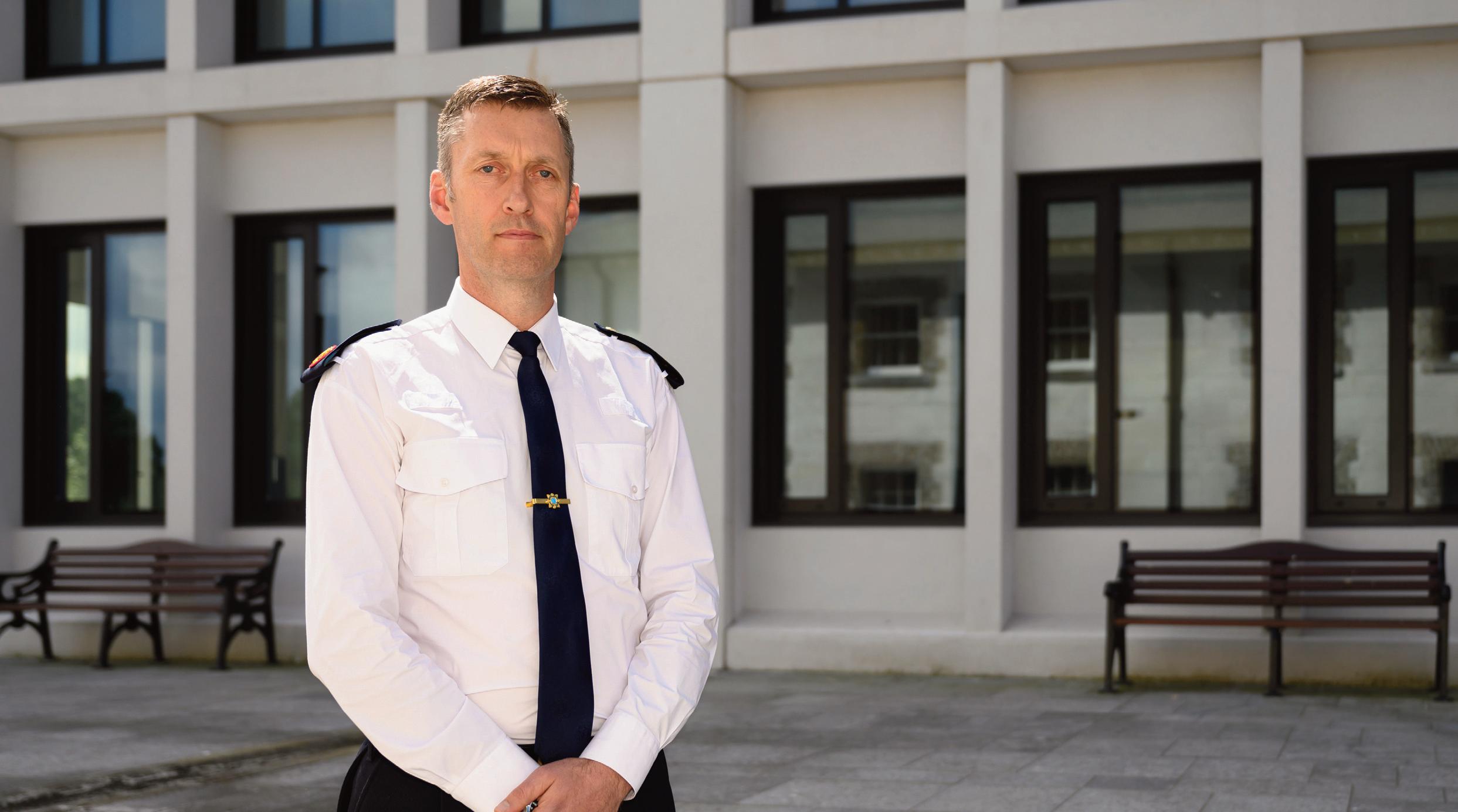
Ciarán Galway visits Walter Scott House to discuss policing priorities, talent management, leadership, and ambition with An Garda Síochána’s (AGS) Assistant Commissioner for Organised and Serious Crime (OSC), Justin Kelly.
Named after an Honorary Commissioner of the New York City Police who, in 1923, presented An Garda Síochána with a $1,000 gold bond (which would perpetually fund the gold Scott Medal for Valor), Walter Scott House was officially opened in November 2022.
A stone’s throw from Heuston Station in Dublin 8, the ultra-modern building is home to most of the specialised national bureaux under the Organised and Serious Crime umbrella.
Heading up Organised and Serious Crime, Kelly is now in his 32nd year of service with An Garda Síochána and was appointed to his current role as Assistant Commissioner in May 2022.
A native of Dublin, Assistant Commissioner Kelly served as a frontline Inspector in Blanchardstown and Clondalkin in Dublin, then as a Detective Inspector in the Drugs and Organised Crime Bureau before ascending to the rank of Detective Superintendent in the Garda National Protective Services Bureau, and most recently served as Detective Chief Superintendent, in the AGS’s Special Detective Unit.
“Previously, I had worked in several areas across the organisation at different ranks. Upon being appointed Assistant Commissioner, I was struck by the quality of expertise we have working within OSC across all the different ranks,” he observes.
Reflecting on his career trajectory, Kelly expresses a preference for operational service. “As is the case in any organisation, the more senior you become, the further you move away from operational activity,” he says, adding: “However, I am lucky in that all the units within OSC are operational in nature. As such, while I do not have the same level of input in operational activity, I still have considerable understanding of what is going on in the organised crime area both nationally and internationally. That is somewhat unique relative to the roles of other assistant commissioners.”
Equipped with nine postgraduate qualifications, including three master’s degrees, the Assistant Commissioner places significant emphasis on education and specialist training.
“I have been fortunate to have had several of these qualifications supported by An Garda Síochána, for instance, a master’s in criminal justice from John Jay College of Criminal Justice in New York City. That was particularly useful in gaining perspective beyond AGS and Ireland,” he says.
“Completing an MBA at Dublin City University was hugely significant from a personal development perspective, and most recently I completed the Strategic Command Course at the College of Policing in the UK.”
Reflecting on the evolution of policing over the last three decades, Kelly remarks that the change is “immeasurable”. “When I started frontline policing in 1993, how we were trained and equipped was relatively basic. Previously we would not have had a nuanced understanding of particular crimes, such as domestic violence and child sexual abuse. There was little
external oversight but there has been a sea change in policing since then,” he recalls.
“Unlike today, professional development was partially down to circumstances. I was lucky, for instance, in that when I started in Tallaght, I had some exceptionally strong leaders and mentors. When I think back to specific role models, Andy Callanan comes to mind. He was a Sergeant when I started out and was murdered in Tallaght Garda Station in 1999. We recently remembered the 25th anniversary of his death at our annual memorial day in Dublin Castle.
Within Kelly’s OSC remit, there are around 1,000 people working across eight bureaux:
1. Garda National Bureau of Criminal Investigation;
2. Garda National Cyber Crime Bureau;
3. Garda National Drugs and Organised Crime Bureau;
4. Garda National Economic Crime Bureau;
5. Garda National Immigration Bureau;
6. Garda National Protective Service Bureau;
7. Garda Technical Bureau; and
8. Operational Support Services.
Within this enormous remit, each of the bureaux have their own specific priorities and the Assistant Commissioner offers a snapshot of some of the work being undertaken.
Firstly, when people think of organised crime, they most commonly call to mind the work of the Garda National Drugs and Organised Crime Bureau. “Its major focus is preventing the circulation of illegal firearms and the importation of controlled drugs, particularly cocaine, into the State. In recent years, this focus has revolved around investigating and disrupting organised criminal groups, thwarting their targeting of rivals, and the associated murders,” he explains.
In the sphere of cybercrime and cyber dependent crime, a major challenge is ensuring that the technology and training deployed by AGS keeps pace with developments in cyber threats.
“Cybercrime requires constant vigilance because if we do not stay on top of it, the implications are extremely costly, not just for individuals and businesses, but for the State itself. From that perspective, we must retain the right expertise in the Garda National Cyber Crime Bureau,” the Assistant Commissioner asserts.
In the context of the establishment of the Garda National Protective Service Bureau, there have been significant developments in work to protect the vulnerable, particularly women and children, over the past decade. “We still have so much more work to do, particularly in the area of domestic violence,” Kelly acknowledges, adding: “Another major challenge we have relates to online child exploitation given the explosion in the frequency of cases that we are observing.
“For us, the most significant risk in the online child exploitation reports we receive is that sometimes that content involves Irish children. The identification of those children is a key priority for us.”
Given the breadth of his remit, there is an obvious and perhaps inevitable challenge around resource allocation across the competing demands within An Garda Síochána. Currently, this is exacerbated by events such as rioting in Dublin in late 2023, increasing street protests, and challenges relating to immigration.
“Immigration, specifically offences relating to illegal immigration and deportation, is another area which requires my increasing attention. That has become hugely topical with a significant influx of people seeking international protection in Ireland,” the Assistant Commissioner says.
Today, almost every serious crime type is transnational in nature, most obviously cybercrime, human trafficking, organised prostitution, and the importation of controlled drugs. “These crimes have connections to transnational organised crime groups all over the world, alongside non-state actors who have the potential to harm Ireland’s critical infrastructure from across the world,” he explains.
“However, unlike our geography, policing in Ireland is not an island. The only way
that we can confront transnational crime is to work with partners such as Europol, Interpol, Frontex, and MAOC-N, which assists us in relation to maritime drug interdictions.
Similarly, AGS works very closely with its counterparts in the UK, including the National Crime Agency, as well as participating in daily interactions with the PSNI in the North. “Each week, we have people from the different bureaux across OSC working abroad, involved in joint investigation teams across Europe. Likewise, we often host personnel from external partners or international police forces, to work towards shared objectives.”
Despite significant seizures made by AGS and Revenue, there is no shortage of cocaine in Ireland. Explaining the prevalence of the drug, which chiefly emanates from South America, Kelly bluntly states: “Consumption drives demand.”
“According to United Nations Office on Drugs and Crime figures, Ireland’s consumption of cocaine is joint fourth highest in the world as a percentage of the population,” he outlines, elaborating: “So, on one hand you have significant demand for cocaine in Ireland and on the other you have – for various geopolitical reasons – massive supply in south America.”
With Europe the number one market for cocaine globally, the logistical challenge for drug cartels in south America is transporting it from A to B, and, in Ireland’s case, landing it on the island. This is the vector by which the drug interdictions operations of AGS can have a major impact.
“The effect of policing is reflected in fluctuations in the wholesale price of cocaine and its availability in correlation with our successes. At various times, we have observed that tangible impact.
“The overarching objective of the National Drugs and Organised Crime Bureau is to make Ireland as hostile an environment as possible for the importation of controlled drugs. We try to make it as difficult as we can.”
Emphasising the time and effort that is invested in successful drug interdiction operations which have resulted in 10s and sometimes 100s of kilograms of drugs being seized, Kelly stresses:
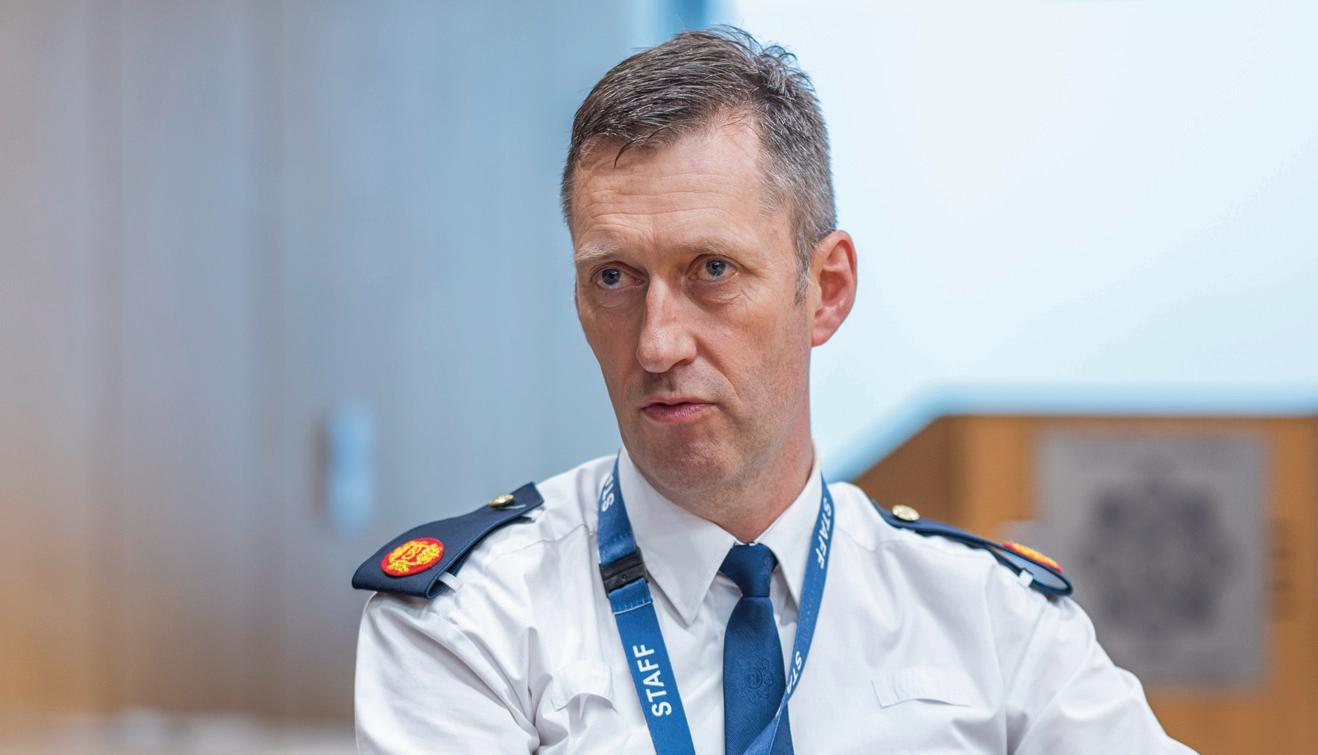
“What eolas Magazine readers see on the Six One news is simply the sharp end of drug interdiction operations –where we actually intercept and arrest people – however, most of the work has already taken place over several months and involved hundreds of people.
“International relations can be a significant aspect of this, particularly in relation to the sharing of information between our partners in the NCA and the DEA in the UK and US, respectively. The networks that our international law enforcement partners have is vast, so we try to leverage them as much as possible.”
While two major organised crime groups (OCGs) have dominated the public consciousness since a feud erupted between them in 2015, Kelly emphasises that the organised crime landscape is much broader, with other sophisticated OCGs emerging.
“We have different OCGs at varying levels of sophistication. Some of these specialise in particular crime areas, while others span across several different crime areas. However, any of the groupings that are in any way significant are international in nature. They have the capacity to move money, product, and people transnationally,” he explains.
AGS’s focus is on identifying all the groupings and conducting a threat assessment of each one in order the prioritise resource allocation. “That helps us focus our strategies on which OCGs we will target. That changes all the time,” the Assistant Commissioner says, adding: “We are undertaking a lot of work with Europol around organised crime threat assessments. Among the trends identified by Europol are
prevalence of Irish OCGs. They are the ones in which we are most interested.
“There will always be more people committing crime than there are police personnel. As such, we must deploy our resources intelligently. That is determined by the level of threat posed by a particular OCG to society.”
Avoiding reference to any specific OCG, Kelly emphasises the “significant inroads” made into investigating and disrupting highest risk organised and serious crime in recent years, particularly in relation to high-profile threat to life (TTL) operations.
“At our peak, we were running TTL operations on a weekly basis amid feuding between OCGs. For AGS, that means running major surveillance and armed response operations. In 2024, the frequency of these operations is greatly reduced. We interpret that as an indicator of our success and a demonstration that we have degraded the abilities of the relevant OCGs.
“From top to bottom, we have incarcerated individuals organising, facilitating, and directing assassinations, as well as the potential murderers themselves. There are many people serving sentences for such crimes, some of them of very lengthy,” he asserts.
Given the skilled nature of many of the roles across the OSC bureaux, talent retention is a challenge. “Within AGS, we invest considerable time and money on training people up to the highest standards. Given that their skillsets are sought after, this talent is then headhunted by private entities or even other public service bodies.
“At a senior leadership level, we have undertaken significant work with our HR department around talent retention. Unfortunately, in the public service, there is a limit to what we can do relative to the private sector. But we are working hard to avoid losing people to alternative careers,” Kelly acknowledges.
Conceding that there are several units within OSC’s remit that are functioning below optimal strength, the Assistant Commissioner is keen to consolidate their operational capacity. “We must determine what strength is required and get to that point. That is a constant priority,” he notes.
“The Garda Commissioner [Drew Harris] is incredibly supportive of OSC and in fairness to government and the Department of Justice, we have had significant investment across several areas. For instance, we have two helicopters in service and a brand new one in production at Airbus in France. That is a huge investment. Similarly, all our Cyber Crime Bureau and Technical Bureau personnel can require very expensive training and equipment.”
Discussing leadership within OSC, Kelly expresses an ambition to continue to ensure that the highest calibre of talent is leading each of the bureaux.
“Currently, we have six detective chief superintendents who are supremely dedicated professionals with ample experience. They really know their roles,” he says, elaborating: “It is important that I can provide them with everything necessary to do their jobs and that we ensure that we retain that quality of talent in positions of leadership.”
From a personal perspective, Kelly is keen to continue to contribute at a senior leadership level. “I want to continue to support the Commissioner through the organisational challenges that we are working through within AGS.
“For those of us at assistant commissioner level, it is important that we do not develop a silo mentality. My own policing interests, for example, are far broader than organised and serious crime. The senior leadership team meets as a collective on a weekly basis and it is important to devote time to those other spheres,” the Assistant Commissioner concludes.