Education and skills report





Sponsored by



Sponsored by
Permanent Secretary for the Department of Education, Mark Browne, discusses planned transformation in a difficult financial climate, and emphasises the importance of education investment in economic growth.
Northern Ireland is a society that continues its transition to a peaceful, modern, outward-looking community. Ambitious programmes to catalyse economic growth, meet our net carbon targets and create a united community, are all important routes on the roadmap to prosperity and resilience. Matching these with a comparably ambitious education agenda is critical.
We have much to celebrate in terms of our education system in Northern Ireland. Our children continue to achieve a very high standard in comparative international studies. Our young people perform higher at both GCSE and A-level than their peers
across the UK, whilst our teaching workforce is widely recognised for its skill and expertise.
Our children get one chance at childhood and the Department of Education can help shape life chances and opportunities from their earliest years in life to young adulthood. This is a tremendous privilege but comes with significant responsibility to ensure that learning experiences and outcomes are of the highest quality for all children.
We have set out a vision that all our children will be happy, learning and

succeeding. This applies to each and every child regardless of their background, experience, or ability.
However, it is unquestionably more difficult to deliver on this vision in the current financial context. Over the last 10 years, funding per pupil in Northern Ireland has reduced by over 10 per cent in real terms, to the lowest level in the UK. This has put increasing pressure on our schools and reduced the support they can provide to our young people. It has prevented teacher pay increases for the last three years, leading to industrial action and deteriorating industrial relations. The Engage programme to support recovery after Covid and the Healthy Happy Minds Programme to promote emotional and mental wellbeing have had to be closed. School holiday food grants to feed disadvantaged children over school holidays have been ended. The capital programme to improve school premises and support delivery of the curriculum has been severely curtailed.
We need to recognise that education spending is not a cost but an investment. It is an investment in our children in the here and now and in our economy and wider society for tomorrow and beyond.
The children in our system today will be those who enter the workforce in future years and it is vital that our education system prepares them as individuals, active citizens, and economic contributors.
Evidence also tells us that investing in the learning experiences and outcomes of our children and young people recoups immeasurable benefits for society in terms of improved outcomes in health, justice, and community cohesion.
We know that targeting investment in the earliest stages of a child’s life reaps longer-term benefits for society. We are developing an ambitious Early Learning and Childcare Strategy which, if funded, would create the ecosystem necessary to give every child the best start in life.
Through the End-to-End Review on Special Educational Needs (SEN), we will refine our policy on inclusive education and redesign support models to ensure our children with SEN receive appropriate support at the earliest point possible. The focus of the review will be on
developing a high-quality, cost-effective system that is responsive to the needs of children, ensures their voices are heard, empowers our education workforce and builds the confidence of parents and families.
Increasingly, we recognise that meeting the emotional health and wellbeing needs of our children and young people is crucial to enabling them to engage fully in learning. With that in mind, we have commissioned an evaluation of the Healthy Happy Minds pilot and will draw on its findings and our learning from the rollout of the Emotional Health and Wellbeing Framework to develop a strategic approach to building the resilience of our children and young people.
We are resetting our focus around school improvement – balancing the needs of the learner with the learning experience. This will involve refreshing the current curriculum delivery model and ensuring our curriculum is relevant and fit for the needs of a changing world.
Accompanying this will be a targeted workstream on teacher professional learning that recognises the value of our teaching workforce, invests in their learning and aligns with the needs of a 21st century classroom.
We will take forward a programme of qualifications reform that will ensure that the qualifications taught in our schools are fit for a modern economy and society, and support learners on their chosen pathway.
For our 14 to 19 year-old cohort, we are pursuing a transformative agenda to ensure that young people have seamless pathways and relevant and accurate information to make good educational choices.
Setting and delivering a vision for education is both an exciting and a daunting task. There is no doubt that the current budget settlement will have a significant impact on the quality of our education services and will have the greatest detrimental effect on our most vulnerable children.
So, the Department will be focusing on shaping a strong, coherent narrative on the cross-cutting benefits and value of education and the potential costs to society if we do not invest in the right things and in a sustainable way.
I hope there will be greater recognition of the fundamental value and importance of education for our economy and society and that this will be evidenced through significant and sustained investment. This is the future that our children and young people need and deserve.
Offering once-in-a-lifetime opportunities for Northern Ireland students

Students from Northern Ireland schools, colleges and universities are set to benefit from over £10 million of funding to explore international study and skills development opportunities for a third consecutive year.
This is part of the Turing Scheme, the UK Government’s programme to provide UK schools, colleges, universities and training providers with funding for international opportunities in education and training.
The Turing Scheme unlocks the opportunity for UK schools, colleges, universities, and training providers to offer experiences across the world for their students, learners, and pupils, including the development of new skills, gaining vital international experience, and boosting their employability. They
can also develop a wide range of soft skills, language skills, and gain a better understanding of other cultures.
Applications opened for the 2023 to 2024 scheme in February 2023, with an eight-week window to submit via an online application process. This year saw a significant increase in the number of applications from all sectors and an increase particularly from Northern Ireland organisations – where for the first-time schools have been successful in the application process, along with every further education college and both the University of Ulster and Queen’s University Belfast.
Canada, Japan and the United States
Northern Ireland and the Turing Scheme
• £1.5 million funding awarded in 2021 to 2022
• £2.6 million funding awarded in 2022 to 2023
• £2.9 million funding awarded in 2023 to 2024
• More than 2000
students participating across three years

are among more than 160 international destinations where Northern Ireland students will be funded to take up work and study placements, alongside popular European destinations like Spain and France.
Locally based Capita was appointed in December 2021 to promote and administer the scheme. This involved designing and building a bespoke digital platform that could manage the end-toend application and management process. It needed to be scalable and flexible to respond to demand throughout the application window.
Drawing on in-house expertise gained from many years of work in the education sector and with government departments, Capita quickly mobilised project management, operations, digital, customer service and communications teams to deliver the programme for the 2021 to 2022 academic year and following years of the scheme.
An advisory board of key stakeholders was also established, and a partnership agreement was entered into with the Association of Commonwealth Universities (ACU) to deliver an assessment of all applications to the scheme, drawing on the ACU’s track record in assessment, delivery and evaluation of global mobility schemes.
An email-based service centre offers support and guidance to applicants and beneficiaries, with funded organisations being allocated a dedicated grant manager. There is also a range of online guidance materials, FAQs, demo videos and case studies published to support the scheme’s applicants.
This year the application process attracted more than 600 applications with over 470 being successfully awarded funding from a pot of £105 million, following an independent
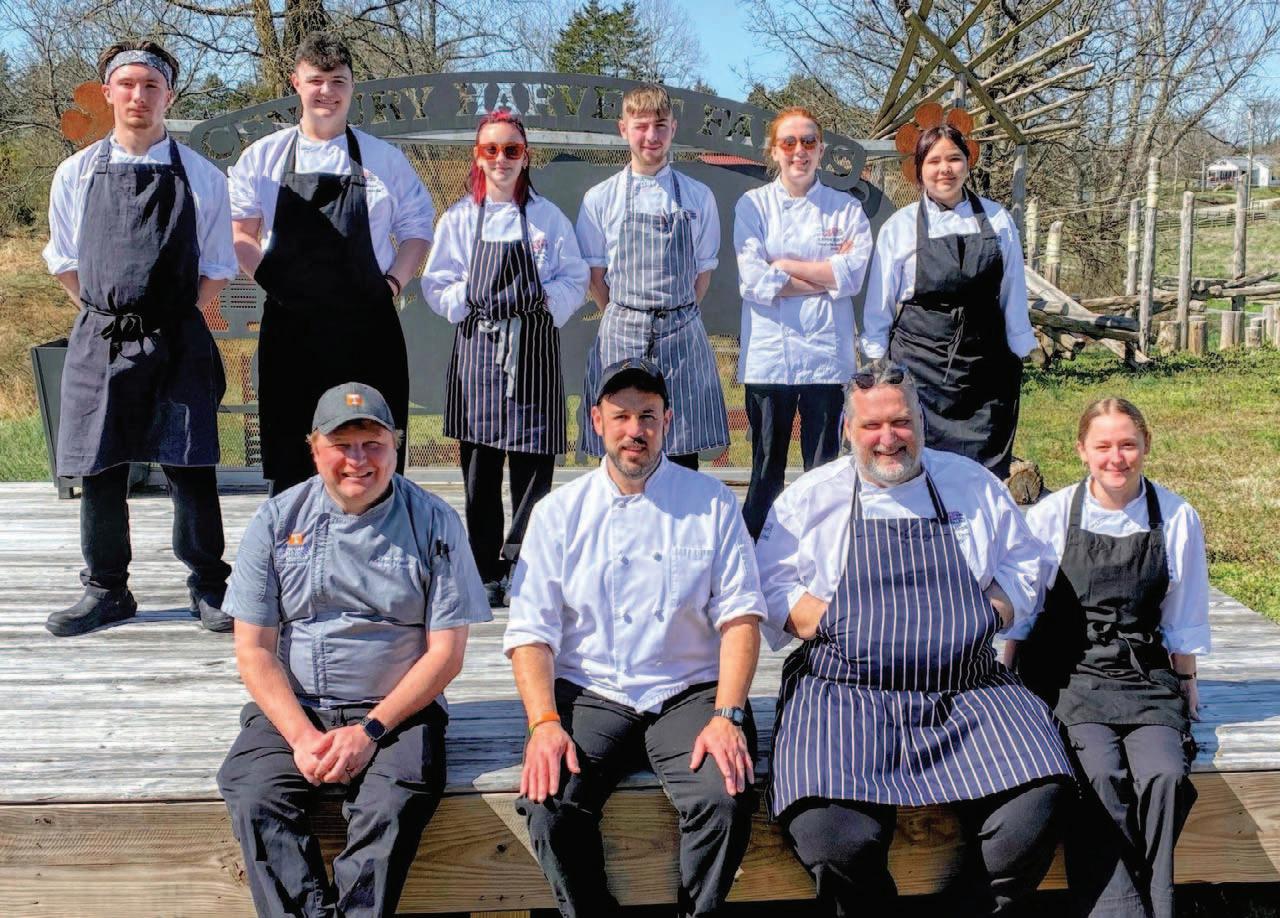
Six catering students from South Eastern Regional College (SERC) in Northern Ireland cooked up a storm after getting the chance to hone their skills with a trip to Tennessee following the college being successful in their application for Turing Scheme funding in 2022.
The party travelled to Nashville on a two-week work experience and cultural visit, designed to developed their professional cookery skills. The group spent their first week in the United States working at Dream Hotels in Nashville, before heading to Knoxville to work in the local community alongside students and staff at the University of Tennessee. The trip was the first experience outside of Europe for all the participating students and enabled the students to gain hands-on cooking experience which was limited during the pandemic.
Lecturer Brian Magill, one of the SERC team who accompanied the students, explained: “This was a fantastic opportunity for our students to immerse themselves in professional cookery in another country. Besides learning about Appalachian cuisine through essential hands-on experience in local restaurants and resorts, the students had the chance to show off some of their homegrown repertoire during festivities organised for St Patrick’s Day celebrations and to enjoy a host of US cultural activities.”

The Enniskillen-based college with 22,000 full and part-time learners has a strong focus on sustainability, both in the way it is managed, and the courses offered. Turing Scheme funding supported the college to participate in the Global Learning Opportunities Boosts Employability (GLOBE) project which enabled 16 Level 3 students on exchanges to undertake the globally recognised Passivhaus Tradesperson course.
Passivhaus is a voluntary standard for energy efficiency in building which originated in Germany 30 years ago and is now widely adopted around the world.
Eight students from SWC’s School of Built Environment undertook a three-week placement in Pittsburgh at Pennsylvania State University (PSU) which delivers a ‘Green Building’ programme and is a United Nations International Centre of Excellence for high-performance buildings. SWC students who visited PSU benefitted from access to the Global Building Network, specialising in highperformance building research and education, attended on site visits to the Frick Environmental Centre, Pittsburgh’s world-class centre for environmental education.
“The college’s core vision is to develop people and achieve potential. The Turing Scheme is a vehicle for fulfilling this vision by growing international mobility opportunities. This has supported our young people to develop personally, professionally and academically, and encouraged them to achieve their educational and professional potential,” explained Barry McCarron, Head of Business Development at SWC.
A further eight students travelled to Toronto, Canada, to participate in Humber College’s 2022 Global Passivhaus Construction Programme. They also studied the Passivhaus Tradesperson course while advancing their knowledge of green building initiatives in the country. The course centered around an in-depth study of Building NX, a retrofit of an existing building, one of Canada’s most sustainable buildings.
Both partner universities are renowned for their innovative approaches to the green economy and opened international synergies with SWC students in the field of renewable energy and sustainable construction.
One participating student from SWC said: “This programme has been incredible for my self-confidence which has been noticed by my employer. As someone coming on to the high-performance building course with no background in construction, this course has shown me that my professional skills are transferable while also giving me a wider perspective of engineering within construction. Following this experience, I am considering a period of international work as it has shown me the opportunities available.”

“We are very proud to support the Department for Education in delivering the Turing Scheme and delighted that, yet again, applications for funding significantly increased this year. Widening access to opportunities to study and work abroad is a key aspect of the scheme and to see that approved funding for those from disadvantaged backgrounds has also increased is particularly pleasing.
“It is marvellous to see grants being used to offer the chance to those who might not otherwise get the opportunity to take up these exciting opportunities all over the world ”
Ross
Anderson, Client Partner for the Turing Scheme at Capita
ACU. This has been the highest number of applications in the lifetime of the scheme. More than 40,000 students, learners and pupils from across the UK are expected to get the transformational opportunity to study or work abroad from September 2023.
One of the key government objectives of the scheme is widening participation, and this has resulted in 60 per cent of overall participants across the UK and being from a disadvantaged background. In Northern Ireland more than half of the participants expected to benefit are from a disadvantaged background, offering students from Northern Ireland with an opportunity they may otherwise not get to experience.
For more information on the Turing Scheme visit:



billion additional gross value added (GVA) by 2030 and an increase in wages and people with higher qualifications, a study has found.
Recognising that better skills matching would provide a significant boost to economic output, the Closing the Skills Gap report, commissioned by the Department for the Economy and carried out by Work+, has suggested that government departments with a skills responsibility should allocate skills budget based on closing the productive capacity gap and providing skills balance.
“In Northern Ireland, jobs are concentrated in small and micro businesses, with only 2 per cent of employers having more than 50 staff,” the report explains.
Drawing on policy and practice from six small, advanced economies and primary research with both supply and demand sides of the Northern Ireland skills system, the report explains that there is a need for “greater support for small and medium-sized enterprises
(SMEs) in growth sectors like FinTech and life and health sciences (LHS) to connect with career explorers of all ages”.
The report continues: “Career explorers struggle to make informed decisions and SMEs find it hard to recruit and retain talent. The Department for the Economy (DfE) should continue to develop the Northern Ireland careers marketplace with SMEs in mind, to ensure that it is relevant for both sides of the market. Employers in both sectors recognise the need to aggregate their demand with others –even competitors – to make their sector more visible.
“They are keen to build collaborative networks, initiate academies and apprenticeships but often do not know how to do this. Initiatives like The FinTech Academy should be built upon, helping to bring employers, educators,
and local authorities together to provide promotional campaigns and employment opportunities in the sector.”
DfE should, the report asserts, consider how careers services can best support economic growth whilst maintaining impartial careers advice. The Department has reported that, by March 2024, it will develop a set of common quality standards for the delivery of careers guidance in all settings.
With the increasing digitalisation of human resources and job roles specifications, there is an opportunity to better communicate jobs in term of transversal skills and aptitude, rather than generic terms and qualifications. Skills mapping of job roles could support career explorers in managing their careers and identifying the roles that are best suited to their skills and aptitude.


In the absence of devolved government, Secretary of State Chris Heaton-Harris MP’s carrot and stick approach to the 2023/24 budget has seen the Department of Education bear the brunt of cuts, with the Department currently considering how best to allocate its reduced funds.
Following the Secretary of State’s April 2023 Budget, the Department of Education is facing the highest real-terms spending cuts out of all devolved departments. The Department has received a funding cut of £64.3 million, which equates to around 2.6 per cent of its annual budget for the previous financial year.
Currently, the Department is undergoing a consultations process which is formally conclude in autumn 2023. The Department states that it is undergoing “the most challenging overall budget in recent history,” in which “the Department of Education, its arm’s length bodies, and third-party organisations face unprecedented funding challenges and cuts in 2023/24”.
“For the Department, the 2023/24 Budget allocation results in a funding gap in excess of £300m for 2023-24. Managing resource shortfalls of this magnitude will undoubtedly have a significant and adverse impact on the Department’s ability to deliver educational services in 2023-24,” the Department states.
‘Unremittingly bleak’ consequences of cuts
A group of researchers from Ulster University, Newcastle University, Queen’s University Belfast, and Stranmillis University College have warned that the poorest children in Northern Ireland will be the most affected being brought forward.

In a report entitled The consequences of the cuts to education for children and young people in Northern Ireland, researchers argue that any cost savings made in the current education Budget “will be dwarfed by the costs of poverty, deprivation, and mental health issues in the longer run”.
The researchers argue that the cuts being made in the Budget “will disproportionately impact the most disadvantaged children and young people in our communities,” and outline the set of programmes which will either be disadvantaged or ended as a consequence.
• An end to Happy Healthy Minds
• An end to Engage
• An end to the Digital Devices scheme
• An end to the Baby Book scheme
• A pause on capital development
• 28 new school projects paused
• A 40 per cent cut to Free Period Products budget
• A 50 per cent cut to the Shared Education budget
• A reduction in Nurture funding from £70 million to £62 million
• An end to schools coaching programme run by Irish Football Association (IFA) and Gaelic Athletic Association (GAA)
• An end to funding available to Young Enterprise NI
• A pause on a cashless scheme for schools
• A depletion of funding available to Extended Schools
• A significant shortfall in resource for pupils with SEN
• A pause on the recruitment of school crossing patrols
The researchers have called on the Secretary of State to “provide guidance on proposed cuts on a departmental level, in light of consultation with the Irish Government, which should respond to full public consultation on these proposals”.
“These should precede any significant changes to open-ended programmes being run by the Department of Education.”
The researchers also state that, in assessing the impact of funding reductions, “the Department of Education should take account of the high levels of disadvantage among particular minority ethnic and migrant groups and the disproportionate effects that cuts to services are likely to have on these groups”. “The Department should also recognise the interlinkages between these programmes and the risk that cuts to one area of service may affect families’ ability to access and engage with other services.”
Diane Dodds MLA, the DUP’s education spokesperson has outlined her belief that the Secretary of State’s Budget “does absolutely nothing to reverse and address the chronic underfunding of education across Northern Ireland,” further stating that “the baseline budget in recent years has been entirely incapable of meeting demand”.
Dodds further asserted: “The Special Educational Needs budget has doubled locally in the last eight years and without a corresponding uplift in the baseline there is a hole in the overall budget as a result. This proves that the current funding model is preventing public servants from proactively respond[ing] to emerging demand in our classrooms. It also curtails the Department’s ability to deliver a fair pay award to our dedicated and talented staff.”
SDLP spokesperson Daniel McCrossan MLA stated: “No amount of budgetary pressures can justify taking holiday hunger payments away from families who are struggling, counselling from children who need support with their mental health, or failing to provide the right environment for children with special educational needs. It is absolutely disgraceful that it is children who already face the biggest challenges in their young lives who are bearing the brunt of these cuts.”


Studies by the Department for the Economy have highlighted the need to upskill older workers and ensure that younger workers are attracted into the labour market in the aftermath of Covid-19.
With an ageing population and increasing global competition, combined with a need for Northern Ireland to reach net zero, many experts believe that people need to be encouraged to work for longer, particularly in sectors such as housing, with retrofit requirements demanding a significant output from this sector with an average workforce age above the age of 50.
More than one-third of the population of Northern Ireland is over the age of 50, with the 50+ demographic accounting for slightly below 700,000 people, which is just under 37 per cent of the population of Northern Ireland.
According to NISRA’s most recent population projection, published in 2021, the number of older people is expected to increase year-onyear. NISRA predicts that the 50+ population
will rise by roughly 208,000 people (30.3 per cent) by 2070. This increase will mainly be shown in the 65+ age group as people are living longer.
The Department for the Economy’s Older People Inequalities in the Northern Ireland Skills System report outlines four challenges to ensuring that Northern Ireland can successfully integrate older people into the workforce and thus ensure a more stable labour market for the Northern Ireland economy:
Upskilling: “As people are living longer, this increases the percentage of the workforce aged 50 and over. Companies will have to adjust to this ageing workforce. They will need to adjust how they attract, manage, and
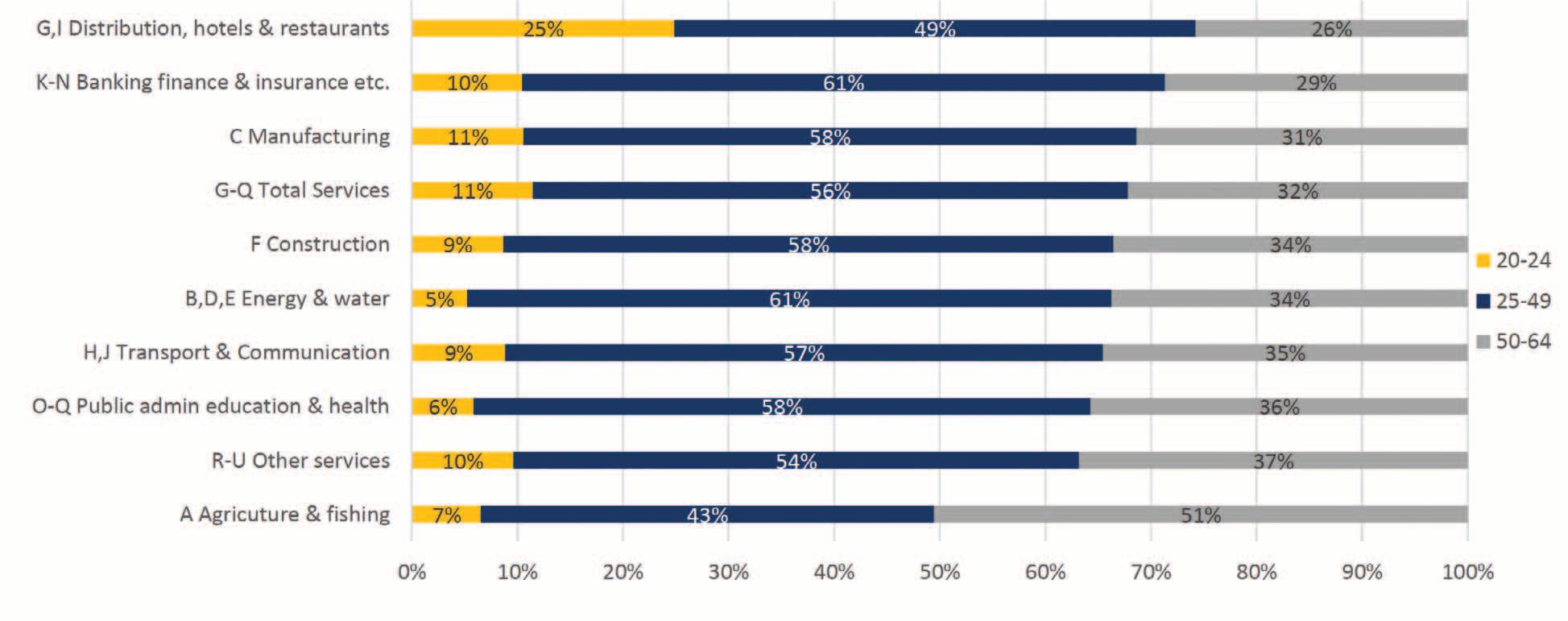
develop workers. With the constant advancements in technology, training, and upskilling has never been as important to make sure staff have the required skills to keep up with these advancements.”
Reskilling: “Some workers will also have to consider changing careers due to automation as well as moving away from manual labour jobs to less physical jobs.”
Flexible working: “Changes needed to working patterns, either reducing to part-time hours, offering alternate working patterns outside of 9-5, and hybrid or home working.”
Support for health and wellbeing: “Employers to offer better support for health and wellbeing to all employees but will be needed more in 50 and over age group.”
A further problem highlighted in the Department’s report is that employers in Northern Ireland are less likely to employ someone aged 50 or above. Additionally, the report states a correlation between larger companies and an increased likelihood of recruiting a worker aged 50 or above. Only 42 per cent of employers surveyed were open to a large extent to hiring somebody aged 50-64. DfE also reports that even fewer companies are open to hiring anybody aged over 65 (30 per cent), with almost one-fifth (18 per cent) of these organisations not open to the idea at all.
On the other hand, Northern Ireland has the highest rate of early entrepreneurship out of the four UK regions and nations, with 8 per cent of those in the 55-64 demographic in Northern Ireland involved in early-stage entrepreneurship activity as of 2021.
If older people are to be encouraged to remain in the labour market in Northern Ireland, the key to unlocking this will be to ensure that there is a strong level of training, with workers being equipped with a skillset which is dynamic enough to meet the evolving needs of the Northern Ireland economy.
The Department for the Economy’s Young People Inequalities in Northern Ireland report explains the differing set of circumstances facing Northern Ireland’s young people compared with the challenges being faced in equipping older workers.
Whilst the challenge in integrating older people into the workforce lies in upskilling, there are a number of multi-faceted factors which are influencing the successful integration of young people into the Northern Ireland labour market.
Additionally, there is a wide discrepancy in workers being paid the living wage. Whilst every age demographic from the age 25 and above is paid a real living wage at a rate of 85 per cent and above, only 58 per cent of workers aged between 18 and 24 are paid a real living wage.
“For young [people] that work, wages are lower. For those available to work, unemployment is higher,” the report states. The report also hints at potential alienation for young males, with wide gaps in educational attainment between male and female students in all school settings. However, although female students are getting better A-level results than
Source: NISRA
their male counterparts, there remains a wide gap in those studying narrow STEM subjects at higher education level, with 49 per cent of male students studying narrow STEM subjects compared to 19.6 per cent off females.
The NISRA population projection, published in 2021, estimates that, in 2032, the 18-24 demographic will reach of a peak of comprising around 13 per cent of the population of Northern Ireland, before subsequently entering long-term decline. Currently, said demographic accounts for around 10 per cent of the population of Northern Ireland.
The report examines the psychological impact of the Covid-19 pandemic on young people’s hopes and aspirations. Worryingly, the report states that a majority (51 per cent) of people in the 18-24 age demographic “feel their aspirations are lower due to global events since 2020”. Additionally, 33 per cent of young people feel that they “will no longer achieve their career goals”, and 36 per cent feel that their “job prospects will never recover from Covid”.
The report additionally makes use of a survey by The Prince’s Trust, which further emphasises an apparent sense of hopelessness which is engulfing many young people of working age. Only 43 per cent of participants in the study believe that their education has equipped them with the skills they need to get the job they want.
Furthermore, almost two-thirds (64 per cent) say it is “not easy to get a good job these days” and 29 per cent report that they have struggled to get interviews. In addition, 19 per cent of young adults say there are not the jobs available in their local area.
Looking at attitudes to work, 13 per cent of respondents the study state that they are currently unemployed, with a further 3 per cent economically inactive. Additionally, 9 per cent of those unemployed (around 1.2 per cent of young people) say they never intend to start working.
The results from the report show that there are different behaviour factors to take into account when considering how best to integrate young people into the labour market. Based on the results of the Department for the Economy’s report, there is an apparent sense of hopelessness among young people outlined in The Prince’s Trust report, in addition to the 42 per cent of people working aged 18-24 who do not earn a real living wage.
Decision-makers face important choices in terms of how to equalise these discrepancies and ensure that more women work in STEM, as Northern Ireland becomes more reliant on this sector in the effort to ensure net zero in line with its climate change commitments.


An independent review into the needs of pupils with a statement of special educational needs (SEN) has recommended a fundamental overhaul of the role and remit of classroom assistants.
The independent review, carried out by Ipsos, finds that the SEN system needs to be realigned and reformed to move from a processsystem driven to a child-centred approach which meets the needs of children with SEN.
Providing early support to children with a SEN statement is “almost impossible” due to the pressure placed on teachers and staff in schools, the review states, further highlighting the limits of classroom assistants, a role which it recommends undergoes reform to meet the needs of SEN pupils.
Calling for a “rethink of the role” of classroom assistants, the review states that those children who are most in need of additional support, i.e., pupils with a SEN statement, “should have greater interaction with teachers, not less”.
Exactly what reforms should be undertaken to either upskill the role of the classroom assistant, or divert funding from classroom assistants in favour of more teachers, is not stated in the report. However, the report does state that there is a growing body of evidence that classroom assistants can be deployed in ways that enhance student learning and facilitate teachers in carrying out their professional roles.
The review outlines that certain conditions must be met for this to happen, in particular, wellstructured settings where teachers and classroom assistants work closely together, have time for planning and review, and where classroom assistants receive appropriate professional development as a matter of course.
DUP education spokesperson, Diane Dodds MLA, has stated her view that the role of
classroom assistant should be “professionalised and made more attractive as a long-term option for staff”.
“A more highly-skilled workforce, benefitting from continuing training, will be necessary for us to achieve the best outcomes. Earlier intervention is crucial, and fundamental reform will be required to establish a fit for purpose SEN service for our young people,” Dodds commented.
The review explains how the number of pupils in Northern Ireland schools has been growing steadily since 2017, with almost 341,000 pupils registered in the previous academic year in primary, post-primary, and special schools.
In addition to this, the number of pupils with a statement of Special Educational Needs (SEN) has also increased steadily over the past number of years, for example in 2021/22 there were 21,956 (6.4 per cent) children on stage 3 of the SEN register compared to 17,709 (5.4 per cent) in 2017/18. Most children with SEN are educated within mainstream education (70.8 per cent).
In a letter to heads and governors in May 2023, the Education Authority (EA) stated that there is a 15 per cent rise in the number of children with a statement of special educational needs (SEN) seeking a school place in the next academic year.
An Education Authority committee meeting on 6 April 2023 was told that that meant a need for 853 additional pupil places in special schools and 400 places in specialist classes in mainstream schools. To cope with those numbers, it is estimated that special schools will need an additional 76 classrooms by September 2023.
The review states that accountability within the Department and the Education Authority is needed to drive the change needed. “The strengthening of [the Department’s] governance and oversight in relation to SEN is key to leading, implementing and driving change within the EA and the wider SEN system,” the report states.
In order to drive change, the report recommends that, by May 2024, the Department sets in place “a plan that will set out the actions that will be delivered to implement transformational change to SEN and the wider education system within reasonable timescales”.
“The plan should be led by a senior civil servant who is directly accountable to the Minister and who will give annual reports to Northern Ireland Assembly through the Education Committee of the Assembly.”
Permanent Secretary of the Department of Education Mark Browne commented: “This report indicates that systemic reform is critical to ensure the delivery of high quality, childcentred provision through earlier intervention, a highly skilled and trained workforce and pupil support services that are flexible, timely and responsive as children’s needs emerge.
“There are a number of recommendations contained in this review, some of which will challenge how things are currently done, however, I am confident that in collaboration with key partners we can drive forward change at pace to improve the lives of all children with special educational needs.”
The Department of Education’s most senior civil servant has outlined the actions being undertaken to implement of the Integrated Education Act.
The Department, in a statement released on 8 June 2023, claims that Permanent Secretary Mark Browne has “taken the first decisions in relation to development proposals (DPs) following new statutory duties arising from the new Integrated Education Act 2022”.
Three of these decisions, the Department claims, will result in the establishment of 26 part-time places in pre-school provision at Enniskillen Integrated Primary School, as well as a statutory nursery unit at both Rowandale and Drumlins integrated primary schools.
Announcing his decisions, Browne explains: “These are the first decisions to be taken within the context of statutory duties arising from the new Integrated Education Act 2022 which extends the current duty on the Department to
encourage and facilitate the development of Integrated Education.”
The Integrated Education Act states that support for integrated education involves providing sufficient places in integrated schools to aim to meet the demand for integrated education within the context of area planning and the overall sustainability of the school estate.
The Permanent Secretary has also decided that a development proposal to transform St Anne’s Primary School, Donaghadee to become a controlled integrated primary school should not be approved and has given approval to a separate DP which proposes to discontinue the school, claiming that “insufficient evidence that the continuation of the school would result in the delivery of sustainable provision for pupils”.
Browne adds: “In relation to St Anne’s Primary School, Donaghadee, schools proposing to transform to become integrated must be able to demonstrate that they can be sustainable under the criteria of the Sustainable Schools Policy.”
Brought forward by Kellie Armstrong MLA prior to the dissolution of the last Assembly, the Integrated Education Act places an onus on the Education Authority to “encourage and facilitate, in line with the powers conferred upon it, the transition for schools into an integrated or ‘shared education’ model”.
A further key aspect of the Act is section 8, which stipulates that “education bodies must consider integrated education when planning the establishment of a new school”.
Crucially, the Act defines an integrated school as: “A school which; (a) intentionally supports, protects, and advances an ethos of diversity, respect, and understanding between those of different cultures and religious beliefs and of none, between those of different socioeconomic backgrounds and between those of different abilities, and (b) has acquired: (1) grant-maintained integrated status; or (2) controlled integrated status under the Education Reform Order.”
This definition, along with a definition of integrated education and the apparent lack of distinction between the terms ‘integrated education’ and ‘shared education’ have led some to criticise the Act, in spite of support for the legislation, with SDLP MLA Daniel McCrossan stating that the legislation “has a lot of problems”.
McCrossan’s colleagues in the SDLP, along with Alliance, Sinn Féin, the Green Party, and People Before Profit, all supported the legislation. All unionist MLAs opposed the passage of the legislation, although the Ulster Unionist Party did not join the DUP and TUV in use of the petition of concern, thus allowing the then-Bill to pass with a simple majority.
The Integrated Education Strategy, released in April 2023, has been critiqued for not setting targets for growth of pupil or school numbers, as well as a failure to specify how much money the Department will spend on growing integrated education.
The strategy document states that, between April 2022 and March 2023 the Department created an additional 95 places for pupils in integrated schools through temporary variation.
It further sets out 15 actions that the Department of Education will undertake, including assessing demand for integrated education, publishing data on said demand, and updated information and guidance for parents.
However, the strategy does not specify the amount of pupils or schools it aims to have in an integrated education setting, nor does it state the amount of money to be allocated to integrated education in the Department of Education’s spending.
What is known is that in the 2022/23 fiscal year, £111 million was spent on integrated education in Northern Ireland, which was roughly 8 per cent of the budget for the Department of Education.
The strategy document states that “a budget allocation has been identified to support implementation of this initial strategy”, although no figure is attributed within the strategy.
Adam McGibbon from Integrated AlumNI, a representative group for former integrated education students, believes that the strategy as aiming to grow integrated education at a “snail’s pace”.
“Prime Minister Rishi Sunak MP suggested that integrated education ‘should be the norm, not the exception’, but this paperthin strategy ensures that for many Northern Ireland parents and kids, they still will not even have the choice of an integrated school,” McGibbon said.
The Department of Education opened out a public consultation on the action plan on 31 August and it will run until 31 October 2013.

With the energy sector to play an increasingly vital role as Northern Ireland transitions to a net zero economy, the Department for the Economy (DfE) has released a skills audit analysing the skills requirements in the Northern Ireland labour market to meet the needs of the energy sector.
In existing education, the report queries whether skills and training provision are sufficient and relevant to allow for a successful transition to existing and new jobs in the energy sector.
“Effective pathways to competency are needed at all levels of the workforce –from entry level (level 2) through to higher skills levels; while the largest volume of skills demands will be at levels three and four in the education ladder,” the report asserts.
The report outlines the four key sectors within education and how they can all
play their respective roles in upskilling the future labour market for the energy sector:
• Entry-level opportunities:
“Programmes such as traineeships and the Skill Up programme offer a wide range entry level routes into selected industries and occupations and are crucial to ensuring that people of all capabilities and circumstances have the opportunity to enter meaningful employment. The reach of these programmes needs to be widened through
targeted promotion and, potentially, incentives to ensure that the intended market is being reached. Furthermore, funding should be secured to allow these programmes to continue and expand as required.”
• Apprenticeships: “Apprenticeships are very well regarded by industry. However, sectoral partnerships should be tasked with reviewing what is currently available both in terms of range and content. In relation to the circular economy, all framework content should be reviewed to ensure sustainability and the materials lifecycle is a central theme. Furthermore, consideration should be given as to the remit of sectoral partnerships in terms of influencing all education and skills provision relating to their industry (e.g. Skill Up, traineeships, further education and higher education).”
• Further education: “The six further education colleges are highly regarded by employers in the green industries, but there is a view that current provision has a bias towards introductory/awareness courses rather than delivering a technically competent workforce.”
• Higher education: “The two main universities in Northern Ireland deliver a range of courses that fit well with the green industries. However, the concern that graduates lack industry experience is often cited and more needs to be done to facilitate this during their studies. Furthermore, few graduates actually enter employment in the green industries – whether this is due to graduates choosing other industries or due to a lack of demand from employers needs further investigation.”

Open College Network Northern Ireland (OCN NI) Chief Executive Martin Flynn says that the recent award of a record 46,000 vocational qualifications demonstrates the organisation’s commitment to providing accessible and high-quality education opportunities to learners across Northern Ireland.
With thousands of vocational qualifications awarded in August 2023, on the same day as A-level results, Flynn believes that announcing both sets of results on the same day represents a “significant step towards parity of treatment” between A-levels and Level 3 vocational learners”.
“Our team at OCN is immensely proud to have reached this significant milestone,” says the CEO. “We believe in the power of education to transform lives and open doors to countless opportunities. Awarding 46,000 vocational qualifications to learners this summer is a reflection of our dedication to fostering a skilled and competent workforce that contributes to the growth and prosperity of Northern Ireland.
“This summer is also the first year that Qualifications Regulators have taken a significant step towards parity of treatment between A-levels and Level 3 vocational learners. Every August, thousands of learners receive their general qualification results, however, this year learners that completed vocational qualifications and intend to continue in education, including further and higher education, or intend moving
into training or employment, received their results on the same day.”
As Northern Ireland’s leading professional and technical awarding body, OCN has been steadfast in its mission to ‘develop and award qualifications that engage, enrich and equip learners for life’.
Over the years, OCN has collaborated with a wide network of education and training providers, which include, schools, further education colleges, community organisations, employers and private training organisations, and has now established itself as a recognised and trusted awarding body.
The 46,000 vocational qualifications awarded this summer encompass a diverse range of subject areas, reflecting the varied interests and career aspirations of learners. These qualifications have been meticulously designed to meet the evolving needs of the job market and equip learners with the practical skills and knowledge required to progress in further education and into employment.
In addition to empowering individual learners, OCN’s vocational qualifications
also benefit local employers by providing them with a pool of skilled professionals who are equipped to meet the demands of the modern workplace. As an awarding body, OCN adheres to rigorous quality standards, ensuring that every qualification awarded is a testament to the learner’s competence and proficiency. The organisation remains dedicated to continuous improvement, guided by feedback from learners, educators, and employers.
The six further education colleges, meanwhile, have commended all their students on their results this year.
Leo Murphy, Chairperson of the Further Education Colleges Principals’ Group says: “Congratulations to the OCN on reaching this historic milestone. Further education colleges across Northern Ireland are proud to partner with this trusted awarding body as we work together to provide learners with the opportunity to develop their knowledge, understanding and skills.
“We look forward to seeing the impact of these skills on our economy and across our local communities. Making the decision to enrol on a course and learn a skill continues to enrich the lives and careers of thousands of people across the region. We look forward to seeing similar success in the future.”
OCN remains committed to its vision of ‘a successful, inclusive society where every learner matters’ and this milestone is just the beginning of our commitment to working closely with employers, educational institutions, and other stakeholders to deliver high-quality qualifications and services that meet the changing needs of learners and employers.
For more information about Open College Network Northern Ireland and its vocational qualifications, please visit www.ocnni.org.uk

With the aim of tackling socioeconomic educational attainment imbalance, the Education Authority has completed a consultation on the Education Welfare Service Transformation Project Report, which was published in November 2022.
The report states that the project aims to root out the factors behind the discrepancy in the relative increase in health outcomes and economic prosperity over the last decade with the relatively static levels of unattendance at schools compared to other regions of the United Kingdom.
Currently in Northern Ireland, attendance at school is supported through the service provided by the Education Authority’s Education Welfare Service (EWS).
Central to the Education Welfare Service Transformation Project is a ‘reengineered’ EWS. The Transformation Project, therefore, will establish a Business Plan alongside an Implementation Plan, with an identified Implementation Team to take forward delivery of the new model. The EA says that this Implementation Plan “must also consider how best to reduce the current waiting list”.
The EA states that geographical differences in school attendance have previously been connected to levels of social deprivation, although the EA reports that this assertion “is not a complete picture,” with some schools in deprived areas showing better attendance rates than others.
The report was developed in response to prior reports from the Northern Ireland Audit Office (2004 and 2014) and the Public Accounts Committee (2014), which concluded that there was a need for efficiency and effectiveness across the Education Welfare Service (EWS) as well as the implementation of a consistent model of delivery.
Recommendations based on the findings of these reports were initially worked upon in a phased approach.
The EA states that The Transformation Project “represents the completion of the fundamental review of the service
called for in the PAC Report and initiated by the Education Authority in 2017, following the move from the five Education and Library Boards to the single authority”.
In developing the new service, the EA says that it has an effective evidence base for the need and requirements in the delivery of the new service model. “Although there was variance in some feedback with areas of need dependent on the service user, and the experience of the service, there was consistency across feedback for the key themes identified above,” the EA says.
The EA adds that it will use information it has gathered to make recommendations on the new service delivery model “to provide an efficient and effective service that meets the needs of children and young people, families, and educational settings in areas of attendance in 2022 and into the future”.
With submissions to the consultation having closed in April 2023, the EA is currently developing the policy, although the EA concedes that establishment of the project will “not be operational overnight” and that it will take “several years”.
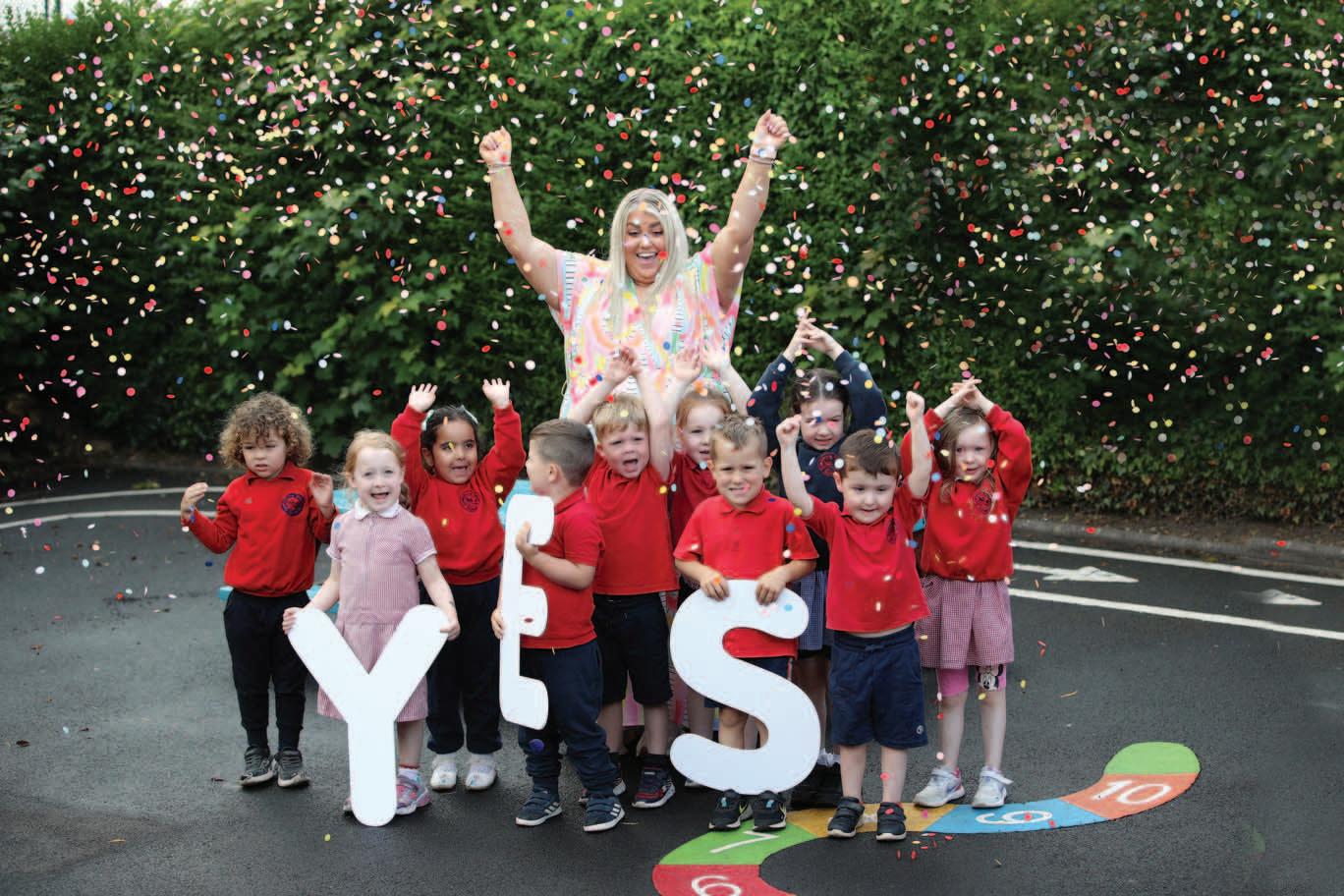
2023 is proving to be another year of significant progress for the integrated schools movement in Northern Ireland. More parents and schools than ever before are showing interest in integrated education.
Since 2019, some 21 schools across Northern Ireland have held a positive democratic ballot of their parents on transforming to integrated status and six schools have since reopened as integrated. This progress has been made despite the impact of a pandemic and the absence of a devolved Assembly since May 2022.
In 2023, the Department of Education (DE) published its first ever Strategy for Integrated Education following the passing of the Integrated Education Act (2022). In the words of the Act’s sponsor, Kellie Armstrong MLA: “I think it is a start to something we all have been looking for. Now we have to keep pressure on to ensure it is delivered.”
The Integrated Education Fund (IEF) has welcomed the Strategy, whilst expressing disappointment and concern that it is yet to fully meet the requirements of the Act, such as
meaningful target setting and concrete plans for delivery, which is something it will continue to push hard for.
Further encouraging news is that public support for more integrated education remains as strong as ever. In May 2023, LucidTalk revealed the results of their Northern Ireland-wide attitudinal poll. Two thirds of respondents agreed that integrated education should be the main model for our education system and 65 per cent indicated that they would support their local school transforming to integrated status.
Back on the ground, more parents and schools continue to engage with the IEF and the Council for Integrated Education (NICIE). In 2023 to date, four schools have already held successful parental ballots on transformation. These schools demonstrate the continued growth in demand for integrated education and include; Ballymena Nursery School,
Rathmore Primary School and Nursery Unit in Bangor, Bangor Academy and Sixth Form College (the largest post primary school in Northern Ireland), and Downshire Nursery School in Banbridge.
The 25th anniversary of the Good Friday Agreement heralded a significant milestone in the history of Northern Ireland, an agreement which contained a specific commitment to ‘encourage and facilitate integrated education’. In marking the occasion, the IEF was proud to partner with several community organisations, in particular Youth Action, in a special Peace Summit, organised by the John and Pat Hume Foundation and Community Dialogue. Entitled ‘The Unfinished Business of Peace and Reconciliation’, the IEF helped to ensure the voices of young people from several integrated schools were heard as part of an extensive five-month long engagement process involving some 600 young people.
Integrated education was also celebrated by Secretary of State, Chris HeatonHarris MP and Tánaiste, Micheál Martin TD, who held a joint reception with the IEF and NICIE at W5 in Belfast. The event was arranged to demonstrate the shared commitment of the UK and Irish governments to the Agreement and the importance of the integrated education, sentiments that were echoed throughout the Agreement 25 Conference hosted by Queen’s University Belfast.
There are lots of successes to build on and no doubt there will be many challenges ahead, there always are, but thanks to the continued support of all our donors and friends, the IEF is proud to support the continued development of integrated education.
E: jill@ief.org.uk W: www.ief.org.uk

selection is leading to a much lower rate of intergenerational mobility compared to that in the Republic of Ireland, a report has found.
The Education Across the Island of Ireland report, published by the Economic and Social Research Institute (ESRI) in March 2023, states that “it is reasonable to conclude that the continued use of academic selection in Northern Ireland is likely to be a contributory factor limiting the extent to which the Northern Irish educational system facilitates intergenerational mobility”.
The report further explains that 29 per cent of young people in Northern Ireland are able to attain a higher level of education than their parents, compared to a figure of 38 per cent in the Republic. A figure which will cause concern for those in the Northern Ireland education sector as the rate of students leaving education early in Northern Ireland is 14.1 per cent, more than double the rate in the Republic, which has an early school leaving rate of 5.6 per cent.
The ESRI states that it can measure the relative
impact of social mobility more formally by use of a model that regresses student educational outcomes on parental education. The marginal effect of the impact of low parental education on the probability of a child having a poor educational outcome is about twice as large in Northern Ireland as is the case in the Republic.
With regard to early school leaving, an individual in Northern Ireland whose parents have a “low education” is 27 per cent more likely than their peers whose parents have higher educational attainment to be an early school leaver. The same marginal effect, the report asserts, equates to only 13 per cent in the Republic.
The report also examines educational mobility based on parents’ level of education in the two jurisdictions which it states is based on the educational level of the parent with higher attainment. The report makes it clear that
educational mobility is much more prevalent in the Republic of Ireland than it is in Northern Ireland for those whose parents at the lowest levels of parental educational attainment, 77 per cent of young people in Ireland educationally upgrade compared to 58 per cent in Northern Ireland.
At the other end of the spectrum, when parents have high levels of educational attainment, educational downgrading is also stated as being “somewhat more likely” in the Republic of Ireland. However, the report adds that it is “likely that the grouping of parents’ education into three categories and in particular the grouping together of upper secondary and post-secondary may be hiding some upward mobility”.
“Given that post-secondary qualifications are much more common in [the Republic of] Ireland than in Northern Ireland, we believe there to be more educational upward mobility in [the Republic of] Ireland than can be clearly distinguished [in this report],” the report explains.
With respect to patterns of educational attainment, the ESRI finds that substantial divergence has occurred over time, with educational attainment improving more rapidly in the Republic relative to Northern Ireland in the last 15 years.
In 2019, the proportion of people aged between 25 and 29 with low levels of educational attainment was approximately 11 per cent higher in Northern Ireland than in the Republic, whilst the proportion of people in said age category with high levels of educational attainment was approximately 9 per cent lower in Northern Ireland
The ESRI report said differences were not evident in 2005, meaning that Northern Ireland’s pattern of lagging behind neighbouring regions is fairly recent. The report confirms that, in addition to lagging considerably behind the Republic of Ireland, Northern Ireland is performing unfavourably compared to the United Kingdom’s constituent countries, particularly Scotland.
Northern Ireland, the report asserts, currently has the highest rate in the UK or Ireland of people with low qualifications, and Wales is the only
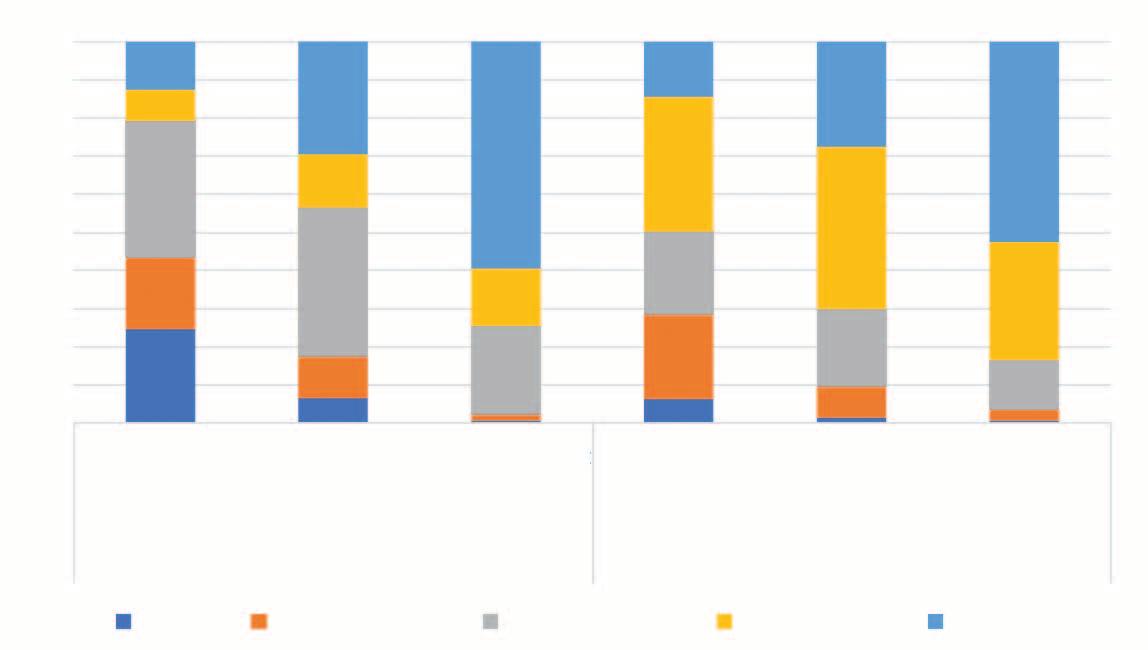
Source: ESRI

region in the area with a lower proportion of people with higher-level qualifications.
To solve Northern Ireland’s educational attainment decline, the ESRI has recommended that the targets for what should be the minimum level of educational attainment expected as the norm in Northern Ireland changes over time.
Currently, the ESRI asserts, the ability to retain children to the point of completing an upper secondary education is seen as a key objective in both the Republic of Ireland and Northern Ireland.
“Early school leaving is particularly important as the long-term ramifications for individuals in terms of their labour market outcomes but also of their
Source: ESRI
overall wellbeing are well documented. Adopting the OECD definition of early school leaving, we find that it is more than twice as prevalent in Northern Ireland as it is in [the Republic of] Ireland (14.1 per cent compared to 5.6 per cent),” the report states.
“Furthermore, while coming from a more disadvantaged background is a significant predictor of educational failure in both jurisdictions, the impact was more pronounced in Northern Ireland. The marginal effect of the impact of low parental education on the probability of a child having a poor educational outcome is about twice as large in Northern Ireland as is the case in Ireland.”