Decarbonisation of assets report


Ireland’s energy landscape is undergoing a profound transformation as the country commits to a sustainable, decarbonised future. At the heart of this change lies Gas Networks Ireland’s national gas infrastructure—a €3 billion asset that spans 14,725km of pipeline and its highly skilled workforce. Together, these resources are central to the resilience of Ireland’s energy system and its pathway toward a net zero carbon future. “
Ireland’s energy future depends on a resilient, decarbonised gas network, and Gas Networks Ireland is playing a central role in making that vision a reality. Through strategic investments in infrastructure and the development of renewable gas technologies, the organisation is laying the foundation for a net zero carbon future. At the same time, its skilled workforce is being equipped with the training and resources needed to support this transition, ensuring that Ireland’s gas network remains a safe, reliable, and innovative asset for decades to come.
Gas Networks Ireland’s ongoing projects, including the integration of biomethane and hydrogen into the national grid, are evidence of the organisation’s commitment to sustainability. As Ireland progresses toward its net zero target, the role of the gas network will evolve, supporting backup power generation, renewable heat, and potentially even energy exports.
This transformation not only aligns with Ireland’s climate goals but also reinforces Gas Networks Ireland’s
commitment to sustainable development, a pledge recognised with the organisation’s recent appointment as a United Nations Sustainable Development Goals (UNSDG) Champion. As part of this initiative, Gas Networks Ireland continues to demonstrate how the responsible management of energy resources can significantly contribute to global climate action, aligning with the UNSDG’s focus on affordable and clean energy (Goal 7) and climate action (Goal 13).
Ireland’s gas network has long been a cornerstone of the nation’s energy supply, delivering 30 per cent of its core energy demand, 40 per cent of its heat, and supporting nearly 50 per cent of electricity generation. On days when wind and solar energy are unavailable, this network provides up to 90 per cent of Ireland’s electricity through flexible, reliable backup power generation. However, as the country embarks on its decarbonisation journey, Gas Networks Ireland has a dual mission: to maintain this essential service while transitioning to renewable gases such as biomethane and green hydrogen.
The capital expenditure (CAPEX) allocated for these efforts in recent years underscores Gas Networks Ireland’s commitment to future proofing the network. In 2023 alone, substantial investments were directed toward upgrading the existing infrastructure and supporting the transition to renewable gas. By ensuring that its pipeline system is capable of transporting renewable gases without significant modifications, Gas Networks Ireland is positioning itself as a leader in Europe’s green energy transition. The organisation is also laying the groundwork for new asset development, which includes the design, testing and construction of biomethane central grid injection facilities and hydrogen-ready infrastructure.
These investments are driven by a vision for 2045, outlined in Gas Networks Ireland’s Pathway to a Net Zero Carbon Network. This strategy details how the network will evolve to carry only renewable gases, supporting the country’s Climate Action Plan targets. Over the next two decades, the network will be pivotal in supporting both electricity generation and the decarbonisation of heat and transport, ultimately reducing Ireland’s reliance on fossil fuels.
Ireland’s gas network continues to demonstrate its reliability by ensuring customers receive a safe, reliable and secure supply of energy. The network is sustained by comprehensive maintenance and capital programmes.
In 2023, Gas Networks invested around €150 million in critical infrastructure, making significant progress in its capital
and maintenance programmes. The company completed 98 per cent of all planned maintenance, including key repairs at compressor stations in southwest Scotland. It responded to 14,856 publicly reported gas escapes, with 99.9 per cent addressed within the one hour target. Remedial works were completed on 50 multi occupancy buildings, and leakage surveys were carried out across 2,264km of mains and services.
Notable 2023 CAPEX projects include:
• construction completed on three new connections for power stations: Grange Backup Power (Grangecastle, Dublin), ESB Poolbeg, and ESB Ringsend;
• construction started on a new connection to ESB Corduff power station;
• a capacity upgrade of Kilshane above ground infrastructure (AGI) was completed and commissioned;
• construction began on a capacity upgrade at Ardree AGI;
• upgrades to electrical switchgear commenced at Brighouse Bay Compressor Station in Scotland;
• refurbishment works were completed at Beattock Compressor Station and Brownsbarn AGI;
• over 8km of distribution pipeline reinforcement was completed; and
• two compressed natural gas (CNG) stations were commissioned.
Throughout 2024, Gas Networks Ireland has continued to create meaningful value for the people of Ireland and ensure the steady flow of energy, playing a key role in the transition to a low carbon energy system.
Gas Networks Ireland is conducting further research on the technical and safety feasibility of injecting green hydrogen into Ireland’s gas network, utilising its ‘off-grid’ network at its Network Innovation Centre. The company is also developing a hydrogen safety and technical roadmap, including future hydrogen trials, while working with government bodies and other stakeholders to advance the National Hydrogen Strategy.
Progress continues toward achieving the Government’s target of 5.7 TWh of biomethane on the network by 2030, with 4
Gas Networks Ireland confident that this goal is achievable with the necessary support.
In May, Gas Networks Ireland and Bia Energy agreed a significant partnership to enable the direct injection of renewable biomethane gas produced from food waste at Bia Energy’s new €60 million anaerobic digestion facility in Huntstown, County Dublin directly into the national gas network. The agreement was signed shortly after the Government published its National Biomethane Strategy and marked an important milestone in the development of Ireland’s renewable energy sector.
Ireland is almost unique in the European Union in having no strategic gas storage facilities and this over-reliance on a single source of natural gas makes Ireland susceptible to supply disruptions, whether that being due to infrastructure interruption or market dynamics. Any disruption of gas from the UK, could result in curtailment of gas fired generation, resulting in inevitable electricity shortages and damage to the economy/wider society.
Although a disruption to Ireland’s supplies of gas is considered to be unlikely, this is one of the key reasons Gas Networks Ireland believes that gas storage is required, and in parallel is working hard to develop an indigenous biomethane industry, which would not only support the decarbonisation of the agricultural sector, but also ensure diversity of supply as the Corrib gas field depletes over the coming years.
In line with the Government decision to develop a state-led Strategic Gas Emergency Reserve, Gas Networks Ireland, as the independent gas transmission system operator (TSO), is preparing a detailed proposal for a reserve that will provide Ireland with an immediate source of emergency gas in the event of an outage or disruption to the current supply.
A strategic gas emergency reserve is a gas storage facility that will provide Ireland with an immediate source of emergency gas in the event of an outage or disruption to Ireland’s current gas supply as the country transitions to more renewable sources.
Gas Networks Ireland remains committed to putting customers at the heart of its business by delivering excellent service while advancing its sustainability agenda. It aims to operate in a way that protects the environment and supports the social and economic development of the communities it serves, all while maintaining a competitive, efficient gas network that contributes directly to Ireland’s emission reduction targets.
A key part of Ireland’s energy transition is the integration of renewable gases into the existing gas network. Biomethane, a carbon neutral gas produced from organic waste, is already on Ireland’s network. To achieve the Government’s target of 10 per cent of gas on the network to be biomethane by 2030, Gas Networks Ireland is constructing a central grid injection facility in Mitchelstown, County Cork, where the gas is compressed and injected into the national grid. These facilities will allow farmers, waste processors, and energy
producers to contribute to the decarbonisation effort, with significant environmental and economic benefits.
In addition to biomethane, green hydrogen is set to play an increasingly important role in Ireland’s energy future. Produced by using renewable electricity to split water into hydrogen and oxygen, green hydrogen can provide a carbon free alternative to natural gas in industrial processes that require high heat. Gas Networks Ireland has been conducting off grid testing at its Network Innovation Centre in Dublin to assess the feasibility of transporting hydrogen through its pipeline system. Early results are promising, indicating that the existing infrastructure can carry green hydrogen with minimal modification.
The development of hydrogen infrastructure will likely result in a parallel system: biomethane for the distribution network and hydrogen for large energy users. This division will ensure that Ireland’s gas network can meet the diverse energy demands of different sectors while maximising the potential of renewable gases. Gas Networks Ireland is also exploring the possibility of exporting green hydrogen to the UK via the existing interconnectors with Scotland, further integrating Ireland into the European energy market.
As Ireland continues to expand its renewable electricity generation capacity, the need for flexible, backup generation has never been greater. The Climate Action Plan calls for at least 2 GW of new flexible generation capacity by 2030, and Gas Networks Ireland is at the forefront of this effort. Several projects are already underway to connect backup power stations to the gas network, ensuring that Ireland has a reliable source of electricity when renewable sources are unavailable.
One such project is the conversion of Bord na Móna’s 116 MW power station in Edenderry, County Offaly, from diesel to natural gas. This transition will reduce the plant’s emissions by 40 per cent, with further reductions expected as biomethane and hydrogen become more widely available. To facilitate this shift, Gas Networks Ireland will construct a 23km pipeline to connect the station to the national gas network.
By 2030, Gas Networks Ireland expects to deliver new connections to multiple backup generation stations, with some projects already in the design phase and others nearing completion. These efforts are critical to balancing Ireland’s electricity grid as renewable energy sources like wind and solar fluctuate throughout the year.
While Gas Networks Ireland’s pipeline network forms the physical backbone of the energy transition, it is the organisation’s workforce that drives its success. Gas Networks Ireland has built an expert team with the knowledge and experience to manage the complex systems required to deliver gas securely and reliably. As the company transitions to renewable gases, it will
continue to leverage this expertise while adapting to meet new challenges.
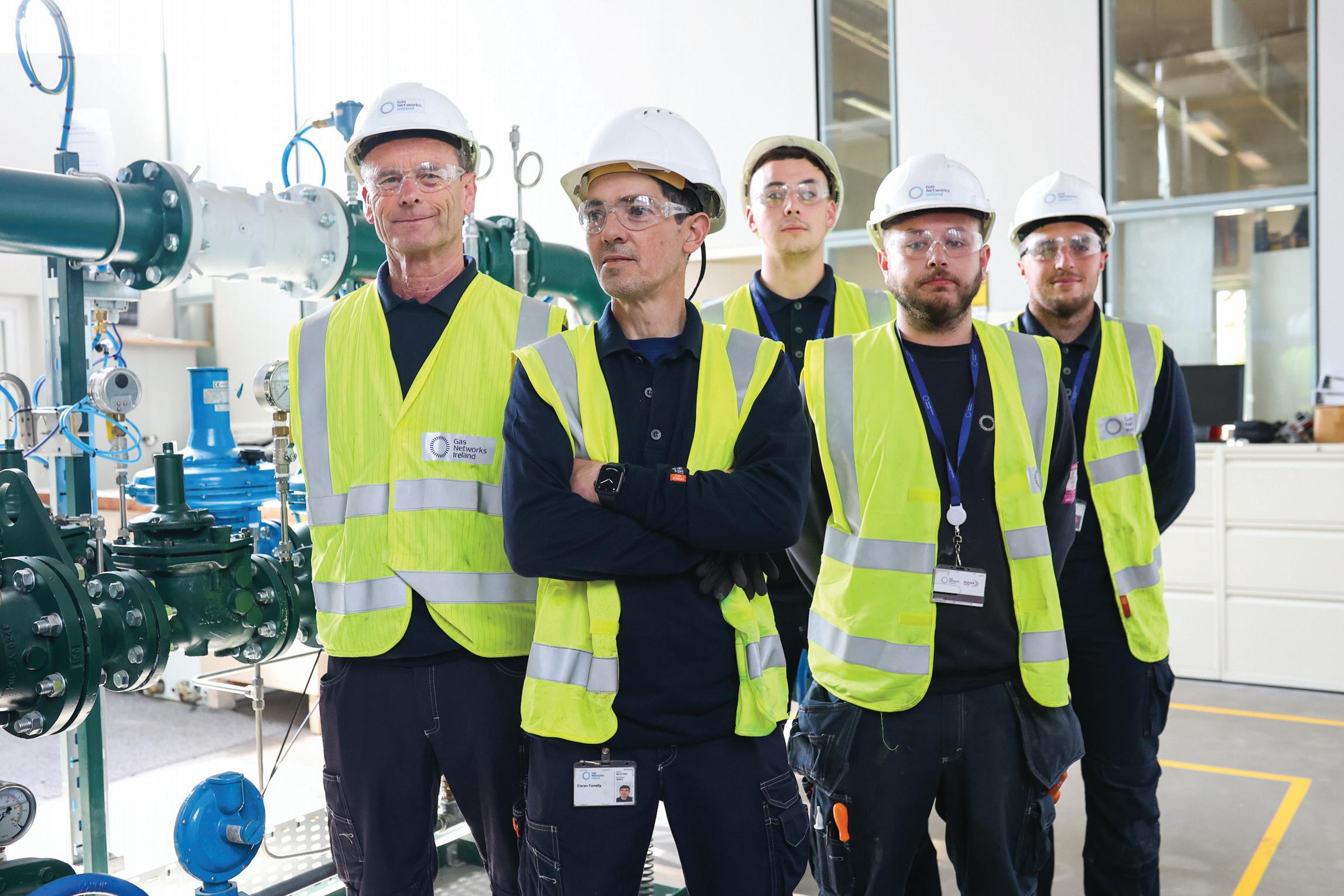
Recognising the skills gap in the renewables and cyber security sectors, Gas Networks Ireland has already taken steps to address these emerging needs. Through graduate and apprenticeship programmes, the organisation is training the next generation of energy professionals. These programmes cover a range of skills, from mechanical automation and maintenance fitting to electrical instrumentation and plumbing, ensuring that apprentices receive both hands on training and classroom based learning.
By partnering with educational institutions and SOLAS, Ireland’s further education and training authority, Gas Networks Ireland ensures that its apprentices are trained to the highest standard. Upon completion of the four year programme, participants receive a Level 6 Advanced Certificate Craft, a nationally and internationally recognised qualification. This investment in workforce development is essential to ensuring that Gas Networks Ireland has the technical skills required to maintain and expand its renewable energy assets in the years to come,
Beyond technical training, Gas Networks Ireland is committed to fostering a supportive and inclusive work environment. This commitment is demonstrated through various workplace wellbeing initiatives, including the Time to Talk, Work Safe Home Safe, and Occupational Health and Wellbeing programmes. In 2023, Gas Networks Ireland took its workplace wellbeing efforts a step further by achieving the KeepWell Mark, a national accreditation for excellence in employee health and wellbeing. This holistic programme evaluates workplace initiatives across eight key areas, and Gas Networks Ireland’s success in achieving this mark underscores its dedication to employee welfare.
In addition to wellbeing initiatives, Gas Networks Ireland has launched a series of policies aimed at fostering diversity and inclusion within the organisation. The iBelong programme, overseen by the Diversity and Inclusion Council, includes several employee resource groups focused on issues ranging from gender equality to neurodiversity. Through networks such as the Women’s Network, Rainbow Network (LGBTQ+), and the Culture and Ethnicity Network, Gas Networks Ireland promotes an inclusive culture where all employees can thrive.
W: www.gasnetworks.ie
The Public Sector Climate Action Mandate, a feature within Climate Action Plan 2024, outlines significant steps to reduce emissions across public sector operations.
Central to the mandate, published alongside Climate Action Plan 2024 in December 2023, is the decarbonisation of state-owned assets such as buildings, vehicles, and operational practices, aimed at achieving a 51 per cent reduction in energy-related greenhouse gas (GHG) emissions by 2030.
The Public Sector Climate Action Mandate is built around two primary objectives for the public sector:
• reducing energy-related GHG emissions by 51 per cent; and
• improving energy efficiency by 50 per cent by 2030.
The mandate applies to all public sector bodies, except for local authorities, commercial semi-state bodies, and the school sector.
One of the key components of the public sector decarbonisation strategy is improving the energy efficiency of public buildings. The mandate specifies that public bodies must begin deep retrofits of at least one building by 2024. This process will play a vital role in transitioning older buildings to nearly zero energy buildings (NZEB) or zero emission buildings (ZEB), with the ultimate goal of reaching this standard by 2050.
Retrofitting is cited as a measure which not only addresses current emissions from building operations, but also sets a precedent for future infrastructure developments. Public bodies with large estates are expected to create portfolio building stock plans by the end of 2024, determining which buildings are suitable for retrofitting and aligning these projects with national climate goals. Smaller organisations are also encouraged to conduct building stock analyses as part of their overall decarbonisation strategies.
Moreover, the mandate prohibits public bodies from installing fossil fuel-based heating systems in new buildings or major renovations, unless exceptional circumstances apply. This includes a transition to renewable heating systems like heat pumps, ensuring that the public sector leads by example in using cleaner, more efficient technologies.
The transition to zero emissions vehicles is another central pillar of the Public Sector Climate Action Mandate. The mandate requires public bodies to procure only zeroemissions vehicles starting from the end of 2022, in alignment with the EU Clean Vehicles Directive. This policy represents a significant move toward decarbonising public sector transport, with the goal of completely phasing out fossil fuel-dependent vehicles by 2030.
The challenge of transitioning heavy duty vehicles to zero emissions alternatives is acknowledged in the mandate, particularly given current market limitations. However, public bodies are encouraged to procure ‘clean vehicles’ that meet the EU’s directive and contribute to reducing the carbon footprint of public transport operations.
In addition, by 2024, all public sector bodies with vehicle fleets must develop plans for installing electric vehicle (EV) charging infrastructure. This ensures that the necessary infrastructure is in place to support the wider adoption of zero emissions vehicles, aligning fleet decarbonisation timelines with the overall climate action goals.
The decarbonisation of public assets extends beyond transport and buildings to include sustainable procurement practices. Green public procurement (GPP) is central to this effort, requiring public bodies to prioritise environmental criteria when purchasing goods and services. The Environmental Protection Agency’s (EPA) Green Public Procurement Guidance serves as a resource for integrating sustainability into procurement decisions, particularly for construction projects that can leverage low-carbon materials, such as environmentally friendly cement.
The mandate also places a strong emphasis on resource and waste management, ensuring that public sector operations align with circular economy principles. By 2024, all public bodies must monitor and measure food waste, with the goal of reducing waste generation and improving segregation. Contracts related to food services must include specific measures to prevent and manage food waste, reinforcing the public sector’s role in promoting sustainable consumption.
The mandate further encourages public bodies to eliminate single-use plastics and shift towards digital processes to reduce paper consumption. Where paper use is unavoidable, recycled paper must be the default option. These steps not only reduce the environmental impact of public sector operations but also contribute to Ireland’s broader sustainability objectives.
To facilitate a cultural shift in how public bodies approach sustainability, the mandate calls for the establishment of green teams within each organisation, responsible for driving climate action and sustainability initiatives. These teams, reporting directly to senior management, are to ensure that climate considerations are integrated into decision-making processes at every level.
Senior management and state board members are also required to complete climate action leadership training. This initiative is designed to equip decision-makers with the knowledge and tools needed to lead effectively in the decarbonisation effort. Green procurement training for staff further ensures that public bodies can make informed purchasing decisions that align with environmental goals.
The mandate also requires annual reporting on GHG emissions, implementation progress, and sustainability activities. This transparency fosters a culture of accountability, where public bodies are encouraged to continuously improve their performance in line with the national decarbonisation strategy.
The mandate, like the wider Climate Action Plan, does not go into detail about how the proposed measures should be achieved by relevant bodies, rather outlining a general vision of decarbonisation along with broad measures such as “decarbonising fleets”. As with the private sector, bold decisions will be required by individual decision-makers within each organisation in order to accelerate the decarbonisation of Ireland’s stateowned assets.
In
the face of climate challenges and the urgent need for more renewable energy on the grid, Bord Gáis Energy is positioned to play a key role in driving Ireland’s energy transition.
With a clear commitment to achieving net zero by 2045, the company, underpinned by its parent Centrica, is investing heavily in the infrastructure and skills required to power a sustainable future.
The transition to a green energy company is no small undertaking and will see Bord Gáis Energy move from 500 megawatts of green energy to 3,200 megawatts over the next six years. By 2030, Bord Gáis Energy aims to supply up to 10 per cent of Ireland’s total energy demand from green sources through partnerships and investments in large-scale infrastructure projects.
It is well established that Ireland, with its vast coastline and strong wind resources, holds significant potential for offshore wind development. Recognising this, Bord Gáis Energy formed a strategic partnership with Corio Generation, a global leader in offshore wind development, earlier in 2024. This collaboration combines Bord Gáis Energy’s experience as a leading energy retailer and Corio’s extensive experience in developing large-scale offshore wind projects globally.
This partnership will help unlock the potential of offshore wind, which is critical to decarbonising Ireland’s energy system. By capitalising on the potential of offshore wind, Bord Gáis Energy will not only enhance Ireland’s energy security, but also provide customers and businesses with cleaner, more affordable energy. 90 per cent of Bord Gáis Energy’s renewable electricity generation will come from wind by 2030.
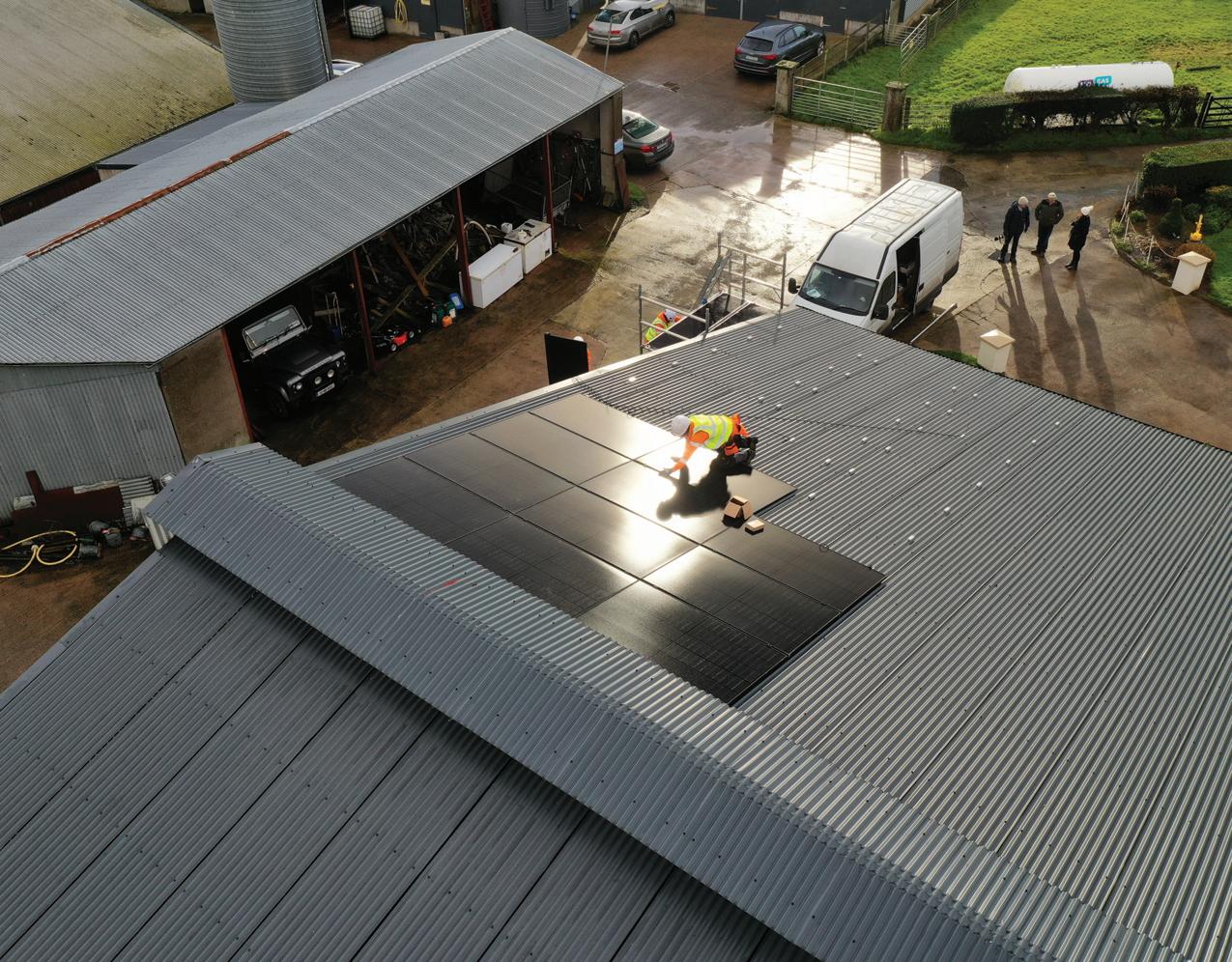
Wind energy is a cornerstone of Ireland’s renewable energy strategy, but it is only part of the equation. Solar energy is another critical area that Bord Gáis Energy is investing in to help decarbonise Ireland's energy mix. In collaboration with the Irish Farmer’s Association, Bord Gáis Energy has established an innovative programme to bring solar installations to farmers across Ireland.
Bord Gáis Energy’s teams have experience in completing over 1,500 solar installations nationwide, and the company expects to install 300 more solar systems on homes and farms this year alone. Looking ahead, the company aims to deliver 12,000 solar installations by 2029, helping customers across the country reduce their reliance on fossil fuels and lower their energy bills.
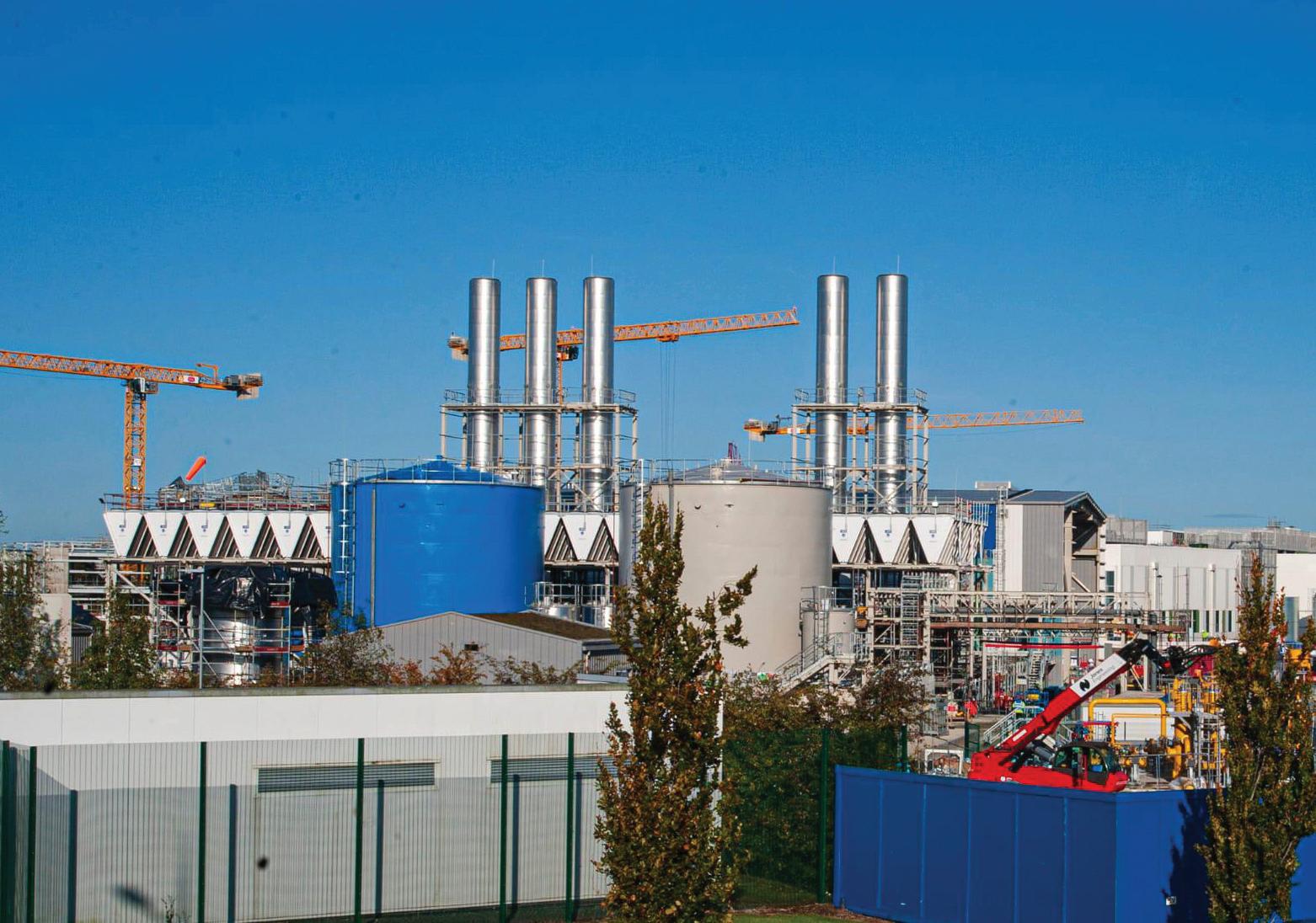
While renewable energy is key to a sustainable future, ensuring the security of energy supply remains critical, especially as we transition to a grid dominated by intermittent renewables like wind and solar. To address this, Bord Gáis Energy is making significant investments in two gas peaker plants in Athlone and Dublin, which are currently under development. These plants are designed to provide backup power during periods of high demand or when renewable energy generation is low.
The plants can move from a standing start to full power generation in just six minutes, ensuring that Ireland’s energy supply remains secure and stable. Importantly, these plants are hydrogen enabled meaning they are futureproofed to operate on renewable gas when it becomes available. The €300 million investment in peaker plants will significantly alleviate pressure on the national grid and help integrate more renewable energy into the system. The plants are expected to come online in 2025, providing a crucial bridge between Ireland’s current reliance on fossil fuels and its renewable energy future.
As part of its upstream investments, the company is also delivering innovative hydrogen, ammonia, battery storage, and hydrogen-ready gas storage
projects – such as Project Kestrel off the coast of Kinsale – which will further support security of energy supply in Ireland.
At the heart of Bord Gáis Energy’s ambitious plans for the future are its people. The company recognises that building the infrastructure for a netzero future is only part of the solution; equipping its workforce with the right skills is equally essential. Over the next five years, Bord Gáis Energy will increase its headcount by 50 per cent, creating hundreds of new jobs across the country to support the energy transition.
This growth will be supported by the company’s technical skills apprentice programme (launched in 2021) and a graduate program, both of which are designed to nurture the next generation of engineers to support Ireland’s green energy transition. Existing employees are also being provided with the tools and training necessary to adapt to the rapidly changing energy landscape. By empowering its people, Bord Gáis Energy is ensuring that it has the talent and expertise to drive forward the transition to a cleaner, greener energy system.
How we do business is just as important to us as why. We are firmly committed to ensuring that the transition is a just one. We do this through our partnerships with Focus Ireland to support people at risk of or experiencing homelessness; our Energy Support Fund to support vulnerable people struggling to pay bills; as well as our inclusive workplace culture.
Through strategic partnerships, large scale infrastructure projects and significant investments in renewable energy, the company is helping to build the foundation for a greener, fairer future. As Ireland moves towards its 2030 climate goals and beyond to carbon neutrality in 2050, Bord Gáis Energy aims to play a central role in Ireland’s renewable energy transition.
For further information visit www.bordgaisenergy.ie

The sectoral emissions ceilings included in Climate Action Plan 2024 (CAP24) outline the framework within which the decarbonisation of Ireland’s assets must take place, with the State targeting net zero by 2050.
The CAP24 sectoral ceilings, determined for different industries, serve as limits on the total amount of greenhouse gas (GHG) emissions each sector can produce over defined periods.
Understanding these ceilings and how they necessitate changes across the State’s economy is essential to understanding how the decarbonisation of Ireland’s assets will take place.
The 2023 and 2024 Climate Action Plan, under direction from the Climate Action and Low Carbon Development (Amendment) Act 2021, include carbon budgets for three distinct periods: 2021-2025, 2026-2030, and 2031-2035, aiming for significant annual reductions in GHG emissions across all sectors by 2030. Ireland seeks to achieve a net zero carbon economy by 2050, with interim targets playing a key role in reaching this target.
Each sector has specific emission ceilings based on these budgets, with the following notable examples for the 2021-2025 and 2026-2030 periods:
These ceilings aim to drastically reduce emissions in each sector, demanding deep decarbonisation strategies, transforming current practices, and deploying new technologies.
The decarbonisation of electricity is foundational, as it underpins efforts in other sectors such as transport, industry, and heating. Ireland’s goal is to achieve 80 per cent renewable electricity by 2030, primarily through the expansion of wind, solar, and offshore renewable sources. Actions to decarbonise the electricity sector include:
• Expanding renewable generation: Ireland aims to have 9GW of onshore wind, 8GW of solar, and at least 5GW of offshore wind by 2030.
• Strengthening grid infrastructure: With increased renewable generation comes the need for a more robust and flexible electricity grid. Grid enhancements must focus on accommodating intermittent renewable energy sources.
• Demand-side flexibility: Encouraging consumers and large energy users to adopt smart technologies to adjust their energy use to match renewable supply will be crucial for balancing the grid.
As the largest emitter, the agriculture sector must reduce its GHG emissions by 25 per cent by 2030 compared to 2018 levels. Key strategies include:
• Improving efficiency: Technologies such as lowemission slurry spreading and protected urea fertilisers will reduce emissions from livestock and soil management.
• Land use and forestry: Shifting towards carbon sequestration practices in land use, such as reforestation and afforestation, will play a vital role in offsetting emissions from agriculture.
• Alternative livestock diets: Encouraging the use of methane inhibitors and developing alternative livestock feeding strategies can help to reduce methane emissions from cattle.
The broad industrial sector must reduce emissions by 35 per cent by 2030. Key decarbonisation actions include:
• Electrification: Shifting industrial energy use from fossil fuels to electricity, particularly in heat generation, is crucial. The electrification of manufacturing processes can significantly reduce reliance on natural gas and oil.
• Carbon capture and storage (CCS): Technologies that capture CO2 emissions at the source and store them underground are essential, particularly for industries where emissions are hard to abate, such as cement production.
• Hydrogen and biomass: Using hydrogen as a clean fuel for industrial processes, combined with the adoption of biomass where electrification is not feasible, will play a significant role.
The built environment contributes over 11 per cent of Ireland’s emissions, and significant reductions are required. The sector needs to prioritise energy efficiency improvements and decarbonise heating. Key measures include:
• Retrofit programmes: Retrofitting homes and commercial buildings to higher energy efficiency standards will reduce energy demand. The goal is to retrofit 500,000 homes to a Building Energy Rating (BER) of B2 or better by 2030.
• Heat pumps: Heat pumps are a key technology for decarbonising residential and commercial heating
systems. The target is to install heat pumps in 400,000 homes by 2030.
• District heating: Expanding district heating systems, particularly in urban areas, will help reduce reliance on individual fossil fuel boilers.
The transport sector accounted for 21.4 per cent of Ireland’s greenhouse gas emissions in 2023, according to the Environmental Protection Agency (EPA). The sector’s decarbonisation will require a shift away from private fossil-fuel cars towards electrified personal transport and expansion of public transport. Targets include:
• Electric vehicles (EVs): Government has outlined a target of one million electric vehicles on the road by 2030. This will require expanding the EV charging infrastructure.
• Public transport and active travel: While no specific broad sectoral reforms are outlined by government, Minister for Transport Eamon Ryan TD has stated that bus electrification, expanded rail networks, and expansion of cycling infrastructure are essential to encourage a shift away from car dependency. Some notable examples include the BusConnects and DART+ programmes, which aim to improve public transport offerings.
CAP24 reemphasises the broad targets set out under the 2021 Act for decarbonising Ireland’s assets in each sector. While the plan sets out the broad decarbonisation targets for each sector, the means through which this will actually be achieved is dependent on innovation and leadership by sectoral leaders and decision-makers beyond political leadership.
For example, while the Government has taken measures to decarbonise the transport sector by increasing investment in public transport and expanding EV infrastructure, broad change will require bold decisions by private companies and state bodies to decarbonise their fleets and encourage new practices to decrease their carbon outputs, both at a broad institutional level, and by reducing the average carbon output of their employees.
This could take place through the continued use of work from home practices and remote working, something which Environment Minister Eamon Ryan TD has outlined is a key enabler to his vision of 15minute towns and cities which can enable a reduction on reliance on private cars.







The
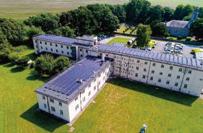
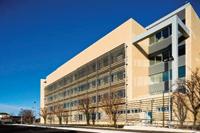
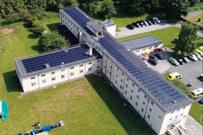
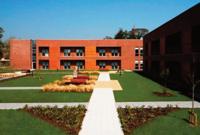
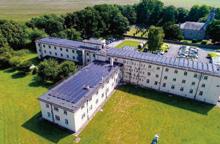
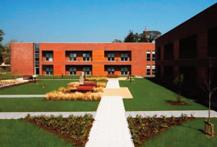
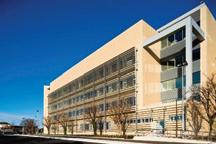
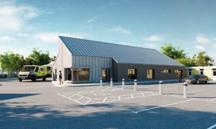
Health Service Executive (HSE) have unveiled a new roadmap to adhere to decarbonisation targets set out in the Government’s Climate Action Plan.
Climate Action Plan 2024, published by the Government in 2023, sets out the energy efficiency and energy related greenhouse gas (GHG) emissions reduction targets, which all public sector bodies in the State are legally obliged to meet.
To adhere to these targets, the HSE Capital and Estates launched the Infrastructure Decarbonisation Roadmap, which outlines seven action areas on how they can reduce GHG emissions from the sector by 51 per cent, and improve their energy efficiency by 2030.
Action area one: Continue and enhance the HSE partnership agreement with SEAI and develop leadership roles
In 2018, HSE Capital and Estates entered into a partnership arrangement with the Sustainable Energy Authority (SEAI), which established a joint cofunding memorandum of understanding to progress the energy efficiency agenda in the HSE.
The HSE states it will continue to provide leadership in the area of energy and carbon emissions reduction and will update its Infrastructure Decarbonisation Roadmap annually.
Action area two: Regional Energy Bureau, Energy Management Teams and Shallow Retrofit Programme
The HSE’s aim is to increase the number of local energy management teams, with a target of 165 teams by the end of 2024, with 138 energy teams in place and supported at the end of Q4 2023.
The HSE states it will ensure that the energy management teams are incorporating staff workshops and supported energy retrofit minor capital programmes.
Action area three: Energy efficient design (EED) process and net carbon zero ready design
This area will see the implementation of
an EED and carbon zero ready design approach for all capital works including a national training programme.
Action area four: Deep Energy and Carbon Retrofit Programme
The HSE plans to progress a Deep Energy Retrofit Programme, targeting existing buildings to decarbonise appropriate elements of the health portfolio. This will include replacing fossil fuels with renewables and electrifying heat and transport.
Action area five: Metering, modelling, reporting and energy management systems
The HSE states it will develop metered data and utility supplier data including integration with the new National Estates Information System.
Action area six: Behavioural Training and Learning
As outlined in the roadmap, the HSE will continue a programme to develop advice, guidance and training support to reduce energy and to conserve water.
Action area seven: Support to the wider HSE Climate Action Strategy
As part of the HSE’s wider climate action strategy, the roadmap will provide support to the implementation of the strategy in areas of transport and mobility, sustainable procurement, greener models of healthcare, waste management, adaptation and resilience.
The roadmap forms an integral part of the HSE Capital and Estates Strategy and Implementation Plan 2022-2050 in addressing the estates objective for net carbon zero by 2050. It has outlined the work undertaken by the HSE Capital and Estates to date and their continued approach to achieve the targets set out in CAP24 through reduction of carbon emissions from their buildings and their operation, by reducing energy usage and shifting the HSE’s energy sources from fossil fuels towards renewable and carbon zero energy sources.