

Transport report

Sponsored by

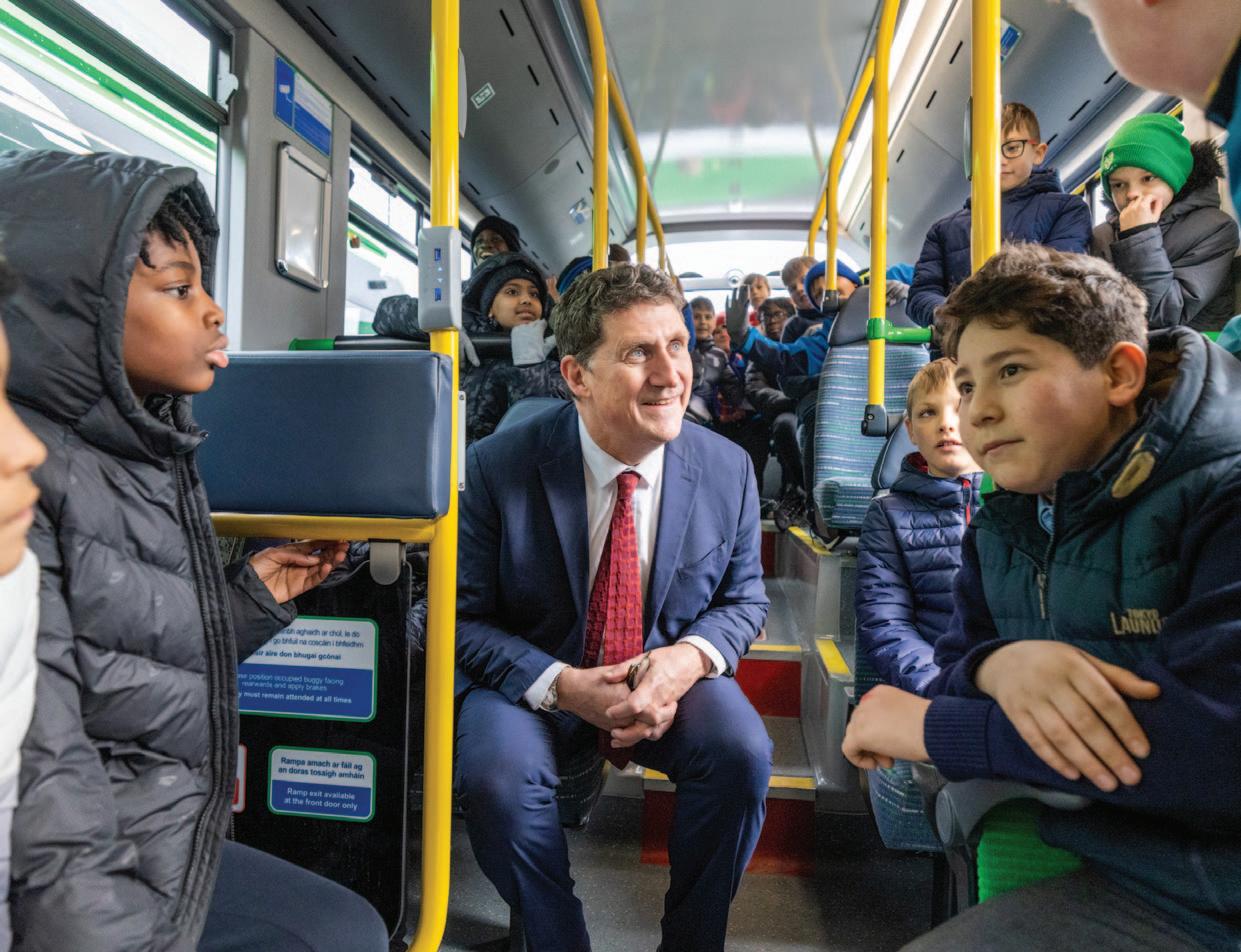
Transport Minister Eamon Ryan TD: ‘Transforming how we get around’

In our Climate Action Plan 2023 (CAP23), we have set a target to halve our emissions from transport by 2030. Of all the high impact sectors within CAP23, I often say that transport is going to be one of the most challenging to address, writes Minister for Transport, Eamon Ryan TD.
There is not a person in this country that does not rely on some aspect of our transport ecosystem to get around their own locality and then further afield. We want to support mobility around Ireland, and access to our island nation, in a way that is sustainable and in line with our carbon reduction goals.
That is why the Government has prioritised transport like no other for
decades. We have committed to providing €35 billion in capital investment up to 2030 to support the systemic change we need to ensure that we can deliver an accessible, efficient, safe, and sustainable transport system that works for everyone; not just in cities in towns, but in rural villages and townlands.
Too often, our starting point with transport in Ireland is negative. We rush
34 transport report boldly moving forward
Minister for Transport Eamon Ryan TD at the launch of Ireland’s first all-electric town bus service in Athlone, County Westmeath.
Credit: Naoise Culhane, Bus Éireann
“One of the most significant things we did to encourage people to use public transport was reduce fares for the first time in 75 years.”
to talk about all the things we do not have. A recent Greenpeace report focused narrowly on the availability of long-term (yearly) travel passes. Ireland does not have one and so based on this extremely narrow interpretation of our public transport system, we were automatically decried as “the worst in Europe”.
The truth is we are not. The truth is we are making enormous and meaningful changes in our transport system every week. The truth is that Ireland is bucking the European trend because we are one of the only countries to see a significant rebound in public transport passenger numbers since Covid. In fact, in Ireland, ours is not just a rebound, but an encouraging increase in the numbers now choosing to take the bus, the train, or active travel. The truth is that our 90-minute TFI fare makes us as competitive as cities like Berlin, Budapest, or Amsterdam.
Fare reductions
One of the most significant things we did to encourage people to use public transport was reduce fares for the first time in 75 years. In 2022, we reduced fares on publicly funded services by an average of 20 per cent as part of a suite of measures to help combat the cost of living. We also introduced the Young Adult Card (YAC) which entitles all young adults aged from 19 to 23 years and full-time third level students
between the ages of 16 and 23 to a massive 50 per cent reduction – with the additional 20 per cent off. This actually means that fares for young people are now 60 per cent cheaper for our younger travellers.
And people are availing of these fares in spades. Since the introduction of the YAC in 2022, nearly 300,000 cards have been issued. The seven-day rolling average for public transport passenger journeys across bus, Luas, DART, and rail was nearly 800,000 journeys a day, representing a 27 per cent increase when compared to 2022.
Rural transport
It is also happening on rural transport. In 2023, the weekly patronage for Local Link is nearly 52,000 – a staggering 82 per cent increase when compared to the same period in 2022. Connecting Ireland services – that is local bus services between towns – is also continuing to see an increase in the numbers travelling – up 112 per cent at the end of 2022 compared to 2019.
Improving rural transport is a particular priority for the Department of Transport. In 2022, Connecting Ireland delivered 38 new and enhanced bus services. But in 2023, our budget and our ambition has doubled. In 2023, we will spend €8.5 million to deliver 67 new or enhanced services. This means that over two years, we will be delivering one new or enhanced bus service every single week.
35 transport report boldly
forward 4
moving
Minister for Transport Eamon Ryan TD
“We are meeting our emissions targets, and putting in place a public and active travel system that we can be proud of.”
Cities
In our towns and cities, under the National Development Plan 2021-2030, our Bus Connects programmes will be substantially delivered in each of the State’s five cities by the end of the decade. In Dublin, the NTA expects that the Network Redesign, which is being rolled out over 11 phases, will be completed by early 2025. In Cork, the new network will provide an increase of over 50 per cent in bus services. The same will happen in Galway, linking the city buses to Bearna and Oranmore.
But transforming our transport system goes beyond public transport infrastructure. We are also investing heavily in active travel and in our greenways. In 2023, for example, we have invested an unprecedented €290 million in active travel and €63 million in greenways.
Pathfinder Programme
In October 2022, we launched our Pathfinder Programme – 35 exemplar public transport, walking, cycling and wheeling projects across the country which will be completed by 2025. The aim of the programme is to bring increased momentum to the delivery of projects at a local level with a strong emphasis on experimental and innovative approaches. The 35 projects encompass significant road-space reallocation projects favouring walking and cycling in our cities, large scale investments in public transport, or exemplar 15-minute towns in towns like Letterkenny or Killarney. Many of the most innovative projects are in rural areas like Leitrim where a project called ‘The First and Last Green Mile’ connects the Local Link services with local hackneys to make sure that people can be picked up and dropped ‘the last mile’ direct to their doors.
Electric vehicles
We are also seeing significant changes in electric vehicles. Over the past year, we have seen a major increase in the number of EVs on our roads with nearly 90,000 EVs or plug-in hybrid EVs registered. Over the next two and a half years, we will be investing €100 million in developing and then rolling out our EV charging infrastructure across Ireland, which commits to installing fast chargers every 60km on the motorway network, as well as installing home chargers, on-street and apartment chargers, and destination chargers in places like sports centres, shopping centres, or tourism locations.
Demand Management Strategy
There are so many other things going on to decarbonise and improve how we get around. A key piece of work is our Demand Management Strategy which aims to reduce congestion, improve air quality, and provide more safe and accessible spaces for public transport, walking and cycling. This will take a year to complete. In the meantime, we will be launching a public information campaign to tell people what is happening in their area and to raise awareness about the lower emission choices people can take to make their journey count for themselves and for the environment.
We have a lot of work to do to completely transform how we get around. But we are delivering. Steadily, strategically, every week, ensuring that we are meeting our emissions targets, and putting in place a public and active travel system that we can be proud of.
36 transport report
boldly moving forward
boldly moving forward
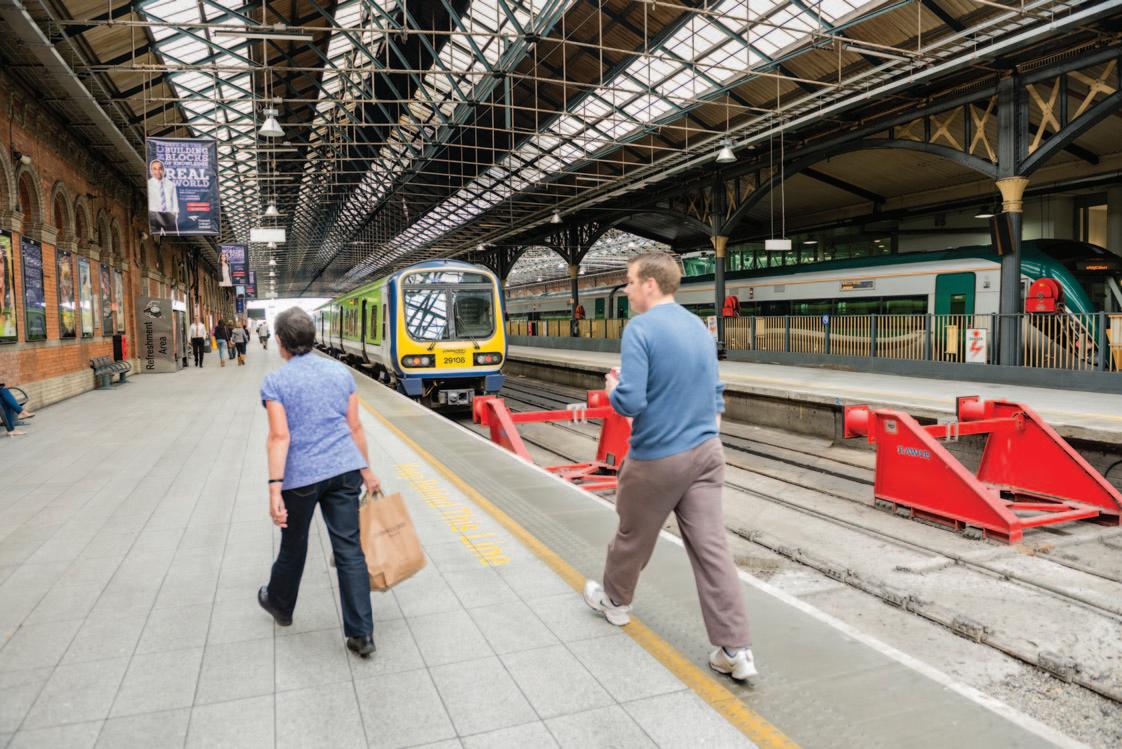
All-Island Rail Review to ‘push ahead’ despite Stormont block Strategy
Transport officials will move to bypass the political deadlock in the North as they look to publish the All-Island Rail Review, which has thus far proved impossible without a sitting Executive.
The All-Island Rail Review was commissioned in June 2021 as the Government of Ireland and the Northern Ireland Executive sought to study the feasibility of the creation of a truly all-Ireland rail network as political jurisdictions around the world seek to invest in great public transport availability as a means of decarbonising transport. It was stated in February 2023 that the report commissioned would not be published until “it has received appropriate ministerial approval from both jurisdictions”, meaning that publication was considered impossible until the restoration of the Executive and Assembly in the North.
However, as was first reported by TheJournal.ie, the Department of Transport is now seeking to “push ahead” with the publication of the draft
review of the rail network in Ireland. The move to progress the publication of the report comes following pressure from multiple rail campaign groups, with nine from across the 32 counties (Circle Line Belfast, Into the West, Portadown-Armagh Railway Society, Cork Commuter Coalition, Dublin Commuter Coalition, North Tipperary Community Rail Partnership, Rail Users Ireland, South East on Track, and West on Track) having written to Secretary of State for Northern Ireland Chris Heaton-Harris MP, Minister for Transport Eamon Ryan TD, transport officials in the Northern Ireland Civil Service, and the leaders of all Assembly parties to stress the need for work to begin immediately.
It is expected that the draft review will feature proposals to build a new railway line connecting Letterkenny
and Derry, along with other proposals to discard greenways planned through old rail lines in favour of the reintroduction of these rail lines. The disused Wexford-Waterford link at Rosslare, and the Athenry-Claremorris connection along the Western Rail Corridor are expected to be amongst the lines cited as being capable of returning to service.
Ministerial sign-off from both Ryan and his counterpart in the North would be required for the publication of the report, but with the absence of ministers in the North, the decisionmaking framework laid out in the Northern Ireland (Executive Formation etc) Act 2022 may be used. This framework states that “the absence of Northern Ireland ministers does not prevent a senior officer of a Northern Ireland department from exercising a function of the department if the officer is satisfied that it is in the public interest to exercise the function”.
A draft copy of the report is expected to be published before the end of quarter two 2023 if a strategic environmental assessment is deemed necessary during screening. The final report is expected to be published in the second half of 2023.
37 transport report
What will it take to support zerocarbon emission flights?
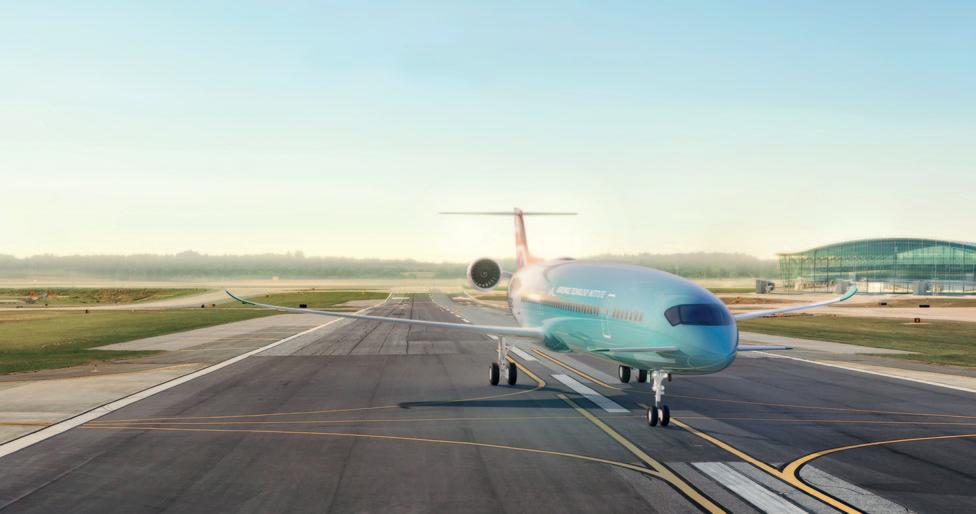
Jacobs transportation sustainability specialist Chris Pickard looks at how airports can prepare now if they are to be ready to fuel hydrogen-powered aircraft and become catalysts to support wider decarbonisation initiatives.
Airports worldwide continue to make significant progress in reducing their carbon emissions, but without decarbonising aircraft, overall reductions from the aviation sector will be limited. Meanwhile, the aerospace industry is working hard to decarbonise aircraft through the design and development of new methods of propulsion. While rapid progress continues in the development of sustainable aviation fuel (SAF) and battery-electric propulsion, hydrogen is being explored as a potential zero-carbon emission fuel.
Research into the use of hydrogen continues to gain pace, with projects such as the UK Aerospace Technology Institute’s (ATI) FlyZero programme demonstrating its feasibility. As such,
commercial aircraft powered by liquid hydrogen are anticipated to be in operation by the mid-2030s, with smaller gaseous hydrogen fuel cell aircraft potentially in operation within this decade.
To achieve rapid decarbonisation of aviation and net zero by 2050, multiple approaches will be needed. SAF, more efficient engine technology, operational processes improvement, and hydrogen all have a potential role to play. Of these, the infrastructure required for hydrogen aircraft is perhaps the biggest challenge, from the need to generate and supply vast quantities of green hydrogen, to the ability of airports worldwide to provide standardised equipment and processes needed to safely operate these aircraft.
38 transport report boldly moving forward Advertorial
A narrowbody hydrogen-powered aircraft concept developed by the ATI’s FlyZero project.
“Early planning and implementation of compatible infrastructure offers airports sustainability and resilience, positioning them to capture new carriers and route connections as airlines move towards the use of new technology.”
Studies such as FlyZero suggest that most commercial flights will require the use of liquid hydrogen, due to the low volumetric density of gaseous hydrogen. To be stored and used as a liquid, hydrogen needs to be cooled to -253°C, presenting unique challenges for an airport environment. Recognising the scale of the infrastructure challenge, FlyZero – working with Jacobs – investigated the feasibility of providing the required infrastructure at airports. The project identified three major pathways and the associated infrastructure for hydrogen supply and operation at an airport, depending on the airport’s size, location and demand for fuel.
The first pathway is likely to initially apply at all airports, with hydrogen generated off-site and transported to the airport by tanker. For many smaller airports, this may be all that is needed on an ongoing basis, operating in a similar way to their current supply of traditional fuel. However, for larger airports, as demand increases, the logistics of supplying hydrogen by road or rail may become infeasible with hundreds of tanker deliveries being required each day.
Therefore, the second pathway considered the supply of hydrogen through a gaseous hydrogen pipeline, requiring on-airport liquefaction and storage capability. While it may be possible for airports to generate hydrogen on-site, the high energy requirement for electrolysis of green hydrogen is likely to make this unattractive, especially for larger airports where demand for hydrogen is high. As a result, the supply of hydrogen through a gaseous pipeline may become the preferred solution for large hub airports.
Despite the high on-airport energy requirement, the third supply pathway investigated the infrastructure required to provide electrolysis, liquefaction and storage at an airport. Although unlikely to be used for large airports with high demand, this remains a potential option for smaller airports, particularly where plentiful renewable energy is available.
In the future, multiple complementary technologies and fuels will likely be operated in parallel at most airports. However, without knowing if or when new aircraft will be introduced, airport owners face the
challenge of preparing for multiple and uncertain future scenarios. Airports may feel there is little they can do to plan for future fuels like hydrogen, with no choice but to act reactively as aircraft technology develops.
However, infrastructure and investment planning are needed today to enable the effective use of hydrogen in the future. Early planning and implementation of compatible infrastructure offers airports sustainability and resilience, positioning them to capture new carriers and route connections as airlines move towards the use of new technology.
Airports can begin preparing by considering early adoption for their own and other stakeholders’ use, such as by handling agents, transport providers, local industry, and freight distributors. With early adoption that stimulates an integrated hydrogen ecosystem, airports not only prepare for the eventual use of hydrogen as an aircraft fuel but also become catalysts to support wider decarbonisation initiatives. The certainty of demand that this ecosystem provides also allows longer-term investment in infrastructure, knowing that there will be a positive return on investment.
Providing the infrastructure needed for hydrogen aircraft presents a challenge to industry, requiring deep collaboration and innovative thinking. Encouragingly, momentum continues to build with many new collaborative projects and initiatives underway, giving hope that the required infrastructure will be ready to support the introduction of the future generation of aircraft.
Jacobs’ full report is available to read on the Jacobs website.
W: www.jacobs.com


39 transport report
Advertorial
boldly moving forward
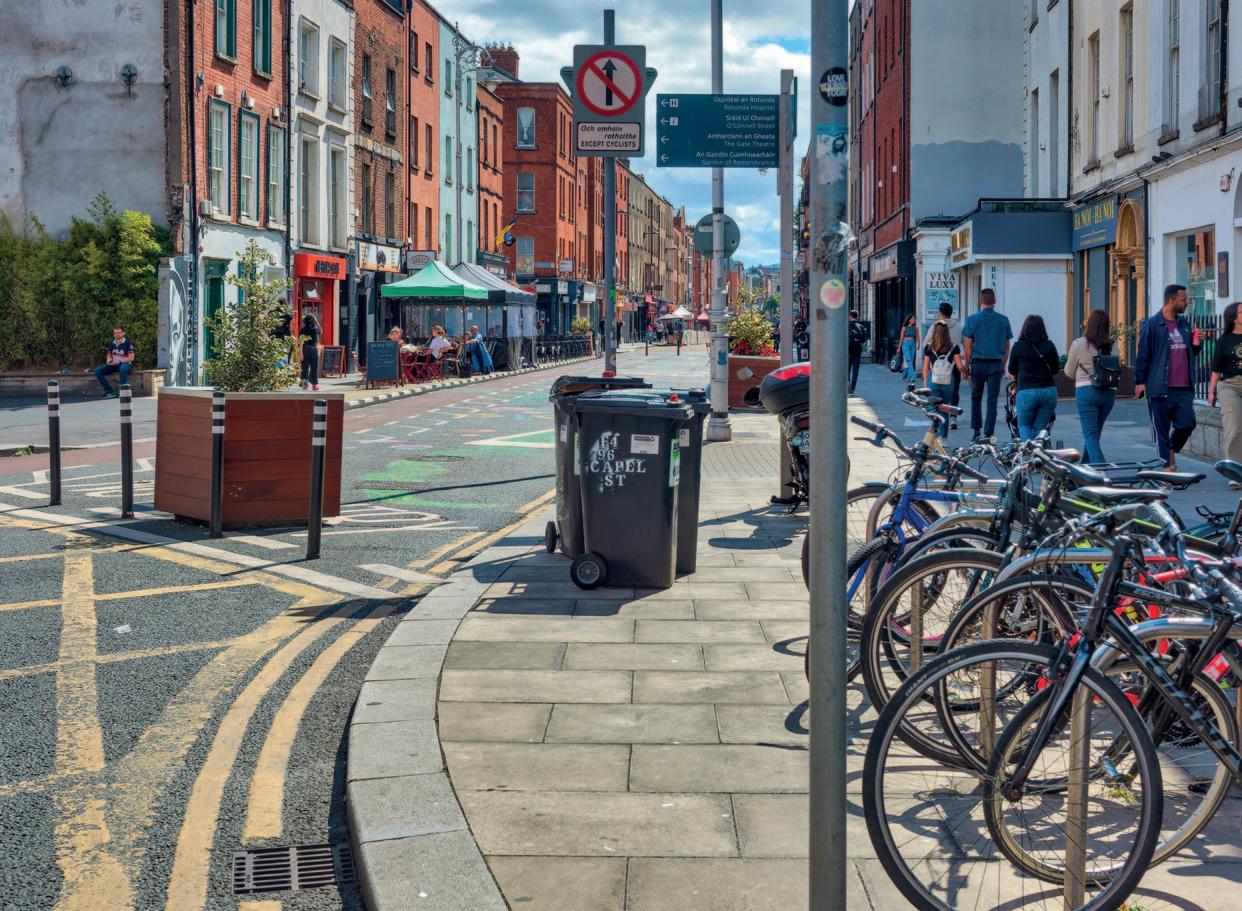
CAP23 outlines new transport measures

has called for a new framework to inform transform policy and enable the sector to meet its emissions reductions targets.
The first Climate Action Plan update to be published since the passage of the Climate Action and Low Carbon Development (Amendment) Act 2021 identifies 17 high-impact measures and ongoing work-programmes. These include:
• improved land-use planning and spatial integration;
• enhancements across public transport;
• active travel and EV charging infrastructure; and
• developing strategies and communications campaigns aimed at driving behavioural change away from traditional fossil fuelled private car journeys to more sustainable mobility options.
CAP23 states that fleet electrification and use of biofuels will continue to provide the most significant share of emissions abatement in the medium term. “Vehicle targets, while unchanged, have been reframed as a percentage share of total fleet and new registrations, to better embed our vehicle strategy within our wider Sustainable Mobility Policy,” the report outlines.
40 transport report boldly moving forward
Credit: William Murphy
Speaking upon the document’s publication in December 2022, Transport Minister Eamon Ryan TD said: “Over decades, we have built our country, our towns and cities, around the car and that is just not sustainable. Apart from achieving our climate objectives, the systemic changes mapped out in this new Climate Action Plan will enable a healthier, cleaner, more connected transport system for everyone.”
Carbon budget challenges
Given the increase in a targeted reduction of greenhouse gas emissions from the transport sector in CAP23 to 50 per cent by 2030, the latest publication has revised the carbon budget for the period. The Sectoral Emission Ceilings are:
• Carbon budget 1: 54 MtCO2eq;
• Carbon budget 2: 37 MtCO2eq;
• Emissions abatement (on 2018): 50 per cent; and
• Emissions up to 2021: 10.9 MtCO2eq.
The constraints on travel in 2020 as a result of Covid-19 saw transport sector emissions levels falling to 10.3 MtCO2eq, relative to its 12.2 MtCO2eq emissions baseline. 2021 saw a 6.1 per cent increase in emissions over 2020 levels, largely driven by the cessation of public health restrictions that had artificially reduced transport demand.
20.2 per cent of the first sectoral carbon budget was expended in 2021. While this level is consistent with the sector being compliant with its carbon budget to 2025, a further increase in transport emissions is expected in 2022. “Though not yet at risk of a projected failure to comply with its sectoral emissions ceiling, the need to substantially accelerate transport emissions abatement is clear,” CAP23 states.
Avoid-Shift-Improve
A report by the OECD has stated that Ireland’s transport model “fosters growing car use and emissions by design”. In recognition of the OECD report’s findings, Minister Ryan has brought forward a new framework for the transport sector known as Avoid-
“Though not yet at risk of a projected failure to comply with its sectoral emissions ceiling, the need to substantially accelerate transport emissions abatement is clear.”
Climate Action Plan 2023
Shift-Improve. Minister Ryan broke down the framework:
Avoid: “Developing services, communities, and infrastructure in such a manner as to avoid the need to travel as much as we do today.”
Shift: “Improving the relative attractiveness of sustainable travel modes such as public transport, cycling, and walking, to shift away from car use; this will facilitate increased use of lower-carbon modes and reduce the percentage of total journeys that are made by private car (modal share) from over to 70 per cent (today) to just over 50 per cent in 2030.”
Improve: “Complement these measures by increasing the proportion of EVs in our car fleet to 30 per cent by 2030, which will improve the efficiency of the national car fleet. Electrification of the freight and public transport sector will also be key.”
Modelling recalibration
A recalibrated decarbonisation pathway has been developed using the National Transport Authority’s (NTA) Regional Modelling System. The process came up with potential measures which can enable the 50 per cent emissions reduction target, grouping measures in four broad packages:
Promoting behavioural change by incentivising more sustainable forms of travel: This could include roadspace reallocation and expanding carfree urban core centres; improvements to school transport options and modes;
and complementary measures that help to reduce the need to travel.
Improvements to public transport availability and competitiveness: This would increase availability of rural transport and inter-urban connections; ramping-up the frequency and reliability of public transport through priority infrastructure and better integration of services; and reducing public transport fares (the modelled scenario considered a 50 per cent reduction relative to 2018 prices).
Disincentivising private vehicle use: This may include removal of free workplace parking; minimum parking charges introduced in all urban areas and application of congestion charges for journeys across marked cordons. Consideration will also be given to implementing an increase in fuel costs (modelled as an increase of 65 per cent by 2030 relative to 2018 prices, incorporating already planned carbon tax increases) if other measures are not deemed successful.
Harnessing the potential of new technology: This would support the decarbonisation of transport, including through electrification, increased biofuel blending, vehicle technology improvements, and the use of open data for mobility services.
Minister Ryan said upon CAP23’s publication: “While we need to electrify our transport system, we can also improve our wellbeing by reducing the need to travel in the first place and switching to sustainable modes where possible.”
41 transport report
boldly moving forward
Delivering transport infrastructure across the country
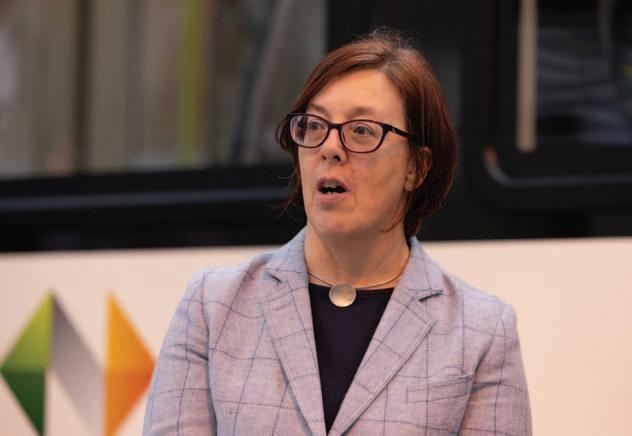
As the state agency with primary responsibility for delivering on investment across the country, NTA is now making progress on delivering investment across the country through programmes like active travel, fleet electrification, BusConnects, DART+, MetroLink, and Connecting Ireland, writes Anne Graham, NTA Chief Executive.
Earlier this year the Minister for Transport Eamon Ryan TD signed off on NTA’s Transport Strategy for the Greater Dublin Area 2022-2042. This strategy provides a framework for further investment in services and infrastructure, with the primary objective of substantially increasing the numbers of people using sustainable and active travel in the region.
It provides for investment in bus infrastructure, active travel, heavy rail, light rail and MetroLink and on that basis it will keep NTA, our delivery partners, our operators and our stakeholders busy for some years to come. While it can sometimes appear that progress in delivering these projects is very slow, we are now beginning to see some of them
starting to come to fruition, not just in Dublin, but around the country.
Earlier this year for example, Bus Éireann’s town services in Athlone became fully electric when 11 new stateof-the-art electric buses entered service.
The new fleet will reduce CO2 emissions by 400,000kg annually and will deliver a quieter, cleaner bus service for the town and passengers. Over 540,000 kilometres are operated on the Athlone town bus service each year, with over 10,000 passengers now using the service weekly – a 20 per cent increase on 2019 figures.
The new buses are being charged using newly installed charging infrastructure supplied with power from the newly
constructed electricity substation within the Bus Éireann depot. Construction and installation work here was carried out by ESB Smart Energy Services.
This is just the beginning of the process and later this year and early in 2024, we can look forward to seeing passengers on battery-electric buses in both Dublin and Limerick. Already, the buses are being manufactured and the infrastructure is being installed. When operational, this will provide a better experience for customers and deliver cleaner air and lower emissions for communities everywhere.
There has been progress too on the procurement of fleet for DART+. Some 185 new carriages have been ordered to date, with delivery commencing in 2024 and entering service from 2025. A total of up to 750 carriages are to be ordered over the next decade under a framework contract with leading manufacturer Alstom.
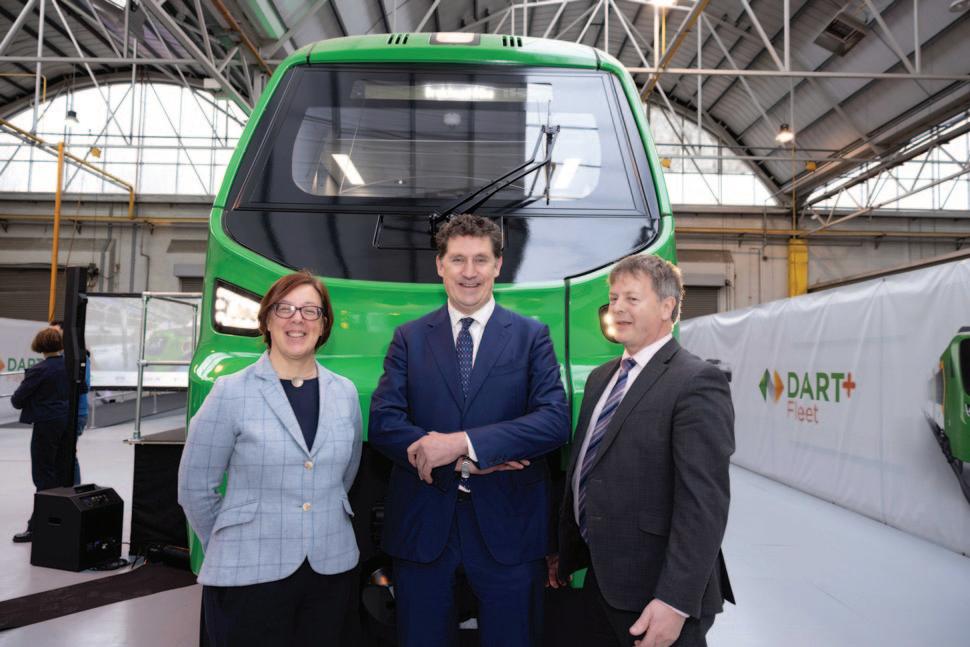
A prototype was unveiled recently in Irish Rail’s facility in Inchicore, and we believe that these new carriages will be transformative, offering potential for independent access for all passengers, improved facilities for families and cyclists across the Dublin Metropolitan Area.
A planning application was submitted last September for MetroLink and consideration of the project is in the hands of An Bord Pleanála. This followed on from the publication by Transport Infrastructure Ireland and NTA of our preferred route.
The start of construction will be determined by the timing and outcome of the statutory planning process. The construction, systems’ installation, testing, and commissioning of a metro system like this is likely to take eight to nine years. In the meantime, a procurement process for the client partner contract is already under way.
42 transport report Advertorial
Anne Graham, NTA Chief Executive Officer.
“This year, substantial investment will fund approximately 1,200 active travel projects, contributing to the development of almost 1,000km of new and improved walking and cycling infrastructure across the country by 2025.”
We are also working on plans to extend Luas lines and later this year, a railway order application is to be lodged by Transport Infrastructure Ireland for the extension of the Green Line to Finglas. This is a clear example of the kind of progress we are making in our plans to invest in ambitious and exciting sustainable transport solutions. I believe that Luas has the potential to be transformative for this part of the city and that it will further enhance the area for all members of the community.
We have already touched on DART+ fleet, but progress is also being made on the infrastructure aspects of the programme too. Last year a railway order application was submitted by Iarnród
Éireann to An Bord Pleanála for DART+ West, followed by one for DART+ South West in March of this year. Public consultation on both DART+ Coastal North and DART+ Coastal South is well under way.
For BusConnects in Dublin, we have already implemented four of the 11 phases of the redesigned network, with more to come this year and next. The public response to the new network has been very positive and we have seen a corresponding surge in passenger numbers.
On the infrastructure side, planning applications for nine of the 12 Core Bus Corridor schemes have been submitted, with the remaining three to be submitted
43 transport report Advertorial 4
“Due to the success of the services already in operation, well over 250,000 people now have access to new and enhanced bus services in their locality, with an increase in patronage well in excess of 93 per cent on routes which have already been enhanced.”
in the coming weeks, and as soon as they clear that process, we will look to getting construction under way on a phased basis as soon as possible.
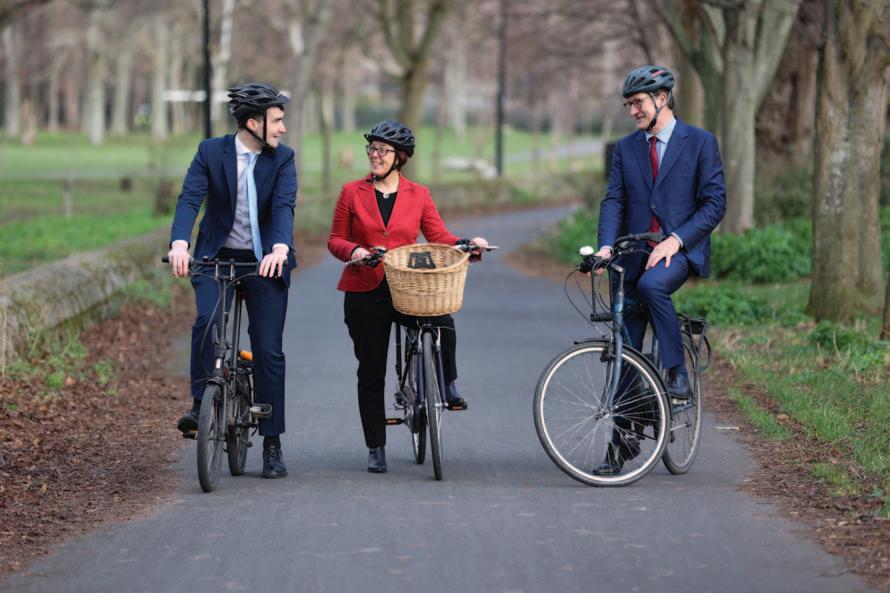
Our investment programme in active travel has expanded significantly in recent years. This year, substantial investment will fund approximately 1,200 active travel projects, contributing to the development of almost 1,000km of new and improved walking and cycling infrastructure across the country by 2025. This includes the development of segregated cycle lanes and widened footpaths, new walking and cycling bridges, and new pedestrian crossings.
In total, the 2023 fund allocation for active travel will allow for the progression of 387 projects in the Greater Dublin Area, 250 across other regional cities and a further 502 projects across rural Ireland.
NTA is also closely involved in improving the provision of sustainable transport in our regional cities. In 2021, we published the Cork Metropolitan Area Transport Strategy and implementation of that is already getting under way.
The design for an emerging preferred route for the city’s proposed Luas service for example, is almost complete and will go out for public consultation in the very near future.
In addition, as part of BusConnects Cork, we have published a design for the new bus network and have gone out for two rounds of public consultation on the sustainable transport corridors.
Work has commenced on improvements to commuter rail on the Cobh/Midleton line and Mallow station has been included in the commuter fares zone. A railway order application has been made for the double tracking between Glounthaune and Midleton. Plans are well
underway for the provision of a through-platform at Kent rail station.
A proposed new BusConnects network has been published for Galway offering substantial service improvements for the city and suburbs.
On the infrastructure side, the new Salmon Weir sustainable transport bridge opened recently. The development of this world-class shared-use pedestrian and cycle bridge will bring a number of significant benefits to Galway city. These include the removal of current conflicts on the existing 200-year-old bridge; the facilitation of the development of a cross-city public transport corridor over the existing bridge; and the enhancement of links between both sides of the river, by supporting sustainable and active modes of transport.
In addition, a 4km Dublin Road sustainable transport corridor has moved to design stage and a planning application has been lodged for the crucial Cross City Link facilitating bus movements through the city centre.
In Limerick, public consultation on a new proposed BusConnects network of services has concluded. This plan provides for an increase of 70 per cent in service levels, with implementation due to get under way in 2025. Meanwhile, work has commenced on improvements to commuter rail to the city, with a new station for Moyross being planned.
A new BusConnects network is being designed for Waterford, to go to public consultation this year. Work has commenced on the design of a new sustainable transport bridge in the city, with the train station to be relocated as part of the plan.
NTA operates within an overall national policy framework which ensures that all of our plans, projects and proposals are aligned to the likes of the National Development Plan, National
44 transport report Advertorial
Planning Framework, Climate Action Plan, Rural Development Policy, and National Sustainable Mobility Policy. An example of how well that can work is our Connecting Ireland Rural Mobility Plan.
Connecting Ireland is the NTA’s plan to transform rural and interurban mobility by improving bus and rail services across the country over a five-year period up to the end of 2025.
In 2022, we launched Phase 1 of the plan, introducing a wide range of new routes and improvements to public transport users throughout the State. It is one of the most ambitious plans yet for rural transport nationwide.
During 2022, we delivered 38 new and enhanced bus services throughout Ireland, with significant plans for additional bus services in many rural areas this year and in future years.
Due to the success of the services already in operation, well over 250,000 people now have access to new and enhanced bus services in their locality, with an increase in patronage well in excess of 93 per cent on routes which have already been enhanced.
The Connecting Ireland plan has had a transformative impact on rural communities by improving access to high frequency public transport bus services and connecting villages and towns to regional Transport for Ireland (TFI) bus and rail services.
Under the Connecting Ireland Plan, 67 new or enhanced bus services are proposed in 2023, strengthening existing services and connecting more towns and townlands. This is the second of five phases of the rural mobility plan.
Last year almost €4 million was invested in implementing Connecting Ireland bus services, but this year that figure will double to €8.5 million provided by the Department of Transport.
The response by customers to new services in rural Ireland has been very strong, with passenger numbers on buses returning to and surpassing preCovid levels. On TFI Local Link services in rural Ireland the annual passenger journey figure for 2019 was 2.5 million. Covid had a serious impact on passenger numbers in 2020 and 2021, but in 2022, they rose to 2.8 million, a recovery of 112 per cent. Those figures increased further in 2023 with over 45,000 passengers travelling on Local Link services every week around the country.
The addition of new and enhanced services nationwide has directly improved access to amenities such as tourist attractions, regional hubs, medical, economic, social, and education opportunities.
Implementation continues at a pace with new and enhanced routes being announced almost on a weekly basis. This ambitious plan will continue to be
rolled out up to 2026 which aims to transform sustainable modes of public transport in rural areas across Ireland.
The coming years can be a time of immense optimism for Ireland. As regions develop, as towns grow, and as more and more people look to avail of new employment, education, and social opportunities, connectivity will be of crucial importance.
A transport system that facilitates and stimulates that progress will be the engine that powers growth and development.
That will require the continued delivery of much-needed investment in sustainable transport in communities in every part of the country. That will not be straightforward, and it may be challenging but I believe that NTA is up to that challenge.
T: +353 1 879 8300
E: info@nationaltransport.ie
W: www.nationaltransport.ie
45 transport report Advertorial

Road haulage in the coming decade
The Government published the Road Haulage Strategy 2022-2031 in December 2022, setting out the plan for how the hard-to-abate subsector will play its part in reducing transport emissions by 50 per cent by 2030.
The publication of the strategy fulfils a Programme for Government pledge to produce the State’s first-ever government strategy solely dedicated to the haulage and road freight sector. The strategy is focused on “generating efficiencies, improving standards, securing jobs and helping the road freight sector move to a low-carbon future” and is organised around seven themes:
1. Brexit, Covid-19, and crisis management;
2. sustainability and decarbonisation;
3. road infrastructure and usage charging;
4. integrated transport planning and intermodal transport;
5. road safety and enforcement;
6. the EU Mobility Package and road transport operator licensing; and
7. labour market and skills.
With 99 per cent of the heavy goods vehicles (HGVs) on Irish roads currently diesel fuelled, road haulage is among the most hard-to-abate sectors in terms of decarbonisation, especially when it is factored in that the International Transport Forum forecasts that global freight transport demand across all modes will more than double over the next three decades. The Road Haulage Strategy thus attempts to tackle somewhat conflicting challenges: that of a subsector that must grow in terms of production but contract in terms of emissions.
In the broader context, transport emissions in 2021 – the most recent on record – were 24.5 per cent below the 2007 peak, primarily due to Covid19 restrictions and improved fuel efficiency. Private cars made up the bulk of transport sector emissions in 2020 – the most recent year for which modal shares are available – with 54 per cent. HGVs accounted for 20 per cent of transport emissions, with light goods vehicles accounting for 18 per cent.
46 transport report
boldly moving forward
boldly moving forward
As the strategy notes, the next phase of the Climate Action Plan will “see the overall burden of emissions reduction falling to a greater extent on private cares in the medium term to 2030”.
Targets to introduce 3,500 lowemission HGVs on Irish roads and 30 per cent of new sales in medium-duty vehicles and HGVs to be zero-emission by 2030 are regarded as “ambitious –but achievable”.
It is also noted that it will “take time” for battery electric vehicles and other alternatively fuelled vehicles to become widely available across Europe, with it also said that Ireland’s geographic location and the requirement for righthand drive vehicles “may lead to slower delivery” in Ireland.
Biofuel blending
The mixing of renewable fuels into liquid fossil fuels, is thus cited as having a key role to play as a transitional measure that will “help to reduce emissions in existing fleets for both passenger transport and road freight”. The decarbonisation section of the strategy includes short-term actions such as:
• the maintenance and expansion of the Alternatively Fuelled Heavy Duty Vehicle Grant Scheme, a grant supplied by the Department of Transport through Transport Infrastructure Ireland that is calculated as a percentage of the difference in price between the new alternatively fuelled HGV and its diesel equivalent;
• the updating of the national policy framework on alternative fuels in transport;
• supporting Zero Emission Vehicles Ireland to “enable the provision of charging infrastructure for HGVs”;
• the establishment of an accreditation system for eco-driving courses; and
• the completion of a feasibility study examining freight consolidation centres.
The strategy sets out a roadmap for decarbonisation in the haulage sector, as governed by Climate Action Plan 2023 targets, which includes alreadyenacted measures such as the National EV Charging Infrastructure Strategy and the Biofuels Obligation Scheme and its
Haulage and road freight in Ireland by numbers
41,850 HGVs taxed in Ireland, at end July 2022
22,796 licensed haulage HGVs
61% of HGVs in July 2022 were 10 years old or younger
100,900 people employed in transport and storage in Ireland as of Q2 2022
20% of the transport and storage workforce is female
2% of HGV drivers are female
99% of HGVs are diesel
12.5 billion tonne-km travelled by HGVs in 2021
17.7% of Ireland’s greenhouse gases come from transport
20% of transport’s emissions come from HGVs
20 per cent by 2030 target. Also included are forthcoming measures such as the national hydrogen strategy, which will “consider the potential demand for hydrogen across the transport sector in Ireland and examine how hydrogen could complement electricity as a zero-carbon transport fuel for heavy-duty vehicles”.
Skills gap
After the considerable decarbonisation demands on the subsector, perhaps the most notable challenge faced by those involved in haulage is the critical skills gap that has been identified in the areas of freight transport, distribution, and logistics. Particularly, shortages of HGV drivers have been emphasised.
Respondents to the public consultation period of the report cited current working conditions of HGV drivers as a barrier to overcoming the shortage. The report notes that an EU directive on minimum wages and collective bargaining was adopted by the European Council in October 2022, which should strengthen the collective bargaining position of workers, and that a report by the Labour Employer Economic Forum in Ireland reviewing bargaining and industrial relations is currently under consideration by the Department of Enterprise, Trade and Employment.
The Logistics and Supply Chain Skills Group published recommendations in 2021 on how to tackle the shortage, with the recommendations aimed at improving the supply issue without undermining the working conditions of the drivers and other road users. New apprenticeships and traineeships have also been started to address the skills gap, such as the Logistics Associate Apprenticeship at Technological University Dublin, the Operations and Commercial Driving Apprenticeship at Atlantic Technological University, and the Logistics and Distribution Traineeship.
Short-term actions included within the strategy to address the shortage also include the conclusion of consideration over license exchange agreements with North Macedonia and Argentina, as well as the commencement of potential new agreements with other states, and the establishment of research workstreams on the attractiveness of the industry.
Actions to be undertaken under the strategy’s aegis in the other thematic areas also include a commitment to a public consultation on the introduction of fixed charge penalties for certain road transport offences by professional drivers, a review of the Driver Certificate of Professional Competence with a view to reform of the qualification, and the implementation of EU legislation mandated through the EU Mobility Package.
47 transport report

Indra: Placing citizens at the centre of mobility
Berta Barrero, Senior Vice President of Mobility at Indra, speaks to eolas Magazine about the company’s role in transforming the mobility in cities and its plans in Ireland, including its toll interoperability management platform on Irish motorways and the project for the development of a rail traffic management system in the country's new train control centre.
Could you explain what Indra is, what it does, and its role in the world of mobility?
Indra is a world-leading technology and consulting group. As a global group, we are responsible for about 57,000 jobs around the world, with business operations in over 140 countries. As a technology company, we are mainly focused on defence, air traffic management systems, and mobility air
sectors. When we talk about mobility, we are mainly focused on critical systems for all stakeholders in the mobility sector, such as traffic, infrastructure, metro, railways, buses, ports, and airports.
Our main capabilities are in AFC systems and critical intelligent transport systems (ITS), traffic management systems for railways and infrastructure. We have about 2,500 employees in this department around the world. These experts in engineering and technology
for infrastructures and transport, together with our leadership in the largest technological renewal programmes and in the main European Innovation Programmes, allow us to present a different proposal of solutions and products, as well as to lead unique and highly technologically challenging projects that will transform the future of mobility and transport on a global scale in the coming years.
Spain for us is roughly one-third of our revenue, but we have over 2,500 projects across more than 100 cities and over 50 countries, which places us in a privileged position to enter partnerships, synergies, and co-creation scenarios with the other sector stakeholders, helping to overcome the challenges facing passenger and freight mobility in our century.
What are the main challenges facing the development of sustainable cities and territories?
We are all aware that the population of the world will continue to grow in and around cities and all countries will now have to move in the direction of sustainable mobility, which will be achieved mainly through public transport. The main challenges that we
48 transport report Advertorial
have to face in this sphere is how the opportunities afforded by technology will allow us to integrate the different modes of transport. The resources in cities –roads, trams, railways – are limited and all the public services must be managed with efficiency and sustainability and the only opportunity to do that is to combine and integrate all means of public transport.
Public transport takes up 50 times less space and emits 70 per cent less CO2 than private vehicles. However, over 75 per cent of urban journeys are made in private, single passenger vehicles. These figures show that it is necessary to encourage and promote the development of zero-emission, multimodal and connected public transport. Additionally, there is a need to manage road traffic flows intelligently, efficiently, and safely. This should be done by placing citizens at the centre of the proposal for mobility services.
Given this reality, we could say that the current challenges for mobility are to accelerate digitalisation of transport infrastructures and services; to promote V2V (vehicle to vehicle) and V2I (vehicle to infrastructure) connectivity;
and to move towards integrated and integrating governance of all mobility services in cities and territories, whatever the authorities, competent public administrations and existing operators’ realities may be.
Indra delivers technological solutions for safe, secure, and efficient traffic management on roads and in cities. We also deliver integrated public transport ticketing systems to guarantee the highest levels of service in terms of availability, accessibility, and reliability. This system gathers intelligence from the roads and from all operators in mobility to integrate all data. In the past, if you were an operator of highways, you would only work on highways, and it was the same for railway or bus operators. Indra technology works towards greater use of public transport, encourages car sharing and facilitates true intermodality for a more sustainable modal split, reducing traffic congestion and polluting emissions. Our solutions manage the daily mobility of 78 million people, preventing over 10 million tonnes of CO2 emissions annually, thus safeguarding nearly 3,000 lives and saving more than €6 billion for society.
“The current challenges for mobility are to accelerate digitalisation of transport infrastructures and services; to promote V2V and V2I connectivity; and to move towards integrated and integrating governance of all mobility services in cities and territories, whatever the authorities, competent public administrations and existing operators’ realities may be.”
What role can Indra play in transforming the mobility of cities and territories?
We work in more than 100 cities. At the moment, we are doing the most important ticketing project in Spain, the T-mobilitat in Catalonia, which is working to integrate 73 traffic operators to create more secure and efficient ticketing. We work with AI, blockchain, and automations of data, all to help the operator to manage the system and to allow quicker access for users, as well as more security and protection for them. This system gives citizens a more accessible and easier way to plan transport.
Indra and its technology have been key to making Spain a clear global benchmark in the development of transport infrastructures and systems with the highest standards of quality and safety.
Internationally, some of our most recent projects include: the HOV solution, which is high occupancy vehicle detection using AI, deployed on the

49 transport report Advertorial
“The three main solutions that we are implementing in Ireland so far are rail traffic management, tolling systems, and ITS systems for motorways, and these, together with the new projects that we hope to be awarded in the near future give us the confidence to deliver and increase our local capabilities.”
operator Transurban’s highways in the United States; our ITS, free-flow tolling and connected vehicle solutions, also implemented in the USA, based on AI, cloud, machine learning and new radar technology (LIDAR); the intelligent BRT systems for Metro Brisbane in Australia; and in Ireland, the cloud-based platform for the interoperability of all toll roads.
We are currently developing two other highly innovative projects in Spain: the cloud integration of all the traffic control centres of Spain's Directorate General of Traffic and the development of a mobility as a service (Maas) platform, which pioneeringly integrates all modes and means of mobility in six cities into a single ticketing system, with the latest technologies and payment systems (EMV, NFC), travel planning, traveller information in account based models, and management of low emission zones.
How relevant is research, development, and innovation (RD&I) for Indra? How is it participating in major European programmes?
SESAR and ERJU (formerly S2R)?
When your main purpose is to be in the highest leagues of technology, investment in R&D is absolutely key because the technology is moving very fast at the moment, giving us lots of opportunities to improve our solutions. Indra is among the European leaders in innovation according to the EU Industrial R&D Investment Scoreboard, with €312 million allocated to RD&I in 2022 and €3.76 billion so far this century.
In that sense, we are participating in ERJU, the European programme for the digitalisation of railways. In this project, we are leaders, along
with other companies, and are working on driverless solutions, and digitalisation in public transport to deliver smoother transport for users that is more accessible from different types of technology.
We are also working on SESAR, which is the equivalent of ERJU for the air traffic sector. Regarding the needs of mobility, these are more or less the same in terms of the technology. You can implement them on airports or ports; while the functionalities might be different, the access control in an airport uses biometric recognition, which is the same for a train station.
It is very important for us to participate in these programmes because they give us a global perspective on mobility. This work has allowed us to achieve a profound technological sophistication of our proposal and the sustainable and profitable evolution of our business, which has been rewarded with the highest levels of trust from our customers, as shown in our quality surveys this year. It also helps us to attract the best talent who want to work with the latest technology.
What is Indra’s strategy for Ireland?
Ireland is central for Indra. In the past, as a Spanish company, we have been more focused on Spain and Latin America, and we did not have a clear strategy for Anglosphere countries. Six years ago, our strategy changed, and we began to implement investment in new products and solutions. We think that there are now clear opportunities to have the chance to influence mobility in Ireland. We think that Ireland is a quite open country in terms of receiving new ideas.
In the last three years, we have been awarded very important and strategic projects in some of
50 transport report Advertorial
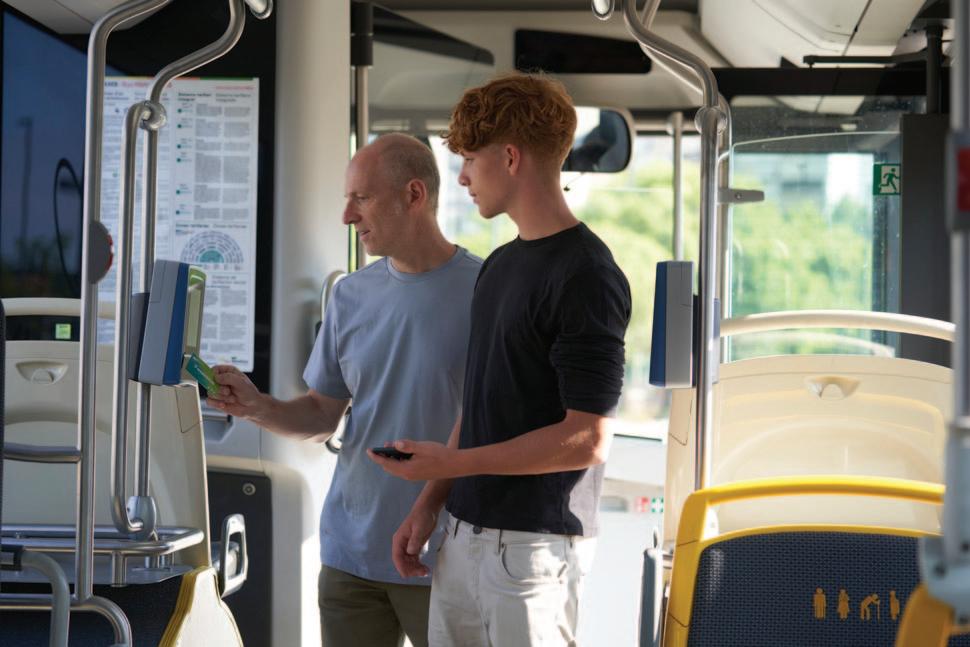
the most important technological areas in mobility. We have just implemented and put into operation the thirdgeneration toll interoperability management platform (IMP) for Transport Infrastructure Ireland (TII). The new platform, built on an advanced clearing house system in Microsoft's Azure cloud, simplifies electronic toll collection on the more than 900 kilometres of the country's 12 toll roads, making it easier for toll service providers and toll collectors to exchange transaction and payment data. This allows users to use all motorways in the country with a single account.
Previously, our back-office technology had already been installed on six motorways, representing around 45 per cent of the State’s roads, including the M1, linking Dublin to Belfast.
Another major project we are currently working on in Ireland concerns the development of the new rail traffic management system for the country's new train control centre, which has been entrusted to us by Iarnród Éireann-Irish Rail. This project is very important for us and gives us the opportunity to properly establish ourselves in Ireland.
The three main solutions that we are implementing in Ireland so far are rail traffic management, tolling systems, and ITS systems for motorways, and these, together with the new projects that we hope to be awarded in the near future give us the confidence to deliver and
increase our local capabilities. We need projects to do that, and because of that we are very focused on future opportunities in Ireland.
How can Indra contribute to developing sustainable mobility in Ireland?
One of the main challenges in sustainable mobility is finding the right balance of integration between all modes of transport and all operators. You need to integrate all operators into one system that can allow them to manage in the most cost-efficient manner. To reduce emissions and define policies for public transport, you need to know how mobility is happening in a given region and this is how you do that.
Over the last 20 years, Indra has accumulated a track record of major mobility technology implementation projects around the world. Projects such as the implementation of control, communications and sales and reservation systems on the high-speed train linking Medina and Mecca in Saudi Arabia; the T-mobilitat project, which involves the implementation of a unified ticketing system for a region of 7.5 million residents; the AVL system for bus management in the city of Brisbane; and also in Saudi Arabia, the unified ticketing system in the city of Riyadh, the biggest ticketing project so far with more than six million residents. The management
of these projects is very different, from deployments in megacities like Riyadh with a greenfield implementation over a brand-new infrastructure to the brownfield site of the T-mobilitat with more than 75 operators where we have had to migrate a live system without interfering with commercial operation. We understand the risks and opportunities in both cases and work together with our customers assuring a successful deployment.
The company's desire to be a technological systems integrator of large systems has led us to take on not only the technical implementation of projects, but also important operational tasks during their life cycle.
At Indra, we can bring to Ireland our international experience in managing complex programmes and our state-ofthe-art technology in the mobility sector. Indra's most valuable asset for the country, however, is that it brings this experience from its geographical and cultural proximity, together with a technological capacity that is highly competitive in relation to other western European countries.
E: gmadden@indracompany.com
W: www.indracompany.com

51 transport report Advertorial

Cycling capitals: World leaders
With €290 million to be invested in active travel infrastructure in 2023, cycling in Ireland is set to undergo a major facelift. eolas Magazine surveys some of Europe’s most notable metropoles from a cycling point of view to gauge how they have gained such a status.
Paris
Paris gained international attention for its ambitious approach to cycling in 2021 following the unveiling of its Plan Velo 2021-2026, which aims to make the city 100 per cent cyclable by 2026. Central to this plan is additional funding, with an increased budget of €250 million for the plan, and capitalisation on the Covidrelated cycling increases, with 50km of coronapistes (temporary pandemic infrastructure) converted into permanent features of the city’s cycling network.
The 50km of converted coronapistes will account for almost one-third of a planned 180km segregated twoway cycle lane infrastructure due to be constructed under the plan. This network, called the Vélopolitan network, will integrate the RER-Vélo network of the greater Île-de-France region with the network of Greater Paris and specifically calls for “no more dotted tracks,

impassable bridges and crossroads where cyclists are sent back into general traffic”. The city will also triple its amount of secure bike parking spaces in an effort to combat bike theft, adding up to 100,000 new spaces, including 1,000 dedicated cargo bike spaces.
Paris is estimated to currently have 700km worth of cycle paths and routes, with 299km of this having been added since current mayor Anne Hidalgo took up the position in 2014, accounting for an increase of 35 per cent. €150 million was invested over the course of Hidalgo’s first cycling plan, with a further €250 million to be invested to ensure that the city is 100 per cent cyclable by the time she leaves office in 2026. It has been estimated that the increases in cycling infrastructure have led to over one million cyclists taking to the streets of Paris every day, an amount that represents almost 10 per cent of the urban area population.
52 transport report
boldly moving forward
boldly moving forward
London
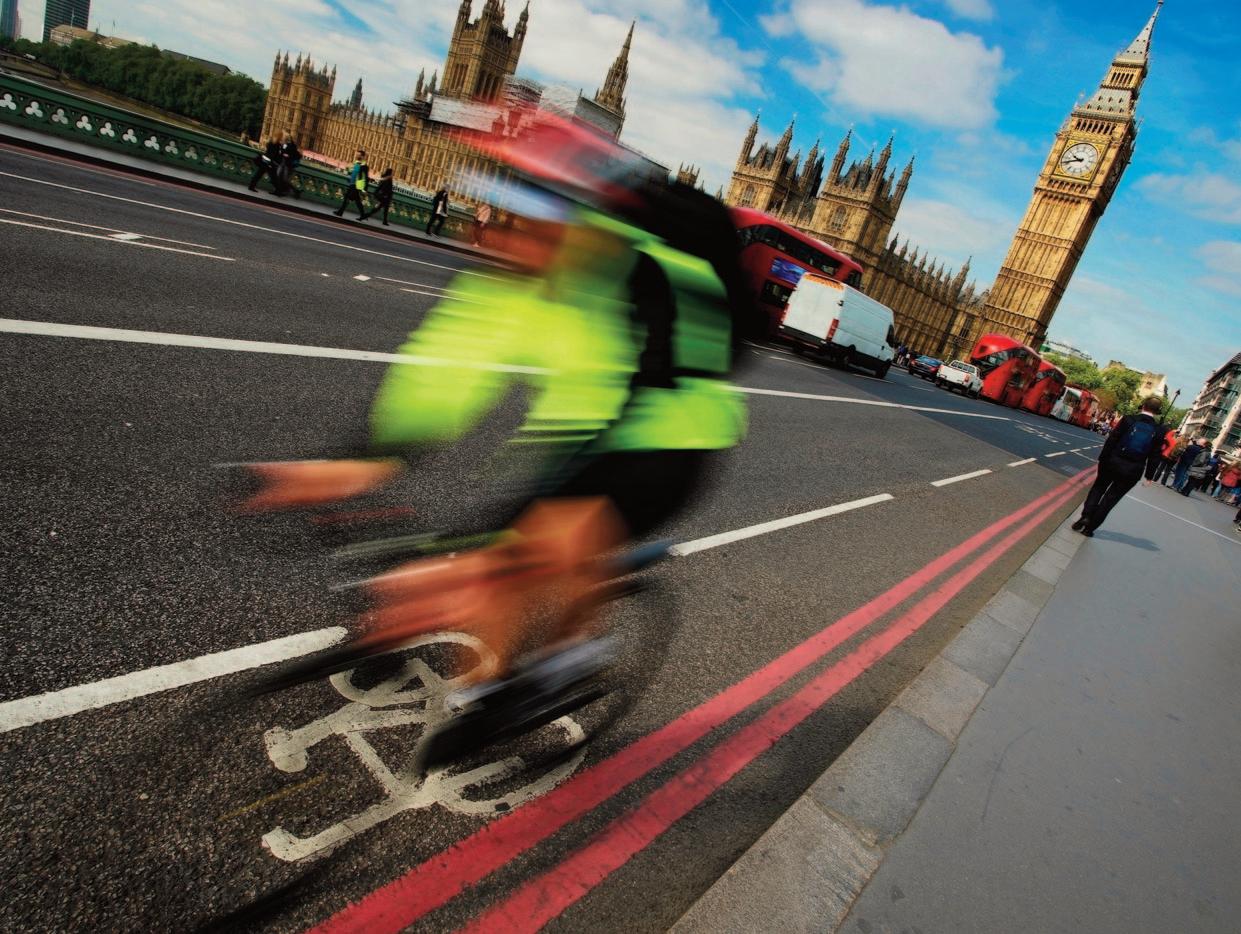
London’s cycling infrastructure journey began in earnest with the 2012 publication of the Vision for Cycling in London, in which then-mayor Boris Johnson pledged the delivery of a “proper network of cycling routes throughout the city”.
Johnson’s successor as mayor, Sadiq Khan, announced his intention to “make London a byword for cycling around the world” and the 2018 cycling action plan produced by Transport for London has been the pursuing plan contains aims such as the construction of more than 450km of new cycleway routes by 2024 and the expansion of London’s cycle network to the point that it reaches one-third of Londoners by 2025.
Transport for London’s Travel in London report shows success in the attempts to increase the number of cyclists in the city, with there having been an estimated 300,000 trips taken by bicycle daily in 2000, a figure which rose to 600,000 in 2012 and 900,000 in 2021. In a broader context, the report shows that all modes of transport increased between 2000 and 2019, the last

year before the pandemic, but that cycling saw the biggest percentage increase among modes of transport. However, cycling began the period at a much lower starting point than rail and buses, the modes with the second and third largest percentage increases.
Growth has slowed in cycling increases since 2015, the same year that London’s segregated cycling superhighways were opened. Transport for London’s data shows that cyclists in the city are most likely to be white men aged 25 to 44 with a higher-than-average income resident in inner London, meaning that cycling in London, and its infrastructure, is struggling to reach the wider population in terms of gender, class, race, and location. Nonetheless, Travel in London reports that a step change has occurred again since the pandemic, with it “clear from the 2022 counts undertaken in spring following the removal of most pandemic restrictions… that the pandemic was associated with a net step increase in cycling”.
53 transport report
boldly moving forward

Amsterdam
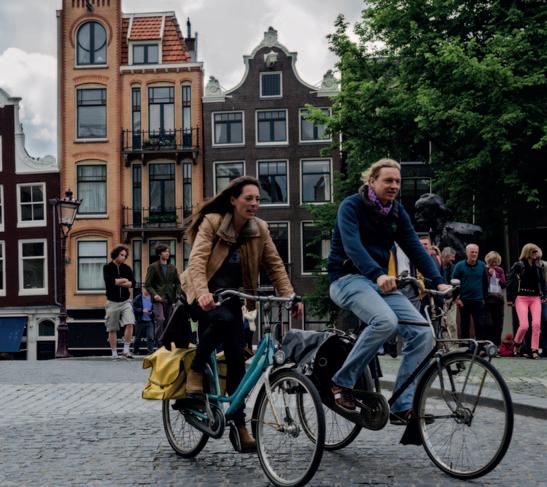
Bicycles outnumber humans in Amsterdam, a city commonly dubbed the ‘bicycle capital of the world’. More than 60 per cent of trips in the Amsterdam city centre happen on bicycles according the Urban Cycling Institute at the University of Amsterdam. This has been achieved in part through a transport infrastructure approach that is notoriously bike-friendly and car-unfriendly; only 19 per cent of Amsterdam residents use cars every day.
Copenhagen
Each Dane cycles, on average, 1.4km per day, with the citizens of Denmark combining to cycle a total of eight million km daily. Central to this, of course, is the Danish capital of Copenhagen, where 40,000 cyclists cross the Dronning Louises Bro bridge every day. The city was one of the first European locations with a dedicated cycling lane, with one opened in 1892 by esplanade. There are 385km of cycling lanes in Copenhagen today as part of a 4,770km-long national network.
Copenhagen is currently operating under a long-term cycling strategy that ranges from 2011 to 2025, with its ultimate goal that 50 per cent of all trips to work and education will be carried out on bikes by 2025. Unlike cities such as London, Copenhagen began this period of concentrated uptake with cycling already in a strong position; data from 2008 to 2010 showed cycling to be the most popular mode of transport to work or education, accounting for 36 per cent of trips, as compared to 29 per cent for the next most popular mode, the car. In 2019, the rate for cycling trips had risen to 44 per cent. Seven out of 10 Danes over the age of six are said to own a bike, with this number rising to nine out of 10 in Copenhagen.
Amsterdam is explicitly pursuing the goal of becoming a car-free city, with measures such as one-way systems, roadway narrowing, and barriers utilised in order to cut off car access to central streets that would otherwise be used as through-routes.
Amsterdam contains a total of 767km of cycling lanes and paths across the city, with an average of two million km travelled daily by residents on bikes. The city’s drive to promote active travel is also enabled by the fact that its bike network is 100 per cent integrated into its public transit system, with bike parking garages situated next to train stations. These garages are free for the first 24 hours and €1.25 per day thereafter.
Amsterdam was once known as a cardependent city in the decades following World War II, when European private car ownership increased exponentially, but heavy road casualty rates – 3,300 people were killed on Dutch roads in 1971, including 450 children – led to a focus being placed upon the provision of safe cycling infrastructure.
Protected bike lanes, now commonplace in the provision of such infrastructure, were pioneered in Dutch cities such as Amsterdam and Utrecht, with a 13-year study of 12 cities supplying separate lanes found that all road user fatalities had decreased by 44 per cent and that all 12 cities had seen increases in their cyclist numbers.
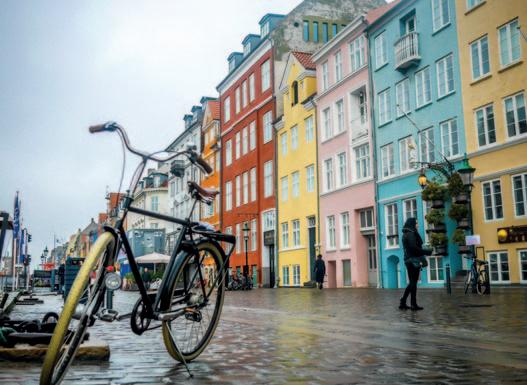
Copenhagen’s success has been backed by significant investment at the national and municipal level; the Danish Ministry of Transportation dubbed 2022 ‘the year of the bike’ and announced a large cycling infrastructure plan totalling over three billion DKK, with 2022’s 433 million DKK mainly committed to the building of new cycling lanes. Municipal authorities in Copenhagen have invested over one billion DKK in the decade from 2012 to 2022 and pledged another 67 million DKK for 2022.
54 transport report
Procuring sustainable transport solutions

The UN Intergovernmental Panel on Climate Change sounded the alarm recently when it reported that global warming is “more likely than not” to reach a 1.5oC rise since pre-industrial times and that a lack of political commitment was a key barrier to progress in what is a “rapidly closing window”.
Ireland’s Climate Action Plan 2023 sets an objective of achieving a 51 per cent reduction in overall greenhouse gas emissions by 2030 and setting the country on a path to net-zero emissions by 2050. CAP23 is replete with ambitious statements highlighting the need for the public sector to lead the way through the implementation of green public procurement. However, it is fair to question whether this is translating into the type of urgent action on the ground that the UN is pleading for.
The use of public procurement as a tool for driving sustainability is not new. For years the law has recognised that public procurement can be legitimately used for these purposes; in recent times, legislation has become more explicit in this regard. There is now a clear and unequivocal legal basis for the use of ‘green’ selection and award criteria, as well as the assessment of life cycle costs in public tendering procedures. Sustainability can also be reflected in technical specifications and contract performance clauses.
In Ireland, public procurement accounts for 16 per cent of GDP and Government sector purchasing is valued at €21.9 billion annually. Under the National Development Plan, the Government will spend €165 billion between 2021 and 2030, of which at least €35 billion will be invested in transport (a sector which accounts for 18 per cent of our carbon emissions). It should be incumbent upon every public body charged with the procurement of transport-related services, supplies, or construction projects to ensure that it leverages its spending power to expedite the transition to decarbonisation and promote sustainable development goals.
Although it has been lawful to do so for many years, the reality is that many public bodies do not regularly incorporate green or sustainable criteria into their evaluation methodologies, thereby missing a critical opportunity to incentivise the development and implementation of sustainable products, services, and work practices which will
have a reduced impact on our environment.
Circular 20/2019 instructed government departments “to consider” including green criteria in public procurement, provided they are relevant and subject to budgetary considerations. The current Programme for Government includes a number of commitments including plans to mandate the inclusion of ‘green’ criteria by end of 2023. However, considering the scale and urgency of the crisis we are facing, the lack of urgency inherent in these pronouncements has been disappointing.
In March 2023, the Environmental Protection Agency published its second report on Green Public Procurement (GPP) implementation by government departments. The EPA found that in 2021, green criteria were used to procure contracts with a total value of €55 million; this represented an average of just 10 per cent of the total spend on the contracts assessed (down from 17 per cent in 2020). Of the total number of procurement contracts valued at €25,000 or more which were signed in 2021, 24 per cent were reported to have incorporated GPP (down from 26 per cent in 2020). The low and disimproving levels of GPP implementation among government departments combined with the finding that 10 departments have no GPP policy or strategy in place should be a matter of serious concern.
Leaders in every public sector body, including those engaged in procuring transport solutions, should be urgently assessing what more they can do to maximise the opportunities afforded by public procurement to reduce the environmental impact of their activity.
Ireland’s largest international law firm, Eversheds Sutherland, has a leading transport practice, advising public authorities and contractors on projects locally and across the globe.
T: +353 86 1849145
E: petercurran@evershedssutherland.ie
W: www.eversheds-sutherland.ie

55 transport report
Advertorial
Compressed Natural Gas: Key to net-zero commercial transport
Ireland faces a significant challenge to meet its emission reduction targets, particularly in the transport sector, as it currently accounts for 42 per cent of Ireland’s energy use, making it the country’s largest source of energy demand. It is also one of the most difficult sectors to decarbonise.
Compressed Natural Gas (CNG), reliably delivered through the national gas network, is key to driving sustainable supply chains and is the first step towards net-zero commercial transport in Ireland.
CNG is natural gas that has been compressed and stored at high pressures (over 200 bar) and is typically used as a transport fuel. It is particularly suitable for use in commercial vehicles where electric solutions are not a viable option. The gas used can be either natural or renewable gas that meets the network specifications, providing a pathway to more sustainable transport.
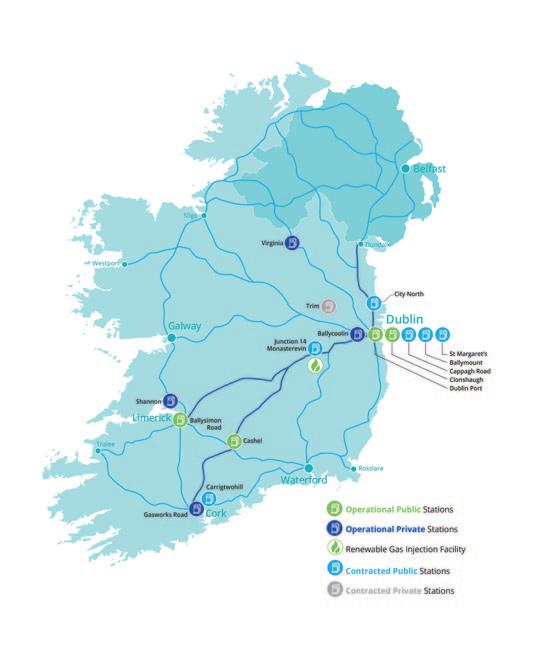
Ireland’s network of CNG stations
Gas Networks Ireland is working to expand the number of CNG stations in Ireland. This cleaner transport network will provide Ireland’s heavy goods vehicle (HGV) and bus fleet operators with a cleaner alternative fuel option to diesel.
There are four Circle K forecourts that have a CNG dispenser: Ballysimon Road, Limerick; Cashel, County Tipperary; and Clonshaugh and Dublin Port in Dublin. These four were constructed as part of the Causeway Project. Each station has the capacity to fill up to 50 HGVs a day, with each fill taking no
than
minutes.
more five56 transport report Advertorial
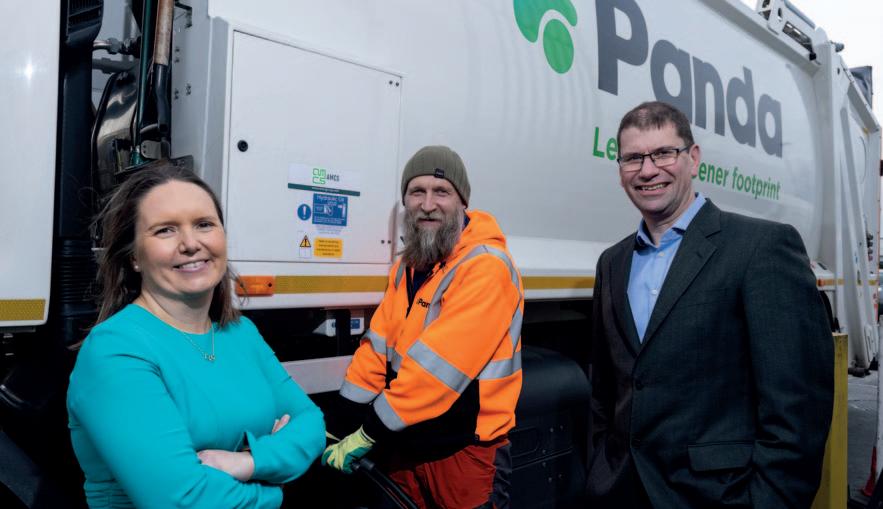
Taken at Circle K’s forecourt in Clonshaugh, County Dublin: Gas Networks Ireland’s Head of Business Development, Karen Doyle, and Circle K’s Senior Fuels Director, Jonathan Diver, with Panda driver, Pavel refuelling with BioCNG at Circle K Clonshaugh. As part of its commitment to reducing emissions and carbon footprint across its operations, Panda’s green fleet is fuelled by BioCNG.
The Causeway Project was developed to kick-start the market and to build the first public stations in Ireland. There is now a pipeline of additional public CNG stations progressing through the design, planning and construction project phases.
The expansion of the number of CNG public stations is underway and Gas Networks Ireland expects to have five more operational by 2024.
BioCNG: Carbon neutral fuel
In November 2022, Gas Networks Ireland and Circle K took another step forward in reducing emissions from Ireland’s transport industry by dispensing BioCNG at the four CNG stations.
BioCNG is carbon neutral biomethane gas which is compressed to fit into a vehicle’s tank and is available for HGVs at Circle K’s forecourts in Ballysimon Road, Cashel, Clonshaugh, and Dublin Port.
Ireland’s commercial transport fleet makes up just 3 per cent of vehicles on the road nationwide yet is responsible for approximately 20 per cent of transport’s carbon emissions. HGVs operating on 100 per cent BioCNG can achieve zero carbon emissions.
Sustainable supply chains
There is increasing demand from the transport sector for more decarbonised customer supply chain solutions. Being able to offer a lower-carbon transport solution is a strong differentiator for any business and it demonstrates a focus on sustainability when tendering for new business. With almost two million CNG vehicles across Europe, indications are that growth in Irish fleet operators adopting CNG vehicles as an alternative fuel option will continue.
Gas Networks Ireland’s Head of Business Development, Karen Doyle, says there has been significant growth in demand from businesses looking to source fuel alternatives in order to develop sustainable supply chains.
“While electricity is a proven alternate fuel for cars, electric solutions are not a viable option for use in heavy goods commercial vehicles, however CNG and BioCNG are, and are being used by fleet operators throughout Europe. We are very excited to work with Circle K in offering the option of this carbon neutral fuel to fleet operators in Ireland,” Doyle says.
“In the six months that BioCNG has been available at the four Circle K outlets, almost 1,900 tonnes of carbon emissions have been saved, equating to over 1.9 million carbon neutral kilometres. Cleaner carbon neutral renewable gas will help Ireland reduce its reliance on imported fossil fuels and help to decarbonise Irish businesses, transport, and supply chains. By gradually replacing natural gas with renewable and carbon neutral gases such as biomethane and hydrogen, Ireland’s transport sector can be powered by increasingly cleaner fuel.”
About Gas Networks Ireland
Gas Networks Ireland operates and maintains Ireland’s €2.7 billion, 14,664km national gas network, which is considered one of the safest and most modern renewables-ready gas networks in the world.
Over 720,000 Irish homes and businesses trust Ireland’s gas network to provide efficient and reliable energy to meet their heating, cooking, manufacturing, and transport needs.
The gas network is the cornerstone of Ireland’s energy system, securely supplying more than 30 per cent of Ireland’s total energy, including 40 per cent of all heating and almost 50 per cent of the country’s electricity generation.
By working to replace natural gas with renewable gases, such as biomethane and green hydrogen, and complementing intermittent renewable electricity, Gas Networks Ireland is supporting Ireland’s journey to a cleaner energy future.
www.gasnetworks.ie
57 transport report Advertorial 4
Ireland’s network of CNG stations
Circle K’s Senior Director Fuels, Jonathan Diver says: “Working with Gas Networks Ireland, we began making a low carbon fuel alternative for commercial vehicles available with the introduction of compressed natural gas (CNG) in 2019. While CNG can reduce a HGV’s emissions by up to 22 per cent, BioCNG can turn it into a carbon neutral vehicle.”
“Circle K is Ireland’s leading fuels supplier to the commercial transport and freight industry, and a key priority of ours is supporting this sector as it endeavours to reduce its carbon emissions in addition to providing the other necessary goods and services, they require. Expanding and innovating our network of CNG refuelling stations as well as continuing to develop our EV charging facilities are both key elements within our overall sustainability agenda and we intend to make further progress in this regard in the months and years ahead.”
Biomethane – from farm to freight
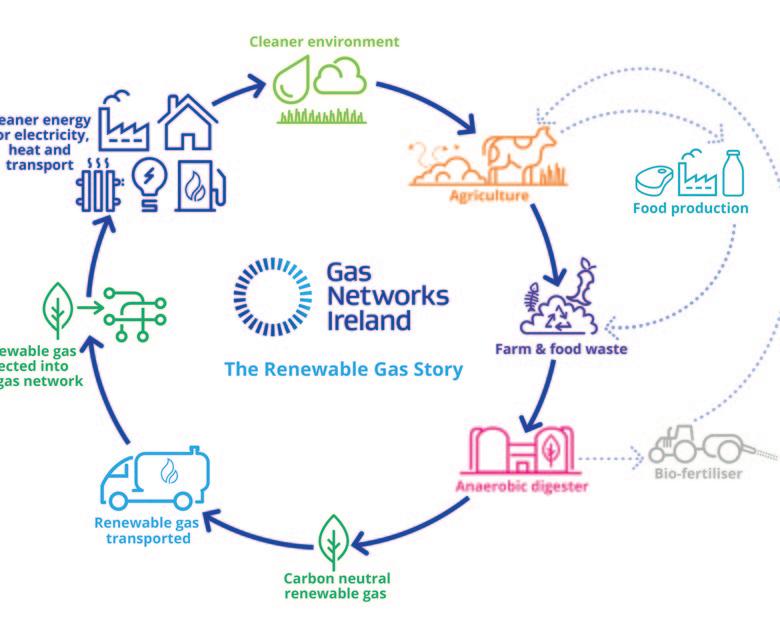
Structurally identical to natural gas, biomethane is a carbon neutral renewable gas that can be made from farm and food waste through a process known as anaerobic digestion.
Biomethane is fully compatible with the national gas network and existing appliances, technologies, and vehicles. It can seamlessly replace natural gas to reduce emissions in heating, industry, transport, and power generation, while also supporting the decarbonisation of the agri-food sector.
Gas Networks Ireland first introduced domestically produced biomethane onto Ireland’s gas network more than three years ago. In 2022, Gas Networks Ireland transported 41GWh of biomethane in the national network. It is beginning to seamlessly replace natural gas and is fully compatible with existing appliances and technology.
Biomethane injected into Ireland’s gas network can be transported to forecourts which have a CNG refilling station. Where the biomethane is certified by an EU Voluntary scheme as meeting the sustainability and greenhouse gas reduction criteria set out in RED II, it is fully renewable. This renewable gas is a zero-emissions fuel in the transport sector and qualifies for the Renewable Transport Fuel Obligation (RFTO) operated by the National Oil Reserves Agency (NORA).
Gas Networks Ireland’s Renewable Gas Registry tracks the allocation of the biomethane from the point of injection into the grid to the point of withdrawal at individual refuelling stations. A proof of origin certificate issued by the registry completes a mass-balance check between injection and withdrawal from the grid.
There is significant scope for biomethane production in Ireland. With the European Commission identifying Ireland as having the highest potential per capita to produce biomethane, it will also play a major role in Ireland and the EU’s commitment to becoming an energyefficient, low carbon economy. An indigenous biomethane industry would not only support the decarbonisation of the agricultural sector, but it
58 transport report Advertorial
would also provide significant opportunities for rural communities and facilitate sustainable circular economies.
To prepare for increased biomethane connections and injection, Gas Networks Ireland is developing a coordinated gas network plan, which will outline the development of the gas network to bring biomethane to over 720,000 homes and businesses across the country in the most efficient and effective manner.
CNG vehicle grant scheme
To help Ireland’s fleet operators and hauliers transition to cleaner, affordable CNG vehicles, Gas Networks Ireland has a CNG Vehicle Grant Scheme which provides grants of up to €5,000 for new CNG vehicles, up to maximum of €60,000 per business.
The CNG Vehicle Grant Scheme is cofinanced by the European Union’s TEN-T Programme under the Connecting Europe Facility as part of the Green Connect Project. Applications are now being accepted at: www.gasnetworks.ie/cngvehiclegrant
Toner Transport & Logistics
Dublin-based, Toner Transport & Logistics became the first company to successfully secure a grant through Gas Networks Ireland’s current CNG grant scheme and are now able to provide customers with a more sustainable service and reduce carbon emissions in supply chains.
As a business operating for four generations, the move to CNG means that, as the volume of renewable gas on the network increases in the years ahead, Toner Transport will be able to transition to an even more sustainable transport solution without further investment, increasingly reducing emissions and maintaining a competitive advantage for many more generations to come.
Toner Transport is an award-winning Dublin-based family business that has been at the forefront of the transport industry for four generations, working closely with its customer base to discover cleaner transport solutions.
“For those businesses who are actively integrating the use of sustainable practices into their supply chain management, they stand to gain a real
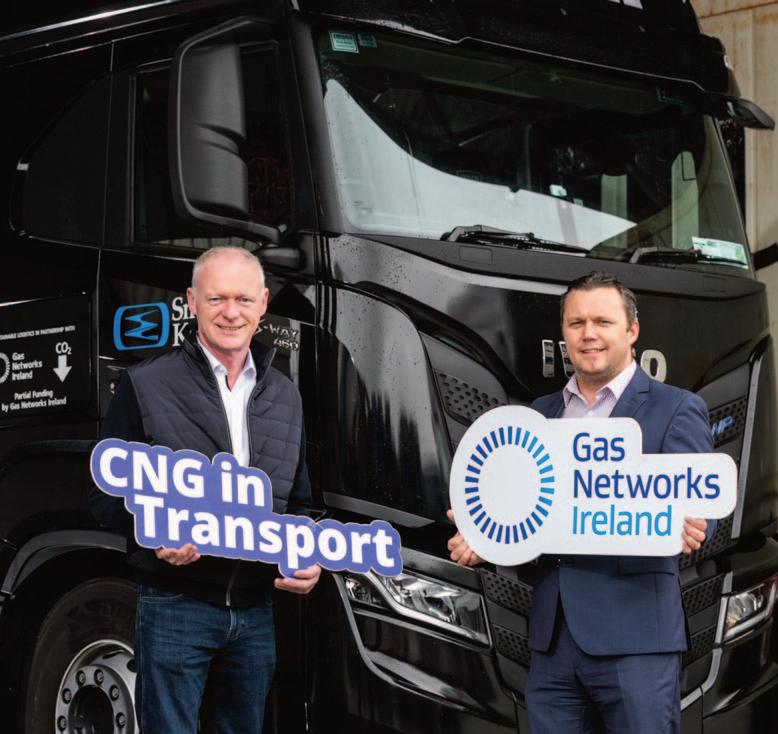
competitive advantage,” Toner Transport & Logistics Managing Director, Paul Toner says.
“When one of our largest customers, the paper and packaging group Smurfit Kappa, approached the team to investigate ways they can reduce carbon emissions, we instantly knew that one way is through the switch to a CNG truck from a diesel-fuelled truck,” Toner adds.
“We work with Smurfit Kappa to deliver packaging material throughout the 32 counties of Ireland, from Cork to Dublin and everywhere in between, and the new CNG truck will clock up over 100,000km a year. Throughout the 40-year association with Smurfit Kappa, we always innovate and look at new ways we can adapt our fleet to work with them and all our customers to help achieve their business goals.
“From a business development perspective, being able to offer a lowercarbon transport solution is a strong differentiator for any business. It demonstrates a focus on sustainability when tendering for new business.”
EU Clean Vehicle Directive
A key consideration for public organisations moving forward is the EU Clean Vehicles Directive, which passed into Irish law in 2021. This Directive sets
targets for public procurement of clean vehicles by increasing the share of low and zero-emission vehicles tendered for by public authorities.
Ireland has agreed to adopt the maximum target of almost 40 per cent of cars and light trucks and 10 per cent of heavy-duty trucks procured from August 2021 must be cleaner vehicles. For buses, the target is even higher, with a requirement of 45 per cent to be cleaner vehicles and half of that to be zeroemission vehicles.
The CNG team at Gas Networks Ireland is available to work with agencies and councils that wish to explore CNG and renewable gas as an option to meet this obligation when procuring their heavy transport and passenger vehicles.
E: cng@gasnetworks.ie
W: www.gasnetworks.ie/cng
transport report Advertorial 59
Toner Transport & Logistics Managing Director, Paul Toner with Gas Networks Ireland’s CNG and Renewable Gas Sales Manager, David Hanahoe
boldly moving forward
OECD: Ireland ‘car dependent by design’
An OECD report has determined that the Irish transport system fosters growing car use and emissions by design and is thus unfit to enable the country to meet its greenhouse gas reduction goals while improving wellbeing.
Published in late 2022, Redesigning Ireland’s Transport for Net Zero: Towards Systems that Work for People and the Planet states that the State’s transport system is characterised by three “undesirable dynamics”. These are induced car demand, urban sprawl, and the low attractive trap of sustainable modes of transport.
The OECD additionally states that the policies announced in the Climate Action Plan will not reduce Ireland’s CO2 emissions enough to meet the emissions targets as it does not adequately reform the State’s transport system away from a reliance on private car transport.
Key observations
The OECD report makes five broad observations for the State for it to embrace a transport system compatible with Ireland’s climate commitments.
The first observation is that the Irish transport system fosters growing car use and emissions by design, rendering it unfit to enable the State to meet its greenhouse gas reduction goals while
improving wellbeing. “Growing car use in Ireland is largely determined by car-dependent transport and urban systems, organised around increased mobility and characterised by three unsustainable dynamics: induced car demand, urban sprawl, and the sustainable modes low-attractiveness trap,” the report states.
The second observation in the report is that aiming at decarbonising the transport system via private vehicle improvements is unlikely to lead to substantially different patterns of behaviour, rapid emissions reductions, and large well-being improvements. “Car-dependent systems make rapid electrification slow and difficult, by locking-in large and growing vehicle fleets. Even with improved (and fully electric) vehicles, they also fail to reduce life-cycle emissions, address accessibility gaps and other negative impacts (e.g., road fatalities).”
Published before the publication of Climate Action Plan 2023, the third observation made by the OECD is that government policies implemented thus far and those expected to bring the highest
6060 transport report
boldly moving forward
emission reduction shares according to Ireland’s Climate Action Plan 2021 are unlikely to help the country transform its car-dependent system. “Most efforts in Ireland have been allocated to policies with a low to medium potential to transform the current system (e.g., electric vehicle incentives for private cars, increasing the budget allocated to public transport infrastructure compared to what is allocated to car infrastructure, carbon and road prices, infill/brownfield development targets). Currently prioritised policies, such as electric vehicle incentives, also reinforce car dependency, further locking the country into a system that fosters growing car use and emissions by design.” More encouragingly, the OECD highlights the scope for “enormous opportunities by prioritising policies with a high potential for transforming its car-dependent system”. “While taking different shapes, transformation of the transport system away from car dependency is possible in different types of territories (e.g., Dublin, Cork, Sligo, and Kildare).”
The fifth broad observation made by the OECD is that policies with a high transformative potential include road space reallocation, the mainstream of on-demand shared services and communication efforts to address car-centric mindsets. “Currently, these policies are marginal and implemented on a small scale. The recently issued [2022] Sustainable Mobility Policy increases the centrality of transformative policies, reflecting an effort towards transformative change,” the report outlines.
Four recommendations
The report makes four key recommendations to alleviate the issue. Firstly, it states that the Government should redefine the goal of the transport system as “sustainable accessibility”, with complimentary recommendations of revisiting measurement frameworks and models, as well as setting a sustainability goal for planning.
Secondly, the report states that the Government should prioritise the scaling up of policies which
can help move Ireland away from its car-reliant system, ensuring that sustainable modes of transport are the first choice for a bulk of trips.
Third, Ireland needs to redefine its electrification strategy to support the transition towards a sustainable transport system, outlining that a target should be set for people in terms of kilometres travelled.
Fourth and finally, the report says that the Government needs to embrace a systemic approach to policy decision-making across government departments, stating that there needs to be “shared understanding of root causes by all stakeholders and to expose ingrained ideas that hinder progress”.
Government consideration
At the time of the report’s publication, Minister for Transport Eamon Ryan TD said that the report’s findings will continue to inform both the Department’s public engagement activity, and the measures to be implemented over the coming period.
“The report’s findings on what are the most impactful and transformative measures, which will also increase people’s wellbeing, strongly reflect and support what we are seeking to deliver overall through our Sustainable Mobility Policy, the work of our Leadership Group and [the] ‘Pathfinder Programme’.
“The scale of the challenge we face in decarbonising transport, as highlighted in this report, will not be easy and will require a truly transformative level of behavioural and systems change over years. The perspective in this report is rightly on making changes now that will deliver a net zero future for transport to 2050.
“The longer-term focus should be on reducing demand and systemic changes that address car dependence. I would also reinforce, however, the need to continue our focus on electrification of our passenger and public transport fleet, as set out in our Climate Action Plan, as an appropriate measure for the medium term to 2030.”
61 transport report

Decade of delivery for Iarnród Éireann is powering ahead
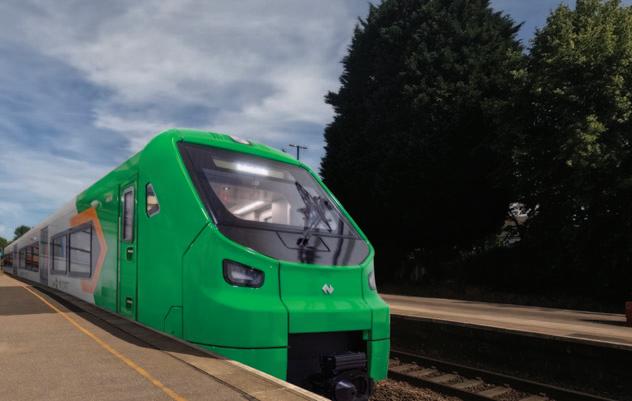
Capital investment in rail and Rosslare Europort is being matched by customer experience and people focus says Jim Meade, Chief Executive of Iarnród Éireann.
What do we mean by being in a decade of delivery in Iarnród Éireann? Our vision of being the backbone of Ireland’s sustainable transport network is clear, and now with the support of government and the National Transport Authority for the capital investment to achieve this, we are firmly in delivery mode.
The decade of delivery also encompasses a transformed customer experience, to deliver a great journey, every journey for our customers, and become a leader in customer experience amongst European railways.
We are also building a workplace to firmly establish Iarnród Eireann as an employer of choice. Ensuring we have
the talent and skills across all roles needed to deliver on our ambitions is critical, and we are proud to offer not just employment but full career opportunities to our team of over 4,400 colleagues. In 2023, for the third year in a row, Iarnród Eireann was ranked as one of Ireland’s five leading employers in the Sunday Independent Statista Best Employers research – third overall, and the leading Irish employer in this year’s study.
Across all aspects of our business – for passenger and freight services on our rail network, and as Port Authority for Rosslare Europort – the decade of delivery is underway.
DART+ Programme
Already, 185 carriages of the new DART+ fleet are on order from Alstomarriving from 2024, and entering service from 2025, the order could potentially increase to 750 carriages over the decade. The fleet order is an integral part of DART+, an investment will allow more trains to operate on all routes on our network, provide greater standards of accessibility, and allow for the decarbonisation of all Greater Dublin Area rail services.
More trains, less carbon, more accessibility, less congestion, more frequency, capacity, and sustainability –these will be features of a transport network with rail at its core, all leading to a doubling of the carrying capacity of the Greater Dublin Area network.
National network
Investment in infrastructure in the Dublin area will also grow our ability to operate services right around the country. Targeted line speed improvement works are also taking place. Construction of the new National Train Control Centre at Heuston Station has been completed, with train control systems being developed for full commissioning by 2025, to deliver more efficient train management across the network, to cater for the expanded network and services.
Regional cities
€185 million is to be invested in the Cork commuter rail network, under the EU-funded Recovery and Resilience Plan, allowing Iarnród Éireann to increase the Cork commuter rail network’s capacity through:
• double-tracking Glounthaune to Midleton;
• developing a new through platform at Kent Station for through running for Mallow to Midleton/Cobh; and
62 transport report Advertorial
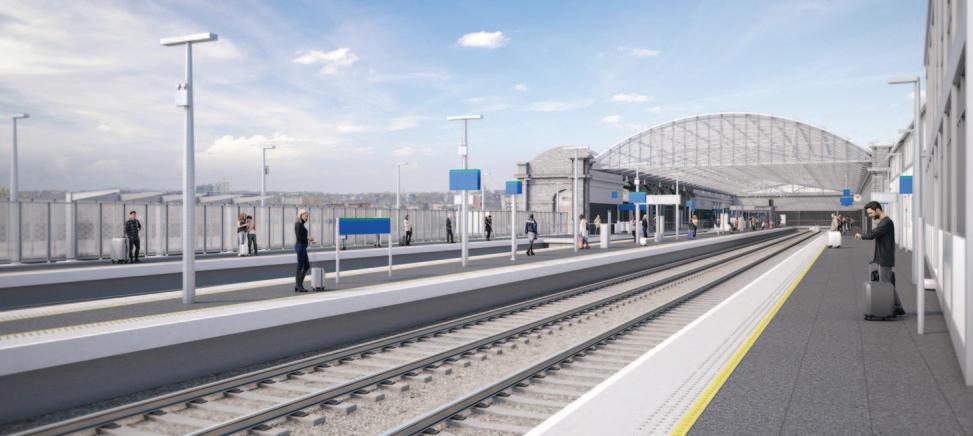
• resignalling the Cork commuter network.
All three elements are in the planning process, to remain on track for delivery.
In Galway, funding under the Urban Regeneration Development Fund (URDF) includes:
• investment of €9.3 million for a passing railway loop at the existing Oranmore Train Station, which will allow the busy commuter link between Athenry and Galway to grow; and
• Ceannt Station will be regenerated as part of a major €40.3 million Galway City Council Transport Connectivity project.
In Limerick, the completion of the city’s own transportation hub centred on Colbert Station will also boost services, and the Limerick Shannon Metropolitan Area Transport Strategy has detailed the opportunities provided by the network of rail lines around Limerick City.
Waterford’s Plunkett Station will be relocated to be part of an integrated transport hub under plans to develop the city’s North Quays.
Rail freight and Rosslare Europort
Iarnród Éireann’s Rail Freight 2040 Strategy aims to achieve:
• a five-fold increase in the number of rail freight services;
• a resulting reduction of 25,000 tonnes of CO2 emissions annually; and
• avoiding the requirement for 140,000 HGV journeys on our roads annually.
DART+ Programme project status
Project Serving Update
DART+ West Maynooth/M3 Parkway to City, including new depot west of Maynooth
DART+ South West
Hazelhatch to Heuston and Phoenix Park Tunnel
DART+ Coastal North Connolly to Drogheda
DART+ Coastal South Connolly to Greystones
DART+ Fleet New trains for all DART+ routes above
Works to reinstate the Limerick to Foynes rail line for freight services are underway following funding from the Department of Transport, a clear commitment to the goals of Rail Freight 2040, with a 2025 opening date planned.
Iarnród Éireann is also Port Authority for Rosslare Europort, and its status as Ireland’s gateway to Europe has been confirmed with 36 services operating directly between the port and Europe each week.
As well as investment in the Port Masterplan, the Office of Public Works’ Project T7 for a permanent border control post, and the new TII N25
Railway order application lodged July 2022
Railway order application lodged March 2023
Second public consultation underway
Emerging preferred option being developed
185 DART+ carriages ordered
Next steps
Railway order hearing to be scheduled by An Bord Pleanála
Railway order hearing to be scheduled by An Bord Pleanála
Railway order application expected to lodge Q4 2023
Public consultation dates to be confirmed
First carriages arrive 2024
Rosslare Europort Access Road, an ambitious €200 million plan to become Ireland’s offshore renewable energy hub, with the port uniquely placed to support the development of the industry in the Celtic and Irish seas.
Our journey to our sustainable future is to a destination which will benefit our country, our environment, our communities, and our society as a whole, and everyone is welcome on board.
W: www.irishrail.ie
Twitter: @irishrail
Artist’s impression of the new Ceannt Station, Galway.transport report Advertorial 63
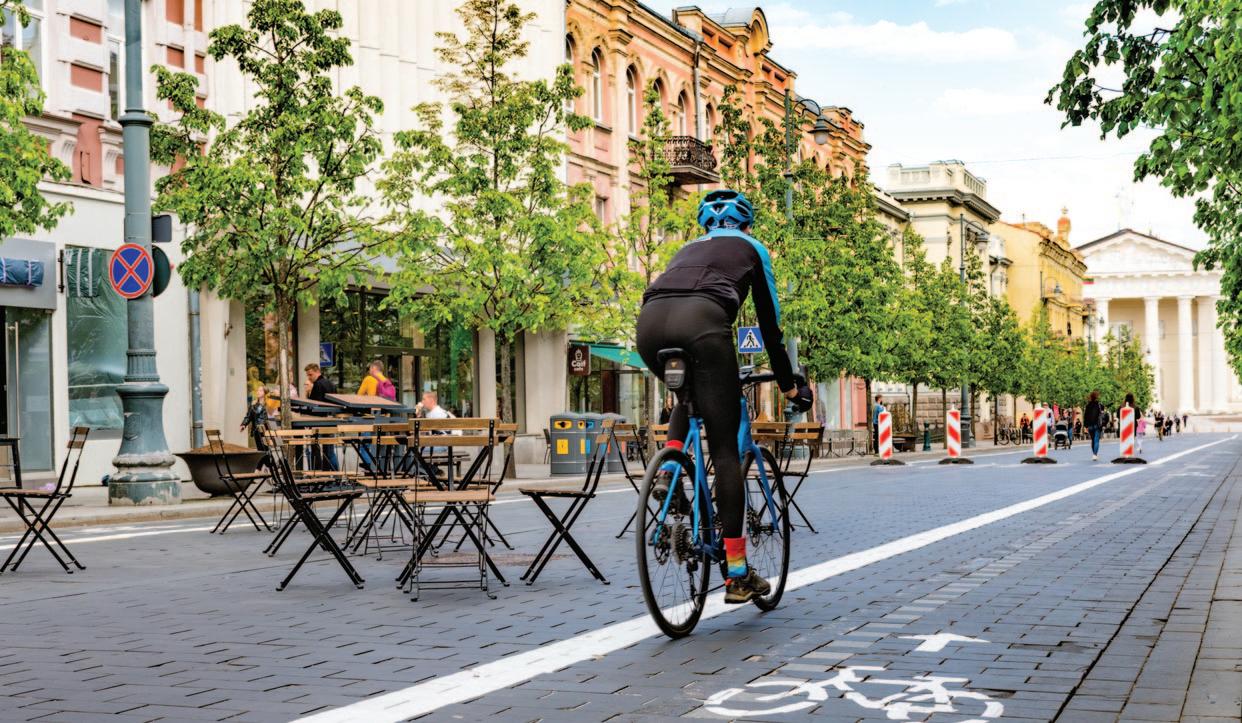
Pathfinder projects: In profile

pilot projects for the National Sustainable Mobility Policy. There are six categories: national impact, cycle network, public transport, active travel, servicing schools/universities, and workshops/research. eolas Magazine examines a project from each category.
Inter-Urban Demonstrator – national link Cork-Waterford (national impact)
This will build on the greenway already in use in Waterford and will eventually link Waterford city and Cork city, with a 46km section from Waterford city to Dungarvan for walkers, runners, and cyclists. The section around Glounthaune in east Cork is completed and the adjacent sections are being worked on.
The Government is aiming to complete a 21km path between Midleton to Youghal at some stage in 2023. However, the path between Mallow to Fermoy to Lismore to Dungarvan is in the planning stage and there remains a 31km gap between the towns of Youghal and Dungarvan.
Mullingar Cycle Corridor with links to Dublin-Galway Greenway (cycle network/corridor proposals)
The Department of Transport has stated: “This Westmeath County Council project involves the provision of a walking and cycling route from the west to the east side of the town to bring cyclists into the core of the town, linking into the Dublin-Galway Greenway/Royal Canal Blueway and incorporating improved public realm aspects.
“The cycle corridor will complement the existing bike hire scheme in the town, which launched at the end of April 2022. It is intended that the provision of improved infrastructure will facilitate further expansion of the scheme.”


64 transport report
forward
boldly moving
boldly moving forward
Athlone bus service electrification (public transport)
The first pathfinder project to have commenced, efforts to transform Athlone’s bus service into a 100 per cent electric operation began on 29 January. Since then, 11 new electric buses have operated in Athlone town services, completing a total of over 170,000km so far.
The new buses will be charged using newly installed charging infrastructure supplied with power from the newly constructed electricity substation within the Bus Éireann depot on Station Road, Athlone. Construction and installation work here was carried out by ESB Smart Energy Services.
Clonmel 10-minute town (active travel)
To be delivered by Tipperary County Council, this project will prioritise pedestrian access to town centre streets. In certain locations, it will involve creation of shared spaces, wider pedestrian facilities with seating, cycle stands, and smart technology, incorporating tree planting, landscaping and drainage measures.
The project will connect existing and proposed walking and cycling infrastructure such as the Suir Blueway, the proposed Suir Island pedestrian and cycling bridge, the proposed Cahir to Clonmel Greenway, and the Safe Route to Schools projects.
Five Cities Demonstrator: Limerick City university connectivity (servicing schools/universities)
The Five Cities Demonstrator project will develop a rail link between Limerick city centre and the campuses of the main third level institutions, Mary Immaculate College, University of Limerick, and the Technological University of the Shannon: Midlands Midwest.
Green Party TD for Limerick City, Brian Leddin, has welcomed the projects: “This is the first new train station in the midwest in more than a century, and it will be the first of a number of new stations across our city and suburbs, as Limerick grows its population to 150,000 or more.”
Workplace mobility hubs – four Dublin local authorities (workshops/research)
The four Dublin councils – Dublin City Council, Dún Laoghaire-Rathdown County Council, South Dublin County Council, and Fingal County Council – will launch schemes with elements of cycle infrastructure, traffic reduction, road space reallocation, public realm improvements, and the 10minute neighbourhood.
The city centre pathfinder will combine the conversion of College Green and Dame Street to a lowtraffic environment with the enhancement of public transport and active travel provision via the review of the City Centre Transport Study.
In South Dublin, there will be a 11km cycle network in Tallaght/Dublin 24, and the development of Castletymon as a 10-minute neighbourhood via walking and cycling infrastructure, with public realm improvements. Both projects will link with the Dodder Valley cycle scheme creating an overall enhanced walking and cycling network.
The Dún Laoghaire/Blackrock area will be transformed into 10-minute town model to include segregated cycle facilities, an expansion of walking and cycling options into the area south of Dún Laoghaire.
With many Dublin Airport staff living in Swords, Fingal County Council will oversee a network in Swords, 5km from the airport, to facilitate improved cycling and public transport connectivity with Dublin Airport, further enhanced when the BusConnects scheme is complete in 2028.

65 transport report
RSA: Worrying increase in cycling injuries
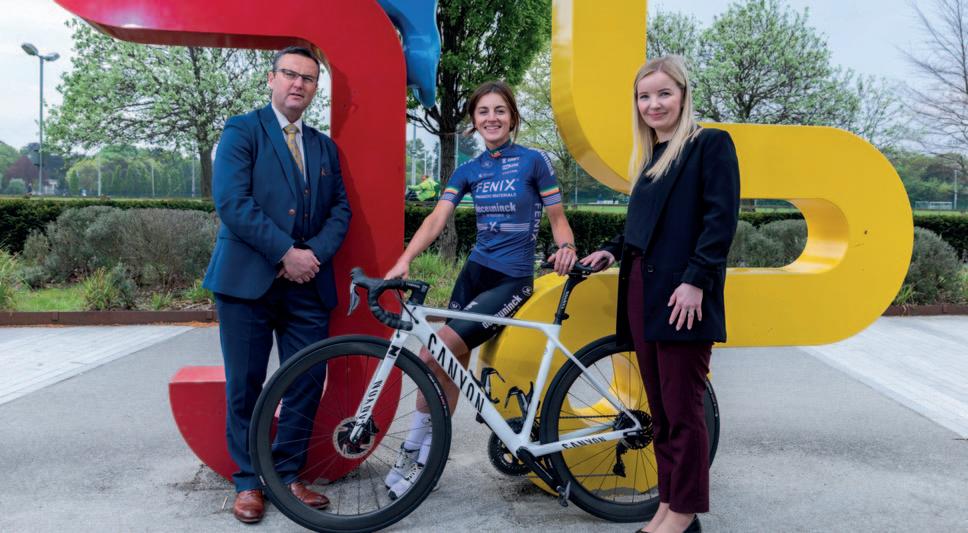
A new report published by the RSA shows a worrying increase in the number of people being seriously injured while cycling.
The Cyclists Serious Injury Report 2016 to 2021 was prepared using data from the Irish Road Traffic Collision Database, which is based on collision records transferred from An Garda Síochána to the RSA.
The research found that between 2016 and 2021, there was an average of 239 people seriously injured while cycling each year. Nine per cent of people seriously injured while cycling was a result of a collision in which the driver failed to remain at the scene, i.e., a ‘hit and run’ incident.
However, the starkest result from the research shows that for every cyclist that was killed in the period of the study, there was an average of 25 people seriously injured while cycling.
Unsurprisingly, eight in 10 serious injuries were a result of multi-vehicle collisions which most commonly
involved a car (76 per cent). The remainder were single cyclist collisions.
Failure to observe by the driver involved in the collision was the most frequently noted action (38 per cent) in collisions where people who cycle were seriously injured.
Other key findings include:
• Over three-quarters (77 per cent) of people seriously injured while cycling were male;
• the highest proportion of serious injuries occurred between 4pm and 8pm (29 per cent);
• 62 per cent of serious injuries occurred Monday to Thursday;
• The highest proportions of serious injuries occurred in July (11 per cent) and Sept (11 per cent);
• four in five serious injuries occurred on urban roads; and
• almost half of serious injuries occurred at a junction (46 per cent), most commonly a T-junction or crossroads.
Sam Waide, CEO, Road Safety Authority says: “Everyone using the roads has an equal responsibility to ensure good road user behaviour and to protect vulnerable road users, including people who cycle. This research published by the RSA is very worrying and highlights a concerning disregard for people who cycle. In particular, the figure relating to the number of drivers who fail to remain at the scene of a collision is shocking and shows a complete lack of respect for life. It is vital that drivers look out for cyclists by allowing the required space when overtaking them and ensuring to check their blind spot at junctions and
66 transport report Advertorial
Professional Cyclist Imogen Cotter, Sam Waide CEO RSA and Eimear Cotter Marketing Manager Škoda Ireland launching the new cycle road safety campaign’.
changing lanes. It is important to always anticipate a cyclist having to make a sudden move to avoid obstructions. We all have a responsibility, whether as motorists, cyclists, or pedestrians to share the road in a safe and responsible manner.”
Waide adds: “We know from a recent academic study that was conducted for the RSA by the University of Galway that almost a third of people hit by a vehicle travelling at 50km/h will be killed, rising to half at 60km/h. Therefore, it is very important that drivers reduce their speed particularly in urban areas where there are potentially a lot of cyclists. It also points to the need for the greater rollout of 30km/h speed limits in our urban areas to promote safer, greener, and more liveable communities.”
Ireland’s fifth government Road Safety Strategy 2021-2030 aims to reduce the number of deaths and serious injuries on Irish roads by 50 per cent over the next 10 years. This means reducing deaths on Ireland’s roads annually from 144 to 72 or lower and reducing serious injuries from 1,259 to 630 or lower by 2030.
The strategy is the first step in achieving the 2020 Programme for Government commitment of bringing Ireland to Vision Zero. This is to eliminate all road deaths and serious injuries on Irish roads by the year 2050.
New cycle safety campaign launched
Professional cyclist, Imogen Cotter, who was seriously injured in a head-on collision in January 2022, is calling on motorists to slow down and share the roads safely with people cycling as part of a new road safety campaign being led by the Road Safety Authority (RSA) and Škoda Ireland.
While training, Imogen was hit by an oncoming vehicle that was attempting to overtake another person cycling on the other side of the road. She suffered serious injuries resulting in five surgeries and hundreds of hours of physiotherapy. Since the collision, Imogen has documented her road to recovery and is now working with the RSA and Škoda Ireland on a safety appeal campaign reminding motorists to share the roads safely with those who cycle.
Specifically, she is asking drivers to slow down and give people who cycle the

Fatalities and serious injuries among people who cycle, 2016-2022
space to ride safely when overtaking them (at least 1 metre in speed zones up to 50 km/h and at least 1.5 metres in zones over 50km/h).
Speaking at the launch, Cotter, who is a Škoda Ireland ambassador, said: “I remember seeing the van coming at me and thinking I was going to die. I hit the windscreen really hard. It was horrifying for my parents to get a call like that. It felt so unfair, everything I worked for, for so long could have been gone in an instant. People need to slow down and see the impact not observing people cycling can have. My message is for people to slow down and realise there is a real person cycling on that road. They are people with whole lives and goals. If this campaign can make one person
slow down that will be a step in the right direction to making roads safer for everyone.”
The digital campaign in partnership with Škoda Ireland will run across social media and video on demand over the summer.
W: www.rsa.ie
Year Fatalities Serious injuries 2016 10 146 2017 14 188 2018 9 260 2019 8 307 2020 10 248 2021 7 286 2022 7 201 Total 65 1,636 67 transport report Advertorial
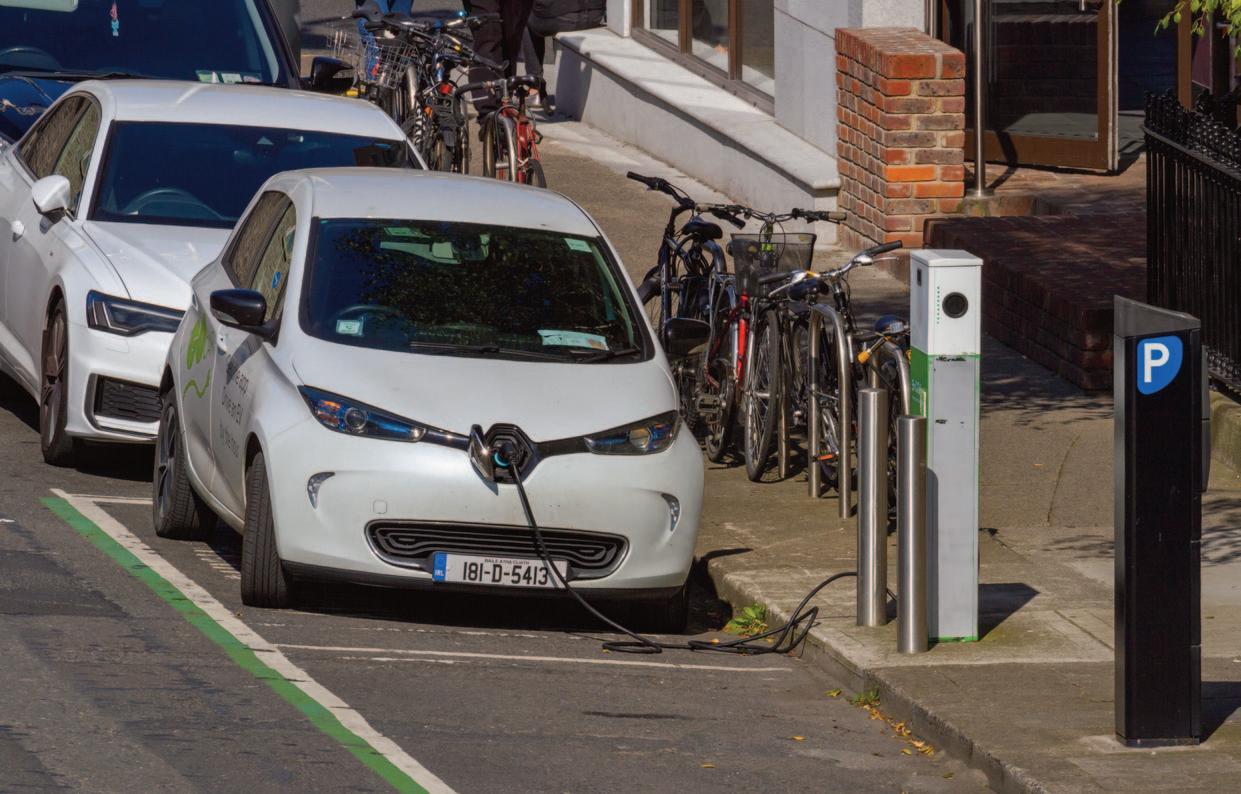

Ambitions to almost treble EV charging power by 2025
The Electric Vehicle Charging Infrastructure Strategy 2022-2025 will see in the region of €100 million spent over the next three years, aimed at enabling the target of one million electric vehicles in the State by 2030.
With the Climate Action Plan outlining a target for reducing emissions from the transport sector by 50 per cent, and the transport sector accounting for 20 per cent of the State’s emissions, the longterm target of getting one million EVs onto the road by 2030 requires significant improvement in the State’s existing EV infrastructure.
Strategy ambition
Planning for the short to medium term, the ambition of this strategy is to deliver the infrastructure to meet and be ahead of Ireland’s charging needs. Included in this ambition is to ensure alignment with the EU's Alternative Fuels Infrastructure Regulation (AFIR).
The EU's Alternative Fuels Infrastructure Regulation (AFIR) will set binding criteria regarding the minimum
level of charging power available in each member state. Assuming Ireland will meet its CAP target of 195,000 light-duty EVs by 2025, approximately 169,000kW of charging power will be required across the country by the end of 2025. To achieve this and more will be the ambition set by the strategy. The types and numbers of charge points
used to deliver this power will be based on user needs.
The number of charge points could increase from approximately 1,700 in September 2022 to somewhere between 2,540 and 4,850 by 2025. The following table shows a range of scenarios for how this demand may be met:
68 transport report Residential/Neighbo urhood 0-22kW Destination/En-route 23-350kW Total number of publicly- accessible chargers nationwide Total charging power nationwide Existing 1,349 374 1,723 67,237kW Scenario 1 1,460 1,080 2.54 169,000kW Scenario 2 1,650 1,300 2,950 169,000kW Scenario 3 1,990 1,320 3,310 169,000kW Scenario 4 2,660 1,180 3,840 169,000kW Scenario 5 4,070 780 4,850 169,000kW
forward
boldly moving
boldly moving forward
Implementation Plan actions
Implementation Plan 2023-2025 actions to drive delivery and to stimulate EV infrastructure availability will fall under four broad areas:
1. National EV Charging Network Plan: Aimed at producing a national EV charging infrastructure demand plan and related demand-supply assessment according to the electricity grid’s readiness to meet the projected demand between 2023 and 2025.
2. Schemes: Provides details on future milestones related to the progress of schemes planned to provide increased EV charging infrastructure.
3. Policy and strategy: Includes deliverables and related milestones for delivering the necessary policies in support of the expansion of EV charging infrastructure. It also deals with policies related to electric vehicles and EV transition.
4. Reporting and communications: Includes deliverables and actions that support the reporting and communications that need to be made to the public, as well as to the European Union under AFIR regulations.
It is important to note that the main delivery focus will be on the provision of public charging infrastructure for electric cars and light-duty vehicles. Charging infrastructure for heavy-duty vehicles will be delivered as the technology for this sector matures and in alignment with EU requirements.
Home charging infrastructure
In October 2022, Minister for Housing, Local Government and Heritage Darragh O’Brien TD announced a new regulation stipulating that newly built homes must be equipped with electric vehicle charging infrastructure.
In a statement released on 12 November 2022, Minister O’Brien announced that the infrastructure will
“The EV Strategy sets out a roadmap for creating an entirely new infrastructure across the country – one that people can have confidence in and one that will encourage more and more people to choose EVs.”
Minister for Transport, Eamon Ryan TD
be built on: new homes with a parking space located within its boundary; new multi-unit residential buildings; and multi-unit residential buildings undergoing major renovation where the car park is located inside or adjacent to the building.
The Department of Housing, Local Government and Heritage stated that there are currently in the region of 45,000 electric vehicles being operated in the State. The Climate Action Plan commits the Government to ensuring that this number increases to at least 945,000 by 2030.
Announcing the new regulations, Minister O’Brien stated: “The regulations will help accelerate the uptake of electric vehicles, creating and enabling infrastructure to achieve the government commitment of nearly one million electric vehicles by 2030. We are sending a strong signal of Ireland’s commitment to the clean energy transition, as the building sector has a vast potential to contribute to a carbonneutral and competitive economy.”
Government guidance
Describing the action plan as having a ‘people first’ approach, Minister for Transport Eamon Ryan TD said: “The EV Strategy sets out a roadmap for creating an entirely new infrastructure across the country – one that people can have confidence in and one that will encourage more and more people to choose EVs.
“It is happening already – EV sales are sky-rocketing – but the new infrastructure we are planning should take away concern or worry that people might have about access to charging points.”
The Minister concluded by outlining the “key anchor” for the strategy; the ZEVI unit. “Within this unit, we have the expertise, the knowledge, the guidance, the resources that local authorities will need to be able to make the best decisions on the procurement, leasing and location of EV chargers.”
69 transport report
Keeping Dublin moving
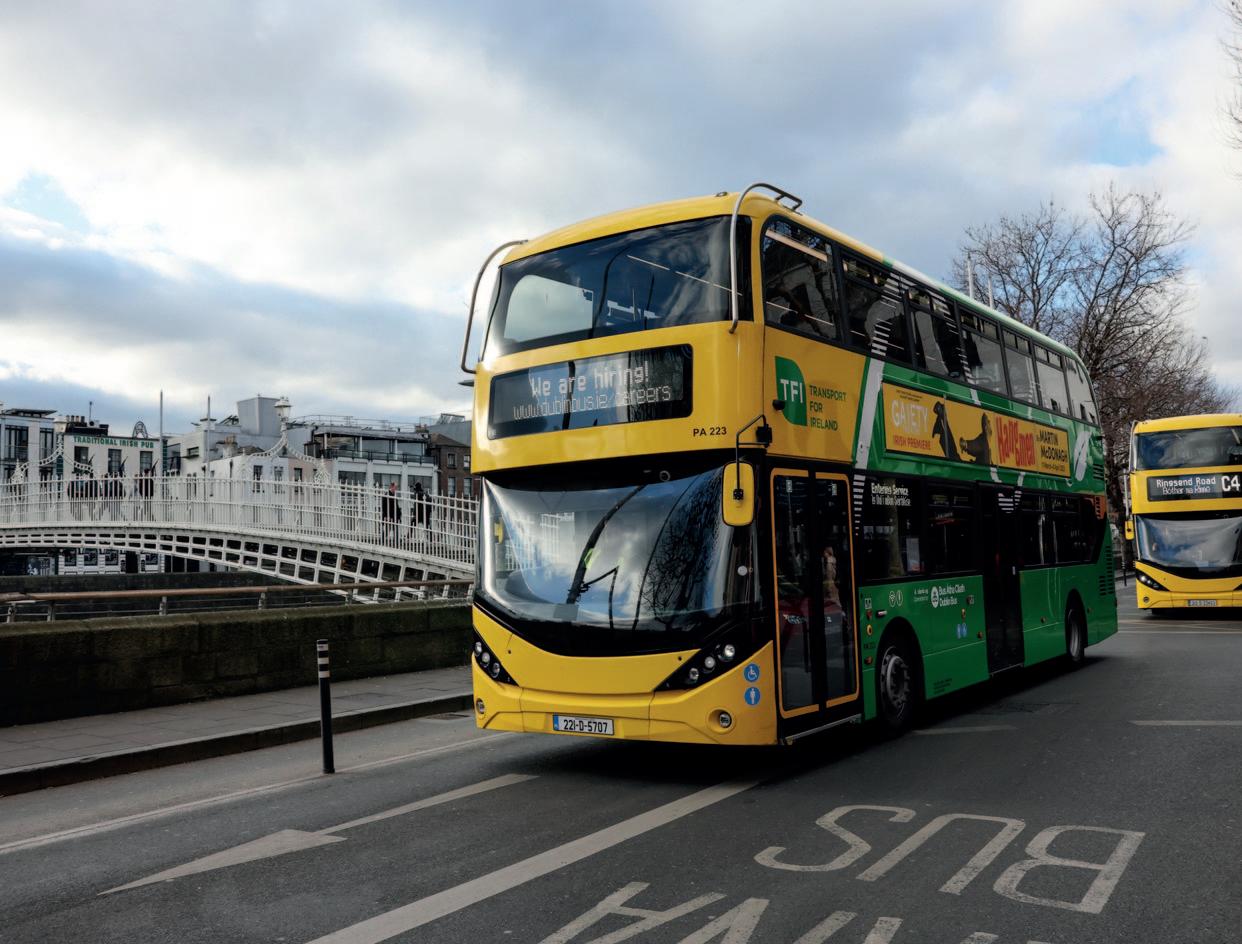
Dublin, a now thriving capital, has undergone a remarkable evolution to become the epicentre of Ireland's economic, cultural, and social advancements, writes Sorin Costica, Head of Operations at Dublin Bus.

As our city has grown, so has the volume of traffic on our roads. Each day, more and more people flock to our city to live, work, and socialise. With more
cars, buses, cyclists, and pedestrians than ever before competing for limited space, Dublin has earned the unwelcome title of the second-worst city for traffic congestion in Europe. The message is clear, we need a more liveable and sustainable future for our city, and public transport is the solution.
As Dublin continues to grow, we need to embrace a system that allows the free movement of people across the city at an affordable price, but we will only persuade people to leave their cars at home and embrace public transport when we can assure them their bus will arrive at their stop and destination on time. When streets become gridlocked,
ripples can be seen across the network, which can cause delays, disrupt schedules, and leave customers frustrated by unpredictable travel times. As a result, people can be hesitant to depend on public transport to get them to work, school, appointments, and events on time. At Dublin Bus, we have always taken pride in helping to keep the city moving, but as traffic levels reach new heights, we need more space on our roads to continue delivering a safe, reliable, and efficient service to our customers.
The reallocation of road space to onroad public transport has become a topic of discussion for policymakers and
70 transport report Advertorial
planners in major cities worldwide. As the Head of Operations for Dublin Bus, I strongly advocate for the need for more bus gates and corridors as they improve the efficiency and reliability of our service, helping our buses to move more freely around the city. However, as someone who lives and works in Dublin, I also recognise the far-reaching benefits which would enhance the overall quality of life in our city. By creating car-free zones, we can improve the air quality, reduce noise pollution, and make our city a safer place for pedestrians and cyclists. These positive knock-on effects would improve the rhythm of Dublin's daily life and make our city a better place for both residents and visitors alike.
Nevertheless, a city-wide transformation would take time, and we need solutions now to alleviate congestion. So, while we await additional road space, we must concentrate on protecting our current space. In essence, we need to enforce bus lane compliance. When faced with an endless line of brake lights ahead, a quick journey up the seemingly free-flowing bus lane can seem harmless. As someone who witnesses and manages the operational chaos which can be caused by blocked bus lanes, I can assure you that this only adds to commuter frustrations. When bus lanes become congested, the very buses tasked with efficiently transporting dozens of people across the city inevitably become entangled in the same gridlock as other singleoccupancy vehicles. Fortunately, solutions do exist. We need to raise public awareness of the cascading effects of non-compliance, but we also need stricter enforcement. Dublin can learn from the success of cities like Belfast, London, and New York by adopting photo or video enforcement technology to protect our bus lanes. Introducing a credible risk of fines would encourage drivers to respect the bus lanes, promote the smooth flow of traffic, and ultimately help keep our city moving.
How to keep Dublin moving into the future will be our next challenge. Public transport will remain a fundamental component, but we must also consider how we can meet the demands of our dynamic and expanding city. As Dublin emerges as one of the fastest-growing cities in the EU, a broader perspective is required. We must look beyond traditional modes of transport and embrace emerging technologies and innovative ideas. Ridesharing,
“As the Head of Operations for Dublin Bus, I strongly advocate for the need for more bus gates and corridors as they improve the efficiency and reliability of our service, helping our buses to move more freely around the city.”
autonomous vehicles, and micromobility solutions, are only some of the avenues we could explore to create a more integrated and sustainable transport network. We could also continue to invest in multi-modal transport solutions, integrating various transport services – such as buses, light rail, rail, cycling, walking, and e-scooters to further enhance connectivity. By adopting these approaches, we can cater to the evolving needs of our city and ensure Dublin remains in motion,
seamlessly connecting people and places.
Dublin’s future relies on creating a city where people can move freely and reliably. Empowering commuters to reduce their carbon footprint and enhance their quality of life is crucial. By working together, we can ensure Dublin continues to thrive for decades to come.
W: www.dublinbus.ie
71 transport report Advertorial

Luas is transforming
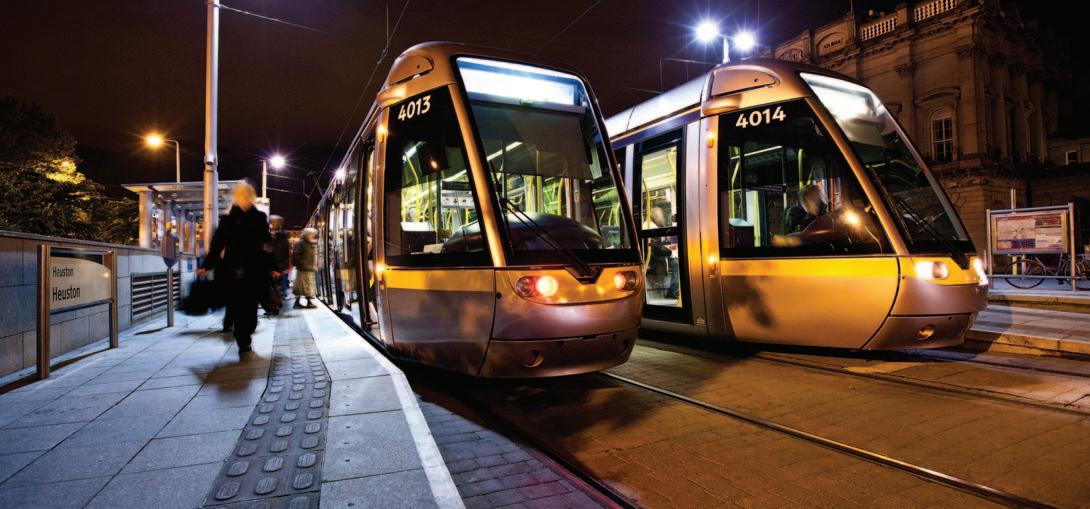
Transdev is one of the largest public transport operators globally, with a reputation for delivering high quality local public transport. With operations in 19 countries and all continents, Transdev is active in all aspects of public transport provision, from the organisation and management of significant projects to the development of passenger services and the operation of networks.
In Ireland, Transdev has been operating Luas, Dublin's light rail system since it came into operation in 2004. Since 2019, Transdev, now known as Transdev Dublin Light Rail Ltd (TDLR), operates and maintains the Luas. The Luas system consists of the following:
· 81 trams
· 42.5km of track
· 7 Park + Ride facilities
· 3 maintenance depots
· 67 stops/platforms
Luas transports over 110,000 customers each day, and Transdev is constantly working internally and with clients TII and NTA to ensure that customers are looked after in every way possible, whether this is through transforming our maintenance activity to ensure excellent reliability and performance or through our operations department to ensure a safe, punctual, and seamless customer journey.
Luas transformation
In this report, Transdev will focus on the transformation taking place within Luas.
To understand the transformation, we must look back at when it began. Set against the backdrop of Covid-19, which
we know had an impact on the Luas and other travel operators here and overseas, we saw travel behaviour and people, including employees’ perception towards public transport, change. For TDLR, the most significant impact were issues arising in supply chains due to Covid-19 and related staff absences.
Notwithstanding this impact, TDLR has advanced its transformation plans since 2020, introducing lean working practices, referenced below, whilst developing new procedures incorporating an increased emphasis on life cycle thinking, leadership, and risk analysis.
Also included in the transformation are plans designed to improve the flow of information and tasks between employees. A key pillar of our plans will be to ensure TDLR can always anticipate tram demand and avoid any reduction in service whenever possible.
This transformation is taking place across the company, but there is an emphasis on Luas maintenance, notably the Light Rail recovery plan. This plan ties in with life cycle thinking and sustainability and is being led by Irish and International leadership teams.
72 transport report Advertorial
Luas Light Rail Plan
As part of its overall Maintenance Plan, TDLR launched a particular initiative called the Luas Light Rail Vehicle (LRV) Maintenance Recovery Plan.
This transport report provides you the reader with an insight into the recovery plan, which was and is a key initiative, extensive and contributes significantly to the broader transformation.
The plan intended to recover the backlog of Red Line 401 trams, which needed to be serviced. These services are known as tram exams. Specific exams can take between two and five days to complete, and the backlog in exams came about due to issues previously mentioned associated with the pandemic. The recovery project, now successfully completed, was a top priority for TDLR and was allocated extensive resources.
One example of the way we went about ensuring success was to implement lean management principles. We took over the entire Luas Broombridge Depot. We used external contractors to assist with maintenance, which subsequently allowed for increased production and servicing. Working in this new and intense way ensured we did not overly impact the number of trams being provided for customer service.
Furthermore, to complete the transformation of the Red Line LRV, we introduced the 'Transdev way' to Dublin colleagues, which is about long-term thinking to ensure vehicle sustainability now and into the future. To date, we continue implementing several significant changes to ensure trams are sustained long-term. Some of these changes are:
• A reorganisation of the LRV function focusing on planning, production, and monitoring of effective maintenance.
• The appointment of a significant number of additional staff to reinforce the maintenance teams, including fleet coordinators, for medium- and long-term planning.
• Daily planners for day-to-day delivery and depot managers across each depot to ensure delivery of the required number of trams.
• The transitioning of both the Red Line 401 and Green Line 402/502 fleets back to the correct maintenance cycle in line with the manufacturer's annual maintenance plan. This has resulted in a level workload throughout the year.
• Through excess maintenance, each
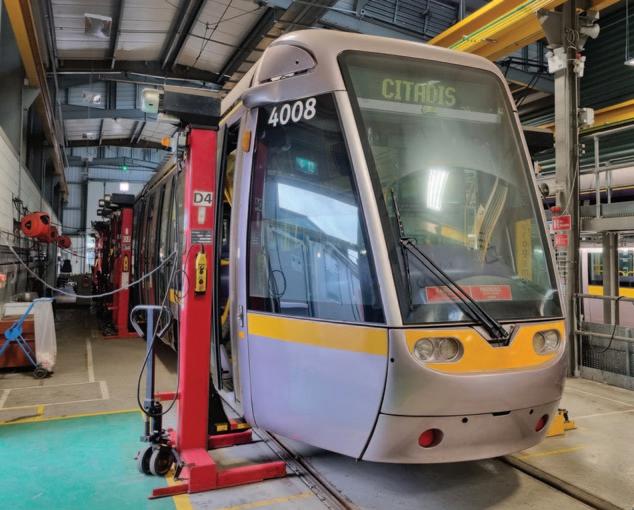
“Luas transports over 110,000 customers each day, and Transdev is constantly working internally and with clients TII and NTA to ensure that customers are looked after in every way possible.”
team was put back on the correct cycle, ensuring the correct application of maintenance tolerances in the future.
• Transdev plans to deliver preventative maintenance without the use of any tolerances/concessions across both fleets.
Lean management project
The lean management project was launched in 2021 and is ongoing. The tram exam aspect is now complete, delivering an optimised exam process through improved processes, parts and tooling reviews etc. In addition, lean has been applied to all repeatable preventative maintenance tasks ensuring maximum productivity and efficiency.
Lean management work practices are being rolled out in operations functions too.
Supporting our client TII
We also supported our client TII in delivering significant asset renewals over the past two years, including rail and overhead Line replacements most weekends ensuring the Luas network remains in perfect operational condition.
Finally, TDLR would like to acknowledge employees in this report as we secured special agreements with unions to support all operational and maintenance plans.
T: +353 1 461 4910
E: Info@tdlr.ie
W: www.transdev.com

73 transport report Advertorial
Transport in Ireland: Statistical focus
Cars
13,436km travelled annually by average car in 2021
15,979 taxis in operation in 2021
• 2% less than in 2020
8,554 new private electric cars registered in 2021
• 117% more than in 2020
Road freight transport 2021
154.9 million tonnes of goods were transported by road
Total distance covered by road freight transport 1.7 billion km
Freight tonnage increased by 8% in Q4 2021
Vehicles licensed for first time
New cars licensed in April 2023 increased by 1,232 vehicles (12%) compared with April 2022
Number of used cars licensed in the first four months of 2023 rose by 5% compared with the same period in 2022 (16,022 versus 15,287).
Source: CSO, November 2022
Source: CSO, November 2022
Source: CSO, November 2022
74 transport report
moving forward
boldly
Airport travel stats
Dublin Airport 27,787,556 passengers in 2022
• Increase from 8,266,271 in 2021 (236.2%) but down from pre-Covid (2019) figure of 32,907,673 (-15%)
Cork Airport 2,235,260 passengers in 2022
• Increase from 255,014 in 2021 (776.5%) but down from pre-Covid figure of 2,585,466 (-13%)
Shannon Airport 1,510,000 passengers in 2022
• Increase from 379,935 in 2021 (294.8%) but down from pre-Covid figure of 1,710,000 (-12%)
Port and maritime transport
Irish ports handled nearly 54 million tonnes of goods in 2021
• Increase of 5% compared with 2020
Goods forwarded from Irish ports amounted to 17.4 million tonnes in 2021, while a total of 36.5 million tonnes of goods were received 1,020,000 passengers passed through Irish ports in 2021
• increase of 25% compared with 2020 boldly moving forward
75 transport report
Source: CSO, November 2022
CSO
Source:
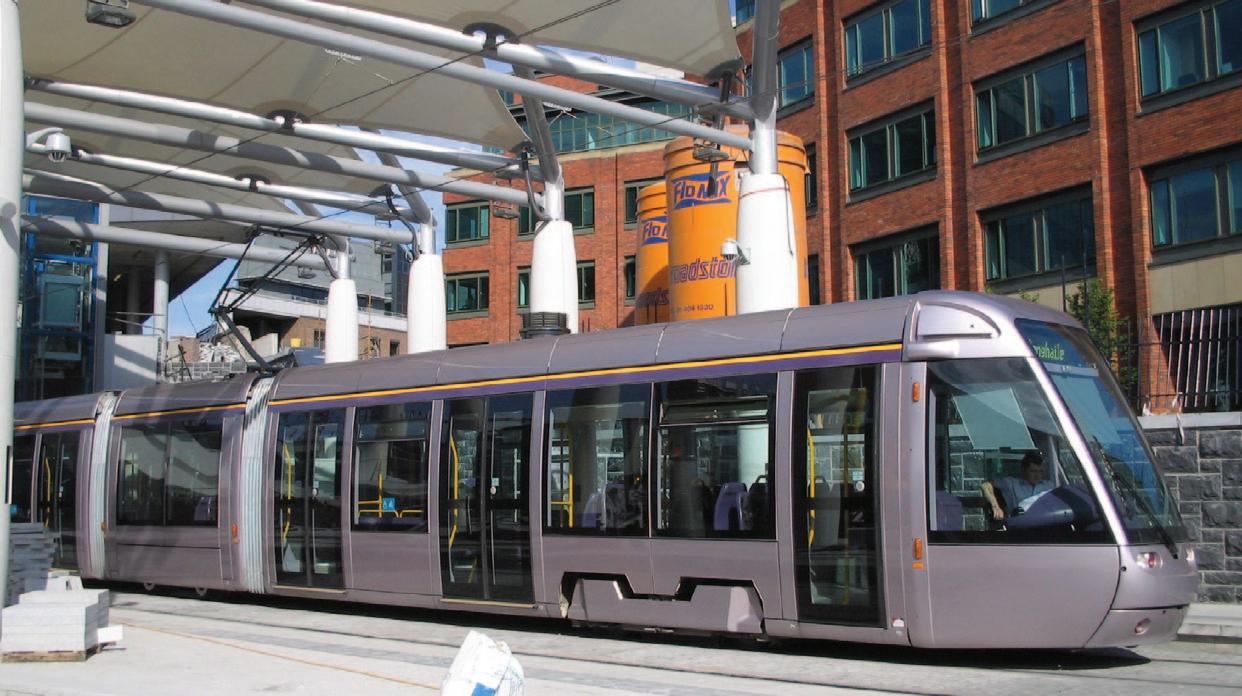
Charting a more sustainable future for Ireland’s transportation infrastructure
Ireland’s path to a more sustainable future is being paved by two leading engineering companies, Egis and JB Barry & Partners, as they combine forces to confront the nation’s transport and infrastructure challenges. With their shared expertise, they are striving to help create a greener and more connected Ireland.
Global expertise, local impact
Egis is a leading global consulting, construction engineering and operation firm, working across every aspect of transport and the built environment to build a more balanced sustainable and resilient world. In 2022, the group achieved a turnover of €1.48 billion, with 16,000 employees working in over 100 countries helping clients reimagine how buildings and cities, infrastructure and utilities, mobility and transport are designed and engineered.
In 1994, Egis was appointed to carry out the design, engineering, procurement, and testing & commissioning of the first two lines of Dublin’s Luas LRT system, comprising 25km of track, 14 Citadis 401 40m tram sets, 26 Citadis 301 30m tram sets, 36 stations, the Red line depot at Red Cow, and the Green line depot at Sandyford.
Since 1994, as lead designer for Luas lines A and B, Egis has been a trusted name in Ireland delivering major infrastructure projects such as the operation, maintenance, and asset management of over 470km of motorway, structures, and tunnels, including the iconic Mary McAleese Bridge spanning the Boyne Valley, and Dublin Tunnel – one of Europe’s longest urban tunnels. Recently, Egis further demonstrated their commitment to Ireland by acquiring JB Barry & Partners, a long established and highly regarded civil engineering business. Together, Egis and JB Barry & Partners now form one of the largest multidisciplinary consultancy firms in Ireland. For both organisations, the acquisition will accelerate growth in the country and enable both Egis and JB Barry & Partners to better support clients in delivering important major infrastructure projects as part of Project Ireland 2040, such as smart cities, climate change programmes and
76 transport report Advertorial
updates and improvements to critical transport, water, and energy infrastructure.
With Egis’ 70-year track record of delivering major rail, metro, light rail, maritime, and waterway projects worldwide, coupled with its deep local knowledge of the Irish market, it is strongly positioned to support Ireland’s vision for a cleaner, greener, and more connected future.
JB Barry & Partners, founded in 1959, has a rich history in sectors such as water and wastewater, development and structures, and energy and sustainability. Its subsidiary, Barry Transportation, established in 2000, has developed significant expertise in roads, structures, and public transport. Noteworthy projects include upgrades to the iconic Ringsend Wastewater Treatment Plant, the largest treatment facility in the country, planning the development of the N/M20 Cork to Limerick multimodal transport corridor, and acting as contractors designer for the N22 Baile Bhuirne to Macroom Road Development, one of the largest construction projects nationally.
Building connections for communities
Egis and JB Barry & Partners have already collaborated on a number of key rail and light rail projects in Ireland, such as the Luas Green Line extension to Finglas, which includes the development of four new stops, two bridges, a park and ride facility, and adaptations to Broombridge depot. The 4km extension will create a new public transport connection that benefits communities in Charlestown, Finglas Village, Finglas West, St Helena's, Tolka Valley, and the city centre. In Cork, Egis and JB Barry are delivering the Cork Area Commuter Rail (CACR), a project that will establish a fully integrated metropolitan area rail network for the city. The CACR programme will enhance and develop over 62km of rail network from Mallow, through to Cork, Cobh, and Midleton.
Another example of their collaboration for transport planning is the Galway to Athenry railway corridor, which presents unique challenges due to the high demand for capacity improvements. Egis and JB Barry & Partners recently conducted a comprehensive feasibility study for the corridor, focusing on three main service corridors that interface with the infrastructure. The study considered the Galway InterCity, which connects Galway and Dublin, the Western Rail Corridor Line, generating traffic from Limerick/Ennis to Galway, and the Galway City Hinterland Corridor, aimed at improving railway services for commuting journeys. The study's goal was
to identify short-, medium-, and long-term capacity improvement options for Galway, considering the conclusions of previous studies and exploring new potential solutions.
Looking ahead, Egis and JB Barry and Partners are actively engaged in several significant projects, particularly in the light rail, rail, public transport, active travel, and greenway sectors. Noteworthy initiatives include the Living Streets projects in Blackrock, Dún Laoghaire, and the Coast Mobility Route. These projects aim to enhance active travel facilities, promote sustainability, and encourage greater use of alternative modes of transportation in the Dublin area.
A shared mission and commitment
In addition to their successful history of collaboration, both companies have a shared mission to provide clients with environmentally conscious solutions that prioritise energy efficiency, carbon reduction, and sustainability. From eco-friendly land reclamation to reducing emissions, the environment is at the heart of every project. Together, they are committed to reducing emissions by implementing best practices for environmental management throughout their planning and operations processes. They continuously strive to improve operational efficiency, minimise resource consumption, waste generation, and emissions, while monitoring and continually improving environmental performance.
The partnership between Egis and JB Barry & Partners shows a significant step forward for sustainable infrastructure development in Ireland. Their collective expertise, innovative solutions, and commitment to environmental responsibility position both as key players in addressing the country’s infrastructure, mobility, and sustainable development challenges. Together, we are building a brighter future for Ireland—one that is both environmentally responsible and economically sound.
T: +353 1 469 1200
E: info@egis.ie
W: www.egis-projects.ie
77 transport report Advertorial
Why Ireland’s regional airports have declined
Credit: RuthAS
Whilst the Irish economy has rallied since the 2008 financial crisis, one sector which remains diminished is Ireland’s regional aviation sector, with all regional airports in the State, aside from Knock, having not recovered to pre-recession traffic.
In 2008, there were six significant regional airports in the State and one in the North handling commercial passengers. However, in 2022, six of the seven regional airports in Ireland have seen significant reduction in passengers handled, with three of the airports currently not handling passenger traffic.
Through the country, this decline can be seen through the decline in overall regional traffic, with an estimated 2,013,040 passengers having passed through Ireland’s regional airports in 2008. In 2022, however, this figure dropped to 1,264,792 – a decline of 38 per cent.
The history of Irish aviation
To understand the scale of this decline, it is important to understand the development of the aviation sector in
Ireland. Until 1983, there were no motorway infrastructure in the State, leaving smaller cities and towns in Ireland relatively isolated from the economic hub in Dublin.
The importance of being linked to Dublin became more prevalent in the 1960s as then-Taoiseach Seán Lemass introduced economic reforms which led to increasing centralisation of the economy in Dublin.
In 1984, Aer Lingus – then owned by the Government – established a regional subsidiary, Aer Lingus Commuter, which was centred on increasing the connectivity to Dublin from smaller counties and from the UK. Routes operated from Dublin to all the State’s regional airports, as well as Derry in the North and various British airports.
It is furthermore important to note that,
at this stage, Aer Lingus had a monopoly on commercial air traffic in the Irish aviation sector, with Ryanair not coming into existence until the late 1980s. The formation of Ryanair –initially based at Waterford Airport – led to a new trend in the Irish aviation market, the desire for ‘no-frills’ and affordable air travel. It made aviation more accessible for sectors of the population on lower incomes and presented an economic challenge to Aer Lingus.
For decades, Aer Lingus had been able to operate on losses due to its government ownership, with the Boeing 747 having reportedly never been profitably operated by the national carrier.
As Ireland moved into the 2000s, Ryanair was experiencing a passenger boom which saw its operating model gain increasing momentum. The Fianna
78 transport report boldly moving forward
A Fokker F27 at Manchester Airport in 1965. The F27 was used on short-haul services between 1958 and 1966.
boldly moving forward
Regional airport passengers
Source: CSO
Fáil-Progressive Democrat coalition decided that the most commercially viable path for Aer Lingus to compete with this challenge from its low-cost competitor was to privatise the airline, with the Government selling a majority of its shares in the national carrier in 2006.
Aer Arann and the PSO scheme
As Aer Lingus adapted to the market challenges presented by the emergence of Ryanair, a small, island-based airline, serving the Oileáin Árann with a single Britten Norman Islander, saw a gap in the market which could be exploited by the increasing commercialisation of Aer Lingus.
Aer Lingus Commuter was discontinued in 2001, but in the 1990s it had already been refocused on profitability, meaning that the regional routes had already largely created amid new focus now on connecting Dublin with air routes in Britain.
With this decline in Aer Lingus traffic, Pádraig Ó Céidigh and Eugene O’Kelly, who purchased Aer Arann Islands in 1994, subsequently re-naming it Aer Arann, saw the potential with the use of the Public Service Obligation (PSO) scheme for a dedicated airline which connected Dublin with the regional airports of Ireland, as well as the benefits of enhanced connectivity from opposite ends of the island, resulting in commercial routes such as that between Cork and Belfast.
Ó Céidigh and O'Kelly began to expand the airline's routes and fleet, launching
2008 2022
scheduled services in 1998. Also in 1998, the Government awarded the airline the PSO route between Donegal Airport and Dublin Airport followed by the PSO route between Sligo Airport and Dublin. By 2007, the success was such that Aer Arann had a turnover of €100 million and passenger numbers in excess of 1.15 million.
Recession and decline
In 2008, as Ireland entered the first year of what would become a crippling recession, Aer Arann and the wider aviation sector were forced to adapt to their new economic circumstances. Commercially unviable routes were scrapped, and the regional airports were arguably regarded by government as an acceptable casualty, as the austerity governments led by Brian Cowen and Enda Kenny reduced the funding for the PSO scheme.
The lack of commercial traffic meant that Galway Airport, which once handled more than 300,000 passengers and served 16 destinations, is now closed, having had no commercial traffic since 2011. This trend was mirrored in Waterford and Sligo, with both airports having also seen little to no commercial traffic since 2011. Whilst once all regional airports were connected to Dublin, now Kerry and Donegal are the only airports which maintain a connection to Dublin. Aer Arann, and its successor, Stobart Air, are now defunct organisations, with Aer Lingus Regional focusing on routes connecting Dublin and Belfast with cities in Britain.
Future amid climate commitments
Hope exists in that Waterford Airport is undergoing a runway extension which will allow it to accommodate larger aircraft such as the Airbus A320 and the Boeing 737, meaning that it could emerge as a viable international airport for the south-east region. Additionally, the Kerry-Dublin route now operates on a commercially viable basis and does not require the PSO scheme for profitability, leaving the Dublin-Donegal route as the only PSO-subsidised route.
Transport Minister Eamon Ryan TD has outlined his vision of an Irish transport system which increases connectivity whilst reducing emissions, with the transport sector committed to reducing its emissions by 20 per cent by 2030.
Whilst studies are underway to determine the viability of biofuels such as green hydrogen for the aviation sector of the future, reducing the amount of travel is a key component of reducing emissions under Ryan’s model. Considering this, and the upcoming legislation in the French Republic aimed at banning a number of regional flights, it is unlikely that Ireland’s regional aviation sector will recover to its previous heights in the mid-2000s, although given that there is inadequate rail connection between Dublin, and Kerry and Donegal respectively, it is likely that these routes to Dublin will remain in the short to medium term.
79 transport report
0 100, 000 200, 000 300, 000 400, 000 500, 000 600, 000 700, 000 800, 000
Kerry Waterford Sligo Galw ay D onegal Knoc k D erry
Delivering record public transport growth nationwide
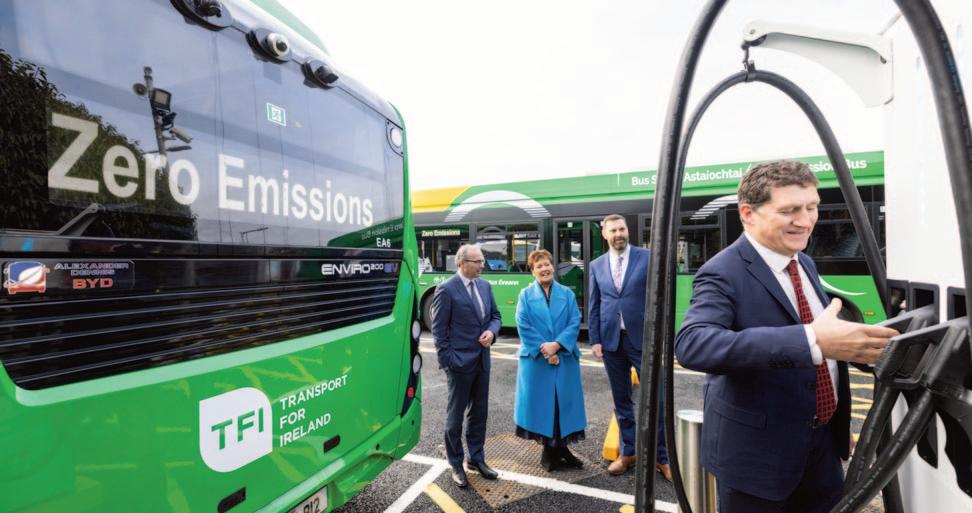
The flexibility of bus public transport has been to the fore in post-pandemic recovery, writes Stephen Kent, Chief Executive Officer, Bus Éireann.
During the Covid-19 pandemic, we could not have anticipated that within 12 months of the full lifting of restrictions on public transport Bus Éireann would experience a remarkable surge in passenger demand on most routes.
We facilitated 89.5 million passenger journeys in 2022, up 56 per cent on 2021 but a new trajectory in passenger demand became evident from summer 2022. Currently demand across our city services in Cork, Galway, Limerick, and
Waterford is more than 20 per cent ahead of the same period in 2019. Town services in Athlone, Balbriggan, Drogheda, Dundalk, Navan, and Sligo are running 60 per cent ahead of prepandemic and despite the persistence of remote and hybrid working, our Greater Dublin Area services are carrying about 30 per cent more people than they did in 2019. This is the largest and fastest step change in passenger numbers ever experienced by the company and we
anticipate it accelerating, with the NTA looking to Bus Éireann to bring in over 50 per cent more bus services through BusConnects in Cork, Limerick, and Galway. This is an exciting transformation in bus public transport and means change throughout the organisation, focusing now on driver recruitment and expanding depot capacity.
Through the NTA’s Connecting Ireland Rural Mobility Plan, we have expanded services to 70 communities in recent months with new and more frequent services in the south-west, north-east, and midlands.
School transport is a State service that positively impacts families of 150,000 children, reducing car journeys, congestion, and enabling economic participation. The Government decision to waive school transport fees for the
Minister Eamon Ryan TD checks the charging facilities at the launch of Ireland’s first all-electric town bus service at Athlone bus station. Bus Éireann CEO Stephen Kent, Chairperson Miriam Hughes, and Eoin Gillard Head of Public Transport Investment at the National Transport Authority watch on.80 transport report Advertorial
academic year 2022/23 was also transformative, triggering exceptional demand for services, up circa 25 per cent on 2021/2022. Bus Éireann operates the scheme on behalf of the Department of Education and 90 per cent of the services are delivered by local contractors. Despite a very challenging environment to source additional capacity and contractors, expanding the scheme by 25 per cent within a matter of weeks was achieved.
Many of the routes on our commercial operation, Expressway, have returned to pre-pandemic passenger numbers and those serving Dublin Airport are ahead. A small number need continued revenue growth to stay ahead of the cost growth which has prevailed post-pandemic. Expressway was vital in providing connectivity to many communities during the pandemic, while other commercial operators had suspended services.
A better customer experience
Not only are passenger numbers on many routes way ahead of prepandemic levels, but we have managed this increase while offering an improving customer experience. Our independently assessed customer satisfaction rating is now 92 per cent, up from 84 per cent in 2019. Our customers cited greater reliability, the friendliness and presentation of our drivers, safety, the cleanliness and improved environmental impact of newer fleet and better value for money as key factors.
The improvement in value perception can be credited to the Government decision in 2022 to reduce fares by 20 per cent and by 50 per cent for young adults on our public service obligation routes, operated under contract to the NTA. This decision was taken as a costof-living measure but has also been an effective stimulus to promote increased public transport usage, supporting national climate action targets. New fleet procured by the NTA is also offering a better journey experience and our drivers have become increasingly customer focused, delivering exceptional care to their passengers.
A more sustainable journey
Bus Éireann’s sustainability strategy was published in 2021. The business is committed to the transition urgently demanded to address the climate change crisis.
More than 10 per cent of our public service obligation road passenger fleet are low or zero emission vehicles. This has helped us achieve >20 per cent improvement in our company energy consumption, beginning our just transition to halving our carbon emissions by 2030.
We were proud to convert the Athlone town service to an entirely electric vehicle operation, Ireland’s first zero emission bus town network. This entailed a huge commitment by the entire Bus Éireann team. The openness demonstrated by our craftworkers and drivers as they embraced new technologies was impressive, and augurs well for transitions underway for Limerick, Cork, and Galway.
Working with the NTA, the pathway to electrification for our urban fleet is clear, though challenges remain in speed of implementation. However, this is less evident for the school transport service and our 14 Expressway interregional routes. We continue to work with our stakeholders and manufacturers to determine solutions.
Our two years’ experience with Ireland’s only hydrogen buses has been very positive. The Government’s hydrogen strategy will set the context for the necessary infrastructure investment before this option becomes practical for longer-distance routes. With longer range and short fuelling time, hydrogen is currently the only zero emission alternative for longer distances, for example from Derry to Galway and between Letterkenny and Dublin.
We are also improving the energy efficiency of our facilities, having built a
near zero energy building at our Limerick depot. We are working on energy audits and measures right throughout our building stock.
Confidence in growth
Bus Éireann is proud to partner with the Departments of Transport and Education and with the NTA to deliver on national policy across increasing public transport usage, reducing car dependency and assisting Ireland in meeting its climate change objectives.
Our experience of emerging from the pandemic runs counter to many of the expectations for public transport recovery both in Ireland and internationally.
Bus Éireann’s performance highlights that people are ready and willing to adopt bus public transport when services are improved. It shows how quickly new routes and enhancements can be made operational. It also demonstrates that there is a solid and improving bus network outside of Dublin city. And perhaps most importantly of all, it shows that customers are overwhelmingly satisfied with their journeys. This experience should increase confidence that comparatively modest investment in bus public transport will be more than repaid, transformative, and make a positive difference in the daily lives of people living in Ireland.
W: www.expressway.ie
transport report Advertorial 81
Stephen Kent, Bus Éireann CEO, Tomás Sercovich, Business in the Community CEO, craftworker Ahmed Daidi, and bus driver Anamaria Bobaila celebrate achieving the Business Working Responsibly mark.
boldly moving forward
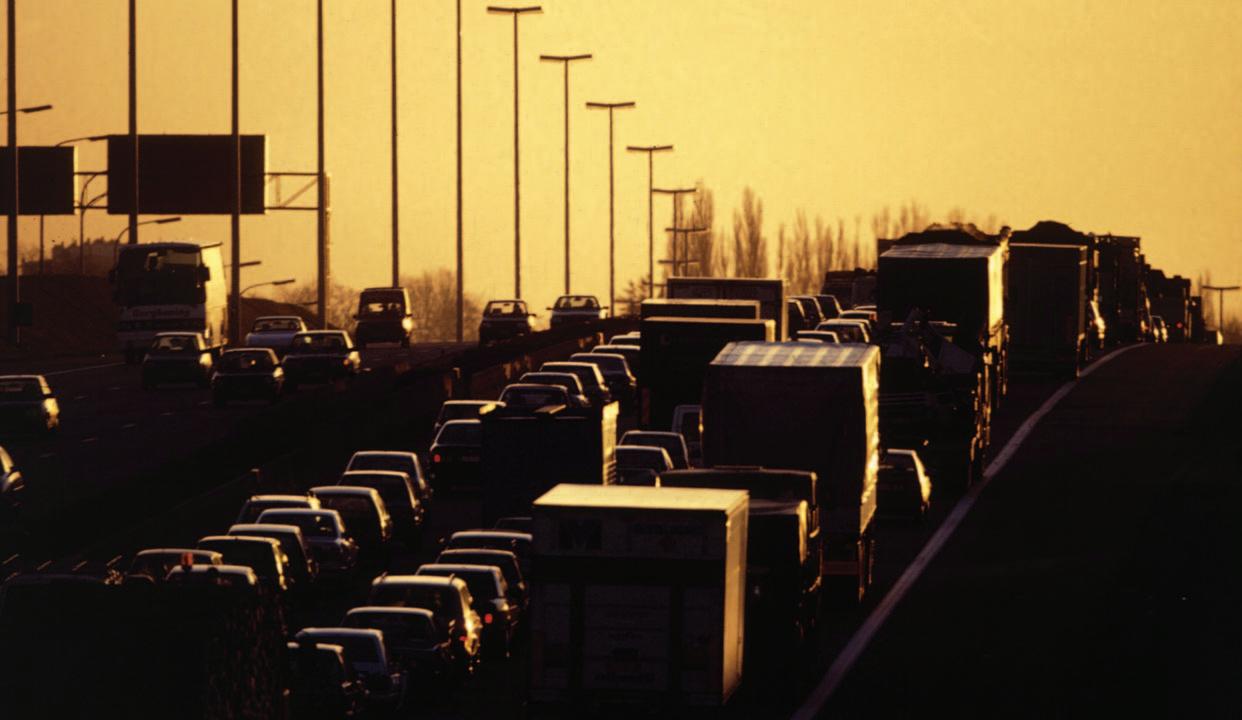
TII unveils new transport emissions modelling
Crucial to accurately accounting for emissions reductions as Ireland seeks to reduce transport emissions by 51 per cent by 2030 will be the modelling used, leading to the development of Transport Infrastructure Ireland’s (TII) Road Emissions Model (REM), published in December 2022.
Transport as a sector is a non-point source of air pollution, having contributed 20 per cent of Irish greenhouse gases in 2021. However, complicating matters of the modelling of transport emissions is the fact that emissions and pollutants differ for different fuel types, vehicle types and weight, and vehicle engine size. The speed at which a vehicle travels, as a proportion of the overall distance of a given trip, is used to determine the efficiency of its fuel use and thus the levels of emissions per kilometre travelled.
Further complications in understanding a given vehicle’s emissions arise from the rate at which engine catalyst or diesel particulate filter (DPF) failures occur, as well as differences in emissions when vehicles are operating on congested roads in and around towns and cities when compared to the same vehicles operating on open roads or in free-flow
conditions. An example of this can be seen in the statistics for the National Roads Network; 45 per cent of vehiclekilometres travelled in Ireland annually are on the network, while the emissions resulting from driving on the network makes up roughly 30 per cent of total transport emissions.
Exhaust emissions from vehicles with internal combustion engines also contain a variety of pollutants, most commonly carbon monoxide (CO), carbon dioxide (CO2) and other greenhouse gas, oxides of nitrogen (NOx), nitrogen dioxide (NO2), volatile organic compounds, and very small particulate matter (less than 10 and 2.5 micrometres, known as PM10 and PM2.5, respectively).
As an answer to these multiple concerns, TII “undertakes research on air quality, primarily through a stakeholder alliance with government departments and agencies, academic
institutions, and industry partners”, a process through which it says it has “amassed a considerable evidence base and continue to develop tools underpinned by data driven analysis”.
Using the tools at its disposal, TII has formulated the REM, which “provides a spatial and temporal estimate of carbon dioxide equivalent emissions and the pollutant concentrations resulting from vehicular use on the National Roads Network”. The REM integrates four major components:
• traffic information from the TII National Transport Model, which “provides validated estimates of the volumes of light and heavy vehicles, and the speed at which they travel, on the National Roads Network”;
• a fleet mix database that has been developed by researchers at University College Cork, which is
82 transport report
boldly moving forward
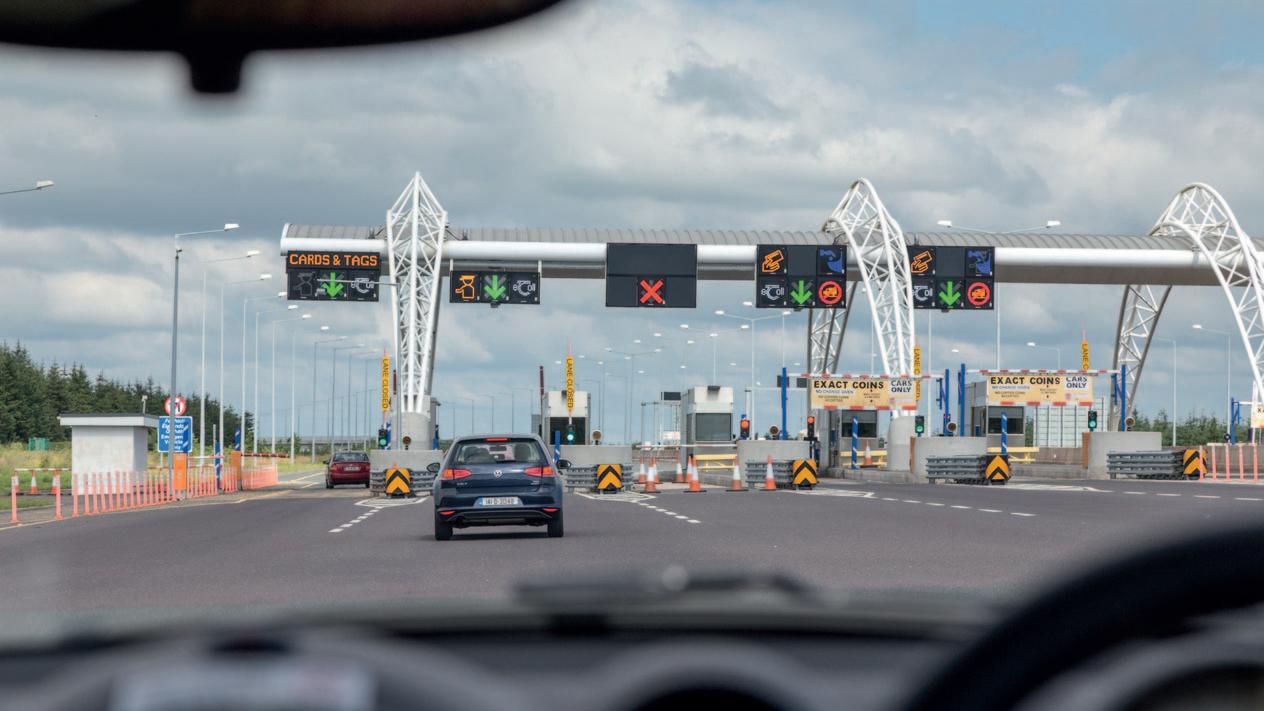
based on economic projections and underpinned by Central Statistics Office goods vehicles registration data;
• an emission rate database derived from the European Environment Agency’s COPERT Emissions Tool, which is used as the EU industry standard, with further adjustment using data published by the UK’s Department for Environment, Food and Rural Affairs; and
• an ambient air quality model module that calculates pollutants such as NOx, NO2, PM10, and PM2.5 as they are released from each individual road link using predictions of atmospheric pollutants concentration and dispersion, scaled up to calculate an annual average concentration.
The tool will use appropriate traffic data in order to inform policy through “testing air quality and emissions impacts arising from interventions on the National Road Network and/or the national fleet”. An example proffered by the TII in its report explaining the REM, is one where “the potential impact of modal shift or increased low emission vehicles can be tested on a national or regional basis to help meet climate targets”. TII suggests that the REM could be used as a tool on a local scale to target specific road links for measures such as congestion reduction initiatives. The REM will also provide source apportionment
information to determine the contribution of different vehicles to emission estimates.
Among the benefits that TII cites as arising from the use of the REM will be the provision of a “robust and transparent” estimation process that will inform targeted investment in interventions on sections of the National Roads Network, while being able to differentiate the emission effects of vehicles based on type and speed travelled, and the calculation of emissions between individual road links, which should act as an improvement on the previous method, which averaged carbon dioxide equivalent emissions over long distances.
The REM will allow governments and local authorities to monitor and manage the risk the State faces in regard to EU air quality limits and the possibility of exceeding them, specifically with a view to ensuring that new projects do not cause the exceedance of EU standards for ambient air quality. TII also states that the REM can contribute to the Government’s carbon accounting, carbon budgeting, and progress towards emission reduction targets. At the local level, the REM will allow local authorities to “determine the emissions contribution of different vehicle types on individual links, corridors, or regions, e.g., emissions from HGV on specific roads in rural and urban settings and at different speeds”, allowing the authorities to “appraise the emissions
change that could be achieved by altering traffic flows or fleet breakdown; e.g., increasing adoption of electric cars”.
The tool, TII notes, can be used with any transport modelling system in order to generate estimates of traffic flows and speed. The REM has been integrated into TII’s national model, with TII encouraging its use for specific schemes using local models.
83 transport report
M1 Toll Credit: Joachim Kohler Bremen.

Delivering mobility in the digital age
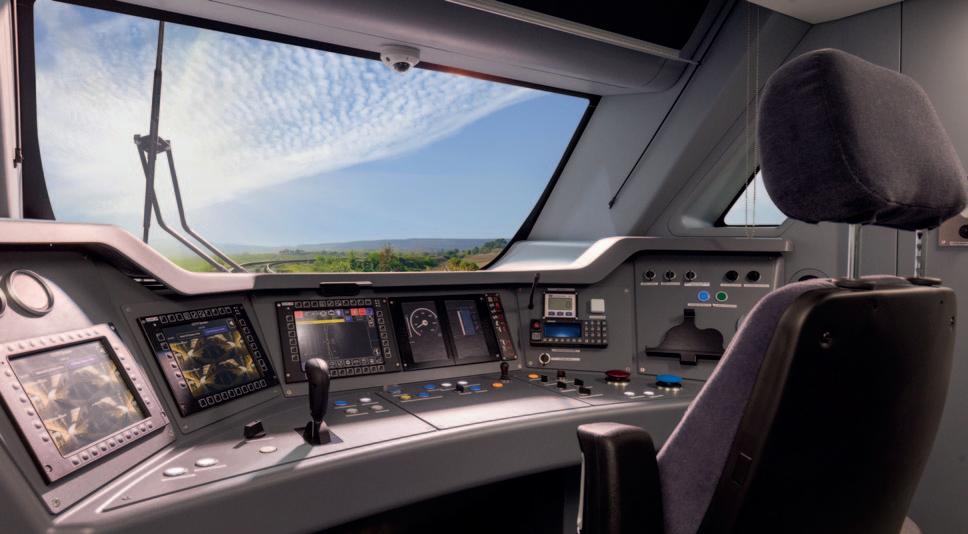
Alstom is a truly global leader in the transportation sector, in the digital age. From high-speed trains, metros, monorails, trams, to turnkey systems, services, infrastructure, signalling, and digital mobility, and with 80,000 employees from 175 nationalities in 63 countries, Alstom is the largest mobility provider outside China.
But it is here in Ireland, where the Government is setting the global pace with the hugely impressive Climate Action Plan, that Alstom is able to demonstrate its role as pioneer of sustainable and smart mobility with a full portfolio of green mobility solutions. Alstom’s clear ambition is to help Ireland deliver the Climate Action Plan in Dublin, Cork, and across the country.
Alstom has a well-established, highly successful presence in Ireland and is its largest single mobility supplier. First delivered in 2003, Alstom’s market leading Citadis™ trams have been operating successfully across both Red and Green lines of the famous Luas network, bringing sustainable mobility and passenger comfort to the streets of Dublin. More than 2,600 Citadis
tramsets have been sold to over 50 cities in five continents, but it is in Ireland that the longest Citadis vehicles are in operation – 55m long. As part of a partnership with Transport Infrastructure Ireland (TII) and the National Transport Authority (NTA) eight new 55m tram units were delivered in 2020 and a further 26 existing tram units have been extended to the same length. The trams are all manufactured in La Rochelle and assembled in Transdev's Sandyford depot.
But it was in 2021 that a landmark was reached in Alstom’s partnership with Ireland. Alstom signed a 10-year framework agreement with Iarnród Éireann for up to 750 new electric and battery-electric’ X’trapolis™ commuter
rail cars for Ireland’s DART network, with firm orders for 37 five-car X’trapolis trains including a 15-year support services contract. The most sustainable fleet ever ordered in Ireland, 31 of the ordered trains are battery-electric multiple units (BEMUs) while six are electric multiple units (EMUs). The new trains will deliver more capacity to greater Dublin.
Commenting at the signing ceremony at Irish Rail’s Inchicore works in Dublin, Alstom Managing Director, UK and Ireland, Nick Crossfield said: “Alstom is delighted to have been selected to deliver the new DART+ fleet. Ireland is a very important market to us, and the new electric and battery electric X’trapolis fleet is a big step for making rail even more sustainable while transforming the passenger experience in the greater Dublin area and beyond. This order reinforces Alstom’s position as the world’s leading innovator and supplier of green mobility technologies.”
In March 2023, Alstom and Iarnród Éireann were able to show the Irish public their new DART+ train in the flesh by unveiling a 1:1 scale mock-up carriage in the presence of Minister for Transport Eamon Ryan TD. The trains clearly demonstrate Iarnród Éireann’s intention to move quickly to decarbonise
84 transport report Advertorial
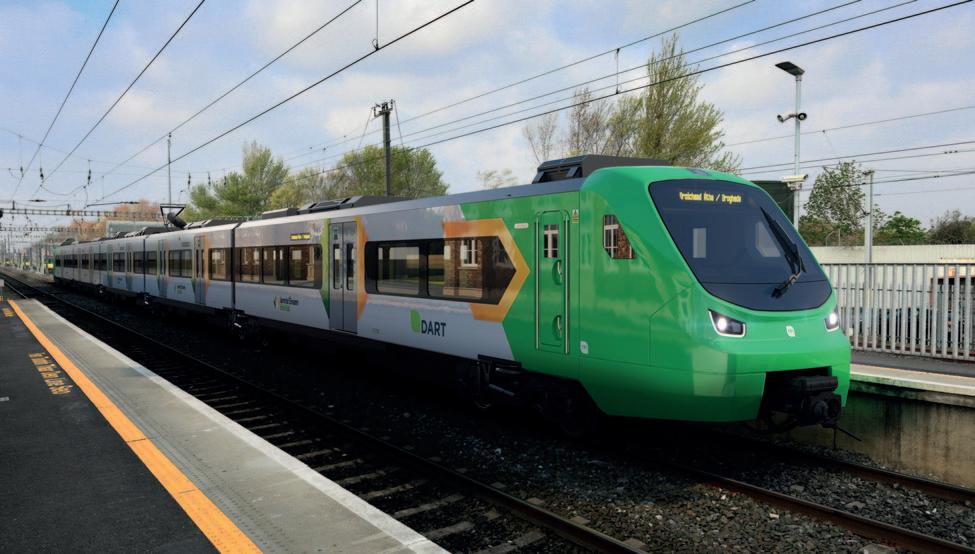
“Alstom is delighted to have been selected to deliver the new DART+ fleet. Ireland is a very important market to us, and the new electric and battery electric X’trapolis fleet is a big step for making rail even more sustainable while transforming the passenger experience in the greater Dublin area and beyond.”
the commuter network in greater Dublin, Ireland's most populous suburban area. The mock-up carriage gave the assembled audience a firm indication of what greater Dublin’s new DART+ trains would deliver for its passengers.
Ireland is once again showing the way by using battery technology on the DART network. Battery technology is particularly well suited to fill gaps on routes that are electrified with overhead catenary, or to allow for the introduction of new fleets while electrification is extended, exactly as is the case with DART.
The race to decarbonise transport involves the younger generation too. A new Children’s Interpretative Centre giving visitors a chance to see what it is like to drive a life-sized Iarnród Éireann train was launched on 9 May, 2023, at the Casino Model Railway Museum in Malahide, a collaboration between Fingal County Council, Iarnród Éireann, and Alstom. At the event, Managing Director of Alstom Ireland, Piers Wood commented: “Alstom is committed to supporting Ireland’s determined journey
towards achieving net zero emissions. Helping children develop their knowledge of the railway and its benefits to the environment, is an important part of that journey. We are pleased to be supporting Fingal County Council and Iarnród Éireann with this impressive educational exhibit.”
What of the future? Front and centre is tackling the climate emergency where rail has a key role to play. For example, Dublin requires its bus and commuter rail fleet to be 100 per cent electric and zero-emission by 2035. In Ireland the transport sector must meet its sectoral emissions ceiling and contribute to the delivery of a 51 per cent cut in economy-wide emissions by 2030.
To help meet this challenge, Alstom has delivered electric trams to the Dublin Luas, is delivering EMUs and BEMUs for DART+ and in future hopes to provide trains to Ireland powered by hydrogen too. On longer, and less intensely trafficked routes, hydrogen fuel cells provide a viable, zero emission, and cost-effective alternative to the capital costs of electrification.
In 2016, Alstom was the first company worldwide to introduce a new train based on hydrogen fuel cells and the train, Coradia iLint, is now in regular passenger service. Alstom has the ambitious goal of using this technology to replace a large part of the current market for diesel trains in Europe. Alstom’s ability to offer electric, battery, and hydrogen capability means they are uniquely placed to play their part.
But sustainable mobility only works when it delivers for its users.
Passengers rightly expect reliability, speed, and comfort. Partnering with our friends at Iarnród Éireann, NTA, and TII it is our job to deliver just that.
Kathryn Lancaster
T: +44 7801 798936
W: www.alstom.com
transport report Advertorial 85
boldly moving forward
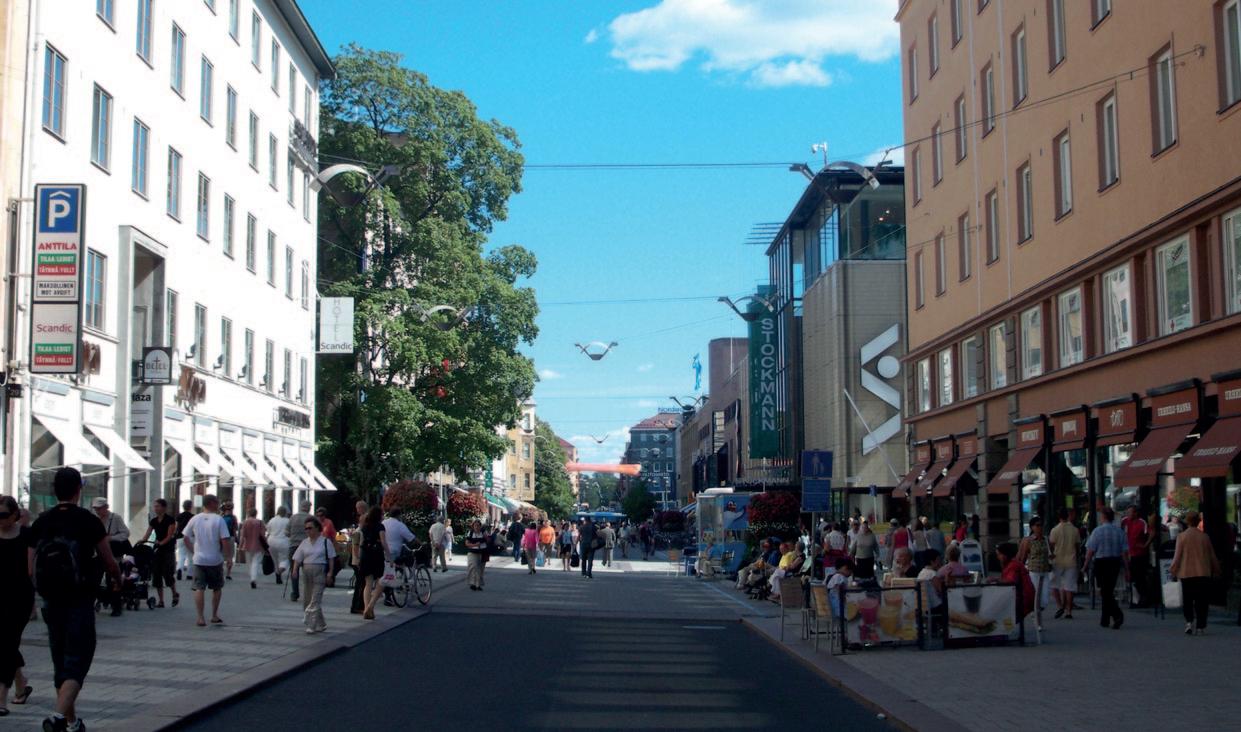
Congestion reduction targeted in new National Demand Management Strategy
The reduction of congestion, improvement of air quality, and provision of more and safer space for public and active transport will take precedence in the development of the National Demand Management Strategy, a Memorandum of Information from Minister Eamon Ryan TD has outlined.
The formulation of the National Demand Strategy, which is named as a key action within Climate Action Plan 2023, is expected to take one year to complete and will “involve widespread public consultation to engage and inform citizens of the transformative changes that are already taking place to improve and enhance public transport”. The main goal of the strategy is a 20 per cent reduction in vehicle kilometres travelled by 2030, as outlined in the Climate Action Plan.
Demand management measures being considered for the development of the strategy include the reallocation of road space, the creation of car-free zones, and road user charging. The Government states that it “fully recognises” that these measures “will only be effective and equitable when alternative, public transport options are readily available, both in urban and rural areas”.
In his memorandum to the Government, Minister for Transport Ryan outlined his intention to establish an interdepartmental and inter-agency group that will steer the development of the strategy. A cities-first approach will be taken towards the development of the strategy, meaning that the priority of the steering group will be reducing congestion in cities and towns first, with a number of sup-groups within the steering group to also be organised, including one that will consider the impact of the strategy on rural communities.
The Demand Management Strategy will be developed in the context of the Government’s drive to halve transport emissions by 2030, a process which will include the rolling out of incentives and investment to support the transition to electric vehicles in order to reach the goal of almost one million EVs on Irish
roads by 2030, increased penetration of biofuels in the fuel-mix, and “unprecedented” levels of funding in active and public transport.
Speaking after delivering his memorandum to the Government, Minister Ryan stated: “Demand management in transport is all about improving the efficiency of the existing transportation system, by reducing travel demand rather than increasing capacity. Our transport system at the moment is overly dependent on cars which is leading to daily traffic chaos and lower quality of life, particularly in our cities. As our population grows, these pressures are only going to increase unless we intervene now to reduce our reliance on cars and put in place the systems and road space needed for people to choose quality public transport or active travel.”
86 transport report
A car-free zone in Turku, Finland; an example of a possible measure to be taken in Ireland.
Credit: Arthur Kho Caayon
Covid’s impact on transport laid bare
The
Department of
Transport’s latest annual report demonstrates the effects of the Covid-19 pandemic on the transport sector.
Published in April 2023, the report offers a comprehensive analysis on the effects of the Covid-19 pandemic on the Irish transport sector, including the supply chain disruptions which have been viewed as a catalyst to the inflation crisis still engulfing the Irish economy.
Economic experts such as Richard Wilding, professor of supply chain strategy at the UK’s Cranfield School of Management, have pointed to the ongoing global inflation crisis as having been rooted in the supply chain crisis which was caused by the disruption to the transport sector during the Covid pandemic.
The Department’s annual report demonstrates the impact the sector faced from the pandemic. “Within the aviation sector, cargo-only flights continued to operate but the grounding of the majority of scheduled passenger services, with the consequential loss of bellyhold capacity, had a significant impact on the price of air cargo,” the report states.
It further explains: “In the road haulage sector, the demand for use of the UK ‘land bridge’ for accessing EU markets fell considerably as a result of Brexit. This drove a simultaneous decline in Ireland-GB traffic and an increase in
direct Ireland-EU traffic. However, land borders across the EU remained fully open and no delays, outside of the norm, were generally experienced.”
In the first half of 2021, the Government’s ‘living with Covid’ policy was operational, which resticted use of public transport and added additional cleaning procedures. The report explains how usership increased as the year progressed. “Daily passenger numbers across the Irish public transport network fluctuated significantly throughout the year, due to the capacity restrictions of 25 per cent, 50 per cent and 75 per cent in place at various times during the course of 2021. With the return to 100 per cent capacity in September 2021, passenger numbers rebounded positively from the lows of 10 per cent of pre-Covid levels experienced in 2020,” the report says.
Following the lockdowns in place throughout the State during the winter period of 2020, the report adds how
“car traffic volumes through January and February 2021 reduced to approximately 50 per cent of pre-
88 transport report boldly moving forward
boldly moving forward
Covid-19 levels with a progressive return to approximately 100 per cent of normal traffic by September, continuing at this level through to December”.
“However, commercial traffic continued to operate at close to pre-Covid-19 levels throughout 2021 – pointing to the strength of economic activity throughout the year.”
Climate and adaption
Minister for Transport Eamon Ryan TD has previously outlined to eolas Magazine the “four pillars” of sustainable transport which he believes should be promoted and planned for by his department.
These four pillars are: the transition away from petrolium products, shifting reliance from private car-based transport modes, reducing the volume of transport, and increasing shared transport.
This model is in the context of the Climate Action Plan and the need to reduce emissions from the transport sector, with the sector accounting for 20 per cent of CO2 emissions in Ireland.
Climate Action Plan 2021 (CAP21) –which sets out the objectives of the Climate and Low Carbon Development (Amendment) Act 2021 – was published in November 2021. CAP21 aims to guide the transport sector to a 51 per cent emissions reduction in transport by 2030 by:
• enabling 500,000 daily sustainable travel journeys by 2030 through major public transport projects such as BusConnects and Connecting Ireland; the expansion of rail services, and cycling and walking infrastructure;
• increasing the use of biofuels in transport;
• expanding electrification of bus and rail fleets with 1,500 electric buses by 2030;
• increasing the number of EVs to circa one million by 2030; and
• updating the public transport and public fleets to low-emission alternatives.
Amid this backdrop, the report states that the Department “continued to
Land transport expenditure 2021
Administration - pay and non-pay 25.3%
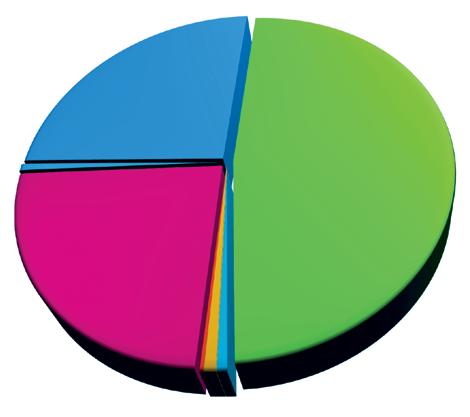
Road improvement/maintenance 47.88% Road safety agencies and expenses 0.67%
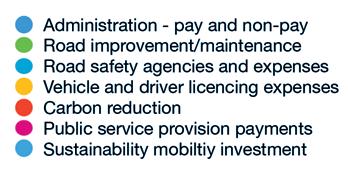
progress implementation of the actions set out within the Sectoral Plan for Adaptation of Transport Infrastructure within the National Adaptation Framework, which are also reflected in the Climate Action Plan 2021”.
The report states that there were 47,700 EVs on Irish roads at the end of 2021, and the Department aims to grow usage by the EV grant scheme. The report further acknowledges the use of hydrogen and remodelling of the public sector fleet, although in 2021 these were at earlier stages than now in 2023.
Commenting on the report, Minister Eamon Ryan TD said that there had been “significant progress made towards achieving the commitments as set out in the Programme for Government”.
The annual report is the Department’s first annual report since the publication of its Statement of Strategy 2021-2023. The statement of strategy outlines a vision for transport in Ireland which is for “the people and places of Ireland, sustainably connected with each other and the world”.
The statement of strategy further outlines the mission of the Department of Transport to “deliver an accessible, efficient, safe, and sustainable transport system that supports communities, households and businesses”.
On the financial side, during 2021, 3,801 transactions were processed by the Department in 296 payment runs. 95.19 per cent of those were paid within the 15day prompt payment legislation and 99.82 per cent of those were processed within the 30-day deadline.
89 transport report
Source: Department of Transport
Vehicle and driver
Carbon reduction 0.24% Public service provision payments 24.41% Sustainability mobility investment 0.64%
licencing expenses 0.79%
Transport Ireland® 2023
A transport system for Ireland’s net zero future

Tuesday 27 June 2023
Transport Ireland®, now in its sixteenth year, has firmly established itself as the annual conference event for the transport sector in Ireland. The 2023 conference, taking place in the Radisson Blu Royal Hotel on Tuesday 27 June, will bring together key players from across Ireland, to focus on the important challenges and opportunities facing transport policymakers and senior managers in the sector as it seeks to transform the transport system for Ireland’s net zero future.
An expert panel of local and visiting speakers will discuss issues including;
• Transport policy and legislative priorities
• Creating an Irish transport system that works for people and the planet
• Redesigning Ireland’s Transport for Net Zero
• Accelerating active travel uptake in Ireland
Speakers confirmed include:


• Futureproofing Ireland’s critical transport infrastructure Full programme available online
Eamon Ryan TD Minister for Transport Department of Transport
Derval Cummins Director, Transportation Consulting, AECOM
Chris Conway Group Chief Executive Translink
Jim Meade Chief Executive Iarnród Éireann


Sponsored by In
Anne Graham Chief Executive National Transport Authority
Peter Walsh CEO, Transport Infrastructure Ireland (TII)
Paddy Comyn Head of Communications
AA Ireland
Billy Hann CEO Dublin Bus

Aimée Aguilar Jaber Mitigation Team Leader, Environment Directorate OECD


Jackie Keaney Commercial Director Indaver Ireland
Stephen Kent CEO, Bus Éireann
Mark Rocky Business Development Director – Europe
Indra




To register... Online www.transportireland.ie By telephone +353 (0)1 661 3755
association
with An eolas event
Email Registration@eolasmagazine.ie
• Radisson Blu Royal
Hotel, Dublin