Fresh Thinking
Sponsored




Sponsored
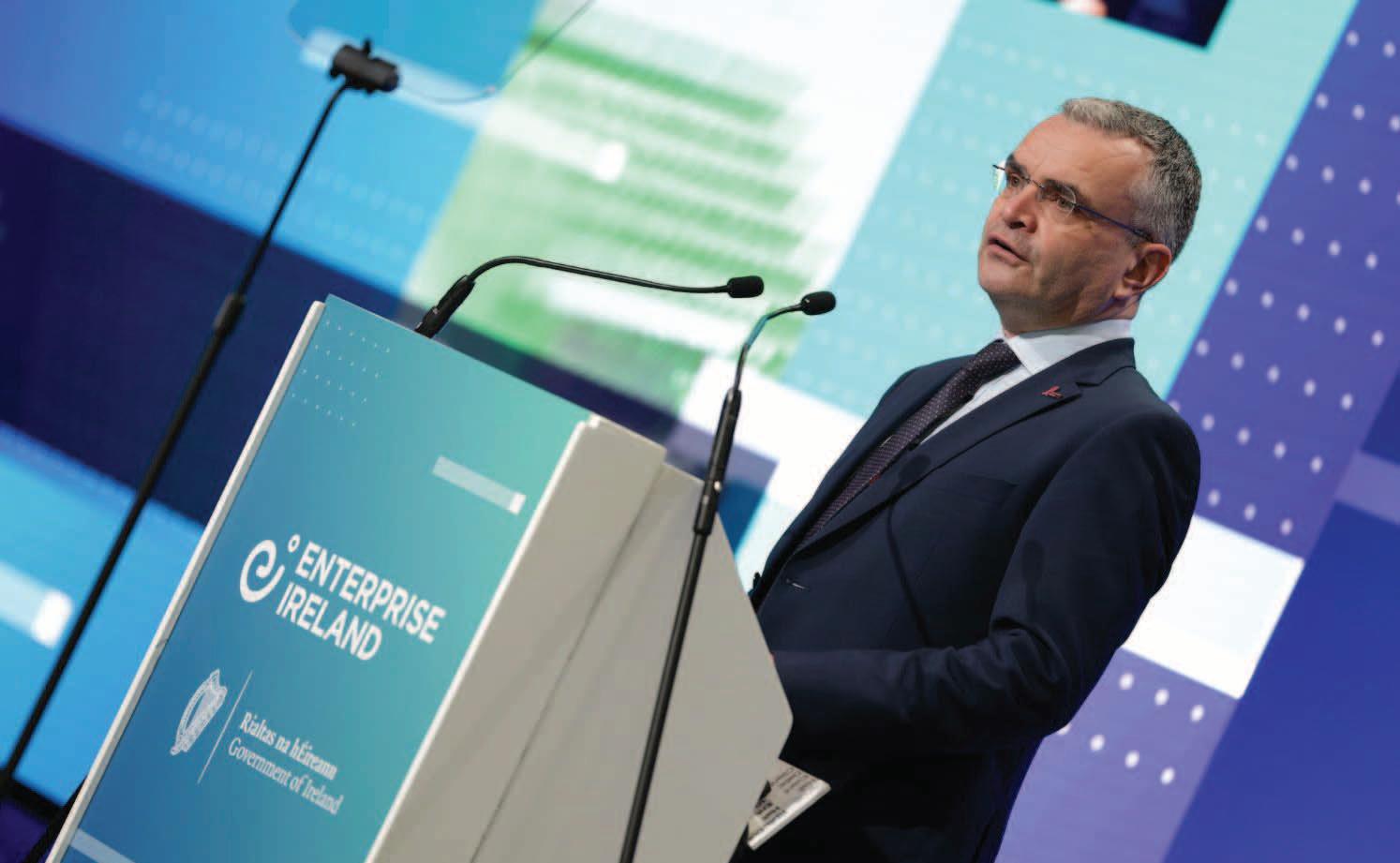
Minister of State for Trade Promotion, Digital and Company Regulation,
Dara Calleary TD sits down with Ciarán Galway to outline the Government’s priorities in relation to AI regulation, the European context, and a vision for the future role of AI technology in Ireland.
Ciarán Galway (CG): In August 2022, you were appointed as Minister of State for Trade Promotion, Digital and Company Regulation at the Department of Enterprise, Trade and Employment, what are your reflections since then?
Dara Calleary (DC): We were in a good
space having the [AI: Here for Good] strategy since September 2021. I want to commend [my predecessor] Robert Troy TD and the officials here in the Department for being that farsighted. We had the fantastic National Youth Assembly on AI in October 2022. We did the first Digital Ireland Conference at the end of November 2022 where we got a
lot of the stakeholders together in Dublin Castle. Then ChatGPT appeared. It is not that it changed anything, but it just brought huge focus and has brought it into the mainstream.
We have been very consistent that the principles of the strategy – trustworthy, person-centred, and ethical – still apply.



“Every [government] department is beginning to look at it [AI technology] and advance it.”
Minister of State for Trade Promotion, Digital and Company Regulation, Dara Calleary TD
We have had to keep people focused on that message, and keep people focused on delivering on the strategy.
We are nearly signing off on the EU AI Act. Our officials are very involved in that. The fact that we were one of only six countries to be asked to the AI Safety Summit in Bletchley Park [Milton Keynes, UK] last November [2023] is a testament to our standing within the international AI community. Then, just in the last few weeks, we have stood up the AI Advisory Council, which I am really excited about. It is going to be independent; effectually to hold the feet of any government to the fire in relation to AI and also future technologies. There are 14 really experienced people on it; many global experts, all of whom are Irish. That is a good testament to the country.
So what are we to do? Skills is going to be my big focus. We are going to be working with Minister Simon Harris TD over in the Department of Further and Higher Education, Research, Innovation and Science on that. We had the Expert Group on Future Skills Needs identify the skills [required] in spring 2022 and we still have multiple courses across third and fourth level, but also – very importantly for me – across community education, in AI skills.
CG: What are some examples of the opportunities that AI present to improve the delivery of public services and to assist in tackling many of the complex societal challenges?
DC: There are massive opportunities. We are beginning to use it across the agencies in this department [DETE] in terms of form filling and signing, and data and record management. Everything we are doing is with those key principles in mind: public trust and people centred. For instance, it could be massively used in the Companies Registration Office (CRO). Any company reading your interview knows the level of form filling that goes on there.
Healthcare has enormous potential. There is a really exciting project underway with Dell and UL [University of Limerick] around AI cancer care. Meanwhile, CeADAR – one of the national EDIHs [European Digital Innovation Hubs] for AI – in UCD is doing work on how AI technology can be used to predict future flooding trends.
Every [government] department is beginning to look at it [AI technology] and advance it. Minister Ossian Smyth TD is in this space, so we work closely together on AI and how it can be utilised in the public service, in line with the strategy and in line with our aims, but also how we can use it innovatively.
CG: To what extent is government’s vision for AI defined by its existence as a tool for assisting humans rather than replacing humans?
DC: I do not want people to be replaced, I want their skills to be enhanced. That is why we are so focused on skills. So, yes, it is going to change the way we do work. Equally, every technology does, and I am not being complacent here. Look how vibrant the tech sector is here [in Ireland] at the moment. We are only marking 20 years of Facebook [week beginning 5 February 2024] and now it is a multi-thousand employer in Dublin. Google similarly.
At the end of the day, the public service, for instance, is there to serve citizens, and if we can deliver services more efficiently to citizens and give citizens a better experience of public services then everybody wins.
CG: How has government sought to ensure ethical and responsible use of AI in public service delivery?
DC: The EU AI Act is a good signpost in relation to that. What that has looked at is what the risks are and has designated things that are high risk, medium risk, low risk, and things that are unacceptable; that are not allowed, for instance,
emotion recognition technology. High risk is in health and in law enforcement; the really stringent compliance requirements. Medium risks are transparency requirements. Low risk means minimal if any restrictions.
If we get agreement in parliament – I do not want to assume EU Parliament agreement – in the next two months, then we will start the rollout of it.
Subject to parliament agreement, it will enter into force probably in the early summer and then we have about 36 months to actually get it into place.
[While it is] 36 months or three years, we will be doing an awful lot of it in the first 18 months. It builds the guardrails, it is accessible, and people will know what is allowed in terms of what is high risk, what is medium risk, what is low risk, and what is unacceptable in terms of the technology.
CG: To what extent is there a potential for AI to produce or amplify inequitable or undesirable outcomes for individuals and communities?
DC: That is something that I am very focused on and very conscious of. I do not want it to amplify existing inequalities, I want it to be used to break down barriers. That is why we are working closely with Minister Ossian Smyth in terms of public services. I see it making the delivery of healthcare much fairer. When you see the waiting lists for healthcare, it is people on lower incomes that are on the waiting list or
waiting longer. I see using AI and getting access to technologies as having the potential make it far more equal. AI technologies have the potential, if used properly, and there is a strategy in place like ours, to open up all sorts of opportunities for every citizen.
CG: How can public service bodies best prepare for the forthcoming EU AI Act?
DC: Once it is signed off, and once we have the final version of it, we will be rolling out our briefing. We have worked closely with the agencies here in the Department to make sure that the Act is in good standing. Now that we have it, we have three years to prepare. The main elements will be in place within two. We will be rolling out a pretty ambitious briefing programme as to what is allowed. We also, at some stage this year – the reason I have not got a timeline on it is that we want to get the Act passed at EU level – will run a public information campaign on AI; what it is, what it can do for you, and making people aware of it. People are using it every day. I think that is one thing that people forget about. If you engage with a chatbot, that is AI.
CG: Speaking with eolas Magazine in late 2023, Government CIO Barry Lowry referenced the challenge policymakers face in attempting to regulate AI amid a rapid pace of
evolution. To what extent do you recognise that challenge?
DC: I recognise it, because it [AI technology] is moving quickly and we have so many other things going on as public representatives. That is why we have the AI Advisory Council, and that is why it is going to be independent of government. That is why I think it is important that we [policymakers] all take time to consider it [AI].
I know there are proposals – it is above my paygrade – that there will be an AI committee in the Oireachtas. I think they [the proposals] are worth pursuing but that is a matter for the Oireachtas to decide.
One of the things that I notice in the discourse is that there is a lot of focus on AI in elections; obviously, in the context of forthcoming European elections, everyone is talking about AI in the election campaign. I would like to see people focus on AI after the election. So, what is the policy platform for the next European Parliament? What is the policy mandate for the next European Commission? We have the AI Act, so what are going to do?
Equally, in the context of the next general election in this country –whenever it happens over the course of the next 12 months – let’s focus on AI policy as well as AI as a campaigning tool.
“Every party should lay out their stall on AI and how they see it being utilised over the course of the next five years.”
Every party should lay out their stall on AI and how they see it being utilised over the course of the next five years.
CG: Ireland’s AI Ambassador role was established under Strand 1 of AI: Here for Good. What is the remit of that role?
DC: I have described it as talking plain language about AI that people can access. The great thing about [AI Ambassador] Patricia Scanlon is that she comes from a very successful AI background, but she can explain the concepts in a language that people can understand.
I have heard a lot of her interviews and her ability to put that across to people is excellent. We did a fantastic event with about 75 teenagers – the National Youth Summit on AI – that she spoke at, and she was brilliant in the way she interacted and the way she picked up on their thoughts and their concerns.
She is the national AI Ambassador and continues to be. Separate from that role, she is the chair of the AI Advisory Council. She has put huge work into getting the membership of that council right, into getting the dynamics right, and I know they are working hard now to get it up and running.
CG: In January 2024, the AI Advisory Council met for the first time. How will the establishment of the AI Advisory Council bridge the gap between the public and an understanding of AI, which can ultimately lead to a better understanding of AI by decisionmakers?
DC: We had just under 400 applications to be on it [the advisory council]. There is an extraordinary level of talent on AI within the country.
It is going to offer strong advice. It is going to offer independent advice. I met the Advisory Council, but I did not sit in on their meeting because have been very clear, we want it to be independent.
I would ask policymakers to listen to what the Advisory Council comes up with and to engage with the work it is going to produce. I see it as having an ESRI style role, without the budget, in terms of advice and issues. They are all voluntary and we are terribly lucky to have them.
Part of the role is to engage in communication, and I want them to demystify it [AI technology] and come back to the principles: is it trustworthy; is it person-centred; is it ethical? In terms of the communications campaign, they will have a role in advising that as well. But I want them to focus on policy as well, focused on the specific challenges of it. Ultimately, they are in charge of their own workplan which will then be given to government for sign off.
CG: Upon the news that the EU AI Act was endorsed by all member states in February 2024 and will enter into force in the coming months, you reiterated your ambition for Ireland to “become a leading country in using AI to the benefit of our people”. What does that look like?
DC: Healthcare. Education. General government services. That we have an innovation culture as well. As the new products and new services come out of Ireland, it is important that we have sandboxed structures in place here for AI companies to test technologies and future uses. That our citizens have trust in AI and that our citizens benefit from the AI Act, but equally our innovators are confident in producing the new products on the island here.
CG: What are your ambitions for the year ahead?
DC: Our focus at the moment is the DSA, it has been since Christmas. I want to get the communications campaign up and running AI, and to make sure that the Advisory Council gets bedded in.
Ireland is the current chair of the D9+ Group [an informal alliance of digital ministers from the digital frontrunner EU member states]. We are hosting the D9+ events in Dublin in the middle of April 2024, so we are preparing for that at the moment.
As I said, there will be elections across Europe on the weekend of 7 June 2024, but I also want to see discussion on the digital priorities for the next five years in Europe, not just the next five months.
CG: How can Fianna Fáil stamp its identity on the coalition government’s digital policy?
DC: Firstly, it [digital policy] is government, and it is crossgovernment. I have mentioned two of my colleagues – Simon Harris and Ossian Smyth – from the two other coalition parties. That is why I am challenging my colleagues in Fianna Fáil to focus on the policy implications of AI and of digital.
I am very determined that in the course of our next Fianna Fáil election manifesto, it will have a digital policy element. I have been really focused. We have made changes through [Finance Minister] Michael McGrath TD in terms of the taxation around angel investors. We had a really good Fianna Fáil session with members of the start-up community and business organisations, with Michael McGrath, ahead of the budget [2024] where he heard their proposals directly from them and they were implemented in the budget.
Equally, I am gathering a lot of ideas and thoughts that will be in a Fianna Fáil digital manifesto at the next election. I am very focused. We are all focused on campaigning with AI and what AI will do to campaigns. Let’s focus on governing. Where will AI go in the next five years?

Ailish Hansen, Chief Commercial Officer of Fexco Managed and Advisory Services, explores the rapid technological advancements and challenges in customer-facing sectors and the integration of AI in the public sector.
The pace of technological change has emerged as a disruptive yet profoundly progressive force, particularly in the realm of customer-facing services within both the private and public sectors. The influence of current technological change mirrors the transformative effect of the smartphone on global connectivity: connecting was always possible, but never with such speed, ease, and accessibility.
For decades, our corporate and personal lives have been enriched by technological change. We source information and fact-check data using search engines by default; we consume knowledge in digital format as the norm.
As we anticipate the latest technological trend of artificial intelligence, machine learning, and

robotic process automation, collectively referred to as intelligent automation, 2024 emerges as a milestone year where we will further equip our people, products, and services with AI-enabled features and utilities, aptly named “Intelligent People supported by Intelligent Automation”.
Fexco has been using intelligent automation for a while, but in the past 18 months, we have embraced new AI advancements. Worldwide, businesses, governments, and institutions are also realising the potential of these technologies to streamline operations, boost efficiency, and provide better services to people.
However, this journey is not without its hurdles. The integration of cutting-edge technologies into public and private sector service delivery raises critical questions about privacy, security, and the digital divide.
As we approach this new future, we discuss how AI can aid customer service providers and what customers should keep in mind.
Curiosity is one of Fexco’s core values. We have never been afraid to explore and expand into new areas, a mindset that has served us very well. We are now applying this approach to AI and its potential use.
As the world around us evolves, so do the tools and technology at our disposal. AI, IoT, and quantum computing are current disruptors, with more to come.
Our support functions have long utilised AI, from researching and creating initial drafts of marketing materials to providing AI assistants to support code development and test case creation for our IT engineers.
Recently, Metamo, Fexco’s joint venture with 16 of Ireland’s largest credit unions, has designed, implemented, and launched a new personal lending automation solution based on quantum AI to digitise the loan application process. Tens of thousands of loan applications processed now receive automated, immediate AI-driven loan decisions based on large data historical trends and patterns.

Following the successful rollout of robotic process automation (RPA) projects within Fexco in recent years, and the rollout of new generative AI utilities in the last year to support our colleagues in enhancing efficiency, accessing knowledge, and improving overall business outcomes, we are now exploring new use cases across financial services, HR, health and safety, tourism, housing, and energy sectors. These are designed to enhance productivity and efficiency, improve data analysis and insights, be scalable, and adhere to all required governance and security controls.
We understand the importance of caution with AI. While it adds value, it is not a universal solution for all our problems. Expectations must be realistic. AI is not infallible. Quality control and good judgment are still essential. Fexco has robust risk management protocols in place. Understanding the limitations of AI is key to making the most of it.
As an operator of services on behalf of both the public and private sectors that interacts with millions of individuals and businesses in Ireland annually, Fexco has a clear view of what makes a good user experience and what customers want.
We see AI as a support for users, assisting with data analysis and generating intelligent responses in natural language to questions, prompts, or interactions. We will continue to focus on personalisation – but at scale.
There is a fear that AI will eventually take jobs from humans. But human oversight will always be needed and desired. As Sam Altman, CEO of OpenAI, says: “Humans care about what other humans think.”
People will still be needed to make
decisions. AI will support this, but it will not replace the need for human oversight.
Trust and certainty are crucial elements in the effective use of AI. In the rapidly evolving landscape of AI-powered products and services, trust is not just a benefit – it is the very currency of success.
When users entrust their decisions, personal information, or business processes to an AI system, they are essentially investing their confidence in the technology’s reliability, accuracy, and fairness. This trust is hard-earned and easily lost.
Users need assurance that their data is handled carefully, from the transparency and clarity of the AI’s decision-making process to its consistent performance and adherence to ethical standards, supported by robust privacy and data security all play a pivotal role in building trust.
Without it, AI solutions may find themselves struggling to gain traction in a world where consumer and enterprise users are becoming ever more discerning about where and how they place their digital trust.
With 30 years of experience of being curious, interacting with millions of individuals and businesses, and building trusted partnerships, Fexco Managed and Advisory Services offers tailored solutions to enhance efficiency, reduce costs, and improve customer experiences and we have truly embraced the next technological advances in AI to ensure benefits are realised for both our partners and ourselves. But remember, AI supports, not replaces, human oversight. Trust remains the key to AI’s effective use.
W: www.fexco.com
















































































The implementation report on the AI: Here for Good strategy outlines that important first steps are being taken to roll out AI. However, with new guidance and regulations emerging on AI, it is likely that there will need to be an overhaul to the strategy.
AI: Here for Good is the State’s national AI strategy. Established in July 2021, it was founded on three core principles: adopting a human-centric approach to the application of AI; staying open and adaptable to new innovations; and ensuring good governance to build trust and confidence for innovation to flourish.
The National AI Strategy itself is divided into eight strands, under three broad headings:
• Building public trust in AI:
1. Strand One: AI and society
2. Strand Two: A Government ecosystem that promotes trustworthy AI
• Leveraging AI for economic and social benefit
1. Strand Three: Driving adoption of AI in Irish enterprise
2. Strand Four: AI serving the public
• Enablers for AI
1. Strand Five: A strong AI information ecosystem
2. Strand Six: AI education, skills, and talent
3. Strand Seven: A supportive and secure infrastructure for AI
4. Strand Eight: Implementing the strategy
The report on the implementation of the strategy to date lists the actions taken to date under each strand.




Of the five strategic objectives under the AI and society strand of the strategy, three have been completed, with the implementation report claiming that two objectives are “in progress”.
The Government completed the goal of appointing a national AI Ambassador, with the appointment of Patricia Scanlon in May 2022. The implementation report states that a full report on Scanlon’s activities over the first year will be published separately.




With the objective of education young people about the benefits of and precautions pertaining to the use of AI, the implementation report classifies this strand as completed, owing to the establishment of the National Youth Assembly on AI, which was done in October 2022.
The report assesses that, with collaboration at an EU level to discuss regulations throughout the Union, the objective of establishing a “horizontal framework” for the governance of AI is “in progress”. In December 2023, the European Commission outlined a draft EU AI Act, although reception of this regulation has been mixed among computing and systems experts, as there is a perception that AI is too complex and nuanced in different sectors for a single regulatory framework to be an effective way of governing it.
“Changes to the world of work are to be expected, but it is likely that much of the disruption caused by AI will result in changes to job roles, tasks, and distribution, rather than actual job losses.”
Minister of State Dara Calleary, TD
If it can be successfully integrated into private sector operations, it is likely that use of AI will lead to enhanced levels of economic growth. However, these positive projections have been mirrored by questions as to whether increased use of AI will lead to job losses.
The Enterprise Digital Advisory Forum, established in May 2022, brings together representatives of indigenous enterprises, multi-national enterprises, and experts in digital technologies and their adoption by business, as well as representatives of government departments and agencies.
The implementation report states that meetings of this forum to date have focused on “the building blocks of AI” and perspective digital transition to be taken by corporations, which include new skills challenges and prospective supports from government. The forum has included AI adoption by enterprise as one of its dedicated workstreams in its 2023 work programme.
On meeting skills challenges, the report states that work is underway to find a successor to Technology 2022, Ireland’s third ICT skills action plan. The report further states that this successor plan will target digital skills right across the labour market and will take into account broader digital skills labour market priorities, as well as themes emerging from the Funding the Future and OECD Skills Review reports, the EU Structured Dialogue on Digital Education and Skills, as well as ongoing close collaboration with enterprise.
Upon publication of the implementation report, Minister of State for Trade Promotion, Digital Transformation and Company Regulation at the Department of Enterprise, Trade and Employment, Dara Calleary TD, said: “The pace of advancements is rapid and over recent months AI has really entered the public consciousness and discourse. There are concerns, both real and perceived, and we must address these to ensure that we are not letting opportunities pass us by. We must ensure that we are having open and informed conversations on AI and all its potential.
“Changes to the world of work are to be expected, but it is likely that much of the disruption caused by AI will result in changes to job roles, tasks, and distribution, rather than actual job losses.”



Generative AI is a branch of artificial intelligence that can create new content, such as text, images, audio, or video. It can learn from patterns, styles, rules and preferences, and generate novel and realistic outputs.
Generative AI has many applications in various domains, such as entertainment, education, art, and design, but it can also have a significant impact on public services.
Public services face continuous challenges such as limited resources, complex regulations, and high demand. The good news is that generative AI can help overcome some of these challenges by automating tasks, improving
efficiency, reducing costs, and enhancing quality and its use has been approved by Cabinet, provided it follows the guidance on the use of AI in the public service issued by Paschal Donohoe.
In this article, we will explore how generative AI can help public services from central government to healthcare improve quality and increase service provision and examine the benefits and challenges of using this technology.
Accessing generative AI in a safe, private, and secure way does not have to be difficult. Microsoft offers co-pilots in Office 365 as well as Dynamics 365 which support the users in the activities below and more beside:
• Document summarisation –Applications, reports, emails, and conversation transcripts summarised for quick review, discover key ideas, actions, decisions, etc;
• Document writing – Idea generation (writers block), drafting text, reviewing text for clarity/style, ageappropriate versions (“explain to me like I am five years old”), etc;
• Suggested responses – semiautomating the response to customer service cases, applications, and the never ending stream of email;
• Presentation generation – AI can create a PowerPoint presentation from a detailed document or your high-level notes capturing and structuring key concepts;
• Automating financial and other processes – Microsoft Business Central can use AI to automate bank reconciliation for example.
Probably the most frequently encountered challenge TEKenable sees is around access to institutional knowledge. Every organisation of any significant size has around 70 per cent of its institutional knowledge locked away in documents and only around 30 per cent in structured databases such as a finance systems and CRM. Each person that leaves the organisation takes a part of that knowledge with them and new joiners are more and more challenged to acquire that knowledge.
To address that challenge, TEKenable has created an AI application called Chat With Your Documents, which, as the name suggests, allows users to hold a conversation with a curated and authoritative set of documents.
The ability to ask questions and receive answers from documents and other data sources is the next evolution of the search engine and unlocks knowledge that is presently locked away improving the user’s efficiency and providing information that can enhance the quality of their work.
“
TEKenable subscribe to a code of ethics that governs how we design and deploy AI services... By doing so we ensure that the AI performs as the best version of itself and complies with the Government guidelines and the EU AI Act requirements.”
We have seen Chat With Your Documents successfully applied to areas as diverse as HR policies, financial regulatory rules, software support, customer service, sales and, in our own case, providing information about TEKenable’s past projects to support public tender writing and remembering lessons learned from the past.
Generative AI has the potential to transform public services by offering many benefits, such as:
• increasing productivity and efficiency by automating tasks and reducing errors and delays;
• enabling greater service provision without increasing resources;
• enhancing quality and satisfaction by improving accuracy, relevance, diversity, and creativity;
• supporting decision-making and problem solving by providing insights, scenarios, and solutions; and
• increasing engagement of users and stakeholders by offering personalisation and choice.
However, generative AI also poses some challenges. Generative AI is not suitable for autonomous operations other than in some very tightly defined domains. It is better suited to acting in a supportive role, assisting and recommending rather than actioning. This is the human-in-theloop model with the AI referred to as a CoPilot.
TEKenable subscribes to a code of ethics that governs how we design and deploy AI services. This requires us to consider every aspect of the solution from the potential for bias to transparency and accountability. By doing so, we ensure that the AI performs as the best version of itself and complies with the Government guidelines and the EU AI Act requirements.
Generative AI is a powerful and promising technology that can transform public services. It offers many benefits, such as increasing productivity, reducing costs, enhancing quality, and supporting decision making. However, it also poses some challenges, such as ensuring reliability, security, ethics, accountability, and regulatory compliance. Therefore, it is important to use generative AI responsibly and wisely, and to balance the opportunities and risks of this technology. By doing so, we can harness the potential of generative AI to improve and increase the service provision for the public good.
E:
AI@TEKenable.com


‘World’s first’ AI regulation agreed at European level

Political agreement has been reached between the European Parliament and Council of the European Union on the Artificial Intelligence Act, which has been hailed as “historic” and a “global first”.
The provisional deal for the EU AI Act, agreed in December 2023, will see rules on AI established, with safeguards, limitations, bans, and consumer rights put in place, and fines of up to 7 per cent of a company’s global turnover in place for those who violate the agreed laws.
The agreed laws for AI will include “guardrails” for general AI systems to “account for the wide range of tasks AI systems can accomplish and the quick expansion of its capabilities”. These guardrails will see all general-purpose AI systems and the general-purpose AI models upon which they are based forced to adhere to transparency requirements that were proposed by the European Parliament during negotiations, such as the drawing up of technical documentation, compliance with EU copyright law, and the dissemination of detailed summaries about the content used for AI training.
High-impact general purpose AI models with systemic risk will have to conduct model evaluations, assess, and mitigate systemic risks, conduct adversarial testing, report serious incidents to the European Commission, ensure cybersecurity, and report on energy efficiency.
Other AI systems classified as high-risk due to their “significant potential harm to health, safety, fundamental rights, environment, democracy, and the rule of law” will be subject to mandatory fundamental rights impact assessments and other requirements applicable also to the insurance and banking sectors. Systems used to influence the outcome of elections and voter behaviour will also be classified as high risk, with citizens having the right to launch complaints against AI systems and receive explanations and decisions based on high-risk AI systems. On the other hand, limited risk AI systems will comply
with minimal transparency requirements “that would allow users to make informed decisions”.
With explicit reference to “potential threat to citizens’ rights and democracy”, the Parliament and Council of Ministers also came to agreement in order to ban:
• biometric categorisation systems that use sensitive characteristics (e.g. political, religious, philosophical beliefs, sexual orientation, race);

• untargeted scraping of facial images from the internet or CCTV footage to create facial recognition databases;
• emotion recognition in the workplace and educational institutions;
• social scoring based on social behaviour or personal characteristics;
• AI systems that manipulate human behaviour to circumvent their free will; and
• AI used to exploit the vulnerabilities of people (due to their age, disability, social or economic situation).
The Parliament and Council of Ministers agreed on a series of exemptions for the use of biometric identification systems (RBI) in public spaces for law enforcement, “subject to prior judicial authorisation and for strictly defined lists of crime”. Post-remote RBI would be in use strictly for the targeted search for a person convicted or suspected of having committed a serious crime. Real-time RBI will comply with strict conditions, with its use limited in time and location for the purposes of: targeted searches for victims;
prevention of a specific and present terrorist threat; the localisation or identification of a person suspected of having committed one of the specific serious crimes mentioned in the regulation, such as murder, trafficking, or terrorism.
These exemptions have proved the most controversial aspect of the legislation, with Amnesty International stating that the limited ban AI facial recognition sets a “devastating global precedent”. Ella Jakubowska, senior policy advisor for European Digital Rights stated: “It is hard to be excited about a law which has, for the first time in the EU, taken steps to legalise live public facial recognition across the bloc. Whilst the Parliament fought hard to limit the damage, the overall package on biometric surveillance and profiling is at best lukewarm. Our fight against biometric mass surveillance is set to continue.”
Failure to comply with the new regulations will result in companies being fined, with penalties ranging from €35 million, or 7 per cent of global turnover, to €7.5 million, or 1.5 per cent of turnover depending on the infringement and the size of the offending company.
The legislation, which has been in the offing since early 2021, passed through multiple drafts as it made its way back and forth through the political arms of the European bloc. With all member states having endorsed the Act in February 2024, the Act will enter into force during 2024 and enter into application 24 months after its entry into force except for specific provisions, such as prohibitions on unacceptable risk AI systems applying after six months and obligations for high-risk systems applying after 36 months.
The Act has been delayed in the past due to the constant evolution of AI technologies. For example, the rise of ChatGPT caused a reconsideration of the legislation that had originally been drawn up in April 2021, which had not factored in the application.
In January 2024, it was revealed by Euractiv that the European Commission would adopt a decision establishing the European Artificial Intelligence Office as part of the reforms envisioned under the new legislation, with the office due to act within the Commission as the centralised authority on the enforcement of the AI Act and AI development, monitoring the progress of initiatives such as GenAI4EU.
Artificial intelligence (AI) has transformed industries and societies, offering unprecedented capabilities and efficiencies. However, as the use of AI proliferates, questions around how to create a robust and sustainable strategy for AI have come to the forefront, writes Davin Cody, Chief Technology Officer, HPE Ireland.

Especially for those who are still at the beginning of their AI journey, it is difficult to get it right from the start. To get a better idea of how we can future-proof AI projects, we need to understand what aspects of the lifecycle of an AI project, model or platform are pivotal to their long-term success.
Drawing from years of providing AInative infrastructure, designing energy-
efficient IT solutions, engaging with and supporting open-source projects, and being part of the AI Infrastructure Alliance, we at HPE learned that to ensure the viability of an AI project beyond momentary success, we need to look at four key aspects across the whole lifecycle: the environmental impact, longevity, agility, and reusability.
The first thing that comes to mind when we talk about sustainability is the actual environmental impact, and unfortunately the carbon footprint of AI systems is not small. An AI project needs a clear strategy to not just ensure long-lasting benefits, but also maximum efficiency, including objectives like energy efficiency to mitigate environmental impact. This includes aspects related to the design of AI systems, covering technology infrastructure, through to monitoring and controlling. These decisions need to be aligned with the overall sustainability targets of the organisation to ensure that they can fulfil their commitments.
As you start to outline your project, make sure that the project team consist of representatives from stakeholder groups across the organisation as well as a spectrum of skill sets, including IT, data, and software engineering experts. The reason for the latter is that software engineering in particular aims at building efficient, sustainable, maintainable, and supportable applications. With operations being performed hundreds of millions of times (or more), for example during the AI model training and, a small performance hit has a big impact. The adoption of software engineering practices into your data science projects helps to avoid these challenges.
The efficiency advantages will become apparent with the implementation of machine learning operations (MLOps). MLOps can help save time, resources and reduce carbon output by minimising the number of steps that must be carried out manually, therefore making it repeatable through automation. As with all software engineering, AI has a defined lifecycle, comprising a collection of steps that moves an idea through to production deployment. AI breaks down into five key activities within this lifecycle: data processing, pipelining, model development and optimisation, model deployment, and monitoring. Having a clear strategy on these will enable effective automation for repeatability, and saves time and resources, leading to a successful and more efficient AI project.
As mentioned above, without data there is no AI. This means it is essential to plan right from the start how data is going to be handled, deduplicated, and metadata stored. It is common for organisations to hoard data, gathering it all up because you do not know yet what is valuable. However, to stay efficient, it is important to have a clear data selection criteria and disposal processes, and core information on the data – where it came from, how it was transformed and by whom, why it was transformed, how long it was kept for and how it will be disposed of. This process should be part of your wider existing data strategy, to ensure your data is handled consistently and efficiently. Truly understanding your data will ensure that your model is robust and sustainable, also benefiting the longevity of your project.
With the goal being to build AI that offers continuous benefits, it is vital to create it with long-term aims in mind that align to your AI strategy. If designed for the short-term use or goals only, you will soon need to train it again or build a new one, increasing costs and your overall carbon footprint, with model tuning being the most resource intensive part of an AI lifecycle. However, if designed to tackle real and long-term business challenges, you will derive more value from the projects with a lower impact.

One challenge you will encounter when building your AI system while aiming for agility is data debt, which can accumulate rapidly. In essence, this means if you do not keep on top of its classification, any problem gets bigger exponentially. Therefore, it is essential that you follow a process, to keep your AI systems in up to date.
Model reuse and pretrained models are great ways of tackling complex challenges. They allow you to avoid additional AI tuning, which, as we already touched on above, can have serious impact on cost and carbon footprint. It is essential to have a detailed plan to ensure you get the most out of your models. At the same time, it is important to keep in mind that the conceptualising an AI model for reusability increases development costs in the short term. Especially when building interdependent AI systems, the management of these systems can turn into a time- and resource consuming
challenge. Therefore, building AI with a firm plan and purpose is key.
To summarise, it is crucial, when building AI systems, that we architect them with the future in mind. By prioritising future-oriented and efficient AI practices, we can contribute to a more sustainable planet while harnessing the transformative power of AI. As we navigate the intersection of technology and environmental consciousness, the pursuit of environmentally sustainable AI represents a commitment to building a future where innovation coexists harmoniously with the well-being of our planet.
To find out more about how you can build sustainable AI, check out our video series at https://www.hpe.com/uk/en/solutions/artifici al-intelligence/nvidiacollaboration.html#SustainableAIEpisodes.

Ahead of recent agreement on a new European AI Act, the Government has approved guidance for the use of AI in the public sector. However, the journey to achieve robust and effective regulation has faced significant challenges along the way.
Statements obtained from government departments by eolas Magazine (issue 61) outlined how there has been no single, unified approach taken by government departments for the use of artificial intelligence (AI) in the public sector.
Therefore, the Government has instructed that departments and public bodies should comply with seven requirements for ethical AI that have been developed by the European Commission’s High Level Expert Group on AI in its Ethical Guidelines for Trustworthy AI document.
In the document, the Government outlines the seven overriding principles which will shape how AI is used in the public sector. These are:
1. human agency and oversight;
2. technical robustness and safety;
3. privacy and data governance;
4. transparency;
5. diversity, non-discrimination and fairness;
6. societal and environmental well-being; and
7. accountability.
The guidelines, which were shaped by work carried out by the High Level Expert Group on AI, state that public sector AI systems may be developed either in house or procured from a third vendor.
In either case, however, the guidelines clarify that there is a high level of responsibility for public sector bodies and departments to ensure that AI is trustworthy and ethical, and that this responsibility rests with the system user rather than the developer, thereby protecting private sector providers and developers. This point is underlined by the directive that this responsibility “cannot be delegated”.
This point is further emphasised by the stipulation that ethics considerations must be built into requirement specifications of systems, and that specific test cases must be written and signed off by senior management of the public sector organisation.
The guidelines further outline that subject matter experts should be part of the design process for an AI system and have “an important role to play in ensuring that all service users that will be affected by the system are treated fairly”.
Regulating AI remains a difficult challenge for decision-makers, as it is a sector for which a one-size-fits-all approach is not applicable due to the different needs of the various strands of the public sector.
Speaking to eolas Magazine in February 2024, Government Chief Information Officer Barry Lowry said that he was “very pleased to note the progress made with the EU AI Act”.
“I think it has evolved well to now provide a very good balance between meaningful AI use and risk and privacy management. I look forward to its enactment,” Lowry said
As the EU AI Act was being drafted, Lowry had warned in a previous interview with eolas Magazine (issue 60) that “there is a risk that misunderstood attempts to regulate AI are viewing AI as an entity, but it is not about AI as an entity, it is about how you use it”.
Lowry had further warned of the potential risks of introducing legislation “without a real understanding of what it is that is being regulated” and “without talking about shared risk”.
Development of AI legislation has faced further challenges amid opposition from government TDs to the development of facial recognition technology (FRT), as some decision-makers have suggested that this may involve invasion of citizens’ rights to privacy.
In an effort to acknowledge these points of concern raised by various stakeholders around data privacy, the government stipulates that GDPR requirement will be enforced when data is being used in AI models.
Under GDPR legislation, permission must be sought to use personally identifiable information, which includes facial images and voice.
“Data should not be used in AI models in a way that breaches intellectual property rights. Where the system is procured from a third-party vendor, they must confirm that their data is GDPR compliant and does not breach the intellectual property rights of others,” the guidelines state.
Speaking following the publication of the new guidelines for AI in the public sector, Minister for Public Expenditure, NDP Delivery and Reform Paschal Donohoe TD said:
“AI presents significant opportunities to improve the delivery of public services and to assist in tackling many of the complex challenges we face. Our government and public service must not shy away from the opportunities presented by AI because of the potential risks involved.
“The guidance issued… will help public servants avail of those opportunities in a way that is ethical and maintains trust. AI is changing our world significantly and it is important we face that change directly and adapt quickly as required to both protect and deliver for the people we serve.”

AI presents transformative opportunities for the Irish public sector, profoundly impacting how services are delivered both internally within organisations and externally to citizens, writes Nathan Marlor, Head of Data and AI, Version 1.
By supporting and augmenting human capabilities, AI streamlines internal operations, leading to more efficient administrative processes and decisionmaking. Simultaneously, it enhances the delivery of services to citizens, offering more personalised, efficient, and accessible public services.
For example, in policymaking, AI’s capability to analyse extensive datasets
can provide deep insights, expediting and enriching the decision-making process. This can be particularly valuable in areas like social welfare, economic planning, and public health strategies, where understanding complex patterns and trends is crucial.
In service delivery, AI-driven chatbots can revolutionise the way citizens interact with public sector services, providing
instant responses to enquiries, guiding them through various processes and offering personalised assistance. This not only improves the citizen experience but also alleviates the workload on public service staff.
AI plays a vital role in supporting IT operations. By integrating AI with existing IT infrastructure, public sector organisations can modernise legacy applications, making them more efficient, scalable, and responsive to current needs. This modernisation is crucial for improving service delivery, enhancing user experience, and ensuring that public sector IT systems can adapt to the rapidly changing technological landscape.
These examples represent a true AIdriven paradigm shift, yet underscore its role as a supportive tool, emphasising the importance of human oversight in decision-making. The integration of AI in these areas can lead to more informed policies, improved public services, and a more proactive approach to addressing the challenges faced by the public sector in Ireland.
What advice would you give to organisations getting started and what do you see as the challenges to implementing AI?
Starting with smaller, manageable projects that align with specific organisational needs can demonstrate AI’s potential without overwhelming the workforce. These projects can serve as accelerators or kickstarts for broader AI adoption. It is important to remember that “small” in this context does not necessarily mean insignificant; even modest AI initiatives can yield substantial benefits.
Once a problem statement has been identified, it is essential to secure highquality, relevant data, ensuring it is
organised in a manner which facilitates successful AI implementation. Data quality, availability, lineage, and security are critical factors, especially in the public sector, underscoring the importance of robust data management practices.
Organisations should adopt a holistic approach where people and processes are seen as important as the technology itself. Key to any successful AI transformation is addressing core concerns like data privacy, ethics, governance, and reassuring the workforce that AI is a tool for enhancement rather than replacement from the outset.
What skills and talent do you need to implement and manage AI in your organisation?
The successful implementation and management of AI requires a diverse set of skills. Alongside technical expertise in AI, data science, and machine learning, it is crucial to have team members who understand the strategic and business implications of AI. This includes skills in project management, ethical decisionmaking, and the ability to translate complex AI concepts into practical business solutions. For organisations beginning their AI journey, a strategic partnership could accelerate activities by providing access to ready-made, crossfunctional teams of AI specialists.
Additionally, fostering a culture of continuous learning and curiosity is essential, as the AI field is rapidly evolving. Teams should be encouraged to stay abreast of the latest trends and developments, ensuring the organisation’s AI initiatives remain cutting-edge and relevant.
How do you see AI impacting how IT services are delivered, including the modernisation of legacy systems?
Legacy system modernisation remains a major challenge for many organisations. As systems age, their understanding and support diminishes, often exacerbated by outdated or incomplete documentation. This lack of clarity in how applications function presents a significant risk to modernisation efforts, a factor frequently overlooked.
“Over-dependency on AI in the public sector can lead to a loss of critical human oversight and an increased risk of systemic biases. To mitigate these risks, it is important to establish a balanced approach where AI complements human decision-making.”
The cost of not modernising results in increased support costs, increased risk due to out-of-support technology and reduced business agility and budget available to work on more transformative IT programs. AI offers a unique opportunity to unleash legacy system modernisation due to its unparalleled abilities to accelerate the many phases of the modernisation process. From documenting existing applications, assisting code conversion and development, to automating test case and data generation, AI will bring transformative productivity improvements.
What are the pitfalls of over-dependency on AI in public sectors and what checks should be in place to avoid this?
Over-dependency on AI in the public sector can lead to a loss of critical human oversight and an increased risk of systemic biases. To mitigate these risks, it is important to establish a balanced approach where AI complements human decision-making. Regular reviews of AI decisions by human experts, diverse and unbiased training data for AI systems, and transparent AI development processes are essential. Furthermore, maintaining an organisational culture that values human judgment and ethical considerations alongside AI advancements is key to avoiding overdependency.
It is also important to implement continuous skills development programs that ensure employees retain the core competencies necessary to perform their roles effectively, even in the absence of AI support. These programs should be designed to maintain and enhance traditional skills, ensuring that the workforce is not overly reliant on AI for basic tasks and decision-making. By
focusing on foundational skills alongside AI training, employees can maintain a strong skill set that keeps them versatile and capable, irrespective of the level of AI assistance available.
Are there risks with not adopting AI?
There are many potential risks of not adopting AI in today’s technology-driven landscape, potentially hindering the ability of public sector organisations to keep pace with evolving challenges and technological advancements. One key area is increased security risk; AI technologies can be powerful in identifying and responding to cyber threats promptly, ensuring the protection of sensitive government data. Datadeluge for public sector is also a risk; without AI, it becomes challenging to extract meaningful insights from big data, limiting the ability to identify trends, patterns, and areas for improvement.
Finally, many societal challenges, such as healthcare management, environmental issues, and urban planning, can benefit from AI solutions. Without the adoption of AI, public sector organisations may struggle to develop effective strategies to address these ever more complex challenges.
E: nathan.marlor@version1.com
W: www.version1.com








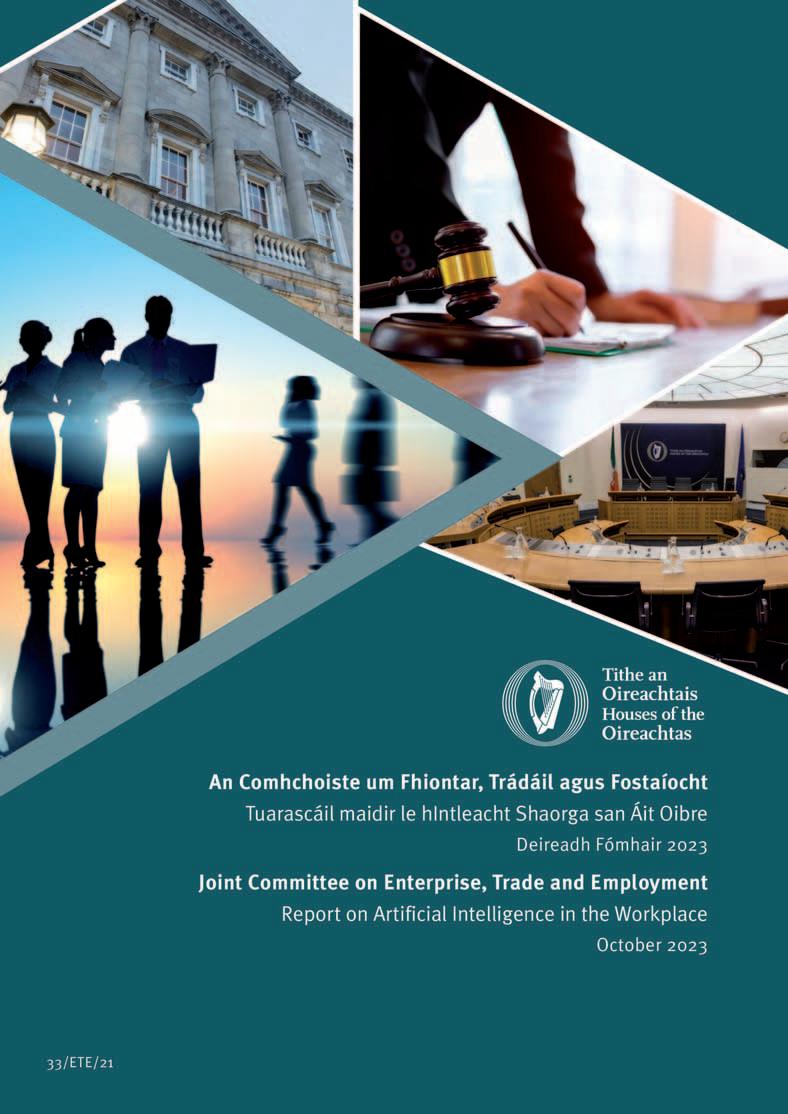







A permanent joint committee on artificial intelligence (AI) should be established in the Oireachtas, TDs and senators have recommended.

The recommendation to the Minister for Enterprise, Trade and Employment was one of several by the Joint Committee on Enterprise, Trade and Employment contained within a report focused on AI in the workplace.
In addition, the committee has also recommended the establishment of a special committee to examine the broader scope of AI beyond an employment perspective, recognising the far reach of the topic.
In an interview with eolas Magazine, Minister of State with reponsibility for Digital in the Department of Enterprise, Trade and Employment, Dara Calleary TD, stated his belief that the proposals were “worth pursuing” but that the matter was for the Oireachtas to decide.
In the meantime, in January 2024 the AI Advisory Council, designed to provide independent expert advice to government on artificial intelligence policy, sat for the first time.

Almost half the labour force is expected to be impacted by changes to their jobs due to automation by 2040, according to an OECD report on Wellbeing in the Digital Age published in 2019. The scope of the committee’s report was particularly focused on the finding that up to 14 per cent of all jobs are at high risk of being lost due to automation, with another 32 per cent at risk of significant change over the next 10 to 20 years.
Alongside the recommendation to establish a Joint Oireachtas Committee on AI, the Committee’s report also called for:
• comprehensive discussions and regulatory measures at a forum level that safeguard both workers’ rights and employer interests on an inclusive basis with all stakeholders;
• enhanced safeguards for digital manipulation to be considered for consumers and workers when transposing the AI Act;
• measures to provide for transparency in the tracking of employee activities, recognising existing concerns around potential abuse of workplace surveillance technology; and
• that the minister revisits the representation on the Department of Enterprise, Trade and Employment’s GovTech forum board. The recommendation references inclusion of an employment perspective, strongly advocating for trade union representation, and other bodies such as legal, regulatory, governmental, and tech industry experts.
The Committee’s work comes in the context of the forthcoming European Union AI Act, which as part of its digital strategy, will seek to regulate AI to ensure better conditions for the development and use of innovative technology.


On 2 February 2024, the EU’s Artificial Intelligence Act was unanimously approved at a meeting of the Council of the European Union (Council of Ministers). The Act must now pass through a European Parliament plenary vote which is expected on either 10 or 11 April 2024.
The Committee’s report focuses on key areas in relation to the workplace, most prominently, surveillance methods deployed by employers, such as webcams, keystroke logging. Highlighting research carried out by the Financial Services Union (FSU), which outlines the importance of research and legislation keeping pace with these changes so society, businesses, and staff can both benefit and the be protected from unforeseen consequences.
“The Committee noted the need to establish clear levels of workplace surveillance, understanding that some regulation might be necessary to prevent excessive intrusion,” the report states.
It adds: “The Committee note[s] from the report that evidence of AI-driven constant monitoring marks a significant shift, where employers can track employee activities without their awareness. The Committee support the need for transparency in this tracking.”
Another theme of the report was around the ‘right to disconnect’, with the Committee noting that “the current pervasive surveillance is generating an ‘always on’ work culture,” which it describes as “problematic”.
“The Committee is concerned that monitoring practices being undertaken might not necessarily correlate with increased productivity and acknowledges there could be various reasons behind employers’ surveillance practices,” it says.


AI is the topic on everyone’s lips today, writes John Stobie, Regional Vice President of Public Sector Sales for Salesforce Ireland.
As I sit down to work on this piece, I am listening to Patricia Scanlan, the Chair of the AI Advisory Council in Ireland, sitting for an interview on RTÉ’s Morning Ireland about the many challenges and benefits of AI. A day seldom goes by without a news story about the evolution of this technology. Generative AI and its rapid ascension to the top of the technology stack has thrown a spotlight on a capability that Salesforce customers have been using, for over a decade.
In this article, we focus on the fact that
AI is not an end itself, but that used correctly it can energise transformation and innovation within the public sector. AI is an accelerator which can personalise services and engagement, increase the productivity of government staff, and drive impact by allowing the targeting of limited resources to deliver the best outcomes. Governments face ever-growing pressure to improve the efficiency and personalisation of their services and overall interactions with citizens. According to a study by the Boston Consulting Group and Salesforce, “93 per cent of respondents
expect government's service quality to be on par with leading tech companies, private sector and digital governments”. We will discuss AI under a number of headings:
• If AI is the engine, data is the fuel;
• In the flow of work; and
• Trust is paramount.
Ultimately, we must understand that AI is not a silver bullet and to get the benefits of this technology, like any, we need to walk before we run.
“Ultimately, we must understand that AI is not a silver bullet and to get the benefits of this technology, like any, we need to walk before we run.”
John
Stobie, Regional Vice President of Public Sector Sales, Salesforce Ireland.
It is important to recognise the symbiotic relationship between data and AI. Ultimately, it is not enough to just amass lots of data, it must also be connected and structured. Salesforce’s citizen relationship management (CRM) is built with the citizen at its heart, and information about that individual wraps around it. This includes key attributes, benefit history, touch points, and other key data elements that not only provide agency employees with a rich view of their customers, but also serve as inputs to AI models. However, not all data about the citizen sits in the CRM. Within any agency, dozens of other systems contain citizen data, including ERPs, payment systems, document repositories, and more. To join up this broader set of data elements, Salesforce’s Data Cloud enables agencies to connect and haronise data from other systems in real-time. With powerful identity resolution and graphical mapping capabilities, Data Cloud delivers the essential foundation to both traditional and AI-enabled citizen services. This complete 360° view of the citizen supports improved interactions and also better utilisation by AI models.
Just recently, one of our global postal customers revolutionised their digital marketing and customer experiences with AI and data-driven communications. Salesforce Data Cloud has been transformational to the business, taking over 11.5 million contacts and turning that into 3.3 million unified profiles, with rich engagements and transactional data, within six working days.
To derive the greatest value from AI, it should act as an enabler within a process, rather than as its own functional area. When embedded into existing systems and business workflows, it ensures easy access for employees and customers alike, and minimises the implementation and maintenance work required from IT. It is important to not only feed an AI model a training set and prompt, but also the broader context for that prompt. This is known as ‘grounding’, where the surrounding information about the work item and the customer are fed to the model alongside the prompt.
Equally, the result should be returned in a way that is immediately useful to the agent. For instance, a draft email to a citizen should show up in the drafting screen itself, so the agent can easily make edits before sending. By embedding the technology, it also allows for seamless and automatic upgrades, including new technologies and capabilities. This has always been the Salesforce approach to innovation, delivering three annual functional releases for nearly a quarter of a century.
Government must handle citizen data with the utmost care and ensure services are delivered with fairness and precision. This requires an understanding of the risks associated with AI and how to control them. Salesforce have outlined five trusted AI principles to guide both our own development and our customers’ use of these technologies. The use of AI must be: responsible, accountable, transparent, empowering, and inclusive.
Salesforce’s Trust Layer helps to mitigate these risks, including protecting personal and sensitive information by not feeding it into the model, controlling for toxicity and hallucinations on the return, including with a human in the loop to review the output before it goes to the citizen, and memorialising the use of any AIgenerated output. These are minimum-but-notsufficient measures; however, any commercial AI solution should incorporate such controls. Experimentation to acquire institutional knowledge and understand the nature of such risks is crucial to safe and successful deployment at scale.
AI continues to evolve rapidly. Customers should look to the old mantra, “think big, start small, scale fast”. Wherever you are on your AI journey, it is essential to understand the maturity of your organisation for the adoption of this technology. To help you get going, talk with us about our AI vision and capability assessment tool (VCAT).
T: 0800 086 8949
E: jstobie@salesforce.com
W: www.salesforce.com

A report by the European Central Bank (ECB) has stated that projections of AI ending human labour “may be greatly exaggerated”, and that occupations “potentially more exposed” to AIenabled technologies increased their employment share in Europe during the 2010s.



“Waves of innovation have usually been accompanied by anxiety about the future of jobs,” the report reads. “This apprehension persists, even though history suggests that previous fears about labour becoming redundant were exaggerated.” However, in its surveying of various reports and a sample of 16 European countries, the ECB finds “a positive association between AI-enabled automation and changes in employment shares” regardless of which proxy the report authors used.
Using the work of Stanford University economist Michael Webb, the ECB states that moving 25 centiles up along the distribution of exposure to AI is associated with a 2.6 per cent increase in sector-occupation employment share; the work of Edward Felten, Manav Raj, and Robert Seamans estimates the increase in sector-occupation employment share to be 4.3 per cent.
“The degree of exposure is as much an opportunity as it is a risk.”
On the possibility of technology-enable automation affecting relative shares of employment across skill levels and thus impacting earnings inequality, the ECB states that “literature on job polarisation shows that medium-skilled workers in routine-intensive jobs tended to be replaced by computerisation… in contrast, it is often argued that AI-enabled automation is more likely to complement or replace jobs in occupations that employ high-skilled labour”.
The literature also suggests that AI exposure “does not seem to shake things up significantly” in occupations where average educational attainment is in the low and medium-skill groups. In contrast, a “positive and significant association” is found for the high-skill group: with the distribution of exposure to AI increased by 25 centiles, the boost to sector-occupation employment is estimated at 3.1 per cent by Webb and 6.7 per cent by Felten, Raj, and Seamans.
By age group, AI-enabled automation favours those occupations that employ younger workers, who were found to benefit at double the rate of their older colleagues (when age groups are split into younger, core, and older) regardless of the indicators used.
In their own research, the authors of the ECB report – Stefania Albanesi, António Dias da Silva, Juan Francisco Jimeno, Ana Lamo, and Alena Wabitsch – study the link between AI-enabled technologies and employment shares in 16 European countries between 2011 and 2019, years that “saw the rise of deep learning applications such as language processing, image recognition, algorithm-based recommendations, or fraud detection”. The authors find that around 25 per cent of all jobs in these countries were in occupations highly exposed to AI-enabled automation, “specifically in the upper third of the exposure measure”.
“The degree of exposure is as much an opportunity as it is a risk,” the report states, with the outcome dependent on whether such technologies will substitute or complement labour. Occupations more exposed to AI were found to employ a larger proportion of highskilled workers when compared to occupations more exposed to advances in software, a fact that “supports the case that AI-enable technologies could be in competition with high-skilled jobs”. With the exposure to technology varying across levels of skills, it is found to be “relatively uniform” across age groups.

These findings mean that AI-enabled automation is “thus associated with employment increases in Europe –mostly for high-skill occupations and younger workers”, a fact which is “at odds with the evidence from previous technology waves, when computerisation decreased the relative share of employment of medium-skilled workers, resulting in polarisation”. The authors state that they found no evidence for this polarisation pattern in their own work, “even when examining the impact of software-enabled automation”, and that the relationship between software exposure and employment changes is null for their pooled sample, with no evidence of software replacing “routine medium-skilled jobs”.
Despite these results for employment shares, the authors also found that neither AI nor software exposure had statistically significant effects on wages, except in the work of Felten, Raj, and Seamans, which “indicates that occupations more exposed to AI have slightly worse wage growth”. The results also show “a mixed picture” across the 16 European countries studied, with the overall positive impact found in the overall research said to “hold true for most countries with only a few exceptions”.
The scale of the impact is, however, said to vary substantially across the country, which “might reflect differences in underlying economic factors” such as technology diffusion, education, and levels of regulation and competition in product and labour markets.
Despite the common fear that technological development brings with it pressure on the labour market and the widespread possibility of jobs being automated into obsolescence, the authors conclude that, during the deep learning boom of the 2010s at least, “occupations potentially more exposed to AI-enabled technologies actually increased their employment share in Europe”, with occupations with a higher proportion of younger and skilled workers gaining the most and neutral to slightly negative impacts on wages.
“These results do not amount to an acquittal: AI-enabled technologies continue to be developed and adopted,” the authors state. “Most of their impact on employment and wages – and therefore on growth and equality – has yet to be seen.”
Should
AI may change the threat landscape essentially in three ways: expanding existing threats, ushering in new threats, and shifting the nature of threats as we know it.
Of specific concern is the potential for cyberattacks on critical infrastructure to become more widespread. Critical infrastructure, usually considered to include power generation and electrical grid, hospitals and healthcare systems, and the global supply chain, could also include digital supply chains and the internet itself.
Depending on the specific needs, resources, and development level of a nation, critical infrastructure represents all the systems, networks, and assets that are essential, with their continued operation required to ensure the security of a given state, its economy, and the public’s health or safety. As the idea behind the attacks is to weaken adversaries by crippling their day-to-day business, an effective AI tool could, hypothetically, help bad actors commit attacks, or even increase the pool of potential attackers, by making malware coding easier.
With AI becoming increasingly important, just like companies, people race to figure out how it could be used to serve their own purposes, supporting their endeavours. Specifically in the field of cybersecurity, AI can serve both a destructive, but also a constructive role, with the former attempting to cripple cyber defences, and the latter enabling support of better cyber defences.
With a legacy dating back to 1990, ESET has been a forerunner in the integration of AI into its security solutions. Recognising the evolving nature of cyber threats, it embraced the potential of AI early on, leveraging its capabilities to not only detect but also block threats in real-time, using machine learning to combat new threats, to ensure continuous threat intelligence updates through the early adoption of cloud technology that powers the global ESET LiveGrid reputation and response system. ESET employs two distinct
forms of advanced machine learning, comprising a high-powered detection engine in the cloud and a lightweight version deployed on the endpoint. These utilise a carefully selected set of classification algorithms, including deep learning and boosted trees, ensuring swift and precise analysis crucial for thwarting emerging threats.
The latest enhancement to ESET software introduces an AI-powered detection correlation engine. This innovative feature automatically generates incidents, empowering security engineers to significantly minimise the time dedicated to investigation and incident management. AI represents a paradigm shift in cybersecurity. Security vendors aim to evolve by improving detection results and reducing false positive/negative rates. Leveraging the power of modern AI techniques helps not only stay ahead of emerging threats but also sets new standards for efficiency and accuracy in threat detection and response.
T: 053 914 6600
E: security@eset.ie
W: www.eset.ie



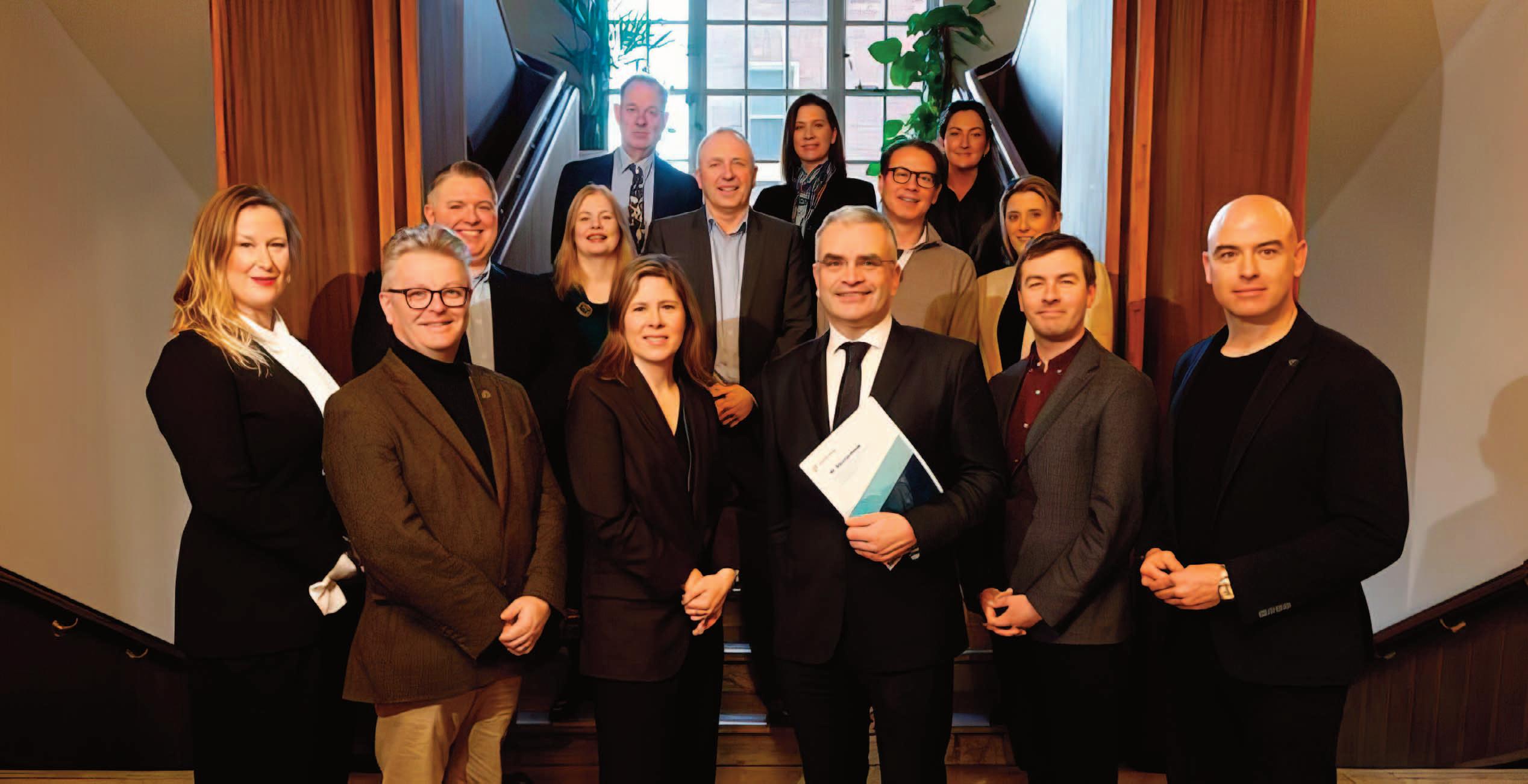

Headed up by Ireland’s AI Ambassador, Patricia Scanlon, the Government’s newly established 14-person AI Advisory Council met for the first time in January 2024.
The AI Advisory Council was established under Strand 1 of AI: Here for Good, Ireland’s national AI strategy. Appointed by Minister of State with responsibility for Digital, Dara Calleary TD following a call for expressions of interest, the Advisory Council’s members “represent a spectrum of experience and expertise from academia, business, law, security, social sciences, economics, and civil society”.
As the Advisory Council is not a consultative or representative forum, its members work on a voluntary basis and represent themselves as individuals with specific experience and expertise. It is intended, therefore, that the Advisory Council provides independent expert advice to government on AI policy via the Cabinet Committee on the Economy and Investment as well as to individual ministers, as requested.
Tasked with meeting a minimum of three times annually, the Advisory Council is intended to “build on the mandate of the AI Ambassador and function as an agile sounding board for
government on ongoing and emerging artificial intelligence related developments”.
The Advisory Council has three primary functions:
1. Responding to requests from government with expert guidance, insight, and recommendations on emerging AI trends;
2. Developing and implementing a workplan to advise government on strategic priorities (emerging trends, opportunities, and challenges) in relation to AI policy; and
3. Engaging in public communications (including media interviews and public events) “aimed demystifying and promoting trustworthy, ethical, and person-centred AI”.
These functions are to be undertaken with due regard for existing government policies.
Following the first meeting of the Advisory Council, Minister of State Calleary asserted: “My ambition is that we become a leading country in using

AI to the benefit of our people, through a human centred and ethical approach to AI adoption and use. We have the building blocks in place in our national AI strategy.”
The Minister of State also paid tribute to the work of Ireland’s AI Ambassador, Patricia Scanlon, since 2022: “I welcome her continued commitment to public service in volunteering to Chair the AI Advisory Council. I also welcome the commitment of all the members of the Council in volunteering their time, experience and expertise.”
For her part, the National AI Ambassador and chair of the Advisory Committee commented: “I look forward to leading the AI Advisory Council in providing timely, impactful recommendations and advice to Government. The members of the Council come from a range of backgrounds. Their collective insights will be hugely useful.”


Patricia Scanlon
Patricia Scanlon is chair of the AI Advisory Council. She is Founder and Executive Chair of SoapBox Labs, a leading provider of proprietary voice technology for children. She holds a PhD and has over 20 years’ experience working in speech recognition and AI technology, including at Bell Labs and IBM. She has served as Ireland’s AI Ambassador since 2022.

Abeba Birhane
Abeba Birhane is a cognitive scientist, currently a senior advisor in AI accountability at Mozilla Foundation and an adjunct assistant professor at the School of Computer Science and Statistics at Trinity College Dublin. She researches human behaviour, social systems, and responsible and ethical AI. Birhane also serves on the United Nations Secretary-General’s newly convened High Level Advisory Body on AI.

Deirdre Ahern is a professor of law and Director of the Technologies, Law and Society Research Group at the School of Law, Trinity College Dublin. She previously led a research team at the Law Reform Commission. She is a member of the Royal Irish Academy’s Ethics, Politics, Law and Philosophy Committee and a fellow of the Information Society Law Centre at the University of Milan.

Harbor
Bernard Harbor was formerly head of communications and media relations at Fórsa, where he supervised research that underpinned the union’s policy on automation. He has a deep familiarity with industrial relations, the public sector, and the Irish and international media. He has been a member of the ICTU Executive Council and is currently a Governor of the Irish Times Trust. He is a life fellow of the Public Relations Institute of Ireland (PRII) and a member of the board of TASC, Ireland’s think tank for action on social change.

Stephen Kinsella
Stephen Kinsella is full professor of economics and Head of the Department of Economics at the University of Limerick. He directs UL’s Immersive Software Engineering programme. As an economist with tech sector experience, he also is a regular columnist with extensive experience on state boards.

Susan Leavy
Susan Leavy is an assistant professor with the School of Information and Communication Studies at University College Dublin with research interests in artificial intelligence, language processing, social science, and AI ethics. She is also one of Ireland’s nominees to the Global Partnership in AI. Leavy is a funded investigator with Insight SFI Research Centre for Data Analytics and is leading several projects on trustworthy AI.

Seán Mullaney
Seán Mullaney is currently CTO of Algolia, an AI powered search and discovery platform which serves a range of industries. He actively advises Irish startups and founders as a venture board member at Elkstone and as an angel investor through the Sequoia Scout programme. He also serves on the board of Manna Drone Delivery.

Ronan Murphy
Ronan Murphy is founder and Executive Chairman of Smarttech247 (an AI powered cybersecurity enterprise) and is founder of GetVisibility (an AI-driven data security enterprise). He is an expert in the areas of corporate and enterprise security, development of cyber defence programs, business operations protection, and protection of critical infrastructure technologies.

Barry O’Sullivan
Barry O’Sullivan is an award-winning academic working in the fields of artificial intelligence, constraint programming, operations research, AI/data ethics, and public policy. He contributes to several global Track II AI diplomacy efforts at the interface of military, defence, intelligence, and AI. He was vice chair of the European Commission High-Level Expert Group on AI and is a member of the Digital Group at the Institute of International and European Affairs (IIEA).

Emma Redmond
Emma Redmond has a background at the intersection of technology and law including at LinkedIn and Stripe and is currently Associate General Counsel, Head of EU Privacy and Data Protection at OpenAI and the first member of the growing OpenAI team in Ireland. Redmond is an adjunct associate professor of law at University College Dublin.

Bronagh Riordan
Bronagh Riordan is Head of Data and Analytics for Irish international retailer Primark, and Chair of the Industry Steering Board for CeADAR, Ireland’s national centre for applied data analytics, artificial intelligence and machine learning and Ireland’s digital innovation hub for Europe. She is also a UK and Ireland Chief Data Officer governing body member for Evanta. She has more than 20 years’ experience in data, analytics, and AI and prior to joining Primark, held senior positions across industry including Director of Global Analytics Centre of Excellence for Deutsche Bank, and Head of Data Science for CarTrawler.

Sasha Rubel
Sasha Rubel is Head of Public Policy for Artificial Intelligence and Machine Learning at Amazon Web Services (AWS) for Europe, Middle East, and Africa. She previously worked at UNESCO on AI and digital innovation, is involved in international AI governance initiatives, and is a member of the OECD AI Network of Experts.

Barry Scannell
Barry Scannell is a consultant in the technology group of law firm William Fry, where his work is focused on AI law. He was previously Director of Legal Affairs and Regulatory Compliance at the Irish Music Rights Organisation. He has extensive experience in public communications around AI, and in particular, advising on the legal implications of AI technologies. Scannell is currently finalising a PhD on AI and copyright in UCC.

Alan
Alan Smeaton is professor of computing at Dublin City University and was a founding director of Insight SFI Research Centre for Data Analytics. He is a member of the Royal Irish Academy and an Academy Gold Medal winner. He has extensive experience in applications and innovations of AI in areas such as computer vision, machine learning, wearables, lifelogging, and educational analytics. He is experienced in giving scientific advice to government and actively participates in educational and public engagement activity, including media appearances.