
PO Box 18, Bridgend, CF33 6YW, UK.
Tel: 01656 745628
Fax: 01656 745028
E-mail: info@bluesmatters.com
Web: www.bluesmatters.com
EDITORIAL
Editor-in-Chief
Darren Howells darren@bluesmatters.com
Founder/Publisher 'D' alan@bluesmatters.com
Contributing Writers
Roy Bainton, Andrew Baldwin, Adrian Blacklee, Lee Borland, Carol Borrington, Lori Borys, Robert Chaffey, Robert Fleming, John Hurd, Billy Hutchinson, Matthew Clarke, Norman Darwen, Dave Drury, Joe Geesin, Jamie Hailstone, Stuart
A Hamilton, Gareth Hayes, Noggin, Merv Osborne, Tom Rankin, Graeme Scott, Ashwyn Smyth, Andy Snipper, M.D. Spenser, Dave Stone, Davide Styles, Kevin Wharton
PRODUCTION
Art Direction/Graphic Design
Darren Howells
Photography
As credited
ADVERTISING
Advertising Team
‘D’ & Geraint David Morgan 01656 745628
ads@bluesmatters.com
SUBSCRIPTION DEPARTMENT
Jenny Hughes 01656 743406/745628
subs@bluesmatters.com
IT/WEB MANAGEMENT
Geraint David Morgan 01656 745628
webmaster@bluesmatters.com
PRINTERS
HSW Print, Tonypandy, CF40 2XX.
©2009 Blues Matters!
Alan ‘D’ Pearce t/a Blues Matters! Original material in this magazine is © the authors. Reproduction may only be made with prior consent of the editor and provided that acknowledgement is given of the source and copy sent to the editorial address. Care is taken to ensure that the contents of this magazine are accurate but the publishers do not accept any responsibility for errors that may occur or for the statements or views expressed editorially. All rights reserved. No part of this publication may be reproduced, stored in a retrieval system or transmitted in any form or by any means electronic, mechanical, photocopying, recording or otherwise without prior permission of the editor. Submissions: Readers are invited to submit articles, letters and photographs for publication. The publishers reserve the right to amend any submissions, and cannot accept responsibility for loss or damage.
Please note: Once submitted, materials become the intellectual property of Blues Matters! and can only later be withdrawn from publication at the expediency of Blues Matters! Advertisements: Whilst reasonable care is taken in accepting advertisements, if in doubt readers should make their own enquiries. The publisher cannot accept responsibility for any resulting unsatisfactory transactions. Nor shall they be liable for any loss or damage to any person acting on information contained in this publication. We will however investigate complaints.
Office Opening Hours are: Mon-Fri 9am-3pm.
f course, the Blues has suffered from a negative preconception with the general public for many years, fuelled by a number of factors and not helped by the mainstream media’s ignorance (or the fact that music which requires some time and effort, and personal disclosure from the listener, doesn’t wash too well with a society that would rather their “music” was manufactured and packaged in the most soulless and dismal manner via the cornerstone of their living room).
As a magazine, we recognised the need to showcase the Blues as a still vital and relevant form many years ago – avoiding the pitfalls of many niche magazines in presenting the music as archaic through text heavy/image-light pages, forever looking to the past whilst berating the present…
The White Stripes, of course, appreciated the need to present the Blues in a different light, opting to spend as much, if not more time on their image as the music, to allow fresh appreciation for the genre –much like bands, including The Rolling Stones, and later Zeppelin, did in the ‘60s and ‘70s – but now inline with the artificial needs of the McDonald’s and MTV generations…
Since then a host of highly-stylised Blues-influenced artists have rose to prominence, and with singers like Adele, Duffy and Beth Rowley talking up their Bluesy influences, the genre has never looked better within the mainstream…
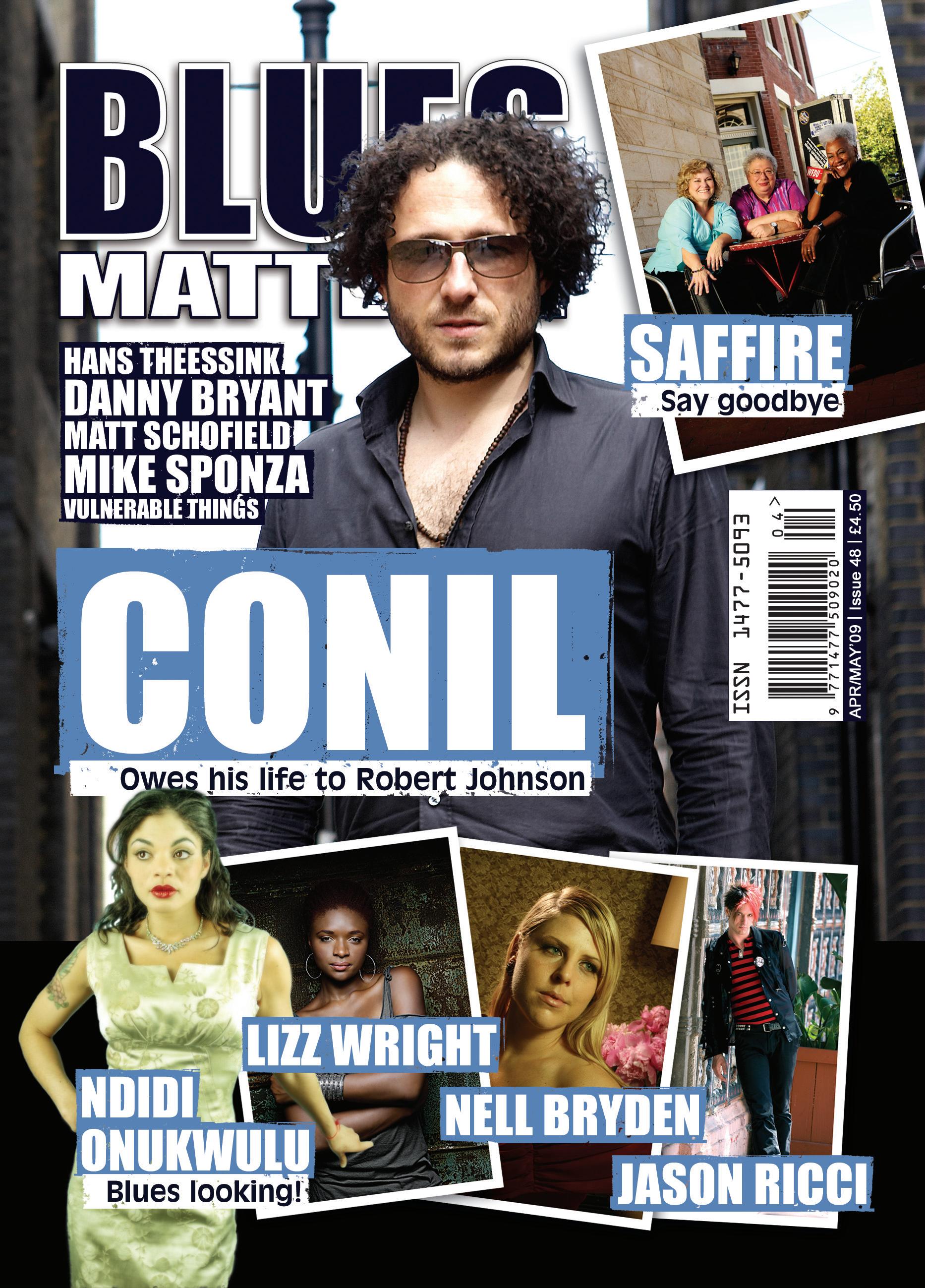
Now we are seeing the rise of artists under the radar, on both sides of the Atlantic, with their own unique take on the genre, and with the confidence now to present it for modern times, unshackled by the burden of the traditional values they hold in such reverence… Ndidi Onukwulu, Nell Bryden and Lizz Wright may be equally attractive on the eye, but each offers far more than their cloned chart-tapping female counterparts, whilst Conil and Jason Ricci bring to mind iconic artists of yesterday, but are more representative of contemporary (anti) thoughts and culture – even if that’s landed them both in a lot of hot water!
So, who knows, with Blues music looking better than it has for many a year, and helping to sell various health and environmentdamaging products, perhaps the fickle and image-led music industry will allow fresh appreciation for the genre that led to all we’ve enjoyed – and come to despise - for the last century…
DARREN HOWELLS Editor-in-Chief
Blues Matters! 5
08
FEEDBACK
Oli Brown, Dani Wilde, Jethro Tull
13 HAPPENIN’
Florence And The Machine, B.B. King, Mick Taylor, Ben Angus Stone, The Derek Trucks Band, Bob Dylan, Kyla Brox, The Black Crowes, Candye Kane, Colin Linden
37 SUBSCRIBE TO WIN
Johnny Cash CDs, The Bonnevilles CDs
136 DVD REVIEWS

Reverend Beat-Man, Brooks Williams, Tony Joe White, Michael Messer, Sonny Rhodes, Cinderella, Chuck Berry
142 FESTIVAL FEVER
Rock & Blues Festival, Skegness
146 GOT LIVE
Matt Schofield, The Pretty Things, Blues Caravan, Dave Big Joe Louis, Mud Morganfield, B.B. King, Buddy Guy
157 MEMBERS’ COMPETITIONS
Robert Plant books, “Bluesman” books
The Reverend Peyton's Big Damn Band, Dan Auerbach, Orb Mellon, William Elliot Whitmore, Ramblin' Jack Elliot, Julian Sas, Nick Cave And The Bad Seeds, Kelly Joe Phelps, Robin Rogers, The Mick Fleetwood Blues Band, Jorma
Kaukonen, Adam Norsworty, Joe Bonamassa, Aynsley Lister, The Gun Club, Guy Davis, Delaney Bramlett, Erja Lyytinen, Melody
Gardot, John Lee Hooker
20 INTERVIEWS
Conil, Nell Bryden, Ndidi Onukwulu, Matt Schofield, Lightnin’ Willie, Danny Bryant, Matt Andersen, Jason Ricci, Vulnerable Things, Saffire, Lizz Wright, Hans Theessink, Mike Sponza...
83 EASE THOSE BLUES
With “Stone Blue”.
84 GETTIN' THE BLUES
Amy Speace gets the Blues!
134 BLUE BLOOD
Melinda, C.M.Arnold & The Delta Breaks...
158 NEVER FORGET
John Cephas, John Martyn, Willie King, Eddie Bo
160 NOW, BEFORE WE FORGET…
J.B. Lenoir.
Blues Matters! 6
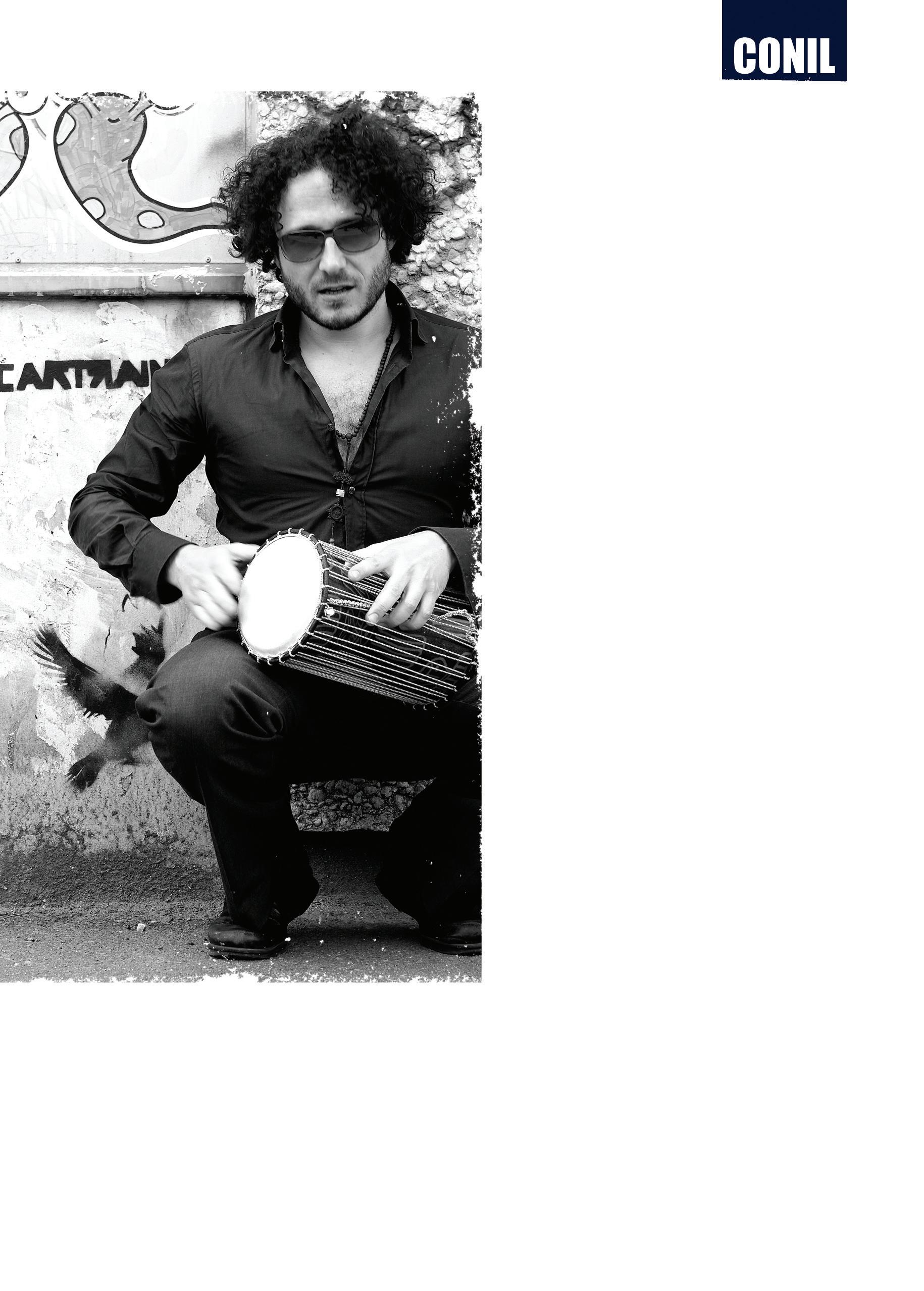
20 CONIL
When you see Tchad Blake at the helm, you know – after gaining notoriety from his collaboration with Tom Waits - the artist and the music is going to be a little bit special, and the critical response to Conil’s debut album in 2008 certainly met expectations. “Tchad was great, not only did he teach me a great deal about production; we had a really good time together. After we finished, I really felt inspired by what you could become if you devoted your life to music... We did drink quite a lot actually, both whiskey and wine.”

Blues Matters! 7
CHART SUCCESS
Just wanted to drop you a line to say how grateful I am to you and your team regarding the support you have given Oli (Brown) since I first started being a pain in your neck!
I was so proud to receive my Blues Matters! magazine at the weekend and see that your readers had voted Oli into the number 2 position for the readers’ poll (Best Blues). Oli has only just returned from his tour in Germany, Austria and Switzerland with Blues Caravan and was totally knocked out to see that one of his heroes (Sean Costello) was number 1! This music business is a hard old slog, as well you know, so it is with real gratitude that we thank you and your readers for being with us.
We are now, as ever, banging on Jools Holland’s door (well his producer’s door)I think that would be the icing on the cake to receive that kind of exposure, and I think it would do so much good for the UK Blues world (you know I will keep on knocking on that door!).
Graham Brown (Oli’s father) Norwich
BM! Says: We’re sure the majority of our readers would love to see Oli take that next step to mainstream exposure after impressing so many, both here and overseas, in 2008.

WE’RE NOT CHEAP!
Just wanted to thank you and your staff for your dedicated efforts in putting together a great magazine; for supporting the Blues and helping to turn many newcomers to the Blues. Your magazine consistently impresses me from issue to issue and is one of the rare magazines that I can honestly say I read from cover to cover.
I frequently trek down to our local Toronto Indigo/Chapter's store to see if a new issue has come out, even when the weather is nasty at -30°C!
I have been a devoted rock fan for most of my 48 years, but with the help of your magazine, I have had my eyes opened to the Blues - both old and new, and I love it!
Surprisingly, I have found out from your UK Blues magazine things about Canadian Blues artists, whom I
never knew existed! My music collection has grown in variety, albeit at the expense of my shrinking wallet.
Keith Fletcher (Canadian Blues Convert) Toronto, Canada
BM! Says: Canadian artists are again well represented in our interviews/features this issue. We apologise now for now for the extra expenditure this will cause you.
STILL KICKING
I own the 28 years old "Blues" bar in Athens, and I congratulate you for your very good magazine. I think it has
Blues Matters! 8
The boy’s done good: Oli Brown.
ONTO A WINNER
I wholeheartedly agree that Steve Winwood is totally underappreciated by this country. What a voice, what a songwriter and what a back-catalogue of records, solo or with whichever musical legend he was working with in a group format.
I’m fairly sure Winwood has influenced more acts in popular music than the critically adored Tom Waits ever has - in fact, I’m sure his influence is heard more widespread than even the messiah Bob Dylan (perhaps he’ll have to bow to The Beatles, however).

I’m sure he won’t enjoy the same level of commercial success as his ’80s heyday again but, for me, his output has never faltered – even his now derided blue-eyed soul sound was far more creative than anything his contemporaries at the time were putting out (he certainly shouldn’t be compared to Huey Lewis!), and I’ve always seen him as a pioneer.
Steve’s also a fantastic live performer. Let’s hope he returns to the UK soon!
Shaun Dignam
Worcester
BM! Says: If our inbox is anything to go by, Blues fans certainly do appreciate Steve’s contribution to British Blues and music in general. Expect him back in the UK later this year.
too much character and you should try to keep it alive.
I myself have been writing articles and reviews for a major Greek music magazine and I know how hard things are! But try to keep up the fine job you do.
Nicholas Carellos Athens
BM! Says: Despite the undoubted difficulties, we’re still here and still aiming to do more for the genre in the future.
THE CURTAIN FALLS
How sad it was to read about Saffire going their separate ways (Happenin’, issue 47). I had the good fortune of seeing the trio live on my American travels, and they were an absolute riot! What a shame they’ve never ventured over to this side of the pond, as I’m sure the humour would transfer well, and British fans would lap them up – I’m also sure they’d fair better than many of the international male artists that play to half-empty “pubs” here.
“Deluxe Edition” is one of my most played CDs, and I really hope their final album sees them going out on a real high. More acts need to see them on their final tour and take notes on how to entertain!
Elliot Holland Nottingham
BM! Says: Hopefully our interview this issue will help ease the disappointment for British fans who are likely to miss them on their farewell tour.
DON’T KNOCK ‘EM
Whilst I was over in Brighton for Christmas, I bought the latest magazine - impressive or what?! Knocks spots off Blues Revue!
In reply to Mr. Sims of Grimsby (issue 46, Feedback), I know everyone is entitled to an opinion, but having seen Aynsley Lister, Dani Wilde, Joe Bonamassa and Ian Parker in the last year, I think a little more positivity
This issue Shaun will receive a copy of the “Robert Plant: Led Zeppelin, Jimmy Page & The Solo Years” book. Focusing on the iconic frontman’s solo recording career, author Neil Daniels also delves into Plant’s earliest and ongoing influences.
Steve Winwood led the way.
towards these youngsters might help them. To quote the track off Buddy Guy's new album, "Who's gonna fill those shoes?” After all, the biggest disappointment of last year, for me, was John Mayall!
Clive Rawlings France
BM! Says: We’re not sure many readers would agree with your comments on Mr. Mayall, but the artists you mentioned certainly have found favour amongst the majority who write in and contribute.
NO STOPPING NOW
Thanks for another great edition of Blues Matters (issue 47)! The article by Martin Reinsel (T-Model Ford) was particularly enjoyable, a wonderful insight into the life of a Bluesman today. Having been lucky enough to have seen Robert Junior Lockwood, Pinetop Perkins, Dave Honeyboy Edwards and Koko Taylor in the last few years, the energy shown by T-Model Ford in playing for two or three hours doesn't surprise me. I can't think of another profession where people are still working to such an age. They really do live the Blues!
As a fan of Paul Rodgers, it was interesting to hear his take on his work with Queen, also.
Thanks again, and I hope your new online edition brings in new subscribers.
Martin Hunter Aberdeen
BM! Says: Blues artists certainly tend to offer better value for money with their live performances – both the ‘greats’ and newcomers carrying on the tradition.
IT ROCKS!
I’ve really enjoyed the recent photography exhibitions at Proud Camden that you’ve been flagging up in the magazine’s news pages. I attended the “AC/DC: Let There Be Rock” exhibit most recently, and felt privileged to have such an insight into the members of my all-time favourite group, in their original and best incarnation, through Philip Morris’ wonderful photographs, and the setting of Proud Camden just seemed to add a little extra magic to every viewing moment.
Tim Richards London
BM! Says: Our correspondent Samuel Pentony also attended the AC/DC exhibition and you can read his thoughts on the Blues Matters! website.
OLD, NEW & BLUE
Firstly, I would like to offer my congratulations on putting together another fine issue of Blues Matters! I particularly enjoyed reading the T-Bone Walker feature in this issue and the Chris Rea interview in the issue before this one, as they are both two of my all-time favourite Blues artists.
The fine mixture of Blues articles, news and reviews you consistently present is a wonderful blend of both classic and up-and-coming Blues and I'm very much looking forward to reading the next issue.
Simon Currie Dundee
BM! Says: Hopefully we’ll have satisfied your appetite for new and classic Blues this issue, with J.B. Lenoir continuing our very popular Now, Before We Forget feature
When you've finished reading this issue, why not send us a letter to let us know your thoughts? E-mail your views on anything related to the mag, or the Blues scene in general, to: mail@bluesmatters.com. We also except mail the old-fashioned way, so scribble down your thoughts (well, neat enough so we can read them!) and post them to: PO Box 18, Bridgend, CF33 6YW, UK. Remember, you could win great Blues prizes!

Blues Matters! 11
T-Model Ford is a common Blues breed.
photo: Joel Faurote
A BETTER SHOWCASE
Blues music gets a bigger stage

Blues music will again be well represented at major British music festivals in 2009, with Seasick Steve on the bill of one of the year’s most impressive line-ups Hard Rock Calling (26th-28th June 2009) sees Steve line-up alongside Neil Young and Ben Harper on the Saturday of the event staged at Hyde Park. Gaslight Anthem play on the Sunday, headlined by Bruce Springsteen. hardrockcalling.co.uk
The popular Reading and Leeds Festivals (28th-30th July 2009) return to Johns Farm and Bramham Park respectively in 2009, with the likes of Kings Of Leon, The Gaslight Anthem and Florence And The Machine performing alongside a host of successful contemporary acts. readingfestival.com
Florence will also appear at the Hop Farm Festival (3rd5th July), which has been extended to two days, with camping, this year. hopfarmfestival.com However, one of the most exciting stories was the announcement ZZ Top will be playing Download Festival at Donington Park (12th-14th June 2009). The legendary Blues-rockers will line-up alongside the likes of Whitesnake and BlackStone Cherry. downloadfesti5val.co.uk
The award-winning Latitude Festival returns to Henham Park Estate, Southwold (16th – 19th July), with Nick Cave And The Bad Seeds the highlight of the confirmed artists so far. latitudefestival.co.uk
Finally, the inaugural Indie Guitar Festival (24th-26th July 2009) sees the likes of The Blues Band, Dave Kelly, Deborah Bonham, Robin Bibi line-up alongside popular indie outfits such as Starsailor. indieguitarfestival.com
Having played his farewell British tour in 2006, B.B. King returns to embark on four arena concerts in June 2009. The Blues icon will team up with the legendary British Bluesman John Mayall. Dates: Manchester MEN Arena (24th), Birmingham NIA Arena (25th), Cardiff CIA (27th) and London Wembley Arena (28th). bbking.com
Stephen Dale Petit and Mick Taylor will launch the “New Blues Crusade” Tour in May. Petit, who is currently putting the finishing touches to his second album in Lincoln’s Chapel Studios, enthused: “I'm incredibly honoured to have Mick playing with us for these shows. My journey from being homeless and skint, busking on London Underground, to recording and releasing ‘Guitararama’, and now taking new Blues to the country with a personal, lifelong guitar hero playing alongside me it doesn't get much better than this!” Dates include: Liverpool Cavern Club (7th), Durham Gala Theatre (8th), Glasgow Renfrew Ferry (9th), London 100 Club (13th), Spalding South Holland Centre (14th) and Wimborne Tivoli Theatre (22nd). guitararama.co.uk
Hijak Oscar will release a standard version of “BlackSheepMoneyBox” by the summer, after the limited edition version sold out via their website. The album is said to be inspired by the current and past state of world affairs. “Lyrical content covers greed and how money leads to most of the world’s problems,” bass player Mark Meilack informed Blues Matters! recently. hijakoscar.co.uk
Blues Matters! 13
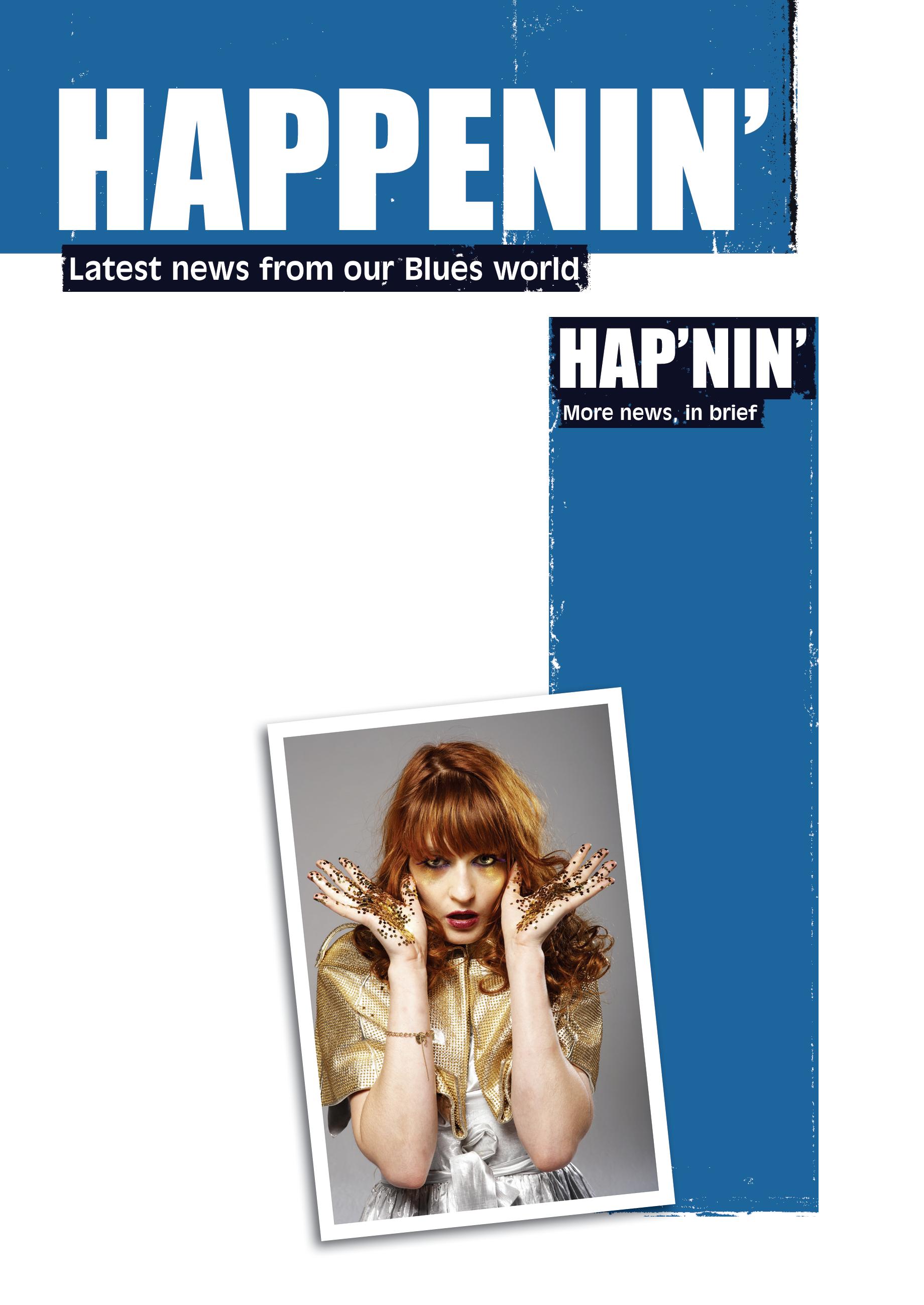
Florence And The Machine will give fans a new look at the Blues.
PERFECT CHEMISTRY
Musician brings in old friend for new album
Ben Harper And Relentless7 (pictured above) release their debut album, “White Lies For Dark Times”, on 5th May 2009 on Virgin Records. The group, whose energetic live performances has already led to an Austin City Limits taping, enjoyed a successful short tour in 2008 and showing at 2009’s SXSW Festival. Harper and guitarist Jason Mozersky have been friends since the late-90s (Harper helped Jason’s then band, Wan Santo Condo, gain a record deal), and when Jason came to work on ‘Serve Your Soul’, from Harper’s “Both Sides Of The Gun” album, he brought along bass player Jesse Ingalls and drummer Jordan Richardson. When the musicians reunited to jam in 2008, the collective emerged “with a new sound and enough tracks for an album.” The group’s debut has been described as “a timeless rock record, with a cohesive collection of music that is as raw, unrelenting and thunderous, as it is arrestingly haunting and emotional.” benharper.com
BACK TO THE START
Blues artists show their appreciation for inspirational guitarist
SPV/Blue release “A Tribute To The Robert Johnson Era” as part of their Roots Of Rhythm And Blues series on 11th May 2009. The recording intends to “reconnect the Blues and Robert Johnson to their social and musical roots,” following years of biographical speculation. “This recording explores the soundscape of the rural Southern African–American community in which Johnson shaped his artistic vision. It also demonstrates how his accomplishment shaped the history of American music.” Artists who perform include a handful of active Blues players who knew and worked with Robert Johnson, musicians who performed types of music common in Johnson's home community, and “the current inheritors of his legacy, contemporary artists who continue to reinterpret his compositions and musical innovations.” Songs include: ‘Sweet Home Chicago’ (Johnny Shines & Ensemble), ‘All My Money's Gone’ (Henry Townsend), ‘How Long, How Long Blues’ (Robert JR. Lockwood), ‘That's Alright’ (David "Honeyboy" Edwards), ‘Train, Train’ (Jessie Mae Hemphill), ‘Satisfied’ (Johnny Shines) and ‘The Brownsville Blues’ (Phil Wiggins & John Cephas). spv.de
Blues Matters! 14
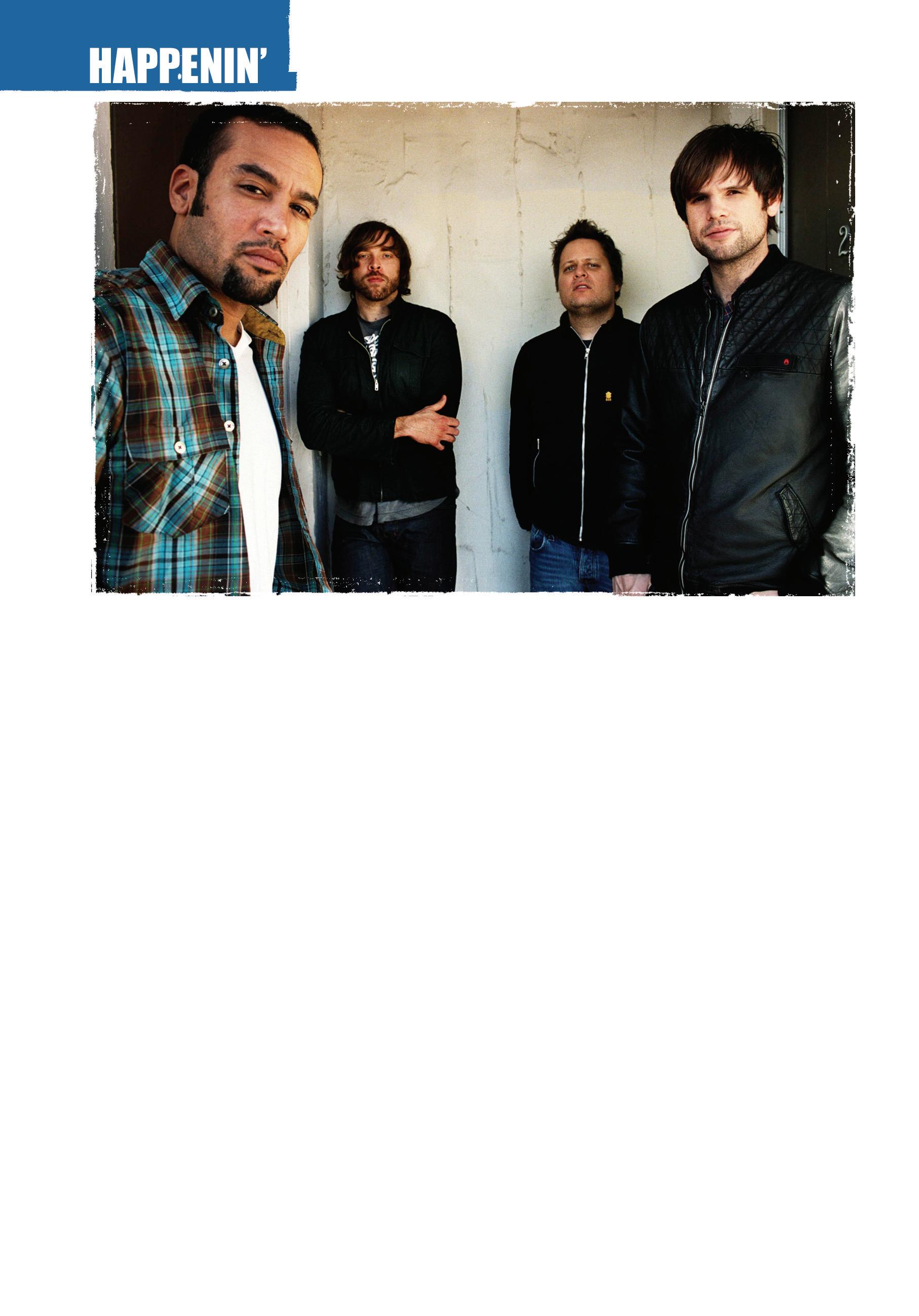
Ben Harper And Relentless7 recorded in a friendly atmosphere.
photo: Danny Clinch
GOOD ILLUSTRATION
Sample Blues label’s catalogue
Sony Music release the fourteen-track sampler
“Ground-Breaking Blues” on 6th April 2009. The collection tells the story of the influential Blue Horizon label, who released in excess of seventy singles and sixty albums over a five year history, helping the label become synonymous with the Blues boom of the ‘60s and early-70s. Tracks featured include: ‘Dust My Broom’ (Fleetwood Mac), ‘It’s A Man Down There’ (Duster Bennett), ‘You Got To Reap’ (Eddie Boyd), ‘SanHo-Zay’ (Chicken Shack), ‘Income Tax’ (Champion Jack Dupree), ‘Pearlie Blues’ (Gordon Smith),’ My Love Depends On You (Otis Spann)’, ‘I Pity The Fool’ (Jellybread), ‘Last Night’s Dream’ (Johnny Shines) and ‘Hop House’ (Top Topham).
INDUSTRY REVOLT
Songwriter moves against the norm
Fin Greenall, a.k.a. Fink, follows up his critically acclaimed 2007 release “Distance And Time” with “Sort Of Revolution”, released on 11th May 2009. The self-produced collection, his third album for Ninja Tune Records in as many years, features the song ‘Move On Me’ co-written with John Legend (with whom Fink worked with on the soul star’s “Evolver” LP), which “taps into the broody and Bluesier side of Fink's character,” while ‘Pigtails’ features Son Of Dave. “On this set the emphasis isn’t so much on The fact that we are a live band - we wanted to deliver something very DIY and intimate,” said the songwriter. “We’ve learnt a lot the past two years, and just wanted to get that confidence down on record." Speaking of favourite tracks, Fink added: "The title track, ‘Sort Of Revolution’, is our fave right now - it really dubs out at the end. We're also really loving ‘Q+A’, a kinda deep soul loop thing, mainly because it's so different from all the other singer-songwriters out there.” ninjatune.net
Buckwheat Zydeco (pictured below) makes his Alligator Records debut with new album “Lay Your Burden Down” released on 5th May 2009. “‘Lay Your Burden Down’ is the most adventurous release ever by an artist famous for fusing zydeco’s rhythmic energy to rock, R&B and funk. Buck heats up great new versions of songs by Led Zeppelin, Gov’t Mule, Bruce Springsteen and JJ Grey that sit naturally alongside first-rate zydeco rave-ups like only he can make.” buckwheatzydeco.com Eilen Jewell releases “Sea Of Tears” on 1st June 2009. The new album sees Jewell, who is widely regarded as a country artist, “encapsulate vintage R&B, Midwestern garage rock, Chicago Blues, and early rockabilly,” on a total of twelve tracks. “On the first two albums people told me they heard folk, country, western swing, rockabilly, and even jazz,” reflected the singer “but a part of my roots has been left out up until now.” Eilen Jewell will be touring the UK in October 2009. eilenjewell.com Christopher Rees returns on 4th May 2009 with his fourth album “Devil’s Bridge” (Red Eye Music). Largely revolving around compelling tales of murder and misconduct, Chris has incorporated themes including curiosity, karma, confessions, mortality, sacrifice, shadows, heaven, hell, desolation, imprisonment, conviction and awakening “to create his most disarmingly upbeat and immediate record yet.” Christopher will tour the UK – both solo and with his full band – from April. christopherrees.co.uk
Blues Matters! 15
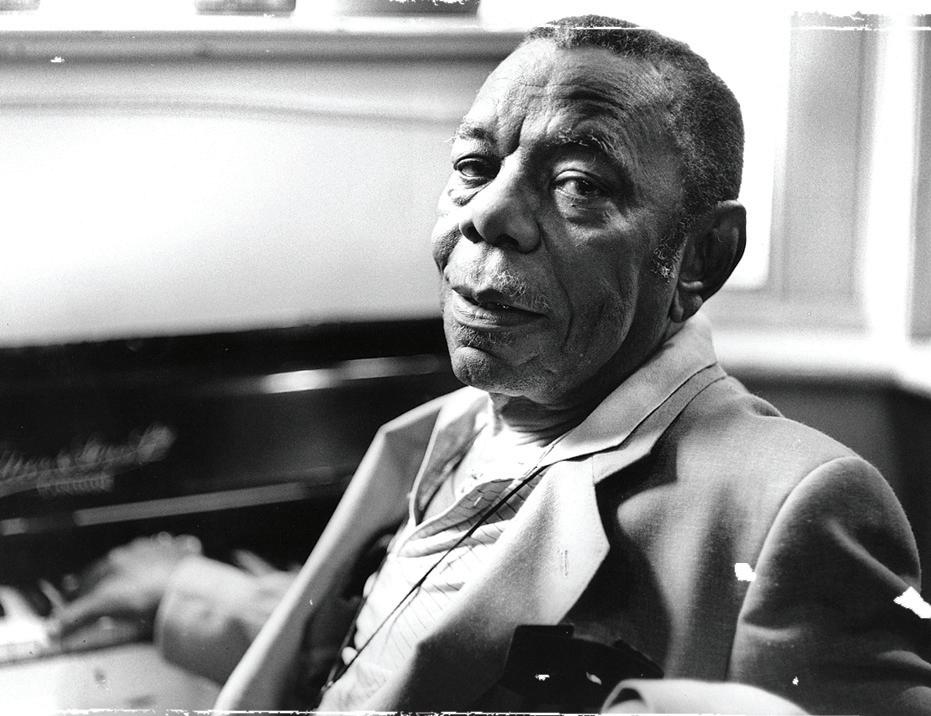
Champion Jack Dupree features on ‘groundbreaking’ collection.
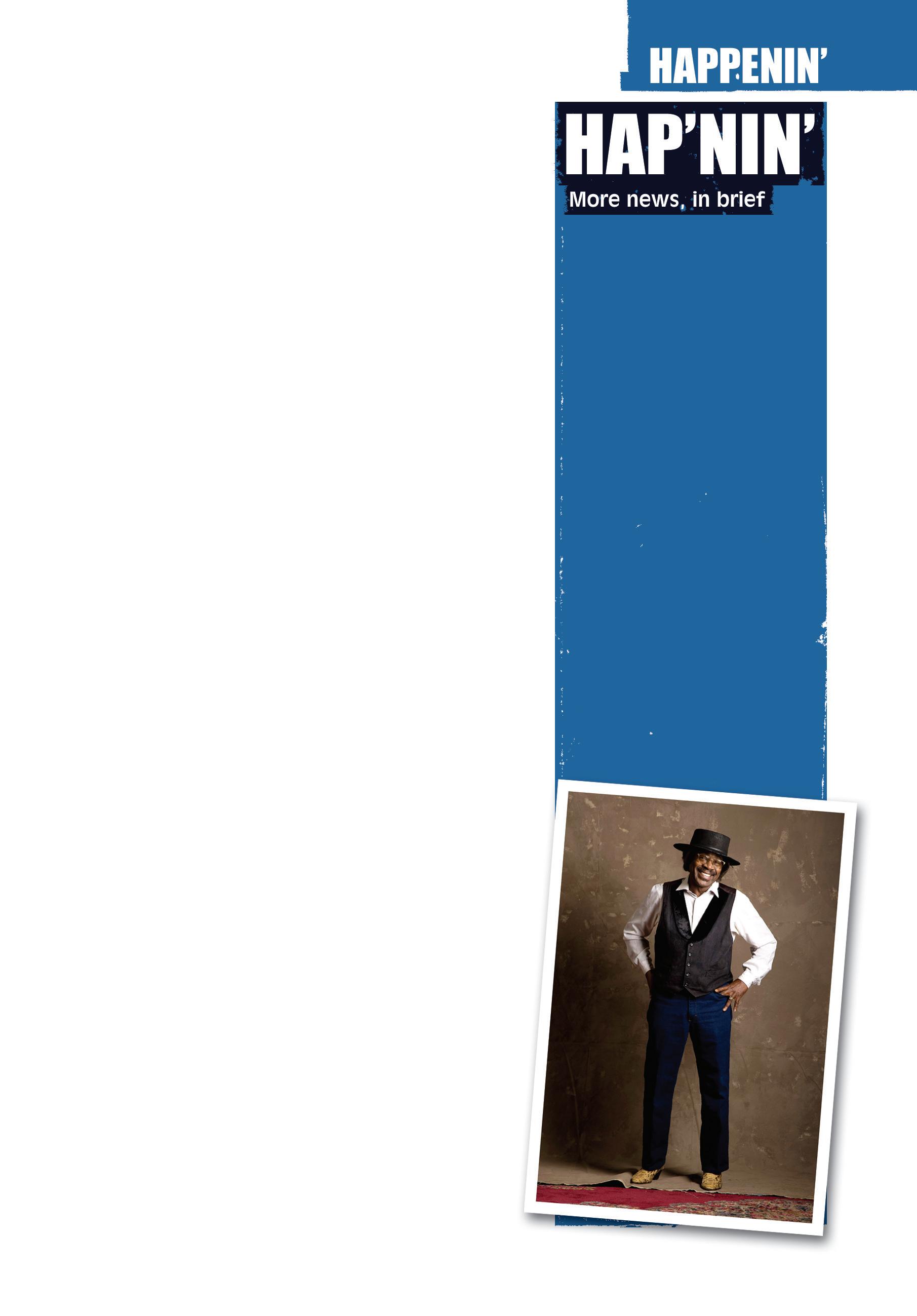
The “iconic” Buckwheat Zydeco.
photo: courtesy Sony BMG photo: Rick Olivier
MORE ATTENTION
Singer takes shot at solo stardom
Angus Stone, who has built a significant following with sister Julia (following the critically acclaimed “A Book Like This”), goes it alone with his first solo album “Smoking Gun”, released on Flock Music on 6th April 2009. Without his sister in tow, the album is said to reveal “a darker more contemplative side,” on a collection of rhythm & Blues. Angus wrote, sang and played electric and acoustic guitar on the album which he co-produced with Govinda Doyle. The album was recorded over six weeks throughout 2008 in an old water tank in the scorching hills of North QLD, Australia. “I’ve been skipping off in between tours, for about a year now, to shake my head of these songs” explained Angus. “Every one of the emotions in your head has its own voice and this album is what became of them.” On ‘Silver Revolver’ Angus “looks down the barrel of one’s own responsibility” and on ‘Home Sweet Home’ he “travels back in time with a song that features a choir from his old primary school.” Jack Nimble is “a tale of a man’s heart taking over his world” and the song ‘Anna’ is about “a girl who’s lost her way or perhaps never found it in the first place.” myspace.com/ladyofthesunshine
WHAT HE DESERVES
Guitarist looks set to ‘break’ UK
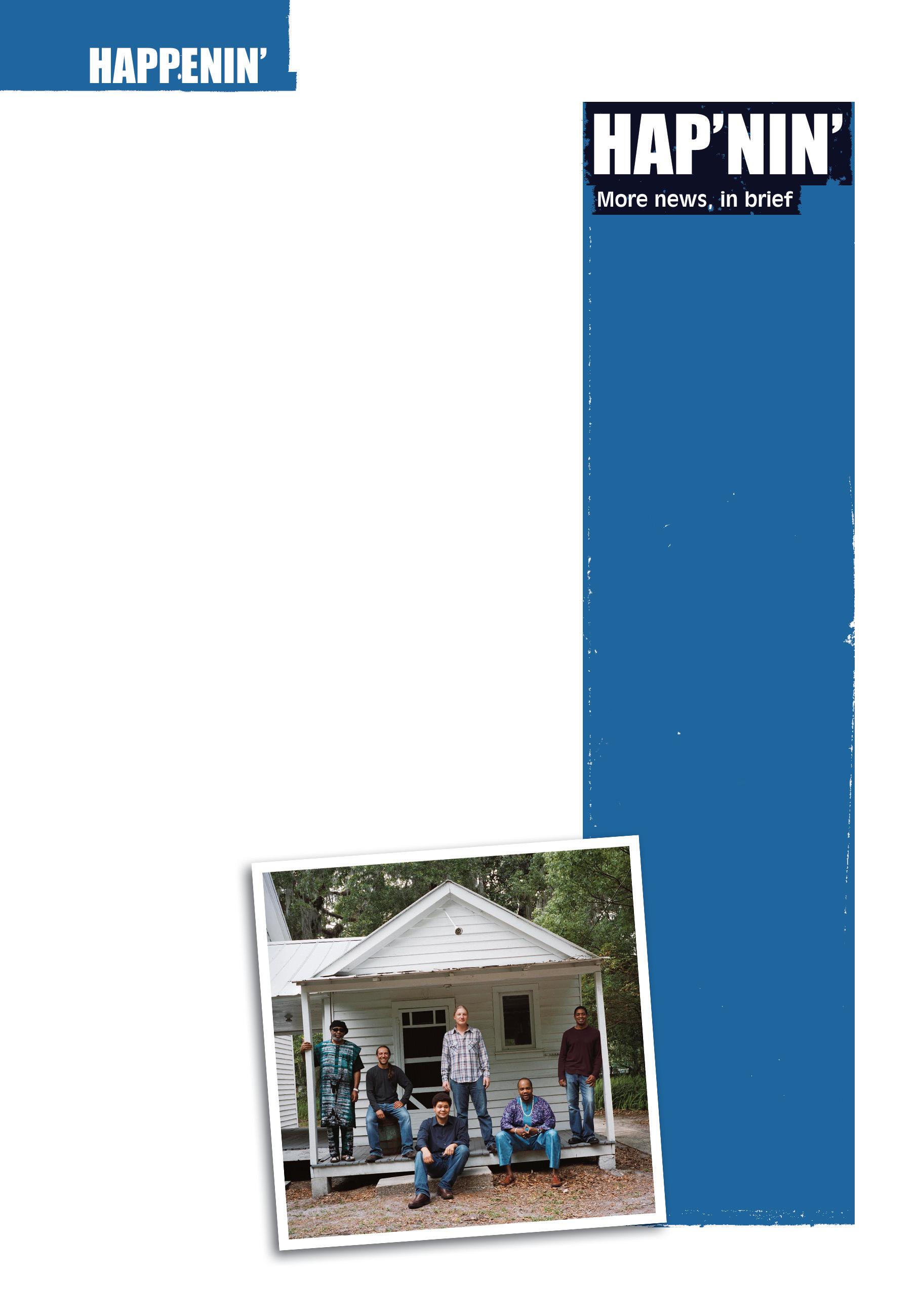
The Derek Trucks Band (featuring Derek Trucks, Kofi Burbridge, Todd Smallie, Yonrico Scott, Mike Mattison and Count M'Butu) release their sixth studio album “Already Free” via Sony Music on 13th April 2009. Again fusing elements of Blues, jazz, rock and soul, the twelve-track collection has been described as “inspired,” reflecting Trucks’ many influences and “mixing soulful vocals with expert guitar playing.” Guests on the album include Trucks’ wife Susan Tedeschi, Doyle Bramhall II and Oteil Burbridge.
Alongside a stirring cover of Bob
Dylan's ‘Down In The Flood’, standout originals are said to include ‘Down Don't Bother Me’ and ‘Get What You Deserve’.
The group play the following UK dates in support of the new album: London O2
Shepherd’s Bush Empire (22nd April), Plug Sheffield 24th and Manchester Academy 2 (25th). derektrucks.com
Bob Dylan releases his first studio album since 2006’s “Modern Times” on 27th April 2009. “Together Through Life”, released on Columbia Records is said to continue the rich vein of creativity Dylan has enjoyed on recent critical and commercial successful albums. Dylan will tour the UK on the back of the new release. Dates: Sheffield Arena (24th April), London O2 Arena (25th), London Camden Roundhouse (26th), Cardiff CIA (28th), Birmingham NIA (29th), Liverpool Echo Arena (1st May), Glasgow SECC (2nd) and Edinburgh Playhouse (3rd). bobdylan.com
Kyla Brox releases acoustic collection “Grey Sky Blue” with guitarist Danny Bromeley on Pigskin Records in April 2009. The twelve-track collection is described as “a heady mix of moody, classic Blues and moving personal reflection, along with the cheeky lyrics and chunky, funky riff-driven songs that showcase Danny's explosive guitar style.” Said to showcase Kyla’s more accomplished vocal performance yet, tracks include ‘All Breaking Down’, ‘Kasbah’ and ‘Since I Fell For You’. Kyla is expected to announce an extensive tour of the UK on the back of the new release. kylabrox.com
The Black Crowes play a one-off show in London on Sunday, 17th May at 02 Academy, Brixton. blackcrowes.com
Officer Kicks release second album
“Citywide Curfew” on We Make Things Records in mid-summer 2009. British tour dates will be announced soon. officerkicks.com Candye Kane’s new album
“Super Hero” is slated in for a mid-June 2009 release on Delta Groove Records. Although her first for the label, this will be Candye’s ninth international release. Candye, who has been battling cancer, described the making of the album as “”very raw and emotional,” but the outcome “a true triumph and victory.” 26-yearold guitarist Laura Chavez co-produced and co-wrote six of the fourteen songs, whilst Candye’s eldest son Evan Caleb plays drums on all except two tracks, which feature percussionist Stephen Hodges (Mavis Staples, Tom Waits ). Other guests include Kid Ramos and Mitch Kashmar. “Last year at this time, I didn’t even know if I would still be alive, much less making another recording,” said Candye, “but take it from me, you don’t have to be a super hero to overcome adversity. You just have to think like one.” candyekane.com
Blues Matters! 16
Creative freedom for Derek Trucks and co.
OUT OF RESPECT
Songwriter pays his respects to passing friend on new album
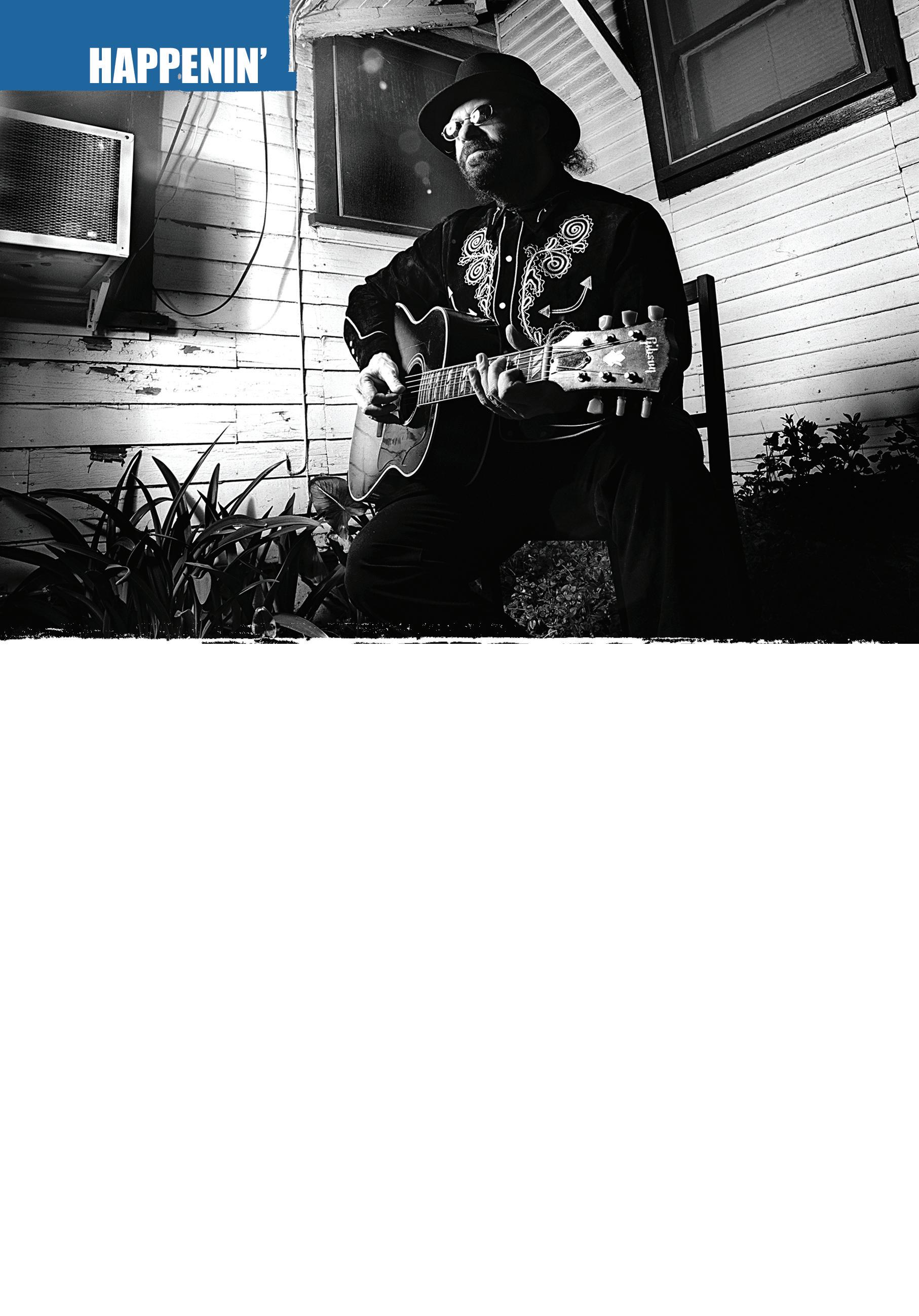
Colin Linden (pictured above) releases new album “From The Water” on True North Records on 4th May 2009. This is the eleventh studio album for Linden – following on from his release as one third of Blackie & The Rodeo Kings, “Swinging From The Chains Of Love” – who has enjoyed recognition from the music industry (numerous GRAMMY nominations and Juno Awards) and his peers (his songs covered by the likes of Keb’ Mo’ and Tab Benoit) during his thirty-plus year career. Colin’s new album was created in the wake of the passing of Colin’s best friend and closest collaborator Richard Bell, with whom he had played with for over eighteen years (on at least 100 albums together). All of the musicians on “From the Water” were close friends of Richard’s - including guests Paul Reddick (harmonica) and the Memphis Horns. Richard (whilst in hospital) also co-wrote Linden’s first French song ‘Mon Coeur Est Dans Tes Mains’. “From the Water contains some of the grooviest, funkiest, and most soulful songs I could have written and recorded,” said Linden. colinlinden.com
WHAT A LEGACY
Label begins to document career of revered late guitarist
earMusic will release “Legacy: Volume One” via Absolute on 1st June 2009. The 2CD & DVD set documents the career of The Jeff Healey Band, from 1988’s debut album “See The Light”, which featured hit single ‘Angel Eyes’. CD1 features sixteen singles, including ‘Confidence Man’, ‘I Think I Love You Too Much’ and ‘Lost In Your Eyes’, whilst CD2 features never before released live performances, including a cover of ‘All Along The Watchtower’, with Tom Cochrane. The DVD is a collective "Rock-umentary" of rare footage, interviews, intimate behind the scenes moments, and unseen live performances from around the world, including collaborations and jams with the likes of Stevie Ray Vaughan, Eric Clapton, The Rolling Stones, Tina Turner and Keith Richards. There are also music videos, including the never before released ‘I Tried’. jeffhealeyband.com
Blues Matters! 18
Colin Linden says goodbye.
WEAK FOR THE BLUES?
 Michael Roach offers satisfaction
Blues Week celebrates its 10th Anniversary in 2009 at the University of Northampton. The residential programme, which provides opportunities for Blues enthusiasts to come together to improve on their skills, was started by Michael Roach in 2000. The event offers a full week (2nd-7th August) of music making with morning and afternoon workshops and classes for all levels in country Blues guitar, bottleneck slide guitar, harmonica, piano/keyboards and vocals tuition. In addition to the classes, the evening activities throughout the week consist of concerts by the staff members, a talk by writer/his-
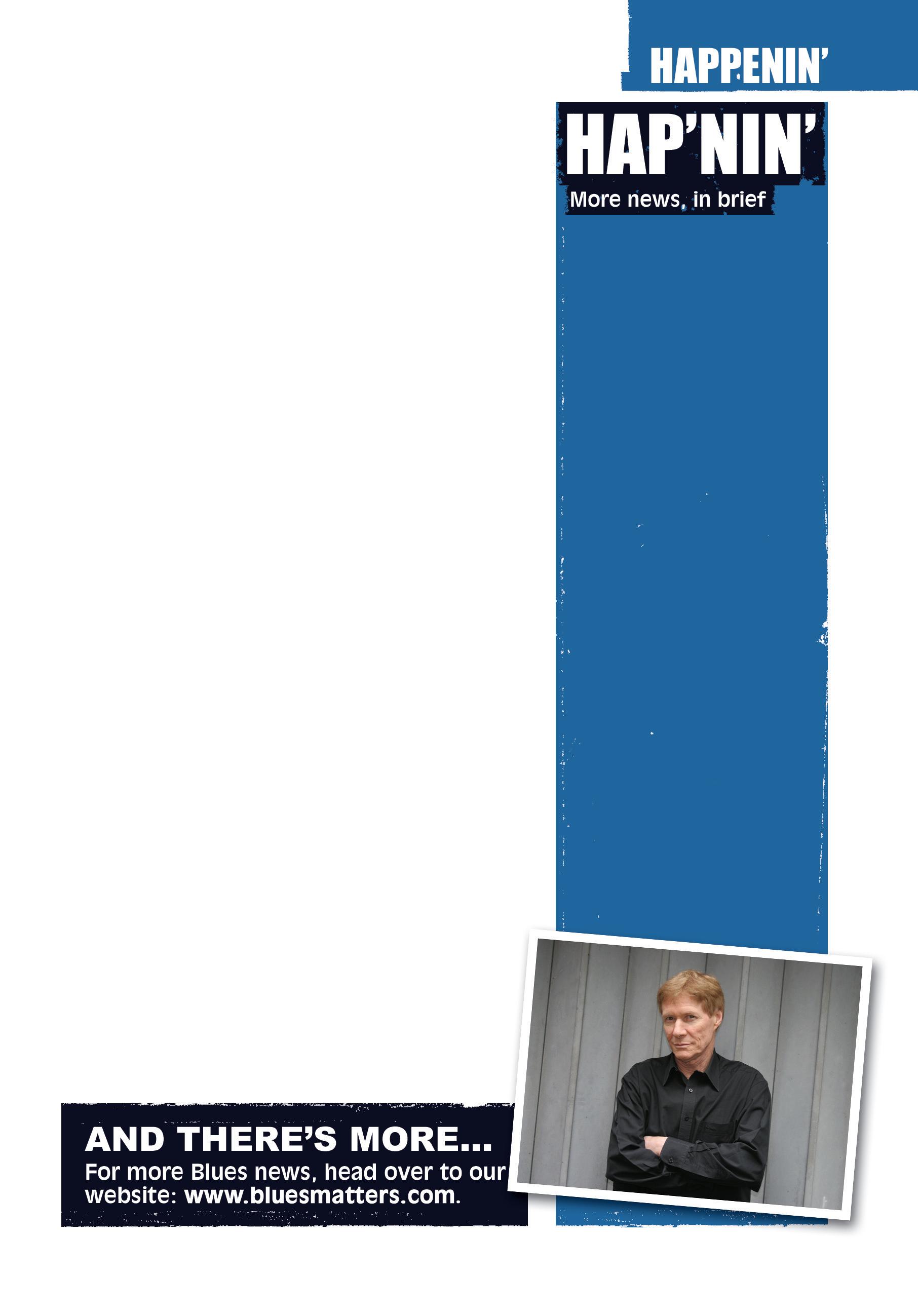
Radio 2 DJ Paul Jones (pictured below) releases his first solo album in over thirty years on April 13th. “Starting All Over Again”, released via Continental Blues Heaven, features, amongst others, Eric Clapton and Percy Sledge, and was produced by Carla Olson (Taj Mahal ). The album is described as “a stunning contemporary album that infuses Blues, rock, pop, and acoustic roots styles that will please old and new fans alike.” thebluesband.com
Gwyn Ashton is expected to release “Two-Man Blues Army” by the summer, “and what a meltdown it is! It’s a guitar and drums power duo with Ashton trading the at picks for thumb picks and using an octave pedal for the low-end growl.” The ten-track album, said to combine “21st century alternative Blues, psychedelic rock and swampy Delta grooves,” will be released on Ruf Records. gwynashton.com The Strange Boys release “The Strange Boys And Girls Club” on In The Red on 6th April 2009. “Austin, TX’s The Strange Boys evoke a wild-eyed, porcelain skinned innocence that is capable of summoning the wayward spirit of Brian Jones. The mystery of the South couples with the mastery of rhythm to create a sound completely timeless and familiar, yet absolutely raw and avant-garde.” Said to be of interest to fans of The Rolling Stones and The White Stripes. myspace.com/thestrangeboys
IT’S ART! Guitarist displays his talent
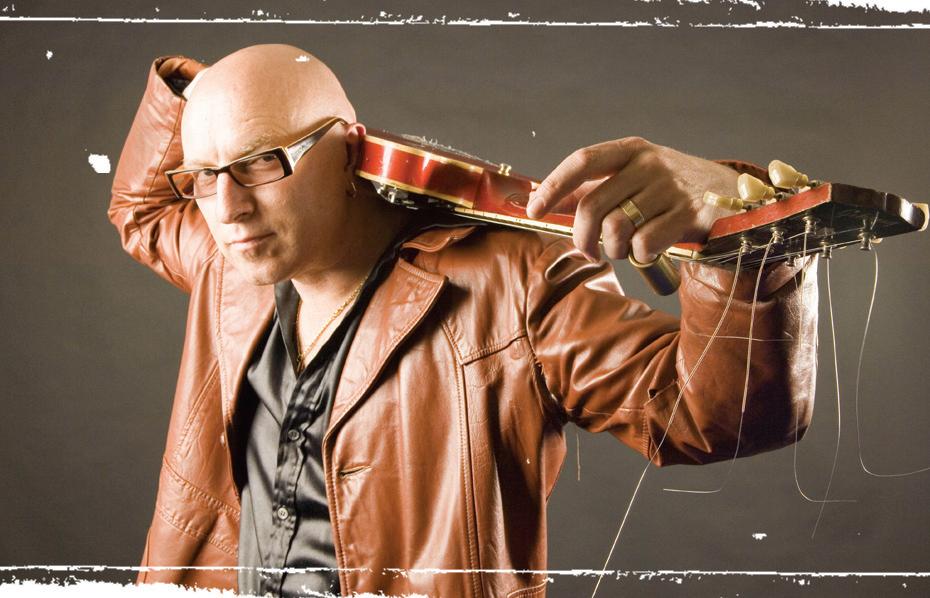
Robin Trower releases new double live album
“RT@R0.08” on 25th May 2009 via the new Freeworld label. Recorded in 2008 on Trower’s US tour, the collection features favourites such as ‘Bridge Of Sighs’, ‘Too Rolling Stones’ and ‘Twice Removed From Yesterday’. The press release read: “Trower is without parallel as an in-concert performer, and this album is proof positive of his awesome skills, and his ability to take the energy of a rabid audience and feed it back to them by way of his guitar artistry.” The 2CD set also contains four video performances. trowerpower.com
Organisers of a new festival in Upton upon Severn, Worcestershire are currently looking for unsigned acts to perform (16th19th July 2009). The event will be free to everyone, with nine different venues (featuring over six acts each). “I would love to be the main venue for new and up and coming bands,” said organiser Donna Heanley, “to show people that we still have a lot more talent out there - not just the bands that play every year.” Contact: starhotel@live.com
Blues Matters! 19
Eddie Martin: those that can teach.
Paul Jones makes time for new album.
ot many acts can claim to have a GRAMMY winning producer/engineer at the helm of their debut CD, but Conil can. “Strange Part Of The Country” was mixed by none other than Tchad Blake, who has worked with the likes of Tom Waits, Bonnie Raitt and Peter Gabriel… With legendary double bass player Danny Thompson also roped in, the debut came with endorsement, yet increased expectation.
Thankfully, the album didn’t fail to deliver, impressing the likes of Stephen Merchant (Ricky Gervais’ co-writer on “The Office”), with many regarding it as one of the best releases of 2008, leading to anticipated appearances at this year’s SXSW Festival in Texas and NXNE Festival in Toronto.
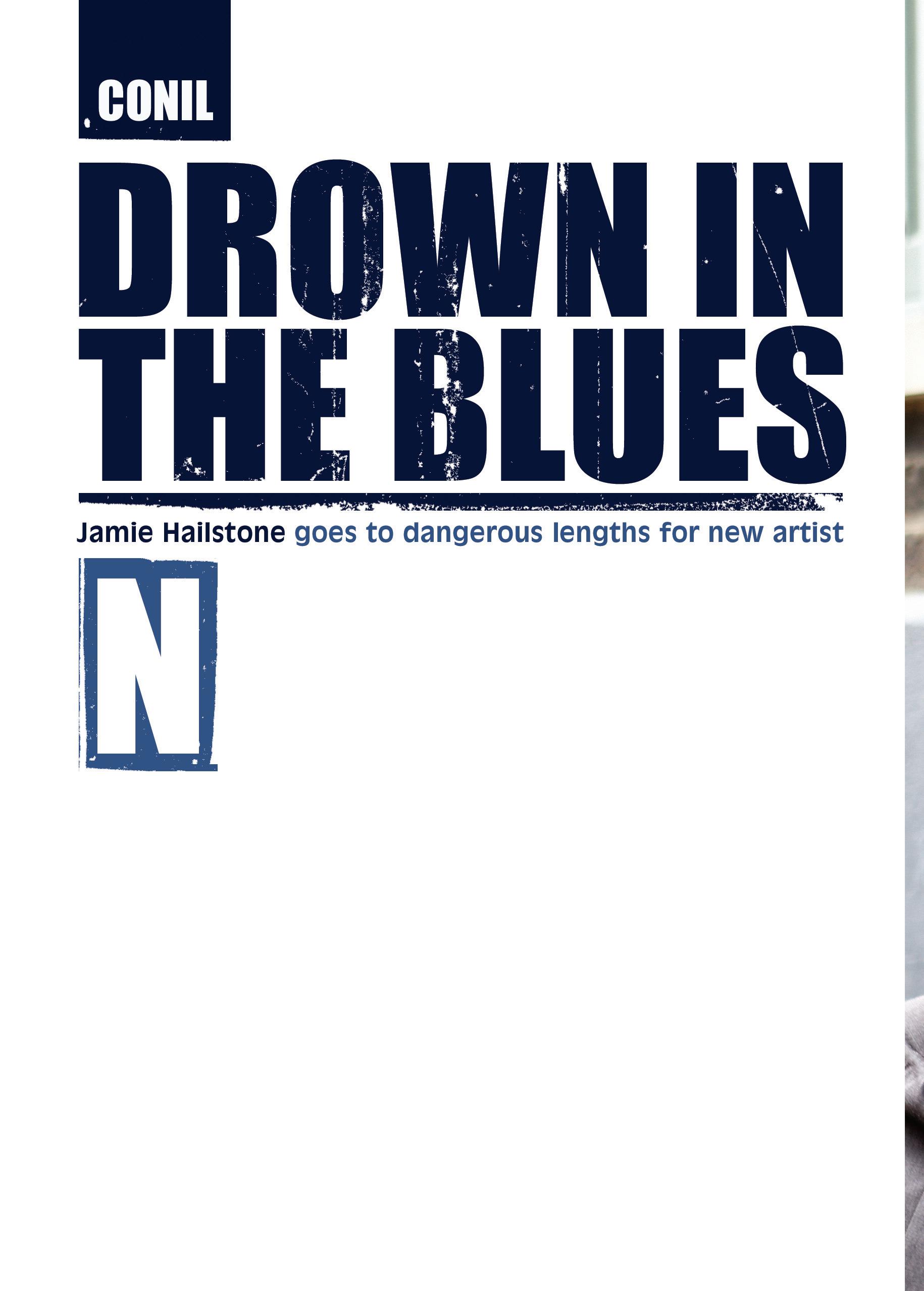
His rough voice, exotic instrumentation and colourful songs have many touting him as a future superstar. Although, he’ll probably struggle to break China…
BM: It was quite a coup to get producer Tchad Blake and bassist Danny Thompson on board for your debut release. How did that happen?
Conil: Well, it was quite strange with both of them. I had been trying to get different double bass players to sound like Danny Thompson for years, and so, on the off-chance, I found his website and sent him some tunes. I really never expected to hear from him, but one day the phone rang. “Conil, it’s Danny Thompson! I love the tunes, when do you want me to play on them?” he said.
What, I thought, is this a wind-up from one of the old bass players trying to pay me back for Danny worshiping in the studio? Amazingly it was the real Danny and he was lovely. A really warm and solid person, just like the sound he makes on his giant instrument. He gave me great confidence that what I was trying to do was worth it.
With Tchad there was some identity confusion. Back then I used to sign emails Phil Coltrane, because I thought it looked like ‘amateur hour’ that the artist was also the label. Like it says in ‘Dog Meat Stew’, “changed my name to John Coltrane ‘cos no-one took my phone calls.” Well, my identity trick worked. Tchad was great, not only did he teach me a great deal about production; we had a really good time together. After we finished, I really felt inspired by what you could become if you devoted your life to music.
The word is Tchad Blake is something of an expert on whiskey. Did he recommend any to you?
We did drink quite a lot actually, both whiskey and wine. One day, I decided to bring a case of good wine to the studio, because we were always drinking the stuff he had imported from Italy. It was a rainy day and my car leaks. As I got out of the car, I picked up the rain-soaked cardboard wine case and all the bottles crashed onto the concrete floor. Expensive red rivers flowed down the street. It was then that Tchad recommended the single malt.
Tell me about the band you have with you. Who are they and where have they come from?
I play with Joel Hartman on double bass; he’s half English/American and a really charming and exceptionally musical man. At the moment, he and I are working closely together on mixing and production - directly inspired by our mentor Tchad Blake.
Pete McDonald (guitarist – JH), also known as Alex One, is a Glaswegian with the Blues coming out of his a**ehole. He’s been around the block about 357 times, played music on the Greek Islands for years and has played in bands with people from The Jesus And Mary Chain and Alabama 3.
Bubu is our drummer. He’s an Italian reggae specialist and a very funny guy. He is a classically trained musician and a Tom Waits fanatic. The four of us play live together. On the album, Ian Faller played the dilruba (Indian violin, like a bowed sitar - JH) and viola de gamba, which is an
Blues Matters! 20
“If I wasn’t doing this, then I’d still be trying to do this.”
Play someone you like or respect “Swordfishtrombones”, or any of his other recordings, and you will get one of two reactions. They will either get it immediately, nick every Waits CD in your collection and spent the next ten years quoting “Frank’s Wild Years” at you, or they will politely make their excuses, leave, and never speak to you again.
But the fact remains that Tom Waits is one of the most original artists to have emerged over the last forty years. You might not like his bourbon-drenched voice, but he is one of the finest songwriters in the world.
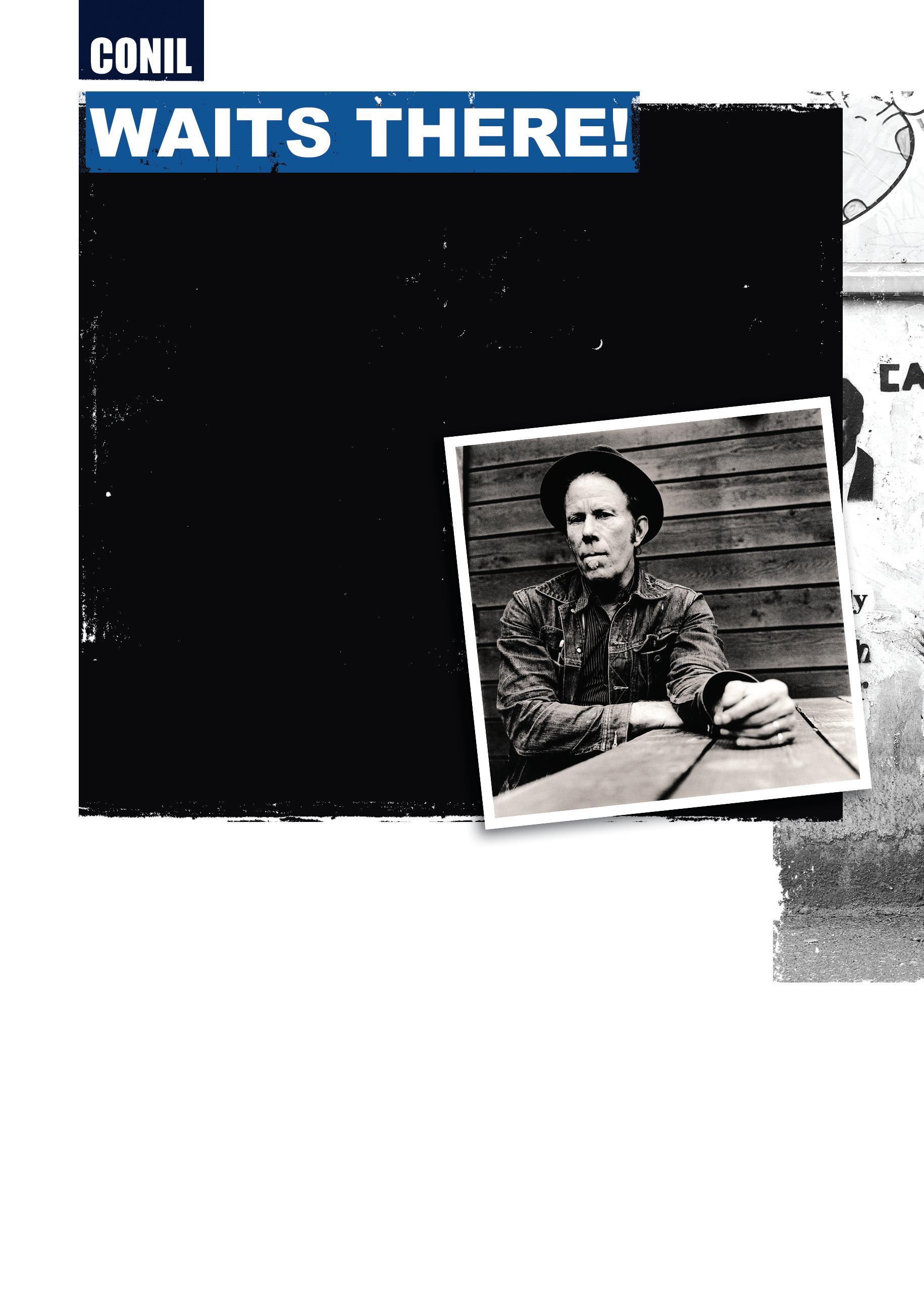
Waits’ career dates back almost forty years, having first signed to Asylum Records in 1972. Although he recorded some demos for another label, his first proper release was “Closing Time” in 1973. Waits’ trademark growl is nowhere to be heard and the album is a remarkably understated collection of fine folk and Blues songs. However, as the decade wore on, Waits began to develop more as an artist. His final album for Asylum, “Heartattack And Vine”, hinted of greater things to come.
The big turning point was meeting and marrying artist Kathleen Brennan and subsequently signing to Island in 1980. From then on, the records got weirder and weirder and Waits begun to hone his barking hobo/Beefheart turned-up-to-11 persona.
“Swordfishtrombones”, which came out in 1983, is considered by many to be his finest hour. The truth is that Waits was on a creative roll during the ‘80s and he put out several insanely good records.
Every possible instrument and musical style was thrown into the pot, from jazz poetry, Blues and rock and what came out the other end was classic Tom Waits. Both “Frank’s Wild Years” and “Rain Dogs” are uniquely brilliant.
As the ‘80s progressed, Waits become involved in acting and soundtrack work. Since leaving Island, his records have been something of a mixed bag, although “Mule Variations” in 1999 did contain some classic material, including the storming ‘Big In Japan’.
Whatever you think of the man himself, he is a true original. From supporting roles in films like “The Fisher King” and “Dracula” to some truly outrageous comedy performances (everyone should check out his press conference on YouTube – it’s hilarious), Tom Waits has never been afraid to take risks. He might have given Rod Stewart one of his greatest hits (‘Downtown Train’), but don’t hold that against him. JH
early music cello. I play all the other instruments.
The opening song on the CD, ‘Dog Meat Stew’, has reportedly angered the Chinese authorities...
We released the ‘Dog Meat Stew’ single in the UK just before the Olympics. Somehow the publicity emails found their way to the Chinese authorities, who were in the middle of a major image campaign to encourage foreign visitors to China during the games. They sent our manager an angry message that China does not condone eating dogs, and that our music would be banned in Beijing. It was weird because we weren’t even releasing the song there, but it actually made the song more popular in China, so the story ended up being in the newspapers over here.
I really like the song ‘Camden Town And I Should Be Happy’. How did that song come about – and are you a big fan of Camden itself?
I wrote that one as I was watching the film “Withnail & I” (cult movie starring Paul McGann and Richard E. Grant –JH) and living in a derelict house in Swiss Cottage, which is just up the road from Camden. My life at the time was a lit-
tle bit “Withnail” – no heating in a freezing old house, heavy drinking and fear of the future. Actually, come to think of it, nothing much has changed since then, except that unlike Withnail, I no longer drink anti-freeze!
What’s your favourite watering hole in Camden town?
The Crown & Goose on Arlington Road.
According to your bio, you have also recorded with Peter Green. What was he like to work with?
It was an honour to play music with the great Peter Green. I really love the music he made in the ‘60s. We recorded a version of his song ‘Man Of The World’, which I grew up playing on the guitar with my dad.
What first made you want to become a musician? And which musicians have really inspired you?
I remember writing my first song on my 17th birthday, when I got my first electric guitar. The song was okay, but the feeling I had was unlike anything I had done before. Creativity
Blues Matters! 22
Tom Waits is an acquired taste.
photo: Anton Corbijn
is a strange thing. It’s difficult to know where it comes from but, unlike anything else, creating music is its own reward.
Musicians who have inspired me with writing and recording include Charles Mingus, Ali Farke Toure, John Martyn, David Bowie, plus a load of artists from north Africa across the Arab peninsula and into Asia.
Would you rather be seen as a musician who is cool, or a musician who is respected by his peers?
I thought I was both?!
There are some great one-liners on ‘Strange Part Of The
Country’. The line you mentioned, “changed my name to John Coltrane ‘cos no-one took my phone calls,” sounds like a Tom Waits line...
Tom Waits is a big influence. From the great despair and emotion of the songs on “Small Change”, which is probably my favourite record of all time, to the junk instruments and weird production on “Rain Dogs”. He is consistently innovative and inspiring.
Tchad says Tom is the funniest person he ever met.
What does the Blues mean to you?
This question always reminds me of an argument I had with my lawyer friend in Goa. We were drinking on the beach and I started saying that the Blues has formed the basis of all pop music and that without it modern music would be entirely different. My friend disagreed and ran into the ocean to escape my Blues ranting. It was monsoon season, so swimming was not advisable. Within minutes he was miles out at sea waving for help. I bounded in after him and found myself in the same predicament being pulled down by the undercurrent. Fortunately, the ghost of Robert Johnson came down from heaven with a tree trunk and we got back to shore. So, the answer to the question is that I almost drowned from the Blues.
What’s the one record everyone should own?
“A Love Supreme” by John Coltrane.
What’s your favourite “Friday night” record, and what’s your best “Sunday morning recovery” record?
Friday night is currently “Chicken Scratch” by Lee ‘Scratch’ Perry. Sunday morning is the recent “Studio One Dub” compilation on Soul Jazz Records.
Do you think the Blues will ever be hip again in this country, in the same way it was in the ‘60s?
As an evolved form of the Blues, yes!
How important is it for you to release your music on your own label?
In recording the album, it has been important to remain independent to keep the quality of the music pure. Marketing a record is a different matter. The limited resources of a self-release mean that we will need a label partner in the near future.
Would you ever let your songs by covered by an “XFactor” winner?
Yeah, I wouldn’t mind buying a swimming pool.
If you weren’t a musician, what would you do?
If I wasn’t doing this, then I’d still be trying to do this.
Do you think the credit crunch makes it easier or harder for independent musicians to survive?
The recession could benefit certain types of music. I wonder if David Bowie would have been so appealing had his flamboyant and escapist music not been a respite to the recession of the ‘70s. Perhaps my narcotic alcoholic music will make people feel better this time around.
Who would you pick to play you in a film of your life?
Jeff Bridges.
Out of 10, how would you rate your stage banter?
One point for every unit of alcohol consumed. JH
Blues Matters! 23
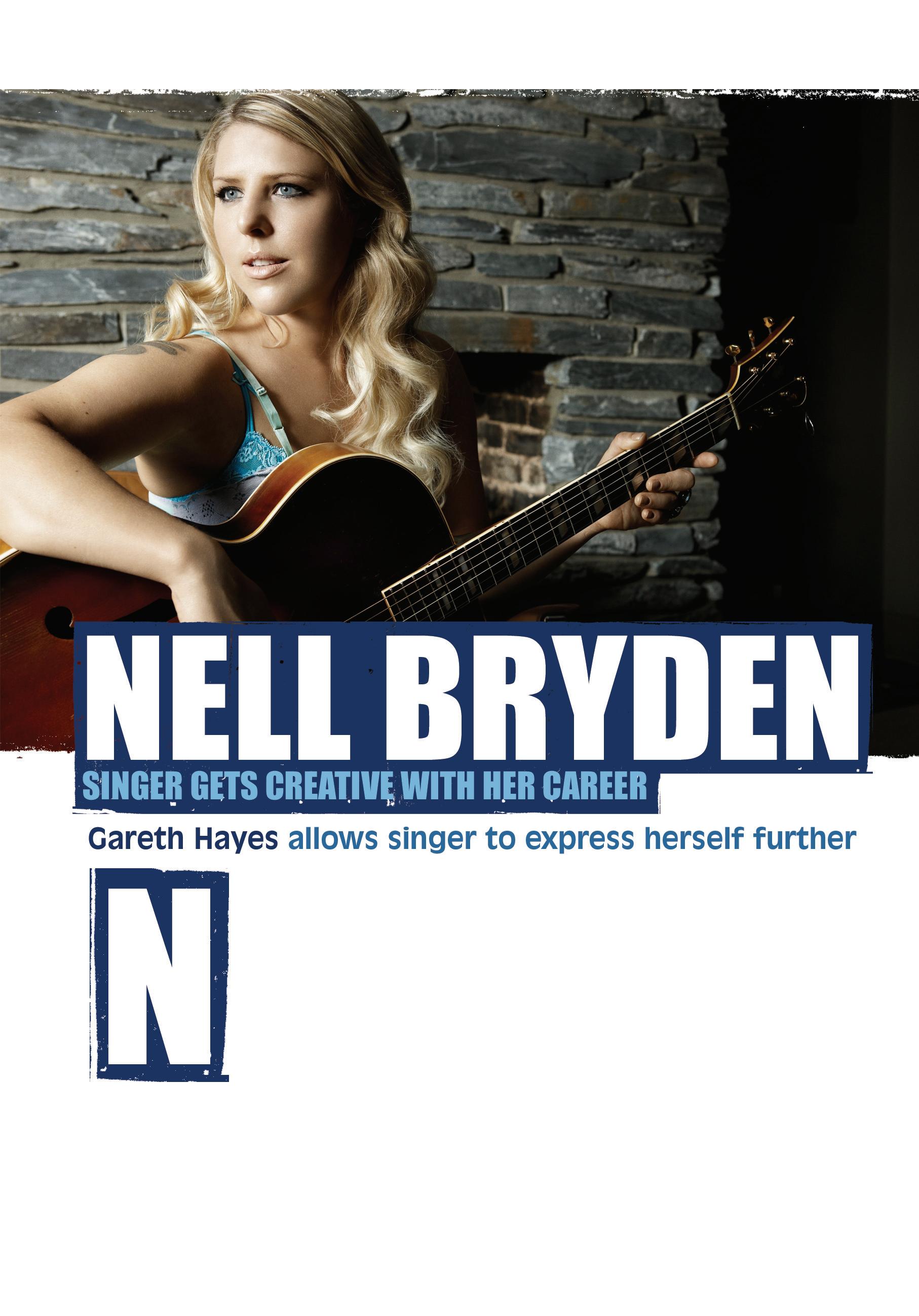
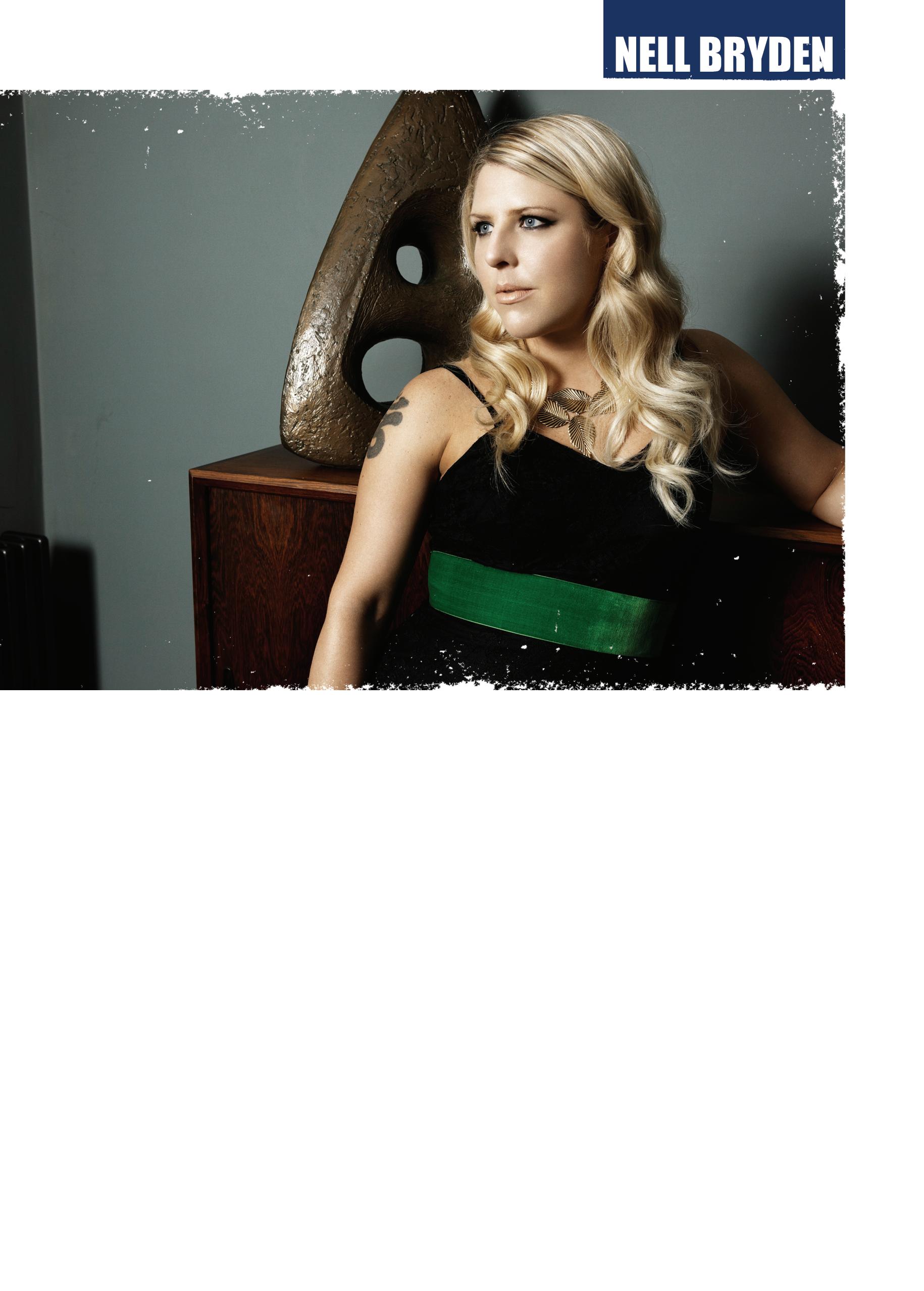
ell’s parental heritage of art and music almost guaranteed that she’d exude a creative talent of some form, but the artistic connections went deeper as she was able to kick-start her career by selling a Milton Avery painting, dormant in her parent’s attic, for £200,000 at Sotheby’s. “Art paying for art,” as Nell puts it, and to show her gratitude, she has devoted all her time and energy into music.
Subsequently, Nell has been finding herself while on the road, refusing to slowdown with an astonishing gig schedule that has taken her as far as Kuwait and Iraq to perform for UK and US troops. Going around the world to hone her personal and unique style, a combination of critical acclaim and pure grit has taken her New Orleans-styled jazz and Blues to the front of the stage.
Playful and sassy and hopelessly romantic, there’s
“Even when off the road, just sitting down chilling out, I have to be writing a song or thinking about another way of approaching an old song.”
something for everyone in New York singer’s music, from solo acoustic to big band boogie, and a colourful array of Blues running throughout.
With the release of “Live From Iraq”, and the upcoming Lipstick & Guitar Tour, Blues Matters! couldn’t help but get caught up with Nell’s enthusiasm…
BM: I’ve read that you had an unconventional upbringing... Nell: I grew up in a loft in Brooklyn, on Atlantic Avenue, in the ‘80s - when New York was a much rougher place. It was one of those magnificent high ceiling places. My dad was a painter doing huge scenes on canvas, getting up early and spending all his time being creative. My mother was a concert classical singer and she was always touring; I would go with her as much as possible. Growing up in this loft was unconventional in an arty way, and my parents would hold these parties. Mary Travers from Peter, Paul and Mary came to one of their dinner parties and said my loft was the coolest ever. I’ve always remembered that.
You were playing the piano at 4, and then the cello at 9.
Blues Matters! 24
With your mum’s background and the instruments you played as a kid, you’ve had quite a classical background, but that hasn’t led to a career in that discipline?
I was studying cello but, to be honest, I was not very good. Somehow I got in with the National Youth Symphony Orchestra in Washington DC and I got a big cello part position and it was really hard. I got there and had to lead.
There’s a certain type of person that becomes a classical musician, a jazz musician or a rock’n’roller. All involve a work ethic and it’s different for each. I just discovered through that experience that classical wasn’t for me.
Your musical leanings only really came through when you were backpacking in Australia. How did that come about?
I actually thought I was going to go to Italy to study Italian and opera and become the next Maria Callas. But then I realised that I don’t speak Italian that well. So then I wanted to go as far away as possible where they speak English. I wanted to meet strangers and see how I reacted in an effort to find out who I was and what I was supposed to do in this world. I’d reached that moment of coming out of school in a conservative area and I just needed to figure out who I was with no strings attached. That took me to Australia, luckily for me, because it was there that I met people with the same kind of wanderlust.
Your work has been well-received everywhere but particularly in Ireland. How has that come about?
A lot of people think I have Irish connections, like an Irish grandmother or something, and I don’t. The way that I found myself in Ireland was just one of those random things where a tiny little thing can change the course of you life. I was at a moment where I had hit a wall with touring in the United States and I needed something different to get out there in a different way. I got an email from someone who had recently toured Ireland, and I looked at their venue list and thought, “I can do that!” I put a plan together, got one show, then another and before I knew it, I was going to Ireland! There’s something specific about Ireland that embraces, loves and recognises the arts. They have this incredible and real way of approaching people that do music; they don’t put them up on a pedestal but they really respect them.
Life on the road for you seems to be non-stop. 350 gigs in two years is some schedule. How do you do that?
Probably it’s an addiction, or maybe when you do something that you love, how could you possibly do anything else? Even when off the road, just sitting down, chilling out, I have to be writing a song or thinking about another way of approaching an old song. It’s my purpose in life again. A work ethic and, of course, you have a lot of energy when you’re happy.
You had an EP out that was, according to reviews, “stirring and sexy.” Another comment was that you have the “blonde look that record bosses love.” How do you feel when some people put sex appeal first ahead of the music? (Laughs) People think I’m pretty?
Great! That’s awesome! Really! I think I’m like everyone else that has those days where I just feel really the ugliest thing in the world, and then other days I’m
In October 2008, Nell Bryden played fifteen shows in ten days for British and American troops at Forward Operating Bases in Kuwait and Iraq. “I had no idea what to expect, recalled the singer. “It was such an adventure to be hopping on and off helicopters, so very rock'n’roll, but I think the biggest eye-opener for me was seeing how much of an effect music can have.”
Nell has built her reputation through extensive touring, but this was an extraordinary environment, with every performance on Nell’s tour for the coalition troops recorded to document places such as Crooper Detention Center (where Saddam Hussein was held for trial) and Camp Victory in Baghdad.
“Blues is the great crossroads,” insisted Nell, “and I was able to connect with soldiers I might otherwise never have anything in common with by playing Elvis, Johnny Cash, Lynyrd Skynryd and Muddy Waters.
“The troops were such an enthusiastic audiencethey whooped and hollered like a good crowd should.”
On 6th April 2009, 157 Records released “Live From Iraq”, featuring recordings from those shows. The collection sees Nell and her band run through rock classics such as ‘House Of The Rising Sun’ and Blues standards, including Muddy Waters’ ‘Forty Days’. The release is accompanied by a 20-page booklet featuring photographs and blog entries.
“The release is my way of showing people back home this different perspective on the military, on the war, on our troops serving out in the Middle East,” said Nell. “It's in no way an endorsement of the way or our foreign policy thus far.”
Although Nell is working with GRAMMY winning producer David Kershenbaum on a full-length studio album, scheduled for release in the Summer of 2009, there’s chance to see Nell in more customary surroundings, when she tours the UK in May as part of the Lipstick & Guitar Tour, with Kat Flint, Lizzyspit and Lana.
“Lana is amazing!” enthused Nell. “I'm hitting the road with some great female performers.”
Lipstick & Guitar Tour dates are: London Ginglik (26th May), Nottingham
The Maze (27th), Manchester Blue Cat (28th), Sunderland
Pure (29th), Birmingham
Marrs Bar (30th) and Norwich
Arts Centre (31st). DH
Blues Matters! 26
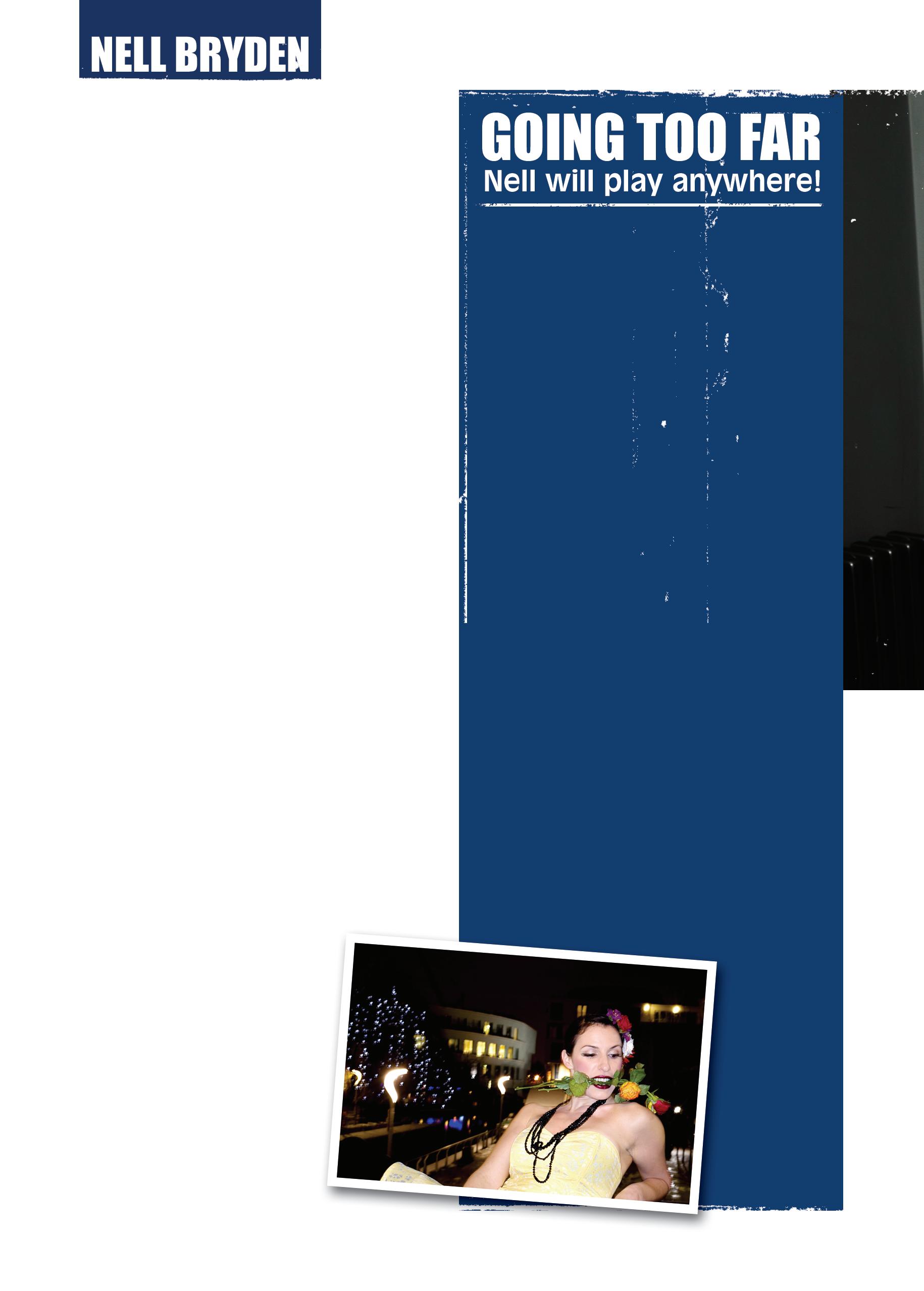
Nell’s favourite: Lana.
fine and confident. It’s interesting, though, because some of the best and most influential people for me have had a very interesting combination of vulnerability and toughness. Janis Joplin, Maria Callas, Patsy Cline… They have a real edge to them, it gives them awesome power, but then they are also completely opening their hearts to you.
Acoustic-Americana, retro-jazz or Blues-noir… Your work seems to cross many genres and maybe because of that has greater appeal. How do you define your music?
Blues is special to me and, well, Robert Johnson remains a huge influence on me. Something like Blues has sub-genres of the genre, doesn’t it? Names of genres go in and out of fashion, and can be culturally specific. Country here has a very different meaning than it does, say, for country in New York. The country scene in Brooklyn is hip and happening. And Nashville is a different scene again, kind of glossy poppy mainstream country.
You’ve supported KT Tunstall and Counting Crows. How do you feel about being the support act?
Not close - no way! I wasn’t the support. At least that’s how I feel. I sing my songs, it’s my show. What a joy!
I performed for 6000 people at the Liverpool Arena the other week and they had to drag me off the stage. It was so right and so comfortable, it nearly freaked me out.
Your studio album, “Second Time Around”, has eleven tracks and more than half the song titles, like ‘Goodbye’, ‘Where The Pavement Ends’ and Helen’s Requiem’, have
sad connotations. This is great news for the Blues collector looking for clues in the mood of the album...
Oh, I know, isn’t that awful - and I’m such a happy person!
Is it part of the Blues ethos maybe?
It could be, yeah! It’s a funny thing. Lyrically I think I can get away with darker lyrics, but musically I need music to be uplifting and energising. If something is really dragging, and one sad song after another, it can be down-tempo and depressing, and that’s not me.
“Twin engines of throaty voice and swaggering style” is another great comment I’ve read, but how do you feel when the reviews aren’t singing your praises?
I read my reviews when I know where they are, but I move around so much that it’s difficult to catch them.
“Dark and dangerous” was something I read which seems a bit odd having spent the last half an hour in your company, and not feeling scared at all - except by your energy! (Laughs) Dark and dangerous? Well, considering I’m blonde and probably about the gentlest thing ever, I don’t know what to say. There must be another Nell Bryden doppelganger out there (laughs).
With a name like Nell, I want to ask if you like oranges, but maybe I’ll just ask what your favourite fruit is?
You know what I really, really love? Pomegranates! No, persimmons! Persimmons are amazing, those little orange ones - but pomegranates was my first answer, so use that! GH
Blues Matters! 27
“People think I’m pretty? Great! That’s awesome! Really!”
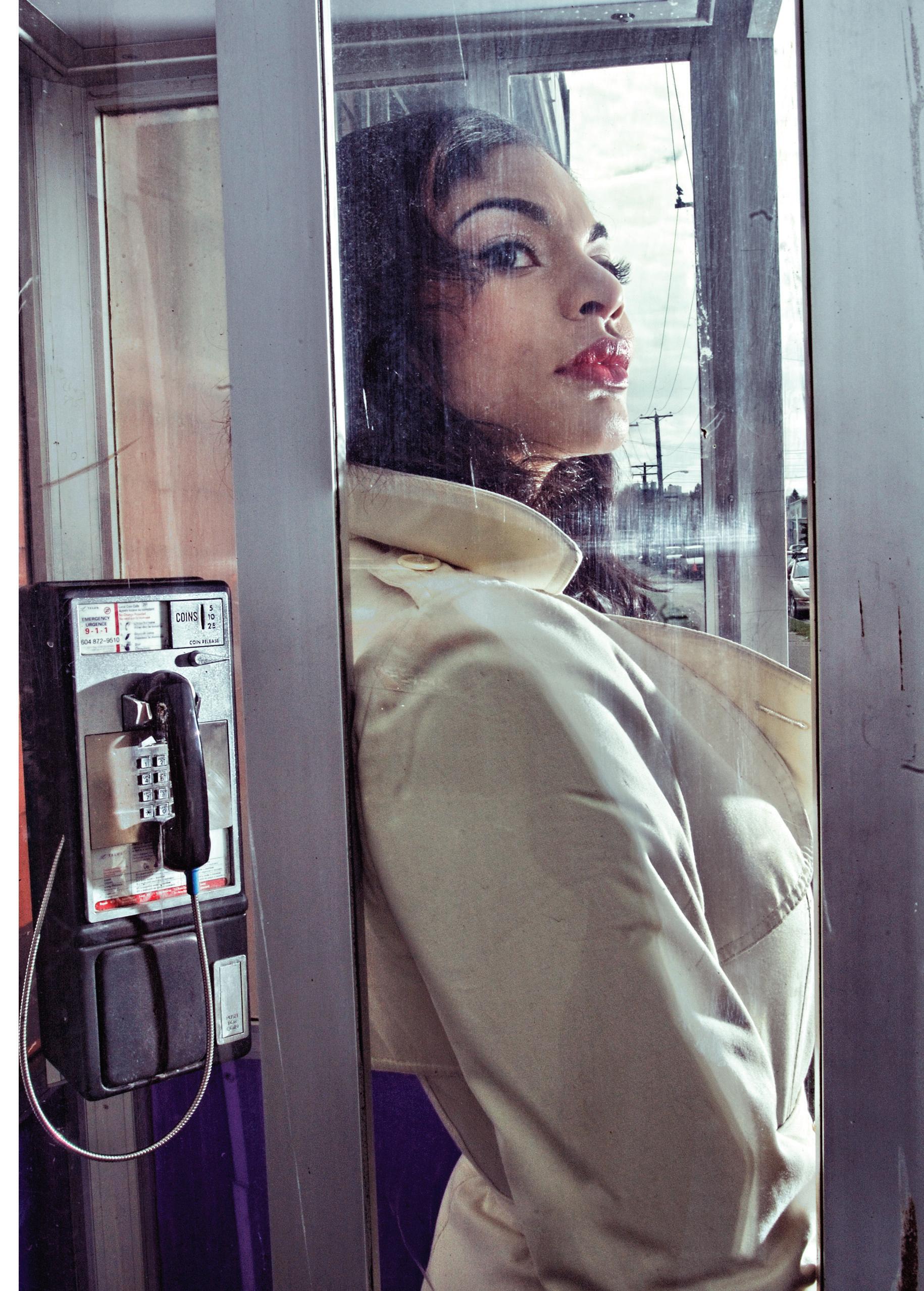
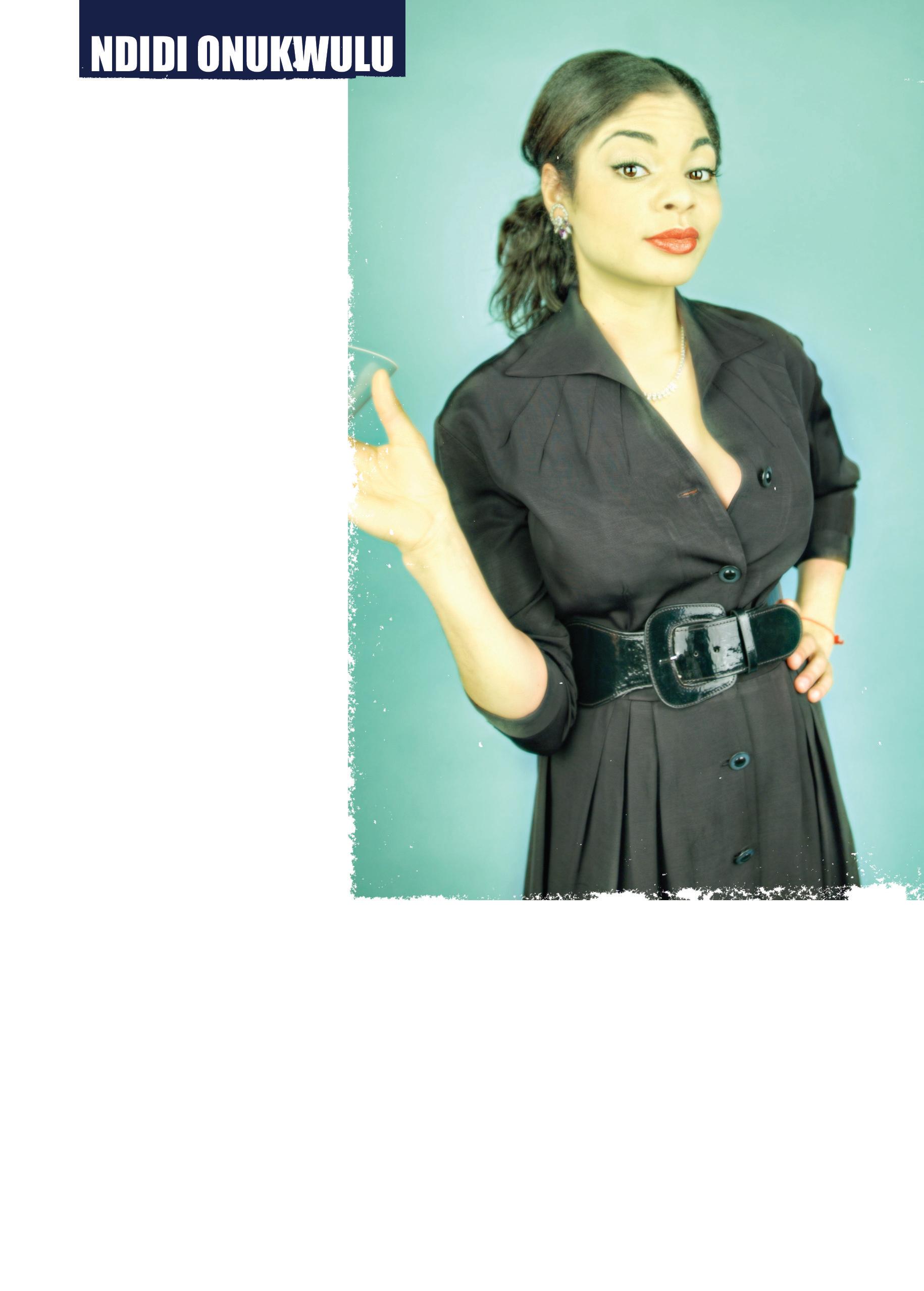
ith the success of home-grown singers like Amy Winehouse and Adele, it’s not going to prove easy for Ndidi Onukwulu to make an impact outside of her homeland in an already congested scene, but whilst there are undoubted similarities in the sound and delivery, Ndidi reaches the kind of personal lyrical depths that however many years in a “fame school” couldn’t teach you.

Ndidi endured a turbulent childhood. Her Nigerian father left at a young age, and when her mother remarried a mountie, years of moving from small town to small town followed, with Ndidi subjected to intolerance due to her mixed race. By the time Ndidi was fostered as a 13-yearold, she was a loner who had spent years taking solace from her mother’s record collection, and was writing Blues songs to express her woes.
When her debut album, “No, I Never”, was released, following years of toil, the acclaim was overwhelming, including nominations at the Maple Blues Awards, where she took home the New Artist Of The Year Award. In 2009, she was nominated for Best Roots & Traditional Solo Record at the Juno Awards for follow-up “The Contradictor”, an album that will be remixed and remastered for release across Europe from April 2009, retitled “Move Together”...
The music scene certainly doesn’t need another Amy Winehouse or Adele, but it’s shorn of a few Ndidi Onukwulus…
BM: Can you start by telling our readers us how long have you been writing and performing?
Ndidi: I have been writing since I was around the age of 8, but performing only in the last ten years.
I know you come from a musical family, and read that your father played drums in your hometown… Well, my father is a Nigerian musician, that is true, but he was only around until I was 3 years old, so had very little, if any influence on my music.
I understand your mother sent you out to sing at local talent contests as a youngster. Would you recommend this course of action to aspiring singers today? I wondered if you had learned anything from these experiences…
I do not recommend talent contests at all! I recommend having a childhood. I believe that living your life and experiencing changes is the only way to truly develop whatever gift it is that you have. I really entered those contests as a way to escape my home life and the smallness of the communities I grew up in. I wanted to get away, and that was a way out.
As a teenager you decided to go to New York to pursue your career. Can you tell us how difficult a choice this was and what your time in New York taught you about the business of singing the Blues?
I had not been living with my parents for many years. I left their care at the age of 13 and, well, I am not going to say
Blues Matters! 28
Blues Matters! 29
“I would like to dedicate myself to working for the people by running for Prime Minister.”
that leaving to go to New York was easy. I made a survival decision and from that point my life started.
Going to New York was in fact a very ‘spur of the moment’ thing. I decided that I wanted music to be my career and I figured that New York would be the hardest place to get that started. Well, I was right. I learned a lot and I ended up singing hooks and partying a lot! I realised that pushing towards what it is I am here to do was the best way forward, and my time in New York helped in this aim.
Can you tell our readers a little about the Blues scene in Canada? We receive so many great roots/Blues releases from your country…
The Blues scene in Canada is not all that big, and the audiences are not as diverse as I would like or would have hoped. In fact, the Blues scene is an older crowd. However, I am fortunate in the fact that I have had the opportunity to play for younger and really diverse crowds thus helping to broaden the Blues community
I really want to focus outside of Canada, with Europe first. It’s funny, but for some reason the more you play outside of your home, the more your home wants to support you, so I am in great demand at home now.
As for the States, I am excited to break into that area.
You enjoyed a lot of recognition with your debut album, "No, I Never", and this seems to have continued with “The Contradictor”? With the album being rereleased in Europe soon, retitled (with a few song changes) “Move Together”, would you like to tell our readers about the themes and inspirations for this album?
The themes and inspirations are similar to the ones on the debut, however, they differ in the sense that they are specific stories about specific people - some dead, some alive - and really there is only one theme and that’s the loss of relationships. I think it is safe to say I have remained open and personal. In fact, I am perhaps more personal than before
The first record was an interesting journey. I really didn’t stick to any traditional format and decided to mix full band tracks with low key acoustic songs. It was personal. Some of the songs are slight social commentaries, such as ‘Weight’ and ‘Horn Blower’, whereas others touch on personal themes such as the disintegration of my relationship, which was happening at the time the record was being made.
Tell us a little more about your favourite tracks? Well, that is a tough question because I love them all. (Pauses)… Well, my favourites to play live are ‘Almost JD’, ‘Her House Is Empty KH’, ‘SK Final’, ‘Forever SZ’, ‘NO
Everybody’, ‘The Lady & E’… Each one of these songs is a very specific story, so when listening to them or playing them live, it’s very easy to get into the heart of the song to really tell the story. I have been known for, well, mumbling words on a stage, but these tunes, well, they don't allow me to do that - the words are clear, the tone is set and the melody just moves.
How did you want the follow-up to differ from the debut? My intention for this release was to bring a new sound to the table. To reintroduce myself and allow others to hear where it is I am heading with my musicality and creation. It may be an eclectic mix but there is a strong common soul to the record, and that’s what it is I am singing about and how I am doing that.
I hope that more people buy “Move Together”, and perhaps folks from other communities will be interested. I love
Blues Matters! 30
“Slim is an amazing player and wonderful person, who I deeply respect and care for.” Ndidi speaks in complete admiration for Madagascar Slim, a musician whose early guidance was so important to the young singer’s development. But although he is a leader in the Canadian Blues scene, little is known of this larger than life guitarist elsewhere.

Born in 1956 in Antananarivo, Madagascar, an island in the Indian Ocean, Slim was christened Randriamananjara Radofa Besata Jean Longin, and taught himself to play guitar on his brother’s instrument at a young age. His was a musical family, and he and his older brothers played in a local salegy band. Salegy is a popular Madagascar type of Afropop style from African folk music dance, which originated with the language of Madagascar. However, once Slim heard Hendrix’s ‘Hey Joe’ on the radio, he was hooked and had found a new direction. While he didn't speak a word of English at that time, he was committed enough to then spend many long hours trying to duplicate the solo from that song together with the words. Later, he heard the records of B.B. King, and came to appreciate the more direct and simple form.
Slim moved to Canada in 1979 to study English and accounting. While in school, he became a founding member of a French Canadian folk ensemble, La Ridiane. It’s been a long road for Slim since then, but he has three Juno Awards to his name, winning World Music Album Of The Year in 2000 for his solo album “Omnisource”; another in the same category for his 2005 collaboration with the world music group African Guitar Summit; and the Roots & Traditional Album Of The Year prize in 2001 for another collaboration, this time with folk music group Tri-Continental. Tri-Continental are three seasoned guitarists who fuse their Celtic, Blues, folk and African rhythms. The sound was so different, and so popular, it has a category of its own, ‘Universal Blues’. Indeed, Madagascar Slim is also considered the inventor and promoter of a new sound, ‘Madagascar Blues’.
Madagascar Slim’s music, inspired by the recordings of B.B. King, Jimi Hendrix, the traditional songs of Madagascar, and his African and world contemporaries mix together nicely to create Slim’s unique sound, which is equal parts roots, Blues, folk, R&B, reggae, and world music. His propulsive guitar playing, uplifting and complex rhythms make him, in Ndidi’s words, “quite beautiful.” KW
to play - I am a performer - and I love to sing and write and dance around, and I would love to do that for as many people as is humanly possible. So, I hope many people get this record and come on out to the shows.
Have you been getting feedback from Europe?
The feedback has been interesting. Those that get what’s going on have been incredibly positive. Those that don't have been a bit confused, but have still said really good things…so, all in all, it’s been well received.
On both “No, I Never” and “The Contradictor”, there are a range of influences which come through, including Santana, some reggae, gospel, work song and rock…
You hit the nail on the head with that statement. I grew up listening to classic rock and African music, but no matter how traditional I may have wanted to be, what I grew up with would seem to shine through.
Especially the Blues...
The Blues is something that is and always has been inside
of me. I knew that because the first time I heard John Lee Hooker as a child, I knew that the music, the sounds and the tones that were coming out of me were somehow connected to his sounds.
I read a comment that your music shows a “willingness to dig even deeper in the dirt than your predecessors,” and you even include a song about a worm on the debut. I also read that you have some more songs about bugs and that you plan to include them on future albums...
(Pauses) Yes, the bugs! Wow! How did you find that out? Well, we shall see. To be honest, that was at that particular time and now, since then, the material I’ve been writing about is a bit more uplifting and directed more at elevating the spirit as opposed to covering it in dirt (laughs).
I’m saving those bug songs for the next album! (Laughs) One of the songs on the first album, ‘Wicked Lady’, seems to be an assessment of some of your own failings. Why do feel a need to share this sort of personal stuff with your audience? How do they respond?
Well, that song is actually one I wrote about three different
Blues Matters! 31
Madagascar Slim created his own sounds.
people who have hurt me in the past. The audience really takes to that song for some reason, perhaps because it is so personal people can relate to it. Everyone has been or had a wicked person in their lives, so perhaps we can all relate to that kind of thing.
I saw you called a “diva” in an article I read. Looking at the dictionary, the definition of a “diva” is a “prima donna”. I wonder if you think this is a fair description… No! I have never thought of myself as such. Nor truthfully has anyone who worked with me. I think that due to the intensity I bring on the stage that I have been described as a diva. I am a very bossy performer. I demand a lot from the audience. And there’s nothing wrong with that!
There seems to have been somewhat of an image change since the debut collection? Has this been intentional, is it representative of the musical changes, or is this just a natural change?
I think that the change is natural. As I get older and become wiser I become more refined. It’s only natural to want to represent myself as the woman I am.
You chose to record part of the
debut album at your home and not in a studio. An unusual choice…
Well, it was recorded at home because I had no money to actually make this record when I started. I simply decided it was time to make a record, there was a studio in the house and therefore, for minimal costs, I could put something together. I connected with Jericho Beach Music and became one of their artistes halfway through the making of the album. I think it worked out quite well. I think it made the recording very personal and organic.
One of your mentors is Madagascar Slim, a guitarist with vast experience of Blues, folk and jazz. Tell our readers about how you work together and what sort of influence he has on your music…
Slim and I worked together for almost three years and his experience and musicianship has really pushed me to new levels. It was a great blessing to play with him.
Are there plans to tour the UK in the near future or at least get onto UK events/festival bills?
There will be plans to play in the UK. I just have to meet some people first and ask them to book me (laughs).
The UK and Europe are completely new areas for me, so I will be starting all over again, so to speak. I cannot wait to play out there, I feel that audiences really enjoy music, really enjoy it. It’s not all about pop stars and sensationalism and looking "cool". There is a place for songwriters and for performances to play for appreciative audiences.
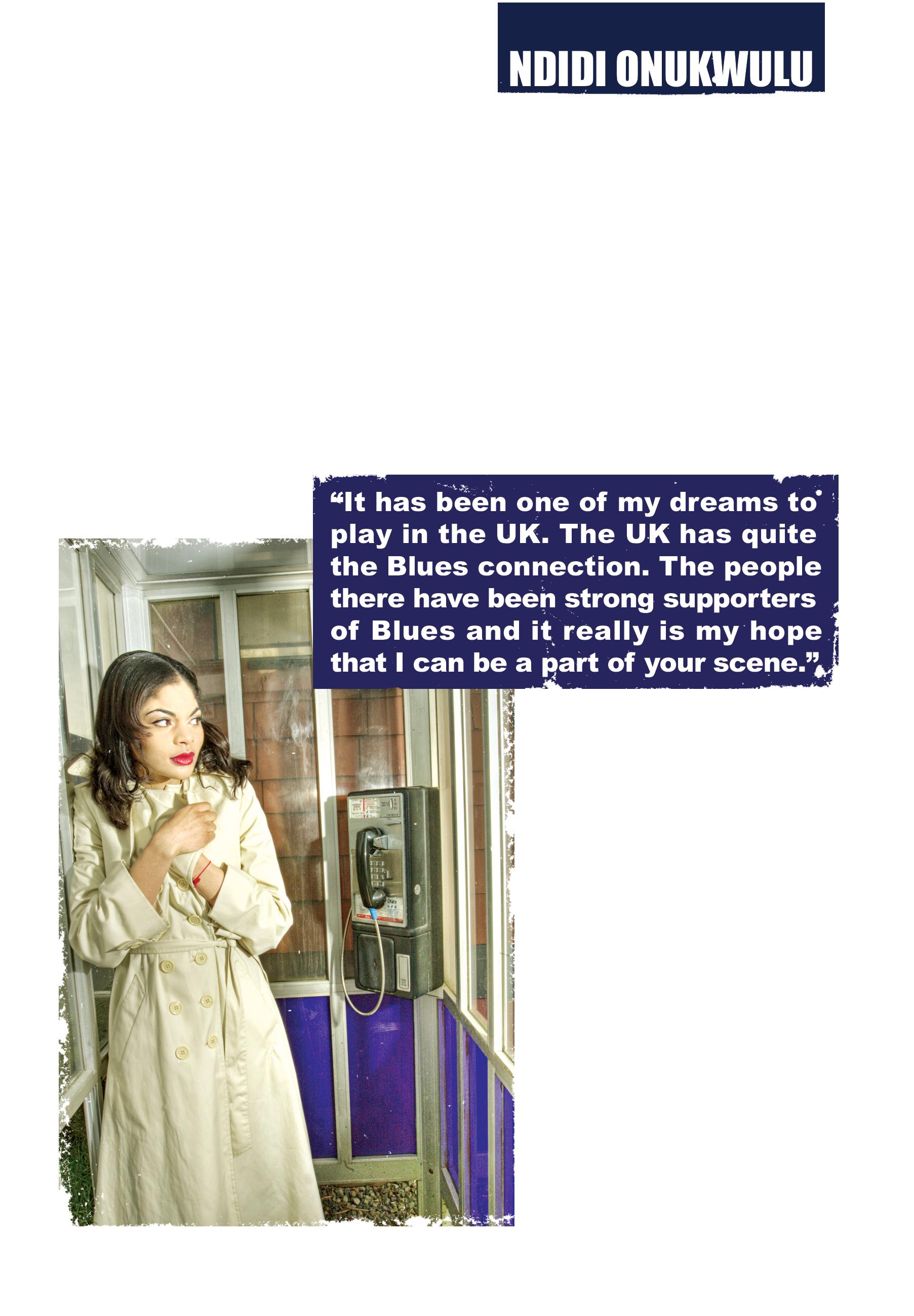
It has been one of my dreams to play in the UK. The UK has quite the Blues connection. The people there have been strong supporters of Blues and it really is my hope that I can be a part of your scene.
What will be deemed as a success for you with “Move Together”, and what are your aspirations longer term?
I hope to continue to make stronger records and to become an internationally known artist, to play for many people all around the world. Also, I hope to get into films - writing, scoring, perhaps even acting... - and ULTIMATELY, at the end of the day, when it’s all over, I would like to dedicate myself to working for the people either by developing not-for-profit privately funded programs or running for Prime Minister. Let’s see which comes first! KW
Blues Matters! 33
att Schofield has been creating a buzz both here and overseas for some time now, gaining favourable comparisons with his icons Albert Collins and Stevie Ray Vaughan, and healthy interest from the majors and guitar aficionados, impressed by the fluidity of his playing.
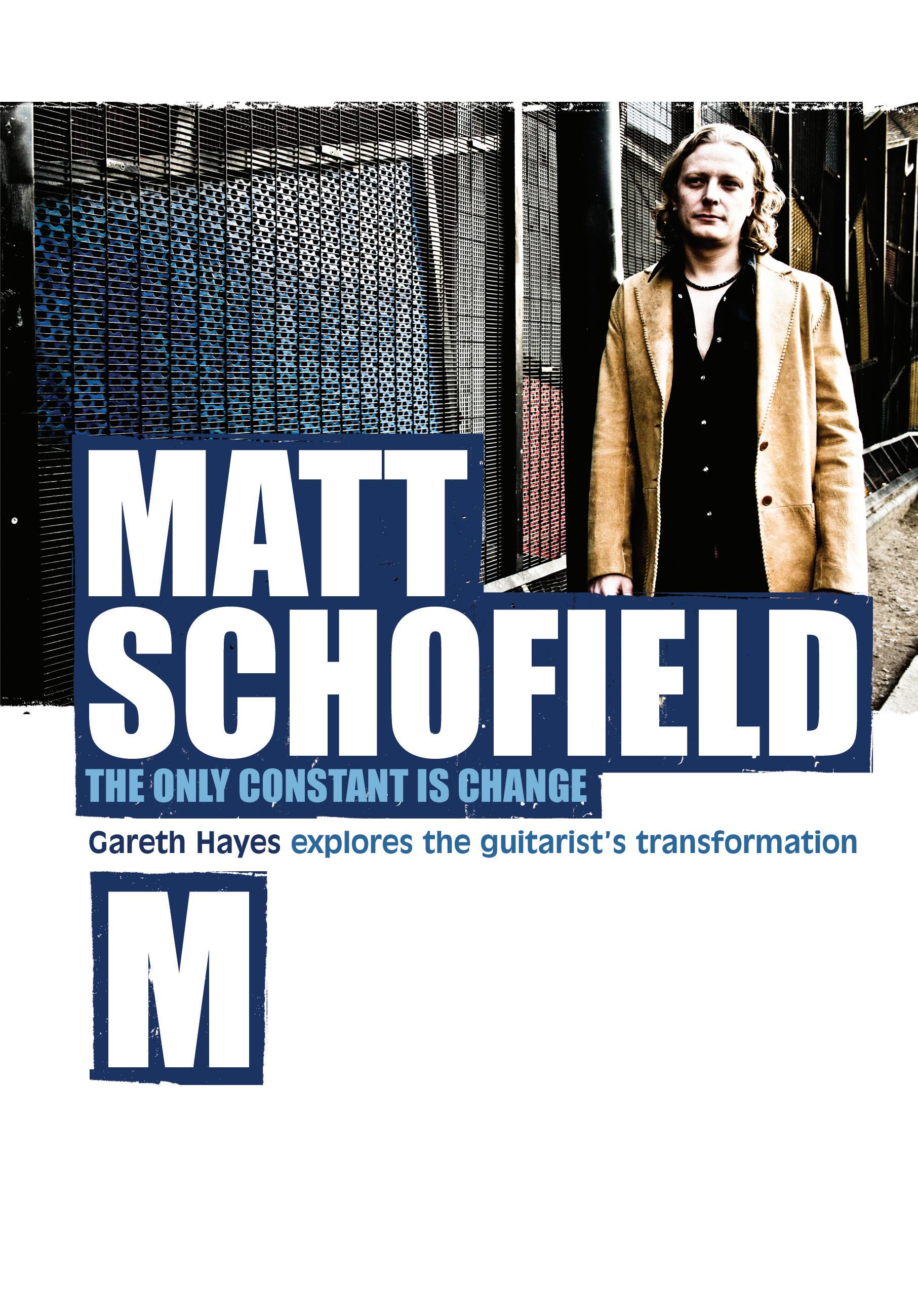
The path to date has been less about the grind of gig after gig but more of honing his sound and performing with a passion of progress and perfection, and with a back catalogue that offers studio and live recordings as ‘the Trio’, the Matt Schofield experience has whetted the appetite of Blues Matters! readers and writers since he first burst onto the scene with “The Trio, Live” in 2004.
Matt’s philosophy of attraction rather than promotion has allowed him to play what he wants (blending Blues,
rock, funk and jazz), and evolve in the direction of the moment on subsequent releases. This year sees the next step in the Schofield master plan, with the expansion of the band and the launch of his latest Nugene release… BM: Where does the title of the new album come from?
Matt: "Heads, Tails And Aces" comes from a line in the lyrics from the song ‘Betting Man’. Nugene's Richard Pavitt was listening to the rough mixes and thought it had a good ring to it. I liked the idea, it seemed to fit with the vibe of the whole record while, at the same time, not putting too much emphasis on any one track on the record.
Where was the album recorded?
We recorded and mixed it at the new Modern World Studios in Tetbury, Gloucestershire. Ben Muscatt, the head engineer, has done a great job kitting it out with the kind of gear I would choose for my own studio, and we've got on well musically and personally during the whole process. The Cotswolds isn't exactly known for it's legendary recorded output or recording studios, but I'm looking forward to spending more time there in the future.
Blues Matters! 34
“Playing guitar is fun and easy. Writing songs feels hard work for me to be even slightly happy.”
How long has it taken?
Well, actually this record has taken a long time from start to finish. My longest so far, although still very quick by pop or rock record standards. It's mainly been down to scheduling and availability, as we all have to keep gigging throughout the time. We had some nice tour opportunities come up, visiting new territories for us, so it was important to go and do them.
We started the basic tracks back in August last year, and then we had to hit the road, touring pretty much none stop for two months. Then I went back and finished off the singing and guitars, and anything else I wanted to add, during a few days here and there in October. I spent five days mixing it at the start of December, with a couple more days at the start of January for some tweaking of the final master. It's gone on longer than I would have liked, as I can't really relax or step back from it until it's done. The longer the process lasts, the closer I get to it, and the more it consumes me.
My girlfriend has had a lot to put up with for the last few months, with me being absorbed by it. But that's just the way it's gone this time.
And a breakaway from ‘the Trio’...
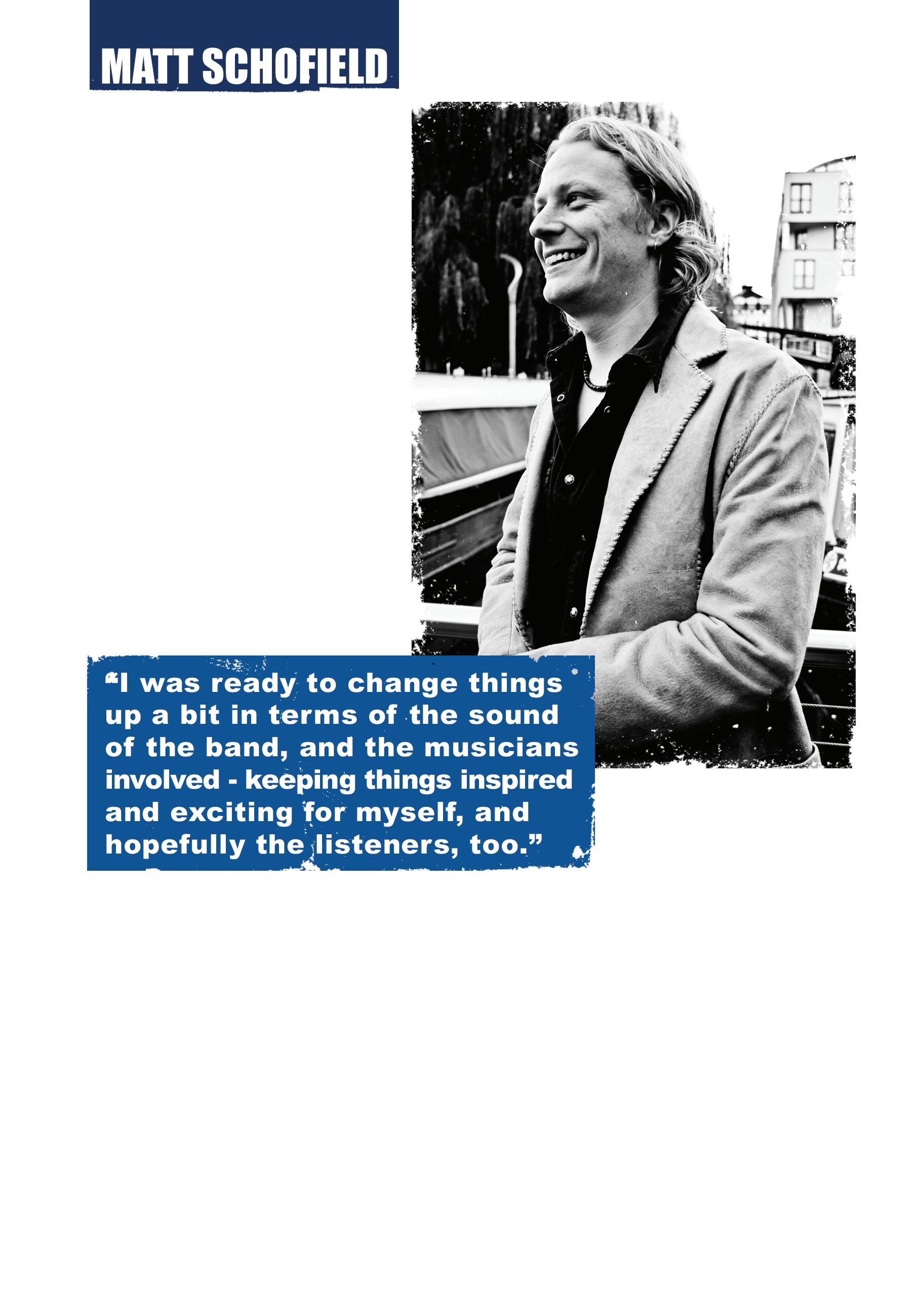
This is the first record I've made of my own music that is not the Trio. I was ready to change things up a bit in terms of the sound of the band, and the musicians involved - keeping
things inspired and exciting for myself, and hopefully the listeners, too. I'd done the organ trio thing for seven years exclusively, and while I love what it's allowed me to do, it has a very definite sound, and it just got to a point where I wanted to hear something else this time.
The biggest change is obviously the addition of my old friend Jeff "The Funk" Walker on bass. He's predominately playing upright bass with us in this new line-up, which is a sound I love, and Jeff has a really unique way of playing it. He brings a lot of extra energy to the band. So, it seemed like it was the right addition to make to the line-up, and different from other contemporary Blues bands out there. Conceptually, my way of tipping the hat to Willie Dixon, Chicago Blues and the great traditional Blues bands with upright bass, but instead of playing that kind of music we're using it in a different way, amplified - loud and funky!
I also have my friend Alain Baudry on drums this time. He's from Bordeaux in France, although he lived and played in New Orleans for quite a while. Alain is very knowl-
edgeable about the traditions of Blues drumming, which is actually quite rare to find in a drummer these days, and he comes from more of a Blues, funky R&B, soul and, obviously, New Orleans style that is reflected in the overall new band sound. We've still got Jonny Henderson on Hammond organ but he's also playing a lot more piano and Wurltizer electric piano now that he's finally free from holding down the basslines with one hand.
So, the whole idea of the line-up is still very much an old meets new vibe, which is what I've always been about.
You are now in the position of having a back catalogue. How does this album fit in with the path of the others?
The new album doesn't have any of the jazzy, funky instrumentals that the Trio was known for. It's more song-oriented material, which I hope is the natural progression of me trying to grow, and getting more confident as a songwriter and singer, and not just guitarist.
Do you see as far ahead as the next album, and the next, or is it absolutely one at a time?
I'd love to do a traditional old school Blues record at some point. I'd like to do one with my friend Big Pete, the har-
Blues Matters! 36
photos: Patrick Cusse (ccphotoart.biz)
BEHIND BARS
Courtesy Sony BMG, we have 3 copies of Johnny Cash’s “At Folsom Prison” to giveaway. On 13th January 1968, Cash made music history when he performed two shows at California’s Folsom State Prison –the subsequent album becoming a multi-million seller. This 40th Anniversary 2CD & DVD Legacy Edition release includes each one of Cash’s thirty-six performances from both concerts (sixteen previously unissued), whilst the DVD features new footage filmed inside Folsom Prison and interviews with those who accompanied Cash at Folsom Prison, friends and family, and inmates who witnessed the show.
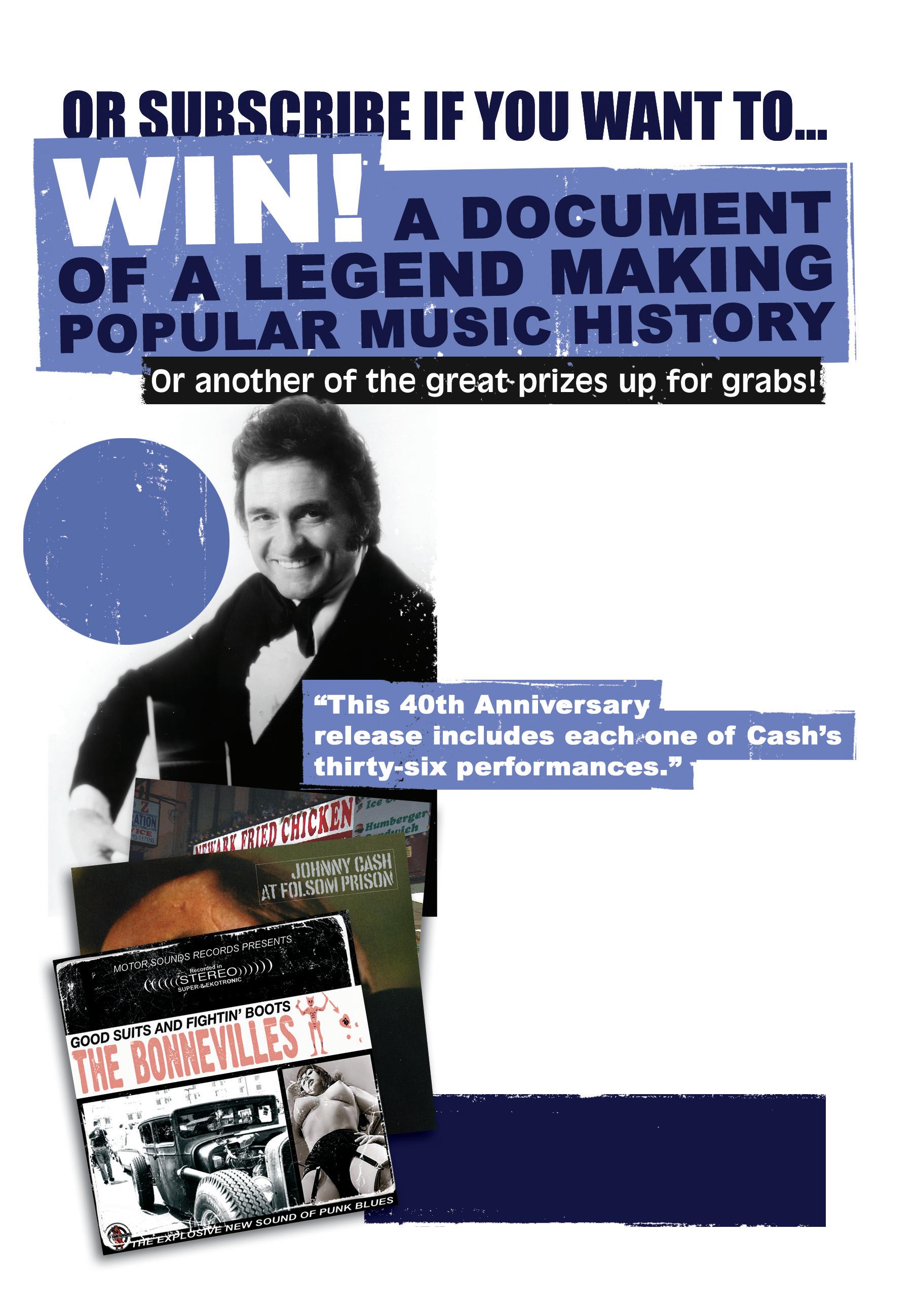
ON THE PULL
Courtesy the band themselves, we have 3 copies of The Hammers CD “Newark Fried Chicken” to giveaway. The Hammers mix of Blues, rockabilly and R&B impressed our own writer enough to state: “I can't help but think that a night in the company of The Hammers would be the best night of your life.”
WILD TIMES
Courtesy Motor Sounds Records, we have 3 copies of The Bonnevilles debut “Good Suits And Fightin’ Boots” to giveaway. The Northern Irish garage Blues two-piece have drawn comparisons to The Black Keys, with our writer describing the album as “aggressive, wild and loud.”
Blues Matters! 37 To be in with a chance of winning one of these prizes, subscribe, or subscribe a friend, by 22nd May 2009. 01656 743406* subs@bluesmatters.com / www.bluesmatters.com ALREADY SUBSCRIBED? Members’ competitions on page 157! *alternatively, call: 01656 745628
monica player and vocalist from Holland. I also plan to do a funky jazzy instrumental album with the organ trio, which would really be something that was totally outside of my Blues career. And, I must confess, recently I've really been wanting to do something with a classic guitar, bass and drums power trio. Those are just for starters!
What’s the first job in the ‘new album’ process? Usually it starts with deciding with my manager when we're going to try and record it. You often need a new album out to get booked again at big gigs and festivals you've done before. After we've established the timeframe, I just get to it. Usually aiming to go in with nine or ten original tunes, and then I have a list of covers that are songs I have always wanted to do.
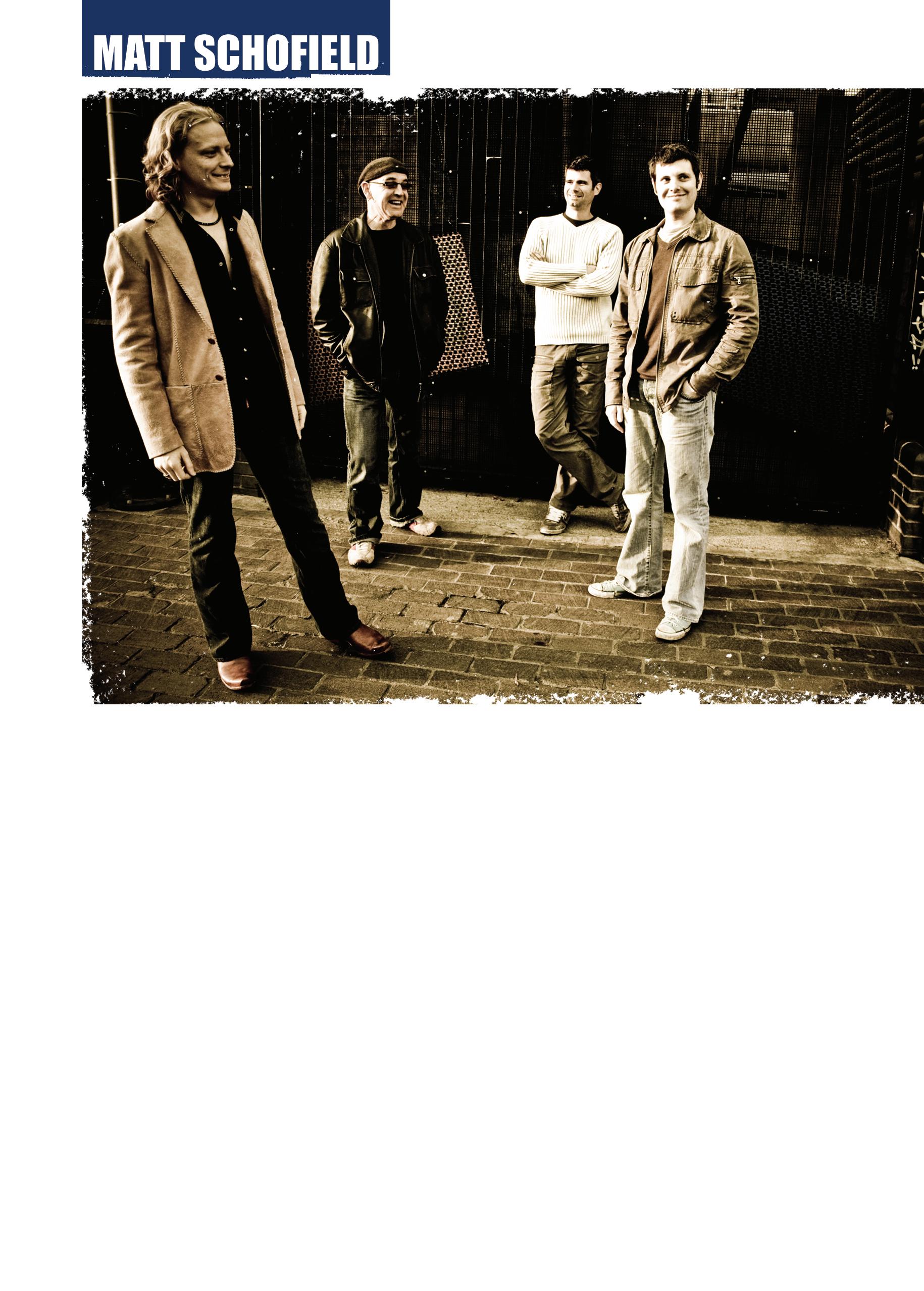
The main thing I've found is just deciding what the overall concept and flow of the record needs to be, in order to get across where I'm at with my music. I really try to visualise a musical "shape" to the whole thing, even before the songs are written, so that I'm working to achieve an overall vibe. Kind of like putting up a certain size and shape of blank canvas and picking a nice frame, before you know exactly what you're going to paint. It’s good for me to at least know where the borders will be!
In songwriting, is it the words or the melody that come first? Well, I wish I had a formula for writing songs, because maybe it would feel easier for me. Playing guitar is fun and
easy. Writing songs feels hard work for me to be even slightly happy. Although, it's also very rewarding to get there in the end. My girlfriend Dorothy contributes many of the lyrics. The music is easier up to a point. So, these days it might be any combination of some entire lyrics she has written, that I put to music, or that magically fit to some music I've had for a long time. Or maybe it's just a groove or melody I have that she writes some lyrics ideas to, and then I take back and finish the song as a whole. You know, whatever works. You just have to be open to it. We write a lot more than we use - you have to be a bit ruthless with it.
Do you build the album with the audience in mind?
To be honest, I just try and make the best record I can, and be true to myself, in terms of expressing where I'm at as a musician, and a person, too. If I was at all interested in making records that could sell millions then I would be wasting my time playing Blues-based guitar music! I think if your music is genuine and sincere and delivered with a high standard of musicianship then there will always be somebody else who can relate to it on one level or another. There's definitely consideration in terms of it being accessible for the listeners, but that perhaps more in terms what I don't put or do on the record, like making the songs too long, or getting too far out, or just too eclectic. Certainly for me, trying to purely deliver an album that will sell is pretty low on the list of priorities; perhaps non existent in my world.
Blues Matters! 38
(from left) Matt Schofield, Jeff “The Funk” Walker, Alain Baudry and Jonny Henderson.
Matt Schofield probably won’t admit it, but he isn’t following the usual route to iconic status as a global guitar hero. He hasn’t done night after night at the Red Lion, at the Grey Horse or at the Green Man, yet he has built up a fanbase that would happily travel three hundred miles for one of his rare shows in an atypical Arts Centre or rural seminar setting.
Atypical is also the word to use when critics try to hang a genre label on his music. Jazz influenced rock is an easy catch all, but they’d be wrong - it’s Blues, as simple as that. Schofield’s devotion is to his heroes Albert Collins, B.B. King and Stevie Ray Vaughan.
With random gigs and a reputation for sticking to his guns, it is probably of no surprise that Schofield’s first two albums were live recordings. “The Trio, Live” (2004) and “Live at the Jazz Café” (2005) successfully whetted the appetite for studio work; yet it was an upside down strategy for commercial success. How many artists would embark on a recording career that dared to take such a commercial risk? Nugene Records clearly believed and shared a vision.
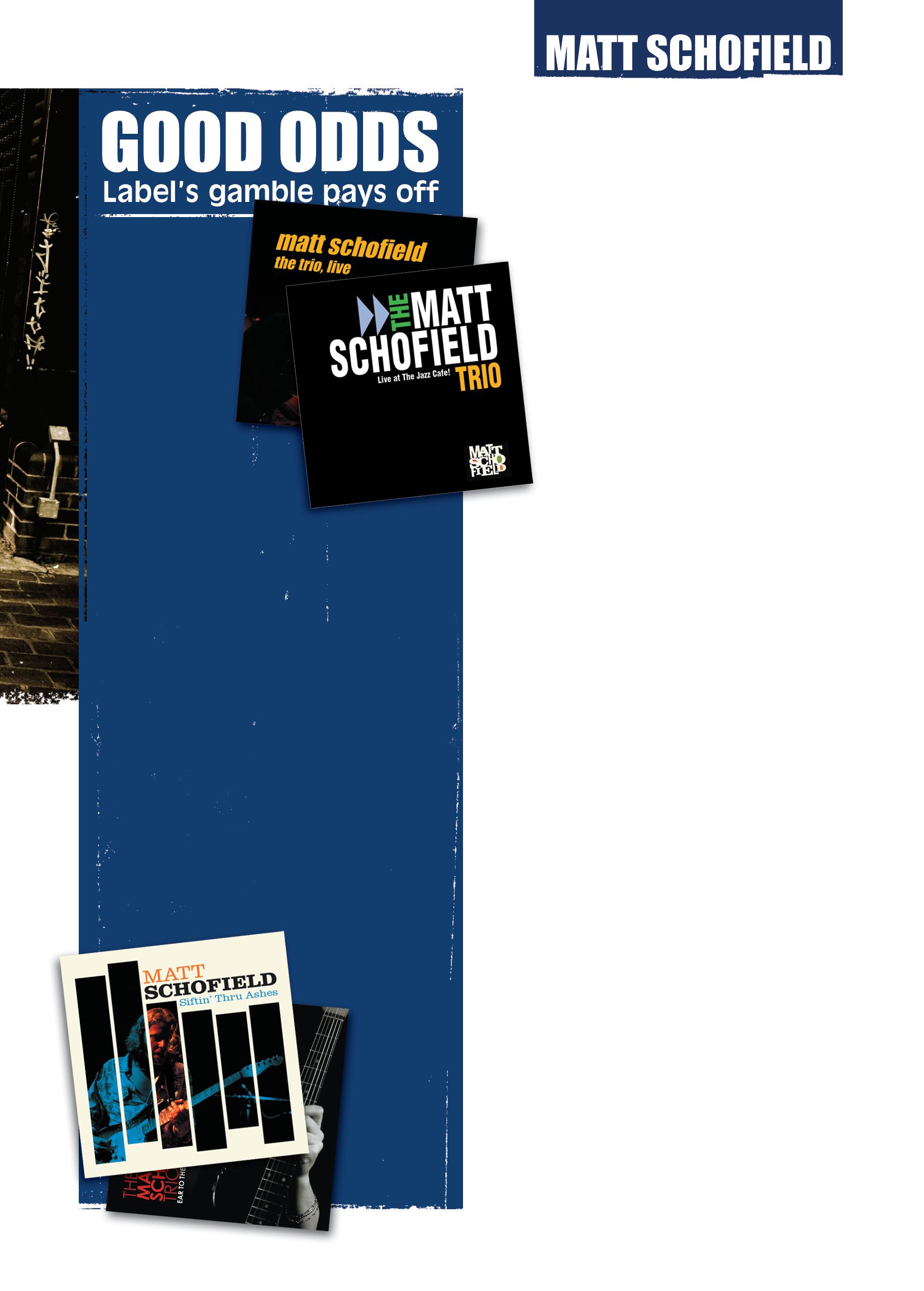
Studio albums came in the shape of “Siftin’ Thru’ Ashes” (2005) and “Ear To The Ground” (2007), confirming that the transition away from the stage was possible and that he had talents in songwriting, as well as extraordinary axemanship. To complete the package, fans and critics also recognised that, like his heroes, he had a voice that matched the passion of his playing. All supported by his band, which mirrors the loyalty and team efforts of the aforementioned heroes.
With his new album, Schofield teases even more with a subtle change of direction. The man may like to play his cards close to his chest, but he’s proving Nugene made the right gamble in backing him from the start. GH
Do you have anything personal in the album that is just for you, and that no-one else knows about?
There’s loads of personal stuff. Almost everything has something that only I really know where it's come from. Obviously, there's always some little specific references to my original heroes in the guitar playing, that are really for my own enjoyment, because I love what they did, despite trying to refine my own sound and style. For example, there's a track on the record where deliberately, just for my own satisfaction, I really set out to kind of nail this Stevie Ray Vaughan thing - actually a specific sound and approach I heard him use. With him, it's something I've really avoided in the past, because there are so many SRV wannabes around, but still, he's one of he reasons I play in the first place. Except here, it's on a song that is nothing like anything he ever did. Ultimately, the guitar part ended up sounding nothing like him, which is exactly what I hoped for. It ended up sounding like me still. It's kind of a hidden tribute to him, for myself. I needed to go through that process of assimilating this specific thing he did to arrive at my version of it, and find something new for myself. It's good to pay your respects to where you come from, especially in the tradition of Blues guitar, and my influences mean so much to me, and I'm doing what I do today because of the profound impact that had on my life, but hopefully you have to listen harder for those references these days, and less hard to hear me.
Some of the song lyrics are very personal true stories and others are just stories. And then there are also little personal things like a song about our dogs, but they're really hidden as something else. That's all part of the fun, and part of the fear, of making records and really putting yourself out there for the world to examine!
Are you a morning person or an evening person?
I'm most definitely an evening or night person, be it at home, at a gig or in the studio. I've been lucky enough to only be a musician since I left school and spending so much time traveling on different time zones for so many years, and working odd hours, I have virtually no body clock left to speak of!
How was it in the studio?
It was pretty smooth going for the band in the studio. We try and stick to a three take rule, so if something's not working, we move on, and maybe come back to it another day, or not at all. Of course, it's always a somewhat stressful environment to be in, because you're under the gun with a budget and time, and everybody feels like that have to deliver their best, but it's also fun to being in such a creative situation.
Any 24 hour sessions?
Not 24 hours, but some good 15 or 16 hours sessions sometimes. If you're on a roll, it can be good to keep on, but then you often ruin the next day because of that. Generally, I've found you stop being productive after about 12 hours and start going around in circles, and at that point it's better to come back fresh the next day.
Given the choice, studio or stage?
Definitely the stage! There's nothing better than being exactly in THAT moment when the music is just flowing. GH
Blues Matters! 39
ightnin’ Willie has become one of the most popular exporters of American Blues to this country – well, his own version, which incorporates country and rockabilly – so much so that he has two separate Poorboys that he plays with regularly, depending on which side of the Atlantic he finds himself required to wow audiences.
Few will forget seeing Willie perform, if his name stands out, more so does the figure he cuts – complete with widebrimmed hat and cowboy boots – and with the prerequisite guitar prowess, it’s no wonder he’s developed such a legion of fans across Europe and America.
However, with latest album “Tracks”, many believe he’s finally made the album to match his undoubted stage presence. Blues Matters! spoke to the Texan slinger at the end of his most recent British tour…
BM: You have just finished your UK tour. How did it go?
Willie: The tour went great as all the shows were well attended. I was using the rhythm section from the Groove Doctors and was so thrilled with how things were going and how the band sounded…huge! Unfortunately, there was a sudden need for our harmonic player Giles King to have emergency back surgery to prevent possible paralysis in his lower body. It had bothered him from the beginning of the tour and it progressively got worse and he was taken to the hospital were they decided it was necessary to operate the very next morning. The surgery was a success and the prognosis is excellent, so he will be back to playing. We can’t figure it out, John Butters (drums) and I lifted up about ten harmonicas all at once and we didn’t hurt our backs - just kidding!
Three days later, after a show at the Running Horse in Nottingham, we had an accident on the A14 going towards Felixstowe at 3:00am, and lucky for us no-one was on the road or it could have been much worse. The trailer jackknifed and ended up slamming into the side of the car that Fergie Fulton (bass) was sleeping in, and then the trailer
flipped causing the car to spin around and slam into the middle divider, again knocking him for a loop and injuring him to the point of not being able to continue the tour. Tim Ainslie (guitar) and John Butters escaped injury. Our equipment was thrown from the trailer all over the A14 like an impromptu yard sale but, one good thing, the equipment made it through okay, other than a busted reverb tank and a few scrapes and bruises - not so lucky for the car or trailer, both were beyond repair.
At this point, I was pretty shell-shocked, but made the decision to carry on as a four-piece - two guitars, bass and drums. We hired different bass players as we went along, all of them learning our songs in proverbial minute - Rob Barry, Roy Little, Spy and Aaron McRobbie. Without Tim Ainslie and John Butters, I couldn’t have carried on. They both held me up when I was down and said, “Let’s go, Willie!” So, for all that happened, it was still a great tour!
Any favourite shows?
It is hard to single out shows, as we tend to have a great time no matter where we are, but with no prejudice, I will say that the Portsmouth, Southsea gig was fantastic. It was behind the D-Day Museum, and the sun was shining, the ladies were dressed like they do when it is sunny - ooh la la! There were hundreds and hundreds of people, and we had a blast.
The Riotous Brothers went on before us and they were so cool. They helped us with equipment for that day, as it had been “hell week!” Without their help, it wouldn’t have been possible. We got up and did our show and at the end, during a song, I strolled over to Paul Long and asked if they would help out with back-up vocals. They agreed and so we had the Williette’s, featuring Paul and Mash from The Riotous Brothers. The crowd loved it, so we got everybody singing, and finished the week out on a good note!
Also of note, we love the Kings Lynn Art Centre - just a beautiful old wooden theatre that has the best acoustics and the nicest staff. I hear William Shakespeare performed there in the early days, so that has some history to it…
Aberdeen, Edinburgh, Berwick, Oxford, Norden Farms Art Centre… Every gig on our tour list was special in its own
Blues Matters! 40
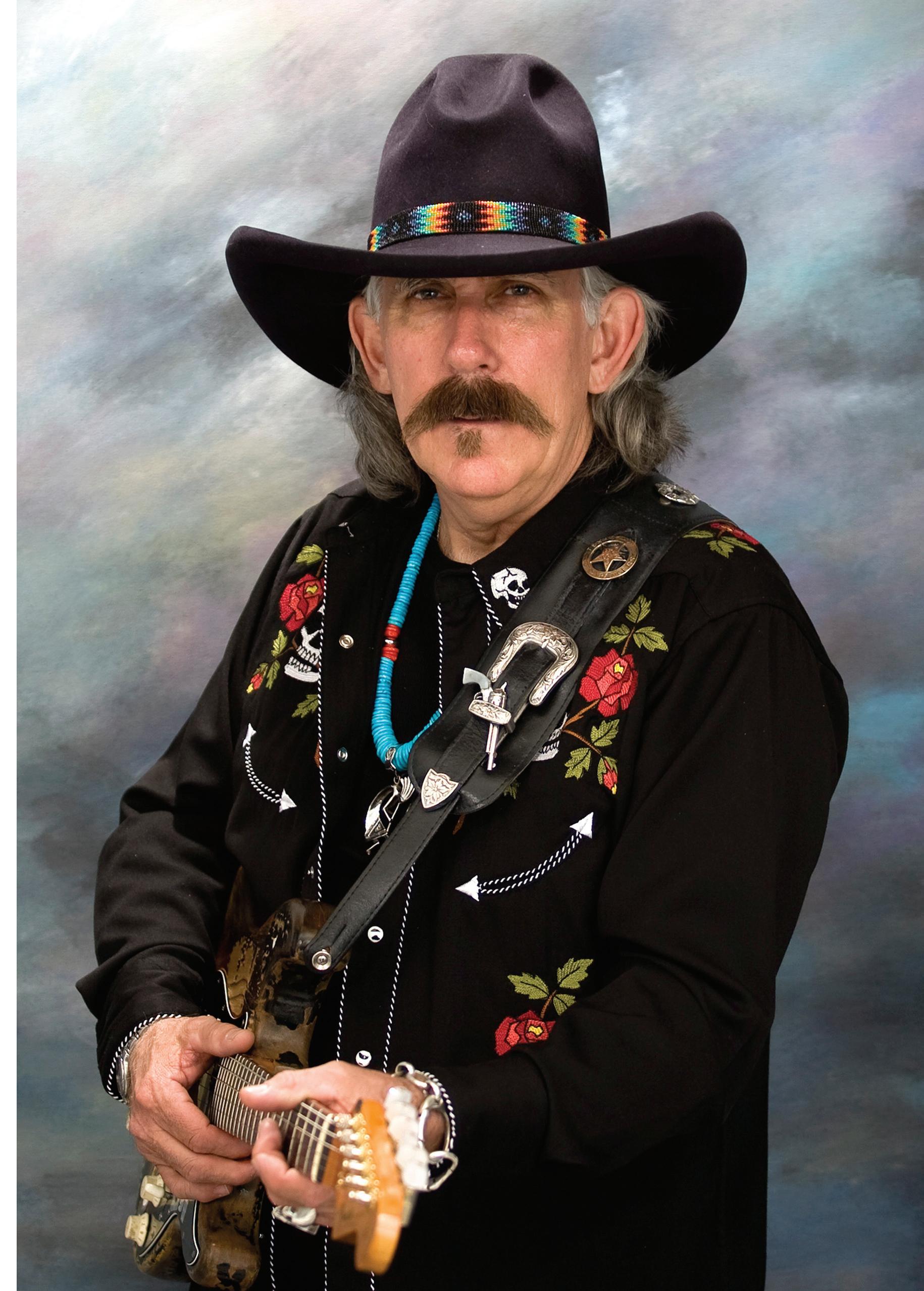
Blues Matters! 41
“Muddy Waters told me that I couldn’t be him and that I had to be my own person and shake my own stick. Well, that is what I do.”
way. Movin Music - our agents - seem to have their hands on good venues, and that makes for a great tours.
How does it compare working with your UK Poorboys, rather than your US counterparts?
I tell you, there really isn’t much difference, as they are both excellent bands. The songs are presented in the same way, maybe with a different slant here and there, but overall, it’s’ a Lightnin’ Willie And The Poorboys’ show either way.
I don’t play in a generic sense, I have many influences, and some say that they have never been exposed to some of it, and this makes it challenging to a degree, and they enjoy learning a ‘twang’ song with an extra one bar thrown in for flavour - subtle but nonetheless effective. I have been playing with Giles (harmonica) for a long time and we just look at each other and know what to do - that comes with time, and he’s also a great musician.
My rhythm sections vary from time to time, but I always look for musicians who understand their role in the band. The most important part of the band is the bass and drumssome forget how simple that concept is, but without it, we wouldn’t have Muddy Waters, The Rolling Stones, Stevie Ray Vaughan, or even John Mayer, who I love. Listen to how subtle these rhythm sections support and, along those lines, I have the same in both my US and UK bands. If you look under the tables and people tap their feet, the rhythm section is doing their job perfectly. I’m very lucky on both sides of the Atlantic!
Your last album, “Tracks”, had a great reaction over here…
“Tracks” was well received, I am glad to say. We got Album Of The Week on BBC Radio Cornwall, and we garnished good reviews, good BBC airplay, and interviews all along the UK tour. We even recorded for Paul Jones, which was fun. I have a lot of respect for Paul - he is the real deal and he knows his stuff. He keeps the Blues alive in Britain with his show. BBC would be foolish to not to air Blues, as it is a staple of music all over the world - be it selling beer, cars, or just making someone feel better somewhere. I’m very pleased with the album and how things turned out.
Going back in time, to when you were growing up, what got you into the Blues?
My parents listened to Nat King Cole, Dinah Washington, B.B. King, Frank Sinatra, Ray Charles, Duke Ellington, Lionel Hampton, and just about anything you could think of.
We moved to Ankara, Turkey in the mid-60s, as my father worked for the US government. There I met Staff Sgt. Jones and he made tapes for me, reel to reel, with all these Blues guys I would hear at his weekend BBQ parties. He played the greatest music.
There was this singer/guitarist called Slim Sanders. I would sit for hours listening to him play, just himself and a
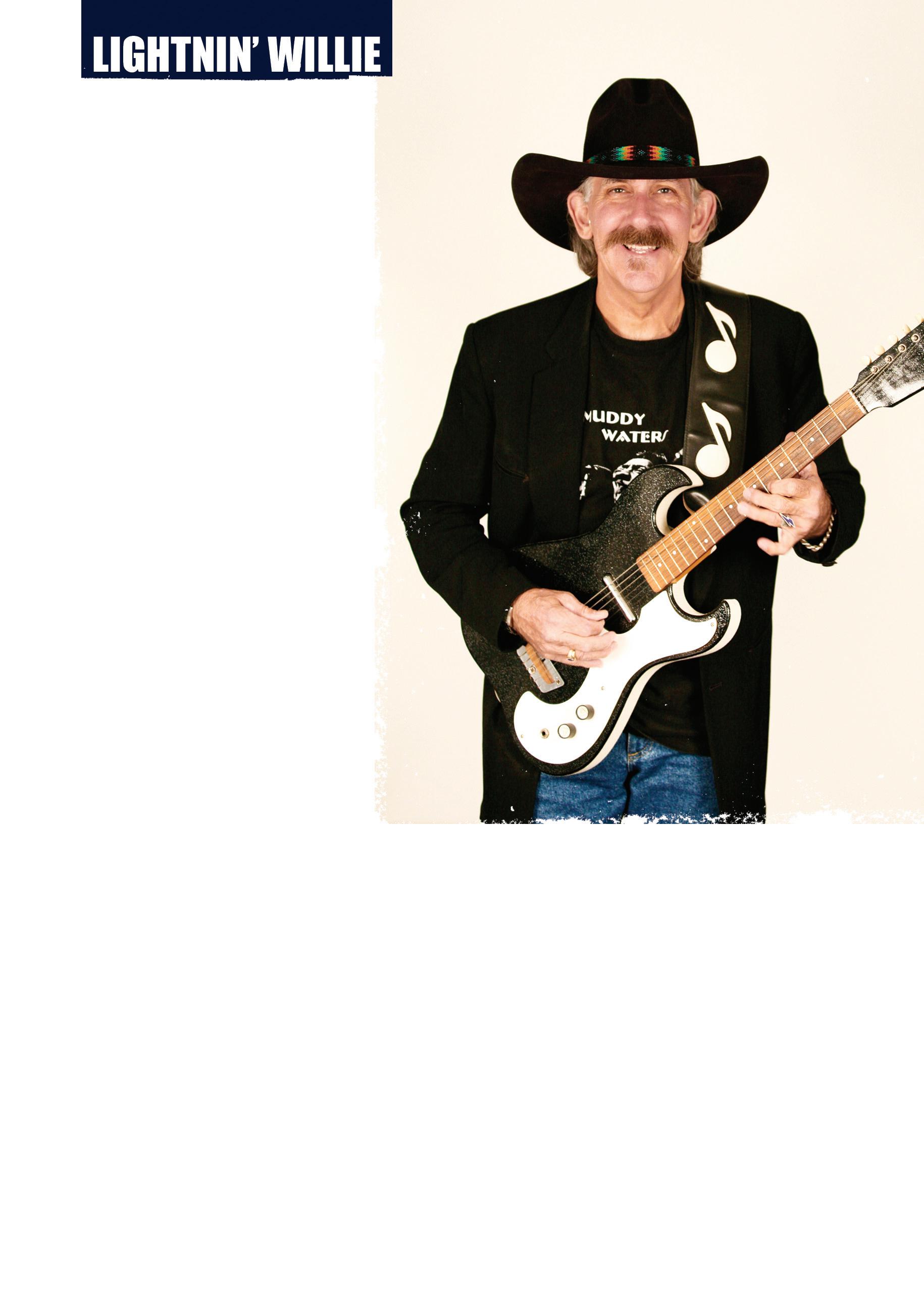
guitar. That was powerful, and I still to this day do things I remember him doing. I wish I could find some of those people and thank them and show them what an effect they had on my life - that would mean a lot to me.
Which other artists influenced you?
The Beatles, The Rolling Stones, Manfred Mann, Spencer Davis, Ray Charles, Paul Butterfield Band, Bob Dylan, Elvin Jones, J.J. Johnson, John Lee Hooker, and everything I can’t remember.
The Animals really opened my head up towards Blues. I loved Eric Burdons’ voice and the band were great. For some reason, I could figure out songs off their records easier than others and, of course, as I said, I had this cool black Sergeant sharing his music collection, a small piece at a time, which was real Blues and jazz.
Then we moved to Berlin, which was like someone had taken the blinders off. I could go and buy all these records which weren’t available in Turkey. It was so incredible to see all these records and the faces of some of the guys I had been listening to. Then came Jimi Hendrix, who I saw
Blues Matters! 42
For an act like Lightnin’ Willie, the success of a UK tour can be attributed to the relationship he has with an agency in this country, who can use their connections and take away much of the worry to ensure a hassle-free and successful stopover. For promoting Blues and Blues related music, Movinmusic are one of the most highly regarded British agencies.
Founded by Mike Hellier in 1996, like many things, it all started by accident. “I had contacts through my work with Wamma Jamma, whom I drummed with,” explained the owner. “I learnt from scratch to do bookings and promotion, and when the band split, with gigs in the book, rather than let promoters down, I offered the gigs out. The agency started there, and I began working with bands that I felt passionate about. I was also touring through Europe drumming with different artists and met other promoters which expanded the network.”
Like most successful businesses, Mike isn’t keen to share the secrets of his success - “Kentucky Fried Chicken has a secret recipe with herbs and spices that makes their chicken unique. What we do is a bit like that!” – but admits much of it has been achieved by moving quickly with the times. “Along with the standard methods of promoting with press, radio, Blues magazines, TV etc, we do a lot of web PR,” said Mike. “We email newsletters to thousands of people and post on Blues boards online. Our web site (movinmusic.co.uk) also has a gig guide which is searchable by region.
Despite being one of the country’s top agencies, financial concerns are always at the forefront. Although Lightnin’ Willie is a popular live drawer in this country, the harsh economics make it a necessity that he uses a different backing outfit when he plays over here, something that is all too common for touring Blues acts. “The cost of bringing a USA band over here is high, so it’s not always possible,” insisted Mike. “Which is why, in 2003, we offered BluesMove to back Sherman Robertson. It did and can work really well.”
Like anybody who works in promoting Blues, it’s always going to be about the love of the music over profit making.

“I’ve always been passionate about music,” enthused Mike. “Aged 11, I saw Freddie King open for Eric Clapton at Crystal Palace and saw Led Zeppelin at Earl’s Court, and have been playing drums since feeling the power of John Bonham. I felt a deep connection with the Blues, and feel the emotion in the music.
“It is a challenge touring and running the agency, but they complement each other. Being out on the road, I meet many different promoters, and have first hand knowledge of the venues. From the idiosyncrasies of the promoters to knowing about the acoustics of a venue can be really useful.” SH
in Berlin and got to meet. Have mercy - that was an eye opener! Never looked back since then.
When did you start playing in public and who with?
When I came back to the States, I still kept learning from records and playing with anybody I could. I finally got a band going called the Early Times Rhythm And Blues Band - named after a rather inexpensive bourbon which fueled the band quite regularly. The band was made up of two guitars, bass, drums and, of course, harmonica. We played in bars that we shouldn’t have been in - Kona Kai, ThirtyFiver, Famous Door… - but the black bar owners were very tolerant of white kids trying to play the Blues, even if the clientele wasn’t. The band would get $50 a night, free beer, and lessons in life. It was a period of my life that I wouldn’t change for anything.
This led from one band to another, and then I got into Hott Snow - a soul/funk/Blues revue. Hott Snow were a real show band that actually toured, recorded and did some television. That is where I learned the most, playing with older musicians. I was the only white guy in the band for quite a while and we toured the South, Texas, Arizona, New Mexico and California, doing clubs, concerts and juke
joints on the chitlin’ circuit. I learned a lot about dynamics, showmanship, making people have a good time, and I also learned about racial prejudice, white courts in small white towns in the rural south and how fragile your life became in their hands. They said at the time that there was no more discrimination, but I’m here to tell you differentthere was and it wasn’t a movie, it was real and they played for keeps.
What was your rock band Hermes And Marx like?
In the ‘80s, I got married to an incredible singer named Marcia Marx, and we pretty much built the band around her doing a lot of originals in a rock/Blues type feel. She could belt out a Blues song. I remember her version of Roy Orbison’s ‘Blue Bayou’ and Janis Joplin’s ‘Piece Of My Heart’…man, she could sing. We split-up, she went her way and I carried on doing what I’m doing today with the Poorboys.
You jump around between genres, it’s not just Bluesthere’s country and rock’n’roll mixing it up as well. How would you go about describing your sound?
Well, I would say Americana/Electric Blues…with some
Blues Matters! 43
Willie wows the crowds Movinmusic find for him.
photo: Brian Smith
twang! I have heard so many types of Blues, be it country, swing, Sinatra, Muddy Waters, Delta, B.B. King, Lonnie Johnson, Lightnin’ Hopkins, Albert King, Freddy King, Sonny Terry, John Hammond Jr., Bob Wills And The Texas Playboys, Duane Eddy, Johnny Cash, Elvis, The Animals, Remo Four, and some you have never heard of, and all these elements are what I draw from to write my songs, or to present my interpretation of a song.
Muddy Waters told me that I couldn’t be him and that I had to be my own person and shake my own stick. Well, that is what I do. I’m not going to pretend to be some old Blues guy who has suffered a life of misery, I’ve suffered, we all have, but none of us really know or comprehend what those guys had to go through. I went through the south with a black band and I got a taste of what it was like, believe me it wasn’t the romantic vision or picture that many have in their head.
I wander a little from the norm, but what is “the norm”? Should I copy records word for word and make a living off that, and tell everyone I am a Bluesman? You know I did that when I was a boy, now I’m a man, and I have my own way of describing things - I don’t want to do it any other way. I’d rather be hated for what I am than loved for what I am not. That’s what my heroes did - they listened, learned and did it their own way.
My songs tell stories that are happy, sad, funny, or just plain simple but they are my songs with Blues in there, some swing, and maybe, God forbid, a little country, but I see people reacting in a good way - they clap, they sing, they dance, smile and say “Yee-ha!” When someone tells us that they had a good time and that they really enjoyed us, hell, that is what it is all about to me - taking your audience away from their daily troubles and woes, if not forever, at least for the time you are on the stage. Then, when I’m done, I go back to my hotel and I listen to Muddy, B.B. King, The Animals, Hubert Sumlin, John Mayer, Ray Charles, and whatever I have in my little box, and most of it is just that, Blues - I’m still listening and learning!
The first time I saw you was when Country Music Television was broadcasting over here. Did you ever consider going down the same road as bands like Asleep At The Wheel?
I think you are referring to the ‘Twenty Flight Rock’ video we did. That just happened by chance, as we were just playing on the streets, busking in Pasadena, California, and this film company came along. The video was made and it got a lot of attention, just because we were a band off the street, so to speak.
I can’t say which way I will go. I don’t sit down and calcu-
late this or that - if it happens, and it feels right, I do it and I feel pretty good right now. But for you to suggest that I could even go down the same road as Asleep At The Wheel is an honour sir, thank you!
You’re already planning a new CD. What have you got lined up for that?
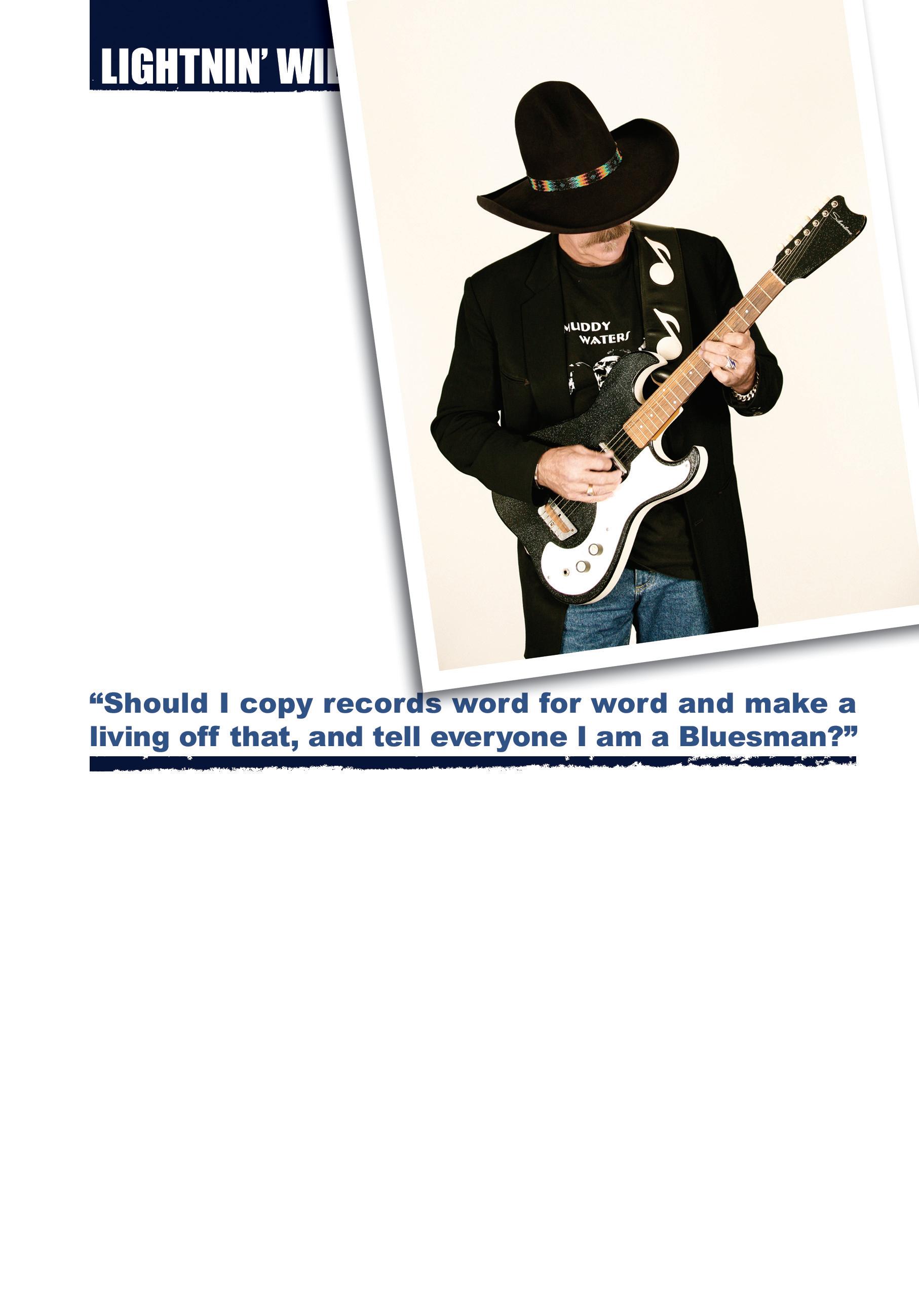
My new CD is in the works. I have songs written already and I am currently writing to add to the batch. It will have some ‘twang’, Blues, country Blues, swinging Blues, some Blues-a-billy, and hopefully people will smile when they hear it. I got one song titled ‘Lookin’ Through A Noose’ kind of Dylan-esque, in it’s own way. We played it this tour and got a standing ovation for it - people responded in a way that I never imagined.
What’s next on the schedule for Lightnin’ Willie?
Right now, I’m at home in California with my beautiful wife Jeanie, just taking it easy for a minute or two. Talked to my agent over here and things are looking good. I’ve got work to do as we are getting some steady radio airplay and we have to follow up on that. May not be in New York City –yet! - but, you know, if I’m playing and I look off that stage and see people having a good time, that’s the best city for me to be in! SH
Blues Matters! 44
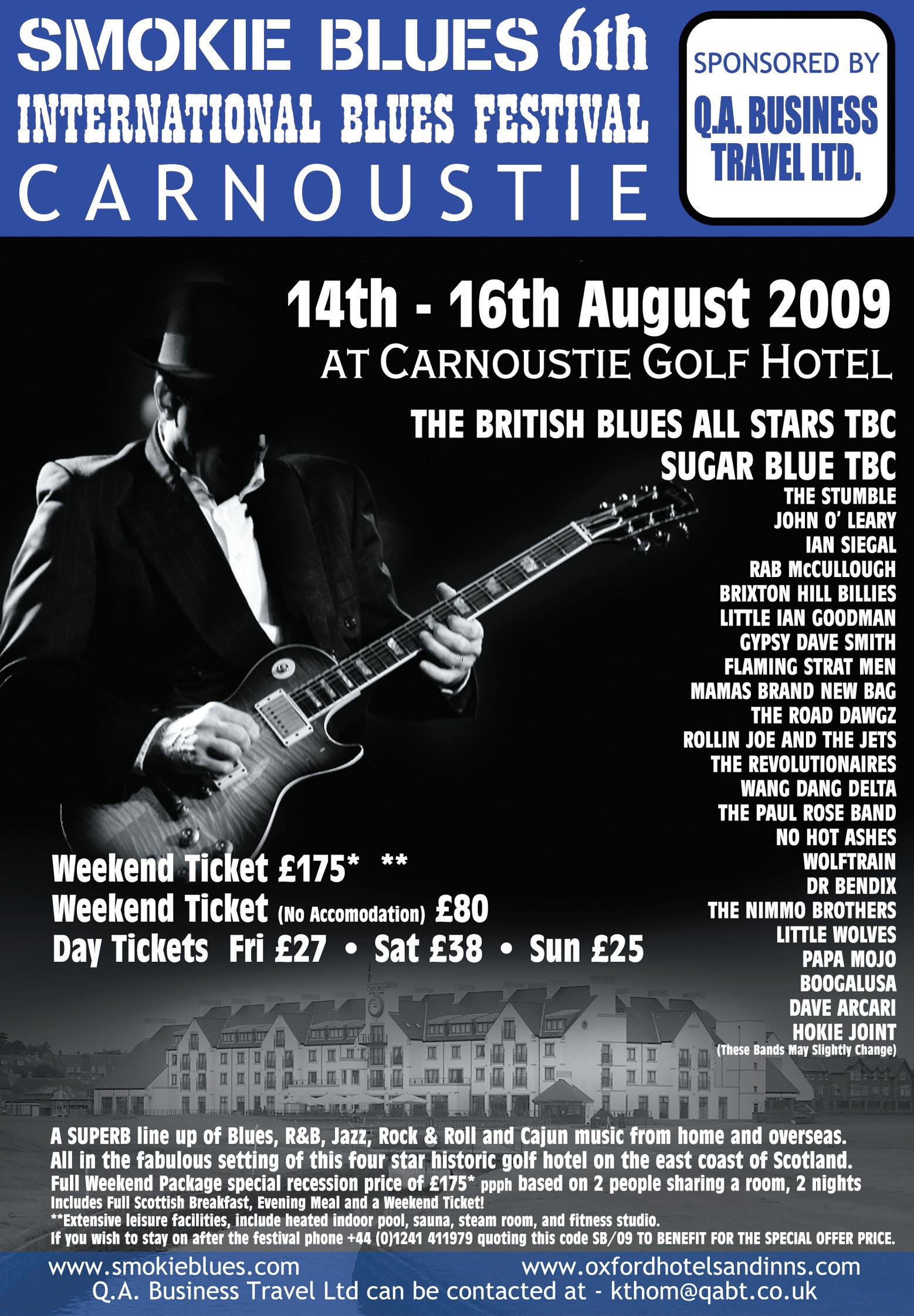
anny Bryant has been a favourite on the British Blues circuit since he burst onto the scene with his Blues Matters! debut back in 2002. Extensive touring and high-profile endorsement (most notably from his mentor Walter Trout) ensured an ever-growing legion of followers on subsequent releases, making it inevitable that a major label would look to capitalize on an artist with a ready-built fanbase.
Enter Rounder, whose extra clout has allowed Danny’s career to go from strength to strength, increasing his European profile, and gaining more widespread critical acclaim to boost album and ticket sales further, even if he’s lost the tag of “young guitar prodigy” and “great Blues hope” to the likes of Oli Brown in that time.
Danny’s most recent album, “Black And White”, has finally brought him to the attention of the rock fraternity, and with critical acclaim now matching public adoration – and the rerelease of debut “Watching You!” via Roots Collectibles, which many still believe to be his finest collection - it seems Danny could yet make that elusive crossover in this country…
BM: Your last studio album was “Black And White”. Tell us about what went into the making of this CD and the underlying thinking behind its production…
Danny: I’d made a few studio albums before. I’d been kinda happy with them, but a lot of people said it didn’t
catch on to what we were like live, and it didn’t always thrill me when I heard them back - it lost some of the excitement. I think recording is an art to itself, learning how to make album is an art, it takes a lot of time - I’m still learning! Then we made a live CD, which we actually recorded here (Flowerpot, Derby - CB). We took it round and that got me into Rounder Records, which was the start of a lot of heavy promotion in Europe and so on.
The record company wanted a studio album of studio songs, but with a live feel. I chose The Grange in Norfolkmy record company recommended it to me. They’d done a lot of guitar albums there, and so I went down to have a look at it and it was just a great studio. I’d always recorded digitally, so you can drop things in and if there is a mistake you can remove them, but it kills some of the of naturalness of the sound. We did it in the old fashioned way - all analogue, on old tape...audio tape for that warm sound, though it’s a lot more expensive. We tried to do it live, more or less. When I actually got into it, and saw some of the songs, some of the ballads needed more, so we did a bit more layering with instruments, but we tried to go for a live sound. We put like five or six microphones on the guitar cab, just to get a real live sound. Dave Williams was a genius at doing it and I think that’s what helped with the live sound. I spent a lot of time on the songs; because I hadn’t done a studio album for a while, I hadn’t had to write, so I had two years to get these songs together.
As a guitarist, what are your chosen weapons?
I am quite obsessed with guitars, I like custom shop Strats,
Blues Matters! 46
“In Holland, I’m playing a festival with Santana and Buddy Guy - that wouldn’t happen to me in England. In England, I can’t get on the festival down the road.”
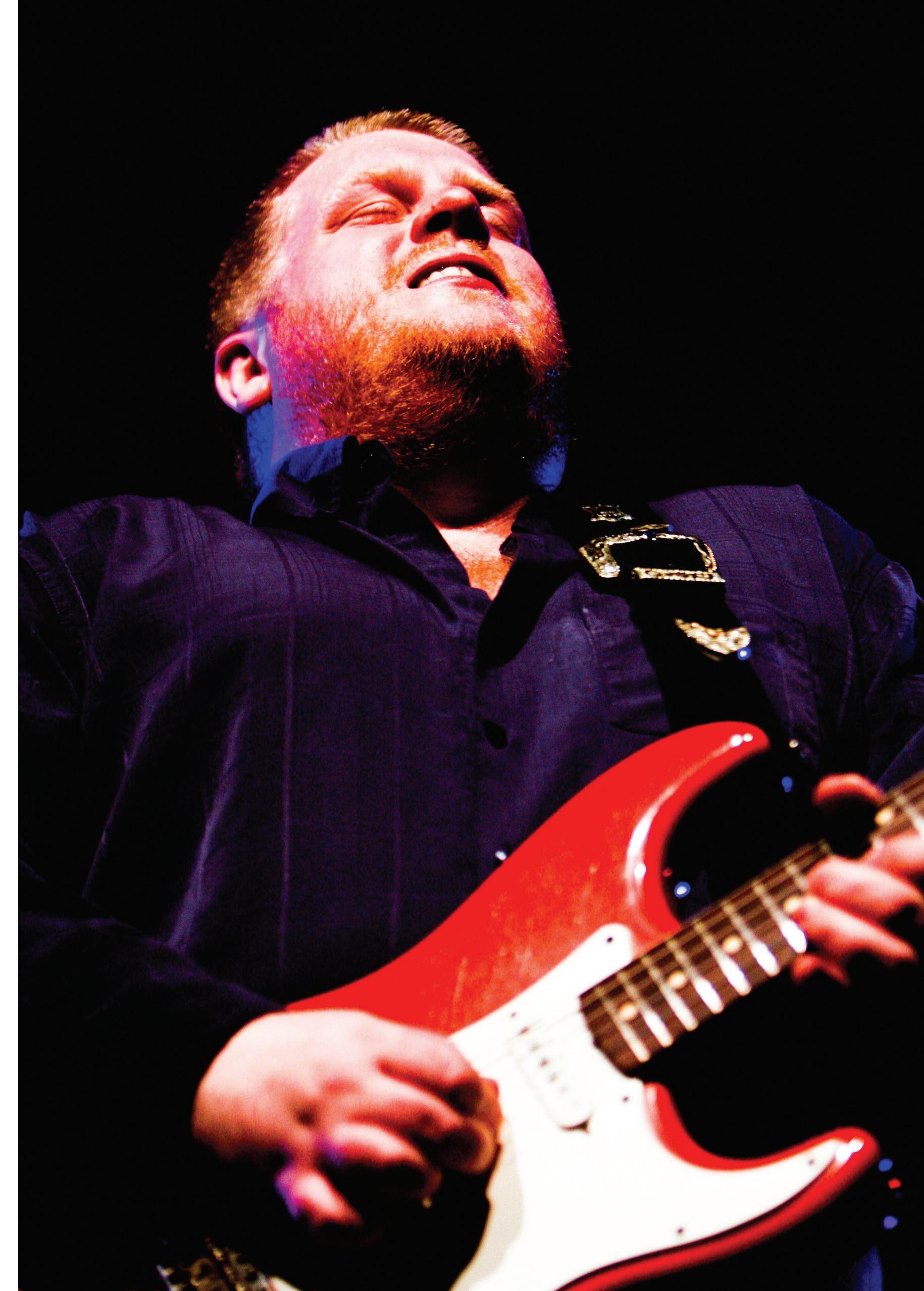
Blues Matters! 47
Fenders made in the custom shops - I have three of those. The red one you’ll see is the one I use most of the time and I have what’s called Texas Special Pick-ups, it’s a warmer sounding pick-up. I also have an endorsement with Trevor Wilkinson, and he makes Fretking guitars. They are great guitars and he has built a couple of those guitars for me. On this tour, I am using a Martin electro acoustic through a couple of songs we do. I’ve got a B.B. King Lucille, and quite a lot of different one’s I collect at home. I’ve a rare custom Strat that they only made fifty of. It’s my hobby collecting guitars. For the rest of it, it’s quite simple, I just use a Marshall amp and plug straight in. The only pedal I have is a tuner on the floor. Sometimes, on the CD, I used a wah-wah, but live it just straight into the amp, mainly because I’m useless with things like that. If I had pedals, I’d be dancing all over the place, turning the wrong one off and on at the wrong time, and it would just be a nightmare. People congratulate me for not using pedals, but I’m not very technically minded!
A lot of Blues players use altered tunings, do you?
The only time I really change the tuning is when I go to open D tuning, when playing slide, if I want an Elmore James type sound say. It just allows you to hit the open chords. Sometimes, at home, I’ll fiddle around with an open D tuning without the slide to try to come up with some ideas. Usually its standard tuning and I don’t tune down at all. Quite a lot of guitarist tune down half a stepStevie Ray Vaughan did it, but I don’t. In slide, I use open D.
What was it like working with Walter Trout on the “Days Like This” album?
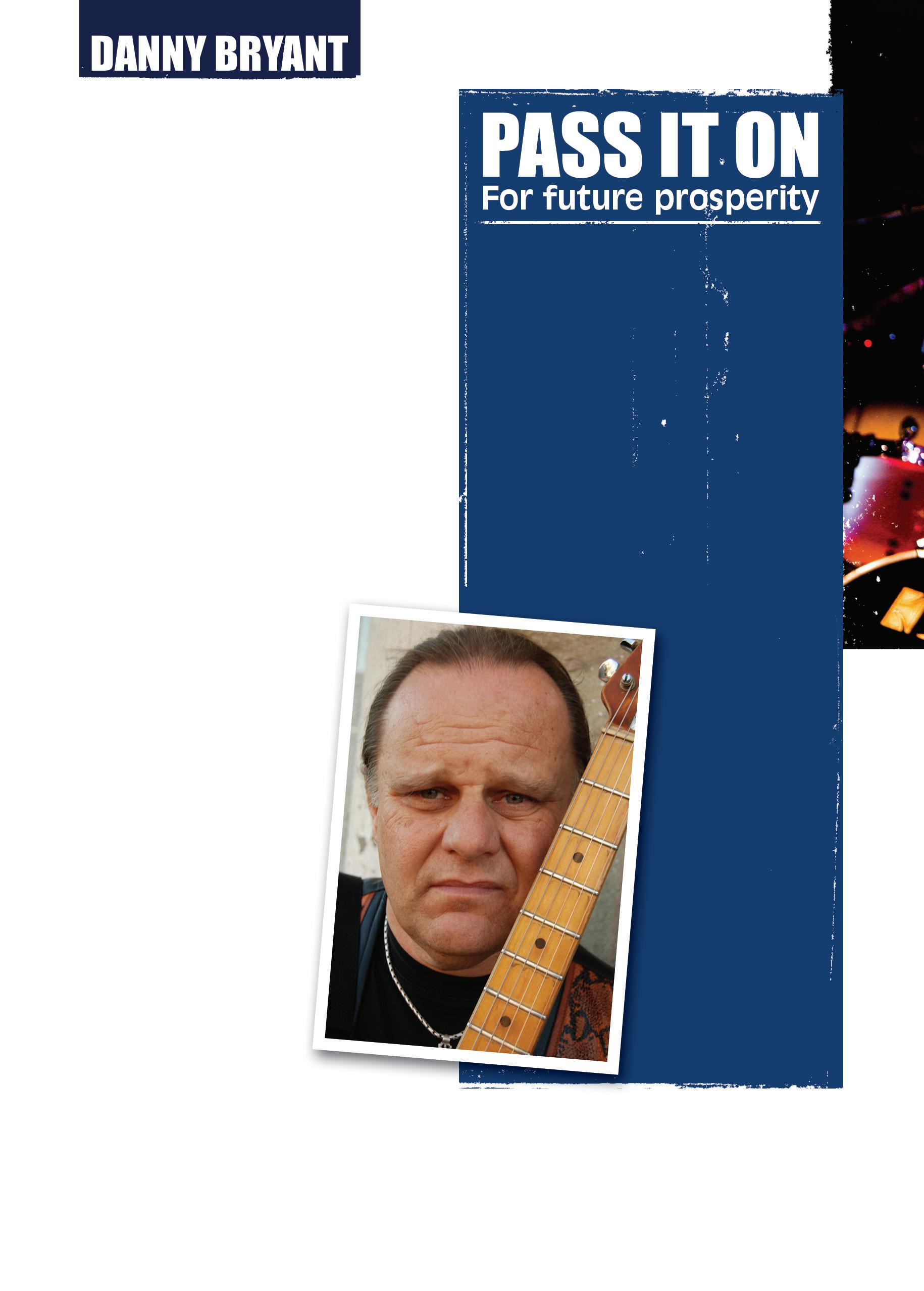
It was great, I loved it! I’ve know him since I was 15 - I’m 27 now. I’ve jammed with him on stage about thirtyfive times - I’ve been really lucky because he’s my favourite player. You know many of these kids idolise the likes of Hendrix and Stevie Ray Vaughan, who were amazing players, but they will never get to meet them. I’m very lucky to know my mentor, and when he played on the album, it was a bit surreal - even now it’s surreal when I play with him
Is there another contemporary Bluesman, or woman, you’d like to perform with?
There are hundreds. I just jammed with Ian Siegel in Holland and I’d like to get him on an album. I jammed with T-Model Ford in Holland a few months ago and that was great. I’d like to get some of that recorded because you learn so much. There’s a guy in America called Eric Steckel, with the same record company as myself. I jammed with him a few times and we’ve talked about recording something together at some point.
There a debate going on about the future of the Blues. How would you like to move the Blues forward?
I’d love to see it on television. Jools Holland, you know, he hardly ever features Blues, and if he does, it’s someone
Interviewing Danny Bryant, one of the things that came to the forefront was his total respect for his mentor, Walter Trout.
Walter’s time with Danny has obviously been well spent. Walter helped Danny not just to progress technically in his music but to give him a sense of responsibility towards the Blues and its future. An ideal that is vitally important as the Blues baton is passed on.
Danny is just one of many that Walter has supported over the years. At the Colne R&B Festival only last August, he brought young guitarist Mitch Laddie onstage with him. His 2008 autumn UK tour saw upand-coming guitarist Oli Brown as the opening act.
The idea of a mentor has become trendy in modern jargon but the concept is very old, and it is well tried and tested - the psychological importance of its effect is now understood in many areas of modern life. The concept of mentor was first recognised as far back as the Greek civilization. There are, in present day education and Business practice, at least ten formally defined roles a mentor can take and it is seen as essential to good practice.
The Blues needs more like Walter Trout, John Mayall and B.B. King, who have already grasped the importance of mentorship for the young, as a way as securing the future of Blues to step forward. We also need the likes of Danny to act as mentors and to undertake their position of ‘role models’ in their turn. Offering their experience to the now school, college and university based future generations of potential Blues musicians, especially here in the UK. Get’em while they are young is one effective way forward to help to secure the legacy and the future of the Blues. CB
established already. I’d like to see that happen - I’d like to see a lot more media coverage. That’s the main problem in England. I can go to Holland, sell-out most clubs that I do, but in England, it’s a struggle for a lot of us British Blues acts. In Holland, I’m playing a festival with Santana and Buddy Guy - that wouldn’t happen to me in England. In
Blues Matters! 48
Danny Bryant’s mentor: Walter Trout.
photo: Jon Trout
England, I can’t get on the local festival down the road from my house, and it doesn’t make sense - they just don’t want to feature Blues.
Is there any more, especially in the UK, we could be doing to further the Blues progress? Are there things we could learn from other countries in promoting the Blues?
I don’t think so because a lot of the promoters we work with in England work bloody hard and they really do work at it, they are nice people. I don’t know what it is with England. I know a lot of the other guys I speak to feel the same and we end up playing in England less because we do it to earn a living. It’s not about the money, but I want to go somewhere I’m popular rather than somewhere I’m struggling to get known. I think it’s the same with everything in England, though. I don’t ever go out because I’m always working, but I had a Friday night off a few weeks ago and I went down town with some friends - all the pubs were empty, and this was Friday night! There’s a whole thing in England, I don’t know what it is, the whole country seems to be going down hill, and no-one seems to want to venture out. I live in a quiet town but you hear about violence, though, and everything is so expensive.
There are a lot of awards celebrations within music, like Brit Awards, Blues Foundations, Halls of Fame etc. What are your feelings about these award systems and how they operate?
I think they are brilliant, it brings attention to the music and it gives these artists a chance to celebrate, and gives them a milestone of where they are going. Anything that promotes, helps, celebrates music.
Thinking of the future, what’s on your agenda next?
The album received good reviews, so the road’s endless. Luckily, for us, each time we go back to Europe, each venue is getting bigger and the crowds are getting bigger. That’s what you want, and now my focus is to try turn that round and do it a bit in England. It’s so great to have that in Europe, but it would be so great to have that in England as well.
Do you see yourself going in another direction?
No, not consciously, I do love songwriting but I love to play guitar. Each album is going to slightly different, but I won’t consciously change direction.
Is there anything Danny Bryant wants to say to our readers?
I don’t want to sound down on British Blues, because I love it. Ian Siegel and I came back the other week and it’s strange, we go over to Europe and headline festivals and something like Boscock in July with 20,000 people there. Could you imagine a Blues act getting on to Glastonbury or something, which is the equivalent?
Seasick Steve did...
Look how much it helped. Now he’s doing the Albert Hall and things like that. That’s what it takes to fill venues. I went over to Italy, played a show with Joe Cocker, and it was televised. From the first time in Italy getting on TV, I got Deep Purple’s agent - that could not happen in England. I’m very grateful for that, but can you imagine how hard it is for a UK Blues act to get on TV here, and I don’t necessarily mean me. I’d love to see Aynsley Lister on TV or Ian Parker - as long as somebody gets on! CB
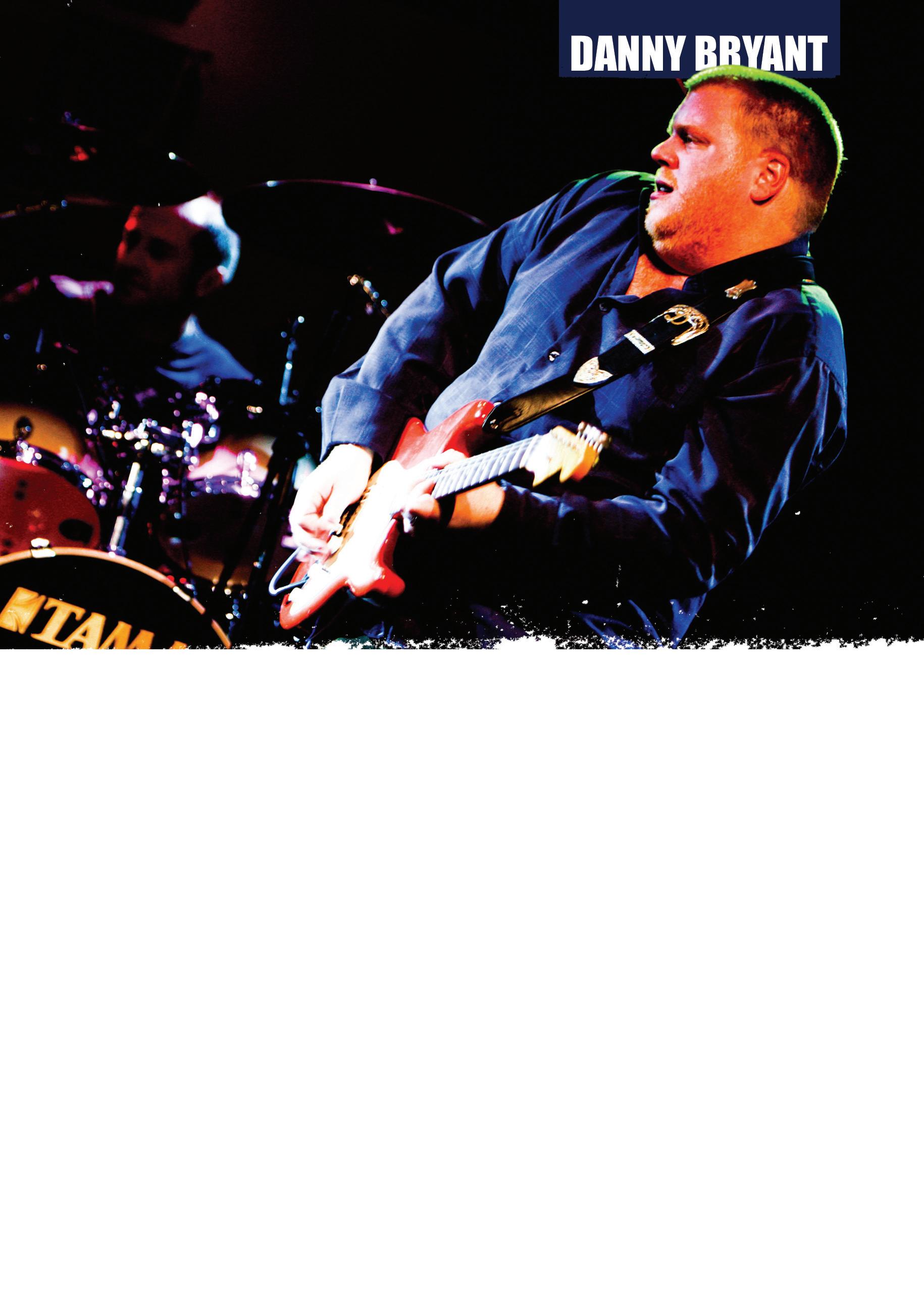
Blues Matters! 49
“There’s a whole thing in England, I don’t know what it is, the whole country seems to be going down hill, and no-one seems to want to venture out.”
ew Brunswick, Canada’s Matt Andersen has been making a name for himself in the UK over recent years – whether performing in a laid-back country Blues style or rocking it out, the larger-than-life performer has outshone many of the luminaries he has been backing (Little Feat, Bo Diddley, “Honeyboy” Edwards…), whilst his soulful vocal has won favour with the likes of influential British DJ Paul Jones, His debut, “Something In Between”, brought together studio legends Norman Barrett, Dave Markee and Henry Spinetti (Eric Clapton, Bruce Springsteen Paul McCartney…), and whilst the Lincoln, England recorded collection impressed enough to ensure more frequent visits to these shores (and regular appearances on the BBC), the release of new album “Second Time Around” has many purists salivating at the prospect of acoustic Blues moving to the forefront of the genre so often berated for its modern-day reliance on Strat-wielding Blues-rockers…
BM: Let’s go right back to the beginning and talk about how you got into playing the Blues…
Matt: There is always music when my family gets together. I had some formal training but most of my experience comes from playing at home with friends and family. We had to make our own entertainment in a small community.
From where I’m sitting, several thousand miles away, New Brunswick seems a remote place. Was it easy to find an outlet for your musical leanings?

The things that make it hard are the same things that make it great to be from a small town. Music is a huge part of the culture where I’m from. There might not have
been many chances to play publicly, but there was always the opportunity to play.
A lot of your music seems to follow on from folk traditions, as much as it does Blues. Just how much folk is there in your Blues?
Lots! My Blues is influenced by all of the music I grew up on and listened to. Blues is something I fell in love with and gravitated to, but I started out playing fiddle tunes and old country songs around home - and lots of gospel music as well.
Blues and folk are very close in my eyes. Aside from the obvious musical differences, they are based around the same idea of telling a story. They are just different ways of telling a story.
So, how and when did you first start playing live shows?
I started out in school music programmes. I played tuba, trumpet, drums and bass. Also, I always took part in local talent shows. Then, out of high school, I started playing in a local pub every week with another local musician. We started our duo, Stubbyfingers. We played for about a year together. I then moved onto another group. That lasted for about a year and I decided to go out on my own. That was in 2002. I’ve been playing full-time ever since then.
After an early EP release, you then put out two live albums. Why did you decide to do it that way, rather than going into the studio straightaway?
Convenience and cost mostly. It was an easy way to get a recording - just book a show and record it! Very cost effective as well, as there was no studio time, so no hiring other musicians or producers. They served me very well, as my live show is what grabs people. It made sense to have a recording that represented that.
You spend a lot of time on the road touring. That includes
Blues Matters! 50
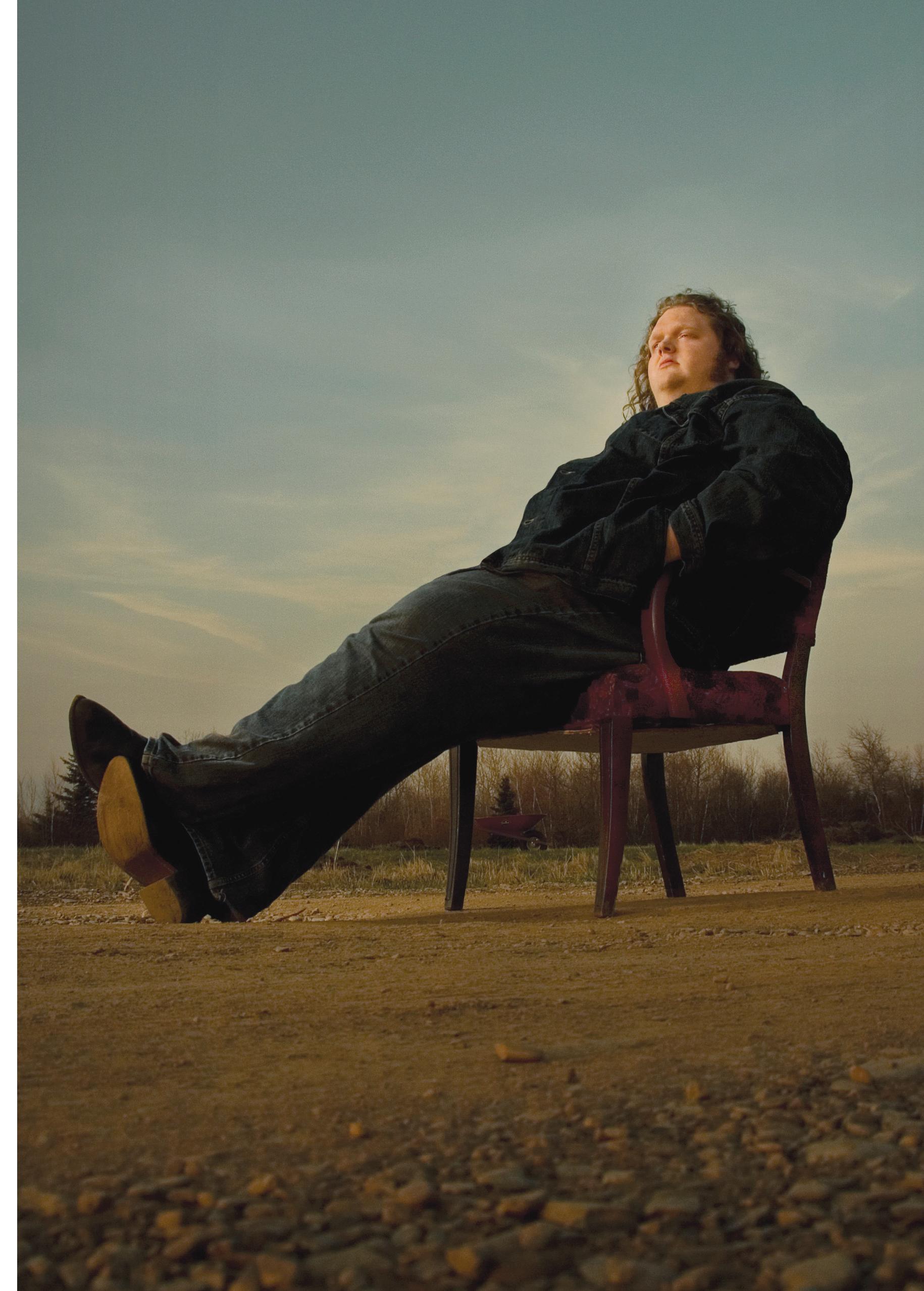
Blues Matters! 51
“The things that make it hard are the same things that make it great to be from a small town. Music is a huge part of the culture where I’m from.”
photos: Chris Smith
shows with the likes of America, Randy Bachman, Bo Diddley and Little Feat. Do you prefer your own smaller shows, or hitting bigger stages?
They both have their charms. There is an amazing energy you get from playing to a large crowd. Doing shows with those acts is great for me. They sell the venues out, so all I have to do is not mess up. It’s the best way to reach big crowds in a small time. On the other hand, smaller venues have an intimacy that you just can’t get on a big stage. You can really make a connection with an audience when they are a mere feet away from you. I, of course, love them both. But, if I had to choose, I would go with the smaller venues. It reminds me most of playing at home. Hearing folks tap their feet and sing-along. You can lose that on a big stage.
Out of all the people that you’ve shared a stage with, who were your favourites, and why?
So many for so many different reasons. Last year I got to open for Dave “Honeyboy” Edwards. That was really cool. I got to see a guy at 96 years of age still getting up on stage and playing, and still smiling while he does so. That was good for me. That’s the one that is sticking out the most to me right now. Aside from that, I have lots of friends here that I love to take the stage with. Everybody brings their own energy to the stage. Having a connection with the right people can make for some magic moments.
Your “Something In Between” album saw you sharing a studio with veterans of Eric Clapton’s post-Cream band, amongst others. Name names and tell us what the experience was like?
Henry Spinetti on drums and Dave Markee on bass guitar were the players who played with Eric Clapton. They were on his “Just One Night” album. They have a huge list of other acts they have played with, from Paul McCartney to Frank Zappa. It was fantastic to have that kind of experience in on the session. They made it so easy. They’ve played together so much before, they just fell into the groove and I just had to ride on top of what they were laying down.
Also in on the session were Norman Barrett and Dan Cutrona. Norm is a fantastic guitar player and brought in some really cool sounds to the session. Dan has played with Joe Cocker, The Bee Gees and a host of others. Having the four of these guys with me was such a treat. They have a great history with each other but hadn’t seen each other for a while, so there was a great energy when they got back together. I was fortunate enough to be there for it. You’re seen as someone who’s primarily an acoustic
Matt Andersen has drawn as much from folk as he has Blues, and in the pre-electric guitar days, there was little distinction between the two.
A lot of what we know is down to the groundbreaking work of musicologists and scholars like John and Alan Lomax, Samuel Charters, Bruce Bastin, and others, who've either documented or researched music that may otherwise have vanished into history.
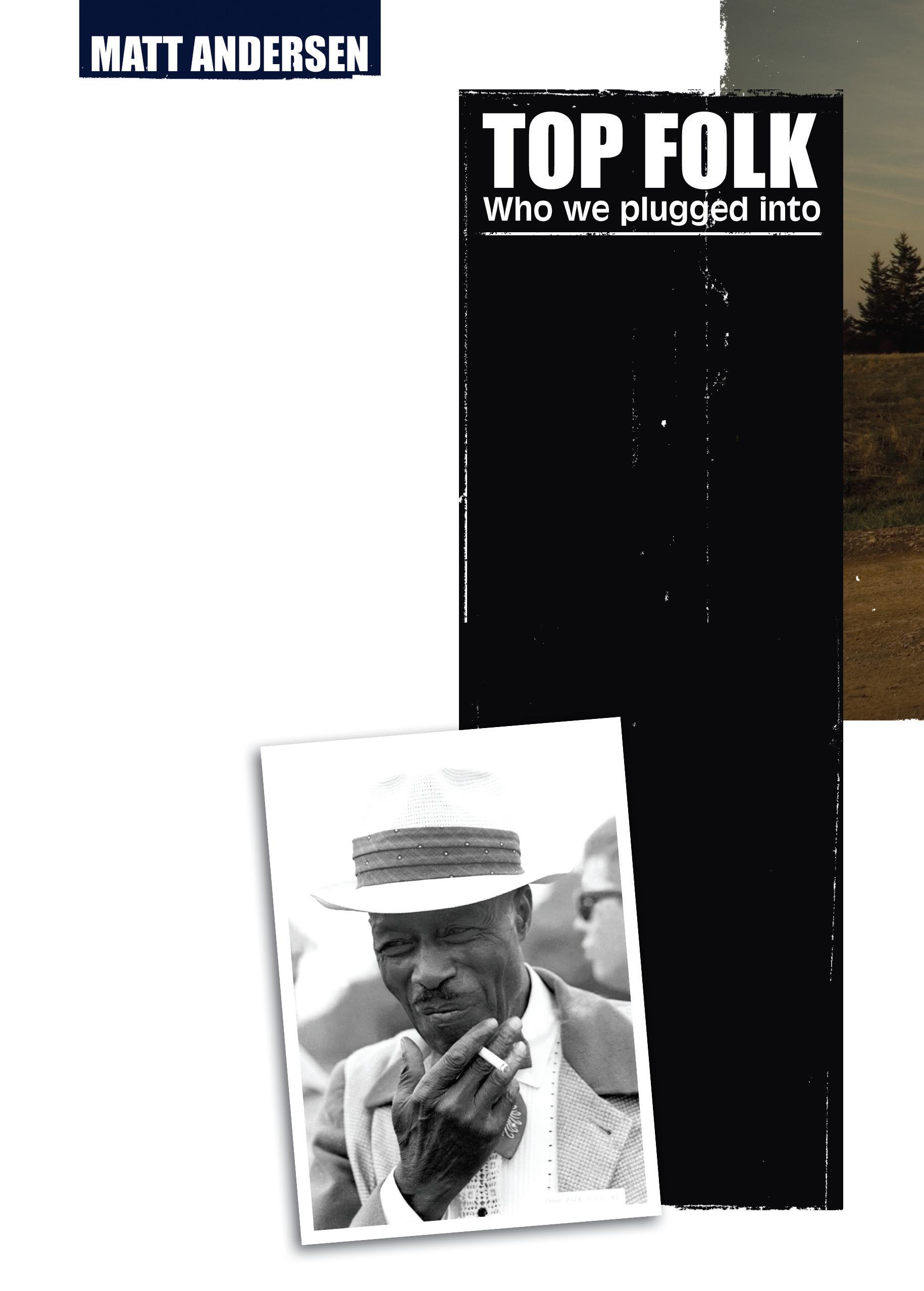
Thanks to them, we know and appreciate the pre-war acoustic Blues of performers like Mississippi John Hurt, Skip James, and the Reverend Gary Davis. We can also all tip our hats towards the German jazz publicist Joachim-Ernst Berendt, for it was he who had the idea of putting together the American Folk Blues Festival, which first toured Europe in 1962. The festivals were run regularly until 1972, and saw Blues musicians like Muddy Waters, Sonny Boy Williamson, Howlin' Wolf, Sonny Terry, Brownie McGhee, John Lee Hooker, Skip James and Sleepy John Estes taking to stages across the UK and mainland Europe.
So it was that the Blues revivalists of the ‘60s were able to see the originators of the music they were emulating, and whose songs they were covering. Son House was one of the most important figures...
Eddie James House, Jr. (Son House) was born outside Clarksdale Mississippi. His ambition was to be a preacher, an aim he achieved aged 15! However, he found himself drawn to the Blues, learning to play the guitar in his twenties, often incorporating elements of southern gospel and spiritual music in his repertoire, drawing on his youthful experiences. He ended up doing time in the legendary Parchman Farm after killing a man. An influence on Robert Johnson and, therefore, everyone influenced by Johnson, he was recorded by Alan Lomax in the early-40s before vanishing until the folk Blues revival of the ‘60s. His music is still with us, as The White Stripes covered his song 'Death Letter', performing it at the 2004 GRAMMY Awards. SH
Blues Matters! 52
Son House’s music is still with us.
photo: courtesy Diana Davies & Smithsonian Folkways Recordings
Bluesman, but do you ever get the urge to just plug in and crank it up?
Quite often. My acoustic was my first guitar and how I learned. I love doing shows with just me and my guitar. But it’s a lot of fun, as you say, to plug in and crank it up. I have a four-piece band I tour with here in Canada and I’ve built that show around my electric guitar. It’s a totally different beast and really a different show. I sing different with a band behind me. Mostly, I think, because of the volume on stage, I really push my voice. I like having the opportunity to do both electric and acoustic shows. There are different things that I like about both of them.
You were over here in the UK touring again not that long ago. Do you have any particular favourite places or memories of your time over here?
On my first tour over, myself and two other acts from Canada were on the road together. Early in the day, before our show at the Half Moon in Putney, myself and Dave Gunning (one of the other artists - SH) were talking about the song ‘Streets Of London’. I guess being in London sparked the conversation, and it’s a song I’ve sang with friends lots of times at home. Anyway, it ended up that at the end of that show in Putney, Ralph McTell, who wrote that song, was at the club! Apparently, it’s his local.
One of my favourite gigs that I do every time I’m over is at the Red Shoes Theatre in Elgin, Scotland. The crowds
there have a great energy and remind me a lot of the crowds I play for here at home. It’s become a must stop for me.
So, what can we expect next from Matt Andersen?
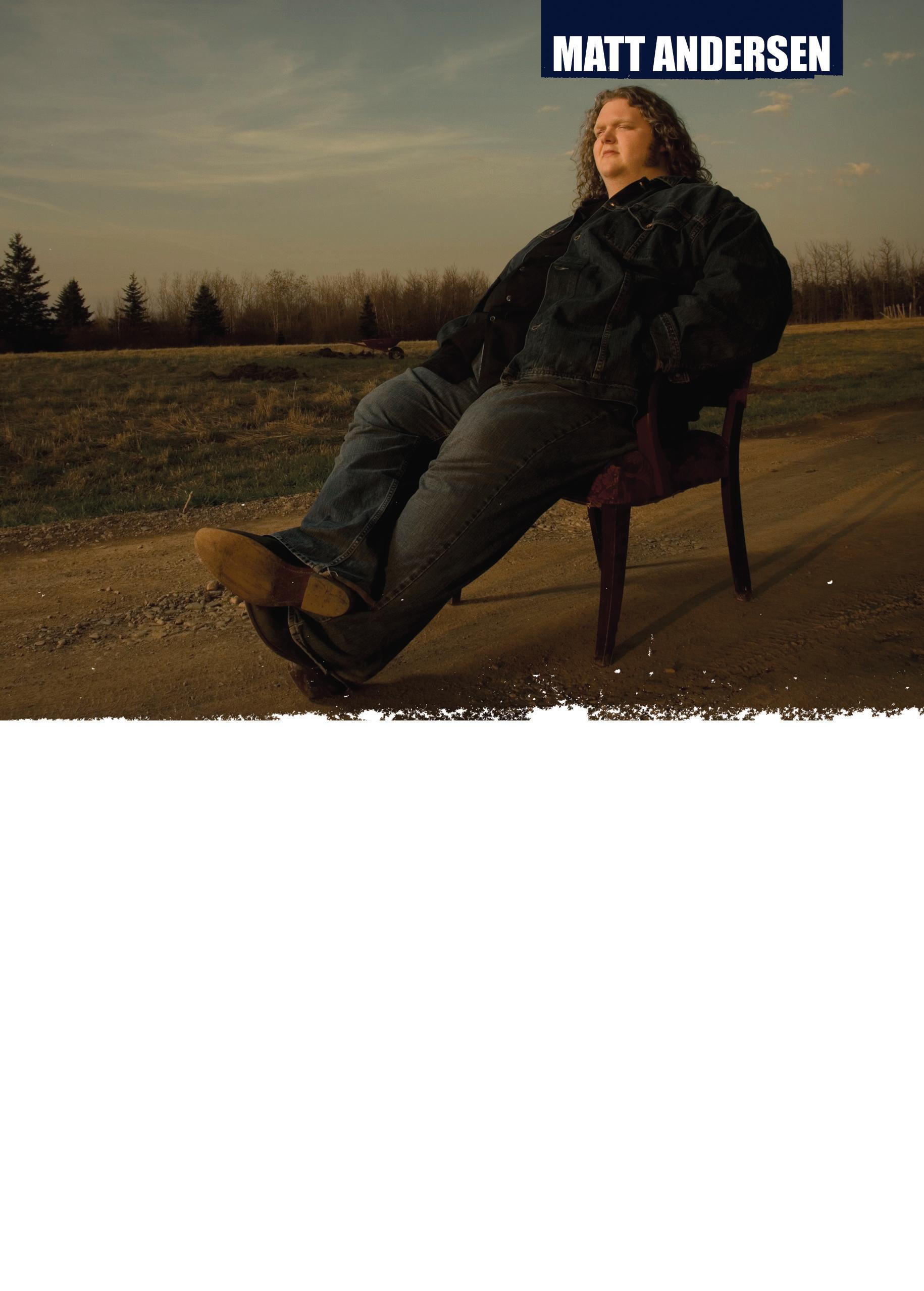
I just finished another recording this past September in Guelph, Ontario, Canada with a good friend and fellow musician, Mike Stevens. Mike is world class harmonica player. He’s travelled the world playing, and has been on the Grand Ole Opry hundreds of times. It’s just the two of us on the album. I am really excited about this one. There is lots of fun stuff on there.
Other than that, I’m going to be on the road steady. I’m pushing close to 200 hundred shows a year. That keeps me on the move pretty much all the time.
What’s with “stubby fingers”? Is it at obvious as it seems, or is there some hidden message there?
No hidden message. Stubbyfingers was the first band I was in, and I have lots of fond memories of that time. So to hang on to that, I keep that name around me. We were just a couple of guys with stubby fingers!
And do you have any final message for our readers?
Well, if they’ve made it this far then I’d like to say thanks for checking me out. Hope I can see you all on the road. And also, please don’t hesitate to come up and say hello if you make it out to a show. I love getting to meet new folks and to hear their stories. SH
Blues Matters! 53
“Blues and folk are very close in my eyes. Aside from the obvious musical differences, they are based around the same idea of telling a story.”
ason Ricci is regarded as one of the best harmonica players of his generation. Winner of the Sonny Boy Blues Society Contest at 21, Ricci subsequently went on to win the Mars National Harmonica Contest, and in 2005 the Muddy Waters Award for Most Promising New Blues Artist. Industry recognition went hand in hand with the respect of his peers, working with the likes of RL Burnside, Junior Kimbrough and Susan Tedeschi, before forming Jason Ricci & New Blood.
With New Blood, Ricci garnered further praise for his contemporary take on Blues music, which seamlessly incorporated rock, funk, eastern and jazz influences, and brought comparisons to everyone from Prince to The Rolling Stones. Jason’s encouragement for fans to record his concerts also led to the group becoming one of the internet’s most downloaded acts – surpassing “bootleg kings” Grateful Dead for weekly downloads.
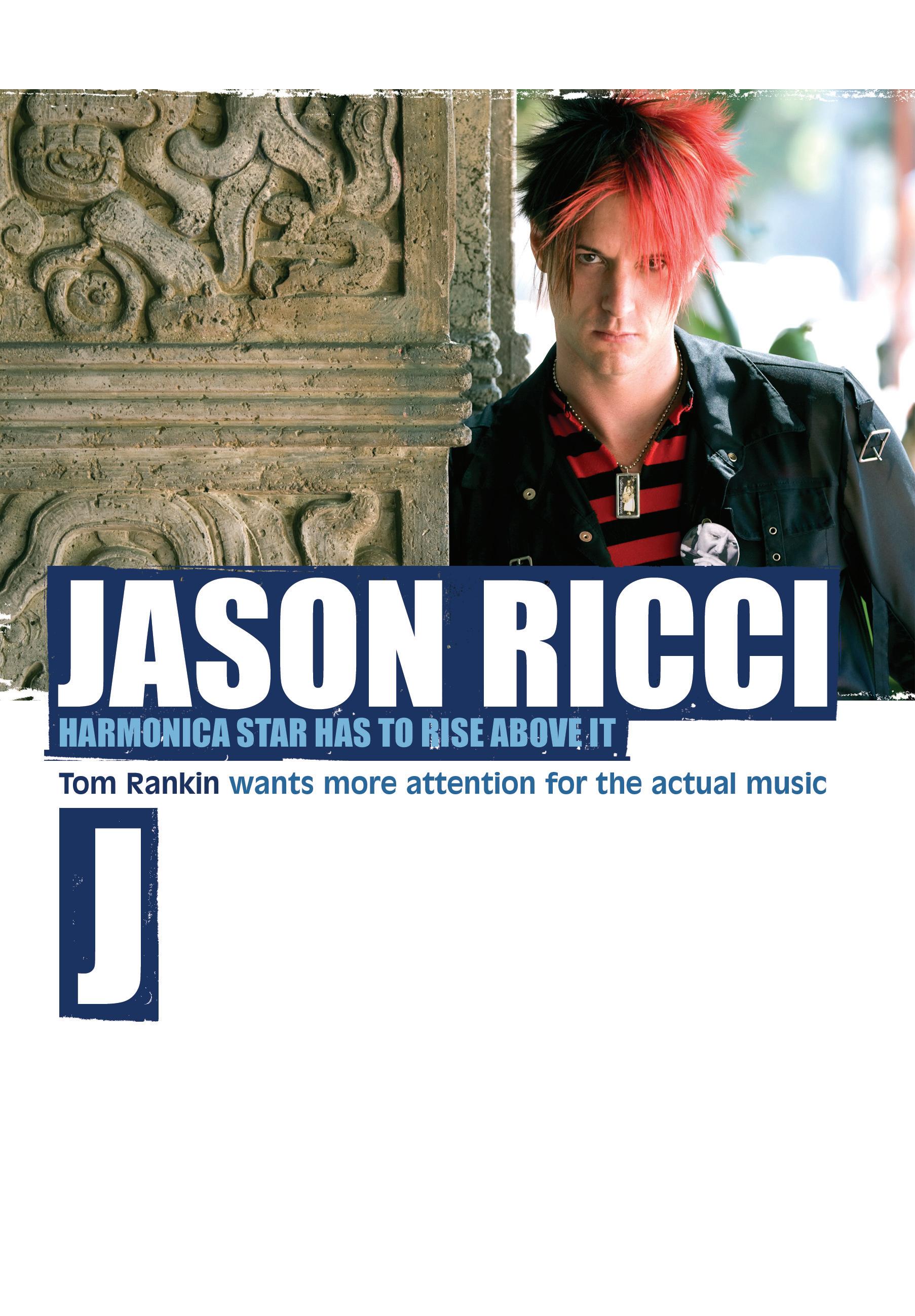
Yet, whatever the accomplishments, including selling over 12,000 copies of debut album “Blood On The Road” on tour before signing to Eclecto Groove and releasing the
acclaimed “Rocket Number 9”, Jason is still battling discrimination. His dress sense, bad boy past and chosen lifestyle are unfortunately more synonymous with his name as any of his musical achievements…
BM. Tell me a bit about how you got where you are today?
Jason: I worked really hard, practiced eight hours a day for years, studied all the old and new masters. Never took “no” for an answer from any club, festival, booking agent etc. Booked myself when I had to. Put out my own records, wrote my own music, toured constantly, sacrificed any resemblance of a normal life, ate a lot of cheap food, went where the greats were, got into a lot of trouble with the law. Basically I threw my life down the toilet and eventually I had a Blues career. Here I am!
Why the harmonica?
I was in a punk band, but wasn’t a good enough singer, and other band members were singing and writing, too. I was getting benched at rehearsals and shows for multiple tunes, so they just decided I would play harmonica.
Who gave you your inspiration?
Al Wilson, Little Walter, Paul Butterfield, Big Walter, The
Blues Matters! 55
“I could not have answered this question like this in my own country without fear of physical violence or the loss of my career.”
Music through the ages has produced more than its share of bad men and wild women. The pages of history are littered with stars who had it all only to throw it away, and those who would pay the ultimate price, departing life’s stage before the curtain was due to fall. Happily, there are many who overcome adversity to achieve greatness.
Leadbelly survived abject poverty and long prison stretches for violence. However, in his last fifteen or so years, he found an appreciative new audience and paved the way for many others, leaving a legacy that is still felt today.
Tina Turner made one of the biggest comebacks in history. Following her split from husband Ike, with reportedly nothing more than thirty-six cents and a mobile gas credit card, she spent some seven years out of the limelight before she was re-launched with the release of her cover version of Al Green’s ‘Let’s Stay Together’. She would go on to amass eight GRAMMYs and sell more concert tickets than any other solo performer in history.
As for Ike, the supposed abuser of his ex, when Tina left, his career and life entered a downward spiral which culminated in four years in prison. Upon his release he went through a long period of sobriety, throwing himself back into his music. He forged a successful career and even managed a GRAMMY of his own before his death.
Johnny Cash, one of country music’s early outlaws, became a heavy drinker addicted to amphetamines and barbiturates. After a spiritual epiphany, he renounced drugs and entered one of his most productive periods of touring, writing and acting. Then, following a bizarre accident when he was kicked in the stomach by an ostrich he kept on his farm, he relapsed into addiction when he was administered painkillers. During this period, he hit an all-time low and was dropped by his record company. Then, after a near death experience following double heart bypass surgery, he again found his way. His renaissance would come when he released the GRAMMY-winning album “American Recordings”. A stripped down collection recorded in his living room.
We can only imagine what the world has lost in the multitudes whose talents were never given the opportunity to blossom because they never managed to overcome their personal demons. However, when you look at the promise shown by the likes of Melody Gardot, who performs under great physical duress and only entered the world of music as therapy whilst recovering from a horrific accident, you begin to realise the wonders that some can achieve and hope that they act as beacons to those like Amy Winehouse who threaten to allow what they have to slip through their fingers. TR
Sonny Boys, George Smith and James Cotton. Then it was guys like Mark Hummel, Madison Slim, DW Gill and others. I just started to fall in love with the sound of the instrument and that led to me studying and meeting some more modern guys like Pat Ramsey, Mad Cat and Howard Levy. Music in general became my mentor more than players. Rhythm, melody, chords, scales, modes, feeling, not just licks or ideas from other players. That’s how I got my sound.
You have picked up a few awards in your time...
I have been fortunate to grab a couple, yes. They can certainly help one’s career along pretty nicely. It’s always great to win, obviously, but ultimately they don’t mean a whole lot when you look at some of the heaviest cats out there who don’t have any - and won’t get any.
To win the Mars National Harmonica Contest you beat over a 1,000 entrants. What did you have to do to win?
I think the reason I won is that almost all the other contestants used a karaoke style pre-recorded backing track to play over and I just went at it solo. I tried to put everything I could do into a three minute solo. I had a train chug into a Big Walter style boogie, an East Indian raga, a jazzy
little swing, then back to the train thing.
I wasn’t trying to win the whole thing, I just wanted to win the amp, because I had just got out of jail, didn’t have a rig and I was starting to get gigs again. Later they tried to take that award away from me saying I was a pro and that I had lied. So I had to produce all these pay-check stubs from the two day jobs I was working at the time in order to prove I wasn’t making more than half my living from music.
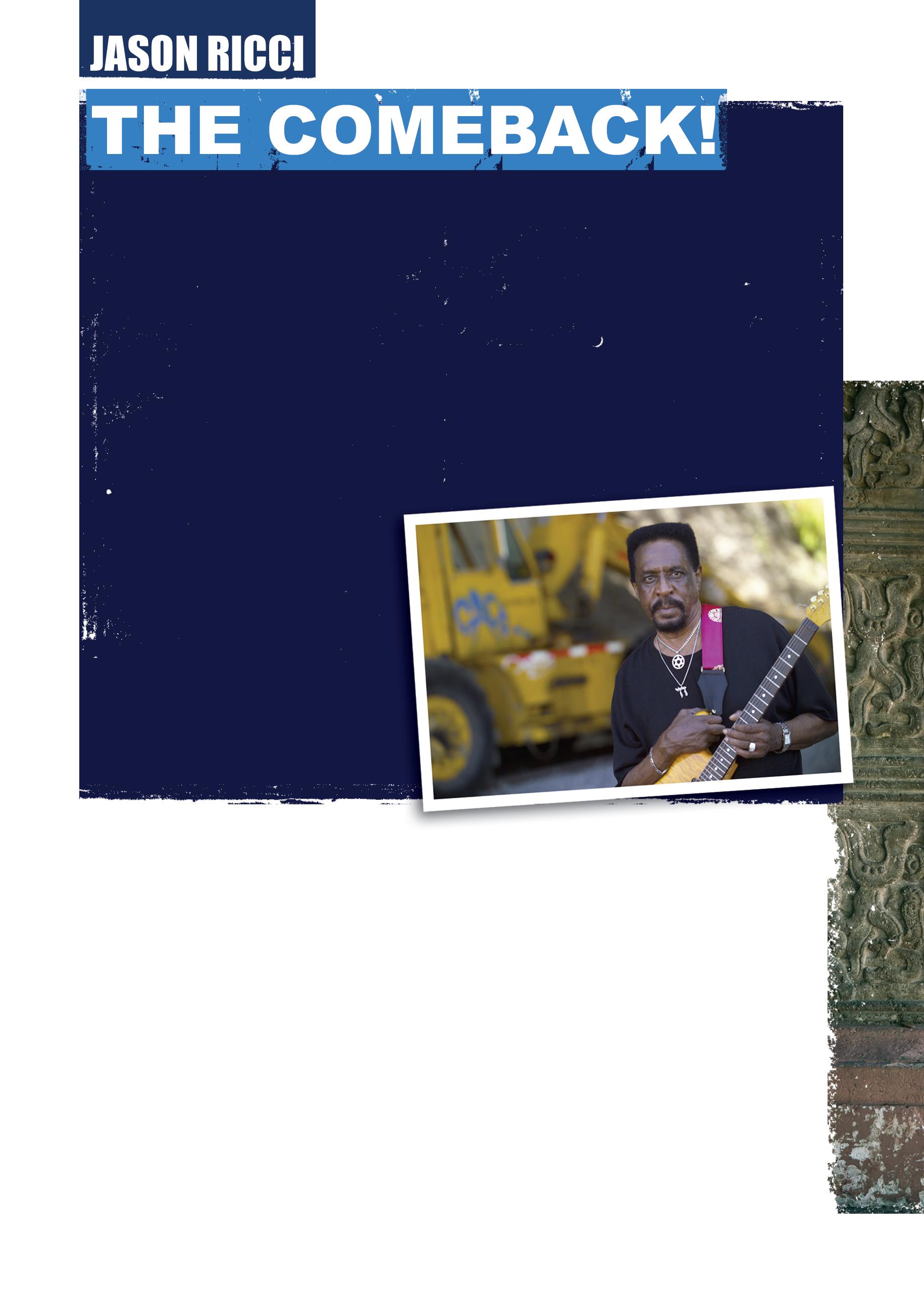
Many people are hailing you as the “great white hope” for the harmonica...
Wow! Do we need a hope? I don’t know! It seems like there are so many amazing kids starting to play right now. The “great white hope” will probably be one of those guy or girls. I think I’ll just end up being a footnote. Howard Levy is the greatest harmonica player who will ever live!
How does your “look” go down in traditional areas? It pretty much doesn’t. I do enjoy it, though, when they want to hate me cause of my hair or clothes, or whatever, and then I play something really tradition-
Blues Matters! 56
Ike Turner turned his life and career around.
al and some of those guys’ jaws just drop.
My look is just me being me. I’m not an old black dude, I never will be. I’m a middle class, white, suburban punk from Maine who happened to fall in love with this music. I don’t think that means I should have to put on some kind of a Blues costume. The music is close to me and it transcends all those images.

I was disappointed to read that your openness about your sexuality has not been received well in certain quarters?
It’s nice when people are actually surprised at that. I’ve had death threats, been boycotted by clubs, festivals and Blues societies.... I’ve probably lost a lot more than I ever will know from being open about it. I just don’t want to lie about it anymore. I’m not out here trying to be the “great gay hope” for the Blues. I’m just being me and I refuse to
compromise. A lot of people are like, “Yeah that’s fine that you’re gay, but why do you have to say it?” Well, it’s really hard not to say it when people are like “What’s your girlfriend’s name?” or “Do you want to go to this strip club?”
You also seem to have ruffled a few feathers with your political comments also?
Yes, I hated Bush from the start. I have seen the corruption first hand, the nepotism, and the USA’s imperialism in other countries. I have been watching more and more Americans remain wilfully ignorant of the war crimes, and atrocities that our U.S. of A. makes very little attempt to hide. Yes, I’m angry, and believe it or not that’s because I love my country and the principles it was originally created with, and I hate watching it deviate from what our founding fathers fought so hard to achieve. I could not have answered this question like this in my own country without fear of physical violence or the loss of my career.
You are one of the most downloaded artists around. That must make you feel pretty good? It does make us feel good. I just want people to hear us and I think eventually it does put money in our pockets because people that would otherwise never have been exposed to a band like ours are now coming to shows, paying cover charges, buying our CDs and telling their friends and families about it. So, I’m all for it!
You enjoy a great reputation for giving to fans? So many great artists and other heroes of mine have taken the time to talk with me and be cool. I’m just giving back what was so freely given to me. Without the fans, we’re all done here.
Although there is no doubt that much of the last album is based in the Blues, there are all sorts of influences in there?
We love all music, that’s the bottom line. I have more experience playing Blues than the others, so that’s initially my starting point. I don’t care if they call it Blues or whatever. I’m not trying to change the Blues or on any kind of pretentious mission here. We just want to play what we think is soulful, fun, interesting and intellectually engaging. Many of your compositions refer to your personal history. Was it difficult to write about this? No, because I had to write about them to survive inside. I had to try and take something bad and make it into something good that someone else could hear and know they weren’t alone.
The live performances attract rave reviews. Is this getting you into the major festivals?
It should be... We give 110% every time whether it’s a club or a festival. This year I’ve played with Michael Burks, Bob Margolin, Nick Moss, Little Ed and lots of others.
We would love to see this live show that’s causing such a stir. Any plans to tour over here?
Definitely! We’re working on it. When the time is right I’ll be there. Walter Trout is also helping me with that, so it may happen a lot sooner because of him. Thank you to all of you over there and thank you to Blues Matters! for thinking I matter. TR
Blues Matters! 57
heir self-titled debut album, released in 1990 on Alligator Records, defined their style; witty, infectious, swinging, innuendo laced songs played with style, humour and a twinkle in the eye. Excellent musicianship plus original songs mixed with definitive versions of classic Blues in the tradition of the early singers like Bessie Smith, Ma Rainey, Victoria Spivey…
It’s been one helluva ride for the band since then, a W.C. Handy Award and much critical acclaim from the Blues industry, but also an ability to reach a much broader demographic – their comedic feminist songs bringing them to the attention of mainstream media, seeing them travelling all over Europe and America playing to sizeable audiences that helped make them one of Alligator’s biggest-selling outfits.
However, 2009 sees the band on their farewall tour. Releasing their final album together, and saying their goodbyes to the loyal and dedicated fans who have supported them for so long.
Blues Matters! gives a fitting send-off to Gaye Adegbalola (vocals, guitar, harmonica), Ann Rabson (piano, vocals, guitar) and Andra Faye (vocals, violin, mandolin, bass)…
BM: Can you give us some background on how the band first came together?
Ann: Sure, back in 1971 I had moved to Virginia and was playing in various dives around the Fredericksburg area. I had a regular three or four night a week job in a rowdy bar out on the bypass called the Countryside Inn. This was back in my hard drinking days, so I’m not totally clear on the details, but one night this woman, who had become a regular in the audience, came up to me. She said she loved my music and asked if I would be willing to give her lessons. I said that I really couldn’t give lessons because I had no idea of what I was doing but just played what I felt
like. I gave her several names of people who would be great teachers. She was persistent, and this argument went on for about three years, until I finally decided to give it a try - and damned if she didn’t learn really quickly! Over the next few years, Gaye and I kept in touch and occasionally did gigs together. We worked as a duo for a while and then Earlene (original bass player - DD) joined us and we became a trio. It wasn’t planned, it just happened.
Why did you choose the name Saffire, and who added “The Uppity Blues Women” tag?
Ann: We asked the audience for help and they sent up napkins with names on – “The Good The Bad And The Ugly”, “The Bluebelles”... Finally a friend of Gaye’s came up with “Sapphire”, and Earlene suggested the change in spelling to connote heat. We had some t-shirts made to sell to raise money for PA equipment. One of the designs read “I Love Uppity Blues Women” - and that phrase stuck.
Who were your early musical influences?
Ann: The first Blues I heard was Big Bill Broonzy in 1949 and he knocked me out. I enjoyed listening to the great boogie woogie players, like Smith, Ammons, Johnson and Lewis on 78s, and also Mary Lou Williams. She helped me to know that women could play and play fantastically.
Starting in my early teens, I was obsessed by Little Richard, Big Joe Turner, Etta James, Chuck Berry, Ivory Joe Hunter, Jerry Lee Lewis, Huey “Piano” Smith, Bo Diddley and many others. Then, in high school, I had this wonderful boyfriend who introduced me to a lot of great things –most of which we’re not going to discuss here. He played Jimmy Yancey, Leroy Carr and Scrapper Blackwell recordings for me, and took me to hear Sleepy John Estes, Odetta and Sonny Terry and Brownie McGhee.
In the very early-60s, I was old enough to choose and I moved to Chicago. I often went to some pretty scary places, but I was too stupid to be scared. I got to hear Muddy, Wolf, Otis Spann, Buddy Guy, Junior Wells, and many others. It was heaven!
Blues Matters! 58
“When we first started out we did it all – driving, accounting, taxes, inventory, hauling and setting up sound systems, mailing lists, booking gigs, mail orders, the music…you name it, we did it!”
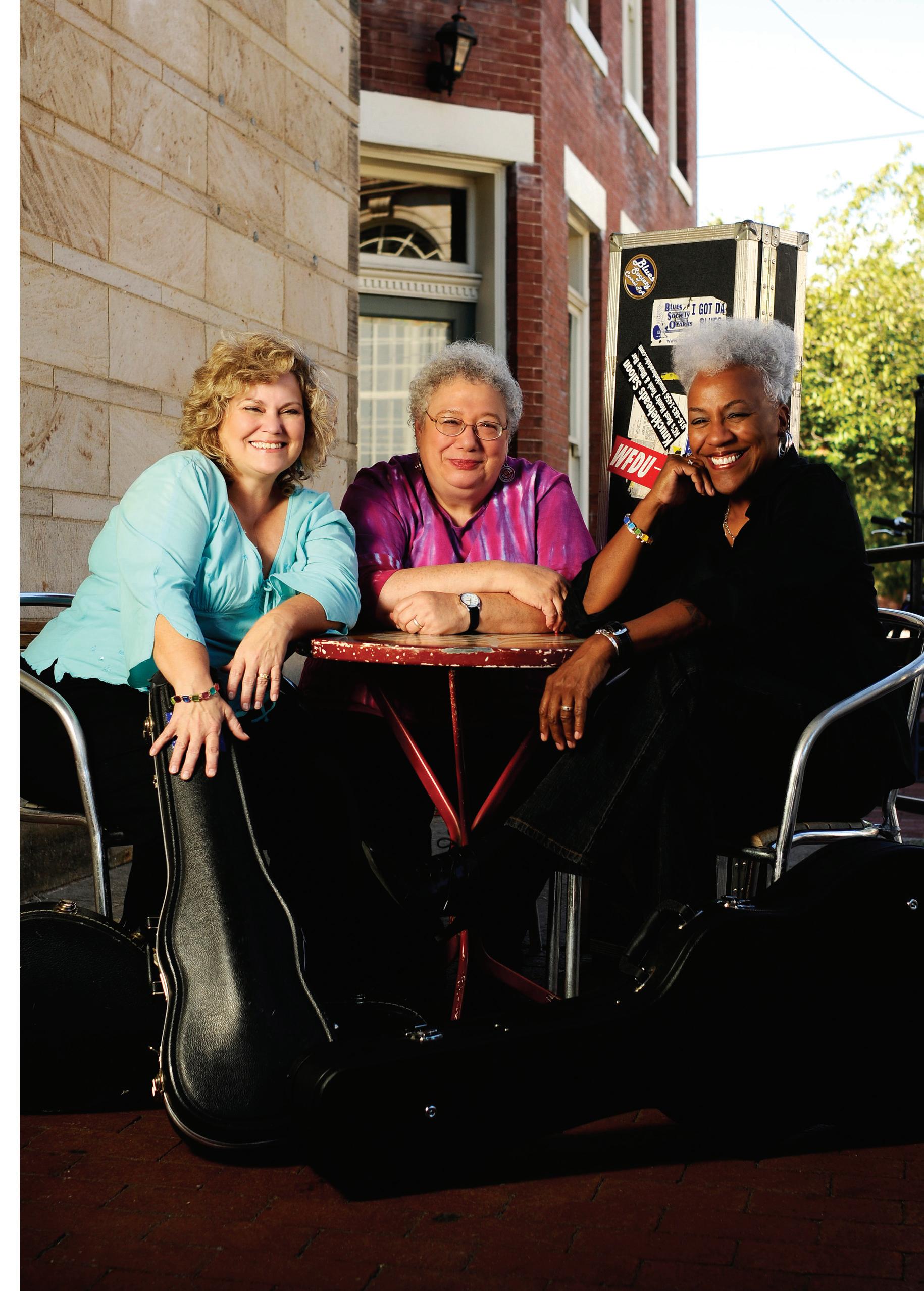
Blues Matters! 59
How did you end up signing with the Alligator?
Ann: Bruce Iglauer once described it as polite persistence. We kept sending tapes and he would write back with suggestions. He had a lot of criticisms, but kept in touch. Finally, he gave in. We had recorded a worthy project and he got encouraged to sign us by us, his girlfriend and by the late Bob Greenlee, who had recorded the project at Kingsnake, his studio in Florida.
The opening track on your first album ‘Middle Aged Blues Boogie’ set the tone straight away, and became one of your signature songs. Did your feisty approach come as a shock to some within what is a male dominated industry?
Gaye: I’m not sure. It’s just what I normally do – what I believe. I wrote the song for two of my friends. They were timid about loving younger men. I just gave them encouragement. It was embraced by many. I just said aloud what people were thinking. It might have been shocking to some, but not enough to hurt us.
Feels good to have one of Alligator’s biggest-selling albums... Andra: It feels beyond wonderful to know so many folks enjoy and buy our music.
How do you feel your success helped female performers?
Ann: I had not realised this was true until a festival a few years ago, where several of the acts were female. Two of
the women came up to me separately and thanked me for paving the way for them. I was stunned! These were pretty big stars, who I never thought of as following in anyone's footsteps - least of all ours!
Looking back, I do think that we have helped to make a place for women in the modern Blues scene. Partly because we have been able to deliver the goods and not just rest on our “novelty” laurels. I also think we have introduced a large new audience to Blues.
How did you sort out the division of labour between the three of you?
Gaye: When we first started out we did it all – driving, accounting, taxes, inventory, hauling and setting up sound systems, mailing lists, booking gigs, mail orders, the music…you name it, we did it! Ann and I used to put in sixteen hour days – no joke. We’d divvy up the work based on what we did best. I failed to say we were playing fifteen or so dates a month, too! Later we had a booking agent, a manager (who made decisions for us and handled most logistics). We had a road manager who drove, hauled, sold and did a lot of the accounting. Our label handled a lot of PR.
Musically, we’d all find or write our own songs and then bring them into rehearsal and polish and arrange them as a group. We’d rotate the vocals and each take lead on a third of the songs. The group was unusual in that there was no leader.
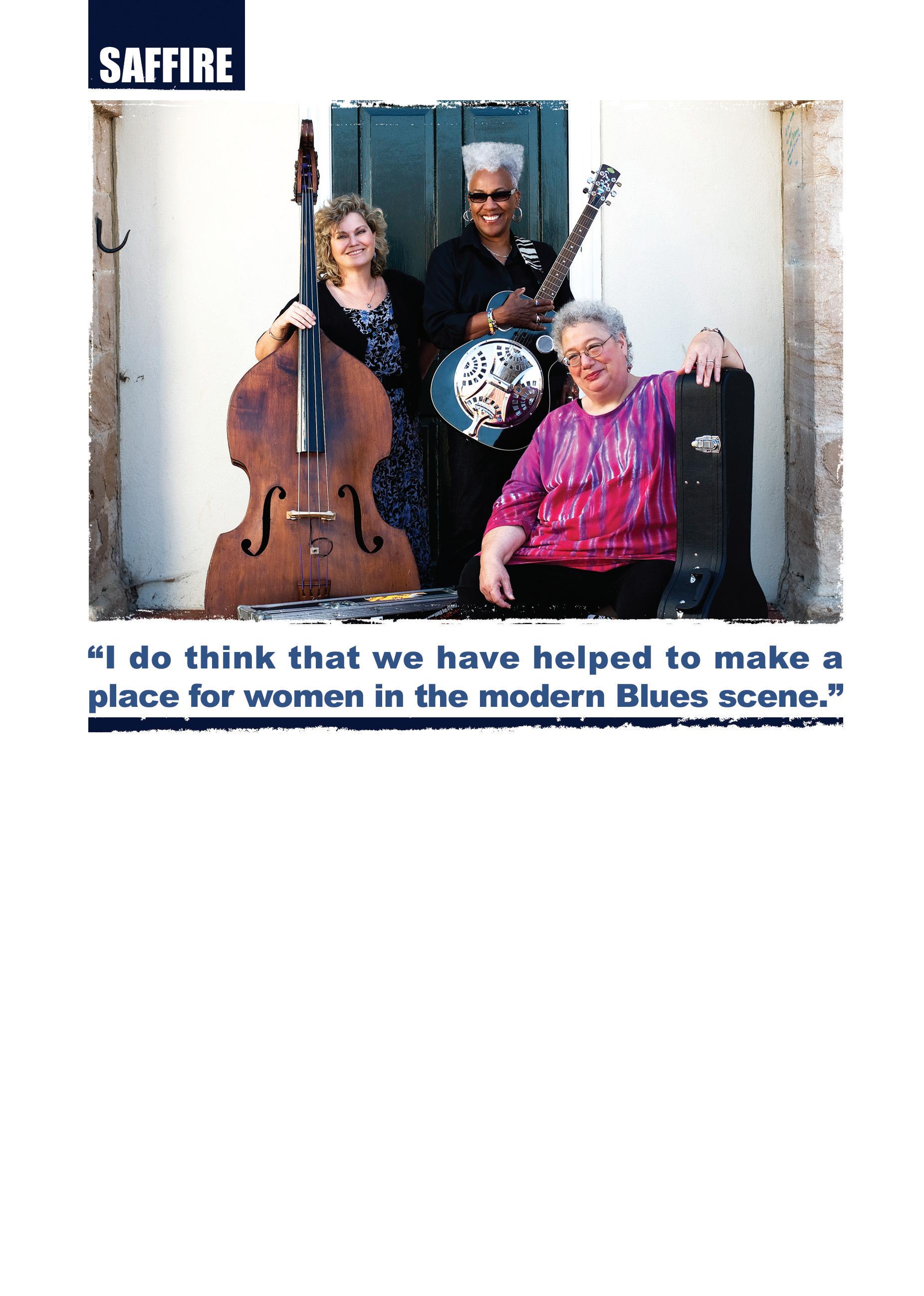
Blues Matters! 60
Saffire: (from left) Andra Faye, Gaye Adegbalola and Ann Rabson.
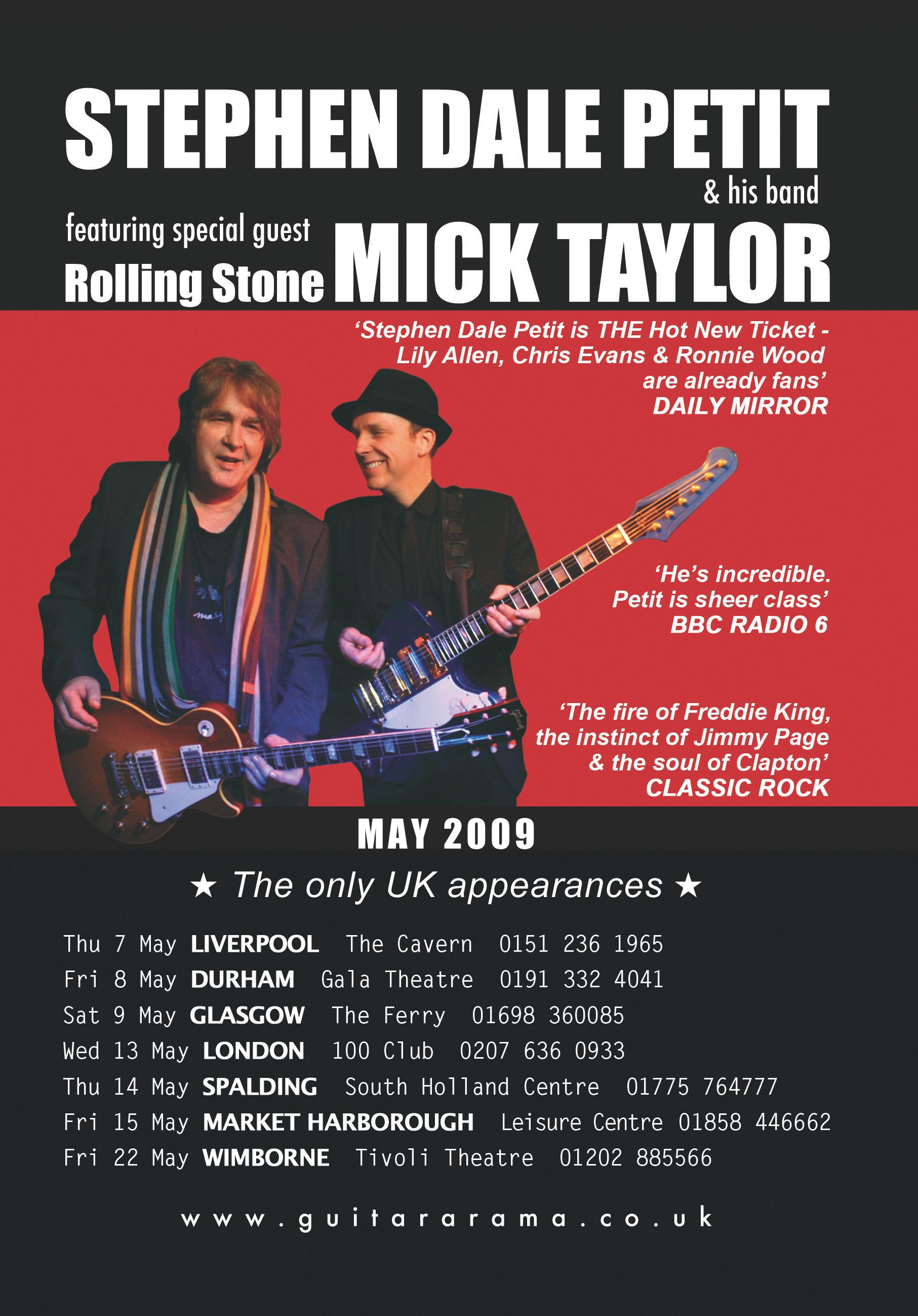
It doesn’t seem like you’ve had much time to relax...
Gaye: Relax! What’s that!? I never relax. There’s family, my home, and my partner Suzanne and I are real activists. I used to fight because I was black, now I fight because I am a lesbian. I’m very tired of being a second class citizen. Felons have more rights than I do in affairs of the heart. In my sixties, I feel how fast life is moving, and I have a real need to try to empty my vessel while I am able.
You’ll be touring for the final time as Saffire in 2009. What can fans expect from your final shows together?
Ann: We'll have a ball! Knowing that these shows will be a goodbye celebration for the band and our fans everywhere we play, we'll be pulling out all the stops and letting our collective hair down. Should make for exciting shows.
Will you make it over to the UK at last?
Gaye: In all of our twenty-five years, we have never been to the UK. We've played in Europe several times, but not the UK. We would love to be invited there for this final year.
You must have shared a stage with some fantastic performers over the years. Tell us about some of them…
Gaye: The major one is when Willie Dixon joined us on stage. We were playing ‘Wang Dang Doodle’ and I was out in the crowd encouraging them to sing-along to the chorus
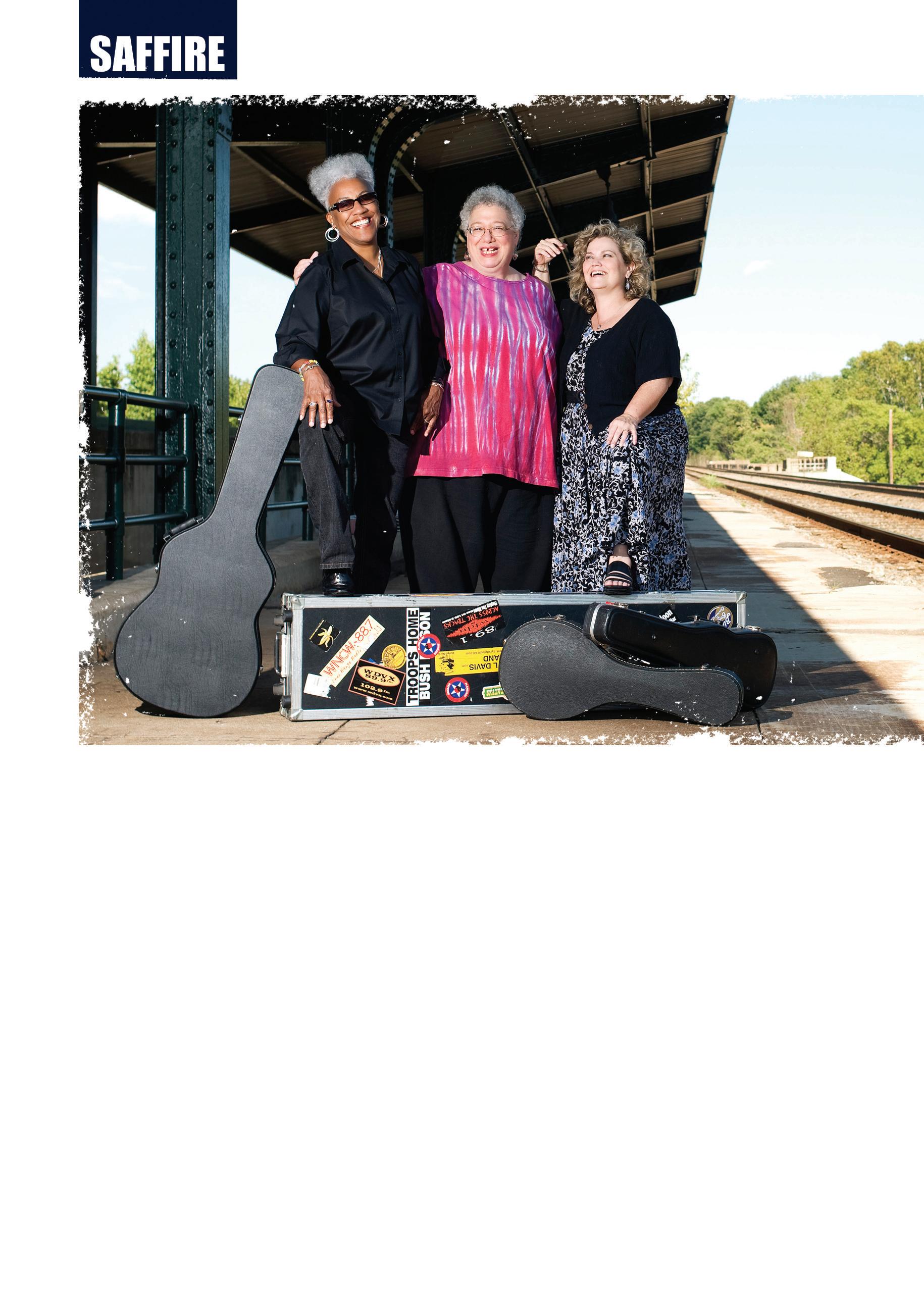
of ‘All Night Long’ when I heard a huge roar go up. As I climbed back on stage, there he was – the world’s greatest Blues songwriter ever singing his song with us!
As a final statement, how do you feel about “Havin’ The Last Word”?
Gaye: Because this is our last CD as a group, I had written several songs that I felt would be empowering for our audience that I probably wouldn't have the opportunity to record elsewhere. For example, one called ‘A Mother Again’ spoke of grandmothers who didn't really want to be mothers to their grandchildren, but had to because their own children were strung out on drugs. Another song called ‘Weapons’ was about how divorced women often use the children as weapons against their ex-husbands. The songs were rather serious social commentary, but songs that I felt our audience could really relate to - songs that wouldn't be sung by anyone else. However, these songs were dropped in favour of more "uppity" songs. Of course, fans love the uppity and bawdy songs, but I personally wanted to leave the scene on a more serious note. I did get to record a song for my incarcerated brothers and sisters, ‘Locked Up’, and a song of empowerment for chemotherapy patients called ‘Bald Headed Blues’ - not to mention a sequel to ‘Silver Beaver’ called ‘Bald Eagle’. Overall, I am more than satisfied. We achieved what I
Blues Matters! 62
In 2009, Saffire decided to call it a day, after a twentyfive year career which has seen the trio go from virtual obscurity to become one of the most successful acoustic Blues groups ever.
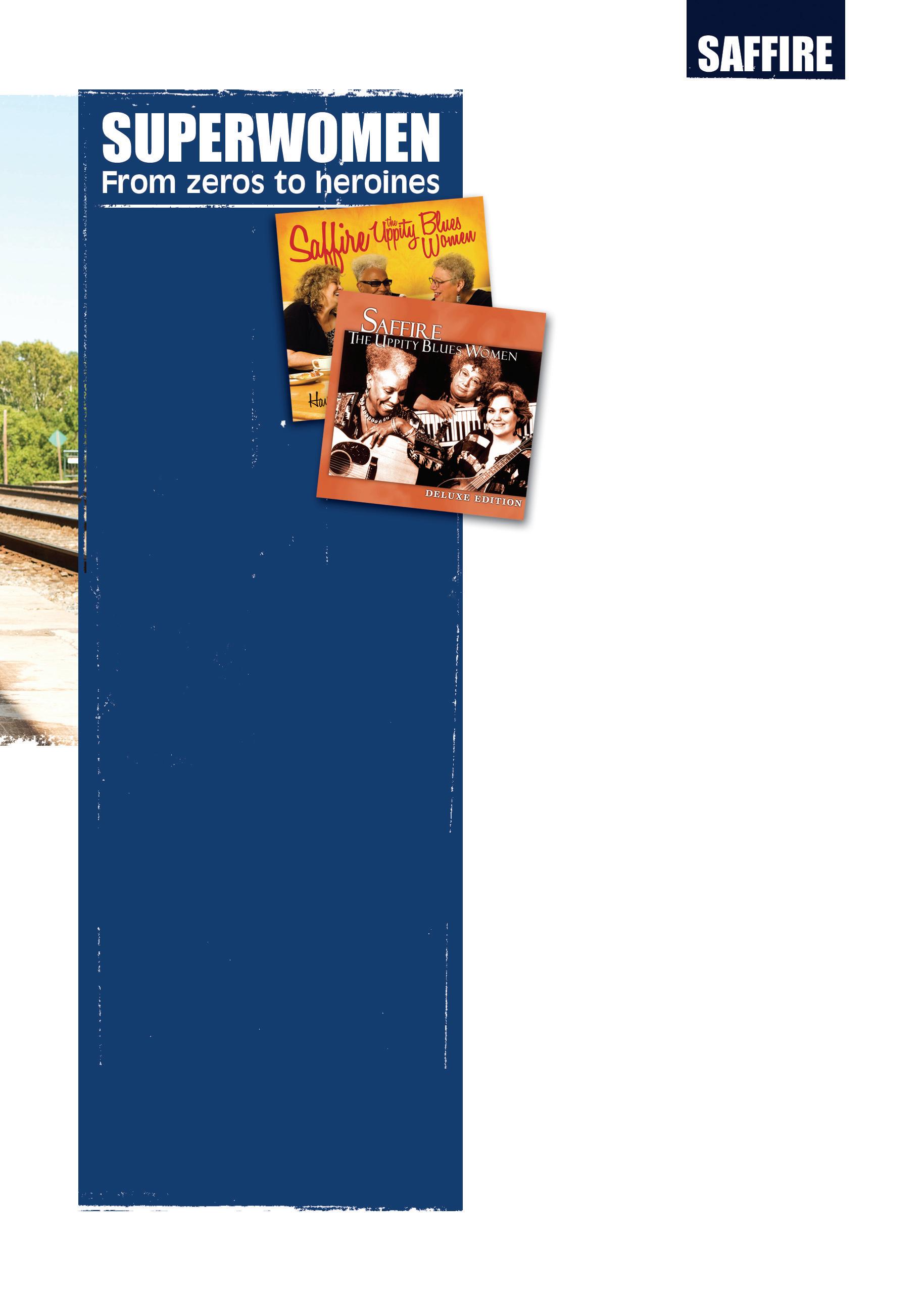
With the original line-up, 1990’s debut, “Saffire – The Uppity Blues Women”, was a best-seller for the Alligator label, yet that album’s success was quickly bettered with 1991’s “Hot Flash” and 1992’s “BroadCasting”. “BroadCasting” saw the introduction of Andra Faye on guitar, fiddle and mandolin, following Earlene Lewis’ departure, and her country-tinged vocals and exceptional musicianship on all things stringed saw the group to a new level.
With heavy touring, came increased exposure across radio and the broadsheets, picking up favourable reviews wherever they played. “Even people who don’t like the Blues can’t resist them,” declared The Washington Post, while The New York Times hailed them as “post feminist traditional Blues, sung and played with gorgeous abandon.”
Andra came into the band full-time by 1994’s “Old, New, Borrowed & Blue”, and their exposure across mainstream media increased further, swelling their fanbase to ensure continued success with 1996’s “Cleaning House”, 1998’s “Live & Uppity” and 2001’s “Ain’t Gonna Hush!”.
After five years, 2006 saw the release of a ‘best of’, “Deluxe Edition”, and whilst fans were fearing the lack of any new material meant the group had already decided to call it a day, the outfit, who have gained notoriety for speaking their minds throughout their career, proved they had plenty left to stay on their final declaration as “The Uppity Blues Women”, the Alligator release, “Havin’ The Last Word”.
With a “positive message of strength, joy, love and sisterhood,” the group’s final collection was a labour of love for the trio, making their final record together in their hometown of Fredericksburg, VA. “After nearly eight years, it was exciting to get back into the recording studio with my sisters,” Gaye Adegbalola recalled. “Every song offers something special for the listener.”
The label’s press release enthused: “From the uplifting opening track ‘Going Down To The River’ to the saucy ode to aging, ‘Growing Older’, to the salacious ‘Bald Eagle’ to the heartbreaking ‘Blue Lullaby’, the album is a showcase for the band’s stellar musicianship, razor-sharp wit and provocative songwriting.” DH
feel is another wonderful CD and ended up striking the right balance content-wise. I am ever amazed by the quality and fullness of the sound that the three of us can create. I am very proud of this work!
Andra: I'm really proud that I have two originals, as I'm just starting to come into my own as a songwriter. The most special one for me is ‘Blue Lullabye’, which came from having a miscarriage - something so many people have experienced. I'm proud to have been able to express my deepest emotions in a song that I really love.
You enjoyed a lot of exposure during your career, and afforded the kind of publicity not usually afforded to older/female acoustic Blues performers...
Andra: It has been an amazing journey to be part of this crazy ride called Saffire. I was a friend first, and then a part of the band, so I feel privileged to have watched the band grow, and then get to participate.
The Blues is a genre that respects and reveres its older performers, and it is nice to be receiving that. But Saffire first was a novelty of sorts, with three middle-aged women leaving careers and pursuing their dreams, and through sheer musicianship and perseverance has held on through both good and bad times to make a serious mark in their beloved Blues. Pretty amazing!
I'm always awed by the love and respect of our fans, who tell us we've really changed their worlds, by allowing them to take a risk and follow their own dreams. My life has certainly been forever changed by my seventeen years with the band, and I am so happy and proud of what we have accomplished. To last as a band for twenty-five years is quite a feat and says a helluva lot for Ann and Gaye...as for me, this is the longest and best "job" I've ever had!
I guess, although Saffire are calling it a day, you won’t be slowing down too much in the future? What can we expect from each of you individually?
Ann: I started my professional career in the Blues in 1962 with my first paying gig. In 1984 we started Saffire. At first Saffire was kind of a side project but it grew. While I have enjoyed my work with this band, I always have continued my Blues career outside Saffire. I have often played solo and sometimes played with other bands, or as leader of my own band, I hope and expect to continue my career in the Blues until the day I die. As Saffire winds down, I will expand the other aspects of my career.
Gaye: As an individual, I am eager to write more. I have dozens of song ideas on the runway. Also, I've finally fallen in "instrumental love." For the past couple of years, I've come to love slide guitar - yes, an old dog can indeed learn new tricks! I really want to get better at it!
I plan to continue performing solo, conducting workshops, and filling speaking engagements. Also, I perform classic Blues with pianist Roddy Barnes. Since the "Gaye Without Shame" CD in 2008, I am hoping to do more work with electric Blues and more work with intricate vocal harmonies. Andra: I'm working on a new album, and working with several different combinations of fine musicians - including with my husband Chris Jones - in acoustic and electric settings. I teach privately and will be offering lessons on my website, as well as teaching at music camps and touring wherever, whenever! DD
Blues Matters! 63
izz Wright has been a rising star in the jazz world since her 2003 debut, “Salt”, reached number 2 on the Billboard Top Contemporary Jazz chart.
The Georgia-based, New York-bred singer would position one better two years later, with follow-up “Dreaming Wide Awake”, yet whilst it would have been easy for the attractive young singer to carry on in a similar vein to continued success – thanks mainly to her rich and expressive vocal – 2008 saw a dramatic step forward musically, transcending genres and winning over fans of Blues, gospel, R&B and even folk, all enamoured with this wonderful singer, emotionally laid bare…
For Lizz Wright, the truest things begin and end at home.

Before she thought of any songs for her most recent album, “The Orchard”, she held in her mind an image - a picture of home. The first work on the album involved no microphones or backup singers, only a camera crew.
She took the crew to Hahira, Georgia, where the earth is fertile and the history rich. Wright didn’t grow up in Hahira, but she was born there, her grandmother lived there, and Wright went there often.
“I always felt that grandma’s house and her land were home,” she says. “She was a very, very tangible maternal figure for me. Grandma was everybody’s mom.”
With 1,800 residents, Hahira (pronounced Hay-HIGHrah), is just what you’d expect of a southern American town. People still harvest cotton and tobacco. The rusted hulks of old cars lie about, their wheels removed. There’s a swamp, of course; and the dirt is moist and pungent.
It’s a sleepy town, Wright says. When you arrive, nothing pops out at you; you have to quiet yourself to feel Hahira’s warmth and richness. There are orchards everywhere,
filled with ancient trees bearing peaches or pecans. Sometimes after church, Wright’s family would pile in the car and drive to an orchard to pick peaches together.
One orchard in particular sticks in Wright’s mind - a pecan orchard beside her grandmother’s house. It belonged to the neighbours and, as child, Wright didn’t dare go into the orchard; that was someone else’s land.
But she used to peek through the fence. The old pecan trees were bigger than any she’d ever seen; they stood arrayed in perfect rows just as they had been planted all those years ago, and the rows went on forever.
Even today, she says, orchards make her think of her family, her people.
It was to the edge of that orchard (but not inside) that she took the camera crew as she thought about her new album.
“I’m grown now, and I still don’t dare go there,” she says. “But I did use pictures of that orchard to go to Verve and say, ‘I have no words but I have a picture, and this is what I want.’”
She wanted, she says, to capture some of the feeling of home. As an interpreter, she felt she could do anything, as long as she held onto her roots, her story.
Wright, who turned 28 in January, sang her first solo when she was 6 years old, in church. She grew up on Robins Air Force Base, two hours up Interstate-75 from Hahira - her father was a minister on the base. Wright knew she would always sing - that singing would be her offering, as she puts it, her way of serving.
But she never expected to sing professionally. The Wright family ran the church the way a farming family handles the land, and she expected to follow her father’s path.
She went to Georgia State University in Atlanta, where she studied voice. As she matured, she felt compelled to explore music other than gospel. She wanted to see if music could be a way of sharing, a means of healing, and whether she could create a concert experience in which there was a bond between audience and performer. She
Blues Matters! 64
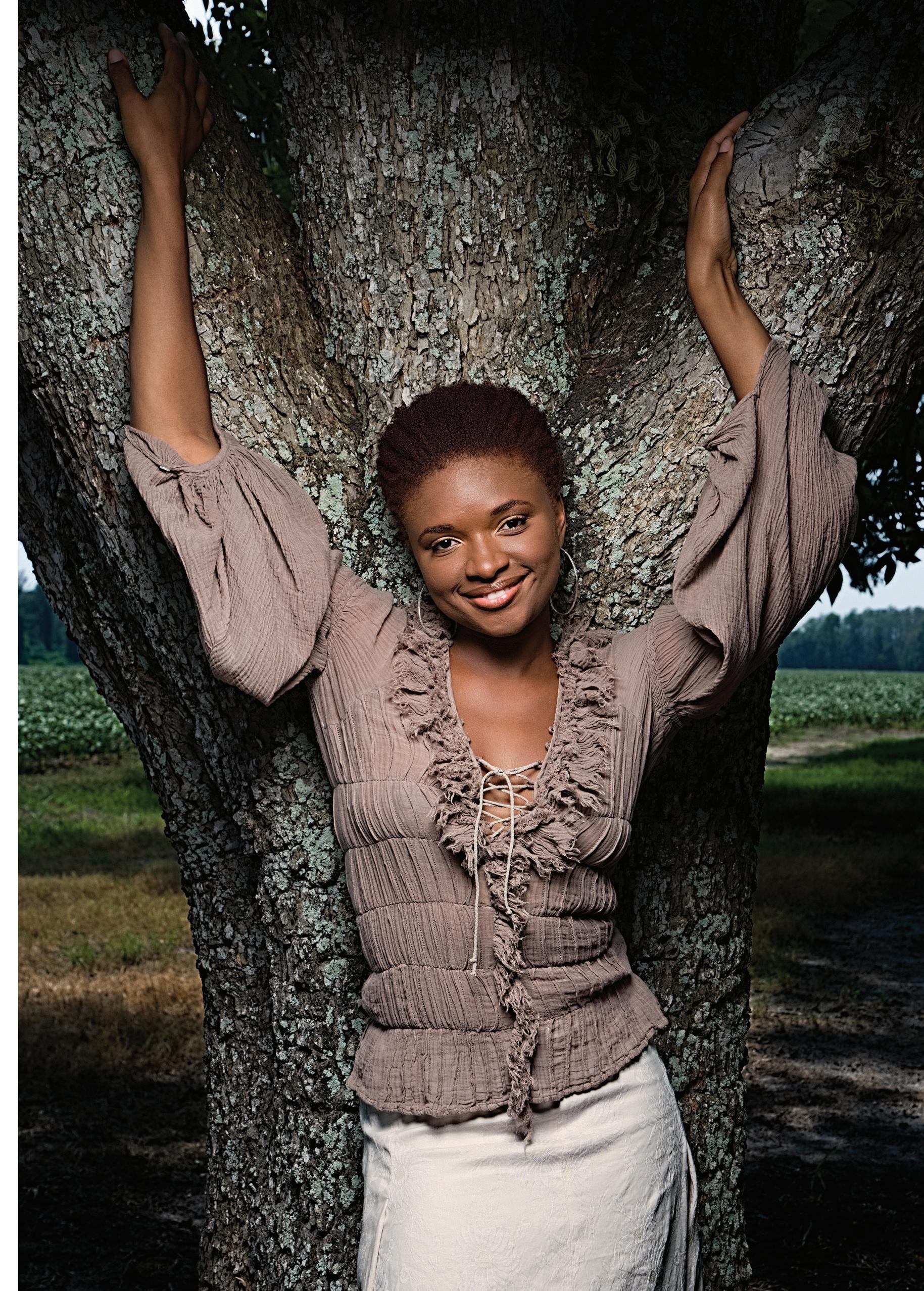
Blues Matters! 65
“I know I could lose this and find a simpler way. I know what I’ve got to do to feel alive and to wake up in the morning and feel good.”
photos: Vincent Soyez
asked people around her for advice.
“Don’t you ever say that kind of stuff again,” one person snapped. “Nobody wants to hear that. That doesn’t make any sense. You keep that kind of stuff to yourself.”

That hurt, but Wright ventured into other kinds of music anyway - primarily jazz but also Blues. She kept her day job, though, until music just wouldn’t allow it anymore. She got involved in a Billie Holiday tribute, had to miss a day at the cafe in New Jersey where she worked, and was fired.
“So I was like, ‘OK, you know what? I’ll try this music thing for a while, because it’s getting in the way of all this other stuff anyway,’” she recalls.
She signed a recording deal with Verve in 2002. The following year, her debut, “Salt,” was released. It included a number of jazz standards; Wright’s singing, subtle, textured and true, heralded the arrival of a significant new talent.
In 2005, she released “Dreaming Wide Awake”, a rich and quiet album on which Wright showed herself to be an interpreter of the highest order: she breathed freshness into The Youngbloods’ ‘Get together’ and Neil Young’s ‘Old Man’ - making them original and exciting in the way a wonderful new book excites an avid reader.
Even so, Wright’s 2008 album, “The Orchard” - the one that began with photographs of Hahira - was a revelation. “Dreaming Wide Awake” was some collectors’ favourite album of
the year, but “The Orchard” is one for the decades.
Wright had become pigeonholed as a jazz artist. The new album would include rip-roaring R&B, shimmering folk and full-throated Blues. She knew going into the project that she would disappoint many people who would think she was leaving her true self behind.
“There’s a certain kind of dignified and poised persona that began to develop very quickly around me,” she says. “And I knew I was, in essence, puttin’ on a pair of bootswhich is, ironically, more of going home to me than anything. But it didn’t matter to people; the first thing they saw was what they chose to love.”
In a coffeehouse confession, she told her producer, Craig Street, what she wanted to do next. She was so fearful that, when she recounts the conversation, she mimics herself talking in a crying voice:
“Man, I really want to do this,” she told Street, her voice quavering. “I like jazz, I love it, but…”
…But she wanted to go home.
Many labels balk when their artists want to change a successful formula. But Wright had begun her association with Verve with an ultimatum to the president.
“I walked into Ron Goldstein’s office when I first got signed, and I said, ‘Listen, man, I don’t know what I’m doing. And I don’t want this business to change me. I don’t have to have this. If this freaks me out, I’m not going to do it,’” she recalls.
So there was no question of trying to tell her what to do.
The album that resulted transcends genre. It has elements of Blues, gospel, R&B, jazz and folk; and it’s grounded in an honesty both gentle and brave.
The first words the listener hears are these: “Coming home to your shelter/Coming home where I stay…”
More than ever, Wright’s voice has become a deep and vibrant instrument, richly expressive. But what makes this an album for all time are the songs - originals, collaborations and covers - and Wright’s interpretation of them.
The emotional peaks are ‘I Idolize You’, a scorching Ike
Blues Matters! 66
One of the most exciting R&B concerts ever staged took place not in America but in Africa.
The show, put on in Accra, the sprawling capital of Ghana, began 6th March 1971. More than 200,000 people packed what was then called Black Star Square, on the Gulf of Guinea, and went wild to some of the most supercharged soul you could ever want to hear. Featured were huge American stars like Wilson Pickett, Ike & Tina Turner, the Staples Singers, Carlos Santana and Roberta Flack, along with a variety of top African artists.
The show lasted fourteen hours, until 6:45 the next morning. To watch videos of Tina Turner from that night is to see her in the peak of her fiery form, a dozen years younger than the woman who sang ‘What’s Love Got To Do With It’. Her feet are a blur as she shimmies across the stage, shaking a tailfeather in the best tradition of the era, and her vocals a scream of passion from deep within.
Not only did the show electrify those present. In time, it also showed the connections music can form - between African song and American, between white and black, and between past and future. And it began with an idea from Maya Angelou, the celebrated American writer - and former prostitute. “Music was my refuge,” Angelou wrote once. “I could crawl into the space between the notes and curl my back to loneliness.”
Another of her refuges was Africa. She lived in Ghana for a time in the ‘60s. And it was she who suggested to the government of Kwame Nkrumah that black American artists be brought in to celebrate Ghana’s independence. Nkrumah, a Marxist, was overthrown in a military coup before the concert could take place. But the idea didn’t die.
In the end, the Soul To Soul concert was held in 1971, on the 14th anniversary of Ghana’s independence from Britain. It was a concert for the ages. A documentary about it was released later that year; the film was released again on DVD in 2004, along with a CD soundtrack. The connections between Africa and America showed in the way the music from both continents fit side by side, each building on the excitement of the other. The way music bridges the races was evident, too.
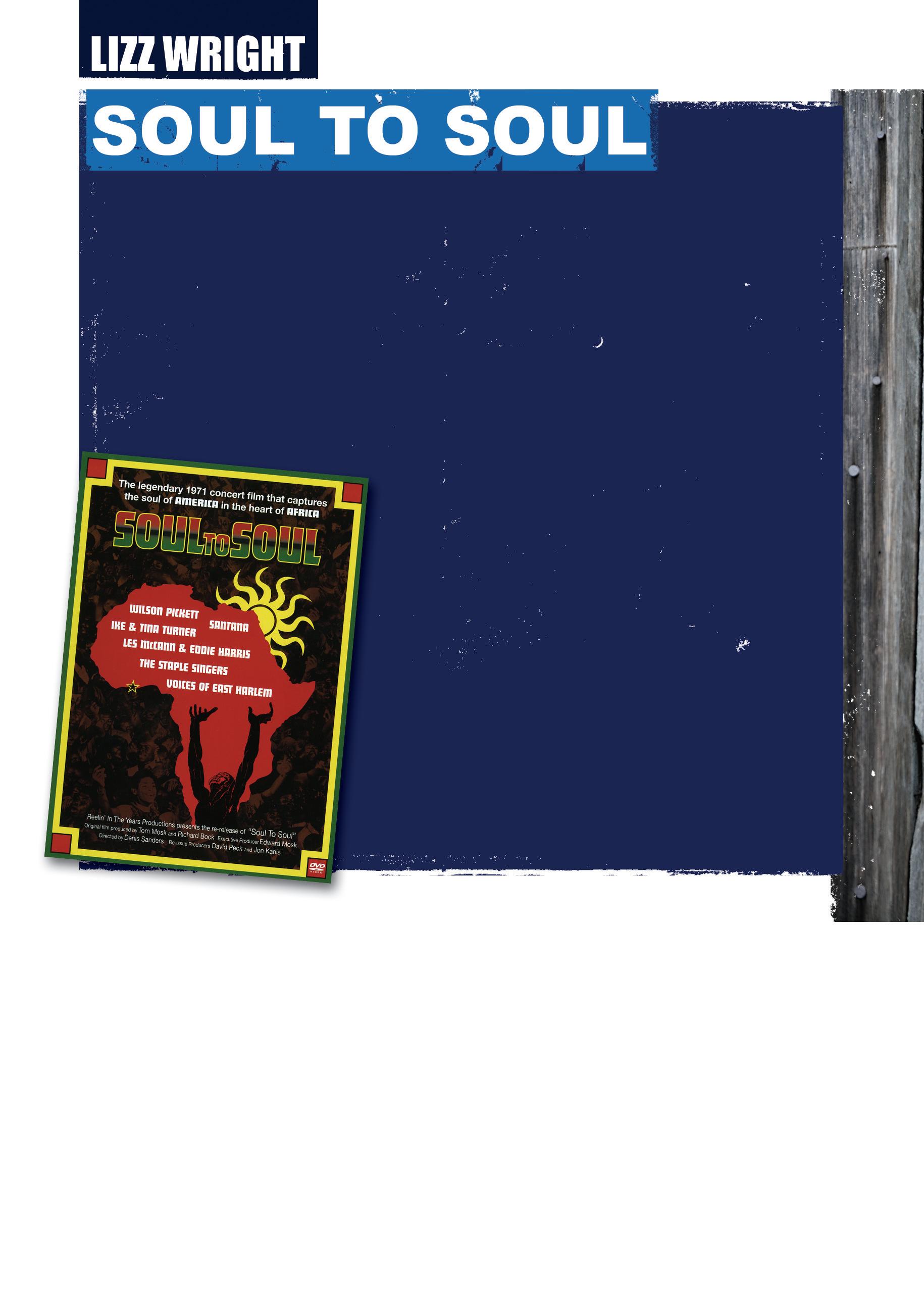
Many people remarked that the performer with the most African sound that night was not Wilson Pickett, for example, or Roberta Flack, but Carlos Santana, a white man born in Mexico.
The connections between past and future have become apparent over time. Just recently, when the jazz and Blues artist Lizz Wright was making “The Orchard”, her producer showed her the film of Soul To Soul. Wright was mesmerized by Tina Turner; she heard in Turner’s voice something of her own experience, a feeling she wanted to capture on the new album.
In the end, she included ‘I Idolize You,’ a song sung by Tina but written by Ike Turner, then her husband. Ike had started playing in the ‘40s. In the ‘50s, he backed people like Elmore James and Otis Rush. You can hear him playing piano on early Howlin’ Wolf recordings. And now, because of that concert in 1971, a song written by man who backed Howlin’ Wolf is the highlight of one of the finest, most progressive Blues albums of the 21st century. MDS
Turner Blues about infatuation, and ‘Leave Me Standing Alone’, a sizzling, gospel-inflected original in which the lover is sent packing.
From those two opposite poles of love, as if from the towers of a bridge, the other songs are suspended in graceful arcs, beautifully detailing the nuance of love.
We meet the girl who loses the battle to protect her heart, and is “quite well pleased.” We see love’s risk: “And what if the water's cold when I fall?” Wright asks, as she feels herself falling in love.
We watch her heal the pain of lost love in the waves of the ocean. We understand when the lover leaves but the love remains.
“Love and nature are never all of one thing,” Wright says. “And what I enjoy is the challenge of allowing the nuances around those subtle things to speak at once, the way they do in life.”
There’s little nuance, though, in ‘I Idolize You’, a powerful
Blues infused with lust: “If you want some loving, Baby/That I’ll give to you/If you want some hugging, Baby/Oh, I can hug some, too.”
It seems a departure from the delicate textures of Wright’s previous work. But she views it as a return.
Her decision to include the song began with watching “Soul To Soul”, a documentary about a 1971 concert in Ghana by American soul artists. Wilson Pickett performed, as did The Staples Singers, Roberta Flack, and Ike & Tina Turner.
“It was wild,” she says. “It was also very sacred to me.”
Two or three weeks later, Street played her the original Ike and Tina version of ‘Idolize’.
“My first impression was, I’ve heard this voice before,” Wright recalls. “This is what the women sing like in the small churches where I’m from - that fight for freedom and that fight for a place and that fight for acceptance and that fight to take care of the family. And I totally heard that in her voice. So it was because that voice was familiar, I was
Blues Matters! 68
like - well, there’s a piece of home.”
The album’s musicianship is superb, the production flawless, the song selection sterling, the singing in a class by itself. But something else - something intangible - also contributes to the album’s power. It results from Street’s decision to have Wright and her friend and collaborator, Toshi Reagon, first play the songs live in several sets at a small club in New York.
There is, in the best of times, a transaction that takes place between audience and performer, one revealed not in applause alone but also in rapt attention, the expression on a face, the energy in the air.
“The audiences really let me know a lot,” Wright says. “For me to start performing them right away made the songs more real for me. It wasn’t about making a record, it
was about me and these songs. You know, can I go inside of them or am I letting them inside of me? I always think songs really evolve in a performance experience. Sometimes I love what happens to a song after I’ve been playing it in concert for a while, because I always think that the audience creates the experience along with me.”
Wrights loves the studio. She speaks with joy of the experience of recording “The Orchard”. There were no hired session players, no drummers you’d never met before. All the players were friends. It was a gathering of her favourite people on an estate in the Catskill Mountains, in upstate New York, looking out the windows at a reservoir, and working together. The creative conversation, Wright says, was amazing.
But if she had to choose between recording and performing, Wright would choose the latter, the effort to create the bond that someone years ago had told her made no sense; the magical exchange between audience and performer where each gives the other something deep and true.
To do that, Wright gets very quiet before each performance.
“I gather myself, so actually I have something to release,” she says. “I sit down and think about the stories that I’m inside of at the time. I think about the roads that are crossing in my life. I borrow information from my life or from my imagination. And I get really still and just try to put all that stuff in a big bowl before I come out.
“I ask the band to do the same thing. I don’t like people checking e-mails. I don’t like guests backstage. I like it quiet. If the green room’s dirty, I bring my own cloths and candles and incense. I will go get flowers or send someone to get them. It’s really important, this gathering.”
At a performance last year in London, Wright walked on stage slowly, regally, eyes downcast, hugging herself. Then, from deep within herself, she sang with eyes closed, caressing herself, sometimes wrapping herself inside a shawl.
Some might wish for a more extroverted performance. But looking inside herself is the essence of Wright’s art. Not a word falls from her lips without having been filtered first through her soul. Those in the audience understood full well that participating in that most private of journeys was a privilegeand they returned the favour in ways unspoken.
For her next project, Wright has only a notion in her mind, maybe a picture, a photograph, or a destination deep within.
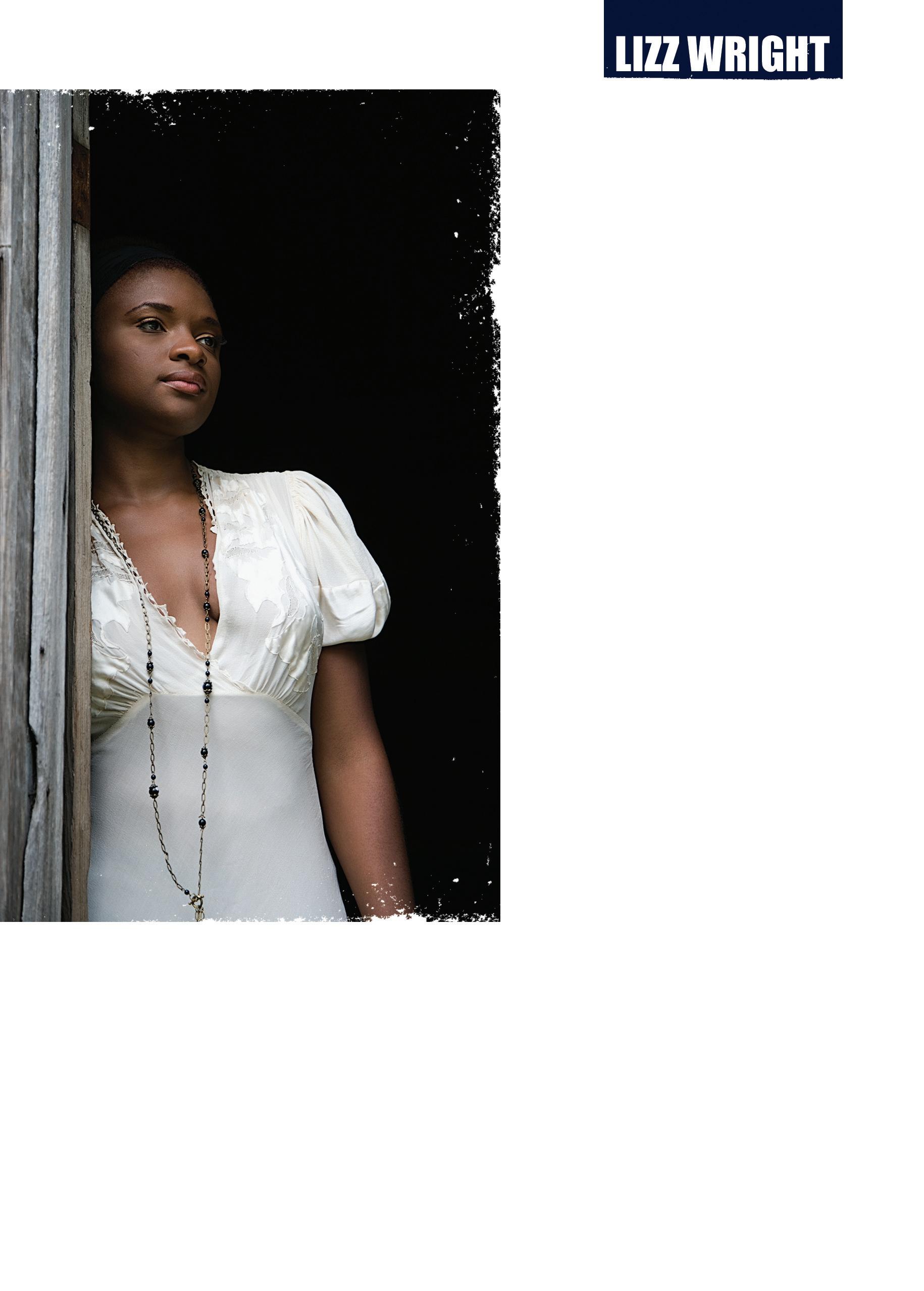
“I have some feelings, but not towards an exact idea,” she says. “In a way, I’m thinking more about how to move my career experience closer to my heart.”
Because she doesn’t need fame or fortune, or even the music business at all. She says she could walk away, any time, find something else and be fine. What she needs is to keep in touch with Hahira and the pecan orchard and who she really is.
“I haven’t changed a lot,” she says. “I know I could lose this and find a simpler way. I know what I’ve got to do to feel alive and to wake up in the morning and feel good. I know what I’ve got to do, and I can handle that.” MDS
Blues Matters! 69
“I walked into Ron Goldstein’s of fice when I first got signed, and I said, ‘Listen, man, I don’t know what I’m doing. And I don’t want this business to change me. I don’t have to have this.’”
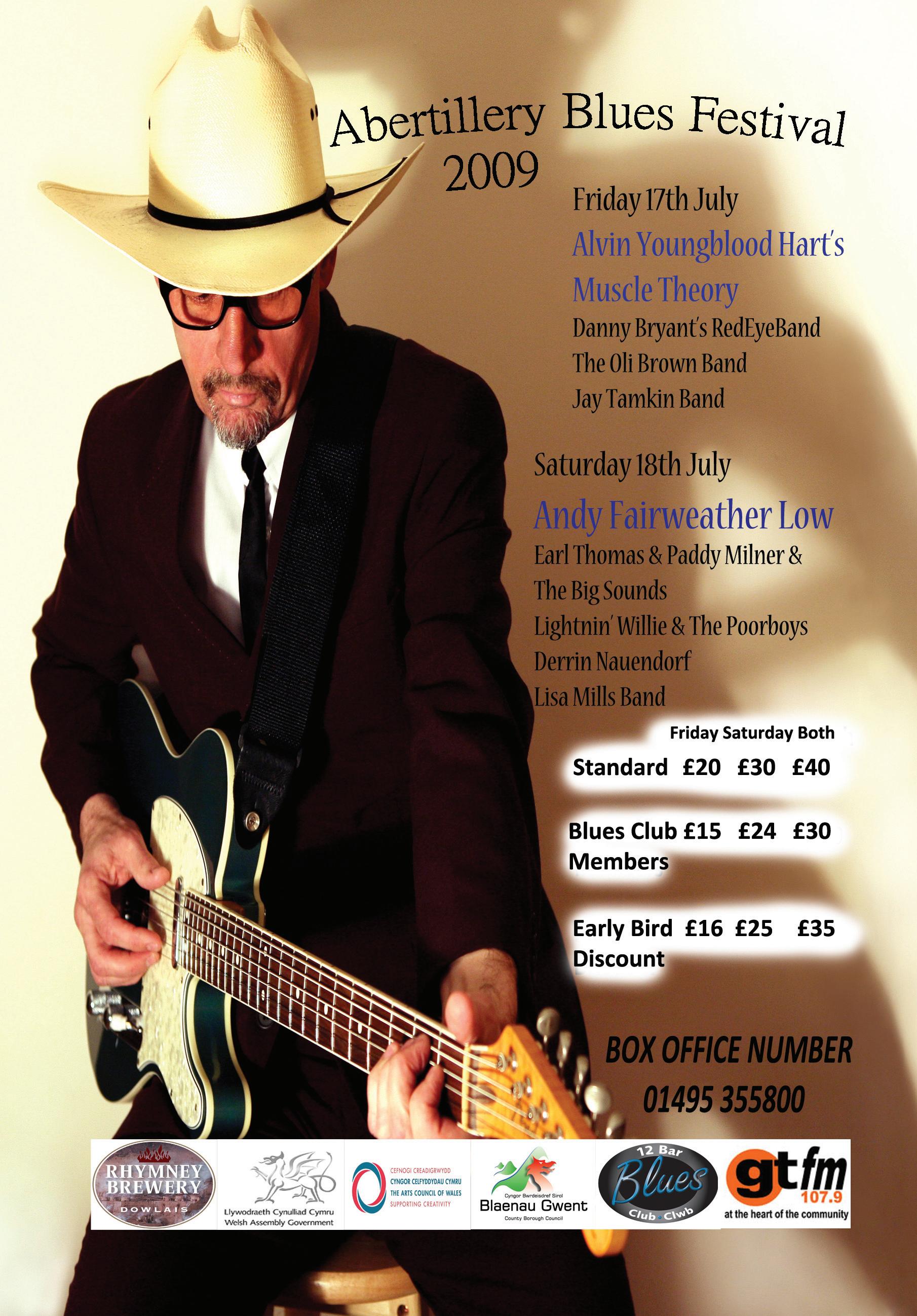
utch-born, Austria-based Hans Theesink has been one of the most highly respected and in demand European Blues artists of the last decade.

A constant worldwide touring schedule has established his name across Europe – including the UK, where he returns in May – whilst even American audiences and critics have been won over by the consummate country picker and his baritone voice (achieving both a GRAMMY and Blues Music Award nomination in a recording career dating back to 1970).
With an extensive back-catalogue, including a songbook and tuition DVDs, and a list of accolades, few modern day European artists have achieved so much within the genre, and his latter day releases – including the recent “Visions” with Terry Evans - and command of live audiences have proven he’s only getting better and more popular with age…
BM: Where and when were you born, and how did you get started in music?
Hans: I was born in Holland on 5th April 1948, and I really was into acoustic guitars first of all, and then all of a sudden I heard Sonny Terry & Brownie McGhee and Leadbelly on a night programme – this was some time in the ‘60sand that really knocked me out. So, I started to get into that stuff and search it out, which was extremely hard –there were no records available really at that time; no instructions either, no teachers, no books, nothing! Then, I suppose via the British Blues boom, records started popping up in shops, so eventually I had access to material. So, when did you start playing guitar?
I was playing already then, but I was playing any kind of acoustic thing that was going at the time, like Donovanthe whole folky bit. As soon as I heard the Blues, I tried to recreate those kind of sounds.
Was there much of a Blues scene in Holland by the late-60s? In pockets – there were a few people into it. I noticed later that people in different spots were doing the same thing
Blues Matters! 71
“In Europe, I find that you still get people who say that it has to be American, it has to be black. In the States people go more for your merits, whatever you can accomplish.”
that I was doing, but it wasn’t like a big connected thing. But there were like the odd concerts of American guests.
So, whereabouts would you play back in those days?
I was born in Enschede, which is on the German border, and I pretty soon started playing at German festivals. I went to Germany more than to Holland because somehow, in those days, the travel from the East to the West was still a long way – it’s nothing now, it’s like two hours. So, I had this German agent and he used to pick me up and bring me to the gigs and bring me back home again.
How did you start recording?
The first record I did was in 1970. I did kind of a mixed sort of material; folk and Blues-based. That was an EP, “Next Morning At Sunrise”. After that I did quite a few records.
Which ones stick in your mind?
I’ve done quite a few. I did one with Gerry Lockran, which is pretty early as well. That was on a German label. I did one called “Titanic”, which was on an Austrian label. I moved to Denmark for a while, to Scandinavia, then I moved down to Austria, to Vienna, where I still am now. This is going through it quick! Then I teamed up with Jon Sass…
Yes, how did that come about? He was with you when you first toured Britain in 1992...
He was in Vienna as well. He was playing in an avant-garde jazz band in Vienna, and we met on the plane coming from New York. I had just been down in Louisiana, in New Orleans, with all the euphoniums and tubas, so I thought, “Well, if I am going to make this record, instead of using an upright bass or a bass guitar, it would be great to use a tuba.” So, we just tried it out in the studio, to see whether it would work for the album – this was “Baby Wants To Boogie” – and it did. We were really happy with it. After that we did a record called “Johnny And The Devil”, it was about two years later, and actually the first record with distribution in this country, through New Note, was called “Call Me”, and he was on that.
Tell me about some of the guests you’ve used over the years… Well, especially on the “Call Me” record, we had a pretty impressive list, because I was going over to the States a lot to play festivals, and to Canada, so I ran into these great people everywhere, and swapped phone numbers. On that record, I had the opportunity to combine forces – Bobby King and Terry Evans are on it, Maceo Parker and these guys, Pee Wee Ellis, Fred Wesley and, of course, Jon was on it.
You used Flaco Jimenez on…
He was on “Baby Wants To Boogie”. That was a similar thing. I had been down to a festival in San Antonio and met up with him. Then we kept meeting all over the place, different festivals, and then he was in Vienna. I just took him to the studio.
How did the collaboration release, “Visions”, with Terry Evans, come about?
Terry and I have worked together in the past. Terry sang on several albums of mine, and he also toured with me and my band for a while. For a long time, we've had a ‘vision’ of combining forces for a stripped down acoustic recording, and finally we found the time to get together during a solo tour in the US in the autumn of 2007.
For a roots artists like Hans Theesink, the key to his enduring success has been to keep a busy touring schedule. No matter how many releases he’s accrued over the years, the industry recognition or critical acclaim he’s enjoyed, Hans still plays around 200 hundred shows a year to ensure his profile never wanes.
In 2009, Hans has dates taking him from clubs and concerts halls across Europe to the Carribean to play the Blues Cruise, to major roots/Blues festivals, and even to good old Blightly – bucking the trend of many high-profile overseas acts!
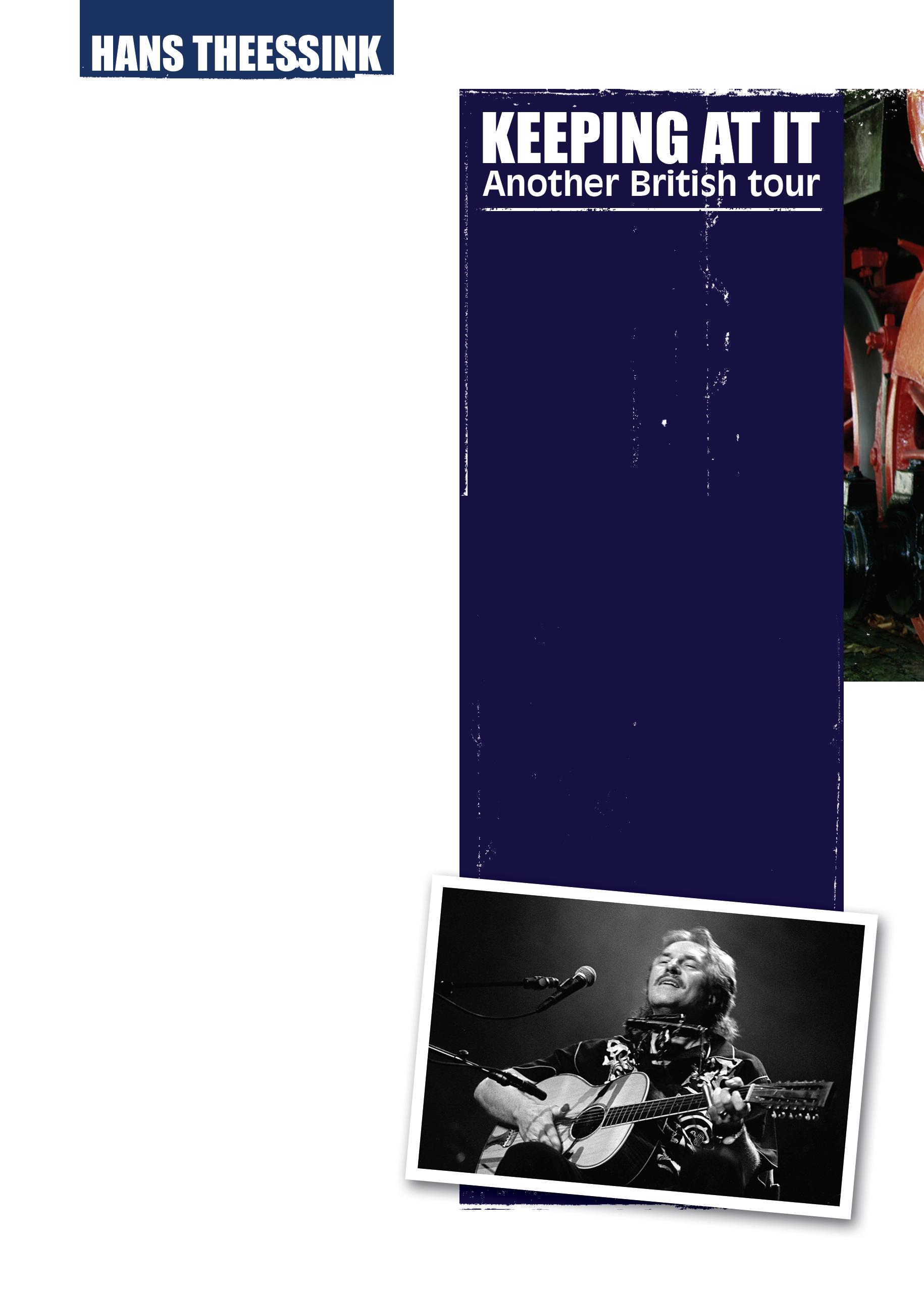
“I've been coming over to the UK since the mid70s,” said the musician, “and I've more or less toured every eighteen months.
“My typical UK tour would be some twenty gigs in Blues, jazz and folk clubs, plus the odd festival.
“I like British audiences and usually I have a great time touring the country, even if fees are generally lower than most other places.
In May, Hans’ tour takes in the following dates: London Brooks Blues Bar (1st), Crawley The Hawth (2nd), Walthamstow Folk Club, The Plough Inn (3rd), Faringdon The Corn Exchange (4th), Faversham Folk Club (6th), Treorchy Park & Dare Theatre (7th), London Kalamazoo Klub @The King’s Head (8th), Hitchin Folk Club, The Sun Hotel (10th), Colchester Arts Centre (11th), Dartford Folk Club, Working Men’s Club (12th), Leicester The Musician (13th), Glasgow Live At The Star (14th), Birnam The Fiddle Tree (15th), Lossiemouth Warehouse (16th), Lochinver, Sutherland Village Hall (18th), Edinburgh Folk Club (20th), Aberdeen The Lemon Tree (21st), Stirling Tolbooth (22nd) and Liverpool Philharmonic (23rd).
With such a dearth of country Blues players performing in this country, British fans will not want to miss such an expert performer. DH
Blues Matters! 72
Hans will be wowing British audiences in May.
How do you feel Terry complimented you, and vice versa?
Our cooperation on “Visions” was a tryout and we were both excited about the result. Singing is Terry's forte, and I think my voice is a good foil for his vocals. He has a wide vocal range and is a master of the soul, Blues and gospel styles - Mississippi magic! My voice is more baritone/bass and lays down a good bottom for Terry's lead vocals. Whenever I sing lead, he's great at "singing around" it and embellishing. I'm the more versatile guitar player - Terry's very basic but has a great groove. We read each other well and our dynamics are very complimentary.
Do you see you guys collaborating like this again?
When we recorded, we had a one-off project in mind, but we may well do some more in the future now that we've found out that it really works. It's also nice that the whole show fits in one car! Apart from the duo project with Terry, I play solo and also have my own Hans Theessink Band, which includes three backing vocalists from Zimbabwe. In Denmark, I do regular tours with a trio, Theessink, Nalle & Möller. This trio is very popular. We just did twenty showssixteen sold out - in clubs and theatres.
How did you get the billing “The Euro-Bluesman”?
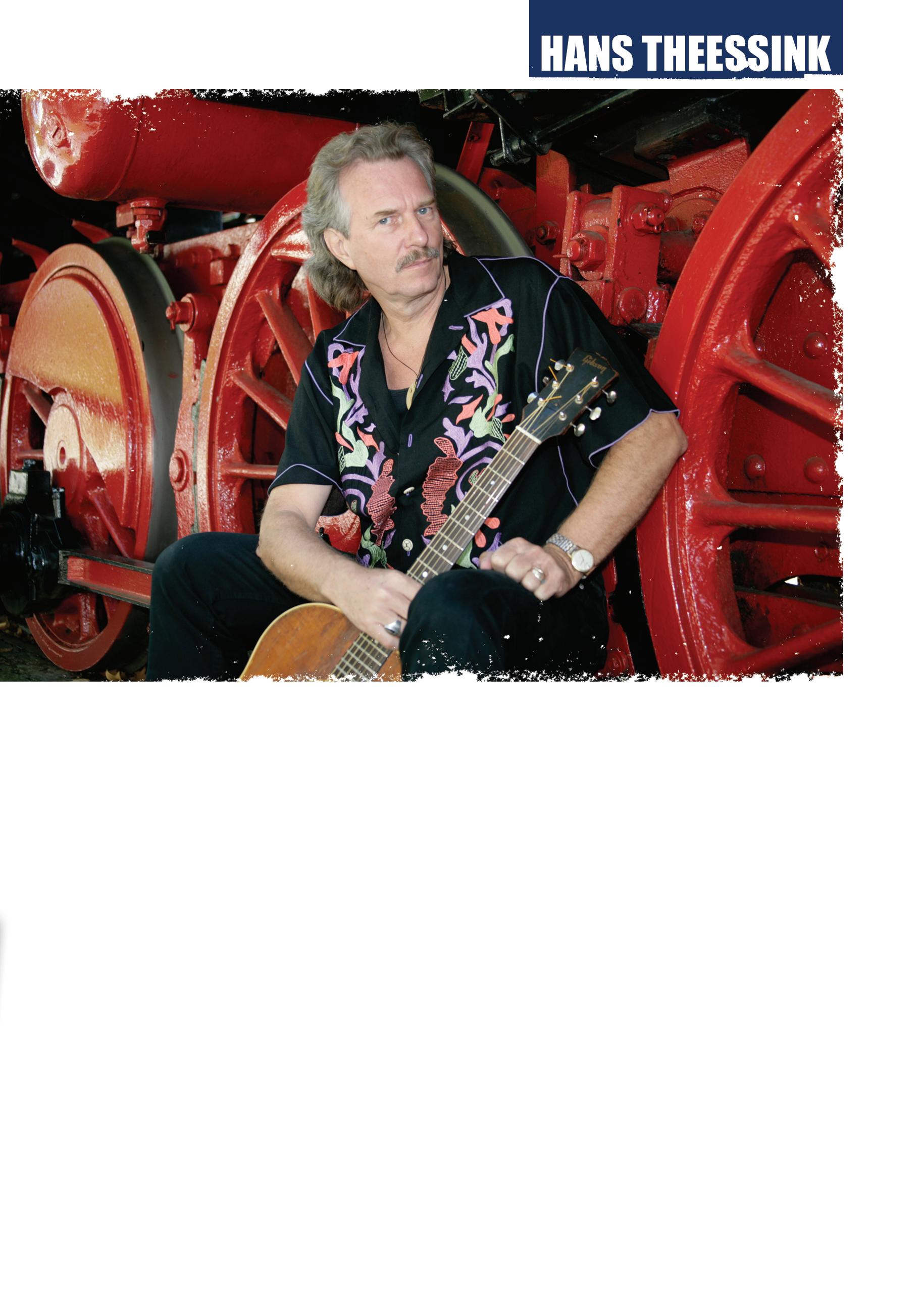
Oh, that was somebody in the States. I’m not really too fond of the billing, I’m just trying to get away from that –although, at the time, it was probably a pretty good thing.
How do you go down in the States?
Great, actually! In Europe, I find that you still get people
who say that it has to be American, it has to be black. In the States people go more for your merits, whatever you can accomplish. They just listen to your music and if they like it, they like it. In my case, most people seem to like it.
How would you describe your music to a Blues Matters! reader who has maybe seen your name but never heard your material?
People say that I'm a pretty good fingerpicker and slideplayer - mainly on acoustic guitar. I'm a songwriter, too, and my voice has a lot of bottom.
My music is Blues and roots based with lots of other influences also. You may hear some country, folk and world and music touches - sometimes there are influences from jazz, gospel or roots-rock, too.
The Blues Music Award nomination must be satisfying… I'm excited about the nomination - a very rare treat for a European musician I believe, although I can't go because I'm in England!
What are you ultimately hoping to achieve with your music? Basically I love playing music - making records and performing in front of an audience. So far I've been able to make a living doing just that, and I'm very grateful for that. The Blues has brought me to places around the globe that I most likely wouldn't have seen otherwise.
I hope to go on with this as long as possible; entertain audiences, write some good songs and leave some sort of legacy. ND
Blues Matters! 73
“Basically I love playing musicmaking records and performing in front of an audience. So far I've been able to make a living doing just that, and I'm very grateful.”
ard-rocking American acts like The White Stripes and The Black Keys have dragged the Blues into the 21st century, and the Vulnerable Things are following the tradition of great British Blues acts of yesteryear by taking the sound of their cousins and giving it a fresh spin – and with G.P. Bennett, they have something neither of their more illustrious counterparts can boast, a rasping lead vocal!
Given their American Blues influences - across the generations - it’s somewhat at odds that the group’s self-titled debut should come via the label division of the Bluesinlondon website, but there’s something quintessentially English about the group’s lyrics and indie pop sensibilities, a musical marrying of styles which has seen the band build a solid live reputation, and has many touting them for the top - including us…
BM: How long have you been together?
Guy: Four years ago, I moved to London. I was fed up living in Norwich. Our original drummer was a chap I had been at school with since I was 12. He moved down here a couple of years earlier, so I came down and moved in with him, and took six months off work. He knew Lewis Hodgkinson, the guitarist. So, we said let’s go have a jam and rehearsal. We all liked a bit of Blues. Lewis’s dad is Colin Hodgkinson, who’s a bass player and was in Whitesnake. He’s played with loads of people. It just clicked. We knew somebody who gave us a gig a couple of weeks later. We threw a set together and just went from there. That was April 2004 and the first gig was in May 2004. It’s all moved on since then.
The original drummer has left for various reasons, so it’s just me and Lewis now with a bass player (Keith Lovell –JH) and a new drummer (Ed Green – JH). We did three years with the original line-up and a couple of self-produced EPs. We had a possibility of signing with one record company, but it didn’t work out. Then, luckily, Blues In London Records set themselves up and we got going again.
When you set yourselves up, did you want to be a rock band or a Blues band?
My main influence at the time was The Black Keys. I had the “Thickfreakness” album. I bought it in Norwich and thought this is exactly what I want to do. I had always come from a grunge background before that.

Our first EPs were basically quite rocky and we’ve gradually become a bit more electric Blues. Now I hope we’ve got the balance I was looking for. There’s no point trying to be authentic old Blues, but I still love that music. It’s Blues with a modern vibe.
How did you first get into the Blues?
It was my dad. He used to listen to the Paul Jones show on Radio 2 every week, and he would make mix tapes of the songs he liked. The tapes were always on in the car. My parents were into a lot of Motown as well, so I listened to a lot of that. I think anyone who has a big music collection works backwards. There was this really s**t series of CDs which came out of a magazine called Blues Collection. The B.B. King one - I remember listening to that one a lot. I remember when I was learning guitar playing along to ‘The Thrill Has Gone’. Then I got into Tom Waits, who has been a major influence as a songwriter. It’s weird because I got into Tom Waits through Ian Siegal. We stumbled across Ian - Lewis and I were like, “This guy is amazing,” but then I looked into what he is into, and I realised he was imitating other people.
Blues Matters! 74
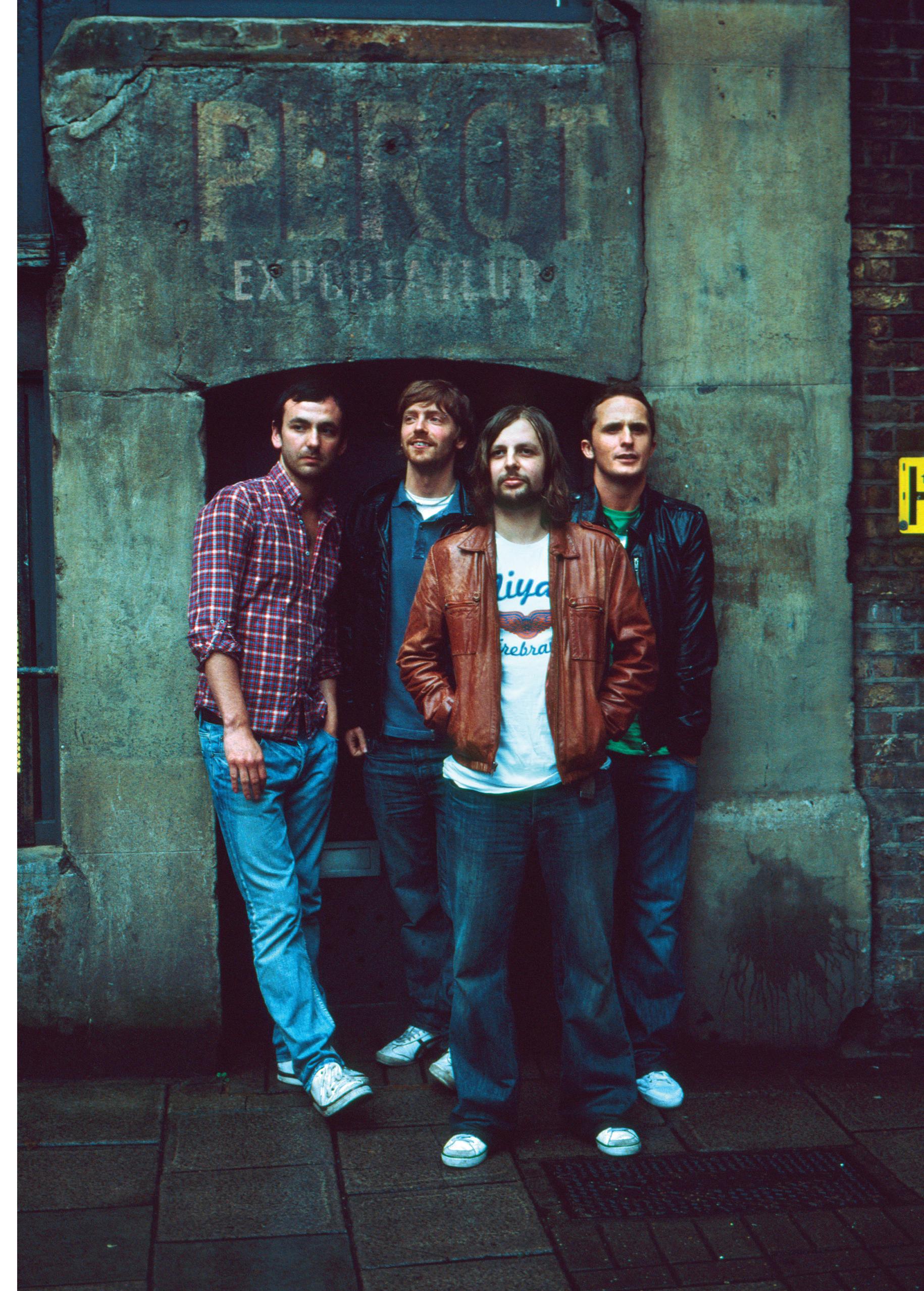
Blues Matters! 75
“There are so many gigs in London now. People don’t pay attention or they bring their mates along. It’s hard to find a crowd who has not seen you before. It gets quite demoralising.”
photos: Andrew Hall Photography
Tell me about the song ‘Jack High’…
It’s a weird one. I tend to write songs when I don’t have any lyrics. When we rehearse, I mumble stuff to remember the tunes, but with ‘Jack High’ I wrote it all – lyrics and everything – in half an hour. It’s one of the few times I have ever done that. It was when I had first got into Tom Waits and the rhythm of it has a real Tom Waits feel. I don’t know where the poker thing came from. It was just the first few lines worked and it evolved into that. It’s probably the best song on the album. It definitely has something about it which stands out to a lot of people.
What sort of gigs have you been doing?
We started off doing the usual “bring twenty people along” gigs. There are so many promoters out there who don’t give a s**t who they get on. They will put four bands on a night and none of them have got anything in common. They expect people to just wander off the street and watch it. There are so many gigs in London now. People don’t pay attention or they bring their mates along. It’s hard to find a crowd who has not seen you before. It gets quite demoralising.
We got into the Bristol Blues Festival a couple of years ago and that went down quite well. We also supported Dr Feelgood. We’ve done the rounds. We’re really just looking to do the club nights and the ready made crowds.
A lot of people would think it must be better to be a Blues band in London...
It’s not necessarily the case, though. There are probably more Blues defined gigs in Bristol than there are here. It’s got this stigma to it. People think it’s all 40-plus men and old-time music. There’s more to it than that! Hopefully, we play to both scenes if impossible, because we’re relevant to both. It’s just hard to find people who can accept that. We’re looking to do more gigs outside London.
Who are the Blues artists and records you really admire?
I’m a big fan of Dr John. The piano was my first instrument and he is just awesome - and really original as well. He’s just his own style. There’s The Black Keys and Tom Waits. I don’t know who else I’m listening to Blues-wise. Robert Johnson is a cliché, but I tend to go back to him.
I always think with Blues albums, you don’t often get really good albums, but you get definitive collections of people. It’s about finding things you like. I just try and keep abreast of any new music. The Black Keys are probably the strongest band over the last couple of years. I really like their new album. I think it’s great! It’s the only thing they could have done to move on.
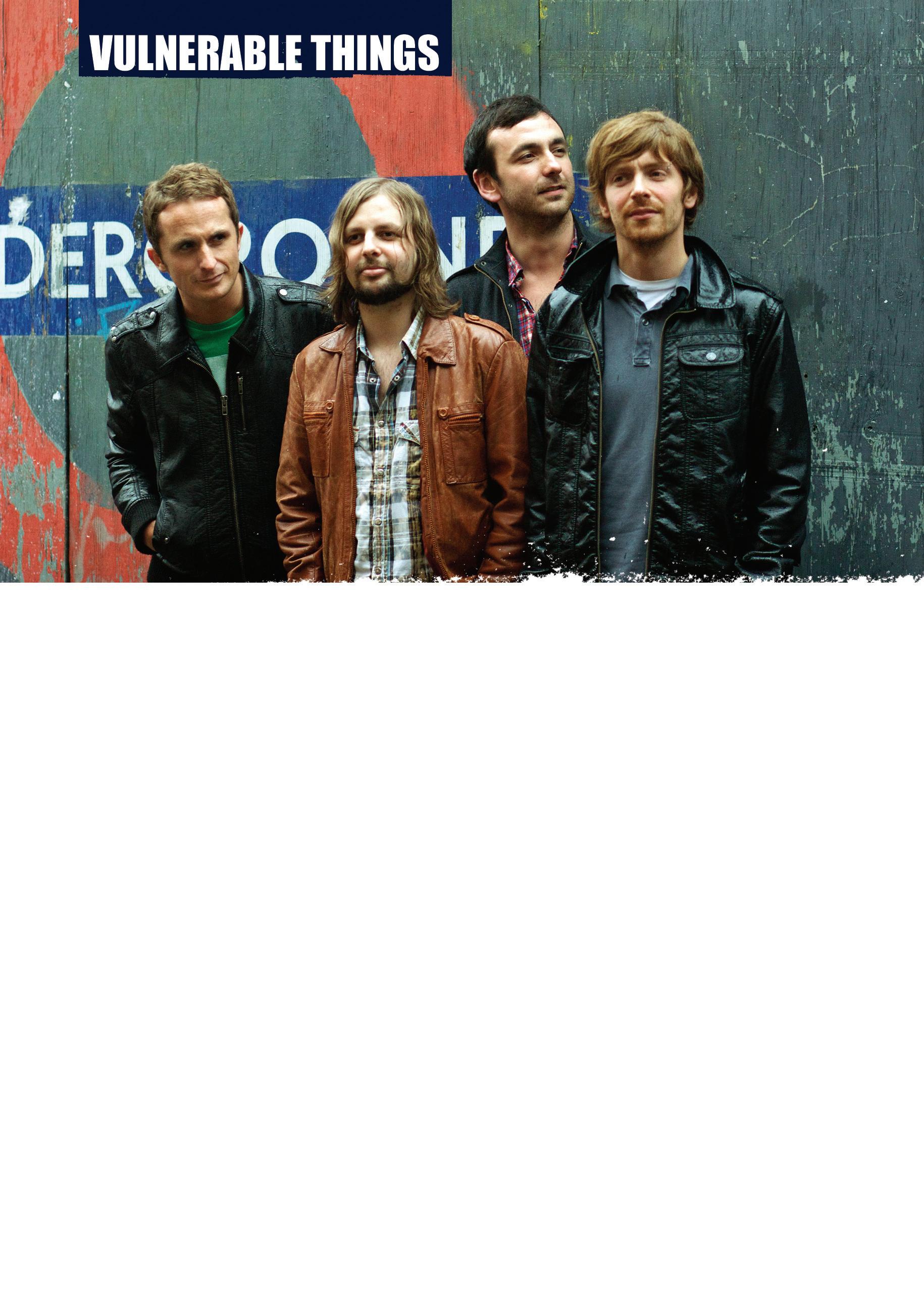
Have you got any advice for someone starting a band?
You've got to love what you're doing, especially starting out, as it's guaranteed that there will be times when you want to jack it all in later on. It does become work in the end, so make sure the output is something you love.
What’s the one song you had wished you had written? That’s a really hard one to answer; lyric wise probably ‘Jockey Full Of Bourbon’ by Tom Waits - just great imagery, even if you can't figure out the meaning of some of the phrases. It transports you to a place, that’s the skill of a decent songwriter.
What does the Blues mean to you?
There's a lot of bull easily associated with this question and people seem to want you to say something really selfindulgent to prove your Blues credentials, but for me there are actually two sides to it depending on my mood.
Sometimes I feel it is music that has been bombarded and diminished by sports guitarists and constant reworkings of old songs, but then I'll put on a Tom Waits or Dr John album and realise how much more there is to it, and why I
Blues Matters! 76
Vulnerable Things: (from left) Lewis Hodgkinson, G.P. Bennett, Keith Lovell and Ed Green.
As anyone who has done the Northern Line in the rush hour will tell you – Londoners know all about the Blues. Fortunately, help is at hand in the shape of bluesinlondon.com
The website was set up in 2005 by Rick Webb as a resource for Blues fans in London. “The website was set up to celebrate Blues music in ALL its diverse glory,” said Rick. “We wanted to encourage all the great stuff that was going on here in London, and so setting up a record label was simply a logical extension of that idea.”
Bluesinlondon Records currently has two acts on its roster - Vulnerable Things and Eric ‘Red Mouth’ Gebhardt. “Eric is from Florence, Alabama, just down the road from the famous Muscle Shoals,” explained Rick. “We first came across him when he sent his CD ‘Blues $1.49’ in to be reviewed. We really liked the CD and him, and eventually he started doing articles for us about the music scene over there.
His music is a really interesting blend of rootsy Americana styles pulled together.”
Eric currently has two CDs available on the label –“Blues $1.49” and “Sir Redmouth”.
The main bluesinlondon.com site features a treasure trove of interviews carried out by Rick and other Blues fans in London. “Our first ever interview was with the great harmonica player Paul Lamb,” recalled Rick. “Andy Hall (the photographer – JH) and myself were quite nervous and didn't really knowing what we were doing, but he turned out to be a really nice guy and we spent the whole afternoon drinking pints.
“James Hunter was another one. We had a good chat with him a short while before his ‘People Gonna Talk’ album came out, and he went all stellar.”
Many people would say that the live Blues scene has suffered in recent years and London is no exception, but Rick maintains “every night of the week you can go out and see the Blues being played.
“There are places that cater to all tastes, from acoustic country Blues to 'alt' versions of 'alt Blues'.
“You can see top international acts in a major venue one night and next night be blown away by a local musician in the pub round the corner. That said - it's incredibly tough for musicians. Whilst there are many venues, there are even more bands, so it's not unusual to see three or four on the bill in one night, and none of them getting paid.” JH
play it - real Blues music is something special that is basically music from the soul.
What do you like most about The Black Keys’ music?
When they started out, they had this attitude - and still do, to an extent - of just doing what they do well, not trying to live up to any stereotypes or expectations, not trying to tick all the boxes by being your standard line-up. They don't consider themselves a Blues band, but they would probably freely admit that Junior Kimbrough was one of their biggest influences. They just play decent music with balls and soul. It's reassuring to see that despite the lack of hype and media bullshit, a proper band can still come through!
Do you think the music industry is in a good state?
I'm no expert, but it seems like it's on the slide at the moment. I think the increasing domination of the download market is making it harder and harder for new bands to breakthrough and make a living out of music. Bands that were predicted to do well are being dropped by their labels because there just isn't enough money in album sales now. But maybe all this will have a positive effect in the long run, though. Hopefully it will mean that the mundane music we have been attacked by over the past ten years will filter away, and we'll be left with the decent stuff. Maybe that’s just wishful thinking!
What’s in the Vulnerable Things rider?
To be honest, we'd be happy with anything that’s free, but at the risk of living up to the clichés, I'm quite a Jack Daniels fan, as is Lewis. Keith Lovell will drink anything ‘cos he's Welsh, and maybe a few ginger beers for Ed.
Have you got any plans for a new album?
Yeah, definitely! There are always plans in my head for the "next recording". We're currently perfecting the songs that will make up the next album, I've had a few kicking around for a while and over the past couple of months more have surfaced, so we've got about fourteen to play with.
Realistically, we probably won't be going into the studio until the end of the year, so there could be a lot more songs floating around by then. I tend to write quite a lot, go off them quickly and then come up with something new, so who knows? At present I'd like to think the next album will be a bit fuller in sound, with more instruments maybe, try and make it more mature lyrically - but these are all ideals, when it comes down to it, it's in the hands of fate, four or five blokes in a studio for a few days with some instruments and a recording desk , you never really know what results you'll get, but luckily up to now, we've been happy with most of the stuff we've done.
Indian or Chinese takeaway?
Indian - in a restaurant. We tend to have a few pints and then forget that we don't have much money, and end up spending ridiculous amounts on food and more drink - the wonders of alcohol! JH
Blues Matters! 77
Eric ‘Red Mouth’ Gebhardt represents the overseas contingent.
hilst snobbery continues to see many European acts overlooked or dismissed, there’s a good argument that many of the more interesting Blues releases of recent years have come from European artists, and there are few more visionary worldwide than Mike Sponza.
The talented Italian guitarist has sought to bring together various nationalities to record a distinct style of European Blues since “Kakanic Blues” in 2005. Recorded over a year around Europe, the album featured no less than sixteen different musicians, and was followed up in 2007, “Kakanic Blues 2.0” again bringing together artists from across Europe and America, including our own Ian Siegal.
Given the success of the project thus far, it’s no surprise Mike plans to return in 2009 with a third release in the series, going against the old adage that size doesn’t matter, with over forty European musicians already confirmed to appear, amongst them Thorbjorn Risager, Nico Wayne Toussaint and Greg Zlap.
Blues Matters! spoke to the man trying harder than most to change the negative preconceptions of European Blues… BM: Where and when were you born, and what were your earliest musical experiences?
Mike: I am one of the last products of the ‘60s, and I was born in a little seaside town on the border of the former Iron Curtain called Trieste. The city was under American government for a few years in the ‘50s, so it was easy to find old 78s in my grandparents' houses featuring orchestras and jazz bands...
By the way, my serious relationship with music was start-
ed by The Beatles. I had some singles, and at a certain point of my life - I was 12 - I needed to learn how to play the solo of ‘Can't Buy Me Love’. From that song, I moved on to Chuck Berry, Muddy Waters and then Clapton, Hendrix... It was quite a natural path, common to many musicians of my generation.
How does a man born in Italy get into the Blues? Well, the Blues has this universal mysterious hook for some people. You can't really explain how it happens. You just find that the lifestyle suits you, you find yourself in the songs. The mental crossroads we are faced with daily - they are the Blues. It makes no difference where you're born.
What were your early bands?
I started my first band in 1985, playing Blues classicssince I was only listening to Muddy Waters, Willie Dixon, early Buddy Guy, Otis Rush... After that first experience, I added some jazz flavours, funk rhythms and opened my ears to other sounds.
You began recording in 1996. How did that happen?
I had a very busy band at that time; I began writing some songs, so we decided to release a CD. Sometimes I listen to it. I have to say that I have basically always had the same style - the voice, and my English accent, has fortunately improved - especially for arrangements. I believe that arranging is an art itself, and today, with Blues, this should be kept in mind, as you can really give a classic Blues structure a new twist. I must say that my models for this are the British arrangers - they have really brought new life to the Blues. Perhaps not many of you in the UK are aware of how much British Blues is venerated in the part of Europe I come frommore than American Blues. I think this is so because there's a good balance between passion and discipline.
Can you tell me about how you got to work with veteran Herbie Goins, one of Alexis Korner’s earliest vocalists?
Between 1995 and 1999, I played with the most important
Blues Matters! 78

Blues Matters! 79
“The Blues has this universal mysterious hook for some people. You can't really explain how it happens. You just find that the lifestyle suits you.”
Italian Blues artist, Guido Toffoletti, who had an important link with British Blues greats, ranging from Keith Richards and Ronnie Wood to Paul Jones, Zoot Money, Dick HeckstallSmith and Mick Taylor. His best friend was Alexis Kornerthey toured a lot throughout Italy, they were really good friends, family friends, as well, so he played with Herbie.
After Guido's death, I wanted to connect my music with his past, and I contacted Herbie Goins, who lives in Rome, and we toured together for three years around Central Europe. Great moments, indeed, and great stories about him meeting Jimi Hendrix, Jimmy Page, Tom Jones...it was all very interesting for an Italian guy. He also did also a song on my first "Kakanic Blues" CD - a soul version of Sting's ‘Set Them Free’.
How did your solo career start?
Well, in 2003, I felt it was time for me to follow my own ideas and I released a CD, featuring special guests Herbie Goins and Duke Robillard. Again, it was a case of natural choice.
The band format was almost a cage for me. I wanted to do my own thing, and I went for it. It wasn't easy; indeed it was painful for some months. I had to learn how to get along with new musicians and to find more self-esteem within myself. But it was the right thing to do at the right time.
Can you tell me about some of those you have played with? Carl Verheyen…
I received a call from a journalist in October 2005, a few days before a great concert, at which I was getting ready to launch my Central Europe Blues Convention, and he told me that Carl Verheyen was going to stop in Italy for a few days and that he was available to play with me. Can you imagine that? So, we did it! We recorded a live DVD that night, under driving rain and in front of 5,000 people.
Carl’s a real gentleman and a sweet person and, of course, a guitar legend. When I asked him if he wanted to play a solo on the new CD, again his answer was yes, and so he did a stunning performance on my song ‘Is This the Love’. Yes, I am lucky.
Duke Robillard…
I met him in 2001, when I was opening for him. After the gig, I simply asked him if he was interested in doing a solo on my new CD. He listened to the song - Roomful Of Blues-style, with horns and so on - and he played it! A story which was nice and quick!
Your organ trio…
I have been working with this band since 2003. It's a contemporary organ trio and everybody comes from Italy. The drummer, Moreno Buttinar, is really modern, powerful and he likes to keep it simple; Michele
Bonivento on organ is a very well-prepared player with lots of serious experience in soul, gospel and, of course, Blues music. They create a wall of sound, which means I can focus on my singing and playing without worrying.
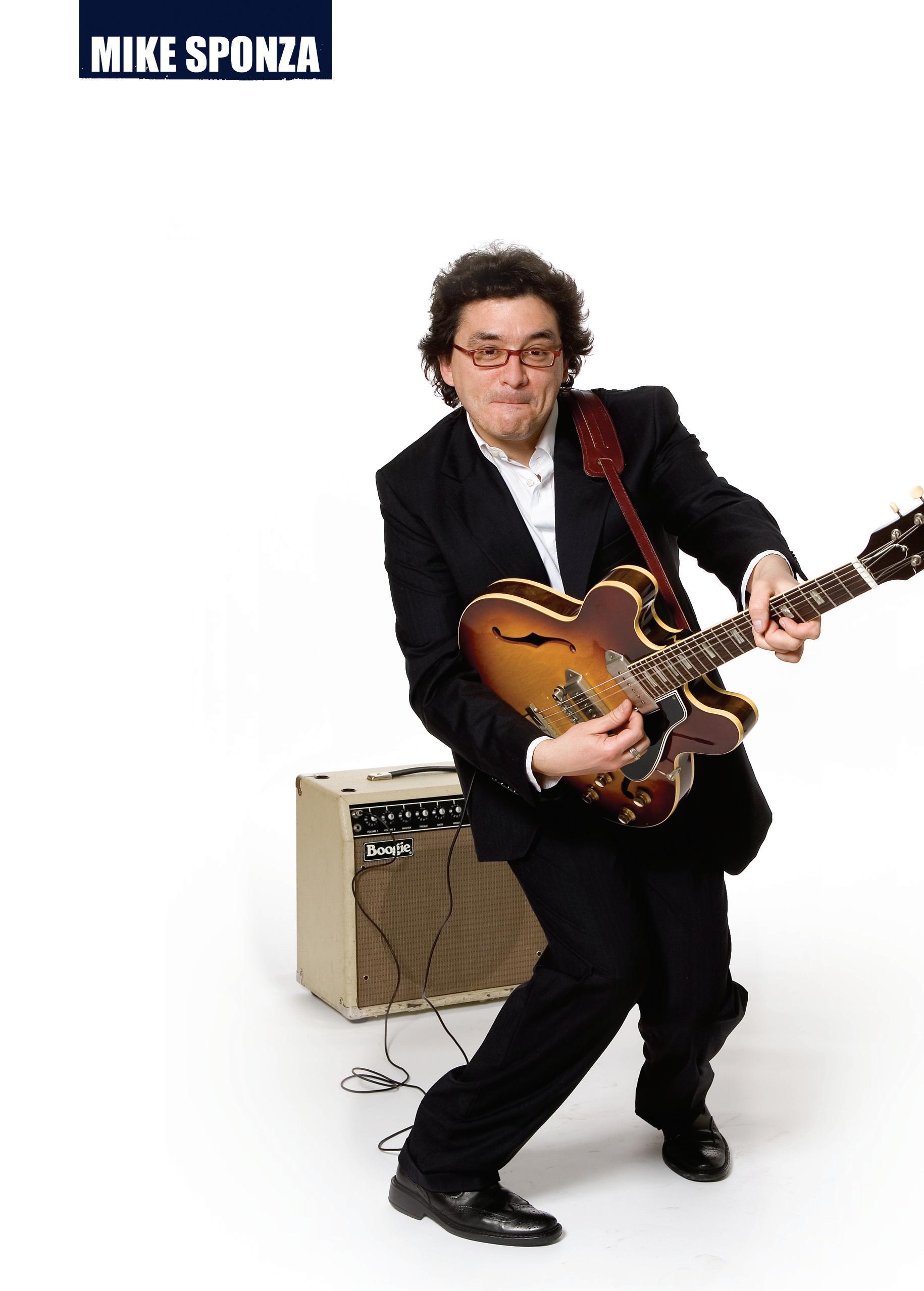
What is the aim of the Central European Blues Convention? How did you get it together?
The aim is to gather musicians from different countries
Blues Matters! 80
Even if Mike’s main focus of attention remains his European Blues Convention/“Kakanic Blues” releases, 2009 saw the release of “Fo Sho & A Hole Lot Mo!”, a cover CD including many Blues classics, which he recorded with highly respected jazz singer Joyce Yuille.
Yoyce was born and raised in El Barrio, New York City – “right in the heart of Spanish Harlem” – but moved to Europe as a model. However, settling in Italy, Yoyce began to hanker for the familiarities of home. “My home was always filled with music from the morning to the evening,” recalled the singer. “My mom was a big soul music fan - Aretha, Marvin, and old Motown - so I had a lot of that spinning around my head. My dad loved funk and Blues. B.B. King was a big favourite of his.”
Changing career and becoming a singer was the natural way to keep that connection; however, it wasn’t the music of her childhood she would be singing, producing an acid jazz collection. “I was a big R&B fan myself,” admitted Yuille, “but as I matured and got older my taste geared and changed. I reached out to jazz, however, Blues was still a curiosity for me.
“My image of Blues was always these big Bessie Smith type women with their bellowing echoes and growls singing about some man that did them wrong, or the some woman who stole their man.”
However, when Mike asked her to replace the singer in his band, Yuille’s education began. “What I have realised is that it’s a spirit,” she said, “it’s a mind frame, it’s what one is feeling in their soul and the freedom to express that whether it be through pain and sorrow or through joy and happiness.”
Not only did Yuille’s keep her place in Mike’s band, the duo’s relationship began to flourish, “Fo Sho & A Hole Lot Mo!” likely to be the first of many collaborative releases. “I think in some ways we are alike,” concluded Yuille. “Mike is very dedicated to the cause and I will admit that it almost become a bit of an obsession for him, but in a very positive way. I can understand this as I am fairly similar in my creativity and work ethics. My feeling is do it well, do it right and do it with heart and soul and do it all the way!
“I bring a bit of jazzy sassy and Mike brings it on with classy Blues sounds, definitely not the typical nitty gritty grooves that most are accustomed to, but with a style of his own, without offending the typical Blues lover.”
The marrying of Yuille’s jazz background with Mike’s Blues expertise has already proved popular. “We’ve played a slew of Blues festivals together around Europe,” said the singer, “but the main focus has been in the areas of, Croatia, Slovenia, Austria and, of course, Italy.
I will say that Blues is profoundly loved and appreciated in Italy. There are many Blues festivals during the summer months with crowds that reach beyond capacity.”
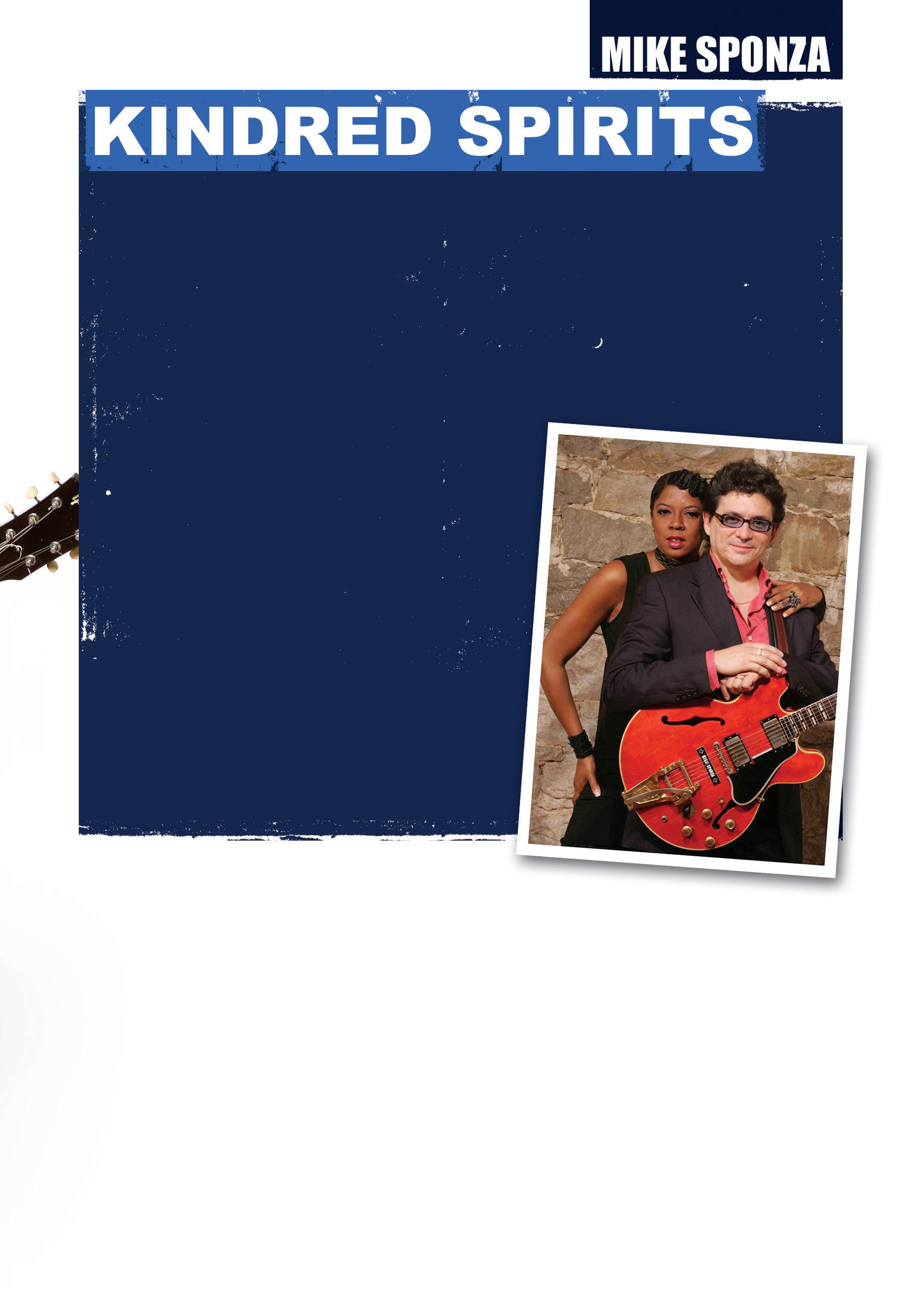
Shame we can’t make a similar boast! DH
that use Blues music as their common language. There is a musical reason, but the social and political results of such a project are also very interesting. Central European countries have seen a lot of trouble in the past, and music has always reached beyond all borders.
After fifteen years of performing in that area, I planned to invite some good artists to take part in a mutual project, and in 2005 I released the first "Kakanic Blues" album. Now we are a real band, with eight musicians on the road, originating from six different countries, and I am really happy and proud of that. The man who inspired the project is legendary Croatian vibraphonist Bosko Petrovic, now a member of this ensemble, who started this kind of cooperation in jazz music in the late-50s.
“Kakanic Blues”?
Strange word, isn't it? You get it by putting together the German words "Kaiser" + "Koenig" (i.e. King), and it describes all of the culture and the people who lived under the Empire reigned by the Habsburg family. Almost all
Central European countries were a part of this Empire, so I found that this word was perfect to describe the project. It's also intriguing and makes people ask me what it means.
Ian Siegal was on the last “Kakanic Blues” set. How did that collaboration come about?
Well, we had - and still have - some mutual friends in Hungary, and they introduced us to each other. Later, we played at an Austrian Blues festival and talked about the CD. So, I went to London for a recording session and we co-wrote the song ‘Fire’.
I think Ian is the most sincere Blues player I have ever worked with. He comes straight from the heart, has a superb voice, and smart and deep lyrics. It's no surprise that he is getting ‘Blues stardom’.
What do you think makes a good Blues guitar player?
Personal style is the main ingredient. It's great to learn your favourite greats note by note, but after your Blues dic-
Blues Matters! 81
Joyce Yuille is the perfect match for Mike.
tionary has been decently filled, you have to try to find your own voice. This means a good dose of study, theory, curiosity and self-analysis. In addition to this, you have to work on the guitar sound. Don't play a Stratocaster just because SRV did it - maybe another guitar would help you to express yourself better. Come on, don't be lazy!
Who are your heroes nowadays?
For me, a hero is someone who lives an admirable artistic life, doing new things and constantly adding pieces to the puzzle - John Mayall is one such hero, for example. You have to find a way of expressing yourself, but not sticking to one single idea of yourself. The world is evolv-
ing, life is evolving and music is a mirror of all this.
What do you see as the links between Blues, soul, and funk? Well, Blues is the root of everything. Changing the rhythm and getting more physical and sensual brings you to the funk world. Meanwhile, working on melodies and on more articulated harmonic structures is the key to soul music, which is a bit more sophisticated and smooth. Funk music allows you to really strike the notes heavily.
Over the past six years, I have done a number of tours with Vincent Williams, an artist from Washington D.C.; a really complete entertainer who sings, dances and plays percussion. We worked on a funk show, so I had the chance to learn all the subtle differences between black music styles. It's all in the dynamics and approach - if you play an Al Green melodic tune too hard, it can be just as wrong as playing a James Brown strut smoothly.
What is the Italian Blues scene like?
Laziness rules the Blues scene in Italy in artistic terms. There are a lot of good musicians, but everybody works on the same clichés. It's the repertoires that are the problem, not the skills.
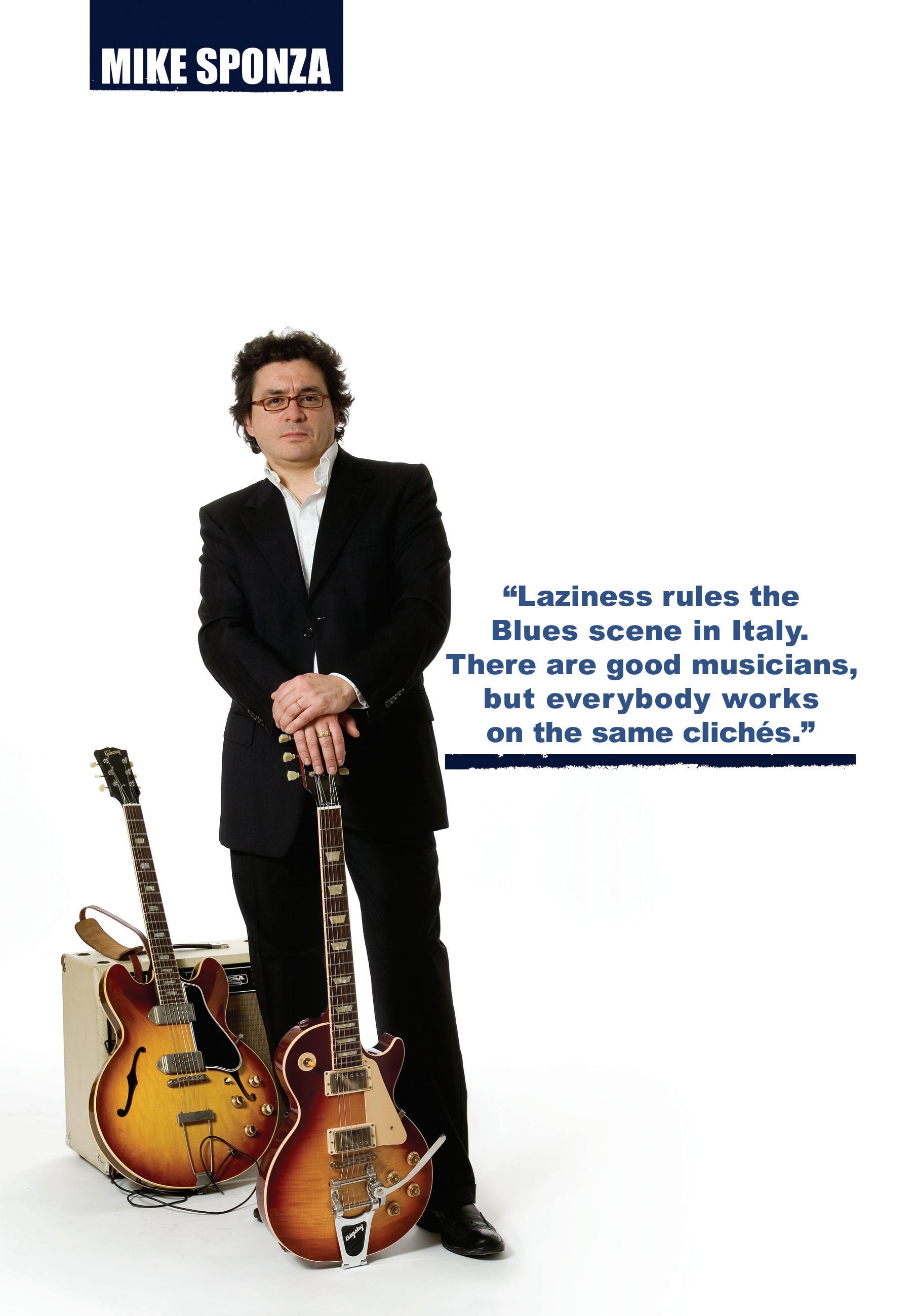
There are some good professional bands who successfully tour Europe, but I would like to hear something new. In Italy we have a strong sense of melody in Blues phrasing, also, and this could pave the way to an ‘Italian sound’.
But everybody wants to be Californian!
Anyone that you have not worked with, but you would like to? I would like to meet and play with Robben Ford, Steve Jordan, Bill Wyman, Andy Fairweather Low - who, by the way, is one of my favourite guitar players and musicians from the UK - and Clapton, of course. Anything can happen, you never know.
What are your future plans?
I am now working on the third discographic chapter of "Kakanic Blues", but this time I am focusing on a Pan European band, which means about forty musicians recording together. A huge effort, but I am truly committed to it, and curious to see what will happen. I have also been working with a singer from New York - Joyce Yuille. She lives in Italy, and after one year of being a guest with my trio, we decided to launch a stable project. She's absolutely great and has a strong vocal personality that can blend Blues with soul and jazzy nuances.
Any other comments?
I see young audiences at my gigs. This is a good sign, but we have to take care of them, feed them with new sounds and show them that Blues is an evolving type of music. Please don't play 'Hoochie Coochie Man' again! ND
Blues Matters! 82
he 1978 album “Stone Blue”, by Blues-rock band Foghat, is my favourite Blues album and in my top-5 all-time albums. It is one of Foghat’s Bluesier efforts - full of melody, power, and unrivalled slide guitar.
My introduction to Foghat was in the mid-80s, when a friend lent me their eponymous debut - I was about 15 years old at the time. The band that had been formed by vocalist/guitarist Dave Peverett, bassist Tony Stevens and drummer Roger Earl (all ex Savoy Brown), and ex Black Cat Bones lead/slide guitarist Rod ‘The Bottle’ Price. That first album was a real earthy, honest, almost garage R&B affair (don’t even get me started on generic soul/dance/urban s**t using the R&B moniker). Aside the classic and hit ‘I Just Want To Make Love To You’, other tracks, like ‘Trouble Trouble’, really grabbed me, so I explored their music further.
I soon discovered that, alongside AC/DC, you had one of the few bands with a discernable lead and rhythm guitar where both did exactly that perfectly, showing just how much of the band’s sound comes from both in their own right.
Foghat moved from this earthy Blues to a more stadium rock/Blues-rock sound, much to great success, culminating in the more commercial “Night Shift” album. That set saw the introduction of bassist Craig
MacGregor, with producer Nick Jameson filling in on the previous album. And following 1977’s epic “Foghat Live”, we get to this album.
So, why is it so good? Well, sometimes things just come together. Maybe they’d found the groove with the new line-up? Maybe someone had given the slide guitarist a kick up the ass? Maybe the well publicised friction between band and Hendrix/Zeppelin et al producer Eddie Cramer? And the Blues angle/stadium rock balance was shifted on this, too. Whatever, it workedrhythm, melody, Blues and slide guitar to kill.
The title track opens with a boogie and finishes with some of the most blistering slide guitar you will ever hear, and the cover of Robert Johnson’s ‘Sweet Home Chicago’ follows in similar fashion - solid rhythm section, with both Price and Peverett on cracking form.
The album continues to cover Blues, rock and acoustic and head-banging moments, all in classic Foghat style. The solo in ‘Midnight Madness’ has a brief moment of sounding like it could go on and on, and you’d be happy to go with it (much like the solo in ‘Night Shift’). ‘Chevrolet’ kicks off just sole vocals and, like ‘Stay With Me’, features some good vocal harmonies.
Although still signed to Bearsville, this was the first album not to be released in the UK, however, I do have pressings from USA, Canada (on blue vinyl), Germany, Japan and even Taiwan. Most original pressings should have a blue innersleeve. JG
A FAVOURITE BLUES ALBUM?
Why not share your thoughts with fellow Blues lovers? Contact: darren@bluesmatters.com.
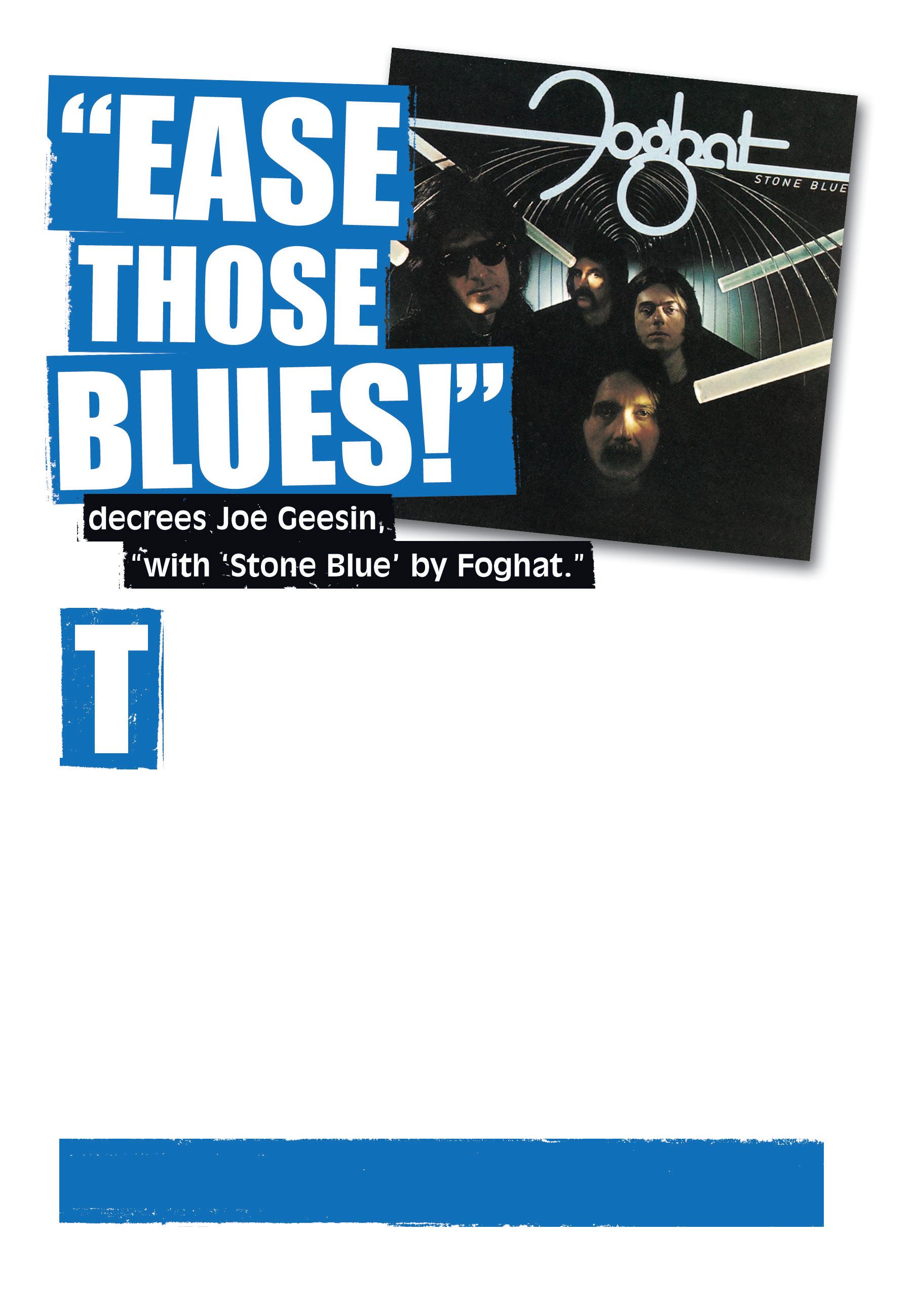
Blues Matters! 83
AT LAST
Etta James
A 1941 song written by Mack Gordon and Harry Warren, which was first performed by Glenn Miller. Although the song was a major hit for Miller, it was largely forgotten until it was covered by Blues singer Etta James. I used to dance with my dad in our living room to this song, with my mom singing along from the couch. This recording is my all-time favourite recorded vocal. I would sing to this track with my hairbrush as my microphone.
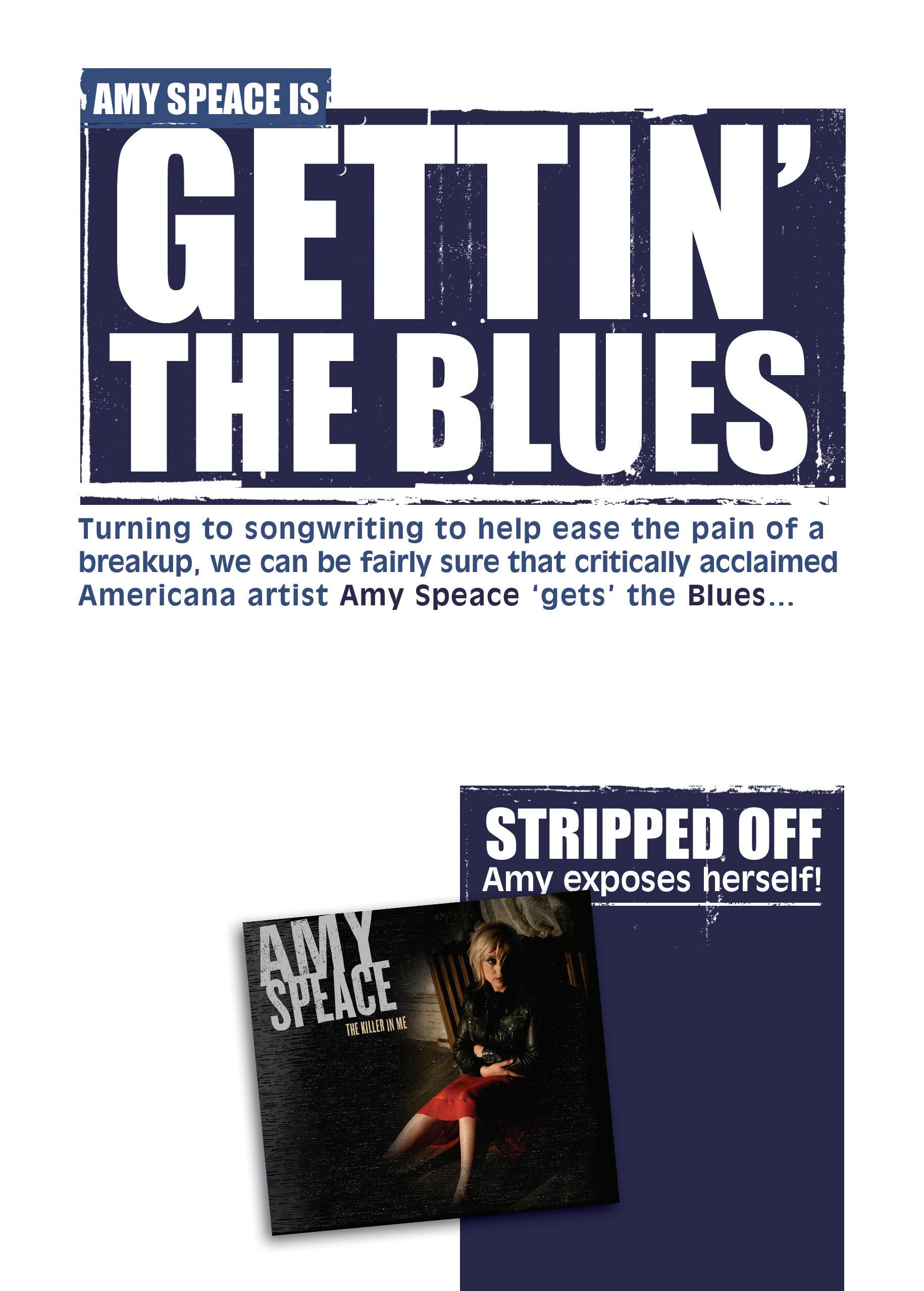
SUMMERTIME
Various

“Porgy And Bess” is an opera with music

by George Gershwin, libretto by DuBose Heyward, and lyrics

by Ira Gershwin and Dorothy Heyward. ‘Summertime’ is by far the best-known piece from the work, and countless interpretations have been recorded/performed. I love this song, no matter who sings it!
AIN’T NO SUNSHINE
Bill Withers
A song by Bill Withers from his 1971 album “Just As I Am”. Withers was still working at a factory that made toilet seats for 747s when he recorded the song. He originally intended to write more lyrics for the part of the song where
Amy released the highly anticipated “The Killer In Me” in April 2009 via Wildflower Records. Engineered by Mitch Easter (REM, Suzanne Vega ), this “achingly beautiful” collection was recorded on analog tape, with Amy looking “to capture the immediacy of how the band played together.” With the goal “to make a record like the ones I loved by The Band, Dylan, The Faces, and Neil Young,” Amy hopes the album “captures something organic that is both timely and timeless.” We have 3 copies up for grabs, so to find out if she’s succeeded, tell us: Who is the legendary folk singer behind Wildflower Records?
Blues Matters! 84
*answers to the usual PO Box address or comps@bluesmatters.com.
he repeats the phrase "I know" twenty-six times! Three chords and the truth. Didn’t somebody say that somewhere? I know...
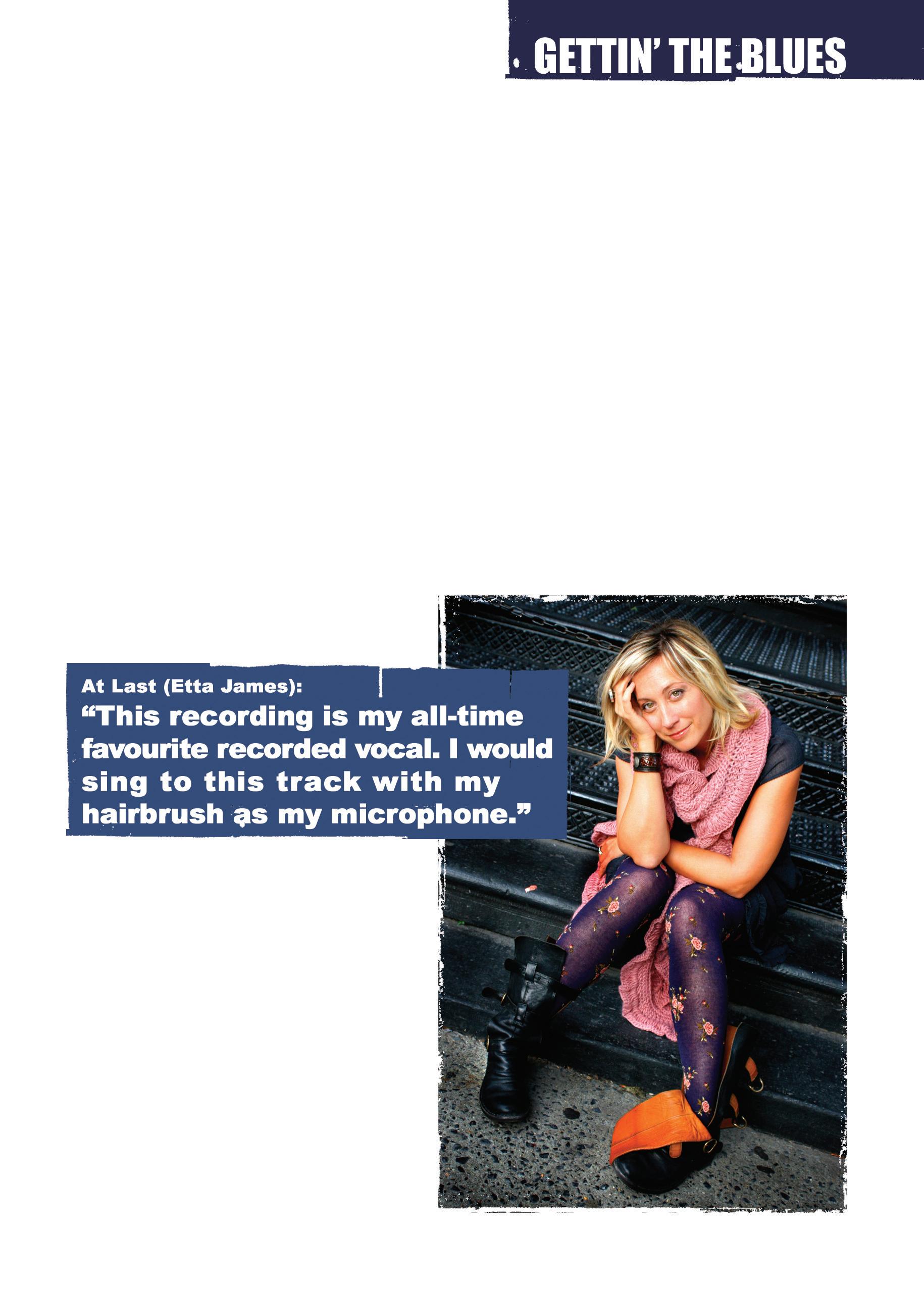
BLUE
Joni Mitchell
Among Joni's early output, this sad, poetic collection of intimate confessional songs is her most critically acclaimed. It’s way outside the scope of the Blues, musically-speaking, but the lyric content is so rich and deep and so well, blue. It’s one of my favourite songs of all time!
WEARY BLUES FROM WAITIN'
Hank Williams
I had to include a Hank Williams song, as he’s the Bluest writer I know and love. I grew up listening to his songbook, which is one of the backbones of country music, and several of his compositions are pop standards as well. 'Weary Blues From Waitin’' is such a simple song - such a true song. We sing this one in our set.
CALL IT STORMY MONDAY (BUT TUESDAY IS JUST AS BAD)
Bonnie Raitt
In college, I took a course in Blues and my professor gave this one to me to sing. I did-
Dog' in 1952. For some years, Big Mama suffered in obscurity like most of her fellow Bluesmen. Her name gained wider prominence and her career enjoyed a significant resurgence as her song 'Ball And Chain' was covered by Janis Joplin. Big Mama and Janis, two voices that scream and moan like nobody since.
THE THRILL IS GONE
B.B. King
How could anyone have a top-10 list and not include this one?


SEE THAT MY GRAVE IS KEPT CLEAN
Blind Lemon Jefferson
Blind Lemon Jefferson was one of the most popular Blues singers of the ‘20s. Despite his commercial success, Jefferson is sui generis. His musical style was extremely intense and individualistic, bearing little resemblance to the typical Texas Blues styles of the ‘30s. I first heard this song on Bob Dylan’s “Bob Dylan”. Dylan recorded the song again with The Band on “The Genuine Basement Tapes” years later. The song just kills me. AS
n't think anyone like me had any business singing the Blues, but then I heard Bonnie Raitt's version of it and opened my mind and started listening to Robert Johnson, Bessie Smith, Lighting Hopkins and Muddy Waters!
ST. LOUIS BLUES


Bessie Smith
She’s the queen and the most popular and successful female Blues singer of the ‘20s and ‘30s, and a strong influence on subsequent performers like Billie Holiday, Mahalia Jackson, Nina Simone and Janis Joplin.
BALL AND CHAIN
Big Mama Thornton
Willa Mae ("Big Mama") Thornton was the original singer to record the hit song 'Hound
Blues Matters! 85
Amy Speace has studied the Blues.
ROCKY ZHARP Live At B.B. Kings
ROCKY ZHARP & THE BLUES CRACKERS
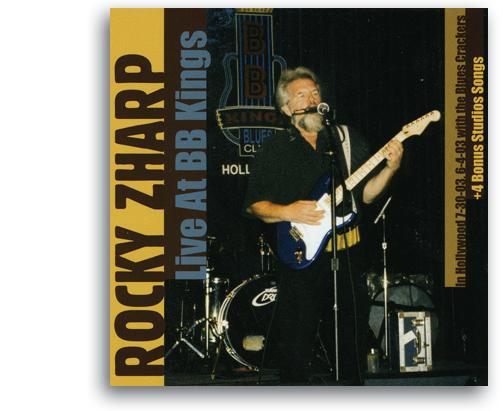
California resident Rocky Zharp’s great grandmother gave him a harmonica when he was very young, and thus settled his path in life. Zharp has had a varied career, consisting amongst other things of soldier, stand-up comedian, bluegrass band member, radio show host and, for thirteen years, a comedy traffic violator instructor, which sounds like a fascinating way to learn the rules of the road. His harmonica has provided him with employment by the likes of Eric Burdon, The Mighty Flyers and The Toler Brothers, and he has opened for a wide variety of acts playing anything from southern rock to country. The first of these two CDs (released in 2006) was recorded at B.B. King’s Blues Club in 2003 and is solid if uninspiring Blues. There are four bonus studio tracks, which are more satisfying than the live work. Zharp is not blessed with a particularly tuneful voice, but it is augmented by some great harp work, and this is a good quality live recording. Some of the material is familiar, such as his versions of ‘Rollin & Tumblin’’, ‘King Bee/Sittin’ On Top Of The World’ and ‘Big Boss Man’. His comic approach to live performance is typified by his great one liner, “If you guys have any requests, please keep them to yourselves!” The 2007 studio album is better, a mixture of classics like ‘Back Door Man’, ‘Mellow Down Easy’ and ‘Gallows Pole’, with strong originals including the groovy ‘Good Woman’ and jumping ‘What More Do You Want’. Zharp reveals a sense of Americana, and can even pull off songs in the public domain, like ‘Will The Circle Be Unbroken’. The finest example of his work is the oh-tooshort instrumental ‘A Recreational Diversional Thang’, which shows off his harp talent superbly.
Noggin
PAUL REDDICK Sugarbird
NorthernBlues

Paul Reddick is yet another fine example of the terrific music coming out of Canada. I liked the thoughtful, observant lyrics throughout, and when added to the tasteful production by Colin Linden, what we have is a very enjoyable listen. As the
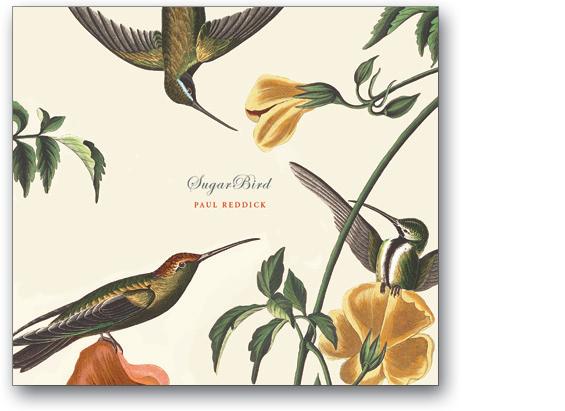
songs are often shared, credits wise, with Colin, and he also provides most of the guitar work, as well, then this might have resulted in a joint billing. However, that should not take away from the fact that it is solely Paul who is the vocal talent. At times, he vocally shifts effortlessly from pure Blues through roots, folk and even late-night jazz, as on 'Breathless Girls'. The album opens with 'Morning Bell', a rather jolly number with excellent accordion behind a twelve string and steel guitar duet, along with harmonica. There are also touches of zydeco and country coming through. 'I Will Vanish' and 'Devilment', respectively, are good examples. I really liked the melancholic feel to 'John Lennon In New Orleans', and 'Climbing Up The Hill' is gorgeous, being almost Parisian in feel. This album has texture, light and shade to it, and is a real aural joy time and time again.
Graeme Scott
NICO’S ALCHEMY Fundamental Darkness
Dirty Dog
This guy could almost be the Malmsteen on Blues-rock. The music is heavy, solid, and the guitar work is the lead throughout. And with the Malmsteen reference, I don’t necessarily mean it’s shred heavy either, but this is leaning towards guitar solo led metallic Blues. And he does look a little like Blackmore, too. The mix is good; the opening instrumental track is bass heavy, on the verge of distortion without going too far. All the guitar work is provided by Nico Tamburella, and the intricate interplay is pretty strong. Candido’s vocals on later tracks are strong. ‘Sleeping With The Devil’ is quite bright, but shows a neo classical influence. So far so good, but then we get to ‘A Leap In Space’, an over programmed non entity of jaw-dropping awfulness. The programming continued, to a much lesser extent, in ‘Miles Away’; a bright and breezy rock/pop number. A worthwhile set with some variation, but one number we could definitely do without.
Joe Geesin
TRAMLINE Somewhere Down The Line Moves Of Vegetable Centuries
Repertoire
This band were a four-piece from the late-60s, who melded Blues, rock and psychedelic instrumentals. Mick Moody was the most well-known member, going on to achieve great suc-
Blues Matters! 86
THE REVEREND PEYTON'S BIG DAMN BAND
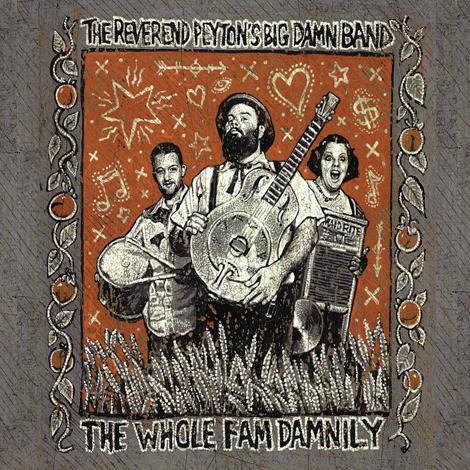
The Whole Fam Damnily
SideOneDummy American family band? Mom and dad with guitars while the 2.4 kids sing sweet harmonies or try to sound cute on wholesome ditties that extol the American dream, perhaps? You can throw away that idyll with this trio – The Reverend Peyton (that's how he refers to himself) is angry. 'Them Old Days Are Gone', he laments, directing righteous ire at those who would build shopping malls on favourite fishing holes (but don't eat the fish, unless you want mercury poisoning), and at Wal-Mart for killing the country stores. But then, if you watch television, you see your cousin on 'Cops' – “Police-Camera–Action”, as you might know it – or maybe you just wanna get drunk? “Whiskey and vodka ain't no breakfast food,” but what else is there to do when everybody else gets paid but you? And this explosion of wrath is set to a soundtrack that is an unholy racket based around a slide guitar - not unlike Fred McDowell at his wildest - while 'Washboard' Breezy Peyton plays you-know-what and Jayme Peyton supplies noises on drums, bucket and whatever else is available. The result is startlingly good, and unlikely to be confused with The Partridge Family.
cess with Whitesnake. The band only released two albums at the tail end of the decade before breaking up. On their debut, they sound like a slightly heavier Yardbirds (Clapton era), with plenty of harmonica, courtesy of vocalist John McCoy. The band leans towards rhythm & Blues, and their overall sound is a little dated now.
‘Sorry Sorry’ is a lengthy slow Chicago Blues, whilst their attempt at ‘Look Over Yonder Wall’ sounds like early Fleetwood Mac. They throw in some West Coast rock on a version of Stephen Stills’ ‘Rock And Roll Woman’ that changes the flow nicely. The followup album, from the following year, is a more assured, confident effort, possibly due to the fact that bassist Colin Hodgkinson became a temporary member. Opener ‘Pearly Queen’ doesn’t compare to the Traffic original, but is a high energy effort with a nice stinging guitar solo. ‘Sweet Mary’ has some saxophone backing on the slow soulful Blues, whilst the instrumental ‘Grunt’ lets the band jam. Both albums feature well-known Blues numbers, with ‘Statesboro Blues’, ‘Killing Floor’ and ‘Good Morning Little Schoolgirl’ getting the treatment. Whilst these aren’t bad albums by any stretch, they aren’t particularly exciting either. They were obscure in the ‘60s because there were better bands around playing similar stuff.
Andrew Baldwin
KATE CAMPBELL Save The Day Large River
This is Kate Campbell’s twelfth studio album. On it, she blends many strands of music crossing Blues, folk, gospel, rock and pop. Kate’s a songwriter who favours storytelling, using the differing genres like paints on a palette to colour her narratives of faith, history and the human condition. The CD is not pure Blues, it has gone beyond the narrow definitions of genres, but the musical ability, subject matter, sentiments and most of all the depth of feeling it contains, mean it should be considered
by devotees of many genres. Kate’s vocal range is good, intonation is great and her belief in her lyrics echoes in every word she sings. The instrumentals and technical production are first class. Title track ‘Save The Day’ is a power rock ballad discussing human want versus need in a spiritual context. ‘Dark Night Of The Soul’ is a superb piece of songwriting in which Kate tackles the topic of the ultimate journey of the soul. ‘Color Of Love’ is a Blues, folk and country ballad. Its structure is very simple but the concepts are complex and the lyric is actually made more intense because of the simplicity.
‘Everybody Knows Elvis’ sees Kate linking Jesus and Elvis in a philosophical question. Really walking on thin theological ice, but she pulls it off, as she shows that we really know nothing of the suffering of others, whoever they may be!

 Carol Borrington
RICKY GENE HALL & THEGOODS
Bam!
Yard Dawg
Opening the cover of this album to access the sleevenotes, and you see three middle-aged men, two with grey hair, and first thoughts are on the negative side. However, upon pressing play on the stereo, those fears are swept aside by a funky opener in the shape of ‘Way I Feel’, with some excellent crisp guitar from Hall. This is a three-piece, playing rock with a real Blues edge, a la The Fabulous Thunderbirds. They get a little swampy at times, on the likes of ‘Amos Moses’, and this is a decent little album. The title track has witty lyrics about not being able to keep quiet and suffering the consequences, whilst ‘Real Fine Woman’ gives the listener a dose of slow Blues. Hall has a pretty good voice to compliment his guitar playing and lets it soar on the final track ‘Blues Leave Me Too’, preceded by a fiery rocker in the shape of ‘Postman’. The band mix Blues, gospel and a tinge of reggae on
Blues Matters! 87
Norman Darwen

MICHAEL JEROME BROWNE Double
Michael Jerome Browne & The Twin Rivers String Band Drive On This Beautiful Mess
Borealis
Michael Jerome Browne is a Canadian-based singer and multi-instrumentalist, born in South Bend, Indiana in 1960 and now an expert roots musician. He made his self-titled debut album in 1998, and it was rereleased in 2007, coupled with a live set, entitled “Double”. Michael plays guitar, banjo, fiddle and harmonica on a wide-ranging double CD. The debut album has a strong rural Blues feel and reveals a mature and confident performer. Some of the material has Michael in his one-man-band incarnation, other tracks have washboard, rhythm section, twin fiddle accompaniments and second guitarists – a couple even have horns. Veteran pianist Vann Walls (he recorded with Big Joe Turner in the ‘50s) features on three numbers. Very impressive, too, is Hendrix's 'Manic Depression', as Leadbelly might have imagined it, and a cover of a Talking Heads number!
Michael's mastery of a variety of styles is readily apparent throughout, as is his vocal accomplishment. The live set includes accompanists from the Stephen Barry Band, with whom Jerome was long associated. Well-known guitarist Sue Foley also makes a significant contribution to an immensely entertaining set, which ranges from 'primitive' banjo accompanied folksong to all out Chicago Blues and Bo Diddley rock’n’roll. The album with The Twin Rivers String Band dates from 2004 and finds Michael tackling Cajun music, old timey string band and classic country sounds, performing on fiddle, banjo, lap steel guitar, mandolin and banjo – plus some blue yodelling in the fashion of Jimmie Rodgers. The numbers vary from solo Blues items to full-blown western swing, but all are very enjoyable. “Drive On” saw the light of day in 2001 and mixes traditional songs with originals, and covers from the likes of Sam Cooke, Stevie Wonder, Al Green, country music icon George Jones, and Irving Berlin. There are some wonderfully mellow rural Blues items, and even the most unlikely material is beautifully reworked. Which brings us up-to-date and on to Michael’s latest, the perhaps unexpected but totally logical progression to a greater proportion of pure unadorned country on “This Beautiful Mess”. Also present is a little country-soul, one of those genres that perhaps seems as though it shouldn’t work, but in the hands (or maybe that should be voice) of a master, it can indeed be beautiful. The pure Blues, folksongs, and rhythm & Blues are also in evidence on an entertaining CD. Blessed with a superb voice, an accomplished instrumentalist, and with some original ideas, Michael certainly makes some wonderful music.
Norman Darwen
'‘Revelation Radio'’ and whilst these chaps don’t deliver anything too original, they have produced an album that will certainly have you hitting that repeat button.
 Andrew Baldwin
zZz
Running With The Beast
Anti-
Like acid rain, “Running With The Beast” sears through the stereo as a wall of sound, dripping uncomfortably into a rhythmic punch to the head. The psychedelic organs and distorted bass exceed all that is human and the output ventures into a parallel plain. All this talk of a spiritual existence is clarified by every additional track. Like Zero 7 with balls or The Fall with direction, zZz pack every crunchy bass line and heady synth melody with as much poetic existentialism as possible. It is a fair argument to assume that after the acclaim enjoyed by Justice last year could lead to a varying degree of fame for zZz, and if the inclusion of their song ‘Grip’ in a Fiat advert means they will be heard, it must be done. However, while it is easy to peg zZz with the bands such as Air and Daft Punk, it must be
said that they shade their other influences well. Behind the dance chaos alchemy lies shadows of rockabilly and of course, the shadiest Blues known to man currently inhabited by Jon Spencer and the Black Rebel Motorcycle Club. It’s a grimy cage holding a rabid animal, wearing its innuendo and desperate measures on its sleeve, and coming from a Bluesman, we all know that kind of misery can only be caused by a woman.
Matthew Clarke
WILL ‘HARMONICA’ WILDE & THE NEPTUNE BLUES BAND
Nothin’ But Trouble
myspace.com/willharmonicawilde
The Wilde family have certainly got musical genes, for now hot on the heals of new Blues ace (and elder sister) Dani Wilde comes Will ‘Harmonica’ Wilde. Will formed the Neptune Blues Band some three years ago, in his hometown Brighton, and has built a solid reputation for his high energy rhythm & Blues. Sadly, this album times in at less than half an hour and has only eight tracks, but it does give an excellent indication of
Blues Matters! 89
what is to come – hopefully! There are only three covers, Sonny Boy Williamson’s ‘Checking Up On My Baby’ (where Dani Wilde guests vocally in typically forceful manner), Elmore James’ ‘Done Somebody Wrong’ and Duster Bennett’s classic ‘Jumping At Shadows’, where Will Wilde takes over lead guitar from regular Richie Parker. The first two covers are great, but the slow Blues is less convincing. Will Wilde has an authentically gruff voice and is a powerful harmonica presence, too. The self-penned ‘I’m Tired’ and ‘Pain & Misery’ reveal a genuine feel for the genre. A bonus DVD, featuring a live version of ‘Blues Is My First Love’ (dedicated to his girlfriend!), came with this CD, and doubtless the live circuit is where this talented band’s reputation is being built.
 Noggin
THE WHISKEY RIVER BAND
Northern Lights In The Southern Skies It’s About Time
WRB
This is southern rock formulaic in the extreme, yet eminently addictive - and brilliant for all of that. Racial undertones from Americas past, love for mother and family values, brothers in arms, rebellion yell, bourbon bust-ups and probably the good, the bad and the ugly. Humour and tragedy - The Whiskey River Band have it all! “Northern Lights In The Southern Skies” has thirteen tracks that deliver the best whiskey-soaked, cheatingly loyal southern rock. Having supported Charlie Daniels, .38 Special and, of course, Lynyrd Skynyrd, they belong to unique southern boy alumni. They cross-reference the gene pool in all their songs and song titles. ‘Stranger In Your Own Town’ is particularly poignant and flares the beacon with military snare combined with loneliness and camaraderie. Almost out of place is ‘Fallin’ Into Place’, a funked-up attack that champions their versatility. ‘Saturday Nights Were So Special’ takes risks in being over indulgent in the Skynyrd love affair. Referencing ‘Simple Man’, Tuesday’s Gone’ and ‘Free Bird’, it’s a worthy Blues of justified nostalgia. Their second effort, “It’s About Time”, from 2006 is less worthy, although their influences are still openly transparent.
‘Southern By The Grace Of God’ embraces the Skynyrd obsession, but is somehow flat for what should have been a proud hymn to belief and belonging. Much is made of their own family, with dedications to their own departed, and the album is clearly a labour of love. Sullen production values let it down somewhat and consequently it doesn’t have the spark or vitality that southern rock demands. It is an attractive curiosity, however, and the best tracks, including the ridiculously titled ‘Mama Don’t Go 4 Dat’, and genuinely chilling ‘Here Comes Trouble 9-11’, make it collectable.
Gareth Hayes
MARIANNE FAITHFUL Easy Come Easy Go
Dramatico
This is Marianne Faithful’s twenty-second album. It’s a two CD set, plus bonus DVD. The CDs were recorded in collaboration with Hal Willner, and includes guest appearances by Rufus Wainright, Antony Hegarty, Chan Marshall, Sean Lennon, Kate
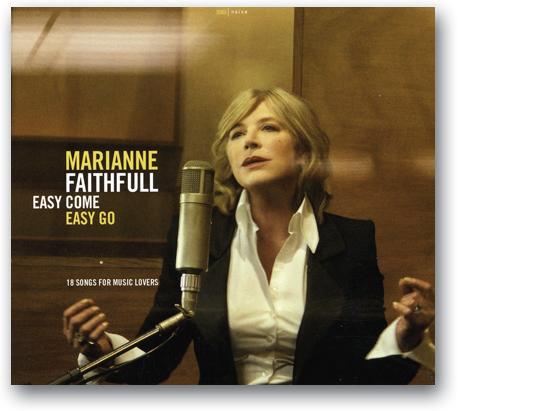
DAN AUERBACH Keep It Hid V2
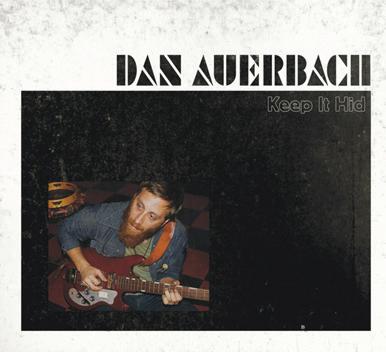
The great thing about The Black Keys is that they simply get better with every release, and this solo effort from guitarist and singer Dan Auerbach is no exception. Anyone who discovered the joys of The Black Keys from last year’s superb “Attack And Release” will feel at home with the retro feel to “Keep It Hid”. From the downhome Blues of ‘Trouble Weighs A Ton’ to the garage rock of ‘I Want Some More’, it’s a rough and ready delight. Whatever you may feel about The Black Keys, there is no denying that they know their stuff and their Blues chops are absolutely impeccable. The grimy analogue feel is straight out of the late-60s and early-70s. Anyone expecting a polished record with a radically different feel to his band’s output will be disappointed. It picks up where “Attack And Release” left off. The final track ‘Goin Home’ is particularly strong. If you were worried that this might be a barrel scraping exercise, then relax. The Black Keys are one of the best bands on the planet right now and they really can do no wrong. It also bodes well for The Black Keys eagerly awaited collaboration with ZZ Top and Rick Rubin. After listening to this, it can’t come out soon enough.
and Anna McGarrigle, Jarvis Cocker, Nick Cave and Keith Richards. The twenty tracks are carefully selected covers, given new interpretation by Marianne. They are Blues rooted but an eclectic mix of genres. The arrangements of the songs instrumentation and production are superb.
Marianne's vocal leaves you with a very distinct Left Bank, Parisian feel. It is the vocal of the mature Faithful, reminiscent of the work of singers like Edith Piaf and Marlene Dietrich. The emphasis is on the meaning of the words, as much as the music, giving it that essential feeling of the Blues. It is the drama of the vocal. The last track on the first CD, ‘Sing Me Back Home’ is actually a country song with a hint of Blues, which was taught to Marianne by Keith Richards. ‘Hold On Hold On’ is a Blues-rock number - there is some great electric violin and guitar work on this track. ‘Solitude’ is an Ellington, De Lange and Mills song, which has been turned into a blend of Blues, jazz and soul, with Marianne’s deep alto vocal, putting a cutting emphasis on selected words - a strangely sexual feel.
Carol Borrington
Blues Matters! 90
THE CODETALKERS
“Well, when you’re around that many musicians, you pick up new influences and styles, but you also begin to notice a lot of clichés and learn what not to do, too. It helps shape your own musical identity.”
ROB TOGNONI
“Taught myself to play and initially it was a lonely road. My father was killed in an accident when I was 13, so I used the guitar as a form of escape I think. I preferred the sanctuary of my room to sit and play.”
To access interviews online during Apr-May 2009, you need to enter the following access code: bm5049.

Enter exclusive competitions not available in the magazine.
Find Blues events in your area with the self-service Gig Guide.
Read latest Blues News from around the world.
Chin-wag with fellow Blues lovers on the forum.

Blues Matters! 91
ORB MELLON Love Above Moan
V-Hold
After founding indie rock band Dirt Merchants in the early-90s, Mike Malone, a.k.a. Orb Mellon, has brought his Blues influence to the fore in two contrasting, but equally impressive releases. “Love Above”, released in 2007, is the more traditional of the two CDs. Thirteen original tracks, the majority of which were recorded in one day - and one take! Maintaining not only the manner in which early Blues was recorded, but also achieving the spontaneity and rawness of the music. This is essential for its success. “Love Above” is a great example of how original Blues material can be still produced, without succumbing to cheap mainstream influences. Of course, you need some talent, and the CD is powered on by Orb’s frankly stunning steel guitar playing and harmonica. With minimal backing, in the form of hand clapping, foot stomping and washboard, the percussive, rhythmic delivery of Delta juke joint Blues is on offer here, with a strong nod to Bukka White and Son House. If I had to pick favourites from a strong cast, ‘My Lover’ and ‘I Think Of You’ would be contenders. Recorded in 2008, “Moan” proves a fascinating contrast to Orb’s earlier release. The songs were written to be sequenced together producing a exploration of the darker complexities of life. Adding other influences to the Blues, such as rock’n’roll and traditional American folk balladry, Orb plugs in and has a full rhythm backing on the rocking ‘Baby Blue’. But there are quieter moments, such as the ballads ‘I’ll Never Go’ and ‘Weigh My Heart’. And the title track is a beautifully atmospheric instrumental bringing imagery of dusty Delta roads and rumbling, rolling freight to mind. Surprisingly, as it’s the more contemporary of the two CDs, “Moan” captured my imagination the most. If Orb Mellon’s ‘post modern Blues’ is a vision of how the Blues will continue to thrive then I can give nothing but praise.
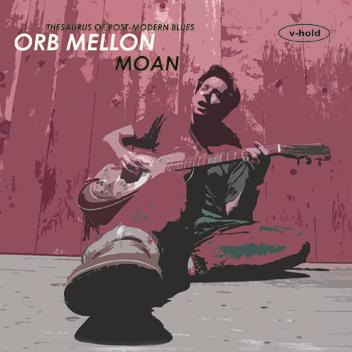 Davide Styles
KEN WHITELEY One World Dance Borealis
Ken Whiteley is one of Canada's most respected roots musicians, and his latest album is firmly rooted in the Blues tradition. At the same time, on this offering, he demonstrates a very wide range of styles, drawing on his rich background in Blues, gospel and folk styles. This twelve song album showcases Whiteley’s original, Blues based songs with a few reworkings of traditional pieces added for good measure. Of the traditional pieces, his version of ‘Death Letter Blues’ on a National Steel
would make Son House himself proud. His self-penned track ‘That’s When I Need A Song’ would make a great single, with its memorable lyrics and melody. Much of the album has a gospel feel and ‘Two Wings’ and ‘Trying To Find My Way’ show that this is a genre of which Whiteley is a master. There is even a comedy swing Blues, ‘Lunch Counter Encounter’, in which he sings duet with Tabby Johnson in a sweet female role. The album features an all-star cast including Juno winning pianist Joe Sealy and legendary guitarist Amos Garrett. Ken Whiteley is prolific songwriter, a gifted and versatile instrumentalist and a powerful singer, and it’s all on this album, which I would recommend. There’s something for everyone!
Kevin Wharton
RED HOT BLUES SISTERS
Red On Blue

Peace Code
Blues belters like Bonnie Raitt had better watch out as there’s some new competition on the block, and they go by the name of Red Hot Blues Sisters. The double act of singer Suze Sims and guitarist Teri Anne Wilson have already toured both Europe and the US, and this new release will build on their growing reputation. With a mixture of originals and well chosen covers, they have delivered a soulful set of rocking Blues, which makes full use of their band’s horn section. As a vocalist, Suze Sims proves she is up there with the best of them, particularly on their version of Willie Dixon’s ‘Can’t Judge A Book’. Teri Anne Wilson pays tribute to the likes of B.B. King and Buddy Guy with her fretwork. She plays the guitar in a tasteful and fluid style, giving this album a real spark. ‘Graveyard Blues’ proves to be a real highlight on this record, as is ‘Mama’s Business’. It’s rocking Blues with a soulful edge that is on a par with any other established act currently doing the rounds. The Red Hot Blues Sisters are definitely doing it for themselves, and who can argue with that?
Jamie Hailstone
DAVE PLAEHN CrazyMan
PlaehnTune
Veteran Dave Plaehn has been performing for over forty years, and has released several collaborative and solo albums. He was born into a musically inclined family in Iowa, and at high school he played in a covers band. It was at college that he first became familiar with the Blues, and developed harmonica skills to augment his tuneful singing. There he also played jug band music, but was influenced by artists as disparate as Stevie Wonder and Aretha Franklin to Paul Butterfield and Johnny Winter. These influences permeate the broad spectrum of tunes on this latest release out of Oregon. Much time has evidently been taken to craft the entirely self-penned songs, and the playing and arrangements are impeccable, from the ‘50s feel of ‘My Conviction’ to the jerky beats and down-home essence of ‘What’s This Love Thing?’. Plaehn explores the full range of his warm voice in songs like the sparse ‘Ghosts’ and almost world music ‘Shugum Boom’. The Bluesy ‘Hug Me When I Come Home, Kiss Me When I Leave’ features some lovely harmonica and slide interplay, and the grooves of ‘She’s Got Kisses (And Love I’ve Known)’ and ‘For Love Blues’ are
Blues Matters! 92
smooth and relaxed. Though this is not a Blues record; think Tony Joe White meets the Zombies. Appreciation of what is a fine disc increases with repeated plays.
Noggin
ERIK MONGRAIN
Canadian Erik Mongrain’s second release is a canvas of what I would describe as organic music. I would urge everyone to search this artist out on YouTube, as he has a most distinct style that makes watching him very intriguing. He has made lap tapping (a style of playing brought to the fore by Stanley Jordan) on an acoustic guitar very much his own niche area and uses the style to excellent effect to provide melody, rhythm and percussion. “Equilibrium” is an instrumental voyage through some of the deepest parts of Mongrain’s psyche, with areas such as hyperactive minds in ‘Ripple Effect’, inner loneliness in ‘Alone In The Mist’, an ode to the balances and imbalances of the planet in ‘Equilibrium’, confusion in love as in ‘Maelstrom’ and a love story in ‘Muse’. Accompanied by only fretless bass and synthe-
WILLIAM ELLIOT WHITMORE Animals In The Dark RAMBLIN' JACK ELLIOT A Stranger Here
Anti-
siser, this is serious cerebral music that needs to be listened to. On first play, I felt it had little to offer, but that feeling changed the more times I heard it. Favourite track is ‘Pandora’s Box’, a tune about feelings for a new guitar and the possible sounds that may be wrenched from it. The rhythm produced by lap tapping is excellent. Make no mistake, the musicianship here is of the highest quality and deserves as wide an audience as possible.
Merv Osborne
CHRISTY HOWARD I Crossed The Tracks
No Cover
Hailing from Clifton, Tennessee, on the cover Christy Howard looks like another moody girl in her late teens or early twenties, yet sounds as Blues as they come. Having lived for a long time in Mississippi, she’s never been far away from the Blues, and started singing professionally at 13. She’s also the composer of all fifteen tracks here, and she must have a truckload of kudos because the band backing her on this CD are positively volcanic. Check out the guest players – Billy Davis (guitar) was at one time with Hank Ballard And The Midnighters. And there’s yet another top-drawer axeman here, too – Jim Kahr, whose CV includes stints with Muddy Waters, Junior Wells, Buddy Guy, and even the mighty T-Bone Walker! ‘Trading One Hell For Another’ is not only a great song title, it also rolls along with some stirring guitar from Jeff Howard. There’s a couple of tracks with some spine-tingling harp played by Wailin’ Dale Blankenship. This CD represents a new wave of cross-genera-
In a sense, we have two ends of a musical rainbow here. At one end, a true legend in the twilight of his career, and at the other an artist still in early development. There are strong similarities between the two men and their music. Both have enigmatic and mercurial characteristics that leave you wondering what makes them tick. William Elliot Whitmore hails from the banks of the mighty Mississippi and a lot of his music is populated with simple lives, as they battle the land, love, life and death. Often there are tales of murder, mutiny and sin stripped back to the bare essentials of a gravelly, weary voice and a simple guitar or banjo. Yes, the tales are dealing with darkness, redemption, those less fortunate or often unsavoury characters, but when they are delivered powerfully and with deep passion, they hook you and you can't escape. "Animals In The Dark", his fifth album, begins with 'Mutiny', driven along by a marching drum beat and little else. In the second verse, a call and response develops through this seafaring story, and the lyrics get fairly fruity along the way! 'Who Stole The Soul' is a thinly disguised dig at foreign policy and the effect it has on a nation with its heart ripped out. Light and hope come via 'Hell Or High Water' and 'There Is Hope For You'. So much has been written about Ramblin’ Jack Elliot in the past decades that there is little I can add. Countless recordings issued over the years and yet, suffice it to say, any new album is to be welcomed and enjoyed. "A Stranger Here" shuffles out the blocks with a barrelhouse piano intro to 'Rising High Water Blues'. Despite the Depression-era subject matter, the album sounds fresh and interesting. Our continued fascination with those days has very current echoes and resonance for many afflicted by our economic downturn. I loved 'Death Don't Have No Mercy', 'Soul Of A Man', 'The New Stranger Blues' and 'How Long Blues'. We end as we began with the same piano behind 'Please Remember Me'. There is absolutely no doubt that Jack will be fondly remembered for his contribution to music and the way he continues to influence current players like William. Now what finer legacy can there be?
Graeme Scott
Blues Matters! 93
LONNIE JOHNSON
The Chronological Lonnie Johnson 1947-1948
SONNY BOY WILLIAMSON
The Chronological Sonny Boy Williamson 1953-1956 Classics
Lonnie Johnson was one of the greatest Blues guitarists. Still without a hit, well into his fifties by 1948, he suddenly found himself topping the R&B charts with ‘Tomorrow Night’, a fine, lilting ‘30s ballad with scintillating guitar. The twenty-five tracks on this Classics collection reveal how his mainly selfcomposed music sat well outside the ‘50s rock’n’roll craze, resulting in him hanging up his guitar. But, by the ‘60s, he was back with a vengeance and briefly found a new audience at home and in Europe before deciding to move to Canada and retire. The combination of his soaring, clear vocals and fabulous guitar playing make these tracks a thrill to listen to. Such was his influence, a Glasgow skiffler called Anthony Donegan even nicked Johnson’s first name! Sadly, whilst walking on the streets of Toronto in 1969, Lonnie was hit by a car and died the following year. If you want to know how good Blues can get, then this is for you. Newcomers to the gruff, mysterious harmonica giant Sonny Boy Williamson II need to know that he lifted his name from an earlier recording artist, John Lee ‘Sonny Boy’ Williamson, now known as ‘the first’. These twenty-four gutsy recordings include a 1955 reading of the classic ‘Don’t Start Me Talkin’’. Many fans will know him from his successful cuts for the Chess label, but this CD has all the sinister power, variety of tempos, and towering harmonica grandeur you can handle – just listen to ‘Shuckin’ Mama’ for proof. Alongside Muddy Waters, Howlin’ Wolf and Little Walter, he was one of the major influences during the early-60s British Blues boom, and bands are still playing his material today. Listen to this collection, and you’ll soon realise why.
 Roy Bainton
tion Blues, and signifies in no uncertain terms that our favourite music is in very good hands. It’s a bit rock, a bit country, but all Blues - underpinned with nice, fat cheesy Hammond organ sounds and blistering guitar solos. If this CD’s anything to go by, I’ll bet Christy Howard is a revelation on stage. Bring it on – I can’t wait.
Roy Bainton
JULIAN SAS
Wandering Between Worlds
This near two hour set was recorded live on 26th September 2008 at the De Boerderij, a substantial venue at Zoetermeer in the Netherlands. Those who were there affirm that it was Sas’ best set ever. Backed by Rob Heijne (drums) and Tenny Tahamata (bass), this is a pretty much unrelenting exercise in Blues-rock and boogie by a solid three-piece band. This release is also available as a DVD set, and perhaps that might better capture the excitement of the live show. On CD, it seems one paced and unimaginative. Just as one example, the opening track on disc two is a fourteen minute boogie (‘Sugarcup Boogie’), which offers little new to this tired form. Sans is evidently a more than capable guitarist, and this comes across in the next track, the sixteen minute plodding

‘Blues For J’, but the vocals are again uninspiring. Then his influences come across in the stretched out Rory Gallagher tribute ‘I Take What I Want’. The breakneck ‘This Time My Time’ is better. The set concludes with the appropriately titled ‘Boogie All Around’. Maybe you had to be there to catch the live atmosphere, but this doesn’t come across well in this format. A bonus disc of five acoustic songs is also offered in the package, including a new song ‘First Rays’. This offers more variety, especially the funky ‘Helpin’ Hand’.
Noggin
CURTIS WHITEFINGER Your Arse Is Mine
Black Thumb
'Don't Break My Arms' gets things going here in a fairly humorous vein, however, as things progress, I found myself increasingly out of step with what Curtis is attempting to do. Can't help but think that were you to be on a boozy night out and you stumbled into a live comedy venue then this might appeal temporarily. In the cold light of day, I suspect that, like a bad hangover, you would be well disposed to forgetting the night before. Don't get me wrong, the playing is fine, but the rather whiney vocals grated throughout. The title track, I guess, is supposed to be a quirky love song, but with lyrics like, “I'm never gonna cheat or use my fists cause I'm not a Nazi or Communist,” I feel sure it
Blues Matters! 94
will not really work on the ladies. 'Poor Me' tells of the hard times that are affecting those who have little. Throughout all the songs, there is an attempt to wring every possible rhyme there is just to make lines fit together. 'Not So Different Now', probably the best track on this woeful album, relates how individualism is eventually driven out by the daily grind of life. However, one reasonable track can't rescue the whole. Time for Curtis to take stock and forget about being a singer.
Graeme Scott
DAVE FIELDS All Wound Up
FMI
“All Wound Up” starts off in a Hendrix/Trower vein with ‘Train To My Heart’ - a guitar driven song pulsating with life, before segueing into ‘Ain’t No Crime’, a driving love song where Fields vocals are echoed and backed by Ada Dyer. The tempo continues through “All Wound Up”, and there is no let up in the wall of sound as the music forges forward. Fields is a composer, arranger producer, vocalist and multi instrumentalist. His guitar and keyboard work is very tight and the songs themselves are quality. This is primarily dance music, as ‘Let’s Have A Ball’ and ‘Still Itchin’ keep the foot tapping quality going. Don’t be fooled, however, because Fields can lay down a soulful slow Blues, as well. ‘Cold Wind Blowin’’ smoulders with beautiful piano playing during the bridge of that song. The whole texture of this song
makes a statement, the beauty of the keys versus the distortion of the guitar. ‘Big Fat Ludus’ rocks and rolls a la Jerry Lee Lewis, with numerous backing vocals and horn section. All twelve tracks are originals and varied in style, and each allow Fields to demonstrate his versatility. There is also some great harp playing from Billy Gibson. Best track is the slow ‘Wanna Be Your Man’, with its moody guitar and broken vocal implying upset emotions. An enjoyable release overall.
 Merv Osborne
J. EVANS BAND Survivor
Evans/Rockwerk
John and his band of merry men are completely new to me; however, it appears that this is album number two following up "In The Wild Years" from 2005. As the title suggests, John is indeed a bit of a "Survivor", having over partaken in the excesses that are out there to tempt us to the dark side. Currently based in London, John melds together many standard musical influences, and it never ceases to amaze me that there can be so many creative variations to our world of music. His rasping vocals cut through the fine driving background throughout and the songs are strong and all self-penned. I particularly enjoyed 'No Smoke Without Fire' and 'Bad Disposition', especially just the first few bars of the latter, which reminded me of The Jam. 'Shadowlands', 'Long Time Gone' and 'Welcome To The World' are nice ballads. Overall, this is a very competent outing and it will be interesting to keep an eye out for this band on the road. I like the idea that they do not appear to take themselves too seriously whilst still turning in a good collection. I feel sure they would be very entertaining, so go on and investigate this album. It sounds in places punk, rock, Blues, pop and country.
Graeme Scott
Blues Matters! 95
ANDY GRANT
Hole In The Sky
andgrant.net

Listening to this album, you can not help but be aware of just how much talent is out there that mainstream radio, with a few quality exceptions, very seldom pays any attention to. Here, in Andy Grant, we have such an example. I should imagine that he is not expecting widespread airplay and that is a shame because there is much to enjoy on this CD. Ploughing his own course by self-releasing his voice is engaging and I like the sound of his acoustic guitar, which underpins what is in essence a simple Blues influenced album. Not that this has the sound of the Mississippi or Chicago, for example, but it is perhaps the sound of Dorset. There is no reason why Dorset can not have its own Blues, and in Andy's hands, the guitar generates a distinctive sound. He has a good funky band behind him, as well, and his songs are well constructed, if not particularly unique. I don't mean that in a negative way at all, dealing, as they do, with subjects close to all our hearts. Standout tracks include 'Indifference', 'HBR', 'Heaven Knows' and title track 'Hole In The Sky'. This is a good second effort from Andy. It tempts me to seek out his debut at some point. If you like strong acoustic singer/songwriters then this is for you.
Graeme Scott
KELLIE RUCKER In The Meantime
As part of the Los Angeles-based rock/Blues outfit Soul Return, singer/harmonica player Kellie Rucker has paid her dues. She might only be (reportedly) five foot tall, but she has shared the bill with many Blues giants, including B.B. King and Albert Collins. On “In The Meantime”, she is backed by her Soul Return bandmates for an enjoyable set of low down and funky material. Like a female Kim Wilson, she wails and blasts that harp. Her voice is strong and on ‘Kiss Me’ it’s also darn sultry. Fans of harmonica and slide guitar playing will be in for a treat, but anyone who is serious about harp playing will find plenty to be inspired about on all of this album’s ten tracks. In many ways, “In The Meantime” harks back to Bonnie Raitt’s early days when the redhead was all about the Blues. Kellie Rucker has paid her Blues dues over the years, so hopefully this release will get her the attention and profile she so richly deserves.
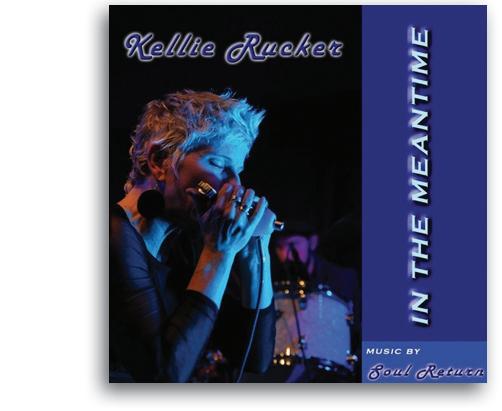 Jamie Hailstone
ROBERT COLEMAN TRUSSELL
Juice & Jive
Goodnight-Loving
A fine album of country folk balladeering. Creating mental pictures as various characters appear in the lines of his well crafted stories. White boys with habits, a desperado with ‘Forty Notches’ on his gun, drifters with bandanas full of dreams, a pilgrim who stumbled and fell, and even Noah counting his critters. Colourful lyrics like, “She had more secrets than an old hotel,” and “I saw a wino on the corner throwing up with all his might/Filling up the gutter with all the dreams he had last Blues Matters! 96
DABY TOURE & SKIP McDONALD Call My Name
Real World (EP)
Born in Mauritania, and currently a leading player in Paris, Daby, Toure is one of the newer African Bluesmen who is attracting a lot of attention. Skip McDonald is an old style African American Bluesman from Ohio, residing in London and with bags of experience. They are joined on this EP by Keith LeBlanc on drums, and he does a lovely job, with some delicious understated African based rhythms. The guitar playing is top notch on every track, with some lovely tasty licks in particular on ‘Lost Voices’, one of Toure’s compositions. Equally, the backing guitar comes over well on every track, weaving lovely intricate patterns with LeBlanc’s drums. Obviously, there is a very heavy African influence, but in other tracks, such as ‘Sinners’, you can pick up a French influence.
Kevin Wharton
BLUES SANS FRONTIERES
Same Crossroads – Different Destinations
Independent Release (EP)
Several artists have already drawn links between the Blues and traditional Indian music. Blues Sans Frontieres are the latest group to do so. “Same Crossroads – Different Destinations” showcases the trio of Robert Hokum on guitar and vocals, Sam Kelly on percussions and Mehboob Nadeem on the sitar. This three track CD contains ’Who Do You Love’ by Bo Diddley, ‘Nobody’s Fault But Mine’ by Blind Willie Johnson, and a new arrangement of the traditional song ‘Circle Round The Sun’. Hokum’s powerful voice and guitar playing goes seamlessly with Nadeem’s sitar playing. The end result is a highly original take on some old Blues standards.
Jamie Hailstone
HELIUM SOUL Ten Ton Mother Love
Red Room (single)
Blues is a church that encompasses all sorts to bend a knee and offer up to our delectation. This is one funk laden and soulful piece that is the essence, if not the style, of Blues. It swaggers, it kicks, and the sizzling guitar licks, all distorted and dismembered, force you to move. These guys are obviously much enamoured with ‘70s white funk bands, but they take their music a whole lot further, while losing none of the soul. The B-side, ‘Believe In My Lies’, is a stunning piece of rock in its own right, and demonstrates that the band really do know where ‘the groove’ is.
Andy Snipper
KING KING Broken Heal
myspace.com/kingkingblues (EP)
King King are a new band with an impressive pedigree, aiming to give a “fresh new angle on the full blooded Blues sound.” This is their debut EP opening with the title track, which is a powerful Blues-rock social commentary about the plight of a lady of the night. Sound emotive lyrics expressively sung by Alan Nimmo and pushed on by stirring guitar, keyboards, drums and bass. ‘(If Loving You Is Wrong) I Don’t Want To Be Right’ is a keyboard driven Blues ballad born of the impossible choices of love, and pushed home with a heart wrenching guitar solo at the climax. On this showing, they have achieved the aim of a fresh angle and long may they continue to do so.
Carol Borrington
night,” fill his musical canvass. The content flits between folk, country and Blues. Depth and variety are provided by multiinstrumentalist and co-producer Kelly Werts, and the use of Rachel Ries on three tracks as backing vocalist. Then there are a couple of love songs, ‘Love Song In Black And Blue’ and ‘Goodbye For Now’, co-written with wife Donna. Favourites include the tender folk inspired ‘Hungry Eyes’, the violin led ‘Walking Feet’ and the old style country rock‘n’roll of opener ‘Two By Two’. Sixteen original tracks, taking up just over an hour, are listed but if you wait forty seconds after the final song, you will find an untitled five minutes bonus Blues track.
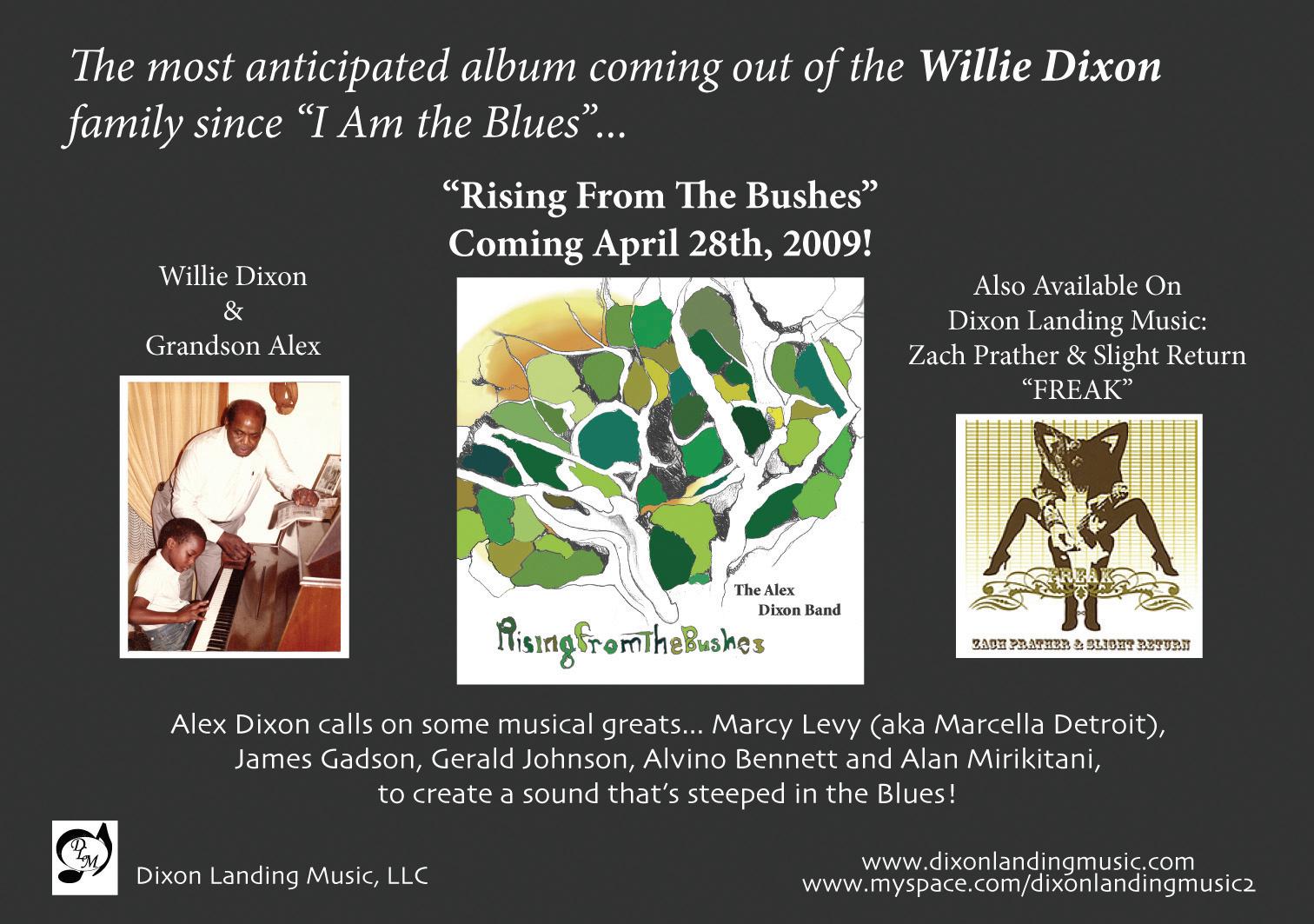 Thomas Rankin
JORMA KAUKONEN
Over the past fifty years, Jorma Kaukonen has been a leading practitioner and one of the most highly respected interpreters of American roots music and Blues. He was a founding member of Jefferson Airplane and Hot Tuna, and is one of the most sought after guitar tutors in the US. Some pedigree - and it shows! This album is a wonderful example of how to play guitar. The first track, the selfpenned ‘Been So Long’, opens the album with some scintillating guitar work, showing that Kaukonen is a master of the craft. The second track, the Rev. Gary Davis ‘There’s A Bright
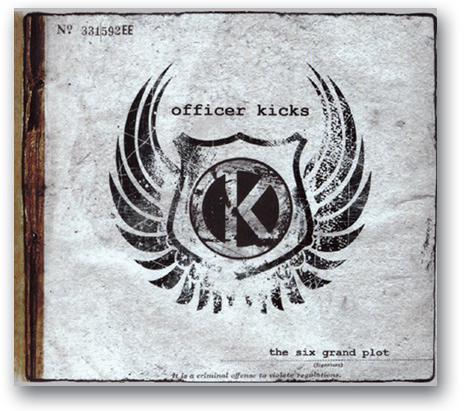
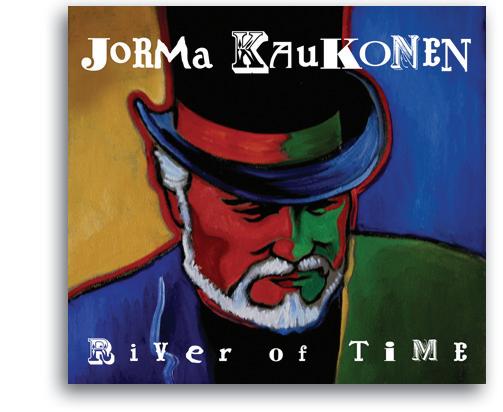
Side Somewhere’, builds on this with some authority. Kaukonen’s version of ‘Trouble In Mind’, featuring ex Band drummer Levon Helm also features some nice mandolin work. Whilst the album has a range of Blues on it, some of the material leans towards the country side, with some Merle Haggard material, and some of the self-penned material marches along the middle of the road. However, this doesn’t detract from the sheer excellence of Kaukonen’s guitar playing, and indeed of all the musicians on the album.
Kevin Wharton
OFFICER KICKS Six Grand Plot Redemption
There is something about the unaffected youth that becomes unbecoming after a short while. The “Six Grand Plot” acts like two eras of angst and self-loathing have collided in a zit-wielding explosion. So, without further ado, Officer Kicks provides the unwanted link between the past and more of the past. Between glimpses of classic rock and grunge, Officer Kicks rarely begin to relate to any noticeable audience. It feels as if they wrote a thousand rock’n’roll subgenres on a piece of paper and crossed them out one-by-one. Even with their track ‘Pictures Of Me’, a song with more in common with the Foo Fighters than anyone with
Blues Matters! 97
Blues bones, they sound stale and unoriginal with talk of “whisky chasers” and identity problems. You suspect the whole affair is a rush-job, half prepared and half-written with a rhyming dictionary and a few rock clichés thrown in for good measure. Simply appalling.
Matthew Clarke
MOTOR CITY JOSH Forty Four: A Tribute To Howlin' Wolf
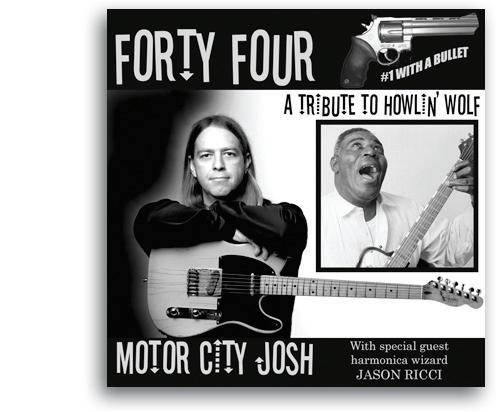
You’re pretty much on a hiding to nothing when it comes to recording an entire tribute album to Howlin’ Wolf. If you deviate too much, fans will be turning up to your door with matches and kindling. Stick too close to the original, and you’ll be accused of being an impersonator. Motor City Josh’s album falls somewhere in the middle. Some of the arrangements stray quite far from the originals, and on some tracks, particularly ‘Spoonful’, he sounds a bit too much like the Wolf for comfort. Personally, I preferred it when he takes some chances, as he does on ‘Evil Is Goin’ On’, which manages to find room for an extended jazzy guitar solo, and on ‘Back Door Man’, which is slowed down to a New Orleans funereal pace. There are some great performances, particularly from harmonica man Jason Ricci,
JOE BONAMASSA
The Ballad Of John Henry
CHRIS DUARTE AND BLUESTONE CO.
396 Provogue
and you can never hear these songs enough times, for they are some of the greatest Blues tracks ever written. The funky take on ‘300lbs Of Joy’ is nigh on irresistible. The band will be taking this CD on the road - I‘m sure it will be a blast live.
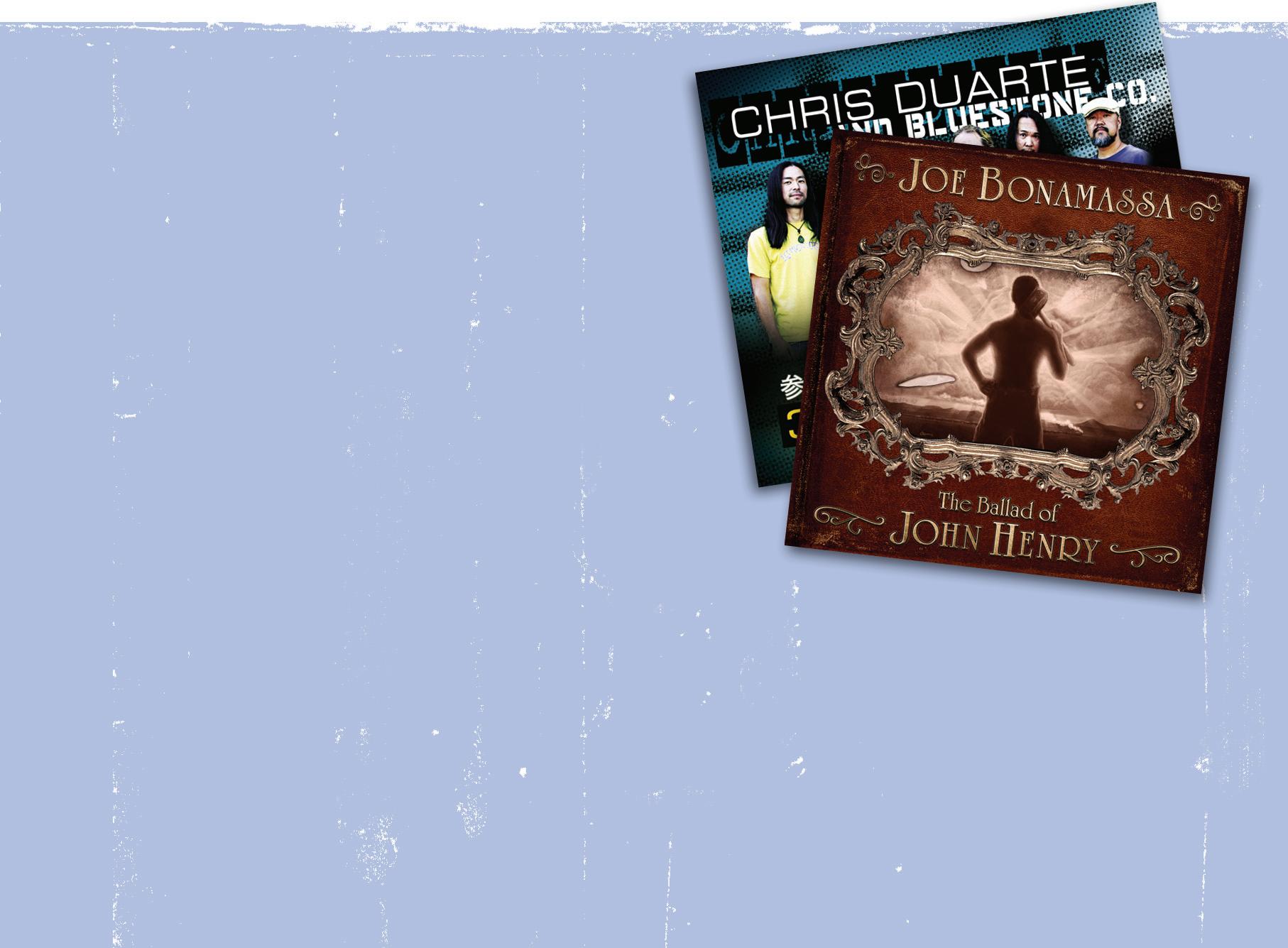 Stuart A Hamilton
KELLY JOE PHELPS Western Bell
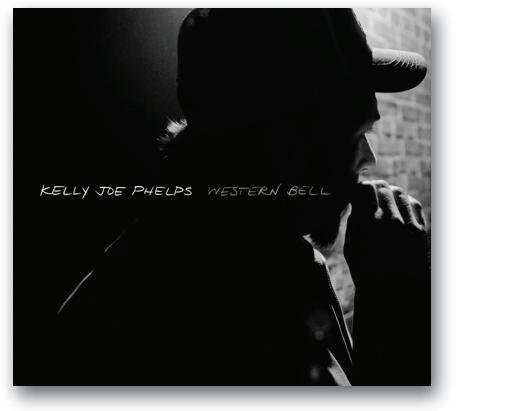
Black Hen
This album is a real challenge to listen to. When you first put it on your system the first thought that comes to mind is that it is a faulty pressing. "Western Bell" sounds as though it has two or more tracks combined, out of sync and, at times, flat and toneless. Yet the more you progress through the album, you come to realise that he is taking apart your mind deliberately. We all have a preconceived idea in our heads of what music and, yes, in this case the Blues, should sound like, but here it is turned inside out and then twisted through any number of degrees before launching itself back at your ears again. These tracks, for the most part, have no recognised structure to hang on to. They sound like the noodlings of some demented extemporising mad man let loose in a studio, with no clear idea of where he is going. However, with a player of
Bonamassa’s ninth solo release (and fourth with Kevin Shirley as producer) has certainly provoked differences of opinion on the direction in which this profligate guitarist is going. No two Bonamassa albums have been the same as he attempts to expand both boundaries and abilities. “The Ballad Of John Henry” is a furtherance of that development and the sound is much fuller and almost orchestral in places. Comprising seven originals that move from the mournful Blues of the title track through to the rock infected ‘Lonesome Road Blues’, with beautiful flowing guitar runs. ‘Happier Times’ is an autobiographical reflection of his recent life, sombre in both tone and lyric. This almost painful feel continues through the slow Blues of ‘The Great Flood’, a very powerful song and one which demonstrates his improving voice. Among the five covers is an interesting rendition of Tom Waits’ ‘Jockey Full Of Bourbon’, Anthony Newley’s ‘Feelin’ Good’ and the best, a powerful rocker by Tony Joe White called ‘As The Crow Flies’. Doubters be damned, this boy delivers once again. Chris Duarte is once again shifting gear by joining forces with Japan’s biggest Blues Band, Bluestone Co. The resultant album, “396”, is a veritable tour de force, with Duarte’s guitar to prominence, and much of this album would sit comfortably in the rock world. Bluestone Co. do not seem overawed by this union, as they sound an extremely tight and efficient band, at home in a rock, funk or Blues environment. Right from the start, the music is in your face and powerful, with the up-tempo ‘Back In Town’. On ‘Chattahoochee Side’, Toshihiro Sumitomo plays some great dirty sounding slide on the first of several Allman Brothers-type songs. ‘Funky Mama’, one of Bluestone’s own songs, is the kind of dance rhythm that would sit quite comfortable in a Santana set, as the percussion drives the song forward. But the best track is the ten minute slow Blues tempo of ‘Mad As I Can Be’.
Merv Osborne
Blues Matters! 98
the calibre of Phelps, you know that nothing should be taken for granted, and the fact that these are not straightforward tunes makes it a strangely beguiling and mysterious experience. Eleven instrumentals in total, so similar in their diversity, uniqueness and bizarreness that I can't distinguish one from the other, is what you get for your money. Oddly satisfying.
Graeme Scott
MATT ANDERSEN
Second Time Around Andersen
This is Matt's second studio album, the first being 2008's excellent "Something In Between", although there was a short introductory sampler, and two live CDs, before that. There has always been an accepted view that any second album can be a bit difficult for many performers. Matt has circumvented that problem by delving back into his archives and reworking old tracks. Some might say that was cheating, however, these are new to me, and probably most folks anyway, so it should be approached as new. If you do that you will be well rewarded. Canada continues to produce fine artists and Matt is no exception. His style is a mix of Blues, roots and rock, with a little bit of soul thrown in for good measure. His voice is interesting as it changes colour according to the requirements of the song. Ten originals, two covers - 'Ain't No Sunshine' and 'My Old Friend The Blues' - plus a fun acoustic Blues outtake is what you get for your money. I particularly liked 'When My Angel Gets The Blues', 'I Play The Fool For You' and the strong opener 'Leavin' Blues'. The latter immediately sets the tone of the collection. By that I mean that it comes across as if it was a fun set of sessions that created this collection. Even on the sadder tracks it has a happy vibe throughout.
Graeme Scott
MARY COUGHLAN The House Of Ill Repute
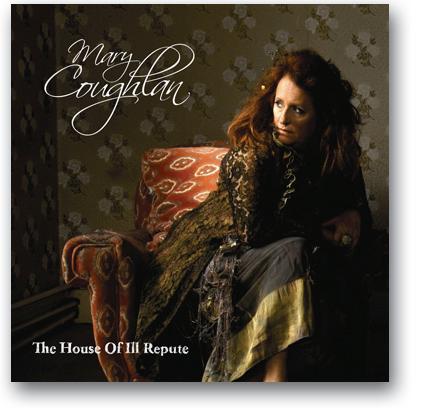
Rubyworks
“Hey boys, want something a little extra?” – the introduction to ‘Love Is Extra’ perhaps exemplifies the sleazy feel of this CD; so too does the title track, and there’s even a track called ‘Pornography’. No, this isn’t titillating or bawdy, but rather unsettling – the music is often reminiscent of those portrayals of the decadence of ‘30s Berlin, or maybe the nightmare images of a corrupt carnival coming to town with its psycho killer clowns. Honest! This mood doesn’t lighten up until track six; ‘Mary Mary’ is certainly Blues inflected, with its subtle and very effective guitar work, whilst ‘Some Cats Know’ is a unique-sounding jazzy Blues. Mary Coughlan, born in County Galway in 1956, is a well-known folk, jazz, rock and Blues singer, and with this extraordinary set she marks the end of a thirteen year relationship. If the Blues is a cathartic experience – then this most certainly is the Blues.
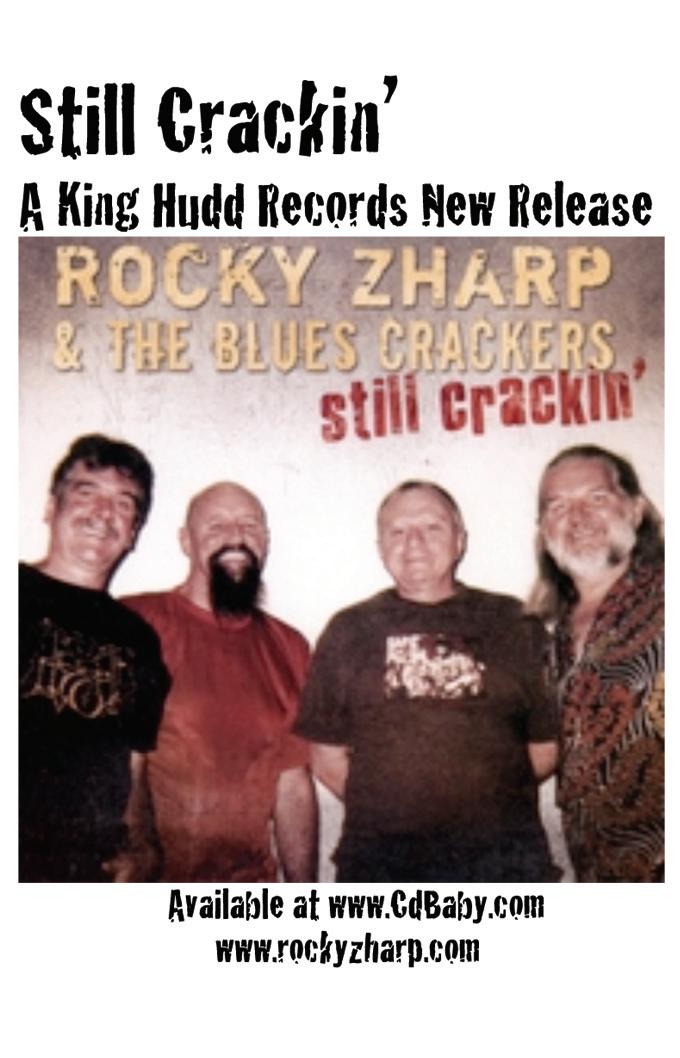 Norman Darwen
NATHAN XANDER
Swiftly Surely

myspace.com/nathanxander
This is a real throwback to a time of musical honesty, integrity and purity. A man and an acoustic guitar playing with a gentle
Blues Matters! 99
picking style under softly sung vocals with a real voice rather than a "general American". Nathan Zander has a great deal of Bob Dylan in his music and when he plays louder and harder his harmonica playing has the same abrasive qualities as Mr Zimmerman. On 'Eminent Domain', he sounds almost desperate, as he sings and the band pounds behind him, but then the wistful meanderings of 'Lighthouse' have him hectoring and instructive in tone - a man of many moods and the capability to put over his meaning. His guitar playing is simple country Blues and he obviously has talent but never shows off - the lyrics are his main instrument and his emotions are his gift to the listener. The album doesn't force itself on you so much as nagging away insistently - if you saw this guy in a club, you might talk over him, but eventually the music would draw you in.
Andy Snipper
FONTAINE BROWN Tales From The Fence Line
Listen to ‘Love Come Rescue Me’ – is it southern soul, old-time R&B, or just good old-fashioned pop? Does it actually matter? There was a time, many years ago, before computers ruled the world, when most music was Blues-based and people just appreciated good sounds, whether the category was Blues, soul, rhythm & Blues, rock, rock’n’roll or pop. Douglas Fontaine Brown recorded at the Chess Studios in 1962, which places him smack dab in this glorious epoch, and this CD is further confirmation if it’s needed. You may not encounter any straight twelve-bar Blues as such here, but you will find some peacock-proud
STOMPIN’ DAVE & HIS BAND Piano Covered
STOMPIN' DAVE'S ELECTRIC BAND More Original Blues
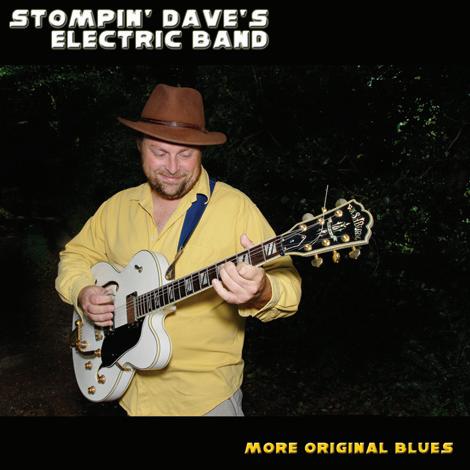
stompindave.com
strutting rock, often driven by Fontaine’s own Blues harmonica playing and decorated with Mitch Easter’s guitar work; there’s some lilting soul, and there’s the glorious ‘Detroit Saturday’ - a supercharged Bo Diddley-inflected workout with a new millennium sensibility (Fontaine’s music is most definitely not a museum piece!). Listening to the dozen tracks on this release is akin to discovering a beat-up old juke-box in some boarded-up roadhouse out in the sticks; they may not all be instant classics, but there is a real buzz from each and every track.
Norman Darwen
24 PESOS
The Boogie Worm
Ourgate

Hailing from London and the south east of England, this fourpiece like their Blues lean and funky. “The Boogie Worm” is fast, furious and a whole lot of fun, while plenty of greasy Hammond organ and pounding basslines, which will get you dancing. Oh, yes! Singer/guitarist/harmonica player Julian Burdock nails every single of the eleven original tracks. He sounds a lot like Corduroy’s frontman Ben Addison, which is no bad thing - trust meand has some tasty guitar licks. Moz Gamble cranks up the Hammond organ and makes things nice and greasy, while the rhythm section of Silas
Maitland on bass and Mike Connolly on drums ensure the beat is always good. Fans of The Fabulous Thunderbirds and Little Feat will find plenty to get excited about, particularly the second line groove of ‘A Girl Like You’. This is the Blues played
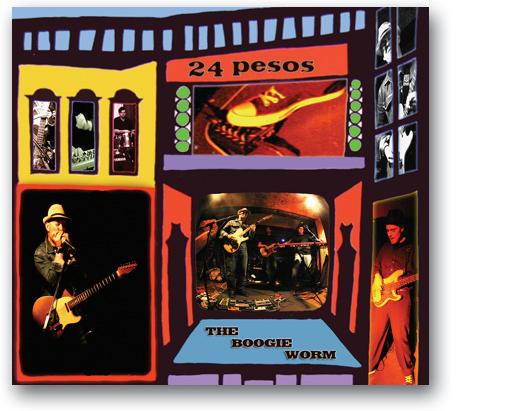
Stompin’ Dave Allen sings and plays banjo, guitar, harmonica, piano and fiddle, and has been known to indulge in a spot of tap-dancing –not all at the same time, of course, though looking at some of his performances, it would be no great surprise to see him try! He is a fairly prolific recording artist and always well worth a listen, having a deep knowledge of and passion for all kinds of American roots music. The Blues – and the piano or keyboard – forms the focus of the first set. Dave sets the tone right from the off, with a boogying version of Big Bill Broonzy's 'Just A Dream' and a rendition of Memphis Slim's rather gloomy 'Mother Earth'. The eleven numbers were recorded in Dorset with the help of socking drummer Graham V. Bundy and either of two bassists, Dave Saunders (of The Producers) or Doey Damen, and the Bluesy groove is maintained through tracks from the likes of B.B. King, St. Louis Jimmy Chuck Berry, and a rocked up 'When The Saints Go Marchin In' right up to the closing two numbers, a slow version of the Wille Dixon-penned Muddy Waters classic 'Same Thing', and an excellent rendition of Ray Charles' 'What'd I Say'. The electric set has Dave on piano again on several tracks, but he mainly plays electric guitar, and again Saunders and Bundy help out. There is an attractive, loose, live sound to this material. Dave doesn't really sound like anyone else around at the moment – there's a bit of Freddie King, Hound Dog Taylor, Elmore James, Buddy Guy, John Lee Hooker and there even a little ragtime, too. That's no bad thing and makes this a CD well worth checking out.
Norman Darwen
Blues Matters! 100
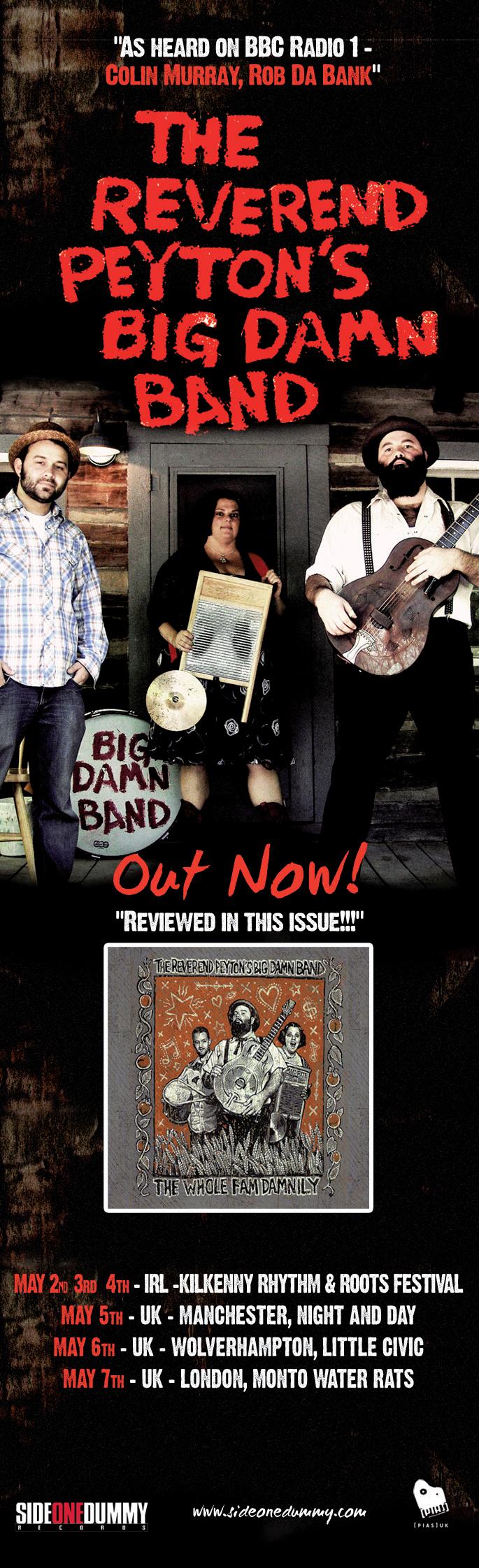


from the heart, by people who clearly love this stuff. I’m still not sure what or who the boogie worm is, but on this showing, he will definitely put a smile on your face.
Jamie Hailstone
BOBADAVDAW
A trio of fine looking young Scandinavian lads who’ve got to grips with acoustic Blues, yet for some reason managed to make it difficult for potential fans by choosing a name we have to struggle with. Perhaps Bobadavdaw means ‘down home’ in Danish…but I’m being unfair! Whilst there’s nothing particularly thrilling in these eleven tracks - all original compositionsthere’s nothing wrong with their musicianship and you can hear the lyrics clearly. There’s some nice slide guitar, and Steffen Christensen plays a mean harmonica. There’s a really fine banjo on ‘Home By The River Side’, and a strident piano on ‘Devil On My Shoulder’. In general, there’s just enough variety in the Blues styling to keep you listening. I suppose they go down a storm along the shores of the Baltic, and they must have warmed the Dansk cockles on many a windswept night on Jutland. It’s efficient, well played, but sadly lacking a little bit of extra Blues drive to give it that stand-out quality.
 Roy Bainton
MARCUS BONFANTI Hard Times Guitar
For musicians, staring the obvious in the face and taking risks is a must. If you believe that originality doesn’t exist, there is no need for you to even begin. With the Blues, however, there is an element of truth in that statement. Blues, after all, is governed by twelve bar chord progressions, licks and solos. The other choices, the aesthetic choices (Do we need some slide? Should I break out the harmonica?) is what gives the artist a particle of originality. For the artist to be completely original, he must bring himself to his work. For these intents and purposes, “Hard Times” starts like a punch to the face. ‘Diamonds In The Rust’ an interesting opener, lyrics full of wit and ironic situation. In comparison, ‘Not Meant For This World’ is as stilted and uninteresting as it gets. From there, Bonfanti struggles to really complete a song. The titular track is sparse, instruments feel missing and the vocals are too weak to carry a supposedly big house Blues track. It is an unfortunate place to be in, Bonfanti obviously working quite hard on his music, but eventually falling flat in its production.
 Matthew Clarke
GUY KING Livin’ It
IBF
Guy King played lead guitar for Willie Kent, prior to Kent’s death, and was for many years his bandleader. In the live environment, he never failed to stun audiences and this, his debut solo CD, sees him surprising the listener with his chosen path of a big band feel with jazz overtones. Despair not, however, because this release still offers slow Blues that drip with emo-
Blues Matters! 102
RAPHAEL WRESSNIG & ALEX SCHULTZ (Don't Be) Afraid To Groove RAPHAEL WRESSNIG'S ORGANIC TRIO Cut A Little Deeper On The Funk
ZYX
Raphael Wressnig is one of the contemporary masters of the mighty Hammond B3 organ, a long-time member of Larry Garner's Band, and he has experience of backing the likes of Phil Guy, Louisiana Red, Sharrie Williams, Sugar Blue and many others. He also has a strong and durable partnership with guitarist Alex Schultz, and leads his own acclaimed organ trio. Not bad for a guy born in October 1979 in Graz, Austria. Raphael's work with the New York born, Californiabased, much sought-after guitarist Alex Schultz (check his work with William Clarke, The Mighty Flyers, Lester Butler, and many others - there are also recordings under his own name) has been presented on disc before, but never as well or in such depth as on the first of these two instrumental releases. Both men share an interest in and aptitude for both Blues and jazz, happy to ignore any dividing line. Raphael particularly enjoys the Bluesy work of Jimmys McGriff and Smith, Brother Jack MacDuff and Hank Marr - all big names in the sixties and beyond, whilst Alex was tutored by jazz guitarist George Barnes, one of the earliest electric players who also supplied backing on urban Blues records in the ‘30s and ‘40s. See what I mean about the lines getting blurred? This set is very, very Bluesy at times, with Alex ranging across the three Kings, Billy Butler, and jazz legends like Grant Green and George Benson. There are occasional detours into soul and gospel territory, which add variety to this very worthwhile release. The same description applies to the other, very appropriately titled CD under consideration. It features Raphael with his regular sidemen Georg Jantscher on guitar and Lukas Knofler on drums, plus occasional guests. Don't get the impression, though, that this is any way minimalist; Raphael's big sound is based as much on what he doesn't play as on what he does, and the result is seriously funky. Although the Blues underpins everything Raphael plays, this is perhaps not always quite as obvious as on the collaboration with Schultz. Get that first, and then you will probably want this anyway.
tion and feel, with King calling on a great deal of his past and experience to mould his band to the sound required. Opening with a tribute to his mentor, with Willie Kent’s instrumental ‘Countdown’, the whole changes tempo and feel effortlessly into a jazz tinged ‘Think’. On ‘Go Out And Get It’, a funky King original, he urges us to be positive and make our own decisions, all the while with bubbling keyboards underpinning the instrumentation.
Another original song, ‘My Pretty Baby’ proves that he can write a moving slow Blues, as well as play one. Half the songs offered here are King originals, with covers of T-Bone Walker, Maceo Merriweather and Percy Mayfield, amongst others. On Walker’s ‘I Got A Break’, his playing mirrors Walker, whilst in ‘If You Love Me Like You Say’, he regresses to a previous pairing and plays like Albert Collins.
Merv Osborne
ADAM NORSWORTY
Lost In The Cinema
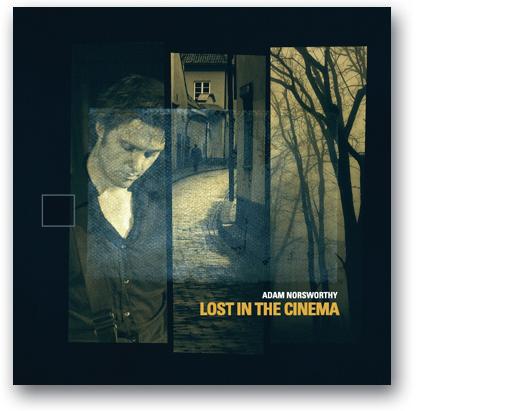
Raging Horse
Frontman of The Mustangs, here we have Adam steeping out again by himself. If pushed just a little then he could quite happily sit in folk and roots singer-songwriter genres, as well as our
beloved Blues. Artists who can adapt and cross from style to style have always taken me along on their musical journeys. These are quiet reflective musings for the most part, and the title track, which opens proceedings, has a gentle descriptive narrative to it. 'Better Man', 'Summer Rain' and 'Coming Home' continue pretty much in a similar vein. There is a kind of early America soft rock feel throughout, including on the ballad 'When The Sun Goes Down'. In fact, using 'Let Her Get On With Her Life', for example, could have come straight off "Homecoming". Some darkness is present in 'Violent Man', but even here we have Adam pronouncing that he is not such a character. So, we come to the end of the CD with 'Rollercoaster', and once again we are treading safe ground. I liked this album but would prefer a bit more edge to the writing and production, as it was all a bit predictable.
 Graeme Scott
OO-BOP-SH’BAM Live At The… 100 Club
myspace.com/oobopshbam
This British band perform some quality jump jive style music, with more than a touch of boogie woogie thrown in for good
Blues Matters! 103
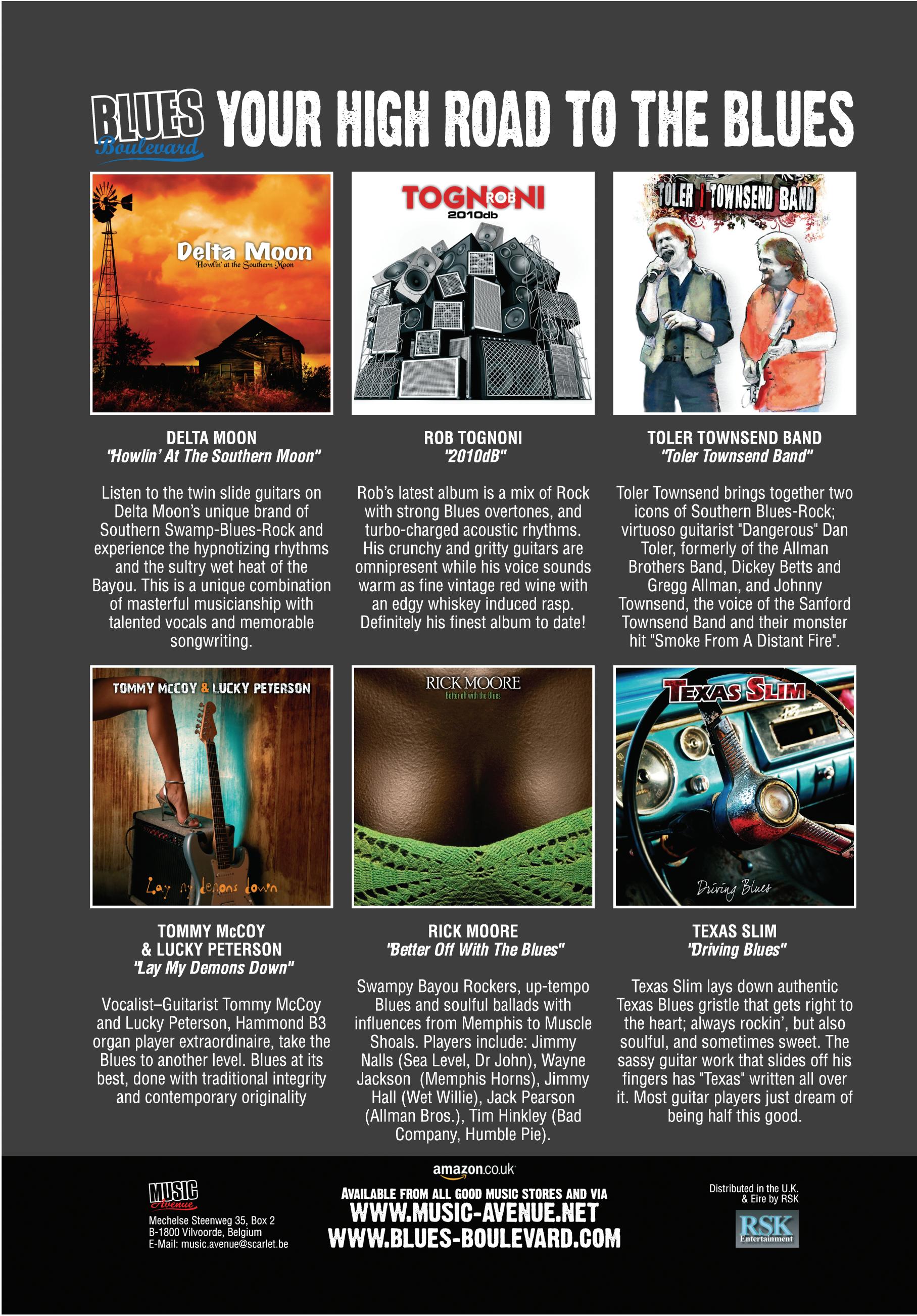
THE MICK FLEETWOOD BLUES BAND
Blue Again!
Hypertension
What a great blast from the past when The Mick Fleetwood Blues Band hit the opening chords to ‘Red Hot Gal’ - the opening track of his new album “Blue Again”. It took me back to the late-60s when, as a teenager, I hugged the stage every time that Peter Green’s Fleetwood Mac hit the Bath Pavilion. Recorded live last year in St Louis, this is very much a survivor celebrating his own heritage with a new band. Fronted by Rick Vito, Mick has found a guitarist who has both the tone and feel of the Peter Green of old, and who can therefore reproduce their sound. Furthermore, he is a strong slide player and can also cover those songs that Jeremy Spencer excelled on. Disc one is a live recording, writing credits shared equally between Green and Vito, although for me the Green material stands out better, given the magical/mysterious tones that Green used in songs like ‘Rattlesnake Shake’, ‘Love That Burns’ and ‘Black Magic Woman’. The CD is rounded off by a rousing Elmore James ‘Shake Your Moneymaker’. I thoroughly enjoyed it and it sounds as if Mick did too with his impressive drumming. The bonus CD comprises four studio instrumental tracks shared between Green and Vito. I have to confess to being impressed with both the versions of ‘Albatross’ and ‘The Supernatural’ here. The final cut, ‘La Mer D’Amour’ is a very dreamy laid-back song that closes the CD on a high.
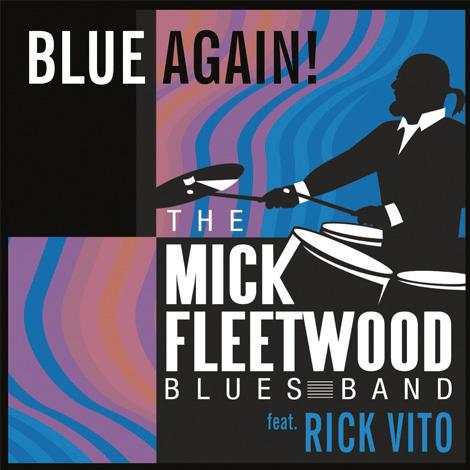 Merv Osborne
measure. This double CD was recorded live at the 100 Club, on an evening that is known as “Simon Selmans Legendry Monday Night Sessions”, and the sound quality is superb. The band are led by a couple of seasoned professionals from bands like Rent Party, including vocalist Jackson Sloan, drummer Alan Savage and tenor sax player Alby Green, with the remainder of the band drawn from jazz, rock‘n’roll and Blues fields, and the end result is a very accomplished album with sounds that would not have been out of place in ‘50s New Orleans. The twenty-nine tracks on the album are mainly drawn from the era, stretching between the ‘40s to ‘60s, and the band cover numerous well-known classics, including songs by Smiley Lewis, Fats Domino, Rosco Gordon and Amos Milburn. While a live album, the music is never raunchy but played with charm and due respect to the originals. The band have unearthed a great find in pianist James Lunn, who plays some sweat boogie woogie on the ivories. If there was ever a band name that described their music, this is it!
Adrian Blacklee
BLUES COMPANY
More Blues, Ballads & Assorted Love Songs
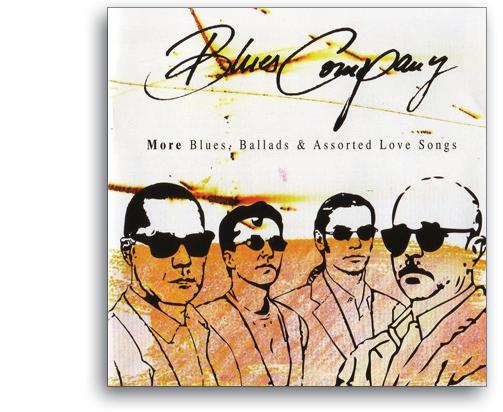
Formed in 1976 by a Yugoslavian guitarist and vocalist, yet based in Germany, this is a ‘best of’ collection of well played Blues. With respect, sometimes listening to non-English speaking Blues bands, one can cringe at the accents and clichéd lyrics, but these guys don’t suffer from that problem. Yes, a few tracks do have some corny lyrics, but the music is good and well arranged, the sound also has a real crispness to it. The vocals are a little workmanlike, but the band can swing, rock and boogie, as well as getting blue and lonesome, too. The better tracks tend to be when they slow the pace, such as on ‘Cold
Rain’ and ‘Silent Nite’. The flow to the disc gets a bit obvious with slow, then fast, then back to slow Blues being offered up. ‘Red Blood’ tells of the horrors of civil war, and features some excellent melodic guitar, while ‘Fool’ shows they can rock out. Several of the tracks are represented in the live format, with ‘I Don’t Know’ making the listener sit up and smile. There’s nothing remarkable here, just good old Blues music served up by Germany’s most popular band of the genre.
Andrew Baldwin
BIG SHANTY Sold Out King Mojo
This record promoter, turned label chief, turned Blues guitarist, is Dick Woolley’s (yes, I’d change my nom de plume, too!) second long player. It is full of loud, up-tempo, raunchy Blues-rock, with plenty of excellent down and dirty tunes. Guitar goddess, Liz Melendez, lends a hand, playing some fine stuff on the opening track, while Shanty’s deep, whiskey soaked vocals tell of his life from Alabama to Hollywood. Heavy guitars and distorted vocals are the order of the day on ‘They Say It’s Raining’, a romance turned bad story with some angry lyrics.
‘Walking Shoes’ is more of the same, and possibly the highlight, being a heavy guitar drenched tour de force.

Godfather of the jam band scene, Colonel Bruce Hampton plays electric sitar on an almost folky ‘Tybee Town’ that slows proceedings down considerably.
His feelings to the Bush led government are made very clear on a cleverly written ‘Uncle Sam Goes To Rehab’, and he employs his good slide skills on ‘Love Train’. Whilst it is all a little too similar from start to finish, this is a strong sophomore effort, and will thrill fans of loud, crunching Blues-rock.
Andrew Baldwin
Blues Matters! 105

CINDERELLA Live – From The Gypsy Road
Lemon
Cinderella were formed in 1982 and lasted until 1995, but the release of a compilation album In 1997 saw this glam rock cum Blues-rock band reform and a tour with Poison, plus a million record seller meant the band were back to stay. This album is an invitation to experience “…some of the greatest music ever offered by a band.” Sorry guys, but I don’t think so! Noddy Holder sang this way but was far more convincing. Our own Quireboys even sound better. As for the quality of songs on offer, well, they’re not that great. Formulaic glam rock with the statutory shouter over the top, adequate soloing and the inevitable, “How y’all doing?” after nearly every track. It’s not rocket science, but then again it’s not great music either. Cinderella, along with Motley, Poison and others of the ‘80s had a ball at the time but somehow the music sounds so dated. Not surprisingly this was recorded in Hollywood in 1998, the centre of the universe for glam rock and I am sure there is a market for it here somewhere; just not here.
Merv Osborne
MORRY SOCHAT & THE SPECIAL 20S Swingin’ Shufflin’ Smokin’
special20s.com
This is the second album from Morry Sochat & The Special 20s, and the development of the band is remarkable. They are both tighter when the band plays together, and looser when the music calls for some individual verve and style. Sochat’s vocals are clean and punchy and he handles the swing stuff with panache and not a little class. As we heard on the first
VARIOUS
The Best Of The Blues Café Bar HARGREAVES Sooner But Not Later
album, this is a band whose raison d'être is playing live and the album has the feel of a smoky Chicago bar – somewhere in the meat packing district – with boilermakers being downed and girls being twirled around the jive floor. ‘1955’ opens the album with a howling harmonica and rollicking piano, and you really can’t sit still while the band throws out a rhythmic challenge to the most relaxed of bottoms. By the time the band alight on ‘Mean & Evil Ways’, they are hitting a Blues groove driven by a haunting organ and that fabulous harmonica. Sochat’s vocals don’t always hit the notes purely, but he is adequate. They are working in a genre that is becoming more and more attractive as people get fed up with soulless indie, but they are also playing music that has more soul and ‘pizzazz’ than the rest.
HILARY JAMES
Bluesy
Acoustic
Sometimes you look at an unfamiliar CD cover and try to work out, just from the artwork, what it might sound like. I got it wrong here. I expected another of those folksy acoustic Blues collections sung by a very sweet female voice. Well, Hilary James does have an exceedingly sweet voice, but what makes this album standout is the terrific choice of material and the
The Blues Bar in Harrogate has been keeping the genre alive for the past twenty-one years and has decided to celebrate its anniversary with a series of CDs to raise money for the charity Oxfam. There are three CDs to choose from and all of them feature bands that have graced the stage at the venue. It goes without saying that Oxfam is a very worthwhile cause, but Blues lovers will find some great tracks by some great bands, many of whom are from the North Yorkshire and Humberside area. The ‘alternative’ CD does exactly what it says on the tin. The heavy rock of Moneyshot’s ‘Here Comes The Money Shot’ should tell you that we’re not in Kansas anymore. The electronica of LOS might not be Blues in the strictest sense, but it’s a pretty good track. The ‘studio’ CD features songs from various bands, including the seriously funky Lyndon Anderson Band, whose track ‘Same Old Story’ is a real highlight. The Charlie White Project does a great version of ‘Still Got The Blues’, and the rest of the tracks are equally strong. The ‘live’ CD contains live tracks recorded at the bar and features the likes of Kris Dollimore, Bluesville and Chantel McGregor. All of the CDs contain some excellent tracks and are for an excellent cause. The band Hargreaves also hail from the Harrogate/Gateshead area and “Sooner But Not Later” is their full-length debut. The band have a strong countryrock feel and the album is a mix of original songs and standards, like ‘Life By The Drop’, which was made famous by Stevie Ray Vaughan. Singer Claire Ashton has a good voice, and songs like ‘Kiss Me Baby’ are good pop songs also. On ‘Dreams’, she sounds like a rootsy version of Lily Allen. The only misfire, on what is otherwise a pretty solid debut, is the dance remix of ‘Bad, Bad Girl’, which is totally out of place with the rest of the album.
Jamie Hailstone
Blues Matters! 107
Andy Snipper
Straytown
IAN ANDERSON'S COUNTRY BLUES BAND
Stereo Death Breakdown BLUE BLOKES 3 Stubble
Fledg'ling
Apart from sharing a record company, there is a link between these two recordings from 1969 and 2008. The link being musician Ian Anderson! In truth, though, the music is wide apart. I have no idea whose idea it was to re-master the forty-year-old recordings, but these sessions are quite superb. Fourteen tracks jump out with a freshness that belies their age. If you add in the fact that a lot of the traditional songs date from the ‘20s, ‘30s, or even earlier, what we have here is a snapshot of how a pioneering few British musicians were looking at, and playing, brilliant country Blues at a time when America did not want to know. The Anderson originals are inseparable in texture and delivery from the traditional tunes, and I loved this from the start. Ian handles most of the vocal duties, however, there is one extraordinary take on 'New Lonesome Day' by Harmonica Annie Matthews. Throughout the mix of instruments is so traditional, with harmonica, jug, national, 12 strings, piano and washboard all playing their parts well. Forty years later and Ian, now joined by Ben Mandelson and Lu Edmonds as Blue Blokes 3, is still playing and interpreting acoustic country Blues. Is the modern as interesting? Yes, it is! Retaining the simplicity of the approach to the recording process, and the quality of the covers used - for example, tunes by Elmore James, Memphis Minnie, Fred McDowell and Bill Trader - kept this music fan on-board. Highlights include 'South Coast Bound', 'Don't You Just Know It', 'Everybody's Killing Me' and 'A Full Such As I'. They may be forty years apart but this is a great example of how, in the right hands, music is timeless.
arrangements. If I say this is western swing meets the Andrews Sisters via Peggy Lee and Billie Holiday, I don’t think I’ll be far out. Hilary’s no Blues shouter, and nowhere near Bessie Smith in the projection stakes. That said, she takes us on a very enjoyable tour through some great Blues-flavoured classic songs, including ‘Travelling Blues’, ‘Hong Kong Blues’ and a rousing, Bob Willsstyle reading of Louis Jordan’s ‘Ain’t Nobody Here But Us Chickens’ - just three of fourteen well-produced tracks with guitars, fiddles, fine harmonies, all delivered with a pleasant, confident bounce. Just the thing to lift your spirits in doomy old credit-crunch Britain.
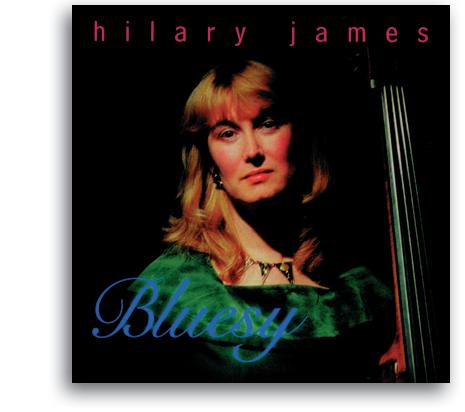 Roy Bainton
ALI ESKANDARIAN Nothing To Say Wildflower
So when did Blues become a dirty word? Because if you believed the words that are being used to describe Ali Eskandarian, you'd be heading rapidly in the other direction. “Ambient alt/country soundscapes", apparently. So, why is this album actually 90% acoustic Blues? Even better, when he drops the bad Bob Dylan impersonations, it's very good indeed. There's also no need for it, as when he lets rip, he has a full blooded voice all of his own. It's a cracking wee album, all
sparse instrumentation and raw dynamics, with songs like 'Memphis' and 'Dangerous Road' grabbing you immediately, with a few slow burners like 'Nobody' not that far behind. However, if you're looking for the one track to convince you, then check out 'Johnny Goes To War', where he uses all his tricks in one song. Some of you may have seen him live supporting Terry Reid earlier in the year, and if he can pull it off live, I suspect you had a bit of a treat. Closing track 'Eastern Fancy' is the one number where he lets his own roots come to the fore, and it's a spine tingling end to the record. There are a few songs that drift along like 'Her Red Leather Hat', but this is by far the best acoustic Blues album by the son of an Iranian political refugee that you're likely to hear this year.
Stuart A Hamilton
LLUIS COLOMA Boogie Portraits
Swing Alley
This is one of the best albums of boogie woogie piano music I have ever heard. It comes in the form of twelve fabulous live tracks from the Spanish maestro. Classically trained before becoming a self-taught Blues and boogie specialist, Lluis has reached the top of his profession and, on this collection, with a little help from his friends, delivers a master class. The opener, entitled ‘Coloma’s Boogie’, is a rollicking solo effort which sets the bar high. What follows is even better and a little unusual. Eleven duets with some of the best in the business, with an added twist in that using stereo to fine effect, the guest piano players are on the right channel and Lluis is on the left channel. The result works incredibly well. The titles of some tracks indicate what to expect; ‘Honky Tonk Blues Bar Boogie’, ‘Swanee River Boogie’ and, one of my favourites, ‘I Got To
Blues Matters! 108
Graeme Scott
Learn To Do The Mambo’, which features Julien Brunetaud on second piano and vocals. Two other tracks are supplemented with vocal talents. ‘School Days On My Mind’ from Barrelhouse Chuck and the New Orleans style ‘Red Beans’. Add to these a marvellous version of ‘Just A Closer Walk With Thee’ from August Tharrats and a beautiful take on ‘C C Rider’ by Carol Sonny Leyland for an album that could convert the unbeliever.
Thomas Rankin
AYNSLEY LISTER
This is Aynsley Lister’s seventh album. The CD has a good mix of songs, which are well constructed and all stand on their own merits. The guitar work is superb throughout and all topped off with tight support by the rest of the band. Aynsley’s shows good vocal range and intonation throughout. It’s more on the polished side, but there’s grit when a song really calls for it. It is all self-penned with the exception of Gnarls Barkley’s ‘Crazy’ - a brave cover by Aynsley, which he gives a fresh dust down without losing the pedigree of the original. The song has a filling of simplicity but the complex way guitar, vocal and percussion have been moulded together make it an impressive addition. The opening track, ‘Soul’, is a catchy and powerful Blues-rock ballad, with hints of the New Jersey music
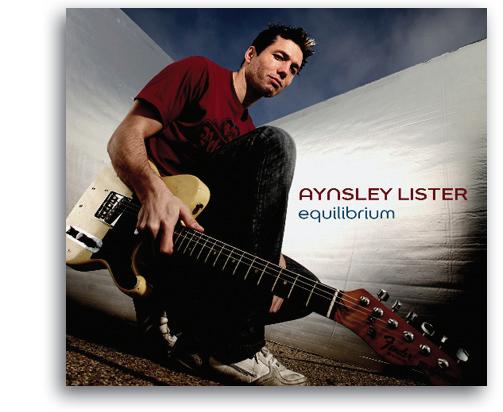
scene. ‘Times Up’ is a funky Blues-rock number and sees Aynsley put his guitar through technically impressive gymnastics. ‘What’s It All About’ is a slower number; the intro is dramatic as you move into a quality Blues-rock ballad. The vocal and vocal harmonies on this song are impressive, while Aynsley guitar cries and wails in the background, reflecting perfect the sentiment of the lyrics. The last two tracks, ‘Sugar Low’ and ‘Hurricane’, are superb, and this whole CD is outstanding.
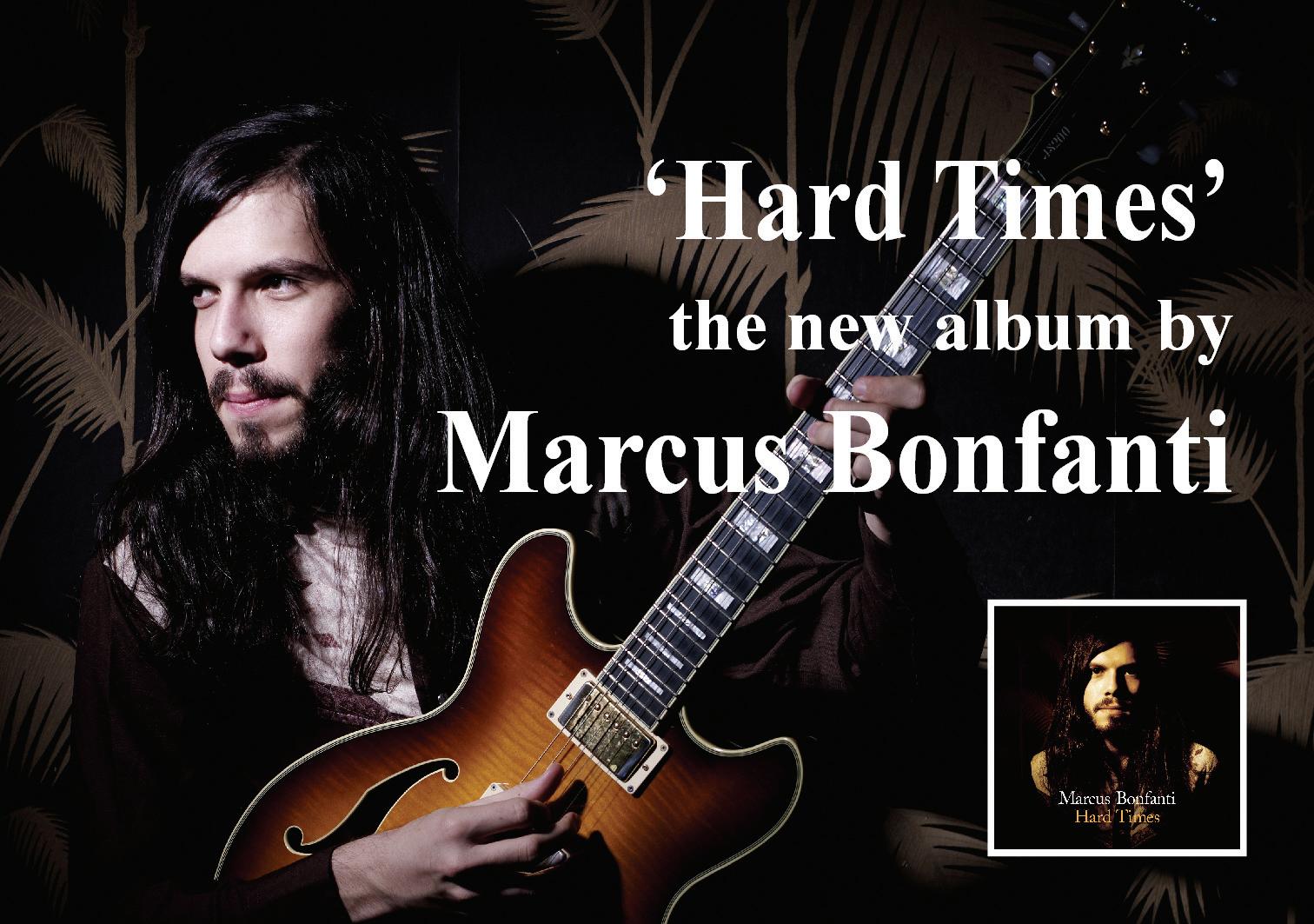 Carol Borrington
STEVE HOWELL My Mind Gets To Ramblin’ Out Of The Past
When I hear people like Steve Howell, I want to trade my guitar in. So good, so laid-back, such good material - all well beyond the reach of most of us! This album consists of thireteen tracks of Steve’s favourite country Blues, primarily from the ‘20s, ‘30s and ‘40s. Every song shines! The first track is Muddy Waters’ ‘I Can’t Be Satisfied’, played in a gentle and understated way, which gets the album off to a great start. Then follows material from Mississippi Fred McDowell, and a version of ‘All My Friends Are Gone’, which is based on a Stefan Grossman performance. Howell chooses ‘Policy Blues’ from the recordings of Bo Carter, and the Robert Johnson classic ‘Steady Rollin’ Man’. He also showcases material from Memphis Minnie, Chet continues on page 111
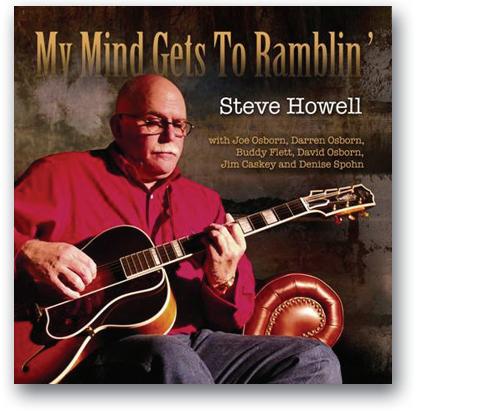
Blues Matters! 109
The Best Of Chess Records
Geffen/Chess
This collection contains the original versions of songs that were re-recorded for the recently released film “Cadillac Records”. For established Blues fans, the rags to riches story and, ultimately, sad end of two immigrant Polish brothers who founded arguably the most famous of all Blues labels is a familiar one. Despite persisting stories of artistic censorship, unpaid royalties and the unceremonious muscling-out of economically weaker labels, Leonard and Phil Czyz provided the means for recording some of the most important music of the 20th century. The material and the artists contained is standardised, but then you couldn’t have it any other way. Muddy Waters, Howlin’ Wolf, Chuck Berry, Etta James, and so on. But I liked the fact that all facets of Chess Records have been covered, from Blues to R&B and soul. And a little imagination has been used in the choice of material, for example no ‘Johnny B. Goode’, but instead an infinitely better ‘Nadine’. Established fans probably gloss over most compilations, and these days even the most technically inept are able to put this sort of thing together ourselves. For newcomers, however, the music is great, the sound is good, the artwork classy - especially the Chess imprint on the actual disc - and the booklet essay is informative.
Davide Styles
Sisters Of The South: A Whole Life Of Blues
DixieFrog/Music Maker
Superbly packaged, with a thoroughly informative thirty-sixpage booklet, this is a journey into Blues territory, which takes us well off the beaten track. There are names you might know here, such as the powerful Native American singer Pura Fe, accompanied by guitar wizard Danny Godinez on ‘Hard Time Killing Floor Blues’, and you may have come across Etta Baker, who teams up here with the legendary Taj Mahal for ‘John Henry’. But this is a voyage of discovery in which you’ll meet Algia Mae Hinton, Lucille Lindsay, Essie Mae Brooks, Willie Mae Buckner, Beverly Guitar Watkins and Cora Fluker. Here’s a dash of religion, a fat helping of earthy folk and some genuine good time music from powerful women who we may well not have heard from had it not been for the terrific dedication of the fine people who run Music Maker and DixieFrog. The artists on this roster are genuine examples of real, down home people who make music for the sheer joy of it rather than hankering after fame and fat fortunes. There’s forty six thrilling tracks and, as is common with Music Maker packages, both CDs come with their own solid gold bonus
– a hugely entertaining video programme. So, you can see how these people live as they make their uplifting music. It warms your heart to know that there are people out there in the field getting all this stuff laid down before it vanishes.
Roy Bainton
Tom Waits’ Jukebox Chrome Dreams
Anyone familiar with the mighty Waits won’t find much to raise an eyebrow to over this collection. Let’s face it –apart from his exotic wit and skill as a writer, down home, mean, lean and dirty is stamped in Tom Waits’ passport. It’s no surprise to find, among these twentyfive superb tracks, Howlin’ Wolf rubbing shoulders with Ray Charles, Big Mama Thornton, Leadbelly and Lightnin’ Hopkins. But this is Tom Waits we’re talking about –troubadour, poet, raconteur, so there’s some solid gold beat poetry here, too. Ever wondered what Jack Kerouac sounded like? Well, he’s here with two tracks, as is the bizarre poetic musicality of Harry Partch. Lord Buckley’s hilarious a capella tour de force, ‘The Train’, is almost worth the price of the album alone. Those of us who have hugely enjoyed Bob Dylan’s recent appearances on BBC Radio 2, as perhaps the weirdest (yet most enlightened) DJ ever to grace the airwaves, cannot help but treasure the contents of Tom Waits’ Jukebox. Eclectic, gritty, poignant and strangely uplifting – so a lot like the man himself. If you’re looking for the kind of dream compilation you’ve always promised to put together yourself, forget it, save your time, and buy this CD, and chant along with Allen Ginsberg, Charles Bukowski and a host of other legends.
Roy Bainton
Art Of Field Recording Volume II

Dust to Digital
This is a four CD set of recordings made between 19562008, following volume one released in 2007. Rosenbaum is an art professor by profession and an amateur folklorist. Thus the package is illustrated by him with a host of colourful and evocative paintings adorning the cover, the CD sleeves and the handsome booklet which accompanies the set. There are many photographs of the performers in the booklet, which brings the music to life. The CDs are split into survey (a representative mix of recordings), religious songs, accompanied ballads and unaccompanied ballads. Each of the 107 tracks gets up to a half page in the booklet giving background to the singer and the song. The collection consists of a wide variety of people and styles ranging form archetypical old Blues played by ancient black people to country fiddle to country played by middle aged white Americans. Unsurprisingly, I have to admit I haven’t heard of the vast majority of the singers, as they are obviously nowhere near mainstream. Despite this, listening is a joy and an education into the diversity of music available if you are prepared to make the effort as Rosenbaum has. The music is unfailingly interesting and the field. I simply didn’t expect this collection to be this good!
Kevin Wharton
Blues Matters! 110
Atkins & Doc Watson, Kid Bailey and Rev Wilkins. Howell is joined on the album by Joe Osborn on bass and Darren Osborn on drums for most of the recordings, and they complement each other wonderfully, giving Howell all the space he needs to weave his magic.
Kevin Wharton
JOAN OSBORNE Little Wild One
Time Life
Joan Osborne, by her admission, continues to evolve. It’s around a decade since her hit ‘(What If God Were) One Of Us’, and after a short time away, she’s back with a stream of albums that capture her immediacy and passion for her profession. She’s done a Nashville album, “Pretty Stranger”, and her “Breakfast In Bed” collection was Motown soul. So, where does ‘Little Wild One’ sit? Well, it has a little bit of everything. There are elements from all over the globe, from eastern culture, ‘Can’t Say No’, to traditional roots, ‘Daddy-O’. There is cowpoke country in ‘Rodeo’, stadium anthem in ‘Meet You In The Middle’ and even reggae-gospel in ‘Light Of This World’. And Blues is addressed in the tremendous old-time lament about New York City, ‘Bury Me On The Battery’, which closes the album. It’s not a raggedy mess that you might expect from such a mix, in fact, it’s seamless and expertly produced. It’s lyrically powerful, challenging, as well as easyon the ear, and she sings with a voice that may be light, yet it fairly purrs with seduction and defiance. Joan Osborne, sometime rebel, sometime revelation, always reliable to offer something slightly different from the time before. Hopefully her Blues album is not too far away.
Gareth Hayes
THE GUN CLUB
The Life And Times Of Jeffrey Lee Pierce And The Gun Club
Vibrant
Co-forming a band that would eventually go a decent way into creating an interesting hybrid between Blues, country and punk would basically make you the co-founder of this interesting hybrid. So congratulations to you, Jeffrey Lee Pierce, the life of whom is celebrated in this four-disc box set. It makes excessive listening between the fifty live tracks and seventeen studio cuts. However, this is considering that the live tracks are mainly versions of the songs featured in the studio ‘best of’ (called “Go Tell The Mountain”) and covers of very popular rock’n’roll songs (‘Louie Louie’, ‘Little Wing’…). It’s exciting stuff from the band’s heyday all the way to break-up and Lee Pierce’s solo efforts; however, after repeat listening, the unbalanced CD package is made clear by the band’s remarkable and consistent efforts on stage. Because of the time-scale, it is possible to hear songs like ‘She’s Like Heroin To Me’ and ‘Fire Of Love’ evolve through countless re-writes and rehearsals. It is the false starts, whirring feedback and muffled vocals of the early days (from ”Shake Me Up Some Punk Blues”) to the hypnotic, trance-like pulse of the later live CD (“Last Roll of the Dice”) that make The Gun Club a fascinating discovery for the cowpunk virgins out there, or a warm, nostalgic embrace for those
who remember them ‘back in the day’. A fantastic package for a unique and irreplaceable frontman.
Matthew Clarke
THE PONTIAX White Mountain Sessions
JIMMY BOWSKILL Old Soul
Soap
Bars & Dog Ears
Jimmy Bowskill
jimmybowskill.com

Jimmy Bowskill is only 18 but is being lauded throughout his home country of Canada as the future of the Blues. These three CDs are the product of his career to date. “Old Soul”, his first CD, was produced when he was only 12 years old and contains an impressive list of ‘support’ musicians, including the late Jeff Healey, who here abandoned his more familiar guitar for the trumpet. The quality of the musicianship on this CD is so good that it’s main failing is the difficulty sometimes in discerning Jimmy’s own instrumental contribution, but that in itself speaks to the quality of Jimmy’s instrumentalism amongst the quality of others. The CD is a 50/50 mix of covers, of the likes of Robert Johnson, Otis Spann and Sonny Terry & Brownie McGee, and self-penned songs. Jimmy’s vocal has the immaturity you would expect of a 12-year-old, but has the quality and feel of a Bluesman. “Soap Bars & Dog Ears” is the second CD recorded when Jimmy was 14 years old. It is named after the type of pick-ups on his Cranium Divine guitar. This CD is mostly self-penned and mainly features Jimmy with his band. Sixteen months on from the first and there is clear evidence of a blossoming guitar technique and growing maturity in the vocals. A good example of this is ‘The Truth’, which has a lovely interplay between Jimmy’s vocal/guitar and Jerome Godboo’s harmonica. “Jimmy Bowskill” is the latest CD and except Peter Green’s ‘Rattlesnake Shake’, it is all self-penned. He has now progressed into a fine Blues-rocker, but this CD is not a pounded out ear bashing that can be so common amongst many of the genre - it has the subtlety and variation of technique that marks him out. He is definitely one for the future and more than worth a listen.
Carol Borrington
Blues Matters! 111
continued from page 109...
The Pontiax. This enthusiastic live recording is their first CD and sees them trawling through the usual Blues suspects in the company of guest harmonica players Rev Doc and Mike Beattie. Now, while I commend anyone willing to put the time and effort into putting together a Blues night on a regular basis, I do have to ask whether the world really needs another version of ’I Got My Mojo Workin’’, ‘Stormy Monday Blues’. ‘Bullfrog Blues’, ‘Key To The Highway’, ‘Hoochie Coochie Man’ or seven other standards. Don’t get me wrong, I really enjoyed this, as the band are excellent musicians, with keyboard player Matt Martin a particular treasure. I’m sure it sounds even better if you’re right there in the room with them, but I’d be hard pushed to tell you to go out and buy this.
Stuart A Hamilton
Better The Devil You Know
David’s a self-taught guitarist and songwriter whose trials and tribulations have exceeded those of most of us. He uses his abilities in the songwriting field as a cathartic expression of his emotions. This is his second CD, recorded in live format in August 2007. Opening with a slow Blues, ‘Can’t Run From Your Troubles’ is reminiscent of ‘Porgy & Bess’, as David guides us gently on a journey through his addiction, realisation and beginning recovery from alcohol in a short two and half minutes. From
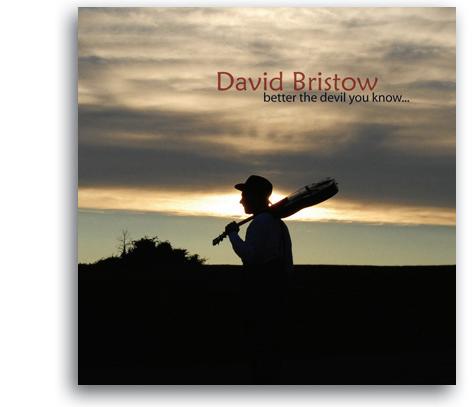
there we travel in pre-war Blues style to the ‘Devil On My Shoulder’, where David’s vocal inflection is striking in its similarity to that of the late Bob Hite. Another psychological examination of when times are hard and how easy it is to put your foot in it! ‘Trouble Ain’t Nothing’ takes the tempo up a couple of notches as we go on that roller coaster journey that is the relationship between men and women. This CD is as authentic an expression of ‘30s country Blues as you could get, retaining and developing the Blues tradition of dealing with current emotive issues. There are no guitar gymnastics on this CD, just well delivered simple fingerpicked guitar rhythms over a thumb picked bassline, with the occasional bit of slide. No thumping bass or pounding drums, just emotive guitar, backing an equally emotive well delivered vocal. It may be schadenfreude, but you cannot help but enjoy this CD.
 Carol Borrington
HEARTLESS BASTARDS The Mountain Fat
Possum
The Heartless Bastard started out originally as a four-piece garage rock band from Dayton, Ohio - often compared to then label mates The Black Keys. The band split and lead singer Erika Wennerstrom relocated herself to Austin, Texas. This opened a new vista of musical influences and experiences and she put together a new line-up of the band reintroducing Dave Colvin on drums and Jesse Ebaugh (Pearlene) on bass. “The Mountain” is their debut CD. The songs are all self-penned by singer, songwriter and guitarist Erika. The title track, ‘The Mountain’ is a Blues rock ballad, Erika’s deep throated emotive vocal, enhanced by the laments and wails of Blues guitar and power drumming. This song digs deep into the soul and the pain to be found there pours out through Erika’s axe. ‘Be So
Blues Matters! 112
DOUG ADAMZ AND DAN HAYES
Blues Duo STEVE ROWE Five BILL ABEL One-Man Band
Blue Skunk
With these three enjoyable CDs, Blue Skunk demonstrates again the value of small, independent labels - this is good music we might otherwise never hear. Judging from its website, Blue Skunk has only a half dozen or so artists, but they’re skilled and Bluesy. Doug Adamz and Dan Hayes, both fine guitarists, offer a stripped-down acoustic set on “Blues Duo” - on some songs the spaces speak as loudly as the notes. Their guitars blend so seamlessly it’s sometimes hard to tell whether two guitars are playing or just one. Their playing is easy, relaxed and rolling, sometimes augmented by harmonica - pure Blues from two guys who are in it for life even if the money’s no good. “When you pawn your guitar it just breaks your heart,” they sing. Steve Rowe, by contrast, is an excellent electric guitarist. On “Five”, he offers driving Blues-rock, heavy on the drums, with propulsive base lines. Rowe really cuts loose on the guitar, but always to augment the song rather than to call attention to himself - unpretentiously, he lays down some stonking Blues. He rocks but remembers the roll. The feeling ranges from swampy to Bluesy to funky. One song has echoes of Carlos Santana, another sounds like Gary Moore. Bill Abel is an altogether different kettle of fish. On “One-Man Band”, he provides the kind of raw and primal Blues the Fat Possum label brought to prominence. The album was recorded live, no overdubs, with Abel producing an unbelievably full sound for a one-man-band. He plays hi-hat and snare with one foot, bass drum with the other, and both rhythm and lead on guitars - some of which he made from cigar boxes. His voice is a howl that seems to fit his bear-like appearance - at once a wail of desperation and an affirmation of life. The songs are filled with noise, clatter and emotion. This music is very much in the style of Seasick Steve, but without Seasick’s pop veneer - if you can imagine that! Good as they are, these albums could have been better; Abel’s CD is sixteen tracks, Rowe’s fifteen - most of them long. Paring down the number of tracks, painful as it might have been, would have resulted in tighter, more compelling albums. Still, it’s a pleasure to listen to all three of these CDs. We can only hope Blue Skunk continues to bring such worthy artists to a wider audience.
 M.D. Spenser
Happy’ is country Blues. The vocal is mellower here, the whole song simplistic, but saying so much more! ‘Early In The Morning’, and Erika hits you straight in the solar plexus with some powerful rockin’ Blues.
’Nothing Seems The Same’ again rocks, with a catchy beat and great rise and falls in tempo. It’s moody, gutsy number with a tribal feel. This is a good CD there is no doubt, but it’s like a flower bud, giving portents of a beautiful flower opening in the future.
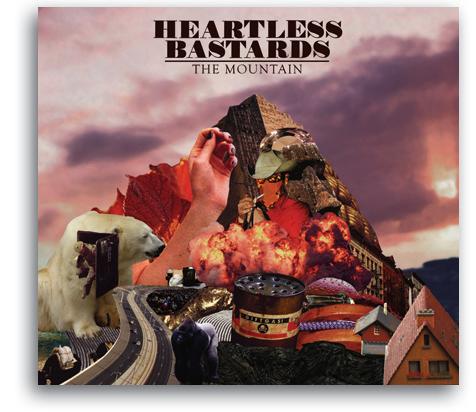 Carol Borrington
ALABAMA GRAVY SOPPERS
Yellowhammered myspace.com/gravysoppers
In the area of string and jug bands, young musicians have unearthed some fun roots music to explore from an era way before their own. Some, like Moreland & Arbuckle, use it as a jumping off point, where as the likes of the Carolina Chocolate Drops, and here the Alabama Gravy Soppers, prefer to stay
rooted within the traditional. This is a spacious ensemble who never step on each others musical fingers - they come across sharp and well executed. The group consists of Ashley Carr (lead vocals, guitars and kazoo), Ford Boswell (mandolin and vocals) and Warren Colter (stand up bass and vocals). Ford Boswell’s mandolin playing is refreshing in that Ford finger picks a lot rather than constantly strumminghe makes his instrument ring out, too. The singing is well accented, and really fitting to the music played. Bo Carter’s ‘My Baby’ is taken at a quickened pace, with a little less syncopation than the original, but is a success as a more orchestrated piece. This is foot tapping, dancing music, and the kind that puts smiles on country folks, and brings couples on to the floor. Though the guys play stuff from public domain, penned by legends Charley Jordan, Blind Willie McTell, Blind Blake and Fats Waller, their own compositions sit comfortably within the halcyon day songs.
Billy Hutchinson
Blues Matters! 113
THE
BAD
DADDYS
The Bad Daddys
Reversing
Maine-based Blues-rockers, The Bad Daddys have been playing around their home state for six or seven years now, honing their slightly funky stylings, leading up to this their debut album. And it‘s a mighty fine one, as they take you through a set of nine original tracks, penned individually and in tandem by guitarist/vocalist Paul Waring and lead guitarist Al Strong. Alongside drummer Scott Mills and bass player Jimmy Klemmenz, the duo have really got their game on. Yes, a lot of the songs fall into a similar mid-tempo shuffle, but when the songs are as strong as these, you don’t really mind. They also flavour up some of the tunes with sax player Phalan Gallagher and Hammond organist John Dyer. The sax contributions, in particular, are very welcome, adding to a couple of the best tracks on offer, ’Ain’t Got The Time’ and ’All Night Long’. Mr Waring has a gritty, Bob Seger-type voice, which well suits the muscular musical approach they’ve adopted, although he is just as good at wrapping his voice round a soulful ballad like ‘Change Of Heart’. Mr Strong comes from a less is more school of guitar lead, something that makes a very welcome change in a world of stringed pyrotechnics. Well worth checking out.
 Stuart A Hamilton
PATRICK YANDALL New York Blues
Zangi
Well, this certainly came as a surprise! Why? Well, because Patrick Yandall is a jazz man, with seven genre albums under his belt prior to this release. But now he's turned his attention to the world of Blues-rock, and put together a set of nine original songs and three covers. A return, apparently, to his Blues roots, something he often dips into in a live setting. It's an album that brings fresh ears and sounds to Blues-rock as, inevitably, his jazz side peeks in here and there, especially on 'The Blue Room' and his cover of The Allman Brothers Band classic 'In Memory Of Elizabeth Reed', which he actually takes at a faster clip than the original. He can also carry a funky vibe as on the splendid 'There's Blues In This House' and turns in a fine fusion performance on the Stevie Wonder penned ‘Blow By Blow’ and Jeff Beck’s 'Cause We've Ended As Lovers'. The other cover here is an instrumental take on the Curtis Mayfield penned 'People Get Ready', a song Jeff Beck also turned his talents to, and the whole album is rich in Beck influenced Blues fusion. For most of the album, Yandall applies himself to making the music shine, but he lets it all rip on 'Deception Point'. It's certainly an album that bears repeated plays, as Patrick Yandall shows himself just as capable of mastering the Blues as he has done jazz.
 Stuart A Hamilton
RED JACKSON Walking After Midnight
redjackson.com
Red Jackson, a trio, formed in 2005 and regularly tour around the south of England, mainly in bars, clubs, restaurants, festi-
Blues Matters! 116
vals, functions and parties. They also provide street performances! In 2006 they released their first album, “Red Jackson”, and “Walking After Midnight” is their follow-up, now available from gigs, street performances and online. All but one of the album’s twelve tracks are covers, mostly of iconic Bluesmen, but including rock’n’roll and some country. It starts with a sublime version of Fred McDowell’s ‘A Few Short Lines’ and progresses through material by Robert Johnson (‘Terraplane Blues’, ‘Come Into My Kitchen’ and ‘Hot Tamales’), Jimmy Reed (‘Caress Me Baby’) and Jerry McCain (‘She’s Tough’). A country angle is provided by a version of Patsy Cline’s ‘Walking After Midnight’ and some good old rock’n’roll with Carl Perkins’ ‘Bopping The Blues’. The only self-penned offering is ‘Two In The Morning’, which is a moody harmonica soaked instrumental – it’s rather good. Although there’s not too much originality, some tasty guitar and the double bass contributes to a laid-back feel. I liked it!
 Kevin Wharton
FREIGHT TRAIN DELUXE Women Music And Trucks
Big “C”
The core artist of Freight Train Deluxe is Chris Floyd, an interesting character who grew up in Washington being influenced by Blues and country music. At 16, he fell in love with the harmonica and the band Little Feat. Relocating to Nashville, he started a degree in Music and got a commercial driving license to pay for his studies. After more than a million miles and countless gigs, this self-financed album is the result, and very good it is too. Floyd can sure play the harmonica, and this mix of seven originals and three covers showcases his ability to the fore. This is no more obvious than on ‘I Know You Rider’, a storming up tempo song with excellent harmonica solo, or ‘Fools Argument’, a ten minute love song that also includes a great guitar solo. There is a blend of both Blues (Lowell George’s ‘Long Distance Love’) and bluegrass (his own ‘Women Music And Trucks’), yet there is a subtle blend of both styles in many of the songs. His use of banjo on many tracks gives the whole an appeal of its own. Not surprisingly for a truck driver, many of the songs are about life on the road, and ‘Eighteen Wheels And A Padded Room’ is a great ode to the loneliness of the road. This is a fine blend of bluegrass and Blues, and an album I really enjoyed.
Merv Osborne
EDEN BRENT Mississippi Number One Yellow Dog
The first line of the first song on Eden Brent’s very personal album tells us it is a Blues album. ‘Early In The Morning’ starts the up-tempo bar room styled boogie woogie number that sets the tone, if not the whole pace of the fifteen track collection. It’s easy to visualise the scene as Brent wears her heart on her sleeve, putting everything into her piano playing, lifting her fingers only to focus on breathy and sometimes shouty vocals. The album is a dedication, a tribute to her late mother Carole and a memoir to the highway of the album’s title, and then with more than a faithful nod in ‘Darkness On The Delta’ to the

JACK DE KEYZER 6 String Lover Blues Thing blue*star
Jack De Keyzer is a great guitarist who mixes styles like others mix drinks. Whether it is straightahead Blues, funk or big band swing, they are all played out on these albums. 2003’s “6 String Lover” opens with ‘Deal Me In’, with its tempo and brass reminiscent of the swing era, before the funky ‘Soul Lover’. The rabble-rousing, hand-clapping ‘Pleasure Is My Business’ raises both tempo and temperature with solos from both the sax and Hammond B3 organ - this feel is then moved into a latin tempo of ‘The Answer’, complete with congas et al. So it goes, as the various styles get aired, each one in a complete and proficient way, Blues with ‘If You Were My Woman (And I Was Your Man)’ and rock’n’roll in ‘Rock ‘Til We Drop’. Apart from being a great musician and writer, all tracks are originals; Jack possesses a great deep and strong voice, one that suits the music to a tee. Like “6 String Lover”, 2007’s “Blues Thing” possesses all of the above and more. Again all tracks written by De Keyzer and the various styles are prevalent. In the opener, an uptown Blues sounding ‘Music Is The Food Of Love’, there is a strong piano backing and prominent horns, whilst the Latin rhythm of ‘If I Had Your Love’ forces the listener to foot tap at the least. Try the superb ‘That’s Your Love’, a driving tempo with busy guitar solo, constantly underpinned by the bubbling Hammond B3 organ of Michael Fonfara. On both albums the production is very much to the fore and the sound is solid and together. If De Keyzer plays to this tempo live then each gig must be something to witness.
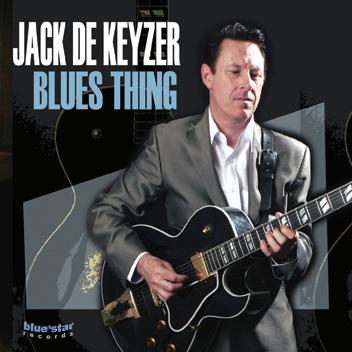
world’s most famous river. The latter song being one of the three or four slow Blues for piano and vocal only. The lightly forceful vocals are smoky and set the lounge jazz atmosphere before the return of barroom humour and crackle. This is particularly evident on the standout track, ‘Meet You Anywhere’, where she goes all Aretha for a sax-fuelled funky diversion. The imperial anthem ‘Until I Die’, that closes the work, is mighty fine and genuinely reminiscent of Bonnie Raitt and Gladys Night to which the sleevenotes make appropriate connection.
Gareth Hayes
Blues Matters! 117
PETER NANDE
Jelly Bean Baby: California Sessions Vol II
For his latest offering, Danish Blues singer and harmonica player Peter Nande has gone back to the US to pick up where he left off in 2006 with his first California Sessions CD. It was clearly a good move. Two weeks of recording under the auspices of producer James Harman have produced thirteen tracks of pure Blues joy. Not only is Peter a fine singer and harmonica player, but the band backing him, which includes Ronni Busack-Boysen on guitar, are never anything less than superb. From the ‘50s R&B/early rock’n’roll vibe of ‘Jelly Bean Baby’ to the Hammond organ jazz swing of ‘Bumpin On Leonard’, they never let the quality gauge slip below brilliant. ‘State Of Bliss’ does exactly what it says on
DELTA MOON
Howlin’ At The Southern Moon ALEX ROSSI Let
JIM SUHLER & ALAN HAYNES Live At The Blue Cat
Blues Boulevard
the tin and will leave every Blues fan with a massive smile on their face. Everyone sounds like they had a ball recording this album and their love of the genre comes across on every tune. It might be retro Blues with a ‘50s edge, but it is faultlessly done, and cooler than an ice cube which has just been dropped into a glass of bourbon. Let’s hope everyone can be persuaded to get back in the studio for a third volume.
Jamie Hailstone
HERBIE GOINS & THE NIGHTIMERS No.1 In Your Heart
EMI
Like Geno Washington, Herbie Goins was a former American serviceman who settled in the UK during the ‘60s, and with his band – The Nightimers - were a mainstay of the burgeoning Northern Soul scene. “No.1 In Your Heart” sees the group’s only ever record released on CD for the first time, together with ten bonus tracks, including several unreleased demos. Herbie’s soulful voice might not have been as fiery and rocking as Geno Washington’s, but it definitely is a lot smoother and more sophisticated. The title track, which became a big hit on the Northern Soul scene, still sounds good today. Like a lot of other groups during the ‘60s, Herbie Goins & The Nightimers
Delta Moon have been through many incarnations since their formation in Atlanta, Georgia some years ago. Consistently based around the talents of Tom Gray (lap steel, keyboards and vocals) and Mark Johnson (slide guitar), their vision was to form a double slide guitar band in the style of The Allman Brothers Band or the original Fleetwood Mac. Initially, they featured female vocalists Gina Leigh and, subsequently, Kristin Markitan, and personally I believe that is when they were at their most varied and inventive. Kristin takes lead on ‘You Don’t Have To Go’ and soulful original vocalist Gina on ‘Preachin’ Blues’. This compilation takes in tunes from studio recordings from 2002 to 2007, curiously in reverse chronological order, and with nearly half of it devoted to the most recent release, “Clear Blue Flame”. It is essential listening! Similarly indispensable are veteran Texas Blues rockers Jim Suhler and Alan Haynes, who combine with rock solid rhythm section Carlton Powell (bass) and Paul Hollis (drums) in a pulsating live 1988 recording from their home state venue. From start to finish, this is a great example of why Texas Bluesmen have such an envied reputation; tight, eclectic, groove making and, above all, rhythmic. George Thorogood and local Antones artists’ influences loom large, but these men are no copyists. Suhler and Haynes share lead vocal duties and explosive guitar soloing. As well as paying tribute to fellow Texan Ray Sharpe (‘Oh My Baby’s Gone’) they include three of Suhler’s own compositions and the fabulous Freddie King classic ‘I Wonder Why’, which stretches to over nine minutes. Alex Rossi is a Brazilian Blues harmonica player of considerable stature, especially in his would-be adopted home state of Texas, where for some ten months he submerged himself in the Blues scene, and jammed and played live on tour and in the studio with many of the local luminaries. Unfortunately, difficulties with US immigration have prevented him from rejoining his many friends. He has toured Brazil on several occasions as part of Phil Guy’s pick-up band, and in the US with Robert Ealey. This self-produced album, recorded in Porta Alegre, Brazil and Texas, Dallas shows off his excellent harp technique. He is ably assisted by a variety of guests, including Phil Guy, for example, on ‘Rock Me’ and ‘That’s Alright’, fellow Brazilian Fernando Noronha and welcome vocalist Kathy Prater on the standard ‘Good Lover’. The finest tune on the album is the jaunty instrumental ‘Caravan’. Noggin
Blues Matters! 118
Me In
covered the popular hits of the day and there are funked-up versions of ‘Knock On Wood’ and The Rolling Stones’ ‘Satisfaction’, which comes complete with the refrain from ‘Land Of A 1,000 Dances’. Sadly, the band fell foul of changing music tastes in 1968 and disbanded, but Herbie Goins is still going strong today. Herbie Goins deserves some credit for being one of the all-time great soul singers and a key force in the British Blues scene back in the ‘60s.
Jamie Hailstone
GUY DAVIS
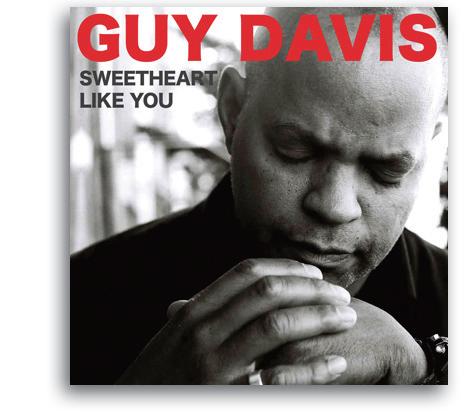
The name of the CD, and indeed the title track, comes from the Dylan song of the same name, and it kicks off this album in splendid style. The album is a collection of fourteen selfpenned songs and covers which go to make up a high quality offering from US based Guy Davis. Of the covers, Davis does a great job on Willie Dixon’s ‘Hoochie Coochie Man’, so good you can almost feel the deep southern hollering of years gone by. This is followed by ‘Can’t Be Satisfied’; one of Muddy’s most covered tracks, and surprisingly played on a five string banjo by Davis. Splendid! This track is augmented by some lovely upright bass by Mark Murphy, and showcases Davis’s bottleneck skills. He also does great covers of Leadbelly’s ‘Ain’t Goin’ Down’ and Son House’s
‘Down South Blues’. Davis’s vocal are lively and just rough enough to create a rich Blues feel, and on many of the tracks he sounds like the excellent Eric Bibb, in particular on the selfpenned ‘The Angels Are Calling’. His picking is excellent, both on the guitars he plays as well as the banjo and mandolin. I liked every one of his own compositions, and in particular ‘Steamboat Captain’ and ‘Words To My Mama’s Song’. This is a tremendous album, featuring a host of well written songs and covers, and the musicianship is excellent!
Kevin Wharton
BLACKIE AND THE RODEO KINGS
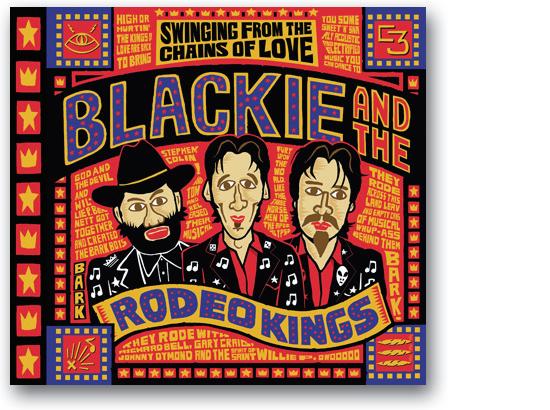
Swinging From The Chains Of Love
True North
This CD is designed as an introduction to a Canadian roots outfit that have released five albums since 1996. The member probably best-known to readers is Colin Linden, who has produced and played on many excellent Blues and roots albums over the years, in addition to having his own successful solo career. The others in the three-piece Blackie And The Rodeo Kings are Stephen Fearing and Tom Wilson, from disparate backgrounds, who came together to record a tribute album to fellow Canadian songwriter Willie P. Bennett – and that was the sum total of their ambition for the group at the time. Luckily for us, they still find enough time off

Blues Matters! 119
from their own individual projects to get together on a regular basis and give us the wonderful music on this CD –Blues (a Howlin' Wolf styled version of Johnny Cash's 'Folsom Prison Blues' is perhaps the most outstanding!), country, rockabilly, a little funk, and some pop, mostly with chugging, Bluesy grooves, fine harmonies and excellent, often slide guitar work. The Band is mentioned several times in the wonderfully detailed notes in the lavish accompanying booklet, and that's not a bad reference point, though they are overall Bluesier than that esteemed combo.
 Norman Darwen
DELANEY BRAMLETT
Mississippi born Delaney Bramlett died last year leaving behind him a talented body of music as a singer-songwriter, guitarist and producer. He worked with many through a career that spanned four decades, including Duane Allman, Leon Russell, George Harrison, JJ Cale and, of course, Eric Clapton. It is from Delaney that Clapton says he learnt how to sing and the CD contains a cover of the song penned by Clapton and Bramlett, ‘Let It Rain’. Delaney’s musical career is also remembered for the music he made with wife Bonnie. Although a tempestuous relationship, as well as their recorded material, they left an influence
on many of their era. “Sweet Inspiration” is a collection of fourteen tracks recorded in 1989, with four of the tracks being alternative mixes. It’s re-release is a fitting farewell to a musician that gave much to music. The CD opens with the rocking, soul, gospel driven ‘Sweet Inspiration’, Delaney’s gritty vocal running through the register with stirring passion. ‘Let It Rain’, with it’s Caribbean flavoured percussion, soulful brass ensemble, soul wrenching lead guitar and topped off with Delaney’s gritty vocal belt is a classic. The gentle gospel and soul ballad ‘Things I Didn’t See’ shows the more tender but still passionate art of Delaney’s vocal and songwriting. A must for his fans!
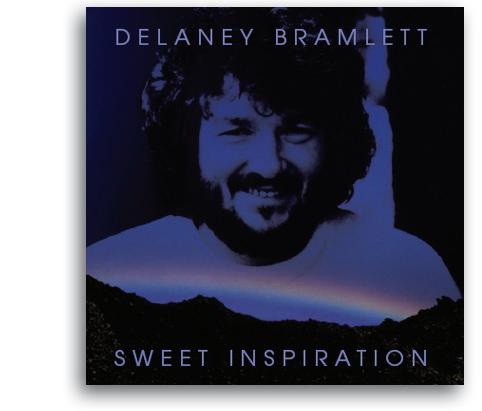 Carol Borrington
ROBIN ROGERS Treat Me Right Blind Pig
Robin Rogers is has the blessed distinction in being the owner of an instantly recognisable voice, with just the right measure of accent – there’s a strong comparison between Robin and Lulu. The album opens with the title track - a B.B. King number; a good recording and a second tier success. ‘Don’t Leave Poor Me’ is another cover, and fits Robin’s talents better. Punchy vocals with a Latin dance rhythm that is one of a few songs herein that belie an Otis Rush influence. ‘Ain’t No Use’ is an end of relationship tale, sang with a fair amount of resignation, with soft and supple jazz guitar, and cascading piano lines. A pat-
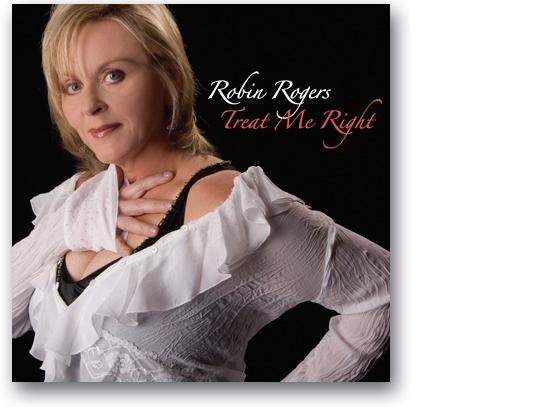
Blues Matters! 120
tern of classically put together repertoire emerges. Robin and her husband Tony Rogers’ ‘Color-Blind Angel’ is the tale of a mother of five, Viola Liuzzo, murdered by the Ku Klux Klan. The work-song alternative foot stamping and clapping, along with a Ryder Cooder-like bottleneck guitar, is perfect casting. The arrangement and lyrical content of ‘Promised Land’ is easy on the ear, and fresh contrasting with the weight of the former. ‘Nobody Stays’ is not only beautifully sung, but is such a poignant and uncommon lyric. Based upon Robin’s early life it narrates so many around her leaving her upon this life. ‘Drunkard’s Alley’ is one of the borrowed traditional tunes used to purvey Robin and Tony Rogers’ lyrics. A satisfying album from an under-recognised, talent!
Billy Hutchinson
ORCHESTRE POLY-RYTHMO DE COTONOU
The Vodoun Effect: Funk & Sato From Benin’s Obscure Labels 1973 - 1975
Analog Africa

The same label’s compilation “Africa Scream Contest – Raw & Psychedelic Afro Sounds From Benin & Togo 70s” featured several tracks by this West African outfit and certainly got the thumbs up in Blues Matters! a couple of issues back, and now here is a full CD by the band. This material was recorded for tiny record labels around Cotonou in Benin and it has plenty of funk and soul influence – listen to the rhythms and some of the sometimes quite jazzy organ work and rock styled guitar (take a listen to the Bluesy solo on ‘Se Tche We Djo Mon’). The basis of this music is Vodoun (also called Voodoo or Hoodoo in the West, where it is also much misunderstood), so that there is most certainly a link – however tenuous - with the likes of some Louisiana sounds. Some of this music may sound vaguely familiar, as these rhythms had enormous impact across the slave-owning countries of the Western hemisphere, and once you add in those ‘70s elements, it is most definitely a sound that will appeal to those with adventurous tastes.
Norman Darwen
MARIELLA TIROTTO & THE BLUES FEDERATION Somewhere Down The Road
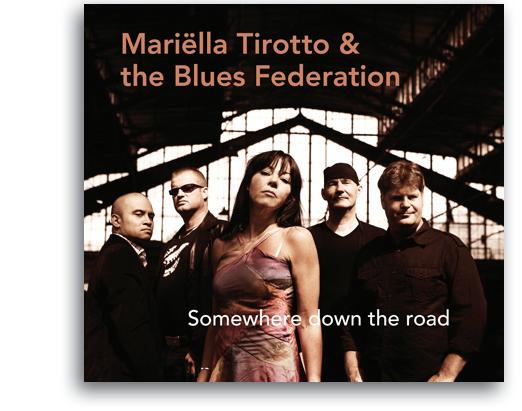
Conventional wisdom dictates that you should always put your best tracks at the beginning of an album. But the opening track on this effort – ‘Playing The Game’ - by this Dutch/Belgian band is something of a clunker.
The lyrics are naff, and although it rocks along nicely, it really doesn’t do the band or the singer any real favours.
But stick with it, and “Somewhere Down The Road” improves tremendously. The title track, a slow burning track, really showcases Mariella’s husky, Bluesy voice and features some fine harmonica work by Michel De Kok. As the album progresses, and the band steer away from the traditional Blues and boogie format, they really let rip. While twelve-bar rockers, like ‘Come To Me’, are perfectly all right, they don’t exactly set the world on
fire, but songs like ‘Windows Of My Eyes’ are really impressive. The less Bluesy, more ‘filmic’ and adult songs are actually much better and more effecting than the usual boogie-woogie stuff. It’s an album of two halves. Mariella really has a lovely voice. When the band and the singer flex their muscles, the results are fantastic and hint at greater things to come.
Jamie Hailstone
TOBY WALKER Hand Picked
littletobywalker.com
Toby Walker was once a frequent visitor to these shores, where his fleet fingered acoustic guitar playing has been warmly appreciated. It has to be said that Toby’s reputation was built on his guitar playing, as is apparent here, with his vocals are too strained on the emotional numbers. The picking (alternating thumb a joy) and slide is very tasty
JAKE LEAR Lost Time Blues
jakelear.com

In once sense, Vermont based Jake Lear offers nothing different to the greater majority of upcoming acts on the Blues scene. How many times have we caught an earful of the supposed “next Stevie Ray” or “new Freddie King” only to be left distinctly disappointed? However, with “Lost Time Blues”, his second in a short space of time, Lear offers something that a lot of his peers fundamentally fail to achieve - he manages to live up to and do justice to the legends that he claims to draw influence from. In fact, one listen of opener ‘Streets Of Michelangelo’ brings the listener back to the heydays of hearing SRV’s ‘Couldn’t Stand The Weather’ for the first time, while ‘Leave This Town’ urges to be played in a dimly lit, whiskey stenched Mississippi juke joint. The key to paying homage to your inspirations is the skill of placing your own twist on the influence in question, whilst retaining the primary sound they were so well known for. Lear’s twist on the Texas Blues sound arrives in the form of an underlying folky tone, particularly apparent on standout tracks ‘Ragged And Dirty’ and ‘Bluebird’. With an abundance of guitarists hitting the Blues world in 2009, aiming to be the next Bonamassa, it’s becoming somewhat difficult to sort the best from the rest. Judging by this latest release, however, Jake Lear is a name to keep an eye out for. Lost Time Blues? Hopefully not
Lee Borland
Blues Matters! 121
here in very fine style. That leaves the three traditional songs outside of the seven originals, mostly from Toby’s hand. Toby is an adept solo entertainer in that his is fully developed solo package, his performances are ear grabbing, and he doesn’t need accompaniment to fill out his sound, though when he is augmented, it gives the disc more variation. Of Toby’s own, the syncopation on ‘Mama Keeps Her Kitchen Clean’ has a lovely novelty feel; ‘Leon’s Little Girl’ is a sweet melodious instrumental; while beauty within, ‘The Secret’ echoed Harry Chapin. All in all, a mixed bag, with some tasty recordings – even if some spoiling has occurred.
Billy Hutchinson
THE MAPLE BLUES REVUE
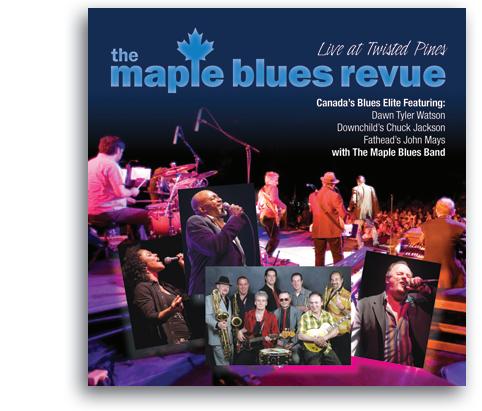
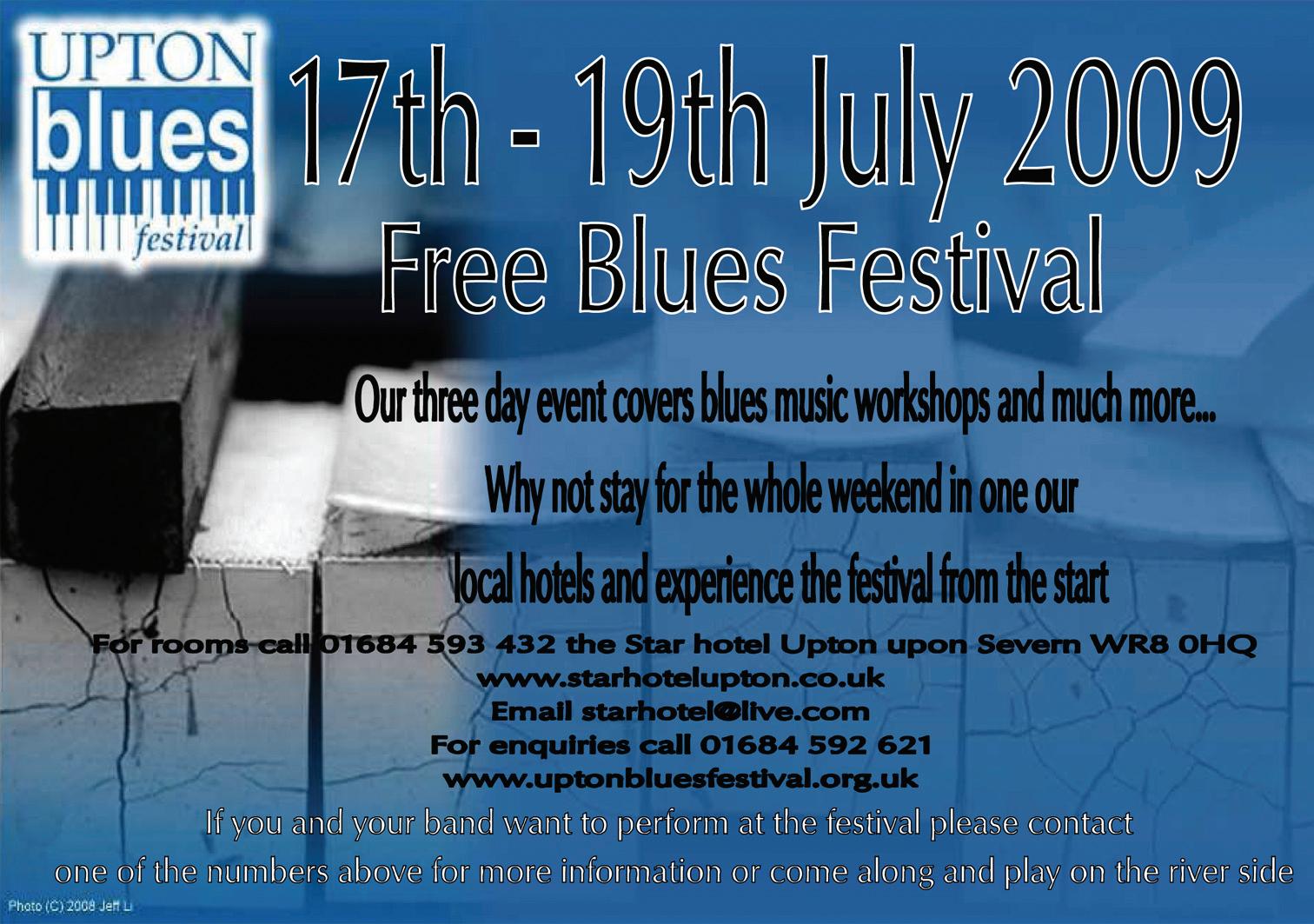
The Maple Blues Revue was originally put together to be the house band at the 2000 Canadian Blues Awards –now titled the Maple Blues Awards - something they still do today. However, for the past few years, they’ve become an ongoing entity with the addition of three vocalists, performing at festivals and concerts. This is actually billed as a concert dedicated to the late Jeff Healey, although what that actually means remains unclear. Back with the music, and the concept of a Blues revue can be an equal blessing and a curse. With three very different
vocalists, and the material split between originals and covers, it’s not the end of the world if something comes along that you don’t like, because there will be a new singer and a new song along in a few minutes. Of course, that also breaks the flow, making for a disjointed listening experience. However, the musicians, especially the brass section, and singers are uniformly excellent, with Chuck Jackson the singer of choice, out of the three, with his soulful turns on the self-penned ’I Just Think Of You’ and ’Changed My Ways’ the highlights of the show. It’s an enjoyable CD and I‘m also pleased to report that, despite not being mentioned on the CD, sales of the CD will benefit The Daisy’s Eyes Cancer Fund.
Stuart A Hamilton
JO’ BUDDY & DOWN HOME KING III
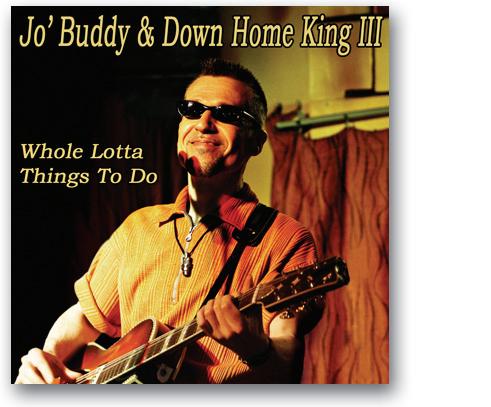
Whole Lotta Things To Do
Ram-Bam
Listen to the full sound of the lively, raw, swamp infused Blues produced by just two guys, and I’m sure you will have a great big smile on your face feeling that you have just discovered a New Orleans gem. The truth is they are from Finland. Jo’, real name Jussi Raulama, plays guitar, provides vocals and writes the material, whilst his partner in music, whose real name is Tyko Haapala, handles the drums and percussion. Although primarily sourced from the
Blues Matters! 122
BLUES CARAVAN Guitars & Feathers DERRIN NAUENDORF Skin Of The Earth ERJA LYYTINEN Grip Of The Blues
Ruf
The last incarnation of Ruf’s Blues Caravan features three ladies who provide a very interesting mix of ages, attitudes and styles (Dani Wilde, Deborah Coleman and Candye Kane). The album opens with all three on Ray Charles’s ‘Won’t Leave’. Then it’s four fresh contemporary originals from the baby of the band. Although only in her early twenties, Dani is a polished performer. By no means the finished article, she is still a good guitarist, accomplished vocalist and promising songwriter. Next we have Candye’s five track contribution, where the big woman with the big voice treats us to some rollickin’ red hot mama style Blues. Onward to Deborah for six tracks from the most stylish and well rounded performer on the bill. Her set includes fine versions of Luther Allison’s ‘Fight’, ZZ Top’s ‘Jesus Just Left Chicago’, Etta James’ ‘Something Got A Hold On Me’ and Willie Dixon’s ‘Whole Lotta Love. Australian Derrin’s sixth album is his best if most eclectic to date. His instantly recognisable high quality trademark guitar and vocal stylings are there to lead you through a chocolate box of ten new originals. From the opening hard driving Blues of the title track to the almost rockabilly take on ‘Michelle’, there are country influences on ‘Mystery Child’, folksy finger picking on ‘Everyone’s Got A Plan’, a classy ballad in ‘Pride Before A Fall’, and a couple of instrumentals. Erja Lyytinen is an enigma. A wonderful Blues guitarist, who can also rock it up with the best of them, she is blessed with a lovely clear, melodic and soulful vocal. Unfortunately, I’m not sure where she wants to hang her hat. The album opens with a trio of Blues sourced tracks before departing for a credible cover of Tony Joe White’s ‘Steamy Windows’, which was a monster hit for Tina Turner. Then the album takes a more contemporary, mainstream flow. Particularly on three excellent slow tracks - ‘Wish I Had You’, ‘Unreachable’ and ‘Voyager’s Tale’. Just as you are settling to this mood, you are treated to a fine take on ‘Rollin’ & Tumblin’’, a touch of modern R&B on ‘Wanna Get Closer’, before wrapping up with a bit of pop-rock on ‘Dissatisfaction’.
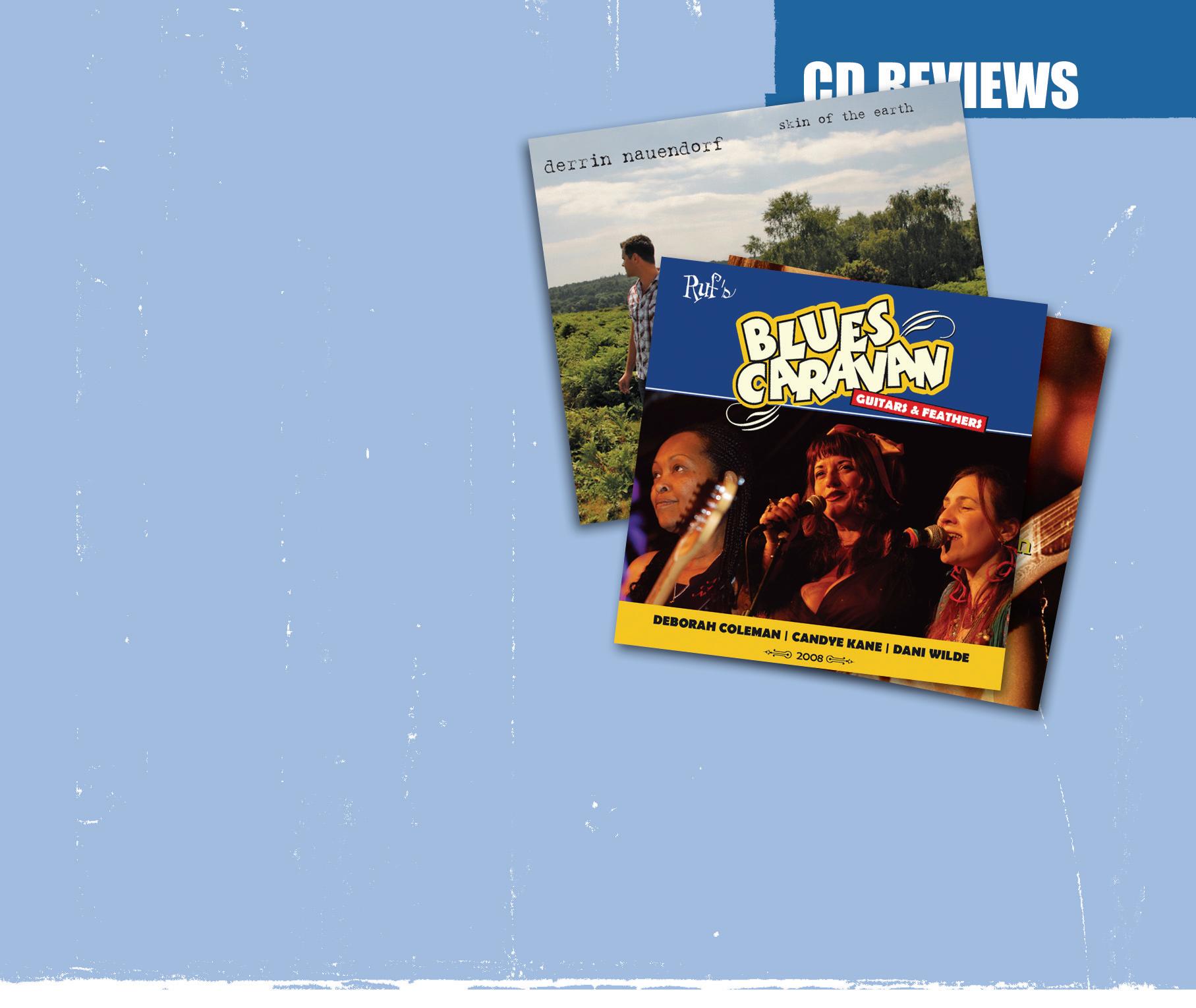
“Big Easy” Blues, boogie and zydeco, it really is kitchen sink stuff. There is ragtime on the appropriately named ‘(Electric) Ragtime Man’. Some good old-fashioned rock‘n’roll on ‘Do My Number’. You could just imagine Muddy Waters singing ‘They Don’t Know What I Do’ and there is even some country yodelling on ‘Speeding Up Mama’. Plus a nice little instrumental entitled ‘Way Back Rag’ to bring proceedings to a close. This is foot stomping good-time music. Yes, you could pick flaws, but sometimes you have to just sit back and enjoy. Put that record back on and pass the jug.
Thomas Rankin
J. SHOGREN American Holly
Jaha!
Split between Wyoming and Finland, J Shogren is a singer/songwriter/guitarist/multi-instrumentalist who knows that the best Americana draws liberally on its traditional folk, Blues, country, hillbilly and ‘60s roots. For example, Casey Jones meets John Henry on the rocking and socking 'God's 9:05'. He has a slightly sneering delivery when it needs it – ‘Everyman’ is a good example – and comes across a little like Bob Dylan on 'Deny Me'. He also possesses a wistfully melodic sense, well in evidence on 'Come All This Way'. He and his crew of associates on ban-
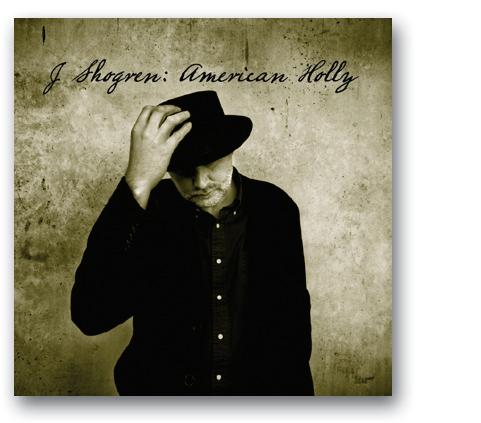
jos, trombones, euphoniums, jugs, pianos, violins and accordions can sound like a vintage spasm band on ‘Salt Lakrits’, or offer up a highly successful parody of a vintage gospel singer (“I’ll be a hand grenade for Jesus/Spread his word like shrapnel”), and come over quite jazzy when required. He can be quite dark – okay, very dark on 'Baby On The Tracks' –or just plain fun. There are some little 'playlets', which are a little warped, but hey! This is weird America, isn't it?
Norman Darwen
LUTHER KENT The Bobby Bland Songbook
VCC
You couldn’t get two more different singers than Mick Hucknall and Luther Kent, both of whom have recently released tributes to the great Bobby “Blue” Bland. While Hucknall is known the world over for Simply Red, Kent is one of the best kept secrets in New Orleans, yet his release is by far the better one. Kent is
Blues Matters! 123
GORDON
SMITH
JELLYBREAD
TOP TOPHAM KEY LARGO
The Complete Blue Horizon Sessions
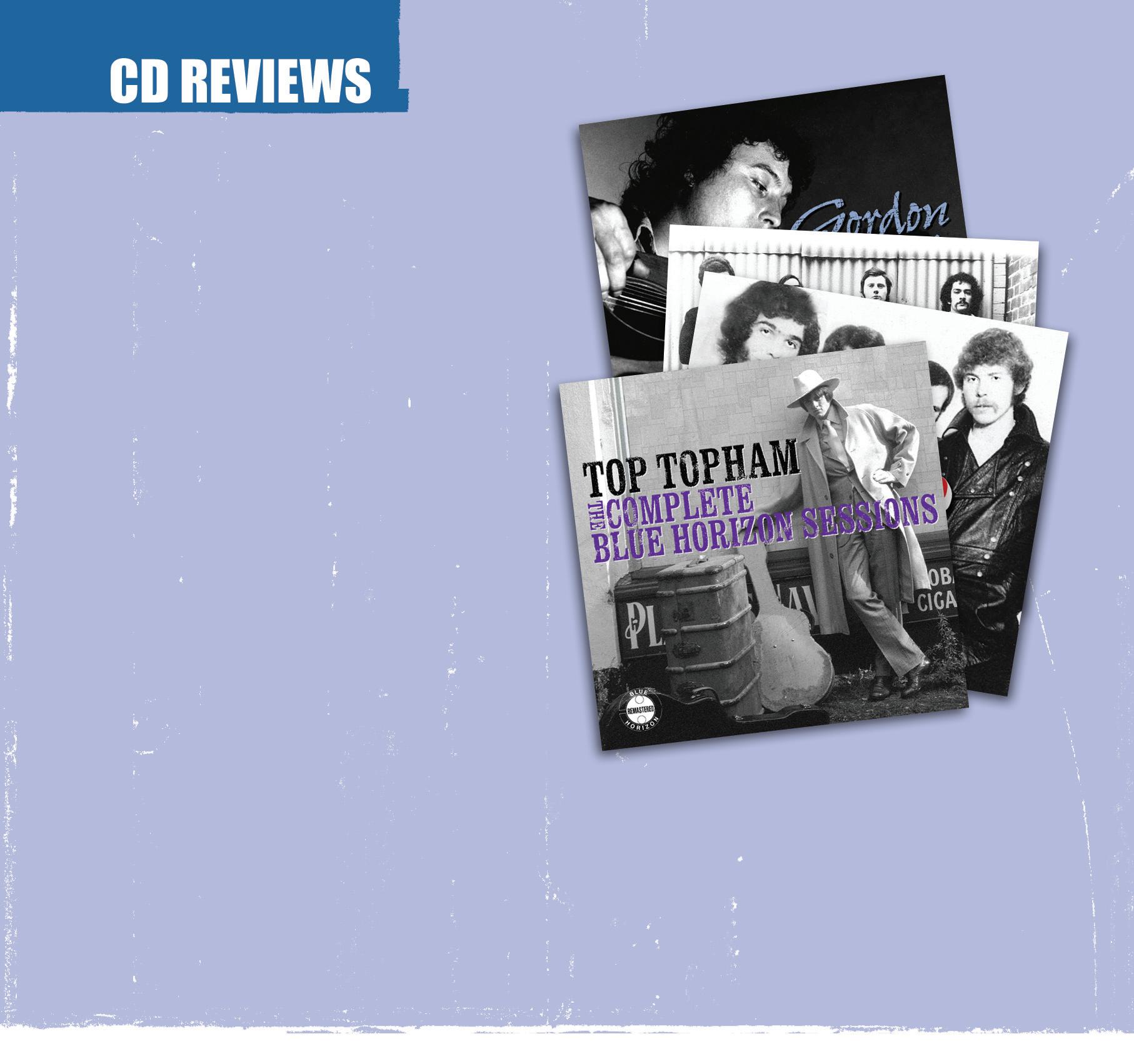
Sony BMG
Ah, Blue Horizon - 'Albatross', Fleetwood Mac, Chicken Shack, Duster Bennett, that familiar blue label, and plenty of album sleeves of dubious taste. In the late60s, Blue Horizon was unquestionably THE label for British Blues (and lots of the American variety, too).
The still active singer/guitarist Gordon Smith, highly rated by the late BBC DJ John Peel, had one album on the label, issued in 1969. It is largely a powerful solo album, though the aforementioned Duster Bennett and members of Fleetwood Mac lend a hand, and there are some fine electric tracks. The playing time is expanded by the inclusion of a couple of numbers that only appeared on a 45 rpm single, and there is also some unissued material recorded for a planned second album that never saw the light of day. Jellybread's album “First Slice” was their debut and their Bluesiest. This release follows the same formula as Smith’s set, reissuing the album and augmenting it with material from 45 rpm releases and unissued tracks. Jellybread were more soul and funk-inflected; they even attempt – reasonably successfully - The Meters sound. Most tracks featured are piano led, and, in truth, I was reminded in several places of Georgie Fame’s efforts from earlier in the decade. The demo material that is included here reveals a more straight-forward band than was present on the album. A startlingly accomplished set, as long as you don’t mind the English intonations to the vocals. So, to Top Topham – original guitarist for The Yardbirds, and worthy of the accolades his successors with that band achieved. The only reason I can see as to why he never achieved a greater level of fame is that his Blue Horizon album, “Ascension Heights”, is a pretty diverse, though always Blues-based, instrumental set. Both sides of his Christmas single, a track from a BBC session, and four excellent and previously unissued demos, with vocalist Lloyd Watson, are also included. The original of Key Largo’s self-titled album goes for serious money these days and it too is a fine set, though with a range that encompasses Chicago Blues, Albert King numbers and New Orleans R&Bmaybe it was just too eclectic and ahead-of-its-time for 1970. The demo material they recorded in 1969, as ‘Slamhammer’, was probably more to then contemporary taste. All four CDs are invaluable to lovers of ‘60s UK Blues.
Norman Darwen
a great singer, as he proves on ‘I Wouldn’t Treat A Dog’, and he belts out every number out with real conviction. His love for Bland’s music is clear and infectious. The real secret weapon on this CD is the arrangements by Wardell Quezergue, who uses the big band sound to create a big sound. The band of New Orleans musicians, including a certain Mac Rebennack on keyboards, pay tribute to the original tunes by Mr Bland himself. It’s often said that Bland’s secret weapon was arranger Joe Scott. The band on Kent’s tribute certainly have a ball, going from jazz on ‘I’ve Just Got To Forget You’ to swing on ‘Don’t Cry No More’. From start to finish, this is a classy affair, with a great vocalist singing some of the greatest Blues and soul songs ever written.
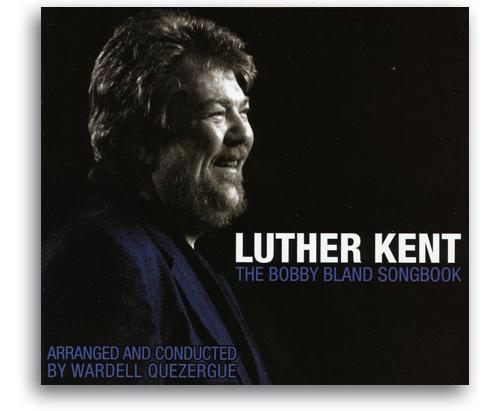
Jamie Hailstone
LEIGH THOMAS Voices Forgotten
Garleighfield
Dripping with sensuality, Leigh Thomas’s honey-soaked voice befits her Welsh American origins in this hard-to-pigeonhole album. Paced like a warmer Marianne Faithful, with drawl and elements of lust, the melodies are heartfelt as well as being anthemic; not soaring but pained. Her voice has a hook and a harmony that demands attention and is dangerously addictive. Some may find it annoying, however, and will find it easy to switch off within a few bars. Definitely a love it or hate it piece of work. With appropriate immersion, she can massage the senses and the mood is further engaged by the polished production and instrumental support. On the downside, there is little risk amongst the slow soulful pop, even though the wisdom of her painful stories do skirt around the periphery of the Blues. ‘I’m A Woman’ confirms she has absolutely no shyness regarding her femininity, and this strand runs throughout the album. Oddly ironic, or perhaps deliberately defining that the one totally Blues track is entitled ‘Men’. Blues fans will also love her despairing track titles of which ‘Beautiful Pain’, ‘A
Blues Matters! 124
Good Mistake’ and ‘Down With You’ suggest fetish ambiguity. As ambient folk, it is wonderfully narcotic and lines like ‘Alone In My Bed With You In My Head’ make the soft focus image very distinct. Maybe more risks in tone would have given the album a more visceral edge without losing any sex appeal.
Gareth Hayes
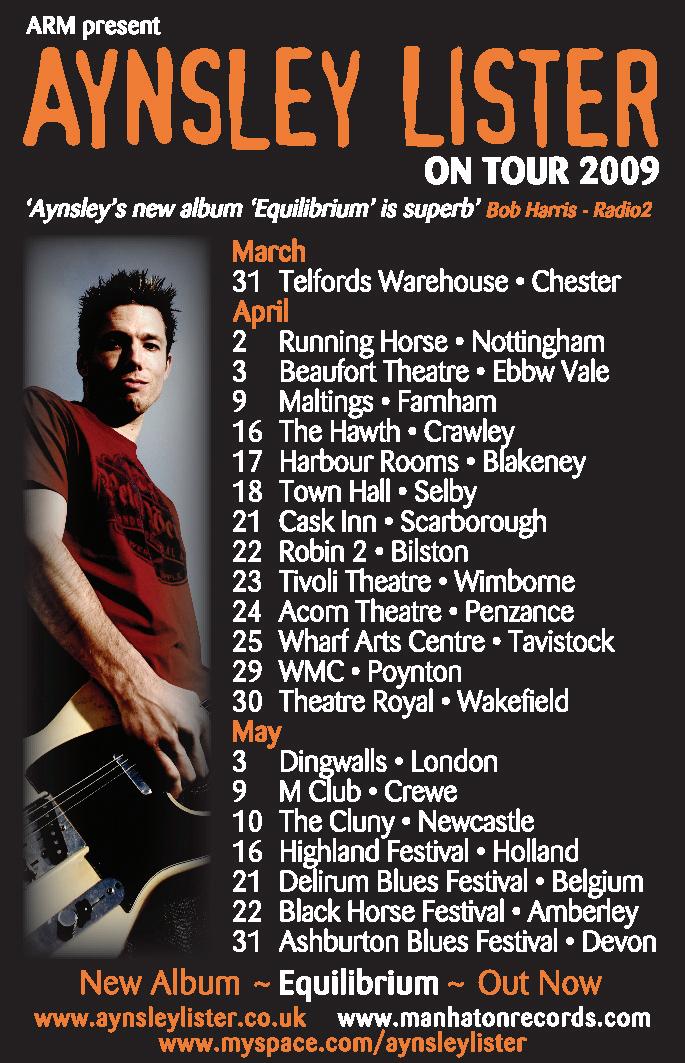
DAVID EAGAN You Don’t Know Your Mind
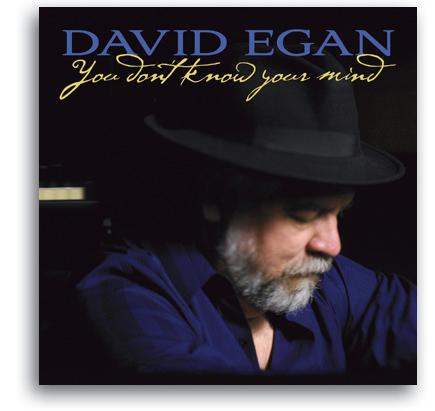
Late night Blues played with sumptuous laid-back piano and upright bass, with dark sexy vocals by Tennessee based Dave Eagan. The album gives us eleven tracks, all written by Eagan, and starts with the title track, weighing in at seven and a half minutes. This sets the scene with its warm and comfortable sound. On the basis of the list of twenty-seven musicians who get credits, the sound is understandably full! The second track, ‘You’re Lyin’Again’ introduces some rockin’ piano and the jazz feel is augmented in the next track, ‘If It Is What It Is (It’s Love)’, in which Eagan duets with Jennifer Niceley. The mood then changes and we go into ragtime like Blues in the style of The Band with ‘Money’s Farm’. We then change again to a gospel feel with the addition of brass on ‘Best Of Love Turned Blue’. Whilst this is good, the vocals don’t quite make it for me as they lack intensity for a gospel setting. The best track is saved
unto second last. ‘Proud Dog’ gets a great band like feel to it, with some tremendous piano from Eagan. Well written material, good Blues piano - this is a good album indeed!
Kevin Wharton
CHRIS COTTON
The Big Sea
myspace.com/cottonchris
It has been three years now since Chris Cotton’s last CD, “I Watched the Devil Die”, was released to critical acclaim. Then he was in a raw Blues vein, this time he’s doing hokum, old timey, jug band, ragtime and hillbilly country stuff. Chris previously did a great job on Blind Willie McTell’s ‘Dying Crapshooter Blues’, and here he has created his own song around McTell’s in the form of ‘Gambler’s Blues’ - a strong storytelling composition. The song ‘Blues And Sadness’ has such a huge presence - commercial Blues! ‘.44
Pistol Mama’ appears to have influences from both ‘.44 Blues’ and ‘Midnight Train’, with the kind of piano sounding guitars that Stefan Grossman was so fascinated with, particularly Rev. Gary Davis.
‘Heartbreaking Mind’ falls in the Virginia cum North Carolina Blues meets country music - in fact, it is easy to imaging Pink Anderson or John Jackson singing this. The album crosses many genres and Chris reminds us that a lot of this music had syncopation that made it very easy to dance to. Jimbo Mathus helps out with guitar, but it is John
Blues Matters! 125
Henry who deserves the spotlight for his singing. There is a hidden track, where Chris along with John Henry on bass and Gary “Dirty” Simonson on drums, recreate that Junior Kimborough free form Mississippi hill country juke joint groove. A very interesting disc indeed from an inventive mind.
Billy Hutchinson
HOKIE JOINT The Way It Goes…Sometimes
Hokie Joint are an Essex based band formed in late 2007, bringing together two very talented young men in their early twenties, Jojo Burgess on vocals and Joel Fisk on guitar, with three equally talented, yet not so young fellows, top harmonica player Giles King and a rhythm section that has played together since they first met at a jam more than twenty years ago at the birth of what was to become the notorious Booze’n’ Blooze, Fergie Fulton and Stephen ‘Cupsey’ Cutmore. The result is stunning! The CD contains all original material - bar one re-arrangement of a Charley Patton numberand is a joy to listen to, whether it is for Giles’ great harmonica, Jojo’s gravelly, smoky vocals, Joel’s gloriously dirty guitar, Fergie’s intriguing bass lines or Cupsey’s fine drumming. Fresh, raw, yet rich - this is a superb debut.
Ashwyn Smyth
THE FABULOUS HORNDOGS Dog Tracks World

The Fabulous Horndogs website says they are Michigan's premier dance and party band, delivering a full menu of hot rhythm & Blues with a New Orleans flavour. This is an album full of lively rhythm & Blues, with some great highlights, one of which must be their rendition of Professor Longhair’s ‘Red Beans’. The band line-up consists of six middle-aged looking guys playing keyboards, guitar, sax and trombone, as well as drums and bass, and all are given ample room to shine in the series of solos which punctuate each track. Nice piano and guitar solos on ‘Red Beans’, blistering guitar work on a version of Albert King’s ‘Oh Pretty Woman’ and some nice piano on Otis Spann’s ‘Must Have Been The Devil’ and ‘Moon Blues’. In ‘Funky Kid’ you get some funky sax and trombone. Every one of the ten tracks on this album is feel good funky Blues, and I loved it!
Kevin Wharton
TITANIC Ashes And Diamonds Repertoire
Okay, like most people, if we are honest, the name Titanic may only resonate musically here in the UK for a single hit instru-

Blues Matters! 126
mental record back in 1971. Based in Norway, the band, despite having a fine English vocalist in Roy Robinson, very quickly slipped into the depths of memory. Apparently, they carried on until 1984, but recently reformed, and here they deliver a true Blues-rock collection. The band blasts out of the speakers with the opening track 'I'm The Law', a driving song laden with call and response hooks redolent of army training runs. In this case, it is prisoners doing the responses and the guard doing the calling, and it just brilliantly grabs your attention from the start. From there the pace seldom drops with cracking tunes like 'Looking Into The Sun', 'Moonshine Machine' and 'Wake Me Up When I Get There'. Fabulous harmonies are well to the fore on 'Rain' and the big ballad 'Blame It On The Moon' is guaranteed to be an in concert favourite. Interestingly, the band has chosen to rework that single from the past. Given a completely fresh arrangement using a sax this time as the lead instrument - when you hear 'Sultana' you know that you know it but not really from where. A welcome return.
Graeme Scott
SON JACK JR. When The Devil Calls
sonjackjr.com
The identity of the Delta Bluesman is such that blurs the man from the myth, often resulting in a mixed up vision of the truth and bringing a new ideology to the music. What is happening now is that artists are recognising this attachment as a basis to form an identity. Seasick Steve’s articulation of his travelling in the 21st century could be proven to be just as legendary as Fred McDowell had been in the ‘30s. Interestingly, playing
CHRIS FARLOWE Hotel Eingang COLIN HODGKINSON GROUP Backdoor Too!
Inakustik/Rokoko
music in bars and clubs that is associated with Delta Blues could also lead to a creation of identity, in some cases it heightens the technical aspects of the music and redirects it a place where it will be taken seriously. For Son Jack Jr, with the fingerpicked style and narrative depictions of reoccurring themes, it can be suggested that this is the case. His picking style is simple, but effective. The opener, ‘I’m Son Jack Jr’, is a gripping introduction but because of its stripped down simplicity, it tends to go nowhere. Unfortunately, this style is emulated throughout the album. There are some highlights, such as the starkly bare ‘The Lynching Tree’ and the dramatic re-working of Skip James’ ‘Devil Got My Woman’, and it is an enjoyable album, but the desolate production inevitably implies that where a host of possibilities could have been dreamt up, none were even considered.
Matthew Clarke
PINK TURTLE Pop In Swing
Frémeaux
The seven guys in this swing-Blues/jazz outfit from France certainly know their stuff. The opening ‘How Deep Is Your Love’ begins with some sprightly horns, has some fine boogie woogie
The ex Atomic Rooster and Colosseum vocalist will reach his seventies in the next year, but Chris Farlow is still a powerhouse with the microphone. His voice has matured like the finest of wines over the years, and this is his first album in five years. It’s a strong effort encompassing country, soul and plenty of Blues. With Miller Anderson on guitar, they deliver a fine, funky opener in ‘Jealous Man’, before Farlowe showcases his talents on a slow mournful ‘Don’t Wanna Love You Anymore’, revealing his soul on this old break-up song. He’s still open to new ideas and changes his vocal style somewhat on ‘It Should’ve Been Me’ (made popular by Ray Charles). The Anderson-penned ‘Fog On The Highway’ narrates the lonely story of the travelling musician’s life on the road. Throughout, Farlowe sings with conviction, especially on ‘I’d Rather Be Lying With You’, and this is a worthy addition to the man’s excellent catalogue. “Backdoor Too!” is a jazz album, essentially, but it does have it’s moments that are inspired by the Blues. The group consists of Hodgkinson on bass, Rod Mason on saxophone and Paul Robinson on drums. This album mines similar territory to the legendary “Back Door” debut album from 1972, and indeed a couple of tracks are old tunes that have been re-recorded. Hodgkinson featured in that band but, unfortunately, the two other members recently passed away. The Blues is evident on opener ‘Who Said That?, with some superb funky bass playing and some sweet sax lines. ‘Blakey’ slows the pace, being a beautiful slow jazz ballad, with some more lovely saxophone. All the material is instrumental and will definitely appeal to jazz fans. Whether the average Blues fan will appreciate the fine music on offer is questionable, but it’s an excellent collection.
 Andrew Baldwin
Blues Matters! 127
piano passages, excellent jazz vocal harmonies, sprinklings of cocktail jazz and Latin rhythm, and a booting rhythm & Blues tenor sax break – and it all works beautifully. Next, ‘Walk On The Wild Side’ has the jive-y flavour of Fats Waller and ‘30s swing. Then it’s into ‘Smoke On The Water’, with its strong Cab Calloway influence, its dirty sounding trumpet riffs and references to jump-Blues maestro Louis Prima…hang on, did he say ‘Smoke On The Water’?! Yes, that’s right! – and how about the Bee Gees and Lou Reed for those preceding numbers, too? There’s not a lot of humour about the Blues, but these guys certainly raise a smile with their inventive jump, jive and swing reworkings of rock classics. We also get Pink Floyd (‘Money’ and Another Brick In The Wall’), The Eagles, Supertramp, Queen, The Police, AC/DC – a very Bluesy ‘Highway To Hell’ - and others in the thirteen tracks; even Norah Jones reinvented as Rosco Gordon. Next party you have, play this and get people talking – and dancing.
Norman Darwen
Boogie Brothers/Wire Fire
This is a double disc re-issue set, containing two albums from the bands mid-70s period. Savoy Brown have endured many different changes over the years, and the first disc here features Miller Anderson and Stan Webb with founding member Kim Simmonds
tracks, such as ‘Highway Blues’ and ‘Everybody Loves A Drinking Man’, with ‘Rock ‘N’ Roll Star’ featuring some blistering axe work from all three. “Wire Fire” is a little lighter and boasting a different personnel. It’s more rock’n’roll orientated, with hints of The Faces, and is slightly inferior to its companion. Things get off to a decent enough start with ‘Put Your Hands Together’ in an almost pop-soul shouter that boogies along with gusto. Paul Raymond plays some tasty keyboards on ‘Deep Water’ and Simmonds plays guitar god on ‘Hero To Zero’. They are a band who should have received greater recognition in the UK, and whilst this era of the band might have been beginning to lose the power and magic of their earlier years, this set still upholds that opinion.
MELODY GARDOT My One And Only Thrill Universal/Verve
Whereas it may be tempting to compare Melody Gardot with any one of the current crop of talented female artists in the same musical genre, this artist is simply in a different class. Even when burdened by the unreasonable expectations that often come with a sophomore release, or being the subject of flavour-of-the-month
JOHN LEE HOOKER The Healer
Mr Lucky SPV/Blue

These two albums, originally released in 1989 and 1991 respectively, tend to elicit a certain amount of debate amongst fans. There are those who find that the procession of guests detract from, if not sanitize the instantly recognisable sound of classic John Lee recordings. Then you have people who can accept the albums as excellent standalone Blues offerings by an aging master. He was in his seventies when he recorded these tracks, taking centre stage, surrounded by some of the best in the business. “The Healer” was to win a GRAMMY and spawn two hits, the title track featuring Santana and ‘I’m In The Mood’ with Bonnie Raitt. On the seven collaborations featured, the musical style of the guests, which include, amongst others, Los Lobos and George Thorogood, is allowed to take the lead, with Hooker providing his inimitable vocals. The final three tracks are solo gems. Some great national steel on ‘Rockin’ Chair’, soul on ‘My Dream’ and thoughtful reflection on ‘No Substitute’. “Mr Lucky” boasts an equally stellar list of guests covering ten of the master’s originals. On this occasion, the collaborators seem, in the main, more than content to act as sidemen to the maestro. Standout tracks are ‘This Is Hip’, with Ry Cooder providing his magic on slide, and a fine duet with Van Morrison on ‘I Cover The Waterfront’. Other honourable mentions must go to ‘Susie’ featuring Johnny Winter, ‘Crawling Kingsnake’ with Keith Richards and a fine double, with the aid of John Hammond, on ‘Highway 13’ and ‘Father Was A Jockey’. These albums should not be dismissed as mere rock artist tributes to an aging legend. These are fine Blues albums in their own right which would grace any collection.
Thomas Rankin
Blues Matters! 128
CEDRIC BURNSIDE + LIGHTNIN’ MALCOLM
2 Man Wrecking Crew THE SOUL OF JOHN BLACK Black John BOBBY JONES
Comin’ Back Hard MITCH KASHMAR Live At Labatt
Delta Groove
Cedric Burnside is the grandson of legendary Bluesman
RL Burnside, and steeped in the traditions of the genre. Lightnin’ Malcolm is a white boy from rural Missouri, who came inextricably to the Blues via a Muddy Waters tape overheard as a young boy. Both men are drummers by upbringing, but Malcolm is now the guitarist in this duo, and Burnside the propulsive drummer. They share lead vocals. The type of music is unique to the area, combining the regional hill country roots Blues and Delta Blues sounds, and has already come to more general appreciation through the North Mississippi All Stars. The genre has a relentless drone and repetitive sound designed to get the feet tapping and the hypnotic sounds are addictive. The Soul Of John Black is the vision of John Bigham, its lead singer and guitarist. “Black John” combines soul, funk and some Blues in an album allegedly inspired by the blaxploitation movie “J.D.’s Revenge”. Salacious themes abound in songs like ‘Betty Jean’, supposedly about Miles Davis’ second wife, ‘Bottom Chick’ and ‘White Dress’. Elsewhere a more melodic side occasionally emerges in tunes like ‘Never Givin’ Up’ and ‘Holiday Inn’. The production is excellent and, within its limited scope, this is a fine example of funky groove-making. Bobby Jones hails from Louisiana, started a singing career in Chicago during the ‘60s, but gradually vanished from the public’s attention shortly afterwards. Despite a brief comeback as a soul singer in the ‘80s, it wasn’t until a chance introduction to Mannish Boys that his true calling came to latent fruition. Here he is revealed as a powerful singer, in typical gospel, soul and Blues styles, with an aptitude to sing convincingly when interpreting compositions from well known writers, such as Ike Turner, Willie Dixon and Junior Parker/Sam Phillips (‘Mystery Train’). The CD features a stellar cast of players, including the likes of Kid Ramos and Lynwood Slim. Best of all in this series of releases from Delta Groove is “Live At Labatt” by Mitch Kashmar, recorded at the 9th Annual Edmonton’s Labatt Blues Festival. This superb recording is licensed from the Canadian Broadcast Company. Kashmar was born in Santa Barbara. and having gravitated towards LA, he has embraced and absorbed all that is great about West Coast harmonica led Blues. He was a great friend of the brilliant William Clarke, and the featured guitarist here is John Marx who was from his late friend’s band. Kashmar’s break-through came with “Nickels & Dimes”, but this live recording truly showcases his enormous talent as an authentic Blues vocalist and supreme harp player. From the opening ‘I Got No Reason’, through the high-register harp intro to ‘Dirty Deal’, and on through the fabulous instrumental ‘Song For My Father’ to its final song ‘Castle Rock’, this is simply brilliant.
Noggin
ments lush but sparse and the vocals gorgeous. Gardot has a hushed and haunting voice, sometimes tremulous, always soft and sexy, combined with a unique phrasing and approach to interpreting the song. The scat singing is unforced, the space afforded to the instruments impeccable, the material ideally suited to her, and the voice just engagingly beautiful. Each tune is allowed to breathe. It is impossible to let one’s attention waver for a moment, and from the opening to closing cuts, this is just magical. The single ‘Who Will Comfort me’ is late night perfection, the French ‘Les Etoiles’ (The Stars’) is an intelligent choice, but it is the title track that shows Gardot at her best, and the words “When I’m with you, my whole world stands still/ You’re my one and only thrill,” come across as intensely moving, and the fabulous arrangement leaves one as breathless as the singing. Wonderful.
Noggin
JAMES BOOKER
The Lost Paramount Tapes

DJM
These tapes may have been lost but thank God they were found. This is as entertaining a collection of New Orleans style Blues piano as you'll ever hear. James Booker was drug-addicted, erratic and alcoholic. But he was in peak form when this 1973 set was recorded. He's supported by an all-star New Orleans band, some of whom backed Dr John, so you know there's some funky stuff comin' down. At the forefront is Booker's astonishing boogie-woogie keyboard - rhythmic, syncopated and danceable. His soulful singing is icing on the cake. Here's betting you've never heard 'Goodnight Irene' played like this, run through Booker's funkified filter, with impassioned singing over a rolling piano. He plays 'Feel So Bad', made famous by Little Milton, with the treble notes tripping over each
Blues Matters! 129
other in a waterfall of funkiness. In 'Junco Partner', Booker is every bit the equal of Dr. John on both vocals and piano. Sometimes Booker lets his piano do the talking. His laid-back playing on the original instrumental 'Lah Tee Tah' is so beautiful that, even at near six minutes, you're disappointed when it ends. And Booker's moody piano on Brownie McGhee's 'Hole In The Wall' will bring joy to your heart. Booker died of liver failure in 1983 at age 43. Nine years later, these tapes, missing almost twenty years, were found. Hallelujah! This is genius.
M.D. Spenser
NUBLUES Snow On The Tracks
DixieFrog
Singer, pianist and organist Adrian Duke is based in North Carolina but his heart is in New Orleans – as the opening track of this fine CD makes abundantly clear, with its Professor Longhair influenced piano and even the heavy metal guitar break recalls Leo Nocentelli's latter day work with The Meters (who actually penned the track). There is a lot of Dr John about this album, and not just in Adrian's gritty vocals; quite often the arrangements bring to mind the good doctor's work from the early-70s, when he was shedding his Nite Tripper image and becoming an ambas sador for the Crescent City's vibrant music scene. Adrian can draw in elements of jazz and gospel to supplement the fonk (as the good doctor called it) and he can also summon up the shade of Ray Charles – someone else with Crescent City connections, of course - particularly on 'That Lucky Old Sun'... and he can even convince on a cover of Steely Dan's 'Kid Charlemagne'. Adrian is worth keeping an eye on.
 Norman Darwen
AL HUGHES
Land

Vaudio Ville
Nearly three years down the road from the "Heart And Soul" album, Fife's Blues troubadour and connoisseur Al Hughes is back with this collection of songs old and new. Normally Al issues albums of his own songs, however, in keeping with many Blues players, when playing live, he includes covers. His audiences have badgered him to record some of these covers and so this is mostly what we get on "Land". This is real back porch stuff, simply recorded to allow the strength of the songs and playing to shine as brilliantly as the sunset over the River Forth. We may not live on the Mississippi but Al captures the feel of that area and early time perfectly. There are no complicated overdubs or fancy technical tweaking going on. I like things stripped back to basics and 'Bukka's Jitterbug Swing' sets the mood and tone from the off, quickly followed by 'Candy Man', before an interesting take on the traditional 'Pretty Peggy'. The soft instrumental 'Silver Swan Rag' and 'Steel Guitar Rag' provide a contrast to Lonnie Johnson's 'Low Down St Louis Blues'. The homespun 'Chestnut Avenue' has the story of a girl taking a temporary walk to the wilder side of the tracks. It is a gentle descriptive song with some very tidy picking. This is a very accomplished album.
Graeme Scott
The nublues CD is as Blues as it comes; the Blues though is intermingled with rap, rock, R&B, and a hint of gospel. The production, mix, instrumentation, vocals and selfpenned lyrics are superb. There are challenging lyrics, at times, but covering the traditional remit of the Blues. They are questioning not negative, constructive not destructive. ‘The Last Breakdown’ sees the rap delivery interjected by a Blues vocal, both paralleling the inequities of society past and present, as Bluesrock guitar mixes with modern rap and scratching. ‘Howlin’ At Midnight’ is based around Howlin’ Wolf’s ‘Mad Man Blues’, with harp wailing, a Wolf style vocal pushing through the lyrics and a middle spoken monologue supported by Blues riff guitar and harp. ‘Been Around’ is a Blues-rock ballad with emotive lead vocal underscored with vocal harmonies sounding like they are on a chain gang in a talking Blues format, which has been considered by some as the precursor of rap. This is one way to get the young into the Blues, and nublues prove the Blues is timeless! Well worth a listen.
Carol Borrington
MIKE WESTHUES Dumbflakes For Breakfast
Humble House
With a bunch of songs that include references to Mississippi, Tennessee, Georgia, Texas, Montana, the Old West and (I think) Kansas City, it is pretty obvious that singer/guitarist and harmonica player Mike Westhues is a well-travelled American, though just how far afield is not fully apparent until you learn he is now based in Finland. His music is similarly eclectic, with Blues an obvious ingredient, though he also has an obvious affection for the sound of honky-tonk country. Added to the stew are portions of all kinds of American folk, including a Cajun influence, and, of course, some good old rock’n’roll and rockabilly. The gritty vocals and the frequently sharply observed lyrics to be heard on this baker's dozen of original songs suggest almost Hank Williams meets Tom Waits (the music sometimes supports this, too). The sound is electric but mellow, driving but subtle, and all Blues infused. Mike may be a traveller, but I for one am glad I caught up with him via this CD.
Norman Darwen
THE OUTLAWS
Hurry Sundown/Ghost Riders
SPV/Yellow
Two albums on one disc, here with the band’s releases from 1977 and 1980 respectively. Hailing from Tampa, Florida, they have a country rock sound, reminiscent of an inferior Eagles.
Blues Matters! 130
Several tracks, and especially the vocal style, have a really strong Grateful Dead likeness, with strong harmonies and good songwriting. The real interest, however, is the fine three pronged guitar attack, put to the test on the likes of ‘Gunsmoke’, a fiery Blues-rock opener, and ‘Holiday’, which has some nice melodic guitar lines similar to that created by Wishbone Ash. Both albums are a little too pop orientated for my liking, almost as if they were eager to attain chart success. “Ghost Riders” has a slightly heavier guitar sound to it, but is generally more of the same with an excellent instrumental climax to the end of ‘Freedom Walk’, whilst ‘(Ghost) Riders In The Sky’ is a good adaptation of a ‘40s cowboy tune, and sports an almost Mexican flavour. Whilst not in the same league as The Allman Brothers Band or Lynyrd Skynyrd, this is fairly decent southern rock, if a little too commercial and polished.
 Andrew Baldwin
SPIRIT The Archive…An Introduction
Acadia
I approached this CD with a degree of reticence because I was never into Spirit back in the ‘70s. However, as this twenty track overview of the band’s releases unfolded, I gradually became sucked into the magic of their music and, probably for the first time ever, I listened fully to their music. Randy California’s gui-
tar ability, likened to that of Hendrix, was well documented back then but his versatility never breached my consciousness. Yet, there is a wealth of diversity from pure folk-Blues played acoustically, such as ‘Wagon Of Wood’; social commentary with tracks like ‘Son Of America’ and ‘Shock Values’; rock songs like ‘Suntronics’; a doom laden burst of guitar playing through to the psychedelic tinged meandering prevalent in the early-70s, such as ‘Soldier’ and ‘Jam Free’; ‘Oil Slick-Million Years Suite’ recalls The Beatles circa “Sgt. Pepper's Lonely Hearts Club Band” and the Stones’ “Beggars Banquet”. There are even straight forward pop songs in ‘My Friend’ and ‘Zandu’. California even opens the humour box with a version of ‘When You’re Smiling (The Whole World Smiles With You)’ played on an acoustic slide guitar. If Spirit is a band you want to investigate, this is a great starter.
 Merv Osborne
BRUCE SPRINGSTEEN Working On A Dream
Columbia
Through extensive touring, which included high profile stadium shows and announcements for Glastonbury and other European festivals, The Boss has had a recent resurgence in popularity. The New Jersey rocker is now considered as a bard and a poet, and is regarded in high esteem. So, then, The Boss, always one driven by an opportunity to change, has released his 16th studio album in a moment where his music is once again relevant. Unlike his social commentary of “Born To Run” or his statement of irony conceived from “Born In The USA”, “Working On A Dream” comes out of a time of optimism and healthy political interest. It is with tracks such as ‘Kingdom Of Days’, ‘My Lucky Day’ and the title song which show this the
Blues Matters! 131
most. However, it seems that with the E Street Band in full swing, Springsteen cannot help but be sloppy.
‘Outlaw Pete’ is an example of a thoughtless attempt at a narrative within a song and where The Boss was previously praised for making bold statements of common life, ‘Queen of the Supermarket’ is a track of such apathy that it deserves to be dismissed in the same way. In all of its shambolic cashing in on an image, Springsteen’s only spark comes
from an afterthought in the form of ‘The Wrestler’; a song so at peace with its own regret, it sticks to an emotional fabric much thicker than the album as a whole.
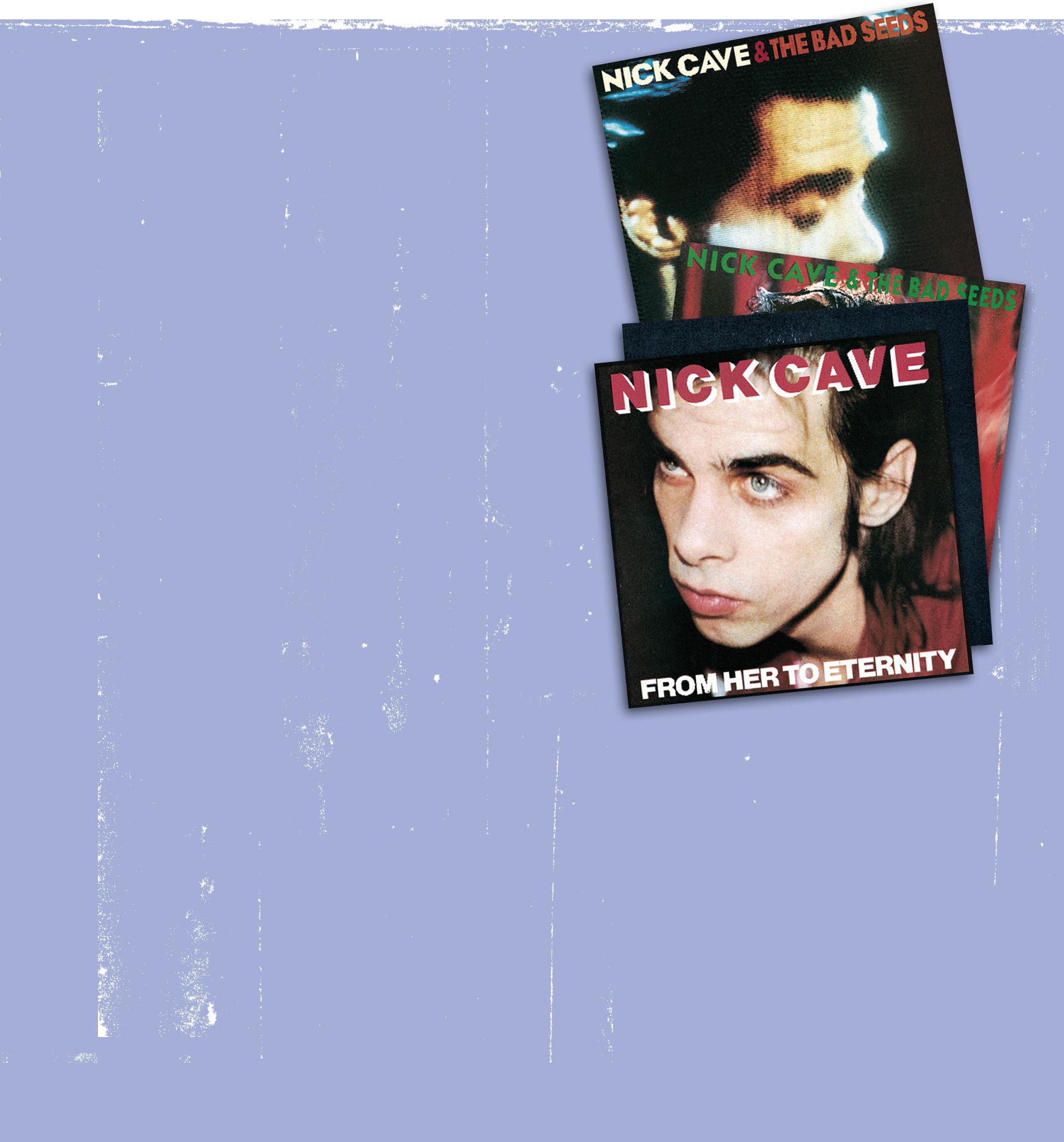 Matthew Clarke
B.J. ALLEN & BLUE VOODOO Heartless
Pure Air
Juke joint Blues is the theme for B.J. Allen’s “Heartless”, a hip and stylish co-operative affair, where the lead singer is an equal to her band members that make up Blue Voodoo. It’s a Chicago, Memphis and all-American house style that can’t go wrong - and thankfully doesn’t! This may be down to producer David Daniels tight control and keen ear along with his own contribution on drums. Most of the album is high energy,
NICK
CAVE AND THE BAD SEEDS From Her To Eternity
The Firstborn Is Dead
Kicking Against The Pricks Your Funeral...My Trial
Anti-
Reissuing the early work of an acclaimed artist is, to some extent, a post mortem; the dead skin split open revealing the bruised bones of a fevered past. This metaphor, of course, is an obvious textual reference to Cave and his nihilistic early vision. “From Her To Eternity” seems to lack any emotion whatsoever, choosing instead a displaced narrative structure. To dizzying effect, Cave’s frightful wailing weaves in and out of blood boiling baritone and banshee scream, layered with the Monk-like chanting of the Bad Seeds. Each guitar string is plucked with bone breaking clarity, taking prominence over the distorted soundscapes; the inclusion of xylophones and clarinets adding a classical touch to the junkyard fuzz. The entire album moves like a paean to death, the tone barely changing between ‘Avalanche’ and ‘From Her To Eternity’. For all its intensity, Cave’s first album is followed by a new type of animal altogether. “The Firstborn Is Dead” is not a million miles away from their first effort, but it does show a mature, more angry young man in Cave. ‘Tupelo’ begins as a thunderbolt, a frustrated opus which would become a template for Cave’s most respected tracks. In ‘Say Goodbye To The Little Girl’, Cave’s voice becomes playful, even teasing slightly as he cockily sings “I must say goodbye to your brittle bones/crying out to me.” The album here continues the Bad Seed’s early style, mixing the fuzz-rock/proto-punk of the MC5, 13th Floor Elevators and The Stooges with the early Blues greats, John Lee Hooker, Willie Dixon and Blind Lemon Jefferson - demonstrated here by ‘Black Crow King’ and the wandering slide guitar of ‘Wanted Man’. Interestingly, it could be suggested that Cave’s anguish to write song lyrics that conveyed emotion led to “Kicking Against The Pricks” being a covers album. By focussing on the sound, a wall of feedback and noise that has been adopted since the days of the Birthday Party, Cave finally pulls off an album worthy of its emotional content. It is his imagination and vision which makes the album a success. ‘Hey Joe’ loses its cocksure temperament in favour of a shaky insecurity. Similarly, all the pop intuition of the Velvet Underground’s ‘All Tomorrow’s Parties’ is lost as part of a band chant. Following in this extremity, ‘Black Betty’ is reduced to a purely a capella styling, resulting in a Son House style vocal texture with Cave pulling the listener with every confused “bam la bam.” With the fourth instalment, “Your Funeral...My Trial”, Cave finally mastered the art of emotional songwriting - ‘Sad Waters’ plays out like a song battered by love and its many weaknesses. The album’s main feature is a new, more optimistic overall sound, which is felt in that song and more impressively in the title track. However, those that would regard the first four albums as a collective would be happy to witness the raw power of ‘Scum’ and the desperation of ‘Jack’s Shadow’. These reissues are an important document to the history of a different type of Blues - the kind that many have emulated and the kind that few will master.
Matthew Clarke
Blues Matters! 132
although there are a couple of valid slow Blues that also carry a message. ‘Average Joe’ sounds like it could be a favourite at live shows with the band going off in one direction and Allen singing in another. Inescapable cheerfulness exudes from this fourth project in five years and yet B.J. Allen & Blue Voodoo remain unknown on the global stage, but their local grounding defies their understanding of the bigger picture (a number of songs hint at world decay). If there is such a thing as optimistic Blues then it sits sweetly in their last track which overflows with hope. Not groundbreaking, but satisfying nonetheless.
Gareth Hayes
BOBBY CHARLES Bobby Charles
Rhino Encore
A legendary songwriter ('See You Later Alligator', 'Walking To New Orleans’…) for the likes of Fats Domino and Clarence "Frogman" Henry, Bobby Charles was one of the many singers and writers who got a rough deal from the notoriously bad publishing deals of the ‘50s and ‘60s. So when he popped up in Woodstock, when the music scene was at its most fertile, he must have thought his time had finally come. Signed up by Bob Dylan’s manager, Albert Grossman, to his Bearsville label, and with neighbours The Band chipping in on this record, it all seemed rosy. It wasn't to be, but this 1972 album, now reissued, stands as one of the best of its time. Mining a similar swamp rock vein to Tony Joe White, the Cajun born Robert Charles Guidry put all his experience to work on this fabulous record. This reissue strips back to the original ten track version, which just goes to highlight how special a record it was, with nary a wasted second, be it the funky 'Save Me Jesus' or the laid-back ballad 'Tennessee Blues'. Bar an appearance on The Bands "The Last Waltz" album, Charles disappeared for anoth-
er fifteen years, although the ‘90s saw a revival of sorts. However, this stands tall as a testament to a rare talent.
 Stuart A Hamilton
WOMEN Women
Jagjaguwar
A digipak that tells you very, very little, and experimental almost industrial noise that tells you even less. From opening track ‘Cameras’, there’s a basic instrumentation with additional programming, effects, one chord strumming and tambourine banging. If that sounds a tad annoying, a bit of a mess, or just plain noisy - on every count, you’d be spot on. ‘Woodbine’ builds, rather like an orchestra tuning up, or like rush hour traffic. And it’s about as tuneful. Interesting retro effect on the vocals on ‘Black Rice’, very ‘60s, only with very hollow production and tuneless music that jangles like an ice cube on a broken took. Even when there is some intricate guitar work, as on ‘Sag Harbor Bridge’, featuring an accompanying drum, it quickly goes nowhere, becoming tedious after about thirty seconds. Other tracks have a retro feel, especially with ‘60s vocal harmonies, but the music is poor, tuneless and annoying. Songs with structure and tune come too late in the album to save the day. They’ve enjoyed critical success elsewhere, so maybe I’m missing something.
Joe Geesin
Blues Matters! 133
C.M.ARNOLD & THE DELTA BREAKS
My vinyl awakening happened during the summer of 1992. I was an indie kid listening to the band Mother Earth on the Acid Jazz label when my dad casually turned to me and told me that he had the same record. Riled by my teenage protestation and Neanderthal grunting, he started thumbing through his vinyl collection and eventually produced ‘Abraxas’ by Santana; the track was ‘Hope You’re Feeling Better’. He was right! His vinyl collection migrated to my bedroom.
“Another turning point came when, by chance, I stumbled upon a Ben Harper gig. I watched from the wings and was blown away by his rendition of Jimi Hendrix’s ‘Voodoo Chile’. Later that night, I was fortunate enough to meet the man himself, and he kindly gave me the bar slide he had used to complement the homemade lap steel guitar I had bought a few months earlier.
“Many years later, I found myself without a band. The freedom of which gave me the opportunity to record exactly what I wanted. I’ve always loved the idea of working around limitations and finding new ways of doing things. How was I to get the sound of the rhythm section on my own? My answer was simple, by any means necessary - drum machines, loops, beatbox anything I could get my hands on! I was inspired by artists such as the Jon Spencer Blues Explosion who frequently married the past to the present with a lo-fi sensibility.
“Soon I had an album’s worth of songs featuring samples ranging from Blind Faith (‘Do What You Like’) to Jim Ford (‘I’m Gonna Make You Love Me’) - the question was how could I
THE JOOKS OF KENT
BM: How would you describe your sound?
Gutbucket punk-assed Blues with a healthy dose of hollerin' spank. .
How did you get together, and how did you come to/settle on the band's name?
We've known each other for years and played in loads of bands together. The band's name came about from knowing we're from Kent, not Mississippi.
What does the Blues mean to you?
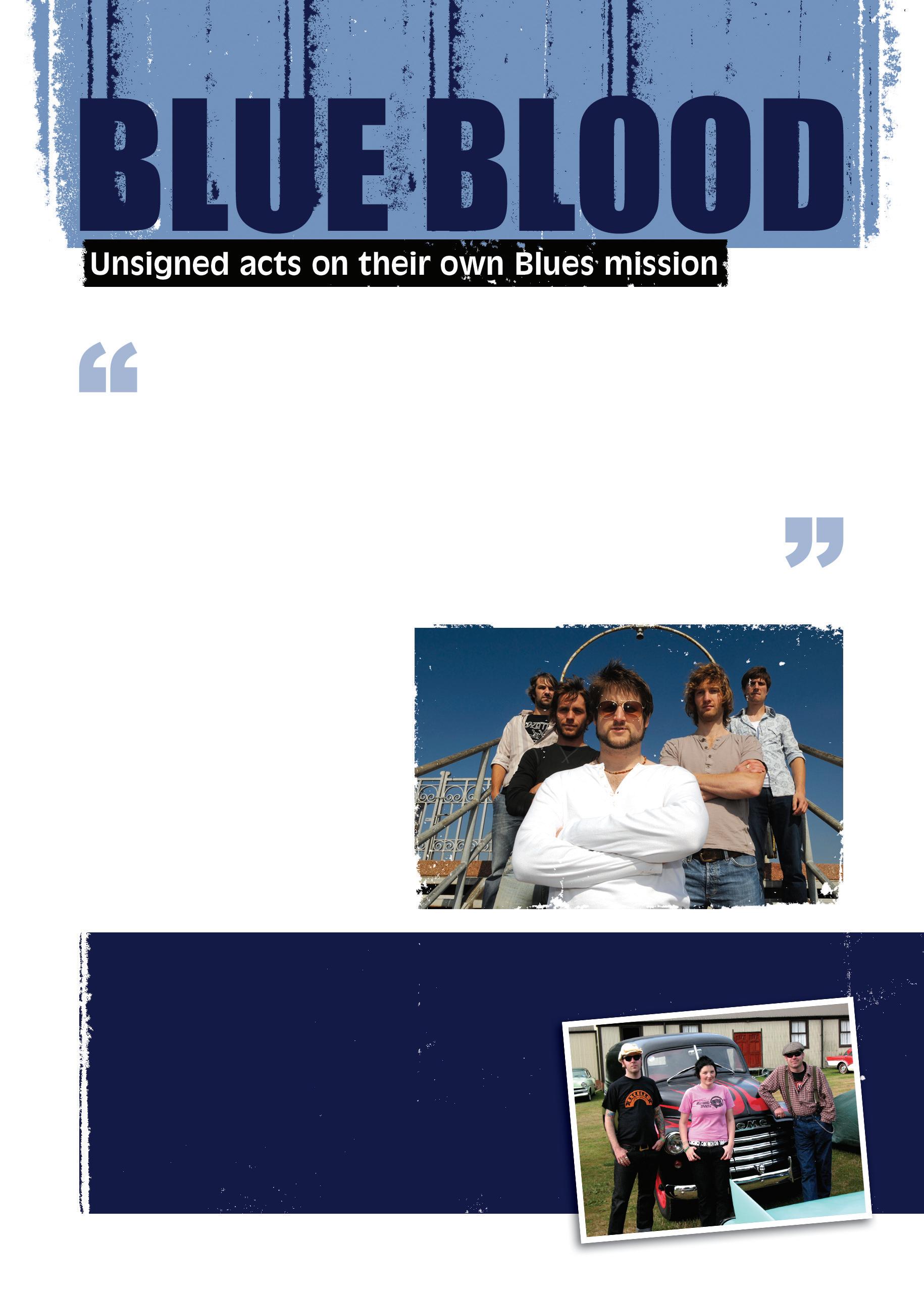
The Blues is the birth. It's the real punk rock, it's the gaps in between the notes that are important. It's all about ener-
produce this sound live? Step forward The Lonely Cardinals, a Blues duo likened to The Black Keys.
“Also enlisted to the band was Kier Pell (one of only two musicians to guest on the album). Kier provided the track ‘Negligee’, with a chainsaw guitar solo that ripped through my speakers. It was Kier who suggested the name The Delta Breaks hinting towards the combination of Delta Blues and breakbeats.
“The final addition to the band was Andy Hart, another musician I had worked with in the past and a real stalwart riffologist. New to the bass, he took to it like a shotgun to a duck! Together we produced a live sound that was a heavier and Bluesier sound in comparison to the album, but complementary nonetheless. I’ll let you be the judge!
C.M. Arnold myspace.com/cmarnoldandthedeltabreaks
gy, not technique - you have to play with feeling, otherwise it's not believable. Why complicate things? Keep it simple.
Favourite Blues artists...
John Lee Hooker‘cos noone's better at the one chord boogie. Son House - ‘cos
Blues Matters! 134
C.M.Arnold with his backing band.
The Jooks Of Kent
MELINDA
Los Angeles is a very different place from the city that I grew up in. The only thing the sun has to hide behind here are the palm trees outside my apartment windows, and even when the light creeps behind the leaves, the heat remains. The sun always crawls back out, reminding me that those moments of shade are not the familiar sign of clouds signalling the subtle start of winter, but yet another facade Hollywood glues over its smiling lying face. The Beach Boys may make it seem otherwise, but this is an easy place to get the Blues.
“I write my songs in my apartment, on an acoustic
right notes, but as hitting someone's heart with the same honesty all the great Bluesmen and women had. The honesty that allowed them to spill out all of their demons and dark secrets, so the rest of the world could perhaps at least own their own. And if there's anything I'm learning writing songs under Hollywood's passive-aggressive west coast sun, it's how to be honest with myself, so that I can find that same music in me.
Melinda Colaizzi myspace.com/listentomelinda
guitar I bought in Santa Monica when I moved here. My old Ovation didn't survive the four Boston winters it saw, while I was attending Berklee College of Music, even after the years it endured as I played in the Blues and rock clubs of Pittsburgh, Pennsylvania, where I was born. I'd performed in my hometown since I was 15 years old, all through high school, and established my love for music in the hidden and diverse Blues jams scattered through out the city.
“I know there's a future for Blues music, even if I'm still finding my place in it. This past summer I travelled to Minneapolis to co-write my latest single ‘The Hard Way’ with Kevin Bowe, who has worked with Jonny Lang, Etta James and Kenny Wayne Shepherd. Right now, I'm still writing, recording, and collecting songs for my album to be released in 2009.
“I've always viewed singing not as reciting all the
of his rough pluckin' rhythms. Cedell Davis - he just proves that you don't need notes if you've got soul. Sonny Boy Williamson - ‘cos one note can make a grown man cry! Bo Diddley - ‘cos he's a gunslinger, and I want his scooter. Little Walter - ‘cos of his unreasonableness.
How do you see the Blues scene currently?
It's great to Seasick Steve raising the profile of the Blues in popular music, but there are a load more acts that are just as deserving. We like the promotion that Not The Same Old Blues Crap does in the UK, and they're also bringing over great acts from the States such as T Model Ford, Honeyboy Edwards and Bob Log III.
What do you see as the future for Blues music?
Look to the past.
How important is it to you to try and get a record deal, with the way the music industry is changing now?
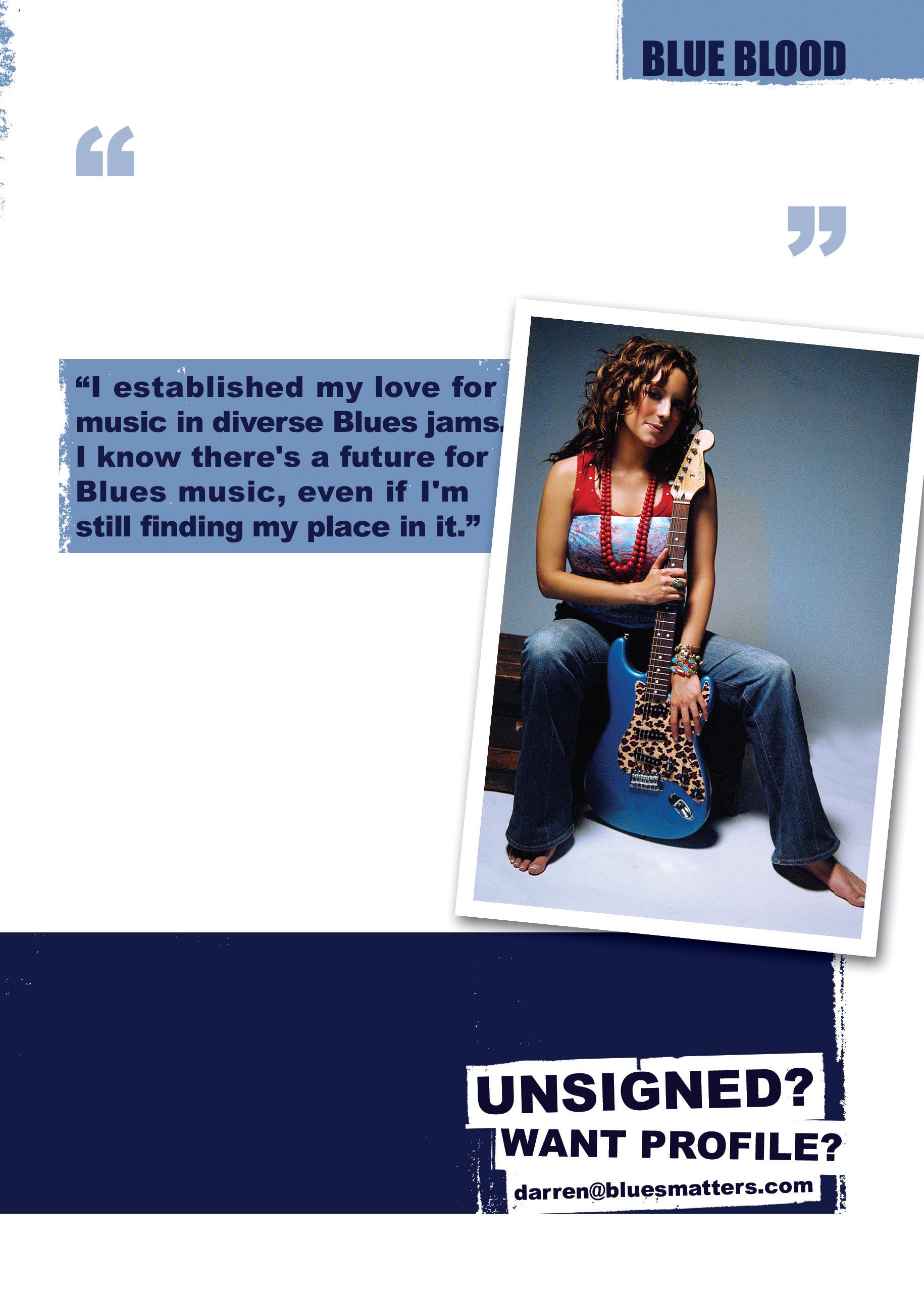
It's important to get your music heard, simple as that.
myspace.com/thejooksofkent
Blues Matters! 135
Melinda aims for the heart.
BROOKS WILLIAMS
A Session With Brooks Williams
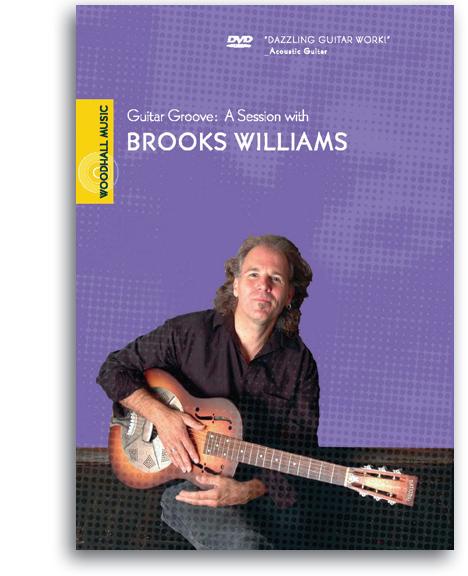
Don’t be fooled by the simplistic cover, or by the fact that this guitarist isn’t a household name, for this is a very good tutorial in itself. Williams has been described as “one of America’s musical treasures,” and it is easy to see why as he effortlessly picks his way over the fretboard. At first, I felt this was too daunting, but if you have the basic chord structures, those that he describes as the cowboy chords, then you will be able to stay with his method. For me, the greatest benefit was the manner in which he opened up the mind to view the fretboard in a different way, offering a number of simple fills and ways of playing the same thing but getting a better groove out of the sound. Whilst renowned as a picker, the tuition deals with both strumming and picking. He starts with the traditional song ‘Careless Love’, played in a straight fashion. This is followed by a groovy version with punchy rhythm, power chords and sliding fills. If this is difficult to follow, there is a really helpful tabulation booklet that is very easy to read. From basics, such as chords, riffs and rhythms, up to using the whole fretboard, Williams makes you think about your playing. As the DVD progresses, so does the difficulty, as he introduces slap and bass picking. Experienced players beware as this is aimed at the lesser able amongst us.
Merv Osborne
VARIOUS Experience Hendrix
Sony BMG

The arrival of this DVD coincided with the passing of Mitch Mitchell, the sole remaining member of The Jimi Hendrix Experience, five days after the end of the 2008 Experience Hendrix tour, so his appearance here on the 2007 tour acts as a memorial to him as well. The DVD picks out performances from two memorial concerts, one filmed in San Diego and one at the Paramount Theatre in Jimi Hendrix’s hometown of Seattle. It’s chock full of musical legends from the world of rock and Blues, and, as is often the case with this sort of thing, it’s a bit hit and miss. There are plenty of highlights, including the appearance of Huber Sumlin alongside Double Trouble on ‘Bleeding Heart’ and ‘Killing Floor’. Paul Rodgers pops in to sing with Mitch Mitchell and Billy Cox on ‘Stone Free’, and
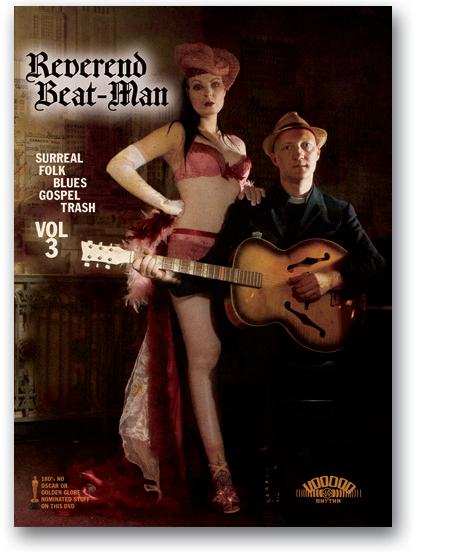
props to Indigenous for a dark and moody ‘Hear My Train A Comin’. However, the real standout is when Buddy Guy shows up for ‘Hoochie Coochie Man’, and when he’s joined by Hubert Sumlin for ‘Five Long Years’. The final segment should come with a government health warning for fretheads as no less than seven guitarists join in on ‘Voodoo Child (Slight Return)’ including Eric Gales, Vernon Reid (Living Color) and Jerry Cantrell (Alice In Chains). The pick of the extras is Robert Randolph’s take on ‘Purple Haze’. It’s pretty much an essential DVD for all the Hendrix fans out there.
Stuart A Hamilton
REVEREND BEAT-MAN
Surreal Folk Blues Gospel Trash Vol 3
Voodoo Rhythm
The children of the night, such beautiful music they make! If you think this DVD will be a nice, cosy ride because it has the word “gospel” in the title, then think again - “Songs Of Praise” it ain’t! Welcome to the weird world of Blues trash singer Reverend Beat-Man! This DVD offers eighteen videos and short clips of the BeatMan at his howling, screeching best, all made by seventeen different filmmakers. The good Reverend’s blend of hellfire, fury, Blues and punk makes for a long night of the soul, and some of the video clips make David Lynch look like the Teletubbies. Readers should also be advised that there are strobe effects on some of the videos. It’s all insanely surreal stuff, but the filmmakers have come up with some particularly chilling and dark videos, which match perfectly with the Reverend’s music. ‘I’ve Got The Devil Inside’ and ‘Don’t Stop To Dance’ are particularly good. Some of the adult themes (ahem!) may not be to everyone’s taste, but this is alternative filmmaking at its very best. The DVD also includes several bonus tracks. Just don’t have nightmares, ok?
Jamie Hailstone
FEATURE FILM M For Mississippi
Broke & Hungry/Cat Head
Subtitled “A Road Trip through the Birthplace of The Blues”, this is available in conjunction with a CD of the artists’ featured. The film was an ambitious project, to record a week in Mississippi of those few remaining old Bluesmen while they are still around, to get their experiences on record and to hear and see them perform. To a certain extent, it succeeds in doing
Blues Matters! 136
ERIC BURDON
The Animals And Beyond
Voiceprint

This is a one hour documentary focusing on the career of Eric Burdon. The Animals were arguably the finest R&B band this country has ever produced. Their singer is rightly portrayed as a brilliant and authentic Blues vocalist. There are Interviews with most of the original members, though Alan Price is a significant exception. The short clips of their brilliant catalogue of hits is an unsatisfactory testament to the band. Sadly, an in depth assessment of the music often takes second place to recollections of acrimonious disputes over, for example, the credits for a rushed recording of ‘House Of The Rising Sun’. There are the usual depressing tales of management manipulation and rip-offs. Burdon makes disparaging comments about their producer, but it was Mickey Most who is credited with finding two of their biggest hits - ‘We Gotta Get Outta This Place’ and ‘It’s My Life’. Burdon’s recollections of a tense moment with Nina Simone over the classic ‘Don’t Let Me Be Misunderstood’ are telling. Drugs, alcohol and egos are blamed for their eventual break-up. Our hero moved onto the New Animals and, with it, psychedelia and far more experimentation. Later he immersed himself in the California scene. ‘When I Was Young’ and ‘Monterey’ were classic early compositions. Then came Eric Burdon & War, who were largely ignored in the UK but huge in the USA. By the time the history in this film concludes in 1991 he had turned to the like-minded Brian Auger. Overall, the subject of this film comes over as a genuine, unspoilt and amusing survivor of both the London beat and California hippy scenes.
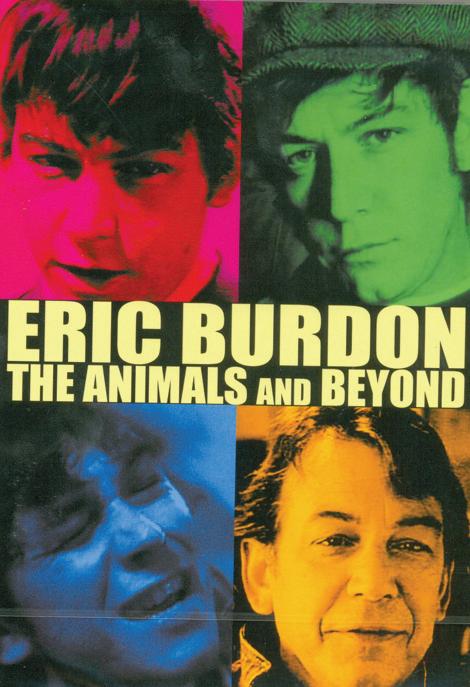
that, but without the accompanying CD, I was left wanting much more of the music. There is too much meaningless backchat between the film makers, which adds nothing to the production. When you do eventually get to see some of the Bluesmen that this should be all about, the interviews are disjointed, with very little direction, and I have to say that some of them are almost indecipherable in their ramblings, I had to replay it several times in order to understand what was actually being said. The performance shots too were disappointing, in that they were edited strangely. What highlights there were included T-Model Ford relating his days in prison and LC Ulmer reveling in playing again. However, this is a very disappointing feature.
Dave Stone
DAVID BROMBERG
Guitar Artistry Of David Bromberg: In Disguise Quantum Leap
This DVD is a fantastic insight into one of roots music’s most humble and self effacing artists. The name will be virtually unknown to most, yet he is the type of acoustic guitarist most keenly sought after by professional musicians. Originally inspired by the music of Pete Seeger & The Weavers, he studied guitar at 13 and enrolled at university to become a musicologist. Here he discovered the old Bluesmen, as well as contemporary’s artists such as the three Kings, eventually study-
ing with Rev. Gary Davis, gaining his trust and being called one of Davis’ sons. A move to Greenwich Village in the ‘60s saw Bromberg decide to devote his life full-time to music and before long artists such as Dylan, George Harrison and many others sought him out as a back-up artist on recordings. This DVD is the story of his journey through life and the people that he has met along the way. It’s a joy to watch his guitar playing so close up and, in truth, I am amazed that his big chubby hands can play the way he does. Yet the real value here is the stories about so many old Bluesmen. Big Bill Broonzy studying with Rev. Gary Davis, Blind Blake, Lonnie Johnson and Luke Jordan, and working with Bob Dylan and B.B. King are only some of the areas covered along with a song relevant to that story. Recommended to those with an interest in acoustic Blues.
Merv Osborne
TONY JOE WHITE Live At The Basement
Pepper Cake/ZYX
Born on a cotton farm in Louisiana, listening to his family play gospel and country, Tony Joe White was as destined as any to become a musician. Yet it was as a teenager listening to Lightnin’ Hopkins that “hit the bone.” Expertly, yet simply produced and edited, this low-key gig is great for both Blues purists and mainstream fans attracted by his Tine Turner connection. That connection being his songwriting capabilities, and both ‘Undercover Agent Of The Blues’ and ‘Steamy Windows’ feature here. Moods and flavours vary over time and, today, I prefer his versions of these numbers. The low-key nature, he’s seated throughout like the audience, adds to the intimacy and intensity of his Blues performance, and that counts for every track here. ‘Crack The Window’ has that John Lee Hooker swagger and ‘Pork Salad Annie’ is true to every Blues-food metaphor. Apart from drummer Marc Cohen, it’s a solo performance, so anyone buying it expecting a big Tina-like show-
Blues Matters! 137
Noggin
case may be disappointed. As an exercise in swamp Blues, for someone who has the t-shirt, it is very sweet indeed. No boundaries are broken but the heart is on the sleeve. The interview that comes as part of package is genuinely informative and the only niggle is that, as with many live DVDs, the show is barely an hour long.
Gareth Hayes
& WYNTON MARSALIS
Billed as a unique collaboration, this amazing DVD may just be the first of a dramatic trend in mixed genre sessions. We find ourselves meeting at a very special crossroads where definitive country icon (Nelson) and definitive jazz icon (Marsalis) lock horns over the Blues. It’s a magnificent showcase for country, jazz and Blues, and as well as attracting fans of those three genres, the DVD may just leap off the shelves into the hands of the just plain curious. Traditionals and standards are perhaps obvious choices - and crowd pleasers - but they work. ‘Georgia On My
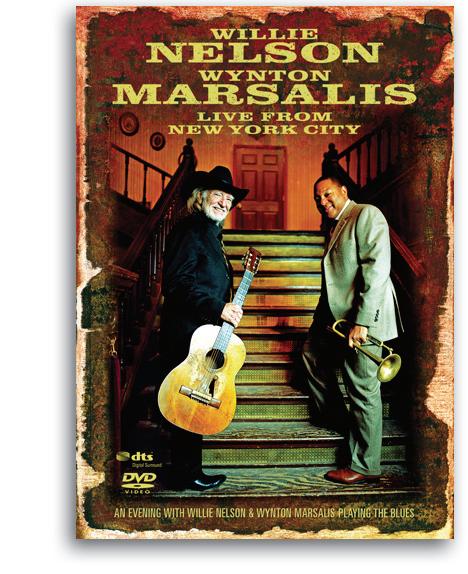
WIZZ JONES MICHAEL MESSER
Guitar Maestros # 1
Sound Techniques
Mind’ is mellow, ‘Caldonia’ is frantic, and ‘Ain’t Nobody’s Business’ is a cacophony of fused themes. Terrific stuff! Sandwiched in between the live numbers are clips of rehearsals and interviews. It’s great to hear Marsalis interviewed and saying that Nelson is unpredictable and great at improvising. Nelson simply calls Marsalis a musical genius. Ultimately, jazz just about has the upper hand with a smooth class and polished sheen running throughout. No dirty Blues or sing-along country but an awful lot of culture. There is much to observe here, and entice for either repeat viewing or searching through back catalogues from all genres on the stand.
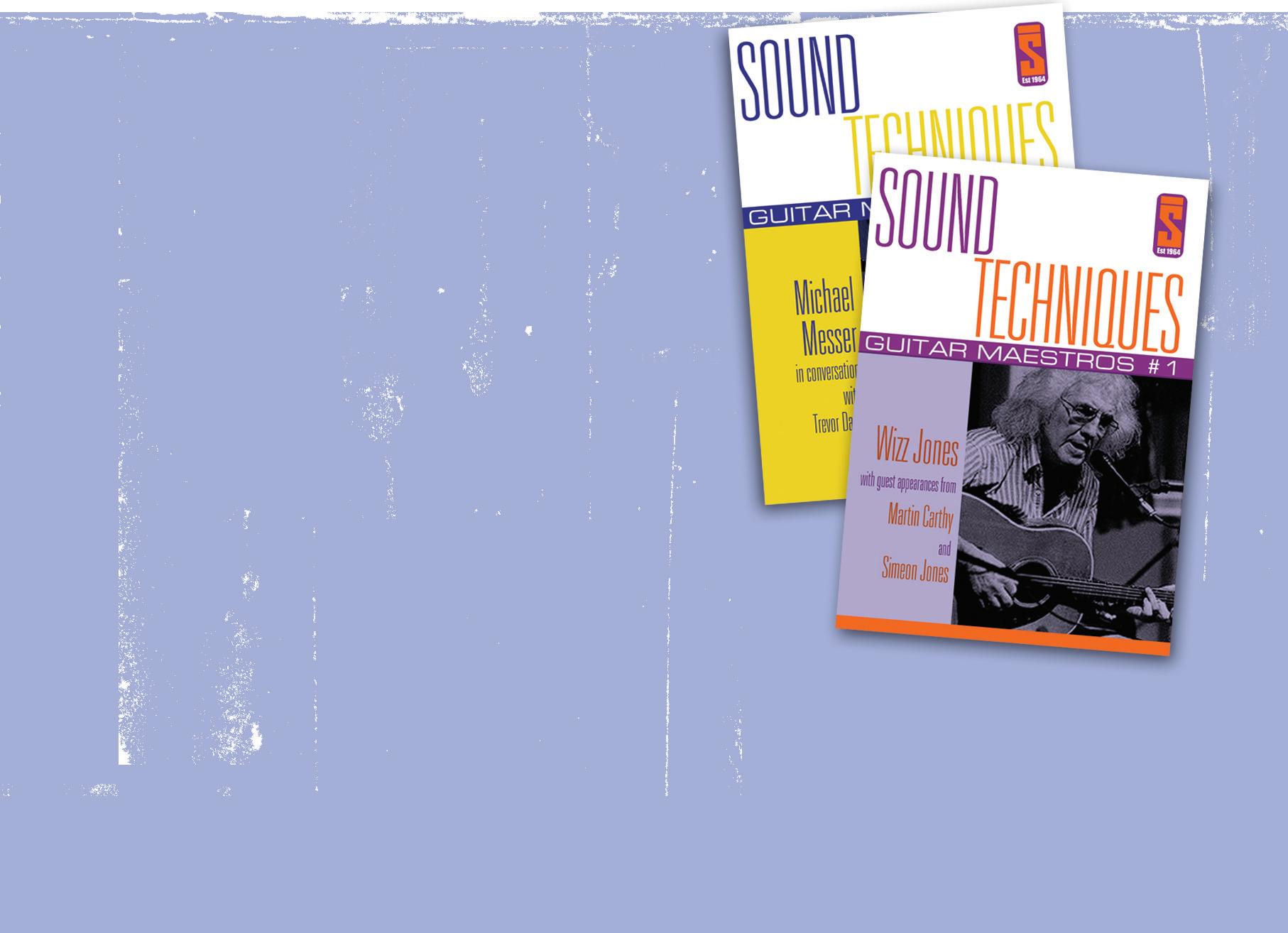 Gareth Hayes
BUDDY GUY Live! The Real Deal
Silvertone
A straight reissue of the 1996 video, this comes in a no frills, bare bones, eight song package, with nothing added for your viewing pleasure. Recorded at Buddy Guys own Legends club in Chicago, I remember disliking this way back when it first came out, and time has not improved it. The real problem then, as it is now, is the backing provided by the Saturday Night Live Band in place of Buddy Guy’s regular band. They seem to have little affinity with the music they were performing and, at times, it seems like this was their first encounter with the Blues. The five-piece brass section, in particular, take delight in honking in all the wrong places. On the plus side, Buddy Guy was at one of his latter day peaks around this time and when he steps up to the plate, and is given some room on songs like ‘Swet Black Angel (Black Angel Blues)’ and ‘Damn Right I’ve Got The Blues’, his is a turn to enjoy. An added bonus, albeit a sometimes
Cited by both John Renbourn and Eric Clapton as an early influence, the first DVD charts Wizz’s life via a number of anecdotes from growing up in Croydon, his early musical influences, life as a busker on the streets of Paris as well as recollections of the numerous artists he has known and played with. In conversation with Martin Carthy, he also explains the origins of a number of his songs, such as ‘Mississippi John’, a tribute to Sleepy John Estes, and ‘Burma Star’, a song about how soldiers returning to these shores had difficulty in re-entering British society after periods in Japanese POW camps. Perhaps most poignant of all is Ralph McTell’s song ‘Bentley & Craig’, inspired by a murder and its subsequent trial and hanging. He is the quintessential English folk troubadour and his style both easy and pleasant to listen to. Although Messer’s DVD comes over as extremely clinical and low budget, it is an interesting insight into one of Britain’s best loved acoustic artists. Described by none other than Johnny Cash as “the real thing,” the joy about this DVD is the close proximity that the camera gets to both artist and guitar, so that the viewer has an unobstructed window into his guitar techniques. The interview spans Messer’s early days, influences, origins of his style, slide work and, most interesting of all, his take on the origins of resonator guitars, as well as tales about the many guitars that he has with him in the studio. The interview is littered with solo performances, as he demonstrates various points. He is later joined by long time associate Ed Genis as they perform a number of both original and classic Blues. The downside to this is the fact that Messer plays for the camera alone. It would have been a bonus to have an audience to give atmosphere, but it is still an interesting document and insight into an extremely able individual.
Merv Osborne
Blues Matters! 138
inaudible one, is the legendary pianist Johnnie Johnson. If it wasn’t for the dearth of high quality Blues DVDs out there, I’d be hard pushed to recommend this one. But sometimes beggars can’t be choosers. However, don’t start me on the interview segments dropped, apparently at random, in and around the songs. It’s bearable, but keep your finger hovering over the fast forward button at all times.
Stuart A Hamilton
LARRY CARLTON AND THE SAPPHIRE BLUES BAND New Morning: The Paris Concert
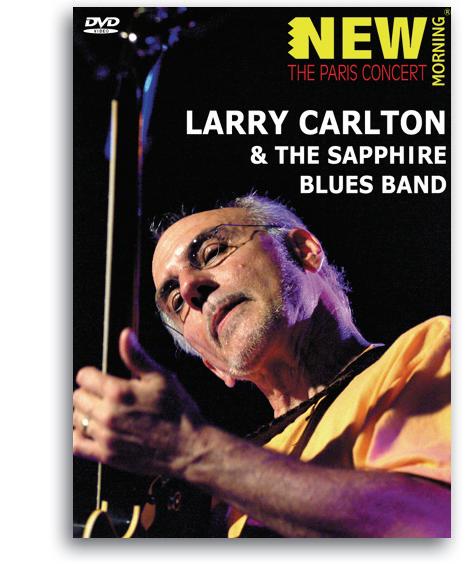
Bonjour, and welcome to jazz club – Paris style. This DVD sees guitarist Larry Carlton strut his stuff at the New Morning Club in Paris, and it was recorded in July 2004. The GRAMMY Award winning jazz and Blues guitarist filmed with his own Sapphire Blues Band, who are all top draw musos in their own right. Carlton might not be the flashiest guitar player in the world, but his technique speaks for itself. Over the course of ninety minutes, both the viewer and the audience are treated to a dazzling display of jazzy Blues. The only drawback is that it is all very understated. The band are all incredible, and the DVD is well shot –but a bit more pace would have been welcome. There are some real highlights, like when Carlton lets rip on ‘Sapphire Blue’, but this is very much a DVD by musos for musos. Lovers of intelligent and unshowy guitar solos will be in their element, but if you are new to the Blues, or looking for something a bit more rocking, you may get bored. The 5.1 sound mix is excellent and the DVD also boasts two extra tracks from the concert, which should have been incorporated into the main feature.
Jamie Hailstone
VARIOUS Warren Haynes Presents: The Benefit Concert Volume 8 Evil Teen
For the last eighteen years, Warren Haynes, guitarist and vocalist with Gov't Mule, The Allman Brothers Band, The Dead and countless others, has held an annual charity Christmas Jam. To help things swing, he invites a few friends along to make the party pop. This near three hour DVD documents the 2006 jam where those friends included Taj Mahal, Blues Travelers’ John Popper, Marty Stuart, The New Orleans Social Club, Dave Matthews and, of course, his own Gov't Mule. Now, don't come here if you're looking for flashy visuals and ornate stage shows. For this is a place where large bellies and lengthy instrumentals can pull up a chair and settle in comfort. Unlike some previous jams, there seems to be less musical interplay between acts, although you can still find some strange momentsAmerican Idol alumni Taylor Hicks nestles up to jazz legend Branford Marsalis! As always, the music ranges from the aweinspiring 'Loving You Is On My Mind' by The New Orleans Social
Club to the dull 'Cortez The Killer' by Gov't Mule and Dave Matthews. But there are more magical moments to make this worthwhile. There are also talking head vignettes interspersed here and there plus a few tracks from the warm up show.
Stuart A Hamilton
BYTHER SMITH
Blues On The Moon: Live At Natural Rhythm Social Club
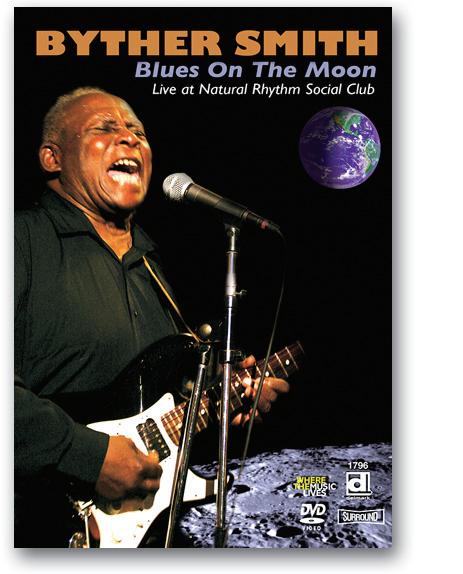
Delmark
Born in 1933, Smitty, as he’s known, has been on the Blues scene for many years, releasing sporadic albums, and still playing to audiences today. He’s played with the likes of Otis Rush, Junior Wells and Big Mama Thornton. This DVD is from a live performance in 2007, captured in a small Chicago Blues club. It is over an hour of raw, gritty, electric Chicago Blues. ‘Hard Times’ is a highlight, and is poignant to Smith’s early life (his parents dying when he was a very young child, followed by the death of his sister in a house fire) - it has powerful vocals and some nice earthy guitar. The title track is a bit plodding with a repetitive riff and lyrics, but ‘Monticello’ is a soulful, autobiographical slow Blues about leaving Mississippi and feeling lonely, while ‘Judge Of Honor’ shows his band in a funkier style. There is some up close camera work, where you can see the sweat glistening on Byther’s face and neck, but, at times, it does get a little amateurish. Smith was a boxer in his earlier days and this big man has a strong voice considering his age, and can still play his axe in a gutsy and lively fashion.
Andrew Baldwin
WENTUS BLUES BAND
Family Meeting
Inakustik/Wienerworld
You might not think Finland was a hot bed of Blues action, but as this documentary proves, the local music scene is alive and well. “Family Meeting” focuses on the 20th anniversary of the Wentus Blues Band, who hail from Kokkola in central Finland. The band have honed their craft and play around 150 gigs a year. Since they started in 1986, the Wentus Blues Band have played with many Blues greats and, in the autumn of 2006, they decided to play a gig with many of their friends to celebrate their anniversary. The documentary follows the band, and friends like Kim Wilson, Mick Taylor, Omar Dykes and Eddie Kirkland, as they rehearse, play the gig and party afterwards. Although the gig is good, and well worth the price of admission, this documentary is really worth watching for the offstage banter. There are some terrific raconteurs present, including Lazy Lester and Kim Wilson. The documentary makers were able to sit back and capture a group of musicians who clearly respect each other, and have plenty of stories to tell. The filming itself is excellent and the ninety minutes will fly by. You also get to see some great performances. What also comes across is the humility of the Wentus Blues Band themselves. Not only are they great musicians, but they are also decent chaps and great fun to hang around with.
Blues Matters! 139
SONNY
RHODES Live At Postojina Blues Festival
Feelin' Good
A handcrafted DVD of a performance recorded live in Slovenia in January 2008 sees the veteran Texan Bluesman in the capable company of his European backing band. The show seems to have been filmed by a Slovakian television channel, who've done an excellent job. Sonny Rhodes is a vision in his electric blue suit and canary yellow hat - and still in good voice for a man whose been singing the Blues for 50 years! Musically, he's content to work through a mid-tempo set of gritty Texas Blues, sometimes dipping into a funky rhythm not a million miles away from some of Albert King’s work. Although his chops are still intact, he's content to let Tiz 'Rooster' Galli do a chunk of the more energetic soloing, picking up the lead himself when the pace drops a little. However, when Sonny sits down behind his lap steel guitar, he seems more relaxed and at home. The rhythm section of Luke Tonani and David Molito do a solid job, as they work through some good tunes like 'Put The Shoe On The Other Foot' and 'Please Love Me', and some not so good ones, like 'Jelly Jelly Jelly'. Best of all is his take on Jimmy McCracklins 'Think', with a version that really swings. Don't come here if you're looking for a flashy DVD experience, but if you want a close-up peek at an old school Bluesman in action, come on in. Oh, and if you want to learn Slovakian, the subtitles will come in handy.
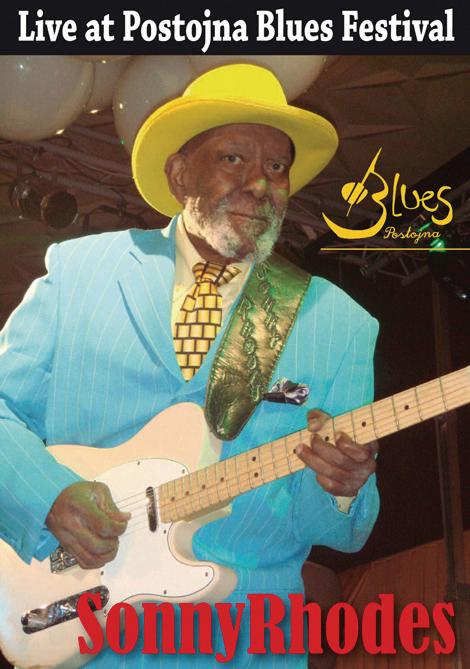
CINDERELLA Tales From The Gypsy Road
Cherry Red
VARIOUS

The Music That Influenced Led Zeppelin
Once you get over the fact that you’re not actually going to see actual performances by Zeppelin on this DVD, you’ll soon be drawn in by a kaleidoscopic range of clips and interviews which cover every aspect of the metal gods’ foundation. There’s many an interview with high profile Blues historians, and the film digs deep into the band’s Blues roots with some thrilling clips of historic artists such as Howlin’ Wolf, Bukka White, Son House and Muddy Waters. The whole package has the added interest of the English scene back in the ‘60s and ‘70s, so we get to see top acoustic masters such as John Renbourn and Davy Graham. The producers of this engrossing DVD are legends, too –the great Joe Boyd and the erudite Larry Cohn, who adds plenty to the mass of information imparted here. This is a DVD for genuine music lovers. Stirring at times, always atmospheric, and, above all, informative. If you really want to know what musical engines propelled Led Zeppelin to the starry heights, then “Down The Tracks” ought to be on your shelf. If we’re going to have music documentaries, then this is the way to make them. Brilliant!
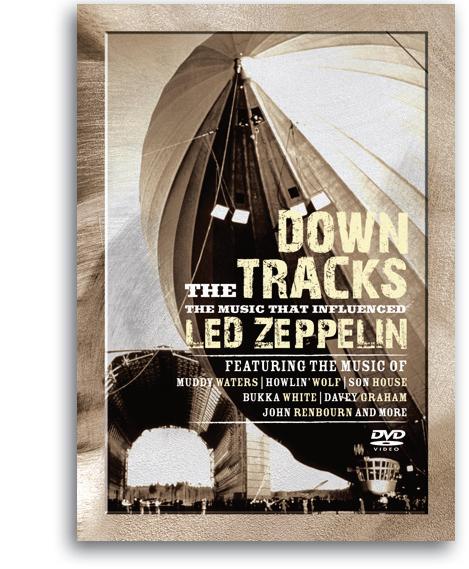 Roy Bainton
Ah, Cinderella! One of my favourite ‘80s Blues-rock bands. Something that casual observers may have missed, thanks to the pretty boy, glam-metal image. But once they got the rather pedestrian “Night Songs” out of the way, it was all systems go. Follow-up “Long Cold Winter” was an immense album that should have taken them straight into the Hall Of The Blues-rock Gods. Sure, it sold millions, but mainly to the glam fans who'd bought their debut. This DVD is a straight reissue of the original 1990 video that spliced live performances with shots of raspy, raw singer Tom Keifer shirtless in the desert. It also acts as a tour documentary, with lots of talking head shots, where the band get to be remarkably dull, in the manner that most bands do, often in grainy black & white. However, when the music cranks up, it's indescribably good. But I'll ignore that and point you towards the slide drenched 'Gypsy Road', a song so good it should be compulsory, through the monster ballad 'Don't Know What You Got (Til It's Gone)', on into the edited live medleys that culminates in an over crowded take on Lynyrd Skynyrds 'Sweet Home Alabama'. Ignore the ‘80s posturing, the sweeping helicopter shots, the dreadful clothes and the levitating piano (yes, really!) - unless, like me, you can see your teen years flashing before your eyes. Instead, just listen to the band play and enjoy. But remember to ignore the track listing and the disc menu, because there's more than they're letting on!
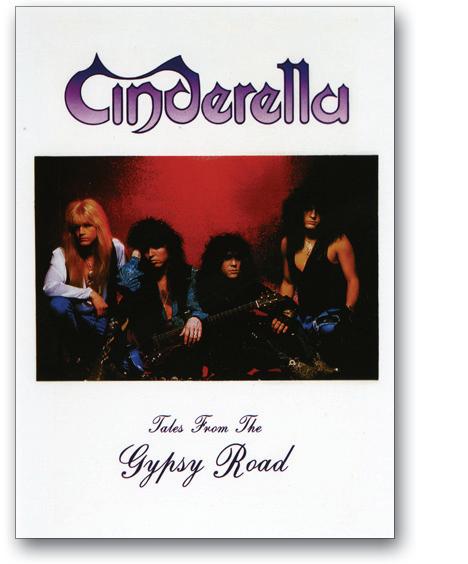 Stuart A Hamilton
Blues Matters! 140
“Family Meeting” is a fitting testimony to the spirit of the Blues and the musicians who keep the genre alive.
Jamie Hailstone
Stuart A Hamilton
JEREMY SPENCER In Session
Secret
This is a session recorded in London in August 2005, with ex Fleetwood Mac man Spencer in fine form. Backed by guitarist Dave Briggs, this is a low key live studio recording of fourteen tracks, introduced by Spencer, mostly self-penned, but with a few Blues standards thrown in for good measure. In the sixtyeight minutes of music, Spencer presents a number of styles which makes the session interesting and varied. He starts with ‘Red Hot Mama’ by Elmore James, then goes into ‘Sea Of Love’, reminiscent of a ‘60s pop song, then launches into a Cliff Richard version of ‘April Strings’. He even sounds a bit like Elvis on one of his own songs, ‘Psychic Waste’ - although his performance is a little less frenetic than the King would have done it. In fact, with the bald head and reading glasses perched on the end of his nose, Spencer does not look at all like the fine guitarist he is. Still, his talent shines through. For most of the session Spencer plays slide on an electric resonator, but, for a couple of tracks, he picks up the Fender Strat. Two of these, Tampa Red’s ‘It Hurts Me Too’ and Otis Rush’s ‘Double Trouble’, are the best in the session. He seems to get more feeling out of the Strat somehow. The session highlights Spencer’s class playing, although his vocals leave a little to be desired. The camera work is strictly no frills, and there are no sleevenotes, but the fine music makes up for it.
Kevin Wharton
CHUCK BERRY & BO DIDDLEY
Rock‘n’Roll All-Star Jam
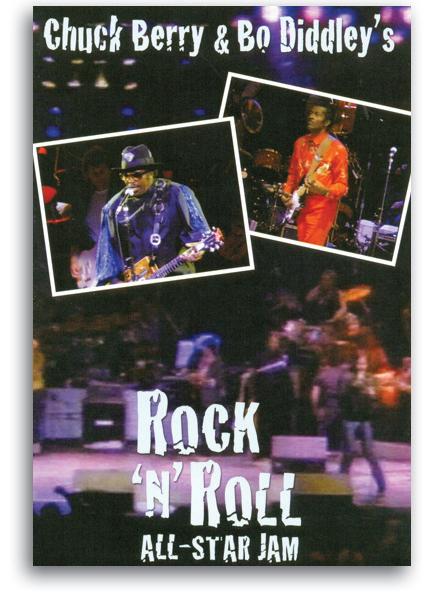
ABC
Apparently Bo Diddley decided to throw a barbecue for loads of his well-known musical friends, and then decided to have a jam with them - and this is the result! Guests such as Ronnie Wood, John Mayall, Mick Fleetwood and John Hammond show up to jam on a selection of mainly Diddley compositions. The music is interspersed with rehearsal footage, brief interviews and…food cooking! Chuck Berry gets his name in lights, but is effectively just a guest himself with a two song appearance in the middle followed by an even shorter cameo during the ‘encore’. Three Dog Night vocalist Chuck Negron, disguised as Barry Chuckle of Chuckle Brothers fame, kicks things off, before Diddley makes his grand and slightly arrogant entrance. This was filmed in 1985, and the hideous mullets and clothes don’t do justice for those concerned. This is essentially a Diddley self-promotion, showcasing his popular hits with some friends in tow. Other than Ronnie Wood, nobody else even gets a look in - Ronnie Lane is listed in the vocalist department, but his appearance is at the barbecue, he doesn’t even make the stage. This is a misleading product in many ways, and I wouldn’t recommend you bother tracking it down. The music itself is average, and would have probably come across better on CD. At just an hour’s running time, we get just eight full tracks. Disappointing.
Andrew Baldwin
AMY WINEHOUSE Revving @ 4500 RPM’s & Justified
Azure
One wonders if the pain and despair of Amy Winehouse’s music wasn’t mirrored by her anguish and antics in her personal life whether there would be a market place for documentaries such as this. Is it about her music and sultry voice or is it about her paraded personality? Made for the American fan it is slide show of her short history so far, and goes into depth about everything that has been connected to her during this time. It starts by talking us through her childhood ambitions and incidents: her first band, called Sweet And Sour, entry to theatre school, nose-piercing, and early BBC appearances. This would have been a nice warm up to excerpts and in depth critique but the flow and slide show doesn’t change - after twenty minutes, I had lost patience, overdosed with information and puzzled as to why the narrator hadn’t taken a breath. At half an hour, I was learning about who was sponsoring her clothes and ten minutes later making notes about tracks available on limited edition discs. I felt like I was swotting for a specialist topic on University Challenge. After an hour, my head was buzzing like a washing machine. For absolute fans and addicts only
 Gareth Hayes
JOHN JACKSON
The Video Collection 1970-1999
Stefan Grossman's Guitar Workshop
Considered by many as one of the finest country Blues pickers ever, John Jackson grew up in rural Virginia and absorbed the music of those around him, as well as the Blues he heard on the family’s wind up phonograph. Learning guitar and banjo for his own amusement, his tastes ranged from the Piedmont Blues of Blind Blake, Josh White and Blind Boy Fuller to the yodels of Jimmie Rodgers and 19th century banjo styles. Throughout this interesting visual and aural insight into the life of someone who has been a farmer, butler, chauffeur, gravedigger, civil war historian and folk-Blues musician, Jackson portrays a very gentle and almost shy character. The first video, “An American Songster”, is a thirty minute look at his life (his wife, hobbies, such as metal detecting for civil war relics, and stories of how he started in music). All of this is interspersed with Jackson playing in various places. The second video contains footage taking from an interview conducted in a studio. Jackson can tell some tall stories about hunting and fishing, but also plays plenty of tunes (interviewer Ralph Litwin accompanies on harmonica). Most interesting here is the story of how he learnt guitar at the age of 6 from a convict on the chain gang and then progressed by playing along to the phonograph with a pencil and rubber band as a capo. This is very much oldtime, front porch country music.
Merv Osborne
Blues Matters! 141
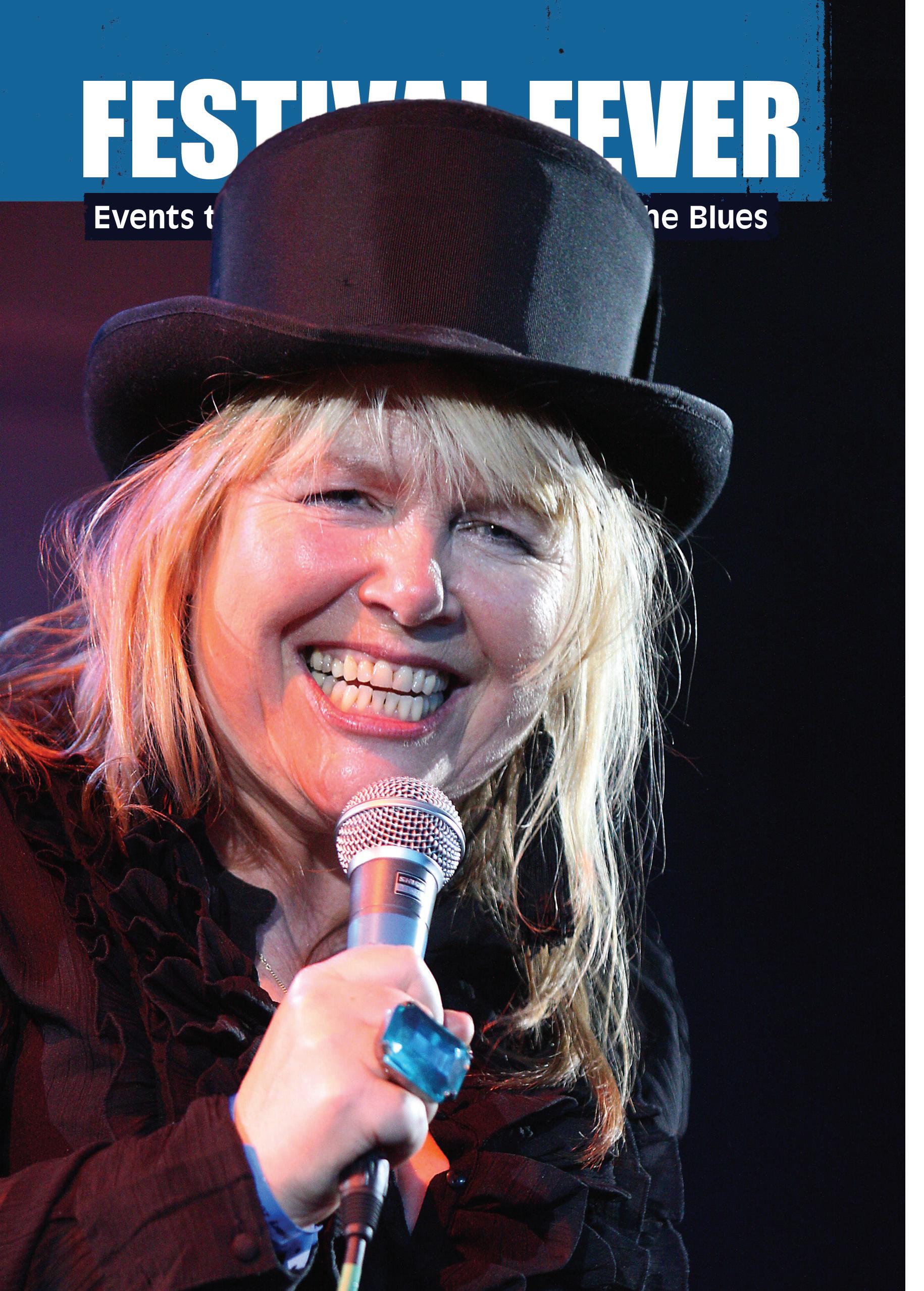
Blues Matters! 142
Connie Lush grins and bares it.
photos: Alan White
ROCK & BLUES FESTIVAL Butlins, Skegness

Friday, 23rd January – Sunday, 25th January 2009
Skegness Rock & Blues Festival is the opening shot of the Blues year’s celebration of its music. It offers a wonderful opportunity for Blues fans, venue owners, promoters and agents to meet up, watch, listen and discuss music in a ready-made setting, where all needs are catered for at reasonable value for money. Yet, in recent years, in a couple aspects, it has been falling down, and in the current credit crunch and the need for punters to be more discretionary with their money, it could be suggested it needs to address its failings – and quickly.
I admit to leaving on Sunday afternoon because, frankly, I was fed-up with the poor sound, and bored with the same acts as previous years – I also spent most of the weekend listening to the disgruntled views of the assembled musicians and punters. To say that I took an ear bashing about the weekends line-up and sound reproduction is an understatement!
My first comment, and an indictment of the weekend’s events, was reading the gig listing for the weekend and seeing that Mark Butcher was not being advertised for his ability to play maple or rosewood but willow (Mark was previously an English cricketer, since it’s important, apparently) - even so, I did enjoy his performance!
One of the main bugbears was the line-up up of acts, or more precisely, the year on year unchanging line-up of acts. Butlins needs to realise this is not another nostalgia weekend, where the punter goes to relive their youth, have a few drinks and boogie. The punters who go to Blues events go to listen to and experience musicians, old and new - they are knowledgeable in their music, not sycophants! It doesn’t bode well that they were advertising half of the same acts for 2010! Attendance was visibly down at this year’s festival, so if Butlins want people to come back next year, they need to take heed and compensate with the rest of the billing.
From the point of view of the performances, I found myself in Jak’s for most of the weekend, at the Blues Matters! stage, because of the quality of acts performing compared to the main stages. Stalwarts The Mick Rutherford Band opened the proceedings, as punters expect, with a set of the old and new.
It was noticeable that Jak’s was packed out for most of the weekend, and with The Brew, people were standing outside on a cold January night! The place was heaving. I missed some of The Brew’s set because I went to see Sean Webster, but what I saw of their set was of the quality I have come to expect from this band.
Sean Webster was another of my saving lights of the weekend, amongst an otherwise lacklustre festival. Not only did he do two gigs Friday, one in Centre Stage and one in Reds, over the weekend, he and Tom Latham did guitar demonstration sets in the Pavilion. The songs performed by Sean, both with the band and in his duet sessions, were mainly selfpenned, but with a few well chosen covers. One thing many Blues punters thirst for is new music from its Blues musicians, and Sean certainly gave them that for their money. His performances were all superb, whether main stage electric or Pavilion stage electro acoustic. His playing was fluid - great fretwork, and an excellent demonstration of guitar technique across the board. Vocally Sean had all the feeling you could wish for in a Bluesman; middle to lower register, grit, excellent intonation and most of all - the essential ingredientfeeling. Tom Latham and Dave Raeburn were on great form, too. Tom is edging towards being one of UK’s most overworked bass players, certainly one of the best on the circuit. Dave Raeburn, engine driver supreme, kept it tight, powering
Blues Matters! 143
through songs like a hammer on steel or gentle as a feather on a breath of wind, as required.
Saturday afternoon, I took myself back to Jak’s for The Roadhouse Jam Session and it was here I really found the essence of the Blues. Roadhouse, The Brew and The Mick Rutherford Band joined together with members of the general public to put on a series of jams. It was musically diverse, great fun and real Blues. At this point, it might be worth noting the excellent job done in Jak’s by the sound man, roadies and DJ - it was spot-on. During this session, a punter called Maggie Ross took the stage to sing, and what a voice - what a find! Mick Rutherford elbowed me in the ribs, saying, “You should find out who she is!” Maggie is about to form her first Blues band and she is a name to keep an eye on.
Saturday evening, I took myself off to see The Stumble. Well, I was impressed with their musical performance, but not what happened to them. I know the high standards and
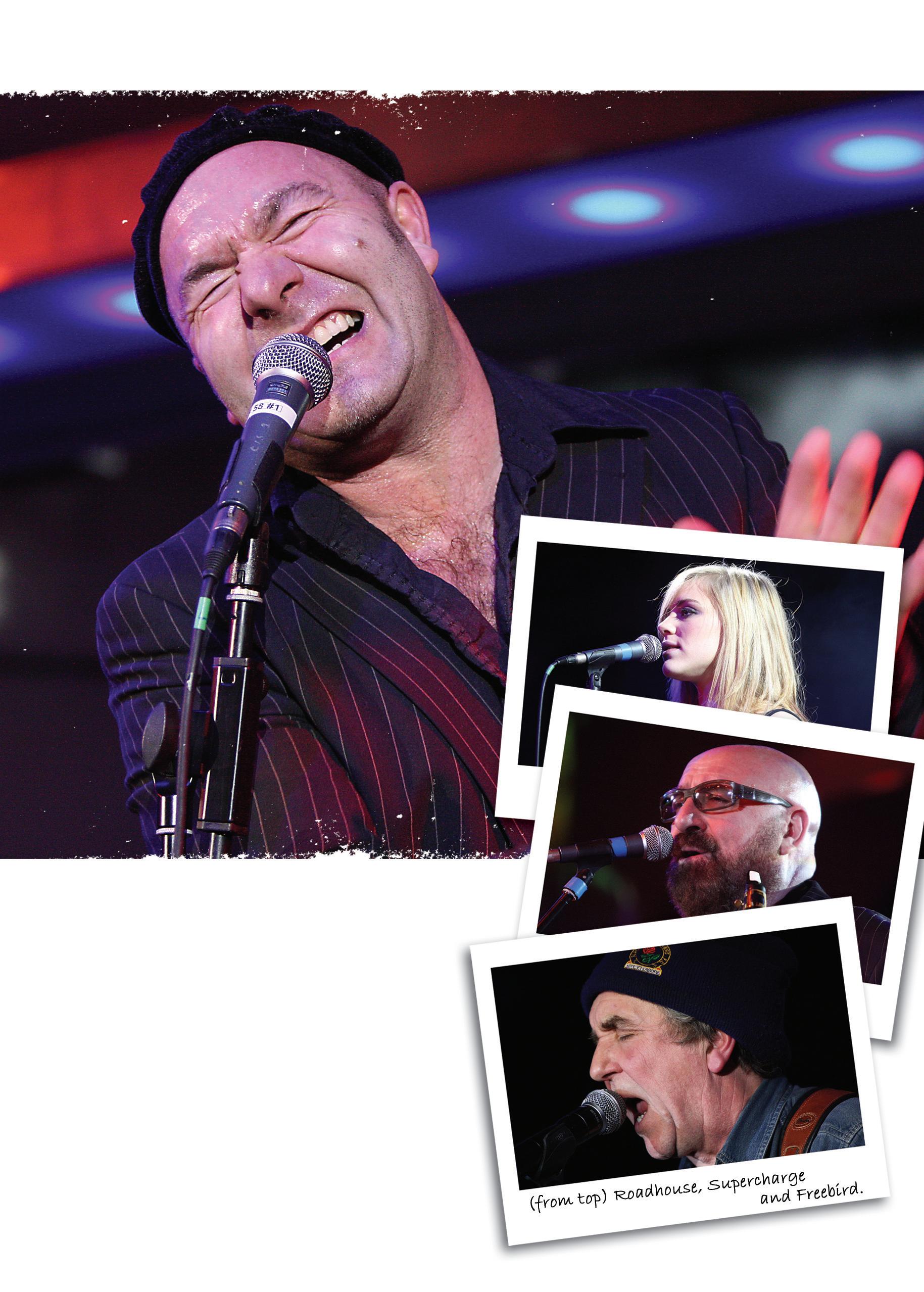
Blues Matters! 144
The Stumble’s Paul Melville expresses his anguish.
The inaugural Glasgow Rhythm & Blues Festival will be staged on the May bank holiday weekend (1st-3rd May). The three day event will showcase “the very best in contemporary rhythm & Blues, rock’n'roll and soul music from across Europe, with the aim to establish Glasgow “at the hub of a vibrant underground music scene.” Acts confirmed to appear include The Fabulous Ottomans, Berry Tweed and the Chasers, Little George Sueref, The Tennessee Hotshots, Big Boy Bloater and The Bottleneckers. As well as international headliners, and support for local outfits, DJ’s will also be playing rare records from the ‘50s and ‘60s. Entry is free to the fringe events, including the Glasgow Gospel Choir and a vintage record fare. Tickets are priced £10 per event, with a weekend pass just £25. tickets-scotland.com / 0141 552 5924 The Rhythm Festival returns for its fourth consecutive year, taking placed between 21st and 23rd August 2009. Of particular interest to Blues fans will be original Thin Lizzy guitarist Eric Bell, making a rare UK appearance; rising young blues guitarist Oli Brown; veteran guitar hero Tony (T.S.) McPhee (performing with The Groundhogs); Billy Jenkins' Blues Collective; Alabama 3; James Hunter; and Alvin Youngblood Hart. Adult (17+) Weekend tickets are priced at £90, with one child (5 years and under) allowed free entry with every adult ticket-buyer. Camping is from £25 per tent, £30 per campervan/caravan. rhythmfestival.net / 020 7734 8932 Blues ‘N’ Booze Festival will be staged at East Harling Sports & Social Club, Nortwich on May bank holiday weekend (1st – 4th May). The line-up includes: Friday 1st May – Dave Thomas Blues Band (1st May, £5.00 on the door), Roadhouse (2nd, £7.00 on the door), Egypt (3rd, £8.00 on the door) and Grapevine Blues Band (4th, £5.00 on the door). Those who buy a four-day pass for £20 will save 20%. Addmission to the beer festival is free. thedavethomasband.co.uk / 01953 718251
Described by the Sunday Times as "the friendliest festival in the UK,” 40 acres of the Sussex Plain, south of Chichester, will play host to eighteen artists at Blues On The Farm 2009. The festival’s 18th year, will be staged across four days, from 18th to 21st June. “Now that we’ve reached 18, I wanted to fly in some of the best acts in the world and combine them with favourites from the UK music scene”, said Festival organiser Julian Moores. “All of the acts are now confirmed and booked, and I know we have one of the best line-ups in UK Blues festivals!” Acts performing include Italian rock and Blues singer and pianist Matthew Lee; 2008 Blues Music Award Nominee Sharrie Williams and her Wiseguys; Sarah Savoy and the Francadians; Station House; Ian Siegal; Mike Sanchez; and “a collision of post-punk performance and toe-tapping oldies”, the Ukulele Orchestra of Great Britain. bluesonthefarm.co.uk / 01243 773828 Blues & Booze In The Bury will be staged on Saturday 13th June 2009. The event combines a Blues festival, a real ale festival and a family fun day, raising funds for charities, including The Neurofibromatosis Association (NfA). It is located open-air in The Bury, at the heart of the old town of Odiham, Hampshire. The music starts at 12 noon and finishes at 6 pm. Entry is free. With the emphasis on acoustic Blues, the line-up includes: Robin Bibi Band, Kindablu, Bob Long and Martin Wood. The third Swanage Blues & Roots Festival is takes placed between 2nd and 4th October 2009. There are fifteen indoor venues, with forty free admission gigs, with the line-up of acts including: Ernie’s Rhythm Section, The Mustangs, John Crampton, The Riotous Brothers, The Jawbreakers, Coalhouse Walker Blues Band, Will Killeen, Sonny Black and Riverside Blues Band. There will be a Blues steam train ride, open mic every afternoon and two Electric Jam Sessions, with Robin Bibi. swanage-blues.org The eleventh Maryport Blues Festival will be staged between Friday, 24th and Sunday, 26th July 2009. No details of the line-up were available as Blues Matters! went to press but a press release read: “The line-up includes a major pioneering British Blues artist, a legendary British rock band and a prominent and influential figure in Blues from the US.” maryportblues.com
professionalism of this band. At Butlins, I wanted to cry for them! This, though, is not an uncommon experience at Butlins music events. Perhaps they can get away with it at their nostalgia weekends but not with a Blues audience, and the quality of musicianship displayed by many artists at Rock & Blues. This wasn’t just The Stumble; it was an issue I came across in both Reds and Centre stage all weekend. You just don’t do this to Blues musicians of this quality; you might as well give them a megaphone and stand them under a single light bulb, if this is your level of respect!
Lead singer, Paul Melville spent most of the set signalling to heaven to have his vocal lifted - only “heaven” was not listening (like the sound engineers, “heaven” didn’t have any means of communicating back to the technicians) - thus the vocals were down and Simon Anthony’s sax playing was overpowering lead. Colin Black spent nearly all of the set glued to his amp at the back of the stage looking like thunder, probably because he couldn’t hear it through his own monitor - even with his protestations to side of house! As always with Butlins, there was far too much bass and drums. One of the things that I noted on a previous occasion with The Stumble was the call response between Colin, Simon and Jonny Spencer on rhythm and slide. This was completely missing audibly, although visibly you could see that it was still going on. There was no communication by the technicians through their head-sets between front and side of house. Certainly, side of house was not communicating through headphones or mic with other sound technicians. In a large venue, like Butlins’ main stages, it is essential. I felt very sorry for The Stumble; it was a brave performance, held together by their skill and their skill alone.
The whole weekend was epitomised for me, when one punter bent my ear complaining; he’d asked the DJ, in one of the main stages, for some Canned Heat music, only to be met only with a blank expression of bemusement. When he went on to request some Robert Johnson, he was answered withthe question, “Who is Robert Johnson?” I’m glad he didn’t ask for Muddy Waters at Skegness Rock & Blues, because I think he might just have been directed to the duck pond by the sea wall!
Carol Borrington
Blues Matters! 145
Oli Brown is moving to a bigger stage.
MATT SCHOFIELD
@100 Club, London. 26/03/09
When I saw Matt Schofield at Dingwalls last year it was the first gig with his new band, but even then it was possible to see that the new format was freeing Schofield and Jonny Henderson to explore new boundaries, while giving the music the strong platform is deserves. The intervening period seems to have tightened them up even more, and the gig at London’s 100 Club was definitely the best I have seen from Matt and, frankly, ranks with some of the best band performances I have seen in years. He played two sets, and the first numbers saw the band stretching out and developing the songs into jazz tinged Blues, with some serious funk undertones. The addition of Jeff ‘The Funk’ Walker gave a really danceable feel to the music, and the crowd was being wowed to the extent that after every workout the applause was topped with audible gasps from the assembled crowd. When Schofield is in ‘the zone’, there is a relaxed and easy-flowing feel to his music, and that was what we had – whether he was playing his own music with ‘Betting Man’ or a Freddie King ‘Cross The River’, he played the right style and got the right mood, and the band simply cooked up a storm. When the band ripped into ‘People Say’, my jaw dropped open – he was well into the funk/groove quality of Little Feat. Matt Schofield seems to get better gig after gig, and the new band is absolutely the right platform for some extraordinary music.
Andy Snipper
THE MALCHICKS THE PRETTY THINGS
@100 Club, London. 30/01/09
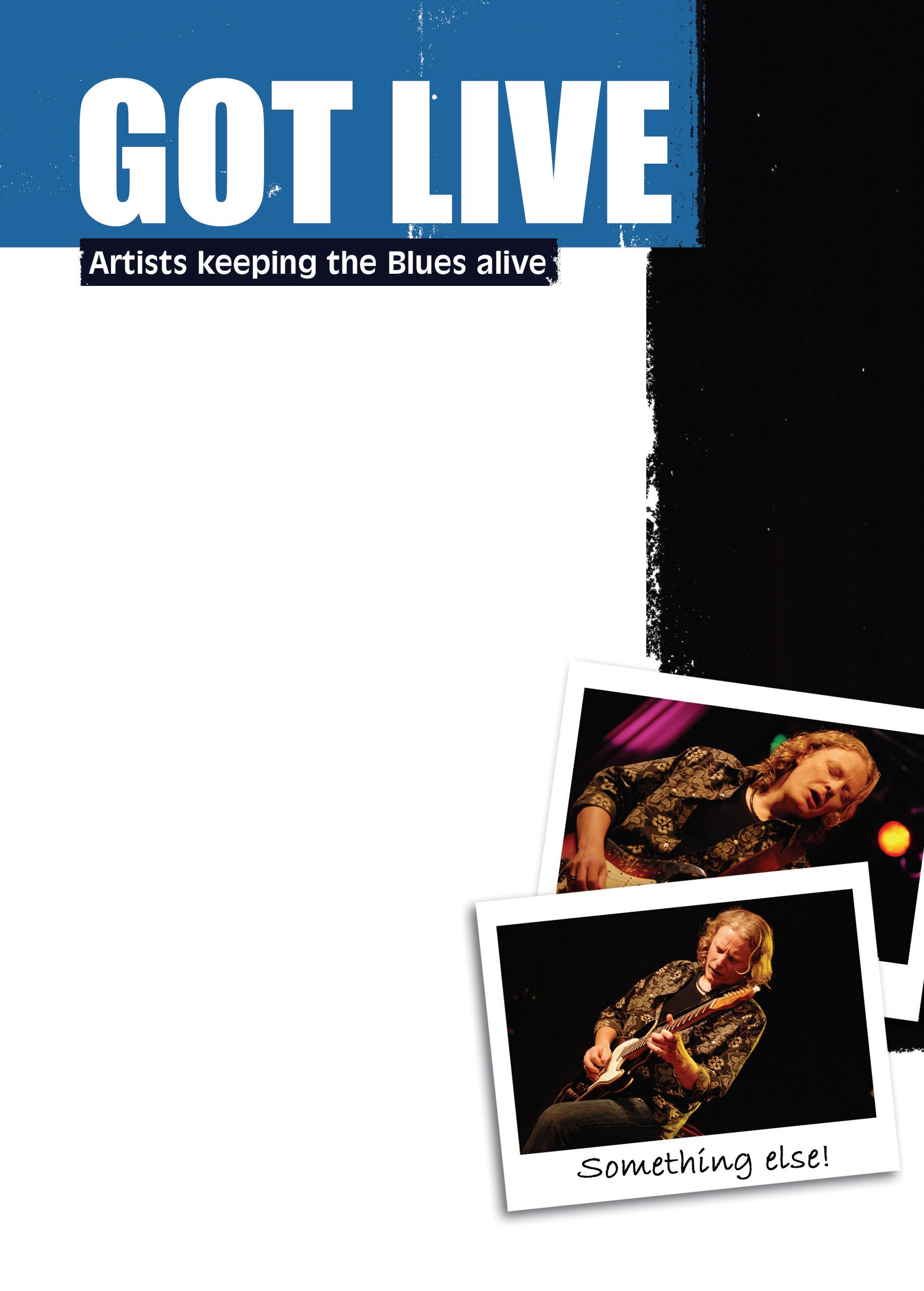
The Pretty Things and the 100 Club seem to be a match made in heaven and on Friday they proceeded to rip the old place up with a performance that showed just why they were so highly considered back in the day. Phil May’s vocal performance was immense, all swaggering and pugnacious, and as focused as I have seen him in years - the connection between the band and the audience came via him. Dick Taylor’s guitar is always a delight, especially his slide work, and as a band they gelled from the first moments. They played material from all their phases, with ‘SF Sorrow’ and ‘Don’t Bring Me Down’ exciting the audience in particular, but it was incredible to see the dancing in the crowd to their latest material, especially a super-intense ‘The Beat Goes On’. Earlier, The Malchicks played a short set that was very well received. They have now had time to work out what works best for them, and the more melodic numbers, such as ‘Riders Of The 101’, really work with Scarlett Wrench’s vocals. George Sanchez is coming on leaps and bounds – I’d guess a lot of time with the likes of Dick Taylor – and his guitar playing was more expressive and skilful. All in all, a terrific night at one of London’s few remaining iconic venues.
Andy Snipper
BIG PETE & THE BACKBONES
@Liverpool Marina. 12/03/09
An excellent turnout delighted organiser John Welsh, and lavish praise from MC Lionel Ross (who had first encountered them at
Blues Matters! 146
photos: Marco van Rooijen
last year’s Burnley Festival) for the four-piece band from Holland proved entirely justified. Led by Big Pete (v/d Pluijm) on harp and vocals, with drums, lead and bass guitar completing the line-up, the band powered their way through an hour long first set, which frequently paid homage to the legendary Junior Wells whom Pete acknowledged as his primary influence. Apparently it was their first gig “for quite a while,” but any signs of being ring rusty were soon lost to that big echoey harp and a virtuoso performance from Sander Kooiman on lead guitar. His hands plucked and strummed the strings as though his life depended on it, receiving several applauses during the song from the appreciative crowd. Before the half hour break, we learned that a new album was due shortly on Delta Groove, and a track from the album, being given it’s first ever airing, was extremely well received to the band’s obvious relief. The second set highlights were ‘Come On In This House’, by none other than Junior Wells,
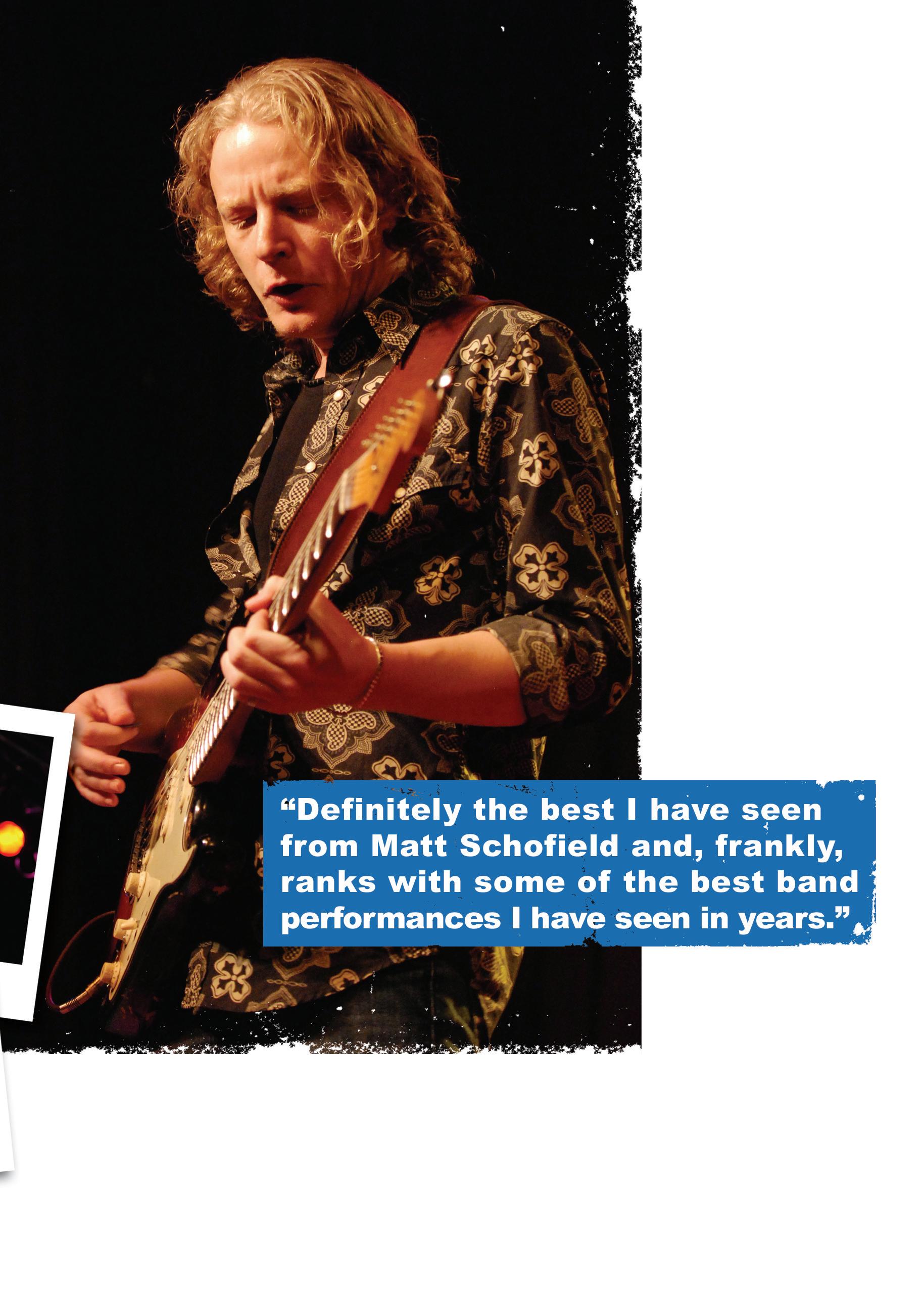
and ‘Ice Cream Man’ by John Brim. Big Pete’s vocal style is very reminiscent of the improving timbre of Matt Schofield but the Backbones’ real strength is their instrumental virtuosity, which is allowed free rein without losing sight of song structure – improvisation, yes, but tasteful and controlled (not allowed to run riot). One expert Sander Kooiman solo was played out with the rest of the band drinking and dancing around a side table before Joost Tazelaar took over on drums. This vignette served to illustrate the band’s real enjoyment in what they do – a vital ingredient for a successful gig - and this certainly was a superb display of rocking Blues from masters of their craft. Speaking of craft – this lovely venue at the heart of Liverpool Marina, surrounded by pounds worth of nautical splendour, certainly refuted the often held fallacy that you have to suffer deprivation to feel the authenticity of the Blues.
Robert Chaffey
Blues Matters! 147
BLUES CARAVAN
@Harmonie, Bonn, Germany. 08/02/09
Sunday night was Blues Caravan night at Bonn’s Harmonie, as RUF Records brought its latest tour package into town for 2009. This year’s show was titled “Fresh Blues”, and with Oli Brown, Joanne Shaw Taylor and Finland’s Erja Lyytinen, Thomas Ruf admitted it was a risk taking three relative unknowns across Europe. Erja has played here before (as part of Blues Caravan with Ian Parker and Aynsley Lister) but Oli Brown and Joanne Shaw Taylor, despite having big reputations on the British Blues scene, were new to these shores. The first act up was Joanne Shaw Taylor. Joanne’s ‘Brummie’ accent was evident when she talked, but not when she sung. We might be talking young (22), but Joanne has had her own band since she was 16, not to mention a stint alongside Dave (Eurythmics) Stewart and Candy Dulfer. From this, and her energetic playing, she obviously has talent in abundance, but on this night she was standing in Harmonie’s ‘black hole’. It’s a stage corner that doesn’t seem to catch the light or the attention too well. It didn’t stop Joanne receiving a lot of deserved applause, however. ‘Bones’ was my favourite of her set and it rocked well enough, but I had the impression she would have kicked more ass stage front. Sandwiched in between the two ladies was the highly rated Oli Brown. A very young Jon Bon Jovi, maybe? Musically, and fashion-wise, though, Oli Brown is very much his own man. The tailored pin-stripe suit, and especially the two-tone shoes, say exactly what his music underlines - he knows exactly how he wants to look and exactly what he wants to play. There was an extraordinary contrast of shyness in his stage presence, yet complete ease with the audience. Maybe charisma is a better word. The first big applause for the evening went to Brown introducing ‘Psycho’ as a song about his experiences with women - a large part of the audience was male and (well) over 30, but I’m sure few have had the problem of being targeted by a female stalker. It certainly wasn’t a Sonny Boy Williamson song, and you have to give the man credit for a fresh Blues topic. By the time a raunchy singalong version of the old standard ‘Black Betty’ finishes the set; everyone was eating out of Oli Brown’s capable hands. Finland’s Erja Lyytinen had the hard job of keeping the performance level set. The ‘veteran’ of this year’s show, at a mere 29, Lyytinen could have relied on her sexy short red dress for attention, but as soon as she plugged in, it was clear she didn’t need to do so. “The Bonnie Raitt of Finland”, as she has been rather clumsily branded, doesn’t actually bear much similarity to Miss Raitt outside of a fiery slide guitar style and flaming red hair. If the dress didn’t catch your eye then her G&L semi-hollow guitars in red and blue ‘metal-flake’ design surely did. An added bonus for those at the front was her signature Joe Perry porcelain slide! ‘Broadcast’ was reminiscent of Rory Gallagher’s ‘The Loop’, with its regular return to the first refrain, but Erja’s Finnish accent made everything distinctly her own style. An earthier Ana Popovic, and like Ana, not
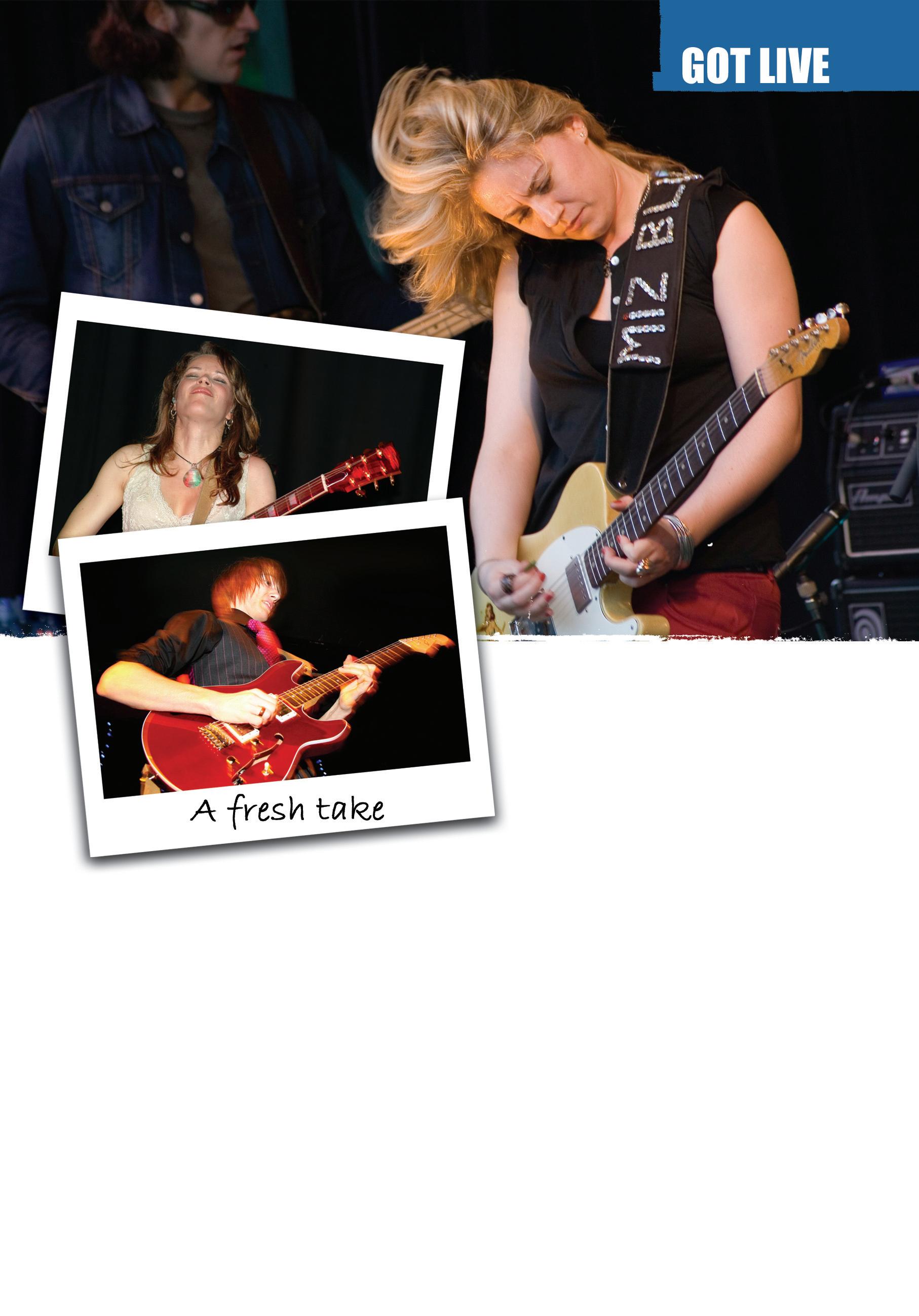
Blues Matters! 149
photo: Tony Winfield
Blues Caravan 2009: (inset) Joanne Shaw Taylor, (polaroids, from top) Erja Lyytinen and Oli Brown.
photo: Christine Moore
photo: Chris Rees (chrisrees.net)
pure Blues but somewhat eclectic. Both women are fans of Stevie Ray Vaughn and both subsequently play smooth jazz tinged phrases with silky ease. With all three acts onstage together, plus Erja’s guitarist Mike Griot on bass, and the superb Denis Palatin on drums, the second set was also a storming success. Topping last year’s surprise additional song of ‘Whole Lotta Love’ was Whitesnakes ‘Aint No Love In The Heart Of The City’. Young they may be, but make no mistake, these girls and this guy are not in it to be famous, they just want to play Blues. And an ecstatic audience in Bonn’s Harmonie just loved to hear them playing it, too.
John Hurd
DAVE ARCARI
@Captain’s Rest, Glasgow. 02/03/09
Subtle, considered or restrained are most certainly not adjectives that can be applied to Dave Arcari. To experience a concert by this Bluesman is to experience an event quite unlike anything else. A big bear of a man, dressed completely in black, he bestrode the stage like a man possessed. Constantly prowling from side to side like a caged and frustrated animal, bellowing his lyrics out at the packed audience and pounding his various national guitars to within an inch of destruction - he left me with feelings of intimidation, awe and exhilaration. This was a terrific evening when, if we are honest, the often somewhat staid solo artist Blues music was taken by the scruff of the neck and dragged kicking and screaming into the 21st century. However, despite the anarchic punk and thrash elements that permeate proceedings, make no mistake, this was real Blues. I think Blind Willie Johnson and Robert Johnson would applaud Dave's versions of set opener 'Soul Of A Man' and set closer 'Walkin Blues'. I love tradition but always wonder just what the masters would be doing with their songs today to keep it fresh and interesting. We will never know, but for sure things would have changed. Add in a brilliant take on Robert Burns's 'Parcel Of Rogues' to the mix of fine Arcari originals from the new album "Got Me Electric", and you get a highly charged, exciting evening of music that was just wonderful.
Graeme Scott
BLUESCLUB
@Eel Pie Club, Twickenham. 21/01/09
I had high hopes for Bluesclub, the band fronted by Gary Grainger and Peter Hope-Evans, not least because the Eel Pie Club in Twickenham is one of my favourites and the audiences there are generally very enthusiastic and welcoming of talent. In the end, the gig fell somewhere between ‘pretty good’ and ‘a little disappointing’, without ever reaching the heights that the band members history had promised. They started off with a terrific version of Canned Heat’s ‘On The Road Again’, with Peter Hope-Evans on harmonica and jew’s harp, and the boogie building nicely, and I thought that this would be the catalyst for a fine set, but ‘Hard Headed Woman’ and ‘Bring It On Home’ seemed to continue at the same pace and with little change in tempo, or with any intimation of real excitement from the band. Gary Grainger’s guitar was less to the fore than I was hoping for, although he did nothing wrong the whole set, and Peter Hope-Evans’ harp work was really the best element of the band’s sound – his history with Medicine Head told me where he was coming from – but John Rankin’s vocals weren’t far enough forward in the mix so that the sound was a little muddy (not what I have heard at the club in the past). ‘Aint Got You’ was very dark and
Nicky Moore’s Blues Corporation: Basingstoke Blues Club (9th May), Westcliffe on Sea Club Riga (5th June) and Farnham Maltings (25th). myspace.com/nickymooreblues Peggy Sue: York The Basement (2nd May), Salford Sacred Trinity Church (3rd), Glasgow Twisted Wheel (4th), Norwich Jurnets Bar (8th), Southampton Hamptons (9th), Bristol Cooler (10th) and London Borderline (15th). myspace.com/peggysueandthepirates The Mustangs: Waterlooville Heroes (8th May), Warmwell New Forest HOG (15th) and Portsmouth RMA Tavern (20th June). themustangs.co.uk Heartless Bastards: London Hoxton Bar & Grill (11th May), London Dublin Castle (12th) and London 229 (13th). theheartlessbastards.com Helium Soul: London The Underworld (8th May). heliumsoul.com Grapevine Blues Band: Windsor Duke of Connaught (2nd May), Kimpton White Horse (3rd), London The Beehive (9th), Aylesbury Mendoza Café-Bar (14th),High Wycombe The Belle Vue (30th), Hampton Hill The Jenny Linde (4th June), Southall The Grand Junction Arms (12th), Brentford The Globe (20th) and Hoddesdon The White Swan (27th). grapevineblues.com Fruteland Jackson/ Bob Hall: Keighley Bronte Blues (8th May), Cockermouth Kirkgate Theatre (10th), Cherington Arms (11th), Southampton The Concorde Club (13th), Wimborne Tivoli Theatre (14th), Leicester The Musician (19th), South Shields Customs House (20th), Selby Town Hall (21st), Aldershot West End Centre (22nd), Bury The Met Arts Centre (24th), Sheffield Boardwalk (25th), Wavendon The Stables (26th), Abertillery The Met (28th) and Worthenbury Village Hall (30th). boogie.demon.co.uk
Albert Lee And Hogan’s Heroes: Weston-Super-Mare The Playhouse (1st May), Bristol The Fleece (3rd), Cardiff The Globe (4th), Bilston Robin 2 (7th), Ravenshead The Stetson (8th), Southport Arts Centre (9th), Caernarfon Galeri (10th), Nr Banbury Sibford School (15th), Hailsham Pavillion (16th), Wavendon The Stables (31st), Aran Lamlash Hall (3rd June), Glasgow Renfrew Ferry (4th), Berwick-Upon-Tweed Maltings Theatre & Arts Centre (5th), Moresby Rosehill Theatre (6th), Hull The Highway (8th), Liverpool Baby Blue Live Lounge (9th), Stratford Cox’s Yard (10th), Bath Komedia (11th) and Woolmer Hill Tech (12th). albertleeandhogansheroes.com The Mick Rutherford Band: Cheshire NABD National (9th May), Farcet Fen The Plough (16th), Nottingham Chestnut Tree (22nd), Cheltenham Tubbys Blues Club (5th June), Swindon Carters Rest (6th), Nuneaton Kingswood Tavern (19th) and Horncastle Old Nicks Tavern (20th). myspace.com/mickrutherfordbandinfo Dave Arcari: Perth The Twa Tams (1st May), Rotherham Rudi's Blues Cafe (8th) and Milngavie The Fraser Centre (6th June). davearcari.com The Spikedrivers: Darlington Arts Centre (8th May), Coolham Vilage Hall (29th), Manningtree The Red Lion (6th June) and Seal Dorton House (24th). spikedrivers.co.uk

Johnny Winter: London Shepherds Bush Empire (23rd May), Milton Keynes The Stables (24th), Cardiff The Globe (25th), Cardiff The Globe (26th), Wolverhampton The Robin 2 (27th) and Leamington Spa Assembly Halls (29th). Louisiana
Red/Michael Messer: Bury Met Arts Centre (1st May) and Sheffield Boardwalk (2nd). louisiana-red.com Holly
Golightly: Newcastle The Cluny (24th May), Glasgow King Tuts Wah Wah Hut (25th), Leeds Rios (30th), London Borderline (1st June), Rhonda Valley Parc Hall (3rd) and Bristol The Thekla (4th). myspace.com/hollygolightlymusic Ian Siegal: Treorchi Parc and Dare Theatre (9th May), Sheffield Boardwalk (19th), Kendal Brewery Arts Centre (21st), York Grand opera House (22nd), Bristol The Thunderbolt (28th), Swansea Milkwoodjam (29th), Derby The Flowerpot (30th) and Leicester The Musician (31st). iansiegal.com Smoke Fairies: London O2 Islington Academy (21st May), Bedford The Ent Shed (23rd), Birmingham The Glee Club (25th), Cardiff St Davids Hall (26th), Bath The Spiegel Tent (28th) and London The Luminaire (4th June).
Blues Matters! 150
brooding, and stood out as a change in pace, whilst ‘Meet Me At The Club’ was funky and smoking with a rolling organ sound, but then they submerged back into themselves again. I will definitely see them again, given the chance, but this time they were just not firing on all cylinders.
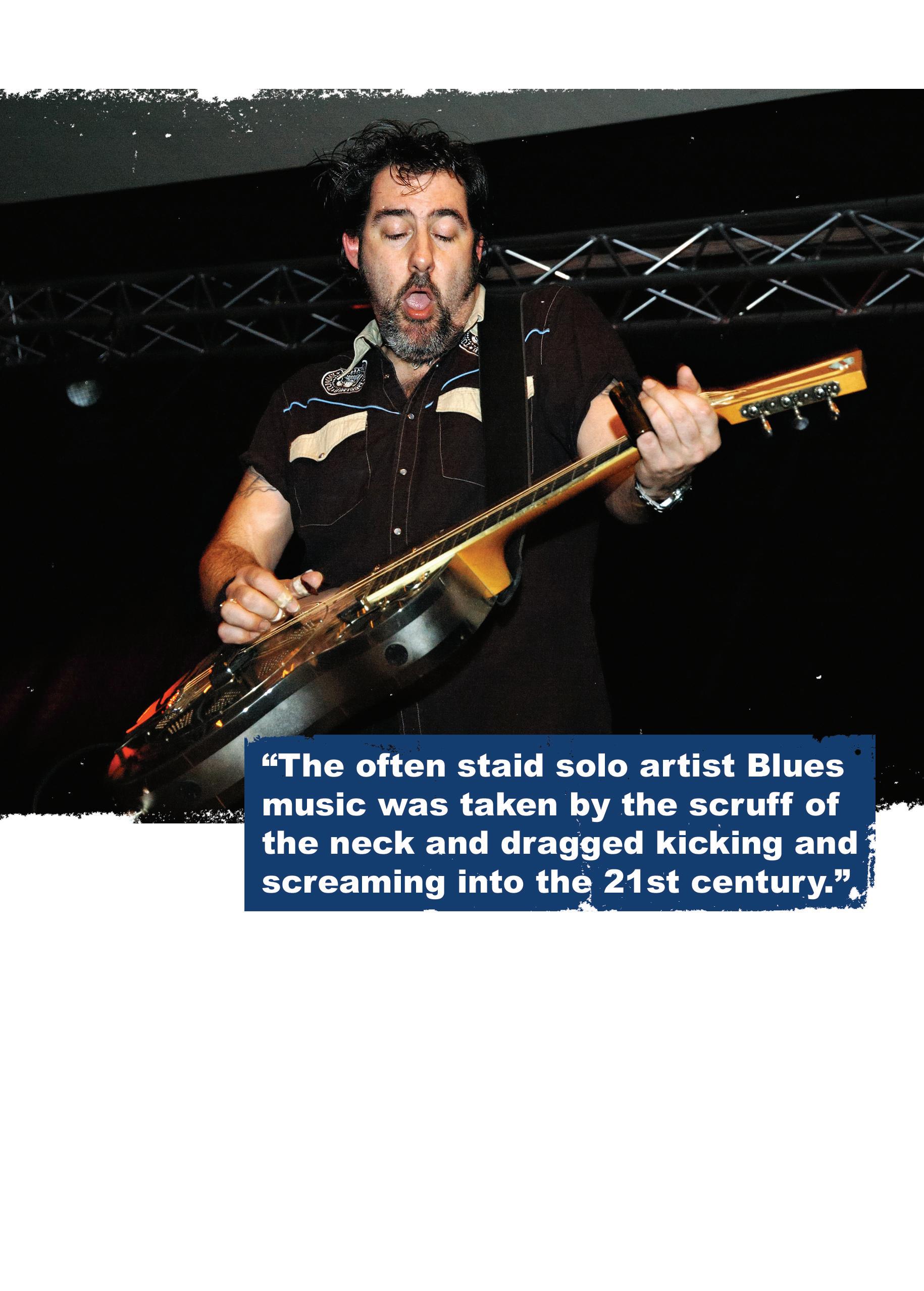 Andy Snipper
IMELDA MAY
@The Rescue Rooms, Nottingham. 02/03/09
Jools Holland was a wise man when he gave high profile to the singing and songwriting talents of Imelda May on his programme and as support act on his tour. Imelda is extremely attractive, flamboyant, has that dry Irish wit and, most of all, at The Rescue Rooms, she proved herself to be a vocalist and songwriter of incredible talent, who has been wise enough to surround herself with musicians who not only compliment her music to perfection but are individually very talented in their own right. Her vocal range favours the middle to lower range, with an ability to be warm and soothing one minute, fiery dynamism and gritty the next. She has superb intonation, sustain and obviously knew the value of the art of microphone technique to enhance the conviction of her songs. Imelda showed that she has not chosen to become one of the modern commercial clones! Imelda’s also a natural on a stage, which she used to its best spatial advantage throughout the gig, and from the first song she held a sold-out audience in the palm of her hand. Her set was mainly self-penned Blues rooted, but Imelda is not afraid to mix and match genres to accompany her well composed storytelling lyrics, and so
Blues Matters! 151
Dave Arcari
photo:
Uwe Baatsch-Glaser
there was jazz, rockabilly and even a tinge of gospel. Her rendition of The Beatles’ ‘Oh Darling’ saw her take the song right back to the Blues, with some great vocal gymnastics. She took ‘60s pop to classic Blues - and aced it! A song which Imelda called ‘I Go In A Cycle’ was a wonderful high frenzied Blues-rock number, with some great instrumentation from the entire band. It was clear the song that punters wanted to hear was ‘Johnny Got A Boom Boom’, and it was not hard to see/hear why! Her choice of Gloria Jones and Soft Cell hit ‘Tainted Love’ was just superb - lovely guitar, brass cross, rocked up, and oh that vocal!
Carol Borrington
AYNSLEY LISTER
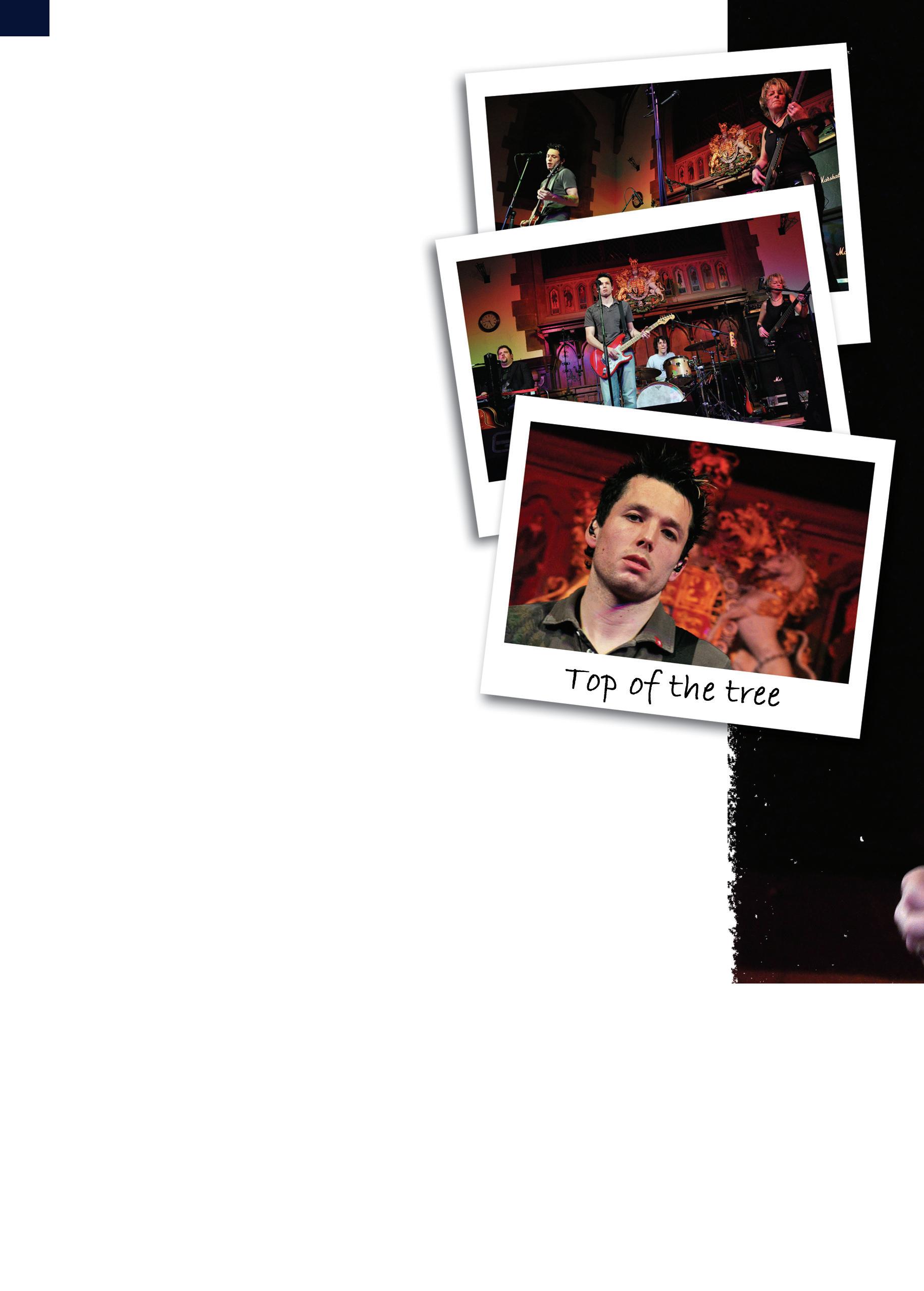
@The Flowerpot, Derby. 31/01/09
Aynsley Lister took the stage not only with his new CD “Equilibrium”, but also with a new line-up. They hit that crowd on full throttle from the first number, with an uptempo Blues-rock number. They continued this display of prowess in the next number, by dropping seamlessly into a Blues-rock ballad. The keyboard intro merged with some fine lead guitar, vocal and all was held tight by drums and bass. This band is not just tight; it is one that appears to have that unique ability to feed instinctively off each others’ playing. This gave an interesting feeling of organised spontaneity in their music. For a new band, this was a great start, which continued throughout the whole gig. Stopping to take a breath, Aynsley introduced the new line-up. On bass, Portuguese born Midus Guerreio - one intense and solid bass player, who adds some powerful vocal harmony to whole. On keyboards, Morg Morgan - this guy’s got talent in his own right but provided some excellent call and response play to Aynsley’s lead, as well gelling perfectly into the vocal harmonies. Last but not least, the engine room of the band, Simon Small, holding it all firmly together, while inserting some interesting fills. Aynsley played the title track from the CD “What’s It All About”. This is a dynamic Blues-rock, with a vocal reminiscent of the quality of Jon Bon Jovi and some guitar playing to give Ritchie Sambora a run for his money. The vocal harmonies were superb. The guitar solo showcased another of our top UK Blues-rock guitarists, with its fluid fretwork, sustain and use of power chords. The bass really added an extra musical layer to the overall number. ‘Running Empty’, a drum driven song, was much more rock orientated, plainly showing that the band has scope to have their feet firmly planted in the Blues root and the rock branches!
Carol Borrington
BIG JOE LOUIS & HIS BLUES KINGS
@The Luminaire, London. 19/03/09
Big Joe Louis has been plying his trade for twenty years or so, and I was really looking forward to seeing him backing Mud Morganfield. I really can’t say that I was anything but delighted by the fourpiece’s music, and their short set - before the great man joined them onstage - was great fun. West Weston blows a really mean harmonica and, from the off, he was coolness personified. Joe Louis heartfelt vocals and guitar were the epitome of jive style Blues and the general feeling of The Luminaire, as a mid-western juke joint, was only amplified by the setting of the tiny stage and bar in close proximity. This was music that should always be heard close up - distance is anathema to good rocking Blues – and The Luminaire is the ideal venue. Joe Louis has been around a while, and his stagecraft and timing were evidence that he really is as good as a huge number of visiting Bluesmen have suggested – he has backed almost everybody over the years – but he really is a terrific performer in his own right. The new single ‘Go Go Train’ was the last number before Mud Morganfield hit the stage, and it really summed the band up, offering a rolling gait and full bodied playing by the whole band.
Andy Snipper
OLI BROWN
@Norwich Arts Centre. 13/03/09
The Blues has got sexy! I had never been to a Blues gig where young girls scream at the performer. Oli Brown and his band tore down any barriers that may be perceived about Blues music, and age group, from the moment they hit the stage at
Blues Matters! 152
Aynsley Lister
the sold out Norwich Arts Centre gig - there was constant hysteria in the room, from young and old (apparently they could have sold it out twice over!). The lights went down on the stage and the adoring screams started, the background music grew louder and louder, we saw the shadowy features of the band walk on stage, plug in and then burst into action - lights on/more screaming! This was a terrific show from start to finish; Oli’s playing and singing know no boundaries. His guitar playing has reached new heights, he plays fast licks, slow licks – in fact, he almost has the guitar speaking to the audience with the depth of emotion he puts into it. His vocals are up there with the best of them, mellow or raw, on one number (‘Roxanne’) he walked away from the mic and sang filling the whole room with just his own lungs as the PA system – fantastic! The rhythm section, Fred Hollis on bass and Simon Dring on drums, were outstanding, they added further depth to what Oli was doing by being so tight and in tune with what he was after, and by their superb vocal harmonies - a great team. Oli played most of the tracks from his highly acclaimed debut album “Open Road”, and once again proved why he is garnering such a great reputation as a live artist.
‘Missing You’ is simply superb; a great story about being away from the woman you love, mixed with a blistering guitar solo. Oli was always acknowledging Fred and Simon and had them perform a bass solo
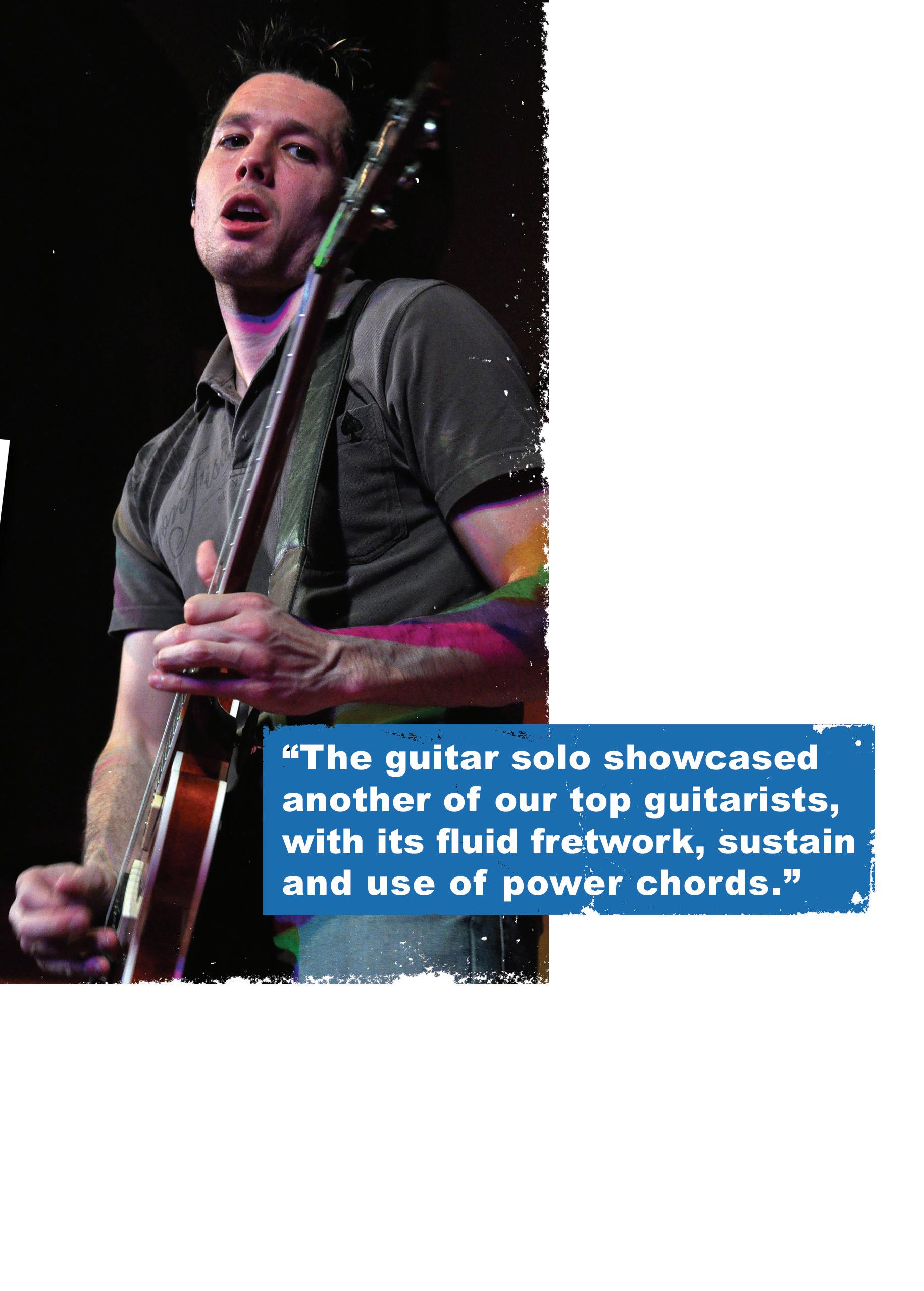
and a drum solo on one number to illustrate just how talented this whole band is. Two encores (time would not allow more, even though the audience was baying for it), ‘Black Betty’ and a sing-along to ‘Let Me Love You Baby’ had the audience leaving on a real high. If anyone can break the barriers to get younger audiences into the halls for Blues, Oli Brown is the man to do it!
Robert Fleming
AL HUGHES
@Acoustic Music Club, Kirkcaldy, Fife. 29/01/09
The choice of venue chosen to launch a new CD is very important. It is generally close to the artist's home, and often the audience comprises a large number of friends, family and industry types. In part that was true when Al stepped out to perform in support of his new CD "Land". In choosing the AMC to launch, he was certainly close to home, and there were a few friends around, however, mostly the audience comprised of the general public. So, this meant that it was a real gig for Al, and I think that worked in his favour. There was an edge and energy to the performance that might not have been present was he to have known everybody. Listening live to this album is to listen to the album. What do I
Blues Matters! 153
photos: Ian Harvey (rocktasticpix.com)
mean by that? Well, the CD is recorded very cleanly and simply with just voice and guitar, so that when it comes to playing live, Al has no problem replicating the general sound as a solo performer. Assured picking alongside fine vocals complemented the songs. As on the album, 'Bukka's Jitterbug Swing' got things underway, and the evening progressed along similar tracking to the CD. Yes, there were covers, including 'Candy Man' and a superb take on the traditional 'Pretty Peggy'. Standouts for me were 'Chestnut Avenue', a tale of love on the other side of town, and the title track. A very enjoyable evening.
Graeme Scott
B.B. KING BUDDY GUY
@Providence Performing Arts Center, RI, USA. 18/02/09
I was one of the Blues fans revelling when B.B. King and Buddy Guy announced they would tour together during February of 2009. I was warned it wouldn’t be what I expected. I expected gritty Blues voices and guitars vibrating through my chest. I expected to be excited, rocked and floored. I expected the stuff of legends. My response to the warning, as anyone’s should be, “At least I’ll be able to say I saw them.” Despite the warning, I was greatly disappointed. Buddy Guy did
‘Someone Else Is Steppin’ In’, as an audience participation piece, except the audience didn’t know. The band’s guitarist slipped into 90% of the lead guitar parts while 9-year-old Quinn Sullivan powered through ‘Who’s Gonna Fill Those Shoes’. Buddy Guy’s licks were few and far between, but nothing can be taken away from the vocal, which was truly amazing. Two standouts were ‘Skin Deep’ and ‘Feels Like Rain’. The rhythmically challenged woman next to me thought the sun rose and
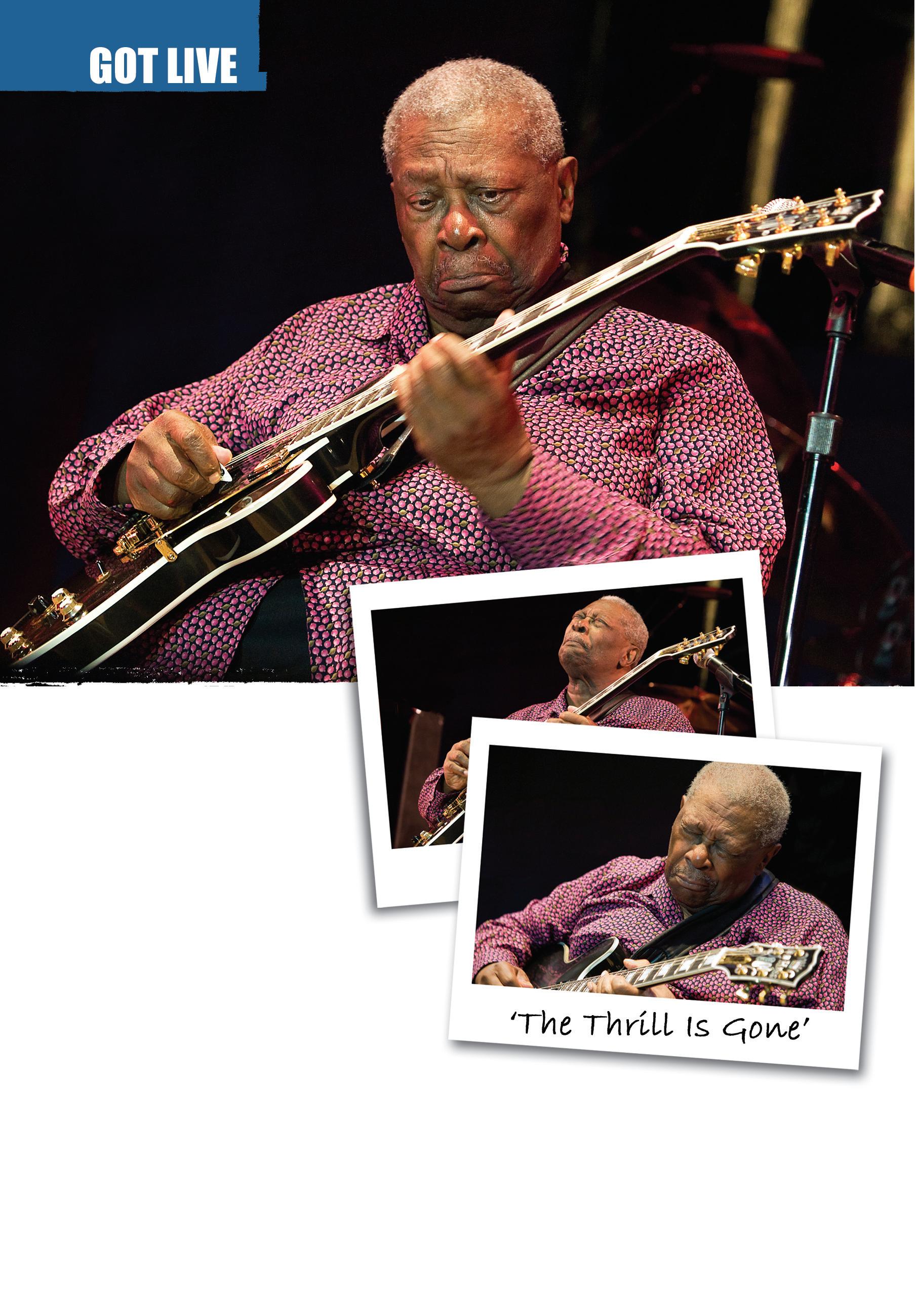
Blues Matters! 154
B.B. King
photos: IPaul Webster

set on B.B. King, and acknowledged every story he told with a blood curdling, “I love you B.B!” His long-winded monotone diatribes paired with a soft droning band just about lulled me to sleep. If you were hoping to hear ‘Lucille’ and ‘Riding With The King’, you were out of luck. There was a decent rendition of ‘See That My Grave Is Kept Clean’ that was prefaced by a story about how his children didn’t want him to sing it. At the age of 83, I could see how they wouldn’t want to tempt fate. His playing was also sparse, but again the voice was perfect. My major problem was he didn’t play any song in its entirety. He started a story, segued into a song for a verse and a half, but just when you were getting into it, he stopped playing and started talking again. The night ended with a single verse of ‘The Thrill Is Gone’, and sadly for me it was. At least I can say I saw them.
Lori Borys
MUD MORGANFIELD
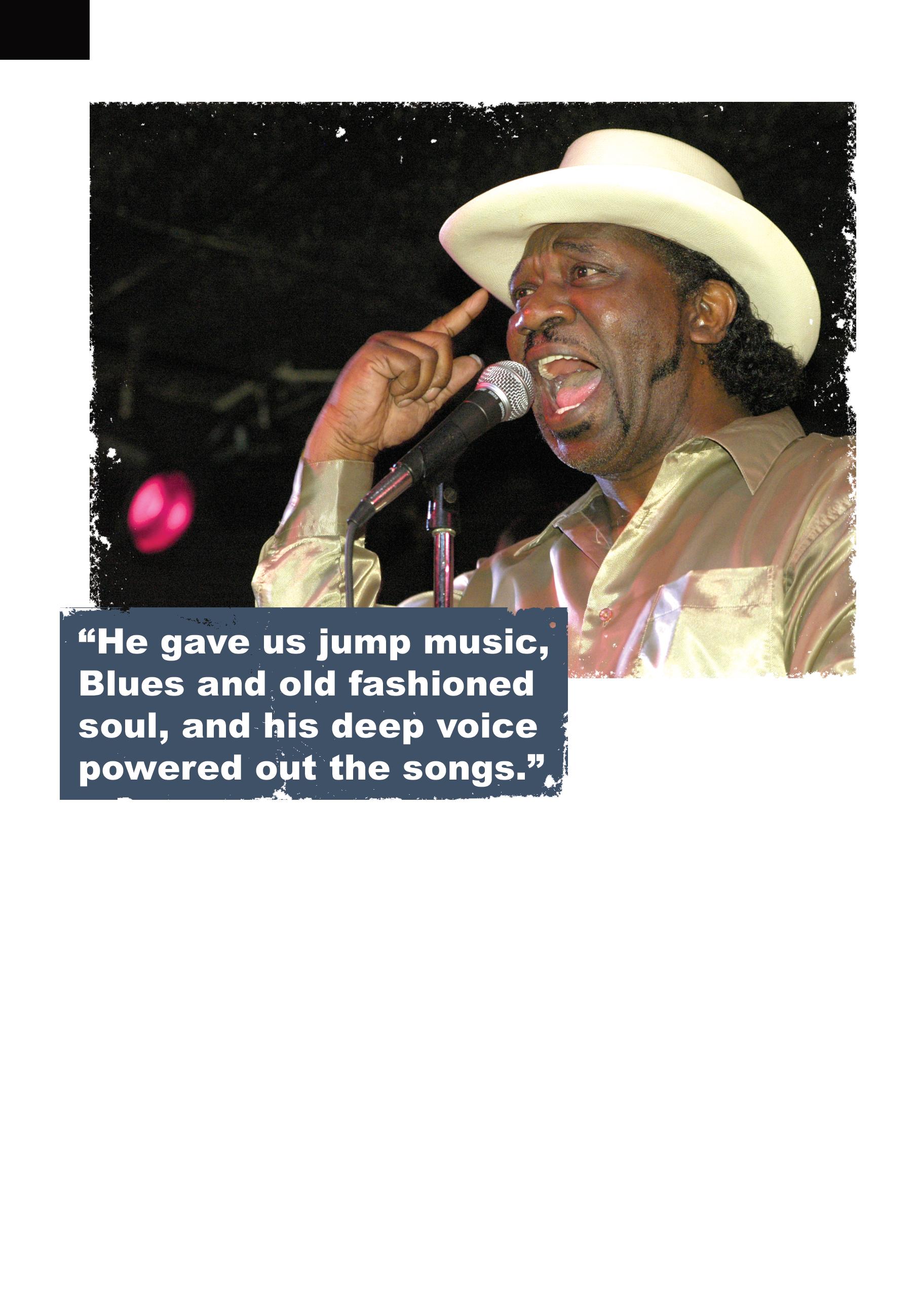
@The Luminaire, London. 19/03/09
After a short warm up by Big Joe Louis, the capacity crowd at The Luminaire was fully charged and looking out for ‘Boy Child Number One’, and suddenly there he was – dapper and a beaming smile. As the band started into ‘Ready’, and his voice rasped out, it was just like listening to his old man – Muddy Waters was alive and well, and giving it plenty! That might be unfair to Mud because he is an individual in his own right, but he is making a career of singing ‘pops’’ music, and making no bones of his heritage or ancestry. He continued with ‘Please Don’t Go’, and the joint was beginning to cook nicely, but when he boomed out ‘Sail On’, it sounded like a beacon travelling across the Mississippi, and the whole crowd was completely in the thrall of this 55-year-old ‘boy’. He had a strong voice and showed plenty of onstage charisma, and his version of ‘Hoochie Coochie Man’ rocked – this was classic era Blues in the 21st century, and sounding as vital and up-to-date as you could wish for. The hits kept on coming – ‘40 Days’ was a joy and ‘What Else Can I Do?’ gave him full opportunity to slow it down and really deliver some heartfelt agonising. He gave us jump music, Blues and even some old fashioned soul, and his deep voice simply powered out the songs. Finally he hit us with a stunning ‘Mannish Boy’ and, mopping his brow, dragged himself off. This might have been Muddy Waters’ music, and it may have sounded uncannily like him at times, but this was never about a ‘tribute’– Mud has the right to play the music, as well as the chops.
Andy Snipper
Blues Matters! 156
Mud Morganfield
photo: Kurt Swanson
ROCK IDOL
Courtesy I.M.P. Publishing Ltd, we have 2 copies of “Robert Plant: Led Zeppelin, Jimmy Page & The Solo Years” book to giveaway. Described as “the first and only complete biography of a genuine rock legend,” the book focuses on the iconic frontman’s post-Zeppelin recording career. Author Neil Daniels also delves into Plant’s earliest and ongoing influences such as Southern American Blues. For a chance to win, tell us: Which revered bluegrass singer did Plant record “Raising Sand” with?
STEP-BY-STEP
Courtesy Haynes Publishing, we have 3 copies of “Gibson Les Paul Manual” to giveaway. The hardback book tells readers how to buy, maintain, and set up the legendary Les Paul Electric Guitar, with a foreword by the legendary Les Paul himself. For a chance to win, tell us: Who designed the original guitar that Les Paul would subsequently endorse and name?

COMIC TOUCH
Courtesy NBM Publishing, we have 3 copies of “Bluesman” to giveaway. The graphic novel follows Blues musician Lem Taylor’s harrowing journey across Arkansas in the late-20s, hunted for a crime he didn’t commit, with the book structured “like a traditional twelve bar Blues song, with three sections each made of four chapters.” For a chance to win, tell us: Which popular ‘20s Bluesman was titled “Father of the Texas Blues”?
TO ENTER...
For your chance to win any of these great prizes, send your answer(s) to: comps@bluesmatters.com* Closing date: 22nd May 2009
*Alternatively, post to the usual PO Box address.
Blues Matters! 157
JOHN CEPHAS
4th July 1930 - 4th March 2009
Piedmont Blues guitarist and vocalist John Cephas died of natural causes on Wednesday, 4th March 2009. He was 78.
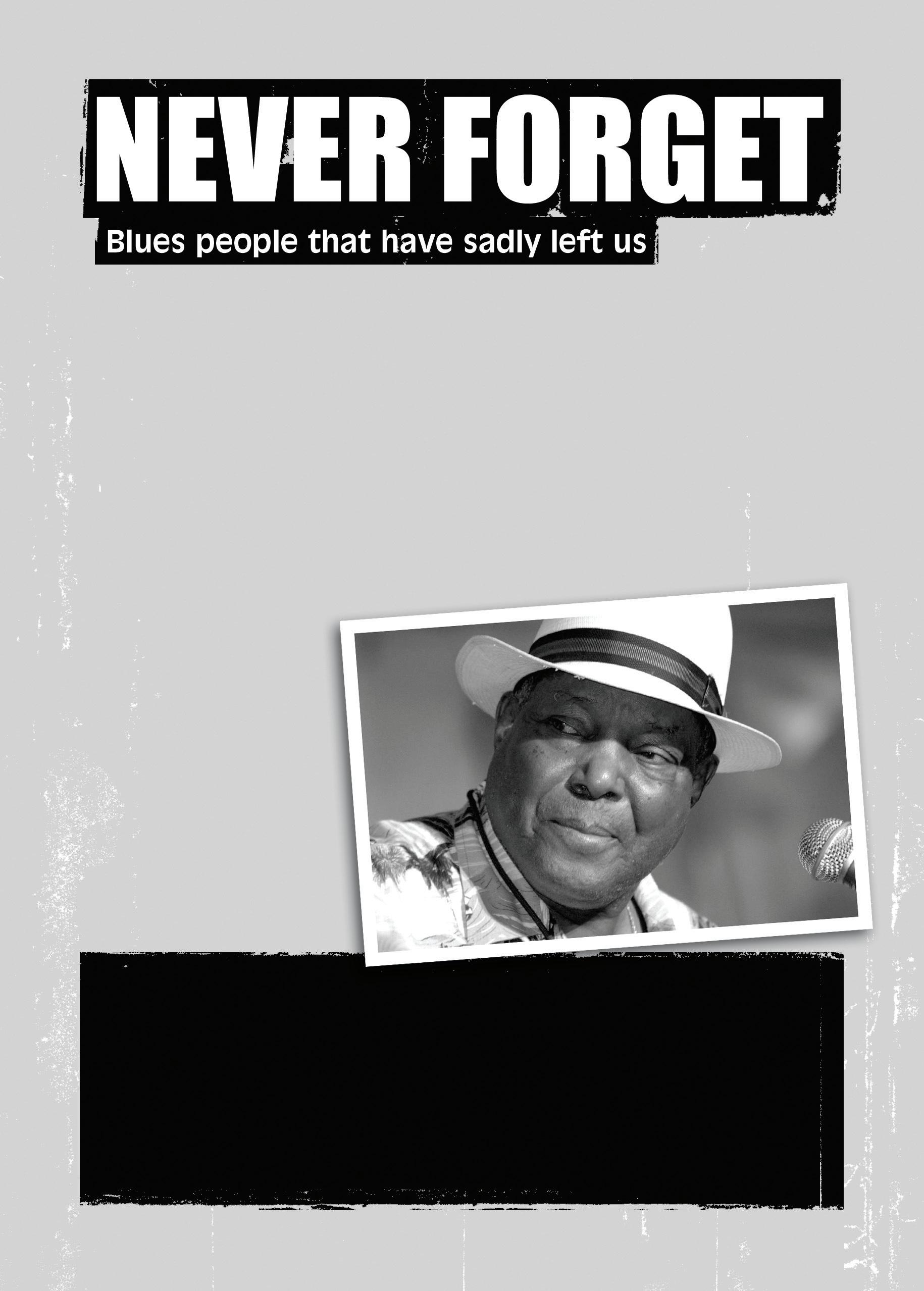
Renowned fingerpicking guitarist John was best known for his work as part of the award-winning Blues duo Cephas & Wiggins (with Phil Wiggins), performing all around the world and for President Bill Clinton.
John was born into a deeply religious family in Washington, DC, working as a professional gospel singer, carpenter and Atlantic fisherman before his Blues playing began to pay off in the ‘60s.
Meeting Phil Wiggins in 1976, at the Smithsonian National Folklife Festival in Washington, DC, by the ‘80s, the acoustic duo were recognised as the finest exponents of traditional Blues, recording two albums for the German L&R label (“Living Country Blues” and “Sweet Bitter Blues”), before their 1987 domestic debut, “Dog Days Of August”, won them a Blues Music Award for Best Traditional Blues Album Of The Year.
Their Alligator debut (“Cool Down”) came in 1996, the success of which led to three more albums for the label (“Homemade”, “Somebody Told The Truth” and “Shoulder To Shoulder”) before their released “Richmond Blues” in 2009 via Smithsonian Folkways.
Smithsonian Folkways’ Curator and Director Daniel Sheehy told Blues Matters!: “John's music had heart, soul, and substance. When you heard it, you knew it came from someplace special and was brought to you by someone special.”
Founder of the Washington, DC Blues Society, John also served on the Executive Committee of the National Council for the Traditional Arts, and Executive Director Julia Olin released the following statement: “With his passing we have lost an irreplaceable national treasure. Not only was John a great artist, but also a great supporter and defender of the traditional arts.”
John received a National Heritage Fellowship Award in 1989 - the highest honour the American Government offers a traditional artist. More recently, John was recognised as one of eight black trailblazers as designated by the Library of Virginia's African American History Month.
JOHN MARTYN
11th September 1948 - 29th January 2009
Legendary British singer-songwriter John Martyn passed away on 29th January 2009, no cause of death was given. He was 60.
Born Iain David McGeachy in New Malden, Surrey gained notoriety for his seamless blending of folk, Blues, jazz and rock music, with 1973’s “Solid Air” widely regarded as an all-time classic album.
John continued to enjoy critical acclaim, despite battling personal demons and depleting health, with 2008’s career-spanning 4CD boxed set “Ain't No Saint” now serving as a timely tribute.
A statement on John’s website read: “With heavy heart and an unbearable sense of loss we must announce that John died on 29th January.”
Blues Matters! 158
John Cephas was “someone special.”
photo: Ginevra Portlock
WILLIE KING
18th March 1943 - 8th March 2009
Alabama Blues musician Willie King passed away on Sunday 8th March 2009 following a massive heart attack.
Whilst Willie was highly regarded as a Blues performer, his priority had always been to serve his deprived community in the heart of the poverty-stricken black belt of West Alabama, founding the Rural Members Association in 1989, a non-profit organisation which sponsored classes in Blues music, farming, woodworking, food preservation, and other rural African American traditions. The organisation also provided transportation, legal assistance, and other services.
King's first recording came in 1999 with "Birmingham" George Conner, the independently produced “Walkin' The Walk, Talkin' The Talk”. In 2000, he released the self-produced “I Am The Blues”, and in the same year, renowned bluesologist Jim O'Neal recorded “Freedom Creek” for his Rooster Blues label. This collection, recorded live at Bettie's Place, a small juke joint in Noxubee County, Mississippi, won Living Blues magazine's Best Contemporary Blues Album award. This was followed by the 2002 studio recording “Living In A New World”. Willie was again recorded at Bettie's Place, both for Martin Scorsese's movie “Feel Like Going Home” and for his first self-produced title, “Jukin' At Bettie's”. His most recent recording was the self-produced album “One Love”.
SNOOKS EAGLIN
21st January 1936 – 18th February 2009
New Orleans guitarist/singer Snooks Eaglin passed away from a heart attack at Ochsner Medical Center in New Orleans, having been battling prostate cancer, on 18th February 2009. He was 72.
Blinded by glaucoma at a young age, Snooks still taught himself how to play guitar at the age of 5, with his first recording coming at a recording session for James "Sugar Boy" Crawford in 1953.
Folklorist Dr. Harry Oster discovered Snooks playing on the streets, and the recordings he made with Snooks between 1958 and 1960 were subsequently released through the Smithsonian Folkays, Folk-Lyric and Prestige/Bluesville labels.
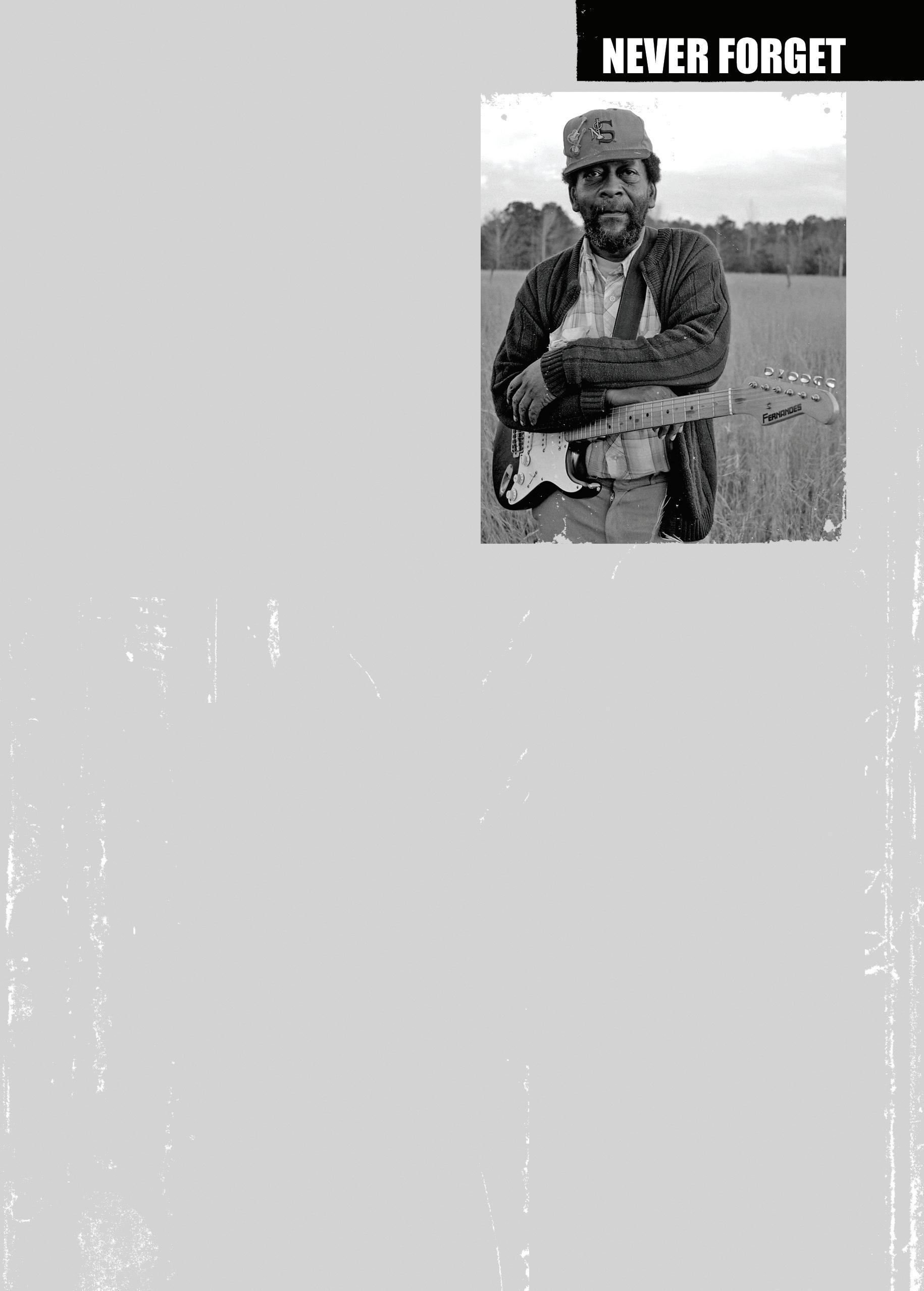
Between 1960 and 1963, Snooks recorded for the Imperial label, creating the New Orleans R&B sound he is now synonymous for, before recording for Sonet, Black Top and Money Pit Records – his final release being “The Way It Is.” A statement from producer Bob Corritor said: “Thanks, Snooks, for the joyous music you made and for your great recordings, which will live on forever.”
EDDIE BO
20th September 1930 – 18th March 2009
Legendary New Orelans singer/pianist/songwriter/arranger Eddie Bo (real name Edwin Joseph Bocage) passed away on Wednesday, 18th March 2009 following a sudden heart attack. He was 78.
Bo studied piano, music theory, and to sight read and arrange music at New Orlean’s Grundwald School of Music, following a stint in the army, before forming jazz collective the Spider Bocage Orchestra.
By the ‘50s, Eddie was playing the formative New Orleans Rhythm & Blues style, touring with the likes of Big Joe Turner, Earl King, Guitar Slim, Johnny Adams, Lloyd Price, Ruth Brown and Smiley Lewis, and recording for the Ace label where he enjoyed success with novelty record ‘Check Mr Popeye’.
Moving to Apollo Records, Eddie cut ‘I’m Wise’, which Little Richard later re-recorded as ‘Slippin’ And Slidin’’, and wrote songs for both Etta James (‘My Dearest Darling’) and Tommy Ridgeley (‘In The Same Old Way’).
Equally comfortable recording Blues, soul and funk songs, Eddie continued to enjoy success in the ‘60s and ‘70s, whilst becoming an arranger and producer for many acts (including Irma Thomas)– over his career, Eddie worked with over forty labels.
Bo’s most recent release was 2007’s “Saints, Let's Go Marching On In”, which was released via his own label, Bo-Sound.
Blues Matters! 159
Willie King put others first.
mongst Bluesmen, the work of J.B. Lenoir was unique, as it contained a massive dose of social consciousness. At a time when just looking a white woman in the eye could get a black man lynched, a number of Bluesmen chose to express their anger and outrage through their music. Many artists spring to mind, including Big Bill Broonzy, Leadbelly and Brownie McGhee, but these players were all involved in the political left in New York, which afforded them some protection and, to a degree, explained their boldness. Given his Southern Mississippi pedigree, J.B. Lenoir didn’t enjoy such protection, making his political songs all the more courageous
Born in Monticello, Southern Mississippi, just a few months before the Wall Street Crash of 1929, J.B. (his real name) was the son of Dewitt Lenoir, a farmer with a sideline in guitar picking. Such exposure at an early age led the young J.B. to the Blues on a very fast track, and he is later quoted as saying: “My mother used to say, I must’ve been ‘bout nine months old when he was playin’ the box and I would shout in her arms. So, when I came to know myself, I was playin’ an old number by the name of ‘Move To Kansas City’ and the box was bigger than I was.”
The post Pearl Harbour war economy offered many opportunities and Lenoir criss-crossed the southern States from Jackson to New Orleans to Memphis, playing and doing odd jobs along the way. It is known that he settled for a while in New Orleans and played with greats such as Sonny Boy Williamson II and Elmore James, where he likely picked up the boogie woogie influence which was to feature in a lot of his future material. In 1949, whilst working as a meat packer in Chicago, he
was lucky enough to meet up with Big Bill Broonzy who introduced him to the local Blues community. In this period, he is recorded as playing local gigs with such luminaries as Muddy Waters and Memphis Minnie, and he quickly became an important part of the Chicago Blues scene.
By then, Lenoir’s unusual guitar style and high pitched, almost feminine vocals were attracting attention and he was soon introduced to the Chess Brothers. As a result of this, less than two years after arriving in Chicago, the 21-year-old J.B. Lenoir made his first recording, accompanied by pianist Sunnyland Slim, and under the name J.B. & His Bayou Boys. ‘Korea Blues’ is a topical commentary reflecting the situation of soldiers and their families during the war, and giving a foretaste of what Lenoir was about.
During the early-50s, J.B. made a series of recordings on various labels, including J.O.B., Chess, Parrot and Checker. In this period, his more successful songs included ‘Let's Roll’, ‘The Mojo’ and the controversial ‘Eisenhower Blues’ which his record company, Parrot, made him rerecord as ‘Tax Paying Blues’. Parrot Records was the baby of Al Benson, a colourful DJ whose radio shows were popular with black audiences of the day. Benson had no qualms about recording the material brought to him by social activist Lenoir, and was happy to record the attack on the president that was ‘Eisenhower Blues’. Although Lenoir claimed that the record had been censored by the US Government, Benson’s more credible story was that he had to change the title to replaceall references to ‘Eisenhower’ with ‘Tax Paying’ to appease the management of an influential Chicago radio station.
Benson learned his lesson and the next Lenoir release in 1954, ‘Mama Talk To Your Daughter’, was an up-tempo song aimed at the dancefloor with no trace of protest. This is Lenoir’s most enduring recording and his most commercially successful release, reaching number 11 in the Billboard R&B Chart. Lenoir’s sound was by now unique with
Blues Matters! 160
saxophones wailing behind his boogie woogie influenced rhythm guitar, set against unconventional drum beats. Alex Atkins and Ernest Cotton were often on sax with Al Gavin on drums.
With a best seller behind him, Lenoir negotiated a return to Chess, the premier Chicago Blues label, where he became a consistent best seller, writing several more Blues standards such as ‘Don't Dog Your Woman’. His output during this time contained many great performances, including the humorous ‘Don’t Touch My Head’, regaling his new hair do, but by the late-50s times were a’changing and Lenoir’s listeners were turning away from Blues and switching on to rock’n’roll.
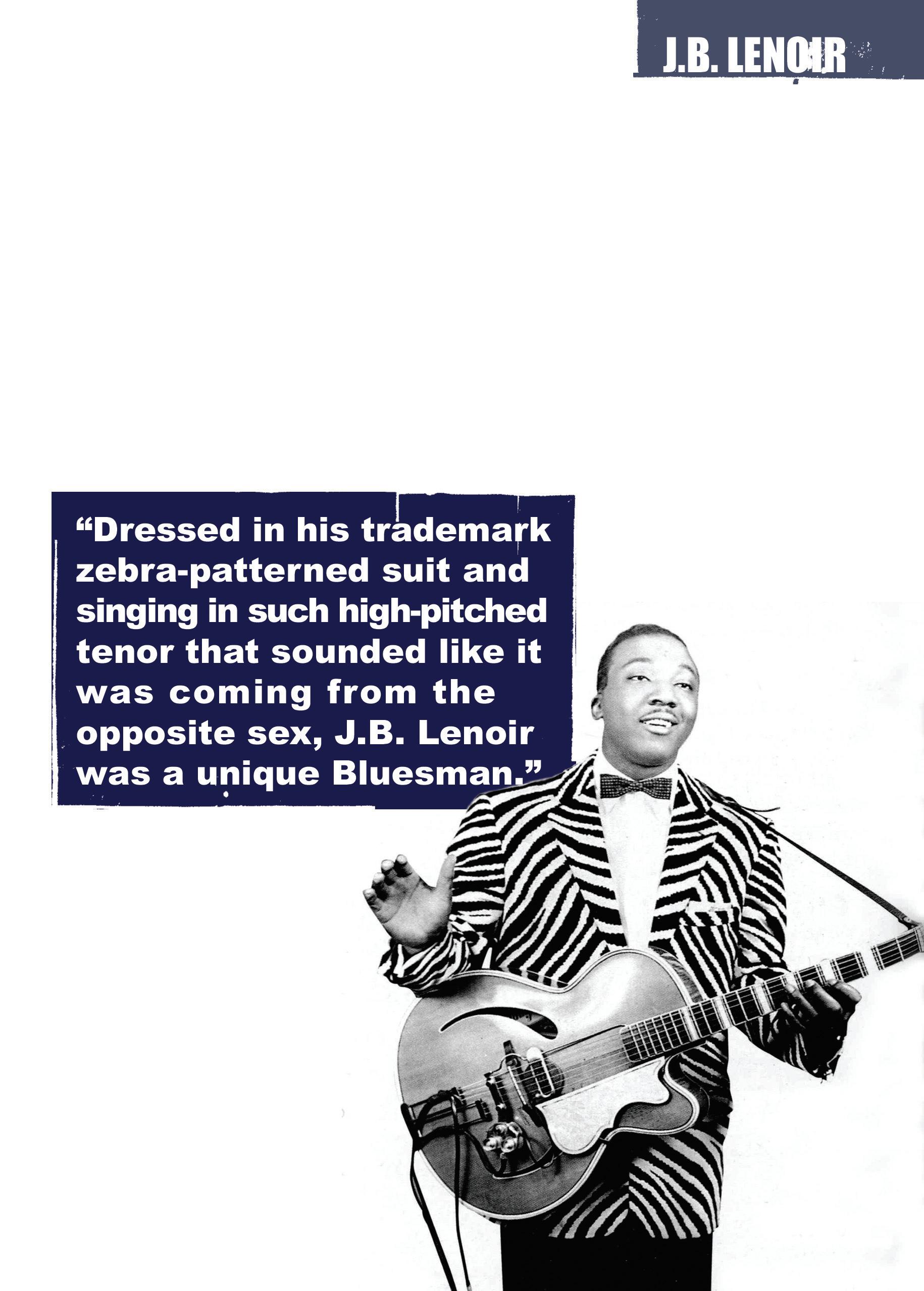
By 1960, Lenoir had moved to Vee Jay Records, and, after developing an interest in African percussion, he recorded for USA Records in 1963 as J. B. Lenoir And His African Hunch Rhythm. By then, Lenoir struggled to make a living working as a professional musician and was forced to take on
believed he was released from hospital too early, and died of a heart attack caused by his injuries three weeks later on 29th April 1967 in Urbana, Illinois. He was only 38 years old and we can only imagine what he might have further accomplished had he not passed away at such an early age.
J.B.Lenoir will not be forgotten and the wonderful 2003 movie “The Soul Of A Man”, directed by Wim Wenders as the second installment of Martin Scorsese's series "The Blues”, provides us with some rare footage of Lenoir in his trademark zebra skin jacket. His death was also lamented by John Mayall in his songs ‘Death of J. B. Lenoir’ and ‘I’m Gonna Fight for You, J.B.’. The 1989 recording “The Parrott Sessions 1954-55”, on Vintage Chicago Blues, shows Lenoir at his most creative and performing at his peak. This includes both ‘Eisenhower Blues’ and ‘Mama Talk To Your Daughter’. Also listen to “Vietnam Blues: The Complete L&R Recordings” on Evidence (1995), which combines Lenoir’s two last acoustic albums. There is also a good introduction on Saga Blues, “J.B.Lenoir: Eisenhower Blues” (2007) which focuses on J.B.Lenoir as the entertainer as well as the political commentator. KW
menial jobs, including working in the kitchen at the University of Illinois. While at the University, he was rediscovered by Willie Dixon, who supervised Lenoir’s two surprising acoustic albums, “Alabama Blues” (1965) and “Down In Mississippi” (1966), in Chicago. These albums, inspired by the civil rights movement, are a set of magnificent social Blues recordings made by a deeply caring Bluesman. They have been reissued jointly as “Vietnam Blues”. Lenoir toured Europe, and performed in 1965 with the American Folk Blues Festival in England.
On the brink of achieving international success, Lenoir was involved in a car accident in the spring of 1967. The social system didn’t give blacks the same degree of medical attention as whites and it is generally
Blues Matters! 161
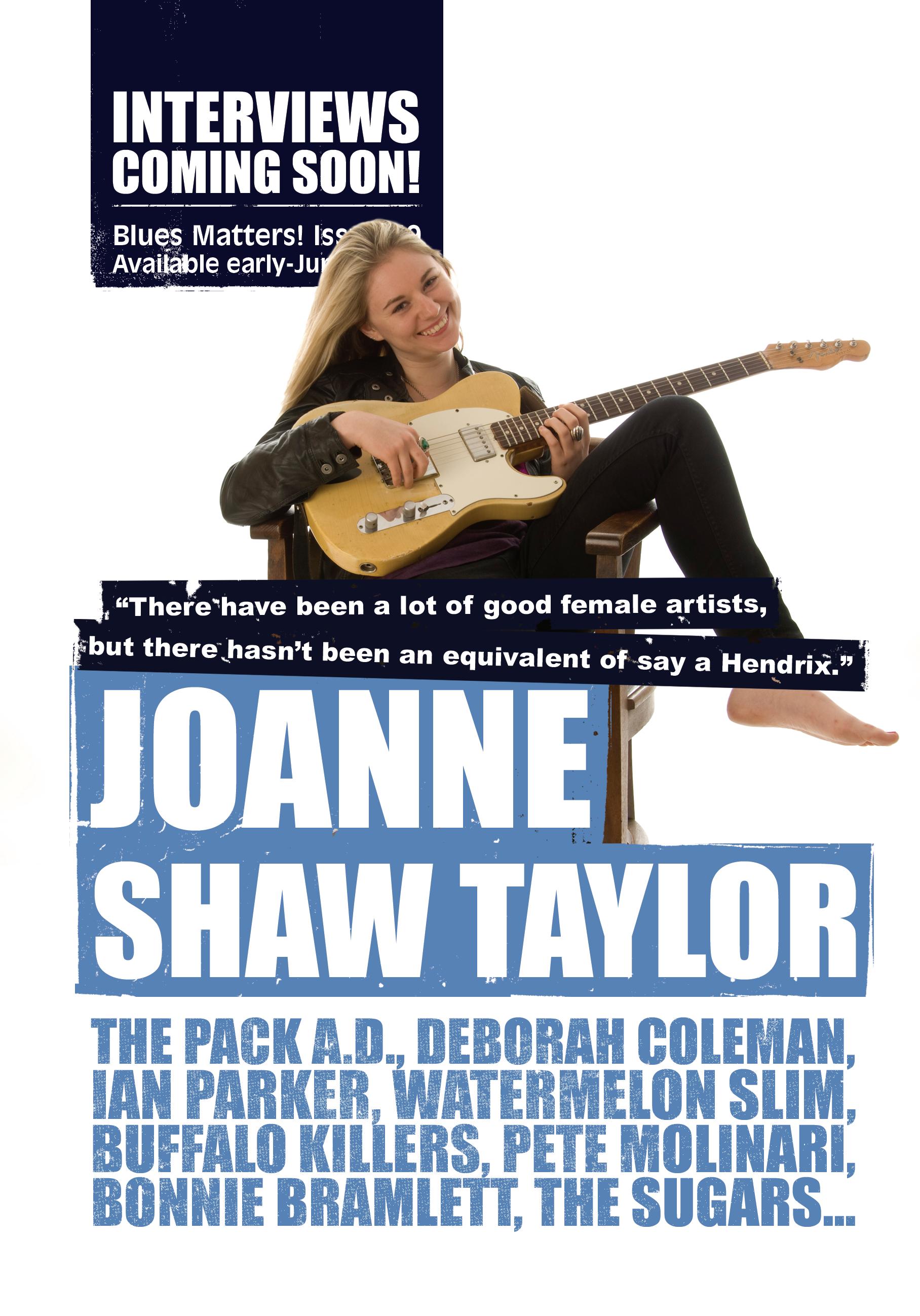
Blues Matters! 162