


Keith Barnacastle • Publisher



Rebekah Speer has nearly twenty years in the music industry in Nashville, TN. She creates a unique “look” for every issue of The Bluegrass Standard, and enjoys learning about each artist. In addition to her creative work with The Bluegrass Standard, Rebekah also provides graphic design and technical support to a variety of clients. www.rebekahspeer.com

Susan traveled with a mixed ensemble at Trevecca Nazarene college as PR for the college. From there she moved on to working at Sony Music Nashville for 17 years in several compacities then transitioning on to the Nashville Songwritrers Association International (NSAI) where she was Sponsorship Director. The next step of her musical journey was to open her own business where she secured sponsorships for various events or companies in which the IBMA/World of Bluegrass was one of her clients.




Susan Marquez is a freelance writer based in Madison, Mississippi and a Mississippi Arts Commission Roster Artist. After a 20+ year career in advertising and marketing, she began a professional writing career in 2001. Since that time she has written over 2000 articles which have been published in magazines, newspapers, business journals, trade publications.
Brent Davis produced documentaries, interview shows, and many other projects during a 40 year career in public media. He’s also the author of the bluegrass novel Raising Kane. Davis lives in Columbus, Ohio.

Kara Martinez Bachman is a nonfiction author, book and magazine editor, and freelance writer. A former staff entertainment reporter, columnist and community news editor for the New Orleans Times-Picayune, her music and culture reporting has also appeared on a freelance basis in dozens of regional, national and international publications.

Candace Nelson is a marketing professional living in Charleston, West Virginia. She is the author of the book “The West Virginia Pepperoni Roll.” In her free time, Nelson travels and blogs about Appalachian food culture at CandaceLately.com. Find her on Twitter at @Candace07 or email CandaceRNelson@gmail.com.

A Philadelphia native and seasoned musician, has dedicated over forty years to music. Starting as a guitar prodigy at eight, he expanded his talents to audio engineering and mastering various instruments, including drums, piano, mandolin, banjo, dobro, and bass. Alongside his brother, he formed The Young Brothers band, and his career highlights include co-writing a song with Kid Rock for Rebel Soul.


Stephen Pitalo has written entertainment journalism for more than 35 years and is the world’s leading music video historian. He writes, edits and publishes Music Video Time Machine magazine, the only magazine that takes you behind the scenes of music videos during their heyday, known as the Golden Age of Music Video (1976-1994). He has interviewed talents ranging from Ray Davies to Joey Ramone to Billy Strings to Joan Jett to John Landis to Bill Plympton.

by Jason Young

“My goal has been to put the music out there in the community.”
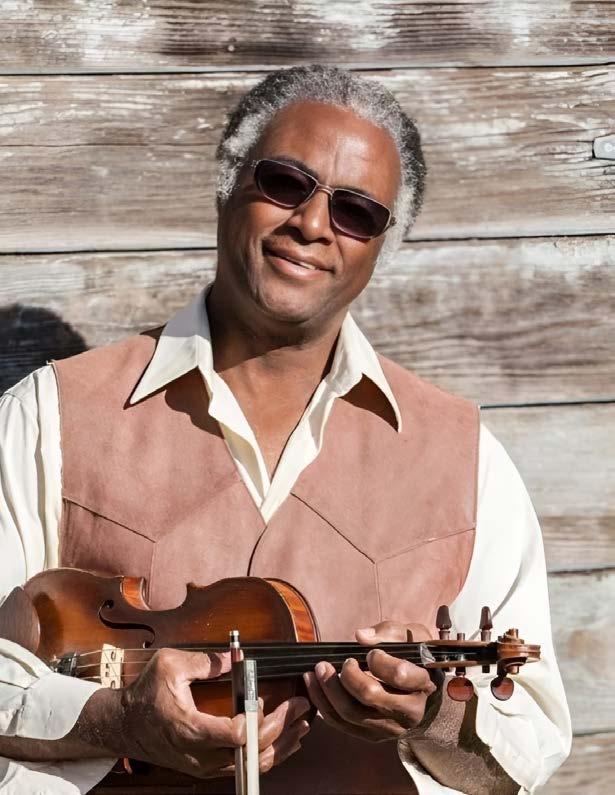
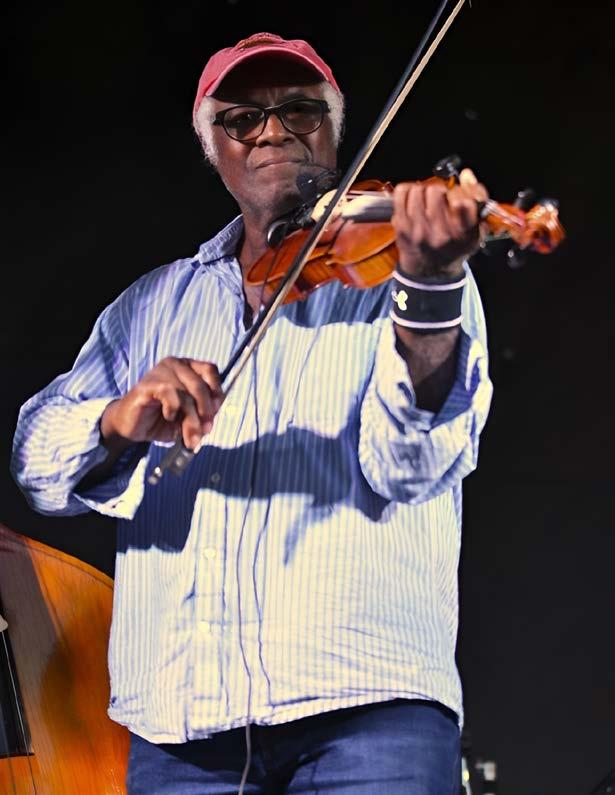
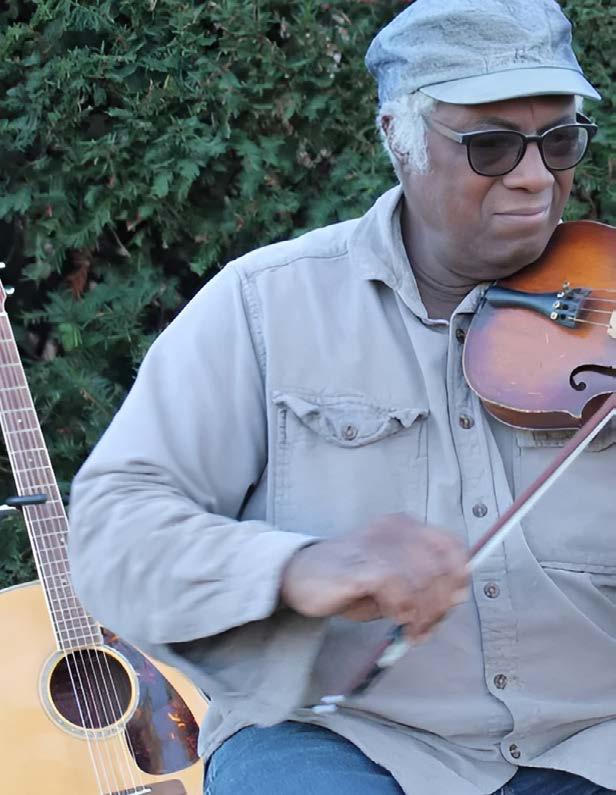
When considering today’s preservationists of Appalachian string band music, the name Fiddlin’ Earl White undoubtedly is mentioned. He is well-respected as both an educator and a storyteller. Born in Newark, New Jersey, and co-founder of the Green Grass Cloggers, White, a former psychology major, started his music career dancing.
“I hooked up with some people at East Carolina University who were starting a crisis intervention center called The Real House,” White recalls, meeting fellow student Dudley Culp. “It was through that that I met my late friend.” (Culp passed away in 2021.)
While attending a convention in Galax, Virginia, Culp learned clogging. “Nobody wanted to be around him because he appeared to be afflicted when he was trying to do it,” jokes White.
As Culp improved, other students, including White, wanted to learn. “Eventually, it started to sound rhythmic and very percussive—before you knew it, everybody was doing it.”
White and his collegemates formed the Green Grass Cloggers.
“I dropped out of college and became a full-time professional clogger,” says White, who wound up trading his dancing shoes for a fiddle. “It was during that time that I became intrigued by the musicians.”
White remembers the first time he wanted to play fiddle.
“We were dancing in Evergreen Valley, Maine, and it was one of the strangest shows we ever did. It was Seals and Crofts, Jefferson Airplane, Blue Öyster Cult, and Alice Cooper— and the Green Grass Cloggers.” [laughs]
“It was from that experience that I saw Papa John Creach. He was sitting in the corner of the green room just playing the fiddle. I had seen Black violinists before, but I’d never laid eyes on a Black person playing the fiddle. It was very much a turning point in my life,” recalls the awestruck White.
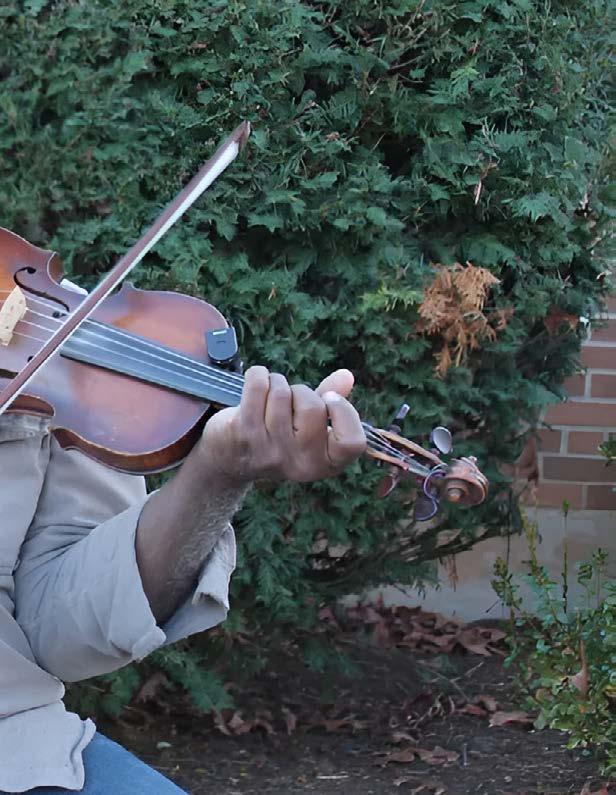
After acquiring a fiddle, White taught himself how to play. “I’ve never had a fiddle lesson,” explains White, who copied the sounds he heard. “I think one of the advantages for me was spending a number of years dancing to the old-time music.”
He met the Father of Bluegrass.
“The Green Grass Cloggers were dancing at the Angier Bluegrass Festival, and Bill Monroe walks over to me and says, ‘You know, you remind me a lot of this fella I used to play with many years ago.’ I found out that the person Bill Monroe referenced when he spoke to me was Arnold Schultz, a Black fiddle player.”
White searched for others.

“I met Joe Thompson—he was one of the people I went to visit in my search for Black fiddle players. I was asking about other Black fiddlers that he might have played with in his community. His response was that they were pretty much all passed away and that the young Black people did not really seem to be interested in the music.”
A negative association might be to blame, White feels.
“A lot of the Black community associate it with segregation and discrimination,” observes White about the lack of enthusiasm.
“It’s obvious that, from an old-time perspective and early bluegrass perspective, the Blacks and whites played together,” explains White, recalling his conversation with Bill Monroe.
The Virginia fiddle player feels that music is for everyone. “In my opinion, the only way the Blacks could learn from the whites or the whites learn from the Blacks was that they were playing together.”
“I don’t think it’s that they’re not interested in it,” White points out about the Black youth. “It’s just not in their community.”
“My goal has been to put the music out there in the community,” shares White, who has taught both Black and white students. “No matter what the ethnicities are, they have a resource to learn about it.”
White teaches his students the origins of songs. “I do a lot of camps where I’m teaching a whole class of people, and I make a point of saying, whoever you learn the tune from, that’s who you should give credit to. My reason for doing that is there are so many songs that have come out of the Black community, and there was no credit given.”
White and his wife, Adrienne, also a musician, own and operate Big Indian Farm Artisan Bakery.
“My retirement went out the window. [laughs] Our goal is to build the infrastructure here on the farm and to do music camps.” Along with an organic bakery, White also hosts his own event, Fiddlers Jam. “I said to myself, if I had a camp at my place, all of those people who came to learn my style of fiddling would come to my camp.”
“The fiddle has changed my life in so many different ways,” says White, sharing his passion. “I can’t imagine not playing. One of the biggest effects it has had on me is seeing the impact that it has on other people, and that just brings me so much joy.”
by Stephen Pitalo
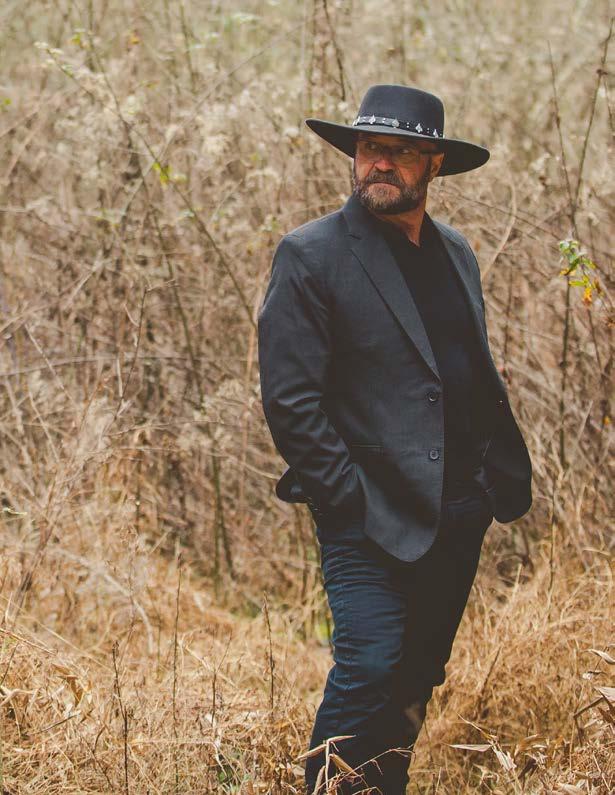
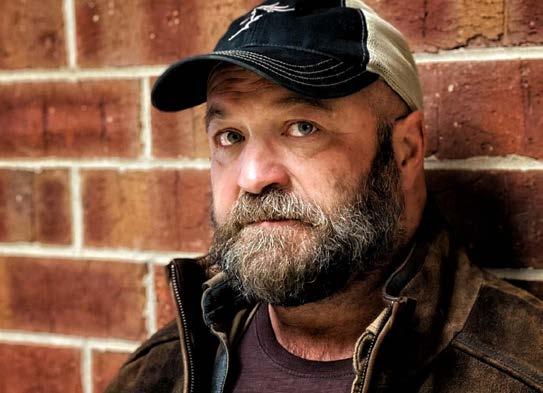
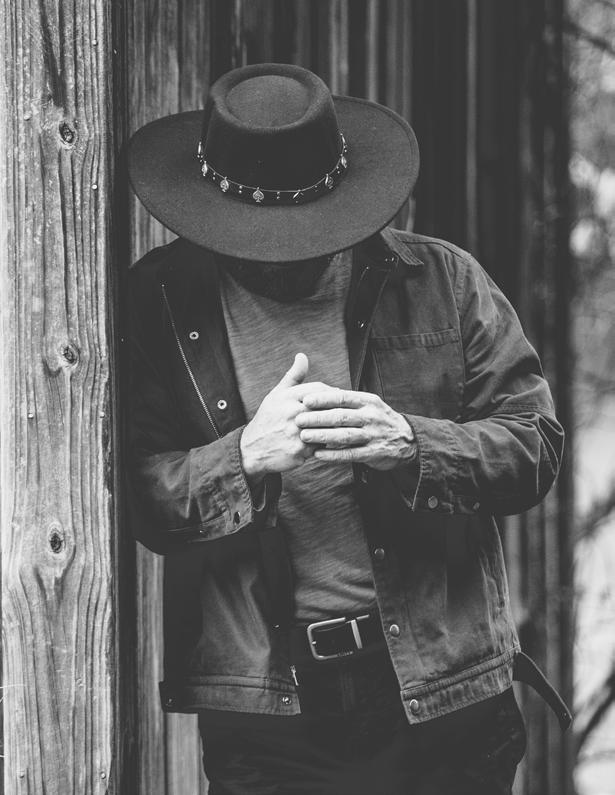
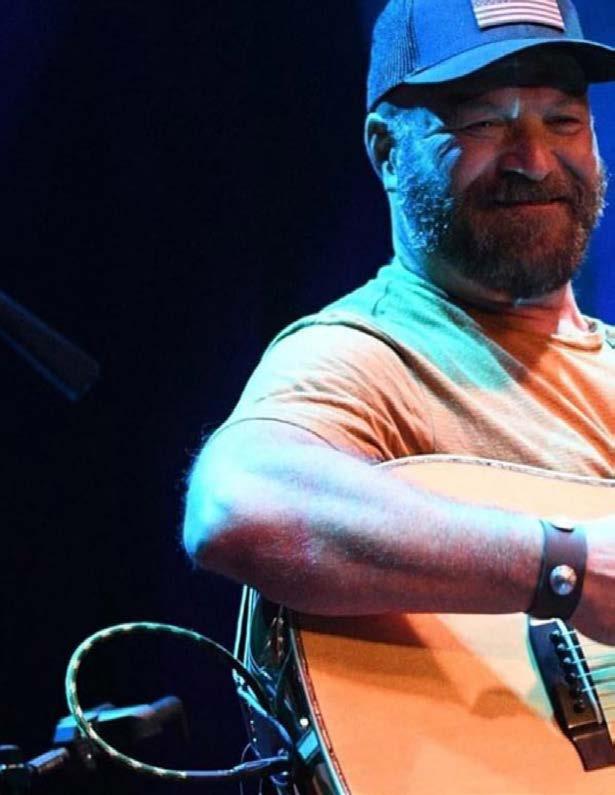
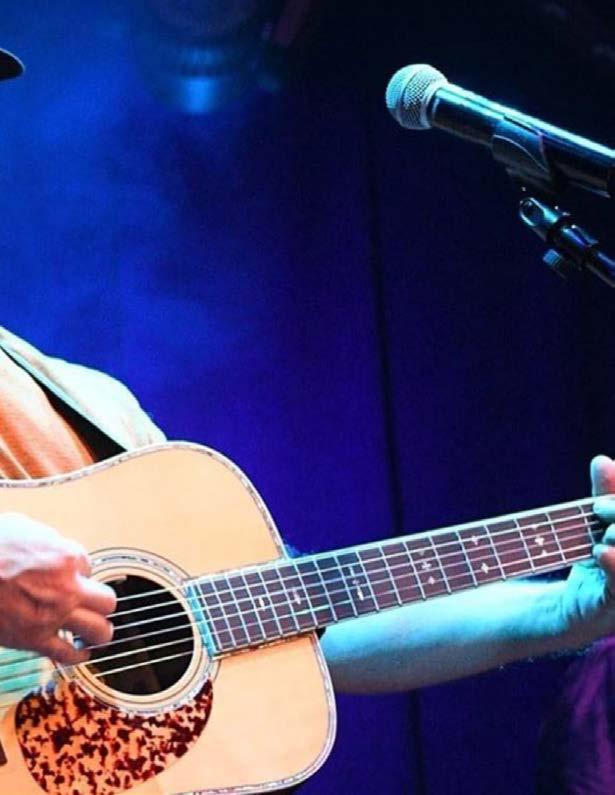
Lathemtown, a small, unincorporated community in North Georgia, is the kind of place where cows outnumber streetlights, and where people grow up knowing every neighbor by name. This is the place that shaped singer-songwriter Kurt Lee Wheeler — first as the son of a cattleman and homemaker, then as a musician who would one day return to its soil in search of the stories he left behind. When Wheeler talks about his hometown, his voice settles into an easy rhythm, the kind that comes from a lifetime of telling certain stories without ever needing to embellish them. This landscape, these people, and the quiet struggles folded into their days, form the spine of Wheeler’s new album Lathemtown. It is his most personal work yet.
“We’re about 35 miles north of Atlanta,” Wheeler says, “and this is an agricultural community for the most part. I grew up in the cattle business and hog business, and there was nothing else to do but to play football and baseball, and fish.” He estimates the community’s population at only a couple of thousand people when he was growing up. “I mean, our elementary school had 200 students in it – first through eighth grade.”
Growing up in Lathemtown also gave Wheeler the opportunity to observe the resilience of people weathering hardship with quiet dignity. The stories passed down by his parents and grandparents, the tragedies stitched into the fabric of his family, and the lessons learned by watching others endure, became the foundation for his songwriting.
“My mom and dad are still alive, and my grandparents’ land just finally sold last year,” Wheeler said, noting that several generations of his family grew up in Lathemtown.
Those memories sat dormant for decades before reemerging in the form of melodies and narrative threads, sometimes in dreams, sometimes arriving all at once after days of fasting and reflection. “I do a lot of fasting,” Wheeler explains. “I’d just come out of an 11-day fast, and I think I wrote two or three of these songs one morning, sitting at the table.”
He’s been making records since the early ’90s, but Lathemtown marks a turning point — an album written from a deeper place, shaped by age, distance, and a sharpened sense of what matters. Wheeler’s songs feel lived-in, rooted in his decades of experience as a teacher, father, pastor, military veteran, and storyteller. He claims he did not set out to write a concept album; instead, the pieces surfaced on their own, tapping him on the shoulder until he followed.
“Every album I’ve ever done meant more than the last one,” he reflects. “But because of family, and home, and going back, this album -- beyond the shadow of a doubt -- means more to me than any other.”

Wheeler’s earliest musical inspiration came from many directions, including classic southern rock, alternative rock, and college radio from the ’80s and ’90s. His first album, Bama Motel (1992), offered hints of these influences, even while he was still finding his own voice.
“Growing up, my biggest influences would’ve been The Monkees, and Lynyrd Skynyrd, and Deep Purple, probably in that order,” he says, “and Edgar Winter’s album Shock Treatment. I actually would like to cover some Monkees songs at some point.”
The personal depth of Lathemtown is also attributable to Wheeler’s experience as a father. He says that watching his son struggle, adapt, and ultimately carve out his own path provided great inspiration for the song “Portland.”
“You’d think it’s about losing a lover, but it’s really about a father and a son, and having to trust him with the process,” Wheeler reflects. “My son decided to move out to Portland, and I was very proud of him. That was a bold move. We packed up that Subaru and he took off across the country.”
Wheeler’s collaborators on Lathemtown—producer and multi-instrumentalist Jeff Partin, along with Aaron Ramsey on banjo and mando, guitarist Jake Stargel, and John Rice on fiddle—helped translate the songs into their final form. Their bluegrass acumen brought new textures and depth to Wheeler’s project.
Covers often find their way into Wheeler’s catalog, but always with intention, and this recording is no exception. His version of the Foo Fighters’ “Times Like These” grew out of the sudden death of a close friend, and the emotions that followed. His take on Chris Isaak’s “Wicked Game” came from long-standing admiration of the tune, and a realization that its ethereal feel aligned perfectly with his own sensibilities. Rather than imitate, he reshapes these songs into meditations that carry his own fingerprint.
“That song is haunting,” Wheeler said of the Isaak tune. “It’s spiritually otherworldly. It’s almost cult-like in its ability to grab hold of my soul. It’s three chords played 44 times. It violates every songwriting principle. I thought we could keep the same melody and add a D major 7, and ended up having an Alison Krauss kind of vibe to it.”
The most enduring lessons come from home. Wheeler talks often about his father—a cattleman with a gift for conversation, a deep love of the earth, and a steady generosity that left a lasting imprint on an impressionable son. Those qualities continue to guide Wheeler through his life and music.
“My dad is the most gracious, generous man I’ve met,” he says. “He loves cattle, he loves the earth, he loves nature, he loves people. I learned how to give by watching my mom and dad give, sacrificially, sometimes out of their own deficits.”
As for what he hopes listeners take away from Lathemtown, Wheeler speaks with quiet honesty. The album is not an attempt at grandeur, or a bid for reinvention. It is an invitation to sit with emotion—his, and perhaps our own—and find a measure of solace or recognition in the stories.
“There are things I say and whisper between the lines,” he says. “People might find themselves in there and go, ‘Oh, okay. I get that.’” He’s glad his music serves as a balm. “If listeners can find a little respite for their journey, or if they can touch loss in a way that helps them identify better with it, that’s what I hope.”
Visit Kurt Lee Wheeler online at http://www.kurtleewheelermusic.com.

by Brent Davis

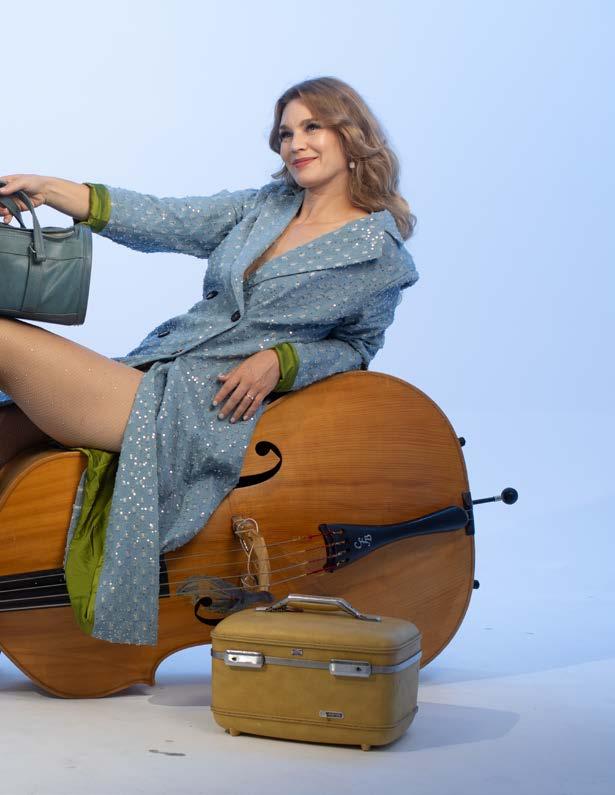
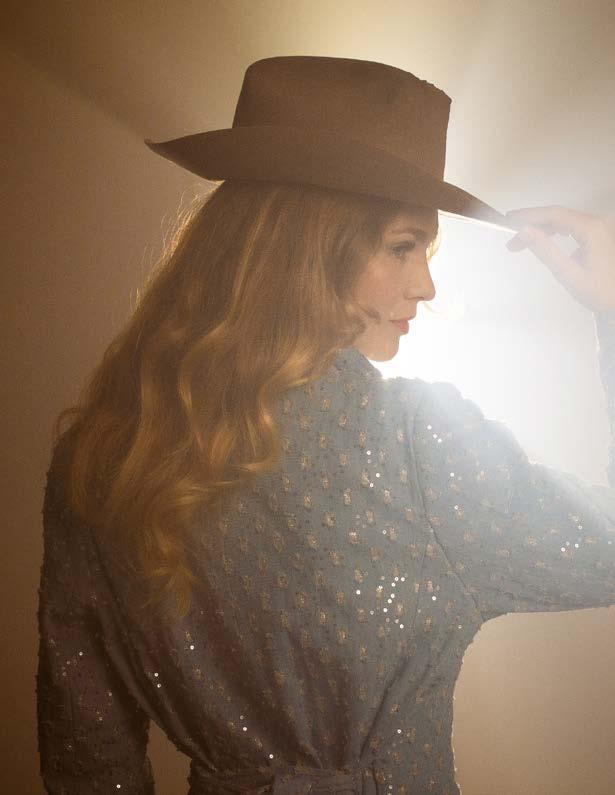

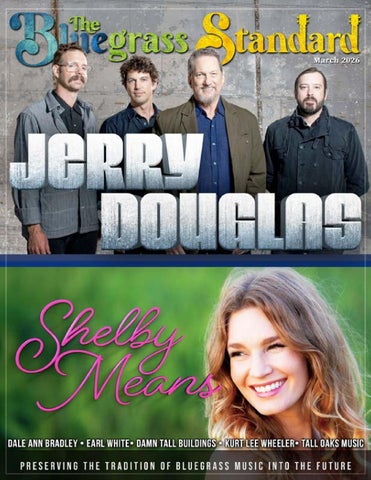
Shelby Means is comfortable performing. That comes from nearly eight years playing bass and singing harmony with the bands Della Mae and Molly Tuttle and Golden Highway. But now she’s center stage and in charge as she leads her own band after the release of her first album, simply called Shelby Means.
“There’s a lot more responsibility in fronting my own band,” says Means. “But the more comfortable I can be on stage, the more authentic and real the music comes across.”
The eponymous album showcases Means’s personal writing (all but two of the songs are originals), and the playing of A-team artists including Jerry Douglas, Bryan Sutton, Molly Tuttle, Bronwyn Keith-Hynes, and Billy Strings. It’s only natural that this is a bluegrass album, given that Mean’s father, a banjo player, used to wake her for school by sitting at the foot of her bed playing “Cripple Creek” or “Salty Dog.” That story is told on “5 String Wake-Up Call,” perhaps the most autobiographical song on the album. Other songs tell about growing up in Wyoming, moving away from Nashville, and life on the road.
“I think it’s fun to mix it up like that -- to put a little bit of me and my experiences in there, and then just let my imagination run wild sometimes,” she says. “And whatever happens in that world can be fun to uncover.”
Her father’s musical influence went beyond morning banjo serenades. “He would take us to contests and music festivals when we were growing up,” Means remembers. “My brother Jacob plays the mandolin. He started playing when he was eight, and he stuck with that instrument. Unlike me -- I changed instruments. I first started on fiddle and then I switched around to viola, guitar, and then bass. But singing was really a constant for me.”
Means studied music and business at the University of Wyoming but moved to Nashville before graduating. “I didn’t know exactly what I was looking for, but I knew that I wasn’t going to find it in Laramie. And I just wanted to be surrounded by musicians that were better than me,” she says.
A chance encounter with the guitarist Courtney Hartman, whom she’d come to know at festivals when they were growing up, led to the gig with Della Mae. And after four years with Molly Tuttle and Golden Highway, Means felt she was ready to step up her game.
“I had a duo with my husband (singer/songwriter Joel Timmons), and that gave me some experience doing stage banter and writing set lists and putting things together,” she says. “And then being in the background and watching how Molly leads a show, and learning from my bandmates Kyle Tuttle and Bronwyn... I feel like all those experiences have led me to this moment where I now get to front my own band.”
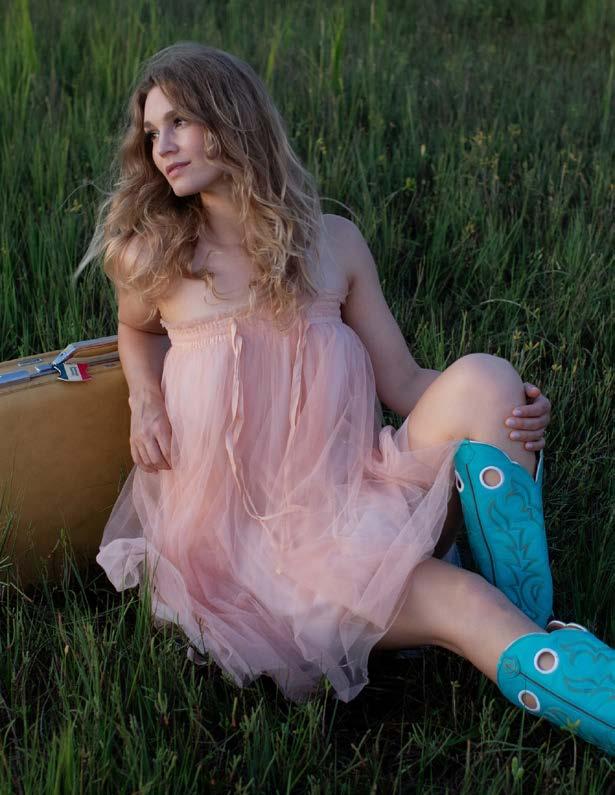
One of the covers on the album is Lady Gaga’s “Million Reasons.” Means admires the pop star’s music and stagecraft, and might be inspired by the latter, as her own bold onstage fashions go beyond the denim and gingham of her predecessors.
“I think it’s great, and maybe a way to appeal to a younger audience, and get some of the
kids thinking, ‘Oh, we can wear cool clothes and be on stage and play acoustic music!’ If you want to wear a t-shirt and jeans, or if you want to wear rhinestones and high heels, it doesn’t really matter at the end of the day -- as long as the music sounds good,” she explains.
Ironically, perhaps, Means started her band after having left Nashville nearly five years ago, relocating to her husband’s home in Charleston, S.C.
“It doesn’t have the pool of pickers that Nashville has by any means, but thankfully there is still some bluegrass here,” she comments. “And with my life being on the road, it turns out that it didn’t really matter where I live, because when I come home, I’m just a little bit on break, you know? And Nashville is a constant hustle. When you’re home, it still feels like you’re working. So, coming to Charleston feels like the antidote to life on the road. And that was what I needed.”
Means pulls from a select roster of Nashville players when she’s touring, but the core of the band consists of her brother on mandolin and Timmons on guitar. Though she’s performed and recorded Americana music with her husband, she went back to her musical home on her first album.
“It’s paying homage to my roots, and I was inspired by Bronwyn and Molly putting out straight-ahead bluegrass. Or maybe not traditional bluegrass, but very much bluegrass albums,” she muses. “And I wanted to do that, too. A lot of people maybe didn’t know that I could sing before I put the record out. I think it was just important for me to leave a stamp in the bluegrass world and say, ‘Hey, I love bluegrass music.’ I’m choosing to make a bluegrass record, and it’s important to me, and I hope to be a part of the bluegrass scene for years to come.”
Check out Shelby online at https://www.shelbyleemeans.com.
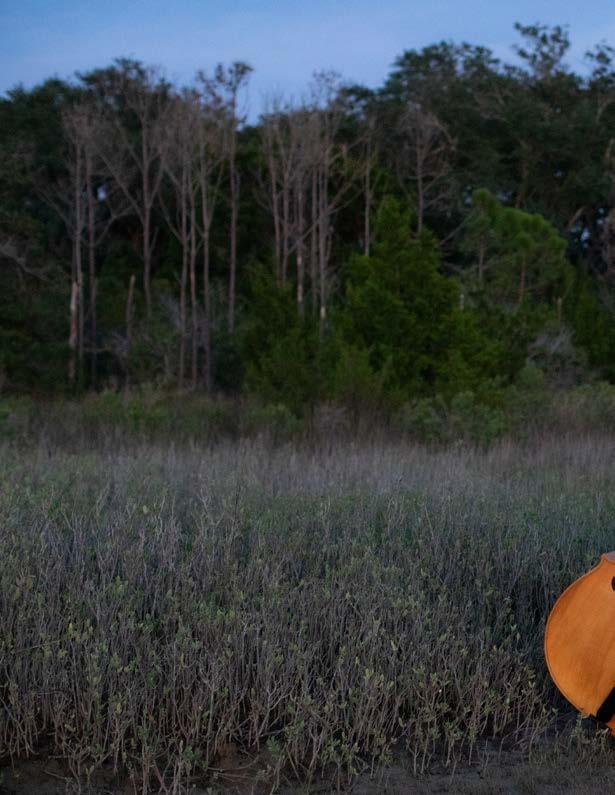
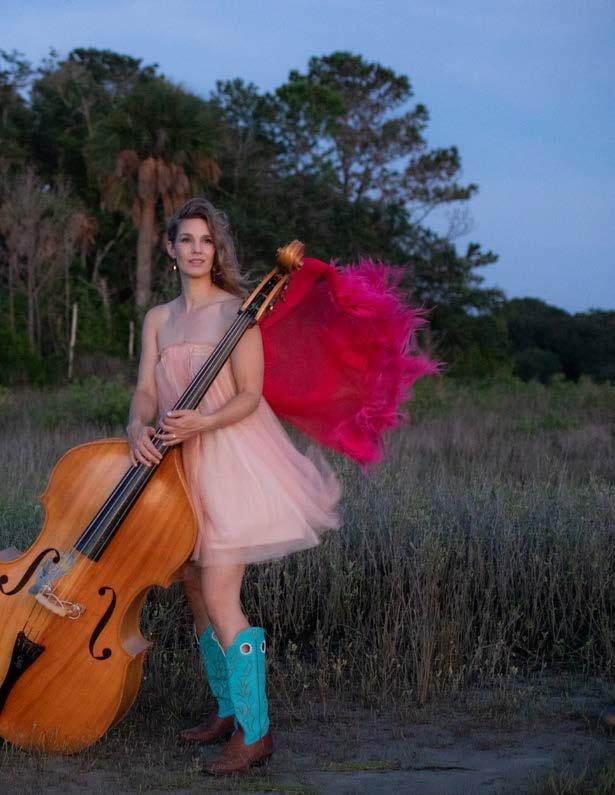
by Jason Young
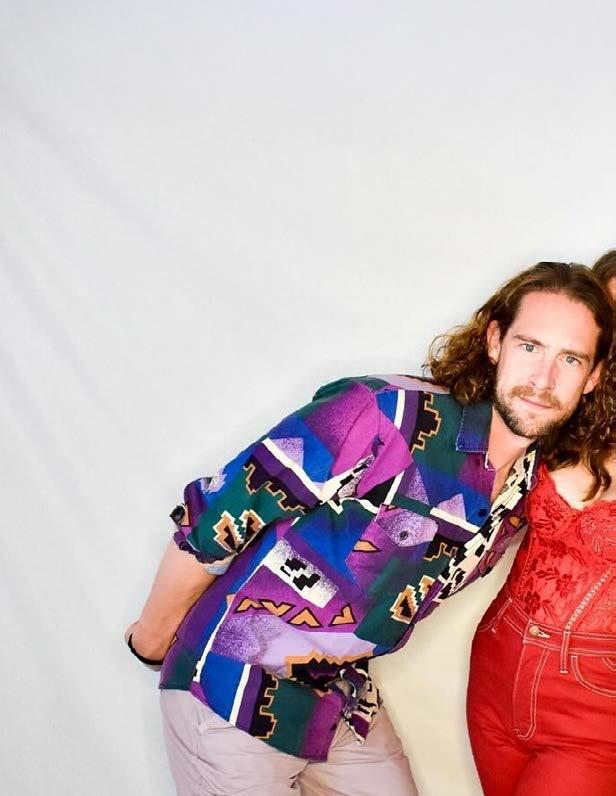
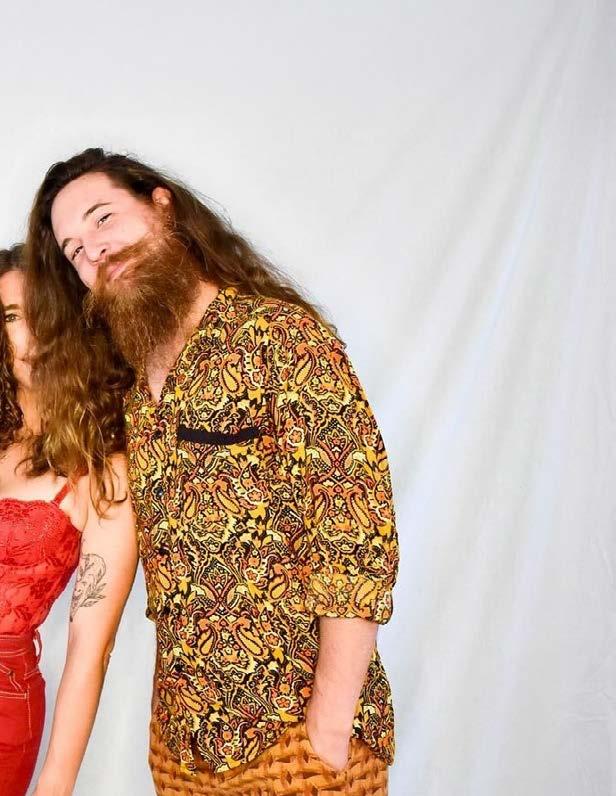

In a world grappling with artificial intelligence and smartphones, the genredefying Damn Tall Buildings would like to remind us that we are living, breathing human beings. Both their latest selfproduced album (released in October 2025), and its title track, “The Universe Is Hungry”— equipped with joyous harmony and front-porch playing chops — invite us to look beyond the virtual veil.
Injecting levity into their music, fiddle player Avery Ballotta, bassist/vocalist Sasha Dubyk, and guitarist/banjoist and vocalist Max Capistran (who is Sasha’s husband), sing about a world struggling to catch up with itself. “We are very sarcastic!” admits Max Capistran, who writes much of the band’s material. “I am a big fan of stand-up comedy; in fact, the whole band is.”
Not surprisingly, Capistran looks to the late John Hartford for inspiration. “Hartford is a huge influence of ours, and we have been vocal about that for a long time,” the songwriter says. “He had a great way of talking about heavy topics while making you smile, and having a little laugh.”
As a 21st century songwriter, Capistran is acutely aware of the dangers of media. “We are surrounded by crises that can feel like a weight pushing down,” he cautions. “It’s the constant knowing all the worst things happening around the world that are always on your cell phone.”
He is convinced that real human interaction can help. “I think a good initiative for everyone is if we would say to ourselves, ‘Ya know, I need to talk to at least one stranger today,’” he observes. “It doesn’t have to be a big conversation -- just a connection. The more that happens in day-to-day life, the better.”
Capistran speaks from experience. “I have these little moments with the band on the road, and as an individual in New York,” shares the Brooklynite, “all these tiny interactions with strangers where [we] make each other smile, whether it’s a cashier in a restaurant or someone on the street. That gives me hope in humanity.”
Though the title track from the new album has a theme that could have been inspired by science fiction, it’s actually driven by humanity. “Whatever is taking hold of us in terms of technology and the internet is a powerful, mysterious thing. I think that is the metaphor behind ‘The Universe is Hungry,’” explains Capistran.
Not all songs, however, have the same message. “There is a thread that ties the album together; I wrote them in a chunk of time,” reveals Capistran, the band’s chief songwriter, whose lyrics on the songs “Simulator” and “Can’t Slow Down” combine with “The Universe Is Hungry.” The project also includes material from other artists, like Roy Orbison’s “Blue Bayou,” Bill Monroe’s “Big Ball in Brooklyn,” and a cover of an Ethiopian song called “Legesse Abdi.”
The band’s adventures aren’t restricted to music. In September, Damn Tall Buildings wrapped up a thrilling week-long visit to Saudi Arabia, as part of the U.S. State Department’s Cultural Exchange Program. The visit included both performances and workshops. “Learning from each other promotes peace and a better discourse between countries,” shares Capistran. “It is so important, and we feel honored to have been a part of it. It’s something we wanted to do for a long time.” During a highlight of that tour, Saudi composer Majed Mohammed performed with Damn Tall Buildings at Jeddah arts complex Hayy Jameel. “Collaboration is essential, and it is

truly amazing. Experiences like this, where Arabic music connects with other cultures, help share our art with the community and broaden our understanding,” Mohammed told Arab News. “For me as a composer, working with them has been inspiring and has pushed me to explore new creative directions.”
Tracing Damn Tall Buildings’ roots to Boston’s Newbury Street, where the band did plenty of busking in its early days, Capistran says each member brings something unique to the table.
“Our sound has a lot to do with our different backgrounds,” explains the writer, who says his wife Sasha grew up with jazz and theater. “Her grandmother was a Copacabana dancer, so there was a lot of art and music in her family, including an aunt who played bluegrass.”
And according to Capistran, many fans have no idea that Avery Ballotta is a classically trained violinist. “He’s also a composer, so he has great ideas when it comes to motifs, and he has a very percussive way of playing.” (By the way, fiddle legend Darol Anger was Ballotta’s teacher and mentor at Berklee College of Music, which is also the alma mater of Capistran and Dubyk. No wonder Damn Tall Buildings makes such damn great music!)
Capistran himself grew up listening to blues and rock music. “I thought I was going to be a blues guitar player!” he says. “I also like Bob Dylan and Modest Mouse. I think you can hear a lot of that stuff in my playing and songwriting.”
This is obviously a trio that encourages its listeners to make their own music -- and to seek out plenty of human interaction. About a year and a half ago, Dubyk and Capistran opened the Brooklyn doors of their Crown Heights Music School, which now has 160 students. “It’s been really cool working with people who are trying to connect to music,” Capistran says.
He believes he can explain why Damn Tall Buildings has such a positive vibe. “We started this band as friends,” he offers. “It’s like a relationship; it laid so much groundwork for us.” That groundwork, Capistran says, led to his marriage to Sasha. “The band has its little quarrels and hissing matches,” he laughs, “but we love each other.”
Whatever holds up these Damn Tall Buildings, this is good, solid stuff – damn fine music made by real human beings.
Visit the band online at https://www.damntallbuildings.com.



Have another helping of Irish stew or corned beef and cabbage. Wash it down with a pint of Guinness, green food coloring optional.
Then continue your Saint Patrick’s Day celebration by listening to traditional Irish tunes. More than a few should sound familiar to Bluegrass fans.
When it comes to influences on American music, the Grass literally is greener because of contributions from the Emerald Isle.
First came the fiddle, easier than most instruments to take on board ship and down the Great Wagon Road into the Appalachian backcountry. Many pioneers of the 1700s were Protestant Scots-Irish, a few generations distant from the Lowland Scots who’d been relocated to Northern Ireland’s Ulster Plantation.
colonies. Most landed in Pennsylvania and some settled there. Others trekked to Virginia and the Carolinas, then on to what’s now Kentucky and Tennessee. Fiddles provided the soundtrack for settlement. Family gatherings and barn dances echoed with reels, jigs and other lively melodies brought across the sea.
Some fiddle tunes were updated for the new land. The Irish tune “The Beggarman” became “Red Haired Boy,” while “Lord MacDonald’s Reel” is more widely known here as “Leather Britches.” And in a burst of patriotic pride (or prototype political jingle), “The Gobby-O” became “Jefferson and Liberty.”
Ballads also were part of a musical inheritance that continued to expand. The potato famine of the 1840s brought new waves of Irish families to America. Protestant or Catholic, their songs focused on everyday life—love true or lost, memories of family and home, tales of strong drink and shenanigans, and the hope of Heaven—themes still heard in Bluegrass and traditional Country music.
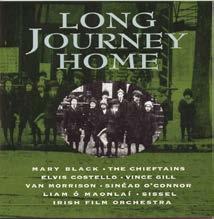
In 1998, Irish and American musicians recorded “Long Journey Home,” an album celebrating musical ties between the two lands. The album shares a title with a Monroe Brothers song, but this title track is a cowrite by Paddy Moloney of The Chieftains and Elvis Costello (whose given name is Declan Patrick MacManus).

Fiercely independent and ready for a better life, they booked passage to the American
Their lines include this bittersweet reminder for all leave home in search of a new opportunities: “But as you ascend the ladder/ Look out below where you tread/For the colours bled as they overflowed/Red, white
and blue . . . green, white and gold.”
On the same album, Vince Gill recorded a mashup of the Irish outlaw ballad “Bard of Armagh” and its American offspring called “Streets of Laredo.” To the same tune, he sang three verses of each song.
March 2026 “Writer’s Room” column by David Haley Lauver—2
In contrast to the Texas cowboy’s lament, “The Bard” has a happier ending: “How I love to muse on the days of my boyhood/ Though four score and three years have flitted since then/ Still it gives sweet reflection, as every first joy should/For free-hearted boys make the best of old men.”
pulses through Appalachian culture.”
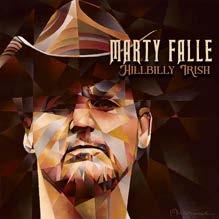
In his popular “Hillbilly Irish” album, singer/ songwriter Marty Falle offers another look at the Irish legacy in America. Jim Capaldi, reviewing in 2025 for Country Music News International Magazine, calls the title track “not just a nod to heritage—it’s a rousing celebration of the Scots-Irish blood that
The reviewer says that “the song bridges continents, connecting the stone-walled pubs of Ulster with the tobacco barns of Eastern Kentucky. (Carley) Greer’s voice pairs beautifully with Falle’s, both seasoned and stirring, as they sing of faith, migration, and hard-earned freedom.”
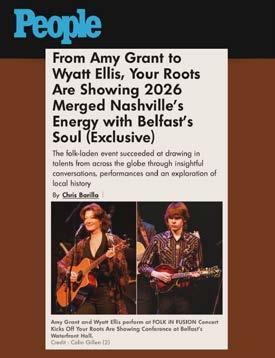
The latest collaboration between Irish and American singer/songwriters happened this January in Belfast, Northern Ireland. A five-day event billed as “Your Roots Are Showing” featured workshops, panels and showcase performances that attracted more than 1,000 people and gained international news coverage.
Chris Barilla, staff editor of People magazine, said the gathering “crossed border and genre lines to provide a truly unique conference experience, earmarked by the most important aspect of it all: the music.”
The opening “Folk iN Fusion” concert featured several artists familiar to American audiences, including Amy Grant, Jim Lauderdale, Rissi Palmer, and Wyatt Ellis. One of the highlights was a performance by Ellis, the 2024 IBMA Momentum Instrumentalist of the Year, and veteran Irish musician Gerry O’Connor.
This year, the “P” in SPBGMA might have stood for “Perseverance.” The Society for the Preservation of Bluegrass Music in America declared its annual meeting would go on despite the January storm that disrupted travel to and around Nashville.
Folks who made it up the hill to the Music City Sheraton enjoyed the performances, workshops, awards show and jam sessions that have made this weekend special for more than 50 years.
March 2026 “Writer’s Room” column by David Haley Lauver—3
Thanks to SPBGMA and volunteer panelists for continuing to offer the Songwriters Showcase session. This year, Daryl Mosely, Kristen Bearfield and Thomm Jutz performed some of their award-winning songs and give insights on writing.
At the awards show, Rick Faris was named Songwriter of the Year. Other talented writers nominated in this category were Rick Lang, Edgar Loudermilk, Daryl Mosley, Seth Mulder, and Donna Ulisse.
You’ve probably seen photos of the event’s final day, when Daryl Mosley, The King James Boys and other artists performed despite an electrical outage at the hotel. Songwriter Rick Lang commented that, “Even when the power went out on Sunday, everyone carried on and didn’t miss a beat.”
After all, the music SPBGMA is preserving is acoustic music. I can only imagine the electric-withdrawal frenzy that could be triggered if the power went out at the Rock & Roll Hall of Fame.
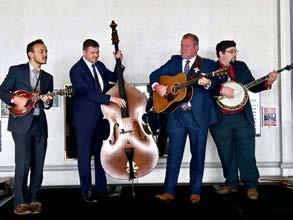
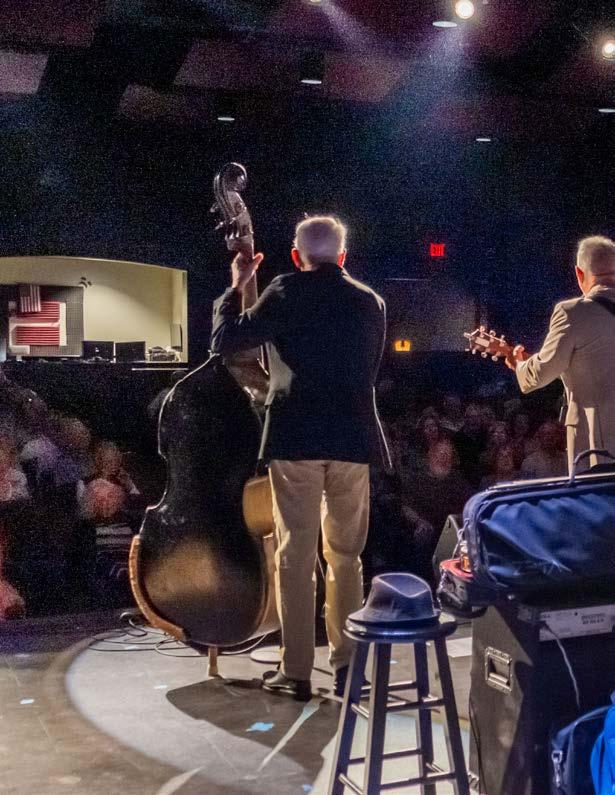
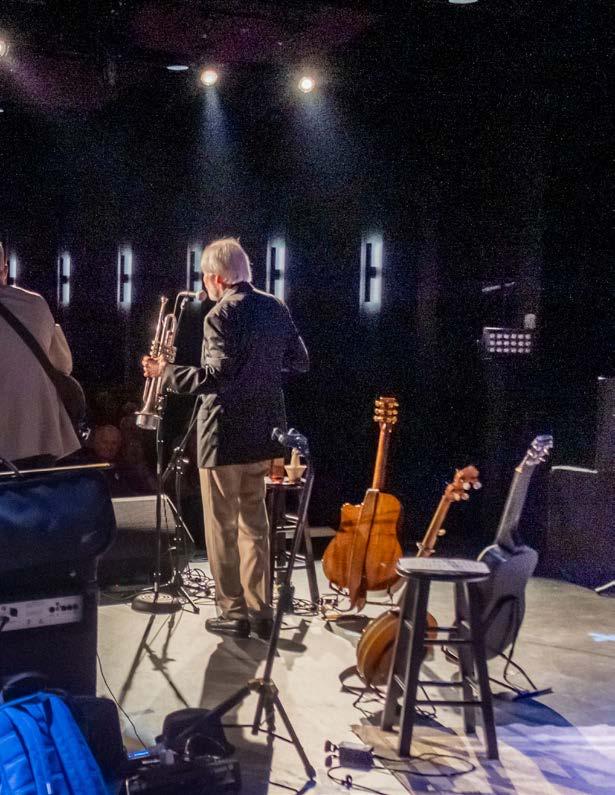

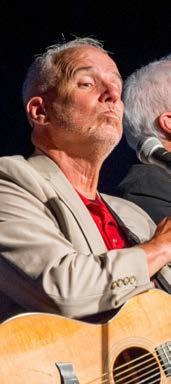
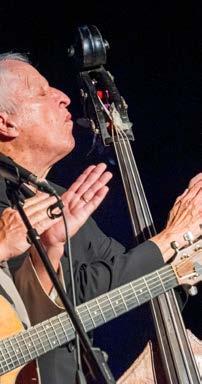
At the Mentone Fall Festival last October, exuberant Bluegrass melodies floated on the mountain breeze. When not browsing the colorful artist’s booths, visitors to the festival made their way to an outdoor amphitheater with dogs and small children in tow. Three on a String was on stage, and their audience knew they were listening to something special. Few bands or friendships last fiftyfour years, but this is what the talented men behind one of Alabama’s most cherished Bluegrass bands have accomplished. With each performance they deliver rousing music and boisterous jokes, and draw longtime friends from across the state, all while turning younger audience members into Bluegrass fans due to their artistry and wit. Three on a String was founded in 1971 by Jerry Ryan and Bobby Horton. Jerry sang and played guitar when he was not coaching high school basketball. Bobby was a college student who loved banjo music. The organizer of a Bluegrass festival at Horse 40, near Steele, AL, asked Jerry to help with the inaugural festival.
Interest in the Bluegrass genre had spiked due to the success of the long-running television series “The Beverly Hillbillies” and the Oscar winning film Bonnie and Clyde, which featured the song “Foggy Mountain Breakdown” in some of the chase scenes.
“Jerry asked Bobby to join him to do a set,” explains Jerry’s son Brad. “They played about seven songs, because that’s all they had time to learn.” It was a steep learning curve as Jerry took on emceeing and playing in the first Bluegrass festival he had ever attended. “From there they added a bass player to kind of fill out the sound,” says Ryan, “and Three on a String was born.”
“They kind of had perfect on-stage chemistry,” explains Ryan. “And in those
years any band that had a decent banjo player could get bookings at festivals.”
An early influence on Three on a String was The Kingston Trio, and Horton and Ryan blended their love of Bluegrass music with folk as they gravitated towards singalong songs, which Alabama audiences enjoy. “As the years go by you kind of become your own thing, or hopefully you do,” explains Brad, who eventually became the permanent bassist. “That way you can kind of do more original stuff or take some other influences and try to make it your own and put it in your style” After the gifted multi-instrumentalist after Andy Meginniss joined the group, they ventured into more original material as well as continuing to cover standards in the Bluegrass genre such as “Rocky Top,” “Rollin My Sweet Baby’s Arms,” “Mountain Dew” and “Dueling Banjos.” “People still love those tunes,” Brad states. “Many bands don’t like to play them, but we love to.”
Some of their most popular original songs are “Best of Friends,” written by Meginniss, and Horton crafted “Baroque-Down,” an instrumental piece gently pokes fun at classical musicians.
“We like to tell little stories throughout our show that folks can identify with,” Brad explains. “Still Kicking,” is another audience favorite, partly due to performing for five decades. “We have reached ‘senior status’ as has a lot of our crowd,” Brian says. “So, they can identify with that song, and us,” he laughs. But they also draw young listeners with every concert. “They seem to always come up and tell us how much they enjoyed the show, which makes us feel so good that we still connect with all generations,” Brad says. “If you move people in some kind of way, with music, stories or jokes, they appreciate it and they will come back to see you.”
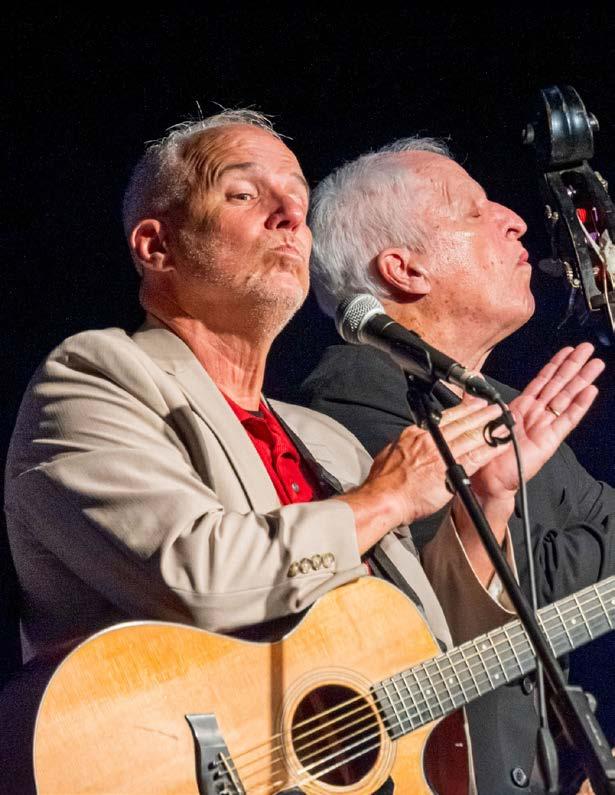
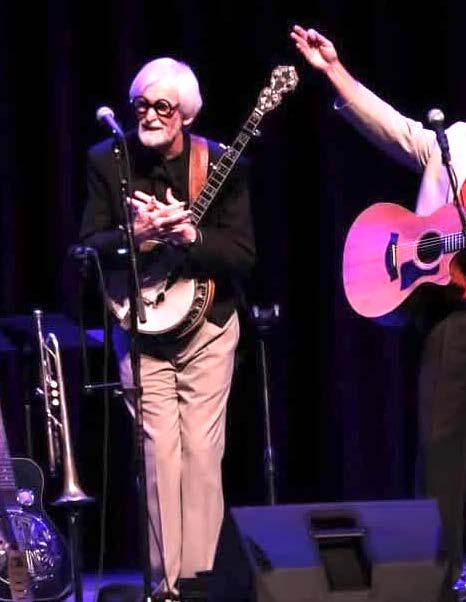
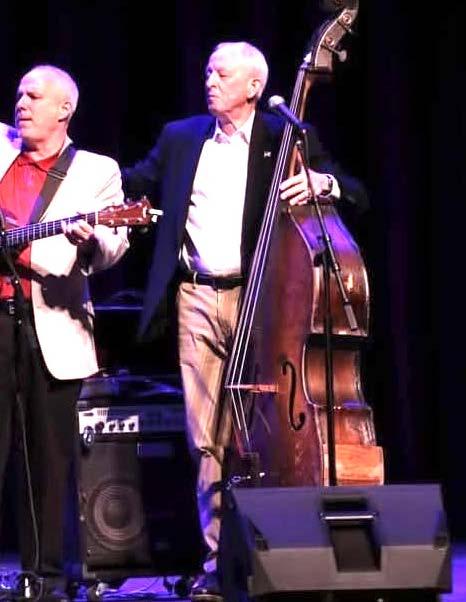
Three on a String’s distinctive sound—due in part to Jerry’s choice to not attempt imitating their extremely popular contemporary Bill Monroe—has wrought some unusual audience feedback over time. “It’s kind of funny but someone once said, ‘Ya’ll don’t sing like a bluegrass band’. We think it was meant as a negative comment, but we always thought of it as a compliment,” Brad explains. “Jerry’s thinking was, ‘let’s just sound like us.’”
Three on a String has either opened or performed with musical luminaries such as the Statler Brothers, Red Skelton, Barbara Mandrel, Jeff Foxworthy and Ray Stevens. “We recently did a Christmas tour throughout the south with ‘Sean of the South’, who has a huge following,” Brad says of the humorist and musician Sean Dietrich. A particular thrill for the band was their induction to the Alabama Music Hall of Fame in 2023. Brad says that everyone appreciated the recognition for their accomplishments over five decades in the music business. “We just walked around on cloud nine for a year or so,” he laughs.
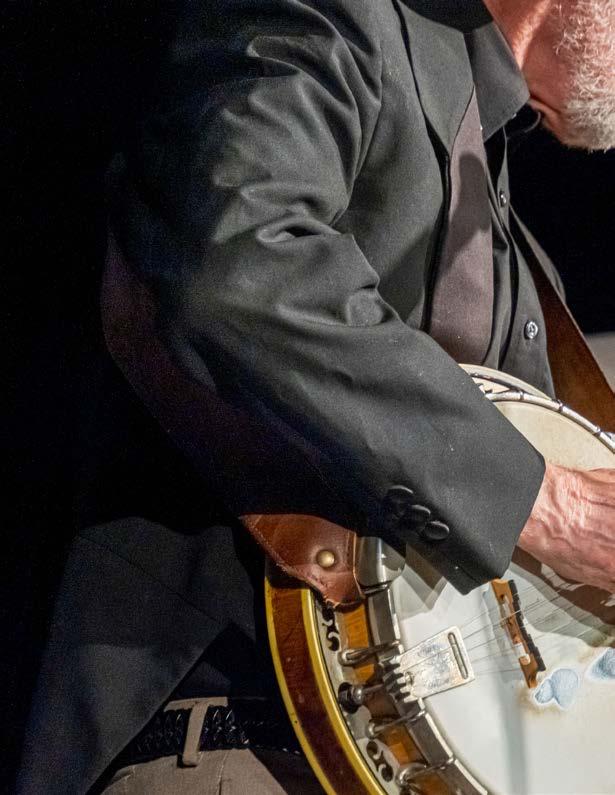
In addition to his contributions to Three on a String, Horton—who plays an astonishing twenty instruments—has collaborated with the renowned filmmaker Ken Burns. Horton’s musicianship has been featured in more than ten documentaries for PBS, including the most recent The American Revolution.
“Bobby’s work with Ken Burns has been incredible,” Brad says. “We like to brag on that fact. He is a history nut, so he has been able to combine his love for music and his love for history into a very rewarding career.”
When a band performs together for fifty-four years changes are inevitable, and Jerry Ryan’s decision to retire as leader of the band, which led to an outpouring of appreciation from devoted fans.
Today, when Horton, Meginniss and Brad Ryan get together, they are just as stoked to perform at small community shows as they get excited for a large concert. “We love to perform and just be ourselves,” Brad states. “We love to see old friends and make new ones. We just feel very blessed to be able to do this. And we still appreciate every minute of it.”
Learn more about Three on a String online at https://www.threeonastring.com/
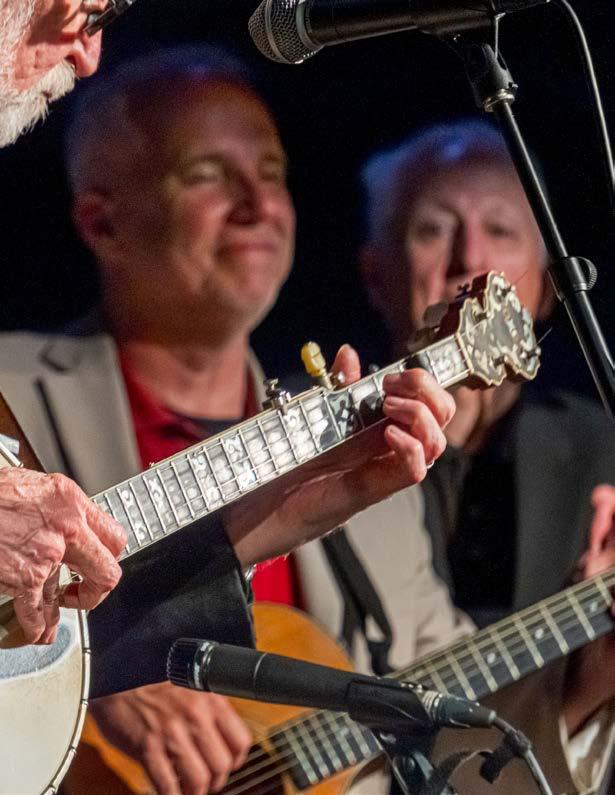
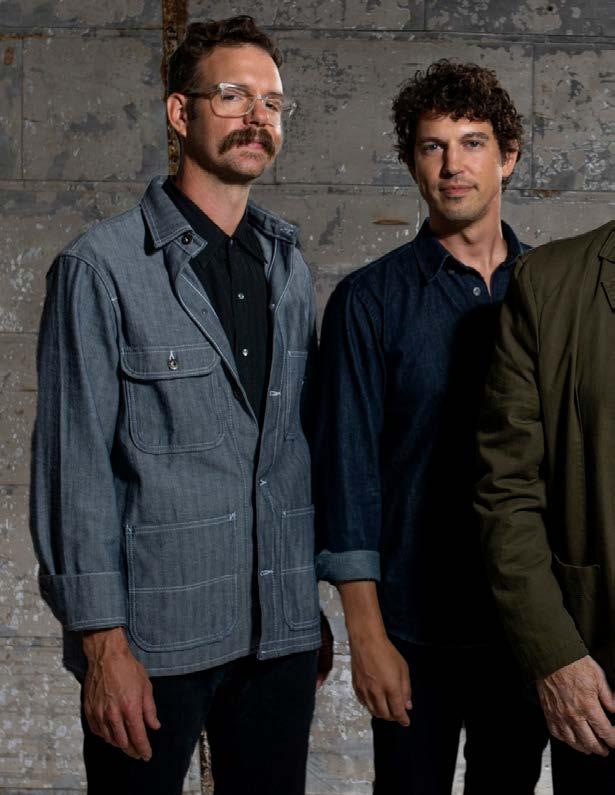
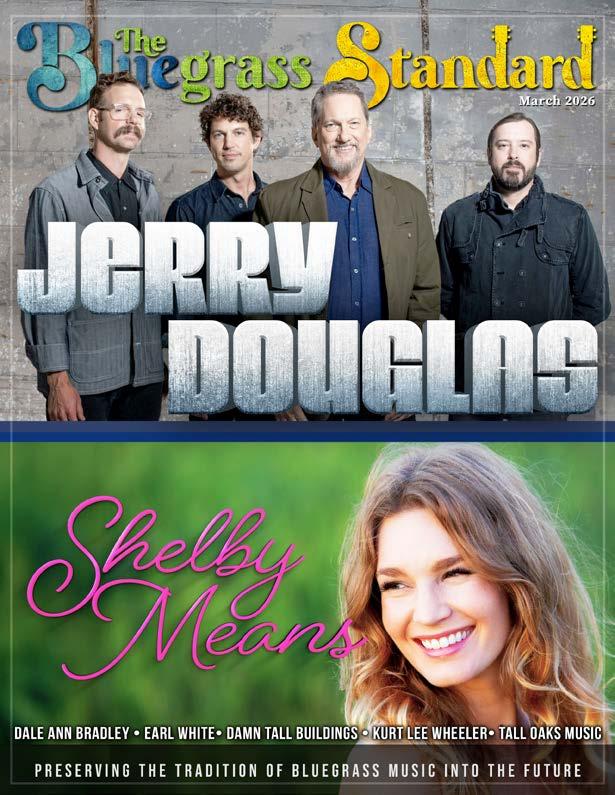
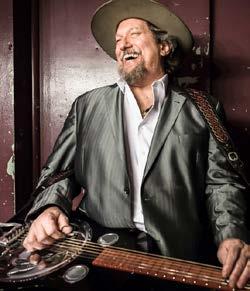
Long before he was inducted into the Bluegrass Music Hall of Fame, Jerry Douglas was a little boy surrounded by music in his hometown of Warren, Ohio. “My father was from West Virginia and worked in the steel mills in Ohio, and he and some of his co-workers had a band (the West Virginia Travelers) that easily could have gone professional,” Jerry says. “They played in local beer joints, but their main focus was their work at the mills.” Like many kids, Jerry says he plunked on an instrument when he was a small child. “I started playing the mandolin when I was four or five and did that for a few years before I got a Sears and Roebuck guitar,” he recalls. “It was like playing a cheese grater.” When he heard the music of Flatt and Scruggs, a lightbulb went off in Jerry’s head. “I saw Josh Graves
play Dobro with them, and I was hooked. I wanted to be him.”
The boy asked his father to help him modify his guitar. “My dad raised the strings on my Silvertone, and I used a piece of copper pipe for my first slide,” he says. Jerry started playing Dobro with his dad’s band when he was 13 years old. “The guys in the band were great to me,” he remembers. “I learned by watching my dad play, and I practiced all the time.”
During that period, he explains, there seemed to be a lot of bluegrass on people’s minds, but there were not a lot of players. His dad took him to festivals, and when he was 13, the young musician met his idol, Josh Graves. “We were at a campground,
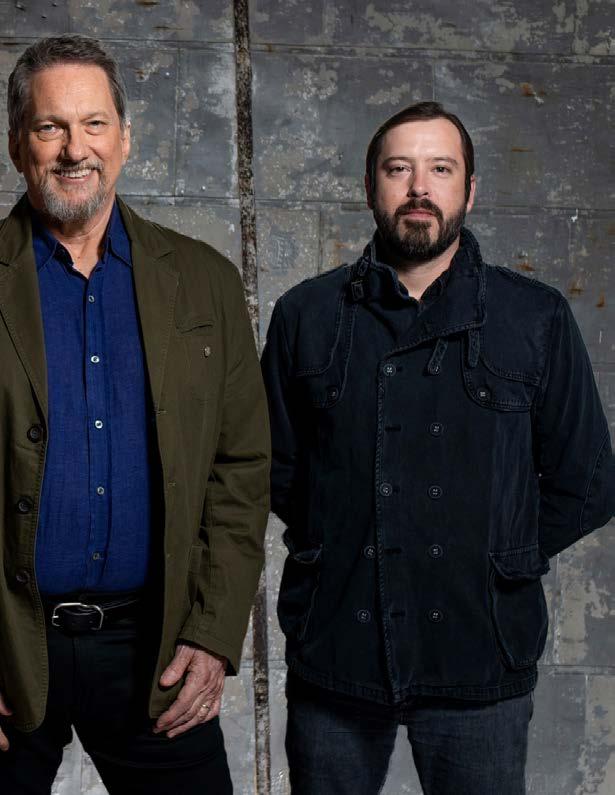
and we were told that he was coming with Lester Flatt,” says Jerry. “When he saw me, he approached me and suggested we swap guitars before we started playing. I remember to this day what the neck of his guitar felt like.”
What Graves taught young Jerry that evening was a valuable lesson in musical generosity. “Now I’m an open book,” he says. “I’ve had the opportunity to teach a few times with Hot Rize. We took over an elementary school in Oregon for a few summers to teach. I love seeing people learn and watching them progress in their music careers.”
Jerry joined the Country Gentlemen in 1973 and toured with them until joining J.D. Crowe’s New South in 1975. In September of that year, he formed Boone Creek with his New South bandmate Ricky Skaggs. When Boone Creek disbanded in 1978, Jerry joined The Whites, recording several albums with Buck, Cheryl, and Sharon over the next seven years.
Over his long career, Jerry’s work has been recognized with many awards, from the ten times he’s been recognized as the International Bluegrass Music Association’s Resophonic Guitar Player of the Year, to his induction into the Bluegrass Music Hall of Fame in 2024... and many other honors in between, including an amazing 16 GRAMMY awards and three CMA Musician of the Year awards. (Oh, and he’s also the winner of a 2004 NEA National Heritage Fellowship.)
He’s a sought-after Nashville session musician and producer, and his distinctive sound can be heard on more than 1,500 albums. What Jimi Hendrix was to the electric guitar, Jerry Douglas is to the resonator guitar. He doesn’t just play the instruments; he transforms, elevates, and reinvents them. It’s no wonder that he is a 16-time GRAMMY winner.
Years ago, Jerry was given the nickname “Flux” by Ricky Skaggs because Skaggs thought he was fluid, with the ability to play anything, anytime, with anyone. Flux is playing now more than ever, fronting The Jerry Douglas Band and recording and touring for many other projects, including John Hiatt, The Earls of Leicester, Transatlantic Sessions, and, of course, Alison Krauss & Union Station.
And 2026 started with a bang: first, there was the McCoury & Douglas Family Pickin’ Party, followed by Peter Rowan’s birthday party at the Ryman Auditorium, followed by a tour of the United Kingdom with the Transatlantic Sessions. After this month’s Suwannee Spring Reunion, he’ll go back out on tour until October, performing more than 60 shows with AKUS in concert halls and amphitheaters all over the country.
Jerry’s fascination with different musical genres and their origins has led to a board position with the National Council for the Traditional Arts (NCTA), which produces the National Folk Festival. “I’ve been to several cities for the festival over the past several years, and I’ve played in many of them,” he says. “I love that festival because it is so educational. It exposes audiences to music they may never have heard before.”
In addition to touring and playing on his own projects, Jerry has co-produced or produced
over 100 albums for major artists, including The Del McCoury Band, The Whites, John Hiatt, Molly Tuttle, Alison Krauss, Steep Canyon Rangers, Maura O’Connell, and others. He also produced The Great Dobro Sessions (winner of the GRAMMY for Best Bluegrass Album in 1995), and Southern Filibuster: The Songs of Tut Taylor, a passion project that honored the late flatpicking Dobro man.
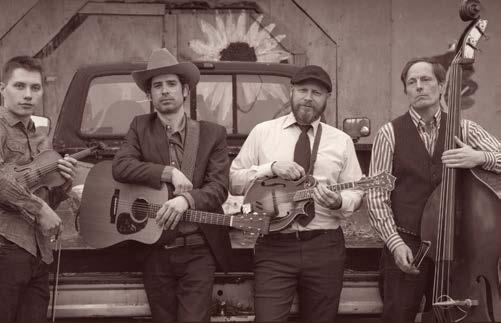
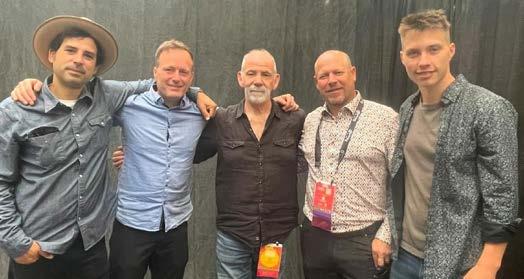
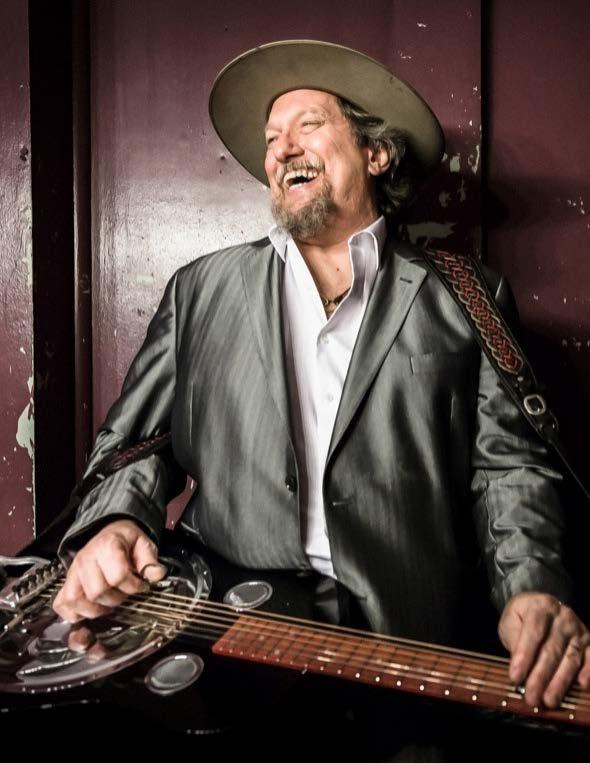
While his schedule doesn’t allow for one-on-one teaching as much as he’d like, Jerry has developed an online resonator guitar course for Modern Music Masters. This video series, described as a “guided tour towards learning and mastering the Dobro, teaches foundational skills for beginners who want a solid start, shares insights with experienced players to help fix bad habits, and offers fans of reso guitars an inside look at how the guitars are made and played. (Check it out at https://modernmusicmasters.com/jerry-douglas-lp.) That certainly ties in with Jerry’s musical generosity. Whether he is teaching, promoting, producing, or creating it, Jerry Douglas has made an indelible and lasting mark on bluegrass.
Visit Jerry Douglas online at https://jerrydouglas.com.
by Susan Marquez
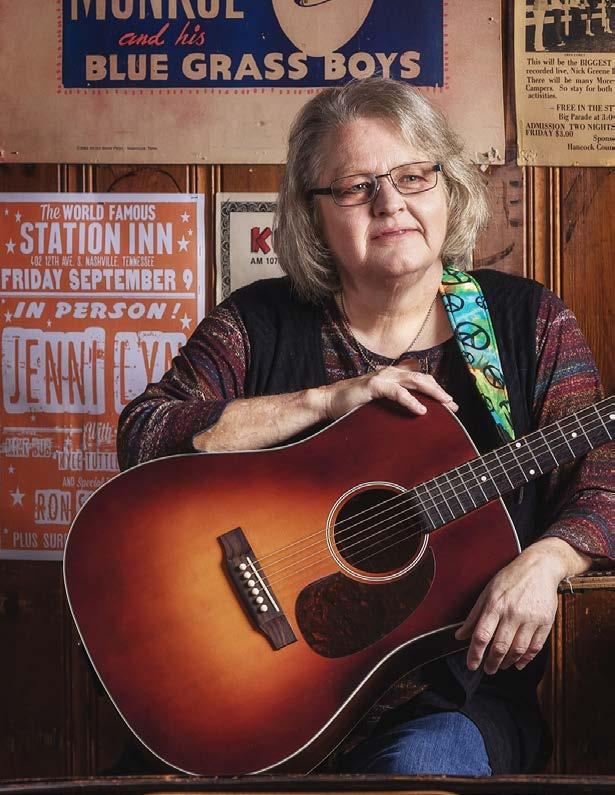
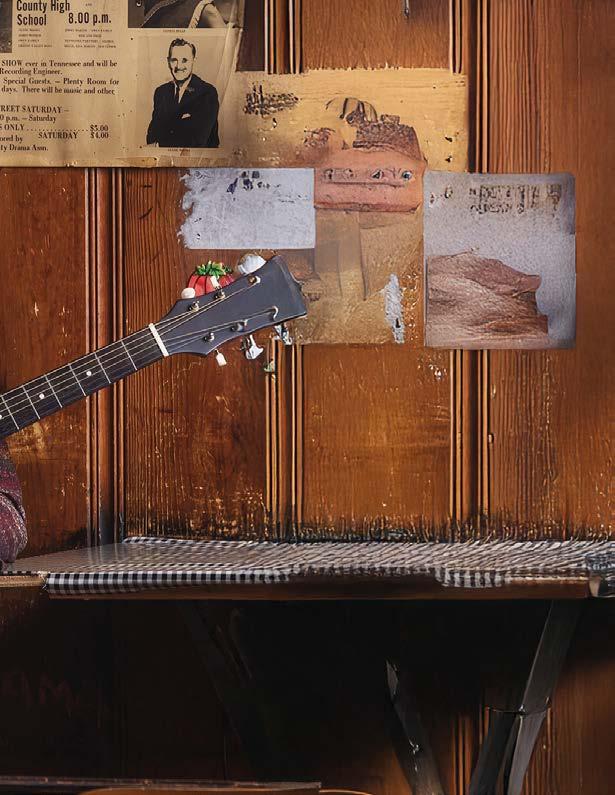
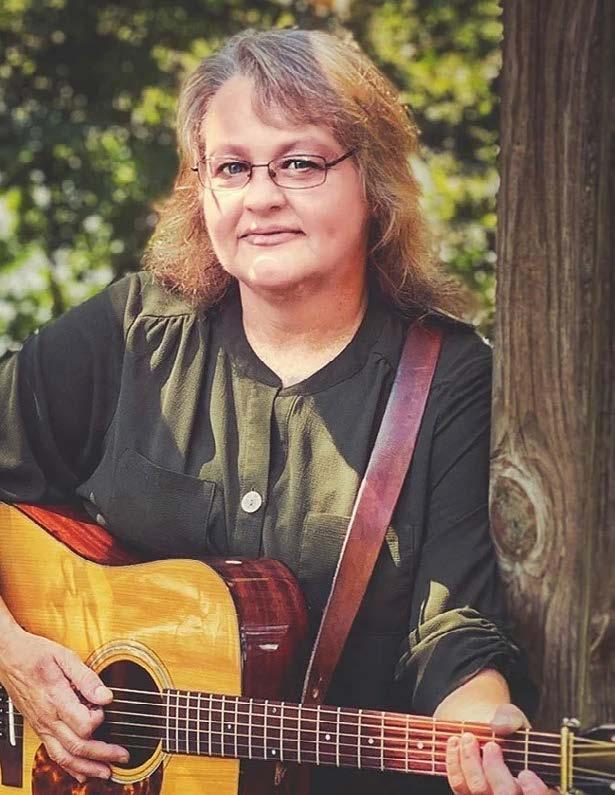
She’s one of the most respected voices in Bluegrass and Americana, yet Dale Ann Bradley is as down-to-earth as your next-door neighbor. From her home in Middlesboro, Kentucky, in the same county where she grew up, Dale Ann walks a line between two worlds. One is the familiar place of her childhood, and the other is on stage in front of her adoring fans. She’s equally at home in either place.
Dale Ann got her first guitar when she was 14, and she began singing in front of live audiences when she was a junior, thanks to the urging of the band director at school who recognized the young girl’s talent. He and his wife spent their summers singing at Pine Mountain State Park, and they invited Dale Ann to perform with them. She played with the band Backporch Grass, which led to a position with the famed Renfro Valley Barn Dance. She performed there regularly and recorded two solo albums. Dale Ann joined the New Coon Creek Girls. Recording four albums for Pinecastle Records, she built a reputation as both a powerful vocalist and a strong performer.
In the late 1990s, Pinecastle offered Dale Ann a solo deal, which was the launch pad to her meteoric career—and having Sonny Osborne as her mentor didn’t hurt. Her solo debut album, East Kentucky Morning, received critical acclaim. Follow-up releases, including Old Southern Porches and Songs of Praise and Glory, furthered her reputation as a gifted singer of both secular and sacred songs.
More albums followed. Pocket Full of Keys was released in 2015, earning Dale Ann a Grammy nomination. She released a selftitled album in 2017, and another, The Hard Way, in 2019. “I love all genres,” Dale Ann says, and her albums can attest to that. She can seamlessly blend traditional bluegrass with more contemporary music.
Dale Ann’s powerful voice has been
recognized six times by the IBMA as Best Female Singer of the Year. Her second Grammy nomination came via Sister Sadie, and the all-female supergroup’s 2019 album, Sister Sadie II. She was a founding member of the group, which won IBMA’s Vocal Group of the Year award. The following year, they won Entertainer of the Year.
Stepping away from Sister Sadie in 2020, Dale Ann put her focus on her solo career. She released Things She Couldn’t Get Over in 2021, which received IBMA’s Gospel Recorded Performance of the Year.
In 2023, Dale Ann’s Kentucky for Me album was released, featuring guest appearances by Sam Bush, J.P. Pennington, and Danny Paisley. “That was probably as close to a themed album as I’ve ever done,” she says. “Every song is somehow related to Kentucky in some way. It wasn’t planned that way – it just happened naturally.”
Now a new album has been recently released. “We’ve been working on it for quite a while,” she says. “I spent a long time looking for the right songs to go on it, and it has a lot of wonderful original songs.”
Dale Ann is a lover of story-driven songs, and this album has plenty of them. “One I really love is “Mary’s Rock,” by Ellen Britton and Will Hopkins. There is a song by Paul Breedlove that tells a ghost story that I just love. And there’s another song called “Watching Corn Grow” with a story I am very fond of.”
A song written by Dale Ann, “Uncle Jake,” is reflective, from the perspective of an old man. “If there was a theme to this album, I suppose it would be reflective storytelling. Writers have been so good to send me songs. I’ve really listened to a lot. I love it when a singer or writer lives the story. That’s special.”
Dale Ann says she’ll be on the road as much as she can in 2026, and she’ll start on
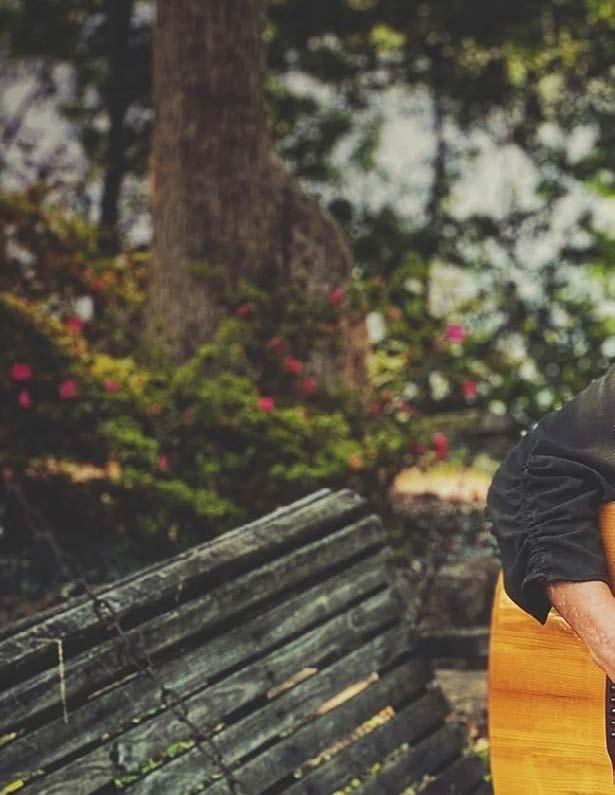
another album. “I have a new line-up that I’m thrilled with,” she says. “Rachael Boyd plays fiddle for us, and she is also a great singer. She is very dedicated and puts all she has into everything she does. Matt Ledbetter has been picking with me for ten years – he recently won Dobro Player of the Year at SPBGMA. Brian Turner joins us on bass, and he also engineers my vocals along with Tony Ray. And Stewart Wyrick plays banjo with us, and he has a good right hand as I’ve ever heard in my life. This band is cohesive and consistently delivers.”
by Stephen Pitalo
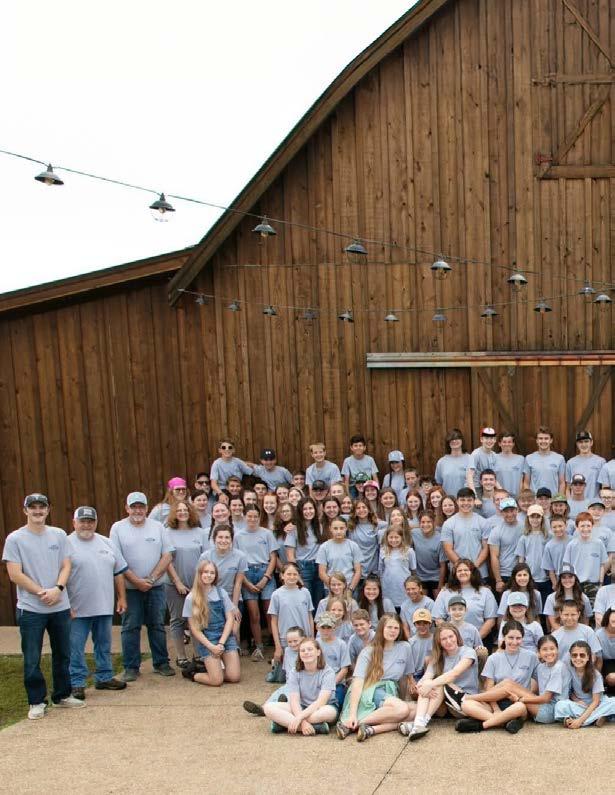


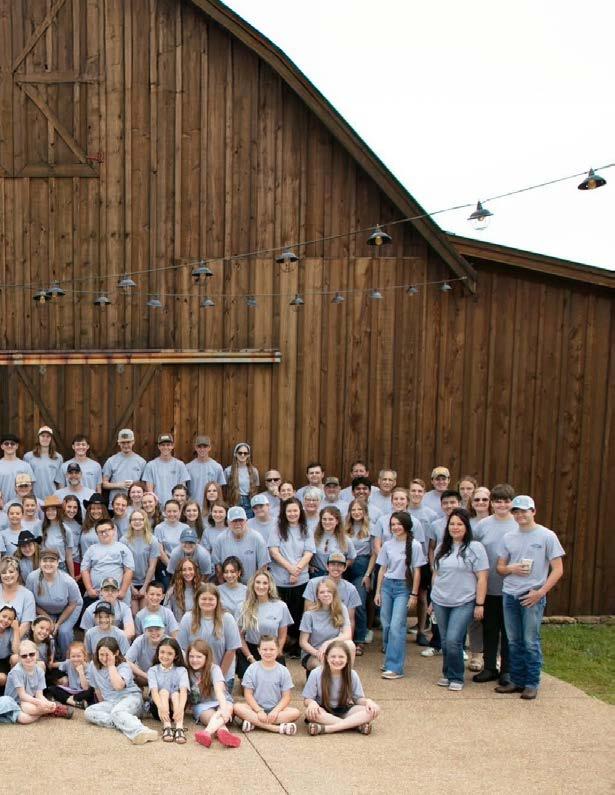
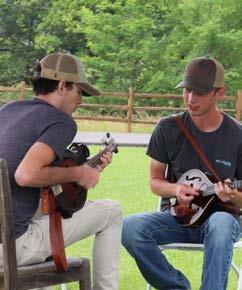
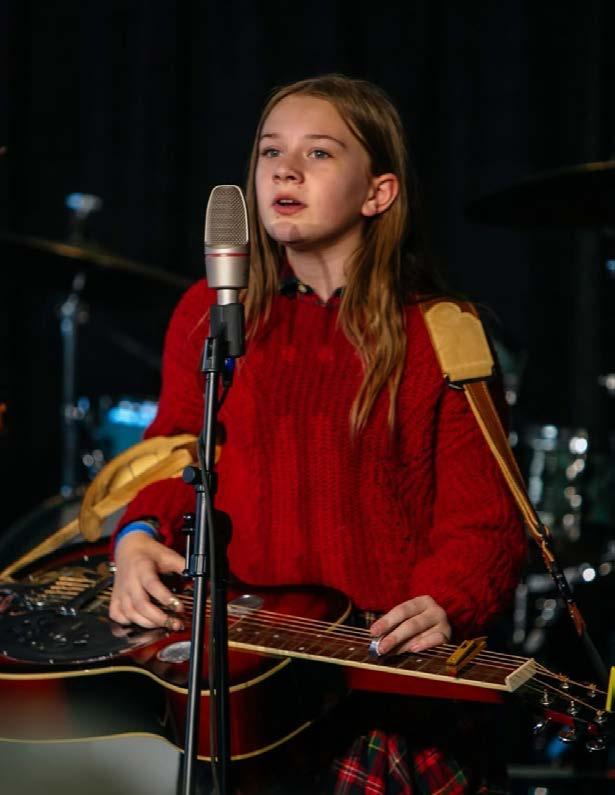
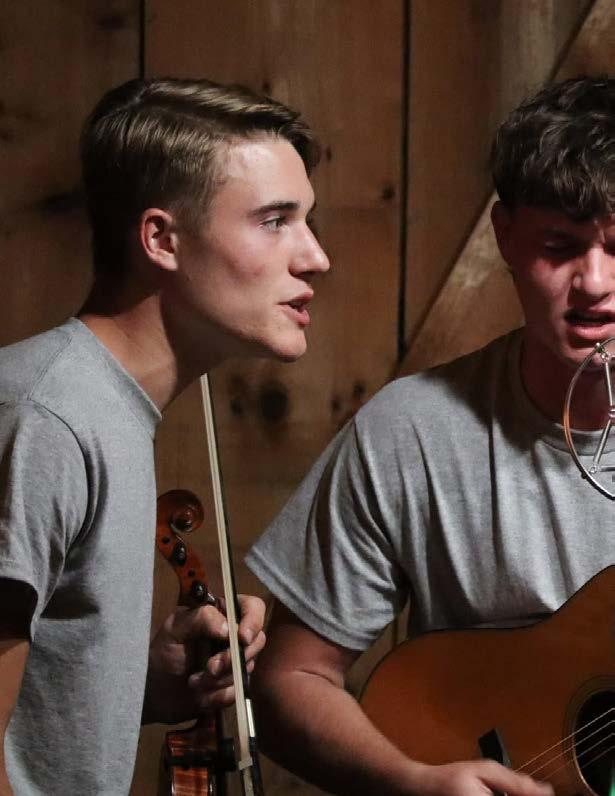
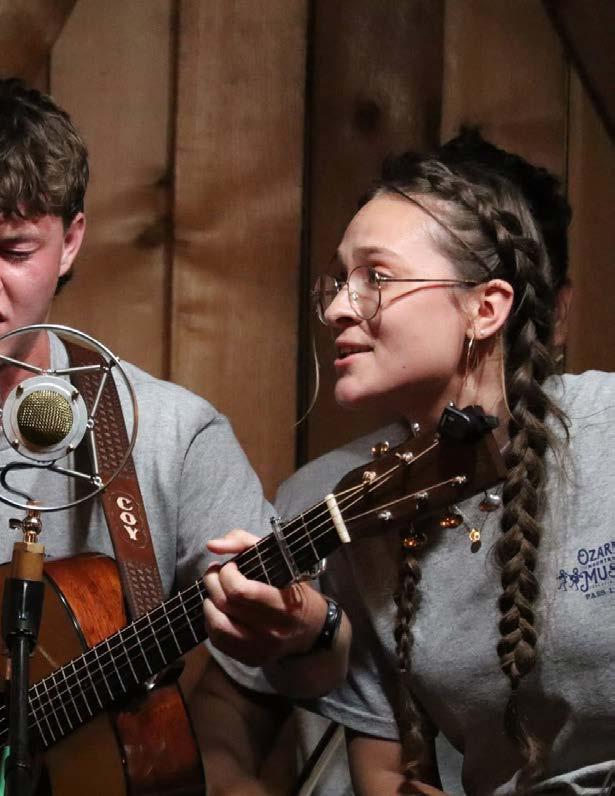
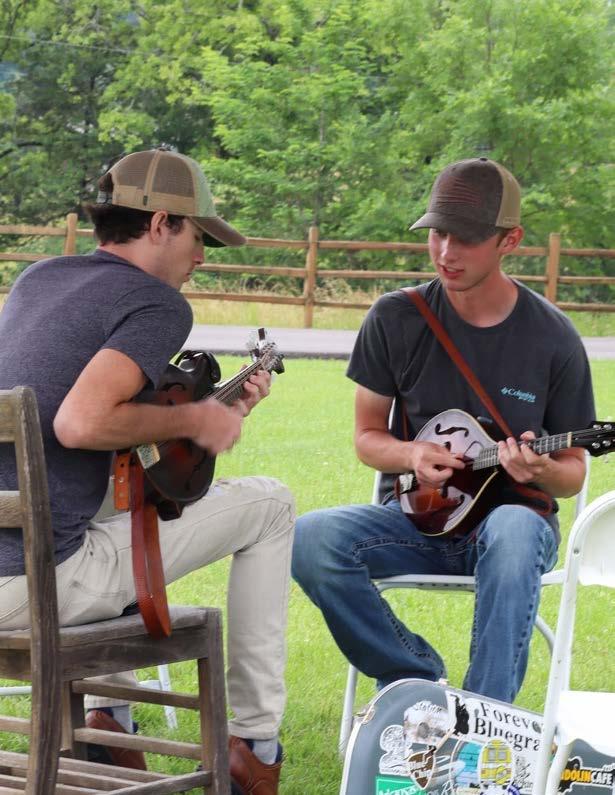
In a moment when most young musicians are learning through screens—isolated, headphone-deep, and algorithm-directed— the work of the Ozark Mountain Music Association feels almost countercultural. Here, music is taught face-to-face. Instruments are acoustic. Learning happens in rooms, on porches, and on courthouse squares. And the goal isn’t virality—it’s continuity. “We are event-oriented,” said Wendy Wright, executive director of the Ozark Mountain Music Association. “Most of what we do is youth-centered. We host bluegrass camps, an old-time music and square dance camp, a winter festival, square dance workshops, and a youth and bluegrass contest.” That calendar anchors OMMA’s mission: to preserve and promote traditional music of the Ozarks for future generations, guided by the values of kinship, appreciation, and legacy. Since 2006, the organization has focused on passing down old-time fiddle music and related traditions by placing young musicians directly alongside experienced players who carry those styles in their hands—and in their memory.
OMMA’s roots trace back to small youth camps founded by Bob and Carlene McGill, long before the organization formalized as a nonprofit.
“They had a little camp with about 15 or 20 kids,” Wright said. “They lined up fiddle players with guitars on each end and performed old-time songs.”
Those early groups didn’t just perform locally.
“They went to Washington, D.C., a few times and played in churches and communities during the year,” she said.
When Wright took over leadership, she initially continued that blended approach— until her first summer revealed a deeper truth about the music itself.
“My very first camp, I modeled it after what had been done before,” she said. “We had old-time instructors and bluegrass instructors together. It was very eye-opening.”
At the time, Wright admits she couldn’t easily distinguish between the two styles.
“I couldn’t have picked out old-time versus bluegrass,” she said. “I got a real education that week from the old-time musicians. Bluegrass music is more performanceoriented, and old-time music was meant for dance. It was about bringing the community together—square dancing, fiddle tunes with a strong downbeat. It wasn’t necessarily for performance.”
For old-time musicians, preservation is personal.
“Some of these tunes have been passed down generation to generation,” she said. “They can hear a style and know who played it. It’s very close to their hearts.”
That philosophy comes fully to life each summer at OMMA’s Old-Time Music & Dance Camp, held July 14–17 at the Ozark Folk Center State Park in Mountain View.
Students spend full days immersed in traditional old-time fiddle music and community-style square dancing, with camp days beginning at 9:00 a.m. and continuing into the evening.
“They take fiddle lessons, calling lessons, Unplugged in the Ozarks:
and square dance lessons,” Wright said. “The callers are dying—the youngest callers we have are in their 50s and 60s—so we’ve been training new callers.”
Evenings generally move outdoors.
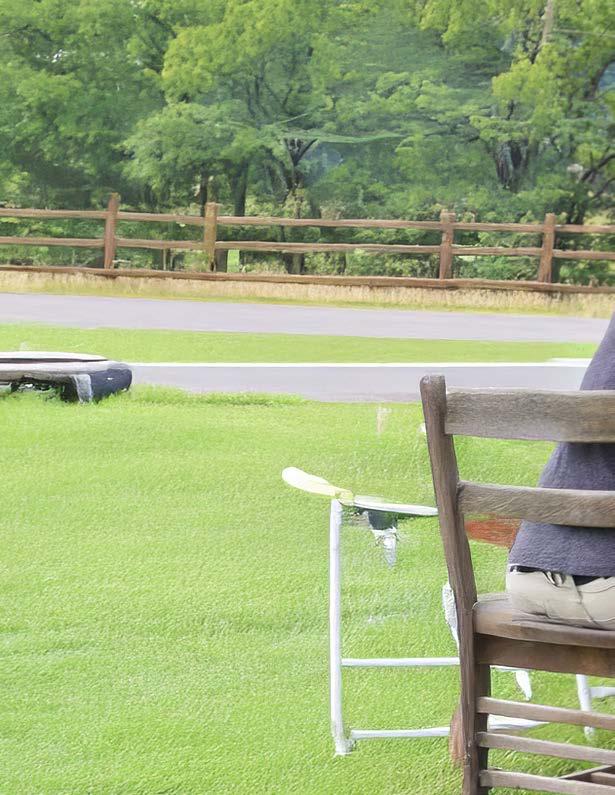
“Mountain View has a courthouse square with an old dance floor,” Wright said. “We put a band up for about 30 or 40 minutes, then do a community square dance. People bring lawn chairs, the square is full, the dance floor is packed. They’ll dance until 10 o’clock. It’s like Mayberry.”
The Old-Time Music & Dance Camp is open to ages 12–18, priced at $300, and centers on participation rather than performance—an intentional contrast to the competitive pressure many young musicians experience elsewhere.
Earlier in the summer, OMMA turns its focus to bluegrass with two week-long Bluegrass Camps, held June 9–13 and June 16–20 at Weddings at the Homestead in Branson.
The structure is deliberate and demanding.
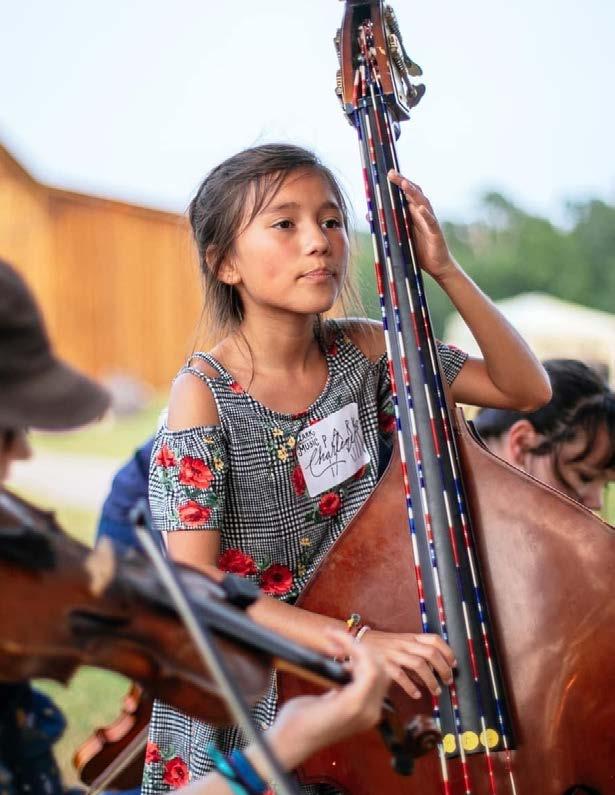
“The bluegrass camp is performance-oriented,” Wright said. “Kids are divided by skill level and placed into actual bands. Each band has a coach for the week.”
Students learn as part of a traditional bluegrass band—fiddle, banjo, mandolin, guitar, and bass—with instruction that includes:
• Individual instrumental lessons
• Band rehearsals
• Group workshops
• Vocal and harmony lessons
• MC coaching
• Evening jams
• One night of square dancing
“All instruction ends by 6 p.m.,” Wright said. “Parents are welcome throughout the day and encouraged to join evening jams.”
Each camp culminates in a public performance—Saturday, June 13 at 7 p.m. for Camp 1, and Saturday, June 20 at 7 p.m. for Camp 2—giving students a tangible goal without turning the experience into a pressure cooker. Last year, participation surged.
“We had 110 kids,” Wright said. “There were 19 bands. We had to split the final show into two performances.”
This year, OMMA is adding a second full bluegrass camp, a move that comes with both opportunity and risk.
“There’s a break-even point,” Wright said. “I’m going to have to pray it works.”
OMMA’s season begins with the Youth in Bluegrass Contest, held May 22–23 (Memorial Day weekend) in Branson. The contest, once run by Silver Dollar City for two decades, now lives under OMMA’s stewardship.
“They decided not to do it anymore, and we didn’t want to see it go away,” Wright said.
The contest includes up to 20 youth bands, offers $7,500 in prizes, and emphasizes growth over trophies.
“It’s not about winning,” Wright said. “Kids hear other bands and realize what they need to work on. It takes them to a different level.”
Why the Model Works
At the core of OMMA’s success is its intergenerational teaching model—older musicians mentoring younger ones in person, often for hours at a time.
“I think the secret sauce is that our society is craving connection between generations,” Wright said. You’ll see a kid bent over an instrument with someone who’s 70, or 50, or even 25. They’re passing along tunes, tricks of the trade, stories, and experiences.”
Parents are welcome to stay on site, reinforcing trust and community.
“When they leave camp, they have musical friends for life,” Wright said. “They go to festivals together and grow up listening to this music together.”
For Wright, the unplugged nature of this music is not incidental—it’s essential.
“It has nothing to do with electronics,” she said. “It’s real music passed down from generation to generation.”
She recently saw that reality crystallize during a power outage at a festival.
“It was dark and quiet,” she said. “You could hear music coming from the stairwell. My daughter was up until four in the morning singing.”
No amps. No screens. Just sound.
“You don’t need anything but instruments and voices,” Wright said. “You can’t get that on YouTube. You’re not going to get that without it being in real life.”
In a culture increasingly mediated by devices, the Ozark Mountain Music Association is making a different bet—that the most enduring way to keep this music alive is to put it directly into young hands, let older hands guide them, and trust that the sound itself will do the rest.
by Susan Marquez
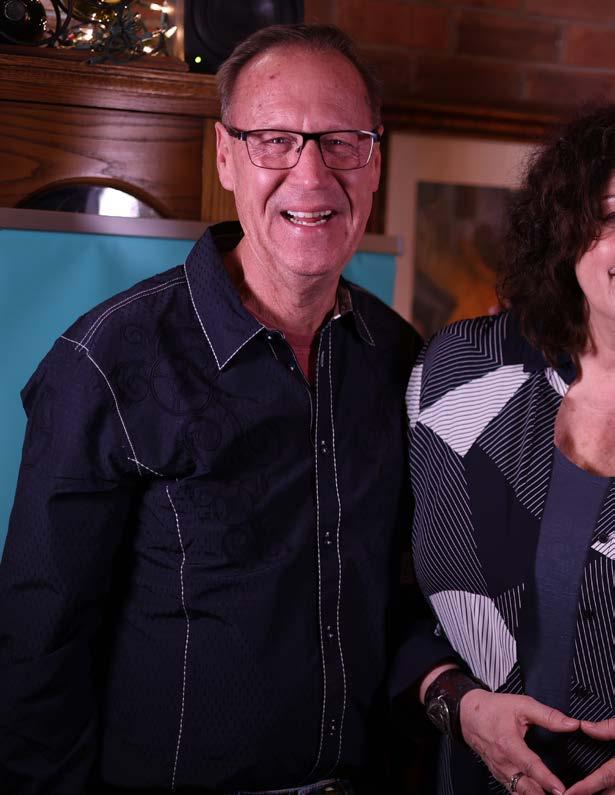
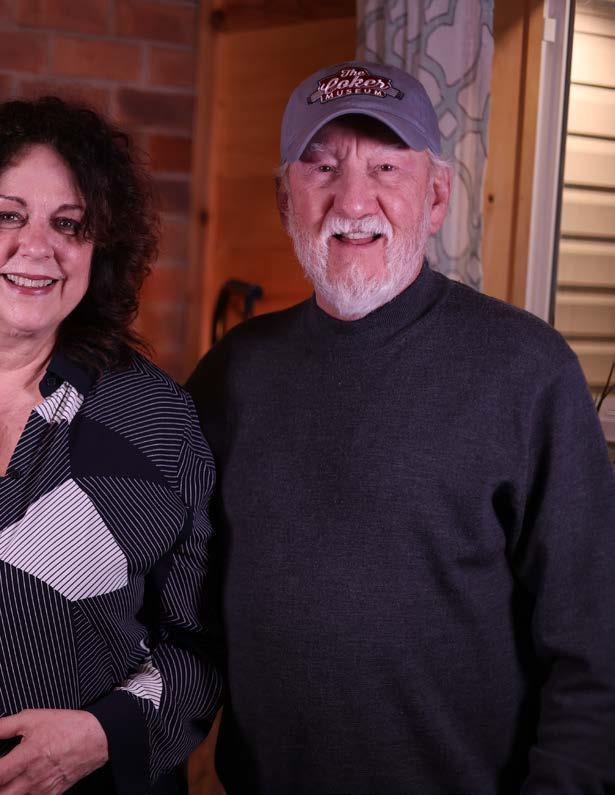
Donna Ulisse spent 25 years on Music Row in Nashville, where, she says, writers were king. Now she’s in a position to make other writers feel that same sense of importance with the newly formed Tall Oaks Music publishing company.
“When I signed with Turnberry Records, Keith Barnacastle told me to dream as big as I wanted to dream. I mentioned to him that there was no publishing company under his umbrella, which is something I had always dreamed of doing. He told me to go for it.”
But for a year, Donna dragged her feet. “I didn’t know what the angle was,” she says. It dawned on Donna that Doyle Lawson was the missing link – the angle she had been looking for. “We have worked together for so long that we see music the same,” she says. “I’d pitch him 20 to 30 songs, and he’d pick out the ones he liked, and he’d tell me why. He had a way of making all the difference.”
Donna called Doyle, and before she said anything else, she said, “Don’t say no.” She told him what she had in mind, and after thinking about it, he called her back and said he’d partner with her in the new publishing company.
“I called Keith and said, ‘What if I can get you a big name?’ I told him it was Doyle Lawson, and Keith was delighted. He’s a big fan of Doyle’s.”
Donna and Doyle joined forces with Keith and formed Tall Oaks Music, building it around the writers. “We have signed some amazing writers,” Donna says. “We have Kevin Denny, Darren Wilson (formerly with Balsam Range), Tom (?), Jack Shannon, Dawn Kenny, and Allie Shoemate. It’s an exciting group, with both traditional and more edgy writers. We also have a few country writers – we are branching out just like the branches on a tall oak tree.”
Excited about working with Doyle, Donna says he only knows how to do music one way. “He sets the bar out of sight, then goes for it.” Donna will share her role with Doyle. “My wheelhouse is editing, so I’ll handle that. We call Doyle ‘the song doctor,’ because that’s what he does best. He will also do more song pitching because he knows so many people. I’m hoping we can one day add an in-house song plugger.”
The company is currently using Clearbox for admin work, and they have a gentleman who is doing the cataloguing. “Our goal is to be a high-functioning publishing house.”
The main focus will be to act as a song nurturer, guiding the writers as they go. “We will also nurture the writers and make sure they get the credit they deserve. We’ve already received numerous inquiries, but we are cautious not to overburden our roster. We have a few new writers, and we want to give them all the attention they need.”
A lot of that nurturing will take place at The Little House, next to Donna’s home in Lebanon, Tennessee. “That will be the songwriting headquarters for Tall Oaks Music,” she says. It’s always been a nurturing place for songwriters. “I teach songwriting there with Jerry Salley and my husband, Rick Stanley.”
Donna says that this work reminds her of memories from when she first started in this business. “I started coming to Nashville when I was 14 or 15. Now I’m excited to be in the room with these young, on-fire writers. This makes it new for me again.”

by Candace Nelson
Sara Bradley, the acclaimed chef behind Freight House in Paducah, Kentucky, has become one of the most recognizable culinary voices to emerge from the region in recent years. Raised in Paducah, Bradley grew up surrounded by family traditions that blended her Jewish maternal heritage with her father’s Appalachian background. This upbringing instilled in her an appreciation for seasonal, locally sourced ingredients, and the resourcefulness that defines Appalachian cooking. While she has appeared on national television, her most significant contributions remain rooted in her hometown, where she preserves and reinterprets regional foodways.
Bradley’s connection to Appalachia is defined by both culture and place. Appalachian cooking, she notes, has historically relied on making the most of available ingredients, using preservation techniques such as canning, pickling, and fermenting to extend seasonal produce.
These traditions informed Bradley’s approach to food, emphasizing sustainability, creativity and respect for the land. At Freight House, these influences manifest in dishes that highlight local ingredients and seasonal produce, bridging the gap between fine dining and regional culinary heritage.
Her menus change seasonally, reflecting both availability and the rhythms of Appalachian farming.
After earning a psychology degree from the University of Kentucky, Bradley pursued her passion for cooking, gaining experience in kitchens in New York and Chicago.
She trained under professional chefs before returning to Paducah to open Freight House in 2015, a restaurant located in a restored 1920s produce depot. Bradley’s culinary vision blends Southern, Midwestern, Jewish, and Appalachian influences, sourcing ingredients from nearby farms and emphasizing seasonality.
Through this approach, she demonstrates that Appalachian and regional cuisine can thrive in a contemporary, fine-dining setting.
A major part of Bradley’s influence comes through her commitment to supporting Appalachian farmers and producers. By sourcing ingredients locally, she strengthens small farms and preserves heirloom crops, creating an ecosystem that benefits both the kitchen and the wider community.
Freight House acts as a conduit, bringing the work of regional growers to a broader audience. Her practices encourage other chefs in the area to adopt sustainable sourcing, gradually shaping a more resilient and connected Appalachian food system.
Beyond her work in the kitchen, Bradley has become a strong advocate for preserving Appalachian food knowledge at the community level. She collaborates with regional food historians, seed-saving networks, foragers, and educators to document the ingredients and stories that define mountain cooking.
Through workshops, farm tours and public events, she helps demystify Appalachian cuisine for newcomers while deepening locals’ pride in their heritage. Bradley emphasizes that the region’s culinary traditions are living practices, evolving through each new cook who adopts them.
Her advocacy ensures that Appalachian foodways remain accessible, celebrated, and understood by both those who grew up with them, and with a wider audience.
Bradley also plays a significant role as a cultural ambassador for Appalachian cuisine. Through television appearances, guest chef events, and public speaking, she challenges stereotypes that portray the region as culturally or culinarily limited.
Her storytelling highlights the ingenuity and creativity embedded in Appalachian cooking, particularly the contributions of women who preserved these practices across generations. She frames the region’s cuisine as dynamic, sophisticated, and worthy of national recognition.
Sara Bradley gained national visibility through television competitions. She was the runnerup on Top Chef: Kentucky (Season 16) and later returned as runner-up on Top Chef: World All-Stars (Season 20).
Additionally, she won the competition Chopped: All American Showdown in 2023, earning recognition as a “Chopped Legend.” These appearances showcase her unique blend of Jewish, Southern, and Appalachian flavors, and highlight her ability to elevate regional cuisine on a national platform.
Bradley’s dedication extends beyond her menus to education and mentorship. She hires and trains young people from the region in professional kitchen practices, helping them build skills and confidence while maintaining a connection to their heritage.
Her approach encourages the next generation of Appalachian chefs to innovate while remaining grounded in regional food traditions. Sustainability, local sourcing, and community engagement are central to her philosophy, demonstrating that fine dining and environmental stewardship can coexist.
Perhaps Bradley’s most significant impact is her ability to use food as a tool for cultural preservation. By sourcing ingredients from nearby farms, celebrating seasonal produce, and incorporating Jewish and Appalachian traditions into her menus, she connects diners to the history and identity of the region.
Her cooking honors the past while inspiring contemporary innovation, ensuring that Appalachian cuisine continues to thrive and evolve for future generations. In everything she does — from restaurant leadership to media appearances — Sara Bradley reinforces that Appalachian culinary traditions are worthy of celebration, preservation, and national attention.
Learn more about Sara Bradley’s Freight House in Paducah, KY at https:// freighthousefood.com.