360 Films Discovery Project


Curious Monkey closed in 2024. Upon closure the team and trustees felt there were several important pieces of work that, if possible, should be saved for posterity. Many of these items are now being stored at the Newcastle University Library Special Collections Archive.
It was felt that some other pieces of work might have a life beyond Curious Monkey. These could be donated to other organisations who share similar values and mission so that they could continue to be used to have a positive impact on society.
Curious Monkey’s 360 Film Project was one such piece of work. This project looked to document the 360 Film Project and explore how these innovative virtual reality films could be used to challenge prejudice and improve the experience of care-experienced young people by other organisations and in other ways.
The project was funded by the Esmée Fairbairn Foundation and the Kalvi Foundation
Curious Monkey was a community theatre company based in the North East of England. The company was renowned for its work with marginalised communities like refugees, those seeking asylum in the UK and care-experienced young people.
Curious Monkey worked with these communities in partnership, and in depth, to create compelling stories that challenged prejudice and stigma, educated audiences and empowered the individuals from those communities who were involved.
One of Curious Monkey’s long-running programmes of work was Troupe. Troupe brought together a group of care experienced young people, over the course of a year, to develop their theatre skills, explore themes, and educate audiences about the care system in England.
You can find the Troupe handbook, which provides more information on the programme here.
The young people who took part in Troupe, over several cohorts and years, were always keenly aware of the stigma they faced because of their care-experience.
The stigma care-experienced children and adults face is both real and persistent. Whether at school, in employment, or in the community, many people hold, often unexplored, prejudices about this community.
For example, the Independent Review of Children’s Social Care in England, argued that the stigma of care experience should be seem as one of the great civil rights injustices of our time, and that care experience should be a protected characteristic.
Sadly, these prejudices are not limited to the general population. They can and do exist among the very professionals who are supposed to be supporting care-experienced young people to thrive.
For Curious Monkey, and the young people in Troupe, there was a strong commitment and drive to challenge these prejudices. In this project they wanted to provide audiences, and especially professionals, with a new and powerful way to put themselves in the shoes of careexperienced young people and reconsider their lives from new angles.
Members of Curious Monkey’s Troupe project worked with writer Paddy Campbell to produce three short Virtual Reality (VR) films that explored the theme of family contact within the care system.
These films were used mostly in training settings and at other events to raise awareness of the care system, encourage empathy and ultimately improve the care experience.
Curious Monkey chose to work with VR for several reasons. It is a growing and exciting story-telling medium, its use of headsets transport audiences directly into scenarios, changing their perspectives, and the technology allows a production to be widely toured and used without high overheads for actors and sets etc.
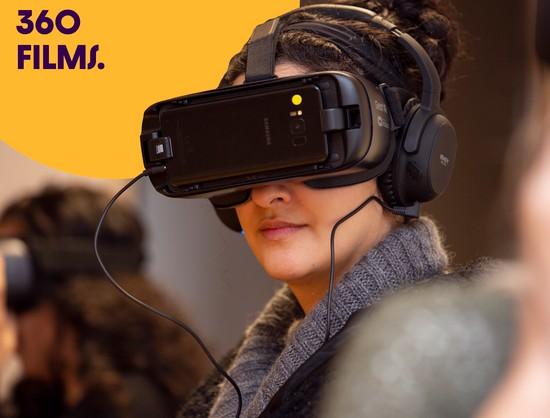
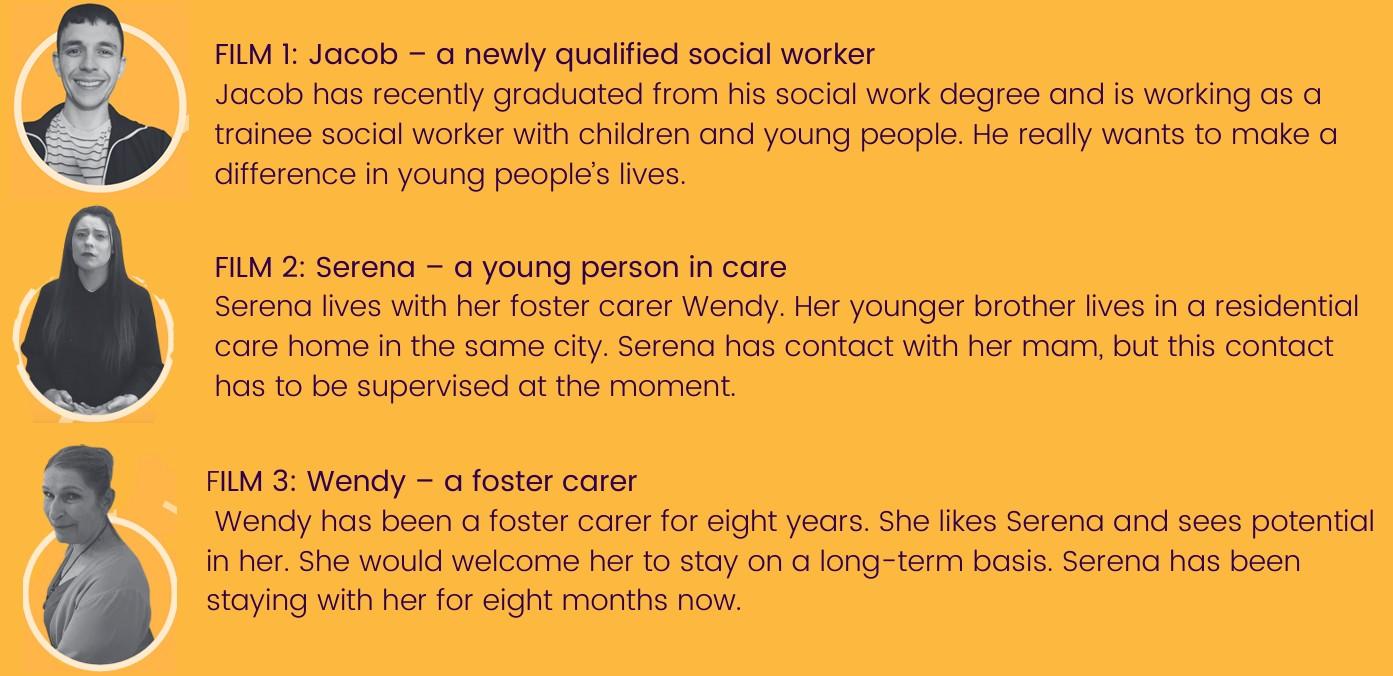
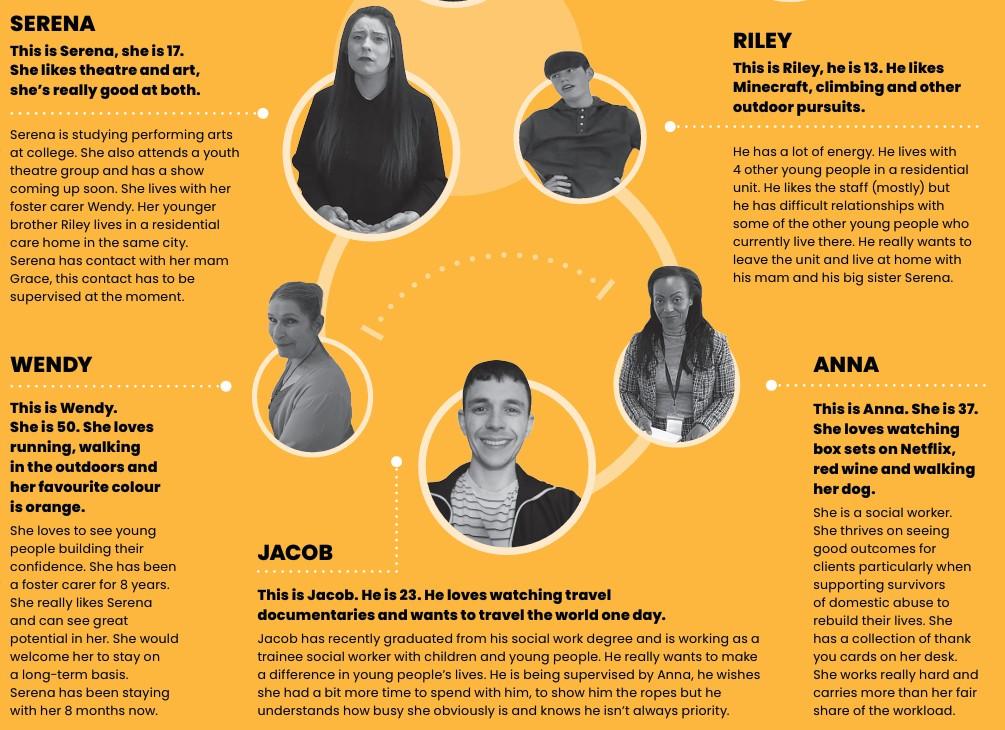
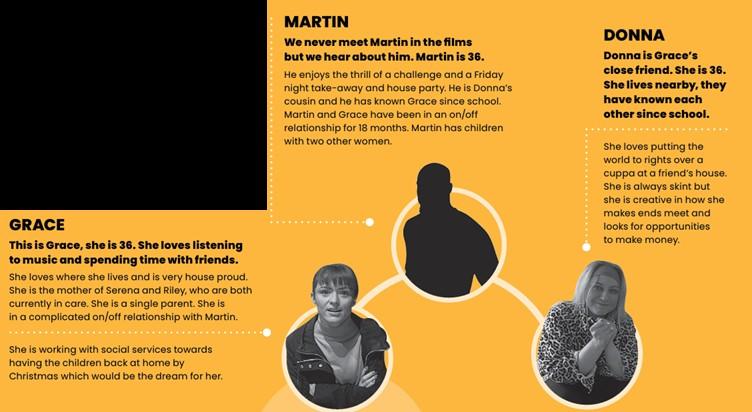
The three films, each lasting about 5 minutes, provide three different perspectives on the events surrounding a ‘contact visit’ between Serena and her brother Riley (both living in the care system) and their mum Grace.
Contact time/visits are opportunities for children and young people in the care system to spend time with family members. They can be supervised or unsupervised depending on circumstance.
The films were co-produced by care-experienced young people, foster carers and professionals and provide an authentic set of perspectives.
Audiences are encouraged to step into the shoes of the different characters and consider the events from their perspective. They were designed to create empathy, challenge prejudices, raise awareness and improve the care system for everyone.
The events surrounding the contact visit are explored from the perspective of:
Watching the films can be disorientating!
Physically, you are placed into the virtual reality spaces and can explore all 360 degrees of the spaces the events take place in. It takes a minute to situate yourself
The plot is also disorientating because you can watch the videos in any order. You only uncover the whole plot once you have watched all three films.
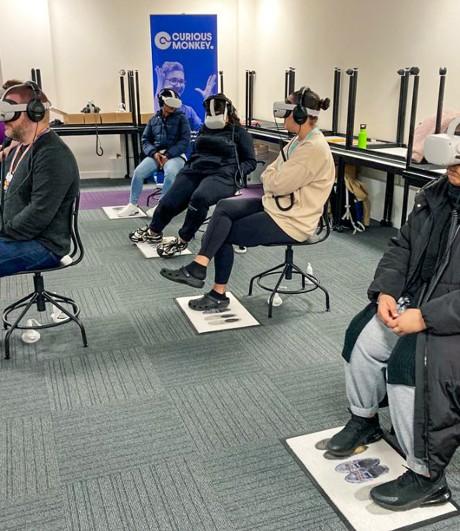
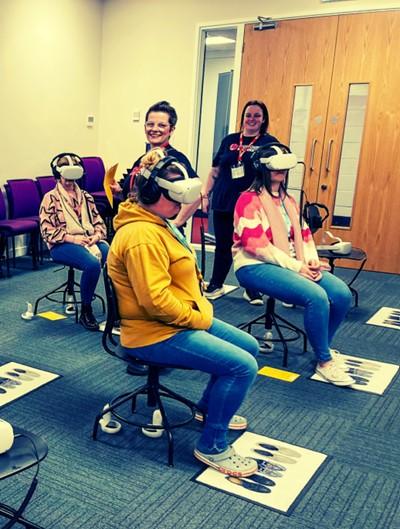
To support audiences with this disorientation a fixed swivel chair is used so that participants are rooted in a single spot but able to view all 360 degrees around them.
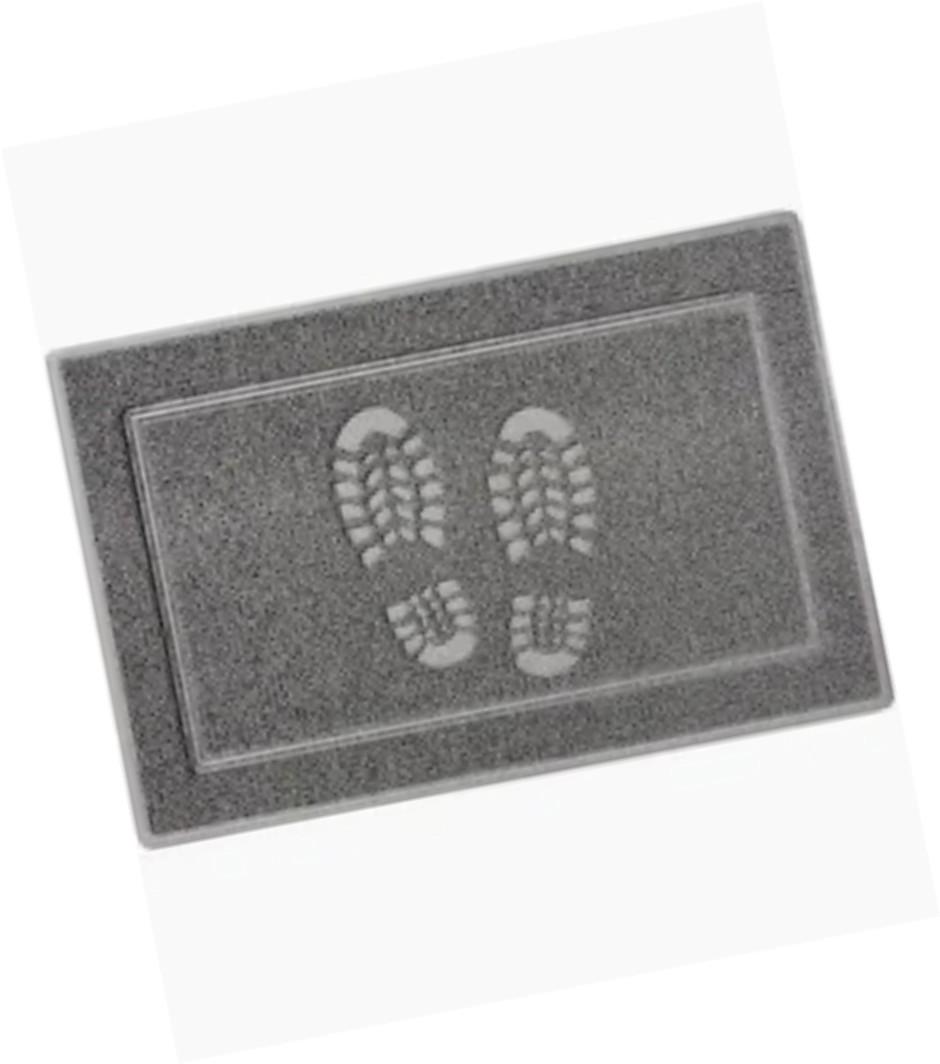
Doormats with feet on them are placed in front of the swivel chair to encourage audiences to step into someone else’s shoes and consider their perspective.
Watching the films:
https://www.youtube.com/watch?v=vbyY8I7nDoE
https://www.youtube.com/watch?v=hL1FCzDGJPY
https://www.youtube.com/watch?v=Wji_oyA3Kx4
These links provide a 2D version of the film. You can look around the room using the directional buttons but the experience is not the same as watching the films with 3D headset.
Body
Social worker insight
Foster carer insight
Care experienced insight
Professional scriptwriter
VR filming expertise
Theatre company expertise
Quality facilitation
Workshops
Script reviews
X3 VR videos
Rehearsals
Filming
Care-experienced facilitators
Editing
To date, the films have mostly been used in sessions with the objectives of either training social workers or other professionals working in the care system, or as an awareness raising, public communication tool – particularly targeted at politicians, decision-makers and others with some sort of responsibility for the quality of the care experience that young people receive.
Training days were offered to a maximum of 32 individuals, all experiencing the films in groups of 8. Sessions were facilitated by Curious Monkey staff and a careexperienced facilitator.
Viewing the films was used as an entry-point into a series of facilitated discussions about care-experience.. These discussions could be adapted to focus on a range of different issues depending on the audience, but the experiences of young people was always central.
Workshop outcomes included:
• Accepting that the system is not perfect and that constructive solutions and improvements require everyone to work together
• Deeper understanding of the complexities of familial bonds
• Understanding of the nuanced detail of setting up family/contact time
• Exploring the different needs of everyone involved in family/contact time
• Experiencing empathy and exploring different perspectives
The following materials were used when running training sessions:

A ‘fixed’ swivel chair (no wheels) so participants are both grounded but also able to see all 360 degrees.

The following materials were used when running training sessions:
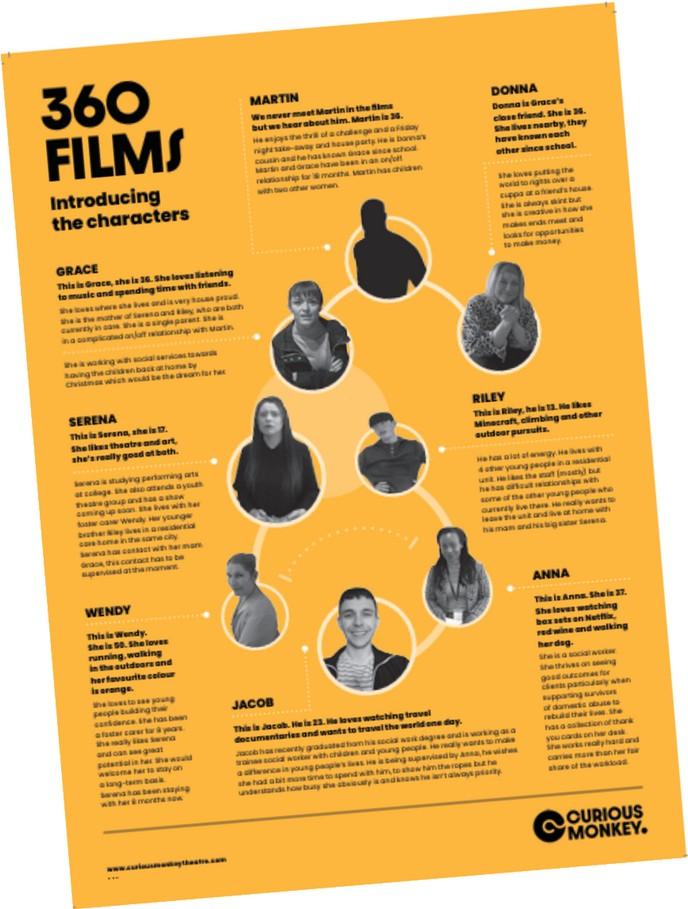
A “theatre programme” introducing the cast of characters and providing initial information before watching the films
A doormat so participants can step into someone else’s shoes
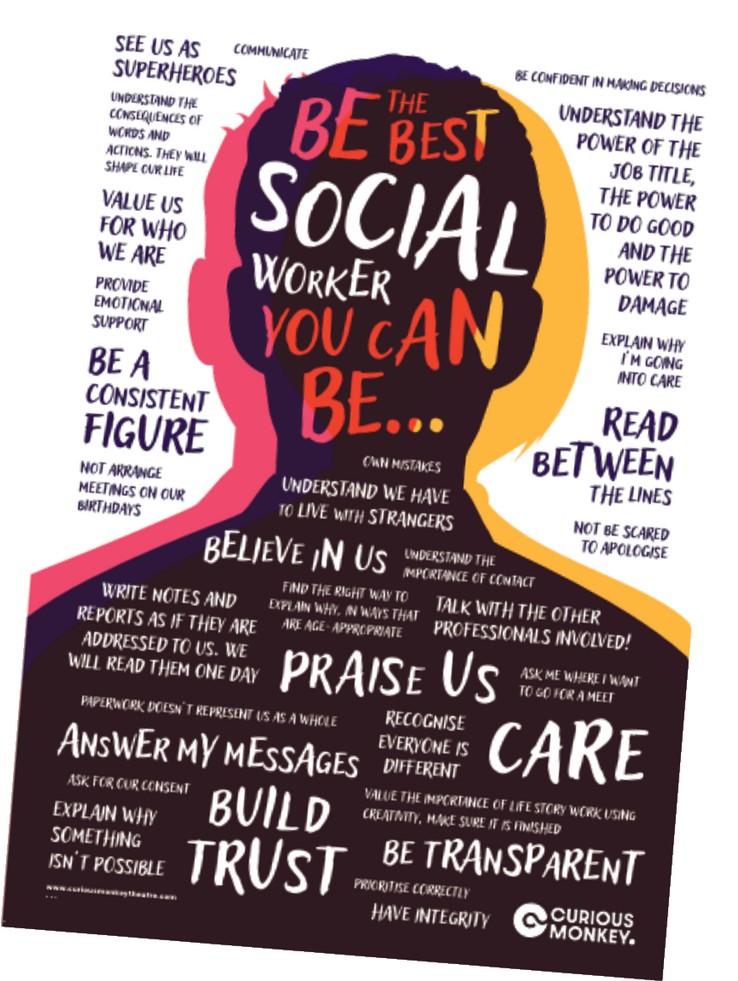
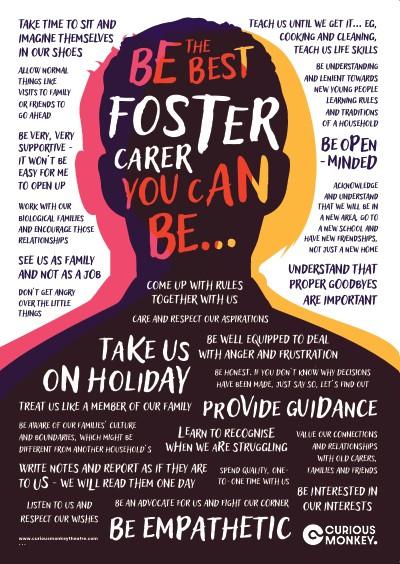
Some ‘takeaway’ material for participants to keep and use for reflection
Two experienced facilitators with a background in community theatre
Care-experienced facilitator

A care-experienced young person, fully trained in facilitation and who has been involved in the project from inception
Technician
A technician to ensure the VR headsets work smoothly
Participants receive a poster, designed by careexperienced young people, from their session.
Posters are tailored to audience with a foster carer and social worker poster being the most used.
Participants are also asked to make a pledge of one thing they will do in their work/role to improve the care experience because of having seen the film.
The Curious Monkey team would follow up a few months after the training to understand changes made as a result of the session.
"I will look at the whole person without judgement, not just focus on their care experience. I’m beginning to understand how important empathy is in my future work as a social worker, seeing things from new perspectives” (Participant social work student)
"Our entire team found the training incredibly eye opening. It was great to be able to see a side of the care system that we wouldn’t normally be involved with. The workshop was engaging, interactive and having care experienced facilitators really added something extra." (Leading Learning Mentor, Newcastle College)
"We have been hugely impressed with the way the sessions were run down to things like how efficiently they were managed. The way the discussions were approached was excellent and one of my colleagues is already working out how we can work in similar ways." (Social Work Lecturer, Derby University)
"An idea that came up in the discussions around therapeutic support for care experienced young people becoming first time parents is something I am taking back to my team. I manage a budget and I am going to go and look at how I can make this happen." (Participant Leeds City Council)
Inputs
X3 virtual reality films
Care experienced facilitators
Experienced drama facilitators
Technician
VR video viewing
Discussion workshop
Hardware
Workshop assets
Stakeholder demand/engagement
Review and refinement of workshop
Evaluation activities
Improved public attitudes to care system
Participant empathy
Systemic improvements in practice
Participant practice improved
Improved outcomes for care leavers
Reduced stigma
Skills and confidence of care-experienced facilitator increase
Improved wellbeing care experienced young people involved
Curious Monkey commissioned a realist evaluation of this project that was undertaken by Professor Alex Nunn of Leeds Trinity University.
Young people were both participants in evaluation activities but also had a key role in designing and delivering the evaluation.
Evaluation research methods included semi-structured interviews, a survey of participants (both young people involved in making the films but also of audiences), a group discussion with artists and staff former the project and analysis of the project monitoring data.
The evaluation was published as an academic evaluation here:
Three Perspectives on the Care System: Process Evaluation, Alexander NunnLeeds Trinity University and University of Johannesburg, Tonimarie Benaton–Nottingham Trent University.
Immediate Impact upon watching the films:
• Deepened empathy and understanding of the care system.
• Sparked self-reflection and desire for practice change among professionals.
• Strong emotional engagement due to authenticity and co-facilitation by careexperienced youth.
• 50% of professionals reported long-term changes in thinking.
• 1 in 3 audience members reported changes to individual or team practices.
• Barriers to broader change were identified as policy constraints and workload pressures.
• It inspired notable commitments like one council rolling out training to all service managers.
• Young people improved in confidence, communication, and leadership.
• Six care-experienced young people co-developed workshops; some also facilitated workshops.
• Participants gained real-world experience and career progression in arts,
• Rooted in co-creation: shared power between young people and professionals.
• Delivered with care, trust, and high-quality creative standards.
Key elements of:
1) immersive storytelling and 2) youth-led dialogue with professionals Were found to be powerful tools for understanding, empathy, and real change in the care system.
There are an increasing number of VR training solutions being created for children’s social care.
RIVRT (Research Informed Virtual Relationship-based Practice Training) d eveloped by University of Birmingham and Sandwell Children’s Trust
Using a similar co-production model but driven by research rather than participatory theatre methodologies.
The Programme follows a family over 11 months and uses two 360 videos to explore two different versions of the same point of time – one where the lack of a relationship creates a series of barriers and a second where a strong relationalpractice based relationships results in several enablers that help to ensure the family’s needs are met. Also see:
https://www.communitycare.co.uk/2024/08/02/the-virtual-reality-social-work-trainin g-programme-enabling-relationship-based-practice/
Cornerstone
(Part of the Antser Group: https://www.antser.com/)
https://www.cornerstonevr.co.uk/
A commercial company specialising in VR-based training solutions for the children’s sector.
They have VR modules on child exploitation and knife-crime and further ‘settings’ based packages focused on adoption and fostering services, virtual schools, independent children’s homes providers, education and sport.
Again, the company uses a similar co-production approach.
Organisations can either buy a training package or can buy a license to use the films as often as they like in their in-house training.
Market considerations:
It is difficult to gauge the size of the market for this work on a commercial level.
Whilst there are a lot of potential audiences (see slide 35) it is likely that training like this would be commissioned as a one off, or on an annual basis for example.
There is some evidence of market demand. See, for example, this tender notice from Torbay Council:
https://www.contractsfinder.service.gov.uk/Notice/32b47db1-e3d6-45ac-ae96-0447 c5b0a0f7
Local authorities
153 local authorities in England with responsibilities for children’s social care services
22 in Wales
32 in Scotland
6 Health and Social Care Trusts in Northern Ireland
Social work students
34,300 full-time equivalent (FTE) social workers in post at 30 September 2024, up 3.7% or 1,200 workers from a year earlier.
5,580 students enrolled onto social work courses in 2021/22
Other partners
A range of statutory, community and commercial partnerships could be explored
Given the experiential nature of the product, utilising the following conferences and events could be a way to develop interest in training
National Children and Adult Services Conference (NCASC)
Annually around November: https://ncasc.info/about/
British Association of Social Workers (BASW) conferences
https://basw.co.uk/about-basw/social-work-conferences-uk
Community Care LIVE
https://www.communitycarelive.co.uk/
Children and Young People Now Conferences
https://www.cypnow.co.uk/conferences/
In such a small market however word of mouth is likely to be the best way to secure partnerships:
• Partnerships with local and national children’s charities to co-deliver
• Media pieces in local papers, sector press, and, if possible national outlets
• Collaborations with arts venues and community engagement organisations
• Engagements with councillors and MPs (and public follow-up communications)
• Social work faculties at Universities
• Partnerships with virtual schools for delivery in mainstream education settings
A training session was offered (in 2022) at a cost of £1,400 (£43 per person based on 32 people participating over one day supported by x4 members of a delivery team.)
In 2025, the equivalent price, adjusting for inflation would be approximately £1,600.
Per day delivery cost in 2022 was £850 (plus any ‘on day’ expenses)
In 2025, the equivalent price, adjusting for inflation would be approximately £960
A per day ‘profit’ of £640
Capital costs of £5,160 (see below) provides a ‘breakeven’ at 9 session (8.1 session exactly)
In 2023, with product fully developed, but with minimal marketing Curious Monkey delivered 5 days of training. On this model income would have been £8,000, costs at £4,800 and a ‘profit’ of £3,200 for reinvestment in further development and charitable activities.
The following hardware is required to effectively run a 360 Film session:
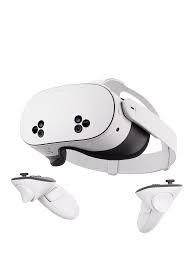
x8 Meta Quest 3 VR Headsets (or similar – a basic VR headset is capable of showing the films)
x8 good quality noise cancelling headphones
x8 comfortable swivel chairs (without wheels)
x8 doormats with footprints
TOTAL £5,160
Different ways the model could be developed in the future:
• Continue to deliver the short in-person training course to a range of audiences
• Extend the short training course: by creating more resources related to Serena’s experiences, participants could follow the story in more detail and in mixed medium. For example, Curious Monkey introduced a letter from a domestic violence harm reduction worker into one of the sessions. The extended course could be done in person or could be delivered online with a single in-person day for delivery of the VR element of the training.
• Create new 360 films using the co-production method that could help professionals and the public explore emerging themes in children’s social care (informed by potential audiences on next slide)
• Care-experienced young people
• Family & friends of care-experienced young people
• Health and social care learners in colleges
• Social and Youth Work students in Universities
• Local authority children’s social care staff
• Newly Qualified social workers
• Independent advocates and Independent Visitors
• Local Councillors
• Virtual School Heads and their teams
• Designated safeguarding Leads in schools
• Children’s home registered managers and staff
• Foster Carers (inc. local authority & independent)
• Adoption agencies
• Care Leaver Covenant businesses
• Cultural and Arts Institutions
• Voluntary and community sector organisations
• Housing departments
• NHS staff and services
• Local, Regional and National policymakers
• Members of Parliament
• General Public
Continuing development of the Newly Qualified Social Worker professional development programme
Localised campaign to adopt care as a protected characteristic by local authorities
Wider corporate parenting duties enshrined in Children’s Wellbeing and Schools Bill
Ongoing development of The Promise (Scotland’s children’s social care reform programme) in Scotland
Ongoing policy development in Wales and Northern Ireland
Emerging professional roles supporting children and young people like Children’s Health and Wellbeing Practitioners.
Regional structures for commissioning children’s social care in England
Expanding role of virtual schools in England to include a broader group of children
Reliance on virtual headset makes it difficult to deliver training remotely, unless individuals have their own personal VR headset. If individuals had their own headset it could be delivered online.
Sessions utilising the videos have been delivered:
- At conferences
- Training workshops for professionals
- Educational workshops for students
- To members of the general public
The videos could be a stimulus to produce further VR materials that promote an improved understanding of care-experience and the care system, or of the experiences of other marginalised groups.
The process of co-production and co-delivery is a robust methodology that should be adapted into other similar/parallel projects. These may, or may not, utilise Virtual Reality.
The following points should also be considered:
Insurance
o Training settings are likely to be covered under Public Liability Insurance – check with your insurer
o Equipment should be included on portable equipment insurance
Software
o VR headsets, like all hardware, need regular software updates. These are downloaded over wifi from the headset providers
Storage
o Most of the equipment is easily stored but space is required for the fixed swivel chairs
Performance Royalties
o Royalites are only due when the films are used to make a profit. If used in notfor-profit settings, no royalties are due.
• Curious Monkey’s 360 films were developed using a robust and impactful coproduction model
• The films have been well-received by professionals and their impact has been demonstrated through a robust evaluation
• 360 films have high development costs but, once created, have very low ongoing costs for maintenance and delivery
• There is a wider market for VR experiences in children’s social care that is being explored by both University and commercial outfits
• There is still potential for these films to be used, or further developed to help improve the care-experience
• Any use of development must be not-for-profit
• Can you use these films?
Currently these films are not being used, but it is our hope they could offer inspiration to organisations working in children’s social care? Perhaps there is an opportunity for them to have further impact? Or have a second life in a different guise?
If you think your organisation might be able to find a role or opportunity for these films in your own work, please get in touch – we would love for them to find a new home.