
JANUARY - MARCH 2026

JANUARY - MARCH 2026
BLOOMSBURY OPEN COLLECTIONS is a collective-action approach to funding open access (OA) books. Through this model, we aim to make OA publication available to a wider range of authors by spreading the cost across multiple organisations, while providing additional benefits to participating libraries. By prioritising authors that are often underrepresented in scholarly publishing, including early-career and unaffiliated researchers and those based in/writing about low- and lower-middle- income countries, we hope to engage a more diverse author base, bringing their work to a wider global audience.
Following the success of our 2024-25 expansion, in 2025-26 we have continued to offer three collections of 20 titles each in:
• African Studies & International Development
• Environment & Climate Change
• Gender & Sexuality
BENEFITS TO LIBRARIES
• Contribute to a progressive OA funding model that aims to make 60 research titles available open access immediately on publication at no cost to the authors
• Receive guaranteed perpetual access to the 20 titles in each Open Collection you participate in
• Receive 1 year’s access to ~150 backlist titles in related areas for each Open Collection you participate in
• Be publicly acknowledged on our website
FIND OUT MORE
bloomsbury.com/bloomsbury-open-collections
ePub and ePDF availability is listed under each book entry.
Email academicreviewus@bloomsbury.com (Americas) academicreviews@bloomsbury.com (UK / Rest of World).
Many series are available on standing order. Please contact our trade ordering departments (see page 27).
Available unless otherwise indicated.
Online resources available.
Available for institutions to purchase on www.bloomsburycollections.com
Selected research publications are available on open access. For our policy or to publish OA, see www.bloomsbury.com/openaccess
See www.bloomsbury.com/discover/bloomsburyacademic/authors
Whilst we try to ensure that prices, publication dates and other details are correct on going to press, they are subject to change without further notice.
For information on how we process your personal data please read our Privacy Policy located at www.bloomsbury.com/privacy-policy
You can unsubscribe or manage your preference at any time via www.bloomsbury.com/newsletter or by emailing us at academic@bloomsbury.com






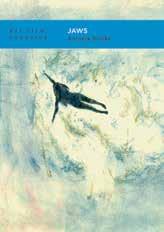





























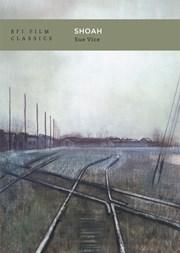
UK January 2026 • US January 2026
104 Pages
PB 9781839029882 • £12 99 / $17 95
ePDF 9781839029905 • £11 69 / $16 15
ePub 9781839029899 • £11 69 / $16 15
British Film Institute
Sue Vice, University of Sheffield, UK
Sue Vice's study explores Claude Lanzmann's epic 1985 film Shoah both as cinema and as an example of Holocaust representation Shoah, the distillation of more than 350 hours of footage gathered over eleven years, tells the story of the Holocaust through interviews with survivors of the extermination camps, bystanders who watched or participated in mass murder, and some of the perpetrators of genocide Eschewing staple documentary elements of archival footage or narrating voiceover, the film is composed entirely of eyewitness interviews contrasted with footage of landscape in the present, and the chilling imagery of travelling trains Shoah's effect is to represent the past, but only as it exists in the present - in Lanzmann's words, a "fiction of the real", and not a simple documentary
In a series of close readings of some of the film's interviews, Sue Vice follows Lanzmann's declaration that "Shoah is a fight against generalities", in emphasising the importance of detail in both dialogue and filmic technique Through these analyses, Vice explores the background to the film, the difficulties in its financing and production, and the long process of editing that led to Lanzmann's realisation that "the subject of my film is death itself; death and not survival "

BFI Film Classics
UK January 2026 • US January 2026
112 Pages • 60 colour illus
PB 9781839029806 • £12 99 / $17 95
ePDF 9781839029820 • £11 69 / $16 15
ePub 9781839029813 • £11 69 / $16 15
British Film Institute
Groundhog Day
Ryan Gilbey
Groundhog Day (1993), directed by Harold Ramis and starring Bill Murray, is widely regarded as one of the most original and enduring films of 1990s Hollywood What begins as a high-concept romantic comedy about a cynical television weatherman forced to repeatedly relive the same day soon deepens into a tale of despair and renewal, coloured by existential unease and the spirit of Samuel Beckett
In this engaging study, Ryan Gilbey traces the film’s unlikely journey from Danny Rubin’s speculative script, centred on a man condemned to eternity in a small town, to its transformation into a studio classic Drawing on fresh interviews with Rubin, Gilbey explores the inspired casting of Murray and Andie MacDowell, the film’s quietly radical structure, and the delicate balance between comedy and melancholy that gives Groundhog Day its lasting power
This new edition includes an afterword in which Gilbey reflects on the film’s continuing cultural impact, its themes of repetition and despair assuming fresh resonance in the wake of the Covid-19 pandemic with its cycle of lockdown and reopening He considers Groundhog Day’s influence on movies and television from Source Code (2011) and Edge of Tomorrow (2014) to Russian Doll (2019–2022) and I May Destroy You (2020), as well as the 2016 stage musical based on the movie Groundhog Day, Gilbey argues, has become more than a film; it is now a lens through which we examine repetition, transformation and the rhythms of contemporary life
COLLECTIONS 2ND EDITION

BFI Film Classics
UK February 2026 • US February 2026
104 Pages • 60 colour illustrations
PB 9781805750253 • £12 99 / $17 95
ePDF 9781805750277 • £11 69 / $16 15
ePub 9781805750260 • £11 69 / $16 15
British Film Institute
Tamar Jeffers McDonald, University of Kent, UK
Groundbreaking in its departure from its predecessors, When Harry Met Sally (1989) established classic romantic comedy themes and tropes still being employed today Following the relationship between its title characters, Harry (Billy Crystal) and Sally (Meg Ryan), and their best friends Jess (Bruno Kirby) and Marie (Carrie Fisher), the film unfolds as a series of episodes, from Harry and Sally's prickly car journey from Chicago to New York City to a momentous encounter on New Year's Eve twelve years later
Tamar Jeffers McDonald's insightful study explores how writer Nora Ephron and director Rob Reiner used structure, filmic devices, music and classic romcom concepts in innovative new ways In her afterword to this new edition, she reflects on the movie's continuing influence on the romcom genre, and its relevance in a more turbulent era, where the question at the movie's heart - "Can men and women ever just be friends?" takes on fresh nuance in the age of #MeToo
Film Theory in Practice
UK January 2026 • US January 2026
224 Pages • 14 bw illus
HB 9781501388217
• £60 00 / $80 00
PB 9781501388200 • £17 99 / $24 95
ePDF 9781501388187 • £16 19 / $22 45
ePub 9781501388194 • £16 19 / $22 45 Bloomsbury Academic
UK December 2025 • US December 2025
248 Pages
PB 9798216377818 • £28 99 / $39 95
HB 9781666906622 • £90 00 / $120 00
ePDF 9798216201540 • £81 00 / $108 00
ePub 9781978769908 £81 00 / $108 00
Bloomsbury Academic
UK February 2026 • US February 2026
232 Pages 49 bw illus
PB 9781350370661 • £28 99 / $39 95
HB 9781350370623 £85 00 / $115 00
ePDF 9781350370647 • £76 50 / $103 50
ePub 9781350370630 • £76 50 / $103 50
Bloomsbury Academic
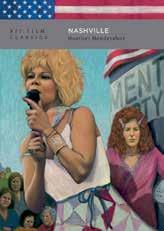
Network Theory and Nashville
Zachary Tavlin, School of the Art Institute of Chicago, USA
The Film Theory in Practice series fills a gaping hole in the world of film theory By marrying the explanation of a film theory with the interpretation of a film, the volumes provide discrete examples of how film theory can serve as the basis for textual analysis This book provides a broad introduction to network theory and shows how this theory can motivate a close reading of Robert Altman's 1975 film Nashville
By offering a tour of the expansive intellectual network we can now call network theory, the book demonstrates how analyzing the ubiquitous characteristics of networks changes the way film fans, students, and scholars might understand cinema’s storytelling possibilities It models a method of interpretation (focusing on character, cinematography, and sound) that students can practice with other feature films Moreover, it situates film within a larger discourse about art and society, offering students the tools for analyzing other large-form cultural objects
Organized into two parts, the first section of the book presents an overview of network theory, its various facets as a stillemerging discourse, and its historical context in post-industrial life, before turning to Altman’s Nashville It then explores the film’s narrative style and character system as a special case of network cinema, to show how there is more than “connectedness” alone to the network form
The Fictional Female Presidency in Film, Television, and Literature Representations from 1932 to 2024
Kathleen W Taylor Kollman
This book examines the ways in which popular culture has entertained the notion of a female U S presidency through portrayals in film, television, and literature dating back to the 1930s
To date, no woman has served as Commander in Chief in the White House This lack of precedent, however, has not deterred the continued exploration of this idea in U S popular culture for decades In this book, Kathleen W Taylor Kollman analyzes fictionalized portrayals of female U S Presidents across a variety of media to demonstrate how the perceptions of audiences and content creators have shifted when considering the idea of a woman’s ability to run the United States She then contextualizes each example by positioning it alongside real-life women in politics to examine the accuracy of existing portrayals when compared to the media framing of aspiring political candidates
By analyzing works diverse in genre, including science fiction dystopias, slapstick comedias, political dramas, satire, and romance novels, Kollman also explores the ways in which genre can also play a critical factor in the framing of these women with regard to both subject matter and approach Scholars interested in parasocial relationships, the history of feminist movements, the intersection of political and media audiences, and popular media trends will find this book particularly compelling
Radical Embodiment on Film Time and the Cinematic Body
Edited by Louis Bayman, Southampton University, UK & Davina Quinlivan, University of Exeter
This innovative volume demonstrates the embodiment of time to be a vital part of the aesthetic experience of cinema Analysing a broad range of films including Beasts of the Southern Wild (USA, 2012), Talk to Her (Spain, 2002), Millennium Actress (Japan, 2001), Jab Tak Hai Jaan (India, 2012), and Jinpa (China, 2018), contributors examine key questions of embodied time as represented on screen They explore how cinematic time can be a way of rethinking the centrality of the individual, of depicting gendered differences, of decentring western perspectives to represent a widened global context, and of expanding what embodiment means in post-human narratives The volume not only highlights specific discourses of radical, lived experience in film, but also considers how distinctions of race and class, gender and sexuality, migration, religion, and indigeneity affect these depictions of embodied subjectivity
Contributors:
Emma Ben Ayoun, Louis Bayman, Andrés Buesa, Mariana Cunha, MaoHui Deng, Felipe Espinoza Garrido, Victor Fan, Sahika Erkonan, Joseph Jenner, Nick Jones, Kayla Meyers, Salma Monani, Davina Quinlivan, Francesca Sobande and Pinar Yildiz
COLLECTIONS

New Critical Humanities
UK December 2025 • US December 2025
176 Pages
PB 9798216384441 • £28 99 / $39 95
HB 9781666976588 • £80 00 / $110 00
ePDF 9798216262817 • £72 00 / $99 00
ePub 9781978761629 • £72 00 / $99 00
Bloomsbury Academic
The Cinema of Social Death
Blackhood At-Large
Tryon P Woods
In The Cinema of Social Death: Blackhood At-Large, Tryon P Woods argues that cinematic counter-narratives to society’s deep-seated racist culture, while claiming to advance racial justice, fail to escape the trappings of antiblackness and instead function to disguise a parasitic and antagonistic relationship toward blackness, rather than expose how the paradigm works
Through analyses of a selection of purportedly anti-racist narratives from documentarian Liz Garbus and a trio of independent black filmmakers, Tanya Hamilton, Haile Gerima, and Spike Lee, Woods demonstrates the precarious nature of telling stories of racial justice without falling into the contradictory trap of imposing antiblack notions of gender and sexuality Contrary to the prevalent sentiment that these visual narratives disrupt and unravel the suffering, lack, and pathology attached to blackness, Woods posits that the films being examined are detrimental to black liberation, and thus, to human deliverance
As such, this book’s chief concern is in how our efforts to unravel the problems of the world become part of the problem In the process, Woods highlights the trap of visual culture and its racial discourse as it obfuscates the modern era’s assault on human reciprocity and connection
COLLECTIONS
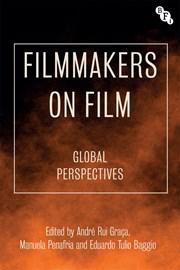
UK March 2026 • US March 2026
256 Pages •
HB 9781839024870 • £85 00 / $115 00
PB 9781839024863 • £28 99 / $39 95
ePDF 9781839024894 • £76 50 / $103 50
ePub 9781839024887 • £76 50 / $103 50
British Film Institute
Filmmakers on Film
Global Perspectives
Edited by André Rui Graça, University of Beira Interior, Portugal, Eduardo Baggio, Unespar - Paraná State University, Brazil & Manuela Penafria, University of Beira Interior, Portugal
This book bridges the gap between film theory and filmmakers’ thoughts and poetics, and proposes a new way to address and elaborate film theory
It brings together primary sources by filmmakers themselves, drawing on their films, interviews, books, texts, and manifestos Divided into three parts, the book covers the main aspects of this approach Part one discusses the concepts of ‘author ’ and ‘filmmaker ’ Part two evaluates the creative processes of a broad range of filmmakers, including Víctor Gaviria (Colombia), Kleber Mendonça Filho (Brazil), Jean-Luc Godard and Agnès Varda (France), Abbas Kiarostami (Iran) Pa Ranjith (India), Andy Warhol (USA), Maya Deren (Ukraine-USA) and Nuri Bilge Ceylan (Turkey) The final part examines filmmakers’ various techniques, particularly the use of multi-images, after-(dialectical)-images, and the use of sound as a sensorial and narrative tool
This curated selection of writings, with contributors from a range of countries including the USA, UK, India, China, Portugal, Brazil, Belgium and New Zealand, reflects the global perspective of this new approach The volume also discusses the ways in which filmmakers influence each other, the spectator as seen by filmmakers, and ways to critically address a filmography that takes into account filmmakers other than the director
COLLECTIONS
Timecodes
UK January 2026 • US January 2026
112 Pages • 19 bw illus
HB 9798765161913
• £60 00 / $80 00
PB 9798765161906 • £17 99 / $24 95
ePDF 9798765161937 • £16 19 / $22 45
ePub 9798765161944 • £16 19 / $22 45
Bloomsbury Academic
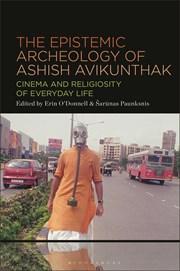
UK November 2025 • US November 2025
280 Pages • 46 bw illus
PB 9798765105627 • £28 99 / $39 95
HB 9798765105610 • £90 00 / $120 00
ePDF 9798765105597 • £81 00 / $108 00
ePub 9798765105580 £81 00 / $108 00
Bloomsbury Academic
COLLECTIONS
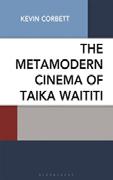
Studies in Metamodernism: Theory and Criticism across the Disciplines
UK February 2026 • US February 2026
240 Pages
PB 9798216394945 • £28 99 / $39 95
HB 9781666955750 • £90 00 / $120 00
ePDF 9798216263876 • £81 00 / $108 00
ePub 9781978762886 • £81 00 / $108 00
Bloomsbury Academic
Neptune Frost
Movies Minute by Minute
Steven Shaviro, Wayne State University, USA
A minute-by-minute analysis of Anisia Uzeyman’s and Saul Williams’ film, Neptune Frost (2021)
This book traces the complex structure of the film, working through its rich tapestry of images and sounds while exploring its dual themes of resource exploitation and extraction and gender oppression
Neptune Frost shows how Africa stands at both ends of the production cycle: minerals are mined from the soil and sent to the West to make electronic devices, and the detritus of broken and obsolete devices is ultimately sent back to Africa to be abandoned in waste dumps An indigenous community of hackers establishes a utopian community in the midst of these wastes and seeks to seize power over the network At the same time, the movie centers upon a trans character, who starts out as a man and then transitions into a woman She flees patriarchal domination and abuse and, almost magically, embodies the counter-power of resistance
Visions of altered technology are extrapolated beyond what actually exists while song and dance convey the desires, dreams, and solidarities of characters who are rarely given voice in more mainstream cinema The movie gives accessible human and more-than-human expression to the usually hidden forces that lie beneath the world we take for granted
The Epistemic Archaeology of Ashish Avikunthak
Cinema and Religiosity of Everyday Life
Edited by Erin O'Donnell, East Stroudsburg University of Pennsylvania, USA & Sarunas Paunksnis, Kaunas University of Technology in Kaunas, Lithuania
This book explores the diverse aspects of Ashish Avikunthak’s cinema, which challenges Western knowledge systems and cinematic practices, as well as ideological hegemonies of present-day India
For thirty years, Indian filmmaker Ashish Avikunthak has been making self-financed films that have robustly resisted capital and market logic Starting from his early 16mm short films Etcetera (1997) and Kalighat Fetish (1999) to longer feature length works that he has been making since the past decade–Rati Chakravyuh (2013), Aapothkalin Trikalika (2016), Vrindavani Vairagya (2017), to the most recent Vidhvastha (2022) with several more projects in various stages of production This collection of essays rigorously interrogates, contextualizes, theorizes, and interprets his work in relation to some of the key preoccupations of this filmmaker, which include Tantric practice, alternative ways of filmmaking, as well as posing a cinematic challenge to oppressive epistemes Furthermore, the current global assertion of authoritarianism and onedimensional interpretations of cultural history and practice provide a timely and essential historical moment in which to dialogue with Avikunthak’s films Why? Because Avikunthak’s cinema consciously contests totalizing historical and artistic narratives, and constructs frameworks of existential uncertainty and fragmentation that force us to reflect on the increasing political, economic, social, and climate chaos that is infusing and shaping our early 21st century global ontology
The Metamodern Cinema of Taika Waititi
Kevin Corbett
In this book, Kevin Corbett demonstrates the prominent role of metamodern cinematic elements in Taika Waititi’s creative works, tracing their emergence over the course of his decades-long career in film and television
Analyzing a range of Waititi’s films and television shows including Jojo Rabbit (2019), Reservation Dogs, and What We Do in the Shadows (2014), Corbett highlights how the writer-director embraces the concept of oscillation that lies at the heart of metamodernism’s cultural logic by striking an intentional balance between elements that generate insincerity and disengagement and those that invite audiences to sincerely connect with the characters and story This variation in tone within individual films and programs, he contends, is reflective of a broader cultural shift in the 21st century as we move beyond the limits of postmodernism
COLLECTIONS
UK February 2026 • US February 2026
296 Pages • 17 bw illus
PB 9798765113141 • £28 99 / $39 95
HB 9781501347900 • £120 00 / $90 00
ePDF 9781501347924 • £81 00 / $108 00
ePub 9781501347917 • £81 00 / $108 00
Bloomsbury Academic
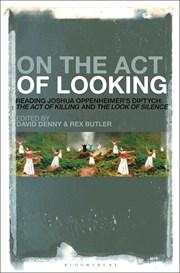
On the Act of Looking
Reading Joshua Oppenheimer ’s Diptych: The Act of Killing and The Look of Silence
Edited by Rex Butler, Monash University, Australia & David Denny, Portland State University, USA
This collection analyzes Joshua Oppenheimer ’s diptych The Act of Killing and The Look of Silence as a cinematic event that invites interrelated questions on historical memory, truth and reconciliation, and the limits of documentary filmmaking
On the Act of Looking affirms Oppenheimer ’s use of fiction and manipulation as a technique to expose, contrary to the classic documentary form, not so much a reality behind the appearance of things, but how appearance as such can become a site of intervention or truth-telling Contributors to this collection, including film scholars, art historians, historians, political scientists, philosophers, and Indonesian human rights activists, answer why Oppenheimer's documentary films not only have received near universal praise and admiration, but also why this praise is often qualified by surprise and fascination
COLLECTIONS

Critical Perspectives on Contemporary Directors
UK January 2026 US January 2026
360 Pages • 5 tables
PB 9798216382768 £28 99 / $39 95
HB 9781666973648 • £90 00 / $120 00
ePDF 9798216269694 £81 00 / $108 00
ePub 9781978767515 • £81 00 / $108 00
Bloomsbury Academic
Critical Perspectives on Dario Argento
Edited by Fernando Gabriel Pagnoni Berns
This edited volume provides a comprehensive, interdisciplinary, and up-to-date analysis of the entire filmography of Dario Argento, one of the most renowned directors from the world of Euro-Horror
Contributors bring together approaches from philosophy, film, and media studies to engage with Dario Argento s oeuvre through a variety of lenses, including posthumanism, art cinema, gender studies, historical contextual analysis, and the aesthetics of blindness The collection focuses not only on films made by Argento himself, but also on homages and remakes, demonstrating the lasting contributions and influence of his perspective and works on the horror genre
UK February 2026 US February 2026
296 Pages • 26 bw photos
HB 9798881804824 £19 99 / $28 95
ePDF 9798881867867 • £17 99 / $26 05
ePub 9798881804831 £17 99 / $26 05
Bloomsbury Academic COLLECTIONS
UK February 2026
• US February 2026
304 Pages
• 54 b/w images
HB 9781493079599
• £36 99 / $49 95
ePDF 9798765160749
ePub 9781493079605
Bloomsbury Academic
• £33 29 / $44 95
• £33 29 / $44 95
How Glasses Changed the Way We See
David King Dunaway, University of New Mexico
A fun and informative cultural history of glasses that explores their origins, stigmas, future in technology, and more
Eyeglasses have become so commonplace we hardly think about them unless we can’t find them They are just there, immediately at hand for those who wear them Yet glasses have been controversial throughout history Oxford scholar Roger Bacon pioneered the science of using lenses to see and then spent a decade in a miserable medieval prison cell for his hubris, for advocating that he could “fix” God’s creations by improving our eyesight Even today, people take off their glasses before having their picture taken because they have been taught through generations that wearing glasses is somehow unattractive, despite how necessary they are to most of our daily lives
A Four-Eyed World: How Glasses Changed the Way We See is the first book to investigate the experience of wearing glasses and contacts and their role in culture David King Dunaway encourages readers to take a look at how they literally see the world through what they wear by exploring everything from the history of deficient eyesight and how glasses are made to portrayals of those who wear glasses in media, the stigma surrounding them, and the future of augmented and virtual reality glasses
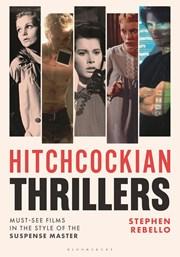
Hitchcockian Thrillers
Must-See Films in the Style of the Suspense Master Stephen Rebello
During Alfred Hitchcock’s five-decade reign as the screen’s internationally celebrated Master of Suspense, he directed 53 motion pictures In such Hitchcock gold standard classics as The 39 Steps, Rear Window, Vertigo, North by Northwest, Psycho, and The Birds, he staked his claim as the architect, the O G of the thriller He laid down the rules and rhythm of the genre, created an immediately identifiable visual style, experimented constantly with technique, pushed boundaries, tweaked censors, and shattered the expectations of his audiences -- along with their nerves In exploiting his private fears and vulnerabilities, Hitchcock was as brilliant as making us think and feel as he was at making us scream and invading our nightmares His films elevated the form and were among the biggest box-office successes and most influential of their time They were and are emulated for their fashion sense and, more lastingly, even nudged the culture forward by liberalizing attitudes toward cinematic violence and sexual frankness
Hitchcockian Thrillers: Must-See Films in the Style of the Suspense Master is a curated, opinionated, authoritative, highly personal, lavishly illustrated guide to nine decades of international moviemaking featuring films by directors – beginning in the era of Fritz Lang, Billy Wilder, and Sir Carol Reed and moving right up through today’s David Fincher, Steven Soderbergh, Paul Thomas Anderson, and Martin Scorsese – who have all tried to ‘do a Hitchcock ’
COLLECTIONS
UK February 2026 • US February 2026
240 Pages
PB 9798216393061 • £28 99 / $39 95
HB 9781666957259 £90 00 / $120 00
ePDF 9798216258919 • £81 00 / $108 00
ePub 9781978765184 • £81 00 / $108 00
Bloomsbury Academic
Paranoia and Nostalgia in American Popular Culture, 1980-2020
Owen Cantrell
In this book, Owen Cantrell examines politics and popular culture in the United States from 1980 to 2020 to argue that twin structures of feeling nostalgia and paranoia have structured American political and cultural life during this period.
These structures have mirrored the changing political relationship to history, race, and culture in the United States, offering a pathway to address these changes, many of which were brought about by the backlash politics introduced in response to the gains of the civil rights movement(s)
Building on Bifo Berardi’s contention that “the future is over,” Cantrell demonstrates how the concept of the future effectively ended in this era, effectively making this pathway eminently more desirable as a cultural response to political dilemmas As the future lost its place as a locus of value, then, Cantrell posits that American society entered a state of what Mark Fisher calls “a failed mourning,” with paranoid and nostalgic narratives thus offering compensation for a future that no longer felt relevant or even possible Through a range of compelling analyses of prominent films including Back to the Future, The Matrix, Get Out, and Black Panther, this book effectively demonstrates how paranoia and nostalgia have functioned in American popular culture as it reflected a collective failure to imagine the future
COLLECTIONS

UK January 2026
• US January 2026
264 Pages
PB 9798216383277
• £28 99 / $39 95
HB 9781666946734 • £90 00 / $120 00
ePDF 9798216259527 • £81 00 / $108 00
ePub 9781978765351 • £81 00 / $108 00
Bloomsbury Academic
Poison and the Popular Imagination
Representations,
Edited by Lorna Piatti-Farnell
Bringing together the work of international scholars, this book investigates the well-known conceptualization of poison as connected to seemingly contrasting ideas of 'deviousness', 'insidiousness' and ‘usefulness,’ demonstrating how these understandings manifest in a variety of culturally informed discourses and narrative contexts across popular culture
Taking an interdisciplinary and transnational approach, contributors to this volume consider poison as a powerful metaphorical entity that recurrently appears across narrative formats and contexts, including film, television, comics, video games, children's literature, and boardgames Through both historical and fictional accounts – which are explored in equal terms as part of the same cultural narrative – this book re-assesses the place occupied by poison in the popular imagination, establishing its presence as one that is simultaneously nefarious and culturally romanticized Contributors demonstrate how discourses of poison in popular culture are often interconnected with representations of gender, ethnicity, class, cultural identity, and environmental discourses on an intersectional level
Ultimately, through its recounting of tales about poison and poisoners, this book also reveals parallels to some of the deepest narratives about our societies, both historic and contemporary: what we fear, what we desire, and how we see ourselves at a specific moment in time
COLLECTIONS

UK March 2026 • US March 2026
256 Pages • 20 bw illus
HB 9781501348310 • £72 00 / $90 00
PB 9781350096103 • £22 99 / $27 95
ePDF 9781501348334 • £20 69 / $25 15
ePub 9781501348327 • £20 69 / $25 15
Bloomsbury Academic
Decoding Star Wars
Gender, Race and the Power of Code in a Galaxy Far, Far Away Rebecca Harrison, Independent Scholar, UK
Decoding Star Wars reveals the relationships between films, code, software and power both on and off screen in the Star Wars universe
Since the production and release of The Phantom Menace (1999), the Star Wars franchise has increasingly relied on computer code to tell its stories and circulate its various media via CGI, digital exhibition, and online distribution But who writes the code and develops the software that makes Star Wars possible as it expands from the twentieth into the 21st century? How do programmers’ identities inform how they design and circulate the films? And why does the history of code remain hidden in narratives about Star Wars filmmaking and viewing?
Decoding Star Wars answers these questions to reveal how gender and race are central to the Star Wars universe, from the creation of its algorithms to the ways that characters are represented onscreen In addition, it demonstrates how cinema is complicated by computers, digital technologies, and power, in ways that are so far unexplored in film history
COLLECTIONS

Library of Gender and Popular Culture
UK February 2026 • US February 2026
280 Pages • 30 bw illus
PB 9781350442511
• £28 99 / $39 95
HB 9781350442474 • £85 00 / $115 00
ePDF 9781350442498 • £76 50 / $103 50
ePub 9781350442481 • £76 50 / $103 50
Bloomsbury Academic
Sex, Censorship and the Millennial Teen Film
Jade Jontef, La Trobe University, Australia
Through an in-depth analysis of iconic teen movies, this study explores how popular representations of sexual pleasure and desire reinforce institutionalised gender norms and heteronormativity
Jade Jontef argues that in light of the recent revival of and nostalgia for popular culture spanning from the late 1990s to the early 2000s, teen films such as Clueless (1995), American Pie (1999), and Cruel Intentions (1999) continue to influence thinking around sex, gender and sexuality Drawing examples from Western film classification and ratings policies, she argues that these films present a homogenous and exclusionary form of teenhood, providing millennial audiences a limited perspective of youth culture informed by white, middle-class sensibilities and notions of ‘proper ’ sexual behaviour
Combining close textual analysis with a uniquely socio-legal framework, Jontef interrogates the relationship between cinematic representation and institutional regulations She highlights how dominant Anglo-American narratives perpetuate exclusionary ideas of adolescence and limited constructions of gender and sexuality
COLLECTIONS
Library of Gender and Popular Culture
UK January 2026 US January 2026
312 Pages • 10 bw illus
HB 9781350289833 £85 00 / $115 00
PB 9781350289871 • £28 99 / $39 95
ePDF 9781350289857 £76 50 / $103 50
ePub 9781350289840 • £76 50 / $103 50
Bloomsbury Academic
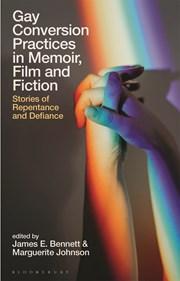
Gay Conversion Practices in Memoir, Film and Fiction Stories of Repentance and Defiance
Edited by James E Bennett, University of Auckland, New Zealand & Marguerite Johnson, University of Queensland, Australia
For over half a century, organizations and individuals promoting ex-gay, conversion and/ or reparative therapy have pushed the tenet that a person may be able to, and should, alter their sexual orientation Their so-called treatments or therapies have taken various forms over the decades, ranging from medical (including psychiatric or psychological) rehabilitation approaches, to counselling, and religious healing
Gay Conversion Practices in Memoir, Film and Fiction provides an in-depth exploration of the disturbing phenomenon of gay conversion therapy’ and its fictional and autobiographical representations across a broad range of films and books such as But I’m a Cheerleader! (1999), This is What Love in Action Looks Like (2011) and Boy Erased (2018) In doing so, the volume emphasizes the powerful role the arts and media play in communicating stories around conversion practices Approaching the timely and urgent subject from an interdisciplinary perspective, contributors utilize film theory, queer theory, literary theory, mental health and social movement theory to discuss the medicalization and pathologizing of queer people, the power of institutions ranging from church, psychiatry and family (sometimes in alliance), and the real and fictional voices of survivors
UK December 2025 US December 2025
200 Pages • 2 tables
PB 9798216384519 £39 95
HB 9781666966893 • £80 00 / $110 00
ePDF 9798216253884 £72 00 / $99 00
ePub 9781978769069 • £72 00 / $99 00
Bloomsbury Academic
of Singledom
Living in the Cultural Imaginary of Single Femininity
Kate Gilchrist
In Fantasies of Singledom, Kate R Gilchrist examines how the representation of the single woman manifests itself in contemporary popular culture across the United Kingdom, the United States, and Europe
Gilchrist skillfully brings these two conceptualizations of feminine singlehood into conversation with one another by incorporating in-depth interviews with twenty-five women living in London alongside critical analyses of eight cross-genre media texts which foreground single women In doing so, she illuminates not only the ways in which women’s experiences draw on or converge with media representations, but also where their narratives resist or rework such ideas, interrogating recurring themes of success, transformation, autonomy, silencing, invisibility, and the notion of the “ideal” femininity being a coupled one
Building on research that has largely centered on North American contexts until now, Gilchrist considers how these discourses manifest across age, class, and regional demographics, demonstrating the necessity of a multi-faceted approach in achieving a fuller understanding of how experiences of singledom are shaped by external factors Ultimately, Fantasies of Singledom significantly expands upon existing theorizations of cultural representation and gendered subjectivity formation in postfeminist cultural contexts
COLLECTIONS
Film Thinks
UK February 2026
232 Pages
PB 9781350245693
HB 9781350245709
• US February 2026
• £28 99 / $39 95
• £85 00 / $115 00
ePDF 9781350245723
• £76 50 / $103 50
ePub 9781350245716 • £76 50 / $103 50
Bloomsbury Academic
COLLECTIONS
UK February 2026
• US February 2026
256 Pages 4 bw illus
HB 9798765128428
• £90 00 / $120 00
PB 9798765128435 £21 99 / $29 95
ePDF 9798765128459 • £19 79 / $26 95
ePub 9798765128466 • £19 79 / $26 95
Bloomsbury Academic
Judith Butler and Film
The Good Egalitarian, the Bad Feminist and the Ugly Others
Temmuz Süreyya Gürbüz
At a time when an increase in media representation of women and LGBTQIA+ people coincides with the rise of global “antigender” ideologies, Judith Butler ’s writings hold new urgency Judith Butler and Film is the first book to examine the reciprocal relationship between Butler ’s theories and cinema, situating film within the broader context of Butler ’s philosophy and its interactions with popular media Tracing the presence of film in Butler ’s work from Paris Is Burning (1990) and Boys Don’t Cry (1990) to the queer terrorism in John Waters’ films, and from Hollywood’s star system to documentaries featuring Butler Gürbüz reveals cinema as both object and method of inquiry into Butlerian thought Bringing this dialogue up to the present, Gürbüz also delves into Butler ’s 2024 bestseller Who Is Afraid of Gender? and their recent appearances in online media, underscoring the immediacy of Butler ’s thought in today’s cultural landscape
Australian Queer Screens
Diversity and Social Change in Film and TV
Rob Cover, RMIT University, Australia, Whitney Monaghan, Monash University, Australia, Stuart Richards, University of South Australia, Scott McKinnon, University of Wollongong, Australia & Tinonee Pym, RMIT University, Australia
This is the first book-length study of Australia’s rich history of LGBTQ+ film and television, covering histories, production, screen representation and audience identities
Despite a long-standing international field of queer media studies, Australian scholarship has only recently emerged This book presents new scholarship on the role and significance of gender- and sexually-diverse characters, themes and narratives on Australian screens, as Australian film and television has a very rich history of representing LGBTQ+, genderand sexually-diverse characters, stories and themes
The chapters in this book cover a broad range of areas to provide a comprehensive overview of LGBTQ+ film and television in Australia, including: the history of LGBTQ+ screen representation in such film and TV series as Dad and Dave Come To Town, Lovers and Luggers, Cop Shop, Division 4, and Homicide; production perspectives and challenges, including insights from screen writers and actors; the significance of LGBTQ+ film festivals as part of Australian cultural heritage; analyses of key Australian queer film and TV series to draw out themes that foreground their ‘Australianness’; and perspectives on audience and culture, including the utility and value of LGBTQ+ representation to identity, belonging and social change
COLLECTIONS
World Cinema
UK January 2026 • US January 2026
280 Pages 40 bw illus
PB 9781350509177 • £28 99 / $39 95
HB 9781350509160 • £85 00 / $115 00
ePDF 9781350509252 • £76 50 / $103 50
ePub 9781350509184 • £76 50 / $103 50
Bloomsbury Academic
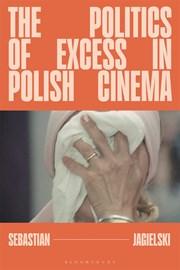
The Politics of Excess in Polish Cinema
Sebastian Jagielski
Departing from standard histories, this book draws on the theory of excess in film to provide a re-examination of Polish cinema history, following emancipatory impulses that emerged in Polish culture between the great crisis of 1968 marked by the expulsion of Polish Jews and persecution of students and the conservative revolution of the Solidarity movement in the 1980s
Employing a transnational and decolonial lens, Sebastian Jagielski argues that beyond the binary of state-endorsed and official 'opposition' media, there exists a range of subversive and radical films He provides close readings of key examples such as The Devil (Diabel)(1972), A Story of Sin (Dzieje grzechu)(1975) and The Palace (Palac)(1980), considering their depiction and transformation of emancipatory ideals born out of Western countercultural movements He also explores the filmmaking practices of directors like Andrzej Wajda to Andrzej Zulawski, examining their use of subtext, seemingly lurid narratives and subversive embedded gestures, produced against the backdrop of Communist Poland's censorship practices In doing so he proposes a critical revision of the normative cinema of moral anxiety
He goes on to consider how on screen depictions of sexuality intersect with various modes of difference, highlighting the impact of racism, homophobia, misogyny, and classism Rejecting a linear narrative in favour of a fragmented history, Jagielski uncovers the untold stories of Polish cinema's subversive influences
COLLECTIONS
World Cinema
UK January 2026 • US January 2026
272 Pages • 30 bw illus
HB 9781350401884 • £85 00 / $115 00
PB 9781350401921 • £28 99 / $39 95
ePDF 9781350401907 • £76 50 / $103 50
ePub 9781350401891 • £76 50 / $103 50
Bloomsbury Academic
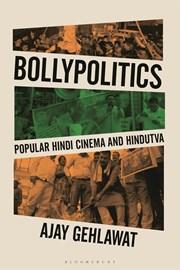
Bollypolitics
Popular Hindi Cinema and Hindutva Ajay Gehlawat, Sonoma State University, USA
Winner of Best Monograph at the 2025 BAFTSS Awards
This book provides an in-depth exploration of the evolving landscape of Bollywood cinema in response to recent socio-political changes in India, including a surge in sectarian violence and the ascent of Hindutva, or Hindu nationalism, under Prime Minister Narendra Modi's leadership
Through a comprehensive analysis of prominent filmmakers and actors like Sanjay Leela Bhansali, Kangana Ranaut, Akshay Kumar, and Anupam Kher, Ajay Gehlawat investigates the extent to which their recent works align with key tenets of the Hindutva movement He scrutinizes the growing influence of the Bharatiya Janata Party (BJP) on film production, manifesting in collaborations covering diverse themes, from Modi's Clean India initiative to the nation's space exploration endeavors and grand historical epics such as Padmaavat (2018) and Manikarnika (2019) that seek to reshape Indian history in line with Hindutva ideology
Gehlawat goes on to dissect smaller budget films like Article 15 (2019) and Shubh Mangal Zyada Saavdhan (2020), which tackle pressing social issues like caste-based violence and homophobia exacerbated by the surge in right-wing extremism in India In doing so, he elucidates the profound and far-reaching impact of Hindutva ideology on Indian cinematic narratives and aesthetics, while also considering the broader implications for Indian society as a whole
COLLECTIONS
South Asian Screen Studies
UK February 2026 • US April 2026
272 Pages • 28 bw illus
HB 9781350452961 • £85 00 / $115 00
PB 9781350453005 • £28 99 / $39 95
ePDF 9781350452985 • £76 50 / $103 50
ePub 9781350452978 • £76 50 / $103 50
Bloomsbury Academic
South Asian Screen Studies
UK January 2026 • US January 2026
360 Pages • 30 bw illus
PB 9781350473331 • £28 99 / $39 95
HB 9781350473294 • £85 00 / $115 00
ePDF 9781350473317 • £76 50 / $103 50
ePub 9781350473300 • £76 50 / $103 50
Bloomsbury Academic
COLLECTIONS
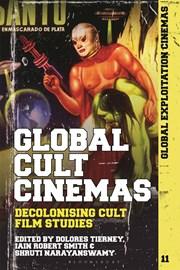
Global Exploitation Cinemas
UK February 2026
• US February 2026
280 Pages • 15 bw illus
PB 9781501375194 • £28 99 / $39 95
HB 9781501375200 • £90 00 / $120 00
ePDF 9781501375224 • £81 00 / $108 00
ePub 9781501375217 • £81 00 / $108 00
Bloomsbury Academic
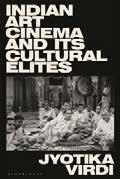
Indian Art Cinema and its Cultural Elites
Jyotika Virdi, University of Windsor, Canada
Repositioning Indian art cinema as a genre that articulated an elite, middle-class social imaginary, Indian Art Cinema and its Cultural Elites examines the form’s contentious position within Indian society, at once exclusionary in its outlook and yet instrumental in bringing Indian film into global prominence in the latter half of the twentieth century
Drawing on Bourdieu’s theory of cultural production, Jyotika Virdi looks at how a closed producer-critic-consumer circuit reinforced class distinction through a presumption of superior taste She traces the trajectory of art cinema in India from the 1950s, when new institutions under Nehru’s socialist ideals catalysed its emergence, through the New Wave movement of the 1970s and 1980s, and finally to its gradual decline in the 1990s as economic liberalization once again transformed the social landscape By examining films like The Apu Trilogy (1955-1959) and Godam (Warehouse) (1973), she showcases the complex contradictions of the middle class, who were both the creative producers and consumers of alternative cinema, especially during the political turbulence of the late 1960s and 1970s
Combining a meticulous examination of key auteurs such as Satyajit Ray, Mrinal Sen, Mani Kaul, and Ritwik Ghatak, with a broader study of cultural shifts and institutional frameworks, this book reevaluates the intricate relationship between art films, the state that sustains them, and the ruling cultural elite whose influence far exceeds its size
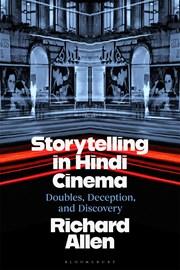
Storytelling in Hindi Cinema
Doubles, Deception, and Discovery
Richard Allen, The Open University, UK
From physical duplicates to role reversals and sexual masquerades, Storytelling in Hindi Cinema provides a comprehensive overview of Hindi films centered around the figure of the double
Richard Allen dissects the cultural significance of these double-themed plots, considering how they reflect questions of social mobility, the expression of desire, social justice, and national identity in the post-colonial period He considers the wide array of influences that shape the genre, from Sanskrit Kathasaritsagara story-telling traditions, folk Nautanki theatres, and Tales of the Arabian Nights to colonial and post-colonial roots from Shakespeare to Hollywood melodrama He asserts the influence of Bengali cinema, particularly of filmmaker Hrishikesh Mukherjee, and South Indian films like Hello Brother (1994) in providing diverse perspectives that enrich these narratives
Examining a broad range of films, from 1947 to present, including Mahal (1949), Madhumati (1958), Chupke Chupke (1975), Angoor (1982), Banjaran (1991), Kal Ho Na Ho (2003) and Dostana (2008), Allen traces the evolution of the trope, even incorporating transgressive narratives like cross-dressing and gender disguise In doing so, he highlights how these cinematic motifs navigate the complexities of traditional worldviews and modern experiences
Global Cult Cinemas
Decolonizing Cult Film Studies
Edited by Iain Robert Smith, King’s College London, UK, Dolores Tierney, University of Sussex, UK & Shruti Narayanswamy, University of St Andrews, UK
Global Cult Cinemas calls for a decolonisation of cult film studies
To date, discourses of cult cinema have predominantly focused upon Anglo-American cinema and its reception in the West Even when cult scholarship has expanded to include non-English language cinema from regions such as East and Southeast Asia, what nevertheless tends to define these cinemas as cult has been the subcultural fandom for those films in the West Shifting the focus onto cult film traditions and fandoms beyond the Anglosphere, Global Cult Cinemas makes a decisive intervention in the field by calling for a decolonisation of cult film studies
This volume interrogates both the coloniality and gendered nature of much cult scholarship and the extent to which an implicit white male perspective needs challenging in an age of decolonising the academy Chapters include investigations of cult film traditions within countries such as Brazil, Indonesia and Pakistan, alongside explorations of the politics of indigenous cult filmmaking, the global circulation of cult icons, and the status of auteurs such as Alejandro Jodorowsky in the era of #MeToo This collection critiques the Eurocentric assumptions that lie at the heart of existing cult film scholarship, and offers new ways of theorizing global cult cinemas to work towards the goal of decolonising cult film studies
COLLECTIONS
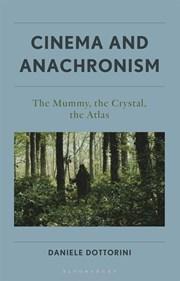
Cine-Aesthetics: New Directions in Film and Philosophy
UK November 2025 • US November 2025
304 Pages • 26 bw illus
PB 9798216377184 • £28 99 / $39 95
HB 9781666941999 • £95 00 / $130 00
ePDF 9798216262800 • £85 50 / $117 00
ePub 9781978761612 • £85 50 / $117 00
Bloomsbury Academic
Cinema and Anachronism
The Mummy, the Crystal, the Atlas
Daniele Dottorini
In this book, Daniele Dottorini establishes a starting point toward a theory of the anachronism of cinematic images through an exploration of existing films, theories, and discourses concerning the temporality of images that have shaped the history of cinema
Dottorini examines the cinematic form as a specific way of working with the temporality of images, emphasizing its medium specificity in its ability to employ a confrontation with the history of both the image itself and the discourses that have reflected on it simultaneously, particularly within the contemporary sphere The image is always in a sense spectral, phantasmal, and open, he argues – it is a field of tensions which has the unique ability to form connections to other images, epochs, gazes, and visions of the past as it is used time and again in new and different works
By building on the work of scholars and artists that have come before him, including Warburg, Pasolini, Deleuze, Benjamin, Godard, and Herzog, among many others, Dottorini positions the image as not only – and not even primarily – a datapoint to be analyzed, but as a form that is constantly moving, changing, and forming new connections Ultimately, this book constitutes a significant contribution to our understanding of the image as a path built through encounters and comparisons, which is but one facet of establishing a history of cinema as a story of returns and survivals
COLLECTIONS

UK February 2026 • US February 2026
576 Pages • 150 colour illus
PB 9781805750819 • £28 99 / $39 95
HB 9781839025341 • £85 00 / $115 00
ePDF 9781839025365 • £0 00 / $0 00
ePub 9781839025358 • £0 00 / $0 00
British Film Institute
Film Studios in Britain, France, Germany and Italy
Architecture, Innovation, Labour, Politics, 1930-60
Sarah Street, University of Bristol, Tim Bergfelder, University of Southampton, UK, Richard Farmer, University of Bristol, UK, Eleanor Halsall, Sue Harris, Queen Mary University of London, UK, Morgan Lefeuvre, Queen Mary, University of London, UK, Carla Mereu Keating, University of Bristol, UK & Catherine O'Rawe, Bristol University, UK
This open access book investigates film studios in Britain, France, Germany and Italy between the 1930s and 1960s During this time, studios faced unprecedented challenges including wartime disruptions, post-war fragmentation, movement of labour and the introduction of new technologies
The authors present new research about the often very different histories of Europe’s film studios, comparing their geographic locations, architectures and infrastructural development They explore a number of well-known studios including Pinewood, Joinville, Babelsberg and Cinecittà, as well as lesser-known production sites such as Manchester, Victorine, post-war West German studios and Tirrenia as diverse creative and economic infrastructures
Drawing on a wealth of archival sources, photographs, films, aerial maps and visualizations, the book charts how artistic practices responded to transnational flows in film studio expertise, as studios constituted formative, materially based ‘spaces of the imagination’ that produced some of cinema’s most influential films
The open access edition of this book is available under a CC BY-NC-ND 4 0 licence on www bloomsburycollections com Open access was funded by the European Research Council





































COLLECTIONS
UK November 2025 US November 2025
240 Pages • 15 BW Photos
HB 9781493086337 £24 99 / $34 95
ePDF 9798765161272 • £22 49 / $31 45
ePub 9781493086344 £22 49 / $31 45
Bloomsbury Academic
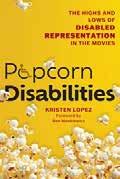
The Highs and Lows of Disabled Representation in the Movies
Edited by Adam W Tyma, Matthew R Meier & Dana Schowalter
You can learn a lot from the movies about sex and relationships, about business, about history Sure, there’s a fair amount of fantasy, wish fulfillment, and glorious hair to exaggerate everything, but for better or for worse, films remain one of the most important ways that viewers around the world learn about other people and cultures And almost since the dawn of the medium, movies have shaped the public’s understanding of and assumptions about disability
As a film critic and disabled person, Kristen Lopez speaks with particular authority on how disability is represented and too often misrepresented in movies Popcorn Disabilities is her impassioned but nonetheless fun and engaging survey of how Hollywood has dealt with disability over the last century As she reveals, even when they’re not just narrative props to help out an able-bodied protagonist, disabled movie characters are overwhelmingly white, affluent, and conventionally attractive, obscuring the variety of disabilities and the experiences of those who deal with them But she also explains where films have gotten it right and how the power of the medium can continue to be used to enlighten and educate in the future
UK February 2026 • US February 2026
304 Pages • 17 bw illus
PB 9798765135853 • £28 99 / $39 95
HB 9798765135860 • £90 00 / $120 00
ePDF 9798765135884 • £81 00 / $108 00
ePub 9798765135891 £81 00 / $108 00
Bloomsbury Academic
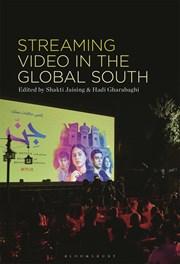
Edited by Shakti Jaising, Drew University, USA & Hadi Gharabaghi, Fairfield University, USA
The essays in this volume provide a textured analysis of streaming video in the global South, revealing both the impacts of and challenges faced by Northern streamers in Southern markets, as well as new possibilities and constraints experienced by producers and performers from the South
In recent years, major streaming video companies from the global North like Netflix, Amazon Prime Video, and Disney + have begun expanding to international markets, which are increasingly in the global South Yet, much scholarship on the streaming of film and television focuses primarily on North America and Europe This volume contests the prevailing perspective by focusing on media environments across the vast, yet relatively understudied, contexts of Asia, Africa, and Latin America and by tracking emerging trends in digitized audiovisual culture through their example
Moving between political-economic and textual approaches, and exploring a variety of formats and genres (from serialized drama to feature-length documentary), the volume argues that the complexities of the global streaming landscape impel us to interrogate long-standing theories of Western cultural imperialism imposed on the non-Western world and to attend closely to shifting dynamics between the global North and South
COLLECTIONS
UK January 2026
• US January 2026
192 Pages 7 bw illus
PB 9798216388074 • £28 99 / $39 95
HB 9781666973617 £80 00 / $110 00
ePDF 9798216252207 • £72 00 / $99 00
ePub 9781978766952 • £72 00 / $99 00
Bloomsbury Academic
Building a Feminocentric Canon
Céline Sciamma and the Dawn of Post-Auteurism
Tom Knoblauch
In Building a Feminocentric Canon: Céline Sciamma and the Dawn of Post-Auterism, Tom Knoblauch positions Céline Sciamma as not just an important voice within contemporary cinema but also as the standard-bearer and skeleton key for a new vision of authorship and a reimagined feminocentric canon of tomorrow
As the digital age has ruptured traditional cinematic norms and complicated logics of legitimacy and authorship, Knoblauch focuses instead on the promise of new conventions, contending that these seismic shifts call for a broader reevaluation of the current canon Cinema’s future, he asserts, will exist in a space that is both post-cinema and post-auteur, eschewing what has often been an exclusionary politics of genius that has dominated the medium since the French New Wave
In envisioning a new system of valuation for authentic expression that incorporates historically marginalized voices, Knoblauch embraces the new, uneven ground we find ourselves on to demonstrate how Sciamma’s influential filmography is well positioned to serve as the basis for a revitalized canon that offers a bold challenge to the status quo This canon need not be viewed as radical rejection of tradition, but instead as a horizon upon which fresh, innovative traditions can be formed
Thinking Cinema
UK January 2026
• US January 2026
216 Pages
HB 9798765101506
• £90 00 / $120 00
PB 9798765101544 • £28 99 / $39 95
ePDF 9798765101520 • £81 00 / $108 00
ePub 9798765101513 • £81 00 / $108 00
Bloomsbury Academic
COLLECTIONS
The History of World Literatures on Film
UK January 2026
• US January 2026
424 Pages • 72 bw illus
HB 9781501316883 • £130 00 / $175 00
PB 9798765111314 • £39 99 / $54 95
ePDF 9781501316890 • £117 00 / $157 50
ePub 9781501316906 • £117 00 / $157 50
Bloomsbury Academic
COLLECTIONS
KINO - The Russian and Soviet Cinema
• US March 2026
UK March 2026
264 Pages • 30 bw illus
HB 9781350411166 • £85 00 / $115 00
PB 9781350411203 • £28 99 / $39 95
ePDF 9781350411180 • £76 50 / $103 50
ePub 9781350411173 • £76 50 / $103 50
Bloomsbury Academic
Cinematic Encounters with Disaster Realisms for the Anthropocene
Simon R Troon, Monash University, Australia
Cinematic Encounters with Disaster takes Hollywood’s disaster movies and their codified versions of natural disaster, postapocalyptic survival, and extra-terrestrial threat as the starting point for an analytical trajectory that works toward new understandings of how cinema shapes and informs our conceptions of disaster and catastrophe It examines a range of films from distinct regional and industrial contexts: Hollywood, indie movies, different kinds of documentaries from the US and elsewhere, and auteurist-realist cinema from Europe and Asia Moving across and beyond critical and industrial categories that often inform thinking about cinema, this book contends that different approaches to film style can push us to imagine disaster in distinct ways, with distinct ethical connotations
Conceiving of disaster as intersubjective ethics between humans and nonhuman alterity – forces of nature, errant technology, monsters, ghosts, and other entities – it analyses how formal techniques and narrative strategies render encounters in which human protagonists are confronted with the threat of death and respond in ways that can be instructive for our planet’s present juncture
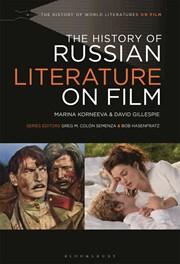
The History of Russian Literature on Film
Marina Korneeva, Moscow City Pedagogical University, Russia & David Gillespie, University of Bath, UK
Unlike most previous studies of literature and film, which tend to privilege particular authors, texts, or literary periods, David Gillespie and Marina Korneeva consider the multiple functions of filmed Russian literature as a cinematic subject in its own right one reflecting the specific political and aesthetic priorities of different national and historical cinemas In this first and only comprehensive study of cinema’s various engagements of Russian literature focusing on the large period 1895-2015, The History of Russian Literature on Film highlights the ways these adaptations emerged from and continue to shape the social, artistic, and commercial aspects of film history
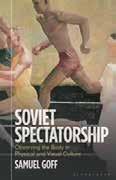
Soviet Spectatorship
Observing the Body in Physical and Visual Culture
Samuel Goff, University of Cambridge, UK
What distinguished the Soviet 'look'? How did Soviet thinkers and artists reimagine the relationship between observer and observed?
Soviet Spectatorship answers these questions through an in depth exploration of Soviet physical culture and its on screen representations from the end of the Civil War to the eve of the Second World War Samuel Goff identifies the three fundamental ‘structures of looking’ surveillance, aesthetics, and spectatorship that shaped representations of the embodied Soviet subject
Close readings of understudied films such as Happy Finish (1934), The Laurels of Miss Ellen Gray (1935) and A Strict Young Man (1936), are contextualised through a theoretical analysis of the relationship between subjectivity and the body In doing so, Goff traces the evolution of a specific Soviet 'look', examining perspectives on Soviet aesthetics and theories of body and mind, uncovering continuities within Soviet visual cultures in a period usually understood in terms of discontinuity and rupture
COLLECTIONS

UK January 2026 • US January 2026
208 Pages • 6 bw illus
HB 9781839028113 • £65 00 / $90 00
PB 9781839028106 • £21 99 / $29 95
ePDF 9781839028137 • £19 79 / $26 95
ePub 9781839028120 • £19 79 / $26 95
British Film Institute
The Heart of Your Script
The Insider ’s Guide to Writing the Difficult Middle Section of a Screenplay
Ted Wilkes, Regent's University London, UK & Phil Hughes, Regent's University London, UK
While there are many guides to screenwriting, none of them tackle the specific difficulties of writing the tricky midsection of the screenplay The Heart of Your Script reveals the six key elements that are crucial for ensuring an emotionally satisfying and dramatically engaging center to any script
Using a broad range of concise case studies, including contemporary films such as Aftersun (2022), The Whale (2022), Shoplifters (2018), Talk to Me (2022), Barbie (2023) and Oppenheimer (2023), canonical texts such as Back to the Future (1985), Seven Samurai (1954) and There Will Be Blood (2007) and cult classics like Swiss Army Man, (2016), Jennifer ’s Body (2009) and Heathers (1988), Ted Wilkes and Phil Hughes provide helpful tips and tricks to assist writers in finding out what is at the heart of the story they want to tell and how to ensure that it is coming through in their stories Refusing any single method for structuring this central portion, Wilkes and Hughes offer a character-centred study, which allows aspiring screenwriters to map their dramatic journey from the inside out
COLLECTIONS
UK December 2025 • US December 2025
352 Pages
PB 9798216382997 • £28 99 / $39 95
HB 9781793642011 • £90 00 / $120 00
ePDF 9798216265320 • £81 00 / $108 00
ePub 9781978768734 • £81 00 / $108 00
Bloomsbury Academic
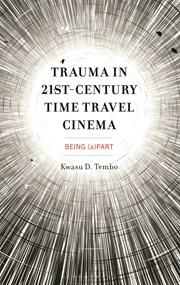
Trauma in 21st-Century Time Travel Cinema Being (a)Part Kwasu D Tembo
Kwasu D Tembo unites approaches from disciplines as wide-ranging as physics, mathematics, cinema, philosophy, and media theory to pose critical questions concerning time, change, and (un)becoming in contemporary time-travel cinema
In his analyses of 21st-century cinematic time-travel narratives, Tembo situates human life in time as a palimpsest, with time acting as scriptor and stylus A time machine, then, functions as a fantasy that allows for this pace to be slowed or accelerated so as to appear entirely suspended, with the potentials of the “Now” (re)opened to the traveler
As the manipulation of time lends the traveler increased agency and perhaps the conditions to see themselves more clearly amid a claustrophobic sea of information and content Tembo contends that we must carefully consider the psychoemotional affectivity of both the motivations and the potentially traumatic consequences of such a jarring shift in perspective The results lend critical insight into human understandings of how we experience time and, ultimately, what these understandings permit and disallow in terms of how (it is) to be in time
UK December 2025 US December 2025
152 Pages • 5 tables
PB 9798216383987 £28 99 / $39 95
HB 9781666936711 • £80 00 / $110 00
ePDF 9798216257097 £72 00 / $99 00
ePub 9781978769601 • £72 00 / $99 00
Bloomsbury Academic
UK January 2026 • US January 2026
232 Pages • 4 bw illus
PB 9798216381310 • £28 99 / $39 95
HB 9781666980516 • £90 00 / $120 00
ePDF 9798765154687 • £81 00 / $108 00
ePub 9781666980523 £81 00 / $108 00
Bloomsbury Academic
COLLECTIONS

UK January 2026 • US January 2026
224 Pages 9 bw illus
PB 9798765128282 • £28 99 / $39 95
HB 9798765128275 £90 00 / $120 00
ePDF 9798765128305 • £81 00 / $108 00
ePub 9798765128312 • £81 00 / $108 00
Bloomsbury Academic
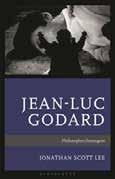
Jean-Luc Godard
Philosopher/Insurgent
Jonathan Scott Lee
In Jean-Luc Godard: Philosopher/Insurgent, Jonathan Scott Lee contends that renowned filmmaker Jean-Luc Godard can be most accurately considered as a philosopher who uses cinema and video as his media to develop provocative aesthetic interventions into contemporary political situations and dilemmas.
Rather than attempting to write a “definitive” study of Godard or establish a new canon from his expansive oeuvre, Lee identifies a particularly salient selection of his work which highlights innovative ways of understanding his lifelong engagement with film and video Building on Godard’s own claim that “cinema is made of forms that think,” Lee embarks on a compelling exploration of the ways in which these films are poised to guide viewers into a “subjunctive” space of interpretation in which philosophical thinking engages fundamental questions about an art of living
Moving through these films chronologically, each of the three essay-chapters considers a different stage of Godard’s thought and career through the lens of another prominent thinker By offering a distinct trajectory through Godard's work between 1960 and 2018, Lee demonstrates how his various modes of cinematic and video intervention might be seen to effect real change in audiences’ thinking and in the world more broadly
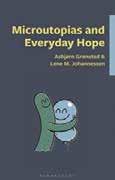
Edited by Asbjørn Skarsvåg Grønstad & Lene M Johannessen
In eleven essays of scholarly inquiry encompassing a variety of disciplinary perspectives including literature, visual culture, and media studies, Microutopias and Everyday Hope illuminates the potential for alternative futures that resides in utopian thinking on smaller scales
Reflecting on analyses of source material that ranges from entertainment media to concrete sites, contributors draw our attention to the important aesthetic details of everyday life that are increasingly drowned out in a landscape dominated by continuous polycrisis Caught in late capitalism’s relentless and dystopian march, they argue, any kind of future is necessarily predicated on utopian thinking in the present and must look beyond the spectacle of horror to draw on the hope that can be found in the smaller wins day to day
Ultimately, this collection serves as an appeal to the crucial role the humanities can play in withstanding and moving past the contemporary societal fragmentation plaguing the globe
Gilles Deleuze’s Structuralist Cinema-World Roger Dawkins, Western Sydney University, Australia
This book is an explanation of Deleuze’s cinema books that fleshes out a structuralist “method” applicable to film and media today
Gilles Deleuze’s Structuralist Cinema-World outlines a way of analyzing the meaning we interpret from film its images, sounds and their combinations and, in so doing, makes space for Deleuze's vision of critical resistance and creative thinking It argues that this method is Deleuze’s radical version of Structuralism, as Deleuze borrows elements of Structuralism and deploys them throughout his entire oeuvre This book distils this Deleuzian Structuralism down to a practical system of four criteria of analysis, including a special structuralist element called the joker Its analysis of film serves to explicate Deleuze’s Structuralism and realize the experimentation potential to Deleuze’s method
This book investigates this perspective of Structuralism in Deleuze’s philosophy, his cinema books, and cinema generally In so doing, it develops the system of analysis described above; it offers a novel reading of cinematic examples in line with this system, while at the same time outlining a method of analysis easily translatable to film and media studies more broadly; and, in its final chapter, it makes inroads into the application of this system beyond cinema to image-based platform media today
UK January 2026 US January 2026
280 Pages • 101 bw illus
HB 9798765107041 £95 00 / $130 00
PB 9798765107058 • £28 99 / $39 95
ePDF 9798765107072 £85 50 / $117 00
ePub 9798765107089 • £85 50 / $117 00
Bloomsbury Academic
Bloomsbury Podcast Studies
UK January 2026 • US January 2026
352 Pages • 1 bw illus
HB 9798765111727
• £90 00 / $120 00
PB 9798765111680 • £21 99 / $29 95
ePDF 9798765111703
• £19 79 / $26 95
ePub 9798765111697 • £19 79 / $26 95
Bloomsbury Academic
COLLECTIONS
UK January 2026 • US January 2026
328 Pages 1 bw illus
PB 9798765127117 • £28 99 / $39 95
HB 9798765127100 £90 00 / $120 00
ePDF 9798765127131 • £81 00 / $108 00
ePub 9798765127148 • £81 00 / $108 00
Bloomsbury Academic
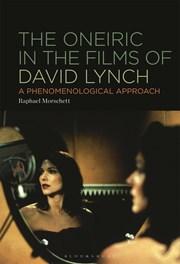
The Oneiric in the Films of David Lynch A Phenomenological Approach
Raphael Morschett, Saarland University, Germany
The Oneiric in the Films of David Lynch is the first systematic book-length study to explore the nature and function of dreams in David Lynch's different phases and audio-visual formats
There is hardly a contemporary film director whose name is as closely linked to the dream(-like) as that of David Lynch Both popular and academic discourse frequently identify Lynch’s films by their dreamlike qualities However, in the existing literature on Lynch, these qualities tend to remain underspecified in terms of their experiential dimension
Departing from an interest in the phenomenon of dream experience, this is the first systematic book-length study exploring the nature and function of the oneiric in the director ’s different phases and audio-visual formats It shows that, over the course of 50 years, Lynch has developed a cinematic aesthetics of the oneiric – an ensemble of four dream-related dimensions that unfolds its full potential in the dynamic interplay between sensory address and reflective medialization
Empathy Machines
This American Life, Podcasting, and the Public Radio Structure of Feeling Jason Loviglio, University of Maryland, USA
The first book-length treatment of This American Life, Empathy Machines contextualizes the influential show within the history of radio, looking back to radio’s golden era and the para-social connections that it encouraged, as well as the formation of NPR in the 1960s and the “Great Society Liberalism” that guided its programming and approach to the audience
Empathy Machines identifies This American Life as a central cultural institution in the evolution of empathy as a “liberal feeling” central to podcast storytelling and the neoliberal era in which it developed This American Life revitalized the public radio traditions of investigative journalism and sonically inventive audio production An early adopter of podcasting as a timeshifted delivery mechanism for its broadcast content, the program also ushered in appointment listening, a key innovation and disruption in the emerging chaotic attention economy of the 21st century Empathy Machines centers This American Life as a model for prioritizing empathy as an affective and ideological strategy for feeling liberal as liberal democracy’s precarious balance of opposites began to fracture into hypercapitalism, atavistic ethnonationalism, and new identity politics
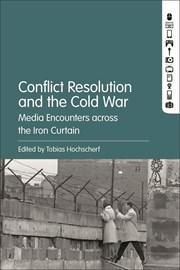
Conflict Resolution and the Cold War
Media Encounters across the Iron Curtain
Edited by Tobias Hochscherf, University of Applied Sciences at Kiel, Germany & Gintaras Aleknonis, Vilnius University, Lithuania
While existing publications on the Cold War tend to characterise this period exclusively in terms of conflict or on the basis of irreconcilable ideological differences, this book – through a number of fascinating international case studies – shows that there were also many media-related examples of attempts for reconciliation on both sides of the Iron Curtain
Scholars of media history, more often than not, have looked at the role of media in times of conflict, war, crises, social and political upheaval Yet, media such as film, radio and television have also played a decisive role in processes of conflict resolution This was also true during the Cold War which could be considered the longest-simmering conflict of the 20th century with far-reaching consequences that could be felt to this day
Conflict Resolution and the Cold War: Media Encounters across the Iron Curtain brings together international scholars with expertise in different media to take a closer look at the often-overlooked role media played in conflict resolution and initiatives for reconciliation Owing to the very few, if any, opportunities to meet people from the other side of the political divide in person, media often provided an important sphere where the East and the West could learn from one another
UK January 2026 US January 2026
272 Pages • 42 colour illus
PB 9798765129210
£28 99 / $39 95
HB 9798765129203 • £90 00 / $120 00
ePDF 9798765129234 £81 00 / $108 00
ePub 9798765129241 • £81 00 / $108 00
Bloomsbury Academic
Thinking Media
UK January 2026 • US January 2026
288 Pages • 25 bw illus
PB 9798765118757 • £28 99 / $39 95
HB 9798765118764 • £90 00 / $120 00
ePDF 9798765118788 • £0.00 / $0.00
Bloomsbury Academic
ePub 9798765118795 • £0.00 / $0.00
Bloomsbury Academic
COLLECTIONS

Thinking Media
UK February 2026 • US February 2026
46 bw illus
PB 9798765131671 • £57 98 / $79 95
HB 9798765129012 • £180 00 / $240 00
Bloomsbury Academic
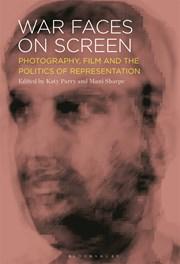
War Faces on Screen
Photography, Film and the Politics of Representation
Edited by Katy Parry, University of Leeds, UK & Mani Sharpe, University of Leeds, UK
How have images of the face been used to document and distort the phenomenon of war? Such is the question that drives this book, with the face forming a recurring - almost ubiquitous - motif throughout visual depictions of military conflict.
At once interdisciplinary, transnational, and transhistorical, War Faces on Screen is organised into three sections Section One examines representations of the face in war photography, illustrating how photographers have visualised the invisible violence of psychic trauma Section Two focuses on the aesthetics of the cinematic close-up, drone vision, and how the selective digital colourisation of bodies and faces from archival footage works to impose a moral hierarchy Section Three concludes the book with a focus on colonisation, decolonisation and defacement, extending earlier discussions of the imperial violence found in recent Hollywood films, where empathy is displaced from the ethnic other to the suffering Western soldier Our final chapters chart how the face is central to articulating the meaning and sentiment of colonial and civil wars, with even seemingly progressive documentaries perpetuating unequal power dynamics and problematic notions of victimhood Foregrounding the work of artists and practitioners, alongside theoretical frameworks, War Faces on Screen ultimately forms a radically innovative contribution to the study of image-making and war-making
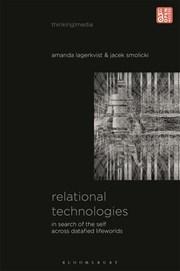
Relational Technologies
In Search of the Self across Datafied Lifeworlds
Edited by Amanda Lagerkvist, Uppsala University, Sweden & Jacek Smolicki, Harvard Graduate School of Design, USA
This open access collection gathers thinkers, media practitioners, scholars, and artists to bring attention to how our relational selves, lives, and lifeworlds emerge within a range of digital platforms, media environments, creative media practices, and performances to probe what it means to become subjective by evolving in and with a world of relational technologies
As biometric artificial intelligence, datafication procedures and algorithms increasingly saturate and reconfigure human and more-than-human realms, technologies, and selves co-evolve in deepest relationality Nearly every form of existence has today become subject to computational harvesting and utilization This renders our relations with technologies those we actively compose and those that are forced upon us ever more complex and inconceivably entwined
Thus, offering a unique contribution to the debates on data selves, Relational Technologies provides manifold possibilities for a co-existentialist understanding of technological developments of datafication and biometrics
The ebook editions of this book are available open access under a CC BY-NC-ND 4 0 licence on bloomsburycollections com Open access was funded by the Marianne and Marcus Wallenberg Foundation
Jon Inge Faldalen, University of Oslo, Norway
This two-volume work explores a static long take, termed a still Einstellung, as well as coexistent still and moving imagery by Lumière, Welles and the MPEG compression codec, to contemplate the kind of image it generates
Jon Inge Faldalen’s volumes are a theoretical exploration of the concept of Einstellung The author keeps the original German term, capitalizing on the ambiguity inherent in this type of image phenomenon; in this case, the long take, or at least a continuous unbroken take, effected by an immobile camera whose captured content could potentially contain perceptible movements produced by entities within the composition framed
Stillmoving I is a theoretical exploration of the concept of Einstellung The author asks whether this image is a still image, or a moving image, or both, or neither, or, finally, what Faldalen terms stillmoving Underlying these deliberations is the question of how cinema represents or mediates stillness
Stillmoving II continues the work of the first volume, exploring the concept of Einstellung through a small set of specific case studies, including Louis Lumière’s Quai de l’Archevêché (Lumière operator, 1896), André Bazin’s analysis of the kitchen scene in The Magnificent Ambersons (Orson Welles, 1942), and James Benning’s Stemple Pass (2012), as well as what the author calls “digital imagenesis,” which concerns the MPEG compression codec
COLLECTIONS
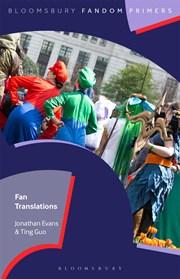
Bloomsbury Fandom Primers
UK December 2025
128 Pages
HB 9798765113653
• US December 2025
• £55 00 / $75 00
PB 9798765113691 • £14 99 / $19 95
ePDF 9798765113677
• £13 49 / $17 95
ePub 9798765113660 • £13 49 / $17 95
Bloomsbury Academic
Jonathan Evans, University of Glasgow, UK & Ting Guo, University of Liverpool, UK
Fan Translations introduces students and scholars in media studies, modern languages and related disciplines to the concept and practices of fan translation
Beginning with an overview of the research on fan translation from both media and translation studies, this book focuses on issues such as the tension between creative readings and commercial exploitation, the role of translation in popular culture, the changing media landscape and the balance between translation as a form of self-expression and as a service to the community
Fan Translations resists the assumption of a Global North subject in existing scholarship, and instead explores the connections between fandom and translation in the Global South where access to primary texts and official merchandise is often mediated through both official and fan translations as well as through unofficial products Through the utilization of case studies, Evans and Guo explore different perspectives on fandom, translation and their intersections These case studies touch on imperative topics in fan culture, such as fan translation in queer communities and media as a method of community building and the interrelation between fan and professional translation, leading to ongoing changes in media distribution
COLLECTIONS
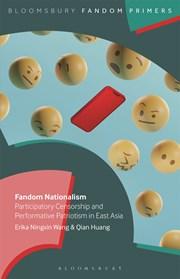
Bloomsbury Fandom Primers
UK December 2025 • US December 2025
168 Pages • 26 bw illus
HB 9798765125151 • £55 00 / $75 00
PB 9798765125168 • £14 99 / $19 95
ePDF 9798765125182 • £13 49 / $17 95
ePub 9798765125199 • £13 49 / $17 95
Bloomsbury Academic
Fandom Nationalism
Participatory Censorship and Performative Patriotism in East Asia
Erika Ningxin Wang, The Chinese University of Hong Kong, Shenzhen & Qian Huang, University of Groningen, the Netherlands
This book delves into the world of "fandom nationalism," where the lines between fan devotion and nationalistic fervor blur within the East Asian media landscape
Taking a non-Western perspective in fan studies, this book challenges conventional understandings of fandom nationalism While the concept usually describes how citizens passionately adore their nation akin to idolizing celebrities, this groundbreaking research adds a captivating twist: such passion encompasses not only the expressions of love fans shower upon their idols but also the intense hatred anti-fans direct towards stars - fans strategically employ nationalism as a weapon to win fan wars This enriches the concept of fandom nationalism, exploring how fans use participatory censorship practices to accuse celebrities and their followers of problematic political stances, thereby channeling collective nationalist anger to exact revenge on despised celebrities, such as Zhang Zhehan, a Boys' Love drama actor who was banned by the authorities and the industry for taking photos at the Yasukuni Shrine in Japan
This book reveals how fans and anti-fans participate in various stages of the banning process, leading to the career downfall of top stars in China This brutal battleground, akin to cancel culture, is a product of the collusion among fans, netizens, the party-state, media platforms, and businesses, where fans' participation in nationalist practices can also be performative patriotism, driven by the desire to protect their idols and themselves
COLLECTIONS
UK January 2026 US January 2026
280 Pages • 32 bw illus
PB 9798216390114 £28 99 / $39 95
HB 9781666978834 • £90 00 / $120 00
ePDF 9798216265481 £81 00 / $108 00
ePub 9781978762237 • £81 00 / $108 00
Bloomsbury Academic
COLLECTIONS

UK February 2026 • US February 2026
1 Page • 10 tables
HB 9781666967821 • £80 00 / $110 00
ePDF 9798216259206 • £72 00 / $99 00
ePub 9781978764972 • £72 00 / $99 00
Bloomsbury Academic
COLLECTIONS
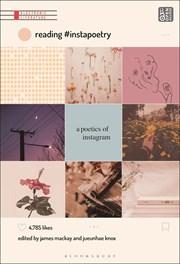
Electronic Literature
UK March 2026 • US March 2026
240 Pages • 16 bw illus
HB 9798765105481 • £90 00 / $120 00
PB 9798765105528 • £28 99 / $39 95
ePDF 9798765105504 • £0.00 / $0.00
ePub 9798765105498 • £0.00 / $0.00
Bloomsbury Academic
Critical Approaches to Transmedia Storytelling in K-Pop
Edited by Nicholas E Miller
In Critical Approaches to Transmedia Storytelling in K-Pop, contributors present a variety of compelling case studies to argue that K-pop has evolved beyond a musical genre into a global cultural phenomenon with a growing influence on contemporary media practices, highlighting its transmedia ecosystem in which complex narratives unfold and engage audiences across formats and platforms
An impressive roster of contributors assembled by editor Nicholas E Miller explore how different artists and companies within the industry have constructed expansive storyworlds through a variety of media to draw fans into participatory, interpretive engagement These analyses cohere to demonstrate how the narrative universes of K-pop have transformed cultural boundaries, industry economics, and global fan culture by strategically employing non-traditional elements and technologies that establish collaborative meaning-making and emotional investment as the basis of compelling fan experiences As a result, this volume positions K-pop’s transmedial approach as not merely a marketing strategy, but as a sophisticated artistic framework which redefines the relationship between music, narrative, and performance in the digital age
Parasocial Media
Parasocial Interaction in a Shifting Media Landscape
Edited by Lauren Auverset van Gerwen, Philip Auter & Phillip Madison
This edited volume investigates the phenomenon of parasocial interaction in the context of contemporary media and presents a comprehensive exploration of the evolving nature of parasocial relationships -- and their implications -- in the landscape of media consumption
Contributors unravel the complexities of parasocial interaction and relationships in the modern media landscape and offer valuable insights to scholars, students, and practitioners in the field of communication and media studies
OPEN ACCESS
Reading #Instapoetry
A Poetics of Instagram
Edited by James Mackay, European University Cyprus, Cyprus & JuEunhae Knox, University of Sheffield, UK
This open access collection is the first to investigate the poetry of Instagram. Alongside academic essays from a variety of theoretical perspectives, it also includes accounts from people actually involved in the creation and circulation of Instapoems
In the 21st century, poetry enjoyed a publishing boom, largely thanks to the rise of a cohort of writers labelled “Instapoets” –named after the Instagram platform where many of them first became famous The work of these writers has been controversial with other poets and literary critics, who argue that their product is in some way not really poetry: at the same time, Instapoets have reached new audiences, held sold-out readings, and been deeply loved by their fans In this collection, writers ask how we can approach poems marked by such extreme simplicity
The ebook editions of this book are available open access under a CC BY-NC-ND 4 0 licence onbloomsburycollections com
Bloomsbury Academic USA, Canada, Latin America
304 Pages • 4 bw illus
HB 9798765108246 £90 00 / $120 00
PB 9798765108253 • £28 99 / $39 95
ePDF 9798765108277 £81 00 / $108 00
ePub 9798765108284 • £81 00 / $108 00
Bloomsbury Academic
“You're Muted"
Performance, Precarity, and the Logic of Zoom
Edited by Mark Nunes, Appalachian State University, USA & Cassandra Ozog, University of Regina, Canada
Through the frame of Zoom, this collection of essays examines the rapid emergence of videoconferencing in everyday life under COVID-19, its preexisting performative logic, and the ongoing implication of these practices for millions of individuals and institutions.
The year 2023 marked the end of the World Health Organization’s classification of the COVID-19 outbreak as a “public health emergency of international concern,” yet many of the organizational and institutional restructurings that occurred in the rapid response to the pandemic have remained firmly in place The prevalence of videoconferencing in everyday life marks one such instance, serving as an index of all that has emerged as the “new normal” since March 2020
While this volume focuses predominantly on Zoom and its place in the collective imagination and daily practice of those of us whose lives are profoundly caught up in digital networks, many of these insights presented here apply to other videoconferencing platforms as well, and a supporting logic that has governed neoliberal lives since long before the first lockdowns began This collection explores how videoconferencing platforms have provided individuals and institutions new modes of “engagement,” while at the same time reifying, normalizing, and domesticating modes of surveillance, control, and marginalization that have been part and parcel of a networked-based performative logic for nearly a century UK
Approaches to Digital Game Studies
UK February 2026 • US February 2026
272 Pages
PB 9798765124970 • £28 99 / $39 95
HB 9798765124963 • £90 00 / $120 00
ePDF 9798765124994 • £81 00 / $108 00
ePub 9798765125007 • £81 00 / $108 00
Bloomsbury Academic
COLLECTIONS
Emerging Insights into Esports
UK February 2026 • US February 2026
176 Pages • 4 bw illus
PB 9798216392491 • £28 99 / $39 95
HB 9781666960228 • £75 00 / $100 00
ePDF 9798216261384 • £67 50 / $90 00
ePub 9781978763142 • £67 50 / $90 00
Bloomsbury Academic
Games That Haunt Us
Gothic Game Space as a Living Nightmare
Edited by Stephanie Farnsworth, University of Sunderland, UK
Games That Haunt Us: Gothic Game Space as a Living Nightmare is an examination of how the Gothic appears in game space to interrogate an area of substantial importance to contemporary games, with a focus on environments, bodies, and defining the Gothic in games
The Gothic, both as a literary and videogame genre has increased in prominence amongst literature, media, and culture scholars globally, as games studies becomes a more recognized and exciting field of study and as Gothic scholars find new ways to apply their works across emerging mediums
But why have Gothic games risen in popularity since 2010? What do players feel when they play these games? Why are themes surrounding fraught identities, mourning, and monstrosity gaining so much attention? Games That Haunt Us investigates the very nature of the Gothic and how video games provide new ways of connecting with the genre The scholars in this collection look at why Gothic games are having their moment of popularity, the unsettling themes they evoke in unstable times, why we are fascinated with death and decay, theories surrounding body horror, and how games transform avatars and ourselves
Fractured Gaming Cultures
Marginalized Gamers and New Identities
Christine Tomlinson
Christine Tomlinson demonstrates how embracing and engaging with personal identity both positively and negatively has led gaming culture to evolve past the monolith of the stereotypical “gamer” image that exists within the popular imaginary to offer marginalized players safety and community online
In light of the dichotomy between the hegemonic ideals of who a “gamer” should be stereotypically young, heterosexual white boys and men and the reality of diverse gaming audiences, Tomlinson observes how marginalized players have formed their own communities grounded in shared identity and experience These communities, she contends, allow players to produce new individual and shared gaming identities and cultures as acts of resistance and resilience, through which they can reclaim a position in an often-hostile environment and a slowly changing industry Ultimately, Tomlinson argues that while these alternative communities should not need to exist, they have paved the way for a fracturing of gaming culture that provides marginalized players with safe and productive outlets for discussion and community
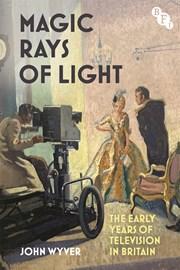
UK March 2026 • US March 2026
528 Pages • 40 bw illus
HB 9781839028199 • £75 00 / $100 00
PB 9781839028205 • £24 99 / $34 95
ePDF 9781839028229 • £22 49 / $31 45
ePub 9781839028212 • £22 49 / $31 45
British Film Institute
John Wyver, Independent Scholar, UK
On the evening of 26 January 1926, inventor John Logie Baird held a public demonstration in his workspace on London’s Frith Street of a ‘seeing by wireless’ apparatus that he and many others had been working towards, television In the years that followed, variants of this astonishing device produced programming that was rich, complex and excitingly imaginative Familiar television genres, including studio drama, quiz shows, variety spectaculars and sports broadcasts, were all fully realised in the 1930s At the same time, early television was often strikingly different from later domestic broadcasting
Television began with intimate entanglements with interwar cinema, theatre, music and dance And, despite reaching only tiny audiences, from its beginnings television responded to key strands of social history, embracing legacies of the Great War, changing roles for women, suburban living and more
Magic Rays of Light is a unique and comprehensive cultural history of early television, exploring its technologies and institutions, while also celebrating the programmes and the people, the ideas and the innovations of the first decade of what would become the most consequential medium of the subsequent century
COLLECTIONS
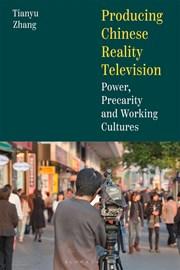
Global East Asian Screen Cultures
UK February 2026 • US February 2026
272 Pages • 30 bw illus
PB 9781350452664 • £28 99 / $39 95
HB 9781350452626 • £85 00 / $115 00
ePDF 9781350452640 • £76 50 / $103 50
ePub 9781350452633 • £76 50 / $103 50
Bloomsbury Academic
Producing Chinese Reality Television Power, Precarity and Working Cultures
Sophia Tianyu Zhang, Liverpool Media Academy, UK
This study examines the production of popular Chinese reality television, complemented by interviews with a broad range of practitioners including newcomers, contractors, and migrant workers, all of whom form the industry's backbone
Tianyu Zhang draws on first hand experiences across four television productions, providing exclusive insights into institutional dynamics and interpersonal relationships She examines popular television series like Job Hunting (2010-), Win the Bill (2013-) and Waiting For Me (2014-), uncovering concealed narratives of precarious production that shape Chinese television
She goes on to examine regulations impacting the broader labour market, including unsupportive national policies, social welfare systems, unhealthy work values, and the absence of trade unions, considering how these impact the television industry Spanning a spectrum of media landscapes, from state-owned giants like China Central Television (CCTV) to provincial outlets and independent production houses, this comprehensive study captures the essence of Chinese reality TV production
COLLECTIONS
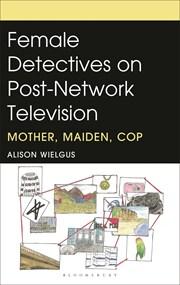
UK January 2026 • US January 2026
280 Pages • 19 bw illus
PB 9798216387756 • £28 99 / $39 95
HB 9781666919301 • £90 00 / $120 00
ePDF 9798216266457 • £81 00 / $108 00
ePub 9781978768758 • £81 00 / $108 00
Bloomsbury Academic
Female Detectives on Post-Network Television
Mother, Maiden, Cop
Alison Wielgus
In this book, Alison Wielgus analyzes post-network female detective television through the lenses of genre, industry, and discourses of police abolition to argue for a radicalization of crime television that incorporates discourses of restorative justice and a feminist ethics of care
Wielgus positions the genre as a primary site to examine the intersections of cultural discourses like #MeToo and Black Lives Matter, considering the roles of several components of the genre, including serialization, circulation, family trauma, transnational victimhood, and discourses of police abolition, among others Drawing on narrative and genre theory, the book argues that a melodrama/crime television dialectic undergirds post-network detective television, allowing the female detective to emerge as a contested figure representative of larger cultural tensions between gender and policing
While changing industrial measures have allowed for niche programming to evolve and more rigorously interrogate gender norms, Wielgus finds that this disruption rarely extends to the institution of policing itself Ultimately, this book identifies a central problem of crime television in the limitations the genre places on the construction and representation of the structural and societal functions of policing, even amid other strides in progressive representation
COLLECTIONS
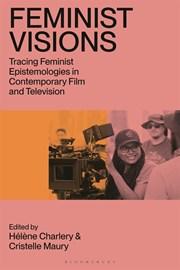
UK February 2026 • US February 2026
232 Pages • 30 bw illus
PB 9781350417755 • £28 99 / $39 95
HB 9781350417717 • £85 00 / $115 00
ePDF 9781350417731 • £76 50 / $103 50
ePub 9781350417724 • £76 50 / $103 50
Bloomsbury Academic
Feminist Visions
Tracing Feminist Epistemologies in Contemporary Film and Television
Edited by Hélène Charlery, Université Toulouse Jean-Jaurès, France & Cristelle Maury, Université Toulouse Jean Jaurès, France
What does feminist filmmaking in the 21st century look like? This book assesses the influence of Western feminist theory on contemporary film and television - nearly fifty years after Claire Johnston and Laura Mulvey called for a feminist countercinema - highlighting the cross-fertilization between feminist film theory and practice
Is there a #Metoo genre? Have traditional Hollywood genres been reframed? How has intersectional feminist film theory been explored on screen? In essays spanning film and television in a broad range of genres from the US, the UK and India, contributors renew definitions of feminist filmmaking since second wave feminist film scholars first grappled with the image of women in film and the role of women in the film industry Feminist Visions provides an insightful space for discussion of feminist film theory as applied to recent TV series such as Devious Maids (2013-2016), Unbelievable (2019), Greenleaf (2016-2020), I May Destroy You (2020) and Insecure (2016-2021) and films including Maid in Manhattan (2002), Night Moves (2014), Gone Girl (2014), I Care a Lot (2020) and The Discreet Charm of the Savarnas (2020)
Bloomsbury Publishing Plc
50 Bedford Square
London, WC1B 3DP
UK
T +44 (0)20 7631 5600
F +44 (0)20 7631 5800
E academicsalesUK@bloomsbury.com
Orders & Customer Services
Hachette UK Distribution
Hely Hutchinson Centre
Milton Road
Didcot
OX11 7HH
T +44 (0)1235 759555
E academic@hachette.co.uk
Matthew Emery
Academic & Professional Sales Director, UK and Export
Bloomsbury Publishing Plc
M +44 (0)7979 524704
E matthew.emery@bloomsbury.com
Aline Bischof
Sales Administrator
Bloomsbury Publishing Plc
E aline.bischof@bloomsbury.com
Madiha Qureshi
UK & Ireland Sales Assistant
Bloomsbury Publishing Plc
E madiha.qureshi@bloomsbury.com
UK AND IRELAND
Sarah Ailsby
Head of UK & Ireland Sales
Bloomsbury Publishing Plc
M +44 (0)7824 435717
E sarah.ailsby@bloomsbury.com
ADOPTION SALES: South East of England and London
Susannah Spillman
E susannah.spillman@bloomsbury.com
ADOPTION SALES: South West of England, Midlands, and Wales
Francesca Jenkinson
E francesca.jenkinson@bloomsbury.com
ADOPTION SALES: North of England and Scotland
Stephanie Roberts
E stephanie.roberts@bloomsbury.com
EUROPE
Jasmin Atkins
International Sales Manager
Bloomsbury Publishing Plc
T +44 (0)2076 315865
E jasmin.atkins@bloomsbury.com
Scandinavia
Fazi Ramjhun
International Sales Manager
Bloomsbury Publishing Plc
T +44 (0)770 832 4291
E fazi.ramjhun@bloomsbury.com
Central and Eastern Europe
Jacek Lewinson
Nowogrodzka 18m.20
PL-00-511 Warszawa
Poland
M +48 (0)502 603290
E jacek@jaceklewinson.com
Austria, Cyprus, Greece, and Israel
Phil Tyers
Tyers Book Sales Ltd
Kioutachias 7
14231 Nea Ionia, Athens, Greece
T +30 6977 558872
E philip@ptyers.com
Spain, Portugal, and Gibraltar
Charlotte Prout
Iberian Book Services
Sector Islas, 12, 1B 28760 Tres Cantos
Madrid, Spain
T +34 91 8034918
F +34 91 8035936
E cprout@iberianbookservices.com
ADOPTION SALES: Northern Europe
Cristian Vlug
Sales Manager
Bloomsbury Publishing Plc
E cristian.vlug@bloomsbury.com
AFRICA
Middle East and North Africa
Jennifer Ebende
International Sales Executive Bloomsbury Publishing Plc
E jennifer.ebende@bloomsbury.com
Southern Africa (Lesotho, Botswana, Namibia, Republic of South Africa, and Swaziland)
Jonathan Ball Publishers PO Box 33977
Johannesburg 2043
South Africa
T +27 21 469 8900
F +27 21 469 8901
E academic@jonathanball.co.za
Rest of Africa
Tula Publishing Ltd
Wychwood House, 14 Hanborough Business Park Witney, OX29 8LH, UK
T +44 (0)1993 886719
E julian@tulapublishing.co.uk
ASIA
Chris Cheung
International Sales Manager
Bloomsbury Publishing Plc
E chris.cheung@bloomsbury.com
China
April Zheng
International Sales Representative Bloomsbury Publishing Plc
T +86 135 2056 3987
E april.zheng@bloomsbury.com
Pakistan
M. Anwer Iqbal
Book Bird
Lower Ground 36B Abdalians Society
Nazaria - e - Pakistan Avenue
Lahore 54770, Pakistan
T +92 42 3595 6161
M +92 313 846 4747
E anwer.bookbird@gmail.com
South Korea
Information and Culture Korea
49, Donggyo-ro 13-gil, Mapo-gu
Seoul 03997
South Korea
T +822 3141 4791
F +822 3141 7733
E cs.ick@ick.co.kr
Philippines
CRW Marketing Services for Publishers, Inc
01 Topaz Road, Greenheights, Barangay San Isidro
Taytay, Rizal, Philippines 1920
T +63 (0)2584 8448 / +63 2660 5480
E crwmarketing@pldtdsl.net
Mongolia
Internom LLC
Inter Office, Amar's street-4
Sukhbaatar district, 14200 Ulaanbaatar
Mongolia
T +97 (0)6757 77700
E service@internom.mn
LATIN AMERICA AND THE CARIBBEAN
Jim Papworth
itsabook Ltd
T +44 7802848778
E james.papworth@itsabook.com
ADOPTION SALES: Latin America, the Caribbean, and Mexico
Kirby Pendergast
Higher Education Sales Representative
T + 1 212 419 5354
C + 1 646 369 3348
E kirby.pendergast@bloomsbury.com
DIGITAL RESOURCES – INSTITUTIONAL SALES
North and South America
E OnlineSalesUS@bloomsbury.com
UK, Europe, Middle East, Africa, and Asia
E OnlineSalesUK@bloomsbury.com
Australia and New Zealand
E OnlineSalesANZ@bloomsbury.com
BLOOMSBURY OFFICES WORLDWIDE
India, Bangladesh, Nepal, and Sri Lanka
Bloomsbury Publishing India Pvt. Ltd.
DDA Complex, LSC, Building No. 4, 2nd Floor, Pocket C-6&7, Vasant Kunj
New Delhi 110070
India
T +91 11 4057 4957 / +91 11 4057 4954
E academic-in@bloomsbury.com
Australia and New Zealand
Bloomsbury Publishing Pty Ltd
Level 6 387 George St
Sydney 2000 NSW
Australia
T +61 (0)288 204900
E au@bloomsbury.com
USA
Bloomsbury Publishing 1385 Broadway, 5th Floor
New York, NY, 10018
USA
T +1 (0)2124 195407
E askacademic@bloomsbury.com
Canada
Login Canada
300 Saulteaux Crescent Winnipeg, MB R3J 3T2 Canada
E custserv@lb.ca
T + 1-800-665-1148
For examination copies in Canada, please contact askacademic@ bloomsbury.com
For all other international queries please contact exportorders@ bloomsbury.com
RIGHTS
Joanna Sharland
Rights Director
E joanna.sharland@bloomsbury.com
Isabel López Ruiz
Senior Rights Manager
China simplified and complex, Spain and Latin America, Portugal and Brazil
E Isabel.LopezRuiz@bloomsbury.com
Alison Faulkner
Rights Manager
Germany, France, Netherlands, Italy, Scandinavia, Balkans, Poland, Czech Republic, Slovakia, Hungary, Greece, Slovenia, Romania, TV and Dramatisation
E alison.faulkner@bloomsbury.com
Isabelle Cowles
Rights Manager
Japan, South East Asia, Central and South Asia, US, Canada and English language globally, Digital E isabelle.cowles@bloomsbury.com
Izabella Pearson
Rights Executive
Turkey, West Asia incl Middle East, Baltics, Ukraine, Africa
E izabella.pearson@bloomsbury.com
Noelle Lee
Rights Assistant
Korea, Permissions and General Inquiries, Rowman & Littlefield
E noelle.lee@bloomsbury.com
We want students to make the most of their time at university; to discover opportunities, succeed in their studies – and to enjoy the journey. Our books and resources support students in developing essential skills and empower them to achieve their goals.


















Explore the full series at www.bloomsbury.com/pocketstudyskills



With a new article each Friday, we bring you:
Original thought from our insightful authors
Teaching & research tips
Writing & publishing advice
Book excerpts & interviews
And much more!




There’s plenty to discover including:
Day in the Life of a Global Website Manager
A personal take on why open access for academic books ma ers
The 18th-century publicity stunt that turned the house where Shakespeare was born into the tourist a raction it is today
An exploration of how love has changed over the centuries bloomsbury.com/academicblog
@BloomsburyMedia
Bloomsbury Academic
Bloomsbury Academic
bloomsbury.com/academicblog
www.bloomsbury.com