Classical Studies & World Archaeology
Books
JANUARY - MARCH 2026

BLOOMSBURY OPEN COLLECTIONS?
A new open access model for books
BLOOMSBURY OPEN COLLECTIONS is a collective-action approach to funding open access (OA) books. Through this model, we aim to make OA publication available to a wider range of authors by spreading the cost across multiple organisations, while providing additional benefits to participating libraries. By prioritising authors that are often underrepresented in scholarly publishing, including early-career and unaffiliated researchers and those based in/writing about low- and lower-middle- income countries, we hope to engage a more diverse author base, bringing their work to a wider global audience.
THE BOOKS
Following the success of our 2024-25 expansion, in 2025-26 we have continued to offer three collections of 20 titles each in:
• African Studies & International Development
• Environment & Climate Change
• Gender & Sexuality
BENEFITS TO LIBRARIES
• Contribute to a progressive OA funding model that aims to make 60 research titles available open access immediately on publication at no cost to the authors
• Receive guaranteed perpetual access to the 20 titles in each Open Collection you participate in
• Receive 1 year’s access to ~150 backlist titles in related areas for each Open Collection you participate in
• Be publicly acknowledged on our website
FIND OUT MORE
bloomsbury.com/bloomsbury-open-collections
Ebooks
ePub and ePDF availability is listed under each book entry.
Review Copies
Email academicreviewus@bloomsbury.com (Americas) academicreviews@bloomsbury.com (UK / Rest of World).
Standing Orders
Many series are available on standing order. Please contact our trade ordering departments (see page 14).
Translation Rights
Available unless otherwise indicated.
Key to Symbols
Online resources available.
COLLECTIONS
Available for institutions to purchase on www.bloomsburycollections.com
Bloomsbury
Open Access
OPEN ACCESS
Selected research publications are available on open access. For our policy or to publish OA, see www.bloomsbury.com/openaccess
Proposals
See www.bloomsbury.com/discover/bloomsburyacademic/authors
Pricing and Availability
Whilst we try to ensure that prices, publication dates and other details are correct on going to press, they are subject to change without further notice.
Your Data
For information on how we process your personal data please read our Privacy Policy located at www.bloomsbury.com/privacy-policy
You can unsubscribe or manage your preference at any time via www.bloomsbury.com/newsletter or by emailing us at academic@bloomsbury.com
COLLECTIONS
UK March 2026 • US March 2026
288 Pages • 30 colour illus
PB 9781350447691 • £28 99 / $39 95
HB 9781350447653 • £90 00 / $120 00
ePDF 9781350447660 • £81 00 / $108 00
ePub 9781350447677 • £81 00 / $108 00
Bloomsbury Academic
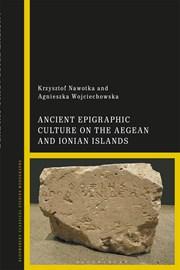
Ancient Epigraphic Culture on the Aegean and Ionian Islands
Edited by Krzysztof Nawotka, University of Wroclaw, Poland & Agnieszka Wojciechowska
Through a series of case-studies of nine Aegean and Ionian islands, the contributors examine the ancient epigraphic culture of each island's political, social and religious history from the archaic age until late antiquity These Mediterranean islands – Delos, Thera, Crete, Chis, Samos, Kos, Rhodes, Amorgos and the Ionian islands – were a world in themselves with their own dialects, cults, customs and political structures Through a careful reading of a range of inscriptions, new interpretations arise concerning our understanding of their constitutional history, economic transformation, relationship with major powers, as well as notions of identity and connectivity
Inscribing for public display was a feature of Greek civilization that was carried out not only by priests, politicians and the elite, but also by individual citizens The Greeks developed a plethora of distinct categories of inscriptions, going beyond the standard of epitaphs and dedications to the gods, to include decrees of the people, honorific inscriptions cut into the bases of statues and monuments dedicated to benefactors and athletes However, the intensity of inscribing varied from one century to the other, and these fluctuations can be represented from a quantative approach as epigraphic curves The significance of this volume is that it offers an overview of the history of these lesser states, which are not necessarily well documented in literary evidence to the degree comparable with Athens or Sparta
COLLECTIONS
UK January 2026 • US January 2026
248 Pages
PB 9781350401792 • £28 99 / $39 95
HB 9781350401754 • £85 00 / $115 00
ePDF 9781350401761 • £76 50 / $103 50
ePub 9781350401778 • £76 50 / $103 50
Bloomsbury Academic
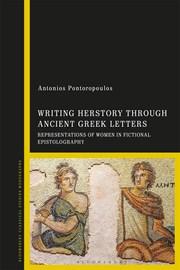
Writing Herstory through Ancient Greek Letters Representations of Women in Fictional Epistolography
Antonios Pontoropoulos, Swedish Institute in Rome, Italy
Offering the first comprehensive feminist analysis of ancient Greek fictional letters, this book focuses on the centuries between the Roman Imperial period and late antiquity Through an exploration of modern French and AngloAmerican feminist theory, Pontoropoulos creates an analytical framework using the scholarship of Hèléne Cixous and Alice Jardine On the ancient side, the literary representations of women in the letter collections of Aelian, Alciphron and Aristaenetus form the main corpus of study
In this volume, Pontoropoulos structures his argument around three pertinent questions: can ancient fictional letters written by men tell us anything about their ancient representations of women? How do these letters inform our modern understanding of concepts such as gender and agency? Do these letter collections succeed in providing the reader with a variety of fictional female characters? The women in these literary collections are presented as speaking, rhetorical subjects that subvert the expected discourses of desire and shift the perspective from the male to the female point of view In this sense, they not only present the reader with a highly-layered intertext, but also with a text that challenges expected gendered norms
COLLECTIONS
Companions to Greek and Roman Tragedy
UK January 2026 • US January 2026
192 Pages • 3 bw illus
PB 9781350205697 • £22 99 / $30 95
HB 9781350205659 • £70 00 / $95 00
ePDF 9781350205666 • £63 00 / $85 50
ePub 9781350205673 • £63 00 / $85 50
Bloomsbury Academic
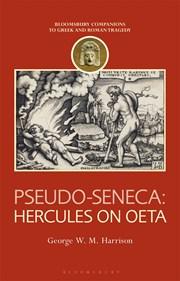
Pseudo-Seneca: Hercules on Oeta
George W M Harrison, Carleton University, Canada
A Roman tragedy widely considered to be post-Senecan and of unknown authorship, Hercules on Oeta is the longest play to survive from antiquity This accessible volume offers a concise yet thorough introduction for readers coming to the play for the first time, exploring issues of authorship, date and performance alongside chapters on its literary antecedents, historical context, main characters and key themes, and reception in antiquity and beyond Hercules on Oeta demonstrates that Hercules' death and deification was at least as important in art and myth as his twelve labours The first half of the play is devoted to probing the humiliation he inflicted on his wife by returning with a pregnant, unwilling mistress, whose family he destroyed Infected with a flesh-eating virus, the torment of Hercules became so great that he built a pyre for self-immolation: he appears again to his mother at the play’s end, now deified
As a study of the frictions between loyalty, fidelity and personal responsibility, the play raises the central question of whether one should be forgiven bad deeds by virtue of having also performed good deeds There is more than one Hercules, and all his aspects are represented in this play: glutton, sexual opportunist, quick to violence and lacking in compassion, he was endearing but deeply flawed, tottering between pathos and parody, and very much a figure of our own time
COLLECTIONS
Companions to Greek and Roman Tragedy
UK January 2026 US January 2026
192 Pages • 2 bw illus
PB 9781526691675 £26 99 / $36 95
HB 9781350121843 • £80 00 / $110 00
ePDF 9781350121867 £72 00 / $99 00
ePub 9781350121850 • £72 00 / $99 00
Bloomsbury Academic
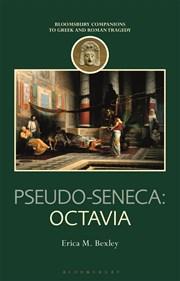
Pseudo-Seneca: Octavia
Erica M Bexley, Durham University, UK
Octavia is a unique play: a work of uncertain authorship and date, erroneously attributed to Seneca, it is the only surviving example of a Roman historical drama Its story focuses on the turbulent events surrounding Nero’s divorce from his first wife – Octavia, daughter of the emperor Claudius – and his marriage to the glamorous Poppaea, a move that sparks open rebellion amongst the Roman populace With a supporting cast that includes Seneca and Nero himself, Octavia plunges its audience into the muddy waters of Julio-Claudian politics and leads them to confront difficult questions about how the past is remembered
This companion volume introduces the novice reader to Octavia’s historical background, genre, style and main themes It combines detailed literary analysis with historical, cultural and theatrical knowledge, and concludes with a glance at the play’s enduring influence on later European traditions of tragedy
COLLECTIONS
UK February 2026
264 Pages
PB 9781350553682
• US February 2026
• £28 99 / $39 95
HB 9781350534483 • £85 00 / $115 00
ePDF 9781350534490 • £76 50 / $103 50
ePub 9781350534506 • £76 50 / $103 50
Bloomsbury Academic
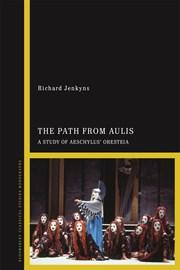
The Path from Aulis
A Study of Aeschylus’ Oresteia
Richard Jenkyns
The first book to re-assess the Oresteia for a new generation of Classicists Bridging between the disciplines of Classics, literary studies, gender studies, moral philosophy, and theories of imagery, Jenkyns presents a close reading of the three plays and a sophisticated literary anaylsis that will become standard reading on the play
Rehabilitating the two central characters in the trilogy, Jenkyns gives a provocative and insightful new analysis of Agamemnon and Clytemnestra, prompting his readers to reconsider scholarship and current trends of interpretation He proposes a wide and liberal view of the trilogy as showcasing a heroic ideal with a greater unity than is usually argued For Jenkyns the characters are sympathetic and the tragic gaze is strongly centred around an inward and emotional perception of minor as well as major characters
Brilliantly argued and lucidly written, this study is set to become an influential core reading of perhaps the most influential and significant drama of the Classical world
COLLECTIONS
Classical Literature and Society
UK February 2026 • US February 2026
224 Pages
HB 9781350441170 • £85 00 / $115 00
PB 9781350441217 • £28 99 / $39 95
ePDF 9781350441187 • £76 50 / $103 50
ePub 9781350441194 • £76 50 / $103 50
Bloomsbury Academic
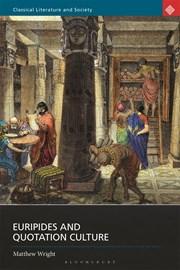
Euripides and Quotation Culture
Matthew Wright, University of Exeter, UK
Presenting a new approach to Euripides’ plays, this book explores the playwright’s ancient tragedies in relation to quotation culture Treating extant works and lost works side-by-side, Matthew Wright presents a selective survey of ways in which Euripidean tragedy was quoted within antiquity, both in social contexts (on the comic stage, at symposia, in law courts, in education) and in different literary genres (drama, biography, oratory, philosophy, literary scholarship, history and anthologies) There is also a discussion of the connection between quotability and classic status, where Wright asks what quotations can tell us about ancient reading habits The implication is that Euripides actively participated in quotation culture by deliberately making certain portions of his plays stand out as especially quotable
Within classical antiquity, Euripides was the most widely quoted author apart from Homer His plays are full of ‘quotable quotes’, which were repeated so often that they acquired a life of their own Hundreds of famous verses from Euripidean drama circulated widely within the ancient world, even after the plays in which they originally featured became forgotten or vanished completely Indeed, the majority of Euripides’ tragedies now survive only in the form of scattered quotations, otherwise known to us as ‘fragments’ It is this corpus of fragmentary quotations, along with his extant plays, that makes Euripides such an interesting case study in the world of quotation culture This book is the first of its kind to understand Euripides’ work through this lens, as well as opening up quotation culture as a major theme of interest within classical scholarship
COLLECTIONS
Bloomsbury Neo-Latin Series: Early Modern Texts and Anthologies
UK February 2026 • US February 2026
192 Pages • 4 bw illus
PB 9781350468726 • £28 99 / $39 95
HB 9781350468689 • £85 00 / $115 00
ePDF 9781350468696 • £76 50 / $103 50
ePub 9781350468702 • £76 50 / $103 50
Bloomsbury Academic
COLLECTIONS
Bloomsbury Neo-Latin Series: Early Modern Texts and Anthologies
UK March 2026 • US March 2026
328 Pages • 3 bw illus
PB 9781350458222 • £28 99 / $39 95
HB 9781350458185 • £90 00 / $120 00
ePDF 9781350458192 • £81 00 / $108 00
ePub 9781350458208 • £81 00 / $108 00
Bloomsbury Academic
COLLECTIONS
Bloomsbury Neo-Latin Series: Early Modern Texts and Anthologies
UK February 2026 • US February 2026
264 Pages
PB 9781350408753 • £28 99 / $39 95
HB 9781350408760 • £85 00 / $115 00
ePDF 9781350408777 • £76 50 / $103 50
ePub 9781350408784 • £76 50 / $103 50
Bloomsbury Academic
Isaac Barrow's On the Turkish Religion
A Latin Poem on Islam from Ottoman Istanbul
Thomas Matthew Vozar, University of Hamburg, Germany
This edition offers a novel perspective on seventeenth-century European-Islamic encounters by making accessible the Neo-Latin poem On the Turkish Religion (De Religione Turcica). Written by the Cambridge scholar Isaac Barrow during a visit to Istanbul in 1658, this poem shows how the knowledge and use of Latin contributed to the rise of early modern European oriental studies, both as a medium of information and as a vehicle of representation
As well as including an accessible translation and full text with commentary, Vozar lays out for the reader a detailed introduction explaining the background of Barrow’s travels, especially his meeting with the Polish-born Ottoman dragoman Ali Ufki, whose Latin Epitome of Islamic doctrine constituted Barrow’s main source Comparison between the two texts reveals some of the ways in which Barrow converted Ufki s work to polemical purposes in his Lucretian diatribe against the religion As further elucidation of the context of Barrow's poem, Vozar includes in this edition a text and translation of a Latin letter that Barrow wrote to his Cambridge colleagues around the same time, in which he discusses the genesis of the poem as well as current affairs at the Ottoman court
José Basílio da Gama's Brazilian Goldmines
Leni Ribeiro Leite, University of Kentucky, USA & Dreykon Fernandes Nascimento, Independent Scholar, Brazil
Published here for the first time in an accessible edition, Brasilienses Aurifodinae or “Brazilian Goldmines” is an 18th century hexameter poem in Latin, by Brazilian author José Basílio da Gama (1741-1795) Two addenda follow the text, translation and commentary on this poem: an Appendix Compendiaria, which summarises the content of the poem in simple prose; a Quaestio Curiosa, where Gama answers common questions about his topic; and an alphabetically organized Index rerum notabilium
Gama, famous for his anti-Jesuit works in Portuguese and for his support of the liberal reformation of the Portuguese crown, touches in this work upon central questions of his time, such as life in the colonies, use of slave labor, relationship with the metropolis and payment of taxes He also showcases his technical knowledge of the extraction of gold and his scientific knowledge regarding geography, geology and mineralogy of the mining sites – not to mention his erudition in mastery of Latin and his familiarity with the Classical tradition
This edition contains the edited Latin text, as well as the first English translation of the work, an introductory study and commentaries to the text
Sicco Polenton, Lives of the Famous Latin Authors A Selection
T E Franklinos, University of Oxford, UK & Rino Modonutti, University of Padova, Italy
Offering an anthology of the first history of Latin literature, Sicco Polenton’s Scriptorum illustrium Latinae linguae libri XVIII is a collection of biographies that spans the period from ancient Rome to the 15th century Compiled between 1419 and 1433, the main focus of the Scriptores illustres is on the life and works of ancient Latin authors, but Polenton also displays a wider interest in the history of Roman culture, institutions and society, which he constantly interlaces with literary issues
This anthology offers the first English translation of carefully selected passages of the Scriptores illustres, in order to provide scholars and students with an accessible overview of the work’s structure and style, as well as its impact on early 15thcentury scholarship It is the first modern edition of Polenton’s work to be annotated, thereby providing an historical context for the work The commentary sheds new light on the complexity of Polenton’s original research into his classical sources, and the anthology fills a gap in Anglophone scholarship, which has in recent decades paid little attention to Polenton and his intellectual profile
COLLECTIONS
IMAGINES – Classical Receptions in the Visual and Performing Arts
UK January 2026 • US January 2026
216 Pages • 25 bw illus
PB 9781350588875 • £28 99 / $39 95
HB 9781350160163 • £85 00 / $115 00
ePDF 9781350160170 • £76 50 / $103 50
ePub 9781350160187 • £76 50 / $103 50
Bloomsbury Academic
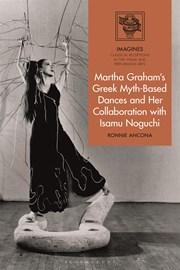
Martha Graham's Greek Myth-Based Dances and Her Collaboration with Isamu Noguchi Ronnie Ancona, Hunter College, USA
Illuminating an understudied avenue of classical reception in the performing arts, this book considers how the long artistic collaboration between one of the greatest dancers and choreographers of recent times and the set designer with whom she worked extensively, can inform a deeper understanding of how artists today refashion their audience's appreciation of classical antiquity In her many classically-inspired dances, all of which are discussed in this book, Martha Graham transformed Greek myth, creating a “woman-centered” reception of antiquity In “Night Journey,” her dance based on the Oedipus myth, Jocasta is the central figure, not Oedipus In "Errand into the Maze," Ariadne takes center stage It is Clytemnestra, not Agamemnon, who dominates Graham's retelling of the Oresteia, while in “Cave of the Heart,” Medea eclipses Jason
Graham’s interpretations provide a provocative view of Greek myth that counters the traditional privileging of the “male,” and result in a special resonance for contemporary audiences But these transformations of Greek mythology are also shaped by the influential set designs of Japanese-American sculptor and designer, Isamu Noguchi Ronnie Ancona therefore considers each dance through the lens of their collaboration, considering how Noguchi’s objects actively participate in the creation of Graham's interpretations Informed by classical research as well as research in dance and the visual arts, this is a vital work of interdisciplinary scholarship that introduces the classicist to a rich new chapter in classical reception, while informing dance specialists about the classical background of Graham’s use of Greek myth
IMAGINES – Classical Receptions in the Visual and Performing Arts
UK January 2026 US January 2026
352 Pages • 54 bw illus
PB 9781350461871 £28 99 / $39 95
HB 9781350461833 • £90 00 / $120 00
ePDF 9781350461840 £0 00 / $0 00
ePub 9781350461857 • £0 00 / $0 00
Bloomsbury Academic
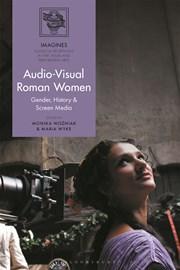
Audio-Visual Roman Women
Gender, History and Screen Media
Edited by Maria Wyke, University College London, UK & Monika Wozniak, Sapienza University of Rome, Italy
This open-access book is an interdisciplinary and transnational study of how screen media can shape our perception of Roman women and project present gender inequalities onto them Maria Wyke and Monika Wozniak explore a range of representations that have given life to Roman women through a multisensory experience of history as image, movement and sound, starting from the 1900s through to the 2020s (from the arrival of cinema to the ascendance of video games) This book asks: what sources do screen media draw on for their Roman women (given the scarcity of suitable ancient material), how are they assembled aesthetically and ideologically using the specific devices of such media (from camerawork to gameplay), and who are they made by and for (especially in terms of gender)?
Each chapter investigates the diverse ways these representations interlock with the social position of women at the time in which they were made, and consider to what extent they have responded to the emergence of feminism, the revisionist scholarship on ancient women that emerged in the mid-1970s, and the rise of the #MeToo movement from 2006 The challenge of creating authentic yet compelling portrayals of Roman women is greater than ever, in a media culture marked by anti-feminist rhetoric and a wide gap between our ancient sources (where female agency is tightly constrained) and current expectations for powerful women in popular culture The volume will therefore provide a stronger platform on which to build the Roman women of the future
The ebook editions of this book are available open access under a CC BY-NC-ND 4 0 licence on bloomsburycollections com Open access was funded by University College London
COLLECTIONS
Classical Diaspora
UK February 2026 • US January 2026
400 Pages 40 bw illus
PB 9781350430464 • £28 99 / $39 95
HB 9781350430426 • £90 00 / $120 00
ePDF 9781350430433 • £0 00 / $0 00
ePub 9781350430440 • £0 00 / $0 00
Bloomsbury Academic
OPEN ACCESS
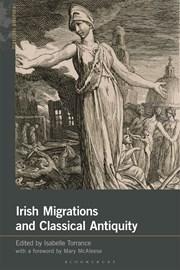
Irish Migrations and Classical Antiquity
Edited by Isabelle Torrance, Aarhus University, Denmark
Why should classical antiquity matter to Irish migration? Irish Migrations and Classical Antiquity argues that ancient Greece and Rome have shaped Irish migration narratives from the earliest texts to the 21st century These classical models emerge in response to four key drivers of migration: war, economic need, religious motivation and the pursuit of education Rather than passive inheritances, Graeco-Roman forms are used both to join and to challenge dominant frameworks, offering tools for cultural participation and strategies of resistance to exclusion
The book traces classical reception in contexts ranging from early Irish origin legends and medieval Latin learning to 21stcentury cultural politics, including Irish-language translation, diaspora literature and gendered experiences Participation appears in assertions of Irish civilisation, synchronistic histories, literary cosmopolitanism and transnational exchange Resistance surfaces in critiques of marginalisation, defence of minority languages and challenges to aesthetic or political canons This book rethinks how Irish identities travel across borders, languages and centuries by showing how the ancient world underwrites both movement and its meanings
The ebook editions of this book are available open access under a CC BY-NC-ND 4 0 licence on bloomsburycollections com Open access was funded by the European Research Council
COLLECTIONS
UK January 2026 • US January 2026
232 Pages • 16 bw illus
HB 9781350258129 • £85 00 / $115 00
PB 9781350258167 • £28 99 / $39 95
ePDF 9781350258136 • £76 50 / $103 50
ePub 9781350258143 • £76 50 / $103 50
Bloomsbury Academic
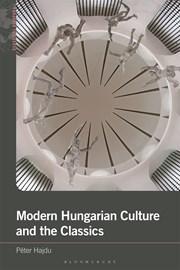
Modern Hungarian Culture and the Classics
Péter Hajdu, Shenzhen University, China
Péter Hajdu examines the cultivation of the Classics as an intellectual framework and crucial ingredient of the western aspect of Hungarian national identity This book approaches the relationship of modern Hungarian culture to classical heritage from the various viewpoints of identity politics, education, translation history, scholarship, and its impact on literature When the Hungarian nation-building project developed ideas of national identity, it necessarily incorporated the historical narrative according to which the Hungarians arrived at their current homeland in the Middle Ages, and only later did it adopt European culture The duplicity of a mostly imagined Asian, pagan, barbaric or nomadic culture, and a Western, Christian, civilized identity, deeply rooted in European culture, has played and continues to play a role in the Hungarian discourse
Hajdu also studies the gradual disappearance of classics from the Hungarian school education since the 19th century, which has been accompanied by fervid political debates However, over this period, translations of classical texts paradoxically became more frequent and popular with the decline of a classical education, even though fewer readers had access to the original texts Despite this change, the translation strategies tended to remain school-bound The knowledge of classical literature still leaves traces on Hungarian literature, which Hajdu explores using examples from nineteenthcentury novels and contemporary poetry This book sheds light on a topic of classical reception that has remained largely unexplored in this part of Europe, but one which has an incredibly rich history, culture and literary tradition
Classical Diaspora
COLLECTIONS
UK January 2026 US January 2026
208 Pages • 11 bw illus
PB 9781350407275
£28 99 / $39 95
HB 9781350407244 • £85 00 / $115 00
ePDF 9781350407251 £76 50 / $103 50
ePub 9781350407268 • £76 50 / $103 50 Bloomsbury Academic
COLLECTIONS

Classical Receptions in TwentiethCentury Writing
UK January 2026 • US January 2026
272 Pages • 4 bw illus
HB 9781350323384 • £85 00 / $115 00
PB 9781350323421 • £28 99 / $39 95
ePDF 9781350323391 • £76 50 / $103 50
ePub 9781350323407 • £76 50 / $103 50
Bloomsbury Academic
COLLECTIONS
UK March 2026 • US March 2026
368 Pages 52 bw illus and 8 colour illus
HB 9781350380882
• £90 00 / $120 00
PB 9781350380929 £28 99 / $39 95
ePDF 9781350380899
• £81 00 / $108 00
ePub 9781350380905 • £81 00 / $108 00
Bloomsbury Academic
Narrative in Ovid's Amores Comics Theory, Elegy, and Segmentary Narrative Natalie J Swain, Acadia University, Canada
How are comics and Latin elegy related? Comics tell their stories by placing individual images in a sequence, and Latin elegy builds narrative through sequence, encouraging readers to connect poems in order to reveal narrativity. Despite this, there has yet to be a definitive methodology that inspires readers to examine the function of this narrative tool Examining Ovid’s Amores, Swain argues a comics-based methodology can offer us important new insights into the ancient genre of Latin elegy
This book applies theories such as the gutter (the space that exists between two comics panels), Groensteen’s braiding (the interaction of panels outside of a linear sequence), and the comics page-turn, all to release new readings that reveal the narrative found across the three books of this text By analysing the way that Ovid creates a complex narrative mosaic in which key characters and motifs repeat across poems, this book explores how story segments are connected into a larger unified narrative
Reading Greek Tragedy with Judith Butler
Mario Telò, University of California, Berkeley, USA
Considering Butler ’s “tragic trilogy” a set of interventions on Sophocles’ Antigone, Euripides’ Bacchae, and Aeschylus’s Eumenides this book seeks to understand not just how Butler uses and interprets Greek tragedy, but also how tragedy shapes Butler ’s thinking, even when their gaze is directed elsewhere Through close readings of these tragedies, this book brings to light the tragic quality of Butler ’s writing It shows how Butler ’s mode of reading tragedy and, crucially, reading tragically offers a distinctive ethico-political response to the harrowing dilemmas of our current moment
Deeply committed both to critical theory and political activism, Judith Butler is one of the most influential intellectuals today Their ideas have touched the lives of many people, both readers and those who have never heard Butler ’s name In encompassing gender performativity and sexual difference, vulnerability and precarity, disidentification and bodily interdependency, as well as the politics of protest, Butler ’s work is often predicated on a strong engagement with or proximity to Greek tragedy
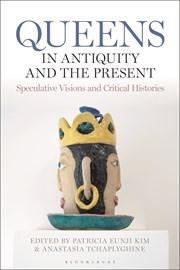
Queens in Antiquity and the Present Speculative Visions and Critical Histories
Edited by Patricia Eunji Kim, New York University, USA & Anastasia Tchaplyghine, University of Pennsylvania, USA
This interdisciplinary edited volume explores the notion of queenship as it has manifest from antiquity to the present, in contexts ranging from political acts to art production Featuring the work of scholars, educators, curators and artists, this book gathers temporally and geographically distinct ideas about queenship into a single discursive space Invigorating the conversation around powerful historical women and their legacies, the contributors discuss ‘queenship’ as a concept with contemporary urgency from North America to Africa, and Europe to Asia foregrounding critical methodologies and creative interventions that address the gaps within archives and current cultural and socio-political representation
Although traditional narratives present queens of the ancient Mediterranean world primarily as the wives, daughters and mothers of kings, such as Semiramis and Cleopatra, the ways in which royal women wielded power whether directly or indirectly were actually multivariate, highly nuanced and culturally specific The current contributions featured in this volume are concerned with teasing out the modern assumptions that have heavily influenced interpretations of gender norms and power dynamics in antiquity In addition to re-examining primary sources, this volume scrutinizes the historiographies, methodologies and stereotypes that have shaped knowledge production and popular imagination over the course of hundreds and even thousands of years
COLLECTIONS
Bloomsbury Studies in Classical Reception
UK January 2026
• US January 2026
• 8 bw illus
480 Pages
HB 9781350333277
• £90 00 / $120 00
PB 9781350333314
• £28 99 / $39 95
ePDF 9781350333284 • £0 00 / $0 00
ePub 9781350333291 • £0 00 / $0 00
Bloomsbury Academic
COLLECTIONS
Bloomsbury Studies in Classical Reception
UK January 2026 • US January 2026
248 Pages
HB 9781350186163
• £85 00 / $115 00
PB 9781350186484 • £28 99 / $39 95
ePDF 9781350186170 • £76 50 / $103 50
ePub 9781350186187 • £76 50 / $103 50
Bloomsbury Academic
COLLECTIONS
Bloomsbury Studies in Classical Reception
UK January 2026
• US January 2026
248 Pages • 3 bw illus
HB 9781350357266 • £95 00 / $130 00
PB 9781350357303 • £28 99 / $39 95
ePDF 9781350357273 • £85 50 / $117 00
ePub 9781350357280 • £85 50 / $117 00
Bloomsbury Academic
OPEN ACCESS
Classical Antiquity and Medieval Ireland
An Anthology of Medieval Irish Texts and Interpretations
Edited by Michael Clarke, University of Galway, Ireland, Erich Poppe, University of Marburg, Germany & Isabelle Torrance, Aarhus University, Denmark
Through an extensive series of extracts and accompanying interpretative and contextual essays, this open access volume showcases the expertise in classical learning that flourished in medieval Gaelic Ireland. Providing translations of all excerpts, it situates better known ‘antiquity sagas’ in the Middle Irish language, such as Togail Troí (The Siege of Troy, based on Dares Phrygius), Imtheachta Aeniasa (The Wanderings of Aeneas, based on Virgil’s Aeneid), In Cath Catharda (The Civil War, based on Lucan) and Togail na Tebe (The Siege of Thebes, based on Statius), within the broader constellation of medieval Irish literature that references and engages with classical antiquity
Creating access to this body of texts and revealing the marked influences of classical concepts on the imaginative resources of medieval Ireland fills a conspicuous lacuna in our knowledge of classical reception in European literatures
The ebook editions of this book are available open access under a CC BY-NC-ND 4 0 licence on bloomsburycollections com Open access was funded by the European Research Council, grant no 818366
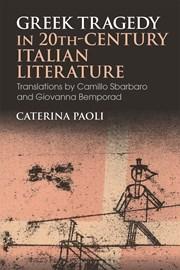
Greek Tragedy in 20th-Century Italian Literature
Translations by Camillo Sbarbaro and Giovanna Bemporad Caterina Paoli, University of Warwick, UK
Focusing on the works of Camillo Sbarbaro and Giovanna Bemporad, this book offers the first in-depth analysis of poetic translations of Greek tragedy in 20th-century Italian poetry The close examination of the linguistic and ideological diversity embedded in these authors’ works shows how narratives of Greek tragedy shaped their poetic universe, and how their work influenced the Greek paradigm in return The reader is presented with a textual analysis of Sbarbaro’s and Bemporad’s translations, as well as a discussion of larger cultural patterns
This volume provides a fresh perspective on the pedagogical commitment of the Italian poets and their roles as translators of classical studies The web of relationships and historical context in which these authors are placed provide an understanding of their importance for a wider discourse on translation in Italy and Europe in the 1940s Caterina Paoli’s original analysis of Sbarbaro’s and Bemporad’s poetic translations and her emphasis on their relevance for translation studies, women’s writing and classical reception, fills a significant gap in current scholarship on the translation of ancient literature in the Italian poetic community
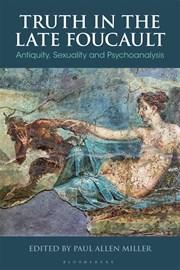
Truth in the Late Foucault Antiquity, Sexuality, and Psychoanalysis
Edited by Paul Allen Miller,
University of South Carolina, USA
The first full treatment of truth as a core philosophical concept in the late Foucault, this volume examines his work on the ancient world and the early church Each essay features a deep examination as to how the topics of truth and sexuality intersect with and focus on Foucault’s engagement with ancient philosophy and thought Truth in the Late Foucault offers readings on Plato, Artemidorus, Cicero, Sophocles and the Stoics, and pays close attention to Cassian, Paulinus of Nola, and early Christian practices of confession
With the publication of the long-awaited volume 4 of the History of Sexuality: Confessions of the Flesh, the shape of the final Foucault is now brought into stark relief As well as looking at ancient thought, the contributors explore Foucault’s work in relation to philosophers such as Gadamer, Heidegger, Derrida and Descartes Foucault’s long-running and often contentious dialogue with psychoanalysis, on the relation between truth and the subject, is also examined Each essay not only makes an important statement, but also is part of an interconnected arc of topics and understanding, covering both the ancient and modern periods This book reveals that Foucault’s concern with antiquity raises questions deeply pertinent to the present moment
COLLECTIONS

UK February 2026 US February 2026
352 Pages • 113 bw illus
HB 9798765157480 £95 00 / $130 00
PB 9798765157497 • £39 99 / $54 95
ePDF 9798765157510 £35 99 / $49 45
ePub 9798765157503 • £35 99 / $49 45
Bloomsbury Academic
Archaeological Reasoning
A Guide to Understanding the Past
Edward Banning, University of Toronto, Canada
Bridging the gap between introductory and advanced archaeology courses, this book builds confidence in working with the tools of archaeological research and how to make plausible inferences about the past
This book explores the ways archaeologists draw conclusions from evidence, recognizing that those interpretations will change as new evidence comes into play Readers will learn more about the methods and research strategies that archaeologists use to understand ancient economies, social and political systems, or help date or classify sites, artifacts, or whole societies
Chapters cover how archaeologists use lithic technology, experiments, and classification, how styles of pottery decoration help us identify social groups, and the intricacies of dating events The book then turns to social archaeology, from the household scale, through settlements, to landscapes and regions, and mobility and sedentism over such regions
There are also 12 exercises, with fictitious case studies from around the world and different research traditions Using realistic, messy data, these exercises allow readers to think critically about how to draw reasonable conclusions, and how to add archaeological reasoning to their toolkit
COLLECTIONS
UK January 2026 • US January 2026
296 Pages • 52 bw illus
PB 9781350443884 • £28 99 / $39 95
HB 9781350443846 • £85 00 / $115 00
ePDF 9781350443853 • £76 50 / $103 50
ePub 9781350443860 £76 50 / $103 50
Bloomsbury Academic
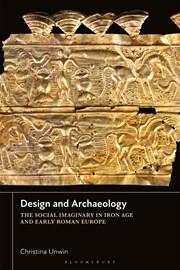
Design and Archaeology
The Social Imaginary in Iron Age and Early Roman Europe
Christina Unwin, Independent Scholar, UK
The application of design practice and theory has received little attention in the field of archaeology, despite the close and interdisciplinary connection of both disciplines working with material culture Christina Unwin provides an up-to-date study that addresses this lacuna, by using a series of case studies from the Iron Age and early Roman period (c 600 BC – c AD 200) in different European regions Giving the reader a concise overview of the relevant terminology and approaches in design theory, Unwin then applies these treatments in different archaeological contexts to reveal new aspects of how we can understand material culture
Design theory reveals that a material object may be understood beyond its material, form, function and period of time in which it was made, and invites archaeologists to re-evaluate their approaches to material things from a completely new perspective Designed and made objects are immaterial in their planning, associations and effects – as well as material in their physical presence The conceptual and terminological boundaries set by archaeological studies may therefore be challenged through the idea of design This, in turn, enables the archaeologist to reconnect objects in terms of the people who made them, how they used them and how they interacted with them to build their sociality This book is a significant intervention in the exploration of design and archaeological intersections across material culture
COLLECTIONS
UK January 2026 • US January 2026
272 Pages 26 bw illus
PB 9798216382836 • £39 99 / $29 95
HB 9798216196228 £90 00 / $120 00
ePDF 9798216196204 • £81 00 / $108 00
ePub 9798216196211 • £81 00 / $108 00
Bloomsbury Academic
Fundamental Archaeological Concepts
Origins, Histories, Definitions
R Lee Lyman, University of Missouri, USA
A much-needed deep dive into some of the main concepts of archaeology, offering a comprehensive explanation and definition of commonly used terms
Modern archaeology includes a number of fundamental concepts, each with a particular term serving as a label or name for it This volume compiles in one place the origins, developmental histories, and definitions of more than two dozen of archaeology’s most fundamental concepts Concepts discussed include artifact, assemblage, association, context, ecofact, feature, industry, in situ, period, provenience, site, stage, tool kit, and type/index fossil
This book is unique among the archaeological literature for its synopses of much of the literature, coverage of the history and meanings of archaeological concepts used in fieldwork and analysis is thorough, and the varied definitions of concepts are summarized and easily consulted
COLLECTIONS
UK February 2026 US January 2026
240 Pages • 188 colour photos
HB 9798881805463 £70 00 / $95 00
ePDF 9798765165171 • £63 00 / $85 50
ePub 9798881805470 £63 00 / $85 50
Bloomsbury Academic
Pasts Otherwise
An Archaeology of War
Bjørnar Olsen, UiT – The Arctic University of Norway & Christopher Witmore, Texas Tech University, USA
Developing an objects-based approach through detailed engagements with WWII remains on a remote headland of Arctic Norway, this book attempts to unleash archaeology's potential by opting for pasts that resist historical time and reveal the fundamental importance of an archaeology that is other than history.
In this book, two leading theoretical archaeologists and the founding figures of what has been called “symmetrical archaeology” turn their attention to the kinds of pasts that archaeology makes possible This book attempts to unleash archaeology's potential by opting for pasts that largely resist historical time and the tropes of succession and replacement which has defined the discipline for nearly two centuries Olsen and Witmore take up this task by targeting objects associated with one of the periods most thoroughly studied by historians, World War II Through in-depth archaeological engagements with the prisoner-of-war camp, fishing hamlet, battery, and garrison they offer pasts other than what archaeologists have always assumed to take historical form Among the innovations of this richly pictorial book is a novel design that begins with the encounter and works toward pasts otherwise Along the way, the authors articulate new conceptions of presence, patience, waiting, and the post-history of things, also accompanied by text boxes that offer points of pause, reflection and excursus Olsen and Witmore touch on the central problems of archaeological engagement, inference, and interpretation
OPEN ACCESS
Debates in Archaeology
UK February 2026 • US February 2026
264 Pages • 18 bw and 10 colour illus
HB 9781350427662 • £75 00 / $100 00
PB 9781350427709 • £24 99 / $34 95
ePDF 9781350427679 • £0 00 / $0 00
ePub 9781350427686 • £0 00 / $0 00
Bloomsbury Academic
COLLECTIONS

UK February 2026
• US February 2026
192 Pages 37 bw illus
PB 9798216392286
• £28 99 / $39 95
HB 9781538189344 £70 00 / $95 00
ePDF 9798881859848 • £63 00 / $85 50
ePub 9781538189368 • £63 00 / $85 50
Bloomsbury Academic
Negotiating Migrations
The Archaeology and Politics of Mobility
Daniela Hofmann, University of Bergen, Norway, Catherine J Frieman, Australian National University, Australia, Martin Furholt, Kiel University, Germany, Stefan Burmeister, Varusschlacht Archaeological Museum, Germany & Niels Nørkjær Johannsen, Aarhus University, Denmark
As a species, we have always been mobile and migration was a habitual feature of prehistoric life This open-access volume uses archaeological case studies mainly from the European Neolithic, but also from the Pacific, the US Southwest, the medieval Migration Period and the historical Great Lakes, to discuss how a focus on small-scale inter-personal relations – on the power struggles, negotiations and choices that people make in everyday settings – can help us understand migration events in archaeology While much archaeological scholarship, using isotopes and aDNA, focuses on migrations as large-scale phenomena and crisis responses, this book offers a new approach by exploring how moving on was embedded in social practice
This book offers a novel reinterpretation of how the political aspects of migration shaped past people’s worlds in Europe and beyond, drawing on archaeological, historical, linguistic and aDNA evidence
The ebook editions of this book are available open access under a CC BY-NC-ND 4 0 licence on bloomsburycollections com Open access was funded by the Centre of Advanced Studies in Oslo
The Tobacco Takers
Puritanism, Smoking, Health, and the Archaeology of Bodily Care
Diana DiPaolo
Loren
Indigenous to the Americas and cultivated by Indigenous people for thousands of years, tobacco was introduced to Europeans in the 16th-century For Indigenous peoples in North and South America, tobacco was an important part of ceremonial life and was commonly used in healing By the early 17th-century, tobacco was found all over the globe To keep pace with the high demand, Native American and African people labored on plantations in the Virginia colony to produce tobacco for the English world, including the Puritan colonies in the Northeast United States
The archaeological record documents the popularity of smoking throughout seventeenth-century North America The assumption has been that smoking during this period was a leisure activity, but in the 17th-century Puritan world, smoking tobacco often was prescribed to alleviate numerous illnesses, as evidenced in the writings of physicians and ministers
In this research, the presence of white clay tobacco pipes found in the archaeological record of the Puritan colonies receives further scrutiny Laws in the Puritan colonies and the laws of Harvard College prohibited smoking as a form of licentious selfindulgence but also permitted smoking tobacco to cure various illnesses When viewed through this lens, tobacco pipes can be viewed as an item of bodily care that addressed physical and metaphysical ailments
COLLECTIONS
UK January 2026 US January 2026
160 Pages • 57 color Photos
HB 9781538197707
£24 00 / $32 00
ePDF 9798765160244 • £21 60 / $28 80
ePub 9781538197714 £21 60 / $28 80
Bloomsbury Academic
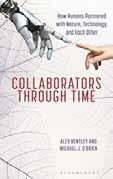
Collaborators through Time
How Humans Partnered with Nature, Technology, and Each Other R Alexander Bentley, University of Tennessee, Knoxville, USA & Michael J O'Brien, Texas A&M University–San Antonio, USA
Spanning 2 million years, this book examines how humans partnered with nature, technology, and each other to shape their world, from evolutionary origins and ancient innovations to the rise of artificial intelligence.
This book examines how humans collaborated with other entities, expanding in scale from individuals to other species of Homo, and further to the formation of groups, interactions with organisms, connections with past generations, and the transformative role of technology Through dozens of vivid examples –from the lives of Neanderthals to the origins of agriculture, the impact of ancient diseases, the practices of shamans, Bronze Age innovations, global trade routes, and the products of the world’s first cities – this narrative illuminates the intricate web of partnerships that defined human history The final chapter delves into artificial intelligence, illustrating how its evolution mirrors the co-evolution of humans with technologies
Richly illustrated with over 50 full-color figures, this book offers a visually engaging and intellectually stimulating journey through the partnerships that have shaped our world, from the dawn of prehistory to the cutting edge of AI
COLLECTIONS
UK February 2026 • US February 2026
232 Pages • 31 bw illus
PB 9781350398436 • £28 99 / $39 95
HB 9781350398429 • £85 00 / $115 00
ePDF 9781350398443 • £76 50 / $103 50
ePub 9781350398450 £76 50 / $103 50
Bloomsbury Academic
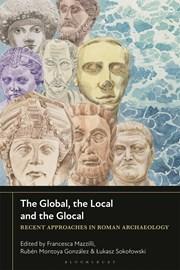
The Global, the Local and the Glocal Recent Approaches in Roman Archaeology
Edited by Francesca Mazzilli, University of Bergen, Norway, Rubén Montoya González, Royal Netherlands Institute in Rome, Italy & Lukasz Sokolowski, Art History Institute in Florence, Italy
This volume explores the impact of Rome’s globalizing empire upon identity and visual culture in its western and eastern provinces It focuses particularly on the realities of glocal identities, the interconnectivity between people, ideas and technology, and the diverse and uniting nature of the empire
The issue of how identities are shaped and remoulded by Roman conquest, and by the aftermath of empire, are central to contemporary debates across the disciplines of classical archaeology and ancient history The theoretical framework of glocalization offers a starting point for nuanced discussion through its exploration of the adaptation of a global phenomenon to local realities Informed by this innovative paradigm and drawing on a wide array of sources, the chapters in this volume range across iconography, religion, settlements, imperial power and identities Together they investigate the ways in which local actors engaged with imperial structures, and how this phenomenon varied across the different provinces
COLLECTIONS
UCL Critical Cultural Heritage Series
UK March 2026 • US March 2026
264 Pages • 45 bw illus
HB 9781350426740 • £90 00 / $120 00
PB 9781350426788 • £28 99 / $39 95
ePDF 9781350426757 • £81 00 / $108 00
ePub 9781350426764 • £81 00 / $108 00
Bloomsbury Academic
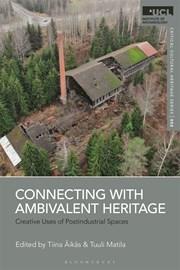
Connecting with Ambivalent Heritage Creative Uses of Postindustrial Spaces
Edited by Tiina Äikäs,
University of Oulu, Finland
& Tuuli Matila,
University of Oulu, Finland
Exploring the difficult and contested sites of deindustrialized society on the brink of transformation to either heritage or wasteland, this volume looks at the creative ways that such sites are (re)used and suggests that they are not always merely abject or abandoned As a result, our understanding of the meanings given to left over spaces is enhanced by an examination of the ways they are used
Ambivalent heritage sites are not always recognized for their potential, although artists and people from different recreational activities, such as industrial sites and parkour, use and experience these places in different ways The contributors introduce fresh ideas on how to approach these sites and the people invested in them, employing multidisciplinary methodologies from archaeology and heritage studies to ethnography and sociology Through the use of Northern-European case studies such as a former sanatorium, a prison and the Chornobyl Exclusion Zone, the reader gains a new perspective on these sites of contestation, which are cherished despite their problematic status The conclusion is that due to the rapid societal change we are experiencing in the contemporary world, heritage professionals must start to acknowledge and deal with the difficulties that ambivalent heritage sites pose
COLLECTIONS
Bloomsbury Egyptology
UK January 2026 • US January 2026
216 Pages 40 bw illus
HB 9781350323483 • £85 00 / $115 00
PB 9781350323490 • £28 99 / $39 95
ePDF 9781350323506 • £76 50 / $103 50
ePub 9781350323513 • £76 50 / $103 50
Bloomsbury Academic
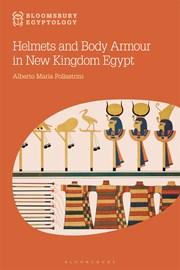
Helmets and Body Armour in New Kingdom Egypt
Alberto Maria Pollastrini, Paris Sciences and Letters University, France
This book examines the dynamics around the introduction and spread of helmets and body armour throughout Egypt during the 18th, 19th and 20th Dynasties It argues that the word 'introduction' is the best term to define this phenomenon because these types of military equipment were not in fact Egyptian technological innovations, but initially appeared at the end of the Bronze Age following the Hurrian expansion in the Middle East before being dispersed throughout the surrounding territories
The analysis focuses particularly on a survey of iconographic, archaeological and lexicographic attestations from a wide range of surviving material evidence and literary sources On the basis of the collated data, it provides as accurate a perspective as possible on how the helmet and the cuirass were introduced and propagated, their impact on warfare and their possible role in ideology across the chronological span of the New Kingdom Pollastrini also draws productive comparisons between the Egyptian data and contemporary attestations from the Middle East and the Aegean region in order to underpin the 'international' dynamics at play In doing so it both encourages a broader ancient-historical perspective that sets New Kingdom Egypt within its contemporary context, and sheds new light on developments in the military history and warfare of the period
REPRESENTATIVES, AGENTS & DISTRIBUTORS
Bloomsbury Publishing Plc
50 Bedford Square
London, WC1B 3DP
UK
T +44 (0)20 7631 5600
F +44 (0)20 7631 5800
E academicsalesUK@bloomsbury.com
Orders & Customer Services
Hachette UK Distribution
Hely Hutchinson Centre
Milton Road
Didcot
OX11 7HH
T +44 (0)1235 759555
E academic@hachette.co.uk
Matthew Emery
Academic & Professional Sales Director, UK and Export
Bloomsbury Publishing Plc
M +44 (0)7979 524704
E matthew.emery@bloomsbury.com
Aline Bischof Sales Administrator
Bloomsbury Publishing Plc
E aline.bischof@bloomsbury.com
Madiha Qureshi
UK & Ireland Sales Assistant
Bloomsbury Publishing Plc
E madiha.qureshi@bloomsbury.com
UK AND IRELAND
Sarah Ailsby
Head of UK & Ireland Sales
Bloomsbury Publishing Plc
M +44 (0)7824 435717
E sarah.ailsby@bloomsbury.com
ADOPTION SALES: South East of England and London
Susannah Spillman
E susannah.spillman@bloomsbury.com
ADOPTION SALES: South West of England, Midlands, and Wales
Francesca Jenkinson
E francesca.jenkinson@bloomsbury.com
ADOPTION SALES: North of England and Scotland
Stephanie Roberts
E stephanie.roberts@bloomsbury.com
EUROPE
Jasmin Atkins
International Sales Manager
Bloomsbury Publishing Plc
T +44 (0)2076 315865
E jasmin.atkins@bloomsbury.com
Scandinavia
Fazi Ramjhun
International Sales Manager
Bloomsbury Publishing Plc
T +44 (0)770 832 4291
E fazi.ramjhun@bloomsbury.com
Central and Eastern Europe
Jacek Lewinson
Nowogrodzka 18m.20
PL-00-511 Warszawa
Poland
M +48 (0)502 603290
E jacek@jaceklewinson.com
Austria, Cyprus, Greece, and Israel
Phil Tyers
Tyers Book Sales Ltd
Kioutachias 7 14231 Nea Ionia, Athens, Greece
T +30 6977 558872
E philip@ptyers.com
Spain, Portugal, and Gibraltar
Charlotte Prout
Iberian Book Services
Sector Islas, 12, 1B 28760 Tres Cantos
Madrid, Spain
T +34 91 8034918
F +34 91 8035936
E cprout@iberianbookservices.com
ADOPTION SALES: Northern Europe
Cristian Vlug
Sales Manager
Bloomsbury Publishing Plc
E cristian.vlug@bloomsbury.com
AFRICA
Middle East and North Africa
Jennifer Ebende
International Sales Executive Bloomsbury Publishing Plc
E jennifer.ebende@bloomsbury.com
Southern Africa (Lesotho, Botswana, Namibia, Republic of South Africa, and Swaziland)
Jonathan Ball Publishers PO Box 33977
Johannesburg 2043
South Africa
T +27 21 469 8900
F +27 21 469 8901
E academic@jonathanball.co.za
Rest of Africa
Tula Publishing Ltd
Wychwood House, 14 Hanborough Business Park
Witney, OX29 8LH, UK
T +44 (0)1993 886719
E julian@tulapublishing.co.uk
ASIA
Chris Cheung
International Sales Manager
Bloomsbury Publishing Plc
E chris.cheung@bloomsbury.com
China
April Zheng
International Sales Representative
Bloomsbury Publishing Plc
T +86 135 2056 3987
E april.zheng@bloomsbury.com
Pakistan
M. Anwer Iqbal
Book Bird
Lower Ground 36B Abdalians Society
Nazaria - e - Pakistan Avenue
Lahore 54770, Pakistan
T +92 42 3595 6161
M +92 313 846 4747
E anwer.bookbird@gmail.com
South Korea
Information and Culture Korea
49, Donggyo-ro 13-gil, Mapo-gu
Seoul 03997
South Korea
T +822 3141 4791
F +822 3141 7733
E cs.ick@ick.co.kr
Philippines
CRW Marketing Services for Publishers, Inc
01 Topaz Road, Greenheights, Barangay San Isidro
Taytay, Rizal, Philippines 1920
T +63 (0)2584 8448 / +63 2660 5480
E crwmarketing@pldtdsl.net
Mongolia
Internom LLC
Inter Office, Amar's street-4
Sukhbaatar district, 14200 Ulaanbaatar
Mongolia
T +97 (0)6757 77700
E service@internom.mn
LATIN AMERICA AND THE CARIBBEAN
Jim Papworth
itsabook Ltd
T +44 7802848778
E james.papworth@itsabook.com
ADOPTION SALES: Latin America, the Caribbean, and Mexico
Kirby Pendergast
Higher Education Sales Representative
T + 1 212 419 5354
C + 1 646 369 3348
E kirby.pendergast@bloomsbury.com
DIGITAL RESOURCES – INSTITUTIONAL SALES
North and South America
E OnlineSalesUS@bloomsbury.com
UK, Europe, Middle East, Africa, and Asia
E OnlineSalesUK@bloomsbury.com
Australia and New Zealand
E OnlineSalesANZ@bloomsbury.com
BLOOMSBURY OFFICES WORLDWIDE
India, Bangladesh, Nepal, and Sri Lanka
Bloomsbury Publishing India Pvt. Ltd.
DDA Complex, LSC, Building No. 4, 2nd Floor, Pocket C-6&7, Vasant Kunj
New Delhi 110070
India
T +91 11 4057 4957 / +91 11 4057 4954
E academic-in@bloomsbury.com
Australia and New Zealand
Bloomsbury Publishing Pty Ltd
Level 6 387 George St
Sydney 2000 NSW
Australia
T +61 (0)288 204900
E au@bloomsbury.com
USA
Bloomsbury Publishing 1385 Broadway, 5th Floor
New York, NY, 10018
USA
T +1 (0)2124 195407
E askacademic@bloomsbury.com
Canada Login Canada
300 Saulteaux Crescent Winnipeg, MB R3J 3T2
Canada
E custserv@lb.ca
T + 1-800-665-1148
For examination copies in Canada, please contact askacademic@ bloomsbury.com
For all other international queries please contact exportorders@ bloomsbury.com
RIGHTS
Joanna Sharland
Rights Director
E joanna.sharland@bloomsbury.com
Isabel López Ruiz
Senior Rights Manager
China simplified and complex, Spain and Latin America, Portugal and Brazil
E Isabel.LopezRuiz@bloomsbury.com
Alison Faulkner
Rights Manager
Germany, France, Netherlands, Italy, Scandinavia, Balkans, Poland, Czech Republic, Slovakia, Hungary, Greece, Slovenia, Romania, TV and Dramatisation
E alison.faulkner@bloomsbury.com
Isabelle Cowles
Rights Manager
Japan, South East Asia, Central and South Asia, US, Canada and English language globally, Digital E isabelle.cowles@bloomsbury.com
Izabella Pearson
Rights Executive
Turkey, West Asia incl Middle East, Baltics, Ukraine, Africa
E izabella.pearson@bloomsbury.com
Noelle Lee
Rights Assistant
Korea, Permissions and General Inquiries, Rowman & Littlefield
E noelle.lee@bloomsbury.com
We want students to make the most of their time at university; to discover opportunities, succeed in their studies – and to enjoy the journey. Our books and resources support students in developing essential skills and empower them to achieve their goals.

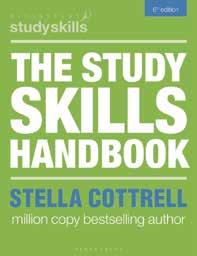

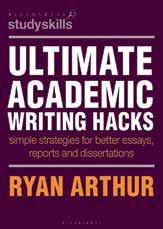




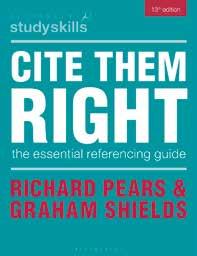



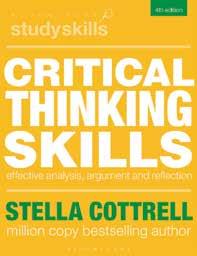

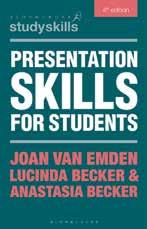
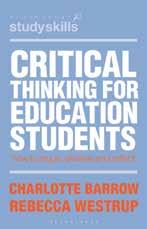


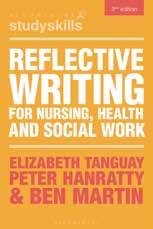




Explore the full series at www.bloomsbury.com/pocketstudyskills




With a new article each Friday, we bring you:
Original thought from our insightful authors
Teaching & research tips
Writing & publishing advice
Book excerpts & interviews
And much more!



There’s plenty to discover including:
Day in the Life of a Global Website Manager
A personal take on why open access for academic books ma ers
The 18th-century publicity stunt that turned the house where Shakespeare was born into the tourist a raction it is today
An exploration of how love has changed over the centuries bloomsbury.com/academicblog
Bloomsbury