We acknowledge the Traditional Custodians of the land on which we meet today – the Wotjobaluk, Jaadwa, Jadawadjali, Wergaia and Jupagalk. We honour their deep and enduring connection to the lands, waters, and skies of this region, and to their culture, kinship, and community. We pay our respects to Elders past and present and acknowledge that sovereignty was never ceded. This always was, and always will be, Aboriginal land. We are committed to walking alongside First Nations peoples in the spirit of truth, justice, and reconciliation.
Commitment to Ending Family Violence
We envision a future where our community is free from family violence, and where all relationships are safe, respectful, and equal. The Centre for Participation is committed to working with individuals, families, and partners to prevent family violence and promote lasting social change.
Child Safe Commitment Statement
The Centre for Participation is a Child Safe organisation. We are committed to upholding the rights of all children and young people to feel safe, be safe, and have their voices heard. We comply with the Child Safe Standards, actively work to prevent child abuse, and ensure that any concerns or allegations are responded to promptly, respectfully, and in accordance with our legal and moral obligations.
CEO and Chair Message
The 2024–25 year marked a step change for the Centre for Participation.
We kept doing what our community counts on. We helped older people stay safely in their homes. We got people from across the Wimmera to Horsham and beyond for essential and specialist appointments. We provided dignified access to meals through Laneway, whilst providing welfare checks and social connection with every delivery. We created real work opportunities for people who have been shut out of mainstream employment. We walked beside young people who needed stability, identity and a future. At the same time, we moved from reacting to immediate need to deliberately designing for long term impact.
We finalised our 2025–2029 Strategic Plan. The plan positions us not only as a service provider but as regional infrastructure for social, economic and civic participation. It makes a clear commitment that people in the Wimmera Southern Mallee should not have to leave their town, their identity or their dignity behind to get support. Our role is to reduce isolation, to back carers, to create pathways into work, and to make sure people have someone in their corner when systems are hard to navigate.
To deliver on that promise we strengthened our foundations. At the Annual General Meeting on 28 November 2024, members endorsed an updated constitution that confirms our charitable purpose as a public benevolent institution and clarifies that the Board can operate social enterprises and other trading activity where this furthers our purpose.
We renewed our Board and welcomed three new Directors, Arun Thomas, Grant Holloway and Emily Dakin, alongside returning expertise. This was deliberate succession planning. It gives us deeper capability in strategy, finance, education and safeguarding. It also prepares us for a future where community organisations must demonstrate quality, incident and complaints management, and risk oversight in a way that is consistent, transparent and aligned with Commonwealth requirements around good governance and accountability under the new Aged Care Act.
We also invested in organisational capability. We completed a major cyber and systems uplift. We moved to Microsoft 365 Business Premium and SharePoint, joined devices to Entra ID, turned on multi factor authentication and decommissioned the old file server. This addressed the risks identified in our 2023 cyber work, used licences we already held, kept ICT largely in house and cost effective, and gave staff a safer, more modern platform to work from across multiple sites.
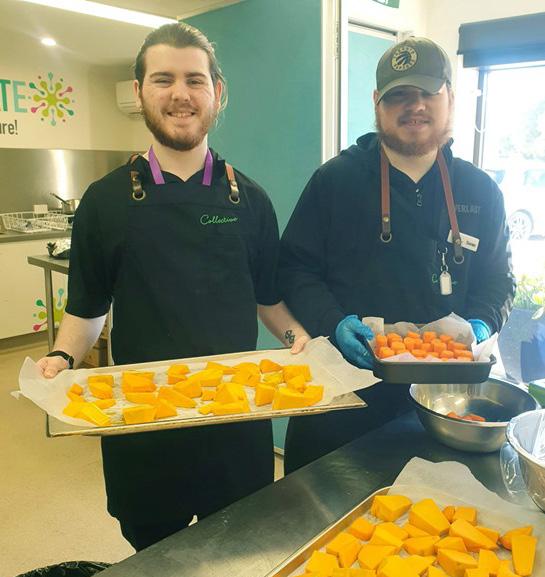
At the same time, we kept building our social enterprise ecosystem. Laneway, MyCareCrew and the Wimmera Food Collective are not side projects. They are real workplaces with real expectations. They create supported jobs and learning pathways, they deliver essentials such as meals, gardening and in home support, and they generate local trading income that stays in the region and reduces our reliance on unstable grants. During the year we expanded the Wimmera Food Collective into a more visible and welcoming retail and café space at the front of our Horsham site, which made our food and participation work easier for the community to see and join in. Trading revenue from these three enterprises reached $1,006,413 during the year,
which was 36.3 per cent of our total organisational revenue of $2,772,423.
Financially we finished in a strong position. Total revenue was $2,772,423. Total expenditure was $2,477,077. We recorded an operating surplus of $295,347. Our financial statements were audited by McLaren Hunt and were accepted by circular motion on 7 November 2025. That result was achieved while we uplifted ICT, completed the five year business planning and marketing and communications work for our social enterprises, delivered 13,570 meals and kept 402 volunteers engaged.
Program delivery remained broad and local. We supported 61 young people through Youth Connections. Through L2P we supported 72 young people and celebrated 21 licences, which is a strong result in a rural area where supervised hours can be hard to find. Through Adult, Community and Further Education (ACFE) we delivered 15,346 student contact hours and, because we run our own enterprises, those hours could turn into real practice, not just classroom learning.
We also want to recognise people who have served the Centre for Participation for many years. During 2024–25 we farewelled Marieke Dam, Janice SchmidtLoeliger, Julie Delahunty, Elizabeth (Libby) Wright and Jessica Koenig, each with more than six years of contribution. They built trust with volunteers, participants, carers, learners and partners. It is right that their contribution is recorded in this report.
Demand in our region is changing. We are seeing older residents with higher and more personal care needs. We are seeing young people presenting with complex mental health and identity issues. We are seeing carers who are tired and often alone. Our job is to keep people safe, connected and in control of their own lives, and to build models that can actually survive in a regional setting.
Over the next five years we are not simply trying to get through reform. We are working to shape a region where participation is normal. A young person with their Ps and their first job. A carer who finally gets two hours to breathe. An older resident who is still in their own home and still part of their community. That is the future we are building.
Bernie O’Shannessy Chair
Robbie Millar Chief Executive Officer
2024–25 Highlights
$2,772,423 Total revenue
$2,477,077
Total expenditure
36.3% of all income now generated through social enterprise 13,570 Meals through Laneway, with welfare check ins
15,346 Community and Further Education student contact hours
61 young people supported through Youth Connections
15,346 Adult, Community and Further Education student
24 young people moved into education, training, work or regular volunteering
72 L2P learners and 21 licences
1797 community transport trips
2684 hours individual social support
$1,006,413 trading revenue from Laneway, Wimmera Food Collective and MyCareCrew $295,347 Operating surplus
114 carers supported Wimmera Food Collective retail and café space launched
More than 300 food system stakeholders mapped and 45 providers consulted
Wimmera Food Security Forum held 27 June 2025 2025–2029 Strategic Plan launched Constitution updated and three new Board members welcomed
Impact Stories
Meals that noticed
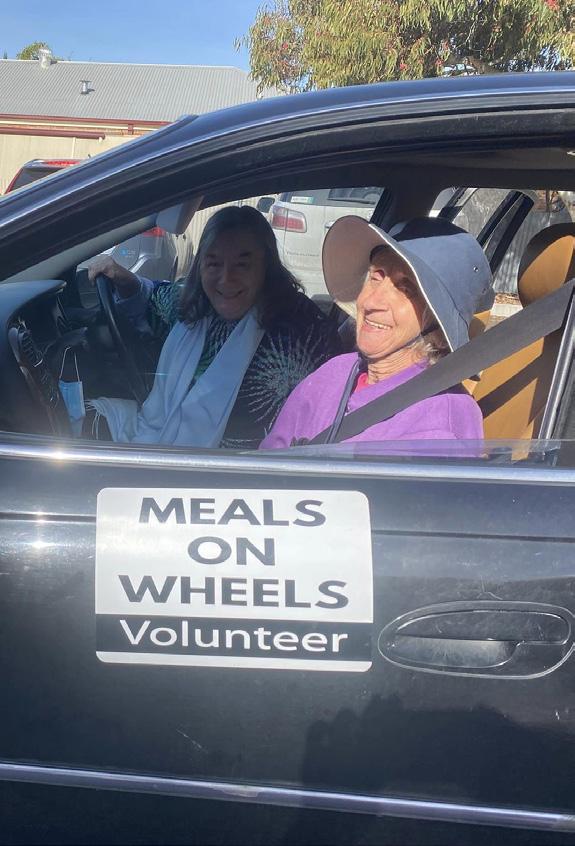
Mia, not her real name, cares for her husband at home. They began receiving Meals on Wheels from Laneway this year. The meal was helpful because she did not have to cook. The visit was better. The volunteer came to the door, saw her husband and could tell if he was a bit slower to answer or not as steady on his feet. One week the volunteer left a note to say he did not look quite right. Staff called, checked in and offered him a place on the Tuesday men’s outing. He went, enjoyed it and came home brighter. Mia said,
“I liked that they noticed. It was not just a drop and go.”
That is what we mean by Meals on Wheels and supporting independence. It is nutrition, it is safety, and it is connection.
A licence that opened choices
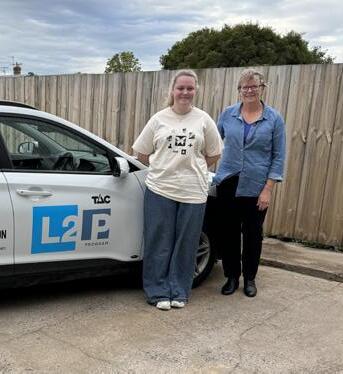
Our L2P program supported 72 learners this year and 21 licences were achieved. One learner had nobody at home who could do the practice hours with her. She met her mentor every week, practised in town and on rural roads and passed on her eighteenth birthday. A highlight was seeing long serving mentor Bear named as a finalist in the Volunteering Victoria Volunteer Commitment Awards in early 2025. It showed the quality of local mentoring and it mattered to the young people.
“In the Wimmera a licence is how you get to work, TAFE and access family.”
SLES in a real workplace
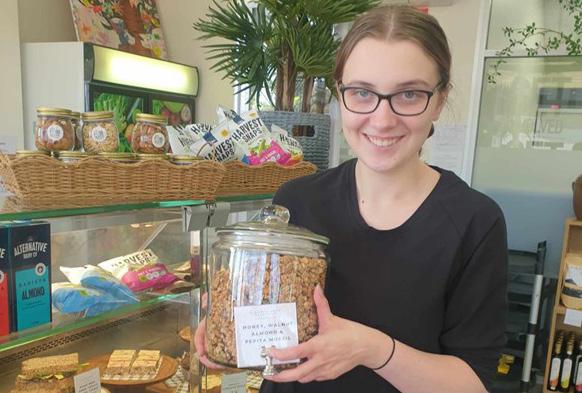
Ava, name changed, joined School Leaver Employment Supports anxious and unsure. We placed her at the Wimmera Food Collective so she could learn in a real workplace with real customers and with close supervision. In week one she watched and listened. In week two she greeted people and cleared tables. By week four she was taking simple orders. By week eight she was using point of sale and chatting to regular customers. Her Mentor said, “Her skills are ace. I was very proud of her efforts. Go Ava.”
Her family said the routine and the short break for them were just as important as the skills. This was not simulated training. It was a real workplace in a real social enterprise.
Strategic Priorities 2025–2029
1. Enhanced community engagement and social participation
This year we began implementing the first strategic priority from the 2025–2029 plan by making participation more visible and easier to access. We increased shared transport so people in outer towns could still get to Horsham. We kept the Tuesday outings going for people who were becoming isolated. We ran short, practical information sessions for older people and carers on scams, My Aged Care, mobility and planning ahead. We used the new Wimmera Food Collective retail and café space to bring people in and to show that food, learning and social enterprise sit together. We also kept our role as the connector, making sure regional councils, neighbourhood houses, service clubs and smaller community groups knew what was happening and could join in.
2. Expanded learning opportunities
We delivered 15,346 ACE student contact hours across English, digital skills, participation and pre employment. We made a deliberate link between learning and real work. Learners were encouraged to volunteer or to do a supported shifts in Laneway, MyCareCrew or at the Wimmera Food Collective so that skills were practised, not just taught. This was especially important for people with additional needs in building confidence with tech. It also helped our own workforce development, because people trained with us could move into paid or supported shifts in our enterprises.
3. Revolutionise volunteering and workforce development
We continued to lead regional implementation of the Wimmera Southern Mallee Regional Participation Action Plan. Members started taking responsibility for actions, not just attending meetings. We supported collaborative volunteer recruitment for major community events. We delivered a CALD Intro to Volunteering session for 37 people to break down cultural and language barriers. Inside our own operations we trialled models where volunteers work alongside paid staff when client complexity is higher, especially in CHSP and Support for Carers. This keeps volunteering safe, but still central. We also stayed active in statewide codesign on the future of volunteer support after 2026.
4. Strengthened environmental, social and governance
sustainability and impact
This was the first year we reported through an ESG lens, reflecting the priorities we built into the 2025–2029 Strategic Plan. On the environmental side we reduced wasted kilometres by stacking meal deliveries, gardening jobs and community transport runs in the same areas. On the social side we continued to deliver meals, transport, L2P, carer support, Youth Connections and ACFE so people stayed connected and supported. On the governance side we updated our constitution, completed the cyber and systems uplift, moved collaboration onto Microsoft 365 and SharePoint to reduce printing and reliance on ageing hardware, and tightened the way we manage information, access and risk.
Programs and Services
Meals on Wheels and supporting independence
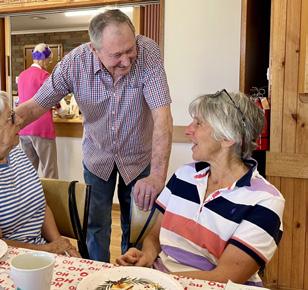
Meals and welfare contact stayed at the centre of our community work. Across the year we prepared and delivered 13,570 meals through Laneway. Every delivery was used to check that the person was safe, that the home environment looked alright and that they were still connected. Where we saw things change we called, we checked and we connected people to other support. People who had been isolated were invited to our outings so they had something to look forward to. Because meal numbers had softened we ran a packaging and customer insight trial with existing customers. We tested packaging and presentation that made meals easier to heat, easier to handle and better presented. We asked about taste, presentation, portability, heating and handling.
Social support, transport and carers
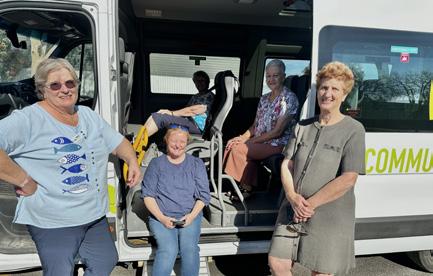
Transport in the Wimmera is structural. We delivered 1797 community transport trips, most of them longer rural runs from towns across the Wimmera to Horsham and beyond so people could attend medical and specialist appointments, buy groceries and see other people. We continued to promote the Kaniva to Horsham Community Bus as part of the wider Wimmera Southern Mallee community transport service. We also stayed connected to national conversations on rural transport pricing so that regional voices were heard.
We provided 2684 hours of individual social support for older people and people with disability. This included calling My Aged Care together, chasing referrals, explaining services and helping people understand what the Support at Home changes will mean. We supported 114 carers aged from 16 to 86 using a mix of respite, vouchers, meals, gardening and outings. In several cases we trialled using paid support workers, particularly in CHSP and Support for Carers, because some people had needs that were more complex than what a volunteer could safely deliver. This was part of our shift away from “we do it like this because we always have” toward a model that is safe, reliable and ready for both aged care and NDIS.
We also ran monthly information sessions for older people and carers. Each session attracted 14 to 20 people. Topics were shaped through co-design with participants and carers. We covered scams, falls, My Aged Care, Parkinson’s, mobility and planning ahead. Several people who attended later booked meals, transport or gardening. That tells us that short, local and face to face information sessions are still an effective entry point in rural communities.
meals through Laneway, with welfare check ins 13,570 total revenue now generated through social enterprise 36.3%
MyCareCrew
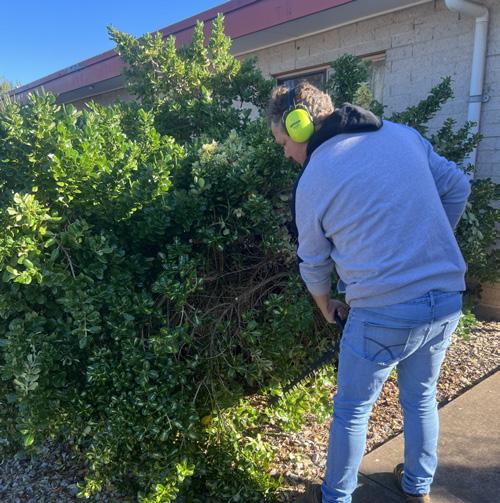
MyCareCrew was an important connector during the year. Many of the people we support through meals or transport also need lawns mowed, green waste removed, gutters cleared, or small safety jobs done at home, and MyCareCrew was how we delivered that. We scheduled jobs so that one visit fixed more than one issue, and, where we already knew the person, we matched the same staff or familiar workers to the job so there was continuity. We also took on fee for service work for CHSP and Home Care Package providers so that their clients could get trusted local support from an organisation they already knew. Because MyCareCrew sits inside our social enterprise portfolio, it also created supported and meaningful work and learning opportunities for people who were building confidence and work readiness.
Youth Connections and engagement
young people supported through Youth Connections 61
Youth Connections supported 61 young people throughout the year. Referrals came from headspace, from schools, from other agencies and from families. Many of the young people were in kinship care because of a death in the family or a breakdown in care. Some were managing anxiety or self-harm. Some had already stepped away from school. We started with the things that make life calmer: getting identification, sorting Centrelink, attending appointments, linking to a counsellor and arranging transport. When that was in place we added engagement. That looked like school holiday activities, Dungeons and Dragons, small groups and volunteering. Because we run our own enterprises, we could give some young people real and safe practice spaces in Laneway, MyCareCrew and at the Wimmera Food Collective. By year end 24 of the 61 young people had moved into education, training, employment or regular volunteering, which is a strong result for a cohort with multiple barriers.
L2P
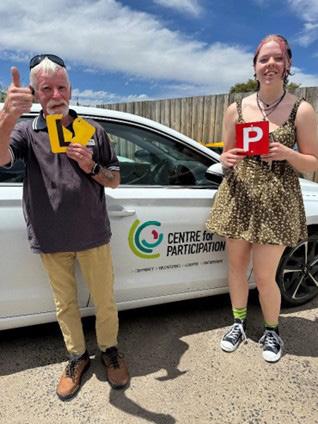
The L2P program remained one of our clearest pathways to participation. We supported 72 learners and 21 licences were achieved. Volunteer mentors delivered 1,756 hours of supervised driving. We provided program cars and brought in professional instructors where needed. Seeing long serving mentor Bear named as a finalist in the Volunteering Victoria Volunteer Commitment Awards in early 2025 was a highlight. He did not win, but it was recognition that many years of early morning and after work mentoring counts. In the Wimmera a licence is the difference between staying home and joining in.
School Leaver Employment Supports
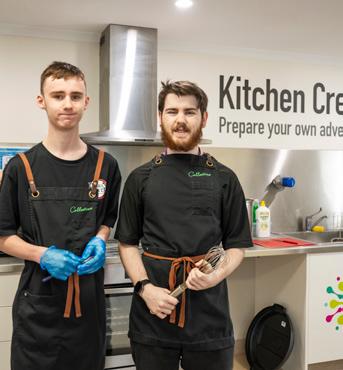
SLES sat alongside everything else we do and was tailored with participants, not just for them. For some, the focus was centre based learning that they helped shape through co-design, including one-on-one mentoring, small group activities, social and communication skills, and planning for work or study. For others, we added short, supported learning experiences in our social enterprises such as Laneway, the Wimmera Food Collective or MyCareCrew, so they could practise in a real setting and build confidence at their own pace. Mentors reported better confidence, improved punctuality and stronger engagement. Families told us the structure, the sense of purpose and the short break for them were just as important as the skills.
Adult, Community and Further Education
15,346
ACE student contact hours
We delivered 15,346 Adult, Community and Further Education student contact hours. Courses covered English, digital skills, participation and pre-employment. We deliberately linked ACFE to real participation. Learners were encouraged to take on learning opportunities guided by our skilled mentors at Laneway, MyCareCrew or the Wimmera Food Collective so they could practise what they had learned. In particular this supported people with additional needs with soft skills, and to build confidence. It also supported our own workforce, because people who trained with us could move into casual or supported shifts in our enterprises and help generate trading income.
Volunteer sector support and the VMA
With funding through Volunteering Victoria we continued to lead regional implementation of the Wimmera Southern Mallee Regional Participation Action Plan. The Community Drivers Group met twice early in 2025. Membership widened and members began taking responsibility for actions, not just attending. We supported collaborative approaches to volunteer recruitment for major community events. We worked with neighbourhood houses and with Wimmera Southern Mallee Development, so participation work was aligned and not duplicated. We delivered a CALD Intro to Volunteering session in March 2025 that introduced volunteering in Australia to 37 community members and led to follow up referrals. We also continued to participate in statewide codesign about what volunteer support should look like after 2026, bringing a strong rural voice. volunteers 9,971 hours
Social Enterprise, SEDI and Food System Work
A clear highlight in 2024–25 was being selected by the Commonwealth Department of Social Services to receive Social Enterprise Development Initiative (SEDI) funding.
This was a very competitive round, and it recognised that we have three working enterprises, each connected to learning, participation and training. We used SEDI to do the parts of social enterprise that are hardest to fund.
• With Think Impact we reviewed our social enterprise model, developed business plans for Laneway, the Wimmera Food Collective and MyCareCrew, and built an impact measurement framework so we can prove and improve our work.
• With Disruptive Media we developed a marketing and communications plan and communications assets so our enterprises tell one story to customers, referrers and funders.
• With Societal Outcomes Solutions we developed a social procurement strategy so that we are ready to secure larger contracts from government and from the private sector.
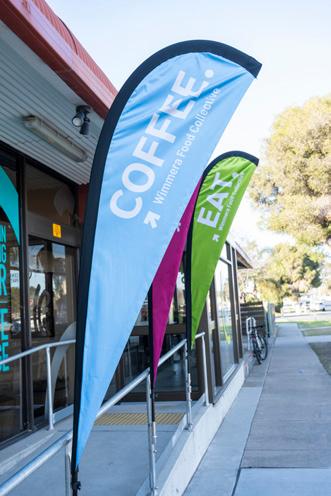
This was also the year we launched the Wimmera Food Collective retail and café space at the front of the building. The new space made our food and participation work visible. It created real, customer facing shifts for learners and SLES participants. It provided a dignified and affordable way for the community to buy food. Feedback from staff, volunteers and customers was very positive.
With funding from the Victorian Government’s Community Food Relief Program, we mapped more than 300 organisations and individuals with an interest in food security, we consulted 45 existing and potential emergency food relief providers and on 27 June 2025 we hosted the Wimmera Food Security Forum. Attendees recommended establishing a Wimmera Food Security Network to keep collaborating on storage, distribution and community access to affordable food. For this year the focus was on building the database, on consultation and on bringing people together.
Across the year the three enterprises generated $1,006,413 in trading revenue. That was 36.3 per cent of total organisational revenue.
ESG and Reform Readiness
This was the first year we reported through an ESG lens, reflecting the priorities in our 2025–2029 Strategic Plan.
We reduced wasted kilometres by grouping Meals on Wheels deliveries and MyCareCrew jobs into the same local zones through more effective scheduling. We moved collaboration to Microsoft 365 and SharePoint which reduced printing and reliance on older hardware. The Wimmera Food Collective retail and café space moved food faster and reduced spoilage. Gardening and light maintenance through MyCareCrew helped older residents and people with disability stay in their own homes longer, which is often a better environmental and social outcome than moving to higher intensity care.
Environmental Social Governance
We delivered 13,570 meals through Laneway with welfare check ins. We supported 114 carers and provided 1065 hours of respite. We supported 61 young people and 24 of them moved into education, training, employment or regular volunteering. We delivered 15,346 ACE student contact hours. We supported 72 L2P learners and celebrated 21 licences. We ran monthly information sessions for older people and carers. We mapped more than 300 food system stakeholders, consulted 45 providers and held the Wimmera Food Security Forum. We kept 402 volunteers active for 9,971 hours. We ran a CALD Intro to Volunteering session so newly arrived community members could understand how volunteering in Australia works.
We updated the constitution at the AGM on 28 November 2024. We welcomed three new Board members. We completed the cyber and systems uplift. We chose to stay with an in-house Microsoft 365 configuration rather than a costly fully managed service. We prepared for the new Aged Care Act and related Home Support reforms. We did this because we hold more personal information than we used to, because staff work across multiple sites and because aged care and disability reforms are lifting expectations on complaints, incident reporting and worker screening.
Financial Snapshot
$2,772,423 Total revenue Total expenditure $2,477,077 Operating surplus $295,347
This result shows that we operated within a sustainable financial envelope at the same time as we uplifted ICT, launched a new public facing social enterprise space, led regional food system work and prepared for Support at Home. It also shows the value of having three working enterprises. Trading revenue gave us flexibility, reduced reliance on single grants and helped us manage staff changes without disrupting services.
revenue earned through social enterprise
$1,006,413 Revenue 36.3% Share McLaren Hunt 7 November 2025 Social enterprise trading revenue (Laneway, Wimmera Food Collective, MyCareCrew) of
financial statements accepted by circular motion
Governance, People and Thanks
2024–25 was a governance year. At the AGM on 28 November 2024 members endorsed the updated constitution and elected Arun Thomas, Grant Holloway and Emily Dakin to the Board. The Board oversaw implementation of the 2025–2029 Strategic Plan, monitored cyber and ICT risk, tracked the financial and social performance of our enterprises and reviewed our readiness for Support at Home. Management reported regularly on meals, transport, Youth Connections, L2P, ACE, volunteering, the ICT transition and the launch of the Wimmera Food Collective retail and café space.
The Board and management formally thanked long serving staff Marieke Dam, Janice Schmidt-Loeliger, Julie Delahunty, Libby Wright and Jessica Koenig for more than six years of service each. We also recognised the contribution of volunteers who have been with us over many years, especially those who deliver meals, drive people to medical appointments or mentor L2P learners in all weather. We are grateful to the staff who worked through the ICT transition, through system changes in aged care and through the period where the national Support at Home program was being rolled out.
Acknowledgements
We acknowledge the Traditional Custodians of the land on which we meet today, the Wotjobaluk, Jaadwa, Jadawadjali, Wergaia and Jupagalk peoples, and we pay our respects to Elders past and present.
We thank the Department of Social Services for Information, Linkages and Capacity Building funding, for investment in volunteering, and for the Social Enterprise Development Initiative. We also thank the Department of Health and Aged Care, and the Victorian Government’s Community Food Relief Program for making the Wimmera food system mapping possible.
We are grateful to the Department of Jobs, Skills, Industry and Regions, the Department of Energy, Environment and Climate Action, and the Department of Families, Fairness and Housing for program support, social procurement opportunities, skills and participation initiatives, and for recognising the role of regional community organisations in inclusion and participation.
We thank Volunteering Victoria for working alongside us on the Volunteer Management Activity and for amplifying rural volunteer leadership, and we recognise the Transport Accident Commission for its continued support of L2P. We also recognise local governments, Wimmera Southern Mallee Development, neighbourhood houses, service clubs and the many community organisations that took part in the Wimmera Food Security Forum and have continued to collaborate since.
To the customers and learners who supported Laneway, MyCareCrew and the Wimmera Food Collective during the year, and to our 402 volunteers who contributed 9,971 hours, thank you. We also thank carers and families for trusting us in their homes, and young people and ACFE learners for turning up, even when it was hard.
Finally, we thank our Board, chaired by Bernie O’Shannessy, and our CEO, Robbie Millar, for guiding the organisation through a year that combined day-to-day service delivery with strategy, governance and preparation for the next phase of reform.