Althoughsometradenamesmaybe mentionedinarticlescontainedinthis publication,noendorsementisintendedor impliedbytheOntarioGolfSuperintendents’ Association
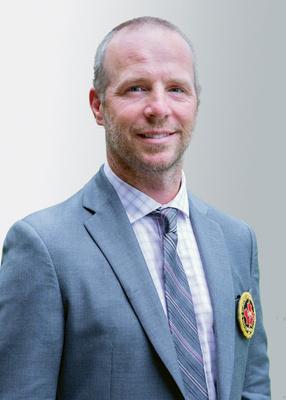
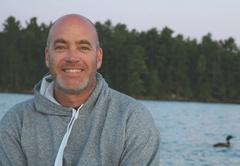
Serving the golf course superintendents community as your president for two years has been an honour that is both rare and deeply meaningful Since I started with the OGSA board in 2018, the association has seen incredible growth and engagement. I’ve truly enjoyed the chance to work with such a fantastic group of golf course superintendents who care about this industry. It’s been exciting to see the progress we’ve made together, both on the board and across the association I’m proud of what we’ve accomplished and grateful for the opportunity to be part of it.
I’ve had the privilege of working alongside past presidents Cory Janzen, Jason Boyce, Tim Muys, Al Schwemler, Ryan L. Scott, and Owen Russell each contributing to the strength and direction of our association Together, we’ve navigated significant milestones
As an association, we’ve grown in both size and impact, reaching a record membership of 1,019 in 2025. With that growth, our conferences and networking opportunities have expanded, offering more value and connection than ever before This momentum reinforces the importance of unity when we come together as a profession We’re better positioned to support turfgrass research, advocate for the tools and resources superintendents need, and
champion fair compensation and benefits that reflect the complexity and importance of our work Superintendents and their teams play a vital role in the golf industry, managing diverse responsibilities, adapting to environmental challenges, and consistently meeting high expectations. Our collective voice is strong, and it’s essential that we continue to use it to advance our profession
Our collective voice is strong, and it’s essential that we continue to use it to advance our profession.
We extend our sincere thanks to our supplier partners for their continued support of the OGSA and its members. Whether through sponsorship, active participation in our events, or helping to elevate the profile of superintendents, your contributions are deeply valued These partnerships are essential to the success of our association and the advancement of the turfgrass profession. We truly appreciate your ongoing commitment and collaboration. I’d also like to take a moment to extend a heartfelt thank-you to Owen Russell for the time, dedication, and
professionalism that he has brought to the OGSA board Owen’s impact on the association, his fellow board members, and the industry as a whole has been truly remarkable His steady leadership, ability to see the bigger picture, and thoughtful influence have played a key role in the momentum we’re experiencing today. Owen consistently leads with kindness and integrity, and no matter how busy things get, he always makes time to support others We’re grateful for the role you’ve played in helping us reach new heights
With that, I invite you to the OGSA Turfgrass Management Conference at Blue Mountain, January 20–22, 2026. This conference is one of the best ways to engage with peers, build your team, and stay sharp in a constantly evolving industry The OGSA is preparing a strong lineup of speakers and we’re excited to introduce an equipment manager’s education stream designed for both dedicated equipment managers and superintendents who wear multiple hats. You’ll be able to choose sessions that best support your growth We’re proud to support this important part of our membership I look forward to seeing you in Collingwood
After a long, dry season, I wish you a restful fall and winter.
Writer, Content Development, Sr Turf Sales Representative, BASF
MARK WIEBE
Writer, Content Development, Incoming Deputy Head Greenkeeper, Royal St George's GC
AL SCHWEMLER
Writer, Content Development, Past President, OGSA, Retired Superintendent
WHAT’S NEW
Courtney White, Executive Director, Ontario Golf Superintendents’ Association manager@ogsaca
W E L C O M E
To Our New Members
Michael Amodio, CLASS S University of Guelph
Luke Barnard, CLASS S University of Guelph
Mike Belton, CLASS S University of Guelph
Ian Blumenthal, CLASS C
Dol Turf Restoration
James Bonia, CLASS B
Legacy Pines Golf Club
Jessy Brown, CLASS S University of Guelph
Aidan Butler, CLASS S University of Guelph
Mateo Carou, CLASS S University of Guelph
Karl, Chaput, Class EM
Wildfire Golf Club
Brett Chiasson, CLASS S University of Guelph
Dylan Christensen, CLASS S University of Guelph
Jerry Dixon, CLASS C
Cardinal Lakes Golf Group
Konner Doherty, CLASS S University of Guelph
Nick Gaudet, CLASS S University of Guelph
MARK YOUR CALENDARS
Jan 20-22, 2026
OGSA Turfgrass Managment Conference Blue Mountain, Collingwood ON.
Aug 10, 2026
Alexander Groppino, CLASS F
Royal Niagara GC
Erica Gunn, Class F
Guelph Turfgrass Institute
Isaac Halpenny, CLASS S University of Guelph
Mike Hubley, CLASS C
Donalda Club
Cole Jennings, CLASS S University of Guelph
Owen Kane, CLASS S
Emerald Hills GC
William Keais, CLASS S University of Guelph
Dawson King, CLASS S University of Guelph
Nolan Lazar CLASS F
The Pulpit Club
Nolan MacNeil, CLASS S University of Guelph
Joseph McElroy, CLASS S
Port Carling GC
Aidan McVittie, CLASS S University of Guelph
William Mousseau, CLASS F
Glen Abbey GC
Eric Nerger, CLASS F
Briars Golf Club
Reid Peardon, CLASS S
University of Guelph
Marcus Piche, CLASS S
University of Guelph
Micha Pilote, CLASS S University of Guelph
Gavin Prosser, CLASS F
Bigwin Island GC
Carrie Rath, CLASS E
Turfgrass Solutions
Michael Risi, CLASS S University of Guelph
Mark Rodrigues, CLASS S University of Guelph
Meredith Sage, CLASS S University of Guelph
Mackenzie Scott, CLASS S University of Guelph
Dan Stockdale, CLASS D
Science Hill Country Club
Steve Tate, CLASS A
Foxwood Golf Course
Zachary Tingley, CLASS C
Glen Abbey Golf Club
Krzysztof Torunski, CLASS S
University of Guelph
Carter Walker, CLASS S University of Guelph
Danny Wilson, CLASS E
Wilson Netting
OGSA Assistants’ Tournament Galt Country Club
Sept 21 & 22, 2026
OGSA Championship The Rock & Rocky Crest Resort
EQUIPMENT MANAGER’S WELCOME BREAKFAST
DAY 1 | 8AM
TOOLS, TURF & TEAMWORK
January 20-22 , 2026 nd Blue Mountain Conference Centre Collingwood, ON.
Golf course superintendents and their teams from all over Ontario will make their way to Blue Mountain for 2 5 jammed-packed days of education and networking! Scan the QR code for the speaker lineup!
We’ve added 2.5 days of education sessions specific to optimizing equipment operations in golf course management
Equipment managers! Join us for a welcome breakfast and roundtable with Trent Manning, who will guide the discussions!
OGSA Welcome reception
JAN 20 | AFTER DAY 1 SESSIONS
Welcome to the conference! Say hello to friends & colleagues at the industry showcase area for networking, beverages, and light fare before heading out for the evening!
JAN 20 | 7PM | SHUTTLE PROVIDED DAY 1 PARTY
New this year! Golf course delegates! Join Milwaukee, our Equipment Manager Education sponsor, at Side Launch Brewery for a night of networking, swag, prizes, beverages, and tacos!
Industry showcase luncheon
DATE TIME ENDS 2PM
OGSAAwardsLuncheonin partnershipwithEnvu 12PM JAN 20
We have secured EXCELLENT group rates at Blue Mountain Village, located directly across from the Blue Mountain Village Conference Centre Room rates start at $204 Accommodations
REGISTER NOW!
JAN 21 | 12 - 2PM
Meet & Greet with industry suppliers!
DAY
2
PARTY
JAN 21 | AFTER SESSIONS
Delegates! Join us after the Day 2 education sessions to relax and catch up with colleagues and friends The host bar opens at 4:30 pm and runs for two hours Light fare will also be provided!
www.ogsa.ca/events
WHAT’S NEW
SUPERINTENDENT
RECOGNITION
OGSA PROFESSIONAL DEVELOPMENT AWARD
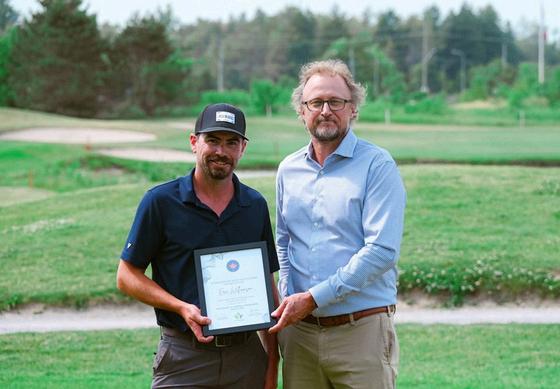
In partnership with Syngenta, we are pleased to announce the winners of the 2025 Professional Development Bursary: (L) Dawson Riml, The Club at North Halton; (R) Ryan Mueller, Springfield Golf & Country Club. Each recipient will receive $1,500 and a full conference pass to t Turfgrass Management C taking place January 20-2 Mountain Resort in Colling
SCHOLARSHIPS HERITAGE AWA
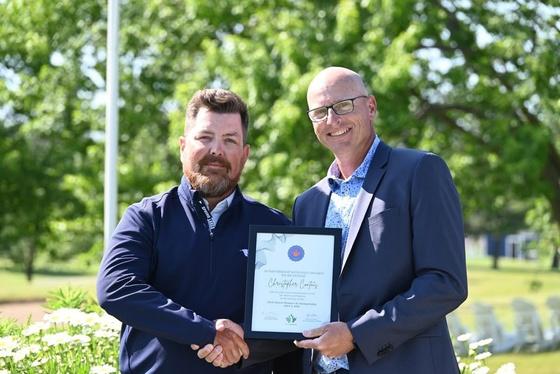
Congratulations to Christopher Contois, Superintendent at Spring Lakes GC, recognized for preparing the course for the Ontario Women’s Sr. Amateur Championship. Pictured with OGSA Director Jason Crawford, who joined Golf Ontario to celebrate their outstanding work
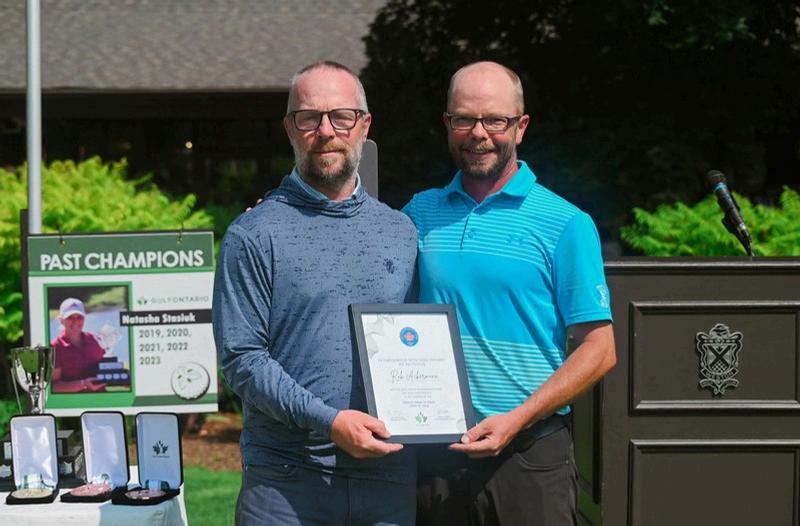
Superintendent Eric Williamson was recognized for his leadership during the 103rd Ontario Junior Boys' Amateur at Lindsay G&CC. OGSA Director Brad Hutchinson presented the award on July 11, 2025.
Superintendent Michael Richardson was recognized for his exceptional work hosting the 90th Ontario Men's Senior Amateur Championship at Lora Bay GC OGSA Director Paul Snider presented the certificate on
Congratulations to our 2025 Heritage Award Winners; (L) Colette Horsburgh, Daughter of Scott Horsburgh, Syngenta. (R) Savannah Green, Daughter of Bill Green, Cutten Fields. Colette and Savannah have each received $1,500 to support their post secondary education
Presented by OGSA President Ian McQueen on July 15, 2025.
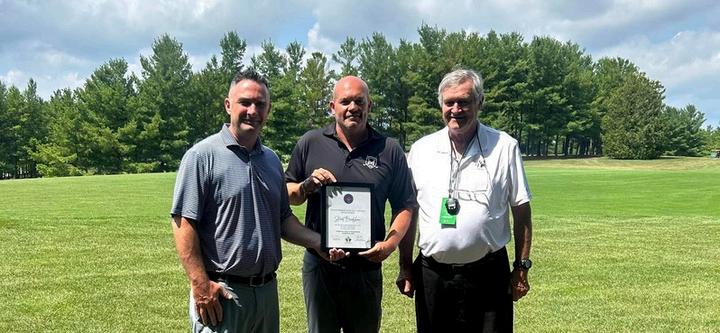
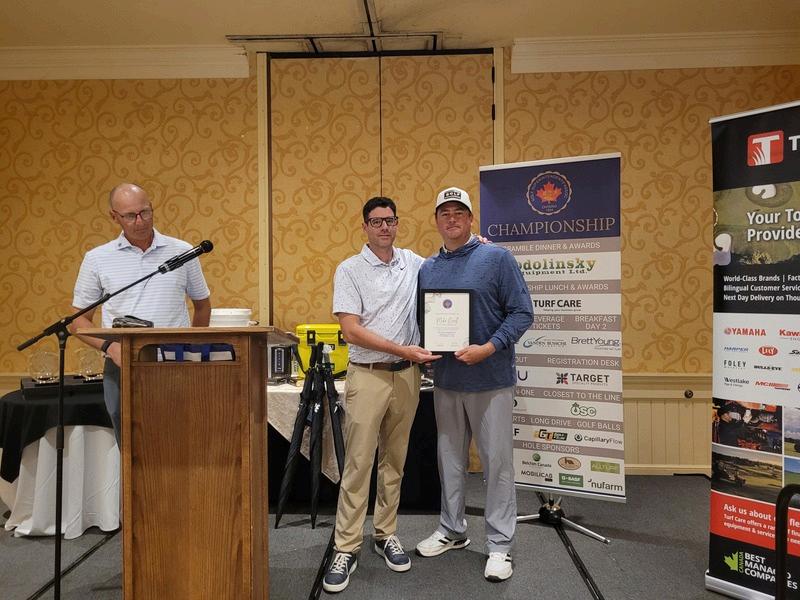
Superintendent Stuart Bradshaw and his team were recognized for outstanding contributions during the Ontario Indigenous Championship at MontHill G&CC. OGSA Past President Owen Russell presented the certificate on August 13, 2025 Pictured: Owen Russell, Stuart , and Golf Ontario’s Ian
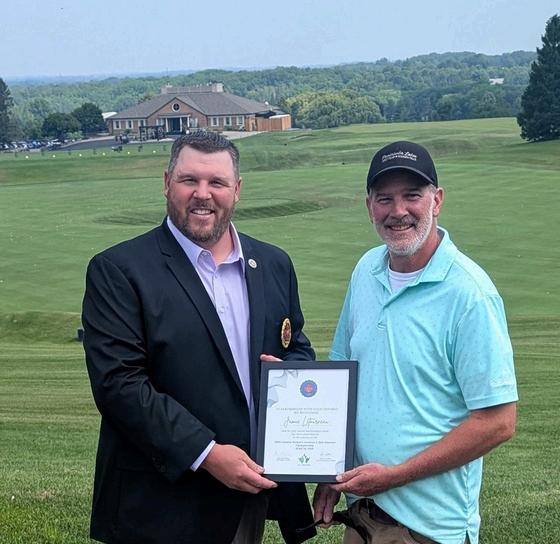
Superintendent Jamie Letourneau and the Peninsula Lakes GC team were recognized by OGSA Director Ken Tilt for preparing the course for the Golf Ontario Women’s Amateur & Mid-Am Championship
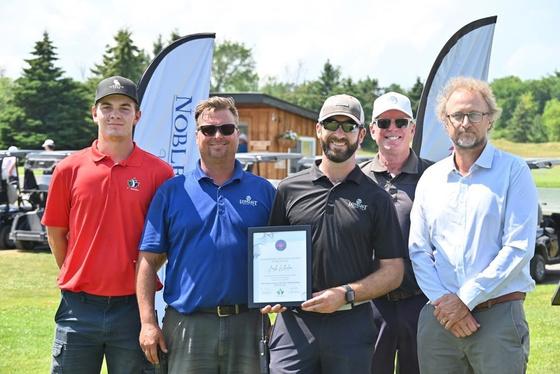
Superintendent Josh Whalen, left, was recognized for his team’s efforts in hosting the 90th Ontario Junior Girls' Amateur Championship at Loyalist G&CC. OGSA Director Brad Hutchinson presented the award on July 10, 2025
Written by and photos provided by OGSA staff Header photo provided by Trevor Morvay, Plant Products
OGSA’s 4th Annual Championship Recap
The OGSA’s 4th Annual Championship was held September 22–23 at Deerhurst Highlands Golf Course and Grandview Golf Club Our hosts Joe Atkinson, Associate Superintendent at Deerhurst Highlands, and Mike Ovell, Superintendent at Grandview had both courses dialed in, delivering top-tier playing conditions that tested skill and rewarded precision.
The weather was on our side, with warm temperatures and clear skies throughout A quick rain shower during the shoot-out added some drama to the opener, where 25 competitors battled it out Tyler Szela nailed the winning shot, setting the tone for a competitive and memorable two days. Monday’s scramble format brought out the camaraderie and competitive spirit.
Players grabbed boxed lunches before hitting the course, then wrapped up the day with a hearty buffet dinner at Deerhurst Resort Tuesday shifted gears to individual stroke play using the Stableford system. Despite muggy conditions, the field stayed sharp. The day kicked off with a solid breakfast at Grandview eggs benedict included and finished strong with a lunch buffet.
The hospitality and food at both venues were top-notch Big thanks to the teams at Deerhurst and Grandview for going above and beyond More than just a competition, the Championship was a chance for members to connect, share ideas, and build lasting relationships Mark your calendar’s for next year’s event: September 21 & 22 , 2026: Rocky Crest and The Rock. See you out there! st nd
SCRAMBLE WINNERS
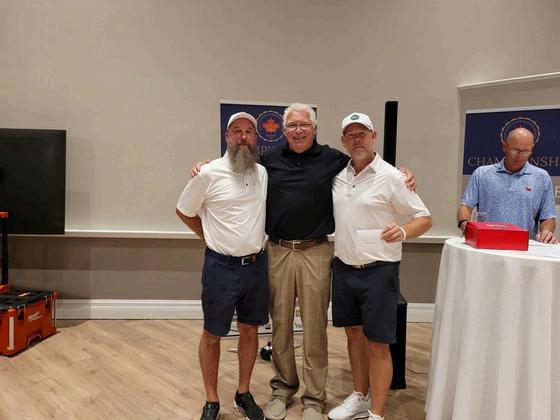
1st Place: (L-R) Scott Pratt (Allturf Ltd ), Gary Graham (Podolinsky), Dave Paterson (Summit GC).
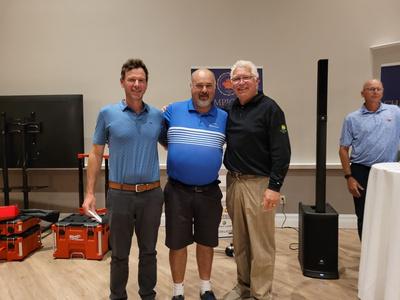
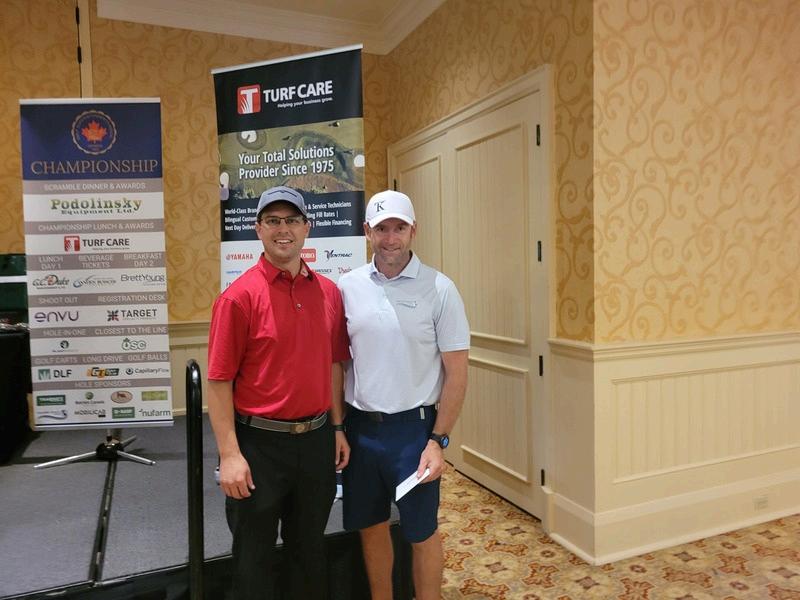
2nd Place: (L-R) Jay Sisko (Idylwylde G& CC), Mark Kay (Stone Ridge GC), Gary Graham (Podolinsky).
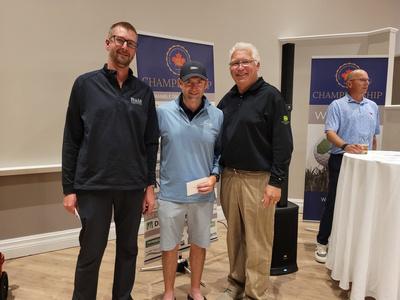
3rd Place: (L-R) Chris Bouwers (R&M Construction), Tim Koen (Aquafor), Gary Graham (Podolinsky)
ENVU SHOOT OUT
Envu Shoot Out Finalists: (L-R) Tyler Szela (1st place), Bert McFadden (3rd place), Mark Durand (Envu), Jason Crawford, Mark Kay (2nd place), Brad Miller & Greg Quinn.
CLOSEST TO THE PIN LONGEST DRIVE
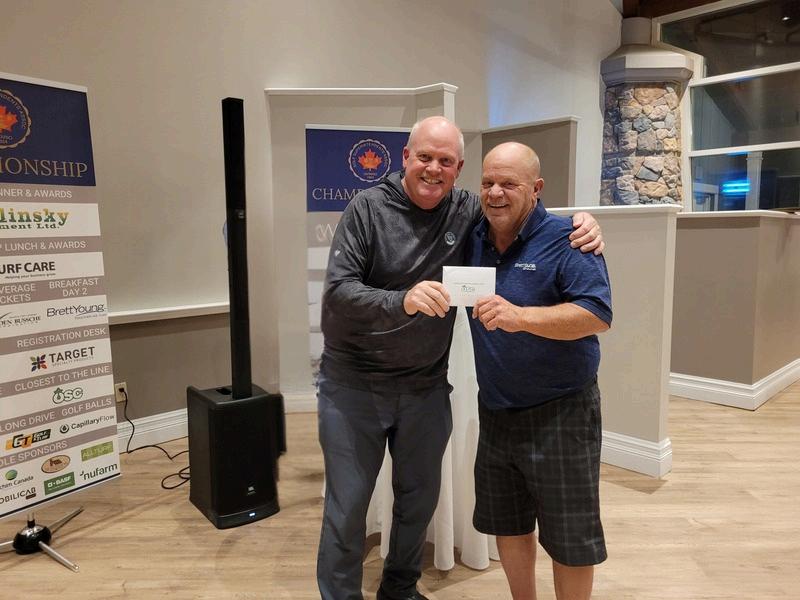
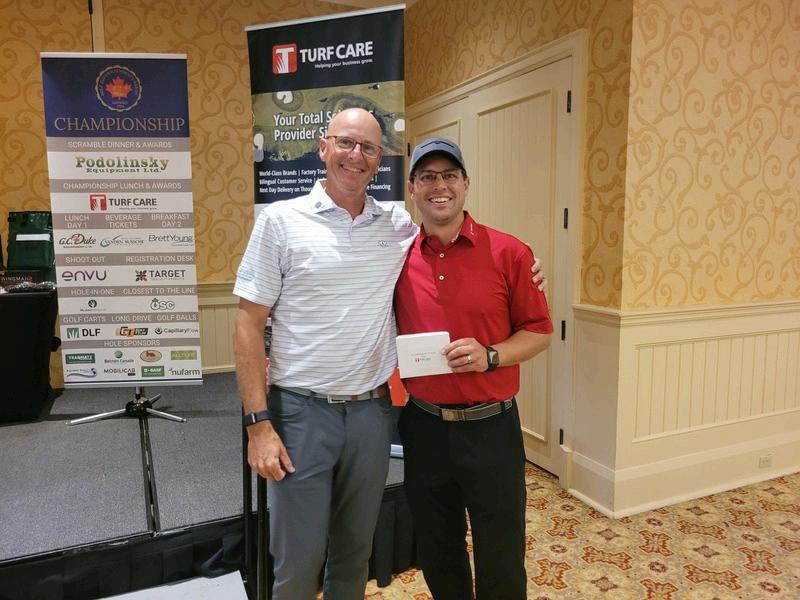
Closest to the Pin winner: Kelly Barnet (Brett Young) with sponsor Dave Schmelefske (OSC).
CHAMPIONSHIP WINNERS
st
Championship Flight, 1 Place & Longest Drive winner, Andre Aymar (Lambton G&CC) with sponsor Brendan Wield (GT Golf & Turf).
Jessie Booker (Turf Care)
WINNERS CIRCLE
ENVU Shoot Out
1st - Tyler Szela, The National
2nd - Mark Kay, Stone Ridge GC
3rd - Bert McFadden, Georgian Bay Club
Shoot Out Draw Winners
Brad Miller, Granite GC
Brandon Allan, The Pulpit Club
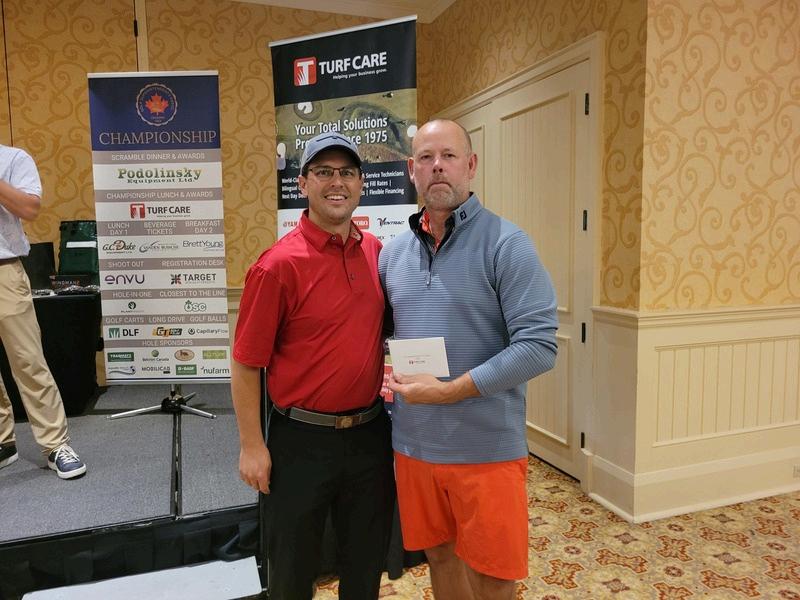
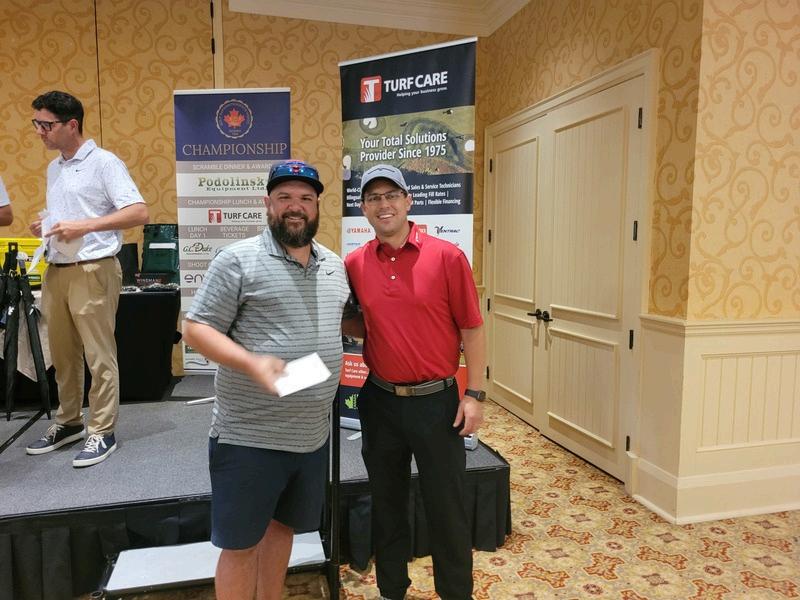
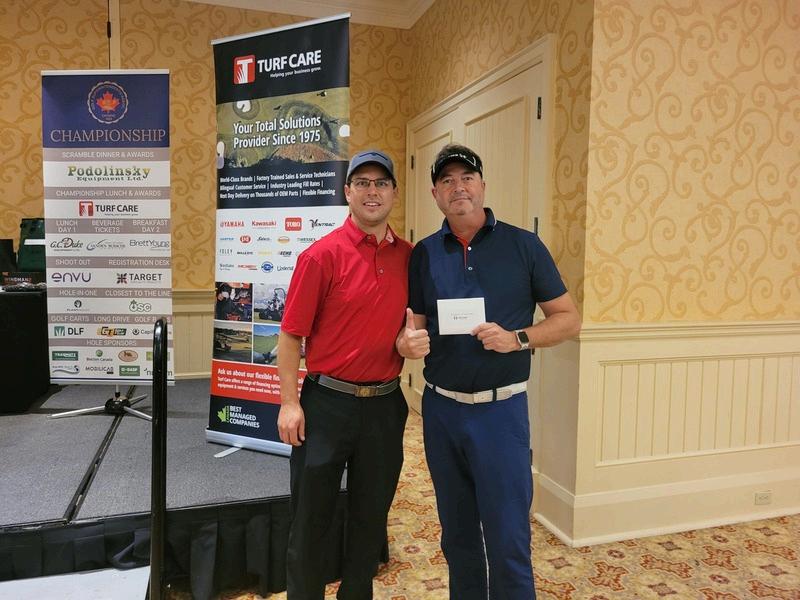
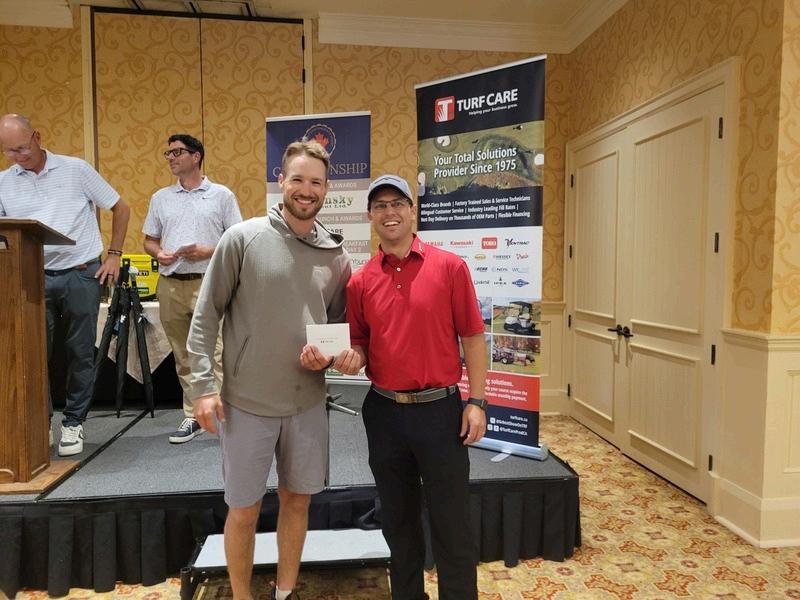
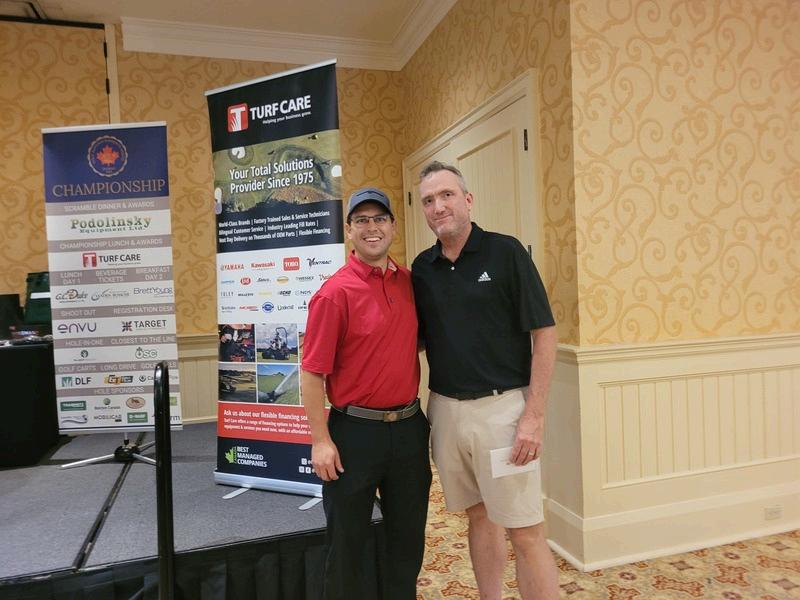
1st Place Flight C: Ben White (Markland Wood GC) with sponsor Jessie Booker (Turf Care).
providing a challenging yet enjoyable two-day golfing experience for all
Championship Flight
1st - Andre Aymar, Lambton G&CC
2nd - Dave Paterson, Summit GC
3rd - Jason Crawford, Eagles Nest GC
GC Flight A
1st - Eric Van Gerwen, Black Bear
Ridge GC
2nd - Matt Booth, Oshawa GCC
3rd - Scott Clayworth, Wooden Sticks
GC
GC Flight B
1st - Nathan Battigelli, Lively GC
2nd - Mike Ovell, Grandview GC
3rd - Cory O’Neil, The Thornhill Club
GC Flight C
1st - Ben White, Markland Wood
GC
2nd - Stephen Pitkin, The National
3rd - Brandon Allan, The Pulpit Club
Supplier Championship Flight
1st - Jason Ireton, Plant Products
2nd - Matt St Thomas, GT Golf
3rd - Dave Schmelefske, OSC
Supplier Flight A
1st - Tim Koen, Aquafor
2nd - Mike Kuipery, R&M
Construction
3rd - Mike Kehoe, OSC
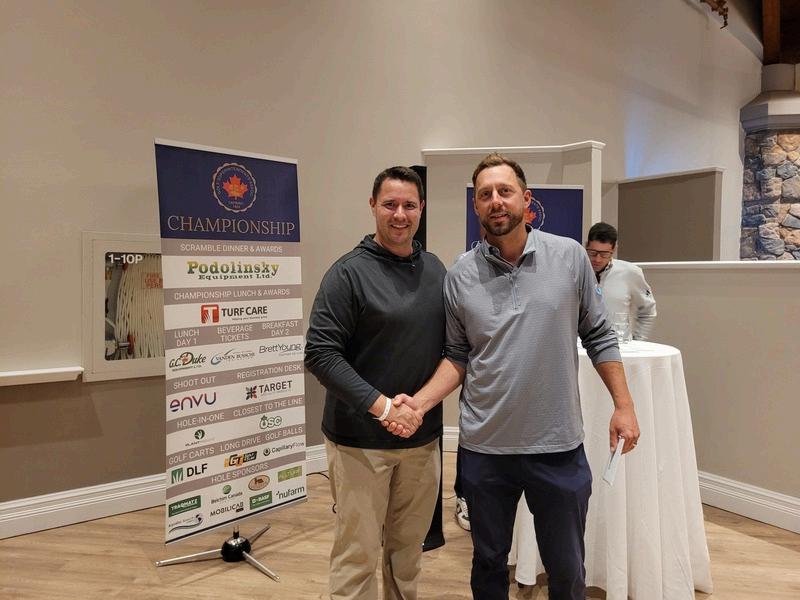
1st Place Supplier Champion: Jason Ireton (Plant Products) with sponsor Jesse Booker (Turf Care)
2nd Place Championship Flight: Dave Paterson (Summit GC) with sponsor Jesse Booker (Turf Care)
1st Place Supplier Flight A: Jesse Booker (Turf Care) with Tim Koen, (Aquafor).
3rd Place Championship Flight: Jason Crawford (Eagle’s Nest GC) with sponsor Jessie Booker (Turf Care)
1st Place Flight A: Eric Van Gerwen (Black Bear Ridge GC) with sponsor Jessie Booker (Turf Care).
1st Place Flight B: Nathan Battigelli (Lively GC) with sponsor
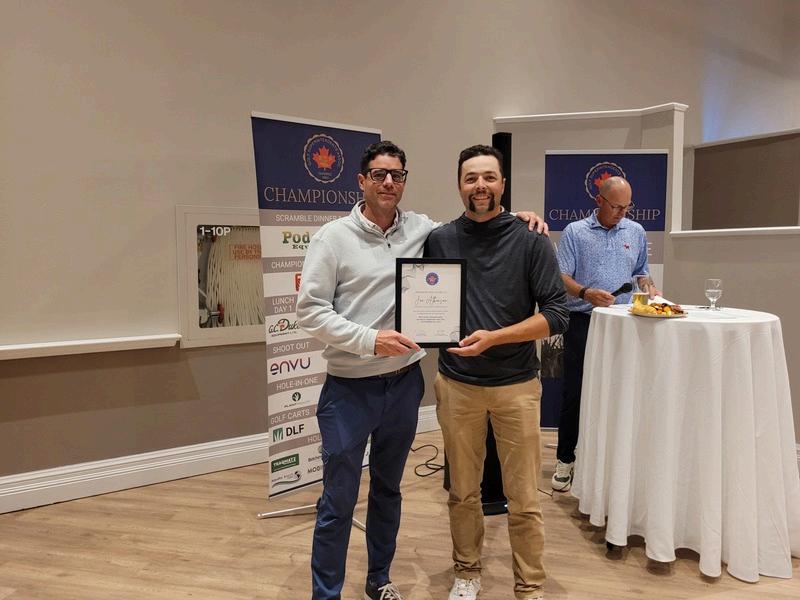
(L) Deerhurst Highlands Associate Superintendent, Joe Atkinson and (R) Grandview GC Superintendent, Mike Ovell, ensured that the course conditions were in top shape,
Assistants’ Tournament Recap
Written by and photos provided by OGSA staff
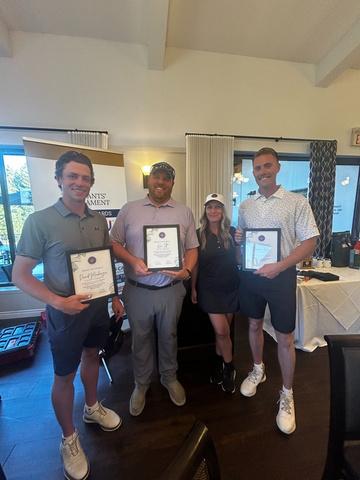
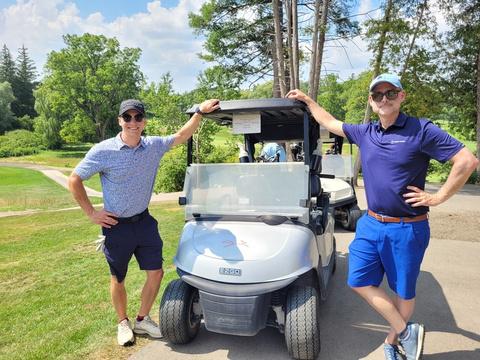
We had another fantastic turnout for the annual Assistants’ Tournament, hosted this year at The Club at North Halton. A big thank you to Superintendent Ken Tilt, along with Assistants Dawson Riml and David Mackenzie, for welcoming us to their beautiful course on August 11th, 2025.
The four-person scramble format brought out the competitive spirit, with plenty of prizes up for grabsincluding Longest Drive, Closest to the Pin, and the always exciting Hole-in-One contest While no one walked away with the $10,000 Hole-in-One prize sponsored by Plant Products, there’s always next year! This event is a great way to recognize and celebrate the incredible work of our assistants. We're already looking ahead and planning for 2026! If you're interested in hosting a future Assistants’ Tournament, please contact the office!
SCRAMBLE WINNERS
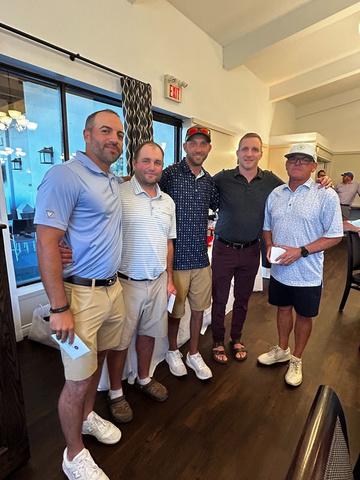
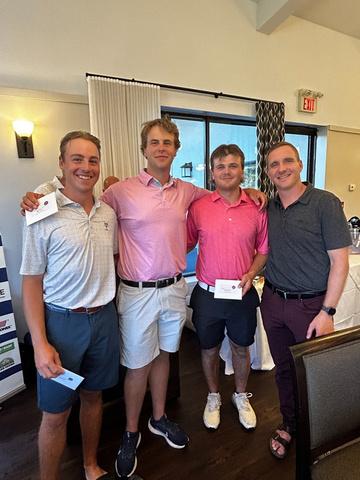
3rd: (L-R) Matty Rodrigue (London Hunt Club), Matthew Lovelace (Burlington G&CC), Noah Baltzer (Beverly G&CC), Sean Van Beurden (Envu), (not pictured) Jonathan Albert (Aquatrols)
2nd: (L-R) Mike Shepherd (Angus Glen GC), Alexandra McNeill (Allturf Ltd), Sean Van Beurden (Envu), Patrick Mahoney (Angus Glen GC), Ian Searles (Oak Gables GC)
1st: (L-R) Elliott Gonsalves (Beacon Hall GC), Jordan Barber (Beacon Hall GC), Daniel Howie (Beacon Hall GC), Sean Van Beurden (Envu), Paul Gurr (OSC)
4th: (L-R) Adam Kimber (Westmount G&CC), Nicholas Berdusco (Brett-Young) , Mike Jackson (Oakdale G&CC), Matt Hague (Credit Valley G&CC), Sean Van Beurden (Envu)
A big thank you to all of our sponsors and players for making this event a huge success A special thanks to Superintendent Ken Tilt, along with Assistants Dawson Riml and David Mackenzie, for welcoming us
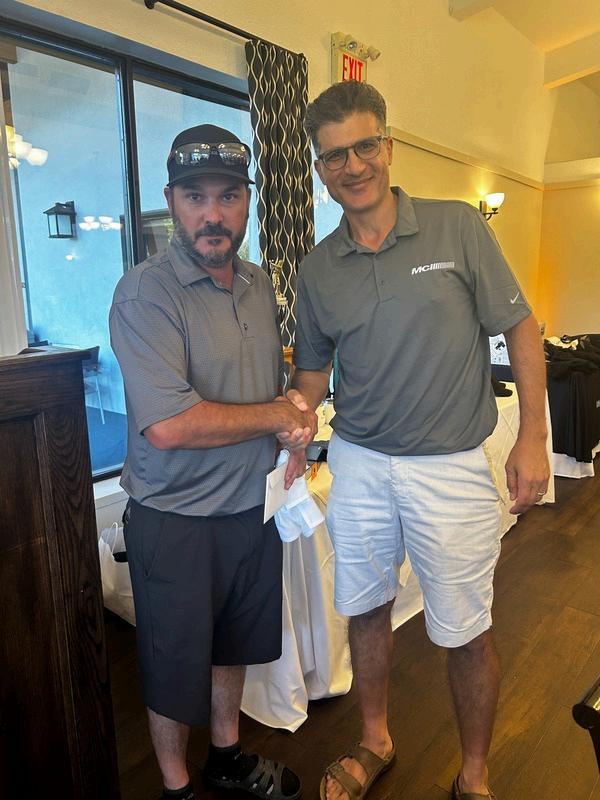
Closest to the Line winner: Eric Valcourt (Peninsula Lakes GC) with sponsor Neil Tandan (MCI Flowtronex)
Women’s Longest Drive winner: Amy Bultena (Oakville GC) with sponsor Mike Temple (Vanden Bussche Irrigation).
Men’s Longest Drive winner: Sean Van Beurden (Envu) with sponsor Mike Temple (Vanden Bussche Irrigation)
Sandwich, England CT13 9PB
+44 1304 613090 royalstgeorges.com
MEMBER SINCE 2016
Mark Wiebe
Deputy Head
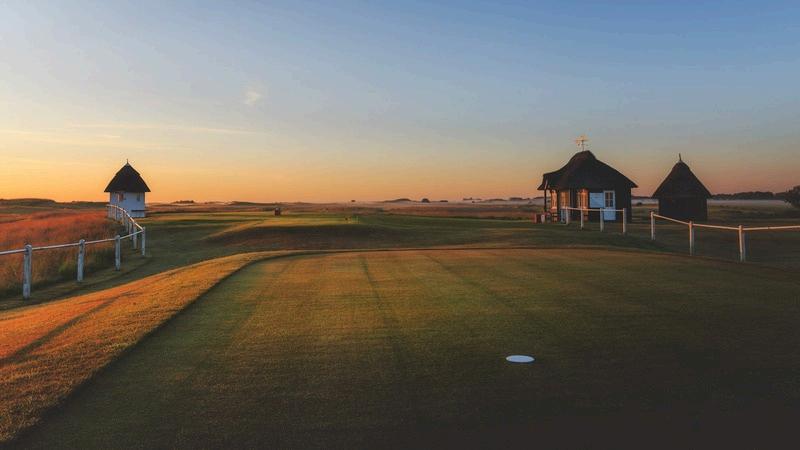
Founded in 1887 by Dr William Laidlaw Purves, the course was intended to emulate the ethos and traditions of St. Andrews in the South of England, the Royal St. George’s Golf Club is consistently ranked amongst the leading courses in the World.
The Club occupies a unique place in the history of golf, for it was here in 1894, that the Open Championship was first played outside of Scotland.
In all, there have been 15 Open Championships played at Royal St. George’s, more than any course outside of Scotland.
Greenkeeper (Incoming)
Written by Andrew Marsan, Turf
Technical Sales, Plant Products. Photos provided by Mark Wiebe
Credit: Quotes are attributed to Marcus Aurelius, Roman emperor and Stoic philosopher Adapted from his work Meditations
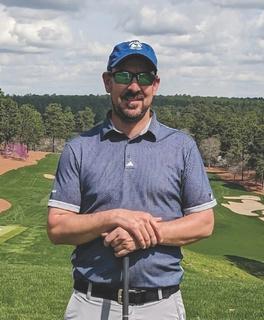
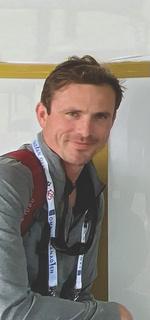
“That which is not good for the swarm is not good for the bee,” wrote Marcus Aurelius. A reminder that true leadership is measured not by personal gain, but by the wellbeing of those we guide For Mark Wiebe, it’s a simple rule for how he leads and works: focus on the team, not yourself. There’s a quiet thoughtfulness to Mark, the kind that puts you immediately at ease. He often draws perspective from Meditations, the stoic reflections of a Roman emperor, whose short passages on persistence, gratitude, and purpose mirror how he approaches his work and his life
Now in a period of transition, Wiebe has accepted the Deputy Head Greenkeeper position at Royal St. George’s Golf Club in Sandwich, England, long regarded as one of the world’s 100 greatest golf courses The months leading up to his move have offered space for reflection a rare pause after twenty years in turf management shaped by patience, curiosity, and an unshakable belief in hard work.
“Waste no more time arguing about what a good man should be Be one”
New beginnings - Royal St George’s Golf Club
IN THE HOT SEAT
Q. FAVOURITE GOLF TOURNAMENT?
A The Open
Q. FAVOURITE PIECE OF EQUIPMENT?
A 648
Q. FAVOURITE GOLF COURSE?
A The Royal St Georges GC
Leadership, for Wiebe, isn’t something to be defined or discussed it’s something you practice every day The principle behind this line could serve as his personal motto: lead by example, stay humble, and do what’s right.
Wiebe’s career reflects that mindset. From his start at Hawthorne Valley Golf Course, a small, public, familyowned facility, to his years at the historic Oakdale Golf & Country Club, his reputation has been built on quiet consistency and a steady commitment to improvement “It’s the daily wins,” he says. “Helping people improve, helping myself improve, and staying true to what’s right.”
WHAT YOU NEED TO KNOW
Predominate grass type: Fescue
Predominant soil type: Sandy/sandy loam
Course length: 7,200 yards
Size of greens: 1 5 ha / 3 7 acres
Size of tees: 0.8ha / 2 acres
Size of fairways: 13.8 ha / 34 acres
Major Challenges:
The first major challenge is maintaining sufficient soil moisture and grass cover on a very exposed site, in a dry climate for the UK The other is recruiting people with suitable skill sets and experience and attracting people with no previous experience to a career in the sports turf industry.
Q. ULTIMATE FOURSOME?
A. My dad and my brothers
Q. LOWEST ROUND & WHERE?
A 83, Lowville GC
Q. FAVOURITE MEAL?
A Pizza
Q. FAVOURITE MOVIE?
A The Greatest Game Ever Played
Q. FAVOURITE COURSE DESIGNER
A Stanley Thompson
Q. FAVOURITE BAND?
A Dave Matthews Band
Patrick Greenman, Director of Property Management at Oakdale Golf & Country Club, has witnessed that commitment firsthand, sharing that “Mark is very dedicated and passionate about the golf industry. Driven by self-improvement and the betterment of the properties he works on I look forward to seeing him continue to develop as a key member of the golf course he works at and as a member of our industry.”
He’s never been one to talk about leadership in abstract terms. Wiebe simply lives it showing up, setting the tone, and focusing on the small details that add up to something bigger It’s a form of professionalism rooted not in titles, but in principles
The early mornings, the weather, the relentless rhythm of the work it all requires purpose. Few people
understand that sentiment better than a turf professional
For Wiebe, those pre-dawn hours are not a burden but a gift. They’re a quiet moment before the noise of the day, often spent reading a few pages from ONCourse, GCM, or another passage from Meditations or The Tao. It’s how he sets his intention before stepping into a day of decisions, teamwork, and detail.
“The last twenty years in the industry do seem like quite the uphill battle,” he says “But I wouldn’t have it any other way The hard times have made the good ones that much sweeter Since I’ve had to chase after things and continue to dig deep, I’ve been able to accomplish a lot more and, more importantly, appreciate more.”
Oakdale Golf & Country Club in preparation for the 2023 RBC Canadian Open.
“The impediment to action advances action. What stands in the way becomes the way.”
That appreciation comes through in how he talks about his career not as a series of achievements, but as a series of lessons. His education at Durham College and the University of Guelph gave him a solid foundation, but it was experience that shaped him. At each course, he built on the same approach: show up, work hard, and bring others along for the journey Mentors like Dean Baker helped reinforce that “Dean’s passion for life and for people really stuck with me,” Wiebe says “He showed me what it means to lead with enthusiasm and care.” I’ve learned and how I can contribute from day one.” Royal St. George’s, an exposed links course along England’s southeast coast, will test both agronomic skill and human patience Its firm, fescue-dominant turf and unpredictable coastal conditions demand adaptability the very trait Wiebe has refined throughout his career. For him, the challenge is part of the draw. “Every day in this industry teaches you something new,” he says.
The past few years have proven that truth in Wiebe’s own journey. After challenging times during Covid, he found a new purpose at Oakdale Golf & Country Club, joining a team preparing for the Canadian Open. What could have been a setback instead became a turning point reigniting his passion for the work and the people who make it meaningful Being part of that group gave him a new sense of direction after an uncertain stretch for many in the industry. “I couldn’t have wished to be part of a better team of professionals,” he says, “and I’ll forever value the mentorship of Patrick Greenman, as well as all those I had the opportunity to mentor at Oakdale”
That same belief in perseverance guides Wiebe through this next stage of his career. The opportunity at Royal St. George’s represents both a challenge and a milestone a chance to apply two decades of experience to one of golf’s most storied and demanding landscapes
He approaches it with the same calm focus that’s carried him this far “It’s given me time to reflect on the kind of leader I want to be when I get there,” he says. “To think about what
“Do not act as if you were going to live ten thousand years While you live, while it is in your power, be good.”
“It’s humbling in the best possible way” There’s a calmness in how Wiebe views life an awareness that time and purpose are precious He credits much of that perspective to his father, a retired nuclear engineer who taught him that strength and kindness can coexist and to his wife, Hannah, whom he met in 2015 at RattleSnake Point Golf Club. Both have been steady sources of support, grounding him through each step of his journey
Away from the course, he finds balance in reading and working on a science fantasy novel, a creative outlet that reminds him to think beyond systems and schedules
He’s also the vice president of his local Toastmasters club, where he continues to refine his communication and leadership skills. “Communication is such a big part of leadership,” he says. “It’s something I’ve worked at my whole career, and Toastmasters has been an incredible environment for that”
When asked what advice he’d offer to those entering the industry today, his answer feels almost stoic in its simplicity: “Buy in. Never stop learning. Stay humble, stay kind, and stay resolute.”
“You can’t forget to enjoy it,” Wiebe says “We’re lucky to do what we do to be part of something bigger than ourselves”
As he prepares for this next chapter, that mindset remains his compass. For Mark Wiebe, what stands in the way has always become the way and the way forward has never been clearer.
I remember our first meeting; many years back, Mark was determined to ask me how to get into the turf industry Fast-forward, we have become friends and look what he’s done I’m watching close to see how my friend’s next chapter unfolds -Dean Baker
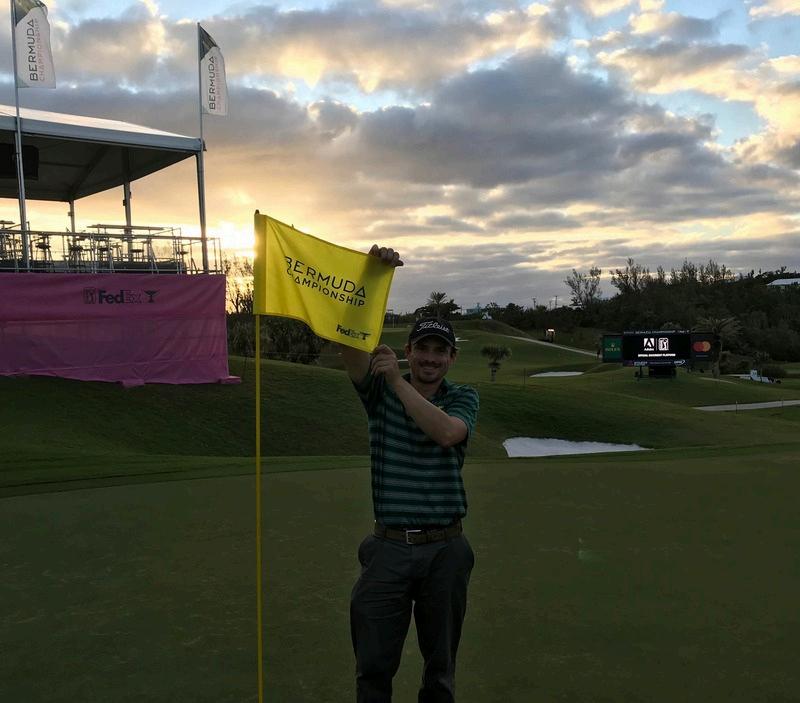
The 2018 Bermuda Championship was just the beginning of Mark’s PGA Tour experience
Why Maintenance Closures Are Essential
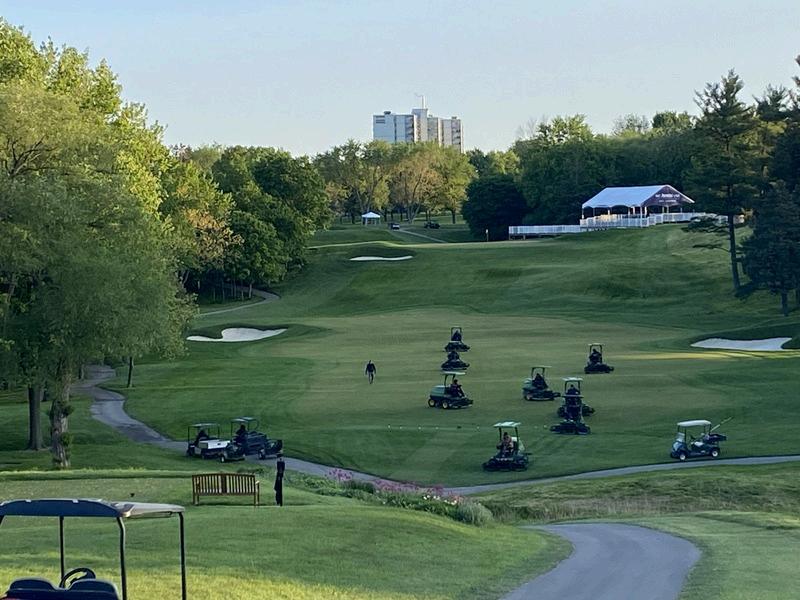
Written by Joel Johnston, Superintendent, West Haven G&CC Photo provided by Jasmine Wong, Toronto GC
Golf courses are living, breathing landscapes that require constant care to remain in top playing condition. While it may be frustrating for golfers to see a “Course Closed for Maintenance” sign, these temporary shutdowns are not only necessary they are vital for the long-term health of the course and the quality of the playing experience Many clubs schedule this practice every Monday, while others may only dedicate one morning a month any time the course is fully available without play can be beneficial.
Below are key talking points to help explain to golfers, members, and boards why maintenance closures matter These benefits demonstrate that closures should be viewed as a strategic investment in course quality and long-term playability not as an inconvenience.
1 PROTECTING TURF HEALTH
One of the most important reasons for scheduled maintenance closures is to protect and preserve the overall health of the turf. Golf course grass
particularly on high-traffic areas like greens, tees, and fairways endures continuous stress from daily play, foot traffic, mowing, and weather conditions Without occasional rest and recovery, even the bestmaintained turf will eventually decline. Maintenance closures give grounds crews the necessary window to perform critical agronomic practices such as:
Aeration – Relieves soil compaction and allows air, water, and nutrients to reach the root zone, promoting stronger, deeper root systems
Topdressing – Helps smooth the surface of greens, manage thatch, and support uniform turf growth.
Fertilizer and Plant Health Applications – Can be applied more effectively and safely without interfering with play or risking player exposure
Reseeding and Repairs – Damaged or thinning turf areas can be addressed without being immediately disturbed by traffic, allowing the grass to recover and establish properly.
Without these periodic closures, turf conditions can deteriorate rapidly, leading to poor playing surfaces, increased disease pressure, and costly long-term repairs By giving the course time to "breathe," golf clubs are not only protecting the turf but also preserving the integrity and playability of the course for the future.
2 IMPROVED PLAYING CONDITIONS
Routine maintenance closures play a crucial role in delivering the highquality playing experience golfers expect. With the course temporarily free of play, maintenance teams can complete tasks more efficiently and thoroughly without the constraints or interruptions that come with active play This window of uninterrupted access allows for detailed attention to key areas of the course, resulting in:
Smoother, faster greens –thanks to consistent aeration, topdressing, and rolling.
More consistent fairways and tee boxes - with improved turf density, mowing patterns, and moisture management
Clean, well-maintained bunkers – as crews can reshape edges, check drainage, and replace sand where needed.
Improved overall aesthetic and playability – as the course receives focused attention without the pressure of keeping up with daily traffic
Ultimately, these efforts translate directly to a better on-course experience. Golfers benefit from more reliable lies, true ball roll, and consistent conditions from tee to green hallmarks of a professionally maintained golf facility
3. LONG-TERM COST SAVINGS
While maintenance closures may seem like a short-term disruption, they are a strategic investment that
helps avoid far greater costs in the future Regular upkeep, performed proactively during these closures, prevents minor issues from escalating into major, expensive problems. By staying ahead of wear and tear, golf course operators can: Extend the lifespan of turfgrass by maintaining healthy root systems and minimizing long-term damage
Reduce the need for major renovations such as full green or fairway resurfacing, which can be both costly and time-consuming Preserve irrigation systems, drainage, and bunker infrastructure, which deteriorate faster when maintenance is deferred due to constant play. Lower labor and material costs over time through efficient, scheduled upkeep rather than reactive, emergency repairs
In essence, every maintenance
closure is a form of risk management By dedicating time to proper care, courses avoid the financial burden and lost revenue associated with large-scale repairs or extended shutdowns down the line.
4 EFFICIENT USE OF LABOUR AND EQUIPMENT
Maintenance closures allow grounds crews to work more efficiently, safely, and effectively maximizing both labour productivity and equipment usage Without golfers on the course, staff can access all areas freely and complete tasks without the need to stop, reroute, or work around play Key advantages include:
Increased productivity – Crews can work continuously without delays, completing large-scale projects in less time.
Use of larger, specialized equipment – Machines that would typically disrupt play or pose
safety risks can be used freely during closures, improving the quality of work.
Reduced wear and tear on equipment – Efficient, uninterrupted workflows reduce mechanical strain and extend the lifespan of valuable maintenance machinery
Improved crew safety – With no players on the course, the risk of accidents is significantly reduced, allowing for a safer working environment
By optimizing labour and resources during closures, maintenance teams can deliver higher-quality results with less disruption, ultimately improving the course while keeping operational costs in check.
5 ENVIRONMENTAL STEWARDSHIP
Modern golf course management is about more than just aesthetics and playability it's also about environmental responsibility. Maintenance closures provide essential opportunities to implement eco-conscious practices that are difficult or impossible to carry out during active play
During these closures, superintendents and grounds teams can focus on:
Water conservation – Deep irrigation cycles, leak repairs, and sprinkler system calibrations can be done without disrupting play, leading to more efficient water use.
Integrated pest and weed management – Carefully timed applications of low-impact products can be made with precision, minimizing exposure to players and reducing environmental runoff.
Soil health improvements –Composting, organic amendments, and soil testing are more effectively managed when the course is closed
Habitat preservation – Native plant restoration, pollinatorfriendly landscaping, and wildlife management programs can be maintained without interference
By using maintenance closures to prioritize sustainability, golf courses not only protect the land they occupy but also enhance their reputation as responsible stewards of the environment. This approach supports long-term ecological health while meeting the expectations of environmentally conscious golfers and communities
6. MEMBER AND GUEST SATISFACTION
Ironically, closing the course occasionally leads to higher member satisfaction in the long run. While maintenance closures may initially seem like a disruption to regular play, they are ultimately key to ensuring a better golfing experience one that members and guests notice and appreciate Well-timed, wellcommunicated closures demonstrate a course’s commitment to excellence and long-term quality.
When players return to find smoother greens, firmer fairways, and overall improved conditions, the
benefits become immediately clear. Beyond the physical improvements, thoughtful communication around closures helps build trust and transparency Successful courses often:
Provide advance notice of scheduled closures, allowing players to plan accordingly. Share what work is being done, helping golfers understand how the temporary inconvenience leads to long-term gains.
Highlight the outcomes, such as better playing surfaces, faster greens, or enhanced aesthetics
By managing expectations and delivering consistent improvements, courses can turn what might seem like a negative into a strong positive enhancing player satisfaction, loyalty, and overall perception of the facility.
While maintenance closures might seem like a temporary inconvenience, they are an essential part of any wellrun golf course’s operational plan These short-term pauses yield longterm rewards healthier turf, better playability, lower costs, and greater environmental responsibility. Embracing this practice is key to sustaining the quality and reputation of the course for years to come
Written by Marco China, Superintendent, Deer Ridge GC
Budget Season
START WITH A LOOK BACK
Every fall, golf course superintendents are faced with one of the most important, yet often least celebrated, aspects of the job: preparing the annual operating budget Unlike mowing greens or setting pins, budgeting isn’t something that produces immediate visual results. However, the work behind the numbers determines the resources, staff, and tools available to deliver the golfer experience everyone expects
A superintendent’s budget is more than just a spreadsheet it’s a tool for communicating the needs of the department It’s the document that explains to club leadership what it truly costs to deliver quality playing conditions, why those costs are rising, and how each dollar ties directly to the golfer’s experience. A clear, well-prepared budget builds trust and sets the course up for success in the year ahead
So, as budgeting season arrives, here are a few strategies, tools, and practical advice to make the process
smoother and more effective. The first step in building next year’s budget is understanding where the money went this year A year-overyear comparison highlights not just overspending, but also underutilization of certain line items
If you budgeted $25,000 for fuel but only spent $18,000, is that due to cheaper fuel prices, newer more efficient equipment or a change in management practices? Did labour overtime exceed expectations due to heat or extended droughts?
By analyzing historical performance, you begin the process with credibility Leadership can see that your numbers aren’t guesses they’re grounded in reality. It also can help you identify trends. For example: Labour costs: Have wages risen due to minimum wage increases or the need to remain competitive with neighbouring clubs?
Chemicals and fertilizers: Are costs rising due to supply chain issues, or raw material costs?
Utilities: Did hydro costs spike in a hot, dry summer?
Framing the budget around both past performance and future needs makes your case stronger and easier to defend when questions arise in the process. Without these periodic closures, turf conditions can deteriorate rapidly, leading to poor playing surfaces, increased disease pressure, and costly long-term repairs
ANTICIPATE QUESTIONS
Labour is usually the largest line item, and leadership may ask if seasonal workers, overtime, or fulltime staff can be reduced. This is where tying staffing directly to golfer expectations can be helpful in explaining the needs.
Many budgets often go through rounds of trimming. Having a clear “priority list” makes it easier to show what’s essential versus what’s flexible. Remembering what the CAN WE CUT THIS LINE ITEM WITHOUT AFFECTING CONDITIONS?
Photo provided by Matty Rodrigue, London Hunt Club.
WHY DO COSTS FLUCTUATE YEAR TO YEAR?
Weather is often the biggest driver. A cool, wet spring carries with it certain demands that differ from a cool dry spring potentially affecting fungicide costs. A hot, dry summer may spike labour costs due to the longer hours required
By preparing answers ahead of time, you not only defend your budget but also demonstrate professionalism and foresight.
TOOLS AND RESOURCES TO USE
The superintendent’s job has evolved far beyond paper and pencil. Today, a mix of digital tools, benchmarking data, and vendor insights help build budgets that are both accurate and defendable.
Historical Records: Maintenance logs, spray sheets, invoices, weather data, etc are invaluable They tell the story of why certain costs were higher or lower in each year
Spreadsheets and Budget Software: Whether your club uses Excel or digital job boards that track statistics, organizing this information is key to explaining it clearly to those in charge of the final decisions. Breaking these costs down by category makes for easier discussion.
Benchmarking Data: Resources like the OGSA Compensation & Benefits report give you a sense of what similar clubs may be budgeting
Vendor support: Reaching out and asking your chemical, fertilizer, and equipment representatives for projected price increases can aid in creating a more accurate outlook on your budget.
Maintenance Standards Documents: If your club has agreed-upon standards (e.g., mowing heights, frequency of bunker raking, green speeds, etc.), align the budget directly with these expectations.
TIPS FOR SMOOTHER BUDGETING
Over time, most superintendents develop a system that works for them. Here are several strategies that can make the process less stressful and more effective:
Starting Early - Don’t wait until the week before the deadline to start Begin pulling numbers months ahead of the deadline This gives you time to refine, fact-check, and anticipate questions.
Build a Narrative - Numbers alone don’t tell the whole story. Framing your budget in terms of the golfer experience can help when explaining your budget.
Prioritize Transparency: Break down where every dollar goes Show that 60–70% of the budget is labor, 15–20% is materials, and the rest is equipment, utilities, and contingencies. Transparency builds trust. Use Visuals - Graphs and charts go a long way. Show a pie chart of labor vs. supplies. Present a year-overyear line graph of chemical prices. Visuals make complex data digestible for non-turf professionals Plan Contingencies - Budgets are living documents Weather extremes, equipment breakdowns, or disease outbreaks can throw even the best plans off course Including a contingency line item provides flexibility Communicate Proactively - Anticipate questions and address them in the budget itself. If chemical prices are up 15%, add a note explaining why. If staff wages are increasing, cite competitive wage surveys. By answering questions before they’re asked, you show a greater competence of the process.
BEYOND THE NUMBERS: ADVOCACY AND EDUCATION
Budget meetings provide a platform to explain: Why labour shortages mean some tasks must be prioritized over others Why preventive fungicide programs are cheaper and more effective than curative ones
By framing the budget as a conversation about expectations and outcomes not just costs you position yourself as a professional manager, not just “the groundskeeper”
Budgeting season will never be the most exciting or glamorous part of a superintendent’s job, but it may be one of the most important. A well-prepared budget ensures you have the resources to meet member expectations, protect the course, and lead your team effectively Approach the process with data, transparency, and confidence Start with history, anticipate the big questions, leverage the right tools, and frame your numbers with a clear narrative tied to the golfer experience.
In the end, budgets aren’t just about dollars and cents they’re about aligning the superintendent’s agronomic expertise with the club’s vision for the golfer experience Done right, your budget isn’t just a financial document It’s a roadmap for success in the season ahead
Blue Mountain Village Conference Centre, Collingwood, ON, Canada January 20-22 , 2026 nd Turfgrass Management Conference
REGISTER
In the Loop
Discovering the Virtuous Cycle
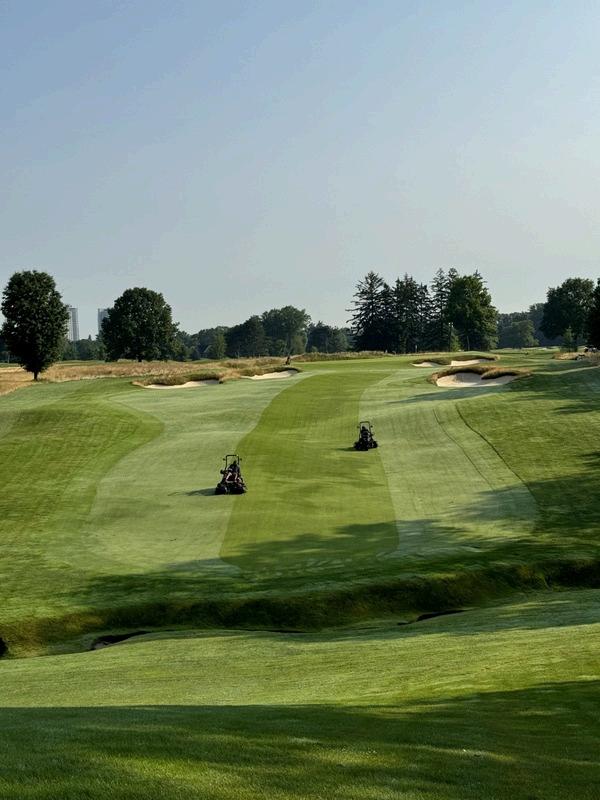
Written by Mark Wiebe, Incoming Deputy Head Greenkeeper, The Royal St. George's Golf Club in the UK. Photo provided by Peter Sinuita, Copetown Woods GC
Have you ever noticed how everything seems to be revolving on these metaphorical carousels?
History repeats itself, as the old cliché goes. The natural cycles of the seasons and water aren’t unlike those we may observe elsewhere. Unlike the natural cycles, those occurring within our collective history, like our history as individuals, is more connected to thoughts, feelings, hopes and dreams: they’re human Most of the time, there’s a perceived positive or negative connection to these uniquely human cycles, the coming and going around a carousel that can be dreamlike, or, at times, may seem more like a nightmare.
A virtuous cycle, as defined by the Marriam-Webster dictionary, is “a chain of events in which one desirable occurrence leads to another which further promotes the first occurrence and so on, resulting in a continuous process of improvement.” A vicious cycle produces the opposite effect. We’ve all experienced both. The positive and negative cycles occurring within us, much like those occurring within a workplace or
team, may be controlled or guided through the practical application of willpower or energy Getting ourselves and our teams within a positive feedback loop instead of a negative one is always within our grasp, but it takes consistent effort. Each part of these feedback loops is interconnected and, as we may have observed, feed off one another Like a carousel powered by vibes, intentions, and values, how well the ride is going really depends on us, and who is onboard with us.
RECRUITMENT, INTERVIEWING & HIRING
Before we hire anyone, we can try to determine if they fit, or if they have the potential to fit. Determining someone's values or what they find to be gratifying in their roles, takes more than your average interview questions. But it’s not that complicated. Using situational questions or ones we deem worthy of ascertaining a person's value and culture alignment to your department, club, or workplace can be achieved through planning and collaboration with your leadership team.
The culmination of a selection process can ultimately gauge a person’s trustworthiness, a quality that’s directly linked to the attitude or persona that an individual projects. If we can’t trust someone, they could be a liability for a multitude of different reasons. Therefore, if more important than any other factor, including past experience or future performance, metrics for gauging trustworthiness should be developed over time In addition to gauging values, we can also measure the consistency at which an individual projects themselves and answers situational questions:
Do they act the way they say they will?
Will they continue to act the way they say they will?
This could be considered as an ongoing selection process; people change – just because we’ve determined an individual’s suitability when we hire them doesn’t mean they’ll always remain suitable
After determining an individual’s suitability, we must acclimate them into the culture and value system we’ve deemed them suitable for. It’s imperative to deliver a high-level orientation and training. It should be deliberately planned and a reflection of the vision, mission, and values of the organization and the department Whether they’re a veteran staff member or it’s their first day, beginning each year with an orientation and “basic training” is an essential part of powering the loop. Depending on how well or unwell an individual or group performs throughout the year, more retraining along with performance appraisals can help keep the carousel moving in the right direction
QUALITY CONTROL & EVALUATIONS
Another key part of creating a virtuous cycle for our teams is scheduling regimented quality control checks and performance evaluations. Like the other parts of the loop, it takes dedication and ongoing planning to accomplish successfully. Going into each new
season, there should be scheduled times for individuals to perform quality control checks. Yes, it’s an ongoing process and something all the members of the leadership team should be doing all the time, but sometimes there isn’t enough time Oversites are often the result Designating quality control check managers or supervisors for the week is one example of how we could accomplish more regimented quality control.
Like the effort required to consistently ensure that work standards are being met, we should also ensure that we’re giving ongoing feedback to our staff Apart from daily reminders, training and retraining, it may also be important to have formalized evaluations.
After an individual’s given a road map of their past performances and the expectations for future improvement, they can better understand the whys for everything we do and how they’re a key contributor to those whys If we’ve completed all the other steps to
continuing our way around our virtuous cycle, all there’s left to do is celebrate.
& REWARDS
The last step in producing a virtuous cycle is arguably the most important one. If we’re not willing to celebrate and reward our team and the individuals that make it, then we’re missing a fundamental truth of human nature; happiness is a choice and adopting an attitude of gratitude is an essential part of making that choice If we aren’t showing a level of gratitude, that is, one that’s in accordance with the standards and ongoing level of excellence that we expect from our team, then we may find ourselves entering into a vicious cycle instead of a virtuous one. You get what you pay for, another cliché
The rewards of discovering your team's unique virtuous cycle are limitless Getting our team in this continuous feedback loop driven by success and positivity has to begin with getting ourselves in one. So, starting with yourself, get in the loop and then don’t be afraid to bring everyone else along with you