Parish Proclaimer
Arundel and Storrington Parish
Digital and Print Editions
Editor:MelindaHeathcote
Design&Production:BrydenIsbister
by Melinda Heatthcote Editor
Arundel and Storrington Parish
Digital and Print Editions
Editor:MelindaHeathcote
Design&Production:BrydenIsbister
by Melinda Heatthcote Editor
By Father Stephen Dingley
by Margaret Bamford OBE DL
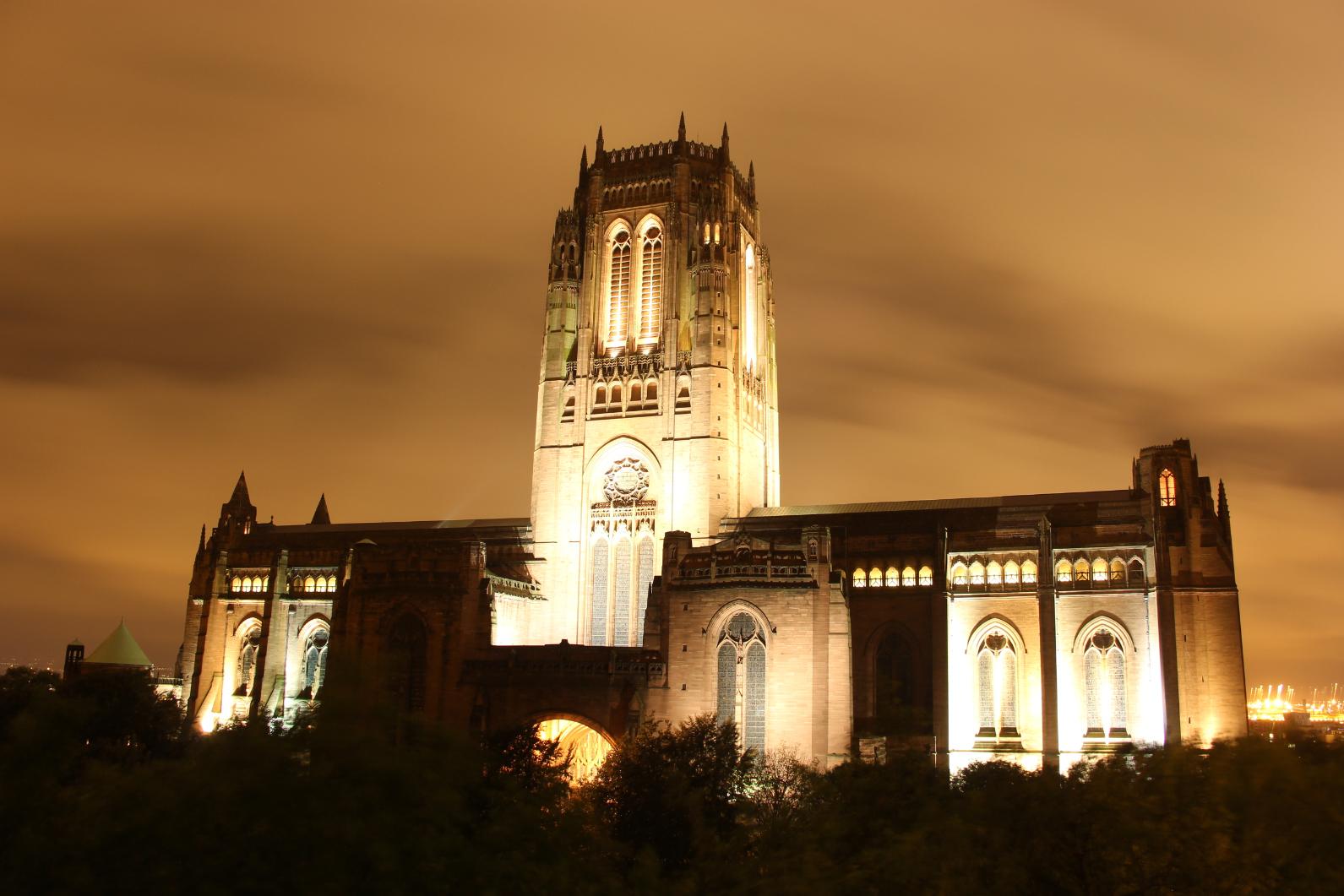
The Friends of Arundel Cathedral were invited to a national conference of “Friends of Cathedrals” both Catholic and Anglican in Liverpool this October. Margaret Bamford and Liz McCombe attended on behalf of the FAC. A précis of Margaret’s report, below, was written for the Committee, but we feel it is of interest to all parishioners in our Diocese.
Liz McCombe and I attended this Conference on behalf of the Friends of Arundel Cathedral, held at the Anglican Liverpool Cathedral, in October this year.
Session 1. The Chairman, Mr Mark Sims OBE began by setting out the aims and objectives of the charity. These included Fundraising, Good Practice, Recruiting New Trustees. There was also a discussion about keeping in touch with membership by newsletter giving details of activities, meetings and plans of the Friends – in our case Friends of Arundel Cathedral!
Session 2 –Mike Darwell BA(Hons), Barch, RIBA, SCA, AABC, ARB: The Revit Project
This was a presentation about electronic 3D building, rather above our heads although no doubt fascinating – Bryden would have loved it! Using highly sophisticated scanners and cameras, a complete detailed electronic model of the Cathedral – how it is constructed and where there may be stress points in the building needing attention sooner rather than later – is now available. Very impressive but the cost of equipment and the skills required to produce it were rather sobering. And that is before the cost of the required repairs or maintenance are factored in!
Session 3 – Dr Ann Cason, Bishop Grosseteste University: Insight into the impact of Friends’ Associations
This was a wonderfully positive talk with lots of pointers for Friends to consider for the future. The session described an academic study aiming to identify why people visited Cathedrals and what benefits they derived. Who comes? How do they engage? How does it impact on their wellbeing and, if improved, how it is measured?
It was an academic piece of work with lots of data presented graphically. I hope my precis does her talk justice.
Comments from visitors to Cathedrals including providing:
• A place of worship, for peace and quiet.
• Time for reflection, and hope.
• An opportunity to learn about history, the building and its architecture.
• To learn about the importance of “preserving its fabric”.
• Awareness of the relationship between “fabric and faith”.
• It’s spiritual not religious.
• Feel at home here.
• A place of solace, comfort and peace.
• A sense of belonging.
All these comments are helpful when Trustees are seeking new Trustees and to extending membership.
The importance of music was emphasised. A scheme to recruit children from the most deprived area of the City of Liverpool to sing
in the choir had been particularly successful in encouraging integration – “breaking down barriers of class, race and religion”.
Session 4 – – Dr Louise Hamson, University of York - Shifting Light: Challenges & Opportunities facing Churches & Cathedrals in the post-Covid world
This presentation was also based on an academic paper, but by 5.30 in the evening after a long day I was struggling….!
Whether tourist, pilgrim or visitor all yearning for peace, a sense of belonging, being warmly welcomed as they enter the building and thanked as they leave…there must have been a lot but much of it had already been noted in earlier presentations.
In Conclusion: What we learned:
• Members need to be nourished, reassured, appreciated (Lindsey is wonderful at this!)
• Keep alive a sense of belonging; and feeling of joy and love.
• Consider regular communication with members – newsletter x 2 p.a.?
• Monthly email from Chairman might be helpful.
• Keep website “alive”.
• Phase out life membership – but carefully and keep what we have! Suggest upgrade.
• Negotiate discount at shop in return for membership.
General Comments:
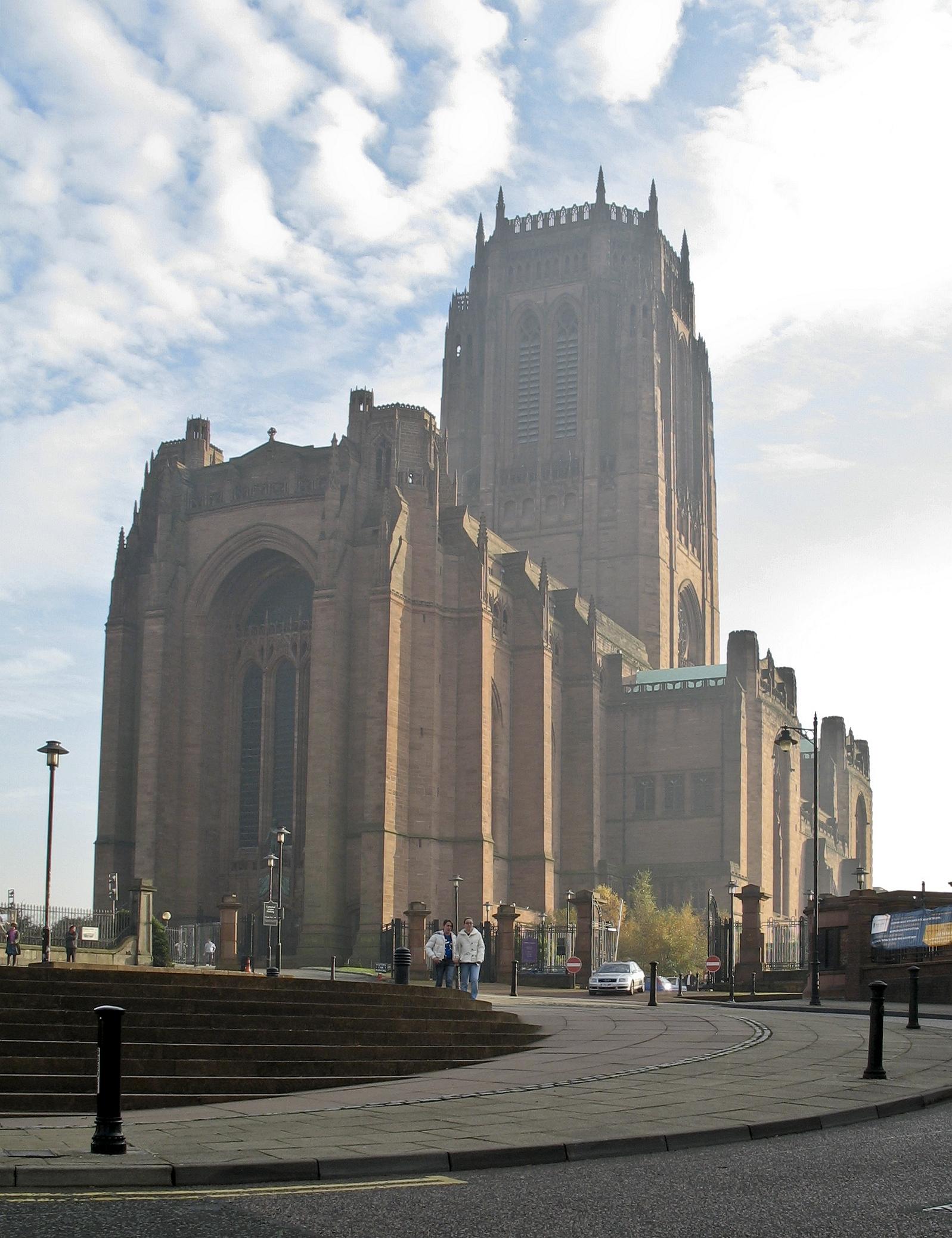
Personal – I loved our time in my much-loved home city. It was an informative, well organised and enjoyable weekend. The programme was packed, interesting and relevant. Shops, café and bookshop enormous and well patronised. No apologies for the prominence of commercial activities. Sacred spaces were sacrosanct. Emphasis was unashamedly on community, belonging and welcoming.
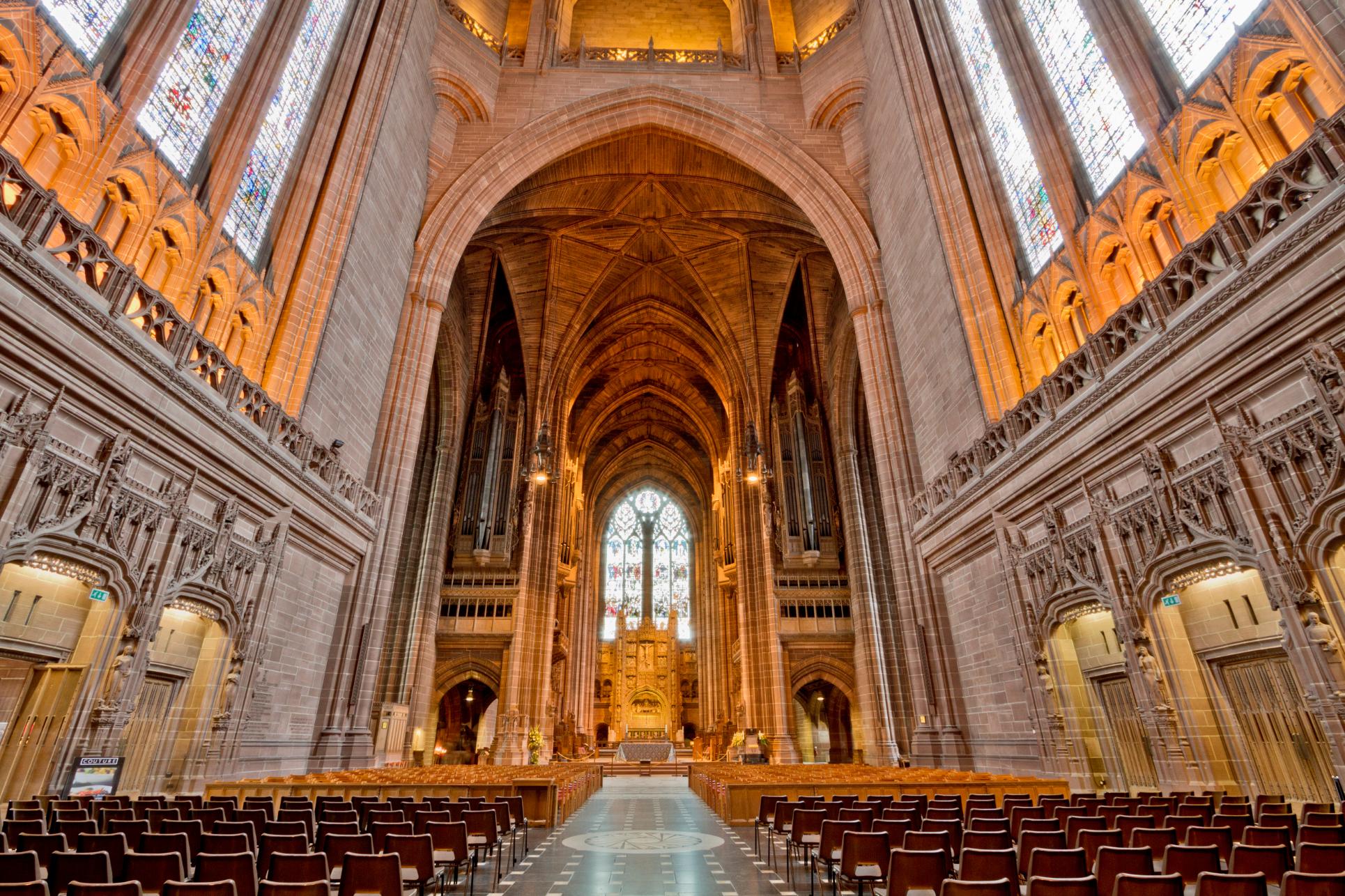
The Cathedral itself is a magnificent neo-Gothic building designed by Giles Gilbert Scott (a Catholic). Tours available by members of the Cathedral Friends who were proud and knowledgeable about their building. A tour of the Metropolitan Cathedral was undertaken by Deacon Paul. It was a complete contrast to the Anglican building. The Lutyens Crypt, including the Treasury and a little chapel were breathtaking. Two unbelievably magnificent Cathedrals at either end of the appropriately named Hope Street.
The Cathedral dioceses attending the Conference were usually of significant city populations with limited catchment areas. A&B is a large diverse Diocese covering a large geographical area based on a small rural parish. Our Friends is a very small charity by comparison – for example Christchurch Oxford has £880 million in its capital reserves! Even so there were lots of ideas, both practical and aspirational that could be useful / transferable.
The Prayer of the Friends
Lord God, we praise and thank you for the blessings and good things of our lives and we place
before you our deepest longings and concerns.
We pray for our Cathedral of ….. that it may always be at the heart of the sacramental life of the diocese and a focus for so many people who live in our diocese or visit it.
We pray that as Friends we will always love and care for one another and for the Cathedral and that we will always support the activities that take place within this magnificent building.
Bless the work of the Friends Association and sustain the Christian ethos and welcome that is at the heart of our Cathedral.
The Friends of Arundel Cathedral are always encouraging parishioners in the diocese to become members of the Friends of Arundel Cathedral (the mother church of the diocese). If you are not a member and would like to find out more, please click on the QR code below.

Arundel Cathedral includes images of over one hundred identifiable saints in its windows, as well as the numerous individuals from the Old Testament and Early Church featured in the carved roundels high up on each side of the nave and round the sanctuary. The Cathedral is similarly well-supplied with angels, with seventy-two pictured in the windows, and several others carved in stone. The Window of Founders of Religious orders, the subject of this issue, includes twenty-one men and women, and the similar Window of Royal Saints, above the door to the shop, another twenty-three.
A handful of saints warrant more than one mention. Our Lady, of course, is honoured on all sides; in the great rose window illustrating the mysteries of the Rosary, in the magnificent window in the North Transept showing scenes from her life in relation to the Old Testament, and in the windows of the Lady Chapel. She often appears with St Joseph, as in the windows of the Blessed Sacrament Chapel, originally dedicated to St Joseph and showing episodes from his life.
St Philip Neri, Duke Henry’s choice of patron saint for his Arundel church, is pictured in the two great windows above his altar, among the founders of religious orders, and in one of the windows behind the altar. These five windows were rescued from one of Duke Henry’s houses, Derwent Hall when the village was deliberately flooded to form a reservoir, and have been fitted seamlessly into the Cathedral. The result is that a number of the Duke’s favourite saints feature twice – the Emperor Henry, St Margaret of Scotland, St Elizabeth of Hungary, St Etheldreda, St Victoria and St Vincent de Paul among them. St Wilfrid, patron saint of Sussex, is another saint featured prominently, in a series of scenes above the altar in his chapel.
A wonderful collection of forty lesser-known saints are featured in the clerestory windows in the Transepts, placed so high that it is almost impossible to see them. They include St Arsenius the mat maker, St Crispin the shoemaker, St Galmier the locksmith and St Isidore the ploughman, working men in sharp contrast to the numerous royal and aristocratic saints featured elsewhere in the church – a saint for every occasion and for every intercession.
Friends
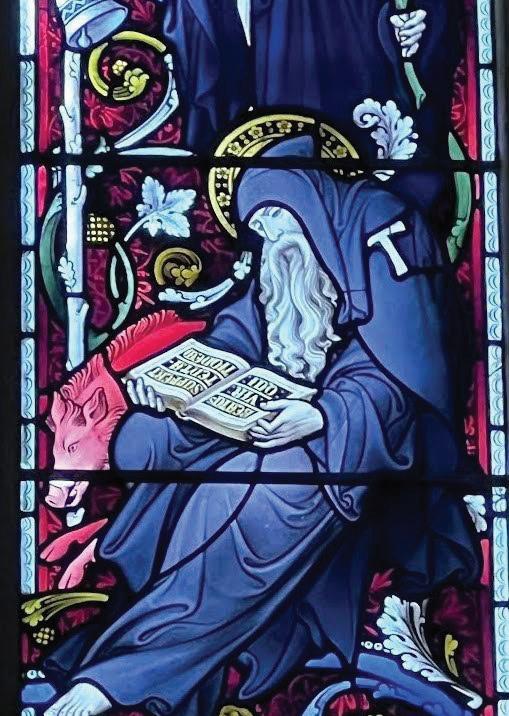
Over almost twenty years Cornerstone, the Friends’ newsletter, has celebrated the architectural and decorative distinction of the Cathedral, drawing attention to the richness of detail that is so easy to overlook. In preparing for this issue, for example, I noticed for the first time the ferocious, garishly coloured pig accompanying St Anthony (front cover), that had somehow escaped my attention during over half a century as a parishioner. Nor had I spotted the helpful raven with St Benedict in the corner opposite, whose story is given on pages 2 and 3..
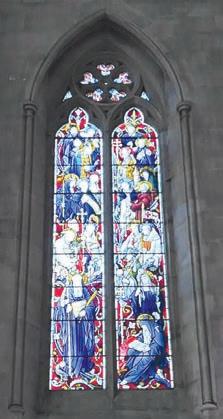
The window, featuring twenty-one founders of religious orders, on the west wall of the South Transept, is a companion piece to the very similar Window of the Royal Saints in the North Transept. As with most of the Cathedral’s stained glass the windows would have been designed and made by Hardman & Powell in their Birmingham workshops, and transported to Arundel by rail. The men and women are often recognisable by the icons associated with them, albeit some more readily than others. I have drawn heavily on an early guidebook, which may not be entirely reliable (see St Adalbert, pages 9 and 10). With so many saints represented in one form or another in the Cathedral, it is pleasing to think of young Duke Henry, doubtless in discussion with his mother and numerous brothers and sisters, deciding who should be included and who could be left out.
Among the orders whose founders are pictured we find the well-known – Dominicans and Benedictines; Franciscans and Poor Clares; the Jesuits who gave us Pope Francis, and the Augustinians who have given us Pope Leo – and some less familiar. But all are worthy of celebration.
Oliver Hawkins Editor
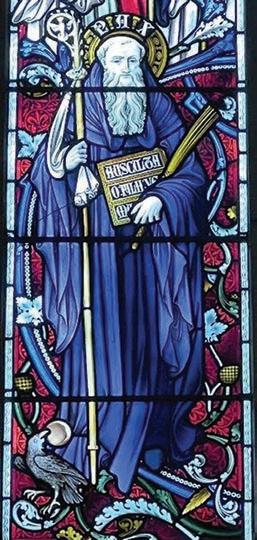
St Benedict (480 – 542), opposite, was born in Nursia in Umbria , the son of a Roman nobleman. He was sent to Rome to study, but gave up his studies and moved to Enfide, and then to Subiaco, in present day Lazio. On his way he met a monk, Romanus of Subiaco, under whose guidance Benedic t became a hermit, living for three years in a mountainside cave. From this inauspicious start Benedict went on to found twelve communities of monks in the Subiaco vicinity.
Legend has it that during his time at Subiaco Benedict incurred the jealousy of a neighbouring priest, who tried to kill him by sending him poisoned bread. As Benedict blessed the loaf before eating it a raven fle w in and took the bread away. Further miracles followed, but continuing hara ssment persuaded Benedict to move in 530 to Monte Cassino, where he es tablished the great Benedictine monastery.
His lasting achievement, his Rule of St Benedict, contains inst ructions for monks to follow, with a distinct spirit of balance, moderation and common sense, and was effectively adopted by most Christian religious communities during the Middle Ages.. As such, Benedict is regarded as the f ounder of Western monasticism.
Benedict is shown in the Cathedral window, opposite, with a crosier and the book of his Rule. The text displays the first few words of the phrase ‘Hear, oh son, the precepts of the master’.
The word PAX, the motto of the Benedictine Order, is inscribed around his halo. The bundle of rods that he carries is intended to symbolize the strength of monks who live together in a community, a symbol now sadly tarn ished by its association with twentieth century fascism.
The life-saving raven with the poisoned loaf is pictured in the corner of the frame.
In 1964 Pope Paul VI declared Benedict a Patron Protector of Eu rope.
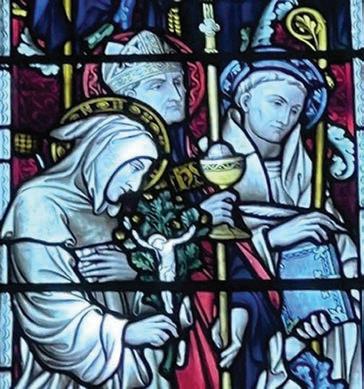
Immediately above St Benedict are three saints from the eleventh and twelfth centuries.
On the left is St Norbert (1083 - 1134), founder of the Premonstratension, or Norbertine Order, whose monks had a monastery until fairly recently in Storrington. Norbert is pictured with a crucifix in a green tree, symbolic of the renewal of the church that he was working for.
In the centre is St Robert of Molesme (1083 - 1111), who in 1093 instituted the reformed white-robed Benedictine Order, holding a cross and a chalice and host.
On the right is St Bruno of Cologne (1030 – 1101), a colleague of St Robert, founder of the Carthusian Order. He is shown with a crosier, a book, and a rather indistinct halo of stars.
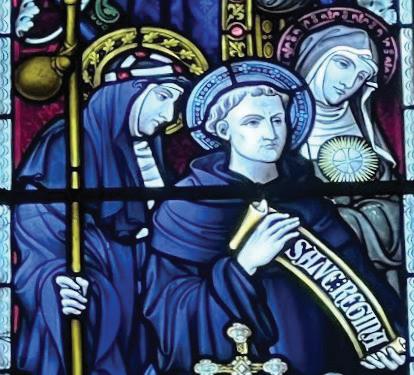
A group of saints from a slightly later period includes, on the left, St Brigid of Sweden (1303 – 1373), a princess and founder of the Order of Our Saviour, or Brigitines. She is shown with a pilgrim’s staff, in reference to her pilgrimages to Rome, Compostella and Jerusalem.
In the centre of the group is St Philip Benizi (1204 - 1285), one of the Seven Holy Founders of the Servite Order, and placed here next to St Juliana in reference to his having founded the Order of Servite Nuns. He is holding a banner inscribed with the words ‘Salve Regina’, but there is no reference to his having gone into hiding during the 33 month-long Conclave of 268 – 271, to avoid the risk of being elected Pope.
On the right is St Juliana Falconieri (1270 - 1341), the first nun in the Third Order of Servites
Juliana directed the community of Servite Tertiaries for 35 years and was ‘more of a servant to her subordinates than a mistress’. When sickness prevented her from being able to swallow she placed the host on her chest, as depicted in the window. The host miraculously disappeared, and after her death its imprint was found on her body.
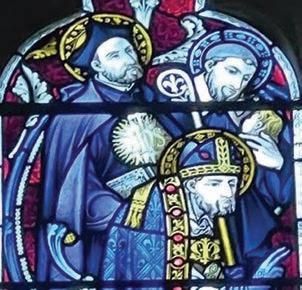
In the centre is St Alphonsus Liguori (1696 – 1787), founder of the Congregation of the Most Holy Redeemer, the Redemptorists, was a bishop, spiritual writer, composer, poet, lawyer and theologian. The order is dedicated to missionary work in over 100 countries.
On the left is St Ignatius Loyola (1491 – 1556), founder of the Society of Jesus, born into the Spanish nobility. As a worldly young soldier Ignatius was severely wounded in battle, and it was while recuperating that he underwent a spiritual conversion. After lengthy studies and a pilgrimage to the Holy Land he founded the Society, instructing his recruits through the set of Spiritual Exercises that he had developed.
On the right is St Vincent de Paul (1576 – 1660), founder of the Vincentian (or Lazarist) Congregation and the Sisters of Charity, the first congregation of ‘unenclosed’ women to be entirely devoted to the poor and the sick (my own childhood memories in France include the sight of Soeur Madeleine on her bicycle, great coif flapping, as she made her rounds as district nurse).
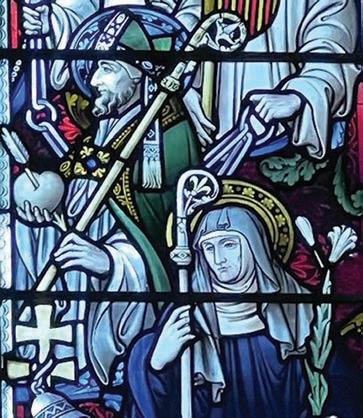
Below St Scholastica in the right hand frame is St Anthony (251 - 356), as shown on the front cover, a hermit regarded as ‘the father of all monks’, whose years as a swineherd are the reason for the inclusion of the splendid boar. Though Anthony himself did not found a monastery a community grew around him based on example of living an ascetic life detached from the world.
St Augustine (354 – 430), Bishop of Hippo and Doctor of the Church, shown on the left with a heart pierced by an arrow, was born in North Africa, moving later to Rome and Milan before returning to Africa. He wrote extensively, combining intellectual brilliance with mystical insight, and established the Rule of St Augustine, the basis of the Augustinian Order.
St Scholastica (d. 540), on the right, was the sister of St Benedict and the first Abbess of Benedictine nuns. She adapted his Rule for a convent she founded not far from his monastery.
At the moment she died in her convent Benedict had a vision of her soul ascending to heaven as a dove. After her death Benedict had her buried in his own monastery, so that their bodies could be united in death as their souls had been in life. She is pictured with a crosier and a lily.
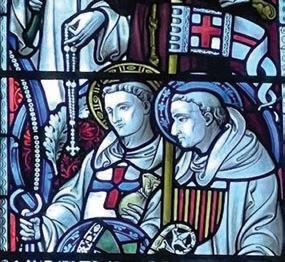
The section shows two saints, one French, one Spanish, who founded orders dedicated to ransoming and rescuing Christian captives. Victims included not only military captives from the Crusades, but civilians taken by Moorish raiders along the coastal regions of southern France and Spain.
St John of Matha (1160 – 1213), on the left, is shown with St Peter Nolasco (1182 – 1256), carrying between them a set of heavy chains. St John, from Provence, who with St Felix of Valois founded the order of Trinitarians, displays the blue and red cross of the Trinitarian order on his chest, and holds a bag of ransom money.
After growing up in Barcelona St Peter Nolasco became a soldier, fighting the Moors. Concerned at the plight of Christian captives he dedicated his life to freeing them, founding the Royal and Military Order of Our Lady of Mercy of the Redemption of Captives, the Mercedarians.
In the window he displays the red and gold stripes of his order, and carries a banner.
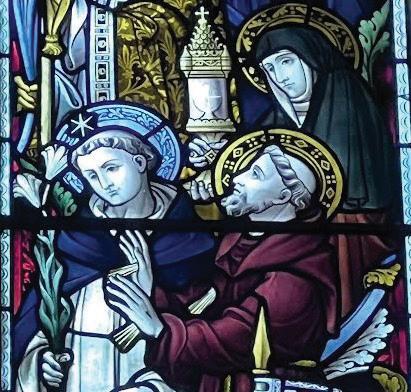
On the left is St Dominic (1170 - 1221), founder of the great Order of Friar Preachers, or Dominicans, as well as an order of Dominican nuns. After Dominic’s death a tradition developed that it was he who introduced theRosaryto the world, having received it in a vision from the Virgin Mary and the Christ Child. He is shown with a rosary, and a lily representing chastity.
Beside St Dominic is St Francis of Assisi (1181 – 1226), who brought into being the Orders of Friars Minor, or Franciscans. His Rule was approved in 1210 by Pope Innocent III. He was canonised just two years after his death by Pope Gregory IX. St Francis holds an almost unique place in the hearts of Christians and many non-Christians, for the values he represented, not least his appreciation of the natural world.
Alongside St Francis is St Clare (1194 – 1253), founder of the Order of Poor Women, or Poor Clares, St Clare at the age of eighteen had been so moved by the teaching of St Francis that she joined him at Portiuncula, taking the habit of a nun. In the window she is depicted holding a monstrance – a reference to her having saved Assisi from invading armies by displaying the Blessed Sacrament, causing them to flee. Her order of nuns spread across Europe, including, in due course, the community of Poor Clares in Arundel, whose convent at Crossbush was built by Duke Henry’s young wife Flora.
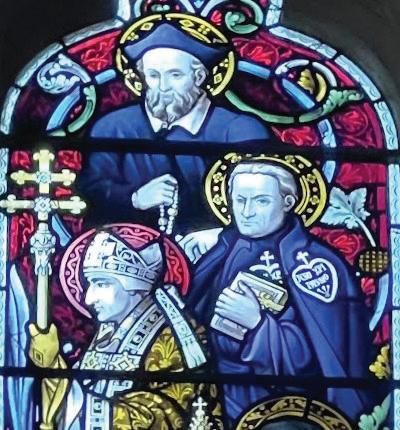
Three Saints are represented at the top of the right hand frame. Two have clear connections with Duke Henry, but the inclusion of St Adalbert (d. 982) is puzzling. Adalbert, known as the apostle of the Slavs, was Bishop of Magdeburg, where a monastery was set up by the emperor Otto the Great as a base for the evangelisation of the neighbouring regions.
It is possible that an error in attribution has been made, and that the Adalbert chosen by Duke Henry is in fact Adalbert of Prague, who had been educated by his namesake at Magdeburg, and went on to found the Benedictine abbey at Brevnov in Bohemia.
Henry’s choice might even have been St Adalbert of Egmond, from an earlier period, a member of the Northumbrian royal family, and therefore with aristocratic British origins, both of which would have appealed to the young Duke. But none of the three Adalberts could be regarded as the founder of a religious order, so the puzzle remains.
St Paul (1694 – 1775) was an Italian nobleman and founder of the Passionist Fathers, an order that combines missionary work with great austerity. He was specially interested in the reconciliation of England with the Holy See, and as such would have been of interest to Duke Henry, who acted as a kind of unofficial ambassador to the Vatican.
It was Paul’s disciple Dominic Barberi who received Newman into the church, another connection that would not have been lost on Duke Henry, and the saint’s canonisation in 1867, just a year prior to Henry’s great building project in Arundel, would surely have been noted by the young Duke.
At the top of the frame is St Philip Neri (1515 – 1595), founder of the Congregation of the Oratory, approved by Pope Gregory XIII in 1574, and canonised by Pope Gregory XV in 1662. His life was spent in Rome, looking after anyone in need – notably destitute pilgrims, street children and fallen women. He had a great following as a spiritual adviser, including English Jesuit priests in Rome prior to their dangerous move to Elizabethan England.
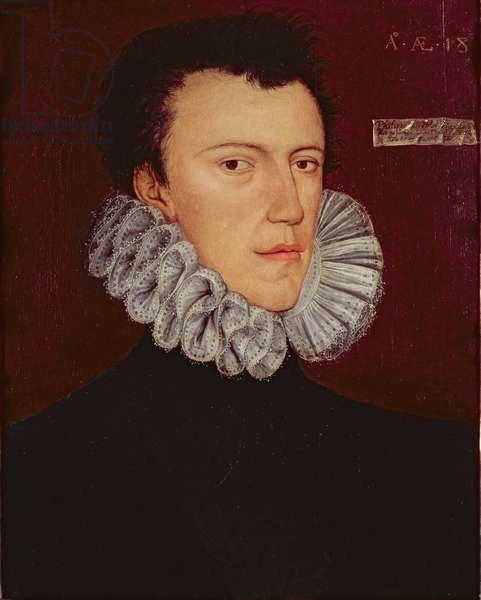
St Philip was the original patron saint of Duke Henry’s church in Arundel, probably not least for the fact that St John Henry Newman, Duke Henry’s friend and mentor, was a priest in the Oratorian Order. Philip has his own altar in the South Transept with a life-size statue above., and scenes from his life are depicted in the two great lancet windows on the south wall. None of these images reflect the easy charm and warm sense of humour for which the saint was famous, and whereas St Philip Howard’s statue in the North Transept includes his faithful hound, Philip Neri has not been allowed the company of his little white dog Bianco
By Sandra Williams
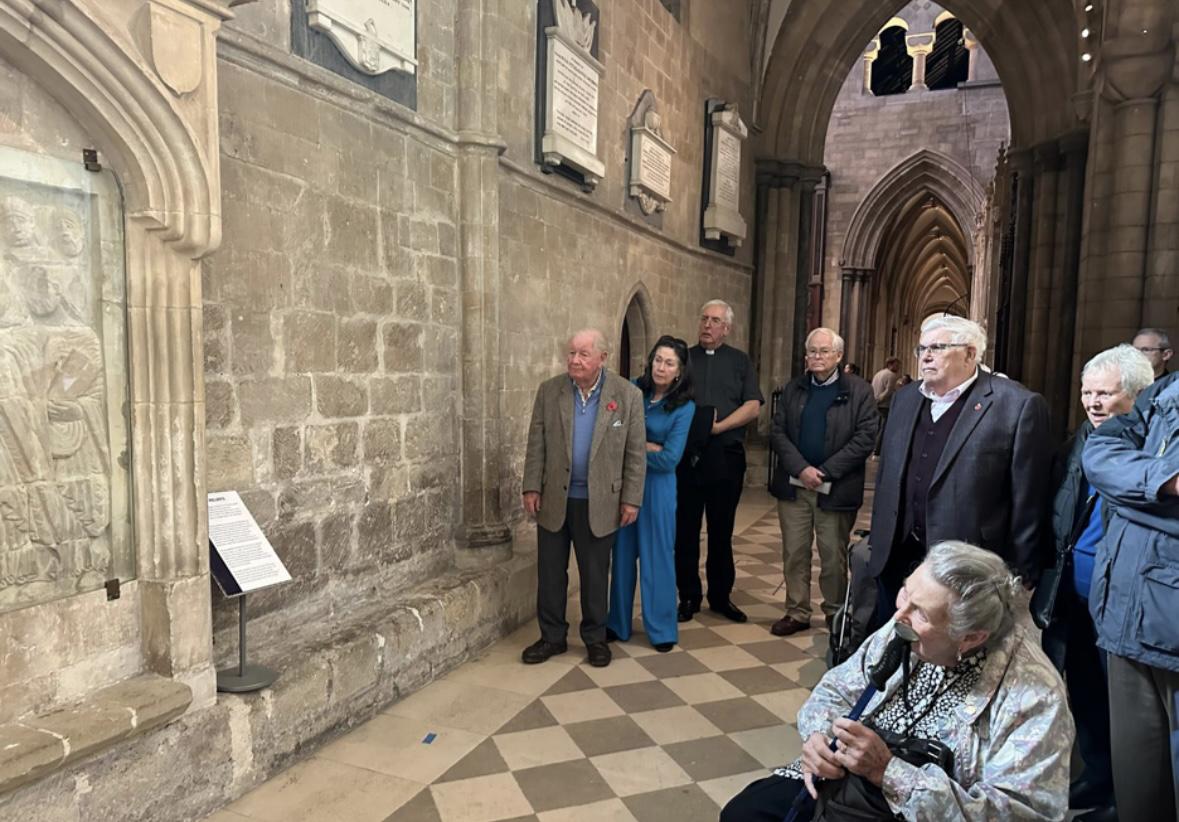
Arundel Catenians held a day of reflection on the 1st of November. They assembled at Chichester Cathedral, and celebrated a Catholic Mass in Saint Richard’s Chapel which holds the relics of Saint Richard the Patron Saint of Sussex.
Following the Mass, the Dean of Chichester Cathedral, the Very Rev Dr Edward Dowler, gave us a guided tour of the cathedral. We began in the Baptistry which holds a splendid new copper font and a painting of the baptism of Christ by Hans Feibusch. The Dean discussed the Lazarus relief on the wall.
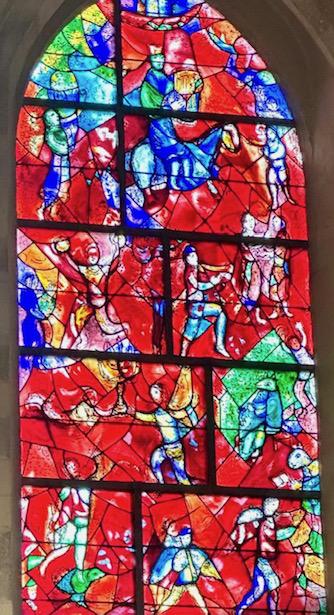
The best part of the tour for me was his explanation of the iconic John Piper tapestry behind the high altar, I have seen this on many occasions, but it was wonderful to get a very clear interpretation of the tapestry. He shared with us how it depicted the Trinity as a green triangle with a T shape representing the Lord and flames representing the Holy Spirit and what has been called the fried egg, representing God himself. We also saw the beautiful Marc Chagall Window as well as other works of art.
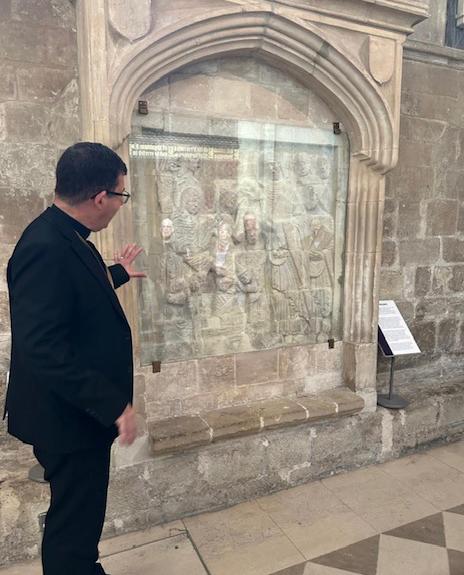
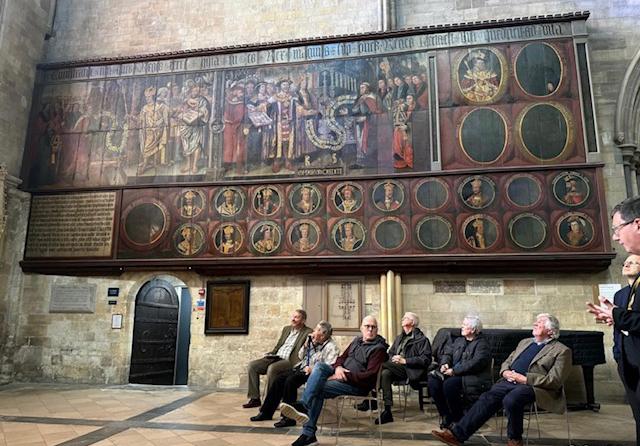
After a lunch break, we convened in the Dresden Room of George Bell house. Deacon Roger Stone gave us a presentation on the theme of “the cloud of witnesses”.
Who were the witnesses? What were they witnessing? We considered the many clouds that we encounter in the Bible and their significance. This verse is found in Hebrews 12.1 and its part of a larger passage that encourages perseverance in
the Christian faith by drawing strengths from the faith of the Old Testament figures mentioned in the previous chapter
After a break for tea, we returned to the Cathedral for Evensong. We were blessed that the choir had returned from their half term break. Their lovely singing was a very special part of the day. We then relocated to the local Brasserie Blanc for a lovely French meal.
A very special day not too fast paced, which gave one a chance for reflection, which is a rare thing in the hurried world in which we live.
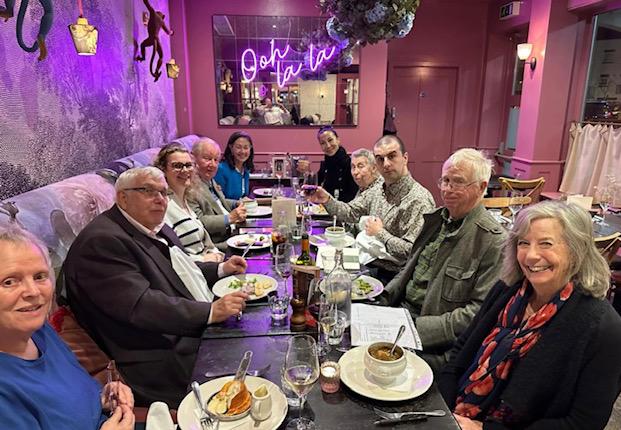
by Michael Forbes Smith, President, KHS Southern
In October 2025, over 20 knights and dames of the Equestrian Order of the Holy Sepulchre of Jerusalem from our Diocese of Arundel and Brighton joined nearly 3,700 of our peers from all corners of the world to make a pilgrimage to Rome for the Jubilee and Holy Year of 2025.
Our Chivalric Order, with roots stretching back to the 11th Century, is now tasked by the Holy See to support the spiritual and material welfare of the Latin Patriarchate of Jerusalem and the Christian “living stones” of the Holy Land (including the Holy Family parish in Gaza). It is also our duty to nurture our own spiritual development, hence the decision of our own “Grand Magisterium” to lead nearly 10% of our total membership in celebrating the 2025 Jubilee Holy Year.
Just a quick word on history! The first Jubilee Year in the Christian era was celebrated by Pope Boniface VIII in AD1300. Since then, Jubilee Years have been celebrated at varying intervals. The first “Holy Door’ was opened in the Basilica of
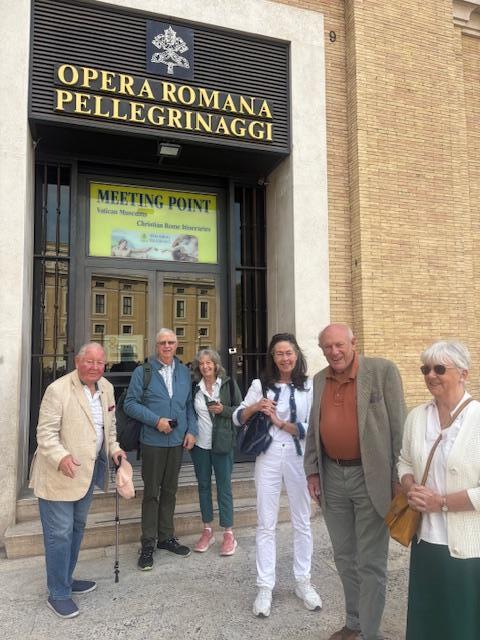
St John Lateran (the Cathedral of Rome and thus of the Pope) by Martin V in 1425 and the current 25-year cycle was first introduced by Pope Paul II in the 15th Century. The programme outlined by the Magisterium was to pass through the “Holy Doors” of the four great Roman Basilicas – St Paul’s Outside the Walls, where the apostle is buried, St John Lateran, Santa Maria Maggiore where Pope Francis is buried, and finally, after an audience with Pope Leo XIV, St Peter’s itself.
So after some of us had met over a delicious supper in Trastevere, we began the pilgrimage on Tuesday 21st October. A great convoy of coaches took us to St Paul Outside the Walls, where the organisation can only be described as exquisitely Italian bordering on chaos. But, being in Italy, and we pilgrims being in the appropriate frame of mind, it all worked.
We donned our cloaks and processed through the Holy Door into the magnificent church, founded in AD 325 over the grave of St Paul, though much of the current building was re-built following a disastrous fire in 1823. Cardinal Filoni, our Grand Master, celebrated Mass before we returned, in our case, to the Ergife Palace Hotel, on the outskirts of Rome from where we soon found a favourite trattoria to which we returned several times. And two days later, HM The King also visited the Basilica, where he was created a “Royal Confrater” both as a gesture of Christian unity, but also remembering the connections between England and the Basilica since the sixth century, the year St Augustus arrived in England, when the Wessex royal family helped fund its re-building.
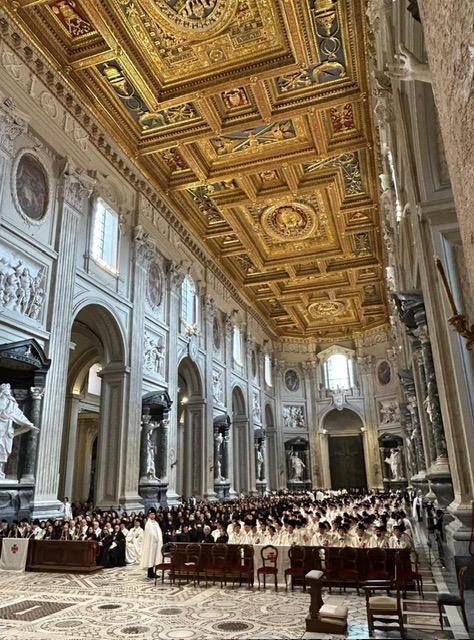
The following day, once again our cavalcade took us, more centrally, first to St John Lateran where we processed through the Holy Door and again our senses were overawed by this sumptuous and ancient Basilica. Following Mass celebrated again by Cardinal Filoni, we then had some time to find a trattoria for lunch before walking the quite short distance to the Basilica of St Mary Major, and time for private prayer and a pause before the icon of Our Lady cradling Our Lord called “Salus Populi Roma” – traditionally painted by St Luke, and which Romans say has saved the City, on one occasion from the plague. Pope Francis had a particular devotion to her which is why he chose to be buried there.
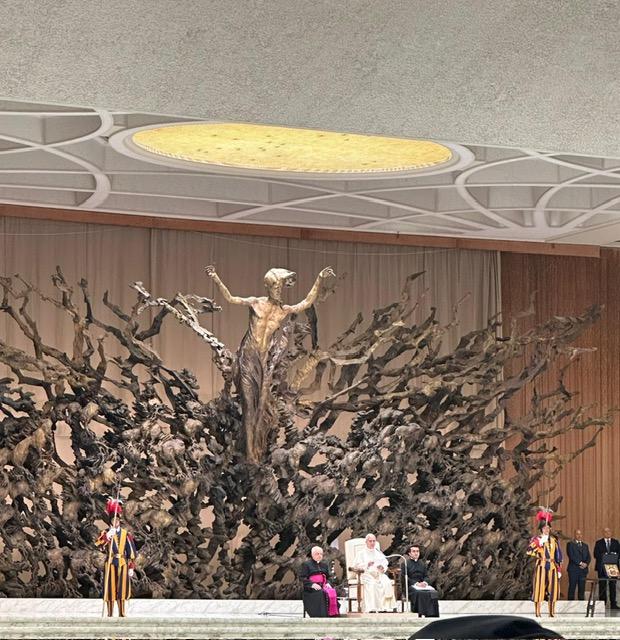
Our concluding day, Thursday 23rd October, began with all 3,700 of us assembling at the Vatican in the vast Paul VI Audience Hall, for our audience with the Holy Father. This was such a moving occasion, and Pope Leo spoke so warmly about the Order and its work: that today we are not merely preserving a piece of heritage, “but supporting a Church made of living stones which was born around it
and still lives today, as an authentic sign of Easter hope”. He emphasised three dimensions of hope to us: of trusting expectation; of service, like the women who went to the tomb; and of the goal to which we strive – “ pilgrimage … [symbolising]… the ultimate meaning of life”. He enjoined us to continue our work with his blessing “from my heart.” As Pope Leo departed, to join HM The King in the Sistine Chapel, we processed
through our fourth and final Holy Door to celebrate our culminating Holy Mass with Cardinal Filoni and, meditating on the gifts given us, of indulgence but as important the sense of joyous community and fellowship, we went on our way.
Our small group arranged two separate visits – in fact two of each, remarkably, for myself and a few others - as a result of the noble efforts by myself, Patrick Burgess, Peter Williams and the former head of the English Lieutenancy, HE Michael Byrne to cut through the holy bureaucracies of Rome. We went twice: on Monday and Thursday afternoon, to the Necropolis beneath St Peter’s. St Peter was buried around 64AD in a simple earthen grave beside Nero’s Circus where he had been crucified. Some fifty years later, “house tombs” of wealthy Roman merchants began to be built nearby. In the early 4th Century, these mausoleums were buried
when the hillside was levelled so that Constantine could build the first Basilica, with its High Altar directly above the apostle’s grave. In the 16th Century some of them were revealed when the foundations of the new Basilica, and Bernini’s baldacchino, were being laid. But it was Pius XII who encouraged the archaeological excavations
which began in 1939. So in October, we lucky pilgrims were able to walk along the 2nd Century path, some 10m beneath the floor of today’s Basilica, between the well-preserved pagan and early Christian tombs to the site of Peter’s burial, where “almost certainly” according to the archaeologists, some of his bones remain tucked in a cervice under the High Altar. We were overwhelmed!
And finally, the “Venerabile” – the Venerable English College: the only Catholic institution in Rome awarded that title by the Vatican, in memory of its antiquity and importance, in descent
from the “Schola Saxonum” probably the earliest pilgrims’ hospice in Rome most probably founded by King Ina of Wessex, who abdicated in 726AD and travelled to Rome where he was buried. The hospice was situated just to the East of the Basilica near today’s Via del Conciliazione. In 1362 a group of lay merchants purchased the site in Via di Montserrato, dedicated as today to St Thomas of Canterbury as a pilgrims’ lodging. It became a very important part of the Roman scene, and the English Embassy to the Holy See (the effigy of the last Catholic Ambassador, a bishop appointed by Henry VII, remains in the church). The “VEC” was established by Bull of Pope Gregory XIII in 1579. The ordained students returned to England where 44 were martyred between1581 and the early 17th Century. Today’s church is the third on the site, following devastation by Napoleon and subsequent decay. But the recent restoration has given us an absolutely spellbinding memorial,
The main emblem of the Knights of the Holy Sepulchre is the Jerusalem Cross
glistening with gold leaf and marble – but also a vibrant home for today’s seminarians. It must have been rather more chilling for their 16th Century forebears to celebrate Mass while looking at the graphic frescoes of their peers being hanged drawn and quartered in their homeland to which they were about to return.
My own favourite memory, as a Scot, is to see the
coat of arms of Henry, Cardinal Duke of York – every English cardinal’s coat of arms is displayed in the College; Henry’s carries the Royal Stuart shield and crown! And so, quite overwhelmed yet again, at almost a loss for words, we departed the College, for a magnificent Roman lunch before preparing for our return to the UK.
by Grok AI and Xavier Calmet
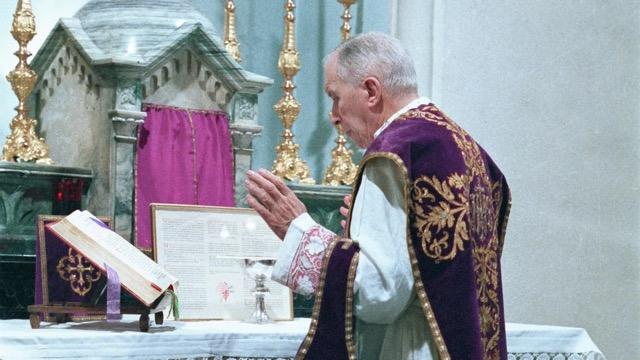
In an age of ceaseless noise and fleeting distractions, the Traditional Latin Mass—often called the Tridentine Mass or the Extraordinary Form—stands as a timeless sanctuary of reverence, mystery, and profound beauty. Rooted in the ancient rites of the Roman Church, codified at the Council of Trent in the 16th century, and celebrated unchanged for centuries until the reforms of Vatican II, this liturgy invites the faithful into a sacred encounter with the divine. Its beauty lies not in novelty or accessibility alone, but in its ability to elevate the soul, transcend the ordinary, and draw us closer to the eternal truths of our faith. As Pope Benedict XVI affirmed in his 2007 motu proprio Summorum Pontificum, this form of the Mass is a treasure of the Church, expressing the same lex orandi (law of prayer) as the newer rite but in a manner enriched by centuries of organic development.
The aesthetic splendor of the Traditional Latin Mass begins with its language: Latin, the tongue of the ancient Romans and the universal language of the Western Church for over a millennium. Far from being a barrier, Latin serves as a bridge to the sacred. It is unchanging, precise, and poetic, shielding the liturgy from the whims of cultural fads or regional dialects. When the priest intones "Introibo ad altare Dei" ("I will go unto the altar of God"), the words echo the psalms of David and the prayers of saints across ages. This linguistic continuity fosters a sense of catholicity—universality—that unites worshippers from every nation. In a fragmented world, where English alone might divide by accent or idiom, Latin whispers a shared heritage, reminding us that the Mass is not a local event but a participation in the heavenly banquet described in Revelation.
Visually and aurally, the Mass unfolds like a masterpiece of sacred art. The priest, facing ad orientem (towards the east, symbolising Christ the rising Sun), leads the congregation in a unified gaze toward God rather than toward each other. This orientation is no mere tradition; it embodies the sacrificial nature of the Eucharist, where the priest acts in persona Christi, offering the unbloody sacrifice of Calvary anew. The elaborate vestments—chasuble, maniple, and biretta—evoke the splendour of the Old Testament priesthood, adorned as if for a royal court. Gregorian chant, the Church's official music, fills the air with melodies that ascend like incense, free from the rhythms of popular song. Polyphony may interweave, creating a sonic tapestry that lifts the heart heavenward. Silence, too, plays its role: profound pauses after the Consecration allow the mystery of transubstantiation to resonate in the soul, unhurried by acclamations.
At the heart of this beauty is the Mass's profound theology, expressed through ritual precision. Every gesture—the sign of the cross repeated 52 times, the genuflections, the kissing of the altar—carries symbolic weight, teaching catechism without words. The Canon of the Mass, whispered inaudibly by the priest, veils the most sacred moments in awe, inviting contemplation rather than spectacle. This "mystery of faith" is not obscured but heightened,
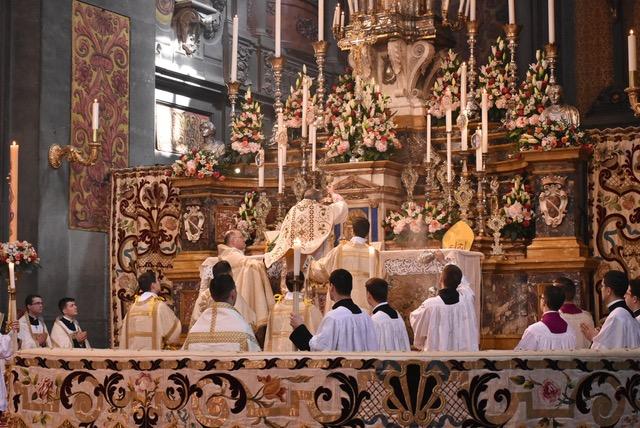
The fruits of this liturgy are evident in the lives it has shaped. Saints like Thérèse of Lisieux and Padre Pio drew spiritual nourishment from its depths, finding in its rigour a path to holiness. Those who attend the Traditional Mass often speak of a deepened prayer life, a greater sense of the supernatural, and a detachment from worldly concerns. It challenges us to prepare—through fasting, confession, and study—rather than arriving casually. Yet this demands nothing less than what Christ asks: "Take up your cross and
drawing us into the apophatic tradition of knowing God through what He is not.
For St. Thomas Aquinas the Eucharist is ‘the sacrament of sacraments,’ containing Christ Himself and perfecting all the others, the very culmination and perfection of the Christian life. Nowhere is this truth more palpably expressed than in the ancient Roman rite, where every gesture and prayer directs the soul to the sacrificial reality of Calvary made present.
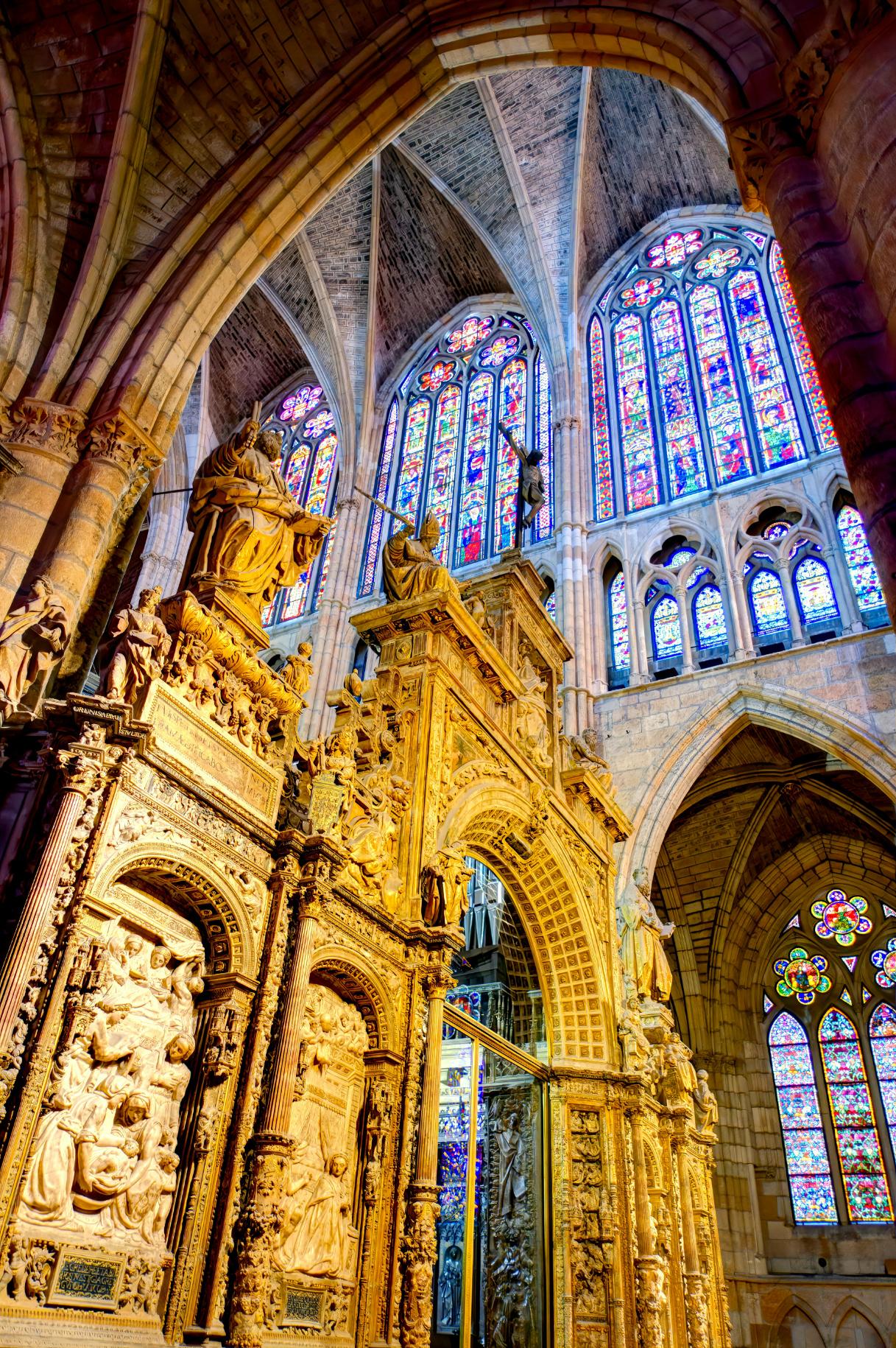
celebrate this gift, inviting all to experience its transformative power. May it inspire us to live the Mass beyond the pews, offering our lives as a pleasing sacrifice to God.
follow me." Critics may argue that Latin excludes the uninitiated or that the rite feels distant. But beauty, true beauty, often requires effort to apprehend. Just as one studies Shakespeare to savour his sonnets or trains the ear for Bach's fugues, so the Traditional Mass rewards the seeker. Missals with side-by-side translations make it accessible, and its universality means a traveller in Tokyo or Rome can join seamlessly. Pope St. Pius V, in standardising the Missal in 1570, preserved this rite against Protestant simplifications, ensuring the Church's worship remained a bulwark of orthodoxy.
Ultimately, the beauty of the Traditional Latin Mass is the beauty of Christ Himself—veiled in humility yet radiant in glory. It calls us to worship in spirit and truth, where earth touches heaven. In our Parish Proclaimer Magazine, let us
by Antonia Moffat
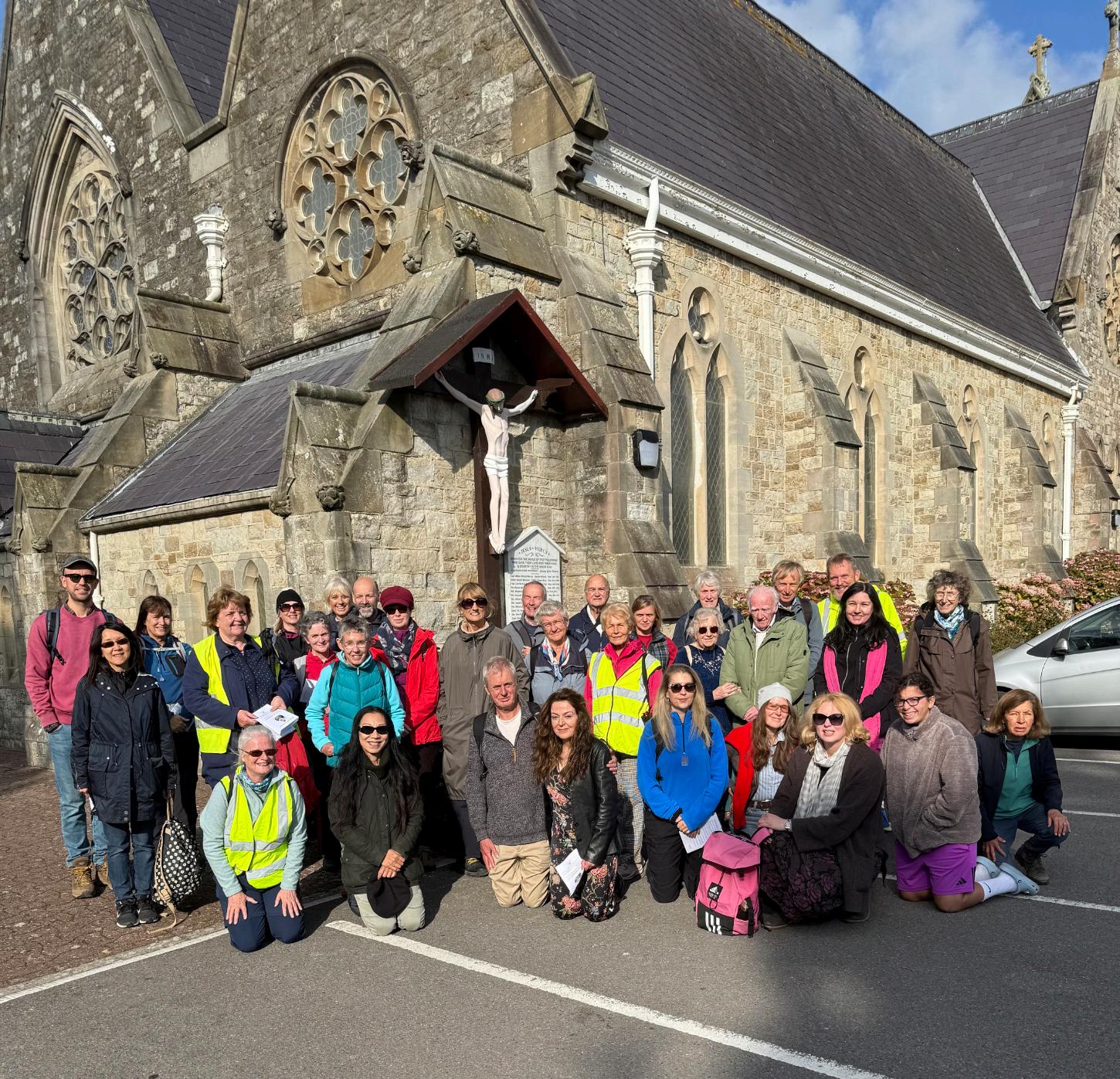
At St Catherine’s Littlehampton
“Blessed are you, pilgrim, if you find that the Camino is rich with silence, and the silence is rich with prayers, and the prayers are encounters with the Father that awaits you.”
On Saturday September 27th 2025, the Friends of Arundel Cathedral organised a Pilgrimage Walk from Littlehampton to Arundel in honour of St. Philip Howard. It was a joy to have the support and participation of priests and people alike from both Arundel Cathedral and St. Catherine’s, Littlehampton. We also appreciated the generous hospitality of the Benefice of Clymping, Yapton and Ford for allowing us to use the beautiful church at Ford for prayer at lunchtime. The inspiration behind the Pilgrimage was to encourage participants to learn more of our local Saint, and of his spirituality. A Rosary of intercession, which included quotes from St. Philip Howard, was prepared so that pilgrims might discover St. Philip as a powerful intercessor.
The Pilgrimage began at the parish church of St. Catherine of Alexandria as Littlehampton is near to the place of the arrest at sea, in 1585, of St. Philip Howard. It was from here that he was taken to the Tower of London. St. Catherine of Alexandria is considered the patroness of pilgrims, due to the medieval pilgrimage to Mount Sinai, to visit her tomb, where many healings took place. Holy Mass was celebrated by Fr Boniface Akpoigbe, MSP.
Fr Boniface then sent us on our way with a Pilgrim Blessing. This reminded us of the ancient pilgrim routes, alongside those of modern times, which witness faithful pilgrims travelling to Holy Shrines. We then congregated at the great Crucifix outside the Church, which commemorated the Fallen of both WWI and WW2. There we prayed our Pilgrim Prayer, had group photos taken, and instructions given, and set off on our 6.5 mile pilgrimage journey via Ford to Arundel.
“Blessed are you, pilgrim, if you discover that a step backwards to help one another is more valuable than one hundred forward without awareness of those at your sides. “
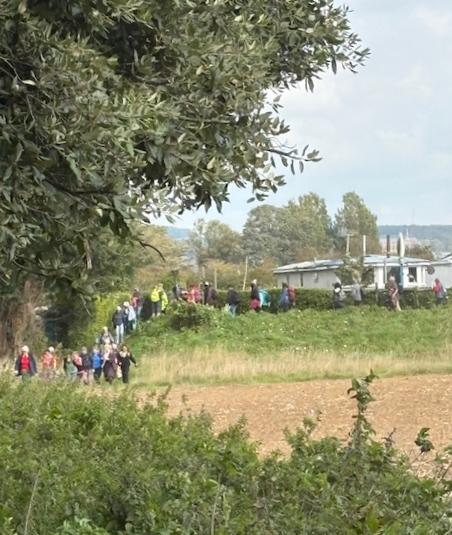
area, heralded entrance onto the river bank, where we began to intersperse our walking with the praying of the Rosary, followed by short periods of silence.
Special intentions were prayed for the Conversion of England, in special intercession for the King, Royal Family, Prime Minister, Government, Members of Parliament, Members of the House of Lords, and for all
The initial walk took us adjacent to Littlehampton seafront, and then along by the Harbour and Marina, and Arun River approach. This was a time to establish the pace of the walk, and to encounter fellow pilgrims. Once we had walked beside the Marina we crossed over the Red Bridge (footbridge), which eventually led us to the footpath alongside the Arun River which would take us to Arundel. A small, wooded
"Speak,
Lord, for your servant is listening”
is a biblical prayer from 1 Samuel 3, spoken by the young boy Samuel to God. It signifies a posture of humility and readiness to hear and obey God's will, and is a prayer used by people seeking guidance and a deeper
political leaders and diplomats in both national and local Government. We also prayed for the needs of Holy Church, for the Diocese of Arundel and Brighton and for the missionary outreach of all our parishes. We would pray a decade of the Rosary and sing the short Ave chorus before entering into ten minutes of silent prayer and contemplation. These moments of the pilgrimage were amidst the glorious countryside of West Sussex, alongside the river Arun with beautiful Arundel before us - vision of our Camino end! The sun was shining, the birds singing, the grasses gently flowing in the breeze, and all contributed to our moments of contemplation and silent listening with the Lord.
We were graced with glorious scenes from the green and pleasant lands of rural Sussex. We noticed nature we perhaps had never pondered before, a rare Kingfisher sighting, a gift beyond compare for some of us! It was an interesting moment to encourage the group into silence! It took a while for some to realise its treasure and spiritual gift.
spiritual connection. The silent times over we would continue with our merry chats, and interesting encounters. Dog walkers and companions would pass us and wonder what we were doing! Interesting conversations sometimes ensued!
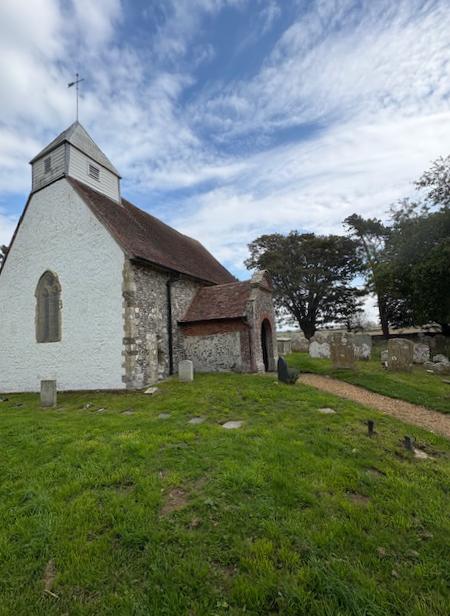
At Ford, we stopped at St. Andrew’s, a tiny stone church dating back to the 11th century, for prayers, and the noon day Angelus. A much appreciated packed lunch in the grounds of the Church followed. The final three miles still before us - destination Arundel Cathedral. Further Rosary decades were prayed, followed by a deeper entering into the silence of the Pilgrimage.
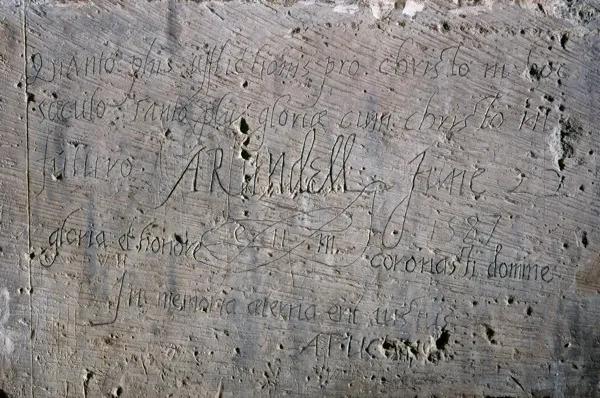
“There is none in the world I have offended so much as yourself”.
As he lamented his treatment of her before his conversion. St Philip inscribed in Latin over the fireplace in the Beauchamp Tower, which visitors to the Tower of London can still see:
‘The more affliction we endure for Christ in this world, the more glory we shall obtain with
Pondering upon powerful words of St. Philip Howard. Philip’s conversion happened gradually, after listening to the powerful testimony of faith of St. Edmund Campion, in the days leading up to his trial on November 14th 1581 when St. Edmund Campion said to the jury:
“In condemning us, you condemn all your own ancestors, all our ancient bishop and kings, all that were once the glory of England – the island of saints, and the most devoted child of the See of Peter”.
St. Philip Howard was stripped of all luxury, books, and things of interest in his prison cell in the Tower of London, the very opposite of the 11 years he had spent in court when every luxury and honour was afforded him. St. Philip’s greatest trial was his separation from Anne his wife and children. Sometime after his conversion in 1584 he wrote:
Christ in the next”. 22 June 1587 “The Catholic Faith which I hold is the only cause why either I have been thus long imprisoned, or why I am ready to be executed”.
“Father, into your hands I commit my spirit”.
St. Philip would pray this each night, not knowing whether he would live or die. October 19th 1595, aged 38 would the moment of his final committal to the Lord.
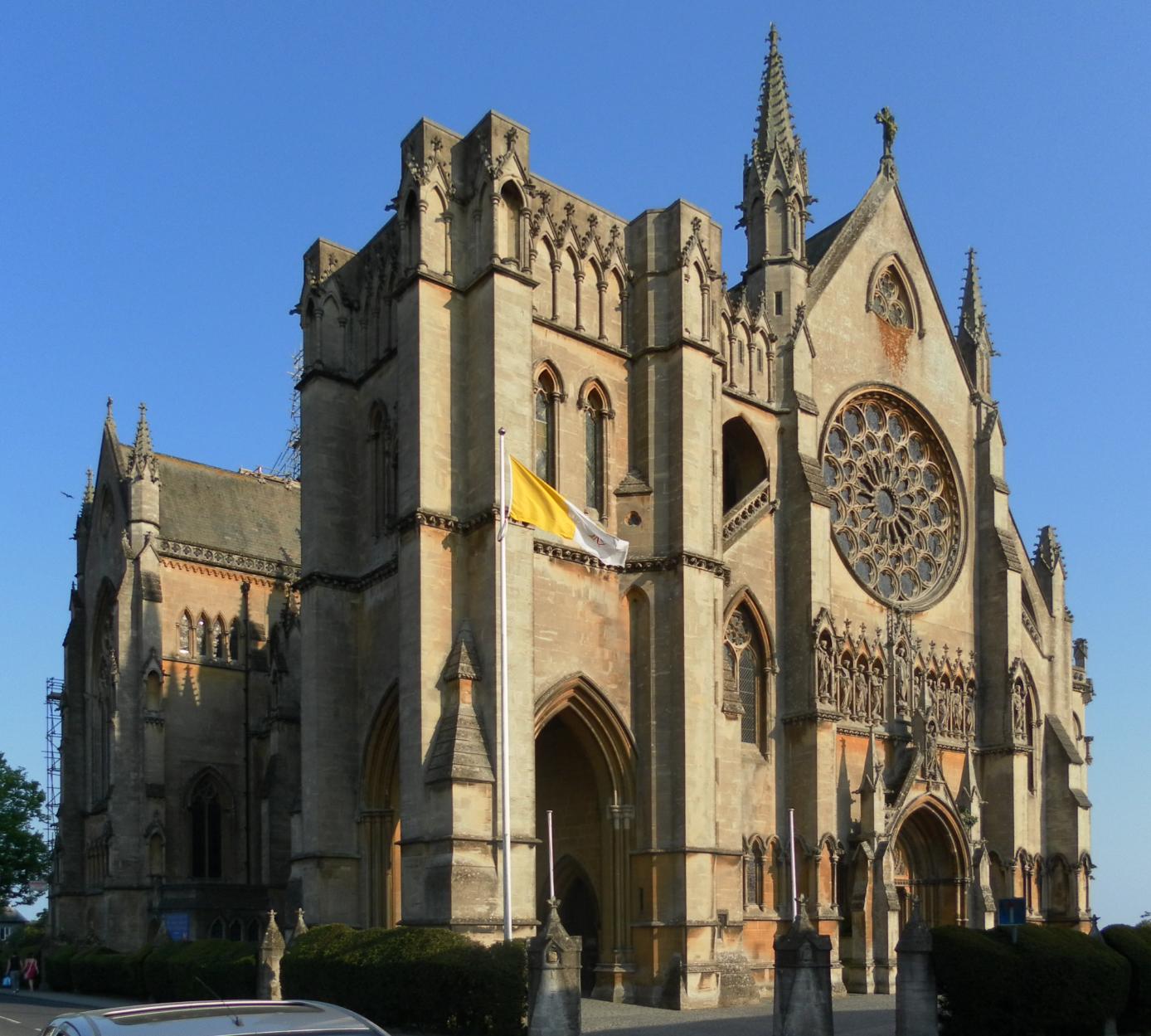
And so we arrived, having climbed the only hill of the pilgrimage, to Arundel Cathedral for Benediction. As we entered in, people were drawn to the Tabernacle, to Our Lady, and St Philip’s tomb and shrine to pray. We entered into a time of silent prayer, before Fr Stephen Dingley came to give us Benediction of the Blessed Sacrament, and led poignant prayers at the Shrine of St. Philip Howard. We ended with the singing of Faith of our Fathers. We sang knowing that Christians today, in many parts of the world, know the reality of this hymn, and are giving their lives for their faith in
Jesus Christ, our Lord and Saviour. They live the reality of this hymn today, as St. Philip Howard knew the reality of it during his 11 years incarcerated in the Tower of London.
Our Fathers, chained in prisons dark, were still in heart and conscience free; how sweet would be their children’s fate, if they, like them, could die for thee! Faith of our fathers, Mary’s prayers, shall win our country back to thee; and through the truth that comes from God our land shall then indeed be free.
We then adjourned to the Cathedral Centre for the traditional Arundel hospitality of tea and cakes, post pilgrimage chat and joyful encounter.
St. Philip Howard pray for us.
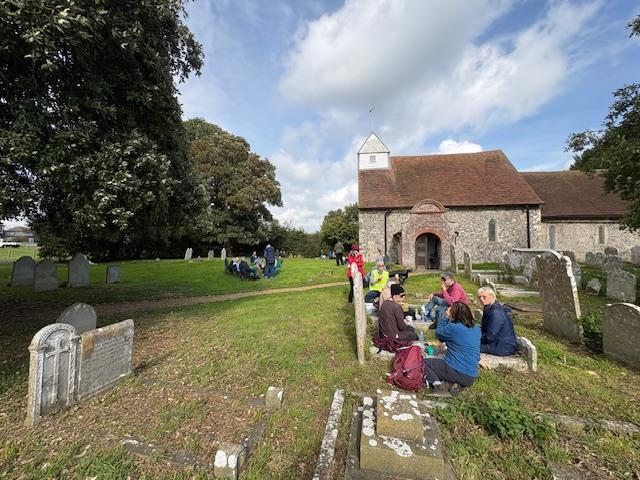
Lunchtime break for the pilgrims
by Nicki Strudwick
This prose hopefully reflects how creation infinitely works together for the glory of God.
The early morning mist, Rolls over the land, The sheep are left to feed, In the corner.
The shepherd will return And count the flock
At the eve of the day. The rose hips and brambles Have strewn themselves And tangled around trees Amongst gold leaves. The last of the berries Give one last push
As they anchor on stems
The last harvest.
As the sun begins to rise
The mist will go And fallow deer shall graze On dewy grass.
Spiders webs will sparkle

Like precious jewels
Catching golden sunlight. Bracken fills the woodland And grandfather's beard Little , spotted toadstools Shyly appear,
Add to the musty air. The leaves make a display Autumns finest, Natures glorious hues Cascading down. Oak,Ash Hazel Red maple , Spindle berry
The Horse chestnut Will bear it's prickly fruit. Only Pines and the Yew Remain the same They will protect the life Which hunkers down From the icy winter! xxxxxxxxx
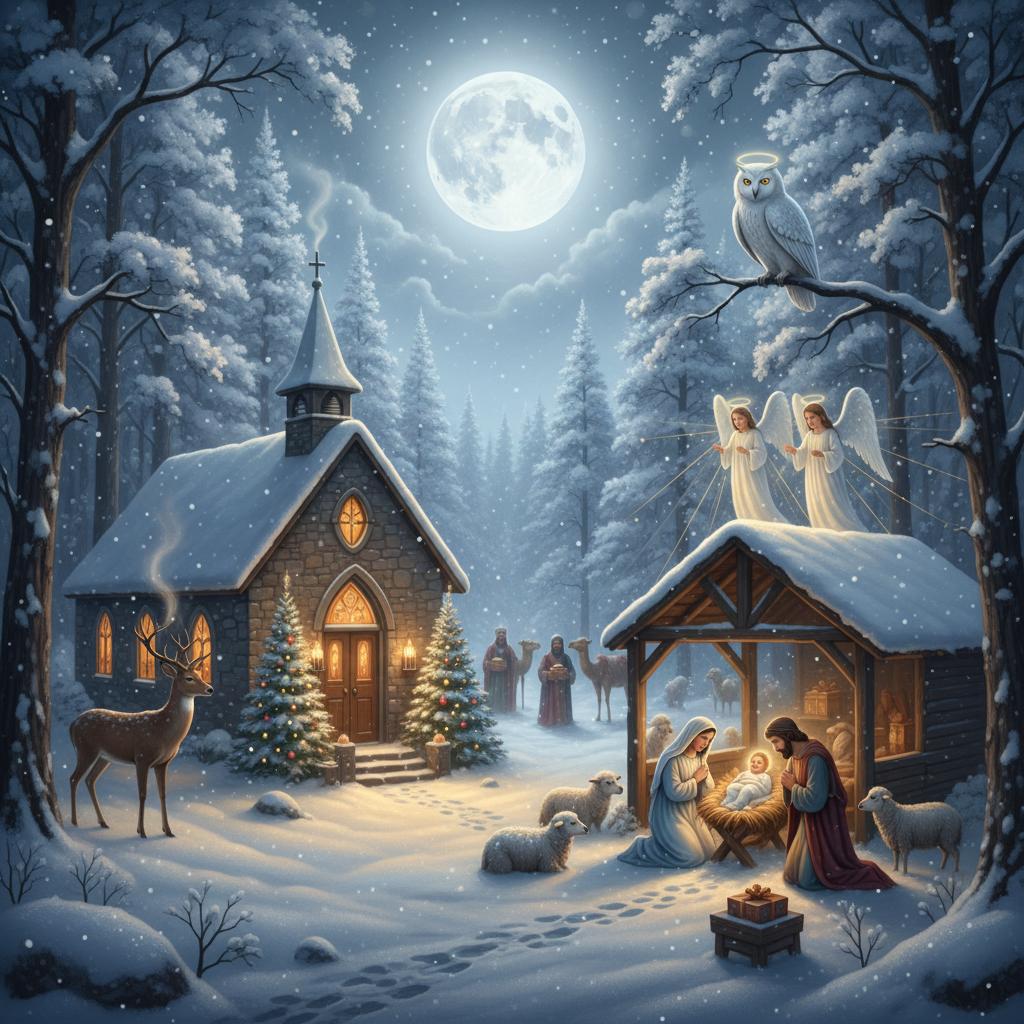
A little church sits still, In the valley. Snow is quietly falling. From the frozen forest
A silent deer, Creeps forward....watching. Branches powdered with snow Glisten with light Stand proudly.,overall. The moon is extra bright And lonely owl Sits heralding wisdom. Candle light flickering In the old church, Christmas pine and warm spice, Orange and cinnamon All feel the air.
Let midnight mass begin Heavens angels
by Nicki Strudwick
Holy voices,singing
To the newborn Jesus Christ
Mary, Joseph
Shepherds,sheep and wise men
Brought precious gifts from afar Knelt and adored
The Saviour of the world
Tonight of all the nights
A child is born
Silent night, Holy night !
Nicki Strudwick
by Lizzie Cousins
In recent decades, Western societies have been operating under the assumption that we were marching toward a secular future, one where religion would increasingly fade from public life. However, a growing body of evidence—like The Telegraph's recent report on the "extraordinary comeback of Catholicism" in the UK—has convinced me that we are, in fact, living in a post-secular age. As a public theologian, I see this shift not just as a sociological trend, but as a profound reengagement with fundamental human questions that echo the ancient wisdom of texts like the Book of Ecclesiastes.
I've come to understand that a "post-secular society" challenges the idea that modernization automatically leads to the decline of religion. Instead, I see it as a landscape where religious and spiritual worldviews are once again visible in the public sphere. This isn't a simple return to a pre-modern religious dominance; it's a more complex reality where faith traditions and secular perspectives coexist and contribute legitimate voices to our public discourse.
As we heard recently at Mass, an ancient parallel to this contemporary spiritual yearning can be found in the Book of Ecclesiastes. Its iconic refrain, "Vanity of vanities, all is vanity" (Ecclesiastes 1:2), or, more accurately, "Utter futility, everything is futile," speaks directly to our modern search for meaning. The Hebrew word, hevel, means something fleeting and insubstantial, like a breath or a vapor. The Preacher (Qoheleth) systematically explores and dismisses the ultimate satisfaction found in wisdom, pleasure, wealth, labour, and power, concluding that all these, when pursued as ends in themselves, are ultimately hevel—like grasping at wind.


deepest human longings has often fallen short.
I see the "meaning crisis," the rise of anxiety and mental health challenges, and a pervasive sense of emptiness in affluent societies as modern manifestations of Qoheleth's ancient lament. The relentless pursuit of consumerism or professional success can leave people feeling unfulfilled, much like the Preacher's experience of "toiling under the sun."
For much of the modern era, secular frameworks promised a vision of human flourishing rooted in material progress, individual autonomy, and scientific advancement. While these have brought undeniable benefits, I believe their promise that they alone could satisfy our
faith traditions into a language that is accessible and relevant to wider public debates. In this post-secular context, I can articulate how the wisdom of Ecclesiastes speaks to our contemporary discontents. I can help society understand that the spiritual hunger driving the resurgence of faith isn't merely a private preference; it has profound implications for how we construct our common life, pursue justice, and define human flourishing.
The Telegraph's article on the resurgence of Catholicism in the UK gives us empirical support for this spiritual hunger. It highlights that young Britons in particular, are turning to faith in search of "meaning, community, and a deeper sense of tradition and moral clarity." This suggests to me that the "vanities" of a purely secular existence are proving insufficient. People are seeking something more substantial and enduring. The structured community, rich tradition, and transcendent claims of faith offer a compelling alternative to the perceived futility of a life lived solely within a purely secular framework.
Theology: Articulating Ancient Wisdom for Modern Times
This re-engagement with faith presents a crucial opportunity for my field of public theology. I believe public theology is not about imposing religious dogma, but about translating the profound insights of
By drawing on texts like Ecclesiastes, I can offer a critical perspective on societal values that prioritize accumulation and transient pleasures. I can advocate for a vision of human dignity and community that transcends mere utility or material gain, reminding us that true well-being might lie in pursuits that are not hevel—pursuits connected to ultimate meaning, ethical living, and enduring relationships. This encourages a dialogue where faith-based arguments, rooted in ancient wisdom, can be presented and engaged with, enriching our public conversations about the kind of society we wish to build.
I've seen the notion of a purely secular society, where religion fades into irrelevance, increasingly challenged by both empirical evidence and lived experience. The "extraordinary comeback of Catholicism" highlighted in The Telegraph is a powerful testament to the enduring human search for meaning and community, a search that resonates deeply with the ancient wisdom of Ecclesiastes. From my vantage point in public theology, I don't see this as a regression, but an evolution towards a more complex and potentially richer public sphere. Embracing our postsecular reality means recognizing the ongoing, vital role of faith in shaping values, informing ethics, and contributing to the common good, offering a compelling counter-narrative to the "vanity of vanities" and pointing towards a more enduring hope.
by Lucy Horne

This will be the final article I write for the Parish Proclaimer, in my role as headteacher of St Philip’s Catholic Primary School. I have been very fortunate to have held the privileged position at the school for many years and am grateful for all the support I have received from the parish during this time. It is now time to hand the reins over. But, before then, I have time to share with you some of the highlights of the Autumn Term.
Every year we ask families to support the Cathedral in their Love in a Box charity. As always, our families rallied and produced boxes to add to the collection. It is always a really enjoyable activity
which involves the children and also gives them a sense of achievement in helping others.
During Harvest Festival time, the children sang songs and read prayers about thanking God for the harvest. We talked about how ‘harvest’ looks - across the world. The children all brought in donations from home for our harvest collection. A trustee came into school to talk to the children about the work that Littlehampton foodbank does and how they support local families. This is where our large collection of food goods was donated.
In October we were part of the Mayor’s service held at the Cathedral. It was a wonderful opportunity to welcome the new Mayor of Arundel into the community. We were able to sing jointly with Arundel C of E school’s choir, many of our children attended in their Guide and Scouting troops and some sang as part of the Cathedral choir. It is always a highlight in the school calendar.
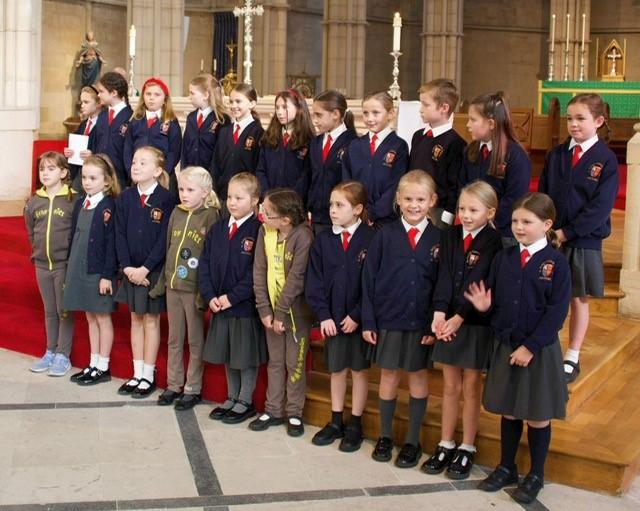
At the Mayor’s service in Arundel Cathedral
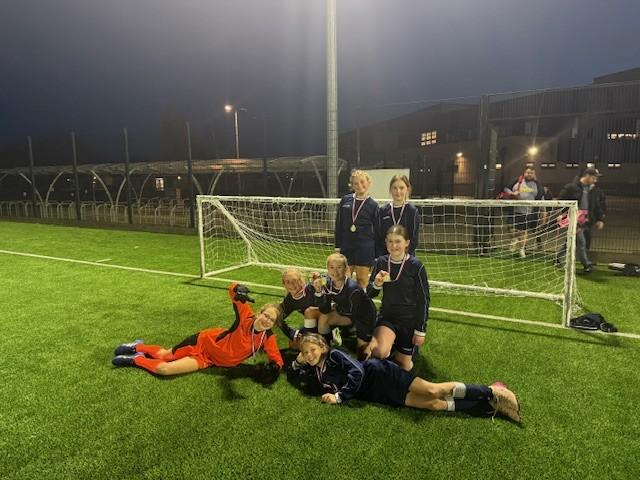
team took part in the Locality football tournament and were undefeated. They lost out on first place on goal difference but will still go through to the finals to represent the Locality at the Southern Area finals.
Our Year 6 girls football team took part in a Locality tournament with local schools and played amazingly well. They showed energy, control and great sportsmanship and worked together as a team. They were undefeated and
On a sunny October afternoon our Year 6 football team were invited to a football tournament at Dorset House. Here, they played in a small schools’ tournament against a range of schools in the area. Our team won their group stage and then played in the final against the winners of the other group stage. We were delighted to win the final and return home triumphantly with the cup and medals. A great way to end the half term. The same
individual first place for two of the races, 2nd place for one and 3rd for the other race. The teams did extremely well too, winning one of the races and coming second in the others. The winning team and individual runners will now go through to the next round which will take place in Windlesham in January.
Many thanks go to our PE lead, Mrs Footman, for her expert training.
conceded no goals. They will now, also, go through to represent the Locality group of school in the Southern Area final.
Over thirty children took part in a cross-country event at The Littlehampton Academy. This was a competition for local schools. There were four separate categories and we won the

Our boys football team
Our class of Year 6 travelled by train to a sporting event at St Philip Howard secondary school in Barnham. They participated in a tournament against St Mary’s Bognor and St Richard’s in Chichester. The class had a great time and were especially pleased as they won the event.
Many of our children took part in the Remembrance Sunday parades and services in the local area. Many took part in the Scouting and Guiding movement and three of our children took part in the service by reading a poem and laying a wreath. It is always an important and well
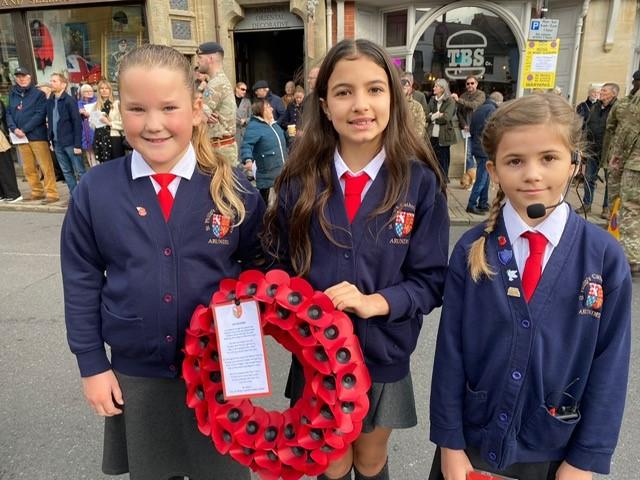
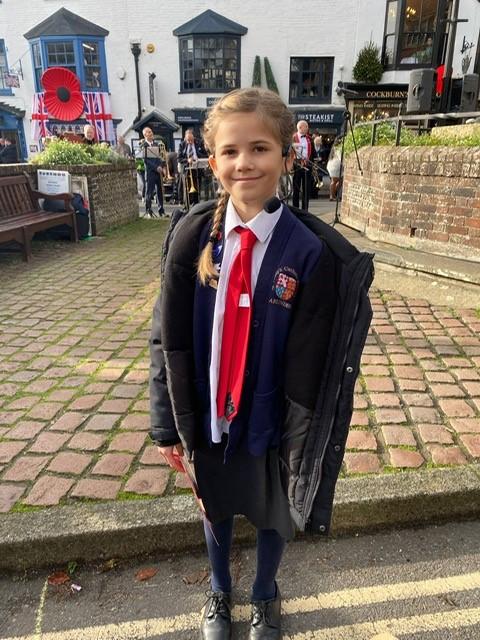
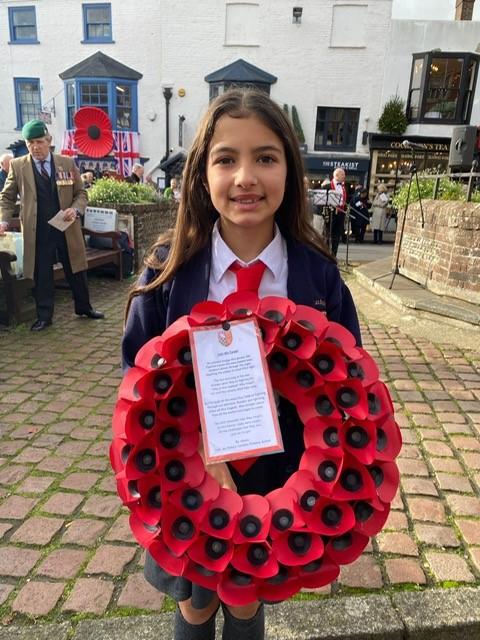
attended event. Our Year 6 children all write Remembrance poems and the best one is selected to be read at the service. In school we said Remembrance prayers and learned about the significance of Remembrance day. We also held a two minute silence and sold poppies for the Royal British Legion.
We held two Open days for prospective parents of children who are due to start Reception Class in September 2026. The days were a great success where families were able to see the school in action. If you or someone you know is looking for Reception places then please do contact the school on 01903 882115 or by email on office@st-philisp.w-sussex.sch.uk to arrange a tour.
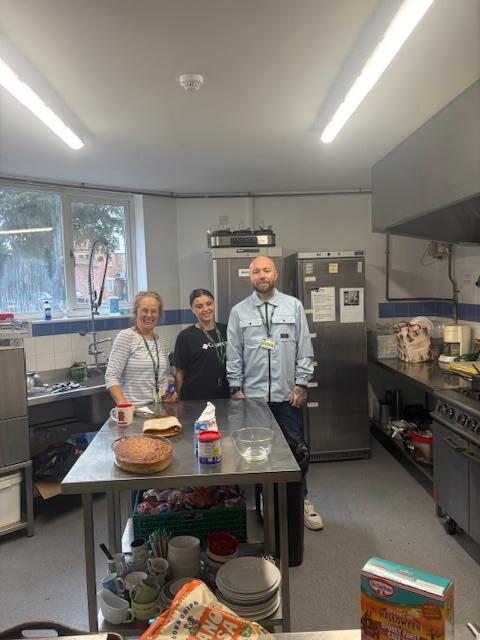
by Michael & Melinda Heathcote
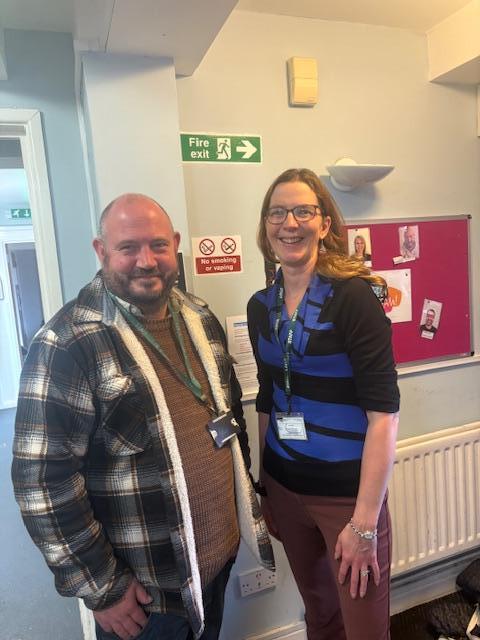
Arundel Cathedral and Our Lady of England, Storrington support the Stonepillow homeless charity with donations of food and toiletries. We regularly take these donations to the Hub at Chichester. On our recent visit in October we met the Manager, Liam O’Hagan, and the Head of Income Generation, Jenny Jackson, who kindly showed us around the building and explained what they do.
Stonepillow’s philosophy is “We believe the recovery from homelessness isn’t just about a roof over your head, it’s about rebuilding a life”. Rough sleeping has increased 26% in the last 5 years and the need is growing.
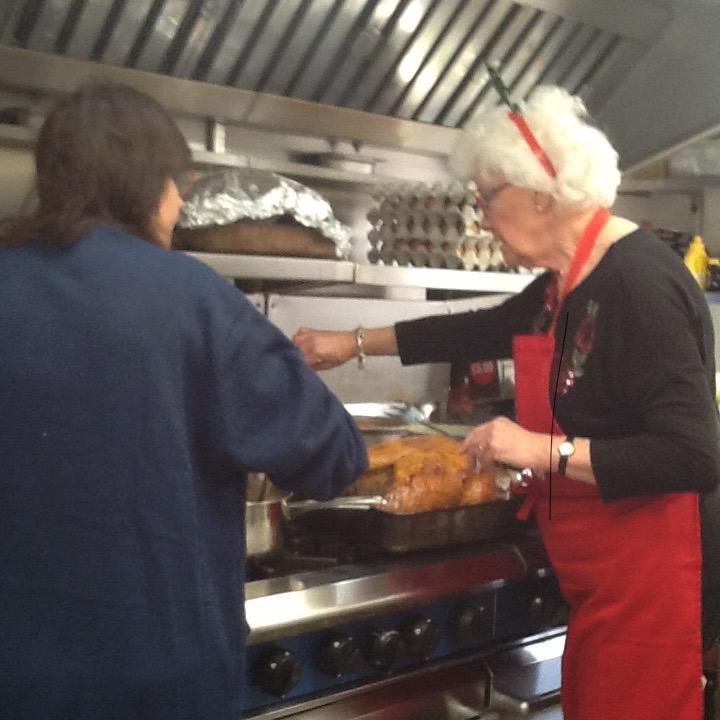
Brenda Lumbard, volunteer cook, one Christmas
Stonepillow operates two Hubs and two Hostels, one each in Chichester and Bognor Regis. Working as drop-in day centres, the hubs are a first port of call for anyone who finds themselves homeless or in crisis. They meet basic needs such as showers, laundry facilities, hairdressing, hot meals, tea and coffee, and a place to chill-out. They give clients specific information and the opportunity to apply to other services and also have an integrated health team for mental / physical / drug problems etc. This includes a GP and dentist.
The Hostels offer bedrooms and communal facilities and are open 24 hours a day 7 days a week.
The charity operates a 5 Pillar Pathway –
1. Prevent - keeping people in their homes before they lose them;
2. Relieve – meeting urgent needs with compassion;
3. Recover - safe shelter, counselling and specialist help;
4. Resettle – moving into stable and appropriate housing;
5. Restore – education, training, volunteering work, and community connections.
We were very impressed with the charitable work of Stonepillow, and they expressed great gratitude for the donations of food and toiletries, which are very welcome to help support their clients.
We will put dates of future fundraising events in the Parish Newsletter.
by Kerry Johnston
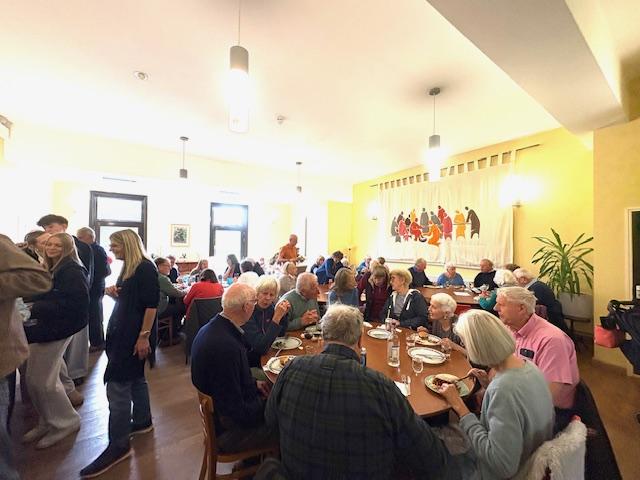
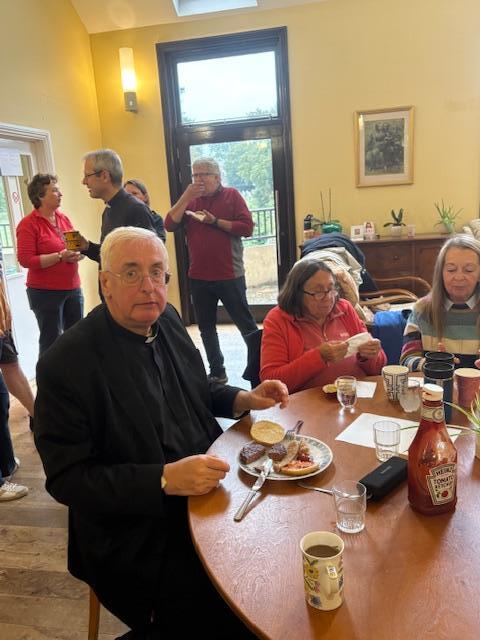
Arundel and Storrington parishioners came together in September for a joint BBQ in the refectory at Our Lady of England, kindly offered for our use by Saba and Sama of Chemin Neuf. The first bad weather of the season forced the event to be indoors which had the unexpected benefit of bringing people literally closer together. With both Arundel and Storrington being equally represented parishioners found themselves shoulder to shoulder sharing stories. Games kept the younger
generation entertained while plenty of conversation and shared faith made for a memorable afternoon. Many parishioners contributed by cooking, bringing homemade dishes, and lending a hand throughout the day. We look forward to hosting more events like this in the future.
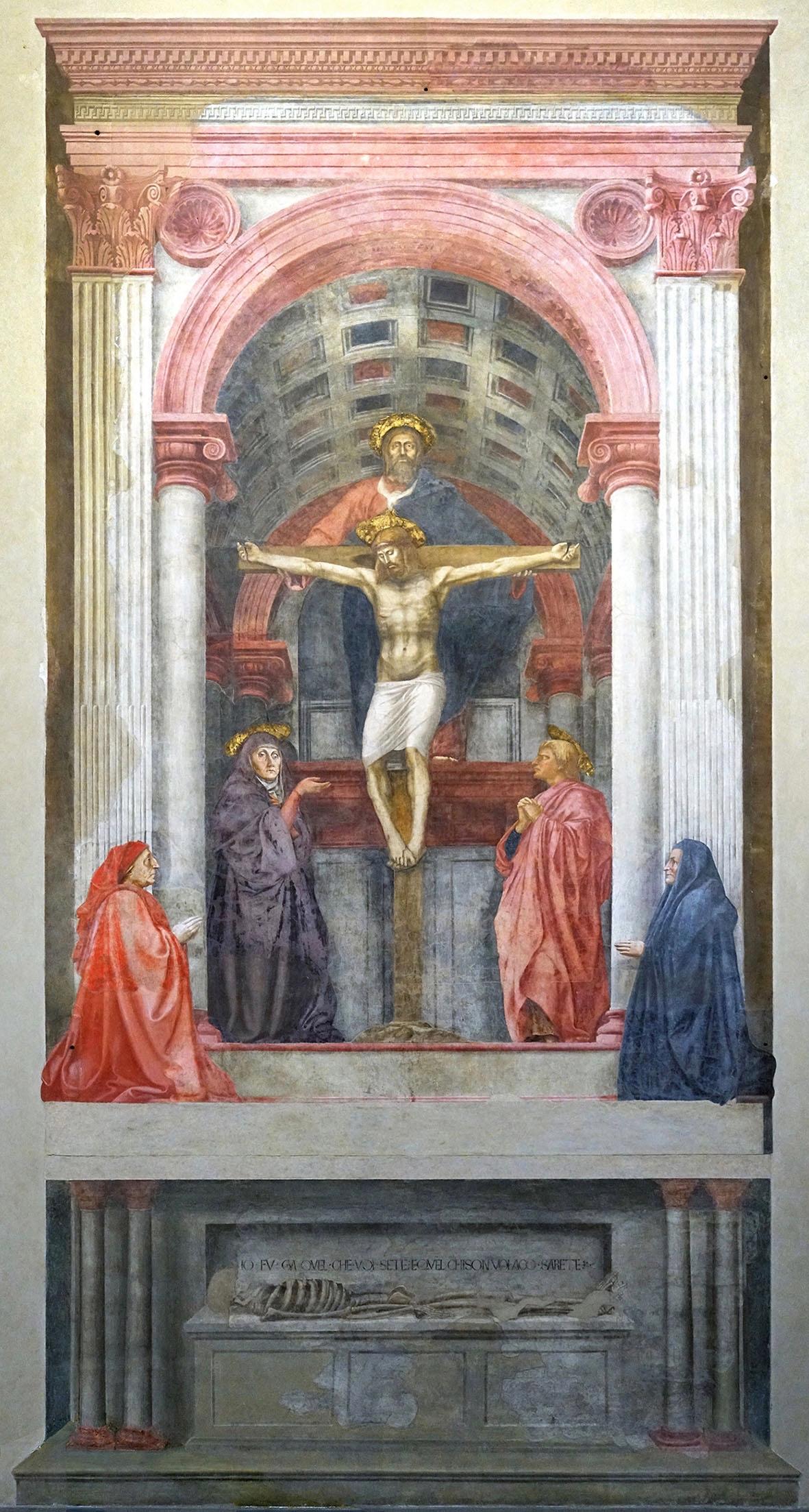
by David Clifton
The Benedictine monk, Bede Griffith wrote:
‘Every religious doctrine always ends in mystery. According to Christian faith the mystery of the Godhead is revealed as a Trinity.’(1)
The word ‘mystery’ here is not meant to indicate a puzzle, like a ‘whodunit’; something to be worked out, solved. Nor does it mean some kind of secret knowledge. Mystery is not essentially about knowledge, or about understanding. It is something which inspires awe or wonder.
Cardinal Hume says of ‘mystery’: ‘This has nothing to do with the notion of puzzle, of the inexplicable. Mystery means instead an endlessly rich and unfolding truth which our unaided powers of reason could never have discovered but which leads us ever more deeply into the life and love of God, which is endless, infinite and ultimately beyond our individual comprehension.’(2)
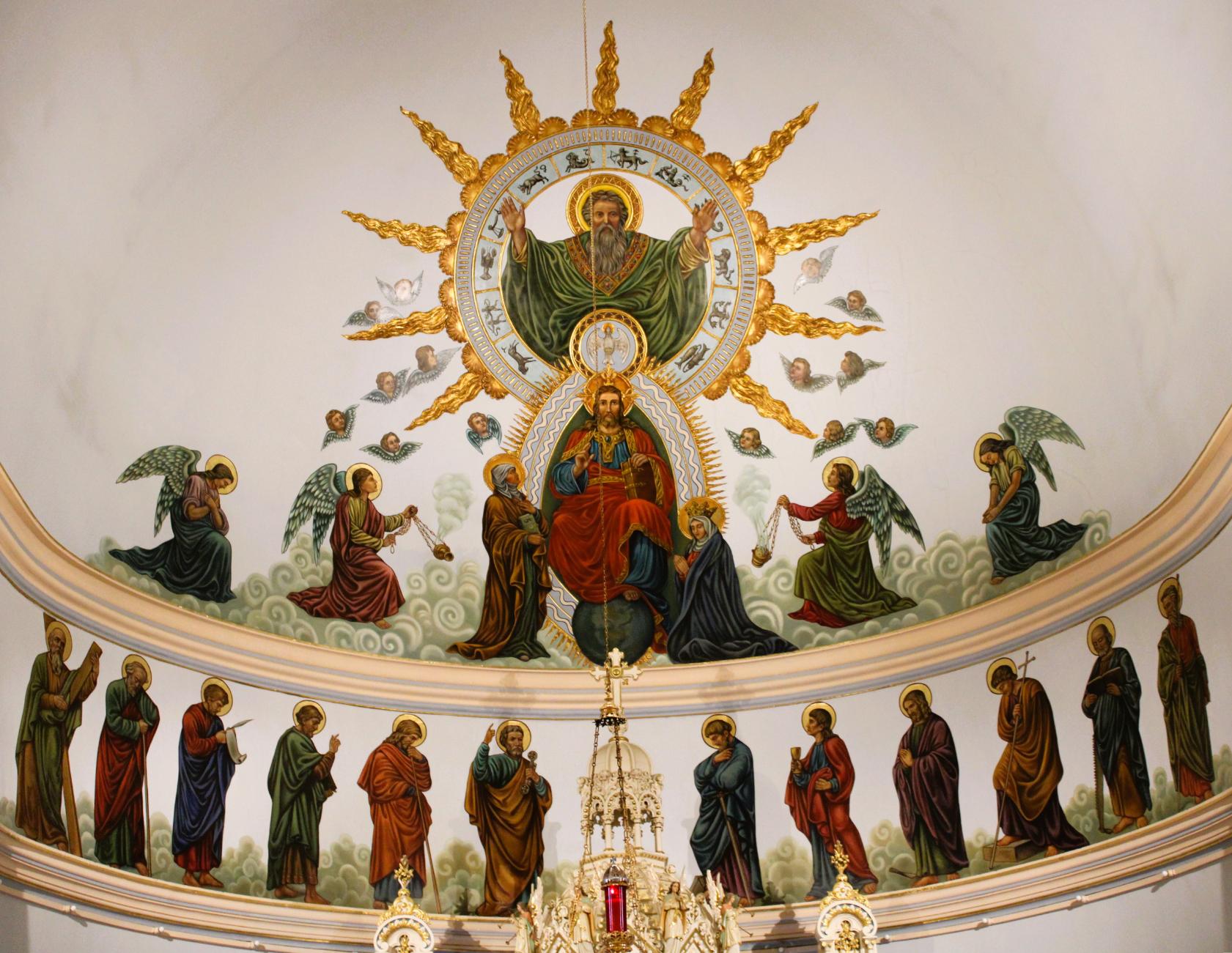
A full understanding of the Trinity is impossible. To understand God completely we would have to be at least equal to God, if not greater. But that does not mean that we cannot come to some little understanding of it.
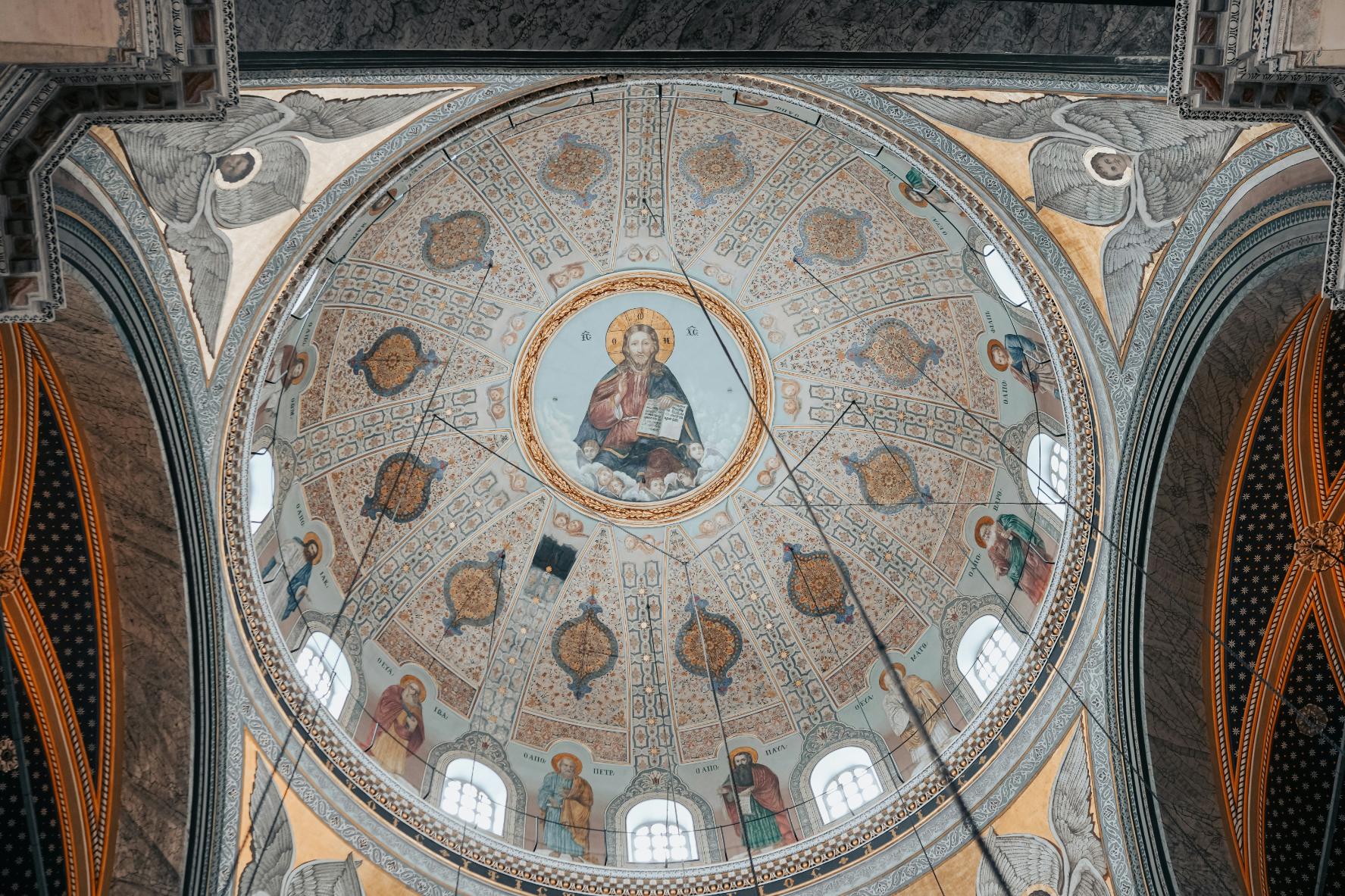
The Catechism of the Catholic Church says, ‘The mystery of the Most Holy Trinity is the central mystery of Christian faith and life. It is the mystery of God in himself. It is therefore the source of all the other mysteries of faith, the light that enlightens them. It is the most fundamental and essential teaching in the ‘hierarchy of the truths of faith’. The whole history of salvation is identical with the history of the way and the means by which the one true God, Father, Son and Holy Spirit, reveals himself to men and reconciles and unites with himself those who turn away from sin.’(3)
Why is there a Trinity?
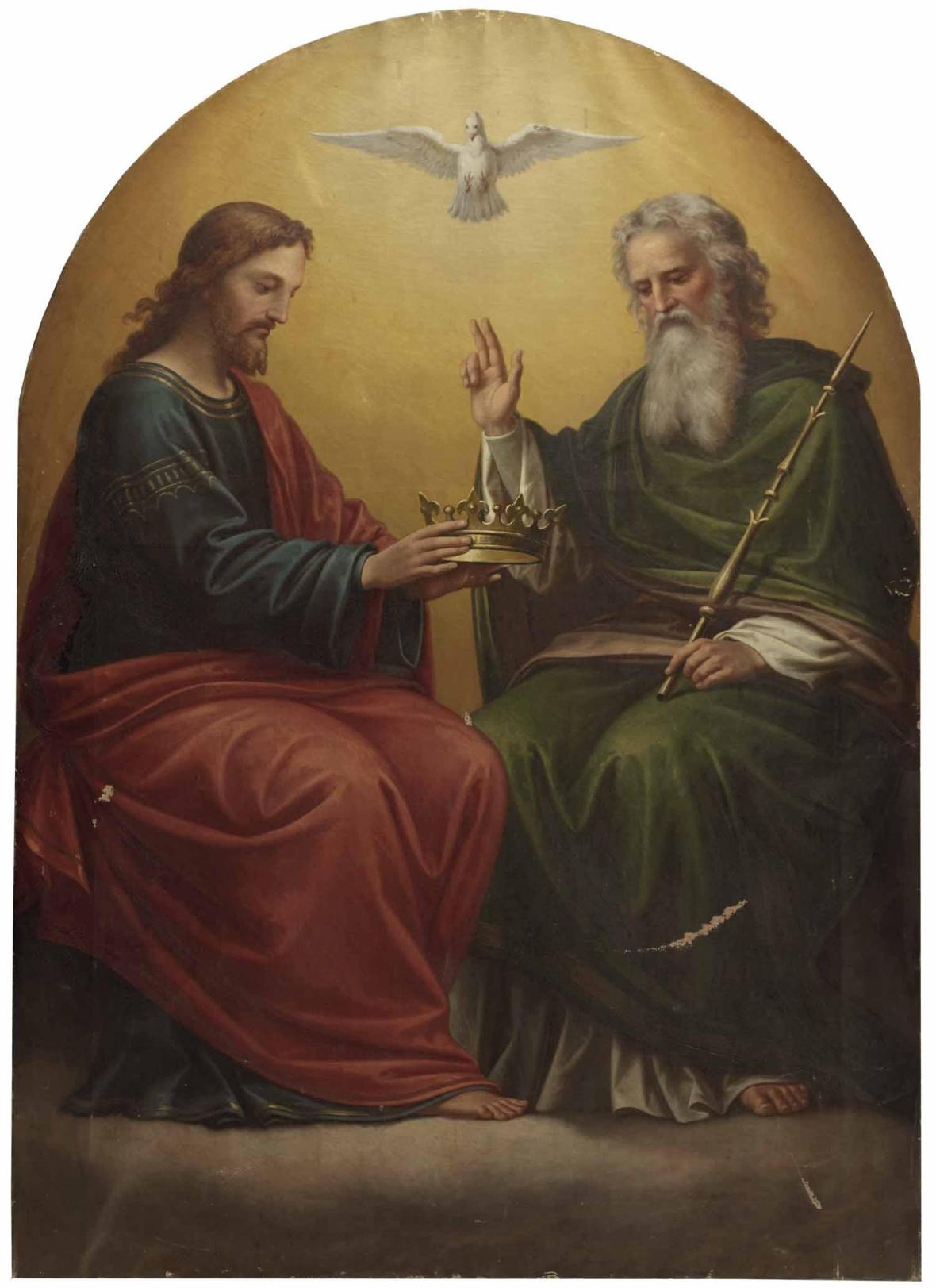
Let us make some attempt to understand a little of why God is a Trinity. We must start with a precautionary note. Cardinal Hume advises us, ‘...all our attempts to express the inexpressible are at best approximations. ... It is ‘like’; and it is also always ‘unlike’. So images are to be employed with due caution.’(4)
The mystery of the Godhead is revealed as a Trinity - It is revealed because human reason is unable to deduce it, and because it is important. We need to know about it, though we cannot work it out for ourselves. But we do need to come to some understanding of it and to take it into our lives. It is not revealed in order to confuse us. So we should try to understand something of it.
contains all the-perfection of the Being of which it is the Idea, because God’s awareness of himself is completely adequate. The ‘image’ has all the attributes of the original object: it is his perfect self-expression. So the Idea, the Word, that God generates, is an infinite, eternal, living person, equal in all things to the one who generated it - God as he is God(5).
St Paul speaks of Jesus as ‘the image of the invisible God’ [Col 1:15]. Jesus is also called ‘Son of God’ [eg Jn 1: 34]. In the Creed we affirm: ‘we believe in one Lord Jesus Christ, the only Son of God, eternally begotten of the Father, God from God.’ These ideas of ‘image’, ‘son’ and ‘begotten’ are ways of trying to express the relationship between the first and second persons of the Trinity. When we put something in front of a mirror we see an image of that object reflected in the mirror. Take the object away and the image goes too; it is generated by the mirror. The mirror can be said to ‘beget’ the image. It is not a perfect image, however. It is merely visual. It lacks many of the attributes of the object; it does not have the solidity, strength, chemical composition, smell, temperature, etc of the original. And even its visual form depends on the accuracy of the reflecting surface. Now if we think of God’s self-awareness as a ‘mirror’ then the ‘begotten’ image
If the Second person is begotten from the First by way of knowledge, the Third person proceeds by way of love. Just as the act of knowing produces an Idea within the Divine Nature, the love that exists between them, love of the glory of the Godhead, produces a state of ‘Lovingness’ within the Divine Nature. It is a ‘Lovingness’ into which the Father and Son pour all that they have and all that they are with nothing held back. There is nothing they have which their Lovingness does not have. Thus their Lovingness too is an infinite, eternal, living person, equal in all things to Father and Son, God. So in the creed we affirm that the Holy Spirit ‘proceeds
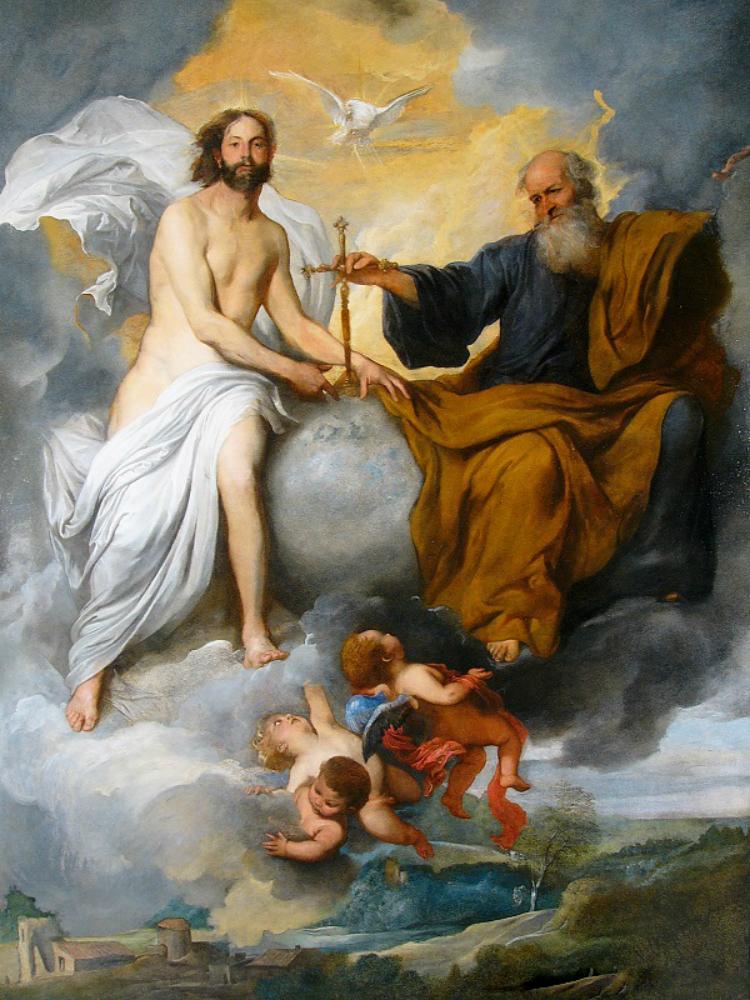
from the Father and the Son.’(6)
If all this is making your head spin, hold on to St Augustine’s notion of the Trinity:
The Father is the Person who loves
The Son is the Person who is loved
The Holy Spirit is the act of love itself
To be more technical: the doctrine may be set out in four statements:
1. In the one Divine Nature, there are three persons, the Father, the Son, and the Holy Spirit.
2. The Father is not the Son, the Son is not the Holy Spirit, the Holy Spirit is not the Father: no one of the persons is either of the others.
3. The Father is God, the Son is God, the Holy Spirit is God.
4. There are not three Gods but one God.
There is no mathematical problem here; trying to make three into one. Nature expresses what a thing is; it answers the question, what is it? Every being has a nature so we can ask this question of anything. Person answers the question, who is it? and this can only be asked of rational beings. They alone are persons. In God the one infinite nature is totally possessed by three distinct, but not separate, persons. They do not share the divine nature, but each possesses it totally.
Why is all this important for us?
Because the distinctive and wonderful thing about the Christian faith is that we believe that the God we worship exists in a relationship of love; a love between Father, Son and Holy Spirit; a love that is infinite, a love that is eternal, a love that is constant, unwavering, all-encompassing. And it is God’s will that he should share that love with us.
To return to Bede Griffiths, ‘This is the mystery of Christianity, this participation in the inner life
of the Godhead, a mystery which cannot be expressed in words, but which is indicated by analogy by the words, ‘Father’, ‘Son’, and ‘Spirit’. If we stop at the words or the concepts signified by them, we shall always remain outside, unenlightened. But if we pass beyond the words and the concepts to the reality signified by them, then we know the Truth, then we are one with God.’(7)
References:
(1) ‘Return to the Centre’ p. 113 (Collins 1978)
(2) ‘Towards a civilisation of Love’ p.67. (Hodder & Stoughton)
(3) Para. 234 (Geoffrey Chapman)
(4) ‘Towards a civilisation of Love’, op cit.
(5) This is why we can speak of the Second Person of the Trinity both as ‘God’ and as ‘only begotten Son of God’
(6) Cf ‘Theology and Sanity’, F J Sheed, Sheed and Ward, London
(7) ‘Return to the Centre’ - op cit
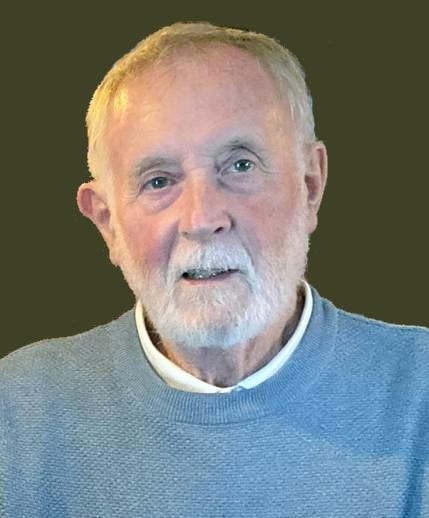
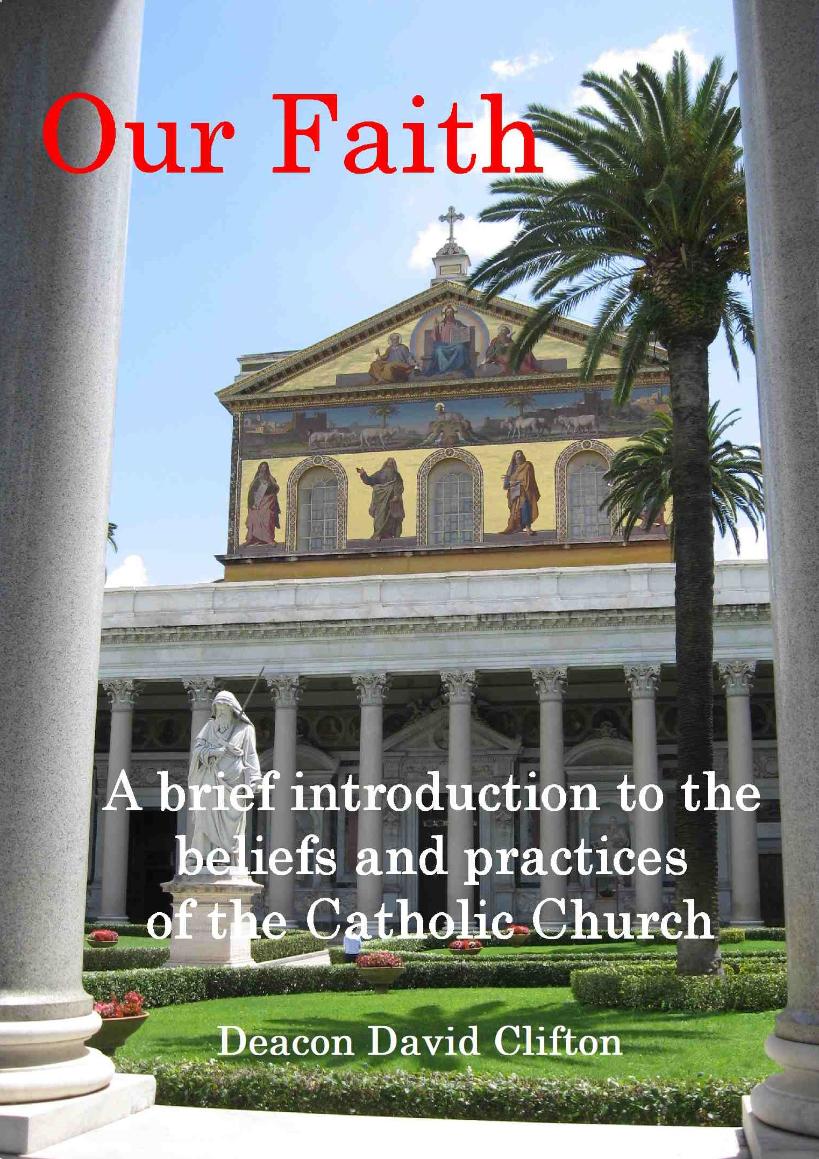
Deacon David has published a new book ‘Our Faith’
This book is available in the Cathedral Shop for £10.00
by Patrick Burgess
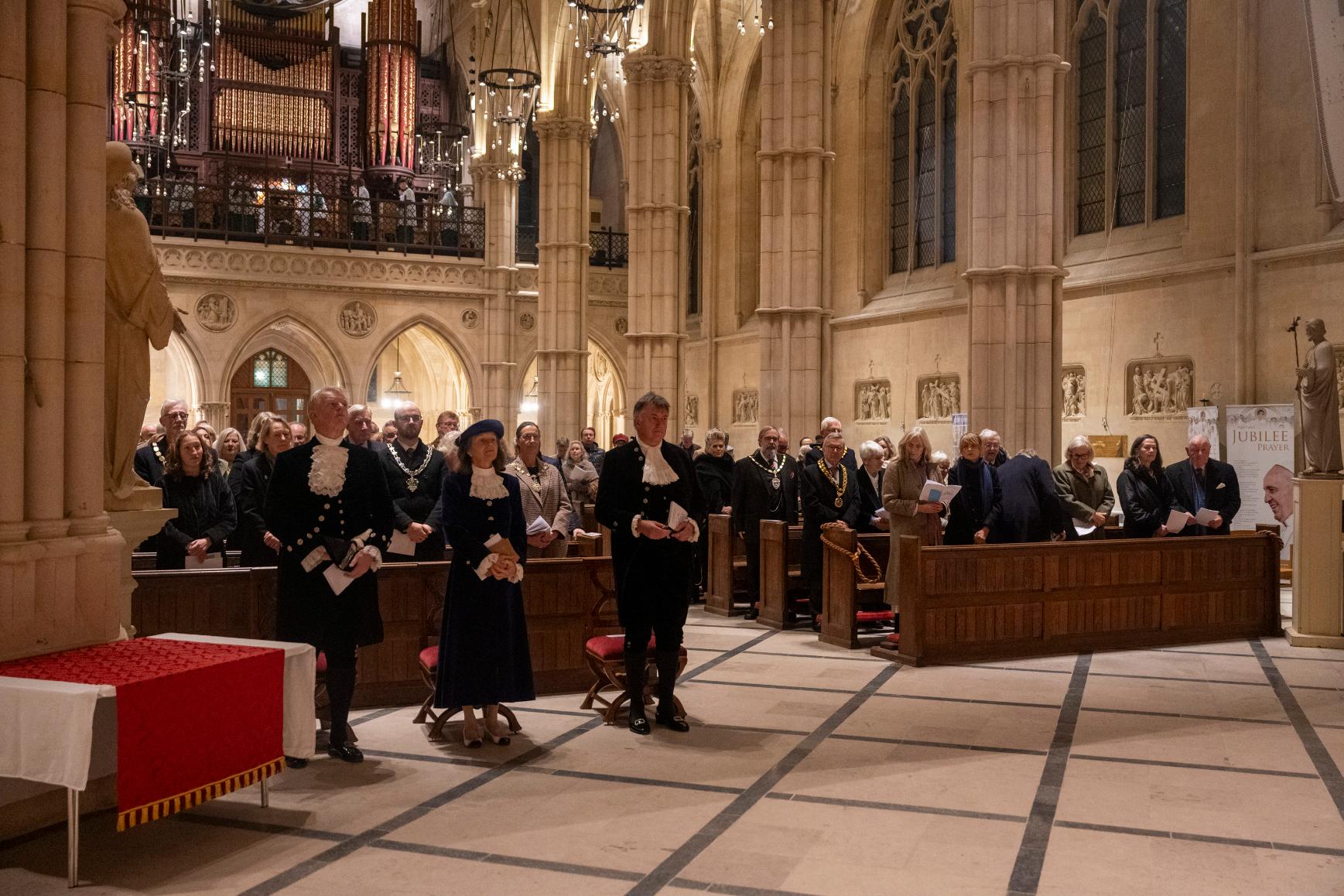
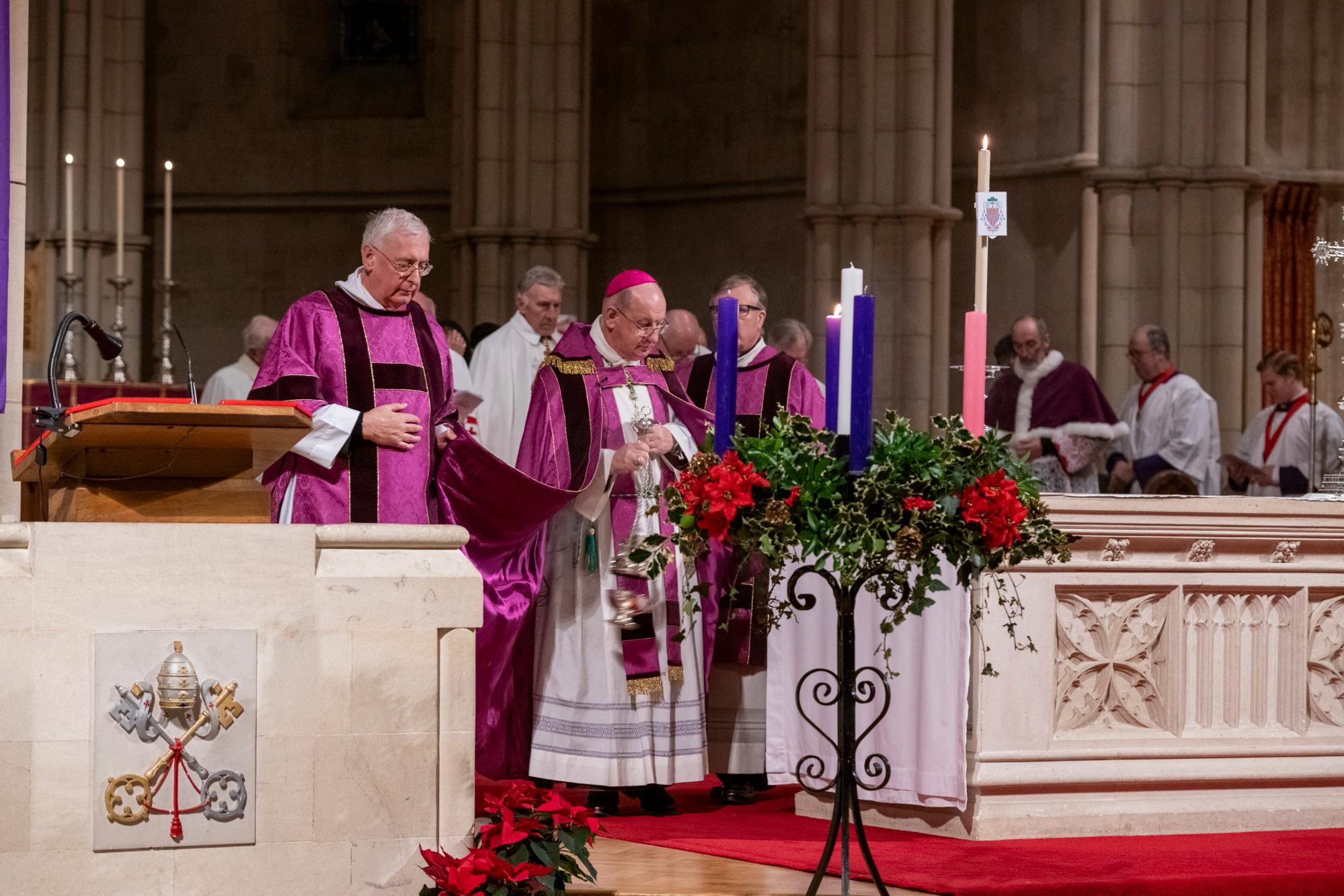
As, all too quickly, the shadows lengthened and night’s steely fingers invaded the dusk, a sense of gentle elation filled our Cathedral on Sunday the 30th November. Hope, as Bishop Richard said in his homily as we celebrated Solemn Pontifical Vespers for the first Sunday of Advent - and not just Hope but the promise of Light it brings - changes everything: it fills a whole dull winter month with the eager expectation of the blessings which the Child lying in a manger at Bethlehem will bring, and with the striking presentiment of the awe which His coming again will one day inspire in all of us ; no wonder we all thrilled at the prospect as we rose to sing, as our Office Hymn, ’ Lo, He comes with clouds descending: O what rapture!’
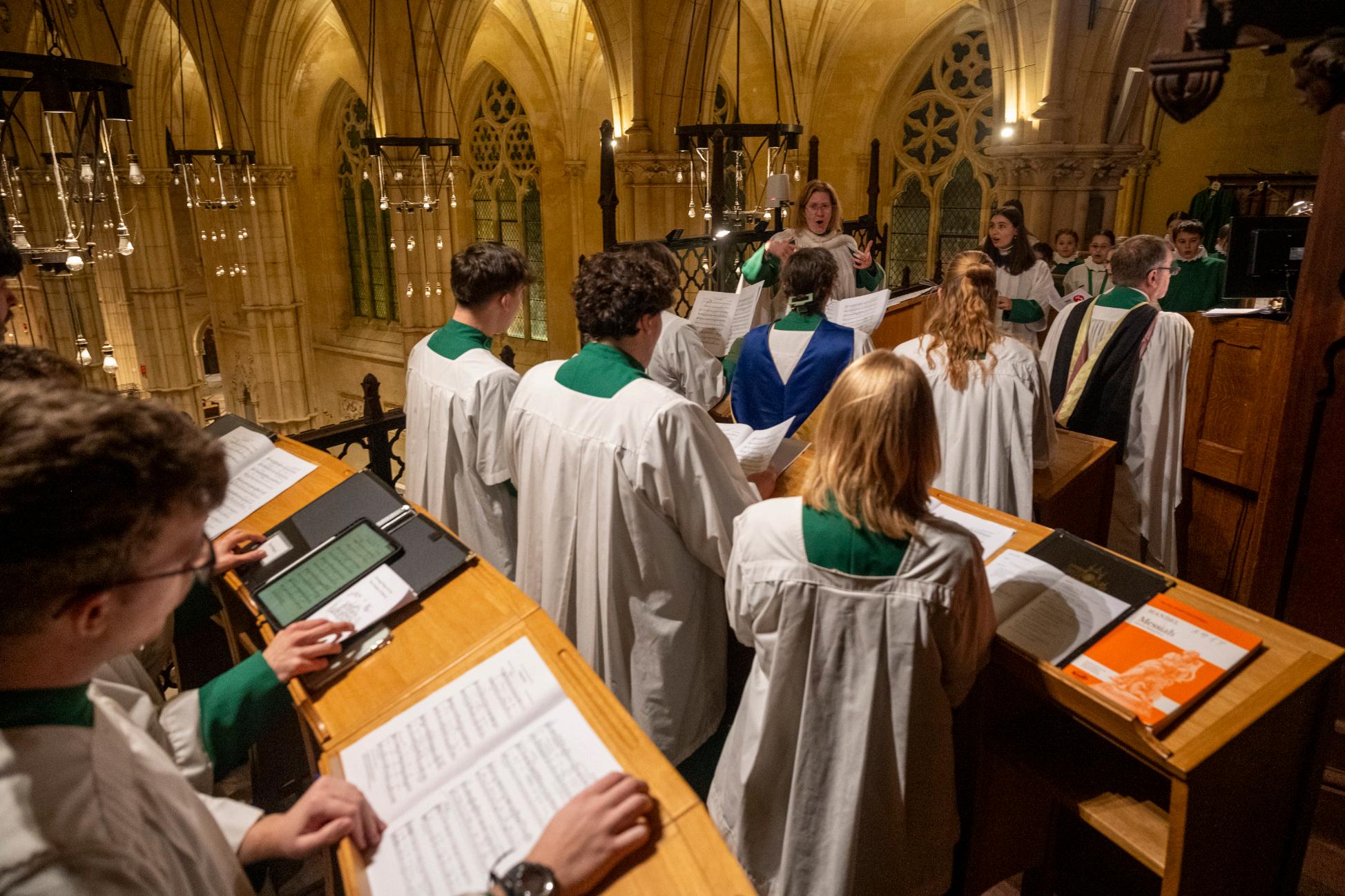
And so, to be caught up, as we all were, in the soaring polyphony of our wondrous choir, reverberating round the high stone vaults above us – three glorious pieces - and in the scents from the East of incense wafting around us, was a wonderful experience. And the ambience in which we found ourselves made all the more striking the words of the Psalms we sang – ‘the mountains leapt like rams, the hills like yearling sheep’…. and the wisdom of St Paul in the reading from his letter to the Philippians which we heard- ‘Rejoice in the Lord always; again I will say, Rejoice… The Lord is at hand…’
And light, too, was all around us: in the lighting of the first, purple, candle of the Advent Wreath at the beginning of the Service, in the acolytes’ processional candles, placed upon the High Altar to flank the great altar crucifix (recently silvered by the Friends!), and in the sparkle and glints from the golden chains of the many civic dignitaries who were present.
As has become traditional, the three High Sheriffs of the three Counties which comprise the Diocese attended, in Court Dress, (the only occasion in England when three High Sheriffs attend a service ceremonially, each in their own right). For them, the rest of the next four weeks will be filled by a veritable cascade of Christmas carol services to be attended with various charities across their respective Counties
so our Vespers is a welcome start.
Hearts would have been lifted to hear but one of the great pieces sung by the Choir, but we were carried away in spirit by no less than three: ‘O radiant Dawn ..’ one of the ‘Great O’ antiphons traditionally sung at Vespers in Advent, set to music by James Macmillan; a setting of the Magnificat by David Bevan (the scion of a large musical family); and ‘How
lovely are the messengers that preach us the gospel of peace’, set by Felix Mendelssohn.
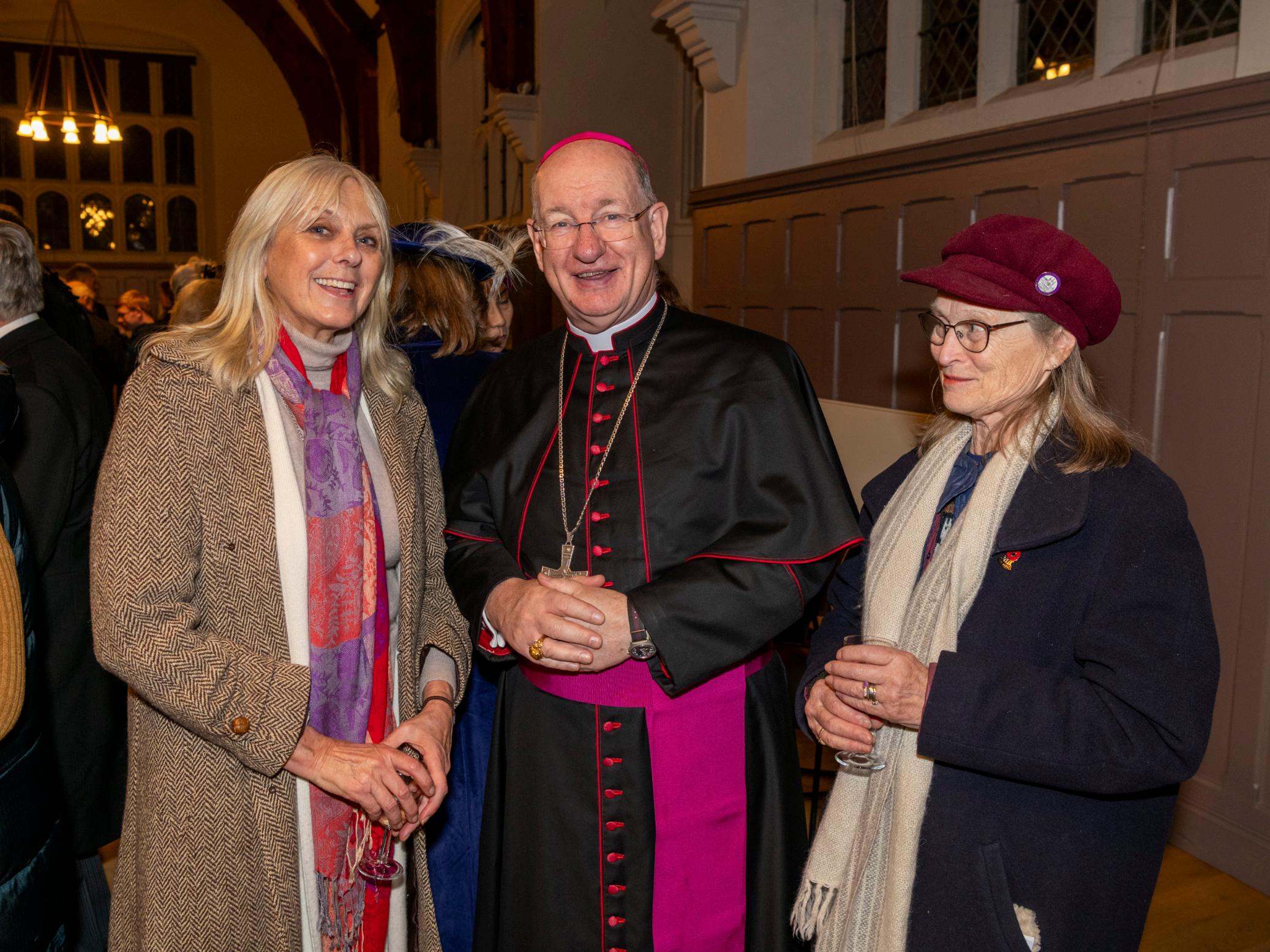
The blessing with which Bishop Richard blessed us on our way included the exhortation: ”As you run the race of this present life, may He make you firm in faith, joyful in hope and active in charity”.
And so indeed may it be.
By Sandra Williams
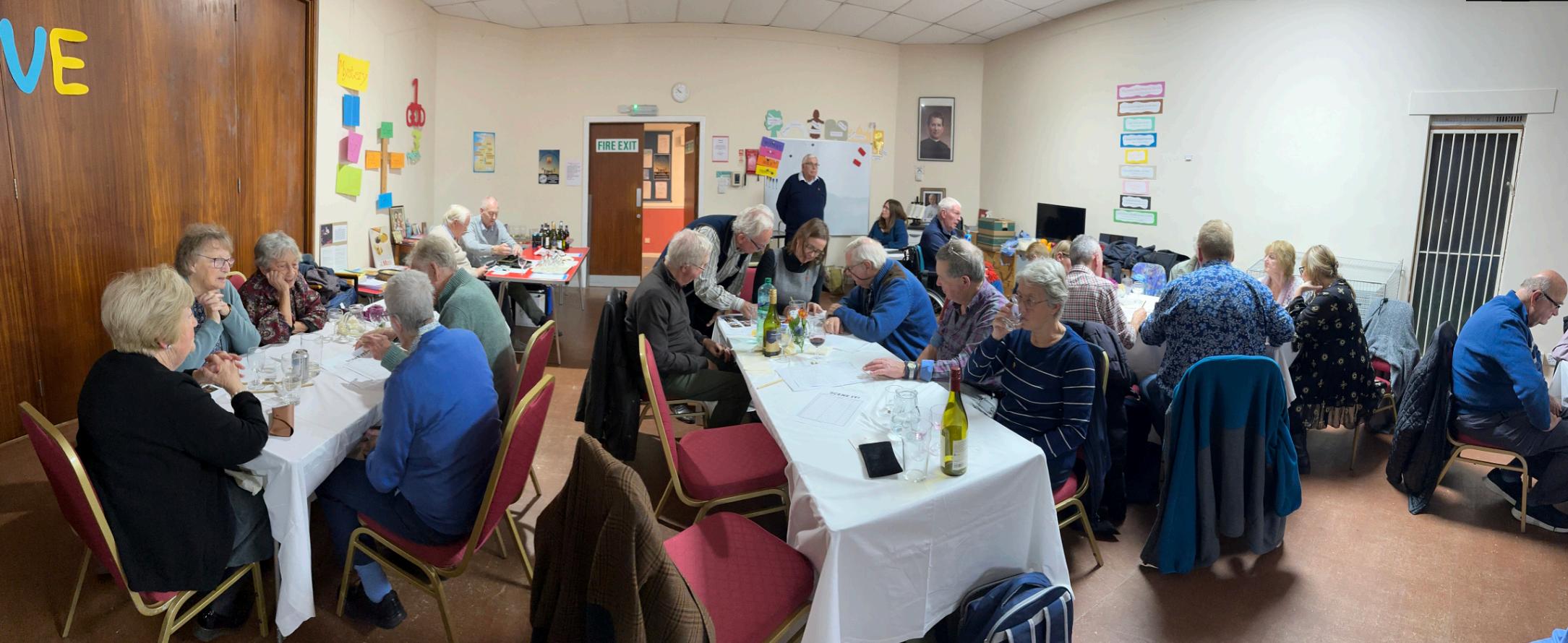
The Quiz in progress
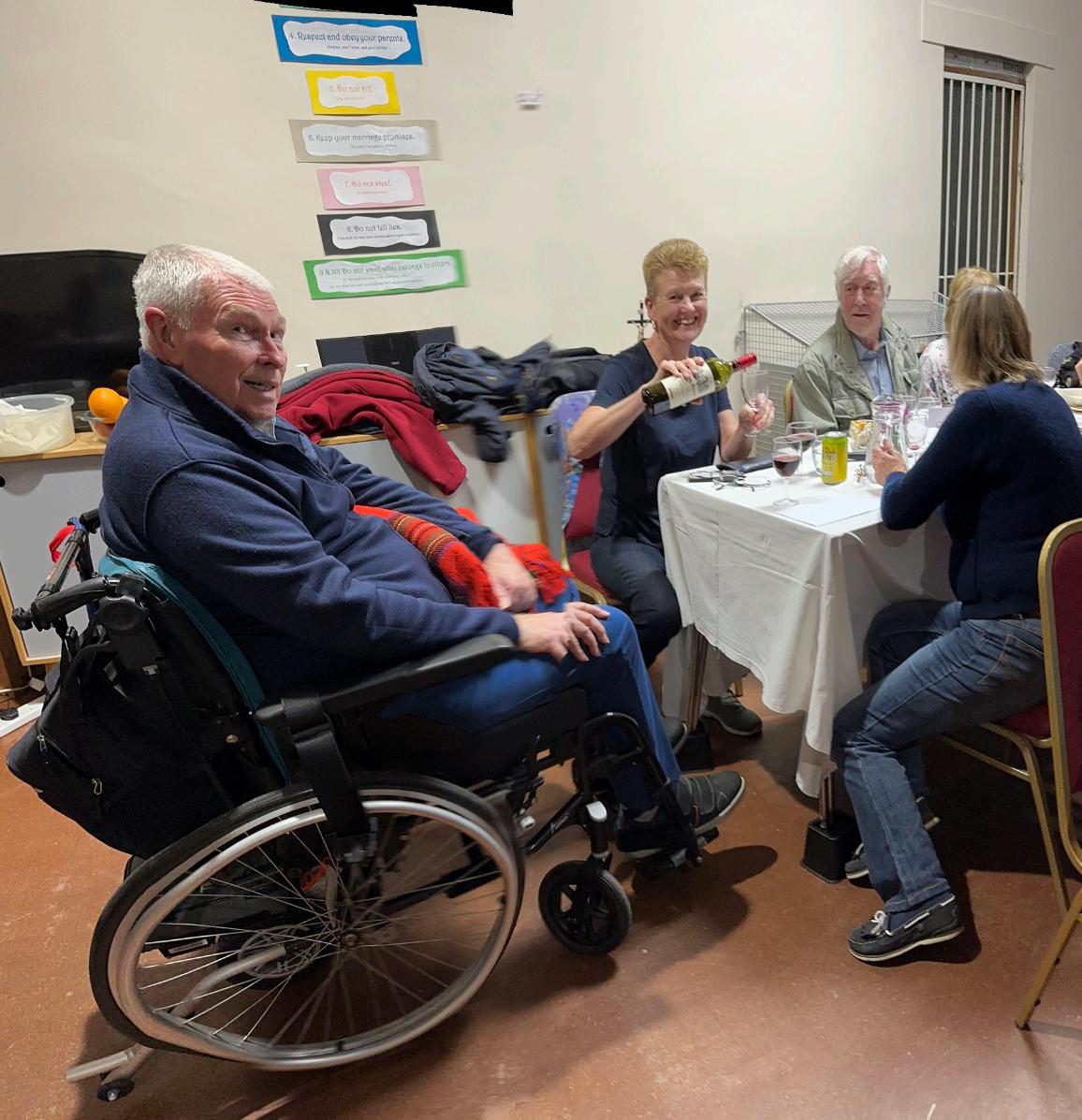
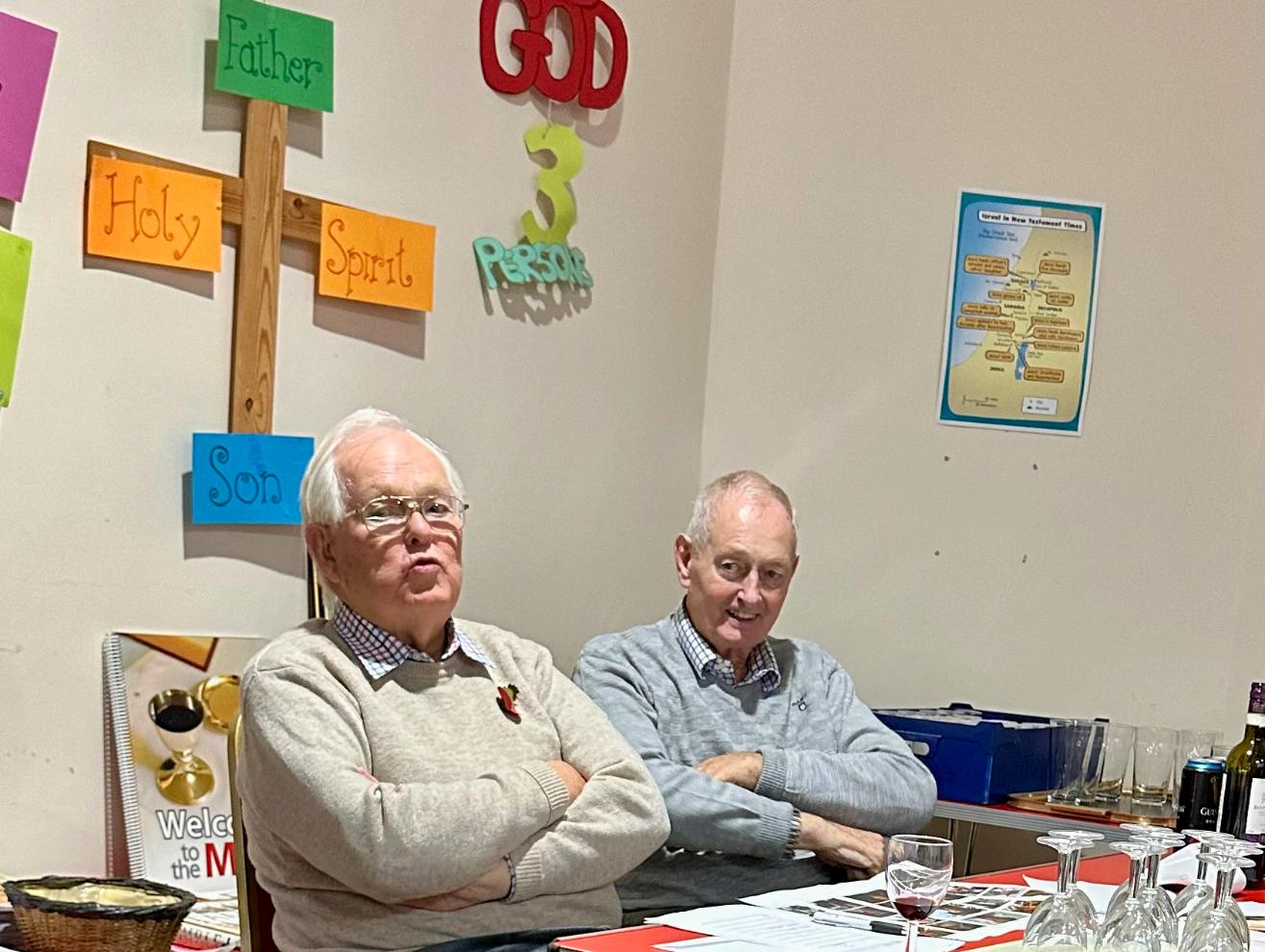
On Saturday, the 8th of November 62 Catenians and their friends gathered at St Catherine’s Church Hall, Littlehampton to hold a quiz night in aid of St Wilfrid’s Hospice. It was an evening full of laughter and fun with many complicated questions to be worked out between the teams.
Lois Howell, CEO of St Wilfrid’s told us about the work the hospice does. She said that during the last year there had been over 1,000 new referrals, more than ever before. St Wilfrid’s Hospice looks after people in the last days of their lives, mainly in their own homes, with the help of the community support nurses. They keep their costs down by having over 500 volunteers, as well as paid staff to help their patients to have a dignified ending to their lives.
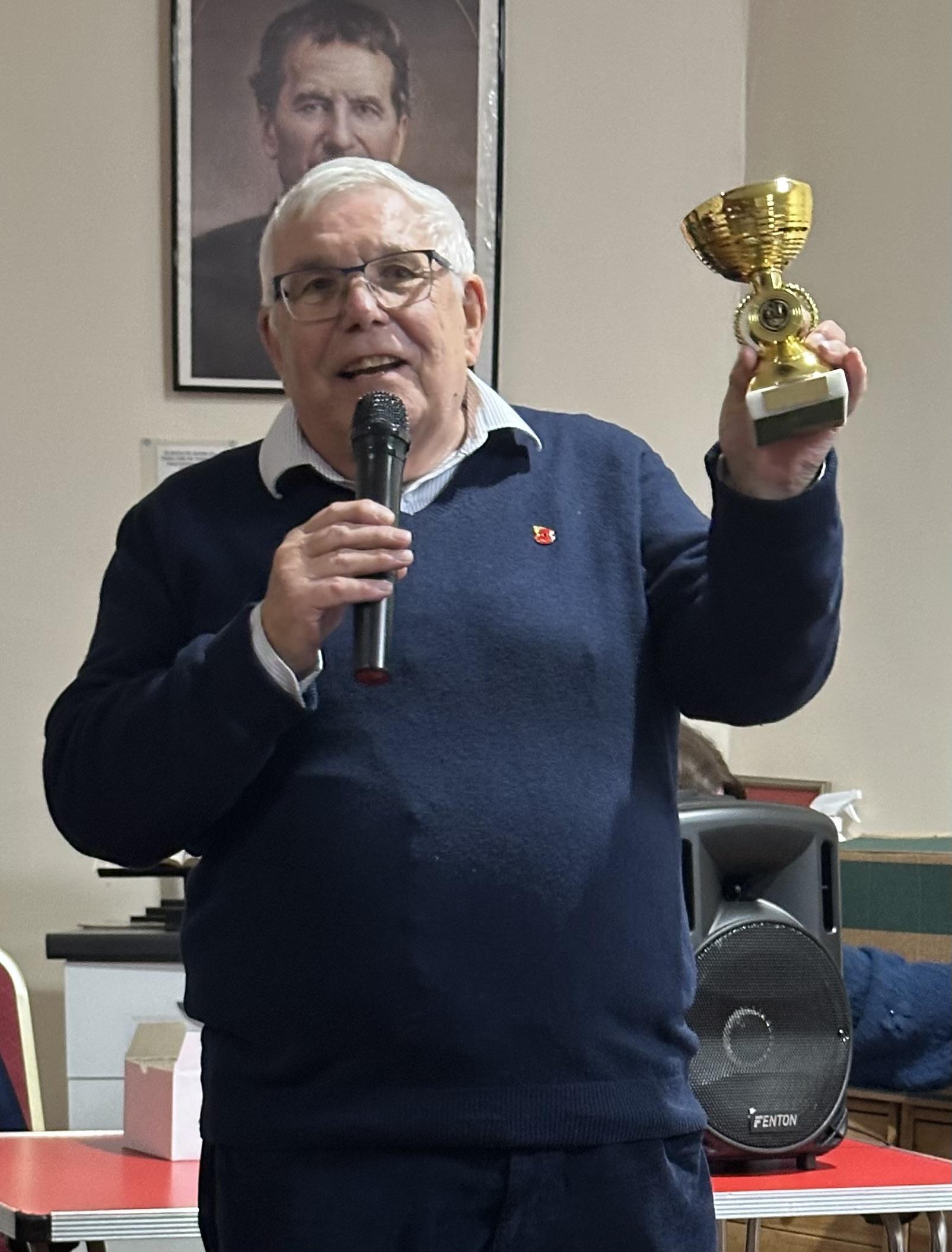
A Ploughman’s supper was provided to sustain the teams: everyone gasped in amazement at the wonderful selection of cheeses, grapes, fruit, bread and biscuits that was provided. The winning team was led by President Graham Monet who was very delighted to receive the elegant cup.
The evening finished with a raffle providing many prizes won by the supporters of the evening. The event raised over £2,000, which a generous supporter has volunteered to double so St Wilfrid’s Hospice should benefit from over £4,000. This is much needed as the running costs of the Hospice are now over £11 million each year.
by Elizabeth Stratford
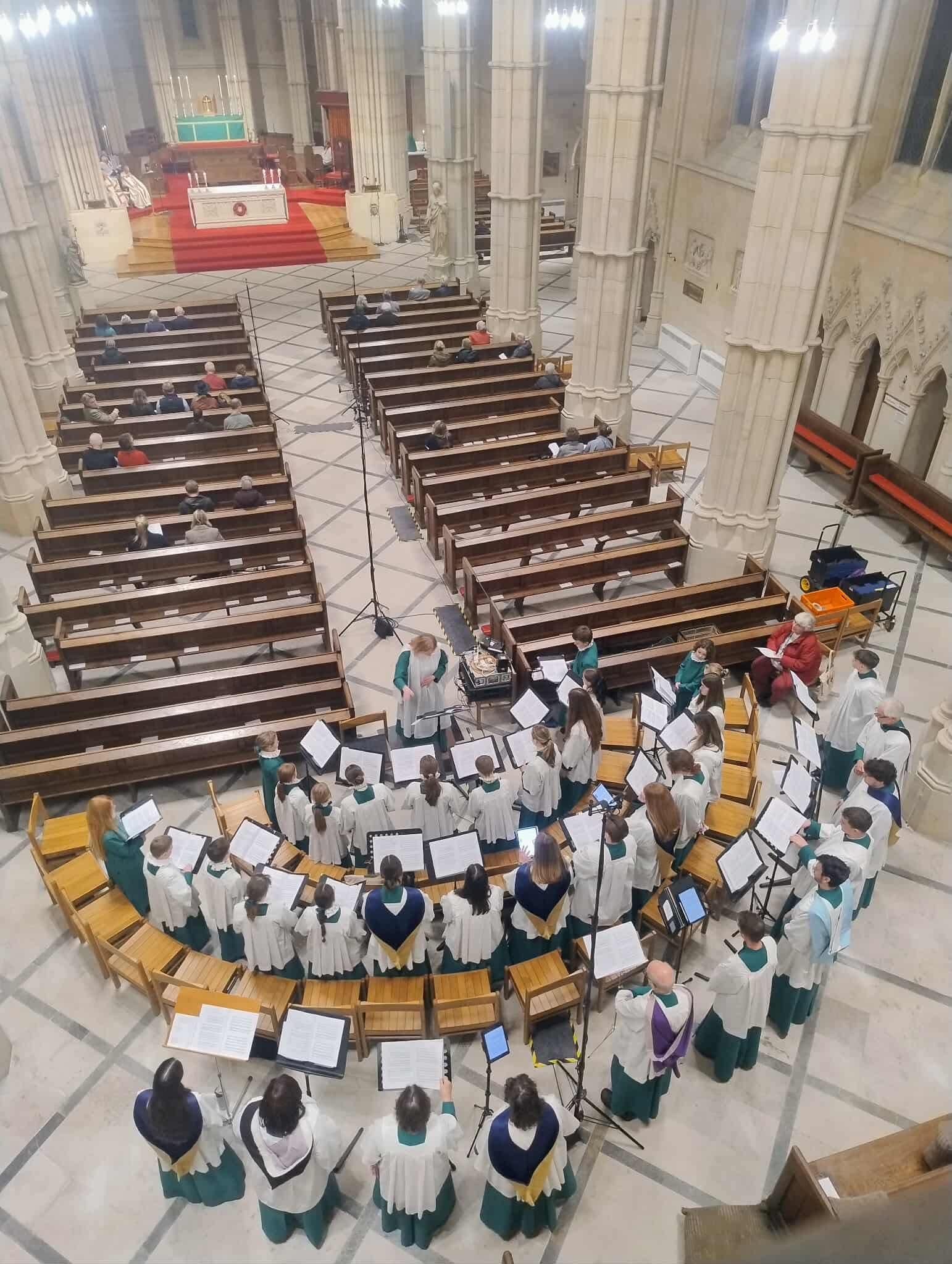
On Thursday 13 November, the BBC visited Arundel Cathedral to record Choral Vespers for broadcast on Radio 3 on Wednesday 3 December at 15:00. The Wednesday afternoon Choral Evensong programme began in 1926 as the BBC's first outside broadcast, evolving from the Anglican church's evening prayer service, and came live from Westminster Abbey. It became a weekly fixture on Radio 4 when it was still the BBC Home Service, before moving to Radio 3 in 1970. It is the BBC’s longest running outside broadcast programme and features choirs in Cathedrals, churches and collegiate chapels across the United Kingdom singing Choral Evensong or Choral Vespers, depending on denomination. It was therefore very exciting to be chosen to sing for this programme (and somewhat nerve-wracking, given that the broadcasts immediately prior to ours were King’s College London and St John’s College Cambridge, and the one immediately after would be Gonville and Caius College Cambridge!)
We were well looked after by Ben Collingwood, BBC Producer, and his colleagues, and assembled on the Cathedral floor following rigging and setting up of microphones and other equipment. The Cathedral Choir usually sing from choir stalls in the organ loft, but in order to balance the organ, choir, congregation and acoustic for the listener, it was important to achieve some physical distance between the choir and organ. Unusually, therefore, we found ourselves at the back of the Cathedral near to the West door, in a horseshoe formation. It took a little time to adjust to this singing position but it is how we record CDs and streaming material so wasn’t completely alien.
After speech rehearsals and a run through of the organ voluntary, Ben appeared and greeted the choir, telling us that the listening audience for the programme was approximately 300,000 people! (Perhaps that information might have been best delivered after the service). His trusty stopwatch at the ready, he explained that over the next hour and forty five minutes we would run through all the musical elements of the programme to check sound levels and ensure that our timings were accurate: if the programme is too short the time cannot easily be topped up with other music for licensing and listing reasons, and if the programme is too long it is awkward to cut it off mid choir piece or part way through the organ voluntary. Prior to the day we had timed all the music and sent in approximate times, but of course there was some variation in the rehearsal.

The nerves were tangible as we listened to Alex Eadon play Bach’s Nun komm der Heiden Heiland and then stood to sing James MacMillan’s O Radiant Dawn. Journeying through hymnody, psalmody, the Magnificat on the Third Tone by David Bevan, prayers and Mendelssohn’s How lovely are the messengers, we reached the Alma redemptoris
We sang through each element of music for the service and Ben gave us helpful guidance here and there – “make sure you hold this to the end of the bar, take care with that consonant, make sure this chord is really together” and so on.
After a short break, it was time to begin.
mater and then sat to listen to John Sharples play George Oldroyd’s Second liturgical improvisation. This piece weaves the Creator alme siderum chant through the organ texture heralding Advent for the listener. Absolute silence was kept at the end as the clergy processed out and Ben came into the Cathedral to give his final remarks. As the BBC packed everything away it was hard to believe they’d been in Arundel Cathedral at all – until 3 December when the broadcast aired! We have already received so many lovely comments from those who attended and those who listened on Radio 3. The programme remains available on BBC Sounds until 7 January via the following link https://www.bbc.co.uk/sounds/play/m002ml87
My thanks in particular go to Fr Stephen for all his support in preparing for and executing this service, to Deacon Roger for leading the prayers, Anne Brearley-Smith for reading and to all who were able to attend Vespers that day. Please do listen to it if you get a chance.
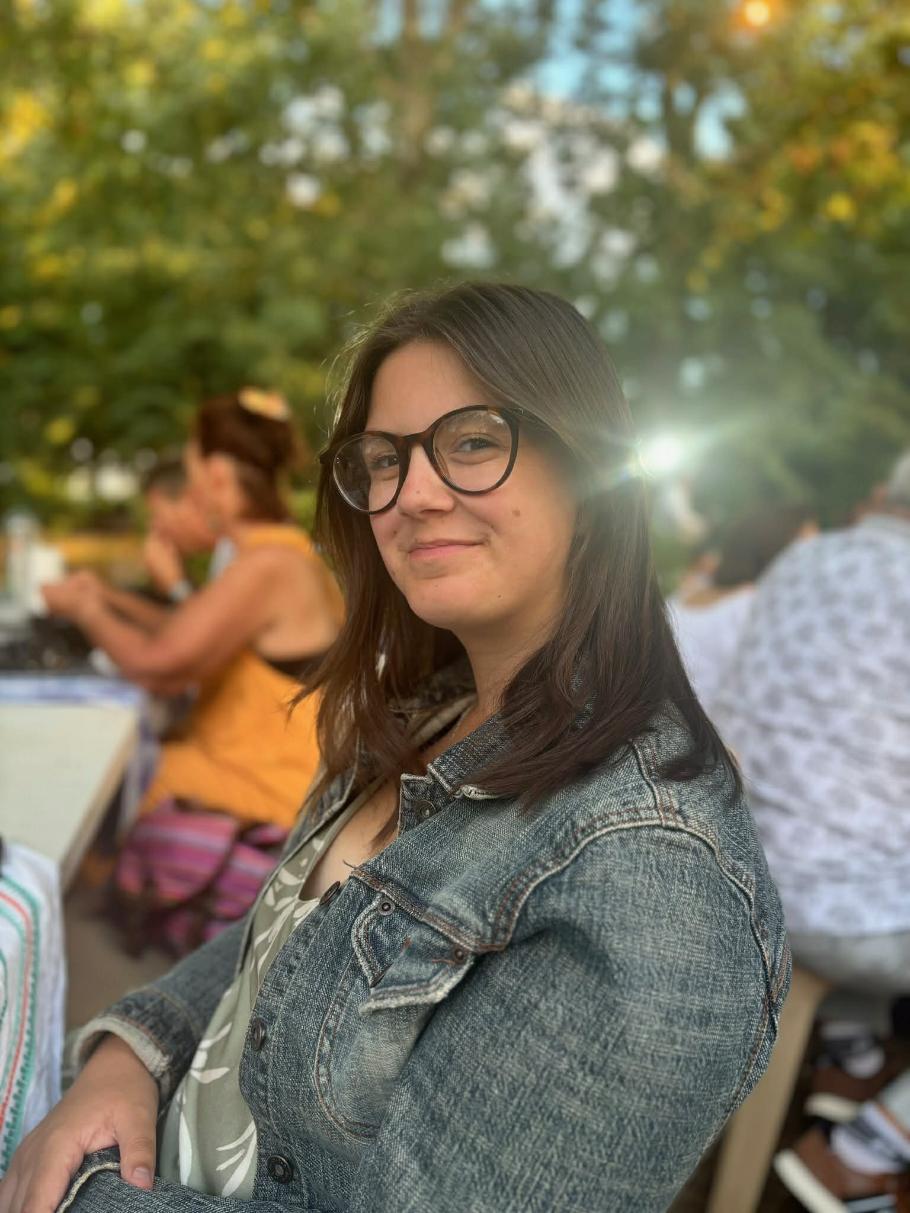
Libby
by Elizabeth Stratford
Each issue we meet one of our Choral Scholars and get to know a little bit more about them. This time it’s Libby, who has just begun her studies at the University of Chichester and sings soprano in the Cathedral Choir.
Hello Libby! Welcome to Arundel.
What are you studying at university? I am studying BMus in Vocal Performance.
What brought you to choral music?
Ever since I was little I was surrounded by choral music. Growing up it was all around me, then my brother became a chorister in our church choir and that made me want to join too. I joined my choir when I was 7 and I have made amazing friendships along the way.
What made you think about becoming a Choral Scholar at Arundel Cathedral?
Coming away to university, I wanted to continue singing in a church choral context as it has been such a big part of my life. A local family friend suggested auditioning for Arundel.
What have you done musically/chorally before coming to Arundel/Chichester?
I have been part of St Wulfram’s church choir in Grantham for 11 years gaining my RCSM Gold Award [the highest award offered in church music for a young chorister] in that time. I was Head Chorister and later a Choral Scholar within the Youth Choir for three years. I have also been lucky enough to sing in cathedrals across the country with this choir including Westminster Abbey. I have had singing lessons since I was in Year 8 reaching ABRSM Grade 8. I was also a member of the National Youth Choir Girls’ Choir between Year 6 and Year 10.
Who is your favourite composer/what’s your favourite piece of choral music and why?
I particularly love to sing the choral works of Benjamin Britten and Herbert Howells, especially Ceremony of Carols at this time of year. My favourite choral piece is Mendelssohn’s Hear My Prayer. I have lots of happy memories of singing this in lots of different places.
Do you play any instruments ?
I have played the violin since I was 8. I’ve played in groups since I first started playing and this is what I enjoy most about the violin, including local string ensembles and In the Lincolnshire County Youth Orchestra for the last five years.
What would you like to do in the future? I would like to work within music either in music therapy or within education outreach taking music to children who don’t always have access to the opportunities that I have had.
What do you do to relax? I like to go swimming and spend time at the beach.
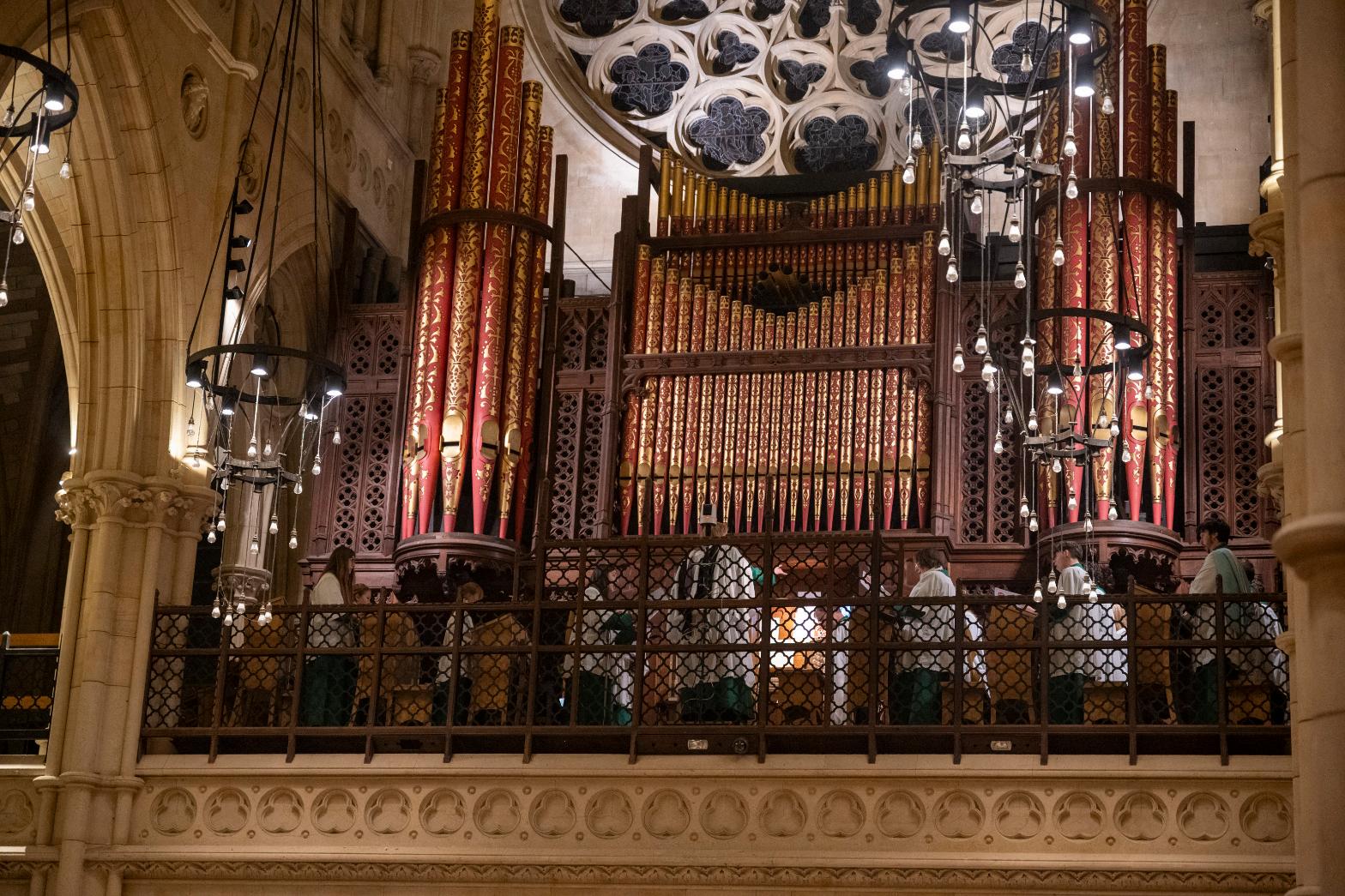
by Barbara Isbister
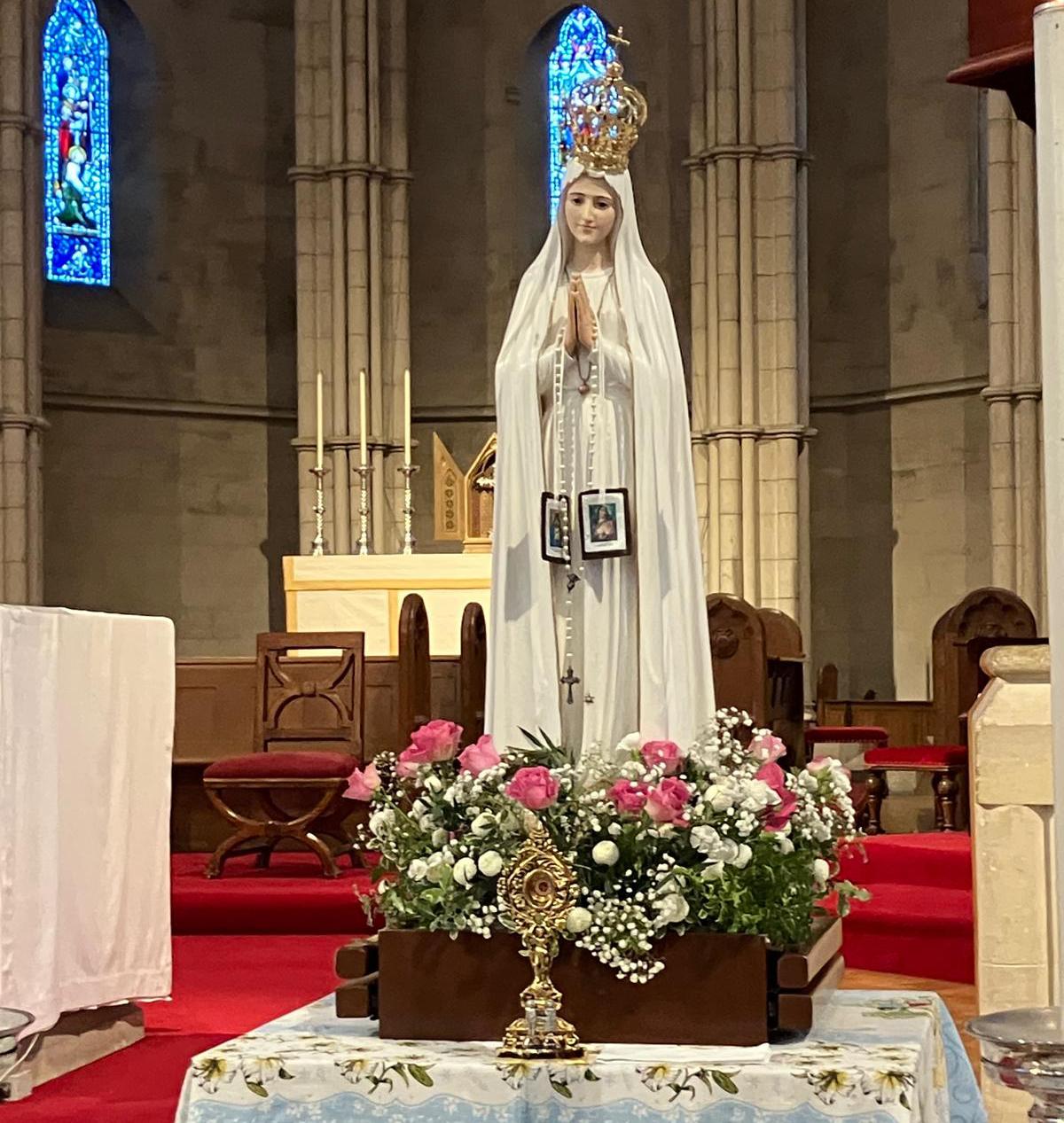
Visitation of the National Pilgrim Virgin Statue of Our Lady of Fatima in Arundel Cathedral
When I was a child, there was I remember, a picture in our house of Our Lady. She appeared to be raised in the air, above a small bush, floating above on a circle of pale pink roses. There was a rosary over her hands, which were joined in prayer. On the ground beneath her three children were kneeling and looking up in awe at Our Lady. Indeed, it is a beautiful and powerful image which transcends time.
On the 8th November, 2025, the Visitation of the National Pilgrim Virgin Statue of Our Lady of Fatima together with the relics of Saints Jacinta and Francisco took place at the Cathedral of Our
Lady and St Philip Howard, Arundel. The World Apostolate of Fatima (England and Wales) organised the visit; part of a series of visits to Catholic cathedrals and churches. There were many helpers from the Apostolate and many visitors from all over the diocese and beyond.
The day began with a Votive Mass of the Immaculate Heart of Mary, celebrated by Bishop Richard Moth, Bishop of the Diocese of Arundel and Brighton. This was followed by veneration of the relics. Later recitation and reflection on the Joyful Mysteries of the Rosary took place.
Praying the Rosary is an integral and critical part of Our Lady’s message of Fatima.
In the afternoon, there was a presentation which included a documentary film, photographs of events connected with the visitations and a talk by a member of The World Apostolate of Fatima about Our Lady’s message of Fatima and the Miracle of the Sun.
In 1917 Our Lady appeared to the three shepherd children, Lucia Santos, and her two cousins, Jacinta and Francisco Marto, who were siblings.
What is the significance of the people, places and events connected to the visitations of Our Lady of Fatima? These questions are explored in this article (Part One).
Perhaps of greater importance, what happened during the Apparitions, what is the Message and Promise of Fatima and the significance of the Miracle of the Sun, are questions which are examined in the second article (Part Two).
Why Portugal?
It is impossible to say with certainty why the apparitions occurred in Portugal. However, it may be linked to the strong Christian devotion of the Portuguese to God and Our Lady. Over the centuries, during conflicts with the Moors and the Spanish, even when they were greatly outnumbered, the Portuguese put their faith in God and prayed to Mary for help. It was granted. They overcame their country’s invaders. After each such victory, they built Cathedrals to Our Lady in thanksgiving. The country had and has a strong Marian devotion. Since 1646, under King John IV, Our Lady, with the title of the Immaculate Conception, became the Queen and
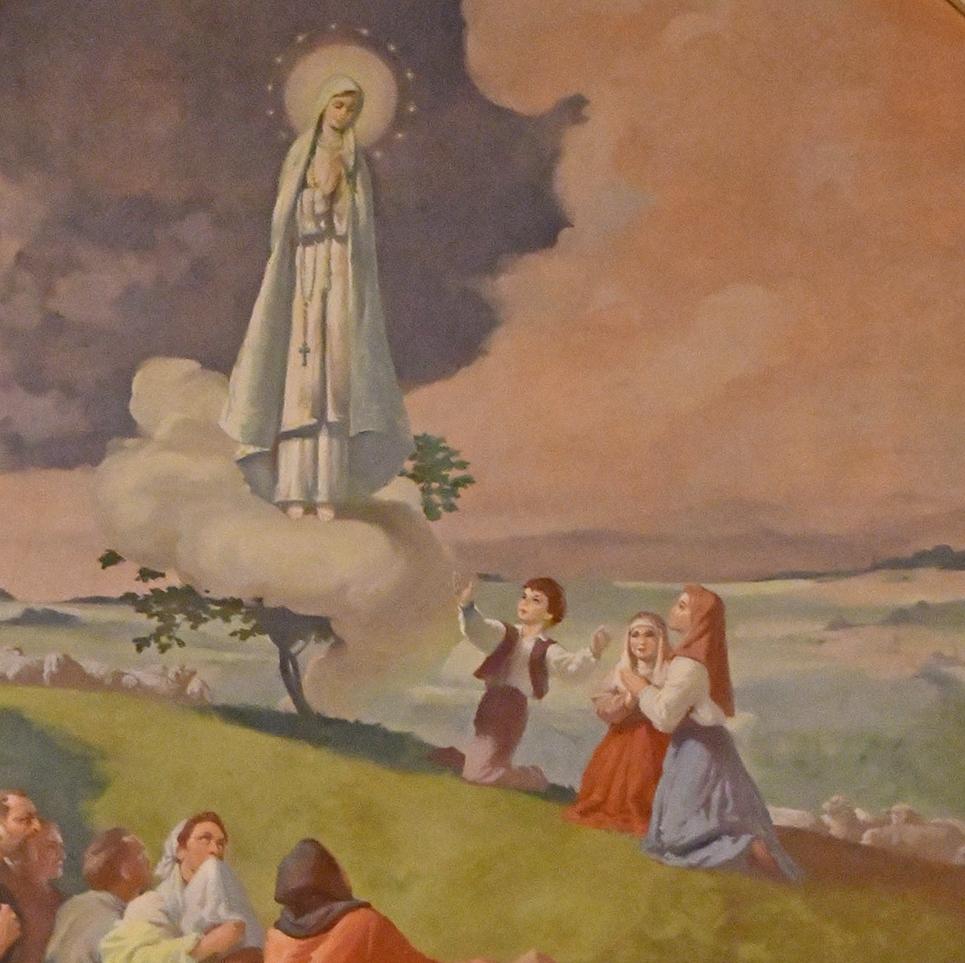
Patroness of Portugal. Kings no longer wore crowns, as they were reserved solely for the Virgin Mary. (1)
Why Fatima?
Fatima was the name of a young Muslim princess. When the Moors were leaving Portugal, (the final expulsion was in 1496)
Fatima was captured. The captor, a Christian knight and Fatima fell in love with each other. She converted to
Catholicism and they married. Sadly, she died a year later and her heartbroken husband became a Cistercian monk. He took her remains and buried them near the priory where he had been sent, naming the place Fatima, after his beloved wife.
What is the significance of Our Lady appearing in the only place in Portugal with a Muslim name? Could this be a message about connection, cooperation and striving for unity
between religions? The venerable Archbishop Fulton Sheen (1895 –1979) thought it was not just a coincidence that the place of Our Lady’s Apparitions was Fatima. He believed that: ‘Unless we have conversion of hundreds of millions of Muslims, there will never be world peace.’ (2)
Why then, in 1917?
World War 1 ‘the war to end all wars,’ had been raging for almost three years (28 July 1914 – 11 Nov 1918). On 5th May 1917 Pope Benedict XV began a novena to Our Lady for peace. On the eighth day of the novena, on the 13th May 1917, Our Lady seems to respond by her first appearance in Fatima.
Why them? Why three young children?
At the time of the first apparition Lucia was ten years old. Her cousins Francisco and Jacintha were nine and seven. They were the children of poor peasants who farmed the land and looked after
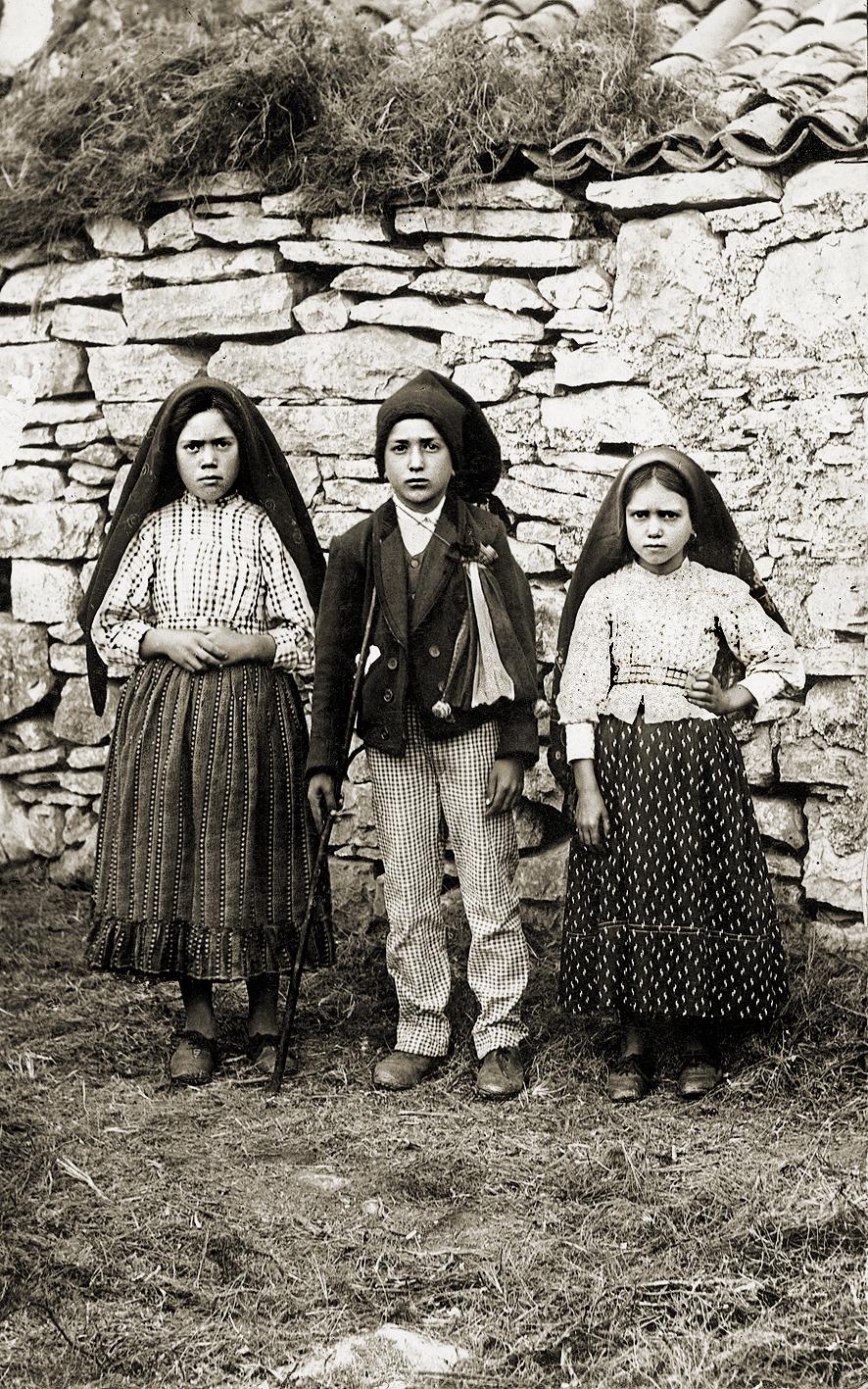
livestock. They lived in one of the hamlets near the village of Fatima. All three children had been baptised and attended the church of St Antony in Fatima. Lucia was the only one to have received Holy Communion by the time of the first apparition.
As was the custom, Lucia as the youngest in her family, was tasked with looking after and grazing the sheep. Her two younger cousins helped. Hence they are often referred to as
‘the shepherd children,’ herding and caring for their sheep, as Jesus Himself does. Why were they chosen? Could it have been their innocence, the simplicity of their lives and their humility?
Saint Paul tells us that:
“God chose what is foolish in the world to shame the wise, God chose what is weak in the world to shame the strong” (I Corinthians I:27).
At Fatima, God chose three young children to carry a message that would ‘confound the sophisticated and arrogant anti-clerical thinkers of the world… the children proved to be faithful messengers for Our Lord and his blessed Mother.’ (1)
Footnote References
(1) Fr. Andrew Apostoli, C.F.R. ‘Fatima for Today, The Urgent Marian Message of Hope,’ (2010)
(2) Sheen, Fulton J, ’The World’s First Love: Mary the Mother of God’ (2010)
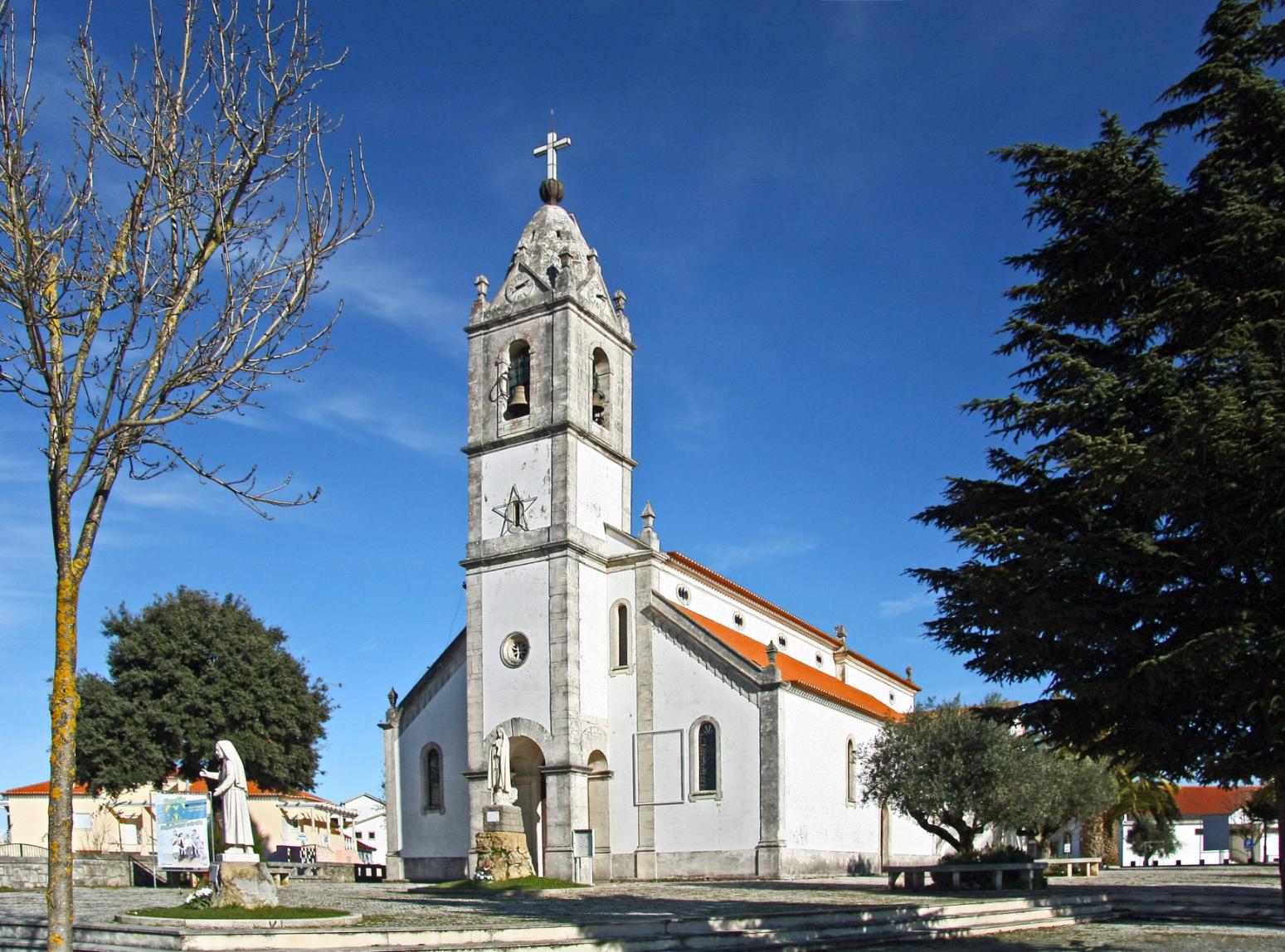
by Barbara Isbister
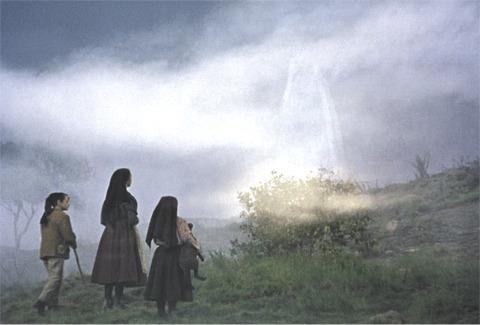
Based on the Memoirs of Lucia Santos (1)
The first of six apparitions of Our Lady to Lucia, Francisco and Jacinta happened on 13th May 1917. Prior to this, there had been three apparitions of the Angel of Peace in 1916 to prepare them.
The children reported seeing a ‘Lady clothed in white,’ standing above a small oak tree in Cova da Iria. Lucia later wrote what she saw in her memoirs:
‘She was more brilliant than the sun and radiated light… She looked about seventeen years old…In her hands were beads of a rosary which shone like stars, with the crucifix most radiant of all.’
Our Lady said: ‘Do not be afraid. I will do you no harm.’
They all saw the Lady but only Lucia and Jacinta heard her, while Lucia was the only one who spoke to her. She asked:
‘Where are you from?’
‘I am from heaven,’ Our Lady replied.
‘What do you want of me?’
Our Lady told them to return on the thirteenth day of the month for six months. After that she would return a seventh time.
Lucia asked if they would go to heaven. Our Lady said they would and asked them:
‘Are you willing to offer yourselves to God and bear all the sufferings He wills to send you, as an act of reparation for the sins by which He is offended, and of supplication for the conversion of sinners?’
They replied that they were.
Lucia writes what followed:
‘Our Lady opened her hands for the first time communicating to us a light so intense that, as it streamed from her hands, its light penetrated our hearts and the innermost depths of our souls, making us see ourselves in God, who was that light, more clearly than we see ourselves…’
Our Lady asked them to:
‘Pray the Rosary every day to obtain peace for the world, and the end of the war.’
This request was repeated in all six of her apparitions.
The second apparition occurred on 13th June 1917, the feast of St Antony, who was born in Lisbon. She repeated her previous requests: the date of the next apparition, and daily praying of the Rosary, encouraging devotion to the Immaculate Heart of Mary.
She also had a new request specifically for Lucia; she asked her to learn to read. Lucia obeyed and successfully learned to read and write. Our Lady told them that Francisco and Jacinta would soon be taken to heaven, while Lucia would remain longer, ‘Jesus wishes to make use of you to make me known and loved.’ This was why Our Lady had asked her to learn to read. It was to be Lucia’s mission to record in writing what she had seen and heard. ‘He wants to establish in the world devotion to my Immaculate Heart.’ Our Lady showed them her heart surrounded by piercing thorns which were the sins that needed prayers for reparation.
The third apparition, on 13th July 1917, is perhaps the most significant because it is associated with the Three Secrets of Fatima.
Lucia writes that the children were shown a vision of hell. It is no surprise that they were all
flaming sword. Lucia describes the sword as having flames that could ‘set the world on fire.’
The flames died out when Our Lady radiated light from her right hand pointing to the earth.
The angel called out ‘Penance!’ three times. The image is understood to show the power of prayer, and particularly praying the Rosary to Our Lady of the Immaculate Conception to stop war. In addition to Our Lady’s intervention in wars in Portugal, (see Part One), there have been a number of other interventions attributed to Our Lady, all as a result of praying the Rosary and doing penance. Penance is the conversion, change of heart and turning to God when we sincerely repent and turn away from sin. Another image contained the vision of people climbing a mountain. One of the people, dressed in white, appears to be the Holy Father. Others are Bishops, priests and religious men and women. At the top of the mountain there is a huge Cross. The Holy Father makes his way through a big city in ruins and passes many corpses on the way. When he reaches the Cross, he is killed by soldiers, as are the clergy, martyrs and lay faithful that follow him. The attempted assassination of Pope John Paul II on 13th
filled with unimaginable fear by the horror of what they saw, particularly Jacinta, the youngest. Our Lady told them that prayer was necessary for the conversion of sinners and the reparation of sins to save souls from the horrors of hell for sins committed against the Immaculate Heart of Mary. Our Lady warned that another global war would occur if humanity did not repent. This was later taken to mean World War II. She warned them about the evils of Communism. The children heard a prophesy from Our Lady involving Russia’s role in spreading ‘errors’ throughout the world, unless Russia was consecrated to the Immaculate Heart of Mary. She also promised that if her requests were heeded, Russia would be converted and peace would be granted. The third part of the secret was withheld publicly until the year 2000. Unlike the first two messages of this apparition, which were spoken, the third message consisted solely of images. It was interpreted by the Church as relating to the persecution of Christians and possibly the attempted assassination of Pope John Paul II in 1981. One of the images was of an angel with a
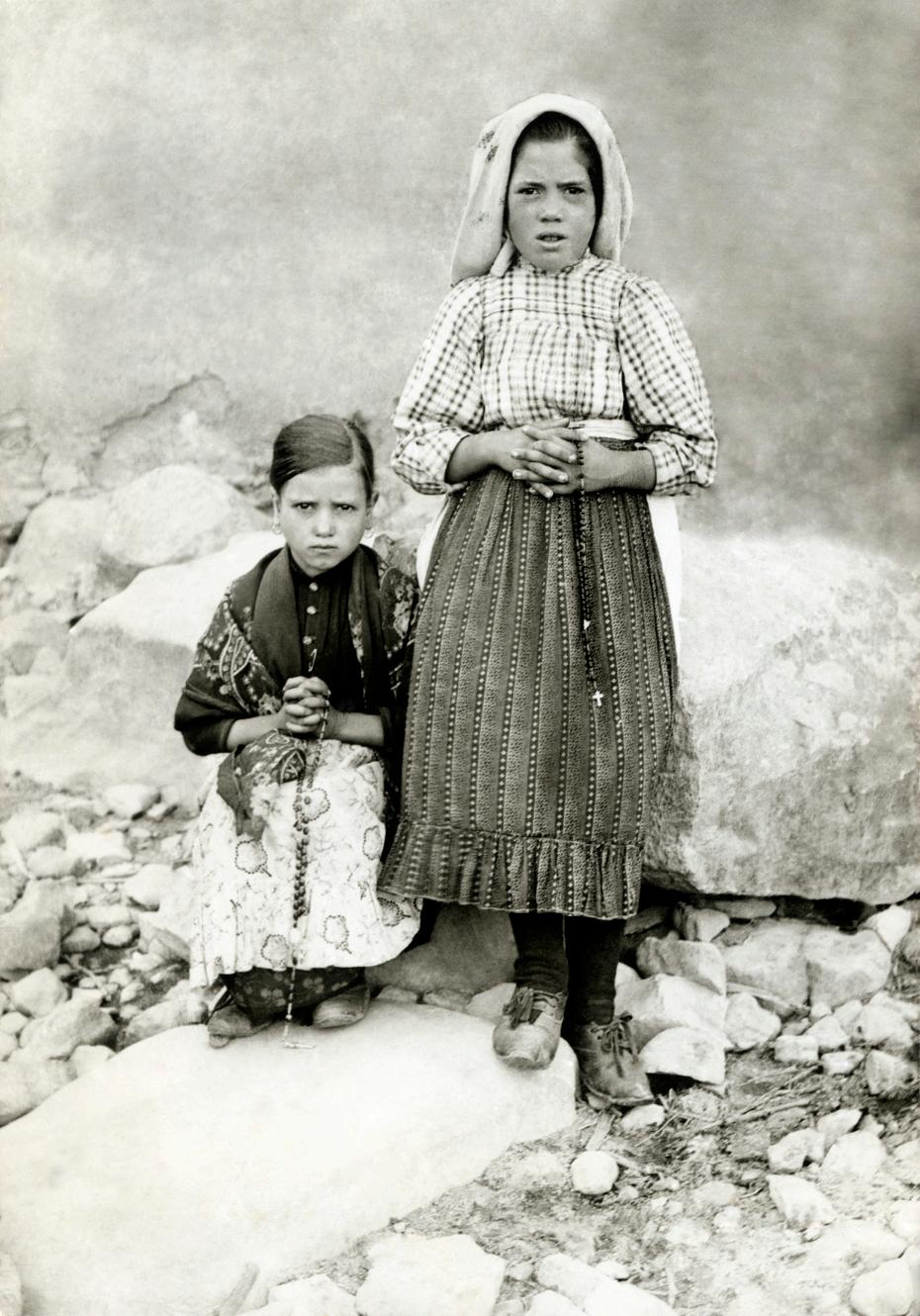
Lúcia (standing) with her cousin, Jacinta Marto, 1917
September 1917, drawing large crowds, in the region of twenty-five thousand, including atheists, sceptics, believers and those pleading for the children to ask Our Lady to heal their sick loved ones. Lucia later wrote that it reminded her of the crowds asking Jesus for healing. Witnesses reported signs such as a luminous globe, though only the children claimed to see and hear the Lady. She repeated earlier themes and again predicted a miracle in October.
May 1981 is thought to be contained in this image. The Pope himself described, most exquisitely, the reason for his survival: ‘…it was a mother’s hand that guided the bullet’s path and…halted (it) at the threshold of death.’ (3)
The third image showed the significance of the Blood of the Martyrs, as ‘the seed of the world,’ converting many throughout history.
These images reveal that fate is not unchangeable; it can be changed through the power of penance and prayer in devotion to the Immaculate Heart of Mary, the Mother of God. This is what she is asking of us. Penance and daily prayer of the Rosary for peace and the salvation of all souls.
The fourth apparition was scheduled for 13th August 1917, but the children were detained and imprisoned. The local authorities, in the town of Vila Nova de Ourém, feared the growing crowds and political implications. Once they were released, Our Lady appeared instead on 19th August 1917, at a different location— the Valinhos. The message reinforced the call to prayer and sacrifice and promised a miracle in October.
The fifth apparition took place on 13th
The final and most famous apparition occurred on 13th October 1917, known as the ‘Miracle of the Sun.’ Tens of thousands, estimated between forty and eighty thousand spectators, once again ranging from atheists to believers, gathered at Cova da Iria amid torrential rain. The terrain was extremely muddy. Film and photographs of the event show that the mud was almost knee deep in places. Everyone was drenched. Their clothes and shoes were soaked and muddy. The film and photographs of the crowds in the rain in their sorry state were presented at the meeting of the Apostolate of Fatima, (see Part One).
Our Lady asked for a chapel to be built in Cova da Iria in her honour. She identified herself as
Page from Ilustração Portuguesa newspaper, 29 October 1917, showing the people looking at the Sun during the Fatima apparitions attributed to the Virgin Mary
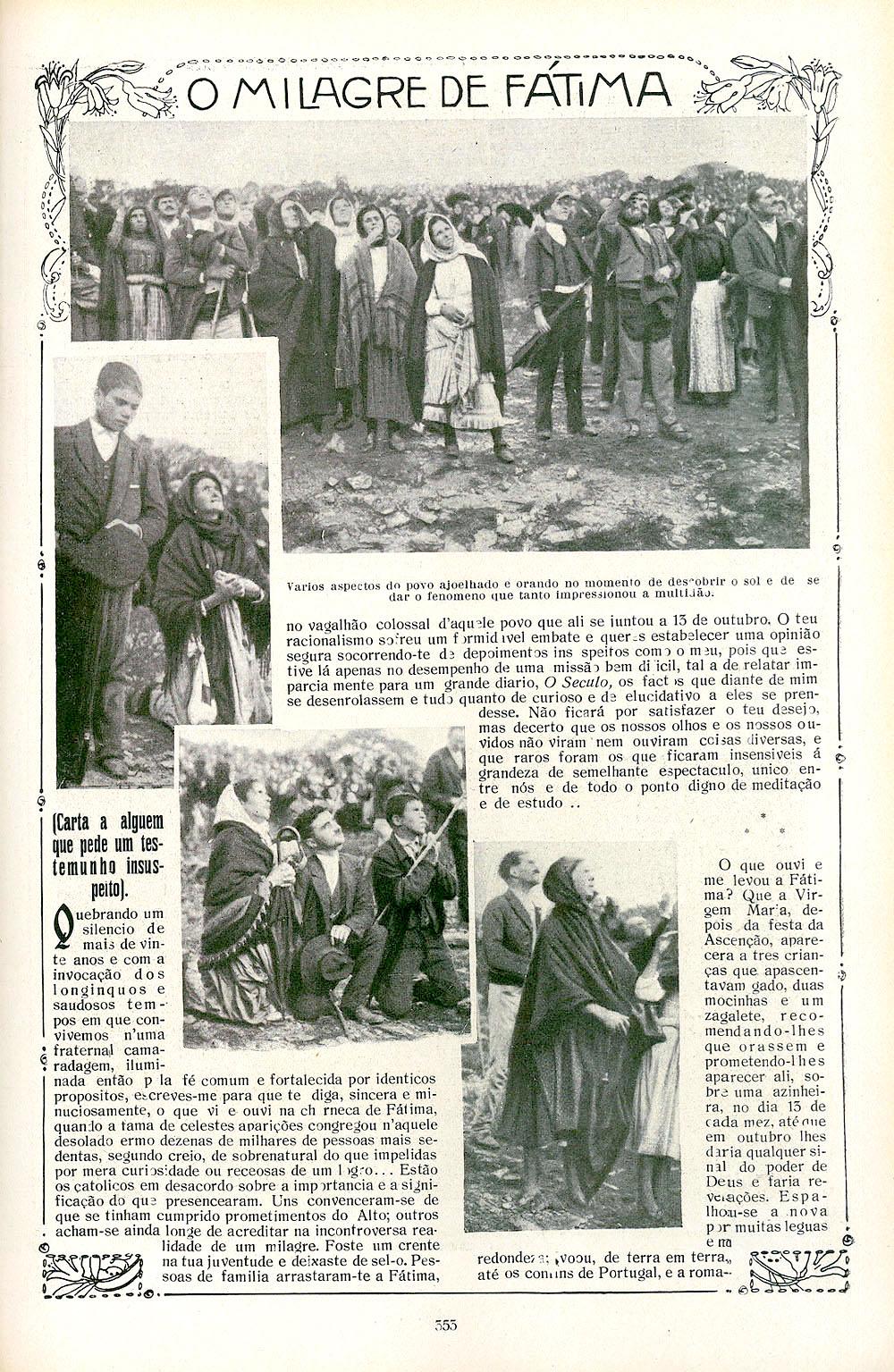
‘Our Lady of the Rosary.’ She repeated the message she had told the children in July that the war was going to end. It did a year later on 11th November 1918. She repeated her message for penance and prayer to her Immaculate Heart for peace and the salvation of sinners. ‘Do not offend the Lord our God anymore, because He is already so much offended.’ (1)
What happened next amazed the crowds. Witness accounts vary, but many reported that the sun appeared. It filled the whole sky and shone very brightly, but they were able to look at it. It began to spin, change colours, and zig-zag towards the earth before returning to normal. They were afraid and fell to the earth. Many thought it was the end of the world. Others saw nothing unusual. When the bright light had gone, they saw that all their drenched and muddied clothes and shoes were perfectly clean and dry. The mud on the ground had also completely disappeared.
The three children saw something different. They saw St Joseph with the Child Jesus and Our Lady. St Joseph and the Child Jesus blessed the world.
This event was crucial to cementing belief in the apparitions; the Catholic Church officially approved the apparitions in 1930.
After the events, Francisco and Jacinta died young during the influenza pandemic: Francisco in 1919 and Jacinta in 1920. Lucia later became a Carmelite nun and continued to report private revelations, including visions in 1925 and 1929 relating to the consecration of Russia. She died in 2005, aged 97. Francisco and Jacinta were canonized in 2017, Lucía’s cause is ongoing with Pope Francis declaring her ‘venerable’ in June 2023.
The Fatima apparitions remain globally significant, inspiring pilgrimages to the Sanctuary of Our Lady of Fatima, devotion to the Rosary, and continued theological debate on repentance, peace, the role and conversion of Russia, global conflict, and divine intervention in human history.
Footnote References
(1) Santos, Lucia, ‘Fatima in Lucia’s Own Words: Sister Lucia’s Memoirs’ (1976), Santos, Lucia, ‘Fatima in Lucia’s Own Words: Sister Lucia’s Memoirs,’ Vol.II (2004)
(2) Fr. Andrew Apostoli, C.F.R. ‘Fatima for Today, The Urgent Marian Message of Hope (2010)
(3) The Message of Fatima Part III: The August, September and October Appearances, Soul (Winter 2009) written by Sister Lucia in 1944, given to the Vatican in a sealed envelope, to be opened after 1960. Published by the Vatican in 2000.
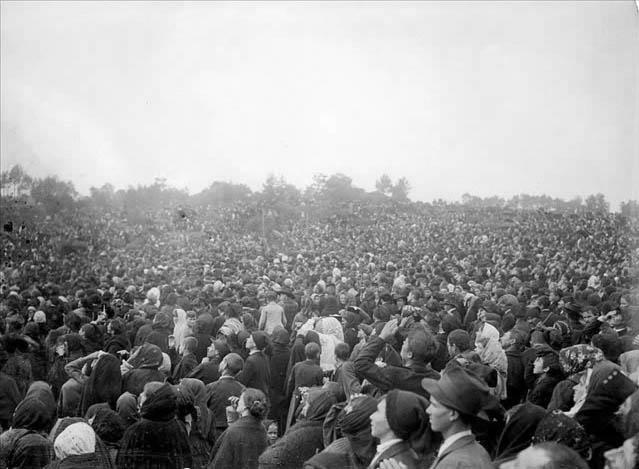
Pope Paul VI holds the hand of Sister Lucia as they stand at the base of the statue of Our Lady of Fatima in the Basilica at Fatima
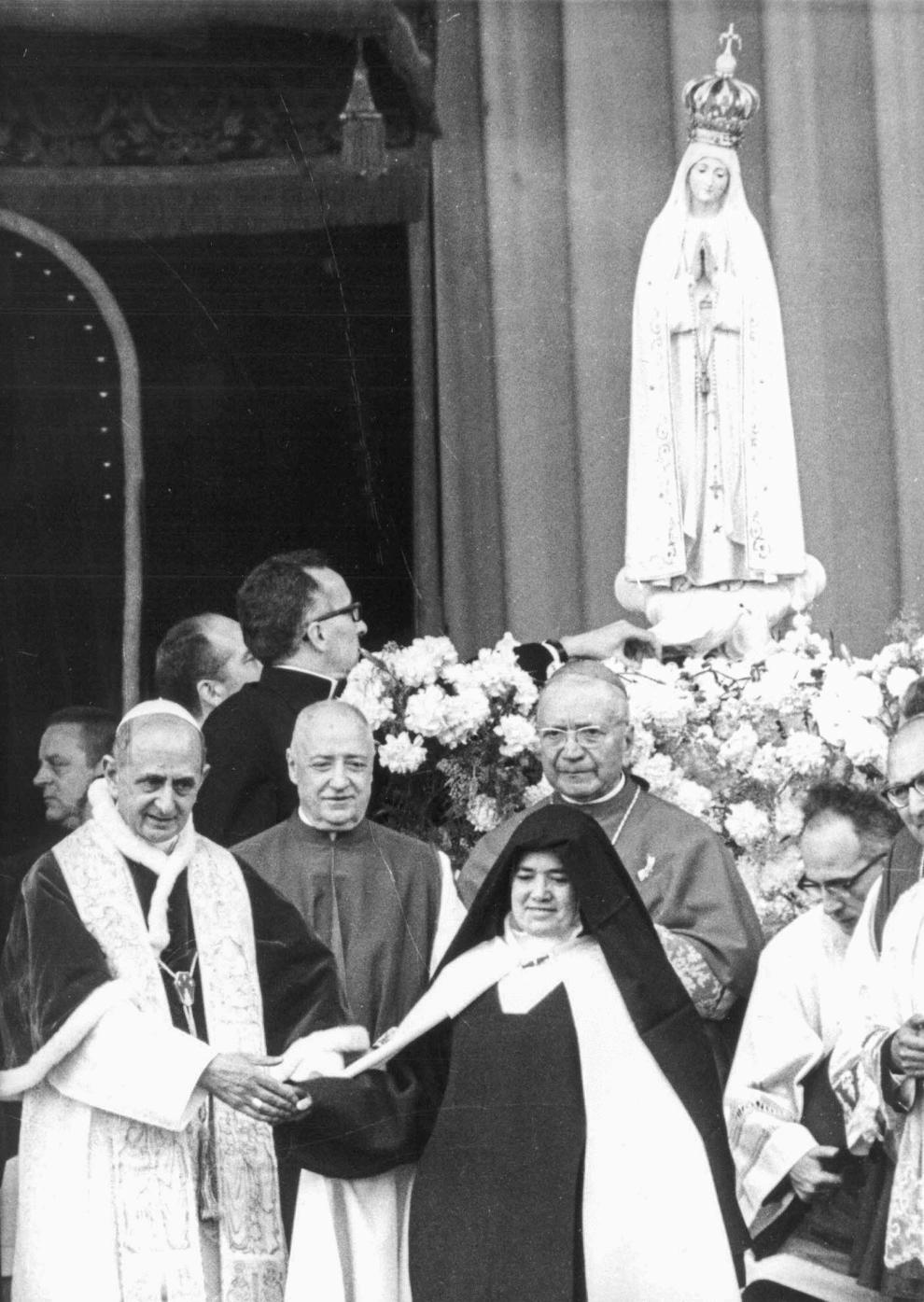
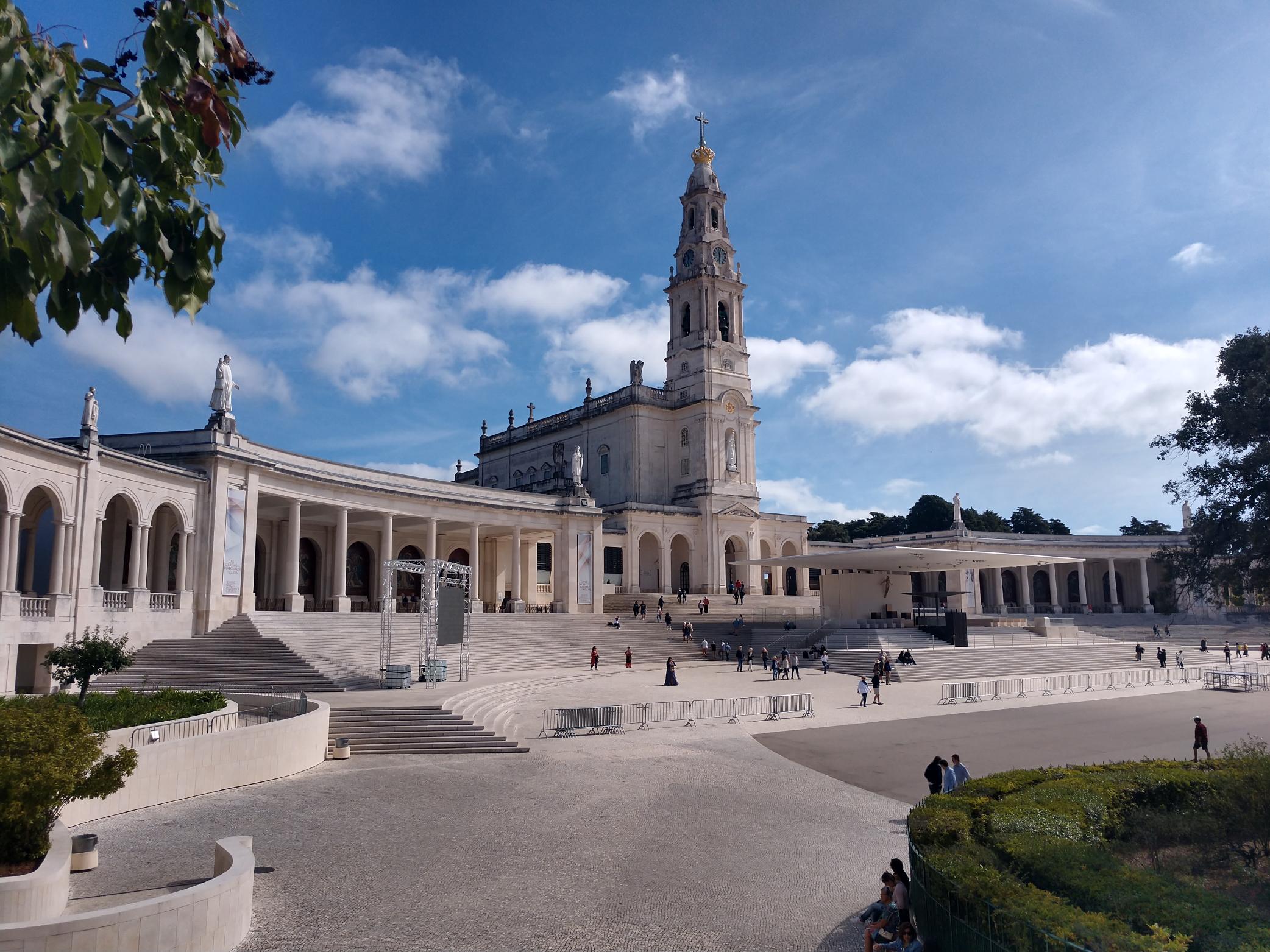
Monday 8th 7.00pm Mass in the Castle Chapel
Wednesday 10th 10.00am Mass in the Fitzalan Chapel
Thursday 11th 6.30pm Canine Partners Carol Service for tickets see: www.caninepartners.org.uk
Friday 12th 4.00pm Great Ballard School Christmas Service
Saturday 13th Arun Choral Society Christmas Concert for tickets see: www.arunchoralsociety.co.uk
Sunday 14th 4.00pm Sandgate Choir at Our Lady of England, Storrington see www.thesandgatechoir.com
Monday 15th 7.30pm Kent, Surrey & Sussex Air Ambulance Carol Service for tickets see www.aakss.org.uk
Wednesday 17th 2.00pm St Philip’s Catholic Primary School Advent Service
Wednesday 24th 5.00pm Vigil Mass of Christmas 11.30pm Night Mass of Christmas
Thursday 25th 9.00am Christmas Day Mass at Storrington 11.00am Christmas Day Mass at Arundel
Sunday 28th 11.00am Mass for the Close of the Jubilee Year
Wednesday 31st 2.00pm Wedding
JANUARY
Sunday 18th 11.00am Induction of new headteacher for St Philip’s School at Mass
Sat/Sun 24/25th Re-Commissioning of Readers
FEBRUARY
Wednesday 18th ASH WEDNESDAY
10.00am Mass and distribution of ashes at Cathedral 7.30pm Mass and distribution of ashes at Storrington
Saturday 21st TBC Diocesan Rite of Election Service
MARCH
Sunday 29th PALM SUNDAY
APRIL
Wednesday 1st 6.00pm Diocesan Chrism Mass
Thursday 2nd HOLY THURSDAY
8.00pm
Mass of the Lord’s Supper in the Cathedral followed by waiting to midnight at the altar of repose. 11.50pm Compline
Friday 3rd GOOD FRIDAY
9.00am Office of Readings and Morning Prayer 10.00am Stations of the Cross 3.00pm The Passion – Collection for Holy Places
Saturday 4th HOLY SATURDAY
9.00am Office of Readings and Morning Prayer Time tbc The Easter Vigil and First Mass of the Resurrection
Sunday 5th EASTER SUNDAY Masses at 9.00am in Storrington and 11.00am at the Cathedral
Saturday 18th 3.00pm East Sussex Community Choir free concert
Sunday 26th 2.30pm Scouting St George’s Day Parade & Service
MARRIAGES
8th August Charlie George Whitely KELLY & Hannah Mary DUFFY
5th September
20th September
Thomas FITZALAN-HOWARD & Helen BOWEN-WRIGHT
Thomas Edward INCHLEY & Constance Aglaé Odlie Agnès Marie ROUGE
27th August
5th September
14th October
22nd October
Rosemary Grove (88 years)
Ruth Della Gibbons (98 years)
John Edward Whatford (91 years)
Clara Jane Stanely (52 years)
28th October Ian Victor Caws (80 years)
5th November
Elena (Helen) Smith (95 years)