Leipzig is for life Changers
Leipzig is growing into the future
A political idea has turned into a life science ecosystem: How Saxony has been systematically promoting biotechnology and medical research since the turn of the millennium –and how Leipzig is becoming the nexus of this development.
At the edge of the historic fairground, where trade halls once stood, laboratory lights are now glowing. This is where Leipzig’s new innovation center for the life sciences is being built - a building that symbolizes Saxony’s ongoing transformation. When the Free State of Saxony launched its biotechnology offensive in the year 2000, its vision was bold: a German state known for its manufacturing and engineering prowess wanted to become a leader in the life sciences. With over a billion euros in investments, Saxony built infrastructure, labs, and networks. Funding policy turned into research reality – with international visibility.
Leipzig had a vision
The first signs of this transformation became apparent in Leipzig. In 2004, BIO CITY LEIPZIG opened; at the time
it symbolized a future that had yet to become a reality. Today, the BioCity Campus is home to a dense network of research institutes, start-ups, and mature companies. On over 100,000 m2, more than 4,500 people are working on new therapies, diagnostic procedures, and bio-based processes. The city is growing and has a clear vision: new buildings like the BioCube, BioSquare, CityLab, and the upcoming Innovation Center for the Life Sciences will expand the area by a further 60,000 m2 by the year 2027. Leipzig is creating space for research and its application.
This is where the Fraunhofer Institute for Cell Therapy and Immunology (IZI) manufactures cell and gene therapies for clinical trials. Digital surgery is being developed at the ICCAS (Innovation Center Computer Assisted Surgery), and data on lifestyle disea -
ses is being collected and evaluated at the LIFE Research Center. In addition, there is the Biotechnology-Biomedical Center (BBZ), the Helmholtz Centre for Environmental Research (UFZ), the German Biomass Research Center (DBFZ), the Max Planck Institutes, and the iDiv Center for Biodiversity Research – a network that makes Leipzig one of the densest research hubs in Europe.
Companies making an impact
This research landscape has given rise to numerous companies who are making an impact: FamiCord AG (formerly Vita 34) is Europe’s largest stem cell bank and now stores millions of samples for regenerative therapies. University of Leipzig spin-off c-LEcta develops customized enzymes for the pharmaceutical, food, and chemical
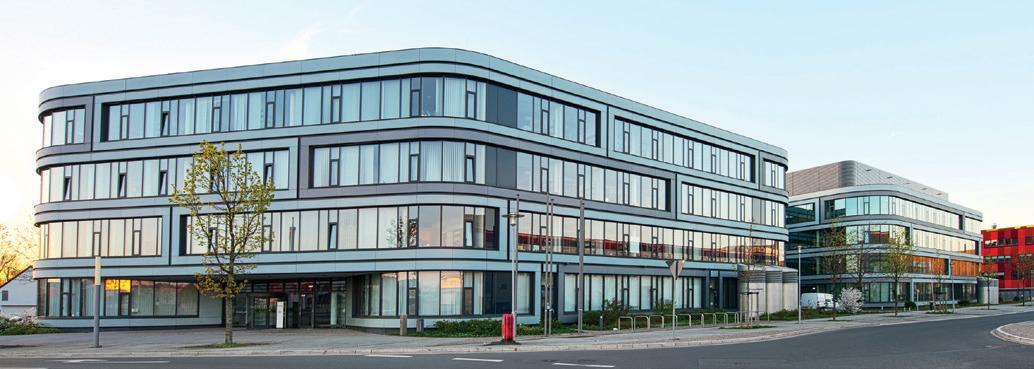
The Fraunhofer IZI in Leipzig supports
industries. In 2022, the company was acquired by the Irish Kerry Group –an interna-tional success story from Leipzig’s laboratories.
In addition to these well-known companies, a new generation of promising entrepreneurs has sprung up: BellaSeno is working on bioresorbable implants which support the healing process after surgery and then break down in the body. This example of applied biotechnology not only offers immediate benefits for patients, but also has the potential to become a billion-dollar market. Another upand-coming biotech company based in Leipzig is Primogene. Its team is developing bioactive ingredients similar to human breast milk which are designed especially for feeding premature babies. The company’s goal is to supply a highly specialized and rapidly growing global market with this product.
Young companies from all over the world benefit from the customized support services they find in Leipzig. On the one hand there is medical:forge Leipzig, an accelerator which guides start-ups through the regulatory approval process and prepares them for market entry. Then there’s the innovative SpinLab – The HHL Accelerator, which focuses on young eHealth and MedTech companies. In this environment, technology-driven start-ups can rapidly scale up. This is creating an ecosystem in Leipzig that closely interlinks academic research and industrial scaling and is attracting more and more global investors.
Research with connections
Leipzig has the unique advantage that basic research and clinical applications are happening right next door to one another. The city has certified clean rooms, GMP facilities, and Leipzig University Hospital as a partner for clinical studies. This proximity enables research that quickly finds its way into treatment options. And in future, the new joint project CREATION (Center for Gene and Cell Therapy in Regeneration and Transplantation) aims to make
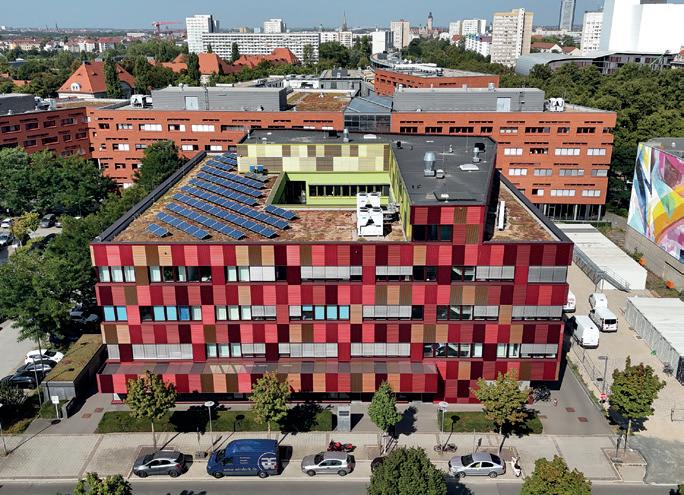
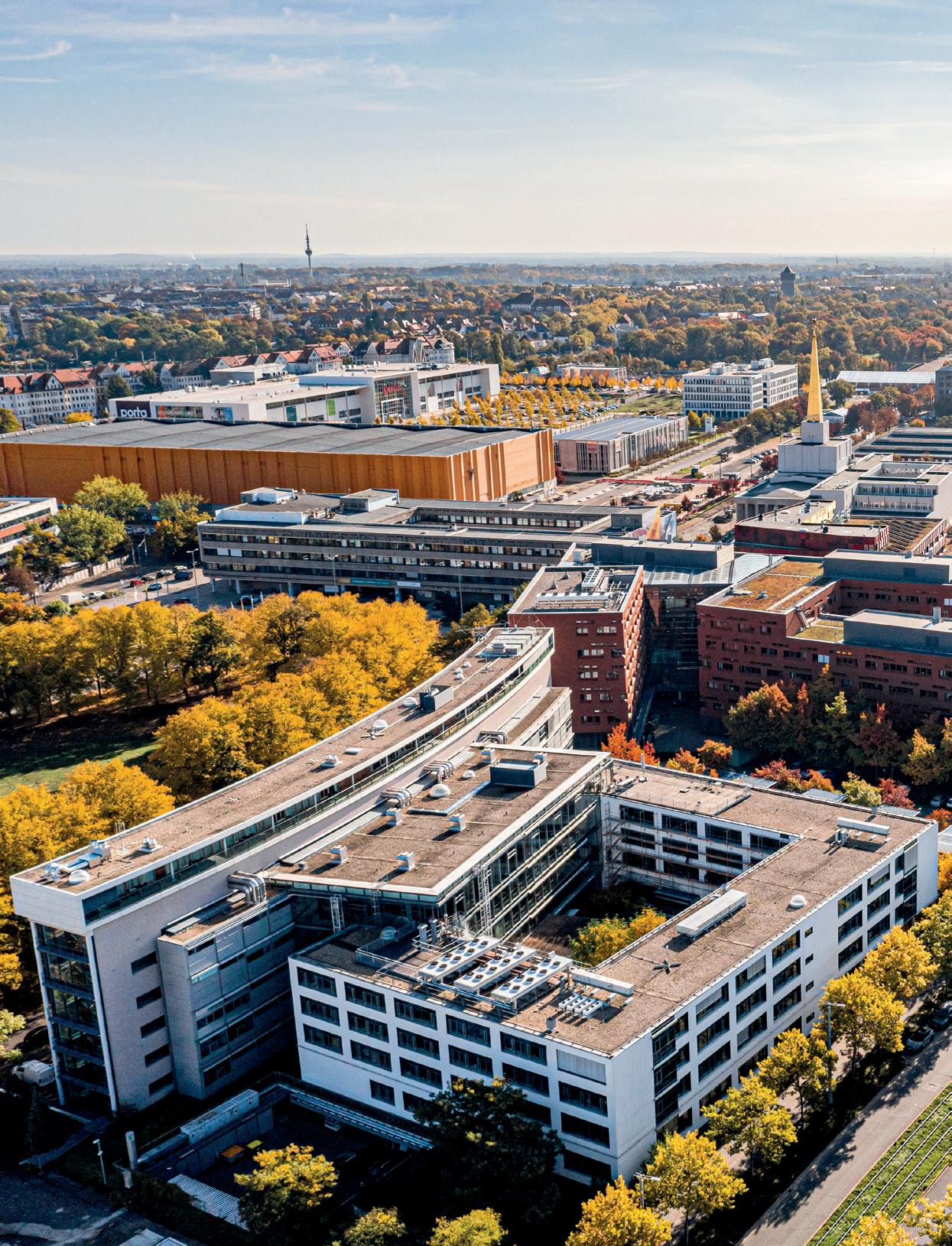
Leipzig is vibrant. Around BIO CITY LEIPZIG, the historic fairground continues to see new development. The BioCube (in the foreground) offers young companies room to grow. And if they need more space – like c-LEcta did – they can move into their own building within walking distance.
cell and gene therapies (CGT) available to patients faster. Saxony is leveraging this success on a supraregional level: programs like SaxoCell® are connecting the cities of Leipzig, Dresden, and Chemnitz to form a network for CGT. leap:up GmbH, a wholly owned subsidiary of the industry association biosaxony, coordinates training, transfer, and start-ups – from the skilled worker initiative “QualiBioPharma” to the venture fund Goldtrack Ventures.
Beyond Leipzig
Momentum is also growing beyond Leipzig: Dresden is a hub for molecular basic research and radio pharmacy. The CRTD Cluster of Excellence, the Max-Planck-Institute for Molecular Cell Biology and Genetics, the Helmholtz Center Dresden-Rossendorf, and the National Center for Tumor Diseases are having a positive impact on the state’s international visibility. The Institute for Radiopharmaceutical Cancer Research develops innovative tracers and therapies, while companies such as Eckert & Ziegler, ABX, and Rotop are translating them into industrial applications. Me -
dical technology and robotics solutions are being developed in Chemnitz. This range of specialties is giving rise to a collaborative, high-performance biotech ecosystem in Saxony.
Targeted growth
Saxony has shown that two decades of ongoing development, clear strategies, and reliable funding can have a significant impact. Today, the state boasts over 13,000 students in medicine and the natural sciences, five chemical parks, and, with the DHL hub in Leipzig/Halle, one of the world’s most important logistics centers for transporting pharmaceuticals. Saxony has clearly defined goals: Space for research facilities is continuing to grow, clusters are becoming more international, and networking with industry and clinics is intensifying. By 2035, Saxony aims to be among Germany’s top three life science regions – with Leipzig as its visible nexus. What began as an ambitious idea 25 years ago is now a thriving innovation ecosystem – reliable, ready to grow, and prepared for the challenges the future may bring.
•
Cell therapies from Leipzig
Translating cell and gene therapies (CGTs) into clinical and commercial use can only be achieved through collaboration. In Leipzig, the Fraunhofer IZI, Leipzig University Hospital, and the SaxoCell® cluster form a strong network of reliable and experienced partners. The CREATION Center is another key player in this field.
Over the past two decades, Leipzig has become a dynamic hub for the life sciences in Europe. Among others, this evolution has been driven by the Fraunhofer Institute for Cell Therapy and Immunology IZI. It partners with companies, hospitals, labs, and research institutions for contract research and has a clear mission: to translate innovative therapeutics from research into clinical application.
Translation
As one of the few centers in Europe, the Fraunhofer IZI has the necessary infrastructure and expertise to develop and manufacture CGTs across the entire development cycle. The focus is on regulatory preclinical studies to evaluate efficacy and safety, the development and optimization of GMPcompliant production processes and quality controls, and the pharmaceutical manufacture of clinical trial samples for clinical studies. To this end, the Fraunhofer IZI has several cleanroom facilities totaling about 1,000 m² in size, numerous quality control laboratories, a process development unit, and an animal testing center with GLP testing facilities. With over 4,000 approved cell products, the Institute is one of the most experienced translation facilities in Europe. Since 2016, more than 600 CAR-T cell products have been manufactured, including the batches for the European arm of the approval study for Novartis’ first
approved CAR-T cell therapy, Kymriah®.
Research networking
In addition to translation, the Fraun hofer IZI is part of various research and development projects. In collaboration with academic and industrial partners, the Institute studies, optimizes, and tests new technologies which support the development of new CGTs, increase manufacturing capacities and economic efficiency, or optimize treatment success and therapy decisions. As a key
partner in various national and international initiatives and networks, such as the national strategy for CGTs, the Fraunhofer IZI is actively involved in fostering an environment that promotes translation. The SaxoCell® innovation cluster, for example, brings together academic research institutions, university hospitals, and companies in Saxony with the aim of translating novel CGTs into clinical practice more quickly and efficiently.
Future project CREATION
This synergistic approach put the CREATION (Center for Gene and Cell Therapy in Regeneration and Transplantation) project on the German government’s shortlist as part of the national prioritization process for large-scale research infrastructures. Together with partners in Hanover and Göttingen, the Center aims to provide widely available off-the-shelf therapies and significantly improve manufacturing processes through state-of-theart, AI-supported automation. Leipzig/ Halle Airport, with its DHL logistics hub, plays a central role in the global logistics of CGTs, ensuring that patient material and cell products reach their destination safely. Thanks to a strong concentration of universities and targeted qualification campaigns by the Free State of Saxony, the highly qualified experts needed for manufacturing and shipping are also available locally.
© Fraunhofer IZI, Leipzig
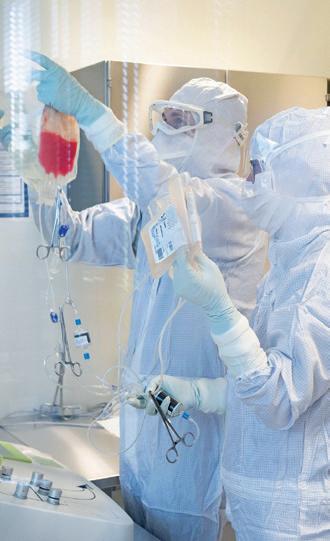
Working in the cleanroom at Fraunhofer IZI
Pioneer in cell products
The Fraunhofer Institute for Cell Therapy and Immunology (IZI) can be seen as a true pioneer: Together with the first generation of CAR-T therapeutics, its researchers became experts in the most efficient manufacturing processes. In conversation with the Institute‘s director, Ulrike Köhl.
transkript. With the initial approval of CAR-T cell therapy in 2017 (USA) and 2018 (EU), a new era in cancer treatment seemed to have dawned. Your institute was involved almost from the very beginning. How has this new market developed since then?
Ulrike Köhl Immuno-oncology, and cellular immunotherapies in particular, have become an established and key pillar of cancer treatment. Initially seen only as a “last resort,” some therapies are now being used as a secondline treatment. Their potential use as a first-line therapy is already the subject of intensive discussion - clear evidence of the remarkable medical promise these products hold. This is exactly what the Fraunhofer IZI is specialized in, and we have almost 20 years of experience with the pharmaceutical manufacture of cell-based therapies. Simultaneously, an entire industry has developed around the manufacture and logistics of these medicines.
transkript. Who are your customers and clients?
Köhl . We mainly serve customers and partners who want to bring cell and gene therapies to the clinic. Some are large pharmaceutical companies, but we also work with smaller biotech companies, logistics companies, start-ups with innovative processes, and acade -
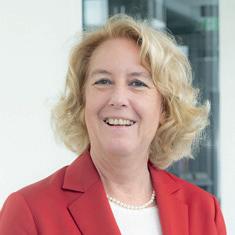
DR DR ULRIKE KÖHL
studied biology and medicine and did a PhD in pharmacology. She has been heading the Fraunhofer Institute for Cell Therapy and Immunology (IZI) since 2017. Beside Fraunhofer, she is a full professor of immuno-oncology at the University of Leipzig and Director of the Institute of Clinical Immunology at Leipzig University Hospital. Prof. Köhl is heading the SaxoCell future cluster for cell and gene therapies.
mic institutions like university hospitals.
transkript. What’s the difference between your institute and a contract manufacturing organization (CMO)?
Köhl . As part of the Fraunhofer Society, we combine certain aspects of both worlds, R&D and the market. We can support our partners and their products and processes at almost any technology readiness level (TRL). We have the infrastructure and expertise to usher
products from the early stage of their development to the translation stage. And we have the experience and knowhow to make products that are nearly ready for clinical use fit for pharmaceutical manufacture – and to ensure their production within the framework of clinical trials.
transkript. We are currently seeing some turbulence in the sector. Why is that?
Köhl In the beginning, it was obvious there was a lack of manufacturing capacity. That’s not surprising, since the processes and thus the manufacturing routines and infrastructure didn’t exist yet. Apart from the Fraunhofer IZI, there were very few facilities in Europe that even had the capacity to do a clinical trial with several hundred patients. Now the opposite is true: The economic growth potential has led to many CMOs with increasing manufacturing capacities entering the market. Meanwhile, large pharma-ceutical companies have set up and expanded their own manufacturing infrastructure, and many academic institutions are also setting up their own facilities. This has led to an oversupply of manufacturing capacity in recent years. I’d like to see academically operated manufacturing centers coordinate within large networks and position themselves in a complementary way.
PROF.
Head start for preemies
The Leipzig-based biotech start-up Primogene manufactures biotechnologically functional ingredients like breast milk components to improve premature babies’ nutrition. An example of how Leipzig’s life science ecosystem enables collaboration.
Every year, around 13 million children worldwide are born prematurely. Babies born before the 37th week of pregnancy are considered particularly at risk. Organs such as the lungs, intestines, and immune system aren’t fully developed yet. Breast milk is seen as the gold standard in newborn nutrition. However, in premature babies breast milk often doesn’t meet their heightened nutritional and functional needs – even if it has been supplemented with proteins, fats, or minerals. It doesn’t replace the complex bioactive molecules found in natural breast milk, which play a crucial role in the child’s immune system and development.
Early biotechnology
This is where Primogene, a start-up founded in Leipzig in 2023, comes in. With the help of its proprietary biotech-platform, these molecules can be manufactured in a form that is identical to human molecules and thus functionally equivalent to their natural counterparts. “Breast milk is the gold standard for nutrition in the early stages of life – rich in bioactive compounds that promote growth from the very beginning. Our mission is to produce these valuable components and make the unique benefits of breast milk ingredients available to premature babies and infants who can’t be breastfed,” says Dr. Reza Mahour, cofounder and CEO of Primogene. However, the potential of Primogene’s tech-
nology extends far beyond ingredients for premature infant nutrition. The start-up also manufactures bioactive molecules that are used as ingredients for nutrition, personal care, and pharmaceutical applications. Primogene delivers “Ingredients for life – throughout life” and contributes to human health across all stages of life.
Staying power required
Die Herstellung funktionaler InhaltsManufacturing functional ingredients on a laboratory scale is one thing. Transitioning to production on an industrial scale is a whole different ballgame – that requires staying power.
For a young company, consultants with regulatory expertise and market access are invaluable partners. You also need the right infrastructure to be able to take the next step. Otherwise, many promises remain stuck at the pilot stage. This is where Leipzig’s life science ecosystem offers many benefits: It brings together applied research, clinical infrastructure, and industrial partners in one space. Primogene uses laboratory space at BIO CITY LEIPZIG and networks with neighbors from research and industry. Through industry-specific programs like the accelerator medical:forge Leipzig, operated by leap:up, it also benefits from support networks, mentoring, and investor contacts.
One example of this close collaboration within the ecosystem is the cooperation with the Fraunhofer Institute for Cell Therapy and Immunology (IZI). Together with the Institute, Primogene is currently studying how bioactive components of breast milk work in infectious diseases models and can be used for therapeutic purposes. “In Leipzig, people just collaborate in a very special way,” says Linda Karger, co-founder and COO of Primogene. “Everyone is on an equal footing –even as a start-up, we can approach established companies, politicians, and investors.” The start-up is being supported by business angels and industry experts from Leipzig and is also receiving funding from the Free State of Saxony. •
On the path to a green future
The challenges of the future can only be addressed through a climate-neutral and circular economy. In Leipzig, industry, academia and investors are collaborating to find sustainable solutions.
Leipzig’s life science ecosystem encompasses not just healthcare companies, but many other innovative players. What they all have in common is a willingness to rethink business and science. One of the latest newcomers at BIO CITY LEIPZIG is aevoloop GmbH. The cleantech pioneer relocated its headquarters from Lake Constance into the heart of Germany’s “chemical triangle” in 2025 – in part because of its proximity to skilled talent and cooperative partners.
Plastics reimagined
Aevoloop has developed a new type of high-performance plastic that is chemically recyclable and biodegradable. Instead of ending up as waste, these circular plastics can be re-used as a resource within the usage cycle. The start-up recently raised €8.25 million to further refine its invention and get it from the lab to the market. Around €1 million of this funding was provided by the Leipzig-based German Agency for Breakthrough Innovations SPRIND. As part of the “Saxy Plastics” project funded by the Free State of Saxony, aevoloop is also collaborating with renowned research partners, i.e. the University of Leipzig, the Leibniz Institute for Polymer Research Dresden, and the Center for the Transformation of Chemistry (CTC).
A pioneer in green chemistry
The CTC is Germany’s largest research initiative in the field of sustainable
chemistry, receiving federal funding of €1.2 billion. By translating scientific findings into practical applications, the Center wants to help the German chemical industry move away from a linear, fossil-based model towards a circular, renewable approach. The ultimate goal is to turn chemistry into a circular economy based on renewable raw materials and recycling. To advance its aims, the CTC is working closely with industrial and scientific partners. These include the University of Leipzig, with which scientific collaborations and transfer projects are being planned.
Bio-materials on the rise
Leipzig University is also home to the Research and Transfer Center for Bioactive Matter (b-ACTmatter), which is part of the structural change program being implemented in central Germany. As a joint project of the Faculty of Physics and Earth System Sciences and the Faculty of Life Sciences, it is dedicated to the research and development of new materials that can interact with living organisms. By collaborating with industrial partners, the aim is to quickly turn these materials into practical technologies and products. The Center has already spun off a success story: the Leipzigbased start-up ESTER Biotech GmbH. It discovered a new enzyme that can break down over 90% of PET plastic in record time. The company founders are working on further developing it
into a 100% industrially recyclable and wasteless product.
Innovation BIOCITY Campus
Many future-oriented companies have also found a home on and around Leipzig’s BioCity Campus: Pacifico Biolabs is developing a new fermentation technology to produce sustainable vegan meat alternatives. The biotech company pluriSelect Life Science UG & Co. KG provides environmentallyfriendly solutions for cell and protein separation. The start-up enaDyne GmbH, which won the Saxon Startup Prize and is also receiving support from SPRIND, manufactures sustainable chemicals and fuels from CO₂. After getting its start at BIO CITY LEIPZIG the company is now moving into the neighboring BioCube, where it will find even more space to grow.
Environment and biodiversity
In contrast, everything at the labs of Advanced Identification Methods GmbH revolves around recording biological diversity. Using DNA-based species identification and highly innovative barcoding methods, the company provides its research and private sector clients with the data they need to make informed decisions about preserving biodiversity. The Helmholtz Centre for Environmental Research (UFZ) and the German Centre for Integrative Biodiversity Research (iDiv) provide the perfect environment for this work.
•