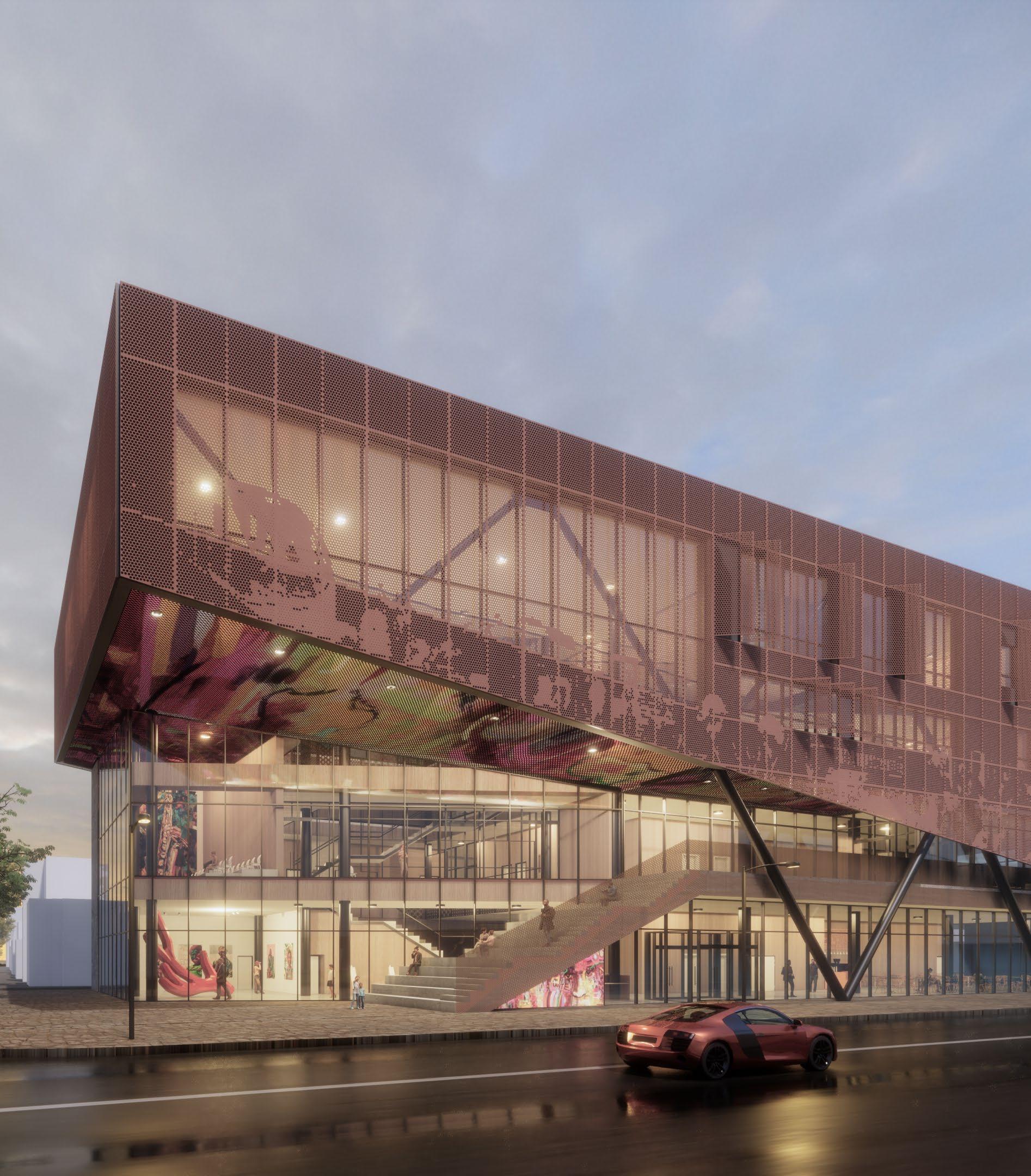
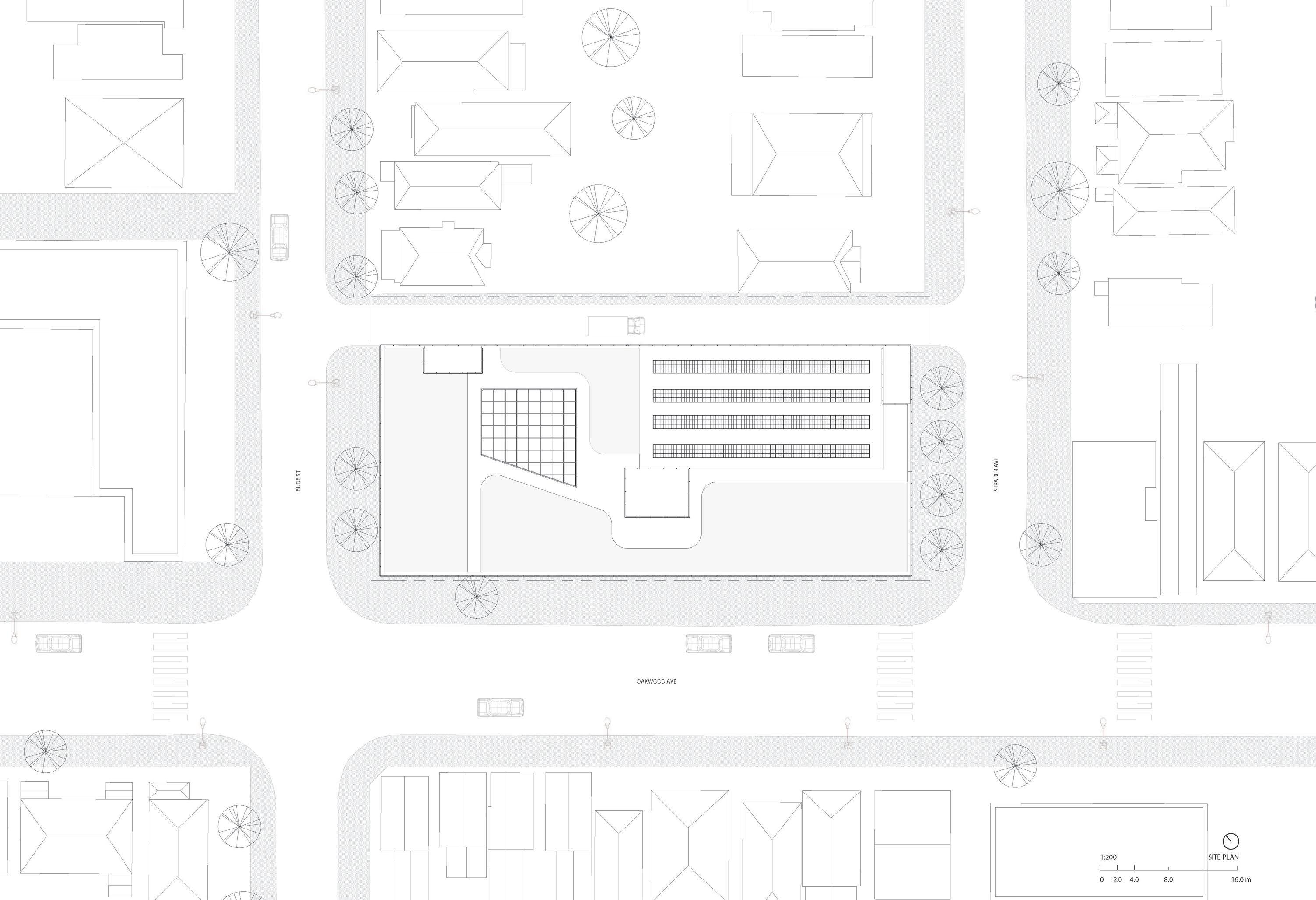
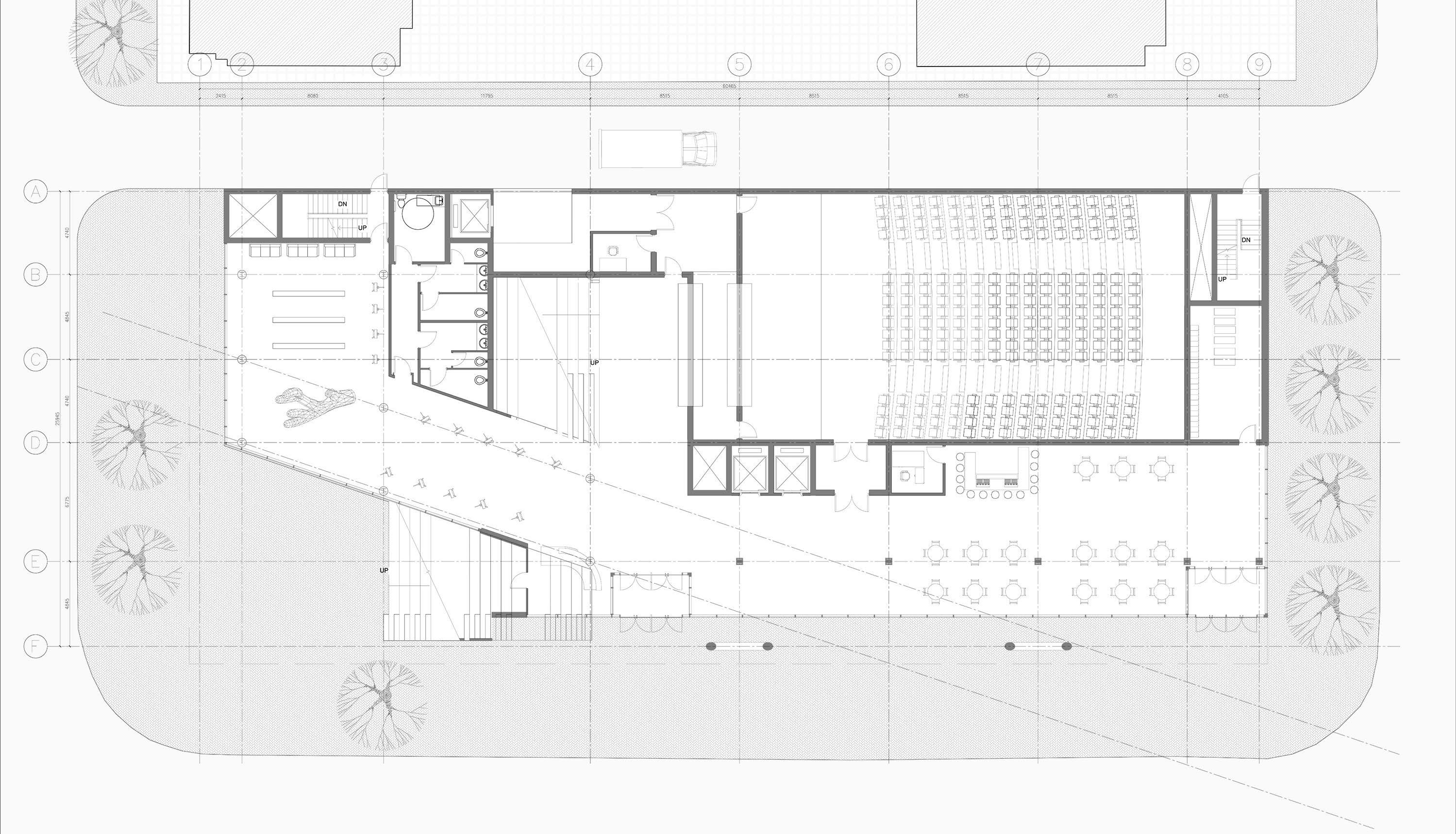
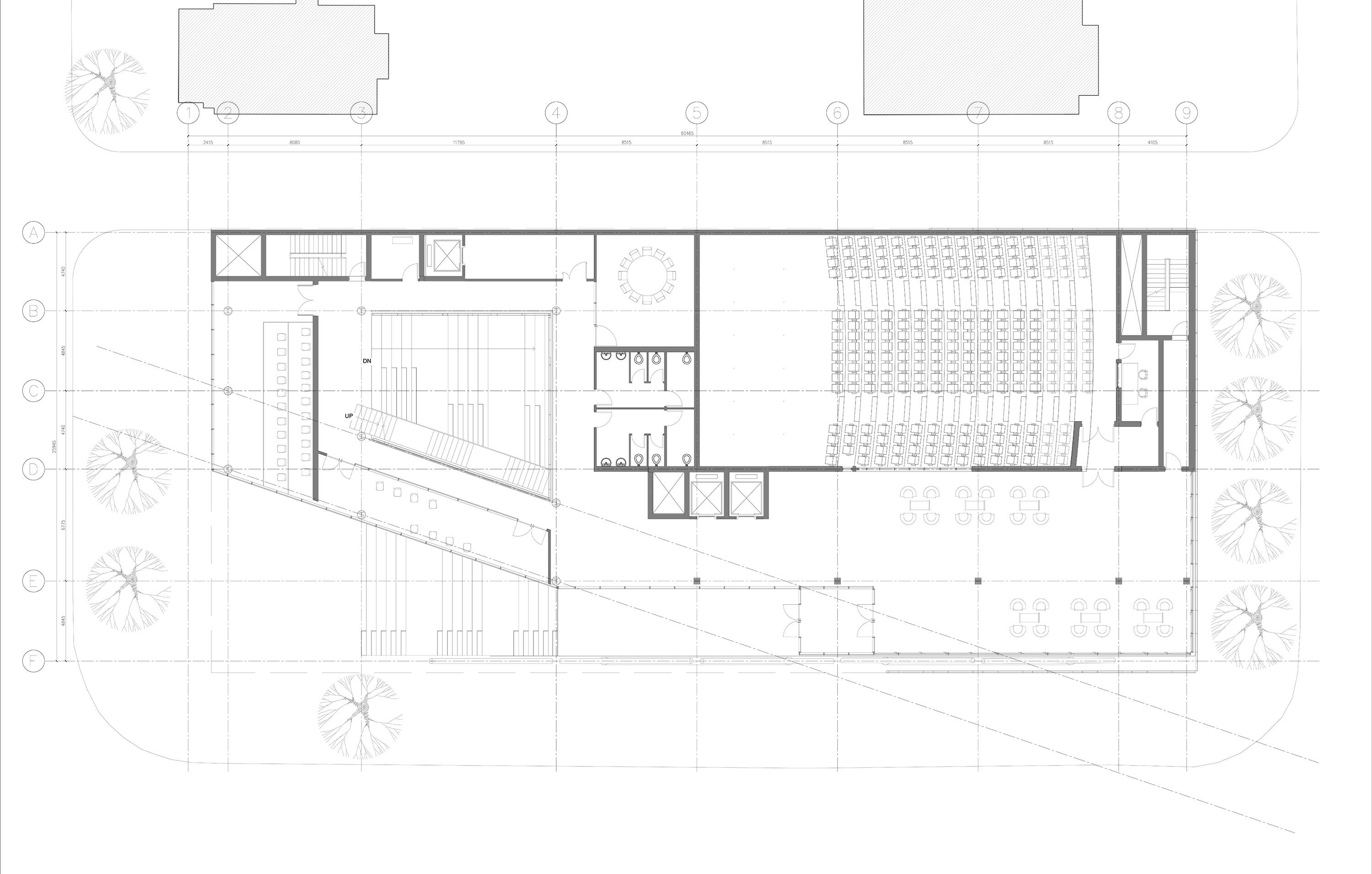
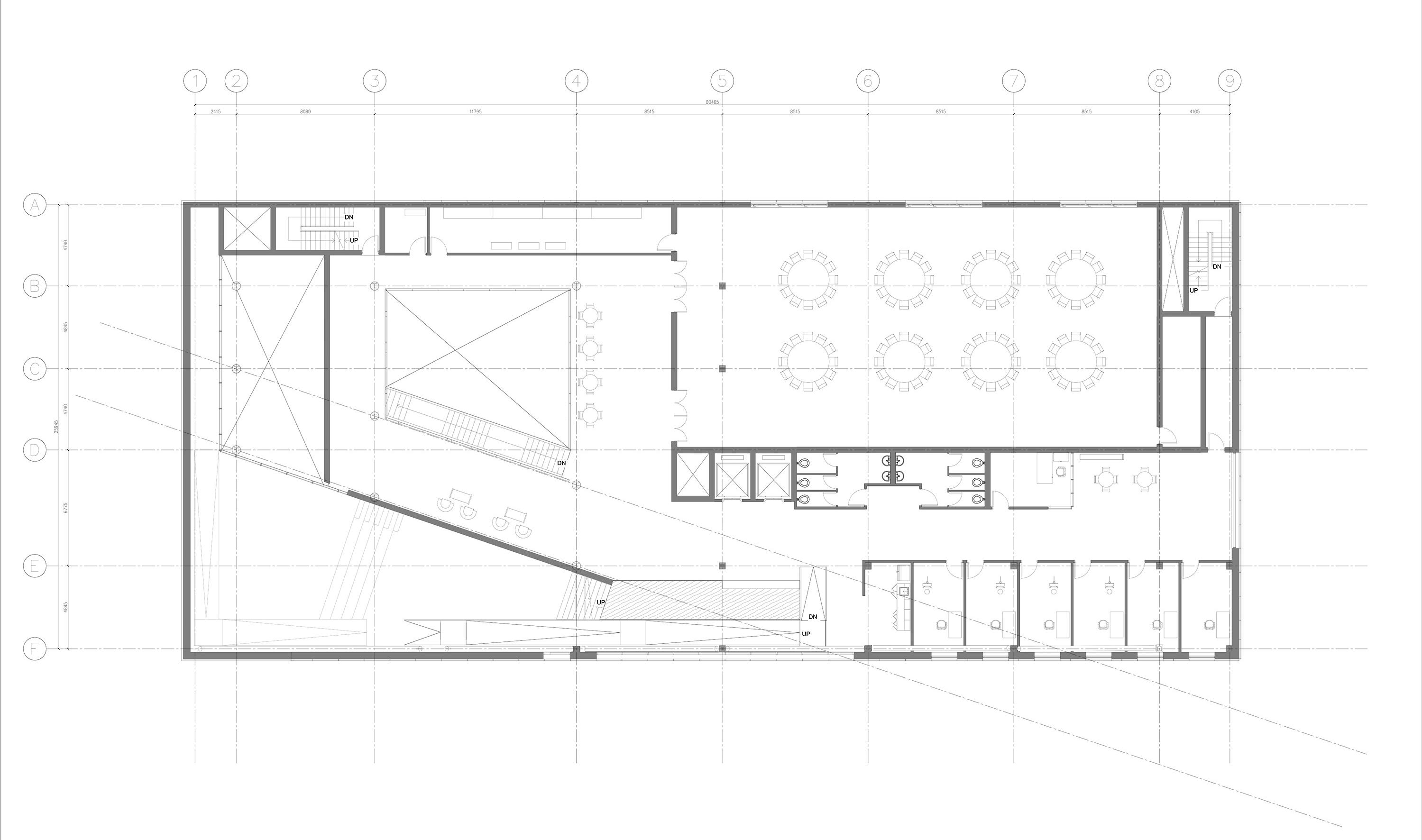
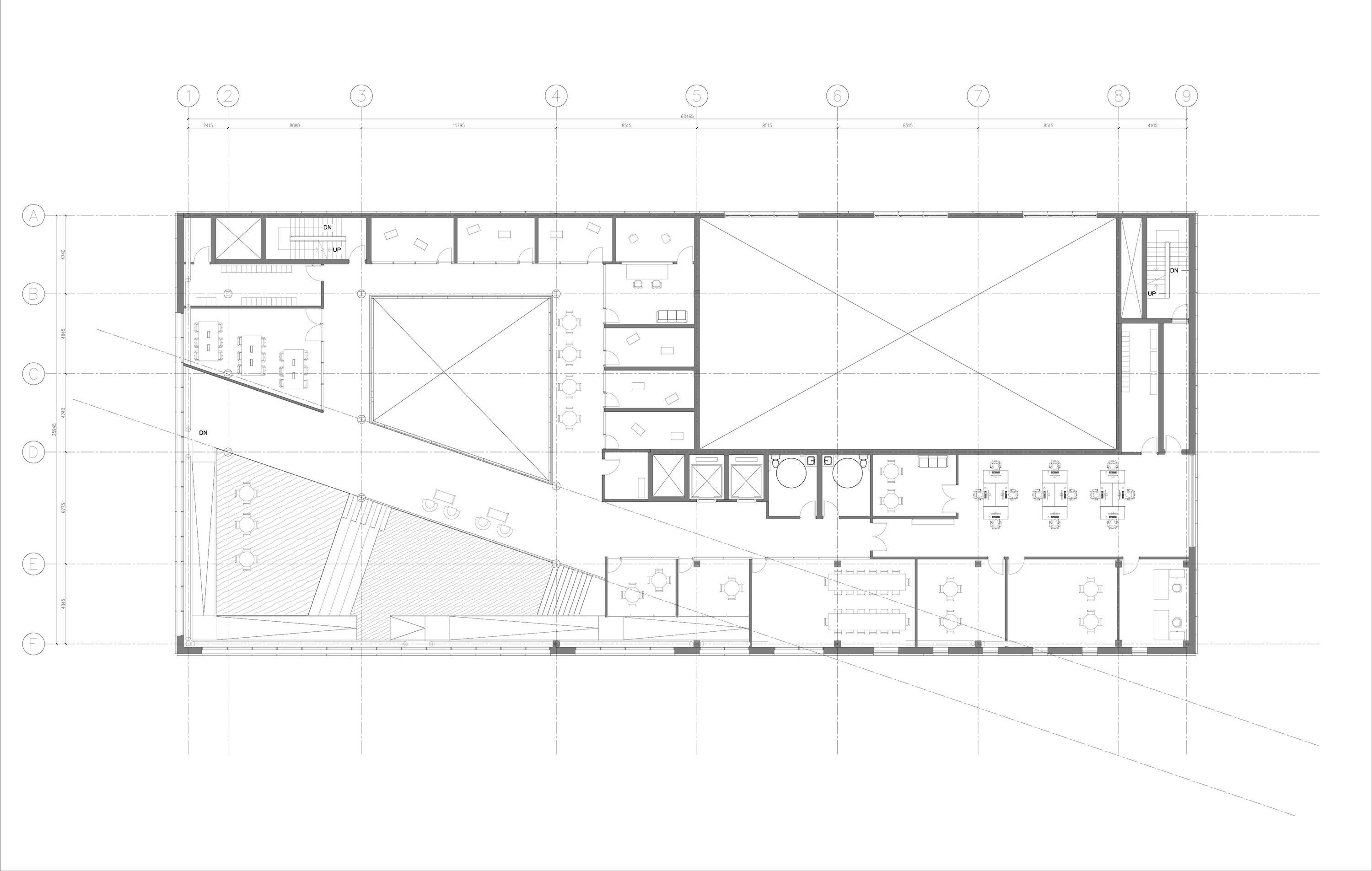
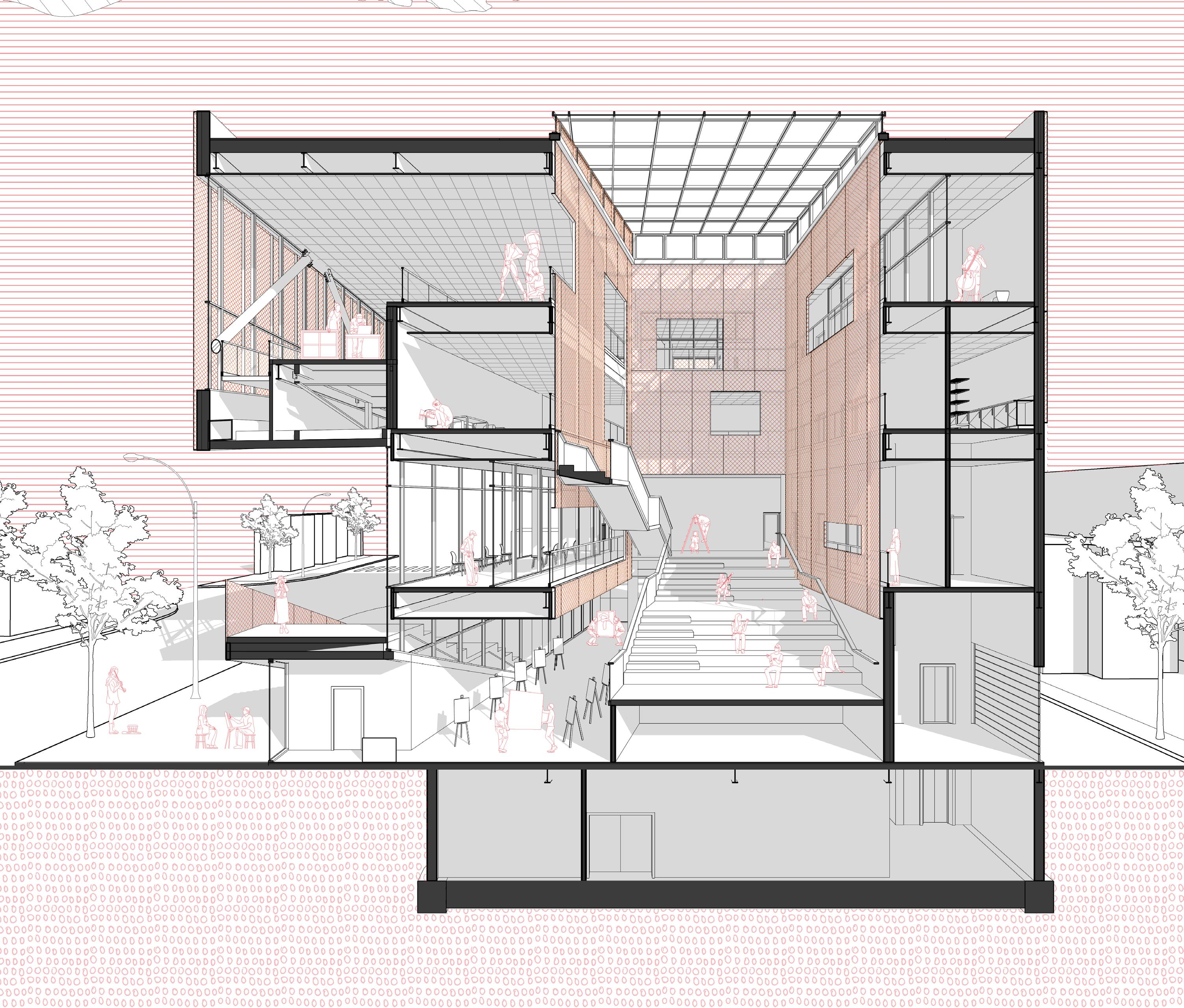
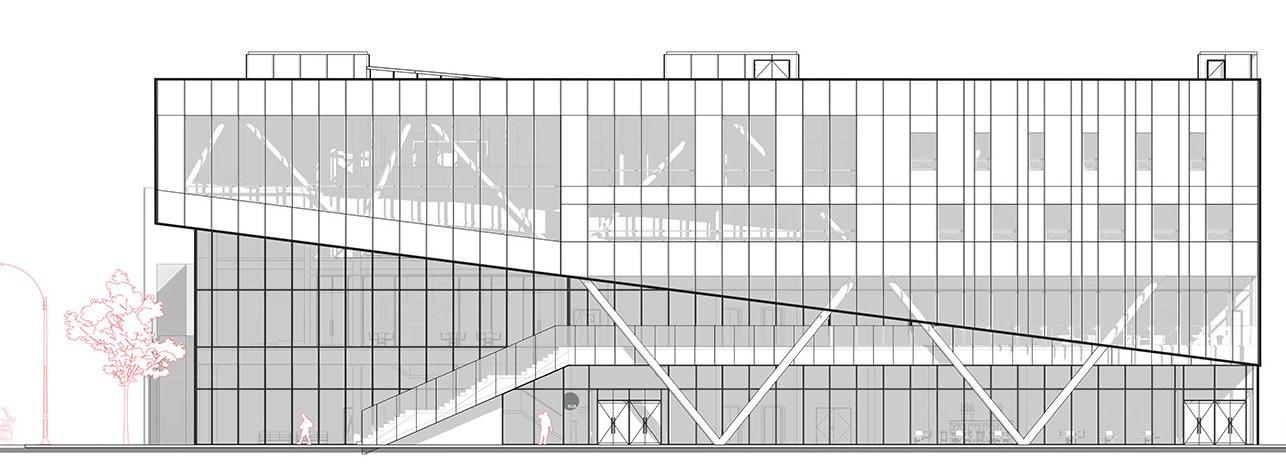
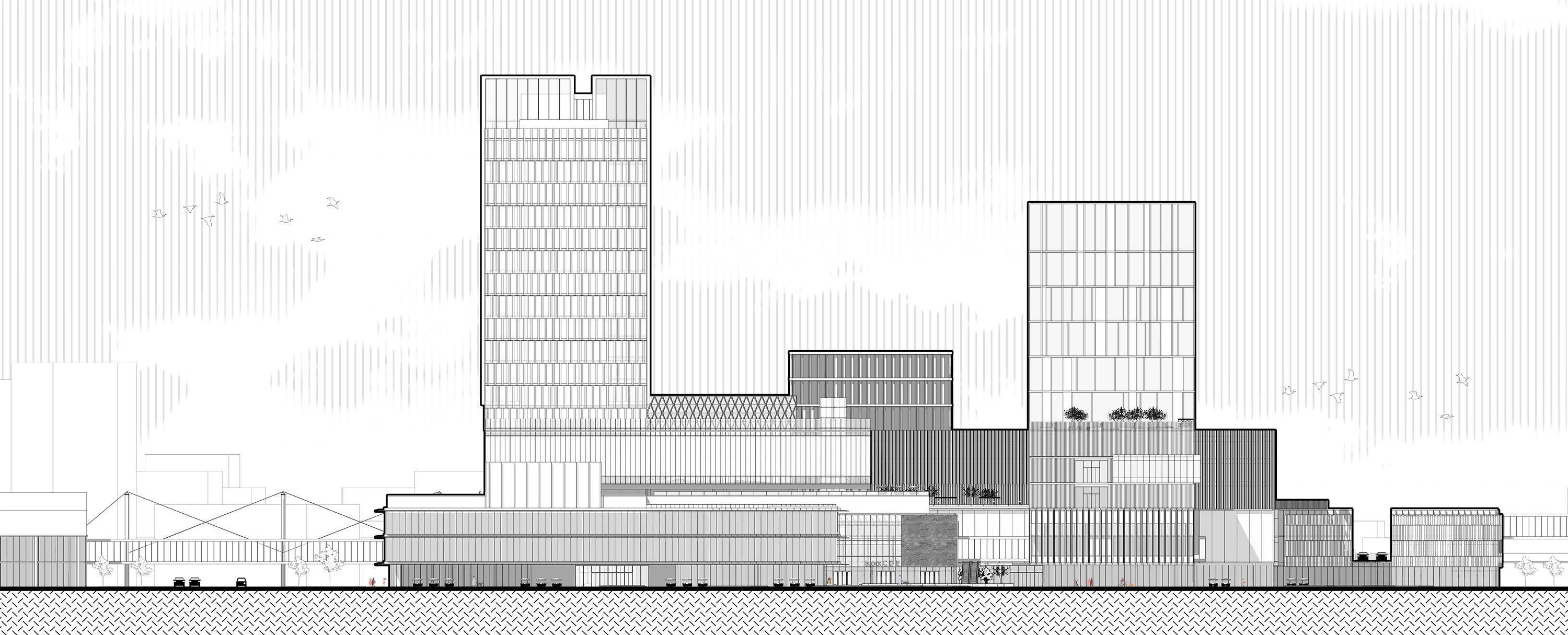
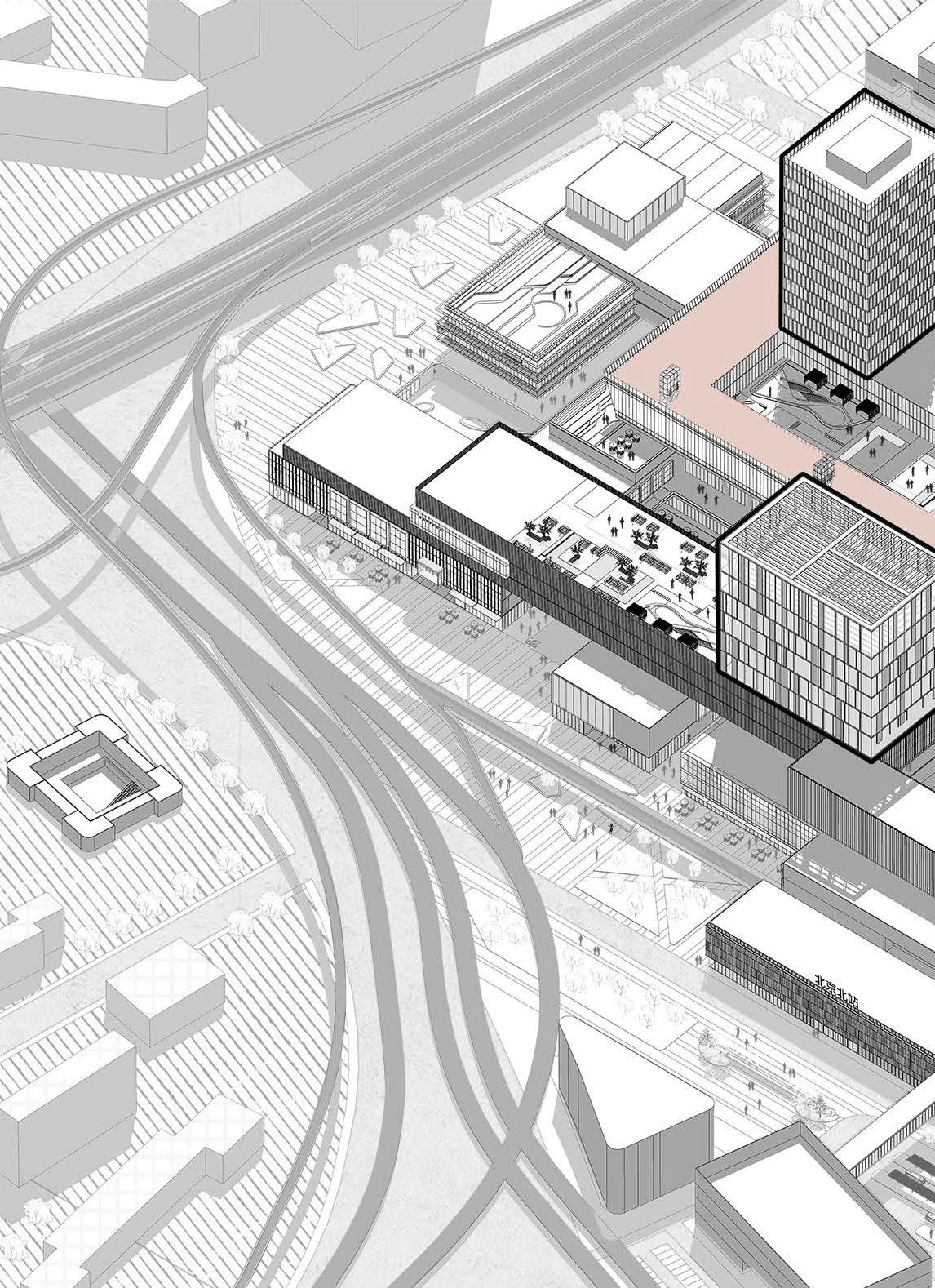
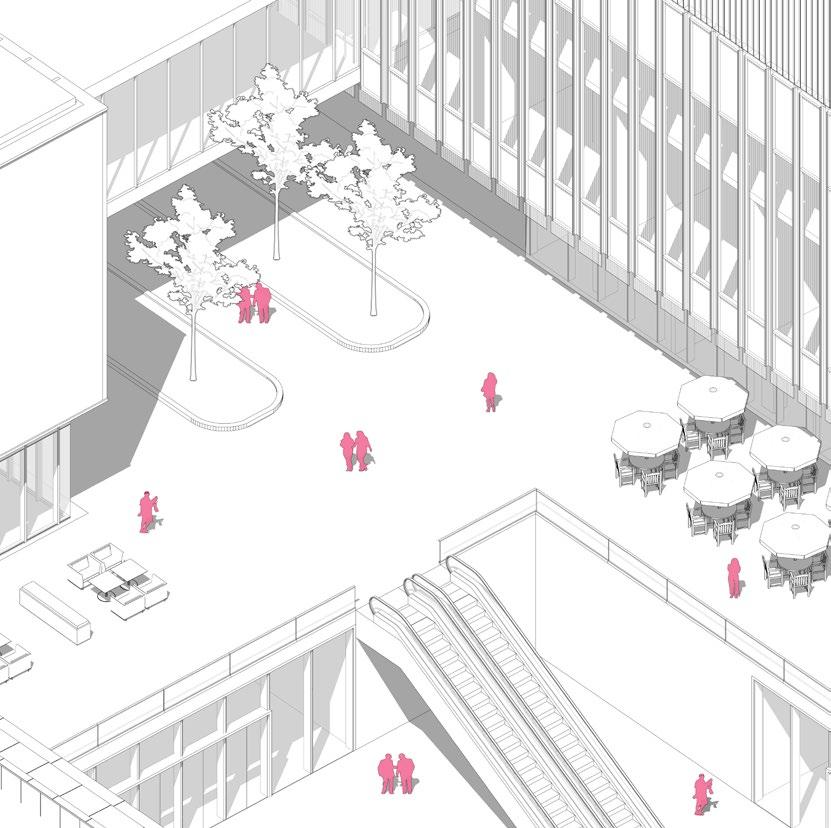
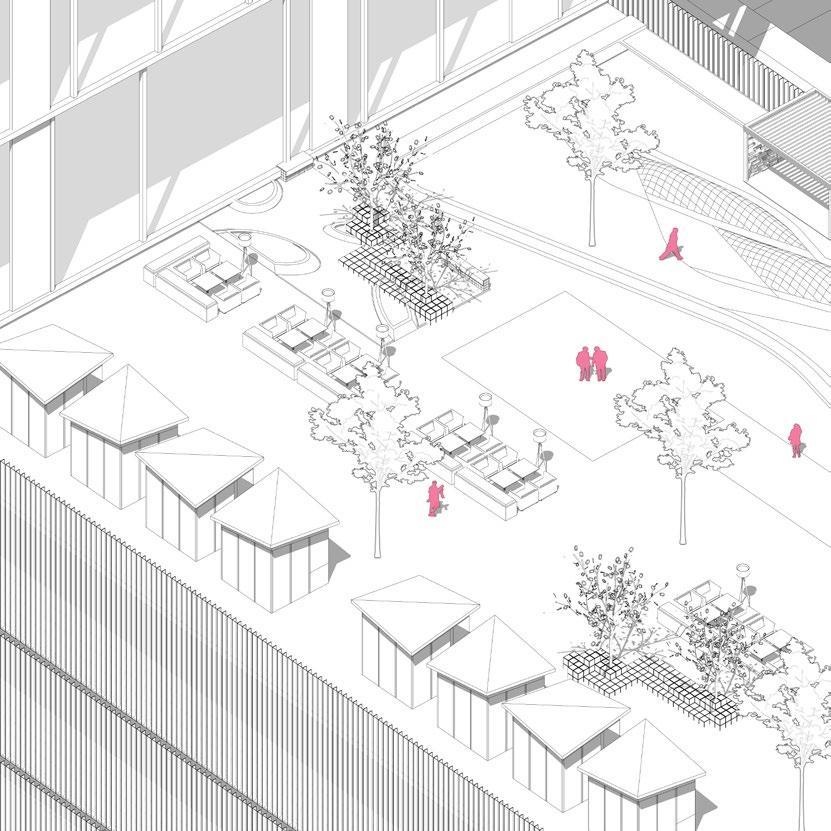
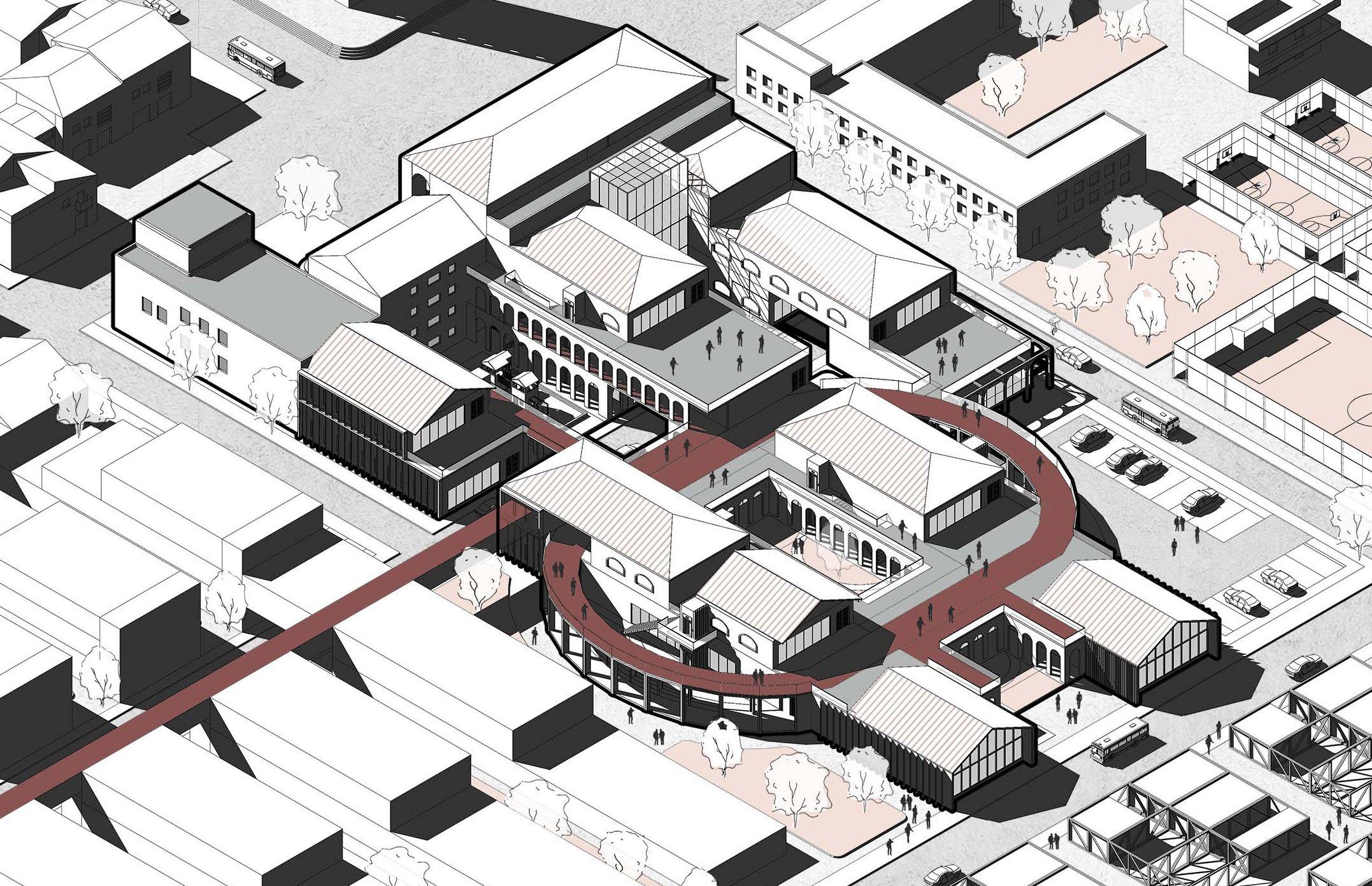
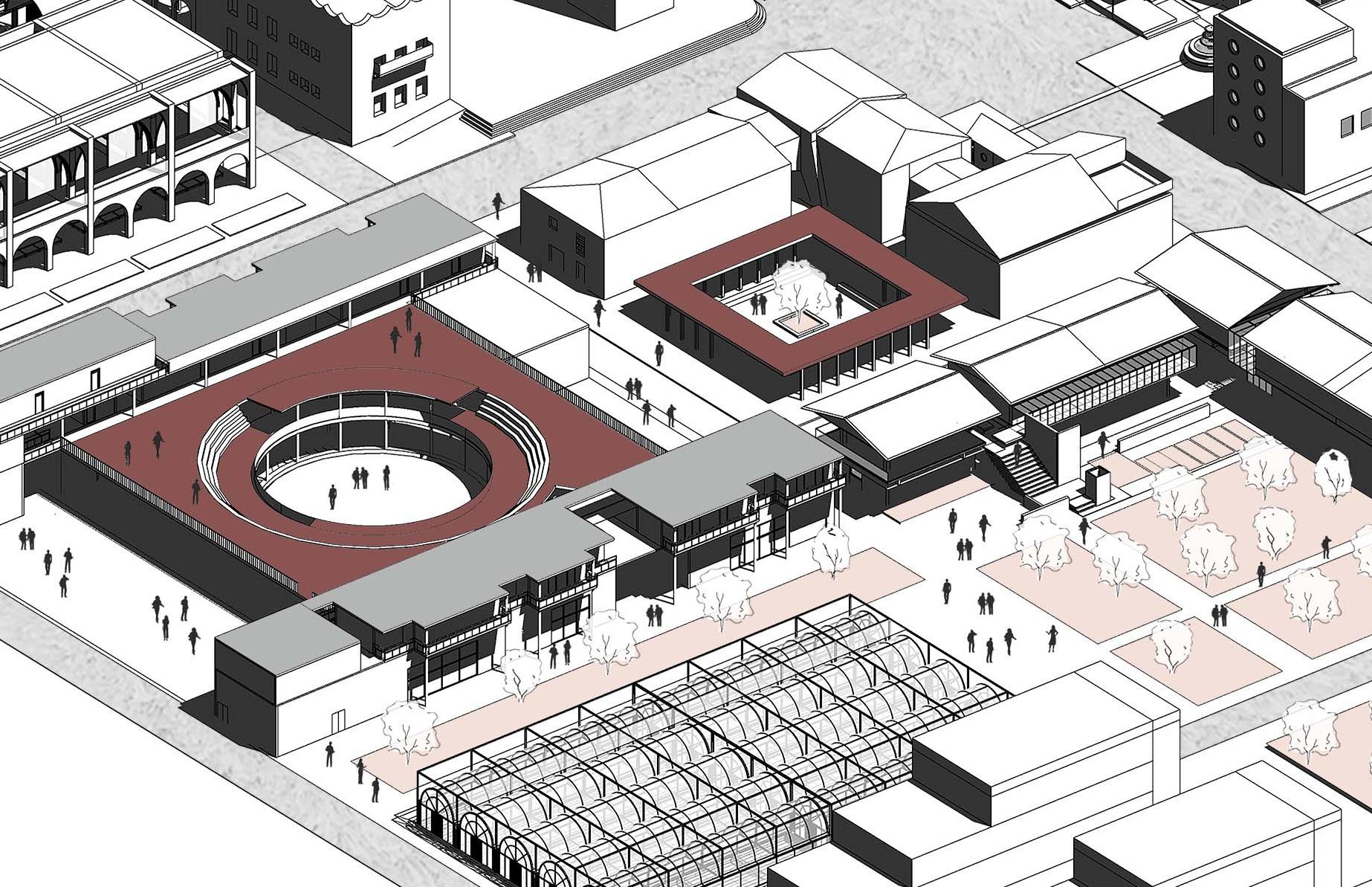
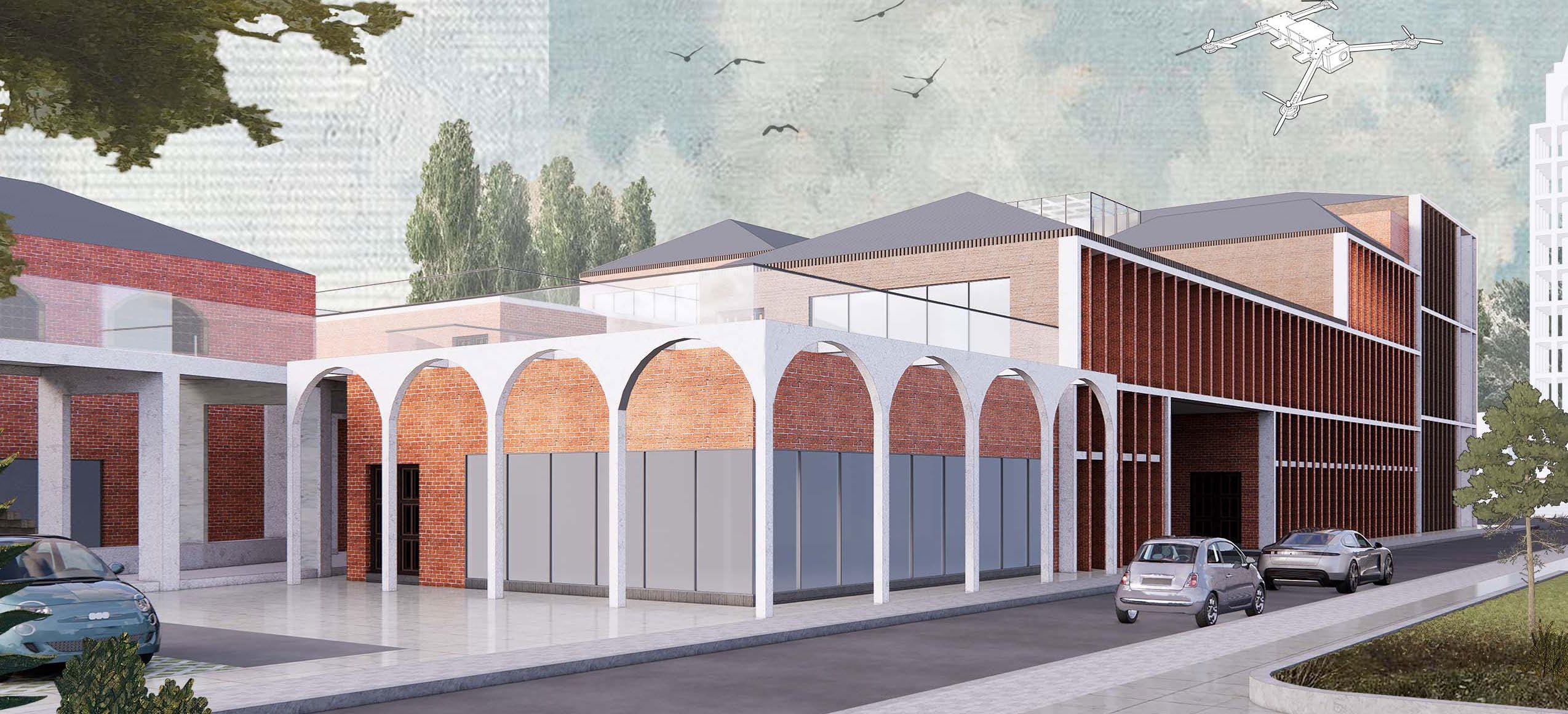
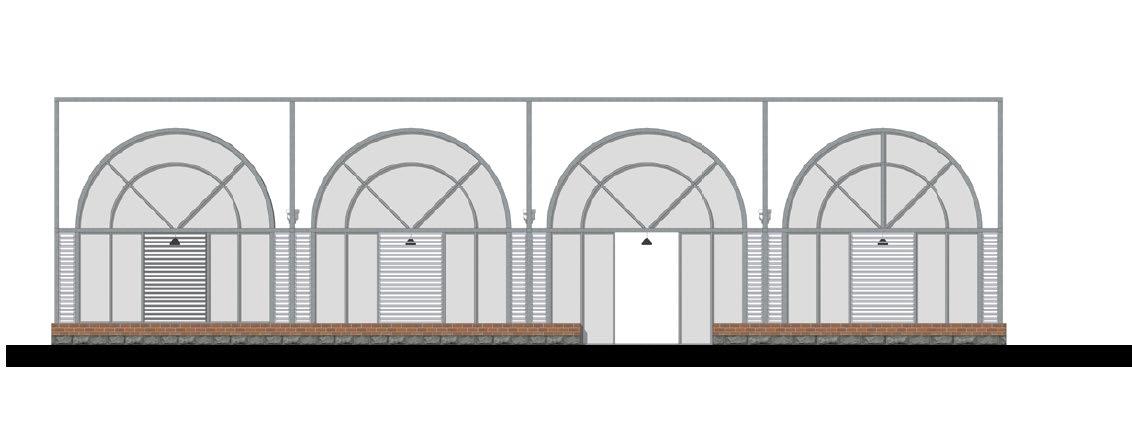
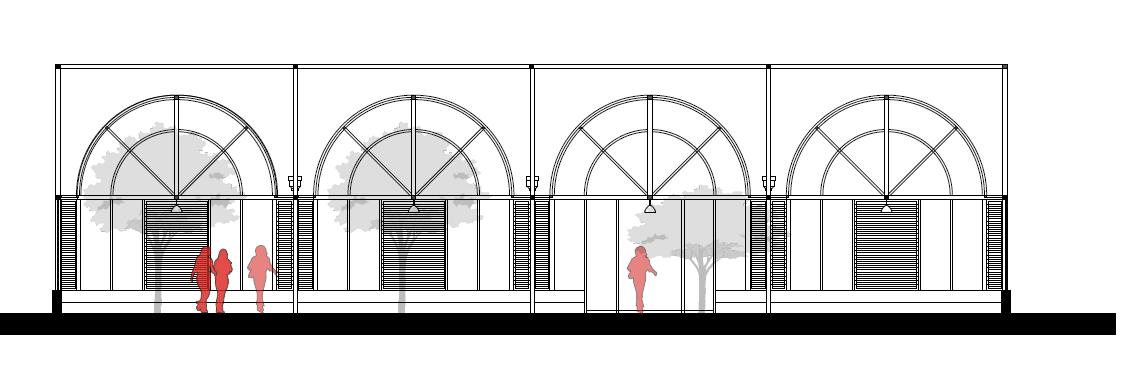
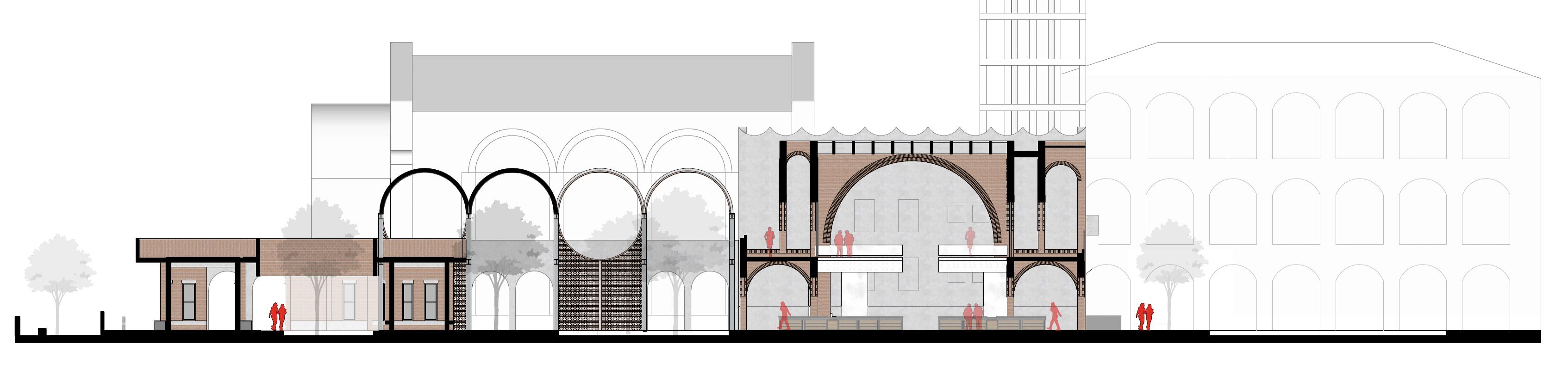
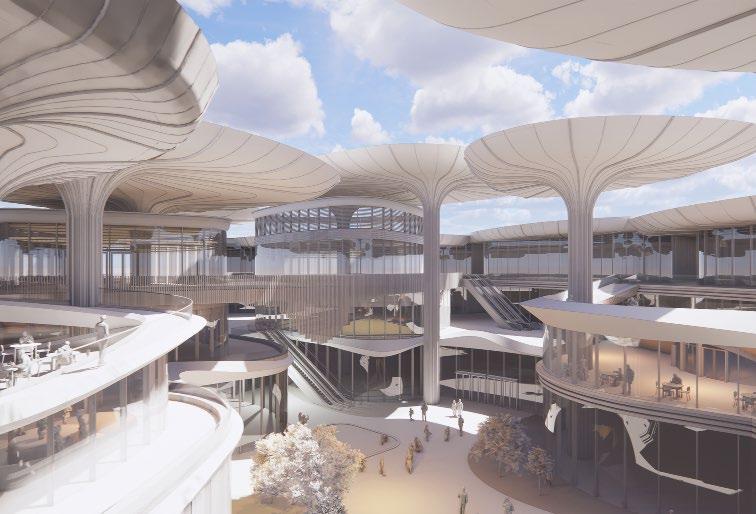
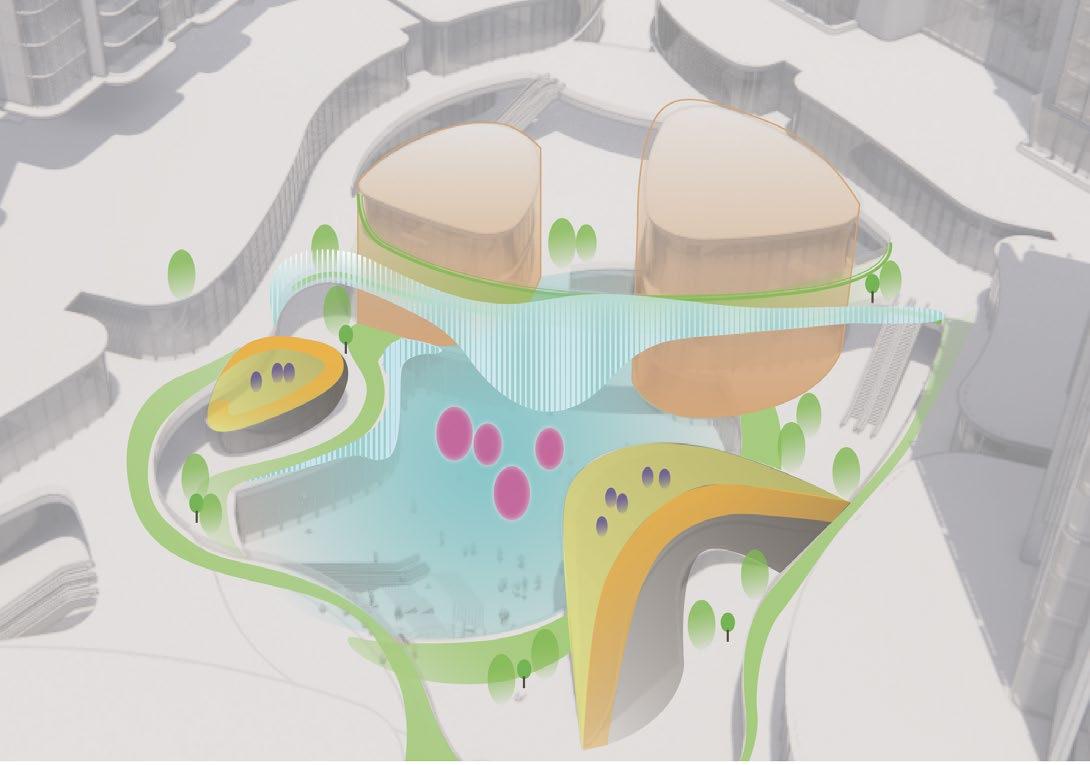
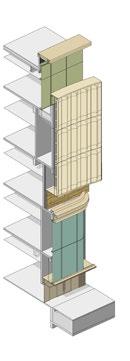
The project is conceived as a complex of spaces embracing the intersection of various systems, demographics, programs, and activities. Programs and activities are exposed to weave intricate network of public spaces that every journey between levels becomes a spectacle on its own. The open outdoor public space is integrated into the main body of structure and served as platforms for users to perceive the atmosphere of arts and culture.
In order to avoid the mistakes in planning that “city blocks serve no purpose other than as space to pass is the eponymous character of urban corridor.” The building will be a threshold as well as monument to connect and reactivate the adjacent neighborhood.
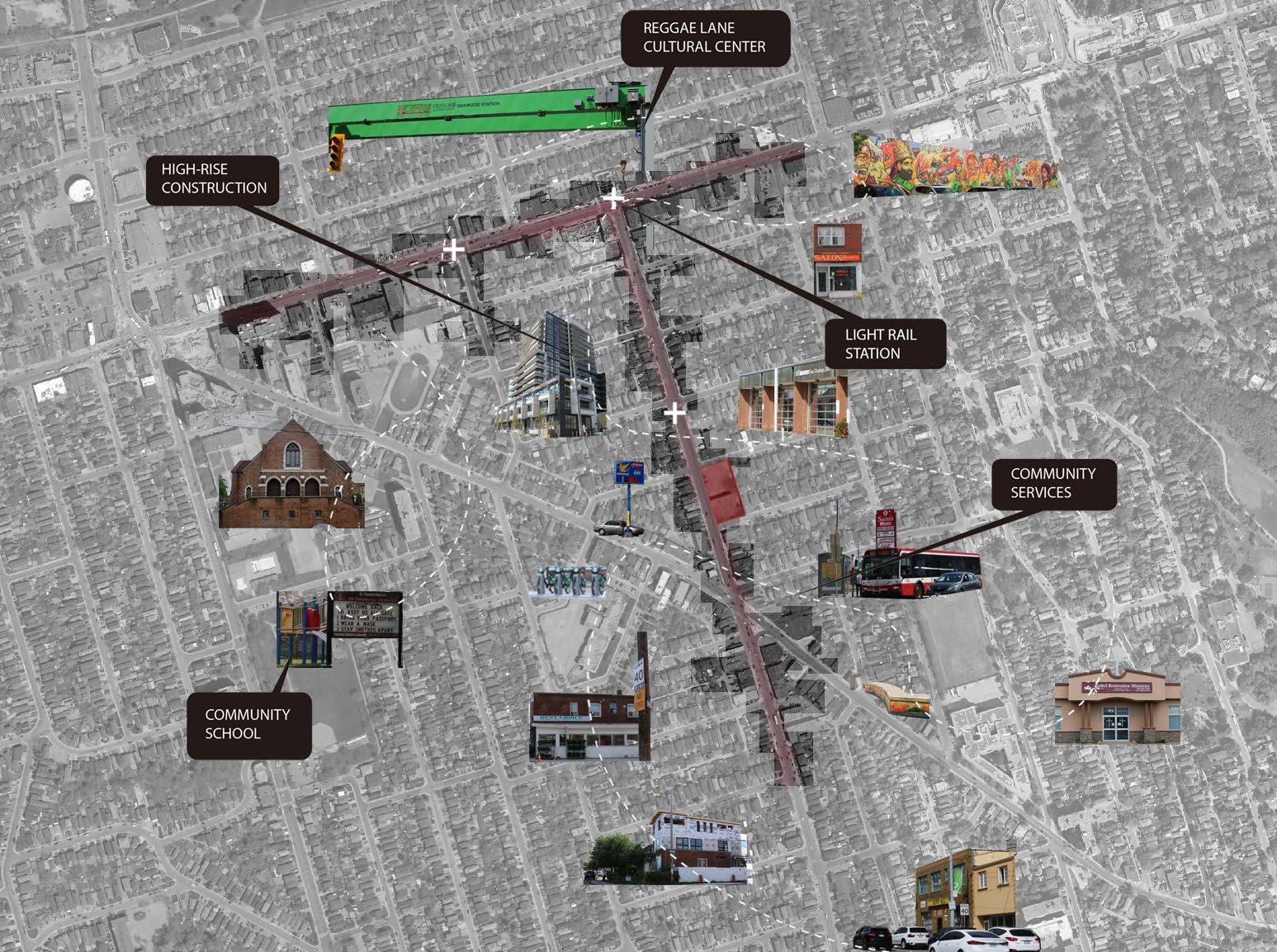
SITE
Subway Line [Public Transportation]
Nodes of Community Gathering Primary Streets
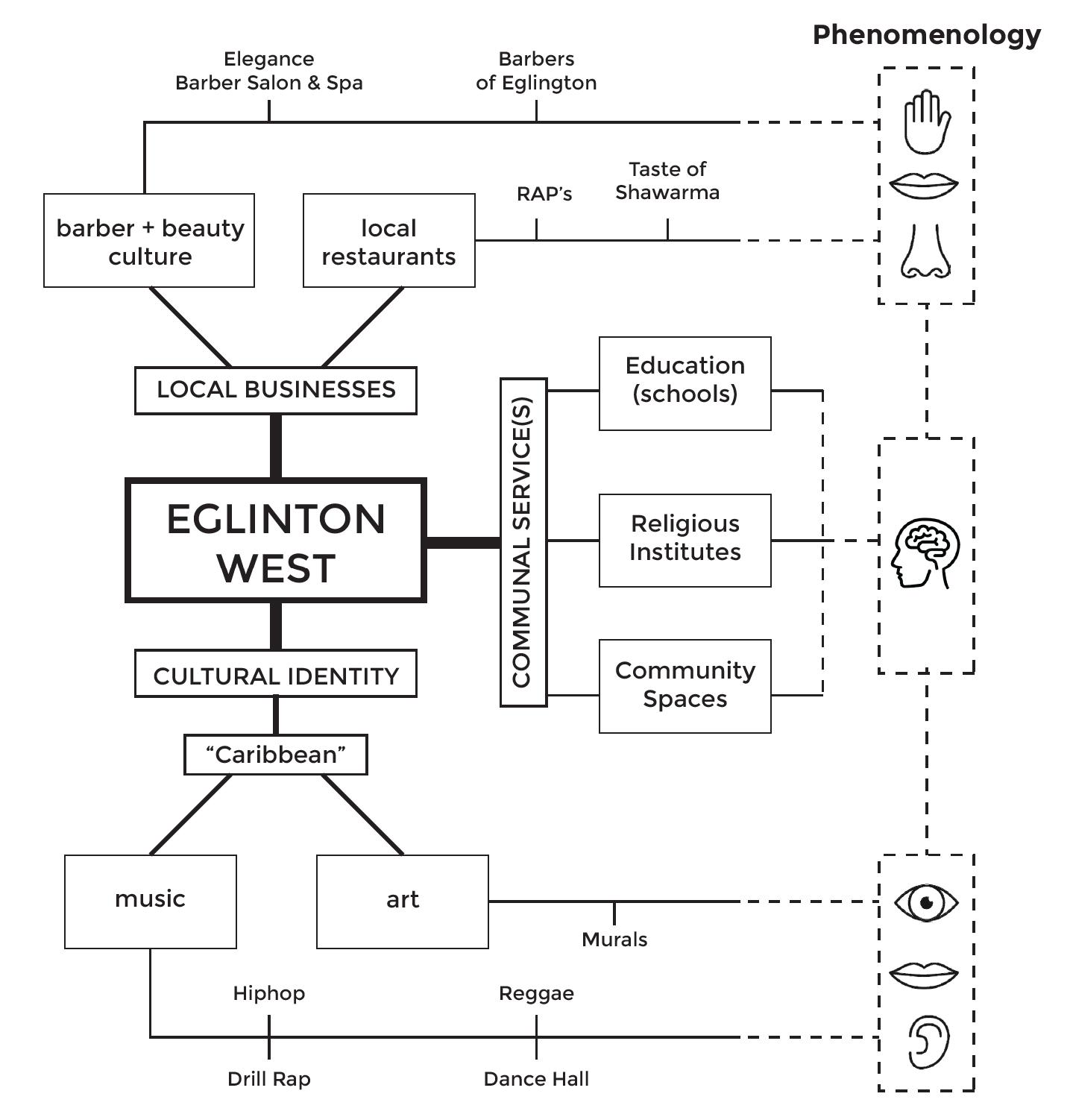
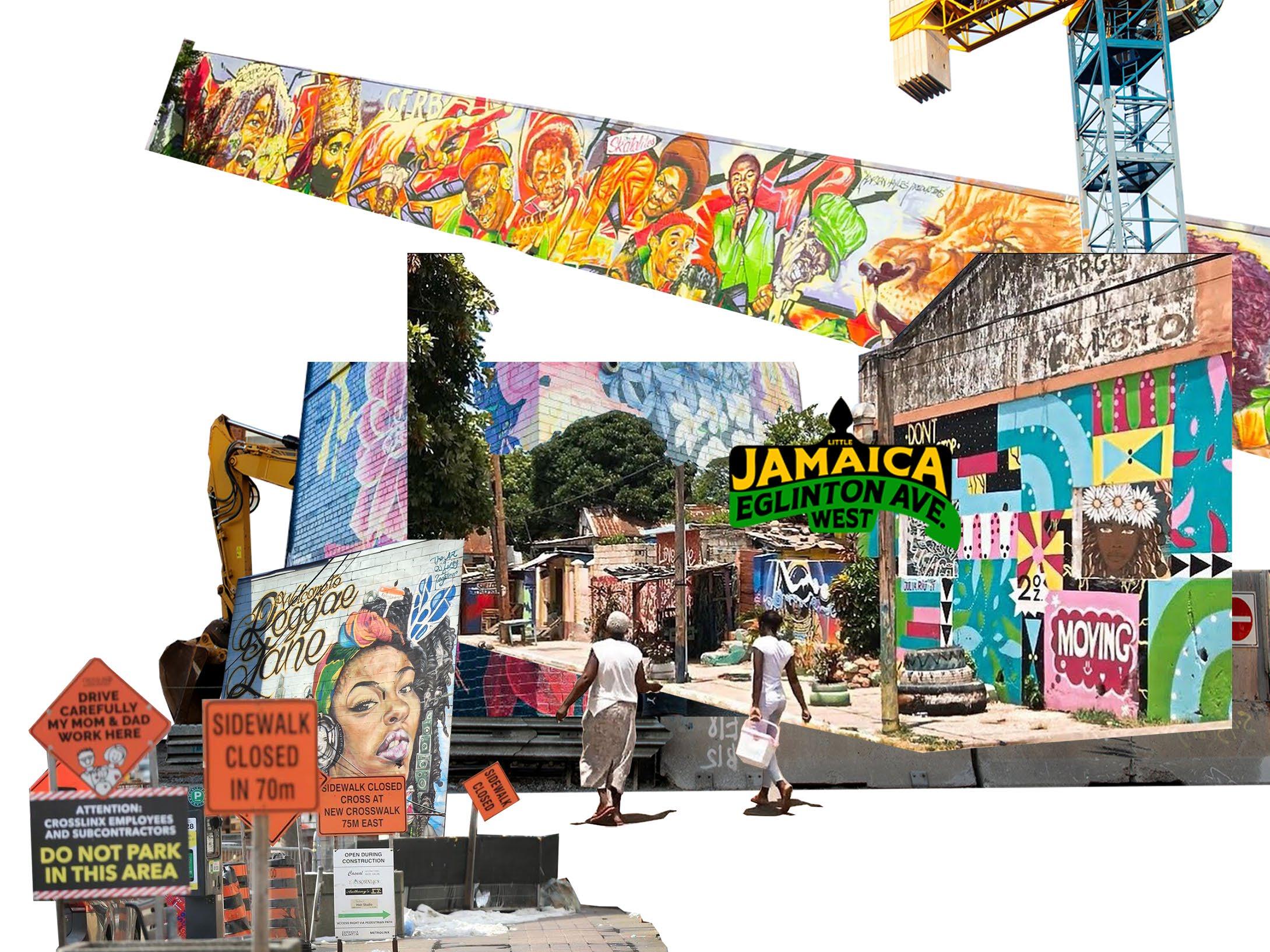
Began in 2011, the iconic neighbourhoodundergones gentrification, causing displacement to its original residents
Little Jamaica at Eglington West is well known for its murals, which became a small tourist attraction
At its peak, Little Jamaica became the social hub for Artists of Jaimaican Origin
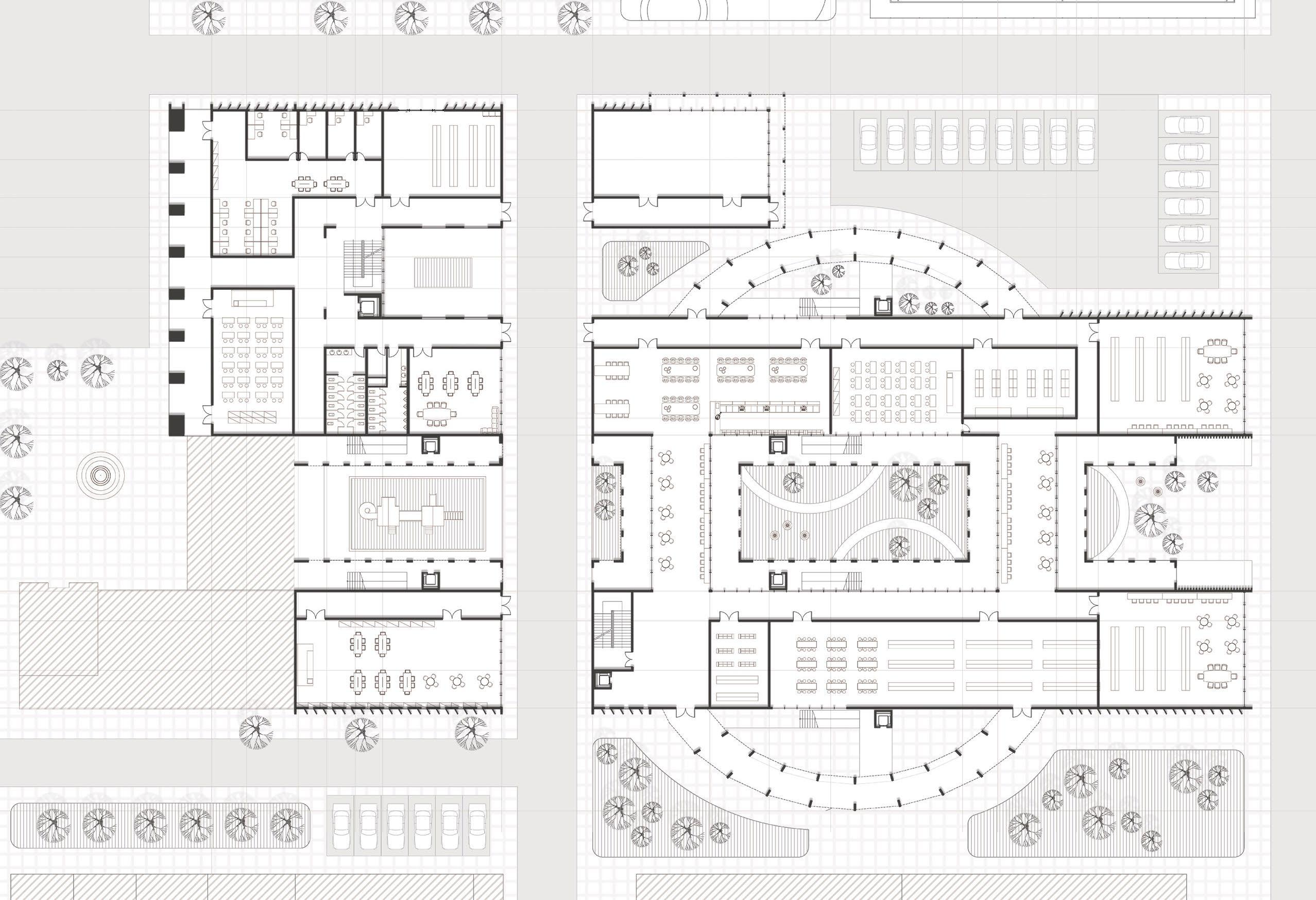
Theater
BOH Storage
Art Gallery
Reception
Civic Space
Open Event Space
Cafe/Bar
Loading Space
11. Small Event Space
12. Janitor Storage
13. Equipment Storage
14. Public Meeting Room (L)
15. Public Meeting Room (S)
16. Pre-Event Lounge
17. Theater Control Room
18. Janitor Storage
19. Catering Kitchen
20. Rentable Event Space
21. Student Kitchen
22. Guest Artist Studio
23. Reception Office
24. Equipment Storage
25. Student Lounge
26. Co-working Space
27. Co-working Space
28. Learning/Creative Lab
29. Student Locker
30. Rehearsal Room
31. Recording Studio
32. Recording Booth
33. Janitor Storage
34. Meeting Room
35. Media Tech Workshop
36. Staff Lounge
37. Staff Meeting Room (S)
38. Staff Meeting Room (L)
39. Open Office
40. Closed Office
41. Office Storage
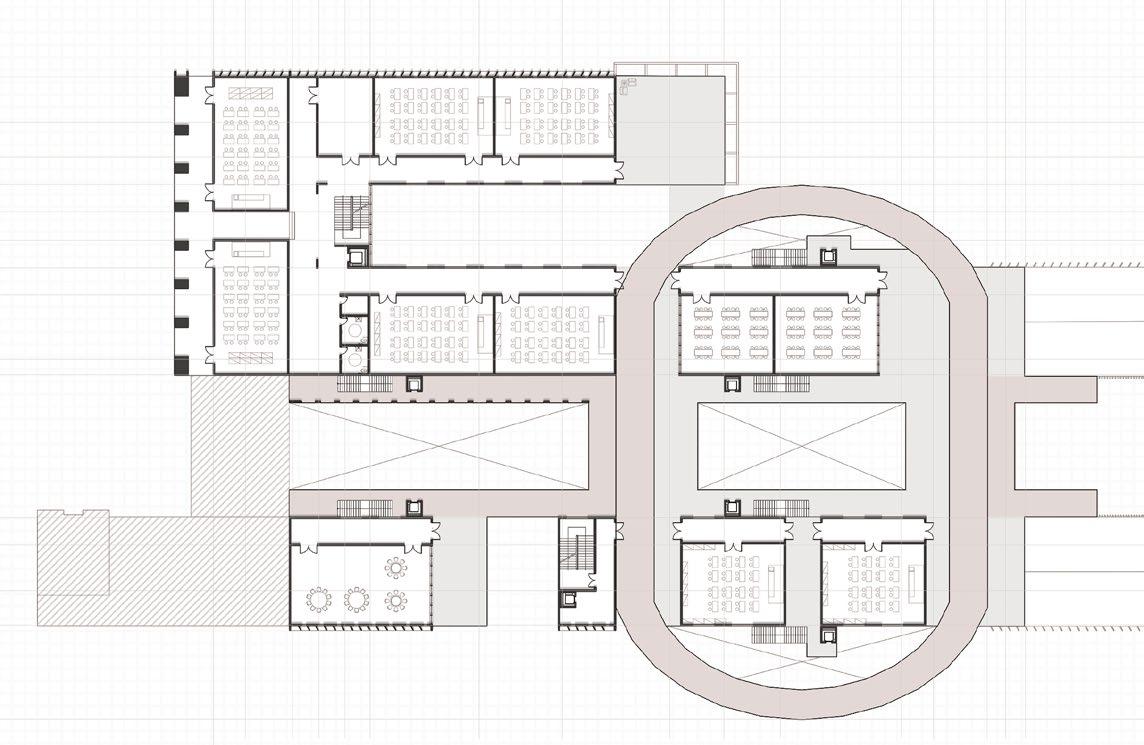
Second Floor Plan
Third Floor Plan
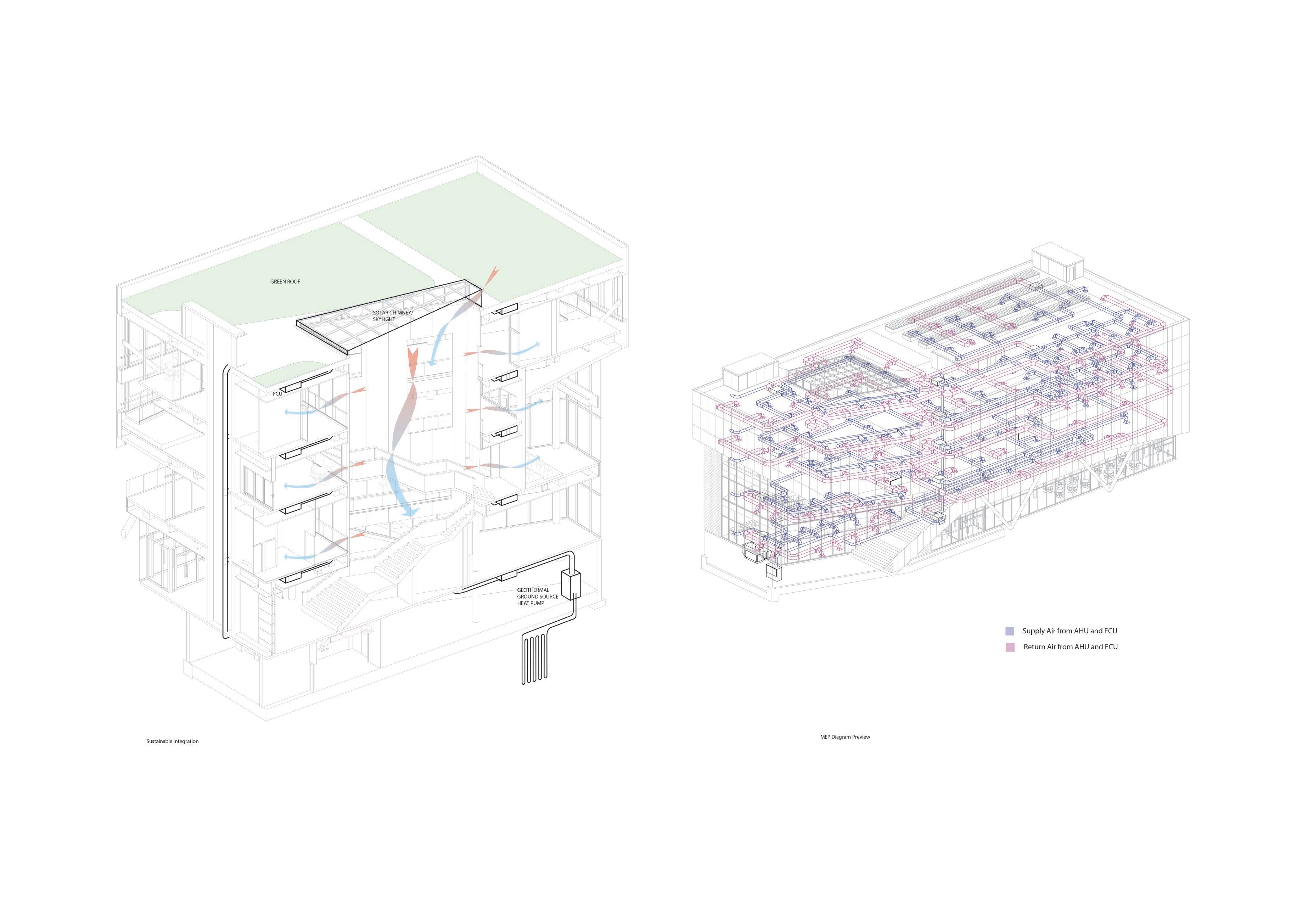
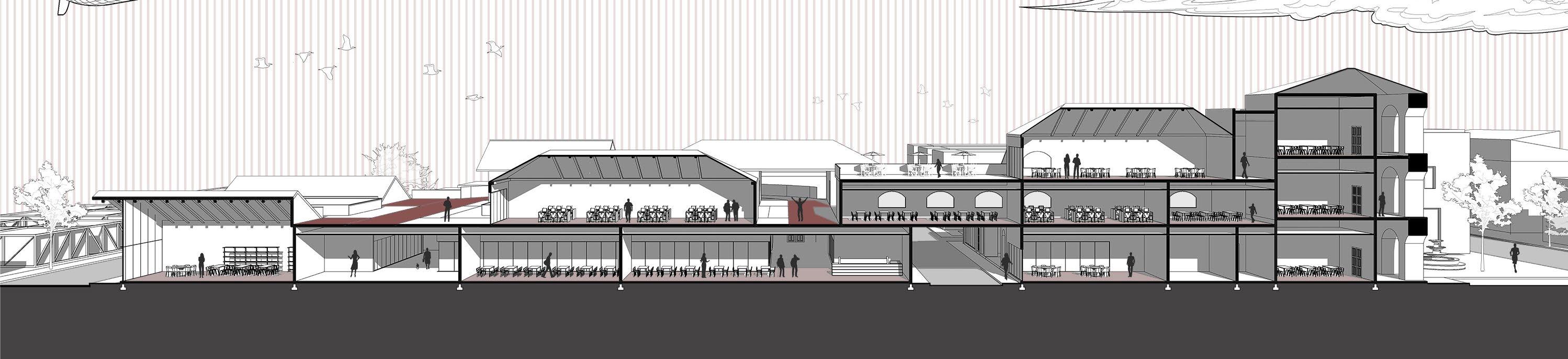
Passive System: Central Atrium Ventilation
Active System: HVAC Design Proposal
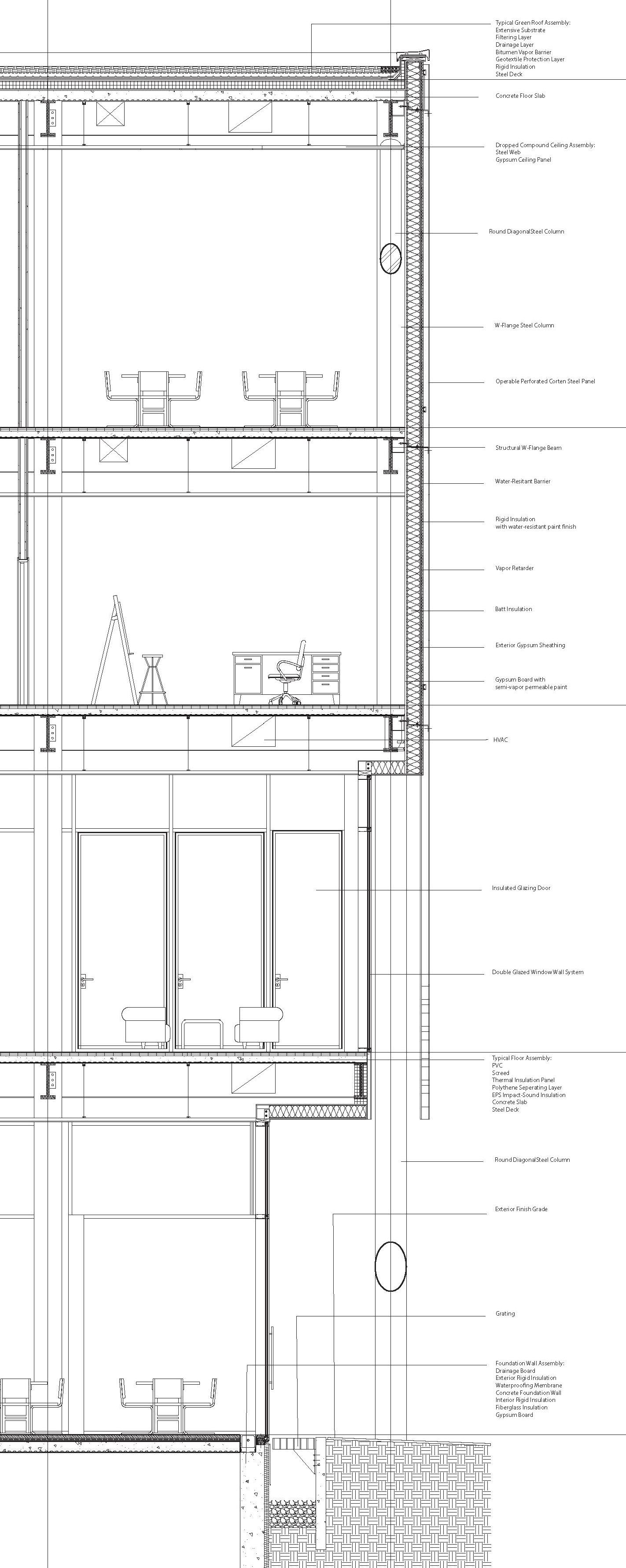
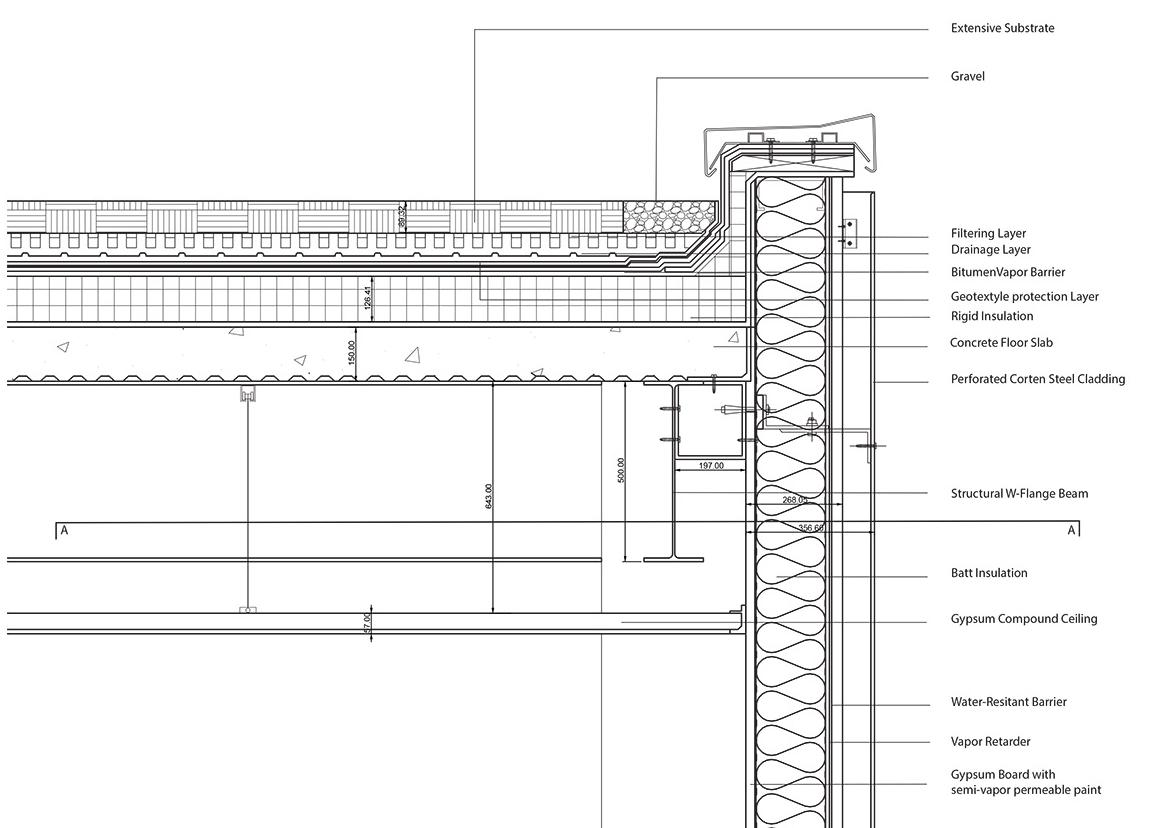
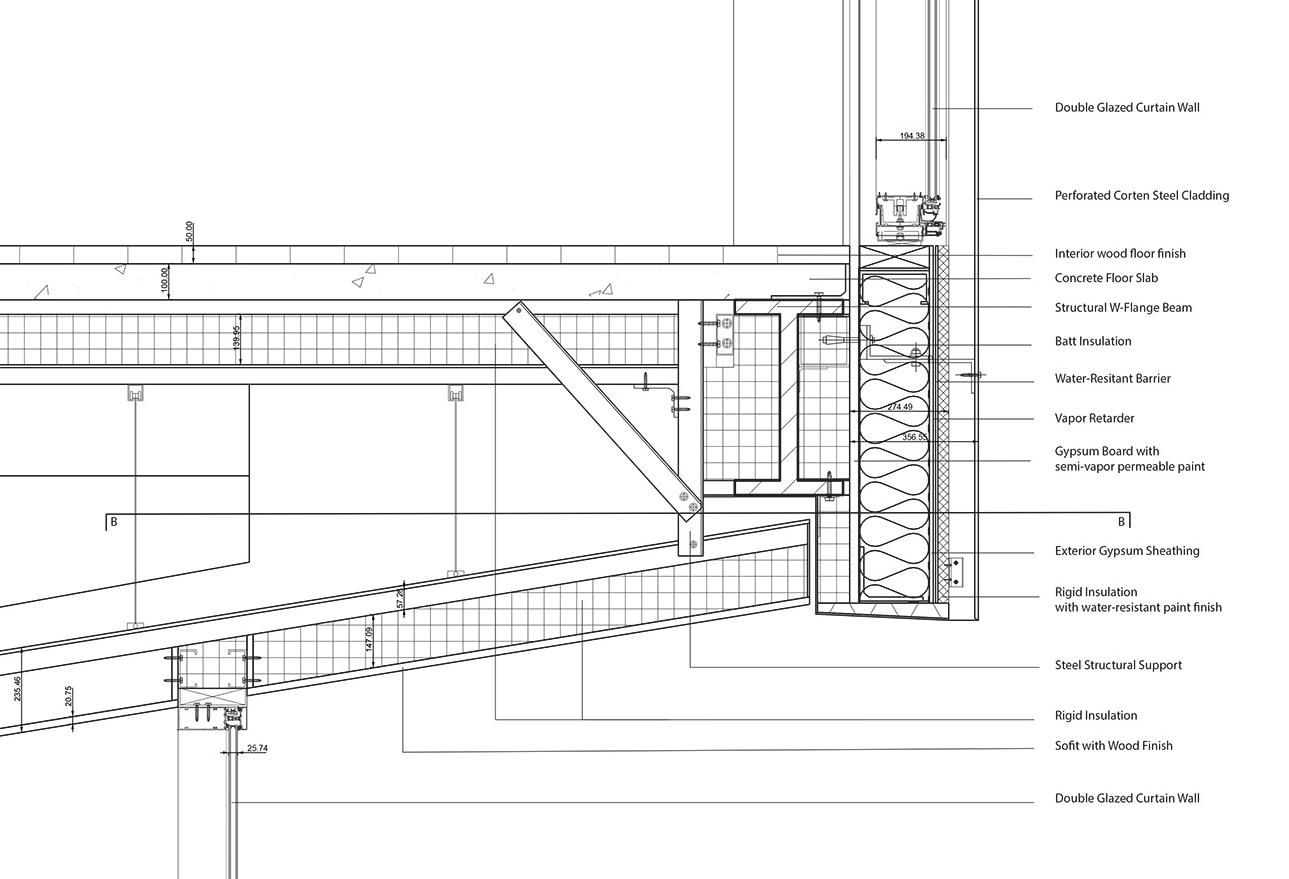
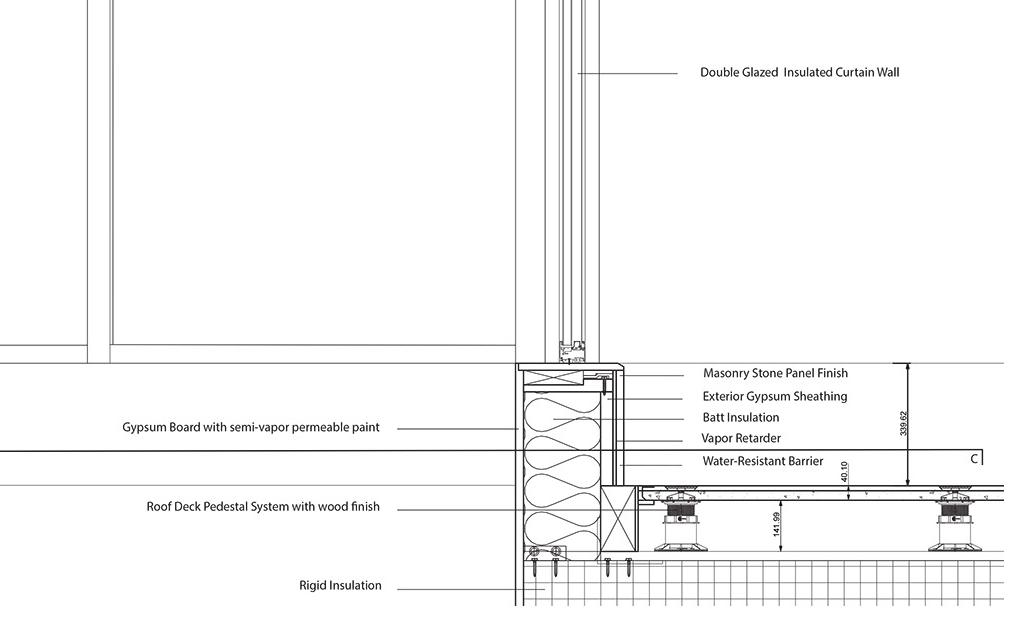
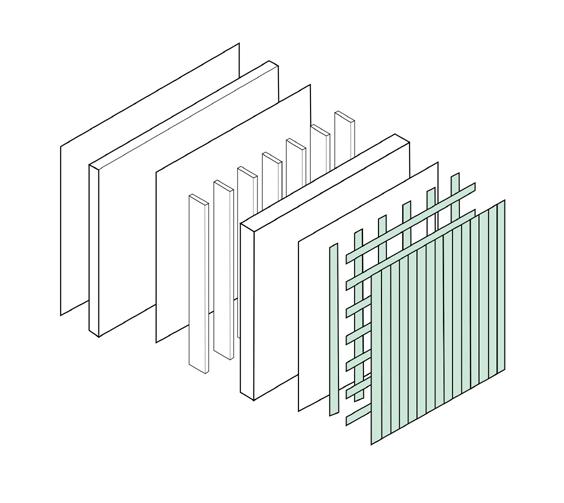
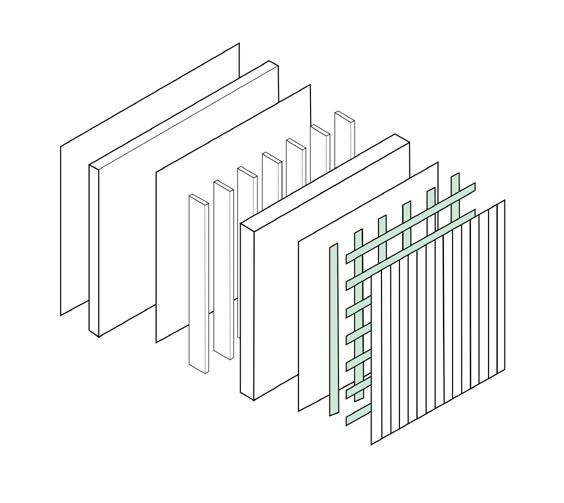
Detail: Wall Connection with Roof + Extensive Green Roof
Detail: Wall Connection at Sofit
Detail: Skylight Opening Base Connection with Roof
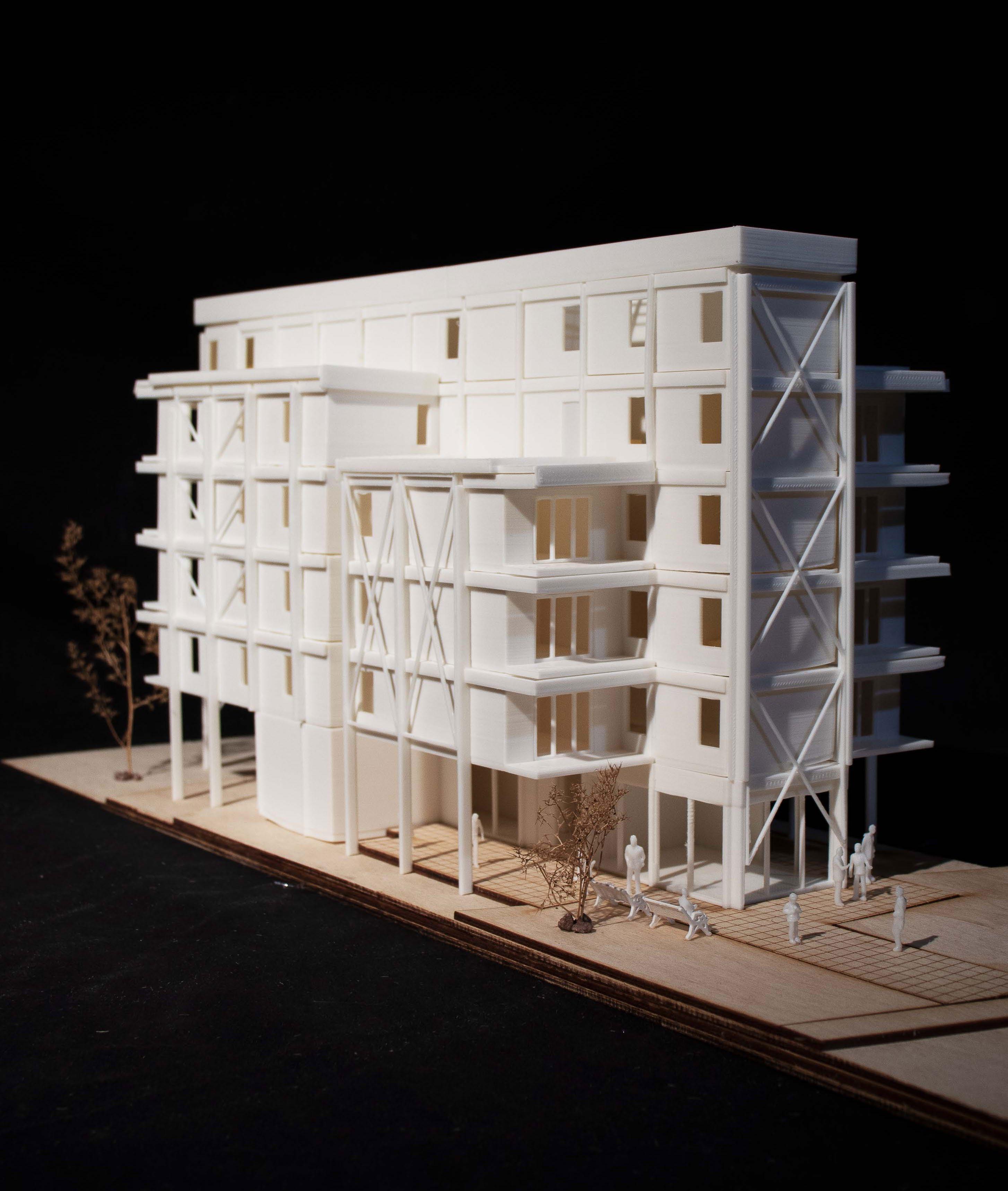
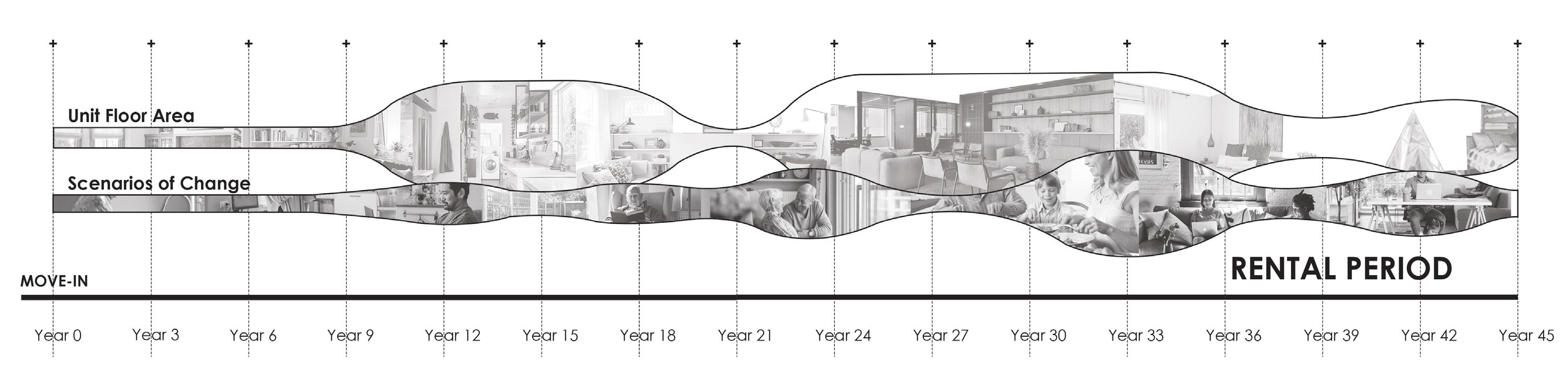
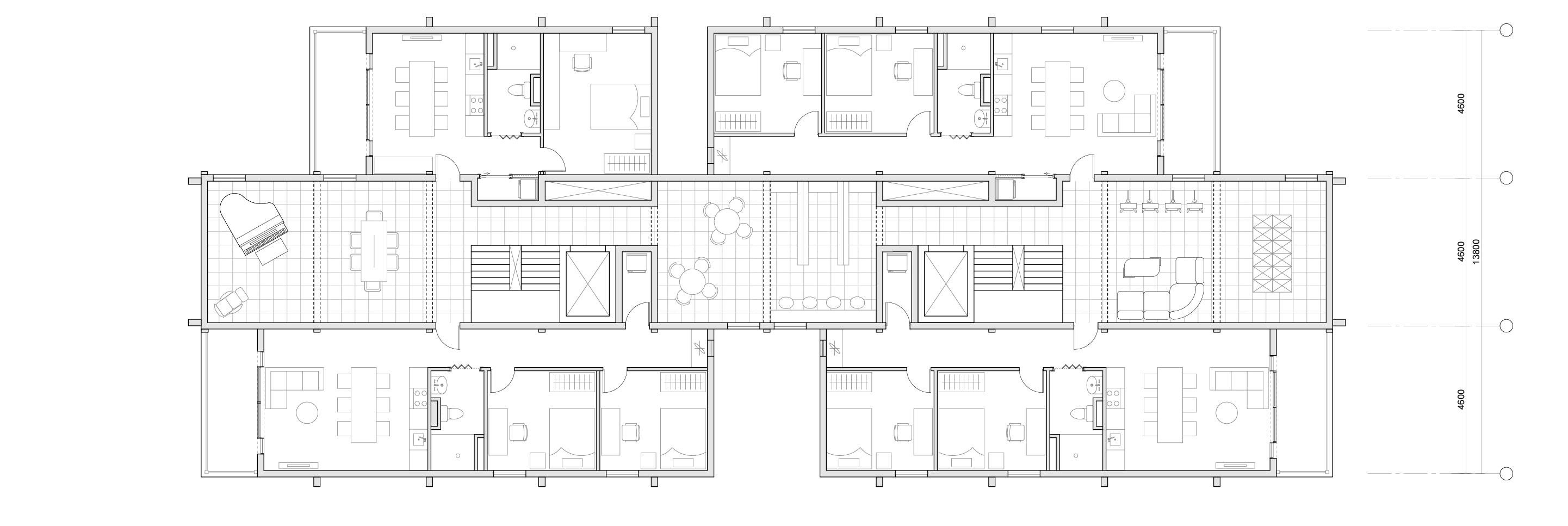
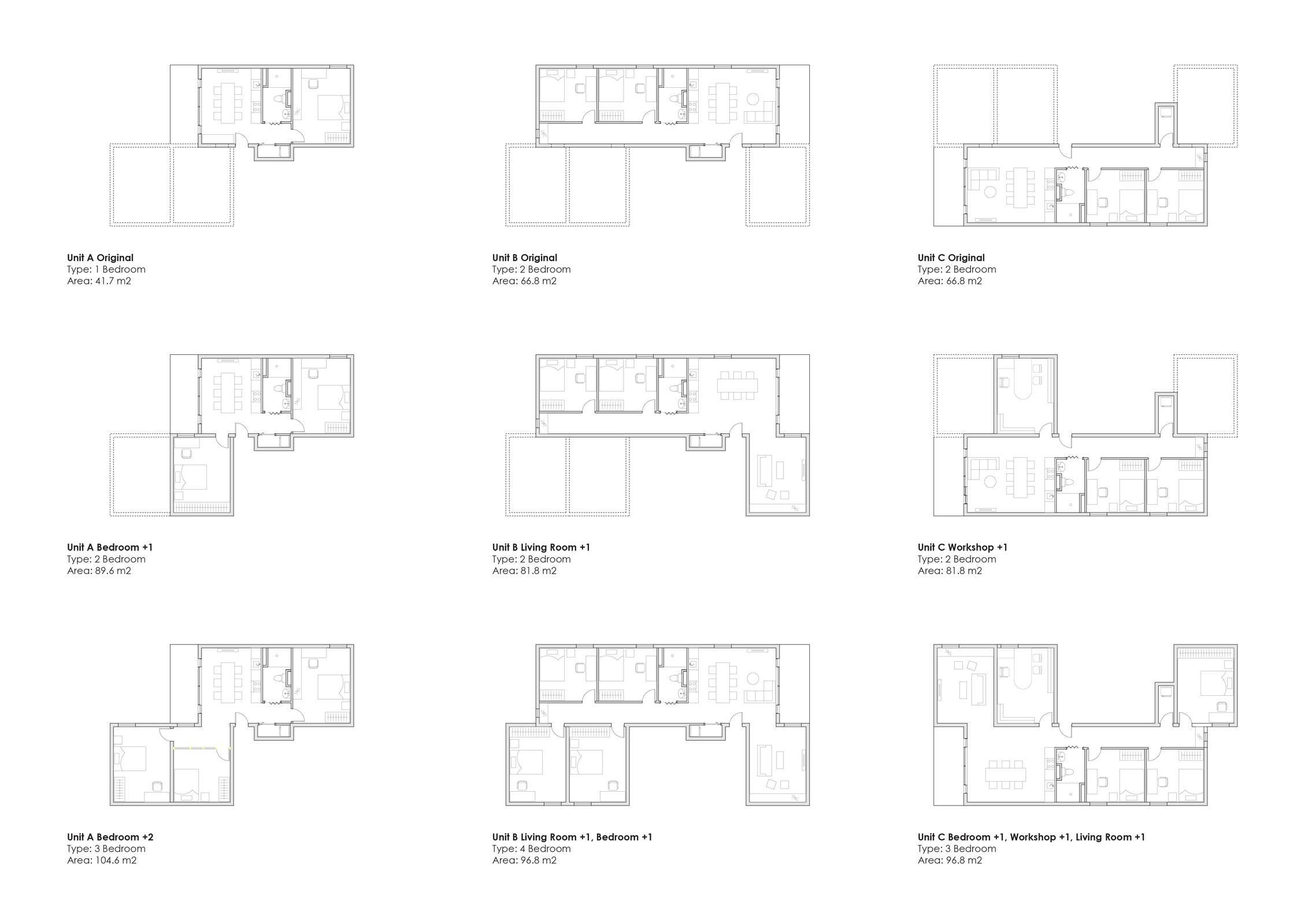
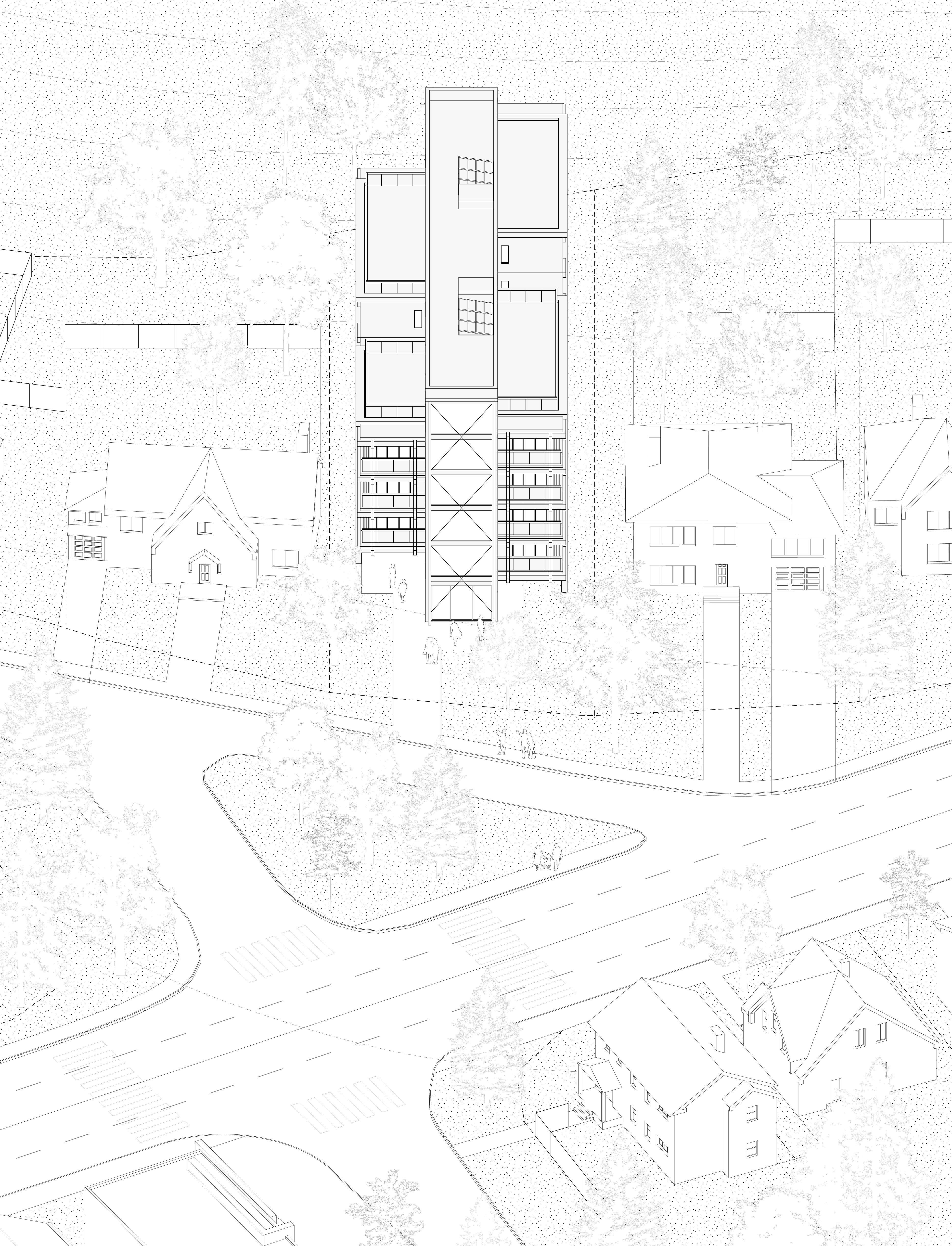
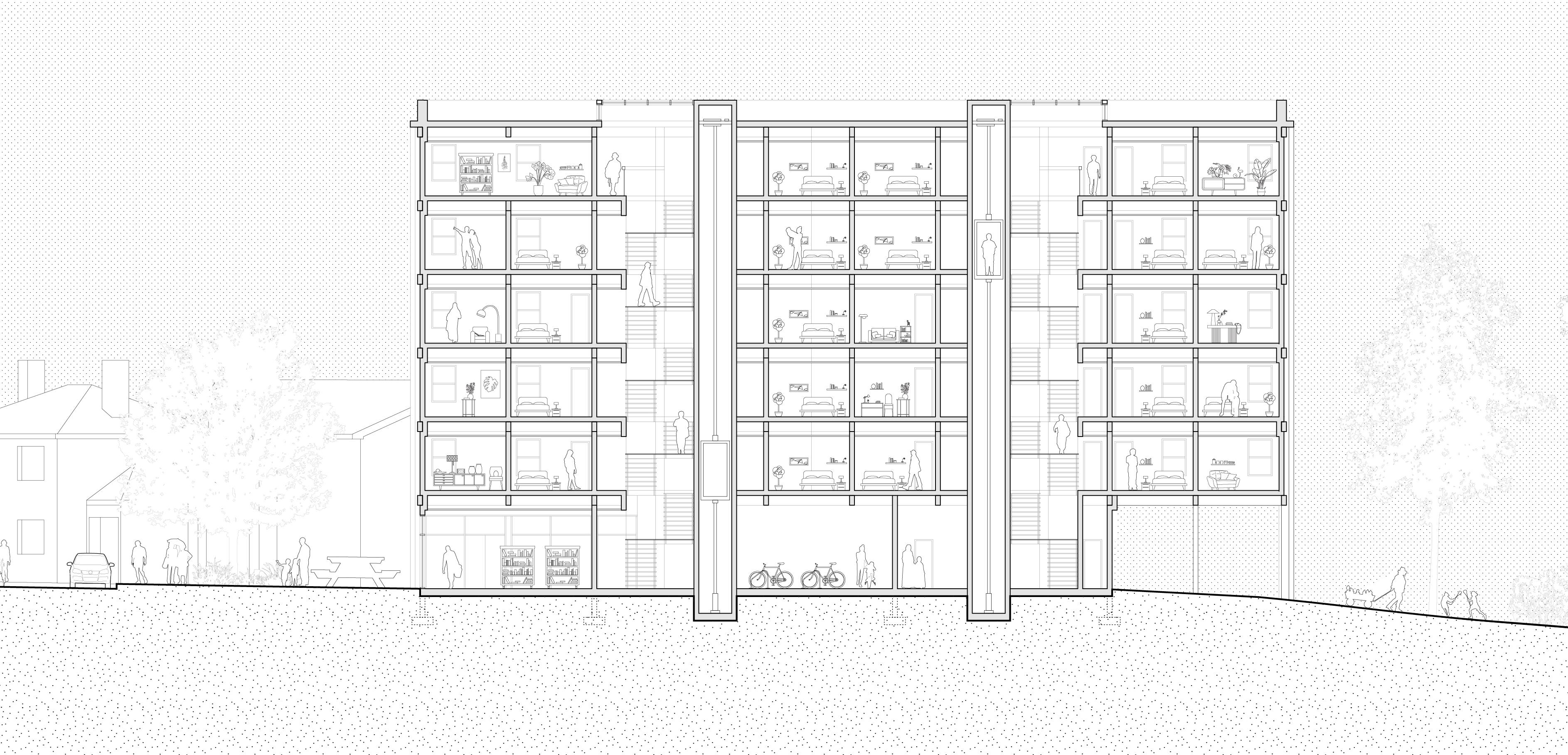
The proposed co-housing design is centered on flexibility, offering residents the ability to expand or reduce their living space as their needs change over time. Residential units are positioned on both sides of the building, while a shared central zone functions as a buffer and potential extension area. When residents require additional space, they can temporarily take over portions of this shared zone, enabling units to grow or contract without altering the building’s overall structure. This approach introduces a new housing typology for the region—one that is affordable, customizable, and capable of adapting to evolving household structures and lifestyles.
Structurally, the building employs a hybrid wood–steel system, using steel bracing to provide lateral stability while supporting a primary wood-frame structure. This combination offers both construction efficiency and adaptability.
Typical Floor Plan
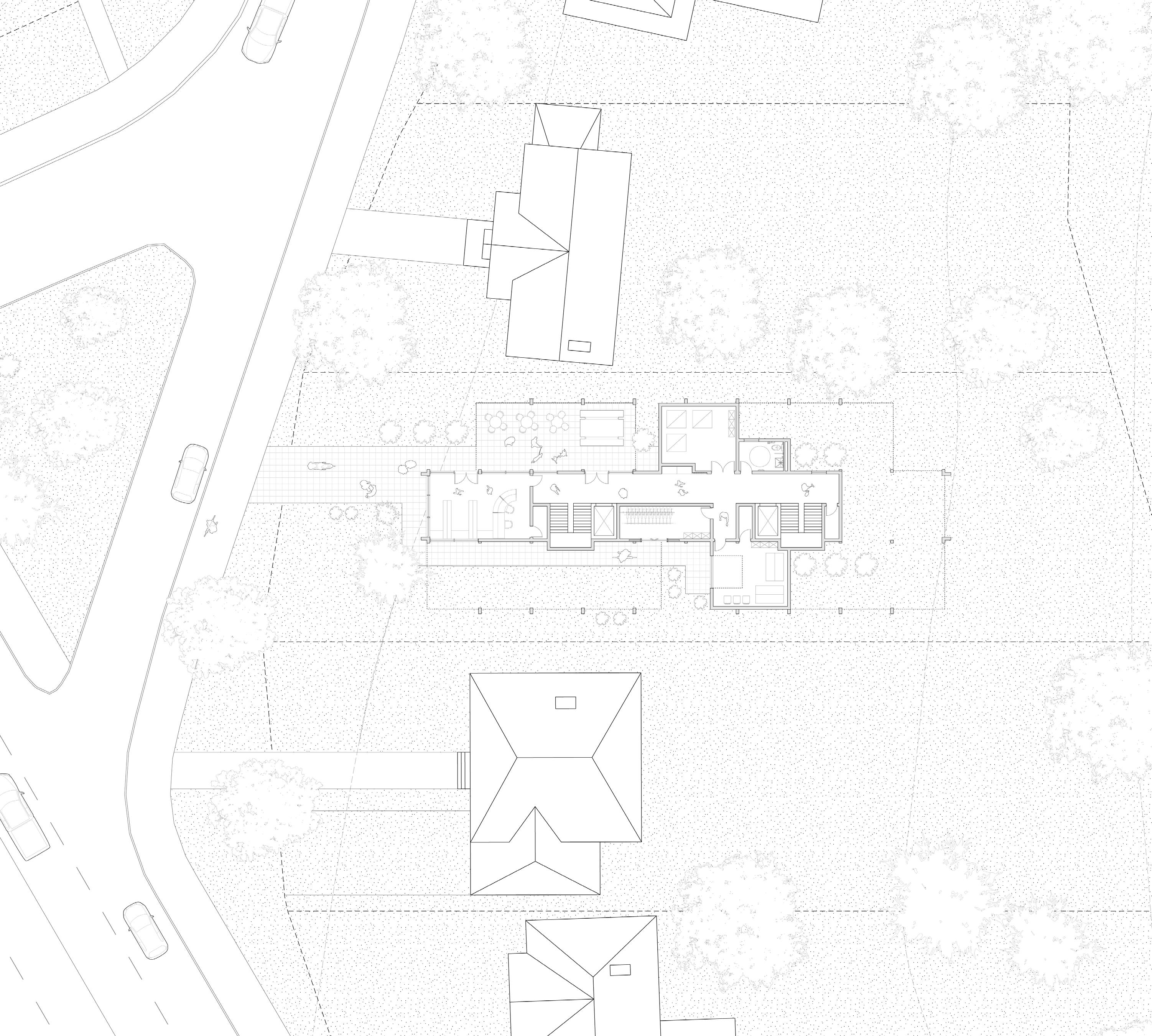
As a response to Toronto’s housing crisis, the proposed design is positioned within the ‘Missing Middle’ housing category, introducing an alternative living options on a single urban lot. By bridging the scale between single-family homes and high-rise developments, the project increases density in a context-sensitive manner while maintaining a human-scaled, community-oriented form of housing.
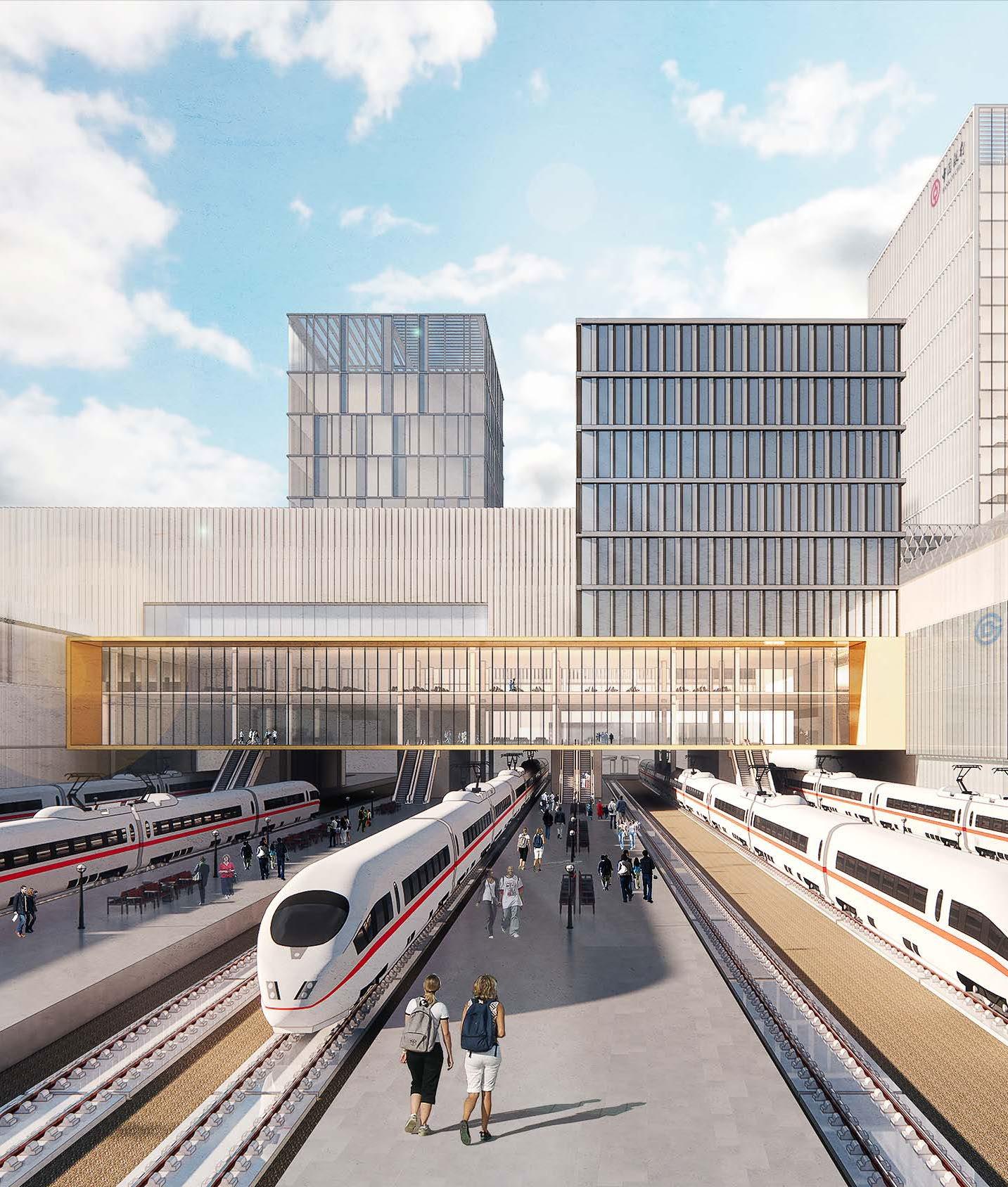
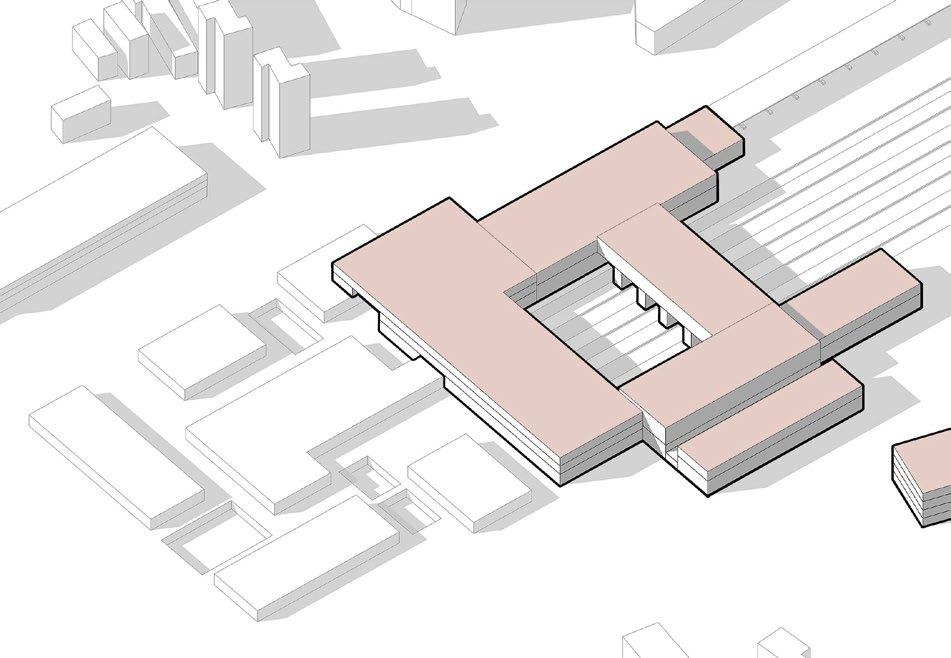
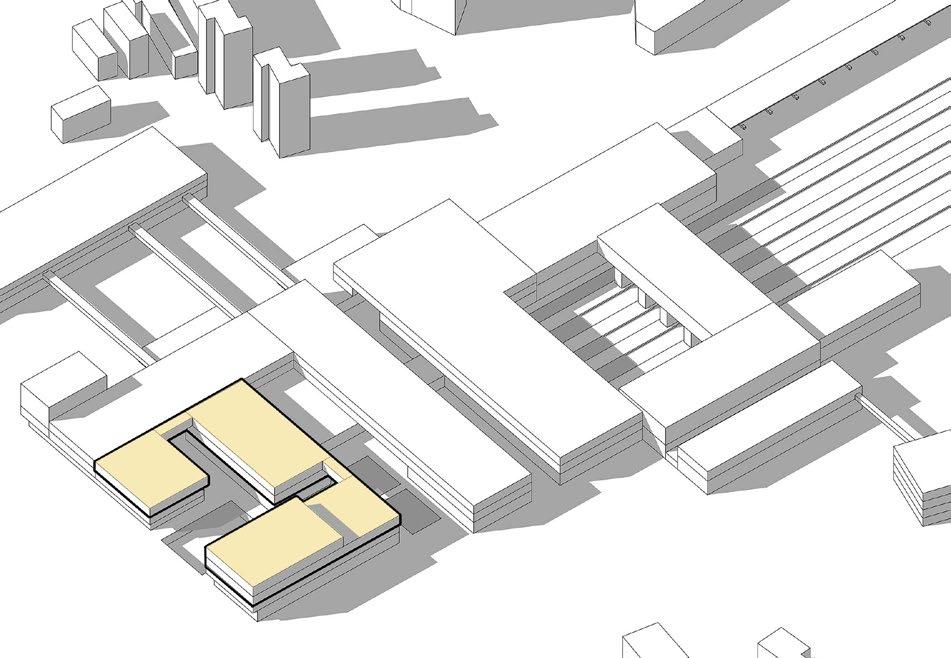
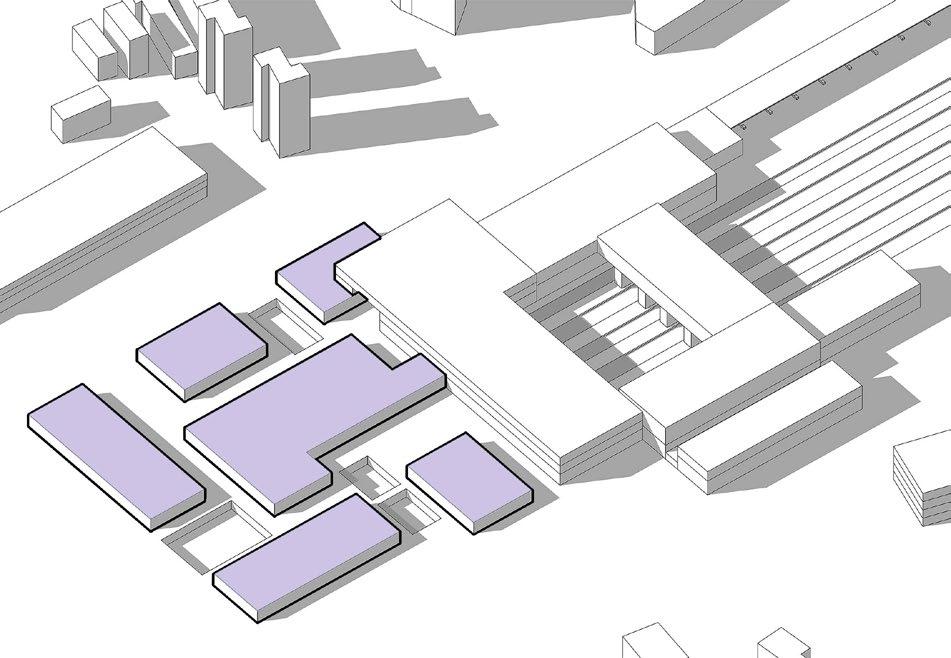
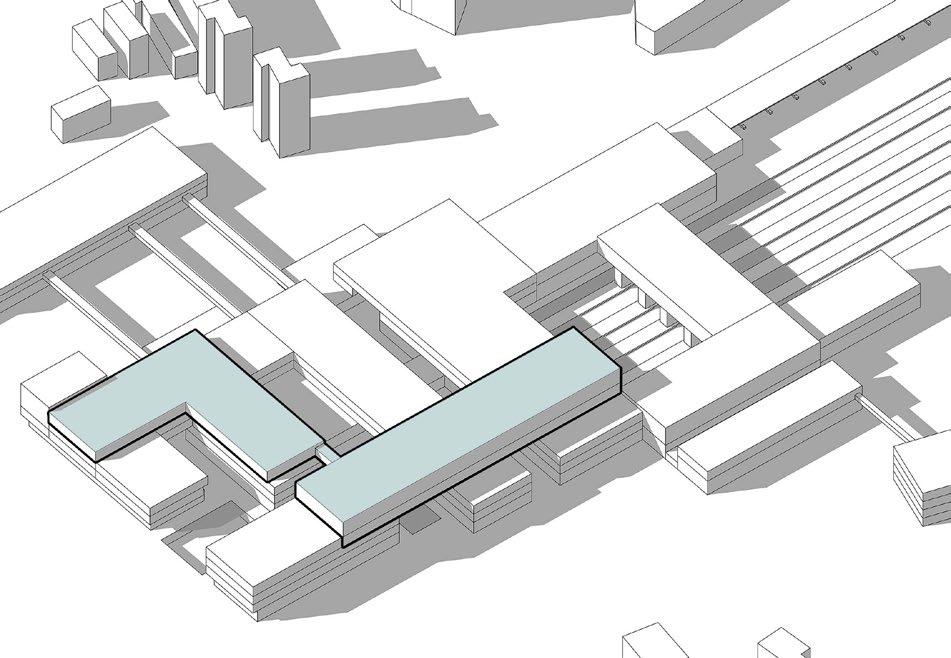
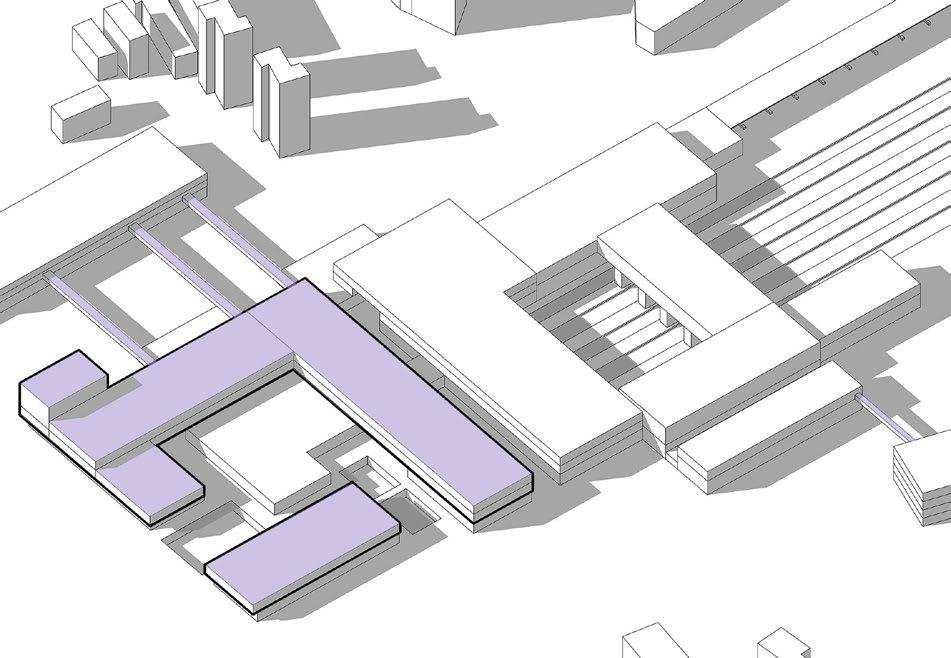
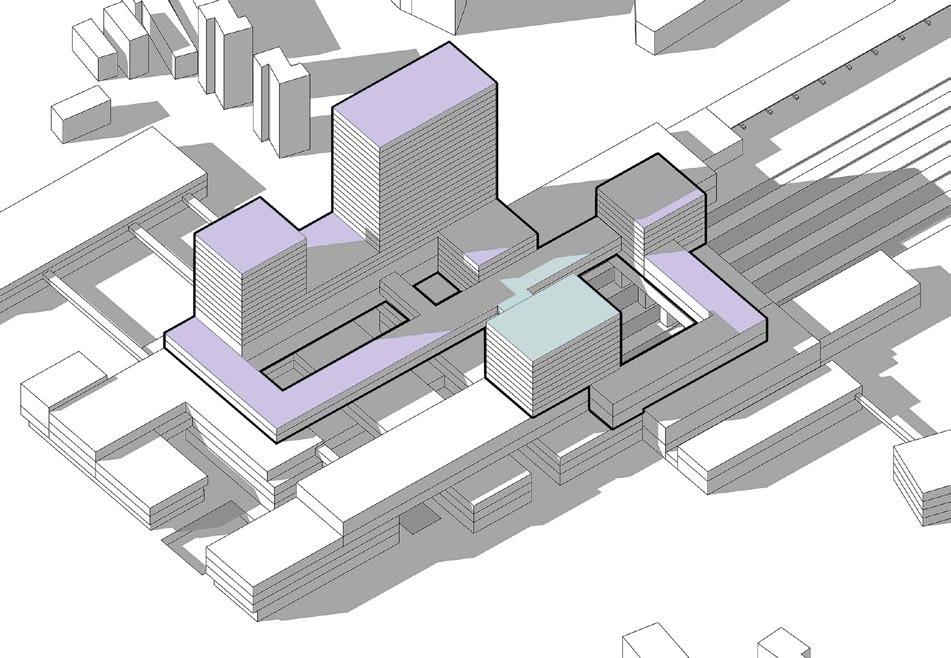
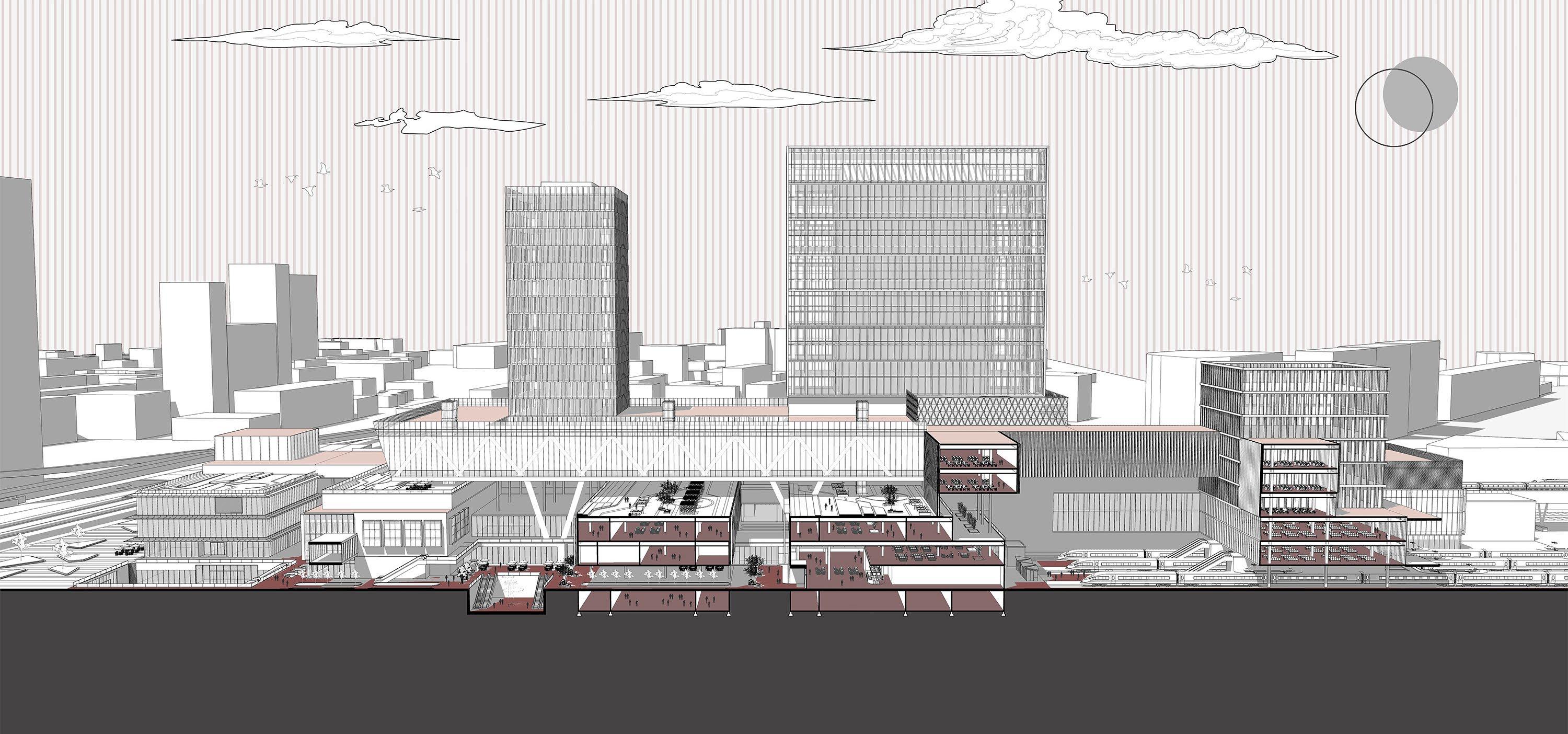
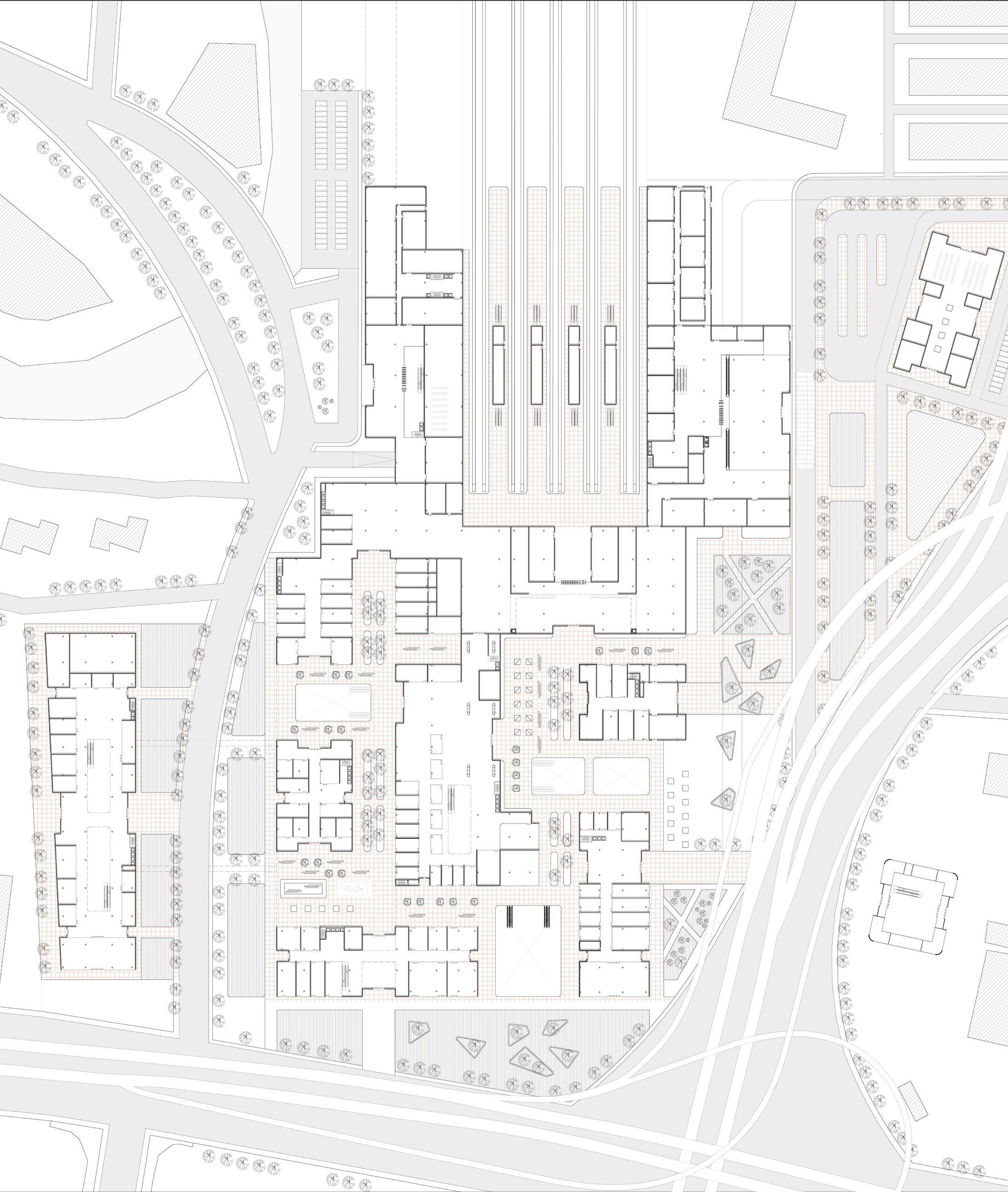
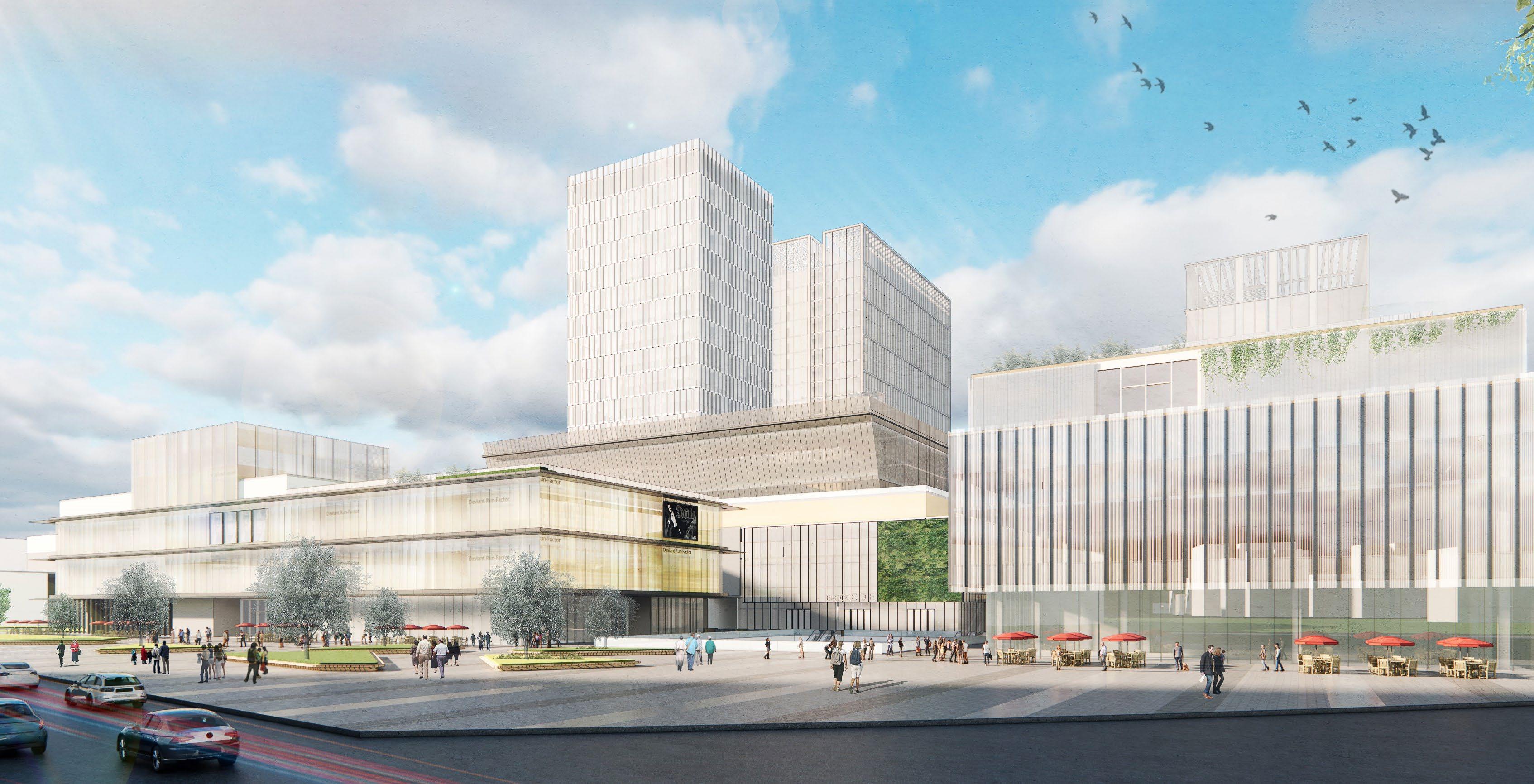
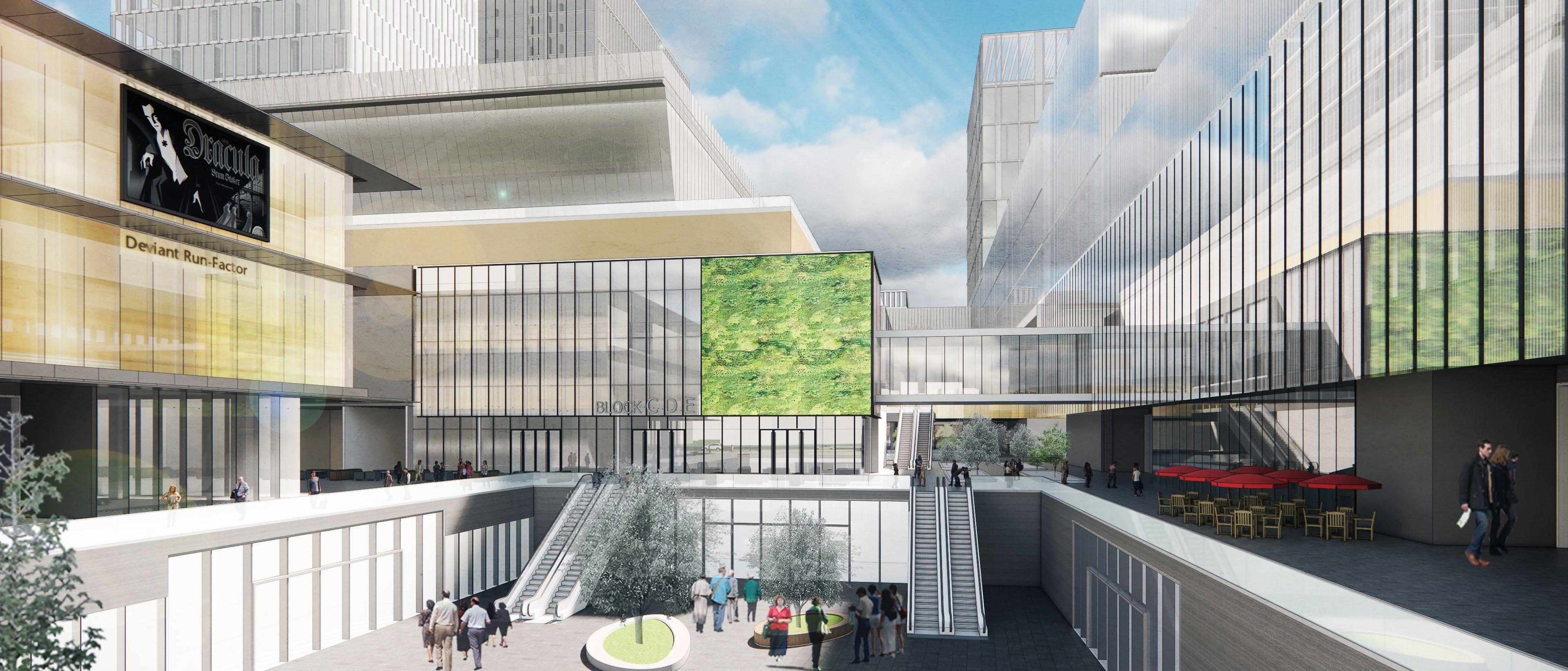
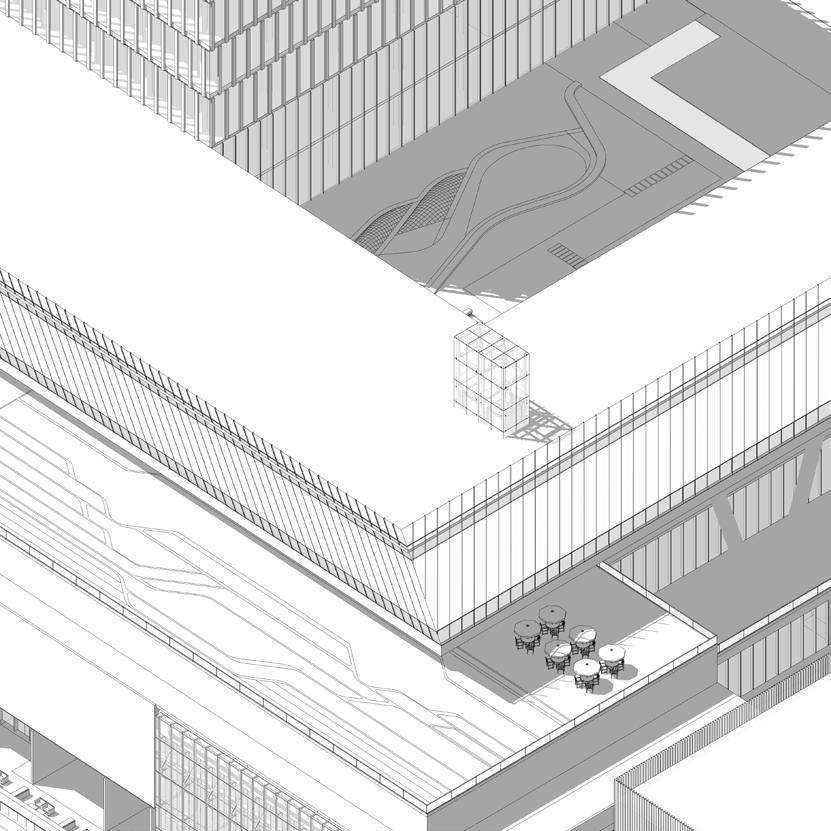
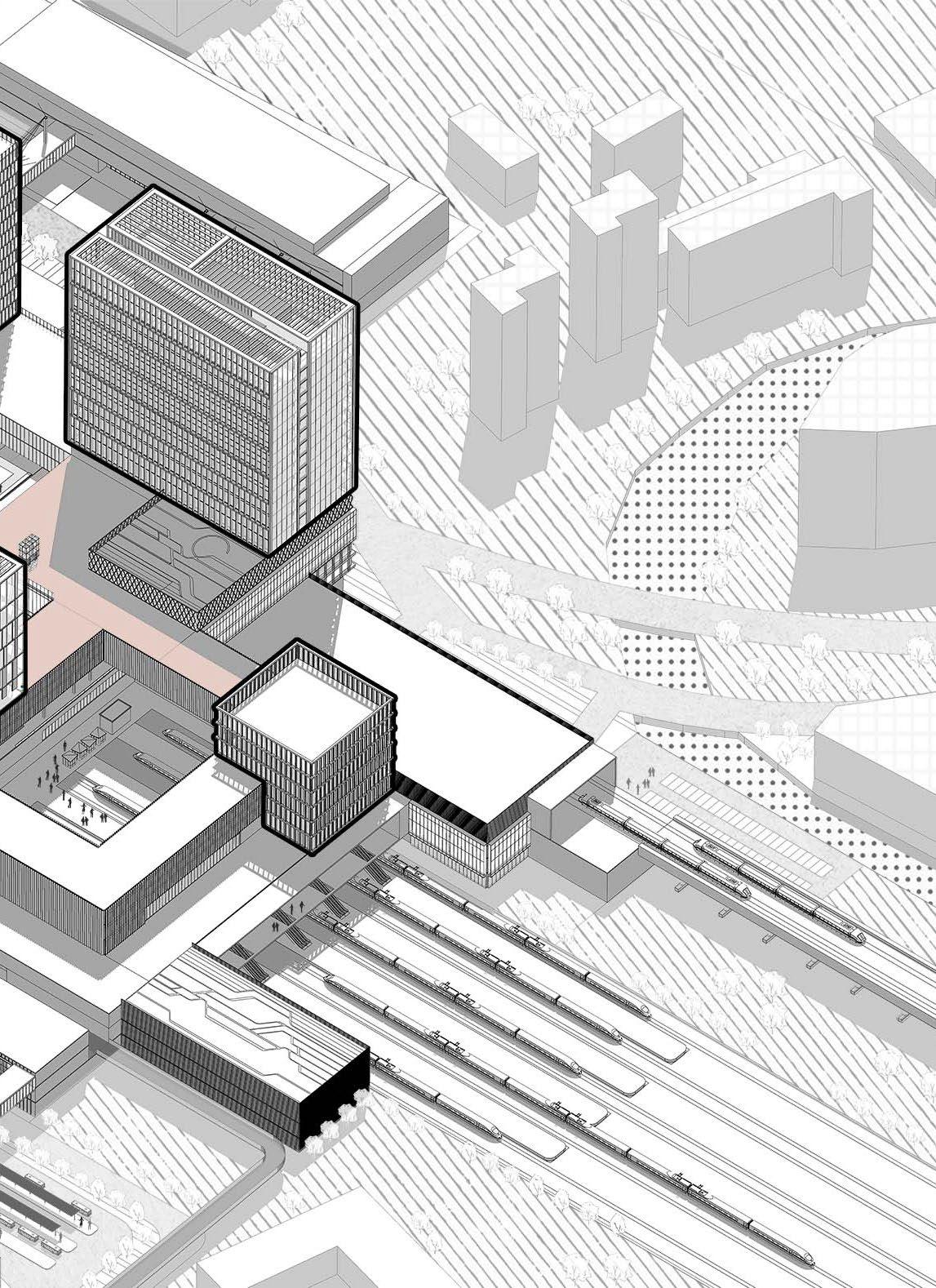
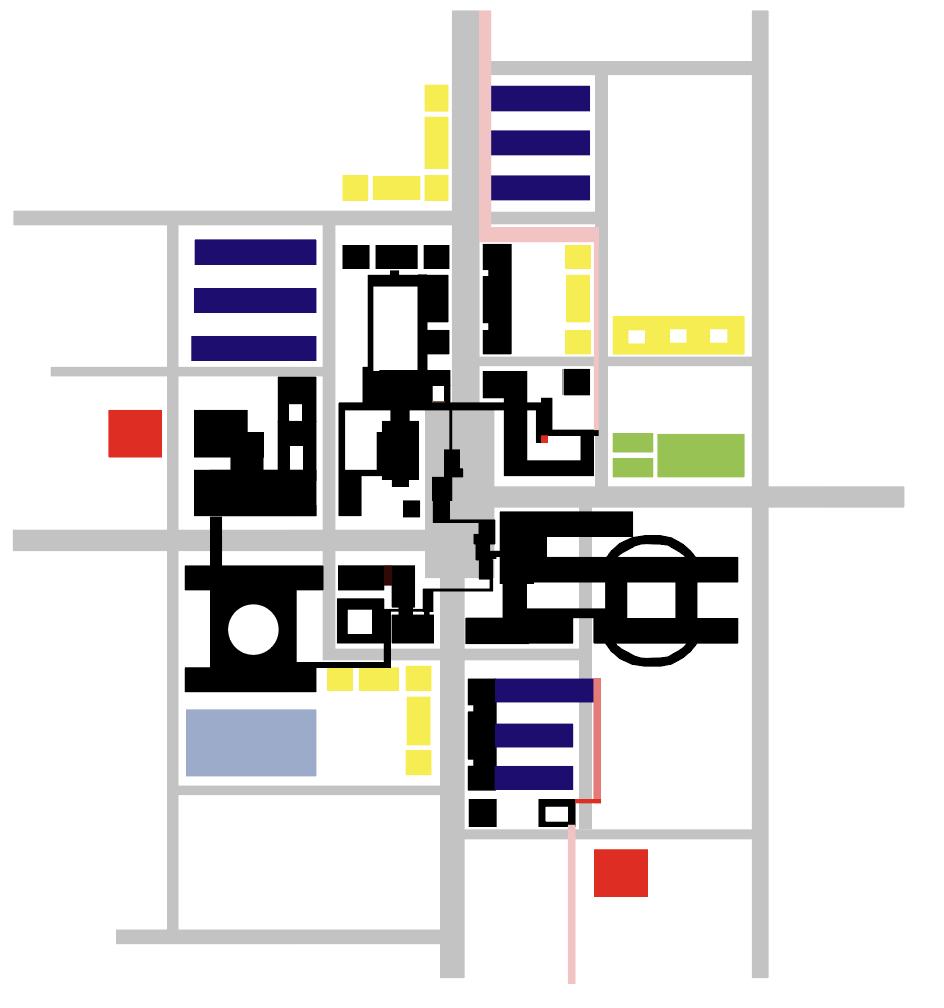
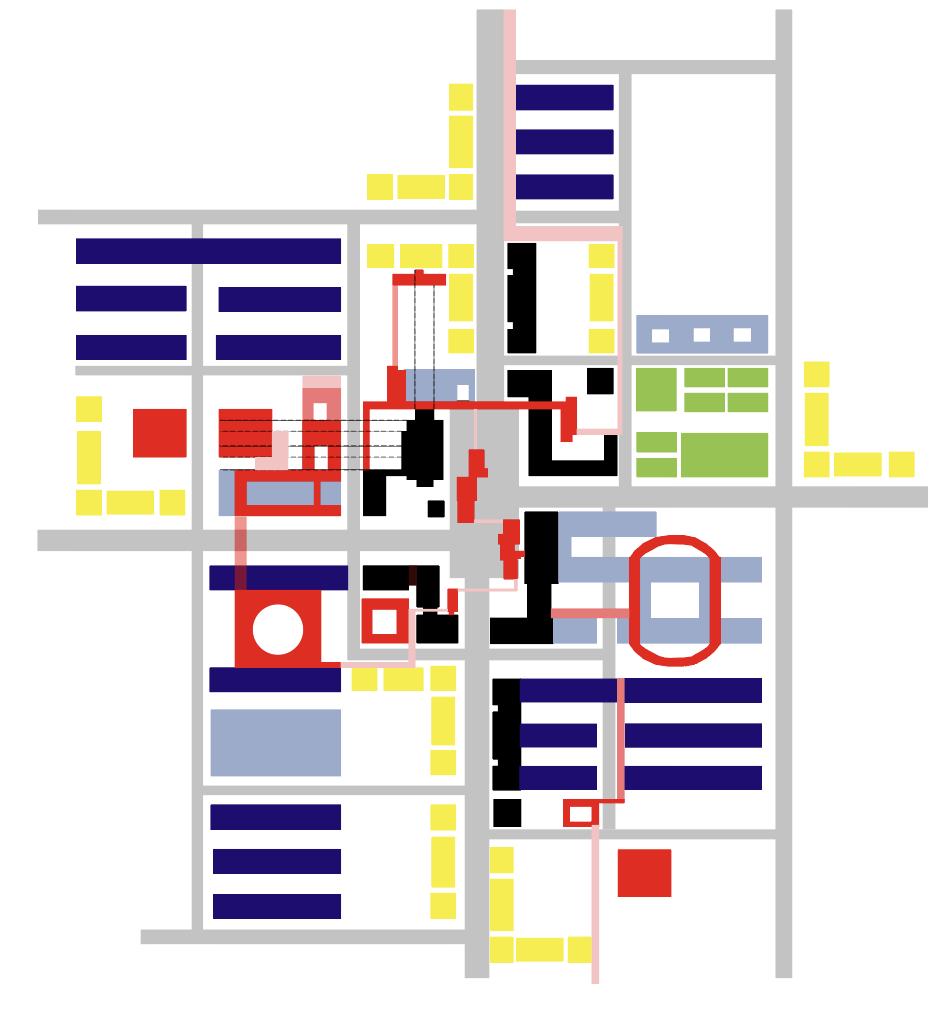
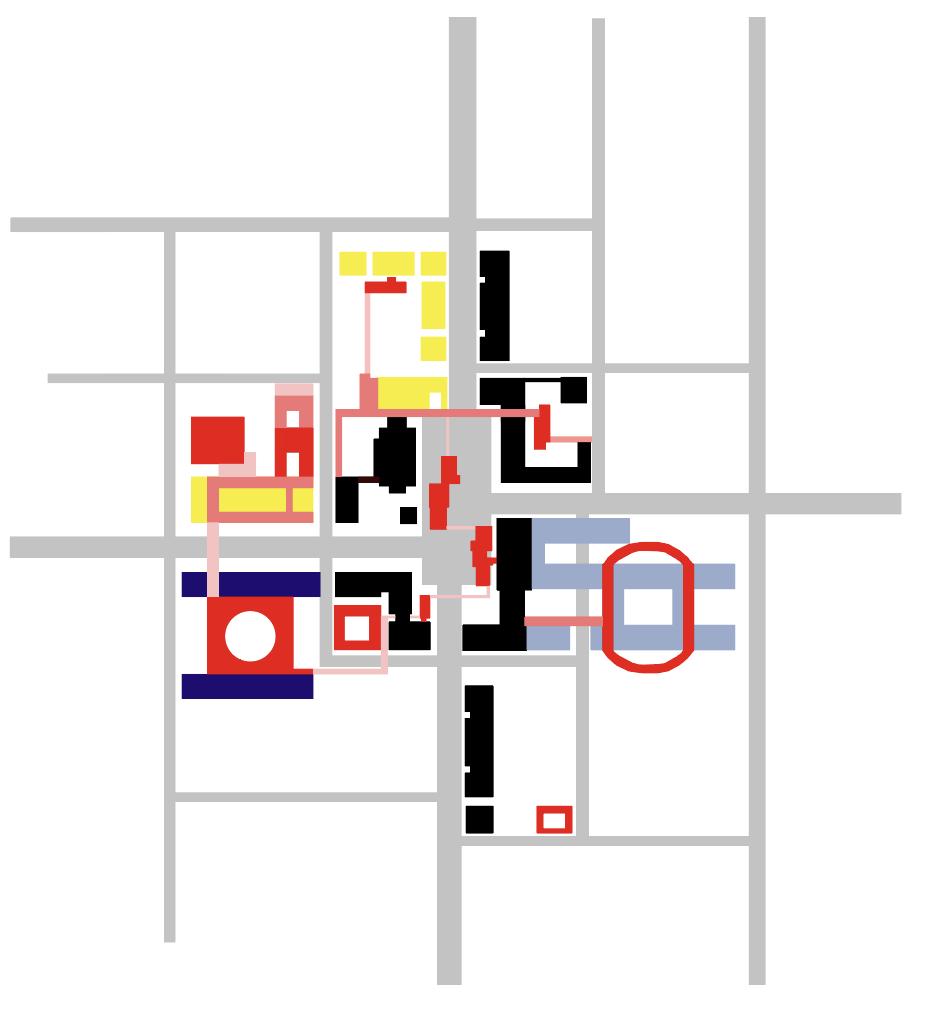
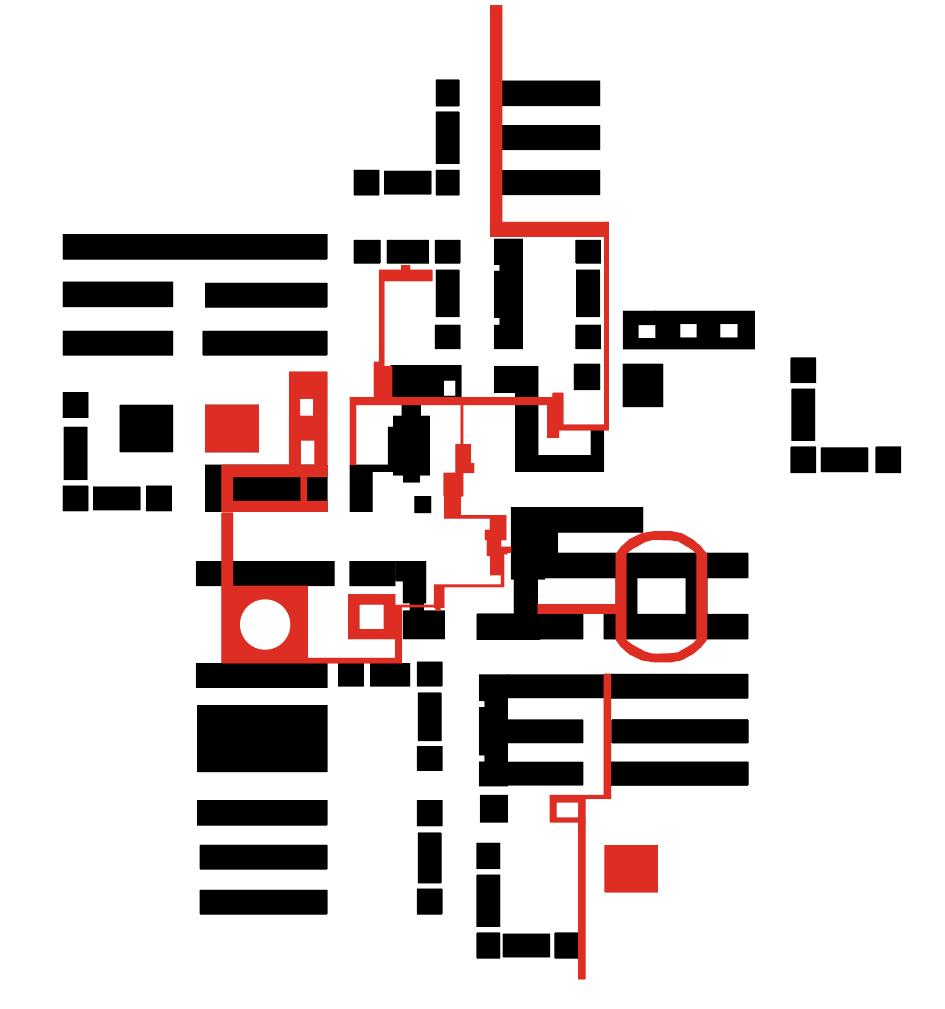
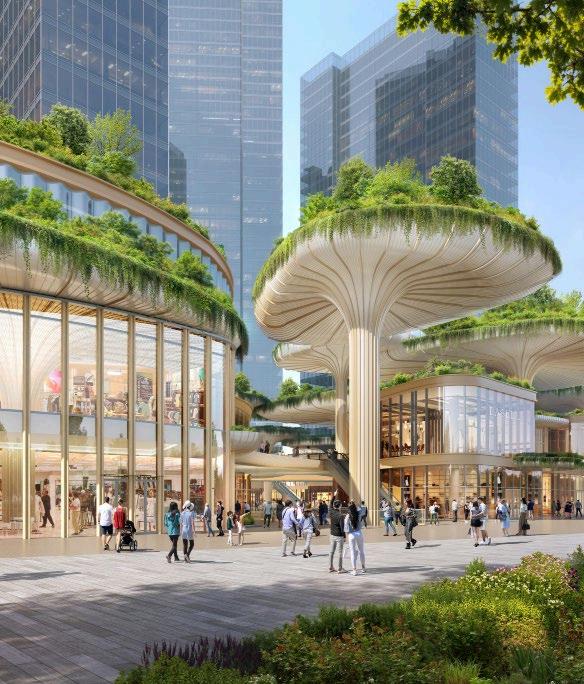
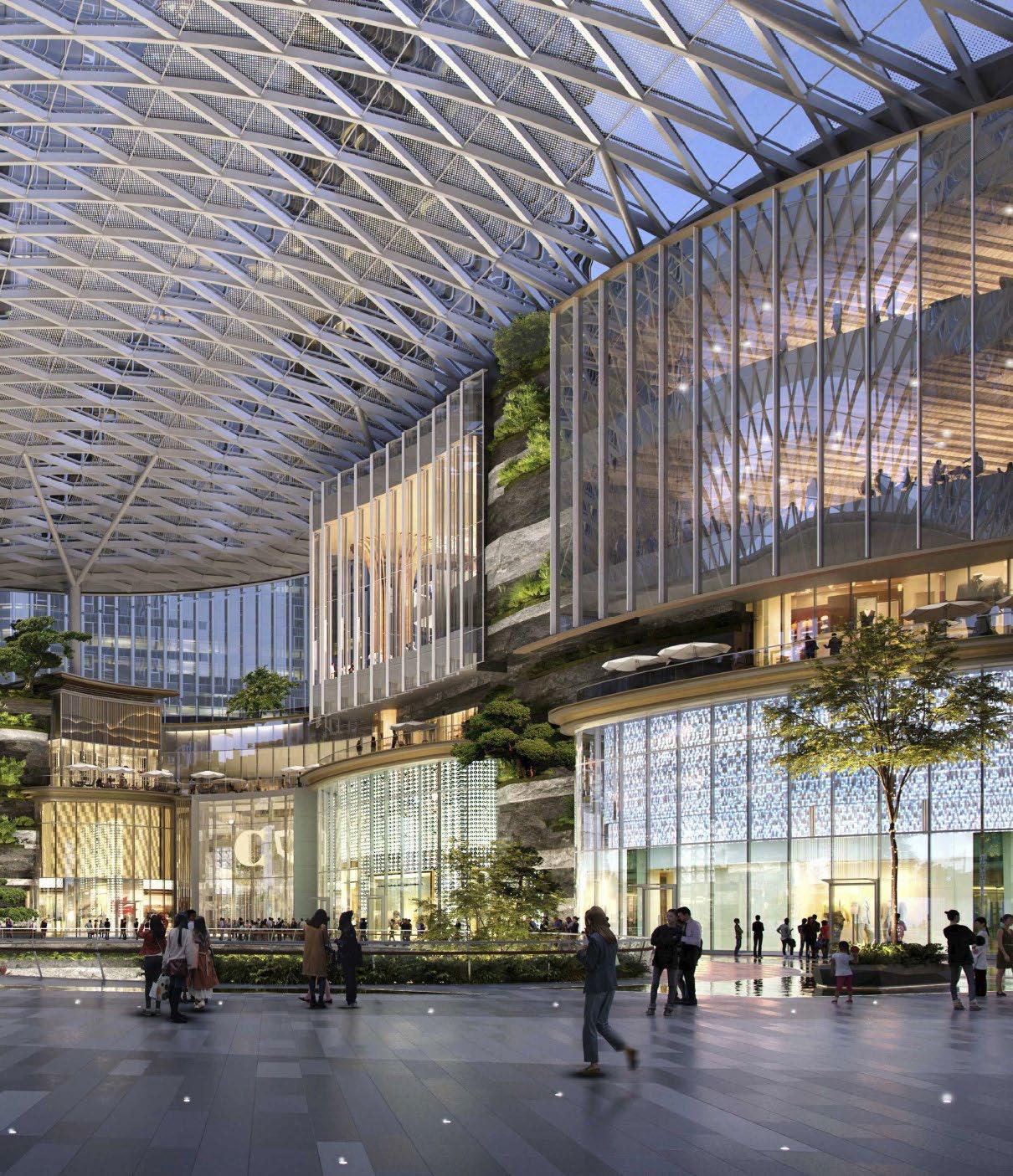
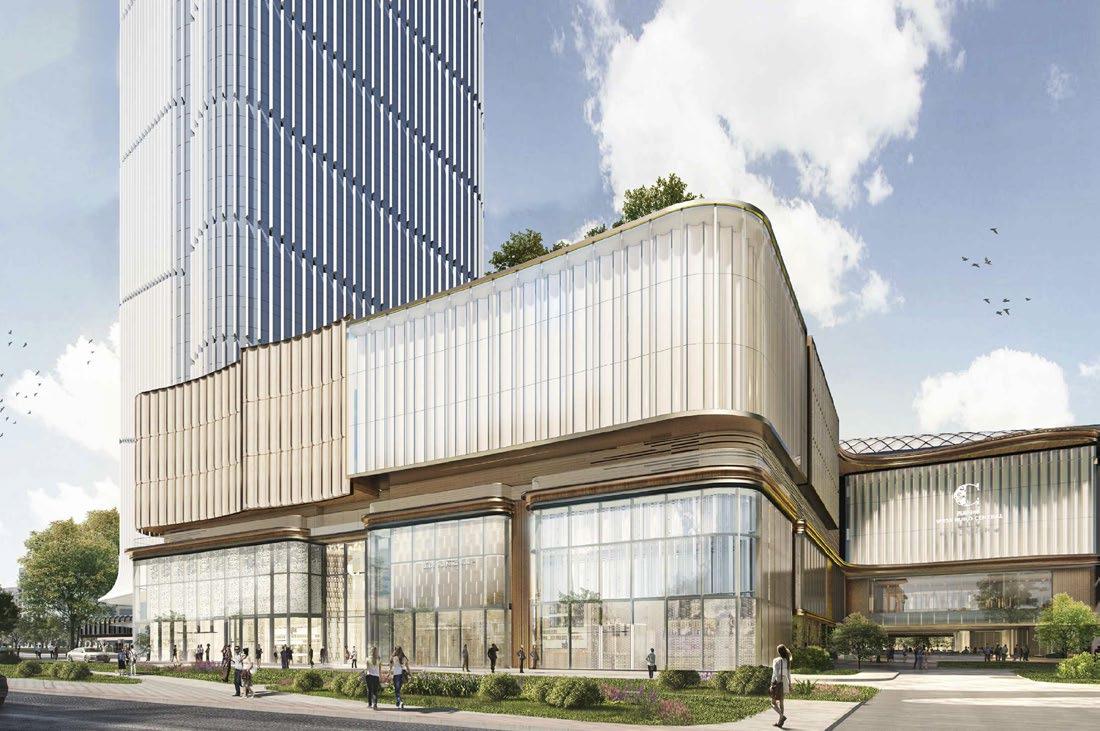
The Xizhimen Super Complex is a multifunctional, multi-system urban supercenter .By creating interation between the different systems, the space becomes a social hub where people heading for different destinations cross paths, and serves as a place that reconnects the surounding neighbourhood.
The Xizhimen Super Complex acts as a “third place” that redefines the urban commuting space, creating an informal social space that is distinct from home (first place) and work (second place), where people can gather, socialize, and build community.
TRAIN TERMINAL + SUBWAY STATION + BUS TERMINAL [TRANSPORT SYSTEM]
COMMUNITY GATHERING & EVENT SPACES [PUBLIC SPACE SYSTEM]
SCATTERED COMMERCIAL + SUNKEN PLAZA [COMMERCIAL SYSTEM]
EXHIBITION HALL AND BANQUET HALL [SERVICE SYSTEM] + [LEISURE SYSTEM]
CONCENTRATED COMMERCIAL SPACE [COMMERCIAL SYSTEM]
CONNECTION TO OFFICE TOWERS AND HOTEL [COMMERCIAL SYSTEM] + [SERVICE SYSTEM]
Sunken Plaza
Subway Station
Bus Terminal Boarding Platform 03. Train Terminal Hall
By reshaping the original commuting space and commercial space, all functional spaces are now connected, creating a small urban hub within a larger urban context. The large variety of functional spaces attracts people from the surrounding as well as people with different needs into a single setting, creating more opportunities for informal social interactions.
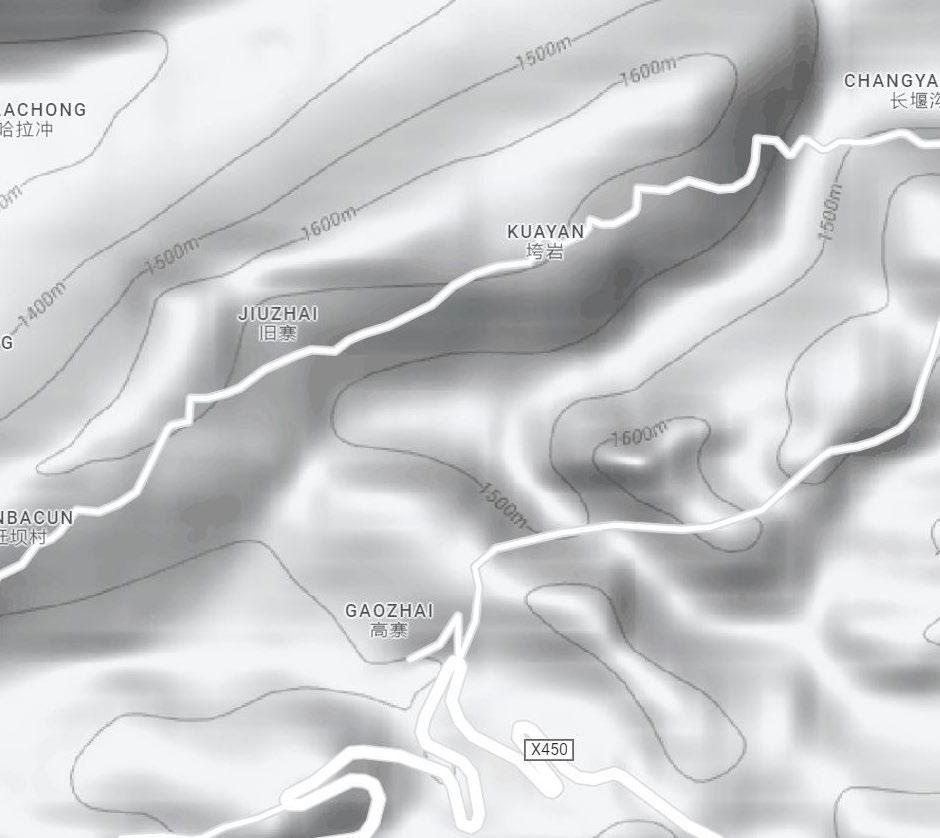
DESIGN SCOPE: Architectural Design + Site Masterplanning
[SUSTAINABLE DEVELOPEMENT ON A RURAL SITE]
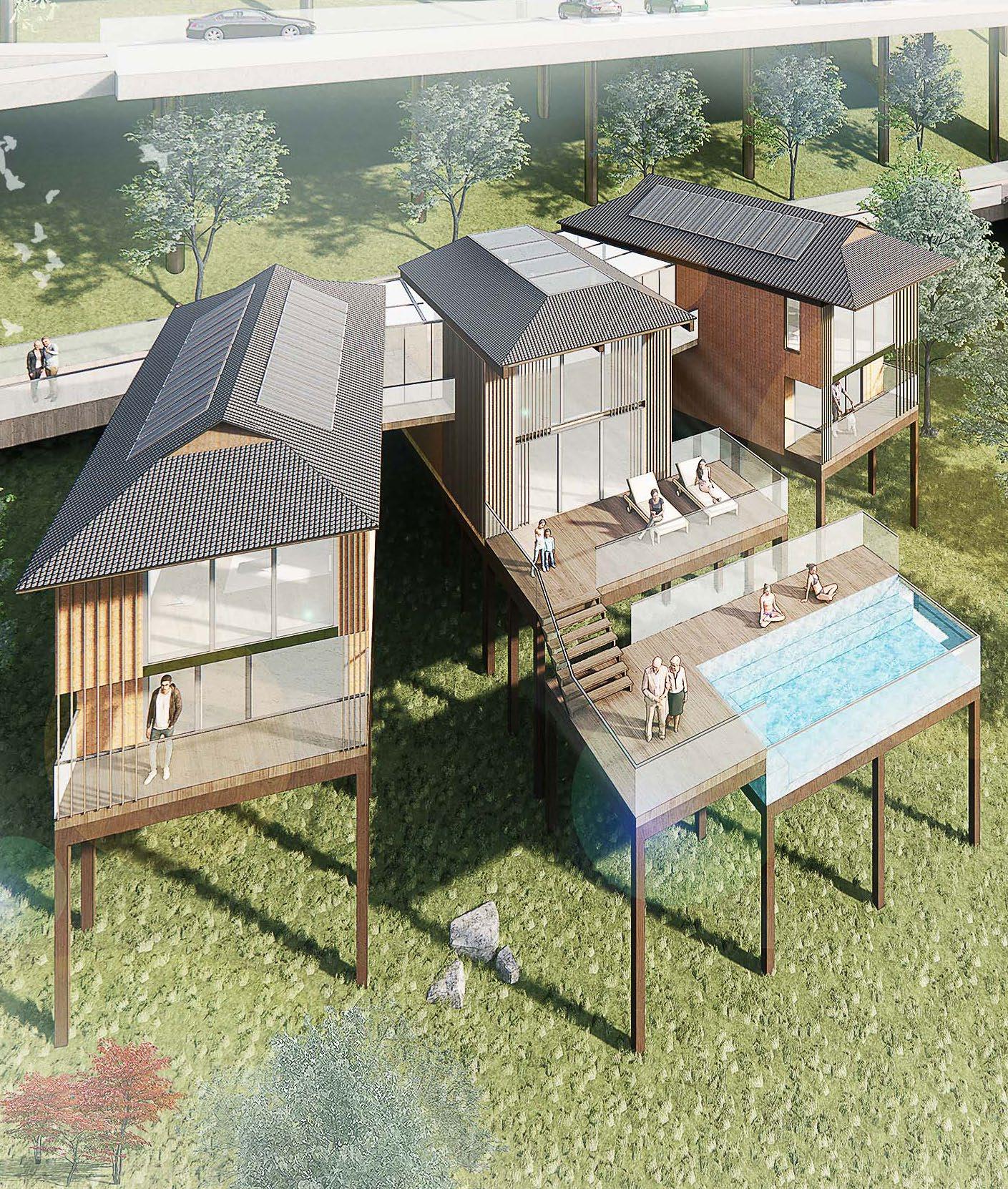
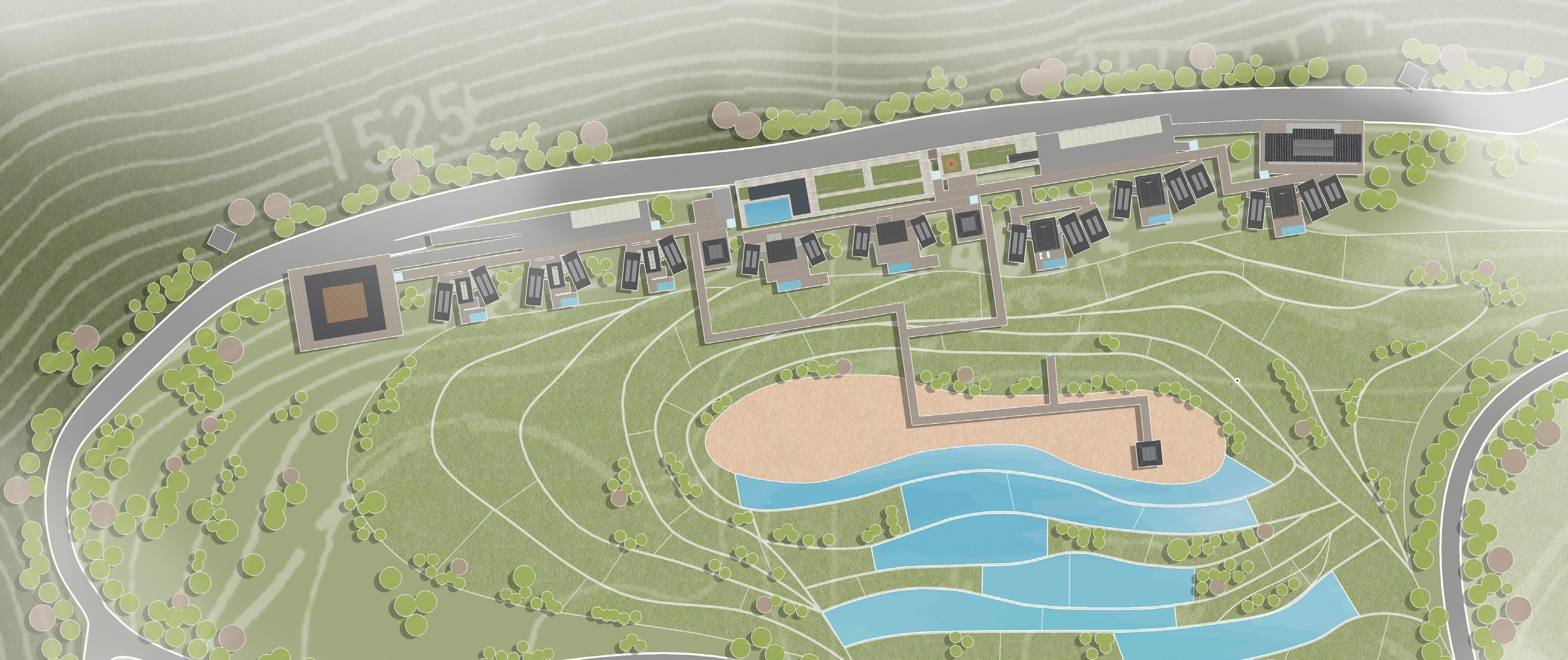
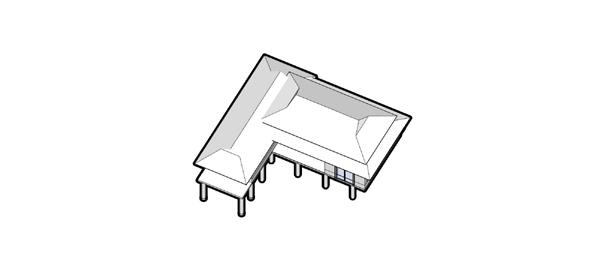
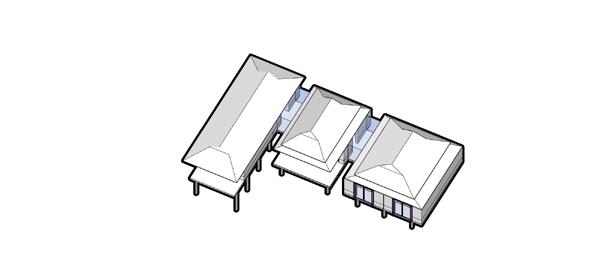
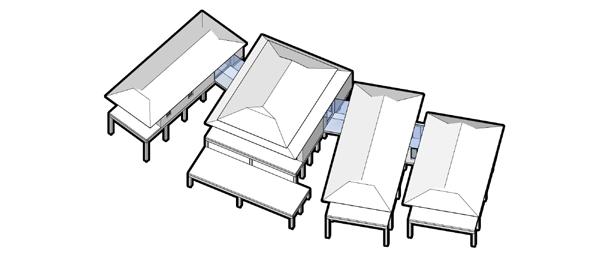
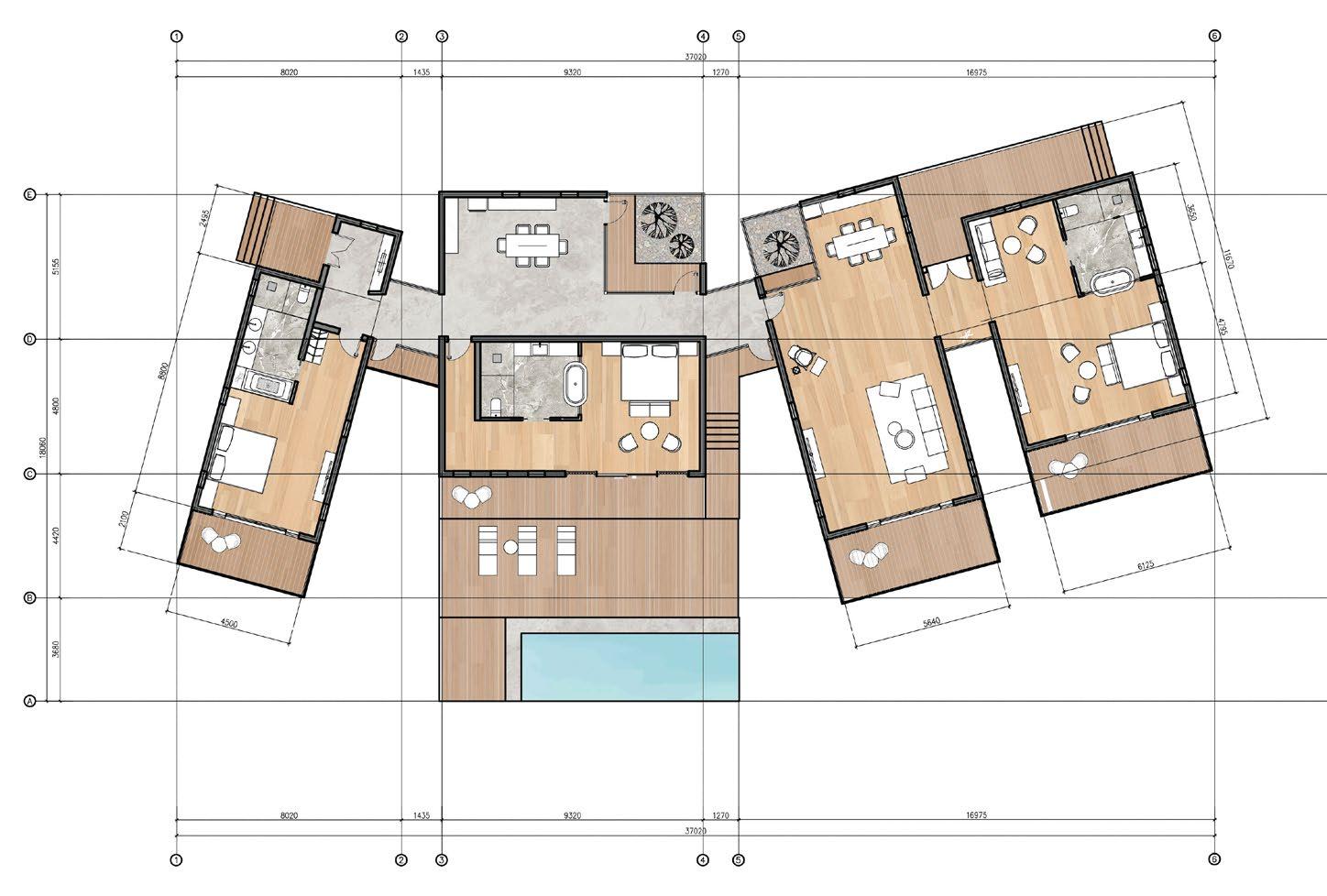
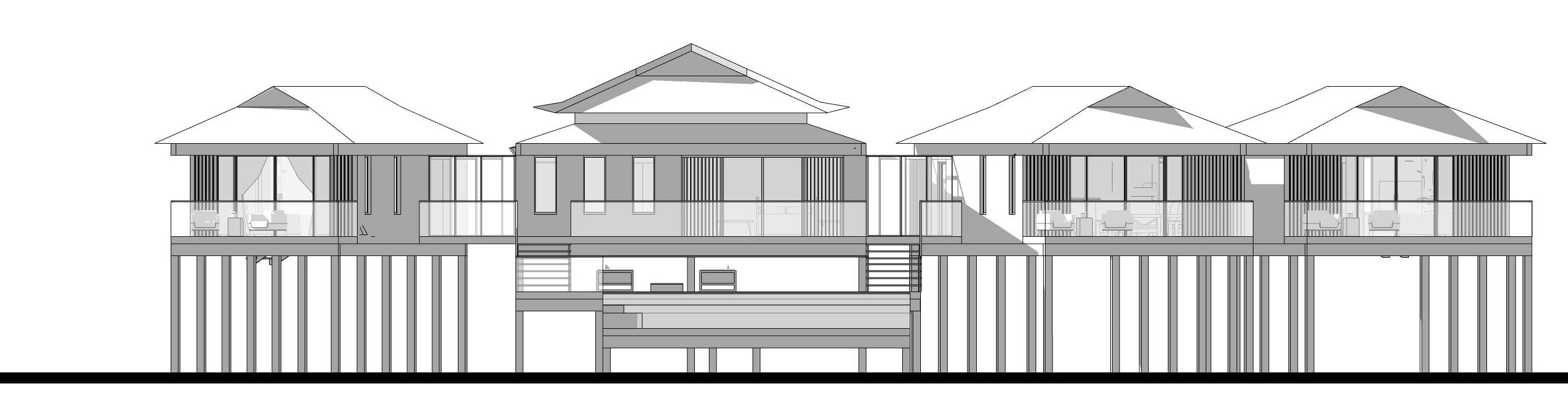
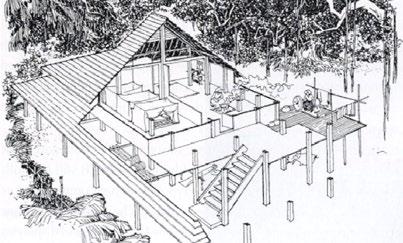
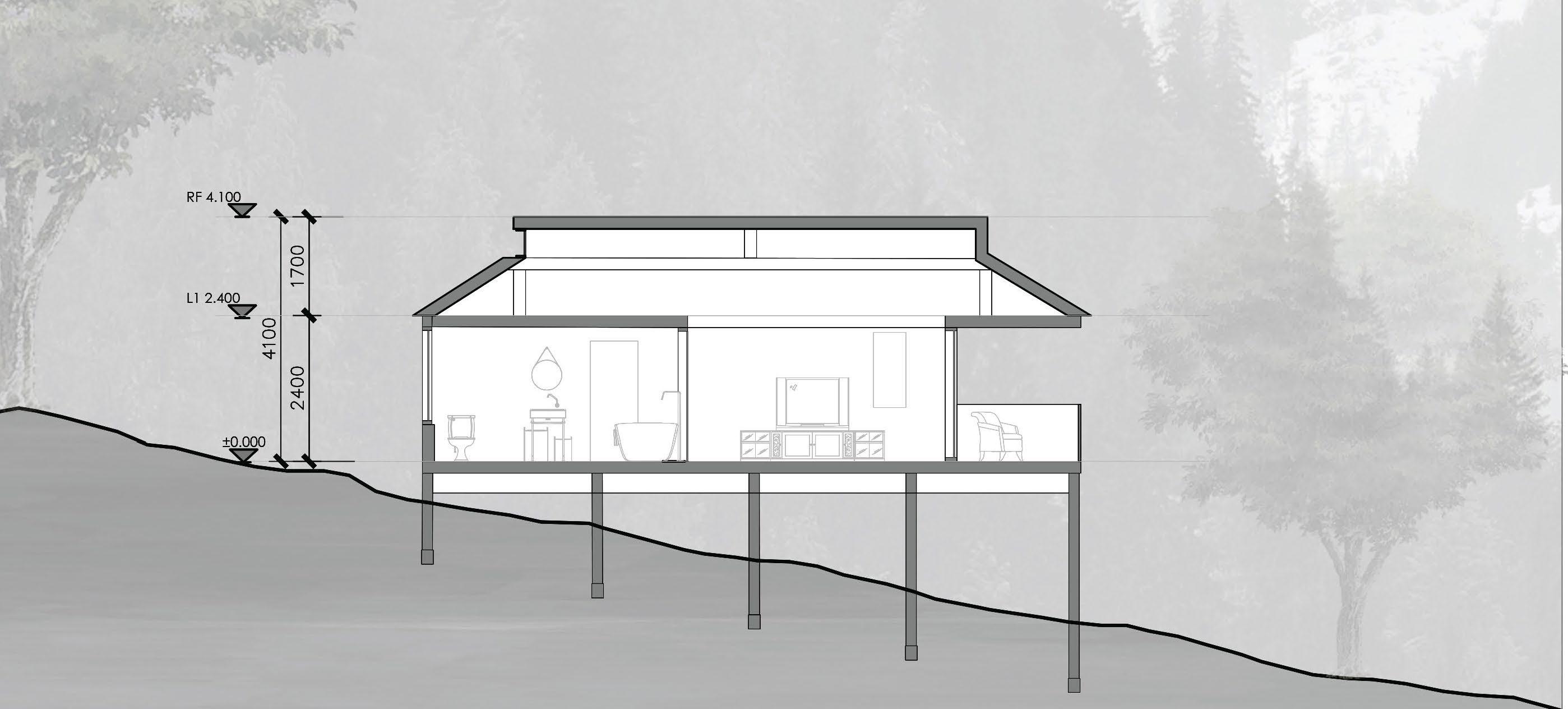
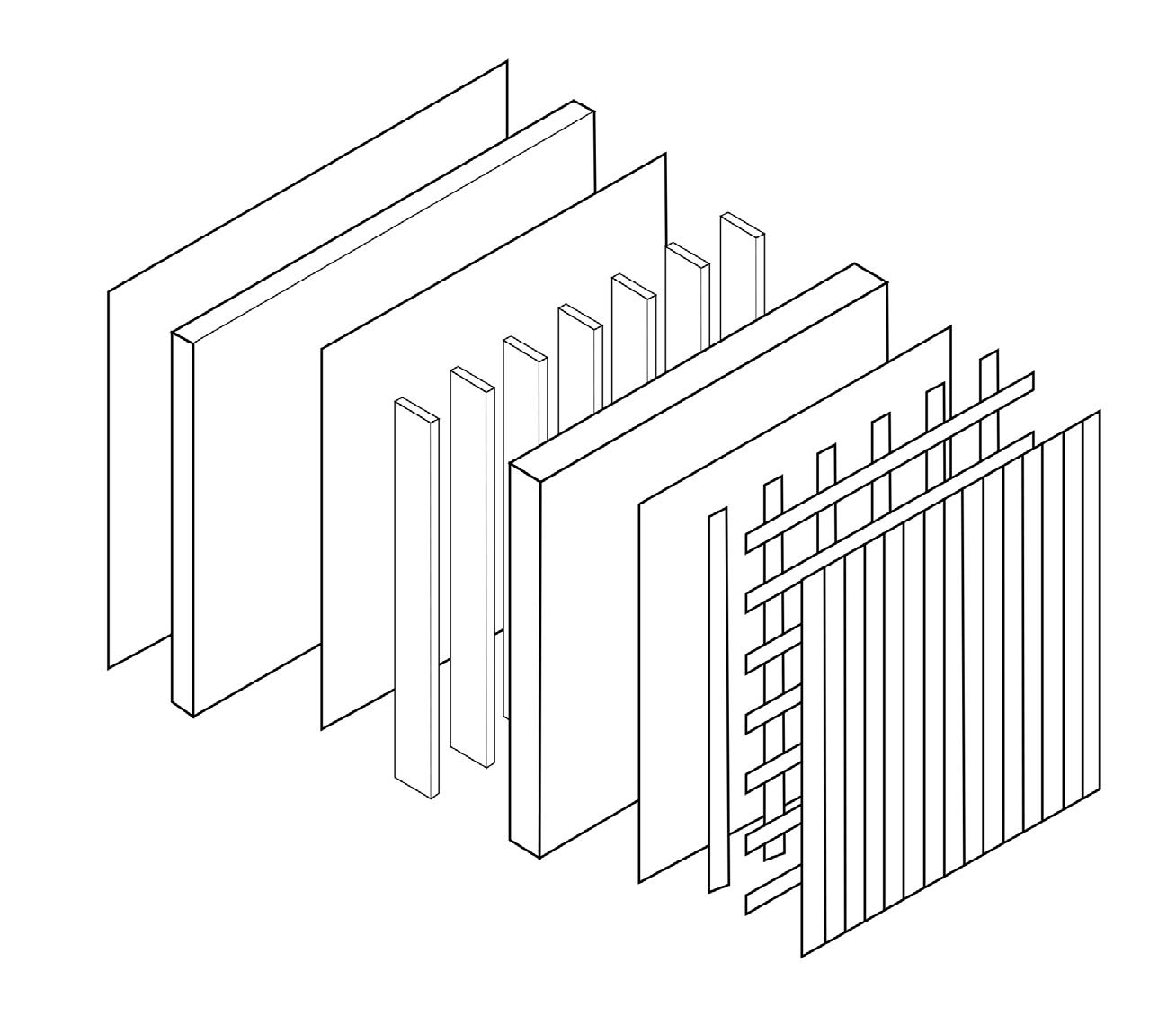
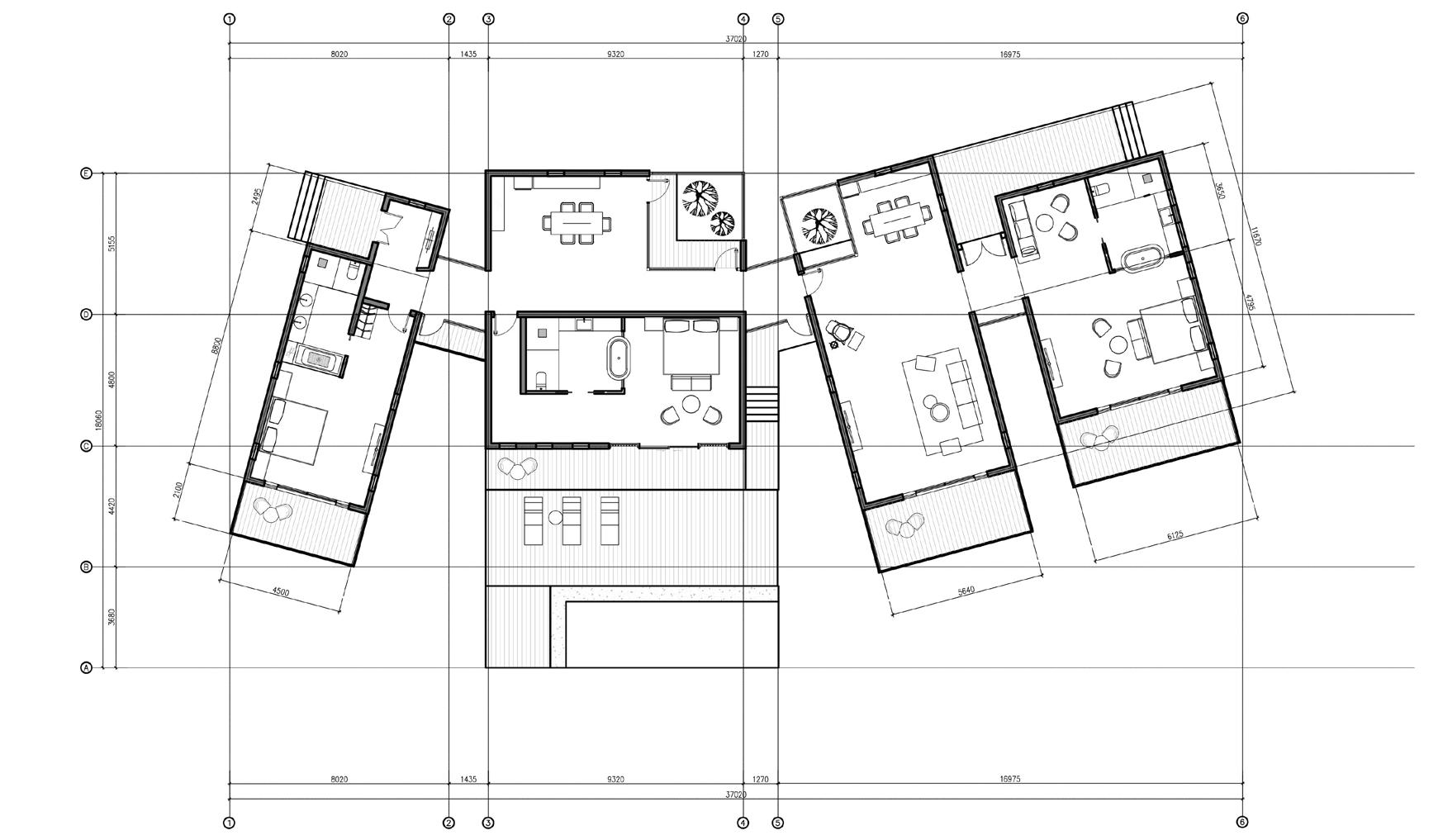
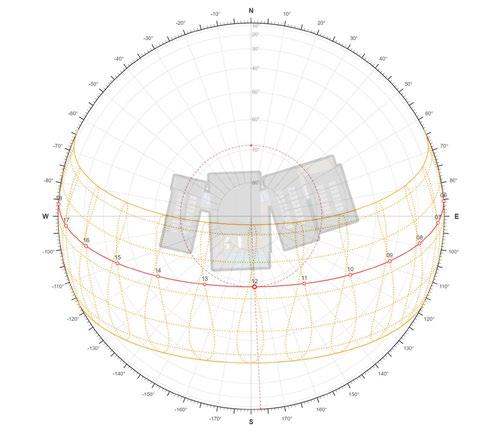
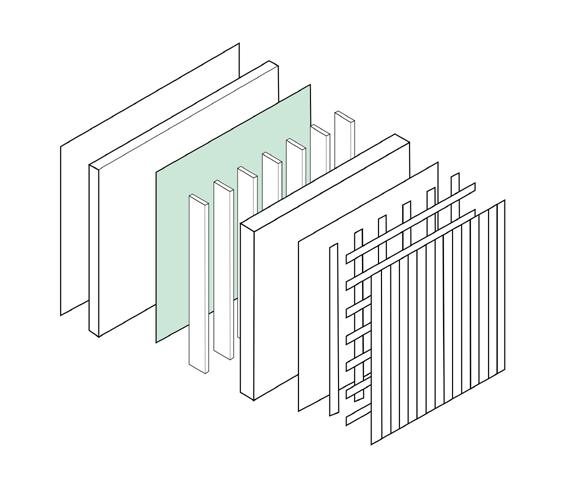
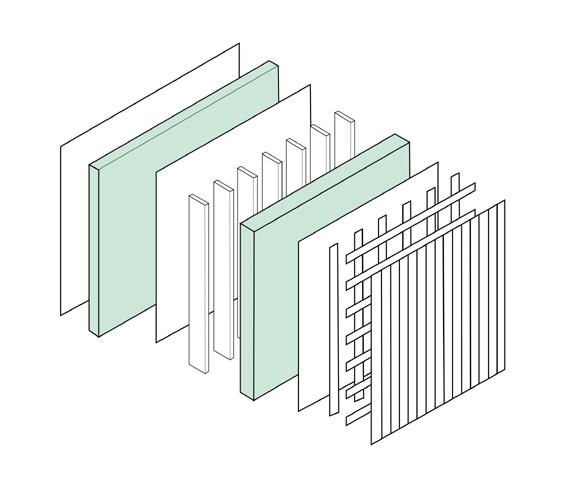
This project consists of a series of net-zero-energy dwelling units being situated in the mountains of Anshun, Guizhou. Together, these dwellings forms a resort on the Hillside to invite guests to stay in. The goal of “Net Zero Energy Resort Anshun” is to not only provide visitors with the best scenery and experience of the site, but also to keep building energy consumption to the minimum to reduce operating cost of the resort by applying both passive and active design strategies, as well as modular construction.
The project is aimed to improve local exonomy through bringing commercial activities and to promote a self-sufficeint lifestyle.
Corresponding to the policy of rural revitalization and achieving the goal of realizing low-carbon lifestyle, through the scientific research project of “Near-Zero Energy Rural Homestays Building Development”, where design products and standards will be developed in order to realize a self-sufficient lifestyle which conform to rural homestays in various places.
[REVIVAL + RE-HABITATION OF A FORGOTTEN HISTORICAL TOWN]
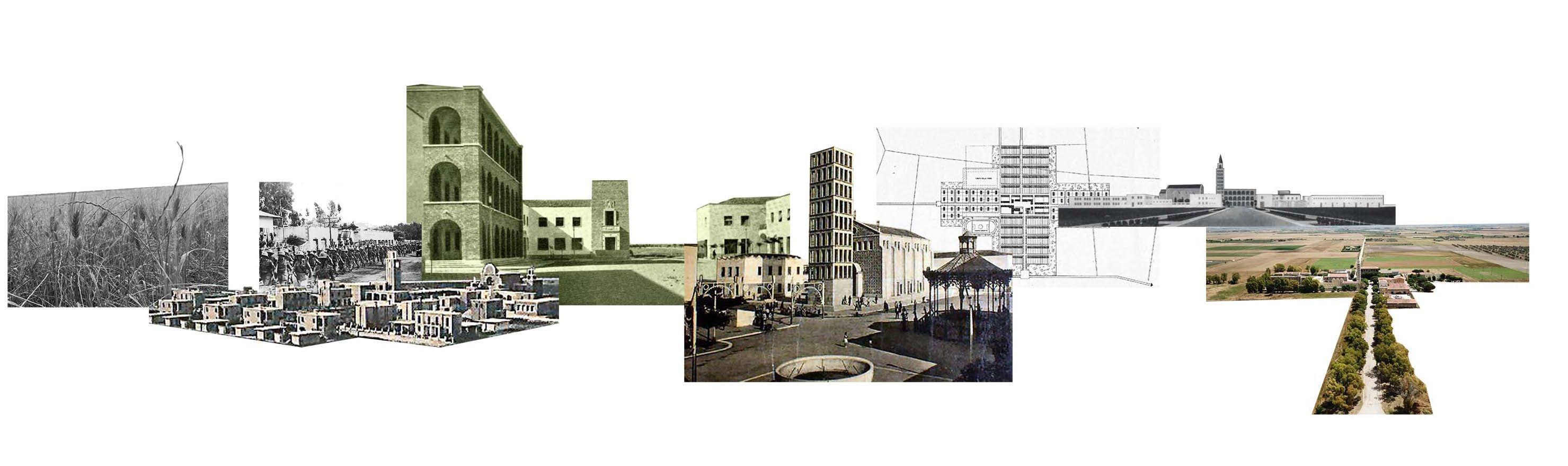
The concept of the masterplan is conceived based on the history of Segezia during the Fascism 1938 agrarian reform. As part of the plan of the Tavoliere, it was designed for rehabilitation of the rural context, however it was never completed and still in the state of abandonment.
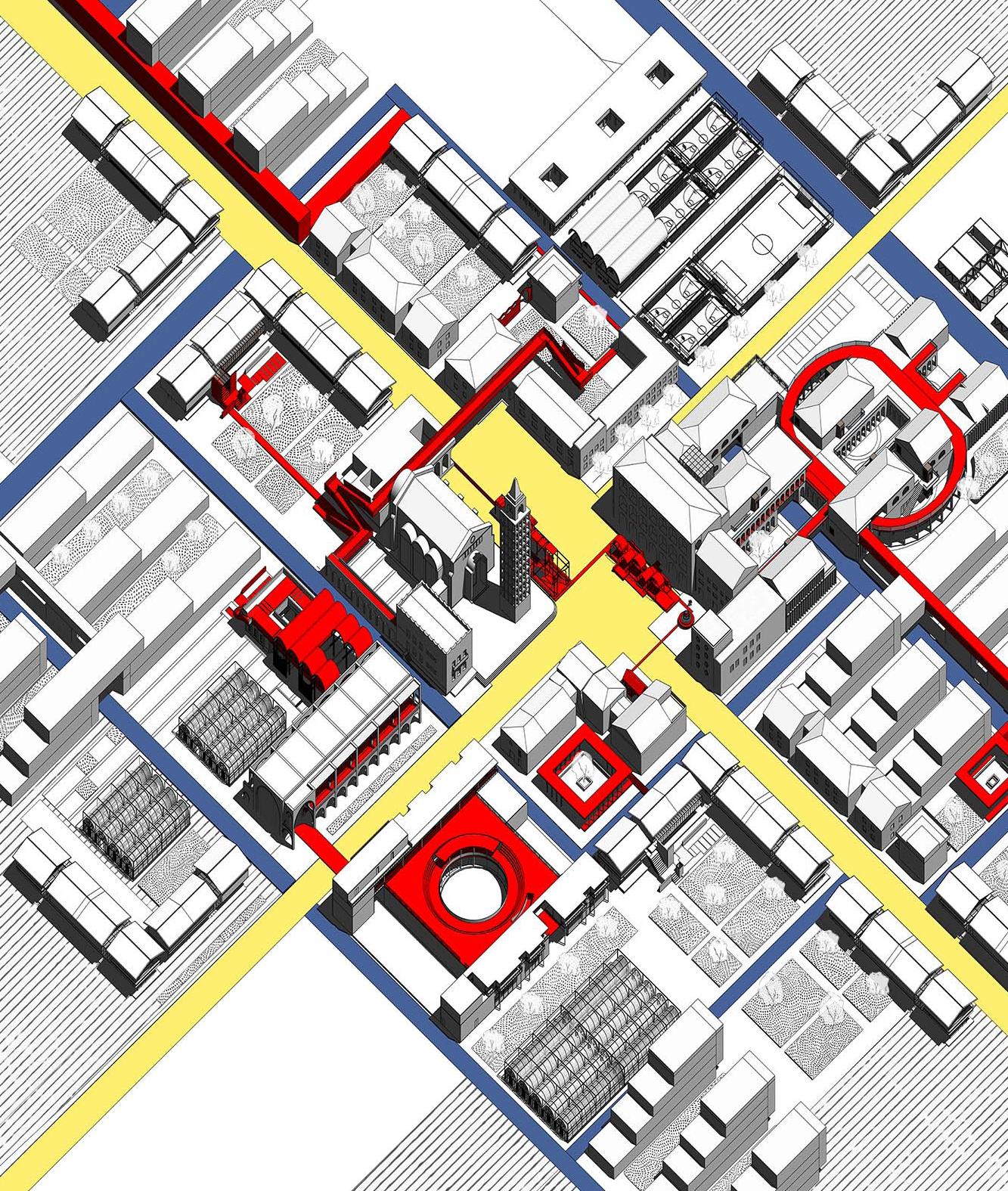
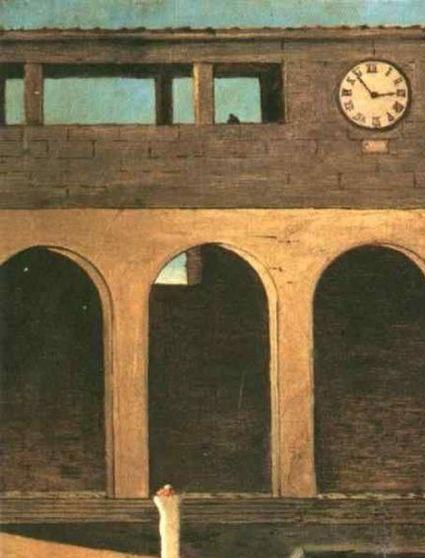
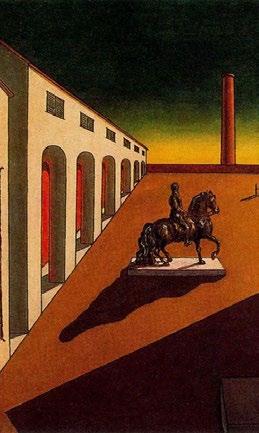
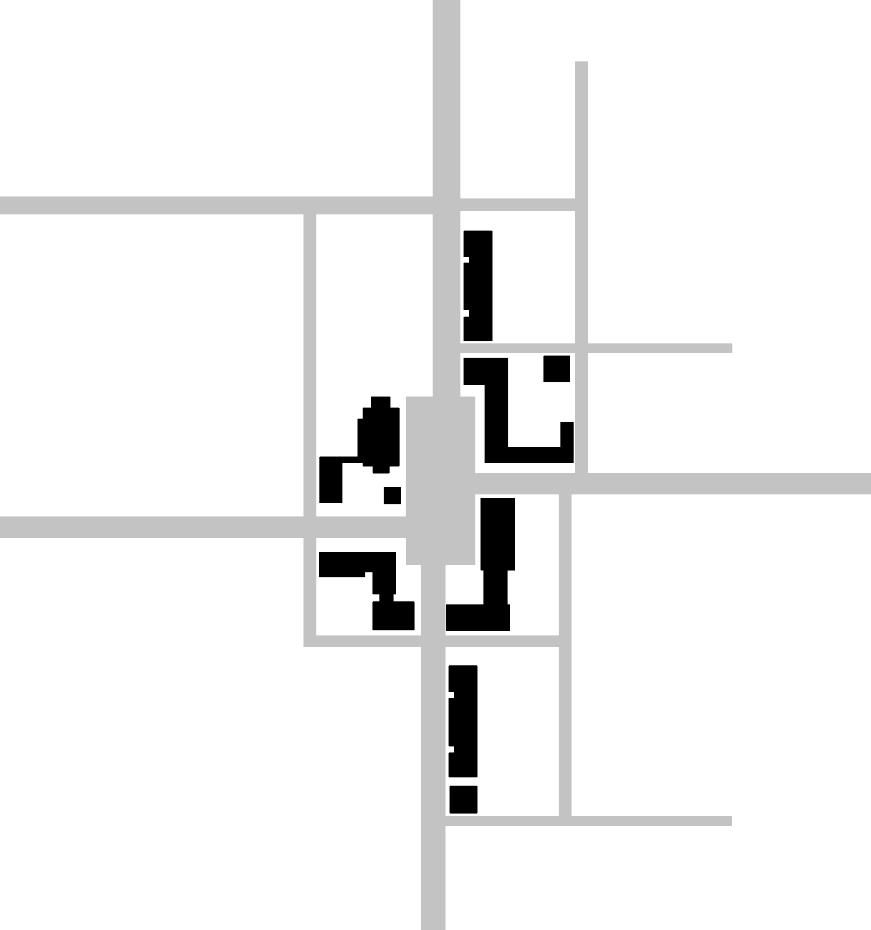
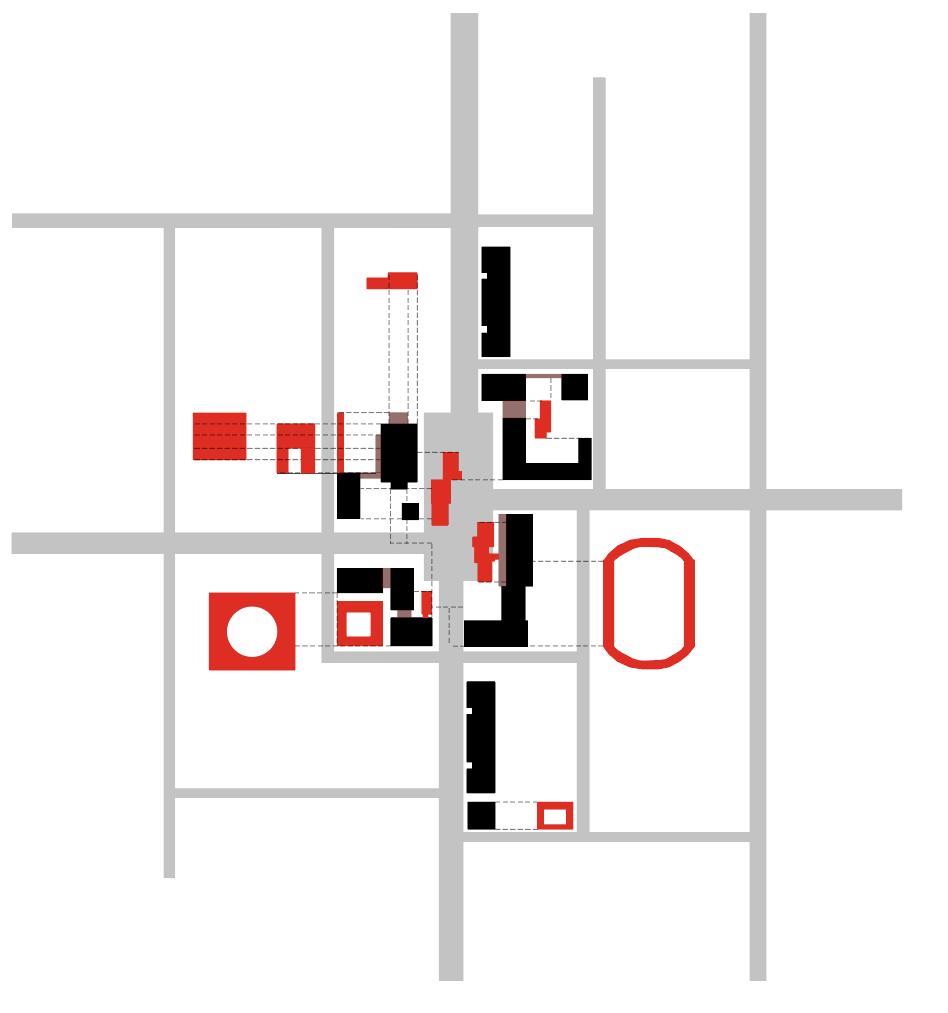
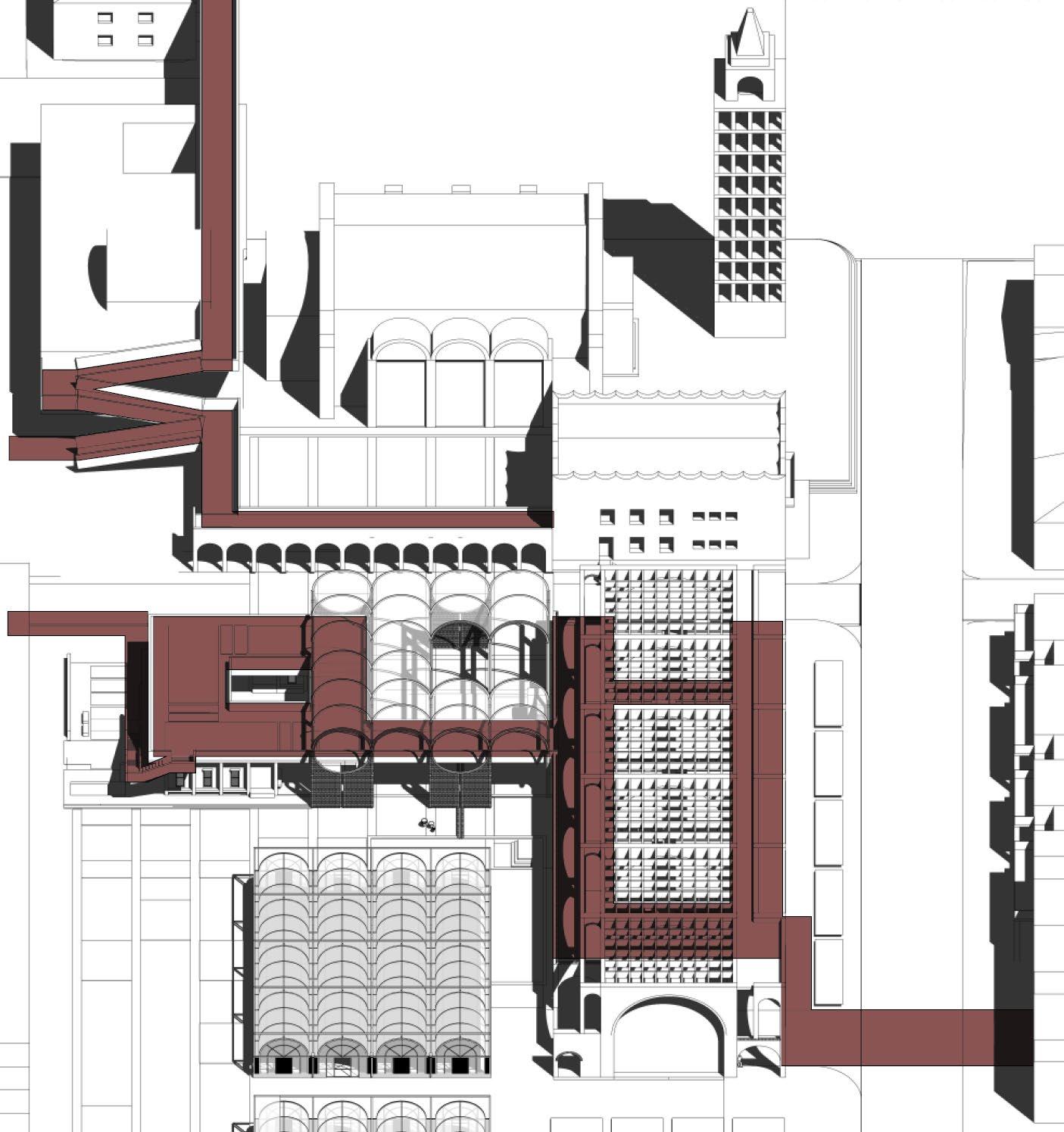
As one of the abandoned place that was proposed for clear purpose without any natural transformation of place itself, Segezia remained as a “dream-like” states without time and life which composes the space, the idea of the master plan is to awakening the soul of Segezia by creating a new tattoo on the past scar, by proposing a ribbon-like connective skybridge follows the original greek cross and going up and down on site and connecting major public nodes, the goal is to activate the vacant space and creating a lively community which intertwined with its past.
“Squares
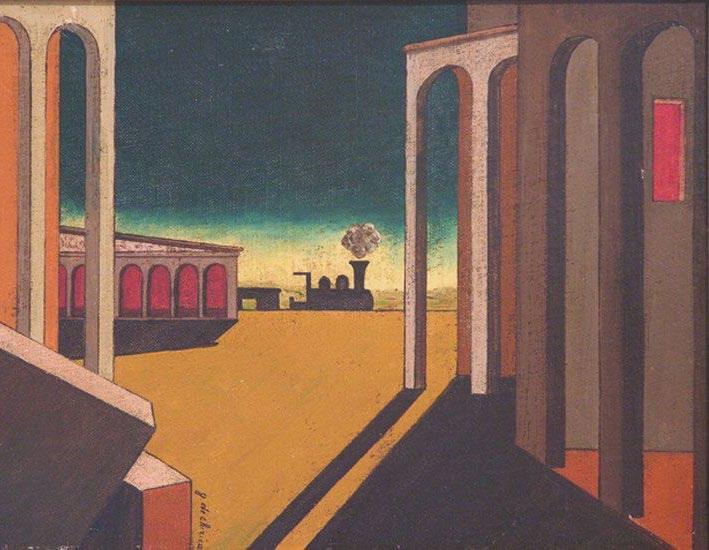
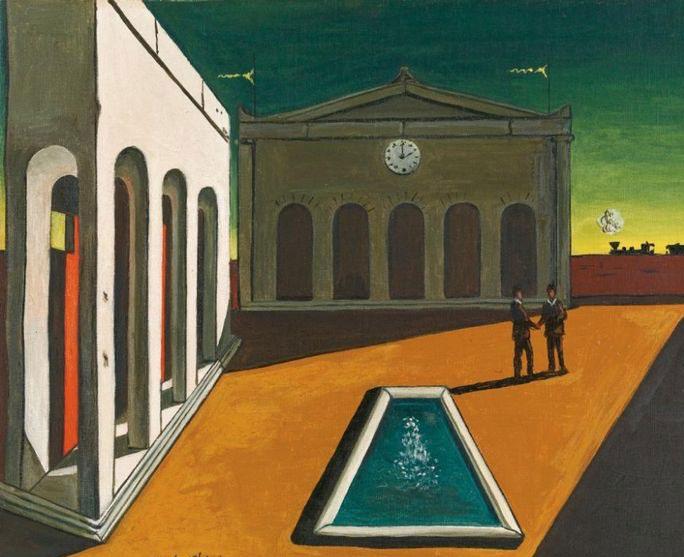
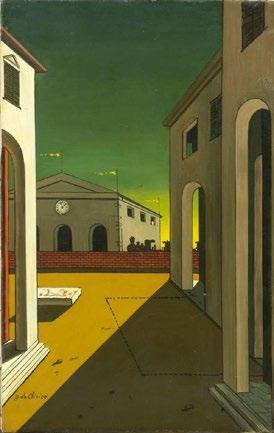
Architectural Style Inspiration
The administrative building, old bell tower, empty square and place for worship remained as the long forgotten landmarks on site, highly resembling the metaphysical painting by Giorgio de Chirico. the architecture style of the newly proposed masterplan takes reference of the design elements shown in the paintings.
Pre-1937
Before 1937, the Borgo Segezia Site is covered with large areas of farm land with scattering farm houses. The site is located approximately 12 km from Foggia, the largest town in the area at the time.
Italy experiences an Agarian Fascism Reform movement in 1938, and the Borgo Segezia area is selected to be designed as part of the rural expansion plan. The original masterplan of the site is designed by Concezio Petrucci, and the target occupants of the site are family member of those that have military background.
Most of the construction of public buildings in the area surounding the central plaza completed in around 1941. Borgo Segezia experienced its most flourished moment at the time.
The Borgo Segezia project was abandoned along with the fall of the Fascist Rigime. The large areas of residential zone that were originally propose ended up never being constructed.
Borgo Segezia today became a small run-down town with very few residents in the area due to its lack of communal facilities.
& Streets without Town”
Institutional Zone: School + Library + Community Center
Residential Zone: Garden + Pavillion + Outdoor Performance Space
Commercial Zone: Market Complex + Community Kitchen
Recreational Zone: Exhibition Gallery + Sports Field + Greenhouse
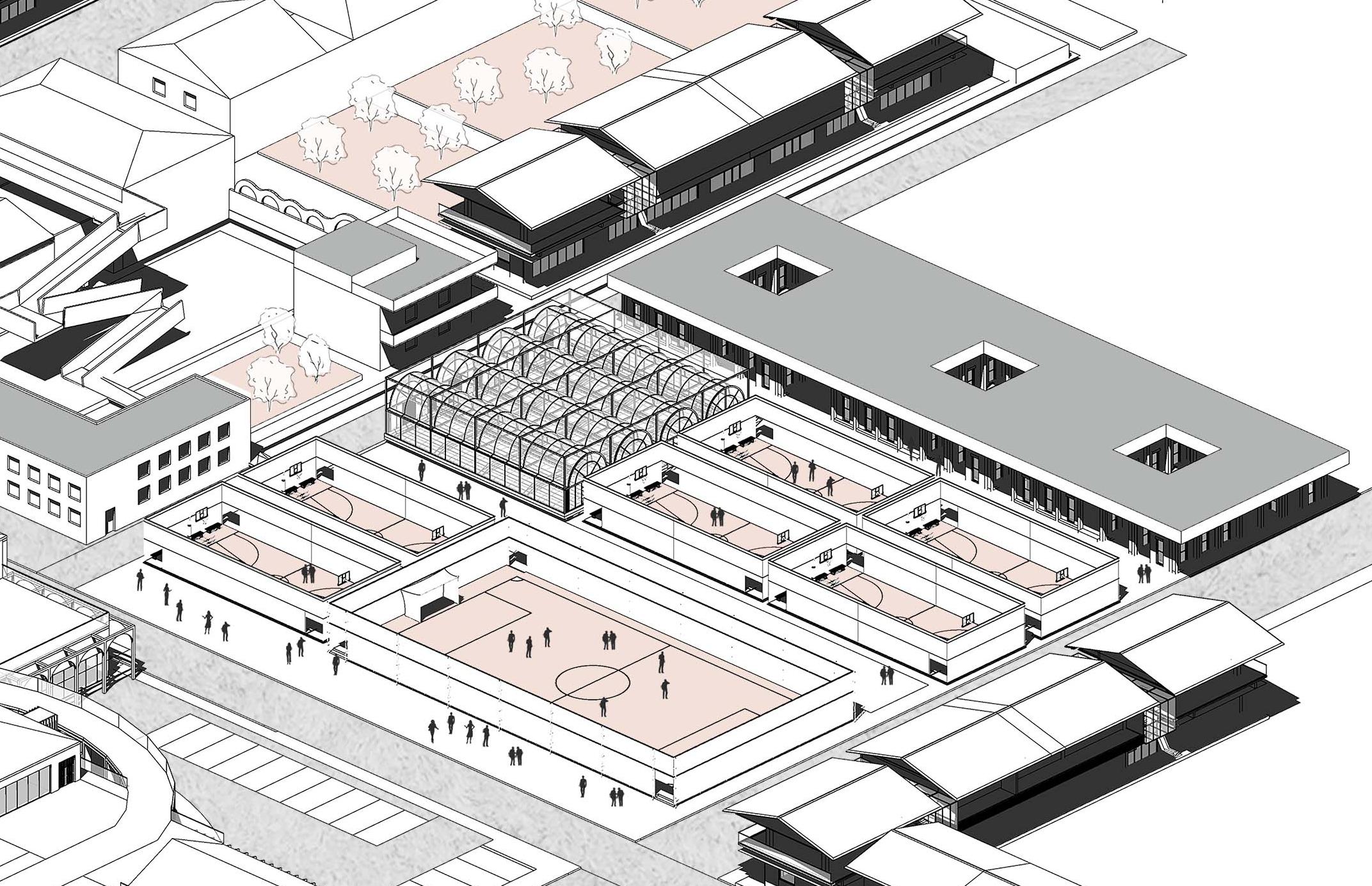
With new residential buildings continue to be built in and around the Segezia area, there will be an increase in the need for education.
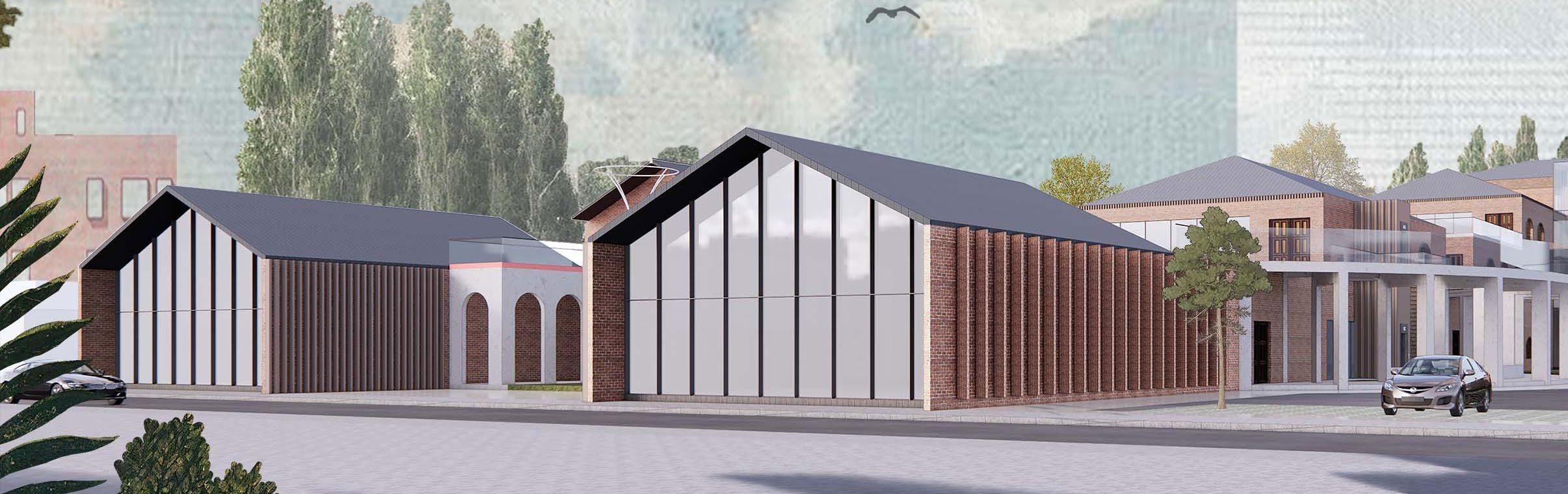
As an extension of the school on-site, the new addition will be connected to the existing building and stretch outwards, providing more classroom and public gathering space to the community.
School Extension Exterior Perspective
Floor Plan
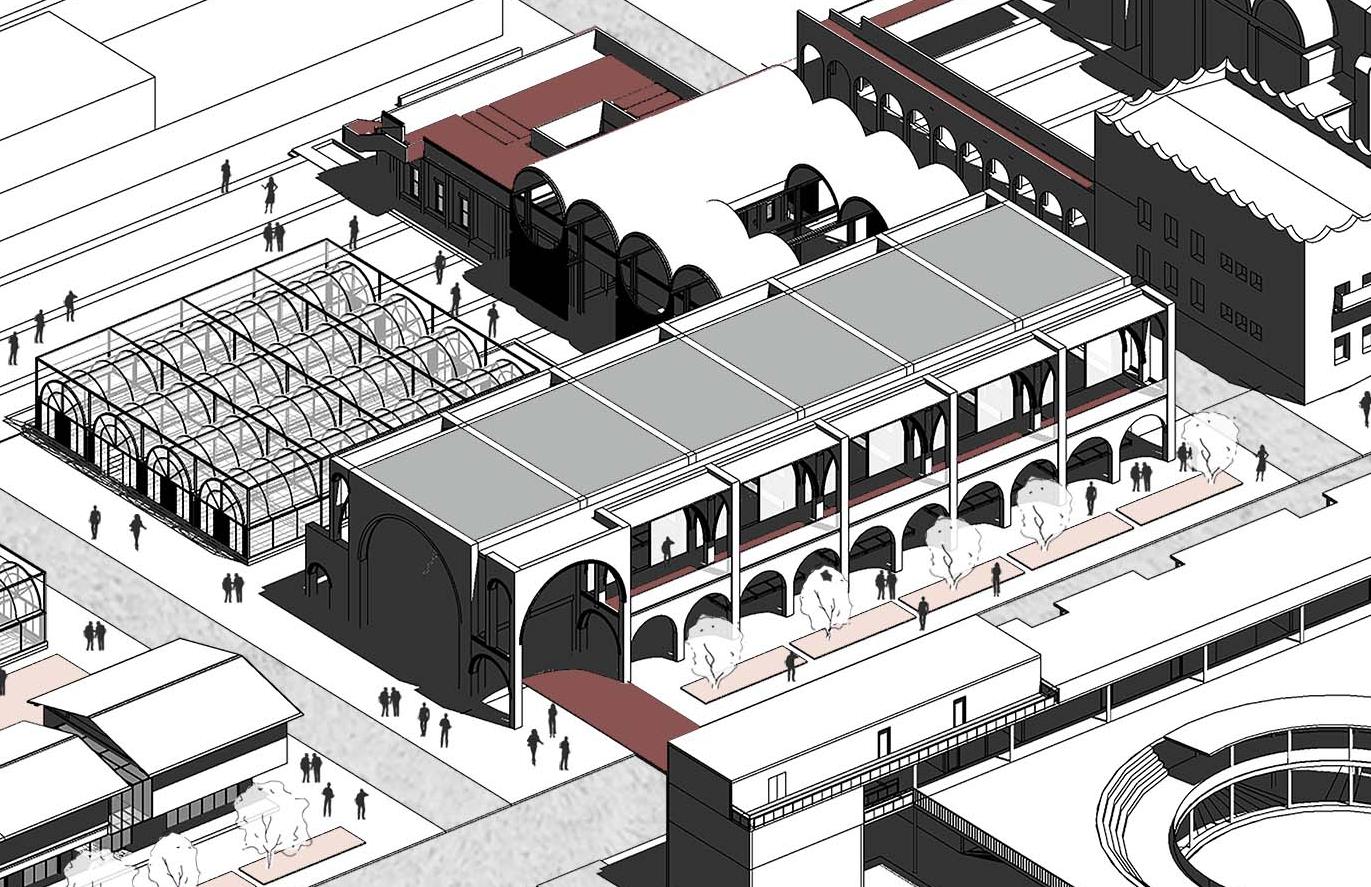
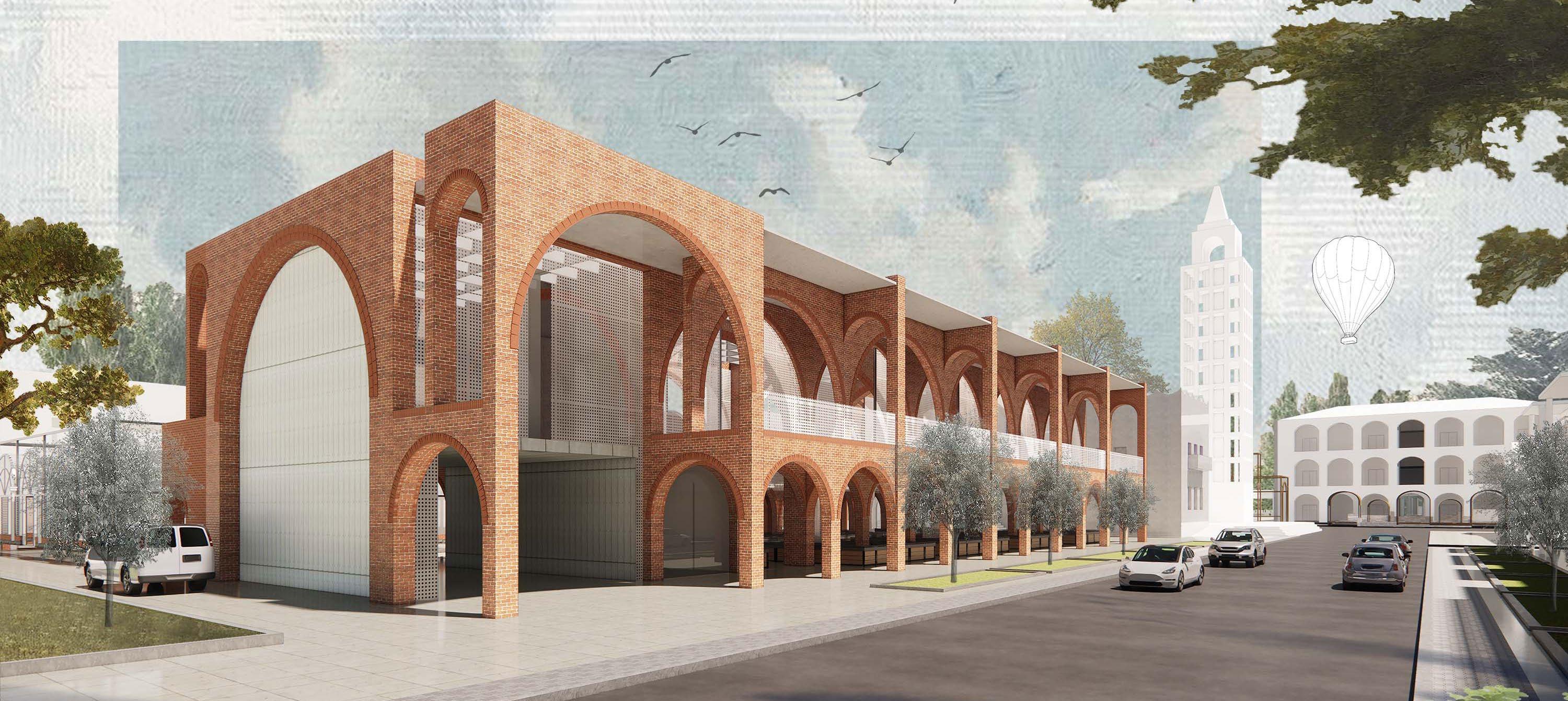
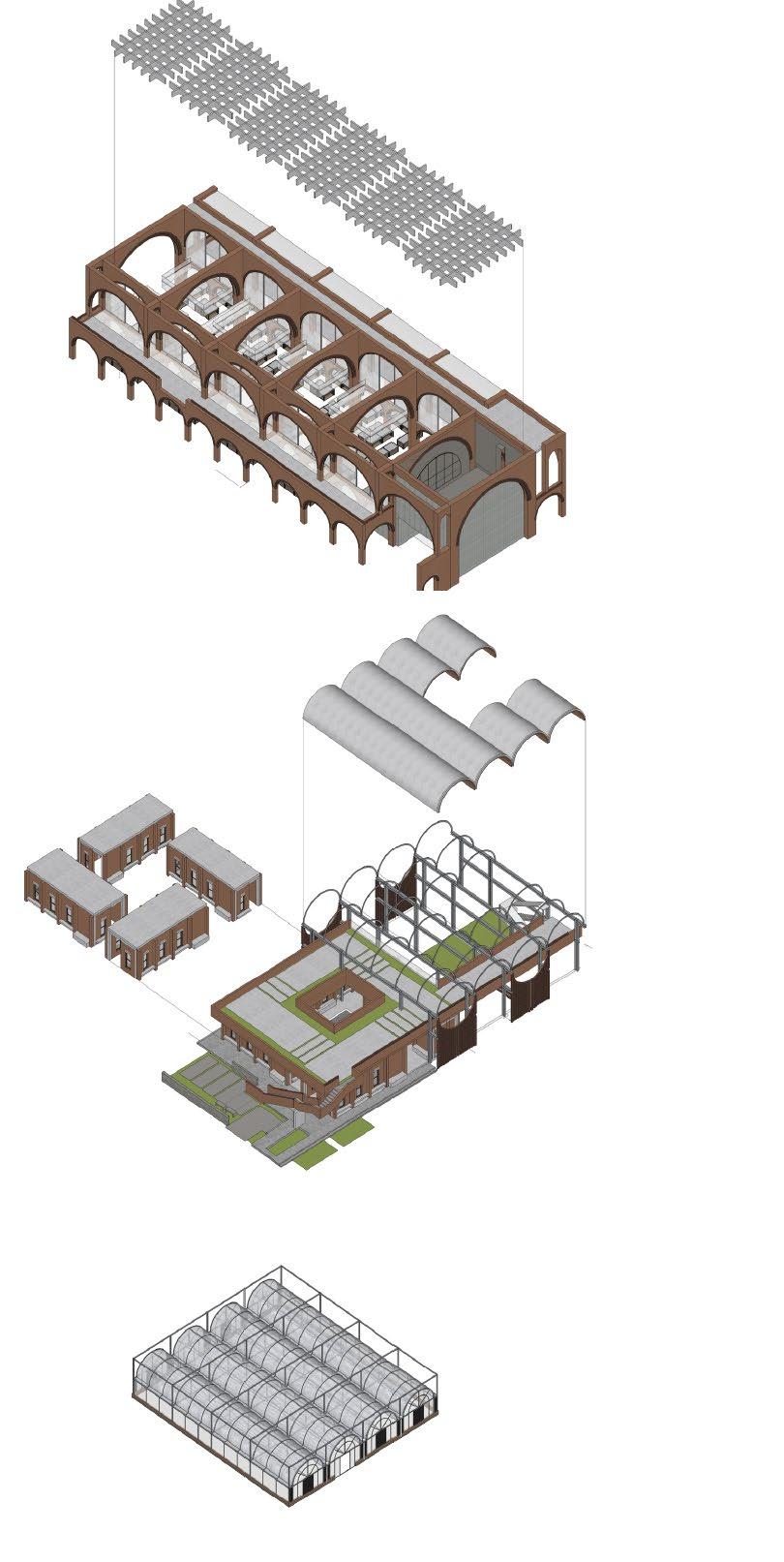
A market is proposed near the central plaza of the masterplan, and this is a place where residents could purchase their daily necessities.
Community functions such as a greenhouse and a kitchen is also proposed in the zone for people to grow and cook food. It also acts as a small social hub.
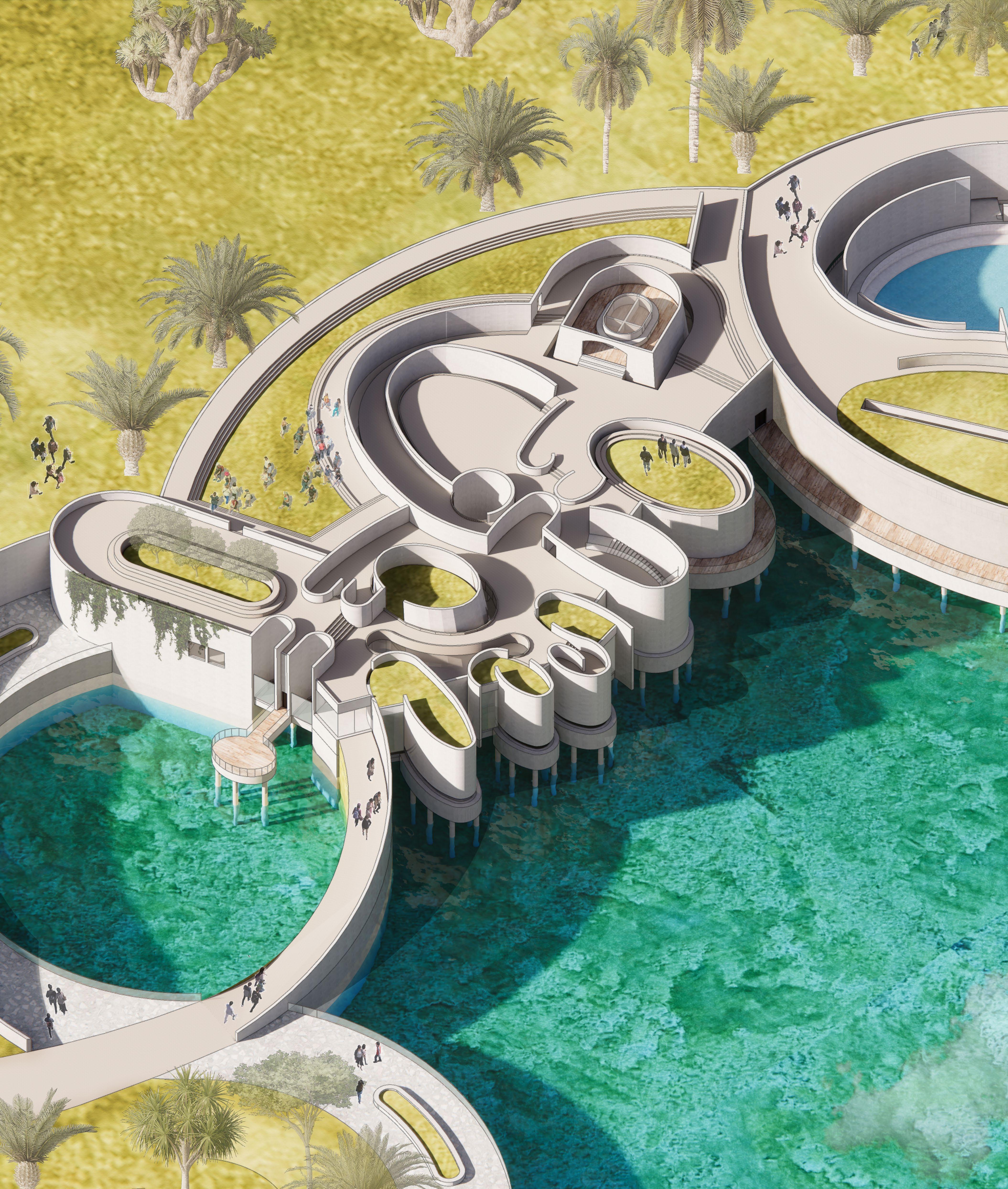
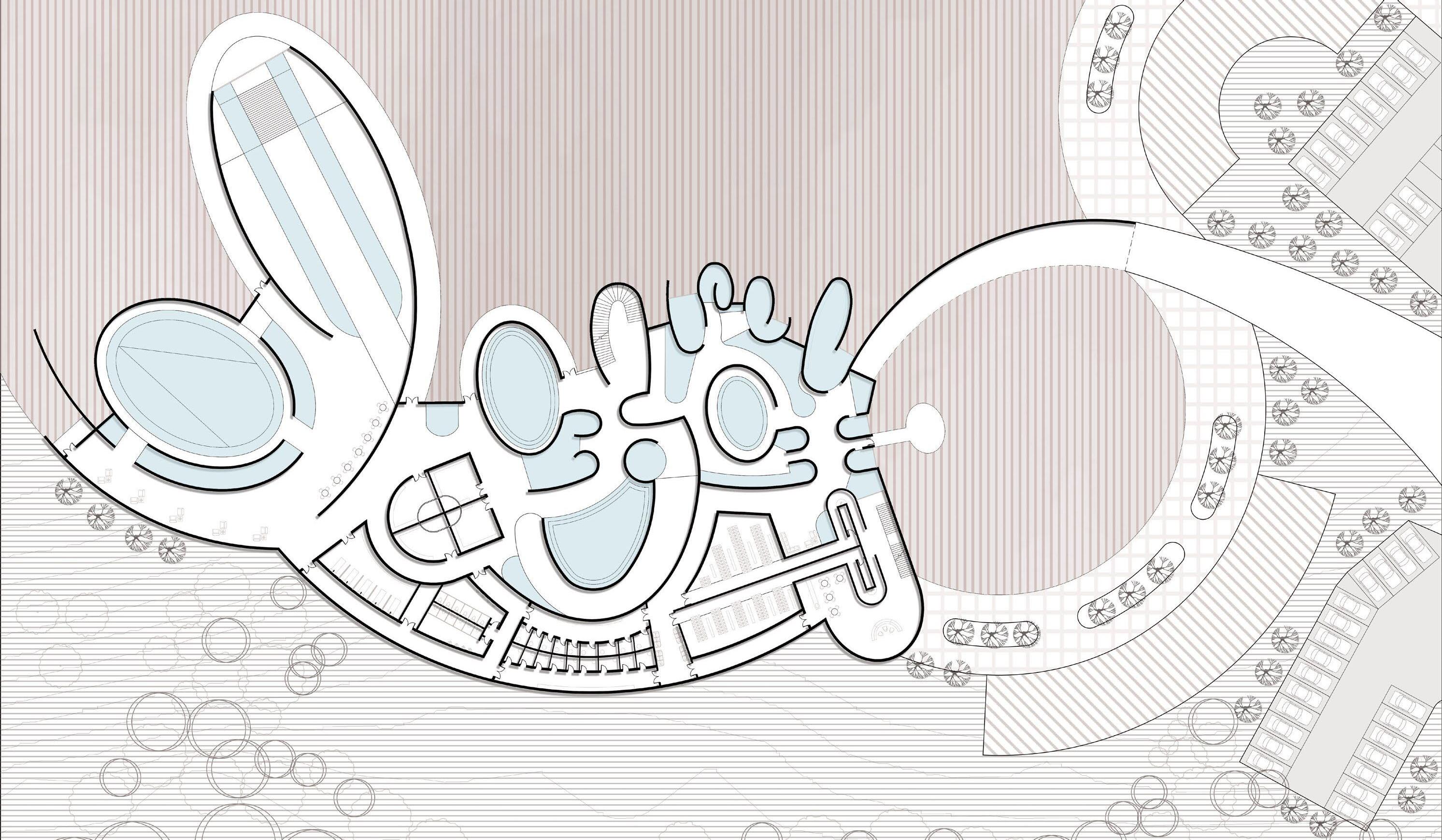
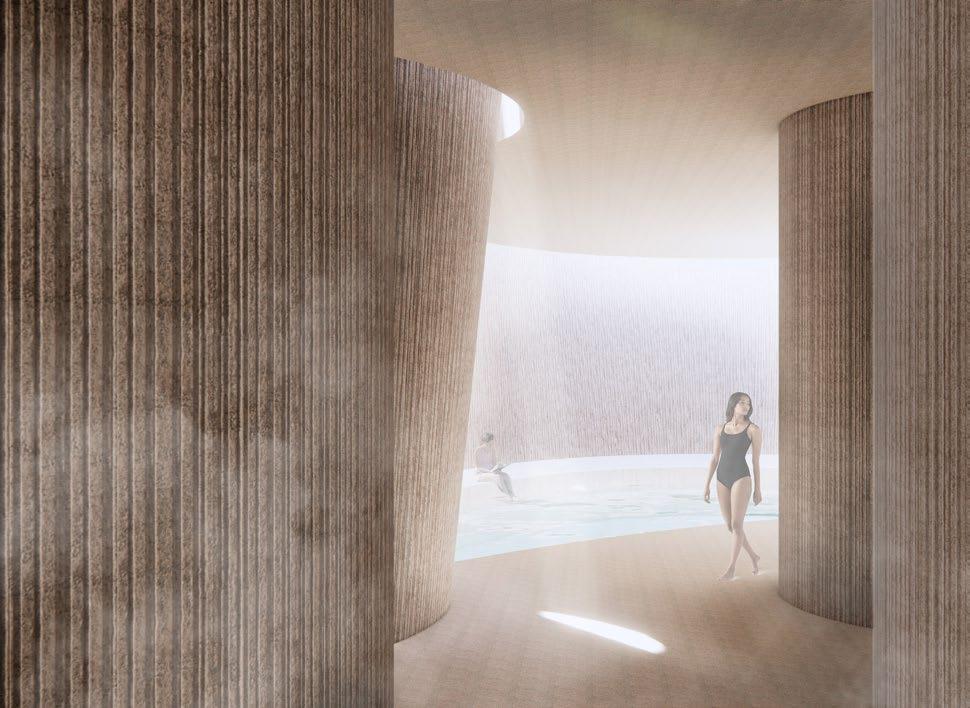
[HIDDEN BATHHOUSE BY THE SEA, INSPIRED BY MUSICAL RHYME]
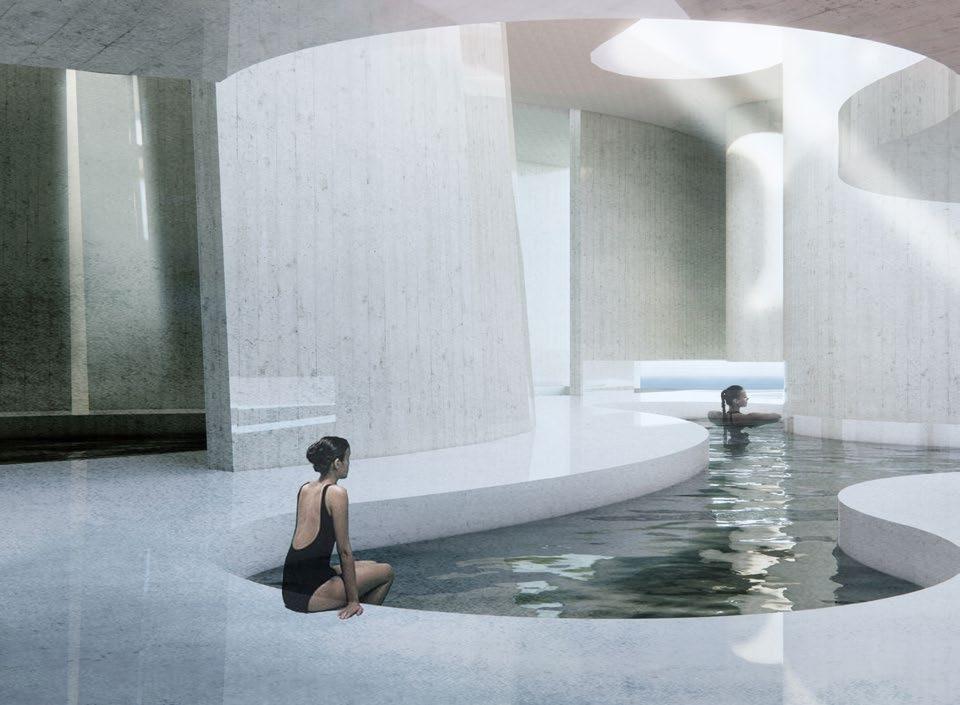
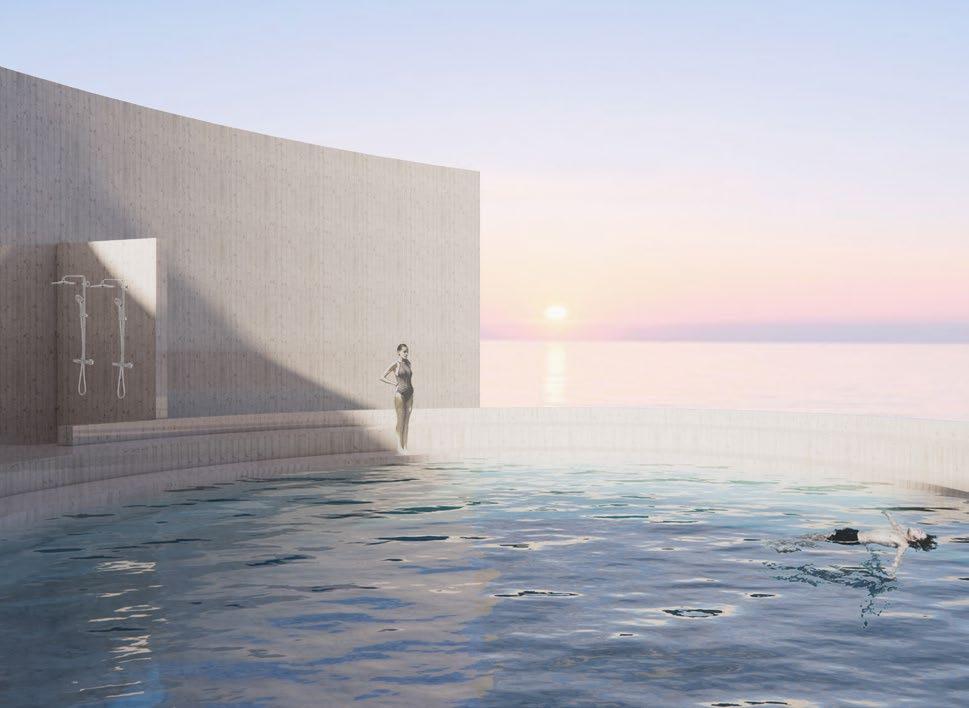
Drawing inspiration from Michael Kobrin’s evocative composition, “The Introvert,” the architectural project unfolds as a coastal thermal bathhouse, seamlessly blending with the land-sea interface. This design translates the musical rhyme into tangible architectural elements like walls and openings, beckoning guests to immerse themselves in an ambiance reminiscent of the piece.
The design proposal intricately intertwines temperature, water depth, and light to amplify the spatial atmosphere, mirroring the nuanced interplay of emotions and the dramatic crescendos depicted in Kobrin’s musical narrative. Through meticulous exploration, we aim to evoke both the subtle contemplation and powerful emotions evoked by “The Introvert,” fostering a holistic sensory experience for our visitors.
PROFESSIONAL WORKS
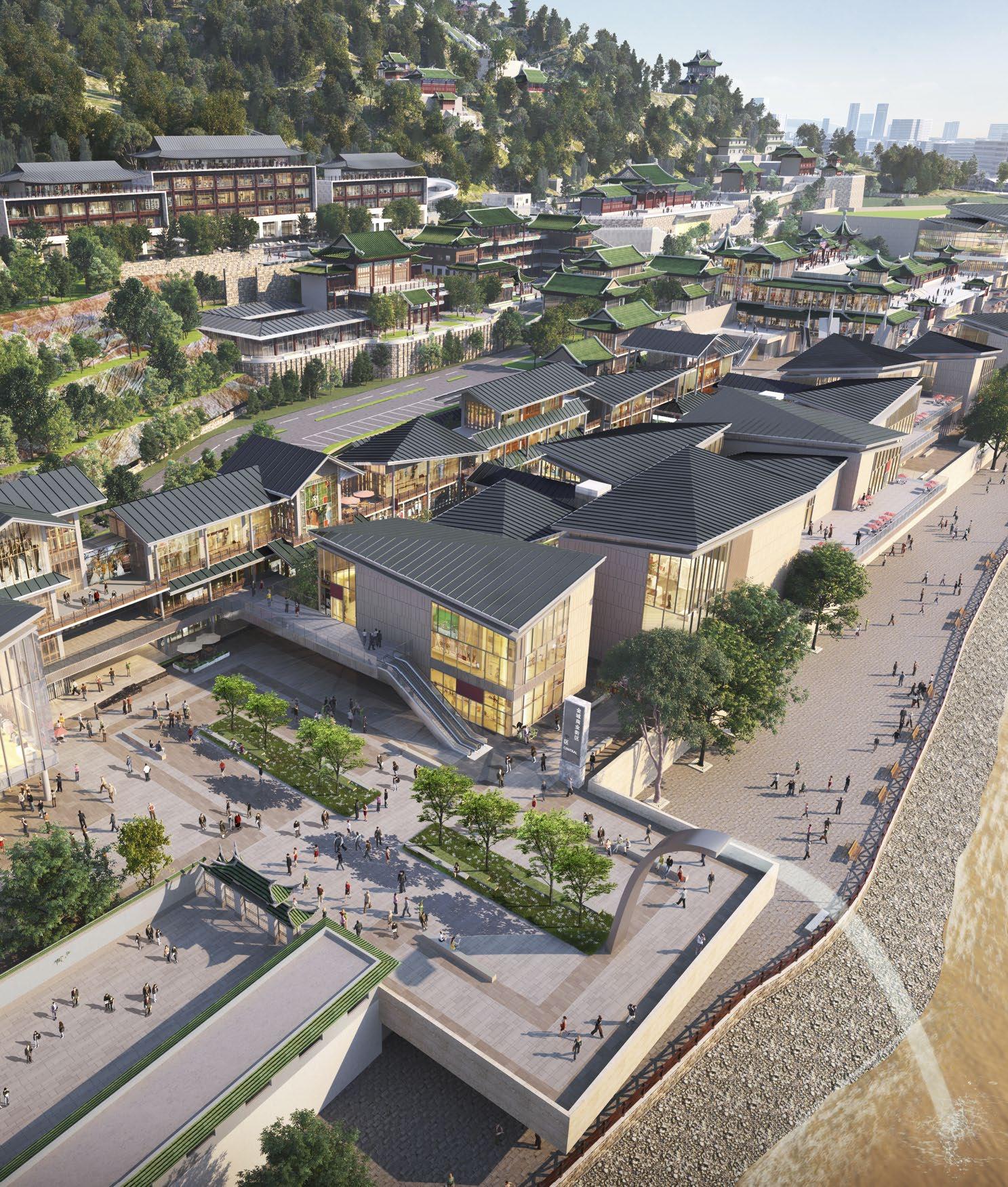
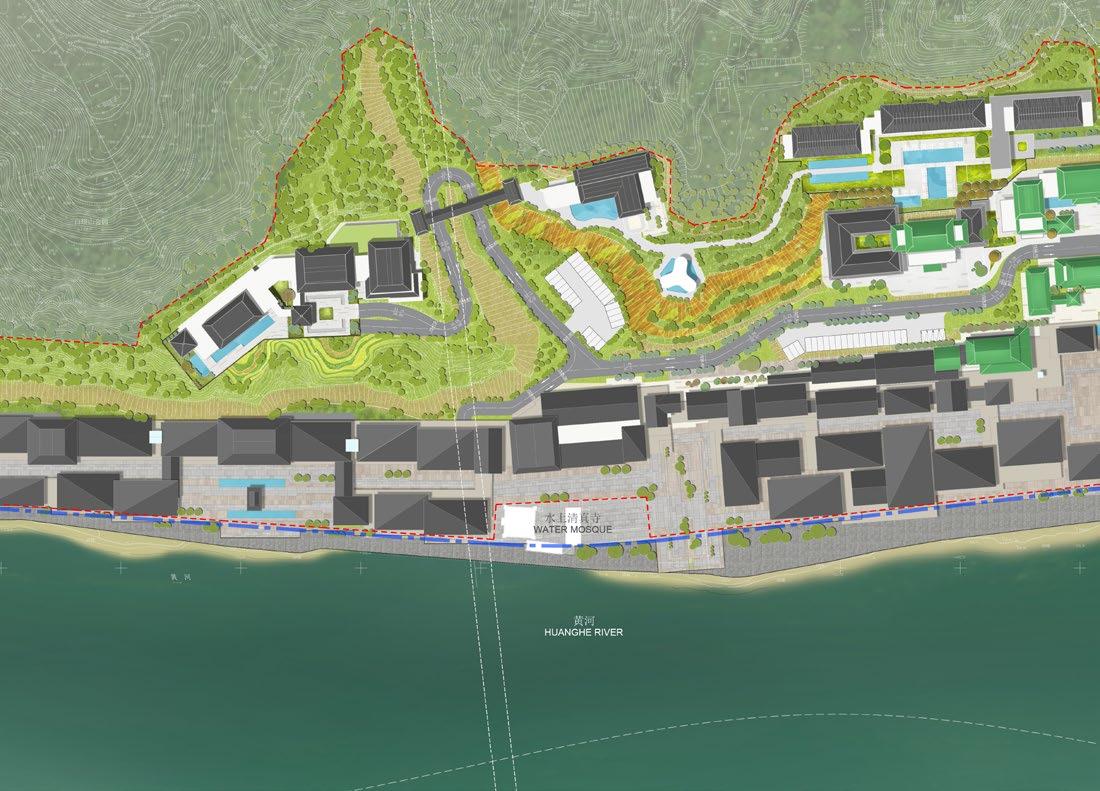
LANZHOU WATERFRONT MASTERPLAN
LOCATION: Lanzhou, China
PROJECT TYPE: Open Air Commercial Street (Concept Design)
DESIGN TIME: 2021
DESIGN LEAD: Howard Tseng
RESPONSIBILITIES: Design of Individual Store Units, Masterplan Layout
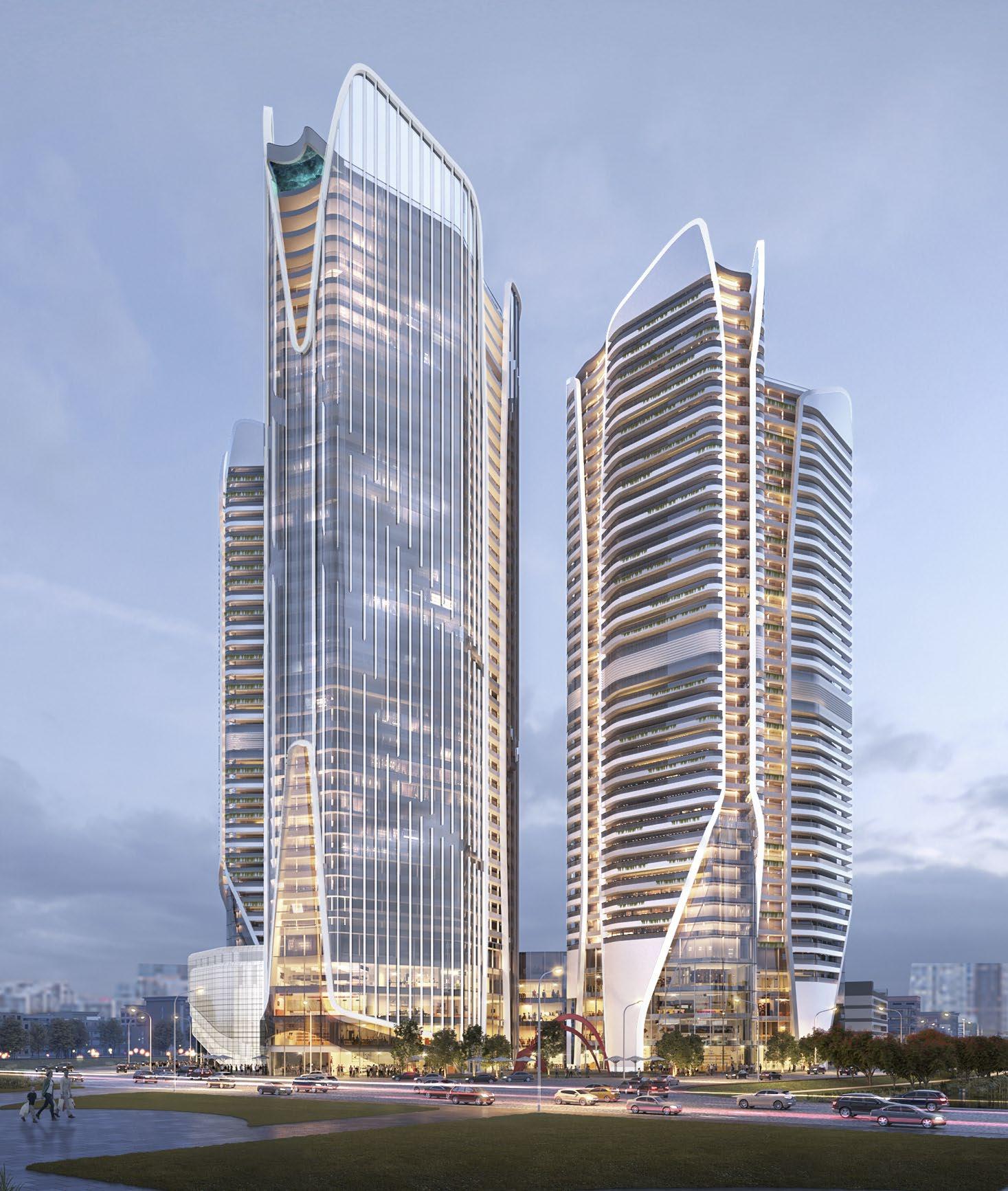
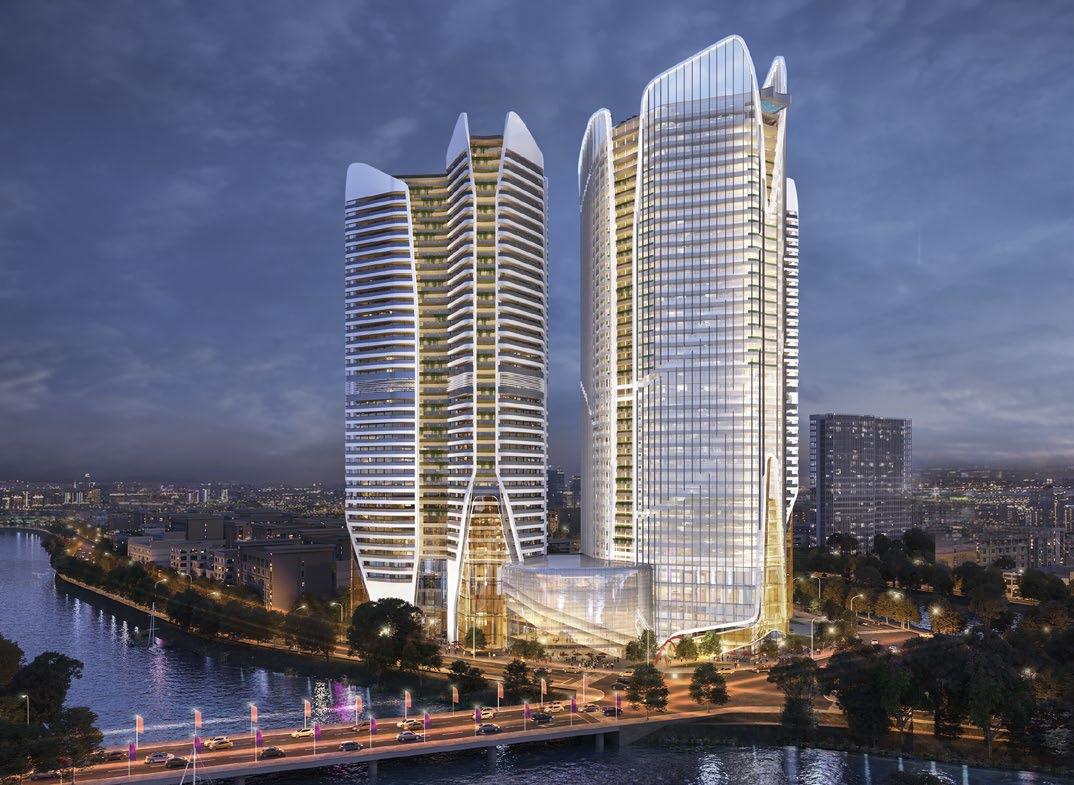
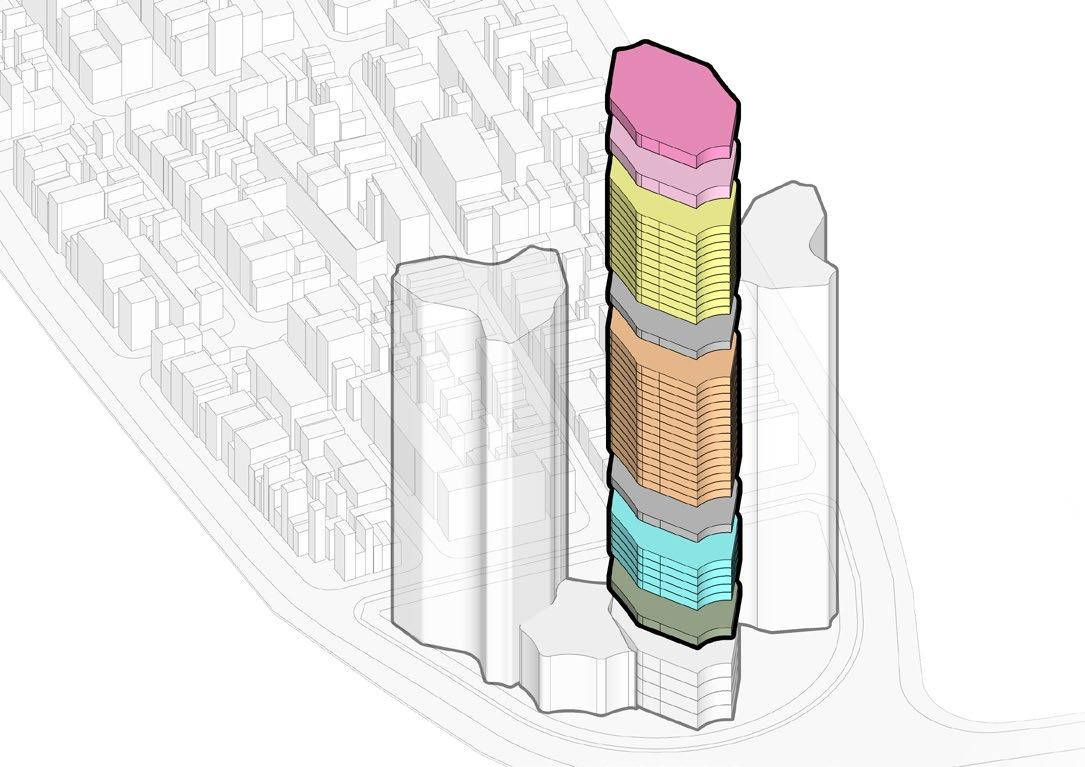
SWISSOTEL HOTEL HAI-PHONG
LOCATION: Haiphong, Vietnam
PROJECT TYPE: Hotel + Commercial Mixed-use (Concept Design)
DESIGN TIME: 2022
DESIGN LEAD: Joe Lau
RESPONSIBILITIES: Design of Hotel Floor Plan, Analytical Diagrams