specialfocus

BY HENRY LAZENBY
BEAVER CREEK, COLO. –Industry leaders debated the
mid-September even as many gold equities have underperformed.
The experts predict gold, which hit an all-time record of US$2,554.78 per oz. during the

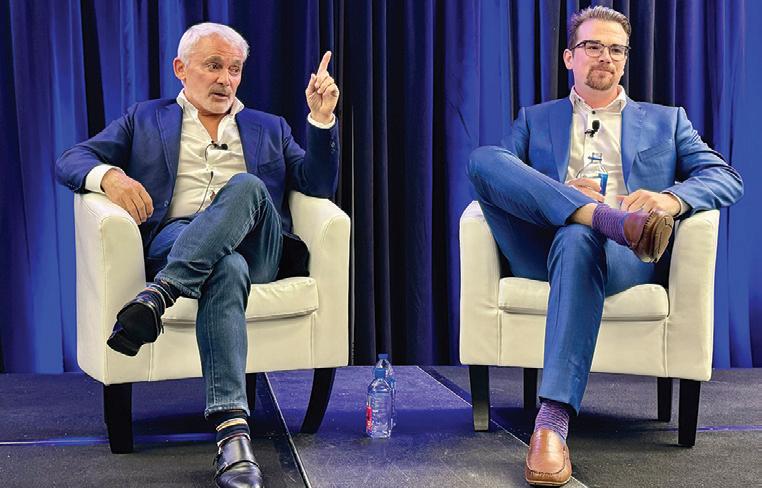
John Hathaway, entrepreneur
Frank Giustra, gold fund manager
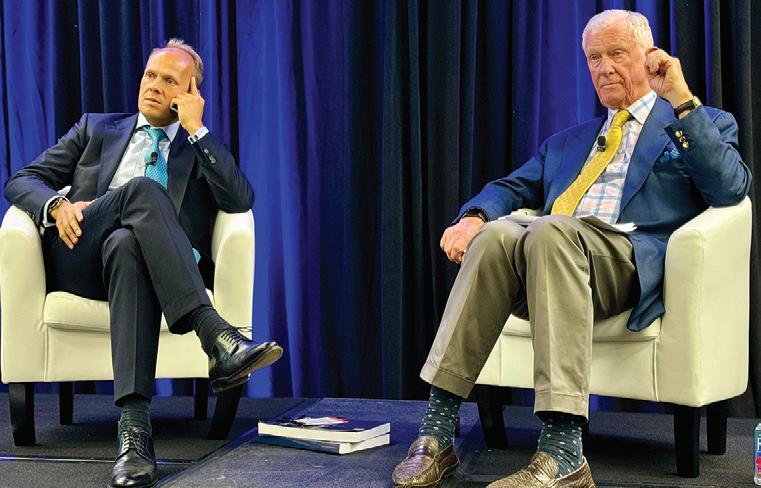
Ronald-Peter Stöferle and investor guru Rick Rule, said central bank gold buying, geopolitical tension and a divergence from traditional asset classes are boosting the yellow
Hathaway, managing partner of Sprott Asset Management, says less than 1% of most investment portfolios are allocated to gold, showing how the asset is misunderstood. Reallocating just 2-3% to gold could push up prices by US$1,000
“Positioning in gold is still incredibly low among mainstream investors,” he said during a keynote discussion with Stöferle, managing partner at Liechtenstein-based Incrementum. “Yet, with today’s new record, we are already seeing signs of the market shifting.”
banks
Stöferle, who publishes the annual In Gold We Trust report, said central banks have been soaking up as much as 30% of annual global gold production. In the first half of 2023 alone, central banks purchased 483 tonnes of gold — a record, according to Stöferle’s data — since sanctions against Russia began in 2022.
“It’s clear that we’re seeing a de-dollarization trend, with emerging markets increasingly looking to gold as a reserve asset,” Stöferle said.
De-dollarization refers to the ongoing, shift driven by emerging economies, to reduce or replace the U.S. dollar as the global reserve currency.
The fund manager says the longer-term outlook is more inflationary than the short-term.
“We’ve spent the last 30 years globalizing, and now we’re moving in the opposite direction. De-globalization is inherently inflationary,” he said.
Giustra, who helped start businesses including Wheaton Precious Metals (TSX: WPM, NYSE: WPM; LSE: WPM) and Endeavour Mining (TSX: EDV; LSE: EDV), agreed that fiscal stimulus in the United States continue to drive inflation, even as it cooled to 2.5% in August and the Federal Reserve lowered its benchmark interest rate to 4.75% to 5% on Sept. 18.
Giustra warned that the country’s ballooning debt and deficits will only worsen in a recession.
“The U.S. is running a US$1.9trillion deficit at full employment. What happens when we enter a recession? The deficit could easily balloon to US$4 trillion,” he





















Sandvik is the leading partner in mine electrification. Our constantly expanding range of electric equipment produces zero diesel emissions and reduces ventilation and cooling needs in your mine. Our BEV loaders and trucks are designed from the ground up entirely around their battery system and electric driveline. The patented self-swapping battery system enables the industry’s fastest and easiest pit stop.
Go Electric. Go Sandvik.









Desserts served at the opening ceremony of Equinox Gold’s Greenstone mine in northern Ontario, on Aug. 29.
See Story on page 12
CREDIT: BLAIR MCBRIDE

The third-lowest platinum mining output this century can’t keep up with rising investment demand, jewelry and a sustained traditional car market using catalytic converters, the World Platinum Investment Council says.
A 1-million-oz. deficit is forecast this year, up from 731,000 oz. in 2023, as supply edges 1% lower to nearly 7.1 million oz. while demand is expected to grow 3% — the largest gain in five years — to 8.1 million oz., the council said in a report Sept. 10.
The council, which represents miners of platinum group metals, forecasts investor demand — driven by exchange traded funds (ETFs) and metal bar and coin sales in China — to rise 15% to 517,000 oz. this year.
Jewelry use is to increase by 7% while mining production is to ease by 1%. Automotive and industrial demand are each predicted to increase 1%, but their levels are already high, the council’s research director, Edward Sterck, told The Northern Miner.
Meanwhile, excluding the COVID-impacted 2020, and 2014 which was impacted by strikes, Sterck said it was the weakest year for mine supply since 2000.
Platinum demand can act as a bellwether for the uptake of electric vehicles (EVs), which don’t use catalytic converters to reduce emissions. Leading automakers have scaled back EV production amid slower than expected sales.
BY NORTHERN MINER STAFF
Mining companies’ rising asset retirement obligations (AROs) could exceed the industry’s debt by 2033, according to a Sept. 23 report by Moody’s Ratings.
Environmental reclamation and site restoration costs for 24 major mining companies reached US$72 billion in 2023, up from US$40 billion in 2013.
According to Moody’s, this figure represents about 42% of the mining industry’s outstanding long-term debt at the fiscal year-end of 2023.
The 24 companies studied spent between US$1.4 billion
and US$1.8 billion annually on AROs during the 2013-2018 period. However, since 2018, their payments have more than doubled to about US$3.7 billion in FY2023 — a five-year compound annual growth rate of 18.2%.
This increase comes as governments have tightened regulations on mining in recent years to promote more sustainable practices.
As of the end of 2023, Rio Tinto had the largest ARO provision, followed by BHP, Newmont, Glencore and Vale. To put this into perspective, Rio Tinto’s 2023 AROs represent 32% of its revenue. For BHP and Vale, the figure stands at 18%.
Mining companies disturb more land than they rehabilitate each year despite adopting new approaches and progressively rehabilitating affected areas, Moody’s said. That increases reclamation liabilities over time.
MINING.COM STAFF
A Yukon Supreme Court decision to approve BMC Minerals’ Kudz Ze Kayah (KZK) polymetallic mine for permitting in the Yukon is being challenged again by an Indigenous group claiming it wasn’t properly consulted.
Lawyers representing the Kaska Nation, whose traditional territory hosts the KZK project, told an appeal hearing in September they weren’t involved enough in the project’s economic feasibility study, CBC reported. The community also contested the court’s ruling it has “frustrated” the process by not replying to letters nor agreeing to meetings in a timely manner.
The Kaska representatives argued at the appeal that consultation came with too many restrictions, including when it would happen, how long it could run and what documents could be exchanged.
Lawyers representing the Canadian and Yukon governments, however, said that the Supreme Court ruling contained no errors, and that the Kaska Nation was seeking outcomes outside the scope of consultation.
BMC is working to secure water and mining permits after receiving documents from government authorities following
the consultation meeting that confirmed re-approval of the KZK project under new conditions.
KZK has faced delays related to disputes with First Nations for more than a year. Consultations seven months ago between the Yukon and federal governments, the Ross River Dena Council, which represents the Kaska, Liard First Nation and community members had appeared to resolve the dispute, allowing for permitting.
MINING.COM STAFF
Barrick Gold said it was negotiating financial terms for its Loulo-Gounkoto mine with the Malian government after authorities arrested four Malian employees.
“Details of the agreement, based in essence on Barrick’s original proposals, will be made public once the terms of the settlement have been finalized,” the company said in a Sept. 30 statement.
The release didn’t acknowledge the arrests, which Reuters reported earlier, citing local industry officials who said they were senior local company employees accused of financial crimes.
Mali’s military government, in power since a 2021 coup, issued a new mining code last year allowing for increased royalties and up to 35% state ownership of projects. It’s been squeezing Western gold producers such as B2Gold, Allied Gold and Resolute Mining for more financial concessions.
Barrick president and CEO Mark Bristow said the company has had “mutually beneficial” relationships with Malian governments over 30 years, and occasional differences with successive regimes had always been amicably resolved.
Mali has kicked out troops from former colonizer France and shifted its diplomatic ties closer to Russia. That country’s Wagner Group of mercenaries has been fighting Islamist insurgents in the country. It also controls at least one mine, according to reports by non-governmental organizations. They criticize foreign miners for indirectly supporting Vladimir Putin’s regime in Moscow.
BY NORTHERN MINER STAFF
GLOBAL MINING NEWS • SINCE 1915 www.northernminer.com
PRESIDENT THE NORTHERN MINER GROUP: Anthony Vaccaro, CFA, MBA avaccaro@northernminer.com
EDITOR-IN-CHIEF: Alisha Hiyate ahiyate@northernminer.com
MANAGING EDITOR: Colin McClelland cmcclelland@northernminer.com
WESTERN EDITOR: Henry Lazenby hlazenby@northernminer.com
COPY EDITOR AND PRODUCTION EDITOR: Blair McBride bmcbride@northernminer.com
PODCAST HOST: Adrian Pocobelli apocobelli@northernminer.com
ADVERTISING: Robert Hertzman (416) 898-6654 rhertzman@northernminer.com
Michael Winter (416) 510-6772 mwinter@northernminer.com
SUBSCRIPTION SALES/ APPOINTMENT NOTICES/ CAREER ADS
George Agelopoulos (416) 510-5104 (Toll free) 1-888-502-3456, ext. 43702 gagelopoulos@northernminer.com
PRODUCTION MANAGER: Jessica Jubb (416) 510-5213 jjubb@northernminer.com
CIRCULATION/CUSTOMER SERVICE: (416) 510-6789 | 1-888-502-3456 northernminer2@northernminer.com
REPUBLISHING: (416) 510-6768 jmonteiro@northernminergroup.com
ADDRESS: Toronto Head Office
69 Yonge St, Toronto, ON M5E 1K3 (416) 510-6789 tnm@northernminer.com
SUBSCRIPTION RATES: Canada:
C$130.00 one year; 5% G.S.T. to CDN orders.
7% P.S.T. to BC orders
13% H.S.T. to ON, NL orders
14% H.S.T. to PEI orders
15% H.S.T. to NB, NS orders
U.S.A.: C$172.00 one year Foreign: C$222.00 one year
GST Registration # 809744071RT001 (ISSN 0029-3164)
CANADA POST: Return undeliverable Canadian addresses to Circulation

BY ALISHA HIYATE
Silicon Valley CEOs can get obsessed with some pretty weird things — colonizing Mars, ultra-ascetic diets, wearing the same outfit every single day, or living forever.
But there’s nothing head-scratching about the latest preoccupation shared by some of the biggest tech companies, including Amazon and Microsoft: nuclear power.
Both companies have inked deals this year to lock down supplies of the climate-friendly, reliable energy they’ll use to power the huge data centres that host, store and process the vast amount of information on which their services run.
Such demand for nuclear-generated electricity, magnified by the immense power needs of artificial intelligence (AI), will no doubt grow. Microsoft, which has reportedly invested more than US$13 billion in OpenAI, the creator of ChatGPT, and has been quick to incorporate AI into some of its offerings, is seeking to double its existing server capacity of 5 gigawatts (GW), Business Insider reported in April.
It has a big mountain to scale though — especially since it’s promised to be carbon negative by 2030, in only six years’ time.
With the clock ticking and its energy requirements climbing, it signed a deal in September to buy power from a restarted reactor at Three Mile Island in Pennsylvania. The 835-megawatt (MW) reactor was unaffected by the partial meltdown at its neighbouring Unit 2 plant in 1979 — still the worst nuclear accident in U.S. history — and had been in operation continuously from 1985 until 2019. It closed five years ago because of high costs. Terms of the 20-year power purchase agreement with owner Constellation weren’t disclosed, but it does start in 2028.
While the deal is subject to regulator approval, it suggests nuclear energy will have a big part to play in a high-tech future. It was a point hammered home by Joe Dominguez, president and CEO of Constellation on announcing the Microsoft deal.
“Powering industries critical to our nation’s global economic and technological competitiveness, including data centers, requires an abundance of energy that is carbon-free and reliable every hour of every day,” Dominguez said in a release. “Nuclear plants are the only energy sources that can consistently deliver on that promise.”
Amazon Web Services, meanwhile, struck a US$650-million deal in March to buy a data centre next to another nuclear plant in Pennsylvania. The 960-MW data centre draws power directly from the 2.5-GW Susquehanna plant next door — rather than the grid.
Amazon has circled 2040 as the year its business will reach net zero.
“Whatever happens with this project, it confirms what many market participants have been suggesting for a while – that the AI companies’ power requirements in the near future will be so gargantuan that they cannot expect to depend on the grid for stable supply.”
— COLIN HAMILTON, BMO CAPITAL MARKETS COMMODITIES ANALYST
‘Gargantuan’ need
Analysts pegged the Microsoft deal as significant for the nuclear sector.
“Whatever happens with this project, it confirms what many market participants have been suggesting for a while — that the AI companies’ power requirements in the near future will be so gargantuan that they cannot expect to depend on the grid for stable supply,” BMO Capital Markets commodities analyst Colin Hamilton said in a “Metal Matters” podcast in September. By some estimates, U.S. data centres will need as much as 35GW of power by 2030, double the amount they needed in 2022, he noted.
“That might not sound like much, but it would be equivalent to around 9% of total electricity demand in 2030. And given how slow western governments can be to build out crucial infrastructure, it’s not surprising that some of the megacorps are looking to take things into their own hands,” Hamilton said.
Microsoft’s deal with Constellation alone will rachet up the pressure on the uranium market, which can’t easily scale up supply, Canaccord Genuity mining analyst Katie LaChappelle said on Sept. 23.
“In our view, this adds incremental demand into an already tight market (more than 400,000 lb. U3O8 per year),” she wrote in a report, Uranium: Power required for energy hungry world. “It is also a clear signal to us that big tech is serious about collaborating with energy providers to develop carbon-free energy sources to help meet growing grid demands (data centre/AI driven).”
LaChapelle also cited a peer-reviewed analysis in scientific journal Joule that showed AI chip maker NVIDIA could ship 1.5 million AI server units per year by 2027.
“Those servers, running at full capacity, would consume at least 85.4 terrawatt-hours (TWh) of electricity annually — more than what many small countries use in a year,” she wrote. “No wonder the likes of Amazon, Microsoft, and OpenAI are recognizing not only the low carbon nature of nuclear energy, but also the tiny geographical footprint per MW. In our view, a nuclear renaissance in the West could be data driven.”
Where has Yukon’s sense of urgency gone on
The forced receivership of Victoria Gold has exposed a troubling pattern of mismanagement and double standards by the Yukon government. The government’s initial emphasis on urgency and environmental concerns seems to have faded, replaced by delays and inconsistencies. This is in stark contrast to the stringent and unrealistic demands imposed on the company, which were the basis for the receivership application.
Victoria Gold, acutely aware of the environmental sensitivities and the required urgency, worked tirelessly to mitigate environmental harm and to meet government-imposed deadlines. But now, with the receiver in place, those deadlines seem to have vanished. The government, which once stressed the critical timelines, now seems to operate on a completely different clock.
The construction of the “deflector berm” is a glaring example. The government, flexing its regulatory muscle, appointed a contractor and initially promised completion within two weeks. Victoria Gold, raising valid concerns about the lack of engineering of this massive structure, was portrayed as obstructive. Yet now, a month after the receivership, construction hasn’t even begun, and Yukon Premier (Ranj Pillai)’s recent claims of progress ring hollow. This isn’t just about missed deadlines; it’s about a blatant double standard and changing goal posts. The government’s Sept. 6 news release declared the original camp unsafe, announcing that a new camp had been constructed. Yet, a mere two days later, all workers were moved back into the original camp, now apparently deemed safe again. The arbitrary nature of this decision mirrors the unreasonable demands placed on Victoria Gold. The government demanded the construction of a massive, lined pond in just five days. They also insisted upon water treatment capabilities, at unattainable rates, within four days.
In contrast, the receiver takes a month to complete a much smaller pond, and a new water treatment contractor, ousting the existing contractor, gets weeks to “get up to speed.” The Yukon government, once heavy-handed and demanding in its oversight, now appears to have adopted a passive stance. No new directives or orders have been issued to the receiver, a stark
The Yukon government, once heavy-handed and demanding in its oversight, now appears to have adopted a passive stance. No new directives or orders have been issued to the receiver, a stark contrast to the constant scrutiny Victoria Gold faced.
contrast to the constant scrutiny Victoria Gold faced. The government’s shifting priorities have left the company’s vendors, many of which are Yukon-based, and creditors in an even more precarious position, and the environmental risks, once deemed urgent, now face an uncertain future. The consequences of these delays are significant. The environmental risks are now compounded by inaction. The longer remediation efforts are postponed, whichever those may be, the greater the potential for environmental damage and the higher the eventual costs. The lack of urgency and mismanagement now displayed by the government undermines its declared commitment to environmental protection and responsible resource development. The Yukon government must be held accountable for its inconsistent actions, double standards, and overreach. The people of the Yukon deserve transparency, fairness, and a commitment to environmental protection that goes beyond empty words and shifting deadlines. The government’s handling of this situation risks undermining confidence in its ability to foster a predictable and stable regulatory environment, which is crucial for attracting responsible investment and ensuring the sustainable development of the Yukon’s mining sector. TNM
Nico (Nicolas) Harvey, P.Eng. Former manager, engineering and projects, Victoria Gold Sent via email, Sept. 13
Note: The Northern Miner requested a follow up interview with Mr. Harvey, but he declined.
Big tech’s attentions — and cash — are also likely to help fast-track small modular reactor (SMR) technology.
SMR units, which produce less than 300 MW of energy (with some generating as little as 1-10 MW, have been on the horizon for years. Remote mine sites were previously seen as a top prospect. But big tech now seems a more likely first customer.
Sundar Pichai, CEO of Google and its parent company Alphabet, signalled in a speech in September that the company sees nuclear as part of the mix to get it there. Pichai said he’s optimistic about the potential to use SMRs to power data centres of 1 GW or more, given the amount of investment pouring into the space.
Google has pledged to switch completely to carbon-free energy sources by 2030.
Hamilton noted that while poor economics have hampered the development of SMRs, that may not deter big tech.
“It could be that some of the tech companies may be willing to overlook higher unit prices if it offers them the one thing they are so desperate for: low-carbon energy security.” TNM

BY ANTHONY VACCARO
For over a centu-
ry, The Northern Miner has stood as a pillar of journalism within the mining and metals industry.
We recognize the vital role that mining plays in the progress of civilization, and we believe in its importance.
However, mining’s future, and indeed its integrity, depend on transparent, fact-based reporting — even when the truth includes mine failures.
Our recent comprehensive coverage of the Victoria Gold mine failure sparked a negative reaction from a few in our industry. And while I appreciate the time that some took to express their opinion, I found a common thread in this critique troubling. The basis for the criticism was our inclusion of quotes from people who work at the mine itself — not from NGOs nor anti-mining activists, but from those on the ground. It was my hope that such feedback would serve as a reminder that the mining industry extends far beyond the boardroom. The workers onsite — the very individuals whose livelihoods are at stake in moments like these — are, after all, the lifeblood of the industry.
As the president of The Northern Miner, it is my responsibility to ensure that the relevant and reasonable voices that make up this great industry are heard. I will not
waver in that commitment. I am proud of our editors and reporters for seeking out these voices. In this particular case, the rare decision was made to use unnamed sources.
We believed that the fear those sources (in most cases workers at the mine) expressed that speaking on the record would jeopardize their future employment was very real.
We tested the claims of our sources, and ensured they were backed up by another source or by some form of documentation.
One quote we used didn’t comply with our standards because it was from a third party we didn’t interview, so we retracted it with an explanation. We also edited some early stories to paraphrase some quotes, recognizing that more conservative use of quotes was warranted. However, we believe our reporting was fair and factual and to this date, I have not been presented with any evidence to the contrary.
I believe in this industry, and I want to see it reach its full potential. In a sector where many other publications self-censor or allow companies to kill unfavourable stories, I believe that strong journalism makes the industry stronger. True accountability — the kind that comes from top-level reporting — builds resilience. When we care about something, we don’t cover up its flaws. Just as good parenting requires discipline alongside praise, a thriving industry requires honest critique alongside celebration.
Anthony Vaccaro, president of The Northern Miner Group
BY ROB MASON, Special to The Northern Miner
Three years ago, the London-based International Council on Mining and Metals announced a bold commitment: the world’s 28 largest mining companies pledged to achieve net-zero carbon emissions by 2050. This goal is ambitious, particularly because the minerals needed for new clean energy technologies are mined in massive quantities.
To help meet these climate goals, many companies are turning to carbon offsets as a key tool in their strategy to reduce greenhouse gas emissions. The voluntary carbon credit market (VCM) has grown rapidly as a result. However, this growth has also brought challenges, leaving many questions about VCM’s future role in the mining sector.
What’s VCM do? The VCM allows companies to buy credits, each representing one tonne of carbon dioxide (CO2) removed or reduced from the atmosphere. These credits come from reforestation, renewable energy, carbon capture and storage, and methane capture projects.
They are evaluated by certification bodies, such as Verra, Gold Standard, and the Climate Action Reserve. These groups serve as market gatekeepers by determining whether
BY NORTHERN MINER STAFF
In the last six months, Lode Gold Resources (TSXV: LOD; US-OTC: SBMIF) has created a subsidiary to spin out its Yukon and New Brunswick assets into a new company to be called Gold Orogen; struck an alliance to create one of the largest land packages in the Atlantic province; and raised $6 million in a challenging market.
Once listed later this year, Gold Orogen will have funds to spend on exploration at its WIN and Golden Culvert projects in the Yukon’s Tombstone belt and at its New Brunswick district play. Lode Gold shareholders will receive new shares in a pure play explorer and continue to have upside with Lode’s past-producing Fremont gold project in California, it says.
“Raising that much money wasn’t easy in this market and we still need to raise another $1.5 million because we want to make sure the Spin co has enough money for systematic exploration so we can better define our drill targets,” CEO Wendy Chan said in an interview.
Lode Gold has already racked up some early exploration wins. Last year it discovered a reduced intrusion-related gold system (RIRGS) at WIN, which complements the already promising sediment-hosted orogenic system at Golden Culvert, 11 km to the north.
The WIN and Golden Culvert projects are to the east and south of Seabridge Gold’s (TSX: SEA; NYSE: SA) 3 Aces camp, and at the
projects meet criteria to earn carbon credits. Reforestation and land use projects represent a significant percentage of the certified carbon credit projects to date due to their added benefits for biodiversity and local communities. However, innovative Emissions P22 >
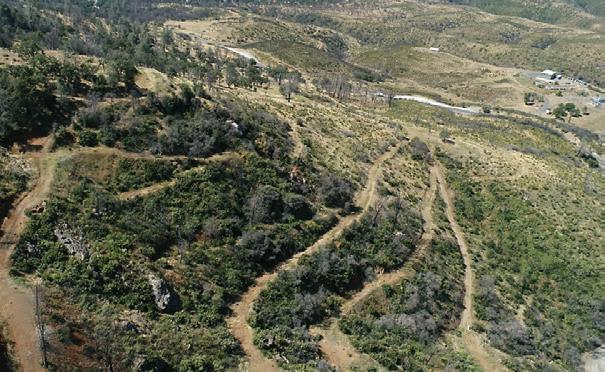
southern end of the Tombstone gold belt that hosts world-class gold deposits such as Snowline Gold’s (TSXV: SGD; US-OTC: SNWGF) Rogue project and Hecla’s (NYSE: HCL) Keno Hill.
“Snowline’s discovery of the Valley target at its Rogue project, 200 km from WIN and Golden Culvert, suggests we’re playing in underexplored elephant country,” Chan says. “Geologist Quinton Hennigh of Crescat Capital, who is an investor in Snowline, said at the Beaver Creek Precious Metals Summit two years ago that Snowline’s discovery of Valley emphasizes that we are operating in a region with significant unexplored potential, making these systems highly attractive exploration targets on a district scale.’”
Target-revealing study In June, the company
commissioned a QMAG(T) geophysical survey of WIN and Golden Culvert as part of a collaborative alliance with Snowline, Seabridge and other Yukon explorers. The system is good at lighting up structure and will help the company understand the orogenic gold mineralization at both properties. The survey also confirmed RIRGS mineralization at WIN with mapped hornfels and intrusions.
“It’s a very high-resolution magnetic survey that we would not have been able to afford if we hadn’t partnered with Seabridge and Snowline,” says Chan. “We saved about $100,000 for our shareholders.”
Lode Gold hopes to pick targets and start a 1,200-metre drill program over the next 12 months. Last year the company found sheeted gold-bearing quartz veins in hornfels-altered outcrop at WIN
that returned rock-chip samples of up to 8.53 grams gold per tonne and 155 grams silver.
The vein systems on both properties are controlled by the same regional structures trending northwest. Drilling on portions of the 24-km strike at Golden Culvert returned 12.53 grams gold over 33.1 metres including 60.1 grams gold over 0.9 metre.
Atlantic alliance
In Atlantic Canada, Lode Gold and Fancamp Exploration (TSXV: FNC) inked a $3.5-million strategic alliance in August. Fancamp agreed to transfer its stake in the 309-sq.-km Riley Brook project in New Brunswick into a 50/50 joint-venture with Gold Orogen, becoming a 19.9% shareholder in Gold Orogen and getting about a 3% stake in Lode Gold.
“Fancamp comes with capital and technical expertise,” Chan says. “By combining our Yukon and New Brunswick assets with this group, we create shareholder value and optionality.”
Riley Brook is about 25 km south of Lode Gold’s 111-sq.-km McIntrye Brook project and 80 km west of Bathurst. McIntrye Brook is adjacent to Puma Exploration’s (TSXV: PUMA; US-OTC: PUMXF) Williams Brook project and shares the same geological setting as its Lynx deposit.
At McIntyre Brook, Lode Gold has only drilled two holes and both hit gold mineralization, with one returning 20 gram-metres. The projects are hosted by Ordovician aged rocks in the same tectonic
setting that formed New Found Gold’s (TSXV: NFG; NYSE-A: NFGC) Queensway project and Calibre Mining’s (TSX: CBX; US-OTC: CBXMF) Valentine gold project, Lode Gold says.
Once Lode Gold spins out Gold Orogen it will pivot to its Fremont orogenic gold deposit in California, where it sees potential for an underground mine. Fremont sits on private land about 500 km north of Equinox Gold’s (TSX: EQX; NYSE-A: EQX) Castle Mountain and Mesquite mines and was mined at 8 grams gold from just two of six deposits before it was closed due to a ban on gold mining during the Second World War.
Just 16% of the upper 500 metres has been explored and three stepout drillholes have confirmed mineralization extends 1,200 metres down plunge. Fremont came with 23 km of underground workings and contains 1 million indicated oz. gold in 19 million tonnes grading 1.9 grams gold and another 2 million inferred oz. in 28.3 million tonnes averaging 2.22 grams gold. At US$2,000 per oz. gold, a 2023 preliminary economic assessment outlined an after-tax net present value of US$370 million (5% discount rate) and 31% internal rate of return. A 4,500-metre drill program is planned for 2025.
The preceding Joint Venture Article is PROMOTED CONTENT sponsored by Lode Gold and produced in co-operation with The Northern Miner. Visit: www.lode-gold.com for more information.
By Blair McBride
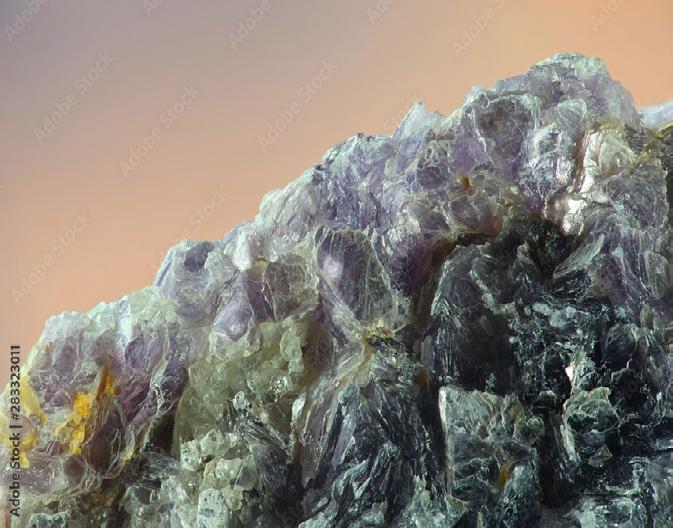
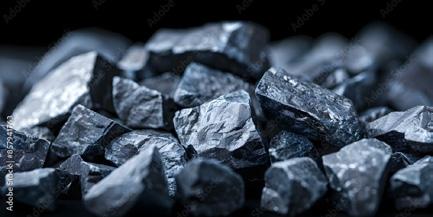
Quebec is unique in Canada for its strong institutional support for mining and exploration activities. It was the first jurisdiction in Canada to release a critical minerals strategy, in 2020, encouraging funding for projects in the resource-rich province to pour in from both the Canadian and U.S. governments. The Northern Miner takes a glimpse at which critical minerals are drawing exploration and development funding, the top recipients by project, and how government investment breaks down.
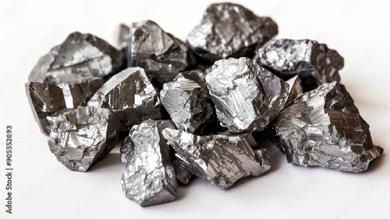



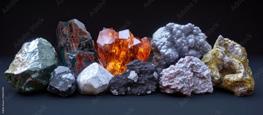

Lithium
Nemaska Lithium received $250 million in July 2023 from the Ministry of Economy, Innovation and Energy and Investissement Quebec to help it build and commission its Whabouchi mine and concentrator in the James Bay region.
Graphite
Nouveau Monde Graphite received $18.3 million in November 2021 from Dept of Natural Resources and Forestry to help it develop its Matawinie mine, 120 km north of Montreal.
Nickel
Magneto Investments Limited Partnership received $4.5 million from the federal Critical Minerals Strategy in March 2024 to help the company with technical and economical feasibility of nickel concentrate at its Dumont project, 70 km north of Val-d'Or.
Vanadium
Strategic Resources received $4.3 million from the Ministry of Economy, Innovation and Energy and Investissement Quebec to advance its Black Rock project towards a construction decision. Located in the Chibougamau region.
Rare earths

Geomega Resources received $3 million from the Critical Minerals Strategy in March 2023 to help with its recycling and production of rare earth oxides from permanent magnet scrap. Its demonstration plant is in Longueuil, near Montreal.
Copper
Midland Exploration received $300,000 from Quebec's Sidex in December 2022 for exploration at its Labrador Trough project in the Nunavik region.



BY COLIN MCCLELLAND
The United States Federal Reserve lowered its benchmark interest rate by 50 basis points to a range of 4.75% to 5% on Sept. 18 as the majority of analysts expected. Gold rose and the combination may help the metal’s producers, experts said.
The move to cut the rate by 50 basis points instead of 25 basis points, as some analysts forecasted, indicates a shift in focus away from inflation to tackle an uptick in the U.S. unemployment rate to 4.2%.
Some bankers on the Fed rate committee want aggressive cuts to prevent rapid jobless increases. Others wanted a slower pace to ensure high inflation is soundly defeated in case there’s a surprise jolt to the economy that causes prices to rise again.
“Our patient approach over the past year has paid dividends,” Federal Reserve board chairman Jerome Powell said in Washington, D.C. But now “the upside risks to inflation have diminished, and the downside risks to unemployment have increased.”
The economy “has cooled from its formerly overheated state,” he said, with inflation in August down to 2.5% from 7.1% in 2022. “The labour market is not a source of elevated inflationary pressures,” he said, mentioning how wage gains were slowing and not expected to prod inflation higher.

“Our patient approach over the past year has paid dividends.”
JEROME POWELL FEDERAL RESERVE BOARD CHAIR
In making the first interest rate cut since early 2020, Powell cited revised job numbers from the Bureau of Labor Statistics in August showing the U.S. economy added about 818,000 fewer jobs in 2023 and early 2024 than initially reported.
U.S. hiring in August added 142,000 jobs, which was better than June and July, but down from 210,000 jobs in August last year, leading some analysts to warn of a potential recession ahead.
From a historically low point near 0% in March 2022, the Fed
raised the rate 11 times over 16 months to July last year to combat inflation. Since then, it was sitting at 5% to 5.25% for more than a year.
Gold price
The gold price rose 1.1% to US$2,580.50 per oz. after the announcement and was at $2,656.40 near press time.
“Lower rates should positively impact gold equities by lowering their cost of capital and boosting the price of the gold, which will increase the value of their properties,” Ryan McIntyre, managing partner at Sprott, told The Northern Miner by email.
“The Fed’s rate decision should be positive in closing the disconnect between gold equities’ valuations and the gold price,” he said. “Gold companies are now in a situation where they have a cheaper cost of capital and a more valuable asset base. The combination together can be very powerful.”
Matthew Jones, analyst at London-based precious metals bar trader Solomon Global, said the price could move higher as investors consider how lower interest rates signal a weakening economic outlook, prompting them to seek safe-haven assets like gold. It also lowers the opportunity cost of holding non-yielding assets like gold, he said.
“Historically, rate cuts have correlated with rising gold prices,” Jones said by email. “For exam-
ple, during the 2008 financial crisis and the COVID-19 pandemic in 2020, the Fed’s rate cuts were followed by significant increases in gold prices.”
Liechtenstein-based gold fund manager Ronald-Peter Stöferle foreshadowed Jones’ comments when he spoke earlier in the month with The Northern Miner in Colorado Springs, Colo. He also correctly predicted some short-term volatility following the forecasted cut. While the market had priced in the reduction, there was a dip in gold prices for a day or so after the decision as traders took profit.
Barrick CEO
At the same conference, Barrick Gold (TSX: ABX; NYSE: GOLD) CEO Mark Bristow said gold company stock prices have been disconnected from the metal’s spot price as investors shifted from exchangetraded funds (ETFs) and gold equities towards physical gold for risk protection.
“We’ve seen the move initially away from ETFs and even a softening of equities and a real focus on the physical gold, and that pushed the gold price all the way from US$2,400 up into US$2,500s,” Bristow said.
“The big question is, when do people start looking to gear that exposure to gold, and that means you go back into the trading platforms that the ETF offers,” the CEO said. “And of course, equity has got real value.”
The Fed can cut the rate to stimulate the economy, by making money less expensive to borrow, and also because rates don’t need to be as high as they have been to control inflation. While analysts had widely expected the cut and more ahead, the half-percentage-point cut may indicate the Fed is on a quick pace to lower rates.
However, The Economist magazine notes many companies may only start to feel higher rates now because they secured pandemic-era three- to five-year borrowings in 2020 and 2021 before the rate hikes began. Many of those American fixed-rate deals are set to expire soon, with US$2.5 trillion in debt to be refinanced by 2027 including US$700 billion next year and US$1 trillion in 2026, the magazine said in September.
Typical non-financial company loans ending in 2025 averaged a 3.8% interest rate, but now may have to be refinanced at around 6%, it said. Lenders charge the Fed rate plus their own levies and fees. Companies entered the rate-tightening cycle flush with cash because the pandemic sidelined investment plans. And they benefited from higher interest rates expanding their holdings. Net interest payments fell 35% when they would normally have increased by 50%, according to The Economist TNM
With files from Henry Lazenby.
TRADE | Rising protectionism all round concerns metals, analysts say
BY COLIN MCCLELLAND
Stocks in nickel and uranium producers gained in mid-September after Russian President Vladimir Putin floated the idea of limiting metals exports, refuelling geopolitics as a top risk, mining analysts said.
Shares in uranium producer Cameco (TSX: CCO; NYSE: CCJ) gained 7.4% to $55.33 on Sept. 12 after Putin’s comments to his ministers the previous day that Russia should consider retaliating against Western sanctions. Nickel miners Vale (NYSE: VALE) gained 4.6% to US$10.37, and BHP (LSE: BHP; NYSE: BHP; ASX: BHP) rose 3% to US$53.68 in New York.
Near press time, they were higher still: Cameco was at $65.05, Vale US$11.10 and BHP US$57.64.
“Russia may now decide that they will put certain countries on their favourites list,” Theo Yameogo, Americas metals and mining leader for EY, said by phone. “It won’t be any different than us telling China that they cannot invest in Canada, but we can take money from other people. I think we may get into a polarized world with this movement.”
Putin’s televised comments came less than a week after China said it was starting an anti-dumping investigation into its imports
of Canadian canola following Ottawa’s imposition of 100% tariffs on Chinese electric vehicles.
Countries are ratcheting up funding for critical minerals and limiting investments from the former non-market economies to challenge their stronghold on most mining and processing as the world transitions away from fossil fuels.
Resource nationalism?
While the global moves to secure mineral supplies are often described as resource nationalism, the West’s efforts don’t really fit that title, Yameogo says. He noted Ottawa has blocked Chinese investment in Canada-based miners but hasn’t raised any national security issues with South Africa’s Gold Fields (NYSE: GFI; JSE: GFI) offering $2.1 billion in August to buy Osisko Mining (TSX: OSK) and its Windfall project in Quebec.
“You know, nobody said it was a bad thing, but if any of the Chinese companies was to do it then it’s different,” the analyst told The Northern Miner from a conference in Brazil. “It’s not really nationalism. It’s some sort of a preferred protectionism that is going on.”
BMO Capital Markets says Putin’s talk is “a shot across the bows of importing countries,” fuelling tensions that may reheat government financing for critical minerals.

“The whole discussion around export restrictions does once again point to the fact that commodities are likely to be a front-line battleground in the trade war,” BMO commodities research director Colin Hamilton wrote in a note. “(It) continues to develop
amid global geopolitical segmentation and may reaccelerate government-sponsored interest in securing material supply chains.”
Uranium
Russia controls 44% of global uranium enrichment to nuclear fuel.
Any new restrictions on the trade besides the United States ban on imports due to take effect in 2027 could impact wider industry sentiment, Hamilton said.
“While new contracts for
| Crystal Pepsi and Tata Nano debacles offer lessons
BY RICHARD CHETWODE
Years ago, I noticed a plaque hanging on the wall in a private equity group in London’s Mayfair that read: “The Roman Empire wasn’t built by holding committee meetings; it was built by annihilating the opposition.” Success in business today often depends on aggressive strategies, rather than cautious consensus; nowhere is this truer than in the diamond industry.
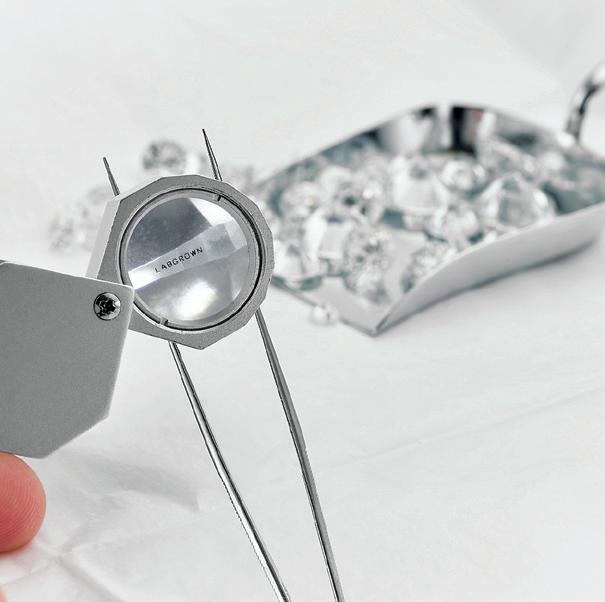
For 80 years, De Beers promoted and protected the concept of the ‘Diamond Dream,’ the idea that diamonds are the ultimate symbol of love and commitment. However, with the arrival of lab-grown diamonds (LGDs), the natural diamond industry failed to invest enough in marketing to sustain that dream, or to differentiate itself by telling the unique story of natural diamonds.
Worse, a significant proportion of the natural diamond trade jumped on the LGD bandwagon themselves. Virtually unchallenged, the LGD industry was allowed to write its own narrative, positioning its product as “the same” as natural diamonds, often employing misleading innuendo and falsehoods. The very concept of the (natural) Diamond Dream is now under threat.
So, what could have been a more effective response? History shows that business challenges are rarely unique, and solutions can be found by studying other companies that faced similar disruptions. Two obvious examples are the stories of Crystal Pepsi and the Tata Nano.
Kamikaze marketing
In the early 1990s, the “clear craze” swept the consumer goods world. Companies jumped on the trend, which associated ‘clear’ with transparency and honesty in the consumer’s mind. Pepsi developed a caffeine-free, clear version of its classic cola, sold in a transparent bottle, and dubbed it Crystal Pepsi.
Desperate to have it ready ahead of the 1993 Super Bowl, the company rushed through the product development. Taste testers liked the drink, and the Super Bowl Ad sparked a national craze. In its first year, it achieved sales of US$474 million. But the company ignored warnings from its R&D department that the ingredients in a transparent bottle reacted with sunlight — changing the taste.
Meanwhile, rival Coca-Cola had identified a critical flaw in Crystal Pepsi’s market positioning. Its research showed that coloured drinks were perceived as having artificial colours and preservatives, whereas clear drinks were perceived as having no preservatives, no artificial colours and no harmful flavours. That made Crystal Pepsi an ‘incongruent’ product — there was a mismatch between consumers expectations (healthy, low-calorie) and what they actually got (high levels of fructose glucose corn syrup and almost as many calories as a regular Pepsi).
To exploit this, Coca-Cola rolled out a ‘kamikaze’ marketing strategy, launching a competing product that was destined to fail in order to sabotage Crystal Pepsi. Coca-Cola conspicuously positioned its calorie-free
transparent drink, Tab Clear, as a ‘diet’ beverage, and instructed retailers to place it on the shelves next to Crystal Pepsi. Consumers assumed that if Tab Clear was calorie-free, so was Crystal Pepsi. When they discovered it wasn’t, many felt deceived and this confusion, combined with the bad aftertaste, turned Crystal Pepsi into a massive failure.
Tapping into consumer desires
In 2008, Tata Motors launched the Nano, and marketed as the world’s cheapest car. Targeting Indian blue-collar workers who primarily rode motorcycles, Tata dispensed with anything that wasn’t essential; it only had a driver’s side mirror, one wiper blade and a petrol tank without a filter, but it only cost US$1,300. From an engineering point of view, the car with its 624cc engine was an incredible product.
Ahead of the Nano’s 2009 launch, second-hand car prices dropped significantly, but actual sales were underwhelming. The company had some initial technical issues (some cars burst into flames) but the more fundamental mistake was in its positioning. Tata effectively marketed the Nano as a car ‘for the poor person,’ with many of their advertisements including pictures of a blue-collar worker with their first car. In India the car is a status symbol, so consumers were put off by the idea of buying a car which was so cheap that the poor could afford it.
Had the ‘Nano’ been marketed as the second car of the businessman who had left their Bentley in the garage at home but used the Nano because it was so easy to park in the city (i.e. a car for rich people), the story could have been very different.
Telling the wrong story
So what are the lessons? Ironically, by positioning LGDs as the same as natural diamonds but conflict-free, by claiming most LGD are sustainable when they are not, and by using innuendo and falsehoods to undermine natural diamond mining, creating consumer doubt, the LGD industry did to natural diamonds what Coca Cola did to Crystal Pepsi, turning its strength into its weakness, when it could so easily have
been the other way around.
Just as the natural diamond industry failed to differentiate itself by telling its own story of rarity, origin and social purpose, few attempted to challenge the LGD narrative. LGDs should have been positioned and priced for what they are — a mass-produced unbelievably cheap technology item, most of which are produced in India and China using brown coal for their power and virtually no social pur
can’t afford a natural diamond.
De Beers almost entirely funds the Natural Diamond Council whose mission is to protect and promote natural diamonds, but too many in the industry do nothing. Without industry support, the day may come when De Beers starts differentiating its diamonds from everyone else’s, at which point those who didn’t step up will wish they had done more. And while De Beers announced its own LGD initiative in 2018, it wasn’t in any way responsible for the growth in LGDs. In fact, without its investment into developing the technology that can distinguish between a natural diamond and an LGD, the natural diamond industry as we know it might not exist today.
Mis-pricing woes
De Beers’ Lightbox Jewelry initiative priced 0.25 to 1 carat LGDs at a linear US$800 per carat, intending to position them as a cheaper fashion item. In hindsight, if Lightbox was to have been a true LGD disrupter it needed to be positioned as a loss-making kamikaze marketer, not as a profit centre. Instead, it legitimized the category without having the volume to drive down prices. The price point of US$800 per carat was far too high, and by avoiding the LGD engagement ring category and positioning their LGDs solely as fashion items, it left that space open for other higher priced LGD offerings. Had Lightbox’s product been priced at a maximum of US$200 a
campaign positioned its product across all categories, as (using different words obviously) ‘diamonds for poor people,’ with substantial volumes pushed into lower price point retailers, things might have been very different.
In August 2019, instead of lowering prices, Lightbox increased them, launching a higher quality 1-carat LGD for US$1,500 a carat. CEO Steve Coe stated that Pandora’s recent introduction of LGD aligned with where Lightbox sees the “long-term opportunity for lab-grown; the ability to sell at an accessible price point.” And then it turned out that Pandora was buying its LGD from one of the only LGD companies using renewable energy — De Beers’ Lightbox, allowing them to claim they are sustainably sourced. The Romans would have been horrified. Lab-grown sapphires, rubies and emeralds sell at a fraction of their natural equivalents for a reason. That is where LGDs should be. Pleasingly, the new De Beers management team has ceased LGD production for jewelry. TNM
n This story was originally published on Business News Europe
Richard Chetwode holds a number of non-executive roles in the diamond and property industries. He is a part-time journalist, non-executive chairman of Namibian-based Trustco Resources, and previously worked for De Beers, Harry Winston, Dominion Diamonds

Is your mine design based on sound geology?
BY BLAIR MCBRIDE
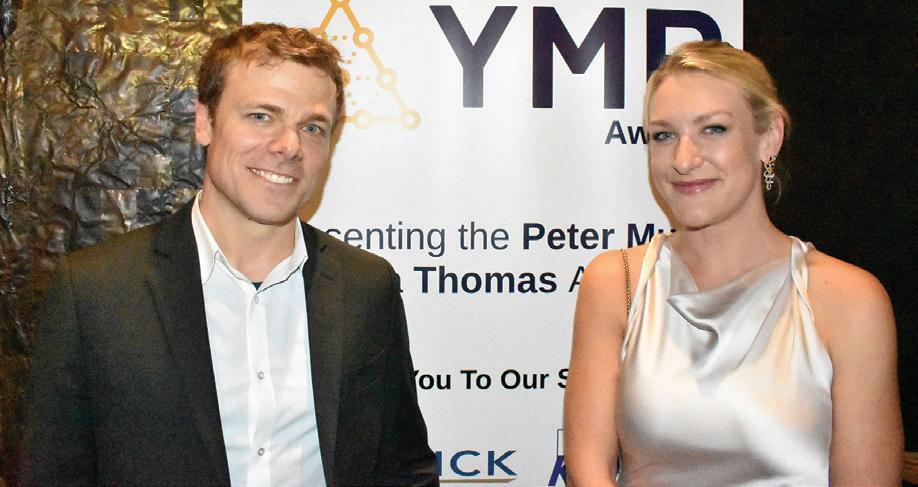
Scott Berdahl a Yukon-based geologist with a lifetime of experience prospecting in the bush and Ella Cullen, a New Zealander now living in Portugal who co-founded a business focused on traceability in mine supply, were honoured at this year’s Young Mining Professionals’ (YMP) awards in Toronto on Sept. 23.
At a downtown Toronto restaurant, the two, who were named the winners of the YMP Peter Munk and Eira Thomas awards, respectively, in March, accepted the honours in front of an industry crowd of a few dozen.
‘Team over self’ Berdahl, CEO of Snowline Gold (TSXV: SGD; US-OTC: SNWGF) was chosen for the award for leading Snowline through its successful exploration of the Valley target in Yukon.
He quipped that after YMP repeatedly told him he won the award, he thought it was a trick.
“I thought this was one of the Nigerian prince things,” he said. “I’m starting to come around with the idea that it might not be a ruse, but I’m still cautiously guarding my bank account information.”
He credited factors mostly outside of himself for the award, starting with the geology of the Valley. An initial resource for the project, released in June, showed the deposit is one of the largest in size and grade across several projects in the Tombstone gold belt that runs under the territory.
“There are a lot of good teams out there doing a lot of good work, we just happened to tap into a phenomenal orebody out there. I think
“There are a lot of good teams out there doing a lot of good work, we just happened to tap into a phenomenal orebody out there. I think that’s a big part of why I’m standing here.”
SCOTT BERDAHL, CEO OF SNOWLINE GOLD
that’s a big part of why I’m standing here,” he said.
Berdahl also praised Snowline’s team for its success, singling out board chair Craig Hart, whom he said “cornered him” at a Yukon
geoscience event several years ago and encouraged him to stay in the mining industry. After Berdahl started Snowline, he invited Hart to chair the company in 2021.
“He’s done a lot in helping to steer our company down a good path,” Berdahl said.
Finally, while his wife tended to their young children at the ceremony, Berdahl thanked his family for their support. Berdahl’s father Ron, a self-taught prospector, first took Scott out to look for rocks in the Yukon at the age of eight.
“I’m always very impressed with first-generation explorers. I’m grateful to have been set on this path,” he said. “This was just a little project to try to sell some mineral properties that I had, and it’s obviously blown up in a big way, and I couldn’t be here without that family support as well.”
“For me, Minespider has always been about making people visible.”
ELLA CULLEN COFOUNDER OF MINESPIDER
in the industry.
“Who is this woman mining? In my experience, she’s a mother in Uganda cooking food for some guys that are working down the shafts. She’s a pregnant operations manager in Rwanda, ready to pop, who’s still a badass,” she said.
“So the term ‘women in mining’ for me just encompasses such a diverse and inspiring range of women.”
‘Making people visible’
Ella Cullen, co-founder and chief marketing officer of Minespider, is being celebrated by YMP for her work with the traceability platform to help ensure mineral supply chains are transparent and compliant.
Cullen said she’s very grateful for her team who have supported her over the last six years after they launched Minespider, based on the idea that every mined mineral should have a passport so its origins can be traced.
“This venture is more than tracking minerals from A to B,” she said.
“It’s more than streamlining compliance or reducing carbon emissions. For me, Minespider has always been about making people visible.”
Cullen explained that celebrating women in mining comes down to recognizing the roles and circumstances of individual women
One of her key priorities is training and upskilling women in mining, even for women working in offices rather than on mine sites. And she’s found that working remotely four days a week at the Minespider office in Berlin has been useful for that.
“Being remote actually allowed us to give exceptional people and more women opportunities in our company,” she said.
Women have a key role to play in developing technology that will serve everyone, Cullen noted.
“The future of mining and sustainability isn’t about the next big innovation,” she said. “It’s about the people who make that innovation possible, especially women who continue to defy the odds.”
To nominate candidates for the 2025 YMP awards, visit youngminingprofessionals.com. Nominations are due by Nov. 30, 2024. TNM
COPPER | Selkirk First Nation looks to buy Minto out of receivership
BY NORTHERN MINER STAFF
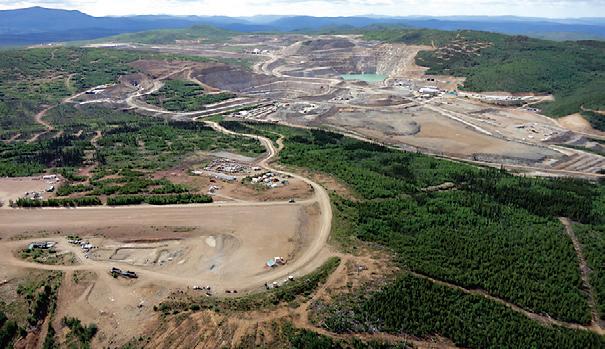
There could be landmark new life in the abandoned Minto copper-gold mine in the Yukon.
The territory’s Supreme Court has approved a private bid by the Selkirk First Nation to buy the mine’s facilities and some of its equipment in a ruling that could see one of the first instances of Indigenous ownership of a mine in Canada. Court-approved receiver PricewaterhouseCoopers has been overseeing the mine, on traditional Selkirk territory, for more than a year. The cost of the acquisition hasn’t been reported. The First Nation and PwC didn’t immediately
respond to phone or email requests for comment before press time. The court decision, first reported by the CBC on Sept. 8, approved the
sale of the mine’s assets including the mill and water treatment building, and gave the go-ahead for a second transaction involving mineral
claims, licences and permits.
If the sale goes through it “would be the first Indigenous owned mine as far as I know,” Heather ExnerPirot, senior fellow and director of Natural Resources, Energy and Environment at the Ottawa-based Macdonald-Laurier Institute, said on X, formerly known as Twitter.
‘Unprecedented’ ownership
“It’s an evolution in ownership for Indigenous communities,” John Desjarlais, the Saskatchewanbased executive director of the Indigenous Resource Network, said. “I’m excited to see Indigenous communities exploring the opportunity of investing in mine ownership. If this goes through, it would be unprecedented. If they do their
due diligence there is no reason why they can’t be owners.”
Desjarlais added that it’s not only important as a source of revenue, but offers them the opportunity to “control the environmental impact and oversee sustainability.”
The federal Liberal government announced in this year’s budget that $5 billion was being allocated to help Indigenous groups acquire equity in mining projects. It’s unclear at this point if the Selkirk First Nation is applying for that funding.
The First Nation’s goal in acquiring the asset is to prevent the permanent closure of the mine, the CBC reported. In a document filed by PwC to the court at the end Minto P13 >
BY HENRY LAZENBY
BEAVER CREEK, COLO. —
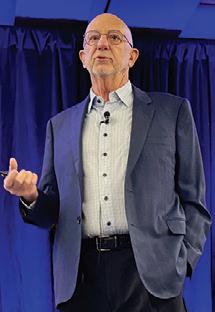
Industry experts issued a stark reminder that leadership quality, not just geological assets, determines the success or failure of exploration projects, a mining conference heard on Sept. 10. They called for more rigorous management due diligence to address persistent shortcomings.
Stephen Enders, executive chairman of Denver-based recruiting firm Brooks & Nelson LLC, argued during his keynote address that poor leadership often leads to mining project failures. He cited the cases of Pure Gold’s Madsen mine in Ontario, Stornoway Diamonds’ Renard mine in Quebec and Brazil-focused Horizonte Minerals’ (TSX: HZM; AIM: HZM) failed financing early this year.
“A bad management team can break a great project, but a good management team can make a mediocre project successful,” Enders told the Precious Metals Summit held between Sept. 10-13 in Beaver Creek, Colo.
Management comes first Enders argued that, while technical reviews are prioritized, “management failures are a big part of why the mining industry doesn’t have the greatest track record.”
While the industry has strong technical and legal due diligence processes, it doesn’t assess management teams as thoroughly. A
> Gold equities from P1
said during a keynote fireside chat with Alex Deluce, editor of Gold Telegraph
Giustra suggested mainstream U.S. media avoid discussing the country’s dire fiscal state and challenges to the economy because no one wants to address the difficult choices ahead. The only options left — such as inflating away the debt — are highly favourable for gold, he said.
“When the only escape from a fiscal crisis is devaluation, gold becomes the ultimate hedge,” Guistra said.
While the long-term outlook for gold remains positive, both Giustra and Stöferle warned the metal won’t take a straight path higher.
“I’m not overly bullish in the short term. A breather to US$2,300 or US$2,350 per oz. wouldn’t be a crash — it would be a healthy consolidation,” Stöferle explained.
Longer term, he said it could reach as high as US$4,800 per oz., though not all panellists agreed.
Price vs equities
Despite gold’s price surge, mining equities have dramatically underwhelmed.
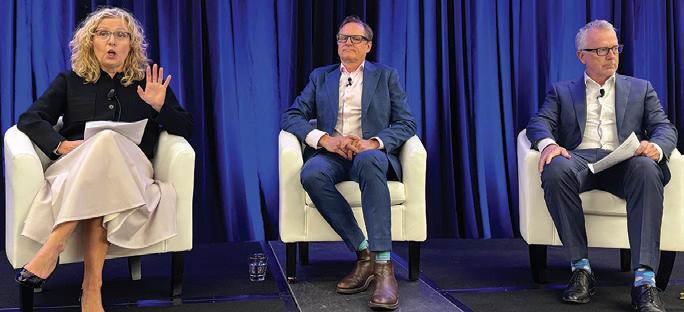
Rule pointed out that the GDX, an index of gold mining stocks, is down 40% since its highs in 2011. He blamed that underperformance to poor capital allocation, inflationary pressures, and ill-timed mergers and acquisitions.
“There have been some downright stupid capital decisions,
recent Brooks & Nelson research project found that more than 90% of 42 surveyed companies agreed that management is key to a project’s success. However, only a tiny fraction of these companies consistently conduct comprehensive management evaluations.
“There’s a widespread perception that management due diligence is too costly or time-consuming, but it’s far cheaper and faster than technical due diligence,” Enders said.
He linked poor management to project delays, cost overruns and bankruptcies.
“Imagine a year of delay on your project because you didn’t have the right people,” he warned. “You have to give it serious attention,” he said, recommending skills matrices, background checks and structured interviews.
Buy-side and sell-side Industry professionals echoed
especially around M&A and cost inflation,” the president and CEO of Rule Investment Media said. They have tarnished the industry’s image as “a place where money dies.”
Even so, he said gold mining equities are poised for a rebound because energy prices have stabi-
Enders’ concerns in a panel discussion, hammering home the idea that mining companies must fix leadership gaps to avoid high-profile failures that have marred the industry’s reputation.
From the corporate finance side, Nawojka Wachowiak, portfolio manager at Toronto-based 1832 Asset Management which controls $151 billion, explained that investors are increasingly assessing mining projects based on leadership quality as much as on asset potential.
She stressed that portfolio managers look for management teams that can balance upside potential with manageable risks, noting that environmental, social, and governance (ESG) factors are becoming more significant in investment decisions.
“High-quality assets are important, but without the right management, those assets won’t deliver
lized and input costs have fallen, boosting earnings potential. Rule forecasts the GDX index to double as investors return to the space in the medium term.
Giustra said institutional investors are still sitting on the sidelines, waiting for a more sustained rally
returns,” she said.
Michael Gray, partner and co-founder of Agentis Capital Mining Partners in Vancouver, focused on how companies seeking financing or engaging in mergers and acquisitions must demonstrate strong leadership and a clear value-creation path. He noted that private equity firms, in particular, are more likely to perform rigorous management due diligence, given the sector’s inherent risks.
“It’s not enough to have a promising asset,” Gray said. “The execution of exploration, development and financing plans is critical.”
Gray also addressed consolidation where smaller explorers and developers are acquisition targets for larger producers. He emphasized that companies looking to be acquired must ensure their management teams are up to the task of scaling operations while managing investor expectations.
before moving back into the space.
“The market is waiting for a catalyst. When that comes, we’ll see a flood of capital into mining stocks,” Giustra said.
Stöferle said the gold price action has shifted to BRICS (Brazil, Russia, India, China and South Africa)
“The key is for junior companies to demonstrate a strong project pipeline and capable leadership that can guide the project to the next stage,” Gray said.
Challenges and trends
Peter Bell, managing director of research at investment bank Canaccord Genuity, provided the sell-side perspective, sharing that his team spends considerable time evaluating management teams when producing research reports.
Even the best technical data cannot overcome weak management, especially in early-stage exploration, where the margin for error is slim, he said.
“The success of an exploration company often comes down to leadership,” Bell said.
Investors have grown more skeptical towards early-stage exploration companies, Bell noted. They are wary of the high risks and long timelines to production, which makes it crucial for companies to stand out by showcasing exceptional leadership and capital management.
“The companies that succeed are those that combine great assets with great leadership,” Bell said.
The panellists also highlighted the growing importance of ESG issues in investment decisions. Wachowiak said buy-side investors and corporate acquirers scrutinize companies’ environmental and social impact. Companies with strong ESG practices are more likely to attract institutional capital and avoid regulatory hurdles. TNM
nations, driven by global de-dollarization efforts.
“The marginal gold buyer is no longer in the West,” he said.
“China, India, and other emerging markets now account for 50% of physical gold demand and 66% of global jewelry demand.” TNM
SITE VISIT | Chair Ross Beaty says 360,000 per oz mine is biggest of his career
BY BLAIR MCBRIDE
GERALDTON, ONT. —
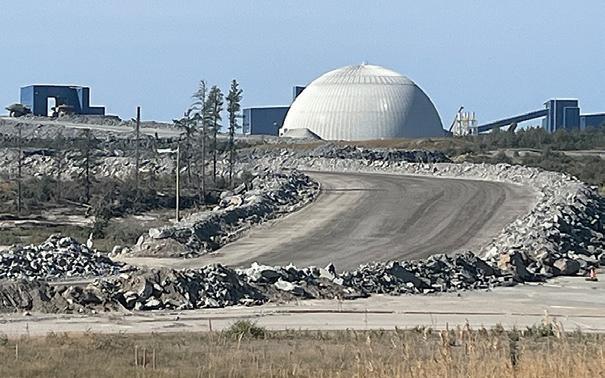
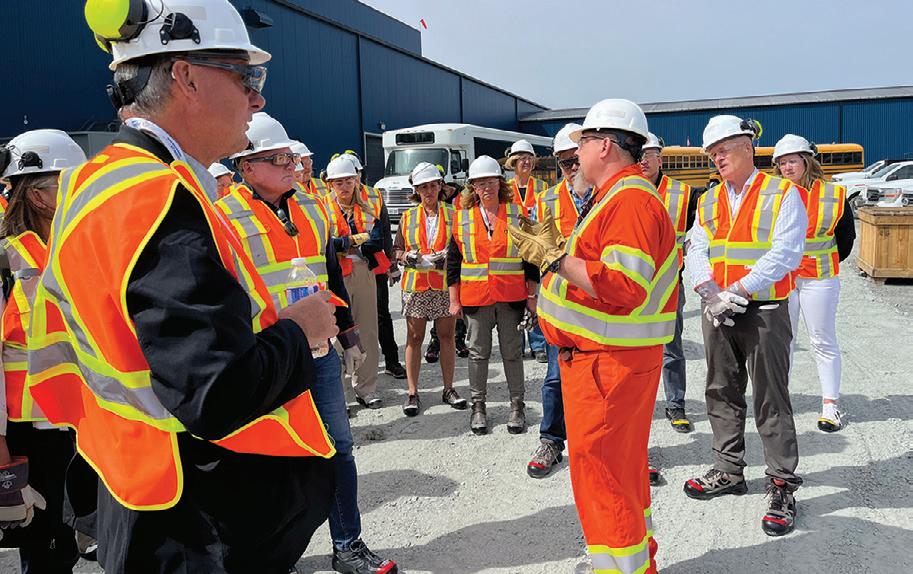
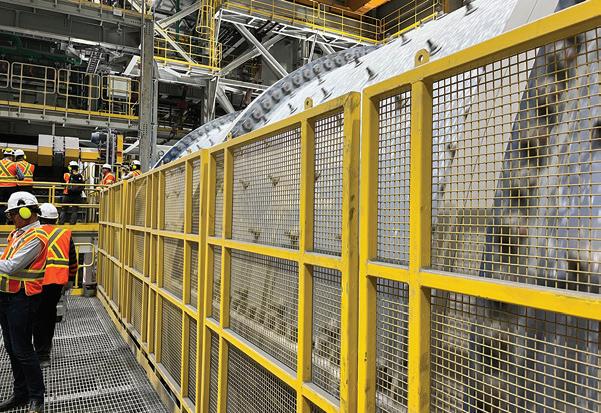
Through the slight haze of dust kicked up by a passing haul truck at Equinox Gold’s (TSX: EQX; NYSE: EQX) Greenstone mine, visitors can just see the deepening open pit that will soon take the company to its goal of becoming a million oz. per year producer.
The Vancouver-based miner poured first gold at Greenstone — the biggest of its eight operations — in May. By the time of a site visit in late August, it had reached 60% capacity and welcomed dozens of guests to celebrate its official opening.
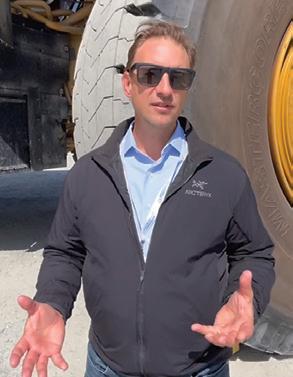
“Greenstone is now, by far, our largest gold mine,” CEO Greg Smith said beside a towering, 240ton haul truck on the sidelines of the mine’s opening ceremony. “For a number of years, we’ve had a pretty well defined and well communicated goal to build a million-ounce gold producer. It represents a certain level of scale that we think is a good size for a multi-mine gold company.”
By the end of the year, Equinox plans to reach full capacity at the mine, which is expected to produce around 400,000 oz. annually over its five years. That’s more than double the 155,000 to 175,000 oz. churned out annually at Equinox’s second-highest producer, Los Filos in Mexico. Across its mines in North America, Mexico and Brazil, its 2024 guidance totals 945,000 ounces.
Over its entire 14-year life, Greenstone, just south of the town of Geraldton, about 275 km northeast of Thunder Bay, should churn out an average of 360,000 oz. per year, with a carbon-in-pulp processing facility putting out 27,000 tonnes per day.
That’s all possible because of the deposit’s size under the Geraldton area, sitting on the eastern part of the Beardmore-Geraldton greenstone belt. The region’s first foray into gold mining dates back almost 100 years. From 1938 to 1970 the former Hard Rock, MacLeodCockshutt and Mosher companies mined the yellow metal producing more than 2 million oz. of gold.
Barrick Gold (TSX: ABX; NYSE: GOLD) predecessor Lac Minerals also explored underground reserves at the former mines in the 1980s.
Low-cost, high-grade Equinox boasts Greenstone will be one of the lowest-cost gold mines in the world, with all-in sustaining costs forecast at $840 to $940 per ounce.
That claim is based on Greenstone’s deposit having some of the highest grades in Canada, Smith said.
“We get more gold for every tonne that we mine,” he said. “And also, volume. It’s a big mine.”
Proven and probable reserves total 135.3 million tonnes grading 1.27 grams gold per tonne for 5.5 million ounces.
That would put Greenstone around fourth place in Canada behind Agnico Eagle Mines’ (TSX: AEM; NYSE: AEM) Detour Lake and Iamgold’s (TSX: IMG; NYSE: IAG) Côté mine, both in Ontario; and Agnico’s Canadian Malartic in Quebec. They host proven and
probable reserves of 819 million tonnes at 0.76 grams gold for 19.9 million oz., 234.6 million tonnes grading 1.01 grams gold for 7.6 million oz., and 142.2 million tonnes at 1.73 grams gold for 7.9 million oz., respectively.
Smith says that compared to more intensively mined areas like Timmins, Sudbury and Val-d’Or in Quebec, the Greenstone district is “underappreciated.”
“We’ve got a lot of exploration potential in the underground, and then some satellite deposits (to the) West (such as) the Brookbank deposit and the Beardmore area… across the land package we have.”
Equinox shares traded for $8.29 apiece near press time, valuing the company at $3.6 billion. Its shares
traded in a 52-week range of $5.36 and $8.79.
M&A, gold price boost
Construction of the $1.2-billion mine began in 2021, a year after Equinox acquired a 50% interest in the project through its acquisition of Premier Gold Mines. It gained an additional 10% from Orion Mine Finance in April 2021. It acquired full ownership of Greenstone six months ago, in a US$995-million cash-and-shares deal for partner Orion’s 40% interest.
Greenstone’s path forward is smoothed by the high price of gold, which has reached new historic peaks of more than US$2,600 per oz. in mid- to late September.
“(This) takes a lot of pressure
“It’s a huge win for us when you’re commissioning a mine at this scale into a very strong gold price. As you ramp up, we’ve already got to the point where the mine is basically funding itself.”
GREG SMITH CEO, EQUINOX GOLD
off,” Smith said. “It’s a huge win for us when you’re commissioning a mine at this scale into a very strong gold price. As you ramp it up, we’ve already got to the point where the mine is basically funding itself.”
Cheers and tears
The mood was celebratory at the mine opening — complete with traditional dancing and drumming from local First Nations, speeches by politicians including Ontario mines minister George Pirie and Indigenous Services Canada minister Patty Hajdu, and even parfaits with gold bar-shaped pieces of cake for dessert. But some of the speakers touched on the challenges that preceded the happy occasion. Speaking on a stage beside Greenstone’s truck shop, Eric Lamontagne, outgoing general manager of the mine recalled a difficult
meeting several years ago in the Geraldton community centre.
“One challenge appeared immediately, and it was to secure the footprint of the pit,” he said. “Sixty-five families or houses were impacted, and we understood that this was a very sensitive aspect of the project. We asked them to relocate.”
Negotiations were successful and the families were relocated, but there was also a lot of work in hammering out agreements with four local First Nations and the Métis Nation of Ontario (MNO).
“It took four years, but with the concessions made by both parties, we were able to close the gap and sign agreements. I cried, believe me, because some days I was discouraged and did not believe that it will be possible.”
The result of those negotiations from 2015 to 2019 were Impact Benefit Agreements (IBAs) with the MNO, Animbiigoo Zaagi’igan Anishnaabek and the First Nations of Aroland and Long Lake 58. The agreements provide partnerships with First Nations businesses, as well as job training and employment of a full-time workforce that is 25% Indigenous. Greenstone is expected to employ about 500 people by next year.
Long Lake First Nation Chief Judy Desmoulin said she’s optimistic about the relationships that Equinox has formed with local First Nations.
“Our First Nations never received or profited or benefited from anything (from previous mines),” she said. “As you go through our First Nations in this area, you see the under-development that we’re in, and it’s because we have not benefited from our own resources and our own lands.”
But Desmoulin said it’s been different with Greenstone, and her community was included “from the get go.”
She added: “And now that we understand and know what can be done with this project, we know it can be done with the rest that are going to come our way.”
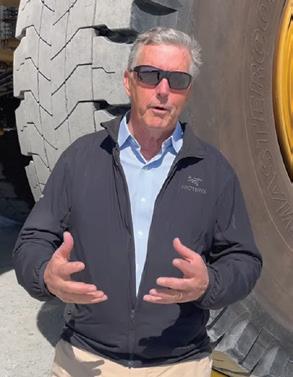
On hand for the celebration, industry veteran and Equinox board chair Ross Beaty noted the tremendous effort required to get the mine — the biggest he’s ever been involved with over a multi-decade career — to this stage.
“It’s like an ecosystem,” he said. “It’s employees, it’s contractors, suppliers, Indigenous communities we work with as partners, all the governments. Everybody has come together to make this a success.”
BY COLIN MCCLELLAND
The NDP and Conservative parties vying to govern British Columbia agree critical minerals projects need to be fasttracked through permit stages. They both released their platforms on mining in late September.
Premier David Eby, seeking re-election on Oct. 19 with the NDP, has promised $250 million for communities in the province’s northwest. Like the Conservatives, he’s vowed to speed 16 new or expanded critical mineral projects through the regulatory process.
“We’ll fast-track priority projects to grow the economy and create jobs,” Eby said in a release on Sept. 24. “Our plan will get mining projects moving that grow B.C.’s economy, create good jobs across the northwest, and benefit communities directly.”
The Conservative Party, led by former Liberal John Rustad, says it would rescind the NDP’s ban on mining applications for Banks Island and part of Vancouver Island, streamline mining approval times and reform taxes.
“Mining begins with exploration, which itself supports thousands of professional jobs,” Rustad’s party said in a release. “We will reverse the NDP’s unprecedented March 2024 cabinet orders which make exploration effectively impossible in certain areas of B.C.”
Exploration spending
The vote is important for British Columbia, which ranks third in Canada for exploration spending. The province hosts Glencore’s (LSE: GLEN) Elk Valley coal mines, Teck Resources’ (TSX: TECK.A, TECK.B; NYSE: TECK) copper assets and the Golden Triangle of yellow metal producers in the far north, like giant Newmont (TSX: NGT; NYSE: NEM) investing in the Red Chris and Brucejack mines. Politicians and miners must also contend with the province’s formal recognition of the Haida Nation’s Aboriginal title over a group of islands near the Alaskan panhandle in April. It’s unclear how the First Nation’s control of the use and economic benefits from Haida Gwaii, formerly the Queen Charlotte Islands, is going to play out over the rest of the province, and

the country.
Late September polls by Leger and Research Co. suggest the NDP holds a slight lead with 45%, and the Tories with 43%. The provincial Liberals, which ruled from 2001 to 2017, aren’t considered a factor. The party imploded after 2022 when then-leader Kevin Falcon changed the party’s name to BC United.
The province’s pending critical mineral projects represent $36 billion in immediate investment and nearly $11 billion in tax revenues, according to the Mining Association of B.C.
“We are pleased to see both main parties recognize the urgent need for permitting reform for our
industry,” association president and CEO Michael Goehring said in a release on Sept. 24.
“Together, we can create a streamlined and efficient permitting process that fast-tracks project approval, advances economic reconciliation and partnerships with First Nations, while maintaining B.C.’s world-leading environmental protections.”
Approval times
Quickening B.C. approval times from some 12 to 15 years versus two to three years in Australia requires deleting “unnecessary or duplicative requirements that do not meaningfully contribute to
safety or environmental protection,” the Conservative Party said.
Indigenous partnerships and corporate responsibility for mine closure and remediation are also important, the Tories said.
“We will design tougher and smarter protections to ensure that those who build mines are truly responsible for all remediation costs at closure — not taxpayers,” the party said.
The NDP proposes to create a new critical minerals office to help push projects, reduce duplication with the federal government and support ties with First Nations. Eby also wants to improve training programs for supplying skilled labour to the industry and expand the province’s power grid for mines.
“For too long, communities across B.C.’s northwest saw the impacts of resource projects — like more wear and tear on roads and highways, increased demand on local services — but they weren’t seeing enough of the benefits,” the premier said.
“We’re investing money directly back into infrastructure communities like Terrace and Vanderhoof while building up the economy.” TNM
of August, the First Nation said it plans to complete drilling and exploration to assess whether it can restart the mine, and stated it will not get in the way of the territory’s remediation work.
“The Yukon government will continue to prioritize opportunities for the involvement of Yukon First Nations in economic opportunities associated with mining activities,”
Laura Seeley, a Cabinet spokesperson, told The Northern Miner by email.” This court decision offers significant opportunities for Selkirk First Nation, and we look forward to the benefits that this could bring to the First Nation, the region, and the broader territory.”
‘Big leap’
Qasim Saddique, a principal consultant and economist at management advisers Suslop in Toronto, said the Selkirk’s move is rare and bold.
“From a precedent perspective this is really significant and remarkable that a First Nation government is stepping up to keep the mine open and performing an economic and social responsibility to the nation and to the region,” Saddique said. “There aren’t many examples of this.
“First Nations have been involved in mining for decades, from significant equity ownership to being major suppliers of inputs required to run the industry. But to be both an owner and operator of a mine is certainly a big leap.”
In an interview, the MacdonaldLaurier Institute’s Exner-Pirot said the move is unusual because mining is a very volatile, “boom and bust” business.
“Where you have seen equity investments by First Nations in the past is in more stable industries like pipelines and transmission lines.”
Still, everyone would like to see Indigenous ownership in mining — particularly critical minerals, Exner-Pirot said.
“If they can find an indus-
try partner or the government to come into it with them... find a way where a First Nation isn’t exposed to an unacceptable level of risk, and a business partner is satisfied with the returns they will get – that would be an advance for everybody,” she said.
Minto was abandoned because it was uneconomic, but copper prices are higher now, she added. Financing, and having a partner
with mining expertise will be key.
“I would doubt it would be 100% ownership, it would probably be a partnership with someone who has experience running a mine, deeper pockets and a higher risk appetite,” she said. “But this is just speculation.”
The Minto mine produced about 500 million lb. copper between
2007 and 2023 before owner Minto Metals ran into financial difficulty and shut it down on May 12 last year. The Yukon hired JDS Mining to provide emergency environmental management services.
The territory holds financial security for the site and can access the funding to cover the costs of the reclamation work. Water treatment on site continues and storage capacity is growing.
In April, Yukon Minister of Energy, Mines and Resources John Streicker said the government has allocated $21.5 million this year to support ongoing work at the site. The money will be drawn from the financial security that was collected from Minto Metals before its closure and is not funded by taxpayers, he stated in a press release. TNM
BY BLAIR MCBRIDE
Solaris Resources (TSX: SLS; NYSE: SLSR) is taking the first steps towards moving its head office to Quito, Ecuador’s capital, almost four months after it blasted a Canadian national security review for killing a $130-million deal with China’s Zijin Mining.
“Solaris is continuing to evaluate further steps to complete a greater transition to Ecuador,” from where some of its senior management will work, the company said in a news release on Sept. 9.
The announcement came alongside news that Solaris has submitted an environmental impact assessment to the Ecuadorian government for construction of its Warintza copper project in the country’s southeast.
Solaris shares traded for $3.64 apiece near press time, valuing the company at $590.4 million. Its shares traded in a 52-week range of $2.58 and $6.17.
The company didn’t respond to a request for comment. It appeared Solaris would retain its listings on the TSX and NYSE. It’s based in Toronto now.
The move marks an effort to get
around Canadian regulatory controls that industry players said was bound to happen amid inconsistent and overbearing reactions to Chinese investment.
‘Counterproductive policy’
In May, the company said it had ended a $130-million investment deal with Zijin after approval wasn’t granted following four months of Canadian regulatory review.
Solaris said at the time its stock price had risen by 35% since the deal, priced at a 14% premium, was announced and thus the deal “no longer adequately reflects market value.”
“That this transaction cannot be completed in a reasonable timeframe signals that Canada’s critical minerals policy is counterproductive in relation to foreign assets,” Solaris president and CEO Daniel Earle said in May.
The cancelled deal came two years after the federal government forced Chinese investors to divest from several lithium juniors with assets outside of Canada based on national security concerns.
The investment, first announced in January, would have given Zijin a 15% stake in Solaris and Warintza.
The deal would have offered
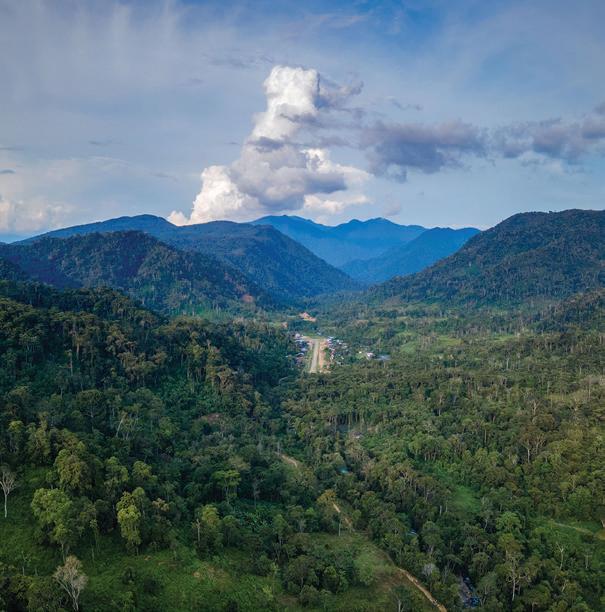
enough cash for Solaris to deliver a larger and more technically robust project, and been seen as a strong endorsement, BMO Capital Markets mining analyst Rene Cartier said.
The Zijin agreement’s demise followed others that raised questions about how Canada manages critical mineral deals with foreign entities.
In March, Falcon Energy Mate-
rials (TSXV: SRG), formerly based in Montreal as SRG Mining, cancelled a $16.9-million deal with China’s Carbon ONE New Energy Group to take 19.4% of the graphite miner, which has a development stage asset in Guinea. That followed the company’s announcement last year that it would redomicile to the United Arab Emirates to avoid a review under the Investment Canada Act.
Last December, Vital Metals (ASX: VML) drew surprise when it said it planned to sell about A$2.6 million ($2.3 million) worth of stockpiled rare earths mined in the Northwest Territories to Chinese miner Shenghe Resources. Shenghe earned a 9.9% stake last October in the Australian company for A$5.9 million.
In June, the government intervened, blocking the sale to Shenghe and selling the rare earths to the Saskatchewan Research Council, which operates a rare earths processing facility in Saskatoon.
The NWT & Nunavut Chamber of Mines had complained the Shenghe deal showed the Canadian government wasn’t concerned with Chinese involvement nor investing in its own critical minerals projects. TNM
METALS | Companies weigh potential for long-term gain
BY COLIN MCCLELLAND
Low lithium prices are forcing a raft of companies to delay spending on projects from Quebec to Nevada, from South America to Australia.
General Motors (NYSE: GM) has postponed a US$330-million investment in Lithium Americas’ (TSX: LAC; NYSE: LAC) Thacker Pass project in Nevada, large Chinese producer Ganfeng said investments must guarantee “significant near-term returns,” and Arcadium Lithium (NYSE: ALTM; ASX LTM) said it’s pausing its Galaxy project in Quebec. Albemarle (NYSE: ALB), the largest lithium producer, has slashed costs and delayed projects among its brine and hard-rock operations.
In August, Chile’s SQM (NYSE: SQM), the world’s second-biggest lithium producer, reported a 63% decline in quarterly profit. It forecasts low prices for the battery metal to persist for at least the rest of the year. In June, bond ratings company Fitch said lithium prices would remain below the peaks of 2022 and 2023 for at least five to 10 years.
“In spite of these cutbacks, most analysts expect the lithium market to remain subdued for the foreseeable future due to major stock overhangs and sluggish developed world electric vehicle sales,” BMO Capital Markets said in an Aug. 29 note.
The price of battery-grade lithium hydroxide has fallen to US$9,825 per tonne near press time from US$23,425 a year ago and
around US$85,000 a tonne in late 2022, according to The Wall Street Journal
The tumbling price is driven by a rapid expansion of supply from African spodumene and Chinese lepidolite projects, BMO said.
Former James Bay
Arcadium says it wants a cost-sharing partner for Galaxy (the former James Bay project) and it’s delaying another venture in Argentina to save a total of US$500 million over two years.
In Australia, Core Lithium’s (ASX: CXO) CEO quit after it halted operations at its Finniss project in January due to the low prices. Pilbara Minerals (ASX: PLS) slowed production and curtailed some of its planned expansions.
Mineral Resources (ASX: MIN) is cutting production at the Mt Marion mine it runs with Ganfeng to 150,000 to 170,000 tonnes of spodumene this financial year from 218,000 tonnes last year. Underlying net profit after tax plunged 79% to A$158 million ($146 million) for the year ended June 30.
Even so, Lithium Americas is trying to finalize a US$2.3-billion loan from the U.S. Department of Energy and several lithium companies are pressing ahead with projects as they eye long-term demand forecasts for the battery metal.
The price pressure extends to China, where in September, battery producer Contemporary Amperex Technology Co. (CATL) said it would suspend production at a mine that accounts for at least 5% of world supply.
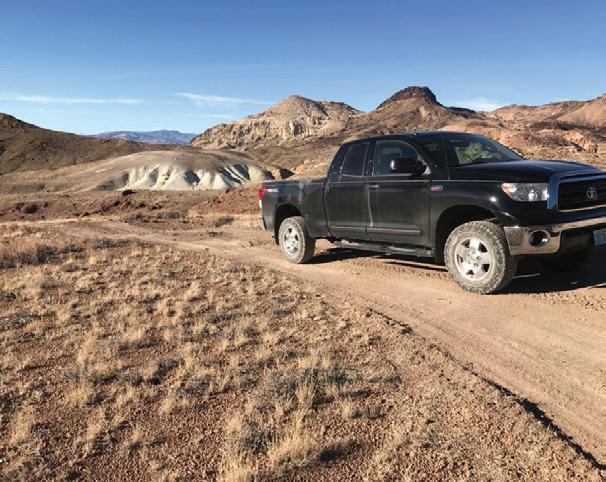
On Sept. 20, the U.S. Department of Energy said it’s considering as much as US$225 million, one of the largest ever U.S. grants for critical minerals, for the South West Arkansas project held by Standard Lithium (TSXV: SLI, NYSE: SLI) and Equinor (NYSE: EQNR).
That came a day after a key federal approval for Ioneer’s (ASX: INR) Rhyolite Ridge lithium mine in Nevada, which aims to produce enough metal to power nearly 370,000 electric vehicles a year.
Atlantic Lithium (AIM: ALL; ASX: A11) and Piedmont Lithium (NASDAQ: PLL; ASX: PLL) said they planned to start construction by year’s end at the Ewoyaa project in Ghana where Piedmont is cov-
ering 70% of the estimated US$185 million in development costs. Australia’s Winsome Resources (ASX: WR1) said a new scoping study reinforces the economics of the US$260-million Adina project, which would use the former Renard diamond mine in Quebec to produce 282,000 tonnes a year of 5.5% spodumene concentrate. Also in Quebec, Patriot Battery Metals (ASX: PMT; TSX: PMET) is targeting initial lithium production capacity of 400,000 tonnes of spodumene concentrate at its Shaakichiuwaanaan project. E3 Lithium (TSXV: ETL; US-OTC: EEMMF) is advancing its US$2.5-billion Clearwater brine project on one of Canada’s largest resources of the battery
metal, in Alberta. And AMG Critical Materials opened Europe’s first lithium hydroxide refinery in Germany which is targeting 20,000 tonnes of battery-grade lithium hydroxide a year — enough to power the batteries of around 500,000 EVs.
Automakers themselves are dialing back output forecasts. Chrysler owner Stellantis said in August it was delaying plans to install an EV assembly line in a closed plant northwest of Chicago because of market conditions. That was even after Washington granted it US$335 million in July for the factory conversion.
Ford said it expected to incur a US$1.9-billion writedown for cancelling an electric SUV and delaying a pickup EV. Already it’s lost US$44,000 on each EV it sold during the second quarter and anticipates losing US$5 billion on them this year.
Consumers may be weighing the cost comparison to fuel a midsized car with electricity versus gasoline. An EV takes from US$12.61 to US$16.11 of voltage per 160 km compared with US$10.71 in gasoline, according to Anderson Economic Group. It says the difference is more for pickups.
Still, sales in EVs increased 23% globally in the year’s first half if measured in battery capacity instead of units, according to Toronto-based EV supply chain research firm Adamas Intelligence. The cost of battery materials going into an average EV has fallen by more than half since last year, it says. TNM
LONDON, UK | DEC 1-2, 2024

ROSS BEATY Chairman EQUINOX GOLD CORP.
KEITH NEUMEYER PRESIDENT & CEO FIRST MAJESTIC SILVER

RICK RULE Founder RULE INVESTMENT MEDIA
SEAN ROOSEN FOUNDER, CHAIRMAN & CEO
OSISKO DEVELOPMENT

FIND OUT HOW YOU CAN JOIN US:
ROBERT MCEWEN CHAIRMAN AND CHIEF OWNER MCEWEN MINING
MICHAEL STEINMANN DIRECTOR, PRESIDENT & CHIEF EXECUTIVE OFFICER PAN AMERICAN SILVER
M&A | Record high gold prices spur slew of deals
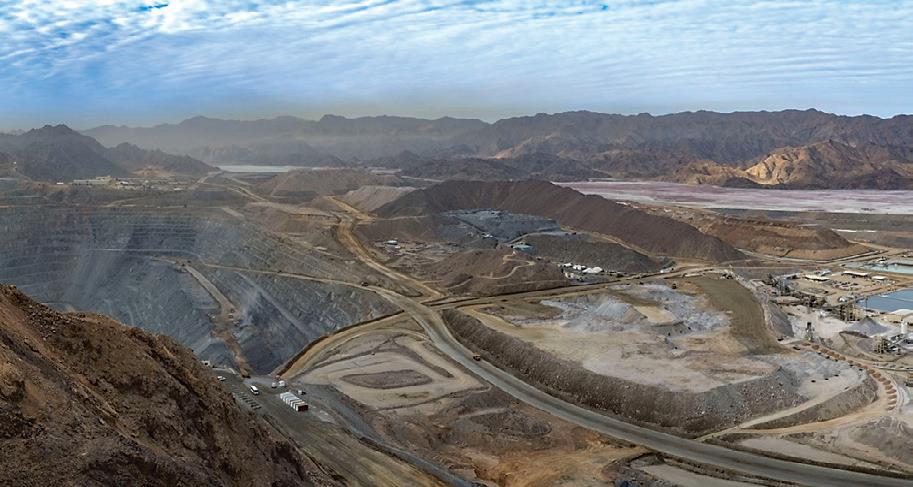
BY CECILIA JAMASMIE, MINING.COM
AngloGold Ashanti (JSE: ANG; NYSE: AU; ASX: AGG) is buying Egypt-focused smaller rival Centamin (LSE: CEY) in a US$2.5-billion stockand-cash deal that would see the South African gold miner become the world’s fourth-largest producer of the precious metal.
The acquisition hands AngloGold the Sukari mine, Egypt’s first modern gold operation and one of the world’s largest, producing some 5.9 million oz. of gold since 2009. It could increase AngloGold’s annual production by around 450,000 oz., bringing its total output to 3.1 million ounces.
“Today’s transaction is highly compelling and builds on the strong foundation we have built,” AngloGold chair Jochen Tilk said in a release. “It adds to our portfolio as the pre-eminent gold producer in Egypt and offers enormous geological potential that we are very well placed to develop.”
Shares in Centamin shot up 23% to $2.62 apiece in Toronto on Sept. 10, rising above $2.80 near press time for a market cap of $1.8 billion. The shares have traded in a 52-week range of $1.31 to $2.66. AngloGold shares fell nearly 7% to US$26.82 on Sept. 10 in New York. The stock traded at US$28.84 near press time for a market capitalization of US$12.1 billion.
Under the terms of the deal, Centamin shareholders will receive 0.06983 new AngloGold shares for each Centamin share and US12.5¢ in cash. The offer represents a 37% premium to the target company’s closing price on Sept. 9, the parties said. AngloGold shareholders are to hold about 84% of the combined entity while Centamin investors will own roughly 16%.
The transaction is the latest in a flurry of industry deals fuelled by record-breaking prices for the precious metal. Deals this year include Gold Fields’ (NYSE: GFI; JSE: GFI) $2.1-billion purchase of Osisko Mining (TSX: OSK); Alamos Gold’s (TSX: AGI; NYSE:
AGI) US$325-million buy of Argonaut Gold’s Island mine in Ontario; and Westgold’s (ASX: WGX) US$817-million takeover of Karora Resources. Top deal-maker Newmont (NYSE: NEM) bought Australia’s Newcrest Mining for US$19 billion last year, cementing its position as the top gold producer.
Shift in focus AngloGold, with assets spanning from Australia to Brazil, has shifted its focus away from South Africa, where it was founded more than a century ago. It sold its last asset there to Harmony Gold (NYSE: HMY) in 2020, and last year moved its headquarters and primary listing to London and New York, respectively.
The deal also marks the latest blow to the London stock market. The exchange has faced challenges since Randgold’s delisting after its merger with Barrick Gold (TSX: ABX; NYSE: GOLD) in 2018, and the departure of Russian gold miners following Moscow’s invasion of Ukraine in 2022. TNM
CHILE | Pays US$520M to Enami
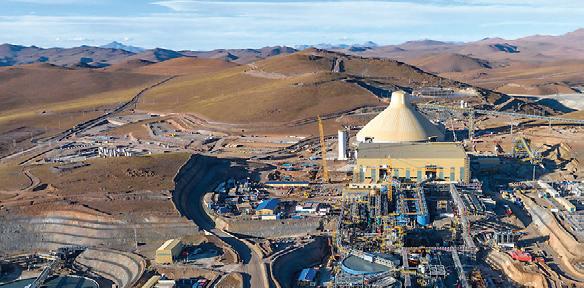
BY MINING.COM STAFF
Codelco is purchasing Enami’s 10% stake in Teck Resources’ (TSX: TECK.A, TECK.B; NYSE: TECK) Quebrada Blanca mine in northern Chile for US$520 million.
The deal will contribute 25,000 to 30,000 tonnes of copper to Chilean state-run miner Codelco’s annual output and reduce Ecuadorian state-run Enami’s debt to US$250 million from US$740 million, the companies announced on Sept. 5.
“Our strategy of developing and strengthening the company through partnerships will enhance our position in the copper and lithium markets and, in turn, increase the value that Codelco contributes to the country,” Codelco chairman Máximo Pacheco said in a release.
“It is very positive that an asset of this value remains in the hands of the state.”
Codelco plans to maintain the share rights previously held by Enami. These include preferential dividends, protection from dilution in future capital raisings, and the ability to appoint two of the 11 board members.
10B tonnes
Enami valued its stake in Quebrada Blanca at US$323.8 million last year. The mine, 240 km southeast of the city of Iquique and 1,500 km from the capital Santiago, has a resource of 10 billion tonnes grading 0.38% copper. Located at an elevation of 4,400 metres, the mine began production in 1994 as an open-pit operation. Teck invested in 2007 and took majority ownership.
Teck is completing Quebrada Blanca’s second stage that should rank the mine among the world’s 20 leading copper producers and sixth in Chile.
It would follow BHP’s (LSE: BHP; NYSE: BHP; ASX: BHP) Escondida, Anglo American (LSE: AAL) and Glencore’s (LSE: GLEN) Collahuasi, Codelco’s El Teniente and Radomiro Tomic, and Antofagasta’s (LSE: ANTO) Los Pelambres, based on their 2023 production.
Before press time in Toronto, Teck A and B shares traded for $68.25 and $68.21 apiece, respectively, valuing the company at $35.4 billion. Their respective 52-week trading ranges are $44.46 to $74.15; and $47.47 to $74.37. TNM
MEXICO | Move grows holdings in three districts
BY CECILIA JAMASMIE, MINING.COM
First Majestic Silver (TSX: AG; NYSE: AG) is buying Canadian explorer and developer Gatos Silver (TSX: GATO; NYSE: GATO) in an all-share transaction valued at US$970 million.
The move hands First Majestic a group of high-grade, large silver deposits in the Los Gatos silver district of Mexico’s Chihuahua state. The combination of the two companies’ assets would consolidate three silver-producing mining districts in Mexico under one banner: Gatos’s Cerro Los Gatos mine will join First Majestic’s San Dimas mine, in Durango, and Santa Elena operation, in Sonora, they said Sept. 5. Gatos shareholders would receive 2.55 common shares of First Majestic, or $13.49, for each share they
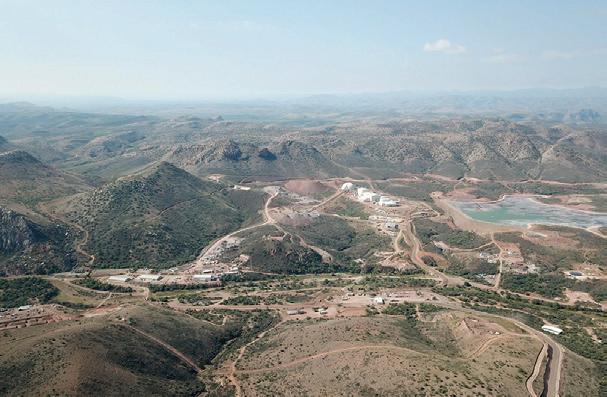
ing 15 million to 16 million oz. of silver, while delivering cost savings as well as supply chain and procurement synergies.
Gatos shareholders will then hold about 38% of First Majestic’s shares on a fully diluted basis.
The Los Gatos district comprises 14 mineralized zones identified to date, including three silver-lead-zinc deposits: the Cerro Los Gatos mine, the Esther deposit, and the Amapola deposit.
Vancouver-based First Majestic also owns the La Encantada silver mine in northern Mexico’s Coahuila state and has a portfolio of development and exploration projects, including the Jerritt Canyon gold project in Nevada.
Solid silver and gold prices paired with a positive macroeconomic outlook in Latin America has led to an increase in foreign investment
in the region.
Analysts expect more mergers and acquisitions to come in Latin America this year and next. According to Alessio Mazzanti, managing director of Latam Investment Banking, the surge of deals will be driven by a combination of macroeconomic and political factors that are improving investors’ perceptions towards the region, particularly in major economies like Brazil, Chile, and Mexico.
First Majestic shares traded for $8.52 apiece before press time, for a market capitalization of $2.5 billion. Its stock traded in a 52-week range of $6.23 to $10.72. Shares in Gatos traded for $21.75 each before press time, valuing the company at US$1.1 billion. The stock has had an extraordinary performance this year, recording an 89.25% increase to date. TNM
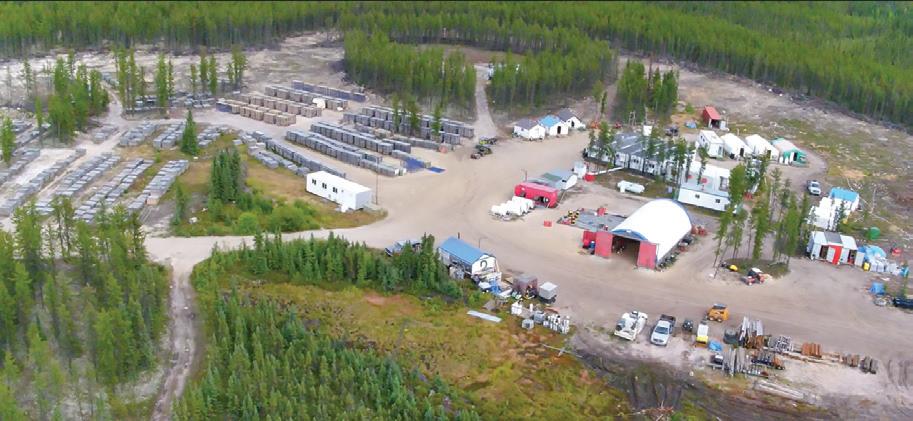
BY COLIN MCCLELLAND
Foremost Lithium Resource & Technology (CSE: FAT; NASDAQ: FMST), a junior with early-stage projects in Quebec and Manitoba, is pivoting into uranium through a cash-and-shares earnin deal with Denison Mines (TSX: DML; NYSE: DNN).
Foremost could acquire up to 70% in 10 of Denison’s northern Saskatchewan uranium projects after incurring $12 million in exploration costs and paying about $10.3 million in shares over six years, Foremost said on Sept. 24. The projects cover some 1,350 sq. km in the Athabasca Basin uranium hotspot.
The deal and how Foremost is dropping lithium from its name and changing it to Foremost Clean Energy shows how poor prices for the light metal have quashed prospects for near-term development projects. Prices for battery grade lithium and for spodumene concentrate have tanked in the past year. Uranium producers continue to grow with a resurgent nuclear energy industry even as the heavy metal’s spot price has eased from a 17-year record high in January. Global moves away from fossil
fuels are propelling the sector.
“This collaboration will advance significant near-term exploration and development efforts across numerous high-quality exploration projects to maximize the properties’ potential,” Foremost president and CEO Jason Barnard said in a release. “The Athabasca Basin is recognized as one of the world’s leading uranium jurisdictions.”
Shares in Denison Mines traded for $2.53 apiece in Toronto before press time, valuing the company at $2.2 billion. They’ve traded in a 52-week range of $1.91 to $3.37.
Shares in Foremost Lithium traded at $3.80 each, valuing the company at $23 million. Their range has been $2.60 to $5.79.
Board member
The deal puts Denison president and CEO David Cates on the board of Foremost. Cates said his new partner’s exploration work concerns properties that would otherwise receive little attention from Denison. It’s focused on development and mining-stage projects. These include its main feasibility-stage Wheeler River, as well as Midwest, a joint venture with France’s Orano.
Seven of the deal’s properties are in the east part of the basin near
existing infrastructure, and several of those have uranium mineralization in geology similar to regional discoveries, Foremost said.
One, Hatchet Lake, has been drilled this summer, while others contain drill-ready targets from previous exploration programs, the company said. Another, Torwalt Lake, is beside Orano’s McClean Lake operation, within 5 km of several uranium deposits and has potential to be similar in geology to Cameco’s (TSX: CCO; NYSE: CCJ) Key Lake or Collins Bay, Foremost said.
Three of the 10 properties are virtually unexplored and lie in the basin’s northwest. These so-called Blue Sky properties are Blackwing, GR and CLK, which encompass 1,016 sq. km. Holes drilled at CLK have intersected uranium mineralization, and regional geological surveys compiled by the Saskatchewan government indicate potential, the company said.
It isn’t Denison’s first venture with a lithium company. In January, it signed a deal with lithium explorer Grounded Lithium (TSXV: GRD; US-OTC: GRDAF) to earn up to three quarters of its Kindersley lithium brine project in western Saskatchewan. TNM
Uranium Energy to buy Rio Tinto assets for US$175M
WYOMING | UEC to gain 175M lb of historic resources
BY CECILIA JAMASMIE, MINING.COM
Uranium Energy (NYSE-AM: UEC) has agreed to buy Rio Tinto’s (NYSE: RIO; LSE: RIO; ASX: RIO) uranium assets in Wyoming, which include the fully-licenced Sweetwater plant and a portfolio of uranium mining projects.
The uranium producer and explorer said the US$175-million cash deal would give it key assets that will allow it to boost production, complementing its other projects in Wyoming’s Great Divide Basin.
Uranium Energy estimates the deal, to be closed in the fourth quarter, would add about 175 million lb. of historic uranium resources.
“These assets will unlock tremendous value by establishing our third hub-and-spoke production platform and cement [Uranium Energy] as the leading uranium developer in Wyoming and the U.S.,” CEO Amir Adnani said in the statement.
The Sweetwater plant is a 3,000-tonne-per-day conventional processing mill with a licensed capacity of 4.1 million lb. of uranium oxide (U3O8).
Uranium Energy will also add Red Desert, a development-stage project, encompassing 81 sq. km of exploration and mining rights, and the Green Mountain project, located 35 km north of the Sweetwater plant.
The Texas-based company said the move was a response to “unprec-
BATTERIES | US$55M gives Chinese firm Red Sun 49% stake
BY MINING.COM STAFF
Ivanhoe Electric’s (TSX: IE; NYSE-AM: IE) cleantech subsidiary VRB Energy is forming a joint venture with a Chinese investment firm that will bring in a US$55-million investment and help scale up the production of its VRB-ESS vanadium redox flow battery systems targeting customers in Asia, the Middle East and Africa.
Part of the funding, US$20 million, will help VRB set up a new U.S.-based manufacturing site to serve North and South America, as well as Europe.
Under the deal, Shanxi Red Sun will invest US$55 million for a 51% stake in the JV and will establish two manufacturing sites in China. One in the northeast province of Shanxi will have a 300-megawatt production line, and the second in Hunan province a 200-megawatt capacity.
VRB estimates that these lines combined will expand its current production capacity, based in China, by 10 times.
Under the agreement, Red Sun will purchase shares of the JV from VRB for US$20 million cash, and also issue new shares through 2025 worth US$35 million, for a total investment of US$55 million. Upon closing, Red Sun and VRB would each hold 51% and 49% of the JV.
“Red Sun’s support and invest-
ment allows us to scale production, drive innovation, and deliver impactful solutions to meet market demand while shaping the future of energy storage,” said Charles Ge, CEO of VRB Energy, which is 90% owned by Ivanhoe Electric.
Other details
The JV also plans to build a dedicated electrolyte plant in Shanxi province with Red Sun’s funding. The facility is expected to be completed in 2025 and have a production capacity of 5,000 cubic metres of electrolyte per year, with the ability to expand.
In addition to the new JV, Ivanhoe Electric and VRB will also establish a separate U.S.based vanadium redox battery business, to be located in Arizona, after restructuring VRB’s intellectual property and transferring its U.S. patents from the JV back to VRB. According to Ivanhoe, the Arizona facility will be capable of producing 50 megawatts per year of VRB-ESS batteries.
The new U.S. business, which will use the JV as a preferred supplier for certain key equipment and electrolyte, will be owned by VRB and receive the initial US$20 million investment from Red Sun.
The transaction, according to Ivanhoe, is expected to close in the fourth quarter of this year. TNM
edented” demand for uranium and nuclear energy. This spike, it said, is being fuelled by ongoing geopolitical events, the escalating need for reliable clean energy, and the rapid adoption of AI technologies.
Uranium Energy already holds the Irigaray and Christensen Ranch in situ recovery (ISR) plants in Wyoming and a portfolio of ISR projects in the state. It also owns the Hobson uranium recovery plant and ISR projects in Texas, and is also exploring at its Roughrider deposit in Saskatchewan — bought from Rio Tinto in 2022.
Uranium Energy traded shares for US$6.43 apiece before press time, giving the company a market capitalization at US$2.6 billion. Its shares have traded in a 52-week range of US$4.06 and US$8.34. TNM
BY CECILIA JAMASMIE, MINING.COM
Australian gold producer Perseus Mining (TSX: PRU; ASX: PRU) is increasing its stake in Predictive Discovery (ASX: PDI), a BlackRock-backed company advancing the Bankan gold project in Guinea.
The Perth-based miner’s holding in Predictive Discovery has grown to 19.9%, following its initial acquisition of a 13.82% interest in August. But Perseus noted it had “no current intention” of seeking control or launching a takeover bid for the exploration company.
Predictive stock rose 9% or A2¢ per share on the news to A24¢, gaining to A27¢ before press time The junior has a market cap of A$611.8 million.
The transaction comes just a few months after Africa-focused Perseus completed the takeover of a gold asset in Tanzania when it acquired OreCorp, with a focus on bringing the Nyanzaga project into production by early 2027.
Predictive is securing government permits for its flagship Bankan gold asset in Guinea, where it expects to begin production in 2028. The project hosts 3 million oz. in probable reserves (57.7 million tonnes grading 1.64
Predictive is securing government permits for its flagship Bankan gold asset in Guinea, where it expects to begin production in 2028.
grams gold per tonne) and could produce 270,000 oz. per year.
Predictive, which describes the Bankan gold discovery as the region’s largest in a decade, is working on a feasibility study for the asset, and aims to secure a mining permit next year.
According to a prefeasibility study released in April, the US$465-million project has a net present value (using a 5% discount rate) of US$668 million and an internal rate of return of 25.4%, at a conservative gold price of US$1,800 per oz.
Before Perseus acquired an interest, asset managers BlackRock Inc. and T. Rowe Price Group Inc. were Predictive’s biggest and third-biggest shareholders, respectively.
Perseus operates three gold mines in Ghana and Ivory Coast and has gold projects in development in Tanzania and Sudan. TNM
BY KRISTIE BATTEN
Wildcat Resources (ASX: WC8) is already mapping a path to production at the Tabba Tabba lithium discovery in Western Australia’s northern Pilbara region it made only last year — even without an initial resource estimate.
The project, which has drawn comparisons to another 2023 Pilbara lithium find — Azure Minerals’ Andover — pushed Wildcat’s market capitalization from less than A$20 million last September to over A$1 billion in November, a rarity for a pre-resource explorer.
Due to the lithium price slump, the stock has pulled back to below A30¢, giving Wildcat a market cap of A$236 million. But it still had A$77.2 million cash in the bank at mid-year.
Azure was acquired for A$1.7 billion by Gina Rinehart’s Hancock Prospecting and SQM in May.
Wildcat executive director Matthew Banks points out that Tabba Tabba has one thing Andover doesn’t: a granted mining lease.
“Potentially we’re going to be selling material in the market three years earlier than Azure has that potential, just because it’s already been permitted,” he said.
New discovery
Wildcat reported its first drill results from Tabba Tabba in September 2023. Highlights included 85 metres at 1.1% lithium oxide from surface, including 59 metres at 1.5% lithium oxide; and 218 metres at 0.8% lithium oxide from 16 metres, including 51 metres at 1.5% lithium oxide.
That discovery, which was later named Leia, has continued to grow. The single pegmatite outcrops at surface over 1 km and is up to 180 metres wide over a 2.2-km strike.
Banks described its scale as “eye-watering,” while mining engineer AJ Saverimutto, who joined Wildcat at the start of the year as managing director, says Leia is the backbone of Tabba Tabba.
“It’s going to be an open pit, in my opinion, and that’s what attracted me to this project,” Saverimutto said.
Wildcat, which has drilled more than 105,000 metres at Tabba Tabba since last July, followed up Leia with multiple Star Wars-themed pegmatite discoveries, including Chewy, Boba, Han and Hutt.
In April 2024, Wildcat reported the discovery of the Luke pegmatite, a blind discovery below Leia.
Luke has already grown to be at least 800 metres long with intercepts including 43 metres at 1.4% lithium oxide.
On the fast track
Despite not having a published resource estimate, Wildcat is already doing a prefeasibility study at Tabba Tabba.
“A lot of companies sit there and want to discover more and they might spend two years defining the resource,” Saverimutto said.
“Because we had that three-year advantage on the mining lease, we can’t lose that advantage.”
Wildcat is aiming to wrap up the
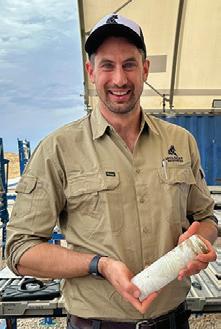
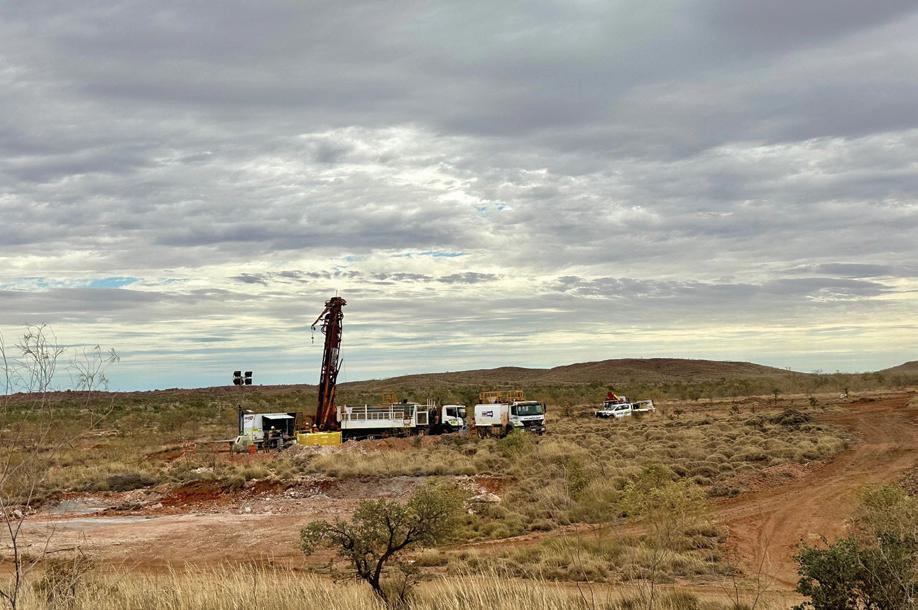
prefeasibility study in next year’s first quarter.
“Typically, a company will take a year to do a PFS. We’re hoping to get it done in six months,” Saverimutto said.
“The reason I came on this project is it’s got large tonnage. It’s potentially a 20-plus-year mine life, it’s going to be low cost and it’s going to be pretty simple processing.”
Despite weak market conditions, Wildcat has received plenty of interest from potential customers.
“The amount of inbound [inqui-
Saverimutto said.
Tantalum deposit
Wildcat acquired the Tabba Tabba tantalum project in May 2023 from Resource Capital Funds-backed Global Advanced Metals (GAM).
A gold junior at the time, Wildcat theorized that Tabba Tabba, which is the world’s highest grade tantalum deposit and was previously mined in 2015, could be prospective for lithium.
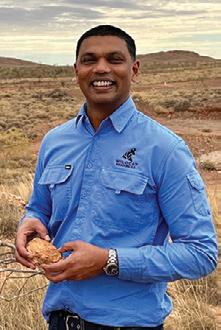
Banks recalls that the company’s exploration manager Torrin Rowe was looking through reports from the 1990s when he noticed known occurrences of lithium-caesium-tantalum mineralized pegmatites and several historical highgrade lithium hits.
“We believe that potentially that data point of information had been lost in the industry and very quickly after we started drilling, we made a discovery,” he said during a site visit to Tabba Tabba, 47 km north of Pilgangoora, in August.
“And the rest is history.”
Wildcat paid A$6.5 million in shares to GAM for the asset, plus 62.2 million performance rights that will vest once it outlines an inferred resource of more than 100,000 tonnes of contained lithium.
GAM has already sold off the shares it was issued for A$158.6 million to lithium producer Mineral Resources (ASX: MIN). MinRes, which spent A$14 million buying an initial stake on the market, now holds 19.85% of Wildcat.
And Wildcat took advantage of the buzz created by its entry onto the register by raising A$100 million at A76¢ per share in November 2023.
Other assets previously sold off by GAM included Greenbushes, Pilgangoora and Wodgina, which went on to become the world’s largest hard rock lithium mines under respective owners Talison Lithium, Pilbara Minerals (ASX: PLS) and Mineral Resources.
‘Silicon Valley of mining’ Another advantage of the project is its proximity to Port Hedland, just 80 km south by road.
Is Australia at risk of losing its ‘shine’?
LEGISLATION | New labour law, permit woes could deter investors
BY KRISTIE BATTEN
BHP (NYSE: BHP; LSE: BHP; ASX: BHP) is among Australian companies concerned about the country’s new labour laws and a shock government decision to block a project that already had permits.
The company opposed the Same Job, Same Pay legislation passed by the Labor-led government last year. BHP, the world’s largest miner by stock value, said the requirement to pay inexperienced labour the same wages as a worker with decades of experience adds costs and drags on productivity.
“We’ve always been strong advocates for tying wage increases to productivity increases, and of course, we’re supportive of that,” BHP CEO Mike Henry told reporters in late August.
“Our concerns around some of the recent changes are that they flow straight through the cost with no commensurate positive impact on productivity.”
The new legislation has driven attempts to re-unionize Western Australia’s large mining workforce, which, if successful, could
impact potential future iron ore expansions, Henry warned.
Industry already reeling
A decision in August by Australian Environment Minister Tania Plibersek to veto the tailings dam for Regis Resources’ (ASX: RRL) proposed A$1-billion (US$680 million) McPhillamys gold development in New South Wales made the project unviable. The company took a US$130-million hit.
Companies including BHP and Northern Star Resources (ASX: NST) contend the snap ruling and new labour rules reduce Australia’s international competitiveness and amplify uncertainty for project development.
The McPhillamys project, which sits on freehold farmland, had received state and federal approval in March 2023. One of the only outstanding approvals was under a law protecting Aboriginal heritage.
But key local Aboriginal representative group, the Orange Local Aboriginal Land Council, made a submission during the planning commission process that any risks to cultural heritage could be mitigated.
“Minister Plibersek’s declara-
tion was a huge shock to us, and not a decision that we felt was in keeping with past precedent, particularly given the already extensive investigation into Aboriginal cultural heritage issues,” Regis managing director Jim Beyer told analysts and media.
Hot topic
With Australian reporting season in full swing, the issue has repeatedly come up, including with BHP.
“BHP has been strong supporters of policies related to cultural heritage protection,” Henry said.
“(But) the investment community does need as much certainty as possible, because that will ultimately improve investment attractiveness for Australia, alongside competitiveness.”
Northern Star Resources, which is boosting output at Kalgoorlie Consolidated Gold Mines to 900,000 oz. per year, said Australia has had a strong track record as a stable place to invest.
“Every slow change like this just takes away some of that shine,” managing director Stuart Tonkin said on a conference call. “If Australia is not sitting up there as a great jurisdiction to invest in, the
capital goes to different countries.”
Bracing for green reforms
The Australian mining sector has already warned about possible negative implications of federal environmental law reforms.
The ‘nature positive’ reforms include the establishment of a national environmental protection agency (EPA) in addition to existing EPAs in each state and territory.
Legislation was introduced into Parliament in May, with the government promising the EPA would be a “tough cop on the beat” with the ability to issue ‘stop-work’ orders to prevent environmental damage and audit businesses.
Industry groups have warned the move would lead to duplication of regulation, adding to the cost and timeline of getting new projects approved.
“The environmental policy is just an absolute joke in Australia,” Minerals Council of Australia CEO Tania Constable told a conference in May.
“I’m failing to see what a national EPA is going to add in terms of making sure that we get a better environmental outcome when we’ve got state EPAs out there.” TNM
That port, 1,600 km north of Perth, is a town of more than 15,000 people, built on mining, and is also home to the world’s largest bulk-tonnage port that exports a significant portion of the world’s iron ore supply, as well as lithium and salt.
“It is the Silicon Valley of mining,” Saverimutto said. “Nearly 20% of the world’s lithium comes from here.”
The project’s location allowed Wildcat to build a 60-person accommodation camp on site in just three weeks.
Wildcat recently released the first metallurgical test results from Leia, using 288 kg of samples from nine drill holes.
“Most market competitors would do half a kilo or a kilo at three times their grade,” Saverimutto said.
Whole-of-ore flotation test work at head grades of 1-1.4% lithium oxide returned recoveries of 79-84% to produce a 5.5% lithium concentrate and 72-84% to produce a 6% concentrate.
“Today, we’ve had nearly 700 kg in the lab and that’s moving very quickly to 1.2 tonnes,” Banks said. Resource on horizon
The next milestone for Wildcat is an initial resource for Tabba Tabba.
Argonaut mining analyst George Ross forecasts a resource of 65 million tonnes grading 1% lithium oxide for 650,000 tonnes of contained lithium oxide, while Canaccord Genuity’s Paul Howard sees
As part of its efforts to offload non-core assets, Newmont (NYSE: NEM, TSX: NGT, ASX: NEM, PNGX: NEM) has agreed to sell its Telfer mine and a 70% stake in the nearby Havieron project in Western Australia to Greatland Gold (LSE: GGP) for US$475 million in cash and shares.
Newmont will get US$207.5 million in cash, US$167.5 million in Greatland shares, and a deferred cash payment of US$100 million linked to gold prices and production from Havieron, the world’s biggest gold miner said on Sept. 10. The deal is expected to close in the fourth quarter.
The transaction represents the first asset sale in Newmont’s divestiture program announced in February. Other assets named in this program include the Éléonore, Musselwhite, Porcupine, CC&V and Akyem mines.
Earlier this year, Greatland stated that it was “in a strong position” to consolidate ownership of the Havieron gold-copper project, which the Australian junior first discovered in 2018 and has been working on since. Once built, the mine would rely on existing infrastructure from the Telfer mine.
Following the sale of Telfer, Newmont has made a minor adjustment to its gold and copper production guidance from its non-core asset base, now totalling 1.1 million oz. gold and 1,000 tonnes of copper. Production guidance from tier-one assets remains unchanged.
“Including the Telfer divestiture, we continue to expect to reach at least US$2 billion in total proceeds from the sale of our high-quality, non-core assets, enabling us to focus attention on our suite of Tier 1 assets,” Palmer added.
One asset that has been drawing plenty of interest is the Akyem mine in Ghana, which is said to be targeted by top Chinese miners
M&A | Miner paid US$826M for Karora in August
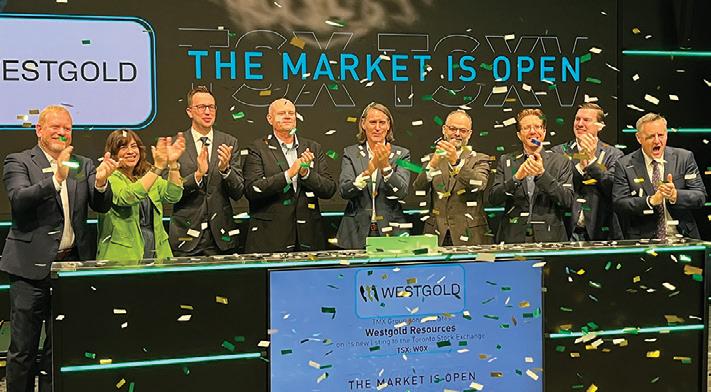
BY BLAIR MCBRIDE
Ashower of confetti and an electronic bell ring at the Toronto Stock Exchange on Sept. 13 welcomed Westgold Resources (TSX: WGX; ASX: WGX) as its newest listed company.
The $2.4-billion market cap Westgold is now a dual-listed miner that sits among Australia’s top five producers and is the 10th-largest gold miner on the TSX by this year’s forecast production.
“Having an ASX listing and a TSX listing brings the best of both worlds together,” Wayne Bramwell, Westgold’s managing director and CEO told The Northern Miner. “The ASX understands gold, so does the TSX, (and) having those two opportunities exposes Westgold to two groups of shareholders who fundamentally believe in the commodity.”
The listing came exactly six weeks since Westgold’s US$826 million acquisition of Canada’s Karora Resources created a
Shandong Gold and Zijin Mining. It is also expecting a bid from Asante Gold (CSE: ASE), which already has operations in the African nation.
Hancock Prospecting, owned by Australian mining tycoon Gina Rinehart, has received final approval from the Australian government to develop a new iron ore mine in Western Australia’s Pilbara region.
The McPhee Creek project, about 100 km north of Hancock’s Roy Hill mine, was originally slated to begin ore production in 2023. A lengthy approval process that began in early 2021, which included environmental and regulatory challenges, caused this milestone to be delayed to the 2025-26 financial year.
The A$600-million ($554 million) McPhee project is relatively small, representing just 1.5% of Australia’s current iron ore exports.
Rinehart thanked the Hancock team for their “years of efforts and persistence” in bringing the McPhee project to fruition. She took the chance to warn about the “excessive government regulations (that) are stifling the industry.”
Citing data from the Minerals Council of Australia, Rinehart said that 80% of mining projects in the pipeline would never see the light of day.
“This is serious, and if the government keeps bringing in policies and red tape and keeps attacking the mining golden geese, then there are other countries with iron ore and other minerals and investment will continue to move offshore,” she said in an interview with The Nightly.
Australia, the world’s leading exporter of iron ore, relies heavily on revenue from the steel-making material, which is the primary source of income for Hancock Prospecting.
Weak iron ore prices and the need to secure a foothold on the growing battery metals market have prompted Rinehart in recent years to diversify into other sectors, including lithium, rare earths and copper.
Despite the downturn in iron ore futures this year, most Australian mining projects maintain production costs below current market prices.
Australia, the largest gold producer after China, produced slightly less of the yellow metal in the 12 months to June 30 as miners adjusted strategies for record high prices even as second-quarter output increased 7%, according to Melbourne-based consultants Surbiton Associates.
The country produced 297 tonnes (9.6 million oz.) of gold during the 2023-24 period, 321,500 oz. less than 2022-23, and valued at A$30 billion ($27.4 billion), Surbiton said. Production totalled 2.4 million oz. in the three months to June 30, a rise of 160,760 oz. on the previous quarter after heavy March rains impacted most operations, it said.
“At times of high prices, some operators deliberately reduce mill head grades by blending low grade stockpiled material with run of mine ore,” Sandra Close, a director of Surbiton, said in a Sept. 1 release. “In this way more gold can be mined from their deposits, thus extending the lives of their operations. Some profit is foregone up-front but the life-of-mine is longer.”
Another strategy is to process higher-grade ore and realize greater early profits, even though some gold will be left unmined, Close said. “A dollar today is worth more than a dollar tomorrow,” she noted.
BY NORTHERN MINER STAFF
Novo Resources (TSX: NVO; ASX: NVO; US-OTC: NSRPF) has completed a new geological model for its Belltopper gold project in Australia, and defined an exploration target of up to 2.1 million tonnes of ore grading between 6.6 and 8.4 grams gold per tonne for between 320,000 and 570,000 oz.
Belltopper is in Victoria’s geologically defined Bendigo Tectonic Zone, an area that produced more than 60 million oz. of gold historically and is 50 km south of Agnico Eagle Mines’ (TSX: AEM; NYSE: AEM) Fosterville gold mine.
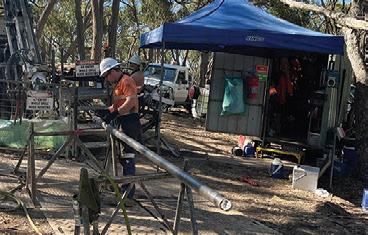
“The ASX understands gold, so does the TSX. Having those two opportunities exposes Westgold to two groups of shareholders who fundamentally believe in the commodity.”
Wayne Bramwell, Westgold CEO
combined company expected to have an annual output of over 400,000 oz. of gold. The new entity also boasts ore reserves of 3.2 million oz. of gold, and resources of 13 million oz. of the metal, and holds several exploration prospects across two of Australia’s most productive gold fields.
The conceptual target, which gives an indication of likely tonnage and grade range of mineralization, but falls short of a resource estimate, was based on modelling of recent and historical drilling on seven reefs.
“Our team worked really hard for the last two years to get a good grip on the geology,” said executive co-chair and acting CEO Michael Spreadborough. “The exploration target puts the story together and gives us an overview of the potential at Belltopper.”
Assay results from a recent six-hole, 2,529metre diamond drilling campaign reported Aug. 5 include intercepts of 5.6 metres grading 3.14 grams gold per tonne at 219.8 metres depth and 4.3 metres of 5.88 grams gold per tonne from 274.8 metres, including 2 metres of 11.15 grams gold per tonne.
The company also relogged and sampled historical core from Belltopper. Results included 6 metres of 4.37 grams gold per tonne from 169 metres depth, and 2 metres of 7.19 grams gold per tonne from 52 metres, including 1.2 metres of 12.01 grams gold per tonne.
Diamond drilling planned for Belltopper in 2025 and 2026 will initially consist of at least two holes per reef to test higher priority
Fosterville-style targets. Novo also recently reported positive results from its Becher and Nunyerry North projects in Western Australia’s Pilbara region.
At Nunyerry North, the company completed a 34-hole, 3,942-metre reversecirculation drill program in July. Highlighted results reported on Aug. 19 include 13 metres of 2.68 grams gold per tonne from a depth of 66 metres, including 3 metres of 10.41 grams gold per tonne; and 11 metres of 2.2 grams gold from 84 metres, including 1 metre of 18.06 grams gold per tonne in hole NCO46. The privately owned Creasy Group owns a 30% stake in Nunyerry North. And at Novo’s Becher project, part of its Egina JV with De Grey Resources (AEX: DEG) De Grey has spent more than the required minimum of A$7 million on exploration this year as part of its earn in agreement. The company, which holds the 12.7 million oz. Hemi project 28 km northeast of Becher, must spend A$25 million within four years for a 50% stake in the project.
The preceding Joint Venture Article is
ONTARIO | PEA outlines 5.3 million oz over 12-year mine life
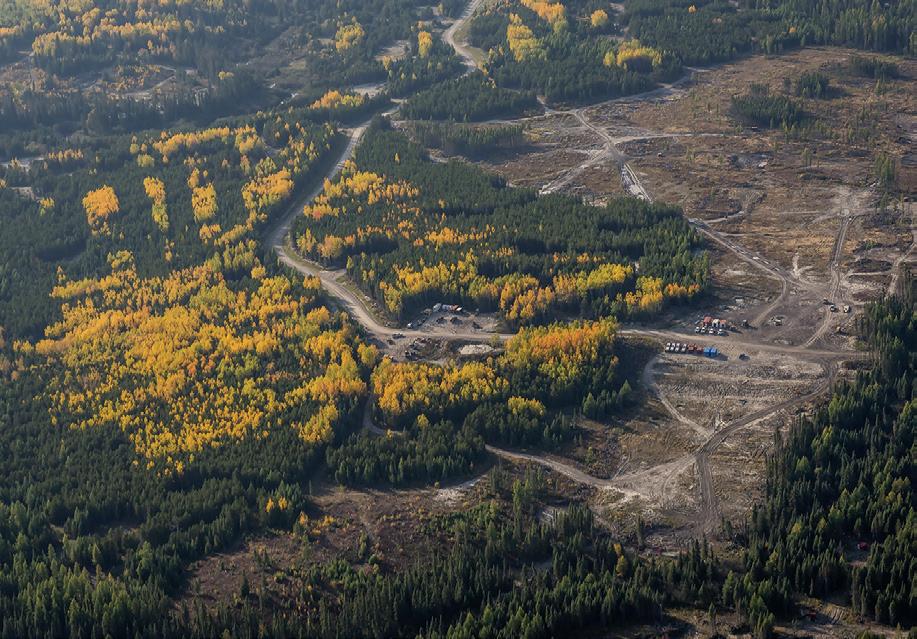
BY NORTHERN MINER STAFF
When Kinross Gold (TSX: K; NYSE: KGC) bought the Great Bear project in northern Ontario’s prolific Red Lake district about two and a half years ago, it was seeking an extraordinarily high-grade asset that could become a world-class mine.
Now a preliminary economic assessment (PEA) and an updated resource estimate seem to bear that out. A combined open-pit and underground mine could produce about 518,000 oz. gold a year at an all-in sustaining cost of US$812 per oz. over the first eight years of an initial 12-year mine life, Kinross said on Sept. 10.
Production after a two-year construction period could start in 2029. Great Bear is expected to produce a total of 5.3 million oz. at cash costs of US$594 per ounce.
“We became new owners in February 2022 and what we saw in Great Bear at that time and continue to see today is a top-tier asset with significant potential for a large, long-life, low-cost mining complex,” Kinross CEO Paul Rollinson told investors and analysts on a conference call. “We see potential to support a multi-decade asset.”
$1.4B capex
The project has an after-tax net present value (at a 5% discount rate) of US$1.9 billion and an internal rate of return of 24.3% at a gold price of US$1,900 per ounce. Construction costs were pegged at $1.2 billion, and total initial capital costs of US$1.4 million could be paid back in just under three years.
Great Bear lies 500 km northwest of Thunder Bay and 24 km southeast of the town of Red Lake.
Shares of Kinross on the TSX traded at $12.79 before press time, giving the company a market capitalization of $16.3 billion. Over the last year its shares have traded in a range of $5.91 to $13.70. Carey MacRury, a mining analyst at Canaccord Genuity, gives it a price target of $16 per share.
“We expect more ounces to be added to the mine plan as drilling gets underway underground,” he wrote in a comment on the PEA, noting that Kinross remains in his top picks among senior gold producers.
“The PEA highlights a compelling project with further upside from resource expansion at depth,” Raymond James mining analyst Farooq Hamed wrote on Sept. 10.
The initial mine plan envisions concurrent open-pit and underground mining in the first eight years followed by combined underground mining and stockpile processing in years eight to 12. That offers production flexibility and the opportunity for underground exploration drilling to expand the resource and mine life, the company says.
Since acquiring the pre-resource project, Kinross has drilled more than 420 km on Great Bear’s recently expanded 120-sq.-km land package. An updated resource based on drilling to April this year in three zones (LP, Hinge and Limb) estimates Great Bear contains 30.3 million measured and indicated tonnes grading 2.81 grams gold per tonne for 2.7 million oz. gold and another 25.5 million inferred tonnes at 4.74 grams gold for 3.9 million ounces.
The resource was calculated at a gold price of US$1,700 per oz. and the open pit within a US$1,400 per oz. pit shell. The cut-off grade for the open pit was 0.55 gram gold and 2.3 grams gold for the underground.
Earlier this year, directional drilling beyond 1,000 metres depth demonstrated strong widths of high-grade below the PEA inventory. Drilling in the main LP Zone returned 3.8 metres grading 9.5 grams gold at nearly 1,600 vertical metres.
“Through our due diligence our technical team had classified Red Lake vein-style mineralization and importantly also mineralization more similar to what is seen at the
NWT | Project bid requires further Indigenous input
BY STAFF WRITER
Burgundy Diamond Mines (ASX: BDM), owner of the Ekati diamond mine in the Northwest Territories, says it has pulled plans for underground mining at the Sable open pit following feedback from local communities.
In late September, the miner withdrew its application with the Wek’èezhìı Land and Water Board. It had deemed the Sable development as a major mining project requiring approval from the Tlicho First Nations group.
“Burgundy has made this difficult decision after taking to heart all the comments and feedback provided during the application process,” the company said in a letter to the water board.
52-week range of A12¢ to A24¢.
Mine closures
The extension withdrawal comes as the territory’s three diamond mines face closures in the coming years. Rio Tinto’s (NYSE: RIO; LSE: RIO; ASX: RIO) Diavik mine is due to close in 2026, and Anglo American (LSE: AAL) unit De Beers’ 51%-owned Gahcho Kué mine is slated to run until 2028. While Ekati’s Sable open pit is expected to wind down this year, its Point Lake open pit could produce until 2029, according to company projections.
Hemlo Camp,” Rollinson said on the call, referring to Barrick Gold’s (TSX: ABX; NYSE: GOLD) mine about 800 km southeast. “Our thesis was that this mineralization would extend high-grade at depth. Results have been exceeding our expectations.”
Linking zones
This year the company plans to focus drilling on linking zones at depth at LP and more directional work at Hinge and Limb. There will also be a brownfield exploration focus on more open-pit and underground opportunities. Recent exploration results below the PEA inventory include 22.7 metres at 6.51 grams gold at the Yauro zone and 5.4 metres of 7.82 grams gold at Discovery.
“We really do view this PEA as just the beginning of the value story at Great Bear,” William Dunford, senior vice-president of technical services, said on the conference call. “We need to get underground to show the story,” he said. “As we progress drilling underground, we see potential to increase underground production in later years.”
Dunford, who was part of Kinross’s team at the Kupol mine in Russia’s Far East until the company sold the mine in 2022, pointed to potential similarities with Great Bear.
“Many of our team previously worked in the Russian region and have seen this at Kupol,” Dunford said. “When we started there, we had 4 million oz. of resource and by 2022 we had produced over 7 million ounces.”
Conventional mill
Ore from the mine would be sent to a 10,000-tonne-per-day conventional mill. Testing has shown clean metallurgy with an average life-ofmine recovery of 95.7%.
The tailings design includes the addition of a desulphurization flotation circuit to remove sulphides and prevent the tailings from generating acid. The LP Viggo pit can provide an in-pit tailings storage facility. TNM
“The information provided by the intervenors and the Tlicho government has been the subject of careful deliberation by Burgundy, and has led Burgundy to conclude that more time is needed to improve the application for the proposed project.”
The company said it could revisit the project in the future after incorporating feedback from the Tlicho government. A public hearing scheduled for Sept. 25 on the expansion was cancelled after the company pulled its application.
The CBC first reported the water board letter on Sept. 24. The broadcaster also said Burgundy called for changes to “inflexible” regulations in a letter to Premier R.J. Simpson. Revisions could help Ekati operate until at least 2040, the company argued.
Burgundy’s market capitalization is A$199 million ($184.5 million). Its shares have traded in a
Burgundy has also said recent drilling at the main Misery orebody could extend Ekati’s mine life. The crew found a fancy yellow diamond about 25 metres below the last planned mine level and the company contends there’s a larger orebody at depth.
In the three months to June 30, Ekati produced 1.22 million carats and sold 1.03 million carats at an average of US$103 per carat to earn US$106 million, the company said in July. The Fox underground updated prefeasibility study was 30% complete and the Point Lake open-pit preparation was progressing towards production early next year, it said.
Burgundy acquired Ekati when it purchased its former owner, Arctic Canadian Diamond, in March 2023 for US$136 million. But it has since faced financial pressure due to headwinds in the global diamond market. These include slowing demand for luxury items after inflation limited consumer spending and caused some oversupply. Cheaper and more accessible lab-grown diamonds are hurting the natural stone market. TNM
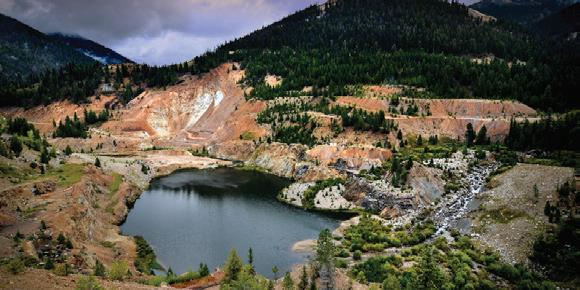
IDAHO | Project holds gold, antimony
BY MINING.COM STAFF
Perpetua Resources (TSX: PPTA; NASDAQ: PPTA) stock jumped 17.4% in early September after it said it secured a key federal approval for its flagship Stibnite gold project in Idaho. The United States Forest Service (USFS) completed the final environmental impact statement for
the project and is issuing a draft decision record, the company said. Perpetua’s stock continued to climb after its initial pop on Sept. 5, rising to $13.61 before press time for a market capitalization of $883 million.
The draft decision, said the USFS in a release, comes after a “rigorous interagency permitPerpetua P22 >
BY NORTHERN MINER STAFF
Drilling at targets just north of the Čoka Rakita deposit in Serbia show the potential for more high-grade copper and gold at the project, Dundee Precious Metals (TSX: DPM) reported on Sept. 11.
Hole DPDD018A at the Dumitru Potok target, 1 km northeast of Čoka Rakita, cut 63 metres of 1.74% copper, 2.18 grams gold per tonne and 9.04 grams silver from 639 metres downhole, including 15 metres of 3.38% copper, 4 grams gold and 14.7 grams silver.
“These results are highly encouraging as it demonstrates the potential for a camp-style stratabound skarn mineralizing system,” Raj Ray, a mining analyst at BMO Capital Markets, wrote in a research note.
At the Fransen target, 1 km northwest of Čoka Rakita, drill hole BIDD236A cut 21 metres of 1.77% copper, 1.2 grams gold and 43.47 grams silver from 112 metres downhole, and drill hole BIDD229 returned 17 metres of 1.39% copper, 1.35 grams gold and 6.68 grams silver from 700 metres, including 9.2 metres of 2.04% copper, 1.45 grams gold and 9.6 grams silver.
“Assuming continued exploration success,” noted Ray, the discoveries “could add scale to the Čoka Rakita project and significantly enhance the economics.”
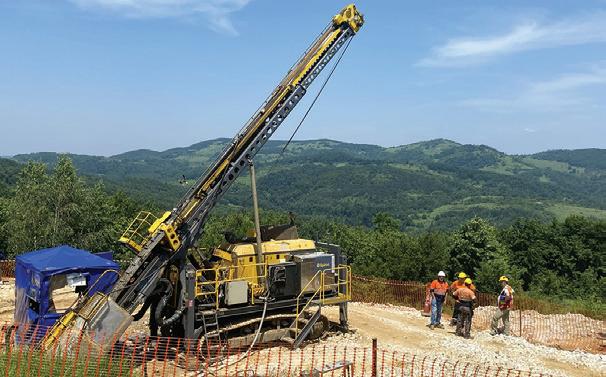
US$381M capex
A preliminary economic assessment in May proposed a 10-year mine producing 129,000 oz. gold per year (164,000 oz. annually in the first five years) at an all-in sustaining cost (AISC) of US$715 per ounce. It estimated an after-tax net present value of US$588 million at a 5% discount rate and an internal rate of return of 33%. The mine could cost US$381 million to build.
A prefeasibility study is due in next year’s first quarter, with construction starting as early as mid2026 and commissioning in 2028.
“It’s exciting because it offers near-term production,” Dundee CEO David Rae said in an interview on Sept. 11.
The project is about 160 km
southeast of the capital Belgrade, and just 320 km from Dundee’s Chelopech mine, which is forecast to produce 155,000 to 175,000 oz. gold and 29 to 34 million lb. copper this year at AISCs of US$650 to US$790 per ounce.
“The really compelling opportunity here for me is this is something in our backyard and just five hours by road away from our primary asset Chelopech, and we can use that opportunity to access our skills and regional support for things like exploration, technical services, supply chains, legal and permitting,” Rae said.
Strong local relations Dundee has been operating in Serbia since 2004 and has developed
BC | PEA shows $1.3B NPV over 14-year life
BY COLIN MCCLELLAND
Anew study combining Thesis Gold’s (TSXV: TAU; US-OTC: THSGF) Ranch gold-silver project in northern British Columbia with Lawyers, acquired through its takeover of Benchmark Metals last year, shows a 35% post-tax internal rate of return (IRR).
The now-merged adjacent projects near Dease Lake have an after-tax net present value (NPV) just shy of $1.3 billion at a 5% discount rate, Thesis said Sept. 5. Initial capital costs are pegged at $598.4 million, the payback could take two years and annual production may increase by nearly a third to 215,000 gold-equivalent oz. compared with a 2022 preliminary economic assessment (PEA). That study for Benchmark concerned just Lawyers and forecast an after-tax NPV of $589 million at a 5% discount rate, an IRR of 24% and 2.8-year payback. Initial capex was $484 million. A prefeasibility study and permit applications are next.
The new study also boosted the mine life to 14 years from 12.
“With today’s gold price near US$2,500 per oz., the substantial economic potential of the Lawyers-Ranch Project is clear,” president and CEO Ewan Webster said in a release. “We will continue to explore new targets within our expansive, highly prospective land package.”
Toodoggone district
The 495-sq.-km project in the Toodoggone district is about 45 km northwest of Centerra Gold’s (TSX: CG; NYSE: CCAU)
underground project at the Kemess South mine that produced about 3 million oz. gold and 750 million lb. copper between 1998 and 2011.
Webster called Lawyers-Ranch straightforward and low-risk, benefiting from highgrade open-pit and underground ounces and proximity to roads and power.
The updated PEA, using gold at US$1,930 per oz. and silver at US$24 per oz., forecasts all-in sustaining costs of US$1,013 per oz. of gold-equivalent compared with US$824 per oz. in the 2022 study.
The 24% increase in construction costs from one PEA to the next is mostly due to inflation, and work to increase the plant throughput rate by 18% to 12,600 tonnes per day from 10,700 tonnes, Thesis said. Sustaining and closure capital costs total $594.2 million.
The study identifies 58 million tonnes of open pit ore with a grade of 1.44 gold-equivalent grams per tonne containing more than 2 million oz. gold and 54.7 million oz. of silver. A crossover to underground mining is seen from years two to 14 to feed up to 2,500 tonnes per day from the Duke’s Ridge, Cliff Creek and Ranch deposits, Thesis said.
Underground mining is to extract 6.5 million tonnes at an average grade of 3.17 grams gold-equivalent, about 10% of the plant feed and 20% of the contained ounces, the company said.
Resource update
Lawyers-Ranch holds 94.4 million measured and indicated tonnes, a 31% increase from the two-year-old PEA, according to a resource update in May. TNM
strong contacts with both local stakeholders and government, Rae said.
Čoka Rakita holds 9.8 million inferred tonnes grading 5.7 grams gold and 1.21 grams silver for 1.8 million oz. gold and 382 million oz. silver, according to an initial resource issued in December.
Dundee, with 16 drill rigs at the project, has drilled 22,000 metres since January and plans another 35,000 metres before the end of the year. Much of that will focus on Dumitru Potok, Frasen and other regional targets as it has almost completed the infill drilling it needs at Čoka Rakita to upgrade the resource.
Highlights from Dumitru Potok earlier this year included hole DPDD012, which cut 26 metres of 3.54% copper and 3.03 grams gold from 1,155 metres downhole.
Exploration will also follow up on a recent magneto-telluric survey that highlighted conductivity targets on the Potaj Čuka exploration licence, which extends for several kilometres along strike north of Dumitru Potok.
Those targets have the same characteristics and geological setting as Dumitru Potok and Frasen because of their prospective stratabound and porphyry style mineralization, the company says.
Čoka Rakita ranked first in a
Northern Miner top 10 drill results survey that covered the first seven months of the year. In February, drill hole RIDD052A cut 81 metres grading 50.57 grams gold from 122 metres depth.
On Sept. 13, infill drilling results at the deposit’s high-grade zone returned 74 metres of 27.3 grams gold per tonne from 426 metres depth, including 37 metres of 47.44 grams gold and 0.11% copper.
“The region was historically explored for porphyry and high-sulphidation epithermal systems but since the discovery of Čoka Rakita, the exploration model has been updated to target skarns,” BMO’s Ray noted.
Infrastructure
The 109-sq.-km project has easy access to roads, power lines and technical support, leveraging the region’s rich mining history and the company’s experience in underground mining.
Dundee also owns the Timok gold project in the Balkan country. It has budgeted between US$20 million and US$22 million for exploration activity in Serbia this year.
Ray has an outperform rating and a target price of $18 per share on the company’s stock, well above the stock’s 52-week high of $13.63. Before press time in Toronto, Dundee was trading at $13.66 apiece, valuing the company at $2.4 billion. TNM
SOUTHWEST | Results hint at deeper mineralization
BY BLAIR MCBRIDE
New drill results from Nevada King Gold (TSXV: NKG; US-OTC: NKGFF) returned high grades and confirmed mineralization lies relatively flat across the Atlanta project’s central part. Its shares rose.
Highlight hole AT23NS-120C cut 53.8 metres grading 4.1 grams gold per tonne and 32.9 grams silver from 15.4 metres under the pit floor, including 3 metres at 17.9 grams gold and 63 grams silver, the company reported on Sept. 23.
That hole, among 20 reverse-circulation holes and one core hole were drilled at Atlanta along the eastern boundary of the Atlanta Mine fault zone, which is also being used for stage two of Nevada King’s ongoing metallurgical test work. The project is located 264 km northeast of Las Vegas, in the prolific Battle Mountain Trend.
Shares in Nevada King gained 8.4% to 39¢ apiece in Toronto on the news, before settling to 35¢ each before press time, valuing the company at $118.5 million. Its shares traded in a 52-week range of 20¢ to 48¢.
“There are two distinct types of intrusive or silica breccia units found at Atlanta,” Cal Herron, Nevada King’s exploration manager, said in a release. “One (is) associated with altered dolomite that rarely hosts gold mineralization outside of the resource zone and the second (is) related to rhyolitic intrusions, which does often host gold mineralization.”
The latest intersections come after a summer of exploration returned promising results at Atlanta, which hosts a past-producing open-pit gold mine where Standard Slag
produced 110,000 oz. of gold and 800,000 oz. of silver from 1975 to 1985. Companies including Gold Fields (NYSE: GFI), Kinross Gold (TSX: K; NYSE: KGC) and Meadow Bay Gold drilled more than 40,000 metres at the site since the 1990s.
Hints of more mineralization
Another highlight includes 35.1 metres at 3.59 grams gold and 37.1 grams silver, and 3 metres of 18.88 grams gold and 48.2 grams silver from 118.9 metres depth in hole AT23NS-171.
Noteworthy hole AT23NS-172 cut 24.4 metres grading 1.76 grams gold and 440.6 grams silver from 123.5 metres; and hole AT23NS-164 cut 41.2 metres at 2.25 grams gold and 100.3 grams silver from 149.4 metres depth.
The mineralization in AT23NS-164 is mostly hosted in silicified rhyolitic intrusive rock, and seems to have played a major role in decalcifying carbonate host rocks and depositing gold and silver throughout the Atlanta deposit, the company said. That has important implications as Nevada King searches for new mineralized zones within the carbonate-dominated regional targets identified north and east of the resource zone earlier this month.
Nevada King began acquiring properties along the state’s Battle Mountain Trend in 2016. Atlanta hosts 11 million measured and indicated tonnes grading 1.3 grams gold for 460,000 oz. gold and 11.9 grams silver for 4.2 million contained ounces, according to a 2020 resource estimate. Inferred resources total 5.3 million tonnes at 0.83 gram gold and 7.3 grams silver. TNM
> Emissions from P5
technologies such as direct air capture and carbon capture and storage have started to gain traction in the industry. While these new technologies offer exciting potential for reducing atmospheric carbon, they also come with significant growing pains and cost hurdles.
Global spread
Over the last five years, I have provided legal counsel on more than a dozen carbon credit projects and witnessed their proliferation throughout the world. Canadian investors and management teams often play leading roles in the quickly evolving market.
One of the most notable trends shaping the market today is the surge in demand for carbon credits, mainly driven by corporate pledges to reach net-zero emissions. That’s led to price fluctuations. Naturebased credits rose from about US$4 to over US$20 per tonne of CO2 between 2021 and 2022 before settling around US$12 to US$18 by late last year. These shifts reflect both market adjustments and growing scrutiny over the quality of credits.
There are concerns like carbon leakage, where emissions are reduced in one area but increased in another, and non-permanence, where stored carbon could be released again. The London-based market overseer, the Integrity Council for the Voluntary Carbon Market (IC-VCM), has introduced new standards, such as the Core Carbon Principles. These measures should give the VCM a more meaningful positive impact on the environment. They’ll make voluntary carbon credits better aligned with investors focused on environmental, governance and social (ESG) issues.
Digital technology is also transforming the VCM. The use of blockchain and digital platforms is improving transparency, preventing fraud, and making trading easier and more accessible.
Market challenges
Despite its recent growth, the VCM faces several issues. Financing remains a primary concern, as developing carbon credit proj-
“The price of nature-based credits rose from about US$4 to over US$20 per tonne of CO2 between 2021 and 2022 before settling around US$12 to US$18 by late last year. These shifts reflect both market adjustments and growing scrutiny over the quality of credits.”
ects requires significant upfront investment. For instance, naturebased projects can cost around US$5 million, while high-tech solutions like carbon capture and storage or direct air capture can exceed US$100 million. Securing sufficient funding for new projects is incredibly difficult given the volatility in carbon credit prices and other uncertainties in the VCM.
Regulatory inconsistency is another factor that can have a major impact on the viability and profitability of projects. The VCM regulatory landscape is constantly changing, with major upheavals in domestic laws pertaining to carbon credits in Indonesia and other countries in recent years causing chaos.
Market volatility adds to the complexity. Carbon credit prices fluctuate due to changes in demand, policy shifts and project-specific factors, making it difficult for developers to predict revenue. The process of validating and verifying credits, which helps to ensure they show real and meaningful carbon reduction, is also expensive. It often costs more than US$100,000 per project.
In addition, the VCM faces
broader challenges like a lack of standardization, which leads to varying credit quality and market fragmentation. Multiple standards and registries create confusion and drive up costs, reducing market efficiency. Furthermore, aligning voluntary markets with compliance markets in the United States and the European Union is creating more uncertainty. In the end, the key players in the industry need to adopt a more unified approach to standards in order to increase investor confidence in the market.
Despite these challenges, there is optimism about the future of the VCM. Experts believe that stricter regulations and standardized criteria will improve transparency, thereby attracting more institutional investors. As the market matures, stability and growth will inevitably follow. Nature-based solutions are likely to remain popular, and technological innovations in carbon capture and storage and direct air capture could bring more stable pricing.
In Canada, the focus will likely be on nature-based and renewable energy projects, taking advantage of the country’s rich natural resources. Digital tools like blockchain are expected to continue enhancing market transparency and boosting investor confidence.
The voluntary carbon credits market is poised for growth in the long term, driven by corporate commitments to sustainability, regulatory developments and technological advances. But for the market to realize its full potential, especially in sectors like mining and oil and gas, government and business leaders must work to maintain investor trust. They should address challenges with standardization, fragmentation and price volatility. Based on the evolution I have observed in recent years, I firmly believe that the VCM has a bright future ahead once it overcomes its growing pains. TNM
Robert Mason, founder and principal of Toronto-based Mason Law, has been providing legal counsel in mining and corporate finance for more than 20 years, and he assists clients with ESG matters.
> Putin from P8
Russian material into the U.S. are prohibited, existing contracts have been grandfathered and while utilities hold large stockpiles this situation may result in a reacceleration in contracting,” he said. “However, concerns over securing fuel may slow down future expectations for the nuclear industry as a whole.”
EY’s Yameogo noted more than 60% of the uranium trade, especially for utilities, is in long-term contracts outside of the spot market price. It upticked less than US$1 per lb. by Sept. 13 to US$80.50, having slid from US$107 in February. It was US$79.45 per lb. near press time.
“The processing is still good on this side, provided that people are going to ask that Cameco will increase more production from the Ontario sites,” he said. “Even when Russia says ‘we’re going to restrict uranium,’ they’re restricting the portion that is in the open market.”
William Freebairn at S&P Global Commodity Insights said Russia halting enriched uranium supplies could be a challenge, but noted a U.S. pledge to increase output and plans by France’s Orano to build a plant in Tennessee.
“These moves would soften the impact of any Russian cut-off,” Freebairn said by email. “Eastern
> Wildcat from P19
the potential for an 80 million tonne resource.
By comparison, Pilbara Minerals’ first resource for Pilgangoora in 2014 was 8.6 million tonnes at 1.01% lithium oxide. It’s grown to 413.8 million tonnes at 1.15% lithium in the decade since.
“We think we’re going to have a very high confidence resource, which is measured and indicated so that we can move it very quickly into that PFS and reserve and we can come out with financial metrics,” Saverimutto said.
In the meantime, exploration drilling will continue with at least three rigs.
European utilities are weaning themselves from Russian nuclear fuel as well. Nuclear industry officials say they will be ready by 2028 when Russian enriched uranium stops flowing to the U.S.”
Nickel
Mark Ferguson, S&P Global Commodity Insights research director for metals and mining, downplayed the impact of any Russian export cuts on the nickel market. The country is expected to account for 3.2% or 116,000 tonnes of global primary nickel production this year; it had 14.2% of global class one nickel in 2023, trailing only China. Russia accounted for just 0.68% of U.S. refined class one nickel imports last year.
“Taken as a whole, any impacts to nickel trade flows from a Russian export ban would likely be negligible,” he said by email. “Although it could provide upside support for prices in the near-term.”
The price of nickel increased 2% to US$7.29 per lb. on Sept. 12 and hit US$7.48 near press time. S&P and BMO noted that most of Russia’s exports head to China, which Moscow is unlikely to limit.
“However, certain developed world stainless steel producers are likely to feel nervous,” Hamilton said. TNM
Regionally, the company has a target called Pilgangoora North, which is only 10km from Pilbara Minerals’ Pilgangoora mine, the world’s second-largest hard rock lithium operation.
“Certainly a good place to go exploring is next to the biggest producing asset in the world,” Rowe said.
The most recent results from Leia, including 67 metres at 1.9% lithium oxide from 338 metres, including 46 metres at 2.5% lithium oxide, indicate the deposit will continue to grow.
“The size and scale of Tabba Tabba is second to none,” Saverimutto said. TNM
> Perpetua from
ting review, scientific evaluation, and public input” of the project’s modified mine plan of 2021, which proposed to restore the local fish habitat and improve the water quality through safe storage of legacy tailings.
There will be respective 45-day objection and resolution periods before the final record of decision is published at the end of the year, USFS says.
The Stibnite project has undergone 14 years of scientific study, community engagement and engineering, eight years in the National Environmental Policy Act permitting process, and 150 days of formal public comment, during which 28,000 letters were received.
Stibnite could become one of the highest-grade open pit gold projects in the U.S. with 4.8 million oz. of estimated reserves. The mine is expected to produce over 450,000 oz. of gold annually during the first four years with all-in sustaining costs under US$450 per oz., based on a 2020 feasibility study.
Due to its strategic importance, the project has received major U.S. government backing, including US$75 million in awards from the
Due to its strategic importance, the gold-antimony project has received major United States government backing, including US$75 million in awards from the Department of Defense.
Department of Defense. In April, Perpetua received a letter of interest from the U.S. Export-Import Bank which would make it one of Washington’s largest investments ever in a domestic mine.
Antimony source
The project reserves contain 148 million lb. of antimony, a critical mineral for national defence, clean energy and technology applications.
In September, China, which is responsible for nearly half of all global mined antimony output and dominates global refinement and processing, was expected to begin restricting its exports of the mineral. Stibnite represents one of the largest reserves of antimony outside Chinese influence, and the only known U.S. domestic reserve.
“We believe that the Stibnite gold project is a win-win-win,” said Perpetua CEO Jon Cherry, in a release on Sept. 5. “It’s a win for Idaho, it’s a win for the environment, and it’s a win for America’s national security.”
Feasibility study
Stibnite is expected to produce 4.2 million oz. of gold and 115 million lb. of antimony over a 15-year mine life, according to the feasibility study.
The project has an after-tax net present value (NPV) at 5% discount of US$1.3 billion with an internal rate of return (IRR) of 22.3% and a payback period of just under three years. However, these figures would improve to US$1.8 billion NPV, a 27.7% IRR and a 2.5year payback in a higher gold price scenario. Initial capital is estimated at nearly US$1.3 billion. TNM
Westgold shares were down 0.7% to $2.59 apiece on Friday morning just hours after the market opened in Toronto, and traded at $2.43 at press time
Alpha plans for Beta Hunt
The Aug. 2 acquisition saw Westgold take over Karora’s high-performing Australian Beta Hunt and Higginsville gold mines, located about 630 km east of Perth in Western Australia.
With reserves of 3.2 million oz, Beta Hunt is currently producing about 1.6 million tonnes per year and Westgold aims to accelerate that to 2.5 million tonnes per year, Bramwell said.
“That is for us the engine room in what we call now the southern goldfields business,” he said.
The Fletcher zone at Beta Hunt has particular exploration potential, and the company plans to pursue more drilling and resource definition in the near term.
As for Higginsville, Bramwell said it’s ripe for exploration and hasn’t been drilled for 10 to 15 years, and Westgold is ready to advance 10 strong targets at the site.
“We’re really excited about Higginsville, it was the cherry on the cake in terms of this acquisition,” he said. “We’re funded to do what we need to do.”
The company has A$165 million in cash flow, according to an Aug. 8 corporate presentation.
Riding the gold wave
The Perth-headquartered miner’s listing also comes a day after gold hit US$2,563 per oz., another historic high during a record-breaking year of yellow metal prices.
“For us to have (that) tailwind at a time when our production is starting to build is a fantastic result for the shareholders,” Bramwell said. “The business has got great momentum now, and the challenge for us now is to maintain that momentum and step up our production levels well above the 400,000 ounces we started with.”
The company now operates six underground mines and five processing plants across the Murchison and Southern Goldfields regions. Together, its tenure covers more than 3,200 sq. km., and its facilities have a combined processing capacity of around 6.6 million tonnes per year. TNM

Capital raisings
ETF assets
Drill results
Warrants & shorts
Market data
Global gold funds data 34 Mining events
*Data may not be comprehensive and is provided on a best-efforts basis as of press time. Investors are responsible for their own due diligence. 33 Market news
Delivering fit-for-purpose solutions across the entire project life cycle
Delivering fit-for-purpose solutions across the entire project life cycle
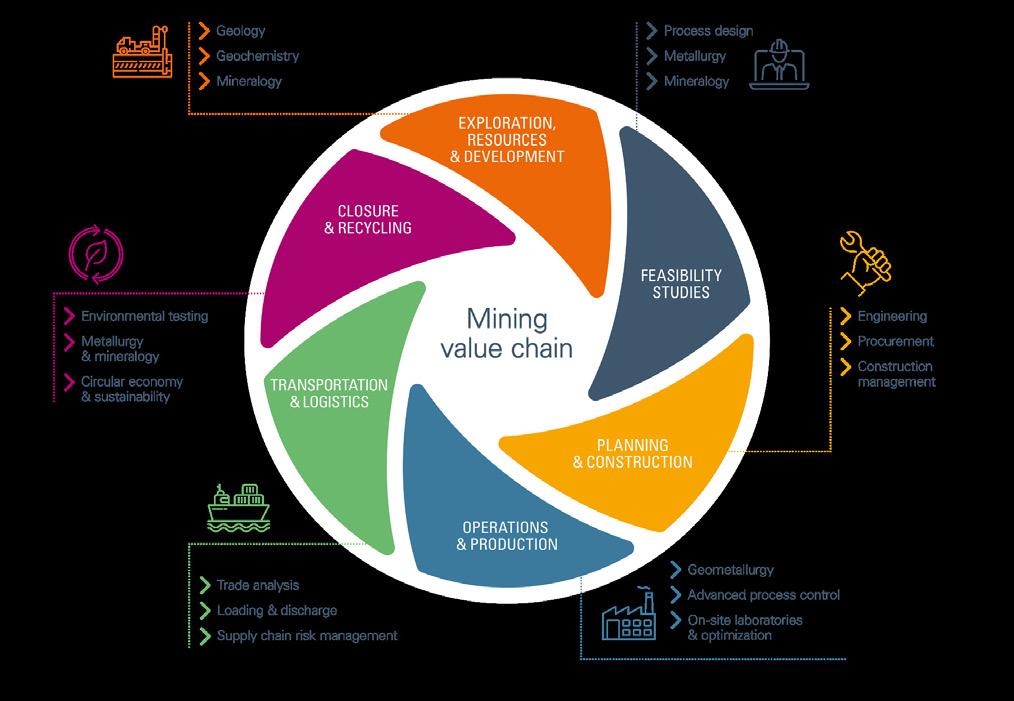
Our fit-for-purpose solutions encompass the skills of qualified geologists, geostaticians, analytical chemists, mineralogists, metallurgists, process engineers and mining engineers and inspectors brought together to provide accurate and timely mineral and process evaluation services across the entire project life cycle.
Our fit-for-purpose solutions encompass the skills of qualified geologists, geostaticians, analytical chemists, mineralogists, metallurgists, process engineers and mining engineers and inspectors brought together to provide accurate and timely mineral and process evaluation services across the entire project life cycle.
WWW.SGS.COM/NATURALRESOURCES NAM.NATURALRESOURCES@SGS.COM Delivering
Our fit-for-purpose solutions encompass the skills of qualified geologists, geostaticians, analytical chemists, mineralogists, metallurgists, process engineers and mining engineers and inspectors brought together to provide accurate and timely mineral and process evaluation services across the entire project life cycle.
Our fit-for-purpose solutions encompass the skills of qualified geologists, geostaticians, analytical chemists, mineralogists, metallurgists, process engineers and mining engineers and inspectors brought together to provide accurate and timely mineral and process evaluation services across the entire project life cycle.
WWW.SGS.COM/NATURALRESOURCES NAM.NATURALRESOURCES@SGS.COM
WWW.SGS.COM/NATURALRESOURCES NAM.NATURALRESOURCES@SGS.COM
WWW.SGS.COM/NATURALRESOURCES NAM.NATURALRESOURCES@SGS.COM

1
$6,000
$5,000
$4,000
$3,000
$2,000
$1,000
$0
9/23–8/24 9/22–8/23
Note: Trended capital raising activity may differ from the previous months as we have switched data providers in order to expand our coverage of market activities.
PearTree is a Canadian Securities Dealer and Investment Fund Manager advancing over (CAD) $500 million annually for resource exploration and mine development in a uniquely Canadian structure which results in as much as $2.00 of capital deployed for every $1.00 invested by global institutions and family offices.
Watch our video in English, Français, Deutsch, and Español on our website.
Expanding the universe of exploration capital.
4
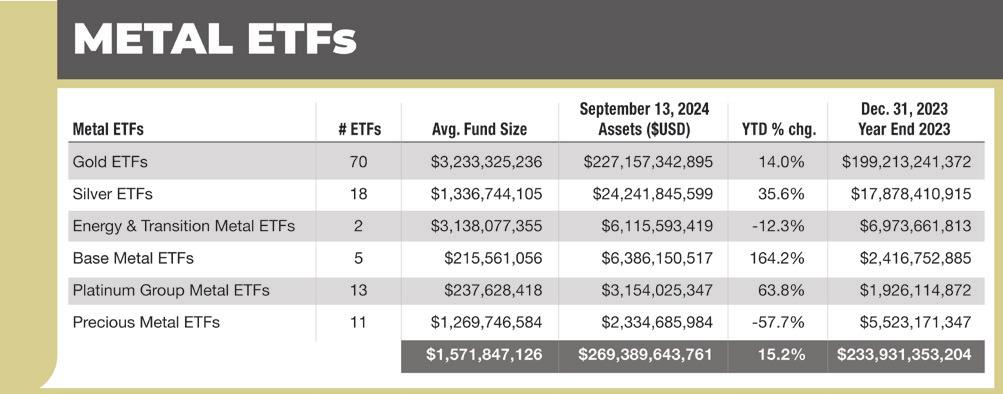
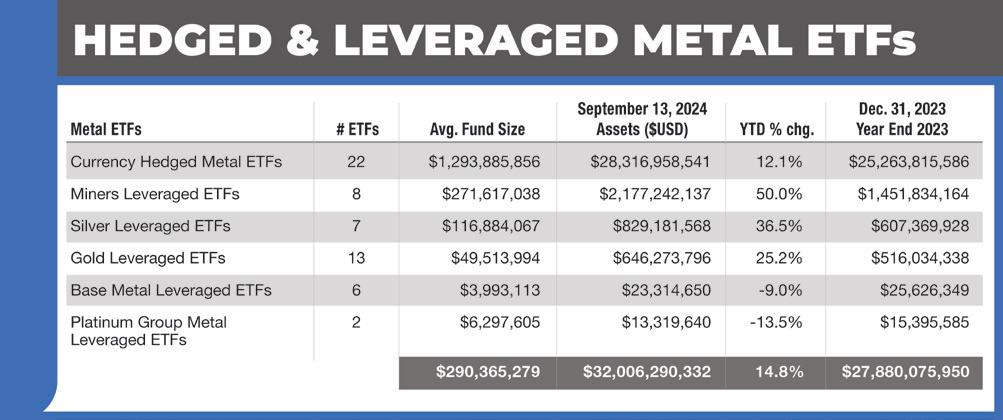
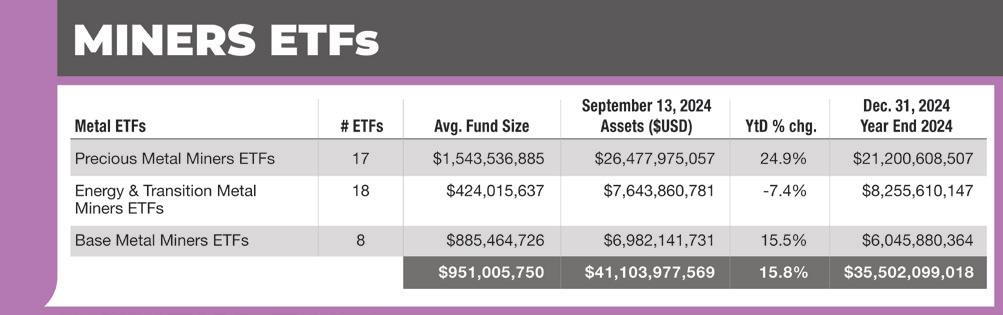
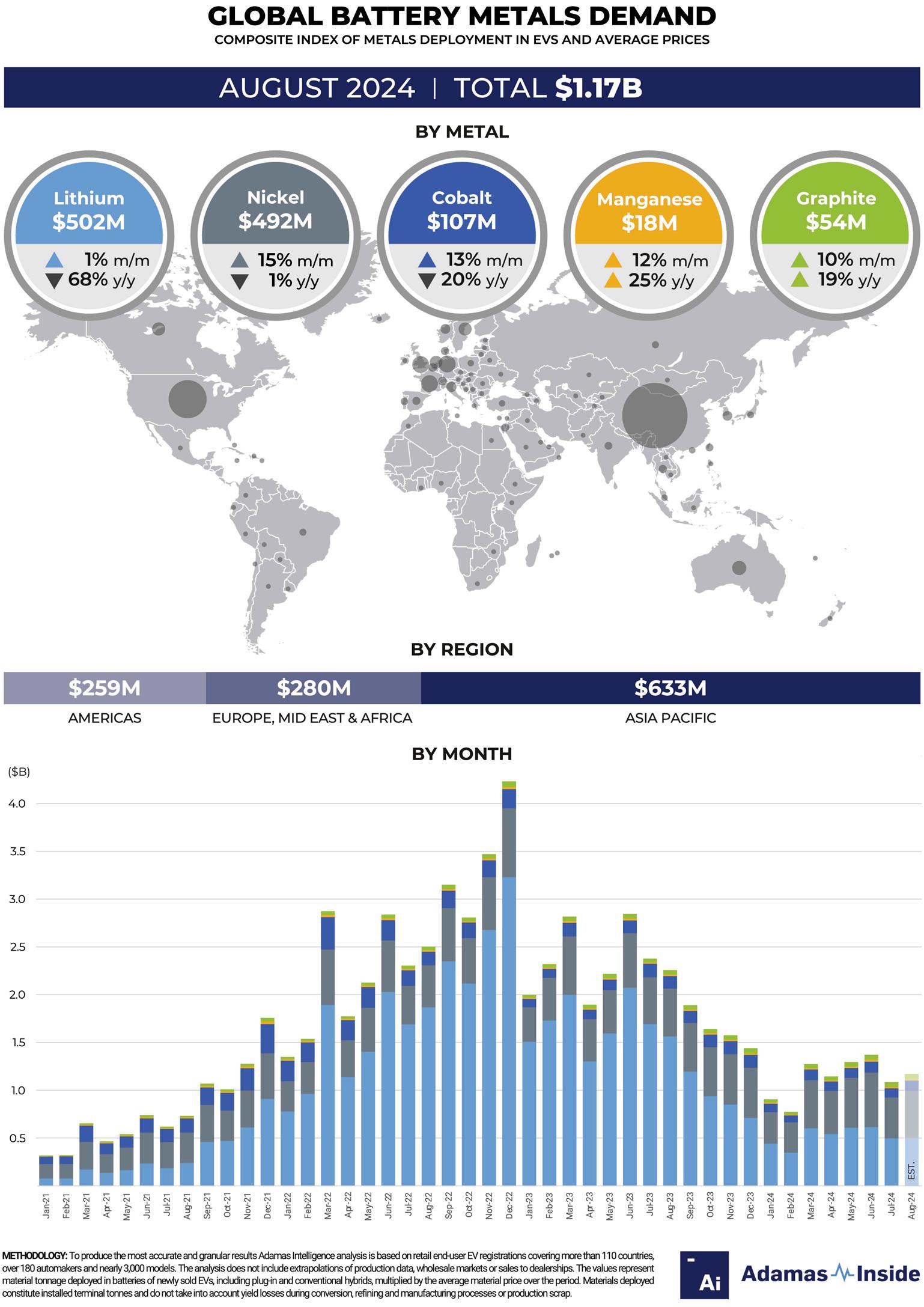
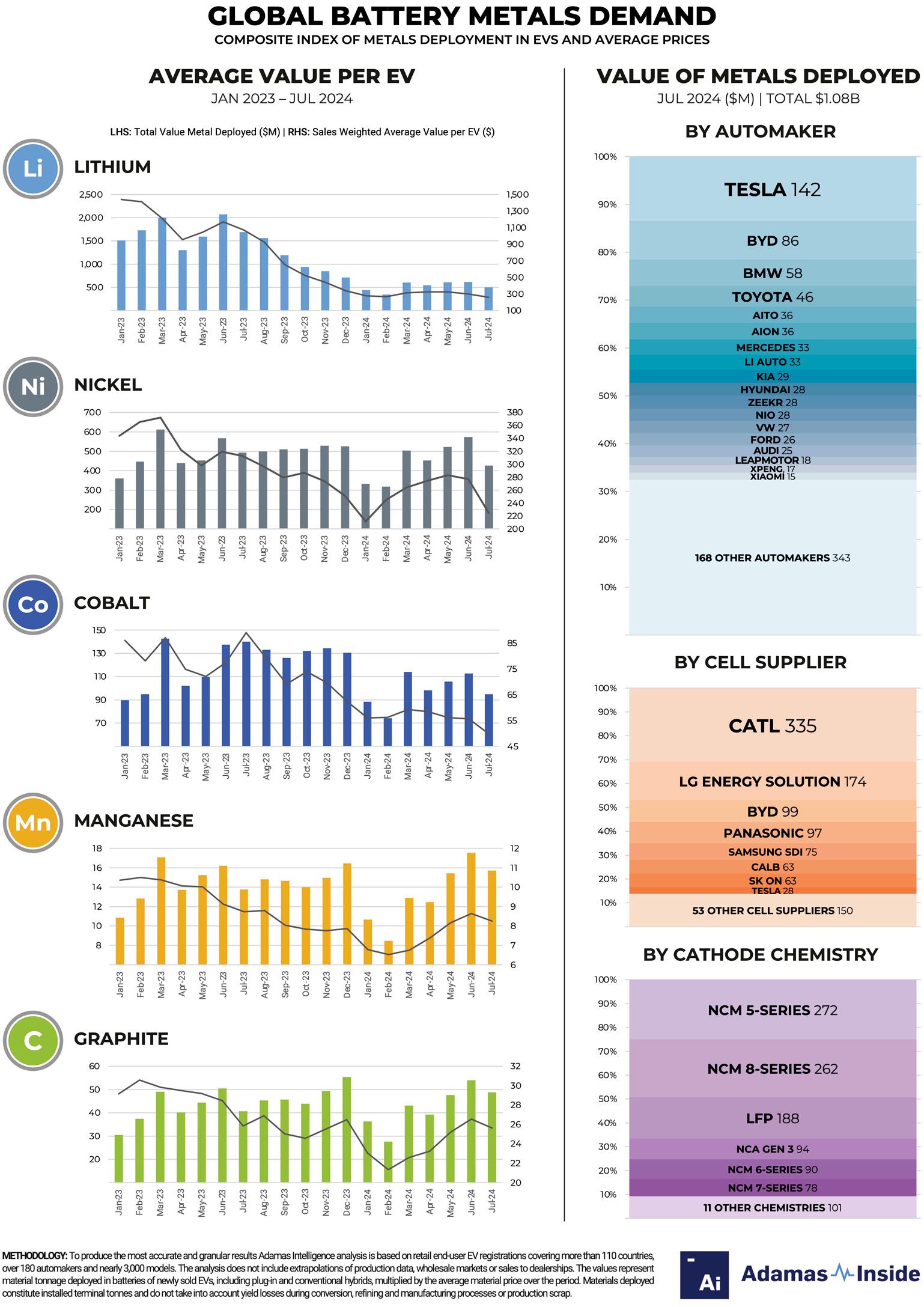
Our TNM Drill Down features the top 10 gold, copper and silver assays of the past month. Drill holes are ranked by grade x width.
August 16, 2024 — September 13, 2024
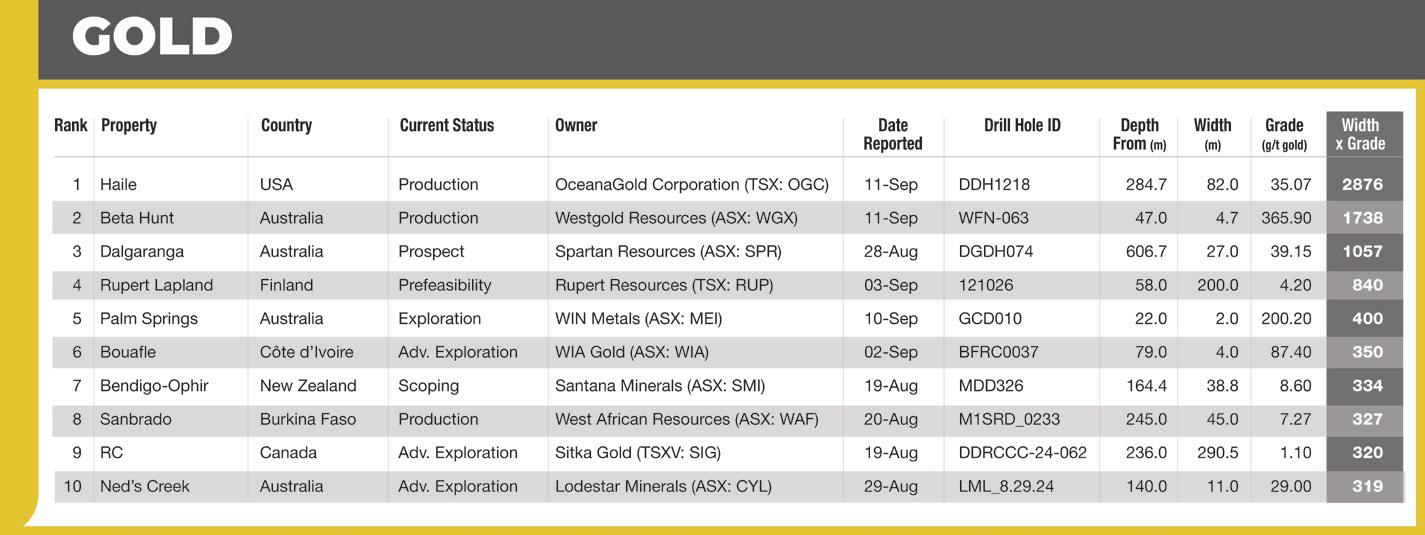
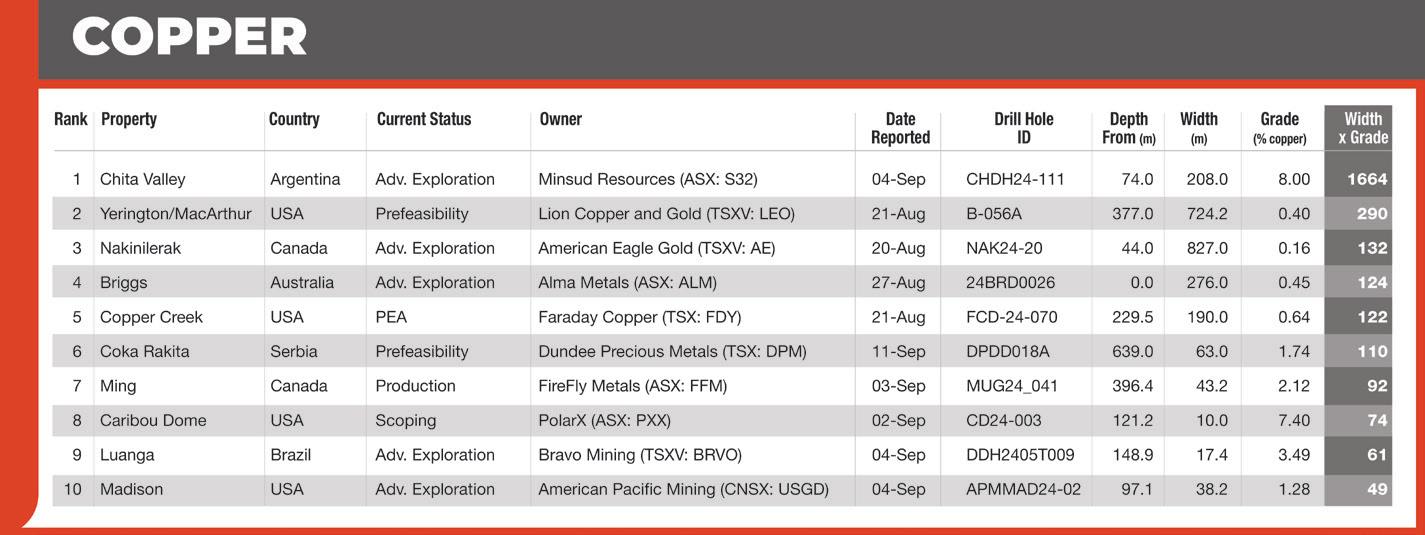
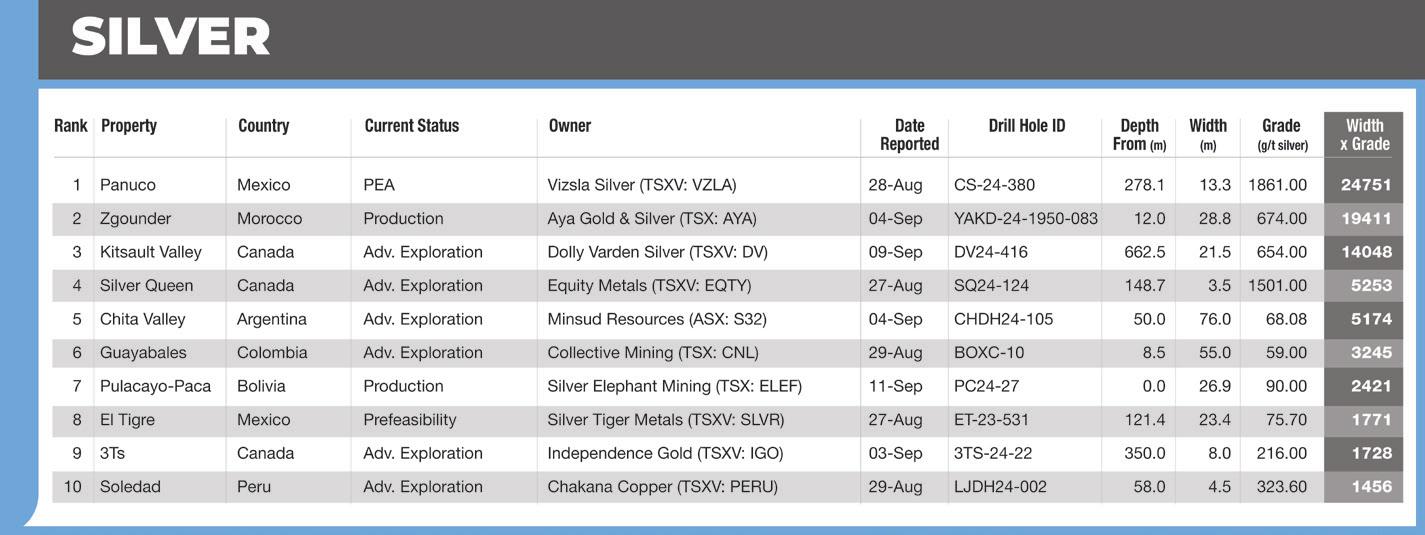
Name Symbol Subsciption Terms Expiry
Aris Gold Corporation ARIS.WT One Warrant to purchase one Common 07-29-2025 Share of the Issuer at $2.75 until expiry.
Name Symbol Subsciption Terms Expiry Date
Giga Metals Corporation GIGA.WT.A One warrant to purchase one common 02-08-2025 share at $0.45 per share.
LithiumBank Resource LBNK.WT One warrant to purchase one common 02-16-2025 Corp. share at $2.00 per share.
Total Helium Ltd. TOH.WT.A One warrant to purchase one common 05-01-2025 share at $0.75 per share.
Caldas Gold Corp. CGC.WT One warrant to purchase one common 07-29-2025 share at $2.75 per share.
Rock Tech Lithium Inc. RCK.WT One warrant to purchase one common 08-19-2025 share at $4.50 per share.
Lion One Metals Limited LIO.WT One warrant to purchase one common 11-11-2025 share at $1.25 per share.
Vizsla Royalties Corp (VROY.WT) One warrant to purchase one common 12-31-2025 share at $0.50 per share.
Silver Mountain AGMR.WT.A One warrant to purchase one common 02-09-2026 Resources Inc. share at $0.45 per share.
Osisko Development ODV.WT.B One warrant to purchase one common 03-02-2026 Corp. share at $8.55 per share.
Denarius Silver Corp. DSLV.WT One warrant to purchase one common 03-17-2026 share at $0.80 per share.
West Red Lake WRLG.WT One warrant to purchase one common 05-16-2026 Gold Mines Ltd share at $1.00 per share.
Aris
SHORT POSITIONS
Short positions outstanding as of September 13, 2024 (with changes from August 31, 2024)
Largest short positions
Ticker Short position Change iFission Uran FCU 22179573 3812477 Suncor Energy SU 14562733 1736654
Mng LUN 13047343 -2100156 Denison Mines DML 12783386 2347418 B2Gold Corp BTO 12257256 1577485 Equinox Gold EQX 12065045 325856 Nexgen Energy NXE 11921625 1020848 Osisko Mng Inc OSK 11621400 984843
Gold VGCX 11362098 99
Mng CXB 10608588 1833695
Aurania Resources Ltd. ARU.WT.B One warrant to purchase one common 10-21-2026 share at $2.20 per share.
Freeman Gold Corp FMAN.WT.U One warrant to purchase one common 11-29-2026 share at US$0.65 per share.
Mogotes Metals Inc MOG.WT One warrant to purchase one common 01-31-2027 share at $0.30 per share.
Osisko Development ODV.WT.A One warrant to purchase one common 03-02-2027 Corp. share at $14.75 per share.
Integra Resources Corp. ITR.WT One warrant to purchase one common 03-13-2027 share at $1.20 per share.
Elevation Gold Mining ELVT.WT.A One warrant to purchase one common 03-24-2027 Corporation share at $0.70 per share.
Osisko Development ODV.WT.U One warrant to purchase one common 05-27-2027 Corp. share at US$10.70 per share.
Robex Resources Inc RBX.WT One warrant to purchase one common 06-27-2027 share at $2.55 per share.
Silver Mountain AGMR.WT.B One warrant to purchase one common 04-24-2028 Resources Inc. share at $0.135 per share.
Bear Creek Mining BCM.W One warrant to purchase one common 10-05-2028 Corporation share at $0.42 per share.
-1025514 Nutrien NTR 3313082 -681784 New Gold NGD 8742829
as of
Aluminum: US$1.20/lb.
Cobalt: US$11.02/lb.
Gold: US$2,660.55/oz.
Iron Ore 62% Fe CFR China-S: US$98.05
Nickel: US$7.73/lb.
Silver: US$31.92 per oz.
Zinc: US$1.40 per lb.
COMMODITY PRICES | Prices current September 13, 2024
Coal: Central Appalachia, 12,500 Btu, 1.2 S02-R,W: US$82.15
Copper: US$4.53/lb.
Iridium: US$4,650/tr oz.
Lead: US$0.96/lb.
Rhodium: US$4,650/tr. oz.
Tin: US$14.71/lb.
Coal: Powder River Basin, 8,800 Btu, 0.8 S02-R, W: US$13.90
Copper: CME Group Futures November 2024: US$4.56/lb.;
December 2024: US$4.59/lb.
Lithium carbonate: US$10,575/tonne
Ruthenium: US$460 per oz.
Uranium: U3O8, Trading Economics: US$82.00 per lb.
Sept. 23-27, 2024
By Henry Lazenby
Stock markets saw mixed performances for the week ending Sept. 27 as markets digested the oversized mid-September Federal Reserve rate cut that unleashed consecutive record gold prices in the following weeks.
The Dow Jones Industrial Average gained 188 points or about 0.5% to 42,243.00 points and the S&P 500 rose 19.6 points or 0.3% to 5,738.17. In Canada, the S&P/TSX Index increased 62.11 or 0.25% to 23,956.82, while the S&P/ TSX Venture Composite Index fell 0.9% or 5.06 points to 583.14.
The S&P/TSX Global Mining Index gained 7.47 points or 6% to 130.18, and the S&P/TSX Global Gold Index fell 1.84 points or 0.5% to 374.52. Gold added
US$31.90 per oz. or 1.2% to US$2661.85 per ounce. The S&P/TSX Global Base Metals Index gained 21 points or 10.6% to 218.38, with copper up 5.7% at US$4.47 per pound.
On the NYSE mainboard, Southern Copper gained US$15.27 to close at US$118.87 per share on Sept. 27. Hudbay Minerals was the biggest percentage gainer, adding 18.7% to US$9.28 a share Friday.
In Toronto, Cameco gained most in value, adding $4.64 to close at US$64.87 on Sept. 27. Silver Elephant Mining gained 37.4% to 68¢ per share.
On the S&P/TSX Venture Exchange, Sigma Lithium added $1.55 to $17.00 after it improved second-quarter margins.
2024
n October
October 9-10
Western Australia Mining Conference and Exhibition – Perth, Australia
VENUE: Perth Convention and Exhibition Centre
MORE INFORMATION: www.waminingexpo.com.au/ en-gb.html
October 10-11
TNM International Metals Symposium — London, U.K.
VENUE: ETC Venue
MORE INFORMATION: https://events.northernminer. com
October 15-18
The China Mining Congress and Expo — Tianjin, China
VENUE: Tianjin Meijiang Convention Center
MORE INFORMATION: www.chinaminingtj.org/en/ October 16-17
Australian Energy Transition Summit — Adelaide
VENUE: TBA
MORE INFORMATION: www. australiaenergytransition.com
October 21-22
Critical Minerals and Energy Investment — Perth, Australia
VENUE: Novotel Perth Langley
MORE INFORMATION: www. criticalmineralresources.com
October 22-24
MiningMetals Uzbekistan — Tashkent
VENUE: Uzexpocentre NEC
MORE INFORMATION: www. mining.uz/en/
October 28-31
Xplor 2024 — Montreal
VENUE: Le Westin Montreal
MORE INFORMATION: www.xplor.aemq.org/en/
October 29-30
Mining Tech North America Expo — Vancouver
VENUE: Delta Hotels Burnaby Conference Centre
MORE INFORMATION: www. miningtechnorthamerica.com
October 29-31
IMARC — Sydney, Australia
VENUE: ICC Sydney
MORE INFORMATION: www.imarcglobal.com
n November
November 6-7
Mining Investment North America — Toronto
VENUE: DoubleTree by Hilton Toronto Downtown
MORE INFORMATION: www. mininginvestmentnorthamerica.com
November 6-7
Commodities Asia Summit — Singapore
VENUE: The Westin Singapore
MORE INFORMATION: commoditiesasia.live.ft.com
November 10-13
Tailings and Mine Waste Conference 2024 — Colorado
VENUE: TBA
MORE INFORMATION: www.thetailingsnetwork. com/tailings-conferences/tailingsminewaste2024
November 12-13
The Decarbonized Mine Summit — Toronto
VENUE: Marriott Downtown
MORE INFORMATION: toronto.energyandmines.com
November 14-15
121 Mining Investment — London, U.K.
VENUE: TBA
MORE INFORMATION: www.weare121.com/events/#
November 17-20
Yukon Geoscience Forum and Trade Show — Whitehorse
VENUE: Kwanlin Dun Cultural Centre
MORE INFORMATION: www.yukonminers.org/ geoscience/
November 25-26
Peru Rocks, the Awakening of a Giant — Lima, Peru
VENUE: Country Club Lima Hotel
MORE INFORMATION: www.chilexploregroup.cl/ PERU_ROCKS/
November 25-26
Asia Gold Conference — Singapore
VENUE: Marriott Tang Plaza Hotel
MORE INFORMATION: www.asiagoldconference.com
November 26-27
10 Mining Show — Dubai, United Arab Emirates
VENUE: Festival Arena
MORE INFORMATION: terrapinn.com/exhibition/ mining-show/
November 26-28
Yellowknife Geoscience Forum — Yellowknife, NWT
VENUE: Chateau Nova Conference Centre
MORE INFORMATION: event.fourwaves.com/ ygf2024/pages
n December
December 1-2
International Metals Symposium — London, U.K.
VENUE: ETC Venues
MORE INFORMATION: events.northernminer.com/ international-metals-symposium-2024/
December 2-3
Mining Critical Minerals India Conference and Expo — New Delhi Venue: TBA
MORE INFORMATION: www.criticalmineralsindia.com
December 3-5
Mines and Money — London, U.K.
VENUE: TBA
MORE INFORMATION: www.minesandmoney.com/ london/index
December 5-6
Mining and Critical Minerals Investment — London, U.K.
VENUE: Doubletree by Hilton London
MORE INFORMATION: www. mininginvestmentlondon.com
December 11-14
International Trade Fair for Construction Machinery, Building Material Machines, Mining Machines and Construction Vehicles — Delhi, India
VENUE: India Expo Centre
MORE INFORMATION: www.bcindia.com/en/tradefair/current-information/
December 12-13
Mining Tech 2024 — Ankara, Turkey
VENUE: Hacettepe University Beytepe Tunçalp Özgen Congress and Culture Center
MORE INFORMATION: www. maden-tek.com
December 16-17
Mining World Congress — London, U.K.
VENUE: Kensington Conference and Events Centre
MORE INFORMATION: www.miningconferences.org
February 3-6
Mining Indaba — Cape Town, South Africa
VENUE: Cape Town International Convention Centre
MORE INFORMATION: miningindaba.com/home
February 24-25
Critical Minerals and Energy Investment — Brisbane, Australia
VENUE: TBA
MORE INFORMATION: www. criticalmineralresources.com
February 26-27
Mining & Critical Minerals Korea Conference and Exhibition — Seoul
VENUE: TBA
MORE INFORMATION: www.criticalmineralskorea. com
n March
March 2-5
PDAC 2025 — Toronto
VENUE: Metro Toronto Convention Centre
MORE INFORMATION: www.pdac.ca/convention

CREEK | Resource boost, strong drill results fail to excite market, CEO says
BY HENRY LAZENBY
BEAVER CREEK, COLO — Fury Gold Mines (TSX: FURY; NYSE-AM: FURY)
CEO Tim Clark says the market is undervaluing the company’s portfolio despite delivering a resource expansion and recent exploration successes.
An update in May for the company’s Eau Claire project in Quebec’s Eeyou Istchee James Bay region bumped its measured and indicated resources by 40%, reaching 1.2 million oz. gold in 6.4 million tonnes at 5.64 grams gold per tonne. Backed by $7.2 million in cash and a liquid $52.4- million stake in Dolly Varden Silver (TSXV: DV; US-OTC: DOLLF), Fury on Sept. 9 reported 12.16 grams gold per tonne over 3 metres at the nearby Serendipity target.
Clark, a capital markets doyen after a 23-year career with the likes of Barclays Capital, Deutsche Bank and BMO Capital Markets, expressed frustration over the disconnect between Fury’s gold resources and its current market valuation.
“The market continues to overlook the value of what we’ve built,” he told The Northern Miner during the Precious Metals Summit in Beaver Creek, Colo., in the second week of September. “We’ve seen companies with far weaker assets attract more attention simply because they are better marketed or perceived differently.” At 60¢ per share before press time, Fury has a market capitalization of $90.8 million. Its Toronto-quoted stock traded between 42¢ and 80¢ over the past 12 months.
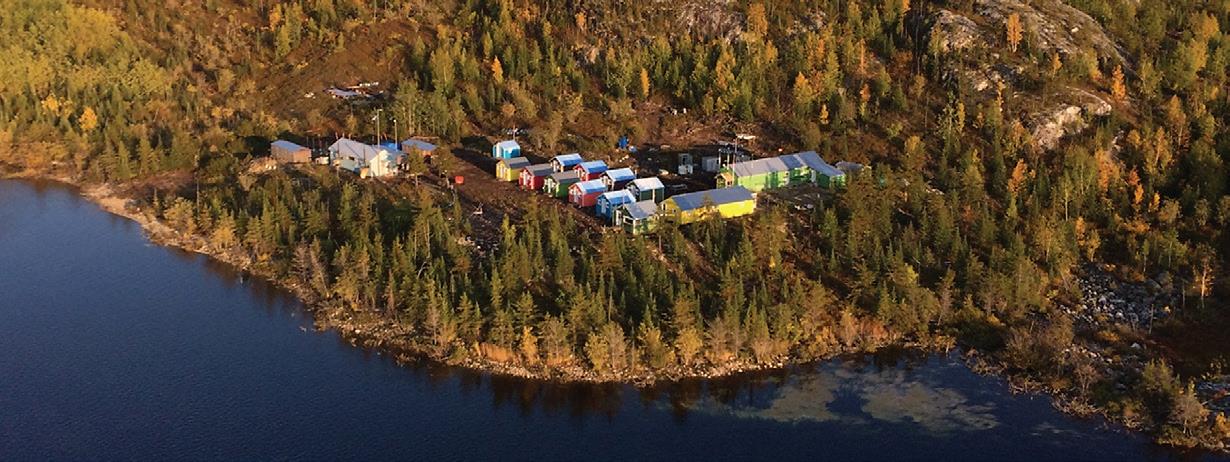
‘Promising’ results
Fury’s Serendipity drill results, where one hole included a 1-metre section grading 35.1 grams, are promising, according to Haywood Capital Markets mining analyst Marcus Giannini. The intercepts align with biogeochemical anomalies and suggest potential for a high-grade gold corridor, Giannini said in a note on Sept. 10. Serendipity, 16 km northeast of Eau Claire, is the first of several targets keeping Eau Claire ripe for additional discoveries, he said.
“We view Serendipity as a true greenfield target warranting further investigation, as Fury’s targeting methodology continues to yield positive results,” Giannini said.
Despite Eau Claire’s location near Newmont’s (TSX: NGT; NYSE: NEM) 270,000-oz.-gold-per-year Éléonore mine, Fury has struggled to gain market recognition. It’s
not alone: while the VanEck Vectors Gold Miners exchange-traded fund of large-caps (the GDX index) has gained 34% over five years, the smaller-cap GDXJ index has only managed half that gain.
Fury’s NYSE American Stock Exchange listing, which it’s had since its 2020 formation via a merger of Auryn Resources and Eau Claire Resources, has yet to deliver an expected liquidity boost, Clark said.
Serendipity
The Serendipity drilling confirms the effectiveness of biogeochemical targeting, with high-grade intercepts significantly outperforming historical results, Clark said. The drill result announced on Sept. 9 is among targets 2 km apart along key deformation zones and shows potential for a larger mineralized system, the CEO said.
With more drilling planned next year at Serendipity, follow-up work at the nearby Percival prospect, and continued exploration at the Committee Bay gold project in Nunavut, Fury is planning for growth — whether the market recognizes it or not, the CEO said.
Fury’s drill program this year at Serendipity, which covered 3,871 metres across 10 holes, targeted five geochemical anomalies along the Hashimoto Deformation zone.
Percival has an inferred resource of 211,000 oz. in 2.8 million tonnes at 2.34 grams gold per tonne.
“Serendipity is the first of more than a dozen new targets we’ve developed at Eau Claire, and these results demonstrate our targeting techniques work,” Clark said.
Quebec, Nunavut prospects Fury’s Éléonore South project also
holds further upside. The company has traced continuous gold over 2.3 km of strike this year, with highlight intercepts including 137.5 metres grading 0.44 gram gold per tonne and 115.5 metres of 0.5 gram gold. Fury is planning follow-up work after completing a biogeochemical sampling grid on a newly acquired area from Newmont.
Committee Bay is a high-risk, high-reward asset with significant discovery potential, Clark said. Its location on the 300-km-long Committee Bay Greenstone Belt offers targets for future resource expansion. Market conditions may have to improve for more exploration, but the company in the meantime has brought camp infrastructure, rigs and fuel to the site.
Clark is optimistic about the Nunavut project’s trajectory: “It’s where we swing for the home run.” TNM
COPPER | $1.8B price tag to reopen former Noranda mine
BY COLIN MCCLELLAND
Osisko Metals (TSXV: OM; US-OTC: OMZNE) is advancing the giant Gaspé copper project in Quebec with an economic study planned for February amid efforts to land a 20% partnership with provincial financing agency Investissement Québec.
“No promises, but they’re interested in the project, and for us it would be ideal to get IQ as a partner,” CEO and chairman Robert Wares said in an interview. “That would be a big boost, and as partners obviously they can help us fund the whole project to a final investment decision.”
Wares figures that reopening the former Noranda mine, about 575 km northeast of Quebec City, might see it become the biggest
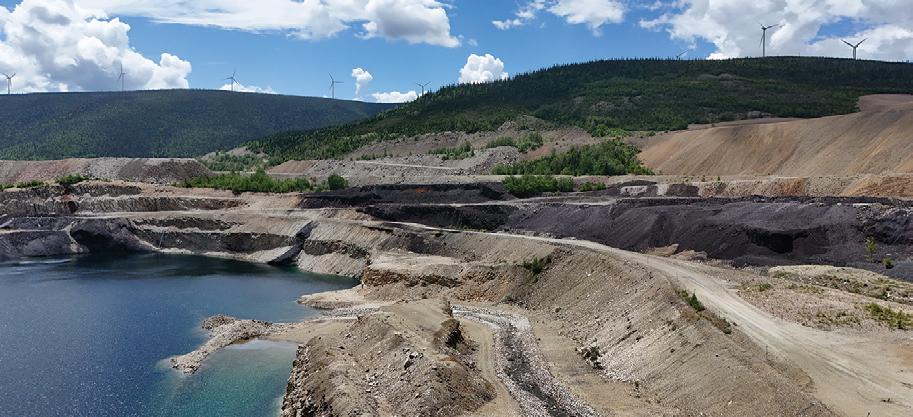
The resource contains 3.2 billion
and
It could be shovel-ready in early 2029 after acquiring permits by the end of 2028, said the CEO, who was part of team that developed the Canadian Malartic gold mine. That producer, now held by Agnico Eagle Mines (TSX: AEM; NYSE: AEM), is one of Canada’s largest.
Wares is bullish on rising copper demand and the lack of adequate new supply to feed global electrification efforts. Developing a project in a jurisdiction with straightforward permitting requirements is also a plus.
“In four years’ time, we fully expect the copper price to be extremely healthy,” he said. “The tier one deposits outside of Africa
BY CECILIA JAMASMIE, MINING.COM
Australia’s Winsome Resources (ASX: WR1) said a scoping study reinforces the potential of the $350.2-million Adina lithium project in Quebec as a capital-efficient mine with a 21-year life.
Repurposing the dense media separation (DMS) and ore sorting facilities at the Renard diamond mine, which Winsome said in April it might acquire, would be substantially cheaper than developing Adina from scratch, shows the study released on Sept 17.
It would involve a relatively simple upgrade to use the DMS circuit to produce 256,000 tonnes of 5.5% spodumene concentrate (38,000 tonnes lithium carbonate-equivalent) per year over the mine life, Winsome said.
“The ease of mining mineralized material at Adina via an initial low strip open-pit along with the simple DMS flowsheet results in a competitive operating cost estimate, which optimization may improve further,” managing director Chris Evans said in a release. The plant provides a significant commercial advantage compared to other proposed projects in Canada, particularly given current low lithium prices, Evans said. It would “continue to operate through market fluctuations and commodity
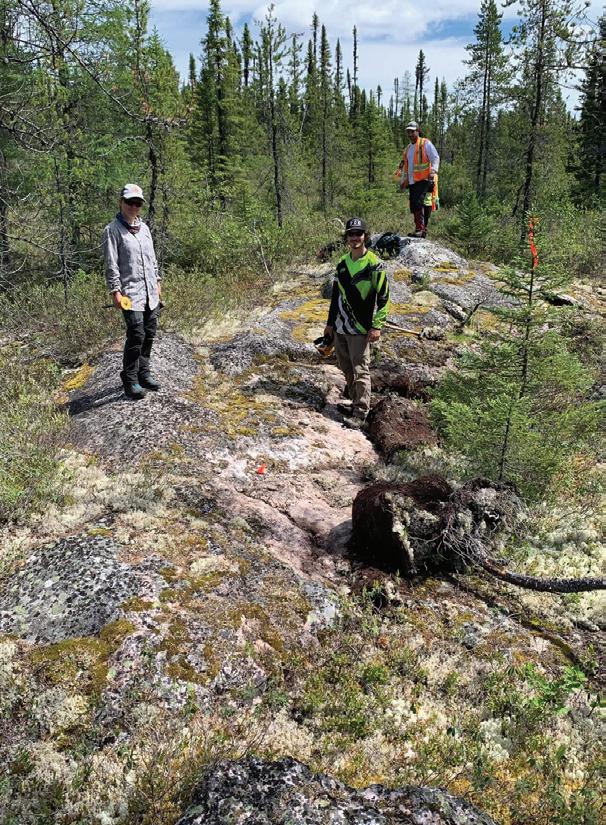
cycles,” he said.
Winsome released the study as a preliminary economic assessment in Canada.
The study came almost two weeks after the lithium explorer and developer in August paid $2 million for an extra three months to decide whether it would buy the past-producing Renard for a total of $52 million. The new report suggests it’s moving in that direction, despite the lithium market facing difficulties due to a slump in prices since the summer of 2023
43% return
The scoping study indicates a posttax net present value (at an 8% discount rate) of $1 billion, an internal rate of return of 43% and a payback period of 1.8 years. Post-tax free cash flow over the mine’s life is estimated at $2.4 billion.
These figures are based on an average all-in sustaining cost of US$693 per tonne and a forecasted spodumene concentrate (SC5.5) price of $1,856 per tonne. This is the same estimate base used by its regional neighbour, Patriot Battery Metals (TSX: PMET; ASX: PMT), at its flagship Shaakichiuwaanaan project, formerly known as Corvette.
That project comes with an initial cost of $761 million cost for a 2.5-million-tonnes-per-year plant capable of producing 400,000
tonnes annually due to its highgrade ore.
Renard’s annual processing capacity sits at 2.2 million tonnes with a potential run rate of 1.7 million tonnes, at an average head grade of 1.24% lithium and targeted recoveries of 67%.
Adina resource
Adina hosts 61.4 million indicated tonnes grading 1.14% lithium oxide (Li2O), and 16.5 million inferred tonnes at 1.19% Li2O, according to the resource in the scoping study.
Winsome is currently advancing the asset’s permitting and finalizing due diligence on Renard. Previous owner Stornoway Diamonds spent about $900 million on infrastructure from 2016 to 2023 before it folded when the diamond market collapsed.
The company says the Adina lithium project would create 500 jobs during operation and could potentially generate more than US$7.5 billion in gross revenue. It could also potentially generate $1.1 billion in corporate Quebec provincial and Canadian federal taxes, supporting the local communities, the Australian miner says. Winsome shares traded for A48¢ apiece near press time, giving it a market capitalization of A$102.7 million ($95.1 million). Its shares traded in a 52-week range of A43¢ to A$1.54. TNM
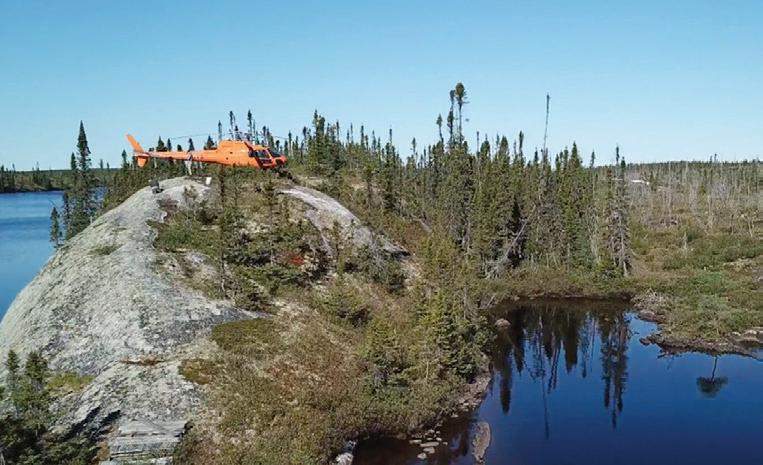
BY STAFF WRITER
Patriot Battery Metals (TSX: PMET; ASX: PMT) is targeting initial output of 400,000 tonnes of spodumene concentrate starting in early 2029 at its flagship Shaakichiuwaanaan project, formerly known as Corvette, in Quebec. According to a preliminary economic study released in late August, the lithium project would cost $1.3 billion in total to build over two stages. The study gives it a post-tax net present value (at an 8% discount) of $2.9 billion, with a 34% post-tax internal rate of return over a mine life of up to 24 years. The payback period is estimated at
3.6 years.
“The flexibility and scalability [of the staged development pathway for Shaakichiuwaanaan] could allow us to adapt nimbly to evolving market conditions, while continuing to grow the resource base,” CEO Ken Brinsden said in a release. He added that the PEA results show Patriot’s potential to become a global lithium leader and a key supplier of lithium raw materials, despite its early stage.
The PEA for Shaakichiuwaanaan, the largest known lithium pegmatite resource in the Americas, comes amid a collapse in lithium prices. While an essential component in electric vehicle batteries, lithium prices are down 80% from last year.
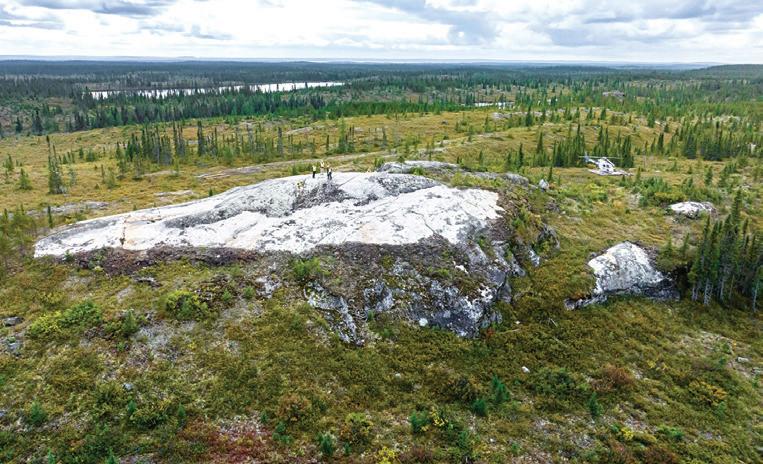
The staged development of the CV5 spodumene pegmatite, via open pit and underground mining methods, aims to maximize earlier access to the high-grade Nova Zone, while minimizing the environmental footprint, Patriot said. The study assumes a 5.5% Li2O spodumene concentrate price of US$1,375 per tonne. Prices in September were around US$750 per tonne, according to metal.com.
As outlined in the study, the first stage of development at Shaakichiuwaanaan would cost around $761 million.
That stage lays the groundwork for production, while a later expansion would double output to
800,000 tonnes of spodumene concentrate per year. The estimated net capex for that expansion is $504 million. The combined net cost to reach nameplate production for both stages is pegged at around $608 million, considering cash flows from initial production and proposed tax credits, Patriot said.
After the expansion is complete, Shaakichiuwaanaan could become one of the world’s largest spodumene producers with the advantage of operating in a stable jurisdiction.
The company will evaluate economic conditions before committing to development, it said.
It aims to make a final investment decision by 2027, potentially allowing construction to proceed through 2028, with initial production to start in early 2029. Patriot is also considering advancing to the feasibility study stage, targeted for late 2025. Shaakichiuwaanaan’s anticipated low operating costs and expected high quality lithium output — which would also qualify for Inflation Reduction Act tax credits — would make the company an attractive partner for downstream players, Brinsden said. Company shares traded at $3.79 apiece before press time in Toronto, valuing the company at $519.7 million. Its shares traded in a 52-week range of $3.09 to $9.76. TNM
BY COLIN MCCLELLAND
First Phosphate (CSE: PHOS; US-OTC: FRSPF) has posted an initial phosphate resource for its Bégin-Lamarche project in Quebec after choosing a plant site to process the material for lithium iron phosphate (LFP) batteries.
Bégin-Lamarche, one of the company’s two projects in the SaguenayLac-St-Jean region, holds 41.5 million indicated pit-constrained tonnes grading 6.49% phosphate (P2O5) and 214 million inferred pit-constrained tonnes at 6.01% P2O5, the company said Sept. 18.
The site’s Mountain zone adds 3 million indicated tonnes at 8.19% P2O5 and 6.8 million inferred tonnes grading 8.57% P2O5
The company said Sept. 13 it plans to build a 10,000-tonne-peryear iron phosphate plant 20 km from the deep-sea port of Saguenay. The plant is to serve as part of First Phosphate’s planned vertically integrated operation, transforming phosphate from its proposed mines into cathode active material (CAM).
First output for the batteries that power about three-quarters of electric vehicles is expected in early 2026.
The company aims to make battery-grade phosphoric acid from igneous rock, which is confined to a few accessible places in the West, CEO John Passalacqua said during a presentation on Sept. 19 in Toronto. It’s different than the fertilizer type of phosphate that comes from sedimentary deposits.
“This stuff is rarer than gold,” Passalacqua said. “Eighty percent
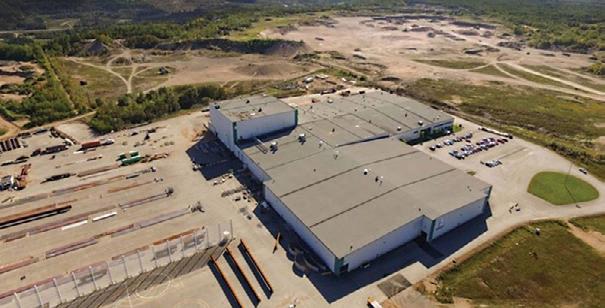
EIGHTY PERCENT OF ALL THE BATTERIES IN THE WORLD ARE NOW LFP. THERE’S NOT GOING TO BE PHOSPHATE ANYWHERE (ENOUGH) TO PRODUCE THOSE LFP BATTERIES. WHY WOULD I NOT BE BULLISH? ”
JOHN PASSALACQUA CEO, FIRST PHOSPHATE
of all the batteries in the world are now LFP. There’s not going to be phosphate anywhere (enough) to produce those LFP batteries. Why would I not be bullish?”
Less expensive
While LFP batteries have a lower energy density than lithium-ion batteries, they’ve gained market share because they’re less expensive
to produce. Adherents to the battery chemistry include Tesla CEO Elon Musk and Chinese EV giant BYD.
Part of Passalacqua’s argument is that LFP batteries are more popular for less expensive autos than nickel-manganese-cobalt batteries, which will likely remain among higher-end cars and SUVs.
The company expects North American demand for LFP CAM to reach 1 million tonnes a year valued at US$24 billion by 2033, with none produced on the continent now. Another plus is that while vehicles take about 20% of supply, 61% goes to long-term energy storage where nickel-manganese-cobalt batteries aren’t used.
The supply of phosphoric acid, which is also used in soft drinks, cereal and fire extinguishers, is at capacity globally but must double by 2045 to meet battery demands, according to research by CRU.
“LFP is so effective, it’s so valuable, it’s so cost effective, that it can meet a whole gamut of means for
electrification,” Passalacqua said. “And that’s why we’re in there. We can balance out our risks.”
Lac à l’Orignal
The company’s main phosphate project, Lac à l’Orignal, 84 km from Saguenay, would produce an average of 425,000 tonnes of phosphate concentrate a year with a phosphate content of over 40%, according to a preliminary economic assessment from July 2023.
The project would also produce 280,000 tonnes of magnetite and 97,000 tonnes of ilmenite over a 14-year mine life.
It would generate an after-tax net present value at a 5% discount rate of $511 million and an internal rate of return of 17.2%. Preproduction capex was pegged at $550 million with an after-tax payback of just under five years.
The company has a market capitalization of $17.2 million on the CSE. Its shares were at 23¢ apiece near press time. They’ve traded in a 52-week range of 15¢ to 48¢.
Lac a l’Original has an openpit constrained resource of 15.8 million indicated tonnes grading 5.18% phosphate (P2O5), 23.9% iron oxide (Fe2O3) and 4.23% ilmenite. Inferred resources measure 33.2 million tonnes grading 5.06% P2O5, 22.55% Fe2O3 and 4.16% ilmenite.
At Bégin-Lamarche, First Phosphate has discovered four main zones with multiple open-pit accessible phosphate-bearing layers and has completed more than 30,000 metres of drilling over the last year and a half.
The CEO described it as a 2-km-long surface deposit where
drilling has only pierced to 250 metres and has much further to go.
feed
The proposed plant’s initial feedstock will be sourced from third parties but will eventually come from Bégin-Lamarche as early as 2028, the CEO said. The 28,000-sq.-metre industrial plant, where it has a renewable 10-year lease, requires an estimated US$65 million in retrofitting.
First Phosphate has started a feasibility study with Ultion Technologies to finalize infrastructure requirements. The plant’s technology has already been proven at two other facilities globally, allowing First Saguenay to move directly to large-scale production without a pilot phase.
In January, First Phosphate inked a deal with American Battery Factory of Utah and U.K.-based Integrals Power to produce lithium iron phosphate cathode material and LFP battery cells.
The proposed plant is a few kilometres from Canadian Air Forces NATO Base Bagotville, which during the Second World War helped protect local producers supplying 85% of Allied aluminum for aircraft. German U-boats were said to have fired on the plants, Passalacqua said.
“Now it’s a different equation, but what do we have?” the CEO said. “We’ve got direct logistics down here to Detroit to automaking, with 50 km from where the mine will be is an intermodal station where the trucks get onto the rail cars. We’re packed into all that infrastructure.” TNM
BY CANADIAN MINING JOURNAL STAFF
Northern Graphite (TSXV: NGC; US-OTC: NGPHF), the continent’s only graphite producer, reported a 59% increase in production from the first to second quarter this year at its Lac des Iles mine in Quebec, but lower prices for the battery mineral hurt income.
Output hit 4,082 tonnes in the year’s second three months, up from 2,574 tonnes in the first quarter, the company said in late August. The boost in production, driven by the plant’s shift to a seven-day operation, resulted in US$5.5 million in revenue from the sale of 2,772 tonnes of graphite concentrate at an average price of $1,972 per tonne.
However, lower than anticipated graphite prices created a $3.5-million non-cash impairment loss which contributed to a net loss of $9.4 million for the quarter, the company said. It also failed to meet all agreements on its senior secured loan and royalty financing. This resulted in the reclassification of $22.4 million from non-current to current liabilities. The lender and royalty holder waived all defaults
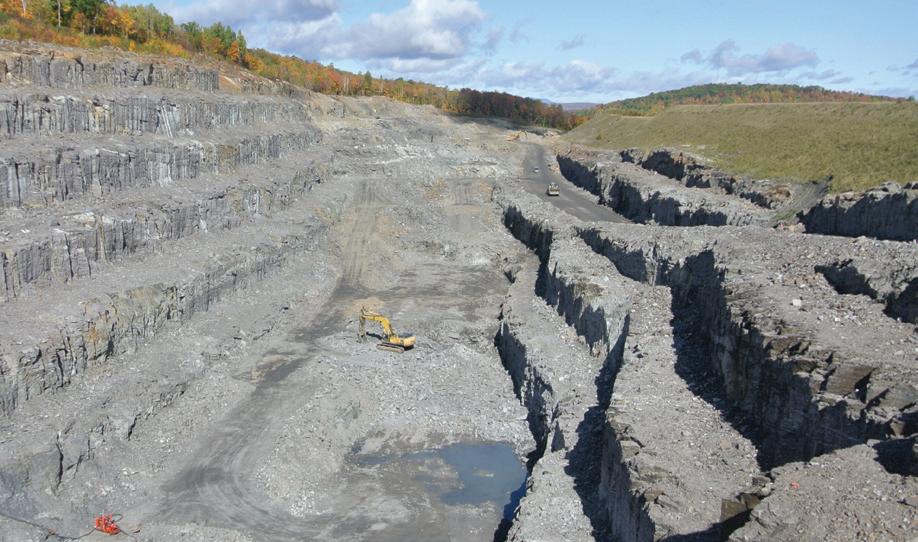
and discussions are ongoing to amend the loan terms, Northern Graphite said. “We took decisive action to manage our cash position to ease the strain on our working capital and provide us with greater flexibility to pursue our growth,” CEO Hugues Jacquemin said in a release.
Shares in Northern Graphite traded at 7¢ apiece before press time valuing the company at $9.1 million.
New pit expected Income from operations swung to $100,000 from a $500,000 loss in the first quarter. And it cut cash
costs to $1,560 per tonne despite operational inefficiencies and weather-related shutdowns, Northern Graphite said. It’s working to open a new pit this year or early in 2025 and increase the mine’s life by eight years.
Northern Graphite is planning a new drilling program this fall
“WE TOOK DECISIVE ACTION TO MANAGE OUR CASH POSITION TO EASE THE STRAIN ON OUR WORKING CAPITAL AND PROVIDE US WITH GREATER FLEXIBILITY TO PURSUE OUR GROWTH.”
HUGHES JACQUEMIN CEO, NORTHERN GRAPHTE
aimed at expanding resources and reducing the strip ratio. This program will be partly financed by a grant from Québec’s Ministère des Ressources Naturelles et des Forêts.
A resource update in January gave Lac des Iles 3.3 million indicated tonnes grading 6.4% graphitic carbon (Cg), for 213,000 tonnes of Cg, and 1.4 million inferred tonnes at 7.4% Cg.
The company said it’s engaging with global battery manufacturers to position itself as a key supplier in the electric vehicle market.
Northern Graphite has two more projects, in the Bissett Creek area of Ontario between Ottawa and North Bay, and in Namibia. TNM
BY JAX JACOBSEN
Quebec has a rich mining history and prospective geology for precious and base metals, critical minerals and more. Just as important, the provincial government offers an array of incentives to encourage more exploration for the next generation of mines. Here are eight companies that are parlaying Quebec’s advantages to advance promising projects across the province.
n Abitibi Metals
In August Abitibi Metals (CSE: AMQ) began a fully-funded, $15.5-million drill program at its B26 polymetallic project in Matagami in western Quebec.
Early results from the 16,500metre second phase drill program in September identified a broad zone of mineralization from 1,206 to 1,344 metres depth in step out hole 1274-24-338 along the western plunge of B26. Drilling has also identified three distinct mineralized domains at depth, including at the copper-gold zone (1,206 to 1,287 metres), a high-grade portion within the copper-gold zone (1,262 to 1,272 metres), and a VMS zincsilver-copper-lead zone (1,314 to 1, 344 metres).
Abitibi will continue drilling, using hole 1274-24-338 to add another intersection into the mineralized system at depth. This is in addition to drilling wedge hole 1274-24-338W1, at 50 metres to the west of the first intersection. Abitibi is hoping to expand the mineralized trend at depth beyond 1,000 metres.
The company plans another 20,000 metres of drilling next year, followed by a preliminary economic assessment to complete its option agreement for B26. In 2023, Abitibi entered into the agreement to earn 80% over seven years from SOQUEM, a subsidiary of Investissement Québec.
Abitibi also conducted a 2,325metre drill program at its Beschefer deposit, located 7 km east of B26, this summer. It reported highlights in July that included 15.2 metres of 1.05 grams gold per tonne; 14.6 metres of 1.48 grams gold; and 6 metres of 1.46 grams gold.
These holes extended the East zone by about 100 metres to the northeast. Abitibi says it plans to continue to extend the footprint and is hoping to find higher-grade trends in the wider mineralized body.
Abitibi says it should complete its earn-in on Beschefer, signed with Wallbridge Mining in 2021, by February 2025, once it spends $5 million.
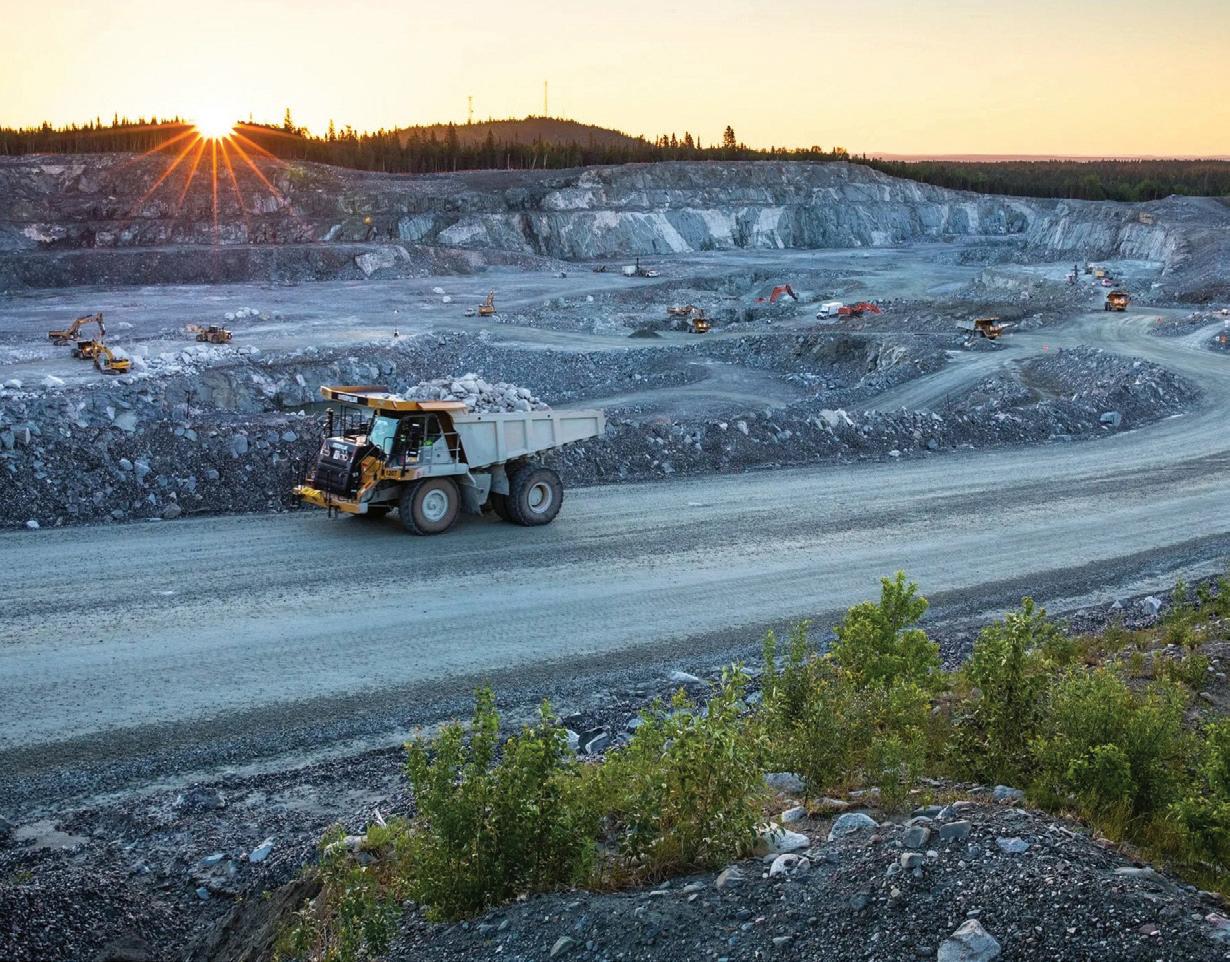
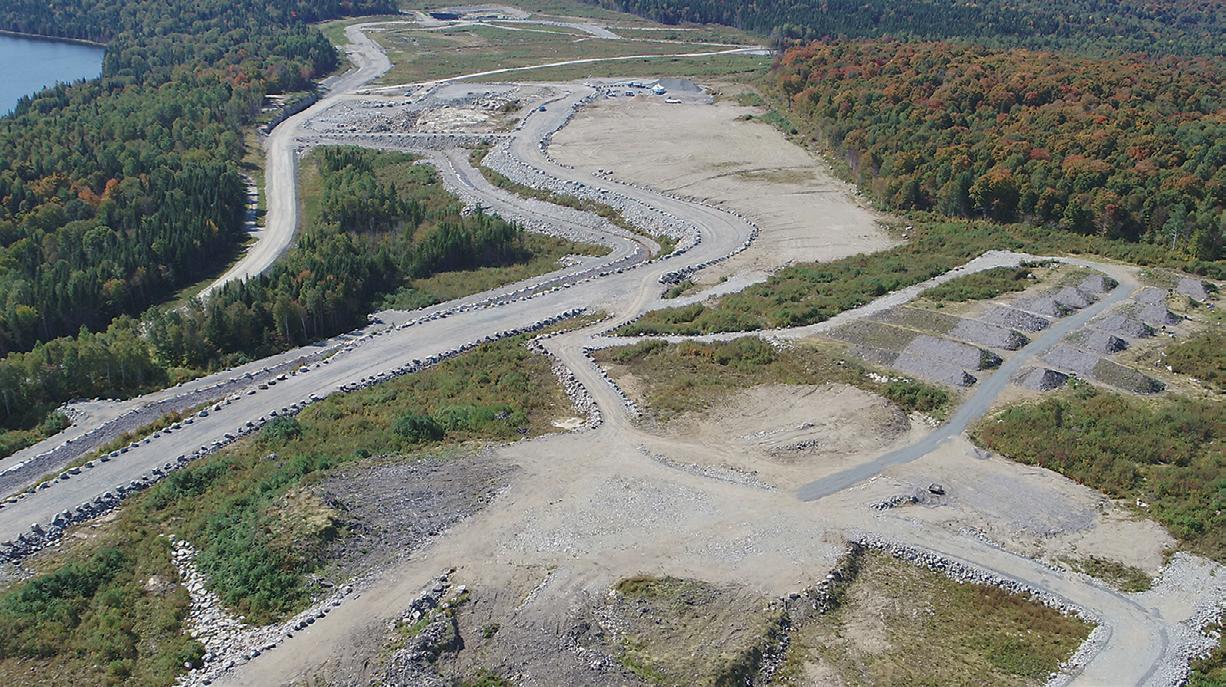
Abitibi Metals has a market cap of $38.5 million.
n Amex Exploration
In September, Amex Exploration (TSXV: AMX; US-OTC: AMXEF) released its first resource update for its Perron gold project in north-
western Quebec since outlining a small estimate at its Gratien deposit in 2009. The project hosts 4.3 million measured and indicated tonnes in combined open pit and underground resources grading 4.28 grams gold per tonne for 594,1000 oz. Inferred resources come to 8.6
million tonnes at 3.8 grams gold for nearly 1.1 million ounces. The High Grade zone at Perron includes 867,800 measured and indicated tonnes at 12.05 grams gold for 336,170 oz. and 1.2 million inferred tonnes at 10.49 grams gold for 415,470 ounces.
Amex plans to complete a pre-
liminary economic assessment (PEA) for Perron later this year. All zones at Perron remain open in multiple directions, and drilling is fully funded through the end of 2025. The resource estimate comes after Amex identified a new lens of gold mineralization in June, at the western Gratien gold zone. Drilling
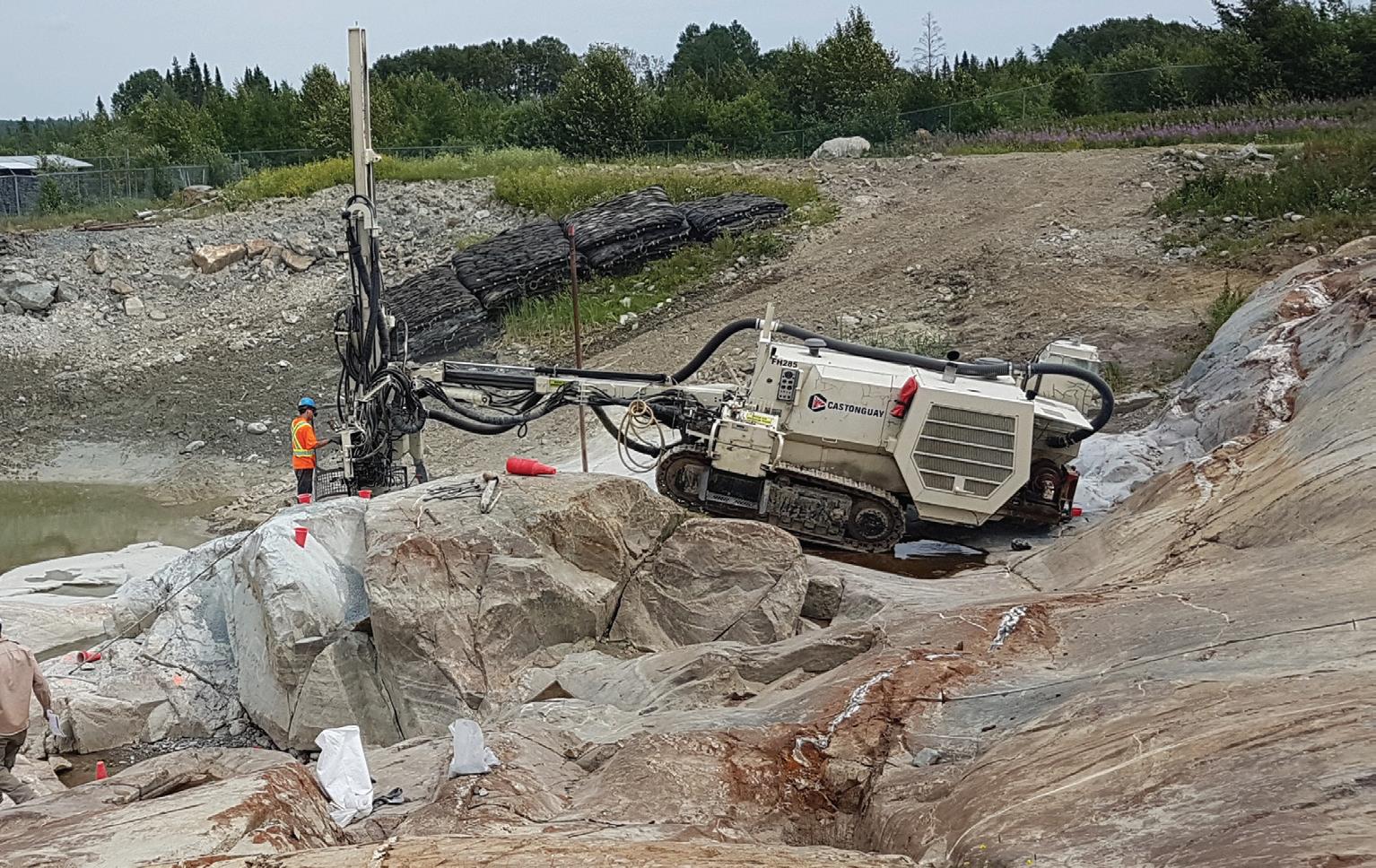
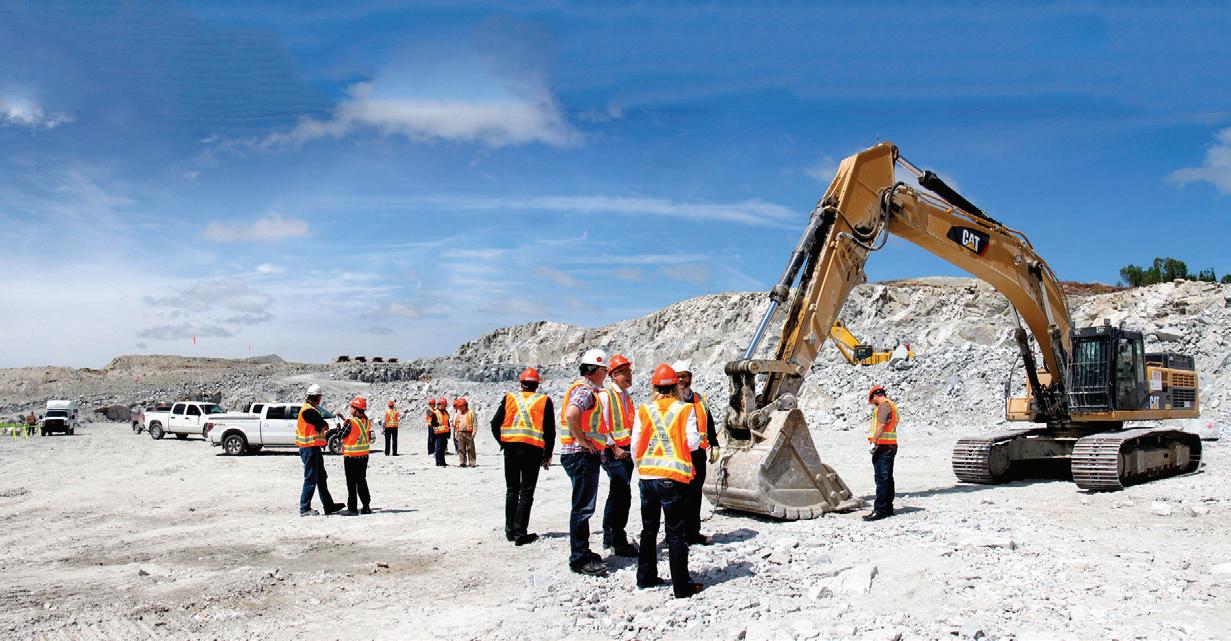
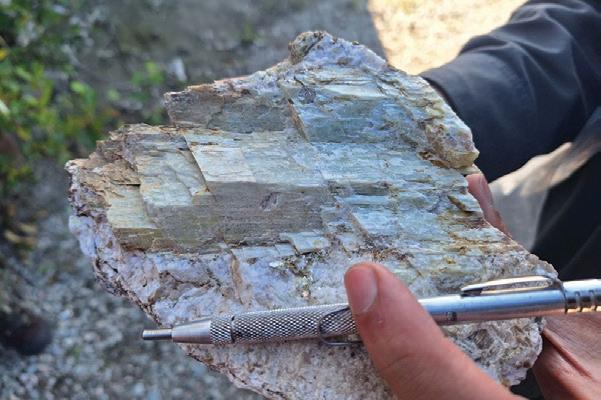
returned up to 7.4 metres of 5.15 grams gold and 1.2 metres of 20.28 grams gold, within 350 metres of surface.
In July, drilling at the Denise zone returned 2.2 metres at 16.58 grams gold, starting at 900 metres depth, and 58.5 metres at 0.71 gram gold from 1,150 metres. The High
Grade zone returned intercepts of 6.4 metres at 30.85 grams gold at depths of 1,100 metres. Earlier in June, Amex made a new gold discovery, the JT zone, within the Beaupré block. As of June, it had a strike length of 275 metres and a thickness of 60 metres. Drill highlights included 70.5
metres of 0.91 grams gold.
In January, Eldorado Gold (TSX: ELD; NYSE: EGO) invested $15 million in Amex for a 9.9% interest at $2.35 per share. Eldorado’s record-producing Lamaque Complex is located in the same district as Perron.
Amex has a market cap of $219 million.
Critical Elements Lithium (TSXV: CRE; US-OTC: CRECF) has major permits in hand for its Rose lithium-tantalum project in the James Bay region, but the continued drop in lithium prices has seen the company struggle to secure financing or potential downstream partners.
A 2022 feasibility study estimated initial capital costs for a 17-year mine at Rose at US$357 million.
In the meantime, Critical Elements is completing advanced engineering for early requirements in construction, which include ore stockpiles, pad and road infrastructure, and water management.
In August, the company received an expanded certificate of authorization for Rose, that now covers the construction and development of a permanent workers’ camp for 250 people.
The permit allows the company to house an additional 250 people at the camp in its construction phase.
The company also made a new discovery near Rose last fall. In April, it released results from a 3,670-metre winter drill program at its Rose West lithium deposit located 8 km west of the Rose deposit and 80 km south of the Newmont’s (TSX: NGT; NYSE: NEM) Éléonore gold mine. Highlights included
10 metres of 1.75% lithium oxide and 201 parts per million tantalum pentoxide, 40.4 metres grading 1.31% lithium oxide (Li2O), and 20.3 metres at 2.22% Li2O.
Rose West remains open, with significant exploration potential to the east of the project.
Critical Elements Lithium has a market cap of approximately $81 million.
n Falco Resources
Falco Resources (TSXV: FPC) is advancing its Falco Horne 5 gold project through permitting, with a public hearing on the development starting in late August. The process, to be conducted by Quebec’s Office of Public Hearings on the Environment (BAPE), will last up to four months.
Horne 5 includes the past-producing Horne mine in RouynNoranda that produced 11.6 million oz. of gold and 2.5 billion lb. of copper between 1927 and 1976.
Falco has commissioned geomechanics consulting firm A2GC; site remediation and rehabilitation firm Sanexen; acoustical engineering company Soft dB; financial services firm BGC and engineering services firm WSP to respond to stakeholder questions during the BAPE hearing.
The company has also created technical and strategic committees to improve safety and operations throughout all phases of Horne 5 operations as part of an operating licence and indemnity agreement with Glencore (LSE: GLEN). The deal, inked in January, allows Falco to use part of Glencore’s land to develop the Horne 5 mine.
A 2021 prefeasibility study pegged Horne’s proven and probable reserves at 80.9 million tonnes grading 0.17% copper, 0.77% zinc, 1.44 grams gold, and 14.14 grams silver.
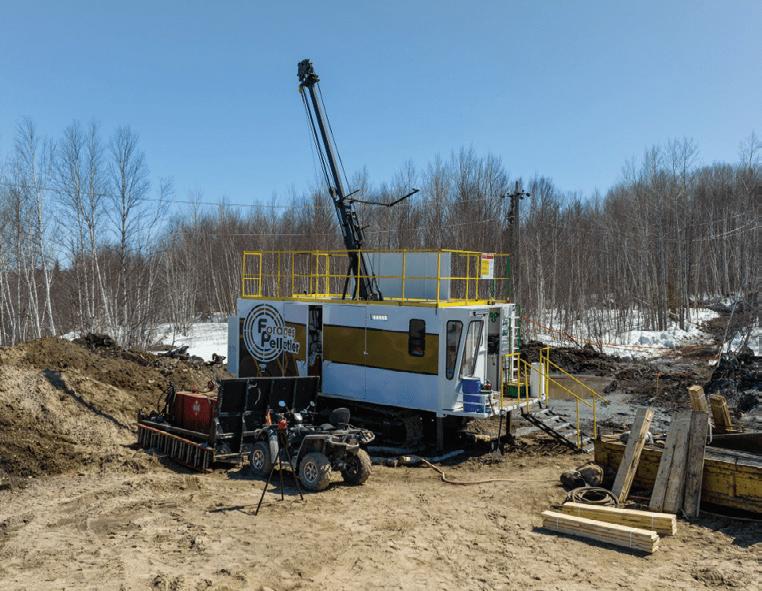
The measured and indicated resource is 105.6 million tonnes of very similar grade containing 389.8 million lb. of copper and 1.9 million lb. of zinc. Inferred resources add 24.3 million tonnes grading 0.19% copper, 0.67% zinc, 1.35 grams gold, and 21.4 grams silver.
The post-tax net present value for the project, with a 5% discount is $1.3 billion, with an internal rate of return of 27.3%, and a payback period estimated at 3.5 years. Horne 5 has an estimated mine life of 15 years, with annual gold production of 220,000 ounces.
Falco Resources has a market cap of $94 million.
Nouveau Monde Graphite (TSX: NOU) kicked off the year by acquiring Mason Resources’ Lac Guéret graphite property, including the Uatnan project, in Quebec. A January 2023 PEA estimated Uatnan could produce around 500,000
tonnes of graphite concentrate annually over a 24-year mine life.
Nouveau Monde also holds the more advanced Matawinie graphite project in the province. It’s slated to be the second graphite mine to be developed in North America, after Northern Graphite’s (TSXV: NGC; US-OTC: NGPHF) Lac des Iles mine northwest of Montreal. Current demand for graphite is around 200,000 tonnes.
In addition, Nouveau Monde is building a battery metals plant in Bécancour, Que. A 2022 feasibility study pegged combined costs for Matawinie and the battery plant at $1.4 billion ($481 million and $923 million, respectively). The company plans to launch construction once it has enough financing in place. Panasonic Energy and GM have each committed to buy 18,000 tonnes of active anode material per year for up to seven years. The deals account for roughly 85% of planned phase 2 production, Nouveau Monde said. It’s been producing on a demonstration scale since 2018. Both Panasonic and GM invested US$25 million each in Nouveau Monde in Febru-
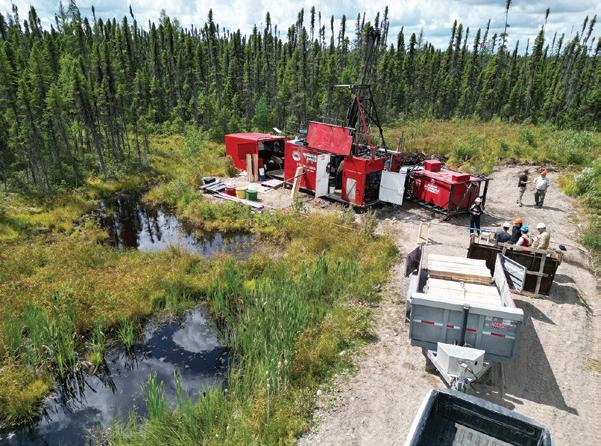
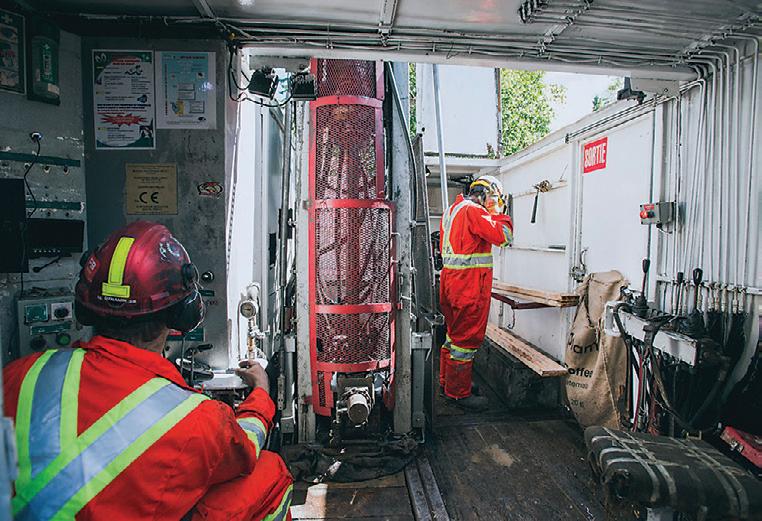
ary, and may also participate in future financing rounds.
Nouveau Monde said in August it would accelerate engineering of the stage 2 facilities to update its feasibility study, to meet specific requirements from its offtake partners. The graphite developer is also preparing for the start of construction at the plant.
The company has also received a $500,000 research grant to advance the development of next-generation active anode materials.
Nouveau Monde has a partnership with Caterpillar to develop zero-emission equipment for Matawinie, and plans to connect the Matawinie grid to the hydropower network. Matawinie, located 160 km north of Montreal in Saint-Michel-des-Saints, is projected to produce 103,000 tonnes per year of graphite concentrate over 25 years. The Bécancour plant is expected to produce 43,000 tonnes per year of active anode material.
NMG has a market cap of approximately $231 million.
Probe Gold (TSX: PRB; OTCQB: PROBF) nearly doubled the resource base at its Val-d’Or gold assets in September, as it works toward a prefeasibility study at its flagship Novador project next year.
The Val-d’Or East properties, which include Novador, now host 10 million contained ounces gold across all categories. Previous estimates for the assets amounted to about 5.2 million ounces.
The resource growth came from both recent acquisitions and drilling. In March, Probe acquired the McKenzie Break and Beaufor assets from Monarch Mining (TSX:

GBAR). The assets had been placed under creditor protection since late 2023.
Probe is in the midst of a 50,000metre infill drill program at Novador, which includes the Monique, Pascalis, Courvan, and now Beaufor deposits.
The project holds a pit-constrained measured and indicated resource of 116.7 million tonnes at 1.43 grams gold per tonne, for 5.3 million oz of gold. Underground resources amount to 5.3 million tonnes at 3.12 grams gold, for 527,800 oz. of contained metal. Inferred resources add 16.2 million tonnes at 1.72 grams gold in open pittable material, plus 6.5 million tonnes at 2.79 grams of gold in underground.
Probe is now expanding its regional exploration program at McKenzie Break and Beaufor.
At Monique, Probe released drill highlights including 14.9 grams gold over 6.8 metres in July, with infill drilling within the conceptual pit cutting 4.8 grams gold over 17.1 metres. Probe expected to complete a 10,000-metre campaign in September.
The Monique zone remains open along strike, and at depth.
A February preliminary economic assessment for Novador projected average annual gold production of 255,000 oz. over a 12.6year mine life, with capital costs at $602 million.
In August, Probe received guidelines from both federal and provincial governments on required elements for its impact assessment study, a key step in the permitting process.
Probe Gold has a market cap of $342 million.
n QC Copper & Gold
QC Copper & Gold (TSXV: QCCU; US-OTC: QCCUF) is working on a PEA for its Opemiska copper project in Chapais, northern Quebec, following a resource update in January.
The company, which said in July it had begun a scoping study that will feed into the PEA, is also planning a diamond drill program within the pit area to confirm a new structural interpretation in the deposit’s Saddle zone and to add resources. It said the program would be informed by a compilation of historical drilling data at the Cooke & Robitaille mine areas at Opemiska.
According to the updated resource, Opemiska holds more than 1.7 billion lb. of contained copper and 915,000 oz. of gold. The measured and indicated resource is 87.3 million tonnes grading 0.77% copper (0.93% copper equivalent),
containing 1.5 billion lb. copper, 762,000 oz. of gold, and 762,000 oz. of silver. This estimate applied a 0.15% copper-equivalent cut-off.
The update increased total copper grades by 26%, the copper-equivalent grade by 11% and copper-equivalent pounds by 16% over the project’s initial 2021 resource.
In July, Opemiska signed an agreement with the city of Chapais to form a city-mine working group on environmental protection and establish a local procurement policy.
QC Copper & Gold has a market cap of about $24 million.
n Sayona Mining Plunging lithium prices have posed challenges for Sayona Mining (ASX: SYA) at its 75%-owned North American Lithium (NAL) mine in Quebec this year. But the company also posted good news, reporting an 81% increase in resources at its Moblan project in the province in August.
NAL, a joint venture between Sayona and Piedmont Lithium (NASDAQ: PLL; ASX: PLL), underwent a strategic review early this year that was completed in April. The partners opted to continue mining and milling operations after assessing optimization and cost reductions.
In late February, Piedmont sold its remaining shares in Sayona for US$39.4 million. The sale had no impact on Piedmont’s stake in NAL or its offtake position. Sayona is contracted to sell Piedmont lithium spodumene ore through 2026, and delivered its first shipment of 25,000 metric tonnes to Piedmont in August 2023.
Total resources across categories at Moblan are now 93.1 million tonnes at 1.21% lithium oxide at a cut-off grade of 0.55% lithium oxide.
Measured and indicated resources increased 59% to 65.1 million tonnes, comprising 70% of the total resource. The resource estimate was based on 368 holes drilled for 75,022 metres, and benefited from a redrafting of the project’s geological model.
Moblan is jointly owned by Sayona (60%) and Investissement Québec (40%).
Sayona plans 70,000 metres of drilling this year to expand the resource. A February feasibility study gave the project a post-tax net present value of $2.2 billion at an 8% discount rate and an internal rate of return of 34.4%. The project, estimated to cost $962 million, could produce 300,000 tonnes of concentrate annually over a 21-year mine life.
Sayona Mining has an estimated market cap of $247 million.



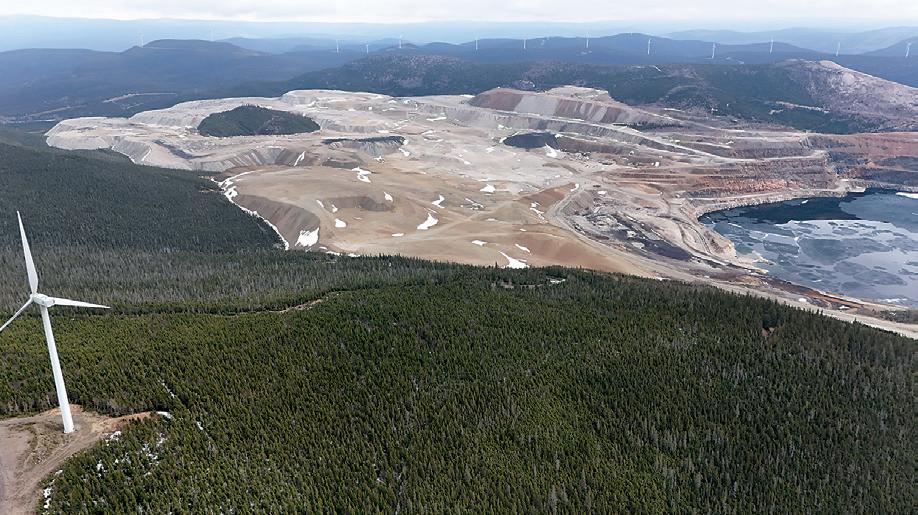
that are going into production, you can count on one hand.”
Partners required
Private equity also could be an option for Gaspé as Wares says developing mining projects these days requires partners. He cited how Osisko Mining (TSX: OSK) — another company founded by the Canadian Malartic team — brought in Gold Fields (NYSE: GFI; JSE: GFI) to advance Windfall, located in the Eeyou Istchee James Bay region
Then in August, the South African major made a friendly offer to take out the whole company for US$1.6 billion. Wares is keen to avoid share dilution from stock offerings or taking on debt that might require the whole project as collateral.
“I’m hoping IQ would step in at 20-25%. They rarely go more than that,” Wares said. “It would allow us to avoid more equity financings in the dismal market, still, for the resource sector.”
The company has completed around half of 8,000 metres of drill-
ing this year, with assays pending. Background studies for the preliminary economic assessment (PEA) due early next year are advancing, the CEO said.
Pine Point
Osisko Metals also holds the Pine Point zinc-lead former mine in the Northwest Territories, which is starting a feasibility study this quarter. London-based private equity firm Appian Capital Advisory plans to spend $100 million to hold 60% of the project.
In June, Osisko reported a tripling of Pine Point’s indicated tonnes to 49.5 million grading 4.22% zinc and 1.49% lead (5.52% zinc equivalent) in combined open pit and underground resources. Inferred resources total 8.3 million tonnes grading 4.22% zinc and 1.69% lead (5.64% zinc equivalent).
A 2022 PEA forecast it would cost $653 million to build a 12-year open-pit and underground operation at Pine Point. The mine would produce an annual average of 329 million lb. zinc and 141 million lb. lead, according to the study. It pegged a $602-million net present value at an 8% discount, with an
internal rate of return of 25%.
At Gaspé, Noranda produced 150 million tonnes of copper concentrate from 1955 until the mine closed in 1999. The area has been hard hit since the closure, with a large sawmill also shutting, then a federal moratorium was imposed on cod fishing, followed this year by another moratorium on shrimp, Wares noted.
Sentiment for the Gaspé project is improving after some initial opposition about potential noise pollution and dust. Members of the community, area mayors and the provincial legislature representative attended the company’s annual information session in the local town of Murdochville this month, Wares said.
“This is the true mining town. They all want to see the mine reopened. Murdochville has obviously been in economic decline since the mine and smelter closed in 2003 so things can’t remain as they are. Like most mining towns, they eventually just follow the decline and turn into ghost towns, so this is a great way to revamp it.” TNM


BY NORTHERN MINER STAFF
Six months after acquiring the Cisco lithium property in northwestern Quebec, Q2 Metals (TSXV: QTWO; US-OTC: QUEXF) has drilled a 347-metre interval of continuous spodumene-pegmatite in what vice-president for exploration Neil McCallum calls “an absolute mindset shift for our team.”
The drill hole, CS24-021, was designed to test an area between two prior drill holes located about 300 metres apart. Hole CS24-010 returned a continuous interval of 120.3 metres at 1.72% lithium oxide (Li20), including 19 metres of 2.06% Li20, and drill hole CS24018, cut a 215.6-metre interval.
“With the verification of a large and continuous mineralized body at the core of our drill-tested area,” McCallum noted, “our next steps will be to continue to expand upon our already excellent results.”
Assays are pending for hole CS24-021. But the company reported spodumene intervals from two other drill holes. CS24019 cut 16 individual spodumene pegmatite intervals, with the widest measuring 56.8 metres. Drillhole CS24-020 intersected 17 spodumene pegmatite intervals with the widest stretching 22.2 metres.
“The Cisco property continues to deliver and exceed expectations,” CEO Alicia Milne stated in a news release on Sept. 13.
“The latest visuals from holes 19 to 21 reveal thick intersections of spodumene-mineralized pegmatite with beautiful white core and large crystals, reaffirming Cisco’s immense potential and scale.”
Greenstone belt
The 114-sq.-km property in the
Frotet-Evans Greenstone Belt lies in the southern portion of Eeyou Istchee James Bay, about 150 km north of Matagami and 10 km east of the Billy Diamond Highway, which runs from Matagami to Radisson.
The company began drilling in May.
Assay highlights include drillhole CS24-007, which cut 11 individual spodumene pegmatite intervals for a total cumulative width of 94.6 metres at 1.52% Li20. The widest interval measured 27.1 metres of 1.96% Li20, including 11.1 metres of 2.49% Li20.
Another hole, CS24-009, encountered five spodumene pegmatite intervals for a cumulative width of 115.9 metres at 1.48% Li20. The hole’s widest interval was 82.1 metres at 1.43% Li20, and it included 15.7 metres at 1.88% Li20. Q2 Metals is advancing two other lithium projects in the James Bay district, Mia and Stellar. Shares traded at 77¢ apiece before press time, giving the junior a market cap of $99.5 million. Over the last year Q2 Metals’ shares have traded in a range of 18¢ to 90¢. TNM
2.0
TNM Marco Polo’s integrated chatbot lets you quickly and easily search more than 2,600 global mining companies and 13,900+ properties by just asking a question.
Search more than 13,900 global mining properties for the right contact and connect with them directly through a single click.
Learn more at marcopolo.tnm.global


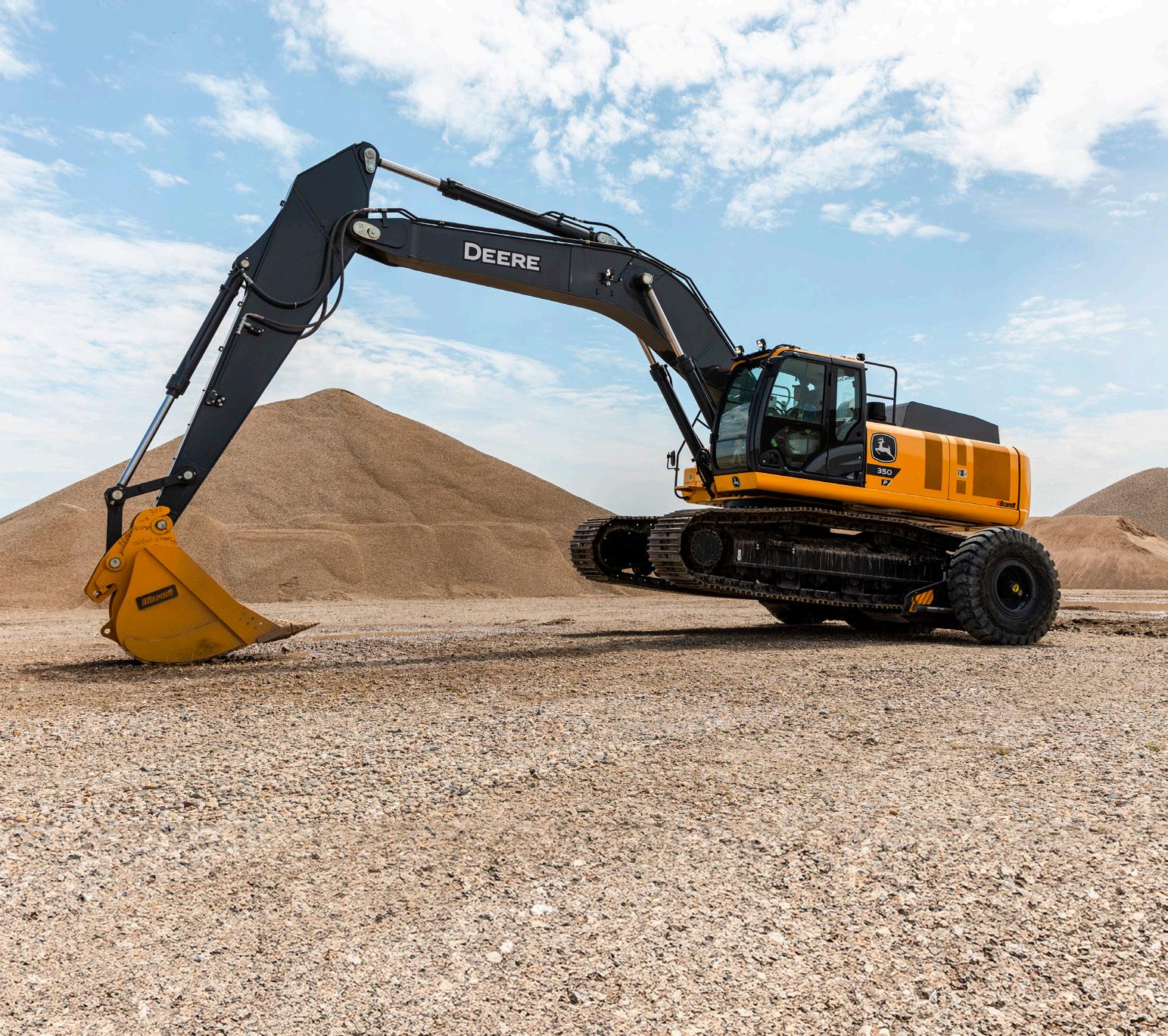
Reduce
Reduce