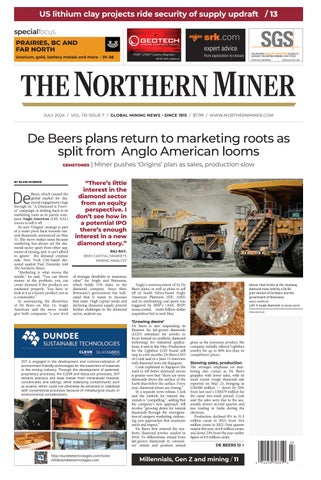

De Beers plans return to marketing roots as split from Anglo American looms
BY BLAIR MCBRIDE
DeBeers, which created the global market for diamond engagement rings through its "A Diamond is Forever" campaign, is shi ing back to its marketing roots as its parent company Anglo American (LSE: AAL) moves to sell it o . Its new ‘Origins’ strategy is part of a wider pivot back towards natural diamonds, announced on May 31. e move makes sense because marketing has always set the diamond sector apart from other segments of mining, and it can’t a ord to ignore the demand creation side, New York City-based diamond analyst Paul Zimnisky told e Northern Miner
“Marketing is what moves the needle,” he said. “You can throw money at the problem, you can create demand if the products are marketed properly. You have to look at it as a luxury product, not as a commodity.”
In announcing the divestiture of De Beers on May 14, Anglo American said the move would give both companies “a new level
“There’s little interest in the diamond sector from an equity perspective. I don’t see how in a potential IPO there’s enough interest in a new diamond story.”
RAJ RAY, BMO CAPITAL MARKETS MINING ANALYST
of strategic exibility to maximize value” for Anglo and Botswana, which holda 15% stake, in the diamond company. Since then, Botswana’s government has indicated that it wants to increase that stake. High capital needs and declining diamond supply present further challenges in the diamond sector, analysts say.

DST is engaged in the development and commercialization of environment-friendly technologies for the treatment of materials in the mining industry. Through the development of patented, proprietary processes, the CLEVR and GlassLock processes, DST extracts precious and base metals from mineralized material, concentrates and tailings, while stabilizing contaminants such as arsenic, which could not otherwise be extracted or stabilized with conventional processes because of metallurgical issues or environmental considerations.



Anglo’s announcement of its De Beers plans, as well as plans to sell o its South Africa-based Anglo American Platinum (JSE: AMS) and its steelmaking coal assets was triggered by BHP’s (ASX: BHP) unsuccessful, multi-billion-dollar acquisition bid in mid-May.
‘Growing desire’
De Beers is also suspending its Element Six lab-grown diamonds (LGD) subsidiary for jewelry to focus instead on synthetic diamond technology for industrial applications, it said in late May. Production for the Lightbox LGD brand will stop in a few months, De Beers CEO Al Cook said in a June 13 interview with diamond news site Rapaport.
Cook explained to Rapaport the need to tell better diamond stories is greater now that “there are more diamonds above the surface of the Earth than below the surface. Every year, diamond mines are closing.”
In a separate news release, Cook said the outlook for natural diamonds is “compelling,”, adding that the company’s new approach will involve “growing desire for natural diamonds through the reinvigoration of category marketing, embracing new approaches that maximize reach and impact.”
De Beers rst entered the synthetic diamond jewelry market in 2018. To di erentiate mined from lab-grown diamonds in consumers’ minds and position mined
gems as the premium product, the company initially o ered Lightbox jewelry for up to 80% less than its competitors’ prices.
Slowing sales, production e stronger emphasis on marketing also comes as De Beers grapples with lower sales, with its most recent rough diamond sale reported on May 23, bringing in US$380 million — down by 20% from last year’s US$479 million for the same two-week period. Cook said the sales were due to the seasonally slower second quarter and less trading in India during the elections.
Production declined 8% to 31.9 million carats in 2023, from 34.6 million carats in 2022. First quarter output this year, at 6.8 million carats, was down 23% from the year-earlier gure of 8.9 million carats.
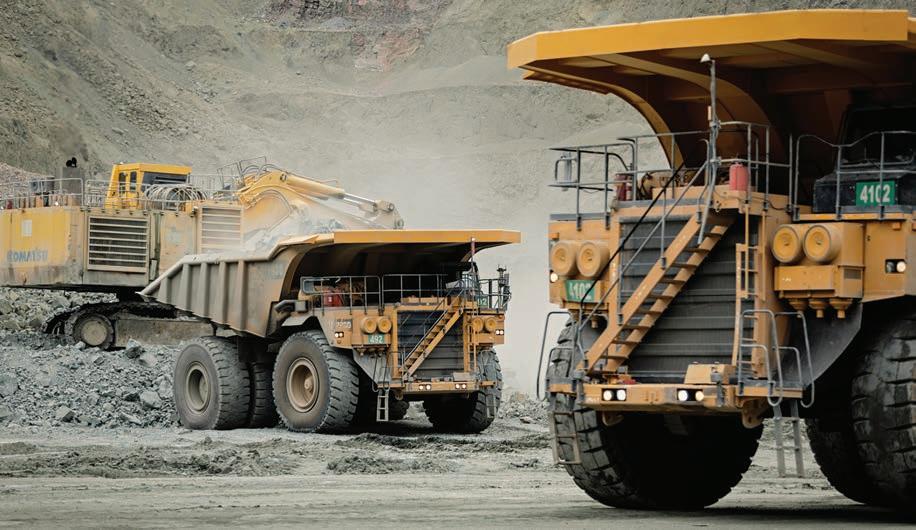
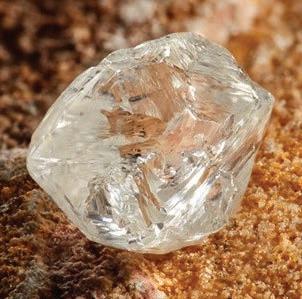
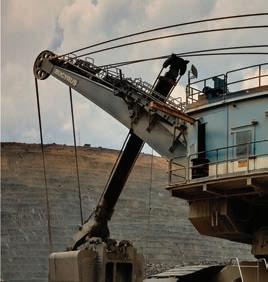
Above: Haul trucks at the Jwaneng diamond mine, held by a 50-50 joint venture of De Beers and the government of Botswana. ANGLO AMERICAN Left: A rough diamond. DE BEERS GROUP
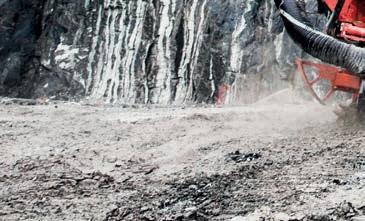
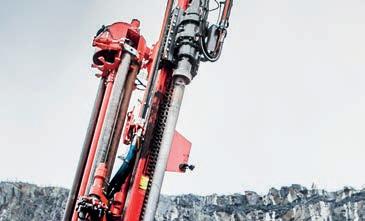
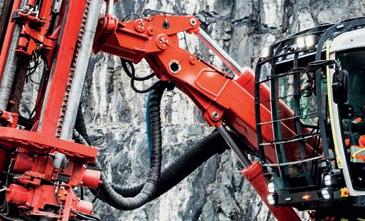
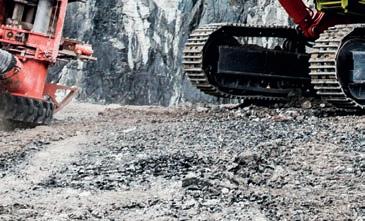
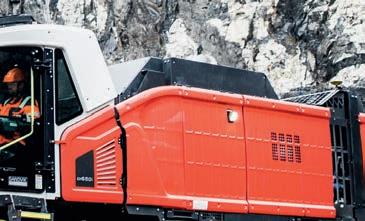
Leopard™ DI650i Time for a new leader
NewLeopardTM DI650i down-the-holesur facedrillrig offers long-termproductivityand superiorstabilit y withrobustand reliablemain components – seamlessly integrated withstate-of -the-art technicalsolutions.Scalable automation, easy maintenance andoutstandingmovabilityarethefeatures that make LeopardTM DI650i apremiumproduct,which isan honortoown.
Leaveyour pawprintand enjoy thesmooth, efficientride.








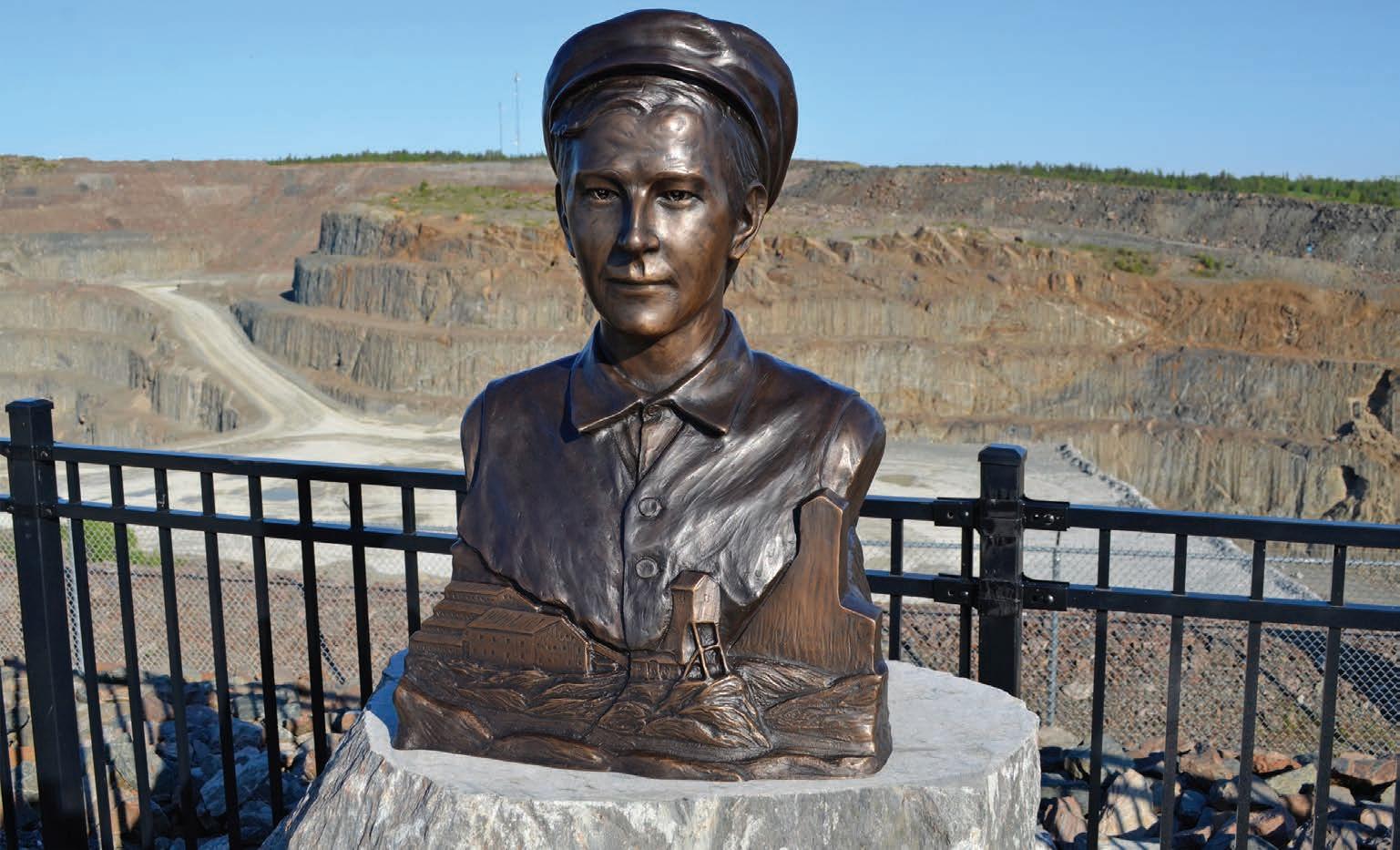
A bust of Benny Hollinger by Sudbury, Ont., artist Tyler Fauvelle, unveiled in June. Hollinger discovered gold in 1909 at what is now Newmont’s Porcupine complex in Ontario. CREDIT:
n Copper price slides
e price of copper has slid from its record high a er China’s real estate turmoil increased storage of the wiring and plumbing metal.
A pound of copper was at US$4.44 at press time in June, down 13% from US$5.08 on May 20. Stocks of the metal in Shanghai Futures Exchange warehouses reached the highest level in four years at 330,000 tonnes in June, according to Bloomberg gures.
High prices also weakened manufacturing demand and may see China switch out copper for aluminum.
e China Nonferrous Metals Industry Association has said substitution could somewhat lower the country’s dependence on copper imports and improve its resource security. China buys the vast majority of its copper, including more than 3 million tonnes a year of cathode, BMO said. Meantime, the country exports about 6 million tonnes a year of semi- nished aluminum. However, it still imports most of the bauxite used to make aluminum.
With high prices, manufacturers use their stockpiles before buying new metal, especially when demand for copper products has fallen. China’s property market has tumbled over the past few years as companies over-borrowed and went bust.
e country’s copper inventories usually accumulate early in the year, then decline as plants ramp up a er the Chinese Lunar New Year holiday which falls in the period of Jan. 21 to Feb. 20.
With the copper glut in China, imports of cathodes from the London Metals Exchange were selling at a US$14 per tonne discount during the third week of June, BMO reported, a rare situation.
Still, copper supplies outside of China remain low. Inventories for e Commodity Exchange (COMEX) in New York are surprisingly low even a er the price surge in May required traders to close positions where they bet the price to
fall, called a short squeeze. e market shows backwardation, when spot prices are higher than forecast trades, BMO said. “ is points to the challenges in obtaining copper suitable to deliver to COMEX warehouses, with much of the volume available globally either of Chinese or Russian origin,” BMO Capital Markets director of commodities research Colin Hamilton said in a note. “We still see signs of fundamental weakness, but if legacy short positions remain the potential for another squeeze is high, which is the key risk in play for further copper downside at the present time.”
BY NORTHERN MINER STAFF
n Japan, Chile boost lithium ties
Japan and Chile have agreed to strengthen cooperation on lithium mining and supply, including deals for Japanese rms’ acquisition of long-term preferential access to the battery metal, in exchange for adding value to the raw material extracted in Chile and transferring skills.
Japanese Trade Minister Saito Ken and Chile Mining Minister Aurora Williams said the two countries will focus on ensuring stable supply of the battery metal and the use of mining methods that protect the environment, Chilean news site Emol reported in mid-June.
Under the improved agreement, Japan and Chile will cooperate on developing lithium supply in environmentally friendly ways and hold an annual public-private joint conference on the mining sector to improve collaboration. is event will bring together Japanese companies operating in Chile and Chilean government o cials.
Since launching its national lithium strategy last year, which gives a majority stake in any projector to state-owned companies, Chile has been working to attract companies that can help
it develop processing and manufacturing capabilities.
In April last year, Chile granted Chinese EV maker BYD access to preferential prices for lithium carbonate produced by SQM, the world’s second-largest lithium producer. e output will be used in a cathode factory in the country’s north, which was set to open by the end of 2025. e plan is currently in standby due to “uncertainty,” the Chinese carmaker said, without elaborating.
Japan’s Sumitomo Corp., Mitsui & Co. and Sojitz Corp., are some of the companies involved in the battery and EV supply chain that have already tapped into the Chilean lithium market in the past year.
e South American nation has also sought to boost cooperation with other Asian players, including South Korea. Korean companies processing lithium in Chile may be eligible for incentives from the U.S. to diversify their clean energy supply chains. e nation, which has a free trade agreement with the U.S., has been in discussions with the Biden administration to determine if value-added products would meet the requirements for these incentives.
BY MINING.COM STAFF
PHOTO
GLOBAL MINING NEWS • SINCE 1915 www.northernminer.com
PRESIDENT THE NORTHERN MINER GROUP: Anthony Vaccaro, CFA, MBA avaccaro@northernminer.com
EDITOR-IN-CHIEF: Alisha Hiyate ahiyate@northernminer.com
MANAGING EDITOR: Colin McClelland cmcclelland@northernminer.com
WESTERN EDITOR: Henry Lazenby hlazenby@northernminer.com
COPY EDITOR AND PRODUCTION EDITOR: Blair McBride bmcbride@northernminer.com
PODCAST HOST: Adrian Pocobelli apocobelli@northernminer.com
ADVERTISING: Robert Hertzman (416) 898-6654 rhertzman@northernminer.com
Michael Winter (416) 510-6772 mwinter@northernminer.com
SUBSCRIPTION SALES/ APPOINTMENT NOTICES/ CAREER ADS
George Agelopoulos (416) 510-5104 (Toll free) 1-888-502-3456, ext. 43702 gagelopoulos@northernminer.com
PRODUCTION MANAGER: Jessica Jubb (416) 510-5213 jjubb@northernminer.com
CIRCULATION/CUSTOMER SERVICE: (416) 510-6789 | 1-888-502-3456 northernminer2@northernminer.com
REPUBLISHING: (416) 510-6768 jmonteiro@northernminergroup.com
ADDRESS: Toronto Head O ce
69 Yonge St, Toronto, ON M5E 1K3 (416) 510-6789 tnm@northernminer.com
SUBSCRIPTION RATES: Canada:
C$130.00 one year; 5% G.S.T. to CDN orders.
7% P.S.T. to BC orders
13% H.S.T. to ON, NL orders
14% H.S.T. to PEI orders
15% H.S.T. to NB, NS orders
U.S.A.: C$172.00 one year Foreign: C$222.00 one year GST Registration # 809744071RT001 (ISSN 0029-3164) CANADA POST: Return undeliverable Canadian addresses to Circulation Dept. c/o The Northern Miner 69 Yonge
opinion
EDITORIAL
Get ready for more disputes about what’s ‘mine’ and theirs

BY ALISHA HIYATE
Eleven years ago, e Northern Miner ran a story titled “How Mexico reclaimed its mantle as a top mining nation.” e piece recounted how the nation opened up investment and in 2012, became the No. 1 jurisdiction in Latin America for spending on mineral exploration.
Last year, Mexico was the top jurisdiction in another category: the target of most new requests for arbitrations at the International Centre for the Settlement of Investment Disputes (ICSID). e 10 new claims registered against it in 2023 edged out El Salvador’s nine.
ey aren’t all mining-related claims as outgoing President Andrés Manuel López Obrador, elected in 2018, put in place protectionist policies a ecting its entire economy.
López Obrador’s term is up in November, when his protégé and president elect Claudia Sheinbaum following a June vote, will take over.
But the damage has been done as López Obrador nationalized Mexico’s lithium resources, blocked new mineral concessions for the past six years and proposed a ban on open pit mining. Several miners, including GoldGroup Resources, Silver Bull Resources, Almaden Minerals and China’s Ganfeng Lithium have all registered new claims against the country with the ICSID over the past year and a half.
International tribunals offer an impartial venue, but there are risks: decisions are meant to be binding and final. On average, mining arbitration take about five years to reach a judgment, according to a study released last year by Toronto-based law firm Charles River Associates. Gabriel Resources’ US$4.4-billion claim against Romania, which the company recently lost, was an outlier at nearly 10 years.
Resource nationalism spreading
As states tighten their grip on critical minerals, we can expect cases to shi from precious metals project disputes to those involving strategic minerals.
“It’s a universal phenomenon with legal claims that law follows business,” Hugh Meighen, a Toronto-based partner at Canadian law rm BLG said. “Where there is an active sector that is driving investment, that is driving commerce, those transactions, those investments over time, spin out disputes.”
Natural resources projects — oil and gas and mining —represent one quarter of all cases heard by ICSID panels since the World Bank body started hearing cases in 1972 — more than any other industry. Electric power and energy cases stand at 17%.
e biggest mining award given by the ICSID was for a copper project — Reko Diq in Pakistan. e case entered arbitration in 2011 and in 2019, Australia’s Tethyan Copper was awarded damages of US$5.9 billion. Barrick Gold, which owns Tethyan, agreed to waive the award a er the parties came to a new agreement in 2022. It restructured the project with 50% owned by Barrick and the rest split equally between Pakistan and Balochistan province.
More copper cases are in the works. First Quantum Minerals is preparing to ght Panama in arbitration for shutting down its Cobre Panama copper mine last year.
Why arbitration
Companies turn to international arbitration as a last resort when negotiations with the host government or court actions in the country fail to resolve the dispute.
GoldGroup, for example, alleges its San Jose de Gracia gold project was essentially expropriated by proceedings in domestic courts that have been stalled for a decade, and by another that it says was “plagued with incomprehensible procedural defects.”
International tribunals o er an impartial venue, but there are risks: decisions are meant to be binding and nal. On average, mining arbitration take about ve years to reach a judgment, according to a study released last year by Toronto-based law rm Charles River Associates. Gabriel Resources’ US$4.4-billion claim against Romania, which the company recently lost, was an outlier at nearly 10 years.
Awards, when given, can also be disappointing. Charles River’s study showed that 47% of mining awards for which information was available were for less than 10% of the amount claimed.
Indigenous Rights questions Investors should also be aware that environmental, social and governance factors are a growing cause of investor-state disputes, especially Indige-
COMMENTARY
Investors should
heed growing supply after uranium’s recent runup

BY JAMES COOPER
Uranium prices surged from just over US$50 per lb. in April 2023 to more than US$100 per lb. by January 2024. Since then, there has been a moderate pull-back; uranium is now consolidating just above US$90 per pound.
So is it too late to join the uranium bandwagon as an investor?
Well, that depends. Last year’s terri c run was driven by strong demand outlooks.
Uranium, the fuel for nuclear reactors, has bene tted from renewed interest in building global nuclear capacity. at’s partly due to the push to go green.
Here, nuclear energy o ers baseload power that’s carbon-free and reliable. Whether night or day, cloudy or windless, nuclear provides uninterrupted power.
But there’s another important side to the nuclear story: costs are rising.
Despite central bankers’ claims to the contrary, in ationary pressures continue to loom.
Rising tari s and trade tensions between the world’s two largest economies, China and the United States, threaten to bifurcate global trade. is is highly in ationary and occurs just as the U.S. ramps up broad trade embargoes against Russia, one of the world’s most resource-rich countries.
Meanwhile, con ict could erupt at any time in the Middle East. A regional spillover could have huge implications for global oil supply.
Echoes of 1970s ere are similarities between today’s in ationary environment and the 1970s’.
Back then, the war in Vietnam helped drive copper prices to extreme levels, above US$15,000 per tonne. Meanwhile, OPEC oil embargoes in the early ’70s caused the price of oil to quadruple in the U.S.
As in ation rocketed higher, households sweated under a costof-living crisis.
However, these economic conditions laid the foundation for rapid nuclear energy expansion throughout the decade.
As a source of relatively cheap baseload power, nuclear power o ered a proven long-term solution to the global energy problem. Nuclear was viewed as a long-term strategy to tackle the cost-of-living crisis.
e U.S. had fewer than 20 nuclear power facilities at the beginning of the 1970s. But by the decade’s end, the country had around 75 reactors in operation. Not surprisingly, the commodity fuelling these reactors went skyward.
Adjusted for in ation, the price of uranium shot past US$200 per lb. by the late 1970s. A record that stands today.
According to a report by the OECD, the tripling of the uranium price between 1973 and 1975 was
brought about by concerns over uranium supply shortfalls related to growing reactor orders and ongoing military requirements. Today, uranium trades at less than half that price. So, could there be another record high at some point in the 2020s?
If the 1970s o ered a blueprint for today’s economy, it’s certainly possible.
In ationary pressures loom large against the backdrop of war, tari s, embargoes and threats to energy security. e political will to push nuclear will only increase because of these stresses.
The supply story
As the Canadian mining magnate Robert Friedland once said, the set-up for higher commodity prices consists of one-third demand and two-thirds supply. So, how does the uranium supply story stack up? e outlook here is slightly less rosy.
Kazatomprom, the world’s largest uranium miner, is set to resume full production next year, a er it cut production during uranium’s long bear market following the Fukushima nuclear disaster. Meanwhile, the world’s second-largest miner, Cameco is looking to ramp up its McArthur River operation in Canada. is will add a further 6,900 tonnes of uranium to the global feedstock. According to GlobalData, worldwide uranium production is expected to grow with a compound annual growth rate of 4.1% from 2024 to 2030, with output reaching 76,800 tonnes by 2030.
So, what does that mean? Rising output could defuse uranium’s long-term bullish outlook. at’s set to be dampened further as several new sources of supply hit the market.
Paladin Energy’s restart of its Langer Heinrich uranium mine in Namibia is under way. Its expected to deliver 6 million lb. annually at full production, enough to supply more than ten 1,000-megawatt nuclear power plants for a year. en there’s South Australia’s Honeymoon operation. In 2015, Boss Energy acquired the project and recommissioned the mine, with production resuming earlier this year.
New owner Lotus Resources also plans a restart of its Kayelekera uranium project in Malawi. So why is this a potential threat to the uranium market?
Fully permitted mines with infrastructure already in place means several operations could come online simultaneously, easing any potential supply squeeze driven by demand. For now, investors remain laser-focused on the demand outlook. at means there’s still plenty of room to ride momentum in the uranium market.
In the long term, though, demand must overcome higher production threats.
A cost-of-living crisis could be the high-demand scenario that brings more reactors online and fuels demand for uranium. TNM
James Cooper runs the commodities investment service Diggers and Drillers. Follow him on X @JCooperGeo.
people
Beaty optimistic on Mexico ahead of cross-Canada bike trip to Greenstone opening
FUNDRAISING | Entrepreneur weighs in on Canada’s restrictions on Chinese investment
BY HENRY LAZENBY
Mexico’s new leader is an improvement while Canada should be careful in blocking Chinese investment, according to Ross Beaty, the Canadian Mining Hall of Famer who founded Pan American Silver (TSX: PAAS; NYSE: PAAS) and Equinox Gold (TSX: EQX; NYSE-AM: EQX).
Voters elected Claudia Sheinbaum, a climate scientist, as Mexican president on June 2 to replace the outgoing Andres Manuel López Obrador. She’s expected to continue his policies that have de-facto banned open-pit mining. But she may have a less rigid approach, said Beaty of the country where Pan American operates two mines.
“Sheinbaum is much more pragmatic, understands nature perhaps more, and understands climate and perhaps won’t be as radical,” Beaty said by phone June 20 in Vancouver. “ e former president was a kind of an older generation person. He didn’t believe in climate change, he didn’t want renewable energy, he didn’t want private sector development and he had a dislike for certain Mexican companies in the mining industry.”
Beaty spoke as he was preparing for a cross-Canada fundraising bicycle relay from Vancouver to Equinox’s Greenstone gold project at Geraldton in northern Ontario. Riders should nish the epic 3,634km journey in time to open the mine in August.
Hospital funding
e pedal-powered trip will bene t the Geraldton District Hospital, just ve minutes from the mine. More than $1 million has already raised or pledged. e hospital serves 2,767 km sq. of Northern Ontario, including ve Indigenous communities and the mine’s workforce.
“We’ve got a lot of keen cyclists in the company, and there’s a lot of keen cyclists in the mining industry and the brokerage industry here in Vancouver,” said Beaty, an avid cyclist planning to participate. “ is ride celebrates good health
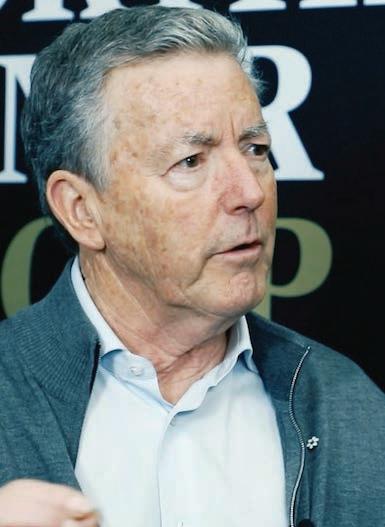
Beaty spoke as he was preparing for a cross-Canada fundraising bicycle relay to benefit Geraldton District Hospital in northern Ontario.
and teamwork, and it may even catch some Canadians’ attention.”
Cyclists from Equinox Gold’s sites in California, Mexico and Brazil will join the relay and organize local events to raise money for charities in their regions. So far, the company has attracted sponsorships and aims to gather more support from vendors, contractors and industry leaders.
Other industry players, such as Barrick Gold (TSX: ABX; NYSE: GOLD) CEO Mark Bristow in his former Randgold Resources days, regularly undertook multi-week motorbike adventures visiting mines and sites across Africa, all in aid of local charities.
e cyclists are to start their journey on Aug. 5 from the company’s head o ce in Vancouver. Daily progress updates will be available on Equinox’s social media channels and the Ride to Greenstone website.
e Greenstone mine, which poured its rst gold on May 22 and hosted Ontario Premier Doug Ford and First Nations during an event at the mine ursday, is set to become the company’s agship asset. It aims to produce about 400,000 oz. gold per year for the rst ve years and average 360,000 oz. annually over its 14-year life. Equinox, which has eight gold mines in the America, recently bought out its former 40% partner at Greenstone, Orion Mine Finance.
Government overreach
On the Canadian front, Beaty backs the government’s e orts concerning the domestic energy transi-
tion and approves of its support for increased critical minerals processing in Canada. He discussed the government’s e orts to restrict


Chinese investment in the exploration sector, which he sees as excessive.
is week, the Canadian government arranged a $3-million sale of stockpiled rare earths from Vital Metals’ (ASX: VML) Nechalacho project in the Northwest Territories to the Saskatchewan Research Council. e move replaced China’s Shenghe Resources as the buyer. Two years ago, Ottawa ordered China to divest from three Canadian critical mineral companies even though their projects were abroad.
“I’m a little nervous about the Canadian government’s desire to restrict Chinese investment in the exploration industry where it’s carried out away from Canada,” Beaty said. “ at seems to me a bit of an overreach.” TNM

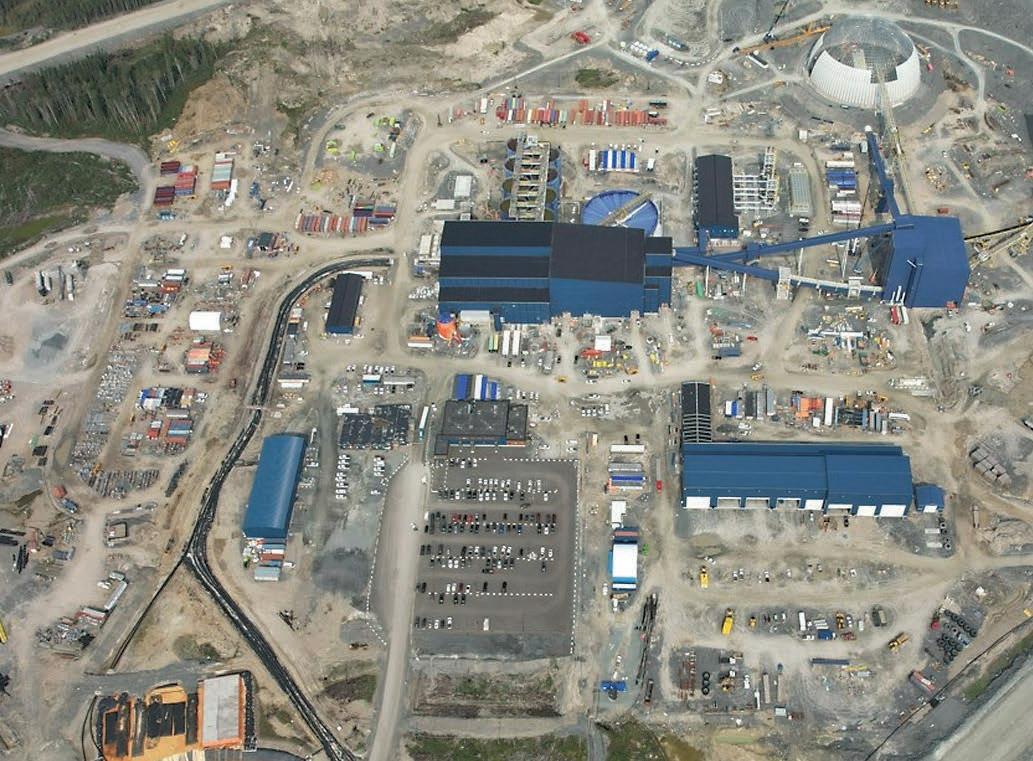
Far left: Equinox Gold’s Greenstone mine in Ontario. EQUINOX GOLD
Left: Ross Beaty speaks at AME Roundup 2024. NORTHERN MINER
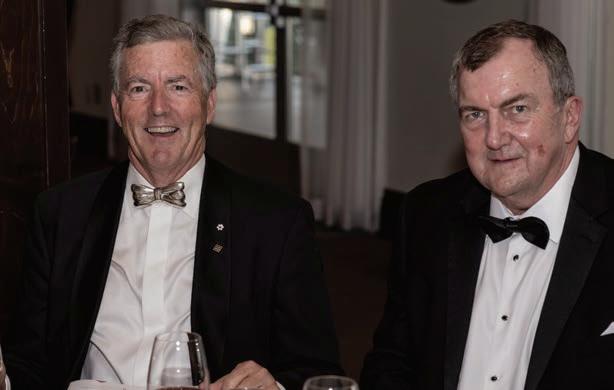
Below left: Ross Beaty and Barrick Gold president and CEO Mark Bristow at the Canadian Mining Hall of Fame ceremony in Toronto in 2022. CANADIAN MINING HALL OF FAME
BREAKING DOWN GLOBAL NICKEL SUPPLY
BY BLAIR MCBRIDE
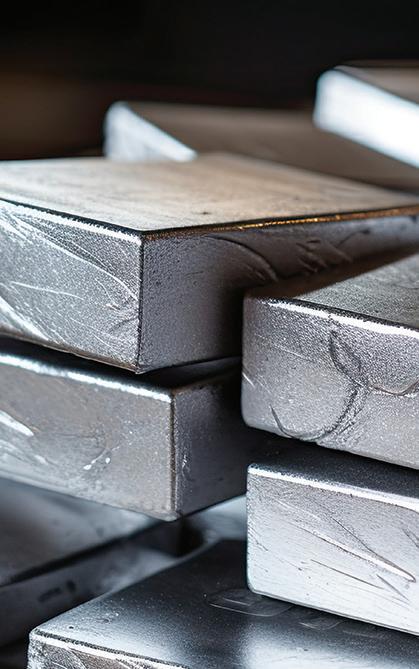
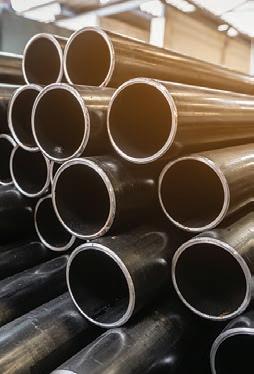
Nickel is an essential component in electric vehicle (EV) batteries, solar panels and alloys for the aerospace industry. Nickel demand for EVs is projected to grow about 40 times by 2040, according to the International Energy Agency. However, those uses represent a small proportion of the total nickel produced globally.
Battery-grade nickel has a purity level of 99.99%. Class 2, with 1.5% to 55% nickel purity, is mostly used for stainless steel and largely produced by Indonesia, whose China-backed projects have increased input at lower costs than competitors.
Top 10 producers of Class 1 nickel by 000 tonnes in 2023


Nickel demand from EVs is expected to grow by 40 times between 2020 and 2040 Source:
Top 10 producers of Class 2 nickel by 000 tonnes in 2023
commentary &analysis
More than minerals: Mid-stream capacity is key to Canada’s industrial future
COMMENTARY | Task demands approach inclusive of government, industry
BY IAN M. LONDON
Canada boasts of its rich history and continued success in mining, metallurgical and chemical processing, advanced manufacturing, strong trade relations north-south and east-west, access to clean energy and its commitment to sustainability.
While these strengths lay the foundation for Canada to succeed in a rapidly changing economy driven by the global energy transition, they’re not enough. e looming challenge is how can industry, governments, communities and investors lever and translate these capabilities and aspirations to ful ll Canada’s promise?
e energy transition depends on advancing technologies, many of which require critical material supply chains that have the con dence of consumers, investors, and society.
Emerging technologies are enabled by hardware and infrastructure, with end users purchasing cost competitive and sustainably produced assemblies, components, metals, alloys, powders and chemicals. Seldom do they purchase raw minerals. As such, Canada must establish much-needed value-adding mid-stream processing capacity to translate minerals production to meet these new industrial production demands.
Processing capacity
Building midstream materials processing capacity will enable Canada to capture value-adding energy transition applications in transportation, clean energy production and utilization, and digital and medical technologies when materials producers partner closely with their customers.
To get there, operators will need to build investor and customer condence by scaling up material processing and component production capacities from bench through to pilot and demonstration plants to full-scale operations.
Consistent production of midstream materials and components, supported by domestic raw mineral and recycled material supply, can help meet Canada’s requirements. at will also contribute to the world’s demand for critical materials.
Canada has identi ed 34 elements critical to its economic future. e available supply of each of these critical minerals are at different stages of maturity. Each faces unique challenges. Several of these material streams are championed by well-established companies, others by much smaller and medium-sized enterprises. Some are traditional, large volume commoditized elements such as iron, copper and aluminum. Most critical materials required for next generation technologies are smaller volume and non-commoditized (e.g., neodymium, dysprosium, gallium, graphite) sold on individual customer demand via speci ed o -take agreements. ese agreements include technical speci cations (quality), pricing, volumes and increasingly, environmental and social performance criteria.
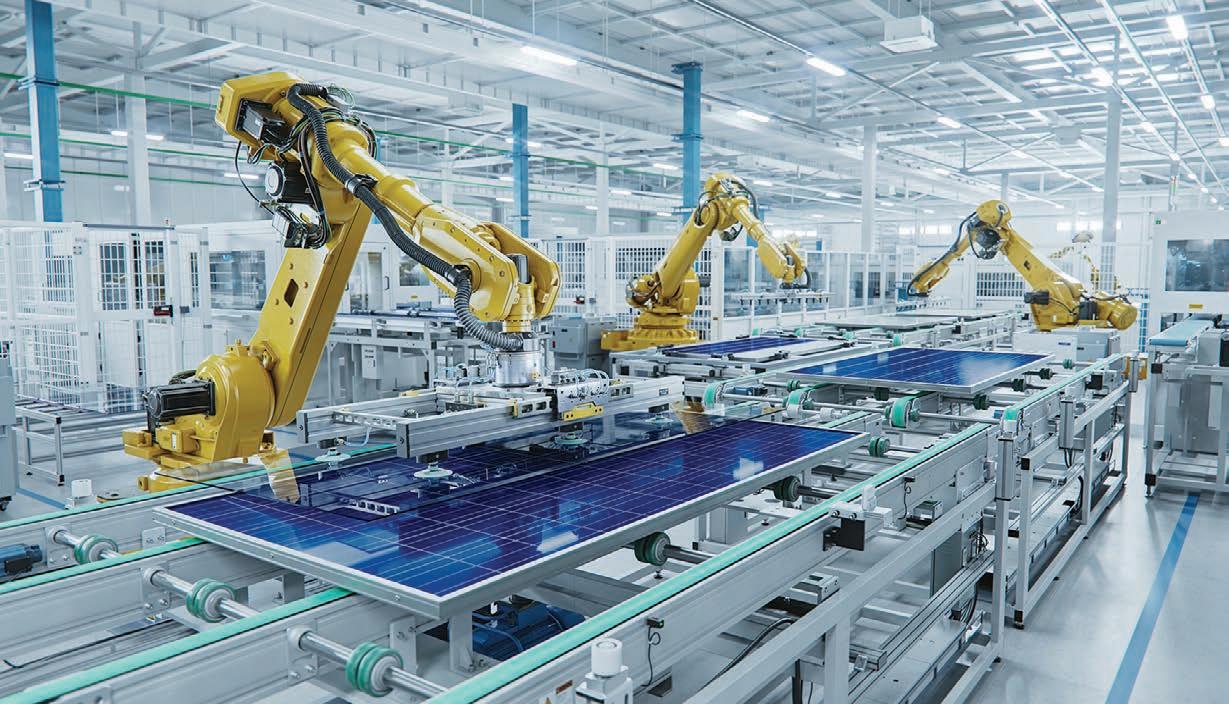
Value-added manufacturing is demand for value added advanced manufacturing supported by Canadian critical processed material supply will ultimately contribute to Canada’s re-industrialization through augmenting the attractiveness of (re)shoring manufacturing in Canada and through export.
So how do we get to advanced domestic industrialization from promising resources still in the ground? Canada knows how to mine (fully respecting the challenges of permitting, nancing, and bringing economic and sustainable pro-
duction into service).
Achieving our mid- to longer-term goals will however, require a concerted, whole-of-government, industry, investor and academia approach to producing critical materials. Here are a few things we could do.
n Champion commercialization hubs. e economics of standalone facility overheads, scaling-up and sta ng don’t work for many start-ups or SMEs. e development of commercialization hubs would lower pre-production costs for emerging producing ventures through shared space, equipment,
overhead and ready access to technical expertise. ese would allow start-ups to produce material for sale without signi cant downtime between pilot and plant while allowing continued work on process optimization. Shared facilities could house several SMEs, who pool technical, operational and administrative resources. Government support could help to leverage capital to build the infrastructure hubs.
n Greater attention on the D, less on the R in R&D. De-risking, scale-up and commercialization of promising research are imperatives to the future economic security of
Canada and its partners. A focus on development would best align and deploy government, commercial labs and industry expertise and facilities needed to accelerate the mid-stream capabilities and capacity. Prudent yet practical technical readiness assessments balanced by commercialization/market readiness are key to setting priorities and allocating resources.
n Develop human resource capacity. We need people with the right training and expertise to build and deliver tomorrow’s critical mate-
Automated production of solar panels. Emerging and clean energy technologies require not raw critical minerals but the materials created from them. ADOBE/IM
commentary&analysis
Ring of Fire road must start ASAP
OPINION | First Nations stand to benefit from project rich in green tech metals
BY STAN SUDOL
The Ring of Fire camp is the most important mining discovery in Canadian history for its strategic minerals including nickel, copper, platinum group metals, chromite and titanium. It even exceeds the legendary Sudbury Basin.
Discovered in 2007, the region is located about 450 km northeast of under Bay in the isolated and vast peatlands of the Hudson Bay lowlands, an area roughly the size of Norway but with only about 10,000 people. Contrary to activists’ claims, sustainable exploration and mineral development will have minimal impact on the environment and provide critical minerals to mitigate global warming.
Australian miner Wyloo owns the Eagle’s Nest nickel-copper project and various chromite deposits in the Ring of Fire area.
e discovery has helped Ontario attract roughly $43 billion, and counting, of new electric vehicle (EV) investment. A Canadian junior explorer, Juno, holds claims on more than half of the camp. Marten Falls and Webequie First Nations also support the development and the promise of providing multi-generational jobs and economic opportunities across northwestern Ontario.
e West needs to bolster defence spending due to new wars and global instability, strip China of its critical mineral dominance, develop its own sources to power the green energy transition and help local First Nations faced with the shortest ice road season in memory. ese all converge at one point: the road to the Ring of Fire needs to start construction this summer.
Russia/Ukraine war
e Russian invasion of Ukraine in February 2022 has changed everything. If cobalt from the Congo, mined by poor African children was a problem for Western consumers, it’s safe to assume no one wants to buy an EV manufactured with “blood nickel” or any other commodity from Russia. e war was partly funded through global military spending that reached about $2.4 trillion last year, the most in 15 years, according to the Stockholm International Peace Research Institute.
Many European analysts fear the war in Ukraine, combined with the Gaza/Israel con ict and a possible Chinese invasion of Taiwan will spark a third World War. Ivanhoe Mines’ (TSX: IVN) Robert Friedland likes to cite how the war in Ukraine red 50,000 tonnes of copper shells into oblivion in its rst year. War puts pressure on mineral supplies.
During the 1950s, the United States government gave Falconbridge a $40-million subsidy, that would be worth $455 million today, to help develop a mine in Sudbury, Ont. at was to ensure diversity of supply from the predominant producer of that time, the Inco subsidiary International Nickel.
Today, the American military is again concerned about security of supply for essential commodities and, under the Defence Production Act, recently funded two Canadian junior mining projects: Fortune Minerals’ (TSX: FT) NICO cobalt-gold-bismuth-copper project in the Northwest Territories and Lomiko Metals’ (TSXV: LMR) graphite project in Quebec. Many more funding announcements are sure to follow.
Roughly 3.6 million tonnes of nickel were mined last year and Glencore (LSE: GLEN) has predicted global demand could grow to 9.2 million tonnes by 2050, mostly due to the EV battery market.
If all the proposed Western EV manufacturing operations are built, today’s North American nickel production, largely from Sudbury, ompson, Man., Voisey’s Bay, N.L. and Raglan in Quebec won’t be enough. New production needs to come on stream. And as in most sulphide nickel camps around the world, many mines are o en found. e same will eventually happen in the Ring of Fire.
Defence spendingIn 2023, if countries with extensive social programs such as Finland, the Netherlands, France and Britain can meet or come very close to the benchmark 2% of GDP military spending goals, there is no excuse for Canada, at only 1.4%, to keep freeloading on American coattails.
It’s a national embarrassment for the country and for our military who remember the outsized contributions this country provided in two world wars and the Korean con ict. America is in an economic war with its main rival, China. eir competition over the critical minerals needed to build the products essential for decarbonization is cut-throat and erce.
e Chinese seem to be ooding the world with cheap supplies of “dirty” Indonesian nickel. at economically undercuts production in Australia and potentially Canada, threatening Western supplies that are largely sustainable and green in comparison to Chinese practices. In 2023, China severely restricted access to gallium and germanium, essential minerals for semi-conductors and various
military applications, and has cut graphite exports.
Canada has a part to play, in defence spending and critical minerals supply.
Melting winter roads
Global warming is here. We’ve just ended one of the shortest winter ice road seasons on record. e roads are vital to ensure the delivery of bulk products like fresh vegetables that would cost much more if they were own in. Isolated First Nations communities depend on them.
Ironically, non-governmental organizations have been vehemently opposed to the proposed permanent roads and Ring of Fire mine development to produce the critical minerals needed to slow global warming.
Wyloo is working to sustainably build its Eagle’s Nest nickel mine with low environmental impacts. Tailings will be stored underground and all processed water will be recycled.
e actual mine disturbance is less than one square km – that includes airstrip, supply storage and other surface buildings aside from the minesha – which will release about 0.046 tonne of carbon per year, according to the company. Wyloo estimates the mine will generate $100 million a year for the local economy of First Nations businesses and the life of the mine will be at least 20 years, though it could last much longer since the deposit is open at depth. Raised eskers — sands and gravels le behind by glaciers that contain no carbon absorbing peat — will hold 80% of the proposed roads. e remaining 20% are to be built over peatlands and use modern oating geo-textile and
geo-grid materials that rest on top of the muskeg allowing it to continue to store carbon. is technology has been successfully implemented in the oilsands region of Alberta, northern Manitoba and in Scotland, all areas with extensive peatlands.
Webequie and Marten Falls First Nations, on whose traditional territories the majority of mineral deposits have been found, support sustainable mineral development. e leadership of some other First Nations, most of whose communities are located hundreds of kilometers away from the proposed mine, don’t support the project. An agreement seems possible between the province and Aroland First Nation, where the road into the isolated region would start, Ontario Premier Doug Ford said recently. e rst 100 km along an existing forestry road might not even need an environmental assessment. Canada is the second largest geologically-rich land mass on Earth and our mining practices are sustainable and green. e development of the Ring of Fire would be an enormous economic boost to marginalized First Nations throughout the region. And not developing the mineral abundance of the Ring of Fire would be a massive insult to our Western allies.
We need to start the road to the Ring of Fire now.
TNM

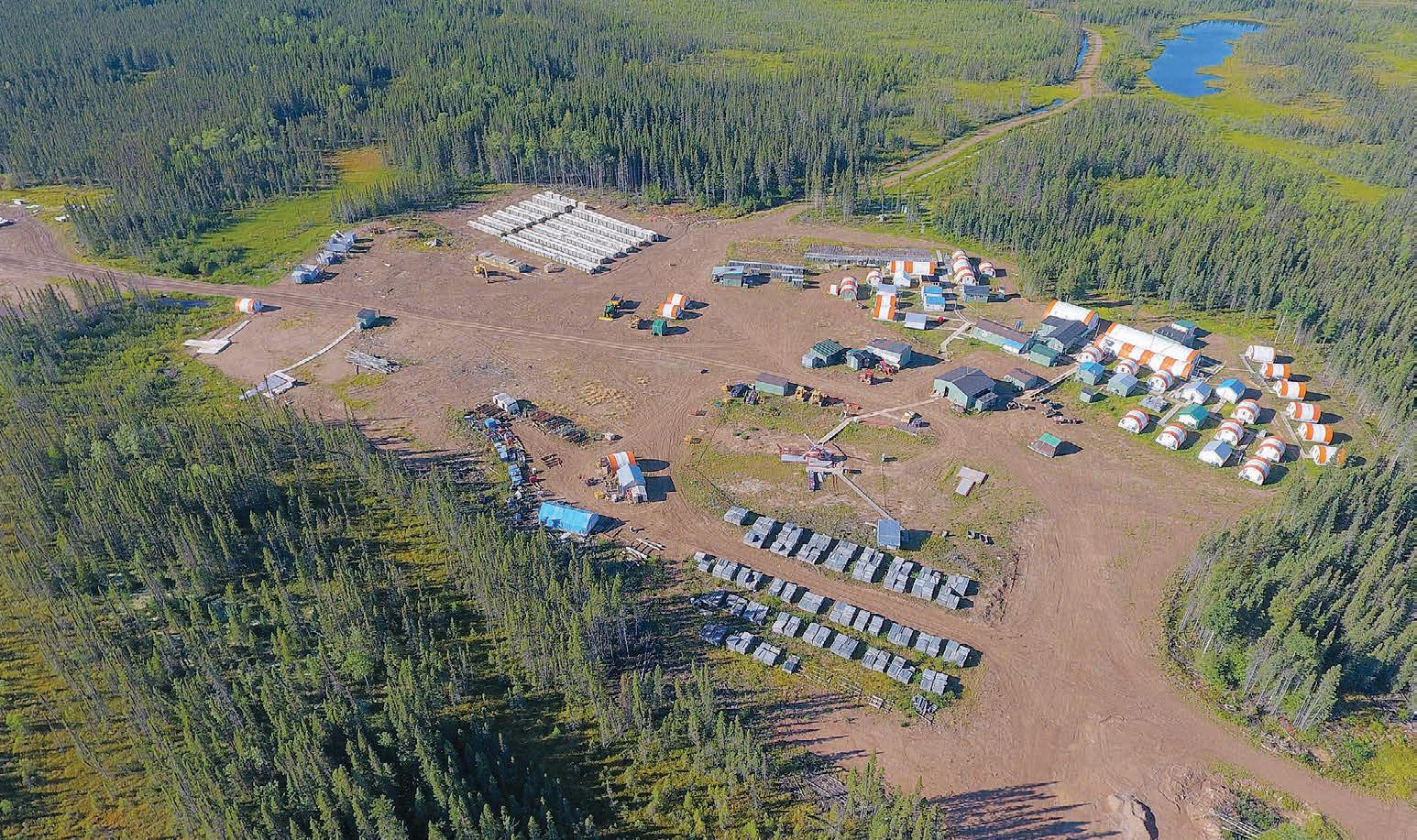
Wyloo’s Esker camp in Ontario’s Ring of Fire. Its Eagle’s Nest nickel-copper-platinum group metals project is the most advanced in the region, but requires road access to be developed. WYLOO
commentary&analysis
Palladium not written off the road yet, miners say
FORECAST | Electric cars not denting demand that much
BY COLIN MCCLELLAND
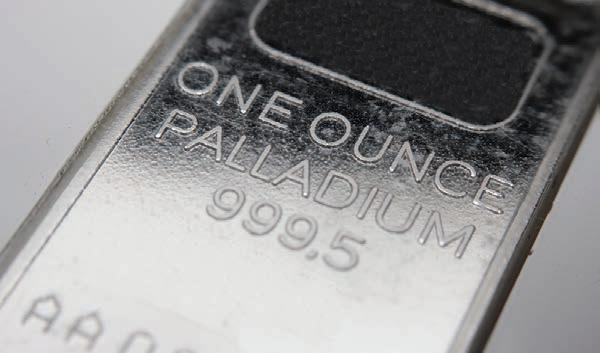
The price of palladium may gain in the short-to-medium term if constraints on recycling tighten and car buyers remain wary of electric vehicles (EVs) because of high interest rates, the World Platinum Investment Council says.
e supply of the metal, which is used in catalytic converters for pollution control on internal combustion engine (ICE) autos, is expected to be in a de cit of 1.3 million oz. this year, said the council, which represents miners of platinum group metals.
Palladium’s shortfall may ease to about 200,000 oz. next year before swinging into a surplus in 2026 that could build to as much as 700,000 oz. by 2028, the London-based council said in a May 29 report.
However, the forecast surplus is based on growth in recycling and depends on resolving several challenges, it said. ese include ICE vehicles being used for longer due to higher interest rates, consumer
The
skepticism
“Any
could slow the pace of the growth in recycling supply, resulting in deeper and more persistent decits and further postpone the surplus,” the council said. “ is would in turn feed into value expectations
Most energy and mining projects 20% in the red: study
BY CECILIA JAMASMIE
Miners and energy companies are facing average budget overruns of 15% to 20%, which puts nearly US$1.5 billion of capital invested in energy transition-related projects at risk each year through 2030, research from Bain & Co. shows.
Companies need to rethink traditional capital delivery models to avoid cost and timeline blowouts, the Boston-based management consultant says.
Examples abound, with one of the more recent being Horizonte Minerals’ (LSE: HZM; TSX: HZM) Araguaia nickel project in Brazil’s Amazon region. e company was put into administration in May a er it failed to secure nancing to nish building the US$1-billion project. Costs had almost doubled from the earlier estimate of US$537 million.
Another case in point is Teck Resources’ (TSX: TECK.A; TECK.B; NYSE: TECK) Quebrada Blanca copper project in Chile. e Vancouver-based miner, which spent much of last year ghting o a hostile takeover bid from Glencore (LSE: GLEN), last said its Quebrada Blanca 2 project would cost between US$8.6 billion and US$8.8 billion, compared with an original US$5.3 billion price tag.
To avoid cost surprises, Bain suggests companies need to adopt systematic portfolio thinking.
“Leading companies are begin-
ning to view their projects as part of an aggregated system rather than in isolation,” Bain says in its report. at way they can capture synergies and build resilience across their entire portfolio.
Companies should also realign their operating models, the consultant said. is would ensure that critical decisions are made with a broader perspective, addressing the blind spots that o en occur in siloed organizational structures.
Tech efficiency e adoption of digital solutions, automation, and AI tools is proving to be a game-changer for capital projects. In its research, Bain & Co.
and provide upward support for the palladium price.”
Platinum deficit
Platinum is also expected to remain in a de cit as motorists keep ICE cars for longer. However, platinum bene ts from a more diversi ed demand base and signi cant growth potential from an emerging hydrogen economy, the authors said. ey forecast the platinum market to remain in de cit for the foreseeable future.
e price of palladium has fallen 19% this year to US$885 per oz. near press time, according to Mining.com. Platinum has eased 2.8% over the same period to US$962.08 an ounce.
Contrary to a common perception, palladium surpluses won’t be the result of a rapid decline in ICE demand, says the council. It represents Anglo American (LSE: AAL), Northam Platinum, Impala Platinum Holdings (JSE: IMP), Sedibelo Platinum Mines, and arisa (JSE: THA).
Indeed, automotive demand for palladium may decline by just 1%
compounded annually to 2028, the council said. Palladium is being substituted for platinum while sales of more hybrid vehicles are osetting lower pure ICE demand, it said.
Revised outlook e report updates a September forecast by lengthening the time the palladium market remains in de cit to 2026 instead of a year earlier, because of the recycling challenges.
Palladium may also bene t from demand in developing countries adopting fossil fuel autos o setting some EV gains, but recycling is the main driver, according to the report.
“Secondary supply will be the major contributing variable in shi ing palladium markets into a structural surplus,” the council said.
“As such, the timing and extent of the recovery of scrap supply chains is key. With this uncertainty in mind there is scope for medium-term palladium market strength and short covering.” TNM



found that these technologies help eliminate waste and reduce friction by delivering immediate e ciencies and streamlining project management.
By thinking systematically across portfolios, realigning operating models, and embracing digital technology, mining and energy companies can mitigate risks and ensure more reliable project outcomes, the experts said.
Bain & Co. sees the sector's future of project management in integrated, technology-driven strategies that enhance e ciency and resilience, ensuring sustainable growth in an increasingly competitive landscape.

ADOBESTOCK/CORLAFFRA
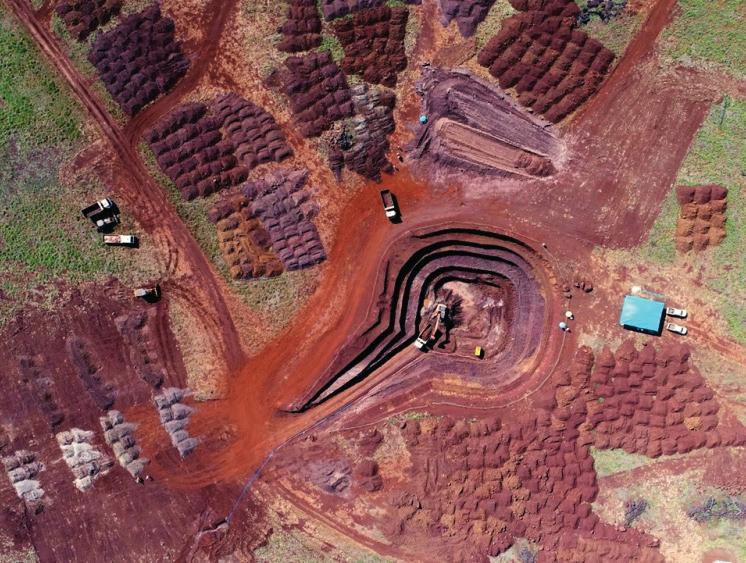
Trial mining at Horizonte Minerals’ Araguaia nickel project in Brazil.
HORIZONTE MINERALS
politics&policy
New technocrat Mexican leader unlikely to be pro-mining
ELECTIONS | Climate scientist replaces ‘whim and bombast’
BY COLIN MCCLELLAND
Claudia Sheinbaum, a climate scientist, won Mexico’s election to become the country’s rst female leader and is expected to continue the anti-mining policies of outgoing President Andres Manuel López Obrador.
Sheinbaum secured the most ballots on June 2 in the nation’s 200year democratic history, about 60% of the vote, according to the country’s electoral authority. e tally also showed her coalition of parties secured more than two-thirds of the lower house of Congress, but fell just short of that mark in the Senate. e threshold is required to change the constitution without the opposition’s consent.
“ e country’s security situation and rising scal de cit, coupled with the strengthening of the Mexican peso, will represent critical challenges for her presidency,”
Colin Hamilton, BMO Capital Markets director of commodities research, wrote in a note on June 3.
“From a mining sector perspective it is unclear whether this will mean any li ing of restrictions, such as the de facto ban on
Feds

new open pit mines, though we would see this as only a possibility rather than a probability in the near term.”
Sheinbaum, a former mayor of Mexico City who has cited López Obrador as her mentor, campaigned on a platform of a ordability and promises to tackle corruption. e election saw the murders of around 37 candidates as drug cartels seek to control political outcomes.
To her bene t, the president-elect with a doctorate in environmental engineering, exercised a technocratic approach to crime as mayor and enlisted the business community. But she faces challenges such as low investment from foreign companies new to Mexico, gangs smuggling drugs and migrants into the United States and the erosion of democratic institutions that may target judges next, according to e Economist magazine.
“Sheinbaum’s to-do list is clear: tackle disorder, boost trade and investment and strengthen democracy,” the London-based publication wrote on June 2. “Yet is she really up to the task? One fear is that despite her technocratic credentials and style she is a captive of Mr López Obrador’s agenda.” e campaign saw Sheinbaum speak more about policy continuity and protecting López Obrador’s legacy than about her own propos-
als, the magazine noted. Her predecessor governed by whim and bombast, it said.
Peso falls
Mexico’s peso fell against the dollar a er the election as investors raised concerns about the ruling Morena party’s potential to be unchecked in Congress if it could attract a few more seats in the Senate to its policies.
e currency dropped 4.4% against the Canadian dollar to trade at the weakest level since November. One dollar bought 12.88 pesos just before the vote compared with 13.45 pesos near press time.
An opinion piece in e Wall St. Journal on June 2 warned Sheinbaum’s government may seek to directly elect Supreme Court justices, end proportional representation for congressional seats, and eliminate the Federal Economic Competition Commission and the National Institute for Transparency, Access to Information, and Protection of Personal Information. “ e reforms would be bad for Mexico, although in the short run things might not change much,” Mary Anastasia O’Grady wrote. “ e frog would boil slowly.” TNM
divert $3M rare earths sale from Chinese firm in ‘case of elevated interest for Canada’
CRITICAL
BY BLAIR MCBRIDE
The Canadian government has brokered the sale of stockpiled rare earths mined in the Northwest Territories by Vital Metals (ASX: VML), the company said on June 17, as Canada moves to keep its critical minerals out of Chinese hands.
Natural Resources Canada organized the $3 million sale of the rare earths, mined at Vital’s Nechalacho project, to the Saskatchewan Research Council (SRC), a Treasury Board Crown corporation overseen by the provincial government. It replaces a A$2.6-million ($2.3 million) sale announced in December to Chinese rm Shenghe Resources. Shenghe earned a 9.9% stake last October in the Australian company for A$5.9 million.
“We were presented with a case of elevated interest for Canada,” Vital managing director Geordie Mark told e Northern Miner by phone on June 17, though he declined to discuss details of government involvement in the sale.
“ is agreement highlights the strategic value and importance of the Nechalacho rare earths project, and the prioritization of a rare earths value chain in Canada,” Mark said in a news release. “ is sale is also bene cial in deriving value from our work at Nechalacho as we continue to advance the Tardi rare
“This agreement highlights the strategic value and importance of the Nechalacho rare earths project, and the prioritization of a rare earths value chain in Canada.”
GEORDIE MARK, MANAGING DIRECTOR, VITAL METALS
earths deposit as a long-life, largescale project with a scoping study to examine potential size and scalability of Tardi on track for delivery by the end of 2024.”
Grip on investment
e stockpile sale last December raised eyebrows, with some saying it
highlights the lack of investment by Canada in critical mineral projects.
But the stockpile had never le Saskatoon, Sask. and Vital hadn't bought back the rare earths from Shenghe because money in the deal had not yet exchanged hands, Mark said.
“Normally with overseas sales,
you get paid once it's on the ship,” he said, adding the new transaction doesn't change Shenghe's 9.9% stake in Vital.
Federal intervention in the Vital deal follows similar e orts since October 2022, when the government announced tougher foreign investment rules. A month later, it ordered three Chinese investors to divest their stakes in Canada-based battery metals companies. is year, two Canadian companies halted Chinese investment due to regulatory reviews. In May, Solaris Resources (TSX: SLS; NYSE: SLSR) cancelled a $130-million investment by China’s Zijin Mining for a 15% stake to aid the Warintza copper project in Ecuador. In March, Montreal-
based SRG Mining (TSXV: SRG) broke o a $16.9-million deal with China’s Carbon ONE New Energy Group to take 19.4% of the graphite miner.
Resource update
Vital updated the Tardi zone resource at Nechalacho in April by 79% to 31.1 measured and indicated tonnes grading 1.15% total rare earth oxides (TREO) for 358,000 contained TREO. at compared with the February 2023 resource. It also holds 181.6 million inferred tonnes at 1.17% TREO for 2.1 million contained tonnes.
Last September, Vital’s processing subsidiary Vital Metals Canada went bankrupt, following an operations review that found the half-completed, $55-million facility in Saskatoon wasn’t economical. e plant was to process rare earths mined at Nechalacho, located 110 km southeast of Yellowknife, which was brie y Canada’s only demonstration-scale rare earths production project. at plant is separate from the SRC’s adjacent rare earths processing facility of which began construction in 2021. e SRC says it expects the plant to be operational by the end of this year.
Vital shares traded for A0.3¢ apiece before press time, valuing the company at A$8.8 million. Its shares traded in a 52-week range of A0.2¢ and A1¢. TNM
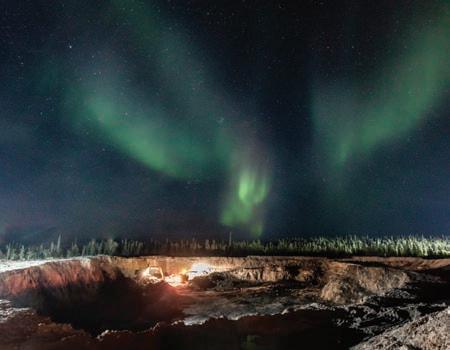
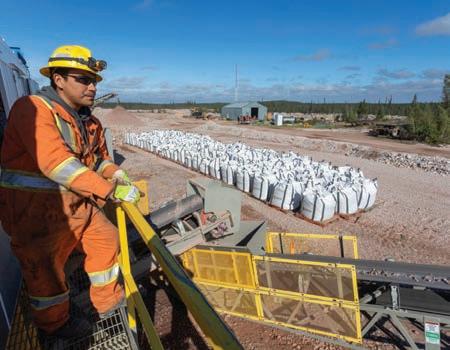
Left and right: Vital Metals’ Nechalacho rare earths project in the Northwest Territories. VITAL METALS
Zocalo Square and Mexico City Cathedral. Claudia Sheinbaum is North America's first federally elected female leader. ADOBE/DIEGOGRANDI
indepth
How to attract Silicon Valley and Gen Zs to mining
TECHNOLOGY
| They’ll use AI, big data to improve the industry
BY COLIN MCCLELLAND
Silicon Valley could help the mining industry solve problems from funding to smelting but tech wizards shouldn’t necessarily run a mine, panellists told a conference on nancing trends in New York.
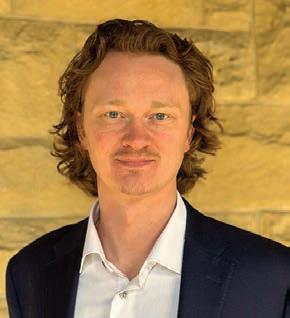
Tyler Hall, a 2023 Stanford graduate with a PhD in geology, co-founded ExploreTech to use data science and machine learning for drill planning and cloud computing. He says the San Francisco technology and venture capital hub is waiting for the industry to give it direction. He has also formed a WhatsApp group of 40 students across the world called the New Industrialists.
“It’s really an interesting trend that’s starting, but they don’t necessarily know where to look, or who to talk to, or where to go,” Hall told a May 21 session at the event run by the Society for Mining, Metallurgy & Exploration. “ ey really cannot wait to meet you because they want a deeper insight from people operating in the industry.”
Hugo Schumann, CEO of the silver unit at Hindustan Zinc, the world’s third-biggest silver producer, sees automation, digitalization, electric vehicles and drones being used in mines. Research is needed to conserve water and upgrade processing methods that
are decades old, he said.
Atusa Sadeghi, vice-president for North America at Denver-based private equity rm Resource Capital Funds (RCF), with about US$2.5 billion under management, says any company using new technology to improve its output or emissions deserves investor attention.
Millennials Hall, who’s worked in mining since 2013, and Sadeghi disputed Schumann’s premise that base metals such as nickel, zinc and iron ore are boring to Millennials and Gen Zs. ey are interested, Sadeghi said, but it’s more about the “ecosystem” that contains mining.
“What can you do to make the lives of those who are working outside in those environments easier, irrespective of what they’re min-
ing for?” she asked. “And when you talk through technologies that you’re seeing today, every day — AI, Gen AI, big data, analysis of synthesizing data — that’s really what people want to be excited for and contribute to.”
Taking mining to Millennials and Gen Zs shouldn’t be about appealing to those using sports betting apps and Reddit stock analysis, Kai Ho mann, CEO of Vancouver-based Soar Financial, said. Instead, try explaining projects on YouTube.
“Mining is very technical. You cannot dumb it down. You can simplify it, but you can’t get rid of it,” Ho mann said. “Be approachable, use those tools, use a decent camera, get a decent microphone and get in front of that audience.”
Chad Williams, founder of
Toronto-based Red Cloud Securities, said he’s concerned that as baby-boomers age and become more risk-averse, the Millennials and Gen Zs aren’t replacing them as investors. But every time the industry cycle performs well, it attracts naïve new investors who should use professional funds, he added.
“It scares me that some ultrahigh net worth individuals will be taken advantage of,” Williams said. “ ey are clearly out of their lane, out of their league, in terms of investing.”
Bio-mining
New technology could improve company decision-making by better linking all sta : mine operators, design engineers and C-suite capital allocators, Sadeghi said. One concept gaining interest among start-ups, she said, is bio-mining – using microbes to harvest metals such as copper, gold, uranium and nickel. RCF is among funders helping them acquire land to prove their concepts, she said.
Schumann focused on water.
Technologies to conserve it are becoming more important, especially as the world’s largest copper mines are in deserts such as the Atacama in Chile and the Sonoran in Arizona, but new mines face battles for water permits.
“It’s just a fascinating area that people maybe aren’t focused on yet enough,” Schumann said. “Water is
going to be a critical thing over the next couple of decades in mining.”
Ho mann said the industry needs innovation in processing so that high-arsenic copper can be smelted locally instead of being shipped to China. Schumann demurred.
“It is incredibly hard to compete with a country that’s going to use thermal coal blindly to generate power,” he said. “Smelters are incredibly energy intensive, and China and India are way ahead in the smelting game.”
Running a mine
Should a group of venture capitalists buy an existing mine?
“A terrible idea,” said Schumann, noting most Silicon Valley experience is limited to so ware and perhaps some decarbonization and energy-related technologies. “Owning a mine is a whole di erent skill set and they have no idea what they’re doing.”
But then KoBold Metals, backed by Bill Gates and Je Bezos, is “a bunch of Harvard PhDs” trying to build a mining company with its main Mingomba copper project in Zambia, Schumann said.
“ ey may succeed,” he said. “ ey’re really bright guys, but it’s just going to be really hard. Where Silicon Valley is playing in the mining industry is on the technology side, data science companies, where they understand more than owning and operating mines.”
Green bonds grow as financing option
BY COLIN MCCLELLAND
Green bonds are a rising source of funding as project developers widen their search for nancing beyond stock markets, according to a panel at a New York mining conference.
ere are more green bond products — debt designed to fund environmentally friendly projects — in more countries than there used to be, according to Erin Boeke-Burke, director and lead analyst for Americas sustainable nance at S&P Global Ratings. She put the amount at about 14% of the total bond market, or nearly US$1 trillion by the end of this year.
“It’s still not old enough to drive yet,” Boeke-Burke told a May 21 session at the event run by the Society for Mining, Metallurgy & Exploration. “ at said, it has grown up a lot over the last decade.”
A combination of fewer banks and funds supporting mining as in ation raises capital costs is requiring developers to tap multiple types of nancing besides traditional equity markets. ese include royalty companies, streamers, export credit agencies, traders and private equity and credit funds besides banks. Green bonds and sustainability-linked loans are a more recent development that help developers try to nance projects while improving mining’s environmental credibility. Canadian mining specialist funds

from a group of lenders including RBC, Mackenzie Investments and 1832 Asset Management fell to $2.8 billion in 2022 from $16 billion in 2010, according to Bloomberg gures presented at the annual conference on mine nancing trends.
Target-linked loans
Neil Pereira, principal investment o cer for metals and mining at the International Finance Corp. (IFC), the World Bank lender to the private sector, recounted nancing for an Allkem (TSX: AKE; ASX: AKE) green eld lithium project in Argentina last December. It comprised a green bond and sustainability-linked nancings with three key performance indicators: women in the workforce, reduced emissions and renewable energy.
In 2022, the IFC completed
nancing for Anglo American (LSE: AAL) in South Africa that nanced its local economic development program for schools, Pereira said.
“We coordinate very closely with host governments,” he said. “When you add it to the capex, you know, putting in renewable power for a community is almost negligible in the scope of the larger mining project.”
e bank is considering two projects. One is in an undisclosed but di cult jurisdiction where it lent money at lower than the market rate to attract investors and used a special purpose vehicle to pool investors’ funds. e nancing is tied to targets in gender, water use and renewable energy, he said.
e second is a mine where the operator wants nature-based solutions to meet global commitments on greenhouse gas reduction. e
“Even for critical mineral projects, it’s been difficult to be able to label them ‘green.’ For a battery project,
it’s a lot easier even though one needs the other.”
CHLOÉ TACCONI, DIRECTOR OF MINING, METALS AND INDUSTRIES FINANCE, SOCIÉTÉ GÉNÉRALE.
IFC is rehabilitating national forests and coastal wetlands in and around the operation, he said.
Greenwashing Chloé Tacconi, director of min-
ing, metals and industries nance at Société Générale, France’s third-largest bank by assets, said its most popular green products
By Order of C. Hardy, Vice Chair, Ontario Land Tribunal, dated May 27, 2024, Reynolds Sifferath Kosloskey, Charles Rudolph Kosloskey, Viola Marie Kosloskey or their executors, heirs, successors or assigns, and the Estate of James Ralph Kosloskey are ordered to pay $88.41 (Cdn.) to the Applicant, Gordon Roy John Harten and Laura Grace Harten, being the mining lands taxes for all surface and mining rights in, upon or under Parcel 1613, bearing PIN No. 31139-0027 (LT), situate in the Township of Abotossaway, District of Algoma. Payment may be made to Mr. G. Roy Harten, 20 Hiltz Road, Aweres Twp., Ontario, P6A 0E4. Failure to make payment or to request a hearing may result in an Order vesting all surface and mining rights in, upon or under the aforementioned Mining Lands in Gordon Roy John Harten and Laura Grace Harten pursuant to section 196 of the Mining Act, R.S.O. c. M. 14.
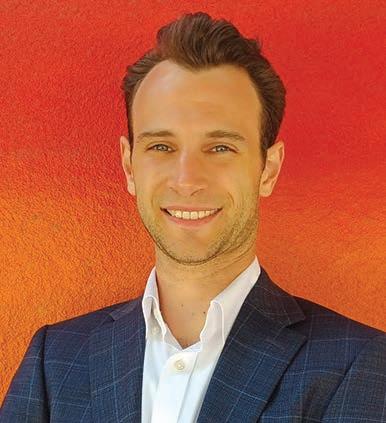
Tyler Hall and Alex Miltenberger, co-founders of start-up ExploreTech. EXPLORETECH
Anglo American used sustainabilitylinked financing for schools in South Africa. ANGLO AMERICAN
indepth
Considering M&A? Here’s what to ask
BUYOUTS | Partnerships, price, costs, management all figure
BY COLIN MCCLELLAND
Alarge copper miner in Chile only found it had been overpaying a royalty by a signicant amount a er three ownership deals and 20 years of operation, lawyer Greg McNab told a mining conference in New York.
“ ey took it in under the umbrella of an M&A exercise and they just assumed that ‘we’ll just keep doing it the way the company had been operating,’” the partner at Dentons in Toronto said. “So, you actually should just read that stu .”
It was just one of the due diligence tips to emerge from a panel at the event run by the Society for Mining, Metallurgy & Exploration. Others were about partnerships, price and closure costs. e May 21 discussion also mentioned mine plans, management and the environment.
ree experts from SRK Consulting, which has 45 o ces globally and has operated in more than 150 countries, lled out the panel.
It’s important to talk early and o en to partners such as companies, communities, Indigenous groups or governments and research them on social media, Je Parshley, an SRK consultant on the environment, mine closure and reclamation, told the panel. It can improve insight about them when time is short in a potential deal’s data room, he said.
“ at can give you some idea of whether you have supportive partners or not,” Parshley said. “And what the current buzz is on the project.”
Partnerships
Joint ventures, streaming and royalty agreements can harm projects if companies aren’t aligned in experience and expectations, said Matthew Sullivan, principal mineral economist at SRK.
“It can get very, very complicated very quickly and the project essentially stalls out,” he said. “Depending on where that streamer or royalty sits in the security structure, they may not care but it may make the project undevelopable.”
Streaming or royalties that are too high may restrict enough free cash ow to pay for debt or to sat-
> De Beers from P1
e wider industry also faces the challenge of lower demand, especially in the United States and China. De Beers cut the price of 0.75-carat stones by 4% to 6% at this year’s fourth trading session, according to a May 7 report from Rapaport. In the rst sale of the year, the company cut prices by about 10%.
e issue of declining production could be expensive for De Beers to deal with, BMO Capital Markets mining analyst Raj Ray implied.
“From the mining business point of view, not having a parent company like Anglo American backing De Beers could have some serious implications for diamond supply going forward,” he said.
Rough diamond supply has dropped to around 120 million carats from 150 million carats in 20172018, Ray said. It’s expected to drop even more in the next four to ve years.
Amid the supply constraints,

isfy an equity investor, Sullivan said. More potential di culties arise in joint ventures with minority holders competing for a slice when they hold rights of rst refusal, he said.
Determining a suitable price for a project depends on its development stage, the value of the commodity, and the company’s expertise, Sullivan said. Have they seen this before? he asked. Do they know what this price environment is capable of?
“Explorers really don’t know how to build a mine; mine builders really don’t know how to operate a mine and operators de nitely don’t know how to explore for new mines,” he said. “So, it’s really critical to understand what your management team actually is and how appropriate the stage in the project is for them.”
Discipline
Potential buyers should evaluate operators for discipline in a highpriced metal market, he said. ey shouldn’t cut corners to deplete a mine’s best ore to maximize pro t, leaving the buyer to contend with higher access costs later in a lowprice market.
“The cash flow model is almost always wrong.”
MATTHEW SULLIVAN, PRINCIPAL MINERAL ECONOMIST AT SRK
“ e cash ow model is almost always wrong,” Sullivan said. “If there’s a bunch of errors in it, hopefully they aren’t too impactful, but they are there.” e ease of a mine’s scalability should also be considered, Sullivan said. Is it a complex underground mine with expensive infrastructure, or an open-pit operation with a low stripping ratio that can be expanded easily? Can the property make money in a low-price metal market? Even if it’s not expandable, a mid-tier cash cost operation could be successful, he said.
“You have something that you can kind of bounce along the bottom and keep it running, keep everything in shape and people employed,” he said. “When the

De Beers has invested US$1 billion to extend the life of its agship Jwaneng mine in Botswana, and US$2.3 billion to move underground at the Venetia mine in South Africa.
“ e next 12 to 24 months don’t look great for the rough diamond industry,” Ray said. “Anyone looking at De Beers will have to acknowledge (that). ere's huge

capital investments that are needed over the next few years across mines to be able to maintain supply, forget about growing supply.”
But despite that hurdle, Ray and Zimnisky both see De Beers maintaining its 30% share of the global diamond market.
“ ey’ll continue to be the pre-eminent producer in the world,” Ray said. “Anyone who will buy (De
ment requirements, but not how a miner would actually rehabilitate a site, Parshley said. ey may even turn a mine’s net present value negative. Plus, industry guidelines for seismic and storm stability are getting stricter.
Potential buyers also should beware of some jurisdictions that don’t require assessments of longterm post-closure costs, and those could need perpetual water management.
“You’re now signing up for the long term,” he said. “We’re talking millions of dollars a year.”
ESG
SRK usually applies international standards for environmental, social and governance (ESG) issues because many methods, such as the Equator Principles, are vague, Parshley said. e rm must educate clients a fair bit, he said.
O en, ESG is considered a last-minute checklist to avoid “landmines,” McNab said. Companies should instead integrate the target company’s ESG process with their own.
Battery metals
e industry’s new emphasis on battery metals brings new legal concerns over the di erent levels of funding and pledges, sometimes from other countries like the United States supporting projects in Canada, McNab said.
“It can get quite complicated about where the money to fund the project is actually going to come from,” he said. “You have to spend a lot of time looking for things such as actual de nitive commitments because they’re sometimes buried in kind of owery commitments that can change when governments do.”
O ake deals are becoming more common as automakers and original equipment manufacturers (OEMs) secure battery materials. But they carry risks.
“If something happens and that OEM doesn’t want the material that comes out of that operation, the operation fails,” he said. “ eir major o -taker is gone.”
Nearly all mine closure cost estimates in data rooms are too low because they’re based on govern-
Beers) will continue to fund its projects. I don’t see any signi cant drop in production from the De Beers portfolio.”
Going solo?
Once De Beers formally leaves Anglo as part of the company’s restructuring, which CEO Duncan Wanblad has said could take 18 to 24 months to complete, the diamond miner will face the prospect of being purchased or going alone.
Zimnisky said either option has its own di culties.
“ is is something Anglo has wanted for a while,” he said. “ ey wanted Anglo to become more of a pure play copper producer, or a green infrastructure buildout commodity producer hoping it would lead to a higher valuation for the company. at said, De Beers is a complicated business and not easy to sell. It has (the) Debswana joint venture, which is the crown jewel of the company.”
Debswana is a 50-50 JV with Botswana that operates De Beers’
“ e only way you can do that is to nd out exactly what they’ve been doing,” he said. “ at is such a broad bucket that people don’t normally want to break it down.”
Companies should trust but verify when assessing a deal, said Parshley, citing a Russian proverb that Ronald Reagan applied to Cold War arms talks. e consultant recounted one company’s pledge that it had Indigenous OK for a tailings site when investigation found only 10% was approved. at meant delaying the project for about a year.
e panellists said more funding deals and ESG requirements make a data room’s organization important. Recalling a small heap leach miner in the Sierra Madre mountains, Parshley said some clues are in how tidy a company is.
“You could have eaten o the oor. I had never seen anything quite like it and when we started digging in, we found out that these guys ran a very, very tight operation,” he said. “You look in the corner and there’s a mess, that usually sends up a bit of a red ag.”TNM
diamond mines there.
Ray agrees that few potential buyers would have interest in a company like De Beers whose business requires massive capital investments. An IPO is also unlikely, he said.
“ ere’s little interest in the diamond sector from an equity perspective. I don’t see how in a potential IPO there’s enough interest in a new diamond story,” Ray said. “ is has to be a private sale or consortium that needs to come in and take a longer-term view of the diamond sector. ere could be growth expected in the retail segment. at’s where I think anyone taking a look at De Beers would see the value.”
Neither analyst sees the De Beers sale having much impact on the ailing diamond juniors.
“In order to stimulate exploration across the industry you would have to see a notable diamond price recovery,” Zimnisky said. “Prices have been at for almost a decade now.” TNM
Debswana mining machinery in Botswana. DEBSWANA
ADOBE /BAS 121
price spikes, you can actually take advantage of that price change.”
indepth
US lithium clay projects secure backing despite extraction hurdles
BATTERY METALS | Federal funding key to unlock huge clay-hosted deposits
BY HENRY LAZENBY
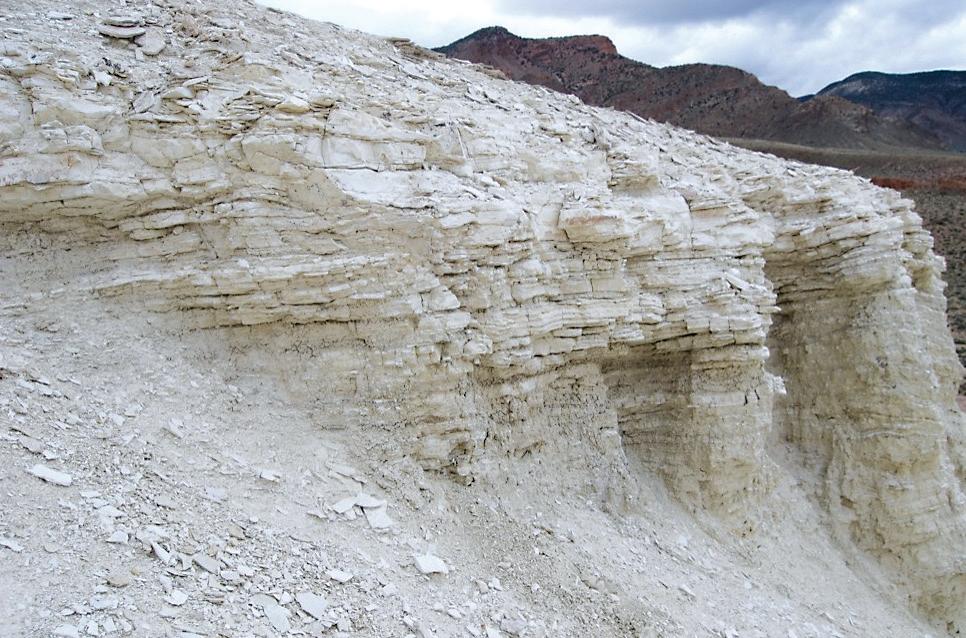
The United States’ great hope for domestic lithium supply could lie in the massive-scale, long-life sediment-hosted deposits in its southwestern region. And even with tricky metallurgy to overcome and higher price tags than brine or hard rock deposits, experts say that with federal backing, these operations could become the continent’s energy transition backbone.
Most of the country’s sediment-hosted lithium projects are in Nevada. Projects like Lithium Americas’ (TSX: LAC; NYSE: LAC) acker Pass, Ioneer’s (NASDAQ: IONR; ASX: INR) Rhyolite Ridge, and Century Lithium’s (TSXV: LCE) Clayton Valley have big potential that’s drawing strategic investment.
Lithium clay projects are particularly important for North America as a domestic source of the mineral, which is critical for the energy transition and the growing demand for electric vehicles (EVs), according to Allan Pedersen, principal analyst for lithium with Wood Mackenzie.
“ e metallurgy of extracting lithium from clay (sediments) is more complex and less proven than from brine or hard rock sources,” Pedersen said in an interview.
“Despite their complexity and high capex, these projects are crucial for ensuring a stable, secure supply of lithium, reducing dependency on foreign sources, and supporting the broader goals of national security and economic growth.”
Lithium prices have dropped by two-thirds since last summer to US$13,800 per tonne lithium carbonate in mid-June, according to Trading Economics.
Even so, lithium exploration and development in the U.S. have been boosted by growing demand for EV production, new extraction technologies and supportive government policies.
U.S. President Joe Biden’s 2022 In ation Reduction Act and other measures have focused on bolstering domestic supply and processing to establish a fully integrated North American lithium-ion battery supply chain.
National security concerns
Currently, about 65% of lithium worldwide is processed in China. However, U.S. lithium production is projected to increase 13-fold thanks to tax credits and other subsidies in the In ation Reduction Act.
e International Energy Agency reports that demand for lithium in batteries last year was around 140,000 tonnes, an increase of over 30% compared to 2022, with batteries representing 85% of total demand. Benchmark Mineral Intelligence estimating a de cit of over 3 million tonnes of lithium by 2040, equivalent to 50 acker Pass projects.
“ e United States will consume about a million tonnes of lithium carbonate equivalent by early next decade,” Ioneer managing director Bernard Rowe said in an interview. “Ensuring a secure and stable domestic supply is not just about bringing more lithium into the market; it’s about national security and maintaining a competitive edge in the global EV market.”
“The main challenge for sedimenthosted lithium deposits lies in the extraction process — which hasn’t been done yet on a commercial scale. ”
Cost comparison
Lithium clay projects under development are expected to have moderate to high operating costs due to complex chemical processing, positioning them between lower-cost brines and higher-cost hard rock mining. While brine projects bene t from cost-e cient solar evaporation, and hard rock projects face high energy and processing expenses, lithium clay projects could be competitive if scaled eciently, Pedersen said.
Lithium Americas, whose US$2.9-billion acker Pass is the most advanced sediment-hosted project in the U.S., announced backing from the U.S. Department of Energy (DOE) in March. e miner has a conditional commitment for a loan of US$2.2 billion — the largest-ever loan to a mining company from the DOE’s Loan Programs O ce. e loan is to help nance the construction of processing facilities at its project, which has the potential to become North America’s largest source of lithium for EVs. e plant is projected to produce an initial 40,000 tonnes of battery-grade lithium carbonate per year.
It also has the support of automaker General Motors, which invested US$650 million in Lithium Americas for an exclusive o ake deal for the rst 15 years of production, slated to start in 2027.
Metallurgically challenged e U.S. does have one producing lithium mine — Albemarle’s (NYSE: ALB) Silver Peak in Nevada — but it’s a small-scale
brine operation.
e main challenge for sediment-hosted lithium deposits lies in the extraction process — which hasn’t been done yet on a commercial scale. Unlike brine or spodumene projects, extracting lithium from clays requires handling ne particulate matter and achieving e ective solid-liquid separation to recover economically.
Creating a commercially viable ow sheet is crucial, Pedersen said. While proponents say their respective bench-scale testing has been successful, he warns that scaling up to commercial production introduces new investment risks.
Because of their scale, sedimentary deposits usually require fully integrated mine-to-downstream market operations, which means much higher pre-production capital costs than brine or hard rock developments, Pedersen said. Re ning material to higher-value downstream products such as lithium carbonate or hydroxide fetches higher market prices and consolidates the supply chain from a national security standpoint.
“Building vertically integrated operations, including mining, extraction, and processing facilities, results in high upfront costs, while navigating federal, state, and local permitting processes can cause delays,” he said. “Environmental concerns, such as impacts on local water supplies and ecosystems, add layers of uncertainty.”
Unique flow sheets
Lithium Americas has developed a unique extraction process tailored to acker Pass, which involves leaching lithium from clay using sulphuric acid. Its process has undergone extensive bench-scale testing and pilot plant operations, Lithium Americas’ vice-president of government and external a airs, Tim Crowley, said in an interview. e company had invested hundreds of millions of dollars to de-risk and re ne the ow sheet in the laboratory.
“We've done extensive drilling, engineering, and piloting work, and we are pleased with the results,” he said in an interview. “ is condence is re ected in our successful partnership with General Motors and the conditional loan commitment from the DOE.”
In southwestern Nevada, Century Lithium has been testing the
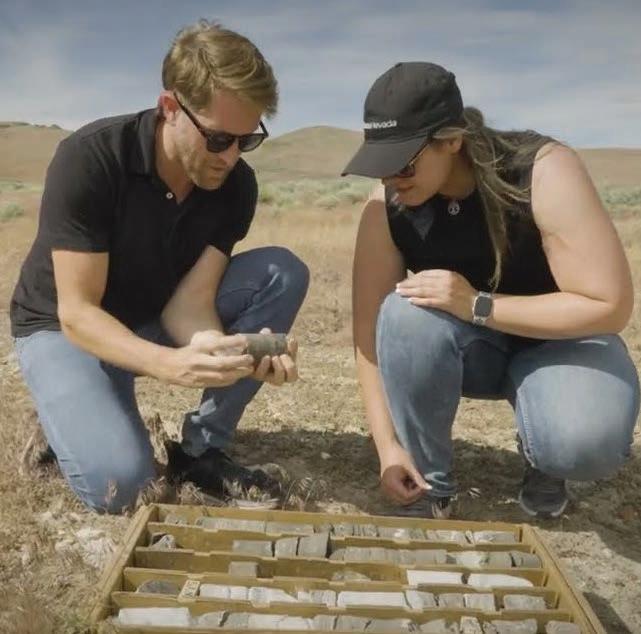
processing technology developed for its Clayton Valley project at the pilot plant scale for the past 2.5 years, CEO Bill Willoughby says.
“It focuses on the tailings handling, the ltration, which is a big, big, big part of running a clay project, because obviously, you have super ne-grained material less than ve microns, which you have to do solid-liquid separation from,” he explained.
An April feasibility study for Clayton Valley showed a 17% a ertax internal rate of return (IRR) using a long-term lithium price of US$24,000 per tonne for lithium carbonate (Li2CO3) and US$600 per tonne for sodium hydroxide (NaOH). e study estimates a net present value (NPV) of US$3 billion at an 8% discount rate, with a 40-year mine life generating an average of 34,000 tonnes of battery-quality Li2CO3 annually.
Construction costs are pegged at US$3.5 billion over three stages, with US$1.5 billion required to fund the rst phase. A chlor-alkali plant, a processing option di erent from Lithium Americas’ at acker Pass, will produce surplus NaOH for sale, o setting operating costs.
Century’s current focus is on engineering, permitting, and advancing funding discussions.
The outlier
Not all sedimentary-hosted lithium projects in the U.S. are clay deposits. Ioneer’s permitting-stage Rhyolite Ridge lithium-boron project is one example.
“ e absence of clay means we avoid the complex solid-liquid separation challenges that other projects face, making our processing signi cantly more straightforward and environmentally friendly,” Ioneer’s Rowe said.
A unique feature of the deposit includes the boron mineral searlesite, known to maintain the structural integrity of the rock during leaching, making it easier to process. Ioneer’s processing option will include a sulphuric acid plant and related steam turbine, which will power the entire Rhyolite Ridge operation.
Over the past eight years, the company has sunk US$180 million into the project.
Ioneer too has received a commitment from the DOE in January for a loan of up to US$700 million to develop the mine. South Africa’s Sibanye Stillwater (JSE: SSW; NYSE: SBSW) has committed to invest US$490 million in the company to secure 50% of Rhyolite Ridge once a feasibility study has been delivered and certain permitting milestones passed later this year.
e Sydney-based company expects to receive the nal EIS and a record of decision by October. It anticipates making a nal investment decision on the US$750-million project by December, with production slated to start by 2027.
A 2020 de nitive feasibility study attached an NPV (8% discount) of US$1.27 billion and an IRR of 20.8% to the project. TNM

Ioneer’s Rhyolite Ridge lithium-boron project in Nevada. IONEER
Lithium Americas’ Thacker Pass project in Nevada. LITHIUM AMERICAS
Wyloo to build $900M battery material plant in Sudbury
NICKEL | Eagle’s Nest mine in Ring of Fire to supply facility
BY TAMER ELBOKL AND AMANDA STUTT
Wyloo Metals, the privately held resources unit of Australia iron ore baron Andrew Forrest, says it plans to build a battery materials plant in northern Ontario that may cost around $900 million.
e company’s proposed Eagle’s Nest mine in the Ring of Fire region in Ontario’s far north is to supply nickel to the plant, Wyloo Canada CEO Kristan Straub said in Sudbury on May 29. e plant may also take third-party sources of nickel-bearing feed and recycled battery materials, Straub said.
“ e fundamental baseline capacity production that will be produced out of Eagle’s Nest has the ability to be the cornerstone investment for this type of processing facility,” Straub told e Northern Miner’s sister publication, Canadian Mining Journal, in an interview. “It would produce upwards of 50% of the materials required for the vehicles in Ontario as well as in the North American market.”
e plant would target output
BY COLIN MCCLELLAND
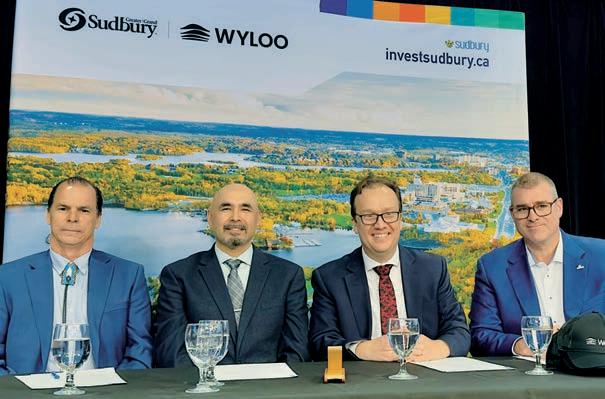
Sof around 50,000 tonnes a year of nickel sulphate and precursor cathode active material, a battery component o en containing nickel, cobalt or other chemical elements, a spokesperson for Wyloo said by email a er the Sudbury event. at’s enough material to power about 800,000 vehicles a year, the spokesperson said. While no estimates were given at the media conference, the spokesperson said plants of that size typically cost
$800 million to $900 million.
Wyloo said it has entered into a memorandum of understanding with Sudbury to secure a parcel of land to build the plant. ere was no word on the cost of the land or how much di erent levels of government may fund the project. Representatives from the province, Indigenous communities and city governments attended the event in Sudbury.
“We’re extremely excited to
be the rst to make this type of announcement in addressing a critical supply chain gap that exists within the development of battery electric vehicles today in North America,” Straub said. “We’re very pleased that the city of Sudbury has taken the initiative to develop the right ecosystem for this.”
Nickel belt
Wyloo chose Sudbury, a nickel producing hub for more than a century, for its leadership in the mining sector, its shi to clean technologies and its commitment to reconciliation with First Nation communities, the company said.
“Being involved in these conversations is vital to our communities,” Wahnapitae First Nation Chief Larry Roque said in a release on May 29. “ e partnership set to be developed with this project will showcase what needs to be done for other First Nations and private companies.”
Wyloo is completing a scoping study for the battery plant, with construction expected to begin a er its proposed Eagle’s Nest mine is built. Mine construction is targeted to start in 2027. Local communities are conducting envi-
ronmental assessments of roads that may cost more than $2 billion to build to serve the Ring of Fire region. e assessments might be completed over the next few years. e Sudbury battery plant would be the farthest north in Ontario a er a series of pledges to build some $46 billion in battery production sites in Canada over the past few years. Most are in Ontario where the largest traditional automakers — General Motors, Ford Motor, Toyota and Stellantis – have plants and close ties by road and trade with their Detroit headquarters and United States factories.
Planned or under construction are Northvolt’s $7-billion battery factory east of Montreal; Volkswagen’s $7-billion plant in St. omas, Ont.; and Stellantis’s $5-billion site in Windsor, Ont.
Others are Ford’s $1.8-billion plant in Oakville, Ont.; Umicore’s $1.5-billion battery components plant in Loyalist Township, Ont.; and three projects in Bécancour, Que.: Ford’s $1.2-billion facility, Nouveau Monde Graphite’s (NYSE: NMG; TSXV: NOU) US$1.2-billion plant and GM’s $600-million site. TNM
South Africa’s unity rule may boost mining
AFRICA | Ramaphosa governs with market-friendly party
outh Africa’s new coalition government with a pro-business party could help the world’s leading platinum producer improve its troubled power and rail networks getting metal to market, analysts say.
e African National Congress, the party that’s led the continent’s most-developed country since apartheid ended 30 years ago, brokered a government of national unity on June 14. It lost its majority in parliament for the rst time.
e ANC earned 40.2% of the May 29 national vote, down from 57.5% in 2019 and higher amounts in earlier elections.
President Cyril Ramaphosa is working with the market-friendly Democratic Alliance (DA), which got 21.8% of the vote, and the regional Inkatha Freedom Party (IFP) with 3.9%. e ANC excluded the radical socialist Economic Freedom Fighters (EEF), who took 9.5% and uMkhonto weSizwe (MK), a new party centred around former president Jacob Zuma that garnered a surprising 14.6%.
“Cyril has got a mandate that he sought with the DA and IFP,” Alex Vines, director of the Africa program at Chatham House in London, told e Northern Miner by email from Maputo in neighbouring Mozambique. “ e EFF and MK really didn’t negotiate seriously and the key ask of the electorate was to improve business investment and create jobs. is coalition may assist on the reforms.”
South Africa faces the world’s highest unemployment rate at around 30% o cially. Corruption
“The key ask of the electorate was to improve business investment and create jobs.”
ALEX VINES, DIRECTOR OF THE AFRICA PROGRAM AT CHATHAM HOUSE
almost spiraled out of control under Zuma. Widespread power outages, called load-shedding in the local lingo and caused by mismanagement at the utility Eskom, have been occurring for more than 15 years. Transnet oversees an inefcient rail and ports system. e coalition could be the spark to inspire Ramaphosa’s government a er six years leading the country with few successes.
Positive outlook
“Markets and the business community are, overall, quite positive,” Shawn Duthie, associate director in Johannesburg for intelligence consultant Control Risks, said by email. “Mining in particular should be a top priority with the new government trying to show it is still a smart place for mining companies to invest capital.”
South Africa’s mining legacy is tied to gold mining dating to the 1880s around Johannesburg and platinum northwest of the nancial capital near Randburg. Diamonds also gure in its history. Gold Fields
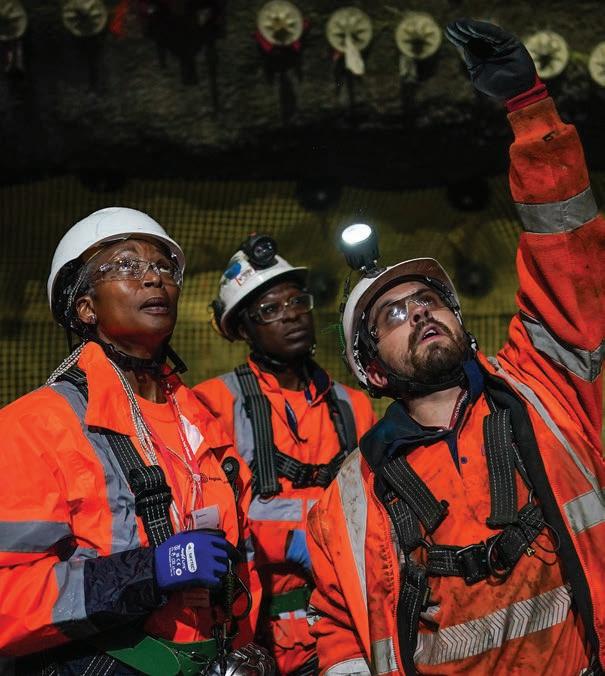
(NYSE: GFI; JSE: GFI) is the country’s largest miner by market value at $17.9 billion followed by Anglo American Platinum (JSE: AMS); AngloGold Ashanti (NYSE: AU), Harmony Gold (NYSE: HMY; JSE: HAR) and Sibanye-Stillwater (NYSE: SBSW; JSE: SSW).
e London-based World Platinum Investment Council said June 18 the coalition and recent United States and European Union tari s on Chinese battery electric vehicles could help South Africa’s plati-
num industry, which produces 54% of global supply. Government-led reforms might strengthen the rand, potentially hurting the miner’s operating margins. But policy changes could help producers respond quicker to market cycles.
“ e DA’s inclusion may promote economic liberalization alongside reforms to Eskom, Transnet, and the labour act,” the council said in a report. “Improved South African governance and higher for longer automotive demand are sep-
arately or together both supportive of platinum’s investment case.”
Even before the coalition formed, Ramaphosa said on June 10 that he expected the new government to focus on his Operation Vulindlela, a plan to promote market-friendly reforms. ese include trying to x Eskom, Transnet and water infrastructure while streamlining skilled visa applications and attracting more mining investment.
Still, the challenges are huge. Other problems include sorting out how to pay for national health insurance and income grants to citizens, and just general service delivery, Duthie said.
“None of these are easy and, in the short term, it may involve some sacri ces (in particular jobs) to make this happen,” he said. “ e biggest challenge for the government is changing the perception, not only of foreign investors who they want to keep in the country or enter the market, but, more importantly, the local population.”
Political will
If Zuma, whom Ramaphosa ousted as leader in 2018 a er a series of corruption scandals, had still been in charge, the approach to a coalition would have been vastly di erent, Duthie said. How the ANC and Ramaphosa accepted the election results and quickly entered into negotiations is a large factor promoting optimism in the business community. But it will take strong political will for the parties to compromise in achieving results, and the coalition may not last, he said.
“It is very unlikely that the national unity government, as we
At the announcement for Wyloo’s planned battery materials plant in June. CITY OF SUDBURY
Anglo American workers in South Africa. ANGLO AMERICAN


THE NORTHERN MINER’S
GIVEAWAY
FIRST PRIZE
1 oz. Canadian Maple gold coin


SECOND PRIZE
10 oz. Germania silver bar
THIRD PRIZE
1 oz. Canadian Silver coin



eye on australia
Australia directs Chinese backers of rare earths junior to divest
FOREIGN INVESTMENT | Down Under follows in Canuck steps
BY COLIN MCCLELLAND
Australia has ordered several China-linked investors to sell their combined 10.4% holding in rare earths project developer Northern Minerals (ASX: NTU) in a move similar to Canada’s two years ago.
Singapore-based Yuxiao Fund; Black Stone Resources registered in the Virgin Islands; Indian Ocean International Shipping and Service Co. of the United Arab Emirates; Ms. Ximei Liu of China and Mr. Xi Wang of Singapore must sell their stakes within 60 days, Australia’s treasury ordered on June 2.
“ e decision, based on advice from the Foreign Investment Review Board (FIRB), is designed to protect our national interest and ensure compliance with our foreign investment framework,” a spokesperson for treasurer Jim Chalmers said.
Northern Minerals is advancing the Browns Range project for the heavy rare earths dysprosium and terbium in the far northeast of Western Australia. e minerals are used in the magnets of electric vehicle motors and solid-state
Australia’s
Foreign Investment Review Board refused to allow Yuxiao Fund to increase its stake last year to 19.9% from 9.8%.
devices. e company is drilling to update a resource estimate to add to a de nitive feasibility study.
In October, the company referred trading in its shares that it was “unable to fully understand” to the FIRB, executive chairman Adam Handley said June 6.
“I’d like to emphasize that this did not relate to foreign ownership of the company’s shares – it related to the queries which we were unable to answer in relation to transparency of share ownership,” Handley said. “ e board is satis ed that the FIRB process is now complete.”
Shares in Northern Minerals were trading at A4¢ (3.6¢) apiece in Sydney near press time, valuing the company at A$216.1 million. ey’ve traded in a 52-week range of A2.4¢ to A5¢.
n Silver Lake OKs Red 5 buy
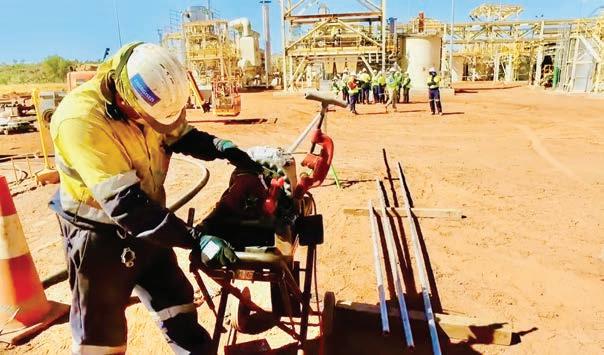
Canada also
Canada sti ened its foreign investment rules in October 2022, then a month later told three Chinese investors to divest stakes in Canada-based battery metals companies, even though some of their projects were abroad.
is year, two Canadian companies scrapped Chinese investment citing regulatory reviews. Solaris Resources (TSX: SLS; NYSE: SLSR) nixed a $130-million investment in May by China’s Zijin Mining for a 15% stake to aid the Warintza cop-
Silver Lake Resources (ASX: SLR) shareholders approved on May 31 the sale of the company to Red 5 (ASX: RED) for A$2.2 billion ($2 billion), creating Australia’s h-largest gold producer.
e all-share deal, pitched in February as a “merger of equals,” blends two complementary gold businesses, increasing the combined company’s scale and asset diversi cation. is new entity will have a A$2.9-billion market capitalization, estimated production of 445,000 oz. of gold this year, reserves of 4 million oz. and resources of 12.4 million ounces.
Silver Lake shareholders will control 48.3% of the merged miner, with Red 5’s Russel Clark to be chair of the company and Silver Lake’s Luke Tonkin managing director and CEO.
Western Australia-based Red 5 owns the King of the Hills (KOTH) mine and processing hub and the Darlot satellite gold mine. Silver Lake owns the Mount Monger project in the eastern Gold elds region and the De ector gold-copper project in the southern Murchison region. It also has the mothballed Sugar Zone gold mine in northern Ontario.
e two companies did not say when this underground mine might resume production.
n Oz gold washout
Gold output in Australia fell 9% in the rst quarter a er tropical storms ooded mines and halted some operations, consultancy Surbiton Associates says in a new report.
Gold production dropped from 77 tonnes (2.7 million oz.) in 2023’s last quarter to 70 tonnes (2.5 million oz.) in this year’s rst quarter, Surbiton said on June 2. Most a ected mines from this year’s cyclone season are in Western Australia, Queensland and the Northern Territory.
Like hurricanes with less destructive potential, cyclones tend to occur in the Southern Hemisphere.
While director Sandra Close said gold production is a ected almost every rst quarter, this year’s storm season in Australia came amid record-high gold prices. Values started to climb above historic highs of US$2,100 per oz. in March, touching a peak of US$2,230 on March 29.
More than 20 operating gold mines were a ected by rain and ooding in the quarter, Surbiton said, pointing in particular to the Tropicana mine. It’s a 70-30 joint venture with AngloGold Ashanti (NYSE: AU) and Regis Resources (ASX: RRL) about 600 km east of Perth, where 314 mm of rain fell in 72 hours in early March.
Surbiton said most companies expect to make up for their losses over the rest of the year to meet existing forecasts.
n Rio Tinto invests in green steel
Rio Tinto (ASX, NYSE: RIO) is investing US$143 million in a new research and development centre in Western Australia focused on low-emission steel production.
e facility will prioritize improving the BioIron process, an iron-making technology developed by Rio Tinto that uses plant matter, such as wheat straw, sugar cane bagasse, canola sticks or barley straw, instead of coal.
e switch will allow iron ore miners and steelmaking companies to eliminate the emissions generated using fossil fuel in their processes.
Steel production currently accounts for 8% of the world’s total carbon emissions, repre-
per project in Ecuador. In March, Montreal-based SRG Mining (TSXV: SRG) cancelled a $16.9-million deal with China’s Carbon ONE New Energy Group to take 19.4% of the graphite miner. e Canadian and Australian moves show the rise of resource nationalism in the West to counter China’s control of green energy critical minerals. e Asian giant mines 70% of the world’s supply of rare earths and processes 90% of it, according to the International Energy Agency.
e divestment order will reduce the Yuxiao fund’s holding in Northern Minerals to 8%. Australia’s Foreign Investment Review Board refused to allow the fund to increase its stake last year to 19.9% from 9.8%.
New chairperson
e fund, controlled by Wu Tao, the chair of China-based Jinan Yuxiao Group, had called for Northern Minerals’ executive chair, Nicholas Curtis, to be replaced. e board appointed Handley to replace Curtis, who resigned on May 27.
Tao proposed himself and three others to join the board, but shareholders rejected the nominees at the company’s June 6 annual meeting in Perth where Northern Minerals is based.
e company also said in early June it had refused to pay a ransom a er being hacked in March. Cyber thieves stole corporate, operational and nancial data, as well as personnel and shareholder information and posted it on the dark web, Northern Minerals said.
Handley said the company notied the authorities. e hacking and divestment order are unrelated, he said. TNM
senting 69% of Rio Tinto’s Scope 3 emissions last year.
BioIron requires about one-third of the electricity used in other steelmaking technologies that aim to cut emissions, such as those that rely on renewable hydrogen.
e pilot plant, to be built in the Rockingham Strategic Industrial Area south of Perth, will be able to produce one tonne of direct reduced iron per hour, or 8,700 tonnes a year.
e new plant is to be 10 times the size used in successful small-scale trials that BioIron conducted in Germany.
Created through a partnership with the University of Nottingham, Metso Corp., and the Western Australian engineering company Sedgman Onyx, the pilot plant is expected to be commissioned in 2026.
n Big miners test electric haul trucks
BHP (NYSE: BHP; LSE: BHP; ASX: BHP) and Rio Tinto (NYSE: RIO; LSE: RIO; ASX: RIO), the world’s two largest miners, have partnered to accelerate the rst trial of Komatsu and Caterpillar’s (NYSE: CAT) large electric haul truck technology.
e tests, to be run at the companies’ massive iron ore mines in the Pilbara region of Western Australia, will focus on performance and productivity, they said. e plan is part of BHP and Rio Tinto’s broader e orts to reduce operational emissions and reach net zero by 2050. Diesel consumption in Rio Tinto’s mining equipment and rail eet was responsible for 12% of its Scope 1 and 2 (those incurred through mining operations and power consumption, respectively) emissions in 2023. Diesel accounted for about 40% of BHP’s Scope 1 and 2 emissions during the 2020 scal year.
BHP will trial two Caterpillar 793 trucks this year, while Rio Tinto will test two Komatsu 930 trucks in 2026. e companies noted they have already reduced Scope 1 and 2 operational greenhouse gas emissions by switching some of their power supply to renewable sources.
In 2021, BHP and Rio Tinto worked with Caterpillar and Komatsu to develop and validate prototype battery-electric haul trucks.
n Kincora partners with AngloGold
Kincora Copper (TSXV: KCC; ASX: KCC) has secured a key partner in AngloGold Ashanti (NYSE: AU; JSE: ANG) for its Northern Junee-Narromine Belt (NJNB) copper-gold project in Australia.
Kincora said on May 28 that AngloGold had signed a deal to earn up to 80% of the Nyngan and Nevertire licences that form the NJNB project in return for total spending of A$50 million ($45.4 million).
Following the announcement, shares of Kincora shot up 57% to 5.5¢ apiece in Toronto for a market capitalization of $11.9 million.
AngloGold can earn an initial 70% interest by spending A$25 million on exploration over up to seven years, a er which a joint venture would be formed. is includes a minimum spend of A$2 million within the rst two years, during which Kincora will act as operator and be entitled to a 10% management fee.
In a second stage, AngloGold can earn an additional 10% interest by completing a prefeasibility study or funding another A$25 million worth of work over three years.
Under the agreement, the Kincora team will drill test a wide range of large intrusive-related copper-gold targets. e property hosts rare almost untested, volcano-intrusive complexes in the renowned Macquarie Arc, the company said.
The Browns Range rare earths project in Western Australia. NORTHERN MINERALS
eye on australia Mawson and Southern Cross getting back together
MERGERS | Better access to capital markets and a simpler corporate structure drives deal
BY HENRY LAZENBY
Just two years a er Mawson Gold (TSXV: MAW) spun o Southern Cross Gold (ASX: SXG) the companies have agreed to get back together, creating a new dual-listed company that will take the Southern Cross name.
e all-stock deal was announced in mid-June, days a er Southern Cross doubled the size of its planned drill program at its Sunday Creek gold-antimony project in Victoria.
e deal is valued at around A$518.8 million ($473 million), based on Southern Cross Gold’s share price of A$2.82 on June 11. e combined company, which will be listed on the TSX Venture and Australian exchanges, will be worth about A$1 billion. Mawson owns a 51% stake in Southern Cross, which it values at about A$270.4 million, based on the June 12 stock prices.
“ e simpler, dual-listed structure will allow us access to broader capital markets and institutional/ private investors; eliminate the perceived major shareholder overhang; and attract an expected lower cost of equity capital,” Mawson special committee and board member Bruce Gri n said in a statement.
e gold mining industry is seeing more mergers as compa-
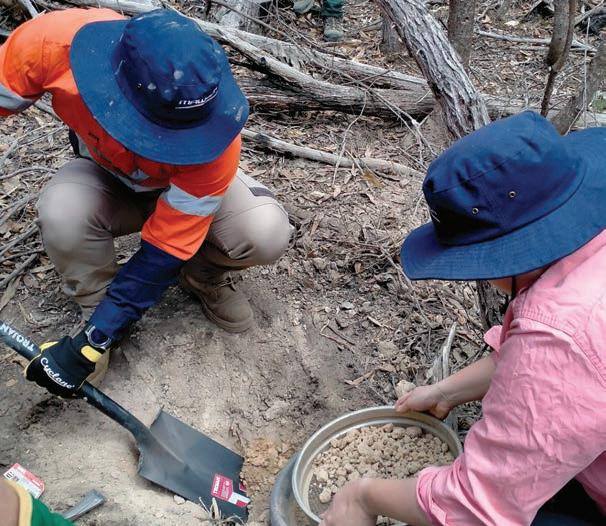
CROSS GOLD
In May, Southern Cross announced it was doubling its drill program at Sunday Creek to 60,000 metres over the next year.
nies look to achieve economies of scale, reduce operational costs, and attract investors. Gri n noted support from shareholders in Canada and overseas for the merger,
n MinRes pulls plug at Yilgarn
and the simpler corporate structure it would bring.
Under the Australian scheme of arrangement, Mawson will acquire the other half of Southern Cross
Australia’s Mineral Resources (ASX: MIN) will shut down its Yilgarn iron ore hub in Western Australia by the end of the year in a move that will a ect about 1,000 workers.
e decision was triggered by several factors, including the limited remaining life across the ve operating mines that make up the hub, and the signi cant capital cost and lead time required to develop new resources to ensure continuity of supply, the company said.
MinRes, led by billionaire founder Chris Ellison, noted it would attempt to reassign as many employees as possible to its other iron ore and lithium mines in the state, as well as to its mining service business.
“ is prudent but di cult decision was not taken lightly and follows years of investment to extend the life of our operations in the Yilgarn,” Ellison said. “With our investment across Western Australia, we have almost 800 vacancies and will redeploy as many of our people as possible to other MinRes operations, including to our low-cost, long-life Onslow Iron project.”
As it ramps down operations, MinRes will explore future options for its Yilgarn assets, comprising 28 trucks and 25 pieces of ancillary gear. e alternatives to be studied include potential rehabilitation or disposal. e company said exploration drilling and environmental studies targeting hematite and magnetite will continue through 2025.
MinRes has operated in the region since 2011. In 2018, with support from the Western Australia government, it stepped in to absorb hundreds of workers from Koolyanobbing, who were set to lose their jobs a er U.S.-based Cli s Natural Resources (NYSE: CLF) sold its international assets.
Yilgarn was at one point one of Australia’s largest iron ore producing assets not owned by heavyweights BHP (ASX: BHP), Rio Tinto (ASX: RIO) or Fortescue Metals (ASX: FMG). MinRes had a market cap of A$11.8 billion at press time.
n Rinehart ups Vulcan stake
Gina Rinehart, the billionaire mining magnate who owns Hancock Prospecting, has boosted her ownership in Vulcan Energy Resources (ASX: VUL) to 7.5% by injecting nearly €12.5 million ($18.5 million) into the lithium-focused company.
e investment via private placement makes Hancock the second-largest shareholder of Vulcan, the Perth-based company said June 3. It’s working on a zero-emissions lithium plant in Landau, Germany.
Rinehart is not the only one pouring millions into the lithium player. CIMIC Group, Australia’s largest privately owned builder, now owns 6% in Vulcan a er committing €25 million. e Victor Smorgon Group, owned by Melbourne’s wealthy Smorgon family, has invested €2.5 million.
Vulcan said the funding will go towards early validation works for the engineering, procurement and construction management contract for the rst phase of the Zero Carbon Lithium plant. In April, the company said it had proven the project’s ability to produce lithium chloride from a lithium extraction optimization plant.
e Australian miner aims to produce 24,000 tonnes of lithium hydroxide monohydrate per year in a rst stage — enough to power up to 500,000 electric vehicles a year, Vulcan says.
e company has agreements to supply European carmakers including Volkswagen, Stellantis and Renault.
Vulcan had a market cap of A$752 million ($687 million) at press time.
shares it doesn’t already own on a 1:1 basis. But rst, it will consolidate its shares at 3.1581:1 ratio so its outstanding share count is the same as Southern Cross’s. Southern Cross shareholders will receive a 50.4% equity stake in the new company.
e merger is expected to be completed in the second half of the years, pending shareholder and regulatory approvals.
More drilling
In May, Southern Cross announced it was doubling its drill program at Sunday Creek to 60,000 metres over the next year.
e company continues where it continues to report strong assay results from the project, 60 km north of Melbourne. On May 30, it reported 38 intersections with grades higher than 100 grams per tonne gold-equivalent over a metre’s width. And in June, it said the deepest hole yet extended mineralization 80 metres downdip, returning 2.6 metres at 124.8 grams gold per tonne from 1,120 metres down-hole (1,050 metres vertical depth).
e hole, SDDSC118, intercepted 11 high-grade vein sets, including 0.7 metre at 604 grams gold per tonne and 3.6 metres at 124.8 grams gold.
e company will add a h drill rig in June and a sixth rig by September, it said in May. It’s also
planning a regional-scale induced polarization geophysical survey to test a 10-km-long trend along strike.
Sunday Creek doesn’t have a resource yet. But in January, Southern Cross announced a conceptual exploration target of 4.4 million to 5.1 million tonnes, with grades of 7.2–9.7 grams per tonne gold-equivalent (about 1–1.6 million oz. gold-equivalent). More drilling needs to be completed to outline a JORC or National Instrument 43-101-compliant resource.
Uranium spinout
Mawson also announced plans to spin o its Swedish uranium assets before nalizing the Australian arrangement. e company will either distribute shares of Euro Canna Holdings to Mawson shareholders or sell the assets. Euro Canna holds most of Sweden’s historic uranium resources, totalling 22.7 million lb. of uranium oxide, according to Mawson. While nuclear energy generates 40% of Sweden's electricity, a moratorium on uranium mining has been in e ect since May 2018. e law does allow for exploration and development. e Swedish government is considering li ing this ban.
e government recently completed an inquiry into the ban, concluding on May 15, with a public announcement expected soon. TNM
Novo Resources celebrates Pilbara gold project results
BY NORTHERN MINER STAFF
Novo Resources (TSX: NVO; ASX: NVO; US-OTC: NSRPF) is celebrating a series of positive results from its Becher and Nunyerry North gold projects in Western Australia’s Pilbara region. One highlight, reported in February, included 8 metres of 4.74 grams gold per tonne at Becher in drilling conducted by Novo’s joint venture partner, De Grey Mining (ASX: DEG). Drilling at Novo’s Nunyerry North returned a highlight of 6 metres grading 6.12 grams gold per tonne.
De Grey signed an earn-in JV agreement with Novo last June for Becher, which is just 28 km southwest of its 11-million oz. Hemi deposit. De Grey can earn a 50% stake in return for a A$10 million up-front payment and A$25 million in exploration spending over four years.
“The Egina joint venture is a great outcome for our shareholders because we’re not spending the A$25 million and we still end up with 50% ownership of this exciting project right next to the large Hemi project,” Michael Spreadborough, Novo’s executive co-chairman, said.
Novo started exploration at Becher in late 2022 and drilled 2,540 holes totalling more than 60,000 metres. It says the geology and geochemistry results are very similar Hemi.
De Grey took over management of the project last July, completing 10,500 metres of drilling in the fourth quarter, Spreadborough said. It’s now in the midst of another drill program.
At Nunyerry North, south of Becher, Novo completed an initial 30-hole reversecirculation program (2,424 metres) last year. It’s now carrying out a 4,500-metre follow-up program to test down plunge of existing intercepts and further along the 2 km strike extent defined by a strong surface soil anomaly. Mark Creasy’s privately owned
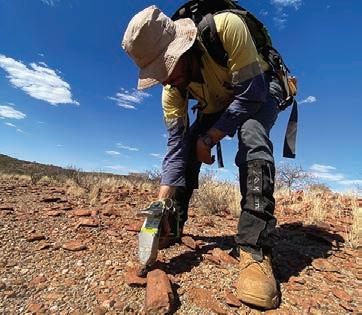
Creasy Group owns a 30% stake in Nunyerry North.
Novo also holds the 1,200-sq.-km Balla Balla project along Western Australia’s northwest coast, and Belltopper, 120 km northwest of Melbourne.
“We have a whole series of earlystage projects on which we’ll complete reconnaissance exploration the rest of the year,” Spreadborough said.
The company is gold-focused, but joint ventures out other projects its team finds. Chile’s SQM (NYSE: SQM) has a 75% stake in the Harding Battery Metals JV in the West Pilbara and privately-owned Liatam Mining has an 80% stake in the Quartz Hill lithium project.
“On top of that, we’re in excellent financial shape with A$13 million in cash and an investment portfolio of A$47 million that we can use as other opportunities arise,” Spreadborough noted.
The preceding Joint Venture Article is PROMOTED CONTENT sponsored by Novo Resources and produced in co-operation with The Northern Miner. Visit: www.novoresources.com for more information.
Southern Cross Gold reported strong gold assays from its Sunday Creek project in Victoria, Australia. SOUTHERN
donedeals
Chilean Cobalt lines up potential US$317M loan
CRITICAL
MINERALS | US EXIM bank steps up
China’s Ganfeng clinches Leo Lithium stake
AFRICA
| Mali OK’s US$343M
sale
BY MINING.COM STAFF
U.S.-based critical minerals explorer Chilean Cobalt (USOTC: COBA) has received a letter of interest for a potential debt funding package of up to US$317.4 million from the Export-Import Bank of the United States.
e loan would help advance development at the company’s La Cobaltera cobalt-copper project in northern Chile, as well as other concessions in the region it may acquire in future.
is funding is part of EXIM Bank’s China and Transformational Export Program (CTEP), an initiative designed to help American companies facing competition from China in sectors including renewable energy. e loan tenure would be up to 15 years. Chilean Cobalt holds26.3 sq. km of mining concessions within the San Juan district, which is home to numerous past-producing mines and is recognized by the Chilean government as one of the country’s premier cobalt exploration targets.
La Cobaltera was the largest production area in the district, with mining activity dating back to mid1800s until 1944. During that time, cobalt grades between 1% and over
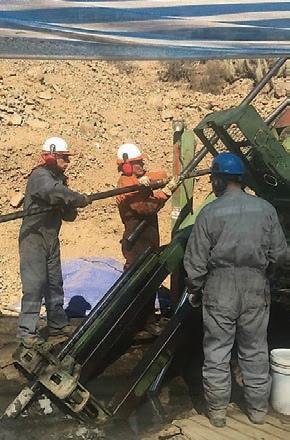
15% were mined from open pit and underground.
La Cobaltera also one of few primary cobalt deposits known globally, Chilean Cobalt chair Duncan Blount said in a release. e project includes cobalt-copper oxide and sulphide resources with evidence of gold at depth across several known exploration and development targets district-wide.
“With the district-scale potential that this project holds, we are
focused on restarting and expanding these past-producing mines while exploring for additional resources,” he said.
e company rst plans to focus on near-term production potential from the resources with little to no overburden, taking advantage of the district’s historical open pit development. e company says it’s working toward a scoping study and an initial NI 43-101 resource. A second phase of development would focus on the deeper sulphide mineralization, which contains copper and cobalt, with evidence of gold.
e potential support from EXIM Bank would provide funding for substantially all the anticipated construction and development capital required for the initial project focused on the deposit’s cobalt-copper oxide zones, the company said.
Based on certain early drawdown conditions, this funding may be available to fund a de nitive feasibility study, Chilean Cobalt added. e company completed more than 22,000 metres of drilling at the project from 2018-19 before deciding to put it on hold due to the pandemic and market conditions. It resumed work in 2022 and listed on the OTCBQ last year. TNM
NextSource lands World Bank support for Molo expansion
GRAPHITE | Madagasgar mine began production in 2023
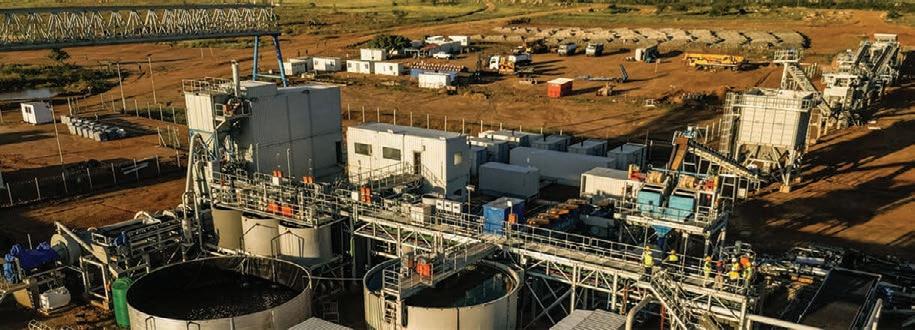
NextSource Materials (TSX: NEXT; US-OTC: NSRCF) has signed a mandate letter with International Finance Corp., the private sector investment arm of the World Bank Group, to lead a senior debt facility totalling US$91 million.
e company expects to direct roughly half of the proceeds towards the expansion of its Molo graphite mine in southern Madagascar, it said in mid-June. e mine entered production a year ago and now produces 17,000 tonnes per year of NextSource’s trademarked SuperFlake graphite concentrate. e proposed expansion will increase that by nearly nine times to 150,000 tonnes annually.
A December 2023 feasibility study estimated the expansion will cost US$161.7 million (including contingency) plus working capital of US$25.2 million. is would result in a post-tax net present value (using an 8% discount rate) of US$370 million and an internal rate of return of 29%.
IFC’s mandate to provide the nancing is subject to technical, social, legal and environmental due diligence, which NextSource says has already begun and should be completed early next year.
With IFC’s support, NextSource CEO Craig Scherba said in a release that the company is now “poised to unlock Molo’s vast potential and further contribute to long term sustainable development in Madagascar.” e project is host to one of the world’s largest graphite depos-
its, containing a measured resource of 23.6 million tonnes grading 6.32% graphitic carbon and indicated resources of 76.8 million grading 6.25%.
e company’s long-term aim is to use this resource as an anchor and become a vertically integrated global supplier of electric vehicle battery material. is involves building battery anode facilities capable of large-scale production of coated, spheronized and puri ed graphite.
e rst graphite plant is to be located in Mauritius, where it has already submitted an application and signed a lease agreement for the site.
NextSource shares traded at 83¢ at press time, giving it a market capitalization of $129.1 million. Its shares traded in a 52-week range of 60¢ and $2.17. TNM
BY MINING.COM STAFF
Australia’s Leo Lithium (ASX: LLL) said the government of Mali had conditionally approved the sale of its remaining 40% stake in Mali Lithium to China’s Ganfeng Lithium for almost US$343 million. e company also said it had secured two outstanding permits for its Goulamina lithium project, which it held through Mali Lithium. Mali Lithium holds the Goulamina lithium project, which is under construction. Leo Lithium decided to sell its stake in the project in May, a er failing to reach a “viable agreement” with the military-led government regarding the project’s ownership.
A new mining code in the West African nation, adopted in 2023, was expected to increase the government’s potential ownership in the Goulamina project from 20% to 30%, with an additional 5% stake likely to be allocated to a local entity.
In a release, Leo restated that the risks of operating in Mali, combined with the e ects of the
new mining code, convinced it that selling the stake would be most bene cial for its shareholders.
“While the preferred outcome would have been for Leo to remain involved in Goulamina, we believe in the absence of a viable agreement with the Mali government, this course of action is in the best interest of all stakeholders,” Leo Lithium managing director, Simon Hay, said. e company also said it had secured two outstanding permits for Goulamina, including one for the project’s power generating licence. is approval, the West Perth-based company said, authorizes on-site power generation for 20 years, facilitating the transition from smaller temporary power units to a single largescale power station, in time for the project’s commissioning and operational phases.
Management of the Goulamina project will be fully transferred to Ganfeng by Nov. 13, it said.
Goulamina, in southern Mali, is on track to produce its rst spodumene in this year’s third quarter. TNM
Critical Metals signs deal for Tanbreez
RARE EARTHS | Project in Greenland
Critical Metals Corp. (Nasdaq: CRML) has signed a deal to acquire a 92.5% interest in the Tanbreez project in Greenland, billed as the largest rare earth deposit in the world.
Valued at US$211 million and announced on June 18, the deal will see Critical Metals pay Rimbal Pty., a company controlled by geologist Gregory Barnes, paid mostly in shares. e two-stage agreement includes an already completed initial cash payment of US$5 million for a 5.6% stake. Payment of US$90 million in shares will follow within 30 days, for another 36.5% interest. Critical Minerals can acquire its full stake a er two years, or once it spends US$10 million on exploration, by handing over another US$116 million in shares.
“ e completion of this investment is a key step for our plans to acquire Tanbreez, a foundational rare earth asset for the West,” Critical Metals CEO Tony Sage said in a release. “Critical Metals Corp expects to be strategically positioned to become a reliable and sustainable supplier of both light and heavy rare earth elements to meet the growing demand of these materials from the technology and defense industries in western countries.”
Tanbreez, according to internal company estimates, hosts 28.2
million tonnes of total rare earth oxides (TREO) in 4.7 billion tonnes of material, and is expected to contain more than 27% heavy rare earth elements (HREE). Critical Metals says e orts to convert the internal resource to U.S. SEC standards. Once operational, the mine is anticipated to supply rare earth elements to Europe and North America.
e project is expected to have access to key transportation outlets as the Tanbreez area features year-round direct shipping access through deep-water ords that lead directly to the North Atlantic ocean. e outcropping orebody, known as Kakortokite, covers an area of 8 km by 5 km and is about 400 metres thick.
Critical Metals, which owns Europe’s rst fully permitted lithium mine, the Wolfsberg lithium project in Austria, debuted on the Nasdaq in March.
Upon completion of construction at Wolfsberg by 2026, Critical Metals has committed to supplying BMW by 2027. e company has also secured a deal with Obeikan Investment Group to build a lithium hydroxide plant in Saudi Arabia.
Shares of Critical Metals traded at US$11.60 at press time, valuing the company at US$947 million. Its shares traded in a 52-week range of US$7.02 and US$18.56. TNM
At Chilean Cobalt’s La Cobaltera project. CHILEAN COBALT
projectupdates
Snowline Gold post first resource
YUKON | Outlines 7.4M oz
BY COLIN MCCLELLAND
Snowline Gold’s (TSXV: SGD; US-OTC: SNWGF) Valley deposit dwarfs most other projects in grade and metal, according to the most anticipated initial resource for a Yukon asset in decades.
Valley in Snowline’s Rogue project holds 75.8 million indicated tonnes grading 1.66 grams gold per tonne for 4.1 million oz. contained metal, the company said on June 17. It has 81 million inferred tonnes grading 1.25 grams for 3.3 million oz., Snowline said in a release.
“In just two full exploration seasons, Snowline has advanced its Valley target from green eld discovery holes to a robust multi-million-ounce gold deposit,” CEO Scott Berdahl said. “Valley has excellent potential for continued growth, as evidenced by broad intervals of 1-2 grams per tonne gold mineralization.”
Major B2Gold (TSX: BTO) invested into Snowline early last year as drilling solidi ed the 1,100-sq.-km Rogue as part of the Tombstone gold belt arcing across the region. Kinross Gold’s (TSX: K; NYSE: KGC) Fort Knox mine in Alaska, and Victoria Gold’s (TSX: VGCX) Eagle, the Yukon’s only operating hard rock gold mine, are
Agnico
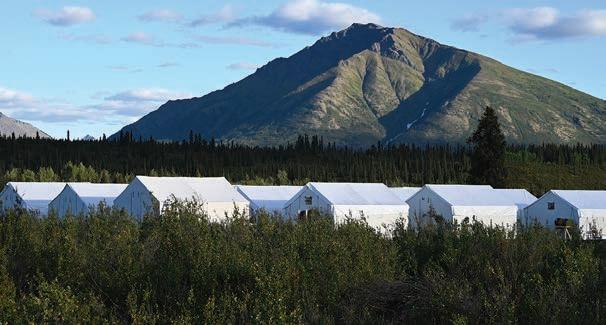
geologically similar. ey’re in the same type of reduced intrusion-related gold system while Valley has much higher grades.
Vancouver-based Snowline has drilled 4,000 metres to expand the estimate with 15,000 metres planned this year in its largest drilling program.
More drilling e resource is based on almost 28,000 metres of drilling to January, has a cuto grade of 0.4 gram and is con ned to a potential pit shell of 297 million tonnes of material, Snowline said. It assumes a conventional 25,000-tonne-perday mill, a gold price of US$1,800 per oz., mining costs of $3.50 per tonne, and processing costs of $22
per tonne.
e project lacks direct road and power connections, although there is a nearby trail. Rogue lies near the border with the Northwest Territories, some 223 km east of the nearest town, Mayo. Snowline also has the Einarson, Ursa and Cynthia projects in the same area, part of an eight-project portfolio covering roughly 3,600 sq. km.
Other companies with projects in the Yukon’s part of Tombstone include Sitka Gold (CSE: SIG), Banyan Gold (TSXV: BYN; US-OTC: BYAGF) and St. James Gold (TSXV: LORD).
Shares in Snowline Gold were trading around $5.60 apiece near press time. e company has a market value of $880.5 million. TNM
eyes 1M oz a year at Detour Lake in Ontario
GOLD | Mine would be a top five global producer
BY COLIN MCCLELLAND
Agnico Eagle Mines’ (TSX: AEM; NYSE: AEM) Detour Lake open-pit gold mine in northern Ontario could be expanded underground for $1 billion to produce a milestone of 1 million oz. a year starting in 2030, according to a new study.
e life of mine production would increase to 22 million oz., a 27% jump over the previous mine plan released in 2022, shows a preliminary economic assessment issued on June 19.
e proposed Detour Lake expansion and mill optimization would have a net present value of US$1.2 billion and an internal rate of return of 18%, based on a gold price of US$1,900 per oz. Sustaining capital is estimated at US$864 million.
ere’s relatively low risk with the potential to generate a strong return while maintaining decades of production in a leading mining jurisdictions, president and CEO Ammar Al-Joundi said in a release.
“We have adopted a phased and disciplined approach to develop this potential, with the approval of a US$100 million investment over the next three years to further study and de-risk the underground project,” the CEO said. “We see the opportunity to transform the asset into one of the top ve gold mines in the world by output.”
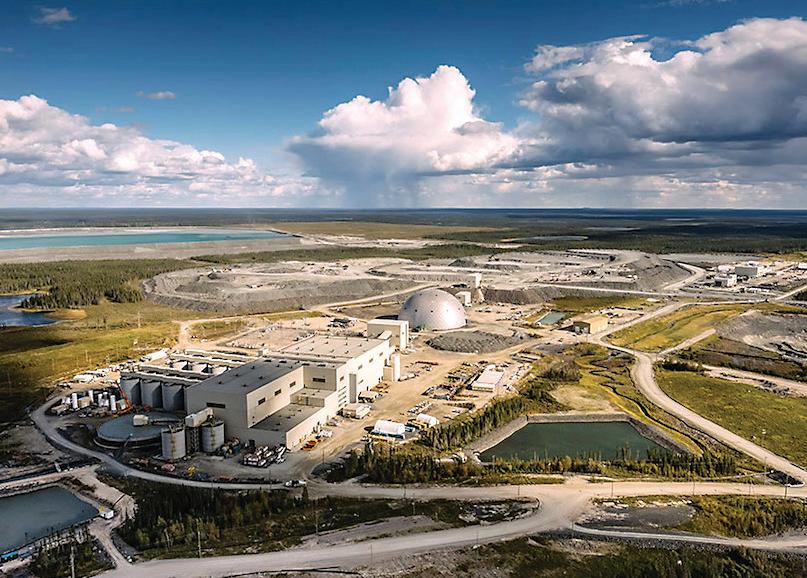
e proposal puts Detour Lake in a rare class of gold mines, BMO Capital Markets mining analyst Jackie Przybylowski said in a note on June 19. ey include Freeport-McMoRan’s (NYSE: FCX) Grasberg mine in Indonesia, and Polyus’ Olimpiada in Russia that produced more than 1 million oz. last year.
“ e expansion is building on existing infrastructure (small expansion — conveyor, paste plant, ramp), and Agnico Eagle has skilled teams both in Detour’s operations and in project execution,” Przybylowski wrote. “ e transition to underground will leverage Agnico Eagle’s in-house operational expertise.”
Ramp Metals ‘thrilled’ with new gold find
SASKATCHEWAN | Shares jump
BY CANADIAN MINING JOURNAL STAFF
Ramp Metals (TSXV: RAMP) shares rose 24% a er it reported partial assay results from a new high-grade gold discovery at its Rottensone SW project in Saskatchewan on June 18. e rst hole the company drilled at the project, Ranger-01, hit 7.5 metres of 73.55 grams gold per tonne and 19.5 grams silver starting at 227 metres down-hole. at included a 1.5 metre section of 164 grams gold, 1.5 metres of 182 grams gold and 1.5 metres of 60.8 grams gold. e same hole returned 5 metres of 4.27 grams gold, including 1.5 metre of 6.18 grams gold, and 1.5 metres of 7.28 grams gold, beginning at 293 metres. Another interval starting at 307 metres assayed 3 metres of 1.81 grams gold, 1 metre of 2.54 grams gold, and 1 metre of 2.85 grams gold.
e company’s shares ended the day 11¢ higher at 59¢ per share, but at press time had risen to 77¢ for a $25-million market cap.
“We are thrilled to make a signi cant gold discovery in our rst drill program on the property,” CEO Jordan Black said in a release. “ ese intercepts are in line with the highest-grade intercepts drilled in Saskatchewan. ese drill results indicate a huge potential at Rottenstone SW and
mark an exceptional milestone in Ramp Metals history.”
e company says Rottenstone SW could be an analogue to the “Nova Eye” structure that hosts IGO’s (ASX: IGO) producing Nova-Bollinger nickel sulphide deposit in Western Australia.
Geophysical electro-magnetic survey results show a similar “eye” structure exists at Rottenstone SW, identifying multiple conductive targets.
Ramp Metals began trading on the Toronto Venture Exchange in March a er completing a reverse takeover of Anacott Acquisition Corp.
Ramp earned a 100%-interest in the Rottenstone SW and PLD properties by drilling 1,180 metres during the winter program. ree of the four holes drilled cut disseminated to semi-massive mineralization. e company says mineralization styles range from disseminated to semi-massive. e Rottenstone SW target is located about 115 km north of La Ronge, Sask., and about 30 km southwest of the historic Rottenstone nickel-copper-PGM plus gold mine, now part of Fathom Nickel’s (CSE: FNI) Albert Lake property.
Ramp will continue investing two conductors (Rogue and Ranger) in the current program and two other untested conductive anomalies at Rottenstone SW with ground geophysics. TNM
South Star to start Americas’ first new graphite mine in over 25 years
BRAZIL | Expansion planned for 2026
BY MINING.COM STAFF
South Star Battery Metals (TSXV: STS) is preparing to start production at its agship Santa Cruz graphite mine in Bahia, Brazil, within weeks.
e study assumes an underground annual mining rate of about 11,200 tonnes starting in 2030, combined with a mill expansion to 79,450 tonnes per day starting in 2028. Annual gold production from underground will add 300,000 oz., bringing the total to 1 million oz. annually for 14 years.
Underground infrastructure will include a 2-km conveyor ramp to a depth of 270 metres, Agnico said. Agnico based its underground plans on 700,000 indicated oz. gold (9 million tonnes at 2.36 grams gold per tonne) and 3.9 million oz. in inferred resources (48.5 million tonnes at 2.5 grams gold). TNM
e company said in late June it paid the nal instalment on a 3.3-sq.-km property to hold the mine’s rst-stage plant buildings. Santa Cruz was scheduled to complete construction in June, followed by about six weeks of commissioning and production ramp-up.
e initial plant will be able to produce around 1,000 tonnes monthly once it reaches steadystate operations.
In February, the company received environmental approval for the mine’s second and third stages.
The initial plant will be able to produce around 1,000 tonnes monthly.
Country heritage Brazil is the second-largest graphite-producing region in the world. It has a history of more than 80 years of continuous mining for the mineral.
Santa Cruz has at-surface mineralization in friable materials and has completed large-scale pilot-plant testing of more than 30 tonnes. Test results show that roughly 65% of graphite concentrate is +80 mesh with good recoveries and 95%-99% graphitic carbon.
e mine will be the rst new graphite production in the Americas since 1996. Its second stage of production, at 25,000 tonnes per year, is partially funded and planned for 2026. Its third phase at double that amount is scheduled for 2028.
Shares of South Star was trading 62¢ apiece in Toronto near press time, valuing the company at $32.7 million. It has traded in a 52-week range of 48¢ to 82¢. TNM
Snowline Gold’s Rogue project in the Yukon. SNOWLINE GOLD
Agnico Eagle Mines’ Detour Lake mine. AGNICO EAGLE MINES
> Arbitration from P4
nous rights.
Almaden Minerals, for example, is seeking at least US$200 million to compensate for revoked permits on the Ixtaca gold-silver deposit it discovered in Mexico’s Puebla state in 2010. Mexico’s Supreme Court in 2022 ruled the country’s mining law was unconstitutional because it didn’t explicitly require consultations with Indigenous communities before granting concessions.
“Rather than proceeding to consultation, as we and local community members expected, Economia (the Ministry of Economy) instead alleged that there were technical errors in our original concession applications and on that basis denied them retroactively,” Doug McDonald, Almaden’s executive VP, wrote in an emailed response to questions. “So, our case is simple — the government retroactively terminated our mineral rights and reversed its prior positions regarding our mineral title applications decades a er they were approved.”
In previous cases where Indigenous rights were at issue, Clifford Chance laywers noted that the terms of the speci c treaties signed by the country won out over international laws or norms that protect Indigenous communities, such as the International Labour Organization’s Convention concerning Indigenous and Tribal Peoples in Independent Countries and the United Nations Declaration on the Rights of Indigenous Peoples (UNDRIP).
> Mid-stream from P7 rials supply network. is is especially the case given the advanced next generation supply chains and applications that are emerging, and the accelerated timelines imposed by global competition. Canada requires focused technical expertise, trades and operators, and people with business and policy acumen. Well established mining, material and chemical processors, and manufacturers, as well as educational institutions could help. ey should be strongly incented to train additional technical and operating personnel in work placements with the expectation that such talent would be available to move to SME critical materials operations as they build and go into production. e education of future generations, leveraging immigrant
“Many tribunals have rejected the relevance of such laws to the dispute, which are not mentioned in the legal instruments on which the disputes are based,” the rm’s lawyers wrote in an emailed response to questions.
In a dispute between Bear Creek Mining and Peru over the controversial Santa Ana silver project, Peru claimed the company had failed to comply with international norms requiring consultation with Indigenous Peoples “ e tribunal upheld Bear Creek’s claim on the basis the company had not caused or contributed to the protests and awarded damages based on the company’s investment costs,” Cli ord Chance lawyers wrote. “ e state authorities had approved the company’s plans – and could not retrospectively argue that its conduct was contrary to international conventions.”
Overall the number of ICSID cases have grown steadily over the past 30 years, the centre’s own gures show. Meighen says the increase is likely a function of more international treaties creating a “network” of agreements.
While countries have a right to regulate their resource industries. they are still expected to comply with international treaties and to compensate companies if radical changes in policy amount to expropriation. No one likes to say ‘see you in court’ — or in front of an arbitration panel — but it may become just as common a phrase for the industry as ‘critical minerals’ and ‘the green energy transition.’ TNM
talent, and creating career paths in the sector are key. Focused industry-developed and delivered critical materials-related lectures and project assignments built into the education system at the undergraduate and graduate levels would be a good start.
n Bolster the demand for Canadian critical minerals. Canada should work with its major trading partners to leverage government procurement and regulatory protocols to require that critical materials, when possible, be sourced from within North America. is would help ensure a sustained supply for today and options for expansion tomorrow. Strengthening crossborder supply chains will help to ensure there is a secure, reliable supply of critical materials for partners’ industrial bases.
done
Paladin Energy to acquire Fission for $1.1B
URANIUM
BY SALIMA VIRANI
Fission Uranium (TSX: FCU; US-OTC: FCUUF) has agreed to be acquired by Australia’s Paladin Energy (ASX: PDN; USOTC: PALAF) in an all-stock agreement valued at about $1.1 billion. e acquisition, announced on June 24, will give Paladin the permitting-stage Patterson Lake South uranium project in Canada’s Athabasca Basin. It also operates its recently restarted Langer Heinrich uranium mine in Namibia.
Under the deal, Paladin will purchase 100% of Fission shares at $1.30 at an implied equity value of $1.1 billion. Existing Paladin shareholders will own about 76% of the combined company, while existing Fission shareholders will own 24%. Fission shares closed at $1.03 in Toronto on June 21, and rose to $1.18 a er the deal was announced.
e combination of Paladin and Fission will create a clean energy leader with an enhanced project development pipeline, multi-asset production expected by 2029, and a diversi ed presence across lead-
ing uranium mining jurisdictions like Canada, the companies said in a release.
“Fission is a natural t for our portfolio with the shallow highgrade PLS [Patterson Lake South] project located in Canada’s Athabasca Basin,” Paladin CEO Ian Purdy said in a release. “ e addition of PLS creates a leading Canadian development hub alongside Paladin’s Michelin project, with exploration upside across all Canadian properties.”
Fission president and CEO Ross McElroy noted shareholders will bene t from the merger.
“ e combination of Fission and Paladin will create a world class diverse uranium producer, adding a class leading development project in a Tier 1 jurisdiction with the ability to expand production and cash ow pro les in the near term,” McElroy said. “With commercial production at Langer Heinrich and further development milestones at PLS, this opportunity will create a diverse pureplay uranium company with current production and a deep pipeline of near and mid-term assets available to investors.”
e deal o ers a 13% premium to BMO Capital Markets’ target price for Fission and a 26% premium to the junior’s last closing price, mining analyst Alexander Pearce said in a note to clients.
“Signi cantly on closing, the transaction would bring immediate exposure to a mid-scale producing uranium mine in Namibia to Fission shareholders,” he wrote. “Further, the transaction could mark the beginning of additional M&A interest in the sector.”
e merger will require a shareholder vote on Fission’s part, with two-thirds approval. It will also require regulatory approval, including under the Investment Canada Act.
A 2023 feasibility study Triple R deposit at PLN outlined a 10-year mine life for an underground operation with an initial capital cost of $1.1 billion. e a er-tax net present value (at an 8% discount) was estimated at $1.2 billion, and the internal rate of return at 27.2%. Operating costs were pegged at $13.02 per pound.
e transaction is targeted to close in the fourth quarter.
are the same kind of sustainability-linked loans. ey tie a company’s targets to become greener, such as increasing renewable energy as well as goals to expand workforce diversity, to improved terms. But the targets must be substantial enough to withstand claims of greenwashing, she said.
“Even for critical mineral projects, it’s been di cult to be able to label them ‘green,’” she said. “For a battery project, it’s a lot easier even though one needs the other.”
Boeke-Burke said political backlash and fears of greenwashing contributed to a slowdown in environmental nancing products in North America among corporate issuers. Even so, Nasdaq added a green certi cation and other exchanges have been considering them, she said. Europe has been strong while Latin America, the Middle East and North Africa have expanded, she said.
e concept of a transition bond for companies with projects that don’t qualify as green but are part of the move to more sustainable energy is gathering pace a er Japan created the class this year and others such as Canada may follow, Boeke-Burke said.
About two-thirds of targets in the green loan space concern greenhouse gas emissions, the S&P analyst said. e green label may apply to the water supply for a mine, on-site renewable energy for pollution prevention and power supplies, e ciency improvements, as well similar advances in re ning and processing at re neries and smelters, she said.
It can also apply to post-closure plans that embrace possibilities for greenspace use, not just limiting a site’s potential liabilities, she said.
Challenges David Rhodes, managing director of London-based Endeavour Financial, said he sees problems
n Drive the establishment of midstream production. ere is limited logic or bene t for Canada and its partners to approach building supply chains linearly starting with domestic mine development, which may be years o despite promised streamlining of permits and regulation. Establishing mid-stream capacity would serve as a catalyst to accelerate the development of more domestic feeds and serve as a condent source of supply of quality materials and components to more downstream consumers. e development of midstream operations can generally be delivered within shorter timeframes and at lower cost than establishing new mines. If done in parallel, midstream production could be kickstarted with the imported raw or recycled material feeds until local streams are available.
in the green bonds route because so many projects depend on diesel power. ey’re in remote locations and current battery technology limits the size of haul trucks, he said.
But he said miners should be practicing greener methods not only to get less expensive nancing when banks are nervous about lending to mining unless it’s battery metals, but to improve the industry. Private credit funds have grown over the past decade, but they aren’t as strict about environmental targets as banks are, he said.
Public support is a concern in Canada, said Braden Jebson, a partner at law rm Torys in Toronto.
“Mining can be viewed as a potentially dirty industry and that has been a challenge for the industry in Canada,” he said. “Its public perception is not always as positive as it can be. ere’s an e ort to change that as part of the green transition, but there’s certainly still some historical challenges with that.”
n Establish a ‘Mission Critical industry cabinet’ to coordinate efforts. A cabinet comprised of respected independent industry leaders across the critical materials spectra could help governments prioritize the most likely-to-succeed critical materials-related projects and initiatives. It could also identify risk mitigation plans and de ne what speci cally is needed to deliver on such plans. Government(s) can’t deliver everything to everybody.
n Incentivize investment through tax credits. Credits similar to owthrough/Canadian exploration tax credits, could be introduced to encourage investment to build the critical materials mid-stream. As noted above, the midstream will increase market demand for mined materials and reduce the perils
> South Africa from P14
know it now, will be there when the next elections come around in 2029,” the analyst said. “ ere will be changes, perhaps only small ones as parties head back to oppo sition, but this really is dependent on whether the parties can work to govern together and not see every policy battle as a zero-sum game.” e DA is primarily seen as a party for the white and mixed-race (known as coloured) segments of the population, about 20%. On the provincial level, the party con trols Western Cape, where its power generation privatization has reaped rewards. e EFF, led by former ANC youth leader Ju lius Malema, said it would never serve in a government including the DA. It also demanded the nance portfolio.
“ ere are a lot of people who are not pleased with the ANC/DA governing together,” Duthie said.
“ ey’ll have to show that they can
of bringing new mines online by reducing the severity of commodity super cycles. Canada has earned the pride in its vast resource wealth, industrial capacity, and aspirations of being a global leader in the energy transition, reducing carbon footprints and ensuring our collective economic security. At the end of the day however, it's all in the delivery. TNM
Ian M. London is executive director of the Canadian Critical Minerals & Materials Alliance (www. c2m2a.org). He is a Professional Engineer (McGill) and earned his MBA at the Schulich School of Business.


> Green Bonds from P11
mining, metals & markets

ETF assets 22 Global gold funds data
Capital raisings
Drill results
30 Mining events contents
Warrants & shorts
28 Market data
29 Market news
*Data may not be comprehensive and is provided on a best-efforts basis as of press time. Investors are responsible for their own due diligence.
Delivering fit-for-purpose solutions across the entire project life cycle
Delivering fit-for-purpose solutions across the entire project life cycle
Delivering fit-for-purpose solutions across the entire project life cycle
Delivering fit-for-purpose solutions across the entire project life cycle
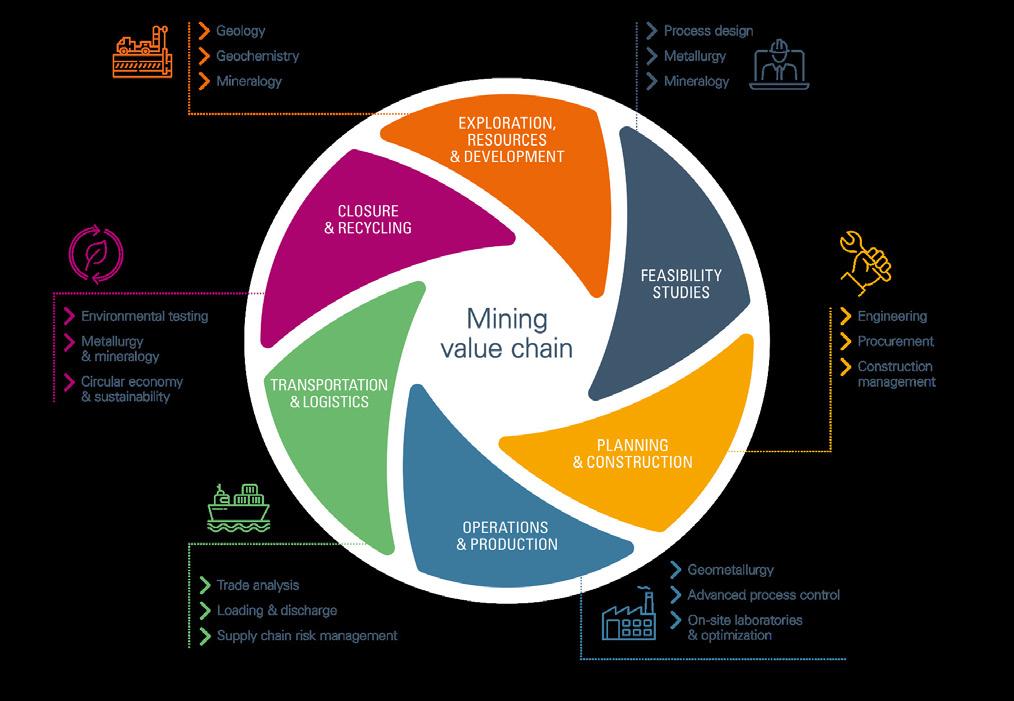
Our fit-for-purpose solutions encompass the skills of qualified geologists, geostaticians, analytical chemists, mineralogists, metallurgists, process engineers and mining engineers and inspectors brought together to provide accurate and timely mineral and process evaluation services across the entire project life cycle.
Our fit-for-purpose solutions encompass the skills of qualified geologists, geostaticians, analytical chemists, mineralogists, metallurgists, process engineers and mining engineers and inspectors brought together to provide accurate and timely mineral and process evaluation services across the entire project life cycle.
Our fit-for-purpose solutions encompass the skills of qualified geologists, geostaticians, analytical chemists, mineralogists, metallurgists, process engineers and mining engineers and inspectors brought together to provide accurate and timely mineral and process evaluation services across the entire project life cycle.
Our fit-for-purpose solutions encompass the skills of qualified geologists, geostaticians, analytical chemists, mineralogists, metallurgists, process engineers and mining engineers and inspectors brought together to provide accurate and timely mineral and process evaluation services across the entire project life cycle.
WWW.SGS.COM/NATURALRESOURCES NAM.NATURALRESOURCES@SGS.COM
WWW.SGS.COM/NATURALRESOURCES NAM.NATURALRESOURCES@SGS.COM
WWW.SGS.COM/NATURALRESOURCES NAM.NATURALRESOURCES@SGS.COM
WWW.SGS.COM/NATURALRESOURCES NAM.NATURALRESOURCES@SGS.COM

1
1
CAPITAL RASINGS | 12-MONTH ROLLING AVERAGE
$6,000
$5,000
$4,000
$3,000
$2,000
$1,000
$0
Note: Trended capital raising activity may differ from the previous months as we have switched data providers in order to expand our coverage of market activities.
Investing in the Canadian Resource Sector at Reduced Cost of Capital
PearTree is a Canadian Securities Dealer and Investment Fund Manager advancing over (CAD) $500 million annually for resource exploration and mine development in a uniquely Canadian structure which results in as much as $2.00 of capital deployed for every $1.00 invested by global institutions and family offices.
Watch our video in English, Français, Deutsch, and Español on our website.
Expanding the universe of exploration capital.
8
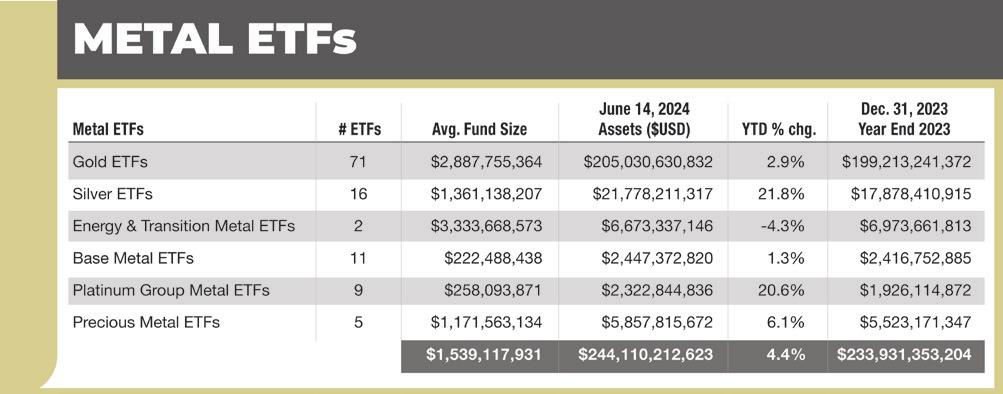
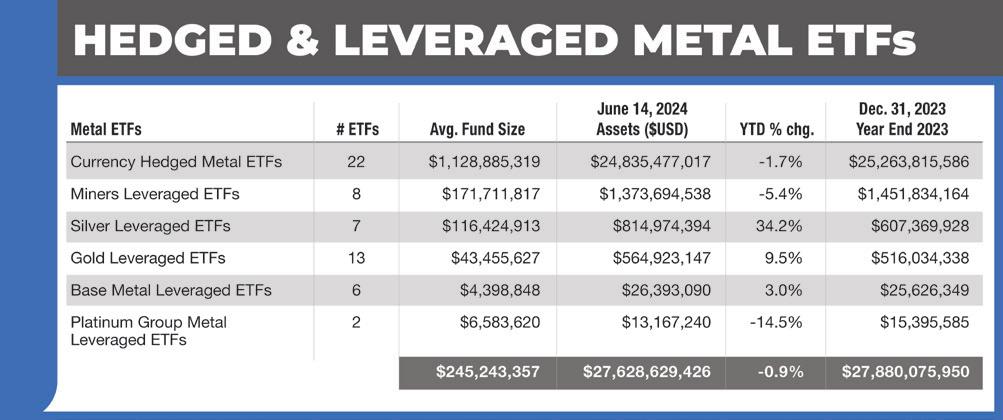
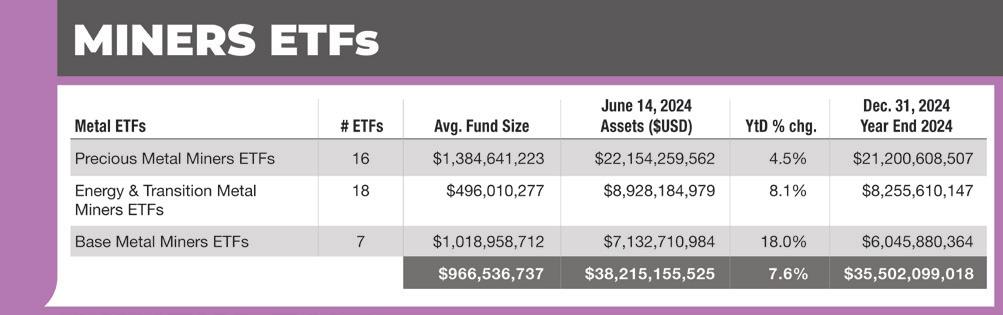
drillresults
TNM DRILL DOWN: TOP ASSAYS OF THE MONTH
Our TNM Drill Down features the top 10 gold, copper and silver assays of the past month. Drill holes are ranked by grade x width.
May 16, 2024 – June 14, 2024
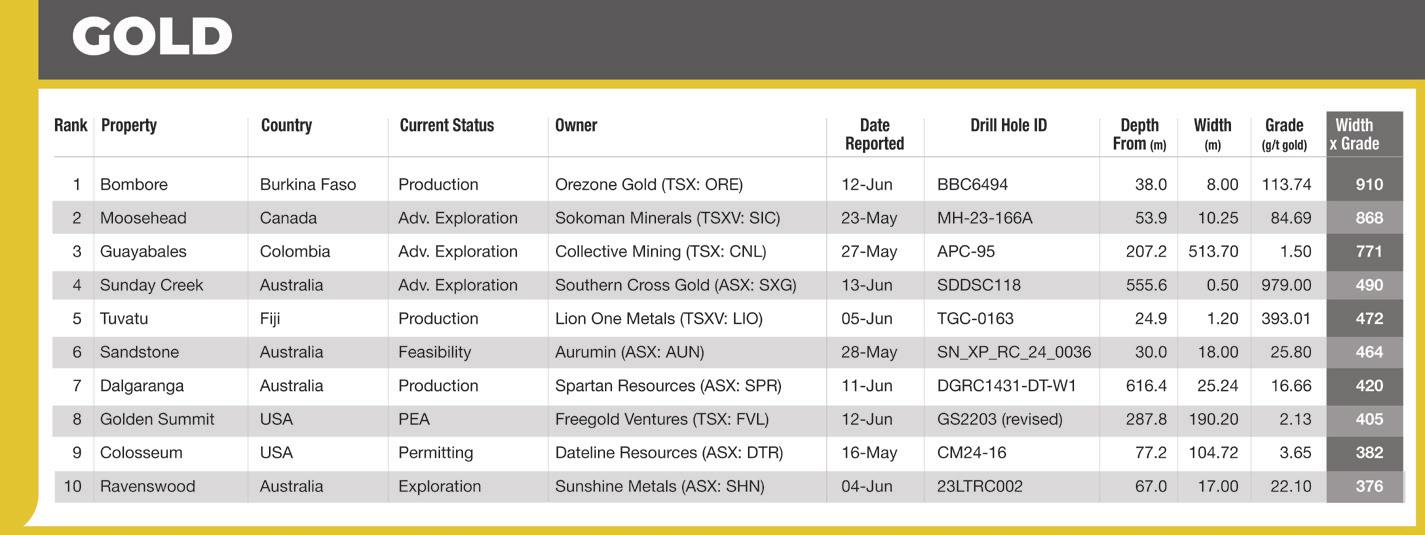
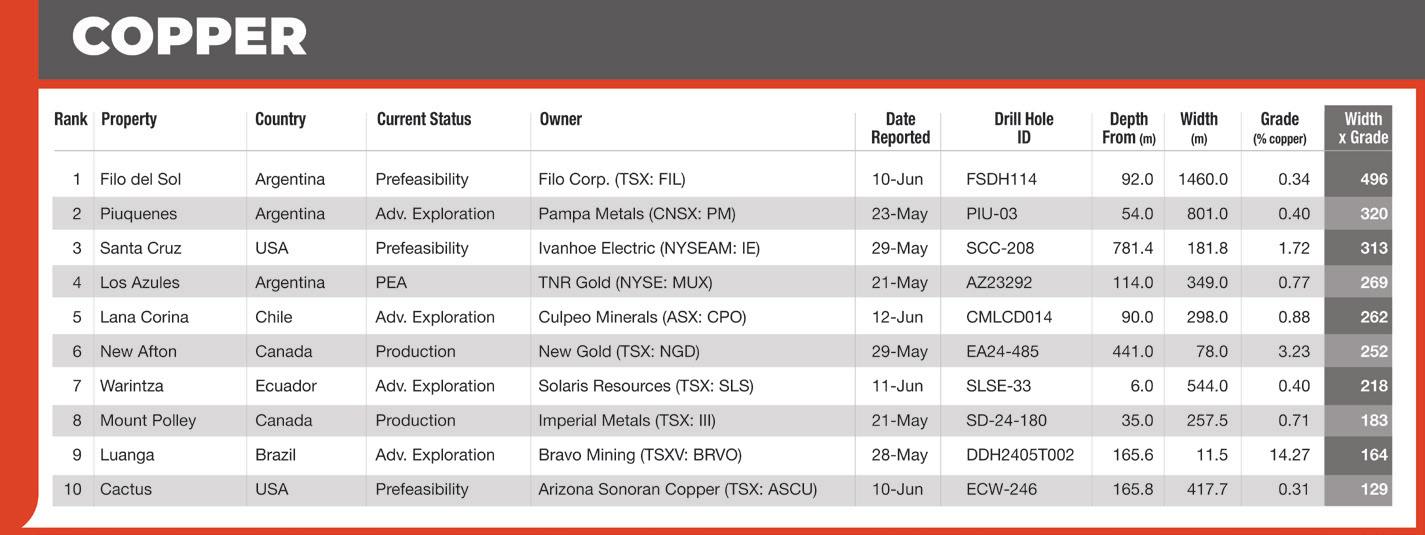
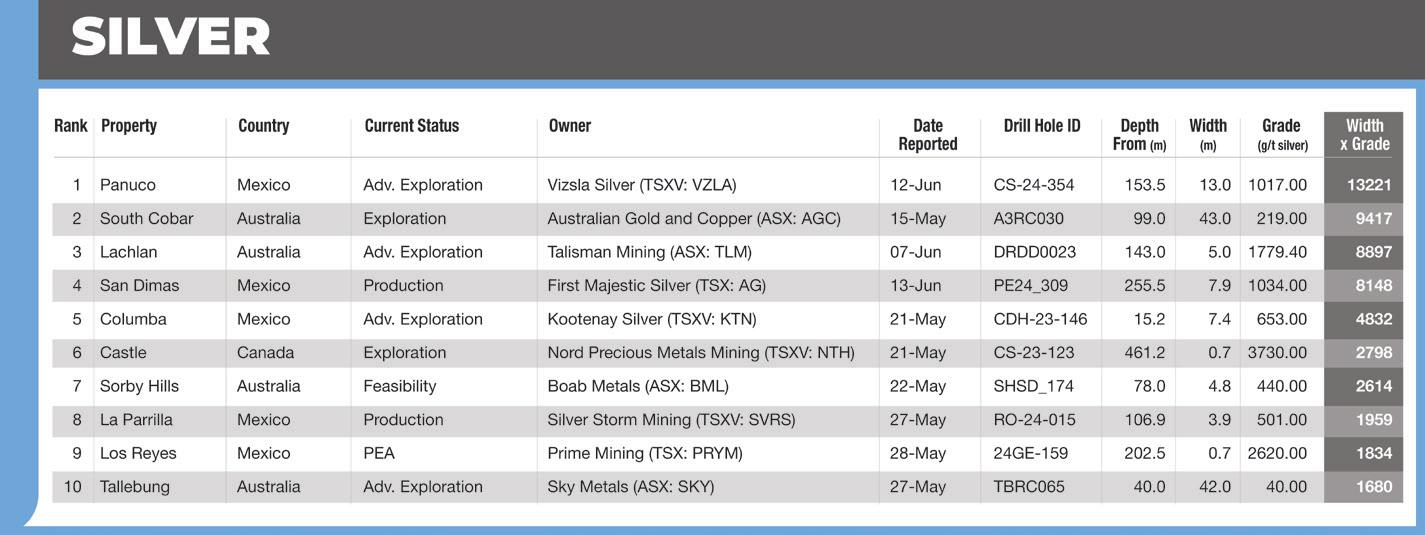
warrants&shorts
TSX WARRANTS
Aris Gold Corporation (ARIS.WT) One Warrant to purchase one Common 07-29-2025 Share of the Issuer at $2.75 until expiry.
Mexican Gold Corp. MEX.WT One warrant to purchase one common 07-15-2024 share at $0.12 per share.
Giga Metals Corporation GIGA.WT.A One warrant to purchase one common 02-08-2025 share at $0.45 per share.
LithiumBank Resources LBNK.WT One warrant to purchase one common 02-16-2025 Corp. share at $2.00 per share.
Total Helium Ltd. TOH.WT.A One warrant to purchase one common 05-01-2025 share at $0.75 per share.
Caldas Gold Corp. CGC.WT One warrant to purchase one common 07-29-2025 share at $2.75 per share.
Rock Tech Lithium Inc. RCK.WT One warrant to purchase one common 08-19-2025 share at $4.50 per share.
Lion One Metals Limited LIO.WT One warrant to purchase one common 11-11-2025 share at $1.25 per share.
Silver Mountain AGMR.WT.A One warrant to purchase one common 02-09-2026 Resources Inc. share at $0.45 per share.
Osisko Development ODV.WT.B One warrant to purchase one common 03-02-2026 Corp. share at $8.55 per share.
Denarius Silver Corp. DSLV.WT One warrant to purchase one common 03-17-2026 share at $0.80 per share.
West Red Lake Gold WRLG.WT One warrant to purchase one common 05-16-2026 Mines Ltd share at $1.00 per share.
Aurania Resources Ltd. ARU.WT.B One warrant to purchase one common 10-21-2026 share at $2.20 per share.
Freeman Gold Corp FMAN.WT.U One warrant to purchase one common 11-29-2026 share at US$0.65 per share.
Osisko Development ODV.WT.A One warrant to purchase one common 03-02-2027 Corp. share at $14.75 per share.
Integra Resources Corp. ITR.WT One warrant to purchase one common 03-13-2027 share at $1.20 per share.
Elevation Gold Mining ELVT.WT.A One warrant to purchase one common 03-24-2027 Corporation share at $0.70 per share.
Osisko Development ODV.WT.U One warrant to purchase one common 05-27-2027 Corp. share at US$10.70 per share.
Silver Mountain AGMR.WT.B One warrant to purchase one common 04-24-2028 Resources Inc. share at $0.135 per share.
Bear Creek Mining BCM.WT One warrant to purchase one common 10-05-2028 Corporation share at $0.42 per share.
TSX SHORT POSITIONS
Short positions outstanding as of May 31, 2024 (with changes from May 15, 2024)
Largest short positions Company Ticker Short position Change
Ivanhoe Mines IVN 24687263 -2050871
IAMGOLD IMG 18476536 11265706
Denison Mines DML 13248710 416335
Fortuna Silvr FVI 11543573 4684700
Equinox Gold EQX 11484834 334544
Suncor Energy SU 11349076 -6651352
Lundin Mng LUN 11155679 -5987018
Karora Res KRR 9759424 3505029
First Quantum FM 8938111 -613490
Calibre Mng CXB 8893583 -255624
Barrick Gold ABX 8686303 -5541933
B2Gold Corp BTO 8094500 -110052
Osisko Mng Inc OSK 8052289 863102
Kinross Gold K 7885926 -815225
HudBay Min HBM 7591812 362536
Largest increase in short position IAMGOLD IMG 18476536 11265706
Fortuna Silvr FVI 11543573 4684700
Karora Res KRR 9759424 3505029
Capstone Mng CS 7225873 1703249
GoGold Res GGD 1804151 1138644
Largest decrease in short position Suncor Energy SU 11349076 -6651352
New Gold NGD 5975293 -6458372 i-80 Gold IAU 6822089 -6077873
Lundin Mng
hort positions outstanding as of May 31, 2024 (with changes from May 15, 2024)
short positions
Aluminum: US$1.14/lb.
Cobalt: US$12.32/lb.
Gold: US$2,364.00/oz.
Iron Ore 62% Fe CFR China-S: US$106.70
Nickel: US$7.81/lb.
Silver: US$30.44 per oz.
Zinc: US$1.29 per lb.
marketdata
COMMODITY PRICES | Prices current June 21, 2024
Coal: Central Appalachia, 12,500 Btu, 1.2 S02-R,W: US$81.85 Coal: Powder River Basin, 8,800 Btu, 0.8 S02-R, W: US$13.55
Copper: US$4.44/lb.
Iridium: US$4,725/tr oz.
Lead: US$0.99/lb.
Rhodium: US$4,750/tr. oz.
Tin: US$15.01/lb.
Copper: CME Group Futures August 2024: US$4.42/lb.;
September 2024: US$4.42/lb.
Lithium carbonate: US$13,250/tonne
Ruthenium: US$420 per oz.
Uranium: U3O8, Trading Economics: US$85.05 per lb.
June 17-21, 2024
Dow dances up, TSX takes a tumble
By Henry Lazenby
U.S. markets banked gains during the June 17-21 trading week as the Dow Jones charged 1.5% higher to 39,150.33 points and the S&P 500 added 0.6% to 5,464.62.
Exchanges north of the border closed the week in the red. The S&P/TSX and Venture Composite Indexes both fell 0.4% to 21,554.86, and 570.71 points, respectively.
S&P/TSX Global Mining Index gained 1.6% to 118.05, and the S&P/TSX Global Gold Index gained 2.3% to 315.6.
Gold traded at US$2,335.05 per oz., capping gains of more than 13% since the beginning of the year. It remained within reach of its May 20, 12-month intra-day high of US$2,450.06 per ounce.
The S&P/TSX Global Base Metals
Index gained 1.9% to 205.4, despite the copper rally losing steam from recent highs at US$4.34 per lb. on June 21.
Southern Copper was the biggest NYSE value gainer, adding US$2.82 to close at US$109.12. Alcoa added a respectable US$2.50 to close at US$40.40 per share, supported by the historically higher copper price.
In Toronto, gold miners gained the most in value. Newmont added $1.81 to close at $57.87 and Lundin Gold added $1.20 to $20.08. Agnico Eagle Mines rose $1 to $89.27 after a preliminary economic assessment showed potential for its Detour Lake gold mine in Ontario to reach production of 1 million oz. per year starting in 2030 through underground development.
Gold, copper miners shine as metal prices remain high
2024
n July
July 8-12
miningevents
12th International Kimberlite Conference — Yellowknife
VENUE: Explorer Hotel and Chateau Nova Hotel
MORE INFORMATION: www.12ikc.ca
July 17-18
Direct Lithium Extraction 2024 — Calgary
VENUE: Carriage House Hotel and Conference Centre
MORE INFORMATION: www.canada.direct-lithiumextraction-show.com
July 23-25
Queensland Mining and Engineering Exhibition — Mackay, Australia
VENUE: Mackay Showgrounds
MORE INFORMATION: www. queenslandminingexpo.com.au/en-gb.html
n August
August 5-7
Diggers and Dealers Mining Forum — Kalgoorlie, Australia
VENUE: TBA
MORE INFORMATION: www.diggersndealers.com.au
August 7-9
2024 Beijing International Coal and Mining Exhibition — Beijing, China
VENUE: China International Exhibition Center
MORE INFORMATION: www.en.ciceme.com
August 19-22
63rd Annual Conference of Metallurgists — Halifax, N.S.
VENUE: Halifax Convention Centre
MORE INFORMATION: www.metsoc.org/2024
August 26-28
Critical Minerals Conference 2024 — Brisbane, Australia
VENUE: Brisbane Convention and Exhibition Centre
MORE INFORMATION: www.ausimm.com/ conferences-and-events/critical-minerals-2024/
n September
September 2-4
International Future Mining Conference — Sydney, Australia
VENUE: TBA
MORE INFORMATION: https://int.ausimm.com/ conferences-and-events/future-mining/
September 2-6
Electra Mining Africa 2024 — Johannesburg, South Africa
VENUE: Johannesburg Expo Centre
MORE INFORMATION: www.electramining.co.za
September 11-14
Mining Indonesia — Jakarta
VENUE: Jakarta International Expo
MORE INFORMATION: www.mining-indonesia.com
September 15-18
Gold Forum Americas 2024 — Colorado Springs, Colo.
VENUE: Broadmoor Hotel and Resort
MORE INFORMATION: www.goldforumamericas.com
September 17-19
Central Asian International Exhibition — Almaty, Kazakhstan
VENUE: Atakent International Exhibition Centre
MORE INFORMATION: https://miningworld.kz/en/ exhibition/about-the-exhibition
September 24-26
International Conference on Deep and High Stress Mining — Montreal
VENUE: Hotel Bonaventure
MORE INFORMATION: www.acgdeepmining.com
September 24-26
MINExpo International — Las Vegas
VENUE: Las Vegas Convention Center
MORE INFORMATION: www.minexpo.com
September 25-27
MINExpo 2024 — Dar-es-Salaam, Tanzania
VENUE: Diamond Jubilee Expo Center
MORE INFORMATION: www.expogr.com/ minexpotanzania/
September 29-October 3
International Mineral Processing Congress — Washington, D.C.
VENUE: TBA
MORE INFORMATION: www.smeimpc.org
n October
October 9-10
Western Australia Mining Conference and Exhibition – Perth, Australia
VENUE: Perth Convention and Exhibition Centre
MORE INFORMATION: www.waminingexpo.com.au/ en-gb.html
October 10-11
TNM International Metals Symposium — London, U.K.
VENUE: ETC Venue
MORE INFORMATION: https://events.northernminer. com
October 22-24
MiningMetals Uzbekistan — Tashkent
VENUE: Uzexpocentre NEC
MORE INFORMATION: www. mining.uz/en/
October 28-31
Xplor 2024 — Montreal
VENUE: Le Westin Montreal
MORE INFORMATION: www.xplor.aemq.org/en/
October 29-30
Mining Tech North America Expo — Vancouver
VENUE: Delta Hotels Burnaby Conference Centre
MORE INFORMATION: www. miningtechnorthamerica.com
October 29-31
IMARC — Sydney, Australia
VENUE: ICC Sydney MORE INFORMATION: www.imarcglobal.com
n November
November 6-7
Mining Investment North America — Toronto
VENUE: DoubleTree by Hilton Toronto Downtown MORE INFORMATION: www. mininginvestmentnorthamerica.com
November 10-13
Tailings and Mine Waste Conference 2024 — Colorado
VENUE: TBA
MORE INFORMATION: www.thetailingsnetwork. com/tailings-conferences/tailingsminewaste2024
November 14-15
121 Mining Investment — London, U.K.
VENUE: TBA
MORE INFORMATION: www.weare121.com/events/#
November 25-26
Peru Rocks, the Awakening of a Giant — Lima, Peru
VENUE: Country Club Lima Hotel
MORE INFORMATION: www.chilexploregroup.cl/ PERU_ROCKS/
n December
December 1-2
International Metals Symposium — London, U.K.
VENUE: ETC Venues
MORE INFORMATION: events.northernminer.com/ international-metals-symposium-2024/
December 3-5
Mines and Money — London, U.K.
VENUE: TBA
MORE INFORMATION: www.minesandmoney.com/ london/index
December 11-14
International Trade Fair for Construction Machinery, Building Material Machines, Mining Machines and Construction Vehicles — Delhi, India
VENUE: India Expo Centre
MORE INFORMATION: www.bcindia.com/en/tradefair/current-information/

focus
PRAIRIES, BC AND FAR NORTH
Ranchers to fight coal bid in Alberta court
ESG | Northback Holdings has
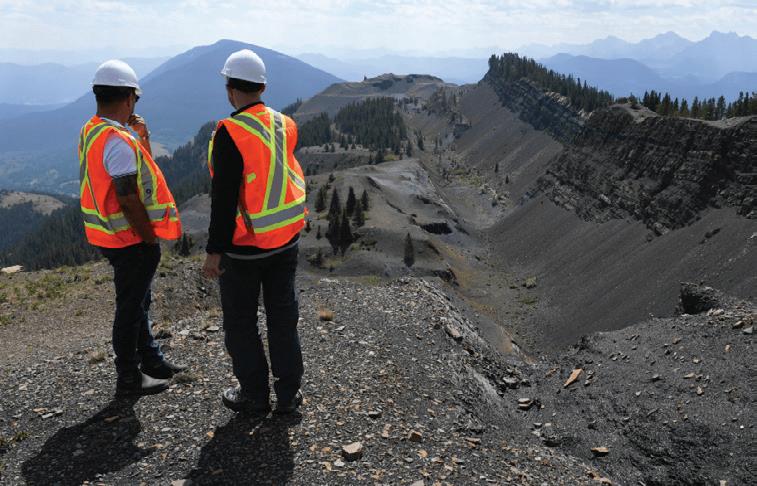
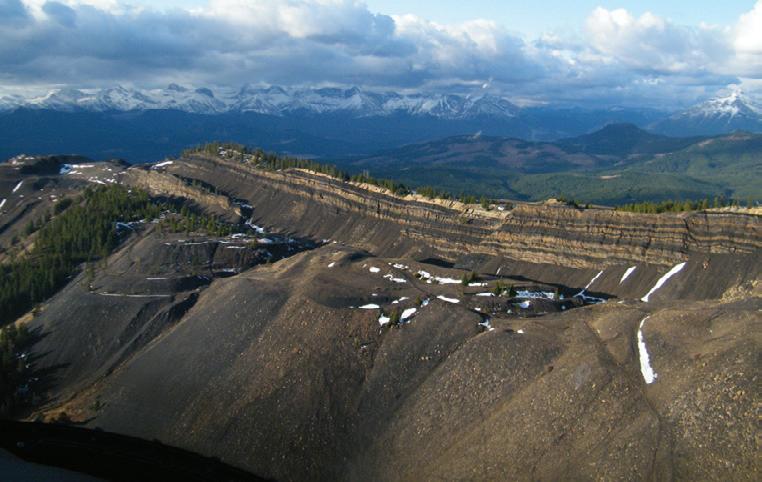
BY BLAIR MCBRIDE
Applications to drill for metallurgical coal in southwestern Alberta are pitting a rural district that depends on ranching against an exploration company backed by Australian mining billionaire Gina Rinehart..
Calgary-based Northback Holdings, a subsidiary of Rinehart’s Hancock Prospecting, submitted applications last year to the Alberta Energy Regulator for permits to drill at its Grassy Mountain project in the Crowsnest Pass region.
In February, the regulator accepted the applications and decided they should be assessed by commissioners in a hearing. The Municipal District of Ranchland moved to appeal that acceptance, but the energy regulator denied the appeal on June 4.
The district is now taking the issue to the Alberta Court of Appeal.
Ranchland is concerned about the environmental impacts of coal exploration on the district, according to a letter sent in April to the provincial regulator by the district’s legal counsel, Calgary-based Carscallen. The firm added that the Alberta Court of Appeal, in a previous exploration application in 2021, confirmed Ranchland would be “directly and adversely affected” by the activities. The Northern Miner has requested further comment from the district.
Support for project
The court action echoes a case in Australia this year where cattle farmers opposed a carbon injection plan at a coal power plant, saying it would contaminate underground water aquifers.
Northback, which in 2022 changed its name from Benga Mining, is requesting in its permits to drill 37 holes on 25 drill pads, with 13 pads on Crown land and 12 on private land.
Hancock Prospecting acquired Benga, previously owned by Australia’s Riversdale Resources, in 2019.
The Grassy Mountain project has drawn the support of First Nations, municipal leaders, local businesses, charities and citizens, with 70 out
“WE ARE VERY PLEASED BY THE HIGH LEVELS OF TANGIBLE SUPPORT FROM ALBERTANS FOR THE DRILLING PROGRAM.”
MIKE YOUNG NORTHBACK HOLDINGS CEO
86 submitted letters endorsing it, Northback said in a May 23 news release.
“We are very pleased by the high levels of tangible support from Albertans for the drilling program,” Northback CEO Mike Young said.
“People recognize the economic benefits that a future mine could bring into the region through jobs and investment.”
The company also cited the cooperation of the Piikani First Nation, whose reserve is 50 km from Grassy Mountain, on environmental management to protect the land, water and wildlife around the project.
Decades of coal
About 30 million tonnes of coal was mined in the Crowsnest Pass by several companies from 1900 to 1968, according to Northback.
Exploration work resumed in the area in the 1970s.
But more recent coal development efforts in the southwestern region have hit snags.
The federal government in 2021 rejected Benga’s application to build an open-pit mine with a 23-year life. In its decision, the government said the project could cause negative impacts on the environment and wildlife. Less than a week later, Benga sought to appeal the decision.
Earlier that year, the Alberta government reinstated its 1976 coal policy that limited development in some areas of the Rockies, but it didn’t affect the Grassy Mountain project.
Though little activity took place with Benga’s exploration bid in 2022, shortly after the Alberta government’s coal policy reinstatement, it deemed Grassy Mountain an “advanced coal project” making it exempt from suspensions under the policy. TNM
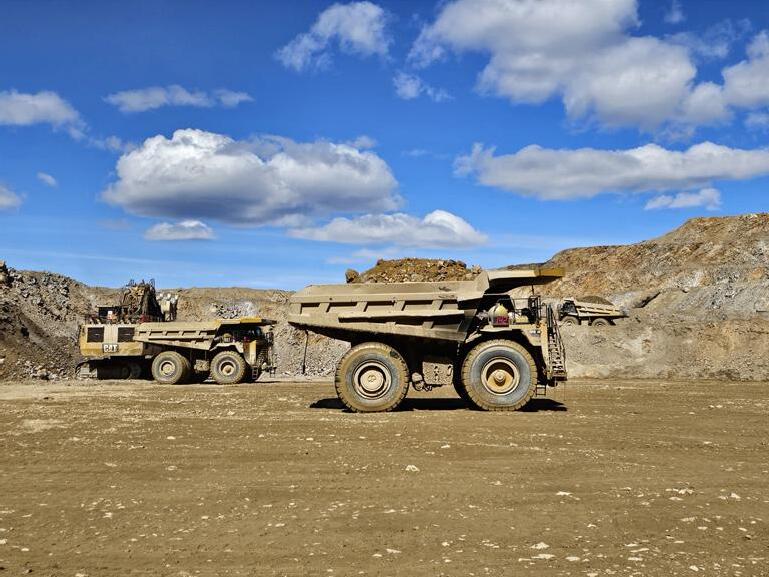
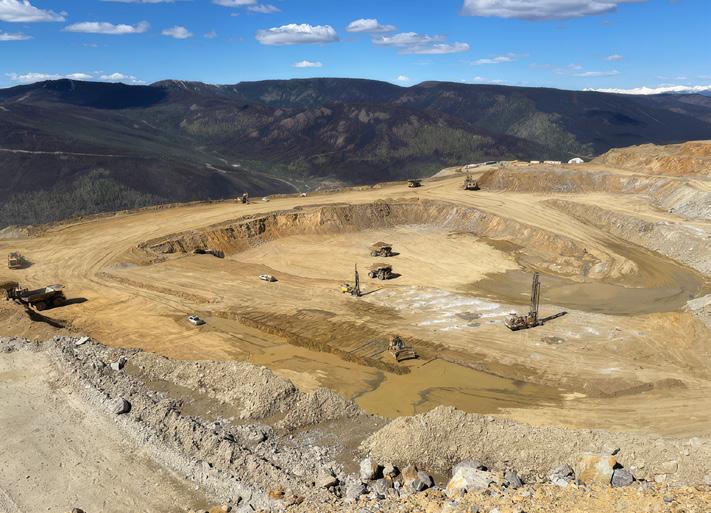
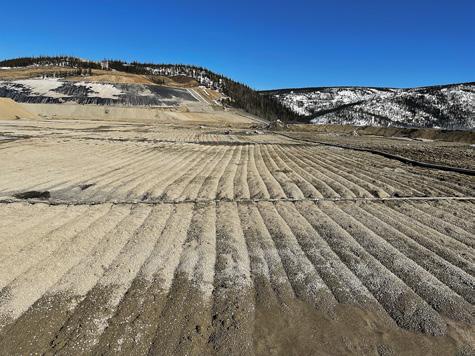
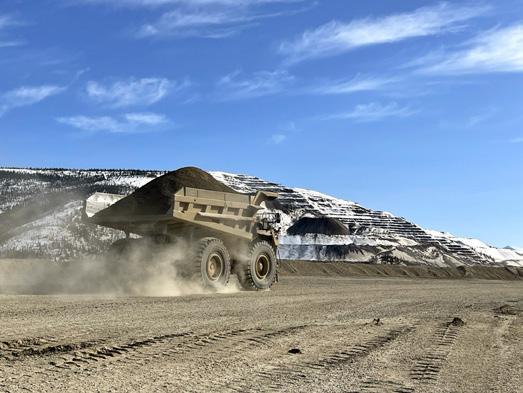
At Northback Holdings’ Grassy Mountain coal project in Alberta. NORTHBACK HOLDINGS
The site of the proposed Grassy Mountain metallurgical coal mine. RIVERSDALE RESOURCES
Red tape is top threat facing BC mining industry: PwC
BRITISH COLUMBIA | Critical minerals mining growing, but coal is still king
BY MINING.COM STAFF
Critical metals are a key economic driver for British Columbia’s mining industry, but government regulation, interest rates and inflation threaten opportunities, accounting firm PwC says in a new report.
“British Columbia is primed to become one of the most reliable and lowest-carbon-emitting suppliers of critical minerals,” PwC said in its B.C. Mine Report 2023.
But the company said the process for mining companies to acquire permits to build and operate mines takes too long.
The B.C. mining industry has been working with the province to get necessary investments and policies in place, and PwC said progress has been made “on multiple fronts.”
Over the past year, the provincial government issued certificates and permits to move several mining projects ahead. It also recently unveiled a critical minerals strategy, which includes the creation of the critical minerals project advancement office to expedite review and approval processes of new mines.
Industry players are still cautious about regulatory and economic forces, however. In PwC’s survey of 14 operating mines and 10 companies with active exploration or development projects, respondents ranked government regulation, cost of capital and inflation as the top three threats they will face over the next year.
“Both the provincial and federal governments appear to understand the imperative. Ottawa has committed to reducing waiting times significantly, and the B.C. government is investing more money to support the permitting process,” PwC noted.
“However, the need to get mines operating can’t be overstated. Around the world, other regions that have significant critical minerals deposits are trying to attract foreign capital to develop their own projects. British Columbia, as well as Ontario and Quebec, must win this global race for capi-
“The need to get mines operating can’t be overstated. Around the world, other regions that have significant critical minerals deposits are trying to attract foreign capital to develop their own projects.”
PWC’S B.C. MINE REPORT 2023
tal, in part by proving they can bring mines and minerals to market in a timely fashion.
There are 17 proposed critical minerals mines in development in B.C. – 10 metal mines, seven metallurgical coal mines and two smelters.
Green energy minerals made up 26% or $3.8 billion of the province’s total mining revenues last year, PwC said. But metallurgical coal still accounts for the bulk of revenues – 61% or $8.9 billion.
Capital spending on mining rose by 24% last year in the province, largely driven by exploration and development of two projects nearing production.
Proposed critical mineral mines are worth $36 billion in near-term investment, 300,000 person-years of employment and $11 billion in tax revenues, according to an independent economic impact analysis conducted for the Mining Association of British Columbia early this year. The long-term economic impact of operating these mines over several decades could be nearly $800 billion, it said. TNM
American Creek gains on $210M sale of Treaty Creek stake
BRITISH COLUMBIA | Private co Cunningham Mining to buy 20% interest
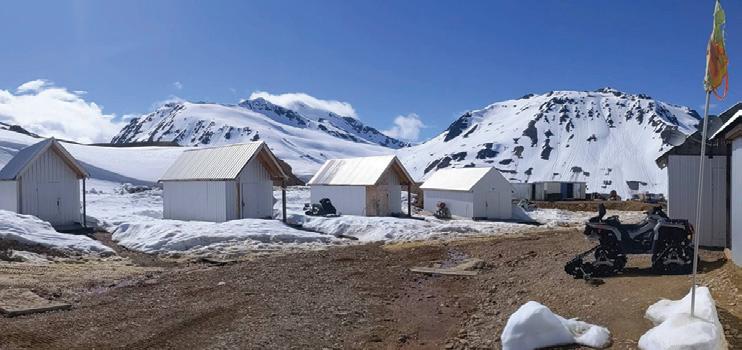
American Creek Resources (TSXV: AMK) shares shot up June 7 on the news it entered into a non-binding letter of intent with private company Cunningham Mining to acquire all of its shares and its 20% stake in the Treaty Creek project for $209.5 million.
American Creek shares closed 54% higher at 18.5¢ apiece on June 7, a new 52-week high, valuing the Alberta-based company at $73.5 million.
Treaty Creek, a gold-copper-silver project in the Golden Triangle region of northwest British Columbia, is a joint venture of three companies. Tudor Gold (TSXV: TUD) holds a 60% interest, with each of American Creek and Teuton Resources (TSXV: TUO) holding 20%.
“We believe this proposed transaction may provide not only a liquidity event for our longstanding shareholders, but also represents an opportunity for shareholders to potentially realize a 250% plus premium to the present market valuation of their equity in the company,” American Creek’s CEO Darren Blaney said in a news release.
Right neighbourhood Treaty Creek, about 250 km northeast of Prince Rupert, is regarded as among the largest gold discoveries in the last 30 years. The project is next to Seabridge Gold’s (TSX: SEA; NYSE: SA) KSM property to the southwest and Newmont’s (TSX: NGT; NYSE: NEM) Brucejack gold mine to the southeast.
Under the deal, Cunningham will acquire all issued and outstanding securities and common shares of American Creek for 43¢ per share, for a premium of about 274% to American Creek’s 11.5¢ closing price on June 5.
The letter of intent is subject to several conditions, including an exclusivity period until Aug. 5. If Cunningham fails to provide American Creek with the $209.5 million before Aug. 5, Cunningham must pay a failure fee of up to $115,000.
Treaty Creek’s Goldstorm deposit hosts 730.2 million indicated tonnes grading 0.92 gram gold per tonne for 21.6 million oz. gold, 0.18% copper, and 5.48 grams silver for 21.6 million oz. gold, 2.8 billion lb. copper and 128.7 million oz. silver.
Inferred resources total 149.6 million tonnes at 1.01 gram gold, 0.15% copper, and 6.02 grams silver for 4.8 million oz. gold, 503.2 million lb. copper, and 28.9 million oz. silver. TNM
Fireweed Metals nets $41.7M in Lundin-backed financing
BY JACKSON CHEN
Fireweed Metals (TSXV: FWZ) has boosted a private placement to $41.7 million to fund this year’s exploration in the Macpass critical minerals district of Yukon.
The share offering, supported by the Lundin family trusts, was originally planned to raise $30 million, the company said.
The proceeds will mainly fund a 14,000-metre drilling and regional exploration program at its Macpass zinc-lead-silver project, Fireweed CEO Peter Hemstead said in a June 7 release.
The company also holds the Mactung tungsten project within its 977-sq.-km land package.
“This funding enables Fireweed to execute this year’s planned program without the need for additional capital,” Hemstead said.
The financing saw the company issue about 12.7 million common shares at $1.10 per share, and 16.1 million flow-through common shares through a charitable donation arrangement, Fireweed said.
Top zinc resource Macpass holds one of the world’s largest undeveloped zinc resources, plus other exploration targets over a 940-sq.-km area.
To date, only the Tom and Jason mineralized zones at the project have resource estimates, totalling 11.2 million indicated tonnes grading 6.59% zinc, 2.48% lead and 21.33 grams silver per tonne, and 39.5 million inferred tonnes at 5.84% zinc, 3.14% lead and 38.15 grams silver. Macpass also hosts mineralization in the Boundary and End zones.
Next to Macpass is Mactung, which hosts a tungsten discovery dating to the 1960s. A 2023
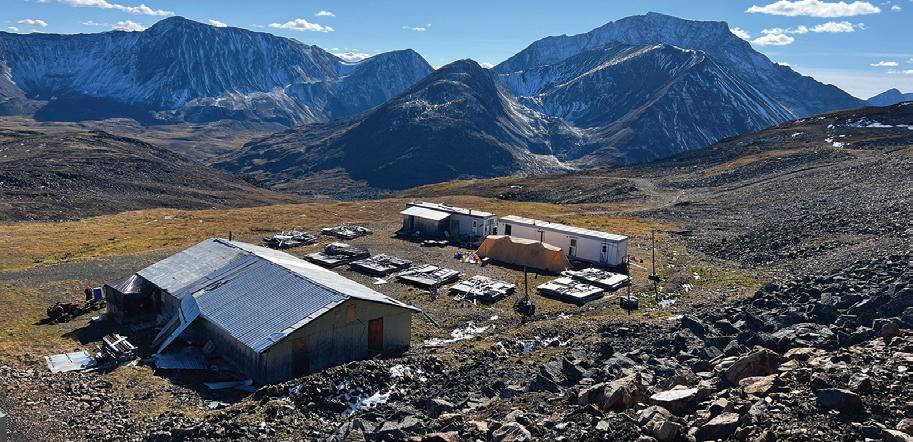
resource estimate established Mactung as the world’s largest highgrade tungsten resource, with 41.5 million indicated tonnes at 0.73%
tungsten trioxide (WO3) and 12.2 million inferred tonnes at 0.59% WO3
Fireweed Metals’ shares
Fireweed Metals’ Mactung tungsten project in eastern Yukon. FIREWEED METALS
The Treaty Creek site in British Columbia’s Golden Triangle region. TUDOR GOLD
BY BLAIR MCBRIDE
NexGen scores high-grade assays east of Arrow in Saskatchewan
URANIUM | Plans 22,000-metre summer drill program at PCE target
BY BLAIR MCBRIDE
NexGen Energy (TSX: NXE; NYSE: NXE; ASX: NXG) has reported high-grade uranium assays east of its main Arrow deposit in northern Saskatchewan that are stronger than the first Arrow discovery hole a decade ago.
The Patterson Corridor East (PCE) discovery hole RK-24-183 cut 13.5 metres grading 0.78% uranium oxide (U3O8) from 347.5 metres depth, including 0.5 metre at 10% U3O8 and another 0.5 metre at 6.23% U3O8, NexGen said in a release on May 29. That compares with 5.7 metres at 0.37% U3O8, including 0.2 metre at 5.77% U3O8 from the RK-14-21 discovery hole in 2014 at Arrow. The project is the largest development stage uranium deposit in Canada.
Hole RK-24-193, located 275 metres southwest along strike of RK-24-183 returned mineralization over 67.5 metres from 383.5 metres depth, including inter-
vals up to 7,500 counts per second (cps) over 1.5 metres, according to gamma spectrometer readings.
“Our team has assessed the geological similarities between RK-24183 and RK-24-193 and the upper areas of Arrow, which indicates the high prospectivity of an additional mineralized system 3.5 km east of Arrow,” CEO Leigh Curyer said.
“The growing potential of this latest discovery will drive the focus of the summer exploration program to determine the potential size and extent of mineralization. Efficient and bold testing of the overall system is the first priority.”
In a May 29 research note, Canaccord Genuity analyst Katie Lachapelle said the continued positive results from NexGen’s exploration point to the prospectivity of its land package and the aptitude of its exploration team.
“With one of the best undeveloped uranium assets globally, we continue to view NexGen as a core holding for those looking for exposure to uranium,” she said.
F3 Uranium hits high-grade U3O8 at JR zone
SASKATCHEWAN | PLN is near NexGen, Fission projects
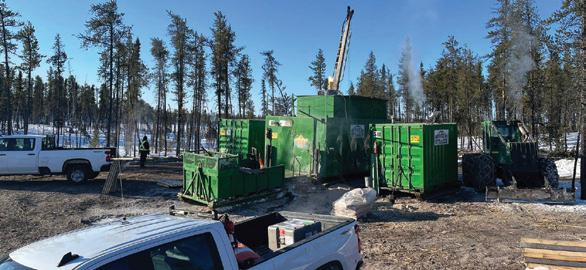
BY CANADIAN MINING JOURNAL STAFF
Drilling at F3 Uranium’s (TSXV: FUU; US-OTC: FUUFF) Patterson Lake North project in Saskatchewan has returned 2 metres of 31.4% uranium oxide (U3O8) from the JR zone.
The high-grade interval, starting at 227 metres depth in hole PLN24-116, was part of a longer 12-metre section averaging 7.6% U3O8. The results, from the company’s winter drill program, lined up with scintillometer results reported in January indicating high radioactivity.
“We are very pleased with the results of the ongoing exploration program, in particular the area around the southern end of A1 where our geological targeting model is improving,” F3 VP exploration Sam Hartmann said. The area between the A1 and B1 shears continues to be rich with the right kind of structures — altered and displaying radioactivity,”
The Patterson Lake North project covers 40.8 sq. km near the southwestern edge of the Athabasca Basin. Its JR Zone is just north of Fission Uranium’s (TSX:
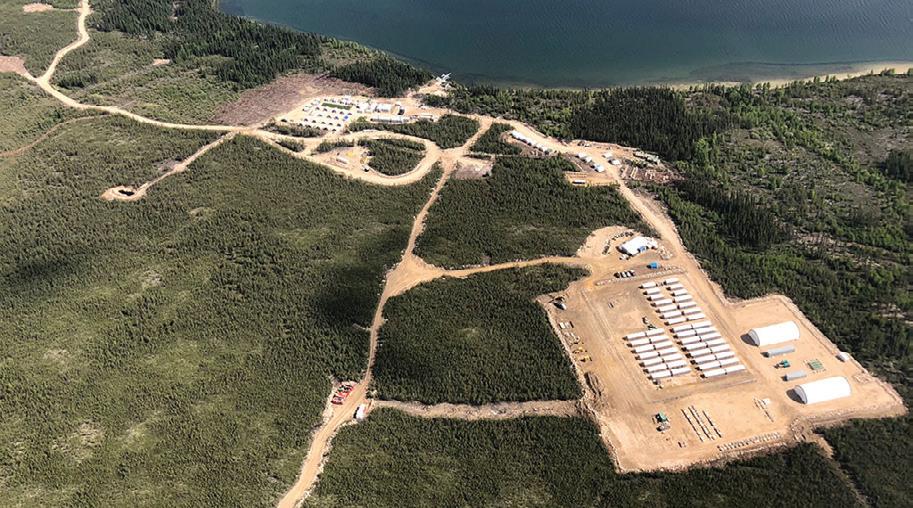
Uranium purchase
The results at PCE came a day after NexGen announced the closure of its 2.7 million lb. purchase of U3O8 from Cayman Island fund manager MMCap International for US$250 million in unsecured convertible debentures. They will be convertible to about 23 million common shares of NexGen, equal to about 4.3% of the company’s issued and outstanding common shares.
The transaction was designed to maximize the value of NexGen’s uranium inventory as it looks ahead to production and sales, Curyer said in a release.
“Further, having access to 2.7 million pounds of uranium at surface in inventory will no doubt
prove to be increasingly strategic given the recent passing of the Prohibiting Russian Uranium Imports Act into U.S. law,” he added. Summer exploration at PCE is to include more than 22,000 metres of diamond drilling, using four rigs. That capacity almost triples the drilling from the winter to summer programs, NexGen said. Targets will mainly be tested between 400 and 700 metres below surface to test potential depth extensions.
The drill results and uranium buy add to the tailwinds the Vancouver-based company has experienced over the past several months, after it secured provincial environmental approval (EA) last November for its Rook I mine at Arrow, in the south-

FCU) high-grade Triple R zone and NexGen Energy’s (TSX: NXE) Arrow development projects.
The JR zone is located at the northern end of the A1 shear. Of the 15 holes F3 reported from the A1 and B1 shear zones, most returned insignificant mineralization.
Summer drill program
This summer, the company plans to drill 30 holes in prospective target areas south of the JR zone. F3 has one diamond drill focused on the area between the southern end of the A1 shear and the B1 shear. This is an area of complexity marked by the cross-cutting Harrison fault, the company said in a release. Of particular interest is hole PLN24-152, which returned high radioactivity, the best being 760 counts per second (cps).
A second diamond drill testing the A1 shear used short holes to infill along strike. It is intercepting intermittent weak radioactivity.
Winter drill results from 14 holes (six from the B1 zone) remain pending.
F3 shares traded for 36¢ apiece at press time, valuing the company at $168.6 million. Its shares traded in a 52-week range of 31¢ and 54¢. TNM
western Athabasca Basin. NexGen is awaiting responses from the federal government on its EA for Rook. NexGen released a feasibility study for Rook I in 2021 that outlined an 11-year operation that would produce 21.7 million lb. of uranium oxide annually and cost US$1.3 billion to build.
Arrow hosts measured and indicated resources of 3.8 million tonnes grading 3.1% U3O8 containing 256.7 million lb. U3O8, and 4.4 million inferred tonnes at 0.83% U3O8 containing 80.7 million lb. U3O8 Nexgen shares traded at $9.69 apiece at press time, valuing the company at $5.2 billion. Its shares traded in a 52-week range of $5.84 and $12.14. TNM
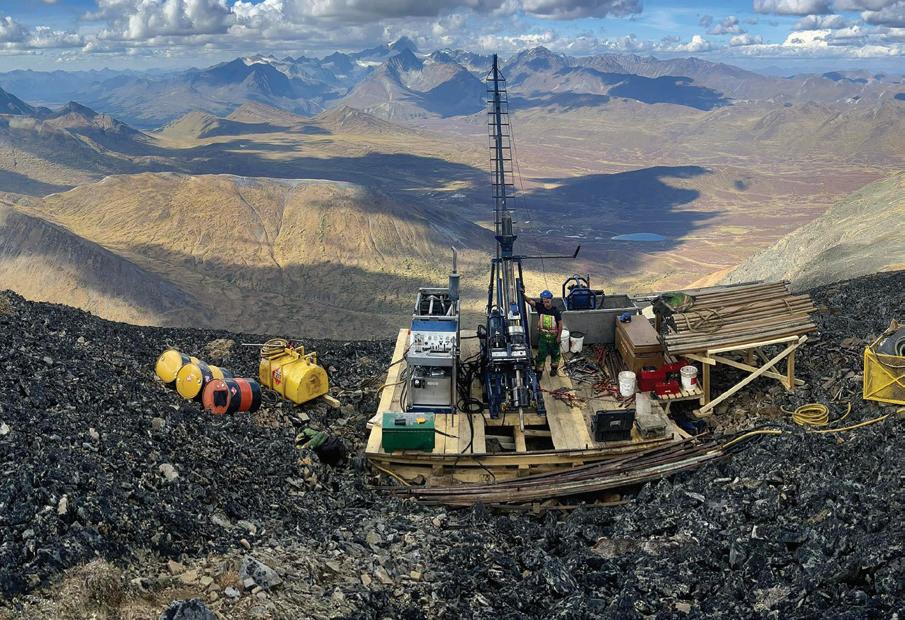
The field crew has mobilized for the 2024 exploration program, plans include:
• HIT Property: Significant drill program planned to vector towards the heart of the RIRGS target discovered 2023
• Peak Discovery: Maiden diamond drill program planned to test the high-grade gold-bearing sheeted vein system identified in fall of 2023
• Black and Flat: Initial mapping and prospecting planned for 2024 to determine the source of gold mineralization previously discovered.
• Ongoing district consolidation following regional stream sediment program
NexGen Energy’s Rook 1 project in northern Saskatchewan. NEXGEN ENERGY
A drill rig at F3 Uranium’s Patterson Lake North project. F3 URANIUM
SNAPSHOT: Eight companies advancing projects in BC, the Prairies and the Far North
BY NORTHERN MINER STAFF
Canada is one of the best-endowed countries on Earth when it comes to minerals and has the skilled workforce needed to extract them. Here’s a look at eight companies active across British Columbia, the Prairie provinces and the Far North looking for precious, base and energy metals.
n Ascot Resources
In April, Ascot Resources (TSX: AOT; US-OTC: AOTVF) poured first gold as part of the commissioning process at its Premier gold project in the Golden Triangle of northwestern British Columbia.
The first gold pour from the project, 25 km north of the town of Stewart on Nisga’a Nation treaty lands, was from gold recovered through the gravity circuit. Commissioning of the carbon-in-leach (CIL) circuit is underway. The company expects commercial production to begin before the end of the third quarter.
The most recent estimate in May pegged capital costs at $339 million, up from less than $150 million forecast in a 2020 feasibility study.
The project consists of four underground operations (Silver Coin, Big Missouri, Premier and Red Mountain) feeding a centralized 2,500-tonne-per-day processing facility. The project is expected to produce a total of about 1.1 million oz. gold and 3 million oz. silver over eight years. Mining will start from the Silver Coin and Big Missouri deposits, followed by the Red Mountain deposit in year three and then the Premier deposit.
Access for production will be through new and existing adits (side hill portal access). Mining methods will include low-cost long hole stoping for most of the mineralized material, with limited use of inclined undercut long hole, room and pillar, and cut-and-fill mining methods in select shallow or flat lying slopes. The company closed a US$50-million financing from Sprott Resource Streaming and Royalty and its affiliates and Nebari Natural Resources Credit Fund II LP on Feb. 20.
Ascot Resources has a market cap of approximately $481 million.
n Banyan Gold
Banyan Gold (TSXV: BYN; USOTC: BYAGF) is focused on two advanced gold projects in the Yukon: AurMac and Hyland.
The AurMac gold project, formerly known as the AurexMcQuesten project, consists of two near/on-surface deposits (Powerline and Airstrip) in the Mayo Mining District, about 56 km northeast of the village of Mayo and 356 km north of Whitehorse.
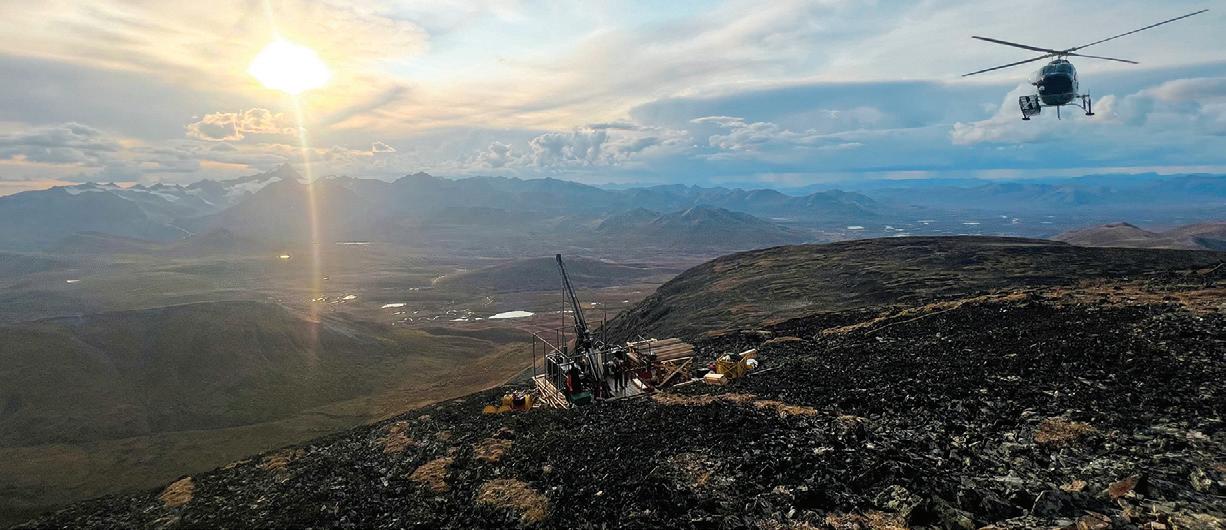
In February, the company updated the project’s resource. It now hosts pit-constrained inferred resources of 7 million oz. gold in 347.5 million tonnes grading 0.63 gram gold per tonne. The estimate used a cut-off grade of 0.3 gram gold and the majority of the gold (6.2 million oz.) is contained within the Powerline deposit.
Banyan plans to drill 5,000 metres at AurMac this summer, using two drill rigs. The campaign began on June 3.
Metallurgical studies have demonstrated that the mineralization at Powerline is amenable to conventional mining processes including carbon-in-pulp (CIP), carbon-in-leach (CIL) and heap leaching.
The 173-sq.-km project sits 30 km from Victoria Gold’s (TSX: VGCX) Eagle project and next to Hecla Mining’s (NYSE: HL) Keno Hill silver mine. Banyan has the right to earn up to a 100% interest in both the Aurex and McQuesten properties, subject to certain royalties.
Banyan’s 100%-owned Hyland project, 70 km northeast of Watson Lake, lies along the southeast end of the Tintina Gold Belt.
Hyland hosts 8.6 million indicated tonnes grading 0.78 gram gold and 7.04 grams silver (0.85 gram gold equivalent per tonne) for 236,000 gold equivalent oz. and another 10.8 million inferred tonnes grading 0.77 gram gold and 5.32 grams silver (0.83 gram gold equivalent) for 288,000 gold equivalent ounces. The resource used a cut-off grade of 0.3 gram gold equivalent.
Banyan Gold has a market cap of about $89 million.
Callinex Mines
n
Callinex Mines’ (TSX: CNX; USOTC: CLLXF) flagship project is Pine Bay in Manitoba, about 16 km from HudBay Minerals’ (TSX: HBM; NYSE: HBM) Flin Flon processing facilities.
The company has completed more than 10,000 metres of drilling since 2014 and the 120-sq.-km property contains numerous stacked horizons hosting seven deposits, including Pine Bay, Rainbow, Alchemist, Cabin and Baker Patton.
Highlights from Rainbow include 37 metres of 6% copper, including 1 metre of 18.81% cop-
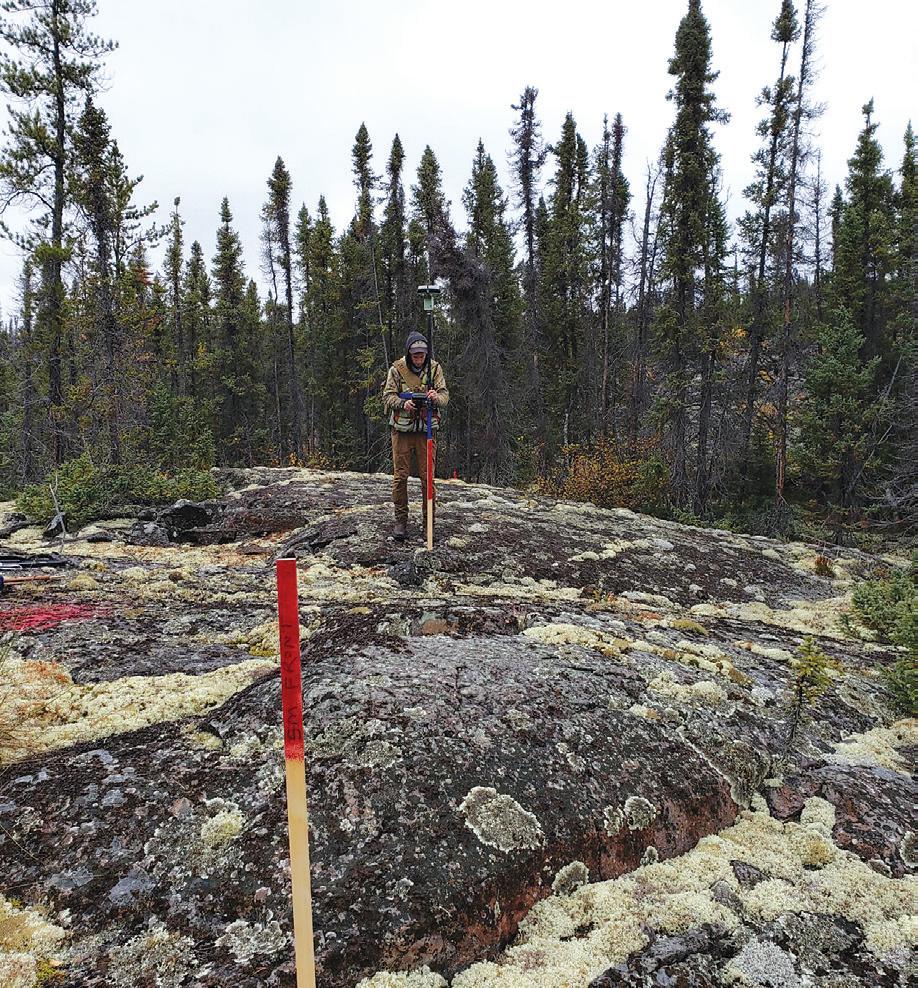
per in hole PBM-138; 67 metres of 2.73% copper including 13 metres of 8.75% copper in hole PBM129-W2; and 4.9 metres of 14.94% copper including 2.8 metres of 21% copper in PBM-129-W1. All three highlight holes were drilled in 2021. Rainbow hosts indicated resources of 3.4 million tonnes grading 3.14% copper, 0.34 gram gold per tonne, 0.75% zinc, 6.26 grams silver and 0.03% lead (3.59% copper equivalent). Inferred resources come to 1.3 million tonnes grading 2.55% copper, 0.27 gram gold, 0.69% zinc, 5.39 grams silver, and 0.03% lead (2.95% copper equivalent). The resource used a 1.3%
copper-equivalent cut-off grade. Using the same cut-off grade, the Pine Bay deposit hosts 1 million inferred tonnes grading 2.62% copper for 58.1 million lb. contained copper. On May 28, the company announced it received a $250,000 grant from the Manitoba Mineral Development Fund to advance the Pine Bay project. The funds will be used to pay for long lead items to support permitting and future mine development. Since 2020, Callinex has received more than $1 million in grants from the provincial fund to advance copper discoveries at the project.
In New Brunswick, Callinex is exploring the Nash Creek project, about 25 km from the Brunswick Smelter. A 2018 preliminary economic assessment outlined a 10-year, 3,900 tonne-per-day open pit mining operation that would produce 77 million lb. of zinc, 15 million lb. of lead, and 437,000 oz. of silver annually. The capex was pegged at $168 million.
Nash Creek contains indicated resources of 963 million lb. zinc-equivalent within 13.6 million tonnes grading 3.2% zinc-equivalent (2.7% zinc, 0.6% lead and 17.8 grams silver per tonne). Inferred resources total 5.9 million tonnes
A helicopter lands at Rackla Metals’ Tombstone Gold project in the Yukon. RACKLA METALS
Conducting surveying activites near Fortune Minerals’ NICO project in the Northwest Territories. FORTUNE MINERALS
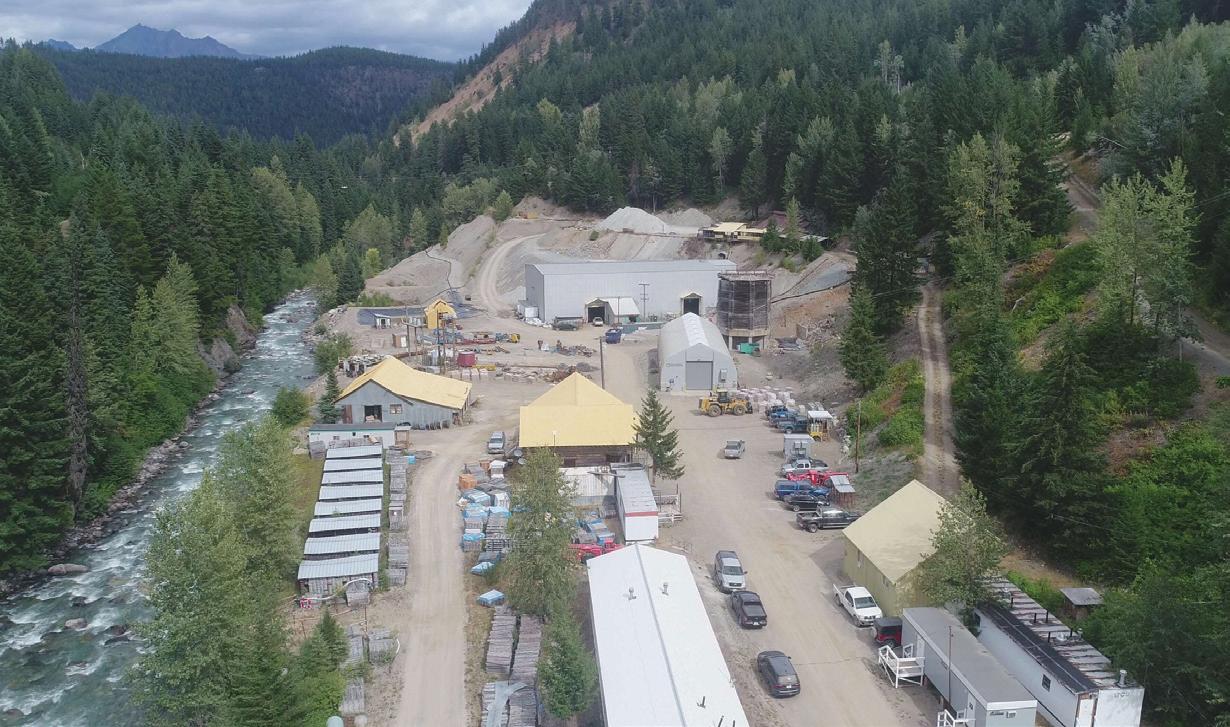
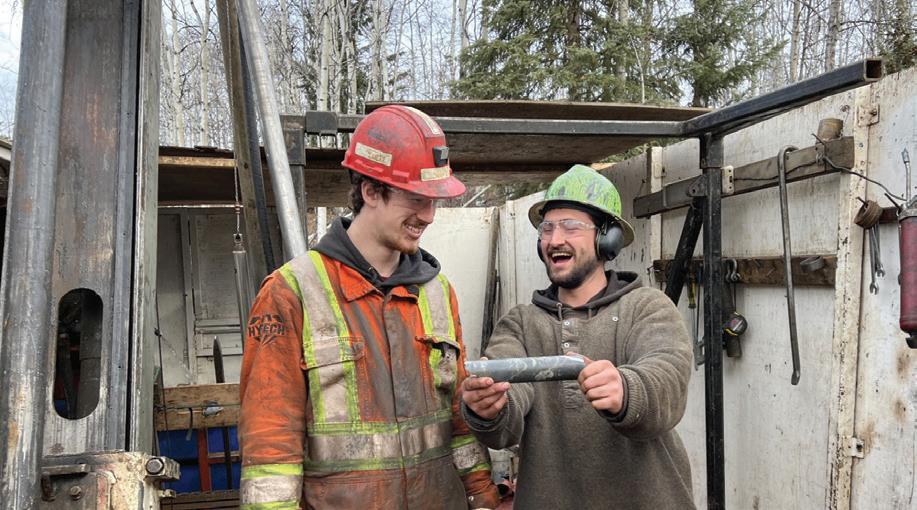
grading 3.1% zinc-equivalent (2.7% zinc, 0.5% lead and 14 grams silver) for 407 million lb. zinc-equivalent.
In Newfoundland, the company also holds the Pt. Leamington volcanogenic massive sulphide project.
Callinex Mines has a market cap of roughly $28 million.
n EMP Metals
Lithium explorer EMP Metals (CSE: EMPS; US-OTC: EMPPF) holds 793 sq. km of subsurface dispositions and well bores in Saskatchewan in a 75%-25% partnership with ROK Resources (TSXV: ROK; US-OTC: ROKRF), an oil and gas company.
In January, EMP reported results from a preliminary economic assessment (PEA) of the Viewfield lithium brine project. The PEA encompasses about 110 sq. km on the Duperow formation, near Stoughton, in southeastern Saskatchewan.
The study outlined a direct lithium extraction (DLE) project life of 23 years producing a total of 282,090 tonnes of lithium carbonate equivalent (LCE) for an average rate of 12,175 tonnes LCE per year. With average all-in operating costs of US$40 million per tonne LCE a year, the project’s US$571-million capital cost could be paid back in 2.4 years, after taxes.
The project has a post-tax net present value (at an 8% discount rate) of US$1.1 billion and an internal rate of return of 45%. The PEA was based on a constant price of US$20,000 per tonne LCE.
Using a hub and spoke model, the study envisioned five DLE sites and two sites for concentration, refining and conversion (CRC) that would process an average of 62,000 cubic metres of brine per day. The DLE facilities would first concentrate the product into a lithium chloride solution that would be pumped to the CRC locations and refined into battery-grade LCE.
At the end of last year, EMP and its subsidiary, Hub City Lithium Corp., completed a large-scale pilot that processed 87,000 litres of brine from Viewfield. Under the pilot, 8,300 litres of concentrated eluent with an average lithium concentration of 1,430 mg per litre were recovered. Average lithium recoveries were greater than 90%, with an impurity rejection rate of 99.62%.
In April, EMP announced it had begun commissioning a DLE field pilot facility in Estevan, Sask. The facility is the first Koch Technology Solutions DLE pilot skid to be commissioned and operated in Canada.
EMP Metals has a market cap of roughly $35 million.
n Fortune Minerals
Fortune Minerals (TSX: FT) has spent about $137 million to advance its NICO cobalt-gold-bismuth copper deposit from discovery in 1996 to development. It plans to update the project’s 2014 feasibility study this year. NICO, which lies about 160 km north of Yellowknife, already has environmental assessment approval as well
as major mine permits in hand. Fortune envisions an open pit and underground mine and concentrator in the Northwest Territories and a related hydrometallurgical refinery in Alberta. That facility would process concentrates from NICO and other materials to produce cobalt sulphate, gold doré, bismuth ingots and copper.
In May, Fortune received funding from both the Canadian government and the United States Department of Defense (DoD) to advance NICO. The federal government will provide up to $7.5 million to support 75% of the cost of additional engineering and test work, through its Global Partnerships Initiative, while the U.S. DoD has awarded a US$6.4-million grant under the Defense Production Act to expand the domestic capacity and production of cobalt for battery and high strength alloy supply chains. Fortune says the funds will allow it to advance NICO to a construction decision.
Last year, the company announced a collaboration with Rio Tinto (ASX: RIO; NYSE: RIO; LSE: RIO) to assess the feasibility of blending intermediate products produced from Kennecott smelter wastes in Utah with process streams from NICO to augment cobalt and bismuth production.
The iron-oxide-copper gold deposit has combined underground and open-pit proven and probable mineral reserves of about 33 million tonnes grading 1.03 grams gold, 0.11% cobalt, 0.14% bismuth and
silver and 0.07 gram gold.
Fortune Minerals has a market cap of about $43 million.
n Quartz Mountain Resources
In April, Quartz Mountain Resources (TSXV: QZM; US-OTC: QZMRF) announced a new discovery at its Maestro gold-silver-copper-molybdenum project, 50 km south of Smithers, B.C.
Drill results at the Prodigy epithermal target returned 102 metres grading 2.22 grams gold and 104 grams silver (3.49 grams gold-equivalent) starting from 537 metres downhole in hole PR-23-02. The interval included 12 metres of 1.23 grams gold and 586 grams silver (8.01 grams gold-equivalent) and 36 metres of 5.73 grams gold and 87 grams silver (6.69 grams gold-equivalent).
0.04% copper for contained metal of 1.1 million oz. gold, 82.3 million lb. cobalt, 102.1 million lb. bismuth and 27.2 million lb. copper. Fortune’s nearby Sue-Dianne copper-silver-gold deposit, about 24 km from NICO, could provide a potential source of incremental mill feed to extend the life of the NICO concentrator. The IOCG deposit has 8.4 million indicated tonnes grading 0.8% copper, 3.2 grams silver per tonne and 0.07 gram gold. Inferred resources add 1.6 million tonnes of 0.79% copper, 2.4 grams
The company says the results represent the discovery of a substantial gold-silver system at the 23.1-sq.-km Maestro project, and could be related to the Lone Pine molybdenum-copper porphyry deposit about 1 km south of Prodigy. Previous owners of Lone Pine drilled about 24,300 metres in 49 holes. The deposit hosts historic resources of 110 million measured and indicated tonnes grading 0.083% molybdenum and 25.8 million inferred tonnes grading 0.09% molybdenum at a 0.04% molybdenum cut-off grade.
Exploration at Maestro dates to 1914 and was mainly focused on base metal porphyry mineralization, Quartz Mountain says, but the potential for precious metals in the surrounding area was largely unexplored.
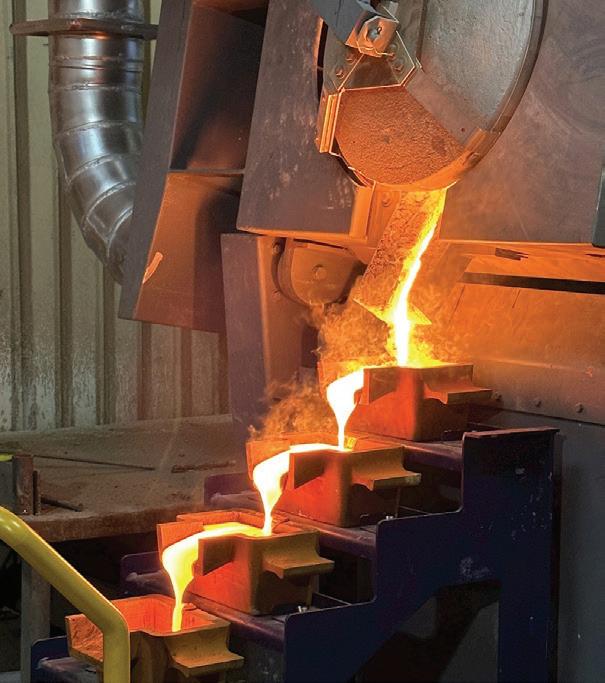
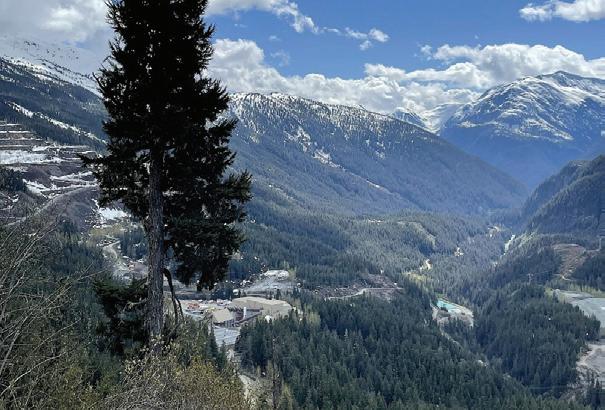
Snapshot on P36 >
Talisker Resources’ Bralorne site in British Columbia. TALISKER RESOURCES
From top: Ascot Resources’ first gold pour at the Premier mine in B.C. Above: Ascot’s Premier property. ASCOT RESOURCES
Apex Diamond drillers from Smithers, B.C., at the Prodigy discovery hole, part of Quartz Mountain Resources’ Maestro property. QUARTZ MOUNTAIN RESOURCES
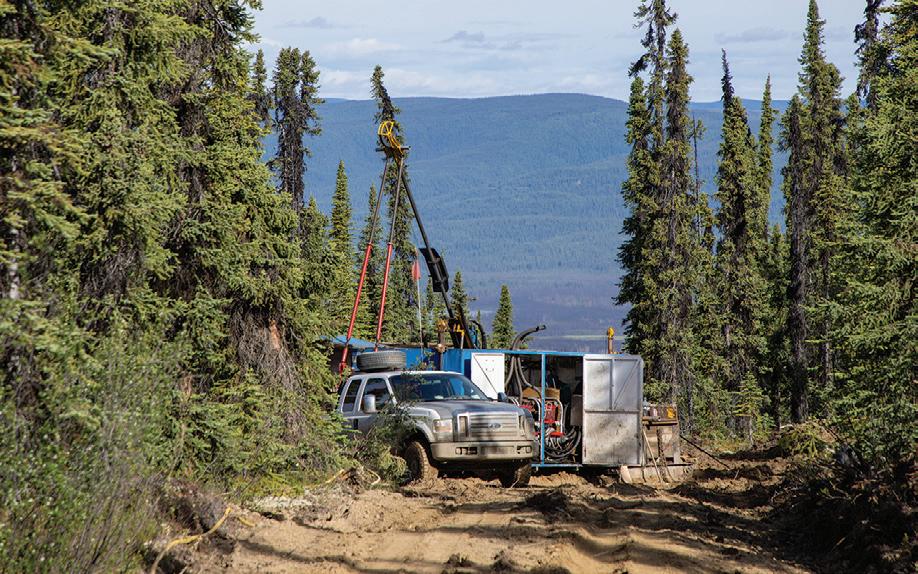
The company’s second project in British Columbia is the Jake porphyry copper-gold-silver project, 160 km north of Smithers.
Mineralization at Jake is contained within a prominent gossan measuring 3.5 km long by 1.5 km wide over an elevation of more than 800 metres. The target area contains a swarm of Babine age monzonite dykes intruding sedimentary rocks that host areas of alteration and mineralization. The company plans to drill the project this year.
An IP survey in 2022 indicated the presence of an extensive sulphide mineral system underlying an area of highly anomalous copper, gold, silver and molybdenum values in soils.
Quartz Mountain Resources is associated with the Hunter Dickinson group and has a market cap of about $26.4 million.
n Rackla Metals
Rackla Metals (TSXV: RAK) has projects in the eastern Yukon and western Northwest Territories and
is focused on exploring the eastern Tombstone Gold Belt for reduced intrusion-related gold system (RIRGS) deposits.
Exploration last year at the company’s Astro Plutonic Complex, which consists of the Keele Pluton, the Kelvin Stock, the Canol Trail Stock, and the Border Pluton targets, resulted in the HIT discovery at Canol Trail Stock, and the Peak and Cirque discoveries at Kelvin Stock.
Rackla began its 2024 field season in June with drilling planned at HIT, and an initial drill program at Peak. The company also plans to advance the Cirque target to a drillready stage and explore its other projects in the belt.
Rackla’s work at the Astro Plutonic Complex, which lies within the eastern Selwyn Basin and western Misty Creek Embankment, has included an airborne geophysical survey, stream sediment, soil (talus-fine) and rock sampling, prospecting and mapping.
In 2023, the company collected 314 talus-fine samples in the southeastern portion of the Kelvin Stock and defined two anomalous areas:
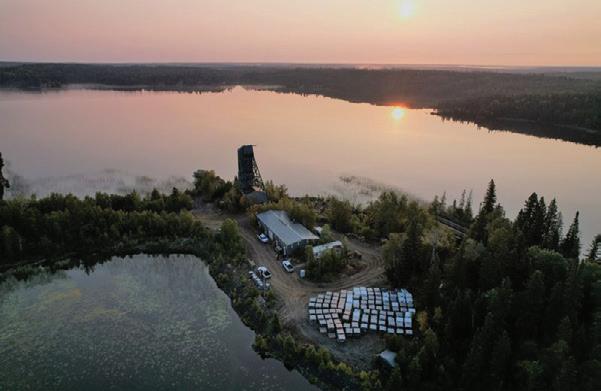
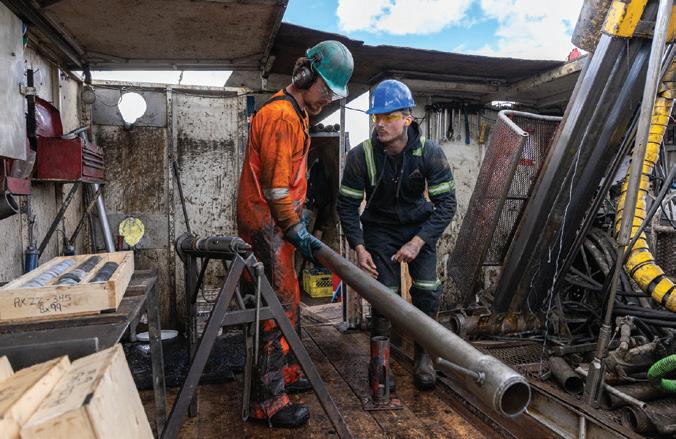
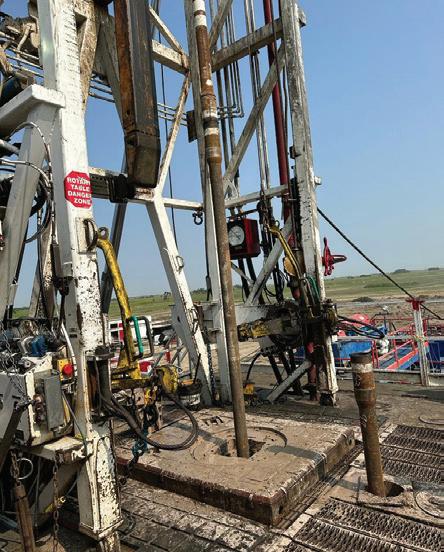
Peak and Cirque. The Peak anomaly measures 1.5 km by 1 km and has coincident gold, arsenic and bismuth values. About 20% of rock samples (49 out of 237 samples) returned greater than 1 gram gold with the highest value grading 17.8 grams gold. The gold mineralization occurs primarily in sheeted quartz-arsenopyrite-bismuth veins that occur in the sedimentary rocks along the eastern margin of the Kelvin Stock.
The Cirque target also has coincident gold, arsenic and bismuth values. The company plans a sur-
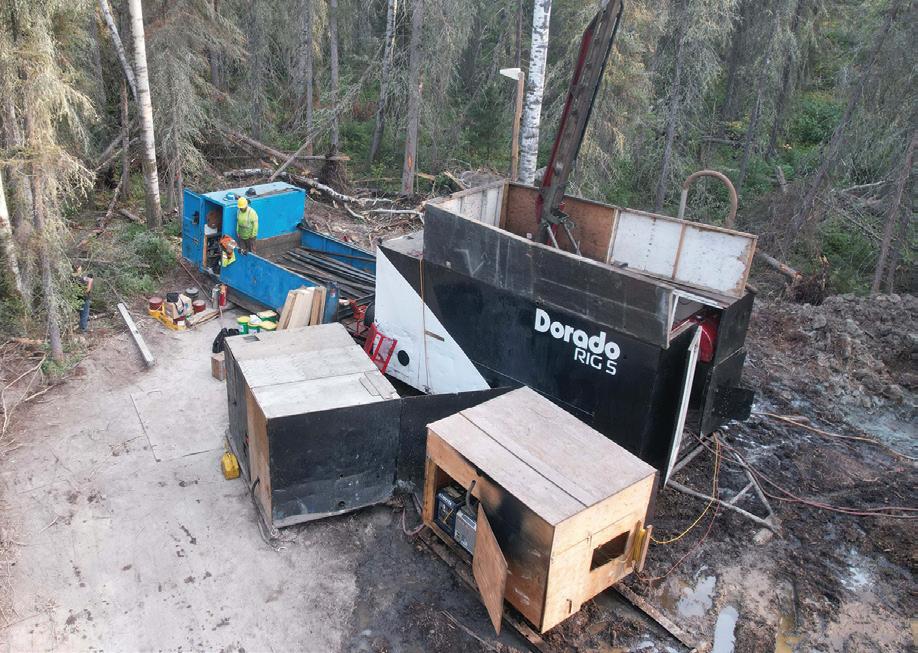
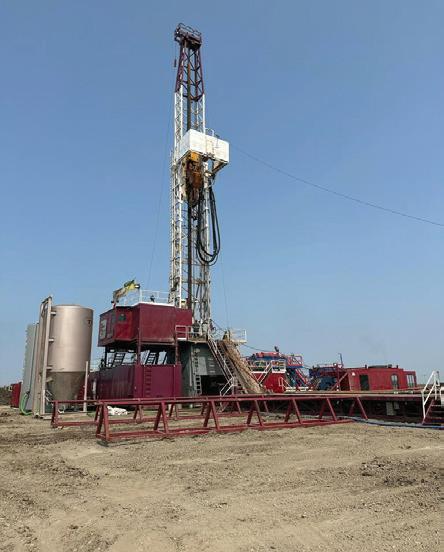
face program and then drill testing later in the 2024 season.
Last year, the company drilled 1,000 metres in five holes at Canol Trail Stock’s HIT target, about 10 km north of Kelvin Stock. Hole HIT-003 cut 16.5 metres of 0.67 gram gold and hole HIT-004 cut 45.5 metres of 0.52 gram gold.
The company has several other projects across the Yukon and Northwest Territories including the intrusion-hosted gold targets Black, Fan, Jos and Rak Main; and Gossan, a porphyry copper-gold project.
Rackla Metals has a market cap of about $11.8 million.
n Talisker Resources
Talisker Resources (TSX: TSK; US-OTC: TSKFF) is focused on reviving the past-producing Bralorne gold project in British Columbia.
Three historic mines at Bralorne — Bralorne, Pioneer and King — produced a total of 4.2 million oz. gold at an average recovered grade of 17.7 grams gold per tonne. Production ended in 1971 due to low gold prices. Of the 63 veins identified, 30 were mined, 29 of them to a maximum depth of 900 metres. One vein, the 77T, was mined continually to 1.9 km, and all the veins remain open at depth.
This year Talisker has signed ore purchase and processing agreements with New Gold (TSX: NGD) to treat 350,000 tonnes of material at its New Afton mill. It also signed a deal to process 6,300 tonnes of stockpile at Nicola Mining’s (TSXV: NIM; US-OTC: HUSIF) Craigmont mill. The company has not released an economic study for the project, but it plans to start test mining this year using long-hole stoping.
Talisker outlined an indicated resource at Bralorne last year to-
talling 117,000 tonnes grading 8.9 grams gold for 33,000 oz. contained gold. It hosts 8 million tonnes grading 6.3 grams gold for 1.6 million gold ounces in the inferred category. The resource was defined along a strike length of 4.5 km and to a depth of 700 metres, and it remains open along strike and at depth.
Highlights from its recent resource conversion drill program include 56.88 grams gold over 1 metre in drillhole SB-2024-018 and 11.74 grams gold over 2.1 metres within a broader intercept of 3.31 grams gold over 11 metres in the BK-9870 Vein. Hole SB-2024-007 intersected 8.81 grams gold over 4.1 metres within a broader 17.7metre interval of 3.34 grams gold in the BK-9870 Vein.
In addition to Bralorne, Talisker owns the Ladner gold project with exploration potential from an historic mine, and the Spences Bridge greenfields project, where the company holds about 85% of the emerging Spences Bridge Gold Belt, and other early stage greenfields projects. The 144-sq.-km Ladner gold project, 150 km east of Vancouver and 18 km from the town of Hope, contains five historic mines and 24 known gold occurrences. Of 175 rock samples taken last year, 137 samples (78.3%) were anomalous for gold; 88 samples (50.3%) yielded above 0.1 gram gold; 40 samples (22.8%) yielded above 0.5 gram gold and 24 samples (13.7%) returned more than 1.50 grams gold.
At the 2,030-sq.-km Spences project, a geochemical program has identified more than 100 anomalies. Over 9,000 soil samples have been collected validating five prospects as drill ready targets.
Talisker Resources has a market cap of around $45 million. TNM
> Snapshot from P35
Above and left: Drilling at Banyan Gold’s AurMac project in the Yukon. BANYAN GOLD
Left: Callinex Mines’ Pine Bay project in Manitoba. Below: A drill rig at Pine Bay. CALLINEX MINES
Below: A shaft at EMP Metals’ Viewfield lithium brine project in Saskatchewan. Below right: A drill rig at the Viewfield project. EMP METALS



& A
Mining some tales with… Eric Desaulniers
QUESTIONS BY COLIN MCCLELLAND
Every month, The Northern Miner gets to know a different executive in the mining industry by asking them about everything — except mining.
This month, we feature Eric Desaulniers, founder, president and CEO of Nouveau Monde Graphite.
Q What was your first job?
A If I exclude that I grew up on a dairy farm with all the associated fun and infinite work, my first "paid" job was at the Pépinière Brown in St-Jean-surRichelieu growing and selling plants, trees and flowers.
Q If you weren’t in mining, where would you be?
A Architecture, I love beautiful buildings and cities.
Q What is the most used app on your phone?
A Sadly, Stockwatch.
Q What’s your favourite reading?
A Alexandre Dumas’ Comte de Monte Cristo and The Three Musketeers saga.
Q What do you drive?
A Tesla x2
Q Favourite band?
A U2, Coldplay.
ERIC DESAULNIERS
FOUNDER, PRESIDENT & CEO, NOUVEAU MONDE GRAPHITE MONTREAL, QUE.
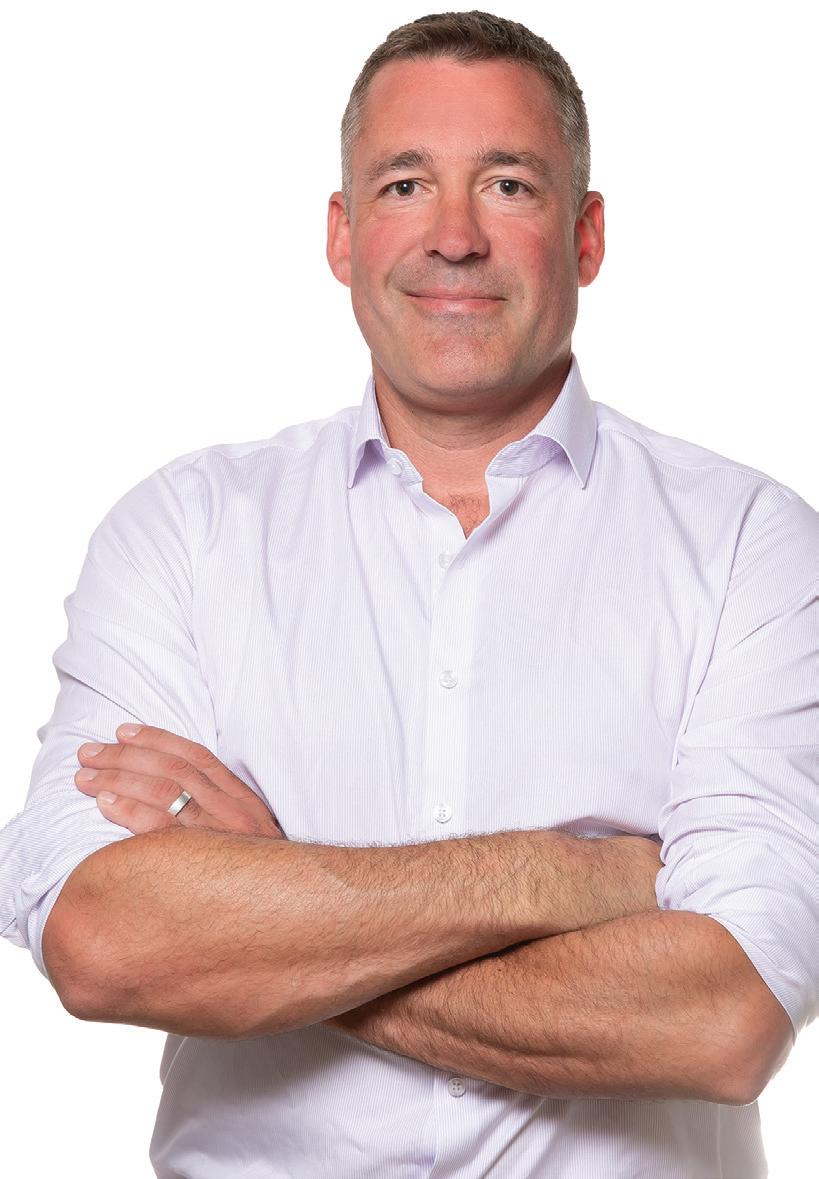
Q Marvel or Scorcese?
A Scorcese.
Q Window or aisle seat?
A Aisle seat when sleep isn't needed. Window when I need to sleep.
Q Favourite sports team?
A Stade Toulousain (Rugby).
Q What are you really into these days?
A Preparing my family trip to Argentina.
Q What are you avoiding?
A Stressful situations and people.
Q What’s your biggest fear?
A My kids’ well-being being compromised.
Q Who is your mentor, guide or guru?
A André Gaumont and Jacques Bonneau gave me the drive and guidance to be a mining entrepreneur.
Q What have you learned along the way?
A ‘Keep it simple stupid’ — while understanding what's wrong in the establishment and how to fix it.
Q What’s your next task?
A Growing exponentially this essential graphite anode business until the Western world has enough to transition to sustainable energy. Then I'd like to go back to school to do a PhD in something meaningful. TNM





ROSS BEATY Chairman EQUINOX GOLD CORP.
RICK RULE Founder RULE INVESTMENT MEDIA LONDON, UK DEC 1-2, 2024 FIND
MICHAEL STEINMANN DIRECTOR, PRESIDENT & CHIEF EXECUTIVE OFFICER PAN AMERICA SILVER