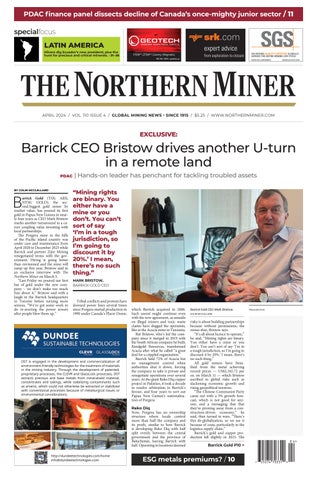
EXCLUSIVE:
Barrick CEO Bristow drives another U-turn in a remote land
Hands-on leader has penchant for tackling troubled assets
BY COLIN MCCLELLAND
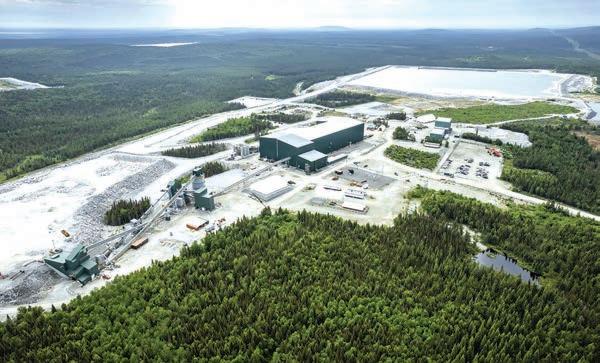
Barrick Gold (TSX: ABX; NYSE: GOLD), the second-biggest gold miner by market value, has poured its rst gold in Papua New Guinea in nearly four years as CEO Mark Bristow marks another turnaround in a career coupling value investing with local partnerships.
e Porgera mine in the hills of the Paci c island country was under care and maintenance from April 2020 to December 2023 while Barrick and partner Zijin Mining renegotiated terms with the government. Hiring is going better than envisioned and the mine will ramp up this year, Bristow said in an exclusive interview with e Northern Miner on March 5.
“Last Friday we poured our rst bar of gold under the new company – we don’t make too much fuss about it,” Bristow said with a laugh in the Barrick headquarters in Toronto before turning more serious. “We’ve got some work to do re-erecting the power towers a er people blew them up.”
“Mining rights are binary. You either have a mine or you don’t. You can’t sort of say ‘I’m in a tough jurisdiction, so I’m going to discount it by 20%.’ I mean, there’s no such thing.”
MARK BRISTOW, BARRICK GOLD CEO
Tribal con icts and protests have downed power lines several times since Porgera started production in 1990 under Canada’s Placer Dome, which Barrick acquired in 2006. Such unrest might continue even with the new agreement, as assaults on illegal miners and toxic waste claims have dogged the operation, like at the Acacia mine in Tanzania.


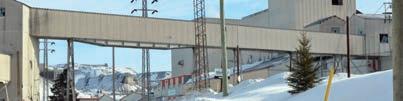
risky is about building partnerships because without permissions, the mines shut, Bristow says.
But Bristow, who’s led the company since it merged in 2019 with the South African company he built, Randgold Resources, transformed Acacia a er what he called “a great deal for a crippled organization.”
Barrick held 72% of Acacia but no management control when authorities shut it down, forcing the company to take it private and renegotiate operations over several years. At the giant Reko Diq copper project in Pakistan, it took a decade to resolve arbitration in Barrick’s favour, and four years to sort out Papua New Guinea’s nationalization of Porgera.
Reko Diq
Now, Porgera has an ownership structure where locals control more than half the company and its pro t, similar to how Barrick is developing Reko Diq with half split evenly between the central government and the province of Baluchistan, leaving Barrick with half. Operating in locations deemed
“It’s all about licence to operate,” he said. “Mining rights are binary. You either have a mine or you don’t. You can’t sort of say ‘I’m in a tough jurisdiction, so I’m going to discount it by 20%.’ I mean, there’s no such thing.”
All gold miners have beneted from the metal achieving record prices — US$2,182.72 per oz. on March 11 — which Bristow ascribed to global risks such as slackening economic growth and rising geopolitical tensions.
“ e Chinese Communist Party came out with a 5% growth forecast, which is not good for anyone, and a messaging that that they’re pivoting away from a construction-driven economy,” he said, then turned to wars. “ ere’s this de-globalization, so we see it because of costs, particularly in the logistics supply chain.”
Barrick’s gold and copper production fell slightly in 2023. e
GLOBAL MINING NEWS THE NORTHERN MINER | APRIL 2024 1 PDAC finance panel dissects decline of Canada’s once-mighty junior sector / 11 905 841 5004 | geotech.ca VTEM™ | ZTEM™ | Gravity | Magnetics Geotech_Earlug_2016_Alt2.pdf 1 2016-06-24 4:27:20 PM WWW.SGS.COM/MINING MINERALS@SGS.COM DELIVERING QUALITY EXPERTISE GLOBALLY ACROSS THE ENTIRE MINING LIFE CYCLE expert advice from exploration to closure .com APRIL 2024 / VOL. 110 ISSUE 4 / GLOBAL MINING NEWS • SINCE 1915 / $5.25 / WWW.NORTHERNMINER.COM PM44082538
PDAC |
ESG metals premiums? / 10 Barrick Gold P10 > specialfocus LATIN AMERICA Miners dig Ecuador’s new president; plus the hunt for precious and critical minerals. / 31–35 DST is engaged in the development and commercialization of environment-friendly technologies for the treatment of materials in the mining industry. Through the development of patented, proprietary processes, the CLEVR and GlassLock processes, DST extracts precious and base metals from mineralized material, concentrates and tailings, while stabilizing contaminants such as arsenic, which could not otherwise be extracted or stabilized with conventional processes because of metallurgical issues or environmental considerations. http://dundeetechnologies.com/home info@dundeetechnologies.com
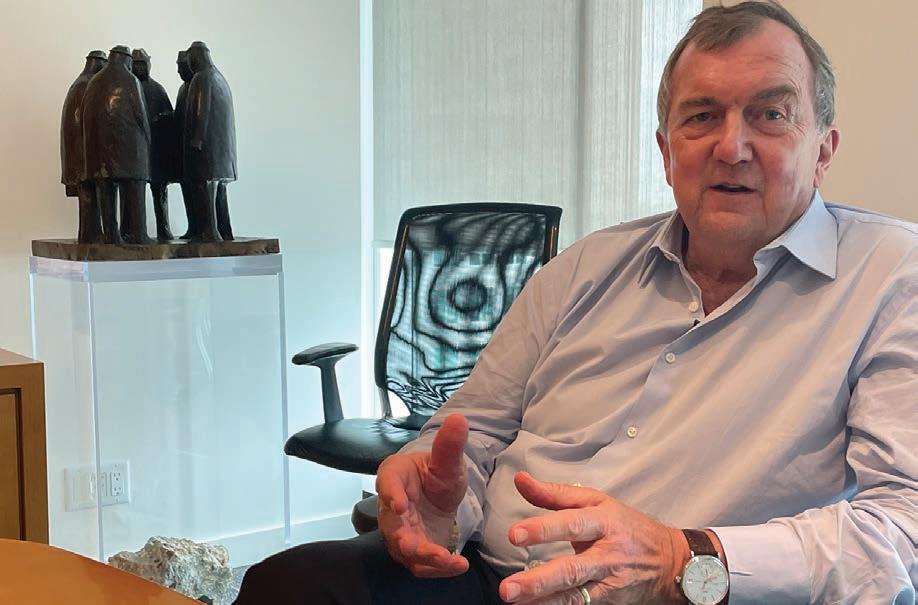
Barrick Gold CEO Mark Bristow. COLIN MCCLELLAND
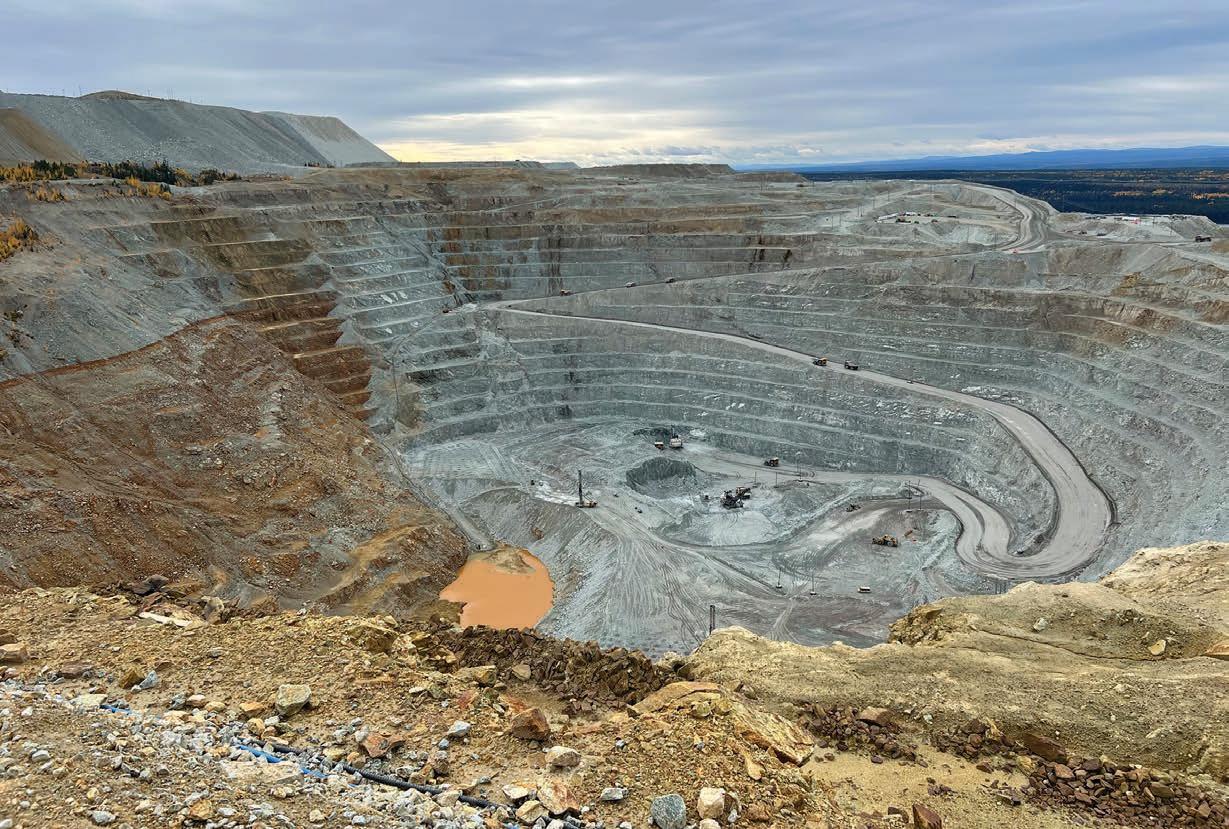
Taseko Mines’ Gibraltar copper mine in British Columbia, in October 2023.
CREDIT: HENRY LAZENBY
inbrief
DEPARTMENTS
SPECIAL SECTIONS » Latin America 31
n Glencore’s emissions jump
Mining and commodities trader Glencore has reported an 8.8% in its carbon emissions for 2023, reversing the downward trend of recent years. Expand coal production and the restart of an oil re nery in South Africa that was closed by an explosion were behind the jump.
e Swiss company reported a total of 432.8 million tonnes of carbon dioxide equivalent for the year.
In its 2024-2026 Climate Action Transition Plan, Glencore noted it was still “on track” to meet its 15% reduction of carbon dioxide equivalent emissions for its industrial assets from 2019 levels by the end of 2026, and of 50% by the end of 2035. e rest of Glencore’s revised climate plan is much like a previous plan it released — but this time includes the interim 2030 target.
Glencore published its rst climate action plans in 2020. One of the top global thermal coal exporters, it has faced backlash for being one of the few top miners still involved in the extraction of the fossil fuel. It has committed to run down its coal mines by the mid2040s, closing at least 12 by 2035.
BY MINING.COM STAFF
n AME critiques BC
British Columbia’s mining sector is being sidelined in the province’s push to overhaul regulations around mineral claims, the Association for Mineral Exploration (AME) said in March.
In the court-mandated overhaul of the Mineral Tenure Act (MTA), which must be completed by early 2025, the industry has been reduced to listenonly status, AME president and CEO Keerit Jutla says. e industry was caught by surprise when B.C. issued interim orders to protect Gitxaala Nation and Ehattesaht Nation’s mineral interests on March 7, and also outlined a process for cooperation and consultation for modernizing the act.
“Industry and stakeholders are not being engaged
in the manner and weight and importance that we should be,” Jutla said. “We’re getting brought in on these issues at the very last minute. And when we are, we’re being asked to sign NDAs and to kind of listen to feedback. But that’s all it is, feedback; it’s not input into a decision being made.”
B.C.’s Energy, Mines and Low Carbon Innovation ministry said the interim measures were implemented following an agreement with Gitxaała and Ehattesaht nations.
e measures respond to a September B.C. Supreme Court decision requiring consultation with First Nations before mineral title registration and mandating B.C. to revise the MTA within 18 months to incorporate those requirements. Following the new measures, First Nations temporarily halted some appeals, impacting mining activities and new permits in Gitxaała and Ehattesaht territories.
BY NORTHERN MINER STAFF
n Net-zero within reach?
Solar energy will dominate the mining industry by 2040, or it will take an additional 20 years, according to two new executive surveys from di erent sides of the globe.
Mining leaders from companies such as Rio Tinto, BHP and South32 predict solar will be their main energy source in 15 years, the Australian industry group State of Play says.
In San Francisco, management consultant Bain & Co. says 62% of industry leaders in oil and gas, utilities, chemicals, agribusiness as well as mining told it the world will take at least until 2060 to reach net-zero carbon emissions. at’s up from 54% last year as companies encounter more customers who don’t want to pay for the transition, Bain said.
Down Under, mining leaders predict oil and diesel will only contribute around 20% of the industry’s future energy, with 79% indicating solar will be the main power source over the next decade and a half.
BY NORTHERN MINER STAFF
2 APRIL 2024 | THE NORTHERN MINER www.northernminer.com
2 In Brief 4 Op-Ed 5 Commentary & Analysis 10 In Depth 17 Done Deals 18 Project Updates 20 Eye on Australia 21 Mining, Metals & Markets 38 Executive Q&A 38 Company Index











GLOBAL MINING NEWS THE NORTHERN MINER | APRIL 2024 3 2024 PLATINUM SPONSORS MINING COUNTRY SPONSORS PATRON SPONSORS ® PREMIER SPONSORS GOLD SPONSORS DIAMOND SPONSOR THANK YOU TO OUR VALUED SPONSORS SAVE THE DATE: MARCH 2–5, 2025 | pdac.ca/convention
GLOBAL MINING NEWS • SINCE 1915 www.northernminer.com
PRESIDENT THE NORTHERN MINER GROUP: Anthony Vaccaro, CFA, MBA avaccaro@northernminer.com
EDITOR-IN-CHIEF: Alisha Hiyate ahiyate@northernminer.com
MANAGING EDITOR: Colin McClelland cmcclelland@northernminer.com
WESTERN EDITOR: Henry Lazenby hlazenby@northernminer.com
COPY EDITOR AND PRODUCTION EDITOR: Blair McBride bmcbride@northernminer.com
PODCAST HOST: Adrian Pocobelli apocobelli@northernminer.com
ADVERTISING:
Robert Hertzman (416) 898-6654 rhertzman@northernminer.com
Michael Winter (416) 510-6772 mwinter@northernminer.com
SUBSCRIPTION SALES/ APPOINTMENT NOTICES/ CAREER ADS
George Agelopoulos (416) 510-5104 (Toll free) 1-888-502-3456, ext. 43702 gagelopoulos@northernminer.com
opinion
Explaining the copper conundrum
 BY ALISHA HIYATE
Arguably, no one is more aware of the coming copper shortage than copper miners themselves.
Glencore CEO Gary Nagle warned in late 2022
— just months before it made a play for Teck Resources, whose Quebrada Blanca 2 mine in Chile is one of few recent new copper builds — of a coming “huge copper de cit.”
e world’s largest miner, BHP, estimates the industry might need to spend US$250 billion by 2030 to bring 10 million tonnes of new copper production online, the amount needed in a “plausible upside demand scenario.”
In comparison, it said that last year, only 340,000 tonnes of new production had been formally sanctioned. at’s only 3.4% of the total that may be needed.
So why, then, are copper producers not building more new mines?
e simple fact is that capital costs have increased but copper prices aren’t high enough to compensate. at’s made M&A the smarter path, as evidenced by BHP’s takeover of Oz Minerals, Rio Tinto’s purchase of Turquoise Hill Resources, and here at home, Hudbay Minerals’ acquisition of Copper Mountain Mining.
Hudbay’s last build, its Constancia copper mine in Peru completed in 2014, illustrates the scale of cost increases over the past decade.
“ e capital intensity of Constancia is about half of the capital intensity of new projects that have been recently completed or on the verge of being completed,” Candace Brule, the company’s vice-president of investor relations, said at a recent critical minerals panel in Toronto organized by Marsh, a big player in mining insurance.
“We look at that metric and we determined that it was actually cheaper to go out and buy existing production than it was to take those risks to sanction a new project.”
Long-term thinking
Rising costs and commodity prices that aren’t high enough to justify new production are only part of the problem.
Miners naturally think long-term. e biggest, like BHP, evaluate projects over 50 and 100-year time frames.
Investors, on the other hand, are less patient.
At the Prospectors and Developers Association of Canada convention in March, mining luminary Pierre Lassonde quipped that while portfolio managers expect quick returns, “in our business, instant grati cation is like 10 years.”
Recalling a recent conversation with a BHP executive, Lassonde noted that while the company’s bar to invest in projects is a relatively modest 12-15% rate of return, over a 50-year period that climbs to 28%.
“ ese are the large copper mines that essentially catch two or three cycles in the metal and each time there’s a cycle, they can deliver a huge rate of return,” Lassonde said.
If there’s hope to get more parties outside of miners to think long-term on metals, it lies in the energy transition, which has governments rediscovering the importance of mining and entire supply chains to their future economies.
Unfortunately, incentive schemes like the United States’ 2022 In ation Reduction Act (IRA) stimulate investment in the wrong end of the value chain, Paul Mitchell, EY’s global mining & metals leader, said during the Marsh panel.
“ e IRA is incentivizing production of hydrogen and manufacturing of batteries. Neither of those things can happen without minerals,” Mitchell said. “ e government policies need to either reduce the cost of production or reduce the capital intensity of building a mine.”
We haven’t seen policies that address that yet.
e good news is that banks seem to be warming up to mining.
“In the last three or four years, there’s been a massive change,” Enrique Rico, global head of structured trade at Spanish bank Santander, told the Marsh panel. Only three or four years ago, the bank’s risk committee would dismiss mining transactions as “crazy,” he noted.
Contrast that with the bank’s risk committee approving nancing in February for a lithium mine in the Americas, which was celebrated with clapping.
“ ere’s an absolute huge di erence in the appetite of the bank,” he said.
More clapping could be on the way, if the coming copper crunch is as bad as the miners themselves expect.
TNM news is month, we’ve also got some TNM speci c news to announce.
First, in this issue, you’ll notice a brand new section, Eye on Australia. Canada and Australia have always been mining rivals, but the Aussie market of late has shown much more strength – for reasons we’ve discussed before in these pages. Canada has also bene ted from Aussie expertise as a ood of talent and Oz-headed companies have moved north in recent years. Keep watching this section, spearheaded by our Western Editor Henry Lazenby, as we expect to see it grow under his watch.
And our big congrats to Colin McClelland, previously a senior sta writer, who has been promoted to managing editor of e Northern Miner is is a new position in recognition of the rst-rate work Colin has done since he joined us in September 2022. His insightful features o en grace our front page, and his work consistently tops the most-read stories on our website. He’s also a master of the site visit video and was an essential contributor to the redesign of the paper last fall and on digital strategy.
As always, please feel free to reach out to any member of our team with questions, feedback, or story ideas. TNM
Contrarian opportunity or portfolio suicide?
 BY JAMES COOPER
Today, I’m taking a deep dive into the ill-fated nickel market.
If you’re a close follower of commodity markets, you probably know the problems a icting this sector. Surging output from Indonesia’s nickel laterite mines has ooded the market with new supply.
And if you’ve been listening to the commentary on nickel’s woes, you’ll probably consider this an uninvestable sector. Supply gluts are set to exceed last year’s numbers, according to some analysts.
In response, Australia’s nickel mines are shutting up shop. Andrew Forrest’s Wyloo Metals put its nickel operations in Kambalda, Western Australia, recently acquired through a takeover of Mincor Resources, on care and maintenance.
Meanwhile, BHP’s (NYSE: BHP; LSE: BHP; ASX: BHP) Nickel West operations have also been put on notice. e global response to oversupply has been predictable and unanimous. Operations are shiing into care and maintenance. Over time, that will take supply o the table.
While it will take time, Indonesia’s dominance could create structural problems for the global nickel market.Concentrating supply into a single region will make the sector less responsive to rising demand.
It also exposes the nickel market to sudden production cuts.As mines close abroad, the country has free rein to reduce supply and in uence prices. Indonesia is truly becoming the OPEC of nickel!
But there’s more than meets the eye regarding this important industrial metal. So, let’s tap into the nitty gritty before unpacking possible opportunities.
Nickel geology
Nickel deposits come in two forms: hard rock sulphide deposits, which consist of nickel-bearing minerals known as pentlandite and nickel laterite deposits.
Sulphide deposits are scattered worldwide, from northern Europe, South Africa, Canada and Western Australia.
We then have the laterites, which typically form in high-rainfall equatorial regions.As rain dissolves and removes minerals and elements from the soil it leaves behind immobile elements like nickel, iron and aluminum. at leads to a natural concentration of nickel in these regions. ere are outliers. Shi s in the global climate over geological history have enabled places like arid inland Australia to form laterite deposits. is region was once bathed in tropical rainfall and lush jungle.
But of the two sources of nickel, sulphides are far easier to process and re ne into high-purity products, the ideal choice when it comes to EV battery material. For this reason, sulphide miners have
“Sulphides are far easier to process and refine into high-purity products, the ideal choice when it comes to EV battery material.”
retained a competitive edge.
However, that started to shi in 2018 when the world’s largest nickel producer, China’s Tsingshan Holding Group, announced a US$700-million plan to produce battery-grade nickel from nickel laterites.Processing laterite ore into high-purity nickel uses a system known as high-pressure acid leaching (HPAL). e innovation unlocked a swathe of new supply and Indonesia’s nickel output exploded a er integrating HPAL technology in 2018.
Cloudy data in nickel outlook
In early March, the Macquarie Group’s nickel expert, Jim Lennon, claimed supply gluts could be overblown.
at assessment was based on a recent visit to China which led Lennon to conclude that the demand for stainless steel and other nickel alloys is far higher than the o cial numbers report. According to Lennon, nickel inventories are also far lower than the stated gures.In other words, he believes the consensus forecast of a nickel oversupply is wrong. It’s an interesting perspective. Chinese o cials are known for under or over-reporting gures to suit political motives.
But are Lennon’s observations, alone, enough for investors to move into this beleaguered market? Perhaps.
Resource stocks coming o a low base can result in large ‘recovery gains’ as sentiment creeps back into the market. It’s also worth noting that U.S. o cials recently excluded Indonesian nickel from lucrative tax credits as part of its In ation Reduction Act (IRA). at’s thanks to a tight interlink between Indonesian operators and Chinese investors.
So, where does that leave investors?
Everything is not what it seems in the nickel market and that’s where contrarian opportunities are born. Given that China plays a major role in supply and demand, this suggests there could be a lot more to this story. e data remains cloudy, meaning there could be more surprises in the months ahead.
A prime value opportunity may emerge with several nickel producers and explorers trading at multiyear lows, a theme I’ll explore over the coming months.
TNM
James Cooper runs the commodities investment service Diggers and Drillers. You can also follow him on X @JCooperGeo.
4 APRIL 2024 | THE NORTHERN MINER www.northernminer.com
PRODUCTION MANAGER: Jessica Jubb (416) 510-5213 jjubb@northernminer.com CIRCULATION/CUSTOMER SERVICE: (416) 510-6789 | 1-888-502-3456 northernminer2@northernminer.com REPUBLISHING: (416) 510-6768 jmonteiro@northernminergroup.com ADDRESS: Toronto Head O ce 69 Yonge St, Toronto, ON M5E 1K3 (416) 510-6789 tnm@northernminer.com SUBSCRIPTION RATES: Canada: C$130.00 one year; 5% G.S.T. to CDN orders. 7% P.S.T. to BC orders 13% H.S.T. to ON, NL orders 14% H.S.T. to PEI orders 15% H.S.T. to NB, NS orders U.S.A.: C$172.00 one year Foreign: C$222.00 one year GST Registration # 809744071RT001 (ISSN 0029-3164) CANADA POST: Return undeliverable Canadian addresses to Circulation Dept. c/o The Northern Miner 69 Yonge St., Suite 200 Toronto, ON M5E 1K3 Publication Mail Agreement # 44082538 Periodicals Postage Rates paid at Niagara Falls, NY, 14304. U.S. o ce of publication 2424 Niagara Falls Blvd, Niagara Falls, N.Y. 14304. U.S. POSTMASTER: send address corrections to: Northern Miner Box 1118 Niagara Falls, N.Y. 14304.-7118 THE NORTHERN MINER is published monthly by The Northern Miner Group, a division of EarthLabs Media Inc., a leading media and technology company serving the mining industry. From time to time we make our subscription list available to select companies and organizations whose products or services may interest you. If you do not wish your contact information to be made available, please contact us by one of the following methods: Phone: 1-888-5023456; Fax: (416) 447-7658; Mail to: Privacy O cer, The Northern Miner, 69 Yonge St., Suite 200, Toronto, ON M5E 1K3
COMMENTARY
EDITORIAL
commentary&analysis
Analysts expect rebound in lithium prices, equities
TRENDS | Mine closures, project deferrals ‘signal bottom of cycle’
BY BLAIR MCBRIDE
Prices for lithium and the stocks of companies trying to mine it are poised to rebound by July although they’re unlikely to resume the boom times of two years ago, Canaccord Genuity analysts say.
e investment bank forecasts lithium to reach US$16,000 per tonne for chemicals and US$1,200 per tonne for spodumene concentrate in the year’s rst six months compared to prices on March 8 of US$15,009 a tonne for lithium carbonate and US$1,105 per tonne for spodumene.
e removal of high-cost supply from the market, which limited production and deferred projects, plus robust growth in demand from electric vehicle production are factors backing the assessment, the analysts wrote on March 8.
e report comes as lithium carbonate, a precursor to lithium hydroxide used in batteries, was down from about 170,000 yuan (US$23,658) per tonne in September and 80% lower than in 2022, according to Trading Economics. e price drop has led some miners to cut production and costs. Core Lithium’s (ASX: CXO) Finniss mine in Australia halted operations in January and signicantly wrote down the value of its assets. Its CEO and a board member resigned in March a er the company reported a $167.6-million half-year loss. In January, Sayona Mining (ASX: SYA; US-OTC:
“We see reasons to be more optimistic towards lithium equities as pricing bottoms, with preferred exposures focused on incumbent producers and low-capex, near-term development plays.”
SYAXF) launched a cost review of its 75%-owned North American Lithium operation in Quebec and laid o 14 sta .
“Mine closures and project deferrals (are) a classic bottom of the cycle signal,” Canaccord said.
‘Goldilocks zone’
Prices for the sector will enter a more sustainable “Goldilocks zone” denoting prices that aren’t too hot as to spur high-cost supply and not too cold as to cause supply disrup-
tion, such as less than US$1,000 per tonne of spodumene concentrate, Canaccord said. Current prices are well below levels enticing enough to support new projects. ey must rise by at least 6% for the metal and 18% for lithium carbonate if projects are to be economical, the company said.
Prices from the end of last year and into this year were too low, which caused disruptions across
Australian spodumene, African direct ore shipping and Chinese lepidolite operations, typically the most expensive lithium mines.
Canaccord wrote that it’s reasonable for spodumene to trade as high as US$1,800 per tonne, and for lithium chemicals such as carbonate to trade as high as US$25,000 per tonne before supply is turned back on.
“If lithium markets and supply chains are to mature, we believe pricing within a sustainable ‘Goldilocks zone’ would represent the best outcome for EV adoption and development of the supply chain,” the analysts wrote
Canaccord estimates the market
was in a minor surplus last year and now expects the same into 2025. It also sees the potential for surpluses to switch to de cits, leading to risks of higher prices. Material de cits are forecast to emerge in 2027.
Equity rally
Some optimism has returned to equities in February and early March as reports of mine closures and project delays put uncertainty over current and future supply, the investment bank said.
“We see reasons to be more optimistic towards lithium equities as pricing bottoms, with preferred exposures focused on incumbent producers and low-capex, nearterm development plays,” it said. “Equities appear to be leading the rally; however, spot chemical/ spodumene prices are trading relatively at and appear to be lagging.”
Canaccord says it’s more condent in its current view that lithium has bottomed than it was last May due to production prices for lithium carbonate equivalent recently falling across several producers.
ose prices have made production from higher cost integrated Chinese lepidolite marginal.
Chinese spot prices for lithium carbonate, hydroxide and concentrate have risen by 14%, 17% and 7%, respectively, since late January 2024, Canaccord said. Lithium carbonate has already risen higher than its late February level, when it sat at 96,843 yuan (US$13,469) per tonne, its lowest level since the summer of 2021. TNM
Central bank buying, financial risk pushes gold to record, Smallwood, Bristow say
MCCLELLAND
BY COLIN
The price of gold hit new records in March as central banks increased bullion buying and concerns mounted about slowing global growth even as stock markets reached new heights.
Gold brie y traded above US$2,200 per oz. on March 21 before easing to US$2,176.70 per oz. closer to press time, still up 6% this year. China raised its imports of non-monetary gold by 53% to 372.2 tonnes during the year’s rst two months compared to a year ago, its customs data show. at aligns with record turnover on the Shanghai Gold Exchange, BMO Capital Markets said in a note on March 20.
“We see China’s gold demand as an underappreciated factor in helping drive prices to record nominal highs in early 2024,” BMO commodities analyst Colin Hamilton said.
Wheaton Precious Metals (TSX: WPM, NYSE: WPM; LSE: WPM) CEO Randy Smallwood said the central banks of Singapore, Turkey and Poland increased their gold buying in addition to China.
“A lot of those sovereign banks have pretty healthy U.S. dollar
reserves in there and I really look at it as they’re swapping out U.S. dollars for gold and that’s what’s pushing gold prices up,” Smallwood said on CNBC on March 19. “It’s just a shi towards that safety, that security.”
Financial risk and slowing growth are also part of gold’s price rise, according to Barrick Gold (TSX: ABX; NYSE: GOLD) CEO Mark Bristow.
“ ere are multiple things but one of them is global risks, and I’m talking about nancial risks,” Bristow said in an exclusive interview with e Northern Miner on March 5. “ e Chinese Communist Party came out with a 5% growth forecast, which is not good for anyone, and a messaging that that they’re pivoting away from a construction-driven economy.”
China concerns
Chinese leaders called their forecast “ambitious” when past years surpassed 7%. e country is contending with a property sector bubble that has rattled domestic investment and a shrinking population unable to ll its workforce.
In Europe, o cials cut their economic outlook to 0.9% growth this year from 1.3% predicted
in November because last year’s post-pandemic rebound stagnated.
In most developed economies, lower interest rates for nearly a decade and a half a er the 2007-8 nancial crisis allowed borrowers to substantially increase debt, also endangering mid-size lenders, Bristow said during the chat at Barrick’s Toronto headquarters.
“ e Western world, particularly the North American Western world, gets very quickly used to things and they got very used to free money,” he said. “And they built businesses that are not sustainable when you have to make something to pay back or service your interest.”
Geopolitics
Wars in Ukraine, Israel, and hot spots around the Middle East such as Iran, Yemen and the Red Sea, increasing trade protectionism and resource nationalism are all exacerbating damages to global supply chains started by the pandemic, the CEO says.
“You analyze the reaction, particularly the political reaction, and it doesn’t t because the world has become so reliant on each other,” Bristow said. “But there’s this de-globalization, so we see it

because of costs, particularly in the logistics supply chain, right. And Barrick has operations in all continents.”
Still, most economies dodged a major recession that had been predicted a er interest rates rose to contain 40-year high in ation spawned by massive government spending during the Covid-19 pandemic.
e S&P 500 closed at a record 5,241.53 points on March 21, the same day the TSX/S&P Composite Index broke its two-year-old record high by 0.04 of a point to set an all-time high of 22,087.26. Typically, gold doesn’t rise at the same time as stock markets because it usually bene ts from investors seeking safety by moving value from stocks to the metal. TNM
GLOBAL MINING NEWS THE NORTHERN MINER | APRIL 2024 5
SAYONA
Left:
Core Lithium’s
CORE LITHIUM
Above: Sayona Mining’s North American Lithium mine in Quebec.
MINING
A spodumene shipment from
Finniss mine.
GEOPOLITICS | Cutting US dollar caches, concern over Chinese growth, cited by CEOs
KTDESIGN/ADOBESTOCK
commentary&analysis
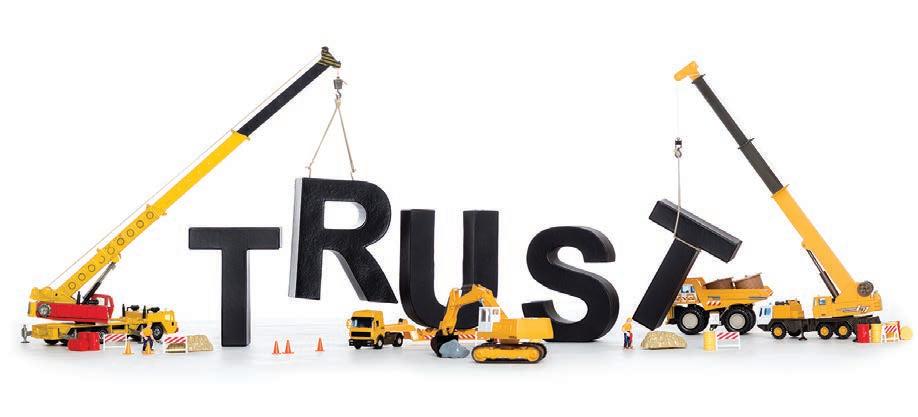
Miners can reverse the trust deficit, but it won’t be easy
BY KEVIN PCJ D’SOUZA
The mining industry has a trust problem. Broad-based trust in our industry seems at an alltime low. e impact is wide-ranging: fracturing of public attitudes, community resentment and opposition, regulatory delays, and cancelled permits, government expropriation, an inability to attract and retain new talent, spreading of misinformation, being shunned by investors, and frustrating undervaluations. e di cult fact is that no amount of public relations spin, reputational management, or “awareness raising” will reduce the current degree of suspicion and mistrust. We may need mining, but the reality is no one wants it.
Why is there a trust deficit?
e International Council on Mining and Metals (ICMM) recently engaged GlobeScan to assess public trust in the industry. Its work showed that when it comes to ful lling responsibilities to society, mining ranks at the bottom, scoring the lowest since GlobeScan began collecting data in 2001. is is dicult for many of us to acknowledge: we are undeniably unloved, even as many governments recognize that mining is essential to meeting the world’s decarbonization challenges.
Right now, our industry needs to demonstrate it is responsible, to gain as much goodwill and trust as it can garner.
For the last few decades, like hamsters on wheels, we’ve made little tangible progress in e ective
“Trust is essential for a free, democratic, and functioning society. It is the true currency of life and business — the basis for almost everything we do.”
communication. We believe we simply need more ESG scores, sustainability reports festooned with buzzwords, and metal demand infographics — pushing “facts” to coax people into appreciating mining’s importance. We also
take umbrage when people are not as evangelical about our beloved industry as we are. So perhaps we should ask ourselves whether our current product-centric self-promotion of critical minerals for the energy transition will build trust.
As an industry, we have traditionally defaulted to engaging with civil society to be understood, rather than understand. We prefer to direct our messaging through friendly and predictable channels to a largely passive audience. We avoid those who are vocally critical of us. We defensibly feel the need to “correct” misperceptions by talking up mining’s great bene ts: local jobs, contracts, government tax revenues, and local socio-economic bene ts when today, these are considered the bare minimum. We don’t put enough e ort into understanding our real-world impacts,
fear being transparent about our mistakes and struggle to recover from them.
e answer lies in the idea that trust is a “contact sport” requiring regular, meaningful, and transparent e ort. is concept, espoused by Steve Martin, Faculty Director of Behavioural Science, Columbia Business School, at ICMM’s Responsible Mining Leadership Forum last year, means empathy, authenticity and trust cannot be assembled remotely in a corporate o ce or delegated to a third-party communications guru. Miners and their investors need to roll up their sleeves and put in the e ort. If we don’t, we will cede control of our industry to regulators and other stakeholders, spending disproportionate amounts of time and money responding to increased levels of scrutiny and compliance, rather than growth and shareholder returns.
‘Say-do’ gap



Meanwhile, the biggest media stories that shape the narrative around mining today are mostly negative: environmental pollution, fatalities, bribery, corruption, human rights abuses, tailings dam failures, workplace harassment, sexism and racism, artisanal mining, con ict minerals, and the destruction of cultural heritage. In this interconnected and image-dominated era, these controversies stay fresh in the minds of the public and investors who look to our recent past to gain con dence about the future. Some of these controversies have also shown that legal obligations are no longer a reliable proxy for ethical ones. Culture and leadership matter. We have made tremendous strides in so many ESG areas, but we still have a long way to go. It is not just a matter of telling our story better. We must acknowledge that there is mounting globalized anti-mining sentiment (coupled with increased resource nationalism) and we need to become more reliable and dependable; better match our words and actions; and actively address historical legacies rather than exacerbate them.
What is trust?
Sociologists have de ned trust variously. Trust is a prospective judgment (though in uenced by past experiences) about how much individuals can rely on others to act according to rules and norms. Some view trust as an expectation — one trusts because one has a reasonable set of expectations regarding the actions of another based on experience and norms. Others de ne trust as the willingness to be vulnerable or connect it to how con dent we feel about predicting another’s future actions.
Trust is a vital ingredient for gaining community acceptance and securing a social licence to operate. However, virtually every mine locality is characterized by varying levels of inequalities (income or status), institutional voids, community capacity and power imbalances which all interrelate to either promote or more o en, erode trust. Miners perhaps need to learn from social psychology that trust has both cognitive and emotional dimensions, which require di erent approaches. So, what does it take then for local communities to put their trust in an unknown foreign mining company?
My experiences in mining have taught me that trust is o en hard to de ne and learning how to build it is not always intuitive, but we know with certainty when it is lost. ere is no predictable formula — and once lost it is di cult to regain.
As with a lot of ESG issues, the devil lurks in “how.” It is especially complicated across geographical borders and cultural barriers, but the foundation is integrity, competency, and intent. Trust is earned when actions meet words but regrettably, there is o en a disconnect between miners’ ESG rhetoric and their on-the-ground reputation and performance: some call this the “say-do” gap. Companies o en have wonderfully scripted corporate ESG policies that are not properly, or consistently, executed on their mine sites. Miners need to help garner broad industry-wide trust whilst nurturing trustworthiness for their own company and their individual assets, as trust is very localized.
Some miners lose track of their social obligations and commitments and break their promises. is causes disillusionment, outrage, loss of trust and ultimately con ict. Trust requires miners to be predictable and have the integrity and competency to match actions to commitments while they authentically engage about their true intent and impacts.
Trustworthiness requires miners to be more vulnerable and transparent about their real agendas, which is o en out of the comfort zone for boards and executives. It also requires self-awareness that
6 APRIL 2024 | THE NORTHERN MINER www.northernminer.com
Due diligence .com How focused are your reviews?
COMMENTARY | Deposits, demand
Trust P16 >
STOCK
and dollars alone are not enough
LICHTMEISTER/ADOBE

GLOBAL MINING NEWS THE NORTHERN MINER | APRIL 2024 7 JOHANNESBURG|TORONTO|PERTH | NEW YORK | LONDON | LIMA | VIENNA INFO@AURAMET.COM WWW.AURAMET.COM 300 Frank W Burr Blvd Teaneck, NJ 07666 (201)905-5000 Serving the Global Metals Industries since 2004 Physical Precious Metal O take Metals Financing Including Debt, Equity and Royalties / Streams Project Finance Advisory Supply and Risk Management
commentary&analysis
Poor forecasting triggers big writedowns for miners while some get lucky
STUDY | Companies blame metal price falls for majority of impairments
BY COLIN MCCLELLAND
Mining companies must improve their metal price forecasting to reduce mine failures and increase long-term returns for investors, according to a new study.
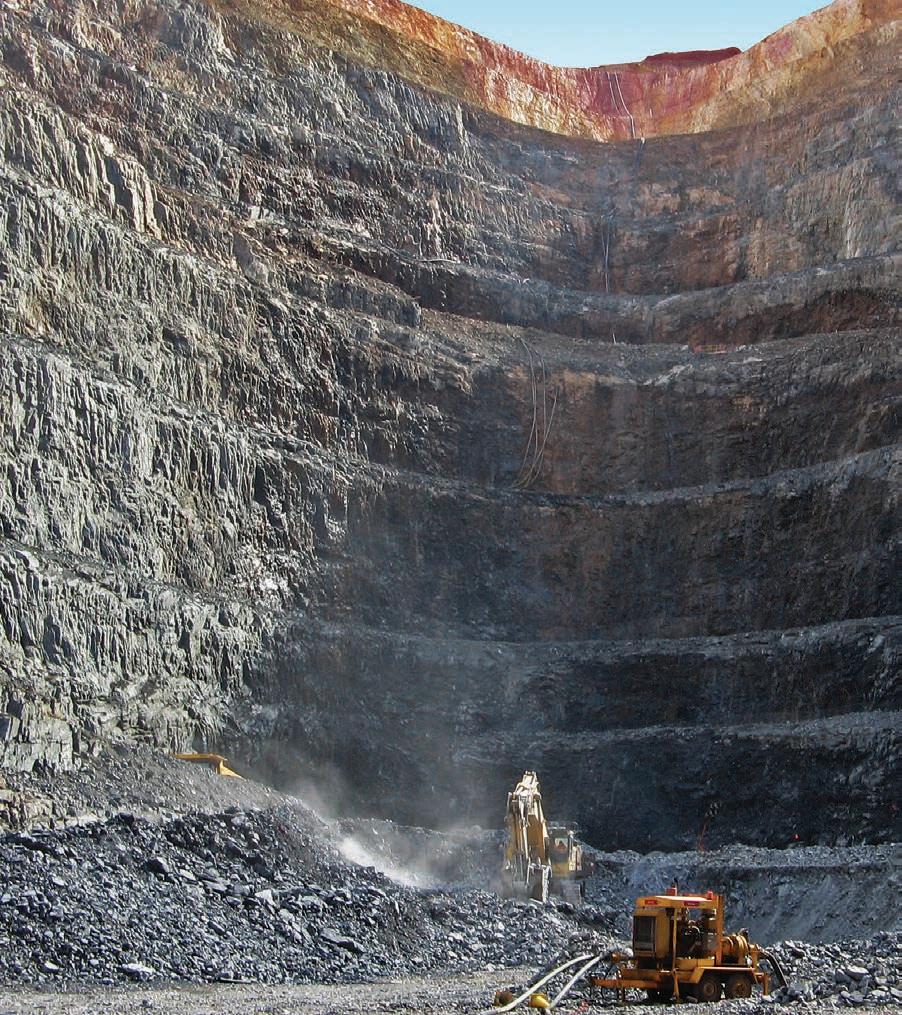
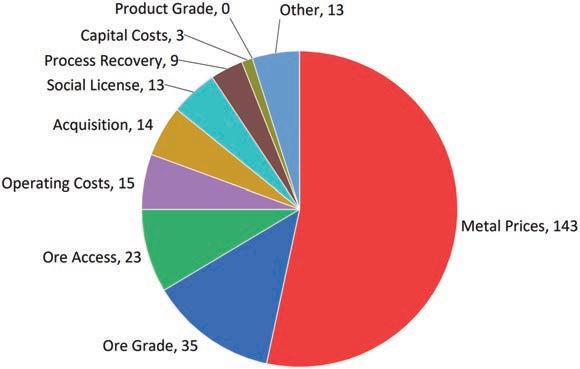
Tumbling metal prices account for more than half of all impairment charges, declared when xed assets fall below market values, the study of 105 TSX-listed mining companies found. ey incurred $68 billion in charges from 2002 to 2015. Using unfamiliar technology and locating in developing countries also contributed, data show.
Metal price drops accounted for 143 of 268 cases and $25.2 billion in impairment charges, according to the February publication of Resources Policy, an international journal on mineral rules and economics with editors in the United States, Australia and China. e research appears pertinent at a time when nickel and lithium prices have crashed from 2022 highs as gold has set new records.
“While impairments have been shown to be a common occurrence across mining companies, they also are a major contributor to the industry’s low average returns,” said the authors led by Andrew Gillis of Edmonton-based Aurora Hydrogen.
“ e degree of impairments is higher at mines in develop-
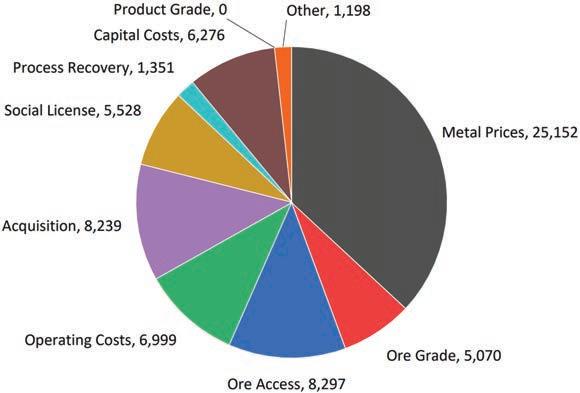
A breakdown in reasons of impairments according to amounts in thousands of Canadian dollars. RESOURCES POLICY
ing countries and at mines where the geographic location and mining processes are new to the company operating the mine,” said the authors, who included John Steen and W. Scott Dunbar of the Department of Mining Engineering at the University of British Columbia in Vancouver, and Andrew von Norden ycht of the Beedie School of Business at Simon Fraser University in Burnaby, B.C.
Get lucky Forecasting by its nature is uncertain. But some rms get lucky and only face a few impairments,
while others get unlucky and suffer many or large impairments, the authors said. eir targeted years of research coincided with the rise of the commodity super-cycle 20 years ago, followed by the nancial crisis and then declining metals prices from 2012.
e group recommended mining companies should improve their forecasting of mineral reserves, capital costs, production costs and commodity prices, which all impact future cash ows. It noted how C-suites might blame falling metal prices for impairments because other slips in capital
or operating costs could be directly attributed to their own forecasting. e ip side is that rising metal prices can hide some other forecasting errors.
More difficult And forecasting in foreign lands is simply more di cult, the authors said.
“ e sources of uncertainty are just greater, making forecasts harder and forecast errors easier, even for experienced forecasters,” they noted. In the end, the researchers recommended more studies on forecasting. ey could pinpoint the
root causes of forecasting errors through personal interviews with project participants, detailed comparisons of feasibility studies and actual outcomes, and assess their error prevention methods.
“Asset impairments have been identi ed as a primary determinant of long-term shareholder returns across Canadian mining rms,” the authors said.
“Our ndings suggest looking more closely into price forecasting procedures at mining companies to see if certain techniques or circumstances lead to more or fewer pricedriven impairments.” TNM
China’s clean-tech surge shakes markets and tests Western green resolve
BY HENRY LAZENBY
Against China’s production boom, Western countries are trying to gure out how to build their clean-tech industries without being undercut by cheaper Chinese products. ey’re stuck between wanting to secure production at home and the harsh reality of China’s ability to produce items at cost, leading to lower prices, says Antoine Vagneur-Jones, head of trade and supply chains at BloombergNEF (BNEF).
“Historically, we’ve never really been at a stage where we’ve had this much overcapacity,” VagneurJones told e Northern Miner in a March 15 interview. “Western governments need to carefully evaluate their priorities and make tough decisions regarding which sectors they want to support domestically.”
China’s trillion-dollar pivot from real estate to clean-tech manufacturing is seeing it produce more than it can sell and forcing the West to play catch-up. is growth has disrupted global markets by ooding them with lower-cost products, which has, in turn, challenged the economic viability of clean energy projects and manufacturing in other countries.
In a March 7 report titled ‘China’s
clean-tech overcapacity threatens onshoring dreams,’ Vagneur-Jones shows that Chinese EV exports have increased by more than 1,500% over three years. From January to October 2023 alone, the EU purchased US$12 billion or 42% of all Chinese EV exports, highlighting the impact of China’s excessive production rate on foreign markets. e annual value of China’s solar, battery, and EV exports increased by 117% from 2021 to 2023.
Nickel bellwether
“If you don’t stay at the cutting edge, your entire production fleet is reduced to being obsolete.”
ANTOINE VAGNEUR-JONES BLOOMBERGNEF, HEAD OF TRADE AND SUPPLY CHAINS
Vagneur-Jones says that while the record-defying production is good news for some, the clean-tech glut spells trouble elsewhere, with the mining and metals sectors, particularly nickel, nding themselves on the losing side.
Chinese investments, especially in Indonesia, have created a global nickel oversupply, cratering prices that have made Western mines uneconomic due to their higher production costs. is is forcing a global re-evaluation of mining strategies, emphasizing the need for diversi cation and innovation to adapt to changing industrial policies from China, which dominates demand.
Challenging Western grit e nickel market is just a smallscale example of China’s over-investment in production.
In less than four years, Chinese
banks have transitioned from allocating over US$1 trillion yearly to the domestic property sector to experiencing a net decline in outstanding debt for the rst time since 2005, Vagneur-Jones notes in the report. ese banks have facilitated about US$700 billion in new loans, o en at below-market interest rates, to support the growing manufacturing sectors for clean technologies like EVs and batteries.
Vagneur-Jones points out that the jaw-dropping scale of the overcapacity can be gauged with the photovoltaic panel market. Where China accounted for 36% of global demand four years ago, it now commands 75% of global production. is shi resulted from rapid industrial policy adjustments and local government subsidies, Vagneur-Jones says, which dramatically expanded China’s manufacturing capacity and slashed the global market share held by Western companies.
Change or die
All of this raises big questions about the global future of clean energy production and whether Western goals for local manufacturing can realistically be met. Vagneur-Jones says Western nations are facing a critical challenge: adapt their domestic manufacturing and sup-
ply chain strategies to this new landscape or lose out.
He suggests the West should consider alternative strategies, such as stockpiling critical materials when metals prices are low due to oversupply — or fostering manufacturing in regions outside of China to diversify supply chains and reduce reliance on Chinese products.
China controls 80% of the global supply chains for photovoltaic products and automotive batteries, and over 60% of electric cars worldwide are manufactured in China. is level of market dominance has raised concerns among other countries and led to various trade barriers and protective measures.
e Asian giant currently accounts for about US$469 billion of planned clean-tech manufacturing capacity, exceeding net-zero aligned demand over 2024-2027, according to Vagneur-Jones’ data.
ese numbers feed into an eightfold planned increase in annual clean-tech factory investment outside China from 2023 to 2025.
“It’s a game of chicken, where if you don’t stay at the cutting edge, your entire production eet is reduced to being obsolete. We’re in an era where Chinese overcapacity isn’t just reshaping global markets; it’s rede ning them,” VagneurJones said. TNM
8 APRIL 2024 | THE NORTHERN MINER www.northernminer.com
Reasons behind 268 impairment charges that mining companies faced during the 2002-2015 period. RESOURCES POLICY
SUPPLY CHAINS
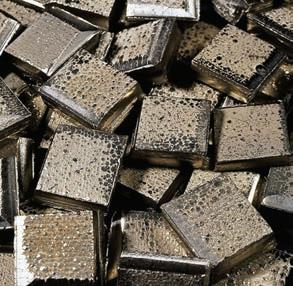
Refined nickel. GLENCORE
| Western projects at risk as Chinese product prices plummet
STEP INTO THE FUTURE OF MINING.
Only MINExpo INTERNATIONAL 2024® connects you with the innovations that will transform the way your work gets done. With a focus on mining (and only mining), you’ll find the products, solutions and connections to future-proof your business at the world’s largest global mining event.
Register Now at MINExpo.com
GLOBAL MINING NEWS THE NORTHERN MINER | APRIL 2024 9
indepth
Push for ESG price premiums may reshape global critical minerals markets
NICKEL | Experts say the challenge is defining what ‘ESG-compliant’ means
BY HENRY LAZENBY
As low nickel prices force Australian miners to scale back output, some have called for an ESG premium on low-carbon production that would help Western producers compete with cheaper, but more polluting Indonesian metal.
But are customers willing to pay more for low-carbon nickel? Some analysts say yes — under certain conditions.
“If the market sees a bene t in paying a premium for certain supplies then it will,” Jim Lennon, managing director of commodities at Macquarie Group, told e Northern Miner in an interview. “A buyer would be willing to pay a premium if they can see an economic bene t in using that product, such as receiving a government subsidy or securing a sale of a ‘greener’ electric vehicle.”
e price of nickel has been on a downtrend since late 2022 when it was US$33,575 per tonne (US$15.23 per pound). e price on March 19 was US$17,678 per tonne (US$8.02 per lb.) and in February dipped as low as US$15,850 per tonne (US$7.19 per pound).
e price doldrums have prompted Wyloo Metals and BHP (ASX: BHP) to suspend operations in Australia, with BHP announcing it would take a US$2.5 billion impairment on its assets.
Given the devastation to its nickel sector, Australia has been the most vocal in creating new variable price brackets for low-carbon emissions nickel.
e idea for premium ESG pricing isn’t new. In fact, some experts
> Barrick Gold from P1 company has had to contend with an 18-month delay to permits at the Goldrush project, part of its Nevada Gold Mines partnership with Newmont (NYSE: NEM; TSX: NGT), and a slow start to commissioning at the Pueblo Viejo mine expansion in the Dominican Republic.
Reported talks to acquire the shut Cobre Panama copper mine in Central America from First Quantum Minerals (TSX: FM), which Bristow again denied, saw no deal even though it would have suited the CEO’s penchant for expanding more into the energy transition metal and turning around troubled assets. Especially ones marred by poor relations with governments.
Site visits Bristow, a hands-on CEO, visits each of the company’s roughly 20 sites at least three times a year, with the fourth round reserved for those that need attention or new initiatives.
“I don’t believe in o ces,” the South African native said. “For mining to be successful and agile, the mine management should own their businesses. at calls for a better quality general man-
argue that there’s already a premium.
Canada Nickel (TSX: CNC; US-OTC: CNIKF) CEO Mark Selby says people might be surprised to learn that price premia have already been paid for various North American products perceived as cleaner on Asian markets.
Selby notes that domestic premiums for certain materials have been sustained over several years.
ese premiums might not be directly attributable to lower carbon footprints or ESG factors
ager on the mines and we look to more CEO-style people.”
Bristow has long stated his aversion to paying a premium for projects. Between China increasing its reach in the world economy more aggressively from about 2005, through a 2011 gold price peak and fall until it started rising again in 2019, the CEO gures the industry had to write o almost US$80 billion in value because of deals o en sweetened with cash on top of premiums.
“ ere are moments when you will pay a premium, it depends how the market values the asset,” he said. “When you pay premiums on premiums, you’ve got to rely on the gold price to get yourself into the money. I’ve never done that.”
Bristow’s Randgold Resources brought African assets into the merger with Barrick, including the Loulo and Gounkoto mines in western Mali, Tongon in Ivory Coast and Kibali in the Democratic Republic of Congo (DRC) where it doubled the gold reserve within two years to 10 million ounces. Kibali, Africa’s largest gold mine, still has 10 million oz. in reserves more than a decade a er starting production.
Greenfields expansion is year, Barrick is focused on
alone but could be in uenced by a combination of causes, including local supply.
But this type of premium isn’t helping Australian nickel miners. And deliberately imposing an ESG premium would be a di erent story.
“ e main challenge is de ning what ‘ESG-compliant’ actually means,” Macquarie’s Lennon said.
It’s an obstacle the London Metal Exchange (LME) is facing as it investigates and prepares for the potential emergence of premium
Nevada, where the company is increasing green elds exploration spending to replicate discoveries like Fourmile and Goldrush with a 20-million-oz. nd that could boost Barrick’s gold production. It was 4.1 million oz. last year.
At Goldrush underground, where permits at last arrived in December, crews are preparing to install ventilation ducts allowing annual output to increase to 400,000 oz. by 2028 from 130,000 oz. this year, the CEO said. Permit delays had a ected cash ow, he said.
While mining in the U.S. might be considered less risky than say, the remote northeast DRC home of Kibali, America has its own hazards, such as litigation by anti-mining groups and lengthy permitting processes. During the pandemic, when many states suffered from lack of revenue for services, Barrick and Newmont stepped up to pay their taxes in Nevada ahead of time.
“No matter how you own it, a mine is actually a national asset,” he said. “When you invest in it to develop it, you should be investing in its people and its businesses, and people should bene t out of it and the economic bene ts should be split. It should be shared.” TNM
“If the market sees a benefit in paying a premium for certain supplies then it will.”
JIM LENNON, MACQUARIE GROUP, MANAGING DIRECTOR OF COMMODITIES
pricing for low-carbon products on separate trading contracts.
Georgina Hallett, LME’s chief sustainability o cer, says that there’s increasing interest from producers, consumers, and investors in establishing a price premium for metals produced with lower carbon footprints. However, de ning what constitutes ‘low carbon’ or ‘green’ metals isn’t easy due to the lack of a standardized, universally accepted framework for measuring and verifying the environmental impact of metal production processes.
“ e aim is to build a robust framework that supports the gradual introduction of sustainability-linked pricing mechanisms while ensuring broad market participation and avoiding undue disruption,”
Hallett told e Northern Miner
“By taking a step-by-step approach, the LME hopes to align the interests of various stakeholders and drive meaningful progress toward the integration of sustainability into the global metals market.”
Free market forces
Lennon suggests that establishing a special low-carbon contract for metals on the LME is unnecessary. is is because the prices for different products are already determined by normal market activities, such as supply and demand. Just like prices for di erent metal shapes
and origins adjust based on market conditions, the prices for products with various ESG qualities would naturally adjust in the same way.
“Exchanges don’t need necessarily to get involved since they can focus on ‘objective criteria’ for delivery (shapes, metal purity, etcetera) and leave the market to decide on ‘subjective’ factors such as value-inuse of di erent products/shapes and ESG,” Lennon said.
For exchanges like the LME, there is also a risk of damaging liquidity if they were to introduce multiple contracts. Compared with large commodity derivative markets, nickel is not particularly liquid and dividing this liquidity could reduce the usability of the market for some participants.
Lennon says markets will ultimately determine the outcome. Currently, nickel prices vary signicantly between products depending on supply and demand.
Today’s primary nickel products that are LME deliverable include metal rounds, pellets, cut cathode, and full plate cathode. When delivered to LME warehouses, each product is assigned an associated warrant. When buyers want to take delivery from the LME, they are o en willing to pay LME brokers a premium for warrants of a particular material shape or origin.
Similarly, other non-LME deliverable products, including intermediates (concentrates, mattes, mixed hydroxide or sulphide precipitates) or nished products (ferronickel, nickel pig iron, nickel sulphates and nickel chlorides) also sell at varying discounts or premiums to LME base prices. Lennon said these premiums/discounts can shi dramatically due to changes in supply and demand.
For example, nickel pig iron was selling at a premium to the LME price at the start of 2022 and then had fallen to a discount of 40% to the LME by the rst half of last year.
“Product type, ESG, and country of origin are all important properties and presumably were factors that led major automakers to agree to term supply contracts with BHP and Vale in recent years. ESG was no doubt a factor in these negotiations,” Lennon said.
Canada Nickel’s Selby emphasized the importance of provenance tracing rather than setting up a formal two-tiered pricing system.
He points out that imposing a pricing mechanism before the market is ready can lead to ine ciencies, such as a benchmark that does not accurately re ect market conditions. He suggests letting the market sort it out.
“We will continue to observe the distinction between Westernsupplied, clean, green nickel and the high-carbon, less ESG-compliant nickel from China and Indonesia,” he said. “As for the necessity of a formal pricing mechanism, it’s typically better if such mechanisms emerge naturally in the marketplace before establishing a formal platform for trading them.”
Aussie nickel rout
An increase in supply from Indonesia has cratered nickel
10 APRIL 2024 | THE NORTHERN MINER www.northernminer.com
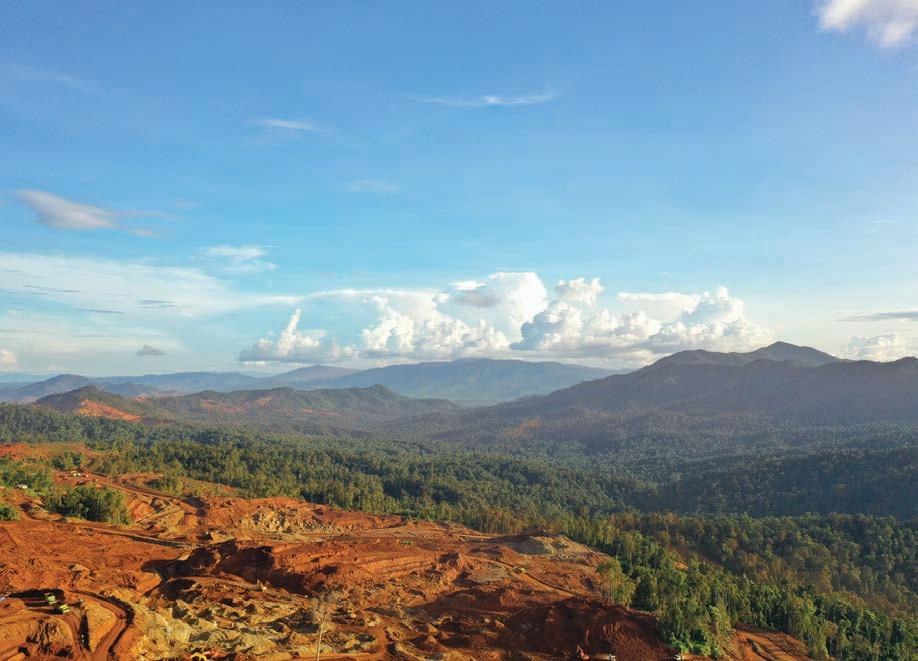
Nickel mining in Indonesia. ANDYKA/ADOBESTOCK
Premiums P36 >
Some junior miners must die so others may live, finance panel concludes
PDAC | Companies urged to diversify funding sources outside of retail
BY ALISHA HIYATE
Canada’s once-mighty junior mining sector crumbled a er governments squeezed the middle class and let multinationals buy the country’s big miners, a panel of nance experts told mining’s biggest conference in March.
Large Canadian miners such as Falconbridge, Inco and Noranda (all gone by 2007) would use much as $200 million each a year to shepherd perhaps 100 junior level companies because they made half of the discoveries, Franco-Nevada (TSX: FNV; NYSE: FNV) co-founder Pierre Lassonde said on a panel at the Prospectors and Developers of Association of Canada convention in Toronto on March 5.
e industry’s poor performance and high interest rates that have made it easier for investors to make money with little risk are just parts of the equation, delegates heard. Retail investors, traditionally the biggest source of funding for juniors, have also disappeared. Lassonde tied the state of retail investing to high taxes.
“Back in the ’80s, the disposable income that the middle class had, it was far better than it is today with
“You have to have scale and you have to have grade. And you have to prove that you have something that your peers don’t.”
ADAM LUNDIN, CHAIR OF LUNDIN MINING
54% maximum tax rate here in Ontario,” he said.
“ ey would say, ‘I’ll take $1,000 or $2,000 and instead of going to Vegas, I’m just going to bet on a junior — it’s more fun and if there’s a discovery, I’m part of it.’ at group of people have been completely washed out by our government.”
Jacqueline Murray, a partner at Denver-based private equity rm Resource Capital Funds (RCF), said there are now far too many juniors competing for cash, com-
paring the task of si ing through them to nding something good to watch on TV.
“I think sometimes for investors they just see so much crap that they miss the good opportunities and it just looks a little too hard,” she said. “In the true junior and explorer space, sadly I think some just need to die so the good ones can survive and attract the funding.”
Lassonde advised the same for “lifestyle” companies in the sector that exist just to pay management salaries.



“Shut it down. Go work for someone else. Put yourself out of your own misery,” he said. “ at company is not going to create return for its shareholders. You’ve gotta always think how do you create a return, because at the end of the day it’s the only thing that matters.”
Retail role
Some 80% of the money for juniors comes from just 12,000 investors subscribing to ow-through shares on the TSX Venture exchange, according to Toronto-based Pear-
Tree Financial. But two thirds of those people are over the age of 80.
“Given these terrible demographics, is retail over?” an audience member asked.
Not entirely, according to Adam Lundin, whose grandfather Adolf Lundin founded the Lundin Group of companies. Most of the group was listed in Sweden because retail investors there were such a big source of capital.
“Retail is always going to play



GLOBAL MINING NEWS THE NORTHERN MINER | APRIL 2024 11
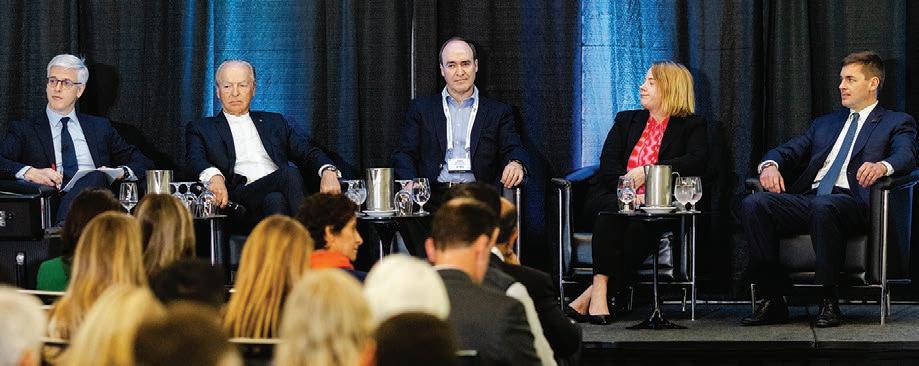
A panel of financial experts discuss the mining investment climate at the Prospectors and Developers Association of Canada convention in Toronto. PROSPECTORS AND DEVELOPERS ASSOCIATION OF CANADA
in
Ontario’s Critical Minerals Powering the Electric Vehicle Revolution Ontario session held at the Energy Transition Metals Summit WASHINGTON D.C. Monday, April 29, 2024 10:10 a.m. – 10:55 a.m. ai17109617269_Final_CriticalMineralsAd_NortherMiner_5x8_20240320.pdf 1 03/20/2024 3:08:47 PM
Juniors P15 >
depth


M LONDON, P.ENG, MBA EXECUTIVE DIRECTOR CANADIAN CRITICAL MINERALS & MATERIALS ALLIANCE (C2M2A)

DR. GRANT S. BROMHAL SENIOR SCIENCE ADVISOR US DEPARTMENT OF ENERGY


ABIGAIL HUNTER DIRECTOR AMB. ALFRED J. HOFFMAN CENTER FOR CRITICAL MINERALS STRATEGY
JOHN FENECK PRESIDENT FENECK CONSULTING, LLC
RYAN CASTILLOUX MANAGING DIRECTOR ADAMAS INTELLIGENCE





ALEX JACQUEZ
SPECIAL ASSISTANT TO THE PRESIDENT FOR ECONOMIC DEVELOPMENT AND INDUSTRIAL STRATEGY WHITE HOUSE NATIONAL ECONOMIC COUNCIL

MELBYE EXECUTIVE VICE PRESIDENT URANIUM ENERGY CORP.
SPONSORS


MARTIN TURENNE PRESIDENT AND CEO FPX NICKEL



12 APRIL 2024 | THE NORTHERN MINER www.northernminer.com
TIM GITZEL PRESIDENT AND CEO CAMECO CORPORATION
ROB MCEWEN CHAIRMAN AND CHIEF OWNER MCEWEN MINING
ABBY WULF EXECUTIVE CHAIR DEPARTMENT OF ENERGY
GEORGE PIRIE MINISTER OF MINES ONTARIO MINISTRY OF MINES
ROBERT QUARTERMAIN CO-CHAIRMAN DAKOTA GOLD DANIEL CHIEF
DR. OTHON MONTEIRO MARKET ADVISOR US DEPARTMENT OF ENERGY
JOE SOPCISAK TECHNICAL INTEGRATION OFFICER DEPARTMENT OF DEFENSE
ANGELINA MEHTA GENERAL MANAGER RIO TINTO ALUMINIUM
TINA JEFFRESS GROUP MANAGER PANASONIC
IAN
BRENT GILCHRIST PRESIDENT, JDS RESOURCES INC. JDS GROUP OF COMPANIES
WILLIAM SHERRIFF EXECUTIVE CHAIRMAN ENCORE ENERGY CORP.
SCOTT
ALEX FITZSIMMONS HEAD OF GOVERNMENT AFFAIRS SILA


MARK SELBY


ADRIAN O’BRIEN DIRECTOR OF MARKETING AND COMMUNICATIONS MIDNIGHT SUN MINING

ANGELA JOHNSON VP CORPORATE DEVELOPMENT & SUSTAINABILITY FARADAY COPPER


JOCELYN DOUHÉRET DIRECTOR, MINING POLICIES MINISTRY OF NATURAL RESOURCES AND FORESTS

TREVOR WALKER PRESIDENT & CEO FRONTIER LITHIUM
KILLIAN CHARLES PRESIDENT AND CEO BRUNSWICK EXPLORATION

SCAN FOR
HTTPS://EVENTS.NORTHERNMINER.COM/ ENERGY-TRANSITION-METALS-SUMMIT-2024/




GLOBAL MINING NEWS THE NORTHERN MINER | APRIL 2024 13
ADAM HAWKINS PRESIDENT GLOBAL EXTERNAL
DANIEL ENDERTON CHIEF STRATEGY OFFICER KOBOLD METALS
JOHN CASH CHAIRMAN OF THE BOARD OF DIRECTORS AND CEO UR-ENERGY INC.
TERRY LYNCH CEO POWER NICKEL INC.
ANDY LEYLAND MANAGING DIRECTOR SUPPLY CHAIN INSIGHTS
SYLVAIN LÉPINE GENERAL DIRECTOR NQ MINING INVESTMENT
ZACK VALDEZ CHIEF OF STAFF U.S. DEPARTMENT OF ENERGY (DOE)
JUDY BROWN HEAD OF EXTERNAL AFFAIRS SOUTH32
CEO & DIRECTOR CANADA NICKEL COMPANY INC.
NADIA MYKYTCZUK CEO AND PRESIDENT MIRARCO
FITZSIMMONS SPONSORS
AGENDA
Junior miners see short-selling ‘epidemic’
BY ALISHA HIYATE
Junior miners say recently proposed new rules about short-selling could help stem the bleeding in their stocks, which are especially vulnerable to the practice.
e January proposal by a Canadian regulator would apply to “hard-to-borrow” stocks like junior miners. Before shorting such securities, traders would be required to con rm there is stock available to borrow or the short sale would be prohibited.
“ ey’re basically going to hold the brokerage rms accountable,” Kerry Knoll, chairman of Generation Mining (TSX: GENM) said of the proposed amendments by Canadian Investment Regulatory Organization (CIRO).
“People can’t just call up and short and then go looking for the stock,” he said on March 4 at the Prospectors and Developers Association of Canada (PDAC) convention in Toronto.
“With juniors, you frequently can’t nd the stock to borrow. I have never shorted one, but I’ve tried many times. And when I have tried, I call around and see if anybody can borrow the stock and it’s always ‘no.’”
Shorting is when traders borrow a security to sell into the market, hoping to buy it back at a lower price and pocket the pro t before returning the stock to its owner. It’s basically a bet that a stock’s price will go down. Junior mining stocks have been targeted by short-sellers because the market as a whole has been trending downward. However, because of low trading volumes in the sector, shorting can easily dev-
astate a junior’s stock price, leading to calls for di erent treatment of low-liquidity equities.
Knoll says Generation’s stock price was cut in half over a period of weeks by shorting activity during a time of low trading activity in shares. e company holds the development stage in Ontario.
“Suddenly every day with one second to go, somebody sold some amount of stock, maybe 300 shares, 500 shares and closed it down a penny or two,” he said. “ is went on for weeks and weeks.”
Short-sellers want to trade the stock down at the end of the day so they’ll be under less pressure to buy back the stock and cover their position, he said.
Chuck Fipke, who discovered Canada’s rst diamond mine Ekati
with Stu Blusson, says he’s also noticed unusual trading in his current venture, Cantex Mineral Development (TSXV: CD), and late-day low-ball bids meant to drive down the company’s share price.
Cantex’s Rackla North project in the Yukon hosts North America’s highest-grade silver-lead-zinc deposit. e company discovered early last year it also hosts very high grades of critical mineral germanium, used in solar panels, chips, and military applications, and production of which is dominated by China.
e stock rose, Fipke says, before “short-sellers knocked it down.”
But he admits he can’t prove what he describes as an “epidemic of short-selling” that’s plaguing juniors.
“I’m a geologist, hey, my job is I look for mineral deposits,” he said by phone ahead of PDAC, adding it’s up to the regulators to investigate the issue.
“I can’t do everything,” he said, adding he manages drilling of every hole at the project, which has seen 60,000 metres drilled since 2016. “It’s easy to drill, but it’s hard to drill in the right place.”
Junior market investors say the problem has emerged since Canadian regulators removed the uptick rule in 2012 that prohibited short sales at a lower price than the previous trade.
Knoll says the outsized e ects legal short-selling has on juniors could easily be remedied by bringing back the tick test. (He also says it’s one main reason Australia, which does have an uptick rule, has a stronger junior mining market than Canada’s.) But that would be counter to the interests of banks, which make money o every trade — including short sales — on their platforms and have more freedom to trade as they please without it.
CIRO proposal
Amended rules proposed by CIRO would require traders to determine if the stock they want to short is hard to borrow. If it is, they’d have to show that there’s stock available to borrow, or go as far as “pre-borrowing” the stock. If there is no “reasonable expectation” they will be able to settle the trade by the settlement date (within two days — on May 27 this changes to within one day), they can’t short the stock. As part of this requirement, CIRO sees dealers compiling lists of “easy to borrow” securities. e proposal is open for comment until April 12. In addition,
CIRO and CSA have established a working group looking at concerns raised by commenters through a previous consultation, a CIRO spokesperson told e Northern Miner by email.
However, the junior mining sector’s most outspoken advocate against illegal short-selling, Terry Lynch, called the proposals “woeful,” saying they will have no impact.
“ e reason why is that CIRO allows banks like CIBC and TD and others to rent (trading) pipe to o - and onshore hedge funds,” the founder of Save Canadian Mining wrote in a comment on e Northern Miner’s website.
“ ese hedge funds automatically can trade ‘short exempt,’ meaning they can short stocks without ( rst) borrowing.”
Lynch, the CEO of Power Nickel (TSXV: PNPN; US-OTC: PNPNF), started Save Canadian Mining in 2019 to uncover proof of illegal or uncovered short-selling in junior mining.
He says that only 40% of trading in Power Nickel stock is on the TSX Venture, with 60% taking place on less transparent “dark exchanges” on which institutional investors can trade out of the public eye.
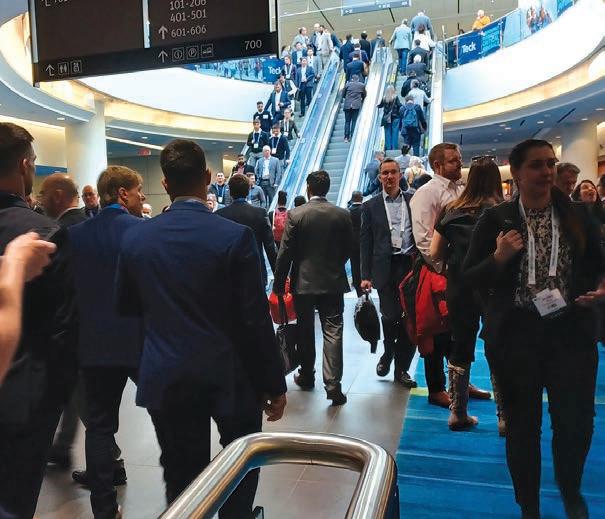
Elsewhere at PDAC, tra c in the Investors Exchange at the mineral exploration-focused show, which opened on March 3 had been brisk — even at nickel and lithium juniors’ booths. Both metals sharply declined last year — lithium in the neighbourhood of 80% and nickel 40%.
One nickel junior attributed the steady stream of booth visitors to “bargain hunting,” while a lithium junior expressed hope that the lithium price, which has been rising recently, has bottomed. TNM
Copper tops banker panel’s picks for 2024
 BY BLAIR MCBRIDE
Copper is a good bet to outperform other major metals over the next year, senior Canadian bankers told delegates at the world’s largest mining industry gathering in March.

“ e fundamentals for copper in the near and long term are fantastic,” Ilan Bahar, managing director and co-head of Global Metals & Mining at BMO Capital Markets, said on March 4 at the Prospectors and
Developers Association of Canada (PDAC) convention in Toronto.
“I think we’ve seen extraordinary demand for copper equities. It’s a good time to buy copper equities and see them rise (though) there are some supply constraints with some mines.”
Bahar was one of four nance gurus on an investment banker panel that kicked o the “Mineral nancing and the banking ecosystem” talk at PDAC with an online audience poll on which metal will outperform over the next year.
Copper, which before press time sat at US$4.02 per lb., also topped the audience’s picks, followed by gold, uranium, lithium and nickel. Ryan Latinovich, global head of mining & metals at RBC Capital Markets, said the copper thematic has a broad and deep following, with a history of underinvestment.
“We’ve got a structural de cit that will require investment of about $2 billion over the next few years, and there’s (copper’s importance to)
14 APRIL 2024 | THE NORTHERN MINER www.northernminer.com MYRA FALLS MINE LTD. SALE AND INVESTMENT SOLICITATION PROCESS On December 18, 2023, Myra Falls Mine Ltd. (“MFM”) sought and obtained an initial order (the “Initial Order”) from the Supreme Court of British Columbia (the “Court”) under the Companies’ Creditors Arrangement Act, R.S.C. 1985, c. C-36, as amended, granting a stay of proceedings in favour of MFM and appointing FTI Consulting Canada Inc. as monitor (in such capacity, the “Monitor”). Pursuant to an order granted by the Court on February 27, 2024 (the “SISP Order”), MFM, with the assistance of FTI Capital Advisors – Canada ULC (the “Financial Advisor”), and under the supervision of the Monitor, has initiated a sale and investment solicitation process (“SISP”) to solicit interest in, and opportunities for, a sale of all or substantially all of the property or the business of MFM, or an investment in MFM or the business of MFM, or a combination thereof. The SISP is a two-phased process. Qualified interested parties who wish to submit a bid in the SISP must deliver a nonbinding letter of intent to MFM, the Financial Advisor, and the Monitor by no later than 12:00 p.m. PDT on April 12, 2024. Binding offers must be submitted by no later than 12:00 p.m. PDT on May 24, 2024 in accordance with the SISP Order. Copies of the Initial Order, the SISP Order and all related materials can be obtained from the website of the Monitor at: http://cfcanada.fticonsulting.com/myrafalls/. Those interested in participating in the SISP should contact the Financial Advisor to receive additional information at: FTI Capital Advisors – Canada ULC 79 Wellington Street West Suite 2010, P.O. Box 104 Toronto, ON M5K 1G8 Attention: Richard Kim Email: Richard.Kim@fticonsulting.com Copper P36 > indepth
PDAC | CIRO proposal floats ‘pre-borrowing’ bid for some low-volume shares
PDAC | Carbon, risk factors could spur China-West markets split
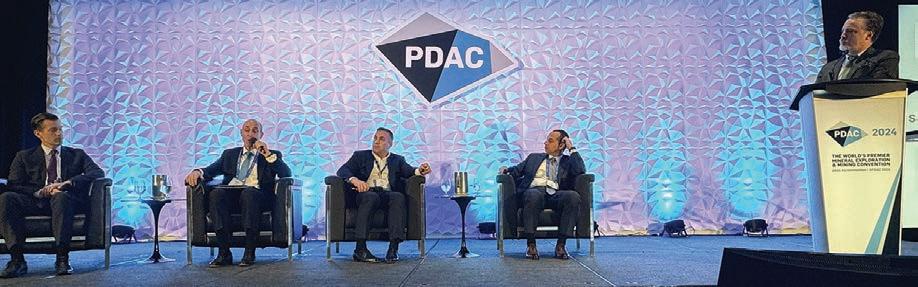
At the Prospectors and Developers Association of Canada convention in Toronto. ALISHA HIYATE
The bankers panel discusses the potential performance of various metals over the next year. URVISH MORE
indepth
Show the public that minerals, tech are solutions for net zero, says Seequent panel
PDAC 2024 | Industry ‘talks of old times’ as youth focus on work-life balance
BY BLAIR MCBRIDE
Instead of reminiscing about the old times of hunting for minerals in the bush, miners need to talk up tech opportunities to attract young people to mining, industry panelists told an event in downtown Toronto on March 4.
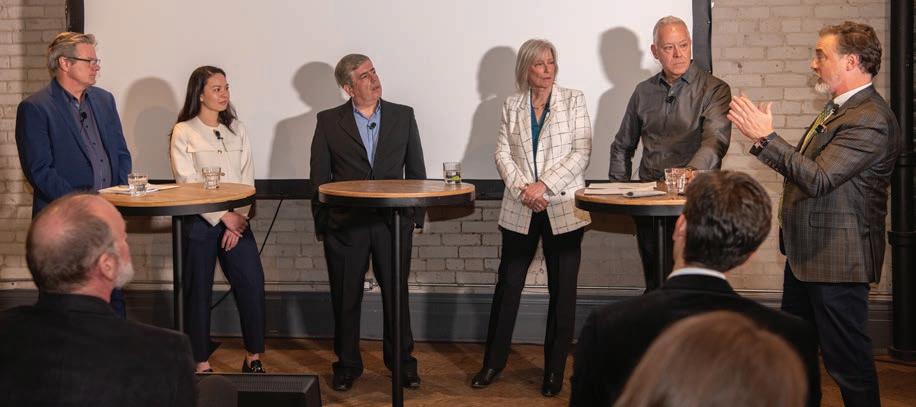
Organized on the sidelines of the Prospectors and Developers Association of Canada convention by mining so ware company Seequent, a ve-person panel discussed the challenge of achieving net zero mining, leveraging new technology, including arti cial intelligence, and attracting new talent. Seequent develops earth modelling, geo-data management and team collaboration so ware for the mining, energy and engineering sectors.
Sally Goodman, vice-president of generative exploration with Newmont (TSX: NGT; NYSE: NEM) recalled attending a recent panel where geologists acknowledged the declining interest in geology programs, but then recounted the “good old days” of prospecting in the bush for weeks on end.
“ e industry isn’t listening,” she said. “Young people are turned o of those old stories. It doesn’t have to be done that way anymore at remote sites. If we can reduce the amount of time people are away from their families, that would help bring people back in.”
Poll data of young Canadians published in an October 2023 report by the Mining Industry Human Resources Council found the industry ranks lowest in a list of impressions across job sectors. Among 1,501 Canadians polled,
> Juniors from P11
an important role, but it’s not the source to rely on when you’re raising capital,” the chair of Lundin Mining (TSX: LUN) said. “But especially when you’re getting up and going, they can really help your liquidity.”
Diverse funding
Murray, who said RCF’s 10-year funds invest in projects for about four to ve years, suggested that companies need to diversify their funding sources and educate themselves on other options outside of retail.
“ ere are other sources of capital across the full capital stack. We’ve named quite a few of the di erent sources — the issue would be that the junior companies are not aware of that, not connected into that. at is the next step — to not rely on the public markets.”
Companies that have been able to raise money have tapped other sources, including family o ces, private equity, streaming and royalty deals, o ake agreements and in the battery metals space, automakers and battery manufacturers. However, most of these sources aren’t suited to or available for earlystage exploration.
Outliers
Even in this environment, some companies are getting funding. Generally, they’re those that are led
19% held a “positive” view of mining, 36% “neutral” and 20% “negative.” Although 65% believe mining jobs pay well, only 26% think the work is safe.
“We have to start listening to them,” panel moderator and Northern Miner Group president Anthony Vaccaro said.
Goodman also explained that the industry should try to promote remote technology applications because young people are already used to gaming with people around the world.
“We need to start making mining companies feel like tech companies,” said Shelby Yee, co-founder and CEO of mining technology rm Rockmass. “How can we combine those two worlds?”
Promise and peril of AI Clever and e cient use of technology was a near-constant topic among the panelists, and Vaccaro
by teams with past successes under their belts, and have truly good deposits in workable jurisdictions.
“You have to have scale and you have to have grade,” Lundin told panel moderator David Halkyard, head of credit strategy at RCF. “And you have to prove that you have something that your peers don’t have. It’s tough to do.”
Lundin, previously CEO of Lundin Group companies Josemaria Resources and Filo Corp. (TSX: FIL), acknowledged that he’s been fortunate in raising money with the support of family investment and his father Lukas usually providing the lead order in nancings.
e group’s track record of adding value and ability to keep share dilution at a minimum is also key, he said.
Capstone Copper (TSX: CS; ASX: CSC) CEO John MacKenzie said the company, which operates mines in the United States, Mexico and Chile, started o in the private markets where there was more patience to stick with the company through permitting and invest during a down cycle.
“ e public markets weren’t really open. ey’d just been through the period of 12-15 years ago, when the industry heavily over-invested and had massive writedowns,” MacKenzie said.
“A lot of mining companies lost their licence to reinvest. To me, that was unfortunate, because that is the right time to be starting the
asked them how arti cial intelligence (AI) can be used for future exploration.
Goodman said that AI needs to be deployed to do the “grunt work” as it applies the concepts in the minds of geologists.
But AI’s possibilities also bring signi cant risk, such as with data security, said Marcelo Godoy, chief technology o cer with AngloGold Ashanti (NYSE: AU).
“When AI engines start digesting large volumes of company data, there is a risk of con dential information being leaked,” he said. “It becomes critical to segregate information properly.”
Yee said mining companies should focus on low-risk, high-reward opportunities such as building up knowledge based on data, so that AI’s uses can be more manageable.
Faster, more remote
A good, rewarding place to start
with data is speeding up the process of geological modelling, said Seequent CTO John Vandermay.
“ e normal cycle of drilling and lab analytics, resource modelling and economics — that can take a whole year or so. at’s just not e cient,” he said. “We need to normalize that data and put it on the cloud and make it accessible.”
One challenging detail about exploration that demands speci c solutions is that many mineral deposits tend to be deeper down and more covered than in previous years. AI must be able to correctly narrow down exploration targets, Godoy said.
Rob Ferguson, Seequent’s director of mineral exploration and resource management, said the COVID-19 pandemic helped unveil the possibilities of advanced technology. Being at a work site in-person is no longer always necessary, and cloud technologies can easily
manage and transmit drilling data. “( ere can be) more use of drones, ying lower to the ground to help us nd new deposits,” he said.
Reaching net zero
e panelists also discussed how meeting net zero milestones by 2050 will require new approaches of which the industry isn’t necessarily familiar.
“We think we know how to do things because that’s how we’ve always done them. We’re very risk averse,” said Goodman.
She explained that large mining companies have a lot of buying power and they should leverage that into innovative uses of technology that help reduce emissions.
“We can challenge the vendors that we work with about the next generation and what’s coming down the pipeline. We have to implement some of those technologies, knowing some of them will fail. at’s the only way we’ll help push the industry along,” she said.
Vaccaro then asked the panel just how more people can come to understand that, since the public sees mining as part of the problem of carbon emissions.
Godoy responded that mining critical minerals as a solution to carbon emissions is nally part of the conversation. And the industry is leading by example, with many of the largest companies committing to achieving net zero by 2050 and deploying electric or hybrid technologies at their sites.
“Now we have whole groups looking at solutions at every single project we have, whether it’s wind farms or solar or micro grids,” he said. TNM
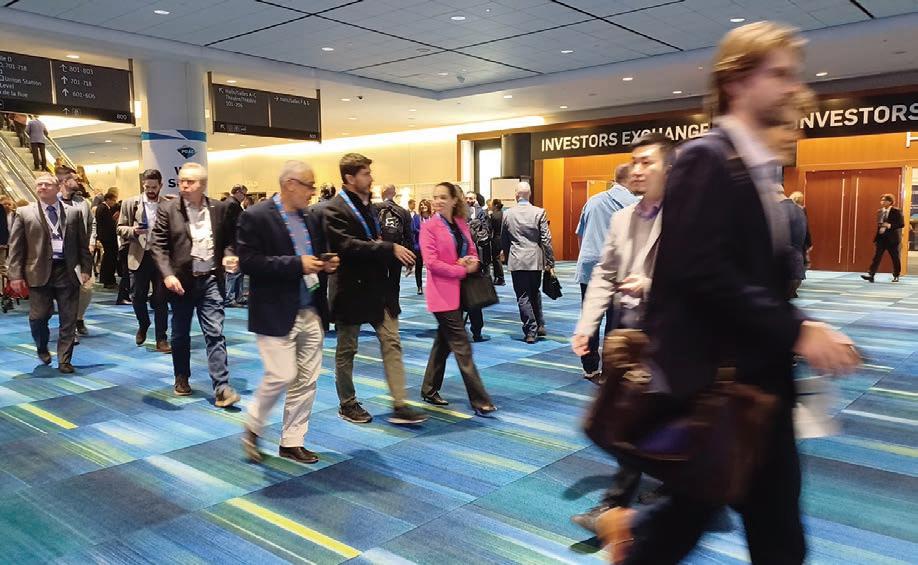
next phase of projects. Being private allowed us to do that.”
Aussie advantage
Australia’s mining sector, both at the junior and senior levels, has been much stronger than Canada’s despite the same tough nancing conditions because pensions invest more and timeframes for permits are more predictable, said Murray, an Australian who recently moved to the U.S.
“I see a big di erence between Australia and Canada in the sense that every Australian owns the biggest mining company in the country (BHP),” Murray said, referencing e Northern Miner’s March cover story on Lassonde and Frank Giustra’s critique of Canadian pension funds for their lack of support of domestic mining.
“ e mining industry is such a huge part of the Australian psyche — we know how important it is to
the country.”
Canada’s federal government, which now wants to build up the country’s critical mineral supply, is clueless about what’s been lost and how to shorten timelines, Lassonde said.
“ ey really have no idea of the impact of their own policies on their country’s industry,” he said. “First of all, you’ve got to have miners, OK? You’re not going to get a critical mineral policy without mines.” TNM
GLOBAL MINING NEWS THE NORTHERN MINER | APRIL 2024 15
From left: Rob Ferguson, Shelby Yee, Marcelo Godoy, Sally Goodman, John Vandermay and Anthony Vaccaro. SEEQUENT
Outside the Investors’ Exchange at PDAC 2024. ALISHA HIYATE
indepth
Scott Berdahl and Ella Cullen named Young Mining Professionals of the Year
HONOURS | Award celebrates leaders under the age of 40
BY NORM TOLLINSKY
The winners of the Young Mining Professionals’ (YMP) Eira omas and Peter Munk Awards for 2024 are Scott Berdahl of Whitehorse and Ella Cullen of Lisbon, Portugal.
e YMP awards recognize two young mining professionals — a male and a female — under the age of 40 who have demonstrated exceptional leadership skills and innovative thinking for their companies and shareholders.
Nominees from a public submissions process were judged by a selection committee consisting of YMP directors from chapters in Toronto, Montreal, Vancouver, and London (U.K.) as well as senior executives of e Northern Miner Group. e awards will be presented in the fall by Mark Bristow, president of Barrick Gold (TSX: ABX; NYSE: GOLD).
Sponsoring the awards for 2024 are Barrick Gold, Cassels, KPMG and e Northern Miner
Scott Berdahl
Growing up in a prospecting family in the Yukon wilderness, Scott Berdahl has always been around mining. He says he was eight or nine years old when he rst went out to break rocks and “around twelve” when he got his rst job prospecting. Now the co-founder and CEO of Snowline Gold (TSXV: SGD;
US-OTC: SNWGF) oversees district-scale, green eld gold exploration in the Yukon.
Unlike his father Ron, a self-educated prospector, Berdahl has undergraduate degrees in geology and writing from the Massachusetts Institute of Technology, a master’s degree in Earth Sciences and Engineering from King Abdullah University in Saudi Arabia and an MBA from the Institut Européan d’Administration des A aires, which has campuses in France and Singapore.
Berdahl believes MIT accepted him because the prestigious American school “probably didn’t get many applications from the Yukon,” but his immersion in the mining industry from an early age and his high school grades couldn’t have been overlooked.
He returned home to Whitehorse and the family prospecting business a er completing his undergraduate degree. But when the mining industry went into a downturn several years later and money was scarce, he lucked into a four-week writing internship at a science conference in Saudi Arabia. Once there, he applied to and was accepted into a two-year Earth Sciences and Engineering master’s program at King Abdullah University.
e MBA also made sense, he remarked, because “prospecting is just as much about business as it is about geology.”
Returning to Canada in 2018,
> D’Souza from P6 they o en act in blatantly self-interested ways.
We are facing an unprecedented surge in demand for minerals and metals but no matter how amazing the resource, without societal trust it will remain in the ground, and we can’t develop mines faster than we can build credibility and trust. e old-fashioned reputational management playbook of messaging, de ection, and neutralization will not build trust. Instead, our industry must be willing to unlearn past habits. We must accept that our world is a changed place, especially since the COVID-19 pandemic. Public trust has been further eroded and the absence of controversy around a company does not a rm good performance. Civil society’s relationship with business has shi ed and it’s become resistant to reasoned argument. Polarization
Berdahl spent a little more than a year working for a junior miner in Vancouver before returning to the Yukon to breathe some life into the Berdahl family’s extensive portfolio of properties.
“I spent most of 2019 chasing various majors trying to sell some of our projects, but the best o er we got was an opportunity to vend them into a shell company, which allowed us to hold onto an equity stake and a management opportunity for myself as CEO,” he recalled.
Snowline has a huge land package of 3,300 sq. km that hosts diverse mineralization styles. e Valley Zone at its Rogue project, a reduced intrusion-related gold deposit 223 km east of Mayo, is the company’s primary target and best prospect for mine development.
e Valley discovery is similar in mineralization style to Victoria Gold’s (TSX: VGCX) Eagle mine in the Mayo mining district and Kinross Gold’s (TSX: K; NYSE: KGC) Fort Knox mine in Alaska, but the Snowline project hosts very high concentrations of gold-bearing quartz veins and very high grades, Berdahl said.
At year end 2023, Snowline had $35 million sitting in its treasury, strong investor support, including a 9.9% stake by B2Gold (TSX: BTO; NYSE: BTG), and plans for a 2024 drilling program with four drill rigs.
Last year, Snowline won the Yukon government’s Robert E. Leckie Award for Excellence in Environmental Stewardship for its progressive reclamation of surface disturbances, and its collaboration with the Nacho Nyak Dun First Nation from whom it leases a 30-kW solar array providing clean energy at its camp.
Ella Cullen e 2024 winner of the YMP’s Eira omas Award, Ella Cullen, was born and raised near Whanganui, New Zealand, “in the middle of
“Companies with female leadership and diverse teams are more profitable and perform better on sustainability.”
nowhere” on her parents’ farm.
“We raised a lot of animals, including lambs, calves, and kids,” she said. “We had full freedom to be adventurous and creative and had to entertain ourselves, which is a bit of a novelty in this day and age. I’m super grateful for such a childhood. It feels like magic to look back at that.”
Today, Cullen lives in Lisbon and travels the world as co-founder and chief marketing o cer of Minespider, a technology company with a traceability platform for mining and raw materials tracking. e Minespider solution employs blockchain, AI and internet of things (IoT) technologies to capture and communicate complex supply chain data. Founded in 2018 with the goal of eliminating con ict minerals from supply chains, Minespider empowers responsible companies and organizations around the world to con rm and communicate their compliance with transparency and ESG principles.
For example, Minespider’s work with Brazilian gold aggregator, Fenix DVTM, certi es the provenance of its gold, keeping its supply chain free of material from illegal mining operations in the Amazon with their ill e ects on the environment and Indigenous people.
“Prospecting is just as much about business as it is about geology.”

Customers include mining companies like Peruvian-based Minsur, a world leader in tin mining, downstream automobile manufacturers like Ford, Volkswagen and Renault, as well as technology companies like Google and Cisco. Minespider is a member of several Europebased consortia planning for the recycling of battery materials and supplies tracking technology for the Raw Materials Radar consortium promoting safer and more responsible artisanal and smallscale mining in West Africa.
“In ve years, traceability solutions like Minespider’s will be a must-have, not a nice-to-have anymore,” Cullen predicts.
ere were no headframes anywhere near Whanganui and no reason to think Cullen would end up in the mining industry. She earned a bachelor’s degree in international business and marketing at the University of Otago in New Zealand and SDA Bocconi School of Management in Italy. Graduate studies for a master’s degree in business and marketing followed at the Universidade Nova de Lisboa and the Copenhagen Business School.
and misinformation ourish. Deglobalization and protectionism are increasing, and the voices of local communities have strengthened.
People-centric approach at means individual company actions and industry-wide collaboration, goodwill, and perseverance matter because it will be messy. We need to be in it for the long haul as trust can’t be built through commitments to terse, forgettable pledges, but through daily actions that demonstrate respect and an enthusiasm to learn. We must foster true curiosity about the impacts of mining — warts and all — but with genuine respect and humility, soliciting perspectives from those a ected.
To start, we must be prepared to learn and focus on listening. is calls for a deep-rooted change in our mindset from the comfortable inward-looking product-cen-
tric narrative to an outward people-centric approach, striving to better understand and address existential impacts instead of trying to convince people of mining’s bene ts. Miners should be willing to collaborate more and be ready to work with critical and impactful stakeholders (not just the more friendly ones) to genuinely learn from each other and de ne what “good” looks like.
To build legitimacy, we must collectively examine and agree on our societal utility and then consistently deliver on responsible mining commitments — without greenwashing, workarounds, or other excuses. A genuine willingness for engaging in joint decision-making and developing more sustainable, mutually bene cial (not patronizing or transactional) partnerships with a wider group of stakeholders will help build resilient and reciprocal relationships.
Such stakeholder engagement needs to be a mindset as well as a process.
Trust is essential for a free, democratic, and functioning society. It is the true currency of life and business — the basis for almost everything we do. If we want to develop and nurture enduring trust with a more socially conscious and tech-enabled society, our industry needs to re-imagine itself and focus on demonstrating a genuine sense of collective societal purpose. Building societal trust is not about assessing risk and returns and is not an ordinary process. It won’t be easy. So let’s get to work. TNM
Kevin PCJ D’Souza is a mining ESG executive and advisor with more than 30 years of experience in the industry. He has worked in more than 50 countries for juniors, midtier, and major mining companies. kevinpcjdsouza@gmail.com
“Working as a woman in the mining industry can have its challenges,” she acknowledged. “For example, there might be a situation where female members of a team are asked to take notes, schedule meetings or get co ee. ese are the kind of biases that can sneak into the workplace. I remember one time I was the only female in a client meeting when someone asked for co ee, and everybody looked at me. Fortunately, my co-founder and CEO, Nathan Williams, stood up and said, ‘I’ll take the order. What does everyone want?’ I’m very fortunate to work in such an open-minded company.”
At the same time, Cullen notes, being a woman in the industry brings opportunities, such as being more memorable when meeting potential customers at conferences. Women, she predicts, will play an increasingly important role in the mining industry as she says that companies with female leadership and diverse teams are more pro table and perform better on sustainability.
In addition to her 2024 Eira omas Award from YMP, Cullen was recognized as one of 100 Global Inspirational Women in Mining by the organization Women in Mining UK in 2022. TNM
16 APRIL 2024 | THE NORTHERN MINER www.northernminer.com
Ella Cullen
Scott Berdahl
donedeals
Lifezone lands US$50M financing
NICKEL | Also receives refinery licence
BY JACKSON CHEN
Aconsortium of marquee mining investors are backing Lifezone Metals (NYSE: LZM) and the development of its agship Kabanga project in northwest Tanzania, which is on track to reach the feasibility stage later this year.
On March 21, an investor group led by Harry Lundin (Bromma Asset Management) and Rick Rule signed a binding agreement with the company for a US$50-million convertible debenture nancing.
e debentures will bear annual interest equal to the secured overnight nancing rate (currently 5.3%) plus 4%, and are convertible into Lifezone’s common shares.
e nancing comes as sliding nickel prices over the past year have rendered some mines, particularly in Australia, unpro table.
Lifezone went public last July following a business combination between special purpose acquisition company GoGreen Investments and Lifezone Holdings Ltd.
e company pairs one of the world’s largest and highest-grade undeveloped nickel sulphide deposits in Kabanga with a proprietary processing technology, known as Hydromet, to produce cleaner metals in support of growing demand for batteries.
Lifezone was awarded a mining licence for Kabanga in 2021 by the Tanzanian government, a key partner on the project alongside BHP (NYSE: BHP; LSE: BHP; ASX: BHP), which has committed US$100 million in support.
Since then, it has made highgrade discoveries at Kabanga and posted a signi cant resource update in late 2023. e deposit is now estimated to contain 881,000 tonnes of nickel metal within 43.6 million tonnes of measured and indicated resource grading 2.02% nickel. Another 391,000 tonnes (17.5 million tonnes at 2.23% nickel) are in the inferred resource category.
Refinery licence
Lifezone also announced it has received a multi-metals processing licence from the government for its facility at Kahama, located 340 km southwest of Kabanga. e site, situated within a newly established special economic zone, stands to bene t from the legacy infrastructure of Barrick Gold’s (TSX: ABX; NYSE: GOLD) former Buzwagi gold mine next door.
With the licence, the $644-million market cap company will be able to produce nished metals in-country, potentially reducing capital and operating costs, as well as reducing costs associated with transport of concentrate or other intermediate products. TNM
Lithium Americas gets US loan for Thacker Pass
NEVADA | US$2.3B in DOE funds for process plant
BY BRUNO VENDITTI
Lithium Americas (TSX: LAC; NYSE: LAC) announced on March 14 that it has received a conditional commitment loan of nearly US$2.3 billion from the United States’ Department of Energy (DOE) to nance the construction of processing facilities at its acker Pass project in Nevada.
e plant will target initial production of 40,000 tonnes of battery-grade lithium carbonate per year. e acker Pass operation is expected to create around 1,800 direct jobs during its three-year construction period and 360 jobs in operations over its 40-year mine life.
e build is expected to cost US$2.9 billion, according to a company update in March.
is funding comes under the Advanced Technology Vehicles Manufacturing Loan Program. It represents the largest such nancing to a mining company from the DOE’s Loan Programs O ce, amid increasing e orts to bolster domestic supplies of critical minerals. General Motors, which has invested US$650 million in Lithium Americas, has an exclusive o ake agreement for 100% of the lithium output from the mine for up to 15 years a er expected production starts in 2027.
acker Pass could become
Riley Gold inks $20M earn-in with Kinross
BY JACKSON CHEN
Kinross Gold (TSX: K; NYSE: KGC) has signed an option to earn up to a 75% interest in Riley Gold’s (TSXV: RLYG; US-OTC: RLYGF) Pipeline West/ Clipper (PWC) project in Nevada. e gold major will spend at least US$20 million on exploration in two stages, and is also taking a 9.9% stake in Riley.
Under the agreement, Kinross can earn an initial 60% interest and assume operatorship of PWC by spending at least US$10 million.
It can earn an additional 15% by spending another US$10 million within two years of exercising its initial option.
e news sent shares of Riley Gold up 45% to 22¢ on March 14, near 52-week high of 24¢, before easing down to 19¢ at press time. It has a market capitalization of $6.1 million.
Located in Lander County, PWC consists of 24.7 sq. km in the heart of the gold-producing Cortez District, also known as the Battle Mountain-Eureka trend. e property is prospective for Carlin-type, disseminated and replacement gold deposits, and adjoins Nevada Gold Mines, a joint venture between Barrick Gold (TSX: ABX; NYSE: GOLD) and Newmont (TSX: NGT; NYSE: NEM).
Once Kinross earns its initial stake, a Nevada-registered JV will
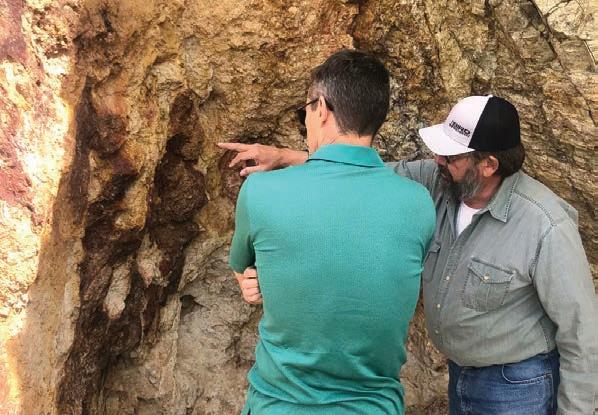
be established. A er the second phase, if the option is exercised or terminated, the parties will fund ongoing operations based on their proportionate interests.
“We are excited to partner with Kinross on our PWC project. eir global proven track record speaks for itself as well as speci c regional expertise that includes ownership and operations of two gold mines in Nevada (Round Mountain and Bald Mountain),” Riley Gold’s CEO Todd Hilditch said in a release. Under a dilution provision, if Riley’s interest in the JV company declines to 10% or less, the company’s interest will then be converted to a 2% net smelter return royalty.
In addition to the earn-in, Kinross
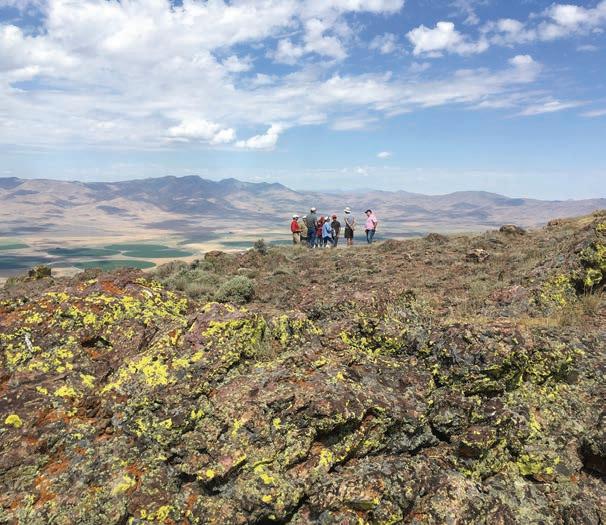
Lithium Americas’ Thacker Pass project in Nevada. LITHIUM AMERICAS
North America’s largest source of lithium for electric vehicle batteries and would support U.S. President Joe Biden’s e orts to reduce dependence on Chinese supplies of the metal.
Currently, about 65% of lithium supplies are processed in China, although U.S. lithium production is projected to increase 13-fold thanks to tax credits and other subsidies provided in the In ation Reduction Act of 2022, Energy Secretary Jen-
nifer Granholm said on March 14 . e acker Pass clay-hosted deposit hosts about 385 million measured and indicated tonnes averaging 2,917 parts per million (ppm) lithium for 6 million tonnes of lithium carbonate equivalent (LCE). Inferred resources come to 147 million tonnes averaging 2,932 ppm for 2.3 million tonnes of LCE. Lithium Americas shares traded at $9.44 at press time in Toronto for a $1.5-billion market cap. TNM
Aclara signs deal with Chilean conglomerate
RARE EARTHS | US$29M deal to help develop Penco project
BY JACKSON CHEN
AAclara Resources’ (TSX: ARA) shares shot up to a near 52-week high a er the rare earth elements (REE) developer announced on March 13 a US$29 million investment deal with Chilean conglomerate CAP SA, which operates iron ore mines in northern Chile, close to Aclara’s Penco module project.
will also take a 9.9% equity interest (on a partially diluted basis) in Riley through a private placement. In total, the placement consists of up to 10 million units priced at 15¢ each for total proceeds of $1.5 million.
Drilling started at PWC in 1992, but since 1994, operators such as Agnico Eagle Mines (TSX: AEM; NYSE: AEM) and Barrick Gold (Placer Dome) generally focused on o setting early drilling that intersected gold mineralization in the lower plate of the Roberts Mountain thrust.
Results from the historical drilling include 4.6 metres grading 2.59 grams gold per tonne at 324 metres, including a high value of 3.84 grams gold per tonne at 283 metres. TNM
CAP will invest an initial US$29 million in Aclara’s Chilean subsidiary, REE Uno, in exchange for a 20% equity stake in the REE unit. CAP also has an option to invest an additional US$50 million in REE Uno for another 20% equity interest once Penco’s environmental permit is secured.
At press time, Aclara shares traded at 44¢ apiece, valuing it at $72.6 million.
“We are thrilled to partner with CAP to develop our Penco module and strategy in Chile, as well as joining e orts to start developing Aclara’s capabilities in the vertical integration of the rare earths and permanent magnets industry,” Aclara’s chairman Eduardo Hochschild said.
e investment re ects increasing momentum in the REE space in the Americas, where there are
only two producing mines: Serra Verde’s Pela Ema project in Brazil and MP Materials’ (NYSE: MP) Mountain Pass mine in California.
CAP’s investment will be paid in three tranches: US$9.7 million upon closing, US$12.5 million in January 2025 and US$6.9 million in January 2026. is initial cash gives REE Uno a pre-investment valuation of US$116.5 million.
Penco module covers a 6-sq.-km. area hosting an ionic clay deposit rich in heavy rare earths, totalling 27.5 million measured and indicated tonnes grading 2,292 parts per million total rare earth oxides (TREO), for 62,900 tonnes of contained TREO. e capital injection from CAP will support the ongoing development of Penco throughout its permitting, community relations and feasibility study phases.
e Chilean group can also invest up to 19.9% in Aclara by joining in private placements or public o erings that Aclara may make in the next three years.
In addition, the companies will form a 50/50 joint venture to develop metals and alloys for the rare earths permanent magnet industry. CAP will invest US$3 million in exchange for its 50% of the shares of the newly established JV. TNM
GLOBAL MINING NEWS THE NORTHERN MINER | APRIL 2024 17
Exploration at Riley Gold’s PWC project in Nevada. RILEY GOLD
75% of PWC
NEVADA | Gold miner can earn up to
project
projectupdates
BMC project back on permitting path
YUKON | New Indigenous review process set on KZK project
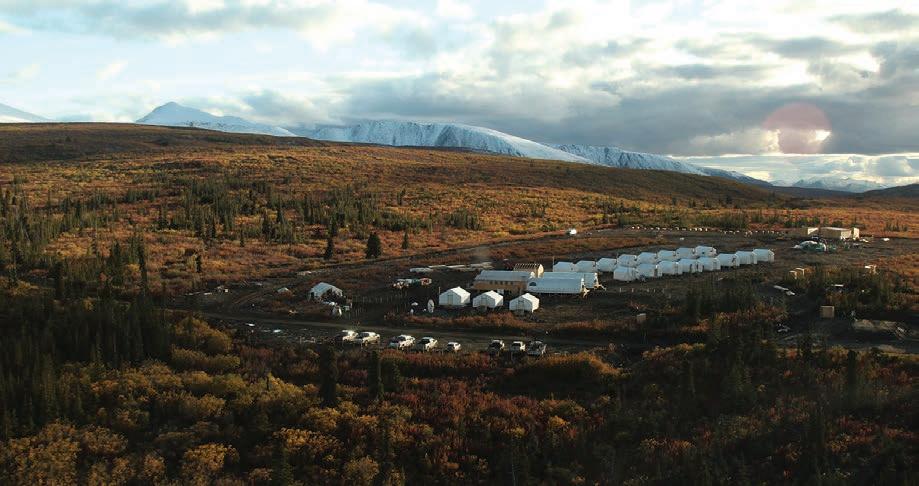 BY BLAIR MCBRIDE
Agovernment body’s decision re-opens a path to permitting for BMC Minerals’ Kudz Ze Kayah (KZK) zinc-lead-copper project in the Yukon, following consultations between governments and Indigenous authorities.
e Vancouver-based BMC, owned by private, U.K.-based rm BMC Ltd., is developing the project located 115 km southeast of Ross River. KZK was paused last year when the Kaska Nation said the federal and Yukon governments didn’t address their concerns over wildlife and the environment.
“ e decision document reapproves the project to proceed through the regulatory phase of permitting,” Allan Nixon, vice-president of external relations told e Northern Miner on March 13. “ is is very positive news. We are just in the process of reviewing it in detail as there have been some changes in a few of the terms and conditions.”
e document, issued on March 8 by a combination of federal and territorial bodies, represents a green light on BMC’s path towards developing KZK, one of the few pre-production critical minerals projects in
the Far North to advance to the permitting stage. BMC rst submitted its proposal for KZK in 2017.
Kudz Ze Kayah, or ‘caribou country’ in the Kaska language, will cost US$376 million to develop, and the open pit operation would have a nine-year life. According to a 2020 feasibility study, KZK has an a er-tax net present value (at a 7% discount rate) of US$617 million, and an internal rate of return of 45.9%. e mine would produce
7.8 million oz. of silver, 56,500 oz. of gold, 235 million lb. of zinc, 32 million lb. of copper and 56 million lb. of lead in concentrate annually during steady-state operations.
e decision document presents the outcome of talks held in February between the Yukon and federal governments, the Ross River Dena Council (RRDC), Liard First Nation (LFN) and community members. ose consultations were ordered by Yukon Supreme Court chief Justice Suzanne Duncan, who found last January that the Crown failed in its duty to consult and accommodate Kaska’s environmental concerns.
New conditions on KZK
e decision concludes that KZK should go ahead without review but
under new terms and conditions that urge close consultation with the Kaska on the project’s technical details, environmental impacts and closure plans.
Scott Donaldson, CEO of BMC, told e Northern Miner at PDAC that BMC’s next steps are addressing its permitting issues and additional consultations, with a nal investment decision on the project expected in the rst half of next year.
“I’m con dent we’ve worked very hard to adopt as many of the Kaska requests as we possibly could,” he said.
e Kaska Nation chief did not respond to a request for comment by press time.
e dispute over KZK began in June 2022, when the federal and territorial governments approved it following an environmental and socio-economic assessment.
But weeks later, the Kaska, on behalf of the RRDC announced a civil lawsuit against the governments, alleging it wasn’t properly consulted over the mine’s potential environmental impacts.
e RRDC petitioned the court to review how regulatory authorities had approved KZK, which led to a judicial hearing in Whitehorse last April. TNM
Taseko targets 2025 for first production at Florence
COPPER | Arizona ISR project has a 22-year mine life
BY JACKSON CHEN
Taseko Mines (TSX: TKO; NYSE: TGB) expects rst production from its fully permitted Florence copper project in Arizona in the fourth quarter of 2025.
e company said in March it’s moving forward with construction of the production facility, with site preparations underway.
Construction of the SX/EW plant and other infrastructure will begin in the following quarter, the British Columbia-based miner added.
“Taseko is in a very unique position heading into 2024 with a fully permitted, low-cost project that will
provide 80% growth to our North American copper production prole in the coming years,” Taseko CEO Stuart McDonald said.
Last March, the company estimated remaining capital costs for the Florence in-situ recovery project at US$232 million.
In November 2023, the U.S. Environmental Protection Agency issued the nal permit required to begin construction at Florence, which, when operational, will have an annual capacity of 85 million lb. of LME Grade A copper and a life of 22 years.
Taseko also secured another US$100 million (half of it in debt, half of it in a royalty sale) for Flor-
Global Atomic plunges as Niger’s junta expels US troops
AFRICA | Country supplies 5% of world’s uranium and one-fifth of EU supply
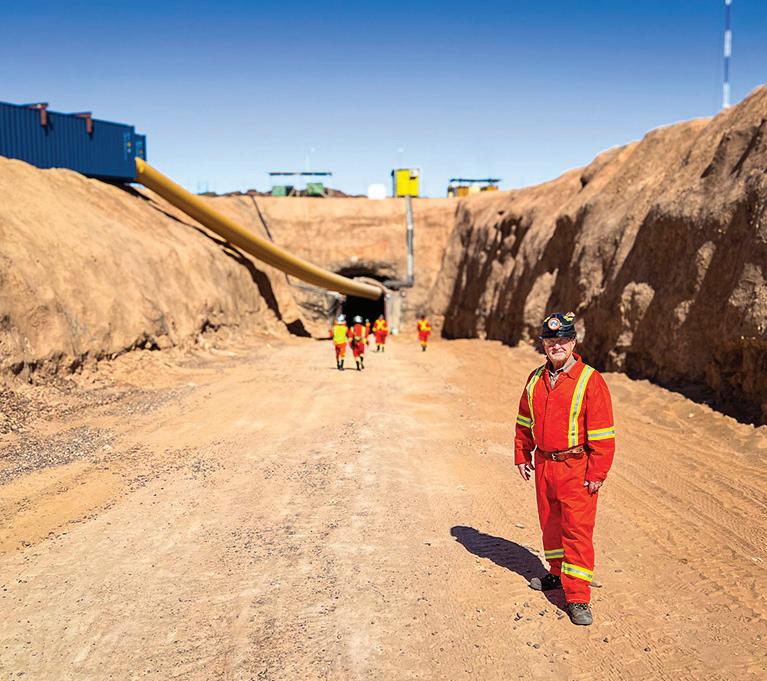 BY COLIN MCCLELLAND
Shares in Global Atomic (TSX: GLO) dropped nearly a third a er the military rulers of Niger, where the company is developing its Dasa uranium project, vowed to kick out United States troops that have been there for more than a decade.
Closer to press time, stock in the Toronto-based company recovered to $2.41 apiece, valuing it at $504.9 million. ey had fallen 31% to $2.17 on March 18 from $3.13 before the junta issued its decree on March 16. It has traded in a 52-week range of $1.28 to $3.91.
Global Atomic plans to start Dasa’s US$424.6-million construction a er June and commission the mine by the end of next year, according to an updated feasibility study in March. e military coup in July led the U.S. to suspend government funding for Dasa, but the company raised $15 million in January by selling stock and says it will pursue more nancing in a 60% borrowing, 40% equity-raising model.
“Given strong third-party interest in Global Atomic’s highgrade uranium project and our plans for nearterm production, there are many groups interested in funding the Dasa project.”
STEPHEN G. ROMAN, PRESIDENT AND CEO, GLOBAL ATOMIC
ply de cit.
ence, supplementing the previous nancings from its partner Mitsui as well as Bank of America.
Taseko last year posted its highest ever revenue of US$525 million, much of which was contributed from its Gibraltar mine near McLeese Lake, B.C., and represented a 34% increase compared to 2022.
In 2023, Gibraltar produced a total of 122.6 million lb. of copper, with an average recovery rate of 82.6% and head grade of 0.25%, which was higher than the company’s original guidance and also 26% higher than in 2022.
Taseko has a market cap of $780 million. TNM
“With the situation in Niger being uid, in addition to current advanced discussions with project lenders, the company is also pursuing other nancing strategies,” president and CEO Stephen G. Roman said in a release on March 18. “Given strong third-party interest in Global Atomic’s highgrade uranium project and our plans for near-term production, there are many groups interested in funding the Dasa project.” e spot price of uranium oxide, also called yellowcake, was at US$85 per lb. at press time, down from US$107 per lb. in February. e nuclear fuel is at its highest levels since 2007 due to rising demand for electricity production without the air pollution of fossil fuels, and a forecast sup-
American troops have been in Niger to ght regional Islamic insurgents since a 2012 agreement. e West African country supplies about 5% of global uranium demand making it the seventh-largest producer, including about 20% of the European Union’s needs. Numerous junior and large companies are exploring in Niger. French-state owned Orano said last month it was restarting production that was suspended a er the coup.
“Even with the recent removal of French troops from the country, Niger has respected Orano’s business and we would expect it to do the same with Global Atomic and others,” David Talbot, managing director of Toronto-based Red Cloud Securities, said in a note on March 19. “ e key catalyst for Global Atomic remains the closing of its project debt nancing.” TNM
18 APRIL 2024 | THE NORTHERN MINER www.northernminer.com
Global Atomic’s Dasa uranium project in western Niger. GLOBAL ATOMIC
The exploration camp at BMC Minerals’ Kudz Ze Kayah project in Yukon. BMC MINERALS
www.northernminer.com
projectupdates
Northisle’s new resource may boost BC project’s economics
COPPER-GOLD | Prefeasibility study under way for North Island
BY COLIN MCCLELLAND
Northisle Copper and Gold (TSXV: NCX) says its rst resource estimate for the Northwest Expo deposit at its North Island project in British Columbia beat expectations and bodes well for rapid development.
Northwest Expo holds 40.3 million indicated tonnes grading 0.1% copper and 0.7 gram gold per tonne for 100 million lb. copper and 871,000 oz. of gold, Northisle said on March 13. e deposit holds 30.6 million inferred tonnes at 0.1% copper and 0.6 gram gold for 62.8 million lb. copper and 558,000 oz. gold, the company said.
“Today’s new resource estimate at Northwest Expo has exceeded our expectations of de ning a 40-to-50-million-tonne resource within the gold enriched Zone 1,” Northisle president and CEO Sam Lee said in a release. “ is sets a strong basis for the rapid advancement of a potential high margin, near surface deposit.”
Shares in Northisle rose more than 11% to 44¢ apiece in Toronto on March 13 and climbed to 58¢ at press time, valuing the company at $135.3 million. ey’ve ranged from 12¢ to 54¢ over the past year.
Northisle is working on a prefeasibility study for North Island and is considering a staged approach with lower capital spending than the $1.4 billion estimate in a preliminary economic assessment (PEA) in 2021. e project, near BHP’s (NYSE: BHP; LSE: BHP; ASX: BHP) former Island copper mine in Vancouver Island’s far north, holds about 8 million oz. gold in resources.
e entire project holds 567.7 million indicated tonnes grading 0.2% copper, 0.3 gram gold per tonne and 0.007% molybdenum for 2.4 billion lb. copper, 4.9 million oz. gold and 88.2 million lb. molybdenum. It has 447.9 million
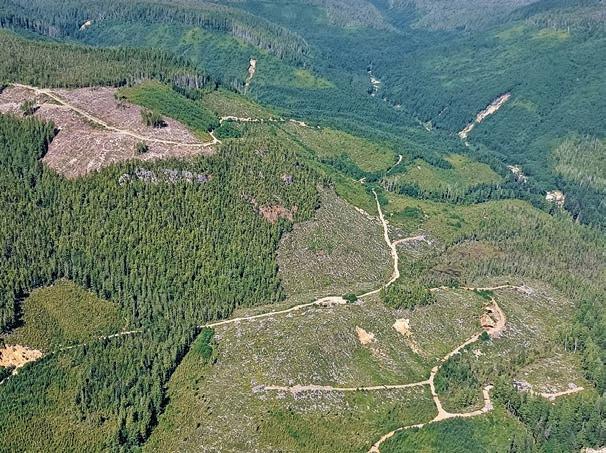
inferred tonnes at 0.2% copper, 0.2 gram gold and 0.006% molybdenum for 1.4 billion lb. copper, 3 million oz. gold and 54.9 million lb. molybdenum.
Higher-grade areas
A staged development would prioritize the higher-grade areas of the Northwest Expo, Red Dog and Hushamu targets. Studying the concept is expected to be completed by July and form the basis for advanced economic and technical studies, it said.
Northisle is planning to drill a er March to increase the indicated resource and to step out south of Zone 1 in Northwest Expo and at the West Goodspeed discovery.
North Island has an a er-tax net present value of $1.1 billion with an 8% discount rate and a 19% internal rate of return, according to the PEA. e study assumed metal prices of US$3.25 per lb. copper, US$1,650 per oz. gold and US$10 per lb. molybdenum. e project has 88% gold and 76% copper recoveries and a strip ratio of 2.5:1 waste vs ore, it said. e project lies on a 340-sq.-km
“Today’s new resource estimate at Northwest Expo has exceeded our expectations of defining a 40-to-50-milliontonne resource within the gold enriched Zone 1.”
SAM LEE, CEO, NORTHISLE COPPER AND GOLD
property stretching 50 km northwest from the now closed Island copper mine. BHP produced copper and molybdenum concentrates there, as well as gold, silver and rhenium as byproducts, from 1971 to 1995. TNM
More high grades at New Found Gold’s Queensway
NEWFOUNDLAND | 500,000 metres drilled so far
BY COLIN MCCLELLAND
New Found Gold (TSXV: NFG, NYSE: NFGC) is reporting bonanza-grade drill results at its Iceberg target on the Queensway project in central Newfoundland.
Drill hole NFGC-23-1820 cut 16.7 metres grading 36.2 grams gold per tonne from 45.3 metres depth; while 45 metres away, hole NFGC-23-1827 returned 14.7 metres at 33.7 grams from 87.5 metres down-hole, New Found Gold said on March 13.
e holes were drilled to test how a secondary set of gold veins and associated structures intersect at Iceberg on the Keats-Baseline fault zone, the company said.
“In ll and de nition drilling at Iceberg and Iceberg East have provided us with a comprehensive picture of the near-surface expression of this portion of the fault,” Melissa Render, vice-president of exploration, said in a release. “ e fault has demonstrated several times over that it is a very important structure.”
New Found is expanding the drill pro-
gram at Iceberg and Iceberg East, using seismic data to help target more gold mineralization in the fault. e company started drilling on the project ve years ago, completing 500,000 metres by last year and added another 150,000 to the planned total. No resource has been declared yet.
e near-surface Iceberg-Iceberg East high-grade segment of the Keats-Baseline fault has a strike length of 655 metres linking to the 400-metre high-grade segment of Keats Main.
e Queensway project has consistently reported strong drill results, topping e Northern Miner’s weekly Drill Down rankings several times since it burst onto the scene in 2019 with a hole at the Keats target returning 19 metres grading 92.9 grams gold from 96 metres downhole.
e 1,662-sq.-km project is accessible via the Trans-Canada Highway 15 km west of Gander. TNM
Disclosure: e Northern Miner Group is owned by EarthLabs Inc., which has been an investor in New Found Gold.
NexGen makes new uranium discovery
SASKATCHEWAN | Find is 3.5 km from Arrow project
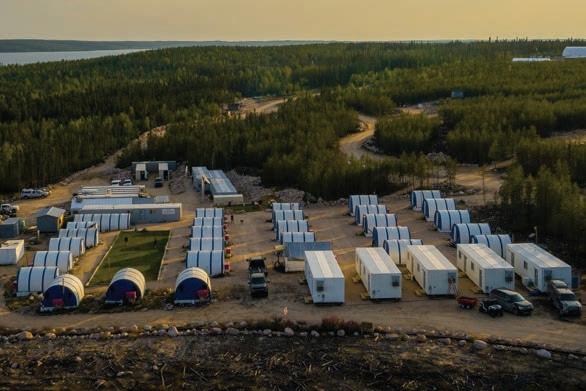 BY MARILYN SCALES
NexGen Energy (TSX: NXE; NYSE: NXE; ASX: NXG) has made a new green eld discovery at its SW2 property in Saskatchewan, 3.5 km east of its Arrow deposit, currently in permitting. e new occurrence sits on a previously untested conductor segment of the Patterson Corridor East.
“Ten years a er the discovery of our world-class Arrow deposit, we are thrilled to be sharing this exciting news,” CEO Leigh Curyer said in a release. “ is new intercept re ects the high potential of NexGen’s extensive land package in the southwestern section of the Athabasca Basin, and is a testament to the strategic and disciplined approach to identifying new Arrow-type zones of mineralization.” e mineralization was intersected by drilling for 19.8 metres beginning at 347.7 metres. e highest reading was over 61,000 counts per second (cps) over 3 metres.
Analysts say the reading com-
pares favourably to the Arrow discovery hole, which is part of NexGen’s Rook I project and cut less than 0.5 metre of over 9,999 cps.
“It’s too early to tell how big this discovery can get, and assays are still pending, but high radioactivity is o en associated with high-grade uranium assays in the Southwestern Athabasca Basin, as seen with the JR zone discovery and Triple R deposit,” David Talbot, head of equity research at Red Cloud Securities wrote in a note to clients.
NexGen released a feasibility study for Rook I in 2021 that outlined an 11-year operation capable of producing 21.7 million lb. of uranium oxide (U3O8) annually and cost US$1.3 billion to build.
Arrow hosts 3.8 million measured and indicated tonnes grading 3.1% U3O8 containing 256.7 million lb. U3O8, and 4.4 million inferred tonnes at 0.83% U3O8 containing 80.7 million lb. U3O8
At press time, NexGen shares traded at $10.51 in a 52-week range of $4.75-$11.17. e company has a market cap of $5.6 billion. TNM
Aurion shares bounce on B2Gold JV discovery in Finland
M&A | Junior considers upping stake after B2Gold gets offer to buy its 70% interest
BY HENRY LAZENBY
AAurion Resources (TSXV: AU) shares rose almost 11% on March 19 a er reporting a green elds discovery with 70% joint-venture partner B2Gold (TSX: BTO) in northern Finland’s Central Lapland greenstone belt. e discovery in the emerging Sore area returned intercepts such as 26.45 grams gold per tonne over 2.5 metres (including 108.5 grams gold over 0.5 metre) from 105 metres depth;1.05 grams gold over 40.7 metres from 38 metres; and 1.33 grams over 17.9 metres from 5 metres. is area has not seen any previous diamond drilling within 1 km, the company said in a release. “A new discovery, green eld and on a blind target, further highlights the prospectivity of the Aurion-B2Gold 290-sq.-km JV property and the quality of B2Gold’s exploration team,” Aurion CEO Matti Talikka said. Company shares climbed to 62¢ apiece
on March 19 before rising to 64¢ at press time. Aurion has a market capitalization of $84.7 million.
Results are pending for about 4,000 metres of diamond drilling completed this year.
However, the drilling program was halted a er Rupert Resources (TSX: RUP) entered discussions on March 11 to buy B2Gold‘s 70% interest in the JV. Aurion says it’s considering its options regarding its right of rst refusal. It will have until May 9 to decide whether to exercise the right, granted under a 2019 shareholders agreement between the partners.
e discovery is located 1.7 km northwest of the Kettukuusikko prospect and 38 km northwest of the Helmi discovery.
e JV with B2Gold covers about 290 sq. km along the Sirkka Shear zone, which is a signi cant structural feature in the region known for hosting various gold occurrences. e area has yielded numerous discoveries, showcasing the potential for further discoveries within the belt. TNM
GLOBAL MINING NEWS THE NORTHERN MINER | APRIL 2024 19
The Northwest Expo project on Vancouver Island, B.C. NORTHISLE COPPER AND GOLD
The exploration camp at NexGen Energy’s Rook project 1. NEXGEN ENERGY
eye on australia
Core Lithium CEO quits on share, battery metal prices rout
BY HENRY LAZENBY
Perth-based Core Lithium (ASX: CXO) faces a corporate shake up in response to a dramatic drop in lithium spodumene prices that spurred the immediate departures of its CEO and a director. e company reported on March 12 an A$167.6 million ($149.5 million) loss for 2023 as its share price has crumbled in the past year from A$1.20 to A20¢ at the close on March 13.
“Despite the sharp drop in lithium prices, we’ve improved production and e ciencies, producing 49,530 tonnes of spodumene concentrate in the latter half of 2023,” outgoing CEO Gareth Manderson said.
Even though it halted mining on Jan. 5 at its Finniss lithium operation in Australia’s Northern Territory, the company continues processing existing ore stockpiles to maintain spodumene concentrate production. e focus has shi ed towards cash preservation and assessing the viability of its lithium projects, along with exploring the potential in its wholly owned gold, uranium, and base metal assets.
Other lithium producers have also had to adjust to the fall in lithium prices. Piedmont Lithium (NASDAQ: PLL; ASX: PLL) announced in February it would lay o 27% of its workforce, while
LITHIUM | Aussie miner says it’s evaluating its strategic options
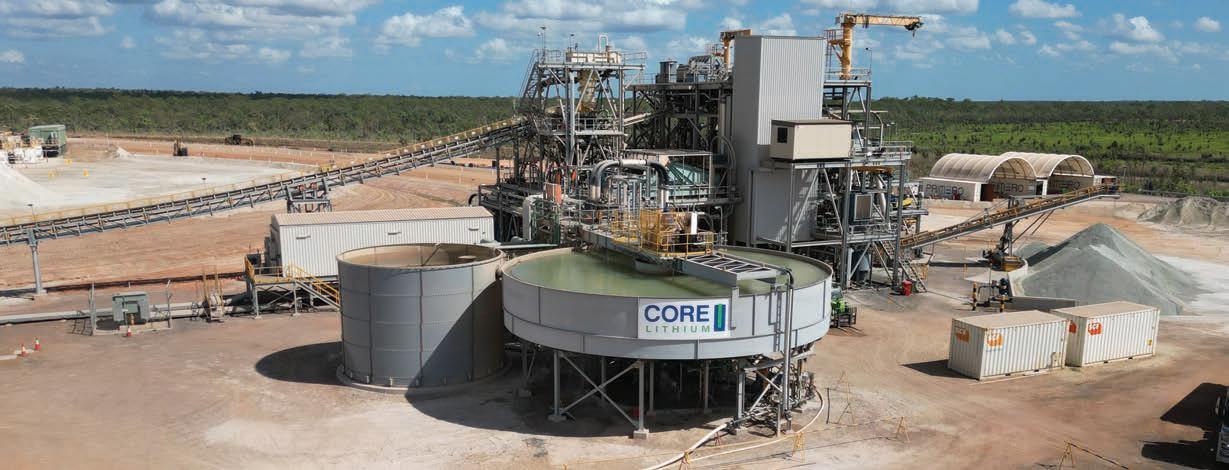
Albemarle, (NYSE: ALB) the world’s largest lithium producer said in January it would lay o 4% of its workforce. Sayona Mining (ASX: SYA; US-OTC: SYAXF) has also reduced sta at its 75%-held North American Lithium mine in Quebec and begun a cost review of operations in January.
Manderson, a former Rio Tinto (ASX: RIO) executive who joined Core in August 2022, has stepped down. Under his leadership, the company saw the establishment of a pro cient management team and
n Southern Cross eyes Canada for dual listing
Australia’s Southern Cross Gold (ASX: SXG) plans a dual listing in Canada – a reverse of the recent trend of Canadian companies listing on the ASX for access to its hotter market.
e company, which is aiming for the third quarter for its new listing, says nearly 70% of its shareholders are international.
e company has recorded impressive assays at its Sunday Creek project, located 60 km north of Melbourne, including 0.7 metre at 3,511 grams gold per tonne from 684.3 metres depth in March.
Southern Cross has drilled 19,000 metres on the Apollo, Rising Sun, Golden Dyke and Christina targets at Sunday Creek since September. e host rocks are intensely altered in a steeply dipping zone where drilling has intercepted signi cant gold and antimony concentrations in a relay of vein sets. Following the listing announcement, Southern Cross’s stock surged 20%, with its valuation hitting A$184.1 million. At press time it was at A$230 million ($203 million).
Vancouver-based Mawson Gold (TSXV: MAW) owns a 51% stake in the company. It plans to distribute Southern Cross shares to its shareholders this year.
n Pilbara seals offtake
Australian lithium producer Pilbara Minerals (ASX: PLS) has clinched a deal with Chinese company Sichuan Yahua Industrial Group for spodumene concentrate, essential for making lithium batteries.
Under the agreement, Pilbara will deliver 20,000 tonnes of the mineral from its Pilgangoora operation in Western Australia this year and 100,000 tonnes annually in 2025 and 2026, with an option to supply an extra 60,000 tonnes each year, the Perth-based company said on March 12.
As Australia’s largest independent lithium miner, the new o ake comes on the heels of Pilbara in January increasing its sales contract with another Chinese company, Ganfeng Lithium, over the next three years. It has the option to boost the spodumene concentrate tonnage sold to the major. In February, Pilbara amended a spodumene supply deal with
the start of operations at Finniss despite facing such challenges as underperforming open-pit mines and incomplete infrastructure. His tenure was marked by developing e cient operations and fostering a culture focused on safety, professionalism, and accountability, the company said in a March 12 release.
Doug Warden, the current CFO, will serve as the interim CEO while the company searches for a permanent replacement. James Virgo has stepped in as interim CFO, bring-
ing extensive nancial management experience from his time at Resolute Mining (ASX: RSG; LSE: RSG). Andrea Hall, a non-executive director since April 2023, also resigned to facilitate a board restructuring that aligns with its future strategy, the company said Core produced 49,530 tonnes of spodumene concentrate in the second half of 2023, improving production and e ciencies despite the drop in lithium prices. e company continues to eval-
chemicals producer Chengxin Lithium Group, raising agreed sales volumes and extending the contract’s duration.
Pilbara says the spodumene will be sold at market prices at the time of each delivery. Prices for lithium carbonate, a precursor to lithium hydroxide used in batteries, have fallen sharply in the past 12 months. Lithium carbonate fetched about US$15,976 per tonne at press time, down from about US$23,658 in September and 80% lower than in 2022, according to Trading Economics.
Yahua serves major clients like Tesla and LG Chem.
e scale and quality of Pilbara’s operation have attracted a consortium of high-pro le global partners, including POSCO, Ganfeng, General Lithium, Yibin Tianyi, Chengxin Lithium and Yahua.
Pilgangoora hosts proven and probable reserves of 214.2 million tonnes grading 1.19% lithium oxide. Pilbara has a market capitalization of A$11.8 billion ($10.5 billion).
n Oz gold output slips
Australia produced 9.8 million oz. gold last year, an almost 3% decrease from 2022, says Melbourne-based Surbiton Associates.
Despite the slide, last year’s fourth quarter saw an increase of 105,822 oz., totalling 2.5 million oz., representing a 2% rise over the previous quarter. e year’s production at the current Australian gold price would total about A$32 billion ($28.6 billion).
e production decrease is a typical industry response to higher gold prices, where operators reduce head grades to extend mine life, thus lowering immediate output but maintaining pro tability, Surbiton’s managing director, Dr. Sandra Close, said in a note.
Gold prices has soared to record levels, driven by expected future U.S. interest rate cuts. e Australian dollar gold price in the December quarter averaged A$3,040 per oz.
Amidst the rising gold prices, there’s been an uptick in Australian gold mining mergers and acquisitions. Red 5 (ASX: RED) plans to merge with Silver Lake Resources (ASX: SLR), potentially creating a 445,000-oz. annual producer by June. In December, Evolution Mining (ASX: EVN) also acquired China Molybdenum’s 80% stake in the Northparkes operation, which will modestly increase its gold output.
uate its strategic options amidst the challenging market conditions, focusing on sustainability, operational e ciency, and nancial stability.
As of October 2023, Finniss held 10.5 million tonnes across three resource categories grading 1.53% lithium oxide for 160,000 tonnes of metal.
At A16¢ per share at press time, Core’s stock is down 80% over the past 12 months. It has a market capitalization of A$321 million ($284 million). TNM
n One dead at Ballarat
One person died and another was seriously injured following a rockfall on March 14 at Victory Minerals’ Ballarat gold mine in Victoria, about 115 km west of Melbourne.
Twenty-eight other men were able to reach a “safety pod” in the mine and escaped, some with serious injuries, Australia’s ABC News reported.
e accident trapped miners 500 metres underground, where two were pinned down by the rockfall. Kurt Hourigan, 37, died, while another man, 21, was saved and rushed to hospital with life threatening injuries to his lower body. He remained in hospital at press time in serious but stable condition, ABC said.
e mine reopened March 15, a er state regulator WorkSafe Victoria gave the OK, ABC reported.
Before the accident, the miners were reportedly doing an underground manual style of mining called “air legging,” using a big drill to penetrate the rock with air and water, when the rockfall happened, and which most mines had halted the practice years ago.
Operations at Ballarat were taken over by the privatelyowned Victory Minerals in December.
n Karora hits high grades
Canada’s Karora Resources (TSX: KRR; US-OTC: KRRGF) released high-grade drill results from the Fletcher shear and Larkin gold zones and the emerging 50C nickel zone at the Beta Hunt mine in Western Australia on Feb 22.
At the Fletcher South area, highlights included 3.8 grams gold per tonne over 33 metres. Other notable results include 34.6 grams gold over 2 metres and 15.2 grams gold over 3.3 metres, supporting a potential resource upgrade and expansion of the zone.
Last year, Karora drilled 3,932 metres primarily at Fletcher South, with an initial resource due this year. In ll drilling at the Larkin zone also revealed signi cant gold and nickel hits.
Karora continues to explore for nickel at its Beta Hunt gold mine, focused on extending the 50C and 10C nickel deposits.
20 APRIL 2024 | THE NORTHERN MINER www.northernminer.com
Core Lithium’s Finniss lithium operation in Australia’s Northern Territory. CORE LITHIUM

Delivering fit-for-purpose solutions across the entire project life cycle
Delivering fit-for-purpose solutions across the entire project life cycle
Delivering fit-for-purpose solutions across the entire project life cycle
Delivering fit-for-purpose solutions across the entire project life cycle
Our fit-for-purpose solutions encompass the skills of qualified geologists, geostaticians, analytical chemists, mineralogists, metallurgists, process engineers and mining engineers and inspectors brought together to provide accurate and timely mineral and process evaluation services across the entire project life cycle.
Our fit-for-purpose solutions encompass the skills of qualified geologists, geostaticians, analytical chemists, mineralogists, metallurgists, process engineers and mining engineers and inspectors brought together to provide accurate and timely mineral and process evaluation services across the entire project life cycle.
Our fit-for-purpose solutions encompass the skills of qualified geologists, geostaticians, analytical chemists, mineralogists, metallurgists, process engineers and mining engineers and inspectors brought together to provide accurate and timely mineral and process evaluation services across the entire project life cycle.
Our fit-for-purpose solutions encompass the skills of qualified geologists, geostaticians, analytical chemists, mineralogists, metallurgists, process engineers and mining engineers and inspectors brought together to provide accurate and timely mineral and process evaluation services across the entire project life cycle.
WWW.SGS.COM/NATURALRESOURCES
WWW.SGS.COM/NATURALRESOURCES
NAM.NATURALRESOURCES@SGS.COM *Data
WWW.SGS.COM/NATURALRESOURCES
NAM.NATURALRESOURCES@SGS.COM
WWW.SGS.COM/NATURALRESOURCES
NAM.NATURALRESOURCES@SGS.COM
NAM.NATURALRESOURCES@SGS.COM
GLOBAL MINING NEWS THE NORTHERN MINER | APRIL 2024 21 mining, metals & markets
may not be comprehensive and is provided on a best-efforts basis as of press time. Investors are responsible for their own due diligence. 29 Market news 28 Market data 27 Warrants & shorts
Capital raisings 26 Drill results 25 ETF assets
Global gold funds data
Mining events contents IMAGE: ADOBE STOCK/PETERSCHREIBER.MEDIA
23
22
30
WORLD’S
LARGEST GOLD EQUITY FUNDS: ASSET ALLOCATION AVERAGE ASSET ALLOCATION OF THE TOP
22 APRIL 2024 | THE NORTHERN MINER www.northernminer.com
Source: mineralfunds.com
gold funddata
mineralfunds.com UNITED STATES | TOP FUNDS (USD) Rank Fund Name Sum of Assets 2024-03-15 1 First Eagle Gold Fund $2.31B 2 Invesco Gold and Special $1.65B Minerals Fund (USA) 3 Fidelity Select Gold Portfolio $1.13B 4 Franklin Gold and Precious $0.79B Metals Fund (USA) 5 Sprott Gold Equity Fund $0.70B LUXEMBOURG | TOP FUNDS (USD) Rank Fund Name Sum of Assets 2024-03-15 1 BlackRock Global Funds $3.98B World Gold Fund 2 BAKERSTEEL Precious Metals Fund $0.66B 3 CPR Invest – Global Gold Mines $0.52B 4 Konwave Gold Equity Fund $0.51B 5 Ninety One Global Gold Fund (Lux) $0.50B UNITED KINGDOM | TOP FUNDS (USD) Rank Fund Name Sum of Assets 2024-03-15 1 BlackRock Gold & General Fund $1.18B 2 WS Ruffer Gold Fund $0.67B 3 Ninety One Global Gold Fund (UK) $0.36B 4 Quilter Investors Precious $0.33B Metals Equity Fund 5 SVS Sanlam Global Gold & $0.05B Resources Fund CANADA | TOP FUNDS (USD) Rank Fund Name Sum of Assets 2024-03-15 1 RBC Global Precious Metals Fund $0.44B 2 Dynamic Precious Metals Fund $0.36B 3 CI Precious Metals Fund $0.13B 4 Dynamic Strategic Gold Class $0.13B 5 Mackenzie Precious Metals Fund $0.11B FRANCE | TOP FUNDS (USD) Rank Fund Name Sum of Assets 2024-03-15 1 Crédit Mutuel CIC Global Gold $0.45B 2 Rothschilds et Compagnie Mines $0.20B d'or Thématiques 3 Ixios Gold Fund $0.10B 4 Amundi Actions Or $0.09B 5 Tocqueville Gold $0.06B IRELAND | TOP FUNDS (USD) Rank Fund Name Sum of Assets 2024-03-15 1 Jupiter Gold & Silver Fund $0.81B $10.15B $1.53B $2.63B 7.96B $1.00B $0.81B $1.72B 57.4% 55.6% 14.4% 13.7% 9.0% 8.4% 4.5% 5.6% 4.2% 5.3% 0.8% 0.8% 0.5% 0.1% 9.2% 8.2% Canadian Equities Australian Equities USA Equities South African Equities UK Equities China Equities Mexican Equities Cash & Bullion Mar. 15, 2024 Sept. 30, 2023 TOP GOLD FUNDS BY DOMICILE MAR 15, 2024 | SUM OF ASSETS IN $ USD CREDIT: JAMES ALAFRIZ CREDIT: JAMES ALAFRIZ
10 GOLD EQUITY FUNDS GLOBALLY Source:

Investing in the Canadian Resource Sector at Reduced Cost of Capital
PearTree is a Canadian Securities Dealer and Investment Fund Manager advancing over (CAD) $500 million annually for resource exploration and mine development in a uniquely Canadian structure which results in as much as $2.00 of capital deployed for every $1.00 invested by global institutions and family offices.



Watch our video in English, Français, Deutsch, and Español on our website.
Expanding the universe of exploration capital.
peartreecanada.com
GLOBAL MINING NEWS THE NORTHERN MINER | APRIL 2024 23 capitalraisings $1,144.0M FIRST QUANTUM MINERALS LTD $1,632.4M RAISED FEB 16, 2024 – MAR 15, 2024 $165.8M BCI MINERALS LTD $50.0M NOUVEAU MONDE GRAPHITE INC. $40.3M SYRAH RESOURCESLTD $25.4M VIZSLA SILVER CORP $35.8M RARE ELEMENT RESOURCES LTD $26.1M MONTAGE GOLD CORP. $21.3M ASCOT RESOURCES LTD $13.9M COLLECTIVE MINING LTD. $97.2M ALL OTHERS $12.7M LEGACY IRON ORE LTD TOP FINANCINGS CREDIT: NICHOLAS LEPAN/JAMES ALAFRIZ
Rank Company Ticker Final Amount (US$) Closed Date Agents Activites Grade 1 First Quantum Minerals Ltd TSX: FM $1,144,026,810 Feb 29, 2024 Absa Bank Limited|BMO Capital Markets|BNP Paribas (Canada) Securities Inc.|Canaccord Genuity Corp.| CIBC World Markets Inc.|Goldman Sachs|ING Bank N.V.| J.P. Morgan Securities Canada Inc.|National Bank Financial Inc.|Natixis Securities Americas LLC| RBC Capital Markets|Standard Bank Debt Reduction| Working Capital 2 BCI Minerals Ltd ASX: BCI $165,837,825 Feb 28, 2024Canaccord Genuity (Australia) Limited Debt Reduction|Exploration Working Capital 3 Nouveau Monde Graphite Inc TSX-V: NOU $50,000,000 Feb 28, 2024BMO Capital Markets Exploration 4 Syrah Resources Ltd ASX: SYR $40,257,402 Mar 15, 2024 Jarden Australia Pty Ltd Exploration 5 Rare Element Resources Ltd OTCQB: REEMF $35,772,820 Mar 12, 2024Not Disclosed Exploration|Working Capital 6 Montage Gold Corp TSX-V: MAU $26,104,686 Mar 12, 2024Non-brokered Exploration|Working Capital 7 Vizsla Silver Corp TSX-V: VZLA $25,410,621 Feb 29, 2024 BMO Nesbitt Burns|Canaccord Genuity Corp.| CIBC World Markets Inc.|PI Financial Corp.| Raymond James Ltd.|Stifel Nicolaus Canada Inc. Exploration|Working Capital 8 Ascot Resources Ltd TSX: AOT $21,254,626 Feb 20, 2024 BMO Capital Markets|CIBC World Markets Inc.| Desjardins Capital Markets|Raymond James Ltd.| Velocity Trade Capital Ltd. Exploration|Working Capital 9 Collective Mining Ltd TSX: CNL $13,908,718 Mar 04, 2024Non-brokered Exploration|Working Capital 10 Legacy Iron Ore Ltd ASX: LCY $12,722,277 Feb 27, 2024Not Disclosed Exploration|Working Capital





24 APRIL 2024 | THE NORTHERN MINER www.northernminer.com capitalraisings Supercharge your industry knowledge, streamline opportunity discovery, and uncover valuable insights like never before with a TNM Membership Learn more at marcopolo.tnm.global ELEVATE YOUR STRATEGY WITH MINING’S MOST TRUSTED SOURCE FOR NEWS AND DATA LEARN MORE AT membership-promo.tnm.global/ Help clients discover your products and services and boost your SEO with a featured listing on Uncover the right prospects with trusted market intelligence on thousands of companies, properties, and personnel with Keep up to date and in the know with unlimited access to every story from Looking for enterprise memberships? Contact support@northernminer.com for enterprise pricing. + CAPITAL RASINGS | 12-MONTH ROLLING AVERAGE $2,500M $2,000M $1,500M $1,000M $500M $0M 4/23–3/24 4/22–3/23 $598.43 $772.41 $705.47 $276.11 $526.32 $1,182.01 $279.48 $495.88 $1,422.51 $158.40 $1,973.24 $180.10 $695.66M $570.18M $657.29M $380.66M $362.09M $377.51M $1,573.53M $530.82M $792.63M $567.86M $558.46 $756.93 APR MAY JUN JUL AUG SEP OCT NOV DEC JAN FEB MAR $ in USD $ in USD
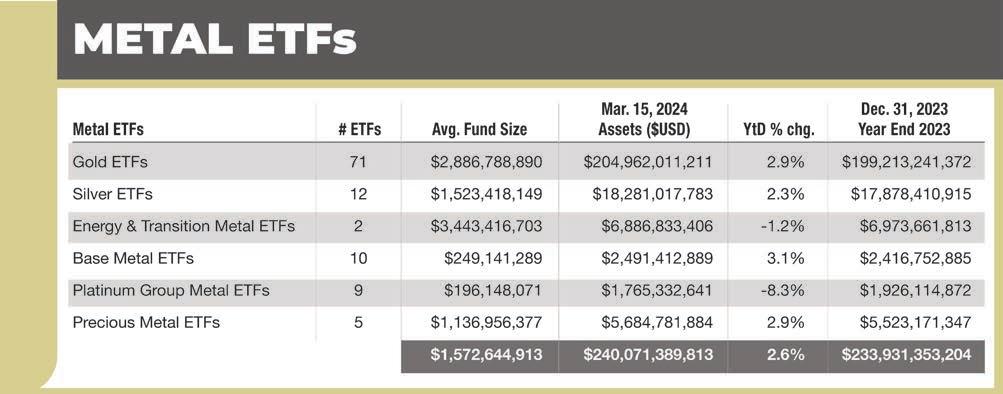
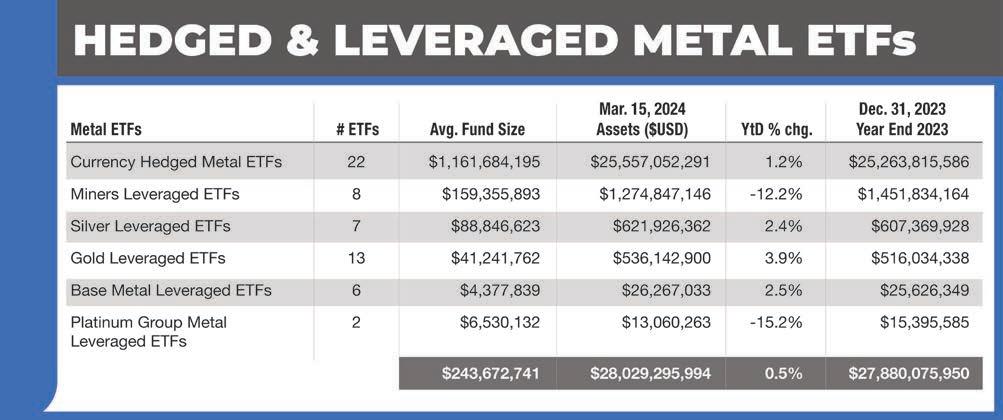
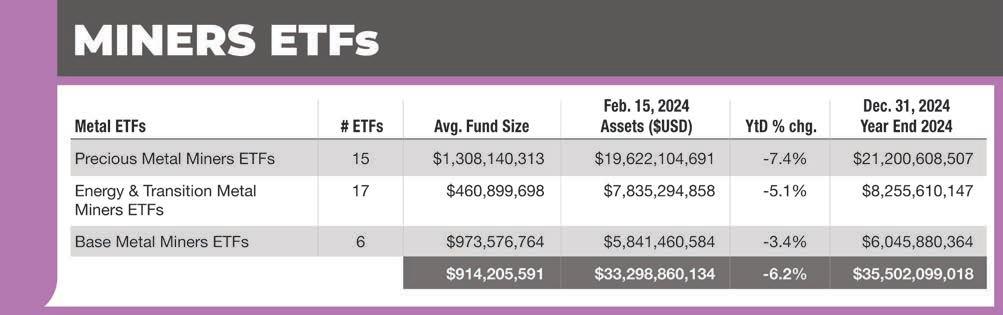
GLOBAL MINING NEWS THE NORTHERN MINER | APRIL 2024 25 ETFassets METALS & MINING SNAPSHOT $ IN USD TOTAL ETFS 205$909,368,180$301,399,545,9411.4%$297,313,528,172 Gold SilverEnergy + Transition Metal Platinum Group Metals Base Metals Gold Silver Base Metal Platinum Group Metals Currency Hedged Metals Precious Metals Base Metals Miners Energy & Transition Metal Miners Precious Metals Miners TOP TEN: MOST ACTIVE GOLD ETFs Source: mineralfunds.com Miners Leveraged SPDR Gold Shares iShares Gold Trust Invesco Physical Gold ETC iShares Physical Gold ETC Xetra-Gold Zurcher Kantonalbank Gold ETF Sprott Physical Gold Trust SPDR Gold MiniShares Trust WisdomTree Physical Gold Credit Agricole Amundi Physical Gold ETC $61.62B $4.71B Remaining Gold ETF Market $32.58B $4.95B $6.62B $6.82B $10.54B $15.53B $15.68B $16.47B $29.78B TOTAL GLOBAL GOLD ETFs $205.30B Feb. 16, 2024 – Mar. 15, 2024 CREDIT: NICHOLAS LEPAN/JAMES ALAFRIZ CREDIT: ADAM BEREZUK Source: mineralfunds.com Note: These are consolidated volumes for all exchanges on which the ETF trades. $ IN USD
TNM DRILL DOWN: TOP ASSAYS OF THE MONTH
Our TNM Drill Down features the top 10 gold, copper and silver assays of the past month. Drill holes are ranked by grade x width, as identified by Mining Intelligence.
–
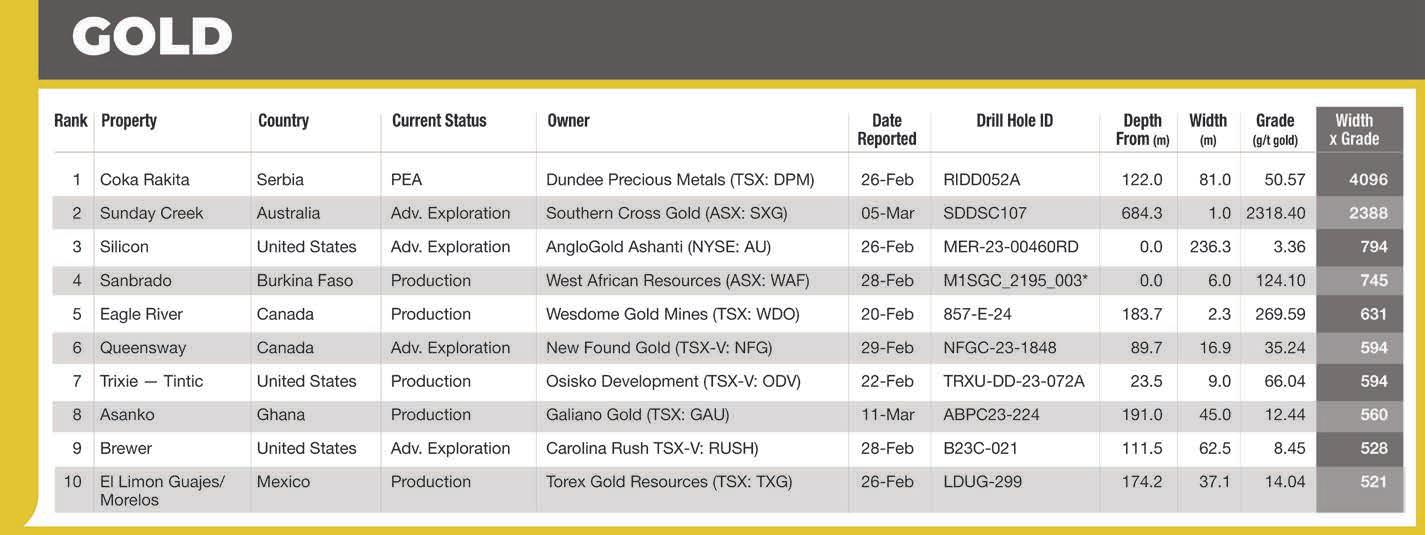
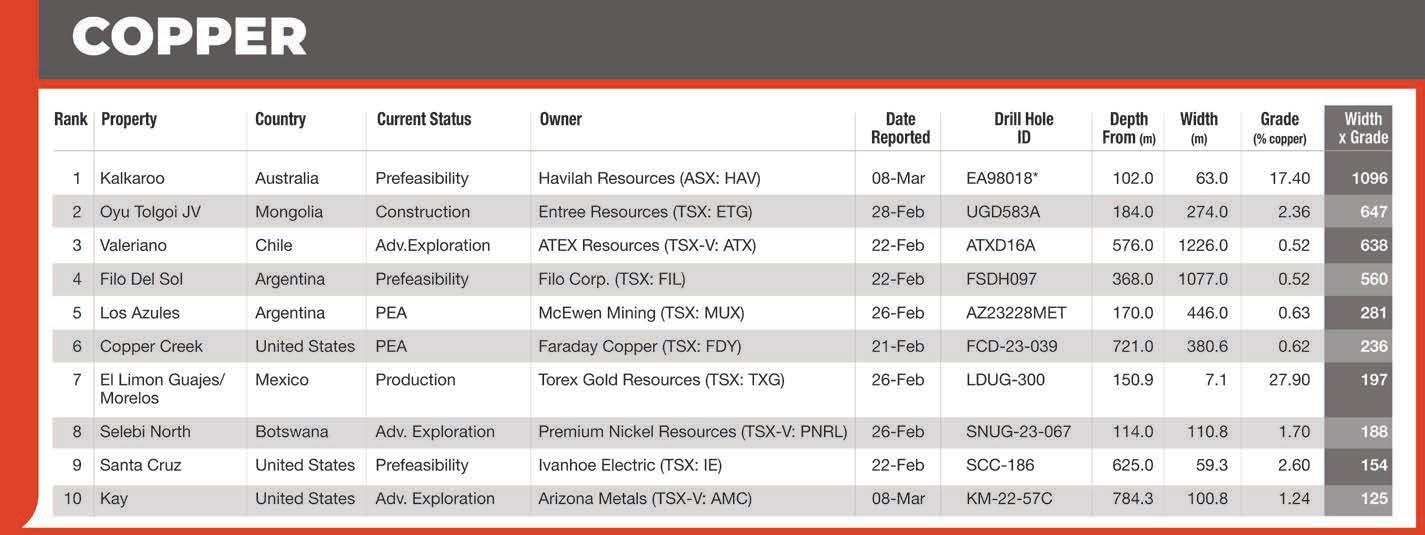
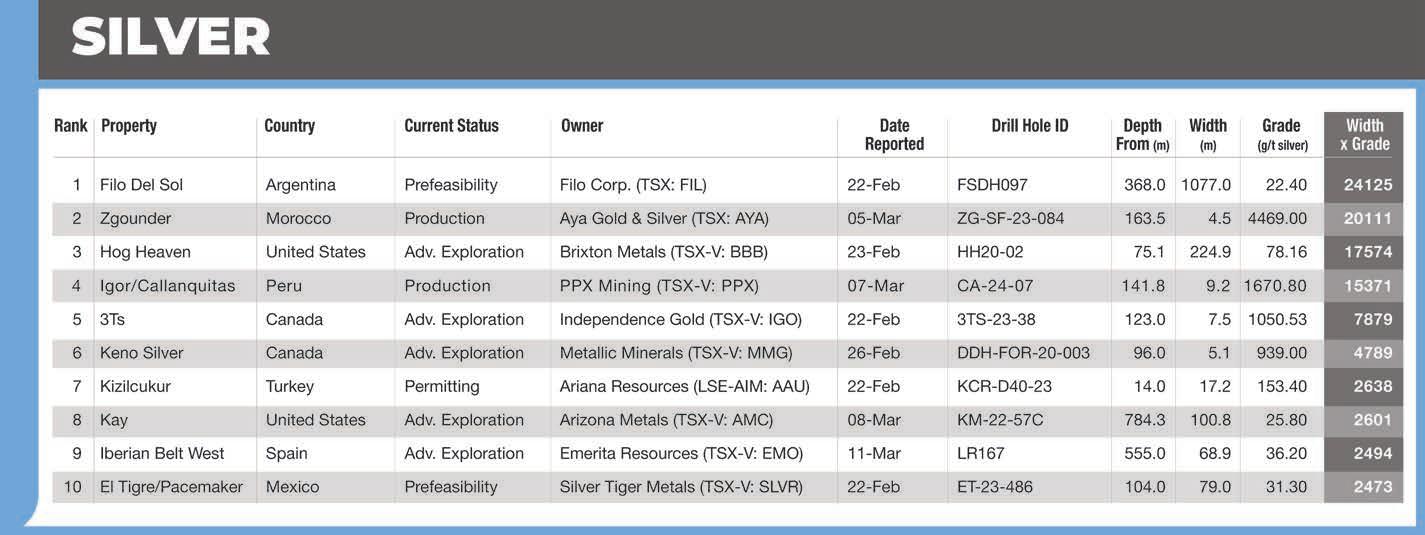
26 APRIL 2024 | THE NORTHERN MINER www.northernminer.com drillresults All data supplied by Mining Intelligence for the period of February 16, 2024 – March 15, 2024 for public companies from exploration stage to production. * indicates reverse circulation; otherwise all holes are diamond drill holes. Reported lengths are not necessarily true widths. Only the best hole per property is shown. Grade x widths calculations may differ slightly due to rounding.
Feb. 16, 2024
Mar. 15, 2024
Gran
STLLR Gold
Novo Resources Corp.
warrants&shorts
Novo
Aris Gold Corporation ARIS.WT One Warrant to purchase one Common 07-29-2025
of the Issuer at $2.75 until expiry.
Aris Gold Corporation ARIS.WT.A One Warrant to purchase 0.5 of one 07-29-2025
Share of the Issuer at $2.75 until expiry
share of the Issuer at $3.00 until expiry. TSX VENTURE WARRANTS
Lion One Metals LimitedLIO.WTOne warrant to purchase one common 11-11-2025 share at $1.25 per share.
Silver Mountain AGMR.WT.A One warrant to purchase one common02-09-2026
Resources Inc. share at $0.45 per share.
05-11-2024 share at $0.30 per share.
Millennial Precious MPM.WTOne warrant to purchase one common06-16-2024
Metals Corp. share at $0.50 per share.
Mexican
Giga Metals CorporationGIGA.WT.AOne warrant to purchase one common 02-08-2025 share at $0.45 per share.
LithiumBank Resources LBNK.WTOne warrant to purchase one common02-16-2025 Corp. share at $2.00 per share.
Total Helium Ltd.TOH.WT.AOne warrant to purchase one common 05-01-2025 share at $0.75 per share.
Caldas Gold Corp.CGC.WTOne warrant to purchase one common 07-29-2025 share at $2.75 per share.
Rock Tech Lithium Inc.RCK.WTOne warrant to purchase one common 08-19-2025 share at $4.50 per share.
Osisko Development ODV.WT.BOne warrant to purchase one common03-02-2026 Corp. share at $8.55 per share.
Denarius Silver Corp.DSLV.WTOne warrant to purchase one common 03-17-2026 share at $0.80 per share.
Aurania Resources Ltd.ARU.WT.BOne warrant to purchase one common 10-21-2026 share at $2.20 per share.
Freeman Gold CorpFMAN.WT.UOne warrant to purchase one common 11-29-2026 share at US$0.65 per share.
Osisko Development ODV.WT.AOne warrant to purchase one common03-02-2027 Corp. share at $14.75 per share.
Elevation Gold Mining ELVT.WT.AOne warrant to purchase one common03-24-2027 Corporation share at $0.70 per share.
Osisko Development ODV.WT.U One warrant to purchase one common05-27-2027 Corp. share at US$10.70 per share.
Bear Creek Mining BCM.WTOne warrant to purchase one common10-05-2028
Short positions outstanding as of March 15, 2024 (with changes from February 29, 2024)
Largest short positions
Ivanhoe
Lundin
Denison
Equinox
Suncor
Barrick
IAMGOLD
Osisko
New
HudBay
Kinross
Fission
B2Gold
Calibre
Largest
Osisko
Agnico
Barrick
New
Largest
IAMGOLD
Argonaut
Calibre
TSX VENTURE SHORT POSITIONS
Short positions outstanding as of March 15, 2024 (with changes from February 29, 2024)
Largest short positions
Company Ticker Short position Change
CanAlaska UranCVV48726191139345
West Red LakeWRLG2739609525147
Enerev5 MetalsENEV21989952198000
Hercules SilBIG2007198-878216
GoviEx UraniumGXU1726739-395080
Montero Mg&ExMON1644755344000
New Found GoldNFG1464826-17316
EnCore EnergyEU1436102-267196
Dolly Vard Sil DV12199191067859
Founders MetalFDR1171866-395623
Artemis GoldARTG1097831-114052
IsoEnergy LtdISO980860-30551
Reunion GoldRGD933092336024
An eld EnergyAEC926503617976
Midnight SunMMA860734826779
Largest increase in short position
Enerev5 MetalsENEV21989952198000
CanAlaska UranCVV48726191139345
Dolly Vard Sil DV12199191067859
Midnight SunMMA860734826779
Azincourt EnerAAZ688315686882
Largest decrease in short position
Corporation share at $0.42 per share. www.northernminer.com
Reyna SilverRSLV245465-999649
Gabriel ResGBU182265-911529
Hercules SilBIG2007198-878216
Founders MetalFDR1171866-395623
GoviEx UraniumGXU1726739-395080
TSX WARRANTS
POSITIONS
TSX SHORT
Company Ticker Short position Change
MinesIVN27184096608554
MngLUN14149742848907
MinesDML131251261163898
GoldEQX128188221380376
EnergySU11930165-226841
GoldABX119241442139641
IMG11574755-2253067
Mng IncOSK103153583514508
NGD98084742105238
Gold IAU9714298854908
Gold
i-80
MinHBM92624501624325
GoldK
9115432-451796
UranFCU8369674481492
CorpBTO82946022987308
MngCXB7714142-1667597
increase in short position
Mng IncOSK103153583514508
CorpBTO82946022987308
B2Gold
EagleAEM44111062167310
GoldABX119241442139641
Gold NGD98084742105238
decrease in short position
QuantumFM4689472-2288097
First
IMG11574755-2253067
GoldAR3300428-1725548
MngCXB7714142-1667597
CEE 9428-1557448 Name SymbolSubsciption Terms Expiry Date Aurania Resources Ltd.ARU.WT.AOne warrant to purchase one common04-01-2024 share at $4.25 per share. Giga Metals CorporationGIGA.WTOne warrant to purchase one common 04-23-2024 share at $0.60 per share. American Lithium Corp.LI.WTOne warrant to purchase one common
Centamin
warrant
Gold Corp.MEX.WTOne
to purchase one common 07-15-2024 share at $0.12 per share.
Name Symbol Subsciption Terms Expiry Date
One Warrant to purchase of one Common 04-30-2024 Share of the Issuer at $2.21 until expiry
Aris Gold Corporation ARIS.WT.B
Colombia Gold GCM.WT.B One warrant to purchase one common 04-30-2024 share of the Issuer at $2.21 until expiry.
STLR.WT One Warrant to purchase 0.21 of a 05-03-2024 common share of the Issuer
until
Inc.
at $1.05
expiry.
NOVO.WT.A One Warrant to purchase one common 05-04-2024
Name Symbol Subsciption Terms Expiry Date
Resources Corp. NVO.WT.A One Warrant to purchase one common 05-04-2024 share of the Issuer at $3.00 until expiry.
Share
Name SymbolSubsciption Terms Expiry Date
Common
GLOBAL MINING NEWS THE NORTHERN MINER | APRIL 2024 27
Aluminum: US$1.03/lb.
Cobalt: US$12.73/lb.
Gold: US$2,165.64/oz.
Iron Ore 62% Fe CFR China-S : US$110.65
Nickel: US$7.91/lb.
Silver: US$24.68 per oz.
Zinc: US$1.13 per lb
marketdata
Aris Mining
Aris Mining*
Ascot Res
Ascot Res *
Awale Res
Aya Gold
Aya Gold*
Black Mammoth
Falco Res
First Uranium*
Freeport McMoR*
Freeport Res
Galiano Gold
COMMODITY PRICES | Prices current Mar. 22, 2024
Coal: Central Appalachia, 12,500 Btu, 1.2 S02-R,W: US$77.80
Copper: US$4.02/lb.
Iridium: US$4,800/tr oz.
Lead: US$0.92/lb.
Rhodium: Mid-mkt US$4,600/tr. oz.
Tin: US$12.56/lb.
NPT
RBC
TD
Gatos Silver
Gatos Silver*
Goldbank Mng
Golden Pursuit*
Golden Rapture
GR Silver*
Great Pacific
Great Pacific *
Greenridge Exp
Hannan Metals
Hannan Metals*
Harmony Gold*
Hochschild Mg*
HudBay Min*
Indiana Res* Intl Tower Hil*
Ivanhoe Mines
Ivanhoe Mines* K9 Gold*
Kubera Gold
Lithium Lion Lithium Lion*
Lundin Mng
Lundin Mng*
Mantaro Prec Mantaro Prec*
Metallica Min*
Nexa Resources*
NGEx Minerals
Northisle C&G
Northisle C&G *
NV Gold
Omai Gold
Omai Gold*
Omega Pac
Omineca Mining
Orogen Roy
Pacific Empire
Pacific Empire*
Pambili Nat Rs
PJX Res
Quartz Mtn Res
$2,161.60 US$/oz. (+$249.91 vs. YA)
24.84 US$/oz. (+$3.07 vs. YA) $4.04 US$/Lb. ($0.00 vs. YA)
$8.05 US$/Lb. (-$2.50 vs. YA)
Coal: Powder River Basin, 8,800 Btu, 0.8 S02-R, W: US$13.85
Copper: CME Group Futures May 2024: US$3.99/lb.;
June 2024: US$4.01/lb.
Lithium carbonate: US$15,325/tonne
Ruthenium: Mid-mkt US$425 per oz.
Uranium: U3O8, Trading Economics: US$85 per lb.
Quetzal Copper Regulus Res
Reliant Gold Resouro Strat Rhyolite Res
Rush Rare
Southern Copp* Strikepoint Gd Strikepoint Gd*
Suncor Energy
Suncor Energy*
Taseko Mines
Taseko Mines*
Transforma Res
Walker River*
Wesdome Gold
Xtra-Gold Res
Xtra-Gold Res*
22 New Lows
Arbor Metals
Atlas Lithium*
Baselode Egy*
Beyond Min
Bluejay Mining*
Cerrado Gold
Core Nickel
HPQ Silicon
Lake Resources*
Largo Res
Largo Res*
Li-FT Power
Lion One Mtls
Lion One Mtls*
Lynas Corp*
NACCO Ind*
Novo Res
Nickel
Westward Gold
28 APRIL 2024 | THE NORTHERN MINER www.northernminer.com
CANADIAN GOLD MUTUAL FUNDS Fund Name Mar 22Mar 15 ChangeChangeYTDChangeMERTotalAssets ($)($)($) (%) (%) (%)(M$) BMO Prec Mtls Fd A 23.8523.99-0.14-0.57-10.502.4058.42 BMO ZGD 75.7376.29-0.57-0.74-12.370.6240.92 BMO ZJG 66.3166.92-0.61-0.91-13.320.6252.55 CANL Prec Mtl Fd A 17.520.221.27-11.032.60130.00 CI Gld+ Gnts CovC A 9.38-0.03-0.32-16.65 1.27 CI Pre Met Fd A 48.320.571.18-13.202.31162.96 CIBC Prec Metal Fd A 13.930.070.53-13.432.2543.17 Dyn Prec Metls Fd A 12.1412.030.110.90-9.382.69426.45 Hamilton AMAX 16.750.020.13 Harvest HGGG 25.3025.45-0.16-0.62-16.390.6811.65 Horizons GLCC 22.420.090.41-14.670.79 iShares XGD 17.270.150.84-13.400.61972.53 MacGlbPrcMtlFdA14.6914.70-0.02-0.13-11.002.58106.57 NBI PrecMetFd Invt 17.000.171.00-12.252.1919.39 NP Silver Equ A 5.495.56-0.07-1.26-17.612.95
Go&PrMinFd A 43.8843.820.050.12-12.963.11
GblPreMetFd A 48.3348.40-0.08-0.16-11.572.08489.20
Prec Mtl Fd Inv 46.890.230.49-13.382.2696.86 $12 $11 $10 $9 $8 $7 $6 $27 $25 $23 $21 $19 $17 $15 $2,300 $2,200 $2,100 $2,000 $1,900 $1,800 $1,700 $1,600 $4.20 $4.00 $3.80 $3.60 $3.40 $3.20 $3.00 $12 $11 $10 $9 $8 $7 $6 $27 $25 $23 $21 $19 $17 $15 $2,300 $2,200 $2,100 $2,000 $1,900 $1,800 $1,700 $1,600 $4.20 $4.00 $3.80 $3.60 $3.40 $3.20 $3.00 $12 $11 $10 $9 $8 $7 $6 $27 $25 $23 $21 $19 $17 $15 $2,300 $2,200 $2,100 $2,000 $1,800 $1,700 $1,600 $4.20 $4.00 $3.80 $3.60 $3.40 $3.20 $3.00 $12 $11 $10 $9 $8 $7 $6 $27 $25 $23 $21 $19 $17 $15 $2,300 $2,200 $2,100 $2,000 $1,900 $1,800 $1,700 $1,600 $4.20 $4.00 $3.80 $3.60 $3.40 $3.20 $3.00
PRICE ER O
Prices 12-Month Trend
PRICE
PRICE
NICKEL PRICE
Index Name Mar 22HighLow S&P/TSX Composite 21984.0822197.0618692.06 S&P/TSXV Composite 552.31642.27506.65 S&P/TSX 60 1323.771337.031122.19 S&P/TSX Global Gold 274.50345.05238.95 DJ Precious Metals 218.34278.90190.38 52 weeks NORTH AMERICAN STOCK EXCHANGE INDICES LEGEND A - ASX C - CSE L - LSE N - NYSE O - US OTC Q - NASDAQ T - TSX V- TSXV X - NYSE-AM* Price in US$ Mar. 15 Apr. 15 May.15Jun. 15 Jul. 15Aug. 15Sep. 15Oct. 15Nov.15Dec.15Jan.15Feb.15Mar.15 NE 2- EE HIGH AN LO MAR. 15, 2024
A.I.S
GOLD
Commodity
SILVER
ER O COPPER
ER L
ER L
25 New Highs
Res* Adyton Res AEX Gold American Crit Antofagasta*
Black
Mammoth* Calibre Mng Calibre Mng* Capricorn Met* Centamin China Gold Int Cleveland-Clif* Colonial Coal Eldorado Gold
Premium
Regenx Tech* Vital Battery Wealth Mnrls
Mar. 15 Apr. 15 May.15Jun. 15 Jul. 15Aug. 15Sep. 15Oct. 15Nov.15Dec.15Jan.15Feb.15Mar.15 Mar. 15 Apr. 15 May.15Jun. 15 Jul. 15Aug. 15Sep. 15Oct. 15Nov.15Dec.15Jan.15Feb.15Mar.15 Mar. 15 Apr. 15 May.15Jun. 15 Jul. 15Aug. 15Sep. 15Oct. 15Nov.15Dec.15Jan.15Feb.15Mar.15
Dow Jones achieves new record on Fed rate pause
Gold stays put near record highs
ByHenryLazenby
Suncor EnergySU3943949.4748.5548.85-0.01
Calibre MngCXB225711.891.611.63-0.21
Lundin MngLUN2209813.8012.9613.30-0.28
Kinross GoldK157928.047.407.69-0.01
Barrick GoldABX1349921.9320.6521.12-0.24
B2Gold CorpBTO131473.633.343.41-0.13
First QuantumFM1191015.2213.5113.62-1.39
Capstone MngCS102898.287.667.88-0.27
Global AtomicGLO100402.572.032.37-0.76
Nutrien NTR919973.7670.6371.09-1.72
March 18-22, 2024 Greatest
Gold MountainGMTN25110.030.010.02+100.0
Nevada CopperNCU37600.140.070.11+69.2
New Pac MetalsNUAG5441.701.251.67+22.8
Titan MiningTI2270.310.260.30+22.4
Xanadu MinesXAM6030.060.050.06+22.2
Solitario ResSLR970.800.660.80+19.4
Horizonte MnlsHZM3480.070.060.07+18.2
Loncor ResLN1300.390.350.38+13.4
NextSource MatNEXT1740.790.710.79+12.9
Star DiamondDIAM7160.090.080.09+12.5
Eastern PlatinELR5340.140.000.10-26.9
Fortune MinFT10660.040.030.03-25.0
Global Atomic GLO100402.572.032.37-24.3
Belo Sun MngBSX3470.060.050.05-18.2
Ascendant ResASND2610.060.060.06-15.4
Signal GoldSGNL11500.110.090.09-14.3
i-80 GoldIAU35652.051.751.75-13.4
Calibre MngCXB225711.891.611.63-11.4
Karnalyte ResKRN300.190.160.16-11.1
Euro Sun MgESM7130.050.040.04-11.1
Greatest Value Change
Cameco CorpCCO532258.78+3.14
Wheaton PrecWPM471961.11+0.98
Lundin GoldLUG131518.22+0.84
Aya Gold AYA 230112.29+0.79
Franco-NevadaFNV1775155.71+0.74
Eldorado GoldELD204718.24+0.63
Nexgen EnergyNXE592310.51+0.45
Perpetua ResPPTA1065.59+0.36
Aura MineralsORA319.70+0.35
Silvercorp MetSVM14114.21+0.34
Nutrien NTR919971.09-1.72
Teck ResTECK.A1659.39-1.59
Teck ResTECK.B598759.34-1.45
First QuantumFM1191013.62-1.39
Filo CorpFIL159822.85-1.24
Pan Am Silver PAAS344418.84-0.84
Endeavour MngEDV201625.18-0.82
Global Atomic GLO100402.37-0.76
Osisko GoldOR123321.23-0.40
Patriot BattPMET2188.30-0.39
e Dow Jones Industrial Average stormed to a fresh all-time high on March 21 following the Federal Reserve’s decision to maintain interest rates at 5.5% as markets anticipated.
e Dow closed the week ended March 22 2.2% higher at 39,475.90, somewhat lower than the record set a day earlier at 39,781.37. e S&P 500 gained 2.3% to 5,234.18.
e TSX Composite Index rose 0.61% to 21,984.08, with the TSX Venture Composite Index edging up 0.25% to 552.31. e TSX Global Gold Index slipped 0.15% to 274.5, despite the gold price rising 13% over the last six months. At about US$2,175 per oz. at press time, it is up 70% over ve years.
Among the top NYSE performers this
Gabriel ResGBU153190.030.020.02-0.01
Orford MiningORM117610.100.000.10+0.01
An eld EnergyAEC110190.100.080.09+0.01
GoviEx UraniumGXU97560.150.130.15-0.02
Arctic StarADD90540.030.000.02-0.01
Awale ResARIC79930.420.210.40+0.22
Freeport ResFRI78150.080.040.06+0.02
Glen Eagle ResGER69640.010.010.01-0.01
ATEX Resources ATX 47591.541.361.46+0.03
Adyton ResADY42100.030.020.03+0.02
Lincoln
Awale ResARIC79930.420.210.40+122.2
Adyton ResADY42100.030.020.03+100.0
G.E.T.T. GoldGETT5090.010.000.01+100.0
Magna TerraMTT24860.040.000.04+75.0
Mantaro PrecMNTR560.210.000.20+73.9
Hannan MetalsHAN10570.440.260.42+68.0
Glen Eagle ResGER69640.010.010.01-50.0
Stellar AfricaSPX290.010.000.01-50.0
Alturas MinALT170.010.000.01-50.0
Barksdale ResBRO9760.230.130.13-42.2
Canadian SilvAGH.H500.030.000.02-40.0
Zincore MtlsZNC.H1280.050.000.03-40.0
Robex ResRBX28000.250.120.18-36.4
Cons LithiumCLM10660.030.020.02-33.3
Centenario GldCTG6230.030.020.02-33.3
Brigadier GoldBRG3780.020.010.01-33.3
Kubera GoldKBRA22.00+1.75
EnCore EnergyEU7396.14+0.62
Los Andes LA 711.65+0.24
Awale Res ARIC79930.40+0.22
Snowline GoldSGD3705.73+0.22
Regulus ResREG8481.32+0.20
Minsud ResMSR591.09+0.19
McChip ResMCS10.92+0.17
Hannan MetalsHAN10570.42+0.17
Lincoln MngLMG1980.28+0.16
Sigma LithiumSGML19516.26-1.37
Highwood AssetHAM255.10-0.55
Li-FT PowerLIFT1733.60-0.33
New Found GoldNFG6454.66-0.25
Nouveau MondeNOU2563.00-0.18
Libero CopperLBC5350.56-0.11
Robex Res RBX28000.18-0.10
SRG MiningSRG1210.47-0.10
Great Paci c GPAC20360.95-0.10
Barksdale ResBRO9760.13-0.10
week was coal producer Consol Energy, which gained US$4.17 and closed at US$85.17. e company is coming o a strong nancial performance in 2023 as sales volumes rose 8% year on year to 26 million tons, a post-COVID high.
On the TSX, uranium miner Cameco added $3.14 to close at $58.78. e company is riding high on the strong rise in uranium spot prices last year into early 2024, prompting 2023 net earnings and cash from operations to double compared with 2022.
TSX Venture-listed Kubera Gold gained $1.75 in the week to $2 per share following its initial public o ering on March 11. e company can acquire a 100% interest in the Dash Lake gold project near Kenora, Ont.
Vale*VALE10124412.5511.9912.18+0.22
Barrick Gold*GOLD9795416.2515.1915.52-0.24
Freeport McMoR*FCX7812846.4643.3645.10+0.49
Kinross Gold*KGC628735.965.445.65-0.02
Newmont Corp*NEM6032435.5333.2933.77-0.11
Sibanye-Stillw*SBSW425294.774.044.55+0.03
First Majestic*AG392525.815.205.35-0.29
Chevron Corp*CVX37127156.84154.16154.66-0.89
IAMGOLD*IAG340543.192.902.98-0.10
Hecla Mining*HL340324.444.044.23-0.13
Cleveland-Clif*CLF3390421.5719.7821.26+7.6
Lithium Amer*LAC268377.125.436.93+7.1
CONSOL Energy*CNX1390522.8021.0722.72+6.4
CONSOL Energy*CEIX203987.5580.6085.17+5.1
Cameco Corp*CCJ1583643.4340.3643.19+5.1
Nexgen Energy*NXE203317.847.207.74+4.2
Nexa Resources*NEXA2657.627.207.50+3.4
Natural Res*NRP10093.4185.0291.56+3.2
Alcoa*AA3393632.1328.7231.40+3.2
Gold Fields*GFI1653915.7814.0015.12+3.0
Nouveau Monde*NMG4572.342.122.20-5.6
First Majestic*AG392525.815.205.35-5.1
Pan Am Silver*PAAS1820114.5813.5213.84-4.6
Intrepid Pot*IPI48519.9418.5518.58-4.1
IAMGOLD*IAG340543.192.902.98-3.2
DRDGOLD*DRD19208.487.537.86-3.1
Hecla Mining*HL340324.444.044.23-3.0
Mosaic*MOS1805232.6031.1131.18-2.9
Nutrien*NTR978154.4951.9552.23-2.8
Teck Res*TECK1929245.5043.2043.60-2.8
MartinMarietta*MLM1859607.12+10.85
CONSOL Energy*CEIX203985.17+4.17
Natural Res*NRP10091.56+2.83
Cameco Corp*CCJ1583643.19+2.08
Arch Resources*ARCH2282162.68+1.68
Cleveland-Clif*CLF3390421.26+1.50
CONSOL Energy*CNX1390522.72+1.37
Southern Copp*SCCO7238104.36+1.36
Alcoa* AA3393631.40+0.96
Rio Tinto* RIO1235263.00+0.82
Nutrien* NTR978152.23-1.53
Teck Res* TECK1929243.60-1.27
Mosaic* MOS1805231.18-0.92
Chevron Corp*CVX37127154.66-0.89
Intrepid Pot*IPI48518.58-0.79
Pan Am Silver*PAAS1820113.84-0.66
Buenaventura*BVN1152217.06-0.46
Osisko Gold*OR374915.61-0.36
Ero Copper*ERO137418.71-0.34
Agnico Eagle*AEM1366855.64-0.30
GLOBAL MINING NEWS THE NORTHERN MINER | APRIL 2024 29 marketnews
Percentage Change
VOLUME WEEK (OOOs) HIGH LOW CLOSE CHANGE
VOLUME WEEK (OOOs) CLOSE CHANGE
Most Active Issues VOLUME WEEK (OOOs) HIGH LOW CLOSE CHANGE TORONTO VENTURE EXCHANGE VOLUME WEEK (OOOs) HIGH LOW CLOSE CHANGE
GoldKBRA22.000.002.00+700.0 Transforma ResTFM760.050.000.03+150.0
ResourcesAMR17520.060.020.05+150.0
Kubera
AM
MngLMG1980.280.000.28+133.3
VOLUME WEEK (OOOs) HIGH LOW CLOSE CHANGE
VOLUME WEEK (OOOs) CLOSE CHANGE NEW YORK STOCK EXCHANGE VOLUME WEEK (OOOs) HIGH LOW CLOSE CHANGE
VOLUME WEEK (OOOs) HIGH LOW CLOSE CHANGE
VOLUME WEEK (OOOs) CLOSE CHANGE TORONTO STOCK EXCHANGE Most Active Issues Most Active Issues Greatest Percentage Change Greatest Percentage Change Greatest Value Change Greatest Value Change
2024
n April
April 10-13
miningevents
Women In Mining USA National Conference 2024 — Elko, Nev.
VENUE: Elko Convention and Conference Center
MOREINFORMATION: www.wim-usa-2024conference.org
April 16-18
Mining Health and Safety Conference –Sudbury, Ont.
VENUE: Holiday Inn Sudbury
MOREINFORMATION: www.workplacesafetynorth. ca/en/conference/mining-health-and-safetyconference
April 17-18
Saskatchewan Mining Supply Chain Forum — Saskatoon
VENUE: Prairieland Park
MOREINFORMATION: www.mscf.ca/sask-mining/ Home
April 17-18
Critical Minerals and Energy Investment North America — New York City
VENUE: New York Marriott Marquis
MOREINFORMATION: www. criticalmineralsnorthamerica.com/conference
April 17-18
MMEC 2024 — Mozambique International Mining and Energy Conference and Exhibition — Maputo
VENUE: Joaquim Chissano International Conference Centre
MOREINFORMATION: www.mmec-moz.com
April 25-27
International Conference of Geotechnical Engineering — Hammamet, Tunisia
VENUE: TBA
MOREINFORMATION: www.icge24.com
April 29-30
Mining 121 — Las Vegas
VENUE: Park MGM
MOREINFORMATION: www.weare121. com/121mininginvestment-las-vegas/
April 29-30
Energy Transition Metals Summit — Washington, D.C.
VENUE: TBA
MOREINFORMATION: http://events.northernminer. com/energy-transition-metals-summit-2024/
n May
May 2-5
Mining Turkey 2024 — Istanbul, Turkey
VENUE: Tuyap Fair Convention and Congress Center
MOREINFORMATION: www.madenturkiyefuari. com/en/
May 7-8
International Mining Geology Conference 2024 — Perth, Australia
VENUE: Perth Convention and Exhibition Centre
MOREINFORMATION: www.madenturkiyefuari. com/en/ausimm.com/conferences-and-events/ mining-geology/
May 7-9
2024 Canaccord Genuity Global Metals and Mining Conference — Palm Desert, Calif.
VENUE: TBA
MOREINFORMATION: www.canaccordgenuity.com/ capital-markets/events-and-conferences/2024global-metals-and-mining-conference/
May 12-15
CIM Convention and Expo 2024 — Vancouver
VENUE: TBA
MOREINFORMATION: www.cim.org/events/
May 12-15
Minefill 2024 — Vancouver
VENUE: TBA
MOREINFORMATION: https://minefill2024.cim.org
May 16-17
121 Mining Investment — London, U.K.
VENUE: TBA
MOREINFORMATION: www.weare121. com/121mininginvestment-london/
May 20-21
International Conference on Mining Technologies — Berlin
VENUE: TBA
MOREINFORMATION: www.waset.org/miningtechnologies-conference-in-may-2024-in-berlin
May 20-22
Current Trends in Mining Finance (CTMF) Conference — New York City
VENUE: Shearman and Sterling Conference Center
MOREINFORMATION: https://community.smenet. org/currenttrendsinminingfinance/home
May 21-23
The Electric Mine — Perth, Australia
VENUE: Crown Perth
MOREINFORMATION: www.theelectricmine.com/ event/efa3c1b1-b8eb-42fd-bc22-f7a8b7fdc10f/ summary
May 28-29
Mining Transformed — Sudbury, Ont.
VENUE: Norcat Underground Centre
MOREINFORMATION: https://miningtransformed. norcat.org
May 28-30
Euro Mine Expo — Skellefteå, Sweden
VENUE: Skellefteå Kraft Arena
MOREINFORMATION: www.euromineexpo.com
May 29-30
Digitalization in Mining North America — Toronto
VENUE: Sheraton Centre Toronto Hotel
MOREINFORMATION: https:// mininginnovationnetwork.swoogo.com/ DMNA2024
n June
June 2-5
American Society of Reclamation Sciences — Knoxville, Tenn. VENUE: Knoxville Convention Center
MOREINFORMATION: www.asrs.us/2024conference/
June 3-4
121 Mining Investment — New York VENUE: TBA
MOREINFORMATION: www.weare121. com/121mininginvestment-new-york/
June 4-6
The Mining Investment of the North — Quebec City
VENUE: Quebec City Convention Centre
MOREINFORMATION: www. themininginvestmentevent.com
June 5-6
Canadian Mining Expo 2024 — Timmins, Ont.
VENUE: McIntyre Complex
MOREINFORMATION: https://virtex. canadianminingexpo.com
June 6-7
MiningForum 2024 — Berlin
VENUE: TBA
MOREINFORMATION: www.the-miningforum.com/ home.html
June 11-13
Indonesia Critical Minerals Conference and Expo — Jakarta
VENUE: TBA
MOREINFORMATION: https://ni-co-ev-indonesia. metal.com/home
June 17-18
Future of Mining — Perth, Australia
VENUE: Pan Pacific Perth
MOREINFORMATION: www.future-of-mining.com/ fomperth
June 27-28
Victorian Minerals Round-up 2024 — Ballarat, Australia
VENUE: Ballarat Goods Shed
MOREINFORMATION: www.aig.org.au/events/ victorian-minerals-round-up-2024/
June 27-29
China International Mining Expo — Shenyang, China
VENUE: Shenyang International Exhibition Center
MOREINFORMATION: www.bjminexpo.com
n July
July 8-12
12th International Kimberlite Conference — Yellowknife
VENUE: Explorer Hotel and Chateau Nova Hotel
MOREINFORMATION: www.12ikc.ca
July 23-25
Queensland Mining and Engineering Exhibition — Mackay, Australia
VENUE: Mackay Showgrounds
MOREINFORMATION: www. queenslandminingexpo.com.au/en-gb.html
n August
August 5-7
Diggers and Dealers Mining Forum — Kalgoorlie, Australia
VENUE: TBA
MOREINFORMATION: www.diggersndealers.com.au
August 7-9
2024 Beijing International Coal and Mining Exhibition — Beijing, China
VENUE: China International Exhibition Center
MOREINFORMATION: www.en.ciceme.com
August 19-22
63rd Annual Conference of Metallurgists — Halifax, N.S.
VENUE: Halifax Convention Centre
MOREINFORMATION: www.metsoc.org/2024
August 26-28
Critical Minerals Conference 2024 — Brisbane, Australia
VENUE: Brisbane Convention and Exhibition Centre
MOREINFORMATION: www.ausimm.com/ conferences-and-events/critical-minerals-2024/
n September
September 2-4
International Future Mining Conference — Sydney, Australia
VENUE: TBA
MOREINFORMATION: https://int.ausimm.com/ conferences-and-events/future-mining/
September 2-6
Electra Mining Africa 2024 — Johannesburg, South Africa
VENUE: Johannesburg Expo Centre
MOREINFORMATION: www.electramining.co.za
September 11-14
Mining Indonesia - Jakarta
VENUE: Jakarta International Expo
MOREINFORMATION: www.mining-indonesia.com
September 15-18
Gold Forum Americas 2024 — Colorado Springs, Colo.
VENUE: Broadmoor Hotel and Resort
MOREINFORMATION: www.goldforumamericas.com
September 17-19
Central Asian International Exhibition — Almaty, Kazakhstan
VENUE: Atakent International Exhibition Centre
MOREINFORMATION: https://miningworld.kz/en/ exhibition/about-the-exhibition
September 24-26
International Conference on Deep and High Stress Mining — Montreal
VENUE: Hotel Bonaventure
MOREINFORMATION: www.acgdeepmining.com
September 24-26
MINExpo International – Las Vegas
VENUE: Las Vegas Convention Center
MOREINFORMATION: www.minexpo.com
September 25-27
MINExpo 2024 — Dar-es-Salaam, Tanzania
VENUE: Diamond Jubilee Expo Center
MOREINFORMATION: www.expogr.com/ minexpotanzania/
September 29-October 3
International Mineral Processing Congress — Washington, D.C.
VENUE: TBA
MOREINFORMATION: www.smeimpc.org
30 APRIL 2024 | THE NORTHERN MINER www.northernminer.com
LATIN AMERICA
Miners praise Ecuador’s new president
ECONOMY | Noboa wrestles with out-of-control gangs in hopes of juicing jobs
BY ALISHA HIYATE
Ecuador’s new President Daniel Noboa was elected last October with a seemingly impossible task.
He had just 18 months before the next vote to beat back the country’s spiralling gang violence — highlighted by the bizarre armed invasion of a TV station during a live broadcast on Jan. 10 — while he confronted corruption, a stagnant economy and a crisis in youth unemployment.
Only four months into his presidency, miners are impressed with the novice 36-year-old. He led the coalition government in an anti-corruption sweep, imposed a state of emergency that suspended some constitutional rights, and sent in the army to quell prison riots and target gangs. ousands were arrested.
“He certainly has started out strong,” says Ron Hochstein, president and CEO of Lundin Gold (TSX: LUG), which operates one of just two modern mines in the Andean nation. “He’s got a tremendous amount of public support, appears to have support within the National Assembly and we have seen things happen in his rst 100 days.”
Canada has a vested interest in Noboa’s turnaround plan. It’s the mineral-rich nation’s biggest foreign investor, pouring $2.6 billion into the country in 2022. e countries are negotiating a free trade agreement while Canadian companies Dundee Precious Metals (TSX: DPM), Adventus Mining (TSXV: ADZN), Atico Mining (TSXV: ATY), Solaris Resources (TSX: SLS) and others are advancing their respective gold and copper projects.
Noboa is looking to deepen ties. He’ll need cash to ght the cartels, and Ecuador’s economy has vastly underperformed the rest of South America, with GDP per capita still below 2019 levels. e U.S.-educated president and scion of one of Ecuador’s richest families made his rst o cial visit to Canada during the PDAC convention in March with much of his cabinet in tow.
“We’re open for investment and we’re open to honour our commitments to companies that are willing to take the risk and go to Ecuador,” he told miners and dignitaries at a luncheon organized by the Canadian Council for the Americas.
Corruption purge
Noboa, who has just two years of political experience as a member of the National Assembly, is serving out the term of former president Guillermo Lasso, who was ousted a er he dissolved the assembly last year to avoid impeachment on corruption charges. e next election is due in February 2025.
Ecuador’s gang violence is localized along the northern border with Colombia and around the Paci c ports including Guayaquil. Gangs have turned Ecuador’s largest city into a major cocaine exporter.
e curfews and army mobilization have slashed violent deaths by 80% and gunshot wounds by
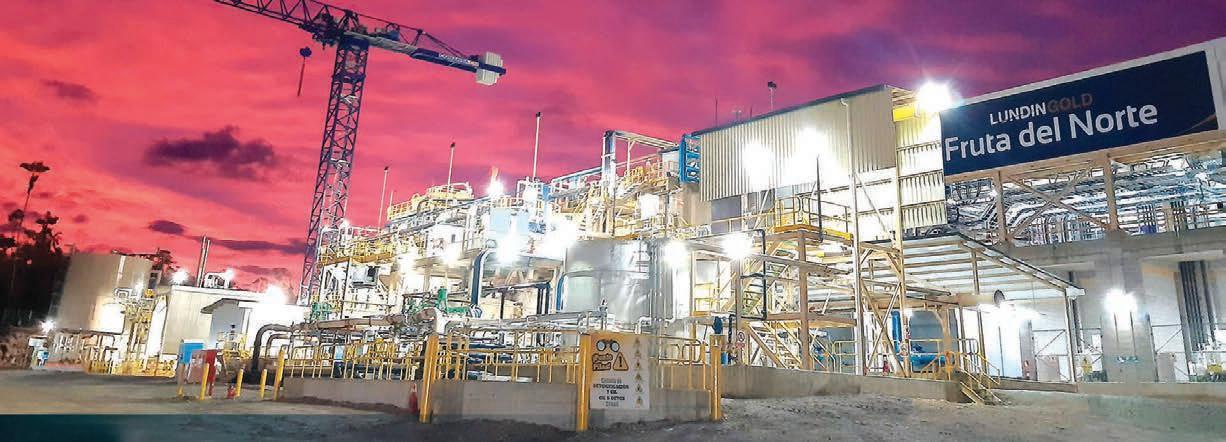
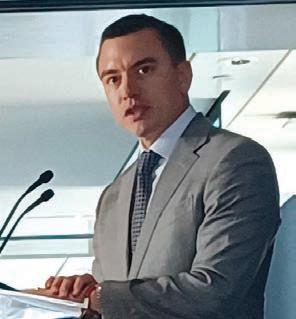

90%, Noboa said at the Toronto luncheon. Recent polls put his approval rating at 81%.
“ ere’s a sense of peace. Calm. It’s a sense of progress,” he said. “War was never something that I expected to start, but it was something that was needed.”
In the remote southeast province of Zamora-Chinchipe, mining has been a key driver for economic growth. e province hosts both of the country’s large-scale mines, Fruta del Norte and Mirador.
“ e economic impact in Zamora-Chinchipe, the unemployment numbers, a lot of the reduction of poverty levels — that’s due to mining,” Lundin’s Hochstein says. e company’s Fruta del Norte produced more than 480,000 oz. of gold last year at an all-in sustaining cost of US$860 per oz. sold and a head grade of 10.2 grams gold per tonne. It reports no impact from gangs even though the mine depends on the Guayaquil port for supplies and shipping concentrate.
“ e mining industry in Ecuador, despite these headlines, it is thriving,” Solaris president and CEO Daniel Earle said. e company’s Warintza copper-gold project is in Morona Santiago province, just north of Zamora-Chinchipe.
Noboa used PDAC to sign agreements with Adventus, Atico, and Australia-based SolGold (TSX: SOLG; LSE: SOLG), which is to invest US$3.2 billion in its Cascabel copper-gold project in Imbabura province. e administration has sought to address permitting delays, showing it’s serious about attracting new mining investment. Adventus and Salazar Resources (TSXV: SRL) received environmental permits for their El Domo-Curipamba joint venture project in central Ecuador in January, for example.
“
ey’ve cleared through approx-
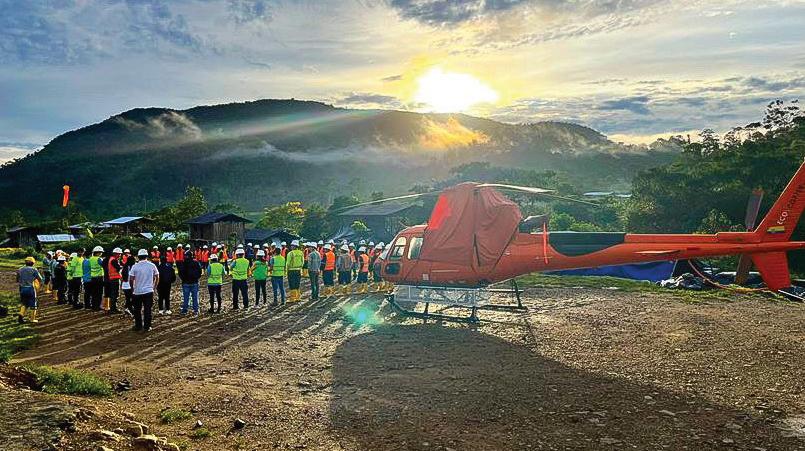
imately 50% of the backlog of environmental permits in the rst 60 days,” Earle says. “ e Ministry of Environment now is graded on the value of the permits that they approve — of course, at the highest international standards.”
Indigenous consultation
e government has also committed to reopening the country’s mining cadastre — the mineral claims registry, which has been closed since 2018. In addition, Noboa introduced in March the rst-ever guidance on Indigenous consultation for resource development.
However, the guidance, which doesn’t give Indigenous communities a veto over development on their ancestral lands, was immediately rejected by the Confederation of Indigenous Nationalities of the Ecuadorian Amazon (Cofeniae).
“Continuing with its extractivist and neoliberal agenda, President Noboa turns our rights into a mere administrative procedure to facilitate the interests of the mining industry and speed up the approval process of mining concessions,” a statement issued by Cofeniae reads.
Indigenous opposition has stalled many projects in Ecuador, including Dundee’s Loma Larga and Warintza, before Solaris, a spinout of Equinox Gold, took over the project in 2018.
Earle says Solaris turned around opposition to its project by pioneering a new type of agreement and partnership with Indigenous communities that he calls participatory mining.
“ at’s supported by good faith, transparent dialogue,” he said. “Once we got to the root causes of
the prior issues, that led to a memorandum of understanding on a new framework for cooperation and then ultimately to an impact and bene ts agreement which has been updated multiple times.”
e $660-million market cap company expects to release an updated resource for Warintza in the second quarter, followed by a prefeasibility study next year. Current in-pit indicated resources at the Warintza Central deposit stand at 579 million indicated tonnes grading 0.47% copper, 0.03% molybdenum and 0.05 gram gold per tonne (0.59% copper equivalent). Inferred resources add 887 million tonnes at slightly lower grades.
However, one Indigenous group still opposes the development. e Shuar-Arutam People (PSHA), with support from non-pro ts Mining Watch Canada, Amazon Watch and WITNESS, led a complaint with the British Columbia Securities Commission in February claiming they haven’t been consulted. ey also say Solaris hasn’t fully disclosed to shareholders the extent of Indigenous opposition to Warintza’s development.
Earle wouldn’t comment on the claim. But he did say the company has agreements with the two Shuar communities with pertinent ancestral lands, allowing their general assembles to make deals regarding the project.
“Beyond that, what you’re talking about is basically acceptance from the broader Indigenous community,” he added, noting the company’s recent agreement with the largest Shuar organization (Interprovincial Federation of Shuar Centers or FICSH) and Ecuador’s
Alliance for Entrepreneurship and Innovation to ensure more widespread bene ts.
In that release, the communities that do have agreements with Solaris reiterated their rights as registered owners of the ancestral lands that host Warintza.
“We reject the false statements made by foreign non-governmental organizations and PSHA which ignore our voice and speak against our interests,” said Froilan Juank, president of Yawi Center.
Mine expansion
Despite the risks in Ecuador, both Fruta del Norte and the Mirador copper mine, owned by Chinese consortium CRCC-Tongguan, were permitted in 12 months and built on time and on budget.
And Ecuador’s rich geology has much more to give.
At Fruta del Norte, which the late Lukas Lundin used to describe as a “buried gold bar,” the company is expanding throughput to 5,000 tonnes a day this year from 4,500 tonnes, and planning a major exploration push. e operation still has a mine life of 11 years, but positive drill results show the potential for further epithermal gold discoveries, Hochstein said. e company will spend nearly $40 million to drill over 56,000 metres this year — its largest exploration campaign yet.
“I think this has the potential to become a district,” Hochstein said. “Not just a single mine, but another Timmins.”
Meanwhile Mirador, which began production in 2019, is undergoing a major expansion to more than double its capacity to 2,000 tonnes per day by 2026.
“It represents what’s possible in copper in Ecuador in this district where you’ve got this excellent infrastructure, and a low-cost framework surrounding that where they’ve brought that project on for one of the lowest capital intensities in the industry,” Earle said.
at’s something Noboa is eager to capitalize on.
“We’re a country that has everything,” he told the Toronto luncheon. “Natural resources, a young, healthy population. We just need people like you to believe in us the same way that we believe in ourselves.” TNM
GLOBAL MINING NEWS THE NORTHERN MINER | APRIL 2024 31
Ecuador’s President Daniel Noboa speaks in Toronto in March. ALISHA HIYATE
specialfocus
The processing plant at Lundin Gold’s Fruta Del Norte mine in southeast Ecuador. LUNDIN GOLD
Solaris Resources’ Wartinza copper-gold project. SOLARIS RESOURCES
Pampa drills long copper interval at Piuquenes
ARGENTINA | Project being tested at depth
BY COLIN MCCLELLAND
Pampa Metals (CSE: PM; USOTC: PMMCF) says the rst drill hole at its Piuquenes project in Argentina cut more than 1% copper equivalent over nearly a third of a kilometre.
Diamond drill hole PIU-01 returned 0.5% copper, 0.7 gram gold per tonne and 3.1 grams silver for 1.1% copper equivalent over 304 metres from 198 metres depth, the company said on March 12. e hole was designed to extend copper-gold mineralization to depth on the southwestern margin of the Piuquenes Central porphyry in San Juan province near the Chilean border, Pampa said in a release. Supergene copper enrichment was observed from 220-380 metres downhole, coincident and overlapping with primary mineralization from 350 metres.
“Excellent progress is being done on the second hole which has been designed to further test the depth and lateral extensions,” Pampa Metals president and CEO Joseph van den Elsen said. “Subsequent drill programs will also test the undrilled Piuquenes East porphyry target and other nearby targets.”
Shares in Pampa Metals rose more than 6% to 24¢ apiece in Toronto on the news, valuing the

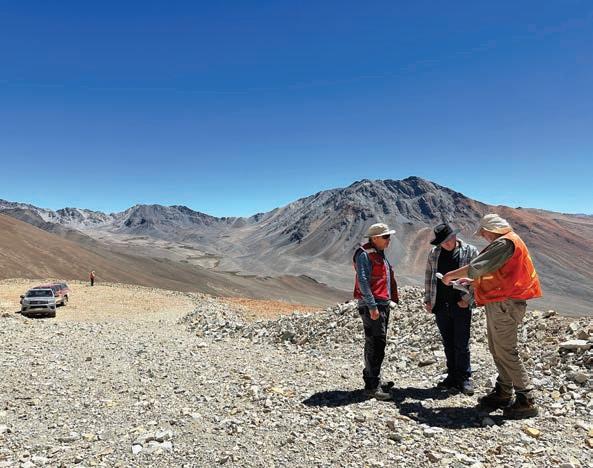
company at almost $14.5 million. ey were at 26¢ each closer to press time.
Assays results from 502-867 metres, the end of the hole, are expected shortly, Pampa said. Strong primary mineralization associated with intense porphyry A type quartz stockwork veining is evident from 350-650 metres, it said.
In November, Pampa said it had entered into an option and joint venture agreement to acquire an


80% interest in the project.
Piuquenes covers 18.8 sq. km in the San Juan Miocene porphyry belt, “the world’s hottest copper porphyry exploration belt,” the company says. Other projects in the area include Los Azules held by McEwen Copper, a unit of McEwen Mining (NYSE: MUX; TSX: MUX), Fortescue Minerals’ (ASX: FMG) Rincoes de Araya, Aldebaran Resources’ (TSXV: ALDE) El Altar and Glencore’s (LSE: GLEN) El Pachón. TNM
Ganfeng buys 15% slice of Lithium Argentina’s Pastos Grandes
LITHIUM |Investment totals US$70M
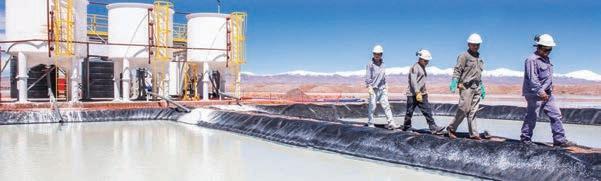
BY MARILYN SCALES
Lithium Argentina (TSX: LAAC; NYSE: LAAC), the recent spinout of Lithium Americas (TSX: LAC; NYSE: LAC), says it is selling 15% of its Pastos Grandes project in Argentina to a subsidiary of China’s Ganfeng Lithium for US$70 million. Its stock rose 61¢ or 9.4% to $7.08 on the March 6 news, and was at $6.90 at press time two weeks later.
Ganfeng’s investment will go toward the purchase of newly issued shares of Proyecto Pastos Grandes SA, Lithium Argentina’s local subsidiary.
Lithium Argentina is already partners with Ganfeng at the Cauchari-Olaroz mine, which began production last June. Ganfeng holds

46.7% of the brine operation, with Lithium Argentina holding 44.8%.
Lithium Americas split its South American assets o last fall to separate its development-stage acker Pass project in Nevada. e lithium clay project could bene t from U.S. government funding for battery metals production, and General Motors has invested US$650 million into acker Pass in return for exclusive rights to the rst 10 years of lithium carbonate output.
Lithium Americas acquired Pastos Grandes in 2022. e property is in Salta province, adjacent to Ganfeng’s Pozuelos-Pastos Grandes project and 100 km from Cauchari-Olaroz.
e Pastos Grandes feasibility study is being updated. e project is permitted, and this year’s development budget is US$30 million. TNM
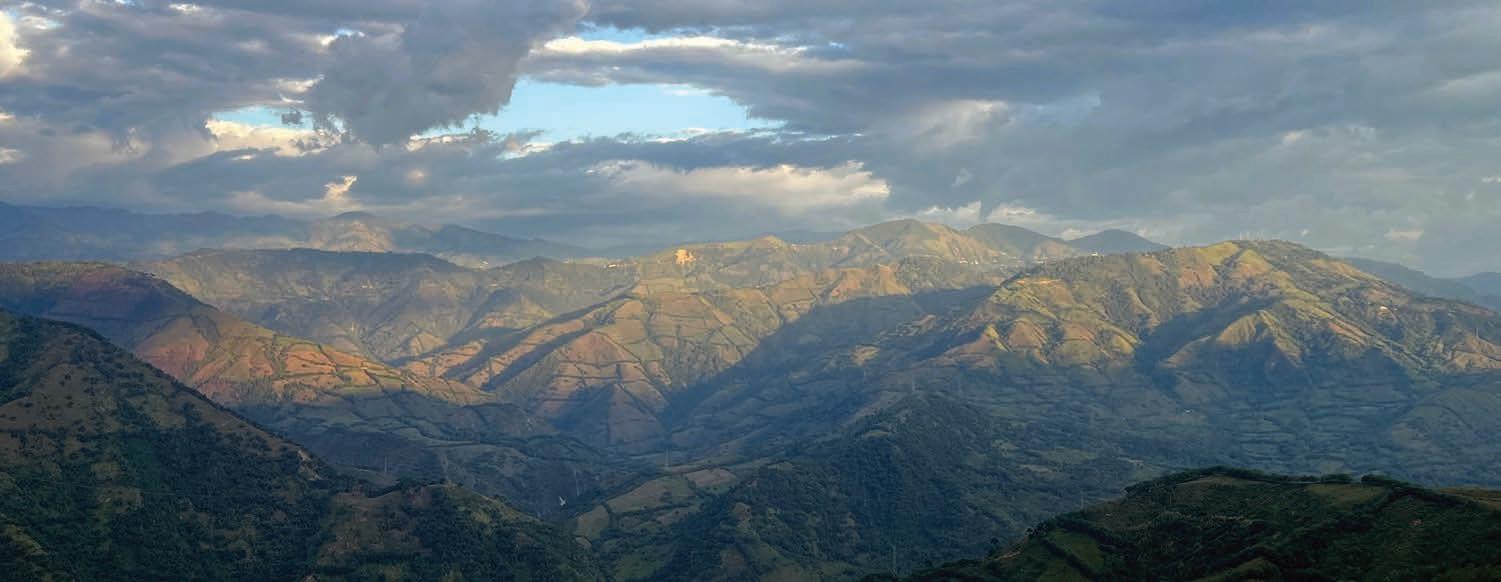

A GOLD PRODUCER IN THE AMERICAS, EXPANDING FOR TOMORROW



Two operating mines in Colombia expected to produce 220,000 to 240,000 gold ounces in 2024 with expansions underway, targeting 500,000 gold ounces in 2026
Strong financial position, generating free cash flow to fund growth
Growing high-grade resources and reserves through exploration
Attractive blend of current gold production, exploration potential and growth projects
Climbing the ranks within our peer group based on expected doubling of gold production in 2026
32 APRIL 2024 | THE NORTHERN MINER www.northernminer.com LATIN AMERICA
TSX: ARIS | NYSE-A: ARMN Aris-Mining.com
Exploration at the Piuquenes project in northern Argentina. PAMPA METALS
Lithium Argentina’s Pastos Grandes project in Argentina. LITHIUM ARGENTINA
LATIN AMERICA SNAPSHOT:
Eight companies hunting for precious, base and battery metals
BY NORTHERN MINER STAFF
For centuries, Latin America has been renowned for its vast mineral potential. Here are eight companies making the most of the opportunity as they explore in Argentina, Ecuador, Mexico and Peru.
n Aldebaran Resources
Aldebaran Resources (TSXV: ALDE; US-OTC: ADBRF) is focused on its agship Altar coppergold project in Argentina’s San Juan province.
e company has earned a 60% stake in Altar and has informed Sibanye-Stillwater (NYSE: SBSW) that it intends to earn an additional 20% by spending US$25 million over three years.
Altar, 10 km from the Chile-Argentina border and 180 km from the city of San Juan, hosts a cluster of porphyry copper-gold systems with mineralization currently dened in four zones — Altar Central, Altar East, QDM and Radio Porphyry.
Nearby copper operations include Antofagasta’s (LSE: ANTO) Pelambres mine, Glencore’s (LSE: GLEN) El Pachon and McEwen Mining’s (TSX: MUX; NYSE: MUX) Los Azules.
In January, Aldebaran announced a collaboration with Nuton LLC, a Rio Tinto (NYSE: RIO; LSE: RIO; ASX: RIO) venture, to evaluate the use of Nuton’s primary sulphide leaching technologies at Altar. Test work is to begin in the rst half of this year.
e company is drilling with four rigs and plans to update Altar’s 2021 resource estimate later this year. For now, the Altar Central and Altar East zones host 1.2 billion measured and indicated tonnes grading 0.43% copper, 0.09 gram gold per tonne and 1 gram silver for 11.4 billion lb. of contained copper, 3.4 million oz. gold and 38.6 million oz. silver. Inferred resources total 189 million tonnes
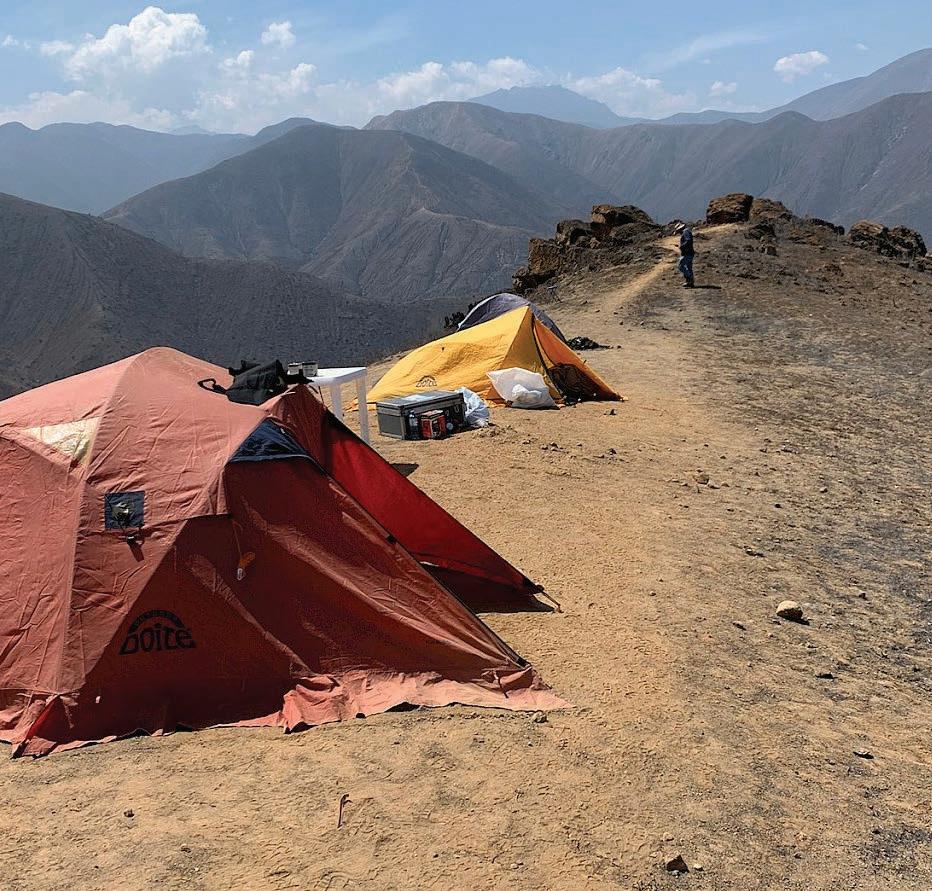
grading 0.42% copper, 0.06 gram gold and 0.8 gram silver for 1.8 billion lb. copper, 400,000 oz. gold and 4.8 million oz. silver. e QDM near-surface gold deposit holds 20 million measured and indicated tonnes grading 0.78 gram gold, 3.62 grams silver and 0.06% copper, with 1.2 million inferred tonnes averaging 0.58 gram gold, 5.34 grams silver and 0.03% copper. ere is no resource estimate yet for the Radio Porphyry intrusion deposit that sits below the QDM deposit.
South32 (ASX: S32) owns a 14.8% stake in Aldebaran, with Sibanye-Stillwater holding 14.3%. Aldebaran was spun out of Regulus Resources in 2018.
It has a market cap of roughly $121 million.
n Argentina Lithium & Energy
Argentina Lithium & Energy’s (TSXV: LIT; US-OTC: LILIF) top battery metal projects in Argentina are Rincon West and Antofalla North, which have captured the interest of Amsterdam-based carmaker Stellantis (NYSE: STLA).
In September, Stellantis invested the equivalent of US$90 million in Argentine pesos in Argentina Lithium & Energy through its Argentine subsidiary.
e carmaker, whose brands include Alfa Romeo, Chrysler, Citroen, Fiat, Opel, Maserati, Peugeot, Jeep and Vauxhaul, now owns 19.9% of Argentina Lithium’s subsidiary, with Argentina Lithium retaining an 80.1% stake. Under the
deal, if the junior becomes a lithium producer, Stellantis will secure a seven-year o ake agreement for up to 15,000 tonnes of lithium carbonate per year.
e Rincon West project shares the Rincon Salar in Salta province with Rio Tinto’s (NYSE: RIO; LSE: RIO; ASX: RIO) adjacent Rincon project and with Argosy Minerals’ (ASX: AGY) Rincon project to the east. Drill result highlights at Rincon West have included 153 metres grading from 329 to 393 mg per litre lithium in hole RW-DDH-006 and 132 metres of 334 to 382 mg per litre in hole RW-DDJ-004.
e Antofalla North project on the Antofalla Salar, is 25 km from Livent’s (NYSE: LTHM) Fenix lithium mine at Salar del Hombre
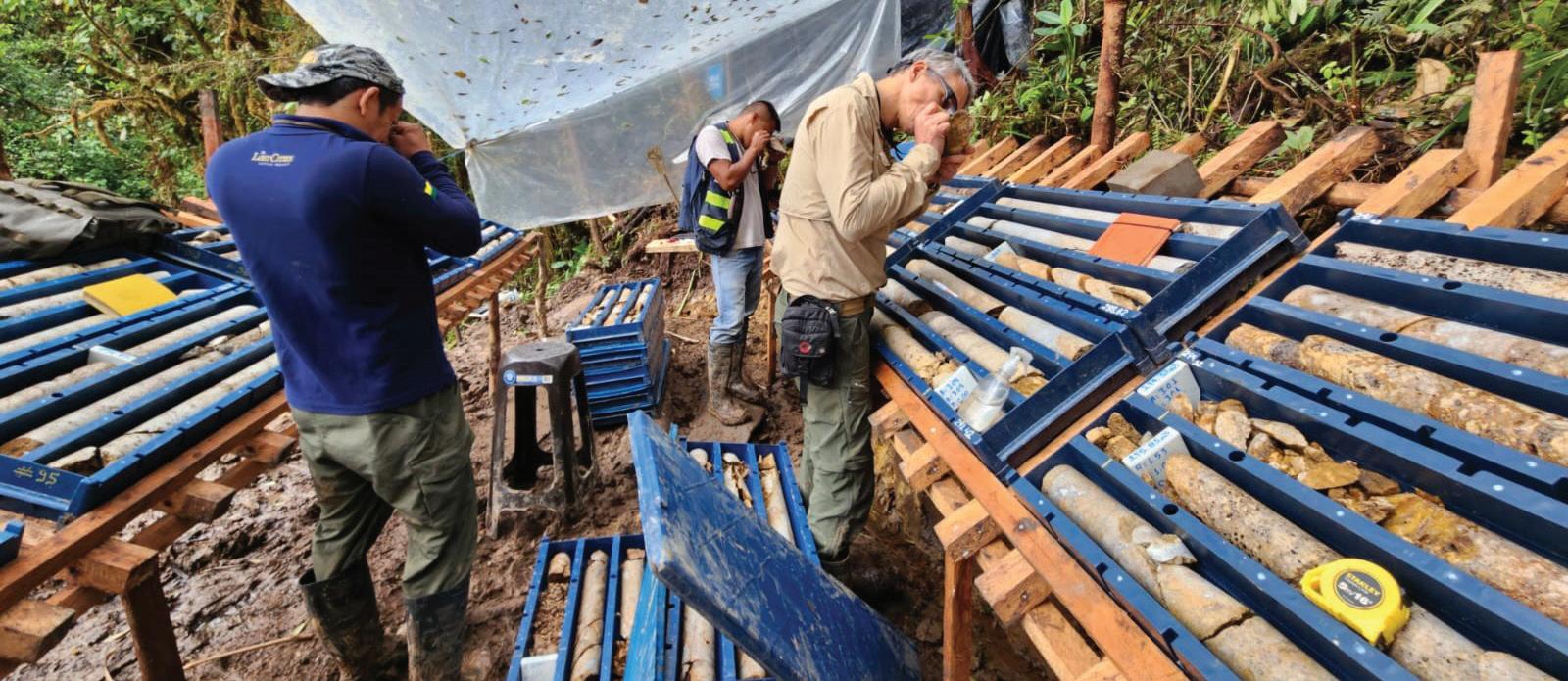
Muerto and the project’s southernmost boundary is adjacent to properties controlled by lithium giant Albemarle (NYSE: ALB).
In addition to Rincon West and Antofalla, the company has two earlier stage projects — Pocitos and Incahuasi. Pocitos is about 38 km from Rincon West and Incahuasi is on the namesake Salar.
Argentina Lithium, which is part of the Grosso Group, has a market cap of about $37.6 million.
n Aurania Resources
Aurania Resources (TSX: ARU) is exploring for gold, copper and silver in Ecuador. Its agship asset, the Lost Cities-Cutucu project, is in the eastern foothills of southeastern Ecuador’s Andes mountain range. e project has three distinct target areas: epithermal gold, porphyry copper and sediment-hosted copper-silver/silver-zinc.
Aurania’s Awacha porphyry target is about 11- by 5-km in size and was discovered by stream-sediment sampling that showed elevated copper and molybdenum in the vicinity of two strong airborne magnetic anomalies. e company has also mapped intrusive rock types there including gabbro, diorite, monzonite and syenite. In a news release last April, Aurania noted that Awacha’s size “is signi cantly larger than any copper porphyry known” and therefore the company’s “working hypothesis” is that it is a cluster of porphyries. e company is also exploring for copper at its Tatasham porphyry target near the western margin of its Lost Cities–Cutucu concession area. In March 2023, Aurania announced that it had unexpectedly discovered a large epithermal system there that it believes has similarities to the Fruta del Norte gold deposit, 100 km to the south. Aurania reported that three drill holes intersected a hydrothermal system with breccias, strong silici cation and high temperature illite-clay alteration, and said it thinks that the porphyry target “is still valid, but it may lie at a considerable depth, or it may lie laterally.”
Chairman and CEO Keith Barron owns about 43% of the company’s outstanding shares. Barron is credited with Aurelian Resources’ discovery of Fruta del Norte in 2006, which Lundin Gold (TSX: LUG) put into production in 2019. Aurania has a market cap of $15.9 million.
n Aztec Minerals
Aztec Minerals (TSXV: AZT; USOTC: AZZTF) is advancing its Cervantes project in Mexico, 160 km east of Hermosillo in southeastern Sonora state.
e company’s rst drill program at Cervantes six years ago partially outlined an oxide gold cap to a new porphyry gold-copper discovery at the project’s California zone, with drill intercepts including 160 metres grading 0.77 gram gold in hole 18CER010.
Core trays at Aurania’s Lost CitiesCutucu project. AURANIA RESOURCES
GLOBAL MINING NEWS THE NORTHERN MINER | APRIL 2024 33 LATIN AMERICA
A small exploration camp at Latin Metals’ Lacsha copper-molybdenum porphyry project in Peru. LATIN METALS
Snapshot P34 >
Since 2016 the company has drilled 12,130 metres in 67 drill holes and continues to see significant widths of gold mineralization. Highlights include 137 metres grading 1.49 grams gold per tonne from surface with a sub-interval of 51.7 metres of 3.42 grams gold in hole CAL22-005; 165 metres of 1 gram gold from surface including 24.4 metres of 4.25 grams gold in CAL22-004; and 152 metres of 0.87 gram gold from 41 metres downhole, including 33.5 metres of 2.05 grams gold in CAL22-012.
Last year, Aztec completed 13 reverse-circulation holes for 1,650 metres. e program expanded the potential mineralization area of the primary California zone oxide gold target to 1 km of strike by 300 metres of width. Drill hole CAL23-034 returned 30.4 metres grading 1.04 grams gold from 53 metres including 1.5 metres of 13.8 grams gold. is year’s drill program will continue stepping out the shallow near-surface gold oxide mineralized zone at the California target, and other targets, such as California Norte, Jasper, Purisima East and West, and Estrella.
Cervantes is 60 km west of Alamos Gold’s (TSX: AGI; NYSE: AGI) Mulatos epithermal gold mine, 45 km west of Agnico Eagle’s (TSX: AEM; NYSE: AEM) La India mine and 40 km northwest of Minera Alamos’s (TSXV: MAI; US-OTC: MAIFF) Santana gold deposit.
Outside Latin America, Aztec owns a 75% stake in the Tombstone project in Arizona, 100 km southeast of Tucson.
Aztec has a market cap of $20.7 million.
n Condor Resources
Peru-focused Condor Resources (TSXV: CN) has 12 precious and base metal targets at various stages of exploration. Pucamayo, its agship, sits 185 km southeast of Lima, and is about 25 km east of Nexa Resources’ (NYSE: NEXA) Cerro
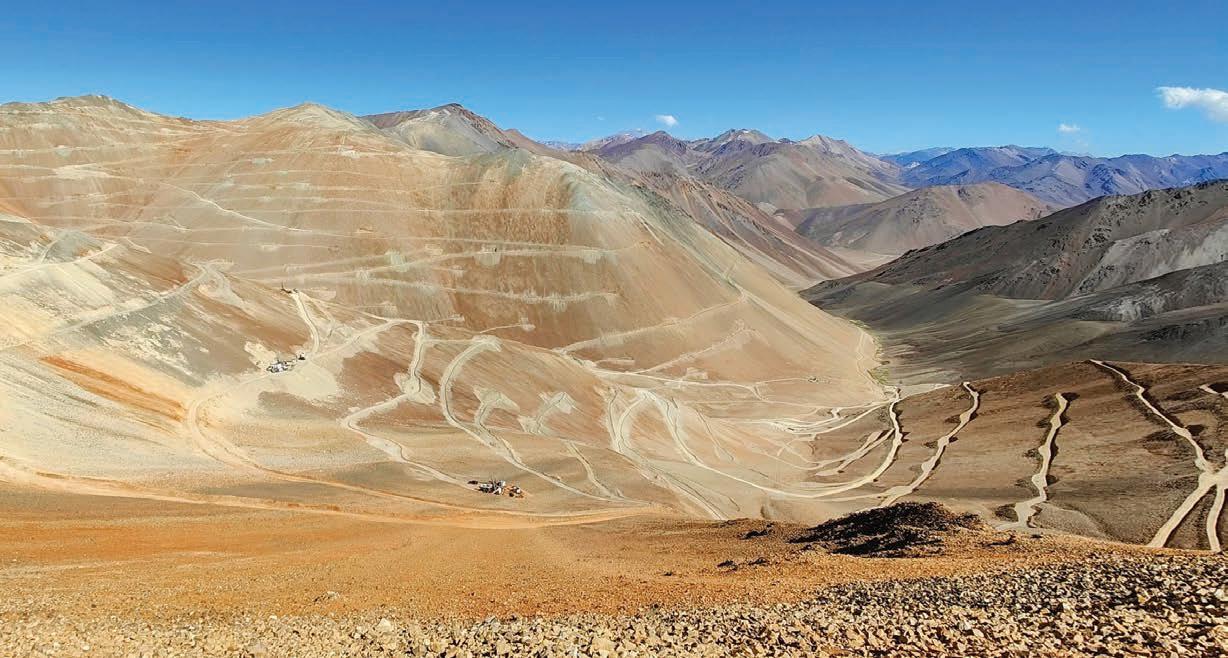
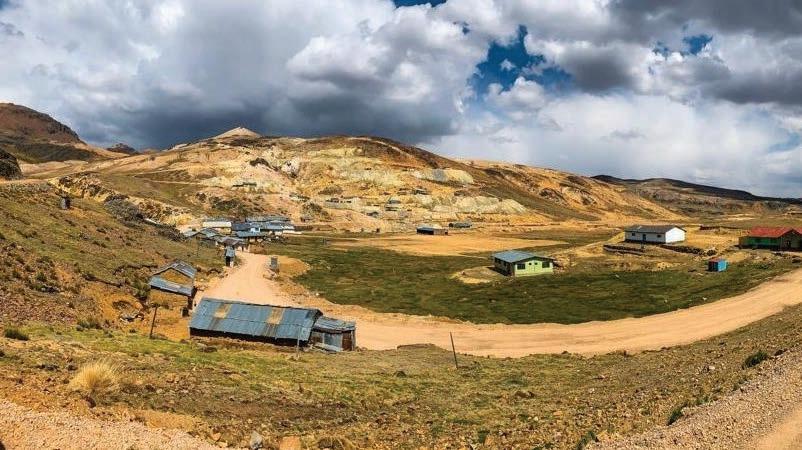
Lindo lead-zinc-copper mine and 56 km southwest of Minera IRL’s (CSE: MIRL; US-OTC: MRLLF)
Corihuarmi gold mine. Condor conducted its rst drill drill program there in December Highlights included a 72.5-metre

intercept grading 0.45 gram gold per tonne, 30 grams silver and 0.14% zinc (0.83 gram gold-equivalent) in drill hole PUC-E-005. e interval included 2-metres of 11.43 grams gold, 687 grams silver, 0.11% lead and 0.21% zinc (18.96 grams gold-equivalent).
In January, Condor completed an option and joint-venture agreement with Teck Resources (TSX: TECK.A/B; NYSE: TECK) on its Cobreorco copper-gold project. Teck can earn 55% of the porphyry-skarn project over three years and has the option to increase ownership to 75% over an additional three years.
e project in south-central Peru, about 120 km west of China-backed MMG’s Las Bambas copper mine, has outcropping porphyry and skarn-related copper-gold occurrences. A sampling program in 2019 of 51 rock channel samples, typically over a 2-metre length, tested over 1% copper for nine samples and between 0.1% and 1% copper for 29 samples. Gold values were as high as 10.8 grams gold per tonne, with 19 of the samples testing over 1 gram gold.
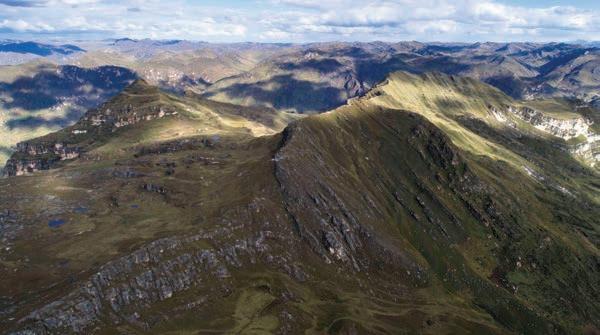
Condor’s two other high-priority projects are Huinac Punta, where it is targeting disseminated bulk-tonnage silver, copper and zinc, and Andrea, a high-sulphidation gold-silver target, with similarities to Pucamayo.
Among Condor’s other projects is Soledad, 260 km northwest of Lima and about 34 km south of Barrick Gold’s (TSX: ABX; NYSE: GOLD) former Pierina gold mine. Condor has optioned Soledad to Chakana Copper (TSXV: PERU; US-OTC: CHKKF).
Condor has a market cap of about $19.8 million.
n Kuya Silver
Kuya Silver (CSE: KUYA; USOTC: KUYAF) is focused on its
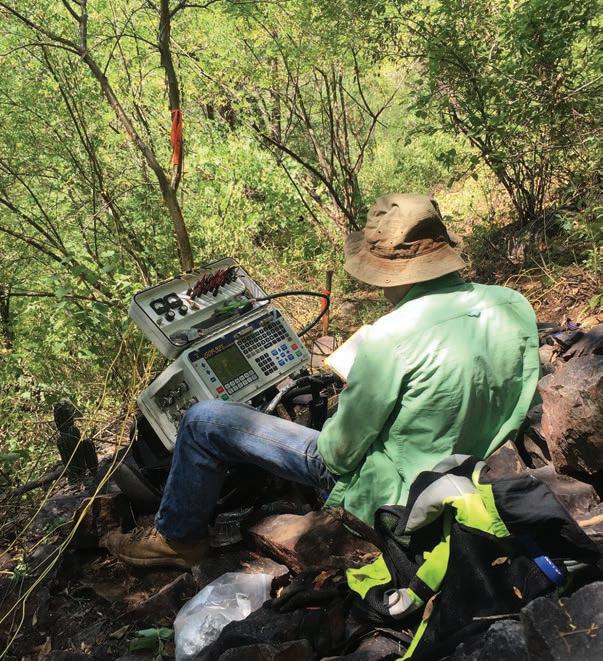
main Bethania project, 316 km from Lima in central Peru. Bethania contains a mine that opened in 1977 and last produced silver-lead and zinc concentrates in 2016.
In January, the company began an underground development and reconditioning program as a step toward restarting production later this year.
In November 2023, commodities group Tra gura invested US$1.2 million in the company to support the restart of production. e mine is permitted to produce up to 350 tonnes per day.
In October, Kuya signed a toll milling agreement with Compania Minera San Valentin to process material at its plant, 20 km from Bethania.
At a base case silver price of US$25.40 per oz., Bethania would have an a er-tax net present value (at a 5% discount rate) of US$54.7 million and an internal rate of return of 188%, according to an updated preliminary economic assessment (PEA) in October 2023.
A resource for Bethania in 2022 outlined 404,000 indicated tonnes grading 332 grams silver per tonne for 4.3 million oz. contained silver and another 5.6 million oz. contained silver in 700,000 inferred tonnes grading 249 grams silver.
In addition to exploration in and
around the historic mine, the company has found new veins at the project. Samples from the Santa Elena vein returned up to 3,675 grams silver-equivalent per tonne. e Carmen vein intersected up to 6.26 grams gold at surface. And about 3.5 km from Bethania, the Carmelitas Norte prospect sampled up to 19 grams silver equivalent.
Outside Peru, Kuya owns the Silver Kings project in northern Ontario and has a partnership with Sumou Holding, a Saudi Arabia-based investment company. In February, the partnership was awarded the Umm Hadid silver-gold-copper-lead-zinc mineral concession near the centre of the Arabian Peninsula.
e company has a market cap of $22.8 million.
n Latin Metals
Prospect generator Latin Metals (TSXV: LMS; US-OTC: LMSQF) has 16 exploration projects and two royalties in Argentina and Peru.
In Argentina the company’s best-known projects include Organullo (copper-gold), Cerro Bayo (gold-silver) and Esperanza (copper-gold). In Peru, its portfolio includes Lacsha (copper), Auquis (copper-gold), Tillo (copper) and Jascha (copper).
AngloGold Argentina Explora-
34 APRIL 2024 | THE NORTHERN MINER www.northernminer.com LATIN AMERICA
> Snapshot from P33
Aldebaran Resources’ Altar project in San Juan province of northern Argentina. ALDEBARAN RESOURCES
Ayawilca Polymetallic Zinc-Tin-Silver Deposit Toward
Geophysical data gathering at Aztec Minerals’ Cervantes project in the northwestern state of Sonora in Mexico. AZTEC MINERALS
Advancing the World Class
Production
Mine
Sustainable Mine Plan
Planned
2024 • Permits & Community Agreements in Place • Significant Exploration Upside www.tinkaresources.com | TSXV: TK
• 2024 PEA: Robust Economics, Long
Life,
• PFS
for
Kuya Silver’s Bethania project in Peru. KUYA SILVER
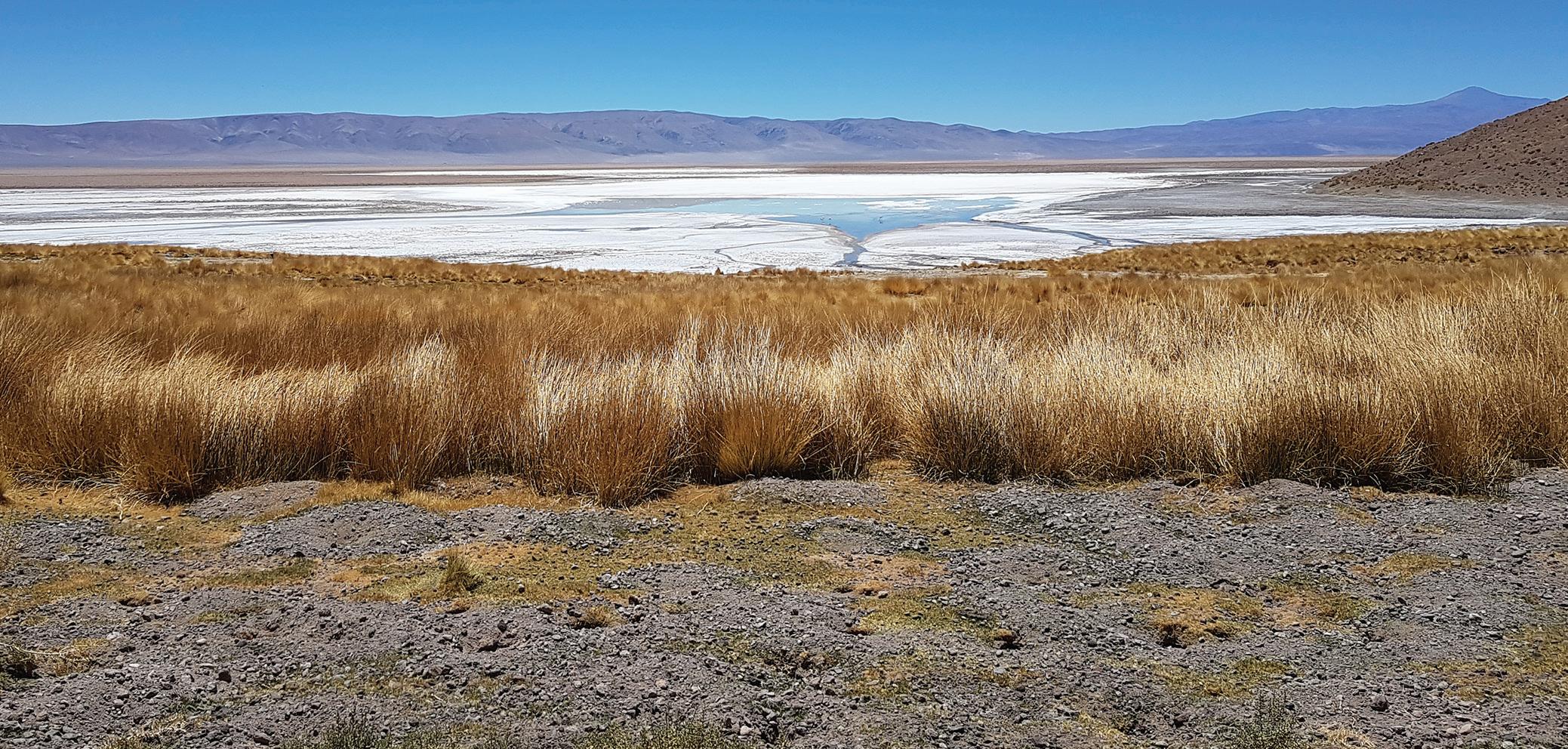
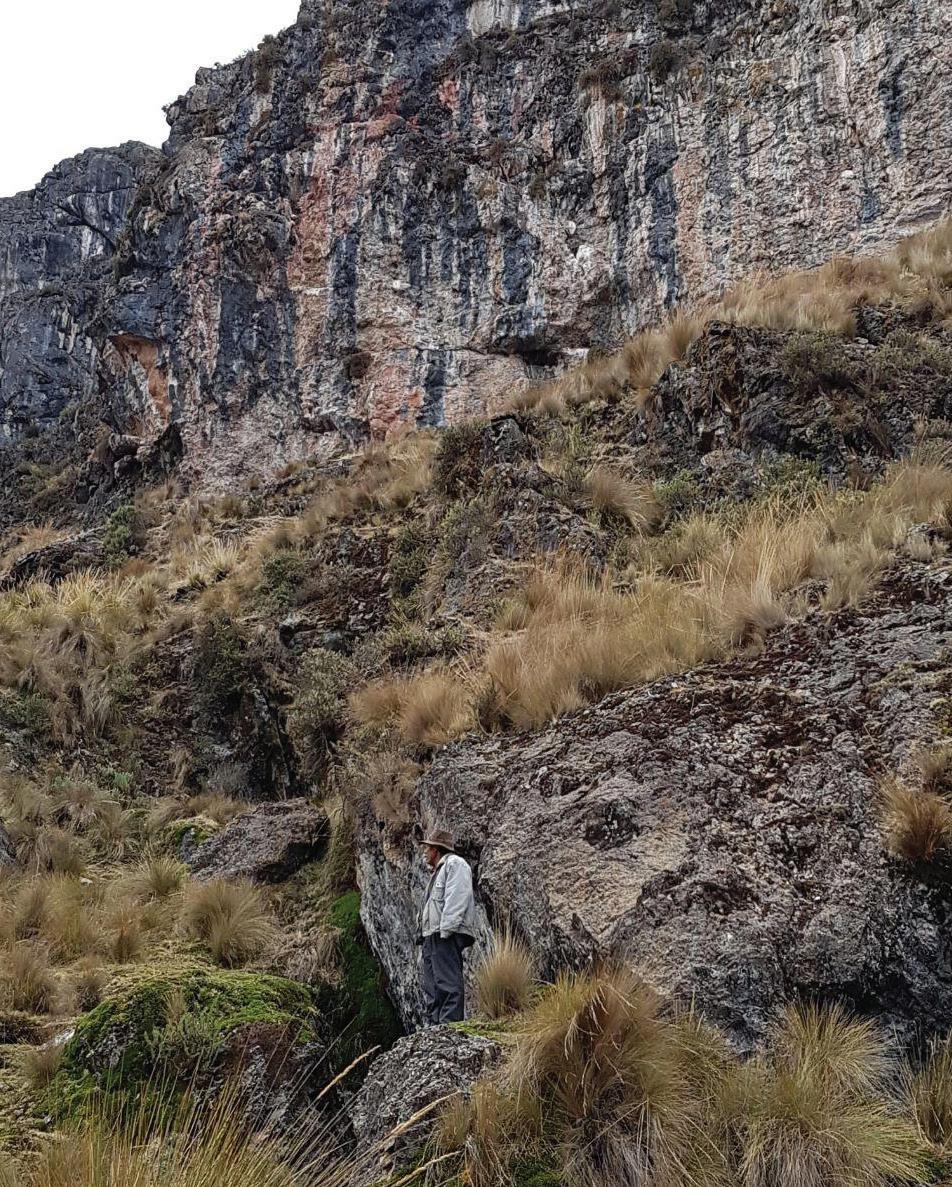
ciones S.A., a subsidiary of AngloGold Ashanti (NYSE: AU), has an option to earn 80% of the Organullo project. e major has completed an airborne geophysical survey collecting magnetic and radiometric data over most of the project area, which will assist innalizing drill targets. Organullo is about 100 km northwest of Salta.
Latin Metals has various projects for option, including Esperanza, Cerro Bayo and Lacsha.
Esperanza, in Argentina’s San Juan province, is a copper-gold porphyry project where more than 8,500 metres of drilling have been completed. e best intercept returned 387 metres grading 0.57% copper and 0.27 gram gold per tonne from surface in hole 18-ESP025. Esperanza is about 135 km
north of the provincial capital San Juan and 175 km from Filo Corp.’s (TSX: FIL; US-OTC: FLMMF) Filo del Sol deposit. Latin Metals has the option to earn 100% of the project, subject to a 2% net smelter return royalty to the underlying owner.
Cerro Bayo, a silver-gold epithermal project, is in the Deseado Massif of Argentina’s Santa Cruz province. Exploration by Barrick Gold in 2022 and 2023 de ned eight drill target areas.
Lacsha, a copper-molybdenum porphyry project in Peru’s coastal copper belt, was staked by Latin Metals and the company has completed surface exploration, identied drill targets, signed a three-year agreement with local stakeholders and secured a drill permit for testing its targets. Rock chip samples
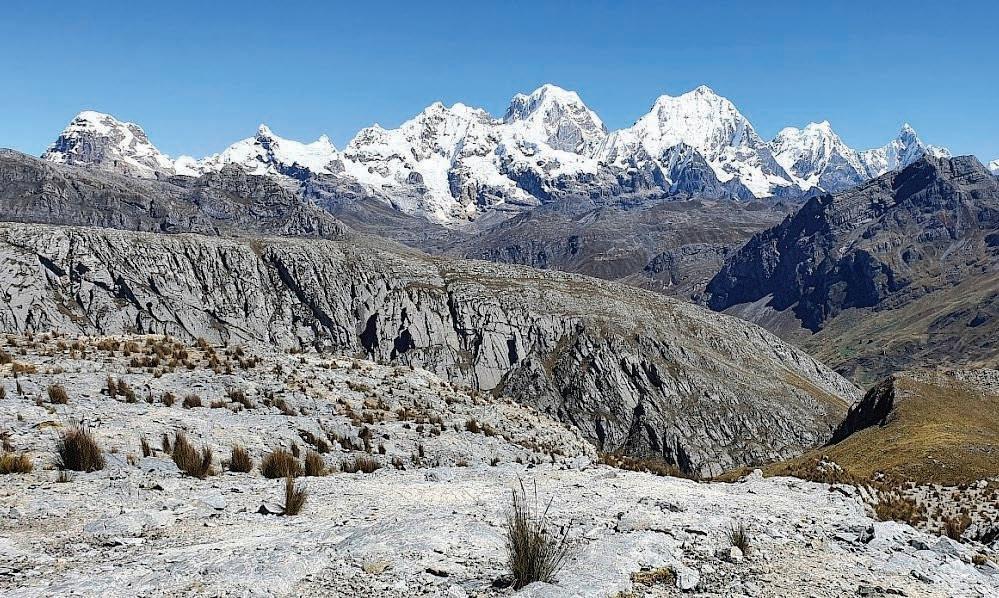
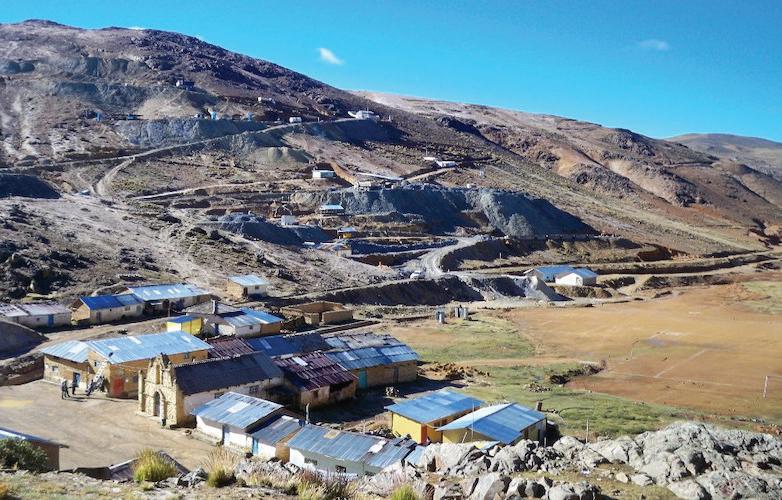
returned results that included 52 metres grading 0.38% copper.
About 49% of the company’s shares are held by the board and management.
Latin Metals has a market cap of about $5.7 million.
n Tinka Resources
Tinka Resources (TSXV: TK; USOTC: TKRFF) has two adjacent projects in Peru — the Ayawilca zinc-tin-silver project and the Silvia copper-gold project. e projects are about 200 km north of Lima in the Pasco region of central Peru.
In February, the company completed an updated PEA on Ayawilca. e study outlined a 21-year mine life for a 2-million-tonneper-year zinc-silver-lead operation
along with 15 years of tin production at 300,000 tonnes per year. Pre-production capex for an underground mine was pegged at US$382 million with an a er-tax payback period of about 2.9 years. Ayawilca’s post-tax net present value (at 8% discount rate) was assessed at US$433.4 million and the internal rate of return at 25.9%. All-in sustaining costs per pound of payable zinc came to US55¢.
e study used base case prices of US$1.30 per lb. zinc; US$1 per lb. lead, US$22 per oz. silver, and US$11 per lb. tin. Ayawilca’s Zinc zone deposit hosts 28.3 million indicated tonnes grading 5.82% zinc, 16.4 grams silver per tonne, 0.2% lead and 91 grams indium; with 31.2 million inferred tonnes of 4.21% zinc,
14.5 grams silver, 0.2% lead and 45 grams indium. e tin zone holds 1.4 million indicated tonnes averaging 0.72% tin and 12.7 million inferred tonnes grading 0.76% tin.
e Silver Zone has 1 million inferred tonnes grading 111.4 grams silver, 1.54% zinc, and 0.5% lead.
e Silvia project, which Tinka bought from BHP Peru in July 2021, hosts two priority copper targets with outcropping skarn and coincident copper and geophysical anomalies. e project is about 80 km south and along strike of Antamina, one of Peru’s largest copper mines, jointly owned by Teck Resources, BHP (NYSE: BHP; LSE: BHP), Glencore, and Mitsubishi.
Tinka Resources has a market cap of about $47 million. TNM
GLOBAL MINING NEWS THE NORTHERN MINER | APRIL 2024 35 LATIN AMERICA
Argentina Lithium & Energy’s Rincon West project, near the Rincon salar in Salta province. ARGENTINA LITHIUM AND ENERGY
Silicified brecciated limestone, with greyish sulphides in the lower part of picture at Condor Resources’ Huinac Punta project in Peru. CONDOR RESOURCES
View from Tinka Resources’ Silvia project towards the Huayhuash cordillera of central Peru. TINKA RESOURCES
The processing plant at Kuya Silver’s Bethania project in central Peru.
KUYA SILVER
technology&innovation
The pros and cons of artificial intelligence at Agnico, Kinross
and Iamgold
PDAC | Weighing efficiency, crunching big data vs skilled labour shortage, job creation
BY COLIN MCCLELLAND
Arti cial intelligence is making mining more e cient, but it comes with its own hurdles, executives at some of Canada’s largest gold miners told a session at the Prospectors and Developers Association of Canada’s annual convention.
AI or machine language learning has the advantage of being able to crunch large data sets and improve its output from experience. It’s being applied to geological gures to suggest drill sites and to run autonomous haulage trucks, for example. It’s set to generate millions or billions of dollars in savings.
Yet, data must be vetted and operations monitored by humans while questions of stock market compliance and security remain to be smoothed out. It requires skilled programmers and expensive technology, and removes employment from remote communities who depend on mining for job creation and northern development.
On the positive side, Agnico
Eagle Mines (TSX: AEM; NYSE: AEM) says it’s testing an AI application that may increase production at Canada’s second-largest mine by output, Detour Lake in northern Ontario, by 5% a year or 35,000 ounces. It sees potential in repeating the technology at other mines to compound the impact.
On the caution side, there’s an AI skills shortage, Andre Leite, vice-president for Ontario operations, told a conference panel on gold mining technology in Ontario.
“It’s not something that is commonplace,” Leite said. “You need the skill set to be able to get the value out of it.”
Appropriate skills
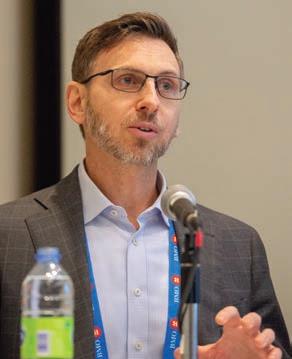
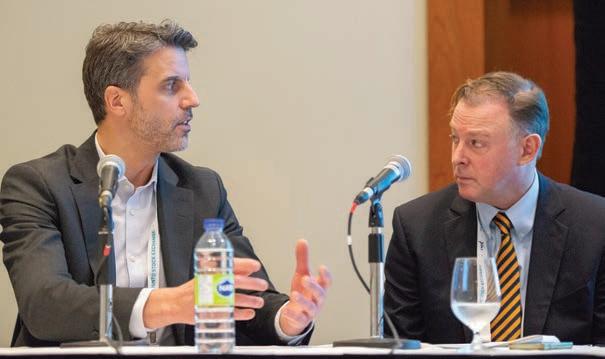
that we’re extrapolating.”
“You can have the brightest of the brightest on the tech and AI side, but if they don’t understand mining then we run into a lot of issues,” he said. “It’s not intuitive to understand how challenging it is, whereas if you come from making cars, you can control your inputs, like Tesla. We still are just based on data points
Kinross Gold (TSX: K; NYSE: KGC) reported similar potential and drawbacks of the technology. AI used in automation should create incremental gains and its help in geochemistry can be worth hundreds of millions of dollars, but mines need appropriate skill sets, said Luke Jalsevac, vice-president responsible for studies and advanced exploration at the Great Bear project in Red Lake, northern Ontario.
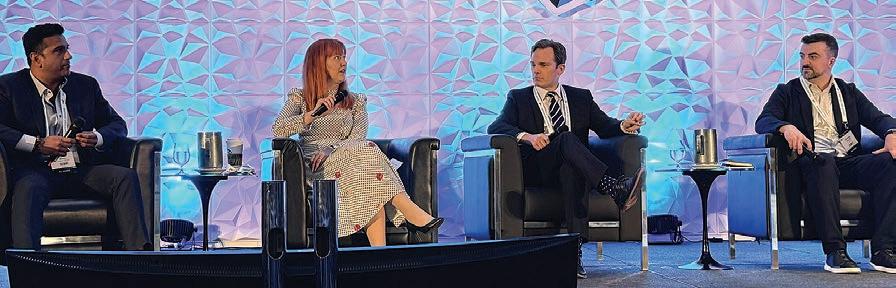
> Copper from P14 the energy transition,” he said.
Uranium key to energy transition
Asked by moderator and Northern Miner Group president Anthony Vaccaro to choose a commodity other than copper, Michael Faralla, head of global mining with TD Securities, settled on uranium.
“I think we’re in a situation where the supply and demand fundamentals are as good as they’ve been back to the last bull market in the 2005 to 2008 range,” he said. “As the energy transition comes back into focus and is exacerbated by energy transition concerns, nuclear has come back as a source for stable and strong base load power.”
Spot uranium traded at US$95 per lb. at press time — down from US$100 per lb. earlier in the year, but still at high prices not seen since 2007.
Steven Reid, managing director at CIBC, said that while he agreed with other panellists’ comments, he’s most excited about gold’s prospects over the next 12 months.
“ is is probably the fastest interest rate increase we’ve seen, and the gold price is holding very well. I think it’ll be a big catalyst to see gold moving higher,” he said.
Gold hit a new all-time high of US$2,222 per oz. on March 21.
Divided markets loom?
Noting that lithium and nickel weren’t among the panellists’ picks, Vaccaro asked them what could help drive prices of those metals up, as well as about the importance of having a cleaner supply of nickel in North America.
Faralla said that one of the biggest challenges for those commodities is their supply chains are dominated by China. And nickel sourced from Indonesia, which accounts for much of the world’s supply, is produced mainly using coal- red energy.
“It’s energy-intensive to mine and re ne (lithium and nickel),” he said. “We need more battery supply coming from the West. Perhaps the market will split into a low-carbon market primarily out of the West, and maybe a higher carbon market with lower prices and prole (out of Asia)?”
Faralla added that geopolitical risk could spur a similar realignment as Western investors seek out lower-risk projects, with Chinese companies investing more in African and Asian jurisdictions and Western companies shying away from them.
ESG wins and bumps
Turning to the issue of environmental, governance and social (ESG) priorities, Vaccaro asked the equity research panel how much of
a factor ESG is for investors.
Andrew ompson, director of global mining equity sales with RBC Capital Markets, said ESG is now “the price of admission” and investors will assume that miners have strong ESG credentials.
Jackie Przybylowski, managing director at BMO Capital Markets, said companies’ approach to ESG is less performative and more genuine than it used to be.
“What comes across this year is more care about employees, about communities and about government relations,” she said. “People aren’t as concerned about scores and rewards as in the past.”
However, Przybylowski noted that while she’s seen progress in women’s representation, there are many women in junior roles but they don’t stay in the industry.
“I never get invited to all the social things, the networking things,” she said. “Generally, when people see (others) in the hallways, they talk to the guy with the suit and tie on because he’s obviously important. It’s the sad truth.”
Przybylowski said to keep women in the sector, they need to be included in the dialogue about career trajectories. “I think that would be the most helpful thing, is to see where you could go in your career. ere’s maybe not enough role models for younger women yet.”
TNM
Kinross plans to complete a preliminary economic assessment at Great Bear, 500 km northwest of under Bay, late this year. Surface construction work may start at the same time for a mine to produce 450,000 oz. to 500,000 oz. per year. e company is using AI to build algorithms to analyze geochemistry with 50 to 100 di erent variables and 300,000 samples.
“We run into issues where we’re just not able to manage that much data and this is where the AI piece, the machine learning piece, is com-
ing in and we’re nding a lot of bene ts,” Jalsevac said.
“If we mine e ectively, eciently, but we don’t understand the geology that’s a huge value destruction because we’re just mining the wrong things more eciently. One of our goals is to use AI and machine learning to help us better understand our geology. We’ve been pretty successful in that regard.”
AI helped Iamgold (TSX: IMG; NYSE: IAG) engineers design a AI P38 >
prices, as the southeast Asian nation boosted production of re ned and semi-re ned nickel, mainly on the back of an export ban on raw ore, which led to massive investment from China in new processing plants, according to Lennon.
Indonesia has become the dominant nickel producer, accounting for 55% of global supply, up from 7% in 2015, according to Bank of America data. But it relies on coalred power.
Higher-cost Australian supply can’t compete. Australia’s federal resources minister Madeline King responded to the ra of nickel suspensions by adding nickel to the country’s critical minerals list, enabling industry access to part of the A$4 billion (US$2.6 billion) federal funding earmarked for critical energy transition minerals exploration and development.
“Prices paid for Australian minerals need to recognize the high ESG standards the Australian industry adheres to and the fact that Australian workers enjoy good working conditions and the highest safety standards.”
At PDAC, she noted that Canada and Australia have agreed to jointly advocate for robust ESG credentials to be built into global, transparent and traceable critical minerals supply chains.
Laying foundations e LME has been considering introducing a premium for green or sustainable metals since it released a 2020 white paper on the topic, Hallett noted.
In 2021, the LME collaborated with Metalshub, a digital metals procurement platform which facil-
itates buyers’ access to the physical metal that meets speci c attributes including carbon intensity and other ESG criteria. e LME said that low-carbon nickel, classi ed as producing 20 tonnes of carbon dioxide or less per tonne of nickel, could already be traded on Metalshub’s system.
e platform aims to allow market participants to specify and search for metals that meet speci c sustainability standards, thereby fostering the emergence of a market-driven de nition of ‘green’ metals.
Hallett says the critical missing component to formalizing a new price bracket is doing the less sexy but foundational work around how one measures emissions the same way across the industry. e point is to create an equal playing eld for products in the value chain included in that new contract.
e LME has initiated several measures to promote sustainability within the metals market. One of the key initiatives is the development of metal-speci c measurement methodologies, in collaboration with metal industry associations, to standardize measuring carbon emissions across different metals.
However, the LME’s taking a deliberate approach to implementing a low-carbon pricing mechanism for nickel and other metals, given the still-evolving market for low-carbon metals.
“Our approach remains one of cautious optimism and pragmatic progression,” Hallett says. “We are committed to leading the industry towards a more sustainable future, understanding that real change is achieved not by rushing but by thoughtful, collective action.”
36 APRIL 2024 | THE NORTHERN MINER www.northernminer.com
Members of the equity research panel speak about how the industry is managing ESG priorities. URVISH MORE
TNM > Premiums from P10
Left: Luke Jalsevac speaks at the AI session. Right: Michel Payeur, left, discusses AI with moderator Colin McClelland. ONTARIO MINES MINISTRY









GLOBAL MINING NEWS THE NORTHERN MINER | APRIL 2024 37 CONCRETE SOLUTIONS Shotcrete - Concrete Paste Backfill www.sika.com/mining Offering the industry leading precision, absolute accuracy and sensitivity for Optically Pumped Potassium, Overhauser and Proton Precession Magnetometers/Gradiometers with new add-on or standalone VLF-EM systems for resistivity depth sections. UAV - Airborne – Ground Solutions Visit the website or call for a QUOTE today Highest Precision Magnetometers in the World • info@gemsystems.ca • Tel: +1.905.752.2202 • +1.888.635.1829 www.gemsystems.ca Leading the World of Magnetics since 1980 DRONEMag™ INSTRUMENTATION GEOPHYSICS MAKE Mining Basic the of the Now Available in Spanish Published by: MAKE SENSE OF THE MINING INDUSTRY Mining Explained is a 164-page reference manual (written in layman’s language) that includes the following chapters: Basic Geology • Ore Deposits • High-Tech Prospecting Sampling & Drilling • Mining Methods • Processing Ore • Mining & the Environment • The Mining Team • The Business of Mining • Feasibility: Does it Pay? • Metal Markets • Making Sense of the Numbers • Investing in Mining • Glossary of Mining Terms Call 1-888-502-3456 or email info@northernminer.com Order Your Copy Today! Spanish WEEKLY REPORT Email Newsletter for Mining Professionals Join thousands of high-performing mining professionals already receiving The Northern Miner’s free Weekly Report update. SUBSCRIBE FOR FREE www.canadianminingjournal.com SUBSCRIBE TO: CANADA’S FIRST MINING PUBLICATION Mining and Mineral Processing news Since 1882. Print edition is FREE for Canadians involved in mining. Digital Edition and Daily News is FREE. CONSULTANTS 1,800+ CLIENTS | 10,000+ PROJECTS 40 YEARS’ EXPERIENCE Corporate Consultancy Geotechnical Engineering Geology Mining Engineering amcconsultants.com FOR MORE INFORMATION ABOUT RESERVING SPACE IN OUR PROFESSIONAL DIRECTORY, PLEASE CONTACT: ROBERT HERTZMAN 416-898-6654 Toll free from North America: 1-888-502-3456 rhertzman@northernminer.com ASSAYERS SERVING THE EXPLORATION SECTOR WORLDWIDE SINCE 1977 1677 Powick Road Kelowna, B.C. Canada V1X 4L1 Tel: 250-860-8525 Fax: 250-862-9435 info@cfmresearch.com www.cfmresearch.com C.F. Mineral Research Ltd. INDEPENDENT SPECIALISTS IN HEAVY MINERAL GEOCHEMISTRY Diamond Indicator Heavy Minerals Extraction Precious and Base Metals Extraction Electron Microprobe Precision Analyses Best Diamond Indicator Mineral Classification Microdiamond Recovery and Characterisation High Quality / Low Cost / Quick Turnaround professionaldirectory Premiums on P36 >
Mining some tales with… Ross McElroy Q
QUESTIONS BY COLIN MCCLELLAND
Every month, The Northern Miner gets to know a different executive in the mining industry by asking them about everything — except mining.
This month, we feature Ross McElroy, President & CEO of Fission Uranium.
Q What was your rst job?
A Dishwasher in a restaurant.
Q If you weren’t in mining, where would you be?
A A primate biologist.
Q What is the most used app on your phone?
A Outside of work apps, it’s a Star Chart app.
Q What’s your favourite reading?
A Biographies, historical documents and science ction.
Q What do you drive?
A RAM pickup truck.
Q Favourite band?
A Sex Pistols.
Q Marvel or Scorcese?
A Scorcese.
Q Favourite sports team?
A Calgary Flames.
Q What’s your kryptonite?
A Fine wine and live music.
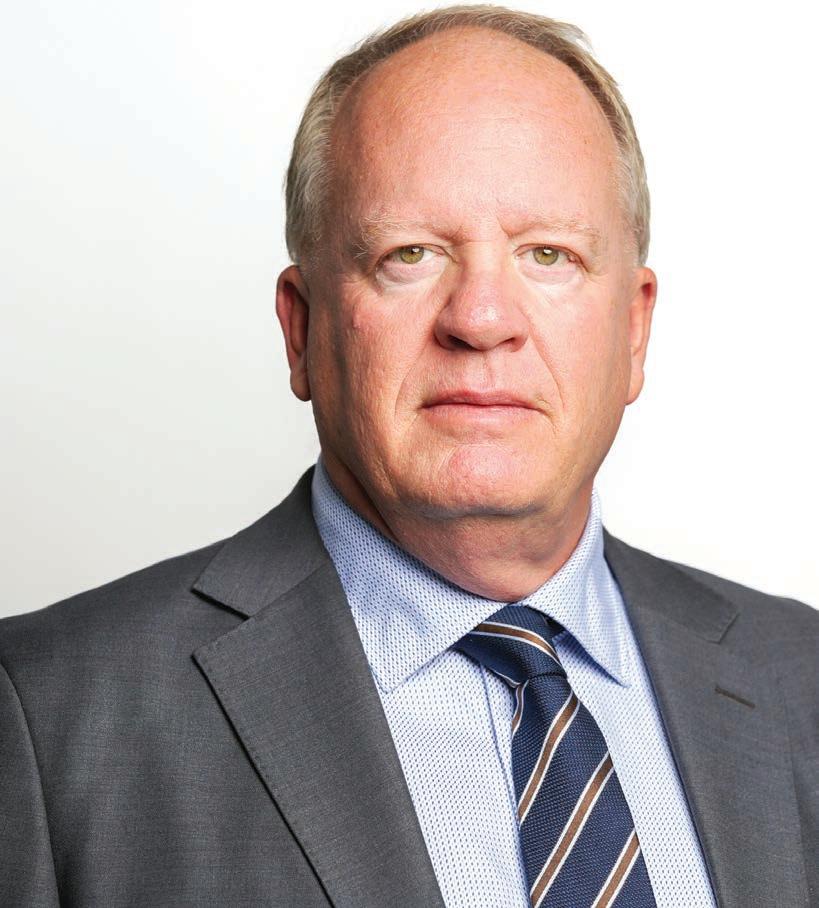 ROSS MCELROY
PRESIDENT &
CEO OF FISSION URANIUM
KELOWNA, B.C.
“David (Clark) knew how to surround himself with talented people and tap into everyone’s strengths. Those are qualities I have always endeavoured to use myself.”
Q What are you really into these days?
A Uranium‚— growing a successful uranium company.
Q What are you avoiding?
A Promoters promoting nonsense.
Q What’s your biggest fear?
A Boredom.
Q Who is your mentor, guide or guru?
A David Clark – a colleague and fellow geologist. David hired me in 1992 to co-manage BHP’s Hope Bay belt assets with him, and for several years it was BHP’s top exploration program world-wide. David knew how to surround himself with talented people and tap into everyone’s strengths. ose are qualities I have always endeavoured to use myself.
Q What have you learned along the way?
A at there is still a lot to learn.
Q What’s your next task?
A Building Fission Uranium’s PLS project in Saskatchewan into a successful uranium mining operation. TNM
compact mill at the Côté project in Ontario by powering 3-D imagery.
“It’s really t for purpose,” Michel Payeur, vice-president of technical services, told the panel. “We were able to model it that way in virtual reality.”
Located 125 km southwest of Timmins, Côté is a 60:40 partnership with Japan’s Sumitomo Metals. It is to pour its rst bar in late March and begin producing 495,000 oz. a year from the third quarter as Canada’s third-largest gold mine by output.
Payeur said one of the challenges is showing AI’s work to industry regulators.
“ e issue with AI that we have today is a little bit more on transparency,” he said. “From a governance perspective, it becomes a challenge to try and use these technologies that have a certain amount of opacity to them and to bring them in progressively into the portfolio and to rely on them as you have to disclose information.”
Agnico has been applying machine learning to core logging and is considering more uses, Leite said.
“If you put 20 geologists in a room, you’re probably going to get 20 very di erent models out there, so this allows us more consistency on that process and with large datasets allowing us a much higher capacity to process information,” Leite said. “We’re looking at applying some of the consistency you need in core logging, resource modeling and transitioning to mineral processing.”
Labour shortage e skills gap mentioned is compounded by a labour shortage forecast at about 20,000 workers over the next decade across all its sub-sectors, according to the Ottawa-based Mining Industry Human Resources Council. Stagnant population numbers in Ontario’s north and challenges convincing workers to move to say Kirkland Lake from even Sudbury, plus lack of housing makes the situation complex, Leite said. People may not want to work underground, but skilled employees in the gaming industry might compete among others to start at a $60,000 salary while in mining they would easily earn more than $100,000 a year, he said.
“It’s about making that awareness, especially to the parents,” he said. “ e kids, sometimes there’s this vision of what they want to be in versus what the reality is, but in northern Ontario there is a lot of youth there.”
Kinross, which is returning to Ontario with Great Bear, is re-engaging with schools to build interest in mining and may link them with a training program at the Round Mountain mine in Nevada, Jalsevac said.
Payeur said the biggest challenge facing the industry is not if AI, automation or other new technologies will erase jobs in northern communities that might depend on the mining industry for employment and development.
“ e biggest challenge for the industry is how to reach out to students today to get them to enrol in mining programs,” he said. “To convince students today that mining isn’t something from the heyday of uncle whoever, and isn’t low tech, uninteresting, dirty and dangerous.” TNM
38 APRIL 2024 | THE NORTHERN MINER www.northernminer.com COMPANY INDEX Aclara Resources...............................................................17 Adventus Mining................................................................31 Albemarle..........................................................................20 Aldebaran Resources.............................................. 32, 33 Agnico-Eagle Mines.................................................. 17, 36 Argentina Lithium & Energy.......................................... 33 Atico Mining....................................................................... 31 Aurania Resources.......................................................... 33 Aurion Resources............................................................. 19 Aztec Minerals.................................................................. 33 Barrick Gold........................................................ 1, 5, 16, 17 B2Gold .........................................................................16, 19 BHP...................................................................................... 17 Canada Nickel.................................................................. 10 Cantex Mineral Dev’t....................................................... 14 Capstone Copper............................................................. 15 Condor Resources.......................................................... 34 Core Lithium................................................................. 5, 20 Dundee Precious Metals................................................ 31 First Quantum Minerals.................................................. 10 NexGen Energy................................................................. 19 Northisle Copper and Gold............................................ 19 Pampa Metals ...................................................................32 Piedmont Lithium............................................................ 20 Pilbara Minerals.............................................................. 20 Power Nickel.......................................................................14 Resolute Mining.............................................................. 20 Riley Gold........................................................................... 17 Rupert Resources............................................................. 19 Salazar Resources............................................................ 31 Sayona Mining............................................................. 5, 20 SolGold................................................................................ 31 Snowline Gold................................................................... 16 Solaris Resources............................................................. 31 Southern Cross Gold..................................................... 20 Taseko Mines..................................................................... 18 Tinka Resources.............................................................. 36 Victoria Gold...................................................................... 16 Wheaton Precious Metals............................................... 5 Fission Uranium............................................................... 38 Fortescue Minerals......................................................... 32 Franco-Nevada.................................................................. 11 Generation Mining............................................................ 14 Glencore............................................................................ 32 Global Atomic ....................................................................18 Karora Resources........................................................... 20 Kinross Gold.......................................................... 16, 17, 36 Kuya Silver......................................................................... 34 Latin Metals....................................................................... 34 Lifezone Metals................................................................. 17 Lithium Americas....................................................... 17, 32 Lithium Argentina............................................................ 32 Lundin Gold........................................................................ 31 Lundin Mining.................................................................... 15 Mawson Gold................................................................... 20 McEwen Mining................................................................ 32 MP Materials...................................................................... 17 Newmont................................................................ 10, 15, 17 New Found Gold.............................................................. 19
&
A
> AI from P36

SPONSORED PANEL PROFILES


Discover a World of Opportunities in Ontario, Canada.
Ontario sets the gold standard as a mining jurisdiction with its commitment to innovation, sustainability, and responsible mining practices, ensuring the province’s mining sector remains competitive and cutting edge. Ontario’s Critical Minerals Strategy is a ve-year roadmap for building an integrated supply chain for electric vehicles by connecting critical minerals producers in the north with the manufacturing might of the south – placing Ontario at forefront of the battery electric vehicle sector and ensuring the province becomes the number one mining jurisdiction in the world.
With distinct advantages that set it apart, Ontario has everything needed to compete on the global stage. e province possesses some of the most mineral-rich deposits in the world, critical minerals like nickel and lithium, that are used in developing manufacturing batteries for electric vehicles and in many other essential technologies today. Ontario’s competitive business climate, clean energy grid, highly skilled workforce, and track record of innovation helps to continue to build on its position as a leading supplier of responsibly sourced critical minerals. Ontario’s human rights record, environmental protections, health and safety standards, and our commitment to fostering meaningful partnerships with Indigenous communities also make the province a desirable place to invest and do business.
e province is home to 32 signi cant exploration projects including precious metals and critical minerals deposits. One of these is the very exciting Ring of Fire region, which possesses one of the world’s largest discoveries of chromite and other metals. All the signi cant critical mineral projects in Ontario have the potential to play an important role in supporting innovative technologies for high-growth sectors, such as batteries, electronics, electric vehicles, and cleantech. Bringing multigenerational opportunities to northern and Indigenous communities.
Ontario is investing in exploration and innovation, upskilling its workforce, and cutting red tape so more sustainable mines can be built. By undertaking these crucial steps, the province is building a strong and reliable made-in-Ontario supply chain that is fueling the electric vehicle revolution and helping to build a clean and sustainable future. is work is proving that Ontario is one of the best places in the world to invest and do business. Whether your company is involved in exploration, nancing, or the mining supply and services sector, you’ll discover limitless opportunities in Ontario.
To find out more about Ontario’s minerals sector and its competitive advantages visit: ontario.ca/MineralsSector

Québec is one of the world’s most attractive mining investment jurisdictions through its notable mineral endowment, open online mining data platforms, renewable electricity, and strong tax incentives. Furthermore, Québec’s Ministry of Natural Resources and Forests spearheads the Critical and Strategic Mineral Plan which has put in place an environment with moderated nancial, technical, and commercial risks for new mining projects by combining the strengths of several government ministries and agencies into one overarching vision. e rst such mineral plan in Canada, Québec updated its action plan and updated its list of critical minerals in January 2024.
Québec’s Critical and Strategic Mineral Plan builds on its expertise as the most diversi ed mineral exploration and mining jurisdiction in Canada, with active mines currently producing graphite, niobium, titanium, nickel, cobalt, and PGEs among others, as well as over half of all lithium exploration properties in Canada. In Bécancour, a battery component hub consisting of several processing plants is being built next to a deep-water port with nearby road and rail infrastructure. Québec maintains a high ESG pro le through various stakeholder and community engagement mechanisms and a low-carbon footprint electrical grid.
To find out more, please visit https://mrnf.gouv.qc.ca/mines/choisir-secteur-minier

Global External is the mining industry’s one-stop shop for all the external relations functions that impact your business. We follow a simple formula: de ne & solve. We de ne the baselines: your project’s social, political, legal, and reputational risk. en, we solve the problems you don’t see coming. Our services include:
•Social, Political, Regulatory, & Reputational Risk Analytics
• e Copper Mark/ GISTM Evaluations & Compliance
•ESG Consulting
•Land Ownership/ E ected Stakeholder Analytics
•Government & Regulatory Relations
•Community Relations & Coalition Building
+1 (202) 568-6500 | globalexternal.com
•Media Relations
•Public Relations & Crisis Communications Management
•Social & Conventional Media Analytics
GLOBAL MINING NEWS THE NORTHERN MINER | APRIL 2024 39
Curved thread system Packed with power
If you want to significantly increase productivity, reduce energy consumption, and extend tool life you need the most advanced top hammer tool system ever made. Meet the curved thread CT55 and CT67 for hole sizes from 89 to 140 mm.





The curved line cur ed to profit
40 APRIL 2024 | THE NORTHERN MINER w ww.northernminer.com
rocktechnology.sandvik