ELECTRIFICATION, DIGITAL INTEGRATION, AND THE FUTURE OF CANADIAN MINING
HYDRAULIC FRACTURING IN MINING
GROWTH AND OPPORTUNITY IN WEST AFRICA
Lead the charge
Digging for a more sustainable future.
Electric Mining Excavators
–Harness 40 years of Liebherr’s electric-drive excavator expertise and experience unmatched design, manufacturing, and maintenance
–Choose from the largest range of electric mining excavators to find the perfect fit for any application
–Reduce maintenance costs and extend component service life with fewer component changeouts than a standard diesel excavator
–Achieve the flexibility to work anywhere with multiple supply voltages and frequencies available –Optimize safety and improve machine mobility with the fully autonomous Liebherr cable reeler
–Ensure peace of mind for operations as all Liebherr electric excavators comply with IEC or CAS/UL standards Liebherr-Canada
FEATURES
MINE ELECTRIFICATION
12 Full charge: Our annual BEVs roundup.
37 Electrification, digital integration, and the future of Canadian mining.
41 How electric demolition machines provide mining operations with safe equipment options.
TAILINGS MANAGEMENT, CLOSURE, AND RECLAMATION
18 Filtering, stacking, reprocessing: The technologies reshaping tailings management.
21 Transforming the landscape with mine reclamation.
24 Tailings management north of parallel 60.
26 Dam A: A memoir.
28 What have you done today that did not involve a mineral? Part 7: Household waste; the mine waste we ignore.
CEO AND EXECUTIVE INTERVIEWS
17 NOVAGOLD pushes Donlin Gold toward its next development phase.
30 Karen Thompson on Canada’s critical minerals strategy, processing modernization, and workforce challenges.
33 Fortuna Mining’s David Whittle discusses operational priorities, exploration strategy, and the outlook for gold mining in West Africa.
INTERNATIONAL MINING
35 South Africa’s mining industry faces money laundering problems.
UNDERGROUND MINING
39 Application of hydraulic fracturing in mining and the role of inflatable packers.
6 FAST NEWS | Updates from across the mining ecosystem.
08 LAW AND REGULATIONS | From endowment to dependence: Why Canada still ships its future offshore.
09 ESG | Mining’s top 10 ESG trends for 2026.
42 LETTER TO THE EDITOR | Elements not minerals.
www.canadianminingjournal.com
39
Canada needs faster mining project approvals
Record crowds and a record-setting exhibition floor marked PDAC 2026, held March 1–4 in Toronto. The annual convention of the Prospectors & Developers Association of Canada welcomed 32,155 participants from around the world — the highest attendance in the event’s 94-year history — alongside more than 1,300 exhibitors, creating the largest trade show footprint PDAC has ever hosted.
Throughout the convention, the Canadian Mining Journal conducted a series of onsite interviews with industry leaders, executives, and technology providers, capturing insights on project development, critical minerals, innovation, and workforce challenges shaping the sector. These conversations will soon be featured on our YouTube channel as well as in upcoming editions of the journal. Our team also engaged with industry stakeholders across the convention floor, documenting emerging trends and perspectives from one of the mining industry’s most influential global gatherings.
My discussions with industry leaders pointed to a clear consensus: Canada’s mining sector must prioritize faster project approvals and development timelines to bring mineral resources into production and strengthen domestic processing capacity.
This April issue of the journal features several articles on mine electrification, including our fully charged annual BEVs roundup on pages 12 to 16, along with additional features on the same topic on pages 37 and 41.
Articles focused on tailings management, closure, and reclamation appear on pages 18 to 29. Readers will also find three CEO and executive interviews addressing key issues facing the mining industry on pages 17 and 30 to 34, alongside articles covering international and underground mining.
Finally, our May edition will explore the cutting edge of mining innovation, highlighting developments in artificial intelligence, advanced analytics, robotics, autonomous operations, communications, and smart software as the industry accelerates its digital transformation. The issue will also include a special report on Mining in Canada. Editorial contributions can be submitted to the Editor in Chief before April 11, 2026.
President, The Northern Miner Group Anthony Vaccaro
Established 1882
Canadian Mining Journal provides articles and information of practical use to those who work in the technical, administrative and supervisory aspects of exploration, mining and processing in the Canadian mineral exploration and mining industry. Canadian Mining Journal (ISSN 0008-4492) is published nine times a year by The Northern Miner Group. TNM is located at 69 Yonge St., Ste. 200, Toronto, ON M5E 1K3. Phone (416) 510-6891.
Legal deposit: National Library, Ottawa. Printed in Canada. All rights reserved. The contents of this magazine are protected by copyright and may be used only for your personal non-commercial purposes. All other rights are reserved and commercial use is prohibited. To make use of any of this material you must first obtain the permission of the owner of the copyright. For further information please contact Robert Seagraves at 416-510-6891.
Subscriptions – Canada: $51.95 per year; $81.50 for two years. USA: US$64.95 per year. Foreign: US$77.95 per year. Single copies: Canada $10; USA and foreign: US$10. Canadian subscribers must add HST and Provincial tax where necessary. HST registration # 809744071RT001.
From time to time we make our subscription list available to select companies and organizations whose product or service may interest you. If you do not wish your contact information to be made available, please contact us via one of the following methods: Phone: 1-888-502-3456 ext 3; E-mail: amein@northernminergroup.com
Mail to: Allison Mein, 69 Yonge St., Ste. 200, Toronto, ON M5E 1K3
We acknowledge the financial support of the Government of Canada.
Tamer Elbokl, PhD
FAST
• Sandvik commits $51M to Saskatchewan mining equipment plant
Sandvik, a multinational engineering and equipment manufacturer, is expanding its operations in Saskatchewan with a new $51 million facility in Saskatoon, Sask. Legislative Secretary Jamie Martens joined Sandvik representatives on behalf of Minister Warren Kaeding to break ground on the project, which will centralize mechanical cutting, parts, services, and aftermarket support for the mining sector across Central and Western Canada.
• Ontario accelerates Kinross’ $5B Great Bear project
The new facility will bring work historically performed overseas to Saskatoon, creating approximately 30 new skilled labour positions in mechanical cutting, assembly, service, and maintenance. It expects to become operational later this year.
• B.C. fasttracks Wicheeda, North Island and Berg projects
The British Columbia government has named three mineral projects for early coordination with its Critical Minerals Office (CMO) as they prepare for environmental assessment and future permitting.
The CMO selected Northisle Copper and Gold’s North Island project, Surge Copper’s Berg project, and Defense Metals’ Wicheeda rare earth project for dedicated support, the Ministry of Mining and Critical Minerals said in a Feb. 20, 2026 release. The office helps projects align permitting pathways, coordinate engagement with Indigenous Nations and communities, and identify regulatory requirements earlier.
Kinross Gold’s Great Bear project has been designated for accelerated development under Ontario’s "One Project, One Process" (1P1P) framework. This gold mine, located 24 km southeast of Red Lake in northwestern Ontario, is the first of its kind and the third overall project to be accepted under the new framework launched in October.
The 1P1P framework aims to streamline permitting approvals and reduce government review time by 50%. This approach is designed to provide operators and investors with increased certainty and predictability in project development.
• Wheeler River project clears final hurdle
The Canadian Nuclear Safety Commission (CNSC) has approved the environmental assessment (EA) and issued the Licence to Prepare Site and Construct a Mine and Mill for Denison Mine’s Wheeler River uranium project. This decision marks the final regulatory approval needed to begin construction of the Phoenix in-situ recovery (ISR) uranium mine.
With this final approval, Denison moves closer to realizing its goal of commencing production at the Phoenix ISR uranium mine by mid-2028, subject to the company’s final investment decision.
• Electra’s cobalt refinery project advances with major EXP contract
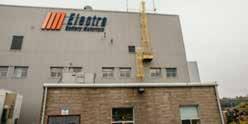
Electra Battery Materials has awarded $8.3 million contract to EXP Services (EXP). EXP will provide engineering, project management, and construction management services during the construction phase of Electra’s Ontario battery materials refinery project.
Electra Battery Materials specializes in advancing North America’s critical minerals supply chain for lithium-ion batteries. The company focuses on constructing North America’s only cobalt sulfate refinery, aiming to onshore critical minerals refining and reduce reliance on foreign supply chains.
CREDIT: ADOBE STOCK
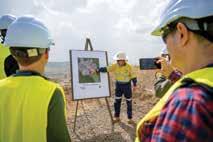
Stephen Lecce, Ontario Minister of Energy and Mines meeting with workers at news conference announcing acceleration of Kinross Great Bear project. CREDIT: MINISTRY OF ENERGY AND MINES
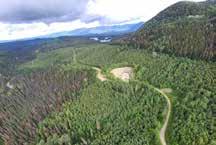
An aerial view of Wicheeda project area. CREDIT: AGENTIS CAPITAL.
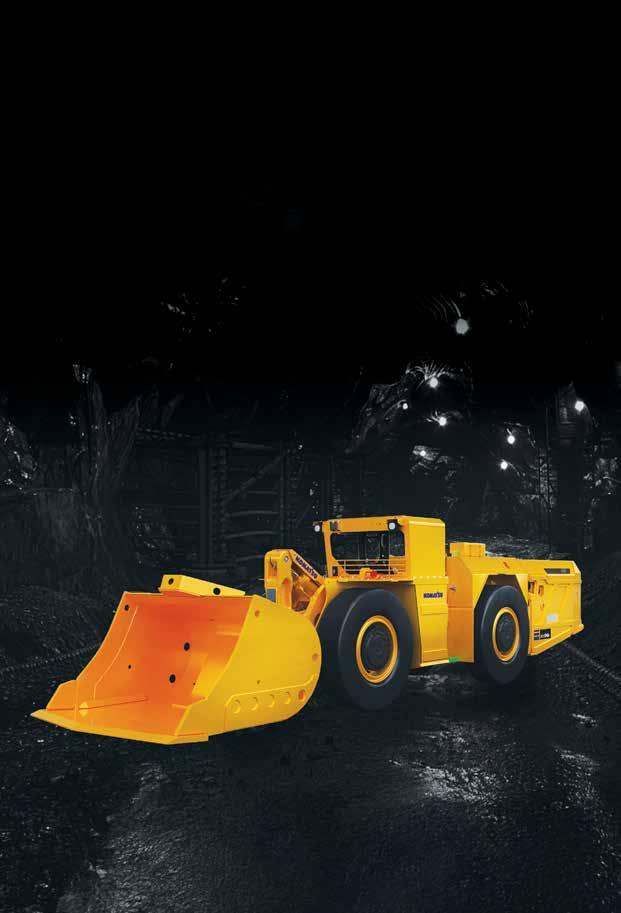
Komatsu’s groundbreaking 4‑tonne battery‑electric LHD sets a new standard in narrow‑vein hard rock applications. With ground‑level battery change, zero underground diesel emissions, and up to 6 hours run time on a single charge, the WX04B is engineered to help you move ore efficiently and sustainably. Breaking up hard rock. komatsu.com/hardrock
From endowment to dependence:
Why Canada still ships its future offshore
Amineral supply chain may begin with geology, but it ends with power. On that measure, Canada’s celebrated mineral endowment is failing to translate into strategic advantage. Canada possesses some supply of all 34 minerals identified on our government’s national critical minerals list and rank among the top five global producers of ten of these minerals. This is a base to build upon.
The next step in a mineral supply chain is to identify commercial quantities of minerals that can be extracted economically. Canada has made a start in this regard. Work has started to incentivize the search for critical minerals in Canada in a variety of ways, most notably through the Critical Minerals Exploration Tax Credit. Policymakers have made vague promises around approvals for projects if exploration bears fruit. This remains an open challenge. Promises of material financial support in the form of loans, guarantees, and price floors are, to date, even more uncertain. Ideas mooted without predictable public policy are seen in the market as background noise.
The big challenge remains beyond meaningful public engagement. If one succeeds in mining commercial quantities of critical minerals, where do they go next? Before they can be used in any project for electrification, high technology, defence, or other deployment, they must be refined. The truth here is that minerals extracted in Canada are largely shipped overseas, almost always to China, where they will be refined for sale to end users.
The dependence is not merely overwhelming; it is structural. China alone controls approximately 85% of global rare earth elements’ (REEs) processing capacity, refines 73% of the world’s cobalt, 59% of lithium, and 68% of nickel. For some minerals, the concentration is even more extreme; China processes over 90% of REEs and 91% of natural graphite. Meanwhile, Canada has 56 critical minerals mines but only 26 processing facilities. The gap between extraction and value-added processing is more than a missed opportunity; it is an ongoing transfer or economic rent and strategic control out of the country. Mineralized material shipped offshore entrenches this dependency. Rising demand for materials increases Canada’s exposure and reliance on foreign processing and supply. Electrification, data centres, artificial intelligence, and defence onshoring all lean directly on processing capacity that Canada does
not control. Looking narrowly at electric vehicles, with four anticipated battery plants to be built for electric vehicles, the government is forecasting the need for 15 new mines to supply material to 19 new mid-stream processing facilities. Absent material progress on mines and facilities, Canadian plants will import the inputs to batteries. This looks more like final assembly than an integrated, secure supply chain with robust industrial connections.
The obstacles are well-known, but their interaction is currently underappreciated. Uncertain permitting drives away capital and ultimately inflates capital costs. Energy constraints undermine location selection and increase the cost of project finance. Community opposition thrives in the absence of clear objectives and predictable processes and timelines. The result is not delay, but deterrence. The government is working to move the needle on finance constraints with $300 million in support for facilities under the Strategic Innovation Fund, $500 million under the Ontario Critical Minerals Processing Fund, and work under the Critical Minerals Research, Development, and Demonstration Program. Regulatory tinkering has, so far, been less than inspired.
Even with concerted effort now supporting a handful of new facilities, the urgent need for a broader approach is evident. A project or two does not build systemic capacity, and without systemic capacity, the commercial and national security threats persist unabated.
While Canada is floating ideas, the U.S. is starting to underwrite outcomes. Deals with price floors, stockpiles, and long dated financing priced near treasury rates reflect a recognition that critical minerals are crucial infrastructure, not just commodities. Canada has yet to make that leap.
Canada’s mineral endowment is a gift, not a strategy. Without domestic processing capacity, we are back to being hewers of wood and drawers of water. In a world of industrial policy and geopolitical competition, exporting raw materials while importing strategic dependence is not neutrality — it is a choice to fail.
Sander Grieve, K.C., and Andrew Disipio, Head of the Mining Group, are partners with Bennett Jones LLP in their Toronto office.
By Elizabeth Freele and Rachel Dekker
Mining's top 10 ESG trends for 2026
Avolatile global order, intensifying climate extremes, and the race for critical minerals are reshaping mining in 2026. Geopolitics, investor expectations, and social tensions are converging on mines and supply chains worldwide, while Environmental, Social, and Governance (ESG) continues to be politically contentious in some jurisdictions. Yet the underlying drivers of risk, regulation, capital, and community expectation are as relevant as ever. For 2026, the real question is less whether ESG matters and more how mining leaders focus on what really moves the dial: resilience, access to capital, licence to operate, and competitiveness. Below are our top 10 ESG trends shaping the sector this year.
1. Geopolitics reshape mining's risk landscape
Geopolitics is becoming a primary driver of mining risk; nearly half of respondents to “White & Case’s Mining & Metals 2025” survey see geopolitical fragmentation as a key determinant of sector activity, ahead of traditional market fundamentals. Russia’s war in Ukraine, conflict in the Middle East, and recurring coups in parts of Africa are altering trade routes, raising costs, and complicating project delivery. Strategic security analyses now position critical minerals as a theatre of great-power rivalry, with export controls, investment screening, stockpiling and “friend-shoring” becoming fundamental tools of statecraft. The context magnifies ESG risk, particularly across governance and human rights. In the year ahead, most mining leaders will need to treat geopolitics as core board-level risk, diversifying supply chains, scenario-planning for sanctions and conflict,
and integrating geopolitical risk assessment into due diligence and strategic decision-making.
2. ESG backlash drives strategic recalibration
ESG and Diversity, Equity, and Inclusion (DEI) have become lightning rods in wider political debates, yet most companies are refining rather than abandoning their strategies. In the U.S., over 100 anti-ESG bills had been introduced at state level by mid-2025, prompting many to walk back or rebrand DEI programmes amid legal and political pressure. The current administration’s efforts to de-emphasize climate and social risk in financial regulation has material impacts for companies with U.S.-based financing but have not eliminated ESG as a global capital requirement. A survey of the Conference Board shows 80% of large companies are reworking, not exiting, ESG, while HSBC’s 2025 corporate leader surveys found 95% now see climate transition as a source of growth, and nearly all expect sustainability to be critical to competitiveness. Amid polarization and misinformation, the miners that thrive will be those that ditch the slogans, double down on material company issues, and communicate clearly how ESG underpins resilience and long-term value.
3. AI governance gaps create liability risk
Artificial intelligence (AI) is rapidly becoming core to mining ESG management and an ESG topic. Deloitte’s “Tracking the Trends 2025” highlights AI, automation, and digital twinning for safety, productivity, and environmental performance. Use
cases include real-time monitoring of water, tailings, and air emissions, predictive maintenance and safety analytics, satellite-based land-use monitoring and automated Scope 3 accounting. Yet, ESG-focused analyses warn of the significant environmental footprints, social and labour issues, bias and explainability challenges, and cyber-security vulnerabilities. Recent AI governance surveys suggest that two-thirds of organisations cannot reliably enforce limits on how AI systems are used, and six in ten lack effective kill switches. Left unchecked, AI quickly becomes a major governance liability.
4. Tailings governance shifts from voluntary to compliance International Council on Mining and Metals (ICMM)’s “November 2025 progress report” confirmed that 67% of member facilities have achieved full Global Industry Standard on Tailings Management (GISTM) conformance, with the remainder progressing more slowly than anticipated. Meanwhile, the Nov. 2025 U.K. High Court ruling on BHP’s liability for Samarco shows that failure to meet standard-of-care tailings management standards can constitute negligence across multiple jurisdictions. Looking ahead, the World Mine Tailings Failures database forecasts a further 13 catastrophic failures between 2025 and 2029, signalling that tailings governance is now an enterprise risk imperative. Expect lenders and regulators to increase focus on conformance for non-compliant facilities, scenario analyses exploring climate-induced failure triggers (e.g. extreme rainfall, seismic activity, permafrost thaw), thirdparty assurance and proper integration of tailings risk into capital allocation and financing decisions.
5. Critical minerals rush deepens social tensions
The rush for critical minerals is intensifying mining’s long-standing social and security risks. The IEA’s “Global Critical Minerals Outlook 2025” forecasts steep demand growth and, absent stronger governance, more social conflicts over land, water, and labour. The Business & Human Rights Resource Centre’s “Transition Minerals Tracker 2025” documents 835 allegations of abuse linked to major operations over the past 15 years, including 157 attacks on human rights defenders, 225 worker impacts, and ongoing disproportionate harm to Indigenous Peoples. UNODC’s “2025 Minerals Crime report” documents expanding criminal and conflict-linked activity in artisanal mining, further heightening security and human rights risks. Meanwhile, rulings such as Gitxaała Nation versus B.C. in Canada embed Indigenous consultation obligations into permitting, as the minerals rush accelerates project timelines and fuels resource nationalism. The industry faces an uncomfortable tension: how to secure minerals essential to defence, energy, and technology without repeating the inequality, violence, environmental devastation, and corruption of past mining booms.
6. Climate impacts stress-test transition plans
Climate change is already materially disrupting operations today. UNEP FI’s analysis of climate risks in metals and mining highlights escalating production losses, maintenance costs, and stranded-asset risk from extreme weather, water stress, and ris-
ing temperatures. KPMG’s “2025 Australian Mining Risk Forecast” ranks climate change as a top business risk, with fires, floods, and cyclones increasingly affecting key producing regions. Meanwhile, ISSB's IFRS S2 standard is being adopted or considered across dozens of jurisdictions covering more than half of global GDP, with mandatory climate-related financial disclosures ramping up. In this context, transition plans must move from planning documents to site-level execution: credible, costed adaptation measures, and integrated resilience planning will increasingly affect access to capital, insurance and permits.
7. Nature and water become investment dealbreakers
Nature and water risk are moving from “emerging topics” to hard screening filters, as biodiversity loss and ecosystem degradation become understood as systemic financial risks.
A “2025 Oxford Corporate Nature Risk Perceptions” survey found that nearly half of companies globally now view nature risks as financially material, with 43% saying physical nature risks already affect them today. Barclays’ 2025 analysis of 250 mines has calculated that nature risks could cut mining company earnings by 25% over five years, and ICMM has backed up its nature-positive commitment with new implementation guidance. Meanwhile, TNFD’s 2025 status report confirms more than 730 adopters, including 179 financial institutions with US$22 trillion in assets. For mining,” GRI 14: Mining Sector 2024” (effective Jan. 1, 2026) formalizes water use, land disturbance, and biodiversity as material topics requiring more granular disclosure.
Those that cannot demonstrate coherent nature and water strategies will find it increasingly hard to secure approvals and capital for both new projects and expansions.
8. Boards face rising shareholder scrutiny
Boards face rising pressure to demonstrate ESG competence and integrate material sustainability risks into corporate governance. The year 2025 marked a record number of activist campaigns, with boards increasingly challenged on capital allocation, climate strategy, and governance. High-profile shareholder votes against climate and capital plans (such as Woodside Energy) show that boards can no longer just assume backing on ESG-material decisions. Rising U.S. anti-ESG activism also requires boards to equip themselves to defend strategic risk decisions. Director liability for ESG oversight is also rising across jurisdictions. For mining boards, this means developing demonstrable ESG literacy through structured competency building (such as the Responsible Mining Academy), formal governance structures (often dedicated sustainability committees), and early investor dialogue on material ESG decisions.
9. Value chain accountability shifts to enforcement
Regulators are ramping up pressure on companies to demonstrate value chain accountability, moving beyond policy statements to enforcement. Canada’s “Fighting Against Forced Labour and Child Labour in Supply Chains Act” has identified high-risk sectors and warned tolerance for boilerplate reporting will be short-lived. In Australia, the recent statutory review
of the “Modern Slavery Act 2018 (Cth)” recommends stronger obligations and penalties, and legal analyses anticipate stronger enforcement, with mining singled out for rising scrutiny. In Europe, Corporate Sustainability Reporting Directive (CSRD) and the forthcoming Corporate Sustainability Due Diligence Directive (CSDDD) embed mandatory human rights and environmental due diligence across supply chains. Miners will need to move beyond mere policy commitments and prepare to show evidence of effective identification, prioritization, and remediation of value chain risks, particularly forced labour, forced migration, and rights of Indigenous Peoples.
10. ESG reporting harmonization and greenwashing enforcement intensify ESG disclosure is converging around common standards and facing tougher enforcement, with miners increasingly judged on comparable, assured performance data, not glossy narratives. International Financial Reporting Standards (IFRS) S1 and S2 are being woven into reporting regimes across dozens of jurisdictions, with mandatory climate disclosures starting from 2025. In parallel, CSRD is live in the E.U., with the European Sustainability Reporting Standards (ESRS) reports and limited assurance becoming mandatory, and “GRI 14: Mining Sector 2024” takes effect globally from 2026. Regulators in Australia, the U.K., E.U., and Canada have made greenwashing enforcement a priority, leading to investigations and fines. Expect a mix of cleaner claims, quieter messaging, and growing “greenhushing” behaviour, but not always better disclosure. Companies face more
pressure to align with converging internationally recognized standards, as well as higher legal and reputational stakes if bold claims do not match the underlying data. Those that can disclose robust, decision-useful data will gain an edge with lenders, investors, communities, and regulators.
Looking ahead
The year 2026 will continue to challenge mining companies to move beyond generic ESG narratives and aspirations to disciplined execution on what really matters to their business: navigating geopolitics, building climate and nature resilience, managing the social fallout of the critical minerals rush, cleaning up value chains, and doing all of this in an environment of political polarization and tighter regulation. This challenge will be less about “doing good” and more about protecting and creating value by reducing downside risk, securing scarce capital, winning permits and offtakes, and maintaining the trust of workers, communities, and governments.
Coming out ahead will be companies that integrate ESG into risk and strategy, focus on their material issues, rely on solid data, manage trade-offs transparently, and adapt pragmatically to complex local and global conditions.
Elizabeth Freele and Rachel Dekker are co-founders of mining consultancy Sympact and online learning platform the Responsible Mining Academy, supporting companies to meet rapidly evolving expectations of business through advisory services, training, and thought leadership.
charge: Full Our annual BEVs roundup
Battery electric vehicles (BEVs) are continuing to gain ground across the mining industry as companies look to reduce underground emissions, improve working conditions, and lower ventilation requirements. Equipment manufacturers are expanding their electric portfolios with new loaders, trucks, and specialized support machines designed for both production and mine services. Recent introductions highlight advances in battery technology, charging systems, and machine performance, allowing electric equipment to match or exceed the capabilities of diesel counterparts. From compact loaders to large haul trucks and service platforms, the latest generation of BEVs reflects a broader shift toward electrified mining fleets and more sustainable underground operations.
Aramine adds L640B loader and T1401B battery truck
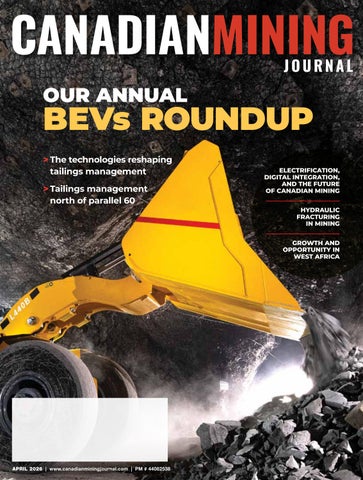
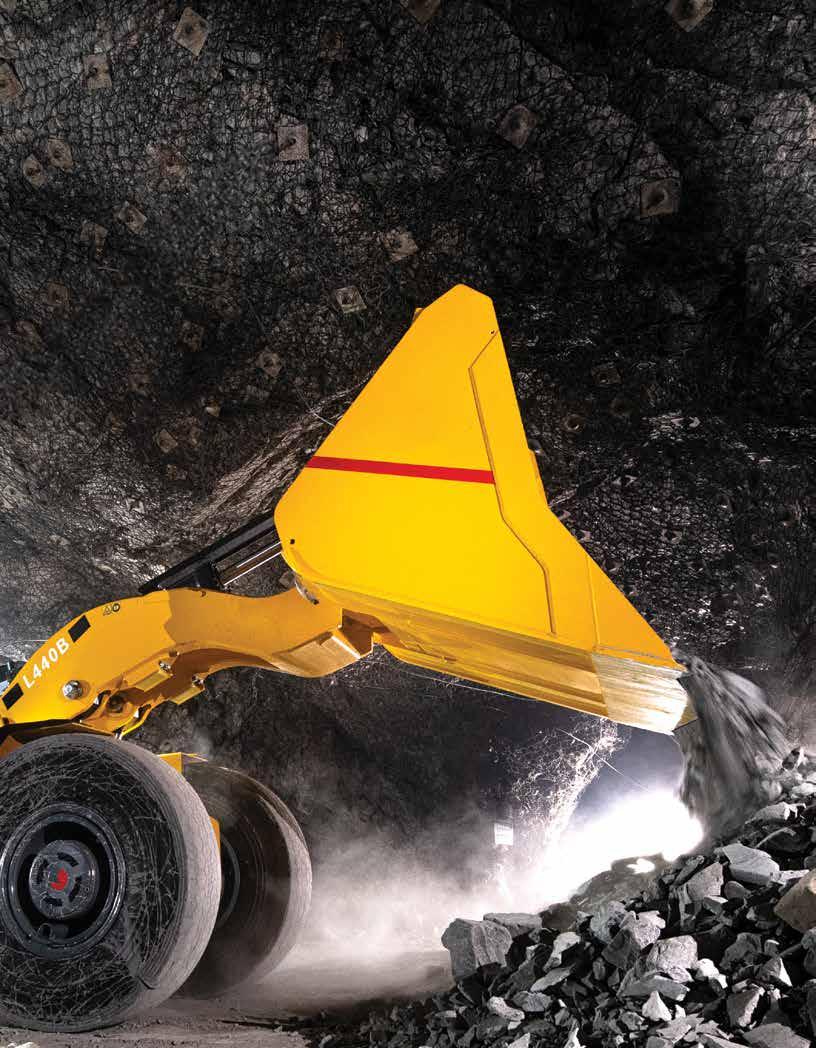
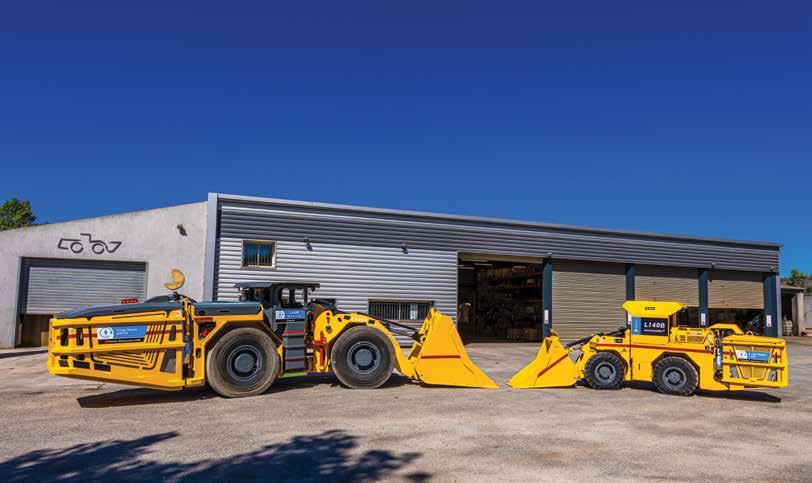
As part of its electrification strategy, Aramine is preparing the launch of two new battery-powered machines expected to enter underground operations in the coming months. The L640B loader is an evolution of the 4.8 tonne L440B, featuring a larger bucket, wider tires, and reinforced components to reach a 6.2 tonne payload while maintaining compact dimensions. Alongside it, the T1401B, with a 14-tonne capacity, becomes the first battery-powered truck in Aramine’s range, extending electrification from loading to haulage for fully electric production cycles.
A pioneer in underground battery equipment, Aramine introduced the L140B (1.3 tonne) nearly ten years ago. To support growing demand, the company is also building a new production facility in southern France dedicated to increasing battery machine manufacturing capacity.
Cat R1700 XE has new trade dress, produces zero exhaust emissions
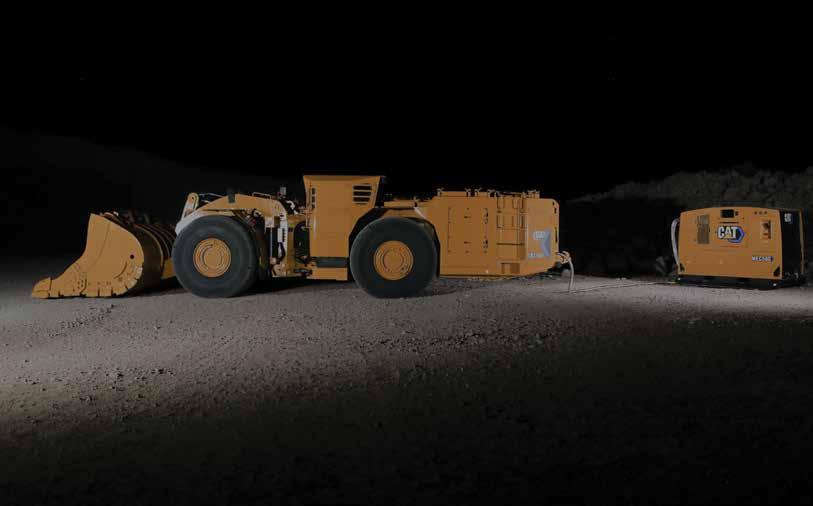
The electric Cat R1700 XE Load Haul Dump (LHD) offers 100% battery electric propulsion, producing zero exhaust emissions and significantly less heat generation than a reciprocating engine powered model. Matching the performance of the dieselpowered R1700 and using switch reluctance (SR) technology, the R1700 XE features fast-onboard charging, allowing the batteries to be charged while remaining on the machine. The Cat MEC500 Mobile Equipment Charger fully charges the R1700 XE in less than 30 minutes with a single charger and less than 20 minutes using two units. It offers a 15-tonne payload and 18 km per hour fully loaded top speed.
L140B and L440B. CREDIT: ARAMINE
The electric Cat R1700 XE LHD. CREDIT: CATERPILLAR
MINE ELECTRIFICATION
Komatsu’s WX04B is redefining hard-rock mining
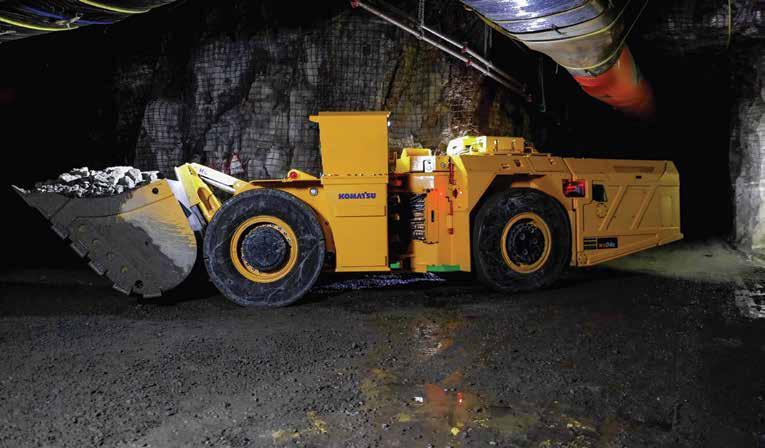
Komatsu’s WX04B 4-tonne battery electric LHD is redefining narrow-vein hard-rock mining. Built on the proven WX04 platform, it delivers up to six hours of run time per charge and zero underground diesel emissions — prioritizing operator health and lowering ventilation demand. A first-in-class ground-level battery swap enables fast changes without complex lifting or charging infrastructure, while advanced thermal control helps protect batteries in harsh conditions. With bestin-class energy density, breakout force, and speed on grade, and when paired with Komatsu's 150 kW battery charger, the compact WX04B moves the ore efficiently, sustainably, and confidently in existing or new development headings. Learn more at komatsu.com/hardrock
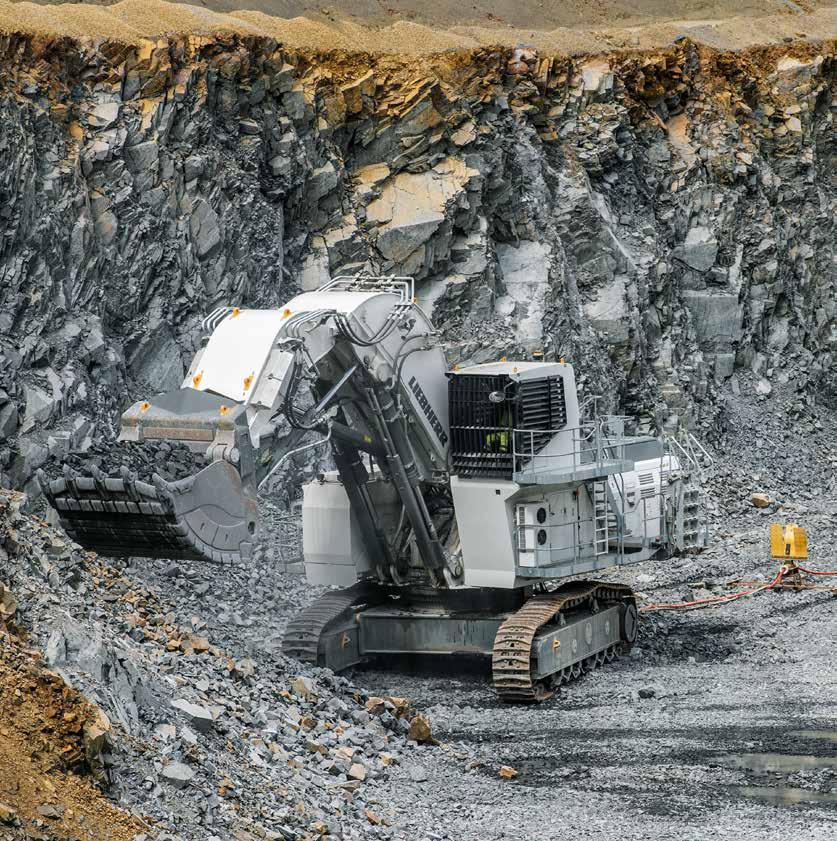
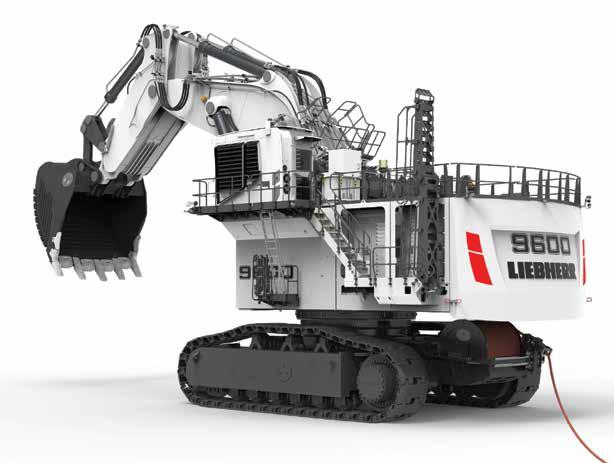
High productivity, zero emissions: Meet the Liebherr R 9600 E
Built on the proven performance of the diesel R 9600, this electric model delivers the same industry leading productivity and bucket capacity, paired with the advantages only an electric excavator can offer. Thanks to the R 9600
E’s electric motors, the machine emits no greenhouse gas emissions on site, which significantly reduces customers’ carbon footprints. Its electric motors also create a quieter working environment, improving operator comfort and reducing noise across the mine site. And because the electric drive is engineered to last the lifetime of the machine, maintenance costs are decreased!
Liebherr R 9600 E. CREDIT: LIEBHERR
MacLean’s ML5 Multi Lift
The MacLean ML5 Multi Lift is a next-generation, certified Mobile Elevating Work Platform (MEWP) engineered specifically for the demanding conditions of underground mining. Building on the proven Integrated Tool Carrier (ITC) concept, the ML5 introduces enhanced capability, stability, and versatility to support a wide range of mine service tasks. Its design focuses on enabling the safe and efficient execution of maintenance, inspections, installations, and repair work in elevated or hard-to-reach areas of the mine.
Equipped as standard for multi-tasking, the ML5 integrates advanced lifting, positioning, and control systems that allow operators to work with precision in confined underground environments. A key feature of the ML5 is its quick-coupler system, enabling fast and efficient swap-out of attachments and work baskets to suit different applications. Its robust platform, improved reach, and optimized load-handling features make it a reliable solution for modern trackless mining operations seeking to streamline service workflows while maintaining high safety standards. Purpose-built for global underground applications, the ML5 reflects MacLean’s commitment to innovation in mobile equipment design. By combining the versatility of an ITC platform with certified MEWP functionality and quick-change capability, it offers mining operations a powerful tool to improve productivity, reduce downtime, and enhance worker safety across essential mine service activities.
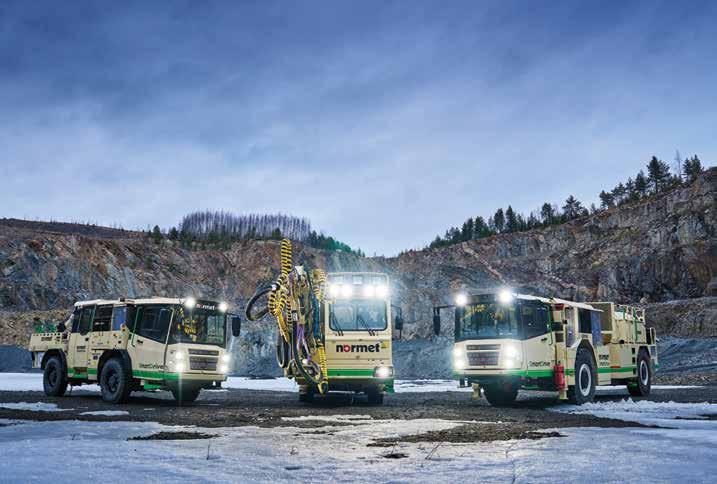
Normet’s full equipment range with SmartDrive technology
Normet’s SmartDrive battery electric equipment is in use at underground mines on six continents, reflecting an established global presence. The SmartDrive offering was expanded last year with two additional platforms at both ends of the size range, extending battery electric capability across Normet’s full underground equipment portfolio. The SmartDrive mining range is now structured around three platforms. The XS-series platform covers light logistics needs, the M-series platform is optimized for process equipment, and the L-series platform is designed to meet heavier transportation and material handling requirements.
ML5 Multi Lift. CREDIT: MACLEAN
XS-series, M-series, and L-series SmartDrives. CREDIT: NORMET
MINE ELECTRIFICATION
Rokion R-Series trucks lead the drive toward electrification
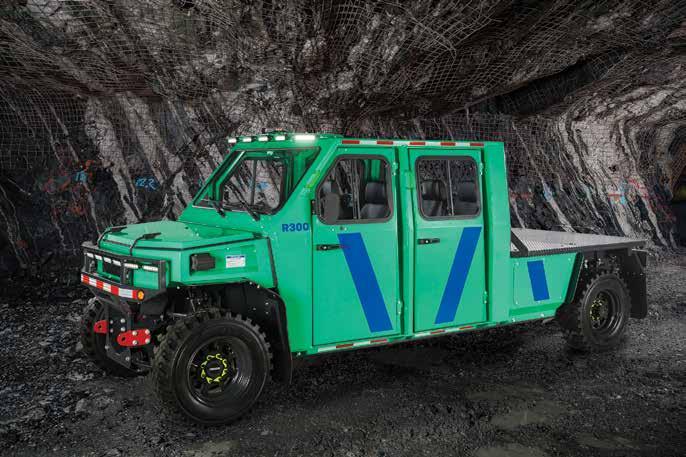
Rokion continues to lead the drive toward mine electrification, delivering purpose-built battery electric vehicles engineered specifically for mine applications. The R100, R200, and all-new R300 produce zero operating emissions, lowering ventilation demands and fuel costs, while providing a safer, more comfortable working environment.
R-Series trucks have fewer moving parts and require less maintenance than diesel, increasing vehicle availability and lowering vehicle ownership costs. Designed for harsh underground environments, Rokion integrates operator-focused ergonomics into a rugged vehicle design, prioritizing comfort and safety. By eliminating diesel particulate emissions and reducing noise and heat underground, Rokion vehicles enhance worker safety while helping operations meet their emissions targets. Visit rokion.com to learn more.
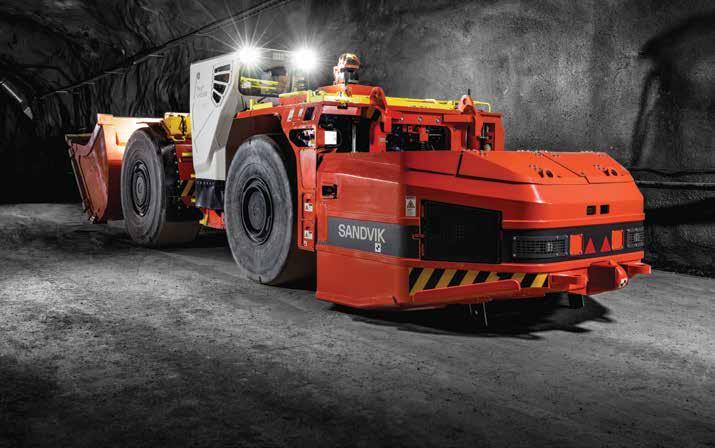
Sandvik’s next-generation battery electric loaders and trucks
Sandvik is advancing underground electrification in Canada with next-generation battery electric loaders and trucks engineered specifically for demanding mining conditions. The Artisan battery packs use a lithium-iron phosphate (LFP) chemistry for superior thermal stability, longer life, and enhanced safety, combined with robust mechanical protection, active cooling, and integrated fire suppression. Patented AutoSwap and AutoConnect systems enable battery changes in under five minutes, supporting continuous production while reducing peak power demand. Intelligent voltage and temperature monitoring further safeguard performance. Backed by rigorous global testing and Sandvik’s Battery as a Service and Capacity Guarantee programs, these BEVs deliver higher ramp speeds, lower ventilation demand, and a safer, zero-emissions underground environment. To learn more about Sandvik BEVs, click here https://go.sandvik/25j
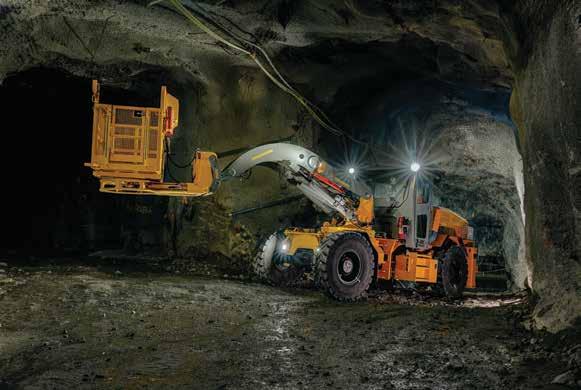
Sandvik Toro LH518iB battery electric loader. CREDIT: SANDVIK
The all-new R300. CREDIT: ROKION
NOVAGOLD pushes Donlin Gold toward its next development phase
In an interview with the Canadian Mining Journal, NOVAGOLD president and CEO Gregory A. Lang (GL) discussed the appointment of Fluor Corporation to lead the bankable feasibility study (BFS) for the Donlin Gold Project.
Lang explained that Fluor was selected following a competitive process and said the updated feasibility study will provide the cost clarity and technical foundation needed to advance one of the largest undeveloped gold projects in the U.S. The study is expected to be completed in mid-2027 and will support future financing discussions and development decisions.
NOVAGOLD president and CEO
Gregory A. Lang
The conversation also addressed key engineering components feeding into the BFS, including studies for the pressure oxidation circuit, oxygen plant, gas pipeline, and power plant — all essential systems for the planned large-scale processing operation.
As Donlin Gold advances through the feasibility phase, the focus remains on detailed engineering and integrated technical studies needed to prepare the project for potential development and construction.
CMJ: WHAT WERE THE KEY FACTORS THAT LED NOVAGOLD AND DONLIN GOLD HOLDINGS TO SELECT FLUOR TO LEAD THE BFS, AND HOW DOES THIS CHOICE REDUCE EXECUTION RISK AS THE PROJECT MOVES TOWARD DEVELOPMENT?
GL: The project’s ownership structure changed when Paulson and NOVAGOLD acquired Barrick’s interest in the Donlin gold project. That created a partnership fully aligned on advancing the project, and the first step in that process is updating the feasibility study.
When we began evaluating potential engineering partners, we kept the list of candidates very short. We were looking for companies with deep experience in Alaska and a strong track record with large-scale mining projects.
Equally important was selecting a company capable not only of preparing the feasibility study but also potentially carrying the project forward into detailed engineering and construction management.
There are only a handful of firms globally that meet those criteria. We conducted a rigorous and transparent selection process that examined each company’s technical capabilities, the experience of their teams, and their familiarity with operating in Alaska. Ultimately, Fluor stood out. The company has extensive experience working in Alaska and has delivered large mining and infrastructure projects around the world. Their expertise and capabilities made them particularly well-suited to undertake a BFS for a project of Donlin’s scale.
Fluor is also well-known to our leadership team. Our project director and chief operating officer, Richard Williams, worked closely with Fluor when they managed engineering, procurement, and construction management for the Pueblo Viejo proj-
ect in the Dominican Republic. That experience gave us confidence that Fluor has the technical depth and operational capability needed to support Donlin’s next phase of development.
CMJ: HOW WILL THE UPCOMING BFS RESHAPE THE PROJECT TIMELINE, COST CLARITY, AND FINANCING OUTLOOK AS THE DONLIN GOLD PROJECT MOVES CLOSER TO A POTENTIAL CONSTRUCTION DECISION?
GL: We are currently working with Fluor to finalize the detailed timeline for the BFS. At this stage, we anticipate completion around mid-2027.
Once the study is completed, we will have a much deeper level of technical detail and cost certainty for the project. That level of engineering and economic clarity is essential before moving into financing discussions.
While we are already evaluating possible financing options, the immediate priority is completing the BFS. The study will provide the technical foundation needed for those conversations.
In large mining projects like Donlin, the feasibility study is a critical milestone because it brings together all the engineering work, cost estimates, and operational planning required to support a development decision.
Completing that work will position the project to move forward with the next stage of planning and financing.
CMJ: BEYOND THE COMPLETION OF THE BFS IN 2027, WHAT MAJOR MILESTONES SHOULD INVESTORS AND STAKEHOLDERS WATCH FOR AS THE DONLIN GOLD PROJECT ADVANCES TOWARD DEVELOPMENT?
GL: Our near-term focus is on working with Fluor to complete the feasibility study, but there are several important components feeding into that process.
In addition to Fluor’s work on the overall feasibility study, there will be several integrated sub-studies covering key infrastructure and processing systems required for the project.
These include studies for the pressure oxidation system, the oxygen plant, the gas pipeline and the power plant. Each of these elements is essential for the project’s processing and energy infrastructure.
The results of those individual studies will be incorporated into Fluor’s overall feasibility study. Together they will provide the technical and engineering foundation for the updated feasibility work. Once those components are integrated, the completed BFS will give us the comprehensive understanding required to advance the project further.
For investors and stakeholders, the completion of the BFS will represent a major milestone because it will define the project’s technical parameters and economic framework.
To watch a video of the full interview, visit https://youtu.be/orZRoW8mk7o?si=RAxeWArwB8PxVRkQ
Filtering, stacking, reprocessing: The technologies reshaping tailings management
Tailings have always been an inevitable part of mining, but the way tailings are seen in the mining industry has changed in recent decades. Now, many companies are finding new ways to manage and even find value in their mining tailings.
As a natural by-product of the mining processes, the industry has moved from largely ignoring tailings to innovating their safe storage, neutralizing their impact on the environment, and even finding new ways to use or reprocess them to return additional value while reducing risk.
This shift has been reinforced by global frameworks, such as the 2020 Global Industry Standard on Tailings Management (GISTM) and Canada’s Towards Sustainable Mining (TSM) initiative, which have created industry benchmarks for the way mining companies handle their tailings. “The two are pretty broadly similar and have a strong focus on both governance components and a more systematic, rigorous way of making decisions around tailings management,” said Charles Dumaresq, vice-president of science and environmental management at the Mining Association of Canada.
These standards, along with public sentiment and increased regulatory pressure, have elevated the conversation about tailings management from an afterthought to fundamental part of responsible mining that is managed from the beginning of the planning of a new mining site.
A multidisciplinary approach to tailings management
There are plenty of reasons to get tailings right. Improper tailings management can lead to surface and groundwater contamination, erosion, gas emissions, and risks to nearby communities and ecosystems.
Planning for tailings management must begin during initial planning phases of a mine to determine how to best cope with the nature of the tailings that emerge and how to store them effectively for the climate and geographical makeup of the mine location.
“Both GISTM and TORTS are really aimed at pushing companies beyond what is required under regulation. Both standards documents have a strong focus on governance components and trying to push companies towards a more systematic, rig-
Whale Tail deposit at Agnico Eagle’s Amaruq.CREDIT: AGNICO EAGLE’S FLIKR
Majestic
orous decision making around tailings management, including making sure that the accountability is pushed up to the highest levels in the company,” Dumaresq said.
Even then, tailings management is not a static exercise. Plans must be rethought and altered as operations expand, ore bodies change, or mine life is extended beyond original expectations. After tailings management plans are made for a mining site, they change as mining operations continue or expand.
And maintenance facilities must be more resilient than ever, as climate change has increased the weather-related challenges they face. “In the last 10 years, we have seen a lot of hurricanes, floods, and other catastrophic events where they never happened before,” said Daniel Servigna, vice president and global practice lead of mine waste solutions at Ausenco.
“All of those decision-making and surveillance mechanisms and maintenance activities are just as important as the initial engineering that goes into the design and construction of tailings facilities. It really is a multidimensional, multidisciplinary activity,” Dumaresq said.
At the same time, standards governing tailings management are becoming increasingly stringent. Companies are expected to demonstrate adequate oversight, monitoring, and accountability throughout a facility’s life span, which will have to function in perpetuity, even after the mine site is decommissioned and much of the surrounding infrastructure is gone.
New solutions
As the mining industry works to reduce risk and environmental impact, new technical and operational innovations are emerging to make tailings storage safer, reduce water use, and shrink tailings facility footprints.
First, filtered tailings are gaining traction as a safer and space-conscious storage method. “Pushing tailings through a filter or a press removes much of the water content, increasing solids concentration from 30% solids to about 85%,” Dumaresq said.
“Slurry tailings facilities tend to be big, but when you filter the tailings to extract the water, you can reduce more than half of the footprint,” Servigna said.
When the tailings no longer flow, mining companies can store them dry in the tailings facility, reducing the potential for physical failures. It also reduces the space needed to store the tailings.
To demonstrate the difference in storing dry versus wet tail-
ings, Dumaresq points to the Turmalina mine in Brazil. In December of 2024, Trumalina suffered a tailings pile failure that engulfed part of the mine infrastructure.
“The tailings facility with filtered tailings did slump and collapse, but it did not have nearly the kind of consequences that it could have had if those had been wet tailings,” Dumaresq said, though he points out that there can be chemical challenges that come with filtered tailings.
In parallel, companies are exploring ways to reduce the physical footprint of tailings by reusing materials where possible. “Mines produce a lot of waste rock. An easy way to reduce footprint is just to co-dispose the tailings with the waste rock. The result can be used to build the roads in the mine site. It can be used as a construction material,” Servigna said.
Collaborating with Anglo American, Ausenco has successfully piloted Hydraulic Dewatering Stacking (HDS) technology, during which coarse sand is used to facilitate water drainage which is then reused in processing to reduce overall water consumption.
Other approaches involve treating tailings so they can serve structural purposes within the mine itself. “In some places, we can take tailings and add some cement to make paste and treat the tailings so that they are safe for the environment, and use them to backfill the tunnels,” Servigna said. Despite these innovations, reuse is often constrained by economics and geography. Markets for tailings-derived materials remain limited, especially for remote operations, so many of these solutions are most viable when the material can be consumed directly onsite rather than transported long distances.
Water monitoring at Agnico Eagle’s Goldex Manitu tailings.
A new life for old tailings
Delivering fit-for-purpose solutions across the entire project life cycle
We are a world leader, boasting decades of experience delivering fit-for-purpose solutions across the minerals and mining industry.
No matter your commodity, we are positioned to serve as your trusted advisors on the ground reducing your supply chain risk. We invest in the latest equipment, continual training and ensure industry requirements are met at the global, regional, and local level.
In some cases, stored tailings can prove to include valuable mineral deposits that could be worth exploiting. Through a process known as remining, companies reprocess tailings to pull out materials that were left behind the first time, either because mining practices were not as sophisticated or because there was no market for the minerals at the time. For example, Stiller in Timmins is advancing now through permitting for the reprocessing of Hollinger tailings. “Now we are looking at tailings for rare earths and other stuff that people were not even thinking of recovering when the mine was originally active,” Dumaresq said.
“The idea of reprocessing tailings is not a new one, but there is a renewed focus on the idea in recent years because of the possibility of pulling out critical minerals used in semiconductors, EV batteries, and solar panels. Further, the price of gold is currently very high, so the returns on reprocessing tailings that may include it may be worth the work,” Dumaresq says.
There are, however, some major factors that limit widespread remining. “First, at this point, it is not clear what stores are out there and what deposits might be contained in them,” said Isabelle Godin, fellow at Action Canada, and
one of the authors of the report: “Waste Not: Unlocking Critical and Strategic Mineral Opportunities in Canada’s Tailings.”
“That is why our first recommendation to industry was to create a database of what is out there. That kind of research would require a lot of effort, time, and investment. But without it, there is no incentive for the private sector to go into the tailings and search by themselves,” Godin said.
However, even with a solid understanding of tailings stores across Canada, there are some big risks involved in remining tailings. “Even if a company comes in and they want to reopen or treat what is left in an abandoned mine, they become liable for what has been done before. They are not allowed to operate or even do any kind of research before they take ownership of it. There is too much risk compared to what they will get out of it,” Godin says.
In addition, dismantling or reworking an existing tailings facility carries engineering and environmental risks comparable to those involved in its original construction. Even after reprocessing, there will still be almost the same amount of tailings left. Still, Dumaresq predicts there will be a lot more interest in the potential of reprocessing tailings in the future as demand for critical minerals increases and pressure mounts to extract more value from existing mine footprints.
LOOKING AHEAD:
The future of tailings management
The mining industry is working toward a full life cycle approach to tailings management, rather than leaving it for a downstream technical issue. “Canadians are pioneers in tailings management. Globally, the industry is moving in the right direction in regulations,” Servigna said.
Effective strategies now begin at the planning and design stages, are refined throughout operations, and extend well beyond mine closure. They also include consideration to geographical layout, climate, and the long-term stability of stored materials.
Kristen Frisa is a freelance technology journalist and writer.
Tailings and sedimentation ponds at Agnico Eagle’s La Ronde Mine.
CREDIT: AGNICO EAGLE’S FLIKR ACCOUNT
By Sabrina Cataldo
Transforming the landscape with mine Reclamation
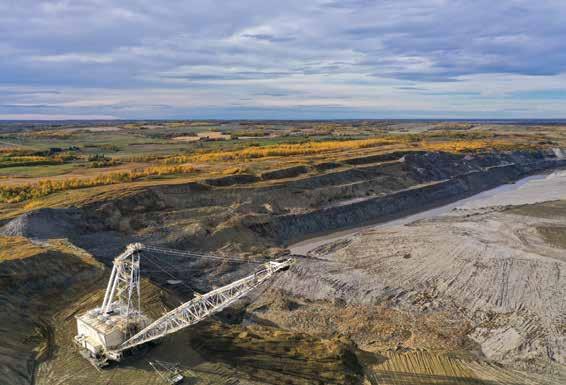
Landscapes can take many forms after a strip mine has been decommissioned and the land reclaimed.
An example of an energy company that is transforming previous mine sites into stunning landscapes is TransAlta. Their former Whitewood mine, located 65 kilometres west of Edmonton, Alta., was decommissioned in 2010, and they spent the next five to 10 years returning the land to its natural state.
Five kilometres southwest, TransAlta is doing it again, on a much bigger scale. For 51 years, their Highvale mine was the largest surface strip coal mine in Canada. It covered more than 120 km2 and exposed over 463 million tonnes of coal. TransAlta decommissioned the mine at the end of 2021 and ceased using coal to generate power in Canada to help advance their environmental, social, and corporate governance goals.
“As an energy company, we are responsible to return all areas disturbed by mining operations to a state that is equal to or better than its pre-disturbed condition. Part of that is looking at more sustainable technologies as well as reclaiming the footprint of the old mine,” said Brandon Stewart, senior manager of energy transition at TransAlta.
Stewart estimated that the Highvale reclamation project will take about 20 years. “There are a variety of different classifications of land that we are reclaiming, so there is a lot of work to be done,” he added.
A significant obstacle for the project is the mine’s depth. “When we were uncovering the coal, it ranged from about 10 to 90 metres be-
low the surface, which means some of the areas we are dealing with are extremely large. As part of the reclamation, we will be developing pit lakes, wetlands, forests, and agricultural land,” Stewart explained.
Jacob Harris, project coordinator at TransAlta, explained how it is done: “We start by leveling all the spoils, then we contour the lakes. The subsoil and topsoil go on, and we set up for establishing the vegetation. Then we decide what the vegetation cover will be, from native grasses to agricultural to trees.”
A finished section of the Highvale mine reclamation. CREDIT: BRANDT
TAILINGS MANAGEMENT, CLOSURE, AND RECLAMATION
There are seven pits that need to be reclaimed — there is currently everything from open pits to partially reclaimed strips to fully reclaimed areas in agriculture production. “In some areas, we have still got a lot of work to do, and others, we have got a good start and are just about completed. This is shaping up to be a beautiful environment,” said Dustin Norgard, mine manager at the Highvale mine.
Most of the bulk earth moving is done with draglines, truck/ shovel, scrapers, and dozers. Then, they bring in smaller, lowground-pressure equipment to do the more sensitive work. There are 30 pieces of equipment on site, with the majority being the machines previously used in mining the pit. “It is getting to be an older fleet, and with the size of the fleet, we require parts and service to keep it up and running. Everything we do here is based on the equipment — if it is not running, we cannot properly do the reclamation work. The reclamation is something we are passionate about, but we must make sure we keep our costs under control. If we are struggling with the equipment, then we start having challenges with costs,” said Stewart.
During the mining process, the equipment was running 24/7, so it was not stopping and starting. In reclamation, operators are doing straight days, so the equipment is turning on and off quite a bit more. Stewart noted that this can take a toll on the machines: “It is working in both in-situ ground as well as disturbed ground, so that can also be rough on the equipment,” he explained.
With that equipment comes the suppliers and their sales and service agreements. “Equipment breaks down. It is not going to run 100% of the time, but what we need to count on is that when we need parts, that parts are available, when we need service, we need that support and need to know our vendor
is there to help. It does not matter if we are in reclamation or production, we still need the same support and service,” Stewart said.
“With projects of this size and nature, there is a lot at stake, so there is no room for delays in service and support. When you get a call, you need to jump and make sure they have everything they need to keep working,” said Jim Thompson, vice-president of sales mining at Brandt. “It may also be acting as a sounding board and bouncing ideas back and forth, providing suggestions, advice, and troubleshooting to help solve the problem. It needs to be a true partnership,” Thompson added.
Stewart agreed. “What we look for in a vendor is one that cares about us as a company, about our equipment, no matter what size we are. It makes it easier for me as the manager not to have to worry about the smaller details,” he said. “We appreciate regular check ins—sometimes, you do not know what you need until they ask the question, because you’re so caught up in the day-to-day operations. Having that break point and being able to sit down, have a quick discussion, and see where a vendor can potentially fill a void is essential from a customer service perspective. We need them to check in with us when things are going well, so big problems don’t build up.”
The reclamation efforts run year-round. Norgard explained, “We have got to manage the seasons as much as we manage our equipment. One of the challenges we face is with some of the softer material, like in swampy areas. You cannot perform reclamation there during the summer, so you must wait until the winter months when frost is in the ground and work on those areas during that time.”
Efficiency is key when it comes to mine reclamation, and the latest technology is essential to ensure the project is on time
and on budget. TransAlta’s newer machines are equipped with remote troubleshooting software. When an error code comes up, the machine’s information is transmitted to a technician at Brandt, who diagnoses the problem and either addresses it from afar or sends someone out to fix it. “The onsite technician was able to get the equipment up and running a lot quicker than if that information had not been communicated to them first,” said Stewart.
“People are always a little bit apprehensive about new technologies at the start, but they can see the benefits very quickly,” said Harris. “On one of our machines, some codes came up, and they were able to save us from engine failure,” he added.
The reclamation team also uses positioning technology to reduce the onsite survey and the number of passes the dozers need to push — this is particularly helpful in remote areas where reliable cell service is a problem. Machine control is also installed on one of the excavators and a few of the dozers to make work go even more smoothly and efficiently.
What are the plans for the land once it is reclaimed? There are a variety of options, such as being donated and opened to the public for use, sold back to the original owners of the property (before it was a mine), re-purposed to support local economic development, or made available for the public to purchase. TransAlta has also donated more than 12 km2 of reclaimed land to the Alberta Conservation Association (ACA).
“ACA is very pleased with the partnership that has been developed with TransAlta. These lands will continue to support the almost 100 wildlife species already documented on the site and, once fully certified, will be opened to the public for low-impact recreation. This partnership is an excellent example of how industry and conservation organizations can work together for the benefit of Albertans,” said Lance Angley, ACA’s manager of special projects.
Fish biologists from ACA collected water temperature and dissolved oxygen profiles and did macroinvertebrates sampling to ensure the lakes on the reclaimed land would be a good environment for salmonoids (a classification of fish that includes salmon, trout, chars, and whitefishes). They found the water quality to be suitable for this kind of fishery. “It is really exciting to see the potential that is here from a fisheries and outdoor recreation perspective,” said Harris. “I am lucky I have been able to be a part of closing this mine out and getting it set up and sent to a conservation group. It is very meaningful for me to see that this property is going to be set aside for everybody to use. It will be a place that I can come to, as I move into retirement, and my kids and grandkids one day can use this place and know that I was a part of it,” he concluded.
Sabrina Cataldo is a multiple award-winning senior copywriter at Brandt.
A finished section of the Highvale mine reclamation. CREDIT: BRANDT
By Diego Penate and Steve Bundrock
Tailings management north of parallel 60
“The true north strong and free.” We Canadians love to live and share these words. We sing them loudly and with pride before important events in auditoriums and arenas across our vast nation.
Yet most of our enthusiastic anthem-singing population has never ventured close to the true Canadian north. Approximately 90% of Canada’s population is clustered near the southern border, with 66% of Canadians living within 100 kilometers of the U.S. border.
To put it in perspective, consider the distances to some of the most representative northern cities. Vancouver, B.C. is farther from Whitehorse, Yukon than it is from San Francisco, Calif. And Iqaluit, Nunavut is closer to Greenland than it is to Quebec City, Que.
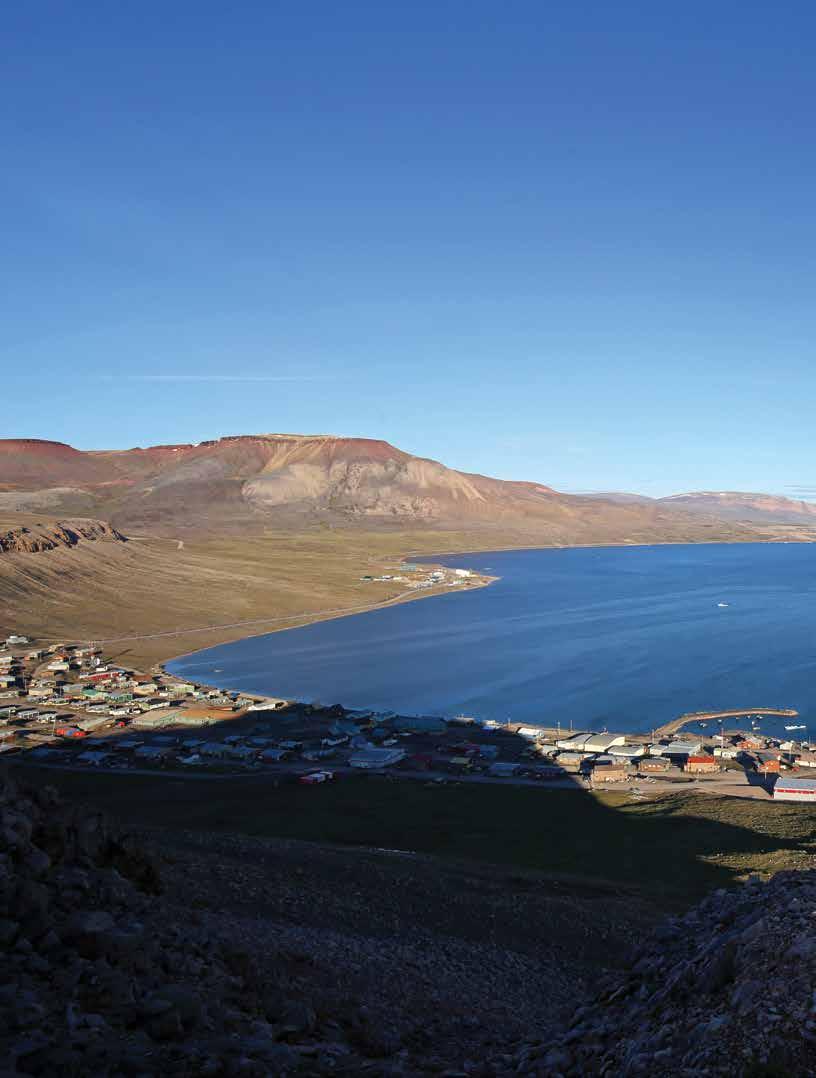
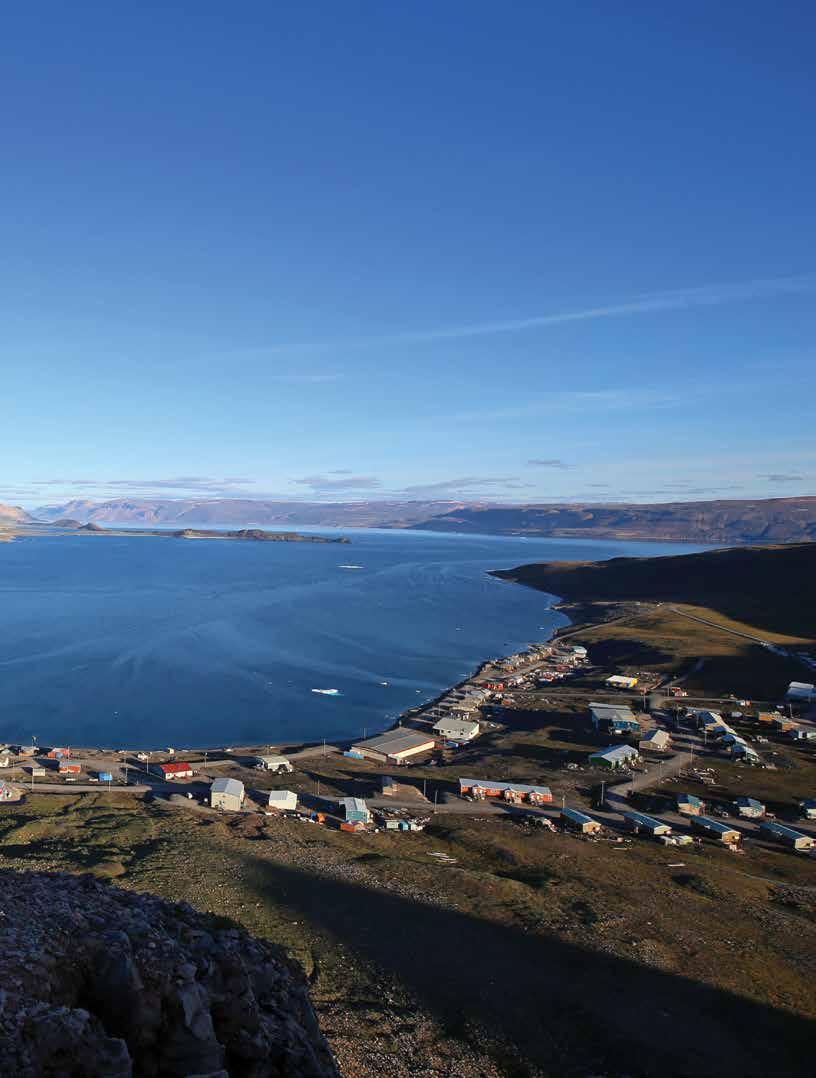
Although cities like Yellowknife, N.W.T. developed from early mining towns, mine developments can be found even further north than the territorial capitals and centers of population. In fact, some of the northernmost mines on Baffin Island (e.g., Mary River Mine) even have a reduced opportunity of viewing the northern lights as their location approaches the auroral oval, which is further north than the optimal viewing angle.
Given their unique location on the planet, tailings management north of the latitude 60° parallel — the imaginary line that forms the southern border of Canada’s arctic territories of the Yukon, N.W.T., and Nunavut — comes with a different set of challenges and therefore requires a special mindset, determination, and adaptive approach to managing risk and safely executing projects.
It must be noted that an integrated approach to tailings management north of parallel 60 must include a meaningful participation of First Nations communities. It is important to build upon their vast knowledge of the land and sustainable practices, while recognizing the lessons learned and historical impacts of mining in the territories. This makes the involvement
of First Nations communities critical to the future of tailings management in the northern region.
For this article, we will focus on the technical aspects of tailings management north of parallel 60.
Tailings management
Crown-Indigenous Relations and Northern Affairs Canada (CIRNAC) manage mineral claims in the northern territories, including some legacy abandoned sites through the Northern Abandoned Mine Reclamation Program (NAMRP). NAMRP manages these sites through active investigation and remediation, monitoring, and maintenance and ongoing care.
Some of the main concerns related to management of tailings disposal relate to the presence of Potential Acid Generating (PAG), metal leaching, and other hazardous materials in tailings deposits that may impact water sources, soils, and air quality.
Historical tailings disposal methods in the arctic regions have typically used either deposition under water/ice (sub-aqueous), or land-based (sub-aerial). The selection of the depositional method is heavily influenced by the specific conditions of the site and the economic considerations of the project.
Slurry, thickened, and paste tailings are typically placed underwater or ice — within abandoned pits, or natural lakes (where allowed) — or above ground, confined by natural terrain and earth dams. Filtered or dewatered tailings are typically placed above ground in open pits or on natural terrain and benefit from their ability to be self-supported (without the need for terrain or dam confinement).
When possible, tailings are deposited in underground workings, open pits, and other mined out areas to reduce potential surface impacts.
Dams and containment
Construction methods for tailings dams and structures take advantage of the cold arctic climate by maintaining the foundation and dam cores in a frozen state, which is less likely to allow for dam or foundation settlement, displacement, or seepage. Construction over foundations with unfrozen layers within the permafrost (e.g., Taliks) is also possible but presents additional challenges.
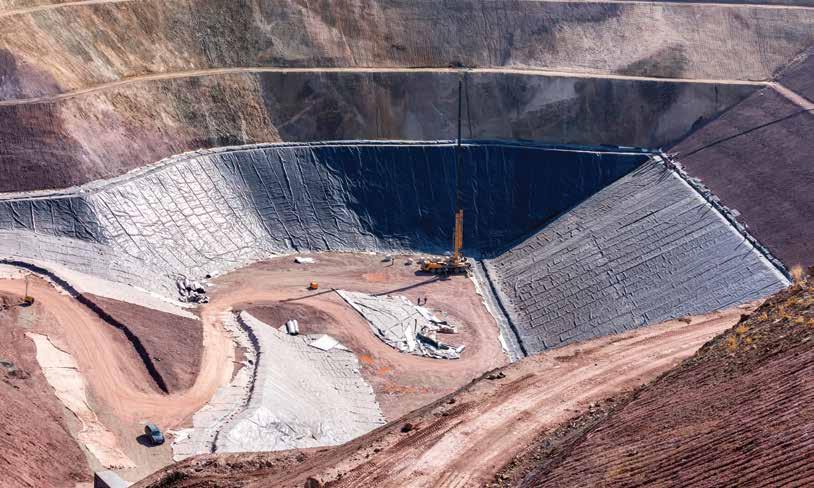
For closure and reclamation, covers are used to prevent oxidation in PAG tailings placed over land. Generally, tailings are allowed to freeze before the cover is placed. Covers then act as an insulation layer that maintain tailings as frozen (inert/semi-inert) by providing either a sufficient cover thickness or by using high water content cover materials which freeze and produce an ice-rich permafrost zone. Blasted quarry rock or Esker material (sand and gravel) are often used for cover construction based on their wide availability, with pros and cons for their specific uses.
Although the final selection of tailings deposition and storage methods are driven by project specifics, filtered tailings construction (i.e., dry stacking) is becoming a popular method in arctic regions because of its improved stability and reduced potential impacts (e.g., tailings flow) in case of failure. Advances in tailings filtration and water reclamation technology, which allows for more tailings processed at lower costs, are also making filtered tailings a more attractive method.
Polar Bear, Nanisivik, Nunavut. CREDIT: MICHAEL MAHOWALD/STANTEC
Climate change
Predicting climate change is a critical concern in the management of tailings in the arctic regions, where warming trends are estimated to be occurring two to four times faster than the global average. Warming trends are specially concerning because of their direct impacts on frost penetration depth, changes in the active layer, and freeze-thaw cycles in permafrost, including frozen tailings and dams.
While new designs can adapt historical construction technologies to account for the new challenges, existing structures need to be carefully reviewed to assess the potential impact of climate change on design assumptions.
Scheduled reviews of the structures, such as periodical Dam Safety Reviews (DSRs) and Dam Safety Inspections (DSIs), as well as thermal monitoring of tailings, dams, and foundations, present valuable opportunities to assess design assumptions that could potentially be impacted by climate change and to formulate action plans to address emerging issues.
Tailings deposits, especially those with earthen dams, face challenges directly associated with climate change. Thawing of permafrost layers in the foundation can cause increased settlement in dam structures (overall and differential) that could propagate into cracking, fracturing, and other tailings dam instability. Slope failure can also develop owing to rising phreatic surfaces, which may occur during thawing.
Where frozen cores or permafrost foundations are integrated in the design for stability and as seepage barriers, thawing can also generate instability and/or seepage paths for contaminated tailings water to escape to the environment.
Temperature increases, which generate increased meltwater runoff and more frequent or larger precipitation events, may overwhelm the storage and/or discharge capacity of dam impoundments, resulting in overtopping. Conversely, periods of drought have the potential to produce shortages of water for tailings processing and transport (pumping).
Climate change can also affect tailings-support infrastructure, including thawing-induced differential settlements and slope instabilities along tailings pipelines, water management systems, and other conveyances. Access to processing and tailings storage areas dependent on ice roads may also be lost earlier in the season owing to warmer temperatures.
Planning for change
Fortunately, most of the challenges presented by climate change can be mitigated with a reasonable level of effort. This process requires an assessment of measured climate change trends, the range of climate change impacts, and robust planning during the design of tailings facilities and development of closure plans.
To provide some examples, embankment or foundation settlement concerns can be addressed with the design of additional freeboard. Slope stability can be improved by using flatter slopes, constructing impermeable zones, providing drainage, and planning for contingency buttresses when required.
Permafrost/frozen conditions can be improved with the use of thermosyphons or thermal covers. Care can also be taken to avoid thawing permafrost layers by constructing during winter months and limiting construction rates.
Simple solutions, such as orienting tailings facilities to min-
imize sun exposure, can also be used to reduce potential for permafrost thawing.
Other considerations
Challenges associated with the remoteness of the mines, which require special attention and planning during operations, are more pronounced during project care and maintenance stages.
If closure designs are not properly engineered and constructed, additional effort may be required during maintenance phases. Activities that require additional materials to repair tailings covers, erosion protection, and water management systems may require re-mobilization of construction equipment and related supplies and personnel. This would generate significantly higher costs (including for unit rates) as compared to completing the same task during the operations stage or the active closure phase.
Closure plans should explore the potential to use locally available materials, materials that can be adapted for several uses and to otherwise source, process, and store well-planned quantities of construction materials.
Advances in solar power generation and satellite communication have improved instrumentation monitoring in remote locations, reducing the need for human operation and maintenance. Care should be taken in designing instrumentation to withstand the natural elements of arctic regions, also including wildlife interactions with exposed equipment.
The formulation of Emergency Preparedness and Response Plans (EPRP) should be carefully considered given the potential lack of human resources available on short notice to respond to emergencies.
Geopolitical impacts
Dynamics in the geopolitical environment continue to impact the advancement of climate change predictions. This directly impacts professional collaborations in permafrost regions. The tailings management industry needs valuable brain power, knowledge advancement, acquired experience, and performance monitoring data from scientists who have experience with vast permafrost areas, design, and construction.
The main barriers will continue to be the cancellation of international collaboration projects, the loss of access to global databases, and general limitations in communications. These disruptions will likely be felt first in the available foreign investment capital and the migration of professional talent in the Canadian tailings industry.
A holistic perspective
Tailings management in the Canadian arctic territories should not only be approached from the point of view of the technical challenges. Practitioners should learn and consider the long history of legacy environmental issues, historical practice, climate change, and local and geopolitical climates that may impact successful tailings management and closure.
Therefore, an integrated approach to tailings management north of parallel 60 should effectively recognize — and meaningfully integrate — best engineering practices and project economic realities with the historical lessons learned from past projects.
Diego Penate is senior geotechnical engineer at Stantec, and Steve Bundrock is manager of geotechnical engineering at Stantec.
Dam A: a memoir
Acouple of engineers got together and decided to have a dam kid. They knew what they were getting into, and they thought a great deal about its future and the lonely, isolating life their child would live. He would rise to a level of importance and responsibility well beyond his initial comprehension. The care and attention he would require as he grew up, aged, retired, and faded away into his unknown future would be extensive and costly. This dam kid was born with a purpose. It would not be an easy life. Specialists would be required to monitor his health and help him grow. He would need to be flexible and adaptable to changing conditions throughout his life. This is mostly my story, but I will mention some things about other dam creations that I have heard about as I tell you about my life.
My childbirth was quite difficult. There was a tremendous amount of preparation just to find and prepare the right womb where I would live and be intimately connected to. It would be my anchor to life forever. I could never let go, or I would die. This would be the foundation of my existence. I was lucky. The site selection was extensive and carried out perfectly. My womb was prepared to ensure a successful birth and future. My birth was a success, and my parents were ecstatic. My purpose in life was about to be known.
I grew up fast, developing internal organs that would maintain my function and purpose, like filters, drains, pipes, leak
control, and maintenance systems, along with the materials to keep it all together. There were more people and machinery than I could imagine, making sure I was given all the growing components, selected and placed perfectly in the right locations, and triple-checked, to be sure everything would work.
As I began to take form and others could see what I was becoming, I heard others calling my name. I began to understand my purpose. My name is “Dam A.” Apparently, a perfect name for a Canadien dam (Eh). I live at a gold mine in B.C. I was going to be holding back tailings, water, and other stuff. I now knew that I was entering the big leagues.
I was visited by so many people throughout my initial growing phase, which lasted about two years. There were specialists, government representatives, photographers, and more, all wandering over me, from my toes to my head and side to side, pointing, taking pictures, and even taking something, they called selfies. I felt quite special. A pipeline had been placed across my head and along my left side and down to my upstream toe. Apparently, I had a downstream toe as well, but this time, they were focused on my upstream toe. A ribbon was cut, and something came flowing out of the pipe and onto my toe. It tickled, and everyone cheered. They called it “tailings slurry.” A lot of happy faces around, celebrating my coming-of-age.
Over the next few days, the crowds of people visiting less-
View of a tailings dam. CREDIT: FUNTAY/ADOBE STOCK.
ened. However, I was still visited frequently by engineers who looked me over, took notes on the accumulation of tailings upstream, and checked to make sure I was not developing any symptoms, such as leaks or high water pressure (similar to high blood pressure) and that my body remained intact. So far so good. No cracks forming. No leaks. No erosion. No settlement. I was doing my job perfectly, but the weather was getting colder as winter was approaching.
Late fall rain resulted in an accumulation of water on my upstream side, and tailings soon covered the entire length of my upstream toe. Large boulders had been placed there for my protection and were working perfectly, like a good pair of warm winter boots. A tailings beach was forming, draped over me like a blanket, with a large pond of water forming further away. The entire basin forming in front of me was turning white with snow as far as I could see, except for meandering streams of steamy tailings slurry flowing down towards the pond. Although it got quite cold and snow fell throughout the winter, I stayed warm and continued to do what I was meant to do.
By the time winter was over, the tailings beach had risen to about five metres below my crest (actually, my head). Spring showers came, and the pond moved up the beach, getting closer and closer to me. A large floating barge and pump station that had been constructed within the pond area last spring began pumping water out of the pond, and the pond moved further and further away from me. What a relief that was. Everything continued to work as had been planned.
When the snow finally disappeared, more life returned to the area, including trees, animals, and people. Along with the people were various types of equipment and materials, and I knew I was about to go through another growing phase. By the fall, I grew another five metres. Monitoring so far indicated that a minor amount of seepage was exiting at a low point of my downstream toe. I felt a bit embarrassed, but apparently, this was normal. Seepage was expected and would be monitored regularly for quantity and quality to be sure it was within an acceptable range. I heard them say that the seepage was expected to increase as I grew and the pond in front of me grew.
Today was a special day. My parents were coming to see me for their first annual inspection. I could not wait to see them and to show them how successful I was. I hoped my excitement would not lead to a loss of control over my seepage.
Their visit was very successful. They were proud. They commented on a few minor operational issues that could easily be modified for the future, but these concerns had nothing to do with me. My growth spurt was a success, and I would be able to continue as planned.
While they were with me, I heard them talking about another nearby older dam that had some major problems because their womb was not prepared adequately. A weak natural material in the foundation was not identified, resulting in devastating effects on the mine and the downstream environment. Surgery was required to identify and repair the problem. A section of the dam had to be rebuilt, and the entire tailings storage facility had to be reassessed and modified. They also talked about other older dams that had failed to serve their intended purpose, which were born in other parts of the
world, causing environmental devastation and loss of life. It was quite evident to me that my parents were sad about these events and developed a commitment to provide their offspring with the best possible conditions to flourish. I knew that this commitment was given to me, along with the continued attention required as I grew up and evolved.
Hey! Were they just talking about other offspring? Do I have siblings? Maybe I will find out someday.
I continued to grow up over the years and remained healthy, except for minor erosion along my abutments. These were quickly noticed and patched up. Some additional instrumentation was inserted to monitor my water pressure. These were upgraded models that sent signals directly to the inspectors. I did not like it because it meant fewer visitors. It also meant that they trusted me more. After about twenty years of continued service, I heard rumors that the mine was about to shut down. I did not know what that meant for me. I still had a huge pile of tailings and a very large pond that needed to remain in place and be controlled. I still had to stay, and I was prepared to do so. I soon found out what it meant. Some changes need to take place. These were not only expected from my beginning but previously planned for the next stage of my life.
Numerous samples were taken, and tests were done on the tailings and seepage. As they had expected, the seepage coming out of me at my downstream toe was clean and could be discharged into the environment. However, the tailings needed to remain submerged to prevent the seepage from becoming acidic. The solution they had come up with was for me to grow a bit more and allow the pond to cover the exposed tailings beach in front of me. I also required some upstream reinforcement to prevent waves from eroding my crest. Large boulders were placed against my exposed upstream face for this purpose.
An additional treatment they thought necessary was to provide additional erosion protection at my abutments by diverting runoff from the area and adding large boulders to further protect them.
Another major feature was a permanent spillway around my left abutment that would control the release of pond water into the environment. With this spillway, the pond level would always be at a minimum height to maintain a water cover over the tailings and a maximum height to prevent damage to me from a major storm event.
Several other investigations and studies were conducted to determine whether other factors in the area could cause damage, such as landslides, avalanches, or earthquakes. A remote seismic monitor was located nearby to inform the engineers if a special inspection was required. There would be a period where regularly scheduled inspections were to occur.
This is where I am now. I protect a beautiful, pristine lake in the wilderness. It is lonely, but I am still visited periodically by engineers who check me over and others who come to enjoy the view and do things in the area, like hiking and fishing.
My parents visit seldomly, but I could see from their last visit that they were slowing down and may not return. On their last visit, they decided to write my story for me, and this is it.
Irwin Wislesky, P.Eng., is an author and freelance writer.
By
What have you done today that did
not involve a mineral?
Part 7: Household waste; the mine waste we ignore
Mining is often portrayed as the villain in conversations about environmental degradation. Tailings storage areas, waste rock piles, and open pits dominate public perception. Yet mining contributes only a fraction of the total waste generated by humans. The truth is far more uncomfortable: society’s twaste problem begins with mining, but it does not end there. Although this article focuses on base metal extraction, petroleum-based resource development also produces significant plastic-derived waste.
When companies exploit naturally formed mineral deposits, they extract the valuable and economic components such as gold and copper and discard the rest. The waste-to-product ratio can be astonishing. For example, an ore containing 10 grams of gold per tonne, which means 10 out of 1,000,000 grams, is considered economic. This results in storing 999,990 grams of waste to produce a very small amount of gold. In contrast, aggregate used in road construction and concrete may produce almost no waste at all, because nearly everything mined is used.
Even with this range, mining is often singled out as a main producer of waste. But in reality, the story does not stop at the mine gate. Everything society manufactures from mined materials eventually ends up somewhere, and very often that somewhere is a municipal landfill. These landfills are, in effect, concealed mine waste created not only by mining companies, but also by people who demanded the mined commodities in the first place. In the present era, this can be classified as anthropogenic waste material.
The statement, “Everything that is not grown is mined” is often repeated within the mining industry but not widely understood outside it. Every phone, appliance, plastic container, toy, shovel, wire, pipe, and metal tool began with minerals. When people throw these items in the garbage, they are participating in the same process that mining companies carry out at mine sites. They are creating mined waste.
Society needs a shift in how waste is categorized. Today, landfill management incorporates the concept of valorization, emphasizing recycling and composting. However, these efforts only address a fraction of what is discarded, and enormous volumes of waste remain unprocessed. The message “What have you done today that did not involve a mineral?” could easily be expanded to
ask, “What did you do today that did not create a mined waste?”
Mining companies are now reassessing the value locked in their tailings. These are opportunities to improve circularity because the ore is already mined and ground. Reprocessing can often be done with existing technology. Potential benefits include reducing tailings volume, increasing stability, reclaiming land, and extracting metals that were previously unrecoverable.
This raises an important question. If mining companies excel at excavation and mineral separation, why stop at their own tailings? Could they also process municipal landfills? According to the Government of Canada, 97% of waste requiring final disposal goes to landfills and only 3% is incinerated. In 2022, only 27.1% of solid waste generated in Canada was diverted, while 72.9% was disposed of. Residential sources contributed 40.2% of all disposed solid waste. The average Canadian generates roughly 700 kg of solid waste per year. Consistent national waste tracking only began in 2002. By 2022, disposal reached its highest recorded level of 26.6 million tonnes. The total volume since 1867, the year of Confederation, is almost unimaginable.
Consider the number of mines compared to other land uses in Saskatchewan. There are 544 mines listed in the Historical Canadian Mines Data Hub for Saskatchewan, many of which were small coal mines rather than the large mining operations most people picture. In 2013, the province also had approximately 500 active municipal landfills, nine industrial landfills, and 727 regulated sites including closed ones. This comparison shows that mining is only one of many land uses with a significant footprint. It also reminds us that wherever humans go, we leave behind waste, whether it is from mining, municipalities, or industry. One question that emerges is the total area and volume of these landfill sites, a number that does not appear to be publicly available.
Although landfills are out of sight for most people, their environmental impacts can be significant and often mirror concerns associated with mine waste. Decomposing organic waste produces methane, a potent greenhouse gas. While some sites capture this gas for electricity generation, others allow emissions to escape uncontrolled. Landfills without proper liners may alter groundwater geochemistry, with leachate capable of affecting drinking water sources, fish-bearing creeks, and
Donna Beneteau, Bruce Downing, and Bill Van Breugel
wetlands. These sites may also contain toxic or improperly sorted materials that were never intended to be buried, posing long-term risks to ecosystems and communities. Subsurface and surface fires can smoulder for months, releasing toxic smoke and degrading surrounding soils. Recent news coverage of concerns surrounding the Cowichan landfill, an illegal dumping site, shows how quickly public awareness rises when landfill issues come to light. Despite these risks, landfills rarely receive the same scrutiny as mine waste facilities, even though the environmental consequences can be just as serious and, in some cases, even less controlled.
Remote towns across Canada often lack recycling infrastructure, leaving landfills as their only waste disposal option. Many of these communities also host mines with limited operating lifespans, which means local employment eventually declines as ore bodies are depleted. Re-excavating landfills to recover metals, plastics, and other materials could extend employment, reduce environmental impact, and allow modern engineered waste facilities to replace aging ones. Unlike large southern municipalities where recycling systems already extract much of the recoverable value, northern landfills contain a higher proportion of metals and plastics, simply because these materials were never diverted in the first place.
The layers of a landfill are like an archaeological record of human development, with each layer revealing the technologies and lifestyles of its time. Examples include the following:
• The rise of steelmaking from the late 1800s to the mid 1900s. Mass production methods made steel affordable. Landfills from this era show an increase in steel cans, tools, building components, and machinery parts.
• The expansion of plastics beginning in the 1950s. After World War II, petrochemical industries transformed consumer goods. Landfills show dramatic increases in disposable packaging, synthetic textiles, toys, and household products (i.e., diapers).
• The computer revolution of the 1980s and 1990s. Early personal computers left behind circuit boards, wiring, bulky monitors, and early generations of batteries. These layers contain metals and rare earth elements that future technologies may seek to recover.
• The smartphone era beginning around 2007. Modern landfills contain concentrated pockets of lithium-ion, zinc-alkaline and nickel-bearing batteries, rare earth magnets, copper wiring, and miniaturized electronics. These materials may become valuable resources to future generations.
As more natural and human-made waste is transported and deposited in landfills, these sites begin to behave like geological features. Over time, the layers of waste go through processes like those that form sedimentary rocks. Geologists refer to this emerging category of material as anthropogenic clastite,
a man-made addition to the rock cycle. During this gradual human-driven lithification, new minerals can form depending on the materials buried within the landfill.
Canada has world-class engineering expertise, mining technology, and safety practices. Combined, these strengths could position Canada as a leader in landfill reclamation. Europe, with centuries of accumulated waste, offers a preview of the challenge. A BBC documentary that can be found on YouTube: “The Secret Life of Landfill – A Rubbish History” highlights the engineering and composition of both present day and historical landfills. Canada, with fewer people and more land, can develop the technologies, regulations, and risk frameworks that the world will eventually need.
Turning this concept into reality raises practical questions. We acknowledge that we are proposing mining companies take on this challenge. To follow standard Canadian protocols for defining a mining project, a resource estimate would be required. How could this be done? Options might include reverse circulation drilling, remote-operated drills for safety, or test pits like those shown in the documentary. Whatever the method, a landfill exploration program would need geophysical surveys, soil and water quality studies, and collaboration among geochemists, geophysicists, archeologists, mining engineers, and municipal engineers. Any opportunity for the mining industry to work visibly in the public’s backyard could increase awareness and strengthen its connection with society.
Mining of landfill sites should require a resource estimate to determine the types and quantities of materials present. A model of a landfill would identify the location of these materials, and there would be a nugget effect like that seen in tailings impoundments. Imagine preparing a NI 43-101 technical and resource estimate report for a landfill feasibility study. This would be fascinating and may require revisions to the 43-101 requirements and the CIM Estimation of Mineral Resources and Mineral Reserves Best Practice Guidelines. Just as with mining projects, landfill sites also require a reclamation plan that could mitigate ongoing environmental remediation.
The statement remains true: if it is not grown, it is mined. Even agriculture depends on mined tools, fertilizers, fuel, and machinery. Every landfill is therefore a repository of mined materials. Mining companies are not the source of this waste. People are. Human consumption, convenience, and modern lifestyles drive the accumulation of mined waste.
Though Canada is trying to fast-track mining projects and some community members and scientists worry about environmental impacts, just remember that landfill sites have similar environmental impacts. The real challenge is simple. What have you done today that did not involve a mineral? If you cannot find an answer, then much of your waste is ultimately mining waste.
Connections within the industry can expand our collective knowledge. Donna Beneteau, an associate professor in geological engineering at the University of Saskatchewan, combines academic insight with mining industry experience. Bruce Downing, a geoscientist consultant based in Langley, B.C., brings expertise spanning research, education, geochemistry, and applied industry work. Bill Van Breugel is a mining engineer who began his career as a miner and now has more than 40 years of experience in the mining industry.
Karen Thompson on Canada’s critical minerals strategy, processing modernization, and workforce challenges
Canada’s critical minerals sector is shifting from policy announcements to real-world execution, but turning strategy into industrial results will depend as much on processing plants and supply chains as on government funding.
In an interview with the Canadian Mining Journal, Karen Thompson (KT), president and CEO of Haver & Boecker Niagara, discusses the practical challenges facing Canada’s mining and mineral processing sector. Those challenges include long permitting timelines, modernization gaps in processing infrastructure, and persistent shortages of skilled workers.
Canada has committed billions of dollars toward developing critical minerals and strengthening supply chains for materials such as lithium, nickel, and rare earth elements (REEs). But Thompson says the next phase of Canada’s strategy will be determined by what happens inside processing plants, equipment supply chains, and workforce training programs.
and feasibility assessments. Even at that point, the process from testing to a mine opening can take anywhere from 15 to 25 years. If Canada wants to accelerate critical mineral development, governments will likely need to find ways to shorten regulatory timelines and streamline permitting processes. Those delays can create real challenges for companies trying to develop projects.
Turning Canada’s resource potential into reliable industrial output will require faster regulatory processes, plant-level innovation, and stronger workforce development across the mining sector.
CMJ: CANADA HAS MOVED FROM POLICY COMMITMENTS TO FUNDING AND EXECUTION ON CRITICAL MINERALS. FROM YOUR PERSPECTIVE, WHAT ARE THE BIGGEST GAPS BETWEEN GOVERNMENT AMBITION AND WHAT IS HAPPENING ON THE PLANT FLOOR TODAY?
KT: As an equipment manufacturer serving mineral processing operations, we sit within the supply chain rather than the mine development side of the business. Even so, we follow policy discussions very closely because they ultimately shape the projects that move forward.
Initiatives, such as the proposed development of the Ring of Fire in northern Ontario, are certainly areas the industry is watching closely. There is significant potential for Canada to strengthen its position in critical minerals and capture more value from its natural resources.
However, translating policy ambition into operational mines remains a major challenge. The timeline required to move from exploration to mine development is still extremely long. Our company is often brought into projects during the early engineering stages, which already come after geological studies
Commodity markets change over time. When projects take decades to move forward, there is always the risk that prices or demand will shift before a mine reaches production. In some cases that can even change the economic focus of a project after years of work.
CMJ: PROCESSING AND EQUIPMENT MODERNIZATION ARE OFTEN LESS VISIBLE THAN NEW MINES BUT JUST AS IMPORTANT. WHERE DO YOU SEE THE MOST URGENT OPPORTUNITIES TO IMPROVE EFFICIENCY, REDUCE EMISSIONS, AND STRENGTHEN COMPETITIVENESS IN CANADA’S MINERAL-PROCESSING OPERATIONS?
KT: Sustainability is now a central focus for mining companies around the world, and Canada is no exception. Many companies operating here are global leaders, and they are under increasing pressure to improve efficiency while reducing environmental impact.
For equipment manufacturers, that means developing technologies that allow mines to process materials more efficiently and reduce waste within the system.
Screening technology, for example, can help separate material more precisely, which reduces the amount of material that must be recycled through the plant. There are also innovations that reduce water consumption by allowing materials to be screened using natural moisture rather than introducing
Karen Thompson, president and CEO of Haver & Boecker Niagara
Screening technology can help separate material more precisely, which reduces the amount of material that must be recycled through the plant. CREDIT: HAVER & BOECKER NIAGARA
additional water into the process.
Another example is pelletizing technology, which allows fine materials to be formed into pellets. That can reduce emissions later in the supply chain because the material becomes easier to transport and process further downstream.
More broadly, innovation is essential across the industry. Equipment manufacturers and processing partners must continue investing in monitoring technologies, automation, and the integration of artificial intelligence (AI) into processing solutions. If mines are expected to operate efficiently while meeting stricter environmental standards, the technology supporting those operations must continue to evolve.
CMJ: WORKFORCE READINESS IS OFTEN IDENTIFIED AS A MAJOR CONSTRAINT FOR THE MINING SECTOR IN REPORTS LIKE “ONTARIO’S MINING FUTURE 2030.” WHAT SKILLS SHORTAGES ARE MOST ACUTE IN
what the industry looks like today and the kinds of careers it offers. These are well-paid, highly skilled jobs that involve advanced equipment, engineering, and technology.
We also see a gap developing between generations of workers. Historically, many employees developed strong practical skills through years of hands-on work in plants and mines. Today, we see more engineers entering the industry, which is positive, but sometimes there is less hands-on mechanical experience.
Remote mine locations create additional challenges. Many operations are far from major population centres, which can make recruitment more difficult. Fly-in, fly-out work arrangements have been common in mining, but they can make it harder to build a stable workforce, especially for employees with families.
Education will be key to addressing these shortages. Our company supports several Canadian universities with mining programs, and we often see students being recruited before they even graduate.
within the supply chain, it can be difficult to determine when to invest in new service hubs or manufacturing capacity to support planned mining projects.
Suppliers must anticipate where new mines will be built and when they will move forward. That requires long-term planning and a certain level of confidence in project timelines.
That said, Canada has significant advantages. With recent global trade disruptions, there is increased interest in strengthening domestic supply chains and supporting local manufacturing.
As a Canadian supplier ourselves, we have always tried to source materials locally when possible. That simplifies supply chains and reduces exposure to exchange-rate fluctuations or international disruptions.
Canada also has strong capabilities in areas such as steel fabrication, engineering, and technical education. Those strengths provide a solid foundation for expanding domestic manufacturing and processing capacity.
Importantly, the development of critical minerals will not happen all at once. These projects typically unfold over many years of engineering and planning. That gradual timeline gives the supply chain time to expand alongside new mining developments.
CMJ: FINALLY, AS ONE OF THE FEW WOMEN LEADING IN MINING, ENGINEERING, AND INDUSTRIAL TECHNOLOGY, HOW DO YOU VIEW LEADERSHIP AND CULTURE AS FACTORS IN MODERNIZING CANADA’S RESOURCE
SECTOR AND ATTRACTING THE NEXT GENERATION OF SKILLED WORKERS?
KT: The industry has changed significantly over the past two decades. Twenty-five years ago, it was common to attend industry events where I might be one of only one or two women in a room of more than a hundred people. Today, we are seeing much higher participation — perhaps 20% to 25% women in some settings. While that is still a minority, it shows that progress is being made.
Part of that shift is tied to the modernization of mining itself. Automation, digital technologies, and advanced equipment have expanded the types of careers available in the sector.
Mining today involves engineering, environmental science, data analysis, and advanced manufacturing. Those roles appeal to a broader range of professionals than traditional perceptions of mining might suggest.
Ultimately, leadership in this industry is no different than in any other. It is determined by education, skill, attitude, and the desire to contribute to an industry that plays a vital role in the global economy.
Mining will remain essential to the future, particularly as demand grows for the critical minerals required by clean energy technologies. As the sector evolves, it will continue to attract new talent and create opportunities for more diverse leadership.
To watch the full interview, visit https://youtu.be/biQHGlDKukU?si=0L_-Wp59P5N1rYqK
TAKING MINING TO A NEW LEVEL
Growth and opportunity in West Africa
Fortuna
Mining’s David
Whittle discusses
operational
priorities, exploration strategy, and the outlook for gold mining in West Africa
West Africa continues to play a significant role in global gold production, offering both strong geological potential and evolving operational challenges. Fortuna Mining sees West Africa remaining central to its growth strategy. Strong operational performance at Séguéla, continued exploration success across its land package, and the potential development of projects such as Diamba Sud are expected to support the company’s long-term presence in the region. For David Whittle (DW), chief operating officer for West Africa at Fortuna Mining, the combination of geological potential, supportive jurisdictions, and strong local partnerships continues to make West Africa one of the most compelling regions for gold mining investment and development.
In an interview with the Canadian Mining Journal at the Séguéla mine in Côte d’Ivoire, Whittle discussed the company’s priorities for the region in 2026, the performance of the Séguéla operation, and the opportunities ahead. The following conversation also explored Fortuna’s exploration strategy, the realities of operating in different geopolitical environments, and how the company is strengthening community partnerships and workforce development across its West African operations.
CREDIT:
CMJ: WHAT ARE FORTUNA’S MAIN OPERATIONAL PRIORITIES FOR ITS WEST AFRICAN MINES IN 2026?
DW: There are a few key elements shaping our priorities in West Africa now. Earlier this year, we exited our operations in Burkina Faso, and we also have the Diamba Sud project in Senegal approaching a construction decision. At the same time, the
Séguéla mine in Côte d’Ivoire has now been operating for almost three years.
From an operational standpoint, Séguéla has been a success from the beginning. The project was built on time and on budget, and since entering production, it has consistently met — and exceeded — its production targets. We have a very strong team in West Africa, and they manage the operation extremely well.
Our focus is now on growth. With the exit from Burkina Faso, we removed roughly 100,000 oz. of annual production from our portfolio. Séguéla continues to perform strongly, but we want to build on that success by bringing Diamba Sud forward and by looking beyond our current assets to expand the business further in West Africa.
We have already taken some steps toward that. Earlier this year, we took a strategic holding in Awalé Resources, and we also entered into an agreement with Resolute Mining to explore the Ghanaian side of the Siguiri Basin. Ultimately, the strategy is about leveraging the team we already have in place and identifying opportunities to grow our footprint in the region.
CMJ: WHAT TECHNICAL IMPROVEMENTS HAVE CONTRIBUTED TO THE STRONG PERFORMANCE AT THE SÉGUÉLA MINE?
DW: Interestingly, the strongest performance at Séguéla has not really come from any single technical innovation. The biggest factor has been the experience and capability of the team that built and operates the mine.
From the start, the focus has been on optimizing the operation as designed rather than introducing overly complicated technical changes. That approach has allowed us to steadily improve performance and maintain consistent production.
Now, however, we are beginning to introduce additional technical improvements. We have effectively taken the project as far as we can within its current configuration, so the next step is to optimize further, particularly from the processing side.
For example, we are introducing technologies such as the Acacia reactor to improve gold recoveries in the mill. We are also implementing mill automation and other process optimization tools. These initiatives should help us continue to en-
David Whittle, chief operating officer for West Africa at Fortuna Mining.
INTERNATIONAL MINING: EXECUTIVE INTERVIEW
hance performance as the operation matures.
There are also improvements underway on the safety side. One example is the introduction of in-vehicle management systems, which improve visibility and fleet safety across the operation. Over the next year, we expect to start seeing the benefits of these upgrades as they become fully integrated into the site.
CMJ: HOW DOES FORTUNA APPROACH GEOPOLITICAL AND SECURITY RISKS IN WEST AFRICA?
DW: When we talk about risk in the region, there are really two different aspects to consider: the geopolitical environment and the on-the-ground security situation. Each country has its own circumstances, so our approach varies depending on where we operate.
For example, we previously operated in Burkina Faso, and we continue to have projects in Côte d’Ivoire and Senegal. The security requirements in those areas are very different. Burkina Faso has well-known security challenges, so the level of security presence there had to be significantly higher. In some cases, we were flying staff in and out to ensure their safety.
Côte d’Ivoire, by contrast, is considerably more stable. The country recently went through elections, and the process was very orderly. Senegal is also stable. That said, we always remain aware of the broader regional context and adapt our operating procedures as necessary.
Our primary focus is protecting our people and our assets — and people come first. During sensitive periods, such as elections, we may reduce the movement of personnel or adjust travel arrangements to minimize risk.
There has also been increasing discussion about resource nationalism across parts of West Africa. However, the situation varies significantly between jurisdictions. The challenges faced in countries such as Burkina Faso, Mali, and Niger are very different from what we see in Côte d’Ivoire or Senegal.
In fact, when you look at project development timelines, the region can be very supportive of mining investment. At Séguéla, for example, the deposit progressed from an inferred resource of about 400,000 oz. to a fully licensed and operating mine in just four years.
At the Diamba Sud project in Senegal, we submitted the environmental impact assessment in October 2025 and expect approval potentially by the end of the first quarter of 2026. Those kinds of timelines demonstrate that many jurisdictions in the region remain very supportive of responsible mining development.
CMJ: WHAT IS DRIVING FORTUNA’S EXPLORATION
STRATEGY AND NEAR-MINE RESOURCE GROWTH PLANS?
DW: At Séguéla, we control a very large land package, with roughly 35 km of strike length. That alone presents significant exploration potential. At the same time, we have increased throughput at the processing plant, which means mining rates have also increased. Naturally, when you mine faster you
move through your existing reserves more quickly. That makes continued exploration extremely important.
Over the past two years, we have committed significant budgets to exploration, and those investments have already delivered results. We have seen resource growth at deposits such as Sunbird and Kingfisher, which has helped extend the production outlook for the mine. Our goal is to maintain a mine life of more than 10 years at Séguéla, and exploration will play a key role in achieving that.
FORTUNA MINING
The Kingfisher deposit is a good example of how the exploration story continues to evolve. It was the first deposit in the district that did not have a clear surface expression. Discoveries like that encourage us to step back and reconsider the geological model, looking for other opportunities that might not show obvious indicators at surface.
We have also encountered additional mineralization while drilling deeper holes at Sunbird. Some of those holes intersected mineralization around 180 metre down in areas that were previously unknown. Discoveries like that reinforce the idea that we have probably only touched the tip of the iceberg in terms of the district’s overall potential.
CMJ: HOW IS FORTUNA STRENGTHENING LOCAL COMMUNITY PARTNERSHIPS AND WORKFORCE DEVELOPMENT AROUND THE SÉGUÉLA OPERATION?
DW: Community engagement is extremely important to us. The Séguéla mine sits close to several villages — including Barana and Tiéma — so maintaining strong relationships with those communities is essential.
Fortuna entered the West African region through the acquisition of Roxgold, and strong community relationships were already a core part of how those operations were managed. That mindset has continued as we developed Séguéla.
One of the most important ways we support local communities is through employment. Both Fortuna and our subcontractors actively recruit from nearby villages. Many of those employees are new to the mining industry and in some cases have never held a formal job before.
Because of that, we invest significant time and effort in training programs to ensure that employees can perform their roles safely and productively.
Beyond employment opportunities, we also support a range of community initiatives. These include literacy and numeracy programs in local villages, as well as investments in medical and educational facilities.
We also participate in national programs. One initiative we are particularly proud of has supported cataract surgery for more than 1,000 people, helping restore their sight.
Full interview is available at https://youtu.be/eRNtr5CgPAM?si=VkqMSC86wJ0q7bY7
Exploration drilling at Séguéla continues to expand deposits such as Sunbird and Kingfisher. CREDIT:
South Africa’s mining industry faces money laundering problems
It is a move which could affect new mining opportunities for investors: On Oct. 18, 2025, South Africa was officially removed from the Financial Action Task Force’s (FATF) “grey list” of jurisdictions under increased monitoring for money-laundering and terrorist-financing risks. This decision marked the culmination of more than two years of reforms to strengthen the nation’s anti-money-laundering and combating the financing of terrorism (AML/CFT) systems. The FATF noted that South Africa had successfully implemented a comprehensive, 22-point action plan, demonstrating enhanced compliance with global standards.
While this development was widely interpreted as an improvement in financial governance and global credibility, its implications for the mining industry — perhaps South Africa’s most economically significant sector — are particularly noteworthy. The mining sector, especially gold and coal mining, has historically been embedded in broader discussions about illicit financial flows, money laundering, and regulatory enforcement. Strengthened AML systems can therefore meaningfully affect how capital moves through, into, and out of South Africa’s mining value chains.
South Africa’s mining industry has long been a cornerstone of the country’s economy. It is a major producer of gold, platinum, diamonds, and coal — commodities that historically drove industrial growth, export revenue, and employment. Large mining houses, such as Anglo American, Sibanye-Stillwater, and others remain internationally significant, while smaller and sometimes informal operations have proliferated in the face of economic pressures and regulatory challenges.
Despite its economic importance, the mining sector has been plagued by structural issues: declining output in some commodities, labour tensions, environmental concerns, and the rise of illegal mining and smuggling networks. Over the past decade, as high-grade deposits have matured or been depleted, criminal syndicates and informal groups — often referred to locally as “zama zamas” — have moved into abandoned or under-regulated shafts. These operations are commonly linked to broader criminality and, in certain contexts, money laundering.
Placement on the FATF’s grey list — to which South Africa was added in Feb. 2023 — had significant implications for the broader economy. Grey-listing signals that a country’s AML/ CFT regime has strategic deficiencies that could be exploited by illicit actors. This status typically increases international compliance costs, prompts heightened due diligence by global banks and can reduce foreign investment.
For the mining sector, which is both capital-intensive and globally integrated, the consequences of grey listing can be
quite material. For example,
• International investors and banks often price compliance risk into mining finance decisions. Grey-listing can lead to higher borrowing costs or tighter due diligence requirements, particularly where cross-border financing is involved. Removing South Africa from the grey list may ease some of these burdens by signaling stronger AML oversight, potentially lowering the cost of capital and encouraging foreign direct investment in mining projects — from exploration to downstream beneficiation.
• Illicit mining and smuggling of gold and other minerals have been linked to underground financial networks that exploit weak AML enforcement. These operations often obscure the proceeds of stolen or illicitly mined minerals through layering transactions, shell companies, and cross-border transfers. A stronger AML framework makes it harder for these networks to function, as financial institutions become more capable of detecting, reporting, and blocking suspicious transactions.
• Mining companies operate within complex regulatory frameworks governing environmental compliance, labour relations, and export controls. The grey list had introduced uncertainty about financial regulation, with some observers warning that systemic weaknesses in oversight could undermine investor trust. Delisting, backed by demonstrable reforms, may help stabilize perceptions about South Africa as a legitimate and well-regulated investment destination for mining capital.
To better understand linkages between AML law enforcement and mining, consider some of the past cases and scandals that involved illicit financial flows tied to mining, resource smuggling, or financial crime.
One notable example involves a cross-border illegal coal mining operation in Mpumalanga province. In Jan. 2025, the National Prosecuting Authority’s (NPA) Asset Forfeiture Unit, working with financial intelligence authorities from Namibia, seized 52.5 million South African rands from bank accounts as the proceeds of alleged illegal coal mining and associated offenses (including money laundering). These funds were identified as part of broader unlawful activities tied to illegal extraction.
This case illustrates how illegal mining — beyond physical crime — often intertwines with financial crime. The illegal extraction of valuable resources generates cash that may be laundered through complex banking transactions to conceal its origin, avoid taxation, and fund further illicit activity. Robust AML enforcement enables law enforcement to disrupt this cy-
Aerial view of Cape town, South Africa. CREDIT: DACO/ADOBE STOCK
INTERNATIONAL MINING
cle by identifying and freezing the financial proceeds of environmental and mining crimes.
Historically, gold has been one of the most lucrative yet vulnerable commodities for smuggling and money laundering. Investigations into the so-called “Gold Mafia” operations revealed that some bank officials at major South African banks were implicated in laundering money in exchange for bribes — enabling criminal networks to move illicit gold proceeds out of the formal financial system.
These revelations highlighted weaknesses in AML controls within South Africa’s financial system, especially in monitoring transactions tied to resource-linked activities. The fallout from such schemes captured public attention and underlined why stronger AML frameworks are critical for preventing mining-linked financial crime.
Beyond specific criminal cases, trade mis-invoicing in mining — a practice in which the value of mining exports or imports is intentionally under- or over-reported — has been documented as a source of illicit financial flows out of South Africa. Studies have estimated large amounts of revenue lost because of mis-invoiced exports of minerals; such flows not only reduce government revenue but also facilitate capital flight and obfuscate the true economic contribution of mining.
The removal from the FATF grey list
does not mean that money laundering and illicit financial flows have vanished from the South African economy. Rather, it reflects measurable institutional progress in dealing with these issues. But why is that progress so relevant to mining now and in the future?
Mining jurisdictions worldwide wrestle with illegal extraction, unsanctioned smuggling, and organized crime networks. As seen with the “zama zamas” phenomenon in abandoned gold mines, illicit mining can produce substantial revenues for criminal syndicates. These syndicates often leverage weak AML systems to launder money and integrate illegal profits into the legitimate economy. Enhanced AML controls make it harder for these criminal networks to monetize their activities, thereby strengthening law enforcement deterrence and reducing illicit markets.
Global investors increasingly incorporate ESG (Environmental, Social, and Governance) criteria into mining investment decisions. Poor AML performance can signal broader governance risks, potentially deterring capital inflows. By addressing its AML weaknesses, South Africa is better positioned to attract investors who demand transparency, ethical governance, and reduced exposure to reputational risk.
The FATF reform process emphasized not only improved reporting and monitoring but also the investigation and prosecution of complex money-laundering
MINE CONSTRUCTION AND MAINTENANCE
Noah Rain Builders…tackling extreme conditions in remote locations, overcoming tough terrain and weather to build essential infrastructure safely and efficiently. Effectively and efficiently maintain operational mines to ensure smooth flow of production and operations. www.noahrainbuilders.com
cases. In the mining context, this means that prosecutions and asset forfeiture actions — like the illegal coal mining proceeds seizure — become more feasible as law enforcement capacities strengthen. Over time, this creates a deterrent effect that makes resource-linked financial crime less attractive.
Despite its FATF delisting, South Africa’s AML journey is far from complete. The FATF requires continued demonstration of effective outcomes — including successful prosecutions and sanctions — to avoid re-listing in future evaluations.
In the mining sector, the following three major challenges remain:
• Illegal mining and violent criminal syndicates (particularly in abandoned gold fields) continue to pose risks both to public safety and to financial integrity.
• Trade mis-invoicing and illicit flows in mining exports still represent a substantial leakage of public wealth.
• Cases that span criminal, financial, and corporate law — such as collusion between banks and smugglers — underscore the need for ongoing vigilance.
To sustain progress, South Africa must reinforce AML capacities across law enforcement, regulatory agencies, and the private sector, particularly those institutions involved in mining finance and trade.
South Africa’s exit from the FATF grey list in 2025 reflects meaningful institutional advances in combating money laundering and terrorist financing. For the mining industry, this achievement has multifaceted implications: it enhances investor confidence, strengthens the legal flywheel against illicit financial flows tied to mining, and aligns the country more closely with international standards that influence capital flows in the sector.
Past cases involved illegal mining proceeds, gold smuggling networks, and trade-based financial crimes. These all sevre to highlight the deep interconnectedness of mining and AML enforcement challenges. The ongoing reforms offer a foundation upon which South Africa can protect a crucial economic sector from the corrosive effects of financial crime while positioning mining for sustainable and transparent future growth.
Gordon Feller is a freelance mining writer.
By David Willick
Electrification, digital integration, and the future of Canadian mining
Canada’s mining sector is entering one of the most consequential periods in its history. Global demand for critical minerals is projected to double by 2040, positioning Canada as a potential global leader — if modernization keeps pace with opportunity. At the same time, operators face rising expectations around safety, emissions, and operational resilience. The mines that will lead this next era are those accelerating electrification and embracing integrated digital operations.
Electrification as a decarbonization and reliability strategy
Across Canada, mine operators are moving quickly to reduce diesel dependence, stabilize power systems, and meet emis-
sions targets. Electrification is now viewed as both an environmental and operational imperative.
Technologies such as PowerLogic protection and control systems and the ION9000 power quality meter are enabling this shift by providing the precision and visibility required to manage increasingly complex electrical networks. These tools help operators monitor energy use, track emissions, and prevent costly downtime — all while supporting the transition to electric fleets and renewable integration.
Electrification in remote and off-grid sites
Remote and northern mines face unique challenges, such as
Hybrid energy systems and electrified equipment are reshaping large scale mining operations, improving resilience while reducing emissions.
MINE ELECTRIFICATION
limited grid access, harsh climates, and high logistical costs. These same constraints make electrification even more valuable. Hybrid microgrids, advanced power management, and real-time monitoring are helping operators reduce diesel consumption, improve reliability, and enhance worker safety.
When electrification is paired with automation and analytics, operators consistently see fewer fuel-transport risks, more stable operations, and reduced exposure to outages that can halt production for days.
Integrated digital operations for safety and visibility
Mining is rapidly evolving into an integrated, data-driven enterprise. EcoStruxure for Mining, Minerals, and Metals connects energy, automation, and digital systems across the entire value chain, giving operators real-time visibility into energy use, equipment health, and production performance. This unified environment enables mines to act on real-time data, improving safety, efficiency, and sustainability.
Integrated platforms deliver the following three major benefits:
• Improved safety through artificial intelligence (AI)-enabled hazard detection and geospatial intelligence.
• Greater production visibility by breaking down data silos.
• Higher asset reliability through predictive analytics and unified control.
These capabilities are especially transformative for remote or complex operations where on-site staffing is limited.
Predictive analytics and condition-based maintenance
Predictive technologies are reshaping maintenance strategies across Canadian mining. Schneider Electric’s Data Cube AI system analyzes field, operational, and enterprise data to optimize entire operations, not just individual assets.
By shifting from reactive to condition-based maintenance, operators can
• detect anomalies early,
• reduce unplanned downtime,
• extend equipment life, and
• improve worker safety.
This evolution is essential as mines become more electrified and automated.
Digital Resilience in a volatile operating environment
Climate-related disruptions, supply chain volatility, and rising energy costs have made digital resilience a strategic priority. Remote operations, unified control rooms, and real-time monitoring ensure continuity even when access to the site is limited. As the mining industry moves toward remote and autonomous operations, control centres located hundreds of kilometres from mine sites are becoming increasingly common. Digital resilience is now fundamental to operational continuity.
Modernizing legacy sites without disruption
Many Canadian mines were built decades ago and require modernization without interrupting production. Effective strategies include the following:
• Layered digital upgrades that integrate with existing systems.
• Modular electrification components deployed during scheduled maintenance.
• Digital twins to test upgrades virtually before implementation. These approaches help operators upgrade digital and electrification capabilities while maintaining production and safety.
Preparing the workforce for an electrified, digitalized future
As mining becomes more automated and data-driven, workforce requirements are shifting toward analytics, automation, asset information management systems, and remote operations. Digital tools, such as remote operations platforms, unified engineering environments, and digital twins, help bridge the skills gap and make mining careers more accessible to a broader range of Canadians.
The technology trend that will define the next decade
While AI-driven maintenance, advanced analytics, and energy storage innovation will all play major roles, the most transformative trend will be the convergence of electrification and digitalization into unified, autonomous operations environments. These innovations are already emerging across Canada’s mining landscape, enabling safer, more efficient, and more sustainable operations.
Canada has a rare opportunity to lead the world in responsible, technologically advanced mining. Technology exists. The business case is clear. The environmental imperative is urgent.
David Willick is vice-president and regional leader of mining, metals, and minerals at Schneider Electric Canada.
To learn more about digital solutions enabling safer, smarter, and more sustainable mining, visit Schneider Electric Canada at https://www.se.com/ca/en
Digital tools give operators real time visibility into equipment health and energy performance, improving safety and operational efficiency.
PowerLogic protection and control system (left) and the ION9000 power quality meter (right). CREDIT: SCHNEIDER ELECTRIC CANADA
By Hamed Shirazi,
Application of hydraulic fracturing in mining and the role of inflatable packers
Hydraulic fracturing (HF) has become an important tool in deep underground mining, particularly in hard-rock metal mines where high in situ stresses, brittle rock masses, and large excavations create significant geotechnical risks, such as rock bursts, violent spalling, and unstable caving. Building on early concepts of fluid-driven fracture propagation, modern mining practice uses HF for several engineering objectives, including rock mass preconditioning, stress redistribution, permeability enhancement, gas or water drainage, and in situ stress characterization. In deep block caving and other mass-mining methods, HF is primarily applied to weaken stiff, high-stress rock volumes ahead of excavations, promote controlled damage accumulation, and mitigate stress concentrations responsible for seismicity and rock bursting. Across this spectrum of applications, inflatable packers are the critical enabling technology: they provide reliable hydraulic isolation of selected borehole intervals and maintain pressure integrity at depth, allowing fractures to be initiated, controlled, and monitored in a repeatable and safe manner. This article summarizes the principal applications of HF in underground mining, with block caving as a key subset, and places particular emphasis on the functional role of inflatable packers.
Hydraulic fracturing in deep underground mining and block caving
In underground mining, HF is applied for the following five closely related purposes: (i) rock mass preconditioning and destressing, (ii) rock burst and seismic hazard mitigation, (iii) assistance to cave initiation and propagation, (iv) permeability enhancement for drainage or gas management, and (v) in situ stress measure-
ment and characterization.
In deep hard-rock metal mines, HF is commonly implemented around development headings, production drifts, and undercut levels to reduce rock mass stiffness, promote yielding, and redistribute stresses away from critical excavations. For these destressing and rock burst-mitigation applications, inflatable packers are essential to transmit high injection pressures into intact rock rather than losing pressure along the borehole or into excavation-damaged zones.
In block caving, HF forms a key component of preconditioning strategies designed to assist cave initiation and stable cave propagation. In competent rock masses with low fracture density, delayed cave initiation and uneven cave growth are often accompanied by elevated seismic hazard. HF-induced fractures weaken the rock mass above and around the undercut, increase fracture connectivity, and promote more distributed failure, which reduces the likelihood of large, high-energy seismic events. The use of inflatable double-packer systems allows fractures to be generated at predefined depths and spacings, enabling systematic preconditioning rather than uncontrolled breakage. HF is also applied in coal and mixed-lithology mines to enhance permeability for gas drainage or water control, and to weaken stiff roof strata. In these permeability-enhancement and drainage applications, inflatable packers provide interval isolation so that injection is focused within the target seam or layer and uncontrolled fluid migration into roadways or adjacent workings is avoided.
Additionally, HF is used for in situ stress estimation, where fracture initiation or reopening pressures in isolated borehole intervals are interpreted to estimate principal stress magnitudes. In such a way that a
section of a borehole is sealed off using two inflatable rubber packers sufficiently pressurised so that they adhere to the borehole wall. Hydraulic fluid (typically water) is pumped under a constant flow rate into the section, and the pressure builds up gradually on the borehole wall until a fracture is initiated in the rock. The pressure at which the rock breaks is called the fracture pressure or breakdown pressure (Pb). The injection procedure is repeated several times. The Pb is taken as the peak pressure attained in the first pressure cycle. Accurate stress estimation again depends on packers maintaining isolation throughout pressurisation and shut-in periods.
ROLE OF INFLATABLE PACKERS IN HYDRAULIC FRACTURING IN MINING
1. Operational principles and borehole isolation: Inflatable packers are expandable sealing elements deployed in boreholes in a deflated state and subsequently pressurised to expand radially and conform to the borehole wall. In mining HF, double-packer configurations are most common: two inflatable elements isolate a short central section of the borehole, forming a controlled test or treatment interval. Once inflated, the packers hydraulically isolate this interval from the rest of the borehole and from nearby excavation-damaged parts.
Across all mining HF applications — destressing, preconditioning, permeability enhancement, gas or water drainage, and stress measurement — the following
Deployment of DuraFRAC straddle packers in an underground mine.
PhD
UNDERGROUND MINING
three functional requirements are fundamental:
(i) Hydraulic isolation of the target interval, preventing fluid bypass and ensuring that injected energy contributes to fracture initiation and propagation.
(ii) Pressure integrity and control, allowing stable application of the high pressures required in deep, high-stress environments; and (iii) Repeatability, enabling multi-stage treatments or sequential testing along a borehole with consistent performance. Modern inflatable packer systems incorporate reinforced elastomer elements, high-pressure inflation circuits, and integrated pressure and flow monitoring. These features allow operators to stimulate discrete intervals systematically, which is essential for controlled rock mass modification and for reliable interpretation of pressure and seismic response records.
2. Performance requirements for deep mining and block caving: The performance demands on inflatable packers in deep underground mines are severe because of high confining stresses, rough and irregular borehole walls, and limited access for maintenance. Packers must conform to uneven borehole geometries to avoid leakage, as inadequate sealing can lead to inaccurate fracture pressure estimation and poor control of fracture geometry. High-pressure ca
tolerate repeated inflations, retrievals, and redeployments without compromising sealing performance. For preconditioning and destressing, reliable isolation ensures that observed micro seismic responses can be confidently attributed to the executed HF stages, while permeability enhancement and stress measurement ensure that both flow and pressure data reflect the intended interval.
Conclusions
Hydraulic fracturing is a versatile technique in underground mining, with applications ranging from rock burst mitigation and stress redistribution to block-caving preconditioning, permeability enhancement, gas or water drainage, and in situ stress measurement. In deep hard-rock mines, and particularly in block caving operations, HF plays a central role in managing seismic risk and controlling large-scale rock mass behaviour. Across all these applications, inflatable packers are fundamental to safe and effective HF implementation. By providing reliable borehole isolation, pressure integrity, and operational repeatability, packers enable controlled fracture initiation, improve the quality of pressure and seismic data, and reduce operational risk. As mining progresses to greater depths and increasingly complex stress environments, continued improvements in inflatable packer design and
How electric demolition machines provide mining operations with safe equipment options WHEN MINING GOES ELECTRIC WHEN MINING GOES ELECTRIC
Alternative power is a worldwide trend. Manufacturers have jumped to create environment-friendly, sustainable equipment options in all industries. Virtually, all large and mid-sized heavy equipment manufacturers have released an electric option in the last few years. The real question comes in optimizing performance. Does the product have the power to get the job done?
No matter how impressive these new models are, do not forget some equipment manufacturers developed electric equipment decades ago and have spent years perfecting it. Demolition equipment manufacturers created innovative, safe ways to finish dangerous, labour-intensive tasks. As time goes on, these manufacturers have continuously optimized their machines for the best power and performance.
In the beginning
Remote-controlled machines were originally developed to offer a safer way to remove slag in the metal processing industry. It quickly became clear, though, that these machines could be valuable in several different industries, including underground mining. Emission-free, remote-controlled power offered clear safety benefits deep underground where workers faced falling rock, harmful vibration from hand tools, and the
damage of long-term noise exposure.
After being introduced in 1976, technology continued to evolve. Today’s machines look like small excavators with a three-part arm that often wields a breaker but can use a variety of attachments. Robots range in size from 0.597 metre wide and 560 kg to 2.15 metre wide and 11,400 kg. The smaller robots can drive through narrow passages, fit in elevators and even climb stairs.
But do not let the compact size fool you. These machines are engineered starting at the tip of the breaker for maximum hitting power, making them an option for multiple industries that require digging, breaking, tunneling, mining, and other dangerous activities. The result is that, pound-for-pound, demolition machines provide the highest power-to-weight ratios in the industry, delivering the same results as an excavator three times the size. Combine that with a three-part arm, an electric-powered demolition machine offers exceptional reach and power in all directions, providing maximum prevision and accuracy while the operator works from a safe position.
Advancing attachments
A variety of attachments further increases the value of compact electric power. With the right attachment, operators can
drill, rock bolt, torque, break, dig, and scale all with one machine while keeping the operator 100% remote. Wireless remote technology allows the operator to be up to 300 metre from the machine with the option to go further with specialty remote systems.
These capabilities have years of experience behind them, making electric demolition machines the go-to for everything from soft demolition to refractory removal, ladle cleaning, underground mining, tunneling, and many other unique applications, including stope retrieval and shaft maintenance.
Looking forward to the future
Electric equipment solutions are nothing new. For many contractors, it has become just another day on the job. As manufacturers continue to develop their electric equipment, they will need to focus on creating equipment that can meet the high-
ELEMENTS NOT MINERALS
How many times have you seen this headline: “Critical minerals — such as nickel, cobalt, uranium, lithium, and rare earths?” These are NOT minerals.
Numerous media writers, journalists, websites, publications, and reporters need a lesson on science as nickel, cobalt, uranium, lithium, and rare earths are elements NOT minerals. A check of the periodic table confirms this.
power demands of the mining sector. Luckily, some manufacturers have already figured out the power-to-weight ratio of their equipment and continue to work toward perfecting these processes.
This misuse of the term “critical mineral” has now become common and essentially adopted into government policies, press releases, and probably regulations.
Minerals are made up of elements which when processed produce the much-needed elements (whether critical or not) that are integrated into various products used by everyone. Based on the theme “what have you done today that did not involve a mineral?” I
refer you to articles published in the Canadian Mining Journal, 2024, November issue: page 39 and the Dec./Jan. issue: page 38. These articles deal with minerals.
By using the wrong terminology, the authors of such headlines are essentially showing the readers and publicat-large incorrect science.
Bruce Downing, M.Sc., PGeo, FGC, FEC (hon), Langley City, B.C.
Jeff Keeling is vice-president of sales and marketing at Brokk Inc.
Long before electric equipment became a trend, one manufacturer created an innovative, safe way to finish dangerous, labour-intensive tasks. CREDIT: BROKK
AI Powered Search
TNM Marco Polo’s integrated chatbot lets you quickly and easily search more than 2,600 global mining companies and 13,900+ properties by just asking a question.
5,000+ Site-level Contacts
Search more than 13,900 global mining properties for the right contact and connect with them directly through a single click.
Learn more at marcopolo.tnm.global
SCAN ME
Toro® LH518iB Battery-electric loader
This state-of-the-art BEV loader is designed specifically for underground mining operations. Equipped with an optimal battery chemistry, the fastest battery swap on the market and a high-power electric driveline, this loader is your gateway to sustainable mining.