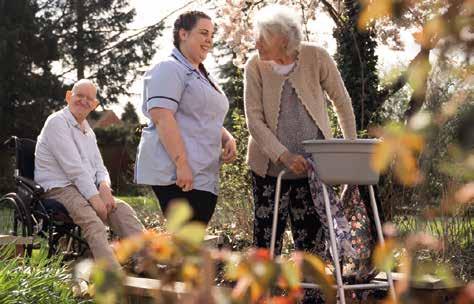
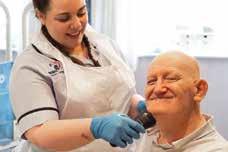
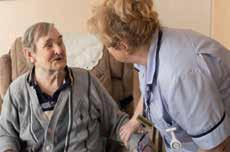
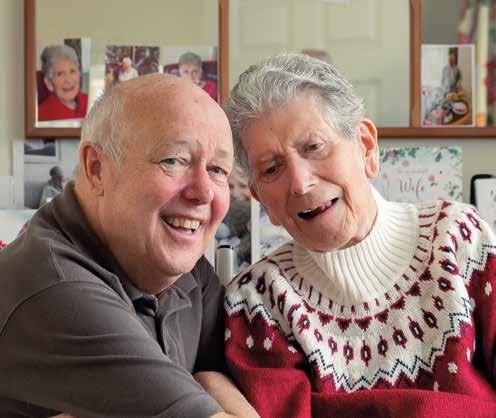
At Respectful Care, we know how difficult it can be to place your trust in strangers who will go into the home of your loved one and provide them with the vital daily care they need. We recognise that each of our clients is an individual, someone with their own diverse needs and requirements. That’s why we invest our time getting to know you, and together create a personalised plan to enable you to live a life that is as independent, active and fulfilled as possible.
“We had previously been terribly let down by a care provider and this has been detrimental to dad’s health and our confidence in care agencies. But I am happy to report that Respectful Care have been a breath of fresh air and have demonstrated how care can be and should be. We are very lucky to have them play a part with dad’s care:’ - Mrs B.B
No Place Like Home Getting our patients home safely this Winter
We know that patients would rather recover at home than in hospital, and studies show that it has a positive impact on recovery. That’s why we’re working together to make sure our patients get home safely and as soon as possible.
It’s important to remember that most patients will continue to recover at home once they leave hospital. In fact, many patients need to leave hospital to be able to complete their recovery fully.
Staying in hospital for longer than necessary can have a negative impact on how well patients recover. Ensuring that patients are given the chance to continue their lives at home is vital for their long-term wellbeing outcomes.
Not only that, safe and early discharge from hospitals helps to create a steady flow of patients, ensuring that those who need care most are exactly where they need to be.
How you can help
Staff in our hospitals will assess all patients carefully before discharging them, making sure that they are safe and ready to recover at home. Once they are happy that patients are ready to make that step, they will do all they can to get them home as quickly as possible. But there are ways that patients and their families can support that discharge too and have a positive impact on recovery.
Once they are happy that patients are ready to make that step, they will do all they can to get them home as quickly as possible.
We want to empower patients and their families so that they have the confidence to continue their recovery in a familiar environment. Patients’ families can help us to get them home more quickly by providing a little support to allow this to happen. You won’t be on your own because there’s a wide range of support available to you.
Why there’s no place like home
Hospitals can be very busy and unfamiliar environments, meaning that some patients can’t relax and get less rest than if they were at home, and may be more likely to fall too.
Having the right assessment and leaving hospital sooner can help to prevent a decline in function and significantly improve outcomes. 10 days in hospital can lead to the equivalent of 10 years ageing in the muscles of people over 80.
Small things can make a big difference
Support us in getting your relatives ready for home this winter.
• Medicine - Ensure medicines are stocked up in case of need.
• Warmth - A cold home can lead to readmission. Make sure the house is warm and comfortable.
• Clean Bedding - Ensuring bedding is clean, helping to prevent infection.
• Food - Stocking up with basic food items, making mealtimes easier.
• Transport - Support our hospital teams to arrange transport
Severe hot water bottle burn - Would you know what to do?
A University of Nottingham first year student has praised the quick thinking from her friends and the treatment and care at Nottingham University Hospitals NHS Trust (NUH) after she experienced severe burns from an out of date hot water bottle.
19-year-old Roni Bent was only a few weeks into life as a student at University of Nottingham. She was experiencing menstrual cramps and, as she had done many times before, reached for her hot water bottle to ease the discomfort. Little did she know that her old hot water bottle had perished. The bottle split whilst strapped to her, spilling boiling water all over her lower stomach and inner thighs. Roni said: “I didn’t know hot water bottles had expiration dates. This was an old bottle and one I had used many times.
“It was wrapped in my clothes, and I couldn’t release it in time, so the boiling water emptied all over my stomach and legs. I have never felt pain like it. I was screaming but no one could hear me.”
The quick thinking of her university flat mates followed the correct guidance of showering Roni in lukewarm water for 20 minutes and then within half an hour they were at Queen’s Medical Centre (QMC). Roni said: “It was a Friday night and busy in A&E, but I was being treated within 5 mins of arriving. The staff were amazing.”
When Roni’s parents arrived, she was taken to City Hospital to the specialist burns unit where the team was again quick to treat her.
“We are seeing an increase in hot water bottle burns with more young adults and children being admitted.
“People should consider alternatives to hot water bottles, like wheat bags. If you are using a hot water bottle then check the expiration date on it and check it has the British standard flower symbol and only use warm water, never boiling water.”
By sharing her story, Roni is hoping people will be more careful with using hot water bottles to avoid the ordeal she has been through.
Three Cs first aid for a burn.
People should consider alternatives to hot water bottles, like wheat bags.
After spending a week in hospital, Roni was discharged and is now back at home with her parents in Stoke recovering and coming back to the City hospital burns clinic to have her dressings changed.
Mary Kennedy is the NUH Lead Burns Nurse at City Hospital. She said: “The quick thinking of Roni’s flat mates and the first aid they gave her would have possibly reduced the depth of her burn injury.
Remove all clothing to remove the source of the burning and then follow the three Cs:
1 Cool the burn under cool water for 20 minutes
2 Call for help either 999 or 111 to seek advice
3 Cover the burn with cling film or a non-stick cover like a pillowcase
The Hollies Residential Home
Looking for the perfect home-from-home for your loved one? Come and see what makes The Hollies Residential Home so special.
• Book a viewing and receive a £20 Amazon Gift Voucher as our thank you.
• Choose to stay with us and enjoy a FREE week’s stay when moving in.
Experience warm, person-centred care, comfortable surroundings, and a welcoming community that feels like family.
Call us on 01777 707750 or visit
www.holliescare.uk to arrange your viewing today. The Hollies Residential Home, 19-23 London Road, Retford, Nottinghamshire DN22 6AT (T&Cs apply. Limited-time offer.)
“Impressed would be an understatement”
For anyone who struggles to leave their home without support, at-home health services can be a lifeline.
This is something that Derek Brown, who cares for his wife Margaret, knows only too well.
Specsavers is committed to ensuring that everyone has access to essential eye-health and hearing care – but also understands that it’s not always easy for people like Margaret, who suffers from Alzheimer’s disease, to attend in-store appointments.
That’s why, for the past ten years, Specsavers Home Visits has provided comprehensive NHS-funded eye tests to anyone who’s unable to visit a store unaccompanied. It’s also started to provide free at-home hearing services in selected locations in the UK.
Derek called on the Specsavers Home Visits service when Margaret needed a routine eye test and it was too challenging to get to a store. He was blown away by the expert care that was delivered during the visit and the difference the new glasses made to his wife.
Although Margaret wasn’t able to respond to the questions of the optician and their assistant, during the visit, they adapted their approach so they could prescribe the reading glasses that have expanded her world.
“If I was to say I was amazed, that would be an understatement,” says Derek. “What was so significant for me as a full-time carer was that the Specsavers experts were punctual, quiet-speaking and patient, reassuring Margaret with everything they did. The level of care expressed towards her was incredible.”
Derek, from Northallerton in North Yorkshire, has been the primary carer for Margaret, since her diagnosis with
Why Choose Specsavers Home Visits?
• Convenience: Our experts come directly to you.
• Personalised Care: Visits are tailored to the individual’s needs, with specialist equipment to ensure comfort and accuracy.
• Peace of Mind: Your loved one will receive the same kind of highquality care as they would expect in-store.
Alzheimer’s in early 2018. After she spent four weeks in hospital in 2022, Margaret’s condition deteriorated, and she has since been confined to a hospital bed in the couple’s living room, and a hoist to access a wheelchair. With multiple other health challenges, caring for Margaret is complex – but after 25 years of love and marriage Derek has risen to the challenge. As well as taking care of her everyday needs, he’s been able to improve her quality of life thanks to Specsavers at-home service.
Following her at-home eye test, the optician suggested Margaret tried some reading glasses to help her enjoy looking at family photos.
Derek was unsure how she would adapt to wearing glasses but seeing her smile while looking at old family pictures told him everything he needed to know.
“If anyone is in any doubt about inviting Specsavers into their home, all I can say is: simply try it,” Derek says. “You won’t regret it for a second.”
Derek now fights for better support and recognition for carers nationwide, and has launched a website (www.dementiaguidance.co.uk) dedicated to helping carers like him across the UK. He’s keen to ensure they have all the information they need – including the option of getting a comprehensive at-home eye test from Specsavers.
Expert eye and hearing care tailored to your needs
For those eligible, our mobile experts will provide a comprehensive NHSfunded eye test from the comfort of your own home, with all the same care and thoroughness as you would receive in-store. Specsavers has now also started to roll out free at-home hearing services across the UK. To find out what locations this service is available in visit our website.
Our eye care and hearing services are tailored to each person and their needs. They are designed to provide eye care and hearing services that are as individual as they are and can be adapted to meet their changing circumstances and comfort levels.
To see if you or your loved one are eligible, call 0800 0890144 or visit specsavers.co.uk/home-visits
Blossomwood redevelopment
The Trust is excited about the completion of this redevelopment and knows it will result in a fantastic, modern facility
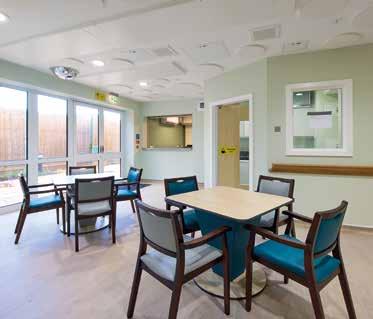
The redevelopment of Blossomwood is now complete! Robin, Kingfisher and Dove wards are open, providing high-quality inpatient accommodation for older people. Robin and Kingfisher wards each offer single ensuite bedrooms for 18 patients over the age of 65 with mental illness and 18 patients over the age of 65 with dementia. Dove Ward is a 10-bed ward designed for flexible use, supporting both dementia and mental health patients. All bedrooms across the three wards are spacious, with accessible ensuite bathrooms and large bedroom windows providing a quiet, therapeutic view onto woodland. Each ward benefits from dedicated therapeutic day space and access to landscaped outdoor areas, supporting patient wellbeing and recovery.
Dove Ward also includes a range of indoor and outdoor communal spaces for patients, including
a main lounge and dining area, a multi-use space for group activities and access to therapeutic outdoor space. These areas have been designed to encourage social interaction, therapeutic engagement and comfort.
The Blossomwood Outpatient Department is being reconfigured and is due to reopen in February 2026, supporting the continued development of services on site. Alongside this, the kitchen and dining room at Blossomwood have been developed with support from a specialist design team, ensuring the facilities enable staff to work in a modern and well-equipped environment. The dining area provides seating and access to outdoor space during warmer months.
The Trust is excited about the completion of this redevelopment and knows it will result in a fantastic, modern facility that enhances care and experience for patients, visitors and colleagues alike.”
Langwith Lodge Residential Home
The Park, Nether Langwith, Mansfield, Nottinghamshire, NG20 9ES
Compassionate Care and Support
Providing quality services for people across the UK
Langwith Lodge is located in beautiful parkland, which includes a large fishing lake. The whole team work together to provide the very best of care for you and your loved one. There is a wide variety of activities to suit all tastes plus a minibus for day trips.
There is an abundance of wildlife within the grounds plus an accessible birdwatching hut and a sensory garden.
Lakeside View provides specialist dementia care, with staff fully trained in dementia care.
Langwith has lots to offer, please call for a chat with our Home Manager Zoe or pop in and have a look around 01623 742204
www.yourhealthgroup.co.uk
NHS healthcarecontinuing
Some people with long-term complex health needs qualify for free social care arranged and funded solely by the NHS. This is known as NHS continuing healthcare.
Where can NHS continuing healthcare be provided?
NHS continuing healthcare can be provided in a variety of settings outside hospital, such as in your own home or in a care home.
Am I eligible for NHS continuing healthcare?
NHS continuing healthcare is for adults. Children and young people may receive a “continuing care package” if they have needs arising from disability, accident or illness that cannot be met by existing universal or specialist services alone.
Find out more about the children and young people’s continuing care national framework on GOV.UK
You should be fully involved in the assessment process and kept informed, and have your views about your needs and support taken into account. Carers and family members should also be consulted where appropriate.
A decision about eligibility for a full assessment for NHS continuing healthcare should usually be made within 28 days of an initial assessment or request for a full assessment.
If you are not eligible for NHS continuing healthcare, you can be referred to your local council who can discuss with you whether you may be eligible for support from them.
If you still have some health needs then the NHS may pay for part of the package of support. This is sometimes known as a “joint package” of care.
Your eligibility for NHS continuing healthcare depends on your assessed needs, and not on any particular diagnosis or condition.
To be eligible for NHS continuing healthcare, you must be assessed by a team of healthcare professionals (a multidisciplinary team). The team will look at all your care needs and relate them to:
• what help you need
• how complex your needs are
• how intense your needs can be
• how unpredictable they are, including any risks to your health if the right care is not provided at the right time
Your eligibility for NHS continuing healthcare depends on your assessed needs, and not on any particular diagnosis or condition. If your needs change then your eligibility for NHS continuing healthcare may change.
Information and advice
The process involved in NHS continuing healthcare assessments can be complex. An organisation called Beacon gives free independent advice on NHS continuing healthcare.
Visit the Beacon website or call the free helpline on 0345 548 0300.
NHS continuing healthcare assessments
Integrated care boards, known as ICBs (the NHS organisations that commission local health services), must assess you for NHS continuing healthcare if it seems that you may need it.
For most people, there’s an initial checklist assessment, which is used to decide if you need a full assessment. However, if you need care urgently – for example, if you’re terminally ill – your assessment may be fast-tracked.
Being referred for a full assessment does not necessarily mean you’ll be eligible for NHS continuing healthcare. The purpose of the checklist is to enable anyone who might be eligible to have the opportunity for a full assessment.
The professional(s) completing the checklist should record in writing the reasons for their decision, and sign and date it. You should be given a copy of the completed checklist.
For most people, there’s an initial checklist assessment, which is used to decide if you need a full assessment.
Initial assessment for NHS continuing healthcare
The initial checklist assessment can be completed by a nurse, doctor, other healthcare professional or social worker. You should be told that you’re being assessed, and what the assessment involves.
Depending on the outcome of the checklist, you’ll either be told that you do not meet the criteria for a full assessment of NHS continuing healthcare and are therefore not eligible, or you’ll be referred for a full assessment of eligibility.
You can download a blank copy of the NHS continuing healthcare checklist from GOV.UK
Full assessment for NHS continuing healthcare
Full assessments for NHS continuing healthcare are undertaken by a multidisciplinary team (MDT) made up of a minimum of 2 professionals from different healthcare professions. The MDT should usually include both health and social care professionals who are already involved in your care.
You should be informed who is co-ordinating the NHS continuing healthcare assessment.
The team’s assessment will consider your needs under the following headings:
• breathing
• nutrition (food and drink)
• continence
• skin (including wounds and ulcers)
• mobility
• communication
• psychological and emotional needs
• cognition (understanding)
• behaviour
• drug therapies and medicine
If you’re eligible for NHS continuing healthcare, the next stage is to arrange a care and support package that meets your assessed needs.
• altered states of consciousness
• other significant care needs
These needs are given a weighting marked “priority”, “severe”, “high”, “moderate”, “low” or “no needs”.
If you have at least 1 priority need, or severe needs in at least 2 areas, you can usually expect to be eligible for NHS continuing healthcare.
You may also be eligible if you have a severe need in 1 area plus a number of other needs, or a number of high or moderate needs, depending on their nature, intensity, complexity or unpredictability.
In all cases, the overall need, and interactions between needs, will be taken into account, together with evidence from risk assessments, in deciding whether NHS continuing healthcare should be provided.
The assessment should take into account your views and the views of any carers you have. You should be given a copy of the decision documents, along with clear reasons for the decision.
You can download a blank copy of the NHS continuing healthcare decision support tool from GOV.UK
Fast-track assessment for NHS continuing healthcare
If your health is deteriorating quickly and you’re nearing the end of your life, you should be considered for the NHS continuing healthcare fast-track pathway, so that an appropriate care and support package can be put in place as soon as possible – usually within 48 hours.
Care and support planning
If you’re eligible for NHS continuing healthcare, the next stage is to arrange a care and support package that meets your assessed needs.
Depending on your situation, different options could be suitable, including support in your own home and the option of a personal health budget.
If it’s agreed that a care home is the best option for you, there could be more than 1 local care home that’s suitable.
Your ICB should work collaboratively with you and consider your views when agreeing your care and support package and the setting where it will be provided. However, they can also take other factors into account, such as the cost and value for money of different options.
If your needs have changed, the review will also consider whether you’re still eligible for NHS continuing healthcare.
NHS continuing healthcare reviews
If you’re eligible for NHS continuing healthcare, your needs and support package will normally be reviewed within 3 months and thereafter at least annually. This review will consider whether your existing care and support package meets your assessed needs. If your needs have changed, the review will also consider whether you’re still eligible for NHS continuing healthcare.
Refunds for delays in NHS continuing healthcare funding
ICBs will normally make a decision about eligibility for NHS continuing healthcare within 28 days of getting a completed checklist or request for a full assessment, unless there are circumstances beyond its control.
If the ICB decides you’re eligible, but takes longer than 28 days to decide this and the delay is unjustifiable,
they should refund any care costs from the 29th day until the date of their decision.
If you’re not eligible for NHS continuing healthcare
If you’re not eligible for NHS continuing healthcare, but you’re assessed as requiring nursing care in a care home (in other words, a care home that’s registered to provide nursing care) you’ll be eligible for NHS-funded nursing care.
This means that the NHS will pay a contribution towards the cost of your registered nursing care. NHS-funded nursing care is available irrespective of who is funding the rest of the care home fees.
Find out more about NHS continuing healthcare from NHS England.
Frequently asked questions about NHS continuing healthcare
Q I have a local authority support package that works well. I’m now eligible for NHS continuing healthcare – will my support package change?
If you’re concerned about changes to your care package because of a move to NHS continuing healthcare, your ICB should talk to you about ways that it can give you as much choice and control as possible. This could include the use of a personal health budget, with 1 option being a “direct payment for healthcare”.
Q
FAQ’s
Can I refuse an assessment for NHS continuing healthcare? If I refuse, will I be able to get services from my local authority?
Consent is not needed for completion of assessments (CHC Checklists, Decision Support Tools (inclusive of FNC by default) and Fast Track), or collation and sharing of information with:
• Care Teams
• Health and Social Care Staff
But consent is needed to share personal information collected for, and as part of, assessments (Checklist, Decision Support Tool (inclusive of FNC by default) and Fast Track) with third parties, such as family, friends or representatives, at the beginning of the process.
There is a legal limit to the types of services that a Local Authority can provide. If you have any concerns about being assessed for NHS continuing healthcare, the ICB should explore your reasons for this, and try to address your concerns.
If someone lacks the mental capacity to consent to sharing of information with third parties (other than Care Teams or Health and Social Care Staff), the principles of the Mental Capacity Act will apply and a best interests decision may be needed.
Q
My relative is in a care home and has become eligible for NHS continuing healthcare. The ICB says the fees charged by this care home are more than they would usually pay, and has proposed a move to a different care home. I think a move will have a negative effect on my relative. What can we do?
If there’s evidence that a move is likely to have a detrimental effect on your relative’s health or wellbeing, discuss this with the ICB. It will take your concerns into account when considering the most appropriate arrangements.
If the ICB decides to arrange an alternative placement, they should provide a reasonable choice of homes.
Q Is it possible to pay top-up fees for NHS continuing healthcare?
No, it is not possible to top up NHS continuing healthcare packages, like you can with local authority care packages.
The only way that NHS continuing healthcare packages can be topped up privately is if you pay for additional private services on top of the services you’re assessed as needing from the NHS. These private services should be provided by different staff and preferably in a different setting.
Personal budgets and direct payments
You’ll be given a personal budget to spend if your local council decide you’re eligible for help with any social care and support you need. You can request an assessment from the council to establish your needs.
The money in your personal budget can be paid to you, to help you make more decisions about how it’s spent. This is known as a direct payment. What is a personal budget?
Your personal budget is the amount of money your local council will pay towards any social care and support you need.
The amount of money in your personal budget is decided by your local council after a needs assessment to work out:
• what kind of care and support you need
• how much it will cost
• how much you’re able to afford yourself
If you’re a carer, you may be entitled to receive a personal budget after having a carer’s assessment to see what might help make your life easier.
Carers and personal budgets
If you’re a carer, you may be entitled to receive a personal budget after having a carer’s assessment to see what might help make your life easier.
A carer’s assessment is free and anyone over 18 can ask for one.
Choosing how to receive your personal budget
You can ask the council to either:
• manage your personal budget for you
• pay the money to another organisation – such as a care provider
• pay the money directly to you or someone you choose – this is known as a direct payment
You can also choose a combination of these options. For example, the council could arrange some of your care but send you the rest of the money. This is often called a mixed package or “mix and match”.
If the council manages your money
The money in your personal budget will be spent for you by the council. They will arrange all your care and support based on your agreed care plan.
They still need to check you’re happy with the care they’re arranging for you.
If your money is paid to another organisation
The organisation you choose, such as your care provider, will speak to the council and arrange the payments.
Sometimes other organisations charge you extra money to arrange payments from the council.
The benefits of direct payments
Direct payments give you more flexibility over how your care and support is arranged and provided.
For example, you could choose to hire care workers or personal assistants who:
• are always the same people and available when you need them
• speak the same language as you
• have experience working with your care needs
• are a specific person that has been recommended to you
• can help you get to shops or social events
There are many ways you could choose to use the money. It’s your choice as long as you’re spending your personal budget on things that meet your agreed care plan.
Most councils will ask for evidence of how you’ve spent your money every 3 months.
When to consider other options
You may decide direct payments are not helpful if:
How to apply for direct payments
You should be offered direct payments as an option after your needs assessment.
You can also ask your local council’s social services department about direct payments.
How direct payments work
You could also consider having someone else manage your direct payments, for example a friend or family member.
• you’re worried about managing money or the people you employ
• you spend a lot of time in hospital
• you would rather the council arranged your care
If you’re not confident about keeping records or managing the people who care for you, your local council should be able to provide support.
You could also consider having someone else manage your direct payments, for example a friend or family member. You’ll need to set up a trust for payments that are managed by someone else.
The Money Advice Service has information about setting up a trust.
If you choose direct payments, the council will send you the money in your personal budget by either:
• paying it directly into a bank, Post Office, building society or National Savings and Investments account
• sending you a pre-paid card
You can then choose how you spend the money on your own care and support, as long as it matches the care plan you’ve agreed with the council.
Signing
a direct payment agreement
The council might ask you to sign a document called a direct payment agreement. This says:
• how the council want you to record your spending –for example, keeping receipts
• your responsibilities as an employer - if you’re paying for a care worker
If you spend direct payments on something that isn’t agreed in your care plan, the council could take the money back or end the direct payments.
If you’re struggling to manage your money
Ask your local council for advice or call the Money Advice Service on 0800 138 7777.
If you want someone else to receive the direct payment
You could speak to the council and agree for the money to be sent to someone who will spend it for you. For example:
• a carer
When choosing an agency, decide what sort of service you’re looking for and the tasks you need help with.
• a friend or family member
• someone else who speaks up for you (an advocate)
You may need to write down how they will spend the money and which decisions they can make for you. This is known as a decision-making agreement.
Employing your own carer or personal assistant
If you decide to hire a carer or personal assistant yourself, it’s important to know the responsibilities you’ll have as an employer.
Although support from the council should be available, you may need to arrange:
• background checks or references
• tax
• National Insurance
• pension contributions
Read more about employing someone to work in your home on GOV.UK.
Disability Rights UK also have more information on getting a personal assistant.
If you don’t want to become an employer
You could choose to hire care workers through an agency instead. This removes the legal obligations of being an employer, but could:
• cost you more money
• remove some of the benefits - such as having the same person provide your care
How to research a care agency
When choosing an agency, decide what sort of service you’re looking for and the tasks you need help with. It’s a good idea to contact more than one agency, as they may offer different types of services.
You can find out about local home care agencies by:
• speaking to your local council’s social services department
• contacting the UK Homecare Association
If you’re eligible for NHS-funded nursing care, the NHS will arrange and fund nursing care provided by registered nurses employed by the care home.
There are also organisations that inspect care agencies to see how well they are doing. The Care Quality Commission (CQC) regulates all health and adult social care in England.
You might see a CQC inspection rating when you search online for care home agencies. Their 4 ratings are:
• Outstanding
• Good
• Requires improvement
• Inadequate
You could also search for care home agencies on the CQC website to see their full reports.
Telephone helplines
If you would like support to help you manage your personal budget or direct payments, speak to your council or call:
• the Disability Rights UK personal budgets helpline on 0330 995 0404
• the Age UK advice line on 0800 055 6112 (for older people)
NHS-funded nursing care
NHS-funded nursing care is when the NHS pays for the nursing care component of nursing home fees. The NHS pays a flat rate directly to the care home towards the cost of this nursing care.
Who is eligible for NHS-funded nursing care?
You may be eligible for NHS-funded nursing care if:
• you’re not eligible for NHS continuing healthcare but have been assessed as needing care from a registered nurse
• you live in a nursing home
How will my needs be assessed?
You should be assessed for NHS continuing healthcare before a decision is made about whether you are eligible for NHS-funded nursing care. Most people don’t need a separate assessment for NHS-funded nursing care. However, if you do need an assessment or you haven’t already had one, your integrated care board (ICB) can arrange an assessment for you.
Outcome of the assessment
If you’re eligible for NHS-funded nursing care, the NHS will arrange and fund nursing care provided
How to complain about personal budgets
It’s worth speaking to your council’s social services before making an official complaint to see if they can help.
You still have to the right to complain if you:
• have been told you’re not eligible to receive money towards your care and support
• don’t agree with the amount of money in your personal budget
You could either:
• speak to your social worker about being re-assessed
• call your local council social services and request a complaints form
Your council should also have a formal complaints procedure on its website.
If you’re not happy with the council’s response
Contact your Local Government Ombudsman. They investigate all adult social care complaints.
• Age UK have a detailed fact sheet on personal budgets and direct payments in social care
• The Money Advice Service has a guide to direct payments
by registered nurses employed by the care home. Services provided by a registered nurse can include planning, supervising and monitoring nursing and healthcare tasks, as well as direct nursing care.
If you’re not eligible for NHS-funded nursing care and you don’t agree with the decision about your eligibility, ask your ICB to review the decision.
The cost of NHS-funded nursing care
NHS-funded nursing care is paid at the same rate across England. In May 2022, the rate was set at £209.19 a week (standard rate) and will be backdated to 1 April 2022.
If you moved into a care home before 1 October 2007, and you were on the previous high band, NHS-funded nursing care is paid at a higher rate. In May 2022, the higher rate was set at £287.78 a week and will be backdated to 1 April 2022. You’re entitled to continue on this rate unless:
• you no longer have nursing needs
• you no longer live in a care home that provides nursing
• your nursing needs have reduced and you’re no longer eligible for the high band, when you would change to the standard rate of £209.19 a week, or
• you become entitled to NHS continuing healthcare instead
Paying for your own care (self-funding)
You will not be entitled to help with the cost of care from your local council if:
• you have savings worth more than £23,250 – this is called the upper capital limit, or UCL
• you own your own property (this only applies if you’re moving into a care home)
You can ask your council for a financial assessment (means test) to check if you qualify for any help with costs.
You can choose to pay for care yourself if you don’t want a financial assessment.
How to arrange your care as a self-funder
You can:
• arrange and pay for care yourself without involving the council
• ask the council to arrange and pay for your care (the council will then bill you, but not all councils offer this service and they may charge a fee)
Having a carer who lives with you costs from around £800 a week. But it can cost as much as £1,600 a week if you need a lot of care.
Paying for a care home
There are 2 types of care home:
• residential homes have staff that help with everyday tasks such as getting dressed and supply all your meals
• nursing homes also offer 24-hour nursing care
A room in a care home costs:
• around £700 a week in a residential home
• over £850 a week in a nursing home
The price will vary according to where you live and the type of care you need.
For example, serious health problems like dementia and chronic obstructive pulmonary disease (COPD) can increase the cost.
Benefits can help with care costs
Even if you choose to pay for your care, your council can do an assessment to check what care you might need. This is called a needs assessment.
Find out what care you need
Even if you choose to pay for your care, your council can do an assessment to check what care you might need. This is called a needs assessment.
For example, it’ll tell you whether you need home help from a paid carer for 2 hours a day or 2 hours a week and precisely what they should help you with.
The needs assessment is free and anyone can ask for one.
How much will care cost?
Social care can be expensive. Knowing how much you’ll have to pay will help you budget.
Paying for carers at home
A typical hourly rate for a carer to come to your home is around £20, but this will vary depending on where you live.
You may be eligible for benefits, like Attendance Allowance and Personal Independence Payment (PIP), which aren’t means-tested.
You can use them to pay towards the cost of your care.
Can I avoid selling my home?
You won’t have to sell your home to pay for help in your own home.
But you may have to sell your home to pay for a care home, unless your partner carries on living in it.
Sometimes selling your home to pay care home fees is the best option.
But there may be other ways to pay care home fees if you don’t want to sell your home straight away.
Contact your local council about 3 months before you think your savings will drop to below the limit and ask them to reassess your finances.
Contact your local council about 3 months before you think your savings will drop to below the limit and ask them to reassess your finances.
Releasing money from your home (equity release)
Equity release lets you take money that’s tied up in your home without selling it. It’s available if you’re over 55.
• PayingForCare, a free information service for older people
• Society of Later Life Advisers (SOLLA) on 0333 2020 454
Releasing money from your home (equity release)
But you have to pay interest on the money you take out, which can be expensive.
Telephone help
Get advice on paying for care from:
• PayingForCare, a free information service for older people
Equity release lets you take money that’s tied up in your home without selling it. It’s available if you’re over 55.
MoneyHelper has more information on equity release. Renting out your home
• Age UK on freephone 0800 055 6112
• Society of Later Life Advisers (SOLLA) on 0333 2020 454
• Independent Age on freephone 0800 319 6789
But you have to pay interest on the money you take out, which can be expensive.
You can rent out your home and use the income to help pay your care home fees.
Telephone help
• MoneyHelper on freephone 0800 011 3797
Get advice on paying for care from:
A deferred payment scheme
MoneyHelper has more information on equity release.
Renting out your home
A deferred payment scheme can be useful if you have savings less than the upper capital limit of £23,250 and all your money is tied up in your property
You can rent out your home and use the income to help pay your care home fees.
A deferred payment scheme
The council pays for your care home and you repay it later when you choose to sell your home, or after your death.
A deferred payment scheme can be useful if you have savings less than the upper capital limit of £23,250 and all your money is tied up in your property
Ask your council if you’re eligible for a deferred payment scheme.
You can get more information from:
If your savings run out
• Age UK on freephone 0800 055 6112
• Independent Age on freephone 0800 319 6789
If your savings fall below the upper capital limit of £23,250, your council might be able to help with the cost of care.
• MoneyHelper on freephone 0800 011 3797
If your savings run out
Contact your local council about 3 months before you think your savings will drop to below the limit and ask them to reassess your finances.
If your savings fall below the upper capital limit of £23,250, your council might be able to help with the cost of care.
Councils provide funding from the date you contact them. You won’t be reimbursed if your savings are below the limit before you contact them.
• MoneyHelper: deferred payment schemes
The council pays for your care home and you repay it later when you choose to sell your home, or after your death.
• Independent Age: do I have to sell my home to pay for residential care?
Ask your council if you’re eligible for a deferred payment scheme.
Get
expert financial help
You can get more information from:
• MoneyHelper: deferred payment schemes
You can get unbiased expert advice from a specialist care fees adviser.
• Independent Age: do I have to sell my home to pay for residential care?
They’ll help you compare all your options before you decide what’s right for you.
Get expert financial help
Find a specialist care fees adviser in your area with:
You can get unbiased expert advice from a specialist care fees adviser.
They’ll help you compare all your options before you decide what’s right for you.
Find a specialist care fees adviser in your area with:
What you can get for free
Contact your local council about 3 months before you think your savings will drop to below the limit and ask them to reassess your finances.
You might be able to get some free help regardless of your income or if you’re paying for your care.
This can include:
Councils provide funding from the date you contact them. You won’t be reimbursed if your savings are below the limit before you contact them.
What you can get for free
• small bits of equipment or home adaptations that each cost less than £1,000
You might be able to get some free help regardless of your income or if you’re paying for your care.
This can include:
• NHS care, such as NHS continuing healthcare, NHSfunded nursing care and care after illness or hospital discharge (reablement)
• small bits of equipment or home adaptations that each cost less than £1,000
• NHS care, such as NHS continuing healthcare, NHSfunded nursing care and care after illness or hospital discharge (reablement)
Want to make the most of your later life?
United Against Dementia
Alzheimer’s Society wants everyone affected by dementia to know that whoever you are, whatever you are going through, you can turn to them for support, help and advice.
Dementia Connect
Dementia Connect, from Alzheimer’s Society, is a personalised support service for anyone with dementia, their carers, families and friends.
We understand that dementia affects everyone differently. So whether you, a loved one, a friend or neighbour needs dementia support, we’re here for you.
We’ll connect you to a whole range of dementia support, by phone, online and face to face. Our highlytrained dementia advisers can help people come to terms with their diagnosis and navigate the complicated maze of health and social care services.
It’s free, easy to access, and offers you the support you need. Whether it’s advice on legal documents, help understanding dementia or someone to talk to when things get tough, we’re here to help.
We can keep in touch with you to make sure you keep getting the support you need. And because we know it’s never easy to tell your story, you’ll only ever need to tell it to us once.
Phone support
Our dementia advisers are available to talk to on the phone seven days a week. They will listen and give you the support and advice you need, including connecting you to help in your local area and online. We can offer you the option of regular calls so we can keep in touch, to find out how you are and help when things change.
Dementia Connect online support is available round the clock through our website. Answer a few simple questions about yourself, or someone you know, to get personalised, relevant information and advice. From guides on dementia to advice on making your home dementia friendly, get the information about the things that matter to you.
‘The Dementia Adviser was lovely and full of information. Without Alzheimer’s Society and the Dementia Adviser we’d have nothing. She is a major networker and knows everything and everyone local. I feel in charge and empowered.’ Katherine, living with dementia
If you need further support, you can request a call from our dementia advisers, who should be in touch with you within a week. Our online support includes Talking Point, our online community where you can connect with others in a similar situation, and our Dementia Directory where you can search for local services.
Face to face support
Where possible, our local dementia support workers can meet you in person to offer further support, advice and information. They will also connect you to other face to face services in your area, including local support groups.
Notes: Dementia Connect phone and online support is available wherever you live. As the service is new, some parts of the service may not be available in your area just yet.
Making private cataract care more affordable to more people.
That’s Newmedica
From the moment you visit Newmedica Barlborough’s stateof-the-art facilities, you’ll be in expert hands. Our experienced team and renowned consultants will do everything to ensure your treatment and choice of lens are tailored specifically to your vision and lifestyle. We offer a range of high-quality lenses for distance and intermediate vision starting from £2,295 per eye, so you can get back to doing what you love as quickly as possible.
For a FREE consultation, call 01246 739005 or search Newmedica
The Care Quality Commission is here to make sure health and adult social care services including hospitals, home and residential care as well as GPs in England provide people with safe, effective, high-quality care. We publish independent inspection reports and ratings about services – information you can use when you’re choosing care for yourself, or a loved one.
You can use our website to search for services you might be interested in by geographical area, or by specialism. For example, a care home that might offer specialist care for someone who has dementia.
We also welcome your feedback on the care you have received – good or bad. We use this information to help inform our inspections and can alert authorities including local social services, if there are safeguarding concerns about care being provided.
You can visit our website at www.cqc.org.uk to find our inspection reports, or share an experience of care. You can also call us to share an experience of care on 03000 61 61 61.
Here are some tips to help you choose your care.
1 The Care Quality Commission (CQC) registers all care homes and home care agencies. You can find out which ones support specific groups of people, such as people with a learning disability or those living with dementia.
2 CQC’s Chief Inspector for Adult Social Care, always uses ‘The Mum Test’: is a care home safe, caring, effective, responsive to people’s needs and well-led? In other words, is it good enough for my Mum (or anyone else I love and care for)?
Look for care homes and home care agencies where the staff involve people who use services and their families and carers, and treat individuals with compassion, kindness, dignity and respect
Whether you are being cared for in your own home or in a residential setting, the staff looking after you need to be skilled, kind and supportive They should also be capable and confident in dealing with your particular needs. You should always feel that their support is helping you to live the life you want to.
5 A care home will be a home for you or your loved one. Residents should be treated as individuals with their likes and dislikes taken into account. Think about whether a home is close enough to family, friends, and community facilities
Look at how well-led and managed a home is. What does it have in place to ensure that it delivers high quality care? Does it promote
If you or a loved one needs help with day-today care, you can contact your local council’s social services department. They will ‘make an assessment of your needs’ and depending on circumstances, may be able to help you access financial help. For more advice visit Age UK’s website www.ageuk.org.uk/home-and-care.
Your local social services department should be able to provide details of approved agencies.
Safeguarding adults who receive social care is everybody’s business. If you are concerned about the safety of a loved one receiving care, contact the service provider in the first instance. You can also contact social services at your local council. If you feel a crime has been committed, contact the police. You can share your safeguarding concerns with us on our website or contact our National Customer Services on 03000 616161.
At Ace Care we put your needs first Individually tailored care just
At ACE Care 4U, all our staff receive professional, specialised training before we match the best carers to your specific needs. We offer truly caring and support solutions with care plans, specifically designed to support your family’s needs. The reason we started ACE Care Services is to provide the best care possible to individuals and deliver it with passion.
Get a free, no obligation care assessment
Request a member of our team to visit you and carry out a full assessment of your care needs. This will give us an opportunity to get to know you and understand any personal preferences that you may have, in addition to what support you will require.
Many people presume that having care in their own home is beyond their financial means, but this isn’t always the case. There are a variety of funding options available that can assist you or a loved one to remain in the comfort of the home.
24/7 CARE
We can provide 24/7 care, with specialist Nurses and Carers.
We specialise in care for Adult’s and Children with complex healthcare needs. BEFRIENDING
Support to families within the community, providing practical support, befriending & community activities.
Each package has a dedicated Clinical Coordinator assigned to them. Making our service bespoke & personal.
We can provide experienced nurses within this field as planned or as an emergency.