




By Sachit Parekh and Brandon Yu News & Sports Editor and Staff Writer

Merely three weeks after the Los Angeles metro area celebrated the arrival of 2025, residents in Altadena and the Pacific Palisades neighborhood of Los Angeles returned to their homes to see piles of scorched rubble.
This follows the devastation brought forth by the Palisades and Eaton fires, the result of a historically powerful Santa Ana wind event on January 7, which the National Weather Service had been forecasting for a week.
Wind gusts upwards of 30 miles per hour were recorded in multiple locations across Los Angeles county on January 7, downing trees and power lines in the mountainous regions. Nearly two dozen fires across the region ignited, though most were short-lived due to the rapid response of standby emergency personnel.
At approximately 10:30 am on January 7, a wildfire that would become the Palisades fire was reported to be rapidly growing in size near the neighborhood of Pacific Palisades, northwest of Santa Monica. Fueled by strong winds, the fire rapidly expanded in size, growing to 12,000 acres within 24 hours.
30 miles to the northeast in Altadena, a rapidly-growing brush fire was first reported at around 6:30 pm the same day. Named the Eaton fire, strong winds grew the blaze to approximately 10,000 acres in 16 hours.
Other fires, mainly the Hurst fire and Kenneth Fire, threatened homes in some parts of the San Fernando valley. These fires grew rapidly, but were quickly contained, and little structural damage occurred.
Evacuation orders were immediately announced following the reports of the fires, affecting more people as the fires, specifically Palisades and Eaton fires, grew in size. Over 200,000 people were under these orders at one point, though this number has since decreased, according to NBC.
UCLA, which was less than two miles from the rapidly-growing Palisades Fire, cancelled all in-person classes until January 17. “Some of the UCLA badminton kids randomly came back because of the fire when I thought they [were] supposed to be at school,” says Kevin Zhou (12), an avid badminton player. “That’s kinda when I was like, oh, wow, this is real.”
Firefighters have been w orking around the clock to combat the blaze, fighting powerful winds and dry air. Coupled with unforgivingly powerful winds, a notable rea son why firefighters and officials couldn’t contain the Palisades Fire in time was because of the nearby 117-million gallon Santa Ynez reservoir, which was drained for mainte na nce sometime in 2024. This was incredibly difficult for the firefighters in the area, as they didn’t have a constant supply of water to supply them to put out the fires. California governor Gavin Newsom’s office is currently trying to investigate why the reservo ir was not filled at the time of the fires.
Firefighter squadrons from at least 8 west coast states, Mexico, and Canada have come to Los Angeles County to provide critical support to local CAL FIRE and LAFD teams battling the fires. In addition, countries like Ukraine, Japan, and Iran have also offered aid to the region in the form of additional firefighters or monetary donations. As of January 25, the Palisades Fire stands at 23,448 acres burned with 84% containment, and the Eaton fire has scorched 14,021 acres with 95% containment. 28 people have lost their lives in the fires, and tens of thousands of structures have been destroyed. Many are blaming climate change for the historic wind event that caused the fires. BASIS Independent Fremont Upper stu dents share a similar sentiment. “What’s more concerning to me is that these fires are happening in the winter,” says Angela C. (10).
As the smoke clears on the burn scars of Altadena and the Pacific Palisades, relief efforts have expanded and continue t o do so. Numerous disaster relief funds and GoFundMe pages have been set up to aid those affected by the fires, including the Wildfire Relief Fund from the California Community foundation. Organizations like the Red Cross and the World Central Kitchen a are providing relief in the form of free healthcare and free meals, respectively. Airbnb, the vacation rental platform, is offering free temporary housing to those who have been displaced by the fires, in a partnership with 211 LA. On January 30, over two dozen artists and bands, including Lady Gaga, Olivia Rodrigo, Billie Eilish, Green Day, and Red Hot Chili Peppers will have performed at the FireAid concert in Inglewood. Members of the BIFU community are also making efforts to aid those affected by the fires.
The BIF Environmental Club is planning to host one such fundraising event very soon. “It’s a thrift market where students can come and browse through our hand-picked selection of books, trinkets, clothes, etc,” says Diya Rahul (12), the vice president of the club. “All proceeds would go to supporting LA fire relief.”
On January 22, the Hughes fire broke out in the hills north of Santa Clarita. The fire exploded to upwards of 10 thousand acres in size in under 12 hours, threatening the nearby areas of Castaic Lake and Santa Clarita. Firefighters have worked rapidly to contain the fire and have reached 90% containment as of January 25.
The Storm Prediction Cen - ter forecasts conditions to improve significantly over the next week and become unfavorable for fur - ther wildfire development, significantly aiding the efforts of firefighters and allowing the focus to shift from fighting the fires to recovering from them.
By Hemangi Ghimire
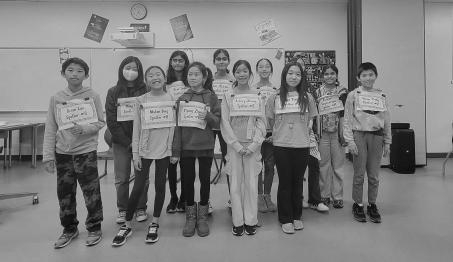
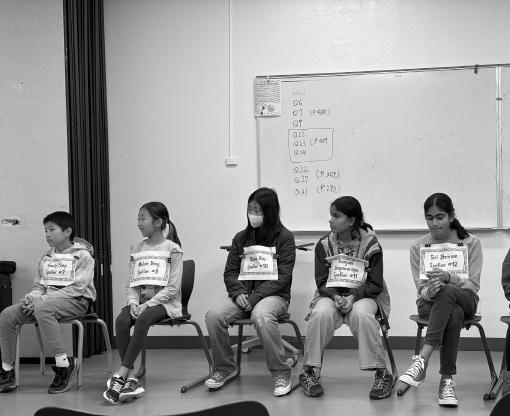
Middle schoolers of BASIS Independent Fremont Upper School entered rooms C11 and C12 as they attempted to find their name on sheets of paper that rested on chairs. As they took their seats, people helped them put sheets of paper with their names on their shirts. Now, it was time for the contestants of the spelling bee to start spelling words as they tackled with their inner feelings.
“I got really nervous before I spelled the word, but then I just went up and [my nervousness] kind of disappeared when I was actually spelling,” said student Diya Singh (7).
Singh had multiple feelings regarding this intense competition though, especially since this was her first time participating in a spelling bee.
“I haven’t actually gotten an oppor -
tunity to [compete before in a spelling bee], so that’ s partly why I was so happy and excited,” continued Singh, “I like to compete in these kinds of things.”
However, before they co uld participate in the actual spelling bee, the students i n middle school took a spelling test in their individual classes. Students who received high enough scores on the initial test progressed to the next level. Their parents received emails about their qualification, and how these students were able to participate in the next level. When they received the email, qualified students appeared to have similar feelings.
“Honestly, I was happy, but also, I was a little bit surprised because I wasn’t really expecting to qualify,” said student Olivia Hsu (7).
Hsu was the champion of the finals round for the school-wide spelling bee for grades six to eight. She will now represent our school as she advances to the regional qualifiers to compete against other schools in the area. She appears to
By Olivia Ma Editor-in-Chief
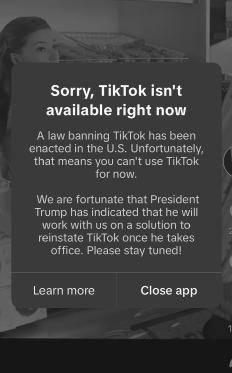
Scrolling through Instagram on the evening of January 18th, stories were filled with screenshots of a new banner on TikTok: “Sorry, TikTok isn’t available right now”. Usage of the app was blocked in the U.S. just hours before the ban was to go into effect on the 19th. Within 16 hours, TikTok was back onl ine, but the ordeal began back in 2020 when a ban was considered through an executive order by President Trump during his first term.
For Selena Peng (11), an avid TikTok user who has seen politicians try to ban TikTok over the years but fail to do so, this ban was just like any other previous attempt.
“At first I was super skeptical about it,” said Peng, in reference to the January 19th ban. “but then it surprised me that it was legit.”
Her initial disbelief was shared amongst social media users, where they shared confused updates and swapped theories about why their favorite app had suddenly disappeared. When the app unexpectedly returned the next morning, a new announcement was sent out, thanking then president-elect Trump for bringing it b ack. Because TikTok was reinstated so quickly, rumors surfaced that President Trump reversed his position on the ban to appeal to younger voters, a demo graphic he made significant ground on in the recent 2024 election. Yet, Mr. Loero, a history and government teacher at
be nervous but also excited for regionals as she has also e njoyed her experience with the final round and the whole competition so far.
“I think the spelling bee is a really fun activity. Before, I didn’t really want to do it, but then I just decided to try and actually, it’s a really good learning experience,” continued Hsu,
“It’s really helpful to broaden your vocabulary and also, I think the experience overall was pretty nice, because it wasn’t like too high pressure.”
On the other hand, some students did not participate, but they still got a great
opportunity and a unique experience in other ways.
“It was fun to see that my friends got in. It made me really excited and I was really ha ppy for them, so that was a nice process,” said stude nt Veronica Yuen (6).
Overall, the students of BIFU seemed to love this idea of a spelling bee and would probably want to see more of these competitions in the future.
“I enjoyed the experience a lot. It was fun to go compete and see how other people are competing as well,” said Singh, “I also learned a lot of new words and vocabulary.”

BIFU, said he believes there was another factor behind the ban’s timing — namely, that it was also a political maneuver by Pres ident Biden.
“I think that it’s a very savvy political move on behalf of Joe Biden,” Loero said, “because it would have denied the incoming Trump administration the opportunity to veto said legislation.”.
Government officials justified the TikTok ban by c iting concerns that the app, owned by Chinese company ByteDance, could allo w foreign entities to access U.S. user data. But Peng questioned whether TikTok was really the only platform handling data in ways that deserve scrutiny.
“I don’t think this would be a factor that limits me from using [TikTok],” Peng said. “Because I think it is important to note that my information is constantly being spread on the internet, so this specific ban is kind of hypocritical, because I believe that many apps have cases of selling data.”
Despi te these concerns about data privacy, a significant number of TikTok users migrated to RedNote, also known as Xiaohongshu, another Chinese-owned social media app popular among Chinese audiences.
“I just found it really funny that the cultural interchange and the
people having really fun i nteractions and the fact that we were all part of the community, made me want to go to red note ,” said Romil Bhatt (12), another avid social media user.
As TikTok returned to normal, students breathed a collective sigh of relief, but the discussions sparked by the ban didn’t end there. For so me, like Pen g, who said she found her muscle memory attempting to access the app even when it was blocked , it was a wake-up call ab out their reliance on a single app for entertainment and news.
The short-lived ban also reignited longstanding debates about censorship and free speech within social media. Over the past few years, apps like TikTok, X (formerly Twitter), and Instagram have bee n caught in the crosshairs of cri tics who say their content moderation policies are opaque and potentially biased.
“I think every social media platform should fall under First Amendment protections. Trump was the president of the United States, making him the single most powerful person in the country and probably in the world, and Twitter banned his account”, said Mr. Loero. “If they can do that to him, what can they do to you?”

FRIDAY WEDNESDAY
By Eric Jiang and Nick Yin Staff Writers

As 2025 begins, people are already speculating about the year ahead. Currently, the internet is captivated by the coincidence that the first three days of 2025 are Wednesday, Thursday, and Friday. If you look closely, you will find that the first letters of these three days will form a texting acronym.
Upon first glance, this could appear as a minor coincidence, a friendly observation to commence the year. However, a more thorough examination of several social media platforms and online forums discloses a darker, more conspiratorial aspect of the discussion. Observers note that 2020, the year the COVID-19 pandemic began, was the last “Wed-Fri year”. This connection has driven a large number of memes and TikToks, along with speculative theories about 2025 being doomed from the start.
However, the whole “Wed-Fri” theory is ridiculous if you consider it carefully. The days of each week relentlessly repeat in their seven-day cycle. The fact
that 2020 and 2025 both commenced on the same day of the week is purely a coincidence; no other correlation exists. Attributing meaning to these three specific days is just as irrational as asserting that each Friday the 13th unfailingly forecasts a disaster.
The popularity of this theory reveals our inclination to perceive patterns and meaning even in situations lacking them. Psychologists connect this phenomenon to the science of superstition. Experts believe that the human predisposition is to seek connections, particularly during periods of uncertainty. During these moments of uncertainty, we tend to grasp a large number of seemingly arbitrary coincidences, viewing them as things that have a deeper meaning.
This intense focus on “Wed-Fri” reveals more about ourselves than it does about any purported omen. Trends and viral content clearly influence many people, even when they have no basis in
By Emma Ma Arts and Entertainment Editor
In today’s ever-changing world of innovation and technology, Kindles and other e-readers have drastically transformed the way we read. What was once limited to physical books has evolved into an entire library right at your fingertips. As much as physical books appeal to those who cherish their aesthetic and sentimental value, Kindles remain unmatched in terms of practicality.
The best part about having a Kindle is its portability. You’re essentially carrying a gigantic stack of books, but without the need to lug around a bulky suitcase — just a single, lightweight device. I love taking my Kindle on vacations because I can read as many books as I want without adding extra weight to my bag.
Another great feature is that it allows you to borrow ebooks from your local library. Connect your Kindle to your library account, and download any ebook for free from their massive collection. You can access everything right from home, which is much more convenient
than having to go to the library every time you want a new book. Plus, rather than wasting time browsing shelves for a specific title, you can instantly search it up instead.
Kindle books are also significantly cheaper than physical books. According to PagePublishing, their prices range from $0.99 to $12.99, compared to hardbacks, which can reach up to $30. When you factor in frequent discounts, ebooks become even more affordable. Additionally, Kindle offers Kindle Unlimited, a monthly subscription for $11.99 that gives you access to over 4 million ebooks. It’s an excellent feature for avid readers who want a wide variety of options at a reasonable price.
Furthermore, Kindles offer extensive customization options that make the device user-friendly. You can adjust font size, brightness, and text appearance based on personal preference. When reading in low light, utilize night mode for adjustable warm tones to reduce eye

reality.
Social media platforms flourish by promoting s ensationalism, thereby increasing the number of conspiracy theories along with many pseudo-mystical ideas because they provide entertainment, not because they are truthful. Ultimately, considering the “Wed-Fri” conspiracy serves as a reminder to step back and apply logic. Let us actively reject a fixation on acronyms and unfounded connections. Instead, we
should concentrate on guaranteeing that 2025 is a year characterized by rationality and large progress—not superstition.
Therefore, as the internet engages in its latest r ound of hyperbolic predictions, let us maintain a firm grasp on reality. “Wed-Fri” doe s mark the beginning of 2025, but that does not imply the year will be disastrous. Those three letters should mean nothing to us, and only we can control our fate.


person excited for friday
strain. These features ensure a comfortable reading experience, unlike physical books, which often have cramped, tiny fonts that are hard to read.
While the experience of flipping through pages holds sentimental val -
ue, nothing beats the practicality of a Kindle. Kindles are undoubtedly superior to physical books in convenience, affordability, and customization, making them the better choice for frequent readers.

By Katherine He and Ailsa Wu
Editor-in-Chief and Feature Editor

The familiar green tracksuits and masked pink soldiers fill our screens once again as the Korean thriller series Squid Game makes its way back to Netflix for a second season. The first season, released in September of 2021, quickly became the most-watched Netflix series of all time as it captured global attention for its unique, childlike yet horrific visuals and striking commentary on the consequences of the wealth gap in capitalistic societies.
Three years after the release of the first season, season two has reignited the buzz around the franchise, introducing new characters and plots that have audiences hooked. Season 2 centers around the same survival game that the first season introduced – 456 desperate, impoverished individuals competing in a series of deadly children’s games in hopes of winning a life-changing cash prize. This time around, instead of competing to win money, returning protagonist Seong Gihun participates in the Squid Game to bring down the game and save the people trapped in its deceit.

One aspect setting Season 2 apart from its predecessor is that it dives deeper into the dilemma that the game presents to its players. In the first episode, titled “Bread or Lottery?,” there is a memorable scene where the Squid Game recruiter goes to a local park and offers the homeless people a choice between bread or a scratchoff ticket. Most people choose the ticket, which presented itself as a potential way out of their situation with high risks yet high returns. Similarly, Squid Game introduced a new mechanic this season which involves a vote being conducted after each game, where participants can either vote to leave the game, splitting the accumulated money, or play one more game and potentially earn more. This new voting mechanic added another level of interest to the game and gave audiences further insight into the psychology behind some of the characters’ decisions.
Season 2 has received mixed reviews from viewers. With the final episode of the season ending on an intense cliffhanger, some viewers have expressed issues with the pacing.
“The last episode of Season 2 was a little chaotic and wasn’t really well paced,” said Sean Li (9).
However, the show’s writer and director, Hwang Dong-Hyuk, explains that he intentionally cut the season into two separate parts due to the original plan being too long to fit into a single season.
Other viewers have discussed the character writing for the new cast introduced in Season 2. Though some have enjoyed
By Aarna Kamath, Pooja Kanthala, and Selena Peng A&E Editor, News Editor, and Feature Editor
Known as one of the most prestigious award shows, the Golden Globes returns for the 82nd time in Los Angeles, California. Since its start in 1944, this award ceremony has consistently presented awards for film and television each year. These awards celebrate the hard work of actors, directors, and other staff, while also providing new opportunities for them. The presence of various prominent guests also comes with a highly anticipated choice of attire.
This year, the red carpet was filled with dazzling looks that have made a mark on the world of fashion.
Among the many stars that graced the red carpet, Zendaya stood out in a burnt-orange custom Louis Vuitton ball gown. Her vintage old Hollywood-style dress carried an extra special meaning: it
was a tribute to Joyce Bryant, who skyrocketed to fame in the early 40s and late 50s with performances in nightclubs. Zendaya’s dress drew inspiration from the signature ball gown silhouette and Bryant’s classic retro wave hairstyle. In addition to her outfit, a ring on Zendaya’s ring finger sparked rumors of the fan-favorite couple, Zendaya and Tom Holland, finally tying the knot.
Also spotted on the carpet was Cate Blanchett re-wearing her classy, gold custom Louis Vuitton gown with slight alterations. Blanchett first wore this piece to the 2024 Cannes Film Festival but accessorized further with extra crystals on her dress and chunky hoop earrings for the Globes. While she is not the first person to re-wear an outfit for the Globes, Blanchett is often known to recy -

the humor brought to the show by some of the new characters, such as the purple-haired rapper, Thanos, others think the new characters aren’t as three-dimensional as the ones audiences have grown to love from the first season.
“The point of the show is to show human qualities,” said an anonymous junior. “[Season 2] doesn’t depict that as well as the first season because the characters don’t have as much depth. They’re more like caricatures.”
However, other viewers have pointed out the new season’s more in-depth exploration of some of Season 1’s supporting characters. Most notably, viewers enjoyed seeing more about the elusive Squid Game recruiter as well as the Front Man, both of whom were clouded in mystery in the first season.
“I really liked the Russian roulette scene [from episode one],” said Li. “I just really liked how Season 2 dug deeper into the salesman’s character.”
Though the reception for the new season is mixed, it has no doubt made a large impact on BIFU students. Whether you hear kids talking about the show and yelling Gi-hun’s iconic lines, or see students playing the Korean childhood game Gong-gi, the influence and reach that the season has had is evident.
Season 3 is set to air sometime in mid-2025. Many people feel obligated to watch it whether or not they enjoyed Season 2, just because of how much suspense Season 2’s ending created.
“No matter how bad Season 3 is, I’ll still watch it, just to know,” said an anonymous junior.

cle looks for red-carpet events. Elizabeth Stewart, her stylist, addressed this trend by commenting “It’s chic to repeat!” via Instagram, a sentiment that seems to be commonly shared amongst viewers of the event.
“I think it’s cool that [Blanchett] rewears her outfits,” said Ailsa Wu (11). “You don’t need to wear a new outfit every day even if it’s for an event. Plus, it’s sustainable!”
Nikki Glaser is the first woman comedian ever to host these award shows alone. However, just days after the award show, Nikki stated that she received a lower salary than the former male host. This not only sparked controversy of the night but also sparked the question of
the treatment of women in Hollywood. Additionally, there has been controversy against the Golden Globes since 2021, when it was revealed that the organization had no Black members. Even though initiatives have been implemented to combat this issue, it still resurfaces every year for the award show.
The Golden Globes continues to spark conversation about prominent films, unforgettable glamour, and the not-so-glamorous issues surrounding diversity efforts and the gender pay gap. But despite these ongoing discussions, the excitement of this award show is unbeatable and continues to be highly anticipated each year.

By Aaron Ely
Staff Writer
Yeah, Paramount cooked. On December 20 of last year, Paramount released Sonic the Hedgehog 3, the third film in the movie adaptation series of the Nintendo game. Sonic the Hedgehog 3, better known as Sonic 3, directed by Jeff Fowler, continued to star Ben Schwartz as Sonic, along with many other actors for characters from the previous two movies.
Currently, this movie has been widely regarded by critics and its audience, with some claiming that it’s the best in the series. Critics on Rotten Tomatoes especially praised this movie, with Sonic 3’s rotten tomato score at 88%, while the first and second have scores of 64% and 69% respectively.
Robotnik, the main antagonist of the previous two movies, is still alive and plays a major role in the movie. This movie introduces Shadow the Hedgehog, who was created through genetic experimentation by Robotnik’s grandfather, Gerald Robotnik.
After his creation, Shadow spends his time in a confined underground lab, where he is experimented on. During this time, he also forms a bond with Gerald’s granddaughter, Maria. Eventually, the government agency G.U.N. sends forces to secure Shadow and in the ensuing chaos, Maria is killed. Shadow is captured and put into stasis, until present day when Gerald frees him.
With Gerald and Shadow both seeking revenge for Maria’s death, they decide to search for a powerful weapon called the Eclipse Cannon and use it to destroy the world. After Sonic fights Shadow and convinces him to stop, Robotnik finds out about Gerald’s true plan to destroy Earth rather than rule it.
Everyone works together to stop Gerald, and in the end, Shadow and Robotnik sacrifice themselves to move the Eclipse Cannon far away before it explodes, so that its explosion does not take out Earth.
This movie touches on many significant themes, especially that of loss. Shadow and Gerald’s loss of Maria drove them to seek out the destruction of the world as revenge and closure for their suffering without Maria.
In one scene in the movie, Shadow attacks Tom, believing him to be the G.U.N. leader Commander Walters, and ends up greatly injuring him. Seeing this, Sonic rushes to Tom’s side, and in Shadow’s head, he sees himself kneeling in Sonic’s place next to Maria, only this time he is the one causing the pain of loss, not the one receiving it. This also goes to show what Shadow is really supposed to be. Shadow is the Anti-Sonic. He is Sonic but while Sonic has friends and family, Shadow has his only real friend dying right in front of him.

Because of this parallel, the main theme of this movie is about Shadow coming to realize that anger and revenge is not the way. However, Shadow isn’t even the main character; that role belongs to Sonic, who ultimately learns the same lesson.
After the incident mentioned above in which Tom is severely injured, Sonic now wants revenge on Shadow by any means necessary. Sonic seeks out the chaos emerald, which is a powerful relic from the last movie, hoping to use its powers to take revenge on Shadow. A fight between the two breaks out, with
Sonic eventually gaining the upper hand. However, he relents when he realises that he’s beginning to walk the same path as Shadow. After talking with Shadow about their shared losses — Maria for Shadow and Longclaw for Sonic — the two decide to no longer seek revenge. Deep themes aside, the movie was an absolute banger. Keanu Reeves was a great cast for Shadow and really brought some of that John Wick energy to Shadow’s character. Jim Carrey was his usual humorous self for both Robotnik and Gerald Robotnik, the two characters he was cast for. This casting led to an uncanny resemblance between the two characters and some interesting dialogue exchange.
There was lots of action throughout the movie as the characters kept traveling around and out of the world. The ending was very satisfying, with Shadow and Robotnik sacrificing themselves to save the world, even though they both previously wanted to destroy or rule it. Robotnik might actually be dead this time, but given the trend from the other movies, his fate remains uncertain.
The end credits scenes introduce a new pink female hedgehog called Amy Rose from the Sonic video games, which means this film universe is going to continue expanding into the next movie. Additionally, another end credits scene shows Shadow, still alive but somewhere unknown. Until then, the hype is high — hopefully Sonic 4 will come out in the next couple years.

By Sarah Wu and Tycho Young Opinion Editor and Feature Editor

Since Mr. Dievendorf stepped into the packed halls of BASIS Independent Fremont, he has brought with him an enthusiasm for teaching, writing, and literature. Mr. Dievendorf is no stranger to the classroom. From tutoring during his high school years to serving as a professor at a community college, Mr. Dievendorf brings decades of teaching experience to his role.
Still, teaching high school presents its own unique challenges that Mr. Dievendorf has learned to overcome. In a candid interview, we learned how Mr. Dievendorf adapted to these challenges, discovered his love for writing, explored labyrinths — and how all of that started in his dad’s library.
At home, Mr. Dievendorf recalled his dad’s library as the happiest place of his childhood. He would often spend
By Natalie Luo Staff Writer
With dozens of options for pens and pencils out there, people often develop preferences for specific writing tools. A recent survey at BASIS Independent Fremont Upper revealed what students prefer to write with.
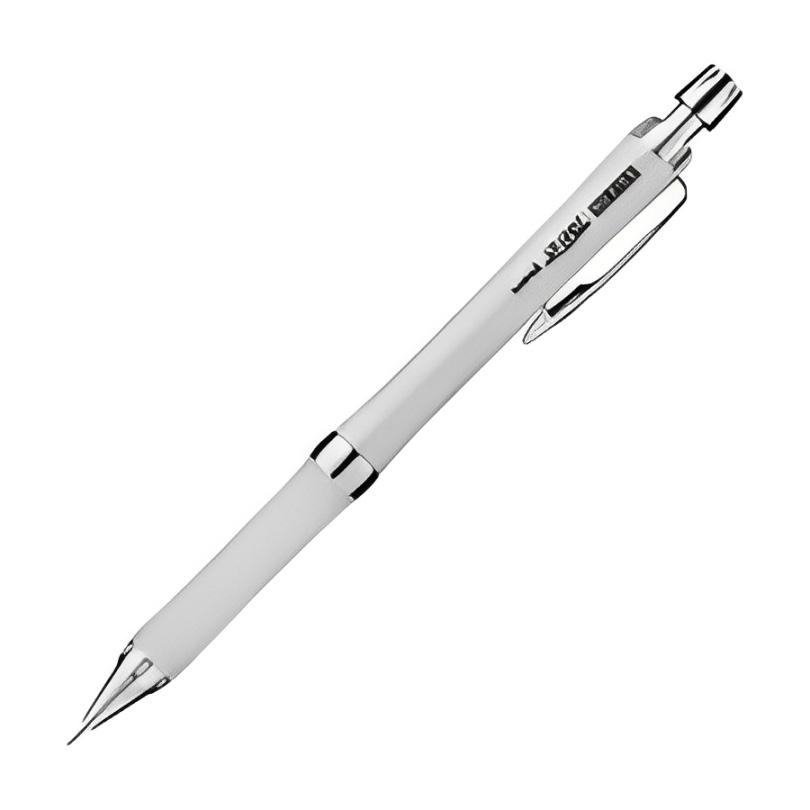
Among the mechanical pencil lovers, 26.3% of the students chose the Uni Alpha-Gel as their favorite pencil. This pencil is beloved due to its signature gel grip.
“The grip makes it very comfortable to hold for long periods of time,” said Kushi Aravinda (10).
hours there reading, cherishing the many books on philosophy and psychology that his Dad had collected.
“I spent a lot of time in there, just having fun with the books on the shelf and seeing the possibilities of the world through the eyes of literature,” said Mr. Dievendorf.
He saw his first spark for teaching in high school, where his philosophy teacher, Mr. Lemmon, recruited him to the AVID program as an English tutor. Writing, which Mr. Dievendorf had always taken for granted, was something that he discovered to share with those around him. Under Mr. Lemmon’s guidance, he learned how to teach — beginning a lifelong journey of spreading a love of writing.
Prior to becoming a teacher, Mr.

The pencil also comes in two sizes, slim and thick, and most people preferred the slimmer version.
Dievendorf worked for four years as a fiction editor for Apogee, a journal of literature and art that serves as a platform for marginalized writers, where he discovered how to use writing as a means for social change. In one article, he examined how transgressive narratives in horror and comedy challenge social norms but often end up reverting back to traditional ideologies.
Continuing his efforts to use writing as a tool for social good, Mr. Dievendorf made the intentional choice to teach at a community college, a decision he described as an ethical one. However, when he was teaching at community college, he discovered a larger problem. College students lacked the basic writing skills that should have been taught during high school.
“I think that the way that our culture thinks about writing is, it’s not realistic. We don’t really think about it as a craft. I liken it to a musical instrument. A lot of times, it’s something that you have to learn and develop,” he said.
Determined to address this gap, Mr. Dievendorf turned to teaching high school as a means of remedying the issues he noticed, eventually joining BIFU as a subject expert teacher. What he found at BIFU came as a pleasant surprise.
“When we studied that Dave Eggers story — I’ve been teaching that story for a decade — I heard high school students say things about it that I never heard college students say,” he said.
Mr. Dievendorf was impressed by the high level of academic rigor of BASIS students, even going so far as to say that they outpace his past college students. However, the transition was not without its challenges, as he found that a lot of his teaching style did not translate to a high school setting.
“I had to be much more adaptable in this context, and learn different techniques and skills, which has been very valuable,” said Mr. Dievendorf.
One of the most effective strategies Mr. Dievendorf has found is fostering a strong classroom community, where students are actively engaged with the material.
Next year, Mr. Dievendorf looks forward to approaching texts with the same unwavering passion in his upcom -
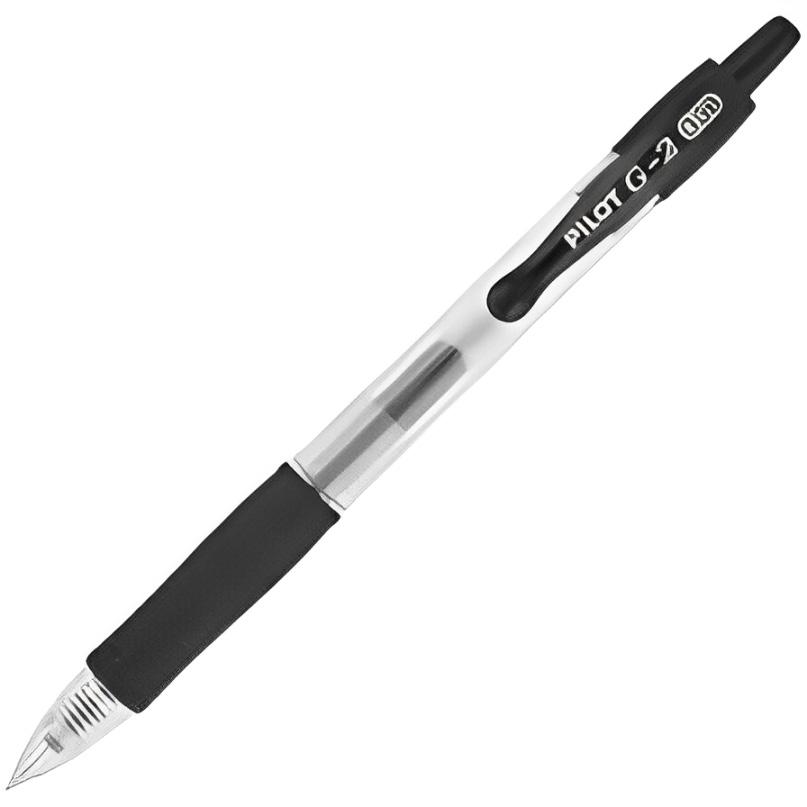
pens, chosen in 20.9% of the responses.
Japanese brands dominated the hearts of BIFU students, with almost all the
ing capstone course, which explores how we perceive animals in literature. The course uses literature as a lens to examine what it means to be human through the analysis of animals, consciousnesses, morality, and the role of animals in society. Having taught this course at the college level, he is excited to be given the freedom to continue teaching it at BIFU.
Outside of the classroom, Mr. Dievendorf enjoys exploring local places that pique his interest.
“I like to explore. This is a new place for me, so that’s really nice,” said Mr. Dievendorf. “I heard about somebody made some graffiti art over here, I’m gonna go see what that looks like. I like to walk around or just find places, unique places to go that I didn’t know about.”
In particular, Mr. Dievendorf likes to search for labyrinths, maze-like structures that often have symbolic meanings of self-reflection and mindfulness. Mr. Dievendorf’s pastime reflects his philosophy of the meaning of life — that happiness is found in the little things, the details.
For aspiring writers, Mr. Dievendorf emphasizes the importance of dedication, passion, and consistency.
“Grades are the byproduct of passion,” said Mr. Dievendorf. “The best thing you can do is just carve out time every single day to write, whether it’s 15 minutes [or three hours]. When I was younger, I would make myself write three hours every day. See how the greats do it, learn from them, and then do it every single day.”
Though teaching now leaves him with less time to write, Mr. Dievendorf is happy with his career and enjoys being able to share his love of writing with students at BASIS.
“This is my life’s work, so I want to keep teaching, I’m happy,” said Mr. Dievendorf. “In 20 years, I’ll be talking about how successful you guys are.”
top-rated writing tools in each category manufactured in Japanese companies.
Another popular mechanical pencil was the Tombow Mono Graph, picked by 15.8% of the mechanical pencil lovers. The Tombow Mono Graph consists of solid metal and plastic, making it heavier than the A-gel.
“The weight of the pencil feels nice in my hand, and it writes smoothly,” said Emma Ma (9).
Out of the students who preferred pens, 38% use the Pilot G2.
“I like how smooth the ink flows when you write with it,” said Cindy Gu (9).
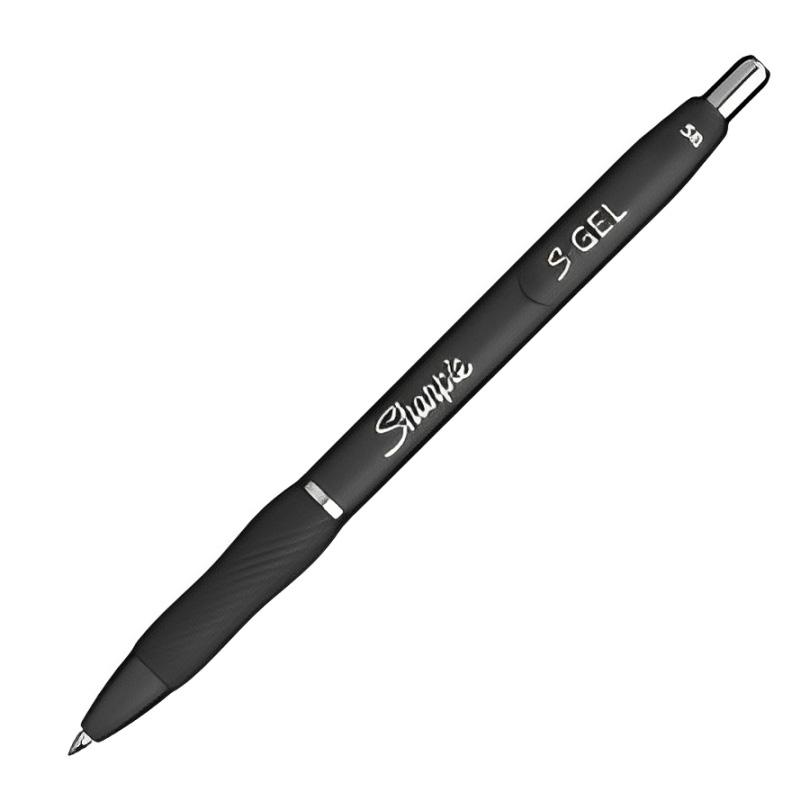
The second most popular pen was the Sharpie S-Gel, favored for its wet writing, with 14.3% of the pen-loving students choosing it.
“The pen writes smoothly, doesn’t skip, and is very inky,” said Diva Shah (11).
Only two surveyed students enjoyed writing with highlighters the most, and coincidentally, they both used the same highlighter: the Zebra Mildliner in Mild Blue. The Mildliner highlighter line includes a wide variety of colors and dual tips.
“I like the color and the versatility of the double tips,” said Saanvi Bojja (9).
Out of everyone surveyed, only one person enjoyed writing with fountain pens the most, and their favorite model was the LAMY Safari with an extra fine nib. Their favorite ink to write with was Ferris Wheel Press ink in orange. Out of all the fountain pens, the LAMY Safari is often hailed as the most popular beginner pen, due to its refreshing design.
Overall, the results of the survey showed that across all different types of writing utensils, the most beloved brand was Pilot, a Tokyo-based company that specializes in producing


By Chen Ma Staff Writer
The atmosphere in the MPR is bustling like a busy market, with basketballs bouncing in the background, while students in colorful costumes run across the space. It’s tech week here at BIFU for the winter play. This year’s is a collection of five ancient Greek stories, acted out by Drama students. Mr. Acevedo’s voice carries over the lively chatter, and the students gather in a long line in front of
the MPR. He an nounces the agenda for the day and the actors snap into place. Despite the looming performance and the nerves in the room, giggles sound.
“Tech week is chaotic, busy, and fun,” said Chloe Wang (7), the main prop maker for drama club productions. “The busiest thing is how many props there are to make.”

Going backstage is a trip into the inner workings of the play, where props are meticulously organized for

the performers. From professionally crafted pieces to homemade creations, each prop reflects the dedication and effort poured into bringing the play to life. Tech week takes place the week before a play opens, where the lighting, music and actors all come together for the first time. However, through watching their performances and seeing the scrambling, the rote practice, the memorization — it’s clear that most of the work has already been done. Even early in rehearsals, the actors showed that last year’s winter production, Myth Adventures: Five Greek Classics , was shaping up to be another successful performance.
“People don’t always do what they need to do,” said Mr. Acevedo. “[But I’ve] seen some actors do the best work they’ve ever done… [it] reminds me why I do this.”
The drama troupe’s enthusiasm is reflected in their performance, and on stage, the chaos turns into a seamless performance, rife with energy and passion. It is an orchestra of emotion as
By Sheil Mody and Vincent Yang
A&E Editor and Opinion Editor
The last week of winter break draws to a close, and a massive collective exhalation can be heard from this year’s cohort of BIFU seniors. Over the past few months, they have been scrambling about, rushing to fill out applications, lay out activities, and pen bushels upon bushels of essays. Countless hours were poured into crafting the perfect personal statement and ensuring every supplemental essay was polished to a shine.
Now, as the last of them have clicked “Submit” on their final applications, it is over (mostly). The once overwhelming to-do lists have been stripped bare, leaving one last task: waiting.
“[I feel] relieved for sure,” said Chloe Zhang (12). “I definitely don’t want to see the words ‘authentic’ or ‘community’ for a while.”
Since ED and many EA application results have already been released, the lucky few who have already received acceptances can be free from the lingering pressure of the college process.
“The relief I felt when I got my ED results overrode any misgivings I might’ve had about being contractually bound to attend this school,” states Bridget Liang (12). “I was just happy to not write any more essays.”
For others with pending decisions, the wait seems to carry a flavor of apprehension blended in with the remnants of existing stress.
The uncertainty surrounding the decisions, set to release months from now, continues to weigh on the minds of the seniors.

“I don’t feel relieved, actually. I just feel numb, but I can’t explain the feeling,” says Sachit Parekh (12). “I’m also quite stressed about upcoming decisions, especially for my dream school, which comes out in March.”
Having now traversed the thorny path, some students reflect on the rollercoaster of emotions and strategies experienced along the way, and how the difficulties in the relationship with their applications were handled.
“[It was] like an oscillating pendulum. I’d swing from one extreme ob -
By Angela Cao and Thanisha Thambidurai News Editors
For most people, January means the start of a new year, but for middle schoolers at BIFU, it’s time for the pre-comprehensive exams, a.k.a. precomps.
Designed as a cumulative test of concepts learned by the middle of the year, pre-comps occupy 15% of the Trimester 2 grades. These exams are given out around the same time of the year as the high schoolers’ midterms, and content-wise they are quite similar. However, the format is vastly different. Tests for each subject consist of two portions: the common, and the native.

church side of the building. All of these days were early release days, giving students additional time to prepare before the next day’s exams or unwind after the intense day. Friday, January 24, was dedicated to rewarding middle schoolers with an exciting field day, sweet treat, and movie.
In the weeks leading up to the pre-comps, middle school teachers began preparation for the content-heavy exams. Mrs. Covert, one of the middle school chemistry teachers, shares her timeline for preparing students.
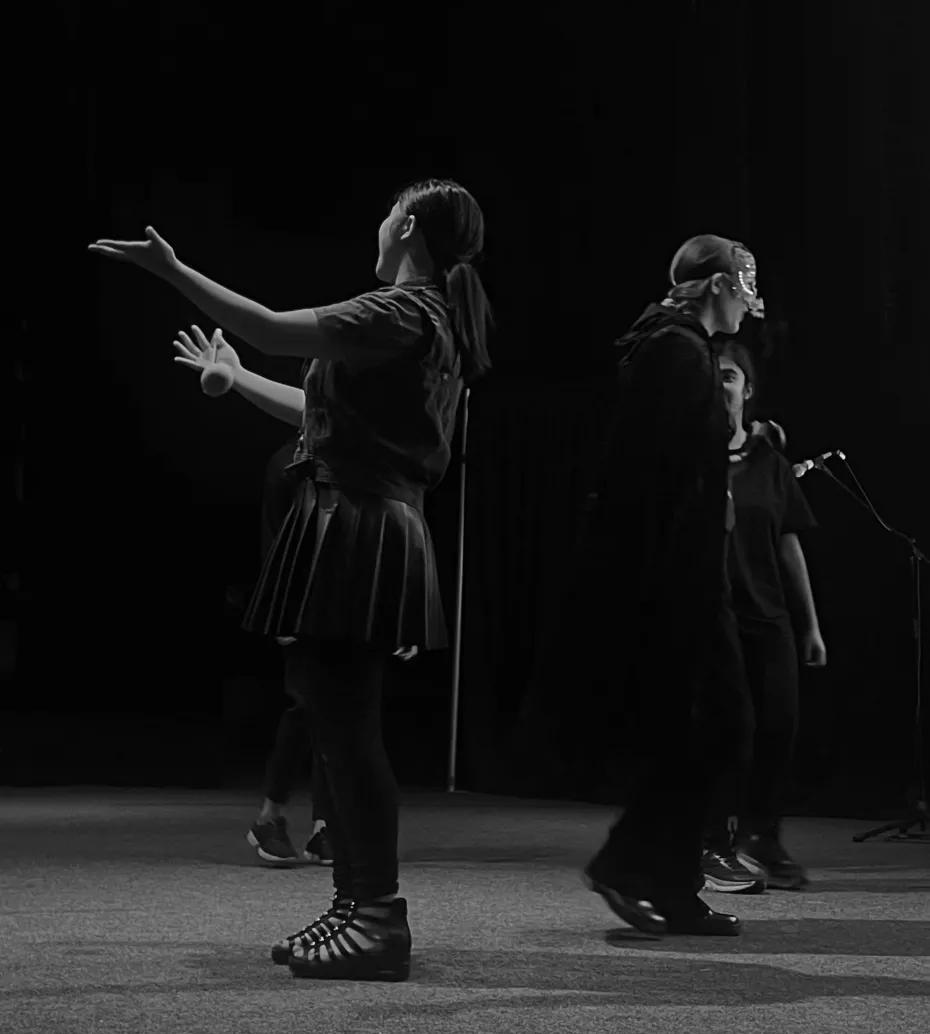
the actors put on the show. Throughout their months of hard work, they’ve experienced everything from the fatigue of endless practicing to the overwhelming joy of finally memorizing their lines. At the end of the performance, only pride is left behind at how much they’ve grown during their practice and at their ever improving performance skills.
“In the end when you’re standing up there taking your bows, no matter what role you got or how much struggling you did,” said Sharanya Chouhan(10), “ You are happy. Not just for yourself but for drama as a whole.”
sessing over “a” vs. “the” in my personal statement to feeling blasé about the entire process and speeding through the confirmations in the submission portal,” said Zhang. “Taking a few steps back though, the whole process seems absurd, and I can almost laugh it off.”
Others had a more blunt perspective of those tedious and grueling months.
“I would compare the college admission process to getting kicked in the head by a horse,” states Liang. “Several times during those few months I beg an to find the idea of concussion via equine more and more appealing.”
For those who seek to venture out into the weeds of college admissions in forthcoming years, the seniors leave a few words of advice.
“As much as we like to analyze stats or trends, we never really know what goes on in admissions officers’ minds when they’re reading our apps”, said Wong. “College apps are hard, stressful, and completely unpredictable, and any results are not an indication of you or your hard work.”
ero states some changes he wants to make the following year.
The pre-comps took place from January 21 to January 23. The middle schoolers took English, Chemistry, and Physics on the first day, History and Math on the second day, and Biology and World Languages on the final day. All of these subjects took approximately one hour to complete each, with math being the longest at about one hour and 15 minutes.
Students were separated into different classrooms based on their element, and most exams were conducted on the
“There are study guides I force them to do,” says Mrs. Covert. “I kind of force them to study, and then we go over the study guide.”
Mrs. Covert adds that she gives her students a mock pre-comp to serve as a marker of how much preparation is pending. She distributes her study guides the week before winter break,

giving them some time in class before the break and the week they come back from the break to work on the guide. Students are given ample time to work on their guides and understand how much more they need to study to feel comfortable during the tests, which Mrs. Covert aims to build through her mocks and study guides. Although preparing students for precomps is a rela - tively smooth process for most teachers, that doesn’t mean it is flawless. Mr. Loero, who teaches United States History for both sections of eighth grade and World History for one sixth grade section, provided his eighth graders with a vocabulary-focused study guide and posted material for his sixth graders on Schoology. He be - gan reviewing content for his eighth graders a week and a half before the exam and a week before for the sixth graders. Mr. Lo -

“I hope to be able to allocate more review time, especially my sixthgrade class, if I teach it next year,” said Mr. Loero.
On the other hand, the Student Af - fairs team prepares students more on the emotional aspects compared to the academic aspects. They aim to develop healthy study habits among students to ensure that they are not stressing themselves out too much or pushing themselves at the expense of their mental well-being. For example, Dean Mangal of middle school gave out a sheet discussing active study skills.
Even though January has been a rigorous month for middle schoolers, teachers and faculty members have worked closely with them to foster understanding and encourage healthy study habits. As the dust settles on this year’s pre-comps, students can finally catch their breath, and focus on more than just their test scores.
“We try to make sure that they’re taking care of themselves,” said Teacher Jasica, “and using their time effectively.”
By Josh Peter Opinion Editor
The Ball brothers — Lonzo, LiAngelo, and LaMelo — have once again captured the nation’s attention with triumphs and returns on and off the court, embodying the true meaning of resilience.
After an arduous journey marked by injuries, Lonzo Ball made a remarkable return to the NBA. The Chicago Bulls’ guard had been sidelined for over 1,000 days due to a severe knee injury sustained on January 14, 2022. Lonzo played 15 minutes and contributed 10 points on his return game, aiding the Bulls in a 125-123 victory over the Minnesota Timberwolves on October 16, 2024.
The middle Ball brother, LiAngelo Ball, has made strides in his music career with his debut single “Tweaker” under the moniker G3 Gelo. The track gained viral attention, lead -


ing to a record deal with Def Jam Recordings and Universal Music Group, one of the world’s largest labels, home to artists such as Taylor Swift, Billie Eilish, and Justin Bieber.
The deal, reportedly worth up to $13 million, allows Ball to retain ownership of his music as well as his label, Born to Ball Music Group. He performed at Ford Field for the Detroit Lions’ playoff game against the Washington Commanders and is scheduled to perform at Rolling Loud California in March.
Darius Lo (11) shared his perspective on Ball’s breakout, not on the hardwood of the NBA or in the stu -
By Brandon Yu Staff Writer
dio, but on the grass in an NFL stadium.
“His father, [LaVar Ball], has always strived for all 3 of his sons to make it into the NBA”, said Lo. “In this case, his 2 other brothers decided to go to the NBA, but he’s finally found a way to pursue one of his true passions.”
The third, LaMelo Ball, an NBA player just like his oldest brother Lonzo, made waves outside of the court: now with the upcoming release of his PUMA LaFrance “Valentine’s Day” edition. The sneaker fea - tures an all-pink canvas upper with grey accents and embossed graphics throughout. Set to release on February 1, 2025, the sneakers will be available in adult sizes for $110 and grade school sizes for $95.


“They’re amazing. I can see his play through the shoes”, said Lo. “It’s made just for him, and I want to play like him, so I want to have the shoes.”
Ball continues to shine in the NBA as the face of the Charlotte Hornets
By Olivia Ma Editor-In-Chief




franchise. In a recent game against the Chicago Bulls with Lonzo, he scored 26 points and provided nine assists, contributing to a 125-123 win. “Ever since I started watching LaMelo, I’ve just been hooked into him, his skill, his athleticism, his confidence, the way he carries the ball down the court”, said Lo, “and a lot of these all stars, you see that they’re all about themselves, but he’s really more about the team. He helps everybody perform at their best.”

By Olivia Ma Editor-In-Chief
In Connections, you are given 16 words arranged in a 4x4 grid. Your goal is to group the words into 4 sets of 4 based on a common theme or connection. Once you've made all the correct groups, you win the game. Answers can be found by playing via the QR code to the right.


Editors-in-Chief: Katherine He, Julee Jiang and Olivia Ma
Section Editors: Angela Cao, Aarna Kamath, Pooja Kanthala, Vera Lin, Emma Ma, Sheil Mody, Sachit Parekh, Selena Peng, Josh Peter, Thanisha Thambidurai, Ailsa Wu, Sarah Wu, Vincent Yang, and Tycho Young
Staff Writers: Seleema Atta-Hosni , Shubh Bachkethi, Aaron Ely, Hemangi Ghimire, Shreyas Jay, Eric Jiang, Natalie Luo, Chen Ma, Nick Yin, Brandon Yu, and Melody Zhang
Graphic Design: Katherine He, Julee Jiang, Olivia Ma, Selena Peng, and Ailsa Wu
Corrections from Vol. 4 No. 4: Nina Khanna is a member of Student Panel’s Public Relations department, not the chair. “BIFU’s New All School Mural” was written by Hemangi Ghimire, not Shubh Bachkethi.

Thank you for reading the fifth issue of the fourth volume of The Yellow Pages! We hope you enjoyed reading the issue as much as we enjoyed the process of creating it! If you have any comments, suggestions, questions, or notice any mistakes in our newspaper, please contact bifyellowpages@gmail.com . We will include corrections for any errors and typos in the following issue.