By Jeffrey Klineman
The two big brands in the gut health soda space, Poppi and Olipop, have clearly found market traction – even to the point where Pepsi famously paid out nearly $2 billion for Poppi last year.
The two brands have also inspired something of a gut pop insurgency. There’s even a Pepsi Prebiotic Cola out there now, which surely led to some awkward silences at HQ when Poppi leadership dropped by for planning meetings. There is, of course, a chase pack for the big two, one led by longtime beverage guy Tom First and his Culture Pop, as well as rising brands like Cove Soda and Bloom Pop.
But what does the rise of the gut pop say about the future of soda? Has this variant, the low-sugar, mildly beneficial, technicolor child of Fanta and kombucha really re-energized the category?
There are a different ways of looking at that question. One is that the gut pop breakthrough is part of a long arc of alternative CSDs breaking through into the soda space, one that will continue as long as there’s positive innovation.
There are lots of founders who are hoping that’s the case, that a “modern soda” set will come to include an array of not protein-infused CSDs – lots of brands are swerving that way right now – as well as other potential variants that all fall under the aegis of soda and revitalize the category.
CSDs have been losing share to other beverage categories for about 25 years; a few years ago, the soda category uncrossed the Rubicon of total dominance, when it dropped under half of the “share of stomach” of all purchased beverages; that decline has only accelerated, and that means that the rise of the modern soda set, if successful, is only going to help keep the category from losing more of the roughly $45 billion piece of the more than $100 billion total non-alcoholic beverage market that it occupied this year, according to Nielsen IQ.
But the reason that functional brands want to use soda as their beverage medium is because, even as it falls, it’s still the gateway category to the biggest group of customers. Even as soda declines, however, it’s clear that gut sodas are part of a much longer historical arc, one in which the core CSD category, once the sugary beverage version of the supercontinent Pangea, has fractured into a larger set of linked geographies.
Diet CSDs were the first new continent in that view, now
encompassing about $15 billion of that $45 billion in the overall CSD space.
The next big breakthrough? In this picture, that’s the energy drink, which serves that pick-me-up function that was the provenance of the CSD going all the way back to the mythical pharmaceutical origins of Coca-Cola.
Red Bull, Monster, Celsius and the like now make up $22 billion in a category that basically out-sodas soda. It’s been approximately 30 years since energy drinks started to really take root in U.S. soil, and the argument I’d make is that on a generational basis they have displaced sodas more than any other beverage format. For years, Wall Street firms and Senate offices stocked Diet Dr Pepper for overworked young staffers; now those office refrigerators are filled with Celsius.
Compared to diets and energy drinks, the shift to CSD replacement by sparkling waters represents a slightly smaller, relatively recent boom, albeit one that is drawing in new brands and continuing to grow.
While seltzers and sparkling tonics have histories that predate even the big soda brands, sparkling waters as we know them fit under the broad idea that bubbles are entertaining, one of the major connotations of the soda category. That fun factor has been filtered through consumer health movements by brands like La Croix. Sparkling Ice, Polar, Spindrift, Waterloo and Liquid Death, which each offer crisp refreshment in fun - sometimes sweet - flavors that have, of late, even started to include colas. Because of the category’s long history it’s clear that not all of the $6 billion category comes from consumers who are fleeing CSDs, but that’s what has accounted for the decade-plus boom years it’s enjoyed of late.
Now, 15 years after the world fell for “La Cwah”, and just a year or two after the kombucha wave plateaued, gut sodas have had their breakthrough. Between the two of them, Olipop and Poppi totaled about $1 billion-plus in retail sales last year, and stores are quickly redrawing plan-o-grams to showcase these hot brands and their chase pack.
Even so, I’m still not convinced they are the fully repeatable breakaway category for the long term. For one, the ads I’ve seen from Pepsi around its new acquisition haven’t leaned into functionality thus far, instead pitching Poppi
as a new, friendly face of soda. That’s the direction Poppi itself had to lean to get the deal done with Pepsi, but having just another soda, even if it’s a permissible one, doesn’t necessarily bode well for a sub-category that has to be managed by the Pepsi system. It kind of depends on Olipop and at least one other prebiotic competitor continuing to grow to justify the type of specialized merchandising that the category demands, or else Poppi risks becoming just another Crush or Starry on the blue system trucks.
Here’s the other possibility, however – one that might not be the best for Olipop (although it still has a fine chance for success). That’s Modern Soda evolving not just as a Walmart merch play of a few gut pops with Zevia thrown in, but a broader functional soda set that pulls in a couple of hotter brands as well. Right now there are a couple of functions gaining speed: the nascent relaxation set has sparklers Trip and Recess showing strong brand vision (although taste remains an issue: until they go sweet enough, both brands are trimming away fans of sparkling water fans rather than cutting a swath through the soda camp). If other “brain health” brands are able to build a bridge toward calm there might be enough of a commotion to get the big box stores to play along.
What else might make it through? Sodas with protein are currently surging, but they feel more like a play to gain acceptance in a world where GLP-1s require their consumers to “make every calorie count”, rather than a broadly appealing drink that can be chugged on repeat, as most other products
are under this umbrella. I could (easily!) be wrong, as the ability of these clear proteins to become almost enjoyable in carbonated states seems to be continually improving, but protein sodas are also facing so much competition from protein chips, shakes, popcorn, ice cream, and everything else in the world that they may just fit that niche.
The next bubbly breakthrough after that is anyone’s guess, but I would warn founders to recognize that even strategic exits like those for Poppi – and Bai and Body Armor and Kevita before them – are rarely the end of the story; as these brands enter bigger systems, they also become line items in a marketing budget. Especially for those trying to break new category ground, it’s sometimes easier to make your proposition clear when you’re dealing with customers and consumers than the internal gears of the big machine.
To understand how time moves at that scale, think about another movement we’re seeing right now, as younger consumers move toward products like Coke Zero and Pepsi Zero and away from their Diet Coke/Diet Pepsi counterparts simply because they don’t like the idea of “Diet” in a body-positive era. It’s more a cultural shift than a new continent, yet it’s one that’s taken place after the zero brands had nearly 20 years on the market.
In 20 more, what’s most likely? That the soda consumer shift will be to a Recess, or a Poppi, or a Waay, or just a Pepsi Probiotic? The answer can’t come soon enough, but for most of us, it’s a long way off.
By Barry Nathanson
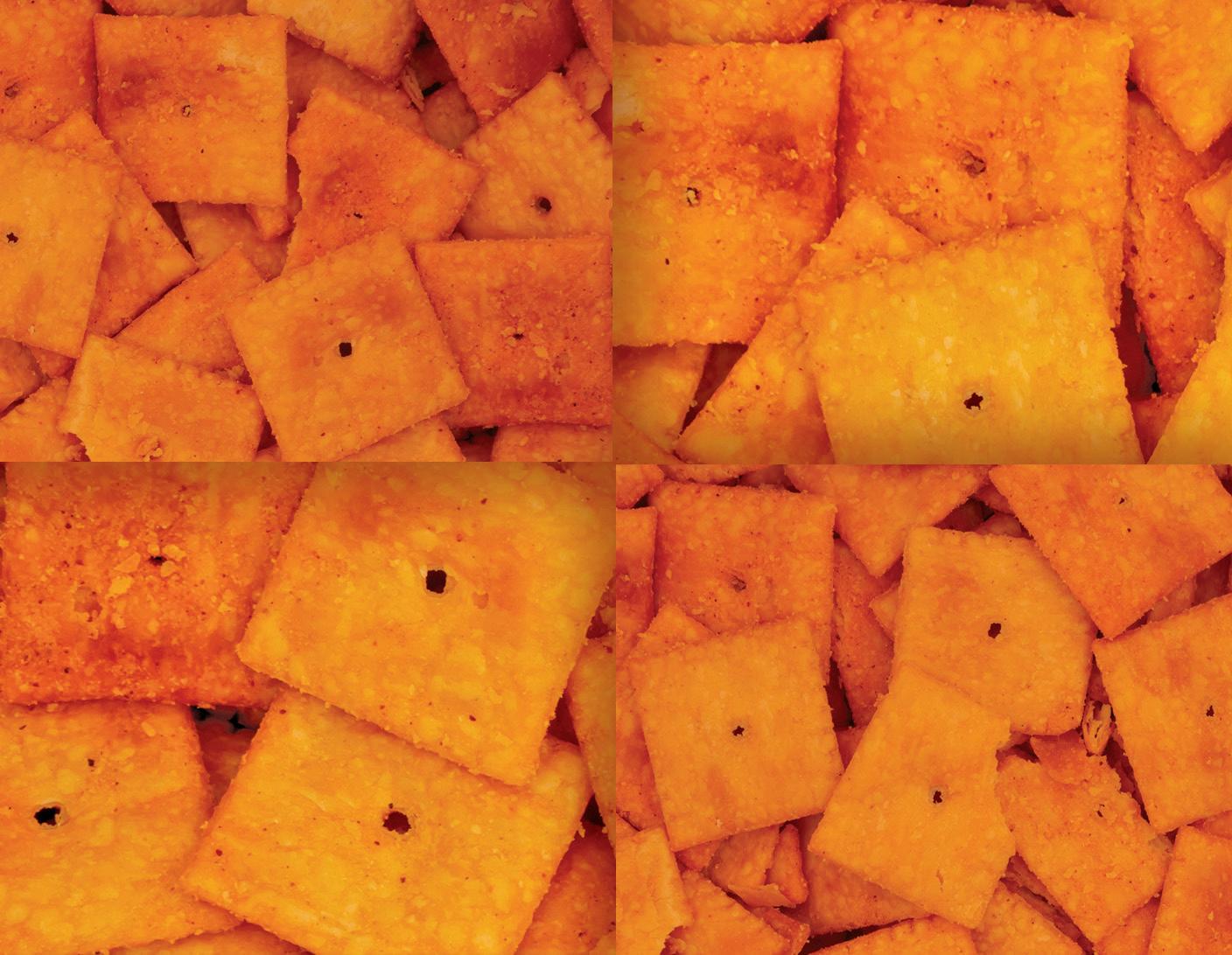
I am proudly entering my 35th year chronicling the beverage arena. In that time, I’ve seen literally thousands of brands and interacted with an even greater number of people. It has been a labor of love, one that keeps me excited to come to my office every day (and it has nothing to do with the free CheezIts offered in the lobby of my building). The friendships and acquaintances I’ve made, and the admiration I have for these passionate and innovative people know no bounds. I exalt in their successes, and despair in their failures. We all know the failure rate for beverages, yet it doesn’t deter them from following their dreams. More power to them.
Needless to say, I’ve been witness to so many innovations, category creations, packaging upgrades, ingredient/formulation breakthroughs, and the like that I could write an incredible novel about beverages. Relax, though, it’s highly unlikely. Just looking up from the snack wrappers on my desk to write this little message every other month is hard enough.
I got into the industry right before the advent of “New Age”, which opened up a new world of beverages. (those of you who know me understand that before I got into the industry I’d been dabbling in the old “Age of Aquarius” myself for a while, so it fit me like a pair of Sansabelts. The “New Age” was followed by so many other ideas, although I always hoped for a “New, New Age” which never
arrived. Each category had its turn in the trend-o-matic: juices, waters, sodas, beers, organics, teas, probiotics and the like dotted the landscape. We had the trend of the “big guys” buying up the innovators at super high prices, only to mismanage most of them and lead the brands to irrelevance. We saw a plethora of brands launched with the purpose of an exit strategy, a doomed proposition from the start. I can’t begin to tell you about my conversations with people about to launch, that led with the exit plan. What happened to the love of the beverage business itself?
My most recent observation is a sad one: many brands don’t taste good. From day one in my career, the most important aspect of a beverage is taste. That has been my only standard in rating a brand. There are so many popping up, with great ingredients, fun packaging, a cogent marketing proposition, and resources to support them, but unless you’ve nailed the taste, you’re doomed to fall. Too often, that simple proposition has been lost. I’ve had so many brands cross my desk in the past few years, all with good virtues, but lacking that most important facet, tasting great.
There has been so much good in these 35 years, and ideas and trends come and go. Strive for the best, put your passion into your brands and get back on track with taste. How about something that goes well with a Cheez-It?
www.bevnet.com/magazine
Barry J. Nathanson Publisher bnathanson@bevnet.com
Jeffrey Klineman Editor-in-Chief jklineman@bevnet.com
Martín Caballero Managing Editor mcaballero@bevnet.com
Monica Watrous Managing Editor, Nosh mwatrous@bevnet.com
Justin Kendall Editor, Brewbound jkendall@bevnet.com
Adrianne DeLuca Assistant Managing Editor, Newsletters adeluca@bevnet.com
Lukas Southard Senior Reporter lsouthard@bevnet.com
Brad Avery Senior Reporter bavery@bevnet.com
Zoe Licata Senior Reporter, Brewbound zlicata@bevnet.com
Shauna Golden Reporter sgolden@bevnet.com
Sales & Ad Operations
John McKenna Director of Sales jmckenna@bevnet.com
Adam Stern Senior Account Specialist astern@bevnet.com
John Fischer Senior Account Executive jfischer@bevnet.com
Lou Calamaras National Account Executive lcalamaras@bevnet.com
Jon Landis Business Development Manager jlandis@bevnet.com
Colin Sughrue Digital Campaign Coordinator csughrue@bevnet.com
Art & Production
Aaron Willette Director of Design
BevNET.com, Inc.
John Craven CEO / Founder / Editorial Director jcraven@bevnet.com
Headquarters
65 Chapel Street Newton, MA 02458 617-231-8800
Publisher’s Office
1120 Ave. of the Americas, Fourth Floor New York, NY 10036 646-619-1180
Subscriptions
For fastest service, please visit: www.bevnet.com/magazine/subscribe email: magazinesupport@bevnet.com

By Gerry Khermouch
At a time that we’ve seen the rebirth of the Monroe Doctrine (rebranded as the Donroe Doctrine, or is it the Donroe Moctrine?), it seems timely for me to discuss the so-called landgrab strategy in beverages. It’s a topic worth revisiting because it has so much appeal to impatient entrepreneurs with eyes on the prize, including first-time founders who’ve heard the “Go big or go home!” exhortations from successfully exited beverage creators on podcasts and conference stages.
It’s an issue I revisit every year in my newsletter when I republish my annual “New Year’s Resolutions for Beverage Entrepreneurs,” which contains a lot of advice that argues against landgrabs: I warn people to start slowly in a confined geography or channel, to learn to say no to retail rollouts that can’t yet be adequately supported, to resolve to “make your mistakes off-Broadway” as you respond to the market’s instruction and refine your idea.
As I’m first to acknowledge, just about every one of my resolutions has been violated by one successful entrepreneur or another. Still, for those who truly believe in their concept and hope to see it live on, rather than seeking a quick score and getting out of town, I believe there’s much to be said for a more restrained approach. Unless, of course, you’re a Lance Collins or a Mike Repole, whose mastery of the segment has been demonstrated through multiple lucrative exits and who have the resources and investor trust and goodwill to stay in the game until something finally clicks. (In fairness, though they do go big, fast, they take a tempered approach in some ways – say by skipping socalled “flyover states” in the initial rollout, as Collins like to put it, or taking their time on even the most obvious line extensions, as Repole did in insisting on getting Body Armor right before he offered the lighter formulation that fans and retailers were clamoring for.)
As I write this, we’re seeing landgrabs a-plenty – and some of the fallout from landgrabs that so far haven’t panned out.
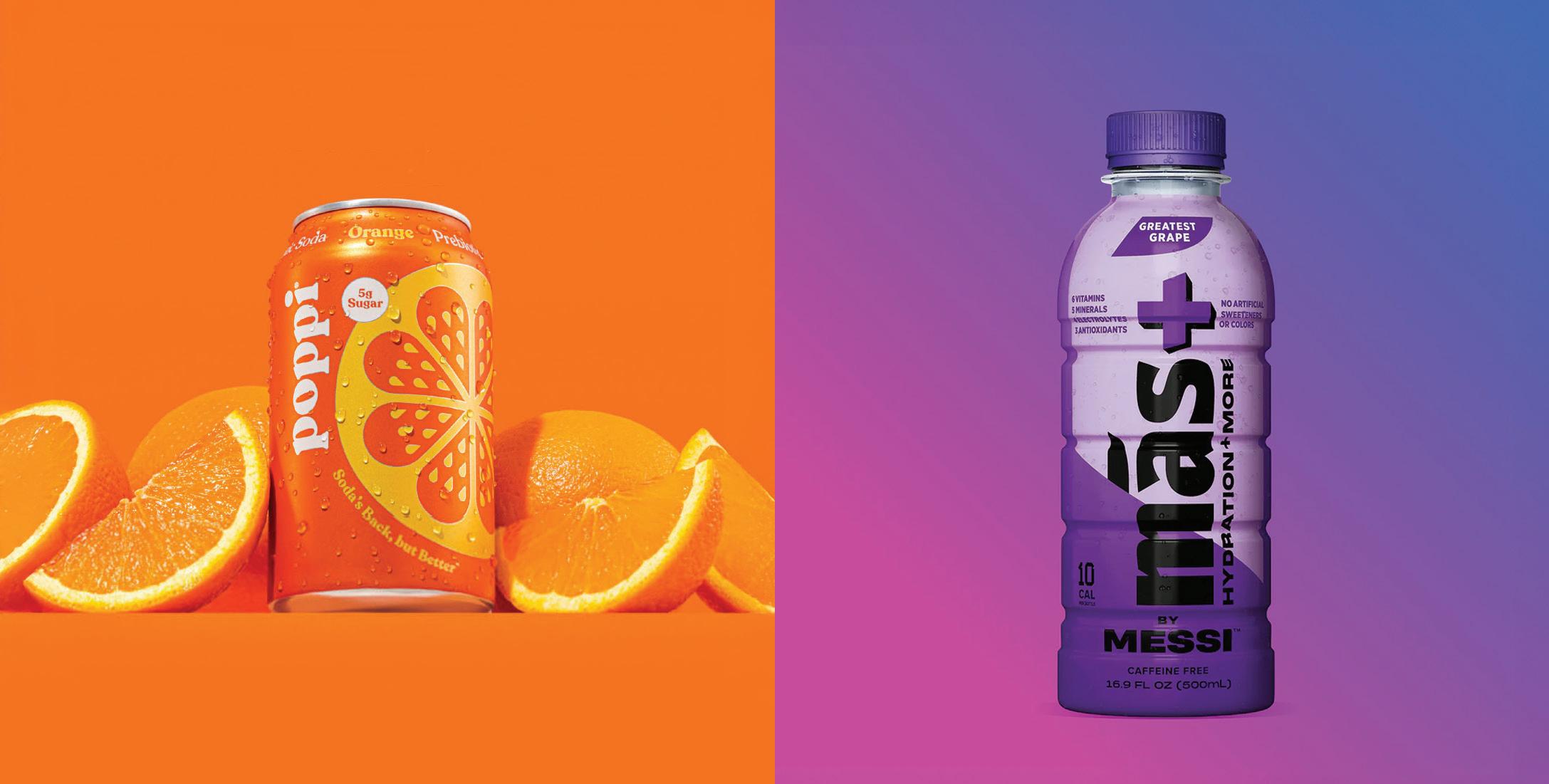
Lucky Energy is going big, raising massive private-equity sums, no doubt bolstered by the prior success its founder had in building and exiting an earlier venture. (That was a tube-feeding venture whose success showed its founder to be a shrewd businessman, but in a segment with entirely different dynamics than ready-to-drink beverages.) The successful entrepreneur from a female undergarment venture is tapping her passionate fans’ ideas for her femaleskewing Gorgie energy drink. Of course, another landgrabber, Poppi, just had a terrific exit to PepsiCo, and its key rival Olipop is believed to similarly be a coveted object of strategic desire. On the other side of the ledger, another landgrabber, Lemon Perfect, just cleaned house, from its CEO on down, as investments exceeding $100 million were deemed not to have moved the needle enough. Though I’m focused on entrepreneurs here, strategics are not immune: the much-ballyhooed Mas+ by Messi sports drink recently undertook a similar housecleaning as its backer, Mark Anthony Brands, did its own reset after a heavily funded rollout didn’t ignite.
Is patience even possible? I could point to several examples where it seems to have been rewarded, though in truth I wish there were more. AriZona Beverages continues as a family owned and operated business after a nasty battle with one of its cofounders who did want to pursue a strategic exit. Milo’s Sweet Tea seems to be motoring toward $1 billion without recourse to outside capital. On a smaller scale, looks at Joe Tea, which took a decade even to hopscotch across the Hudson River from its northern New Jersey base into New York City out of a desire to operate profitably. “Learn to say no,” indeed.
If caution is warranted in embarking on a landgrab, there are a couple of corollaries. One has to do with strategic alliances. This has the allure of plugging into a distribution network with national coverage rather than piecing together an independent network, maybe just in select regions. But
there are real tradeoffs here. Even among the best at incubating new beverage brands, and many would place Keurig Dr Pepper at the top of the heap, you still have to navigate a system of uneven performers and even resign yourself to being part of a portfolio that includes rival brands, as C4 Energy found when KDP successively added Ghost and Black Rifle energy brands. Strategics also will always lean toward prioritizing their wholly owned brands, particularly those they’re able to produce themselves at a higher margin. The beer systems are particularly challenging: most of the megabrewers have shown uneven commitment to NAs, and in entering their system you find yourself working with some outstanding performers but also a larger share of houses that are mediocre and semi-committed at best. No wonder Walmart, tiring of the inconsistency, has pressured NA brands in beer houses to just go direct.
Even the most successful such alliances seem to hide ample stresses behind the scenes. After all, even as Anheuser-Busch co-conceived Ghost’s very successful RTD energy line, Ghost seemed to hate every minute of that partnership and eventually fled to Keurig Dr Pepper. For every NA partner of A-B’s that gets some focus and execution – including Monster Energy at a long-ago crucial stage of its development – there have been several others that don’t seem to have much benefited from the tie, including Icelandic Glacial, Hiball Energy and Super Coffee. To me, that signals that entrepreneurs might be better off piecemealing that jigsaw puzzle, even though all the pieces don’t fit together well. Taking that approach also argues for a more targeted effort that ultimately may stand the brand in better stead.
There’s also the matter of relying on private-equity financing to support the buildout. Certainly, to pursue the landgrab strategy, there are few alternatives aside from a risky strategic alliance. There’s much that’s appealing about them, beyond the candlelit white-tablecloth dinners they like to show themselves hosting in tropical rainforests as they hash out the world’s sustainability and nutrition issues with their portfolio brands. They claim to bring lots of operational expertise and valuable connections that might prove crucial in scaling the business.
Still, if patience truly is a virtue in the beverage incubation space, they might be the last ones to really live that value, since their incentives are stacked in favor of finding their exit in a few years. (Yes, I can name some PE shops and family offices that do seem to walk the walk.) Speaking as a guy who only went back to shopping at my local Fairway grocery in recent years after its disastrous experience with private-equity led it straight to bankruptcy (we’ll open stores all around the country! Hundreds of them! Tomorrow!), I question whether their decision-making always rates as judicious. And beyond the honeymoon phase, once the inevitable glitches of scaling up occur, they often prove not to be the allies you thought you could count on, as many founders have warned. That’s another argument for being the turtle, not the hare, and just slogging forward at your own pace.
Longtime beverage-watcher Gerry Khermouch is executive editor of Beverage Business Insights, a twice-weekly e-newsletter covering the nonalcoholic beverage sector.

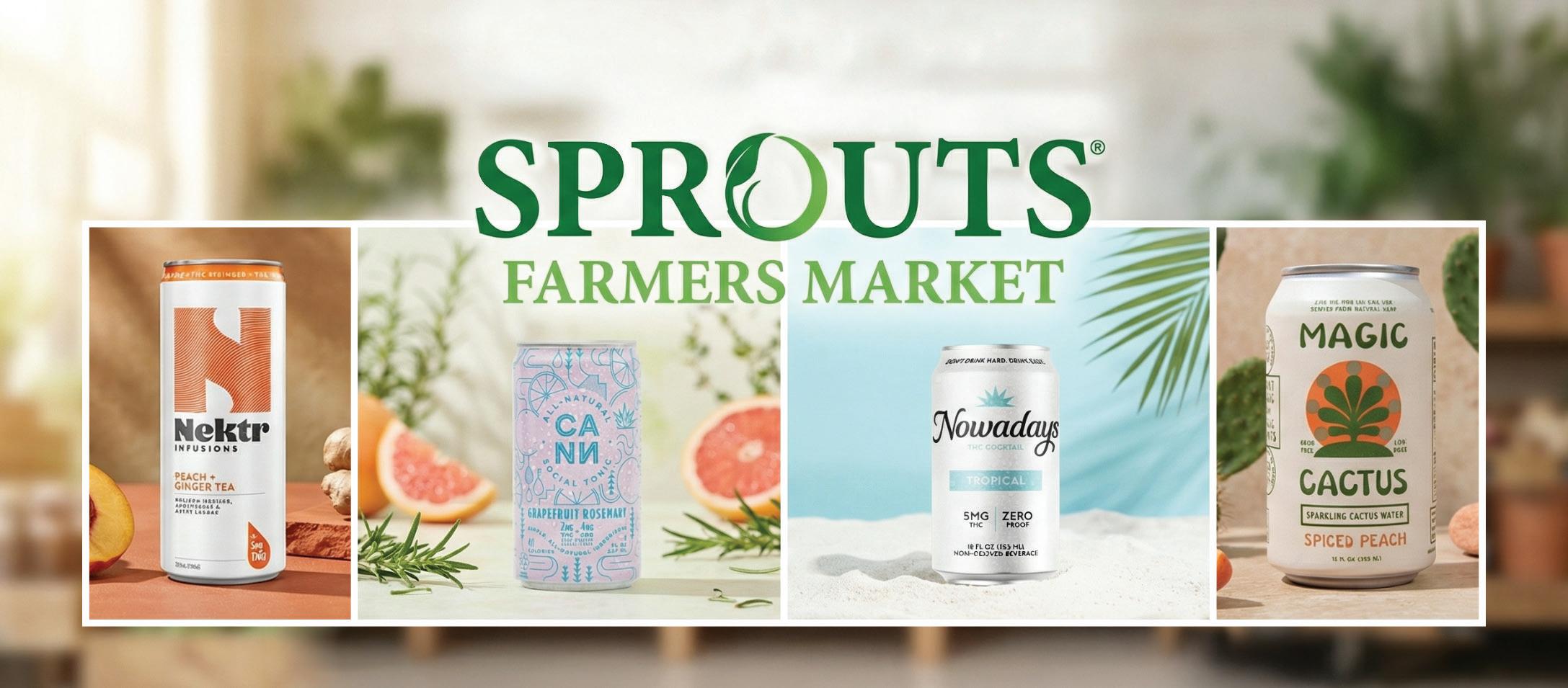
Sprouts Farmers Market is one of the first national grocery chains to offer intoxicating hemp beverages.
The natural channel retailer began selling drinks from eight hemp-derived THC brands – including Cann, Magic Cactus, Nowadays, Wynk, Howdy, Delta, Highpour, and Nektr Infusions – across about 115 stores in Texas and Florida in January. Depending on distributor coverage, not all brands will be in every store or state.
Sprouts’ hemp drinks set spans a range of dosages – 2mg, 5mg and 10mg of THC – and contain other cannabinoids like CBD (cannabidiol) or CBG (cannabigerol).
“Occasion-based drinking is where the industry is headed,” said a Sprouts representative. “There is an occasion for alcoholic beverages, non-alcoholic beverages, and now hemp-derived THC. Differentiation is what makes Sprouts special and we will be trailblazing this category by being one of the first national grocery chains to launch this category in Florida and Texas.”
The scale of Sprouts’ multi-state and triple-digit launch is notable in comparison to Target’s October test-run in 10 stores throughout the Twin City metro area.
For Magic Cactus, the new retail partnership is a significant addition to the brand’s roughly 350-store footprint. All four Magic Cactus varieties are sold in four-packs for $15.99 at all 120 participating Sprouts stores.
Another cold chain company is heading for a public market exit.
Suja Life, Inc. announced in November it has confidentially submitted a draft registration statement on Form S-1 with the U.S. Security and Exchange Commission (SEC).
The cold-pressed, organic juice and shot brand, which also includes Vive and Slice as part of its fresh, healthy beverage platform, joins baby food brand Once Upon a Farm as brands notifying the regulatory agency of an incipient investor road show.
“Since we launched two years ago, we’ve been waiting for a mainstream grocery to come on board, because that’s really where low-dose shines,” Magic Cactus founder and CEO Jonny Locarni told BevNET. “Now that time has finally come, so we’re hoping to open access up to as many people as possible.”
Conversations began in October with Sprouts indicating it wanted to launch the set in January, Locarni said. “We were lucky enough to secure a placement in the set and moved to sign statewide distribution agreements with Sprouts-authorized retailers in both Florida and Texas.”
Elsewhere, Nowadays has brought its 12 oz. and 16 oz. RTDs in 5mg and 10mg THC, respectively. The brand is offering its Berry flavor and a variety pack, both in sixcan formats. The brand initially launched exclusively in Sprouts’ Florida stores.
Sprouts, which operates over 400 stores nationwide, is the latest national grocery retailer to dip its toes into hempderived THC drinks, following the Target launch in October. That same month, c-store chain Circle K announced it would begin selling THC drinks in as many as 3,000 stores this year. However, barring any changes, sales of drinks and other consumable products containing more than 0.4mg total THC-class cannabinoids per container will be illegal as of November 2026.
The IPO remains subject to the completion of the SEC review process, as well as market and other conditions.
It’s been a long journey to an exit for Suja investors. The company started in San Diego in 2012. Under original CEO Jeff Church, the brand was one of an early vanguard of juice companies using High Pressure Processing (HPP) to maintain freshness and flavor in its products.
In 2015, beverage giant Coca-Cola invested $90 million in the company, but ultimately passed on purchasing it. In
2021, private equity firm Paine Schwartz bought out existing shareholders and acquired the brand. Under the direction of CEOs Bob Deborde and now Maria Stipp, who joined in 2024, the company cleaned up operational inefficiencies and has returned to growth.
Suja’s sales have been growing; in two major categories classified by retail data firm Circana, its fruit drinks totalled $149 million – up 35% – and its vegetable drinks were $74 million – up 22% – for the 52-week period ending Oct. 5, 2025.
Gut health-friendly “real,” high-protein foods secured the federal government’s endorsement in January – and on that very same day, a disruptive insurgent brand aligned with all three of those attributes got an arguably even bigger boost.
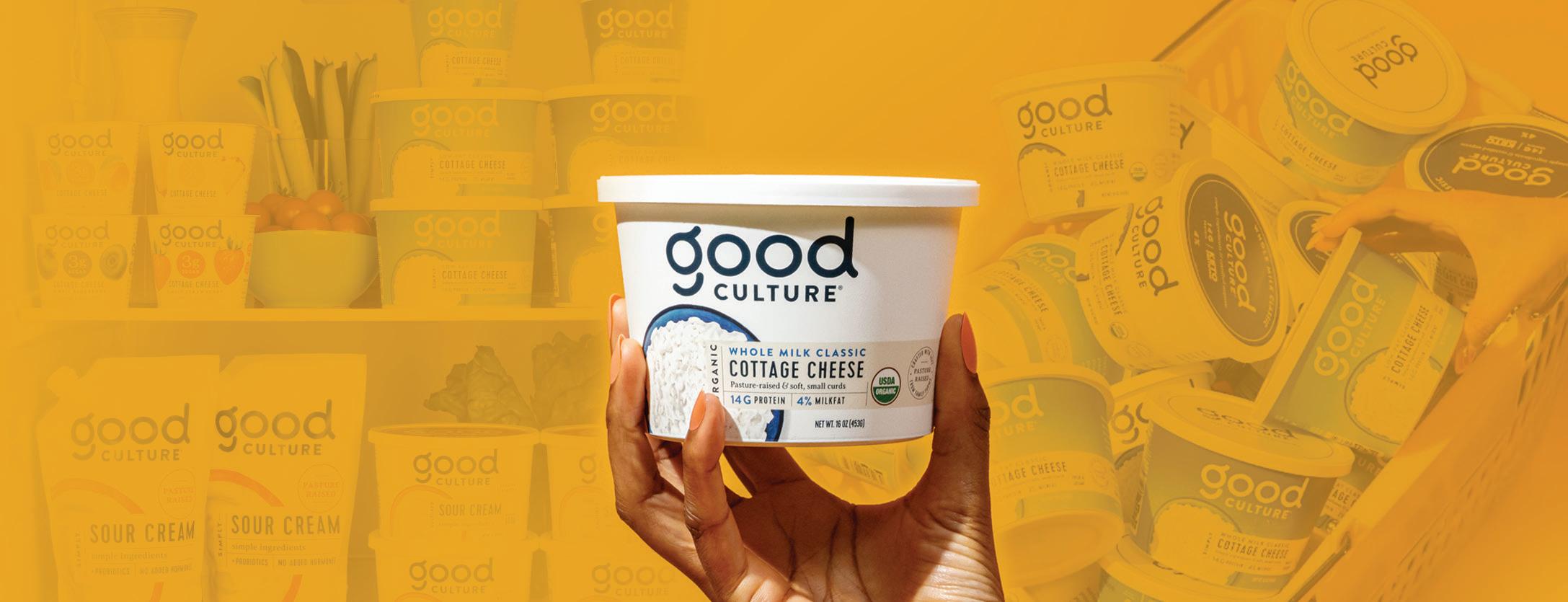
As cultured dairy brand Good Culture comes under the wing of PE firm L Catterton, the opportunities that have been sitting on the horizon are now within reach. Founder and CEO Jesse Merrill told Nosh that the company’s new majority shareholder will enable the already profitable business to “do more, faster and better.”
That means meeting demand – which has outpaced its supply for nearly the past three years – growing brand awareness even more through both digital and in-person activations, and leaning into a robust innovation pipeline that has been constrained due to those supply issues.
“Good Culture has been on a tear,” said Merrill. “Our sales have almost quadrupled in the last three years, the category’s up 60% over the same time period, the demand has been insane. We have not been able to keep up from a supply standpoint, so we’ve had a lot of out-of-stocks. That’s obviously not something that we want to have happen.”
Good Culture will continue to produce through comanufacturers and is now working to secure dedicated production lines with strategic partners, Merrill said. Founded in 2015, the brand’s explosive growth over the past three years, which was spurred by a viral recipe videoand brought incremental gains across the category by introducing younger demographics to cottage cheese, quickly began to attract institutional attention.
‘This Is Like Kodiak All Over Again’ Banking on a bigger exit, Manna Tree, which invested about $50 million into the company in 2022, right ahead of the boom, reupped its commitment alongside L Catterton’s majority share. The firm’s managing partner Steve Young said the business is now pulling in nearly $200 million in sales and claims that nearly every private equity firm and strategic has been asking about the brand since its viral moment turned into real sales momentum.
“This is like Kodiak all over again,” Young recounted saying to L Catterton managing partner Andrew Taub nearly a year ago when discussing Good Culture; Young worked on the sale of that highprotein breakfast brand to L Catterton back in 2021 in his former role as an investor at Sunrise Strategic Partners.
However, the company wasn’t necessarily looking to sell when it first began talking with L Catterton, Merrill and Young emphasized. Although manufacturing constraints were a real barrier to scale, the team was “heads down” focused on the business amid this period of extraordinary growth.
But the inquiries kept coming in, and with the consumer goods investment landscape starting to thaw, both Merrill and Young said they felt it was worth taking stock of their options. After nearly a year of conversations, the deal began to come together just a few months ago, Merrill said.
“Aside from their impressive track record, which, from my standpoint, is table stakes, I was looking to partner with a team that was values-aligned, and really underscores what Good Culture is trying to do,” Merrill said. “L Catterton checked all those boxes. Their team is authentic, passionate, incredibly talented, and that combination gave me a ton of energy. It made me want to run through walls to get to the top of the mountain with them.”
Young, who also worked on kombucha brand Health-Ade’s sale to Generous Brands-owned Butterfly Equity last year, believes there is currently “a much broader exit and acquisition landscape.” He emphasized that private equity buyers are very active in the current market, making this an opportune time for the small brand to unlock capacity and press on the accelerator with a team that is “best in class and best in business.”
Young, who was a leader in General Mills’ yogurt portfolio on the cusp of the category’s boom in the early 2000s, said that he believes the opportunity ahead for the brand is the same as what yogurt captured more than 20 years ago – and, as with Good Culture, that category was energized by insurgent brands like Chobani. With less than 50% distribution in U.S. retail at the moment, Young believes Good Culture can become both an “80% distribution company” and a billion dollar brand.
“Yogurt looked a lot like cottage cheese does today – roughly a $2 billion category, fairly one dimensional, meaning, it’s just cottage cheese in a package,” Young said. “Yogurt was, once upon a time, that same thing before kid yogurts and drinkable yogurts and whip yogurts and all these other things took shape to turn it into the $8 billion category that it is today.”
Once the capacity is unlocked, the consumer is there, ready and waiting.
“Consumers look for our products in a maniacal way,” Merrill said, and that “scarcity mindset” is creating hoarding behavior. Young added that sometimes they’ll purchase “six or seven tubs” at a time if they happen to find that many on shelves (although that same scarcity has, of course, led to complaints from dairy category managers).
The brand recently leaned into the scarcity dynamic with its latest campaign “The Obsession is Real” and plans to go deeper on growing awareness both with its influencer network and with real world activations in a holistic way.
“There’s increasingly more research coming out that Gen Z really loves IRL, because they grew up in such a digital environment,” Merrill said. “To actually do things that create human connection is really novel and exciting for them.”
When Good Culture first launched, he said, it did so with the goal of making “cottage cheese sexy… [but] Gen Z, at the time, was not a focus.” As they aged up and gained more purchasing power, the demographic became a key contributor to the “groundswell” moment that made Good Culture a viral sensation. As the brand now maps out its distribution strategy and works to fill gaps in the
market, Merrill said college and university campuses, as well as foodservice broadly, is “low hanging fruit.”
Even more exciting, Merrill – the parent of two Gen Zs – has seen cottage cheese gain clout within his own home. He said for years his kids had no interest in what he was building, but after that viral video, even they were bought in.
“I went from being the lame cottage cheese dad to being the cool cottage cheese dad and that was very gratifying for me.”
There’s no telling how popular being a billion-dollar dad might make him.
After voluntarily entering Chapter 11 bankruptcy proceedings in July, Del Monte Foods has agreed to sell off a number of assets as part of a courtsupervised auction process.
The 138-year-old company announced in July it was seeking bankruptcy protections as it restructured its debt.
“This outcome represents a successful result in our sale process and demonstrates the enduring value of Del Monte Foods’ brands and operations. These transactions will create an opportunity for our beloved brands and businesses to thrive under the ownership of three of the leading companies in the food industry,” said CEO Greg Longstreet in a statement.
B&G Foods was the winning bidder on Del Monte’s “Stock and Broth” segment, which includes the College Inn and Kitchen Basics brands. The Parsippany, N.J.-based food company will pay approximately $110 million in cash for the shelf-stable broth businesses.
In 2024, B&G announced it would be divesting portfolio brands as it restructured. Between May and October, B&G offloaded its canned tomato brands Don Pepino and Sclafani to Violet Foods LLC, a newly formed subsidiary of Amphora Equity Partners LLC. B&G followed that with Le Sueur canned vegetables to McCall Farms, Inc., and the Canadian Green Giant and Le Sieur frozen and shelf-stable vegetable product
lines to Nortera Foods in October.
Del Monte’s auction also sold off its vegetable, tomato, and refrigerated fruit business assets to Fresh Del Monte Produce Inc. The brands include the Del Monte and S&W packaged vegetable brands, Contadina and Take Root Organics canned tomatoes, Del Monte refrigerated fruit brand, and the JOYBA beverage brand.
Global ownership of the Del Monte brand and related intellectual property will also go to Fresh Del Monte Produce.
Finally, Del Monte’s shelf-stable fruit business assets went to Pacific Coast Producers. This segment includes the Del Monte and S&W shelf-stable packaged ambient fruit and fruit sauces brands.

“Barring a drastic change in the last few weeks” of 2025, craft will likely record its third consecutive year of volume declines and second consecutive year in which brewery closings outpaced openings, according to the Brewers Association (BA) in the trade group’s annual Year in Beer report.
Approximately 9,778 small and independent craft breweries operated in the U.S. in 2025, with 268 breweries opening and 434 breweries closing, the BA reported. 2024 marked the first time closings (399) outpaced openings (335).
“While striking in headlines, closings still represent a relatively low percentage (4.4%) of total operating breweries, especially when compared against leisure and hospitality businesses broadly,” the BA wrote.
Craft breweries supported 443,000 jobs in the U.S. in 2025, and contributed $72.5
billion, compared to 460,000 jobs and $77.1 billion in 2024.
BA-defined craft volume declined 5% in the BA’s midyear report, and “contraction slightly beyond that midyear figure” is expected for the full year, according to the report.
“It’s tough to say for sure, but based off of some of the scan data and what we’re hearing from some of our members, there’s a chance it’s going to end up slightly lower than that 5%,” BA staff economist Matt Gacioch told Brewbound, clarifying that “slightly lower” means a steeper decline than 5%.
“The holidays are always an X factor,” he added. “If there’s a particularly strong last couple weeks of December, that could move things in the other direction, but that’s the best guess, looking into the crystal ball right now.”
It’s worth noting that the BA’s volume
Anheuser-Busch InBev (A-B) will sell one brewery and shutter another two.
The Goodman Group, a property developer with $6.8 billion in assets under its management, will acquire A-B’s brewery in Newark, New Jersey, with a plan to redevelop it for “industrial, manufacturing and logistics uses,” a company spokesperson said.
A-B plans to shutter its facilities in Merrimack, New Hampshire, and Fairfield, California, early this year. The changes follow A-B’s efforts to upgrade its U.S. manufacturing network.
“We will be shifting production from these three facilities to our other U.S. facilities and these changes will enable us to invest even more in our remaining operations and in our portfolio of growing, industry-leading brands,” A-B said in a statement.
All 475 full-time employees at the three facilities will be of-
figures only include breweries’ beer volume – including non-alcoholic beer, but excluding hard seltzer, hard cider or other ready-to-drink adult beverages – and breweries expanding their offerings into other categories and segments is also contributing to overall trends, Gacioch said.
Gacioch also told Brewbound that there is increasing optimism for 2026, as there will be “a little less uncertainty” when it comes to headwinds such as inflation, tariffs and other supply chain impacts on both businesses and consumers.
“Consumers right now are feeling generally uneasy, and so for businesses, having less uncertainty is really helpful in planning, especially when there’s weeks and months lead time in terms of actually putting out [product] as well as ordering and all these factors that make it harder to do business well when swirling in a sea of uncertainty,” he said.
fered roles at other A-B facilities, as well as relocation stipends and training for roles at new locations. Those who opt not to relocate will receive severance packages. According to WARN Act filings, A-B is cutting 151 jobs in Newark and 238 workers in Fairfield.
The company does not expect these manufacturing changes to affect its wholesaler network in a significant way. Freight cost will not change.
The sale of Newark and closure of Fairfield and Merrimack will bring A-B’s brewing facility count to nine. The company’s remaining breweries are located in Baldwinsville, New York; Cartersville, Georgia; Columbus, Ohio; Fort Collins, Colorado; Houston, Texas; Jacksonville, Florida; Los Angeles, California; St. Louis, Missouri; and Williamsburg, Virginia.
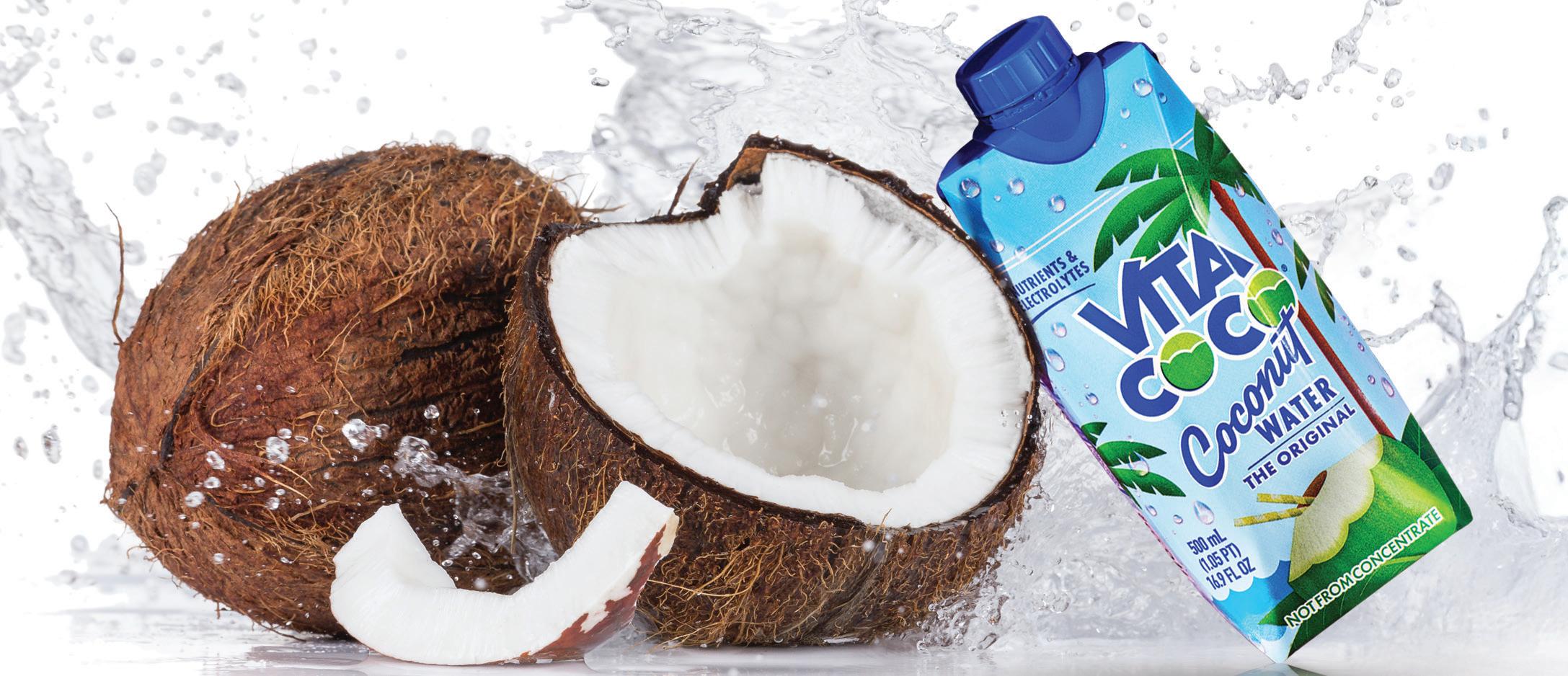
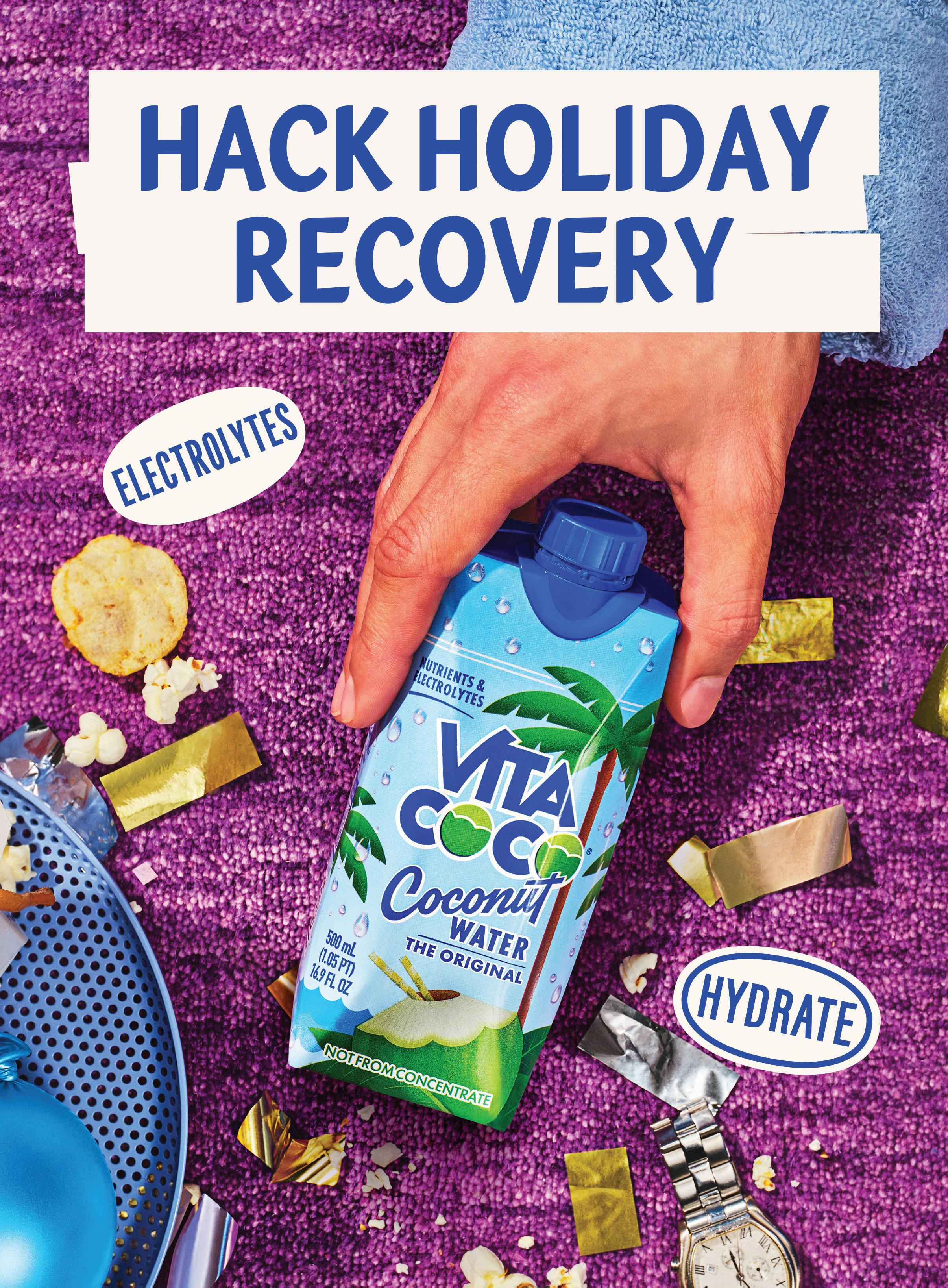
Coconut water is still growing and Vita Coco has great growth to show for it, as do rival brands Zico, C2O, Zola, if you check out the Aseptic Juice category, where most of them reside. Here’s something new, though: the category’s
strength even crosses packaging types — note the continued growth in value of bottled brands in the category, some of which don’t even have a core Tetra line. That was once nearly unthinkable.
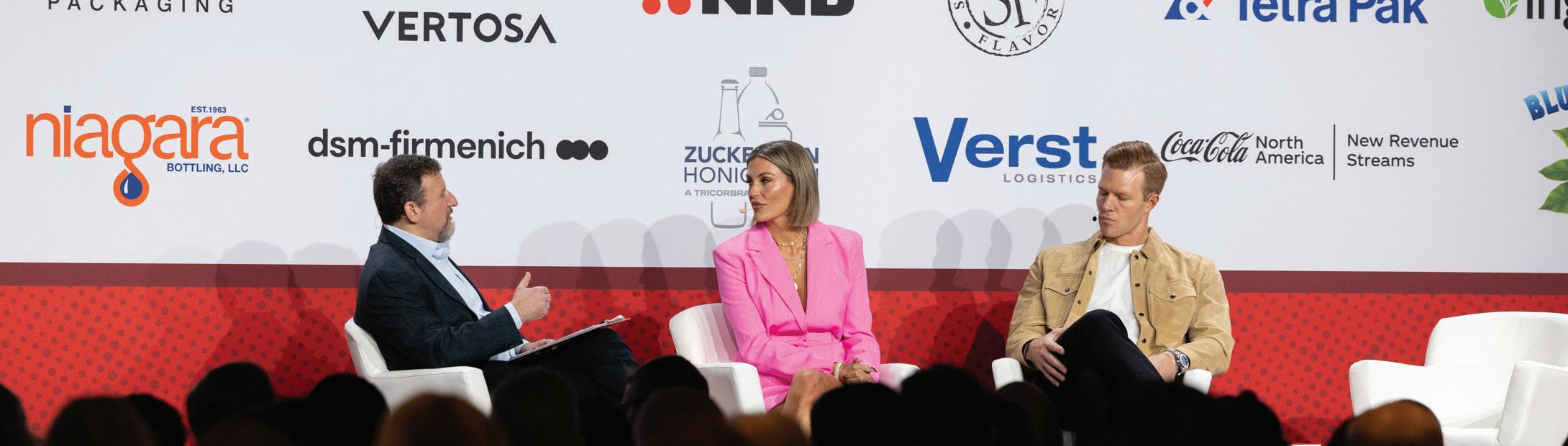
The annual BevNET Winter event brought its usual cast of industry stakeholders, entrepreneurs, investors and suppliers to Marina Del Rey, California in early December.
The packed schedule of panel discussions, presentations and numerous opportunities to network around a range of topics from the investment climate and marketing approaches to the hard decisions surrounding production and distribution strategies.
BevNET Live Winter 2025 kicked off with the founders of one of the biggest acquisitions last year. Poppi’s husband-and-wife team, Stephen and Allison Ellsworth, came to the beverage industry conference reflecting on how the modern soda brand developed into a mainstream drink option and netted its $1.95 billion PepsiCo deal.
The co-founders discussed how Poppi’s retail launch coincided with the beginning of the COVID-19 outbreak in March 2020. At the time, it “threw a wrench in all our plans” as Poppi wasn’t able to sample or demo in grocery stores, but the timing ended up being a “blessing in disguise,” Allison Ellsworth said.
“What it did was allow us to see an opportunity as a digital-first brand,” she said. “Everybody worldwide was thinking about their health and wellness for the first time.”
The brand decided to go “100% in Amazon” and establish a presence on social media platforms and with influencers to build a better-for-you identity that still spoke to soda consumers.
Later in the day, HOP WTR CEO Jordan Bass, KetoneIQ CEO Michael Brandt and Celsius chief brand officer Kyle Watson led a panel on strategies for success in functional beverages. The three brand leaders spoke about finding a core consumer group and building around those dedicated customers.
“Functional is table stakes for all of us right now,” Bass told audience members. “Function is now part of every beverage. About 82% of consumers say they are looking for functionality in their beverage choices.”
To break through, successful brands have built around community and the drinks become a lifestyle choice, Watson said.
“Having an alignment with people’s emotional connection to your product is the most important thing,” she added.
During the afternoon session, Generous Brands “chief transformation officer” Todd Putman sat down with BevNET Editorin-Chief Jeff Klineman to discuss the juice-centric company’s acquisition strategy and how it is building a powerhouse in coldchain distributed drinks with kombucha brand Health Ade joining the Bolthouse Farms and Evolution Fresh brands (along with a Sambazon partnership).
A panel discussion on the future of the hemp-derived THC beverage category closed out the day. Brand leaders from Cann, Houseplant, Nowadays and JuneShine Brands walked BevNET
Live attendees through the rollercoaster of regulations the intoxicating hemp set rode in 2025, and considered how to set a path forward in 2026.
On Day Two, the show started with a presentation from buying collective INFRA, which helps brands cast a wider net among independent retailers. Category manager Kim Route and director of member programs Angela Bozo spoke to attendees about how INFRA empowers smaller retailers to compete with larger chains. The INFRA team presented how emerging drink brands could leverage the collective’s network of retailers and onboard with more specialty and independent retailers for less work.
Afterward, Spindrift founder Bill Creelman took the stage with Gryphon Partners’ Ryan Fagan to discuss how the flavored sparkling water brand is preparing for future growth under its new private equity owners.
Spindrift might already be firmly entrenched as a recognizable brand in the flavored sparkling water set, but with Gryphon’s resources and management, Creelman still sees a lot of white space in the category.
“The biggest opportunity ahead is growing awareness and educating the consumer on what makes [Spindrift] different,” he said.
Speaking directly to emerging drink brands, Creelman advised entrepreneurs to always look toward the future and think about what “the next five or ten years are going to look like.”
An adult non-alcoholic alternative drink panel discussed how to ride the category’s momentum without getting complacent.
Kin Euphorics CEO and founder Jen Batchelor, Convivialite Ventures partner Brandon Yahn and Dan Gasper, managing partner at Nex-Drinks Partners, spoke to the increasing opportunity in alcohol reduction.
While it might seem there is no ceiling to the category, Yahn explained that there is still a lot of education needed for consumers to understand the use occasions for ANA drinks. He also flagged that consistency and execution is key because there is a “higher bar” that consumers demand for alcohol-free cocktails.
“There’s a long tail of brands and it’s a matter of which ones will rise to the top,” he said. “Ultimately, retailers aren’t going to carry 30 or 40 brands, but maybe 10, at most. There’s a future for this category and a future for the brands that can show continuous growth as they watch their cash flow and get through this tough investment period.”
As always, the Winter event closed with the announcement that Projo Power Coffee had won this year’s title of New Beverage Showdown winner. Projo beat out stiff competition from the other finalists: Tizz tangerine fizz, Rhine Stone non-alcoholic drinks, Stursi zero-proof cocktails, No Cap! next-gen soda and Mocean energy drinks.
Nosh Live 2025 hit the ground running this year in Marina del Rey with a packed schedule of founders, CPG food stakeholders, and a very famous protein popcorn founder.
The annual conference included insightful discourse and educational presentations covering everything from marketing and investment strategies to carving out a niche in functional products and using viral social media moments to build lasting retail success.
Opening the two-day event was a fireside chat with Khloud Protein Popcorn founder Khloé Kardashian and CEO Jeff Rubenstein. While Nosh Live attendees might have noticed the Hulu camera crews filming for the Kardashian family reality series, the real show was on the stage, where a substantive discussion about balancing fame and authenticity took place with someone who has to do that all the time.
“[Consumers] know if something is authentic, they know if you’re just trying to pop a product, for a lack of a more sophisticated term,” Kardashian said.
While a celebrity can help bring consumers to a brand, it takes more than that to grow a brand organically, said Rubenstein. “Visibility plus credibility equals, I think, success.”
Launched in April, the functional popcorn plans to hit over 29,000 retail doors this coming spring as it expands from three to 19 SKUs.
Later that morning, another person who is famous, albeit more internally to the packaged food industry, Jeni Britton, spoke about the progression of building Jeni’s Splendid Ice Creams and how that has shaped her new fiber-packed, nutritional bar brand, Floura.
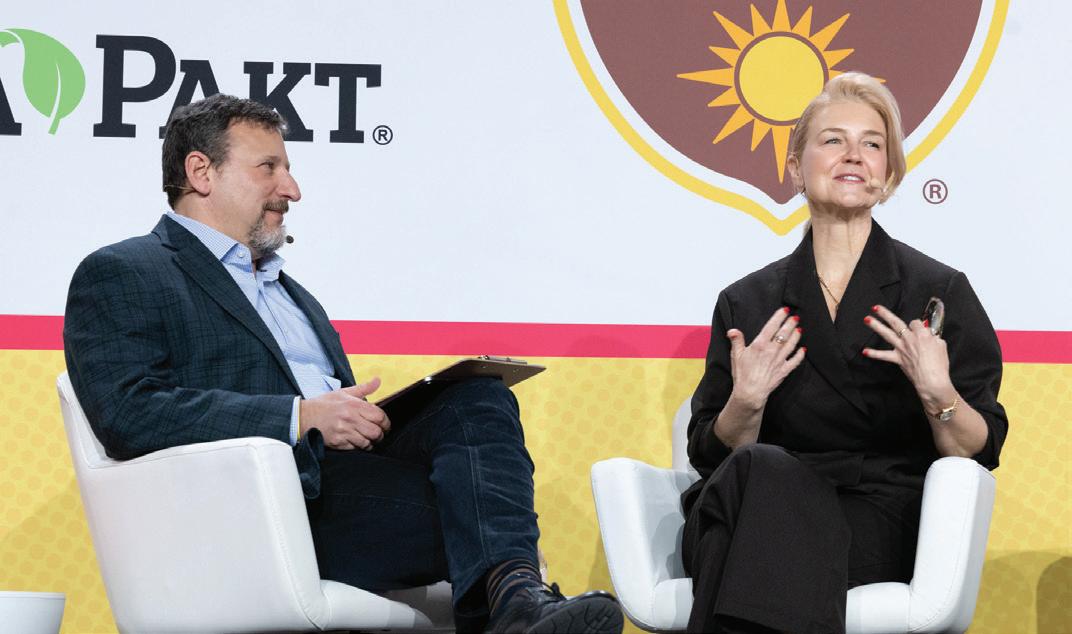
Britton discussed how her journey as an entrepreneur was not an uninterrupted climb upwards, but pockmarked with challenges and lessons she uses now with Floura.
“We can’t just launch a brand on people,” she said. “This is something we have to build with people. It was the same in artisanal ice cream when that first started in the ‘90s. No one had that language; we had to create it.”
In a panel featuring the founders of Actual Veggies, meat snack maker Archer and Daily Crunch, brand leaders offered their respective strategies for managing fast-growing businesses.
One theme the founders all spoke about was transitioning from a growth-at-all-costs mindset to creating a capital-efficient business that can weather unforeseen challenges.
“Profitability is table stakes,” said Archer founder and CEO Eu-
gene Kang. “Knowing your margins, knowing what your burn-rate is and how you think about the road to profitability is crucial.”
Day Two of Nosh Live kicked off with a presentation from SPINS senior director of brand strategy, Kelli Howard, who highlighted the impact of healthy-eating trends and GLP-1 usage among consumers.
She called it the “Say/Do” dynamic, which separates what consumers claim they’re paying attention to and the reality of spending habits appearing in retail sales data.
“What this tells us is that consumers aren’t lying – no sugar [and] low sugar is important to them,” Howard said. “Sugar reduction is important, but the way they want to get there varies by who the consumer group is.”
The key takeaway from SPINS data was that the term “healthy” does not mean the same thing to everyone. What does seem clear is that health is about “balance,” she said. “Consumers are eating healthy to feel a certain way, and they’re also looking to increase their healthspan, not only their lifespan.”
In two retailer-focused sessions, representatives from CVS and Walmart spoke about how brands can align on reaching those health-conscious shoppers in efficient ways.
Lauren Castro, lead director of healthy consumables and grocery at CVS Health, explained how the drugstore chain identifies new products to bring to store shelves and when to scale those brands nationwide.
CVS is a supporter of emerging brands and “likes to get involved pretty early,” Castro told Nosh managing editor Monica Watrous. “When it comes to net new products, net new flavors, we love providing feedback and really working with them to identify the right way to launch in our stores.”
Later in the day, Walmart U.S. VP of Wellness Merchandising Kristin Piper and Katie Wilson, co-founder of BelliWelli, sat down with Watrous to discuss how the mass channel retailer strategized its partnership with the digestive health brand.
The opportunity of getting on Walmart shelves can be a huge boon to an emerging brand, but it needs to be done at the right time. Piper explained that Walmart has been steadily building its wellness category offerings as demand has grown. It is deeply collaborative in its approach to storytelling and how it can support its brand partners.
“We have some of the most passionate merchants in the space,” she said. “They want to see brands succeed, and they want to see brands bring in incremental customers and have unique marketing campaigns that work.”
During the final session of the show, returning CEO of Justin’s, Peter Burns, spoke to attendees about his plan to “double the business” and return it to the entrepreneurial spirit that helped shape the nut-butter brand before Hormel’s acquisition.
Nosh Live 2025 ended with the announcement that better-foryou candy brand Rotten had won the annual Pitch Slam Competition. Founded in 2023, Rotten’s low-sugar and gut-friendly attributes, paired with its distinctive branding, beat out competition from the other six semifinalists: frozen Salvadorian pupusas producer Xinca Foods; Keya’s Snacks, a line of Indian-inspired potato chips; Filipino hot sauce maker Djablo Sauce; Shooka, a brand of Mediterranean-spiced tomato sauce; and Oh So Easy!, which offers a line of globally-inspired baking mixes.
Beverage-alcohol leaders shared strategies for driving sustainable growth, establishing stable foundations and attracting new drinkers during the 2025 Brewbound Live conference in Los Angeles.
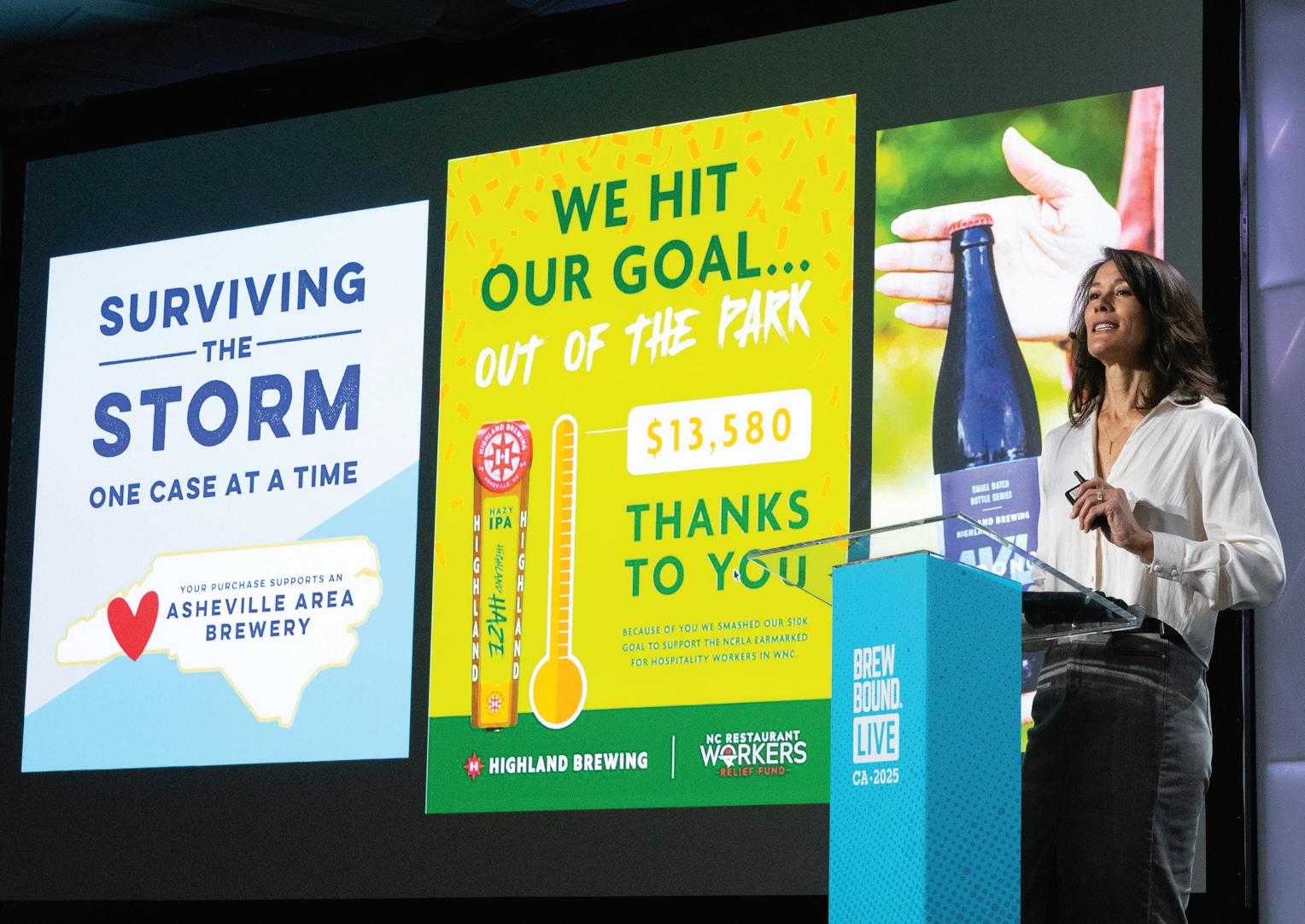
As the industry seeks to steady itself through the turbulence of slowing sales and consumer shifts, Highland Brewing president Leah Wong Ashburn explained how she’s embraced the chaos during the conference’s keynote speech.
Ashburn shared that a pair of hand-painted Chinese symbols adorn the doorway to her office that read together mean “crisis,” but independently translate to “risk” and “opportunity.” A gift from her late father – Oscar Wong, who founded Highland and kicked off North Carolina’s craft brewing industry – Ashburn often ponders the symbols’ message.
“‘You’re always going to feel the risk,’” she said, quoting her dad. “‘Look for the opportunity.’”
Ashburn chronicled the personal and professional journey, including Highland’s response to Hurricane Helene wreaking havoc on her hometown of Asheville, North Carolina, in 2024.
The world watched as Ashburn, her husband Brock Ashburn and their Highland Brewing co-workers transformed their brewery into a staging area for necessary supplies for the Asheville community.
While Ashburn was leading Highland through a challenging time in her professional life, her family was enduring twin health crises. Wong, who was diagnosed with terminal cancer in 2022, died in May 2025. Ashburn described her father as “charismatic, optimistic, playful, mischievous, brilliant, people-centered and strong.”
“He was given six to 12 months when diagnosed, and he lived for three years, most of it quite fully, and all of it courageously. He embedded within the brewery a purpose that only starts with beer. He wanted Highland to be integral to the community.”
Around the time of Wong’s memorial service, Brock Ashburn was also diagnosed with cancer, for which he is undergoing treatment: his prognosis is “great,” Ashburn said.
“Reflecting on this year, I am filled with gratitude and pride – gratitude for the opportunity to help our community, pride in our response to Helene,” Ashburn said. “I’m most proud of the foundation set by my father and how our team builds on that foundation in new ways every day. So, crisis is risk and opportunity, and crisis reveals character.”
Wong Ashburn set the tone for the event, with speakers sharing their own triumphs, pain points and tips for navigating the future.
Firestone Walker CEO Nick Firestone offered a pulse check on the nation’s second-largest beer market – California – from the state’s second-largest brewery.
“Affordability in California is tough,” he said. “There’s been net migration out of the state over the last couple years. Beer is really expensive, and a lot of those things aggregate to impact a brewery like ours.”
Firestone explained how the winds have shifted for craft breweries since the COVID-19 pandemic.
“For 25 years, it was ‘throw whatever we can at the wall and
see what sticks, and if that doesn’t work, then just do it again next year,’” he continued. “It was a timely strategy for us to really be focused – a lot of SKU rationalization. We went from over 130 SKUs down to 60, but really meaningfully only a handful.
“That strategy has really paid off for us in the last couple of years, as shelf sets have moved around, and there’s a lot of noise and competition in the category,” he said.
Increased competition and the need for scale has led several breweries to create regional platforms. At the forefront of the movement is Massachusetts’ Hendler Family Brewing Company (HFBC) and Colorado’s Wilding Brands.
“We started with contract brewing and as you get into these conversations of people trying to solve real business challenges – and contract brewing was one lever – quickly, certain conversations went to a place where an acquisition just made more sense,” HFBC co-founder and CEO Sam Hendler explained on the creation of the platform that bolted on Massachusetts craft brands Wormtown and Night Shift to Jack’s Abby Craft Lagers.
“Relationships are really important,” he added. “This isn’t something where these brands were some investment banker coming in and getting a million bids, and us being the high flyin winning bid.
“These are deals that came from long-standing relationships where we could have a really open, honest conversation about how to best utilize our collective resources.”
Wilding Brands, which markets itself as a craft beverage platform, is the combination of Denver Beer Co. (which Berger cofounded), Stem Ciders, Upslope Brewing, Great Divide Brewing, Station 26, Howdy Beer, Funkwerks Brewing, Formation Brewing, Cervecería Colorado and a handful of non-alcoholic (NA) beer brands.
“We have a clear strategic vision about what we’re trying to achieve,” Berger said. “And it’s a little bit different than the M&A of craft beer, craft beverage in the past. We’re small, but what we’re trying to achieve is a strength in our home market.”
Decoding modern consumers was a theme woven throughout Brewbound Live’s stage conversations, from reality-checking Generation Z behaviors with Rabobank analyst Bourcard Nesin to making real-life connections via experiential market-
ing with Athletic Brewing director of marketing Rosalie Kennedy and Boston Experiential Group founder and managing director Sophia D’Angelo.
Kennedy and D’Angelo shared how the NA beer maker has used activations to form stronger bonds with its consumers, from leveraging nostalgia at music fests to properly measuring the effectiveness of marketing events. Those experiences shouldn’t just be limited to consumers.
“Definitely go to the events that you’re putting on,” Kennedy said. “You’re not going to learn as much behind a computer.”
Reaching those consumers also requires going where they frequently are – social media. JuneShine Brands president and CCO shared how the company’s Willie’s Remedy+ hempderived THC-infused social tonic built a name for itself through social media advertising.
“You can literally walk into a market with no POS, no nothing – we haven’t launched at all – and because of the investment that we made on social [media], people know about us before we even get there,” Stevenson said.
“People want to try THC beverages, they want to see what it’s all about, and then when they try it, they’ve told us that they love it,” she continued. “Our retention rate right now is 45%, which is really high in the world of where we’re at. We know we need to have a really good product. We know that we need to speak to other customers outside of Willie Nelson’s fans, but we know that we can’t rest on the celebrity laurel at all. You have to have a really strong brand.”
Garage Beer, which brought on investment from NFL stars and hosts of the popular New Heights podcast Jason and Travis Kelce, is working to strike a similar balance between consumers who know the brand for its famous backers and those who don’t.
“The brand was growing very fast before Jason and Travis came in and invested in the business,” CMO Kevin George said. “They wanted it to be Garage Beer, they didn’t want it to be ‘Jason Kelce’s beer,’ so it was really important for us to be Garage Beer and invest the dollars in building that brand.”
About 70% of Garage Beer’s marketing activities do not feature the Kelce brothers, which is by design, George said. One tactic Garage Beer has deployed is building relationships with niche content creators, who often have highly engaged audiences, including remote control truck captains and action figure enthusiasts.
“The goofier, the more entertaining, the more niche, the better,” he said. “Because it’s not just the niche watches that it gets, it sets the vibe for the brand and what you’re trying to do out there”
Similarly, Rupee Beer, which brothers Van and Sumit Sharma launched to pair with Asian cuisine after helping in their family’s Indian restaurants for decades, has developed relationships with relevant influencers.
“We wrote the playbook ourselves, since a lot of our predecessors never really engaged with that type of community,” Van Sharma said. “We’re looking at things like Bollywood influencers, cricket influencers, things that really make sense to a South Asian specific brand on top of the culinary angle as well.”

Exhibitor
Who
More than 280+ beverage brand and nearly 70,000 attendees
Anaheim Convention Center Anaheim, CA
100 Coconuts 5799
1st Phorm International 4288
49th Parallel Coffee Roasters N1033
A-GAME Beverages 7821
Acai Roots 1883
aēras water company 1496
aKrrush N1234
alldae superfruit soda 8805
ALLWELLO N617
ALO Drinks by SPI West Port N522
Amy & Brian Naturals N1013
Aqua 9+ Beverage Co. 2459
Ardor N708
Asahi Beverages America 7911
Ascent Protein 5154
Bala Enzyme N502
Be LOVE 3887
Bear Maple N1900
Beekeeper Coffee N233
BeGOAT Clean Energy N1652
Belvoir Farm Drinks 5144
Bigelow Tea 422
BLUE MONKEY 5113
Blueshift Nutrition 3381
Exhibitor
Boba Tea Protein N121 Bobelo N1935 Body Nutrition N906
Bones Coffee Co. N1220
Bragg Live Food Products 5214
BrainJuice, BrainJava, BrainWater N804
Brause 8822
Brez N2243
Brooklyn Food & Beverage N1934
Buddha Teas, Living Wellness Partners 982
Bulletproof N516
Califia Farms 933
California Beverages
BevNET, NOSH and Taste Radio will be interviewing, broadcasting and filming throughout the event. Reach out at news@bevnet.com, news@nosh.com, or ask@tasteradio.com What
Natural Products Expo West 2026
When
Event: March 3-6, 2026
Exhibit Halls: March 4-6, 2026
Exhibitor Booth
Explorer Cold Brew N440
Fermenteria N1434
Fevertree USA 4900
Fiji Water 2796
Fire Department Coffee 5241
Fireman's Brew 2773
First Gen Food & Beverage N1262
Flash Energy Company 5268
Forager Project 5081
Forecast Coffee F31
Four Sigmatic N509
Fresh Fizz Sodas 7905
Fresh Press Farms 4976
FreshPure Waters N1948
Fruga N902
G.O.A.T. Fuel 2898E
Gatorade 590
Gaviña Coffee Company N1910
GOOD IDEA 5761
GoodSport Nutrition N312
GORGIE N1346
Goya Foods 2490
GREATER THAN N738
Groundwork Coffee N105
Guinness N131
Gym Weed N1543
Haider Corp. 2877
Harmless Harvest 5020
Harney & Sons Fine Teas 1722
Hawaiian Soda Co. N1019
HealthVerve USA 5159
heywell N2116
Hint 465
HIT THE TEA 2097
Hiyo 5650
Exhibitor Booth
HOPWTR 5170
Huel 3895
Huxley N1333
Icelandic Glacial 5411
ITO EN (North America) 5505
JAS Live Free N634
Jayone Foods 470
Jocko Fuel 4678
Juni 5649
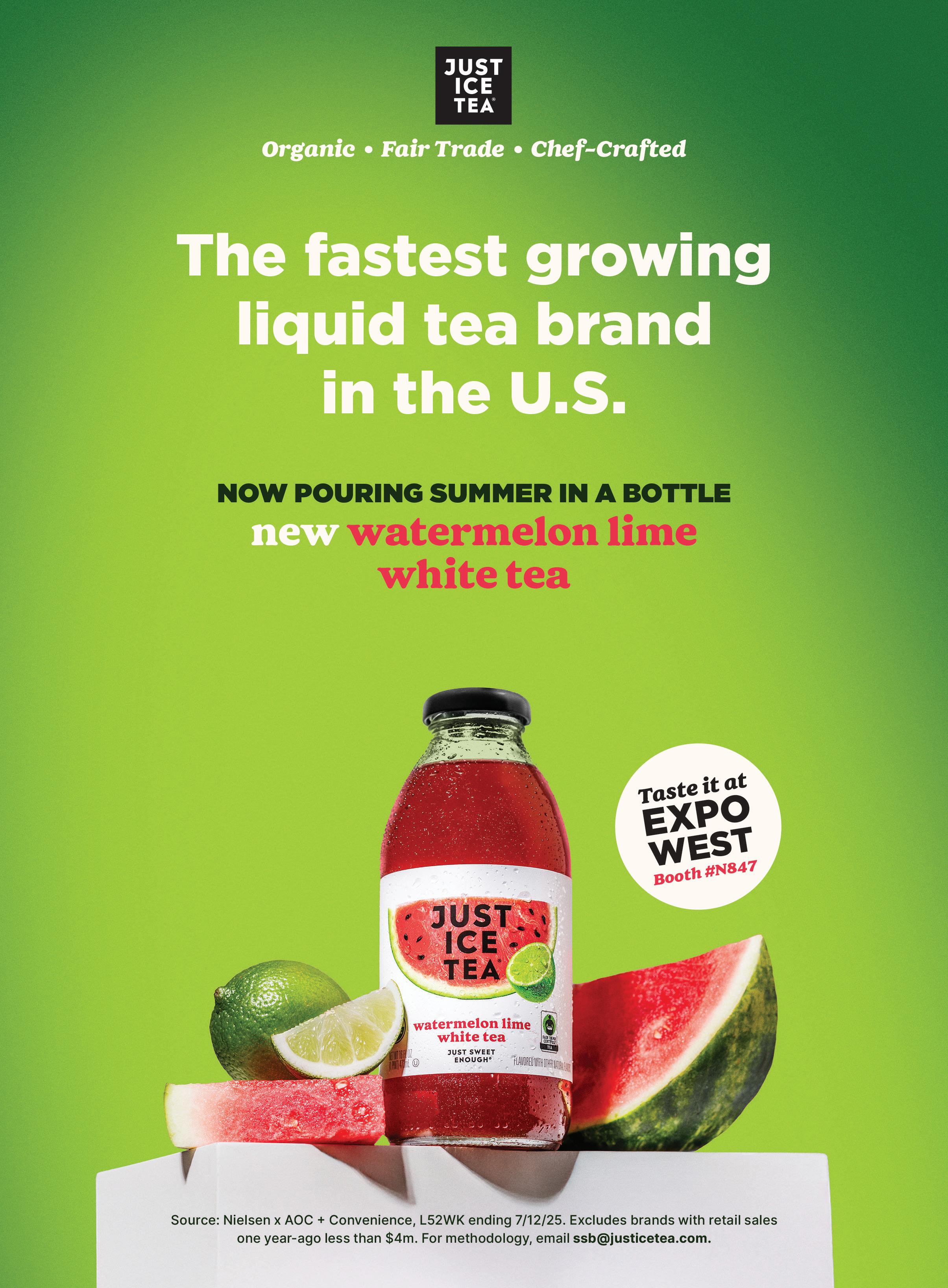
Just Ice Tea N847
Just Ingredients N832
Just Made Foods 5324
JUXX Natural Juice 2533
KACE Tea 8919
Kaneka Probiotics 3476 Karma Water 3097
Kefir Lab 5591
Ketone Labs 4387 Ketone-IQ 4311
Kimino Drinks N219 Koia 2793
Koko & Karma N1037
Kombucha Culture US F29
Kor Shots N729
Kuli Kuli Foods N2024
L.A. Libations 4902
LaCroix Sparkling Water 705
Lakewood Organic Juice Company 435
Lavazza North America 578
Leisure Hydration N2353
LEVL Beverages N1446
LIFEAID
Exhibitor Booth
Once Upon A Coconut 5669
OoMee (Aqua Theon) N330
Open Water N1741
Orgain N2140
Owl's Brew 8814
OWYN 5193
Panera CPG N1010
Paramount Coffee N717
PATH N100
Peace Coffee N1331
Peerless Coffee & Tea N915
PepsiCo 4195
Pickle Juice 5304
PIRQ 5372
PKN N1817
Planet Oat 5758
PLEZi 5005
Pocas International 1510
Polar Beverages 5638
POM Wonderful 311
Pop and Bottle N837
poppi 2786
Positive Beverage 5730
PRES 2894
Pressed 5654
Pretty Tasty Tea 2794
Pricklee 8920
Primo Brands 881
Proper Wild N2237
Protein2o N1012
Pulp & Press Juice Co 5297
PureWine 5498A
Purity Coffee 2776
Q Mixers 5114
RAMBLER 5269
Exhibitor Booth
REBBL, Humm Kombucha, Chameleon 2247
Recoup Beverage N1311
Remedy Drinks 2884
Remedy Organics 5389
Rishi Tea & Botanicals N2019
Roots Focus 3594
Saint James Brands 5689
Sang N937
Seltz N1108
ShineWater 5624
Sidekick Soda N2134
Sisters Coffee Company N2252
Skinny Mixes 5395
SKY BARN 8811 Smart Juices
SPADE N1307
Spindrift Beverage Co. 5105 Startup CPG 8904
SuckerPunch Gourmet N2103
SUJA LIFE 5639
Super Coffee 5028
Supergut 3579
Swoon 5648
Talking Rain Beverage Co.
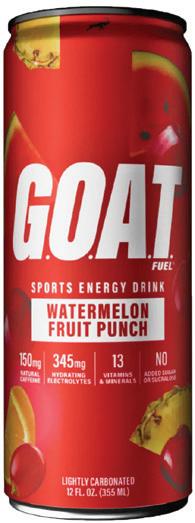
G.O.A.T. Fuel has unveiled an “upgraded” formula and new packaging. The revamped line removes sucralose, Ace-K, taurine, glucuronolactone and B12 cyanocobalamin across its six flavors: Gummy Bear, Pineapple Cream Soda, Black Cherry Ginger Ale, Tropical Mixed Berry, Watermelon Fruit Punch and Blueberry Lemonade. Each 12 oz. can delivers 150mg of caffeine from green tea and 345mg of electrolytes. The reformulated G.O.A.T. Fuel is rolling out to a variety of retailers, including QuikTrip, Stop & Shop and H-E-B. Learn more by visiting goatfuel.com.
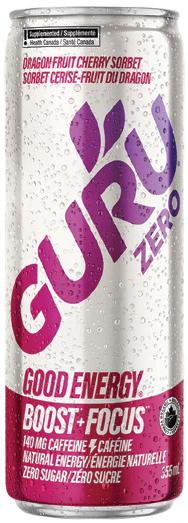
Organic energy brand GURU is bringing a new Dragon Fruit Cherry Sorbet to its ZERO line. The flavor addition is sweetened with erythritol and fermented sugarcane RebM and contains no sugar, aspartame or sucralose. Available on Amazon and in select U.S. retailers, the coconut water-based energy beverage 140mg of caffeine from green tea as well as agave inulin, L-theanine and catechins. For more information, visit GURUenergy.com.
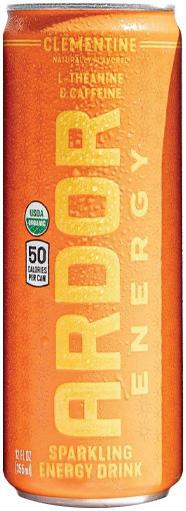
Certified organic energy drink Ardor unveiled a 5-SKU (Black Cherry, Clementine, Lemon Lime, Passionfruit, and Watermelon) line of Sparkling Energy Drinks made with Organic Fruit Juice. Available in select Whole Foods locations, the juice-based drinks contain 4 grams of added sugar, 50 calories, 100mg of organic caffeine and 200mg of organic L-theanine. For more information, visit ardorenergy.com.
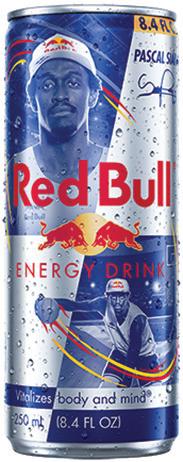
Red Bull has graduated two seasonal varieties, Winter Edition Iced Vanilla Berry and Summer Edition White Peach, into its permanent lineup (under new names Iced Edition and Peach Edition). The energy drink giant is also releasing a limited-edition, collectible can honoring brand ambassador and NBA All-Star Pascal Siakam. For more information, visit redbull.com.
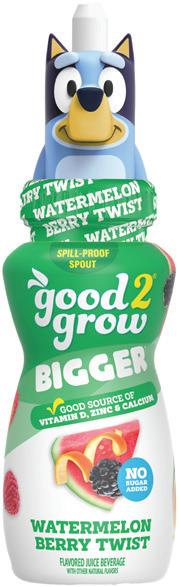
Better-for-you kids juice maker good2grow has added its fourth flavor in its bigger 10-ounce juice beverage line, Watermelon Berry Twist. The brand’s larger format bottles are available in Walmart, Target, Albertsons, H-E-B, Hy-Vee, QuikTrip and Circle K, among others. For more information, visit good2grow.com. The Yuice is loose. Citrus products supplier
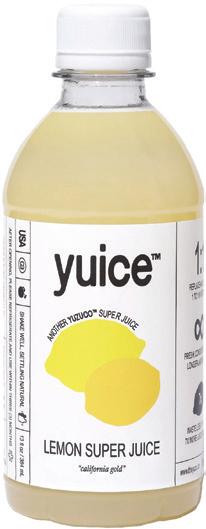
Yuzuco has launched Yuice, a line of acid-adjusted “super juices” intended for on-premise foodservice accounts, with consumer-facing 13 oz. bottles retailing for $10 each. The lemon and lime juices are shelf-stable and are “engineered to include the essential oils typically lost in conventional juicing,” leading to a fuller flavor. For more information go to theyuzu.co.
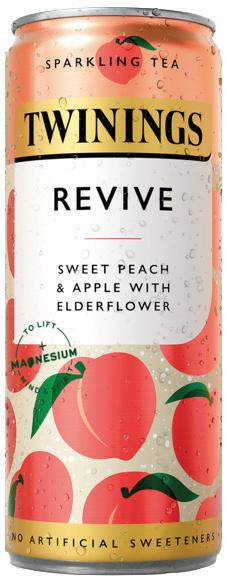
British tea brand Twinings is adding peachflavored Revive to its Sparkling Tea set. Fortified with magnesium and vitamin C, Revive is caffeinated with a base of green tea. The new offering adds to Twinings RTD line that already includes Refresh (raspberry lemonade), Defence (Orange) and Boost (lemon), all available in 8 oz. cans. For more information, visit twinings.co.uk.
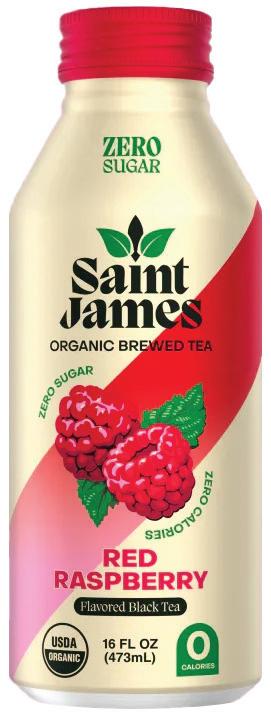
Better-for-you iced tea maker Saint James has partnered with Korean skincare brand LOOPS on a bundle that includes 12 bottles of black or green tea, a limited edition 5-pack of LOOPS’ Double Take, Fresh Peel and Sunrise Service face masks, a Weekly Reset lip mask and Dew Cloud eye masks. The bundles are available via Saint James’ direct-toconsumer website, saintjamesicedtea.com, for $49.50 each.
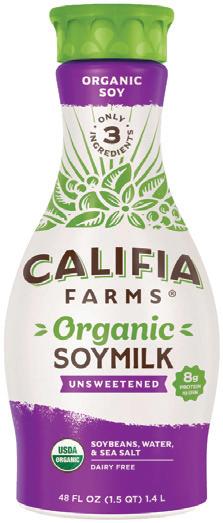
Alt milk brand Califia Farms has expanded its presence in the plant-based dairy set with its first-ever Simple & Organic Soymilk. The minimalist soymilk has three ingredients – organic soybeans, water, sea salt – and 8 grams of plant protein. Along with soy, Califia has expanded its creamers Simple & Organic Sweet Crème Almond Creamer and Simple & Organic Salted Caramel Almond Creamer in 25.4 oz. as well as its multiserve, 48 oz. RTD coffee blends: Vanilla Cold Brew with Almondmilk, Unsweetened Matcha with Almondmilk and Brown Sugar Cold Brew with Almondmilk. For more information, visit califiafarms.com.
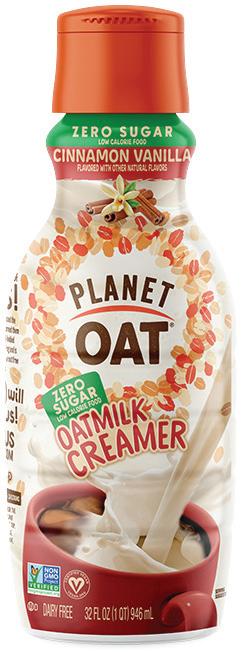
Another plant-based dairy brand has added to its creamer lineup. Planet Oat announced two Zero Sugar oat milk creamers: Caramel and Vanilla Cinnamon. The two new options are available in 32 oz. bottles. For more information, visit planetoat.com.
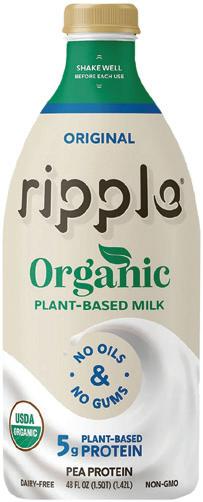
Ripple has been in the plant-based milk game for over a decade now, but it’s pushing into new territory with the release of Organic Plant-Based Milk, available in Vanilla and Original flavors. Each offers 5 grams of plant-based protein per serving, and is made with only five ingredients. The line hits stores this month including Target, HyVee, Wakefern, ShopRite, and Harris Teeter. For more details, go to ripplefoods.com.
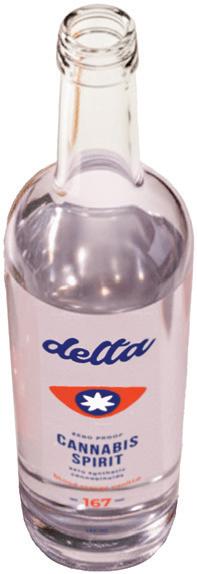
We’ve seen a slew of new and existing cannabis beverage brands embrace spirit-style 750mL bottles over the past 12 months, and Delta’s entrance into the category just confirms its red-hot status. The THC seltzer maker’s inaugural Cannabis Spirit, available for pre-order now for $59 ahead of its February launch, is Blood Orange Vanilla, offering 10mg THC and 2mg CBD per serving and infused with a curated terpene profile. Get more details at drinkdeltaspirits.com.
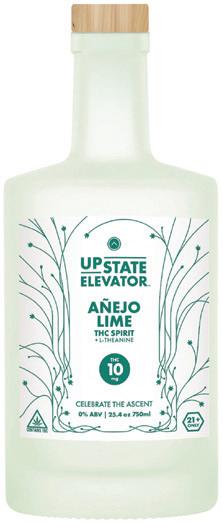
Vermont-based cannabis business Upstate Elevator Co. released its first multiserve, THC spirit, Añejo Lime. Each 750ml bottle has 166 mg of THC in total and provides 10 mg per 1.5-ounce serving. The new product also includes L-theanine for more relaxation benefits. Añejo Lime is available on the company website for $49.99 each. For more information, visit upstateelevator.com.
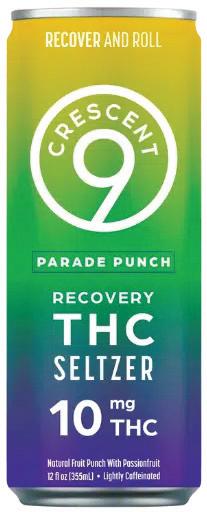
Hemp-derived THC brand Crescent Canna is ringing in the new year by launching Parade Punch Recovery Seltzer. Available in 5mg and 10mg THC versions, the new variety is formulated with vitamin B12 and caffeine to “recover and roll.” Parade Punch is being sold on the company’s website in 12-, 24- or 72-packs. For more information, visit crescentcanna.com.
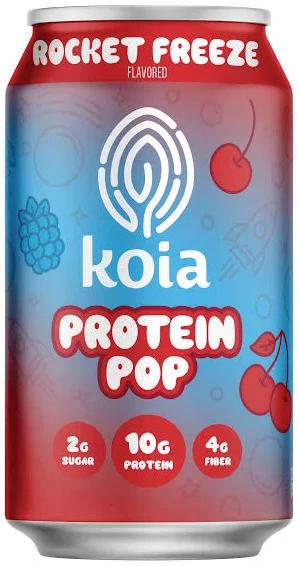
Koia is getting into the Modern Soda space with Koia Protein Pop, a four-flavor line of functional CSDs made with 10 grams of plant protein, 5 grams of prebiotic fiber and just 2 grams of sugar in each 12 oz. can. The drinks come in Rocket Freeze, Sour Squeeze, Pink Twist and Capri Splash flavors. The line launched online this week as an exclusive on TikTok Shop and is available for $39.99 per 12-pack. For more information visit drinkkoia.com.
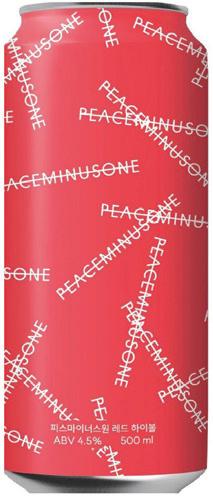
Peaceminusone Highball, a wine-based highball from BigBang frontman G-Dragon, has officially landed in the U.S. through a partnership with La Soju. Already a success in South Korea – where an initial run of 880,000 cans sold out in three days – the brand hits the U.S. in a lemon-accented white wine Classic Highball and a fruit-forward Red Highball. Both come in 500 mL cans at 4.5% ABV, with distribution in select California restaurants and Southern California 7-Eleven locations, with New York and New Jersey on deck. Learn more at lasoju.com.
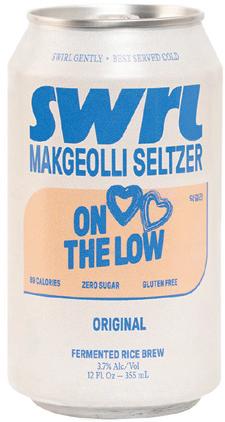
The next evolution of hard seltzer isn’t clear, but it may be cloudy. SWRL has launched the world’s first makgeolli seltzer, using Korean rice fermentation to deliver texture, mouthfeel and a softly cloudy appearance. At 3.7% ABV, zero sugar and 89 calories, SWRL’s lineup includes Original, Yuzu & Pine Needles, Earl Grey and Mixed Cherries, each designed to highlight the rice character rather than mask it. Available in New York City and shipping to 40 states. For more information, visit sipswrl.com.
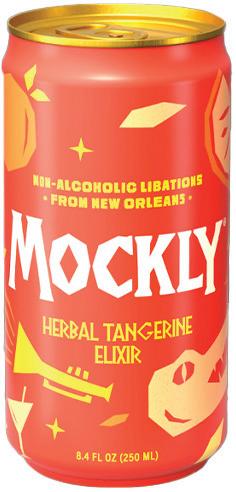
Adult non-alcoholic (ANA) cocktail brand Mockly unveiled its new can design and flavor names as it launches a new Citron Café Noir variety. The cold brew-based drink blends cocoa, fennel and lemon as an ANA espresso martini. Mockly is returning to its 8.4 oz. cans, reinforcing the brand’s identity as “cocktail adjacent” beverages. For more information, visit drinkmockly.com.
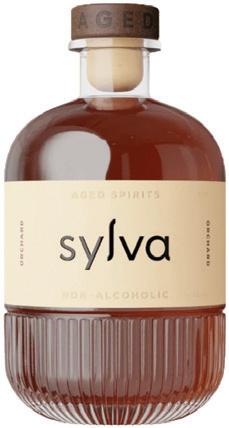
Expanding its partnership with non-alcoholic beverage curator The Zero Proof, Sylva introduced its latest limited release: Sylva Orchard. The non-alcoholic spirit is made in small batches from British fruit wood and malted barley, “embodying the essence of harvest season.” Sylva Orchard is exclusively available on The Zero Proof for $59.99. More information is available at sylvalabs.com.
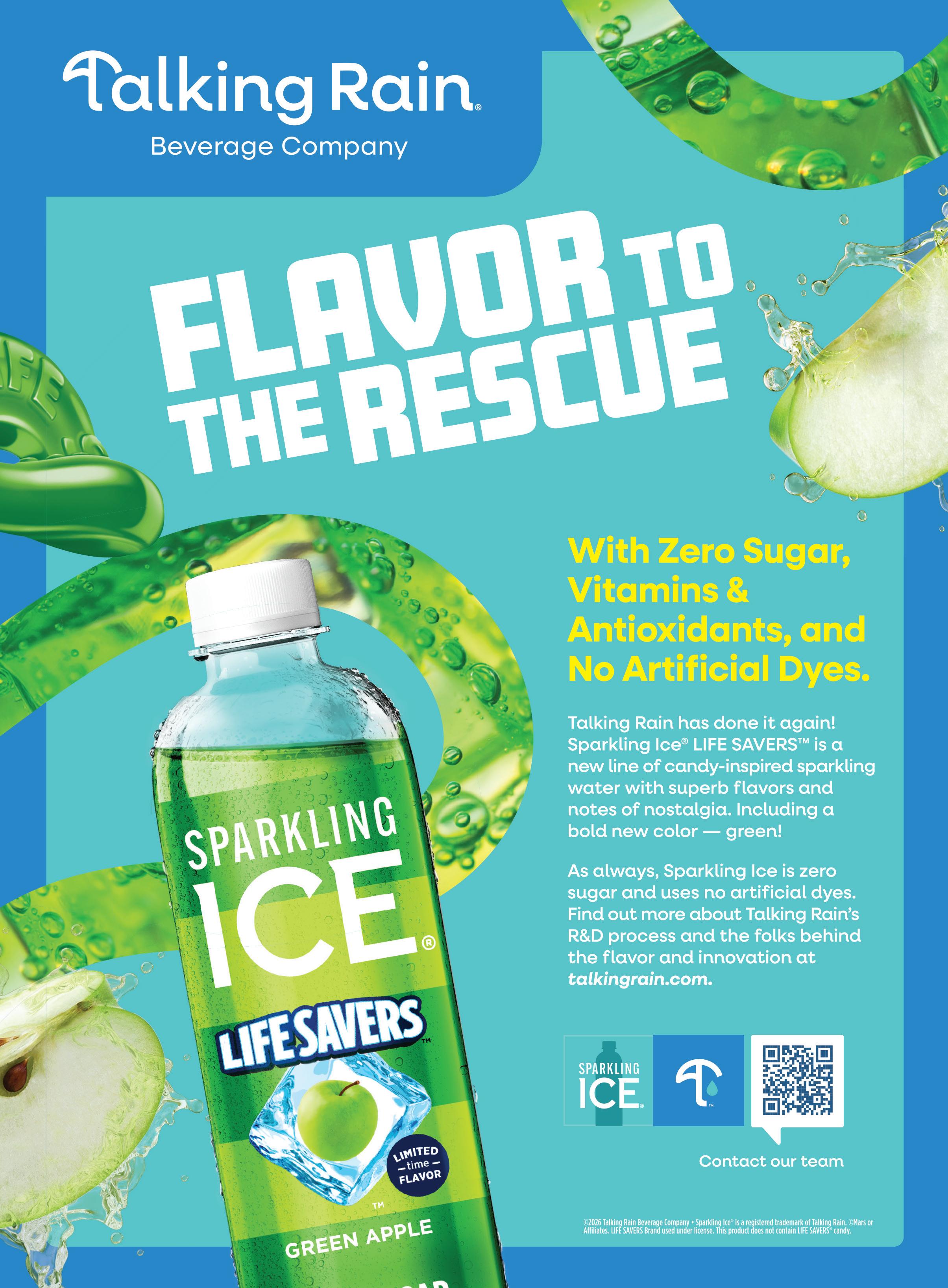
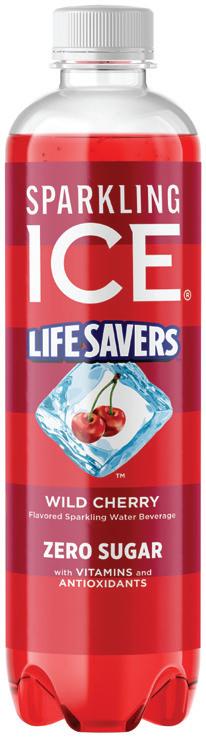
Talking Rain’s premier flavored beverage brand Sparkling Ice has partnered with Mars, Inc. for a line of co-branded Life Savers candy flavors. Available in Green Apple, Pineapple, Strawberry and Wild Cherry varieties, each 17 oz. bottle contains vitamins and antioxidants, zero sugar and is free from artificial dyes. The drinks are available online direct-to-consumer for $17.49 per 12-pack. For more information go to sparklingice.com.
Even in a world bombarded with more distractions than ever before, there’s still nothing that captures the public’s imagination like a good beverage.
2025 was littered with proof of that theory: amid all the things people can do on TikTok, it’s telling that so many are using it to share videos of them mixing up sodas to create super-sweet ‘dirty’ treats. Or what about the beloved chicken sandwich maker that suddenly wants to be your Starbucks alternative? Or the U.S. President negotiating changes to Coca-Cola’s precious recipe? The world had beverages on the brain in 2025, so it’s only right that we honor those who have captured the biggest slices of our collective mindshare.
This year saw major strategics flex their muscle with multi-billion dollar deals that fueled consolidation, cre -
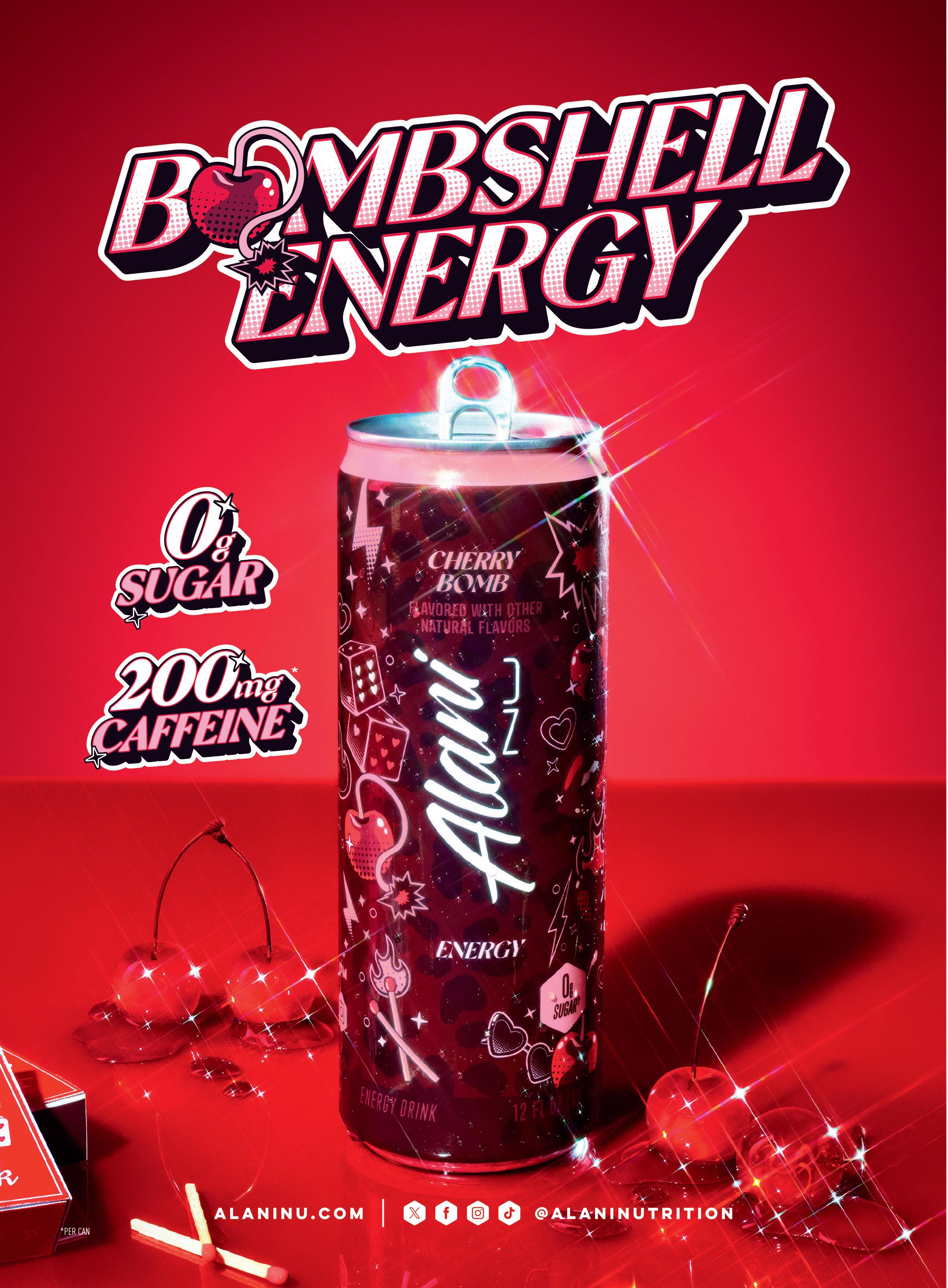
If you look at the numbers, Alani Nu’s case as 2025’s Brand of the Year is a powerful one. The supplement and energy drink brand is on its way to clearing $1 billion in sales this year, joining an elite group that includes Red Bull, Monster and Alani’s parent company Celsius, which forked over $1.8 billion to buy the brand in February. The brand hit a new quarterly revenue record in Q3 at $332 million, with retail sales rising 114% year-overyear. And as of late November, it represents a 7.2 dollar share of the U.S. RTD energy category, an impressive 3.3 point gain from Q3 last year.
ating bigger and more powerful platforms with which to drive categories further. Amidst that, nimble and creative entrepreneurs found pockets to innovate in high-ceiling, on-trend spaces like yerba mate and coconut water, proving that those billions, while useful, aren’t required to make an impact. This year reflected how simple but powerful ideas – female-focused energy drinks, THC beverages made with craft and quality, reimagined non-alcoholic experiences –can be carefully nurtured into zeitgeist-moving commercial forces, even at a time of global economic uncertainty and strained consumer confidence.
This year’s Best of Award winners exemplify the determination, ingenuity and love for beverages that inspires our industry, as we honor a group boldly moving into the future and illuminating the way for others to follow in their footsteps.
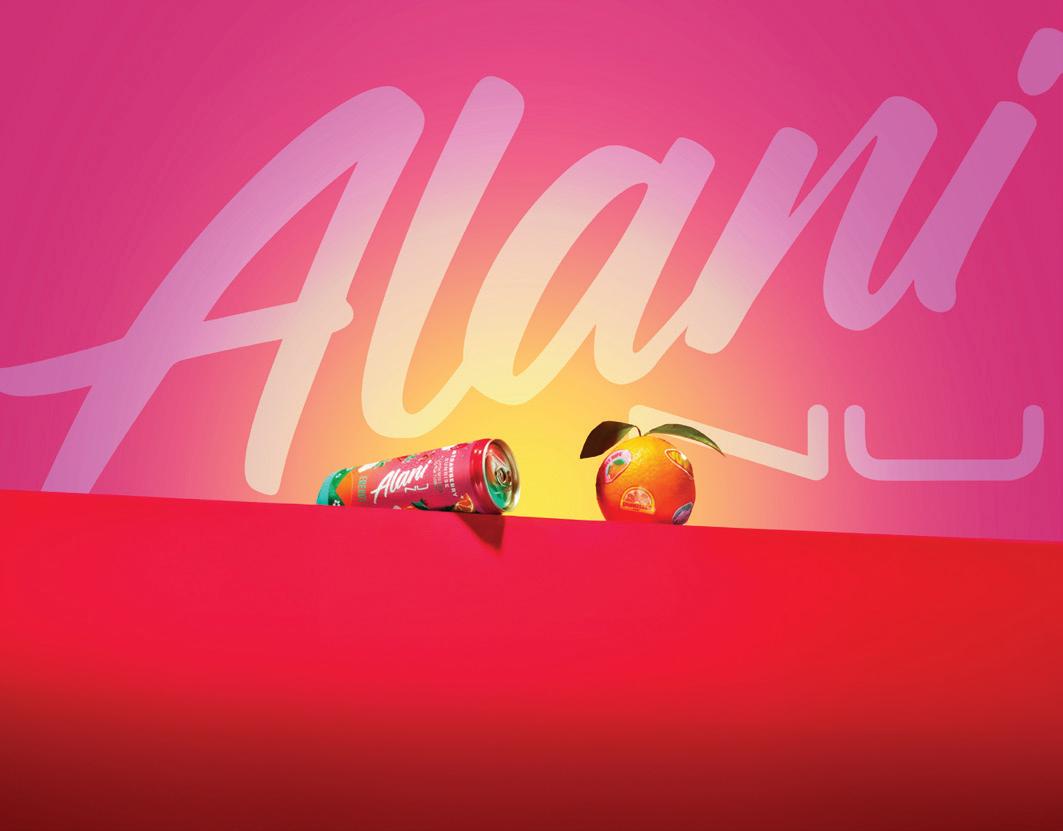
But those eye-popping stats risk overshadowing the other, powerful ways in which Alani has reshaped the energy category, and the ripple effects that have spread out across the entire beverage industry. The brand’s successful exit from Congo Brands to Celsius this year repre -
sents important validation for influencer-born drink ventures, showing that a new and untraditional model can result in a traditional big-ticket acquisition from a major strategic. Building upon the pioneering work done by Bang, Alani proved that leaning on indulgent flavors and organic social media marketing could help bring new consumers to the category – particularly women –who will follow the brand from niche
nutrition and supplement channels into mainstream retail. That approach has done more than just drive Alani’s own popularity: it has shifted the way operators are viewing the market, as female-focused energy innovations from Bloom and Monster (FLRT) have shown. And while Alani’s beer distributor partners will undoubtedly miss the brand on their respective trucks, the roughly $246 million in distributor termination fees paid out by Celsius to bring Alani into the PepsiCo system has also confirmed the importance of those suppliers in creating the next big energy brand.
Yet as much as this award is in recognition of the work done so far, Alani Nu’s ascent feels far from over. If anything, this honor seems to be an appropriate way of marking the end of the beginning of Alani’s story, and there’s still much more to go.
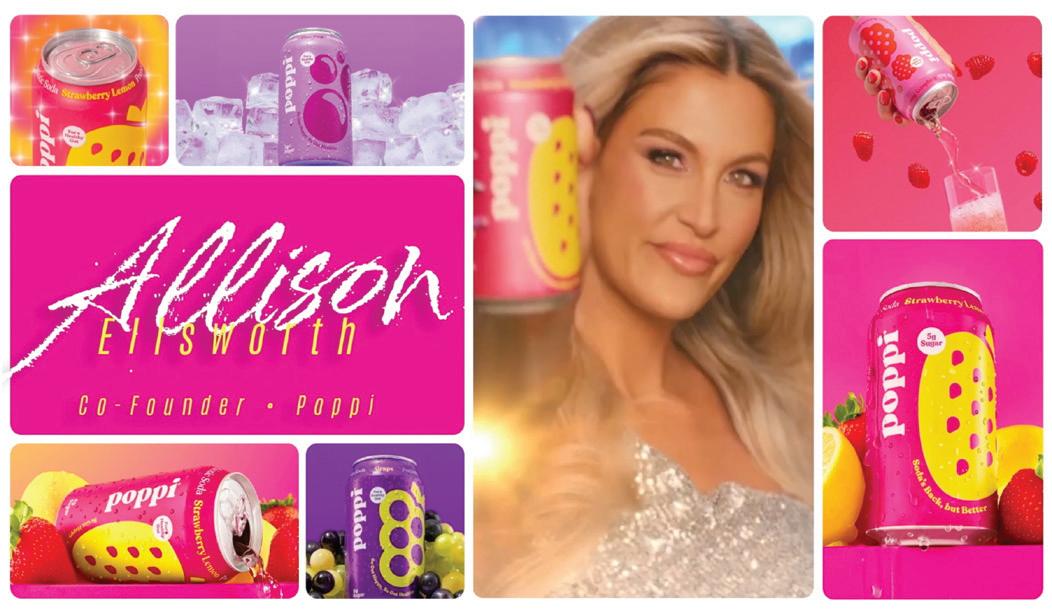
Allison Ellsworth, Co-Founder, Poppi
Allison Ellsworth’s journey over the past decade is a perfect arc for that near-mythic “heroic founder” and the fact that it culminated in this year’s sale to PepsiCo makes it seem too easy. It hasn’t been, of course: there have been pivots, competition, investments, social media intrigue and a massive Super Bowl coming out party. Through it all, though, Ellsworth has been the face and voice of the brand on Social Media, one that’s so closely identified with her that even as company leadership transitioned away from her and her husband, Stephen, it was clear that she was its most important asset.
All the parts are there at the start: driven by personal need for a product that could improve her life, Ellsworth discovered apple cider vinegar; developed a recipe and took her product to the farmer’s market; used feedback to start a brand with her husband; went on Shark Tank while very, very, pregnant and attracted a star investor in Rohan Oza; took the product –then Mother Beverage – and rebranded it completely as Poppi, a gut-friendly, better-for-you soda and launched a category alongside a dogged competitor in Olipop.
But it wasn’t until the pandemic that Ellsworth went beyond innovative founder and into the realm of marketing pioneer. Someone who said she has lived most of her life online, she discovered TikTok as the channel that clicked for Poppi, generating video after video and flooding the space with Poppi content, developing low-cost, heavy-impact topspin for the brand as the app also went to warp speed. As such, there are some staggering statistics out there: 3 billion views on TikTok, a face that has been seen at least seven times by one-third of the platform’s users, and that eventually added up to Pepsi’s $1.95 billion check for the company.
Beverage entrepreneurs take on many personas, but Ellsworth, through her innovative work that allowed millions of consumers to see themselves in her, to take the advice of the unfiltered cool mom from Texas, has created a new founder archetype. Even at close to a half-billion dollars in sales this year, she’s the brand and the brand is her. Beverage brands rarely, if ever, retain that strong a tie to the founder at that size, and with PepsiCo now calling the shots it’s hard to tell what the future brings for Poppi, but in 2025, for so clearly being the driving force behind the success of brand Poppi, Allison Ellsworth is BevNET’s person of the year.
Two years ago, we gave Tractor the 2023 Best Marketing award in recognition of its debut ad campaign, “Escape the Ordinary,” a psychedelic cartoon odyssey starring a sentient plastic cup. Since then, the organic, non-GMO fountain drink maker hasn’t lifted its foot off the gas. It’s added a new chief brand officer, secured $15 million in fresh funding and supercharged its on-premise reach through a new multi-year alliance with AEG.
Even amid this rapid growth, Tractor remained committed to doing “business as unusual” – driven by its belief that food and beverage should nourish people and the planet.
This year, we’re recognizing Tractor for its Mad Farmer Tour, a guerrilla-style nationwide marketing campaign that took the brand “out in the wild,” literally, while highlighting its ties to independent farmers and regenerative agriculture. For seven months, the brand zigzagged across the country in a retrofitted Airstream trailer hosting beverage tastings and community gatherings, proving that storytelling doesn’t need a studio, just purpose, creativity and a roadmap.
In a June New York City activation, electrolyte mix maker Liquid I.V. sought to transform the dreaded 4 p.m. slump from a productivity killer into a purchase trigger. The brand launched a takeover campaign reframing this time as “I.V. O’Clock,” the moment when consumers should reach for a hydration boost to prevent headaches, fatigue and irritability.

At 3:50 p.m., Liquid I.V. took over every Times Square billboard with synchronized “system error” screens that then flipped into branded creatives, followed by a fleet of robot carriers dispensing samples to passersby. The stunt helped position hydration as a daily ritual tied to a predictable consumer pain point, aiming to create habitual usage of the brand’s products.
If you’re searching for a masterclass in harnessing star power to accelerate brand awareness and trial, look no further. In October, Marvel heavyweights Tom Holland and Robert Downey Jr. brought together their respective beverage startups, non-alc beer brand BERO and coffee maker happy, for alimited edition collaboration featuring BERO Coffee Draught and Happy Eternal Hoptimist ground coffee.
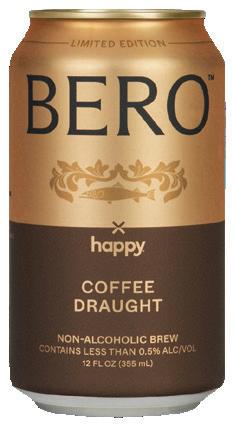
The partnership paired two founders with high consumer recognition and tapped into their on-screen history together to build momentum. By “swapping” collaborations rather than co-branding a single SKU, both BERO and happy expanded their reach without diluting their respective identities. The outcome was measurable: both products have sold out.
It might be hard to imagine just a few years ago that an ultra-filtered canned chocolate milk brand would be drawing so much attention and investment, but, amidst booming demand in highprotein products, Slate Milk is doing exactly that.
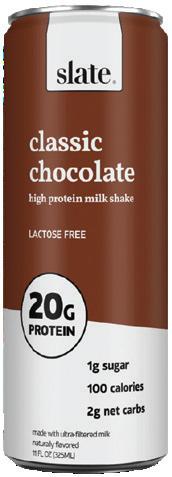
And appropriate for a brand that is “selling strength,” as cofounder Manny Lubin told us in 2023, the gains have been clearly apparent. Slate has spent 2025 growing its distribution footprint to 20,000 stores (Target, Albertsons and Sprouts among them), along with closing a new $23 million investment round. Along with a fresh tranche of growth capital, Slate added to an already diverse group of strategic investors which includes the founding team of frozen Greek yogurt brand Yasso, UFC president and CEO Dana White, actor Jonah Hill and DJ/producer Diplo, among many others.
That expansion has validated Slate’s differentiated approach, whether it’s tapping into college influencers via NIL or helping establish aluminum’s place in the protein category. With its new three-SKU Ultra sub-line (42 grams of protein) complementing canned entries at 20 grams and 30 grams, the Boston-based brand is poised to keep pushing forward.
Bloom
Bloom Nutrition seemingly blossomed out the gate. Founded in 2019, the women’s supplement brand had its finger on the pulse from the start, with fans on TikTok fueling its sudden rise from startup functional CPG business to a formidable competitor in energy drinks, powders and, now, soda via its Bloom Pop line. Now under the ownership of emerging platform giant Nutrabolt, the parent brand of C4, Bloom is enjoying an increasingly prominent role for distributor Keurig Dr Pepper across its expanding RTD portfolio.
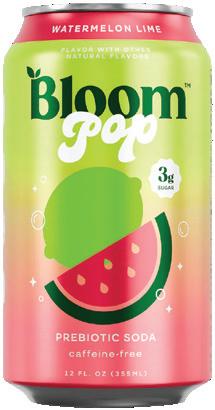
Founded by self-described “transformation queen” Mari Llewellyn – who serves as a powerful and influential face for the brand – Bloom’s rise has been somewhat similar to that of Alani Nu – another female-focused wellness brand that swiftly filled wide open white space for an overlooked audience via on-trend branding and quality products. But after selling 100 million cans of its energy drink in its first year, Bloom has shown there’s plenty of room for multiple brands to shine in this space, and its rapid innovation turnaround, command of social media and strong sales numbers have us hoping for more sunny days ahead.
In barely half a decade, functional relaxation drinks have gone from a niche trend for the jet set to a full-fledged beverage category carving out their own space in shelves and coolers in conventional and mass retailers across the country. There may still be a long path ahead, but Trip’s journey from British import to category leader has been remarkably smooth thus far. This year its swift seeding in the U.S. continued, with further validation arriving in the form of a fresh $40 million in growth capital.
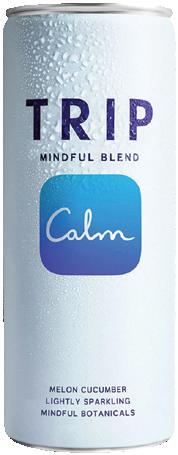
To get a sense for just how much more we can expect to see from Trip, that ten-figure investment is going solely towards building “the brand and community in the U.S.,” the company has said, and with over 40,000 doors globally – among them Whole Foods, H-E-B and Target – TRIP is well on its way towards $100 million in revenue this year with potential to double that take over the next 12 months. For a six-year-old business in a category that is still just making itself known with mainstream consumers, Trip is making the entrepreneurial trek look light and easy.
St. Agrestis
Despite being known for its “phony” drinks, there’s been nothing fake about St. Agrestis’ prodigious rise.
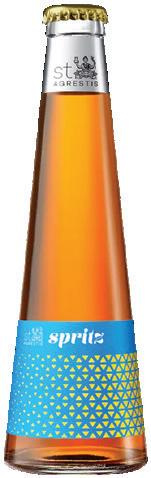
Riding on a surging wave of interest in adult non-alcoholic drinks, the Brooklynbased mocktail maker has steered that momentum in a very specific direction – as in, devoting itself nearly exclusively to a single SKU. The “Phony Negroni,” introduced in 2022, has become not just St. Agrestis’ signature drink, but a staple of on-premise non-alcoholic beverage programs at top bars and restaurants across the country. This year represented a culmination of the journey thus far: the product portfolio expanded with the subperb Phony White Negroni, its third SKU, while the line was backed with a retro-inspired video campaign for Dry January. Finding the white space between boring non-alcoholic beer and overelaborated zeroproof spirits, St. Agrestis has established its unmistakable tapered glass bottles as a coveted symbol of sophistication, accessibility and craft – without the booze.
While demand for intoxicating THC drinks has been growing over the last several years, it wasn’t until recently that the limits of how and where the category can go have been truly tested -- a challenge to which Nowadays has risen with gusto this year.
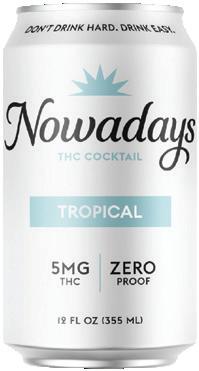
Building on the foundational work of brands like Cann (a BevNET Rising Star winner in 2021), Nowadays has helped reshape the cultural conversation around THC, giving it a sense of style and sophistication to rival top-shelf spirit brands. Quite literally, they’ve given cannabis drinks an invite to the party: see the brand’s activation at the F1 Miami Grand Prix, a four-day event which attracted over 275,000 attendees and ranked as the third most-watched F1 broadcast in U.S. history. Its presence there helped land hospitality platform Palm Tree Crew (PTC) as an investor, which came with an exclusive THC beverage sponsorship for PTC events over the next 12 months, including Palm Tree Music Festival dates in Aspen and the Hamptons. The brand’s party streak continued this fall at events like South Carolina’s Greenville Country Music Festival and the Sunset Cruise with Steve Aoki in Miami.
That kind of validation says a lot about Nowadays as a brand and portfolio, with both ready-to-drink cans and 750ml glass bottle formats that fit into a variety of occasions. The community-driven approach is breaking down lingering stigma around THC drinks and proving that hangover-free fun is a powerful motivator, even at the biggest and swankiest parties around.
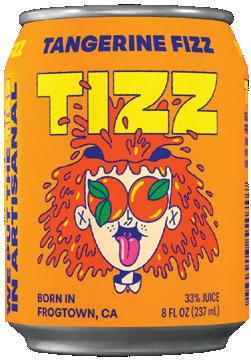
As betterfor-you sodas flood the market, we can appreciate “tangerine fizz” maker Tizz for remembering that soft drinks should essentially be: fun. The California-based brand’s squat 8 ounce cans caught our attention with its loopy cartoon aesthetic, bright printed cans and overall playful personality.
How do you make tonic water sexy?
Start with a striking, single-serve square glass bottle and you’re already halfway there. Swiss brand Match seduced us with its brilliant minimalism, creating something fresh and vibrant yet also steeped in classic vibes that give it an irresistible and timeless appeal.
Delicious in its simplicity, Zico’s premium Pure Organic gives maybe the truest and best coconut water experience outside of cracking one fresh from the tree yourself, as we noted in our five-star review in October.
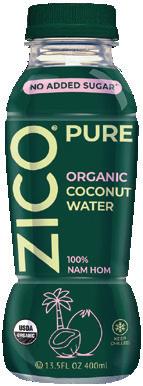
Ready-to-drink yerba mate has been begging for innovation for some time, making Pablo’s recent arrival particularly welcome news. Blending function, fun design, truly differentiated flavors (including both full and zero-sugar brews) and some inspiration from South American soccer, the three-SKU family of 12 oz. cans is a winner.
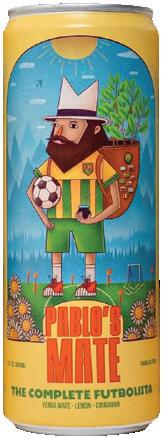
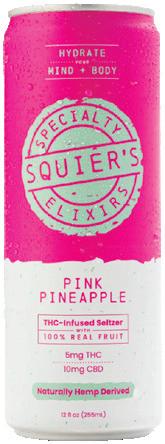
We certainly appreciate the thoughtful balance of added cannabinoids (5mg THC/10mg CBD), but Squier’s Elixirs are delicious just as pure refreshment drinks, first and foremost. Delightfully fizzy and bursting with bright, fresh and juicy flavors from 100% real fruit (no flavorings), it’s primed for both the canna-curious and regular consumers alike.
While the category pushes for more innovation, we sometimes wish more brands would follow Jolene’s narrow focus on simply creating a best-in-class RTD cold brew. From the minimalist can to the liquid inside, Jolene’s black and oat milk latte varieties are both clean and appealing examples of elegance over elaboration.
The ’Phony Negroni’ specialists at St. Agrestis seduced us again this year with their spectacular White Negroni. Presented in the brand’s signature tapered bottles, the champagne-hued liquid is itself reason to celebrate, achieving a near-perfect calibration of bitter, burn and sweet.
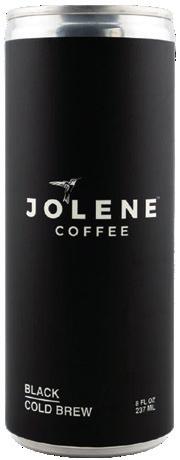
You might say the world doesn’t need yet another take on the classic Arnold Palmer lemonade-tea cocktail, and you’d be wrong. Halfday’s reduced-sugar version (5 grams per can) is a testament to skillful sweetening and reimagining of a familiar recipe, further earning the growing brand a distinctive edge within the category.
Whether or not a canned tequila seltzer is an “all day” drink is up to you to decide. But what’s not in question is the brand’s packaging design, which creates a colorful shelf billboard across the four SKUs and balances warm and cool chromatic touches to provide its distinctive look.
Celebrities have a mixed record as beverage entrepreneurs, which makes us particularly impressed with actor/producer Ben Stiller’s sensational debut in soda this year. Stiller’s embraces an unapologetically nostalgic look and feel, yet its mid-calorie (30 per can) and “no fake stuff” takes on fountain favorites like Shirley Temple and Root Beer are very much on-trend amidst a broader CSD resurgence.
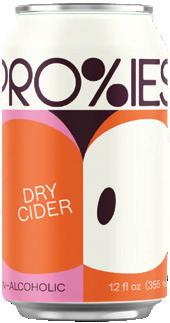
Proxies’ superb Dry Cider in 12 oz. cans caught us by surprise, with a brilliantly executed blend of dry apple flavor layered in a French oak finish, packaged in an inviting and engaging design. More than just another cider, this one is bursting with craft, inspiration and flair to rival the best in adult non-alcoholic drinks right now.
Does the perfect orange soda exist? We found compelling evidence in Something & Nothing’s outstanding citrus SKU, the British company’s first U.S.-exclusive release. The bright pop of fruit flavor from the juice, softened and given some subtle depth from the added botanicals, is maybe the best example yet of S&N’s simple-but-sophisticated “premium soda, inspired by travel” ethos.
Narra’s outstanding Ube Vanilla oat milk latte is a caffeine-free, decadent-yet-delicate delight that manages to give a relatively niche hero ingredient (ube) a broadly appealing, low-sugar (six grams per 7.5 ounce can) platform on which to strut its stuff.
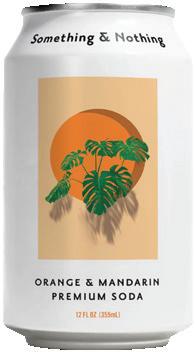
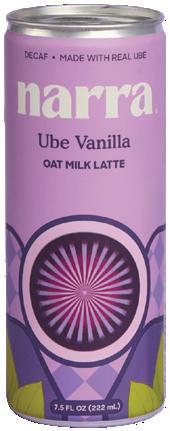

By: Shauna Golden
Once confined to powders and sports nutrition products, protein is flooding the ready-to-drink beverage space as everyday, health-conscious consumers seek convenient, on-the-go nutrition that fits seamlessly into their established routines.
Against that backdrop, protein coffee – or “proffee,” as it has been dubbed on TikTok – is making inroads with a broad swath of shoppers who are seeking more from their morning cup of joe or afternoon pick-me-up. The trend spans everything from canned lattes to instant coffee powders to handcrafted drinks made with protein-infused milk or cold foam. The brands resonating most aren’t chasing protein shock value; instead, they’re prioritizing a coffee-forward approach with a clean ingredient deck.
“What is especially important is that this segment is meeting consumers in their real routines. A lot of shoppers are replacing a traditional breakfast with something portable,” Charlie New, principal category merchant for beverage at Whole Foods Market, told BevNET via email. “Protein has become mainstream. Consumers associate it with energy, strength and feeling full. When you combine that with coffee, you end up with a product that feels like it earns space in the fridge.
Harry Lewis, CEO of functional coffee brand Bulletproof Coffee – which recently launched an instant High Protein Iced Coffee product – shared a similar sentiment.
“Protein moved from performance to every day. People want it in breakfast, mid-morning and [the] afternoon bridge. Coffee is already the full anchor in that routine. We felt the big opportunity was not asking consumers to add a new behavior…but upgrading the ones they already have.”
Unlike declining diet trends like keto and paleo, many are confident that the increased consumer demand for higher protein products will stick around.
“[The protein craze] is rooted in what works. We see a lot of trends start in fitness and active nutrition, and there’s not a better example than protein, where people realize what’s good for the physically elite is probably good for me too,” said Scott Dicker, a senior director of market insights at SPINS. “Protein tends to have a universal health halo.”
The new Dietary Guidelines – which upped the amount of recommended daily protein intake for Americans – and the rise of GLP-1 inhibitors are further cementing protein as a key growth engine of CPG innovations across both retail and foodservice.
How can coffee brands capitalize on this protein boom? What is the staying power of this trend in the category? What is the benefit for retailers?
In the traditional protein shake and meal replacement category, a clear trend has formed: the more protein, the better. New entrants and legacy brands alike are pushing the boundaries of how much protein they can fit into a bottle, with some drinks surpassing 40 grams per serving.
But that isn’t typically the case in the coffee category, where brands are busy crafting lattes with a focus on clean ingredient decks and upgrading everyday coffee consumers’ daily routines.
According to Dicker, products containing 20-25 grams of protein are growing the fastest in the RTD coffee category, with whey- and animal-based proteins leading the market.
Projo, the winner of BevNET’s New Beverage Showdown 30, landed on 25 grams of protein for its Power Coffee because “it’s the amount most widely supported by nutrition research to meaningfully support satiety, muscle recovery and sustained energy in one,” according to co-founder Charbel Mawad.
The brand uses a dual-phase protein system made up of milk protein isolate, casein and certified grass-fed collagen. Each ingredient plays a different role: milk protein isolate provides fast-absorbing protein that helps curb hunger, casein digests more slowly and helps people stay fuller longer and collagen adds functional benefits for joints, skin and connective tissue.
“The goal with Power Coffee was to make something that fits naturally into real life: a single can that replaces multiple products people are already consuming, like coffee plus a protein shake or snack, while helping them feel energized, satisfied and productive throughout their day,” said Mawad.
Other brands competing in the 20-25 gram range include Slate and Super Coffee.
Available in four flavors – Caramel Latte, Mocha Latte, Vanilla Latte and Sweet Cream Latte – each 11 oz. Slate High Protein Iced Coffee delivers 20 grams of protein from ultra-filtered milk and 175mg of caffeine. The 20 grams of protein was designed for individuals “looking for a healthier way to add protein into their diet and find a healthy replacement for their coffee shop Frapuccinos or high-sugar drinks,” according to co-founder Manny Lubin.
“We don’t think [high-protein] is a trend. We think it’s an evolution of the diet,” said Lubin. “High protein not only helps build muscle, but it makes you feel fuller for longer. By adding more protein to your diet over an extended period of time, your body will feel the same amount of fullness with less calories.”
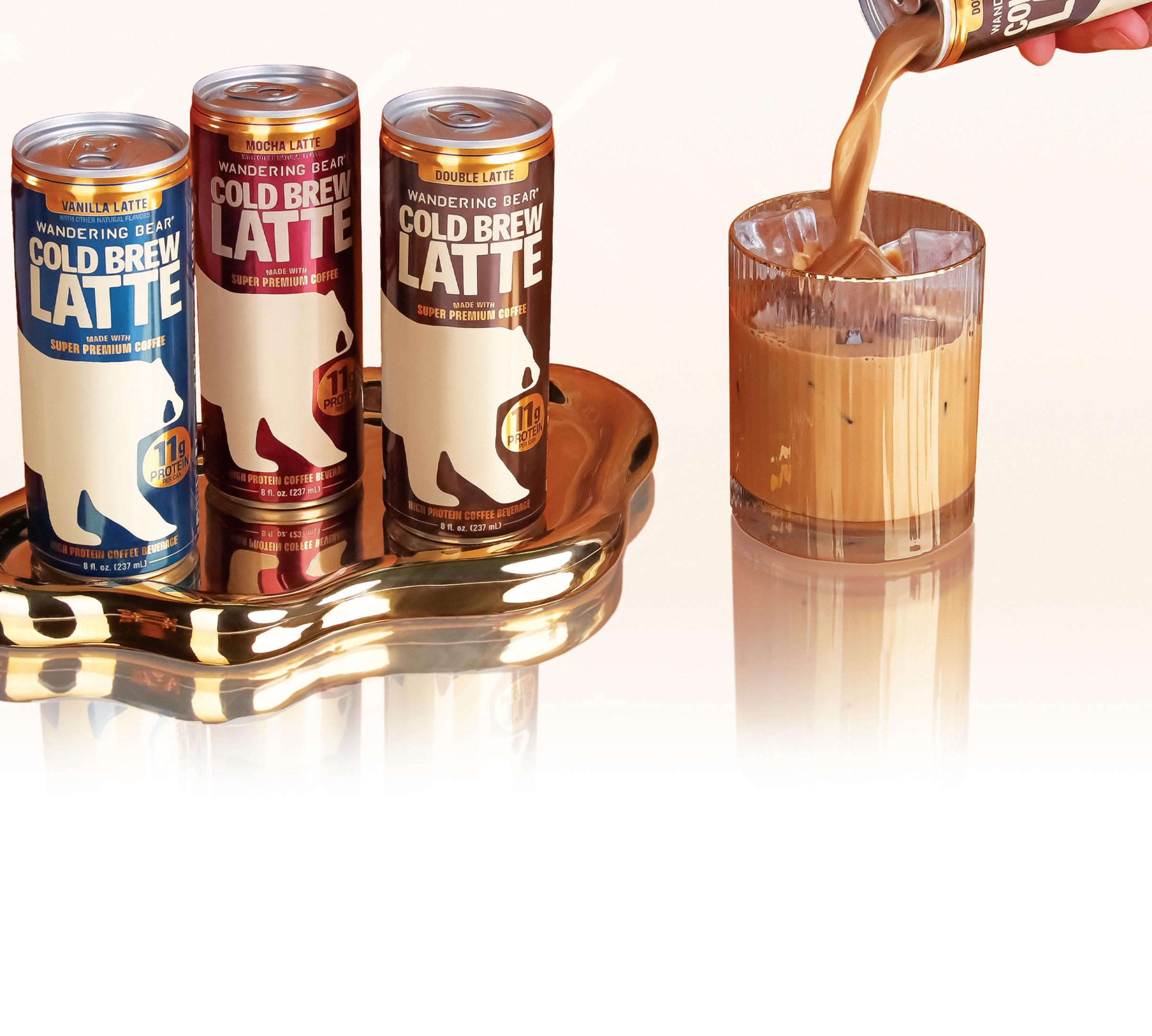
Elsewhere, Super Coffee – one of the first protein coffees on the market – has found success with its new PROTEIN+ product launched in April. Available in Mocha and Vanilla flavors and two formats – 12 oz. bottles and 14 oz. bags of powdered coffee – each serving contains 25 grams of protein and 130 calories.
In November, the brand surpassed $10 million in shipments with PROTEIN+, making it “far and away” Super Coffee’s fastest product line to reach that amount in sales, according to a posting from co-founder and CRO Jake DeCicco.
When Super Coffee launched in 2016, it initially focused on moderate protein levels paired with keto-inspired high fats and MCTs, alongside familiar taste and affordability. While higher-protein versions surfaced from other brands throughout the 2010s, consumer adoption remained limited and costly. Rather than rush in, Super Coffee took a patient approach, confident it was well-positioned to scale as the category matured.
That inflection point came in 2023, as protein coffee gained traction on TikTok and athome use increased, reinforced by successful RTD launches – signaling it was time to act.
“We were very patient, but we always felt that we were perfectly positioned as a brand, when we saw the consumer turn the corner a little bit, to get in quickly with a really great offering,” said Super Coffee co-founder and CEO Jordan DeCicco. “We used all of our capabilities, all of our insights and all of our data to come up with a great concept. As soon as it launched, we knew it was going to be successful. It had immediate traction.”
Then there’s Throne Sport Coffee, the electrolyte-infused canned coffee brand founded by former Coca-Cola executive Michael Fedele and Kansas City Chiefs Quarterback Patrick Mahomes, which delivers 10 grams of protein and 150mg of caffeine per 11 oz. can.
The coffee is aimed at what Throne views as a gap in RTD options for “active” consumers, targeting use “before, during and after athletic exertion,” according to Fedele. To bolster its performance credentials, the brand secured NSF Certified for Sport status and trademarked “Coffee PLUS+,” highlighting functional additions like B vitamins, electrolytes and branched-chain amino acids.
While some brands center their product portfolios around protein, others view the demand for the nutrient as a golden opportunity for line extensions.
Often viewed as a pioneer of the functional coffee category, Bulletproof hit the market in 2011 with its flagship formula featuring premium coffee, medium-chain triglycerides (MCT oil), and grass-fed butter. In September 2025, the brand introduced High Protein
Iced Coffee in Mocha and Original varieties. Each serving delivers 12 grams of whey protein, approximately 170mg of caffeine and MCT oil.
“What you will see from Bulletproof is that our invitation is always to expect more; your coffee needs to not only taste great, but also work harder for you,” said Lewis. “Our North Star will always be the notion that we’re coffee-first with added functionality that serves our consumers and improves their daily rituals.”
Also in September, New York-based Wandering Bear unveiled its first canned offering: a dairy-based cold brew latte delivering 11 grams of protein per 8 oz. can, available online and exclusively at Whole Foods Market.
Wandering Bear co-founder and CEO Matt Bachmann told BevNET that when the team began evaluating adjacent growth opportunities anchored in the brand’s coffee house-inspired ethos, it turned to protein from ultra-filtered skim milk to achieve functional benefits and café-style mouthfeel without compromising on flavor or calorie count. Although the brand simply set out to add dairy to its premium offerings, Bachmann noted that protein demand accelerated between the project’s inception and launch, aligning the launch with broader market momentum.
“This is a product that at its core is a super premium coffee latte that just happens to be better-for-you and has now gotten included in a cadre of what you might call protein coffees. And that’s not a bad thing to call out,” said Bachmann. “Our goal is not maximalist; if it’s maximalist at anything, it’s flavor.”
Protein may be dominating today’s diet trends, but Bachmann views its rise as a greater sign of growing consumer demand for more nourishing, nutrient-dense options.
“It wasn’t a market timing thing; it was a capability thing. We had finally gotten to a place in all of our years of experimentation where we didn’t just and meet the dimension of a coffee shop-inspired latte with the right taste and texture, but we were able to tweak the macronutrient profile in the formulation such that it had twice the protein, half the sugar and none of the saturated fat,” said Bachmann.
According to Bachmann, Wandering Bear’s established relationship with Whole Foods and strong consumer recognition made the natural retailer a natural place to introduce its canned lattes. He added that certain retailers – Whole Foods among them – attract customers who are accustomed to discovering and experimenting with new products.
When Whole Foods evaluated the Cold Brew Lattes, what stood out was that they felt like “a natural next step for the brand,” New, of Whole Foods, said. Additionally, the retailer felt that the product clearly fits into how Wandering Bear’s customers already shop and drink coffee.
“Exclusivity also matters because it creates a sense of discovery and differentiation on shelf. It gives our shoppers something they cannot get everywhere, and it gives us the opportunity to build a bigger story around the launch,” said New.
Whole Foods carries the protein coffee subsegment because it creates incremental occasions and brings shoppers into the set with a new mission while serving a range of consumer needs, from clean, functional options with strong macros to more indulgent options that still meet nutrition goals, according to New.
Elsewhere, Projo is gearing up for a national launch with mass retailer Target in May. The Minneapolis, Minn.-based retail chain will carry single cans of the brand’s Vanilla Latte and Mocha Latte flavors at 1,755 stores and a 4-pack format at 550 locations.
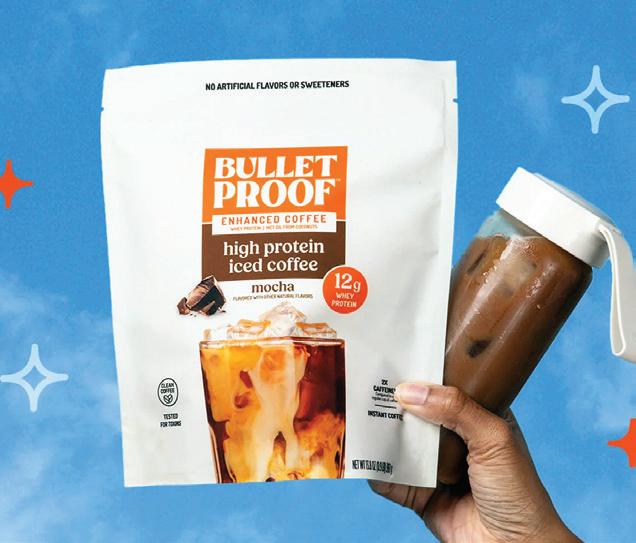
“The fact [Target] took a bet on us this early, and the fact that they wanted to go straight to nationwide with us, is a really big testament to what we’re building and what we’ve created with our brand and product,” said co-founder Charbel Mawad.
The move comes as Target doubles down on its wellness set with a 30% assortment expansion across categories.
“Wellness” will also be factoring more heavily into the mass retailer’s marketing efforts this year, beginning with its Wellness Week promotional campaign in January that included in-store activations and a “Wellness Hub” at Target.com.
It’s not just grocery aisles seeing an influx of protein coffee; corporate giants like Starbucks and Dunkin’ have introduced protein-infused craft beverages as permanent menu items. The move is likely driven by the coffee chain’s attempt to capture a broader swath of health-conscious consumers on the back of flat comparable store sales that led to the closure of over 600 stores in North America.
In September, Seattle, Wash.-based Starbucks unveiled a new line of Protein Lattes and Cold Foam drinks, which deliver up to
36 grams of protein per 16 oz. Offerings include Protein Matcha, Sugar-Free Vanilla Protein Latte and Caramel Protein Latte.
“As we continue to get back to Starbucks, we’re focused on modernizing our menu with innovative, relevant and hypeworthy products that will resonate with our consumers. Our protein beverages tap into the growing consumer demand for protein in an innovative, premium and delicious way that only Starbucks can deliver,” said Tressie Libman, Starbucks global chief brand officer, in a statement.
In January, Dunkin’ jumped on the protein wave with the addition of protein milk now offered in its Lattes and Refreshers, its fruit-flavored green tea drinks.
The new menu items include Mango Strawberry and Refreshers, and three varieties of iced Protein Lattes (Caramel Chocolate, Almond and Sugar-Free Vanilla). All five cold beverages feature 15 grams of protein, while protein milk can be added to any other drink menu item.
While the protein coffee subsegment is benefiting from a number of tailwinds, the RTD coffee category overall is fighting against surging commodity prices as well as increased competition from burgeoning categories, including the $125 billion energy drink market.
“I used to call coffee the original energy drink. You’re seeing competition with energy products and innovation around sweetener use as well. A lot of these things are playing a role,” said Dicker.
“Energy had an incredible year in 2025, and I think a lot of people are optimistic about it, including new players coming in. I think that RTD coffee is facing that existential threat against energy,” added Nik Allen, global insights manager for consumer foodservice at Euromonitor International.
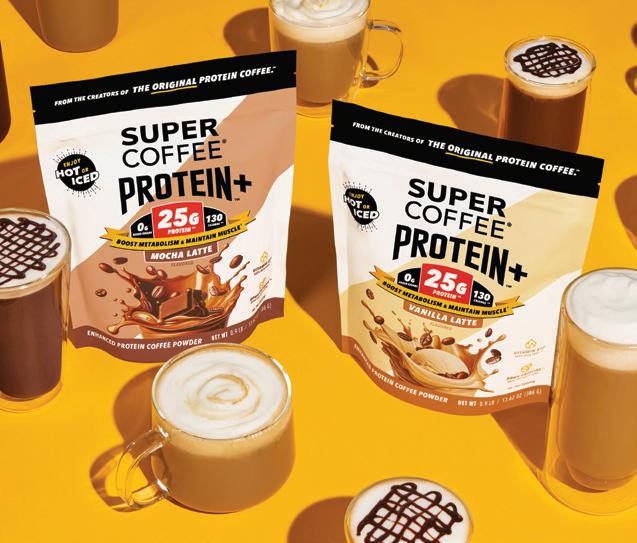
As coffee commodity prices continue to rise, be it tariff- or climate-induced, Allen sees added protein and sugar reduction as target avenues for RTD coffee brands trying to compete with energy.
Believe it or not, we still have yet to reach peak protein. As the protein coffee subsegment continues to grow and competition heats up, brands will need to double down on their value propositions to stand out on shelf.
“I see protein coffee evolving into a more established everyday segment, but with greater sophistication and segmentation over time. As more brands enter, the winners will not just be the ones with protein claims. They will be the ones who can deliver true product quality, better nutrition and a clear reason for being,” said New.
He continued, “Taste will become non-negotiable, and ingredient transparency will continue to matter. Customers will demand higher quality proteins, more thoughtful macro profiles and cleaner formulations without sacrificing experience.”
On a similar note, DeCicco said, “I can’t necessarily speak for how [protein coffee] is going to perform at the cafe level… [but] I love it for CPG because of the price point and the scale benefit. Brands obviously focused on creating the best products possible at the best prices should see success, but it’s going to get competitive pretty quickly.”
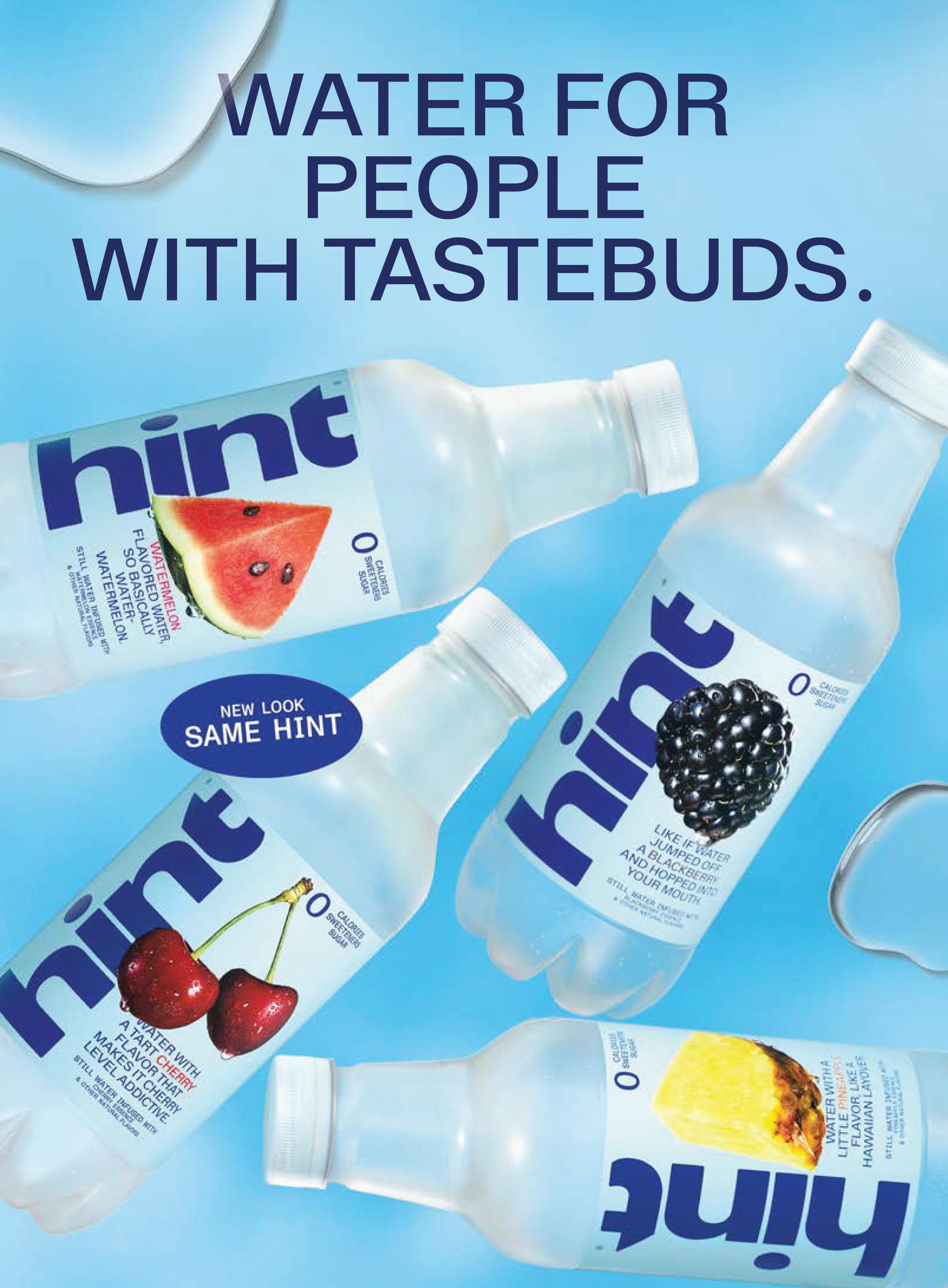
Known for its barista oat milk, Minor Figures is expanding into multiserve oat milk lattes in the U.S. While the U.K.-based brand previously market-tested single-serve, canned lattes, the new ready-to-serve (RTS) cartons are expected to remain a staple. Available in four flavors – Classic, Vanilla, Cinnamon and Mocha – the RTS options have about 3.5 servings per 32 oz. carton. The oat milk lattes are being sold exclusively in retail at Sprouts until April and are also available on the company website and Amazon.
Coinciding with the streaming release of “Wicked: For Good,” Pop & Bottle has introduced limited edition Wicked-inspired packaging for select coffee and matcha products, including Ozpresso Cold Brew and Coffee Concentrate, Strawberry Matcha, Vanilla Oat Milk Latte and Matcha Oat Milk Latte. The products are now rolling out to select retailers nationwide, including Target, Whole Foods Market and Walmart.
Canned coffee brand Beekeeper is getting into the “swicy” trend (ICYMI “sweet spicy”) with its Hot Honey Cold Brew variety. The sixth Beekeeper SKU is available in 8 oz. slim cans on Gopuff. The honey-sweetened RTD coffee brand added its fan-favorite flavor to its portfolio in August. The cinnamon-spiced variety was originally launched as a Taco Bell partnership in February 2024.
“Enhanced coffee” brand Bulletproof is leaning into more muscle with an instant High Protein Iced Coffee blend, available in 14 oz. pouches for $33.99. The line comes in Original and Mocha flavors, with each serving offering 12 grams of whey protein and 170mg of caffeine.
Renowned coffee expert and influencer James Hofman has been an advocate of Cometeer’s flash-frozen coffee capsules for years, but now he’s really getting personal. The Cometeer x James Hofman Discovery Kit, now available from the brand’s website, acts like a tour across coffee styles, roasts and geographies, showcasing a curated collection of the most show-stopping flavors from eight top specialty brands (16 capsules total). Once drinkers have their box, they can follow along with Hofman’s guided tasting notes and fill out the tasting form with their own notes to help identify the brews they like best. The Discovery Box is priced at $29 for new members and is $49 plus shipping for one-time purchases.
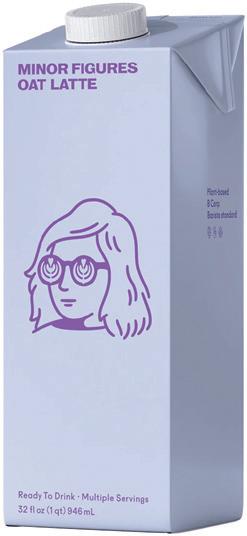
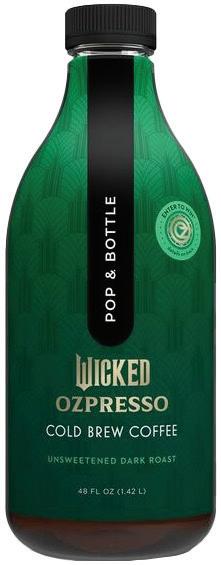
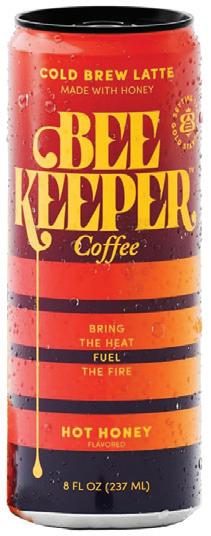
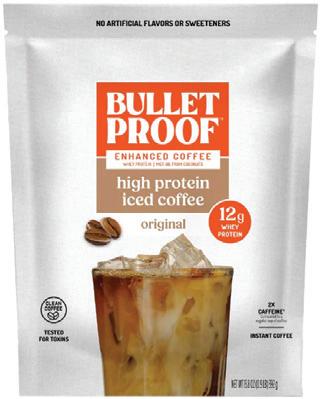
Laird Superfood is supplementing its functional coffee and creamers portfolio with a line of Protein Coffee with Lion’s Mane Mushroom. The three instant coffee varieties (Sweet & Creamy, Vanilla and Unsweetened) mark the brand’s first foray into dairy. Each 5.3-ounce bag retails for $19.99 and has 10 grams of protein per 0.5 oz. serving.
Wandering Bear, a leader in premium organic cold brew coffee, launched its revolutionary Cold Brew Latte to seamlessly bridge rich, coffee-shopinspired taste with powerful nutrition. Available in classic Double Latte, Vanilla, and Mocha, their lattes offer indulgent flavor and wellness in every sip. Each delicious 8 fl. oz. can delivers 11 grams of complete milk protein from ultra-filtered skim milk, 140mg caffeine from Wandering Bear organic, specialty-grade cold brew, 100 calories and only 5-6g natural cane sugar (varies by flavor.
Throne SPORT COFFEE, the innovative ready-to-drink coffee brand redefining the category, launched its first new flavor: Mint Mocha. Created by beverage industry veteran Michael Fedele in partnership with pro football superstar quarterback Patrick Mahomes, Throne SPORT COFFEE is designed for healthconscious consumers seeking a betterfor-you option to fuel their active lifestyles. Mint Mocha is available on Amazon.
Happy Coffee introduced its first flavored Cold Brews to its RTD lineup for a limited time. The two flavors –Tahitian Vanilla and Salted Caramel –are available at Costco stores in Texas in 15-packs ($24.99), featuring five Tahitian Vanilla, five Salted Caramel, and five regular Cold Brews.
Chameleon Cold Brew has been sold to multibrand rollup Next In Natural. The Texas-born cold brew maker has changed hands several times over the past decade, most recently when it joined SYSTM Foods, a partnership of private equity firm SYSTM Brands and Mark Rampolla’s venture capital firm PowerPlant Partners (rechristened later to Groundforce Capital), in 2022.
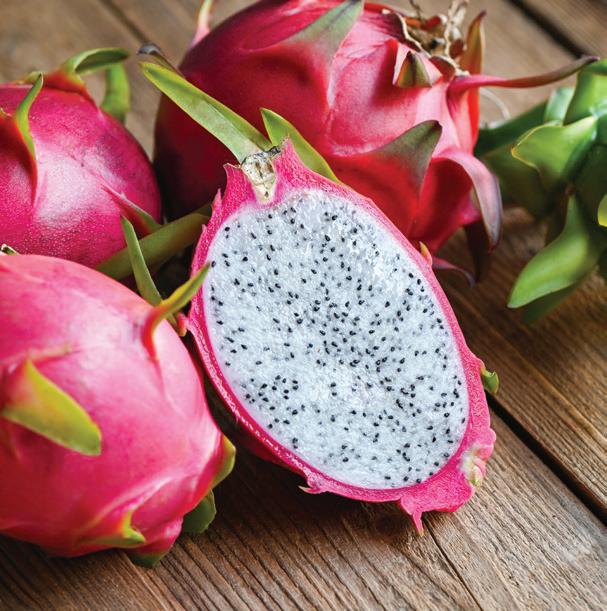

By Martín Caballero
Whether it’s a sign of brilliant creativity or just good old fashioned choice paralysis, consumers are kind of all over the place these days.
From mixing up wild dirty soda combinations to packing protein into every drink imaginable, there’s something of a manic streak running through CPG at the moment, as Americans seemingly want everything all at once and beverage makers gleefully try to indulge them. Yet, as we heard from ingredient suppliers and flavor houses in our preview of flavor and ingredient trends at the start of the new year, it’s deeper than just that. Creativity for its own sake may work in the short-term, but lasting innovations will need to be anchored in deeper purpose and functionality.
Boosted by the rise of MAHA, the reordering of nutritional priorities and trends has created vast opportunities for new product development, pushing nutrients like protein and fiber to the forefront, overtaking concerns about sugar or plant-based diets in the process.
Adventurous palates, particularly among younger consumers, continue to support the expansion of global flavors, but many are predicting old favorites will keep their hardearned places in 2026.
Classic fruit flavors dominated Kerry’s annual Taste Charts report, with Orange ranking top ahead of Strawberry, Mango, Lemonade and Pineapple in terms of refreshing beverages. Orange reported over 41% year-over-year growth, and inspired 690 new product development (NPD) launches, per the report. But looking ahead to the shortterm future, the rising influence of modern soda can also be seen with Cola being highlighted as one of the year’s fastest-growing flavors, and Root Beer cited as one to watch for the future.

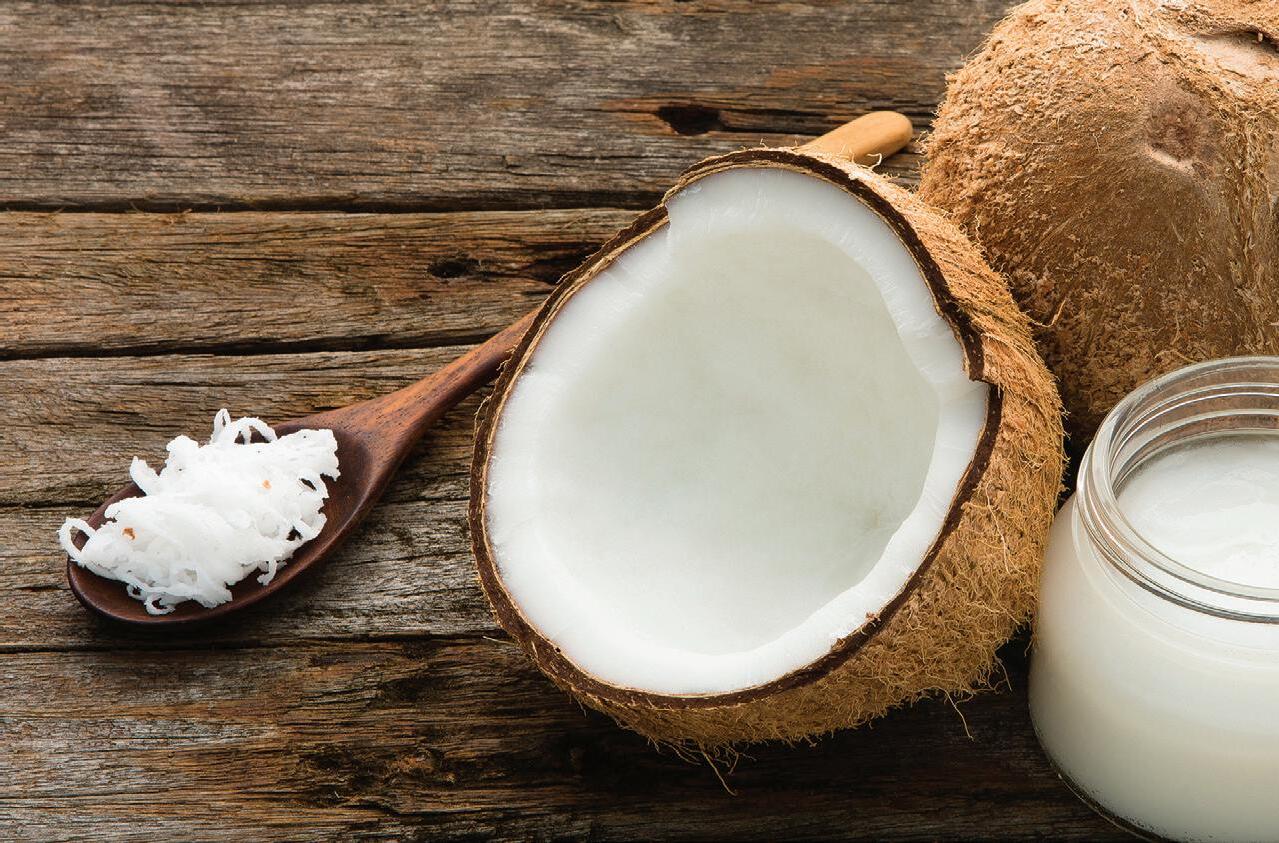
The rise of dragon fruit in particular is “more than a trend,” per Kerry, but rather a “testament to the global appetite for adventurous, refreshing flavors” in beverage. The fruit’s mild sweetness adds to its versatility across hot and cold beverages, as well as alcoholic and “alcohol-inspired” drinks, of which it is ranked as the fastest-growing flavor in the space. The overall momentum has led new product launches to jump 17% CAGR from 2023 to 2025, and was reflected in 2025 via new SKUs from Evolution Fresh and ROAR Organic, as well as at cafe chains like Starbucks and Gong Cha.
Versatility is also a big asset for Dark Sweet Cherry, picked by ingredient supplier T. Hasegawa as its Flavor Trend of 2026. In beverages, the rich sweetness and subtle bitter notes have crossed over into non-alcoholic (juice, matcha) and alcoholic (cherry martini) spaces. Complex-but-approachable flavors are in: see toasted coconut, picked by Monin as its 2026 Flavor of the Year. While past years have seen more interest in sweet-spicy drinks, toasted coconut leans into sweet and savory (“swavory”) notes that work in iced lattes, dirty sodas and other on-trend drinks.
Yet there will likely be plenty of room for pure indulgence in 2026 as well. The “dirty soda” wave will continue, predicts T. Hasegawa, offering a canvas for blending nostalgic soda-shop culture with other drink types to create highly customizable, social media-ready flavors.
The combination of several current trends -- including the MAHA movement, app-based nutrition tracking and GLP-1 drugs like Ozempic -- will likely continue influencing the beverage market in 2026 and beyond.
Over the past year, that’s been reflected in surging demand for protein-boosted drinks, as seen in releases from sodas to Starbucks. Demand for protein-rich, nutrient-dense options is likely to grow, noted Whitney Evans, Director of Nutrition Science, Research & Innovation at Danone North America.
“As consumers dig deeper into protein and health, we’re seeing
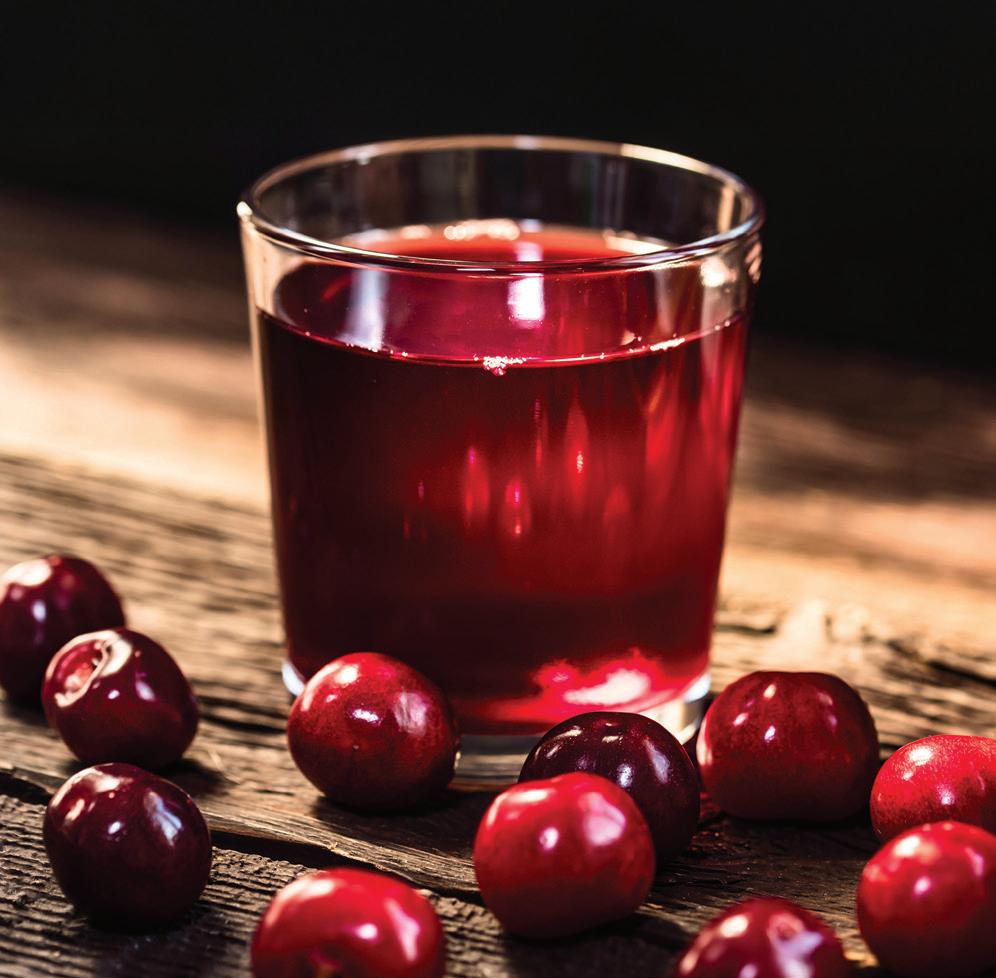
a shift toward options that deliver differentiated benefits beyond just grams of protein,” she said, citing as an example last year’s Oikos Fusion, which offers complete whey protein and free leucine for muscle support.
That behavior is enjoying strong adoption within Millennials and Gen Z; according to SPINS, 56% of that group follows a specific high-protein diet, dwarfing low-carb (41%), gluten free (34%) and plant-based (32%). They also consume differently, replacing meals with snacks (often drinkable ones, like juices and CSDs) at a higher rate than Boomers or Gen X. That may explain the growing push to integrate protein and other functional ingredients into formats like coffee, soda and energy drinks. Energy in particular is resonating with Gen Z and Millennials, commanding 56% of dollars from the cohort, compared to 34% for chips, pretzels and snacks.
Yet there are also signs that consumers may be rethinking where they are getting their protein from, with SPINS predicting that protein as a “pure play” – less “gimmicks,” more real foods – will be one of the major macronutrient trends of this year. If true, that should boost dairy categories like drinkable yogurts and milk, the latter of which could further help enhance the protein profiles of categories like coffee.
The addition of prebiotics and probiotics helped spark a soda revival over recent years, and appeals to gut health will continue to create opportunities for beverage innovation, specifically around fiber. Without overshadowing protein, fiber will complement diets as consumers realize its importance for gut health, reports T. Hasegawa. As “fibermaxxing” spreads on social media, “greens” drinks from brands like Huel and Be Amazing have emerged to meet that demand.
But there’s plenty more room to expand: High-fiber RTD tea and coffee was up 70% this year, while soda rose 29%, according to SPINS.
By Brad Avery
Typically when the economy gets tough, consumers look for as many ways to save money as they can. But as we’ve seen in the last few years of turbulent up-and-down economic fortunes, marked by inflation and tariffs, small premium comforts have been cemented as a worthwhile splurge for troubled times. If you need proof of that, then cocktail mixers may just be Exhibit A.
According to market research firm Circana, U.S. retail (MULO and c-store) sales of cocktail mixes were up 3.2% to over $1 billion in the 52-weeks ending December 28, 2025. Within the category, tonic waters and club sodas outpaced the total set, growing 5.7% to $618.6 million, while other liquid mixers declined 0.3% to $414.2 million. The much smaller powdered cocktail mix segment was up 3.5% to $12.4 million.
While those numbers suggested a mixed bag of consumer interest, particularly in a period where non-alc and sober curious trends are driving down sales of nearly all alcohol categories, within the data, a long-term trend toward premiumization continues to play out, with top shelf brands remaining elevated while traditional “value” or budget products are struggling to keep up.
According to Randy Ornstein, senior director of beverages at Gopuff, legacy budget brands like Canada Dry and Schweppes are in decline on the delivery platform, while premium brands outperform the market. Q Drinks, Ornstein said, saw sales rise 4.5% on Gopuff in 2025 (compared
to 2024) while Topo Chico’s Mixer line – which includes Ginger Beer, Tonic and Club Soda varieties – leapt “an incredible” 461%.
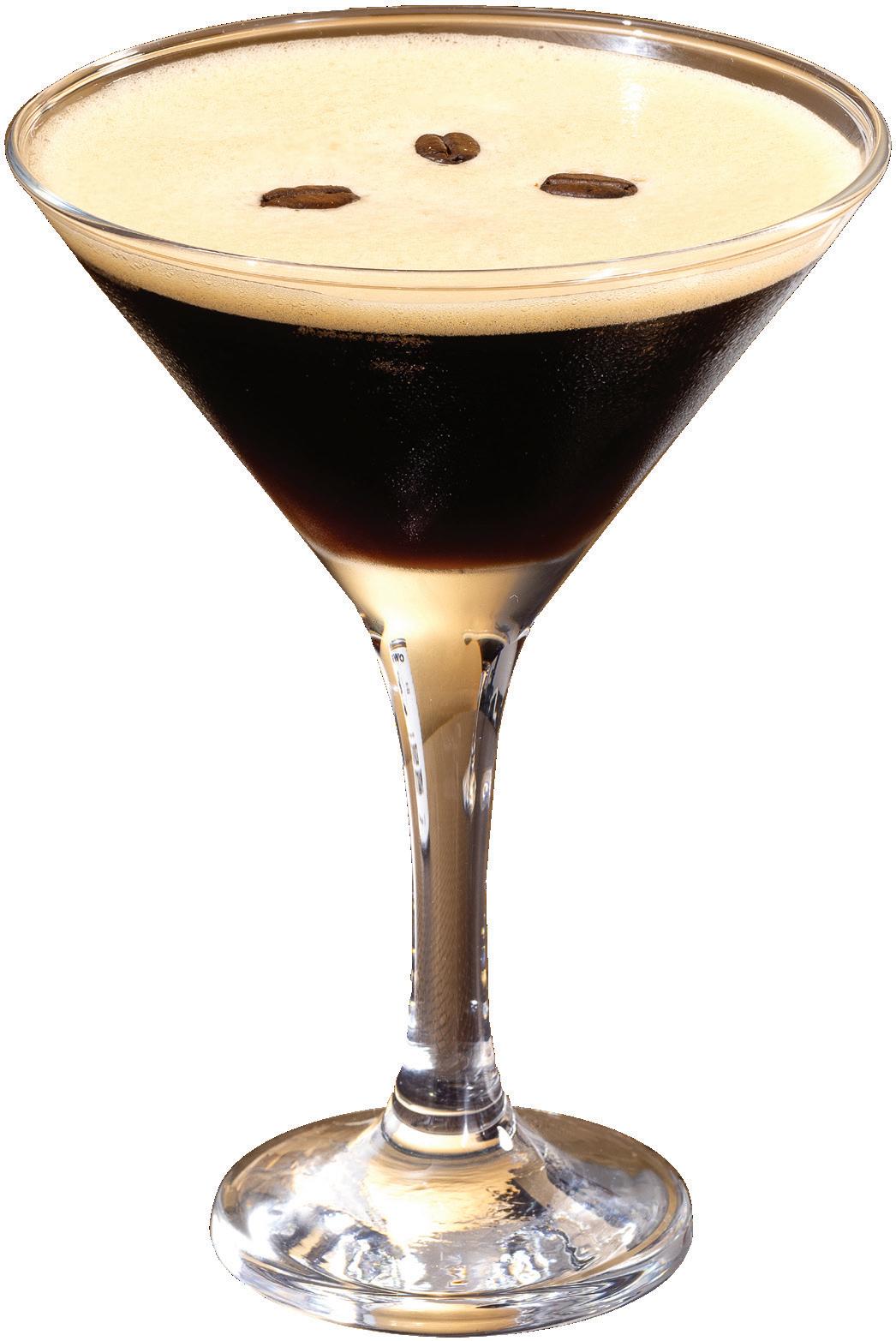
This growth for premium mixers, Ornstein suggested, is continuing despite signs of overall economic distress and wallet-tightening among American consumers.
“Consumers are seeing many of these premium mixers as coveted brands in their own right,” Ornstein said in an email. “Interestingly, this trend is in opposition to the larger push towards value we have seen on Gopuff.
Searches for terms like ‘deals,’ ‘discounts,’ and ‘savings’ increased significantly in 2025, pointing to a more value-conscious consumer base at large.”
On Gopuff, those “discount” search terms were up 29% last year and were continuing to spike in the new year, up 40% year-to-date as of January 23, 2026.
But for mixers, that premium craving even extends to the packaging. Ornstein said that “small-format glass bottles” are the preferred format for consumers at the moment, with Topo Chico’s 7.1 oz. glass 4-pack being the fastest-growing SKU in the category “as the single-serve options help ensure freshness and carbonation, which are priorities for the premium consumer.”
The trend has opened doors for brands like Owen’s Craft Mixers, a 10-year-old startup which produces both single-serve cans and bottles, as well as larger multiserve bulk offerings.
Joshua Miller, co-founder of Owen’s, said the brand is thriving at “the crossroads of where quality meets convenience,” providing an alternative to the budget multiserve mixers in the category which can’t deliver the same “bang for your buck” on flavor.
Owen’s is in a high-growth phase at the moment, Miller suggested, noting that the brand is rapidly scaling its on-premise business through partnerships with Chili’s, Applebees, Buffalo Wild Wings, Lucky Strike bowling alleys and LiveNation. But the brand also performs well for at-home occasions as well, where Miller said consumers are leaning deeper into at-home mixology and can utilize Owen’s mixers as simple “twostep” cocktails, or as part of a more complex fouror five-step libation.
“I think it's intent-driven consumption,” Miller said. “We're reading all these things where people are saying they're not spending money the way they used to, obviously [due to] inflation and other reasons. But what's really remarkable is that in our category, I think that really the person that's buying the premium product wants the premium taste, the premium experience and the ease of use.”
Cassie Finley, EVP commercial, Americas for whiskey brand Compass Box, said the premium movement has represented a major shift and significant impact on the mixers category in retail. However, she also noted that there’s still room for budget brands to thrive, particularly within a challenging macroeconomic environment which is still liable to officially become a recession in the near future.
held a long career in adult beverage, most recently serving as VP National Accounts for Southern Glazer’s Wine and Spirits and previously spent several years as a buyer for both Kroger and Whole Foods.
According to Finley, because mixers are so frequently an addon item for spirits shoppers, the category is also attractive for retail buyers looking for ways to increase pull-through in stores.
“With this category, you have to think of the omnichannel shopper and how cocktail mixers have really become another item in the basket for buyers,” Finley said. “If you look at what [buyers are] graded on, obviously revenue and gross profit are critical, but getting one more item in the basket and increasing that basket ring is critical. And I think cocktail mixers is a category to do that with.”
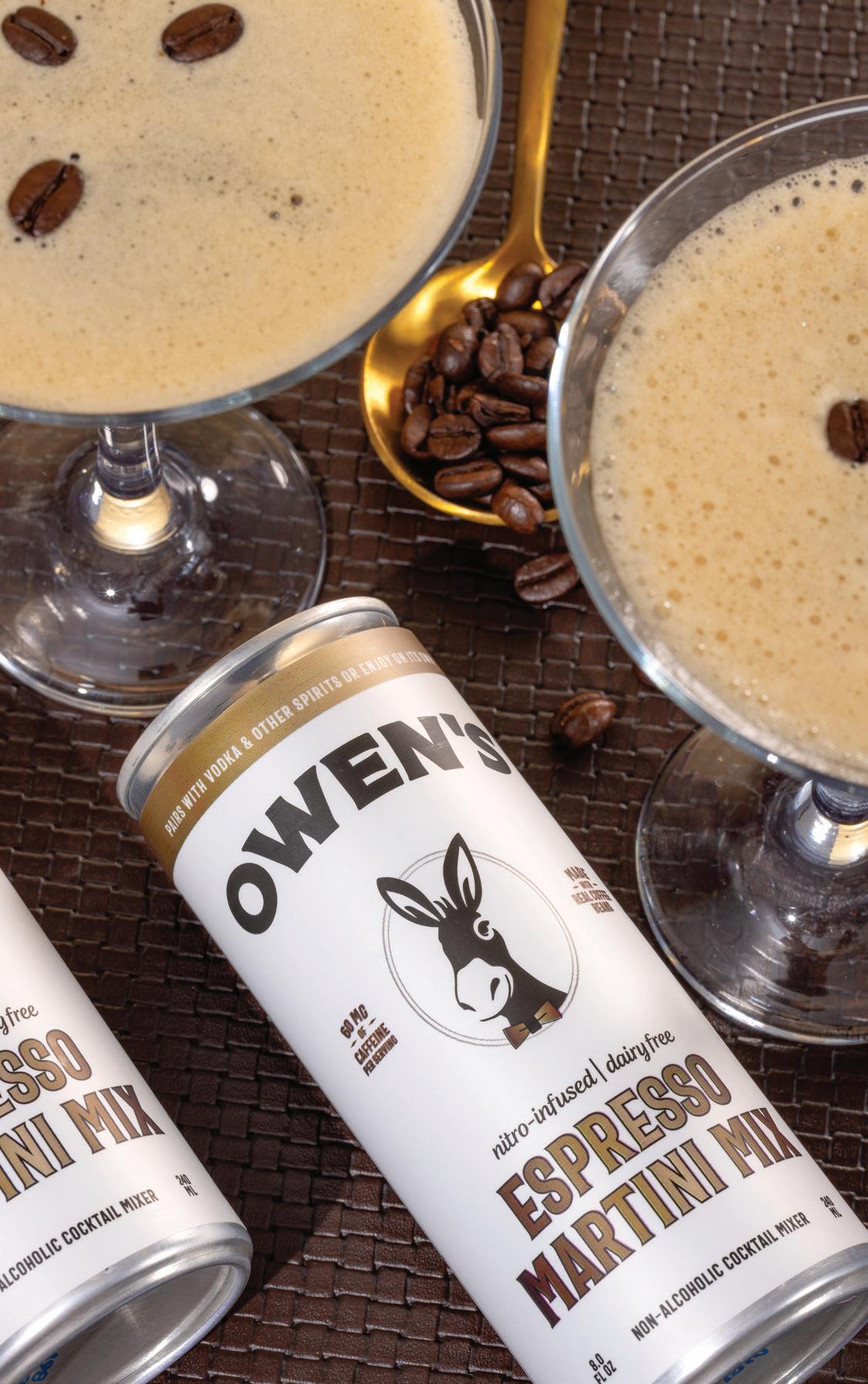
While mixers have to contend with economic headwinds, the category is also facing perhaps an even bigger dilemma: the rise of non-alc and the decline of alcohol consumption. Mocktails are competing with liquor-based drinking occasions on convenience and wellness grounds, and while some mixers have attempted to position themselves as NA alternatives in their own right – Miller said that Owen’s ginger beers can hold up as standalone drinks – the category is contending with a generational change in consumer behavior.
On Gopuff, Ornstein said that customer orders for non-alcoholic beverages grew nearly 50% yearover-year between 2024 and 2025.
“I would say there's still this consumer that is facing really heavy price sensitivity when it comes to basket,” Finley said. “So you're still going to obviously have those budget brands that, I think, are probably overperforming right now from a percent of mix, because a lot of customers within this category will sacrifice quality for price.”
Finley joined Compass Box in September, and she has
A number of NA brands like Recess and San Pellegrino have extended into mixers and mocktails in recent years, while hemp-derived THC spirits brands such as 1906 are also competing in the space as zeroproof alternatives to hard drinking.
Ultimately, Finley said the key word for understanding the segment is “mood,” which drives both the demand for premiumization over budgets, as well as the increased competition for alcohol from alternative relaxation beverages.
“If I were a buyer today, I would be looking at the category
differently because it has changed so much from even five years ago, but we're actually in the mood changing business,” she said. “I think you're going to continue to see brands like Recess and some of these other ones that are very, very clear about how the product will affect them functionally, but not necessarily marketing the number one ingredient driving that, which is obviously a shift in the category completely.”
As consumers demand higher quality cocktails, their flavor cravings are also being refined.
According to Ornstein, spicy flavors are in demand, up 35% in BevMo! stores and 26% on Gopuff, driven mainly by spicy margarita- and spicy ginger beer-related products. Meanwhile, Finley said she’s seeing the continued strength of Asian fruit flavors like yuzu, dragon fruit and lychee playing a key role in on-premise cocktail menus.
The espresso martini continues to be a big seller as well. Ingredients for espresso martinis grew 17% in BevMo! stores last year, according to Ornstein, while traditional martinis are also rising as Gopuff saw a 58% increase in sales for olive-related mixers and brines. At Owen’s, the brand’s espresso martini mix is the centerpiece of its new casual dining restaurant partnerships, Miller said.
Illinois-based mixer brand Zing Zang is also getting in on the espresso martini demand. The company, a subsidiary of Mizkan USA, is preparing to launch a multiserve bottled Espresso Martini mix this spring, made with Angostura cocoa bitters.
“I think people are trying to get away from Red Bull and vodka, and the espresso martini gives you a little boost, but it also has great taste,” said Brent Albertson, CEO of Zing Zang.
Sweeter classics are also beginning to rise as well. Both Owen’s and Netherlands-based mixer startup Double Dutch suggested that lemonades are becoming more popular. Joyce de Haas, cofounder of Double Dutch said that as wallets tighten, many consumers appear to be more adventurous drinkers at home but when they are out on the town they’re turning to familiar and reliable drinks rather than risk wasting money on an experimental cocktail.
“I do think that the general consumer is, while they are adventurous, they are less looking for these out-of-the-blue, crazy flavor combinations that maybe were happening four or five years ago,” de Haas said. “We also see that in our flavor profile, that actually the more traditional flavor profiles do better.”

Brewt's is expanding its ultra-premium, ultradrinkable mixer lineup with the launch of its Cucumber Margarita Mixer. The long in secret and long awaited all natural, not-from-concentrate mixer will debut alongside their Lavender Margarita Mixer in Ralphs, Fred Meyer, King Soopers, and Fry's this spring.
Badger Bevs, the premium cocktail mixer trusted by leading bars, restaurants, and hospitality groups nationwide, is expanding its lineup with the national launch of new 750mL bottles across its three core offerings: Club Soda, Tonic Water, and Ginger Beer. The new format was developed to offer a practical solution for streamlining service and supporting higher-volume programs— without compromising carbonation, flavor integrity, or consistency. The larger format also provides a versatile option for those enjoying Badger on its own.
SAYSO, the women-owned cocktail and mocktail mix brand redefining how consumers enjoy bar-quality drinks at home, is shaking things up again with the launch of its Dirty Martini flavor, soon to be available in its new, ultra-convenient stick packet format. Known for its signature tea bag-style cocktail infusers, SAYSO’s latest innovation of its stick formula makes mixing your favorite martini even easier. Just pour, stir, sip, and enjoy. The Dirty Martini stick features savory olive and pink Himalayan salt, all with zero artificial ingredients.
Lady Bird Soda Co., a Texas-based premium carbonated mixer and soda company, is thrilled to announce the launch of its first line of canned sodas in retail statewide. Albertsons Companies Southern Division has been named the official retail launch partner. Through this partnership, Lady Bird’s sodas will be available in all Albertsons, Randalls, Tom Thumb, United Supermarkets, and Market Street stores across Texas.
Q MIXERS, the leading American premium mixer brand known for elevating the cocktail and mocktail experience, added a holiday-inspired flavor to its portfolio – Q CRANBERRY POMEGRANATE SPRITZ. This limited-time introduction is available at select national and regional retailers, including (but not limited to) Kroger, Albertsons, Total Wine & More, Amazon, Stop & Shop, Giant Eagle, and HyVee, while supplies last.
Molson Coors Beverage Company got in on the mixer set with a strategic partnership with Fever-Tree, taking an 8.5% minority stake in the business and granting the alcohol giant exclusive U.S. commercialization rights to the premium brand. The deal makes Molson Coors the second largest shareholder in Fever-Tree, and it is responsible for co-manufactured production, marketing, sales and distribution in the U.S.
Tres Agaves Tequilas, Tres Agaves Mixers and Atomic Boss Hard Punch are proud to announce a multi-year sponsorship with the University of Miami Athletics spanning the 2025-2026 and 2026-2027 athletic seasons. Brands will be featured on signage throughout the football, basketball and baseball seasons. Fans will be able to experience the #1 selling organic tequila and mixer in their favorite cocktails, including the debut of the 'U-Rita Cocktail' available both in-venue and at select on-premise locations.
Mizkan America is merging mixer maker Zing Zang and legacy bitters brand Angostura into the same in-house unit as part of a strategy to grow its “Inspired Mixology” business and position the business as a category leader in cocktail mixes.The new Inspired Mixology unit will be helmed by Zing Zang CEO Brent Albertson and will be based out of Illinois.
Cheeky Cocktails, the AAPI-owned and Brooklyn-based innovator of premium, bar-quality syrups and juices for the home and bar, is proud to announce the appointment of Scott Rosenbaum, veteran beverage strategist and co-host of Business of Drinks, to its Advisory Board. Rosenbaum brings deep experience in building and analyzing beverage portfolios, having served as Director of Portfolio Development, North America for Distill Ventures, where he worked with leading global innovators, including Mr. Black Coffee Liqueur, Ritual Zero Proof, and Seedlip.
Betty Buzz and Betty Booze, the mocktail and cocktail brands founded by actress Blake Lively, collaborated with New York City restaurant Serendipity3 on a limited edition holiday menu, “Sip into the Season.” The menu offerings included Betty Buzz Frrrozen Hot Chocolate, Betty Buzz “Fizz and Bubbles” Sparkling Grapefruit Float and Betty Booze “Bourbon Blizzard” Frrrozen Hot Chocolate.
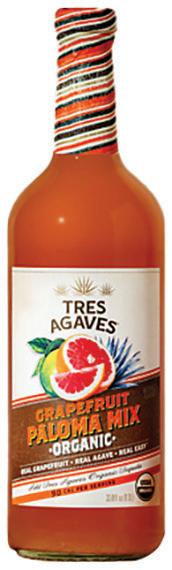
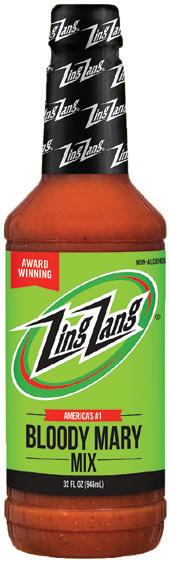
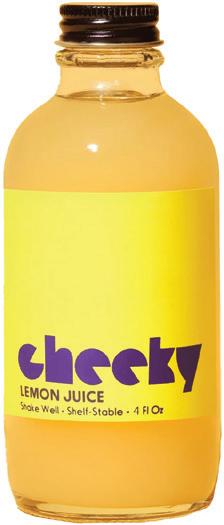
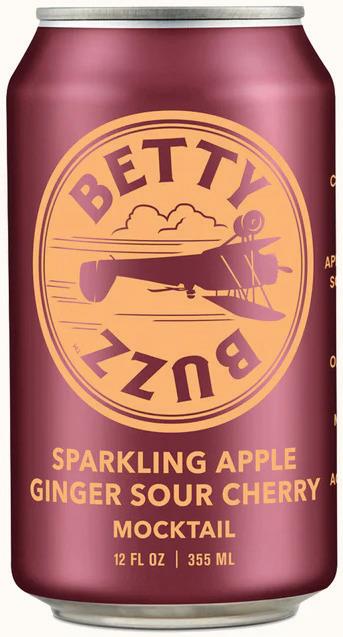

By: Ferron Salniker

If there was one overused term to describe the ready-todrink (RTD) spirit category last year it was “bright spot.” Despite little M&A activity, RTDs were still responsible for tectonic shifts in distribution power dynamics and remained the industry’s growth engine. So what’s next?
As we enter into 2026, RTDs across all segments now represent 12.7% of dollar sales of total bev-alc off-premise, reaching $13.6 billion in 2025, according to NIQ. Spirits and wine bases are driving RTDs, as well as some niche flavored malt beverage (FMB) segments.
In 2025, spirits-based RTDs were up 25.7%, offsetting about $650 million in spirits declines. As retailers rationalize SKUs in beer or hard seltzer, distributor and acquirer eyes will likely continue to stay on brands that can generate velocity and scale, while earning the loyalty of Gen Z. Meanwhile, suppliers are already chasing trends in other aisles of the store.
With core spirits struggling, last year was marked by some major shakeups in the three-tier system as suppliers aimed to optimize their positions with distributors who have
been faster to embrace total beverage and are equipped with appropriate RTD capacities.
Companies including Gallo (the owner of High Noon), Pernod-Ricard and Brown-Forman ditched Republic National Distributing Company (RNDC) in 2025 to put their RTD products in the hands of Reyes Beverage Group in California, which has been steadily growing its spirits and RTD portfolio. Those suppliers and others also switched to regional distributors across the country – sprinkling more spirits products into beer distributors. The moves away from RNDC eventually led to the distributor winding down its California business. At press time, RNDC was in talks to sell its business in seven states to Reyes.
Meanwhile, Anheuser-Busch InBev (A-B) sold its wholly owned distributor in New York City to Southern Glazer’s Wine & Spirits (SGWS), putting SGWS on a greater path to become a total beverage distributor as it nabbed major beer brands and spirits-RTD leaders such as Cutwater.
The changes bode well for RTD brands that are priorities, and can benefit from the execution of these beer distributors who can provide faster turns, convenience, and the coldbox.
“It's reasonable to think that wholesalers that are more
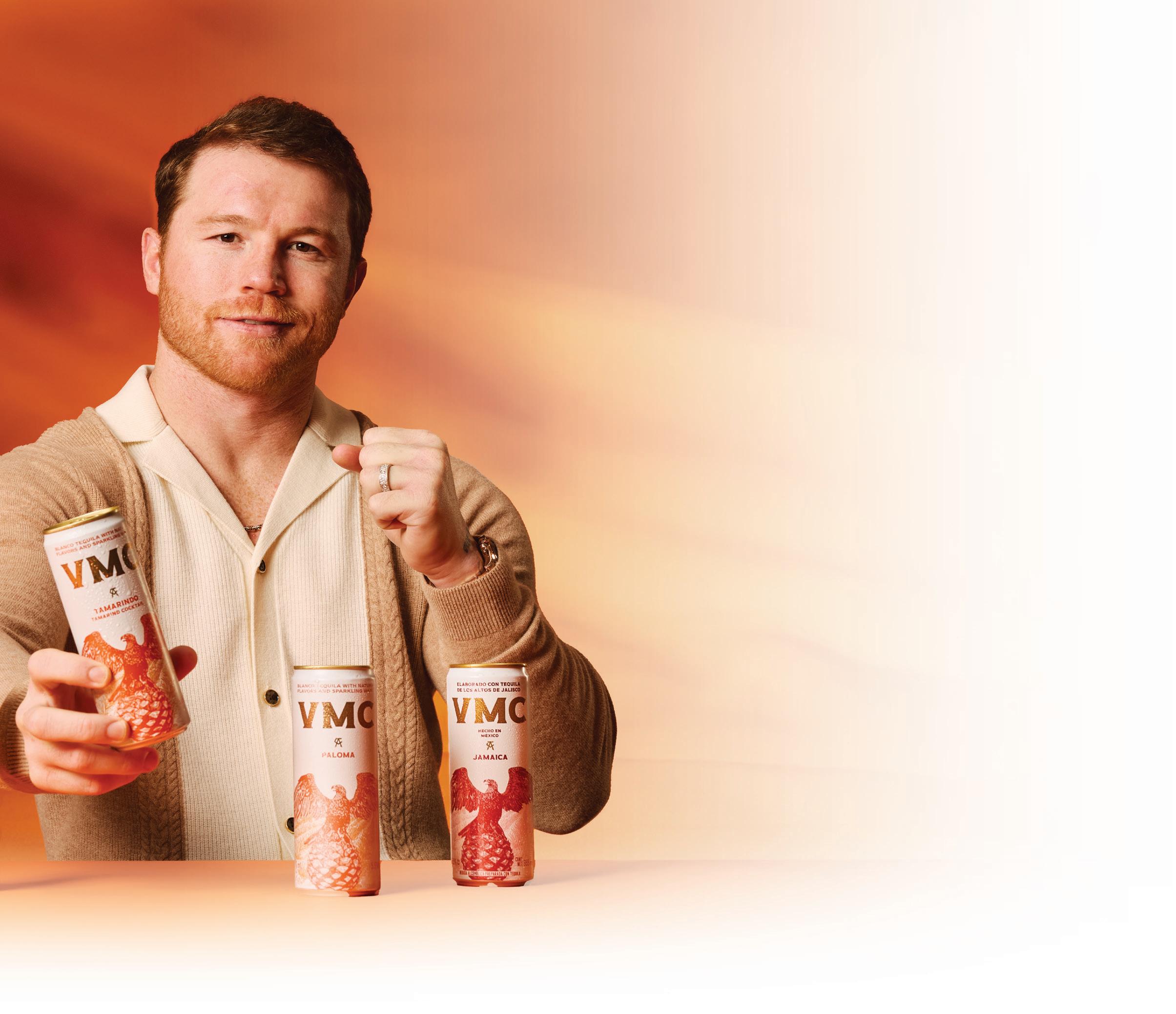
familiar with moving beer could help juice the momentum by increasing the reach,” said Dave Williams of Bump Williams Consulting.
RTD brands with a point of difference or carrying a higher margin – offering a good proposition for a distributor – may also be able to leverage their position at an existing or new distributor. But as more former RNDC brands scatter and bang on the doors of other distributors, smaller, independent brands will likely need to think creatively and regionally with their route-to-market.
Distributor optimization of RTDs points to the category be ing a solid fourth pillar in bev-alc, but that also has a down side: the novelty may fade. Sales of overall RTDs are poised to continue, but single-digit growth (+3%) this year represents a maturing category.
Spirits-based RTD growth momentum peaked in 2020, with dollar sales of more than +150% in NIQ-tracked off-premise channels, according to 3 Tier Beverages. Growth then progressively slowed, but the segment was still able to more than double sales from 2021 (nearly $1.53 billion) to 2024 (nearly $3.19 billion).
Slower growth from spirits RTDs comes in spite of continued increases in the number of products on the market. In 2021, the segment had 1,950 UPCs selling in NIQ-tracked channels. That number grew to 2,374 in 2022, 2,743 in 2023 and 3,003 in 2024. In September, that number had increased slightly, to 3,098.
All that may mean that the category has plateaued, and some brands might get pushed over the edge in the next couple of years, according to Kaleigh Theriault, beverage alcohol thought leader at NIQ.
“That's when some of the smaller brands in these spaces won't be able to survive, because you're no longer in this increasing pie that everybody can get a piece of, but you're going to be fighting for that same pie, and some of those slices are going to shrink,” she said.
Opportunities are still ripe on-premise, however, where brands have just scratched the surface, as well as in channels that have yet to open up legislatively, such as states that restrict the sale of spirits-based products from convenience stores.
Still, Theriault compared RTD’s trajectory to craft beer: in 5 to 10 years from now, there may be “bankruptcies and closures, but then there's going to be acquisitions.”
A year with little M&A activity ended with a bang when A-B announced it will acquire a majority stake in party punch maker BeatBox for approximately $490 million.
The brand, famous for its high-ABV, nostalgic-flavored liquid in Tetra Pak cartons, found a space in the market, generating over $340 million in retail sales in the last year, and up 30% in the latest 52 weeks ending January 10 in NIQ-tracked channels.
Both the Beatbox buyout and Gallo's acquisition of wine brand Whiny Baby targeted brands with a loyal following and strong positioning with younger demographics. Those deals follow Sazerac's 2024 acquisition of BuzzBallz, another high-ABV, uniquely packaged RTD. Beatbox found an opportunity with a generation thirsty for flavor exploration, in-person experiences (the brand made early inroads via music festivals), and value.
After BeatBox shifted to beer distributors, the company unleashed velocity and scale, priming itself to fill a gap for a major beer company that has said it will continue to invest in its beyond beer portfolio.
“As companies evolve their portfolios, as beer companies get more into wine and spirits or even flavored alcohol – let's call it ‘cast the broader net’ – it makes them a more powerful partner with retailers and wholesalers in terms of what they can bring to the table,” Williams said.
Spirits and wine companies have mostly centered on extending their existing brands or bolting on their own RTDs. Diageo has earned share of the broader RTD seg-
ment with its malt extension of Smirnoff, and last year launched the first RTD from Casamigos, which is performing well. Bringing major brand names into new formats and leveraging recognizable names from across the aisle for RTDs has been a consistent strategy for Pernod Ricard. But beer groups such as Molson Coors and Heineken have yet to make a big move in RTDs.
“It seems like it would be more likely to be a big beer company that wants to make a splash in the RTD side through an acquisition,” said Williams. “But it's not completely foreign territory for a wine and spirit supplier to make that leap as well.”
There are a number of contenders on the market: independents such as Stateside’s vodka iced tea Surfside, the Finnish Long Drink, and vodka sodas Carbliss and Good Boy Vodka have momentum and scale that may suit a big company portfolio more easily than an internally-built brand.
With brands like Surfside spurring copycats – and selling more than 11 million cases in 2025 – there’s one clear trend emerging in RTDs. Inspiration is coming from other beverage aisles.
Last year was the year of spiked tea, with Surfside and Boston Beer’s Suncruiser both seeing triple-digit growth. This year, RTD suppliers are continuing to look at the success of non-carbonated segments such as energy and sports drinks, as well as juice.
“It's not a brand new trend that these things are hot, we're basically on the fourth year of that,” said Brian Krueger of Bump Williams Consulting. “So people that are on the alcoholic side are saying, ‘what can I bring from that into this world?’”
We’re seeing early examples. Malt-based juice RTDs have picked up 210% in the latest 52 weeks ending January 3, according to NIQ. As suppliers often test malt-based propositions before transferring brand equity to a spirits version, that may be the next move for some, said Theriault.
Another trend that will keep rolling? “The continued intersection of health and wellness with the alcohol world,” Theriault said.
Despite bev-alc’s inability to make health claims, the next generation of products will likely fuse wellness-in -
spired beverages with a light buzz. Serial food and beverage entrepreneur Jason Cohen’ Spiked Ade has raised $10 million and is expanding distribution as it looks to carve out a new lane at the intersection of hydration and alcohol, while Stateside’s Super Lyte is also mixing nostalgic sports drink flavors with vodka.
“Flavor is no longer going to be the key point of difference,” said Krueger. “On the RTD side, it's going to be, is there value added as far as perceived health benefits? It's going to go into juice and water and a little bit of everything now.”
But some consumers are still reaching for global flavors and a bigger buzz. Brown-Forman recently brought its top RTD from Mexico, New Mix, to the U.S. Other RTD brands have already homed in on the thirst for Mexican and tropical flavors across beverages, as well as the buying power of Latino consumers.
VMC, a tequila-based canned cocktail born from a partnership between world champion boxer Saúl “Canelo” Álvarez, Spirit of Gallo, and Casa Lumbre, has quickly catapulted into a top ten RTD spot. Other Latino-focused brands such as Jumex have also made successful forays into RTDs, and BeatBox as well as Sazerac debuted RTD beverages last fall brandishing Spanish names and text or at least the inspiration of Mexican flavors.
“Not just cocktails, but Mexican themed, margaritas, palomas, anything Tequila-based, I think you're going to see more from that area in 2026,” Williams said.
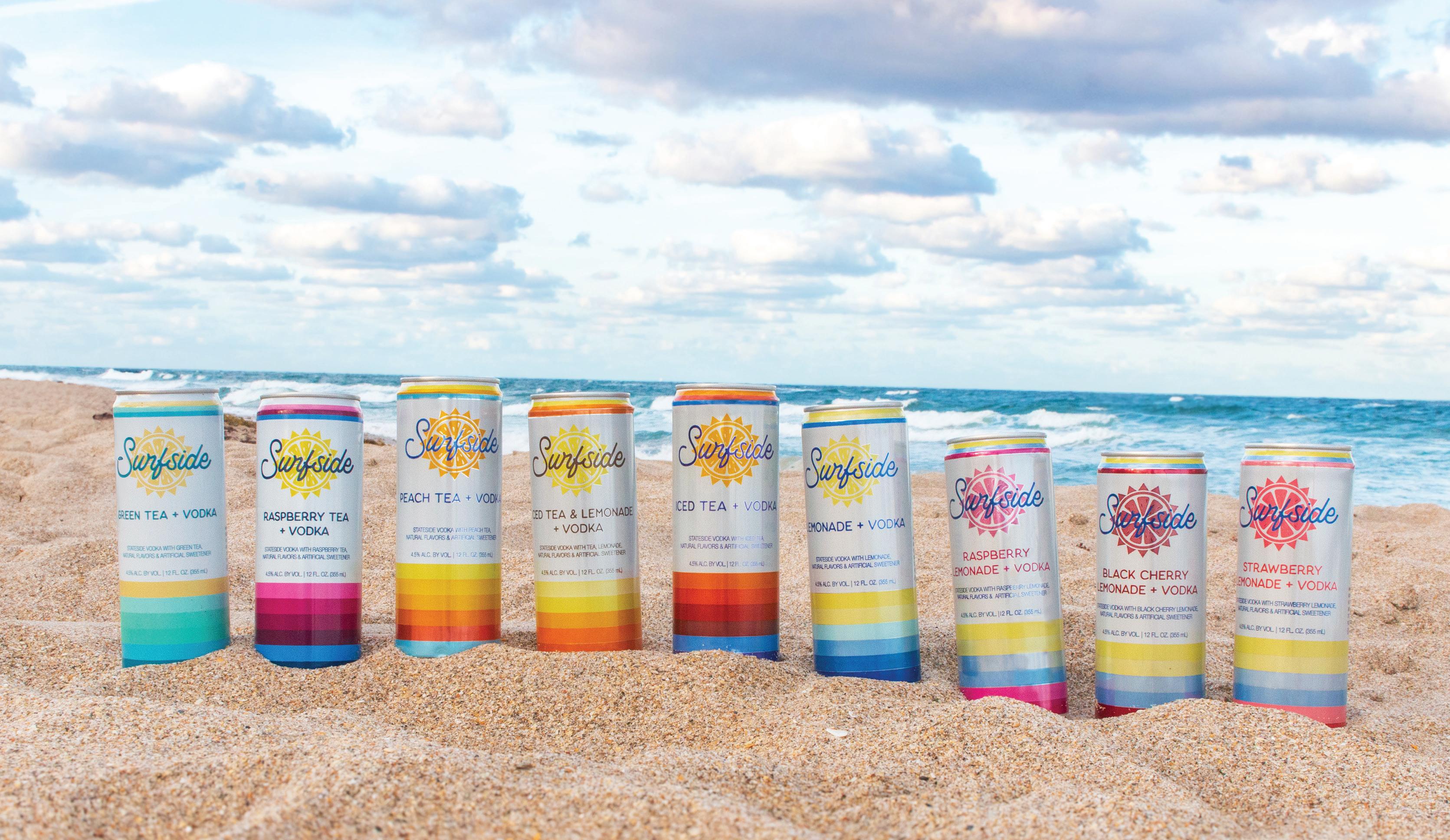
SOURCE: Circana OmniMarket™️ Shared BWS - 52 Weeks Ending 12-28-25
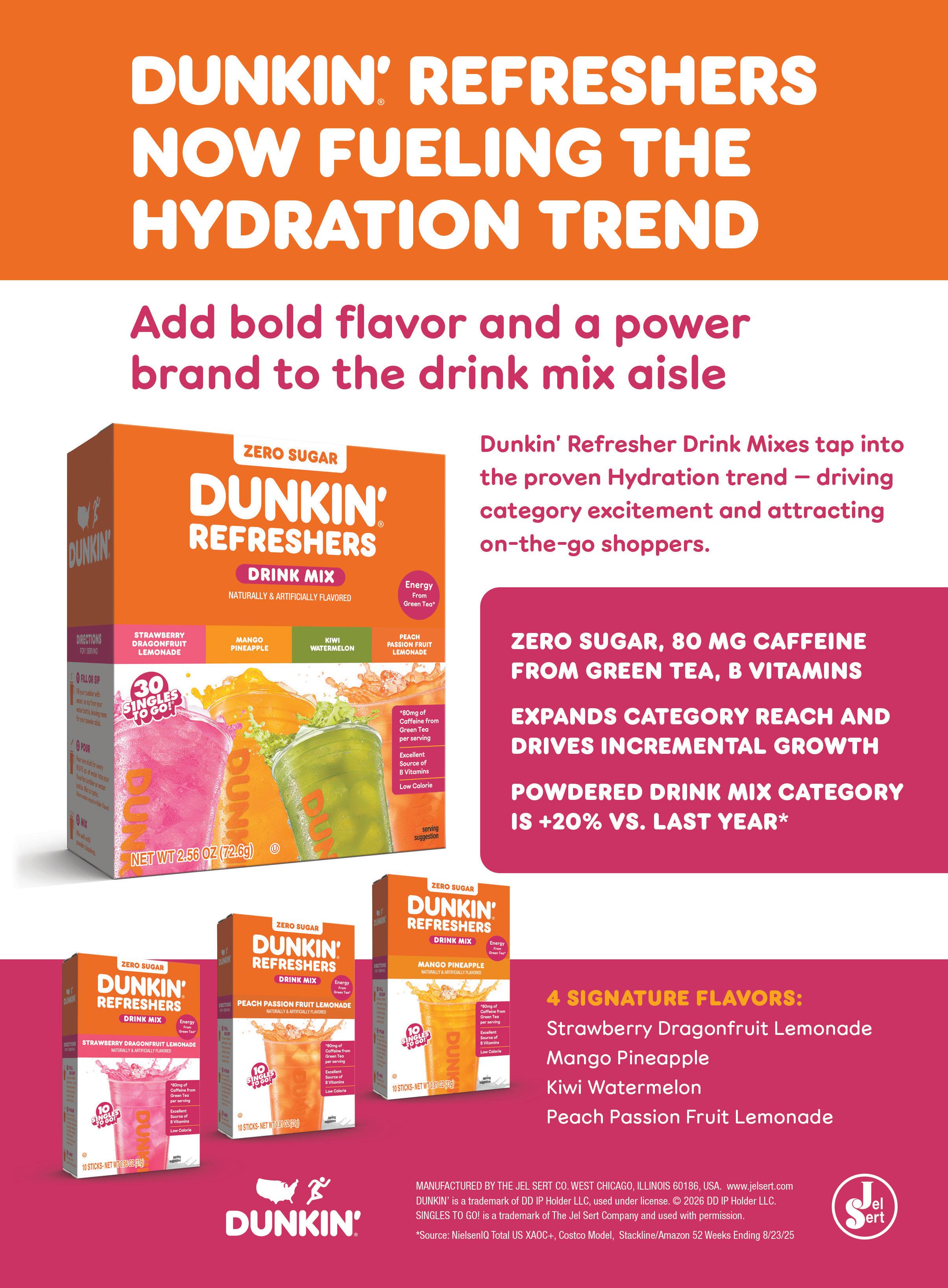


AI is the hottest tool on the planet right now yet its use by beverage brands is in its infancy. How can innovative process solutions create strategic advantagesand how can founders and entrepreneurs get in on the action?

BY MARK MURPHY
Talk of AI is all the rage across every conceivable industry - yet few are as uniquely positioned to take advantage of its game-changing efficiencies as the broader CPG market. Conversely, many brand leaders and c-suite execs don’t have a firm grasp on where to begin. Beyond the hyperbole, how does one jump into the biggest tech revolution since the computerized spreadsheet?
OK, so you’ve used ChatGPT to create a press release, or a new sales email. Maybe a sales deck (although it turned out a little weird after page 3). From every corner of the industry, people are touting the AI revolution. Not that you want to fire anybody and replace them with robots. What are you missing?
The answer doesn’t come in broad strokes, the kind of eye-popping process overhaul a business in a tighter vertical with a more singular supply chain may experience, or automation that can reduce a manufacturing plant’s packaging wastage.
The answer is in narrow AI - systems designed to perform specific tasks extremely well but lacking the kind of robotic consciousness that puts many on edge. In 2026, everything from product development and ingredient formulation to supply chain and customer service optimization is up for eradefining overhauls.
“Even in the best of times, it’s tricky,” says Karen Huh, co-founder and CEO of Zucca, a CPG-focused suite of AI tools that can bring a new product from conceptualization to retail. “You can keep on spending a lot of time running these teams and being part of the food and beverage and CPG engine, and seeing these patterns repeat with very smart people doing very high stakes work, but also doing it with cumbersome tools that weren’t purpose-built for what we’re doing.”
Zucca handles difficult processes such as product formulation, co-manufacturer sourcing and labeling - all of which are landmines for brand development. One misstep can result in a costly launch delay.
In the age of the Make America Healthy Again movement, where the entire industry is experiencing a generational shift almost overnight, having tools at hand to not just offer ideas but concrete solutions can be a lifesaver. Reformulation, repackaging and rebranding in order to be compliant can be a slow process but one that can be sped up by the right AI tools.
In that sense, solutions like Zucca aim to act as not just a guardrail but a seasoned consultant giving advice every step of the way.
For Zucca, brands are essentially drawn to the twotone potential for speed increases and risk mitigation.

“The biggest advantage is most certainly increased speed intelligence without sacrificing accuracy, while operating on a platform that’s purpose built for food and beverage,” says Huh. “We contend that you can do both of those things at the same time, pull all your data together and be able to tap into it.”
It’s not just theoretical, she adds. “We have a customer who’s tracking their activities relative to their normal ones without Zucca, and they found that in the early phases of a project, they were able to reduce the overall scoping time of defining what they were seeking to develop by about 90%,” says Huh.
AI-led marketing is the first thought many have when they think of business use cases for AI. It’s as derided as it is lauded - for every surreal (and occasionally unnerving) visual created by ChatGPT, there’s a professional suite of advertising materials being produced by a dedicated AI tool. Increasingly, narrow AI solutions for CPG brands aren’t just offering potential but showing actual results.
“AI can create immense value for them [brands] when you leverage it into research, understanding what works and what doesn’t, helping them come up with new product concepts, new flavor formulas, analyzing their sales data, identifying new geographics, or new retailers to pursue,” says Chris Curtis, founder and CEO of MorningAI, which focuses on marketing tools for food & beverage brands.
MorningAI allows for the importation of a company’s entire product catalogue - giving the tech a chance to learn about a business and create bespoke solutions rather than generic ‘metoo’ packaging, social media posts, landing pages and more. “The platform leverages product data to help you with the rest of your marketing,” says Curtis. “That product data is insanely valuable to ensure that it’s [MorningAI] creating content and strategies that actually deliver.”
In terms of collaterals, output is continuing to come on in leaps and bounds. “A year ago, everybody was worried that AI is drawing six fingers,” says Curtis. Such is the rapid evolution of AI-powered capabilities, MorningAI is now capable of creating accurate packaging information - including weight, nutritional information and ingredient lists. A far cry from six fingers.
Huh is straightforward. “There’s no secret as to why growth marketing people have probably adopted AI faster than any other function in any CPG company - because the sheer amount of data that any growth marketer has to go through is so vast and AI allows them to look at more in the same amount of time.”
Kaizntree is an AI-powered purchase order workflow automation tool that notably counts Actual Veggies amongst its roster of clients. Rather than supplanting an existing process flow, Kaizntree integrates into systems and connects disparate data sources to remove manual inputs.
Why not just offer your own bespoke solution?
“What brands don’t want to do is they don’t want to do a system migration,” responds Marcos Brisson, co-founder and CEO of Kaizntree. “They want to automate their existing system. That’s what resonates.”
“What a lot of companies are looking for is to automate their spreadsheets, to turn their Google sheets into a living document of data from their online store, from their distributor, from their 3PL fulfillment party, and then feed it automatically, instead of them having a team member or several team members spend countless hours each week writing that data into the spreadsheet.”
With Actual Veggies, Kaizntree studied the existing PO system and focused on bottlenecks such as manually copying and pasting order data from various inputs into complex Google Sheets documents. It’s built out to the point that it can understand different prices for each SKU based on region or distributor, as well as whether the request meets order minimums. Any out-of-scope orders get flagged for manual review.
Kaizntree’s software analyzes every order, sifting through different SKUs, order quantities, pricing and delivery instructions, while also handling invoicing and notifications to relevant stakeholders (be that distributor, co-manufacturer, retailer or otherwise).
“What we see with order processing is that it’s consistently a significant value factor in companies that got automated,” says Brisson.
If you think this all sounds like a machiavellian excuse to reduce headcounts across the industry, think again. “We’re working with the people who used to do what we’re now automating, and in every case, they’re the most excited people in the company,” says Brisson. “We don’t want to be getting anyone fired. We want to be empowering existing people in the company.”
The question remains: where is the best starting point for intrepid entrepreneurs? With dozens (and more) of CPG-specific products out there, how can one get in on the game in an intentional manner?
“It would depend on the size of their company,” says Curtis, of MorningAI. “If they are mid market and above, I would encourage them to lay out their customer journey map then identify their business problems. What are the pain points that are going to move the needle if you fix them?”
“[The way] for folks to dip their toe in the water is to start with a set of tasks that don’t feel terribly high stakes, that are repeatable but won’t be a tragedy if things go wrong for them,” says Huh, of Zucca. “I think that’s where AI gets scary for people, it’s hard to delegate.”
Huh recommends a graduated approach, moving from writing a press release to taking call notes, emphasizing repeatable actions that are low stakes, before moving onto research and finally thinking “about whether you want AI to be part of your actual team workflow.”
“We always recommend thinking, what are your operational goals?” says Bisson, of Kaizntree. “If your growth goal is to hit a certain revenue target, then you need to make sure your sales team has all the right data. For them to have the right data, you need to make sure that your customer service team is empowering them with that information. So that means that your customer service team can’t be spending time processing orders.”
“Don’t say, ‘I’ve got a technology and I’m going to insert it.’ That’s the wrong way to go,” adds Curtis. “Think about where your business pain point is, then go look for the solution to help you there.”
With 30+ years of experience with national and local beer and spirits brands, we deliver endto-end creative, digital and print execution that brings brands to life. A7D develops brands and can support your in-house team with branding, POS design, marketing, PR, social media, largeformat and digital printing, plus nationwide graphic installation.
Allen Flavors Inc. is a privately owned, dynamic, innovative leader in the food and beverage industry. We offer an array of specialized services well beyond that of a typical flavor house. We consistently provide our customers with a library of high-performance, great-tasting traditional flavors, including the industry’s broadest and most rapidly growing collection of certified organic flavors.
Switching to Astrapouch® from glass containers saves our customers an average of 30% on packaging costs. Our pouches and Bag-in-Box options also provide up to an 80% reduction in carbon footprint compared to glass, plastic bottles, and paper bottles. Please contact us to learn more about how we can help your company achieve these savings and environmental benefits.
Beck Flavors
The Beck Flavors family provides the ultimate strategic partnership for our customers, offering innovative and quality custom flavor solutions. From concept to commercialization, Beck’s flavor chemists, application technologists, and marketing experts will collaborate with you to create a highly customized flavor solution that’s tailored to the unique needs of your brand. Good. Better. BECK
Ingredients To Elevate Your Beverage B&D Nutritional Ingredients
Commercial Strategy in Alcohol
Beverage Alcohol Consultants
Strategic advisory with nearly 20 years of end-to-end experience across the alcohol and adult beverage industry. BAC brings a full-field view shaped by distributor execution, supplierside planning, and executive search. We help founders, operators, and investors identify blind spots, challenge assumptions, and build commercial strategies grounded in reality, not fluff. Candid, not scripted.
The BevSource Advantage
BevSource

We are trusted by entrepreneurs & established brands alike to commercialize their beverages. Our product development & commercialization knowledge, manufacturing relationships & global sourcing capabilities provide the expertise your brand needs to succeed. Whether you’re looking for ingredients & packaging, or need support with development, regulatory, pilot production or more, we can help.
Liquid Botanical Extracts
Bio-Botanica, Inc.
Trusted by leading beverage brands, BioBotanica offers high-quality liquid and powdered botanical extracts. Our made-to-order ingredients are crafted using our proprietary Bio-Chelated® cold-extraction process for purity, consistency, and formulation flexibility. Explore our beverageready ingredient portfolio.
Inc.

Most CPG brands spend several months vetting raw material suppliers, contract manufacturers & supply chain vendors. This frustrating vetting process results in several months of sunk capital & extreme delays in ‘time to market’. Our primary objective is to streamline and manage this process allowing Brands to develop their ‘go-to-market’ strategy and rapidly acquire market share.
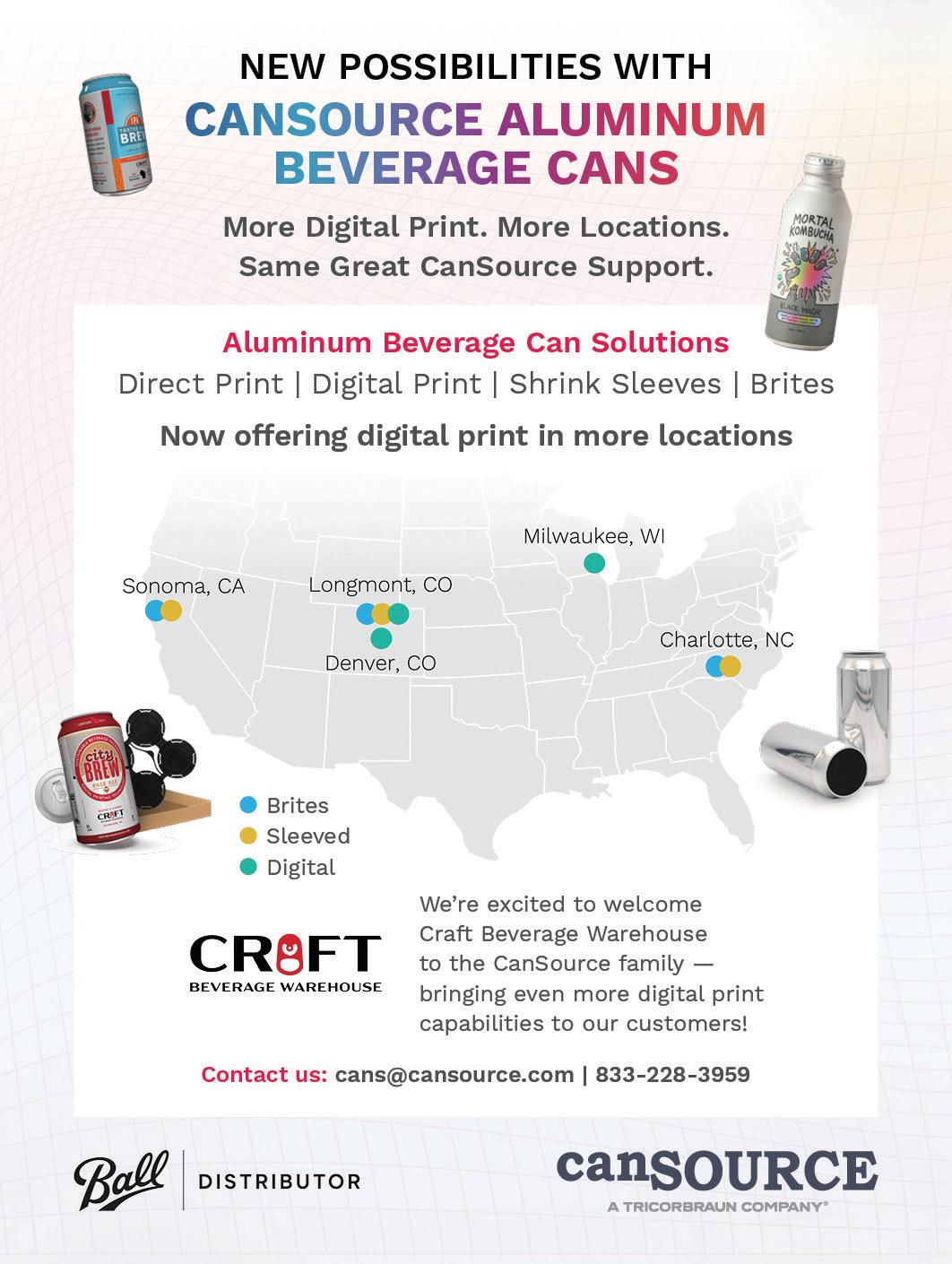

DEEPWORKS is a specialized operations consulting firm dedicated to optimizing and scaling CPG businesses. We function as an outsourced operations department for brands or an extension of their current Ops team. Our focus is strictly in operations and supply chain from building the operational foundation for new brands, fixing processes a growing brand has broken, to optimizing mature supply chains
Bringing Ideas to Life. Farbest Brands
Doehler is a global producer, marketer and provider of technology-driven natural ingredients, ingredient systems and integrated solutions for the food, beverage and nutrition industry. Our comprehensive portfolio includes natural flavors, colors from natural sources, end-to-end solutions and more. Sustainable by nature, Doehler helps to nourish the world better: Good for peopleGood for planet.®
Farbest Brands can help you meet the demand for clean-label ingredients with a full range of high-quality dairy and plant proteins, gum acacia, lecithin, vitamins, sweeteners, natural colors, as well as USDA-certified organic, and NON-GMO Project Verified ingredients No matter your budget, application, or label claim we guide you to the ingredients that are right for you.
Flavor Dynamics, Inc.
Flavor Dynamics, Inc. is a perfect choice for your food and beverage flavors. We are guided by a commitment to creating innovative products of consistent, superior quality. Our “AA” BRC audit grade represents our commitment to food safety and quality assurance. Our extensive library of sweet and savory flavors includes clean label, natural, organic, vegan and Non GMO options. Contact us.
CO2Sustain is the secret ingredient powering the next generation of standout carbonated beverages. Designed for brands that refuse to settle for ordinary fizz, our simple liquid additive unlocks a richer effervescence, smoother mouthfeel and noticeably longer-lasting fizz that consumers instantly recognize and love. With CO2Sustain, every sip becomes a fresher, fizzier drink experience that keeps your product at the front of the shelf and the front of your customers’ minds.
From mainstream soft drinks to premium mixers, flavored waters, and innovative functional beverages, CO2Sustain gives formulators a powerful tool to differentiate their brands with an easy-to-dose solution proven in global commercial use. Our proprietary technology delivers small and consistent bubbles that hold their sparkle, helping your beverage look better, taste better, and stand out in an increasingly competitive market.
Backed by expert technical support and a track record of success with leading manufacturers, CO2Sustain is more than an additive—it’s a strategic advantage. Choose CO2Sustain and turn exceptional carbonation into your brand’s signature.

Elevate your beverages taste with Flavorcan. 35+ years of flavor innovation expertise, a diverse flavor portfolio, and customized solutions that will make your brand stand out. Let's embark on a journey of flavor innovation together, and create beverages that will not only quench thirst but also excite taste buds and capture hearts. Contact us today to explore the endless possibilities.
FlavorSum helps your brand grow with the flavor solution expertise and infrastructure required to keep pace with the changing needs of beverage buyers. We make flavor sourcing more efficient, effective, and enjoyable with best-in-class responsiveness, competitive lead times and thousands of flavors in water and oil soluble formats. Let’s create the delicious beverages your customers crave.
Team up with Forté and let us help you create a flavor that compliments your unique beverage and vision to perfection! With our deep flavor knowledge and unwavering passion for excellence, our flavorists are ready to collaborate with you to bring your flavor ideas to life. Let’s join forces and transform your beverage dream into a flavorful reality!
Beverage-Ready Possibilities

FutureCeuticals develops clinically researched, specialty-branded and custom-blended fruit and vegetable powders. Our plant-based solutions deliver proven nutritional and functional benefits for beverages, helping the body perform at its best. By bringing science and nature together, we empower our partners to develop innovative, evidence-based health and wellness products.


Looking for inspiration for your next project? At Givaudan Taste & Wellbeing, we harness the curiosity of our people and our extensive knowledge of food ecosystems to create innovative beverage experiences. By applying the latest science, technologies, and consumer insights, we deliver tailored solutions for you, driven by creativity and innovation.

EXBERRY® by GNT is the leading brand of sustainable, plant-based colors for the food and beverage industry. Our colors are non-GMO and derived from fruits, vegetables, and edible plants. We work as a true partner to beverage teams, offering technical expertise and hands-on support from early formulation through scale-up to help bring visually compelling, clean-label beverages to market.
Gotham DSD (Direct Store Delivery) provides a Dedicated Sales Team, Delivery Trucks and Warehouse to get your brand accelerated into the NYC marketplace. Gotham DSD succeeds by working with only a few select food and beverage brands at a time. With limited brands to manage, we can focus on executing the needs of each brand while giving each brand the ability to grow.
For beverage, pharmaceutical, personal care, and industrial applications. GPC delivers ethyl alcohol with exceptional purity and unwavering consistency, backed by 80+ years of distilling expertise. Build your next great spirit with Clearly Superior® GPC Ethyl Alcohol—crafted for brands that demand the best.

HBX is a design-led brand and packaging firm built to drive sales. With a 40-year legacy in CPG, we help brands win on shelf and in market. We specialize in high-velocity branding, packaging, and strategy across the category, from challenger brands to category leaders like Smirnoff, Mott’s and Caribou Coffee. HBX turns complexity into clarity and investment into results. We don’t just build brands
Hydrite combines industry knowledge, advanced technology, and experience to deliver solutions that enhance beverage production quality & efficiency. Beyond chemistry, we provide comprehensive service & support, on-site technical assistance, training, and equipment solutions designed to optimize processes. Our expertise spans ingredients, process aids, water treatment, and more.
Naturally Better Beverage Ingredients from
Build better functional drinks with ingredient systems designed to perform. For decades, Icon Foods has helped beverage brands dial in sweetness, mouthfeel, and stability using clean-label sweeteners and functional fibers like FibRefine® HG. Ready to formulate smarter? Request samples and start building better beverages today. Build Better Functional Drinks

iprona supplies high-quality fruit-based ingredients for beverage applications, including juices, juice concentrates, purées, and extracts. Since 1923 with strong expertise in fruit processing and natural technologies, iprona supports beverage brands with clean-label solutions, consistent quality, and reliable sourcing – from raw fruit to finished ingredient.

Jungbunzlauer is a leading global manufacturer of bio-based ingredients that help beverage formulators create cleaner, tastier, and more functional products. From refreshing hydration drinks to indulgent plant-based beverages, our solutions enhance taste, stability, and nutrition—naturally.
Our broad portfolio includes mineral salts, organic acids, and gums produced by fermentation from renewable raw materials. These ingredients enable balanced mineral fortification, sugar reduction, and improved mouthfeel across a wide range of beverage applications.
For beverage developers, Jungbunzlauer offers:
• Mineral salts for electrolyte and wellness drinks.
• TayaGel® gellan gum for stable, visually appealing plant-based and dairy-alternative beverages.
• Citric acid and buffers for natural acidification and flavor balance.
• Erythritol and stevia blends for sugar-reduced and low-calorie formulations.
With deep technical expertise and global application support, Jungbunzlauer partners with brands to develop the next generation of sustainable and consumer-preferred beverages.
Naturally Better Ingredients. Better for you. Better for the planet.
Learn more at www.jungbunzlauer.com
Flavor & Taste Solutions
IHC is your solution to guide you through the canning process! With over 500 MILLION cans filled to date, IHC offers unmatched Experience and Expertise. We service the Eastern US and deliver quality you can count on – Guaranteed seams, All beverage types, All can sizes, Materials sourcing, & Co-Packaging Partners –whatever your situation we can get your product canned. IHC is your one stop shop!
Sweeteners with Substance
Malt Products Corporation

Malt Products Corporation is a leading manufacturer of natural sweeteners and grain extracts for the global beverage industry. Specialized in malted barley and oat extracts, they provide nutrient-dense bases for nonalcoholic beers, sports drinks, and kombucha. Malt Products Corporation provides services to help beverage brands meet the growing demand for Non-GMO and organic-certified products.
Consumers today want it all—you’re balancing the demands of great taste, supply chain challenges, regulatory hurdles and consumer acceptance. The experts at McCormick Flavor Solutions can help. From ideation to launch, we can create a seamless, winning path for you. Design, develop and scale up using our Beverage Innovation Studio in Geneva, IL or Hunt Valley, MD.
Flavor it... Naturally.
Mother Murphy's Flavors
Beverages today must quench thirst while being healthy, energizing, and exciting. Our flavors are available in natural, natural and artificial, and artificial formulations. Our commitment to high standards has made us an industry leader in regulatory compliance. Whether you're developing a Dry Mix Beverage, RTD, TTB, Coffee, or Tea, Mother Murphy's Flavors is your premier flavor partner.
Complete Quality Assurance for Rigid Packaging Kestrel Vision
Kestrel Vision Group unites industry-leading brands FILTEC, Pressco, and Somex to deliver end-toend, data-driven inspection and control for rigid packaging manufacturing and filling lines.
Together, these companies support metal can, glass, and PET containers with solutions spanning can and preform manufacturing, empty container inspection, filling-line inspection, lab testing, and downstream quality assurance. Kestrel Vision technologies help detect defects early, reduce waste, protect brand integrity, and maximize line efficiency - even when working with returnable containers.
Advanced vision, X-ray, laser, and measurement systems are combined with coding, track-andtrace, and serialization capabilities, giving producers greater visibility and control across the production process. These insights are unified through Klarity, Kestrel Vision’s cloud-based, AI-driven data ecosystem, which connects inspection data, streamlines workflows, and delivers actionable intelligence to improve performance and operational efficiency.
By integrating inspection, traceability, and data intelligence, Kestrel Vision helps beverage producers operate smarter, faster, and with greater confidence—every container, every line.
Filling & Packaging worldwide

KHS is one of the world’s leading companies providing innovative solutions for filling and packaging in the beverage, food and non-food markets. With headquarters in Dortmund, Germany, and sites in Germany, Waukesha (WI), India, Brazil, China and Mexico, KHS provides state-of-the-art, reliable and highly efficient turnkey lines, individual machines and conversions for filling and packaging in glass, PET, and cans. Our international focus and customer-driven local presence allow us to satisfy individual demands of our customers worldwide. We can provide direct support at short notice. Our 24/7 HelpDesk and selection of digital services underline the company’s proximity to its customers.
Under the motto of “your reliable partner”, KHS is at its customers’ side throughout the entire productive life cycle of their lines and machines, constantly offering new solutions and upgrades that generate added value. The company underlines this by successfully developing resourcesaving machinery and modernization systems for efficient energy management. In the field of sustainable packaging KHS supports its customers with systems and solutions that promote a closed recycling loop.
Leave Your Competition in the Cold Lanxess Corporation
Looking to safeguard the quality and shelf-life of your beverage and eliminate chilled chain distribution needs? LANXESS Corporation offers two unique and innovative technologies, Velcorin® and Nagardo®, which provide microbiological protection in a wide variety of beverages.
Velcorin® (Dimethyl Dicarbonate) is a cold sterilization agent that kills microorganisms during production, resulting in cleaner and more stable beverages.
Benefits of Velcorin® include:
• No impact on sensory profile
• Clean label solution
• Compatibility with all types of common packaging
• Cost-effective
• Application-specific advice and services from Velcorin® team
Nagardo® (Dacryopinax Spathularia) is a natural guardian that protects against beverage spoilage to secure and prolong shelf life.
Benefits of Nagardo® include:
• Achieve natural & consumer friendly claims
• Efficient control of a broad range of spoilage organisms
• No impact on sensory profile
• Broad application in a variety of beverages
• Easy integration into production process
• Application-specific advice and services from Nagardo® team
LANXESS Corporation hopes to conveniently meet all of your microbiological protection needs with our widely applicable technologies and services.
For more information on Velcorin®, please visit Velcorin.com.
For more information on Nagardo®, please visit Nagardo.com.



Oobli, which we like to call “the happiness protein,” is the world’s first protein-sweetening company. We work with ingredient and CPG companies to make sweet proteins available as an innovative new tool in their toolboxes for making great tasting, healthier & more climate-friendly sweet foods & beverages. Sweet proteins taste like sugar but digest and metabolize like protein, making them a healthy sweetener replacement; they don’t disrupt the gut microbiome or raise blood sugar or insulin.
Sweet proteins can replace 70% or more of sugar in products ranging from dairy and sports drinks to sodas and teas, with applications across nearly all food and drink categories. They can also be used alongside other natural sweeteners like sugar, stevia and monk fruit. Oobli leads the sweet protein market as the only U.S. company with FDA GRAS “No questions” letters for three sweet proteins. We are commercially scaled and also partnering with companies like Ingredion and Mars to bring protein-sweetened products to consumers, creating product innovation opportunities across the food and beverage industries.
Parallel Products specializes in comprehensive beverage product destruction and recycling services to provide sustainable recycling/ recovery and brand protection for your products. In addition, our TTB Compliance & Tax Recovery Department can assist you with the recovery of your Federal Excise Tax, which can have a dramatic impact to your profitability.
Pathfinder paves the way for commercial beverage makers, offering specialist ingredient blends for alcoholic and functional drinks producers. With small to bulk packaging options available, we work with our partners to develop and supply ingredient blends to help grow your business. From Hard Soda to Hydration, Gin to Gut Health, Pathfinder provides solutions across diverse categories.
Pick Direct Steam Injection Liquid Heaters offers unique advantages to the food and beverage industry for applications including tank filling, CIP, pasteurizing, product cooking, heating jacketed kettles, can and bottle warming, and industrial wastewater heating.

From variety packs and direct-to-retailer shipping to gift sets and more, Premier Packaging is your partner for fast, high-quality beverage packaging. We specialize in automatic cartoning, variety pack rework, and sustainable design—backed by in-house ISTA testing and creative support. In a time crunch? Make the switch to Premier Packaging and let’s get your product retail-ready, faster.
Synergistic Ingredients

PTM Food is the ultimate product development and manufacturing support firm that offers unparalleled expertise, creativity, and development services to help you achieve a distinct competitive advantage. We leave no stone unturned in our quest to uncover critical industry insights and develop products that are truly cutting-edge. Our team is more than capable of delivering successful results.
RAD Packaging

RAD Packaging, located in the Los Angeles area, specializes in variety pack solutions for alcoholic and non-alcoholic beverages. We offer tailored repacking services, scalable warehousing, and streamlined logistics to meet your unique needs. Trust RAD to deliver efficient and reliable solutions for your beverage brand's success.

Scientific Living is a premium ingredient solutions provider serving beverage and nutraceutical innovators. Since 2009, we’ve delivered science-backed functional ingredients in probiotics, postbiotics, mushroom extracts, cognitive, longevity and specialty GRAS ingredients supported by research and clinical studies. Which functional ingredients are you considering for your brands?
SmartSkin Technologies

SmartSkin Technologies helps beverage producers detect and prevent packaging damage before it leads to downtime, waste, or lost product. Our real-time monitoring identifies damage risks across cans, bottles, and PET filling lines, enabling proactive maintenance, faster troubleshooting, and consistent package quality without slowing production.


We work with manufacturers and importers offering a wide variety of beverage types to include energy drinks, supplements, and functional beverages. Very familiar with insurance terms required for wholesale transactions and certificates of insurance. Inventory, Transit, Recall and Foreign Liability coverage also available. New Brands or existing Brands.
Stiebs, since 2005, has been devoted to sourcing, processing & delivering the world's finest plant-based products. We offer a full line of fruit & vegetable based ingredients as Single Strength Juice, Juice Concentrates, Purees and IQF Cubes. From the beginning stages of product development to delivering an on-going supply of premium natural products, our team is here to help you succeed.
Your beverage brand should look as good as it tastes. Lucky you—you’ve found the partner to make that a reality. We are a small creative studio known for our effortless collaboration and agility. Whether building a brand from scratch or elevating your current packaging, DTC ads, or POS presence, we bring your brand to life.
Built on technology, Takasago has an extensive innovation platform including true to nature VIVID® Natural Flavors, taste modulating INTENSATES® Flavors, Consumer Insights and Market Research, etc. Vertically integrated in citrus, coffee, tea, mint, and vanilla to drive quality and sustainable raw materials for flavor creations, we promise to deliver impactful flavors for your product development.

Organic Ingredients to Elevate Your Beverage Applications
Tradin Organic
WrightPro™ custom protein blends help brands meet protein goals in practical, attainable ways, delivering adaptable solutions for GLP-1 users, weight management, active lifestyles, women’s health, and broader wellness needs. Each formulation can be tailored to address emerging trends and consumer demands. WrightPro™ blends:
• GLP-1 Support – Formulated to address nutritional gaps from GLP-1–focused diets
• PDCAAS Optimization – Balanced blends capable of achieving 1.0 protein scores
• Low-Glycemic Options – Support healthy blood sugar without spikes
• Label-Friendly Nutrition – Clean, allergen-conscious, consumer approved
• Condition-Specific Support – Meets diverse protein needs across health conditions
• Complete Nutrient Support – Protein-centered formulations with full biotic support
SuperBlend® custom nutritional premixes help overcome nutrient processing challenges by delivering reliable performance and stability in a customer’s finished product. Designed to respond exceptionally well under demanding processing conditions, SuperBlend® premixes offer the following advantages:
• Combine multiple nutrients into a single, quality-assured ingredient
• Integrate coated SuperCoat® ingredients with uncoated nutrients
• Simplify ingredient sourcing through one trusted supplier, reducing costs
• Improve particle homogeneity through precise, controlled blending
Innovative Fortification Ingredients Vitacyclix, Div. of MORRE-TEC
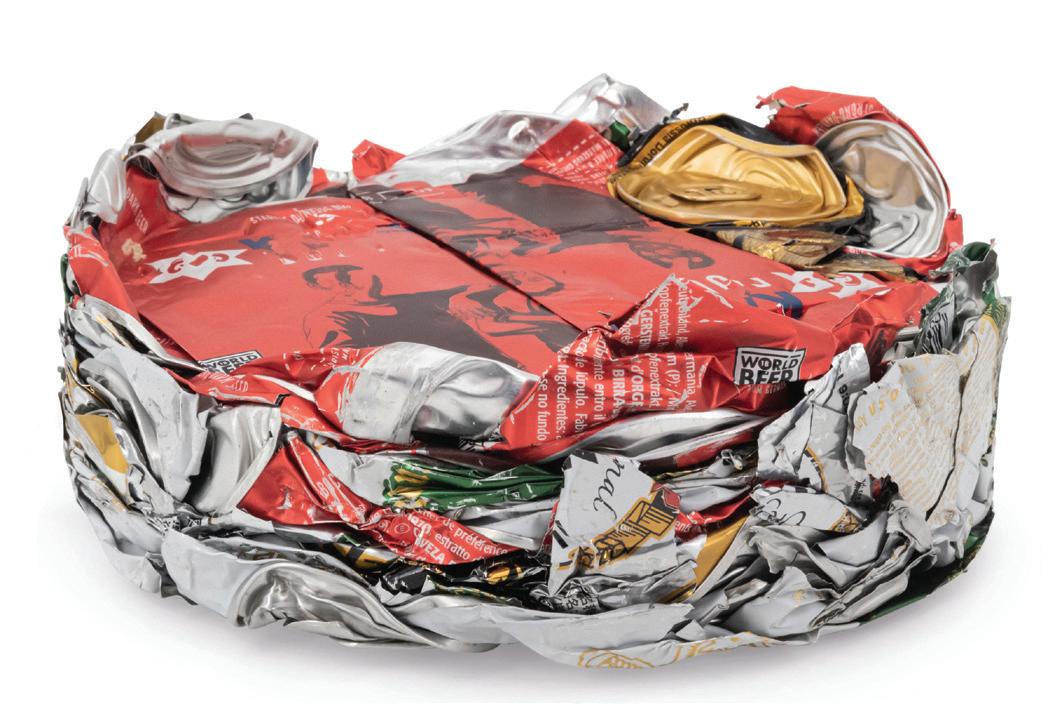
WEIMA packaging presses, can presses, recycling presses and beverage drainers reduce the waste volume and the disposal costs for liquids. The E- and G-Series drainage press from WEIMA offer an efficient way to drain cans of their contents in one easy step, increasing quality control and decreasing waste. Drainage press technology allows for rejected cans to be directly ejected into the machine’s hopper, which punctures them so the contents can be drained into its collection bin. The machine can also be hand-fed if necessary, and all rejected cans are easily compressed into Ø200mm discs for convenient recycling. The compressed discs of aluminum take up significantly less space than partially filled cans, maximizing valuable floor space between trips to the recycler and increasing the value of the aluminum due to its compressed form. The modular nature of these machines makes them easily integrated into existing canning lines. For breweries and other packaging/canning operations, WEIMA’s drainage press technology allows more time to focus on what matters most: sustainably creating a delicious, quality product.

Zuckerman Honickman is a full service packaging company specializing in supplying glass and plastic bottles and aluminum beverage cans. With more than 100 years of experience our company prides itself in being experts in the supply side of the beverage industry. Our strengths are in our ability to provide beverage brand owners with many unparalleled advantages, such as volume buying, preferred production scheduling, custom packaging design, supply side networking, logistical planning, and much more. Our market expertise lies within our ability to supply a full spectrum of glass, plastic and metal containers to companies of all sizes. Our knowledge base gives us the unique opportunity to enable beverage brand owners to take their ideas from inception to reality to success. With hundreds of manufacturer supplier partners Zuckerman Honickman prides itself in being able to supply custom packaging, hard to find packaging, as well as stock packaging...all at a competitive price. Our National footprint enables us to supply packaging to all corners of the US and beyond. Zuckerman Honickman provides bottles and cans to all beverage verticals, including sports drinks, sparkling beverages, craft beer, craft soda, bottled water, tea, coffee, enhanced beverages, wine, spirits, and many more! Reach out to us and let’s see how Zuckerman Honickman can help!

Is a bulk organic ingredient supplier focused on sustainable and regenerative supply chains for beverage formulations. Our portfolio includes fruit and vegetable purées, juice concentrates, NFC and IQF, nut and seed butters, matcha, avocado oil, coconut nectar and sugar, cocoa products, date powder and syrup. We work directly with farmers to ensure quality, traceability, and long-term partnership.
We are the natural ingredient partner powering the future of food and beverage. From clean label extracts to flavor and function, our integrated portfolio helps manufacturers create extraordinary experiences with ingredients that are Purely Better. With decades of expertise and unmatched scale, Vibrant brings everything food and beverage brands need in one partner.
WaterSurplus delivers custom water treatment solutions to bottlers nationwide. Since its founding in 1989, innovation and service have driven WaterSurplus. Today, that means sustainable water rooms, high-efficiency reverse osmosis systems, PFAS treatment, filtration equipment, and a vast rental fleet for temporary or emergency treatment. WaterSurplus is a wholly owned subsidiary of Hawkins, Inc.
A7D Creative Group + Printing
Abstrax
AIDP
Allen Flavors
AstraPouch®
B&D Nutritional Ingredients
Anna Hopkins San Diego CA (619) 373-4224 a7d.design
Raquel Lucas Irvine CA (562) 294-5805 abstraxhops.com
Gabriela Mora City of Industry CA (626) 964-6910 aidp.com
Joe Harriman South Plainfield NJ (908) 561-5995 allenflavors.com
Michael mrozak Middlesex NY (585) 299-9899 Astrapouch.com
Brad Van Dyke Carlsbad CA (760) 597-0933 bdnutritional.com
Balchem Corporation - Montvale NJ - balchem.com
Beck Flavors
Berlin Packaging
Beverage Alcohol Consultants
Nick Palank Maryland Heights MO (314) 878-7522 beckflavors.com
Berlin Packaging - - (800) 223-7546 berlinpackaging.com
Gary Schneidkraut, ML, WSET II Fort Lauderdale FL (845) 729-6483 AlcoholGuy.com
BevSource - Saint Paul MN (866) 956-4608 bevsource.com
Bio-Botanica, Inc.
CalNutri, Inc.
Can-One USA
Jason Katsoris Hauppauge NY (631) 231-5522 bio-botanica.com
David Ackerman Cave Creek AZ (209) 605-3313 calnutri.com
Nicholas Hanna Nashua NH (603) 704-9344 can-one.com
CanSource LLC CanSource - - (833) 228-3959 cansource.com
Caporale Consulting
CO2Sustain
DEEPWORKS
Doehler North America
Drink Labs
Farbest Brands
Flavor Dynamics, Inc.
Flavorcan International Inc.
FlavorSum
Fogg Filler
Forté Flavors
FutureCeuticals
Galloway Company
Mark Caporale Middletown CA (707) 987-9703 caporaleconsulting.com
Jonathan Stott Leeds - (044) 426-4601 co2sustain.com
Mac McAvoy Los Angeles CA (813) 523-5366 DeepWorkscpg.com
Kristy Ellenson Cartersville GA (470) 334-9858 doehler.com
Dennis Morales Simi Valley CA (310) 770-9888 thedrinklabs.com
Tracey Jordan Park Ridge NJ (201) 573-4900 farbest.com
Colleen Roberts South Plainfield NJ (908) 822-8855 FlavorDynamics.com
Mario Moreno Toronto - (416) 321-2124 flavorcan.ca
Rachel Zawistowski Kalamazoo MI (800) 525-2431 flavorsum.com
Karl Walby Holland MI (616) 377-7119 foggfiller.com
Janet Guzman Valencia CA (818) 307-4062 forteflavors.com
Charlie Lockwood Momence IL (888) 452-6853 futureceuticals.com
Luke Gambaro Neenah WI (920) 636-6367 gallowaycompany.com
Givaudan - Cincinnati OH - givaudan.com
GNT USA, LLC
Gotham DSD
Grain Processing Corporation
Grasslands
HBX Branding
Hydrite
Icon Foods
iprona
Iron Heart Canning Co
Jungbunzlauer
Kestrel Vision
KHS USA, Inc.
Lanxess Corporation
Magtein
Malt Products Corporation
Matcha.com
McCormick Flavor Solutions
MetaBrand LLC
Mother Murphy's Flavors
Nexira
Oobli
Jeannette O'Brien Dallas NC (704) 469-5555 exberry.com
Trent Moffat Long Island City NY (877) 931-3030 gothamdsd.com
Leandra Walderbach Muscatine IA (563) 770-7735 grainprocessing.com
Ricardo Baca Denver CO (720) 217-8870 mygrasslands.com
Greg Martin Norwalk CT (203) 866-9696 hbxbranding.com
Lindsey Marsh Brookfield WI (262) 792-1450 hydrite.com
Thom King Portland OR (310) 455-9876 iconfoods.com
Scott Surma Tucson AZ (815) 355-4945 iprona.com
Brian Casse - NH (973) 342-1388 ironheartcanning.com
Alex Merlos Newton MA (774) 327-8352 jungbunzlauer.com
Kestrel Vision Sales Solon OH (440) 498-2600 kestrel-vision.com
Rick Feuling Waukesha WI (262) 797-7200 khs.com
Mike Turpin Pittsburgh PA (817) 357-5851 Velcorin.com
Angela Kelly City of Industry CA (949) 423-4274 magtein.com
Domenic Puntasecca Saddle Brook NJ (201) 845-4420 maltproducts.com
Bulk Matcha Tuscon AZ (520) 273-2110 bulk.matcha.com
Chloe Morris Hunt Valley MD - mccormickfona.com
Craig Fortin Edison NJ (732) 515-3737 metabrandcorp.com
Michael Oden Greensboro NC (800) 849-1277 mothermurphys.com
Franck Gillet Somerville NJ (908) 707-9400 nexira.com
Dennis Buckley Davis CA (714) 951-6167 oobli.com
PakTech - Eugene OR (541) 461-5000 PakTech-opi.com
Parallel Products
Pathfinder Ingredients
Aidon Tackett - KY (502) 471-2428 parallelproducts.com
Will Jackson Ellesmere Port - +447765476668___ pathfinder-uk.co
Pick Heaters, Inc.
Premier Packaging
Stephanie Crass West Bend WI (262) 338-1191 pickheaters.com
Rachel Kaye Pico Rivera CA (818) 292-6117 premierpkg.com
Prodalim - Winter Garden FL (321) 221-1082 prodalim.com
PTM Food
R.A Jones
RAD Packaging
Refresco
Scientific Living. Inc.
Don Rodgers Wall Township NJ (888) 736-6339 ptmfood.com
Rich Clifton Covington KY (859) 669-1618 rajones.com
Alexander Said San Fernando CA (661) 992-2252 radpackaging.com
Antonella Sacconi Tampa FL (813) 830-3783 -
Michelle Li Irvine CA (949) 608-0802 scientificliving.com
SmartSkin Technologies - - - (855) 210-9006 smartskintech.com
Soufflet Malt
Sovereign Flavors Inc.
Specialty Food Beverage-PCI
Stevens Point Brewery
Stiebs
Studio Thirsty LLC
Sunland Nutrition Inc
Takasago International Corp
Terra Nostra Organics
the BevPros - A DHL Company
Top Health Ingredients
Tradin Organic
TWG Health & Nutrition
Vibrant Ingredients
Caitlin Schut Vancouver WA (360) 600-9568 Countrymalt.com
David Ames Santa Ana CA (714) 437-1996 sovereignflavors.com
Tom Wallace Clifton Park NY (866) 461-0709 specialtyfoodbeverage.com
Julie Birrenkott Stevens Point WI (414) 861-3200 pointbeer.com
Brad Drumhiller Madera CA (559) 661-0031 stiebs.com
Colleen Shelley Raleigh NC (910) 269-8627 studiothirsty.com
Michael Liu Aliso Viejo CA (714) 575-8998 sunlandnutrition.com
Walter Crawley Rockleigh NJ (201) 937-3902 takasago.com
Caeli Perrelli Palo Alto CA (650) 514-5206 terranostra.com
Barb Wirth Houston TX (281) 902-5500 slg.com
Bruce Wagner Edmonton - (780) 439-1425 tophealthingredients.com
Tradin Organic Aptos CA (831) 685-6565 tradinorganic.com
Shanna Dickens - - (337) 783-3096 twghealthandnutrition.com
Kelsey Anderson Lake Mary FL (855) 337-1633 vibrantingredients.com
Vitacyclix, Div. of Morre-Tec Len Glass - - (908) 688-9009 morretec.com
WaterSurplus
Weima America, Inc.
Zion Packaging
Zuckerman Honickman
Ricardo Bernal Loves Park IL (800) 919-0888 watersurplus.com
TJ Van Thullenar Fort Mill SC (803) 802-7170 weima.com
Gary Martin Corona CA (949) 842-1458 zionpack.com
Jon Zuckerman King Of Prussia PA (610) 962-0100 zh-inc.com
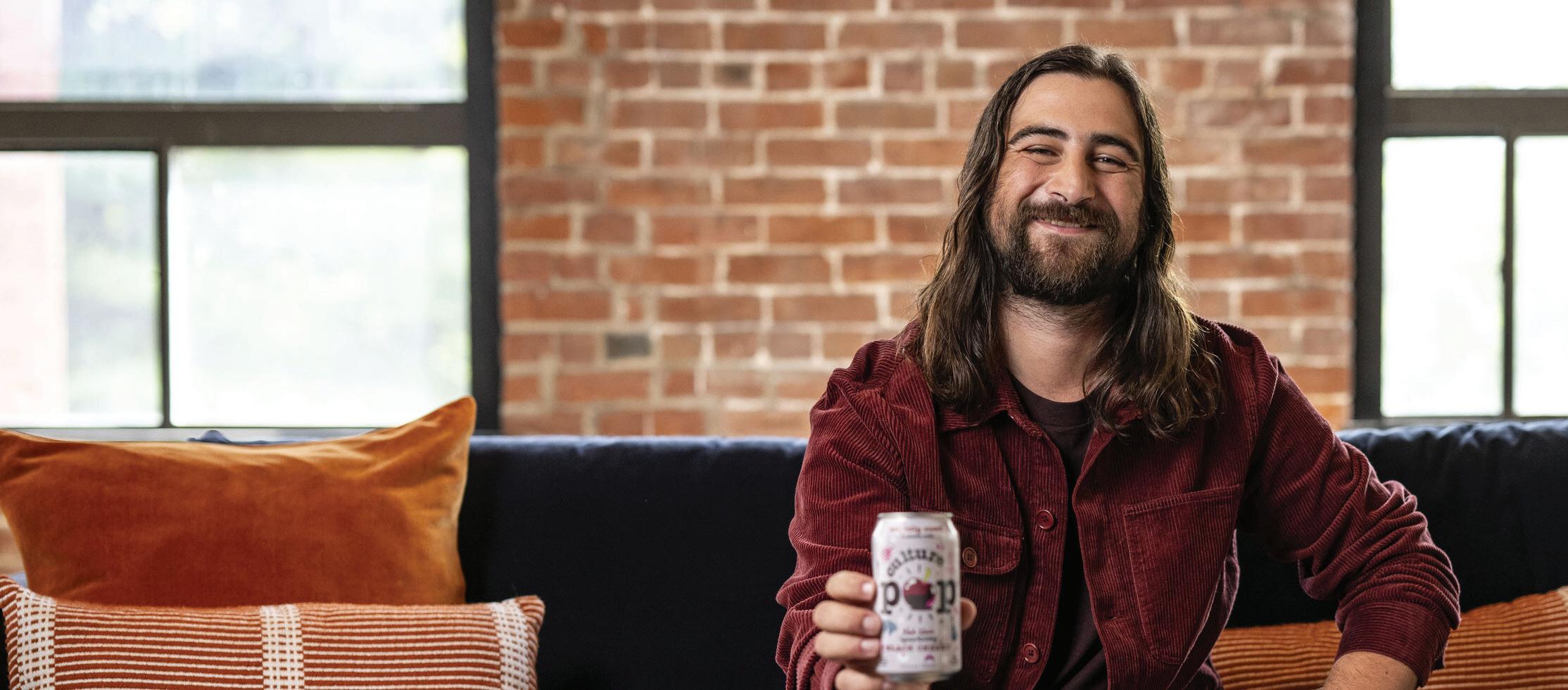
Culture Pop Soda and Noah Kahan have been working on something special since announcing their partnership in Fall 2025. Both New England-born, Culture Pop and Kahan are proud to introduce Noah Kahan’s Limited-Edition Sparkling Black Cherry, a reimagined version of his favorite Culture Pop flavor created to give back. The limited-edition release is aligned with a day-one donation of $100,000 from Culture Pop Soda to The Busyhead Project, Kahan’s mental health initiative.
“The best part about this collab is that it’s in support of The Busyhead Project, an initiative I founded to provide resources and information needed to end the stigma around mental health,” says Kahan. “Having a partner
that supports that mission means the world to me.”
“It’s been great working with Noah on this project,” says Tom First, Founder and CEO of Culture Pop Soda. “He cares so deeply about The Busyhead Project and we are thrilled to work with him and support his efforts. It’s not a surprise that he’s found so much success - he puts his heart into everything he does. Everyone should go out and grab a Noah edition Black Cherry. It’s refreshingly reallike Noah!”
Noah Kahan’s Sparkling Black Cherry flavor is available on Amazon and at major retailers nationwide, including Whole Foods Market, Walmart, Sprouts, Albertson’s/Safeway, Fred Meyer, and more.
Enters Multi-Year Partnership with the Aston Martin Aramco Formula One Team
CELSIUS has entered an exclusive, multi-year global partnership with Aston Martin Aramco, naming the brand an Aston Martin Aramco Formula One Team Partner and official Global Energy Drink Partner of the team.
Jefferson Slack, Managing Director Commercial, Aston Martin Aramco Formula One Team, said, “At Aston Martin Aramco, we pride ourselves on how we interact with and engage our fans, with the aim of creating unique experiences that can’t be found anywhere else in the paddock. Our new partnership with CELSIUS provides an exciting opportunity to bring fresh energy to our I/AM programme, further connecting ambition, culture and community. “Kicking off with our first co-hosted Run Club in Melbourne,
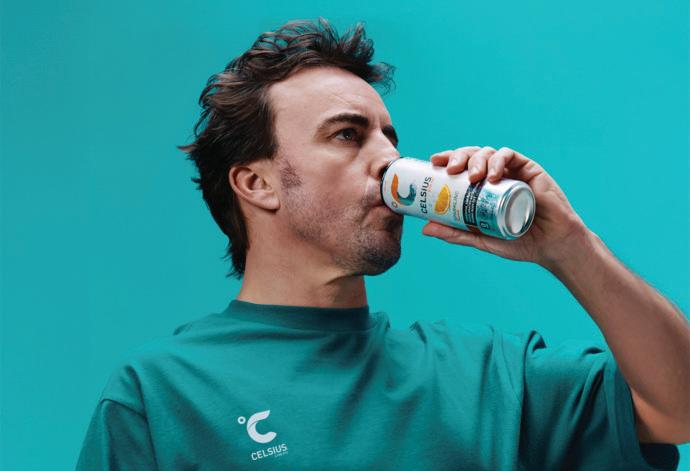
throughout the season we will create several creative activations to bring the partnership to life and celebrate a movement of positive energy together.”
The partnership will help elevate the CELSIUS LIVE. FIT. GO. campaign, launched in the U.S., Canada, and Australia in 2025, with additional markets planned for 2026, creating opportunities to further connect with the everyday achievers and wellness-minded
consumers. In a continued expansion of the campaign, CELSIUS and Aston Martin Aramco will team up on activating LIVE FIT ™️ experiences, creating unique, co-branded cultural moments and fitness activations that bring both brands to life.
As part of the partnership, CELSIUS and Aston Martin Aramco will collaborate on a series of events, engaging the fitness and Formula 1 community alike during key races, and bringing the LIVE. FIT. GO. mindset to life. Kicking off at the Melbourne Grand Prix – with additional locations races to be announced – a co-hosted Run Challenge will provide fans the chance to complete custom run segment(s) inspired by race circuits, city landmarks and Aston Martin Aramco touchpoints.