
Introduction
The case study below is designed to test some of the ‘learn that’ and ‘learn how to’ statements that you have engaged with during the NPQSL programme. Every effort has been made to ensure that the scenario is authentic and that you have sufficient information to complete the task, but it is possible that you would wish to have further information about the case study/scenario school. Where this is the case, you should proceed on the basis of making reasonable professional assumptions (unless the information provided indicates otherwise).
Using the knowledge gained from your study of the NPQSL, write a response of up to 2,500 words to the case study questions below.
In submitting a response you must confirm it is all your own work i.e. you have not received guidance from a third party, you have not consulted with other participants, you have not used materials generated by Artificial Intelligence (AI)/Large Language model (LLM). This covers all stages of the preparation, composition, and submission of work for the summative assessment task.
We recommend that you undertake the following activities:
▪ Review the assessment criteria for this programme – refer to the Participant Handbook for details.
▪ Read carefully and make notes about the scenario; there are six source documents.
▪ Read the DfE Content Framework areas or NPQSL Codes document to identify ‘learn that’ and ‘learn how to’ statements this scenario incorporates.
▪ Organise your response to the question(s) posed below by cross-referencing the notes you have made about the scenario with the ‘learn that’ and ‘learn how to’ statements you have identified.
▪ Focus your attention on what you regard as the critical features of this scenario, and therefore the critical ‘learn that’ and ‘learn how to’ statements you will address in your response.
There are no right or wrong responses to the questions posed below, but some responses will be more effective than others. In formulating your response, you should remember that your assessor will be looking for evidence of your ability to:
▪ identify problems or issues to be addressed, i.e., demonstrate that you can interrogate the evidence in the case study to outline the problems/issues.
▪ identify solutions, i.e., demonstrate that you can recommend a plausible solution/set of solutions to the problem(s) based on appropriate ‘learn that’ and ‘learn how to’ statements.
▪ set out your rationale for any solutions you propose, i.e., justify your proposal(s) based on appropriate ‘learn that’ and ‘learn how to’ statements and support these with reference to relevant research, DfE policy/guidance where appropriate.
▪ determine a strategy for implementing your proposals, i.e., detail the practical process needed for the solution and articulate the rationale behind this chosen approach, with reference to ‘learn that’ and ‘learn how to’ statements.
Using the knowledge gained through your study of the NPQSL analyse the information enclosed within the case study to answer the following questions:
▪ What are the most important issues you have identified, which you would seek to address through your solutions? Identify problems (10% of marks)
▪ What potential solutions for meeting these challenges will you propose, and why? Identify solutions (40% of marks)
▪ What is the rationale for your solutions? (15% of marks)
▪ What advice would you offer the Headteacher on any actions needed for the successful implementation of your strategy? Why have you offered this advice? (35% of marks)
In formulating your response, you should refer to the Headteachers requests, outlined in the case study context section below, and ensure these are incorporated into your answers.
You have been promoted to the position of Assistant Headteacher (AHT) for Curriculum and Assessment at Primley View Primary School commencing September 2023. You have worked at the school since September 2022. As a member of the Senior Leadership Team (SLT), the main focus of your role is to further embed the new curriculum introduced in September 2022.
The Headteacher, Tom, joined the school 18 months ago. One of his first priorities. together with the SLT, was to review the existing curriculum and they agreed it was not fit for purpose. The priority following the September 2022 roll out of the revised curriculum was to ensure that teachers had fully embedded the new approach into their teaching. At the last Ofsted inspection in March 2023, Primley View was rated as Requires Improvement, with the use of assessment strategies to check on pupils’ learning and to identify gaps and misconceptions raised as areas of concern.
During the first week of the autumn term, you meet with the Headteacher to discuss the priorities he has for you as the Assistant Headteacher for Curriculum and Assessment, for the 2023/24 academic year. Tom has collated information from a variety of sources and intends to produce new guidance for staff at the start of the spring term 2023/2024. To help him structure his thoughts he would like you to provide him with an analysis of the key issues/problems staff have raised, together with your suggested solutions to these issues/problems. He would also like guidance on any challenges that might arise in implementing your suggested solutions, and a strategy for ensuring their successful implementation. Your analysis will provide guidance for Tom on:
a) principles and practices that should underpin teachers approach to assessment; and
b) how to provide effective feedback to pupils.
Tom advises that the guidance you provide him should outline the following:
1) The principles that will underpin Primley’s approach to assessment.
2) Subject specific examples of effective assessment practice.
3) Examples of strategies to increase the effectiveness of feedback.
4) References to relevant underpinning research.
5) The steps you will take to embed your strategies across the school.
Plus, if appropriate, any additional advice you feel may help teachers to become more effective in their assessment practices
Primley View is an inner-city Primary school with 454 pupils on roll. This is below the planned admission level of 510 and has fallen over the last two years with a significant number of parents choosing to send their children to a new Primary school that has recently opened.
Pupils whose first language is not English
Pupils eligible for free school meals
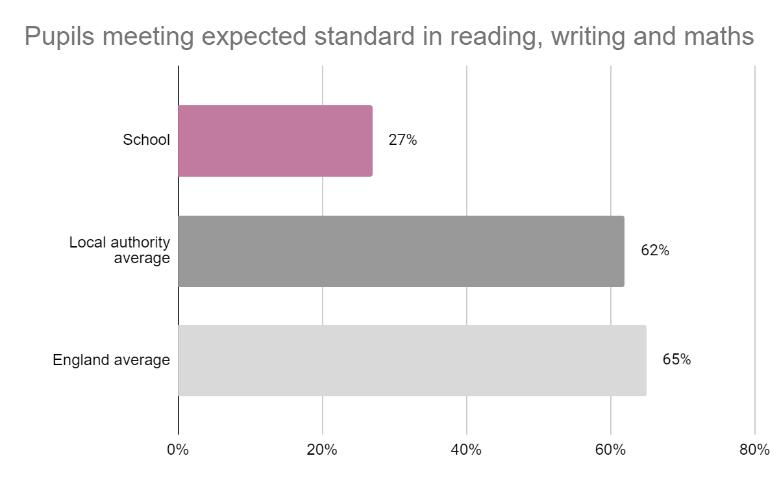
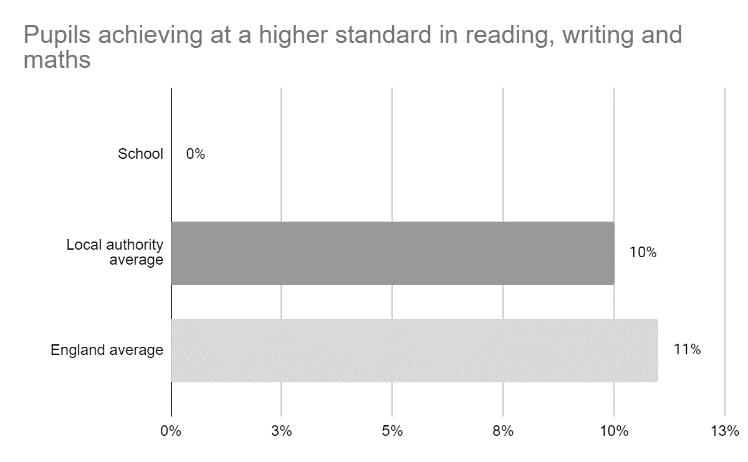
The most recently available pupil performance data (2023 unvalidated results) is shown below.
There has been a significant turnover of teaching staff in the last two years. Implementation of the revised curriculum coincided with six new teachers joining the school.
The previous Headteacher worked at the school for over 18 years. She was responsible for writing the existing feedback and assessment policies in 2018
Headteacherin post for 18 mths
Deputy Headin post 3 yrs
Assistant HeadCurriculum and Assessment
You - new to post
Assistant HeadBehaviour & Wellbeing in post 3 yrs
• Teachers – 21 full-time equivalent (fte) .
Assistant HeadSENDco in post 1 year
• This includes two Key Stage leaders, 6 subject coordinators and 1 EAL coordinator.
• 6 teachers joined in September 2022 (3 experienced teachers, 3 ECT2).
• 4 teachers left in July 2023 and were replaced by 2 experienced teachers and 2 ECT2 teachers
Primley Park View was rated requires improvement at its last Ofsted inspection. Excerpts from the report are below.
Overall effectiveness Requires improvement. The quality of education Requires improvement. Behaviour and attitudes Requires improvement. Personal development Good Leadership and management Requires improvement.
What is it like to attend this school?
There has been a focus on curriculum development recently. Leaders at all levels have clearly mapped the knowledge they want pupils to gain. Leaders ensure that the topics covered are relevant to the backgrounds of the pupils. Leaders have sequenced the curriculum, so it builds on the previous learning of the pupils across all subjects. This is coherently mapped from Year 1 through to Year 6. However, leaders have not been as successful in ensuring that assessment and feedback is used effectively. There are pockets of effective feedback and assessment in year 5 and 6 lessons, however, this is not consistently seen in all key stage 1 and 2 lessons. Therefore, pupils’ outcomes are not consistently improving across the school.
What does the school need to do better?
Some teachers do not plan lessons with clear assessment points to check learning. This does not allow pupils to build on previous knowledge and experiences. There needs to be a more robust link between the planned curriculum and assessment of pupils’ learning.
Some teachers are not consistently identifying which pupils are struggling. Across the school there is inadequate use of assessment outcomes to identify which pupils need more support. This particularly impacts pupils with special educational needs and/or disabilities (SEND) who have support plans devised by the SENDco, as a result they are not receiving targeted and precise support in class.
In several subjects, leaders have not given enough thought to what pupils should learn. Teachers do not use assessment strategies that identify precisely what pupils know.
Some teachers do not have a clear understanding of how to provide effective feedback to pupils. As a result, these teachers are less effective in evaluating how
well pupils are remembering knowledge and how well teachers are identifying gaps and misconceptions to address this.This is to the detriment of subgroups of pupils in particular those with EAL and SEND.
The written feedback provided by many teachers is too often ineffective. The feedback does not allow the pupils to develop their knowledge. Feedback is not always specific or clear. Pupils do not engage effectively with the written feedback as a significant number cannot link this back to what they were learning. The school should consider developing a more extensive range of feedback strategies which are both better targeted at pupil needs and less onerous on staff time.
The Headteacher has asked for feedback from all classroom-based staff. He has asked them to reflect on the implementation of the revised curriculum and the impact it has had on pupil outcomes. Tom offered the opportunity for staff to provide him with verbal feedback Tom also asks staff to consider the Ofsted feedback on the quality of education when giving their feedback. This feedback has been added to a report that Tom shares with you. This is summarised in the table below.
‘I’m really pleased with the revised curriculum; it builds effectively from Key Stage 1. I agree that we need to improve both informal and formal assessments. I think if we can reduce the amount of time teachers are spending on writing feedback that will reduce their workload. Our year 5 and 6 teachers are starting to develop some good practice. We need to make sure they continue with it
‘We know that we need to improve but I think we are making positive changes. The revised curriculum was a big change for me, and I’ve spent a lot of time getting to grips with it. I like to give written feedback to pupils as it shows I have checked their learning, even though it does take a lot of time to complete. I don’t always give pupils chance to look at the feedback as we are busy trying to get through content. I find it works better giving EAL pupils written feedback as they can work through it at their own pace in class’.
Gill,
‘When I joined the school, it was in a transitional period, as the Headteacher was new and there had been a significant turnover of staff. I really had to hit the ground running trying to embed the revised curriculum across all years. Now most teachers are secure in what they are delivering. When I ask teachers questions such as ‘show me your formative assessment approaches that allow you to check learning is secure in pupils’ memories’, I get mixed responses. Some are really unsure how to do this.’
‘I’ve started to develop ideas around how we should use assessment in Humanities lessons and have trialled this with Key stage 2 teachers in year 5 and 6. I approached this by reflecting on what formative assessment I would want teachers to use in each topic, for example could they use oral quick quizzes or zoomed in topic maps. I was also keen for them to live mark in the lesson rather than writing extensive feedback as this has more impact on the pupils’ learning and outcomes. I’m happy to share what I’ve done in humanities across school’
Yin Huang Assistant Head, Behaviour and wellbeing, 8 years at the school
‘One of the issues we have is when we have supply teachers in. There is no easy way of showing them what our assessment and feedback practices are. We do give supply teachers the assessment and feedback policies, but these are out of date. They need updating to reflect our school now with specific guidance for SEND pupils. Our SENDco has some robust plans for pupils but there needs to be consistency in how these are incorporated into our assessment and feedback practices’
Lucy Wilcox, Year 6 teacher, time at the school 1 year
‘I’ve really enjoyed working with Giulia the subject coordinator for Humanities We’ve really looked at the curriculum, built in clear summative assessment points, and a variety of informal assessment opportunities during individual lessons. Feedback is done in lessons when the pupils are working so they can respond to it immediately to improve their learning and work. I’ve started to take the same approach in other subjects. Giving verbal feedback means I can manage my workload better as there is less written feedback.’
Jack McGee, HLTA, time at the school 7 years
‘I’ve really noticed how pupils are struggling more in lessons as they don’t remember what they have learnt before and can’t make the connection between one piece of work and the next. Some teachers are brilliant at addressing this In Year 5 I’ve seen the teachers doing things like retrieval roulette at the start of the lesson. I thought this was just an interesting way to start the lesson but then realised that it was the teacher’s way of assessing learning. The thing is
Ethan Wright, Year 1 teacher, 18 years at the school
‘I’m not sure what the issue is, we just need to stick to our assessment and feedback policy as it has worked well in the past. I know some teachers say it does not support our pupils, but they just need to get used to it. Rather than changing the policy we should just make sure that all new teachers are familiar with it. That would bring consistency across the school’
Gali Balsamo, Year 3 teacher, time at the school 11 years
‘I’m starting to feel a lot of pressure to develop how I provide feedback to the pupils. I always rely on providing in depth written feedback so the pupils can keep going back to it. It also means I can show how I’ve assessed and provided feedback to the pupils which is important. Writing feedback does take up a lot of my time but that’s all part of the job. I’m willing to learn about other ways but I’m nervous to do this in case it is not as successful.’
Milan Rajpara, Key Stage 1 leader, time at the school 1 year
‘What I could really do with is having more time to work with Hamza, the Key Stage 2 leader. He has really done a lot of work around developing assessment practice and feedback. When I’ve spent time in lessons with the year 5 and 6 pupils, they are engaging with this and can tell me how they can improve their work. What I’ve done this year is to make sure the teachers were secure with the revised curriculum and stuck with the existing assessment and
the pupils don’t realise this either and want to get involved.’
Emily Wheatley, EAL coordinator, time at the school 1 year
‘We have done a lot of work this year looking at strategies for delivering content that is inclusive of our EAL students. What we now need to develop is the effective use of feedback. The majority of our EAL pupils are good at oral communication but have a weaker reading comprehension. They struggle to read the feedback they receive which means they are unable to respond effectively. This is really impacting negatively on their progress.’
feedback policy. The school’s feedback policy is to write extensive notes in the pupils’ books, but this isn’t always effective and takes up a lot of our time.’
Petkov Gabor Assistant Head
SENDco,
time at the school 1 year
‘I’m really pleased that we have managed to write and share support plans for our SEND pupils. I’ve done this by talking to the teacher/s involved to explain each pupil’s support plan in detail. The problem I’ve found when I’ve called into lessons is that some teachers aren’t always adapting their assessment or feedback approaches to take account of the SEND plans. We need to work on this in the next academic year to make sure all our SEND pupils can access all their lessons.’
At the end of each academic year, the Governors compile their Annual Governors report. Tom has shared with you the relevant parts of the report from the Teaching and Learning committee
Teaching & Learning Committee Report 2022/23
Introduction
The Teaching and Learning Committee deals with all matters concerning the educational performance of the school and its pupils. This includes the curriculum, the quality of teaching, assessment, and pupil outcomes. The committee met four times during this academic year and monitored pupils’ progress and outcomes.
During the year the committee members made termly visits to the school during which they spoke to staff and observed lessons. Prior to their visits Tom guided governors on what to look for with regard to assessment practice. On completion of their visits, governors were asked to complete a simple proforma recording their observations.
Primley Park View Primary School has taken steps to revise the curriculum they offer. A positive development this year was the work carried out by the Headteacher, in collaboration with his senior leadership team and subject leads, on revising and developing the curriculum. Through defining the intent for each subject, a progressive curriculum has been designed and is in the process of being implemented across Key Stages 1 and 2.
Areas
Governors noted the following:
• Staff were universally warm and welcoming.
• In general, most teachers felt secure in the delivery of the revised curriculum.
• Most pupils were enthusiastic to learn and on task e.g. we saw in some year 5 and 6 lessons pupils responding well to the assessment methods the teachers were using, such as answering questions on whiteboards or taking part in group quizzes.
• Pupils in year 5 and 6 Humanities lessons listened to the feedback the teachers were giving and tried hard to improve their work.
• Most pupils in year 5 and 6 said they valued having feedback from their teacher.
• The SENDco and EAL coordinator have a good understanding of pupils’ starting points and share these with the pupils’ teachers.
• Governors noted significant differences between assessment and feedback practice in years 5 and 6 and other year groups. In other year groups some teachers provided verbal feedback to their pupils’ during class tasks, where this happened pupils’ responded positively. Some teachers said they would like training on how to effectively use live marking and feedback.
• Some teachers would welcome further guidance on how they can adapt their assessment and feedback practices to support different groups of pupils in particular, pupils with SEND and EAL.
• Some teachers were not confident that the assessment strategies they use identify when pupils have remembered more and can apply their learning or that it assists them, as teachers, to identify misconceptions and gaps.
• In years 1-4 some pupils were unclear about what they had to do with the feedback written in their books.
• Some pupils in Key Stage 1 and years 3/4 who were struggling in class did not receive any verbal feedback from the class teacher. As a result they did not complete the work set.
• In the Key Stage 1 lessons we visited teachers did not give verbal feedback to the pupils during the lesson.
At the last committee meeting we discussed the above with the Headteacher. He reinforced that in his two-year curriculum plan his priority in year one was to make sure that all teachers were secure in their subject knowledge. In year two the priority is to develop robust assessment and feedback strategies. Tom will be working closely with the new Assistant Headteacher for Curriculum and Learning to achieve this.
The Committee will remain focused on monitoring the quality of teaching, learning, assessment, and feedback in the school during the next academic year.
We have agreed on the following principles as the basis of our assessment system.
• All forms of assessment should be used to improve teaching and learning.
• Tests should be rigorous and reliable.
• All pupils in a year group will sit the same assessment.
• All assessments should test pupils’ knowledge of the curriculum.
• Assessment results will inform the planning and delivery of the curriculum.
• It is the teacher’s responsibility to recognise the next steps in a pupil’s learning.
• Summative assessment will provide reliable information to parents about how their child is doing.
Formative assessment
Formative assessment is important in our assessment process as it will inform you of the next steps in teaching and learning. This is an opportunity for you to find out which pupils are reaching their expected process, those falling behind, and those exceeding. The main source of formative assessment will be the work completed in the pupils’ subject books. Marking is your means of assessing pupil progress. All work should be marked as soon as possible with extensive feedback provided to each pupil. Pupils should be given time to read these comments in the following lesson. The school expects that all core subjects will be marked every other lesson and non-core subjects, once a week.
Self/Peer assessment
This approach can be used on occasions in Key Stage 2 Any work that is peer/self-assessed should then be marked by you.
Summative assessment
Internal summative assessment is the formal testing of what has been learned to produce reliable data for pupil outcomes. This is the most important assessment and one that the teacher should focus on. We expect you to keep logbooks of all summative assessment results. The logbook of summative assessment will be used to inform parents of their child’s outcomes.
Providing feedback
Feedback should show the pupil where they need to make progress. Thorough marking of pupils’ books will provide pupils with the necessary feedback that will lead to them to adjust their practice. This feedback should be individual to the pupil and is the main source of data you will have to inform you of any common misconceptions or errors from the lesson. The school expects written feedback to model handwriting expectations and accurate spelling and grammar. If there is a major concern with a pupil’s work this must be written in their book. You should include positive comments.
During the summer term, the Headteacher collected feedback from parents on a number of aspects of school life. This year Tom was particularly interested to hear parents’ views on learning and the progress their children are making.
I’m not sure what progress my daughter is making. At parent’s evening, I was shown her books and there seemed to be a lot of writing from the teacher in there. My daughter said the teacher never explains the feedback in the book which makes her feel like she is getting everything wrong.
Finally, this year I’ve really seen a difference. My son talks a lot about how his teacher gives him feedback in class and this helps him with his work. He was telling the teacher at the secondary school he moves to in September about this and she said that’s what happens there
I’m really disappointed with the support my child has in lesson. Mr Gabor has written a really thorough support plan, but this seems to be forgotten in class. It is really frustrating as my child doesn’t seem to be making any progress.
My son is in year 5 and we have seen a real change this year. He is learning about things that are relevant to his background which is brilliant. Miss Galizia really encourages him in technology, he’s always coming home telling us how much she says he is learning in class. He prefers that she talks to him about his work, he’s dyslexic so struggled to read the lengthy comments in his books in previous years.
My daughter struggles with reading English, we all do in the family. But she is really good at understanding spoken English. She really likes science and was doing well with this before we moved to England. She’s not doing as well now as she does not understand the comments the teacher puts in her book. She’s too shy to ask for help. It is unfair she isn’t getting the help.