

NPQLT Professional
Learning: An Introduction

Face-to-face event 1





facebook.com/bestpracticenetwork
@bestpracticenet
linkedin.com/school/the-best-practice-network @bestpracticenetworkbpn

NPQLT Professional
Learning: An Introduction
Face-to-face event 1
facebook.com/bestpracticenetwork
@bestpracticenet
linkedin.com/school/the-best-practice-network @bestpracticenetworkbpn
Welcome Programme orientation and participant learning journey
Learning review

“Schools should probably make fewer, but more strategic choices, and pursue these diligently. Investing time and effort to carefully reflect on, plan, and prepare for implementation will reap rewards later. School leaders play a central role in improving education practices through high-quality implementation. They create a leadership environment and school climate that is conducive to good implementation.”

- Sharples, J. M., Albers, B., Fraser, S., and Kime, S. for EEF (2018): Putting evidence to work – a school's guide to implementation
09:00 45 minutes
one: welcome, introductions, programme orientation and learning review
09:45 10 minutes Session two: introduction to content areas, key themes and concepts
09:55 55 minutes Session three: how pupils learn – concepts, research and practice application
13:10 30 minutes Session five (i): implementation – concepts, research and practice application (continued)
• To review initial learning and application and articulate initial shift in knowledge and understanding
• To engage with the key themes of ‘Leading Teaching’ content areas How pupils learn, Subject and curriculum and Implementation
• To be familiar with key ‘learn that’ and ‘learn how to’ statements
• To understand key related research and its implications for practice
• To align research to application through others’ practice and then to own practice
• To identify learning pathway for remainder of Cycle One to address areas for development
• To participate in peer conversations to support and challenge colleagues to develop knowledge and understanding
NPQ Leading Teacher Development
NPQ Leading Teaching
NPQ Leading Behaviour & Culture
For those who are, or aspire to, lead the development of other teachers 12 months (followed by assessment)
For those who are, or aspire to, lead teaching in a subject, year group, key stage or phase
12 months (followed by assessment)
For those who are, or aspire to, lead behaviour and culture and/or pupil well-being
12 months (followed by assessment)
NPQSENCO
NPQ Senior Leadership
NPQ Headship
NPQ Executive Leadership
Minimum of two years teaching
Minimum of two years teaching
Minimum of two years teaching
For those wanting to become an expert in special educational needs coordination and discover how to cultivate an inclusive culture in their school
18 months (followed by assessment)
For those who are, or aspire to be, senior leaders leading across a school
18 months (followed by assessment)
For those who are, or aspire to be, headteachers leading across a whole school
18 months (followed by assessment)
For those who are, or aspire to be, executive leaders with responsibility across more than one school
18 months (followed by assessment)
Minimum of two years teaching Teacher Reference Number
Minimum of two years teaching and in a middle leadership role or senior leadership role
18 months from headship application
Current deputy headteacher, vice principal or new to headship
Minimum of three years as a head of school/headteacher
BPN’s core business: Engaging with and contributing to producing world class teaching and leadership in our schools and academies through high quality professional development opportunities.
1. Increased focus on evidence-informed research with explicit connection to the DfE programme frameworks
5. There will be an online leadership mentor assigned to all participants engaging in a specialist NPQ programme to support with all online aspects – they will be the main point of contact
2. Six National Professional Qualifications rather than four
3. Minimum 95% commencing an NPQ must remain engaged until the end of the programme
4. School improvement projects are replaced by an unseen case study and compliance of 90% engagement to achieve the qualification
6. All participants on specialist NPQ programmes will have an in-school performance coach assigned by the setting to support from a setting perspective through a participative coaching approach
7. The DfE scholarship awarded to programmes will follow a different allocation system
8. Ofsted will undertake inspection of NPQ provision
To pass the NPQ participants must engage with a minimum of 90% of the programme and pass a summative assessment task. All elements of the programmes are grouped into four engagement areas and have a % requirement designed to ensure participants meet and exceed the specifications.
Leadership Development Record (LDRs)
Face-to-Face Events
Online learning and coaching
Formative Assessment Tasks
90% minimum completion requirement
100% minimum attendance requirement
90% minimum completion requirement
100% minimum completion requirement
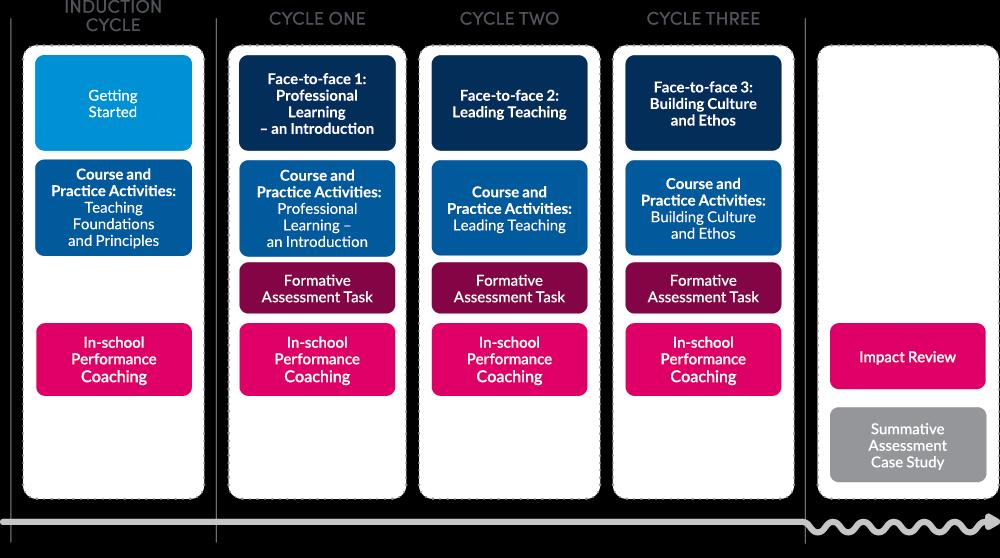
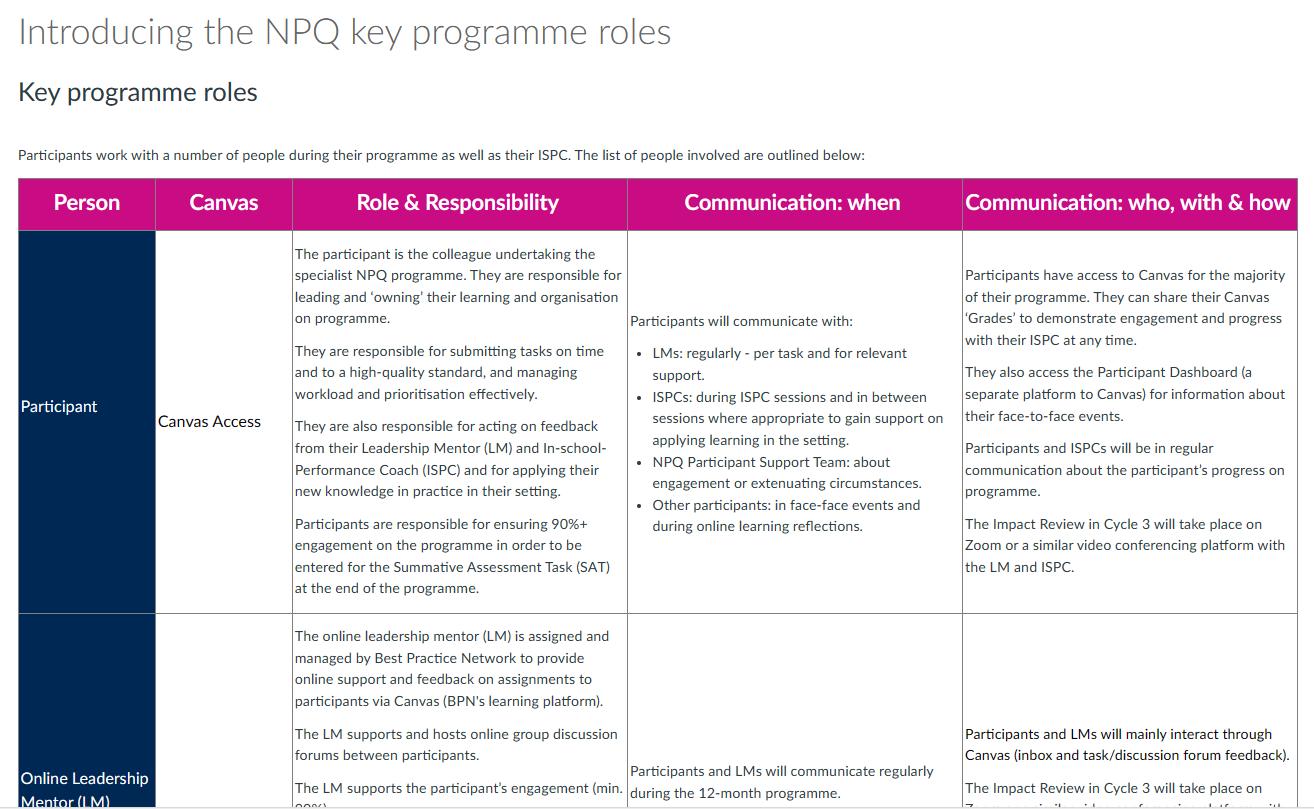
• Participant to lead
• Leadership Mentor (LM)
• In-School Performance Coach (ISPC)
• Face-to-face event facilitators
• Assessment team
• Formative assessment tasks (FATs) to inform progress and development direction to prepare and practice
• Assessment tab on Canvas contains all guidance and information required (released near end of programme)
• Eight-day window at the end of the programme
• Unseen case study
• Participants write and submit written response to case study of 1,500 words max
• To gain the qualification, the participants will need to:
o engage with at least 90% of the programme’s elements
o pass one summative assessment task (case study scenario)

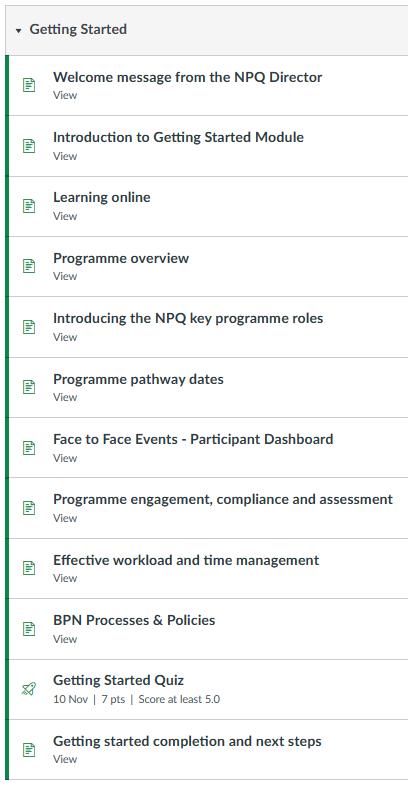

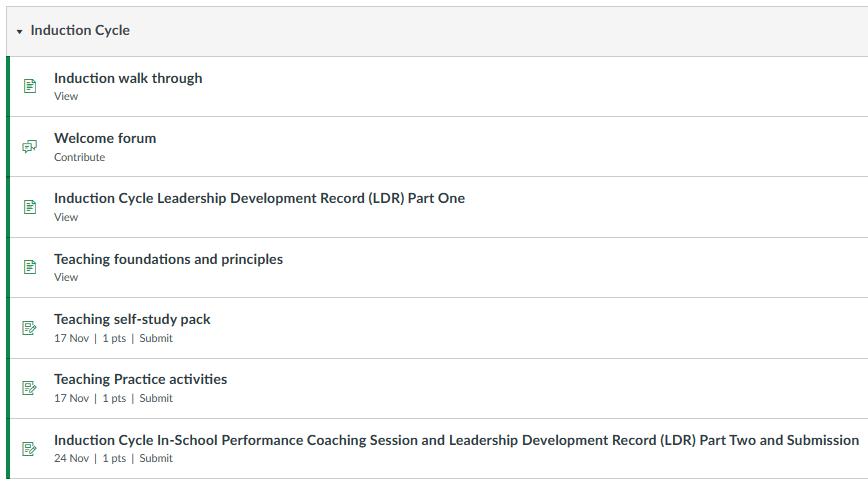

Individually:
Using your completed Induction Cycle LDR, Practice Activity feedback and Resource 8, answer the questions on Resource 3, to review your learning so far.
Sequencing and retrieval practice
Memory
Prior knowledge and misconceptions
Literacy and phonics
Critical thinking and linking for a sequenced curriculum
Subjects and subject knowledge
Misconceptions and mastery
Three – How pupils learn Four – Subject and curriculum Nine – Implementation
Learn that…
3.1. Learning involves a lasting change in pupils’ capabilities or understanding.
3.3. An important factor in learning is memory, which can be thought of as comprising two elements: working memory and long-term memory.
3.8. Requiring pupils to retrieve information from memory, and spacing practice so that pupils revisit ideas after a gap, are also likely to strengthen recall. Learn how to…
Explain important ideas about how pupils learn to colleagues, including by:
3.a. Introducing ideas about working and long-term memory.
3.b. Articulating the role that prior knowledge plays in learning. Support colleagues to help pupils learn by:
3.f. Highlighting the importance of sequencing lessons so that pupils secure foundational knowledge before more complex content.
Sequencing and retrieval practice
Prior knowledge and misconceptions
• Groups of 3-4
• 15 minutes
• Discuss the ‘how pupils learn’ research summaries from Resource 1 (one read each as pre-task): what are the key pieces of knowledge?
• Individually, record knowledge arising from the research and your discussion on Resource 4, noting the DfE statement(s) related to each
Sequencing and retrieval practice
Memory
Prior knowledge and misconceptions
1. What are the key things you understand from the research about how pupils learn?
2. How can this evidence inform your practice, and help you in supporting your colleagues?
3. How can this evidence improve pupil outcomes?
4. How does this research support your development as a leader?
Sequencing and retrieval practice
Memory

Prior knowledge and misconceptions
• To learn, students must transfer information from working memory (where it is consciously processed) to long-term memory (where it can be stored and later retrieved).
• Working memory is small.
• Students learn new ideas by reference to ideas they already know.
• Students have limited working memory capacities that can be overwhelmed by tasks that are cognitively too demanding.
• Cognitive development does not progress through a fixed sequence of age-related stages. The mastery of new concepts happens in fits and starts.
Sequencing and retrieval practice
Memory
Prior knowledge and misconceptions
• Progressively introducing new learning (in steps) – high-quality instruction
• Making content explicit through carefully paced explanation, modelling and examples can help ensure that students are not overwhelmed
• Beginning with short reviews of previous learning, including going over common errors and practising concepts and skills that needed to become automatic: higher achievement scores
• Practice is essential to learning new facts, but not all practice is equivalent:
• spaced practice over time, with content being reviewed across weeks or months, to help students remember that content over the long term
• interleaving (i.e., alternate) practice of different types of content interleaved with other types of content
• Sequencing lessons for pupils to secure foundational knowledge before more complex content through the mastery approach: breaks subject matter and learning content into units with clearly specified objectives which are pursued until they are achieved. Learners work through each block of content in a series of sequential steps and must demonstrate a high level of success before moving on
Sequencing and retrieval practice
Prior knowledge and misconceptions
Task:
• Groups of 3-4
• 20 minutes
• Discuss the ‘how pupils learn’ leader case studies from Resource 4 (one engaged with each as pre-task) using the questions
• Individually, add to your notes on Resource 4 with new knowledge for you in your context (‘how pupils learn’ row), labelling the relevant DfE statements
• How does the leader explain important ideas about how pupils learn to colleagues by:
• introducing ideas about working and long-term memory (3.a.)?
• articulating the role that prior knowledge plays in learning (3.b.)?
• highlighting the importance of sequencing lessons so that pupils secure foundational knowledge before more complex content (3.f.)?
• How can the leaders’ responses influence your leadership in your setting?
Whole-group discussion (5 minutes)
What statements have you seen from the leader case studies in practice that can influence your leadership development?





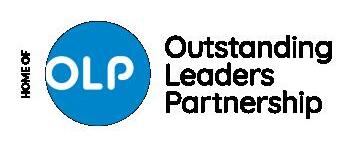
Receive and respond to High-quality feedback Develop a Mental model of expertise
SEE IT – Get buy in and confirm key insight of specific context, outcomes and practice strategies.

NAME IT – Probe and illustrate to target and make sense of participant need and context. Action experience.
KEEP IT – Develop mental model and being able to articulate impact and shift in knowledge / understanding. Work toward well-defined Specific Goals Focus intently on practice activities
USE IT – Apply in practice, implement learning in specific context.
REVIEW IT – Interpret and reconstruct, making sense of what was first seen. What has made the biggest difference to practice?
facebook.com/bestpracticenetwork @bestpracticenet
linkedin.com/school/the-best-practice-network @bestpracticenetworkbpn

Session Four Subject and curriculum: concepts, research and practice application
Learn that…
4.1. A school’s curriculum enables it to set out the knowledge, skills and values that its pupils will learn, encompassing the national curriculum within a coherent wider vision for successful learning.
4.4. Secure subject knowledge helps teachers to motivate pupils and teach effectively.
4.8. For pupils to think critically, they must have a secure understanding of knowledge within the subject area they are being asked to think critically about.
4.9. In all subject areas, pupils learn new ideas by linking those ideas to existing knowledge, organising this knowledge into increasingly complex mental models; carefully sequencing teaching to facilitate this process is important.
Literacy and phonics
Critical thinking and linking for a sequenced curriculum
Subjects and subject knowledge
Misconceptions and mastery
Learn how to…
Support colleagues to design a carefully sequenced, broad and coherent curriculum by:
4.a. Ensuring colleagues recognise the inherent structures within subjects and identifying important knowledge, skills and concepts within them and the relationships between these components.
4.b. Emphasising the value of ensuring pupils’ thinking is focused on important ideas within the subject and that multiple opportunities are provided to revisit these ideas over time.
• Groups of 3-4
• 15 minutes
• Discuss the ‘subject and curriculum’ research summaries from Resource 1 (one read each as pre-task): what are the key pieces of knowledge?
• Individually, record knowledge arising from the research and your discussion on Resource 4, noting the DfE statement(s) related to each
Literacy and phonics
Critical thinking and linking for a sequenced curriculum
Subjects and subject knowledge
Misconceptions and mastery
1. What are the key things you understand from the research about subject and curriculum?
2. How can this evidence inform your practice, and help you in supporting your colleagues?
3. How can this evidence improve pupil outcomes?
4. How does this research support your development as a leader?
Literacy and phonics
Critical thinking and linking for a sequenced curriculum
Subjects and subject knowledge
Misconceptions and mastery
• The most effective teachers have deep knowledge of the subjects they teach, and therefore, leaders need to explore how they best help teachers develop subject expertise.
• Each subject area has a set of facts that, if committed to long-term memory, aids problemsolving by freeing working memory resources and illuminating contexts in which existing knowledge and skills can be applied. The size and content of this set varies by subject matter.
• Beliefs about intelligence are an important predictor of student behaviour in school and self-determined motivation (as a consequence of values or pure interest) leads to better long-term outcomes than controlled motivation (a consequence of reward/punishment or perceptions of self-worth).
• Learners’ self-regulation is important so they can be independent, proactive and selfmonitoring.
• Self-regulation can be seen as having three components: cognition, meta-cognition and motivation.
• Transfer of knowledge or skills to a novel problem requires both knowledge of the problem’s context and a deep understanding of the problem’s underlying structure.
• We understand new ideas via examples, but it is often hard to see the unifying underlying concepts in different examples.
• For multi-step procedures, teachers can encourage students to identify and label the sub-steps required for solving a problem. This practice makes students more likely to recognise the underlying structure of the problem and to apply the problem-solving steps to other problems.
• Common misconceptions about learning that could lead to ineffective teaching:
• Students do not have different learning styles.
• Humans do not use only 10% of their brains.
• People are not preferentially ‘right-brained’ or ‘left-brained’ in the use of their brains.
• Novices and experts cannot think in all the same ways.
• Cognitive development does not progress via a fixed progression of age-related stages.
Task:
• Groups of 3-4
• 20 minutes
• Discuss the ‘subject and curriculum’ leader case studies from Resource 4 (one engaged with each as pre-task) using the questions
• Individually, add to your notes on Resource 4 with new knowledge for you in your context (‘subject and curriculum’ row), labelling the relevant DfE statements
• How does the leader support colleagues to design a carefully sequenced, broad and coherent curriculum by:
• ensuring colleagues recognise the inherent structures within subjects and identifying important knowledge, skills and concepts with them and the relationships between these components (4.a.)?
• emphasising the value of ensuring pupils’ thinking is focused on important ideas within the subject and that multiple opportunities are provided to revisit these ideas over time (4.b.)?
• How can the leaders’ responses influence your leadership in your setting?
Whole-group discussion (5 minutes)
What statements have you seen from the leader case studies in practice that can influence your leadership development?
Learn that…
9.1. Implementation is an ongoing process that must adapt to context over time, rather than a single event. It involves the application of specific implementation activities and principles over an extended period (e.g. implementation planning, ongoing monitoring).
9.4. Effective implementation begins by accurately diagnosing the problem and making evidence-informed decisions on what to implement.
9.5. Thorough preparation is important: time and care spent planning, communicating and resourcing the desired changes provides the foundation for successful delivery. Teachers and leaders should keep checking how ready their colleagues are to make the planned changes.
Learn how to…
Plan and execute implementation in stages by: 9.a. Ensuring that implementation is a structured process where school leaders actively plan, prepare, deliver and embed changes.
Make the right choices on what to implement by: 9.d. Identifying a specific area for improvement using a robust diagnostic process, focusing on the problem that needs solving, rather than starting with a solution.
Prepare appropriately for the changes to come by: 9.l. Developing a clear, logical and well specified implementation plan, and using this plan to build collective understanding and ownership of the approach.
(Deliver and) Sustain changes by: 9.r. Using reliable monitoring and evaluation to review how the implementation activities are meeting the intended objectives and continue to align with school improvement priorities.
15 minutes
Discuss the ‘implementation’ research summaries from Resource 1 (one read each as pre-task): what are the key pieces of knowledge?
Individually, record knowledge arising from the research and your discussion on Resource 4, noting the DfE statement(s) related to each
What are the key things you understand from the research about implementation?
How can this evidence inform your practice, and help you in supporting your colleagues?
How can this evidence improve pupil outcomes and other practices in your setting?
How does this research support your development as a leader?
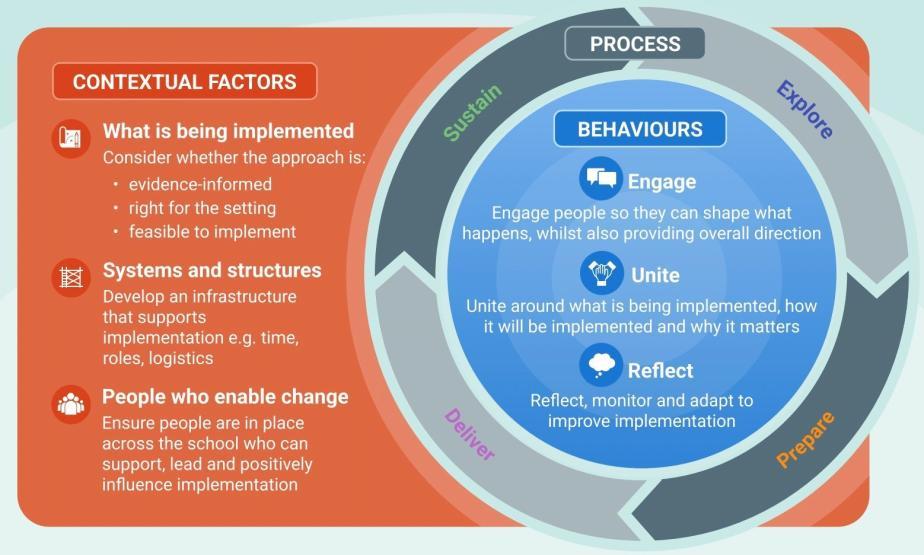
“One of the characteristics of effective schools, in addition to what they implement, is how they put those approaches into practice. [The framework statements for implementation] set out some important principles of implementation: the process of making, and acting on, effective evidence-informed decisions. The principles and activities can be applied to a range of different school improvement decisions –programmes or practices; whole school or targeted approaches; internally or externally generated ideas. The statements should be treated as guiding principles and activities, rather than as a rigid set of steps.”
– Department for Education, 2020: 26
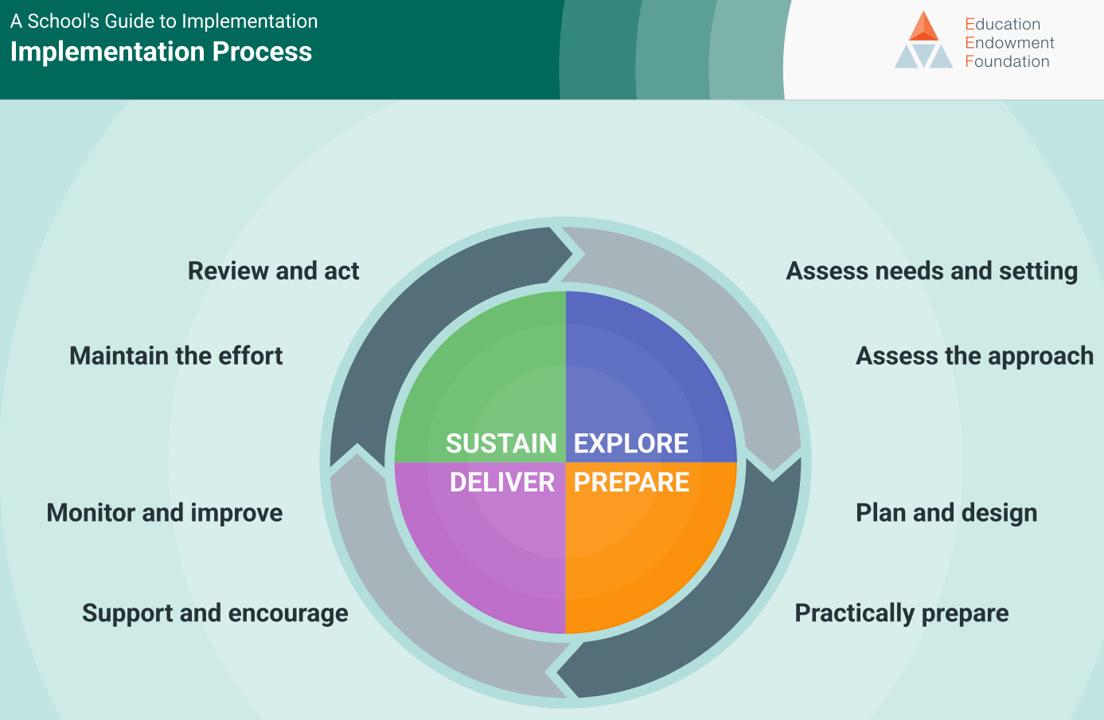
“Treating implementation as a process, not an event; planning and executing it in stages.” (Sharples et al., 2019)
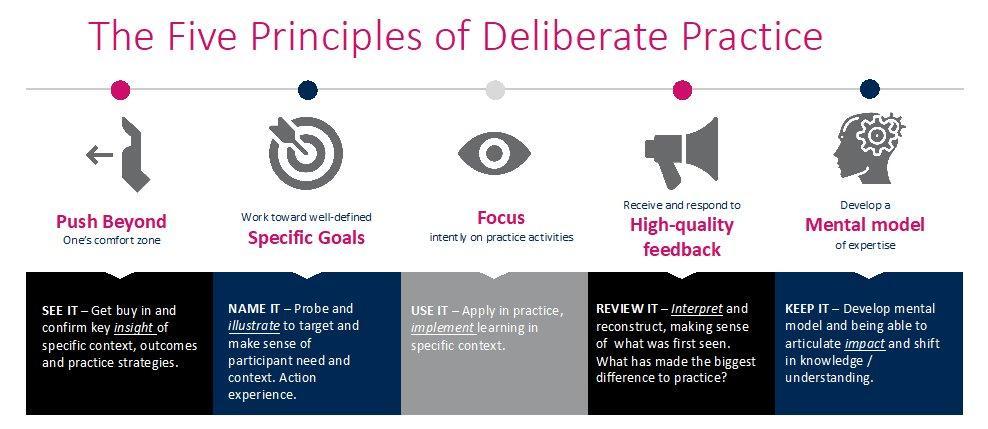
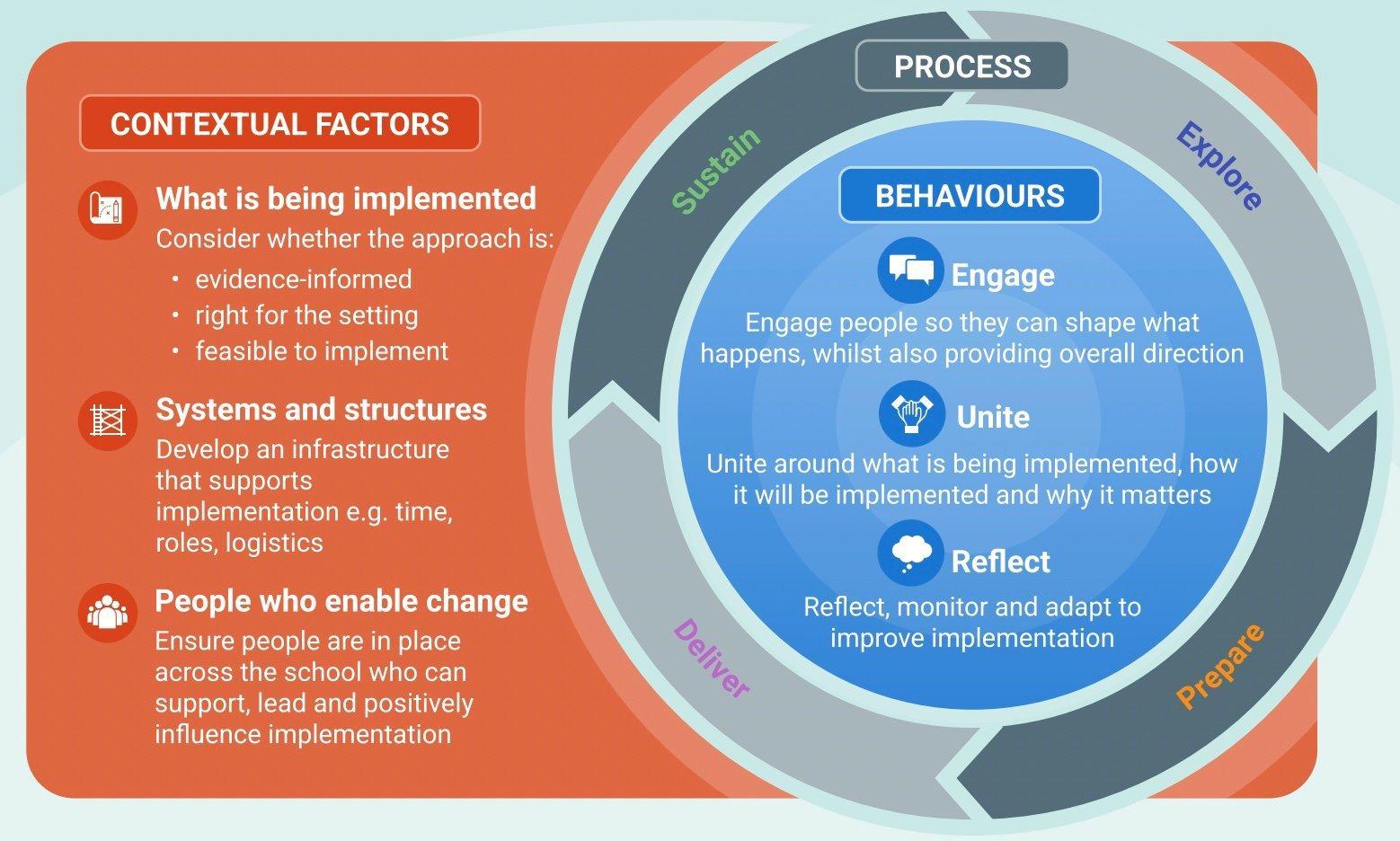
Explore Prepare Deliver Sustain
• New ideas are often introduced with too little consideration for how the changes will be managed and what steps are needed to maximise the chances of success.
• Implementation: process of making, and acting on, effective evidence-informed decisions.
• EEF recommendations for school leaders:
1) Adopt the behaviours that drive effective implementation.
2) Attend to the contextual factors that influence implementation.
3) Use a structured but flexible implementation process.

facebook.com/bestpracticenetwork
@bestpracticenet
linkedin.com/school/the-best-practice-network
@bestpracticenetworkbpn
Please follow us on social media for all of the latest CPD updates. Share photos from today’s Face-to-Face event using #NPQF2F for a guaranteed retweet!

Task and question:
• Using the four case study videos, add your new knowledge about effective implementation to Resource 4 (‘implementation’ row):
• ongoing process/foundations
• explore
• prepare
• deliver
• sustain
• How did the leaders describe the treatment of implementation as a process (not an event); planning and executing it in stages (9.a.)?


Videos 3 and 4 of


Session Five (ii)
Implementing your vision

Individual task (10 minutes)
• Use your completed Resource 4 to remind yourselves of new knowledge gained through the event so far.
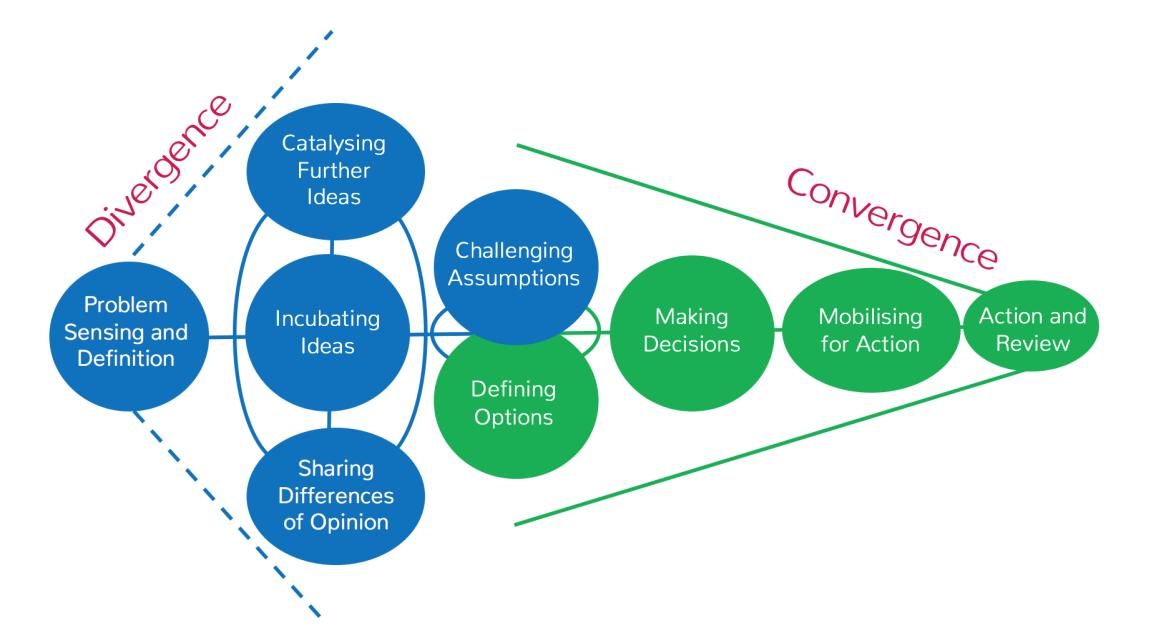
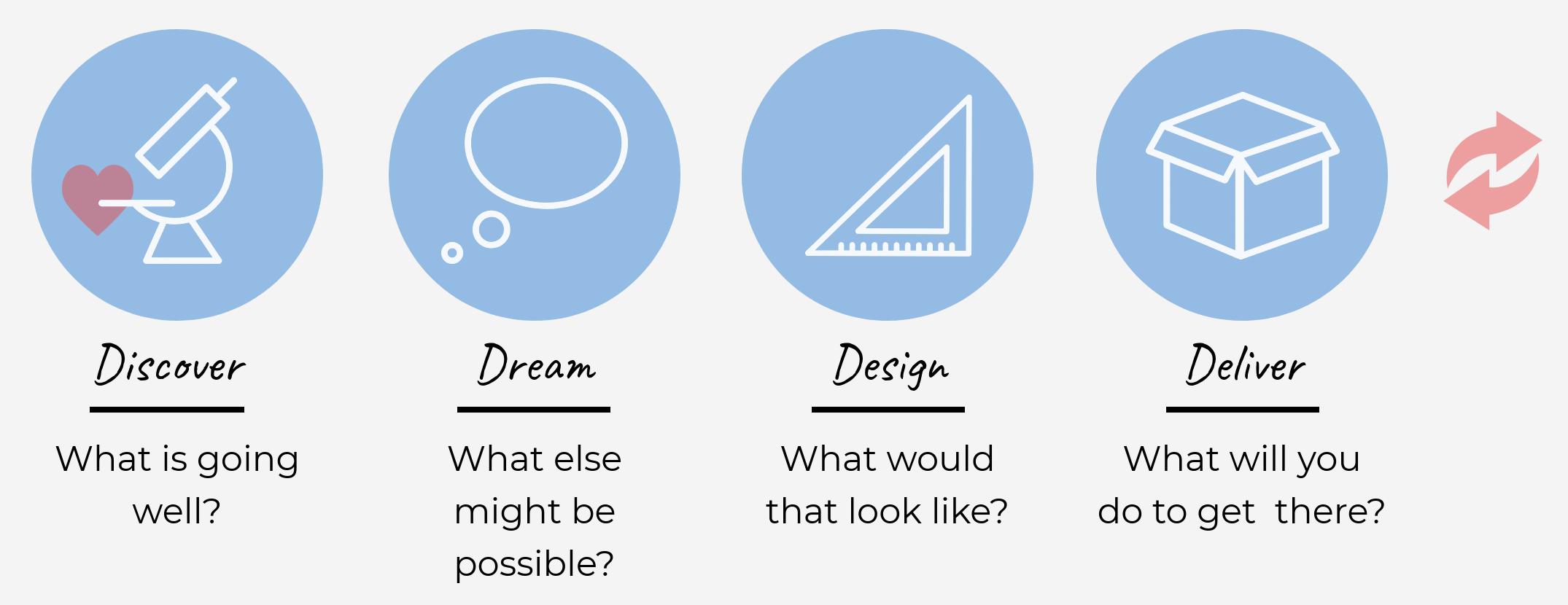
• Using the Appreciative Inquiry template in Resource 5, create your vision for teaching in your setting.
• Use the event statements (presented as prompting questions below the AI template) to prompt your thinking.
• Identify areas you would like support and challenge from your group to develop.
Paired task (10 minutes)
• Take turns to briefly present your vision.
• Ask for support and challenge to develop the vision.
• Record any additional ideas on your vision.
Whole group discussion (10 minutes)
1. During the event, what are the most important issues you have identified within your setting, in the context of leading teaching, and seek to address in your vision?
2. What key potential solutions feature in your vision that you would implement first, and why?
3. What challenges might arise in securing the successful implementation of your vision, and how will you plan for/address them in your implementation plan? Why have you chosen this approach?
“Vision without implementation is hallucination.”

Task
• Individually, using your AI 'Deliver' notes and the Bedlington Academy Implementation Plan (Resource 7), begin to populate the blank Implementation template (Resource 7) in:
• Problem/Issue column
• Intervention/Potential solution column
• Challenges row
• In pairs, identify the leadership behaviours and skills (Resources 8 and 9) necessary for implementing your vision effectively in your setting and add them to your Implementation Plan draft.
Follow us on social media
facebook.com/bestpracticenetwork @bestpracticenet
linkedin.com/school/the-best-practice-network @bestpracticenetworkbpn
Please follow us on social media for all of the latest CPD updates.
Share photos from today’s Face-to-Face event using #NPQF2F for a guaranteed retweet!

Individual task (25 minutes)
Using your blank Cycle One LDR, begin to plan your learning pathway for Cycle One:
1. Complete the initial ratings, noting where the low ratings lie.
2. Focusing on your lower ratings and what is most relevant for your context, use Resources 10 and 11 to plan your potential learning pathway:
• Where to focus your time during your online learning
• Which 3 (of 9) practice activities to undertake
3. Write these choices into the ‘identify actions…’ column next to the DfE statements with lower initial ratings only.
4. Add other relevant actions (e.g. assess in conversation with in-school performance coach, meet with the HT/Lead for x, etc.) into the ‘identify actions...’ column.
Whole-group discussion (10 minutes)
What statements have you seen in your LDR that that you would like to develop?
Cycle One
LDR (initial ratings and actions)
You are here
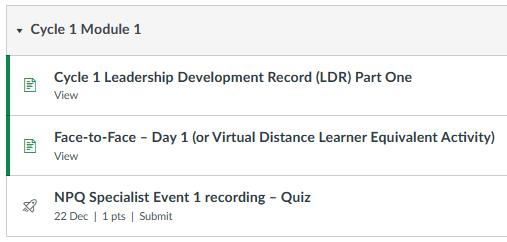
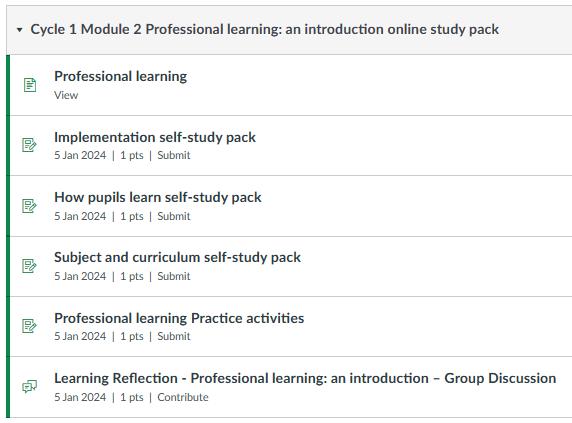
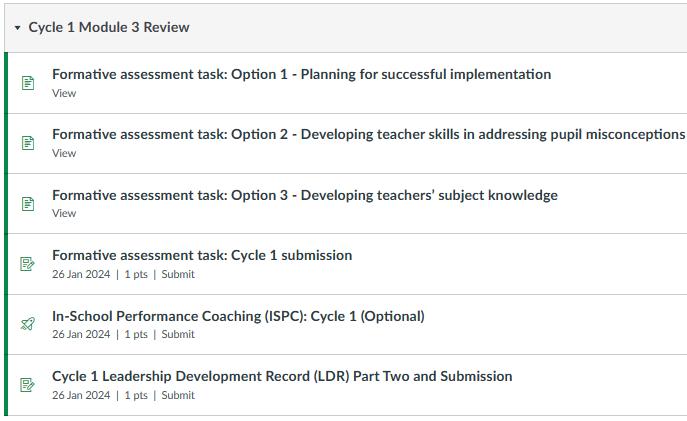

Canvas \ Log in \ Grades \ Assignment Group
1. Log in to Canvas.
2. Go to ‘Grades’ and select ‘Assignment Group’.
3. Check that you have completed the tasks at the top of the gradebook (tick or 1 in score column).
4. Scroll down until you reach today’s date and check that all tasks to that point have a tick or 1 next to them.
5. If there are any incomplete/missing, make a note of them and prioritise for completion after the event.


Contact details for questions
• First point of contact: online Leadership Mentor (programme, online tasks)
• In-school application of learning: In-School Performance Coach
• Other queries: NPQ Participant Support
Follow us on social media
facebook.com/bestpracticenetwork @bestpracticenet
linkedin.com/school/the-best-practice-network @bestpracticenetworkbpn
Please follow us on social media for all of the latest CPD updates.
Share photos from today’s Face-to-Face event using #NPQF2F for a guaranteed retweet!
Employ an apprentice teacher or upskill your workforce and benefit from:
• a trainee in class and teaching 4 days a week
• access to a wide pool of high-calibre trainees
• filling an otherwise vacant post
• an employer grant of up to £28,000
Contact teach@bestpracticenet.co.uk Visit www.bestpracticenet.co.uk/itt