An annual look at the state of education in Berkshire County
A special publication of The Berkshire Eagle | Saturday, February 26, 2022
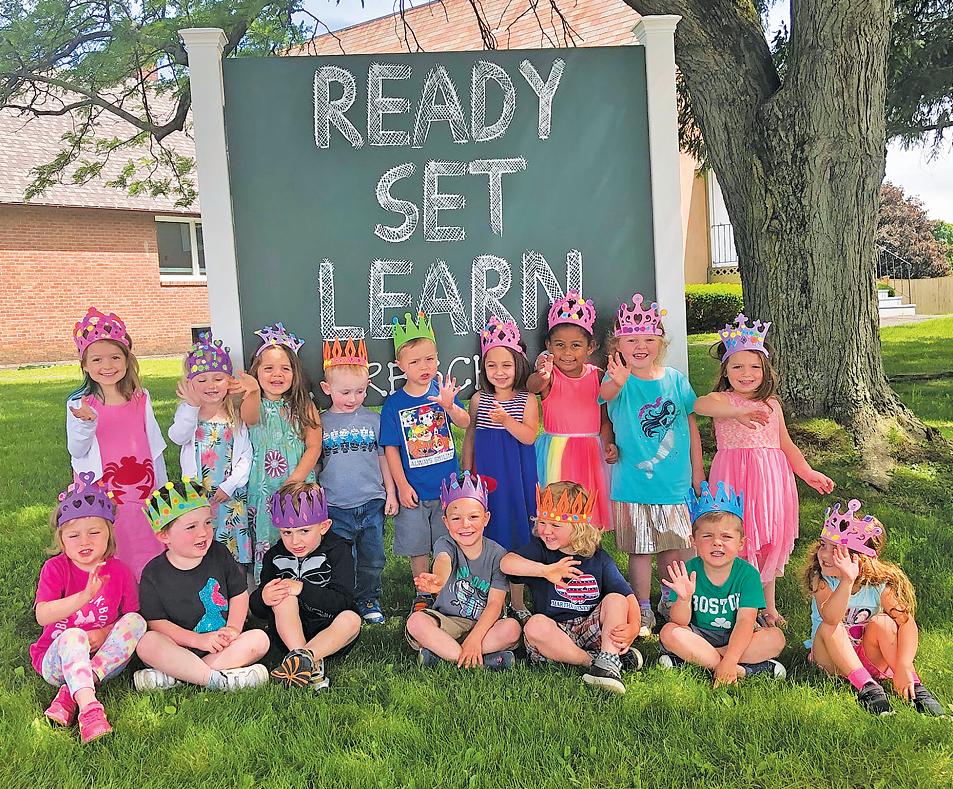
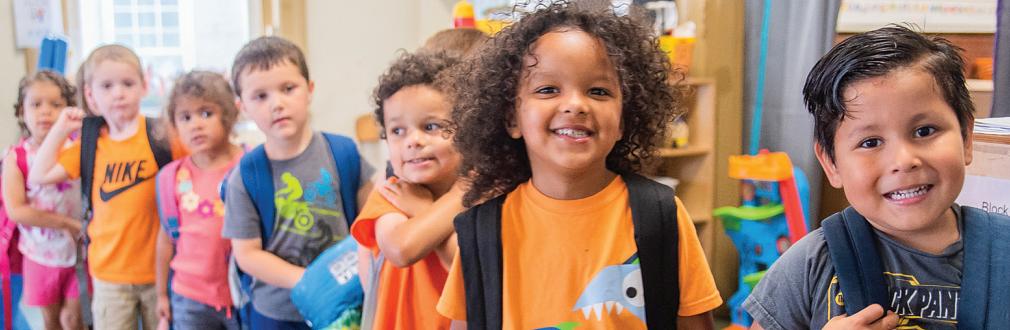
Where the uniqueness of each child is celebrated
Photos: Tricia McCormack
About Us:
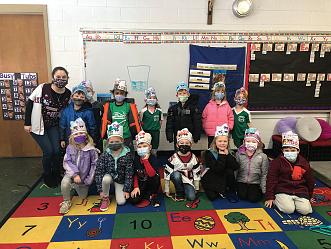
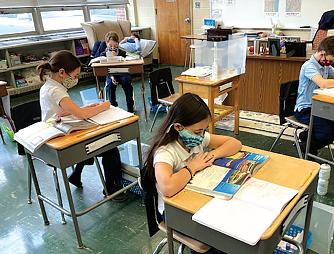
Ages 5-6 | Kindergarten
At Ready Set Learn we believe that ever y child deser ves access to quality early childhood education. Our mission is to provide high-quality care for all children in our community so they can grow up healthy, happy, and ready for school!
The Wendell Ave location will be offering a Kindergar ten class! This class is per fect if you were denied school choice for your child. It is also a great fit if you are looking for a smaller class size and a school day that has an appropriate amount of play time for your lit tle one!
The class is taught by a MA Cer tified teacher who has her Masters degree in education. She will be using a curriculum that includes, math, reading, literacy, science and social studies. Movement and music will be woven throughout the day.
The kids will leave Kindergar ten ready for enrollment into 1st grade
PROVIDED BY JENNIFER KLINE
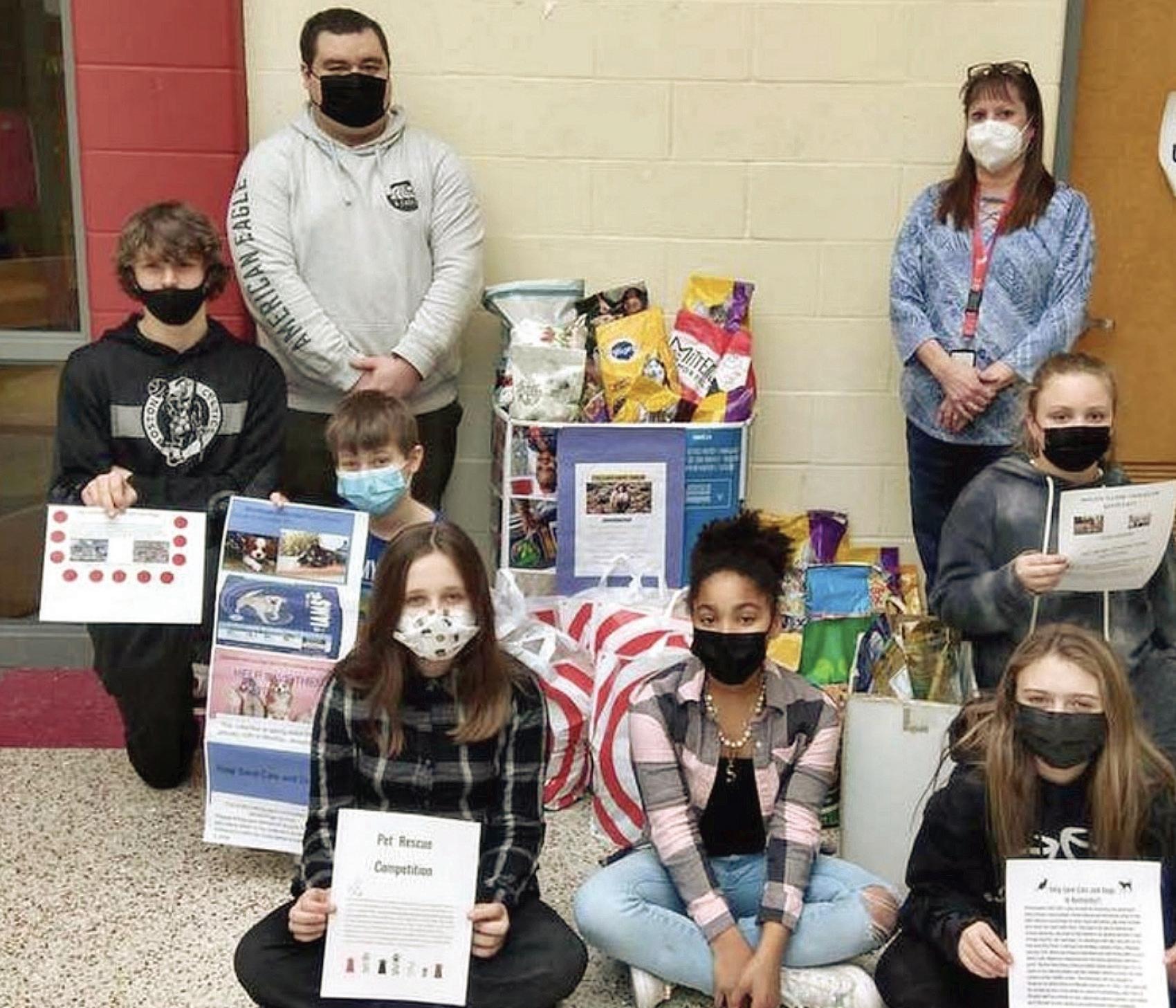
Hoosac Valley Middle School students show off posters they made for a donation drive that seeks to help animals displaced by tornadoes in Kentucky. Teachers Zach Houle and Jennifer Kline serve as co-advisers for the student council.
By Danny Jin The Berkshire Eagle
CHESHIRE — Empathy is one of the five guiding principles for the Hoosac Valley Regional School District — and yes, that applies to animals, too.
Since deadly tornadoes hit Kentucky in December, Hoosac Valley students and their families have donated 771 items of pet food and cat litter for displaced animals at the Mayfield-Graves County Animal Shelter in Mayfield, Ky.
“It’s not just what’s in your backyard,” said Kathy Hynes, founder and president of Got Spots Etc., an animal rescue nonprofit. “There’s other things in the world that you need to take an interest in helping, and the kids did. They went global, not just local.”
Hynes, a registered nurse who goes by the nickname “Skippy,” has plenty of experience with disaster assistance. During Hurricane Katrina, she said, “by day, I was Hurricane Katrina nurse, and by night, I was emergency animal relief services.” With Got Spots, she has put together donation drives after hurricanes struck in Florida, Louisiana and North Carolina.
Now, working as a substitute teacher for Taconic High School and the Adams-Cheshire Regional School District, Hynes brought the idea of a donation drive for Kentucky animals to Hoosac Valley Middle School. It didn’t take much convincing to get students on board.
“At our student council meeting, we were brainstorming some ideas on how to help out our local community, and those students had heard about Kathy’s organization and what they were doing,” said Jennifer Kline, a middle school teacher and co-adviser of the student council along with Zach Houle. “They were immediately excited about reaching out to what they call their extended community and thought it would be something that our middle school would enjoy doing.”
Hynes saw an opportunity to help students develop their artistic and literary skills as well. Middle school students created posters to publicize the drive, and high school students made news releases.
Also, businesses in the community donated prizes for students who made the best posters and releases. Angelina’s Subs, Berkshire Outfitters and Hobby World participated, Hynes said.
After Got Spots finishes collecting donations in early March, a volunteer will drive the donated goods to the Mayfield-Graves County Animal Shelter. Adams Hometown Market has set up a cart in the store for people to drop off pet food and cat litter to donate, Hynes said.
“I feel that it’s a great example of how we can show empathy towards others, and students can really relate because many of them have pets themselves.”
— Jennifer Kline, Hoosac Valley Middle School teacher
“We would like to have enough donations to safely fill the Honda Odyssey,” Hynes said.
Smith Brothers-McAndrews Insurance has donated to help cover gas for the driver, although Got Spots continues to seek donations to cover gas and food costs for the trip. Berkshire Health Systems donated blankets and towels for the animals.
Hynes, who is working to become a psychiatric mental health nurse practitioner, said that beyond animal rescue, Got Spots seeks to “promote optimal wellness through the human animal bond.” She has vouched for dogs’ ability to help people cope with trauma.
Once the donations get to Kentucky, students will have a chance to get on a Zoom call with the shelter and its staff. The shelter took in at least 140 animals displaced by the tornadoes.
“The students will get to see the positive impact that they’re having, Kline said. “Going a little bit further than just reaching out to our local community, I think the students were very excited to do that. ... I feel that it’s a great example of how we can show empathy towards others, and students can really relate because many of them have pets themselves.”
The student council has begun discussing ways to participate in a more local community service project. Students are planning to reach out to Louison House and ask about needs for a clothing drive, Kline said.
“We’re super proud of our students,” Kline said. “We’re a small little community here, and to be able to impact is such an important thing for us.”
Danny Jin, a Report for America corps member, is The Eagle’s Statehouse news reporter. He can be reached at djin@ berkshireeagle.com, @djinreports on Twitter and 413-496-6221.
How parents can help kids redefine what it means to be smart
By Ulcca Joshi hansen Special To The Washington Post
My sons learned the concept of being smart when they were young. To them, “smart” meant to be good at the things most schools tell us are important: reading and writing well, understanding math, finishing tests quickly.
Both of my sons, now 15 and 13, measured themselves against this standard, and not surprisingly, found themselves to be lacking.
One is a reluctant reader who was flagged for years in school because he was “below grade level.” The other is a strong student but a bit scattered; he thinks about five things at once, often when he is expected to pay attention. He constantly heard that he was off-task.
During the pandemic, I had a frontrow seat to how they each thrived beyond the limitations of traditional school. My reluctant reader can hold variables in his head visually in a way that lets him beat everyone in the family at chess and strategy games. He used YouTube to explore topics like asteroid mining, his favorite city of Dubai, and whether sugar really makes kids hyper. His brother bingewatched “Grey’s Anatomy,” decided he wants to be a surgeon and used the Internet to teach himself to dissect a fetal pig and master the basics of surgical suturing.
Like many parents, I struggle with a painful tension: I see the unique brilliance of my children, but I also know that brilliance can’t shine in an education system where “smart” is measured in a very different way. Despite the fact that children learn in different ways, at different paces, we favor certain cognitive functions and place heavy emphasis on compliance, stillness and the ability to pay certain kinds of attention.
The educational disruption of the coronavirus pandemic was a reminder that “smart” has come to represent a flattened, largely dehumanized idea of human capability, and that our children are so much more.
I am a former elementary school teacher who worked in Newark. I eventually left the classroom to become an educational researcher and advocate because I wanted to change how we educate our children to re-
flect what we now know about human development, the science of learning and the many ways in which human potential emerges.
Over the years, I have counseled parents who struggle to support the child they have under the shadow of what our system expects. Here are some ideas for parents so they can reconsider how their kids are smart, and how to encourage children to learn and thrive, despite a system that is often measuring them differently.
EXPLORE HOW YOUR KID IS SMART INSTEAD OF WHETHER THEY ARE SMART
This one is hard, but parents need to step back and stop focusing on grades to discover how their children are smart instead of whether they are smart. How? Have a conversation with your child and reflect on the past year of remote learning. What worked for them? What did they like? What felt hard? Discuss how they might use it to approach school differently.
One friend’s daughter discovered she worked better with a more flexible schedule, choosing when and how to complete assignments. She had figured out the best times she felt focused and less distracted. Another child discovered he completed work much more quickly at home, when he didn’t have distractions he has at school. He asked his teachers if he could wear noise-canceling headphones. And another realized he was much better at creating videos for school projects instead of writing the same ideas on paper. He is asking his teachers if he can have some opportunities to demonstrate his knowledge in ways other than essays.
Ask what they’re most curious about learning. If they aren’t sure what they find interesting, have them think about how they chose to spend the extra time that was not filled with their usual activities.
Once you identify a question or issue they show interest in exploring, help create projects they can pursue on their own. Look online for people who work in that field - and reach out with specific questions or requests. People are busy, but many will make time to support a young person interested in learning.
METRO CREATIVE CONNECTION
TAKE STOCK OF WHAT YOU AND YOUR KIDS HAVE LEARNED DURING THE PANDEMIC
While it is true that there are things your child may not have learned as well because of distance learning, there are other important things they did learn because they were at home, in their communities, paying attention to different things. They probably noticed new things about injustice in their country and communities; observed how the economy works (or doesn’t) when a global pandemic disrupts supply chains; took in something about the science of vaccines.
Conversations about these and other everyday happenings are learning opportunities. It is useful to remind ourselves and our children that learning happens everywhere, all the time, if we can view our experiences through that lens.
It is also important to talk about soft skills as learning, as they are important skills that will help our kids become successful adults.
“Critical thinking, communication, time management, executive functioning, metacognition - if a child has mastered these they will not only do better in their classes, they will take these tools into whatever context they go,” says Kelsey Komorowski, owner of KOMO, a tutoring organization. She believes we focus too much on how well kids are doing in individual subjects and on boosting grades. Instead, she said, we should, focus on those “soft” skills that transfer across classes and contexts. These skills can be for kids of all ages: Even very young children have a desire to understand and plan their days, create and maintain order, and ask questions about the world.
HELP YOUR CHILD’S FORMAL EDUCATION WORK BETTER FOR THEM
Schools are set up in ways that can work well for some and not so well for others. Many schools expect kids to work at a pace and in an order defined by adults, even though that may not work for your child’s development.
Consider what you and your child have learned about how their school is and is not a good fit in how it approaches learning. The pandemic may have provided insights into how to address common struggles at school, or how to advocate for different supports.
Many people remember schools as places that told us all the ways we didn’t measure up, rather than being a place where we focus on our strengths and build from those.
Philippe Ernewein, director of education at Denver Academy, a program designed for learners who have not thrived in conventional settings, told me: “We ask students: what do you take joy in doing or find easy to do? How do you prefer to learn? Then we build around those skills,” he says. “If a student has a hard time reading, we teach them that there are different ways to ‘read’: with your eyes through words on a page; your fingers if you read Braille; your ears if you prefer books on tape; your eyes and ears if you prefer to watch videos.”
In a world where technology enables us to access, capture, engage with and distribute knowledge in so many ways, it feels most important to help kids learn what they need to succeed and help them build those skills. It is perfectly normal for kids’ foundational reading skills to develop as late as age 8, and for them to grow into higher order literacy skills well into their middle school years. It’s why systems like Finland’s - in which children generally outperform American students both academically and in terms of overall wellness - don’t begin formal reading instruction until ages 6 or 7, and often have more flexible learning progressions and multi-age classrooms.
If your child struggles with reading, remind them that what matters most is that they gain new information and ideas. Explore tools that can support them. For example, have them listen to audio while looking at text to make connections between
sounds and written words, use video to introduce new material before moving onto to written materials, or introduce visual organizers, which are ways to gather and organize information graphically.
For the vast majority of children, reading eventually clicks. If there is a history in your family of diagnosed dyslexia or struggles with reading, it may be worth considering an evaluation, but understand that children’s naturally jagged development is normal.
It’s important to consider your child’s working memory and attention abilities, too. A child with lower working memory skills can have difficulty following directions, recalling information, tracking lengthy discussions or remembering information long enough to work it through to understanding. For a child like this, the goal is to reduce the number of things they need to do at one time.
Working on computer-based programs can increase working memory
challenges. It requires a child to focus on learning new content even as they figure out the logistics of a platform, struggle to type or juggle windows.
Instead, ask their teacher for lesson notes so your child can focus on a lesson without struggling to simultaneously take notes. Write down as much as possible using colors and visual clues, which can be especially helpful. Notice whether they focus better when using headphones to reduce background noise.
While it wasn’t easy, one benefit of the pandemic was an opportunity to better understand both our education system and our children. Now we have the chance to advocate for our kids’ education to change in meaningful ways, to rethink “smart,” and to meet our children’s needs as learners and as whole people.
Ulcca Joshi Hansen is the author of “The Future of Smart” and chief program officer at Grantmakers for Education.
METRO CREATIVE CONNECTION
SPONSORED CONTENT
Buxton School trades smartphones for real-world experiences
BY KIMBERLY KIRCHNER Sponsored Content Editor
This year, staff and students at Buxton School in Williamstown are doing what many of us have only dreamed of: putting down their smartphones. The new policy, which was introduced this February and will go into effect in September, disallows all smartphones on campus, with the goal of encouraging all members of the Buxton community to step away from today’s hyper-connected culture and engage with one another and the world around them in a deeper, more meaningful way.
“Buxton is designed to be a small school that emphasizes engagement, and really being with each other in time and space,” said Franny ShukerHaines, Director Emeritus of Buxton School. “We were seeing — as hard as we were working to make this ex-
perience at Buxton as compelling as possible — ultimately, we're kind of no match for Silicon Valley.”
The constant presence of smartphones, she noted, encouraged “a kind of connectivity that actually isn't really connecting them to what they need to be connected to, but in fact, preventing them from being connected in a more visceral way with each other and the people around them,” especially in younger students.
Unfortunately, smartphones aren’t just a classroom distraction. Social media networks have harnessed the potentially addictive nature of smartphones to keep users engaged as long as possible, as often as possible. Apps like Tik Tok and Instagram are a major subject of concern for children’s mental health experts on their own. In his 2021 advisory on the youth mental health crisis, U.S.
Surgeon General Vivek H. Murthy specifically called out social media as a contributor to the rising rates of depression, anxiety and other mental health conditions in children and teens: “When not deployed responsibly and safely, these tools can pit us against each other, reinforce negative behaviors like bullying and exclusion, and undermine the safe and supportive environments young people need and deserve.”
In that way, the ban on smartphones is a matter of health and safety. “It's not so dissimilar to the conversation a lot of schools were having about smoking 30 years ago,” ShukerHaines said. “This is something that people have gotten really used to having in their lives, that they're very dependent on. And there will be a hard transition for them.”
While some students have, predictably, been less than enthusias-
tic about giving up their iPhones for hours at a time, Shuker-Haines said the response from parents and former students has been overwhelmingly positive. “The alumni support has been phenomenal. People are so behind this,” she said. “They want this so much, partly because Buxton's pretty special. It's a unique school, and one of the things that's unique about it is the way in which community is the central teaching tool of the school. And I think anybody who knew Buxton back in the day can easily imagine how this technology could be corrosive.”
Buxton isn’t the first school to enact a smartphone ban, joining a small but growing number of institutions across the country. “There are a few other progressive schools that have similar policies,” Shuker-Haines said. “So we know it can be done.”
Civics Action Lab
A whole school initiative for civics education to produce empowered, active, citizen leaders
Culture
Create a culture of collaboration and a learning environment based on a growth and inquiry mindset.
Cultivate a whole school culture founded in a deep understanding of civics, an active commitment to social justice and anti-racism, and a sense of true belonging for every student.
Curriculum
Challenge students to think in responsible, relevant, and expansive ways through BCD’s rich curriculum.
Inspire students to work hard, experiment, and think both creatively and analytically as they tackle our stimulating curriculum or try out a new artistic or athletic endeavor.
Community
Connect with the broader community with a focus on issues of equity and social justice. Students develop skills needed for compassionate, respectful, and equitable relationships across differences.
Revitalize and imagine the campus as a Civics Action Lab focused on experiential, project-based learning with an emphasis on community engagement, environmental sustainability, and social justice.
berkshirecountr yday.org
What does it take for a child to succeed at school?
By meghan leahy Special To The Washington Post
Q: How do I explain to parents that the success of their children often hinges on parental participation? I’m asking for a friend in education.
A: You should have seen my face when I read this question. It might best be described as “yikes.” My reaction isn’t because you’re right or wrong about parental participation; it’s because there are some sweeping generalizations in this question that hurt children, teachers and parents. As I respond, please know that I still think it’s a valid question, and one that is asked by parents and educators alike.
The first thing we have to tackle is the idea of a child’s “success.”
Depending on your country, culture and family, your child’s success will look vastly different. Even within the United States, we have differing ideas of what success looks like. Maybe success for a child is achieving straight A’s, being an athlete or good citizen, or being kind, obedient or compassionate. I could go on and on.
I am assuming that, because you’re asking for a friend in education, the typical proof of a child’s success is good grades and obedient behavior in school, but success could also be a child’s creativity, thoughtfulness, critical thinking, athleticism, musicality, compassion, leadership or other characteristic.
Here’s where your question comes in: You want me to tell you how to explain to families that all of these successes, all of these traits, often hinge on children’s parents being involved in their schooling, homework, studying and more. The ability for a child to succeed doesn’t also depend on the school environment, the teachers, the administration, the counselors, the coaches and the music or art instructors, to name a few? It just depends on parental participation? We can all agree this is patently incorrect, yes?
There is no doubt that children can thrive in school when their home environment is safe, their parents are interested in their learning and there is good food and solid routines. But what about the students who have all of that and still aren’t “successful” in school? And what about the students who have chaotic homes, filled with addiction, poverty and fear, yet still succeed in
school? According to your theory, only the children who have parental participation have a shot at succeeding. And, well, that simply isn’t true.
I was reminded of the fabulous book by W. Thomas Boyce, “The Orchid and the Dandelion: Why Some Children Struggle and How All Can Thrive.” In this book, Boyce makes a case for two different types of children: orchids and dandelions. The dandelions are resilient and seem to cope with most stressors in their lives, while the orchids are more sensitive and appear to struggle more in bad situations, but they thrive more in good situations.
According to Boyce’s work, it would seem as if parental participation might be helpful, but ultimately, most children are going to come out OK. Even though parental participation might be strong in a sensitive child’s life, this might not lead to success. And extra support might still be needed to help sensitive children, which could come from loving teachers, compassionate counselors, skilled school specialists or school psychologists.
Explaining to parents that their children’s success hinges on parental participation feels incomplete, shortsighted and shame-based. I would instead use a pie chart, and add as many slices as you need. You could have parental support and participation, teachers, administration, food/sleep/ exercise, in-school and out-of-school routines, and playtime. This way, everyone has a vested interest in helping children reach their full potential, whatever that may be.
When communities come together, that participation looks different for various parents. The single parent who was diagnosed with cancer? They need more support, because their ability to engage has been compromised. The family with the new baby? They may need additional help.
The teacher who’s out with a sick parent? Students’ parents can participate more to support that teacher.
I cannot tell you how to explain to parents that their participation is what their children’s success hinges upon, because it isn’t true. It shames parents and undermines teachers. Parents are important, but everyone owns a piece of the pie. Explain that to the parents and the school community, and watch children’s success grow. Good luck.
Meghan is the mother of three daughters and the author of “Parenting Outside the Lines.” She holds a bachelor’s degree in English and secondary education and a master’s degree in school counseling and is a certified parent coach.
How to forge a solid parent-teacher relationship
By Katherine cUsUmano The New York Times
During a usual school year, Maria Davis-Pierre is one of those parents who regularly reach out to their children’s teachers. A mother of three in Lake Worth, Florida, and the founder of the parenting organization Autism in Black, Davis-Pierre checks in monthly via email and requests meetings upon receiving progress reports, working with her kids’ teachers to make sure that her eldest daughter especially — who is 8 and on the autism spectrum — is meeting her goals and getting the most from her schooling. “Especially for Black parents, we have to let them know that we’re involved,” Davis-Pierre said. “We want to know what’s going on.”
The most successful relationships between families and educators are rooted in routine exchanges that go beyond periodic parent-teacher conferences. “Trust is going to be an important component,” said Herman Knopf, a researcher who studies early childhood education at the University of Florida. “It is developed over time between teachers and parents through consistent, open communication.” And the benefits of a robust relationship with a child’s teacher are clear: “It enables the teacher to better understand the child,” Knopf said, “so that the strategies and tactics that she uses to support learning in the classroom are supported by the knowledge that the parents bring in.”
Island. “A horrible reset, but a full reset.” Here’s how schools and families can approach the new, socially distanced school year — together.
ESTABLISH RELATIONSHIPS EARLY.
It’s difficult not to look at the fall with dread, given the wildly uneven and last-minute strategies schools are adopting to welcome students back — in person, remotely or a combination of the two. According to a recent survey by Learning Heroes, an organization that provides education support to parents, only 33% of parents overall — and 28% and 27% of Black and Hispanic parents, respectively — had regular access to their child’s teacher in the spring. Yet the circumstances also present an opportunity to rethink relationships between families and teachers, whose roles are aligned now in a unique way. “It’s almost like a full reset,” said James Lopez, a stayat-home father of three on Staten
Reaching out at the start of the school year might feel less intuitive when most families and teachers are overwhelmed and few have answers — but it’s as important as ever to start forming a positive, collaborative relationship with your child’s teacher at or before the onset of the school year. Given the stressors currently facing both parents and teachers, this might be more challenging, according to Alison Borman, a fifthgrade teacher and the parent of a third-grader in San Diego, but some effort early on can make it easier to come together to solve problems later in the year.
Teachers usually initiate relationships, but parents can be proactive, asking their children’s teachers for an initial phone or Zoom meeting to discuss expectations and ask questions. And if teachers aren’t responsive, try getting in touch with a principal. “Be persistent in trying to sustain those relationships,” said Leslie P. Arreola-Hillenbrand, the founder of the parent coaching firm Latinx Parenting in Santa Ana, California. “If that bond is real, I think teachers will reciprocate.”
SHARE WHAT YOU KNOW.
Instructors now have more limited insight into how their students are faring academically and emotionally. But parents amass “an ever-deepening well of information about their children” that they can share with teachers, according to Alejandro Gibes de Gac, the chief executive of Springboard Collaborative, a national nonprofit focused on childhood literacy.
This can include your child’s likes and dislikes, strengths and weaknesses, or personality traits that might come out in the classroom. For the families of kids receiving special education, it also means providing their children’steacher with more current information than what’s listed in their Individualized Education Plan case file that the teacher receives at the beginning of the year, according to Cortney Golub, a high school teacher and parent of two 5-year-olds in San Diego. After all, that IEP is developed based on a classroom-learning environment; sitting down at a computer
for remote instruction might pose an outsize challenge to a child with a disability.
These conversations can also help instructors understand the family circumstances that might present obstacles to their relationship. Even before the pandemic, language barriers, access to technology, the schedules of working parents and unconscious biases around race and socioeconomic status all posed challenges to parent-teacher relationships. Plus, some parents or guardians may have had negative experiences in the very schools their children attend, which breeds mistrust.
“Maybe the biggest challenge is a mindset issue within our education system,” Gibes de Gac said. “I think all too often, our school system treats low-income parents as liabilities rather than as assets. If we want to support parents as educators, first, we need to believe in them.”
ASK (LOTS OF) QUESTIONS.
In the spring, Golub struggled to sit her kids down for online classes. The isolation and anxiety she and her wife, Annie, felt were compounded because their son is immunocompromised and has learning and language challenges; she was left with plenty of concerns about boundaries, including, “How much should my paws be in their space, especially when I’m fighting to get them engaged?” Golub said. “What are the downfalls of overstepping?”
Inquire about curriculum concerns, kids’ social and emotional learning and where they’re starting the year academically, and even how the school plans to address the protests that swept through the country this summer. You can also ask for support, in the form of grading rubrics and answer keys for your children’s coursework, advice on occupational and physical therapy, help matching with other families forming pods, supplies to set up learning spaces at home or alternatives to parts of remote school that aren’t working for your child.
SET EXPECTATIONS FOR COMMUNICATING.
Phone, text, email, video call, even home visits: Educators and families have different preferences, and needs, when it comes to modes of communication, and you should be clear about what works best for you. Not all families have access to the internet or a computer at home; others have work
Educating and Promoting Healthy Communities in the Berkshires since 1979
schedules that don’t permit calls during the day. Keep conversations brief and focused.
Find out how your school will share the answers to common queries, like due dates and schedules — ideally, in one centralized place like a website or weekly newsletter. And perhaps most important: Practice empathy. (This includes empathy for teachers whose unions have proposed striking.) Both educators and parents are working hard to make school happen.
CREATE A PLAN TO HIT GOALS.
Under normal circumstances, families and schools share milestones they want students to reach — consolidating their relationship around a common objective. Now, it’s key to make those goals more explicit and come up with a road map to achieve them with your child’s teacher. Shorter-term goals allow you to correct course if something isn’t working while still making sure students meet the teacher’s standards. Bibb Hubbard, the founder and president of Learning Heroes, suggested including kids in the learning plan, “so that they feel a part of that and connected to it as well.”
Gibes de Gac’s organization, Springboard Collaborative, suggests setting goals in 5-to-10-week cy-
cles. In Baltimore, Masika McCoy’s daughter Camille worked with her second-grade teacher for five weeks during the summer to improve her reading as part of Springboard’s family-educator learning accelerator. Working closely with her daughter’s teacher has helped inform how McCoy is approaching the fall. “I need homework,” she said. “I need to know what they need from me at home to support what they are giving my daughter to do.”
GET ACTIVE WITH THE PTA.
As vice president of the parent-teacher association at her daughter’s school, Davis-Pierre has found herself in a position to advocate for perspectives that aren’t otherwise represented in the PTA. “My concern is always the intersection of race and disability,” she said. This fall, as her district wrestles with how to send students back to school campuses safely, she and other PTA members are also figuring out how to support families who choose to keep their children home.
At their best, PTAs have empowered parents: supporting them with distance learning, helping address food insecurity and technology access and answering questions about students’ social and emotional well-being, according to Leslie
Boggs, the president of the National PTA. One elementary-school PTA, in Howard County, Maryland, convened a panel of experts to figure out how to support kids’ mental health; another, in Pleasanton, California, has created virtual parent groups by grade and class to provide additional support. For some parents, taking on another obligation might not be
THE BEST SUMMER CAMP THE BEST SUMMER CAMP IN THE BERKSHIRES!
Kutsher’s Sports Academy develops athletes who show sportsmanship, kindness, and grit.
ROSE WONG/THE NEW YORK TIMES
realistic, but those who do have the time and inclination can help speak up for those who can’t be there, and report back.
Most of all, remember that there’s no model that works for everyone.
“As parents, we put a lot of pressure on ourselves to get it right,” Arreola-Hillenbrand said. “It’s not anything anybody has a blueprint for.”
NORTH ADAMS PUBLIC SCHOOLS Empowering All Learners
The mission of the North Adams
Collaboration with MCLA and Williams College for creative, hands-on STEM learning and student mentoring
Rigorous, research-based curriculum and innovative learning experiences, such as Project Lead The Way's biology, environmental and computer science courses for grades 7-12 and the computer science pathway for college credits for grades 9-12
Comprehensive Arts Education K-12
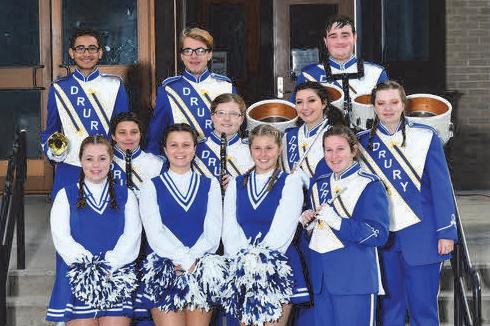
Instrumental music instruction, marching and jazz bands, and chorale music instruction
Drury Performing Arts Center (DPAC) musical and drama productions throughout the academic year
Off-campus learning at MASS MoCA
Exemplary 21st Century afterschool and summer program
College and career planning, admissions visits, internships, job shadowing, and careerplanning speakers
Berkshire Portrait of a Graduate academic experiences focused on communication, critical thinking, learner's mindset, personal responsibility, and citizenship
Important ways music education benefits students
Music education plays an important role in childhood development and acquisition of skills in and out of the classroom.
Researchers increasingly are finding that “do-re-mi” may be just as essential to children’s development as “A-B-C.” Music education, which was once required in the classroom, is increasingly absent from school curriculums. However, proponents feel there should be a greater push for musical education as part of school curricula because of the many benefits students reap from music education.
TAPS INTO MULTIPLE SKILL SETS
Music participation goes beyond playing an instrument or singing notes from a page. Experts at Music Together, an early childhood music development program, say that participating in music education involves many different skills, including listening, vision, fine motor skills, problem solving, and utilizing large and small muscle groups.
TRANSFORMATIVE EFFECTS
A growing body of research points to music for its transformative effects on youngsters. Participation in music education may help improve communication skills, foster better memory and help children focus their attention more effectively, according to the instrument retailer Zing Instruments. Music may provide the common ground to unite children in pursuit of a common goal.
IMPROVES LANGUAGE SKILLS
Neurobiologist Dr. Nina Kraus participated in “The Harmony Project,” which involved a series of experiments among second and third graders. Dr. Kraus discovered conclusively that music enhanced sound processing and cognitive skills (memory and attention). Music helps students develop the left side of the brain, which is known for processing language. A 2014
study by Arete Music Academy found children who study music tend to have larger vocabularies and more advanced reading skills than those who do not participate in music education.
MORE CONSISTENT ATTENDANCE RATES
The National Association for Music Education determined that schools that offer music education have better attendance rates (93.3 percent) than those that don’t (84.9 percent).
HIGHER GRADES
A study in The Journal for Research in Music Education found that students who participated in excellent music programs scored higher on tests in mathematics and English/language than students enrolled in lower-quality music programs or none at all. Researchers concluded there is a correlation between music education and better retention of material.
SUPPORT FROM PARENTS AND TEACHERS
Both educators and parents strongly believe that music education has a positive impact on overall academic performance, indicates NAMM Foundation and Grunwald Associates LLC. They also feel that budget cuts in music education or deficits in supplies and insufficient allocation of resources is detrimental to students.
INCREASED IQ SCORES
An experiment published in a 2004 issue of Psychological Science conducted by E. Glenn Schellenberg at The University of Toronto at Mississauga found that, over the course of nine months, six-year-old participants who were given piano and voice lessons tested on average three IQ points higher than those who had drama lessons only or no lessons at all. Music education plays an important role in the lives of students, paying dividends that might surprise even those devoted to ensuring school curriculums include it.
Mary’s
• A full or half day preschool program for 3-4 year olds
• Early Kindergarten for 4-5 year olds
• Specialist classes, including:
Music and Library
• Chromebook and Science labs
• Middle School STEM and Robotics Programs
• Rigourous, individualized curriculum, including social-emotional learning
• Regular community service involvement / projects
Instilling a love of learning and a commitment to community … for life.
COLLEGE READY
Emmanuel Nda ’22 of Pittsfield, enrolled at Berkshire as a post-graduate student in the fall of 2021, after graduating from Pittsfield High School. A football player in the fall and track athlete in the spring, Nda’s courses include Advanced Economics, Engineering, and Ethics. “Berkshire has prepared me so much for the college life that soon awaits me,” he said. “I have only been here for five months, but with the interactions I have had within this time, I feel like I have been here all four years. Go Bears!”
SKATING FOR A CAUSE
At the 2nd annual “Skate For Her” game, young fans and skaters from local youth hockey programs had the opportunity to meet and skate with members of the girls varsity hockey team. “Sometimes young girls don’t have female role models in the athletic realm. A big part of this game is for our players to realize that playing hockey is a privilege, and we need to give back to the community to be a part of something that’s larger than ourselves,” said Head Coach Lisa Marshall.
LOCAL AR TIST EXHIBIT
Local artist KK Kozik pr esents “T ime and Place: Paintings,” a new exhibit of 14 of Kozik’s evocative landscape paintings, many of them lar ge in scale and rich in storytelling. “The visual pleasur e of wher e we live is a big part of my af fection for it,” says Kozik. “I look at it, cultivate it, derive pleasur e fr om it and want to take car e of this specific place, my home.” Kozik’s work is on display thr ough Mar ch 5th To schedule a visit, please contact Paul Banevicius at pbanevicius@berkshir eschool.or g or (413) 229-1265. All campus guests must be vaccinated and masked.
Berkshire School is a co-ed, college preparatory boarding and day school for grades 9-12 and post-graduates. There are 140 classes with an average size of 12 and a student-to-faculty ratio of 4:1. Students are encouraged to lear n, in the words of the School motto, “not just for school, but for life.” Sheffield, Massachusetts 413-229-1003 admission@berkshireschool.org www.berkshireschool.org
Explore these college savings strategies
Enrolling in a trade school or college is widely considered the next step after a student graduates from high school. College is especially popular, as the U.S. Bureau of Labor Statistics reports that 62.7 percent of high school graduates went on to colleges and universities in 2020.
Finding ways to pay for higher education has long been a goal for students and their families. PrepScholar, a college testing preparation resource, calculates that, by 2033, students can expect to pay around $237,000 at in-state public universities and $464,000 at private colleges or universities for four-year degrees. That high cost is why so many families take proactive steps to set aside funds for college soon after their children are born. No matter the situation, taking the steps to plan and save helps to make schooling more affordable.
529 COLLEGE SAVINGS PLAN
A 529 is a specialized savings account for college and university costs. Most plans can be opened by a U.S. citizen or resident alien age 18 and older. The individual opening the account can be a parent, grandparent, cousin, or even a friend. The student is the beneficiary of the account. Four-year schools, community colleges and vocational/trade schools accept 529 accounts as payment sources. The only requirement is that the school must participate in the U.S. Department of Education student financial aid programs.
EDUCATION SAVINGS ACCOUNT, OR EDUCATION IRA
The financial experts at Ramsey Solutions say an ESA works like a Roth IRA but it is designed specifically for education expenses. Individuals can invest up to $2,000 (after tax) per year, per child. The account grows tax-free. The rate of growth varies based on investments in the account. Ramsey estimates that at an average return rate of 12 percent on a $36,000 investment ($2,000 per year for 18 years) would grow to around $126,000 by the time the child starts college. An ESA also can be used to pay for K-12 private school tuition, school supplies, tutoring, or textbooks. It also can be transferred to a sibling if the money is not needed for a particular student.
UTMA/UGMA PLAN
This plan is different from ESAs and 529s because it is not specifically designed for college savings. The Uniform Transfer/Gift to Minors Act is in the child’s name but is controlled by a guardian until the child reaches age 18 or 21. This mutual fund account can be used to save for college with reduced taxes, or funds can be used for other expenses, such as a car or housing.
ADVANCED PLACEMENT CLASSES
AP classes allow high school students to take college-level courses that can be converted into college credits. Each AP class reduces the need to pay for a class in college. This can add up to some significant savings. In addition, performing well in AP classes may make students more attractive to colleges and universities, helping students to earn academic scholarships.
The Berkshire Athenaeum is offering in-person youth programming! Children’s and Youth Services are hosting a wide variety of programming each month – including slime club, LEGO club, multiple book clubs, teen gaming, crafts and more! O ur 44th annual Short Story Contest opens on Wednesday, 6/1. We are excited to announce that the theme for our all ages Summer Reading Challenge is “Read Beyond the Beaten Path”. Registration opens Monday, 6/27 For more information and to register for our Summer Reading Challenge, please visit pittsfieldlibrary.org Please email childrens@pittsfieldlibrary.org or c all (413) 499-9480 ext. 203 with any questions.
Paid for by: The Friends of the Berkshire Athenaeum 1 Wendell Ave, Pittsfield MA, 01201 413-499-9480 • PittsfieldLibrary.org
Parents can help kids struggling with social media
Social media is a big part of young people's lives. Psychology Today reports that social media use is now the most common activity children and teenagers engage in, with the majority of users accessing social media platforms several times each day through their personal cell phones.
Social media has its benefits, and being able to keep in touch with friends and family remotely was one of the saving graces in the early stages of the COVID-19 pandemic when people were isolating in their homes. But there's a dark side to social media as well. Recently leaked documents from Meta, the company that oversees social media giants Facebook and Instagram, suggest the company has known for several years that its Instagram app is contributing to body image issues and other mental health problems for teens, particularly females. Social media platforms use algorithms to enhance users' engagement. Feeds may be driven toward polarizing topics or those that have the most shock value, further leading teens down a negative path.
The current tween and teen generation is faced with constant information being delivered right to their
handheld devices. Children may not be developmentally ready for the immediate gratification that social media provides nor the constant onslaught of content. As a result, teens increasingly are becoming more irritable, having trouble sleeping and are spending more time alone as a result of phone usage. The Harvard Graduate School of Education says recent studies have noted a significant uptick in depression and suicidal thoughts over the past several years for teens, especially those who spend multiple hours a day using screens. There are steps parents can take to help tweens and teens who may be struggling and need assistance managing social media.
· Set real limits. The Harvard T.H. Chan School of Public Health suggests that until meaningful government oversight is in place to police social media platforms, parents will have to set their own parameters for use. Putting phones down at meal times, turning off alerts close to bedtime, and making certain days "a rest from technology" can help.
· Block upsetting content. It's a parent's job to be a parent, not a best
friend. Giving in to requests to engage with certain social platforms, even when they do not align with one's beliefs or values, can be harmful. Set limits on which platforms children are allowed to use.
· Regularly monitor kids' usage. Parents should look through their kids' phones and accounts on a regular basis to see which sites are being vis-
ited and how kids are engaging with others. If social media is affecting a child's mental health, have him or her take a break or delete the account. Social media is ever-present in kids' lives. Parents and other caregivers have to find a way to assist struggling tweens and teens with social media so it does not become a detriment to their overall health.
OUR GOAL IS YOUR SUCCESS
MCCANN TECHNICAL SCHOOL
How volunteering benefits students
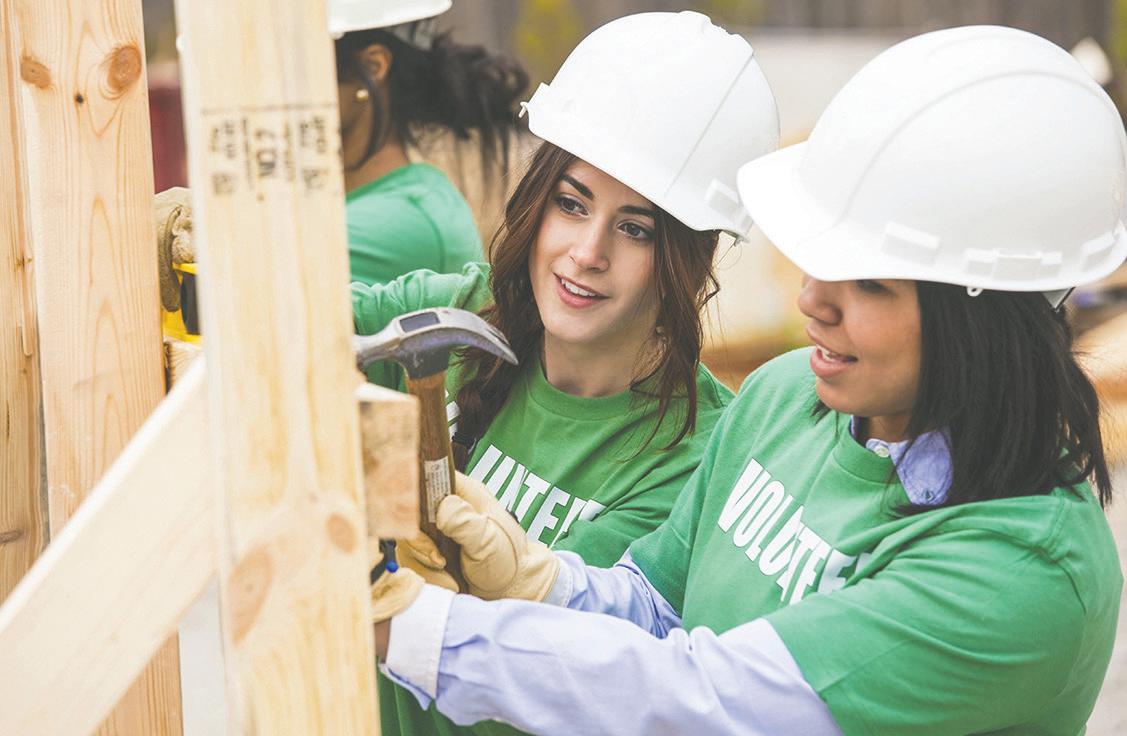
Volunteering is often seen through the lens of how volunteers help to improve their communities. Though there's no denying the valuable role volunteers play in strengthening their communities, it's worth noting just how much volunteers can benefit from donating their time and effort to worthy causes.
A 2020 study published in the Journal of Happiness asked 70,000 participants about their volunteering habits and mental health. The study found that, when compared to those who did not volunteer, people who had volunteered in the previous 12 months were more satisfied with their lives and gave their overall health higher ratings.
Volunteering can benefit anyone, and can be especially valuable to students, benefitting their overall health and helping in myriad other ways as well.
· Volunteering can get a foot in the door. The National Association of Colleges and Employers reports that employers expect to hire 7.2 percent more new college graduates from the class of 2021 than they did from the class of 2020. That's encouraging news, but recent graduates will still face stiff competition as they look for their first job. Volunteering with an organization in their field can be a great way for current students and recent graduates to get their foot in the door. Even if a volunteering opportunity does not ultimately lead to a job offer, the experience students gain can help them stand out in a crowded pool of job applicants down the road.
· Volunteering can help students find a career path. A 2017 report from the U.S. Department of Education found that about 30 percent of undergraduates in associate's and bachelor's degree programs who had declared majors changed their majors at least once within three years
of their initial enrollment. The same report noted that roughly one in 10 changed majors more than once. Those statistics suggest that many students are uncertain about what they want to study at the onset of their college careers. Volunteering before and during college can help students explore their interests and see where their skills are applicable. They can then rely on that experience as they choose a major.
· Volunteering expands students' social horizons. Volunteers serve and work alongside people from a variety of socio-economic backgrounds. That's a great way to see the world through a new perspective, and it also can positively affect students' eventual careers. Professionals who have worked with people of various backgrounds are in better position to effectively communicate with a wider array of people, which can help them build a more diverse set of business relationships. Organizations recognize that value and often prioritize hiring candidates with the kind of strong interpersonal skills students develop through volunteering.
At Berkshire Montessori...
traditional academics are only part of our education. The level of academics that students learn in a Montessori classrooms is amazing, but the learning doesn’t stop there. We believe in educating the whole child; through community and connection with nature, we support their growth socially, emotionally, and physically.
we follow the child.
We don’t all learn skills at the same time or in the same way. At MSB we allow children to learn at their own pace and take time to deeply explore their work. This way they concentrate longer, understand more, and enjoy learning.
the environment is key.
We believe a well prepared classroom environment is a great teacher. Our classrooms are neat, spacious, full of natural light and pleasing to the eye. Our teachers take great care to create a setting in which the children are free to learn, to explore, and to develop independence and positive work habits.