New Zealand's professional association representing the interests of insurance brokers, risk managers and consumers.
IBANZ gives strength and support to members, enabling them to better meet their challenges and opportunities.
We achieve this through staying involved with government activity and legislative reform impacting the insurance industry, and more specifically, fire and general brokers and their clients.
We focus on providing high-quality presenters who speak on a variety of fire, general and business topics under our Continuing Professional Development (CPD) offering to support members deepen their knowledge and broaden their skills.
The IBANZ Code of Professional Conduct provides the public with assurance that members act in a professional and ethical manner. It includes a disciplinary and complaints committee to review concerns that may arise.
Ph: 09 306 1732
www.ibanz.co.nz
Welcome to the first IBANZ CoverNote of 2026
Inthis edition, we focus on growth, guidance and getting the future right.
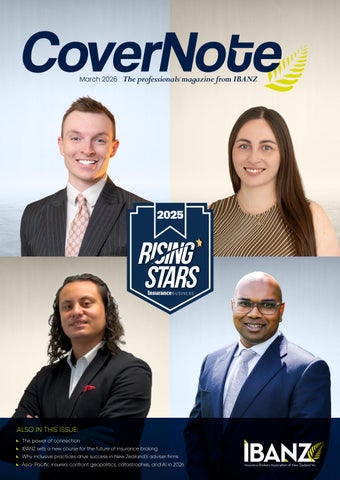
Insurance in Aotearoa is changing fast, and this edition captures a sector stepping confidently into its next chapter. We begin by shining a spotlight on the Rising Stars of 2025, introducing four standout insurance broking professionals whose ambition, professionalism, and fresh thinking are already shaping the future of our industry. These four profiles, which highlight young talent working in different areas of our industry across big city and small-town locations, make great reading. A common theme is their thirst for learning and keenness to keep growing their insurance careers. It’s proof indeed that young talent is thriving here in Aotearoa, and that the next generation is ready to tackle the challenges ahead.
We also explore IBANZ’s newly launched Business Plan, a clear signal of direction and intent for the years ahead. It sets the tone for a stronger and more connected industry. IBANZ’s new purpose statement of Empowering New Zealand towards a resilient financial future through high-quality insurance advice is central to the organisation’s future direction.
Our feature on diversity and inclusion examines why representation, equity, and belonging are no longer “nice to have,” but essential to building resilient businesses and better outcomes for clients.
Finally, we tackle one of the biggest disruptors of our time: artificial intelligence. From the very real risks of unregulated AI to the powerful ways it can “supercharge brokers when used well”. We cut through the hype to focus on what matters: people-first advice.
CoverNote is the official publication of IBANZ and is distributed FREE on a quarterly basis (March, June, September, December) to members throughout New Zealand and associated companies. Additional copies are available at a cost of $7.50 per copy, or 12 month (4 issues) subscriptions at $30.00, inclusive of postage and packaging. The articles or opinions featured within this magazine are not necessarily the opinions of the publishers or IBANZ, and they do not accept responsibility for the content of articles featured within the publication. No part of this publication may be reproduced without the written permission of the publisher. The publishers do not accept responsibility for loss or damage to unsolicited photographs or manuscripts.
IBANZ enquiries should be made to: Katherine Wilson, Chief Executive, IBANZ. Email: katherine@ibanz.co.nz IBANZ National Office located at: The Crate, 28 Constellation Drive, Rosedale, Auckland 0632 PO Box 302504, North Harbour, Auckland 0751 Telephone 09-306-1734 Website: www.ibanz.co.nz
NZ’s insurance broking community ready to help as multiple states of emergency declared
Following weather-related states of emergency in five North Island districts, New Zealand’s network of professional insurance brokers is on standby to help those affected navigate claims that may result.
The Insurance Brokers Association of New Zealand’s (IBANZ) Chief Executive, Katherine Wilson, says, “This will be a very worrying time for those affected, and our thoughts are with them.”
About half of all general insurance placed in New Zealand is done so via a professional broker. One of the key benefits of this is that brokers are available to support and advise when there is a need to make a claim.
“Your broker can help relieve stress in times like this by reviewing your policies, clearly explaining the coverage you have, taking care of the paperwork to lodge a claim, and advocating on your behalf to ensure a fair outcome.”
Wilson urges those who have placed insurance via a broker to make contact with them so the broker can guide them through the claims process.
If you’re unsure how to contact your broker, visit the IBANZ website In the meantime, the following checklist is a useful initial guide:
· Safety first – is it safe to enter?
· Document – photos and videos of damage, inside and outside. List – write a list of everything that’s damaged or destroyed. Prevent further loss – if possible, tarp exposed areas and secure undamaged items.
· Keep receipts - for emergency supplies or temporary repairs. Contact your insurance broker - to get your claim started.
The power of connection
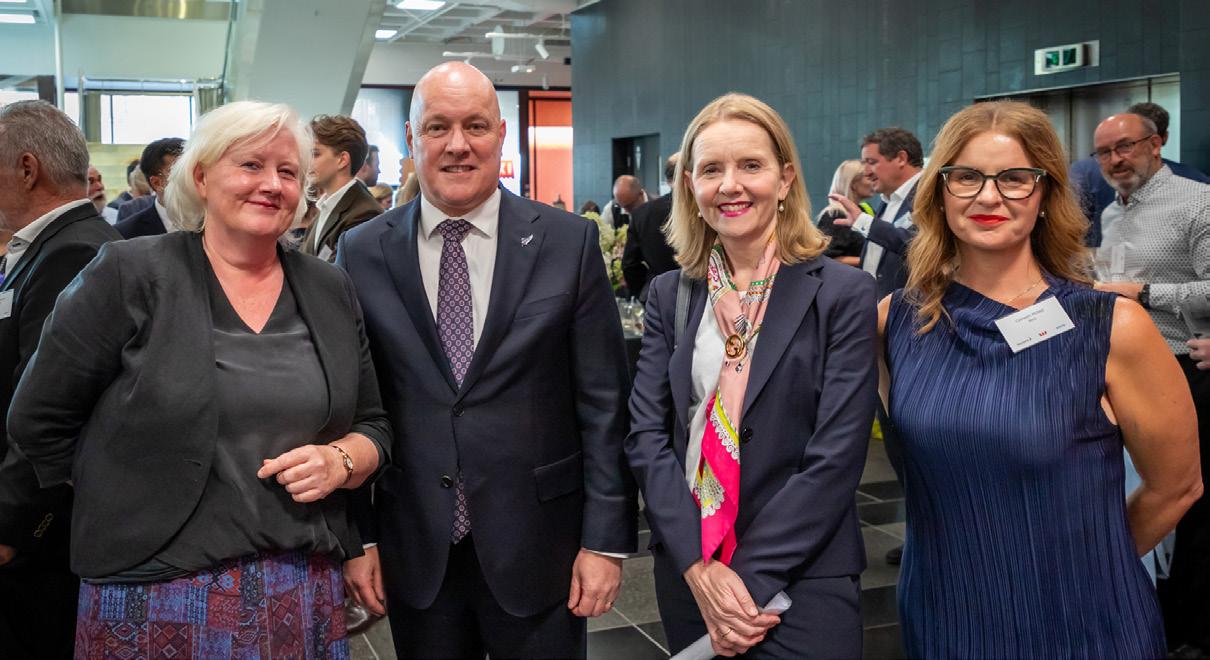
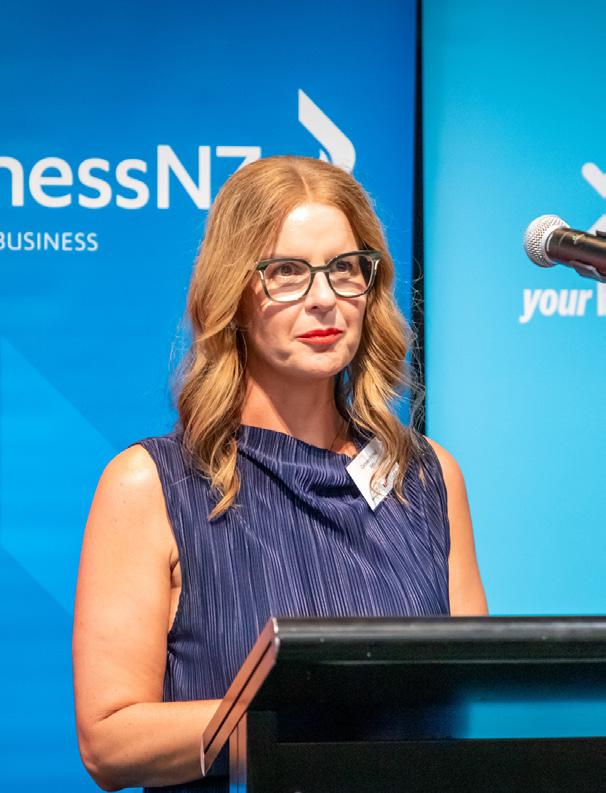
Lastmonth, IBANZ Chief Executive Katherine Wilson joined industry leaders at Business New Zealand’s renowned Back to Business event, an annual gathering recognised as one of the country’s most influential corporate networking occasions. Hosted by Business New Zealand and proudly supported by Xero and Westpac, the event brings together a who’s who of membership organisation CEOs, spanning insurance, banking, and finance through to property, electricity, and primary industries.
Held during Parliament’s dinner hour, the evening provided a rare opportunity for senior business figures to mix informally with the Prime Minister, Ministers, and MPs from across the political spectrum. The atmosphere was both collegial and purposeful¬, a chance to speak frankly about challenges, opportunities, and the pathway to a stronger economy.
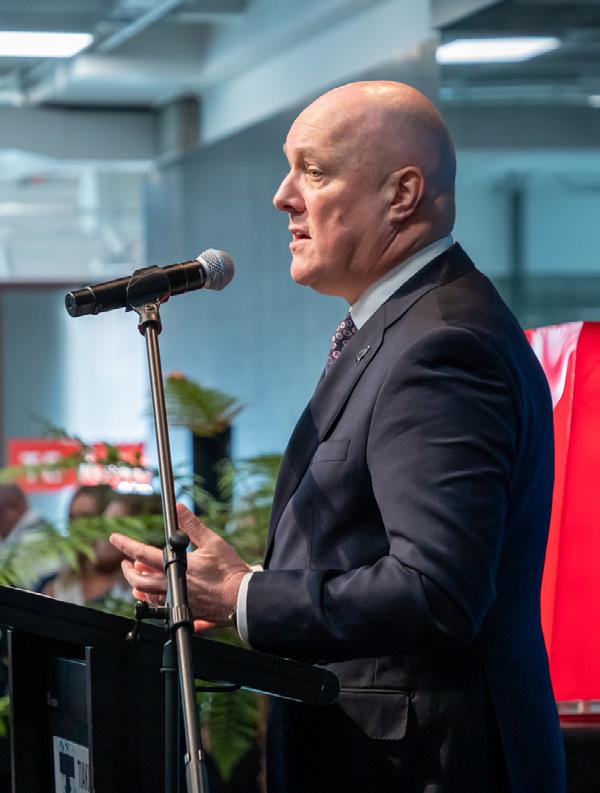
The Prime Minister’s message to the room was crystal clear: businesses can either watch the recovery unfold or help shape it. Acknowledging the vital role industry plays in shaping policy, the Prime Minister encouraged continued engagement, emphasising that the Government is committed to listening and working alongside business to find solutions. This sentiment was echoed by MPs from all sides, reinforcing a collective appetite for collaboration.
For IBANZ, being in the room is a powerful reminder of the importance of ensuring the broking community’s voice is represented in national conversations, particularly on issues such as natural hazards and insurance accessibility. As intermediaries between insurers and New Zealand clients, brokers have a unique vantage point. They understand not only how policy decisions play out in practice, but also how they affect insurance affordability and availability across communities.
These discussions come at a pivotal time. Over the past few months, members have raised growing concerns about New Zealand’s accessibility and affordability of insurance. With some insurer appetite tightening, the implications will have flow-on impacts for consumers.
Events like Back to Business highlight the critical role of connection between industry and government. By staying engaged, IBANZ ensures that the broking community’s practical insights help shape a resilient and accessible insurance landscape for all New Zealanders. Together, through continued engagement with Government, we can empower New Zealand towards a resilient financial future through high-quality insurance advice.
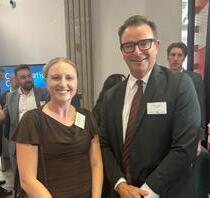
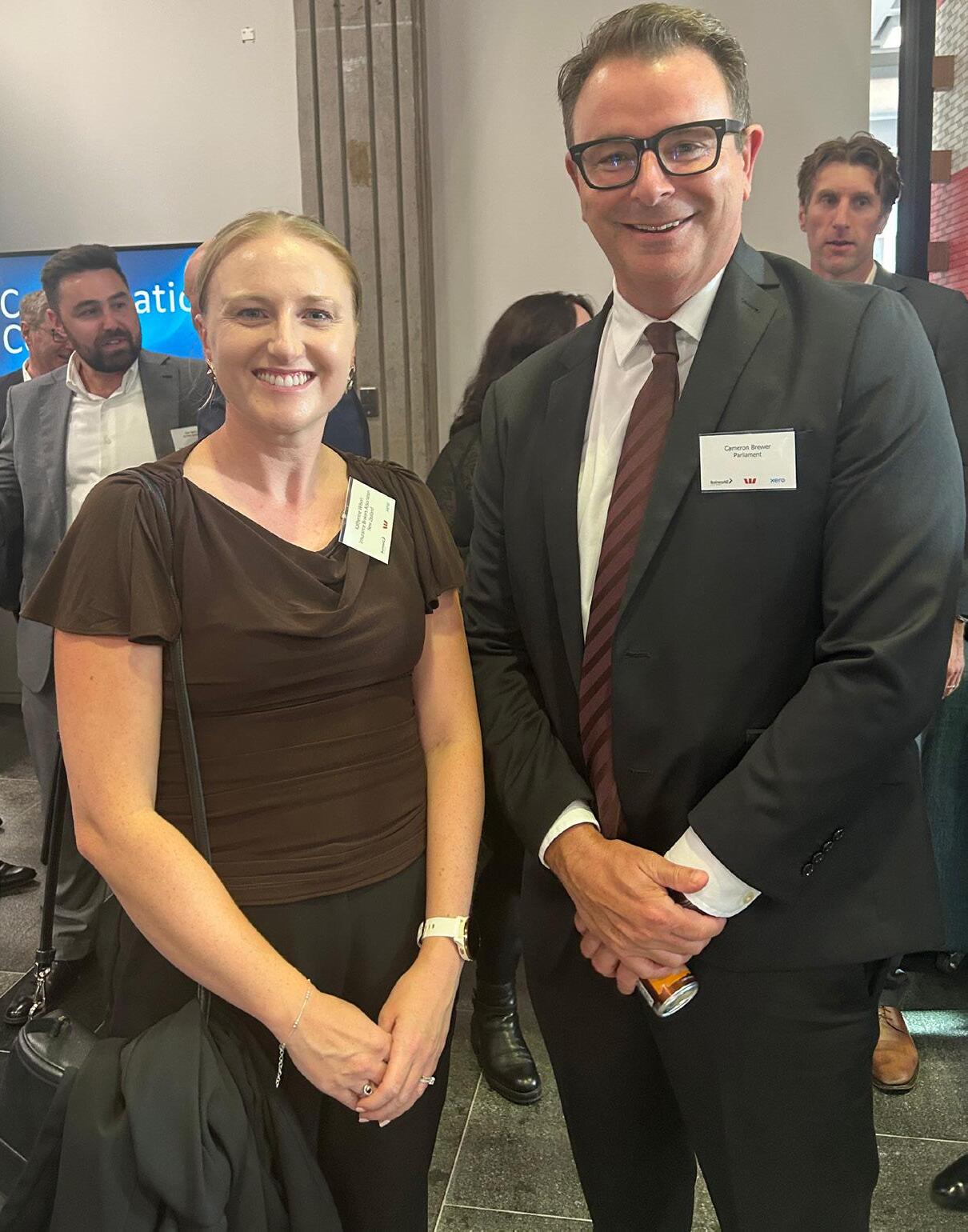
Katherine with Cameron Brewer (Chair of Finance and Expenditure Committee)
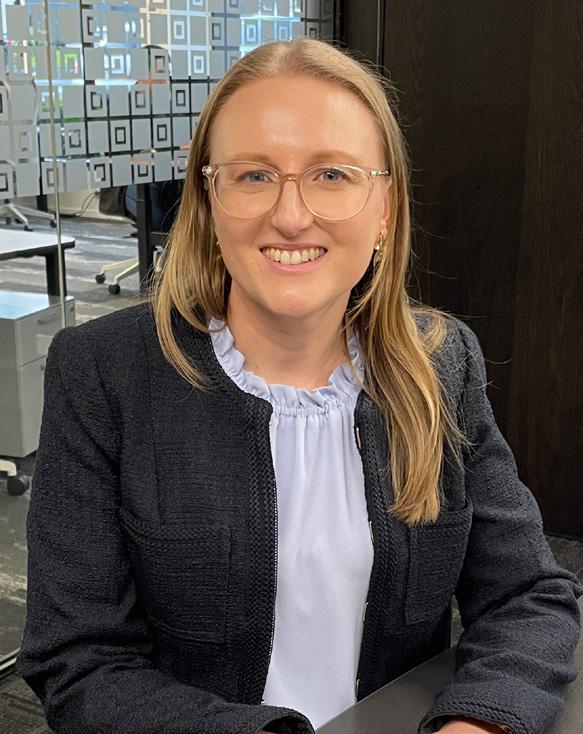
Rhiannon Wharepapa Small town success story
From processing clerk to leading AI implementation, Rhiannon Wharepapa's eight-year journey at Vercoe Insurance Brokers in Morrinsville proves that talent, curiosity, and client relationships are a recipe for success in insurance.
Rhiannon Wharepapa never planned a career in insurance. After finishing school, she took a gap year job to save money for university. But a steady income proved more appealing than a student loan, and when she mentioned to a friend that she was looking for a stepping stone to something more, the friend told her about a job vacancy. Rhiannon applied, and that was the start of her insurance career.
That casual conversation was Rhiannon’s first step to falling in love with an industry she barely knew existed and set her on the path to being recognised as one of Insurance Business Magazine's Rising Stars of 2025.
From stepping stone to career foundation
"I definitely thought that insurance would be a stepping stone, and then I'd maybe get into banking or something similar," Rhiannon admits. "But I fell in love with insurance, and I've been here ever since."
When she started in a processing role at Vercoe Insurance Brokers, Rhiannon knew almost nothing about insurance. "I didn't know what third-party insurance was. I knew that you had to have car insurance, but that was about it."
What struck her immediately wasn't the technical complexity of insurance - that would come later - but the opportunity to change perceptions. "I liked being able to show people that insurance is a positive thing. You need it to protect yourself. Protect your assets, protect you, especially if you're in a position where you can't afford to replace everything if something does go wrong."
The power of curiosity
What sets Rhiannon apart is an unabashed curiosity about her clients'
businesses - and a willingness to admit it. "I'm nosy," she laughs. "I'll go out to a business, and I'll ask what is this machine? What do you use it for? How did you get into this industry? And then they start talking and you can learn so much about their business."
Rhiannon recognised early that curiosity is good for business. "I feel that's when I started to pick up business because they knew I was actually interested in what they were doing. Not just there to make a dollar."
Client visits are a cornerstone of Vercoes' approach, and Rhiannon is often out on the road. This face-to-face relationship building is her favourite part of the job. "I love going out to see what clients are doing, and they seem to enjoy talking to me because they're so passionate about what they do. That’s what I love - and obviously helping them at claim time as well. You want a good result for your clients and to show them that the money they're paying is worth it."
Commercial insurance has become Rhiannon's speciality because she feels it offers a wide variety of covers. “One client might need professional indemnity or cyber cover, while another might need material damage and business interruption. You're dealing with so many different types of businesses."
Small town advantage
While some might think working in a small regional town could be limiting, Rhiannon views it as an advantage.
Rhiannon says being in a small town helps balance the technical and human aspects of insurance. "I'll go out to play sports or walk through town, bump into clients and have a conversation with them. That all helps to build up strong relationships. I think it would be a lot different if I were in Auckland, where
there wasn’t such a strong community connection."
While some clients prefer the efficiency of email and phone calls, the majority of her clients prefer faceto-face interaction - and Rhiannon believes that personal touch provides a competitive edge. "Lots of people are worried about AI changing what we do, but it will never replace personal relationships.”
That's not to say Rhiannon is resistant to technology. Far from it.
Leading change
When asked about AI and digital transformation, Rhiannon reveals she’s been leading the introduction of AI at Vercoes. "We're currently looking at new AI solutions, and I've been the team lead for that, which is very exciting." At the time of this interview, she was working on a project that was nearing completion and about to roll out in the next couple of weeks.
Rhiannon is proud that she pushed for Vercoes to adopt new technologies. "I was one of the staff who asked why can't we be the ones who start using AI? We don't want to be the last to do it.” When an opportunity presented itself to work with a company helping introduce AI solutions in broking, Rhiannon jumped at it.
The solution being rolled out addresses a pain point Rhiannon and her colleagues experience daily - administrative burden. "A lot of our quoting and meetings with clients are very admin-heavy. We come back to the office, and type up the submission and send it out to insurers. This solution will streamline that process."
In other words, AI will do what it does best - handle the clerical work and free up brokers to do what humans do best -
build relationships. "So that we're not stuck behind a computer," Rhiannon explains.
Eight years of change
Rhiannon's eight years in insurance have coincided with significant industry upheaval. When she started, "it was comparatively easy to pick up business. Everyone had more money to spend."
Then came Covid-19, which created uncertainty across the board. "While premiums stayed largely the same, no one knew what was happening, and we had to work with businesses that were losing turnover.”
When weather events began driving premiums sharply upward, brokers found themselves managing client expectations through difficult conversations. Vercoes’ own office flooded twice during two different weather events – and they ended up managing the highest level of claims they’d ever had.
Those years of rapid change taught her the importance of adaptability –one of the key attributes cited by the Rising Stars judges, along with digital fluency, emotional intelligence, and client-centric thinking. "I think all of those attributes are important," Rhiannon says diplomatically. "But adaptability is probably one of the biggest ones. The industry changes so much and so often, you have to be able to adapt.”
Growth through initiative
Vercoes has grown significantly during Rhiannon's tenure. She estimates there were only about ten people in the Morrinsville office when she started, and today it employs 20 people across two locations – Morrinsville and Matamata.
Rhiannon's own progression within that growing firm has been remarkably swift, and she attributes it to one key factor: asking for more. Within just a few months of starting in processing, Rhiannon told her boss, "Actually, you know what, I really like this and I want to be in your seat one day."
When processing no longer felt challenging, she went back to her managers and asked what else she could do, how she could keep learning? “They could see that I wanted to grow, so supported me by giving me more and more work."
She was given the opportunity to join client visits, shadow experienced brokers, and continuously expand her knowledge. "That's how I've been able to move up so quickly," she reflects. "But having great bosses who actually listen to you, take you on those visits and don't hold back their knowledge - all of that is obviously important."
For Rhiannon, Vercoes’ two women
owners have been her role models. "I love working here, I love the team and my managers. I work with two women who have owned the business for a long time, who I look up to immensely. I just want to follow in their footsteps."
A career-defining account
One particular success story captures how relationship-building and persistence can transform a career. When Rhiannon first started, she looked after a very small domestic account - just home, contents, and vehicles. Nothing fancy. Nothing that suggested future potential.
The clients appreciated that Rhiannon was responsive, available, and genuinely interested in their needs. Then one day, they asked her to quote on their commercial insurance. That account has become her largest. She had no idea when she was processing their home and contents policies that commercial opportunities lurked beneath the surface. It's a lesson she's never forgotten.
The recruitment challenge
At the university and high school career days Vercoes has started attending, Rhiannon talks about the variety in the role. "No two days are the same. You deal with so many people. It is actually exciting, and you get to help people, which is the main thing that people love about insurance."
But getting young people to even stop at her stall takes effort. At a recent Waikato University career day, Rhiannon found herself having to actively attract attention. The breakthrough came when they started talking about how people with law degrees or other qualifications could find opportunities in insurance, particularly in claims. "That got people thinking ok maybe insurance is an option," Rhiannon says.
Rhiannon identifies several barriers to recruitment. First, there's a fundamental lack of financial education in schools. "Young people don't understand the different types of insurance available
or why they might need them. Financial literacy around investing is limited, and insurance understanding is even worse.”
Second, insurance simply sounds boring to young people. When Rhiannon tries to counter that perception, she emphasises variety, relationships, and purpose. "You get to help people," she stresses.
Third, people don't realise the diverse pathways available in insurance. "There are so many avenues you can go down. You can be broking, you can be in a call centre, you can be in claims, or you can be an assessor. Her advice to young people considering insurance is straight-forward. "Just give it a go. If you don't like one part of the industry, you can try something else. Just get into the industry and give it a go."
Gender and opportunity
Rhiannon has noticed a significant change in industry demographics during her eight years. "When I first started and we would go out to professional development days, a lot of the directors were men. But as time has gone on, that has changed a lot, and there's more and more women in the industry now."
She sees insurance as offering unusual opportunities for rapid progression compared with other industries. "I've been able to progress quickly in my role, which is different to my friends who went to uni and are still trying to work their way up."
Having female business owners as mentors has also clearly shaped Rhiannon's view of what's possible in her career. The insurance industry's willingness to reward talent and hard work, regardless of gender or formal qualifications, stands in contrast to other traditional career paths.
Looking ahead
At the time of this interview, Rhiannon was preparing to welcome her first baby and head off on parental leave. She plans to take 12 months off while handling a few key accountstestament to both her value to the firm and the flexibility that modern insurance workplaces can offer.
Does she see her long-term future in insurance? "Yeah, absolutely. And here at Vercoes as well."
Rhiannon Wharepapa is an insurance broker specialising in commercial insurance at Vercoe Insurance Brokers in Morrinsville. She was recently named one of Insurance Business Magazine's Rising Stars of 2025 for Australia, New Zealand and Asia. When not visiting clients or implementing AI solutions, Rhiannon plays touch rugby and netball and welcomed daughter Lacey in January this year.
Rhiannon with her new daughter Lacey
Ethan Gerrard Industry disruptor
At 22, with five grand in his pocket and zero clients, Ethan Gerrard co-founded Gerrard's Insurance Brokers in Christchurch. Three years later, the firm has 10 staff, is moving into a 40-desk office, and has been doubling in size every year. His secret? Hire the best people, pay them better than everyone else, and let technology do what it does best.
EthanGerrard dropped out after doing first year health science, which is usually the start of a medical career. He realised "absolutely not, this is not for me." Needing a job, his insurance broker father pointed to a vacancy within the industry. Ethan applied, and the rest, as they say, is history.
His father isn't someone who talks about work at home. So, Ethan started in insurance knowing "absolutely nothing" about the industry. “People say you must have known something, but I genuinely had no idea.”
Perhaps starting with a blank slate made it easier to question everything. A tech-forward founder
After stints at a couple of the big broking houses, Ethan saw an opportunity. "I'm a very tech-forward thinker. I could see processes weren't optimised and believed everything could be done more efficiently."
What's clear in talking to Ethan is that his real passion isn't so much insurance broking – it's business. "I’m pretty decent at insurance broking," he says candidly. "But running a business is the thing I really like - the marketing, the hiring, the training, leading the team. That sort of stuff gets me out of bed. That's why I started the business."
Starting from zero
Most people who start insurance broking companies follow a predictable path: they leave an existing brokerage where they've had clients for 20 years, and some of those clients choose to follow them to the new venture. Ethan and his business partner had none of that.
"We had to find everybody from scratch," he explains. "And we didn’t have any capital, because we're two young guys. I think we started with like five
grand each. That buys you a laptop and not a lot else."
They faced a fundamental problem: they didn't know anyone with businesses of sufficient size to become meaningful clients. "Any of my mates who owned businesses were really small. It takes a long time to become a big business, so I don't know anyone."
The first year was difficult. But they found a niche, and since then, the firm has doubled in size every year. "Of course, that gets harder as you get bigger," Ethan acknowledges, "but we should easily be able to do it again next year (2026)."
How did they do it? That's where Ethan becomes protective of his intellectual property. "This is the stuff I don't like talking about because I don't like giving competitors our information. We spend hundreds of thousands of dollars testing different stuff to see what works.”
The AI reality check
For a self-described tech-forward business, Gerrard's approach to AI is surprisingly measured. "We use a lot of AI, but probably less than people might think because insurance is one of those industries where even if something's wrong one out of 100 times, it's a massive PI exposure for us."
They've tested AI on numerous processes, including having it automatically email clients. "Every one out of 20 times it'll say something completely bizarre or just wrong. So that’s not very useful."
Ethan says AI has to be heavily "boxed in" to perform its function safely. But he's optimistic about its role. "It's great because it speeds up people. It makes them faster at doing things and makes them better – empowers them to do more. Does it replace them? No, but it definitely does make them better."
do the things they're best at, and people do the things they're best at. "That's where we’ve captured efficiencies. Routine and structured stuff where it’s quite hard to get people to follow exactly – computers will do it the same way every time."
The secret sauce
Ask Ethan about the key to Gerrard's growth, and his answer is simple. "Hiring the best people and then paying them well. We're very particular about who we hire, and then we try to empower them to do as good a job as we can, and we reward them. We have zero issues. We have a great team."
The key moment when Ethan knew they were building something special came from an unexpected source. "I was talking to someone who was telling me about all the nightmares they were having with their staff. And I was like, I've never had any issues. We've never had any issues. Everybody's great." That's when he realised, "We're on to something here. We're building something that's actually good and will stand up long term."
Problem-solving as philosophy
When asked what it takes to succeed in insurance broking, Ethan focuses on problem-solving. "You have to enjoy solving problems. Every client has a problem. You're basically getting them a solution for that problem. The more creative or better you can think about that problem, the better outcome you get for the client."
The firm primarily deals with small and medium businesses, "taking principles that are applied at the high end and using technology enable them to be applied at the other end. If you enjoy problem-solving, you'll do well."
This extends to how they handle
the technical and legal complexity of insurance. "We're very good at saying we don't know, but we’ll find out," Ethan explains. "We'll just tell the clients it's a great question and we'll figure out the answer. We're not precious about that."
The insurance PR problem
Like the other Rising Stars, Ethan identifies insurance's awareness problem among young people. "I've never met anyone who said insurance is what they wanted to do when they grew up, and I don't think I ever will."
One of his solutions is digital content - and lots of it. Gerrard's is building a full production studio in their new office to create content for social media. "We're figuring that out at the moment, but we've got some ideas," Ethan says.
The challenge is significant. "If you look around the entire world, you could not find anyone who does insurance well in the content space. Trust me, we've spent a long time looking because it's quite easy to emulate someone who does something really well. So we’re going to have to be a bit creative."
He's already experimented with this. "Maybe four years ago, I made a TikTok video about getting into insurance. I had heaps of people ringing me up about it because I talked about the career and the earning potential, which is the easiest way to get young people in the door."
Even at industry functions, the insurance label kills conversations. "You start to say, 'What do you do … I'm in insurance.' Well, that's the end of that conversation," he laughs.
The irony isn't lost on Ethan. "If you interviewed someone at university and asked about their ideal career, and they didn't know anything about anything, they'd probably list out quite a few aspects that insurance actually lines up with. But as soon as they hear the word insurance, suddenly they're like, oh no, no thanks."
The silver lining
But there's an upside to insurance not being the first choice for many graduates. "It breeds a lot of opportunity for young people. While many of the best and brightest head off on other career paths, if you’re really good and you go into insurance, there's a lot of room to grow."
It's a theme that emerged across all the Rising Stars interviews: insurance offers unusual mobility for talented people willing to work hard. "At a bank, you can wait three years till the next role opens up," Ethan notes. In insurance, progression can be much faster for those who seize opportunities. The 100-hour work week
Outside of work, Ethan's pursuits reflect his all-or-nothing personality. He's
run several ultra-marathons - "that's a silly idea, don't ever do that" - and spends time with a group of businessowner friends doing "interesting things together."
But mostly, he works. "I either go to work, which is usually 80 or 100 hours a week, or I do fun stuff, and there's no in between. I don't really have any downtime."
He's made peace with this approach. "At the start of your career, everybody's like work-life balance, work-life balance. But honestly, I don't know what anyone's talking about. The less I work, the more unhappy I am."
He had an epiphany watching his father. "I used to give my dad a hard time – he works 80 or 100 hours a week. Then I kind of clicked one day: that's genuinely just what he enjoys doing, so it's fine."
For now, Ethan is all-in on making Gerrard's "the number one player. That might take a long time, and I'm happy to dedicate the time to it. Things might change, but for now, I'm all in on that. That's what I enjoy doing, so it's not a problem."
The stable industry
Despite being young and disruptive, Ethan has an interesting perspective on industry change. "After being in here what, like five years now, it's actually a lot more stable than I thought. Nothing really happens that quickly."
Yes, everyone's moving toward techfirst approaches, but "in the past five years, there's been very little change. People have just made things slightly better. I think that's just how the industry works. It's a big slow beast that takes one step forward every couple of years, and it's been doing that for the past 100 years."
Even climate change, which might seem like a looming crisis, feels distant from the day-to-day. "Premiums are going down at the moment, so whether it's having that big of an impact, I'm not sure." It's a 20-year question, not a today question – though he's quick to advise clients against buying beachfront property. "We can get insurance for it
now, but what's it going to look like in 15 years?"
Differentiation
What emerges from talking to Ethan is a portrait of someone who sees clearly and speaks frankly. His fundamental approach is: identify what works, do more of it, and don't be precious about challenging conventional wisdom.
"It's quite hard to differentiate yourself in this industry when a client can go to a different broker down the street and effectively get the same thing," he observes. "In essence, we all do the same thing.”
Gerrard's differentiation comes not from what they do, but how they do it.
Looking ahead
At just 25 years old, Ethan Gerrard has already proven that starting an insurance brokerage from absolute zero is possible with the right approach.
The move to a 40-desk office, complete with in-house production studio, hints at more ambitious plans, too. If Gerrard’s can crack the code on making engaging insurance content, it could well be a game changer.
But perhaps the lesson here is that insurance broking doesn't have to follow traditional models. You don't need 20 years of client relationships or large capital to start. You do need clear thinking, technological efficiency, and the courage to challenge how things have always been done.
When asked if his passion is really about insurance or just business in general, Ethan is honest: it started with the business model. "But then over time you start to fall slowly more in love with that industry if you get outcomes and people are engaged."
The stories matter. “Over time, you build up the stories of how you’ve helped people, so it actually means something. That's hard to convey when you've got new people starting, but that's part of the why of what we do."
The journey hasn't been without resistance. "When we started the business, my dad told me it was a terrible idea. But he’s come around. And I guess I’ve also come to understand what it is that he loves about this industry.”
Ethan Gerrard is co-founder of Gerrard's Insurance Brokers in Christchurch, which he started at age 22 and has since grown to 10 staff with ambitious expansion plans. He was recently named one of Insurance Business Magazine's Rising Stars of 2025 for Australia, New Zealand and Asia. When not working 100-hour weeks, Ethan runs ultra-marathons and builds production studios for creating insurance content that might actually be interesting.
Ethan is always on the move
Kish Proctor
The litigator who found his calling
Lawyer Kish Proctor discovered that solving complex problems for clients didn't require litigation - it required insurance. Now, as one of Insurance Business Magazine's Rising Stars of 2025, he's drafting policy wordings and navigating complex claims at Aon while championing the industry to others.
WhenKish Proctor started his career as a litigation lawyer, handling commercial and criminal cases, he enjoyed the intellectual challenge of solving complex problems for clients – problems that often didn't have easy answers. But after about a year or so in courtrooms, he found himself weighing up whether litigation was truly his long-term path.
"I thought, I'm not sure I see myself doing litigation long term, but I enjoyed helping clients, trying to solve problems, complex ones where there weren't easy answers," Kish reflects.
An in-house opportunity with a startup gave him exposure to advisory work, and he realised he wanted to specialise in an area with global reach. He looked at various financial services roles, but it was insurance that caught his eye.
A match made in heaven
When a policy wording and product development role appeared at Aon, Kish saw something unique. It helped that, as an avid Manchester United fan, AON was the club's shirt sponsor around that time. "I thought this is a match made in heaven," he says with a laugh.
It was the interview process that truly sold him on the industry. "From the moment I interviewed and understood the industry a little bit more, I realised, wow, there are so many facets to insurance and so many other ancillary services that sit in and around it that there's really no limit to the avenues available to you."
The global connection particularly appealed - the ability to work with colleagues around the world and connect with the reinsurance market. But perhaps most importantly, it was about impact. "Being able to provide solutions which actually, if there's a claim, help people."
From The Incredibles to reality
Kish admits his early impression of
insurance was shaped by the Pixar film
The Incredibles, where Mr Incredible works unhappily in an insurance firm, frustrated about a client's claim that wasn't paid.
zeroes in on adaptability.
"Sometimes I think that could be the perfect example of how people see insurance in the personal lines context. But when you see the wider world of insurance and how it works, that's definitely not the case."
"My views have definitely changed in relation to how I thought insurance works and actually the value that insurance provides to the wider business world, because really it helps get businesses up and running again. It helps businesses deal with unforeseen events. It also helps clients understand what can be insured, and what needs to be managed better from their own perspective to ensure business continuity.”
The pervasiveness of insurance
Like many people who discover the insurance industry's true scope, Kish has been struck by how pervasive it is. "All facets of life are touched by insurance in some way, in the hardest times as well," he observes.
His speciality is drafting policy wordings for business insurance clients ranging from large corporates to SMEs, across property, business interruption, commercial motor, professional indemnity, financial lines, public and products liability, and marine cargo. "Anything general insurance related is in my wheelhouse for policy drafting and complex claims," he explains.
Whether someone's passionate about football, motor racing, yachts, or farming, there's an insurance speciality for it. "It often amazes me the way insurance helps clients, no matter how big or small, get back on track.”
The adaptability imperative
When asked about the key skills needed for success in insurance (the
"I think adaptability is key," he says emphatically. "You have these core fundamentals of insurance that underpin many insurance products. But being able to adapt those core principles or ways of working to a changing and very complex environment is key, because if you can't adapt, you can't pivot, and you can't think of different ways of doing things using the basic principles of insurance, you could get left behind."
Emotional intelligence ranks equally high for him. "Understanding the business need, where people are coming from when they approach you, that’s really, really important."
These aren't abstract qualities. In Kish's role, adaptability means responding to significant regulatory change, evolving risk appetites, and the mounting pressures of climate change. All of these factors create what he calls a "multiplier effect" with climate change considerations, shifting risk appetites, and international influences all converging at once.
A decade of transformation
In his roughly ten years in the industry, Kish has witnessed substantial transformation. "There's been a lot of change, a lot of very seasoned people retiring, a lot of new, exciting young talent in the industry as well, which is a really positive thing to see."
Regulatory changes alone have forced new ways of doing things. Add to that overseas influences, climate change considerations, and evolving risk appetites, and you have an industry in constant motion.
The upcoming changes to the Contracts of Insurance Act and Fire and Emergency Levies have direct implications for Kish's work. "At the moment, there's quite a significant
impact because you're thinking about how things are done for different products, mapping out what needs to change and firming up what insurers want to do."
From a broking perspective, understanding how different insurers might take slightly different approaches to achieve the same regulatory compliance goals requires careful weighing and balancing. "How do we ensure that it works really well for our brokers and, ultimately and importantly, for our clients?"
Kish views all this change as fundamentally positive. "It's not easy, but it is for the better in my view. All those drivers have meant that you get better information, and clients probably reflect more on what they actually need. It also helps develop professionals because some of the questions that are asked and a lot of the critique that goes on is really positive and drives new thinking."
Willing to change
Some might assume that insurance, as such an established industry, would be resistant to change, but Kish sees it differently.
"I think you could go into it and think that maybe the industry is not willing to change and adapt, but when you look at how much is driven through reinsurance markets and the mood for change, particularly at the moment, the appetite that's there is a really positive thing."
Working with professionals in the UK and other markets, as well as in New Zealand, he sees quality people driving meaningful change. "The industry is still relevant, still changing and still adapting. And there are some great leaders in the wider insurance industry in New Zealand who are embracing that change and are willing to listen as well. So that's always a positive."
Questioning the legacy
Part of adapting means challenging legacy thinking – something Kish encounters regularly in his policy wording work.
"When negotiating insurance products and drafting wordings, there's often a bit of legacy and custom that sits behind that," he explains. "Traditional clauses which have been in the wording for years – you start to question why it is set out that way. Is it because of one claim a few years ago? Can we do it differently?
"Sometimes when you question it, people just haven't had time to reflect on it. They've put something in a contract. It's sat there for a while. And when you actually start asking these questions, you get answers, and you can tailor it."
Sometimes clauses persist simply because no one has thought to challenge them. Other times, questioning reveals there's a really good
reason for that particular wording. "It's always a balance," Kish notes.
The AI opportunity
Asked about AI's impact on insurance, Kish takes what he calls "a very lawyer way" of responding - he sees real opportunity, but with important caveats.
"I think it places a greater emphasis on in-depth knowledge and understanding in order to use the AI properly, because we know that sometimes the outputs can be very convincing but wrong. Because insurance is quite detail-oriented - a specific clause or explanation can really change the outcome of a claim - really understanding what the AI output is saying and what it's actually producing is very important."
Rather than threatening professional roles, he believes AI underlines the importance of human expertise. "That's why I think it's a real positive – it speeds things up, it can help deliver content quickly, but it also emphasises the importance of having really good people to evaluate and provide advice and also help our clients better understand it."
After all, clients have access to AI too. The differentiator becomes the ability to properly evaluate AI-generated content. "Having a heightened understanding or deeper knowledge of insurance is really key."
A meritocracy with mentors
Kish agrees that insurance offers unusual opportunities for talented people willing to work hard. But he adds an important nuance to the meritocracy argument.
"Recognising opportunities is the key. Hard work helps, but you also have to recognise and not take for granted any opportunities that are offered to you.” He observes that some people look at opportunities and dismiss them as not very valuable. “But actually, sometimes senior leaders are very generous in handing out these opportunities. And if you take them, you may not realise where they may take you.”
He's been fortunate to have mentors at Aon who've helped him recognise these moments. When faced with opportunities which made him wonder whether they were the right thing for his career, his mentors have helped him see why certain projects or assignments would improve his product knowledge or help ground his skills in specific areas.
"When I actually went through those times, it helped round my character and my understanding in insurance and has given me a really good platform," he reflects.
The attraction challenge
Like the other Rising Stars, Kish recognises that insurance suffers from an awareness problem when it comes
to attracting young talent. His solution? Be explicit about pathways.
"Try to show any potential young candidate all the different avenues that could be available to them and the types of skills that they would need for those roles," he suggests. "If you divided it up into a few categories and said, look, these are the general skills, but here's the career path, and even with AI and even with all these other disruptive factors, the need is there and here are the steps that you could take to get there."
The problem, he believes, is that people entering the industry sometimes feel pigeonholed. "But that's actually not the case. Sometimes you need three or four grounding years to understand the industry and become aware of all those different paths and avenues so you don't feel stuck, because the skills are really valuable and transferable as well."
This is more than theoretical for Kish. He actively promotes insurance careers in his community, even when coaching sports teams. "I've always encouraged people to consider insurance as an option because it's an undervalued industry from a career perspective. It sort of gets left behind just because of a lack of understanding, and the opportunities are real."
His pitch is practical and forwardlooking. "You'll always be able to transfer those skills, whether it's working for an insurer, a brokerage, an advisory firm, or even a client as a risk manager. The skills are only going to get more valuable over time."
Beyond the office
Outside of work, Kish's passions reflect his international outlook. As a devoted Manchester United fan, football is a constant in his life. He's coached sports teams in the community, loves going to the gym, and particularly enjoys overseas travel.
With family in Asia and throughout Europe, he tries to visit regularly. His next planned trip is to Africa, likely in May, assuming he can carve out time given the significant regulatory change workload ahead.
Kish Proctor is a legal counsel specialising in policy wordings and complex claims at Aon, covering property, business interruption, commercial motor, professional indemnity, financial lines, public and products liability, and marine cargo. He was recently named one of Insurance Business Magazine's Rising Stars of 2025 for Australia, New Zealand and Asia. When not drafting policy wordings or navigating regulatory change, Kish enjoys supporting Manchester United (through thick and thin), coaching sports teams, and planning his next international adventure.
Tom Lima Finding his place in insurance
From 200 job rejections to Insurance Business Magazine's Rising Stars of 2025, Tom Lima's journey into insurance wasn't conventional - but it's given him a unique perspective on what the industry needs to attract the next generation of talent.
Tom Lima will be the first to tell you he fell into insurance. After enduring the “kick in the teeth” of roughly 200 job applications and interviews, a cousin who worked in the industry suggested he apply for a support role with Willis' Pacific team.
It wasn't what young Tom had envisioned for his career; in fact, he barely knew the basics of insurance. "I knew there was a retention or excess. I knew you had to pay something, and at the time, I only knew about house and contents. I had no idea about this vast world that existed. I didn't even know there was such a thing as an insurance broker.”
With nothing to lose after months of rejections, Tom interviewed for the role that would change his whole career trajectory.
An unconventional start
Supporting Willis’ Pacific team proved transformative. Suddenly, he wasn't just learning about house and contents policies – he was helping insure resorts, airports, aviation risks, and telecommunications companies across the Cook Islands and Samoa. He was learning about complex programmes placed across Singapore, London, and China, and helping piece together coverage where local markets couldn't provide complete solutions.
"It was absolutely eye-opening. You see all the different risks –resorts, government agencies, power companies, telecommunications companies. I didn't even know you could insure these risks."
Tom learned that the Pacific is an incredibly challenging region. Limited local markets mean brokers are forced to find international solutions. "For most renewals, they go to places like Singapore and London and try to put together a programme. That was my exposure at the start." Tom was introduced to complex spreadsheets
called "mud maps", piecing together 5% coverage here, 10% there, and perhaps 35% that would have to be self-insured.
"It was so formative," Tom reflects. "When I'm working in the New Zealand market now - of course we get the odd difficult one – but to have that exposure at the start was just so important to where I am now."
The road not taken
Tom stayed in that support role for nine months while completing his law degree, then moved to a criminal law firm, curious to see if that was his calling. He spent just under a year there before facing a crucial decision at age 27.
"No one at the top seemed particularly happy," he reflects candidly on his time in law. "I questioned whether I wanted to dedicate years of my life to reach their level. I was working 7am to 7pm most days and working Saturdays. I'd completely lost work-life balance."
The contrast with his nine months in insurance was stark. He'd enjoyed that first taste of the industry. He could see opportunities to progress. And the people at the top seemed to really like it.
Tom picked up the phone to his old manager at Willis, this time with an understanding of what the industry offered. "That was me actively choosing to come back to the industry. Like 99.9% of people, I fell into it. But coming back was deliberate and I knew I could do well here.”
Rising through the ranks
Now working in the liability space at ICIB, Tom's career trajectory has been steep. He joined as commercial support for the liability team, was promoted to broker, then found himself thrust into deep waters when the head of liability went on maternity leave just one month later.
It’s precisely this adaptability that helped Tom be recognised as one of Insurance Business Magazine's Rising
Stars for 2025. The judges singled out adaptability, digital fluency, emotional intelligence, and client-centric thinking as key attributes.
When asked which quality matters most in his practice, Tom finds it hard to choose between adaptability and client-centric thinking. "The reason I come into work and the reason I got a job is because clients are trusting me, the team, and the company to manage their risk in case something goes wrong," he explains. "That's the fundamental to how we approach each day."
Adaptability, though, has been crucial. "With insurance, no two days are really the same. I remember one time I went to the Melbourne Cup and thought I’m on top of everything, and then got a call from a client about a really hairy D&O claim. I was off-site, on the phone, figuring things out and managing it."
A career-defining moment
One standout success story from early 2024 exemplifies Tom's problemsolving approach and willingness to go the extra mile. While still in a support role, he was given the opportunity to tackle a complex new business inquiry – a referral from an existing client.
"They said, Tom, there's about five businesses with four subset businesses clumped together in this liability policy. They want to see if we can separate them out. Here's the information. Can you give it a crack?"
These were complex businesses requiring careful analysis. Drawing on his Pacific experience of building patchwork programmes, Tom set about constructing solutions. Different insurers would say yes to one element but no to another, requiring him to piece together a canvas of coverage. This was on top of his current workload, meaning he spent time after hours putting the programme together.
When he finally presented the terms
to the primary business owner, Tom's insurance programme came in about 30% more expensive than their existing coverage. But he could justify every dollar: "There were issues with the current coverage - split policy limits, split programmes that didn’t serve their needs. Understandably, there was going to be an increase." It came down to the zero hour, and his phone rang. "They said, Tom, we're gonna go with you. Send through whatever you need us to sign, and we'll get it done.
"That, without a shadow of a doubt, was the highlight of my career so far. Putting in the extra work on an inquiry where I was given a lot of freedom by my boss and by the company basically saying Tom, you run with it. Ask any questions, but this is yours."
The AI question
Ask Tom about emerging challenges facing the insurance industry, and he immediately points to the two letters everybody's talking about: AI.
Tom uses AI tools in his daily work, though thoughtfully and with clear boundaries. "Its biggest value is if there's an account that comes up that I haven't looked at in a while. I'll ask AI to give me a summary of the correspondence in the past 12 months. That helps get me up to speed quickly."
He also uses it for drafting meeting agendas when under time pressure, overcoming writer's block when he knows what he wants to say but the words escape him, and getting quick comparisons of policy wordings. "It gives me a starting point to then look more closely," he says. AI also helps him research new business prospects, providing company profiles to point him in the right direction.
But Tom is clear-eyed about the limitations and risks. "We're providing financial advice to clients. We're giving recommendations.” He also notes privacy concerns. His bottom line: "As an industry, I think we just need to be careful as to how we utilise AI."
A generational divide
Tom has noticed a generational gap in the industry, and it doesn’t relate to AI. It’s the reluctance of younger colleagues to pick up the phone. "I think Covid has had a really interesting impact on those who've gone through the education system at that time. They've lost that opportunity to build communication skills face to face."
He recounts a story about a support staff member who came to him with a motor vehicle question that he’d spent the last hour researching, but couldn’t find an answer. Tom asked who the underwriter was, recognised the name, and picked up the phone.
He clarified there was no cover, got a premium quote to provide cover, tried (unsuccessfully) to match renewal dates and negotiated a brokerage fee all in a five-minute call. Tom was clear to land the point with the support staff member, "If you just picked up the phone in the first instance, you could have saved yourself an hour."
His concern runs deeper than mere efficiency. "Insurance is a relationship game, and communication is a huge part of it. I get frustrated when I phone people and they don't pick up. You can just cover so much ground in a simple phone call."
The talent pipeline problem
Tom's accidental entry into insurance isn't unique. And that, he argues, is a significant problem the industry must address.
His prescription for change starts at the grassroots level. Secondary schools need career day presentations from broking houses or insurers that go beyond "your car and contents" to showcase the breadth and excitement of insurance careers.
"Paint the picture that it's not just boring, dusty old men with computers - there's a lot of diversity and really interesting things happening. It's great to see a lot of women in high positions. I think it's almost like the legal profession where people think there's a real old boys' club, but it's not the case."
He sees a need to increase engagement with universities as well. Tom has stayed in contact with career services staff at Auckland University and offered to make himself available to interested students. He believes some insurers are doing well at attracting graduates and running structured programmes, but the broking side is not well represented.
The brain drain challenge
Of the roughly 20 peers Tom came through university with, only three remain in New Zealand. Tom himself has experienced the pull of overseas opportunities. With ICIB’s support, he attended the Tysers Summer Academy professional development programme in London. For two weeks, he networked with Lloyd's syndicates, toured Lloyd's of London, attended highlevel presentations and seminars, and shadowed brokers.
It's the kind of opportunity that could easily lead to someone staying overseas. Tom is committed to building his career in New Zealand but acknowledges the challenge. "There are excellent opportunities out there, and I think that's really putting a lot of constraints on attracting and retaining young talent."
Of course, as Tom notes, there's not a lot the industry can do about the global market. "Talented young people who want to go overseas and gain experience are always going to do that. You have to hope they’ll eventually bring that experience back home."
Tom believes the solution requires leadership from the top of the industry. "I think if you had somebody at the top who said they’re going to lead this over the next five years, they would get a lot of support.
Looking ahead
Does Tom see himself staying in insurance for the long haul? "Certainly, I love the industry."
What draws him in? "Coming in each day, new challenges, that puzzle-solving, that critical thinking. How do you do this? What's the best solution? I love the relationships that you build. I'm certainly a big fan of the networking component as well.
"I think there are not too many industries where if you're ambitious, if you're willing to work, if you come in with the right attitude, if you really want to get up there, you've got a good chance of doing it. I'm quite competitive by nature. I come in, and I want to be at the top of my field."
Tom sees his future in liability, specifically cyber insurance. But he maintains a wish list of experiences he wants to collect along the way. The other day, he was chatting with a colleague who'd been supporting a regional client to insure a bull.
Tom's eyes lit up. It's a perfect encapsulation of Tom's attitude toward the industry. "I never would have thought that there's this much detail in insuring a bull," he marvels. "I'm happy in my space. I'm happy looking at directors' and officers’ liability, professional indemnity, cyber and everything. But let me just insure one bull before my career is over."
Tom sums up the industry with a blend of ambition and humour: "This is truly an industry where if you're willing to grab the bull by the horns, you can really go far."
Tom Lima is an insurance broker specialising in liability and cyber insurance at ICIB. He was recently named one of Insurance Business Magazine's Rising Stars of 2025 for Australia, New Zealand and Asia. When not solving complex insurance puzzles, Tom enjoys socialising with industry colleagues and watching Premier League football while recovering from an ACL injury that has left him "perpetually limping" around the Auckland office for the past two years.
IBANZ sets a new course for the future of insurance broking
The Insurance Brokers Association of New Zealand has unveiled an ambitious three year plan aimed at strengthening industry leadership, modernising member services, and reshaping how brokers are seen by government and the public.
The Insurance Brokers Association of New Zealand (IBANZ) has released its business plan for 2026–2028, signalling a decisive shift in how the organisation positions itself within a rapidly evolving insurance landscape. Reflecting an extensive consultation process with members, corporate partners and the IBANZ team, the plan sets out a clear purpose:
Empowering New Zealand towards a resilient financial future through high-quality insurance advice
The new purpose statement is central to the plan and reflects IBANZ’s intent to align advocacy, member services, communications and organisational capability under a single, consistent direction.
At its core, the plan marks a transition from what has traditionally been an inward-focused model to a more
collaborative, outward-looking organisation. One that actively champions brokers, influences policy, and tells the industry’s story more effectively.
Chief Executive Katherine Wilson says, “Insurance brokers play a critical role in protecting New Zealand’s financial future. Our leadership is required to ensure we better educate our members and the wider public about the value of brokers, while providing research, advocacy and thought leadership for the future of broking.”
Four strategic goals, one direction
The business plan is structured around four strategic goals that will guide IBANZ through to 2028.
1. Influential Industry Leadership and Advocacypositioning IBANZ as the leading voice for insurance brokers in discussions with government, regulators and industry partners. Priorities include refining advocacy positions, strengthening relationships with policymakers, and collaborating more closely across the insurance sector to achieve shared outcomes.
2. Professional Member Services – focusing on strengthening engagement with existing members while attracting and retaining new ones. This includes developing a clear membership strategy, establishing regional committees and advisory groups, and enhancing professional development opportunities through webinars and future events.
3. Effective Communications - reflecting IBANZ’s intention to be more visible and more influential, both within the industry and in the public eye. From improved newsletter engagement to increased social media reach, IBANZ wants to better articulate the value brokers bring to New Zealand’s economy and financial resilience.
4. A Proactive, Future Focused Organisation - addressing IBANZ’s internal systems and processes to better support our members now and into the future.
Looking Ahead
Across the four goals sit 15 strategic priorities, which will be sequenced to ensure IBANZ has the capacity and capability to
deliver. Some initiatives are already underway, while others will be phased in over time.
Notably, the plan identifies talent attraction and diversity and inclusion as key focus areas from 2027 onwards. IBANZ intends to support these ambitions with research, storytelling and the establishment of a dedicated Talent Attraction Advisory Group.
For IBANZ President Neil Cousins and Chief Executive Katherine Wilson, the business plan represents more than a roadmap; it is a statement of intent.
“Membership organisations thrive because of their people,” says Wilson. “IBANZ’s future success will depend on strong relationships with our members and stakeholders across the industry”.
As the insurance sector faces increasing complexity, the IBANZ business plan 2026–2028 positions the organisation to play a more confident, connected and influential role in shaping what comes next.
Empowering New Zealand towards a resilient financial future through high-quality insurance advice
Leading with authenticity
We lead with authenticity, achieve with purpose, and act with integrity and accountability.
Solution-driven thinking
We turn obstacles into opportunities, tackling complexity with a solution-driven focus. One team
We grow through trust, teamwork, and positivity, driven by collaboration and communication.
Influential industry leadership and advocacy
We champion insurance brokers and influence government to support policies that enable a thriving insurance industry.
We create an industry standard, provide Continued Professional Development, and build strong relationships for our members to elevate professionalism and integrity.
Effective communications
We promote the vital role insurance brokers play in creating a resilient financial future for New Zealanders and the wider economy. A resilient and futurefocused organisation
We equip the organisation with the skills and resources needed to consistently provide exceptional value to our members.
NZI Distinction. A class of its own.
Discover the full suite of enhanced premium personal insurance.
Beyond the policy: The NZI motor advantage
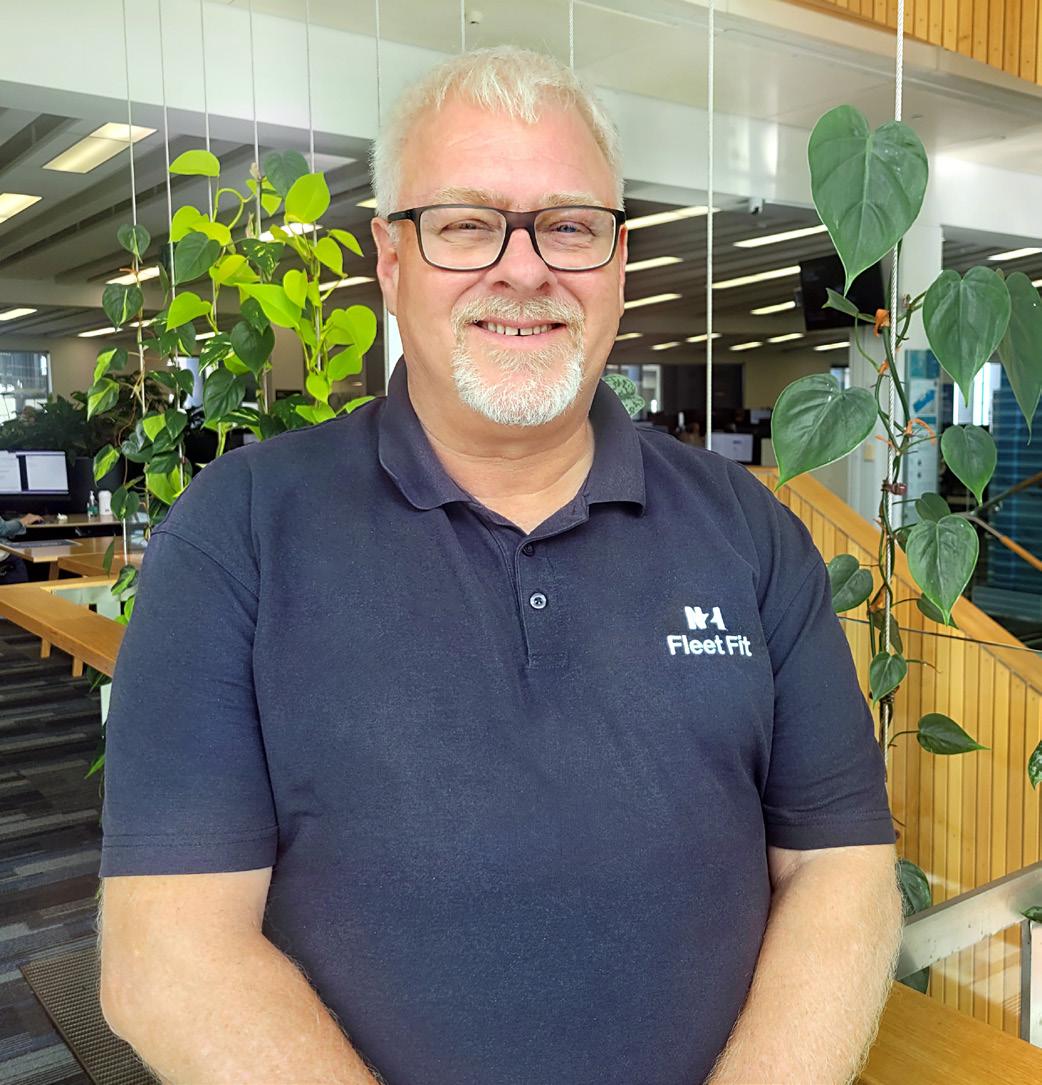
Ian Taylor shares how NZI is shaping the next phase of motor leadership in New Zealand.
After four decades working inside New Zealand’s transport insurance landscape, Ian Taylor sees 2026 not as a new chapter, but as a defining moment. In his refreshed role as National Manager Motor, Taylor is focused on one thing: sharpening how NZI supports brokers and customers in an increasingly complex motor market.
Putting brokers and customers front and centre
Taylor’s career has spanned underwriting, claims, assessing, portfolio management and the long- running development of NZI’s fleet risk capability. But at its core, he says, the work has always been about staying close to the people who keep the country moving.
“I’ve always loved the cut and thrust of a deal – the negotiation, the collaboration, and being able to help solve real problems for New Zealand businesses,” he says. A clearer motor vision for 2026
A key priority for 2026 is lifting broker confidence in NZI’s full motor proposition, particularly services that customers don’t always make full use of.
“NZI goes beyond insurance. Our Roadside Rescue and Fleet Risk Management services are built from decades of insight into Kiwi operators, yet they’re not always front and centre in broker conversations,” he says.
“I want brokers to feel confident positioning our services as part of the NZI advantage. I’m proud of the total proposition we bring, and I want all our customers to know about it.” Why value matters more than ever
Taylor is known for his storytelling and for drawing clear lines between price and true value. He recalls a conversation with a livestock operator who had been offered a cheaper premium elsewhere.
“I asked them if they were the cheapest stock transporter in their region. They said no – someone down the road always undercut them. And I told them: that’s exactly the point.
“There will always be someone cheaper,” he says. “The real question is who will still be standing beside a business when something goes wrong?”
For Taylor, that distinction between price and value is where brokers can make the biggest difference for their customers. Tailored solutions, not-one-size fits-all policies
Looking ahead, Taylor’s focus is on helping brokers frame conversations around value and fit, ensuring customers are placed with cover that’s appropriate for their business.
“Some policies are promoted as ‘superior’ because they sound better,” he says. “But the right policy is the one that fits how a business actually operates. This is where brokers can add value – by understanding what their customers need.”
He sees 2026 as the year NZI Motor becomes even more bespoke.
“Tailoring Insurance to a customer's needs is something we want to do more of at NZI,” Taylor explains.
“One-size-fits-all insurance doesn’t suit most New Zealand businesses. By understanding how a customer's business operates, we can underwrite and price more specifically to their needs.”
Supporting driver health and wellbeing
Another area Taylor is deeply passionate about is the human side of safety.
“Most vehicle incidents come from someone making an error – often because they’re tired, distracted or not at their best,” he says.
“This isn’t just about reducing claims. It’s about ensuring people go home safely and keeping drivers safe. When customers genuinely engage with our support, that’s when the real value shows.”
When it matters most, people make the difference
For Taylor, sustainable motor insurance ultimately comes down to NZI’s people.
It’s their experience, the insight they bring and the way they show up for customers when it matters most. Combined with added-value services that go beyond a policy document, it’s this human approach that defines NZI’s motor proposition –supporting safer journeys and better outcomes on and off the road.
“Insurance is only part of it,” says Taylor. “The real test is what happens next – the support, the expertise and the wraparound services that genuinely help customers recover quickly and keep moving.”
The NZI Advantage
The practical services Ian Taylor references in “Beyond the Policy” – tools brokers can use to shift conversations beyond price.
Fleet Risk Management
A longstanding cornerstone of NZI’s motor proposition. Specialist support from NZI’s Fleet Risk Managers that help businesses identify, reduce and manage real-world fleet risk –with practical insights brokers can build into a best-fit solution.
Ian’s view:
“Fleet Risk Management isn’t about ticking boxes – it’s about understanding how a business actually operates.”
NZI Fleet Fit (part of Fleet Risk Management)
In collaboration with industry leaders, NZI Fleet Fit delivers first-class safety and performance programmes designed to create safer driving cultures and reduce incident frequency over time. Supported by Fleet Score, giving businesses a clearer view of driver behaviour and overall fleet risk.
Ian’s view:
“It all starts with our Fleet Fit review, a relaxed onsite conversation where our expert Fleet Risk Manager can take the time to understand an operation, then recommend practical ways to improve safety and performance.”
NZI Roadside Rescue
Included with every NZI light commercial vehicle policy. NZI Roadside Rescue delivers 24/7 nationwide support, unlimited callouts, and help regardless of who is driving – including EVs that run out of charge. T&Cs apply.
Ian’s view:
“It’s a tangible value-add. When something goes wrong, help is a phone call away.”
0800 NZI RESCUE (0800 694 737)
NZI Safe Driving Rewards - extending to light commercial vehicles
Developed with EROAD, NZI Safe Driving Rewards is set to extend to light commercial vehicles insured with NZI from April 2026. It’s available for EROAD subscribers and uses EROAD telematics to assess safe driving performance across participating fleets. Fleets that rank in the top 25% nationally (based on their EROAD score) could become eligible for an excess waiver on accepted driving-related NZI insurance claims (T&Cs apply). This expansion means more NZI customers can benefit from safer driving and better fleet insights.
Ian’s view:
“It’s about measuring the right things, intervening early, and helping customers operate at the top of their game.”
If an operator has one vehicle or 1,000 in their fleet, NZI can add value. We’ve got practical tools for everyday Kiwi operators, no matter their size.
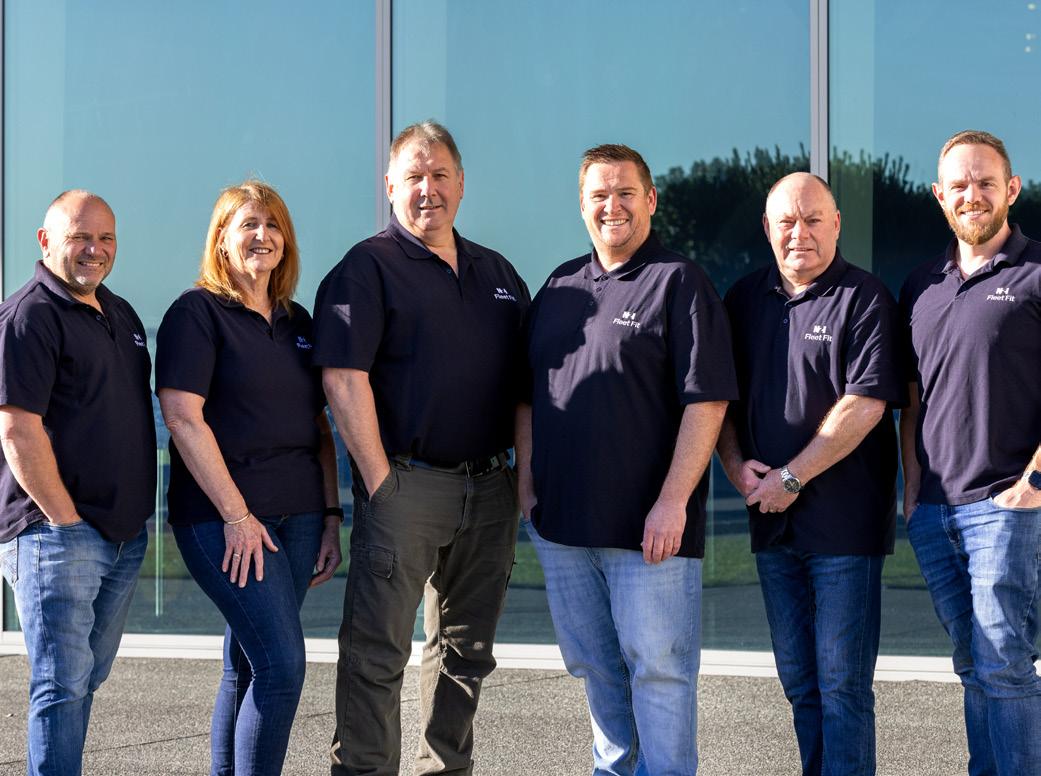
Pictured: Some of NZI’s Fleet Risk Managers
The super-powered broker: Why AI mastery matters for brokers
By David Leach, CEO of JAVLN, which provides cloud-based policy and document management software designed for insurance brokers.
Think of AI as a trade tool. While builders are great with hammers, they keep up to date with the latest power tools. Similarly, brokers now need to be great with AI tools.
At JAVLN, AI is encouraged. Our team uses AI tools daily. Marketing, engineering, customer service, sales.
As a tech CEO, I see it as my responsibility to build an organisation of digital AI natives. Training people how to prompt properly. How to imagine use cases. How to experiment safely. We’re seeing a step change in productivity gains.
Why the urgency? Because AI has moved from speculation to daily reality. The world is changing faster than ever.
Recent Deloitte research from Australia shows AI use among employees jumped from 32% to 38% in less than a year. The Federal Government's AI Adoption Tracker reports 40% of SMEs are now adopting AI. That's a 5% jump in a single quarter.
Over the next five years, I believe we'll see the rise of what I call the super-powered broker, but without a cape. The early adopters who've invested time in training, practised prompting and done the homework to use these new trade tools at a professional standard. Those who know how to leverage AI to deliver superior, timely advice to their clients.
Multiply that across a team of 10 or 15, and you have a whole brokerage team working at a level that wasn't possible three years ago. A super-powered team, but sadly still no capes. That's a real competitive advantage.
Capability and expertise come from practice - trying new
tools, actively learning, regularly and putting the time in. The early value of AI is often in stripping time out of administrative drag and lifting productivity. Document sorting, first-draft submissions, chasing wordings, converting messy client inputs into clear underwriting information.
AI doesn't change who owns the advice, but it changes how quickly you reach an informed, personalised recommendation. Importantly, AI will also improve the quality and consistency of your advice - which is arguably more important than the productivity gains.
What clients will notice is better service. Faster turnaround. Clearer explanations. With AI adoption rising, expectations are unlikely to slow down. AI won't replace advisers. But it will supercharge brokers and redefine what "good" looks like.
Two stories are competing for attention right now. One warns that AI will hollow out entry-level learning and erode risk expertise. The other argues it will hand time back to brokers to do what matters most.
I'm in the second camp.
Brokers who treat AI as craft, with training, controls and a clear "human in the loop" standard, may end up looking more human to clients, not less.
But safeguards matter.
Allianz's Risk Barometer warns that AI adoption is often "moving faster than governance, regulation, and workforce readiness can keep up." Good, regularly updated AI safe usage and data privacy policies must sit alongside AI use.
Your clients will expect AI-level service. Make sure you're ready to deliver it.
Generative
AI chatbots may be breaching financial adviser licensing and regulatory requirements of the Financial Markets Conduct Act (FMCA), according to Chapman Tripp partner Tim Williams.
Williams raised the concern in the recent update on insurance industry legislation to more than 450 members of the Insurance Brokers Association of New Zealand (IBANZ) saying it’s fine, from a licensing perspective, for AI tools to offer factual information about financial products, but straying into the territory of offering an opinion on specific insurance policies or investments is likely to be a breach of the FMCA if the AI tool is not licensed.
“When an AI tool strays into the territory of recommending a specific product, designing an investment plan or providing specific types of financial planning, then it is clearly giving investment advice, and that is in breach of New Zealand law as it is currently written. We all understand that offering financial advice is a regulated activity in New Zealand, and to my knowledge, no AI chatbot is licensed as a Financial Advice Provider.”
Williams used examples from a popular AI tool to demonstrate how readily it crossed the line from giving purely factual information about financial products to recommending a specific life insurance policy and naming a specific exchange-traded fund as the best option for passive investment in the US stock market. Similar concerns have been raised in Australia about the suitability of AI chatbots giving share trading recommendations.
“The Financial Markets Authority (FMA) should investigate whether the current legislation is responding appropriately
Warning raised about unregulated AI financial advice
By Tim Williams, partner at Chapman
Tripp. Tim specialises in the financial services, wealth management, insurance and banking sectors.
to the rapid development of AI capabilities. If not, a decision is needed on how retail clients’ interests in accessing useful financial information can be balanced against the risks of receiving potentially unsuitable advice without the full protections of the FMCA”, Tim Williams said.
IBANZ CEO Katherine Wilson supports Williams’ concerns and has raised the issue with the FMA, which currently has a workstream focused on ensuring New Zealanders have access to financial advice.
“IBANZ members employ several thousand qualified financial advisers. We operate a comprehensive professional development programme which helps ensure our members are well equipped to provide high-quality financial advice. We're aware that the advice available via AI tools can be of questionable quality and continue to be concerned about the potential harm inaccurate or misleading advice could cause. IBANZ has raised this issue with the FMA because we believe it’s an important matter for the regulator to consider.”
Williams also advised IBANZ members that if they are using AI tools in their practice, they need to be aware of the potential for their own breaches of the Code of Professional Conduct.
“If they are relying on generative AI advice in formulating a recommendation for clients, then they need to be able to demonstrate that use is reasonable under the circumstances.”
He also stressed the need to maintain client confidentiality. “Members should ensure their prompts used for AI tools are depersonalised so that client information is available only to authorised personnel of a financial advice provider, as required by the code standards.”
AI and insurance distribution
Asell-offof brokerage stocks resulted recently from a high-profile artificial intelligence announcement from OpenAI. But the market reaction says less about near-term revenue risk and more about longer-term questions around who ultimately controls insurance distribution.
That’s the view of Trevor Jones, a partner in the insurance practice at West Monroe, who argues that investors may be getting ahead of themselves even as they zero in on a real structural issue.
“I think it’s oversold right now,” Jones said. “It's more indicative of a forward-looking signal that investors are reassessing who owns the customer interface, particularly as AI is reshaping, or can reshape, insurance distribution.”
According to Jones, the sell-off should be read as a narrative reset rather than a reflection of deteriorating broker economics.
“This is a structural narrative, not an earnings story,” he told Insurance Business. “Markets are moving ahead of real adoption. The sell-off reflects future optionality and risk, as opposed to any structural issues with broker fundamentals. Broker fundamentals – placement, advisory, and complex risk – all remain intact.”
Who owns the front door?
The deeper concern animating markets, according to Jones, is control of the customer relationship. If AI platforms with massive captive user bases become trusted starting points for insurance decisions, distribution dynamics could shift.
“If AI platforms can become the starting point for insurance decisions, even just in personal lines, I think distribution could tilt from firm-led – you go to Aon, or you go to Marsh, or Arthur J. Gallagher – to more platform-led,” he said.
“You might go to Anthropic because it has a captive user base you want to market to, or OpenAI affords you something different.”
Crucially for brokers, Jones sees limited immediate impact
on commercial insurance, where customisation and risk complexity still demand human advisors. But he cautioned that organisations focused narrowly on AI cost savings may be missing a bigger signal.
“This is a wake-up call for firms looking at AI purely through an ROI or efficiency lens,” he said. “It highlights a potential business-model shift, and that’s why so much market value was shaved off.”
IPOs, M&A, and heightened scrutiny
The timing is notable given ongoing brokerage consolidation and a pipeline of potential IPOs. Historic megadeals, such as Gallagher’s US$13.45-billion acquisition of AssuredPartners in 2025, show that strategic buyers are still making large bets to gain scale and diversify their offerings.
Jones acknowledged that AI-driven distribution questions are likely giving bankers and executives pause. “Firms that have been clear about their ambition to go public are being looked at very attentively,” he said. “The news likely gave bankers and those structuring the deals, as well as leaders in those organisations, a bit of a pause.”
Rather than slowing consolidation, he suggested AI uncertainty could actually intensify capability-driven M&A as firms race to combine advisory strength with platform relevance.
What brokers should watch next
Looking ahead, Jones said two signals matter most. First, buyer willingness: consumers and businesses are increasingly open to AI-assisted purchasing, even if they remain reluctant to self-bind complex risks. Second, carrier willingness: insurers are showing early openness to selling through AI-enabled platforms, particularly via MGAs and standardised products.
“I think carriers will move much more slowly on large commercial and speciality risk,” he said. “But the point is that carriers are willing to sell on AI platforms. I think there is early openness for some specialised products, parametric products, or standardised endorsements.”
Trevor Jones, a partner in US insurance practice West Monroe
Why inclusive practices drive success in New Zealand’s adviser firms
By John Chandler, Chief Commercial and Client Officer at PIC and IBANZ Board Member
The insurance advice sector in New Zealand is undergoing significant transformation, driven by regulatory changes, evolving customer expectations, and technological disruption. Amid these shifts, an important question persists: Does diversity and inclusion (D&I) still matter?
The answer is unequivocally yes - D&I is not just a social responsibility but a strategic imperative for broking firms.
New Zealand’s population is increasingly diverse, with Māori, Pacific, Asian, and other communities forming a significant part of the market. There’s evidence that 66% of insurance customers prefer to buy from companies that visibly commit to D&I and 58% are more likely to trust such businesses.
At a time when companies are under extraordinary pressure to maintain financial performance while navigating a rapidly changing business landscape, diversity matters more than ever.
The benefits of creating a diverse team are accepted to be an increased level of innovation and creativity, improved equity across employees, improved employee engagement, a reduction in group think and an expanded pool of knowledge and skills to draw upon. In a 2023 report, McKinsey found that internationally, leadership teams with at least one-third diverse representation outperform their peers financially by up to 39%!
The insurance industry also faces a looming talent gap, with over half of the workforce expected to retire in the next 15 years. Inclusive workplaces attract younger, diverse talent and improve retention, and nearly half of millennials prefer to work for companies committed to D&I. In an industry where only a fifth of roles are made up of Maori, Pacific, Asian and female candidates, it seems that Insurers are ahead of broking firms in their approach to D&I initiatives, and in a limited talent pool, broking firms need to think carefully about their future people needs for their businesses.
While most NZ businesses are aware of D&I and its potential benefits, only two-thirds have formal policies in place, suggesting that forwardthinking broking firms could access the best talent in the market ahead of their competitors, not to mention the ability to outperform their peers in emerging markets.
For insurance advice firms in New Zealand, diversity and inclusion are not optional - they are essential for customer trust, competitive advantage, and sustainable growth. As demographic shifts accelerate and regulatory expectations evolve, firms that embrace D&I will be better positioned to thrive.
So, the question is, what is your firm doing to set itself up for the future?
Japan’s approach to earthquake insurance examined for New Zealand
Japan’s approach to earthquake insurance pricing, claims assessment, and dispute resolution is under examination by New Zealand legal and insurance specialists as they reassess how the local system is likely to perform after a major seismic event.
Lessons from Japan on pricing, loss, and disputes
Associate Professor Rohan Havelock, an insurance law specialist at the University of Auckland currently researching in Japan, is analysing how Japan’s earthquake cover is structured and where it differs from New Zealand’s mixed public–private model. He points first to risk-based pricing. In Japan, earthquake premiums vary according to a building’s location, age, construction, and assessed seismic strength, aligning premiums more closely with underlying hazard and vulnerability. In contrast, New Zealand’s statutory natural hazards cover is funded by a flat levy of 16 cents for every $100 of insured building value, regardless of the property’s risk profile. “This means that owners of more risky homes are subsidised by owners of less risky homes, and also that there’s no incentive to strengthen homes against earthquakes, or for owners to move away from earthquake-prone areas,” he said.
A second difference is the way loss is measured. Japanese earthquake insurance places less emphasis on calculating an itemised dollar loss and instead classifies damage into four categories: total loss, large half loss, small half loss, or partial loss. Benefit levels are tied to those categories, and claims are generally settled by cash payment rather than insurer-managed repairs or reinstatement projects. Havelock said this structure can allow faster assessment and may reduce disputes over the scope of works, because once a loss category is agreed, the payment is more clearly defined and less dependent on detailed costings.
Third, Havelock describes Japan’s dispute resolution pathway. Insurers routinely offer re-inspection or internal review of claim decisions at an early stage, which he says resolves many disagreements before they escalate. “Insurers routinely offer re-inspection or review of decisions, which resolves a large proportion of disputes,” he said. Where issues remain contested, most cases move into a “Financial Alternative Dispute Resolution” process involving an experienced mediator. The process is non-adversarial and does not involve filing or hearing fees. “Very few disputes proceed to litigation,” Havelock said.
New Zealand’s dual system and post-Canterbury experience Havelock’s work sits against the backdrop of New Zealand’s own earthquake insurance history and subsequent reforms following the Canterbury sequence. New Zealand’s framework combines private homeowner policies with statutory natural hazards cover administered by the Natural Hazards Commission Toka Tū Ake (NHC). Statutory cover responds first up to prescribed limits for residential buildings and land, and private insurers generally cover losses above those caps for building damage.
The Canterbury earthquakes generated more than 460,000 claims on the former Earthquake Commission (EQC), exceeding its capacity and contributing to delays, extensive litigation, and the failure of two insurers. Some claims remained unresolved many years after the events. Since then, Parliament has introduced the Natural Hazards Insurance Act 2023 and the Contracts of Insurance Act 2024, which adjust roles, responsibilities, and policy terms in the system. Havelock nonetheless considers that the continued reliance on a dual public–private structure could expose the system to similar pressure after a future large quake. “There’s a need for more carefully considered reform, especially relating to standard terms, handling of claims, and dispute resolution,” Havelock said.
Canterbury experience and climate-related losses
Claims practitioners say experience from Canterbury remains relevant as severe storms and floods become more frequent and complex, adding to the volume and complexity of property claims. Christchurch-based claims preparer Dean Lester said many post-quake disputes could have been avoided if key insurance principles and wordings had been applied more consistently from the outset. “Insurance plays a critical and crucial role in a recovery. However, the release of insurance funds and the claims process itself can be so delayed that it is grossly unfair to homeowners and businesses,” Lester said. He describes
insurance as a “fundamental cornerstone of modern society and the economy, acting as a risk-mitigation tool that enables stability, investment, and growth.” He added: “By transferring risk from individuals and businesses to insurance companies, it acts as a safety net that facilitates recovery from unexpected losses and fosters confidence to engage in economic activities.”
Lester notes that the Earthquake Insurance Tribunal continues to hear cases, while the NZ Claims Resolution Service – which began as the Greater Christchurch Claims Resolution Service – remains active. He points to a High Court earthquake litigation list of 188 pages, comprising current and historic disputes. “What is needed is more visibility of the issues being resolved and perhaps asking – how did we get here?” he said.
Lester, who also works with policyholders in storm-affected regions, said earlier access to experienced and independent claims preparers can affect the speed at which claim payments are released and how disputes are managed.
“Unfortunately, some insurers continue to frustrate claims, which is costly to people both financially and wellbeing-wise. What we have experienced in Canterbury when it comes to insurance processes – and I include NHC (formerly EQC) in that – would very likely save others from having to go through similar pain and distress,” he said.
Debate over earthquake cover design and dispute processes is occurring alongside initiatives by government agencies and industry bodies to increase focus on pre-event risk reduction. In November 2025, the National Emergency Management Agency (NEMA), NHC, and the Insurance Council of New Zealand | Te Kāhui Inihua o Aotearoa (ICNZ) issued a joint statement supporting more coordinated work on risk reduction and resilience to protect people, property, and communities. “On a personal level, it’s crucial to build your own resilience first, and that of your whānau and community. If we invest in our resilience now, we’ll be more prepared when we’re tested later,” John Price, NEMA’s director of civil defence emergency management, said.
NHC chief executive Tina Mitchell said the commission funds research, public education, and risk-reduction initiatives and is working to ensure decision-makers have access to natural hazard data. “In a country at high risk of natural hazards, it is important that we all make evidence-based decisions for safer buildings and land use planning. A key priority for NHC is establishing a national view of risk so it guides resilience efforts in all its forms,” Mitchell said.
ICNZ chief executive
Kris Faafoi links pre-event risk reduction to the long-term availability and affordability of private cover. “The likelihood of more intense and severe weather events is rising, and New Zealand must prioritise risk reduction to protect communities and maintain insurance accessibility for all Kiwis,” Faafoi said. He has called for quicker progress on New Zealand’s Climate Adaptation Framework and continued cross-sector cooperation. He notes that “avoiding high-risk areas and investing in resilient infrastructure isn’t just the right thing to do; it makes economic sense.”
Associate Professor Rohan Havelock, insurance law specialist at the University of Auckland
Tina Mitchell, NHC chief executive
Pulse Insure has been appointed general insurance provider for Chartered Accountants Australia and New Zealand
PulseInsure has been appointed exclusive general insurance provider for Chartered Accountants Australia and New Zealand (CA ANZ) members in practice in New Zealand, against a backdrop of evolving regulatory priorities and changing workforce expectations in the profession.
Partnership focuses on New Zealand-based members
Under the terms of the appointment, Pulse Insure becomes the sole provider of a range of general insurance products available to CA ANZ members in New Zealand through the CA ANZ Member Benefits Programme. The portfolio spans both professional and personal lines, including professional indemnity, public liability, home and contents, travel, pet, and cyber business cover. Pulse Insure says the offering is structured for the professional environment in which New Zealand chartered accountants operate, with professional indemnity and public liability products designed for CA ANZ members and aligned with CA ANZ professional standards. The programme includes specific policy features and discounted pricing for eligible members.
Tanya Dasgupta, chief executive of Pulse Insure, said the partnership is intended to support members’ risk management needs. “Chartered Accountants are trusted pillars of New Zealand’s economy, and their work protecting client interests deserves equally trusted protection. At Pulse Insure, our mission is to safeguard the trust CA ANZ members work so hard to earn – combining digital simplicity when it’s easy with expert advocacy when it counts. This partnership represents our commitment to empowering professionals with the choice, confidence, and continuity they need to thrive,” Dasgupta said.
Distribution model combines digital and broker support
The programme combines digital channels with local broker expertise. Members can access certain covers online for more straightforward risks, while more complex
placements can be supported by New Zealand-based brokers who provide advice on structure, limits, and deductibles, as well as claims support. Pulse Insure operates in New Zealand under PSC Insurance Brokers NZ Ltd and is part of the Aviso and Envest Insurance Group network, which links multiple broking and underwriting businesses across Australasia.
Executive director Paul Marsden said the arrangement is focused on the accounting segment. “This partnership brings specialist expertise and global broking strength to New Zealand accounting practices. Our exclusive professional indemnity solution is purpose-built for CA ANZ members and supported by a team of dedicated New Zealandbased brokers who understand the unique risks Chartered Accountants face. Whether it’s navigating complex coverage needs or responding to claims, we deliver continuity, compliance, and confidence for members,” Marsden said.
Cyber risk and incident response support
Cyber cover is a defined feature of the member benefits package. Through Pulse Insure, CA ANZ members in practice will be able to access cyber insurance solutions for accounting firms, including coverage for events such as cyber theft and identity theft. The programme also provides 24/7 incident response support, with access to consultants and cybersecurity experts following actual or suspected incidents. For an industry that routinely handles sensitive client financial data and operates on interconnected systems, this package is intended to address exposure to data breaches, fraud, and operational disruption.
Peter Vial FCA, CA ANZ New Zealand country head, commented, “CA ANZ’s partnership with Pulse Insure gives our New Zealand members access to insurance solutions that are simple, secure, and supported by experts. This means members can enjoy tailored protection and peace of mind, allowing them to focus on delivering value to their clients.”
For insurers and brokers in New Zealand, the partnership reflects member interest in combined cyber cover and incident response capability delivered through memberbased programmes.
Policy priorities outline regulatory and liability backdrop
The timing of the appointment follows CA ANZ’s release of its New Zealand policy priorities for 2026 on 10 February. The document sets out positions across tax, talent, business efficiency and regulation, sustainability reporting, audit and assurance, financial reporting, anti-money laundering, charities and not-for-profits, insolvency, and diversity, equity and inclusion. CA ANZ represents about 140,000 members, including more than 31,000 in New Zealand. Its New Zealand policy work includes advocating for a broad-based, low-rate tax system, examining tax base sustainability, reducing compliance costs through reforms to the Holidays Act and Companies Act, and encouraging adoption of e-invoicing and digital financial reporting.
On sustainability, audit, and financial reporting, CA ANZ supports globally aligned climate-related disclosure and sustainability reporting standards, an appropriate domestic reporting regime, and a regulatory framework for assurance practitioners working on climate-related disclosures. In audit, it is engaging on issues such as legislative change to introduce caps on auditor liability for FMC audits. In areas such as
anti-money laundering, charities regulation, insolvency, and diversity, equity and inclusion, CA ANZ participates in advisory groups, advocates for proportionate compliance obligations, and promotes transparency and member education. Together, these policy settings frame the regulatory environment in which CA ANZ members manage professional risk, and in which demand arises for professional indemnity, directors and officers, statutory liability, and cyber insurance solutions.
Workforce and remuneration trends influence risk profile
The partnership also launches alongside shifting workforce expectations, as reflected in the 2025/26 CA ANZ Remuneration Survey, published on 4 February. The survey captured responses from more than 4,100 members across Australia, New Zealand and overseas, and reports that CA ANZ members occupy more than 660 distinct roles, including traditional accounting and finance positions and roles in areas such as sustainability, cyber and performance. The survey indicates that while salary remains important, members place significant weight on flexible working arrangements, workload, workplace culture, meaningful work and career progression. Of respondents, 76% reported receiving a pay rise, but nearly half of those increases were 2.5% or less. A smaller subset recorded pay increases above 10%, with members aged 20–29 more likely to be in that group.
The data also highlights a gender pay gap of 24% in New Zealand and 14% in Australia, along with differences between men and women in comfort with pay negotiation and perceptions of whether pay reflects skills and contributions. Around one-third of respondents are considering leaving their current employer within the next 12 months, with fair compensation, leadership, and organisational pride identified as key factors in retention.
Peter Vial, New Zealand Country Head of Chartered Accountants Australia and New Zealand (CAANZ)
AMI reveals NZ’s top 10 stolen cars for 2025
Steph Ferris, AMI Executive General Manager Claims
Forthe fourth consecutive year, the Toyota Aqua claims the title of New Zealand's most stolen car, AMI reveals.
AMI Insurance received more than 9,000 vehicle theft and attempted theft claims in 2025.
The lengthy claims list spans more than 760 different makes and models, with the Toyota Aqua making up 8% of all stolen vehicle claims, followed by the Toyota Corolla (7%) and the Nissan Tiida (6%).
The data also shows Toyota Aquas are disproportionately targeted, with a theft rate nearly four times that of the country’s most insured vehicle, the Toyota Corolla.
For every 1,000 insured Toyota Aquas, 54 had a theft claim, compared with 15 per 1,000 Toyota Corollas.
Top regions for vehicle theft rank as follows: Auckland, Canterbury, Waikato, Wellington, and the Bay of Plenty.
AMI Executive General Manager Claims, Steph Ferris, says claims have been relatively lower over the past few years, following a peak in 2023.
“Lower crime rates, improved security systems in newer vehicles, and New Zealanders adopting security practices - including being more mindful about where they park - likely play a part in this.”
AMI’s top 10 list underscores New Zealanders’ commitment to the practical Toyota brand, with five different models ranking within the top nine, including the Toyota Vitz, which moved up two places.
AMI is also seeing a clear trend when it comes to vehicle age and theft risk, with nearly nine in ten stolen vehicles being older than 10 years.
“Older vehicles often lack modern, electronically encrypted locking systems, making them easier for thieves to compromise.”
Steph notes that there are a number of anti-theft measures to consider, like car alarm systems, immobilisers, fuel cut-out switches, steering wheel locks, handbrake locks, as well as parking behind a locked gate if a garage isn’t available.
Around 64% of stolen vehicles are recovered, and 40% of these are repairable, with the remainder typically written off and auctioned for parts.
Despite some hybrids topping the chart, they account for only around 5% of total thefts, with petrol or diesel-powered vehicles making up the vast majority.
The AMI top 10 stolen cars list
1. Toyota Aqua
2. Toyota Corolla
3. Nissan Tiida
4. Mazda Demio
5. Toyota Vitz
6. Toyota Hilux
7. Subaru Impreza
8. Mazda Atenza
9. Toyota Mark X
10. Mazda Axela
The most frequently stolen vehicle in each region (regions ranked by claims volume)
1. Auckland - Toyota Aqua
2. Canterbury - Toyota Aqua
3. Waikato - Toyota Corolla
4. Wellington - Toyota Corolla
5. Bay of Plenty - Toyota Corolla
6. Manawatū - Nissan Tiida
7. Northland - Toyota Corolla
8. Hawke’s Bay - Mazda Atenza
9. Gisborne - Mazda Demio
10. Taranaki - Toyota Corolla and Nissan Tiida
11. Otago - Toyota Aqua
12. Southland - Suzuki Swift
13. Nelson - Nissan Tiida
14. Tasman - Mazda Demio and Toyota Corolla
15. West Coast - Toyota Hilux
16. Marlborough - Honda Jazz
Airline insurance: Claims costs rising
Staffing gaps and supply chain pressures are reshaping the risk profile for aviation insurers
The airline insurance sector is contending with increased claims costs driven by skills shortages, supply chain constraints, and inflationary pressures, according to a recent review by Willis.
In its Airline Insurance Claims Review 2025, Willis noted that while air travel remains one of the safest forms of passenger transportation, several factors are contributing to higher settlement costs for insurers.
Economic and social inflation have been key drivers, with Swiss Re analysis showing that while economic inflation averaged 3.7% annually between 2017 and 2022, social inflation reached 5.4% annually.
The broker highlighted that staffing shortages among maintenance, repair and overhaul (MRO) organisations, combined with longer lead times for spare parts, are affecting claims outcomes. Older aircraft, kept in service due to delivery backlogs for new planes, tend to require more extensive maintenance and are more likely to be declared constructive total losses following incidents.
Willis pointed to attritional claims as an area of concern. The cost of materials and repair complexity on modern composite aircraft hulls has increased, while airlines also face revenue losses when aircraft are out of service.
A previous Willis report found that only half of the 130 senior aviation representatives surveyed said their business model and strategy are resilient in the current risk environment.
John Rooley, CEO of Willis Aviation & Space, said, "There's a clear need to align risk planning with insurance strategies that are more adaptive and forward-looking."
The review also addressed the growing issue of psychological harm claims. Willis stated that where claims previously focused on compensation for physical injury, psychological harm is "somewhat more nebulous and certainly less clearly defined," complicating the settlement process.
According to Willis, there appear to be rising numbers of claims receiving so-called "nuclear judgements" where juries award payouts exceeding US$10 million. The broker warned these awards "tend to set the bar for future claims discussions, which runs the risk of creating a social inflation spiral."
On the operational side, the airline sector has largely recovered from pandemic-related challenges. Passenger numbers and cargo volumes grew in 2024 and continued to rise throughout 2025, with Asia Pacific expected to lead growth in 2026.
The broker examined artificial intelligence as a potential solution to staffing pressures but cautioned against over-reliance. Willis stated that AI "at this stage is likely to reduce administrative needs rather than operational staffing," with roles such as pilots, cabin crew, and MRO specialists requiring lengthy training that cannot be replaced by technology.
Asia-Pacific insurers confront geopolitics, catastrophes, and AI in 2026
Asia-Pacific insurers start 2026 with a set of overlapping pressures and adjustments linked to geopolitics, natural catastrophes, artificial intelligence, and capital markets, according to S&P Global Market Intelligence’s APAC 2026 insurance outlook and related industry reports. Forecasts from rating agencies and consultants point to slower headline premium growth, while cyber, longevity, and other specialist lines continue to develop from a relatively low base.
Geopolitics influences trade patterns and coverage needs
Geopolitical risk, identified at the beginning of 2025 as a key issue for corporates, has continued to affect risk transfer decisions as governments adjust trade and tariff settings. Steve Tunstall, general secretary of the Pan-Asia Risk and Insurance Management Association, said the Trump administration’s 2025 tariff measures introduced uncertainty into cross-border trade and complicated risk management in international supply chains. “[There are] a lot of risks that can’t be easily protected across [the] supply chain and logistics. So,
I think globally, we’re seeing a lot of organisations take a little bit of a step back on investment, take a little bit of a step back on potentially, you know, what would have been rapid growth,” Tunstall said.
Tunstall noted that recent geopolitical developments have reinforced China’s role in global commerce, prompting insurers to consider how they engage with both the Chinese state and individual Chinese companies that are expanding overseas. “So, broadly speaking, I think it’s a complex picture, and I don’t think at this stage, international insurers are necessarily doing enough to address the potential opportunities or the potential threats of this significant change,” he said.
S&P Global Ratings analyst Simon Wong wrote that firms are likely to keep diversifying production and sourcing locations in 2026 while looking for additional end markets. He observed a significant increase in trade between China and the Global South, with exports to those regions having doubled since 2015 and now are more than 50% higher than combined exports to
the US and Western Europe. This shift is generating additional demand for cross-border and political risk solutions, with both international and Chinese insurers seeking to participate.
Catastrophe losses underline scale of the protection gap
A series of natural catastrophe events across Asia-Pacific in 2025 again highlighted the difference between economic and insured losses. Extended storm systems late in the year triggered flooding and landslides in Indonesia, Thailand, Vietnam, and Malaysia. Earlier, severe tropical storm Wipha passed over the northern Philippines, Hong Kong, and Macau. A major earthquake in Myanmar caused damage that extended into Thailand and Laos, wildfires occurred in South Korea and Japan, and Australia recorded several significant events across different perils. Aon PLC’s latest Climate and Catastrophe Insight report estimated that natural disasters in Asia-Pacific in 2025 generated at least $76 billion of economic losses, of which slightly more than $7 billion was insured. The figures point to substantial levels of underinsurance across many markets, despite available reinsurance and alternative capital.
In Southeast Asia, the gap between total losses and insurance payouts is particularly pronounced. Speaking at the ASEAN Insurance Summit in November 2025, H.E. Dr. Kao Kim Hourn, secretary-general of the Association of Southeast Asian Nations, said the protection gap represents both a policy concern and a potential avenue to broaden coverage, especially for climate- and sustainability-related risks. He noted that in 2023, ASEAN’s total insurance penetration was 3.2% of GDP, compared with a global average of 7%. The difference indicates that a large share of households, businesses, and public assets in the region remain exposed to catastrophe losses without formal risk transfer.
AI prompts conduct, operational, and supervisory responses
Artificial intelligence has moved from pilot projects to wider deployment in Asian insurance operations, bringing both efficiency gains and new risk considerations. At the 2025 Singapore International Reinsurance Conference, AI featured as a major topic of discussion, with market participants examining implications for jobs, data use, and model governance. Tunstall said the rapid spread of AI has made it harder for organisations and individuals “to tell a fact from fiction,” adding that “we’ve only just begun to see the implications from that in terms of cybersecurity threats.”
From a supervisory perspective, Romain Paserot, deputy secretary general and head of capital and financial stability at the International Association of Insurance Supervisors (IAIS), said AI can introduce unlawful bias or discrimination into insurance processes. He also pointed to heightened privacy and data security concerns as insurers make greater use of personal information, and to the potential for some AI systems operating in dynamic environments to produce outcomes that are difficult to anticipate, with possible consequences for financial stability.
In its latest global market insurance report, IAIS said that AI, if embedded in internal processes, could help insurers retain policyholders through more tailored engagement, reduce costs via more efficient policy administration and claims management, and refine risk selection and pricing. The report cited uses such as external-facing chatbots, fraud detection tools, and complaints-handling systems. Lucy Wong, adviser at the BIS Innovation Hub Hong Kong Centre, said regulators will need a detailed understanding of how AI systems function in practice to frame policy responses. She added that skills development and upskilling in both supervisory bodies and the industry will be important to ensure effective oversight of AI applications in insurance.
Insurance IPO activity and capital market access
Equity markets in parts of Asia are expected to play a supporting role in sector funding in 2026, as a number of insurers look at initial public offerings. In India, an IPO for SBI General Insurance Co. Ltd. is under consideration, while digital carrier ACKO General Insurance Ltd. has set out plans to list. HDFC ERGO General Insurance Co. Ltd. and several other insurers submitted listing documents in early 2025, indicating a set of possible transactions at different stages of preparation.
In Hong Kong, FWD Group Holdings Ltd.’s 2025 listing and its share performance in 2026 are being monitored as an indication of investor appetite for additional insurance and financial listings, IPOX Schuster research associate Lukas Muehlbauer said in an email to S&P Global Market Intelligence. According to PwC Hong Kong, the city recorded 119 IPOs in 2025, 68% more than in 2024. The firm expects IPO proceeds in 2026 to reach about HK$350 billion. A rising share of transaction volume is associated with “south-bound” activity, with mainland Chinese insurers among those seeking dual H-share listings. Muehlbauer said Chubb Insurance Malaysia Bhd. is positioned to be one of the first significant Asian insurance IPOs in 2026, following its prospectus filing in November 2025.
Outlook for growth and selected speciality segments
External reports indicate that overall premium growth in Asia-Pacific is likely to slow in 2026 compared with earlier years, even as capital and solvency positions remain adequate in many markets. Fitch Ratings maintained a neutral outlook on the region’s insurance sector, citing solid recent performance and capital buffers in most jurisdictions. It expects life insurers to emphasise profitability and product mix, while non-life carriers focus on underwriting standards. Fitch also expects non-life insurers to benefit from softer reinsurance pricing this year.
Deloitte’s 2026 Insurance Outlook projects a global moderation in premium growth across property and casualty, life and annuity, and group business. For Asia-Pacific, Deloitte forecasts non-life premium growth of 2.5% in 2026, compared with 2.9% in 2024 and an estimated 2.1% in 2025. Life premiums in the region are expected to grow by 1.1% in 2026, after an estimated 0.4% expansion in 2025 and a 1.0% contraction in 2024. Over the longer term, Deloitte projects that life premiums in Asia-Pacific will increase by an average of 5.3% per year through 2053, supported by income growth, demographic change, and demand for retirement and health-related products in China, India, and Southeast Asia.
S&P Global Ratings’ 2026 market outlook highlights several areas where growth may outpace the broader market. The agency identifies cyber insurance in Asia as one of the fastest-expanding segments in the short to medium term, with penetration still low. Primary cyber insurers in Asia-Pacific recorded compound annual growth of around 36% in gross written premiums over the past five years, second to Latin America’s 62%. S&P Global Ratings also notes rising demand for longevity risk transfer and capital management solutions in parts of Asia with relatively low insurance and pension coverage, supporting activity in the life reinsurance market. In its October 2025 Asia-Pacific Reinsurance Sector Update, the agency said reinsurers in the region are likely to see modest and uneven growth in gross written premium in 2026, as competitive pricing, ample capacity, some softening in rates, and slower economic growth limit premium expansion, even as cedents and reinsurers adjust their portfolios in response to geopolitical, catastrophe, and technology-related risks.
SME resilience in a shifting risk landscape: What Vero’s latest research means for brokers
Smalland mediumsized enterprises (SMEs) represent around 97% of all enterprises in New Zealand and contribute roughly a quarter of national output*. For brokers, that is not just an economic statistic. It defines your core client base. Vero’s latest SME research highlights how these businesses are experiencing sustained revenue pressure, rising operational complexity and emerging risks, all of which are reshaping the advice conversations brokers are having every day.
Based on a national online survey of 550 SME owners and insurance decision-makers conducted in October 2025, the 2026 findings provide practical insights that support more informed and proactive engagement with SME clients. Revenue pressure is shaping insurance decisions
In Vero’s research, 63% of SMEs report revenue declines. For brokers, that context matters. Clients under financial pressure are scrutinising every outgoing cost, including insurance premiums, limits and excess structures.
This environment reinforces the importance of clear advice. Rather than focusing solely on price, brokers have an
opportunity to guide clients through structured conversations about cover adequacy, risk appetite and trade-offs. Where insurer partners can support those conversations with flexible options, product clarity and underwriting expertise, the value proposition becomes easier to demonstrate.
Sacha Cowlrick, Executive General Manager at Vero New Zealand, says small and medium-sized businesses are operating in an increasingly complex risk environment. As brokers, you’re often the first call when something goes wrong, and increasingly when owners are simply trying to understand what risks matter most to them.
“In a market defined by cost pressure, positioning insurance as part of a resilience strategy rather than a compliance exercise is critical.”
Stable relationships, untapped advisory potential
The research shows that 61% of SMEs have been with the same broker for at least three years.
Retention is strong, and switching remains relatively infrequent. That stability creates a platform for deeper engagement.
However, less than 30% of broker-using SMEs say they have received risk advice from their broker. This signals a significant advisory opportunity.
“We know brokers play a critical role not just in placing cover, but in helping customers better understand risk and build resilience,” Cowlrick says. “Our research shows there’s
Sacha Cowlrick, Executive General Manager at Vero New Zealand
significant headroom to deepen those conversations.”
The research shows that for brokers, this is less about adding new services and more about making existing expertise visible. Annual renewal meetings can evolve into broader risk reviews. Claims discussions can become prevention conversations. Insurer insights, data and sector trends can be woven into client interactions to strengthen the advisory proposition.
Importantly, 40% of SMEs say they would consider using a broker, or using one more often, in the future.
The greatest opportunity sits with moderate users who already see value but have not fully engaged.
Guidance, cost transparency and expertise are the primary drivers for those considering increased broker engagement. These are areas where strong broker-insurer partnerships can make a tangible difference.
Resilience is recognised, but rarely formalised
Only a quarter of SMEs consider their business to be very resilient, yet six in 10 expect to face at least one major risk. For brokers, that gap between awareness and preparedness is a clear call to action.
Nearly half of businesses never or rarely conduct risk analyses, while just 30% do so frequently. Formal risk management processes remain underdeveloped across much of the SME segment.
This presents a strategic opening for brokers to step into a structured risk advisory role. Even simple tools, such as guided risk checklists, scenario discussions or business interruption walkthroughs, can materially lift a client’s resilience awareness.
“Resilience isn’t just about bouncing back after an event,” Cowlrick says. “It’s about understanding your exposures, planning for disruption and making informed decisions before something happens.”
Where insurers can provide sector insights and underwriting support to back those conversations, brokers are better positioned to help clients translate awareness into action.
Emerging exposures demand proactive dialogue
Two areas highlighted in the research have direct implications for broker advice: artificial intelligence and lithium-ion batteries.
Just over 40% of SMEs have started integrating AI into their operations. For brokers, the conversation is less about the technology itself and more about how it is used. The research suggests many businesses see AI as a productivity tool. However, it should not be viewed as a substitute for structured risk management processes or professional advice. AI can help generate ideas, surface scenarios, or streamline tasks, but it does not replace informed judgement, tailored cover or a clear understanding of a business’s unique exposures. This is where the broker relationship remains central. Used well, tools and technologies can support better conversations, but your broker and structured risk assessment tools, such as Vero’s Risk Profiler, remain the guide, helping SMEs interpret insights, prioritise actions and ensure their insurance programme evolves in step with operational change.
Similarly, a third of SMEs report using lithium-ion batteries, with fire identified as the most top-of-mind associated risk. From e-bikes and tools to backup power systems, battery usage is becoming commonplace.
For brokers, these are not theoretical risks. They are operational realities emerging within client businesses. Proactive questioning around new technologies, storage
practices and safety protocols can ensure coverage keeps pace with changing exposures.
Insurer partners, who are closely monitoring these trends and evolving underwriting approaches accordingly, can help brokers stay ahead of client risk changes, rather than responding after a loss.
The perception gap around going direct
The research also examines why some SMEs choose to go direct. Cost and convenience are commonly cited reasons. Yet when asked about the advantages of using a broker, expertise and tailored advice consistently rank highly.
This suggests that brokers do not lack value. The challenge lies in consistently communicating it.
“Since 2017, we’ve invested in ongoing SME research to provide practical insights that support better conversations with your clients,” Cowlrick says. “Clear articulation of claims advocacy, policy interpretation support and strategic risk guidance can help close the perception gap. When supported by insurers that prioritise clarity, responsiveness and broker partnership, that value becomes even more visible to clients.”
Deepening engagement with moderate users
Moderate broker users represent the largest opportunity for growth in engagement. These clients are already within the broker ecosystem but may not be accessing the full breadth of advice available.
Motivators to adopt more formal risk management processes include clearer guidance and practical frameworks. Brokers can respond by structuring their service model around regular risk touchpoints, not just transactional renewals.
This might include:
• Scheduled resilience check-ins aligned to renewal cycles
• Sector-specific insights shared throughout the year
• Leveraging insurer data and research to support client planning.
In a climate where 63% of SMEs are experiencing revenue pressure, demonstrating proactive value strengthens retention and long-term partnership.
A shared responsibility to build resilience
The 2026 research paints a picture of SMEs that are aware of risk, cautiously adapting to new technologies and seeking guidance in uncertain conditions. For brokers, this is an opportunity to reinforce your role as trusted advisers.
“SMEs aren’t just businesses. They’re people, families and communities,” Cowlrick says. “Working together, we can help them better understand risk, build resilience and make informed insurance decisions that support their long-term success.”
When brokers and insurers align around practical insight, responsive underwriting and meaningful support, the advisory model becomes more than a distribution channel. It becomes a resilience partnership.
Vero’s latest SME research offers brokers data-driven insight to support those conversations and strengthen client relationships in a market where advice, clarity and partnership matter more than ever.
To view the insights and Vero’s Risk Profiler tool, visit Over & Above on the Vero website.This article is based on independent third-party research commissioned by Vero Insurance New Zealand Limited and conducted among 550 SME decisionmakers in October 2025. It is intended for general information purposes only.
AMI Motor Report: Drivers embrace ADAS as collision claims drop
Released recently, AMI’s inaugural Motor Report reveals a steady decline in collision-related claims, coinciding with the growing adoption of Advanced Driver Assistance Systems (ADAS).
Over the past year, AMI received more than 235,000 vehicle claims with collisions accounting for nearly 60% of all claims.
AMI’s claims data - sourced from the largest general insurance data pool in New Zealand - shows a steady 7% decrease in collisions each year since 2023, among increasing numbers of policies for vehicles 15 years and newer.
Dean MacGregor, AMI Executive General Manager Hub Services says: “This uptake highlights our customers’ preference for modern vehicles and safety features. Our customers also recognise the benefits of ADAS with over half telling us they use these systems in their vehicles.”
In a recent customer survey, 70% of those with ADAS in their vehicles said the main benefit was improved safety, compared to 55% of those without these systems.
“While ADAS can help prevent accidents, our claims data is an important reminder that ADAS is the co-pilot and not the driver. ADAS can’t replace our attention and judgment – and ultimately, it’s our hands on the wheel,” adds Dean.
ADAS reduces driving anxiety
ADAS users reported less driving-related anxiety, with 12% admitting they wouldn’t have the confidence to reverse parallel park without it.
Interestingly, a large number of claims occurred in lowspeed areas, with busy city streets and car parks remaining hotspots for collisions.
“For the first time, we’ve mapped out the nation’s top 10 collision hotspots, right down to the exact street location,” says Dean, noting that Auckland dominates the list with Great South Road, Ti Rakau Drive and Great North Road in the
top three. Christchurch’s busy Moorhouse Avenue also made the list.
“We’re seeing drivers hit concrete walls, detach wing mirrors by swiping poles or even hitting objects they didn’t see in blind spots.”
Some of the costliest parking mishaps involved gear mixups, forgotten handbrakes, and even footwear getting stuck between pedals - sending cars lurching into buildings or rolling into the sea.
“Road safety ultimately comes down to the choices we make behind the wheel. ADAS is making a difference, but drivers must stay alert and aware of their surroundingschecking blind spots, using mirrors and being courteous road users,” says Dean.
Young drivers most at risk of collisions
Millennials and Gen Z show the most interest in ADAS, with 52% of drivers under 40 saying they want ADAS in their next car.
“Millennials have the lowest collision risk, with only 11% of policies resulting in a collision claim. By contrast, Gen Z drivers face the greatest risk, with around 35.6% of their policies involving a collision claim, regardless of fault.”
When comparing collision frequency by generation, the ranking from lowest to highest risk is: Millennials (11%), Gen X (14%), Baby Boomers (14.4%), Silent Generation (16%), and Gen Z (35.5%).
“Our data also shows that young people typically drive older vehicles, around 16 – 20 years old, and many of these cars don’t have ADAS. Older models also lack modern safety features that contribute to higher safety ratings,” says Dean.
“Safe driving habits form as we learn to drive, so we’ve partnered with Road Safety Education (RSE) to support the delivery of its nationwide Ryda programme. Ryda equips high school students with the knowledge, skills, and motivation to make safe choices as drivers and passengers.
“Driving remains a deeply human task and we are committed to helping the next generation become responsible and confident road users for life.”
Dean MacGregor, AMI Executive General Manager Hub Services
Writing the book on bike insurance since 1979.
We didn’t just join the market; we built it. Forty years ago, we set the standard for protecting Kiwi riders, and we’ve been perfecting it ever since. When you call us, you’re not talking to a script-reader, you’re talking to the experts who wrote the book.
Buyer-friendly market won't last as casualty pressures build, Aon warns
Litigation
costs and shifting conditions may close the window sooner than expected
Globalinsurance markets ended 2025 on favourable terms for buyers, but conditions are becoming increasingly varied across product lines and regions, according to Aon's Q4 2025 Global Insurance Market Insights.
According to the report, casualty lines are facing particular pressure from surging litigation costs.
The report noted that reduced pricing, expanded limit, and broader terms characterised key lines, including property, cyber and directors and officers (D&O) liability throughout 2025. However, the global market is entering 2026 with conditions that differ depending on the line of business and geography.
Property insurance conditions remained soft during the
quarter, supported by underwriting results and reduced major loss activity.
Data from WTW revealed that US commercial insurance rates increased 3.8% in the second quarter of 2025, down from 5.9% in the same period a year earlier – continuing a downward trajectory from prior quarters.
Casualty pressures mount
Casualty lines faced significant headwinds during the period. Nuclear verdicts and litigation funding contributed to higher loss costs for US-exposed risks, while capacity constraints affected umbrella and excess liability coverage.
The severity of nuclear verdicts has doubled since 2020, according to industry data. The median nuclear verdict rose to US$44 million in 2023 from US$21 million in 2020, while the Swiss Re Institute reported that US liability claims climbed 57% over the past decade.
Third-party litigation funding – largely unheard of prior to 2010 – is forecast to become a US$30 billion-plus industry in
Joe Raiser, CEO of commercial risk at Aon
the US in the coming years, according to research from MarshBerry.
Window for buyers narrowing
Joe Peiser (pictured), CEO of commercial risk for Aon, said the findings underscore shifting dynamics in the market. "Market conditions continue to vary across products and geographies, reinforcing that a single, market-wide narrative no longer captures the full picture," Peiser said.
Mona Barnes, chief claims officer for commercial risk at Aon, pointed to claims performance as a growing consideration.
"As expectations rise, Aon is helping clients assess performance, understand differences across the market and make decisions that strengthen program resilience," Barnes said.
According to the report, organisations face a limited window to secure favourable terms before macro-level pressures contribute to more varied conditions later in 2026.
Gibson takes over at IAG New Zealand
Phillip Gibson takes over the role of Chief Executive of IAG New Zealand this month.
Mr Gibson brings over 30 years of insurance, advisory, and technology leadership experience in Canada and the USA, including senior executive roles with Accenture, Aviva Canada, Allstate and Travelers.
He was most recently Senior Executive Advisor at Accenture, following seven years at Aviva Canada in leadership roles spanning data science, personal, and commercial insurance. As Executive Vice President and Managing Director of Personal Insurance and Data Science, he led a turnaround in Aviva Canada’s personal insurance business, significantly improving customer and broker satisfaction and employee engagement.
Mr Gibson also held senior roles at Allstate and Travelers across personal and commercial insurance.
Phil will bring deep global insurance and technology leadership expertise to IAG as well as a track record in successfully executing on business strategy to deliver to customers and brokers. We’re looking forward to Phil joining our Group Leadership Team.
IAG Managing Director and CEO Mr Nick Hawkins
Mr Gibson said, “I am thrilled to be joining IAG New Zealand at such a pivotal time for the business as it continues to focus on growth while delivering to customers, partners and brokers. I look forward to working with the IAG team to deliver great customer outcomes.”
Mr Gibson has succeeded Ms Amanda Whiting, who has led IAG New Zealand since 2021. Ms Whiting remained in her role until Mr Gibson commenced to ensure a smooth transition. She is returning to IAG in Australia.
“Amanda has guided our New Zealand business through significant challenges, including natural disasters, while strengthening our pricing expertise, risk management, and retail presence. She is highly regarded by her team, our customers, partners, and the wider market. As Amanda prepares to return to Australia in a Group role at IAG, I want to thank her for her outstanding and ongoing contribution to IAG,” Mr Hawkins said.
Why wordings and service matter more
In this cycle, brokers can’t afford to buy on price alone: terms and conditions and measurable claims service are the difference between a clean placement and a fast unwind
Chris O-Shea, Maekel's Managing Director
For the global insurance industry, the early signals for 2026 are hard to miss: pricing continues to ease in many areas, competition is sharpening, and buyers are pushing harder. Guy Carpenter’s January 2026 renewal report described a “softening market” shaped by capital growth and abundant capacity, with double-digit rate-on-line declines reported in multiple regions. S&P Global Market Intelligence similarly reported that the 1 January 2026 renewals pointed to further softening through 2026, following the post-2023 reset that saw higher prices and more restrictive coverage.
In that environment, the temptation for brokers and clients is to focus on headline premium - yet claims leaders argue that soft cycles tend to expose two areas where a “cheaper” deal can quickly become an expensive one.
"A softening cycle - which is definitely present - does two things," said Chris O’Shea (pictured), Markel's managing director of international claims. "One is the importance of terms and conditions."
O’Shea said, from a claims perspective, terms and conditions become "extremely important". The need for service also intensifies.
“Service is always important, but when you’re in a softer cycle and there’s capacity in the market, it drives that elevated need for service," he said.
Soft markets changing policy wordings
Soft markets don’t just compress rates; they tend to widen the dispersion in policy wordings, endorsements and interpretive grey zones. Brokers know this pattern well in commercial and speciality placements, where rising capacity
and sharper competition can encourage buyers to push for improved structures and broader protections - while insurers try to hold the “post-reset” discipline established during harder conditions.
O’Shea’s broader point is that claims is no longer merely the back-end function that “responds” after a loss; it increasingly sits alongside commercial negotiations precisely because wordings determine whether service can be delivered cleanly and quickly. “We’re very keen to push that claims service to be at the table when we’re talking placement of risk, and so claims is considered side by side with price and terms," he said. "That’s a challenge.”
And in this softer cycle, brokers are seeing more scrutiny on terms and conditions and claims service from sophisticated buyers - risk managers who want clarity on triggers, notification requirements, panel provisions, cyber or crisis response mechanics and how disputes get handled. It also means insurers that can explain their wordings, not just sell them, have an edge in a more price-competitive environment. Claims service becomes a differentiator buyers can measure
If softening cycles heighten the importance of wordings, they also intensify the market’s focus on “what happens when something goes wrong.” That shift is visible both in interview commentary and in how major carriers present themselves to customers: the claims promise becomes more explicit, more operational and more accessible.
O’Shea’s view is that elevated claims service begins with non-negotiables. “That’s what I call the table stakes," he said.
"If you don’t do those, you don’t do those well, then you’re not going to be around for very long anyway.”
Many insurers now market concrete, always-on service elements - especially in lines where speed and coordination can materially reduce ultimate loss cost. For example, AIG promotes a “24/7 Incident Hotline” for CyberEdge claims, positioning it as a channel to use even for a “suspected” threat. Zurich likewise highlights its Customer Care Centre as available “24 hours a day, 7 days a week,” and
describes “after-hours emergency response service for catastrophic losses.” Chubb tells customers its Claims Contact Centre is “here 24/7 to assist and support you with your claim.”
Those operational commitments map to what O’Shea said brokers and clients are increasingly looking for: “The brokers and clients are demanding, and rightly so, an elevated claims service," he said.
The implication for brokers is that “service” in a soft market is a set of deliverables that can be comparedhotlines, incident coaching, claims staffing depth, panel access, pre-loss briefings and response times. In other words, brokers should treat claims as part of placement due diligence: test the wording, test the escalation path, test response promises and get clarity on who actually holds authority.
O'Shea said for some broker clients, this is an evolving mindset. He described it candidly: “There are some clients who generally just aren’t interested," he said. "They’re buying products and they just want it to respond when something goes wrong."
However, O’Shea said, more and more, sophisticated risk managers and clients are driving a different bargain and want to leverage their insurance policy to get what they need from it and to know that, when things go wrong, there’s somebody who’s going to help them.
Markel’s head of claims in Australia, Lisa Mitchell, linked the same shift to broker behaviour in the market: “Underwriters see the value in the claims service and brokers certainly see the value in the claims service," she said.
The bottom line could be that soft markets redistribute negotiating power and amplify the consequences of ambiguity. For brokers building global placements in 2026, terms and conditions and claims service are where the real differentiation - and real disappointment - often show up first.
Cyber vulnerabilities left unpatched for months
Remediation speed could signal broader risk management weaknesses
Almostnine in 10 major companies exposed to actively exploited cyber vulnerabilities remain at risk for six months or more, despite available fixes, according to a new study by cyber risk analytics provider KYND.
The analysis examined more than 2,000 organizations, including companies from the FTSE 350 and S&P 500. Researchers found that 11% were exposed to actively exploited vulnerabilities, security weaknesses currently leveraged in real-world attacks. Of those exposed, 88% remained vulnerable for at least six months.
KYND’s analysts identified risks affecting critical infrastructure and enterprise software. Exposure spanned web applications and widely used platforms such as Oracle, WordPress, and Apache, as well as networking hardware and secure communication protocols that businesses rely on daily. The findings point to widespread delays in essential maintenance and a persistent gap between detection and remediation of vulnerabilities.
The study focused on vulnerabilities known to be actively exploited. The most prevalent type was remote code execution, accounting for 31% of top vulnerabilities. This flaw allows attackers to run malicious commands on a system without physical access or valid credentials.
Recent incidents highlight the scale of this risk. In October 2025, a critical flaw in Microsoft Windows Server Update Services was exploited, enabling attackers to gain full control of unpatched servers. The event prompted emergency updates from Microsoft and urgent advisories from the Cybersecurity and Infrastructure Security Agency.
Andy Thomas (pictured), KYND’s chief executive officer and founder, said leaving cyber risks unaddressed can have serious consequences beyond IT security.
As insurers refine pricing and risk assessment models, remediation speed and patch management are becoming key indicators of an organization’s overall cyber resilience.
“A company’s approach to patching tells you a lot about its approach to risk,” Thomas said. “As demand for cyber coverage continues to grow, cyber insurers are increasingly recognising that it’s not just the number of vulnerabilities that matters, but how quickly critical vulnerabilities are addressed.”
Thomas added that prolonged exposure is rarely an isolated incident. “When exposure lasts for months, it’s rarely a one-off; it’s a behavioural signal that an organization struggles with remediation in general,” he said. “Such vulnerabilities can be exploited to steal data, deploy malware, or disrupt operations, turning preventable flaws into serious business risks."
IAG New Zealand announces HY26 results
AG New Zealand recently announced an insurance profit of AU$268m (NZ$314m) for the sixmonth period ended 31 December, delivering a reported insurance margin of 25.1%.
This result reflects a lower cost of natural disasters than expected (by AU$15m/NZ$17.6m) and a stronger underlying margin of 22.9% due to lower underlying claims costs.
Gross Written Premium (GWP) reduced by 4.6% to AU$1,800m, partly impacted by a weaker New Zealand dollar. In local currency terms, GWP decreased by 2.6% to NZ$2,022m.
Amanda Whiting, CEO IAG New Zealand says, “Our financial performance reflects the continued investment we are making in our business to focus on our customers, including by delivering a simpler digital experience, while remaining financially strong and ready to help when our customers need us most.
“We are mindful of the continued cost-of-living pressures many New Zealanders are experiencing. As indicated, premiums have stabilised over the period, with some customers receiving premium reductions.
“Recent severe storms in Northland, Auckland, Bay of Plenty, Coromandel and Tairāwhiti are a devastating reminder of the potential for sudden, severe weather. These events have a profound impact on people and communities, and our thoughts are with those directly affected by the tragedy.
Supporting more New Zealanders
“During this half year, IAG New Zealand received more than 260,000 claims and paid out NZ$1.2 billion to help get New Zealanders back on their feet. We continue to protect over NZ$1.07 trillion in assets and around one in two households.
“Providing strong financial support to New Zealanders impacted by extreme weather and natural hazard events is what we are here to do. IAG, for our part, intends to be here for the long-term, providing insurance to as many New Zealanders as possible.
Simpler, faster and better service
“It is important that we continue to focus on providing insurance services that are simpler, faster and better, keeping
prices competitive and helping our customers understand their cover.
“Significant investments have been made to improve systems to settle straightforward claims more quickly and reduce the volume of more complex outstanding claims. We have reduced the time taken to process simple motor claims by half, and we have also shortened the time taken to process property claims.
“We are proud to support New Zealanders in other ways, and I am pleased that our customers are responding enthusiastically to our nationwide Hubs network.
“AMI MotorHub has 10 sites across the country, including five full-service centres offering warrant of fitness (WoF) and vehicle servicing, alongside mechanical repairs associated with collision claims.
“We continue to lead the market with our AMI Roadside Rescue offering. We now support over 1.2 million New Zealanders to drive with the assurance that they have 24/7 support in the case of an unexpected breakdown - many for free through their AMI car insurance.
“AMI HomeHub continues to streamline the home repair experience and has recently expanded to include Dunedin customers in its network alongside those in Auckland, Hamilton, Tauranga, Christchurch, the Bay of Plenty and Wellington. Close to 4,000 repairs were managed by AMI Homehub during the last six months."
The path forward
“New Zealand is highly exposed to natural hazards, and the impacts they can have. It is encouraging that our national conversation is maturing to focus on how we can reduce risk and better adapt in our most hazard-prone communities. Achieving this will improve the availability and affordability of insurance.
“The way forward for New Zealand is clear: invest in better hazard data, make smarter planning decisions, strengthen infrastructure, and, where necessary, relocate communities out of high-risk areas.
“I am optimistic about the path ahead for New Zealand, and confident the country is up to the challenge of further strengthening its resilience to natural hazards and wild weather events. IAG is committed to leading and supporting that work, and we will continue to drive the action our communities need to adapt and thrive.”
Amanda Whiting, CEO IAG New Zealand
Global cyber market could hit new highs by 2030
Market has nearly doubled in size since 2025
Theglobal cyber insurance market is forecast to grow to between US$30 billion and US$50 billion by 2030, according to Gallagher's 2026 Cyber Insurance Market Outlook. The market is currently estimated at US$16 billion to US$20 billion in 2025.
North America continues to hold the largest share of the market, accounting for 60% to 70% of global premiums. The Asia-Pacific region is expected to record the highest growth rate, driven by increased digitalisation across the region.
Gallagher noted that pricing has stabilised following a three-year softening period, with most buyers experiencing flat rates. The healthcare sector remains an exception, facing single-digit rate increases due to elevated claims activity.
The threat landscape continues to evolve. The average cost of a data breach in the United States reached US$10 million in 2025, according to the US House Committee on Homeland Security. Ransomware remains a persistent threat, though tactics have shifted from data encryption toward data exfiltration and extortion.
These findings align with separate data from Resilience showing a growing mismatch between claim frequency and severity. The average cost of an individual ransomware incident rose by 17% in H1 2025, while incurred claims volumes dropped by more than half at 53%. Ransomware accounted for 91% of incurred claims in that period.
Gallagher reported that ransom payment rates have declined, with only 28% to 32% of victims paying in 2025, down from 37% in 2024. Average ransom payments fell 10% to between US$1.2 million and US$1.8 million.
The report identified several threat actors of concern, including North Korean remote IT workers infiltrating US companies, criminal organisation Scattered Spider, and China-linked Salt Typhoon. Supply chain attacks targeting software-asa-service companies and cloud providers also continued throughout 2025.
Gallagher highlighted AI-driven cyber losses as an emerging concern. Supply chain compromise accounted for 30% of reported AI-related security incidents, followed by model inversion at 24% and model evasion at 21%.
On the regulatory front, the Cyber Incident Reporting for Critical Infrastructure Act takes effect in May 2026, requiring 72-hour incident reporting. States introduced 200 cybersecurity bills in 2025 focused on breach notification and ransomware defence.
Carriers are tightening policy language around contingent business interruption coverage and non-breach privacy claims. At least one insurer has introduced a standalone AI policy, while others are offering endorsements covering costs to retrain large learning models.
FORUM
Water leak - cause unknown
Domestic/Lifestyle
QUESTION
Our client lives overseas and has a rental property in New Zealand. Following receiving a water bill from TDC for over $14,000 it was discovered there was a leak in the pipe leading from the mains down the driveway to the house. When the plumber attended it was decided that it would have been too difficult/costly to dig up the driveway to locate the leak in the existing pipe so they just laid a new one and redirected the water supply down this pipe. The bill for plumbing services is approx. $8,000, and the client is claiming the cost of the water and the plumbing bill.
The insurer determined there was no cover as the leak was likely gradual and there was no evidence of sudden or accidental damage. Client was not satisfied with this response, and at this point, came to us for assistance.
I called the plumber who attended the job and his opinion was that the leak was almost certainly occurred suddenly. I contacted this expert opinion (over 30 years' experience) and questioned how they could decline a claim, citing that sudden damage could not be proved when the opposite was also true, gradual damage could also not be proved. I also suggested that if the response was grey, then the policy wording should find in favour of the client.
The insurer had their internal LA’s review, and they came back with the same response.
I have advised the client of what steps I have taken and what the outcome is, but he is still extremely dissatisfied and has asked me to get the insurer to review again. Before I send him the complaints process, I just wanted to get your experienced opinions as to whether there is anything else we could do to change the insurer's stance. I feel it is unfair that the insurer gets to argue sudden damage can’t be proved when they also can’t prove it was gradual. Thoughts?
EXPERT ANSWER:
Emma Gabor - Gabor Law
An insurance policy is like a house. To get entry into the policy, you need to get through the front door, which is the main insuring clause. The burden of proof to get into the house is on the insured. Once the insured is in "the house" (in the policy), the burden of proof shifts to the insurer if they want to apply an exclusion.
In this case, the insured is not in the house yet, so the insurer does not need to do anything. It is on the homeowner to prove that they meet the insuring clause, ie that they suffered sudden and accidental damage. If they can't show that they meet the criteria, they can't get through the front door of the policy.
It is not on the insurer to prove that the damage did not occur in a particular way. The Courts have recently clarified the position on the burden of proof in Moorehouse v Vero [2024] NZCA 415 and Body Corporate 423090 v QBE Insurance (International) Ltd [2025] NZHC 3015.
If there was any sudden event that could explain the damage to the pipe - such as an earthquake, or a landslip nearby, or some work at the property that involved heavy machinery - that could be used to argue a prima facie case of a sudden event. That might shift the burden of proof on the insurer. But in the absence of such, the burden remains with the homeowner to show that they meet the conditions of cover in the main insuring clause. It's not easy with buried services. Hopefully, there was more than just gradual deterioration, and the homeowner is able to find the source of the problem.
Your questions answered
Damaged flooring as a result of burst pipe
Domestic/Lifestyle
QUESTION
We have a client who heard running water coming from under the house and immediately called a plumber to investigate. In order to get to the impacted area, the plumber and subsequently a builder had to remove flooring to access the leaking pipe. It was done so quickly that the damage was fully contained, and there was no resultant water damage to the property.
The client lodged a claim for the damaged flooring in order to get to the pipe to repair it. The claim has been declined by insurer as there was no resultant water damage, and part of the old original piping where it joined new plumbing was rusty (1922 house).
The LA has quoted the following in their report:
“Wear and tear.
We won’t cover loss caused by wear and tear. However, if there’s resulting loss to other parts of the home caused by the excluded loss, we’ll cover it (unless it’s excluded under another part of this policy).
The damage to the floor could be considered as resulting loss to other parts of the home; however, we also note the following section of the policy wording to be considered;
"Damage during cleaning, repair, renovation, or restoration.
We won’t cover any loss caused by any cleaning process, renovation, repair, or restoration – but this only excludes:
• the part of the home that has directly undergone that process.
• any other part of the home in any way physically connected to the part of the home that has undergone that process.
EXPERT ANSWER: Emma Gabor - Gabor Law
Based on the facts presented, it looks like the insurer is correct. The damage to the pipe is excluded because the loss is not sudden and accidental. The flooring was removed in order to access the pipe and repair it. At first glance, it seems a normal instance of house maintenance. If the only cost had been the cost of the plumber, the homeowner would not have thought of claiming it from the insurer. It's just that here, the repair cost was higher due to the location of the pipe.
The reason this case might feel wrong is that, by incurring the cost to remove the flooring and fix the leak, the homeowner prevented a loss which would have been covered by the insurer. So, potentially, the insured incurred "mitigation costs". The case law around indemnity for mitigation costs is complicated. Some cases argued that an insured is under a duty to take reasonable care of its property at its own cost. Other cases discussed the
This exclusion doesn’t limit cover under the ‘New building work’ benefit. However, if there’s resulting loss to other parts of the home caused by any cleaning process, renovation, repair, or restoration, we’ll cover it (unless it’s excluded under another part of this policy).
The resultant damage to the floorboards was not the result of a sudden, accidental, and unforeseen event (as this was damaged by the builders to allow access to the leaking pipe)."
However, they have declined the claim on the basis of:
"Based on all info provided, we don’t believe policy can respond here, pipe damage is not sudden and accidental, and without proof the flooring was damaged as a result of the water pipe, we couldn’t consider coverage for this either."
Thoughts?
potential for cover to be granted in situations of "imminent peril". Bridgeman v Allied Mutual Insurance Ltd 1999 WL 33249580. Some cases, such as Re Mining Technologies Australia Pty, granted cover. In that case, the insured spent costs in recovering mining machinery trapped by the collapse of a mine shaft. The court considered the proposition that a sum paid to avert a peril might be recovered as upon a loss by that peril, and concluded that if the peril insured against was sufficiently imminent or had eventuated it would be unjust, in the absence of any term to the contrary in the contract of insurance, if an assured spent money to avert or reduce the risk of the insurer becoming liable and there was no correlative obligation on the part of the insurer to pay for that expenditure. In that case, the insured spent a significant sum of money to recover its equipment. If the insured had not spent the money, it could have claimed a larger sum from the insurer. In that case, they were entitled to recover the sum spent.
FORUM
FEL Levy on dwelling insured under Material Damage Insurance
NHI/FENZ
QUESTION
I have been assisting a <non-client> of mine, who has held their insurance via a direct insurer. Their residential property, along with two others (either side), suffered a landslip in 2023 on their land that sloped down to the waterfront, in front of their homes. The council identified the homes as dangerous buildings; however, this client's home was not red-stickered, and following meetings with the council, they were allowed back in to inhabit the home, where they continue to live. The home suffered no loss from the landslip, and Tonkin and Taylor reports confirmed the home was not in imminent danger. These reports were supplied to their insurer. The insurer has insured the home under Material Damage Insurance,
excluded landslip/subsidence, and restricted cover to Indemnity. The insurer has charged FEL based on the full sum insured (which would appear to be the previous reinstatement sum insured as opposed to indemnity). When the client has questioned the insurer on why the residential FEL levy has not been applied, they have replied that because the home is insured under a Material Damage policy due to the significant damage that the home suffered, and it not falling under the definition of a home, the levy is payable on the full sum insured.
Is this correct?
EXPERT ANSWER: Stephanie Beswick - Fire and Emergency New Zealand
In this case, the issue is not that it is insured under a material damage policy; these types of policies can cover residential buildings, and provided the building meets the definition of a residential building, the levy can still be charged and capped at the residential rate.
It appears the reason the insurer has not charged it as residential is that, as stated above, "due to the significant damage that the
QUESTION - PART 2
This is an update on my previously posted question (above).
FMG has now accepted that the home has been lived in and qualified as a residential dwelling since October 2024, and they have now agreed (in one email) to change cover (from the date it was confirmed eligible for NHI cover) over to their residential home insurance. They are, however, refusing to refund the overcharged Fire & Emergency Levies. Their response to the customers in a later email when he questioned it, was:
“There will be no credit due for the fire levies previously charged. When we first priced the home under our Material Damage policy, we reduced the premium that FMG would ordinarily receive. This was done so the total premium would be as close as possible to what you would have paid under an FMG House Policy.
EXPERT
ANSWER:
home suffered and it not falling under the definition of a home".
The current Act (Fire Service Act 1975) uses the definition of a residential building as defined in section 2(1) of the Earthquake Commission Act 1993. I would recommend requesting further information as to why the insurer has stated it no longer meets this definition of residential, as there may be a valid reason that it is now excluded.
We felt it would not be fair for you to pay more simply because the home needed to be insured under a different policy type due to its occupancy, given the situation.
Once you advised us that the property qualified for NHI Cover and the residential Fire Service Rate, the levy was adjusted accordingly. As a result, while the levy component has changed, there is little overall impact on the total cost. This is because the home was insured and priced as it would have been from the start had we known the occupancy details.”
I would be grateful if Stephanie from FENZ would answer and confirm if the customer is indeed entitled to receive a refund of the overcharged FEL since October 2024 via FMG.
Stephanie Beswick - Fire and Emergency New Zealand
If the levy itself has been charged and paid incorrectly, yes, the client is entitled to a refund.
The levy for each period of insurance from 2024 should be recalculated by the original payer, and any overpayment can be claimed back.
This means if FMG were the party responsible for the payment to FENZ, they are the party that must claim the overpaid levy back from us.
Our website www.fireandemergency.nz has more information under the policy section named ‘Assessment of levy refunds’.
Non-disclosure leads to being uninsured
Adrian* wanted to insure his car and thought it would be cheaper to add it to his employer’s business insurance policy.
He gave the car’s details to his employer, Hana*, who passed them to the insurance broker. The car was not registered at the time, and Adrian asked if it could be registered in his name and be covered by the business insurance policy. The broker said yes, so Hana confirmed that she wanted the car added to the business policy.
About a year later, Adrian discovered that his car had been damaged in a storm several months earlier, while it was at a repair shop. Adrian made a claim, which the insurer initially accepted, offering $17,000. Adrian thought this was not enough and challenged it. After reviewing the claim, the insurer found that Adrian and Hana hadn’t disclosed that the car was a longunregistered personal restoration project. Because information about the car’s condition hadn’t been
fully disclosed when it was added to the policy, the insurer declined the claim, and cancelled the cover for Adrian’s car.
What were the parties’ views?
Adrian complained to the broker, saying they should have asked more questions about the car’s condition when arranging the insurance. Adrian said he had told the broker all the important information and relied on their expertise to arrange the correct insurance. The broker disagreed, saying that Adrian and Hana had not shared all the important information. The broker acknowledged that Adrian told them the car was not registered, but not that it had been unregistered for a long time, or that it was a personal restoration project. What was FSCL’s view?
We found that Adrian hadn’t told the broker all the important information, including that the car was a restoration project for personal use, not business.
Calendar of events
March 3 rd
Topic: From risk to resilience: WaterSmart technologies and case studies for client advisory
Presenter: Julian Lough | Watersmart
Our country is facing increasing challenges from climate change, urbanisation, and community expectations. This workshop demonstrates WaterSmart’s integrated approach to adaptation and resilience.
March 4 th
Topic: AI in electronic security: A practical briefing for iInsurance professionals
Presenter: Mike McKim | ChannelTen
In this practical, need-to-know session, the team will cut through the noise and explain how AI is being used today in real-world security environments. The session focuses on how modern security systems are moving from passive recording to active risk prevention, and what that could mean for insurers and brokers.
March 5 th
Topic: Goals - we all need them
Presenter: Trevor Slater
If you want to get from A to B you need some form of map or directions. The same applies for reaching your goals. How do we do that? In this session different methods of goal setting, long and short term, will be discussed along with guidance on how to reach your goals.
March 11 th
Topic: BI gross profit - don’t get it wrong
Presenter: Mark Anderson | Commercial Loss Management
This session will cover the importance of Gross Profit when putting a business interruption programme together.
March 12 th
Topic: Promoting ethical behaviour - understanding the ‘why’ behind what we do
Presenter: Lance Burdett | Warn International
Explore the foundations of ethical behaviour in this engaging one-hour online session.
March 17 th
Topic: Insurance issues arising from professional indemnity claims
Presenter: Emma Gabor | Gabor Law
Dr Emma Gabor will draw on real claims from her own experience to highlight both the benefits and limits of professional indemnity policies.
March 18 th
Topic: LIM reports
Presenter: Emma Greaves | Auckland Council
The difference between traditional CCTV and AI-driven detection. This session will provide practical insights from a planner about LIMs, including new natural hazard LIM requirements for councils.
March 19 th
Topic: Insurance valuations
Presenter: David Tang & John Darroch | NHV
David and John will demystify the insurance valuation process, offering a clear, practical overview of how valuers approach.
April 2 nd
Topic: The importance of good record keeping
Presenter: Stephanie Newton | FSCL
In this webinar Stephanie will provide an overview of the regulations governing record keeping and look at key elements of what constitutes good record keeping as well as discussing the risk and costs advisers face when record keeping is inadequate or absent.
April 9 th
Topic: Excel skills for insurance professionals: Complex calculations made simple. Part 1
Presenter: Vicki Schroder | Ace Training
Excel doesn’t have to be painful! Vicki will guide you through two engaging webinars where you’ll discover smart shortcuts and practical techniques to make handling premium calculation data a breeze.
April 14 th
Topic: Contract works - The power of a good submission
Presenter: Nick Casey | QBE
Drawing on his experience as both a construction broker - working across local and offshore markets - and as an underwriter, Nick will share insights on how to present a project to achieve the best outcome for your client.
April 16 th
Topic: Cyber insurance in 2026: What gets you covered, denied, or priced out
Presenter: Geordie Stewart | NSP
This session breaks down what cyber insurance covers, what it excludes, how insurers assess your risk, and why many claims fail. Cyber insurance is no longer a safety net; it is a test of your security maturity. Premiums are rising, cover is shrinking, and claims are being declined at record levels.
April 22 nd
Topic: Packed, shipped, and stored: Understanding marine cargo for household contents
Presenter: Bianca Niemandt | NZI Marine
This session examines the unique aspects of insuring household effects during transit.
April 23 rd
Topic: Excel skills for insurance professionals: Complex calculations made simple. Part 2
Presenter: Vicki Schroder | Ace Training Excel doesn’t have to be painful! Vicki will guide you through two engaging webinars where you’ll discover smart shortcuts and practical techniques to make handling premium calculation data a breeze.
April 28 th
Topic: Deceased estates and powers of attorney
Presenter: Sean McIntyre | Duncan Cotterill
This session offers a practical, well rounded look at insurance issues involving estates and powers of attorney.
May 6
Topic:
Presenter:
This presentation will provide detail on the common issues faced whilst handling Body Corporate claims, the importance of clear communication channels and issues encountered whilst maintaining regulatory compliance.
May 7 th
Topic: Relationship building and managing differing views
Part 1
Presenter: Trevor Slater
More details to come.
May 12 th
Topic: BI common problems
Presenter: Mark Anderson | Commercial Loss Management
It is often only when a loss occurs that a broker finds out how good their client's BI policy is. It is too late after a loss to retrospectively change the cover. You may not have seen your client’s financial accounts.
May 13 th
Topic: Contract and commercial law act, including carriers liability
Presenter: Sophie Curlett | Robertsons Law
More details to come.
May 14 th
Topic: Public liability claims examples and issues that can arise
Presenter: Emma Gabor | Gabor Law
Dr Emma Gabor will showcase real-life claims to illustrate how general liability policies operate in practice.
May 19 th
Topic: Dealing with Regulators
Presenter: Alicia Murray | Lowndes Jordan
This session will provide you with some practical tips for dealing with regulators such as the Financial Markets Authority and the Commerce Commission. From first contact through investigation to possible proceedings, this session will cover the issues you need to consider like the protection of confidentiality and privilege, and how best to manage the interactions to position yourself for the best possible outcome.
IBANZ offers a range of CPD from quality presenters who specialise in providing a variety of fire and general presentations, as well as a selection on soft skills, ranging from time management to client care.
All webinars: 10.30 - 11.30am unless otherwise stated.
Public speaking - new business pitches
Miriam Chancellor | Celebrity Speakers
May 28 th
Topic: NHCover for land - Advising clients with confidence
The first Natural Hazards Commission Toka Tū Ake (NHC) webinar in 2026 will walk through how NHCover for residential land works in practice, with a focus on what is covered, limits to cover, how to think about land structures like retaining walls, and common pressure points.
June 10 th
Topic: Future-proofing the insurance industry - Part 1
Presenter: Migel Estoque-Wilson | Climate Wise
Join us for two concise webinars designed to help you have conversations with your SME clients about mitigating the risks of climate impacts, and why early action directly improves their resilience, insurability, and your portfolio performance.
June 17 th
Topic: Future-proofing the insurance industry - Part 2
Presenter: Migel Estoque-Wilson | Climate Wise
Join us for two concise webinars designed to help you have conversations with your SME clients about mitigating the risks of climate impacts, and why early action directly improves their resilience, insurability, and your portfolio performance.
June 18 th
Topic: Product recall and commercial legal expenses
Presenter: Sharna Garbett | Delta
More details to come.
June 23 rd
Topic: Health and safety statutory liability claims
Presenter: Sean McIntyre | Duncan Cotterill
More details to come.
June 24 th
Topic: Employment practices liability
Presenter: Leilani Isidro | AIG
More details to come.
Roger Abel
Rothbury Group Limited
PO Box 1596
Shortland Street
Auckland 1140
Mob: 021 952 230 roger.abel@rothbury.co.nz
Neil Cousins
President
Broker Services Manager
Steadfast NZ Ltd PO Box 180
Shortland Street
Auckland 1140
Tel: 09 309 7942
Mob: 021 377 942 neilc@steadfastnz.nz
Samuel Kerr
Vice President Insurance Broker
SHARE
PO Box 305415
Triton Plaza
Auckland 0757
Tel: 09 476 1670
Mob: 021 980 435 sam.kerr@sharenz.com
Katherine Wilson
Chief Executive
DDI: 09 306 1734
Mob: 027 8708 150 katherine@ibanz.co.nz
Contact
Phone: 09 477 4702 Mobile: 021 204 3395
Tony Bridgman
Immediate Past President
Executive Director
Marsh Ltd PO Box 2221
Auckland 1140
Tel: 09 928 3015
Mob: 021 873 399 tony.j.bridgman@marsh.com
Jill Comley-Forbes
Chief Executive Officer
Willis New Zealand Ltd PO Box 2220
Christchurch 8140
Tel: 03 366 5715
Mob: 027 451 8098 jill.comley-forbes@wtwco.com
Angus McCullough
Vice President
General Manager Marketing & Chief Officer Aon New Zealand PO Box 1184
Shortland Street, Auckland 1140
Tel: 09 362 9059 angus.mccullough@aon.com
Dave Penfold Director – New Zealand Penfold Insurance Partners Ltd 34 Natzka Road Waiheke Island
Mob: 021 409 400 dave@penfoldip.co.nz
John Chandler
Chief Commercial and Client Officer
PIC Insurance Brokers Ltd PO Box 58842
Botany
Auckland 2163
Tel: 09 281 6870
Mob: 029 969 3878
john.chandler@pic.co.nz
Duane Duggan
Head of Insurance Legal
Arthur J. Gallagher & Co (NZ) Limited PO Box 68910
Wellesley Street, Auckland 1141
Tel: 09 357 4805
Mob: 021 833 286 duane.duggan@ajg.co.nz
Maureen Pua
Client Director – Pacific Territories Lockton Companies NZ Ltd Partnerships Level 8, 1 Albert Street
Auckland 1010
Tel: 09 300 2135
Mob: 027 289 5157 maureen.pua@lockton.com
Karen Scard Administration & Accounts Manager
DDI: 09 306 1738 karen@ibanz.co.nz
Physical address: The Crate, 28 Constellation Drive, Rosedale, Auckland 0632
Mailing address: PO Box 302504, North Harbour, Auckland 0751
Abbott Group
Abraham & Associates Ltd
Christchurch
Christchurch
Adams Trimmer Insurance 1992 Ltd Whangarei
Advance Insurance Services Ltd
Affiliated Insurance Brokers Ltd
Paeroa
Wellington
AIB Group Insurance Ltd Lower Hutt
Albany Insurance Canterbury Ltd Christchurch
Albany Insurance Services Ltd
Allied Financial Advisors Limited
Auckland
Christchurch
Amicus Brokers Ltd Christchurch
Aon New Zealand
Auckland
Arthur J. Gallagher & Co (NZ) Limited Auckland
Baileys Insurance Limited
Auckland
Bay Insurance Brokers Ltd Tauranga
BMS Risk Solutions Limited
Christchurch
Bridges Insurance Services Limited Hamilton
Builtin Insurance Brokers Limited Tauranga
Cambridge Insurance Brokers Ltd Cambridge
Capital Risk Solutions Limited Wellington
Capricorn Risk Services Pty Ltd
Cartwrights Ltd
Community Broker Network NZ Limited
Christchurch
Ashburton
Auckland
Coast Insurance Whangaparaoa
Commercial & Rural Insurance Brokers Ltd
Creme Northcrest Insurance Ltd
Alexandra
Auckland
Dawson Insurance Brokers (Rotorua) Ltd Rotorua
Eclipse Insurance Brokers Limited
Emerre & Hathaway Insurances Limited
FG Insurance Services
First Lane Insurance Ltd
Frank Risk Management
FundAGroup Insurance Brokers Limited
Futurisk General Insurance Ltd
Grayson & Associates Ltd
Auckland
Gisborne
Gisborne
Blenheim
Hamilton
Auckland
Palmerston North
Auckland
Greenlight Insurance Brokers Ltd Rotorua
Gregan & Company Ltd Papakura
GSI Insurance Brokers
GSI South
GYB Insurance Brokers Ltd
Auckland
Christchurch
Lower Hutt
Hazlett Insurance Brokers Ltd Christchurch
Hood Insurance Brokers NZ Ltd
Howden Commercial & Affinity Ltd
Howden Corporate Limited
Hurford Parker Insurance Brokers Ltd
Hutchison Rodway Ltd
ICIB BrokerWeb
Auckland
Auckland
Auckland
Hastings
Auckland
Auckland
Ingerson Insurances Ltd Wellington
Insurance Advisernet NZ Ltd Auckland
Insurance Brokers Alliance Ltd Invercargill
Insurance Design Limited Warkworth
Insurance Partners Group Tauranga
Insurance People (Fire & General) Limited Auckland
JenBro Insurance Taupo
JRI Limited New Plymouth
Lockton Companies NZ Limited Partnership Auckland
Malcolm Flowers Insurances Ltd Taupo
Marsh Ltd Auckland
McDonald Everest Insurance Brokers Ltd New Plymouth
Medical Assurance Society
New Zealand Limited Wellington
MW Insurance
Auckland
Nelson Marlborough Insurance Brokers Ltd (NIB) Nelson
Neville Newcomb Insurance Brokers Ltd Auckland
Northco Insurance Brokers Ltd Masterton
O'Connor Warren Insurance Brokers Tauranga
OFS Insurance Brokers Ltd Dunedin
Omni Fire & General Ltd Auckland
Partridge Advisory Limited Auckland
Penberthy Insurance Ltd Auckland
PIC Insurance Brokers Ltd Manukau
Prestige Insurance Broker Services Ltd Auckland
Primesure Brokers Ltd Auckland
Property and Commercial Insurance Brokers Feilding
Provincial Insurance Brokers Limited Masterton
PSC Connect NZ Limited Auckland
PSC Insurance Brokers NZ Limited Auckland
Rothbury Group Ltd Auckland
Runacres Insurance Ltd Christchurch
SHARE Auckland
Sherpa Limited Christchurch
Sit & Blake Limited Auckland
South Pacific Insurance Brokers Ltd Auckland
Straightline Advisory Limited Auckland
Thames Valley Insurance Ltd Thames
The Advisers for insurance New Plymouth
Thorner General Insurances Ltd Upper Hutt
Towes Insurance Brokers Ltd Te Aroha
Vercoe Insurance Brokers Ltd Morrinsville
Vision Insurance (S.I.) Ltd Ashburton
Wanganui Insurance Brokers Ltd Wanganui
Wealthpoint General Limited Auckland
Willis Towers Watson Auckland
New Zealand's professional association representing the interests of insurance brokers, risk managers and consumers.
FIND A BROKER
IBANZ members provide independent professional advice focused on client needs.
CPD FOR MEMBERS WHY JOIN IBANZ?
We set a professional standard through our Code of Professional Conduct and Constitution to ensure members reach an appropriate standard.
IBANZ gives strength and support to members enabling them to better meet their challenges and opportunities.