TECHNOLOGY EXPLORATION CLUB
ARTIFICIAL INTELLIGENCE
PARAMETRIC DESIGN
3D RENDERING
SCRIPTING
KNOWLTON SCHOOL OF ARCHITECTURE
ARTIFICIAL INTELLIGENCE
PARAMETRIC DESIGN
3D RENDERING
SCRIPTING
KNOWLTON SCHOOL OF ARCHITECTURE
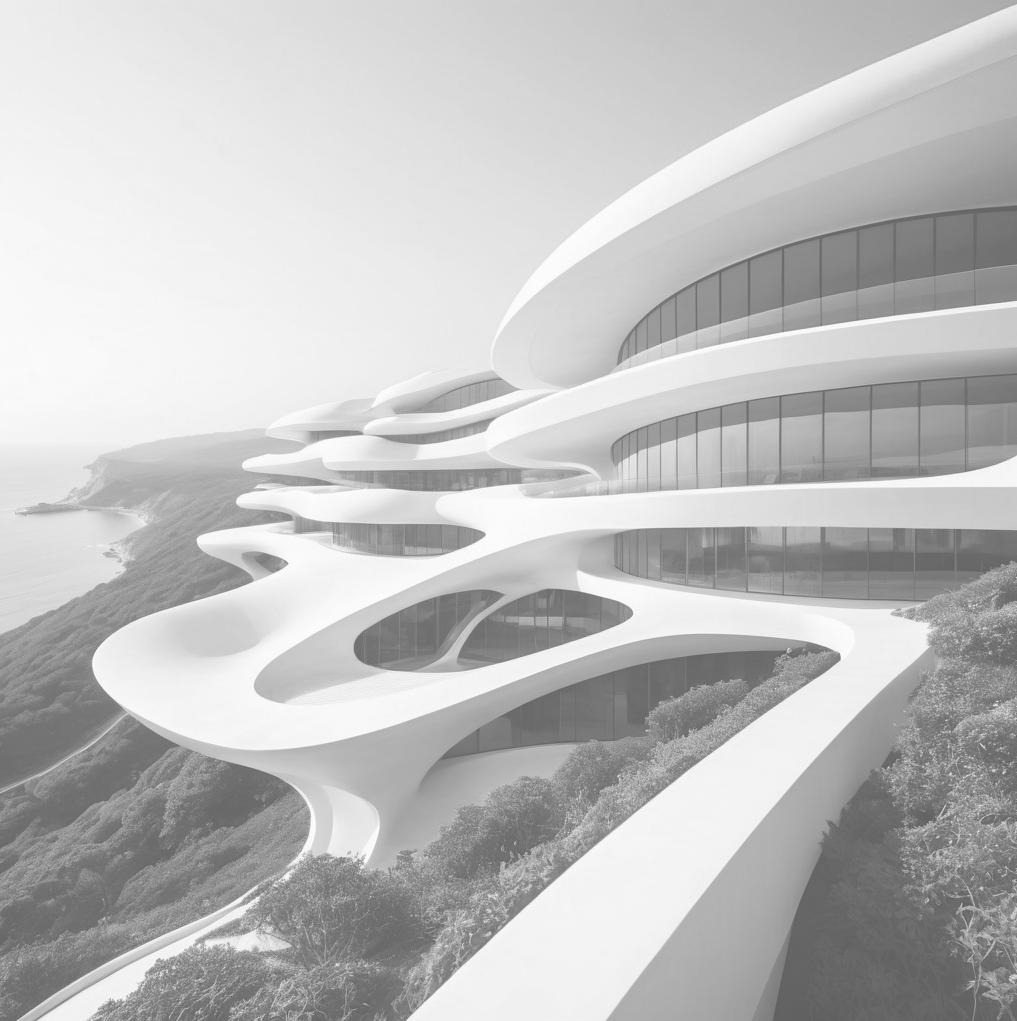
When exploring initial ideas in design computation, sketching serves as a fundamental tool for idea generation and development to advance our designs. However, leveraging artificial intelligence (AI) presents a transformative opportunity in idea generation. Various programs, such as Open Art, demonstrate AI capabilities effectively. When refining ideas, it is crucial to employ commands that resonate deeply with the intended portrayal. Providing detailed visual input enhances the AI’s ability to manifest your vision.
In this specific instance of rendering, the prompt used was: “A view of a modern building featuring organic geometry and a landscape with coastal views. The design should reflect architectural photography with a white and blue color palette, cinematic and fragmented architecture, and biophilic design, capturing the essence of nature. The style should be raw, with solarization at a 7:3 ratio.”
Furthermore, specifying how the rendering is photographed is essential. Mentioning details such as being captured by Canon, Nikon, etc., enables the software to emulate exposure settings to those of a real camera.
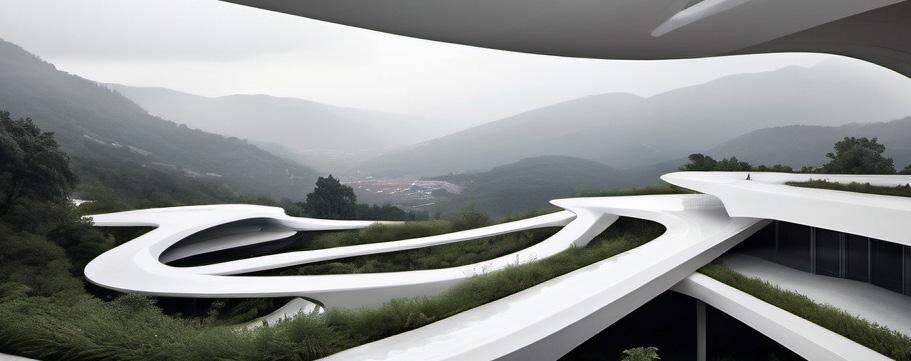
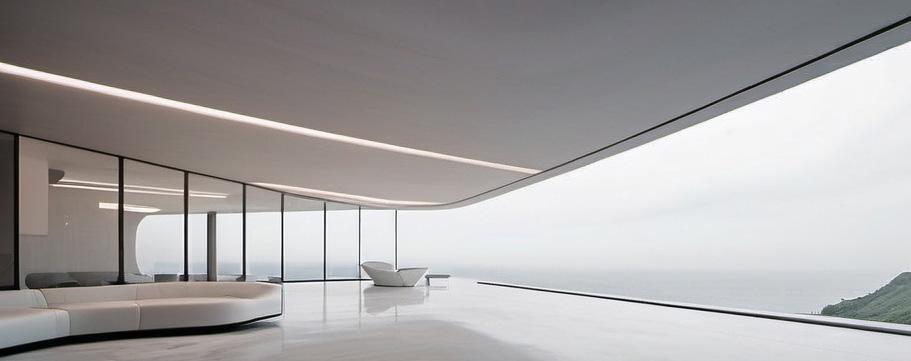
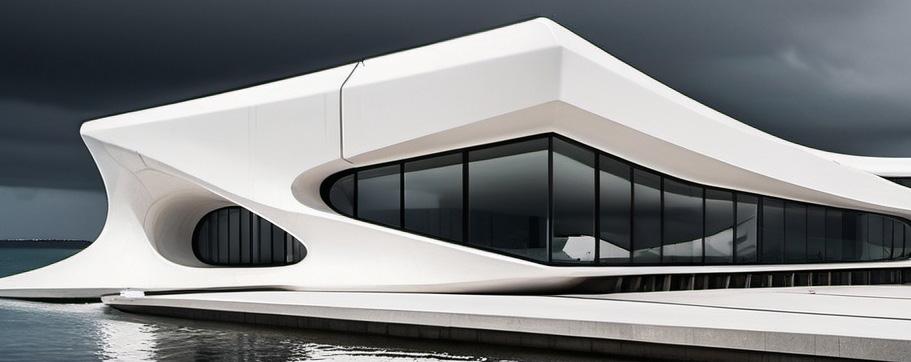
Continuing with AI-based design integration, this transition in idea-based design is for form investigation and presenting initial rendering concepts to visualize how certain geometries may appear when constructed or placed in a setting.
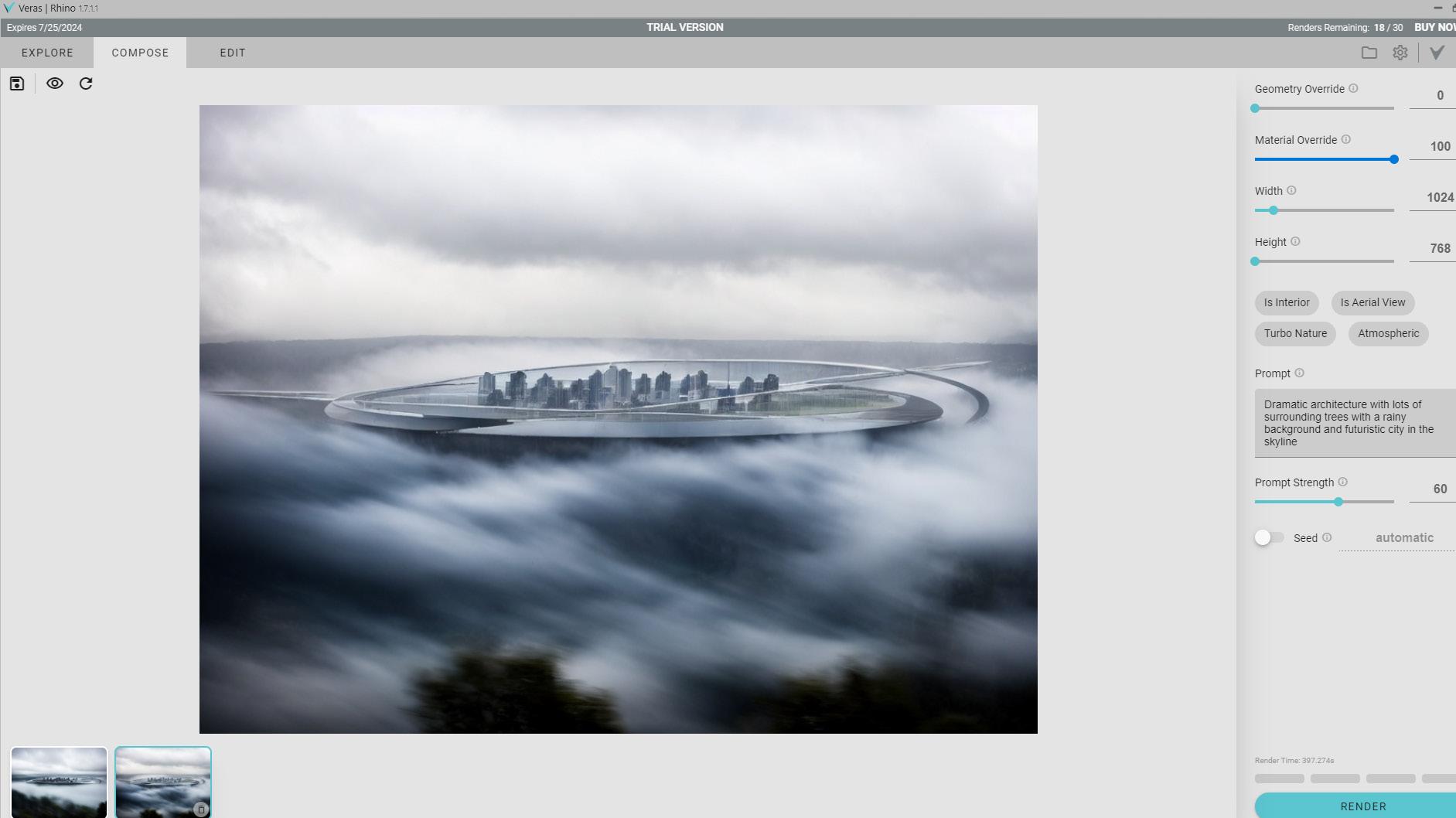
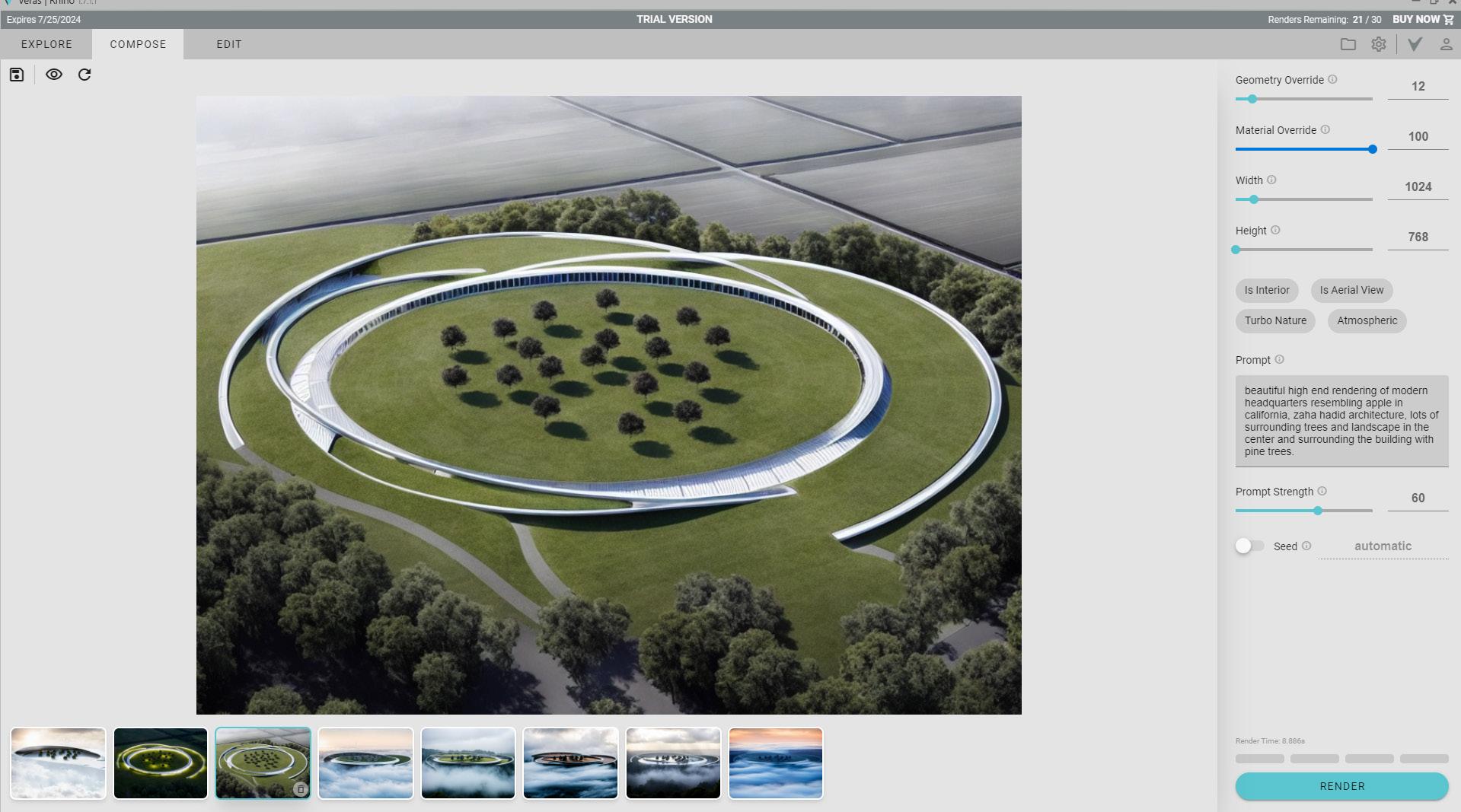
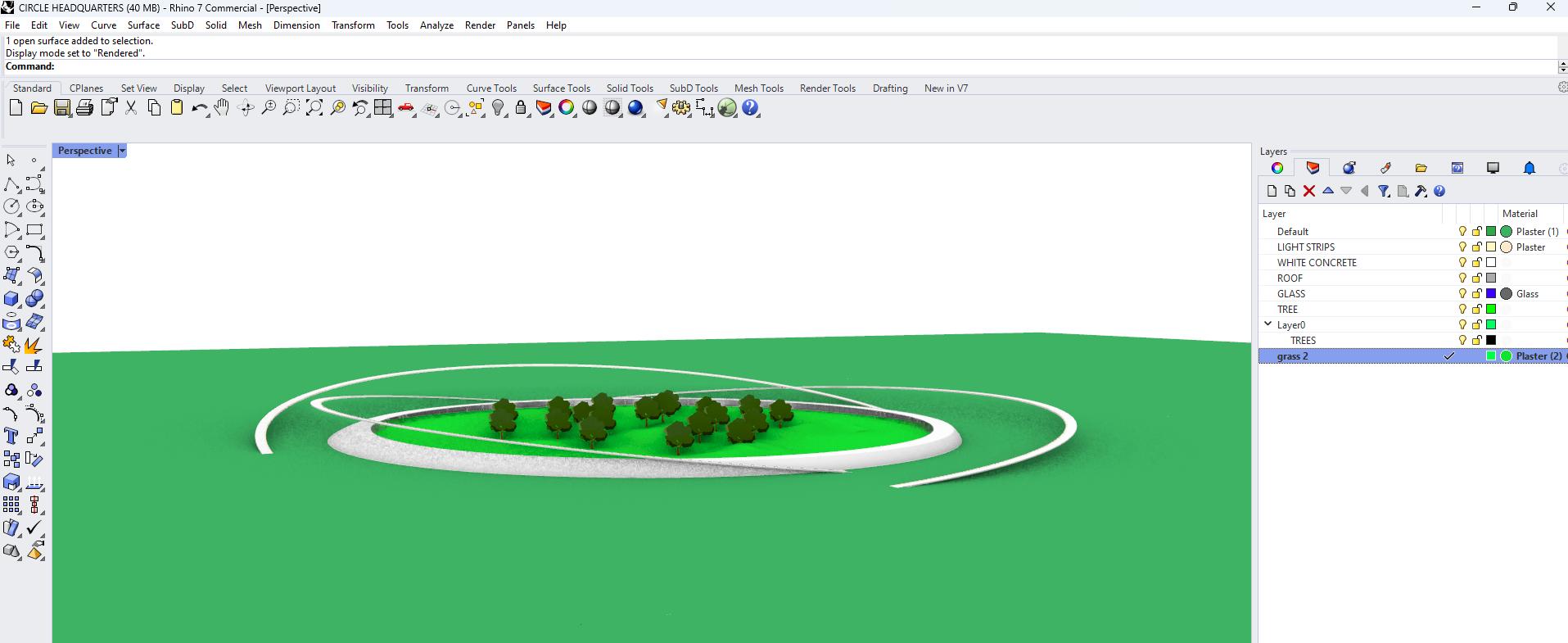
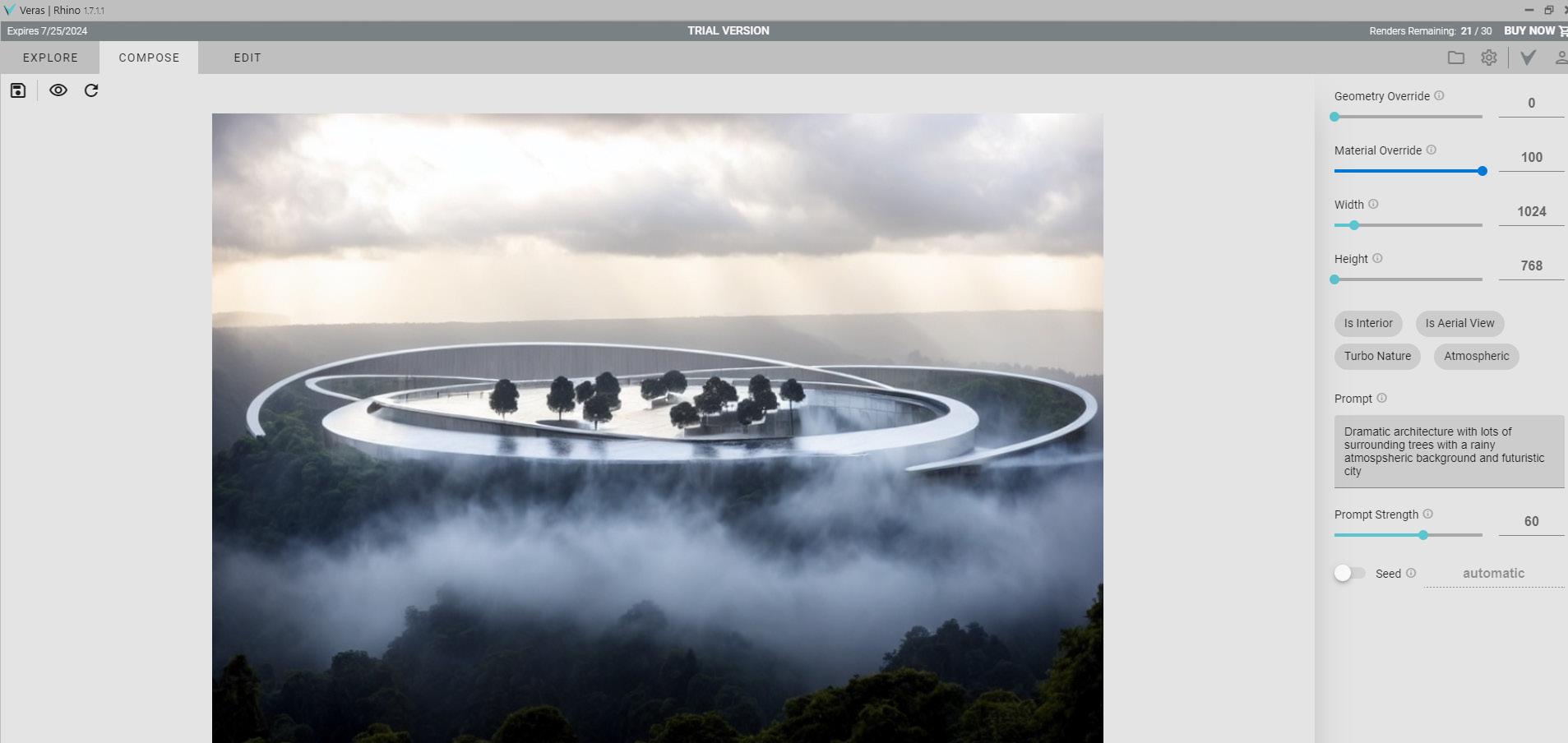
Veras for Rhino is a free extension provided by Evolve Lab. Like any other plugin, it can be accessed through the command center in Rhino. This plugin directly syncs with your model and provides the ability to issue commands for decorating scenery and setting a scene. It is important to note that scale figures are necessary for the program to accurately render your geometry.
Consistent with previous AI rendering concepts, it is essential to be thorough and precise with the provided description, and to specify how you want the render to be photographed.
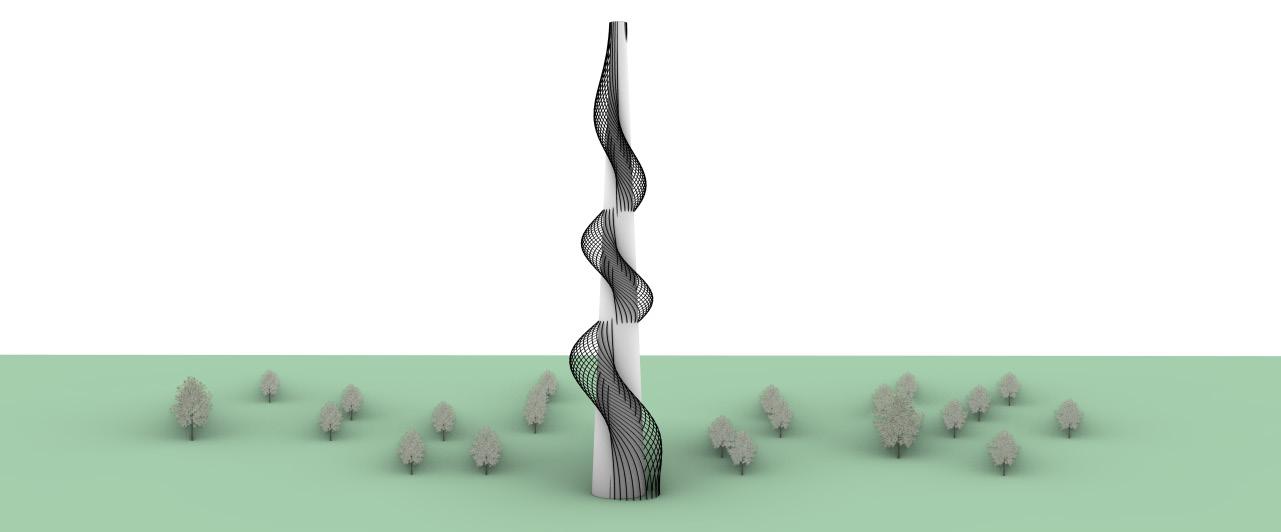
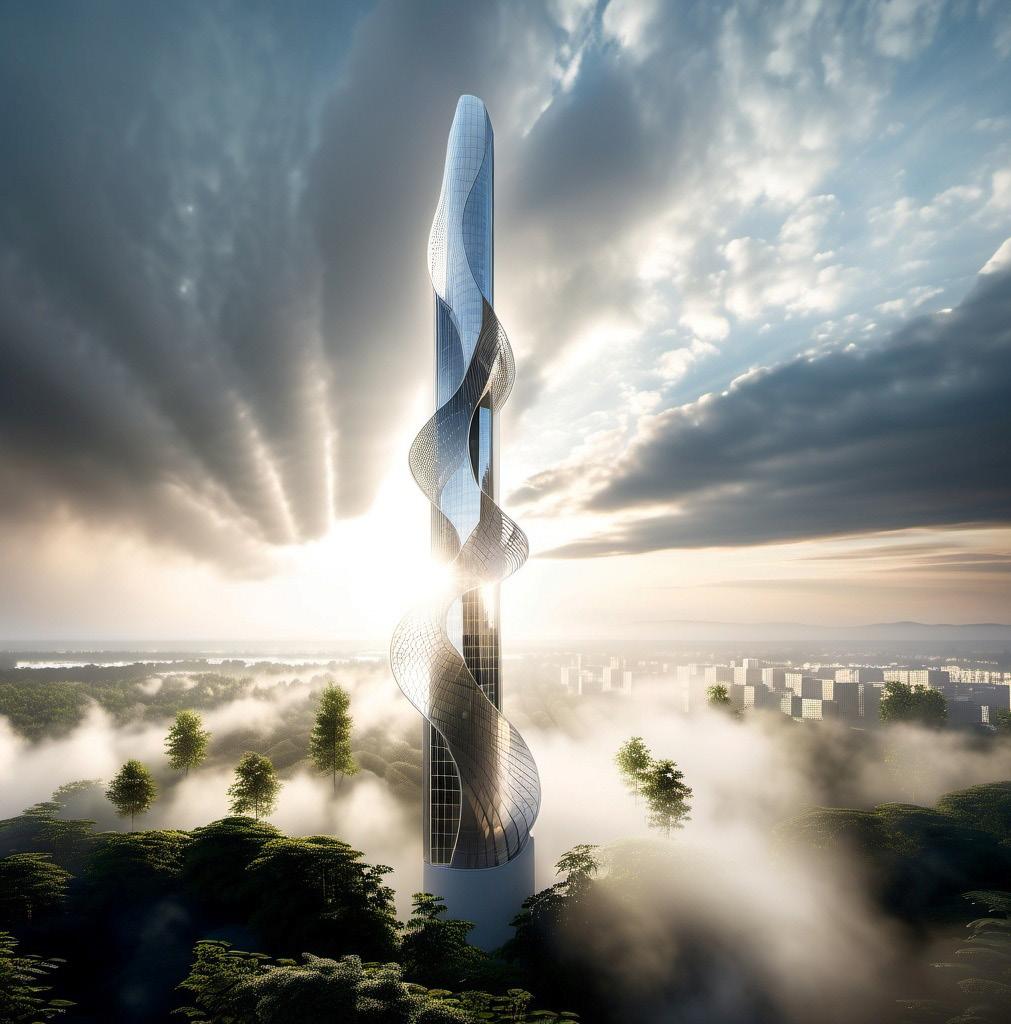
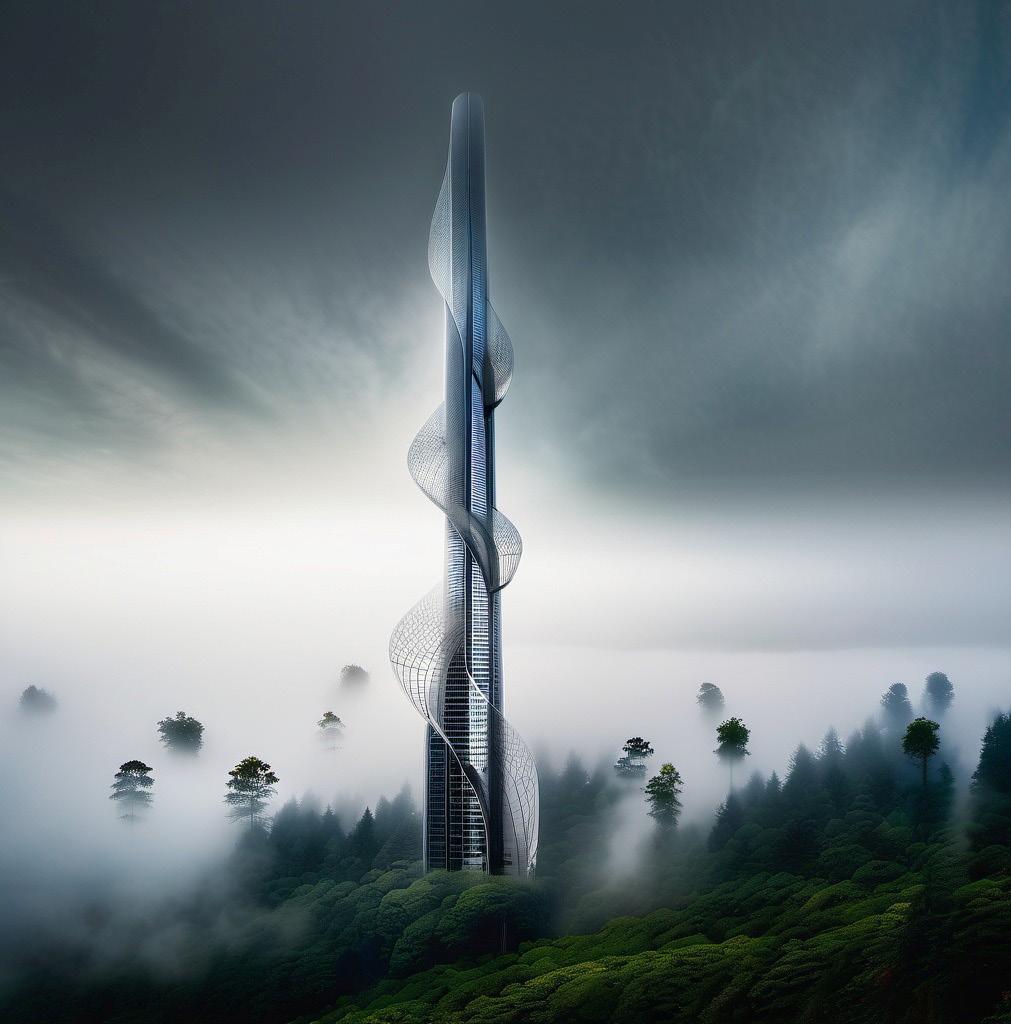
Here is another example of a model using the direct Rhino interface and a command prompt. It’s important to note that the geometry can be altered within Rhino using AI software, and it can deviate from the predefined script as desired by the user. This capability proves beneficial when exploring forms through Grasshopper.
KNOWLTON SCHOOL OF ARCHITECTURE
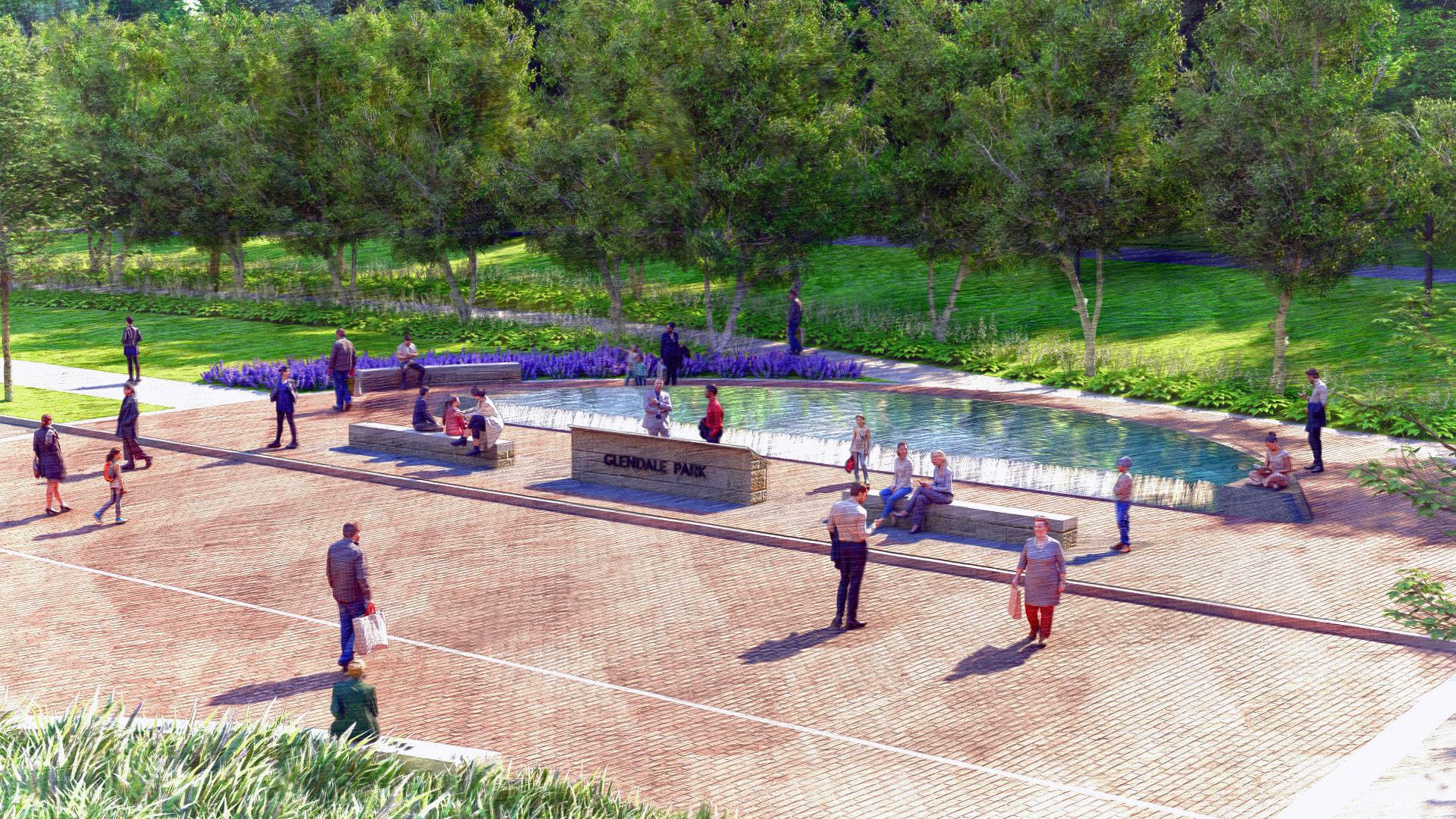
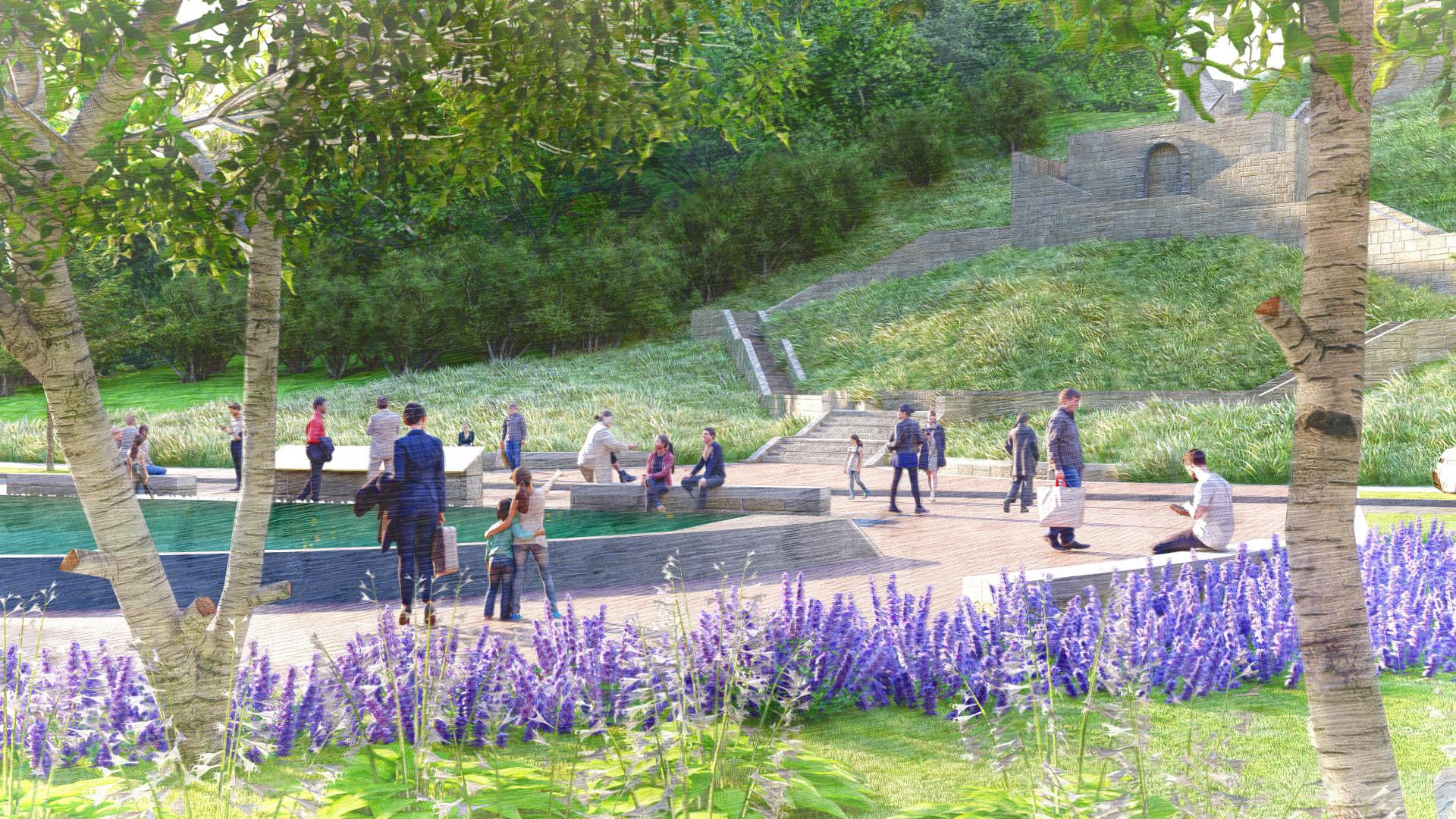
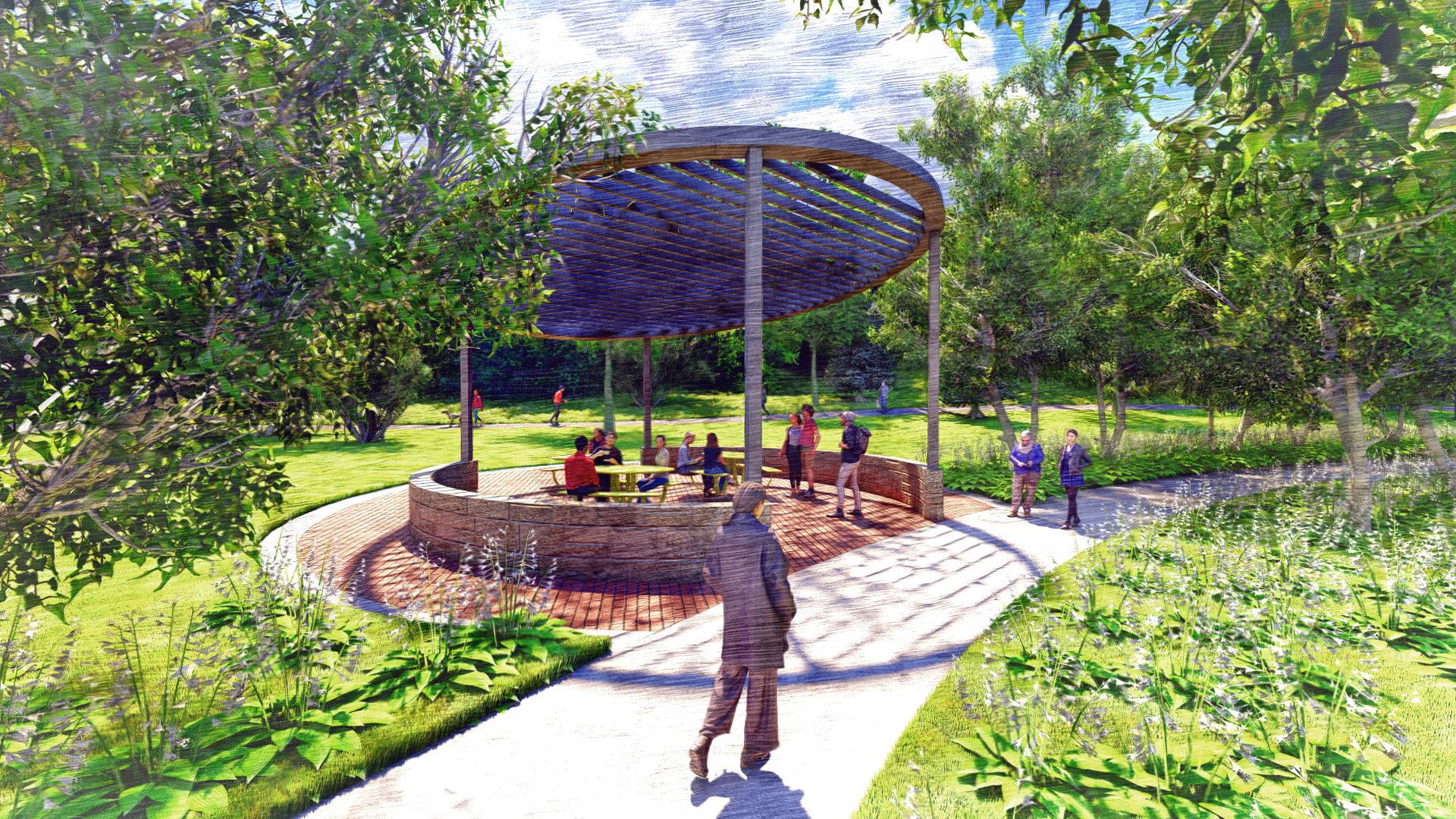
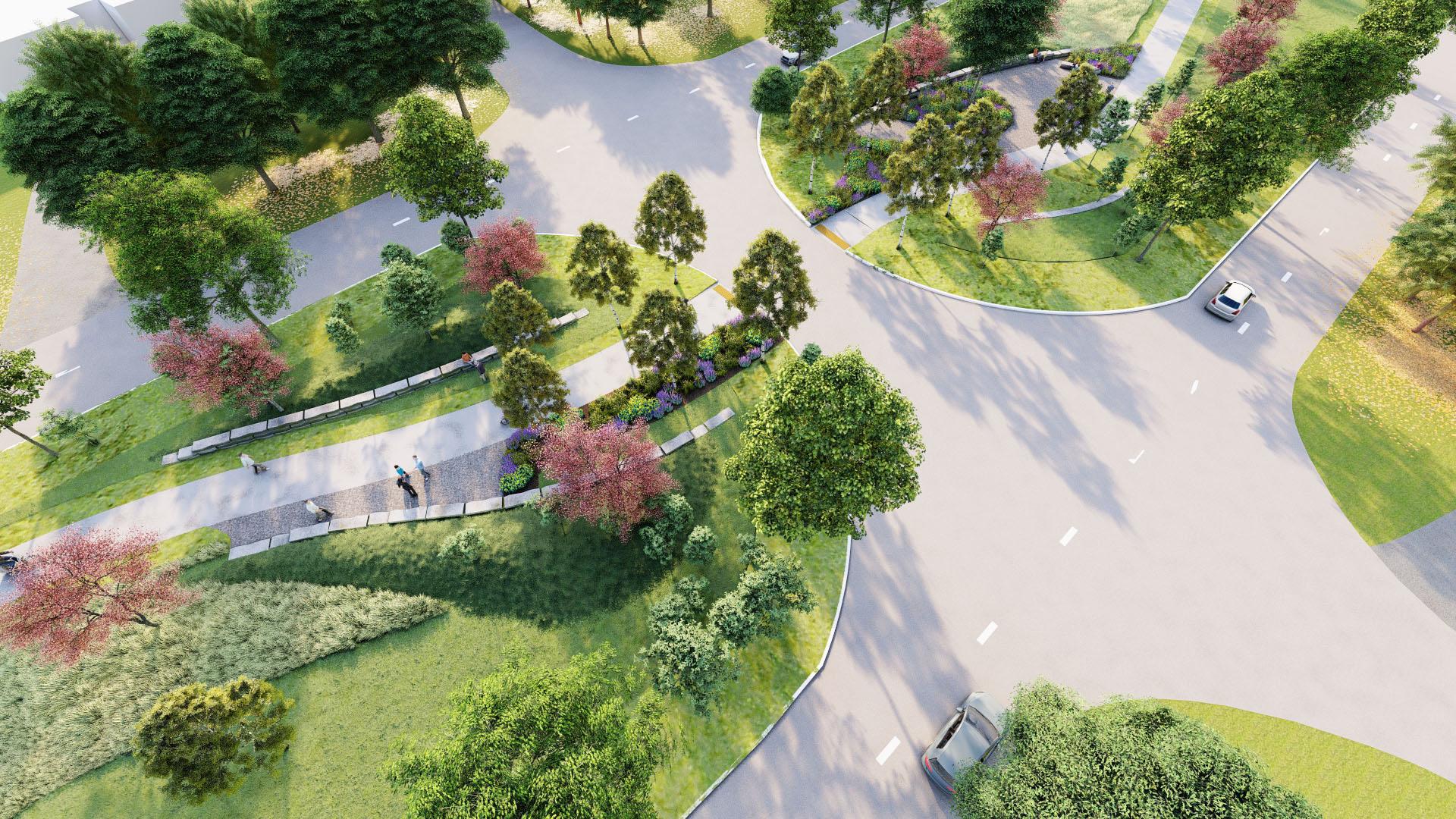
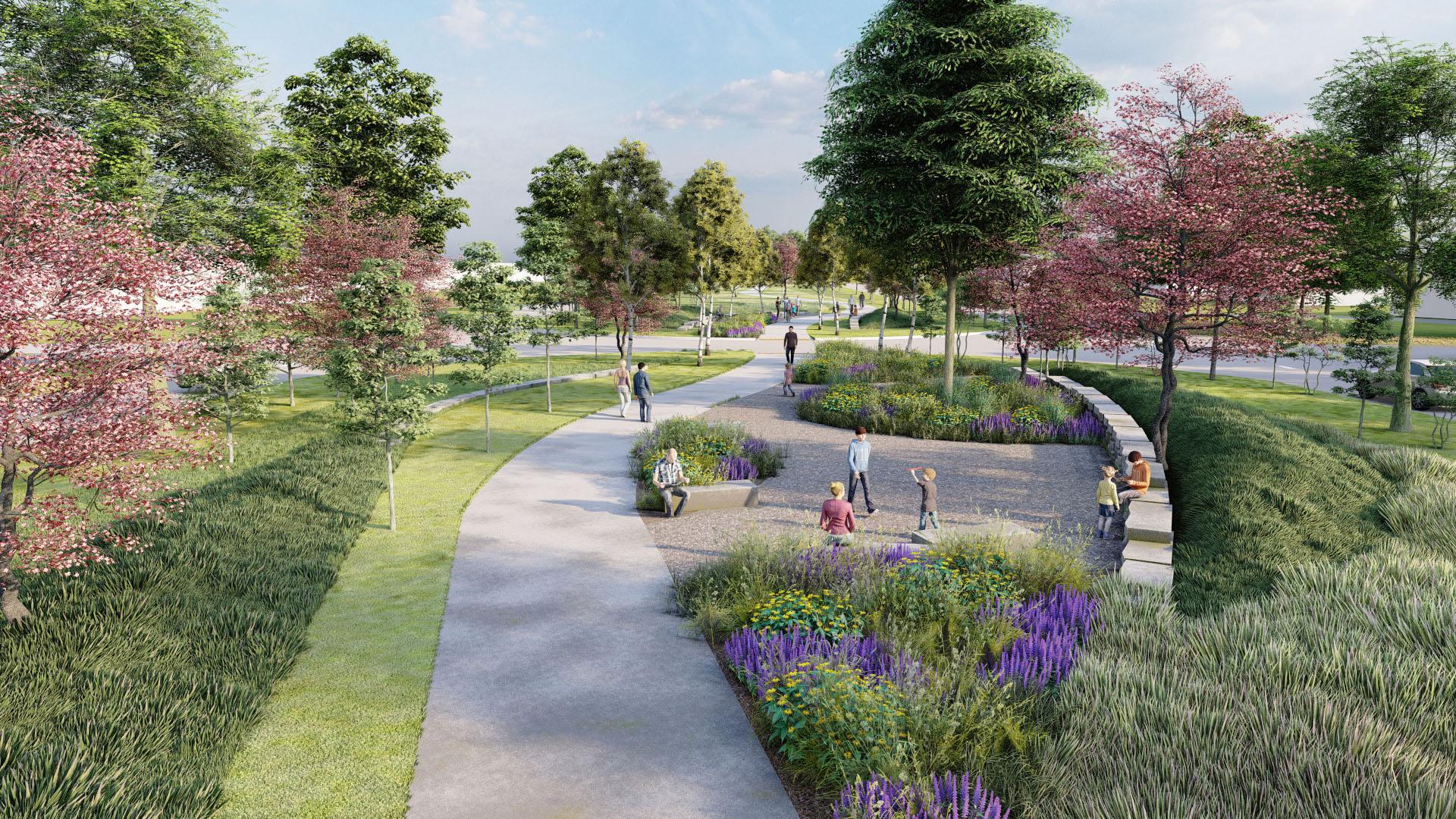
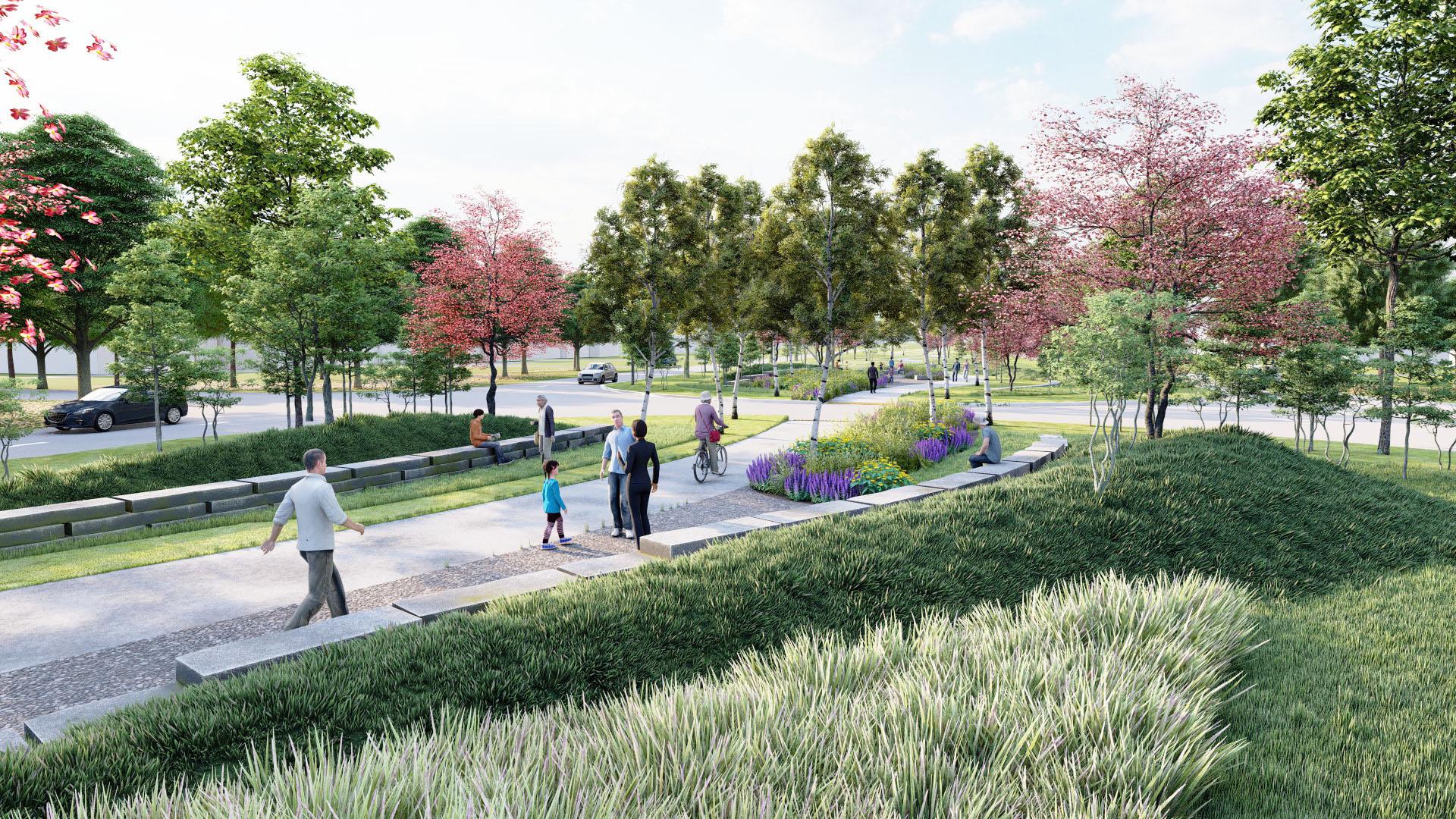
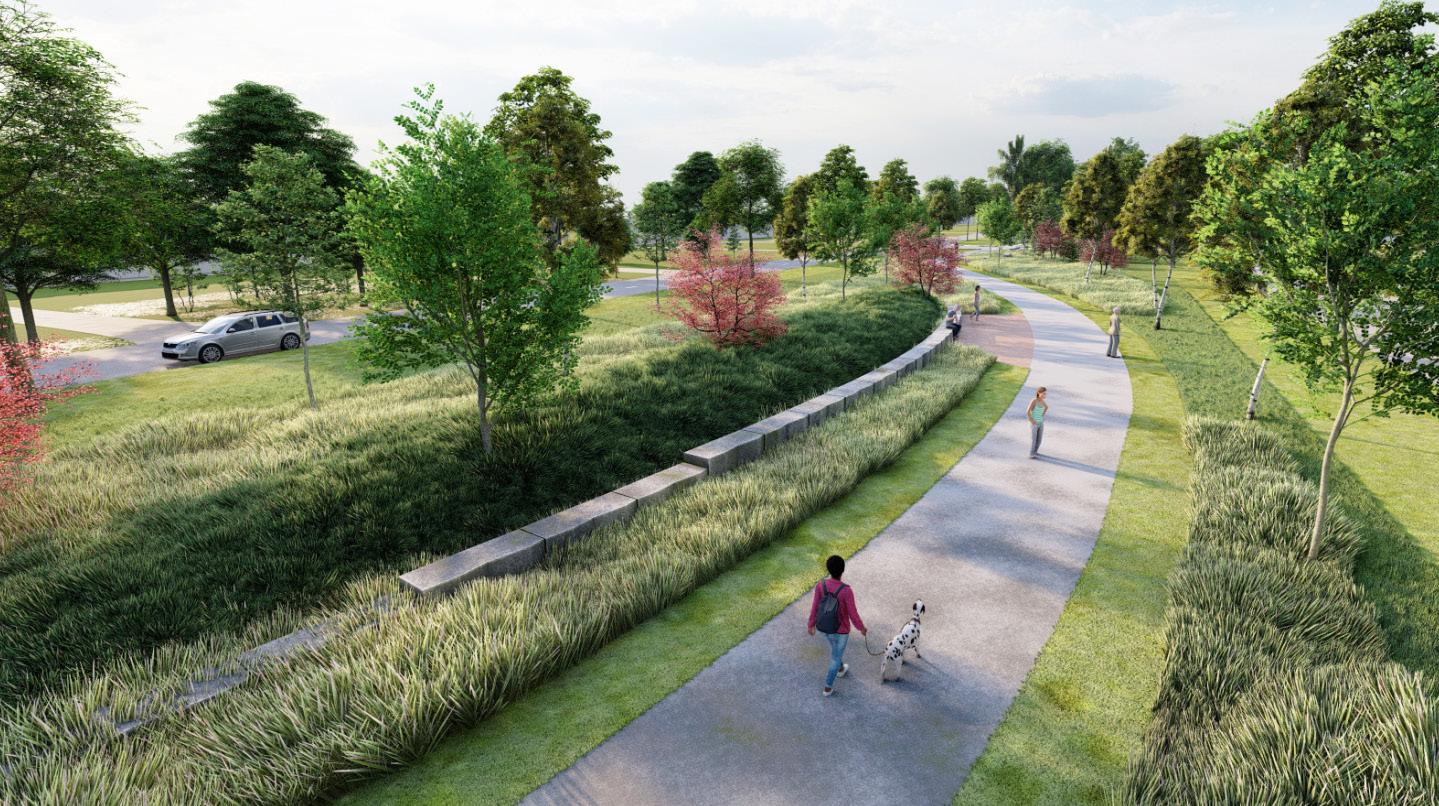
There are several rendering software applications capable of bringing your designs to life. This particular software excels in terms of its texture library, providing editing filters, and allowing fine-tune adjustments to your model by smoothing out geometries within your model space. The live sync feature is also invaluable, enabling real-time updates to your model without the need for re-exporting. While the software continues to improve in terms of graphics, there are methods to enhance lighting, texture mapping, and adjustments in post-production to breathe life into your design. Additionally, video rendering is included, which proves particularly beneficial for clients who may not fully grasp plan and section drawings.

KNOWLTON SCHOOL OF ARCHITECTURE
KNOWLTON SCHOOL OF ARCHITECTURE
Parametric design refers to a design approach that uses parameters (variables) to define and manipulate the attributes or elements of a model or design. These parameters can include dimensions, shapes, quantities, and other properties that influence the design’s appearance, behavior, or performance. Parametric design is widely used in various fields, including architecture, engineering, product design, and digital art, primarily due to its ability to efficiently explore and iterate designs based on predefined rules and relationships. Rhino contains may differnt components that are ready to use when designing computationally.
KNOWLTON SCHOOL OF ARCHITECTURE
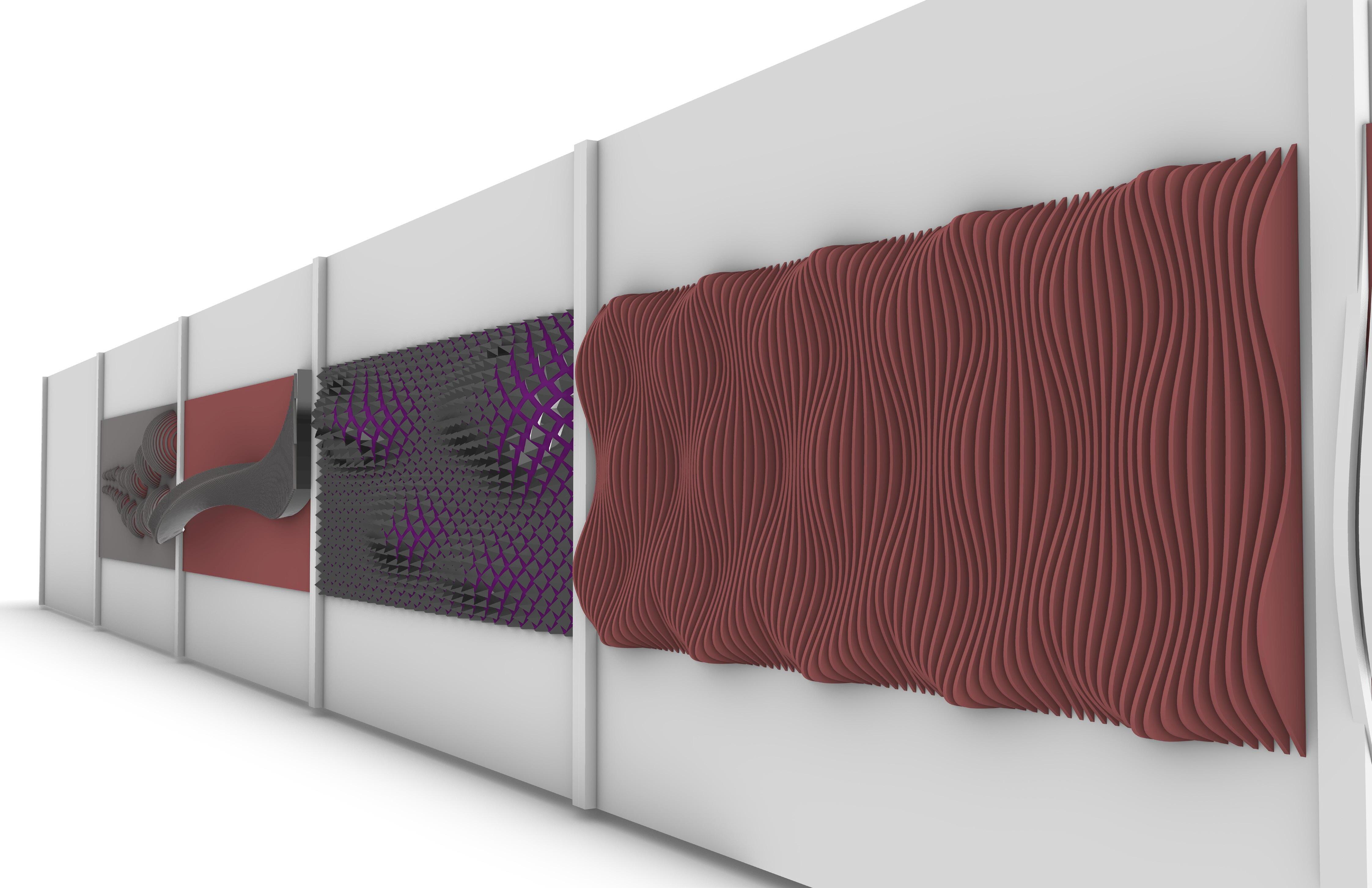
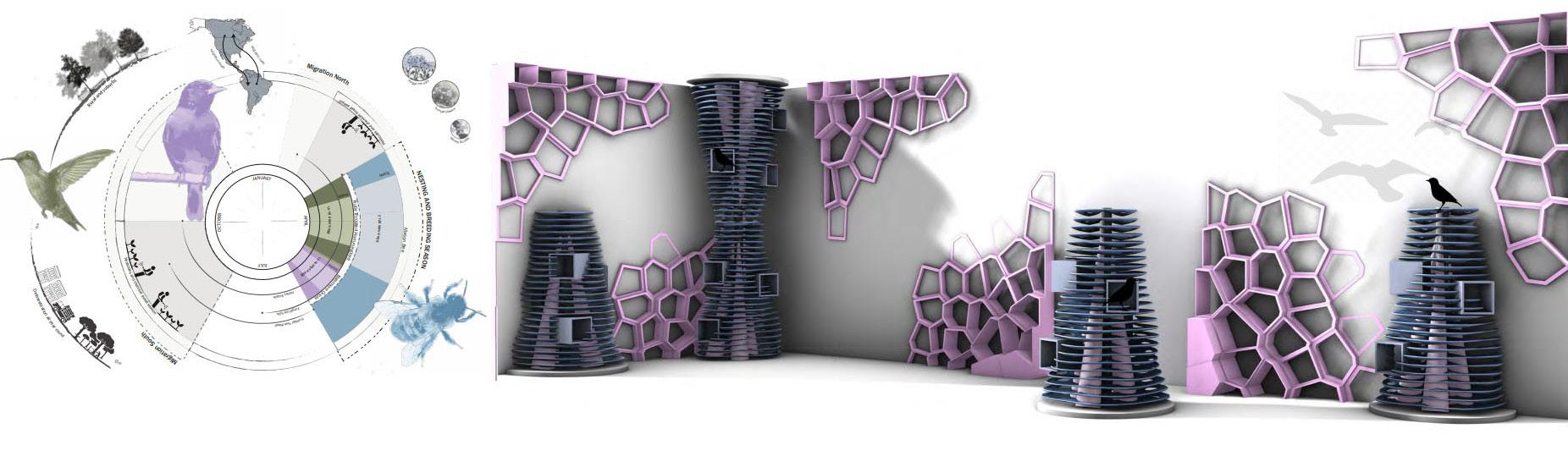
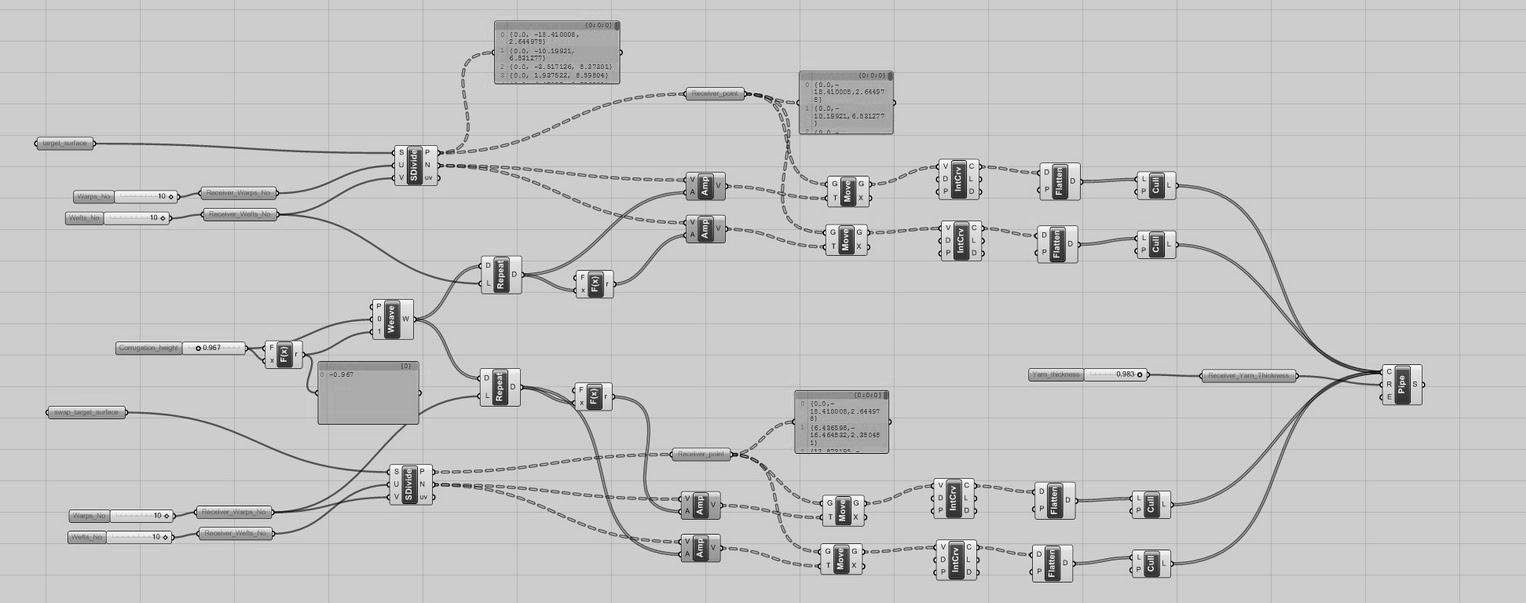
Here is an example of designing with Grasshopper. In computational design, Grasshopper utilizes Rhino’s built-in commands for form exploration. Through the package manager, you can also download extensions for Rhino such as Lunchbox, Weaverbird, and others, which aid in design investigation. AI is increasingly influential in computational design, capable of generating Python and C# scripts without requiring prior coding experience.
KNOWLTON SCHOOL OF ARCHITECTURE
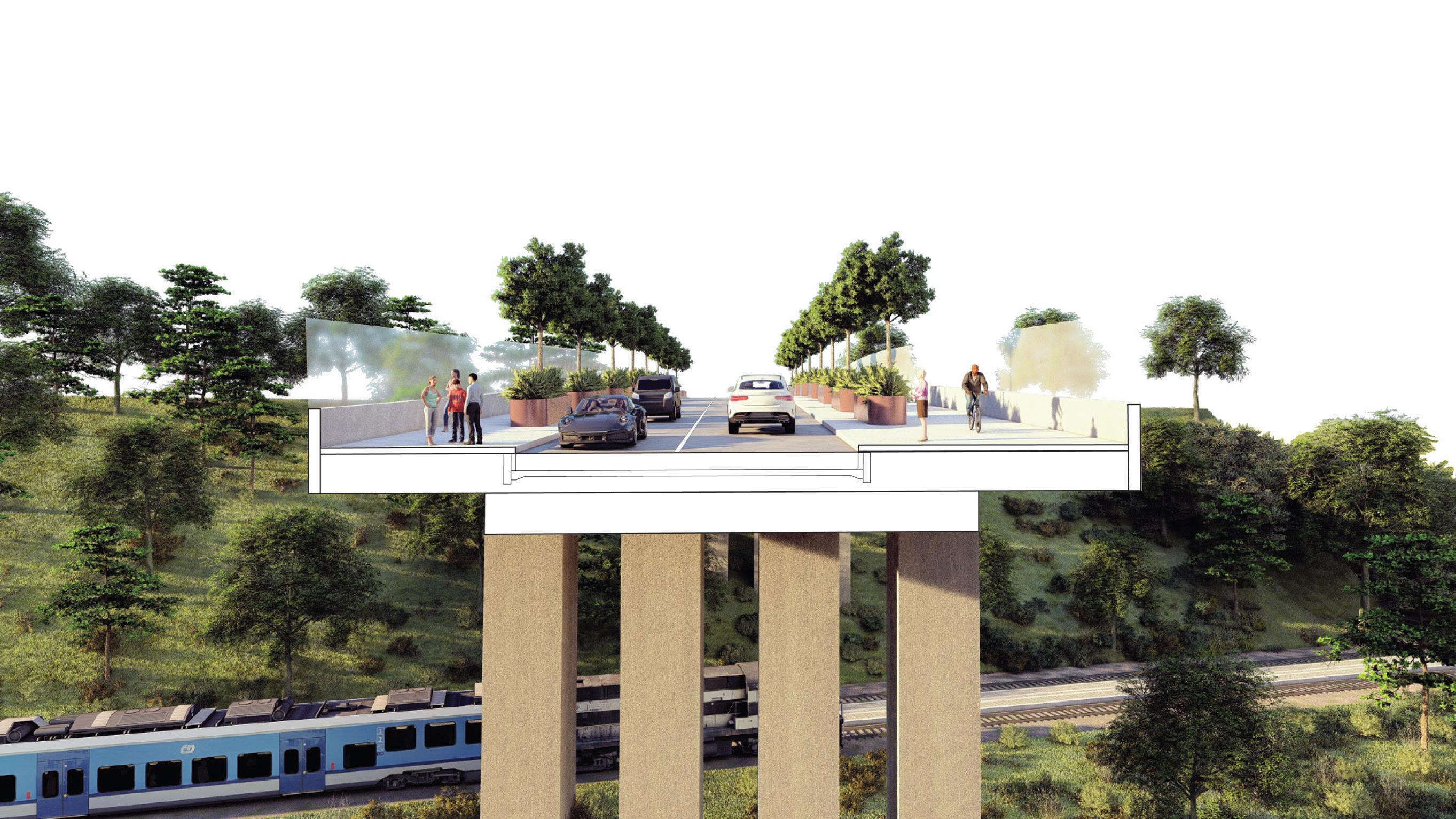
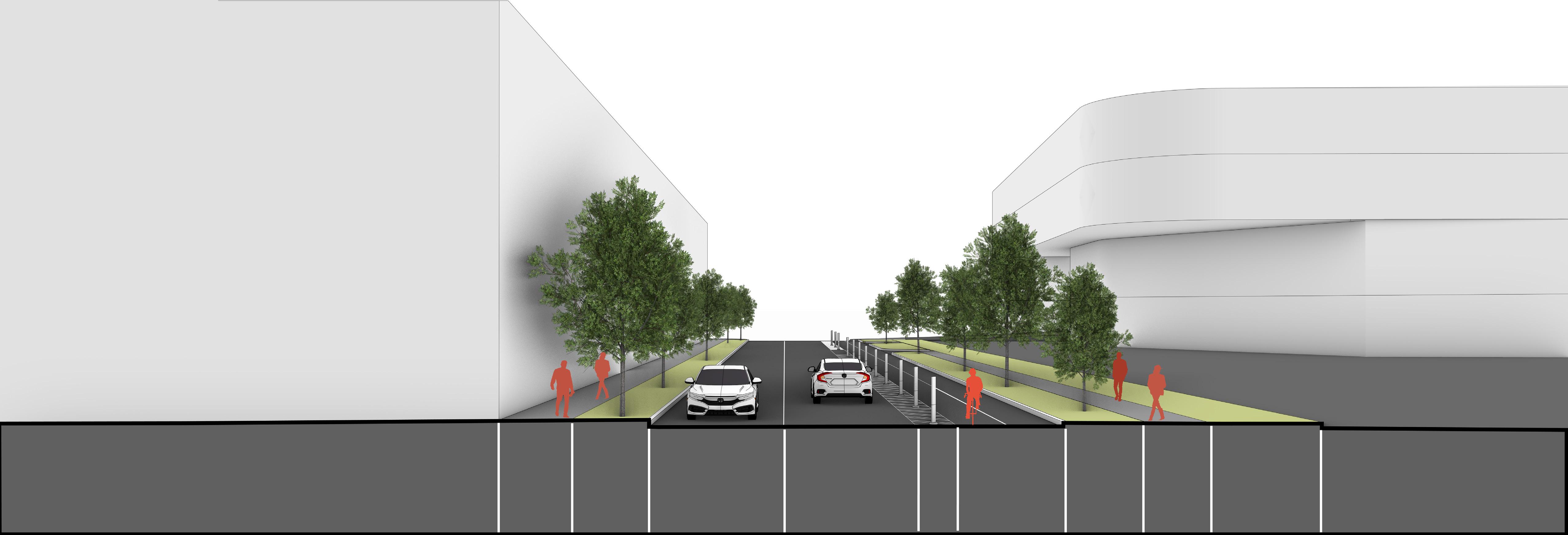
When aiming to quickly export your model with color, Rhino offers a variety of materials and colors in its material library for you to choose from. Plugins and enabling line weights in settings can also enhance your images with various types of linework. Utilizing 3D Warehouse is a pivotal tool for providing context in your models without the need to create them from scratch. V-Ray is highly effective in producing shadows, although this process may take considerable time during export.
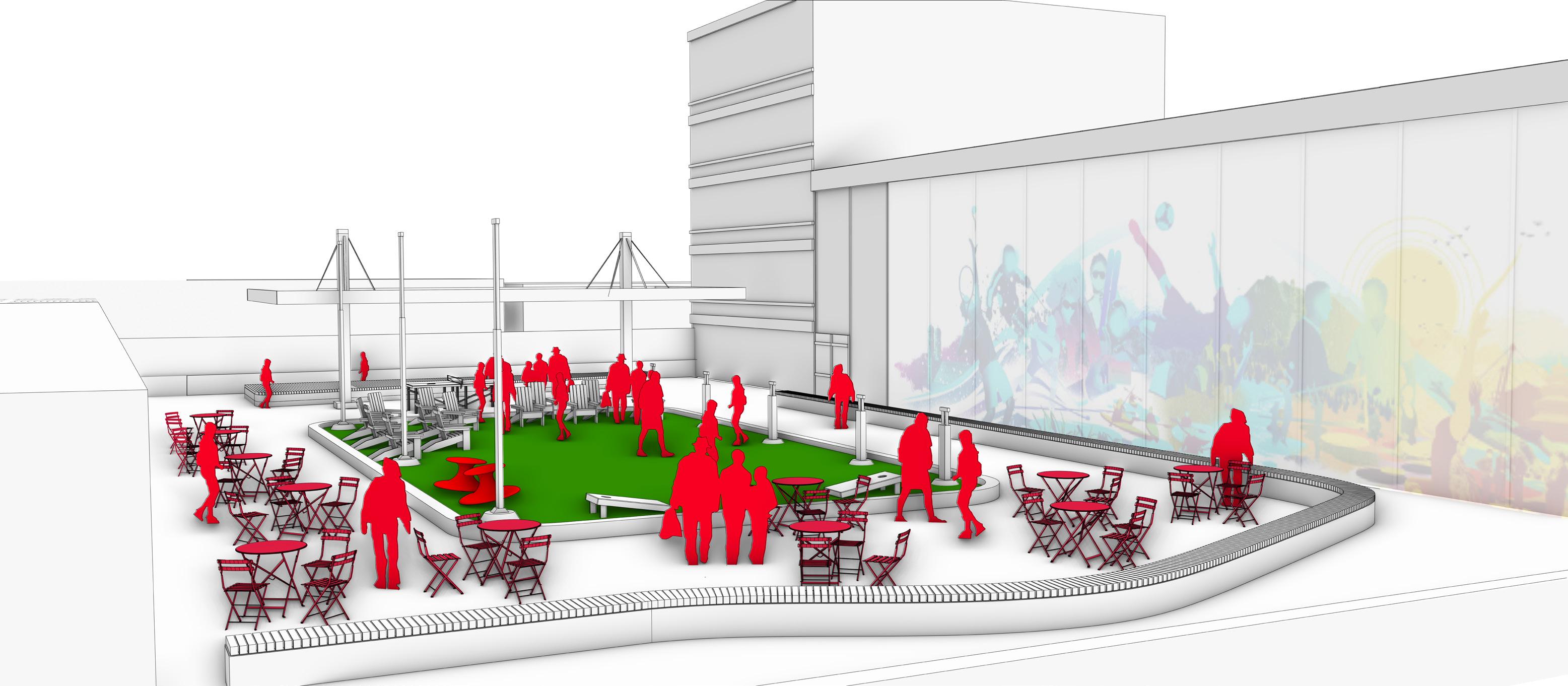
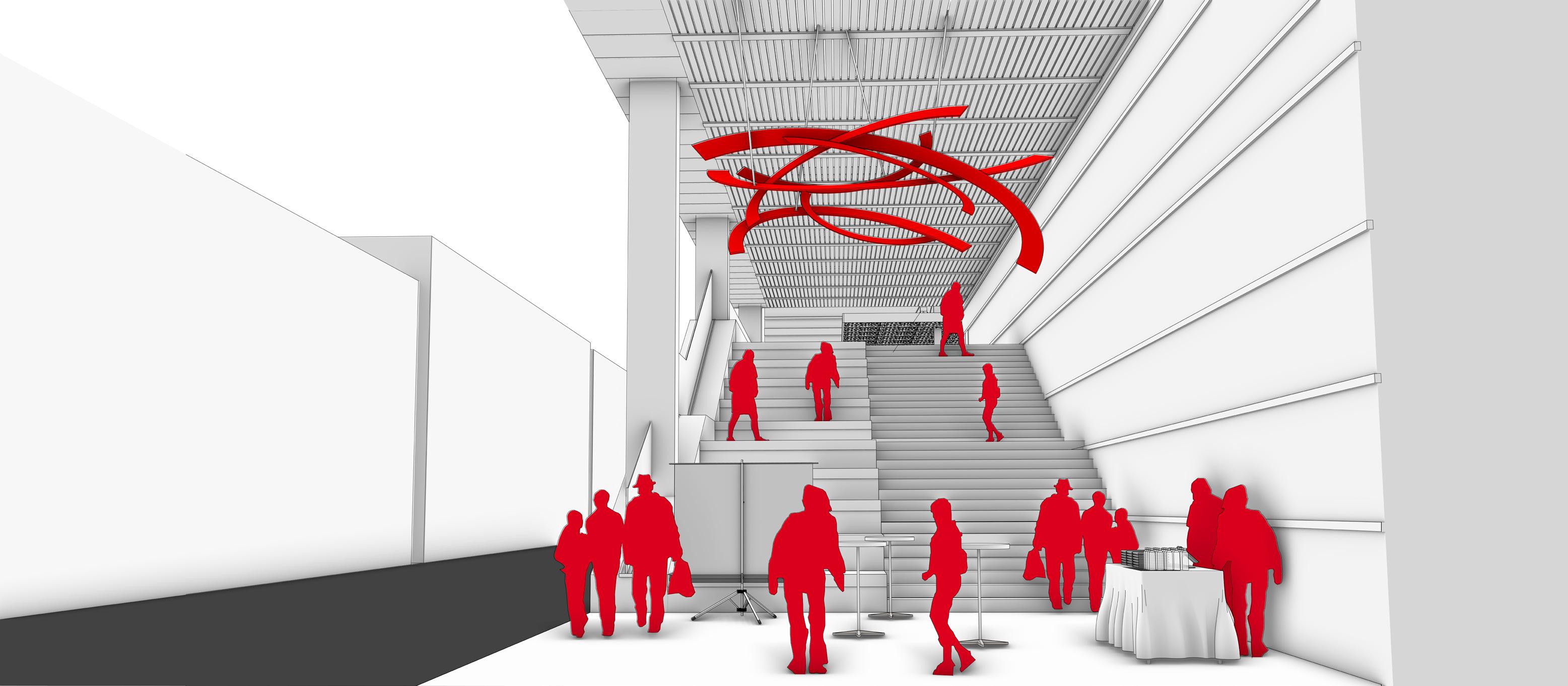
Here is another example of a model featuring coloring and 3D trees placed in Rhino. Some post-production work has been performed in Illustrator, but it has been kept minimal. These renders are intended to be educational for your audience.
KNOWLTON SCHOOL OF ARCHITECTURE
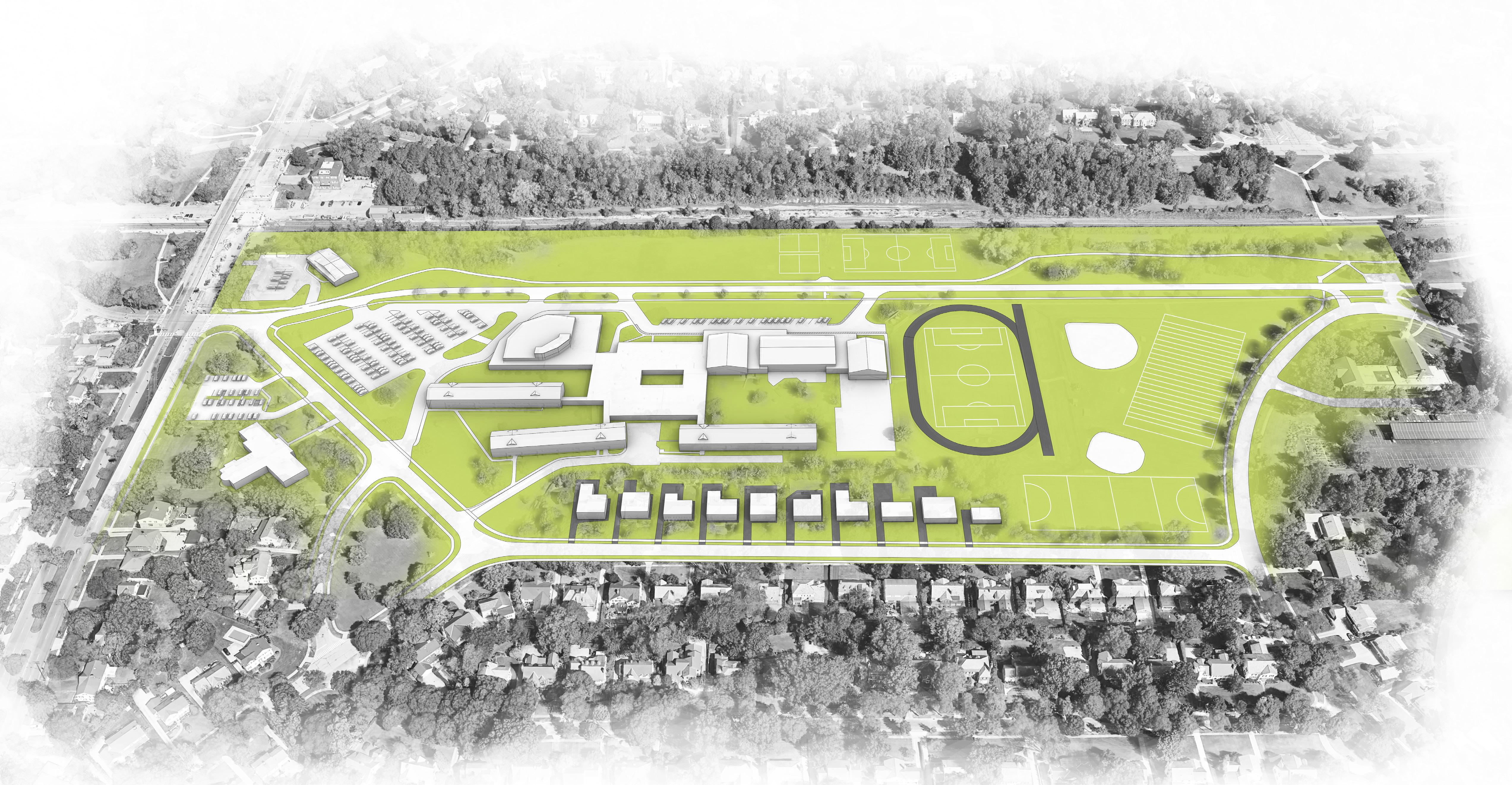
We all know that Photoshop is a pivotal tool when enhancing your designs. This tool is especially helpful for creating renderings with 3D views. With the emergence of AI generative fill, rendering time can now be significantly reduced.
KNOWLTON SCHOOL OF ARCHITECTURE
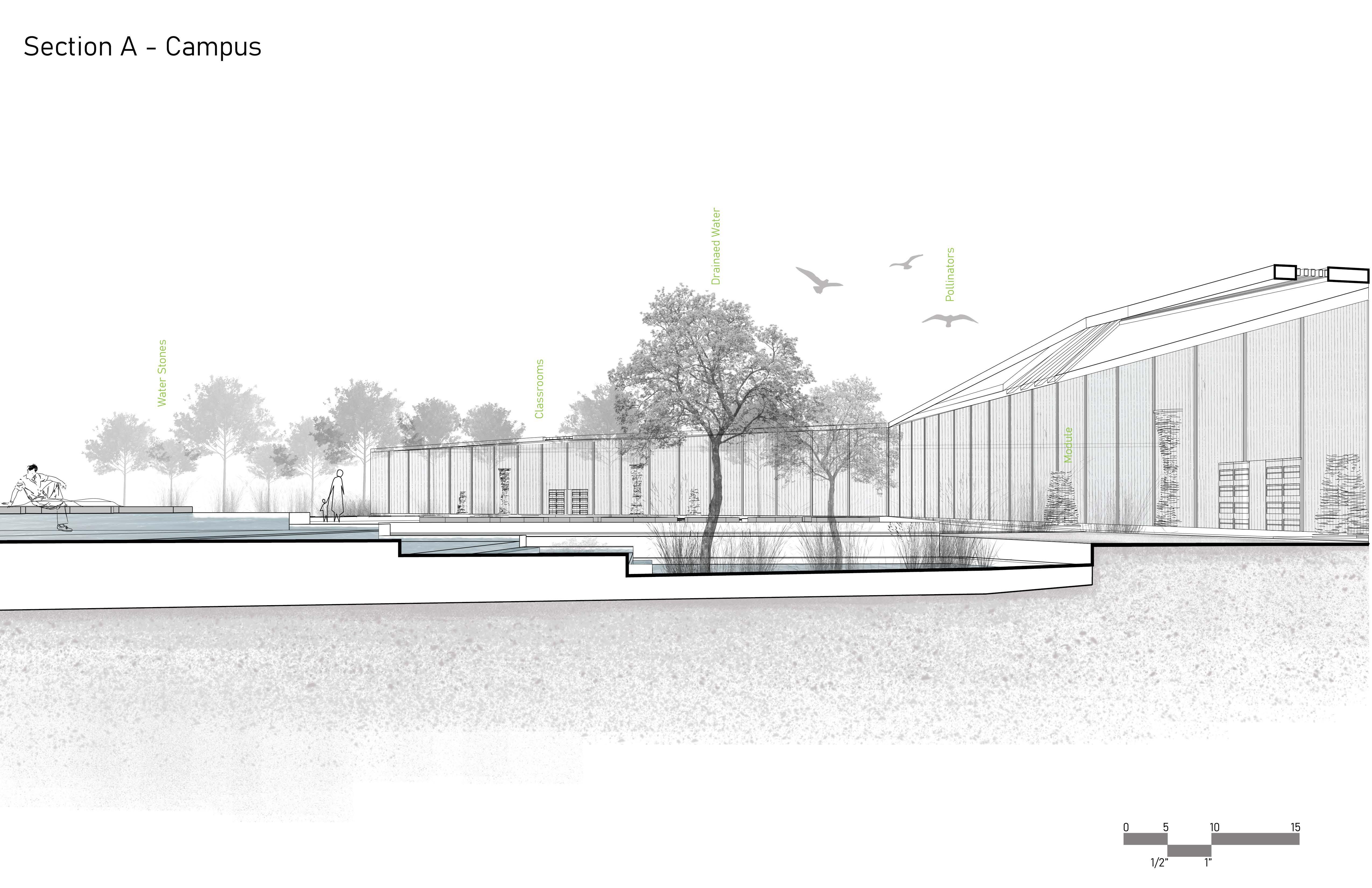
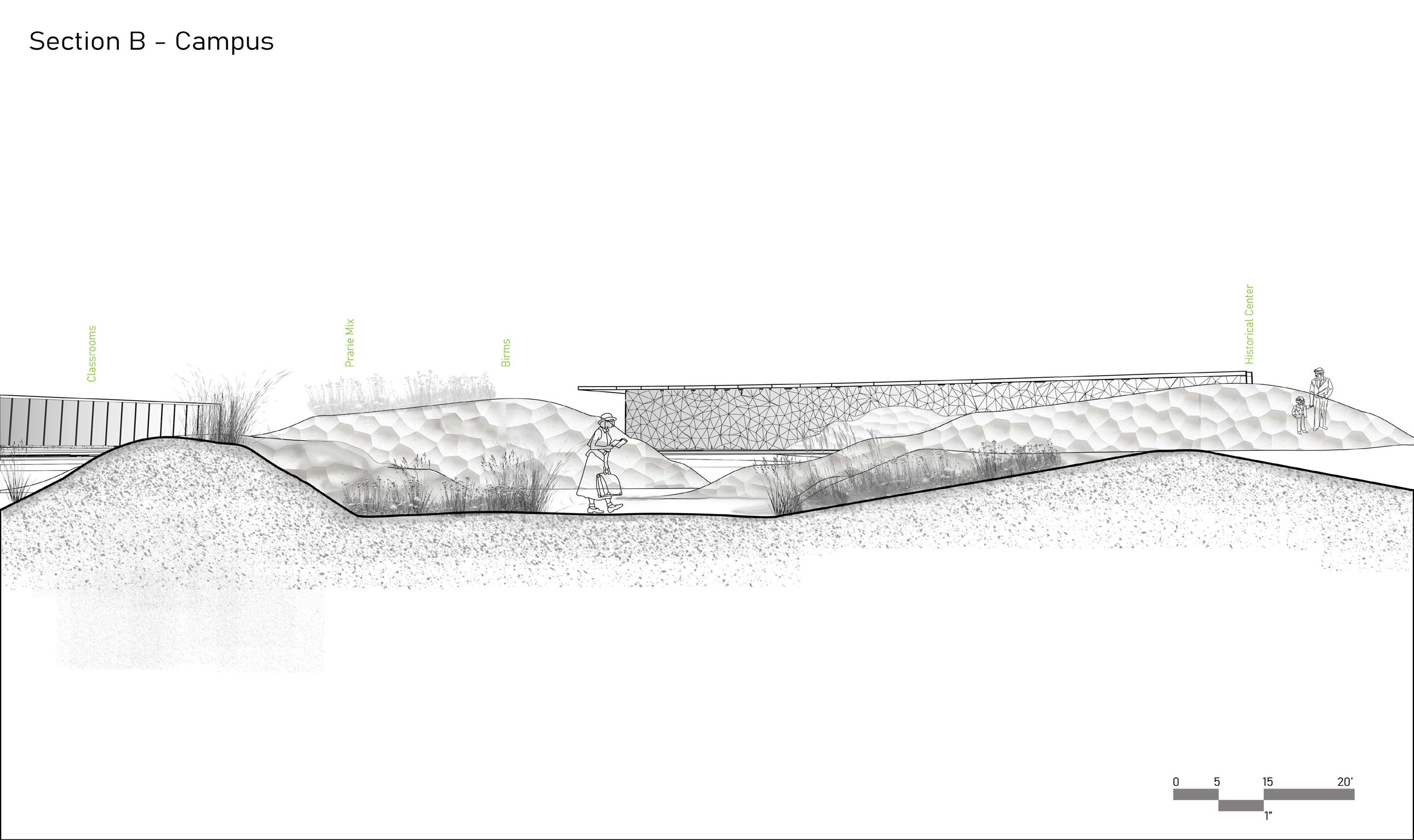
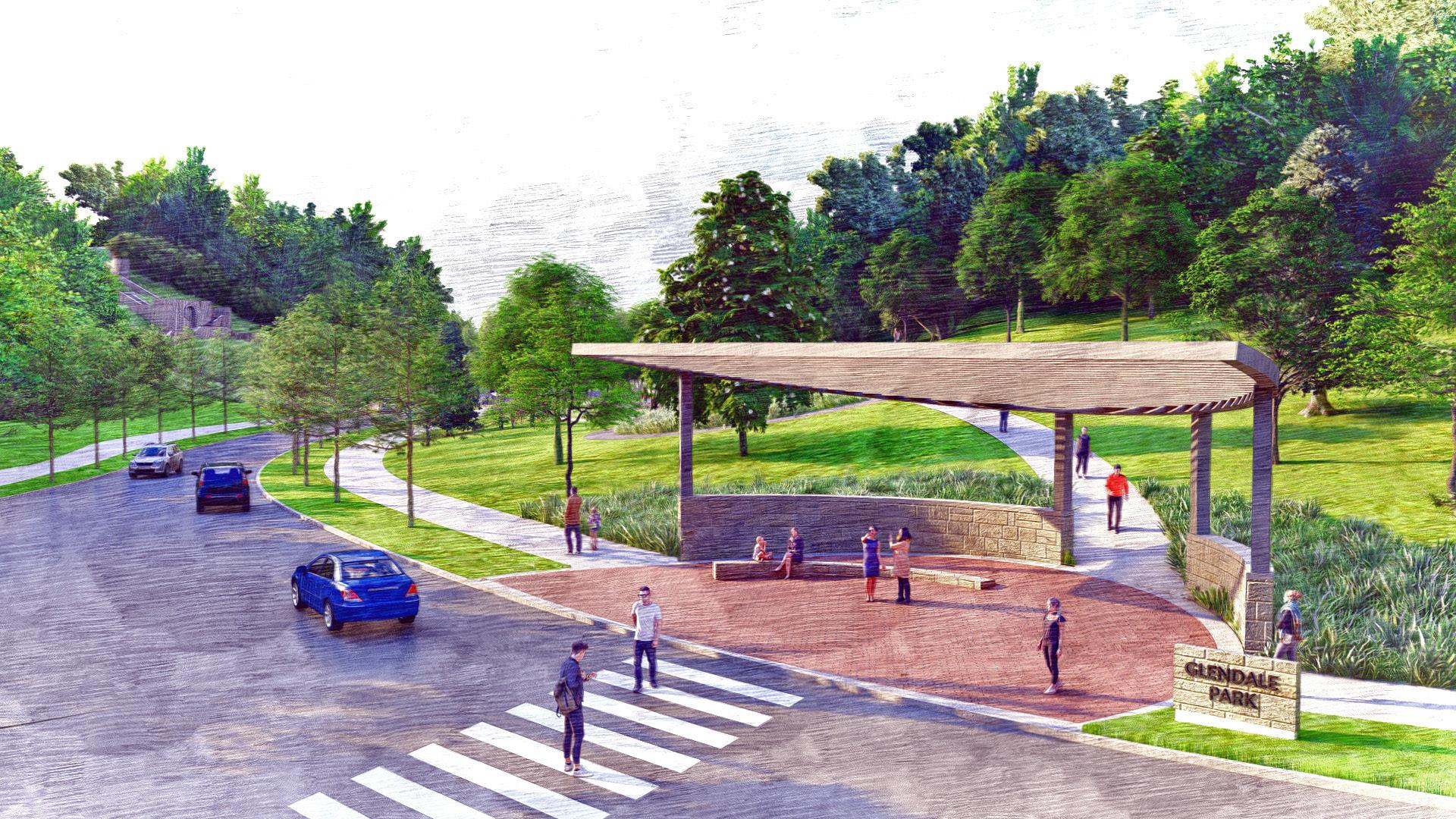
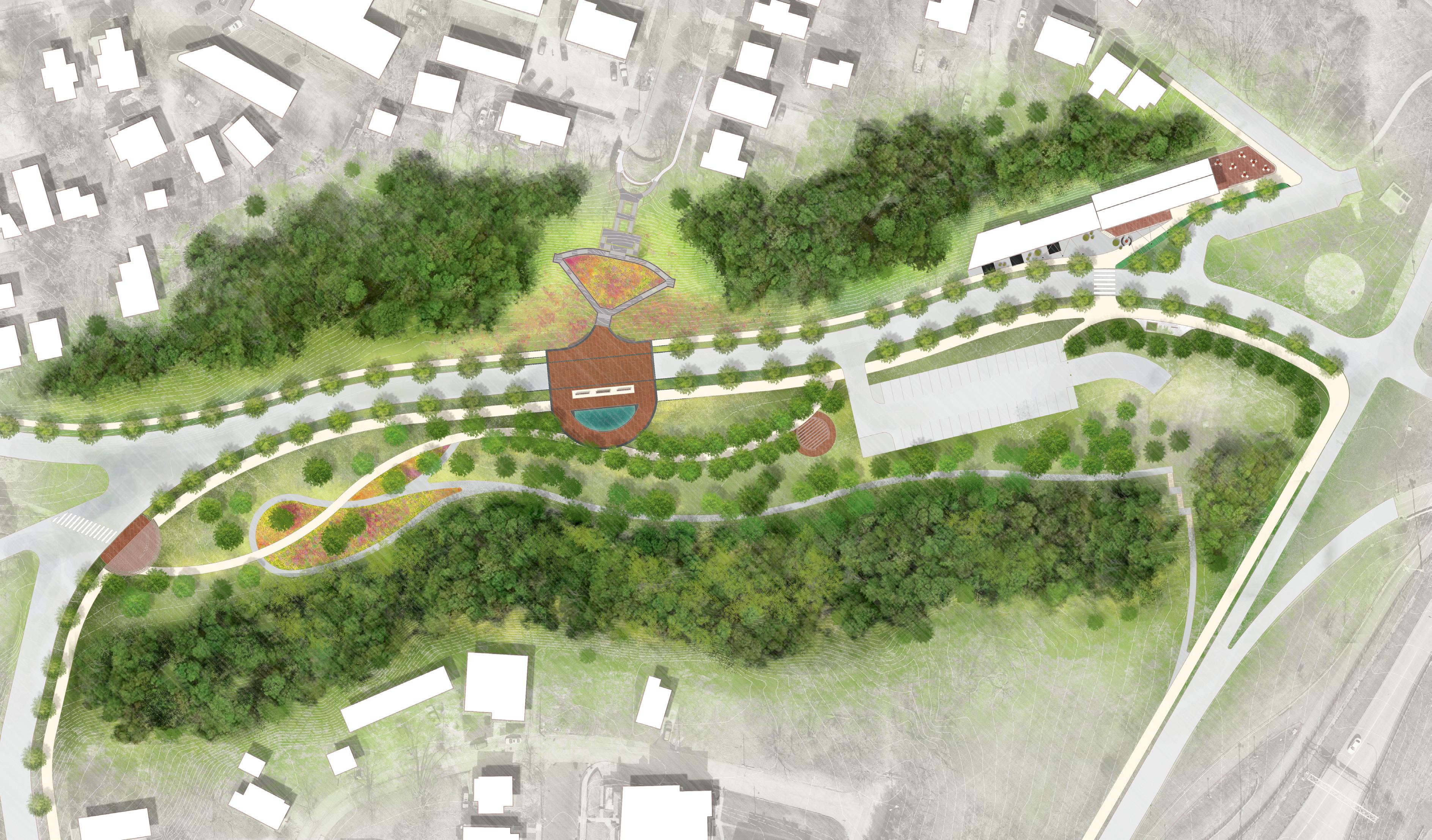
Utilizing textures in Photoshop can make or break your design. It is crucial to use brushes that convey your design effectively. Unfortunately, the existing Photoshop brush library is somewhat limited. However, with a few tips and tricks and access to multiple texture/brush libraries, creating renders and achieving realism becomes straightforward.
SCHOOL OF ARCHITECTURE
Here is another example in Photoshop. This particular example employs minimal color but utilizes texture to add depth to the design and achieve a clean aesthetic that aligns with the design goals.