

Authors: Kristian Dambrino, MSN, PMHNP-BC, Laura Gray, PhD, MSN, RN, R. David Phillippi, PhD
Practice Program
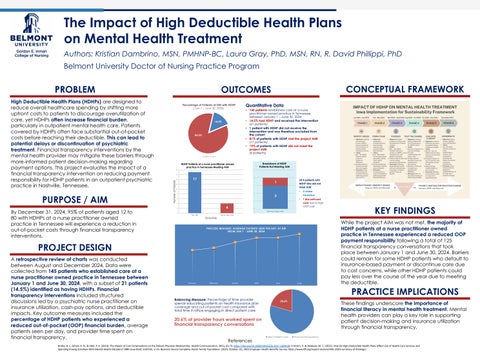
High Deductible Health Plans (HDHPs) are designed to reduce overall healthcare spending by shifting more upfront costs to patients to discourage overutilization of care, yet HDHPs often increase financial burden, particularly in outpatient mental health care. Patients covered by HDHPs often face substantial out-of-pocket costs before reaching their deductible. This can lead to potential delays or discontinuation of psychiatric treatment. Financial transparency interventions by the mental health provider may mitigate these barriers through more-informed patient decision-making regarding payment options. This project evaluates the impact of a financial transparency intervention on reducing payment responsibility for HDHP patients in an outpatient psychiatric practice in Nashville, Tennessee.
By December 31, 2024, 95% of patients aged 12 to 80 with HDHPs at a nurse practitioner owned practice in Tennessee will experience a reduction in out-of-pocket costs through financial transparency interventions.
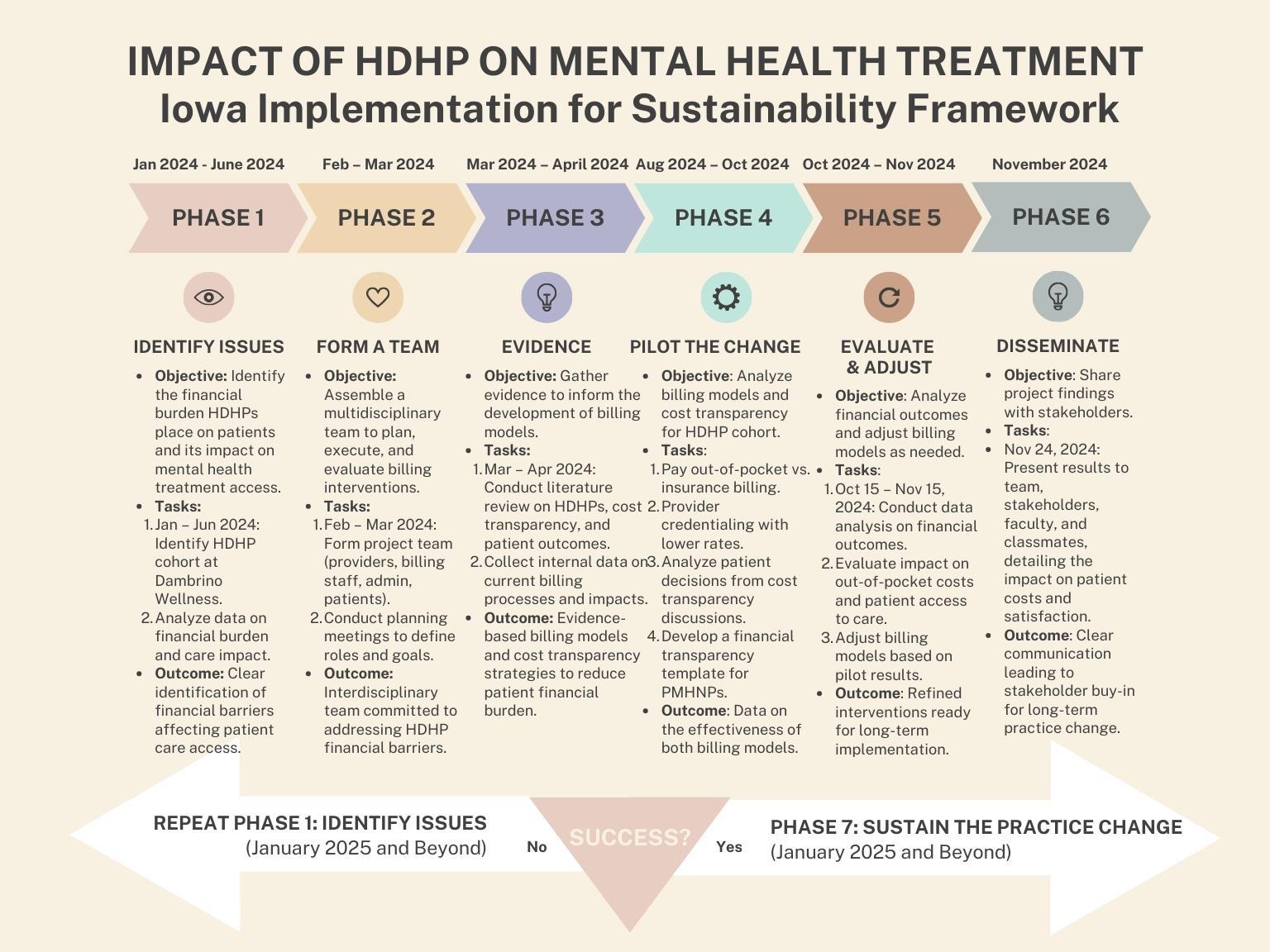
A retrospective review of charts was conducted between August and December 2024. Data were collected from 145 patients who established care at a nurse practitioner owned practice in Tennessee between January 1 and June 30, 2024, with a subset of 21 patients (14.5%) identified as having HDHPs. Financial transparency interventions included structured discussions led by a psychiatric nurse practitioner on insurance utilization, cash-pay options, and deductible impacts. Key outcome measures included the percentage of HDHP patients who experienced a reduced out-of-pocket (OOP) financial burden, average patients seen per day, and provider time spent on financial transparency.
of patients with HDHP met the project AIM (17 patients)
• 19% of patients with HDHP did not meet the project AIM (4 patients)


While the project AIM was not met, the majority of HDHP patients at a nurse practitioner owned practice in Tennessee experienced a reduced OOP payment responsibility following a total of 125 financial transparency conversations that took place between January 1 and June 30, 2024. Barriers could remain for some HDHP patients who default to insurance-based payment or discontinue care due to cost concerns, while other HDHP patients could pay less over the course of the year due to meeting the deductible.
These findings underscore the importance of financial literacy in mental health treatment. Mental health providers can play a key role in supporting patient decision-making and insurance utilization through financial transparency.