
The Beacon
INSIDE
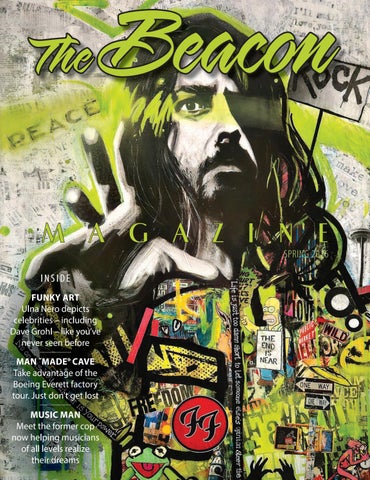
FUNKY ART
Ulna ero dep icts celeb rities includ ing Dave rohl like ou ve never seen bef ore
MAN ˜MADE° CAVE
Take ad vantage of the Boeing Everett actory tour. Just on t get lost
MUSIC MAN
Meet the ormer cop now help ing musicians of all levels realiz e their reams
SPRING 2026
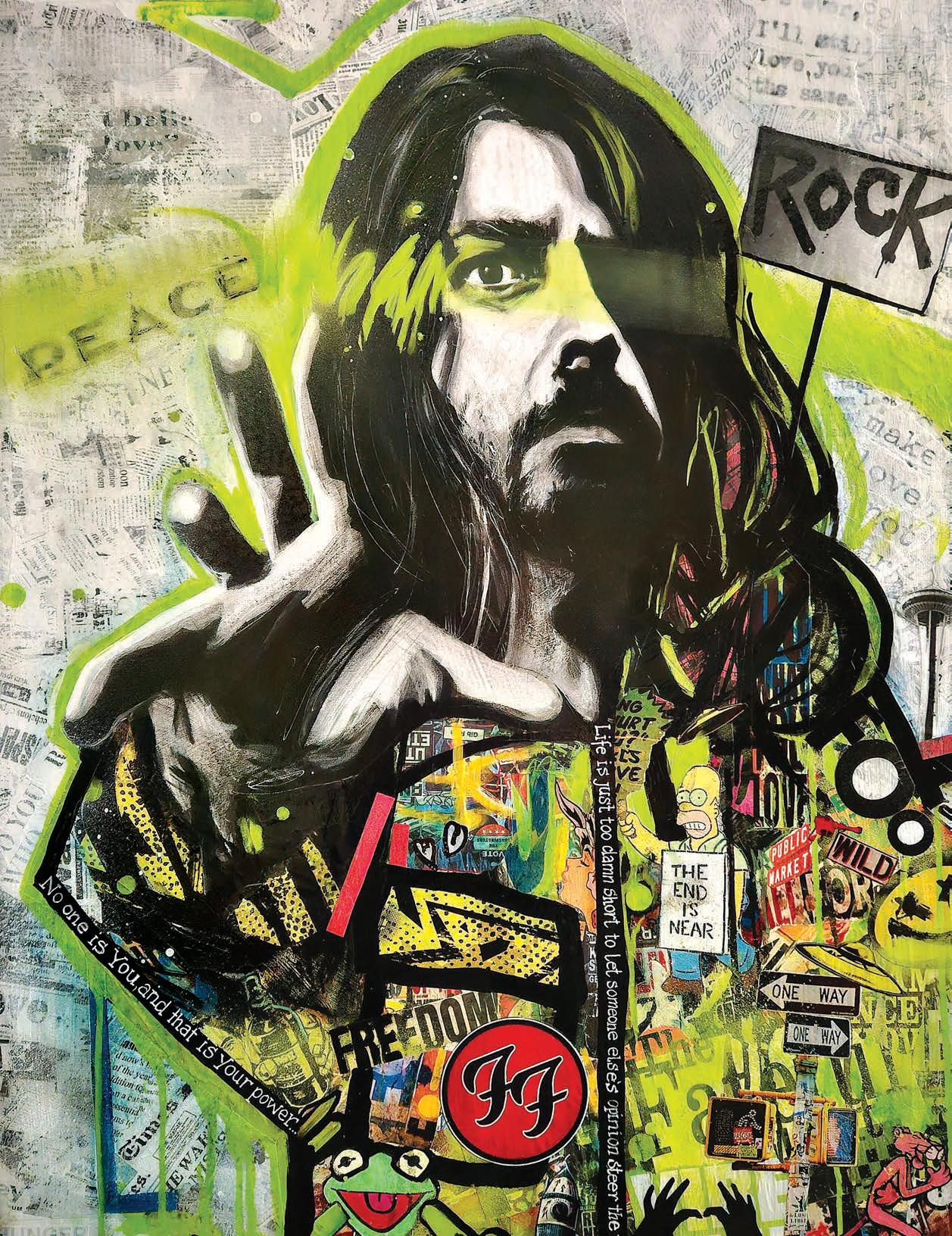




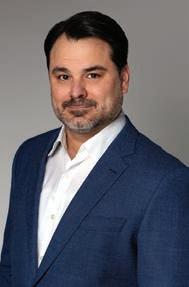
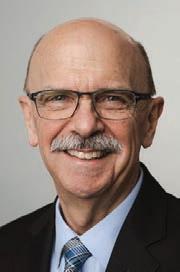
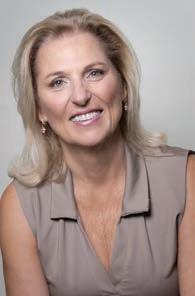
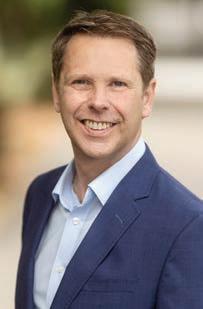








Photo Credit: Jim Hills
Come On In Spring 2026


Crazy Good
4
An ex-cop and lifelong musician is deep into this new career as a local music mogul. He’s got plenty of musicians eager to step into his home studio and create some magic.
Explore the possibilities
8 Whether a little di cult to nd or hiding in plain sight, there are plenty of restaurants in south county worthy of a visit.
A Day in the Life
13
The day-to-day life of a commercial diver has its rewards. But, as you might expect, there are plenty of dangers. One local diver helps students prepare for the plunge.

Taking ight
18
Many, many people embark on the Boeing Everett Factory Tour. But there’s one thing to remember as you meet your tour guide inside the world’s largest factory.
Artist’s Corner
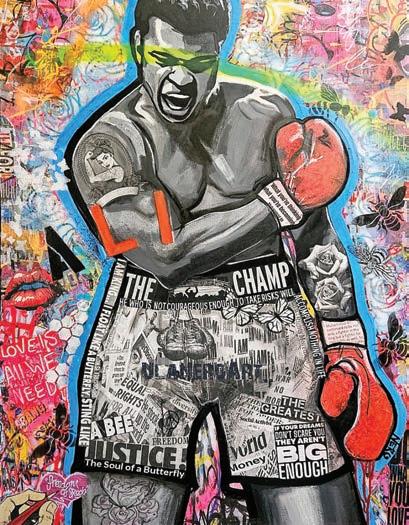
23 There’s no looking away from Mukilteo artist Ula Nero’s bright and funky artwork. You might recognize many of her pieces depicting artists – such as David Bowie and Freddy Mercury.






Food for all
24
The area’s food banks exist to serve everyone. That’s why perceptions need to change on who relies on them, including plenty of working families.
Season to Taste
30
Lemon Brûlée – Indulge in this creamy, tangy brûlée, a simple yet elegant dessert with a perfectly caramelized topping.













Soergel
Debbie Magill Design & Layout
Maria A. Montalvo Freelance Writer Jenn Barker Publisher
Novak
Rick Sinnett Freelance Writer
Carly B. Dykes Freelance Writer
The MUSIC Man
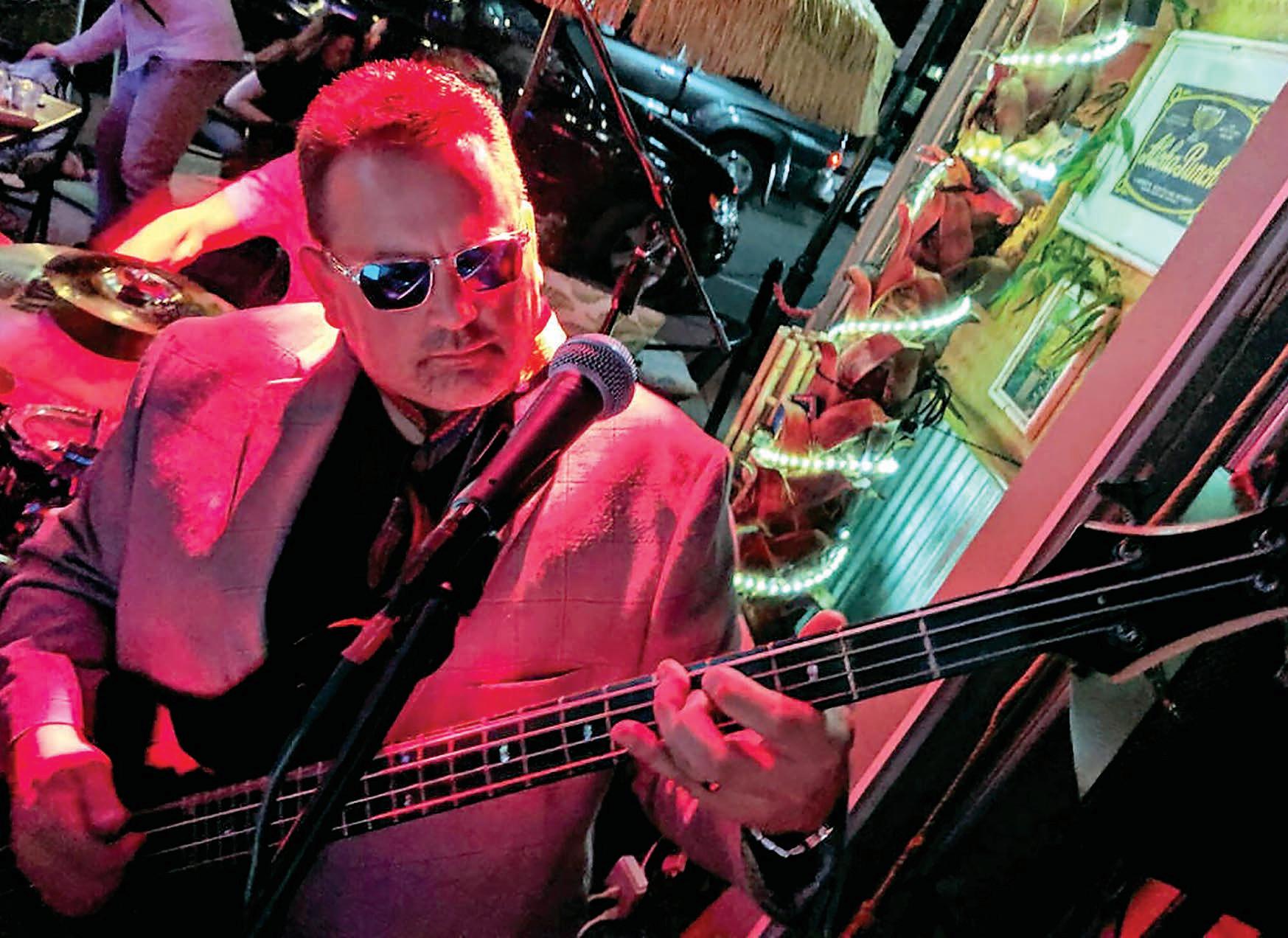

Alan Hardwick’s studio fills a niche in Edmonds
By Brian Soergel
How do you imagine a recording studio? The modest space tucked into Alan Hardwick’s home in Edmonds’ Esperance neighborhood is a tight t. But it works, and it’s from here that Alan Hardwick Productions records and produces music to ensure that no local musician’s song goes unheard.
A recent afternoon brought John Pinetree to the studio to record backing tracks for guitarist Harry Sills’ new record for Crazy Good Records. If you’ve seen Pinetree in concert – a perfect surname for a very tall human – you know he’s an energetic multi-instrumentalist who leads a popular collective called John Pinetree and the Yellin’ Degenerates.
He’s a top-notch harmonica player who packs a case of harps to suit a particular song, whether funk, soul, blues, or Americana. He’s a singer, songwriter, rowing coach-turned-contractor who has been making music, in one form or another, for nearly four decades. He moved to Edmonds in 2003 from Philadelphia, but the story starts much earlier – on a farm in Colorado, xing things with his hands, and later coaching rowing at the collegiate and national team levels.
“I’ve always had a lot of energy,” he said from the studio. After a serious car accident in 2020 forced him to slow down physically – the last thing he wanted to do – he returned to his musical roots, practicing daily and hi ing the road near and far, performing over 170 shows in 2021. That included opening for Diana Krall and Chris Isaak at Chateau St. Michelle’s summer concert series. “I need to move. Music has always been
there, like a companion.”
Hardwick has helped Pinetree, Sills, and other local musicians push their music out to digital platforms. “He’s an incredibly supportive person,” Pinetree said. “He’s a great musician and a great human. He’s like an o ensive lineman, like he’s a protector and he’s got his paws up, ready to ght for you. I get a real good sense about him, and everyone around him in his orbit speaks highly of him.”
Bringing music to town
You might have seen Alan Hardwick in Edmonds during his former life as an Edmonds Police sergeant. In 2001, he founded the Boise Police Department’s Criminal Intelligence Unit before moving with his family to Edmonds, where he served as a detective sergeant and acting assistant chief of police.
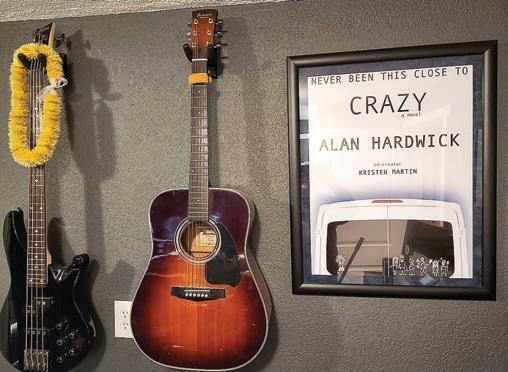
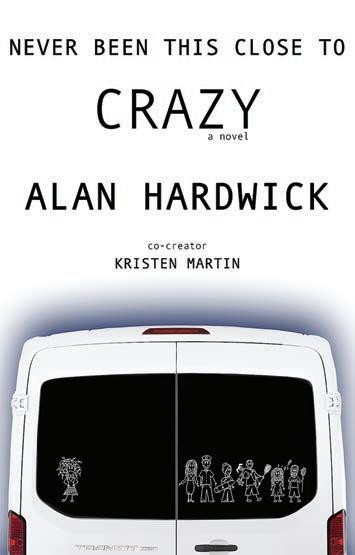
The Beacon pro led him in 2019 after he wrote a book called “Never Been Too Close to Crazy” (the protagonist is a guitar-playing cop), the cover of which hangs in his studio. But his passion has to lie with music, which he studied at Washington State University. “It’s a top-notch music program,” he said. “The theory and composition I learned there was fabulous, even though I wasn’t that great of a performer.”
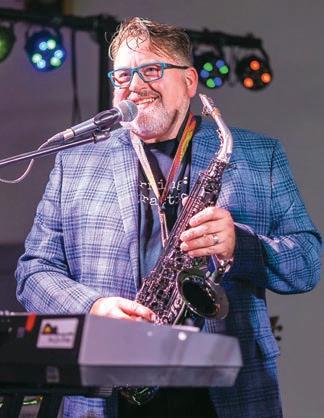
Now retired, Hardwick leads the popular local band One Love Bridge, where he plays guitar and saxophone. Then he expanded his outlook: It was about six years ago that he created Alan Hardwick Productions; since then, he’s been the force behind exposing local artists through the recordings, featuring them at concerts at locations like Vinbero, Salish Boathouse,
Alan Hardwick photo
and the Old Opera House. He’s also been involved in sponsoring popular events such as the popular PorchFest Edmonds.
During the last couple of years, his production company created and produced a dance party at the Old Edmonds Opera House after the Mrs. Roper Pub Crawl and Roper Romp, where a sea of residents donned red wigs and caftans in honor of the amboyant character portrayed by Audrey Lindley in the ’70s sitcom “Three’s Company.”
Hardwick started Crazy Good Records because he needed to identify the players he was producing. The rst artist he represented was Beclynn, formerly a member of The Band LeLe trio from Edmonds.
It was before the pandemic, and while One Love Bridge built its fan base with local shows, he spoke to other musicians who didn’t have a place to play or weren’t sure how to get their music recorded. It was partly because of those conversations that led him to create the record label.
“I want to support the artists. We’re fans rst. I just want to

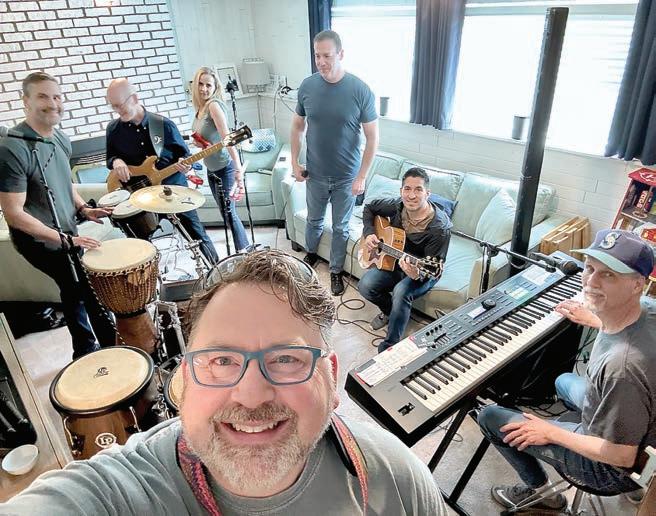
Alan Hardwick's studio (left) has the bells and whistles to record high-quality music.
Below, Hardwick gets ready to jam with some friends.

do things so musicians and the artists’ work can get produced, distributed, and put into the world. I rmly believe that’s necessary for humanity, frankly, and because there’s always been such a gatekeeping phenomenon in the music industry that very few people get to be heard, or very few people get to get into a studio to record. There are artists who have great music in them, but it never gets produced, and never gets extracted because they don’t have the tools or the support to make that happen.”
He’s come a long way from recording music from the radio and crafting mixtapes at age 9. Later, it was Apple’s GarageBand and with Ableton software. Today, his studio features the bells, whistles, and lights you’d expect, including a soundboard, mics, and much more. Somehow, it all ts in the studio, with a li le room left over for musicians to create their masterpieces. A success story
One day, Hardwick was out and about when he heard Richard Taylor Jr.’s voice. Taylor is a mental health advocate, motivational speaker, and author. He has a podcast, and now add singer to the list. “I’m like, dude, you should really do this. You’ve got a great voice, a great personality, and you’re driven.” Hardwick asked him what format his songs were. Phone recording? Is it in your head? This is where Hardwick laughs.
“Richard said, ‘Well, I kind of have a feeling how it goes. He had lyrics, and he had melodic ideas and vibe feelings.
And so that’s what we had to work with. He would speak the lyrics out to me and get into this sort of … not a trance, but sort of this ethereal, repetitive motion with his voice. And from that, I would go, ‘OK! Is that making sense to you, is that kind of what you’re hearing in your head?’ He would say yes or no, and if it was no, we’d try something different. It wouldn’t take long to get to a de ned melody, a de ned chord structure. And then we would play with the words so that it made sense.”
Taylor’s sessions led to “An Edmonds Kind of Christmas,” which he performed at the town’s holiday tree lighting in 2024. He later performed it at a launch party for a ve-song EP. “Richard drafted the lyrics to the song with an idea for a melody,” Hardwick said. “He brought that to me and asked me to put it to music, something with a vibe similar to a classic holiday song like those of Nat King Cole, Frank Sinatra, or Michael Bublé. I came up with several iterations in my studio, which we played around with for an hour or so, eventually landing on the version that became the song.”
Most popular
Hardwick said his most popular and successful artist is E. Prui , a smooth jazz bassist who has performed in Edmonds at Vinbero, among other locations. He recorded the album “Bass Gra ti” at Crazy Good Studios. Three of the CD’s songs appeared on the SmoothJazz.com charts. Hardwick and Prui recently conducted a radio campaign through the in uen-

Alan Hardwick photo
Brian Soergel photo
tial website. Hardwick said he’s been in touch with chart-topping saxophonist Dave Koz and said there are plans in the works, but he didn’t want to dish too much on that yet.
‘She’s happy’
Hardwick typically charges $85 an hour for studio time. Although most clients are established, Hard-
wick said some enter his studio to record music for themselves or their kids. Last year, he worked with a woman in her 60s who used to sing in Las Vegas. But she had trouble with her voice after 20 years of performing, and shut down. “She eventually wanted to prove that she could sing again, and now she’s auditioning for one of the national talent shows. We recorded some music, and she’s happy.” n







Alan Hardwick photo
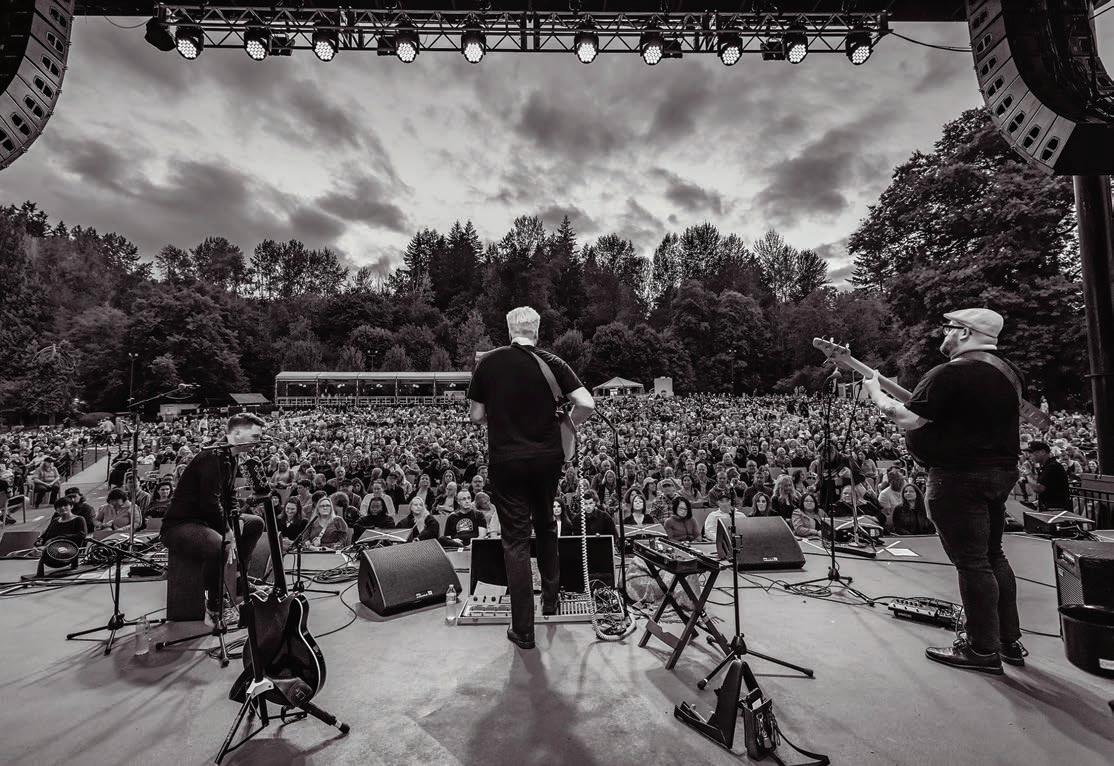
John Pinetree and the Yellin’ Degenerates perform for a large crowd. Pinetree records music in Alan Hardwick’s Edmonds studio.
The cost of live music: What are we willing to pay?
Seattle is a city with a rich history of cranking out world-class musicians. Most of them got their start at small and medium-sized music venues, co ee shops, and bars. Most school districts still support music education as an option, creating an entire subculture of well-educated creatives who dream of making it big.
But like many cities in the U.S., Seattle and its suburban neighbors – including Mukilteo, Edmonds, and Mill Creek – are at a crossroads when it comes to the business of live music. While many local establishments aim to support artists and boost their own profiles by showcasing live performances, the financial equation behind the music is often as complex as a jazz improv session. And, like jazz itself, it is at risk of becoming something pushed to the background of our existence.
The high notes of investment
Businesses that endeavor to host live music face a surprising reality when it comes to costs. Premium floor space must be configured to accommodate both performers and audiences comfortably. Overhead expenses such as sound equipment and sta ng for events add layers of financial burden, not to mention hiring someone with the right skill set to operate the gear and keep it running.
Then comes the crucial act of vetting musicians – a time-consuming process that ensures the quality of the music and the musicians align with the venue’s brand and the audience’s expectations.
Each of these elements requires a level of knowledge, organization, and time – that one fleeting commodity most business owners need to protect. Unless the owner has these skills inhouse, this leads to either doing the job poorly or hiring an outside service such as a booking agency, further whittling down profit for venues and pay for artists.
tus are categorically prevented from fully engaging and developing their art. When that happens, it directly impacts the number and quality of songs that are created, songs that each of us would have danced to, cried with, or put on repeat until we finally felt OK. Art, including music, is essential to make sense of our world. Especially the one in our own head.
A diminishing stage
TBy Alan Hardwick
Many audiences love to hear their favorite songs performed live. But for a local artist to perform a song published by another artist, the venue has to pay three di erent performing rights organizations an annual fee of more than $350 each year for that to happen. These organizations pay songwriters for every reported public performance of their song at a rate set by Congress.
And while it’s only pennies for the songwriters, this fee can be a serious hurdle for a business that just wants to support local music in the community. Some venues avoid this fee by requiring artists to perform only original music, eliminating the acts and audiences who love those familiar cover songs.
The low notes of compensation
T
he going rates for live performances are surprisingly low. Restaurants and bars may o er $100-$200 for a couple of hours of music by a soloist or small ensemble. While that may sound like a nice hourly rate for the artist, it doesn’t account for the taxes, travel, gear, maintenance, and expenses the artist has to manage. Most musicians, driven either by a passion for music or pure madness, are happy just to break even with their costs, leaving them to rely on another full-time job just to fuel their obsession.
Establishments struggle with this reality, knowing they need to maintain a viable business model while also supporting the musical community. Many venues have grappled with whether to charge a cover fee or enforce a minimum purchase to o set these costs, leading to mixed feelings among patrons who wish to support the scene but face their own budget constraints.
And while many people are glad to toss $5 into a tip jar for a good song, few realize that may be the only money going home with the artist that night. There’s a serious downside to this: Artists who relinquish their art to hobby sta-
he past decade has seen the closure of several iconic Seattle music venues, including Madame Lou’s, Tula’s, Here-After, and The Woods. Others, like Tim’s Tavern, The Angry Beaver, and even The Crocodile, have faced possible closures, often citing razor-thin operational margins that rely heavily on food and beverage sales to keep the doors open. In Edmonds, Vinbero hosted live music twice weekly, but the costs for a 26-seat house eventually outran the financial benefits, making it impossible to continue at that pace.
Musicians who are hoping to earn a living from their art have limited places to perform, while audiences experience a diminishing range of artists to hear. Despite the high number of artists available, venue owners who can keep the music coming must constantly innovate to keep their doors open while nurturing the local music scene.
The call to harmonize support
D
espite these challenges, the spirit of Seattle’s music scene remains resilient. Venues that successfully integrate live music over time can see a boost in patron loyalty and community profile. They become cultural hubs where patrons not only come for the food and drinks but also for the irreplaceable ambiance that live music provides. This can elevate sales, but even when it doesn’t move the bottom line, it still makes us nod our heads, move our hips, shu e our feet, and close our eyes while we soak it all in.
A call to action
This delicate balance between fostering artistic talent and running a profitable business calls for community support. Anyone can support live music by attending shows, participating in venue promotions, and spreading the word. Every ticket purchased or meal ordered during a performance not only contributes to a vibrant ecosystem that benefits artists and businesses. It also feeds the soul of anyone who participates in the experience. Live music is a critical element to a thriving community.
A future of harmony
As Seattle and Puget Sound continue to produce talented musicians, our hope is that both new and established venues find innovative ways to sustain and expand their live music o erings. Community support is what makes the di erence, transforming financial burdens into investments in cultural enrichment. Let’s not allow the music to stop where it first began. Instead, let it play louder and reach further, echoing through the streets of our towns.
Seattle is a city synonymous with iconic music. Supporting live performances is more than preserving a cultural legacy – it’s about creating a thriving future. As we enjoy the rhythms and melodies woven into the fabric of our community, remember that each note played is a step toward sustaining the soul of Puget Sound. Support local music venues and keep the music alive for generations to come. n
– Alan Hardwick owns Crazy Good Records and Alan Hardwick ProductionsinEdmonds.He’salsoamemberofthelocalbandOneLoveBridge.





Waiting
to be
Discovered
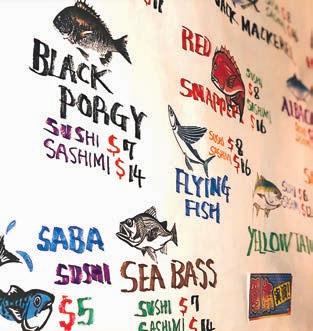
Some are hidden, some in plain sight – these restaurants are worth the visit
By Maria A. Montalvo
Most of us have a favorite romantic restaurant or spot to meet a friend – those hidden gems we feel like we’ve discovered or are one of the few to enjoy, and, sel shly, we kind of hope remain hidden. If we want them to be successful, though, it is only right to share and hope that others come to love them as much as we do.
Not too long ago, residents had only a few spots to choose from, and not many outside visitors came to Edmonds, Mukilteo, or Mill Creek to dine. These days, though, south Snohomish County is brimming with fantastic restaurants. High-pro le spots – like Salt and Iron in Edmonds, Hook & Cleaver in Mukilteo, and The Northern Public House in Mill Creek – are now big sh in an ever-growing pond.
When we talk about hidden gems, we’re referring to outstanding places that aren’t widely known or recognized. Finding a good one can make you feel like Indiana Jones or Dora the Explorer, or, since we are talking about food, perhaps bring to mind the late, great Anthony Bourdain.
Mukilteo
Restaurants abound along the Mukilteo Speedway, and if you do not know what you are looking for, it can be overwhelming to choose a spot. Most know that some of the region’s best pizza is there (thank you, Brooklyn Brothers), as well as favorite brew-pubs (Tapped and Diamond Knot).

At the strip mall that shares space with the local QFC, you’ll nd Taqueria Puebla. When you hear former Californians complaining about the lack of authentic Mexican food, tell them about this place. The food is inspired by the food and cafes of Puebla, Mexico. Chow down on a couple of street tacos, or jump in for the big classic burrito with your choice of meat. There’s more – mole poblano, quesadillas, sopes, among them. 11700 Mukilteo Speedway, Mukilteo
If you nd yourself speeding on the Speedway, Pho Café is a spot worth slowing down for. Their menu o ers a small but deliberate selection of pho, bun (vermicelli noodles), rice dishes, and Bahn mi sandwiches. They are also known for their egg and spring rolls, and once you



try them, you’ll see why. Pho Café is about the food, and you will be happier once you try it. 8410 Mukilteo Speedway, Suite G, Mukilteo.

But there is much more to nd when you keep looking. You’ll have to get o the Speedway and into Old Town to nd Li le Prague Bakery, legendary in West Sea le, before opening a location on Second Street. Owner Blanka Ly channels her great-grandmother and o ers clientele classic Eastern European baked goods. From apple strudel to Hungarian goulash with dumplings, the recipes from her family in the Czech Republic have been passed down for generations. (Now you know where you can taste Hungarian goulash with dumplings if that’s on your bucket list.)
The goulash is a slow-cooked beef stew served with, you guessed it, homemade steamed bread dumplings. If craving something sweet, Li le Prague is famous for its kolaches, a sweet bread with a variety of llings, as well as its sweet and


savory breakfasts and lunches. 801 Second St., Mukilteo. Highway 99, just east of Mukilteo, also has much to o er, like Rinconcito Peruano (18904 Highway 99, #4, Lynnwood) and T Dumpling House (3625 148th St. SW, #A, Lynnwood).

Edmonds

Downtown Edmonds is known for many a favorite spot, so not too many hidden gems to mention, while Highway 99 and 196th Street SW feature so many spots that you will go back to again and again – once you nd them.

Bangkok Boulevard is new to its location, and making fans of everyone who visits. It is just a few doors down from the fantastic Harvest Wonton Noodle (so yummy) and across the street from the beloved Rise & Shine Bakery. Hosoonyi and Dumpling Generation are two spots for deliciousness that are hard to nd but right next to each other in a small strip mall on the south end of Edmonds. 22923 Highway 99, Edmonds
Mr. Gyros Express is a food truck that is not quite a food truck, stationary in a parking lot by Tazza di Vita drive-through co ee (o cially in Lynnwood). We drive by it nearly daily and have go en into the habit of stopping regularly. Mediterranean food is one of my favorites, and nothing disappoints on this li le menu from this li le counter in this li le yellow-and-black cabin. The falafel, the gyros, the hummus, the Greek fries. Yum! 5124 168th St. SW, Lynnwood Mill Creek

Mill Creek has nearly endless shopping areas to explore for hidden gems. Locals love Bequest Co ee, Ellio Bay Pizza, Indigo Kitchen & Alehouse, and Claypit Indian Cuisine, but there are a number of other joints to duck into for a nice meal.

Wasabi Bay was one of the rst restaurants we visited after moving here in the early 2000s, and lucky for all of us, it is still there serving the most delicious sushi. The restaurant and sushi master Jin Hwan Chung are
Apple strudel at Little Prague Bakery in Old Town Mukilteo.

committed to traditional ingredients and techniques. ou will be treated to a beautiful platter o sushi (we have never been there and not made spectacles of ourselves). It is a bit hard to find i you do not know where to look. It’s south of the Mill Creek Town Center. 16300 Mill Creek Blvd., Mill Creek.

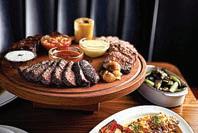
Love a good steak? A good steak is certainly not cheap these days, but if you’re willing to splurge, you have to visit Rare Society. Open for three years now, you’ll have to leave the popular Town Center to dine at this retro spot, where Frank Sinatra would have felt welcome. There’s filet mignon, ribeye, New ork, and Wagyu Denver, but also Snake River Farms Wagyu tri-tip. Californians have been gorging on tender, juicy tri-tip for decades. This could be your chance to experience the buzz. 13223 39th Ave. SE, Mill Creek. Not officially in Mill Creek, but so vy close, is Sabai Sabai This restaurant serves Laotian and Thai cuisine with a dedication to freshness and quality that reminds you why people open restaurants – to share their love of food. I did not know green beans could taste so good (peanut phad prik khing), and their array of curries will have you going back for more. They also enjoy putting on a bit o a show, with an exhibition kitchen to watch the preparation. The staff are as lovely as the food is good. 1120 164th St. SW, #B, Lynnwood
Further afield

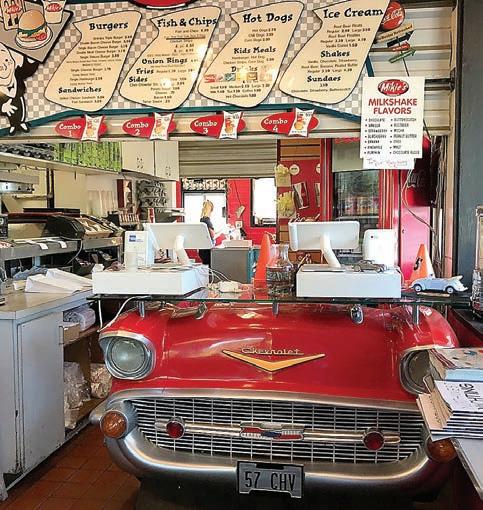
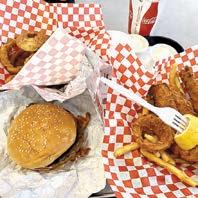
The team at El Mariachi Birria y Tacos clearly cares about putting out an incredibly tasty plate of food while also offering menu options deliciously created to meet the needs of nearly everyone, regardless of dietary restrictions. Taco Tuesdays is way too limiting when we have an affordable, authentic, delicious, and welcoming place like El Mariachi. 6100 Evergreen Way, Evere Who says you can’t get a delicious burger for under $20 these days? Have you heard of Mikie’s, not too far from Mukilteo (and El Mariachi) on Evergreen Way?
Can you believe a single hamburger with ketchup, mustard, and pickle for $3.10? Double bacon cheeseburger for $7? Double bacon cheeseburger with small fries and a medium drink for $12? Other options: A three-piece order of fish and chips with coleslaw and fries for $12.50? 4532 Evergreen Way, Evere
El Mariachi Birria y Tacos is the hands-down winner of all plates Mexican – once you know where to find it. I had pretty highpectations when we visited El Mariachi, given all the hype about the quality and flvors. It was even better than I could have imagined. It is not only the fresh ingredients, the deep, complex flvors in everything from a pickled onion to a salsa to pastor pork, or even the friendly service. 6100 Evergreen Way, Everett

Some of the Laotian and Thai dishes at Sabai Sabai.

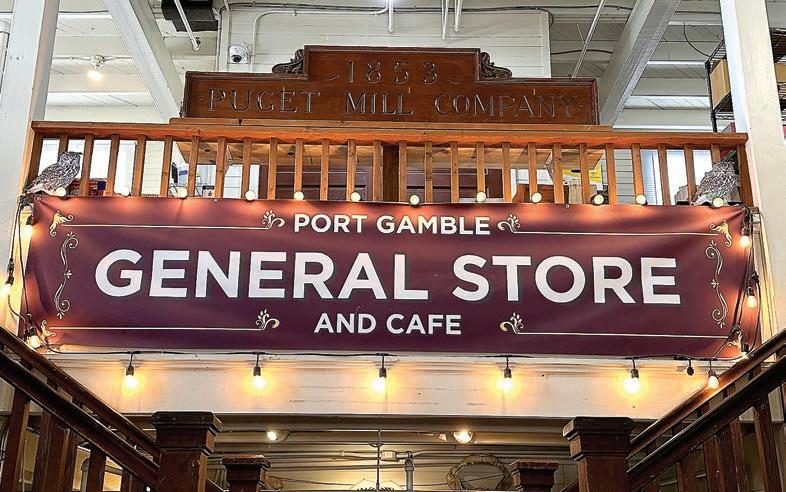
Dumpling World will rock your world. Enough said. Well, not really. Dumpling World is a new addition to the Paci c Northwest, opening its seventh location in Evere , just o Highway 99 on SE Evere Mall Way. The pan-fried soup dumplings are nothing short of magical, and the sheer range of choices of dumplings will have you going back time after time. (Note: de nitely get the thumb buns, too.) This spot is hard to nd, with a small storefront in a busy strip mall, but once you walk in and enter your name on the tablet to get on the waiting list, you will know you are in the right place. Those who know are so grateful they do, so don’t miss it. 620 SE Evere May Way, #400, Evere Port Gamble General Store and Café sets the standard for the locals across the Sound, so it is not much of a hidden gem on the Peninsula, but those of us on this side of the Puget Sound likely do not know about it. Every time we go across on the
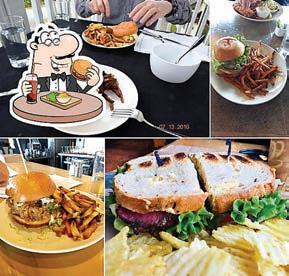
ferry, it is a necessary stop. Not only does the store o er a range of wonderful gifts, snacks, and items you just seem to need, but the café is also downright fantastic. Breakfast burritos, salads, and truly creative sandwiches round out the menu that always starts with a good cup of co ee and baked goods. While you might not be able to go there for lunch on any given day, the next time you take the ferry and drive north from Kingston, why stop anywhere else? 32400 Rainier Ave. NE, Port Gamble
There are so many hidden gems across south Snohomish County. Take a chance and stop at any of these, but also go in search of others. Most restaurants are started by dreamers who love food and want to share something with their friends and neighbors – being a part of that is as special to them as it is to you. n





















A Day in the Life



discipline
Wyatt Pehling of Nemo Marine Group on the risks, rewards of commercial salvaging
By Rick Sinne
On paper, the life of a commercial diver sounds exciting. Every day, you’re at another exotic location, underwater, building infrastructure that will never be seen – except by other divers – or salvaging a wreck. Edmonds-born Wya Pehling – sailor, salvager, builder, educator, and owner of the Nemo Marine Group – experienced rsthand the dangers lurking beneath the waves.
A couple of weeks after he graduated from the Divers Institute of Technology in Sea le, that danger came calling when he and classmates accepted a project in the Bahamas.
They agreed to revamp an operation where the owner let the company’s commercial diving lag. The new crew’s mission: to salvage a 35-foot vessel sunken in a canal. They decided on a “buoyant lift” because the area was too small for a crane.
“The plan was to ‘basket’ the vessel, running a sling underneath to cradle it,” Pehling said. “Because the water was shallow, we had to rig the lift bags as low as possible.” Making what he says was “a poor judgment call,” he decided to raise the stern, the back of the boat, by rigging a lift bag to the vessel’s swim step. “I knew swim steps are made for people – a couple of hundred pounds – not for lifting thousands of pounds.”
The younger, greener Pehling did something the wiser, experienced instructor Pehling, 29, would never do. He and his partner dipped underwater to pass the sling beneath the

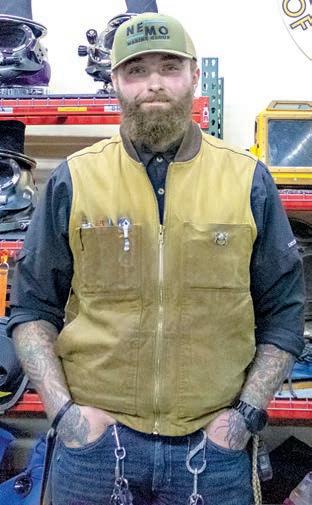

Wyatt Pehling, owner/operator of Nemo Marine Group and an instructor at the Divers Institute of Technology.
Rick Sinnett photo
Wyatt Pehling photo
wreck. “This was inexperience. We shouldn’t have rigged to the step, and we shouldn’t have gone underneath a vessel with an unsafe pick point.” Then, with what sounded like “a super loud bang and a pop,” the vessel came down about 3 feet. Both divers, fearing the other was trapped or crushed under the vessel, surfaced immediately.
If it had happened 30 seconds earlier, one of them might have been seriously injured or killed. “I ended up calling a former supervisor for advice. He told me I should have used a power washer to jet a hole under the boat and used a pipe pole to stab the sling through.”
Ge ing the skills
Salvaging isn’t simply a day at sea. “It’s more than just going out and saying, Hey, we found a boat,” Pehling said. “It’s about showing up prepared, solving problems underwater that most people never see, and leaving things be er than we found them.”
What started with a summer vacation in the Bahamas, where Pehling’s friend’s father owned a salvage business, would become a lifelong career. He traveled down for a summer vacation at 14 and dug it. He returned four years later as a deckhand and rigger, eventually hiring on as a welder.
He asked his friend’s dad about commercial diving. It’s one of the most nomadic lifestyles you could pursue, he was told, with a niche skill set. He found that a ractive. His next step was enrolling in one of the world’s premier dive schools.
Back to the PNW
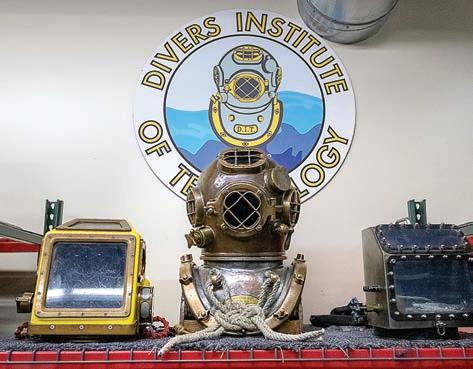
The Diving Institute of Technology, Sea le, on the northwestern shore of Lake Union, teaches all aspects of marine salvage and construction, including calculating vessel weight and equipment lifting capacity, performing rst aid, and conducting medical checks on divers.
In 2023, Pehling was o ered a position as a hydraulic and pneumatic tools instructor, as well as teaching theoretical and practical salvage and construction. He accepted the role and se led in Sea le.
Pehling started his business, which celebrated its second birthday in September, as a side job while working in marine construction. The company he worked for at the time specialized in building docks, marinas, and piers. Pehling said it gave him a diverse skill set, operating heavy equipment, tugboats, cranes, and doing demolition.
“I slowly started building my team, hiring other instructors and graduates from the school to run a small, tight, safe operation.”
Safety beneath the waves
If safety is a concern for construction and demolition on land, you can only imagine how important it is 30-plus feet underwater. Special
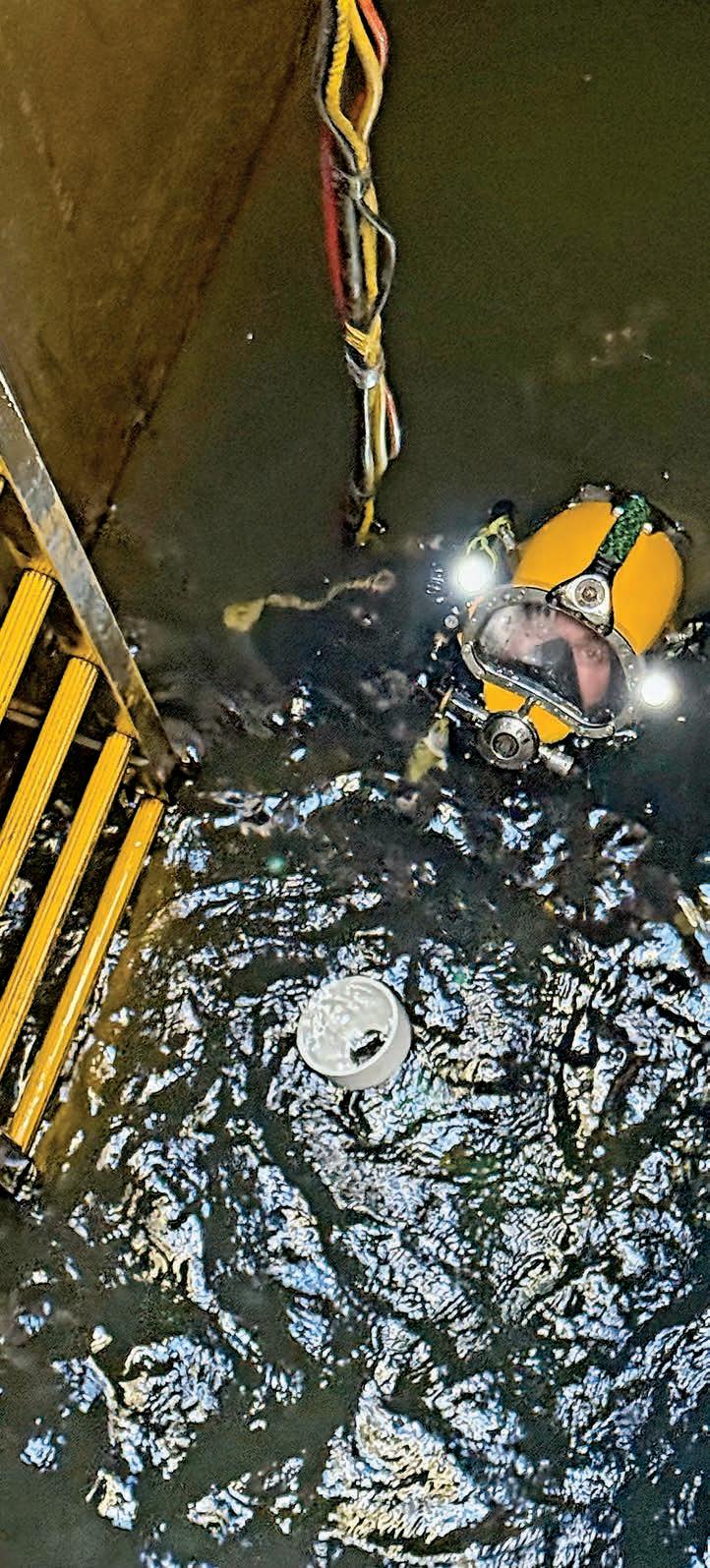

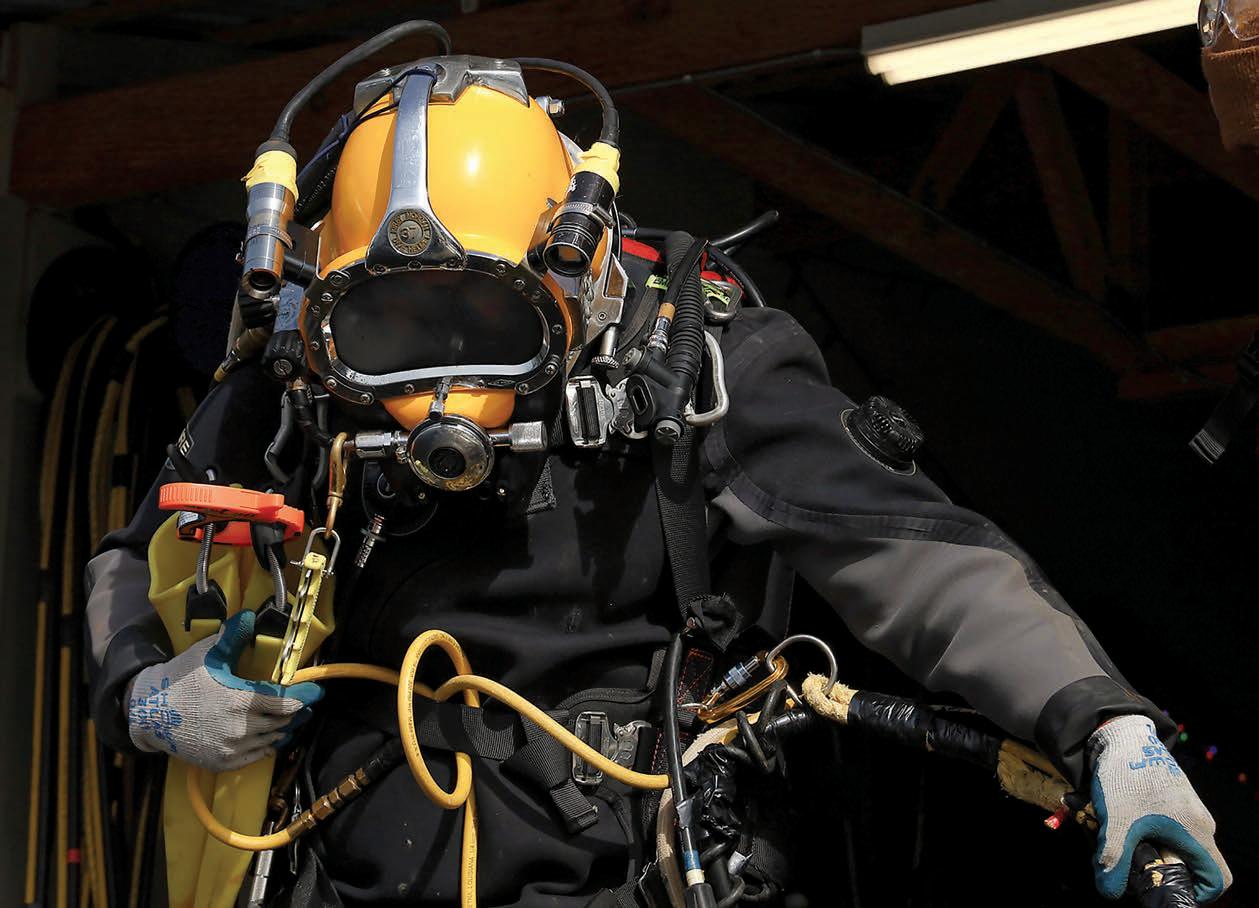
Wyatt Pehling, owner of Nemo Marine Group, gets ready for a salvaging dive.
Wyatt Pehling photo
weights, and breathing gear make a construction or salvage diver seem more like a less dangerous version of an astronaut. But equipment failure can still be fatal.
“It is important to me to educate (students) on rules, regulations, and governing bodies,” Pehling said. “I wouldn’t feel right running my business if I weren’t playing by the rules; it isn’t worth someone not making it home at the end of the day.”
Safety and discipline are day-to-day habits he picked up as a commercial diver. His mindset changed when he became a supervisor and hired his brothers. One day, one of his brothers poorly rigged a tool. Pehling said he hesitated for a moment, almost letting it slide. However, he also thought that if he moved the load and it broke and fell on him, he would have to tell his mother that he killed his brother through negligence.
“Once that is ingrained in your mindset, you can’t go back,” Pehling said. “Whether it is family or just a coworker, I am not going to be the reason I have to tell a loved one that someone isn’t coming home.”
Accidents can happen at any depth, from simple mistakes like being in a hurry. Pehling mentioned the infamous bends, which occur when nitrogen builds up in a diver’s blood from ascending too quickly. The diving institute in Sea le has a compression chamber on site. “But you don’t necessarily need to go 100 feet deep to be in danger. Technically, you can get hurt at just 30 feet if you aren’t careful.”
There are countless dangers, but rigging and crane work are among the most signi cant concerns. He has seen rigging failures where a chain breaks on a crane load, endangering anyone below it. “One minute you are ying a load, the next you hear a snap and the equipment comes down.” That’s why he always has an escape route in the back of his mind.
Lessons learned and the importance of school
Pehling said he nds it frustrating when safe companies that follow guidelines and regulations compete with those that don’t. “Sacrificing safety and compliance to make a dollar is not the business I am in.” He explained that there are contractors who cut corners, some by hiring carpenters and sending them to get a basic PADI (Professional Association of Diving Instructors) certi -
KATIE BOCK
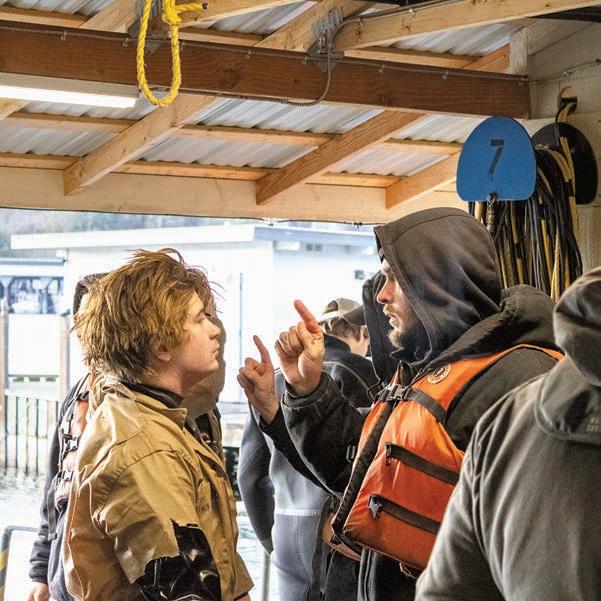
Besides helping the divers out of their gear while they acclimate to land, left, a health check is performed to make sure they are not su ering from the bends or other issues.

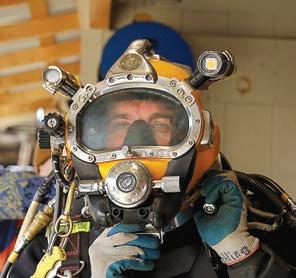
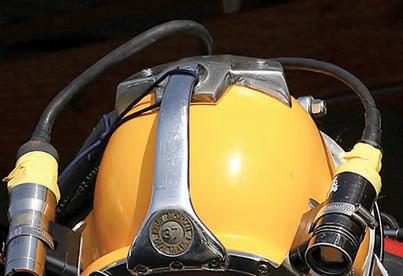
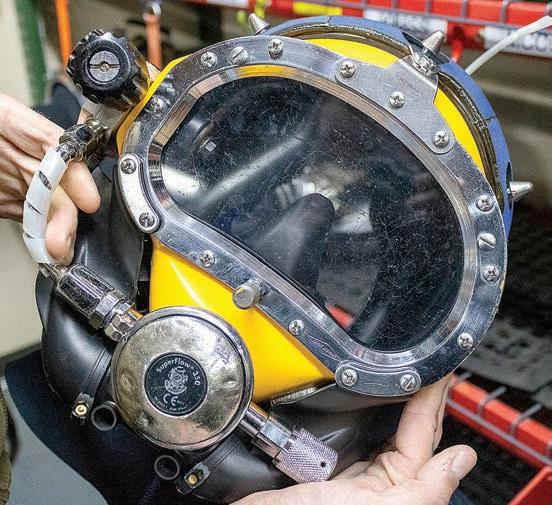
An older, but still functional, dive helmet (below) is in to get its dinged regulator replaced, the device that “regulates” air flow for the diver.



Rick Sinnett photos
cation over a week.
“Then they send those carpenters underwater to burn, cut, or work with hydraulic tools. It is extraordinarily unsafe. These workers don’t have the certi cations for deep diving or rst aid, yet they are doing the work to cut costs.” He said that it’s discouraging for graduates who spent seven months in an intensive program and paid between $30,000 and $40,000 for their education, only to see someone “back-door” into the industry.
According to the International Salvage Union (ISU) reporting, annual revenue in the maritime salvage industry varies. Members generated roughly $400 million in gross revenue in 2024, driven primarily by wreck removal and emergency responses.
Forecasts suggest signi cant growth across both small and large contract operations by 2030. Wreck Removal is estimated to generate over $200 million for ISU members; emergency response, more than $180 million.
Diving and running a niche business in the 21st century
It is never easy to start a business, especially one in a specialized eld where you are competing with large corporations. Even though there is expensive equipment – air systems and lters, dive suits and helmets, lift equipment, cranes – insurance is the largest overhead for his business. “When you work on or around the water, there are multiple insurance programs involved, like the Jones Act and Longshoremen’s insurance. Commercial diving is high-risk, so the workers’ comp is expensive.”
Scuba divers can reach a depth of 130 feet before adding helium to their air supply to avoid problems like the bends or nitrogen narcosis, also known as “rapture of the deep,” when the buildup of nitrogen combined with sea pressure creates a euphoric, drunken e ect. Safety and costs have led some companies to use underwater drones called ROVs (remotely operated vehicles). Using these machines as their eyes, they reduce dive time for construction and salvage crews. However, human hands are still needed to set up the lift gear.
Nemo Marine Group is named after Pehling’s 3-year-old dog, Nemo, himself named after Captain Nemo of the Jules Verne novels “Twenty Thousand Leagues Under the Sea” and “The Mysterious Island.” “For a long time, I struggled with marketing. I nally decided to make merchandise and wanted a comedic twist, so we made a ier with Nemo driving a Harley and me in the sidecar.”
Nemo Marine Group is in the process of being added to the state’s list of veri ed salvage contractors to bid on derelict vessels. “That is a goal of ours – to be among the heavy hi ers who are renowned for that work. Otherwise, it is a lot of word of mouth and being in the right place at the right time.”
Dive day
Pehling forbids guests on salvage or construction projects due to safety concerns. But a photo opportunity was cleared for

TThe meaning of ‘scuba,’ and why divers get skinnier
hank the French for scuba diving: The first successful scuba equipment (Self-Contained Underwater Breathing Apparatus), named the Aqua-Lung, was invented by French oceanographer Jacques Cousteau and engineer Emile Gagnan in 1942.
This invention lets divers roam the sea for sport without an air hose tethered to a helmet and is far more a ordable than a dive rig team. Roughly every 15 to 20 feet below the water, you lose a color: The way light filters through water means the colors of the rainbow are filtered out, starting with red, then orange, yellow, green, and so on, until all you are left with, if anything, are just shades of gray. Red disappears between 15 and 20 feet, making red objects begin to appear brown or gray. Orange begins to fade between 25 and 30, with yellow following at about 50 feet and green at about 70 feet. Blue is the last color in the spectrum to peter out in the depths, at about 100 feet or more.
However, if you introduce white light back into the environment with a waterproof flashlight, all the colors are restored. What was once murky and drab could turn out quite vibrant.
Not only do colors fade as you sink deeper, but you get skinnier, too. Every 33 feet of seawater exerts 14.7 pounds of pressure per square inch. This is why scuba divers adjust their weight belts as they rise and descend underwater: their bodies expand and contract.
Divers don’t hold their breath, as compressed air expands as it rises. If a diver goes underwater, fills a balloon with the air in their tanks, and releases it, it will expand until it pops. This is because the air is compressed into a cannister known as a scuba tank and is being released at that depth’s pressure. As the air rises, the water pressure decreases, allowing the air to expand.
This is why divers don’t hold their breath as they ascend and keep their airways open to let air escape their lungs by saying, “ahhhhhhhhh.” n

Rick Sinnett photo
Rick Sinnett photo
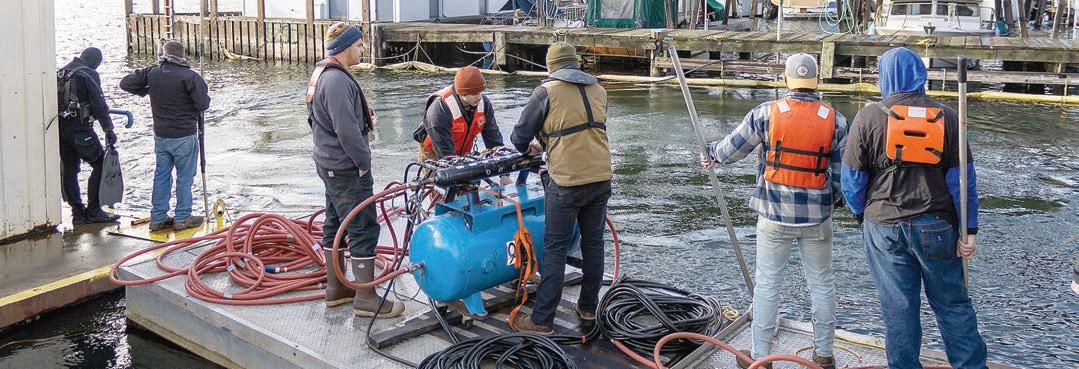
On Dec. 17, 2025, 10 students, some looking like they were fresh out of high school, while others, sporting beards and ta oos, looked every part the modern-day seadog born on the briny. It could have been nerves from their Navy-based nal test, or they might have taken their work that seriously, but every team member was focused on their task or on what needed to be done next.
The students lled vital roles on salvage barges: salvage master, salvage engineer, and divers. Teachers volunteered as deckhands to assist with manual tasks, such as handling towlines and mooring the barge. A safety team was suited up and ready in case of an emergency.
The divers coordinated with the salvage master over the radio system. A camera mounted on the diver’s helmet allows the salvage master a diver’s point of view to check connections, welds, and equipment before lifting the salvage vessel. While lling one of the airbags, bubbles were observed coming from it. It was replaced.
After the connections and equipment were cleared, the controlled ascent began. The divers swam clear of the area before the vessel breached the surface, then a ached towing lines to the barge, where crew members pulled the boat in and guided it with poles. When the vessel was close to the barge, two large pumps extracted 9,000-11,000 gallons of water from the salvage and returned it to the lake in about 10-15 minutes.
Once the practice boat is safely buoyant, the pontoons are removed, and the faux wreck can be tied to the barge.
After the salvage was raised, the equipment was repacked, and the nal test was conducted. Students relaxed and smiled. But unlike a real salvage operation, this vessel will not be scrapped and recycled. With the test done, the vessel will be resituated, its plugs pulled and sunk for the next class to raise from the depths. n


















































25 YE S! YE R Celebrating in























Rick Sinnett photo
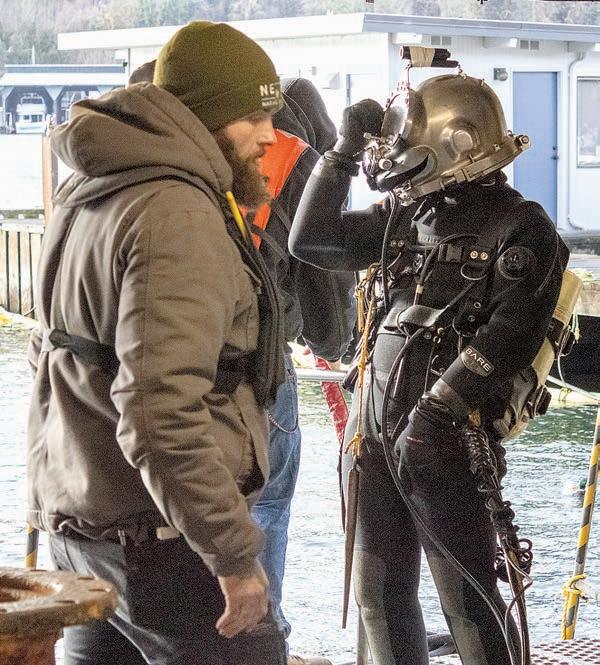
Wyatt Pehling stands in the foreground as the diver gives his communication and camera system a check.

INSIDE GIANT CAVE THE MAN-MADE
Christopher Summitt’s Boeing tour homecoming

By Paul Archipley
On the outside, the Boeing Evere Factory still feels like a landmark you drive toward – a low-slung horizon of gray and white at the edge of Paine Field, with the Cascade foothills looming behind it, and the main runway stretching south. It’s massive even before you step through the doors, the kind of place that makes rst-time visitors want to reach for their phones.
But they can’t. Not on this tour.
Before anyone boards the bus at the Boeing Future of Flight, the rules come rst: no cameras, no cellphones, no purses, no backpacks – no personal items at all. Everything goes into lockers in the lobby. Children must be at least 4 feet tall. No carrying kids. No exceptions.
The tour is an 80-minute guided passage through the world’s largest factory – a place where airplanes are assembled in plain view and where the scale is so hard to grasp that guides like Christopher Summi have learned to translate it into a story.
“Giant man-made cave,” Summi calls it. “And those work bays, the six massive work bays, are like canyons within that cave. They really are. You
Paul Archipley photo
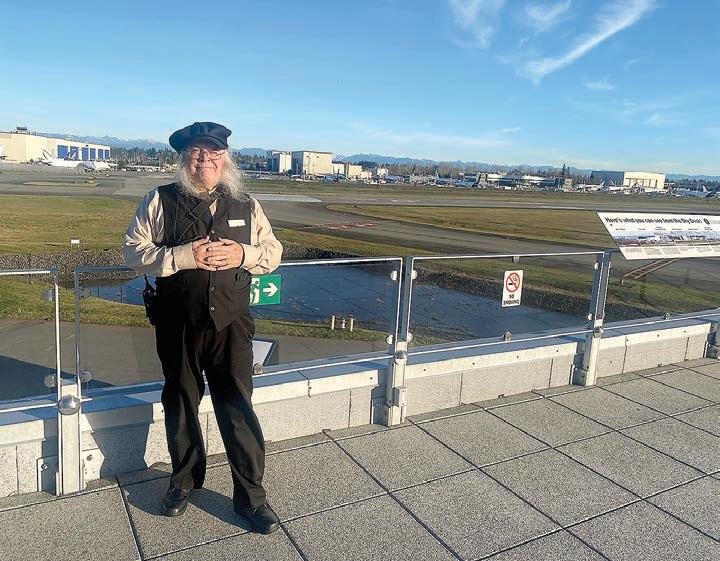
Christopher Summitt, a Boeing tour guide and Mukilteo historian/storyteller, stands on the Future of Flight’s Sky Deck overlooking Paine Field. Tourists and locals alike enjoy the sweeping views of the airport, Boeing plant, and Cascades.
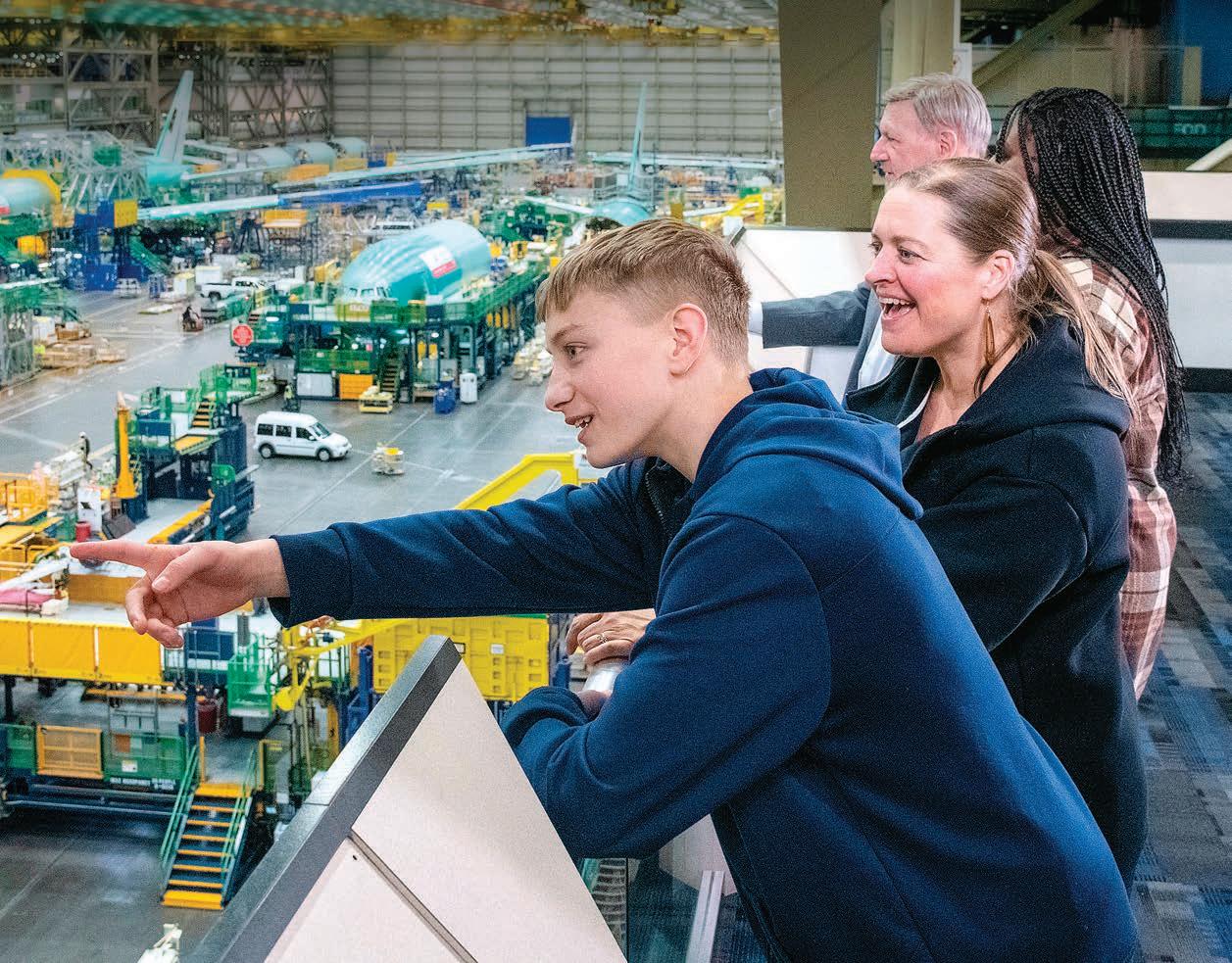
would have to go back to the ancient world to nd that scale of monumental human activity.” Summi isn’t an engineer. And on the Boeing tour, that’s part of what makes him e ective. “History and storytelling are my skills,” he said.
For visitors hoping to glimpse the machinery of modern aviation, the Boeing tour o ers something simple and rare: a front-row view from a factory balcony, high above the assembly line, watching a wide-body jet take shape below – and a guide who knows how to turn what you’re seeing into something you can feel.
A kid at the end of the runway
Summi ’s relationship with Boeing began long before he ever held a microphone. “I grew up at the end of the runway,” he said. “I saw much of this go up as a child.” His house at the south end of Paine Field was close enough that the rumble of engines became part of the neighborhood soundscape. Boeing wasn’t a distant corporate name; it was the place where parents worked, where family friends’ paychecks came from, where the region’s fortunes rose and fell in waves.


Boeing, I had to have a di erent career. There’d never be a con ict of interest between us. Important when you work at Boeing.”
Instead, he leaned into bringing history to life. He got his start with the National Park Service, working nearly a thousand miles away at Li le Bighorn – the Custer ba le eld in Montana. He did archeological work and helped tell the story of a ba le most know through various Hollywood versions.

He then went into law enforcement in Los Angeles County, working in sheri ’s department court services. When supervisors learned he could speak clearly and command a room, he found himself brie ng jurors – a job that, in hindsight, sounds like an early rehearsal for guiding groups through Boeing.

But Los Angeles wasn’t home. “Dad said, ‘What you’re doing down there, you could do a lot safer up here.’ I decided I’m not really cut out for law enforcement. I don’t like being pushy.”
His father was part of that world. “My father helped design the ight controls on the 727, all the way to the triple seven,” Summi said, still using the a ectionate shorthand Boeing people tend to adopt. “So I couldn’t help but learn the lore of this place … from dad blowing o steam at night when he got home.”
But he didn’t follow his father into Boeing engineering. In fact, he made a point of choosing a di erent path. “So long as he worked at
When a Boeing Future of Flight job fair opened a door, he stepped through. “Good heavens, yes,” he remembered thinking when the call came. “It’s right in my backyard. This is home.”
He started as a tour guide in 2009, 17 years ago. Over time, he learned the thing that makes a tour guide more than a script reader: You’re not just delivering information – you’re reading a room, anticipating questions, and managing a moving group inside a working factory. “The tour operation is a logistical achievement,” he said. He meant it literally.
Boeing Co. photo
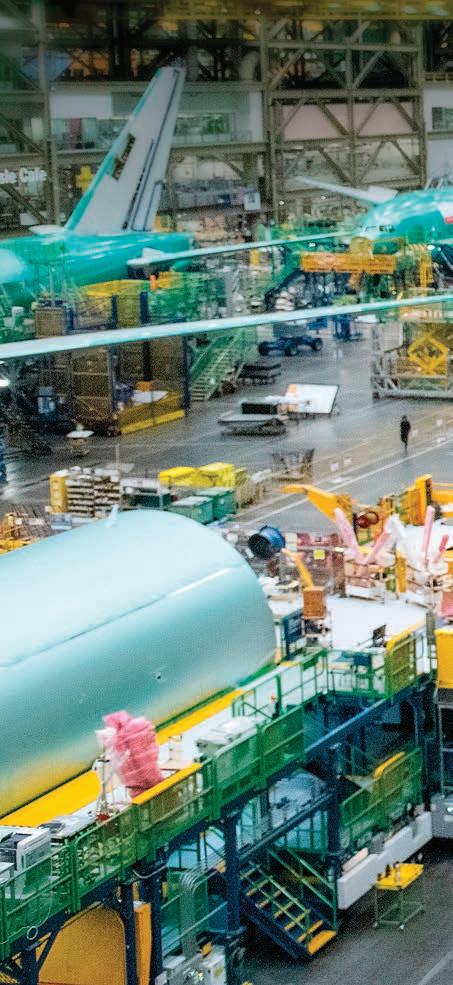
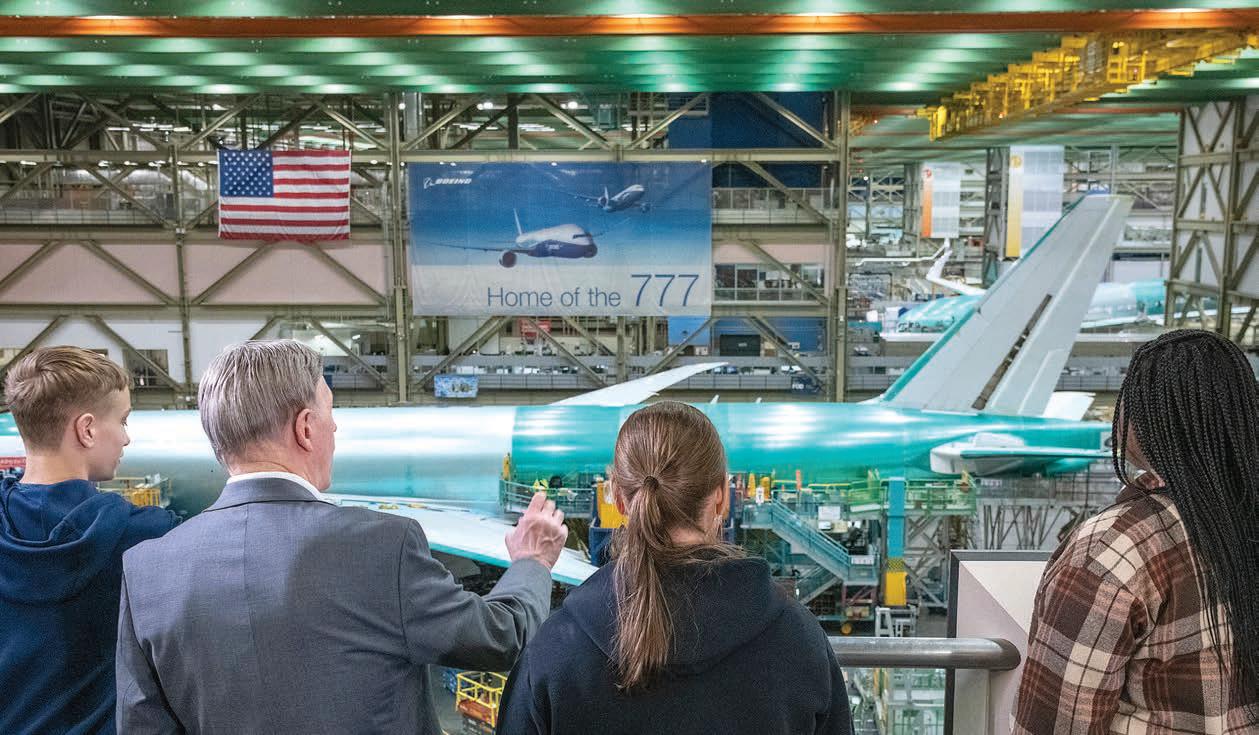
Visitors taking the Boeing tour marvel at the 777-777x assembly line, one of six production lines at the plant, the largest building by volume in the world.

The tour is part text, part shepherding
Visitors begin at Boeing’s Future of Flight, where gallery exhibits highlight current and future Boeing products and services, and the Sky Deck o ers photo opportunities with views of the factory, the Cascade Range, and Paine Field’s runways. Then it’s on to the main event – inside the factory, to the observation balcony for a view of current 777-777X production.
What people don’t always realize is that the tour is as much choreography as it is storytelling, Summi said. You count your group as they leave the theater. You count again. The factory is enormous, the pace is timed, and no guide wants to be the person who loses track of a visitor in a place built for moving airplanes, not wandering tourists.
visitor, it was a chance to see how a legendary airplane was built. For Summi , it was a chance to connect people not just to machines but to the history of work, to the “ways of our fathers,” as he put it.
Then the world changed. The pandemic had begun. The 747 program began shu ing down, and the tour shifted its focus. Now, the Evere experience centers on the 777-777X assembly line, with the site continuing to evolve. Summi anticipates more change ahead: the possibility of new work coming through, the way Boeing’s production ecosystems shift between Evere and Renton, and how logistics tie Washington’s aerospace heartbeat to rail routes that start far away.



So successful guides do two things at once: they keep the group safe and on time, and they make the experience vivid enough that people forget they’re following a schedule. Summi doesn’t want visitors merely impressed; he wants to help them translate immensity into something graspable. He points to the bays like canyons, and frames the building not as a set of dimensions but as a human accomplishment, a “monumental” act of construction that still functions like a living city.
When Summi started, the tour looked di erent. It included a window into the factory’s past – the 747 era –alongside the newer lines. “In those times, the tour visited the 747 rst. The audience would have to walk 800 feet to the middle of the building and then take the huge freight elevator up to the balcony.” He remembers the feel of the old manufacturing style: massive cranes, huge sections moved like ship hull pieces, the factory oor resembling “a shipyard at Bremerton or Harland and Wol at Belfast.”
“You made major assemblies – head, body, wing, and tail – and then, by crane, took them for the nal body join. For a
He can’t help himself. Even the shipping story becomes a kind of folktale – fuselages moving by rail from Wichita through Montana and across open country, a reminder that a jetliner is assembled in Evere , but it’s sourced from pre y much everywhere. The details he chooses aren’t random. He’s always aiming for what will land with a mixed group – aviation bu s, casual tourists, kids pulled along by parents, visitors who don’t speak English uently. When he says the tour is logistics, he doesn’t only mean moving bodies. He means moving understanding. What you can’t say – and what you can
Tour guides get the same kinds of questions again and again, Summi said, and often they’re shaped by headlines. The most frequent question is typically about something they’ve heard in the news. He tries to “soften” the conversation, not to avoid reality, but because the factory oor is not a place for speculation.
The most recent example, perhaps, is when a door plug fell o a Boeing 737 MAX 9 operated by Alaska Airlines in January 2024. Visitors ask questions. “These kinds of things I cannot answer. Too much importance would be
While the tour currently focuses on the 777-777x assembly line, the production line directly next door will soon be assembling 737 aircraft as well. The space opened up after Boeing moved its 787 Dreamliner production to its South Carolina plant.
Boeing Co. photo
How to plan for and take the Boeing Everett factory tour
An 80-minute guided tour inside the Boeing Evere Factory, with a balcony view of current production on the 777-777X assembly line (and related areas tied to widebody aircraft). Tours begin at Boeing Future of Flight in Mukilteo.
Where to go
Boeing Future of Flight 8415 Paine Field Blvd, Mukilteo, WA 98275 | Customer service: 800-464-1476
Hours
Boeing Future of Flight is generally open daily, 8:30 a.m. to 5:30 p.m. (Tour times vary by day – check when buying tickets.)
Tickets: Buy ahead
Purchase online if you can. Tours can sell out, and advance purchase is strongly recommended.
Plan on arriving early enough to park, check in, and store items before the tour starts.
What you’ll see
A front-row view from the factory balcony. You’ll be looking down on the active assembly area from high above.
Boeing history and context from your guide, plus Future of Flight’s Gallery exhibits and the rooftop Sky Deck (great views of the factory, runway activity, and the Cascades).
The non-negotiable safety rules
(Read this before you arrive.)
No personal items on the tour: no phones, cameras, purses,

backpacks, binoculars, or loose items.
Free lockers are available in the lobby to store everything. Kids must be at least 4 feet (122 cm) tall.
Carrying children is not permi ed for safety reasons.
Accessibility
Boeing Future of Flight is an accessible facility, with elevators available on every oor. If you need accommodations, call ahead: 800-464-1476.
Ge ing there
Driving: Follow signs from Highway 526 (Exit 189 o I-5) to Boeing Future of Flight.
The experience isn’t 80 minutes of standing in one spot. Expect a mix of:
• check-in and brie ng
• bus travel within the complex
• walking (including an underground tunnel route)
• elevator/stairs
• a view from the balcony where you’ll watch work happening on the line.
Simple tips for a smooth visit
Dress for a cool, industrial environment, comfortable walking. Use the restroom beforehand – the tour runs on a tight schedule.
Keep pockets simple (keys, wallet, ID) so locker storage is quick.
After the tour, leave time for the Sky Deck and Gallery – they’re part of what makes the trip feel complete.


put on what I say. We will wait for the investigation to be done.” Instead, he returns to a principle he believes the public should hear more often. “Remember, you’re building this thing as if your own family is going to be ying on it.”

world changed, routes changed, e ciency changed – and then he o ers something rarer: memory. He tells visitors about standing on the Sky Deck and watching the last 747 that Boeing would ever make take o .
“The very last 747 took o from that 9,000-foot runway beside me. Up there are employees who come out of retirement, old timers, now saying farewell to the last one.”
work that’s got to be just so. There’s a reason for the good salary.”
That’s the frame he trusts: human care, workmanship, accountability. It’s also how he talks about the workers – the tens of thousands of people whose jobs turn the factory into a 24-hour operation. Asked what he wishes the public be er understood, he didn’t hesitate. “Just to be er appreciate it is a lot of work, and it’s work that’s got to be just so. There’s a reason for the good salary.”

He doesn’t romanticize the factory as a awless place. He describes it as a “modern laboratory” of problem-solving on the cusp of changes driven by computer design, sustainable fuels, and shifting market demands. But he also sees it as a community anchor that has shaped Snohomish County for decades, building roads and school additions, drawing families in and, sometimes, sca ering them when programs collapse.
He remembers the hard years as a kid. “When (the supersonic transport program) didn’t go through, they laid o a lot of people.” And then came the oil crisis. “Of eight families on our block, by the fall of 1973 there were just two left. That was the Halloween that had no trick-or-treaters. You don’t forget that.” Even now, the emotional center of his tour often circles back to the airplane that made Evere a global symbol: the 747. Saying goodbye to the Queen of the Skies
Summi ends many tours with the same reference because, as he puts it, “Everybody universally knows about it.” People ask why Boeing stopped building the 747. He gives a practical answer – the
she was looking at us,” engines rising, the “great lady” lifting away. And then – a detail that sticks in people’s throats because it
In his telling, the plane waits at the end of the runway “almost like she was looking at us,” engines rising, the “great lady” lifting away. And then – a detail that sticks in people’s throats because it sounds like the closing line of a story – he remembers the air tra c controller’s voice: “So long, Queen of the Skies.” Summi has built a career out of that kind of moment: not the viral clip, not the technical breakdown, but the human line that makes a massive thing feel intimate.
A colleague who took Summi ’s tour last spring described it as “phenomenal … so poignant that it brings people to tears,” because Summi ’s connection to the place is not abstract. It’s family and neighborhood, pride and grief, scale and safety. It’s the belief that the story of Boeing isn’t only the story of airplanes. It’s the story of people who build them, and the communities that grow up beneath their ight paths.
After 17 years, Summi still insists that awe doesn’t wear o . “Every tour is di erent.” He listens for laughter in the theater to gauge English uency. He watches the clock, the radio, the elevator delays. He reshapes his material in real time, because the line between a great tour and a muddled one can be as simple as a late bus or a crowded elevator.
And when he steps onto that balcony and sees visitors’ faces tilt down toward the factory oor, and the sheer volume of the place hits them, he knows the job is working. n

“Where Every Pet Reigns Supreme”
A curated selection of toys, treats, supplies and more for cats and dogs - with new surprises all the time! We have trusted staples, and unexpected treasures. In the Jester’s realm every pet is royalty! Your neighborhood




&






Pet Supply 172 Sunset Ave. Edmonds, WA 98020 425-405-5751
jesterspetsupply.com

Artist's Corner









OArtist statement


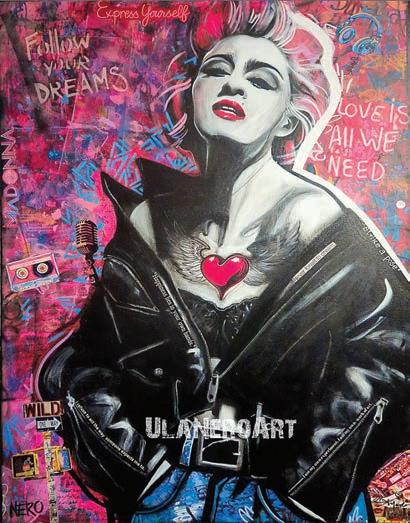



riginally from Europe, I have traveled the world and found my place in the beautiful Puget Sound, now calling Mukilteo home. My journey across continents has deeply in uenced my perspective as an artist and citizen of the planet. I use bright, funky acrylic colors and mixed media to create vibrant, one-of-a-kind pieces that re ect the energy and diversity of my experiences.
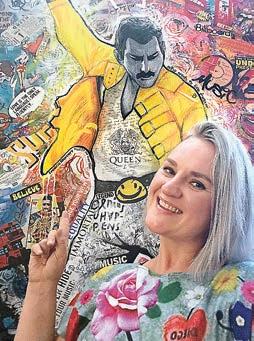

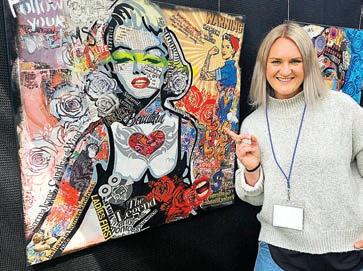
Each canvas is a “looking glass” – a way for me to translate everyday moments and global inspirations into bold, expressive art. My style is always evolving, driven by curiosity and a commitment to originality. I refuse to be typecast or repeat myself, constantly exploring new ideas, techniques, and materials to keep my work fresh and authentic. I approach every project with complete enthusiasm and dedication, believing that true art emerges from passion and openness to growth. My mission is to celebrate the extraordinary within the ordinary, transforming eeting moments and memories from around the world into lasting expressions of creativity and connection. Through my art, I invite viewers to see the world through my eyes – full of color, movement, and endless possibility. Each piece is a testament to my journey, my vision, and my love for creative exploration.

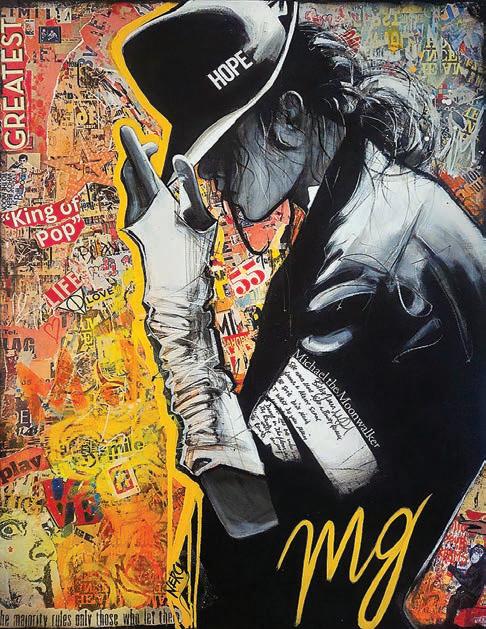

Ula Nero, Mukilteo








“I never had children, so part of my maternal instinct comes out in feeding people”


By Carly B. Dykes
In church basements and community centers across Snohomish County, a network of compassion and community operates each week, serving hundreds of families who never imagined they would need help putting food on the table.
Customer-turned-volunteer Stacey Anasazi is no stranger to food insecurity. The former accountant developed long COVID that evolved into chronic fatigue syndrome, preventing her from working extended hours.






Food banks are feeding working families and building community
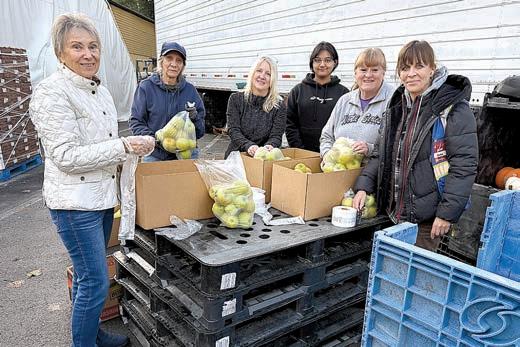
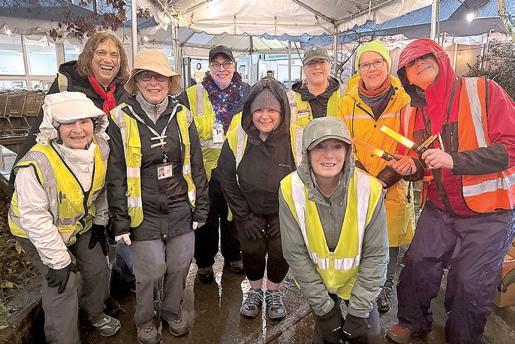
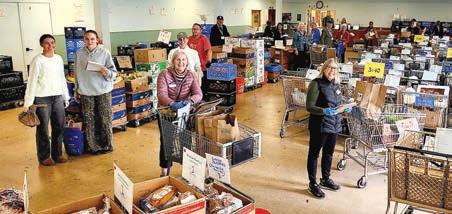
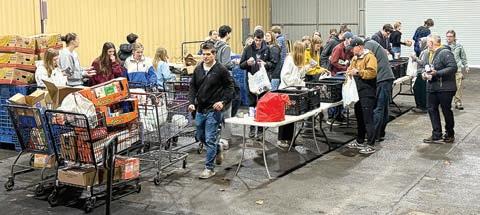
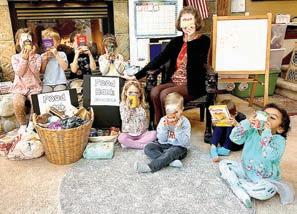
Volunteers keep the food banks running and moving. Without these hard-working people from the community, food banks would cease to exist. Volunteers pose for group pictures from the Mill Creek Food Bank
Edmonds Food Bank
and Mukilteo Food Bank.
“
T he people in line are not homeless, they are struggling, working families.”
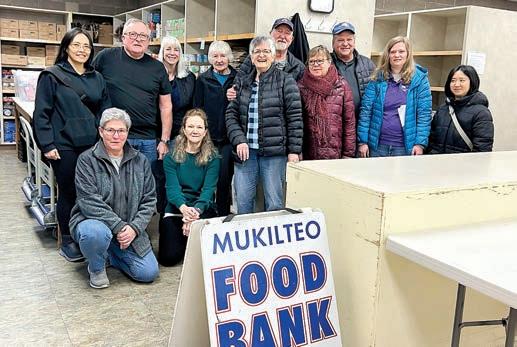
(top),
(center),





















When federal disability claims processing slowed dramatically due to sta ng cuts, Anasazi found herself unable to work full-time without government support.
She turned to the Mill Creek Food Bank for help. When she was able to get back on her feet, she decided to pay it back. Anasazi now works on a team of volunteers from The Reserve –an apartment community in Mill Creek – that distributes food to 60-70 families weekly.
“I never had children, so part of my maternal instinct comes out in feeding people,” Anasazi said. “We all need food. It’s required to live. This is something moms would do, guring out how to feed people so they get more than just one or two things they can eat.”
From Mill Creek and Mukilteo to Edmonds, food banks are experiencing unprecedented demand. Many clients aren’t from the stereotypical demographic you might think. They come from working families, recently laid-o professionals, and retirees struggling to make ends meet as in ation threatens household budgets. “The people in line are not homeless,” said Tom Sweeney, executive director at the Mill Creek Community Food Bank. “They are struggling, working families. I so often hear people say, ‘Well, what does Mill Creek need a food bank for?

Everybody in Mill Creek is rich.’ Well, tell that to the 600 families that roll through in a week to get groceries from us.”
Kim Voetberg, a Mukilteo Food Bank board member, said it has seen its client numbers surge from 120 families in 2022 to over 300 families per distribution cycle today. They often prepare 350 bags for a two-day distribution period.
“So many families that are coming through our lines are working families, and they’re still not able to meet the food needs of their family,” Voetberg said. “Food insecurity is not just about being homeless or not working at all. It’s about just not being able to meet your family’s budget.”

The uptick re ects multiple economic pressures, Voetberg said. When Amazon goes on strike, new families appear in line. When SNAP bene ts were reduced last year, food banks saw an immediate increase in demand. Consistently rising grocery costs force working families to make impossible choices between rent, medical bills, and food.
Kellie Lewis, marketing and communications manager at the Edmonds Food Bank, de nes food insecurity as “making really hard decisions between food and other necessities.” That’s what we’re seeing our families do every single week,” she said. “They have to pay rent, pay a medical bill, and need to buy food. All of it is so expensive, and when food is one of those things that may not get money, that’s food insecurity.”
The Edmonds Food Bank has experienced a 30% growth within just the last year, now serving nearly 1,500 households weekly, a number that would be unfathomable without a community of volunteers, Lewis said.
The Mukilteo Food Bank operates entirely with volunteers, with no paid sta , making it one of only two in Snohomish County to do so. “We know that this is a systemic thing, a food problem, not only in our county, but statewide,” Voetberg said. “So we’re really grateful for the partnership of all of the food banks and for having a community willing to show up in this way.”

Volunteers
Jean Eckstrom found her way to the Edmonds Food Bank through a friend shortly after the pandemic. Now retired from a career in the transportation industry, she volunteers multiple days each week, managing data input and tracking the 400 active volunteers who keep the Edmonds Food Bank running.
“Having worked and managed sta , it’s very di erent with volunteers,” she said. “We don’t require people to be here at a set


LIFE UNLIMITED




time for a lot of our projects; they can just show up whenever. There’s probably maybe 250 that are pre y regular, and some people work almost ve days a week.”
The exibility allows people from all walks of life to contribute. Students ful ll scholarship requirements, restaurant owners bag our between shifts, and many customers become volunteers themselves. “I applied last spring to SNAP, and I was eligible for $298,” Anasazi said. “When my Social Security came in, they knocked it down to $224. At the end of November, they said I was eligible for $236. The very next day was a le er that said I was eligible for $45 because 120 days had passed.”
Anasazi found the food bank essential. But it also o ered something beyond groceries: purpose and community. Due to extensive food allergies and autoimmune issues requiring a highly restrictive diet, Anasazi volunteered to shop for other residents with special dietary needs, including halal families – ensuring that products and services meet the required standards for consumption by Muslims – those with diabetes, and people with celiac disease who require gluten-free diets. “The people that get the food that I pick for them are like, ‘Oh my gosh, it’s like Christmas every week,’” Anasazi said. “Knowing that I’m giving them food that they really like and can consume is just a good, positive feeling for me.”
Client dignity
All three food banks emphasize that maintaining client dignity remains essential in their operations. In Mill Creek, clients have appointments rather than waiting in long lines. They shop with carts, selecting items that meet their cultural and dietary needs. “By being able to pick and choose, there’s a dignity in that, right?” Sweeney said. “We serve everyone – Muslim, Christian, all di erent groups of people. We have certain sh and meats that are halal food for our Muslim guests. That is being respectful.”
The Mukilteo Food Bank takes con dentiality seriously, never photographing clients or inquiring about their circumstances. “We try to be as gracious and welcoming as possible with these families without ge ing into details about why they’re with us,” Voetberg said. “We just welcome people who come through that have a need.”
At the Edmonds Food Bank, many clients can shop in person, choosing exactly what they want; others place online orders. “Dignity is key,” Lewis said. “It doesn’t feel like charity or a handout, but rather, we’re so glad you’re here.”
The surge in need has been met with an immense amount of community support. When Gov. Bob Ferguson announced SNAP bene t losses, donations ooded the Mill Creek Community Food Bank. “It’s just so heartwarming to see the compassion of the neighbors,” Sweeney said. “The people who have the resources really have stepped up with compassion, because it could be them next.”
The Mukilteo Ace Hardware recently conducted register roundups totaling more than $18,000. Franz Bakery provides fresh bread twice monthly to the Edmonds Food Bank. Businesses, schools, and service organizations conduct regular food drives.
For former clients and volunteers like Anasazi, the work
can provide meaning in di cult times. “Outside of volunteering, there’s so much anger. Being able to do something physically versus just talk feels really good. I look forward to coming here. I look forward to connecting with people.”
As food insecurity touches more working families across Snohomish County, food banks stand ready as communities built on the purpose of neighbors taking care of neighbors, where asking for help is not just accepted, but encouraged.
“Everyone deserves love and respect,” Anasazi said. “Everyone.”
Resources
If you are experiencing food insecurity, local food banks can help.
• Mukilteo Food Bank: 4514 84th St. SW. Mukilteofoodbank.org, 425-366-8229
• Edmonds Food Bank: 828 Caspers St. Edmondsfoodbank.org, 425-778-5833
• Mill Creek Food Bank: 4326 148th St. SE. Hopecreekcf.org, 425-754-6363 n














Edmonds, Mill Creek, and Mukilteo food bank volunteers stay busy hauling, unpacking, and stocking donations while also hosting food drives.
ADVERTISING / MEDIA
Beacon Publishing, Inc.
The Beacon Magazi ne Mukilteo Beacon
Edmonds Beacon
Mill reek Beacon 728 3rd Street, Suite D Mukilteo, WA 98275 | 425-347-5634 thebeaconmagazine.com mukilteobeacon.com edmondsbeacon.com millcreekbeacon.com
AIRPORT
Paine Field
Snohomish County Airport 9901 24th Place W, Suite A Everett, WA 98204 | 425-388-5125 paine eld.com
AUTO GLASS
John’s Auto Glass 11324 Mukilteo Speedway Mukilteo, WA 98275 | 425-742-9408 johns-auto-glass.com
BANKING
1st Security Bank Edmonds Branch 425-774-5144 fsbwa.com
Business Directory

CANNABIS DISPENSARY
Pu˜ wick & Blunt 11811 Mukilteo Speedway, Suite 111 Mukilteo, WA 98275 | 425-322-4799 pu wickblunt.com
DISTILLERY / SPIRITS
James Bay Distillers 3101 111th Street SW, Suite B Everett, WA 98204 | 425-212-9135 jamesbaydistillers.com
EDUCATION
Edmonds College 20000 68th Ave. W. Lynnwood, WA 98036 | 425-640-1697 edmonds.edu
HEALTH & WELLNESS
Tropical Tan & Light Therapy
11811 Mukilteo Speedway, Suite 104 Mukilteo, WA 98275 | 425-347-4967 gotropicaltan.com
HOME IMPROVEMENT
Core Contractors, LLC 19707 44th Avenue W, Suite 207 Lynnwood, WA 98036 | 425-737-7893 corecontractorsllc.com
Sam Souza Painting





HOME IMPROVEMENT Cont.
Northlight Custom Builders, LLC 9800 Harbour Place, Suite 201 Mukilteo, WA 98275 | 425-977-9661
northlightcustom.com
INSURANCE
Katie Bock USI Insurance Services
Edmonds, WA 98026 206-508-6051 linkedin.com/in/katie-bock
Matt Martin
State arm nsurance 12308 Mukilteo Speedway #4 Mukilteo, WA 98275 | 425-743-2600 mattmartin.biz
JEWELRY DESIGNS
Irden Designs 605 Main Street Edmonds, WA 98020 425-780-6849 irdendesigns.com
PAINTING
Sam Souza Painting Edmonds, WA 206-702-7242 samsouzapainting.com


PET SUPPLY
Jester’s Pet Supply
172 Sunset Avenue
Edmonds, WA 98020 | 425-405-5751 jesterspetsupply.com
REAL ESTATE
Coldwell Banker Bain 512 Bell Street Edmonds, WA 98020 coldwellbankerhomes.com/ wa/edmonds/agents wa/mill-creek/agents
RETAIL
Best Kept Secret 3616 South Road, Suite B-2 Mukilteo, WA 98275 | 425-822-6600 mukilteosamplestore.com
Hodge Podge 413 Lincoln Avenue Mukilteo, WA 98275 206-601-2789
Maje Gallery
409 Main Street Edmonds, WA 98020 425-776-3778 majegallery.com
Business Directory
SENIOR LIVING
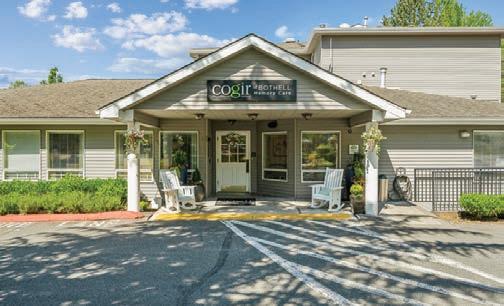
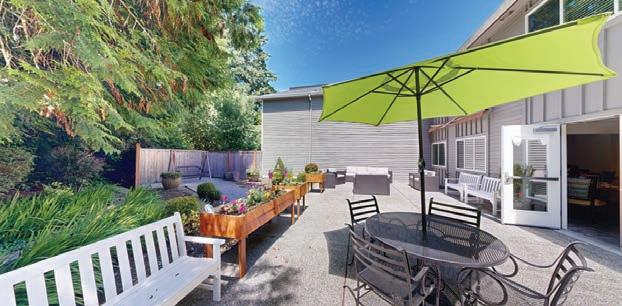
Cogir Senior Living 10605 NE 185th Street Bothell, WA 98011 425-371-4234
21500 72nd Avenue W Edmonds, WA 98026 425-358-9614
14905 Bothell-Everett Hwy Mill Creek, WA 98012 425-484-7769 cogirseniorliving.com
Quail Park of Lynnwood 4015 164th Street SW Lynnwood, WA 98087 425-287-5742 quailparko ynnwood.com
Seniors Helping Seniors Shoreline, WA 98155 206-542-4743 snokingseniorcare.com
WINDOW WASHING
Window Washington Everett, WA 425-200-4711
winwa.io
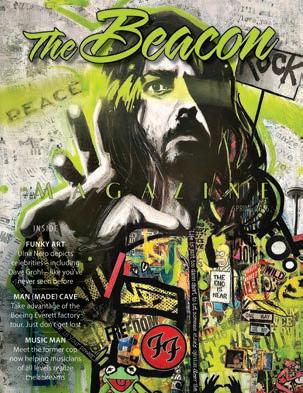
Dave Grohl, formerly of Nirvana and founder of the Foo Fighters, is one of the many mixed-media music icons in Ulna Nero’s portfolio. Each of her pieces is a testament to her journey, vision, and love for creative exploration..





















Ula Nero photo



Lemon Brûlée Lemon Brûlée
I ndulge in this creamy, tangy brûlée, a simple yet elegant dessert with a perfectly caramelized topping. A delightful treat for any occasion.
SERVES 4
Ingredients
• 1 cup lemon curd (sold at most grocery stores in the jam aisle!)
• 1/2 cup sour cream
• 4 oz cream cheese, softened
• 2 Tbsp granulated sugar (plus more for topping)
• Lemon zest
Directions
1. Preheat your oven to 325°F. Place 4 small ramekins in a baking dish and set aside.
2. In a mixing bowl, beat the softened cream cheese until smooth. Add the lemon curd and sour cream, mixing until fully combined. Stir in the 2 tbsp of sugar and the zest from 1 lemon, until the mixture is silky smooth.
3. Divide the mixture evenly between the ramekins. Pour hot water into the baking dish (about halfway up the ramekins) to create a water bath. Bake for about 20–25 minutes, or until the custard is just set but still slightly wobbly in the center.
4. Let the ramekins cool at room temperature for 15 minutes, then refrigerate for at least 2 hours (or overnight) until fully set.
5. When ready to serve, sprinkle about 1 teaspoon of sugar evenly over each custard. Using a kitchen torch, caramelize the sugar until golden brown and crisp. (Alternatively, place under a broiler for 1–2 minutes, watching closely.)
6. Let the brûlée rest for a minute to allow the caramelized sugar to harden. Crack into it and enjoy the creamy lemon goodness. Serve & Enjoy.



Crowded terminals Room to breathe