
2 21

Business Superbrands Slovakia 2021
Pitchbook league tables 2020 – Most active M&A Advisor Globally
Pitchbook league tables 2020 – Most active Advisor & Accountant Globally
Global Investigations Review Awards - Investigations Consultancy of the year 2018
International Accounting Bulletin – Network of the Year 2018
Payroll World Awards – International Payroll Award of the Year 2017
Kentico - Kentico’s Largest Site of the Year 2016
Payroll World Awards – International Payroll Award of the Year 2016
Payroll World Awards – International Payroll Award of the Year 2015
International Accounting Bulletin – Network of the Year 2015
1 2
3
Key facts & figures
Country profile
Geography
Macroeconomic overview
Industries
Human capital
Establishing business presence
Establishing business
Business entities
Investment incentives
Available investment incentives
FDI & most important investors
Eligibility
4
Running a business in Slovakia
Slovak tax system
Financing
Business law
Employment law
Accounting
Expatriates
5
How can BDO help
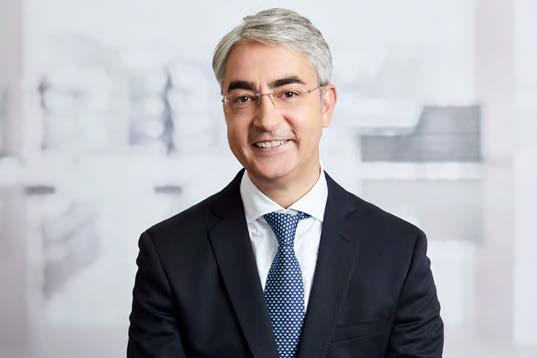

Dear reader,
I am delighted that you chose this guide as a source of information for your potential business ventures in Slovakia. The guide has been carefully written to reflect the core aspects of the business environment and all of us at BDO Slovak Republic hope that it will convince you about the immense opportunities our country in the heart of Europe has to offer. It takes an extraordinary vision and courage to explore opportunities outside your comfort zone. We believe in the power of great ideas – the building blocks of success stories of today. However, in order to develop ideas into real business, one needs the talent, skill and expert knowledge of specialized professionals. BDO is one of the world’s largest full-service audit, tax and advisory networks and we are here to provide you with support in any way you need it, from market research, setting up your presence in Slovakia, appraisal services or risk management to valueadded assurance, accounting, taxation, outsourcing and advisory services, regardless of your origin, size
or specialization. Remember, what matters to you, matters to us.
While the publication covers the relevant areas and care has been taken to ensure the accuracy, completeness and reliability of the content, it is not intended to provide the comprehensive information necessary to make investment decisions. If any of these issues spark your interest, please, do not hesitate to get in touch with our professionals at the BDO Slovak Republic office in Bratislava, Žilina or Košice and we will be happy to tell you more about the opportunities in our home country.
Peter Gunda Managing Partner BDO Slovak Republic
OVERVIEW
EU, OECD and NATO member state
S&P rating: A+ stable
5,9% GDP decrease in 2020 with estimated growth 4,7 % in 2021
12 days to start a business
World leader in car production per capita
15%, 21% corporate tax 1,133 EUR average gross monthly salary
Developed infrastructure Trusted business environment Double taxation avoidance treaties
20% VAT standard rate, 10% special rate for certain goods and services
Only V4 country* to have adopted EURO currency
Proven track of high-value investments
FDI incentive scheme
47.3% public debt to GDP ratio in 2019
35 universities
Strategic location within CEE region
*V4 stands for the Visegrad Group, a group of countries comprising Slovakia, Czech Republic, Poland and Hungary.


1 KEY FACTS & FIGURES
Country profile
Geography
Macroeconomic
overview

Industries
Human capital

COUNTRY PROFILE
Slovak Republic is undoubtedly one of the most attractive investment destinations in Europe. Once nicknamed the Tatra Tiger, Slovakia reaps the benefits of strong underlying fundamentals, such as its highly skilled and educated workforce, well developed infrastructure and political stability.
DID YOU KNOW?
The staff of Slovak and Slovenian embassies meet once a month to exchange the wrongly-addressed mail.
General
Official name: Slovak Republic
Area: 49,036 km2
Time zone: GMT + 1
Currency: EUR
Official language: Slovak
People
Population: 5.459 million
Active workforce: 2.728 million
Birth rate: 1.05 per 1,000 people per year
Average gross monthly salary: 1,133 EUR
Retirement age: 63 years
International Organizations Membership
European Union
Euro Area
Schengen Area
OECD, WTO, NATO, and others
Political Situation
Type of government: Parliamentary democracy
Electoral system: Proportional representation

GEOGRAPHY
Slovak Republic is situated in Central Europe, bordered by five countries – Hungary, Ukraine, Poland, Austria and the Czech Republic. Slovak cities are in close proximity to other internationally recognised hubs, such as Vienna, Budapest, Prague or Krakow, which only further underlines the
DID YOU KNOW?
Slovakia is home to one of Europe’s most beautiful towns. Vlkolínec is one of the 30 most beautiful towns in Europe.
favourability of the central location, offering access to 350 million customers within a 1,000 km radius. It is easily accessible by air, having two main international airports in Bratislava and Košice and another three global hubs in Vienna and Budapest accessible within two hours and Prague within four hours from the capital city.
Source: Orange, Slovak Telekom, O2, 4ka
POLAND
CZECH REPUBLIC
Prague 260 km
Bystrica
Warsaw 450 km
Krakow 100 km
UKRAINE
Kiev 815 km
Vienna 70 km
AUSTRIA
Bratislava
HUNGARY
Budapest 50 km






Existing highway Highway in construction Planned highway Expressway Planned expressway Main railway Airport


Trenčín

MACROECONOMIC OVERVIEW
Comprehensive structural reforms of the tax, labour, pensions and healthcare systems and an overall decentralization of powers in past years. Membership in the Eurozone since 2009. One of the strongest rebounds in terms of GDP growth in the regions after the 2008 crisis. Higher levels of unemployment as compared to the situation in the Eurozone which indicates a potential for growth without the upward pressure on wages.
Ease of doing business
Based on the World Bank report on the ease of business, in 2019, Slovakia ranked number 45th in the world. In terms of comparable countries in the region, this year it was only surpassed by Poland and Czech Republic. Slovakia was the regional leader in the ranking in years 2008 to 2013. The factors considered by the World Bank as measures of the index include:
the political and institutional environment, macroeconomic stability, market potential, private entrepreneurship support, taxation system, access to financing, contract enforcement, the starting and closing of a business, labour market characteristics, and infrastructure quality.

DID YOU KNOW?
One of the most important artists of 20th century – pop artist Andy Warhol has Slovak roots. His parents immigrated to USA from a small village Miková in the north-eastern Slovakia.

INDUSTRIES
Tradition of electrical and chemical engineering, wood-processing and food industry. Industry is currently undergoing a phase of rapid growth, which is attributable to the favourable business environment and a supply of foreign investors.
Slovakia is one of the world leaders in the automotive industry with four well-known car manufacturers PSA Peugeot Citroën (in Trnava), KIA Motors & Hyundai Mobis (in Žilina), Volkswagen (in Bratislava) and Jaguar Land Rover (in Nitra) produce their cars in our country.
– In 2015, the Slovak automotive industry reached production levels of more than a million cars per year.
– Slovakia is expected to become a European leader in the number of e-cars produced per capital by 2025. Electrical engineering is now the second largest industry as well as the second largest employer.
– LCD panels are the key article and they are produced by companies such as Samsung, Foxconn, AU Optronics or UMC.
Recent attractive sectors
Strong interest of international companies in relocating and centralising their business services to the region of Central and Eastern Europe (CEE) with shared services sector becoming one of the key sectors in Slovakia, employing more than 30,000 people.
Bratislava stands as an important IT cluster in the CEE region, being home to internationally recognised IT companies such as ESET or Sygic. Bratislava also provides vital conditions for numerous local start-ups with many of them rising to international prominence (sli.do for instance).
DID YOU KNOW?
Slovakia is by far the global leader in car production per 1,000 inhabitants.
Factors adding up to the attractiveness of Slovakia:
Well-developed infrastructure
Available and skilled labour force



Geographic and cultural proximity to Western Europe
Broad knowledge of languages

Lower wage costs in comparison with Western Europe or North America
HUMAN CAPITAL
Qualified and relatively inexpensive labour force is Slovakia’s greatest asset. The gross minimum wage as stipulated by the law, which translates to 3.58 EUR per hour worked. The social security contributions by the employer amount to 35.2% with a cap for social contribution at a maximum base of 7,644 EUR.
Slovakia is the regional leader (among V4 countries) in terms of labour productivity per hour worked.*
Minimum gross monthly wage excluding social and health contributions is 623 EUR.
Average gross monthly wages in Slovak regions
Source: Statistical office of the Slovak Republic
Average gross monthly wage excluding social and health contributions is 1,330 EUR.
Until now, Slovakia has held the position of regional leader (among the V4 countries) in terms of labour productivity per hour worked. Slovakia is also competitive on the cost of labour frontier, where it offers potential investors significant savings in terms of labour expenses when compared to western Europe.

In order to receive a high school diploma (so-called Maturita), there is a mandatory foreign language exam on the internationally recognised level B2. Education

Slovakia is one of the most highly skilled and educated country in the region.
There are
35 universities in Slovakia
91.4% proportion of the population with upper secondary education (4th rank in EU)


ESTABLISHING BUSINESS PRESENCE
Establishing business Business entities

ESTABLISHING BUSINESS
In order to establish a business presence in Slovakia, you have two options:
1. Purchase of an existing company
Our team of experienced professionals can provide assistance with a full range of M&A procedures. We can help you with getting to know the market, identifying potential targets, executing the transaction in a way that makes it more efficient and that aligns with your long-term strategic goals, as well as find suitable financing and assist with the negotiations process. Every solution is tailored to your needs and is structured in order to create sustainable value going forward.
2. Set up a new business
Slovakia ranks, according to study prepared by the World Bank, the third in the V4 based on the ease of starting a business and is therefore an ideal target for such an activity.
There are 7 procedures necessary to start a business in Slovakia as opposed to the OECD average of 4.9. It usually takes less than 12 days to establish a business entity and the costs of doing so are less than half of the OECD average.
Steps necessary to start a business
APPLY FOR INCORPORATION OF NEW COMPANY District Court, 150 EUR (electronic application, for limited liability company)
4B
DAY 12
APPLY FOR TRADE LICENSES, INCOME TAX & VAT REGISTRATION
4A
District Authority – Trade Licensing Department, Tax Authority, 5 days (for the whole step 3 (A, B), 5 EUR (standard license) Trade licenses have to be issued for business activities conducted on a regular basis.
PAY CAPITAL CONTRIBUTIONS AND RECEIVE AN AFFIDAVIT FROM CUSTODIAN OF FUNDS
Contributions may be paid to custodian of funds, i. e. one of the founders or to the bank, 1 day, no charge
NOTARISE ARTICLES OF ASSOCIATION AND RELATED DOCUMENTS
Notary Public or Registrar’s Office 1 day, <20 EUR (variable)
CHECK THE UNIQUENESS OF THE PROPOSED COMPANY NAME
Commercial Register at the District Court or online <1 day, 3 EUR (official certificate) or no charge (online)
3 EUR official certificate or no – charge – online (optional action to prevent rejection in the next steps).
All legal entities conducting business operations must register with the Commercial Register prior to commencing their business activities.
1
Source:World Bank Group, Doing business

7
REGISTER FOR HEALTH INSURANCE
Health insurance company, 1 day (may take place simultaneously with step 6), no charge
6
REGISTER WITH PENSION, SICKNESS AND DISABILITY INSURANCE AND UNEMPLOYMENT INSURANCE
Social Insurance Company (Sociálna Poisťovňa) 1 day, No charge
3 5 2 DAY 1
REGISTER FOR VAT
Company is obliged to register for VAT once it reaches turnover of EUR 49 790, however also voluntary VAT registration is allowed
In addition to the 7 steps outlined above, foreigners coming from outside the EU and OECD member countries must apply for a temporary residence permit.
BUSINESS ENTITIES
In terms of the different types of business entities, foreign investors in Slovakia favour to establish a limited liability company (s.r.o.) because of the ease of incorporation and regulation in regards to corporate governance. A joint stock company (a.s.) is predominantly used when the transaction includes joint ventures or external financing.
Type of business entity
Limited liability company (s.r.o.)
-Most popular form -1 to 50 members, each holding one share but different rights -Ban on the chaining rule occurring when an LLC with a sole shareholder/founder is the sole shareholder/founder of another LLC
Joint stock company (a.s.)
-Public or private -Board of Directors
-Major decisions made by shareholders at the General Meeting
Branch office
Simple Joint Stock Company (j.s.a.)
-Not a separate legal entity -Own management (Director), separate accounting and tax requirements
-Acting on behalf of its founder
-Newest form of Slovak business company -Ideal for start-ups, -Board of directors represents statutory body of the company
Alternatively, an investor may choose to only set up a branch office which is not a separate legal entity and acts on behalf of its founder. Below is a highlevel summary of the previously mentioned business entities, outlining their basic characteristics, capital requirements as well as some of their main advantages and disadvantages.
- 5,000 EUR minimum registered capital
- not less than 30% of each member monetary contribution must be paid upon incorporation
- 25 000 EUR minimum registered capital
- Not less than 30% of capital must be paid upon incorporation
none
-Flexibility, less regulation
-Lower capital and reserve requirements
-Reserve fund has to be created only once LLC makes a profit
-1 EUR -100% of capital must be paid upon incorporation
-Shares can be publicly traded
-Shareholders hold no liability
-Shareholder structure is confidential
-Liability remains with the parent company
-No withholding tax and audit requirements
-Supervisory board is not obligatory body
-Company may be wound up from reasons as stated in company’s articles - Symbolic amount of registered capital, - Less formal internal procedures
-Not publicly tradable, cannot be listed
-Shareholders are liable up to the amount of unpaid registered capital
-Less guarantees for shareholders and creditors due to less regulation
-More regulation
-Obligatory supervisory board comprising of at least 3 members -Higher registered capital
-Reserve fund must be created upon incorporation
-Fully dependent on its parent company
-Shares can not be publicly traded
-Shareholders structure is not confidential

In addition to the three main business entities, the following legal forms are also present in Slovakia:
– Limited partnership (k.s.)
– General partnership (v.o.s.)
– Cooperative
All of the previously mentioned entities except for a branch office constitute Slovak legal entities. Additionally, the Slovak Republic recognises the following entities, in line with the European Community law:
– European company (SE)
– European economic interest group (EEIG)
– European cooperative society (SCE)
BDO can assume the whole registration procedure and undertake actions necessary for the creation of a legal entity at your request.


INVESTMENT INCENTIVES
Available investment incentives
FDI & most important investors
Eligibility
AVAILABLE INVESTMENT INCENTIVES
The main government agency assisting investors in the Slovak Republic is the Slovak Agency for Investment and Commercial Development (SARIO).
Economic incentives are offered to foreign and domestic investors with the aim to enter the market or increase the volume of their operations, employment levels or R&D activities. All such support mechanisms are offered in accordance with the European Union regulations and are subject to approval by the Government of the Slovak Republic.
Currently, investment incentives apply only outside of the Bratislava region, whereas their form and size depend on a number of factors, such as the economic environment in the region or the magnitude of a particular investment and number of new jobs created.
The Slovak Act on Investment Aid specifies the following four types of projects as eligible for investment aid - Industrial production, Technological centres, Combined project of Industrial production and technological center, Shared service centres.
DID YOU KNOW?
The Bratislava region generated 173% of the EU average GDP per capita in 2018, which placed it among the top 6 richest regions of Europe, beating both Vienna and Prague.
Investment aid and intensity of aid
Regions in Slovakia are split into three zones based on their macroeconomic conditions and levels of unemployment, having Bratislava region completely excluded from this scheme.
The maximum intensity of total investment aid is 35% or 25%, depending on the zone concerned, whereas investment aid intensity for Small and Medium Enterprises (SME) can be increased by 10-20%.
Based on the zone and the particular characteristics of a given investment plan, an investor may receive the following four different types of aid:
Cash grant available for all four types.
Rent/sale of propertyat lower than market prices
Corporate tax relief available for all four types.
Contribution for new jobs per employee for industrial production is from EUR 10,000 to EUR 15,000. As per technological centers is EUR 10,000 depending on particular district and priority area.
ELIGIBILITY
Companies must meet some basic conditions to be eligible to apply for investment aid, based on their project specifications, subject to other project-specific criteria.
In general, the eastern and southern-most regions suffer from higher unemployment and therefore require lower thresholds in terms of the investment amount and new technology acquisition.
The qualifying criteria are also reduced to at least at the level of one half for SME.
The minimum investment thresholds also varies based on the competency of the project to the priority sectoral specification.
When applying for investment aid for expansion, an obligation to increase production volume or production turnover by at least 15% must be met.
Industrial production
FDI & MOST IMPORTANT INVESTORS
2003
l PCA Slovakia, s.r.o.
2004
l Kia Motors Slovakia s.r.o.
2006
l SAMSUNG Electronics
Slovakia s.r.o.
l GETRAG FORD
Transmissions Slovakia, s.r.o.
2007
l Kia Motors Slovakia s.r.o.
2009
l AU Optronics (Slovakia) s. r. o.
2014
l Duslo, a.s.
2015
l GETRAG FORD
Transmissions Slovakia, s.r.o.
l VOLKSWAGEN SLOVAKIA, a.s.
2016
l Mondi SCP, a.s.
l Jaguar Land Rover Slovakia, s.r.o.
2017
l PCA Slovakia, s.r.o.
l SPINEA, s.r.o.
2018
l ZF Slovakia, a. s.
l Röchling Automotive Slovakia, s. r. o.
2019
l Porsche Werkzeugbau s. r. o.
l KAMAX Fasteners s.r.o.
l VOLKSWAGEN SLOVAKIA, a.s. 2020
l InoBat j.s.a. and WildCat Discovery Technologies, Inc.

Technological centers
Shared service centers
Priority areas in projects of industrial production and technological centers
Manufacture of food products
Manufacture of chemicals and chemical products
Manufacture of basic pharmaceutical products and pharmaceutical preparations
Manufacture of computer, electronic and optical products
Manufacture of electrical equipment
Manufacture of machinery and equipment
Manufacture of motor vehicles, trailers and semi-trailers
Manufacture of other transport equipment
Priority areas in shared service centers
Company management
Finance
Information technology

*The
Source: SARIO – Slovak Investment and Trade Development Agency

4
RUNNING A BUSINESS IN SLOVAKIA
Slovak tax system
Financing
Business law

Employment law
Accounting
Expatriates
SLOVAK TAX SYSTEM
The taxation system in Slovakia consists of the following types of taxes:
Direct taxes
Corporate tax income 15%, 21%
Local taxes
Personal income tax
7%, 15%, 19% tax rate with a child credit and progressive tax allowance, top, rate 25%
Withholding tax
Dividends from Non-cooperative jurisdictions 35% tax rate
7%, 19% or 35% to states which have not entered into a double taxation treaty or an international tax information exchange agreement with Slovakia (“Non-cooperative jurisdictions”)
Indirect taxes
Value added tax
20% standard rate
10% special rate for certain goods and services
Miscellaneous
Excise duties, motor vehicle tax, bank tax, special levy for regulated entities, special tax for retail chains
As of 1 May 2004, the Slovak Republic is a Member State of the European Union. Important features of the Slovak tax system have been harmonized with the EU tax law, including direct taxes, mutual assistance and administrative cooperation.
The jurisdiction covers the entire geographical territory of the Slovak Republic and there are no particularities with respect to geographical jurisdiction.
Generally, corporate profits, as adjusted for tax purposes, are taxed at the company level, and distributed profits are not taxed in the hands of the corporate or individual shareholders (excluding Noncontractual states).
The main tax on companies is income tax, which is governed by the Income Tax Law. An income item is either included in the corporate income tax base or is subject to a final withholding tax.
CORPORATE INCOME TAX
Corporate income tax is levied upon the worldwide income of Slovak legal entities with a seat or place of management in the Slovak Republic, and upon the Slovak sourced income of foreign entities operating through a permanent establishment. Slovak legislation defines permanent establishment as a fixed place or facility through which activities (including digital platforms) are performed continuously or repeatedly, exceeding 183 days in duration, for example a branch office, administration point, sales point, research or extraction facility. In addition, provision of services for more than 183 days out of 12 months or via a person acting on behalf of an entity under a Power of Attorney also constitutes a permanent establishment.
As of 2021 the category of micro-taxpayer has been introduced. A micro-taxpayer is an individual–entrepreneur, i. e. a self-employed person or a legal person whose taxable income (revenues) for the taxable period do not exceed the amount of EUR 49,780. The micro-taxpayer status can be obtained for the first time in the taxable period starting on 1 January 2021 at the earliest. The micro-taxpayers will obtain certain advantages as compared to other taxpayers.
Taxable persons
Corporate income tax is levied on legal entities, most notably, joint-stock companies (a.s.), limited liability companies (s.r.o.) and cooperative enterprises. General and limited partnerships are also legal entities for corporate income tax purposes. However, general partnerships are taxed only on income that is subject to with-holding tax, and their (other) profits are taxed in the hands of the general partners. Limited partnerships are subject to corporate income tax only on the income attributable to the limited element of the partnership, and the other part of the income is taxed in the hands of the general partners.
Other resident entities that are not registered in the commercial register, such as associations and foundations, are subject to corporate income tax, in general, to the extent they carry on a business. All the above-mentioned entities are hereafter referred to as companies.
Residence
A company is treated as resident if it has its legal seat or place of effective management in the Slovak Republic.

Taxable income
Resident companies are taxable on their worldwide income. Unless specific rules apply, income derived from any type of activity or from the disposal of property is subject to corporate income tax.
Taxable income is the difference between income and expenses incurred in obtaining that income. The taxable income is computed on the basis of the accounting profits and is adjusted for several items as described in the tax law. The taxable income of taxpayers using double-entry bookkeeping is assessed on an accrual basis (with a few minor exceptions), while that of taxpayers using single entry bookkeeping is assessed on a cash basis. A special withholding tax system is applicable to certain types of income.
Exempt income
Exempt income includes, in particular: – dividends, if paid out of profits derived by the distributing company on or after 1 January 2004 (Anti -abuse rules with respect to dividends have been implemented since 1 January 2016 –when received dividends would lead
to unjustified benefits and would be without economical substance, they may be subject to the income tax). 35% tax rate applies in case a Noncooperative jurisdiction is involved;
– income from the acquisition of own shares for a price lower than the nominal value, followed by a reduction in the registered capital;
– income and gains from the sale of property under bankruptcy proceedings;
– patent box - 50% of revenues from licence fees from own patent, technological model, software or 50% of revenues from sale of goods made by using own patent;
– participation exemption - income from sale of share if the parent company holds at least 10% of the shares in the subsidiary at least for 24 months (first exempt sales is possible in 2020);
– membership fees of professional chambers, political parties and associations of legal entities;
– interest on taxes paid in excess, provided that the excess payment was caused by the tax authorities; and
– funds from grants received on the basis of international agreements.
Deductions
As a general rule, expenses incurred in obtaining, ensuring and maintaining taxable income are fully deductible, unless they are listed as non-deductible items or items which are deductible only up to a limit set by the law.
Deductible items include, for example:
– expenses on working, social and healthcare provisions;
– expenses on advertising costs;
– expenses on consumed fuel;
– tax depreciation;.
– certain financial lease payments.
– research and development costs up to 200% of provable incuredcosts (after the fulfillment of specific conditions).
Non-deductible items include:
– expenses related to non-taxable income;
– the acquisition cost of capital assets;
– the acquisition cost of shares and contributions to the share capital of a company;
– entertainment and personal expenses;
– profit distributions;
– non-contractual fines and penalties;
– payments made to residents of non-contracting states in specific cases (e.g. failure to withhold a tax or tax security, failure to comply with reporting duties) and
– corporate income tax.
Depreciation and amortization
Tangible and intangible assets are, with some exceptions, depreciable. For tax law purposes, depreciable tangible assets are immovable property other than land, and also movable property whose acquisition cost exceeds EUR 1,700 and whose expected useful life is more than 1 year.
Intangible assets are depreciable if their acquisition cost exceeds EUR 2,400 and their expected useful life exceeds 1 year, on the condition that the asset was (i) acquired for consideration, or (ii) created through the taxpayer’s own activity for the purpose of trading in such intangibles. Furthermore, capitalized costs of technical improvements of
fully depreciated intangible property exceeding EUR 1,700 are considered to be depreciable intangible assets for tax purposes.
Land, inventories, works of art, immovable cultural monuments and natural resources, etc. may not be depreciated. Tangible assets whose acquisition costs do not exceed EUR 1,700 are written off immediately.
In general, assets are depreciated by the owner. Intangible assets may be amortized either by the owner or by the taxpayer who acquires the right to use them for a consideration. In the case of financial leasing, the person entitled to depreciate leased assets is the lessee. Interest related to financial leasing is allowed as a direct cost.
With respect to tangible assets, the taxpayer may choose to use either the straight-line or a specific accelerated depreciation method. However, this option is applicable only with respect to tangible assets falling under depreciation category 2 or 3 (see the following table). The method chosen must be used consistently over the entire period of depreciation. Tangible assets falling under the other depreciation categories may only be depreciated using the straight-line depreciation method.
For tax depreciation purposes, tangible assets are divided into six categories according to their expected useful life according to the following table. Tangible assets which do not fall under any of the categories are treated as belonging to category 2. Intangible assets can be amortized according to the accounting principles.
Capital gains
Capital gains are included in the company’s taxable ordinary income. From 2020 participation exemption applies the statutory conditions are fulfilled (2 years period and at least 10% share).
Losses
Tax losses generated for the tax periods commencing 1 January 2020 can be carried forward for 5 consecutive tax years and utilised up to 50% of tax base reported for the respective tax period. Different rules apply to tax losses generated for the tax periods prior to 2020(tax loss utilization evenly in 4 consecutive taxable periods). This restriction does not apply to the so-called micro-taxpayers.
Rates
Corporate income tax is levied at a rate of 21%.
In 2020 was introduced corporate income tax at a rate of 15%.
This rate is applicable for the corporate taxpayers whose revenue is up to49,790 EUR, so called microtaxpayers.
Withholding tax of 19%/35% is levied on:
– income from participation certificates and investment coupons;
– income from certain vouchers and debentures in specific cases (e.g. if received by non-profit organizations); and
– interest from bank deposits and current accounts in general.
Income taxed by withholding is not included in taxable corporate income of resident companies, as
the tax withheld is considered to be a final tax rather than an advance payment of tax. The exemption from this rule applies to participation certificates (i.e. the tax withheld on such income may be considered as an advance payment).
Administration
The tax year is the calendar year or the business/ financial year of the taxpayer. Tax returns must be filed only electronically within 3 months following the tax year. Based on a notification of a taxpayer, the filing period is extended automatically by up to 3 months. Extension by an additional 3 months is only granted if part of a taxpayer’s tax base consists of foreign-source income.
Advance payments are required from all taxpayers whose last-known tax liability was 5 000EUR or higher.
Taxpayers make advance payments either quarterly or monthly, depending on the amount of their previous year tax liability.
A new business entity established during the tax year (except if it is established by conversion, merger or division) is not required to make advance tax payments.
Double taxation relief
No unilateral double taxation relief is provided. Double taxation is relieved only on the basis of tax treaties. For a list of tax treaties in force, please see the following page.
Losses of a foreign permanent establishment of a resident company are deductible by that company
regardless of the fact that they can be deducted abroad according to foreign law (Slovak tax legislation applies in respect of assessment of the losses). Foreign tax loss carry forward does not apply in respect of losses of foreign permanent establishments. This rule is not followed when, on the basis of an EUR applicable double tax treaty, the exemption method applies.
Withholding taxes on payments to non-resident companies
Non-residents are subject to the general 19% withholding tax (unless limited under a tax treaty) on the Slovak-source income, which is not attributable to a Slovak permanent establishment.
Increased tax rate of 35% will be applied by the payer of the income if the recipient is a resident of a noncontracting state (i.e. a state not on the “white list” published by the Slovak Ministry of Finance as of 1 January of a relevant taxation period). Jurisdictions
provided that they: i) have not concluded a double tax treaty or exchange of information agreement with Slovakia, ii) are on the EU list of non-cooperating jurisdictions for tax purposes, or iii) do not apply corporate income tax or iv) apply a zero corporate income tax rate.
Withholding tax rates chart
The following chart contains the withholding tax rates that are applicable to dividend, interest and royalty payments by Slovak companies to non-residents under tax treaties in force as at the date of review. Where, in a particular case, a treaty rate is higher than the domestic rate, the latter is applicable.
Reduced treaty rates may be applied at source. Please note, that the chart below is only of informative nature and further terms and conditions may apply in certain cases.
Multilateral Convention
The Slovak Republic signed and ratified the Multilateral Convention to Implement Tax Treaty Related Measures to Prevent Base Erosion and Profit Shifting (“MLI”). The MLI is effective in Slovakia from 1 January 2019. The MLI modifies the application of bilateral tax treaties concluded to eliminate double taxation.
In the above table, “0” (zero) is expressed as “-” while “x” means no reduction.
1 Many treaties provide for an exemption for certain types of interest, e.g. interest paid to the state, local authorities, the central
export
or in relation to sales on
Such exemptions are not considered in this column.
2 Unless otherwise indicated, the reduced treaty rates given in this column apply if the holding is at least 25% of the capital or of the voting rights, as the case may be.
Anti-Avoidance
General anti-avoidance rules such as the substanceover-form rule or the rule under which the Slovak tax authorities may ignore transactions which are carried out without sufficient business reasons apply in Slovakia.
Implementation of EU Mandatory Disclosure Rules
The Slovak Parliament introduced legislation implementing the European Union (EU) Directive on the mandatory disclosure and exchange of crossborder tax arrangements (referred to as DAC6 or the Directive). The Slovak legislation is in force as of 1 July 2020. However the notification obligation is postponed until early 2021.
Slovakia addopted legislation to implement EU Mandatory Disclosure Rules
The Slovak Parliament addopted legislation implementing the European Union (EU) Directive on the mandatory disclosure and exchange of crossborder tax arrangements (referred to as DAC6 or the Directive). The Slovak legislation will enter into force on 1 July 2020.
The Slovak Mandatory Disclosure Rules (MDR) legislation is aligned with the requirements of the Directive.
Transfer pricing
If the agreed price for a transaction is different from the fair market price, and this difference cannot be satisfactorily explained, the fair market price will be substituted for tax purposes. Such a transfer pricing
adjustment may be made between persons economically, personally or otherwise related. With effect from 1 January 2015, the transfer pricing rules apply not only between foreign but also between resident related parties.
It is possible to make an advance pricing agreement (APA) with the tax authorities. The APA may cover up to five taxable periods, and is renewable. Specific fees (EUR 10,000/Unilateral APA and EUR 30,000 /Bilateral APA) are charged for concluding the particular APA.
Special transfer pricing rules exist regarding permanent establishments of non-residents. Accordingly, the tax base of a permanent
establishment cannot be lower than the tax base which would be assessed for the same or similar activity by a resident tax-payer. To compute such a tax base, the adjustment is made according to the general transfer pricing provisions. If they cannot be applied, the tax base is computed as the ratio of profits to total expenses or gross income derived by comparable taxpayers or activities, comparable trade margins, and other comparable data may be used.
Mandatory transfer pricing documentation requirements generally follow the recommendations contained in the OECD Guidelines on Transfer Pricing and the EU Code of Conduct on Transfer Pricing Documentation. During the year 2018, the outcomes from OECD/ G20 Base Erosion and Profit Shifting (BEPS) initiative have been incorporated into the Slovak legislation in are of transfer pricing. As a result, new Degree of Ministry of Finance has been released, with effectiveness for taxable periods beginning after 31 January 2017.
According to the Degree of Ministry of Finance from 2018, “full documentation” (generally known as a “Master File” together with a “Local File”, including benchmark analysis) has to be maintained by the companies they have realized inter alia a cross-border controlled transaction or aggregated group of transactions above EUR 10 million during a taxable period. Further development considers financial transaction as significant in a case that outstanding principal exceed EUR 1 million during a taxable period. Additionally, the increased attention is focusing
to significant foreign transactions and transactions with non-treaty countries, On the other side, the substance requirements on TP documentation are more relaxed for domestic transactions and immaterial transactions.
The taxpayers are obliged to submit the transfer pricing documentation after a request by tax authority within 15 days, however, not earlier than the mandatory day for submission of corporate income tax return for respective taxable period.
Thin capitalization
Thin capitalization rules apply on interest expenses arising in the tax periods starting on or after 1 January 2015. Thin capitalization rules cover all resident legal entities and non-resident legal entities having a permanent establishment in the Slovak Republic, with the exception of financial institutions and leasing companies. The deduction of interest expenses (including of other related expenses) on loans from related parties exceeding 25% of a company’s earnings before interest, taxes, depreciation and amortization will be prohibited.
Exit tax
With effect from 1 January 2018 an exit tax was introduce in the Slovak Republic. If a taxpayer relocates its assets or its tax residence outside the country, any capital gain created within the country, even if that gain has not been realized yet should be taxed at the time of the exit using a special tax base and applying a 21% tax rate.
CFC rules
From 1 January 2019 new CFC rules will enter into the effect in the Slovak Republic. The CFC rules consist of reattributing the income of a low-taxed foreign controlled
subsidiary or permanent establishment to its Slovak parent company if specific conditions will be met.
Hybrid mismatches
Since 1 January 2020, the transposition of the EU Council Directive ATAD 2 came into force. The new measures are covering the situations of hybrid mismatches, in particular: hybrid financial instrument/payment, hybrid entity, disregarded payment made by a hybrid disregarded permanent establishment, disregarded hybrid payment structure, deemed payment, double deduction outcome, imported hybrid mismatch.
From 1 January 2022, the regulation concerning the taxation of a reverse hybrid entity will enter into force.
VALUE ADDED TAX
The value added taxation is based on the principles of the Council Directive 2006/112 of 28 November 2006 on the Common System of Value Added Tax. With effect from 1 January 2014, all VAT-registered persons are obliged to communicate with the Slovak tax authorities exclusively by electronic means for all tax matters.
Taxable persons
Taxable persons are legal entities (and individuals) that carry on an economic activity. Domestic businesses whose turnover in any period of 12 consecutive months exceeds 49,790 EUR must be registered for VAT purposes. Taxable persons supplying real estate property (building) must also register for VAT purposes if certain conditions are met. Businesses with a lower turnover may register voluntarily. In 2009 rules for group registration were introduced.
According to the rules, several taxable persons who have their seat, place of business or fixed establishment within the territory of the Slovak Republic and are connected financially, economically and organizationally, may be deemed as a single taxable person.
Foreign entities (and individuals) who start taxable activities in the Slovak Republic must register for VAT purposes in advance, unless special conditions for being exempt from that obligation are met (as of 1 January 2016 special conditions extended to the supplies of goods performed by foreign persons to a Slovak customer).
Taxable events
In general, VAT is payable on a taxable supply which includes the following:
– the supply of goods and services for consideration within the territory of the Slovak Republic by taxable persons acting as such (including supply of goods and services by using of a single-purpose or multi-purpose vouchers as of 1 October 2019);
– the intra-Community acquisition of goods for consideration within the territory of the Slovak Republic from another EU Member State; and the importation of goods into the Slovak Republic.
Taxable amount
Taxable amount is the total consideration charged for the supply, excluding VAT but including any excise duties or other taxes and fees.
In the case of supplies of goods and services to persons with a special relation to the supplier (e.g.
employees, members of statutory bodies or other persons connected through family, management or financial ties), the taxable amount is the market price irrespective of the amount paid for the services rendered or goods supplied.
Where the taxable person makes supplies for his personal consumption, personal consumption of his staff, or makes supplies free of charge or supplies for other purposes than business, and where the related input VAT was fully or partly deductible, such supplies are considered to be for consideration. The tax base is the price for which the goods have been acquired, including expenses related to their acquisition, and if the goods were produced, the production expenses. In the case of the supply of depreciated assets. In the case of the supply of goods acquired for a purpose other than business with an acquisition costs not exceeding EUR 1,700 and with the useful life longer than one year, the tax base is the tax residual value of assets, which would be equally amortized over a period of four years. In the case of services, the tax base comprises the costs of service.
Rates
The standard VAT rate is 20%. A 10% reduced rate applies to certain pharmaceuticals and equipment for disabled individuals. As of 1 January 2016 the reduced rate was extended to selected groceries, e.g. meat, fish, milk, bread etc. and from 1 January 2019 the reduced rate of 10% was introduced for accommodation services under Section 55 of CPA. From 1 January 2020 the reduced rate of 10% is introduced for selected newspapers, magazines and periodicals, for various healthy food such as dairy
products (e.g. buttermilk, sour milk, cream, yogurt, cheese), some types of local vegetables and fruits (e.g. apples, pears, tomatoes, kale, potatoes), as well as honey, pastries and cakes, fruit and vegetable juices.
Export of goods and services is zero-rated. IntraCommunity supplies of goods are zero rated under certain conditions.
Exemptions
Services exempt without deduction of input tax include postal, health care, social assistance, education, services rendered by associations to their members, services connected to sport and physical education, cultural services, collection of financial means, broadcasting, insurance, financial services, supplies of land, buildings and apartments (5 years after construction), the sale of postal stationeries, as well as operation of lotteries and similar games. Certain goods related to exempt services are also exempt.
As of 1 January 2019 the VAT exemption was strictly introduced for a renting/sale (after 5 years) of flats, family houses and apartments regardless of the status of the recipient.
Non-residents
Non-resident legal entities and individual entrepreneurs who are registered abroad for VAT can recover Slovak VAT if the VAT paid in the calendar year exceeds EUR 50. In addition, foreign individuals who export goods (except fuel) are entitled to recover Slovak VAT if the amount exceeds EUR 100.
As of 1 July 2021 in oder to follow harmonized rules, special schemes for suppliers of
telecommunication, broadcasting or electronic serviceswere broaden to distance sale of goods and special type of services supplied to nontaxable person (e.g. services linked to immovable property). As of 1 July20 the simplification for small businesses where the total value of such supplied services does not exceed EUR 10,000 in a calendar year (and also in the previous calendar year) was introduced, otherwise, the company has register in the respective countries or use the special schemes.
Special VAT schemes
A special scheme (“mini one stop-shop”) was set up for suppliers of telecommunication, broadcasting or electronic services. As of 1 January 2019 the simplification for small businesses where the total value of such supplied services does not exceed EUR 10,000 in a calendar year (and also in the previous calendar year) was introduced.
A special VAT cash accounting scheme for domestic VAT payers with annual turnover up to 100.000 apply.
Local reverse-charge rules apply to the supplies of construction work and other supplies in construction industry.
There is possibility to apply for a compensation for unpaid input VAT deduction due to a VAT audit. If the VAT audit is not closed within 6 months the VAT payer is entitled to interest of 1,5 % p.a. from unpaid input VAT deduction.
As from 1 January 2020, in order to achieve harmonized rules in the European Union in respect of “Quick Fixes” legislation, a simplification of supply
of goods within call-off stock between Member States and chain transactions definition and rules were introduced.
Furthermore as from 1 January 2020, the exemption from VAT in case of international trade with crude oil and mineral oil in customs warehouse, special warehouse and tax warehouse were applied.
MISCELLANEOUS TAXES
Capital duty
There is no capital duty on the initial or subsequent capital contributions by a shareholder to a company, nor on the issuance of securities or capitalization of reserves.
Transfer tax
No transfer tax is levied on the transfer of immovable property. The real estate transfer tax was abolished from 1 January 2005.
Similarly, no transfer tax is levied on the transfer of securities.
Stamp duty
There are no stamp duties, but administration fees are payable on certain services rendered by various government bodies.
Customs duty
Goods imported from non-EU countries are subject to import customs clearance. Import or export duties are customs duties and other charges payable on the import or export of goods.
Excise duty
The Slovak Republic levies excise duties on mineral oil, beer, wine, spirits, electricity, coal, natural gas and tobacco products.
PERSONAL INCOME TAX
Individuals are subject to income tax, social and health security contributions and municipal taxes on, among others, land and buildings.
Taxable persons
Individuals who are residents for tax purposes in the Slovak Republic are taxable on their worldwide income, whereas non-resident individuals are taxable on their income from Slovak sources.
Individuals who have their permanent residency, residence or habitual abode in the Slovak Republic are treated as residents.
An individual has his habitual abode in the Slovak Republic if he is present there for at least 183 days in aggregate in a calendar year, except individuals who stay there for their studies or for medical treatment, or who cross the border of the Slovak Republic on a daily basis or in the agreed upon intervals exclusively for the purposes of
performance of dependent activity in the territory of the Slovak Republic.
The residence is defined as “the possibility of accommodation, which does not serve only for occasional accommodation and where one can presume the intention of an individual to stay permanently at that place”. This change should affect those individuals who declare tax residence in another country while they still have the possibility of available accommodation in Slovakia, and provided that there is no double taxation treaty between Slovakia and that another country.
All other individuals are treated as non-residents
Partnerships, in general, are transparent for income tax purposes.
Taxable income
Income is defined as any benefit obtained regardless of whether it is in cash or in kind. Non-monetary benefits are valued at their fair market value.
kvasnicka@bdoslovakia.com Direct: +421 2 5710 6680
Taxable income of an individual is usually calculated aggregating the separate net results of different income categories. Income taxed by way of the final withholding tax is not included in the aggregate income. With effect from 1 January 2013, the aggregate income is taxed at progressive tax rates; before 2013, a flat rate of 19% applied. Investment income has separate tax base with tax rate 19 %, the progression does not apply.
The following income categories are aggregated: – employment income;
– business, self-employment other income (income from independent gainful activities, rental income and income from the use of work and art performance);
– investment income;
– other income (e.g. capital gains, income from occasional activities).
Specific exemptions and deductions apply for the purposes of determining the net result of each income category.
Dividends distributed from profits generated prior to 2004 and after 2016 are subject to tax and represent separate tax rate.
Rates
Generally, the aggregate income is faxed at following progressive rates in 2020:
– annual tax base up to EUR 37,981.94 (176.8 times the valid subsistence minimum for 2020) is taxed at 19%; and
– annual tax base exceeding EUR 37,981.94 is taxed at 25%;
19% tax rate applies to investment income;
7% tax rate applies to dividends (35% in case of
dividends coming from Non-cooperative jurisdictions);
As of 2020, 15% tax rate applies to income from business and other self-employment activities of individuals whose annual income does not exceed EUR 49,790.
Withholding taxes
Certain types of income are not aggregated, but are subject to a final withholding tax of 19%, for example:
– interest from bank deposits, securities or loans;
– payments from private life or pension insurance;
– payments from the state supplementary pension insurance;
– income from treasury bills; and
– income of authors for their TV, radio, newspaper and magazine contributions reduced by contributions paid pursuant to special legislation, unless they agree with a withholding agent (in writing) that they will instead tax their income through the tax return.
Administration
The tax year is the calendar year.
Taxpayers deriving income that is included in the aggregate income must file an income tax return by 31 March in the year following the tax year. Upon written notification of the tax authorities, the filing period is extended automatically by up to 3 months. Extension by an additional 3 months is only granted if part of a taxpayer’s tax base consists of foreign-source income.
FINANCING
There are currently 26 banks and branch offices of foreign banks in Slovakia, most of them being members of international bank groups. Three largest Slovak banks by assets (also called “the Big 3”) are the following:
– Slovenská sporiteľňa, a.s. (member of Erste Group Bank)
– VÚB Banka, a.s. (member of Intesa Sanpaolo Group)
– Tatra banka, a.s. (member of RZB Group)
All of the above banks as well as their parent companies successfully passed the comprehensive assessment of the banking sector conducted by European Central Bank in 2014.
Slovak banks offer a large portfolio of tailored financing options for business ranging from start-ups to well-established companies whether it is a simple overdraft or customised investment loan.
DID YOU KNOW?
Slovak banks range among the most innovative in the world and they quickly implement the latest trends in electronic banking and payments. Almost 58.5% of all debit/credit card payments are contactless (3rd place in the EU) with
BDO Slovak Republic’s seasoned professionals possess extensive experience in the area of capital and debt advisory. We help companies in all aspects of their financing needs, whether it involves drawing up a business plan to secure funding for growth strategies or advising companies in financial distress.

payments by mobile phone being possible as well. The Slovak Republic often serves as a development basis for direct banking when concepts of direct banks (internet banks without branches or ATM’s) are developed in Slovakia prior to being implemented in other countries.
BUSINESS LAW
The legislation governing business and entrepreneurship in Slovakia is compliant with EU regulations. It is business-oriented and flexible in order to allow for easy and smooth operations and it is set up in a way to attract foreign investments.
Competition and customer protection
The Commercial Code allows for a control of compliance with standard competition practices. Practices deemed harmful to competitors or consumers and forbidden by the Commercial code are mainly:
– Misleading advertising;
– Misleading marking of goods and services;
– Misrepresentation;
– Conduct contributing to mistaken identity;
– Parasitic use of the reputation of another competitor’s enterprise, products or services, etc.
The Antimonopoly Office of the Slovak Republic oversees the market for other possible unlawful restriction of competition such as:
– Agreements restricting competition (cartel behavior);
– Dominant position abuse (exclusion of competitors from the market);
– Excessive concentration (possibly resulting from large transactions);
– Anticompetitive practices performed by state administration bodies.
With regards to a possible excessive concentration, an approval by the Antimonopoly Office of the Slovak Republic is required before when a transaction is considered to be “significant”. Such situation arises when:
– the parties’ combined Slovak turnover is higher than 46 MEUR and at least two of the parties have a Slovak turnover higher than 14 MEUR each,
– or the Slovak turnover of at least one party is 14 MEUR and the aggregate global turnover of at least one other party is higher than 46 MEUR.
Bankruptcy
We understand that there may also be situations in which businesses are in difficulties and financial distress.
Under the Slovak law, bankruptcy applies if the debtor is:
– insolvent - unable to meet at least two financial obligations of more than one creditor for more than 30 days after their due date, or
– excessively indebted - the value of its liabilities exceeds the value of its assets (while the debtor has more than one creditor).
Restructuring
In some instances, bankruptcy administrator appointed by the court can recommend restructuring of the debtor’s business to preserve it as a going concern. If the restructuring plan prepared by the appointed administrator is deemed feasible by the court, it can approve the debtor’s restructuring.
EMPLOYMENT LAW
Employment in the Slovak Republic is governed by the Labour Code which is flexible and opens channels of communication between the employers, employees and unions.
Employment contract
A written contract setting out the duties, place of work, starting date and the salary.
In instances when a collective bargaining contract is concluded between the employer and the employees, it prevails over individual employment contracts in areas where employees are granted more advantages.
HIGHLY PRODUCTIVE
AND SKILLED LABOUR FORCE IS SLOVAKIA’S LARGEST ASSET.
Unless specifically stated otherwise, every employment contract is concluded for an indefinite period of time. If the contract is concluded for a defined period of time, it can be prolonged twice (which makes a total of 3 working periods) for a maximum period of 2 years. In this instance the contract is either amended for an indefinite period of time or terminated.
The most common types of contracts in the Slovak Republic include:
– Full-time contract;
– Part-time contract;
– Work-performing agreements (reduced working hours, mostly for students or the elderly or for the performance of one-off jobs).
The difference between full-time and part-time contracts as main working contracts and workperforming agreement is that employees working under work-performing agreements are not entitled to paid holidays or paid medical leave.
The labour law also allows for personnel leasing which consists of hiring interim employees from personnel agencies to cover periods of increased work force demand.
Trial period
The labour law sets out a trial period during which the contract can be terminated by the employer or the employee at any time. The usual trial period spans for 3 months although some managerial positions may have a 6 month trial period.
Working hours
The Slovak Republic follows the standard practice of 40 working hours per week.
The labour law may also prescribe lower weekly working time if the profession is deemed to have an increased health risk for the employee. The labour law also allows for setting flexible working hours (time account system) which can be arranged in writing to accommodate specific needs that businesses may have.
Due to Covid19 Pandemic, several amendments of the Labour Code were adopted in 2020, establishing more
flexible use of home office. Under these, during pandemic situation, employee is generally entitled to home office work (except for jobs, which nature does not allow it), while employer is entitled to order home office work during pandemic situation.
Holidays
Under the Slovak labour law employees are to 4 weeks of paid holiday per year. This entitlement extends to 5 weeks for employees over 33 years of age. Salary for paid holiday is calculated on hourly base from average quarterly remuneration.
Employment termination / severance payments

The employee is also entitled to a notice period prior to termination of his contract. The notice period applies as follows:
According to the Slovak law, an employee is entitled to receive severance payments if his contract is terminated on economic grounds (i.e. winding up, relocation of the employer and redundancy as a result of improved efficiency) or health grounds. The severance payments depend on the time the employee has spent with the company. Applicable severance payments are summarised below:
The employer and the employee may also agree on a combination of severance payments and notice period. If a mutual agreement is reached, the employment contract can be terminated at any time. The employment contract can also be terminated immediately if there has been a severe breach of working discipline by the employee.

ACCOUNTING
Slovak accounting legislation is set out by the Act on Accounting. The Act on Accounting requires the financial statements to be prepared under Slovak generally accepted accounting principles (further referred to also as “SK GAAP”) which are closely in line with IFRS despite some differences. In some instances, use of IFRS is also possible. This particularly applies to banks, insurance companies, publicly listed companies and some other large companies. Additionally, the Act on Accounting requires all consolidated financial statements to be prepared under IFRS.
Accounting principles
Slovak accounting principles are largely comparable to accounting principles used in other EU and OECD countries. They include the going concern principle, accrual and matching principle, cost benefit principle, prudency, completeness, consistency, materiality, individual valuation and other commonly used accounting principles.
Accounting entities
Accounting entities are divided into the three groups:
– Micro accounting entity
– Small accounting entity
– Large accounting entity
They are classified using the principle that at least two of the criteria must be met. New accounting units have the option to decide in which category they are going to be classified. There are simplified requirements for micro accounting entities and small accounting entities with respect to the preparation of the balance sheet, income statement, and notes to financial statements in comparison with large accounting entities.
Accounting period
The usual accounting period is that of a calendar year. However, companies are free to choose their accounting period by simply notifying the Tax Authority.
Financial statements
Financial statements comprise balance sheet, income statement and notes to the financial statements.
Micro accounting entity
- Assets less than 350 TEUR*
- Net turnover less than 700 TEUR**
- Under 10 employees
Small accounting entity
- Assets less than 4,000 TEUR
- Net turnover less than 8,000 TEUR
- 50 or less employees
Large accounting entity
- Assets more than 4,000 TEUR
- Net turnover more than 8,000 TEUR
- More than 50 employees
Notes to the financial statements further contain the statement of equity changes, the cash flow statement and other mandatory information as specified by the Ministry of Finance of the Slovak Republic. Financial statements must be prepared under IFRS for the specified accounting entities (e.g. banks, insurance companies, pension funds, etc.) and if the accounting entity meets at least two of the three criteria below for two consecutive accounting periods:
– Total gross assets over 170 MEUR,
– Net turnover over 170 MEUR,
– Average number of employees over 2,000.
All financial statements regardless of whether they have been audited or not have to be submitted to the Register of Financial Statements in electronic form where they are subsequently published.
Consolidated financial statements
All consolidated financial statements are to be prepared under IFRS and must be audited. This obligation is not applicable for companies whose parent companies prepare consolidated financial statements under EU laws unless their Slovak subsidiaries have issued securities that are traded on markets within the European Economic Area.
A company is required to prepare consolidated financial statements if:
XXthe individual financial statement of parent company and all their subsidiaries meets at least two of the following criteria for accounting period:
– Total net assets of the consolidated group over 24 MEUR,
– Net turnover of the consolidated group over 48 MEUR,
– Average number of employees over 250.
XXThe consolidated group after the consolidation of capital, the consolidation of relations between entities, consolidation of profit and consolidation of costs and revenues meets at least two of the following criteria:
– Total assets of the consolidated group over 20 MEUR,
– Net turnover of the consolidated group over 40 MEUR,
– Average number of employees over 250.
Audit requirements
A company is required to have its financial statements audited if it meets at least two of the three criteria below for two consecutive accounting periods:
– Total gross assets over 3 MEUR,
– Net turnover over 6 MEUR,
– Average number of employees over 40.
Audit is also required when financial statements are prepared under IFRS (which also covers the consolidated financial statements) or when a company has its shares traded.
The new EU audit regulation on specific requirements regarding statutory audit of public-interest entities, fully undertaken by Slovak legislation, has come into effect for financial years beginning on or after 17 June 2016 (Regulation (EU) No 537/2014 of the European Parliament and of the Council). It defines requirements for approval of non-audit services by the audit committee of the audited entity and strictly prohibits provision of certain non-audit services to the audited entity, with a view of avoiding conflicts of interest and threats to independence.
PETER KANIAK
EXPATRIATES
There is an important number of expatriates in Slovakia working in all possible business spheres. Most of them are located in the capital, Bratislava, although it is fairly common to come across expatriates in all corners of the country. When asked why they have chosen Slovakia, people, nature and favourable business climate rank atop their lists.
Visa
The citizens of the European Union and the European Free Trade Association do not need to apply for any visa. OECD citizens are entitled to a visit of up to 90 days. Citizens of other countries must apply for Schengen visa or Slovak national visa.
The Schengen visa provides free entrance and unrestricted travel within the Schengen area for a period of 90 days after which the holder is required to leave the Schengen area for a period of another 90 days. If the holder has a multiple entry visa, they are entitled to enter the Schengen area again once the 90-day absence period has passed.
The national visa entitles its holder to remain in Slovakia for a period between 3 months and one year. It allows the holder to transit through the Schengen area on their way to Slovakia, however, a valid Schengen visa is required when leaving Slovakia through a Schengen area member state.
Working and residence permit
EU and Swiss citizens do not need a working permit although they are required to apply for a residency permit for social insurance and tax purposes. Non EU citizens, in addition to the residence permit, have to apply for a
working permit which is usually granted for a 2 year period after which it can be repeatedly renewed, again for 2 year periods. Members of a company’s statutory bodies do not need a working permit.
Health care
Treatment is covered by health insurance contribution deducted from one’s salary. Foreigners without health insurance are obliged to settle the costs associated with treatment on the spot.
Relocation
The easiest way of moving to Slovakia is to contact one of the many agencies specialising in relocations which can usually assume all of the necessary procedures from paperwork to finding a suitable accommodation.
+421 2 5710 6648
DID YOU KNOW?
A total of 228 castles are registered in the Slovak Republic. The largest medieval castle complex in Central Europe is Spišský castle, with an area of over 40,000 m2.
5 HOW CAN BDO HELP
OUR VALUES
Wow!
“Everything we do, we do with WOW! We do our best to differentiate ourselves, be innovative and constantly change. We do something that’s above and beyond what is expected.”
Relationships
“We value building long-term relationships with clients, business partners and our people. We believe in open and honest communication which leads to trust.“
Curiosity
“We encourage our people to be curious and open-minded when seeking „out of the box“ solutions for our clients. We value passion, determination and positive attitude.”
Common Sense
“Using common sense and good judgment in all we do – externally or internally. We strive to create environment that is professional and friendly. “
Do more with less
“We believe in simple solutions. We strive to set and exceed our own high standards for getting more done with the same or even fewer resources than before.”
BDO is one of the world’s largest accounting networks
We have an excellent partner to staff ratio, with 91,054 people working with our clients and offering challenging, ethical and practical advice from 1,658 offices in 167 countries. BDO’s distinctive reputation for building excellent relationships with our clients is built upon our commitment to all our stakeholders: what matters to them, matters to us..
We remain focused on helping our clients worldwide navigate the ever-changing economic and market conditions by providing high quality advice and service on a consistent basis.
BDO Slovak Republic and our entire team is committed to provide seamless, integrated as well as value-added assurance, accounting, taxation, advisory and appraisal services to all our clients regardless of their size or origin.
BDO is one of the few professional firms in Slovakia which have established a quality management system in compliance with the internationally recognised ISO 9001:2000 certificate. Based on a thorough audit of our firm, a quality management system certificate was issued by the reputable certification agency SGS United Kingdom Ltd. Systems & Services Certification.
Always close to your business
Our wide range of specialist services includes audit & assurance, tax advisory, business services & outsourcing as well as business consulting. We are committed to providing all our clients with comprehensive and independent services.








AUDIT & ASSURANCE
We believe that focusing on partial processes or individual transactions can result in losing sight of actual business risks. Therefore our basic approach to auditing is focused primarily on understanding the client’s business in the wider context. Simultaneously, BDO offers the highest quality and added value service.
Risks
We pay priority attention to significant business risks, placing particular emphasis on those risks that may have an impact on financial statements.
Responsibility of One Partner
We remove all bureaucratic barriers of complex organizational structures by placing project responsibility into the hands of one partner.
Control
Given the fact that an effective internal risk-control structure helps reduce audit risks, the strengthening of these controls and methods of risk monitoring represents significant added value for our clients.
Audit Services:
Audit of individual and consolidated financial statements prepared in accordance with local GAAP or IFRS
Audit or review of information packages prepared for consolidation purposes
Audit of regular investment reports prepared for various state aid providers
Annual report compliance audits
Other Assurance Services:
Special reviews and investigations
BDO IS ONE OF THE SIX ACCOUNTING NETWORKS ON THE GLOBAL PUBLIC POLICY COMMITTEE, RESPONSIBLE FOR SETTING THE INTERNATIONAL AUDITING FRAMEWORKS.
Agreed upon procedures
Forensic assurance
Corporate governance
Risk management
Assurance services related to internal controls review
Internal audit support
Transformation of financial statements into IFRS, US GAAP, German GAAP, etc.
Training focused on various accounting issues and internal auditing


OUR INTERNATIONAL NETWORK, WITH TAX EXPERTS IN MORE THAN 160 COUNTRIES, PROVIDES PROFESSIONAL ADVICE FOR ALL TRANSNATIONAL TAX MATTERS. WE ENSURE THAT – AT HOME AS WELL AS ABROAD – YOU RECEIVE FULL ASSISTANCE FROM COMPETENT ADVISORS WITH DEEP KNOWLEDGE OF THE RESPECTIVE NATIONAL LEGAL FRAMEWORK.
TAX ADVISORY
Our goal is to provide effective strategies aimed at optimising the tax position of a tax payer and identifying innovative tax planning ideas, as well as maintaining tax compliance obligations. Our tax professionals bring together international experience with local market knowledge.
Our tax services are tailored to clients’ needsranging from individual tax compliance services to complex tax structuring projects.
Tax Adviser of the Year 2012
BDO has been recognised both for our comprehensive suite of tax services and for our exceptional ability to coordinate cross-border tax planning matters. In one particular case, we helped a major IT client in 60 countries to identify and resolve tax risks and maximise its tax position.
Tax Advisory Services:
Corporate & international Taxation
– General Tax Consulting & Planning
– International Transactions
– Transfer Pricing
– Indirect Taxation
– Tax Transaction Advisory Services
Corporate tax Compliance
Individual Taxation
– Personal Tax Compliance
– Performance and Reward Taxation
– Payroll Tax Services
– Personal Income Tax
Corporate & International Taxation
Through market globalisation, cross-border transactions are common as never before. Our extensive international network of tax professionals are keen to collaborate with you in order to create tax solutions tailored to your specific needs.
General Tax Consulting & Planning
Large companies require professional advice and services to manage their tax obligations. Our team provides tailored solutions for all our clients.
International Transactions
Through BDO global network, we help our clients to achieve their world-wide goals and implement globally integrated tax solutions, regardless of circumstances.
Transfer Pricing
Our experts can identify and address any tax pitfalls and opportunities. Our aim is to help our clients to implement tax-efficient transfer pricing policies and adjust them to ever-changing circumstances.
Indirect Taxation
All commercial transactions have indirect tax implications. Our experts work with our clients to navigate through this complex and wide ranging area.
ANDREJ KVASNIČKA
BUSINESS SERVICES & OUTSOURCING
Our highly qualified team of professionals provides all the necessary resources and technology background for functions such as financial back office as well as other compliance services.
We deliver a comprehensive range of solutions from A to Z – at the quality and speed you expect. Our advice and guidance is tailor-made, originating from a collaboration based on equal partnerships with our clients. Our most valuable assets are the latest technology and customised software solutions, key performance indicators, complex issues discussed with our experts from diverse service lines, flexibility and continuity, and a robust international network.
Business Services & Outsourcing:
Accounting
Payroll
Tax compliance
Reporting
BPO
IT
Secretarial services
Accounting
NO COMPANY CAN AFFORD TO EMPLOY SPECIALISTS IN EVERY FIELD THAT NEEDS TO BE ADDRESSED.
References for our completed projects confirm that we are among the leading providers of outsourcing services in Slovakia. These services are geared to the needs of each individual client. We can provide assistance on:
Regular bookkeeping using a robust and proven methodology and customised software solutions
Complex or partial outsourcing of various finance department functions
Transfer of Slovak GAAP into IFRS, US GAAP and other accounting standards
Outsourcing of internal/external reporting functions
Preparation of various reporting packages for consolidation purposes
Preparation of financial statements and tax returns
Full tax compliance and assistance in negotiations with tax authorities
Outsourcing of reporting for regulators (the National Bank, ministries, etc.)
Payroll
Clients appreciate our diversified experience in the outsourcing of various internal functions and processes. We cover your payroll process from A to Z. We can provide temporary employment support, as well as temporary employment agency services. Our payroll experts always strive to bring additional value, reliability, and confidentiality to our clients’ businesses.

OUR PRIMARY FOCUS WITHIN THE OUTSOURCING DEPARTMENT IS TO HELP OUR CLIENTS OPTIMISE PERFORMANCE OF THEIR NON-CORE BUT STILL IMPORTANT BUSINESS ACTIVITIES.
LEGAL SERVICES
In rapidly changing legislative environment business risks are continuously evolving. In order to address this challenge BDO Legal offers legal consultancy to help clients navigate a challenging local and global landscape through innovative and high quality services.
We provide clients with efficient services performed by experts in the field. We try to maximize our benefit for the client through a professional view of the issue from several angles and open communication.
Legal Services:
Accounting
Corporate and M&A
Real estate and constructions
Energy and natural resources
Litigations and arbitration
Labour law
Intellectual property, IT and personal data protection
Other areas
- Contractual Relations
- Banking and finance
- Public Procurement
- State Investment Aid
- Compliance/AML
- Criminal liability of legal persons
- Succession in family businesses
M&A
OUR GOAL IS NOT ONLY TO MEET THE REQUIREMENTS OF CLIENTS, BUT TO REALLY HELP THEM DEVELOP THROUGH THE SEARCH FOR OPPORTUNITIES THAT THEY DID NOT HAVE TO OBSERVE THEMSELVES.
IN THE RANKING OF THE LARGEST LAW FIRMS IN SLOVAKIA, WE RANKED IN THE TOP 10 OF THE MOST IMPORTANT ONES.
abroad. Our work covers a wide range of market sectors for private equity investors as well as major financial and manufacturing companies, including share deal, asset deal, sales of enterprises or their parts, mergers, joint ventures and other forms of M&A.
Real estate and constructions
Our lawyers have structured and completed significant mergers and acquisitions in Slovakia and
We provide innovative and highly professional solutions for a comprehensive range of real estate transactions in all market segments from real estate acquisition, including due diligence, project structure setting, financing, real estate construction, including participation in administrative procedures and permitting processes, rental of real estate, their operation and management.
Energy and natural resources
Our practice includes providing legal services in the planning, construction and permitting processes of large energy sources, legal advice for an electricity producer, electricity/heat supplier and distribution company. We also represent clients before regulators and in matters of mining activities and the trading and storage of mineral oils.
Litigations and arbitration
As part of the litigation agenda, we set the litigation strategy and represent clients before all levels of court, including the application of rights protection for the Constitutional Court of the Slovak Republic and the European Court of Human Rights, as well as in arbitration proceedings, tax and other administrative proceedings. We also have extensive experience in representing clients in bankruptcy proceedings and restructurings.
Labour law
Our team provides legal advice in the field of an individual as well as collective labour law, especially to employers, including the largest employers in the Slovak Republic. That agenda includes the preparation or legal review of employment contracts, termination of employment, restructuring of human resources, including project management, temporary assignment and hiring of employees, collective bargaining, drafting of internal regulations and rules, as well as the drafting of remuneration and bonus schemes.
Intellectual property, IT and personal data protection
Our team represented several major companies operating in the IT sector in the development of

software and implementation of software solutions and modification of licensing relationships, as well as dealing with copyright protection for leading companies operating in the field of advertising and communication. We are actively managing the agenda for almost 100 registered intellectual property items (including national, EU and international trademarks and utility models). We actively and closely cooperate with leading experts in patent protection as well as personal data protection.

THERE ARE NO PROBLEMS THAT CANNOT BE SOLVED, THERE ARE ONLY SOLUTIONS THAT HAVE TO BE FOUND.


WE WILL HELP YOU BE MORE STRATEGIC IN YOUR BUSINESS DECISION MAKING PROCESS.
CONSULTING
Our expertise is multi-faceted. BDO Consulting provides high-level strategic guidance to clients when the stakes – and the scrutiny – are highest. With deep industry experience and the resources of one of the world’s largest accounting and consulting networks, our professionals provide a range of litigation, investigation, restructuring, valuation, and risk advisory services.
Business Consulting Services:
Corporate Finance
Transaction Advisory
Public Sector Advisory
Corporate Finance
Corporate finance covers a wide range of services, focusing mostly on business costs and efficiency management, complex financial restructuring processes, and cash-flow optimization. With knowledge and experience from many industries, we can help our clients complete all types of complex structural changes and efficiently achieve their targeted results.
Business planning
Process optimization
Liquidity management
Cost cutting
Benchmarking
Project management
Turnaround advisory
Transaction Advisory
Our transaction advisory services team enables our clients to make well-informed and supportable decisions when buying or selling a business, creating succession
plans, or resolving internal disputes. In addition, our experienced BDO professionals provide independent and substantial valuation assessment in various industry sectors.
Valuation and business modelling
Sell side / buy side financial and accounting due diligence
Purchase / sales agreements negotiations
Tax efficient structuring
Corporate reorganizations
Public Sector Advisory
We assist public agencies and program managers in navigating what can be a tumultuous landscape by developing strategies to improve program efficiency and effectiveness, identifying organizational risks, ensuring efficient use of resources, as well as mapping and implementing plans for linking organizational policies with program and contract requirements.
Calculation of costs resulting from various public service obligations
Preparation and implementation of significant FDIs
Feasibility studies and consultancy regarding PPP projects
Counselling with respect to unbundling in network oriented industries

TIBOR VINCZE Lead Consultant
CONTACTS
For further information or advice on how we can help you, please, contact:
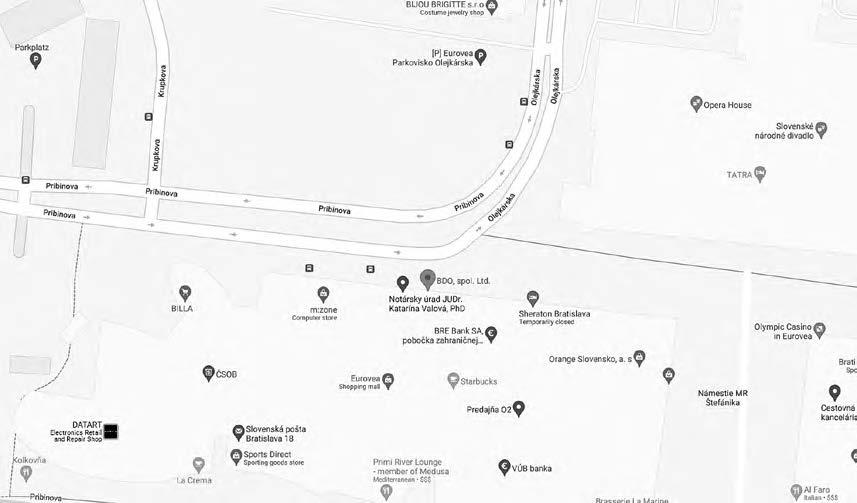
Peter Gunda
Managing Partner
gunda@bdoslovakia.com
+421 2 5710 6677
Eva Belková
BSO Partner
belkova@bdoslovakia.com
+421 2 5710 6643
Audit & Assurance Services: Peter Kaniak Audit Manager
kaniak@bdoslovakia.com
Tel.: +421 2 5710 6672
Audit & Assurance Services: Lucia Cveková Audit Manager
cvekova@bdoslovakia.com +421 2 5710 6678
BDO Legal:
Peter Káčer Legal Partner
+421 2 5920 8611 kacer@bdoslovakia.com
Miroslav Tain
Tax Partner
tain@bdoslovakia.com
+421 2 5710 6622
Alena Sermeková
Audit Partner
sermekova@bdoslovakia.com
+421 2 5710 6699
Tax Services: Andrej Kvasnička Direct Tax Director
kvasnicka@bdoslovakia.com
+421 2 5710 6680
Tax Services: Miriam Patiová Indirect Tax Director
patiova@bdoslovakia.com
+421 2 5710 6690
BDO Legal: Pavol Tamaši Legal Partner
tamasi@bdoslovakia.com
+421 41 562 3083
Pavel Poliak Legal Partner
poliak@bdoslovakia.com
+421 2 5920 8611
Andrej Kvasnička Tax Partner
kvasnicka@bdoslovakia.com
+421 2 5710 6641
BSO services: Dušan Snopko Payroll Director
snopko@bdoslovakia.com +421 2 5710 6629
Consulting Services: Juraj Kočiško Director
kocisko@bdoslovakia.com
+421 2 5710 6620
BDO Slovak Republic
Pribinova 10 811 09, Bratislava Slovak Republic
Tel.: +421 2 5710 6666
Fax: +421 2 5710 6610
www.bdoslovakia.com
Email: office@bdoslovakia.com
BRATISLAVA - CARLTON SAVOY
Carlton Savoy 2, Mostová 2, 811 02 Bratislava I, Slovak Republic
Tel.: +421 2 5920 8611
Email: bdolegal@bdoslovakia.com
KOŠICE DUETT
Business Residence 3B, Námestie osloboditeľov 3 B, 040 01 Košice, Slovak Republic
Tel.: +421 2 5710 6666
Email: office@bdoslovakia.com
ŽILINA
Mariánske námestie 15, 010 01 Žilina, Slovak Republic
Tel.: +421 4 1562 3083
Email: bdolegal@bdoslovakia.com
This publication has been carefully prepared, but it has been written in general terms and should be seen as broad guidance only. The publication cannot be relied upon to cover specific situations and you should not act, or refrain from acting, upon the information contained therein without obtaining specific professional advice. Please contact BDO, spol. s r.o to discuss these matters in the context of your particular circumstances. BDO, spol. s r.o, its partners, employees and agents do not accept or assume any liability or duty of care for any loss arising from any action taken or not taken by anyone in reliance on the information in this publication or for any decision based on it.
BDO, spol. s r.o., a Slovak limited liability company registered with Commercial Register of District Court Bratislava I, Section: Sro, File No.: 26518/B, is a member of BDO International Limited, a UK company limited by guarantee, and forms part of the international BDO network of independent member firms.
BDO is the brand name for the BDO network and for each of the BDO Member Firms.