
If you listen to conservative talk radio or online podcasts, you’d think that the North American labor movement was dead and buried. I’m here to tell you that nothing could be further from the truth.
As every Union member knows, belonging to a Union is about much more than higher wages and benefits and the right to due process. It is about power.
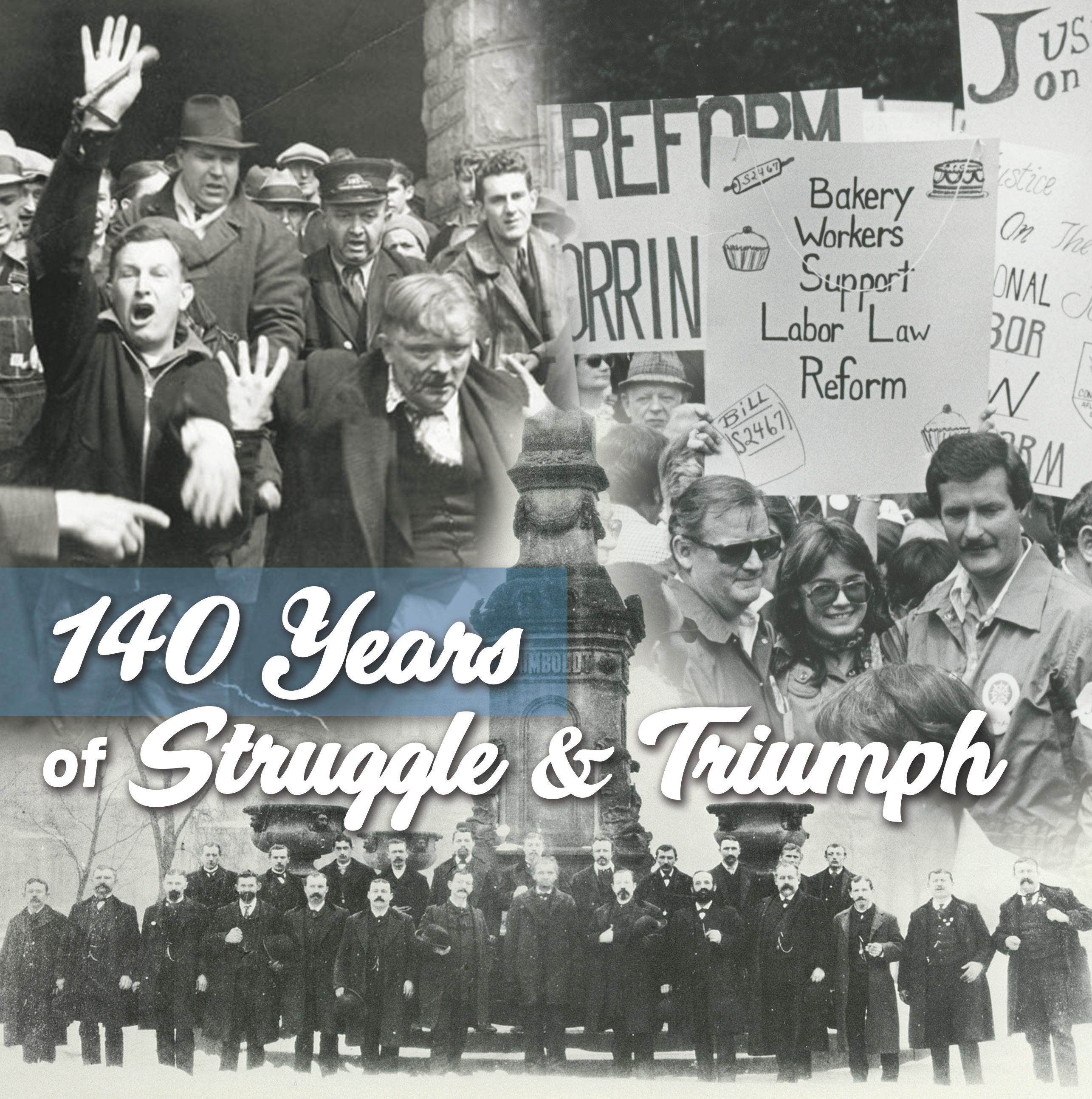
Since the BCTGM was founded 140 years ago, there have been many tough challenges that have threatened the stability and power of the labor movement. But as history shows, the labor movement—including the BCTGM—has risen to the challenge.
We find ourselves in another one of those crucial moments. We have an anti-worker, anti-union Administration that is bent on crushing organized labor. We have broken labor laws that threaten workers’ right to organize and bargain collectively, and which the richest companies in the world are exploiting. We are even seeing citizens’ individual liberties threatened, including the right to protest and engage in concerted activity.
While this seems more like 1886 than 2026, there are reasons to be optimistic. Despite the odds, the labor movement is fighting back and winning.
According to the Trump Administration’s Bureau of Labor Statistics (BLS), the number of unionized workers in the United States grew by over half a million workers. Hundreds of thousands of workers in all industries across America fought for the right to bargain collectively, ensure due process at work, and have a voice in their workplaces.
We have long advocated for more Union members to enter the political arena. We need more working people making policy, fighting for kitchen table issues, and creating legislation and regulations that actually benefit working people and not giant corporations. In January, a member of the Machinists Union (IAM) won a special-election in Texas for a seat in the U.S. Congress. Taylor Rehmet, a machinist who served in the Air Force, ran on a platform of protecting jobs, strengthening public education, and lowering costs for working families. Other Union members are running for public office in 2026 and they need our support.
Four years ago, the BCTGM began a wave of strikes that jolted the post-COVID labor movement into action. Strikes by autoworkers at various companies, machinists at Boeing, longshoreman at the nation’s ports, postal workers in Canada and Hilton hotel workers all contributed to huge gains for working people. Recently, we saw workers win a first contract at Volkswagon in Chattanooga, Tenn. Tens of thousands of Delta Airlines fight-attendants are close to unionizing, and important fights are taking place at Amazon and Starbucks. All of these wins are leading to a more powerful labor movement and better gains for working families.
In mid-February, over one hundred workers at a Grupo Bimbo Bakehouse bakery in Toronto, Canada voted overwhelmingly to join BCTGM Local 264 (Toronto, Ontario) (see page 3 ). These workers saw the benefits that other BCTGM members in Toronto had as members of the Union and wanted to be a part of that. The contract; the solidarity; the power!
We all have a role to play in reinvigorating and strengthening the labor movement. I am confident that this Union will do its part to bring more power to working people across the United States and Canada.
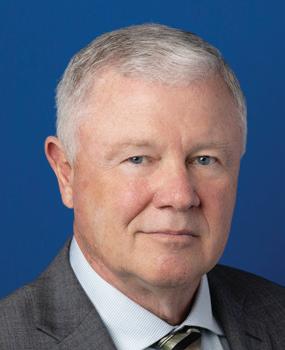
—Anthony Shelton, BCTGM International President
Official Publication of the Bakery, Confectionery, Tobacco Workers and Grain Millers International Union 10401 Connecticut Avenue, Kensington, Maryland 20895-3961 (301) 933-8600 www.bctgm.org
Anthony Shelton , Editor
Michelle Ellis, Assistant Editor
BCTGM General Executive Board
President Anthony Shelton • Secretary-Treasurer David Woods
Vice Presidents Shad Clark • Jason Davis
Roger Miller • Ron Piercey • Zachary Townsend
BCTGM General Executive Board Members
Wally Borgan • Pierre Luc Doucet
Aaron Graves • Paul LaBuda • Earl Lublow
Letitia Malone • Gary Oskoian • Cameron Taylor
Doyle Townson • Jeff Webb • Donald Woods
BCTGM News (ISSN 1525-4860) is published quarterly by the Bakery, Confectionery, Tobacco Workers and Grain Millers International Union, 10401 Connecticut Avenue, Kensington, MD 20895-3961. Periodicals postage paid at Kensington, MD and at additional mailing offices. Subscription to new members only. Postmaster: Send address changes to BCTGM News, 10401 Connecticut Avenue, Kensington, MD 20895-3961.
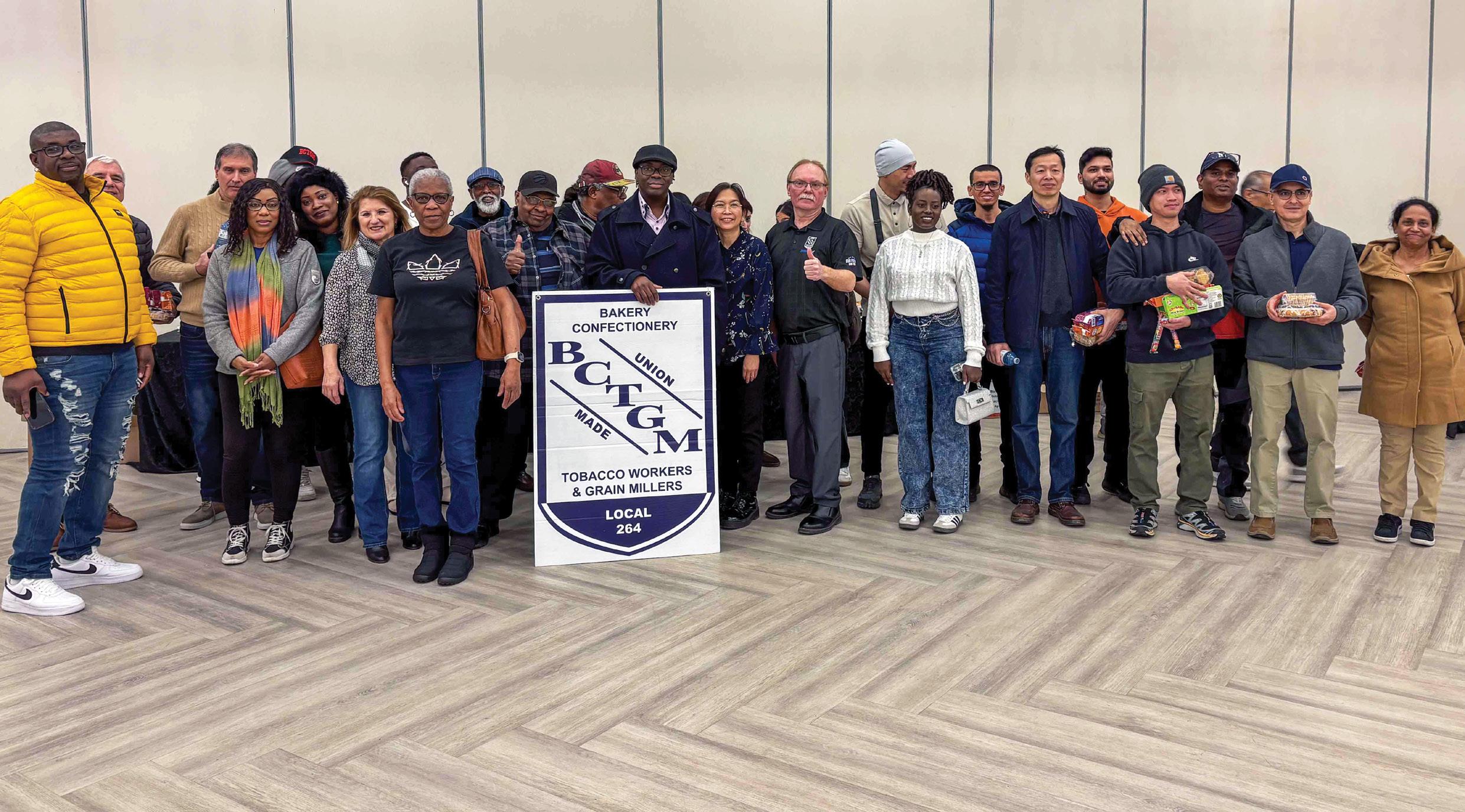
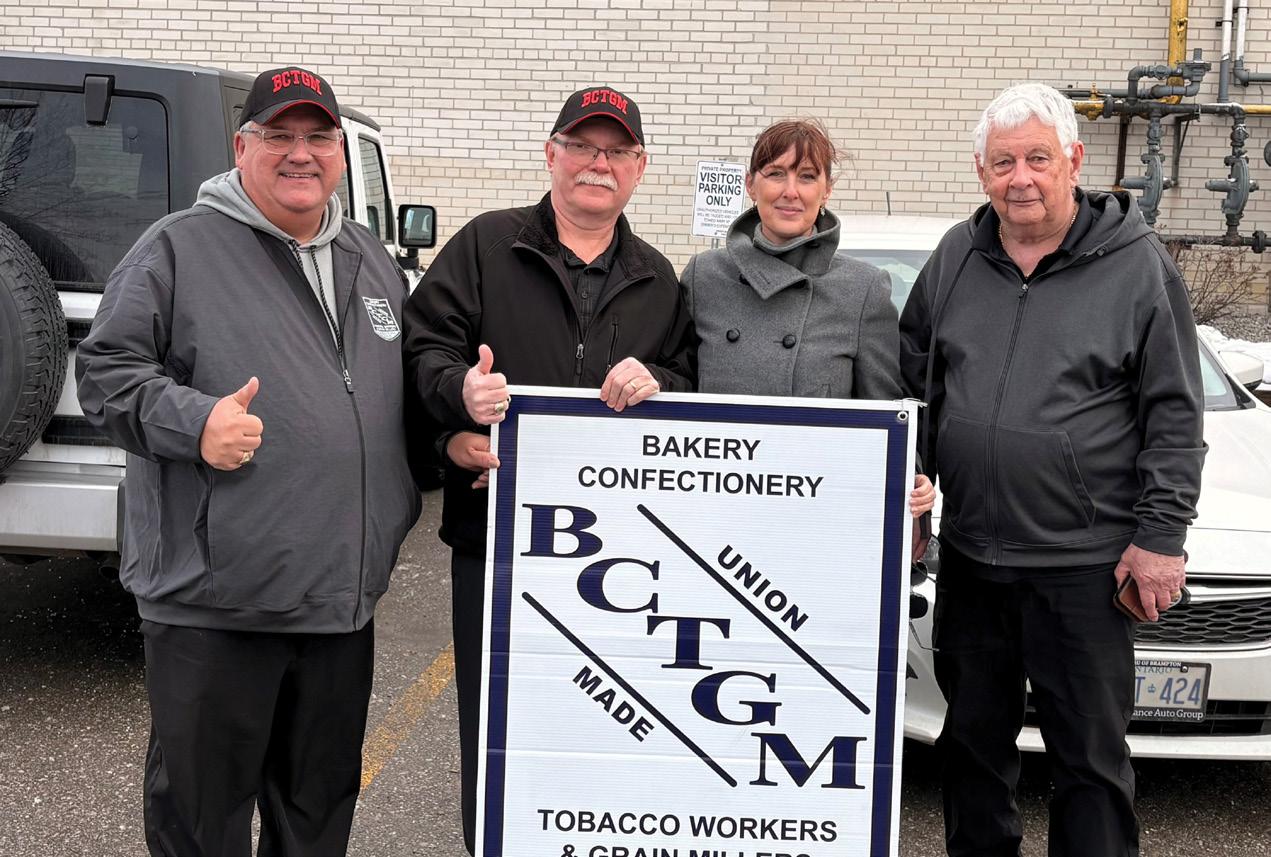
Workers at Bimbo Bakehouse
Attwell in Toronto, Ontario voted overwhelmingly in favor of joining BCTGM Local 264 (Toronto) on February 19.
In a facility with 109 workers, over 80 employees cast a ballot. An overwhelming 91% majority voted to join the Union.
The organizing drive took only three weeks, and was led by Local 264 Business Agent Bill Hegedus and Local 264 Office Administrator Leann Presley, with the help of Canadian Region International Vice President Ron Piercey and International Representative Karl Walker.
“Organizing works best when the workers
take the lead,” Walker asserts. “The campaign really took a turn when a handful of the workers inside the plant took significant control of the organizing effort.”
Those workers began talking to co-workers and explaining the benefits of the Union, and taking advice and leadership from the Union staff. “That is when we really gained momentum. A large amount of this success is owed to those workers who led the way for their peers,” Walker concludes.
The Bimbo Bakehouse Attwell facility in the west end of Toronto produces a selection of pastries, breads and other sweet treats by using traditional techniques and quality ingredients.

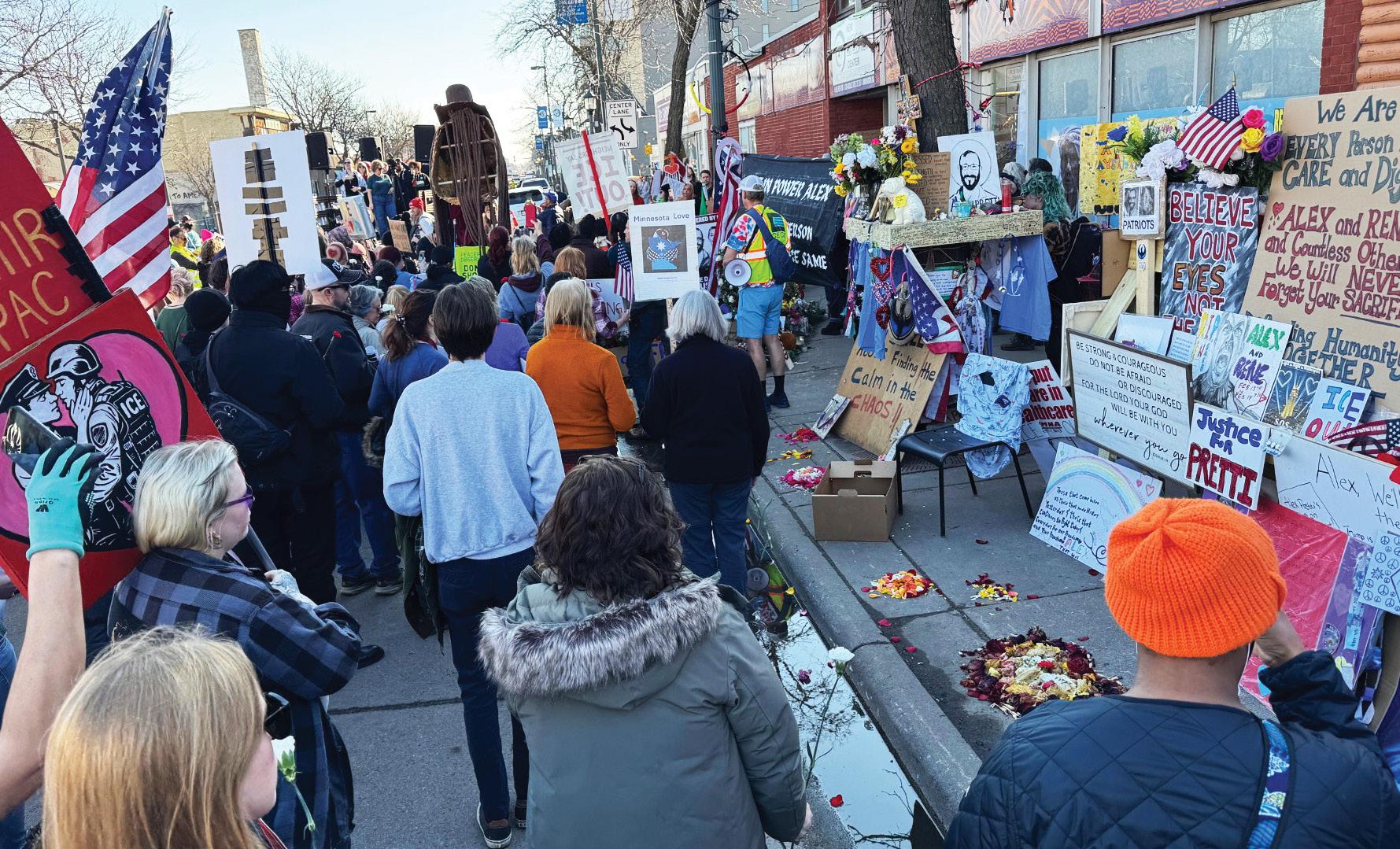
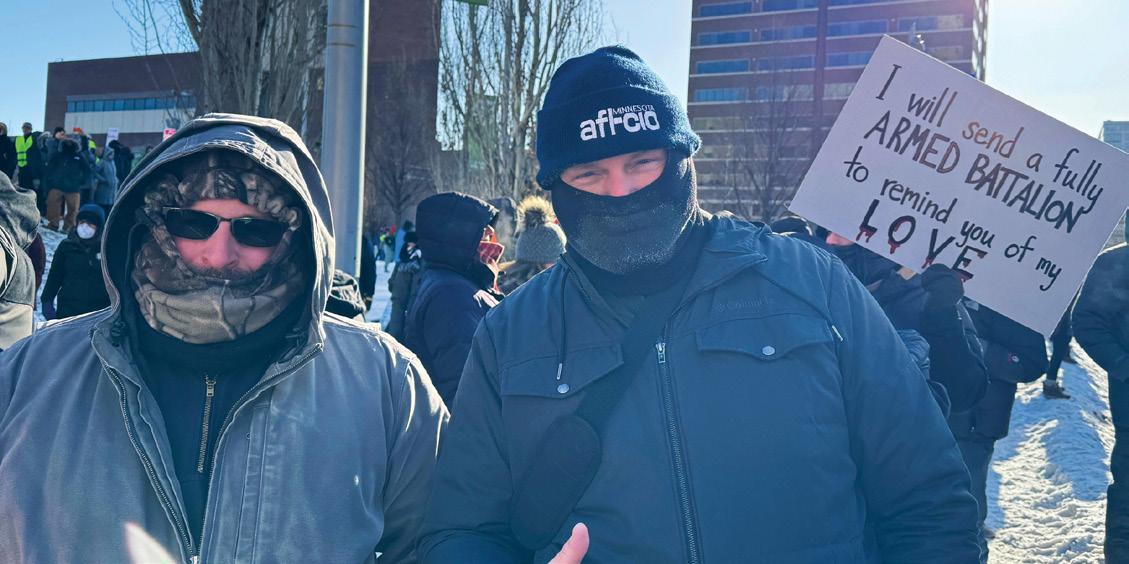
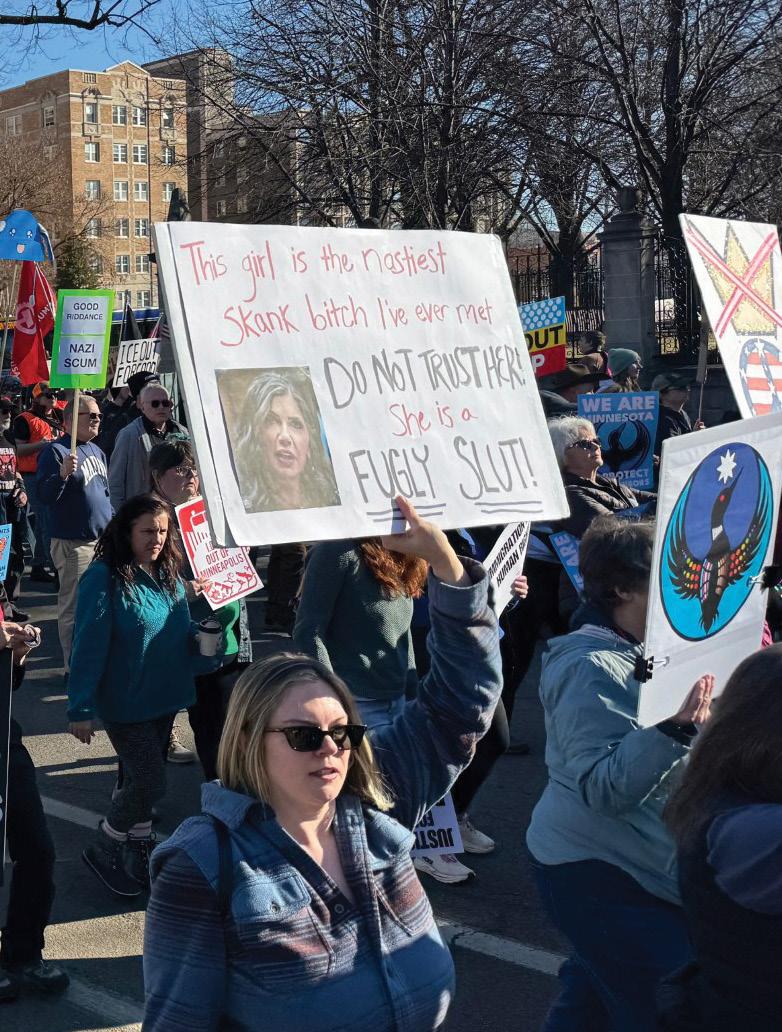
In early January, a member of BCTGM Local 22 (Minneapolis, Minn.) was taken from in front of his home as part of the largescale U.S. Immigration and Customs Enforcement (ICE) operation in Minneapolis called Operation Metro Surge.
“The family’s security camera caught him being picked up as he was heading off to work that morning,” reports Local 22 President Wally Borgan. “He has been gone for more than a month.”
Local 22 has worked closely with the Minneapolis Regional Labor Federation, which immediately mobilized its coalition of allies and advocates to learn where their member was taken and ensure his right to due process.
“The only information we have is what they have been able to recover for us,” Borgan continues. “The Minneapolis Regional Labor Federation has been invaluable in helping us navigate this situation”
In commenting on the incident, BCTGM International President Anthony Shelton reiterated the BCTGM’s stance on due process for immigrant workers, saying:
“The issue of due process is a cornerstone of the labor movement and the basis of all our collective bargaining agreements. Workers who are taken by authorities on the way to their job site, while picking up their kids
from school or going to church must be given due process. Families deserve to know where their loved ones have been taken.”
On the escalating tension caused by the Department of Homeland Security (DHS) and ICE, and the militarization of American cities, he added:
“The BCTGM does not condone the deployment of masked agents who use excessive force under the guise of ‘restoring order’ in response to peaceful demonstrations. The right to peaceful protest is a fundamental constitutional protection and a core tenet of democratic society. It is essential to the labor movement, and any effort to silence it is an effort to weaken working people everywhere.”
The International Union is closely monitoring the effect of the Trump Administration’s immigration policy on BCTGM workplaces around the United States. According to Shelton, the impact isn’t unlike that of an employer threatening deportation or firing workers during an organizing campaign.
“The point is to fracture the workforce and scare workers into silence,” Shelton says. “Silent workers are vulnerable workers. To protect our collective power, it is imperative that BCTGM members have trust and confidence in their Union leadership—and in one another.”
In thanking the Minneapolis Regional Labor Federation, Shelton concluded:
“We are grateful for the response effort to help Local 22 ensure proper representation for our hardworking member, and encourage all our local unions to stay in close contact with their central labor bodies as they navigate this complicated issue.”
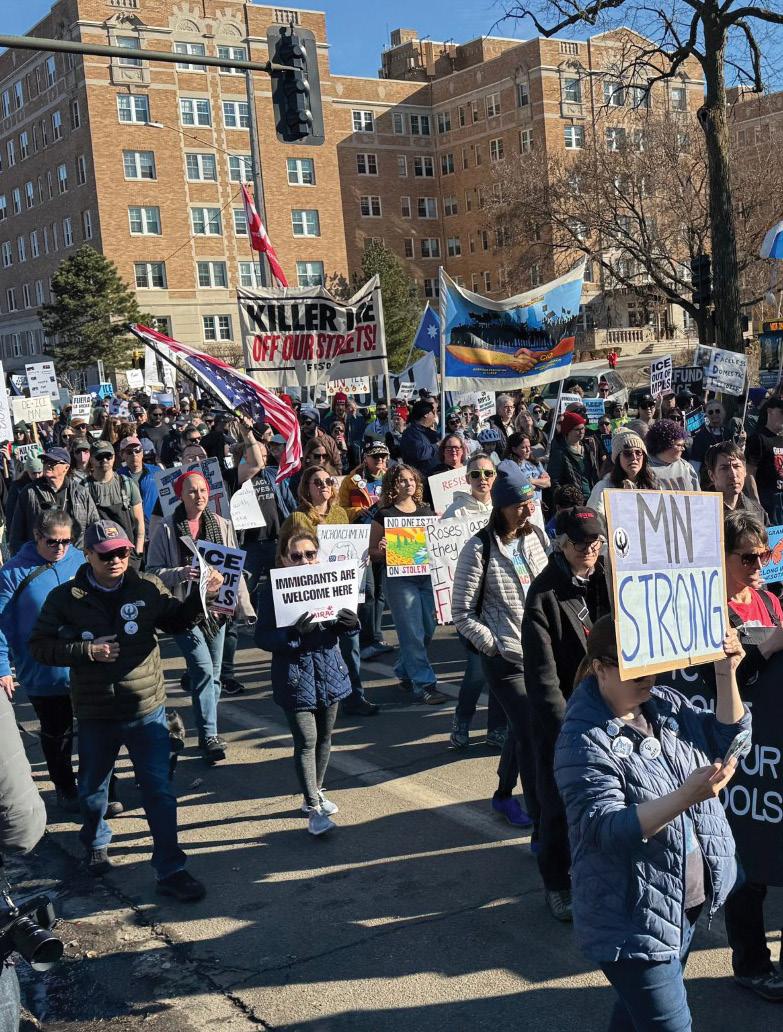
BCTGM local unions share what they are doing to ensure members’ rights and promote solidarity in the face of the Trump Administration’s aggressive immigration policies.
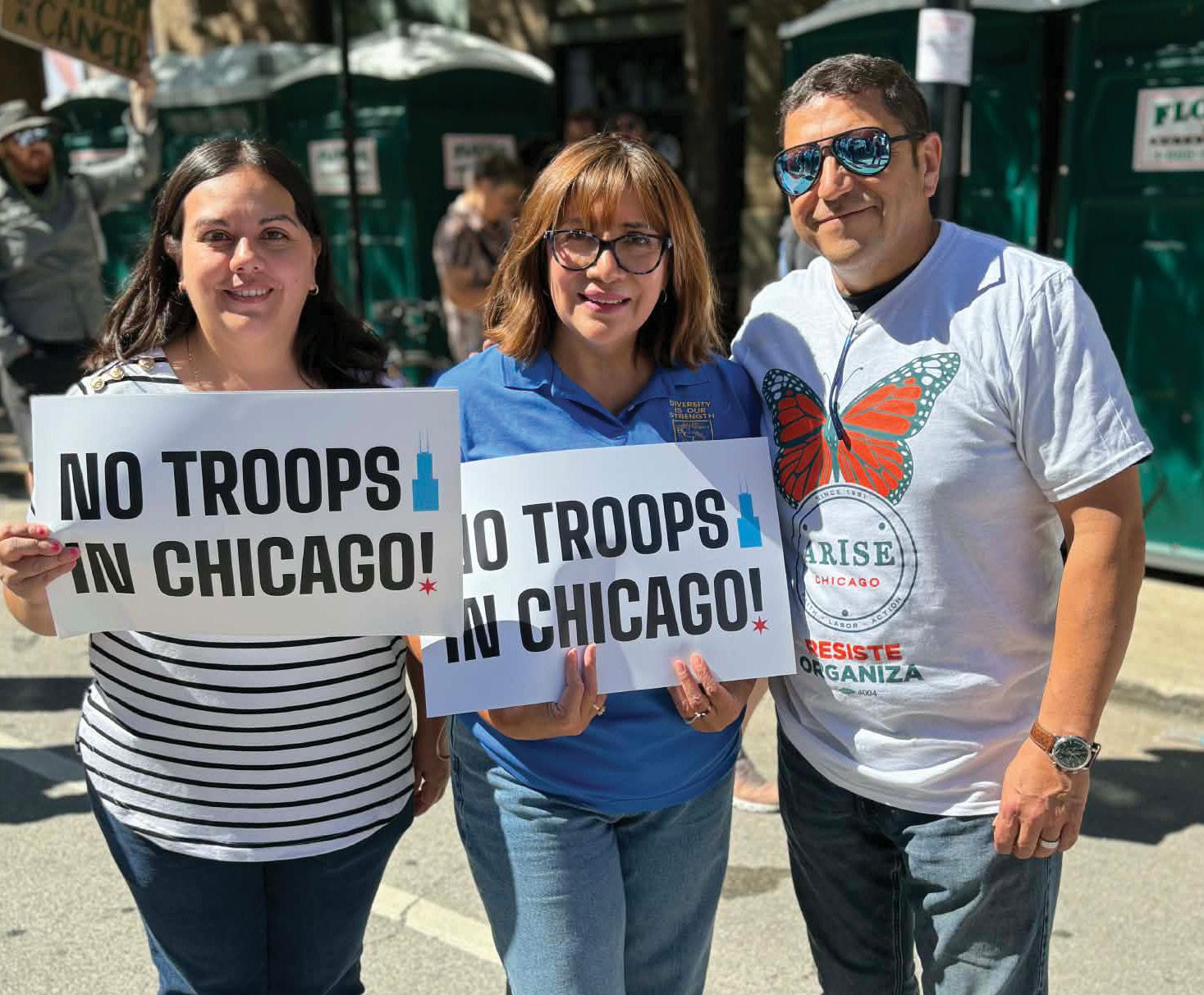
Zavala (center) attends a rally with her daughter, Andrea Gudiño (left), and husband, Moises Zavala (right), who is the director of the Worker Center at Arise Chicago.
According to Local 1 Financial Secretary Beth Zavala, the local has leaned into its coalition around Chicago, attending human rights rallies and getting on calls with central labor bodies and allies as often as possible.
“Last year, I attended a Jewish Tisha B’av at the Broadview Detention Center and spent Thanksgiving morning driving meals to members of our community who could not be out themselves,” Zavala says.
Local 1 also held a ‘Know Your Rights’ workshop virtually, for employees who were too scared to go out. “We are regularly reminding our members that we are here and ready to support them the moment they need help,” Zavala affirms.
Local 372A Financial Secretary Jacob Watkins attended a virtual training on the AFL-CIO’s Frontline Solidarity toolkit, and distributed the resources to the local’s shops around Indianapolis. “We also have a close eye on Temporary Protected Status (TPS) changes,” Watkins says. “A large number of our members are Haitian, and would face significant hurdles in providing for their families if their status were to suddenly change.”
Watkins, who is active in both the Central Indiana AFL-CIO and the Hoosier Heartland Labor
Federation, adds that the labor bodies have been monitoring two detention facilities in the area. “One military facility was recently converted into an ICE detention site, and another was established at one of our most poorly run prisons,” he says.
Remarkably, a coalition known as LiveFree in Indianapolis successfully pressured the local sheriff’s department to cancel its contract with the Department of Homeland Security in December. “As a result, our jail no longer carries out long-term federal holds for individuals facing documentation issues,” Watkins concluded.
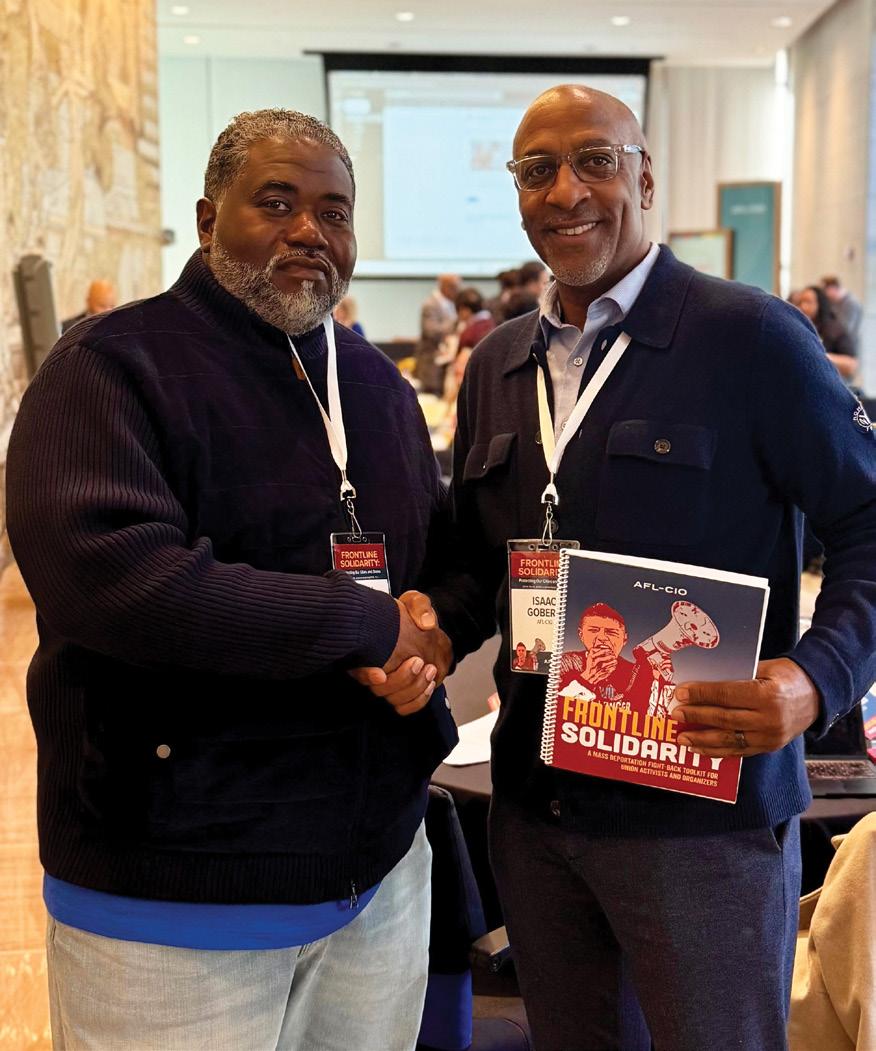
In November, AFL-CIO President Liz Shuler convened State Federation and Central Labor Council leaders in Washington, D.C. from locations targeted by the Trump Administration. The aim was to strengthen Labor’s frontline solidarity in the face of escalating militarization and ICE abuse.
In attendance was BCTGM Local 252G member Kevin Bradshaw, who also serves as President of the Memphis and West Tennessee Central Labor Council and Vice President of the Tennessee State Federation.
“This event was an important opportunity to discuss the issues we are facing with the military occupation in our cities,” Bradshaw said. “We came up with a unified strategy and message to effectively represent our members in this moment.”
That strategy includes linking arms with a diverse array of community organizations. “We need all workers—not just Union workers—as well as faith and charity organizations in the community to be on board,” he says. “We can do this, but not without infallible solidarity!”
During his visit to the AFL-CIO, Bradshaw catches up with BCTGM Member Isaac Goburn, now a Special Assistant to AFLCIO Pres. Liz Shuler.
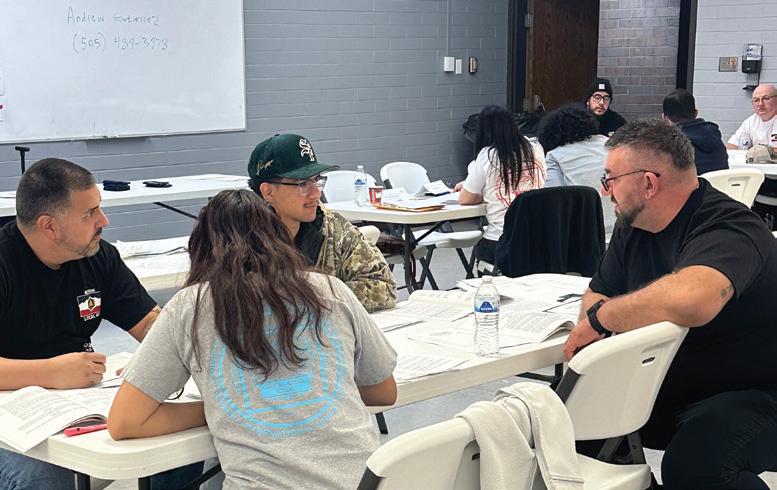
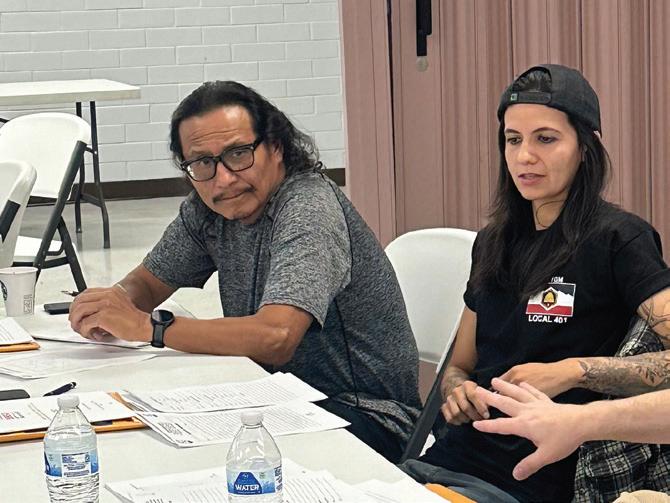
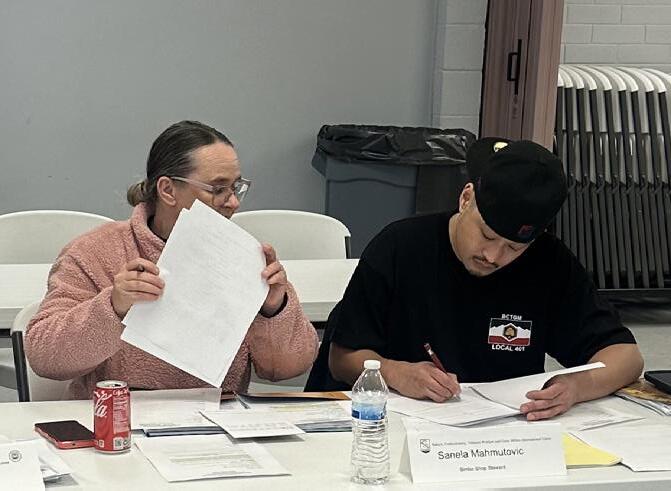
Local 401 • Salt Lake City, Utah
Taught By: Western Region
International Representative
Andrew Gutierrez
Total Stewards Trained: 21
Shops Covered: Bimbo
Bakeries USA, Danone North America and Horizon Organic Dairy
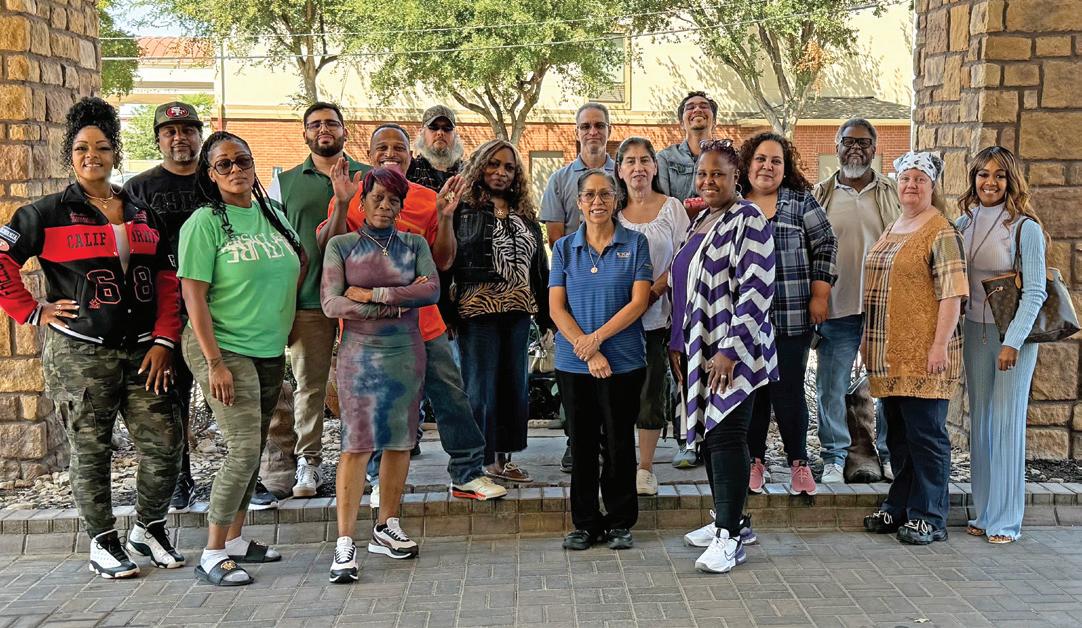
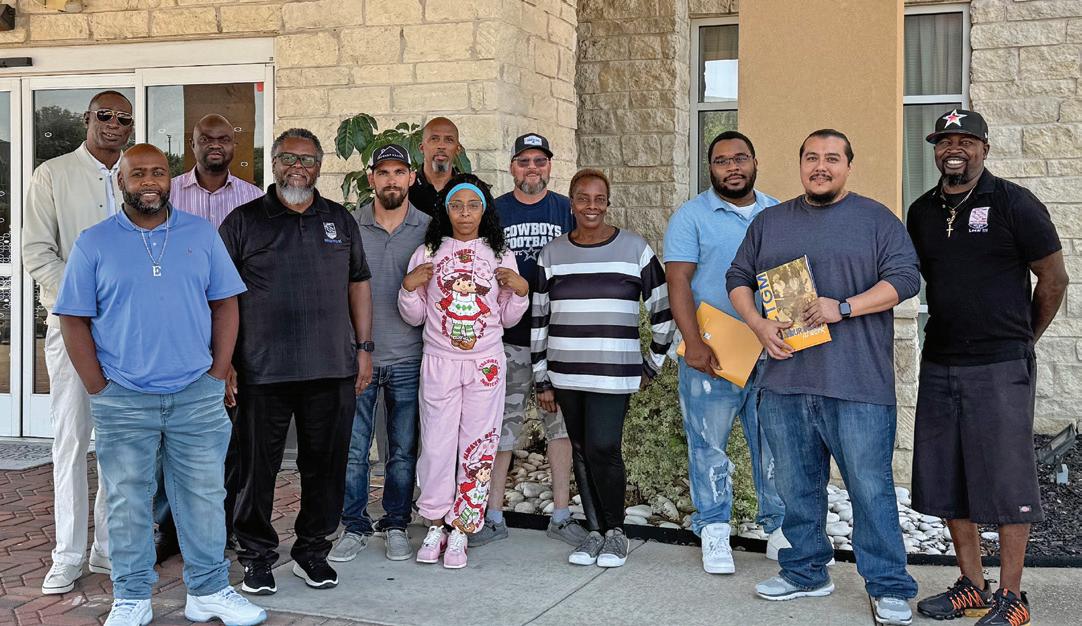
Local 111 • Dallas, Texas
Taught By: Southern Region International
Representative Jason Thomas
Total Stewards Trained: 48
Shops Covered: Mondelēz and Bimbo
Bakeries USA members from Rockwall, Fort Worth, San Antonio, Grand Prairie and Arlington, Texas and Dallas Shipping.
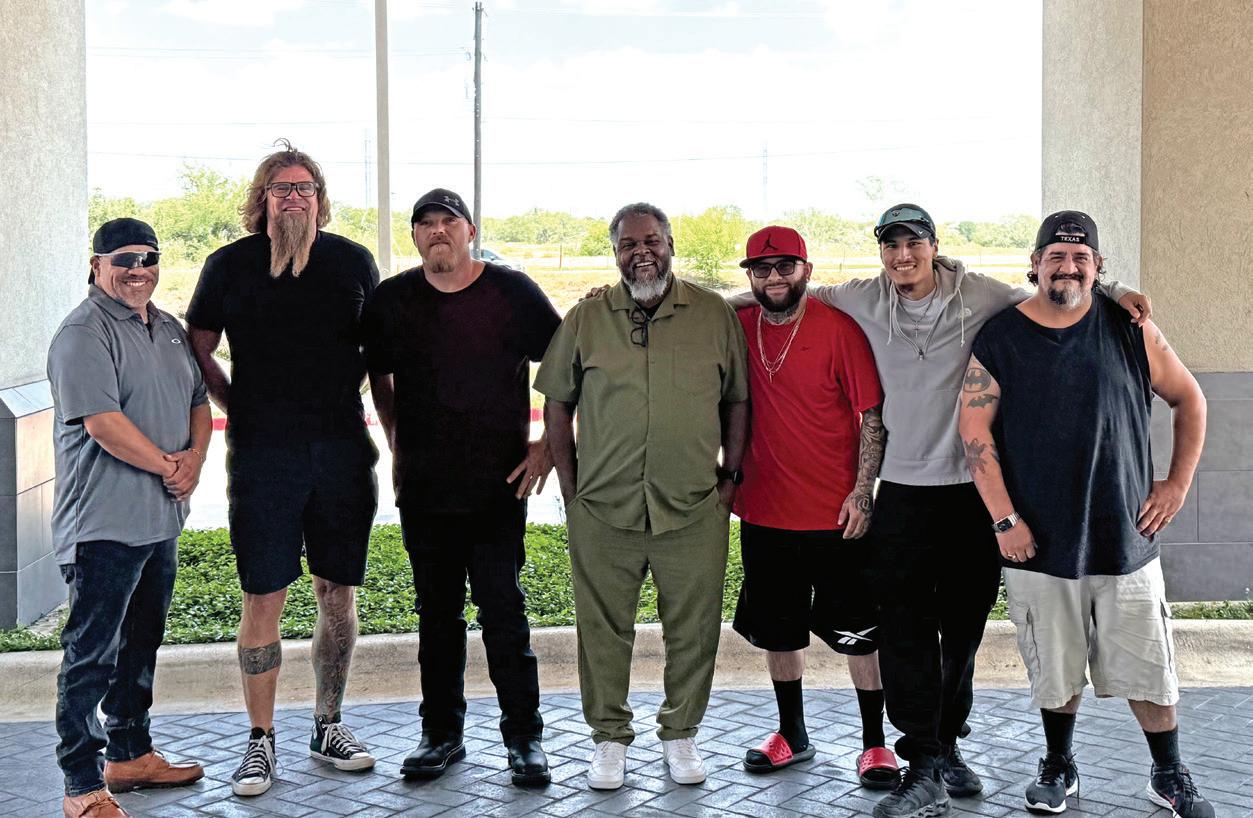
Taught By: International SecretaryTreasurer David Woods, Midwest Region
International Vice President Jason Davis, International Representative Veronica Hopkins and Local 167G (Grand Forks, N.D.) Organizer Shane Sweeney
Total Stewards Trained: 35
Shops Covered: Southern Minn. Beet Sugar Coop., Bunke/Gavilon, General Mills, Bartlett/Riverland Ag./ Ceres Global Ag. and United Sugar Refiners and Producers.
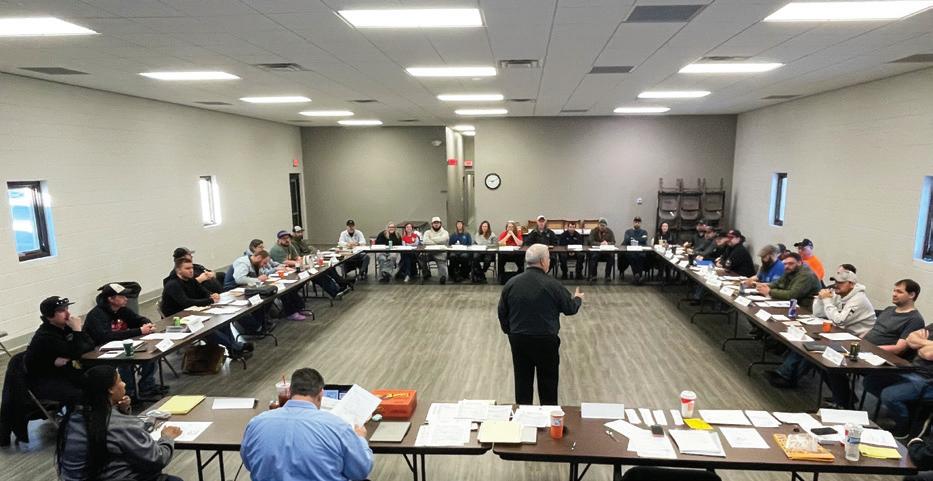
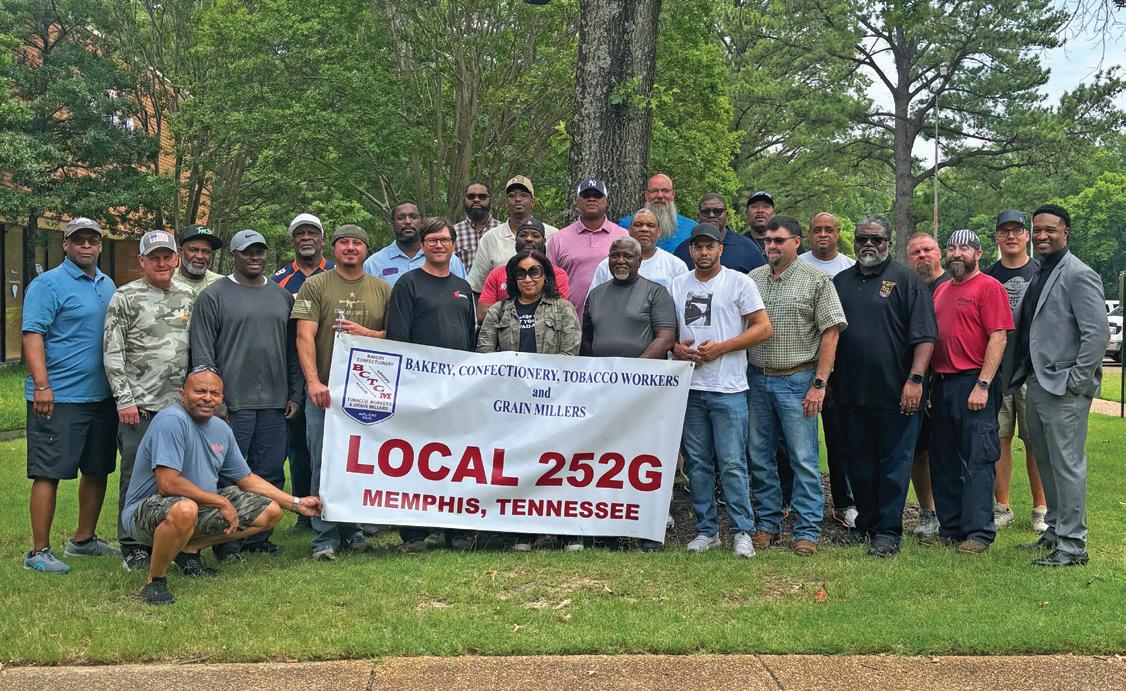
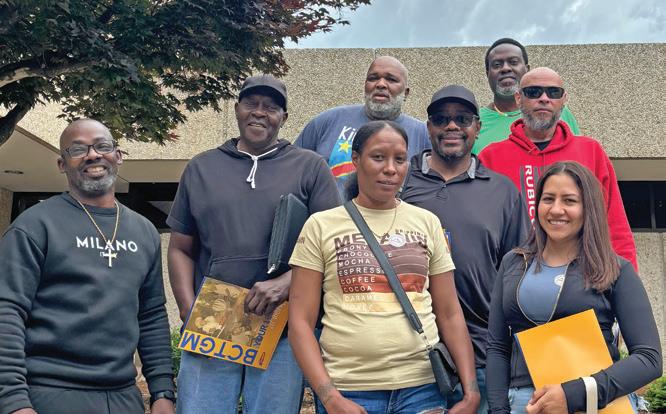
Taught By: Southern Region International
Representative Darrell Copeland
Total Stewards Trained: 26
Shop Covered: WK Kellogg Company

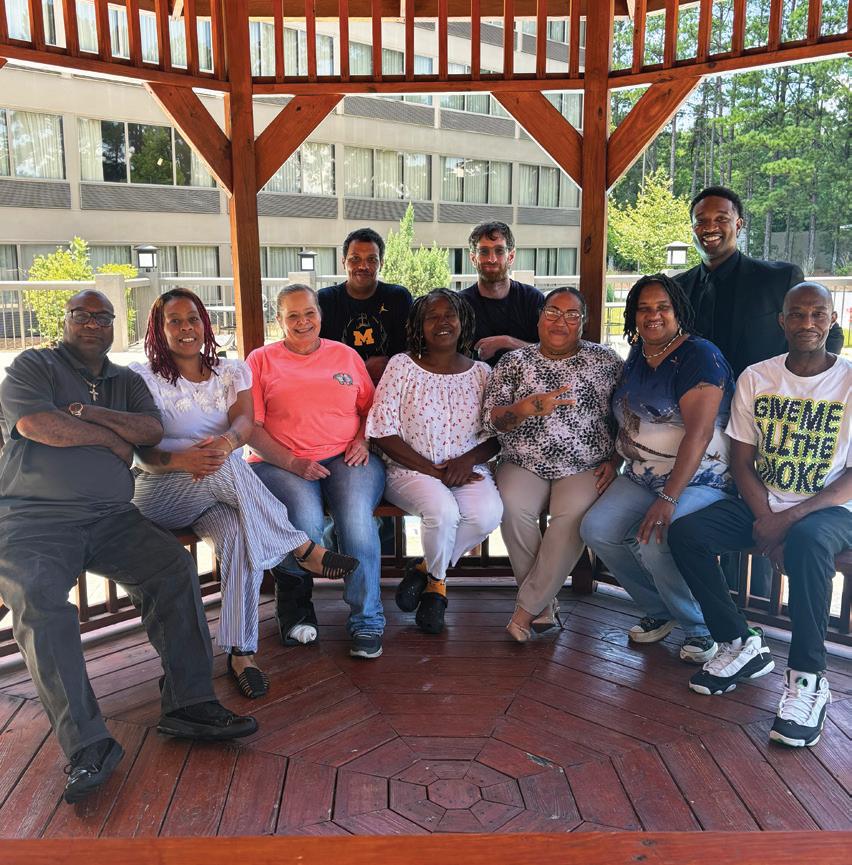
Local 84 • Columbus, Ga.
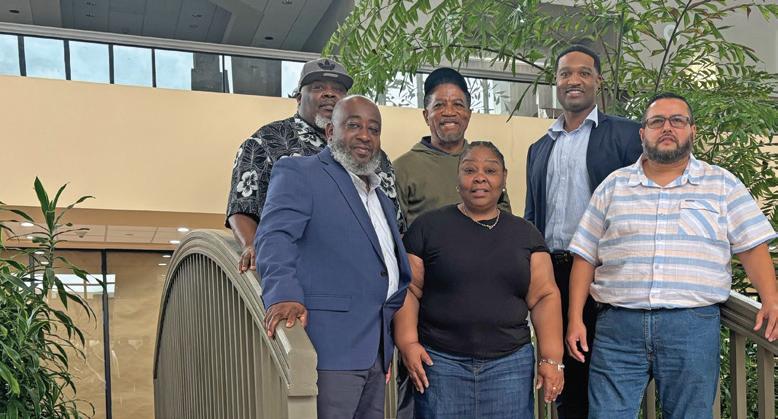
Taught By: Southern Region
International Representative
Darrell Copeland
Total Stewards Trained: 9
Shops Covered: JM Smucker
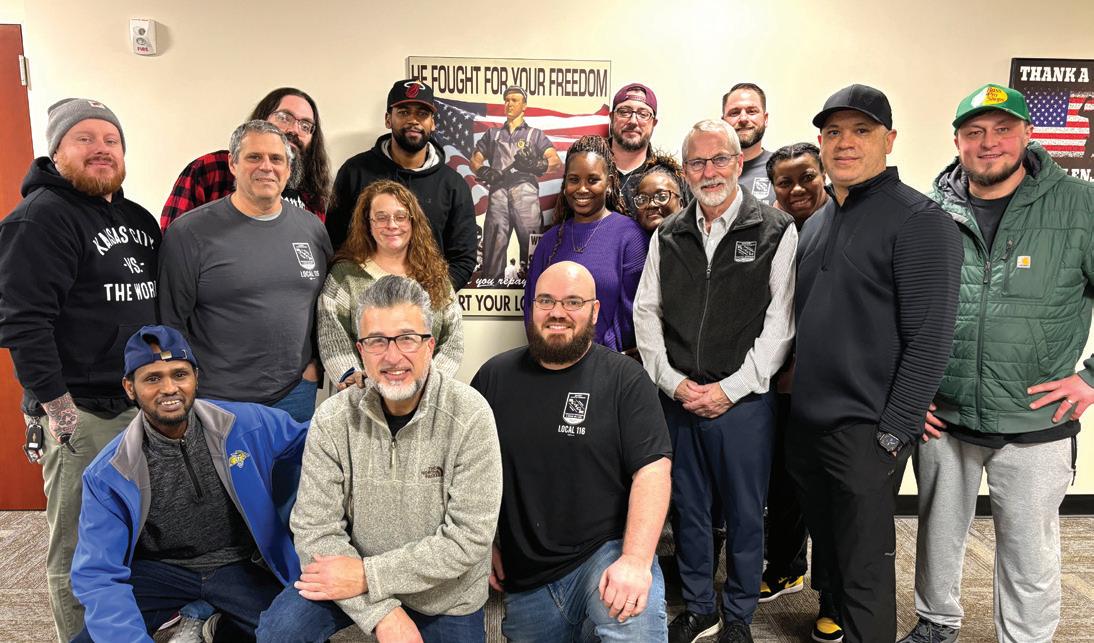
Taught By: East-Central Region
International Vice President Roger Miller
Total Stewards Trained: 15
Shop Covered: Wegman’s Bakery
Taught By: Southern
Region International
Representative
Darrell Copeland
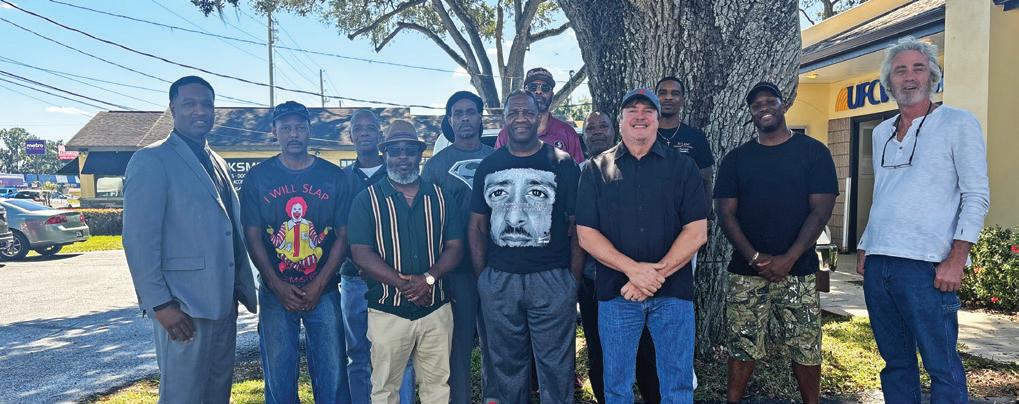
Total Stewards Trained: 24
Shops Covered: Bimbo Bakeries USA, Gastonia North Carolina, Kroger/ Anderson Bakery in Anderson, S.C., Flowers Baking Co. Lakeland, Fla., Bimbo Bakeries USA Rivera Beach and Miami, Fla.
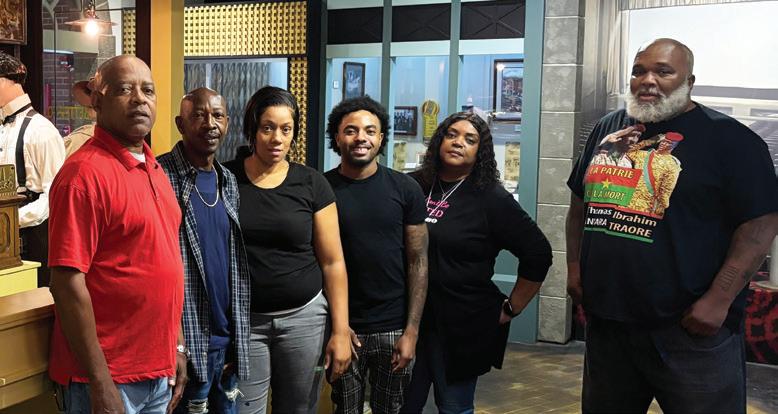
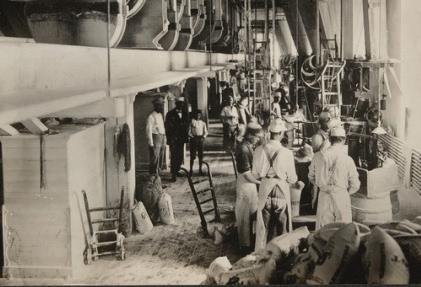
The late 1800s—often called the Gilded Age—was a period of explosive industrial growth in North America. It was also a time of extreme inequality and brutal working conditions. That combination sparked a wave of union organizing.
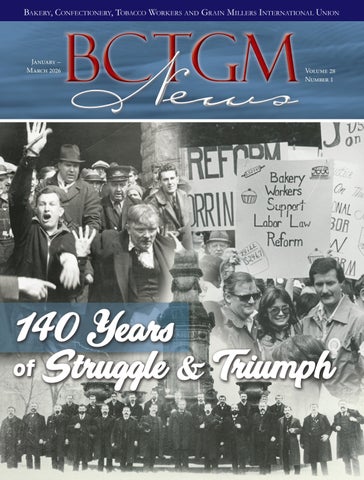
The 2026 Convention year will mark the 140-year founding anniversary of the BCTGM. On these pages, we celebrate the origin of each sector of the Union as we think about how to chart its future at the 42nd Constitutional Convention this coming July.
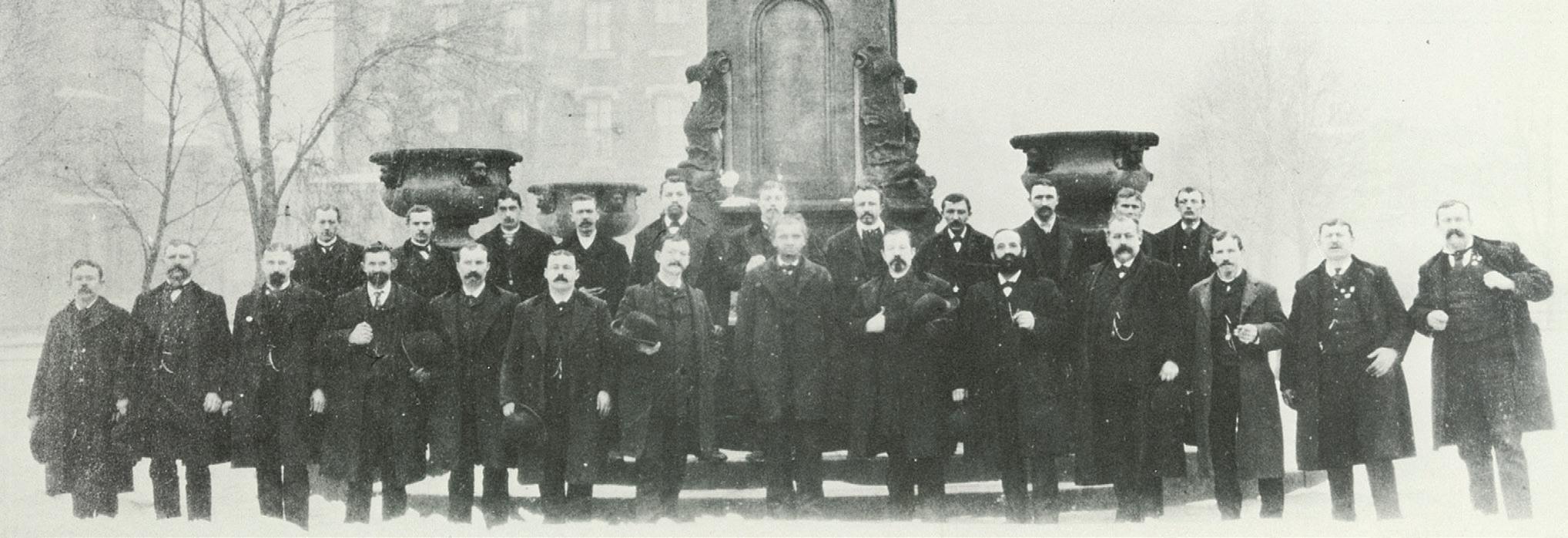
It was a Bohemian immigrant named George Block, with a background in journalism, who finally got a Union off the ground for the journeyman bakers in New York and Brooklyn in the 1880’s.
In a census of over 500 German bakery workers in the region, Block found their average workday was 16 hours, up to 23 hours on Saturdays and around 5 hours on Sundays. Conditions were abysmal and the average wage was $8.20 a week, which amounted to 8 cents per hour.
Block raised awareness about exploitative ‘bakers boardinghouses’, extreme heat and exhaustion inside the bakeries and low quality of life for the workers.
Following a tumultuous first couple of years attempting to establish the Union, Block submitted to a small group of loyalists a plan for a newspaper devoted solely to the education and organization of the journeyman bakers.
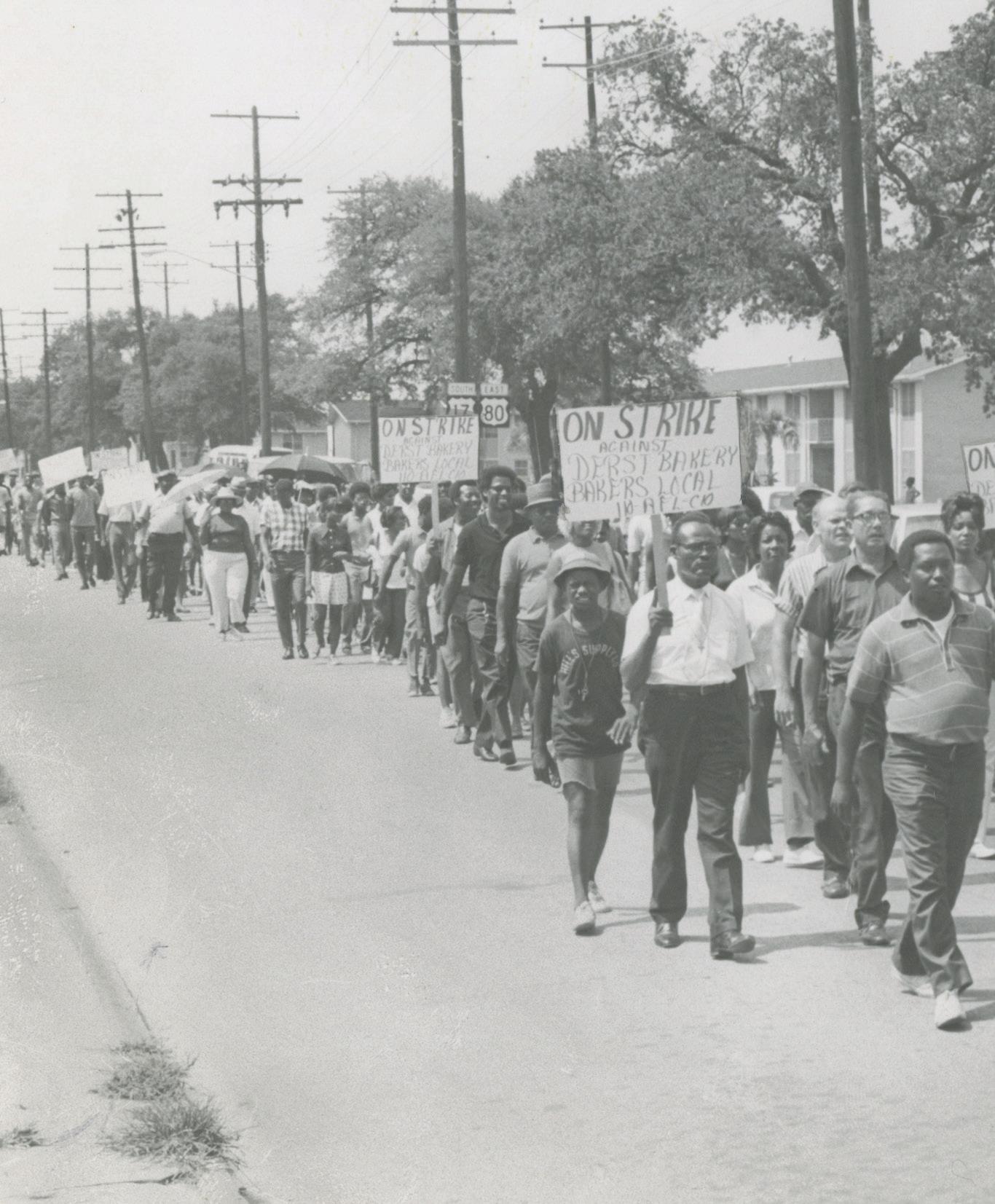
“It worked, in fact it created wonders,” Block later wrote of the outcome. “The Union was growing and it was decided to call a convention of all other Bakers’ Unions of the country to take place January 13, 1886, in Pittsburgh, Pa.”
At the Convention, a national brotherhood was adopted under the name Journeyman Bakers’ National Union. George Block was elected as its National Secretary and editor of the Journal, which became the property of the National Union.
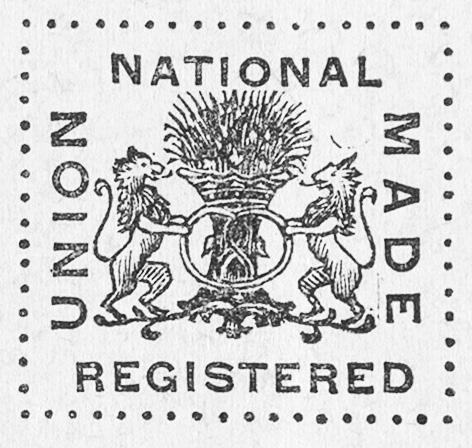
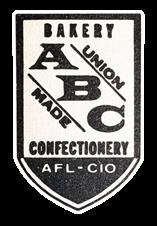
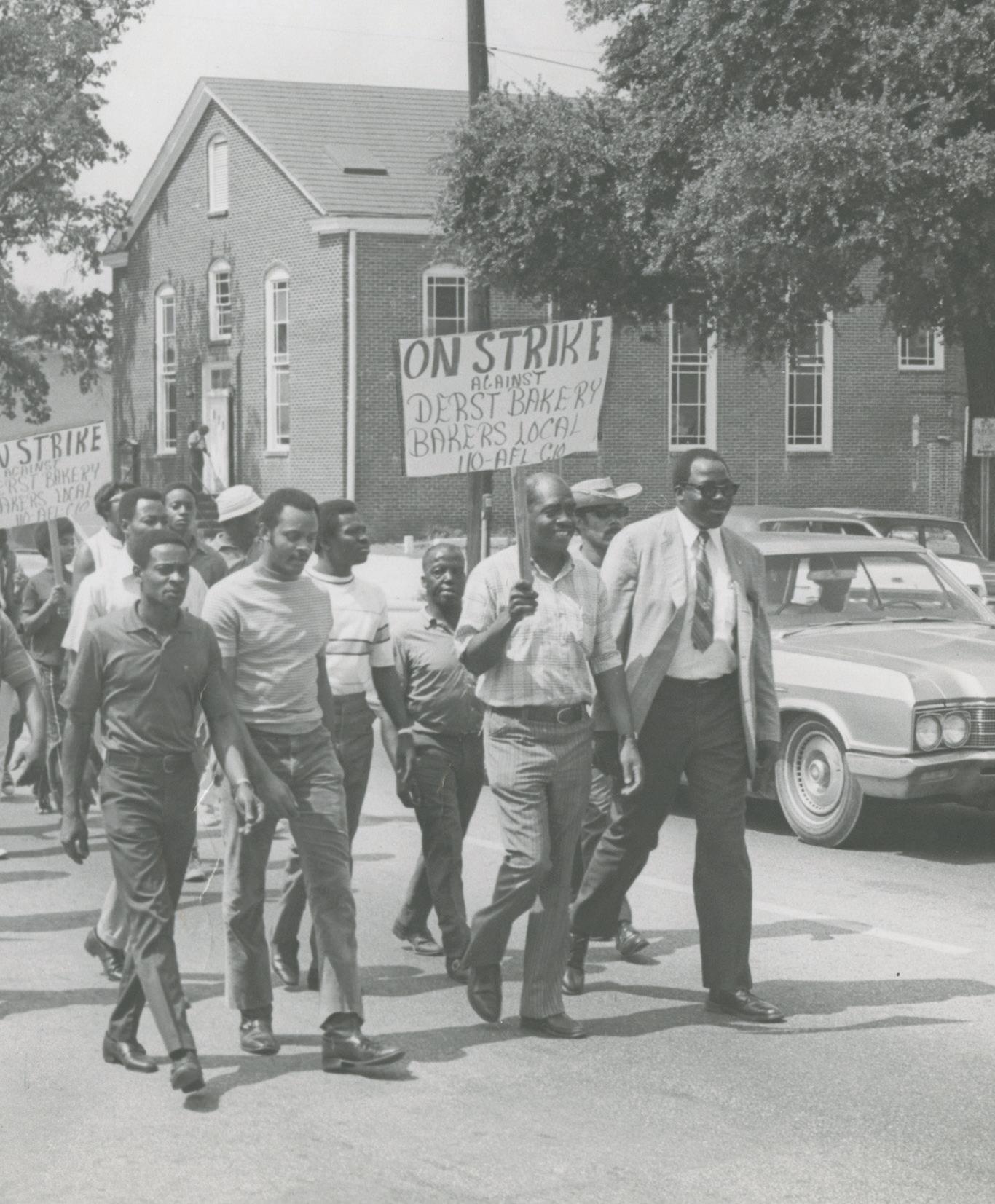
In the ensuing years, the Union would add candy and confectionery workers to its ranks, becoming the Bakery and Confectionery Workers (1915), split off to form a competing American Bakery and Confectionery Workers International Union (ABC) (1957), and eventually merge back together as the Bakery and Confectionery (B&C) Workers International Union (1969).
By the late 19th century, the tobacco industry was booming and massive corporations like the American Tobacco Company (also known as ‘The Tobacco Trust’) were dominating production. Tobacco workers—many of which were women, immigrants, black workers in the South and often even children—faced extremely low wages, long hours and dangerous factory conditions.
In 1895, cigar makers, stemmers, packers and other tobacco workers gathered in Louisville, Ky. to establish the Tobacco Workers International Union (TWIU).
Much like the Journeyman Bakers and other Unions of the time, the TWIU struggled immensely in its early years, facing strikebreaking employers, blacklists and violence to suppress organizing.
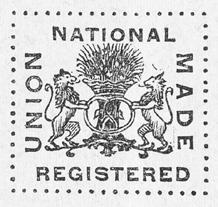
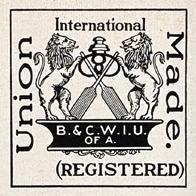
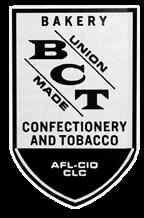
One of the enduring legacies of the early tobacco workers was an aggressive Union Label campaign, aimed at ensuring the working class only purchased union-made tobacco.
The TWIU grew a lot of respect with Unions of the AFL through this campaign, and most would follow suit. To this very day, Union-labeled goods signal to consumers that a product was made with skilled, quality craftsmanship, by workers protected under a Union contract.
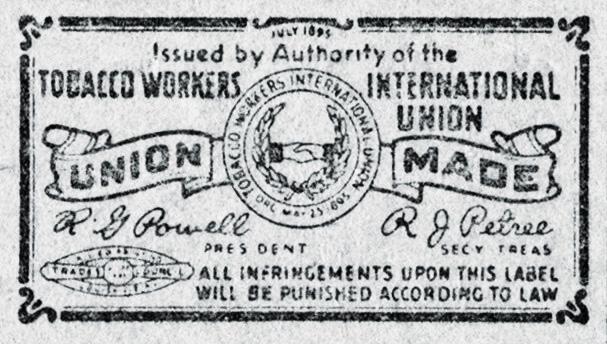
The TWIU merged with the B&C in 1979, becoming the Bakery, Confectionery and Tobacco Workers International Union (BC&T).
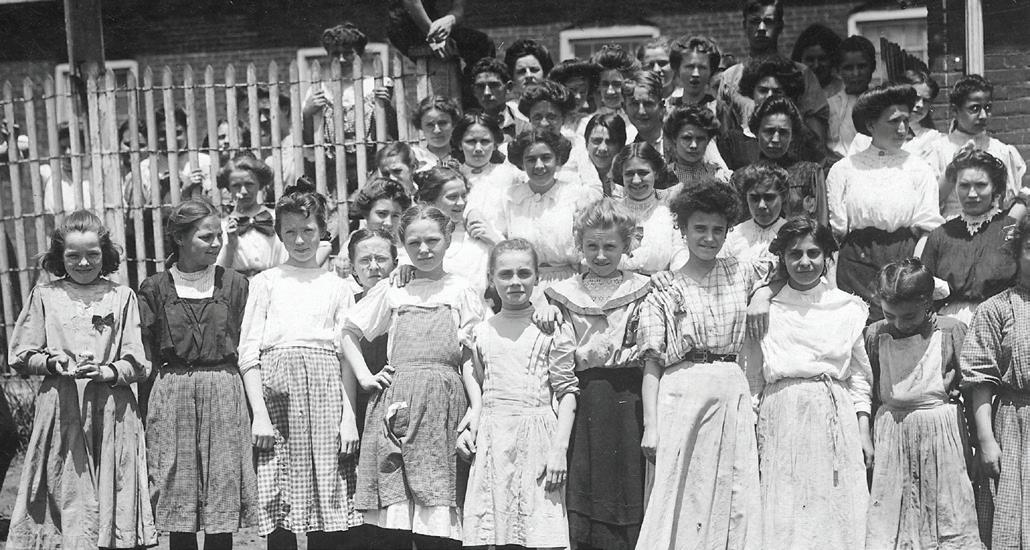
Grain mill workers initially relied on craft unions and labor groups like the Knights of Labor for representation at the turn of the century. The passage of the National Labor Relations Act in 1935 gave workers the legal protection to organize, and grain industry workers the confidence to pursue a dedicated industrial Union.
Local unions in flour mills, feed mills and grain elevators came together in 1937 to form the American Federation of Grain Millers (AFGM). With momentum from President Franklin D. Roosevelt’s New Deal, the Union was able to negotiate standardized wage scales, seniority systems, safety protections and pension and health plans.
and grain handling until its 1999 merger into the Bakery, Confectionery & Tobacco Workers— forming what is known today as the Bakery, Confectionery, Tobacco Workers and Grain Millers International Union (BCTGM).
The AFGM represented workers in flour milling, animal feed production, sugar processing
Bakery, Confectionery, Tobacco Workers and Grain Millers International Union
10401 Connecticut Avenue
Kensington, Maryland 20895-3961
The International Constitution provides, in Article III, Section 2: “The regular Convention shall be held every four years. It shall convene on such date and in such place as the International President, with the approval of the General Executive Board, shall designate.”
“The International Secretary Treasurer shall issue a Convention Call to all local unions in the third month immediately preceding the convening of the regular Convention.”
“The Convention shall not extend beyond ten days of sessions, except by two thirds vote of the duly accredited delegates.”
In accordance with the above, you are hereby notified that the Forty-Second Constitutional Convention of the Bakery, Confectionery, Tobacco Workers and Grain Millers International Union will convene in the city of Hollywood, Florida, beginning at 10:00 a.m. on Tuesday, July 28, 2026, and concluding on Thursday, July 30, 2026.
Article III, Section 5 of the International Constitution states that: “Every delegate to the Convention must (1) have been a continuously good-standing, dues-paying member of the International Union and local union the delegate represents for at least two continuous years next prior to election; (2) be registered with the International Union Secretary-Treasurer, in accordance with Section 6 of this Article, as a duly elected delegate by the local union the delegate represents; (3) have worked at least two years immediately preceding the Convention as a wage earner in any branch of the trades, except for periods of layoff (including layoffs arising from plant shutdowns) and terminations being grieved, not to exceed twelve (12) continuous months, under the jurisdiction of the International Union or as an officer or employee of the International Union or a local union.
(The General Executive Board has waived the requirement of showing union labels.)
“Exempted from the requirements of (1) and (3) above shall be delegates whose local unions have not been in existence for two years, provided that the continuously good-standing, dues-paying and wage-earning period of such delegates are not less than six months.”
Article III, Section 4 provides: “Each local union may elect an alternate delegate at the same time the regular delegates are elected. Alternates must have the same qualifications as delegates. In the event of the inability of any delegate to attend the Convention because of an emergency, the alternate may replace the delegate, provided that the local union notifies the International Secretary-Treasurer of the change.”
The election of delegates is subject to provisions of the International Constitution and the Labor Management Reporting and Disclosure Act of 1959 (Landrum Griffin Law).
The International Constitution in Article III, Section 4, provides: “Local unions in good-standing including those which have been organized under the jurisdiction of the International Union six (6) months previous to the Convention shall be entitled to representation.”
“Local unions with a monthly average International per capita tax on its dues-paying membership of
less than 251 shall be entitled to two (2) delegates; from 251 to 500 to three (3) delegates; from 501 to 750 to four (4) delegates; from 751 to 1,000 to five (5) delegates; from 1,001 to 1,400 to six (6) delegates;
from 1,401 to 1,800 to seven (7) delegates; from 1,801 to 2,200 to eight (8) delegates; from 2,201 to 2,600 to nine (9) delegates; over 2,601 to ten (10) delegates;
but in no case shall a local union be entitled to more than ten (10) delegates. Any two or three locals having less than one hundred members each located within an area of 250 miles may combine in the selection of a delegate. No other local unions may combine in the selection of a delegate and no delegate shall represent more than three such local unions.”
“The number of members of a union shall be the average monthly per capita tax that it has paid to the International Union on its dues-paying membership for twelve (12) months inclusive of the fourth month previous to the Convention, as certified by the International Secretary Treasurer to the Credentials Committee.”
“Delegates representing up to twenty five (25) members shall be entitled to one vote, and to one additional vote for each additional twenty five members or major fraction thereof they represent. The number of votes of local unions which are represented by more than one delegate shall be equally divided to the nearest whole number among all their delegates.”
Article III, Section 6 provides: “At least forty (40) days prior to the opening of the Convention, the authorized local union officer shall provide to the International Secretary-Treasurer the name, address, and membership initiation date of each duly elected delegate of the local union. This information shall be furnished to the International Secretary-Treasurer in a fashion and format to be determined by the General Executive Board.”
“The International Secretary Treasurer shall post on the official website of the International Union not less than fifteen (15) days prior to the convening of the Convention, a list of all the delegates elect and the local union each delegate represents.”
“Delegates to the Convention shall sign in at the Union’s Convention site registration desk upon arriving at the Convention hotel. Identification may be requested at the registration desk in order to seat a delegate. Protests against the delegates must be in written affidavit form, stating the specific grounds for protest and signed and sworn to by the party objecting to the seating of the delegate. These affidavits must be transmitted by registered or certified mail to the International Secretary Treasurer (with a copy to the local union) and the envelope, properly addressed to the International Secretary Treasurer, must be postmarked at least ten (10) days prior to the convening of the Convention.”
Article III, Section 7. “The International Union shall pay each delegate in attendance at the regular Convention and registered at a facility designated by the International President as hosting the Convention as compensation in the amount of $595, and shall provide each local union with a delegate transportation allowance that is based upon the cost of regular coach transportation by air from the delegate’s home city to the Convention city and return by direct route; provided, however, that such delegates remain in attendance upon the Convention commencing with its first day’s session until its adjournment and remain registered in such designated facility for the same time period. Compensation and transportation for special convention shall be set by the General Executive Board.”
“Transportation and compensation of protested delegates shall not be furnished unless and until such delegates have been seated as accredited.”
Article III, Section 10. “All resolutions by local unions to be submitted to the Convention either must be received at International Headquarters at least forty (40) days prior to the opening of the Convention, or must be postmarked in a properly addressed envelope at least forty five (45) days prior to the opening of the Convention. Each resolution must deal with but one subject matter, be submitted in triplicate and each copy signed only by all delegates-elect, or a majority of the Executive Board.”
“Resolutions by the General Executive Board may be introduced at the Convention, provided such resolutions have the approval of a majority of the General Executive Board. All other resolutions may only be introduced with the approval of a two thirds vote of the Convention.”
Local unions are urged to forward all resolutions as soon as they are formulated in order that they may be printed for distribution to the delegates.
In order to facilitate the printing of resolutions, each resolution must deal with only one subject, be typewritten, and only one side of each page should be used.
Information with reference to hotel accommodations, etc., will be forwarded upon receipt of the delegate’s registration information.
We hope that your local union will have full representation at the Forty-Second Constitutional Convention of the Bakery, Confectionery, Tobacco Workers and Grain Millers International Union, AFL CIO, CLC, in Hollywood, Florida. Your participation is essential in assisting us in setting priorities during the ensuing four years in important activities relative to economic advancement of our membership, political action activities, and the organizing of the unorganized workers in our jurisdiction.
FRATERNALLY YOURS,
Anthony L. Shelton
International President
Shad Clark
Roger Miller
Jason Davis
Ron Piercey
Zach Townsend

David G. Woods
International Secretary-Treasurer
Walter Borgan
Pierre Luc Doucet
Aaron Graves
Paul LaBuda
Earl Lublow
Letitia Malone
Gary Oskoian
Cameron Taylor
Doyle Townson
Jeff Webb
Donald Woods
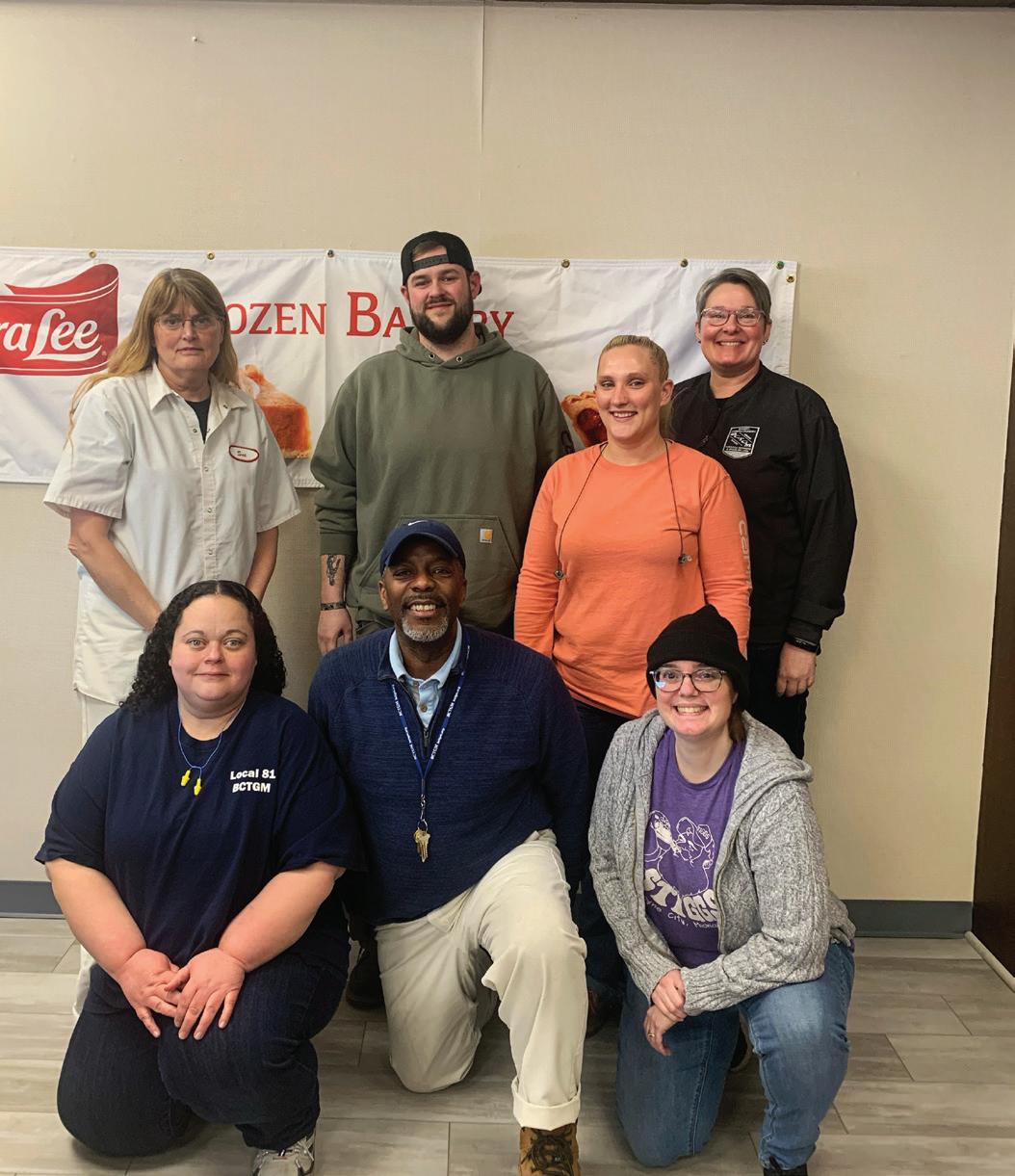
Members of BCTGM Local 81 (Traverse City, Mich.) have ratified a new 4-year contract with Sara Lee Frozen Bakery.
Negotiations began in November and the negotiating committee consisted of East Central Region International Representative Lisa Gregory, Local 81 President Coty Ryder, Vice President Sue Davis, Trustee Melissa Straubel, Executive Board Member Walter Brooks and Local 81 Members Tim Shutler and Bob Stowe.
According to Gregory, the local was able to come away with significant upgrades to their previous contract. “Wages will increase 12.5% over the four year term, they received a $500 ratification bonus, an increased shift differential and four additional days of paid time off,” she reports.
The contract also created a joint safety committee, and strengthened language around grievance procedures, job bidding, the use of contractors and other improvements.
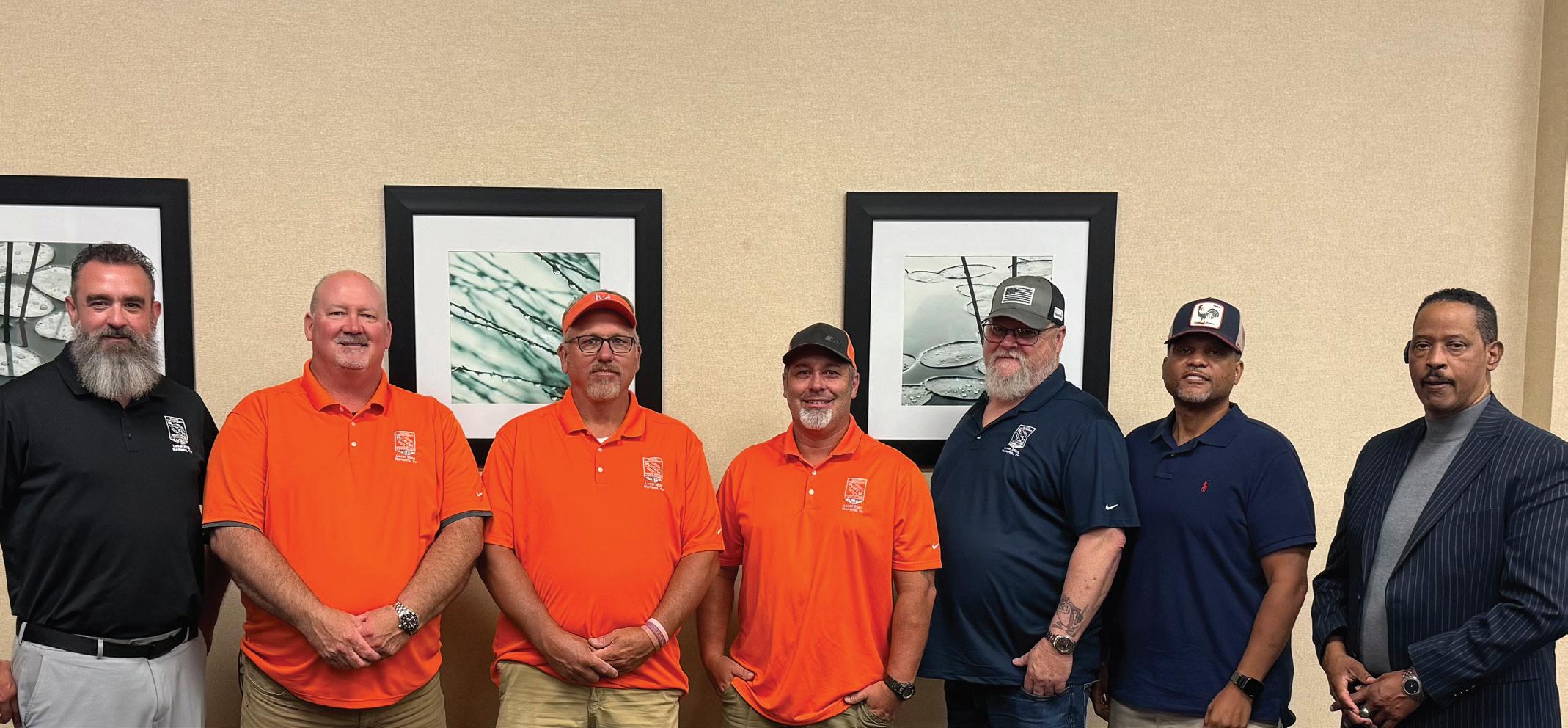
Members of BCTGM Local 352G (Memphis, Tenn.) have ratified a new contract with with Arkema, Inc., effective through September 2028.
The negotiating committee consisted of Southern Region International Vice President Zach Townsend, International Representative Jason Thomas, Local 352G President Emile Sigee Jr., Financial Secretary Keith Pike, Vice President Joey Moody, and Local 352G Members David Thomason and Gary Baker.
According to Thomas, the agreement features significant wage increases, including a 4% raise in
the first year and 3% raises in both the second and third years. The negotiating committee also secured a ratification bonus for all members.
Beyond wages, the Union won higher allowances for safety shoes, and meals for unexpected overtime shifts to help members cover rising work-related costs. The contract also provides better job security by guaranteeing severance payouts and strengthening reemployment rights.
“This was a very successful contract negotiation,” said Thomas. “The new deal ensures better wages and stronger protections for the Memphis members over the next three years.”
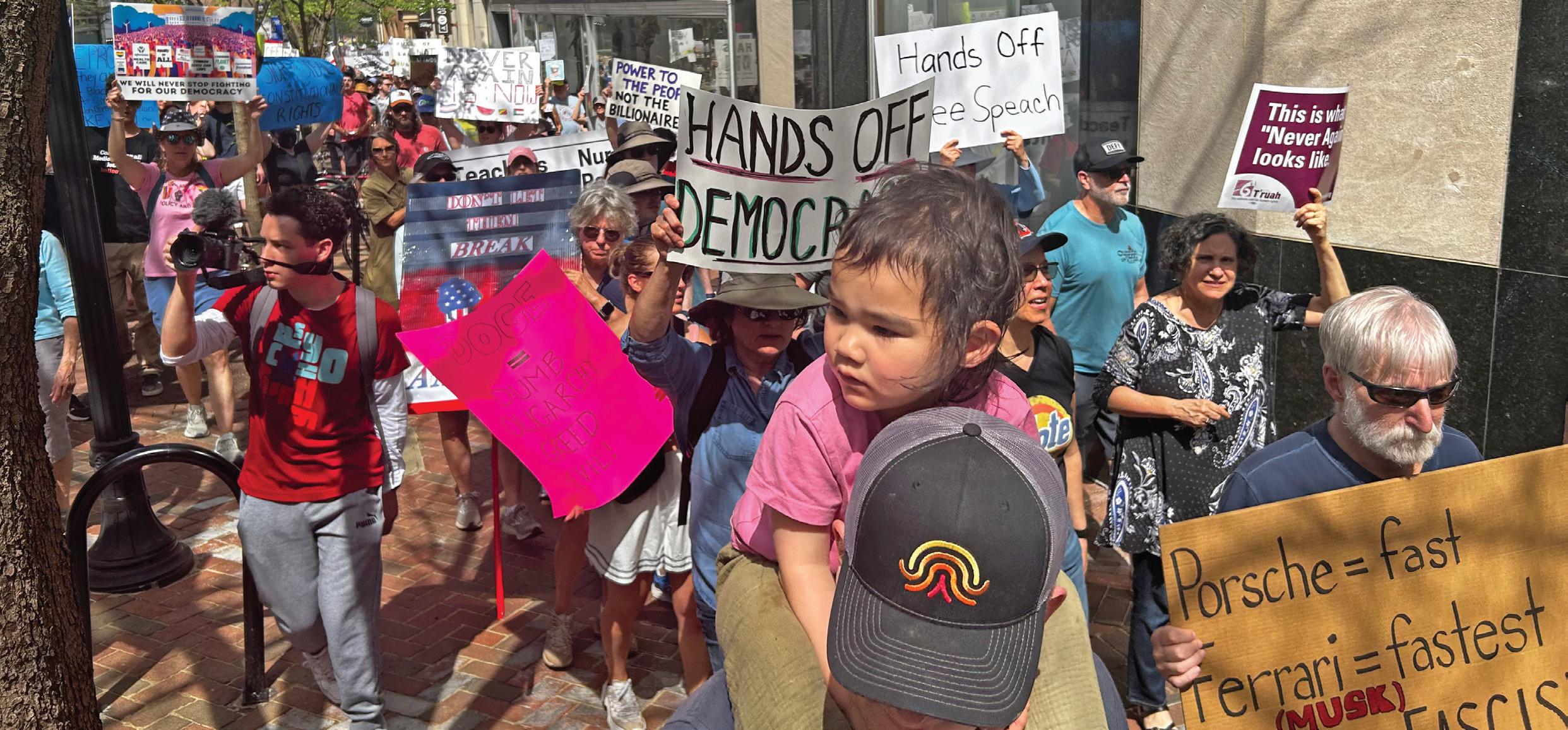
A year into the second Trump Administration, we take a look at what has been lost for working families.
OSHA: New data about the federal agency responsible for workplace safety suggests a substantial drop in inspections in the months after President Trump returned to office last year. Already dramatically understaffed, this raises concerns about the government’s ability to police workplaces, hold employers accountable and protect U.S. workers.
NLRB: With a new Republican majority installed by President Trump, the NLRB is set to implement an agenda that will be much less favorable to Unions and workers, and will threaten Unions’ ability to organize and bargain collectively.
FMCS: The Administration drastically reduced the function of the Federal Mediation and Conciliation Service, which provides mediation, training and facilitation to resolve disagreements between unions and employers.
President Trump signed a union-busting executive order on March 27 which took away the collective bargaining rights of more than 950,000 federal employees at nearly 20 agencies. With an Aug. 28 executive order, Trump banned collective bargaining at more than a halfdozen other agencies.
“The Trump administration has slashed worker safety rules, undermined the federal agencies that hold employers accountable, pushed out and disrupted the dedicated experts who inspect worksites for safety violations, and given handouts to big corporations and special interests actively working to weaken safeguards for workers.”
—AFL-CIO
President Liz Shuler
Higher U.S. tariffs can achieve three overlapping goals: improve jobs and wages for workers, boost the manufacturing sector and reduce U.S. trade deficits. Unfortunately, the Trump Administration’s chaotic roll out and mismanagement of tariffs has had the opposite result. Cheap goods—including food from Mexico—continues to enter the U.S.; the ever changing policies have delayed meaningful investment in U.S. manufacturing; and prices for U.S. consumers have not decreased.
Since the start of the Trump administration, at least 300 energy and transportation construction projects, worth $236 billion, have been canceled, postponed or seriously threatened. Of that, $131 billion in projects are outright canceled. The cancellations represent at least 255,000 lost construction jobs, according to research conducted by the IBEW and North America’s Building Trades Unions.
The Trump Administration’s economic agenda is aimed at consolidating corporate power while undermining labor and public welfare. This approach worsens inequality, weakens workers’ rights and strengthens financial monopolies.
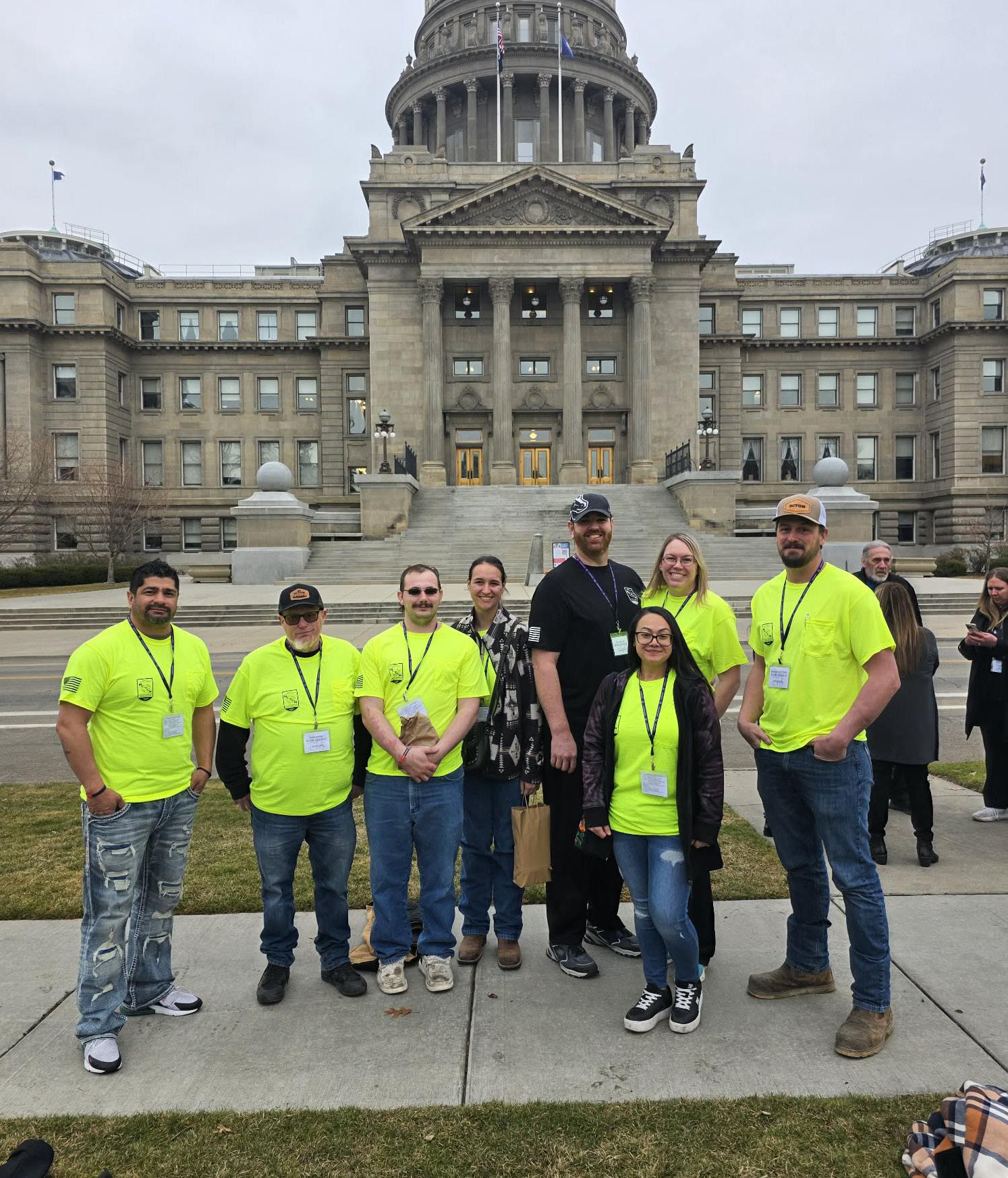
in Idaho AFL-CIO ‘Union Day’ BCTGM Local 283G (Twin Falls, Idaho) participated in the February 11-12 UNION DAY with the Idaho AFL-CIO.
“This was a great opportunity to get around the Idaho Labor community, exhange stories and take in some training,” reports Local 283G President Brendan Van Sickle.
“With Idaho being a Right-to-Work state, we are always looking for ways to educate our members and reinforce the strong Union density in our sugar facilities.”
The two-day ‘Union Day’ event is put on annually by the Idaho AFL-CIO, with the goal of engaging in political action and training labor activists accross the state. Labor leaders come together to tour the state capital and learn how to lobby elected officials for the rights and protections of their members.

BCTGM local union leaders in California recently attended a fundraiser for U.S. Rep. Linda Sánchez, D-Calif.
In attendance were BCTGM Local 83 (Buena Park, Calif.) Financial Secretary Cindy Marquez, Western Region International Representative Karrie Setters and BCTGM Local 37 (Los Angeles, Calif.) Business Representative Gerardo Gonzalez.
“It’s always an honor to reconnect with the Congresswoman,” reflects Setters. “She’s done a lot to support our efforts in the Western Region.”
That support includes voting for workers on labor reform and regulatory issues, as well as walking the picket line with Local 37 Jon Donaire workers in 2021.
A contribution was made from BCTGM-PAC to Sánchez’s 2026 re-election campaign as part of this event. “We are pulling for Rep. Sánchez in 2026,” Setters continued. “She is an unyielding friend of Labor in Southern California.”

Thinking about ways to reduce your pet expenses this year? Union members and their families can get the best care for their pets while easing the financial burden.
The Union Plus Pet Health Insurance program is powered by Pets Best. Pets Best offers plans to fit all budgets and coverage needs. Plus, Union members get up to12% off eligible plans and access to the Pet Helpline where a veterinary expert will answer your pet behavior questions 24/7.
Pets Best was founded by a veterinarian in 2005 and has paid more than $500 million in pet insurance claims to pet parents.
Pet insurance reimburses you on your veterinary bills when your dog or cat gets sick or injured. Pet insurance helps you afford the best course of treatment, protects against major financial setbacks, and can give you peace of mind as a pet parent. Having a pet insurance plan allows you to focus on getting the best care for your pet without worrying about the financial burden.
As a Union member, you’ll get up to a 12% discount.
NO NETWORKS
Choose any licensed veterinarian, emergency vet or specialist in the U.S.
Most claims processed within 5 days, so you’ll get reimbursed quickly.
24/7 access to file claims, view claims status and history, change payment method, add pets to policy, policy documents, notifications and more. Add direct deposit so you’ll get your money back faster.