
GROWERS GATHER FOR Innovation Hub Field Day
FULL TRUCKS, FULL TABLES
Farmers Keep Food Moving
THE NEW TAX LAW & Business Opportunities
U.S. FARMLAND VALUES: Following the Road Ahead
INTERVIEW:
JOHN BUSTAMANTE GENERAL MANAGER
Wysocki Produce Farm
You’re not alone. Around the world, post-harvest operators are under pressure to do more with less—fewer skilled people, higher running costs, and tighter production windows.
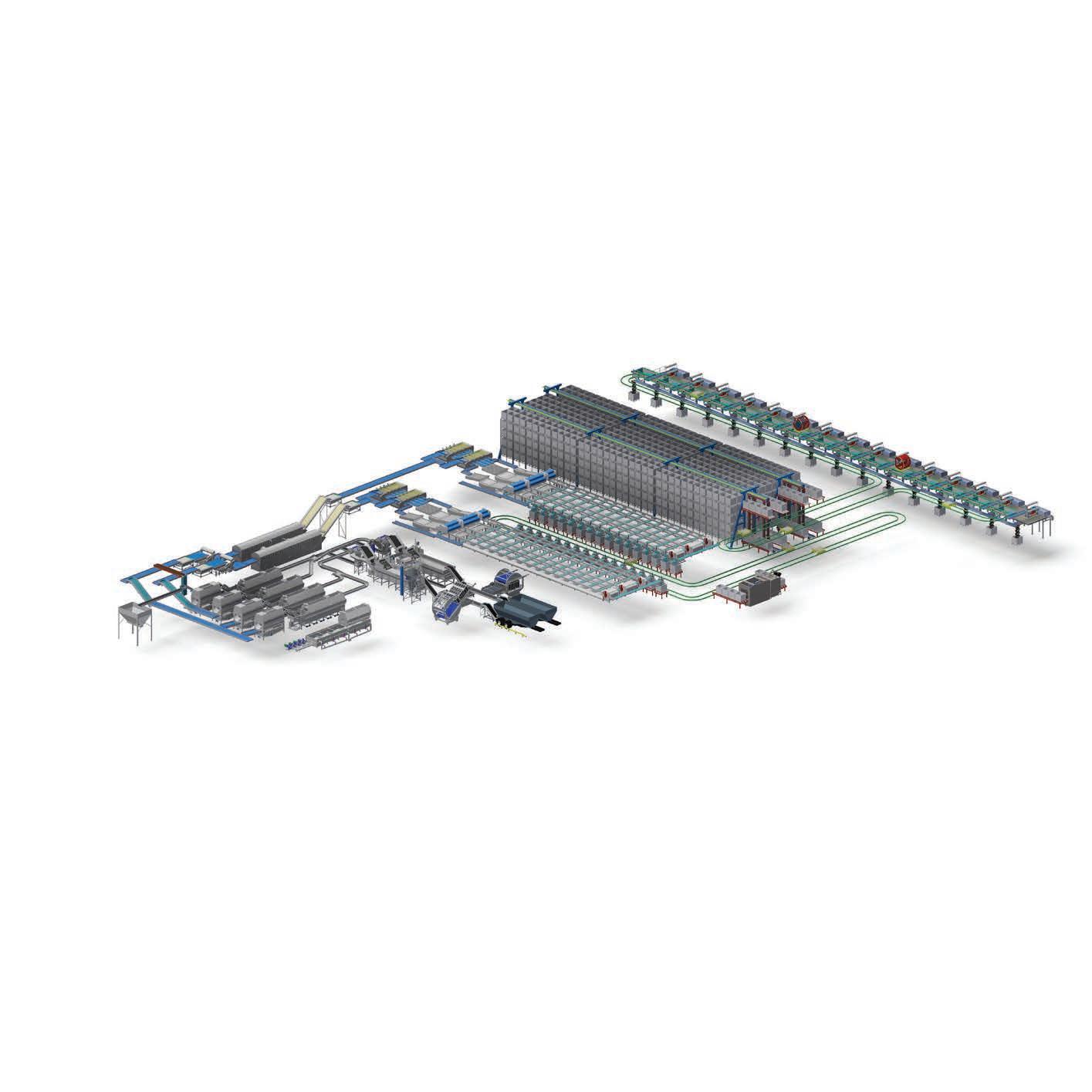
At Wyma Solutions, we understand the daily challenges of keeping your line moving efficiently. That’s why our 2026 Equipment Inspection Tour is designed to help you improve reliability, reduce operating costs, and get the most out of every hour in production.
Each confirmed inspection will receive a Wyma Gift Pack valued at $500
Wyma are experts in designing end-to-end line solutions, project management, and automation.
Get the best from every harvest & talk with Leighton, Peter or Jason +1 715 627 3718 us.sales@wymasolutions.com
Register your interest via QR code or contact support@wymasolutions.com & we will be in touch to confirm details





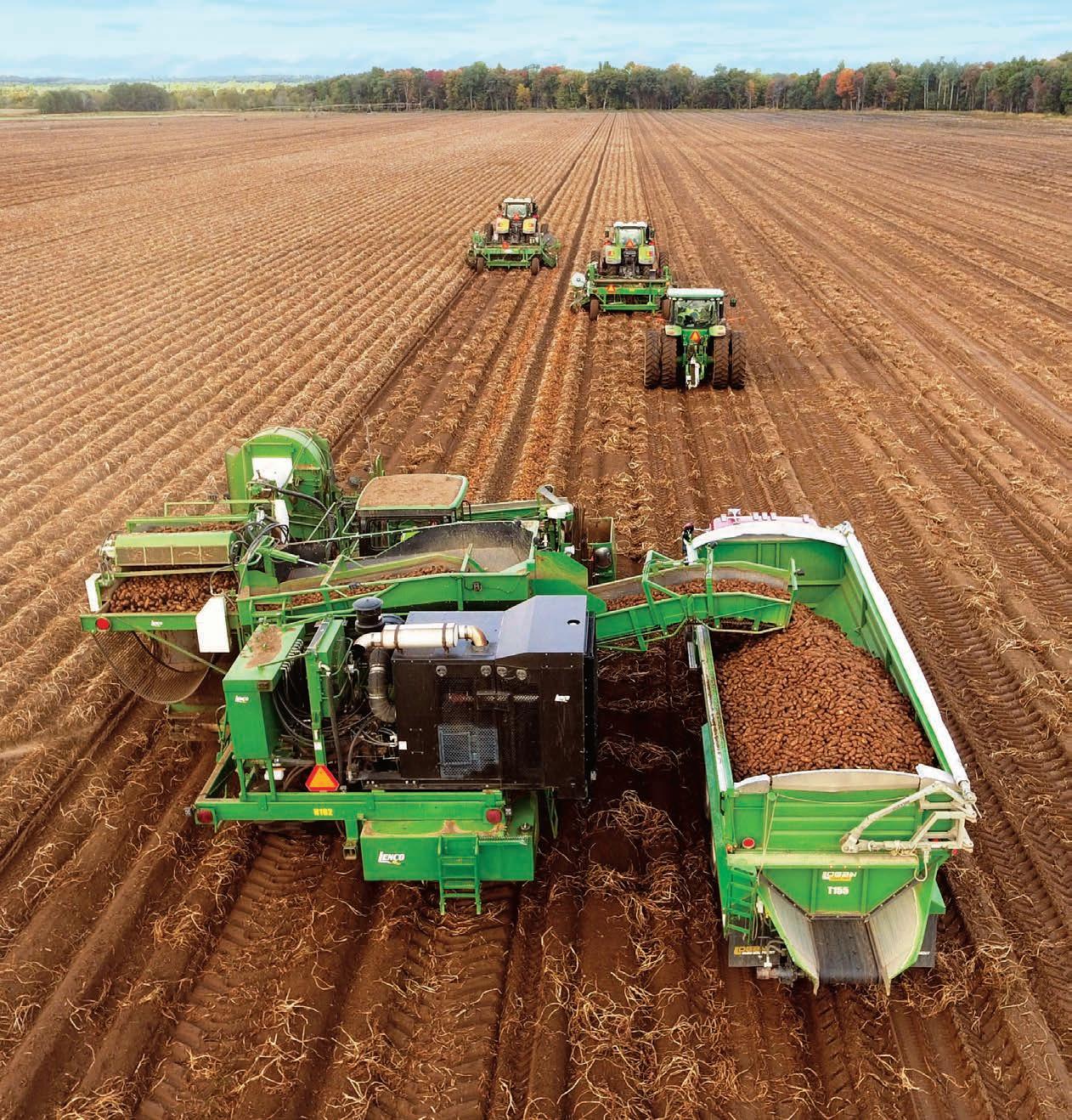
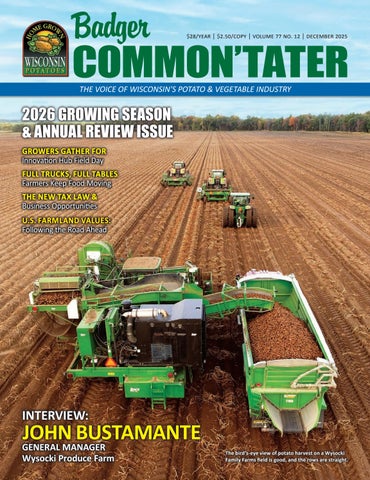
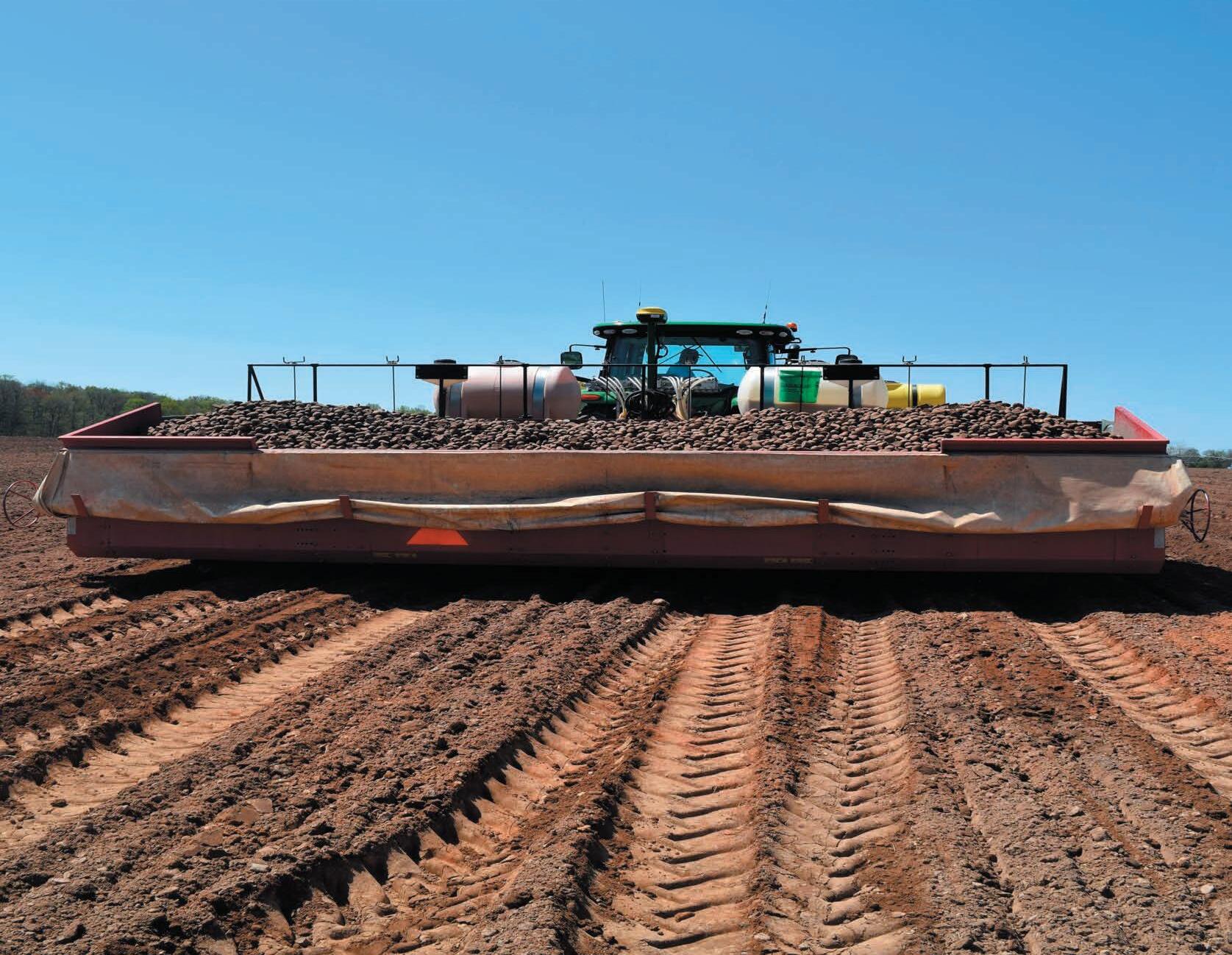
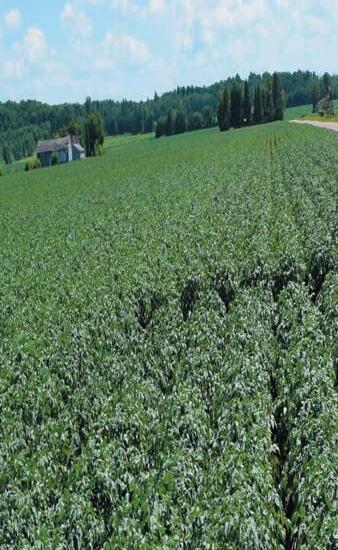
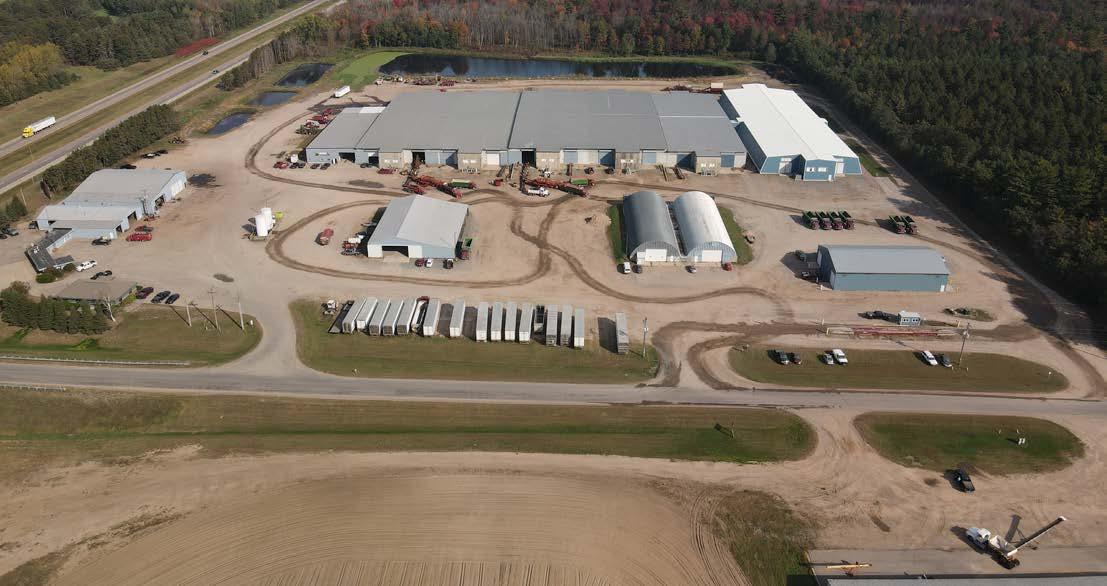
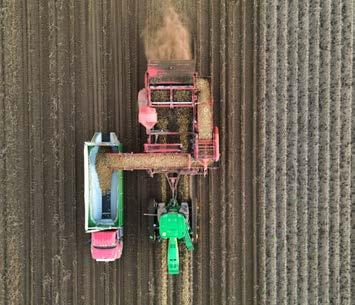
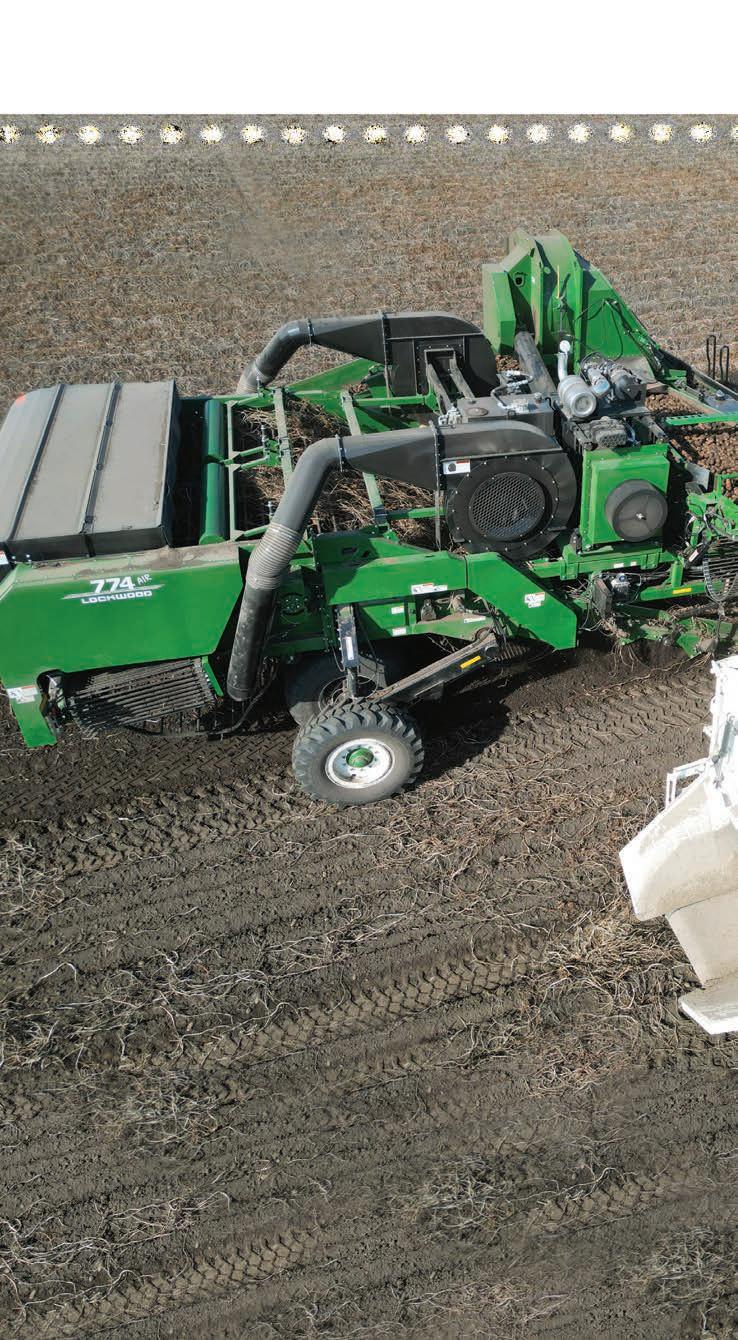
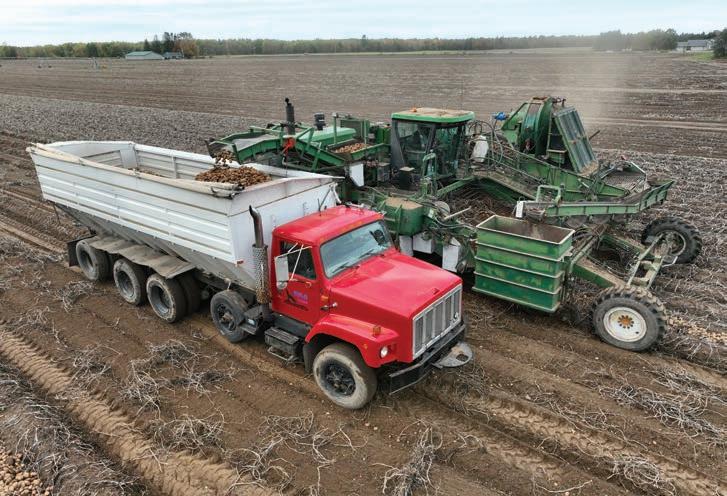
On the Cover: A potato harvest shot is appropriate for this Annual Review issue that also looks ahead to the 2026 Growing Season. The cover photo gives a good overhead perspective of potato harvest on a Wysocki Produce Farm field, in 2020, near Saxeville, Pine River and Poy Sippi, Wisconsin. Russet potato harvest was in full swing, and the rows are straight!
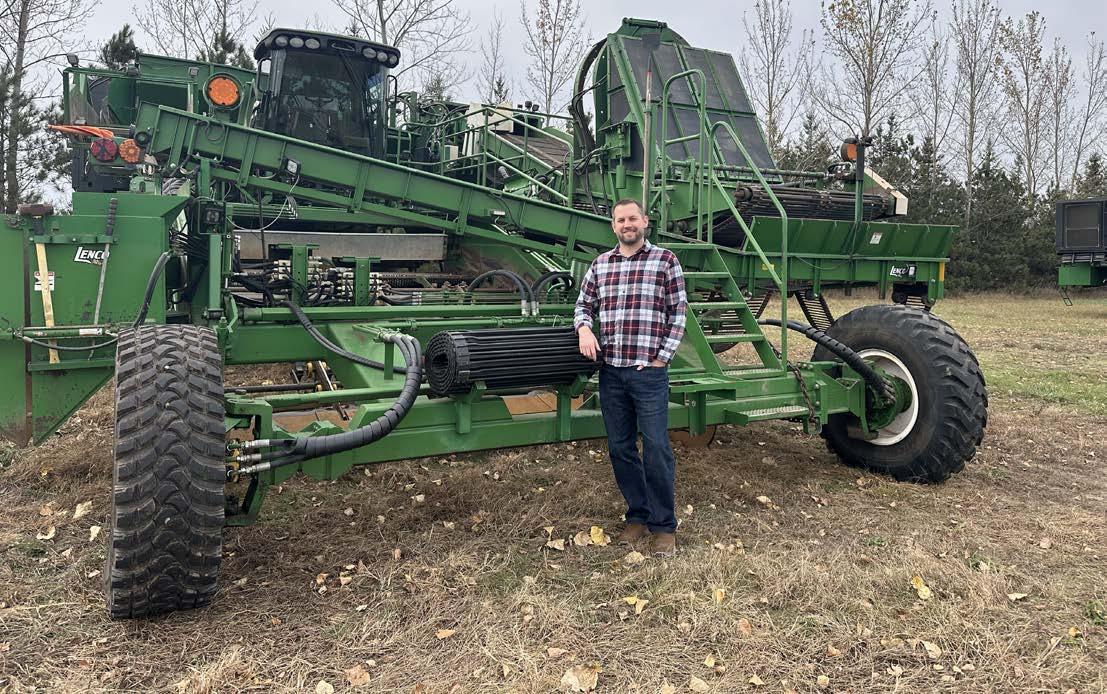
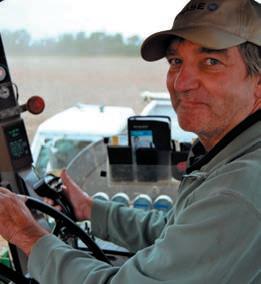
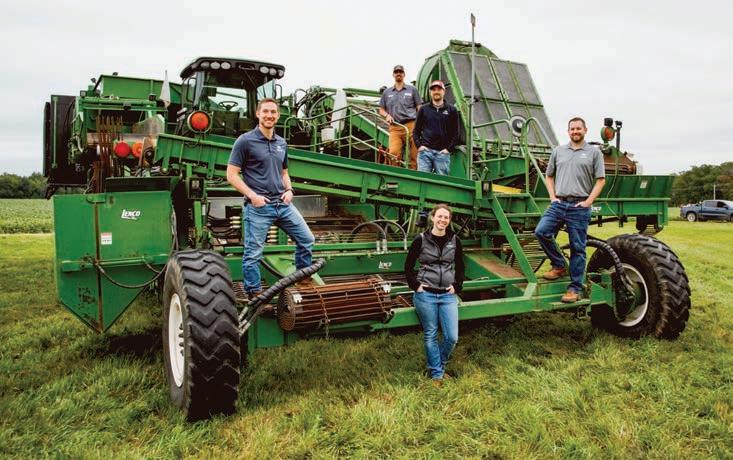
John Bustamante, general manager of Wysocki Produce Farm and president of the Wisconsin Potato & Vegetable Growers Association Board of Directors, stands in front of a Lenco harvester in November 2025 when this issue’s interview was conducted. One of the nation’s premier potato and vegetable growing operations, Wysocki Family Farms raises 8,000-8,500 acres of potatoes on a three-year rotation with grain corn, soybeans, peas, green beans, and sweet corn.



WPVGA Board of Directors:
PresiDeNt: JohN Bustama Nt e
Vice PresiDeNt: WeNDy Dykstra
Secretary: Josh KNights
Treasurer: JohN HopfeNsperger
Directors: Mike BagiNski, Ra NDy Fleishauer, Bria N Lee, J.D. SchroeDer & Jeff SuchoN
Wisconsin Potato Industry Board:
PresiDeNt: HeiDi Alsum-Ra NDa ll
Vice PresiDeNt: ANDy Diercks
Secretary: Nicola Carey
Treasurer: Keith Wolter
Directors: RoD Gumz, Jim Okray, Eric SchroeDer, Joe Seis & Tom Wil D
WPVGA Associate Division Board of Directors:
PresiDeNt: Matt SeleNske
Vice PresiDeNt: Etha N OlsoN
Secretary: Melissa Heise
Treasurer: Paul Salm
Directors: Bra Dy Patoka, Scott Scheer, Morga N Smolarek, Sally Suprise & Bra NDoN Taylor
Wisconsin Seed Potato Improvement
Association Board of Directors:
PresiDeNt: Charlie HusNick
Vice PresiDeNt: ANDy SchroeDer
Secretary/Treasurer: Markus Shafel
Directors: Mitch Mattek & CloVer Spacek
Wisconsin Potato Growers
Auxiliary Board of Directors:
PresiDeNt: HeiDi Schleicher
Vice PresiDeNt: Dakotah Smiley
Secretary/Treasurer: Sama Nt ha Cypher
Directors: JoDy BagiNski, Misti KiNNisoN, JeNN a SuchoN & EriN Meister
WPVGA Staff
ExecutiVe Director: Tamas Houliha N Ma N agiNg EDitor: Joe Kertzma N Director of PromotioNs & CoNsumer
EDucatioN: Da N a R a Dy
FiN a Ncial Officer: KareN RasmusseN E xecutiVe Assista Nt: Julie BrauN
Program Assista Nt: Ma DisoN Hoffma N -Taylor
WPVGA Office
(715) 623-7683 • FAX: (715) 623-3176
E-mail: wpvga@wisconsinpotatoes.com
Website: www.wisconsinpotatoes.com
LIKE US ON FACEBOOK: www.facebook.com/WPVGA
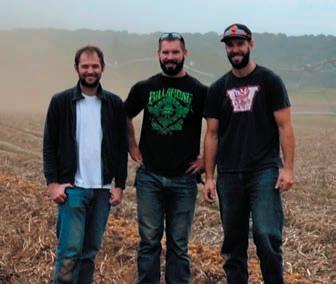
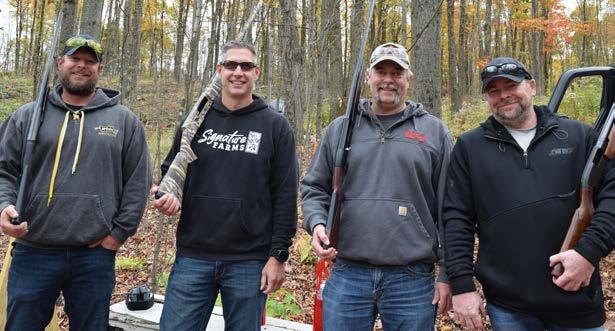
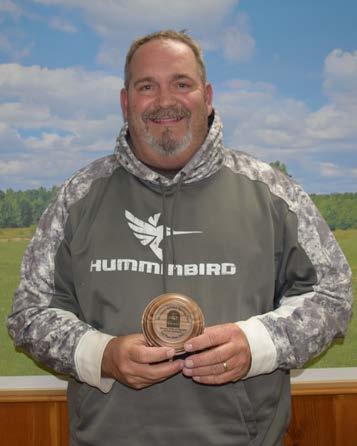
My coworker and friend, Julie Braun, executive assistant of the Wisconsin Potato & Vegetable Growers Association (WPVGA), must have conveniently forgotten my unwritten rule that I try to get as few photos of myself in the magazine as possible. Julie texted the picture (below) to me, taken by Mary Meister at the 6th Annual Sporting Clays Shoot, in Bancroft, hosted by the WPVGA Associate Division. Julie’s text with the image said, “Mary Meister just sent this to me. We think it should go in the Badger Common’Tater��.” When I replied, “Why would I put an old fat guy in the magazine?,” Julie kindly retorted, “Oh stop! It’s a cool pic!” So, readers, it’s all Julie’s fault that you had to look at that. If you’d like to view neat pictures of the shooters and teams, please see “Eyes on Associates” within this issue for full coverage of the event.

Another sporting event took place the third Saturday in October, which marked the last game of the season for the Stevens Point “Mashers” Youth Area Football teams, sponsored by the WPVGA. In fact, thanks to the WPVGA and Bushmans’, Inc., of Rosholt, the sidelines were stocked with free, freshly baked Wisconsin potatoes for players, families, and fans to enjoy during the championship game. See who won in “Marketplace.”
I received a phone call and email from Andy Diercks of Coloma Farms, who put me in touch with Tara Roberts-Turner, general manager of the Wisconsin Food Hub Cooperative. Tara and her team contributed a great feature titled “Full Trucks, Full Tables” herein about how Wisconsin farmers are keeping the local food supply chain moving despite a recent setback. The farmer-led Wisconsin Food Hub Cooperative works with Wisconsin family farmers delivering food to access sites, including schools, food pantries and tribal communities. Recently, the cooperative launched the Super Transportation Cooperative, a collaborative, statewide logistics network that brings farmers, food hubs, nonprofits and food access organizations under a single, coordinated distribution system. Enjoy reading all about it.
Such news and community events, as well as another detailed in the “Growers Gather for Innovation Hub Field Day” feature article about McCain Foods and Wysocki Family Farms playing host to the potato processing community, are not meant to be “feel good stories,” but real happenings in the potato and vegetable community spearheaded by folks making a difference in the world, and that’s the real story.
Please email me with your thoughts and questions. If you wish to be notified when our free online magazine is available monthly, here is the subscriber link: http://wisconsinpotatoes.com/blog-news/ subscribe. Joe Kertzman
N1435 Cty Rd D
Antigo, WI (715) 623-2689 farm@sbfi.biz johnt@sbfi.biz
NAME: John Bustamante
TITLE: General manager of Wysocki Produce Farm
COMPANY: Wysocki Family Farms
LOCATION: Bancroft, WI
HOMETOWN: Dearborn, MI
YEARS IN PRESENT POSITION: Two
PREVIOUS EMPLOYMENT: Research engineer at Mainstream Engineering, and taught evening classes at Florida Institute of Technology and Mid-State Technical College
SCHOOLING: Ph.D. in mechanical engineering, Georgia Institute of Technology, and a Bachelor of Science in mechanical engineering from Marquette University
ACTIVITIES/ORGANIZATIONS: Current president of the Wisconsin Potato & Vegetable Growers Association (WPVGA) Board of Directors, board member of the Portage County Drainage District, and volunteered with FIRST LEGO League robotics competition and as a science fair judge
AWARDS/HONORS: Presidential Fellowship, ASHRAE (American Society of Heating, Refrigerating, and Air Conditioning Engineers) Graduate Award, published 11 times, and holds five patents
FAMILY: Wife, Emily, and three children, Autumn, Oliver, and Tobin
HOBBIES: Strategy games, reading, movies, and woodworking or house projects
Wysocki Produce
By Joe Kertzman, managing editor, Badger Common’Tater
Wysocki Family Farms of Bancroft, Wisconsin, is an example of successfully navigating the succession process of passing down a burgeoning business to the next generation, including setting up the new owners for success and allowing them to make informed decisions.
It’s one of the most difficult transitions a family-owned business faces, especially one that has been in business for over 70 years and has grown into one of the nation’s premier potato and vegetable operations.
The story began when brothers Louis, Francis and Greg Wysocki partnered with their father on his small dairy farm and converted the operation into a potato growing business. At that moment in the 1950s, the Wysocki farming operation was born.
The farm began to expand its Central Wisconsin operation when it started taking shipments of potatoes to market in Chicago. There, the brothers learned new and innovative ways to store and pack potatoes. Crucial partnerships were formed over the years with Nick and Dianne
Somers of Plover River Farms and Jeff Sommers, who worked alongside the owners to propel the farm into a nationally renowned operation.
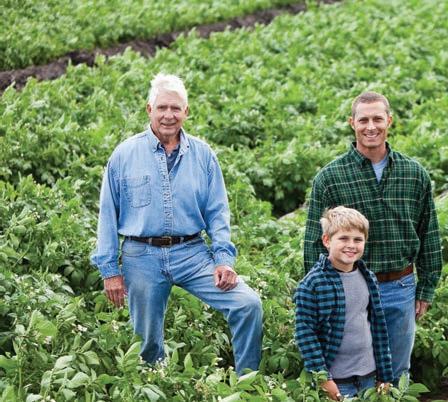
Now the fourth generation is following in the footsteps of their forefathers. The farm’s operations have expanded to include growing regions across Wisconsin, and yet, the core principles that guided the company seven decades ago still drive it today.
How and when were you brought into the fold of the multi-
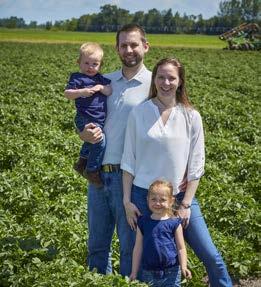
Above: John Bustamante, general manager of Wysocki Produce Farm and president of the Wisconsin Potato & Vegetable Growers Association (WPVGA) Board of Directors, stands in a potato field with his wife, Emily, and two of their children, Oliver (left) and Autumn. The picture was taken in June 2021 before the newest arrival in the Bustamante family, Tobin, was born.
generational Wysocki Family Farms, John, and in what position? I didn’t grow up in agriculture, so I was fortunate enough to learn about the industry from my wife, Emily, and her extended family.
After years of discussions, I joined the company in 2018 to work in potato storage. I had worked in specialized thermal systems for the past decade, which is essentially what a potato storage is, so there was a surprising fit.
What was your background before that? I studied mechanical engineering and received my doctorate degree specializing in thermal systems from Georgia Tech. During that time, I worked at a variety of places, including Caterpillar, Sandia National Laboratories, and the Jet Propulsion Laboratory.
When I graduated, I joined a private company in Florida where I led research projects developing thermal-fluid systems, including novel heat exchangers, phase change material energy storage devices, thermal management systems for
high-energy lasers, battery cooling systems, and brain cooling devices for medical treatments.
How have you progressed in the company, and did anyone take you under their wing so to speak? Is there a system in place to bring people into the fold? After an initial role, our business has potential
partners go through a rotational development program with roles in all areas of the business.
I began working in storage and continued on pg. 10


irrigation, then rotated through roles including finance, human resources, sales, and the packaging shed. Coming out of that program, I moved back into farm operations as the assistant general manager. My first mentor was my father-in-law, Kirk Wille, and, more recently, Jeff Sommers has been a key teacher, but a full answer to this question would list many people through the company and industry. Everyone has been incredibly generous in sharing their time and experience.
You are general manager of Wysocki
Produce Farm. What are some of the larger tasks the position entails being charged with daily? The most important part of any business is the people, so I spend the most time focused on the team and how I can support them. Together, we’re continuously working on how to grow great crops and be a great partner to our customers.
Does it help to have good people in place? Absolutely – it’s essential. They say that a company is only as good as the people, and our company is blessed with an outstanding, dedicated team.
How many people are employed in Bancroft, Wisconsin, and seasonally? The Wysocki Family Farms companies all work together and collectively employ 200 full-time team members. Wysocki Produce Farm has around 100 employees, a number that doubles during harvest season.
Are you using H-2A and other seasonal workers, and has filling positions been a problem in
a low-population area such as Bancroft? While our dedicated full-time team is the foundation of our success, yes, during the busy seasons, it’s a challenge to hire all the seasonal roles needed, so we supplement our local seasonal hires with the H-2A program. We’re fortunate that many of our H2A and seasonal team members return each year.
How many acres of potatoes are you growing, on what rotation, and with what rotational crops? We grow 8,000-8,500 acres of potatoes, typically on a three-year rotation with grain corn, soybeans, peas, green beans, and sweet corn.
What percentage are chipping potatoes versus fresh, and what varieties is Wysocki Produce Farm growing? It varies depending on the needs of our customers, but we typically grow 40% chips, 35%
“We’re very fortunate to still be able to directly discuss the roots and history of the organization with some of the founders.”
– John Bustamante
process, and 25% fresh potatoes. Our biggest varieties are Frito-Lay chipping potatoes, and Russet Burbanks and Umatillas for McCain Foods.
I believe storage is a big part of the operation—how many hundredweight of potatoes can Wysocki Produce Farm store and for how many months? What are the goals? We can store over 4.5 million cwt. (hundredweight) of potatoes each year and will store some through July. Our goal is always
to focus on high recovery and quality.
Do you have long-standing customers, and if so, what does it take to maintain a consistent customer base? Yes, our fresh sales partner, RPE, Inc., was formerly part of the business and has been a customer since its founding.
Regardless of market class, our approach to customer partnerships remains the same. Building and maintaining lasting relationships
requires trust, communication, and reliability. We focus on understanding our customers’ needs, delivering quality products, and adapting as those needs evolve.
A family business since the 1950’s but having grown exponentially, does it still feel like a family operation, John? If so, in what ways? It definitely feels like a family business to me. There are quite a few family members working in the business, but also many long-term team members that are part of the family, too.
I think the history, approachability, and long-term relationships create that family feel.
How has the youngest generation kept the operation focused and true to its roots? The current ownership
is part of the fourth generation. Our farm was founded by Louis, Francis, and Greg Wysocki with their father in the 1950s. We joke that we can’t decide which generation we are – when someone starts a farm with their father, are they both first
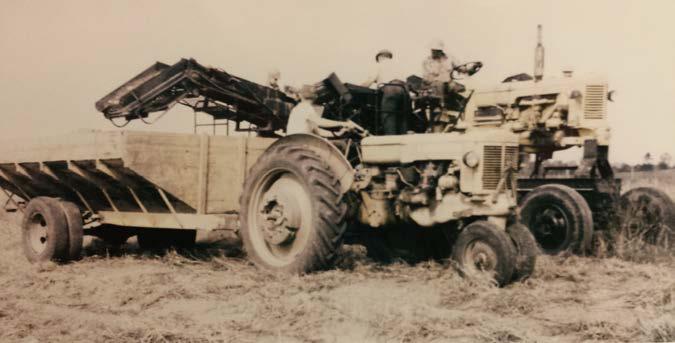
generation, or are they first and second?
We’re very fortunate to still be able to directly discuss the roots and history of the organization with



some of the founders. To quote an interview with Louis, “Our organization was built on honesty, hard work, and trust.” Those words still ring true today.
Do the current owners meet regularly to discuss goals or business models and philosophies? Yes, but these discussions are not limited to the current owners. Many of our leaders, including our CEO, are not owners in the business.
How was the 2025 growing season, and what has your focus now shifted to? It was definitely an improvement
over 2024. Overall, it was relatively average in terms of crop productivity, but performance varied quite a bit by area and timing for the canning vegetables, in particular.
Our focus has now shifted to shipping our potato crop and preparing for the next growing season.
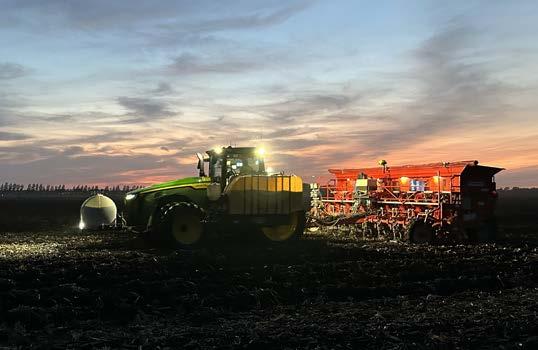
Tell me about technologies that are helping make Wysocki Produce Farm be an efficient, sustainable operation. The amount of ongoing innovation in agriculture is fascinating. We continue to test and utilize a wide variety of technologies,
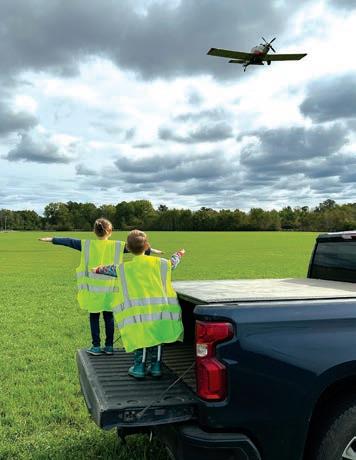
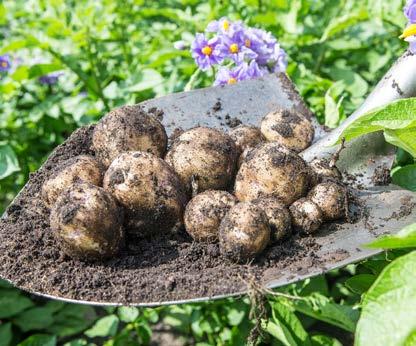
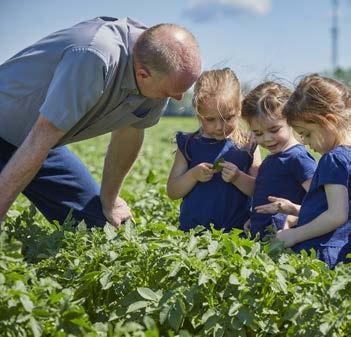
Top Left: Wysocki Family Farms business mentor and partner, Kirk Wille, practices some hands-on learning with his granddaughters, who might just represent generation 5 someday, Autumn (John Bustamante’s daughter, left), and Elanor and Cordelia (John’s nieces).
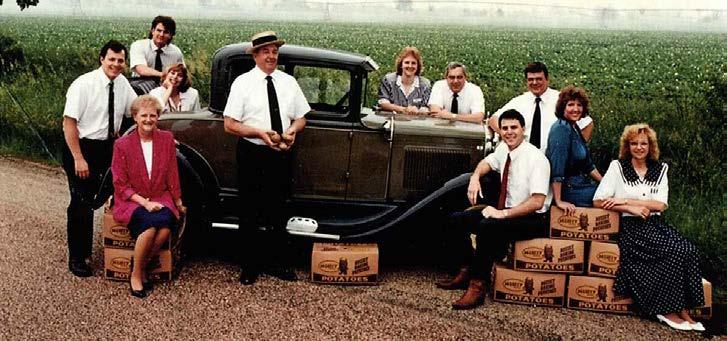
Top Right: Jim, Louis and Russell Wysocki are pictured along with their marketing team in the 1990’s. The Mr. Tasty brand showcased in this picture was an original Wysocki family brand.
including new planting and harvest equipment, drone sprayers, and AI (Artificial Intelligence) scouting and sorting systems.
This exploration also extends to agronomic areas, testing new varieties and products.
This past year, one of our biggest projects was being McCain’s Innovation Hub for Wisconsin (see the related story in this issue). This research focuses on commercial testing of regenerative agriculture practices. The ideas are proposed by growers, and the results are shared with the grower group.
Is there also a philosophy regarding caring for the land and sustainability? Yes, caring for the land and operating sustainably are central to our farming philosophy. We are responsible for maintaining the land’s health and productivity

for future generations.
Some of our practices include cover crops usage, following the best agronomic practices to manage full crop rotations, and pursuing
innovation and research to continue improving.
How does the operation give back to the community? We believe in making a positive difference in
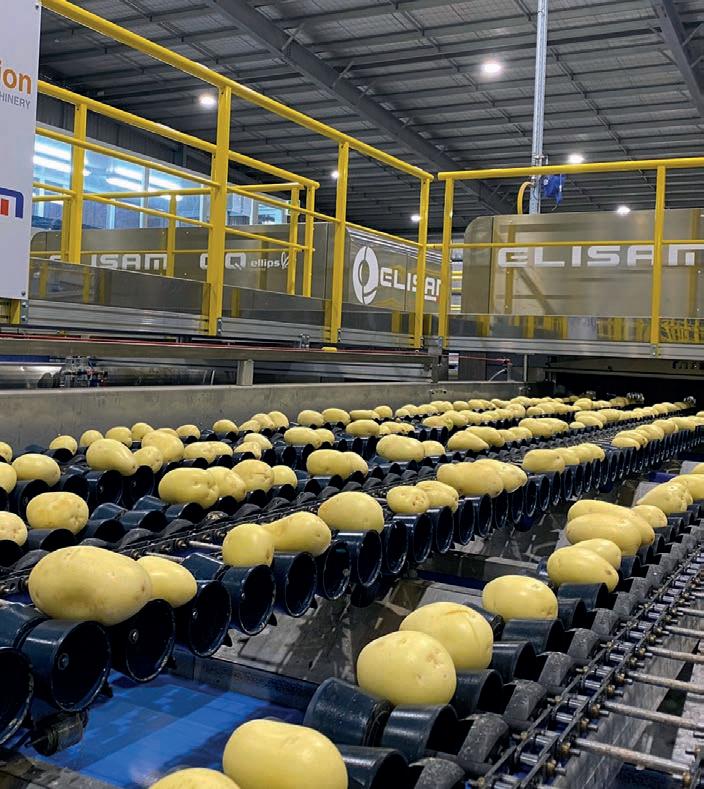
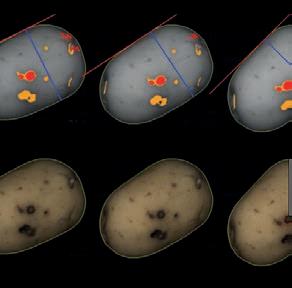
You want the best of both worlds. Speed to deliver maximum capacity and accurate defect detection to maintain consistent quality. Inspect the entire surface and look inside each potato to get the best out of every batch.
More info? Please contact:


the community where we all live. Through monetary and potato donations, we are honored to support local schools, FFA and 4-H groups, community emergency services, food banks, and numerous
other community organizations.
We also enjoy hosting students and other groups for tours, conducting 45 tours this past year. But the greatest contributions to the community are by all our team members who are involved in causes they are passionate about.
Do you have a favorite part of the job, John? Nothing beats seeing the satisfaction and pride of someone on the team having succeeded at a tough job, whether it’s fixing equipment, growing a great crop, or any other area.
What do you hope the coming years bring for you and your fellow employees or employee owners?
I hope we continue having a positive impact on our team members and community, now and for future generations. We are proud of the vital role farms play in feeding the world.
Is there anything I’ve missed that you’d like to add? Thank you for continuing to do these interviews. I really enjoy hearing someone’s story every month.


By Chelsea Zegler, agronomy and sustainability manager, McCain Foods
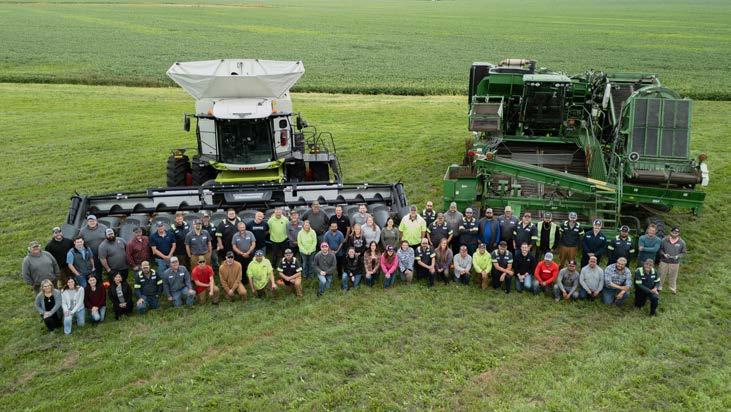
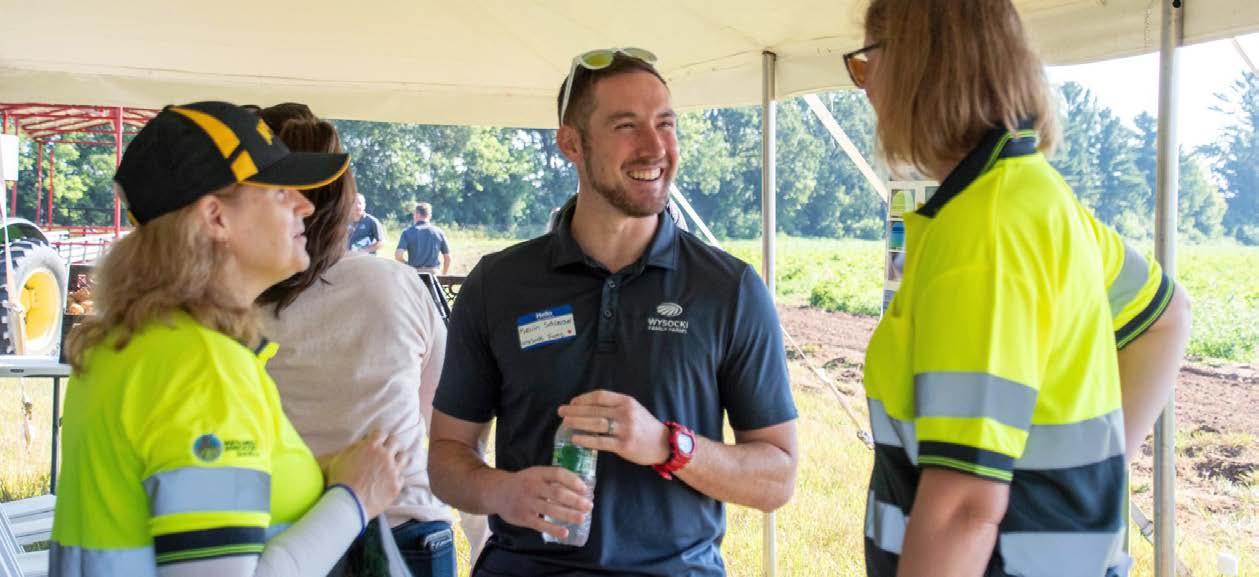
In August, McCain Foods and Wysocki Family Farms invited the potato processing community to their Innovation Hub Field Day. With pickups parked in the dry corner of a field, growers gathered under a tent to learn the status of a crop within
the trials and about the progression of this collaboration.
More than 70 attendees heard about strategies for minimizing disease pressure, variety updates, and opportunities to participate
in McCain’s Regional Conservation Partnership Program (RCPP) from McCain staff, agronomists, and University of Wisconsin (UW)Madison specialists.
The event highlighted the capacity, collaboration, and support within the region to accelerate regenerative agriculture advancement that addresses farms’ agronomic challenges.
An Innovation Hub presents the opportunity for regional, relatable and scalable field trials that, over time, aim to secure the supply chain, increase farm resilience and ensure supply for the long term.
McCain has an Innovation Hub in each of its seven growing regions across North America, every one of which focuses on the intersection
of the company’s Regenerative Agriculture Framework and regional production issues.
Best practices include tillage reduction, nutrient optimization, crop diversity, and integrated pest management (IPM).
Participating growers provide the land, basic production elements, and the willingness to share findings with their peers. McCain provides risk mitigation protection, contributes
to crop protection product selection, drawing from extensive experience in potato production and on-farm research. He elaborated on the farm’s approach to conducting on-farm trials and shared its long-term vision for IPM.
to research funding and technology investments, and offers expert resources.
Wysocki Family Farms serves as an outstanding Innovation Hub host due to the multi-generational family operation’s strong focus on
sustainability and collaborative partnerships with customers.
The farm boosts significant research capacity and is situated within a geographically representative area of McCain’s grower base.
continued on pg. 20

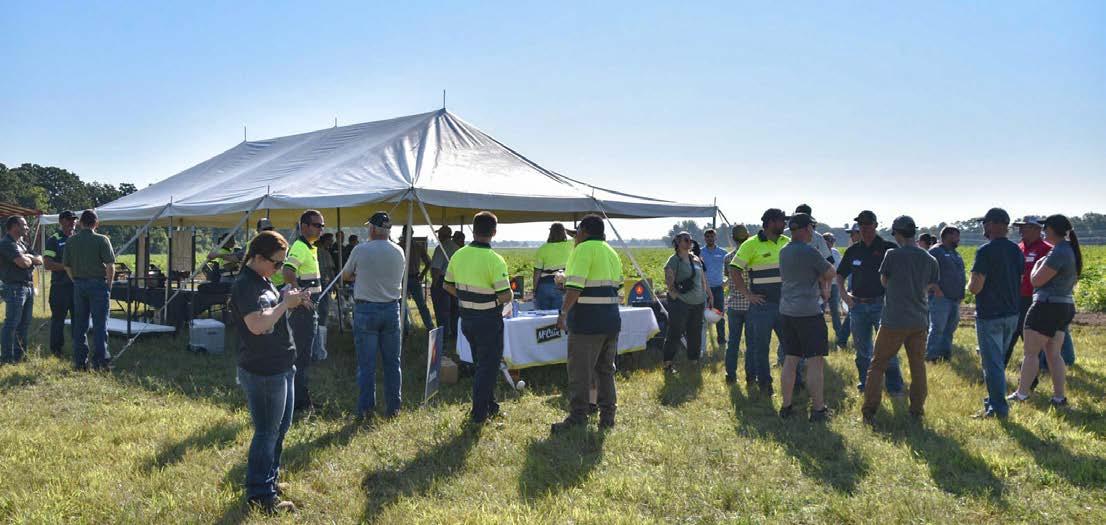
“The Wisconsin potato industry thrives on collaboration, and we are fortunate McCain’s Innovation Hub allows us all to learn together,” says Kevin Schleicher, director of sales for Wysocki Family Farms.
“Wysocki Family Farms, as a leader in research and innovation, can share our expertise and create value for the McCain crop in Wisconsin,” Schleicher adds. “Ultimately, Wisconsin is stronger when McCain can compete with other processors nationwide.”
For the past two years, McCain agronomist Kelly Verhaalen and key members of Wysocki Family
Farms (A.J. Bussan, Schleicher, Greg Dalsbo, Andrew Pribramsky, Tammy Reepsdorf, Jim Small, Wynne Aldrich and Pam Sankey) have collaborated on trialing new management strategies for Potato Early Die Complex (Verticillium dahlia) and root lesion nematode pressure.
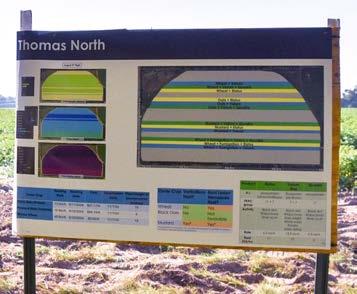
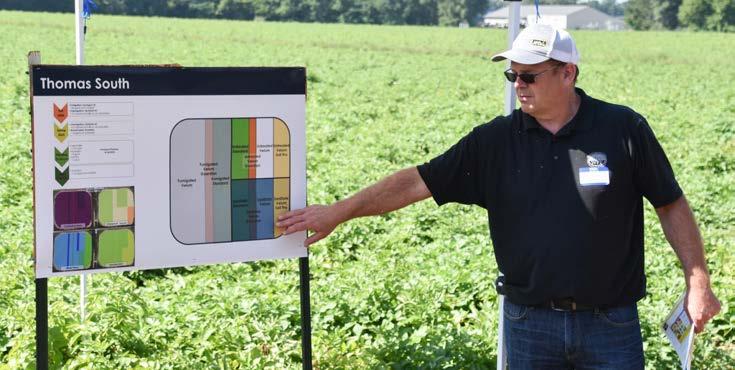
Work has focused on variety selection, fumigation alternatives, and defining economic treatment thresholds by increased intensity of timing and type of soil and plant samples.
Last year, fumigation alternatives did not provide as much profit per acre as fumigation due to the decrease in

Above: During the Innovation Hub Field Day, more than 70 attendees heard about strategies for minimizing disease pressure, variety updates, and opportunities to participate in McCain’s Regional Conservation Partnership Program (RCPP)
potato total yield. The demonstration did have key findings that influenced treatment in crop year 2025:
1. High variability of verticillium and root lesion nematode pressure within the field likely blurs true treatment effects.
2. Root lesion nematode populations appeared to be more directly linked with yield than verticillium levels.
3. Timing and location of biological product application likely impacts effectiveness.
This year, the team continued its pest management work by refining which chemical and biological products are trialed, while layering on additional IPM practices by including different cover crop species.
By increasing the number of trial fields to two, the group was able to investigate in-furrow fungicide
treatment effectiveness under different cover crop species, as well as a more layered chemical and biological treatment approach under a standard cover crop program.
Cover crops have benefits and tradeoffs for pest control in potato systems, depending on the plant species. They can act as hosts or non-hosts for pest species and biofumigants and even provide food for beneficial microorganisms in the soil.
The hope is that, by stacking practices, fumigation alternatives can be found more quickly, while simultaneously accomplishing other farm goals like minimizing wind erosion and increasing days of soil cover.
Chief agriculture officer for Wysocki Family Farms, Bussan outlined his approach to treatment selection, drawing from extensive experience in potato production and on-farm research. He elaborated on the farm’s approach to conducting on-farm trials and shared its long-term vision for IPM.
Additionally, attendees gained insights into related research presented by Dr. Amanda Gevens, UW-Madison plant pathologist, and Guolong Liang, water quality specialist.
A key highlight for growers this season is the new wave of collaborative initiatives aimed at supporting the adoption of conservation practices across thousands of acres.
These efforts are designed to minimize risk when implementing regenerative agriculture solutions such as cover crops, nutrient management, and field border practices.
Participants benefit from valuable soil monitoring, measurement, and modeling insights, as well as joining peer-based learning groups that accelerate knowledge sharing and
“The Wisconsin potato industry thrives on collaboration, and we are fortunate McCain’s Innovation Hub allows us all to learn together.”
– Kevin Schleicher, director of sales, Wysocki Family Farms
practical problem solving.
With the 2025 harvest now complete, be on the lookout for upcoming opportunities to get involved, whether through research trials, cost-share programs, or with grower cohorts.
For those interested in learning more, be sure to attend the session hosted by Verhaalen and Wysocki Family Farms at the 2026 WPVGA and UW Extension Grower Education
Conference. This session will showcase the results from the 2026 crop year and their vision for future Innovation Hub trials.
For further details or to express your interest, you are welcome to connect with your local McCain representative and agronomist via Kelly.Verhaalen@ mccain.com, or McCain’s field manager by emailing Morgan. Smolarek@mccain.com.



















By John Werlhof, principal, CliftonLarsonAllen
The new tax law, known as The One Big Beautiful Bill Act, includes substantial benefits for businesses. New and enhanced opportunities include continued tax breaks for passthrough business owners, expanded small business stock gain exclusions, and higher state and local tax deductions.
But the biggest business benefits may be these three:
• Enhanced research and experimental expense reporting
• Renewed 100% bonus depreciation
• Restored EBITDA-based business interest deductions
These benefits are especially powerful when used together, but the options vary by business. Learn more about these benefits and tax planning opportunities in the new tax law.
Enhanced Research and Experimental Expensing
The new tax law remedied one of the

biggest frustrations from the Tax Cuts and Jobs Act of 2017 by restoring full expensing of domestic research and experimentation costs under Section 174.
For those who want to accelerate their capitalized domestic research and development (R&D) costs from 2022 through 2024, these capitalized R&D costs from prior years can either be deducted in 2025 or split between 2025 and 2026.
If you own a small business (threeyear average gross receipts of $31 million or less), you have an additional option available: you can amend your 2022, 2023, and 2024 tax returns to deduct the unamortized R&D costs.
You’ll want to model the options for recovering your capitalized costs to see which option is most beneficial.
Unfortunately, the foreign R&D capitalization requirement has not changed. Foreign R&D costs remain on a 15-year amortization schedule, and an annual capitalization analysis remains necessary.
Renewed 100% Bonus Depreciation
The new law permanently reinstates 100% bonus depreciation for qualifying property acquired
and placed in service after January 19, 2025.
Businesses can now expense the entire cost of equipment and certain building improvements in the year those costs are incurred, providing a substantial immediate incentive for investment.
The amount of interest a large
business can deduct is generally capped at 30% of taxable income. The new law increases the deduction limit by allowing depreciation, amortization, and depletion to be added back in calculating the income base.
The change allows capital-intensive businesses to deduct more interest, reducing taxable income and
improving cash flow. This change is effective for tax years beginning after December 31, 2024.
Depreciation Options
Section 179 depreciation
The new law increases the Section 179 deduction benefit from $1.25 million to $2.5 million annually.
continued on pg. 24


The New Tax Law: Discover the Biggest Business Opportunities. . . continued from pg. 23
There’s now a new depreciation opportunity called the Qualified Production Property (QPP) deduction. The adjusted basis of the nonresidential real property can be fully deducted in the year it’s placed into service.
The property must be used in qualified production activity related to the manufacturing, production, or refining of tangible personal property. To qualify, construction must begin after January 19, 2025, and before January 1, 2029, and the property must be placed in service before January 1, 2031.
Cost segregation studies identify building assets that can be depreciated at an accelerated rate using a shorter depreciation life and improve the cash flow benefits from buying or constructing a building.
Several provisions in the new tax bill accelerate depreciation deductions, such as the new QPP, 100% bonus depreciation, and enhanced section 179 expensing, and thus increase the

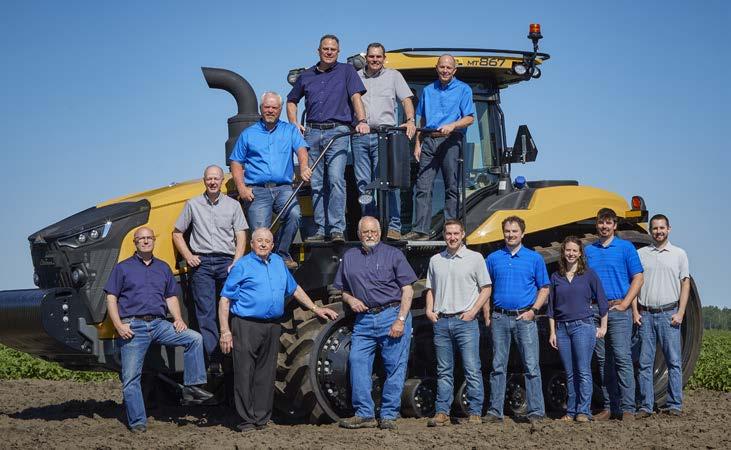
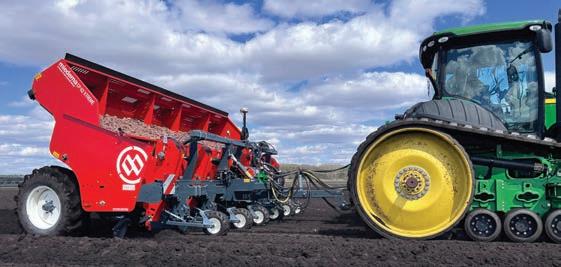
The new tax law includes expanded small business stock gain exclusions and higher state and local tax deductions. A 51-foot Great Plains field cultivator is attached to a Cat challenger MT845C operated by Allen Glover on Brooks-Schardt Farms, LLC, in Markesan, Wisconsin.
amount of tax that can be saved by doing a cost segregation study.
The new tax law offers many business tax savings opportunities for prior, current, and future tax years.
Capitalizing on these opportunities requires high-level analysis and modeling, such as comparing the options available for capitalized

domestic R&D expenses and performing a cost segregation analysis to accelerate deductions for your business and investment real estate.
An experienced agribusiness tax team can help explain the new benefits and explore options well suited for your business.
For more information on tax opportunities in agribusiness, contact Jim Halvorsen at jim. halvorsen@claconnect.com, 715-305-1035, or Cassie Kurek at cassandra.kurek@claconnect. com, 715-295-5441.
The information contained herein is general in nature and is not intended, and should not be construed, as legal, accounting, investment, or tax advice or opinion provided by CliftonLarsonAllen LLP (CLA) to the reader. For more information, visit CLAconnect.com.
CLA exists to create opportunities for our clients, our people, and our communities through our industry-focused wealth advisory, digital, audit, tax, consulting, and outsourcing services.
CLA (CliftonLarsonAllen LLP) is an independent network member of CLA Global. See CLAglobal.com/disclaimer. Investment advisory services are offered through CliftonLarsonAllen Wealth Advisors, LLC, an SEC-registered investment advisor.








Including PureGrade® Liquid Fertilizers in your program will ensure your crop has the nutrients to reach its full potential. PureGrade Liquid Fertilizers include both Low-Salt Starters and Low-Salt Foliars, and are compatible with MicroSolutions EDTA Chelated Micronutrients. Contact Nutrien-Great Lakes, leaders in high leverage crop fertility programs, to learn more about PureGrade Liquid Fertilizers and MicroSolutions Micronutrients.


FEATURES

• Chloride free
• Near neutral pH
• 100% water soluble
• Trouble-free
• Non-corrosive
• Low rates per acre

AVAILABLE PRODUCTS
7-25-5 GoldStart® 9-18-9 GoldStart
5-15-15 GoldStart
6-24-6 GoldStart
3-18-18 GoldStart 10-10-10 GoldStart
5-18-10-1 GoldStart Chelated Micronutrients





Nutrien-Great Lakes also handles a full line of humic and biological products. Custom mixes available upon request.



by Dana Rady, WPVGA Director of Promotions & Consumer Education
The third Saturday in October marked the last game of the season for the Stevens Point “Mashers” Youth Area Football teams, but it very well could have been the most fun of all games played this year!
As the whistle blew and the teams lined up on the football field at Goerke Field, in Stevens Point, on the evening of October 18, the players were not only emotionally ready, but
also physically because they were powered by Wisconsin Potatoes!
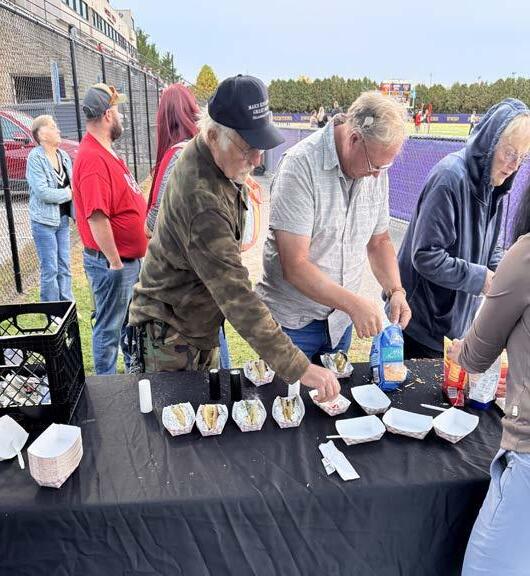
Thanks to the Wisconsin Potato & Vegetable Growers Association (WPVGA) and Bushmans’ Inc., the sidelines were stocked with free, freshly baked Wisconsin potatoes for players, families, and fans to enjoy during the championship game.
Anyone taking a baked potato had the option to add toppings like butter,

sour cream, cheese, salt, and pepper, which made these hot potatoes the MVPs of the snack table. With all the vitamins and minerals Wisconsin potatoes naturally provide, they really are the perfect fuel for champions of all ages.
Parents and kids enjoyed the spudtacular snack on a fall day as they cheered on their favorite team.
The partnership between the WPVGA and the Stevens Point Youth Area Football program highlighted not only local agriculture, but also a strong sense of community that defines
Left: Spectators are “Powered by Wisconsin Potatoes” at the Stevens Point Youth Area Football championship game, on October 18.

Wisconsin. From the field to each fork at Goerke Field, teamwork, dedication, and proper fuel were the themes of the day.
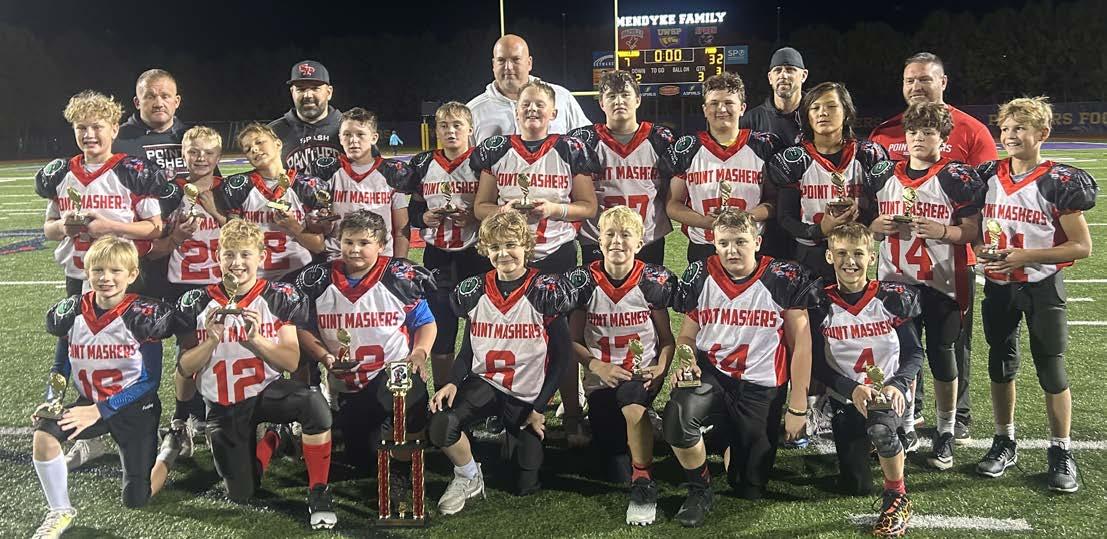
As the final whistle blew and the players for the Ford Chiropractic “Mashers” celebrated their championship victory, one thing was clear: In Stevens Point, football and potatoes make a winning combination.
Above and RIght: The Stevens Point Ford Chiropractic “Mashers” Youth Area Football team won the championship game and hoisted the trophy, October 18, in front of a crowd “powered by Wisconsin potatoes.”
Bottom: The Point Mashers championship team and coaching staff are pictured with their trophies.



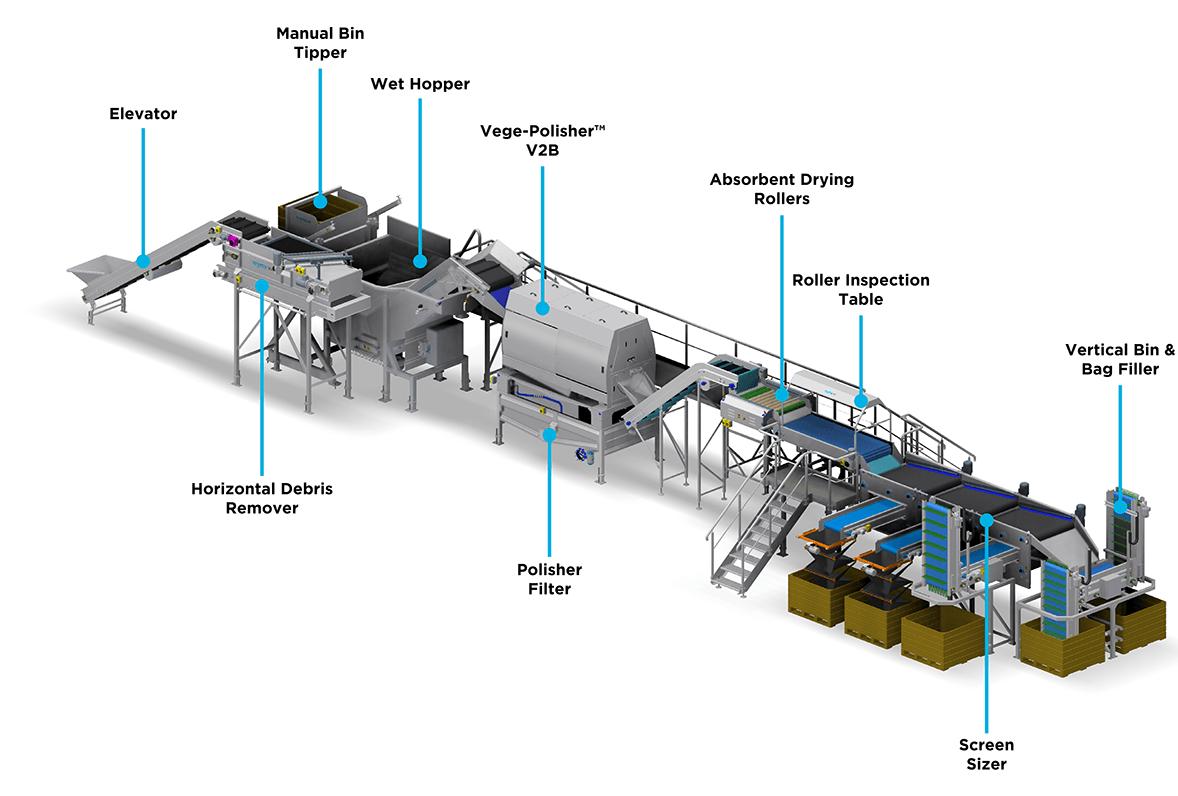
Polisher, grader, lift roller sizer delivers gentle high-capacity grading
Wyma’s Lift Roller Sizer delivers highcapacity, gentle grading for carrots, potatoes, citrus, onions, and more. Adjustable roller spacing ensures accurate diameter sorting. Built from stainless steel, it’s tough, food-safe, and easy to maintain.
Customize outputs on the fly while maximizing efficiency and product
quality in your post-harvest line.
This 5-ton per hour wash line showcases Wyma’s quality, including robust construction, water-saving filtration, and gentle handling from intake to sizing.
Designed for real-world packhouse demands, it combines durability, hygiene, and smart flow to protect
produce and maximize operational value. Wyma equipment is built to last, delivering reliable, efficient performance season after season.
Although Wyma Solutions started washing and polishing potatoes in 1962, the company provides postharvest equipment for a wide range of fresh produce types, with a strong focus on root vegetables and other field-grown crops.
The equipment is designed to handle each product with care, ensuring maximum quality and shelf life. Wyma offers tailored solutions for potatoes, carrots, parsnips, beets, onions, sweet potatoes, pumpkins, melons, turnips and celery root (celeriac).
EFFECTIVE PROCESS
Whether you’re washing, polishing, drying, grading, or packing, Wyma ensures a gentle, effective process
for your specific produce type.
Wyma is the best post-harvest machinery solution provider for growers and packhouses in North America because it combines proven global expertise with tailored local support.
The company is known for delivering innovative, high-performance solutions tailored to the needs of fresh produce processors worldwide. With decades of industry experience, Wyma combines engineering excellence, deep product knowledge, and customer-focused service to optimize every stage of post-harvest handling.
From gentle washing and polishing to precise sorting, drying, and conveying, Wyma equipment is designed to enhance produce quality, maximize pack-out, and reduce waste. Trusted by growers and packers in over 50 countries, Wyma builds lasting partnerships and consistently delivers results.
Wyma’s experienced team is ready to work with you to design a postharvest solution tailored to your specific needs.
With dedicated support across the United States and Canada, either directly with a regular service visit or via its partner, Volm Companies, Wyma understands local crop requirements, packhouse workflows, and market expectations, ensuring you get the right equipment, layout, and long-term performance for your operation.
Contact Wayne Decou, equipment sales manager, Volm Companies, Inc., wayne.decou@volmcompanies.com, 905-648-7300, or Peter van der Loo, territory manager, Wyma Solutions, peter.l@wymasolutions.com, +64-27284-3783.

The
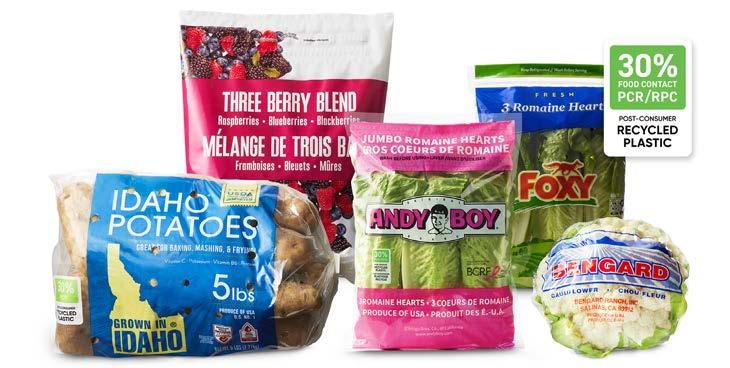
Emerald Packaging, the largest supplier of retail flexible packaging for the produce industry, in partnership with Idaho Package, Wada Farms and Walmart, has introduced the first 30% food contact Post-Consumer Recycled (PCR) bag for the potato category. The product was developed in direct response to Walmart’s goal to reduce packaging waste via Project Gigaton, which is an initiative to reduce or avoid one billion metric tons of greenhouse gas emissions from the global value chain by 2030. Potato grower/shipper Wada Farms worked closely with Walmart to commercialize the product.

“We’ve worked on sustainable packaging initiatives for over 20 years, and PCR has emerged as the first affordable option ever,” states Kevin Kelly, chief executive officer of Emerald Packaging.
“We built a supply chain and launched a product that met or exceeded the PCR targets of major retailers,” Kelly adds. “We did so without compromising product performance and at a nominal cost impact. Our commitment to PCR aligned perfectly with Walmart’s goal to incorporate it in their packaging.”
Idaho Package and Wada Farms
started trialing PCR potato bags in early fall 2024, and later that year, launched the product with Walmart, which enthusiastically embraced it.
Today a dozen SKU’s (Stock Keeping Units) incorporate PCR resin. The reduction in virgin polyethylene
Soluble copper and zinc liquid formula. No clogged nozzles, no visible residue.
Multisite contact, broad-spectrum disease control that protects soil biodiversity.
Single application is 95–99% below EPA annual copper limits. keeping potatoes healthy from planting throughout harvest.
reducing our environmental impact and offering our customers more sustainable choices,” explains Laura Himes, Walmart’s vice president of produce sourcing. “We’re proud to collaborate with Emerald Packaging, Idaho Package, and Wada Farms to introduce the first 30% PCR bag for the potato category.”
“This initiative directly supports our goal to minimize waste with the integration of PCR content for retail packaging,” Himes adds, “and demonstrates our dedication to working with suppliers who share our commitment to a more sustainable future.”
Emerald Packaging has been reinventing produce packaging for over 60 years and is the largest plastic packaging manufacturer for produce in the U.S.
For over two decades, Emerald Packaging has led the industry in addressing plastic waste, most recently helping shape legislation in California that addresses the need for a better recycling infrastructure. Emerald is one of the few manufacturers to win a Green Business certification for its waste, water, and energy reduction efforts.
Wada Farms and Idaho Package (IPAK) have proven track records of integrating environmental initiatives and sustainability into their daily operations. Wada Farms is committed to making both its farming and packaging practices more sustainable, with efforts that include plastic reduction, recycling, solar power, and water conservation.
IPAK has a long history of partnering with leading packaging manufacturers to drive environmentally responsible solutions through rightsizing, sustainable practices, and innovation.
For more information on Emerald Packaging, please visit www.empack. com, or to learn about Wada Farms, go to www.wadafarms.com.
Get the customized financing, insurance, and business services from a team focused on agriculture. Our tailored solutions will meet the unique financial needs of any size farm, ranch, or agribusiness.
AgCountry
He served six years on the WPVGA Boad of Directors, including as president
Michael “Mike” Wolter of Antigo, Wisconsin, a loving husband, father, papa and friend, lost his battle with cancer on Friday, October 24, at home surrounded by his loving family.
Mike was born on October 31, 1957, to Herbert and Hilda (Servi Wild) Wolter. He grew up working on his father’s potato farm where he developed a passion for the industry. His dad put him to work at a very young age.
He told the story of skipping elementary school at Spring Valley, in Bryant, to drive potato truck during the harvest season. As a boy, he won several tractor pulling contests at the Langlade County Fair.
Mike attended Antigo High School, graduating in 1976. He participated in wrestling and was a member of the state champion football teams. He attended the University of WisconsinMadison and earned an Agriculture Economics Business Management degree in 1980.
Following graduation, he worked at Merrill Gravel and Construction with his brother-in-law, Dick.
In 1982, Mike married his high school sweetheart, Corinne “Bobo” Schumitsch, at St. John Catholic Church, in Antigo. Together they raised four children who meant the world to him—Nicholas (Jessica), Kristen (Brian) Mattmiller, Michael (Britta), and Matthew, all of whom he was extremely proud.
He was a hero to his kids. They thank him for the morals, self-responsibility, and work ethic he instilled in them. His final wish was that they love and support each other always.
In 1986, he had the opportunity to purchase his own potato farm in Antigo. Knowing this was where his heart was, he returned to potato farming. In 1995, he served as treasurer of the Wisconsin Potato & Vegetable Growers Association (WPVGA) and was named “Young Grower of the Year” by the Association.
He served six years on the WPVGA Board and was on several committees. He was elected president of the WPVGA Board in 2000. He was also involved in the National Potato Council.
He continued to run Mike Wolter Riverside Farms with his sons through his final harvest season this fall. When he became too ill to work, his children and coworkers completed harvest without a hitch due to the skills he taught and demonstrated over the years.
Mike led a very vibrant life and had so many more adventures planned when he was taken. His hobbies included his many “toys,” whether it was motorcycles, boats, side-by-sides, or snowmobiles. He was very active in the Antigo Sno-Drifters Snowmobile Club, where he served as trail boss and spent many hours grooming the trails for all to enjoy.
He had an adventurous side, and in the late 1990’s, was an avid stock car racer. He was named Rookie of the Year and was a two-time track champion at the Langlade County Speedway.
His favorite times were those spent traveling with his wife in their

motorhome. They were fortunate to have spent the last six years wintering in Okeechobee, Florida, where they developed many friendships.
Mike enjoyed having a good time with those he laughed with the most. He was a true sports fan, enjoying the Packers and Brewers, and proudly watched his children participate as Antigo Red Robins.
PAPA MIKE
Mike’s favorite role was that of “Papa Mike” to his nine grandchildren, Natalie, Bridget, Logan, Alexis, Peyton, Paxton, Blaire, Walter and Teddi.
He loved them all so very much, and they adored him in return. Together they shared many memories of holiday fun and time spent at the cottage. They will miss him every day, but the memories of family time will live in their hearts forever.
In addition to his wife, children, and grandchildren, he is survived by sisters, Caroline (Tom) Wild and Linda (John) Scott; brother, John (Debbie) Wolter; sisters-in-law, Jean Wolter and Nancy Wojtasiak; and brothersin-law, Jerry Greisinger, Leon Summ, Dennis Lichtenberg, Dick (Helen) Schumitsch, and Larry “Buster” Knuth.
He is further survived by his nephew, Norm (Terri) Wild; niece, Michele (Dave) Nagel; as well as many more nieces, nephews and friends.
He was preceded in death by his parents and Corinne’s parents, Ben and Berniece Schumitsch; and siblings, Carole (Jack) Bennetts, Mary Jane Paff, Conrad (Marianne) Wild, Norman (Pat) Wild, Rosemary (Norbert) Schroepfer, Ruth Greisinger, Pat Lichtenberg, Bev Summ, and Glen Wolter.
Mike was also preceded in death by his in-laws, Al Wojtasiak, Mary “Kitty” Schumitsch, and Karen Knuth; and nieces, Laurel Wirth, Theresa Bolen, Cris Knapp, and Dawn Wojtasiak.
Mike was remembered with love at his funeral Mass on Wednesday, November 5, at St. John Catholic Church, in Antigo. Burial followed at Queen of Peace Cemetery. Visitation was on November 4 at Bradley Funeral Home with a parish wake service. Visitation was also held on November 5 at the church in Hoffmann Hall. Family and friends celebrated Mike and the man he was. In lieu of flowers, the family asks that you please donate blood, or give to St. Jude for childhood cancer research, the Ronald McDonald House, or the American Family Children’s Hospital in Madison. continued on pg. 34


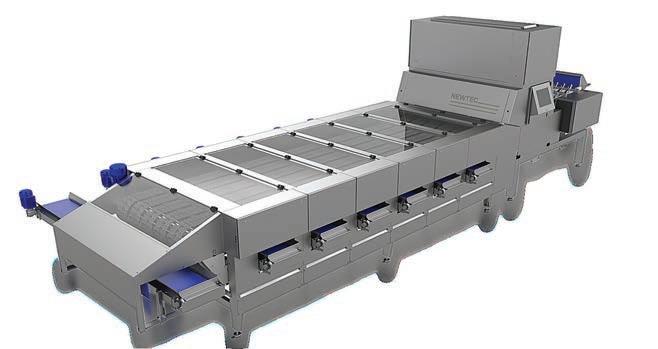
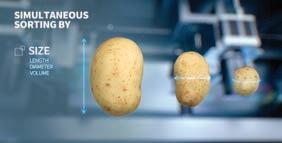
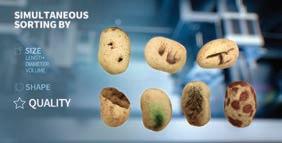

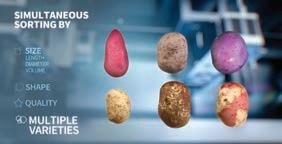
The Newtec Celox-Dual-UHD 2 delivers high throughput in a compact design, handling up to 50k potatoes on a 4’ system or 100k on a 5.5’ system, optimizing efficiency in potato sizing.


Mineral manufacturer adds a director of ag sales & an agronomy sales manager
GLC Minerals is excited to welcome Amy Espenscheid as its director of agriculture sales and Tristan Jenkins as the company’s new agronomy sales representative.
Espenscheid brings more than 20 years of experience in agricultural sales, feed ingredients, and livestock nutrition to the GLC team, as well as a deep understanding of the industry and a strong commitment to customer success.
She has a proven track record of driving growth and building lasting relationships across the agricultural sector. Most recently, Espenscheid served as territory sales manager at Phytobiotics, where she expanded market share through



strong partnerships with producers, nutritionists, and feed mills.
Her earlier roles at Kent Nutrition Group and Feedworks USA further strengthened Espenscheid’s skills in sales strategy and business development.
In addition to her agricultural sales experience, she has owned and operated TS Cattle Company for over 25 years, giving her a hands-on understanding of the challenges and opportunities facing today’s farmers. She holds a Bachelor of Science in Agri-Business from the University of Wisconsin (UW)-Platteville.
“Amy’s deep knowledge of animal nutrition, combined with her strategic mindset and relationship-driven approach, makes her an outstanding addition to the GLC Minerals team,” says Wes Garner, chairman and chief executive officer of GLC Minerals.
With a strong background in agribusiness and a passion for supporting farmers, Jenkins brings a dynamic and results-driven approach to his new role as agronomy sales manager.
He joins GLC Minerals with over five years of experience in the agricultural sector, most recently serving as a GHX specialist at Syngenta in Markesan, Wisconsin.
Prior to Syngenta, Jenkins worked as a sales agronomist at Country Visions Cooperative in Ripon. His early career also includes an internship with Insight FS, where he developed a deep understanding of crop science and customer engagement.
Jenkins holds a Bachelor of Science in Agriculture Business with a minor in Soil and Crop Science from UWPlatteville. His expertise in agronomy, combined with his commitment to building strong relationships and delivering tailored solutions, aligns perfectly with GLC Minerals’ values to support the evolving needs of the agricultural community.
“We are thrilled to welcome Tristan to the GLC Minerals team,” Garner says. “His energy, experience, and dedication to customer success will be a tremendous asset as GLC continues to grow our agronomy division and support farmers across the region.”
In early 2025, Wisconsin’s local food supply chain was dealt an unexpected setback. The U.S. Department of Agriculture abruptly withdrew over $5 million in funding previously dedicated to purchasing local produce for schools, food pantries,
and tribal communities.
Almost overnight, contracts for 108 Wisconsin family farmers were canceled, and deliveries to 254 food access sites ground to a halt, putting hard-won progress at risk across all 72 counties.
It was a jarring turn for a program that, in just two years, had delivered $4.23 million worth of fresh, local food to Wisconsin families. The sudden end of these Local Food Purchase Assistance markets left both small farms and vulnerable families facing an uncertain future.
But in true Badger State spirit, Wisconsin’s agricultural community didn’t back down.
Instead, the farmer-led Wisconsin Food Hub Cooperative (WFHC) sprang into action, launching a bold new solution: the Super Transportation Cooperative.
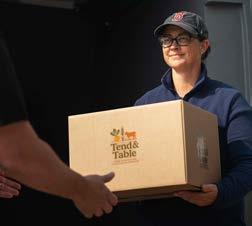
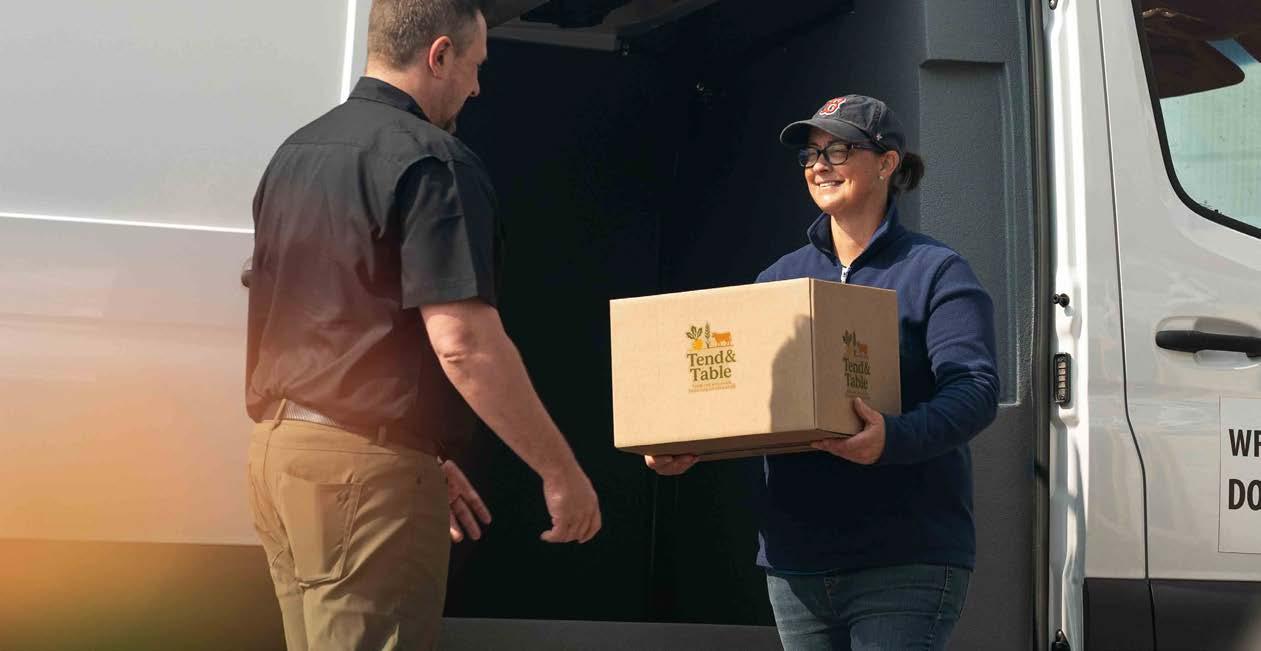
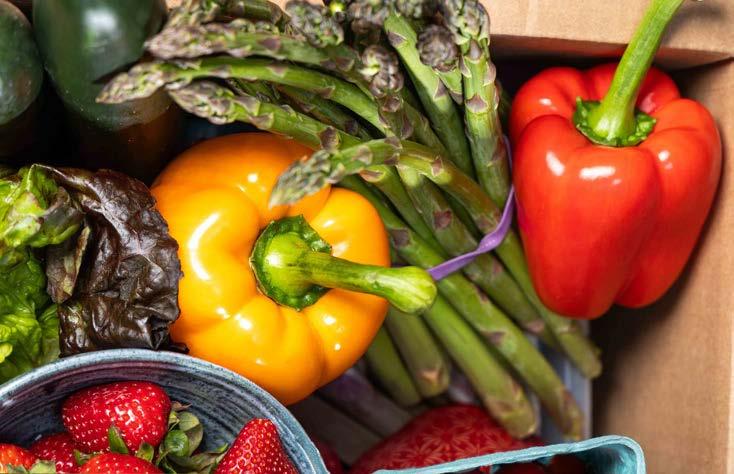
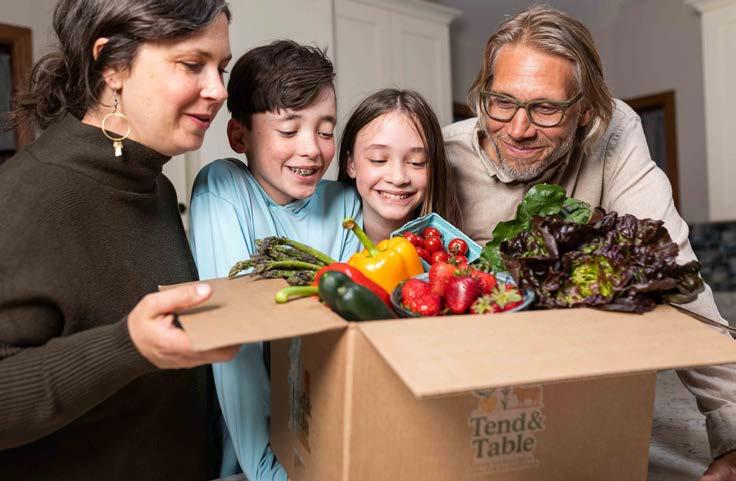
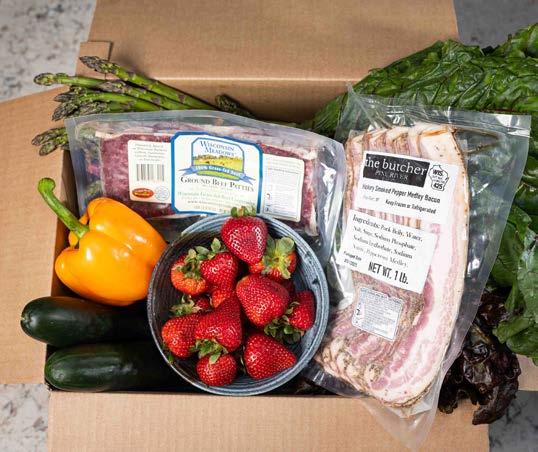
Current and Opposite Page: Through Tend & Table, Wisconsin-grown products, from seasonal vegetables to pasture-raised meats and dairy, are delivered to paying subscribers across the state.
The Super Transportation Cooperative (STC) is not just a stopgap. It’s a collaborative, statewide logistics network that brings together farmers, food hubs, nonprofits, and food access organizations under a single, coordinated distribution system.
Built on a hub-and-spoke model, regional “sub-hubs” aggregate food, and shared refrigerated trucks carry those goods on planned routes across Wisconsin.
Most importantly, the trucks never run empty: every return trip is loaded with produce or supplies, eliminating wasted miles and slashing transportation costs by about 25%.
The culmination of orders from smallto-large farms for schools, pantries, and retail improves capacity, which, in turn, decreases transport costs for all and leads to lower prices for consumers.
According to the WFHC, this
innovative system has already proven to be more efficient, affordable, and resilient than anything that came before it, keeping Wisconsin-grown food on the move even after the loss of federal support.
The Hancock

Hancock Ag Research Station
N3909 County Rd. V, Hancock, WI 54943
Of course, keeping the trucks full is only half the battle. The other half is creating a stable, lasting market for all that local food. That’s why the WFHC launched Tend & Table in the continued on pg. 38
Station wishes you a great 2026 crop and storage year!
Also, a big Thank You!

Tel. (715) 249 5961




Email: hancock@cals.wisc.edu
We want to thank many businesses and individuals who in 2025 contributed time and resources for the success of our research and outreach activities. We are thankful for your generosity as you help us sustain our research farm and Storage Research Facility activities. Among these are:
• AMVAC Chemical Corp.
• BASF
• Bayer
• Coloma Farms
• Florence Johnson
• FMC
• Hancock Citizens Committee
• Heartland Farms
• Holford Family
• Jack Buchanan
• Ken Kmiecik
• McCain Foods
• Mortenson Bros. Farms, Inc.
• MWFPA
• Nelson’s Vegetable Storage Systems
• Nichino
• Nutrien Ag Solutions
• Paul Miller Farms
• Potatoes USA
• Syngenta
• UPL
• Valent
• Vantage North Central
• Wilkins Electric
• WPVGA
• WPVGA Associate Division
summer of 2025.
Tend & Table is a statewide farmto-family subscription service that operates as a core part of the STC network.
Through Tend & Table, Wisconsingrown products, from seasonal vegetables to pasture-raised meats and dairy, are delivered to paying subscribers across the state. Boxes are flexible, available weekly or monthly, and always packed with
the best of what Wisconsin’s farms are harvesting.
But Tend & Table goes beyond just feeding subscribers. Every box sold also helps support local food pantries, thanks to a built-in donation model, and customers can even purchase boxes for families in need.
This means every delivery not only supports a local farm but also helps a neighbor facing food insecurity.
RUSSETS
• AO8433-4STO
• Caribou
• Lakeview Russet
• Reveille
• Silverton
YELLOW FLESHED
• Yukon Gold
WHITES
• Mackinaw
REDS
• Dark Red Norland
Contact us now to place your Spring orders or for more details!
Above: Tend & Table is a statewide farmto-family subscription service that operates as a core part of the Super Transportation Cooperative network.
For the 100+ small farms that lost their institutional contracts, Tend & Table is more than a marketplace, it’s a lifeline. By connecting farms directly with households, the program ensures that no harvest goes to waste and provides a steady stream of orders that keeps the STC trucks rolling year-round.
“Tend & Table is more than just a subscription box, it’s a communitypowered way to connect families with the people who grow their food,” says Tara Roberts-Turner, general manager of WFHC.
“Wolf River” Brand Specializing in Certified Seed
Bula Potato Farms, Inc. • W11957 Highland Road • Antigo, WI 54409 Call Dennis or Adam: Work: (715) 275-3430
Shipping Address: W8376 Cty Rd K, Elcho, WI 54428 • Fax: (715) 275-5051
Email: bulaseed@frontiernet.net or dennis@certifiedseedpotatoes.com www.certifiedseedpotatoes.com
“We were bracing for a rough year after those contracts disappeared,” says Amy Johnson, a pasture-raised livestock farmer with Misfits. “STC basically saved us. It makes sure our pastured-raised meats still get to the people who need them, and with Tend & Table, we’re finding new customers who really appreciate local food.”
“It’s keeping our farm resilient,” Johnson says, “and connecting us directly with Wisconsin families at the dinner table.”
While farmers and families rally to keep local food flowing, another group has stepped in behind the scenes: donors. To stabilize this new supply chain, WFHC is investing in infrastructure, including a major expansion of its cold storage capacity at the Waupaca hub.
This $400,000 project is part of a larger $861,500 bridge funding campaign to fully sustain STC and Tend & Table through the transition. Wisconsin’s agricultural community is answering the call. Local growers, distributors, family foundations, and produce industry partners are chipping in, as the campaign puts it, “to keep Wisconsin’s food system on the road.”
Donor recognition and naming opportunities at the new cold storage facility will honor those who make the expansion possible, ensuring their legacy is woven into the fabric of Wisconsin’s local food future.
As another growing season approaches, there’s a sense that something vital has been preserved. The loss of federal funds could have fractured Wisconsin’s local food chain. Instead, it sparked a grassroots solution that’s keeping full trucks, full tables, and full hearts across the state.
With the Super Transportation Cooperative and Tend & Table, more than 400 local farmers are still feeding families in every county, proving that innovation and cooperation can carry Wisconsin’s farm community through even the toughest times, stronger and more connected than ever.
For more information, contact Tara Roberts-Turner, general manager, Wisconsin Food Hub Cooperative, tara@wifoodhub.com, 715-227-1990 (office), or 920-896-3663 (cell.)
“Tend & Table is more than just a subscription box, it’s a communitypowered way to connect families with the people who grow their food.”
– Tara Roberts-Turner, general manager, Wisconsin Food Hub Cooperative
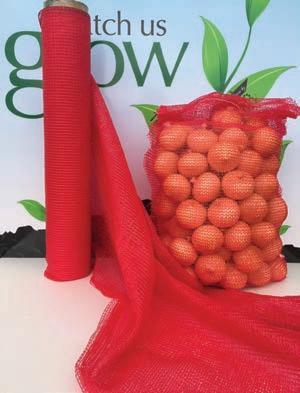
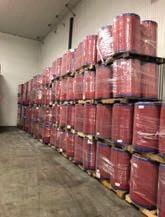
Description: Available in both 30# and 50# in all color s. 2000/bags per roll.
Stock Color: Red
Other colors available: Orange, White, Blue, Purple, Tan, Green, etc...


Ask about our stocking program.

Mesh Rollstock material is less expensive than premade bags. As Labor costs continue to increase, automation is in high demand on all packing lines. With the investment of mesh rollstock baggers, Thorpack strives to meet packing house needs with the best mesh rollstock available. No need for pack off tables and hand packing labor. Move forward into automation and reduce packing cost with this mesh rollstock material. Your cost savings on your material and less labor will generally pay for this machine within a short period of time.
20# Sewing thread available for all mesh rollstock material
Equipment:
Mesh rollstock functions excellent on the following equipment: Upmatic, Ilapack, Gillen Kirch, H-Tech, Saclark, Volmpack, plus more.
Calls for their government to block imports is part of larger national strike
On the last week of October, Mexican potato growers engaged in a national strike against competition from the United States, demanding that their government block imports. Their actions were part of a larger nationalistic agricultural strike in Mexico.
Videos circulated on social media sites of angry growers. They called for an immediate end to the legal importation of fresh potatoes from the United States.
“These actions are clearly timed to impact the review of the U.S.-Mexico-Canada Agreement [USMCA] that was negotiated by President Trump in his first
Administration,” says National Potato Council (NPC) Chief Executive Officer (CEO) Kam Quarles.
“It is not surprising that these growers want to return to the monopoly they originally held on Mexico’s domestic market,” Quarles adds, “allowing them to tightly control the supply of potatoes and causing prices to skyrocket on Mexican consumers.”
The United States fought a multidecade battle to open Mexico to fresh potato exports, including winning a unanimous decision at the Mexican Supreme Court. Over the past three years that the market has been open, U.S. fresh exports
have increased to $130 million annually, propelling Mexico to our top foreign trading partner.
“Our recent history of exporting high quality U.S. potatoes to Mexico has established a very strong track record,” Quarles remarks, “benefiting U.S. growers and Mexican consumers alike.”
“Efforts to rip up the USMCA would cause immediate harm to this valuable market, impacting Mexican consumers and distorting supplies of fresh potatoes,” he concludes. “Such outcomes should serve as a cautionary note as the agreement is undergoing review.”


The National Potato Council is disappointed that the U.S.-Japan agreement did not include fresh market access for U.S. potatoes. Japan has delayed this market access request from the United States for 30 years, including delays as recently as October.
“It is very disappointing that the U.S. was unable to use President Trump’s tariff leverage to push past Japan’s protectionism and finally open this valuable market,” says NPC CEO Kam Quarles.
The meeting in late October between President Donald J. Trump and Prime Minister Sanae Takaichi did not include any mention of U.S. fresh potato access, nor was any reference made to it in follow-up statements.
This was preceded by talks between officials of the U.S. Department of Agriculture and the Japanese Ministry of Agriculture, Forestry and Fisheries earlier in October, when Japan again provided no timeline for abiding by the three-decade request.
Since the end of the first Trump Administration, U.S. family farms have lost over $750 million in exports to Japan due to this protectionism. Earlier this year, President Trump’s announcement of tariffs on Japan provided significant leverage to finally end the Japanese strategy of negotiation without conclusion.
“Despite this disappointment, we were pleased by U.S. Chief Agriculture Negotiator-nominee Dr. Julie Callahan’s comments
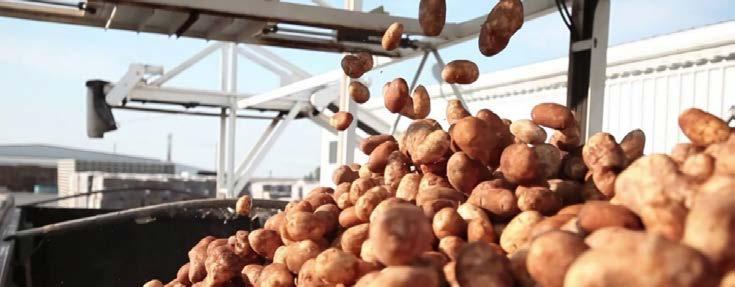
Wednesday before the Senate Finance Committee, where she acknowledged Japan’s delaying strategy is a non-tariff trade barrier,” Quarles allows.
“This has been stated by our industry for years, and we very much appreciate Dr. Callahan’s clear assessment and focused intent to open this market to benefit family farms across the U.S.,” Quarles adds.
With low commodity prices and increased input costs this year, the potato sector and specialty crops in general are facing a major economic crisis.
“The loss of this opportunity in
Japan deepens this crisis and increases the imperative for the Administration and Congress to provide meaningful economic relief for U.S. specialty crop growers,” says Dean Gibson, NPC vice president of legislative affairs and a grower from Idaho.
Should the United States be successful in finally achieving access, the Japanese market for U.S. fresh potato exports is estimated at $150 million annually. The inability to access Japan puts increased pressure on the positive outcomes on tariffs and non-tariff barriers for potato products in other valuable export markets for the United States.
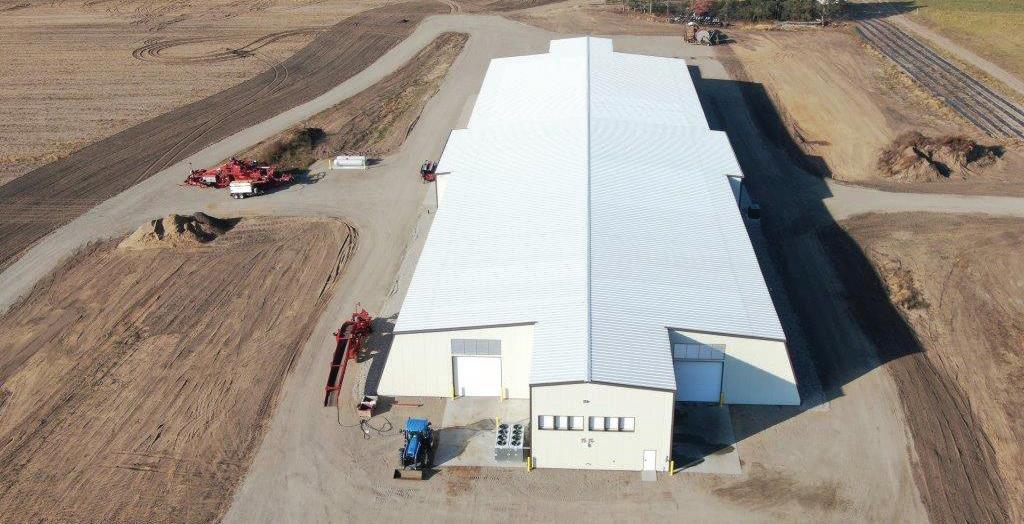


Twenty-six teams participate in WPVGA Associate Division event at Wausau Skeet & Trap Club
By Joe Kertzman, managing editor, Badger Common’Tater
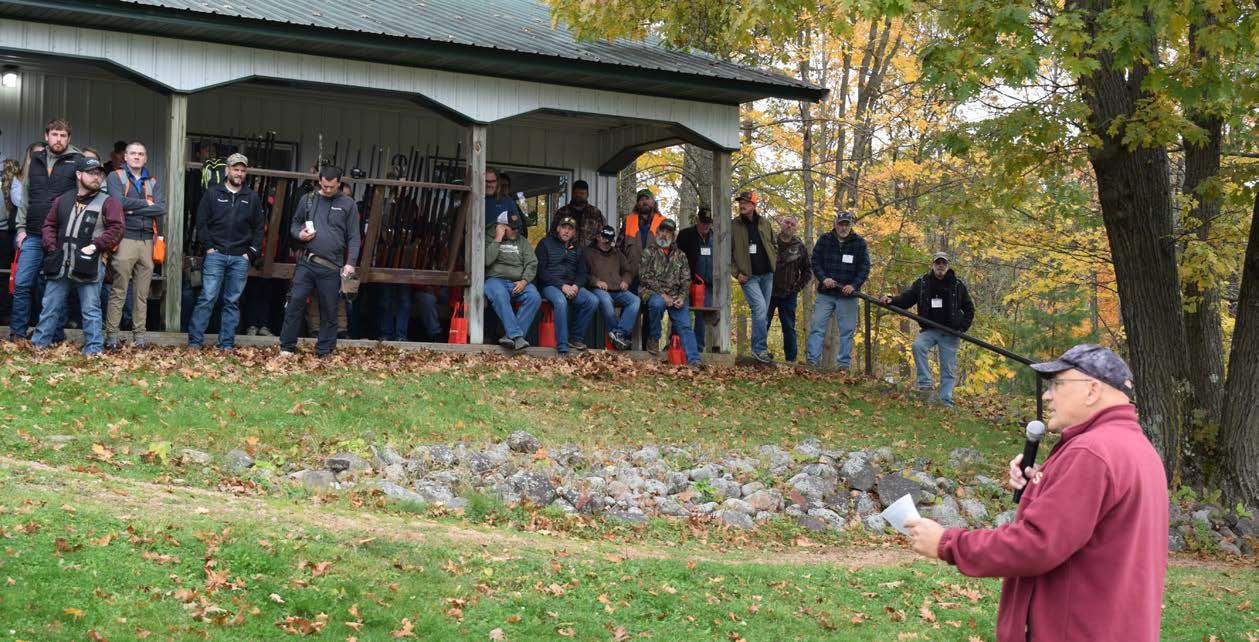
It felt like fall in Wisconsin, October 16, 2025, with beautiful autumn colors and a slight sprinkle at the end of the day, when the WPVGA Associate Division held its 6th Annual Sporting Clays Shoot at the Wausau Skeet & Trap Club, in Brokaw.
Twenty-six teams, most of which were made up of four shooters apiece, traversed the 70-target course. With registration beginning
at 12:30 p.m. and a shotgun start at 1:30 p.m., the registrant package included one round of sporting clays, dinner, drink tickets, and entry into
door prize drawings.
Sponsored bags with boxes of shells were provided to each registered participant prior to the event, and most shooters brought their own 12- or 20-guage shotguns. As in past years, eye and ear protection were required.
Volunteer coaches who are members of the Wausau Skeet & Trap Club walked the course with the teams, assisting beginners, ensuring safety, and giving tips on shooting stances, each station’s different challenges, and techniques for participants,
Above: Tim Kuski, right, addresses participants of the 6th Annual WPVGA Associate Division Sporting Clays shoot at the Wausau Skeet and Trap Club, going over ground rules and giving safety tips and suggestions.
regardless of experience level.
With so many participants and a 15-station course, shooters had the chance to visit with other team members at each station while awaiting their turns.
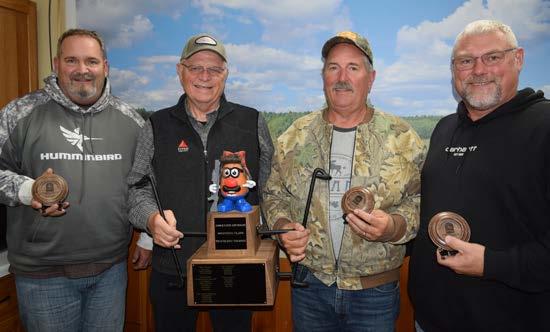
An awards ceremony at the end of the day included trophies for 1st and 2nd Place Men sporting clays shooters, 1st and 2nd Place Women shooters, and a 1st Place Team trophy specially built by Andy Verhasselt,
formerly of T.I.P. Inc.
Drawings for cash, as well as raffle and door prizes and a nice meal provided by Ed & Sharon’s Catering rounded out the festivities. A good size crowd stayed for the food (including McCain Foods mashed potatoes), refreshments, and camaraderie as the evening wound to a close.
continued on pg. 44




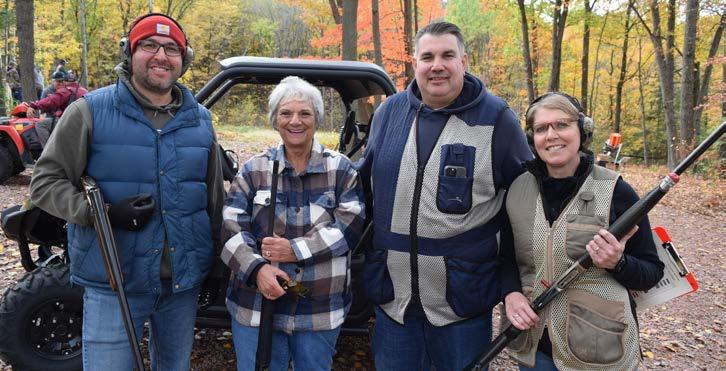
Left: Winners of the Top Team Trophy and representing Condon Oil at the 6th Annual Sporting Clays Shoot are, from left to right, Rich Troudt, Mark Belau, Steve Olm, and Ron Moderow. The top three scores among them averaged 64, and the team took home a rotating trophy made by Andy Verhasselt that is handed off annually to the next year’s Top Team winners.
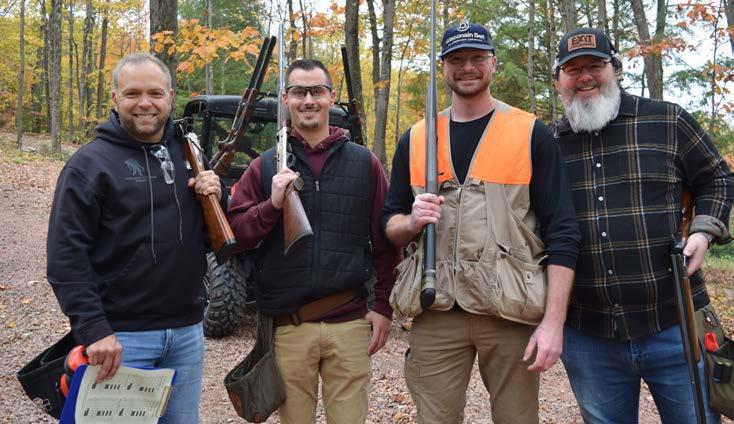
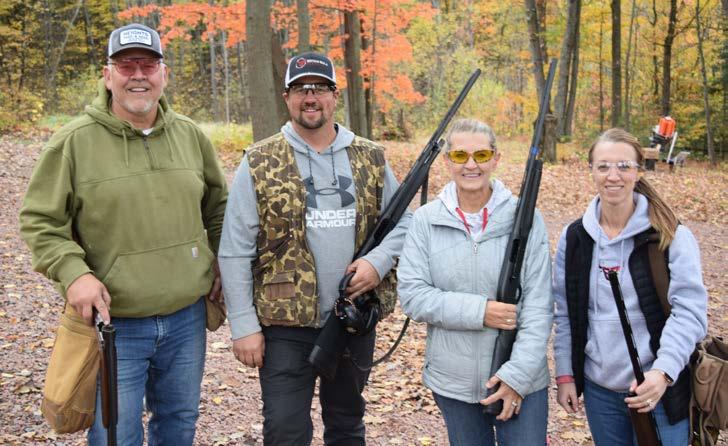
Right: Shouldering shotguns and shooting for the McCain Foods team are, from left to right, Mike Johnson, Shawn Bula, T.J. Kennedy, and Bryan Odell.







Among the many raffle and door prizes, Zach Mykisen of Big Iron Equipment won a $500 gift card for Chase Outdoors, Cole McPherson, playing for Pest Pros, landed a $200
• Long term fixed and adjustable rate mortgage financing
Troy W. Fischer Rockford, IL
815.494.4349 tfischer@metlife.com
Bass Pro Shops gift card, and Daniel Ehr from Baker Tilly was the lucky winner of the 50/50 raffle drawing.
Top finishers of the 6th Annual Sporting Clays Shoot and their scores are:
Trophy Winners:
1st Place – Men: Jeff Martin, 66
2nd Place – Men: Rich Troudt, 65
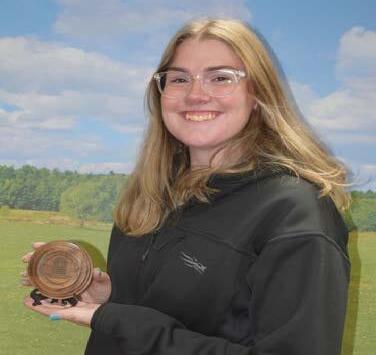
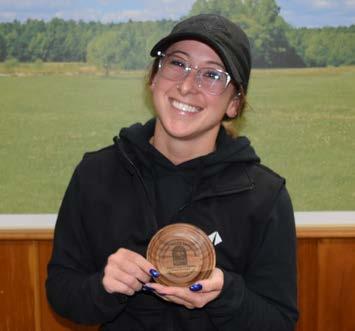
1st Place – Women: Caprice Juday, 57 2nd Place – Women: Tia Leonhard, 45
Top Team:
Condon Oil: Mark Belau, Steve Olm, Rich Troudt, and Ron Moderow
(Top 3 score average of 64)
A fundraiser for the WPVGA Associate Division, with proceeds earmarked to support the industry throughout the year, the 6th Annual Sporting Clays Shoot raised $3,100 in sponsorship money.
With full slates of teams and shooters the past couple years, as well as sponsorships from companies valuing the event, the 7th Annual Sporting Clays Shoot is already tentatively slotted for Thursday, October 22, 2026.



In the winner’s circle for landing 1st Place Men and shooting for Ron’s Refrigeration is Jeff Martin, who hit 66 targets on the course.

Coloma Farms was well represented by three teams at the Sporting Clays Shoot, one of which included, from left to right, Matt and Kim Krueger, Jaylyn Rachel, and Bret Plumb.

Bob Bushman had a good bead on the sporting clays target before firing at the 6th Annual Sporting Clays Shoot.

Computerized
Refrigeration
Potatoes
Sprout


Potato Goodness has been using themed content on social media, including recipes, behind-thescenes footage from the Spud Lab, and nutrition information, to give consumers more reasons to serve potatoes to their friends and family and feel good about doing so.
From July to September, Potato Goodness social media content saw a 4,000% increase in interactions via “likes,” comments, shares, etc., over the same period last year!
Fry Bags and Potato Harvest These trends drove engagement with

Potato Goodness from July to September:
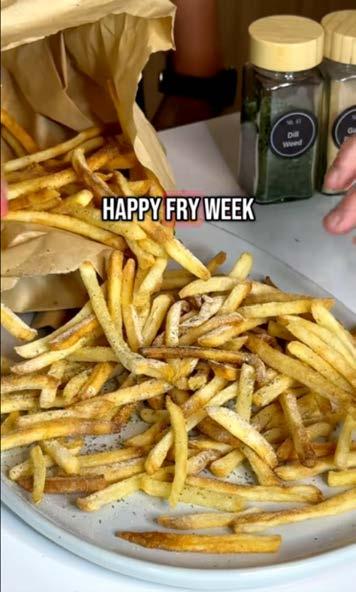
• Fry bags were a summer hit! Building on a take-out trend in Ireland, fry bags are an easy, fun way for everyone to enjoy their favorite French fries and flavors. Simply cook fries at home or grab some to go, toss them in a paper bag with your favorite spice blend, and shake.
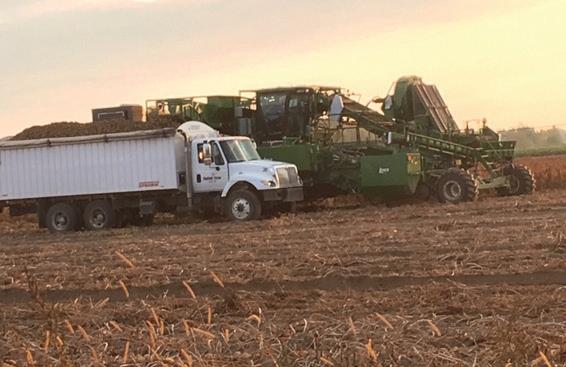
• Potato harvest gave social media users a chance to see farmers in action. Potato growers shared their favorite ways to eat potatoes and

answered questions like, “How long does it take to grow potatoes?,” “How are potatoes harvested?,” “Where are potatoes grown in the U.S.?,” and “What is your favorite thing about farming?”
***If you are a grower and captured video content from harvest this year, email kayla@ potatoesusa.com, and it just might be featured on Potato Goodness someday!
July-September Results:
• A 4,000% increase in interactions across Instagram, Facebook, TikTok,




















YouTube, and Pinterest compared to the same period last year. Interactions are how social media users engage with posts through likes, shares, comments, etc.
• 12.5 million views on Potato Goodness videos across Instagram, Facebook, TikTok, YouTube, and Pinterest.
• Live posts from our college campus visit garnered three times as much engagement as the industry benchmark for strong engagement.
Top-Performing Posts
Below are the top-performing Potato Goodness posts for July-September:
o Spud Chef Reaction – Chicken Caesar Salad Baked Potato
o Influencer Content – Lemon Smashed Potatoes
o Dietitian Highlight – Are Potatoes a Vegetable?
• TikTok
o Fry Bags – Dill Pickle
o Fry Bags – Churro
o Fry Bags – Nashville Hot
Upcoming Social Content
Make sure to follow Potato Goodness on Instagram and TikTok to see the spud-centric posts coming up this month:
• December: We’re letting the world in on what we already know – potatoes are beautiful. In December, we’re highlighting ways to include potatoes in all your holiday gatherings, including piped mashed potato boards and cookies made with potatoes for holiday cookie swaps.



U.S. farmland has a well-deserved reputation as a reliable investment and a natural hedge against inflation. That reputation was reinforced in recent years, as land values surged alongside the highest inflation rates since 1981.
By David Williams and Clayton Winters-Michaud
However, with crop prices now back at lower levels and input costs still elevated, profitability is expected to remain elusive for most row crops in the near term.
Annual appreciation of U.S. farmland has slowed from the exceptional pace
Boosting capacity, speed, and efficiency.
Our fertilizer facility offers large storage capacity, advanced blending with reliable access to dry fertilizer across Wisconsin.
Contact us today! Insight FS
3895 County Rd Q, Amherst Junction 715-824-3151
amherstjunction@insightfs.com insightfs.com
seen in 2021 and 2022, when many regions posted double-digit gains, but growth has remained surprisingly resilient.
From 2024 to 2025, land values continued to rise at an average rate of 4.3% nationally according to the U.S. Department of Agriculture (USDA), despite higher interest rates, moderation of key commodity prices and a normalization of farmland demand after the post-pandemic surge.
While the rate of increase has slowed, appreciation has persisted across all regions, underscoring the continued attractiveness of agricultural real estate as an investment vehicle.
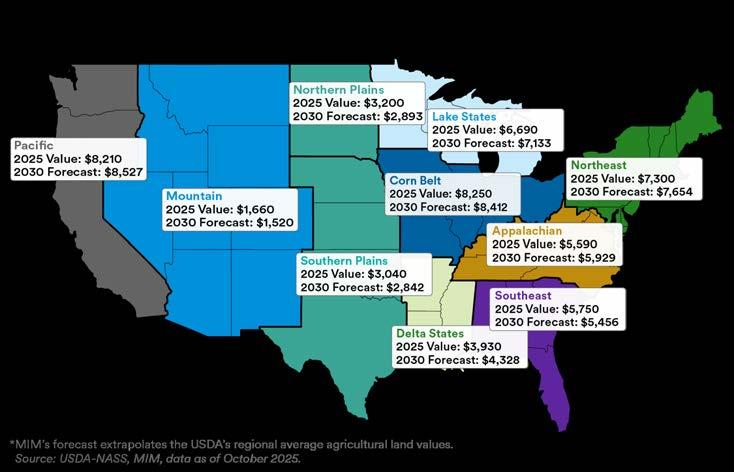
In 2025, the Corn Belt and Pacific regions remained the most expensive farmland markets, each exceeding $8,200 per acre on average (see Exhibit 1). In contrast, the Mountain and Southern Plains regions had the lowest average values, at $1,660 and $2,880 per acre respectively.
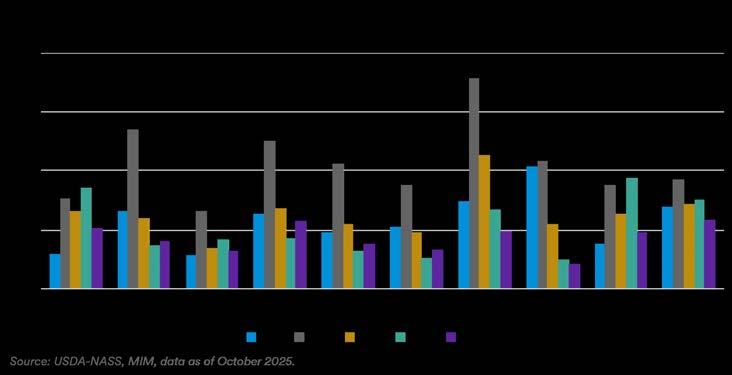
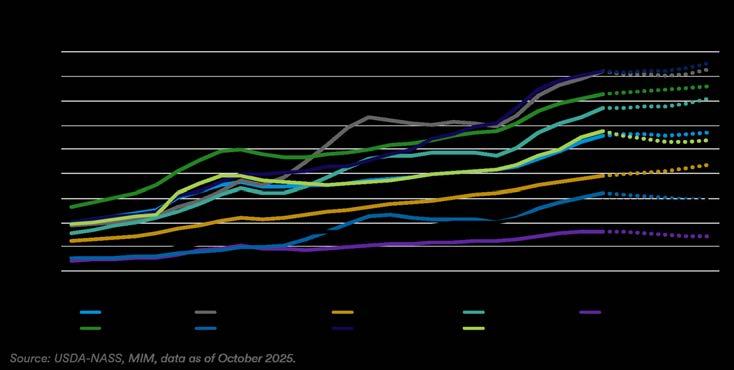
Since 2020, the Northern Plains, Southern Plains and Lake States have posted the strongest cumulative gains (Exhibit 2). Volatility in appreciation has also varied, with the Northern Plains and Corn Belt experiencing sharp swings in annual growth over the last five years.
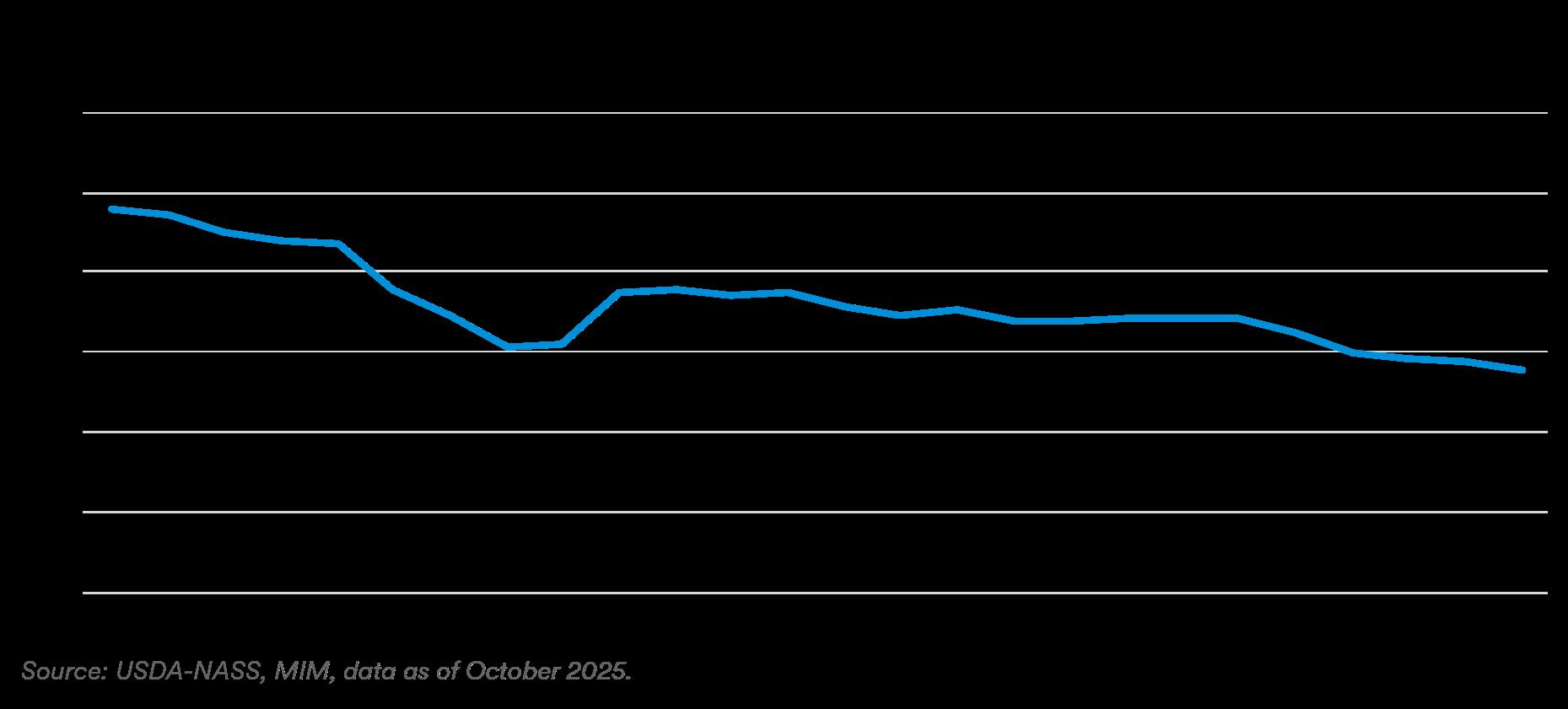
While farmland values managed to outpace inflation heading into 2025, farm rents did not, driving the national average rent-to-value ratio for cropland to an all-time low of 2.8% (Exhibit 3).1
This disconnect is a signal that farmland prices are increasingly decoupled from their productive returns, with an ever-larger share of total returns coming from appreciation rather than income.
Over the past decade, 54% of cropland returns have been attributable to appreciation, while only 46% was attributable to rents2 , underscoring the degree to which
expectations of future price gains may be embedded in today’s valuations.
Looking at NCREIF (National Council of Real Estate Investment Fiduciaries) data, appreciation is even more significant, accounting for 58% of returns.3
Nationally, we expect a correction in farmland values in 2026 as market expectations re-align, followed by two years of flat growth before starting a recovery in 2029.
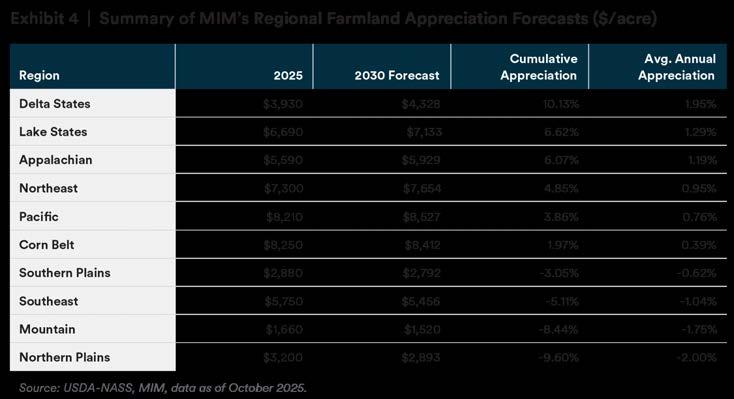
However, we expect material differences in appreciation across the country (Exhibit 4).
We expect Delta States to see farmland values appreciate by 2% annually on average through 2030. This outlook is broadly consistent with the Delta States’ long-term trend of steady, moderate growth and relatively lower land prices compared to other major regions, giving it room for a catch-up effect as investors and operators seek more affordable land for expansion.
We forecast more moderate average annual appreciation in Lake States (1.3%), Appalachia (1.2%), Northeast (1%) and the Corn Belt (0.4%).
In the Pacific region, we are forecasting a short-term decline in valuations followed by modest appreciation, resulting in an annual average of 0.76%.
Urbanization pressures, regulatory restrictions on land conversion and environmental protections effectively serve to limit the supply of farmland in the Pacific region.
Looking ahead, we expect the region’s diverse mix of specialty crops to provide some insulation from global commodity price volatility, supporting relatively stable land

values in aggregate.
While this diversity is broadly positive, it also means that certain markets will outperform, while others face headwinds.
Permanent crops such as grapes and apples, which are currently under pressure, may see localized declines in land values. These crops carry additional embedded value in biological assets that are highly sensitive to profitability.
California’s Sustainable Groundwater Management Act (SGMA) has triggered declines in irrigated cropland values, particularly in over-drafted basins in the Central Valley where groundwater pumping restrictions have reduced water availability and forced land out of production.
The resulting contraction in irrigated acreage has disproportionately
impacted high-value, permanent crops such as almonds, pistachios and grapes.
However, much of California’s agricultural land is used for livestock grazing4, which is much less dependent on irrigation and is currently benefiting from record-high beef prices, supporting values in the region.
Despite ongoing challenges to specific geographies and crops, we anticipate that aggregate land values in the region will remain resilient.
We expect to see farmland values decline in four of the 10 USDA regions through 2030. We forecast the Northern Plains to experience the steepest average annual decline at 2.0%, reflecting weaker basis levels and a less favorable profitability outlook compared to the prime Corn Belt.
Much of the region’s grain is shipped
by rail to Pacific Northwest ports for export to China, making it susceptible to trade disruptions.
We expect the Mountain region to follow with a 1.75% annual decline, driven by persistent water scarcity, regulatory constraints and lower land quality. We are also forecasting modest annual declines in the Southeast (1.04%) and Southern
Plains (0.62%).
While our baseline forecast calls for moderation in farmland appreciation, several scenarios could lead to stronger-thanexpected growth.
A resurgence of inflation, particularly if paired with a sharp decline in

interest rates, would likely boost demand for farmland, reigniting upward pressure on values. Additionally, investor interest in farmland may persist even in the face of weakening fundamentals, particularly if broader market volatility drives a continued flight to perceived safe-haven assets, as has been recently seen with gold.5
Trade remains a wild card in the outlook for farmland values. While the United States has imposed tariffs on every major trading partner, retaliatory measures have so far been limited, with China being the notable exception.
If a broader and prolonged trade dispute were to emerge, the resulting pressure on farm profitability and export demand could weigh heavily on land values. Conversely, significant trade agreements with key players such as China could provide meaningful tailwinds for the sector.
Farmland’s long history of steady appreciation, combined with its role as both a store of wealth and a hedge against inflation, remains central to its appeal.
However, the forces that propelled rapid gains in the early 2020s (low interest rates, high inflation, strong commodity markets and abundant liquidity) have given way to a more challenging environment marked by higher borrowing costs, margin pressure and policy uncertainty.
The outlook for farmland values reflects a cooling market, with appreciation slowing and greater differentiation emerging across regions.
While we expect some areas to see continued gains, others are likely to experience mild declines as valuations realign with income potential.
Regional fundamentals such as crop
mix, productivity, market access and development pressure will play a larger role in shaping outcomes. Inflation, interest rates and trade policy remain key variables that could shift the trajectory meaningfully in either direction.
Despite current headwinds and volatility, in the longer term, the U.S. agricultural sector’s fundamentals remain intact.
Rising global populations,6 an expanding middle class, increasing protein consumption7 and expanding renewable fuel usage globally serve to support long-term demand growth, while continued productivity gains and the U.S.’ unmatched infrastructure and export access will continue to drive structural growth.
Endnotes
1 USDA-NASS Quickstats, based on 2025 cropland values and rents
2 USDA-NASS Quickstats, based on annual cropland rents and appreciation
3 National Council of Real Estate Investment Fiduciaries Farmland Property Index
4 USDA, ERS Major Land Uses
5 Gold Price Hits $4,000 an Ounce as Record-Breaking Climb Continues - WSJ
6 United Nations’ World Population Prospects 2024
7 OECD-FAO Agricultural Outlook 2025–2034
Disclaimer
This document is solely for informational purposes and does not constitute
a recommendation regarding any investments or the provision of any investment advice, or constitute or form part of any advertisement of, offer for sale or subscription of, solicitation or invitation of any offer or recommendation to purchase or subscribe for any securities or investment advisory services.
The views expressed herein are solely those of MIM and do not necessarily reflect, nor are they necessarily consistent with, the views held by, or the forecasts utilized by, the entities within the MetLife enterprise that provide insurance products, annuities and employee benefit programs.
The information and opinions presented or contained in this document are provided as of the date it was written. It should be understood that subsequent developments may materially affect the information contained in this document, which none of MIM, its affiliates, advisors or representatives are under an obligation to update, revise or affirm.
It is not MIM’s intention to provide, and you may not rely on this document as providing, a recommendation with respect to any particular investment strategy or investment.
In the U.S., this document is communicated by MetLife Investment Management, LLC (MIM, LLC), a U.S. Securities and Exchange Commission registered investment adviser. Registration with the SEC does not imply a certain level of skill or that the SEC has endorsed the investment advisor.
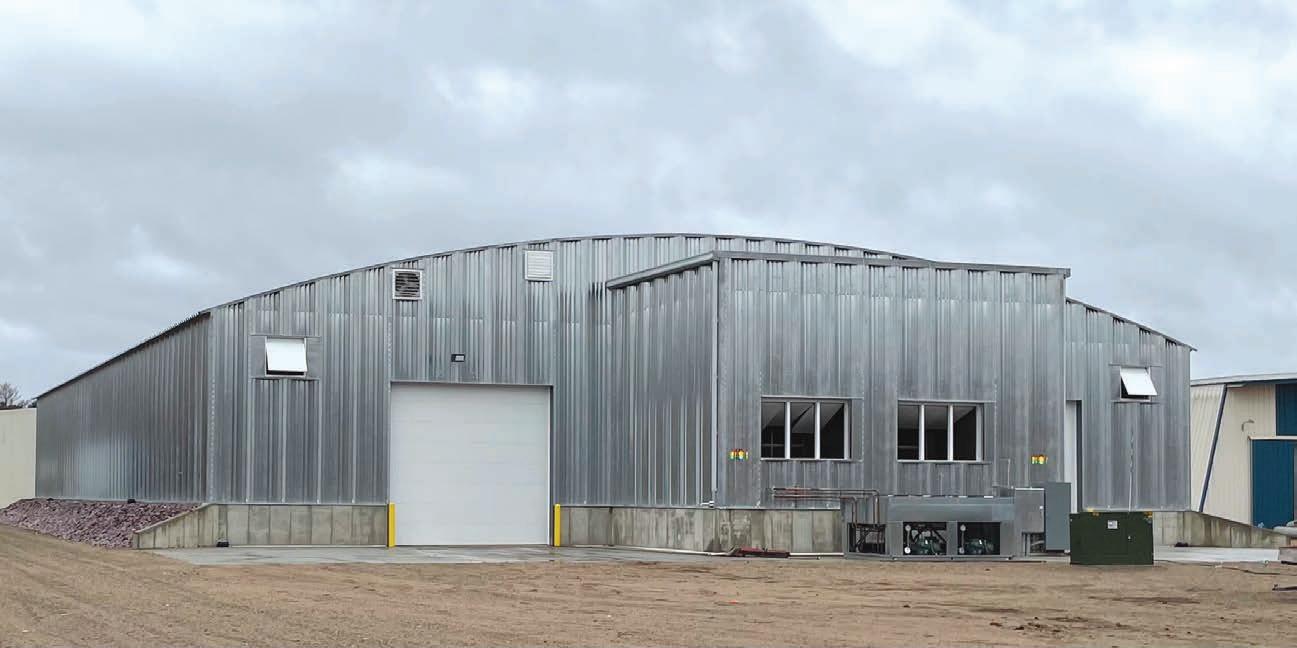
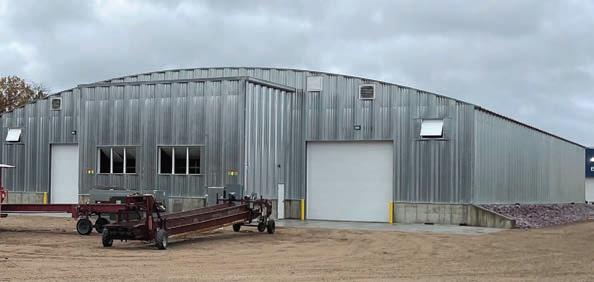
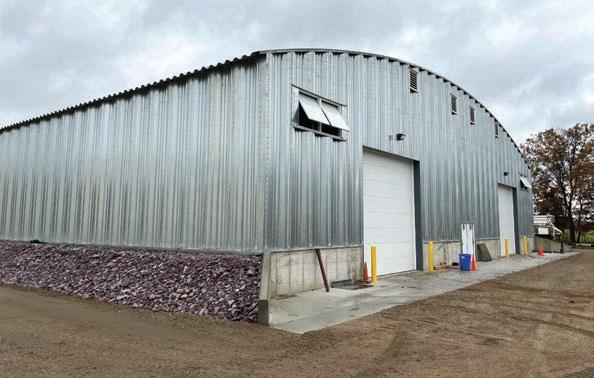


North America’s largest potato trade show offers great networking opportunities
Potato Expo 2026, North America’s largest annual potato industry conference and trade show, is heading to Dallas, January 6-8, at the Gaylord Texan. The event, hosted by the National Potato Council (NPC), invites U.S. and international potato supply chain partners to connect, share insights, and collaborate to kick off the new year.
Potato Expo remains the premier annual event where the potato industry comes to connect, learn, and lead. Attendees consistently identify networking as the Expo’s top draw, utilizing the three days to forge new partnerships and reconnect with long-time colleagues.
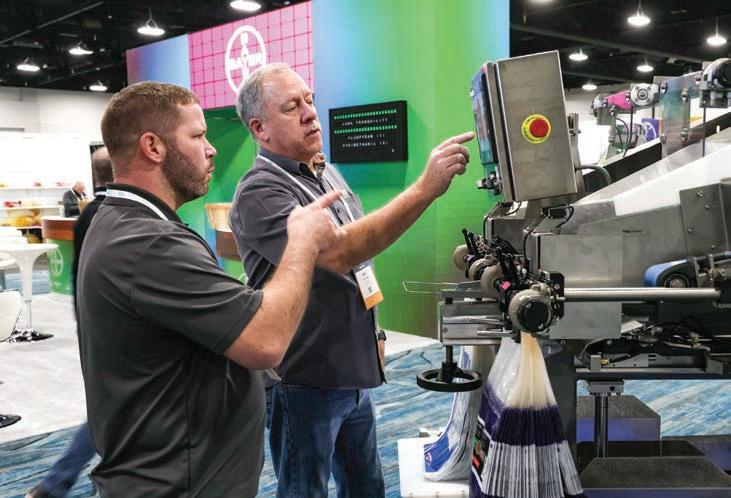
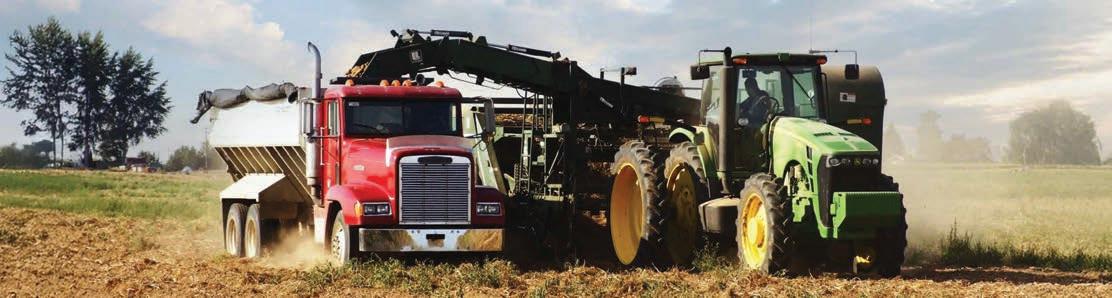



Potato Expo delivers a perfect blend of critical business and networking, creating meaningful relationships that drive business forward.
“Potato Expo remains the industry’s essential meeting place,” says NPC President and Washington State potato grower Ted Tschirky. “Bringing the entire supply chain to Dallas expands on the success of Potato Expo’s 17-year history and provides a powerful start to the business year, building the relationships that drive our future."
This year’s event will feature more than 30 educational sessions and 180 exhibitors filling up 100,000plus square feet of trade show space. Attendees will gain insight into the future of farming through educational content that ensures industry professionals stay informed on the latest research, regulations, and market trends.
This year’s programming emphasizes
innovation and advocacy. Cuttingedge sessions, including “Using Soil DNA, Tissue RNA and AI for Potato Production,” will be featured.
The lineup also includes a live recording of the Eye on Potatoes podcast, featuring a discussion with NPC Chief Executive Officer (CEO) Kam Quarles and Randy Russell, president of The Russell Group, on defending and enhancing potatoes at the federal level.
“Dallas is the perfect backdrop for the largest gathering of the potato industry,” says Hollee Alexander, NPC vice president of Industry Relations & Events. “With just one month before Potato Expo 2026, we encourage everyone to register and book your exhibit space to ensure your company is front and center in Texas when the industry unites.”
12-25 Badger Common'Tater (7.25x4.75).v1.pdf 1 2025-11-11 3:17 pm
As always, the 2026 event includes numerous networking opportunities,
such as the Welcome and Kick-Off Receptions, a live auction to benefit the Potato Leadership, Education and Advancement Foundation (Potato LEAF), daily happy hours, a beer garden, and a closing party.
Potato Expo serves as a forum to foster collaboration between national and state potato associations, as well as the rest of the industry.
Potatoes USA, United Potato Growers of America, Potato Sustainability Alliance, and others meet throughout the week to organize and plan for the new year. The full schedule can be found at https://www. nationalpotatocouncil.org/potatoexpo/potato-expo-2026-schedule/. Visit https://www. nationalpotatocouncil.org/potatoexpo/ to register and access other important information about Potato Expo 2026.
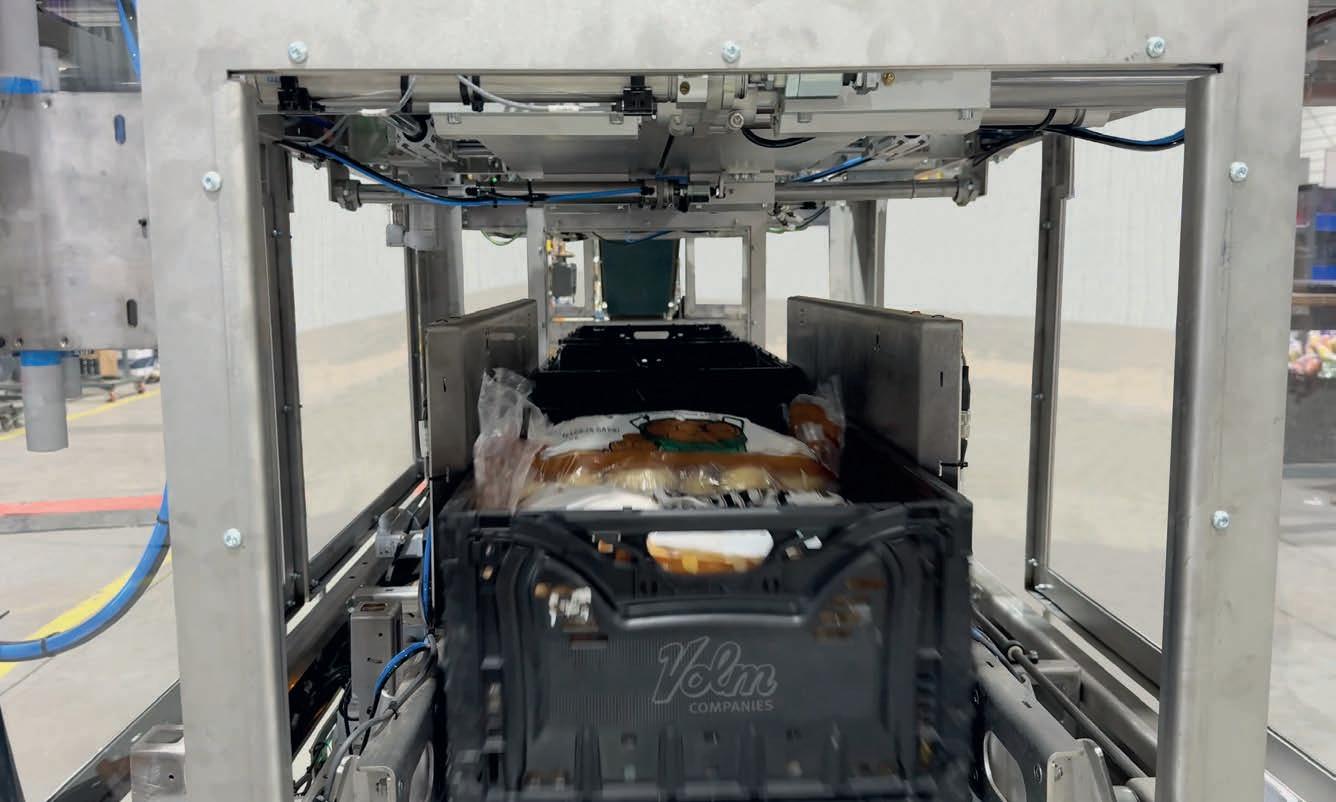
The Wisconsin Department of Agriculture, Trade and Consumer Protection (DATCP) invites Wisconsin farmers and cooperating entities to apply for commercial Nitrogen Optimization Pilot Program (NOPP) research grants through January 16, 2026.
These grants aim to enhance the understanding of and refine new methods that optimize commercial nitrogen applied to agricultural fields. Eligible applicants must be an agricultural producer or be working with one or more agricultural producers, agree to collaborate with the Universities of Wisconsin (UW) on their project, and voluntarily conduct commercial nitrogen optimization field studies for a minimum of two years.
The Intent to Apply, consisting of preapproval of the research design, must be obtained from UW by December 19, 2025, and is required

for submitting the final grant application.
The grant application, Request for Proposals, and other application materials are available on DATCP’s website, https://datcp.wi.gov/Pages/ CommercialNitrogenOptimization PilotGrantProgram.aspx
“Wisconsin farmers are leaders in innovation, and the Nitrogen Optimization Pilot Program is another example of that,” says DATCP Secretary Randy Romanski. “Through this program, producers across the state are carrying out important research studies and making new and exciting developments in nitrogen optimization.”
Looking for cultivator points and shovels that work as hard as you do?
R & H Machine offers an extensive line of parts that are built to last. Our shovels are designed to maintain their original width through the entire life of the part, giving you uniform tillage you can count on.
Plus, our parts are known to pull more easily, saving you time and fuel in the field.

R & H Machine . 115 Roedel Ave . Caldwell, ID 1-800-321-6568
www.rhmachine.com


There is $1 million available for this round of grants. Multiple agricultural producers may work together, or with cooperating entities, to submit a single application. Each agricultural producer who is part of the application is eligible to receive a maximum award of $40,000 for the project.
Outside of the individual grant awards, a grant will be given to the UW for project monitoring, research, and outreach assistance.
NOPP staff from DATCP and UW will be available for applicants to ask questions, pitch research ideas, and clarify ideas for their applications. Contact information is available on DATCP’s website, https://datcp.wi.gov/Pages/ CommercialNitrogenOptimization PilotGrantProgram.aspx..
The Intent to Apply and research design must be submitted to UW for preapproval by December 19, 2025. Final applications are due to DATCPNOPP@wisconsin.gov by 11:59 p.m. on Friday, January 16, 2026. Grant recipients will be announced in spring 2026.
For more information, contact Dan Richter, public information officer, dan.richter@wisconsin.gov, or call 608-419-5352.
Dealership agreement adds new optical sorting solutions to Volm’s portfolio
Volm Companies is excited to announce a new dealership agreement with Flikweert Vision, an innovative solutions provider for the potato and onion industries.
Matthew Alexander, Volm’s vice president of sales and marketing, and Wayne DeCou, equipment sales director, formally confirmed the deal with Flikweert CEO Martijn Flikweert during a recent trip to the Netherlands.
The strategic partnership marks an important expansion of Volm’s equipment portfolio, providing new and modern optical sorting solutions to meet the changing needs of the
fresh produce industry.
“Flikweert is an exciting and dynamic company that prioritizes technology and innovation,” Alexander says. “As they continue to expand their international footprint, we are thrilled to be partnered with them in North America.”
Based in the Netherlands, Flikweert combines artificial intelligence and advanced camera technology to meet today’s challenges. With their innovations developed entirely inhouse, software and mechanics are seamlessly integrated by a highly knowledgeable team of engineers.

Based in Antigo, Wisconsin, Volm is a leading packaging and equipment solutions provider with locations across all major growing regions. With its highly experienced team of service technicians, Volm has a trusted track record in providing quality installations, timely service, and reliable support.
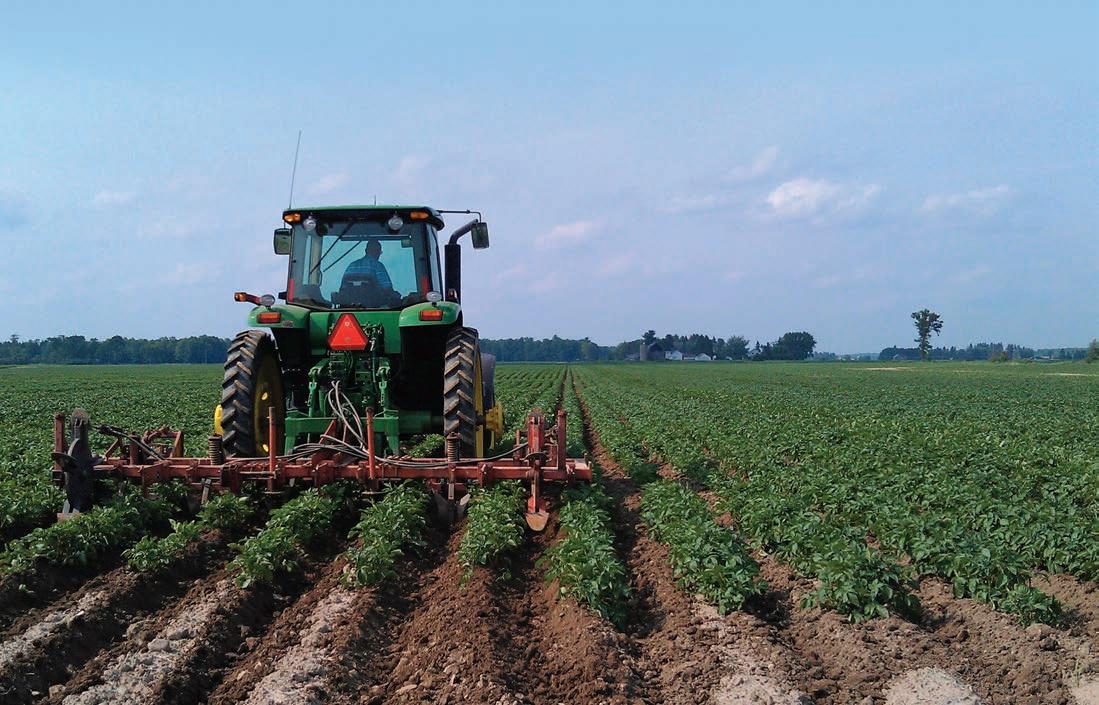
Flikweert’s two new solutions, the Divider and QualityGrader, were introduced at the Fresh Ideas Showcase during the Global Produce & Floral Show in Anaheim, California, October 16-18, 2025.
You’d be healthier, too, if you spent your winters in Hawaii.
The Divider is a unique and highly accurate optical sorting machine that separates foreign objects, such as stone, wood, plastic and other debris, from field crops. Using artificial intelligence (AI) technology to process up to 120 tons per hour, this solution optimizes product flow, resulting in less wear, product damage and waste down the line.
You’d be healthier, too, if you spent your winters in Hawaii.
You’d be healthier, too, if you spent your winters in Hawaii.
The QualityGrader offers a solution for the labor-intensive task of grading potatoes and onions. Using a combination of artificial intelligence and advanced camera technology, it can sort up to 20 tons of product per hour. You’d
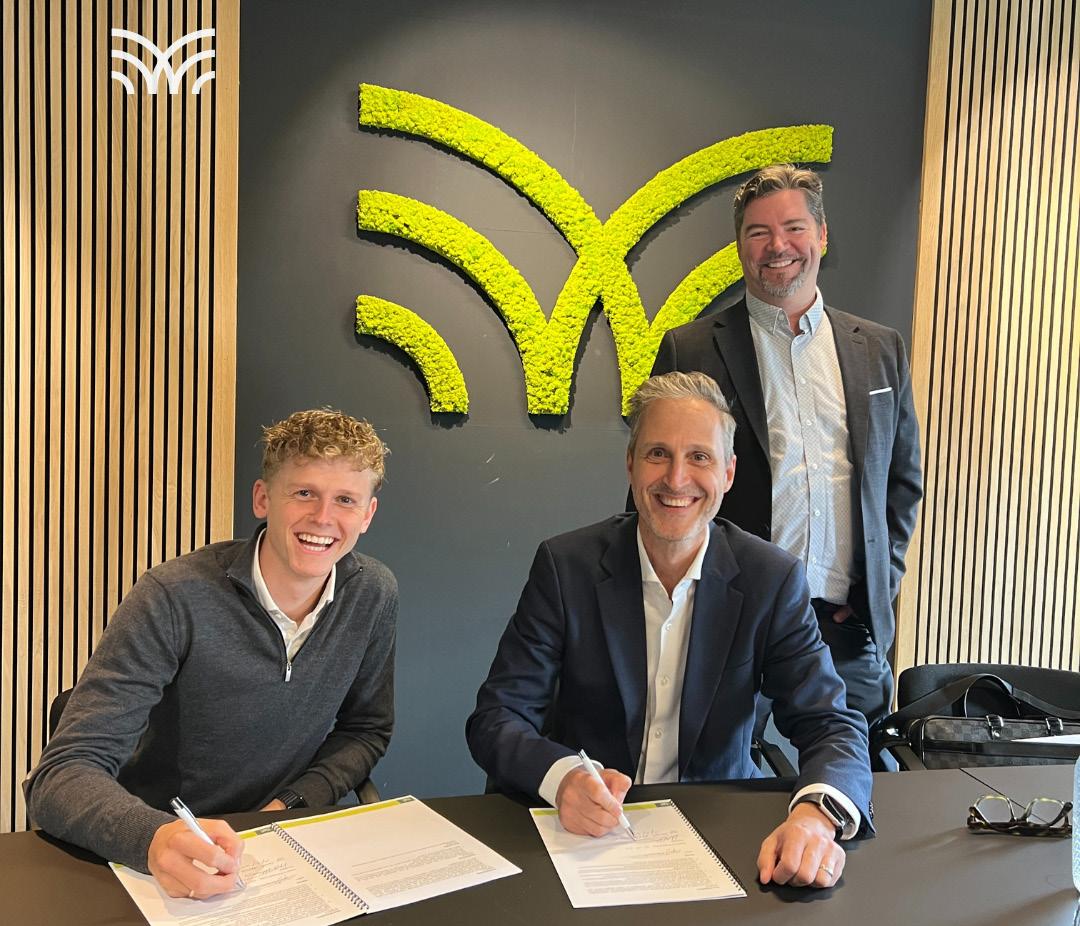
From left to right, Martijn Flikweert, co-founder and CEO of Flikweert Vision, Matthew Alexander, vice president of sales and marketing for Volm Companies, and Wayne DeCou, Volm’s director of equipment sales and service, seal the deal on a dealership agreement.

100% of Wisconsin Seed
100% of Wisconsin Seed
100% of Wisconsin Seed
Potatoes must be winter tested to be eligible for certified seed tags.
Potatoes must be winter tested to be eligible for certified seed tags.
Potatoes must be winter tested to be eligible for certified seed tags.
of Wisconsin Seed Potatoes must be winter tested to be eligible for certified seed tags. • While their of their
• While all state seed potato associations winter test their foundation lots, some do not winter test 100% of their certified seed lots.
• While all state seed potato associations winter test their foundation lots, some do not winter test 100% of their certified seed lots.
100% of Wisconsin Seed
Potatoes must be winter tested to be eligible for certified seed tags.
Don’t bet your farm on untested seed potatoes. Check the winter test results and Begin with the Best
• While all state seed potato associations winter test their foundation lots, some do not winter test 100% of their certified seed lots.
• While all state seed potato associations winter test their foundation lots, some do not winter test 100% of their certified seed lots.
• Wisconsin does, and this assures you get only the top-quality seed.
• Wisconsin does, and this assures you get only the top-quality seed.
• Wisconsin does, and this assures you get only the top-quality seed.
• Wisconsin does, and this assures you get only the top-quality seed.
• While all state seed potato associations winter test their foundation lots, some do not winter test 100% of their certified seed lots.
• With the Wisconsin Badger State Brand Tag, you get one grade, one standard–certification that counts.
• With the Wisconsin Badger State Brand Tag, you get one grade, one standard–certification that counts.
• Wisconsin does, and this assures you get only the top-quality seed.
• With the Wisconsin Badger State Brand Tag, you get one grade, one standard-certification that counts.
• With the Wisconsin Badger State Brand Tag, you get one grade, one standard–certification that counts.
• With the Wisconsin Badger State Brand Tag, you get one grade, one standard–certification that counts.
Don’t bet your farm on untested seed potatoes. Check the winter test results and Begin with the Best — Wisconsin!
Don’t bet your farm on untested seed potatoes. Check the winter test results and Begin with the Best — Wisconsin!
WISCONSIN
Don’t bet your farm on untested seed potatoes. Check the winter test results and Begin with the Best — Wisconsin!
WISCONSIN
CERTIFIED SEED POTATOES
CERTIFIED SEED POTATOES
Don’t bet your farm on untested seed potatoes. Check the winter test results and Begin with the Best — Wisconsin! WISCONSIN CERTIFIED SEED POTATOES Wisconsin Seed Potato Improvement Association, Inc. P.O. Box 173 • Antigo, WI 54409 • 715-623-4039 • www.potatoseed.org
Wisconsin Seed Potato Improvement Association, Inc. P.O. Box 173 • Antigo, WI 54409 • 715-623-4039 • www.potatoseed.org
WISCONSIN CERTIFIED SEED POTATOES
Wisconsin Seed Potato Improvement Association, Inc. P.O. Box 173 • Antigo, WI 54409 • 715-623-4039 • www.potatoseed.org
Wisconsin Seed Potato Improvement Association, Inc. P.O. Box 173 • Antigo, WI 54409 • 715-623-4039 • www.potatoseed.org

Money helps volunteer fire, rescue and ambulance departments improve services
Fifty-four emergency response departments supporting rural communities across Wisconsin received up to $4,000 each, for a total of $202,673, to fund much needed equipment and technology upgrades.
Through its Fund for Rural America, Compeer Financial awarded a total of 160 Emergency Response Equipment Grants accounting for more than $600,000 to departments across Illinois, Minnesota and Wisconsin. The grants are intended to help volunteer fire, rescue and ambulance departments improve their operational efficiency, safety and response times.
Rural volunteer emergency response departments are struggling to service their communities due to fewer volunteer first responders, outdated personal protective equipment (PPE), increases in service requests and rising costs for essential equipment.
Grants like these from Compeer are a way departments can continue to serve and protect their local communities. Due to budget constraints as volunteer departments, they are heavily reliant on public funding, grants, donations and local support to fund needed equipment, gear and training.
“For first responders to give their best, they need to be equipped with the proper tools,” says Karen Schieler, manager of Compeer Giving at Compeer Financial.
“We recognize the challenges volunteer emergency response departments face with funding, and we hope these grants help give them the life-saving equipment necessary to effectively respond to critical situations,” Schieler adds.
Six themes emerged from applications for this year’s grants:

1. Communication Equipment: Many rural areas experience cell coverage gaps, making communication difficult, especially during multi-department responses when time is critical. Departments requested upgraded
continued on pg. 62
Above: Shown during a training exercise, the Wauzeka Fire & Rescue team was one of 54 volunteer fire, rescue and ambulance departments across Wisconsin to receive an Emergency Response Equipment Grant of up to $4,000 each from Compeer Financial. In total, Compeer awarded 160 departments across Illinois, Minnesota and Wisconsin more than $600,000 to use for purchasing new equipment.
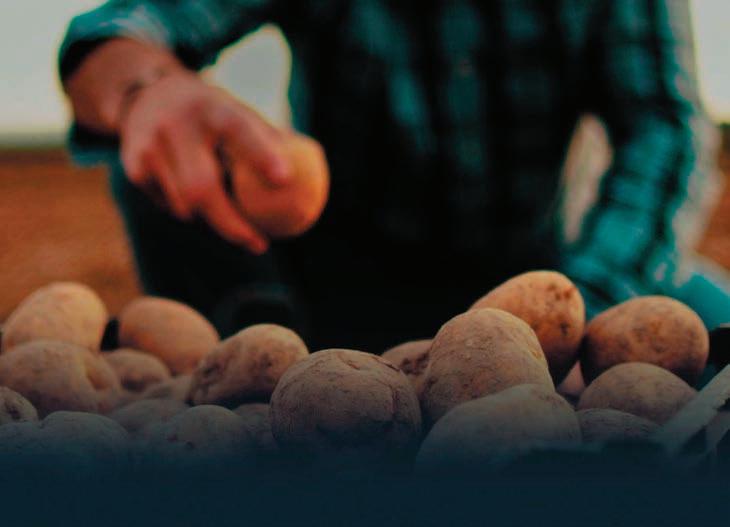




radios, pagers and communication systems to ensure reliable communication with dispatch, law enforcement and other emergency departments.
2. Safety and Protective Gear: Many departments are using PPE such as helmets, boots, gloves and turnout gear that no longer meet safety standards. New gear will help ensure the safety and confidence of firefighters, improve operational efficiency, and help retain and attract volunteers by providing a safer working environment.
3. Specialized Rescue Equipment: Rural communities experience rescue scenarios, including grain bin rescues and wildland firefighting, that are different from those in urban areas. Departments requested modern tools like thermal imaging cameras, gas detectors, rescue struts and
extrication tools to improve speed, safety and effectiveness in these unique emergency situations.
4. Medical Equipment: Many rural areas experience long ambulance response times. Upgrades to medical equipment like LUCAS devices, vital signs monitors and CO2 detectors were requested to improve patient care and outcomes.
5. Ventilation and Lighting: Firefighters encounter numerous challenges during calls in rural communities. Departments requested new battery-powered ventilation fans and LED lighting to improve efficiency and safety by reducing smoke damage and improving visibility during operations.
6. Training Equipment: Much like their PPE, training equipment has


become outdated. Departments plan to purchase new training equipment, such as mannequins and simulators, to help them better prepare for various emergency scenarios and improve the skills of both first responders and community members.
Since beginning the Emergency Response Equipment Grants in 2018, the Fund for Rural America has provided nearly $5 million in grants to equip volunteer first responders with the equipment and tools needed to aid rural residents across Compeer’s 144-county territory.
The grant will change slightly in 2026 to the Emergency First Responders Grant, accounting for both the needs of the department to service the community and the safety needs of the volunteer first responders.
The grant amount will also increase from the current maximum of $4,000 per department to a maximum of $7,500. Applications will open April 15, 2026, and close May 31, 2026. Departments that have not received a grant the prior two years are eligible to apply for two new grant areas:
1. Essential Response Equipment: This encompasses equipment needed to effectively respond to incidents. Examples of equipment include hand and extraction tools, fire suppression tools and fire response and medical equipment.
2. Responder Life-Safety Need: This includes equipment and resources needed to protect and support first responders. Examples include communication equipment and PPE.
For more information, visit https:// www.compeer.com/investing-in-ruralcommunities/giving-back/grants/ emergency-response-equipment/, or contact grants@compeer.com, or call 844-426-6733.

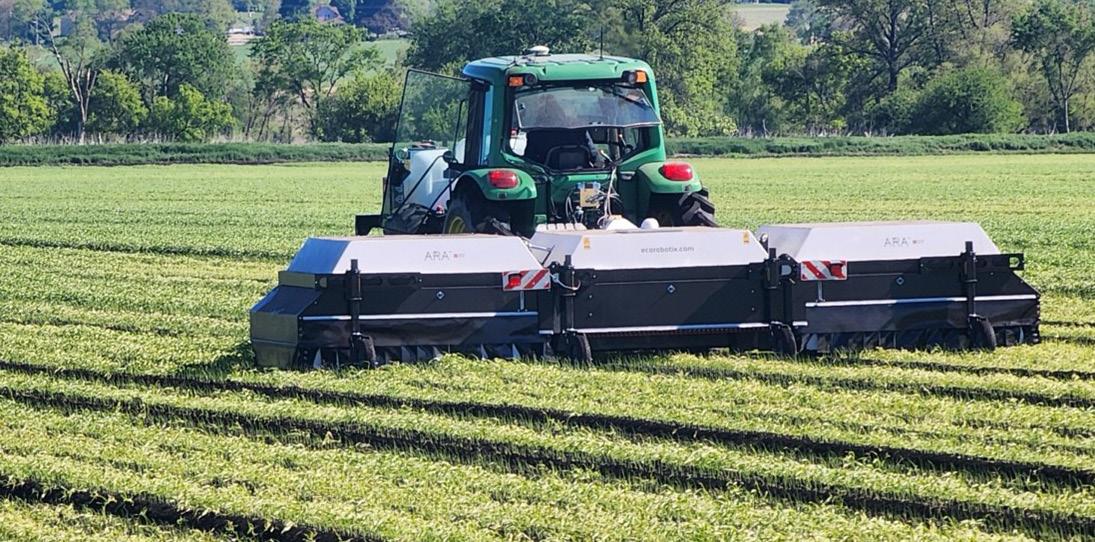
By Jed Colquhoun, professor and Extension specialist, University of Wisconsin-Madison Department of Horticulture
Technologies that allow for weeds to be separated from crops as equipment rolls through a field, as well as the novel tools such as lasers to “zap” weeds on the fly, are evolving at a breakneck pace on many fronts.
While we’ve conducted in-depth research on some of these technologies in the past two growing seasons, the intent here isn’t to overwhelm the reader with the prolific data that we’ve collected. We’ll share the numbers down the road at upcoming winter grower meetings.
Instead, I offer observational notes collected in the field to help sift through these technological advances from a practical standpoint.
The observations shared here are based on two commercially available tools: the Carbon Robotics LaserWeeder™ and the Ecorobotix ARA sprayer. There are also other technologies and tools available.
This summary isn’t meant to be encompassing of all the tools available now or soon coming to market; it’s simply based on experiences where these tools have been used in commercial specialty crop production in Wisconsin. Please keep in mind that even the tools where we do have commercial experience continue to evolve and advance at a rapid pace.
The analogy I use to describe the pace of advancement is the cell phone. The first commercially available cell phone introduced by Motorola in 1983 weighed about two pounds, could hold a call for 30 minutes before recharging (which took 10 hours) and would cost over $12,000 in today’s dollar. Fast
forward to today, and there are few of us without a computer in our pocket.
With that said, at this early stage of commercial adoption, these novel weed management technologies aren’t the right fit for every farm and crop. Much has been learned in early introductions that can help sort through where the best fits are today and where they might be expanded soon.
In a broad sense, there are three key advances that make these tools possible today: 1) high resolution, real-time scanning that can “see” and keep track of weeds as the machines roll across the field so that they can be accurately targeted with the control mechanism; 2) artificial
intelligence (AI) algorithms that are adapted as new knowledge is gained, refining the ability to separate crops from weeds, weeds by species and even weed growing points; and, 3) novel control tools such as lasers and micro sprayers that can reduce herbicide use.
Before we get to the field notes, here are a few details on the tools with which we have commercial experience in Wisconsin specialty crops. The Ecorobotix ARA is an AI-driven precision sprayer that the manufacturer indicates can reduce herbicide use by up to 95% through precision spraying post-emergent herbicides on a roughly 2.4x2.4-inch grid.
Herbicides aren’t applied where target weeds aren’t recognized, thus the herbicide reduction. The “safety zone” around the crop plants can be adjusted depending on crop injury risks and grower tolerance
“As these tools continue to be used and cover more ground and crops, they’ll gain imagery that will further refine the algorithms, increasing accuracy, applicability and coverage speed.”
– Jed Colquhoun, professor and Extension specialist, UW-Madison Department of Horticulture
of potential damage.
Conversely, instead of spraying weeds, the algorithms can be used to target just the crop with crop protectants, insecticides or fertilizers, putting the inputs just where they’re useful.
The tool includes 156 spray nozzles spaced about 1.6 inches apart for
roughly a 20-foot operating width. The process from scanning the ground to separating crops from weeds and firing the precision sprayer takes about 250 milliseconds (www.ecorbotix.com).
The Carbon Robotics LaserWeeder with which we’ve had experience continued on pg. 66
in Wisconsin is a first-generation model. It is 20 feet wide, with 42 high-resolution cameras that can use over 100 AI crop models to



over 5,000 weeds per minute. Importantly, a modular secondgeneration tool is now available commercially with more powerful lasers and in widths up to 40 feet.
scanners and interpretable by the algorithms.
Getting to this stage where the precision tools can separate the
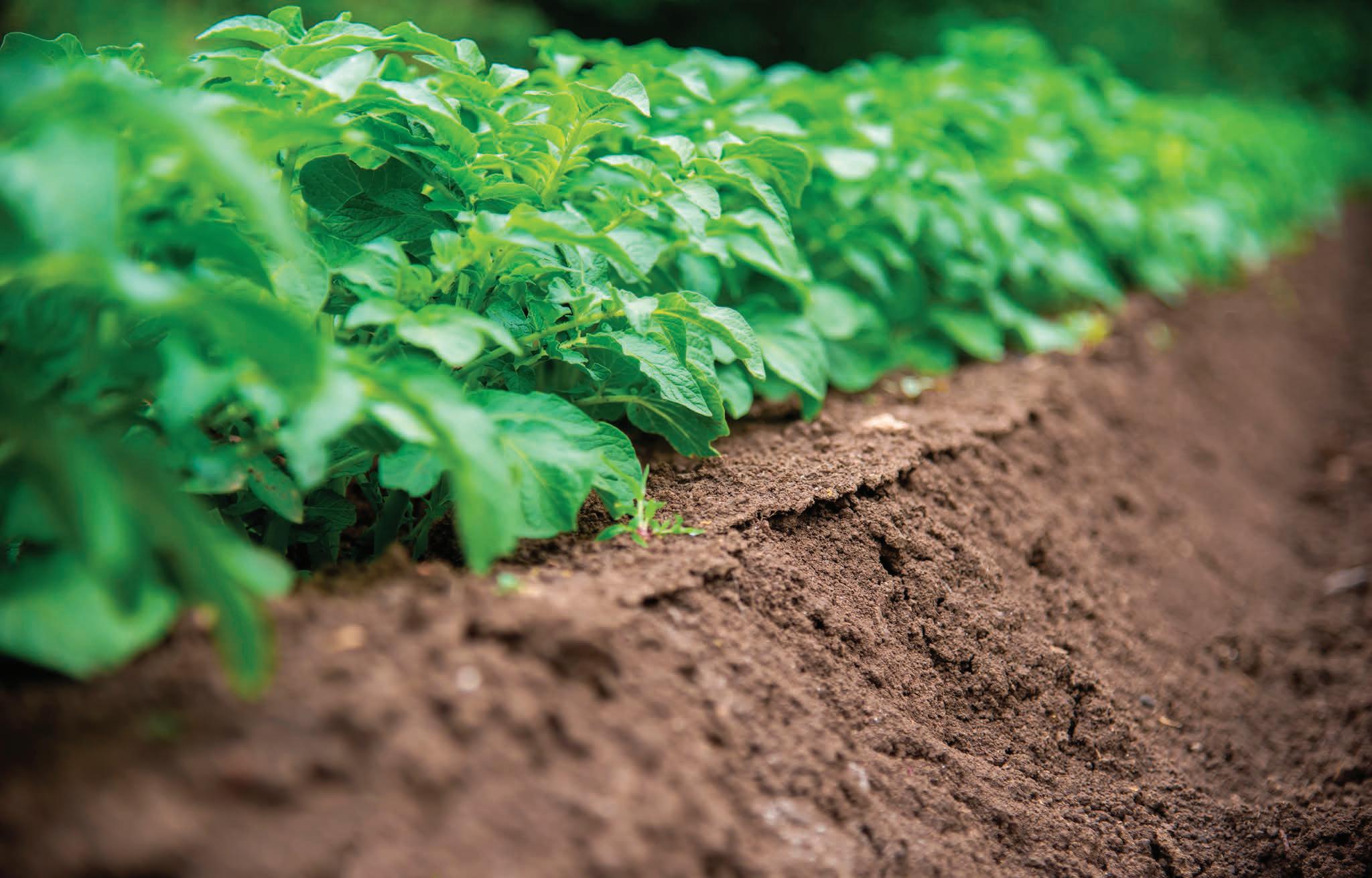
• Cumulative herbicide injury from repeated applications in onion was much more injurious than anticipated and can significantly reduce crop growth and yield. Reducing the number of herbicide applications by integrating laser weeding and/or precision spraying can increase crop growth, yield and quality, while also hastening maturity.
With that said, Mother Nature can also act as the equalizer, potentially reducing some of those gains when weather and other pests hinder crop production.
• The combination of high-resolution real time scanning that can track crop and weed plants as these machines move across the field, and artificial intelligence to interpret those scans, is amazingly accurate.
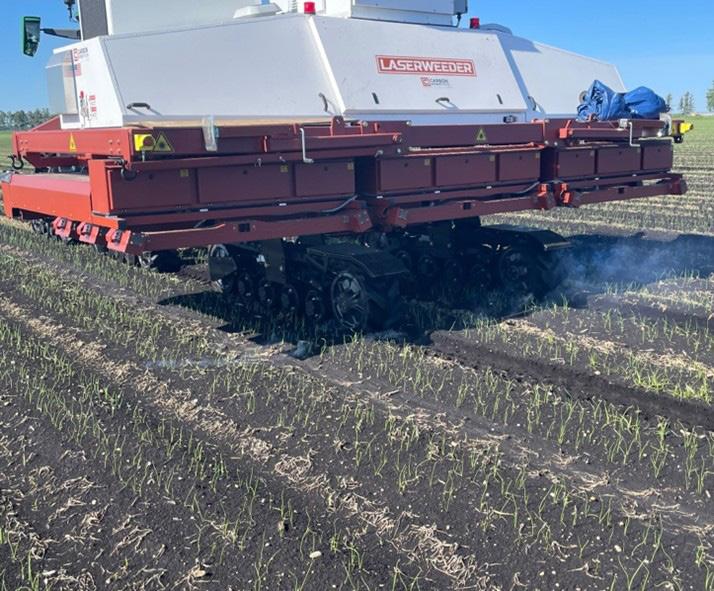
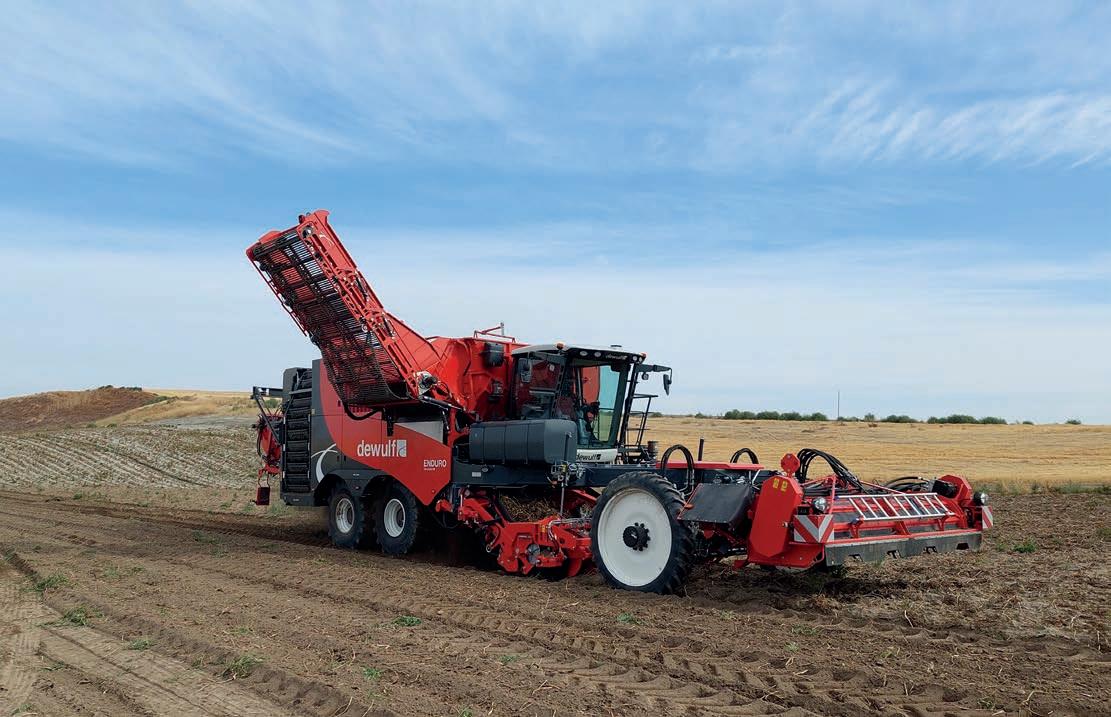
Enduro Generation 2
Self-propelled 4-row sieving harvester
This opens the door for that information—crops versus weeds, weeds by species and weed growing point location—to be paired with several control strategies that would otherwise be considered non-selective and damaging.
As these tools continue to be used and cover more ground and crops, they’ll gain imagery that will further refine the algorithms, increasing accuracy, applicability and coverage speed.
• In our trials, the tools drastically reduced the need for hand weeding, but, at least in the initial stages, require more management time and attention. They’re very different from traditional broadcast sprayers, so the learning curve can be steep.
Management decision-making includes the timing and order of weed management operations (i.e., when to laser weed, hand weed, precision spray and broadcast spray), integration of residual herbicide choices, careful scouting and field ordering based on small target weeds, and the determination of when a catch-up broadcast post-emergent spray is warranted after weather delays weeding operations.
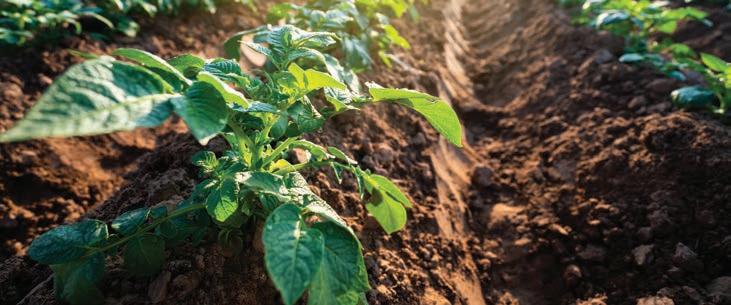
• Both laser weeding and precision spraying are gamechangers in the weed management world, particularly for high-value specialty crops.
As of today, and in our experience, the best fit is:
o In crops that emerge slowly and compete poorly with weeds
o Where weed management options including herbicides are limited, resulting in escaped weeds and a lack of season-long control
o When the herbicides that are available cause injury that slows crop growth and reduces yield
o Where hand weeding labor is limited or expensive
o In situations where herbicideresistant weeds have left few viable options
o Where the crop value is great enough to cover the implement cost.
Maybe most important is the observation of how fast these technologies have advanced in just the past two growing seasons, particularly keeping in mind that we’re just on the front end of commercial development and adoption.
So, while these tools aren’t right for all crops, scales and pocketbooks today, a look into the crystal ball suggests potential for a much different and brighter future in weed management across farming.
Acknowledgement: This research would not be possible without the partnership and innovation of Corey Kincaid, his family and the team at Dean Kincaid, Inc. Their time and effort in this project are substantial and appreciated, and as an industry, we all benefit from those who take the risk of trying something different.

When you need goods or services, please consider asking our Associate Division Members for quotes or explore what they have to offer. Together, we make a strong organization and appreciate how wonderful we are as a group.

Column and photos by Dana Rady, Wisconsin Potato & Vegetable Growers Association
Have you ever eaten at Red Lobster?
If so, have you found yourself reaching for the delicious biscuits they bring out before the meal and then mindlessly grabbing two or three more? Well, I have. There is something about them. They’re warm, tasty, and completely melt in your mouth.
Thankfully, I found a way to enjoy these biscuits at home without a premade mix. The best part is that the recipe isn’t only easy, but it also incorporates Wisconsin potatoes. I am not sure that the original Red Lobster recipe can say that!
If you’re not already convinced about the versatility of Wisconsin potatoes, start thinking about mashed potatoes, dehydrated potatoes, and even potato flour, and a whole new world emerges. Potato flour is

also a great ingredient to highlight as a thickener in soups, stews, and gravies, especially if following a gluten-free diet.
The mashed potatoes in the Chesapeake Bay Potato Biscuits make them incredibly fluffy and light. The Old Bay seasoning combined with salt, butter, green onions, and cheddar cheese offers a hint of flavor that makes this the perfect biscuit to add to your holiday feast.
If you end up serving these beauties at your holiday gathering, I guarantee your guests will be choosing them over crescent rolls!
When my taste-testers tried these at our house, we had one more family member—our Husky/Lab mix named Yukon—who was very interested in giving them a try. He didn’t get
continued on pg. 70

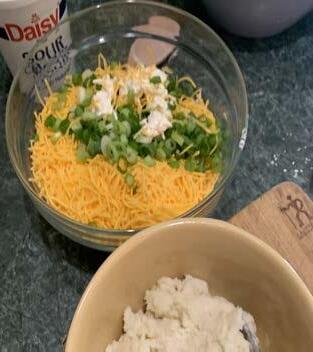
11 oz prepared mashed potatoes (or make fresh mashed potatoes from 2 medium russets)
1/2 cup sour cream
1 cup cheddar cheese, shredded
1/4 cup green onions, chopped
2/3 cup all-purpose flour
2-1/4 cup cake flour
1 Tbsp baking powder
1/4 tsp baking soda
1 Tbsp granulated sugar
1-1/2 tsp salt
1/2 tsp granulated garlic
2 tsp Old Bay seasoning
7 Tbsp cold unsalted butter, cubed
1 Large egg beaten with 2 Tbsp of cold water
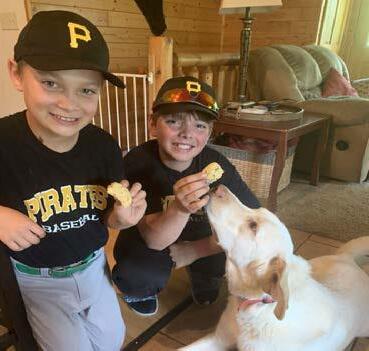
:
2 Tbsp butter, melted
2 tsp parsley (optional)
1 tsp garlic (optional)
Fold the dough gently onto itself like an envelope, then rotate the dough 90 degrees and fold it like an envelope again. Rotate the dough 90 degrees again and repeat the fold one more time, pressing or gently rolling the dough about 1 inch thick each time.
a biscuit, but it’s nice to confirm that he is indeed a Wisconsin potato fan! So, the next time you’re craving a Red Lobster biscuit, give this recipe a go! I’m willing to bet that you’ll start liking it better than those at the restaurant chain.
DIRECTIONS
Preheat the oven to 425° Fahrenheit (218° Celsius).
Grease or line a baking sheet with parchment paper. Stir all-purpose flour, cake flour, baking powder, baking soda, sugar, salt, granulated garlic, and Old Bay seasoning together in a bowl. Mix until well combined.
Grate the butter using a box grater or cut into small cubes. Gently crumble the butter into the flour mixture. When finished, the butter and the dry ingredient mixture should resemble a coarse meal.
Mix the sour cream, mashed potatoes, cheddar, and green onions together in a separate bowl.
Gently combine the wet and dry ingredients. Do not overmix.
Turn the dough out onto a lightly floured work surface. Dust the top of the dough with flour and pat it down with your hands until it is about 1-inch thick.
Cover the biscuit dough with plastic wrap and allow it to rest for about 15 minutes in the refrigerator. In the meantime, clean up your work surface and apply a light dusting of fresh flour.
Remove the dough from the fridge and place it on the floured surface. Gently press or roll the dough to a 1-inch-thick rectangle measuring about 6x12 inches.
Using a sharp knife, cut the biscuits into 3×3-inch squares. You could also use a biscuit cutter for round biscuits, but cutting the biscuits into squares ensures no wasted dough. If using a round cutter, you can rework the scraps to make more biscuits, however working the dough more means the second batch of biscuits will be slightly tougher than the first. Place the biscuits on a non-stick baking sheet or one lined with parchment paper. Brush them with the beaten egg and water mixture. Bake the biscuits for about 15 minutes.
Mix the garlic butter topping ingredients together.
Take the biscuits out of the oven when they are golden brown.
Brush the biscuits with the garlic butter while hot.
Serve and enjoy!
Visit https://eatwisconsinpotatoes. com/recipes/chesapeake-baypotato-biscuits/.