Black History Month
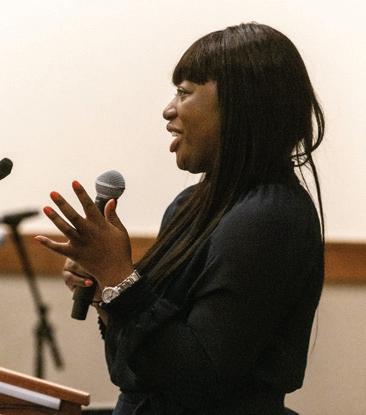
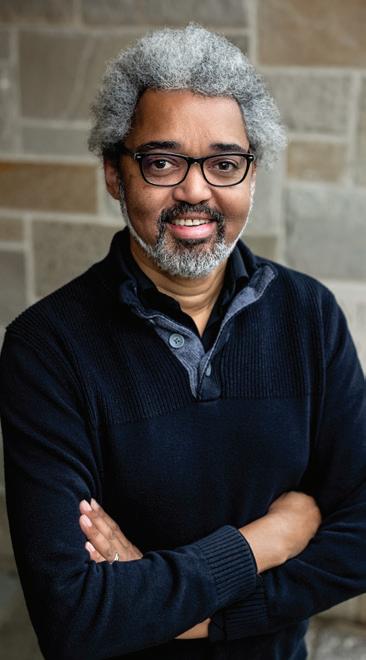
Campus events include annual MLK Scholarship Banquet, where Alex Pieterse (right) will be the featured speaker.
BY ALIX HACKETT SPECIAL TO THE CHRONICLE
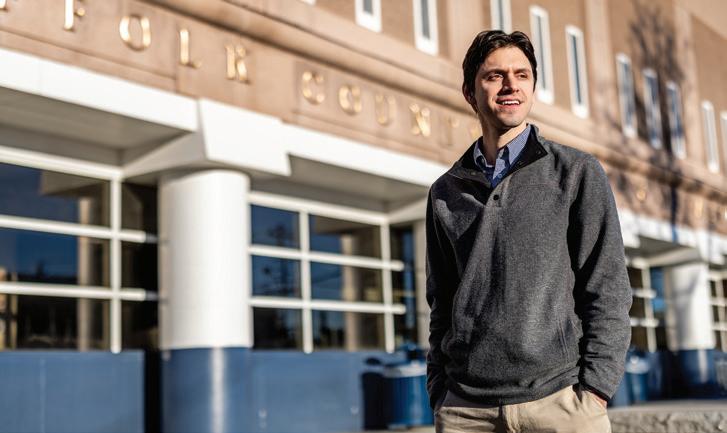
While Matt DelSesto ’12 was studying human development and philosophy as an undergraduate student in the Lynch School of Education and Human Development, he signed up to participate in the University’s popular PULSE program, which combines classroom learning with service placements in the Boston area. His placement was at the Suffolk County House of Correction, a medium-security prison roughly 10 miles east of Chestnut Hill, and his supervisor was Jim DiZio, the prison’s director of education (and a 1990 Lynch School alumnus).
The placement, along with the PULSE course, ended nine months after it began, but DelSesto’s interest in prison education, and his relationship with DiZio, was just getting started. More than a decade later, DelSesto is the driving force behind two educational programs at Suffolk, run in collaboration with Boston College: The Inside-Out Program, which brings students from BC and incarcerated individuals together to study criminal justice; and the
newly-launched College Pathways Program, which prepares incarcerated men and women to navigate the logistics of higher education upon their release.
A part-time faculty member in the Sociology Department, DelSesto coordinates and teaches in both programs, strengthening Boston College’s connection with the wider community and opening up access to transformative learning experiences for students of all backgrounds.
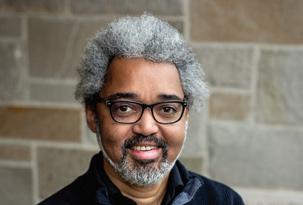

“It’s amazing what he’s doing,” said David Goodman, the Lynch School’s associate dean for strategic initiatives and external relations. “None of this would have happened without him—he’s the initiator, the catalyst, and the energy behind it all.”
Building a program
The original Inside-Out Program began 25 years ago in a Pennsylvania prison and has since grown into an international network of more than 200 correctional and higher education partnerships. DelSesto first encountered it while working as a horticultural therapist at the Rikers Island jails in New York, and was struck by the
A new scientific statement details the most reported symptoms of cardiovascular disease—the leading cause of death in the United States—and how factors such as sex, cognitive function, and depression can complicate the recognition and evaluation of symptoms. Connell School of Nursing Associate Professor Corrine Y. Jurgens was chair of the writing committee for the scientific statement, which was published in the American Heart Association’s flagship peer-reviewed journal, Circulation
The scientific statement, co-authored by Jurgens, Barry Family/Goldman Sachs Endowed Professor in Nursing Christopher S. Lee, and several other experts, details the latest knowledge on cardiovascular disease (CVD) symptoms with the goal to promote greater awareness about CVD, improve patient care, and identify where additional research is needed.
CVD comprises several conditions, including six reviewed in the scientific statement: heart attack, heart failure, valve disease, stroke, heart rhythm disorders, and
Connell School Faculty Aid CVD Awareness Campaign Q&A:
peripheral artery and vein disease. The scientific statement was prepared on behalf of the American Heart Association’s Council on Cardiovascular and Stroke Nursing; the Council on Hypertension; and the Stroke Council.
Symptoms have clear relevance to the diagnosis, monitoring, and treatment of CVD, according to Jurgens, an adult health nurse practitioner and Fellow of the both the American Heart Association and Heart Failure Society of America. “The scientific statement is a ‘state of the science’ compendium detailing the symptoms associated with CVD, similarities or differences in symptoms among the conditions, and sex differences in symptom presentation and reporting.”
Lee, an award-winning cardiovascular nurse scientist who serves as associate dean for research at CSON, was vice chair of the scientific statement writing committee. Other committee members/co-authors are Dawn M. Aycock; Ruth Masterson Creber;
Continued on page 4
Hate Speech Are Challenges to Liberal Democracy

Concerns have risen in recent months about the presence of hate speech on social media, notably since Elon Musk’s purchase of Twitter, with experts predicting possible outbreaks of violence in the coming months due to the proliferation of extreme content, including support for genocidal Nazis, and the reemergence of QAnon proselytizers and white nationalists.
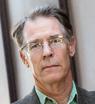
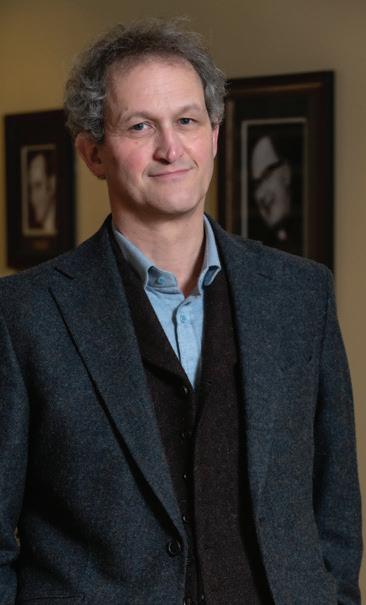
Professor of Philosophy Gregory Fried, whose research interests include the responses to challenges to liberal democracy and the rise of ethnonationalism, recently spoke with Chronicle staff writer Phil Gloudemans about the roots and causes for the national spread of Neo-Nazism, racism, and white su-

premacy, and what the future may hold.
Q: Elon Musk’s suspension of the rapper Ye from Twitter drew a strong backlash: Twitter users who support the “free speech” policy blasted Musk for acquiescing to the “woke mob,” while critics pressured him to reinstate content moderation policies. Should extremist groups be subject to censorship or other such limitations, or is it better for the public to see and hear them unfiltered, so that we know what extremism looks and sounds like? Should Musk restore the previously installed content modera-
Page 3
Page 12
Lowell Humanities Series Spring schedule for the renowned lecture program is under way
FEBRUARY 2, 2023 VOL. 30 NO. 9
PUBLISHED BY THE BOSTON COLLEGE OFFICE OF UNIVERSITY COMMUNICATIONS
Page 9 Taking Stock Carroll School professor says businesses should be up front with customers about low supplies
Matt DelSesto ’12 outside Suffolk County House of Correction, where he coordinates and teaches in a prison education program.
Boston College programs make higher education a reality for incarcerated men and women
photo by caitlin cunningham
Paths to a New Life
Gregory
Fried Extremism,
Continued on page 8 Continued on page 7
OF UNIVERSITY COMMUNICATIONS
PUBLISHED BY THE BOSTON COLLEGE OFFICE
Around Campus
BC Plays Host to an Important Forum for Prospective Legal Historians
This semester, Boston College is hosting the Boston-Area Legal History Colloquium (BALHC), a distinctive forum where budding legal historians can receive feedback on works-in-progress—an important step for young scholars to fine-tune their research to a point where it can be submitted for publication, according to Morrissey College of Arts and Sciences graduate student Dennis Wieboldt III ’22, who secured a grant from the American Society for Legal History to support his initiative.
“I was interested in creating a new opportunity for graduate students to discuss their research in a collegial atmosphere and build an intellectual community,” said Wieboldt, who graduated BC with a bachelor’s degree in history and theology and is pursuing a master’s degree in history.
The first BALHC session was held last Saturday and subsequent sessions are scheduled for February 18, March 18, and April 15. At each session, three graduate students present their research and a respondent offers comments, leading into a group discussion among colloquium participants.
Supporting the work of legal historians is especially vital today, Weiboldt said: “There’s a lot of talk in legal circles, both professional and academic, about the United States Supreme Court’s insistence on history and tradition as the dominant method of legal interpretation right now. And obviously to understand legal history
BC Scenes
Unity Breakfast
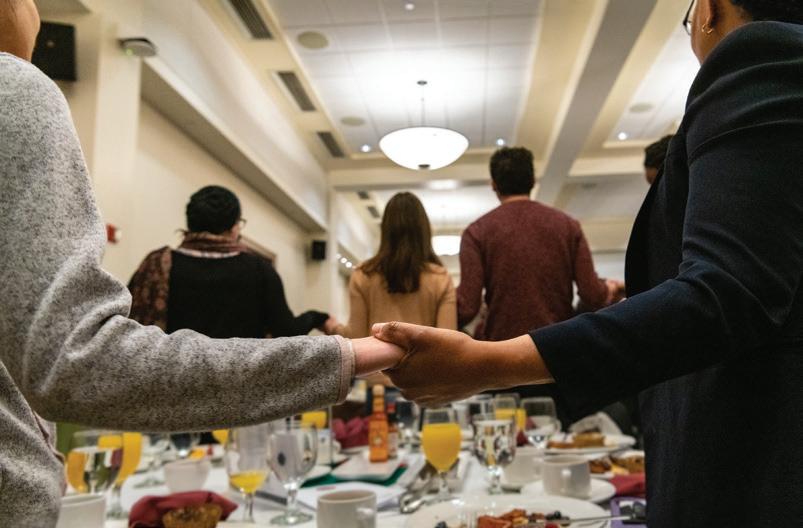
The Black Faculty, Staff, and Administrators Association held its annual Martin Luther King Jr. Unity Breakfast on January 18 in the Heights Room of Corcoran Commons. (Far right) Angela Donkor ’12—the 2011 Martin Luther King Jr. Memorial Scholarship winner— was the featured speaker. She is an associate corporate counsel for Amazon.
and tradition, you need legal historians who are helping to uncover the legal history that lawyers and judges are using every day, or perhaps should be using every day.
“To produce the type of scholarship that gets cited in Supreme Court briefs and that decision-makers can rely upon requires a pipeline of faculty and graduate students who are both capable of doing the historical research and able to dialogue among one another to refine that research and make it conversational to people outside a small academic environment.
“The goal of the BALHC is to create new opportunities for graduate students to start participating in that pipeline and to make that pipeline more robust,” he added.
At Saturday’s session, graduate students presented research on the Dutch origins of the foreign emoluments clause and the rise of American police power. Wieboldt, along with BC Law Associate Professor Dan Farbman, served as respondents.
The colloquium, which is open to master’s and doctoral students as well as law students, has drawn registrants from campus and beyond, including Boston, Harvard, Brown, and Yale universities. A Tel Aviv University student who is studying racial segregation in 19th-century Massachusetts is scheduled to present at the February 18 session, with University Historian James O’Toole, the Clough Millennium Professor of History Emeritus, as
respondent.
BC Law and the Morrissey College Graduate School are the BALHC co-sponsors. Wieboldt expressed gratitude for the support and collaboration offered by Morrissey College Dean Gregory Kalscheur, S.J., and BC Law School Founders Professor Mary Sarah Bilder.
Wieboldt, whose area of study is focused on the intersection of law, politics, and religion in 20th century America, is writing a thesis on former BC Law School Dean William J. Kenealy, S.J., a pivotal figure in the American Catholic Church’s involvement in the civil rights movement
and a critic of Supreme Court jurist Oliver Wendell Holmes. Wieboldt has articles forthcoming in American Catholic Studies and U.S. Catholic Historian Wieboldt, a former research fellow at BC’s Clough Center for the Study of Constitutional Democracy, said he has been lucky to connect with faculty members who have given him critiques on his research before publication, but added that most graduate students don’t have that type of opportunity. “There’s no real forum for graduate students who maybe have a seminar paper or maybe have part of a thesis or part of a dissertation chapter that they want to submit to a journal for publishing, or peer review, or something like that.”
He hopes BALHC fills that gap. “It’s about giving people the tools that they need to help themselves and help others produce great scholarship.”
Wieboldt acknowledged the limits to how much one colloquium can accomplish, but is hopeful for a ripple effect. “If enough people have a positive experience, some of these people may go on to do similar work at other universities. Hopefully that helps build an intellectual community that’s responsive to the needs of the profession.”
To learn more, go to events.bc.edu/event/ boston-area_legal_history_colloquium#. Y87QLnbMI2w
—Kathleen Sullivan
ASSOCIATE VICE PRESIDENT FOR UNIVERSITY COMMUNICATIONS
Jack Dunn
SENIOR DIRECTOR FOR UNIVERSITY COMMUNICATIONS
Patricia Delaney
EDITOR
Sean Smith
CONTRIBUTING STAFF
Phil Gloudemans
Ed Hayward
Rosanne Pellegrini
Kathleen Sullivan
PHOTOGRAPHERS
Caitlin Cunningham
Lee Pellegrini
www.bc.edu/bcnews chronicle@bc.edu
February 2, 2023
The Boston College Chronicle (USPS 009491), the internal newspaper for faculty and staff, is published biweekly from September to May by Boston College, with editorial offices at the Office of University Communications, 3 Lake Street, Brighton, MA 02135 (617)552-3350. Distributed free to faculty and staff offices and other locations on campus. Periodicals postage paid at Boston, MA and additional mailing offices. POSTMASTER: send address changes to The Boston College Chronicle, Office of University Communications, 3 Lake Street, Brighton, MA 02135. A flipbook edition of Chronicle is available via e-mail. Send requests to chronicle@bc.edu.
Chronicle
PHOTOS BY LEE PELLEGRINI
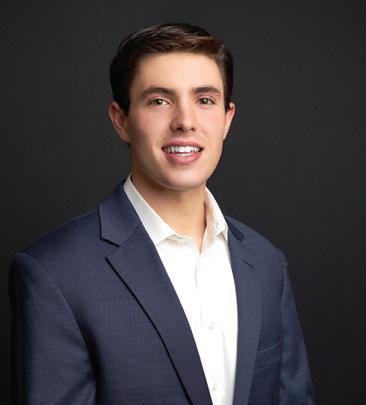
Graduate student Dennis Wieboldt III ’22
photo by christopher soldt/mts
2 Chronicle
Two BC Chemists Receive Prestigious Honor
BY ED HAYWARD STAFF WRITER
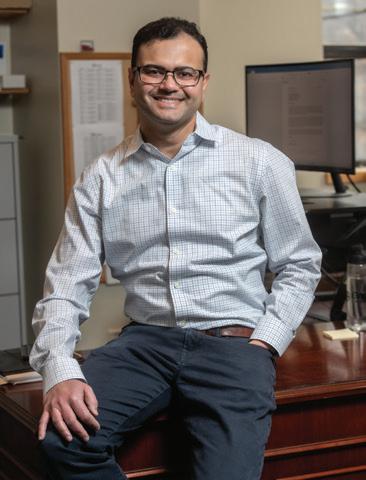
Professors of Chemistry Eranthie Weerapana and Abhishek Chatterjee have been named 2022 Paul G. Allen Frontiers Group Distinguished Investigators, an honor accompanied by $1.2-million to support their work to develop a technique to study protein lifespan in a cell crucial to the body’s immune system.
The pair are among 16 new Allen Distinguished Investigators in eight teams who are developing technologies and designing approaches to answer crucial questions in biology, according to Allen Frontiers Group, part of the broad set of research and innovation initiatives developed during the past four decades by the late philanthropist and Microsoft co-founder Paul G. Allen.
“We are excited to receive the Allen Distinguished Investigator award,” said Chatterjee. “The research support from this award will help us develop an exciting early-stage technology with tremendous potential.”
While techniques exist to capture the entire suite of proteins in an individual cell—also known as a proteome—it’s still difficult to capture the dynamics of protein
Black History Month Schedule
Boston College will celebrate Black History Month (BHM) with a multitude of events that began yesterday and continue until the end of February.
Following yesterday’s First Day Event in Maloney Hall and a Career Centersponsored discussion, “Confidence in Networking/Telling Your Story,” this week’s BHM-related events include the Art Council’s “Living in Color: Cabaret Night” tonight at 6:30 p.m. and Saturday’s Women’s Summit.
The formal opening ceremony for Black History Month will be February 9 at 5:30 p.m. in Gasson 100.
Among other BHM highlights are the “Men of Color Conference,” February 11 in Gasson 100; “Living in Color: Musical Performances,” February 11 in O’Connell House; “History of Black Lives at BC” art display, February 12, in Gasson 100; AHANA Summit February 17-19, organized by the Bowman AHANA and Intercultural Center; the annual Martin Luther King Jr. Scholarship Ceremony on February 21 [see separate story]; and a Black History Month Mass on February 26 in St. Ignatius Church.
For details and updates, see https://bit. ly/BC-BHM2023.
—University Communications
synthesis and degradation on a large scale, according to the researchers. To understand the variation of protein lifespan in the context of the entire proteome, Chatterjee and Weerapana are developing new technologies to tag and measure newly created proteins at specific timepoints. They’ll use this technique to study protein lifespan in a type of immune cell known as a T cell.
“Techniques are now available to analyze the entire body of proteins present in a cell—also known as its proteome—with increasing sophistication,” the researchers said. “However, it remains challenging to ascertain when and where different groups of proteins are synthesized and degraded in living cells, even though such dynamic processes underlie nearly all aspects of biology. With this support, we will address this knowledge gap by developing technology for tagging the specific subset of proteins synthesized in a specific location and/or time frame in a cell, such that these can be selectively isolated and characterized.”
“We are thrilled and proud that Eranthie and Abhishek’s research is recognized by this prestigious award,” said Professor of Chemistry and Margaret & Thomas Vanderslice Chair Dunwei Wang. “The financial support that comes with it will help advance their program. This is well
Pieterse Will Speak at MLK Scholarship Banquet on Feb. 21
Institute for the Study of Race and Culture Director Alex Pieterse, a faculty member in the Lynch School of Education and Human Development, will be the keynote speaker at the University’s annual Martin Luther King Jr. Scholarship Banquet, which takes place February 21 at 5 p.m. in the Yawkey Center Murray Function Room.
During the banquet, University President William P. Leahy, S.J., will announce the winner of the Martin Luther King Jr. Scholarship, which recognizes a Boston College junior who has demonstrated superior academic achievement, extracurricular leadership, community service, and involvement with the African American community and African American issues.
This year’s scholarship candidates are Kaylee Arzu, Ashley-Rae Stewart, Maria Christie Louis, Srina Lacet, and Osasenaga Owens.
Pieterse, who joined the Lynch School as an associate professor of counseling psy-

deserved.”
Founded in 2016, the Paul G. Allen Frontiers Group, a division of the Allen Institute, is dedicated to exploring the landscape of bioscience to identify and foster ideas that will change the world. The Frontiers Group recommends funding to the Paul G. Allen Family Foundation, which
then invests through award mechanisms to accelerate our understanding of biology, including Allen Discovery Centers at partner institutions for leadership-driven, compassguided research, and Allen Distinguished Investigators for frontier explorations with exceptional creativity and potential impact.
tively recently. In 2012, when Pieterse published a statistical review in the Journal of Counseling Psychology on the mental healthrelated outcomes associated with racism, there was little empirical examination on the subject.
He succeeded Janet Helms as director of the Institute for the Study and Promotion of Race and Culture—the institute was renamed upon his appointment—and last fall organized its annual Diversity Challenge around the theme “Considering Racial Trauma: Strategies for Healing and Empowerment.” He also established a new virtual scholar-in-residence program to support an early-career scholar’s research and help grant them visibility in the field.
Prior to BC, Pieterse was an associate professor and doctoral training director at the State University of New York at Albany, where he had worked since 2008, except for a two-year stint as a senior lecturer at Monash University in Australia. A native of South Africa, he began his academic career as an assistant professor of education at George Mason University in 2005.
chology last year, studies the psychosocial aspects of race and racism, racial trauma, and anti-racism training and self-awareness. His research and clinical work revolve around the negative psychological impact of racism, a now universally established truth not uniformly accepted until rela-
Pieterse received a Ph.D. in counseling psychology from Columbia University Teachers College. A licensed psychologist and registered nurse who maintains a psychotherapy practice, he is an associate editor of The Counseling Psychologist, and serves on the editorial board of the Journal of Social Action in Counseling and Psychology
To register for the event, go to https://bit.ly/ MLKbanquet-2023-register —University Communications
February 2, 2023
Institute for the Study of Race and Culture Director Alex Pieterse
photo by caitlin cunningham
3 Chronicle
Eranthie Weerapana, left, and Abhishek Chatterjee were named Allen Distinguished Investigators. photos by lee pellegrini
Jurgens, Lee Weigh in on Cardiovascular Health
more frequently report shortness of breath, exercise intolerance, and physical frailty than men.
Part of the challenge of evaluating and studying symptoms is they’re subjective, noted Jurgens. An objective measure of heart health, such as blood pressure or heart rhythm, can be measured over and over and tracked over time. “But symptoms aren’t like that. We have to have the patients tell us how they’re feeling.”
It is important for patients to report all of their symptoms, even though they might not seem important or connected to a cardiac issue, Jurgens said.
“Some people may not consider symptoms like fatigue, sleep disturbance, weight gain, and depression as important or related to cardiovascular disease,” she continued. “However, research indicates that subtle symptoms such as these may predict acute events and the need for hospitalization. A broader definition of what constitutes an ‘important’ symptom is warranted.”
In an interview with NBC News, Jurgens added that women tend to be diagnosed with heart disease later in life than men, when they may have other underlying conditions that could make identifying subtle symptoms of heart disease much more difficult.
Fatigue, sleep disturbance, weight gain, and depression may predict acute events and the need for hospitalization, says Jurgens: “A broader definition of what constitutes an ‘important’ symptom is warranted.”
Jurgens and Lee said more precise ways to track and evaluate symptoms are needed, both to manage cardiovascular disease well and prevent or delay its progression.
“Symptom relief is an important part of managing cardiovascular disease,” said Jurgens. “It is important to recognize that many symptoms vary in occurrence or severity over time, that women and men often experience symptoms differently, and factors such as depression and cognitive function may affect symptom detection and reporting.”
The co-authors recommend regular assessments of cognitive function and depression levels throughout the course of any cardiovascular disease. Depression and CVD often coincide, Lee said, and that can lead to “a general blunting of someone’s ability to detect what may otherwise be a very large change in their condition.”
The statement highlights that many people with persistent chest pain, heart failure, or peripheral artery disease, as well as stroke survivors, have depression and/ or anxiety. In addition, cognitive changes after a stroke may affect how and whether
symptoms are experienced or noticed.
Some of the symptoms highlighted by the state of the science report are:
Heart attack
The most frequently reported symptom of heart attack is chest pain, often described as pressure or discomfort, and it may radiate to the jaw, shoulder, arm, or upper back. Women are more likely than men to report additional systems, such as shortness of breath, sweating or a cold sweat, unusual fatigue, nausea, and lightheadedness.
Heart failure
Shortness of breath is a classic symptom of heart failure. However, early, more subtle symptoms should be recognized as signs
to consult with a health care professional. These symptoms may include gastrointestinal symptoms such as upset stomach, nausea, vomiting and loss of appetite; fatigue; exercise intolerance (related to fatigue and shortness of breath); insomnia; pain (chest and otherwise); mood disturbances (primarily depression and anxiety); and cognitive dysfunction (brain fog, memory problems). Women with heart failure report a wider variety of symptoms, are more likely to have depression and anxiety, and report a lower quality of life compared with men with heart failure.
Valve disease
Men with valve disease are more likely to report chest pain than women with valve disease. Women with aortic stenosis
Stroke
Women experiencing a stroke are more likely than men to have other, less familiar symptoms in addition to the common ones. These symptoms include headache, altered mental state, coma, or stupor.
Rhythm disorders
Rhythm disorders, called arrhythmias, are often described as the feeling of an abnormal heartbeat or palpitations that may be irregular, fast, fluttering, or halting. Other symptoms include fatigue, shortness of breath, and dizziness. Less common symptoms include chest pain, dizziness, fainting or nearly fainting, and anxiety. Women and younger adults with rhythm disorders are more likely to experience palpitations, while men are more likely to experience no symptoms. Older adults are more likely to experience either uncommon symptoms or no symptoms. Data indicate Black adults report experiencing more palpitations, shortness of breath, exercise intolerance, dizziness, and chest discomfort in comparison to people who are Hispanic or white.


Vein and artery disease
With peripheral artery disease, a narrowing of the vessels that carry blood to the arms and legs, women are more likely than men to have no symptoms at all. But when they do, women’s symptoms may be wrongly attributed to other conditions such as osteoarthritis, or even dismissed under the false assumption that peripheral artery disease is more common among men.
—University
Communications
Read the full article at www.ahajournals. org/doi/10.1161/CIR.0000000000001089
February 2, 2023
Quin E. Denfeld; Holli A. DeVon; Linda R. Evers; Miyeon Jung; Gianluca Pucciarelli; Megan M. Streur; and Marvin A. Konstam.
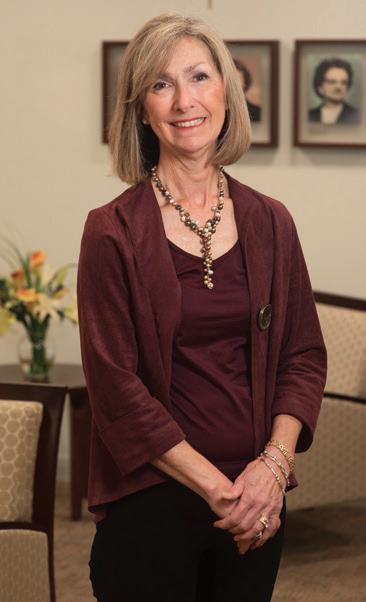
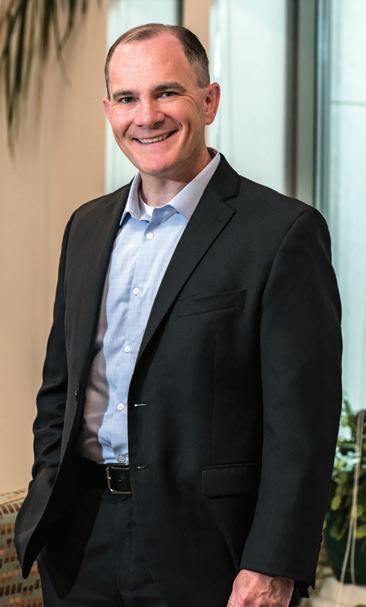
Connell School faculty members Corrine Jurgens and Christopher Lee, co-authors of a scientific statement on cardiovascular disease for the American Heart Association.
from page 1
photos by peter julian and lee pellegrini
Continued
Snapshot Watching Their Steps
Boston College student dance groups were out in force this past weekend at Robsham Theater: at right, UPrising Dance Crew presented its sixth annual hip-hop showcase, “Waves,” on January 27; the following night, the Synergy Hip Hop Dance Company hosted its “SYN Gameshow.” Other BC dance troupes also performed in the events.
4 Chronicle
PHOTOS BY CAROLINE ALDEN, ANN HERMES
Lynch School’s Giunco Chosen for ILA’s 30 Under 30
BY MEGHAN KEEFE SPECIAL TO THE CHRONICLE
Sixth-grader Jake L. was having a hard time in school.
He did not seem to be engaging deeply in literacy activities, and standardized tests showed that he was struggling with traditional reading tasks compared to other students, making classwork daunting.
Jake’s views towards reading and writing changed, however, when his English/language arts teacher, Lynch School of Education and Human Development doctoral student Kierstin Giunco, asked him and the rest of his class to use their interests to advocate for a better world. An avid video game lover, Jake chose cyber security as his self-selected concentration in Giunco’s advocacy unit.
He finished the year reading texts that were academically challenging and was motivated to read more than required within the space Giunco opened through her curricular design for him to explore his passions while becoming more informed about the world around him.
Jake is one of the many students enthralled with Giunco’s curriculum at the Mission Grammar School in Roxbury. Mass., where Giunco is now director of curriculum and professional development. The Lynch School teacher-researcher’s inspiring dedication to shaping her students’ interests into impact has earned her a place on the International Literacy Association (ILA) 30 Under 30 list. A professional membership organization of literacy educators, researchers, and experts spanning 112 countries, the ILA provides an evidencebased benchmark for the development and evaluation of literacy professional preparation programs.
Giunco’s curriculum, according to the
ILA, rises above standard practice and aids students in applying their new-found advocacy skills both inside and outside of the classroom.
“I think often we ask students to do learning that is inauthentic,” said Giunco, explaining why she believes this unit translated so well with her students. “I would talk to them through the years about how literacy is power. What they say matters.”

Through the modules Giunco designed, students were encouraged to delve into their passions. They spent six months researching their self-selected social justice topic and deciding how to share their learning and experience so they could collectively enhance the world they live in. Topics such as environmental justice, Black Lives Matter, and animal cruelty prevention were all incorporated in Giunco’s anti-racist and anti-bias classroom curriculum. Her students decided to produce podcasts, websites, Instagram accounts, and other means to bring awareness to the topic most important to them.
“I wanted to do something that lived up to what I had been saying to them,” she said, “a way to show their learning that connects to how they want to show it.”
Giunco’s commitment to social justice is a longstanding one. Growing up in Saco, Me., she dreamed of becoming a family attorney with the ability to aid children of divorce who were enduring the mediation process. Her assumed trajectory changed when she volunteered in her third-grade teacher’s classroom: “He had such a powerful way of connecting classrooms, students, and the world. Seeing that in practice was really cool,” Giunco recalled. She was inspired to look at education undergraduate degrees instead, with hopes to advocate for students by carving out spaces for them to learn more critically about the world and the issues that affect them.
When she entered the classroom years later, she worked to create such an environment and strove each day to make sure that children in her class could talk and learn about what drove them, not just what she thought was important.
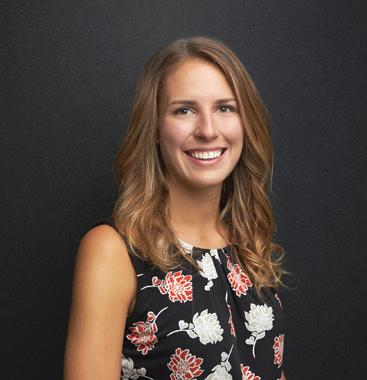
“I tried to be very intentional with the fact that I was a white teacher working with, in both years, all students of color,” she stated. “Students are engaging the public with really complicated, real-life themes and topics—a lot of them racially charged topics.”
Giunco fostered a space for the students to decide what they wanted to do; the curriculum was intentionally broad so as to encourage them to choose their own path of advocacy. Giunco’s students were not the only ones inspired by the teacher’s curriculum: A kindergarten classroom completed their own mini-advocacy unit after witnessing the pride and joy Giunco’s students displayed during their virtual showcase to an audience of more than 100.
Giunco hopes to continue amplifying teachers’ voices through supporting their research endeavors and discussing her own
experience as a teacher-researcher. “I really want to think about a bridge going both ways between academia and schools. I want to help build that bridge in whatever space I am in.”
Past ILA 30 Under 30 honorees include Akash Patel, Spanish teacher and founder of Happy World Foundation; Allister Chang, founder of Civic Suds; and Shiza Shahid, cofounder of the Malala Fund. Giunco and other members of this year’s cohort are featured in Literacy Today, ILA’s member magazine; go to literacyworldwide. org/30under30.
Grant Will Enable Study of Student Outcomes and CTE
BY PHIL GLOUDEMANS STAFF WRITER
The Lynch School of Education and Human Development has been awarded a significant portion of a $1.7 million United States Department of Education Institute of Education Sciences (IES) grant to conduct a four-year study of the relationship between student outcomes and career and technical education (CTE), and teacher preparation and experience, announced Stanton E.F. Wortham, the Charles F. Donovan, S.J., Dean of the Lynch School.
CTE provides students of all ages with the academic and technical skills, knowledge, and training necessary to succeed in future careers, and to become lifelong learners. Approximately 12.5 million high school and college students are enrolled in CTE across the nation, according to the Congressional Career and Technical Education Caucus.
The Lynch School shares the grant with lead investigator and Atlanta-based
Georgia State University, the University of Tennessee, and the American Institutes for Research, a nonprofit, behavioral and
social science research, evaluation, and technical assistance organization based in Arlington, Va. The investigation began last fall.
“CTE Teacher Labor Markets, Attributes and Student Outcomes” examines the challenges school districts face in recruiting and retaining qualified CTE teachers, explained Shaun M. Dougherty, a professor in the Lynch School’s Educational Leadership & Higher Education department, co-principal investigator of the CTE Policy Exchange.
“Approximately 25 percent of the grant has been allocated to the Lynch School for the examination of data sets of teacher turnover and the characteristics in career and technical education from four states, and how these relate to student program access and outcomes,” said Dougherty, who co-directs the IESfunded CTE Research Network. “This will be one of the largest and most comprehensive studies of CTE teacher labor markets, and the connection between teachers and student outcomes that has
ever been undertaken. By using data from four states, and over a decade of records, we will be able to observe substantial variation in who is teaching, where they are teaching, and how differences across settings influence students’ college and workforce outcomes.”
Dougherty also reported that related Lynch School research includes an ongoing, eight-year project studying the impact of CTE on Connecticut high schools, on students in college and workforce outcomes, and in New York City public schools.
“We are very pleased that Shaun Dougherty is continuing his important work on career and technical education here at the Lynch School,” said Wortham. “Millions of young people rely on CTE to prepare themselves for careers, and we need the systematic research design and rigorous analysis that he and his colleagues are doing to make this kind of education maximally effective.”
February 2, 2023
Meghan Keefe is a junior in the Morrissey College of Arts and Sciences
(Above) Kierstin Giunco at Mission Grammar School in Roxbury, Mass.: “I really want to think about a bridge going both ways between academia and schools. I want to help build that bridge in whatever space I am in.”
george martell
christopher soldt/mts
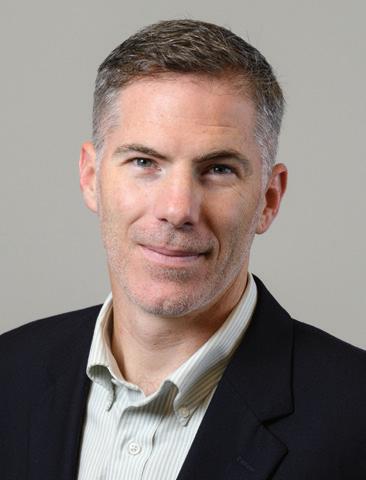
Shaun Dougherty
5 Chronicle
photo by peter morenus/uconn photo
Book Examines British Censorship of N. Irish Coverage
BY SEAN SMITH CHRONICLE EDITOR
The British government’s effort to censor broadcast media coverage of the Northern Irish conflict from 1988 to 1994 raised serious political and social issues, according to Boston College historian and Irish Studies faculty member Robert Savage, but also had its moments of absurdity.
Forbidden to broadcast direct statements by representatives of political parties that supported violence, the BBC employed actors to provide voiceovers for video footage of excluded political figures, such as those from Sinn Féin; the actors spoke the words in real time along with the person whose voice was being dubbed. But the British government still found fault with the tactic, said Savage, a professor of the practice in the History Department.
“High-ranking officials were concerned that the actors were doing too good a job, and that viewers might therefore think they were hearing the actual voices of Sinn Féin representatives,” explained Savage, author of the recently published book Northern Ireland, the BBC and Censorship in Thatcher’s Britain. “The actors had to be instructed not to sync their voices too closely with the persons on film, so that the overdubbing was obvious. In other words, these British officials wanted people to know that the audio was faked.”
The censorship law, and the degree of micro-management it engendered, was the culmination of Prime Minister Margaret Thatcher’s long-simmering mistrust of a media—in particular the BBC and Independent Broadcasting Authority (IBA) networks—she saw as opposed, if not downright hostile, to her interests and policies including those related to “the Troubles,” Savage notes in the book.
Northern Ireland, the BBC and Censorship in Thatcher’s Britain is the fourth in a series of books Savage has published on Irish broadcasting, and picks up from its predecessor, The BBC’s Irish Troubles:
Television, Conflict, and Northern Ireland (2015)—which was released shortly before the BBC made available material from its archives covering the Thatcher years, including internal communications and correspondence with governmental officials and other news organizations.
The new book examines the escalating tension between the broadcast media and the Thatcher government over various flashpoints in the Northern Irish conflict, including the 1981 hunger strike by IRA prisoners; a deadly IRA bombing attempt that Thatcher narrowly escaped; the killing of three Provisional IRA members in Gibraltar, followed by a loyalist’s attack on the funeral for the three in West Belfast; the killing of two off-duty British soldiers who drove into an IRA funeral procession; and a planned, but never aired, September 1988 TV interview with the Sinn Féin president Gerry Adams just before the ban was issued by Home Secretary Douglas Hurd.
“The British government was obsessed with its image worldwide,” says Savage, “and the last thing they wanted was to be seen as making a heavy-handed effort to suppress free speech.”
One of Britain’s many at-best questionable decisions in its governance of Northern Ireland, according to Savage, the broadcasting ban—which also applied to some pro-British loyalist organizations— failed to ease the conflict and also damaged the United Kingdom’s reputation as a leading global democracy.
“The British government was obsessed with its image worldwide, and the last thing they wanted was to be seen as making a heavy-handed effort to suppress free speech,” he said. “Thatcher herself said that
‘no viable democracy can institute censorship,’ but she bullied the BBC constantly, making threatening public statements and packing the BBC Board of Governors with her allies to influence its operation. When Britain instituted the broadcast ban, countries with authoritarian regimes, like Cuba, remarked on the irony of this beacon of democracy clamping down on the press.”
As Savage points out, for decades, the BBC’s Northern Ireland regional station had a close relationship with the unionist, loyalist/Protestant establishment, and hardly included the Irish nationalist/Catholic perspective. But when the nationalist/ Catholic community began to demand civil rights in the late 1960s, and the sectarian conflict began, the BBC and other British media made far more of an effort to cover this previously underreported viewpoint.
“By the 1970s, the BBC realized they had paid no attention to issues of discrimination in housing, voting, and employment that had fueled Catholic resentment, and by doing so had failed as a public service broadcaster,” said Savage. “They tried to right this wrong, and began asking
difficult questions about government policies that contributed to the violence, which convinced the government that there was a left-wing bias in the BBC and other media. This discord escalated when Thatcher became prime minister [in 1979]: Criticism of the army or police, she believed, provided the ‘oxygen of publicity’ for the IRA. This was unacceptable, in her eyes, because it undermined the rule of law.”
Press coverage of organizations or individuals espousing violence, such as terrorist groups or mass shooters, has long been a source of controversy. But the British ban was problematic, according to Savage, because it applied to a popular political party, Sinn Féin.
“Sinn Féin was described as the political arm of the Irish Republican Army, but it was also an established political party whose members were democratically elected,” he said. “Meanwhile, the BBC was interviewing combatants in other countries’ conflicts that their governments denounced as being waged by terrorists or subversives, such as the African National Congress in South Africa. There was a significant disconnect.”
The start of what would be the decisive Northern Irish peace process in 1994 led the government to finally rescind the ban.
“The imposition of censorship was an unsuccessful attempt to control the narrative of the conflict for domestic and international audiences. Obviously, there weren’t multiple platforms or sources for news like today. A two-minute segment on the national news could be very influential: The Foreign Office remarked that media coverage of Bloody Sunday in 1972 had ‘undermined all our work; now we’re seen as oppressors.’ The stakes were high.”
As a project for his Film, Media, and Modern Ireland class this semester, Savage and his undergraduate students have assembled an exhibit of republican and loyalist posters from a Burns Library collection that is currently on display in the History Department.
Schor Named Fellow by American Assoc. for Advancement of Science
Juliet B. Schor, a professor and economist in the Sociology Department, was recently named a fellow by the American Association for the Advancement of Science (AAAS), the world’s largest general scientific society.
The author of After the Gig; How the Sharing Economy Got Hijacked and How to Win It Back, as well as the national best-seller The Overworked American: The Unexpected Decline of Leisure, Schor was cited by AAAS for her “distinguished contributions advancing understanding of the contemporary economy and its impacts on well-being and sustainability, and for effective communication of social and economic research with a broad audience.”
A former Guggenheim and Radcliffe Fellow, Schor won the 2014 American Sociological Association Award for Public
Understanding of Sociology.
“This is a very well-deserved honor,” said Sociology Professor and Department Chair Andrew Jorgenson. “Professor Schor is a world-renowned social scientist who has taken the lead in shaping a range of research areas that cut across disciplines, and her research has significant real-world implications.”
Schor joined Boston College in 2001 after serving as an associate professor of economics at Harvard University, where she also was senior lecturer and director of studies and acting chair of the Committee on Degrees in Women’s Studies. She began her career as an assistant professor of economics at Williams College after earning a doctorate in economics from the University of Massachusetts-Amherst and a bachelor of arts degree from Wesleyan University.
Since 1874, election as an AAAS Fellow has acknowledged scientifically and socially distinguished career achievement; past fellows include Thomas Edison, W.E.B DuBois, astronomer Maria Mitchell, physicist and former Secretary of Energy Steven Chu, engineer and astronaut Ellen Ochoa, and electrical engineer and Qualcomm founder Irwin M. Jacobs.
The 2022 class of AAAS Fellows includes 506 scientists, engineers, and innovators worldwide who have been recognized for their achievements across disciplines, from research, teaching, and technology, to administration in academia, industry and government, to excellence in communicating and interpreting science to the public.
—Phil Gloudemans
February 2, 2023
Robert Savage
photo by lee pellegrini
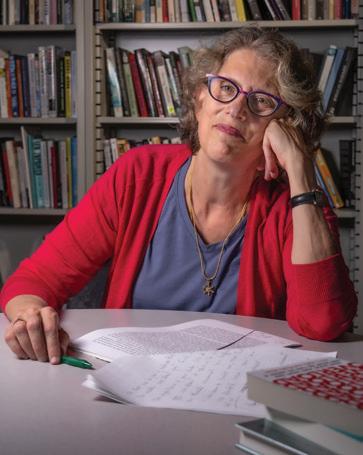
Prof. Juliet Schor (Sociology)
6 Chronicle
photo by lee pellegrini
Responding to Threats Posed by Extremism
tion tools?
Fried: What constitutes “censorship” is an intensely political question. If by censorship one means the ability of some entity to prevent people or organizations from speaking, writing, printing, posting online, or otherwise disseminating their views, then in the context of the United States, the First Amendment free speech protections apply only to government censorship. There is no constitutional protection against private entities such as businesses from censoring speech within their own domains. What Twitter or other social media companies do when they engaging in content “moderation” is not censorship in any legal sense.
Nevertheless, one could make the case that what social media platforms have created in the last 15 or so years is a new form of the public square, and so even if forums like Twitter are privately owned, they have become so integral to public discourse that they have acquired certain First Amendment responsibilities. Changing technology and social practices are relevant to what constitutes the arenas in which citizens of a democracy can and should be able to address one another and express their views.
Especially significant to the functioning of a private “content provider” such as Twitter is the 1996 revision of the 1934 Communications Act. Section 230 of Title 47 of the U.S. Code governs the liabilities of Internet platforms. In particular, Section 230(c)(2) says this: “No provider or user of an interactive computer service shall be treated as the publisher or speaker of any information provided by another information content provider.” The key here is that an “interactive computer service,” such as Twitter, would not be treated as a “publisher.” For example, if a newspaper prints a letter to the editor that defames someone, especially a private citizen rather than a public figure, that paper, as the publisher, may be liable in a defamation lawsuit, but 230(c)(2) protects Internet platforms if they allow someone to post rather than to print the very same content.
The intent of Section 230 was to limit regulation of the Internet in order to promote it as a new technology. It worked. The 1990s witnessed a revolution in information technology, powered by a myriad of experiments by companies, some of which produced some of the most profitable and influential businesses in the world today.
But the Internet has now become a familiar element of daily life for billions of people, and those companies are wellestablished. Not only do they not need protection to develop, society needs protection from them. In fact, the algorithms that such sites employ to direct users to content deliberately exploits and promotes tendencies to extremes in order to hold the users’ attention, exposing them to more and prompting them to provide more data that these companies can then sell.
We can and should revisit Section 230(c)(2). Even that law made companies
responsible for restricting sex trafficking, prostitution, and the sexual exploitation of children, so there is no reason not to consider extending their liabilities as publishers of content. If Internet platforms were subject to the same liability laws as newspapers, for example, then we would not need to ask if Elon Musk should consider restoring moderation tools; his lawyers would tell him that he must do so. This alone would present a significant obstacle to extremists and other hostile actors who now exploit the weaknesses of the Internet with near impunity.
The so-called “great replacement theory”—which claims that a global elite, often cited as Jews, is conspiring to replace white Europeans with non-Europeans—has been referred to as the philosophical underpinning for domestic extremism in some countries including the United States. What’s the truth behind this claim, and how can the “theory” be debunked?
Fried: There is no truth behind the claims of the “great replacement theory” itself, of course, but it is not clear to me that this theory is the philosophical underpinning for domestic terrorism. The deeper problem is the rise of ethnonationalism across the globe. These forms of ethnonationalism and outright neo-fascism have seized upon the great replacement theory as a vehicle to project their message onto segments of the population that feel threatened by demographical, cultural, and political change and that have suffered economic and social disruption and alienation due to the rapidly changing world brought on by globalization and automation.
Because this “theory” is both a propaganda tool and a symptom of societal anxieties and resultant pathologies, it will be difficult to disprove directly to those susceptible to it while the underlying re-
alities of disruption, fear, and economic distress persist. The great danger is that conventional nationalism gets nudged in the direction of neo-fascism when media figures like Tucker Carlson and even Republican politicians treat the great replacement theory as a fact about the ambitions of “the radical left.” The sad fact is that the Republican party is now so in the thrall of its radicalized base that it has largely remained silent on this question. The problem, therefore, is not the great replacement theory itself but rather a political culture in the U.S. in which it is acceptable to flirt with or even embrace ethnonationalism in order to manipulate a segment of the electorate without addressing the actual causes of their distress.
President Biden was among those who denounced antisemitism in the wake of Ye’s praise for Hitler and Nazis. Is challenging antisemitism a sufficient response?
Fried: Denouncing antisemitism unambiguously is easy enough. More effective would be what I suggested above: extending the liability of Internet platforms by treating them as publishers, not just neutral conveyors of content. Slander, libel, harassment, and incitement to violence would then become a legal liability for these platforms as well as for those engaging directly in such speech on those platforms. Consider the fate of Alex Jones, whose defamation of the families of the Sandy Hook murder victims earned him a $1.4 billion penalty. Admittedly, such forms of liability cannot target antisemitism as such, but they might deprive the sites and the “thought leaders” promulgating it of the oxygen they need to operate.
According to the Anti-Defamation League, there were more than 2,700 antisemitic incidents in the U.S. in 2021, an all-time high. Second Gentleman Doug Emhoff, the first Jewish spouse of a U.S. vice president, recently hosted a roundtable with Jewish leaders and White House officials to discuss the rise in antisemitism and efforts to combat hate. Is that an effective approach?
Fried: It is certainly a start. More effective would be measures such as revising 230(c)(2) to make Internet platforms liable in civil lawsuits for offenses such as slander and in criminal cases for offenses such as incitement and harassment. Again, this would not be a direct combatting of antisemitism, but it would put a price tag on the reckless promotion of hate and falsehood.
Something else I would want to see is a much more concerted ecumenical effort among religious communities to combat antisemitism, and the White House, including a figure such as the Second Gentleman, could play an important role in coordinating and mobilizing such efforts. For example, in Vatican II, the Catholic Church renounced as heresy the libel of “blood guilt” against the Jews for the death
of Jesus. Would conservative Evangelical denominations be ready to do the same? And to make it a priority in their preaching at this moment in history?
Critics of hate crime laws argue that those offenses are no more morally reprehensible than similar crimes motivated by power, greed, spite, lust, or sadism, and the harm to victims is no worse than that caused by comparable misdeeds. They also say that punishing hate crimes will not reduce group conflict. Are the critics correct?
Fried: I suspect that they are correct. I would prefer to see aggressive investigation and prosecution of the relevant crimes, perhaps deploying a notion of degree of malice in the perpetration of a crime, rather than some objectionable ideological commitment, in sentencing. More aggressive investigation is something we need, because domestic terrorism on the far right has become a serious national security threat. It is important to investigate as potential domestic terrorist organizations “militias” such as the Proud Boys and Oath Keepers, whose actions on January 6 more than justify enhanced scrutiny. Unfortunately, the Republican Party has objected to any such policy, in part because it seems a threat to the obsessive gun culture in this country and in part because the GOP fears offending its base.
The assailant at the Colorado Springs nightclub shooting faces the possibility of life in prison without parole. But given the recurrence of bias-motivated shootings, how effective a deterrent is incarceration for hate-driven crime?
Fried: It probably is not much of a deterrent. Deterrence surely plays a role in preventing some crimes, but these kinds of bias-related killings are so pathological that I suspect that if someone is seriously considering committing them, they have long ago passed beyond a calculus that factors in severe penalties. Other policies, such as I have suggested above, are more effective in reducing crimes like these.
Also, the overwhelming number of guns in circulation in the U.S. is key to the rise and the carnage of these atrocities. The Second Amendment presents a powerful obstacle in reducing the availability and killing power of the weapons on the market today; however, I believe that liability laws for gun ownership, just as we have liability laws for automobiles, would be an effective way to reduce the number and lethality of guns in circulation by requiring that each gun be insured, from factory floor to private owner, according to the risk it presents. Changing the gun culture of America is an important step in reducing the lethality of bias-motivated crimes, and introducing the responsibility of liability might be a very effective way to do that.
February 2, 2023
Continued from page 1
Prof. Gregory Fried (Philosophy)
7 Chronicle
photo by lee pellegrini
Promising Start for BC Prison Education Initiatives
Continued from page 1
power of the model to promote meaningful dialogue between those with diverse backgrounds and life experiences. When he eventually returned to Boston College to pursue a Ph.D. in sociology, he reached out to Goodman to discuss building an Inside-Out course for the University. His next calls were to DiZio and Professor of Sociology Stephen Pfohl, who were eager to collaborate on the effort, and in 2017, the group was awarded a $100,000 grant from the Hearst Foundations to put their plans into action.
“I thought the whole idea was a good thing but the selling point for me was that incarcerated individuals would actually become enrolled members of the Boston College community,” said DiZio. “That’s powerful. They get BC credits and their transcript is a Boston College transcript.”
A year later, the first iteration of InsideOut: Perspectives on Crime, Corrections, and Justice appeared in the Boston College course catalog, open to students from the Lynch School, the Woods College of Advancing Studies, and the Morrissey College of Arts and Sciences, as well as eligible men and women at the Suffolk County House of Correction. The first cohort of 20 students (10 from BC and 10 from the prison) gathered inside the correctional facility in the fall of 2018.
Many weren’t sure what to expect, including Dongjin Vasquez, one of the first “inside” students to enroll, who remembers feeling “unsure about how these Boston College students would view us…[since we have] much different backgrounds compared to them.” While Vasquez had previously been enrolled at Bunker Hill Community College, some of his peers had never taken a college class. Among the BC students, some had never set foot in a prison.
DelSesto designed the course to be discussion-based, in order to break down barriers and encourage students to share and learn from one another’s experiences, both academic and lived. Since he began teaching the course, he said, it has never failed to achieve both objectives.
“Over the course of the semester it really does become a group that is learning side-by-side as peers. People come from different perspectives and that contributes to our understanding of an issue. A lot of inside students have experiences that aren’t reflected in academic research articles and it raises questions that really push everyone’s knowledge.”
Interest in the course among BC students has skyrocketed since it was first introduced, which Goodman attributes partially to a growing interest in criminal justice issues (many students reached out after reading about the Boston College Prison Education Program [bc.edu/bc-web/ academics/sites/provost/academics-research/ BCPEP.html], which launched in 2019) as well as an appreciation for experiential learning.
“They know the difference between learning about something and learning
within something and immersing themselves in it,” Goodman said. “I think there’s a real hunger for more applicable, vital, and alive versions of learning, where you’re literally set up to get in touch with your assumptions and how different life experiences lead to very different ways of seeing, feeling, and being in the world.”
Life-changing
For some students, the course has had a lasting effect on their academic and career trajectories. Encouraged by his experience and the credits he received through InsideOut, Vasquez re-enrolled at Bunker Hill Community College after his release and earned an associate’s degree in the spring of 2022. He recently began working as a case manager at Boston Healthcare for the Homeless, where he supports people struggling with mental health and substance use. In the near future, he hopes to pursue a bachelor’s degree in criminal justice.
“The Inside-Out Program made me believe that people can change the system in place,” he said. “It all starts with changing our perspective on it.”
Sheridan Miller ’20 was inspired to pursue a career in prison education after enrolling in the course in the fall of 2019. As a Lynch School student studying juvenile justice, she was familiar with the school-toprison pipeline and other topics covered in the curriculum, but it was the unique environment that took her learning to a new level, she said.
“It was one of the best classes I took at BC because of the depth and breadth of the conversations I got to have, especially with my inside peers about their educational journeys and what their day-to-day looks like within the carceral system,” she said. “At BC, there’s a lot of emphasis on being men and women for others and doing service, which is great, but sometimes you’re disconnected from the people you’re
Matt DelSesto ’12: “A lot of inside students have experiences that aren’t reflected in academic research articles and it raises questions that really push everyone’s knowledge.”
terms of less than three years, which isn’t enough time to earn a degree. In the past, DiZio has partnered with an outside organization to provide college counseling services, but after the arrangement fizzled during the COVID-19 pandemic, he approached DelSesto and Goodman about starting something more sustainable.
“Our response was ‘Of course,’” recalled Goodman. “And then Matt does what he does so well: he just ran with it. I think it’s a great example of listening to our partner’s needs.”
The College Pathways Program launched in the summer of 2022 as an eight-week non-credit course designed to provide practical information about the college admissions and application process. Each week explores a different topic—from financial aid to selecting a major—and participants are encouraged to consider how college fits in with their long-term personal and professional goals. Twelve students have already received certificates of completion, and a second session is underway.
really hoping to serve. This class wasn’t service, you were just having conversations.”
Two years after graduating, Miller is the assistant director of policy and research at the New England Board of Higher Education, where she leads a grant-funded initiative convening stakeholders from across the region involved in prison higher education programs. The goal is to “get everyone at the same table” in order to streamline and improve services for incarcerated students prior to the 2023-2024 academic year, when they will become eligible to receive Pell Grants from the federal government.
Last fall, Miller enrolled in a master’s program at the Harvard Graduate School of Education where she’s studying education policy. She’s not exactly sure what her professional future will look like, but knows she wants to continue to improve and expand programs that bring higher education to students behind bars.
“It’s the biggest passion I have in education policy,” she said. “A lot of that is thanks to the Lynch School and the real experience I got with the Inside-Out Program.”
Looking ahead
For DelSesto, teaching the course has been a natural extension of his work with Inside-Out, where inside students often come to him for advice on their educational futures. Compared with their BC classmates, who have access to the Career Center and a slew of advising options, incarcerated students have limited resources.
“There’s clearly a need for space to talk informally about these college logistics,” he said. “We’re trying to do more to really formalize the college advising and mentoring structure, so this course is a big step towards that.”
“The Inside-Out Program made me believe that people can change the system in place,” says Dongjin Vasquez, one of the first to enroll. “It all starts with changing our perspective on it.”
DelSesto continues to keep in touch with some of the students who have passed through his programs (Vasquez has returned as a guest speaker on multiple occasions) and takes pride in the accomplishments of “inside” and “outside” alumni. He continues to hold two sets of office hours: one at the House of Correction and another from his office at BC, while seeking out new ways to connect both worlds (During the pandemic, he launched a virtual film and speaker series related to topics contained in the InsideOut curriculum, and he’s kept it going ever since).
One of the biggest challenges Miller faces in her current role is also one that DelSesto’s newest program, the College Pathways Program, is designed to address: how to ensure incarcerated students who enroll in higher education programs reap the benefit of their experience after they’re released.
At Suffolk, all prisoners are serving
“I don’t know many people who could do what he does,” reflected DiZio, who has worked in prison education since 1992. “He’s quiet, but committed. He’s passionate, but he doesn’t overdo it. He just really cares.”
—Alix Hackett is a senior digital content writer in the Office of University Communications
February 2, 2023
photo by caitlin cunningham
8 Chronicle
Stock Low? Let Customers Know, Says CSOM Professor
BY ED HAYWARD STAFF WRITER
Retailers can reduce the number of incidents where they run out of certain products—known as stockouts—by telling shoppers supply is low, a strategy that can help retain customers over the long term, according to new research by Carroll School of Management Assistant Professor of Business Analytics Dmitry Mitrofanov.
Traditionally, retailers have been reluctant to communicate low product availability. As a result, unfulfilled orders frustrate customers and damage customer relationships, as well as short- and long-term earnings from shoppers who otherwise might have remained loyal customers.
“We wanted to find out what happens if we are more transparent with customers in terms of which products are low in stock or which products have a higher probability of being unavailable,” said Mitrofanov, who presented the findings at the INFORMS 2022 conference. The report is slated to be published in the journal Management Science.
The COVID-19 pandemic shined a spotlight on the global supply chain and the interconnectedness of products and shoppers around the world. As the flow of goods slowed, stalled, or stopped, buyers—particularly those making purchases online—experienced increasing frustration.
Traditional strategies to resolve stockouts can be expensive and, in the case of widespread global slowdown in production, hard to find. But providing additional information to consumers, Mitrofanov found, offers an almost zero-cost solution with surprisingly positive results.
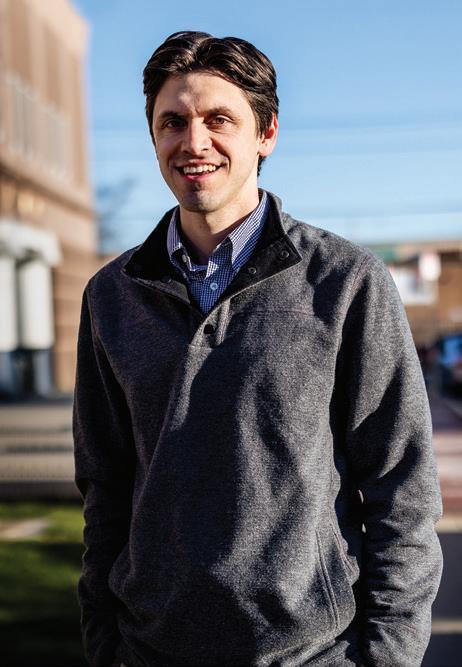
Mitrofanov and study co-author Benjamin Knight, a senior data scientist at e-commerce grocery Instacart, provided product availability information to a ran-
dom sample of more than 840,000 Instacart customers and found that they were 25 percent less likely to purchase low availability items when told supply was low. Similarly, providing low product availability information resulted in a 5.3 percent increase in revenue per customer and a 4.9 percent increase in order frequency over time, Mitrofanov said.
Online shoppers, Mitrofanov said, are particularly vulnerable to stockouts.
“For instance, suppose it is 8 in the morning and you go on the website of an online grocery retailer to order a fresh steak for your dinner, and luckily enough you find that steak is listed as an item available on the website and place a delivery order in a few clicks. This way you build an expectation that the item will arrive in a few hours, right by the time you are planning to have dinner. However, by the time delivery is supposed to happen, the stock of steaks has run out and thus they are not delivered to you by dinner, which ruins your evening. In contrast, customers’ experience in a brick-and-mortar setting could
Dmitry Mitrofanov: “We see that the outcome of sharing low availability information with customers not only reduces the number of stockouts, as people tend to shift from low stock items to high stock items, but also improves the customers’ sentiment when stockouts do occur.”
shopping behavior was not affected much by “scarcity” or “herding” effects when they received low product availability warnings. Instead, customers switched their attention to plentifully stocked items, which indicates that customers’ preference for the reliable service was the driving force, Mitrofanov said.
“After conducting this field experiment, we are able to better understand the customer response to sharing this important information,” Mitrofanov said. “We see that the outcome of sharing low availability information with customers not only reduces the number of stockouts, as people tend to shift from low stock items to high stock items, but also improves the customers’ sentiment when stockouts do occur.
be less dramatic because a customer could just as quickly realize that steaks are out of stock after not seeing them on the shelf and find a good replacement after looking around or asking a store manager for help.”
As a result, online retailers face the disruption of what was once a valued customer relationship, he added.
“If something is not delivered, then customers can get very upset and that results in significantly lower customer lifetime value—and that impacts revenue,” said Mitrofanov.
Interestingly, psychology research has shown that expectation of the shortage of a good might in fact influence a customer to purchase this item and possibly in larger quantities because of “scarcity” or “herding” effects, outcomes online retailers can avoid by sharing information on low availability products, Mitrofanov said. Therefore, in principle, a reluctance to share information could potentially exacerbate the stockout problem for the retailer and customers.
That being said, Instacart customers’
“More specifically, even if customers decide to purchase low stock items after the warning and consequently experience a stockout they are less dissatisfied because of the reference effect—by sharing low item availability information, we reset customers’ expectations with respect to the probability that their order will be successfully fulfilled. It is very interesting that managing customers’ expectations and improving their decision making by sharing extra information is as important in online retail as making the right proactive operational decisions on the online platform.”
Even though the current study largely focuses on online retailers or online retail platforms, Mitrofanov said brick-and-mortar retailers can benefit from the lessons from the study as well: “Many online marketplaces— including Instacart—fulfill orders through ‘warehouse’ stores, so the issue affects a range of retailers. I think there is a lesson here for any retailer that consumers don’t like surprises, particularly disappointments, and thus managing their expectations and providing them with tools to make a better decision about what to purchase is a key.”
BC Alum On Board as Lynch School Faculty Member
BY PHIL GLOUDEMANS STAFF WRITER
Earl J. Edwards ’10, co-author of the practitioner-driven book, All Students Must Thrive: Transforming Schools to Combat Toxic Stressors and Cultivate Critical Wellness, is among the new faculty members at the Lynch School of Education and Human Development this academic year.
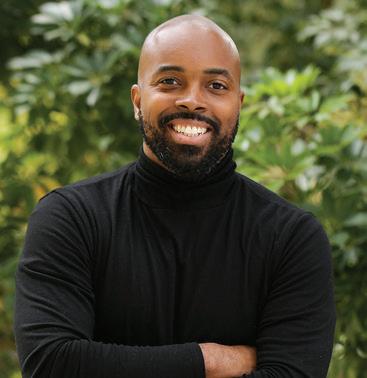
An assistant professor in the Educational Leadership and Higher Education Development department, he is teaching in the Professional School Administrator Program, a curriculum that prepares future superintendents and leaders for public, Catholic, charter, and independent schools.
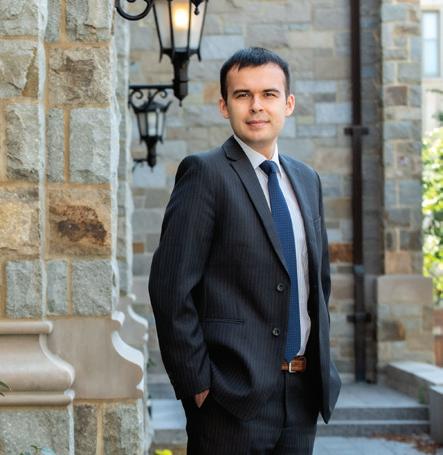
Edwards, whose scholarship focuses on the impact of structural racism on public institutions, and how K-12 students whose families are homeless navigate schools, centers his practice on training leaders and policymakers to proactively create systems to address racial inequities. A native of Brockton, he launched his education career as a classroom teacher in Providence
and Los Angeles after graduating from the Morrissey College of Arts and Sciences with a bachelor’s degree in sociology. He also earned a master’s degree in school leadership from the Columbia University Teachers College, and a Ph.D. in Urban Schooling from the University of California-Los Angeles Graduate School of Education and Information Studies.
Edwards’s dissertation evaluated the formal and informal networks of support that Los Angeles County high school students utilized to meet their academic, social, and physiological needs to remain housed and graduate from high school.
While at UCLA, Edwards was a researcher at the Center for the Transformation of Schools, the Black Male Institute, and the California Policy Lab; he also served on the Race Equity Committee at the Homeless Policy Research Institute, a partnership between the University of Southern California Price Center for Social Innovation and the United Way of Greater Los Angeles.
He has published his work in Urban
Education, The Journal of Children and Poverty, Phi Delta Kappan, and Education Week, and led race and equity workshops for educators and youth service providers in cities and school districts nationwide.
“We are thrilled to welcome Earl Edwards back to BC,” said Stanton E.F.
Wortham, the Charles F. Donovan, S.J., Dean of the Lynch School. “Since earning his degree here, he has gone on to distinguish himself as a teacher and an educational researcher. His work on opportunities for school children who face housing challenges makes important contributions both to academia and educational practice.”
After coming to BC through the Thea Bowman AHANA and Intercultural Center’s Options Through Education program, Edwards served as president of the NAACP chapter and the AHANA Leadership Council. In his senior year, The Heights recognized him as “The 2010 Person of the Year.”
“Attending Boston College as an undergraduate was an extremely rich experience,” said Edwards. “The Jesuit values of being reflective, challenging the status quo, and being a servant leader shaped my orientation to social justice. I am excited to embed those same values in my courses, scholarship, and service as a professor at BC.”
February 2, 2023
Earl Edwards ’10
photo by ivy reynolds photography
photo by lee pellegrini
9 Chronicle
BC Arts
Curtain Is Up at Robsham for Spring ’23
BY ROSANNE PELLEGRINI STAFF WRITER

The creative work of talented Boston College alumni artists bookends the BC Theatre Department/Robsham Theater Arts Center lineup of productions this semester.
Last weekend saw the premiere of “Idawalley,” an original play by Maggie Kearnan ’14, while acclaimed stage and screen actor Bryce Pinkham ’05—this semester’s Monan Professor in Theatre Arts—will direct an April production of Leonard Bernstein’s contemporary operetta “Candide,” in which Pinkham performed as a student the last time it was staged on campus.
Pinkham is widely known for originating the role of Monty Navarro in the Tonywinning production of “A Gentleman’s Guide to Love and Murder,” for which he was nominated for Tony, Grammy, and Drama Desk awards.

Next on the spring schedule is “Blue Stockings,” directed by Theatre Associate Professor of the Practice Patricia Riggin, which runs February 23-26 in Bonn Studio.
A moving, comical, and eye-opening story of four young women fighting for education against the larger backdrop of women’s suffrage, the play follows Tess Moffat and her fellow “first years” who are determined to graduate, but don’t anticipate the hurdles in their way: the distractions of love, the cruelty of the class divide, and the strength of the opposition.
BC Scenes
Marking the Lunar New Year

Theatre Chair and Associate Professor of the Practice Luke Jorgensen, who calls the play “both historical and hysterical,” said the action centers on the first group of women allowed entry to England’s Girton College in 1896: “The college is allowing them to study but not graduate; the women band together to face entrenched chauvinism, violent misogyny, and the academy, demanding to be treated as equals.”
Bonn Studio will also be the venue during March 23-26 for Sarah Ruhl’s “Dead Man’s Cell Phone,” directed by Lily Telegdy ’23. “A quirky dark comedy which explores technology’s ability to both isolate and unite us,” said Jorgensen, who noted that the two student-directed plays are workshop productions: The director and designers are students mentored by department faculty.
Presented by arrangement with Concord Theatricals on behalf of Samuel French, Inc., “Dead Man’s Cell Phone” is the od-
On January 23, the Boston College Law School’s Asian Pacific American Law Students Association (APALSA) held a celebration of the Lunar New Year. The festivities were tempered by the mass shootings in Monterey Park, Calif., home to a large Asian immigrant population. APALSA decided to donate proceeds from its raffle fundraiser to a memorial fund [www. gofundme.com/f/monterey-park-lunar-new-year-victims-fund]. Odette Lienau, Marianne Short, Esq., BC Law Dean (shown at right receiving Lunar celebration envelopes) cancelled a scheduled meeting so faculty members could attend the event and make donations. Below, Jasmine Lee J.D. ’24, decorated a fan.
yssey of a woman forced to confront her assumptions about mortality, redemption, and the need to connect in a technologically obsessed world. It is a play about “how we memorialize the dead, and how that remembering changes us,” said Jorgensen.
Pinkham’s directorship of “Candide” (April 26-30, Robsham main stage) based on the Voltaire novel, will both cap his professorship and conclude the season. “It will be a fresh look at this classic musical with our most talented students working with a truly amazing artist. A gorgeous, thought-provoking musical,” said Jorgensen.
Regarded as “a masterpiece for the ages,” according to organizers, “Candide” features music by Bernstein, book adaption by Hugh Wheeler, and lyrics by Richard Wilbur, as well as Stephen Sondheim and John La Touche.

In one lightning-paced act, the title character is expelled from home, dragged
into the Bulgarian army, brought before the Spanish Inquisition, swindled out of a fortune, shipwrecked on a desert isle, and separated time and again from his true love, Cunegonde. She also bears a barrage of misfortunes, including sale into prostitution, forced marriage to a wealthy man, and slavery. Through it all, they try to remember the lessons of their dear master, Dr. Pangloss: «Everything is for the best in this best of all possible worlds.»
Riotously witty, “Candide” is a wondrous piece, say organizers: the ideal blend of sophisticated operetta and wacky Pythonesque comedy. The production is presented through special arrangement with Music Theatre International; all authorized materials are also supplied by MTI.
For more on spring productions, including performance times and ticket information, see bc.edu/theatre.
February 2, 2023
PHOTOS BY LEE PELLEGRINI
(Above) A scene from the production of “Idawalley,” which opened the Robsham Theater spring season last weekend. (Right) Monan Professor in Theatre Arts Bryce Pinkham ’05 will direct a staging of “Candide” in April.
photo above left by lee pellegrini
10 Chronicle
BC’s Healey Named President of ACC Band Directors Association
BY JOHN WALSH SPECIAL TO THE CHRONICLE
David P. Healey ’90, Ph.D. ’16, director of the Boston College “Screaming Eagles” Bands program since 1999, has been elected the next president of the Atlantic Coast Conference (ACC) Band Directors Association.
Once he formally begins his two-year term later this year, Healey will hold a high-profile leadership position in the ACC, whose 15 members—among the nation’s most prestigious colleges and universities—feature more than 60 music ensembles and more than 4,000 student participants. Though he may be known for his visionary stewardship of the BC Bands program, Healey identifies himself first and foremost as an educator whose “primary mission is to facilitate student formation,” and considers it an honor to work alongside ACC band directors who are equally committed to this mission.
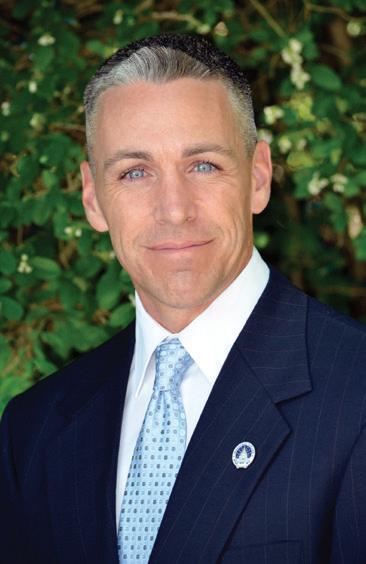
As the Band Directors Association president, Healey’s duties include maintaining communication among directors within the association and sharing the accomplishments of the ensembles in the conference. Healey is seeking to connect students from across universities through an array of digital media, a reflection of his larger vision to “harness the data potential of the conference as a resource for the identification of emerging trends within higher education.”
Healey has already made impressive strides towards this digital vision in recent years. The onset of the COVID-19 pandemic brought about what he referred to as a “creative renaissance” for the BC Bands. Deprived of their usual practices and performances in Alumni Stadium, students found creative ways to foster community and artistic commitment to one another, including a nine-episode “ShowTime!” variety program [https://youtu. be/6ohgXkdUZ4I]; a music video with performers from the AEROdynamiK BC student dance group at the Waterworks Museum in Chestnut Hill [https://youtu. be/xyIqFdLVvrY]; a virtual album featuring sections of the band; and a “Star Trek” audio collaboration with the University of Notre Dame [https://youtu.be/ENgvgRV_ BHQ].
In addition, BC Bands worked with a principal dancer from the Boston Ballet to create a “Phantom of the Opera” music video [https://youtu.be/aQ23MWhOGDA] at the Boston Opera House and connected with BC hip-hop group, Phaymus, for a “Spider-Man” field performance and music video filmed in Boston [https:// youtu.be/zRVoB5t3QFQ]. Most recently, BC Bands collaborated with the BC Dynamics and BC Irish Dance to create an ABBA-themed field show and music video [https://youtu.be/DRBszy2YjAw].
As a result of such innovative collabora-
BC in the Media
The Taliban has suspended the rights of Afghan women to pursue higher education, prompting American universities to seek ways to help them. Inside Higher Ed highlighted a free online course for Afghan female students launched last fall by Prof. Emerita Maria Estela Brisk (LSOEHD).
Workforce cuts are occurring across the nation, with Google, Microsoft, Salesforce, and Boston-based Wayfair and others all making announcements. Murray and Monti Professor of Economics Peter Ireland offered comments to CBS Boston on these developments.
A new report by the Boston College Law School’s Civil Rights Clinic and the Brazilian Worker Center focuses on the efficacy of the Massachusetts Domestic Workers Bill of Rights. The findings were featured by WBUR News and WGBH News.
New proposed limits from the United States Environmental Protection Agency represent a step forward for air quality, but some say they fall short of what’s needed to save more lives. Global Public Health Program Director Philip Landrigan, M.D., shared his insights on the EPA rules with National Catholic Reporter.
All too often clunky dialogue breaks the spell of CGI-heavy TV epics, according to Prof. Carlo Rotella (English), in his essay on the magic of good fantasy writing published in The New York Times Magazine.
the internet even if you delete your history. Boston 25 News interviewed Kevin Powers, director of the Woods College of Advancing Studies M.S. in Cybersecurity Policy and Governance program, on the issue.
The New York Times spoke with Asst. Prof. Michael Hartney (Political Science) for a story that noted how, in some state legislatures, Republicans are not acceding to the hard right.
Quiet quitting might be declining, but its theme of rebalancing work and home life will continue into the new year, reported The Guardian (U.K.), which interviewed Prof. David Blustein (LSOEHD), an expert on the psychological nature of work.
Vice Provost and Canisius Professor James Keenan, S.J., provided a brief history of the Catholic Church’s teaching on mercy and sin in an essay for America magazine.
Though set in Ireland, the award-winning new film “The Banshees of Inisherin” reanimates the legacy of Tolstoy and the Russian classic, wrote Prof. Maxim D. Shrayer (English/Eastern and Germanic Studies) in a piece for Tablet Magazine
Harvard Business Review interviewed Asst. Prof. Larisa Kovalenko (CSOM) on her co-authored study that aims to help companies make the right branding decision.
tions, Healey received the Boston College “Living the Mission” award last year for his work mentoring BC doctoral students, and the BC Marching Band was recognized by the Arts Council for their “innovative and prolific work through the pandemic.”
The Boston College Marching Band has been a staple of the Boston College experience for more than a century. As they have during the pandemic, the Marching Band has demonstrated a remarkable ability to transcend the walls of Alumni Stadium, performing for the Boston Red Sox, the Boston Celtics, ESPN “College GameDay,” and the Heisman Trophy Dinner. They have collaborated onstage on many occasions with the Dropkick Murphys and the Boston Pops Orchestra, and marched in the parade for Barack Obama’s second presidential inauguration.
Reflecting on his nearly 25-year tenure as director, Healey said, “If you’ve walked through Lower Campus on an evening in the fall, you’ve inevitably heard BC Bands students preparing their literature. It’s an awe-inspiring experience to be in the same space and feel that energy, and it is the honor of a lifetime to be able to work with such a dedicated and talented group of students.”
—John Walsh is director of creative video services in the Office of University Communications
Evidence in the murder case against Brian Walshe includes more than a dozen disturbing Google searches, raising questions about how long information stays on
Jobs
The following are among the recent positions posted by the Department of Human Resources. For more information on employment opportunities at Boston College, see www.bc.edu/jobs or scan the QR code at right.

Admission Associate/Asst. to the Director of Undergraduate Admission Staff Psychologist or Staff Clinician
Associate Director, Athletics Communications
Assistant Director, Reporting & Data Analytics
Senior Events Specialist
Patrol Officer
Staff Nurse
Lead Wait Staff
Associate Director, First Year Experience
Academic Support Assistant
Head Librarian, Social Work Library
Senior Network Systems Engineer
Office Assistant, BC Police Department
Associate Director, Student Affairs Title IX
Prof. Belle Liang (LSOEHD) was among the experts invited by HuffPost to weigh in on the concept that so-called “Blue Monday,” the third Monday in January, is the worst for people’s mental health.
Supervisor, Audio & Event Services Program Coordinator, RPCA
Transitions & Summer Operations Assistant
Principal Data Architect
Senior Performance Engineer
Software Release Analyst
Public Safety Dispatcher
University Risk Manager
Research Program Manager
February 2, 2023
“It is the honor of a lifetime to be able to work with such a dedicated and talented group of students.”
—David Healey
11 Chronicle
photo by troy healey ’26
More Quality Talks from Lowell Humanities Series
With last week’s talk by author and political philosopher Seyla Benhabib, the Eugene Meyer Professor of Political Science and Philosophy Emerita at Yale University, the spring semester is under way for Boston College’s celebrated Lowell Humanities Series, which brings distinguished writers, artists, performers, and scholars to the University.
A look at the series’ remaining schedule this semester; all events take place at 7 p.m. in Gasson 100:
February 8 (Candlemas Lecture)
Francis X. Clooney, S.J.—Fr. Clooney, the current Catholic Theological Society of America president who taught at Boston College from 1984 until 2005, is the Harvard Divinity School Parkman Professor of Divinity and Professor of Comparative Theology. Recognized as the father of the contemporary field of comparative theology, he has published numerous books in the area of Hindu-Christian comparative theology. He has also written on the Jesuit missionary tradition, particularly in India, on the early Jesuit pan-Asian discourse on reincarnation, and on the dynamics of dialogue and interreligious learning in the contemporary world. His recent books include Reading the Hindu and Christian Classics: Why and How It Matters; Western Jesuit Scholars in India: Tracing Their Paths, Reassessing Their Goals; and St. Joseph in South India: Poetry, Mission and Theology in Costanzo Gioseffo Beschi’s Tēmpāvani
Cosponsored by the Theology Department.
February 22
Colm Tóibín—A native of Ireland’s County Wexford, Tóibín lived in Barcelona from 1975-1978, an experience that helped inspire him to write The South and Homage to Barcelona. He went on to write numerous award-winning novels, including Brooklyn (adapted into an acclaimed 2015 film); The Magician; House of Names; Nora Webster; and The Testament of Mary He is the author of short story collections, two plays staged in Dublin, the memoir A Guest at the Feast, and non-fiction books. Tóibín, whose writing has been translated into many languages, is a contributor to the New York Review of Books and contributing editor at the London Review of Books He has taught writing at prestigious universities and is currently Mellon Professor in the Department of English and Comparative Literature at Columbia University and chancellor of Liverpool University.
This event is cosponsored by the Irish Studies Program and Fiction Days Series.
March 1
Imani Perry—Perry was born nine years after the 16th Street Baptist Church bombing in Birmingham, Ala., and instilled from an early age with an instinct
March 15
Yamiche Alcindor—The daughter of Haitian immigrants who met while attending Boston College, Alcindor has written extensively on the intersection of race and politics and is a prominent voice in analyzing the critical issues of our time for Democrats and Republicans alike. Since
March 29
Kim Stanley Robinson—An American science fiction writer, Robinson is the author of more than 20 books, including the international bestselling Mars trilogy, and New York 2140, Aurora, Shaman, Green Earth, and 2312, a New York Times bestseller nominated the seven major science fiction awards—a first for any book. Robinson, who has spent time in the Antarctic, was named a “Hero of the Environment” by TIME magazine, and his work has been translated into many languages and has won a dozen awards in five countries. His honors include the Heinlein Award for lifetime achievement in science fiction, the Arthur C. Clarke Award for Imagination in Service to Society, and being the namesake for asteroid 72432, “Kimrobinson.” His most recent book, The High Sierra: A Love Story, is a non-fiction examination of his years exploring the Sierra Nevada mountains.
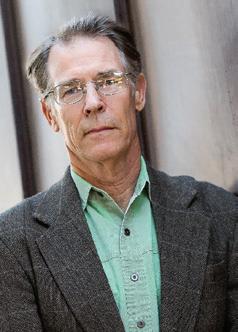
Cosponsored by the Schiller Institute for Integrated Science and Society, the Earth and Environmental Sciences and English departments, the Environmental Studies Program, and the Lynch School of Education and Human Development’s Center for Psychological Humanities and Ethics.
April 13
for justice and progressive change. The interplay between history, race, law, and culture informs her work as a critically acclaimed author and the Hughes-Rogers Professor of African American Studies at Princeton University. Perry’s writing reflects the complex history of Black thought, art, and imagination, and her background as a legal historian. A narrative journey through the American South, her latest book, South to America: A Journey Below the Mason Dixon to Understand the Soul of a Nation which debuted on The New York Times bestseller list—looks at the South through a historic, personal, and anecdotal lens.
Cosponsored by the African and African Diaspora Program, Law School, and History Department.
2022, she has been the NBC News Washington correspondent, and is anchor and moderator of PBS’ “Washington Week.” Prior to NBC, she was public broadcasting’s White House correspondent for PBS “NewsHour.” As a MSNBC contributor, Alcindor appears on “Morning Joe” and “Meet the Press.” She has received the White House Correspondents’ Association Aldo Beckman Award for Overall Excellence in White House Coverage and the 2020 NABJ Journalist of the Year Award.
Cosponsored by the Clough Center for the Study of Constitutional Democracy and the BC Journalism Program.
Dipesh Chakrabarty—Chakrabarty is the University of Chicago Lawrence A. Kimpton Distinguished Service Professor in History, South Asian Languages and Civilizations; faculty director of the University of Chicago Center in Delhi, and a faculty fellow of the Chicago Center for Contemporary Theory. His publications include several monographs and articles. A founding member of the editorial collective of Subaltern Studies, a consulting editor of Critical Inquiry, and founding editor of Postcolonial Studies, he also was a founding editor of the series South Asia Across the Disciplines, and has served on several boards. Chakrabarty received the Toynbee Foundation Prize for contributions to global history and the Tagore Memorial Prize awarded by the Government of West Bengal for his book The Crises of Civilization.
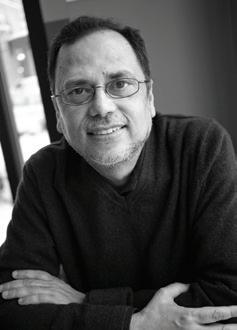
The Lowell Humanities Series is sponsored by the Lowell Institute, the Institute for the Liberal Arts at Boston College, and the Office of the Provost and Dean of Faculties.
All events are free and open to the public. For more details, including resources for faculty and students, go to bc.edu/ Lowell.
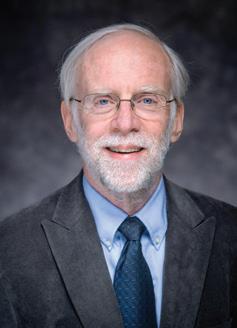
February 2, 2023
—University Communications
Clockwise from top left: Francis Clooney, S.J.; Colm Tóibín; Imani Perry; Yamiche Alcindor; Kim Stanley Robinson; Dipesh Chakrabarty.
matt cashore reynaldo rivera
sameer a khan
matt hooban
alan thomas
12 Chronicle BC Arts
