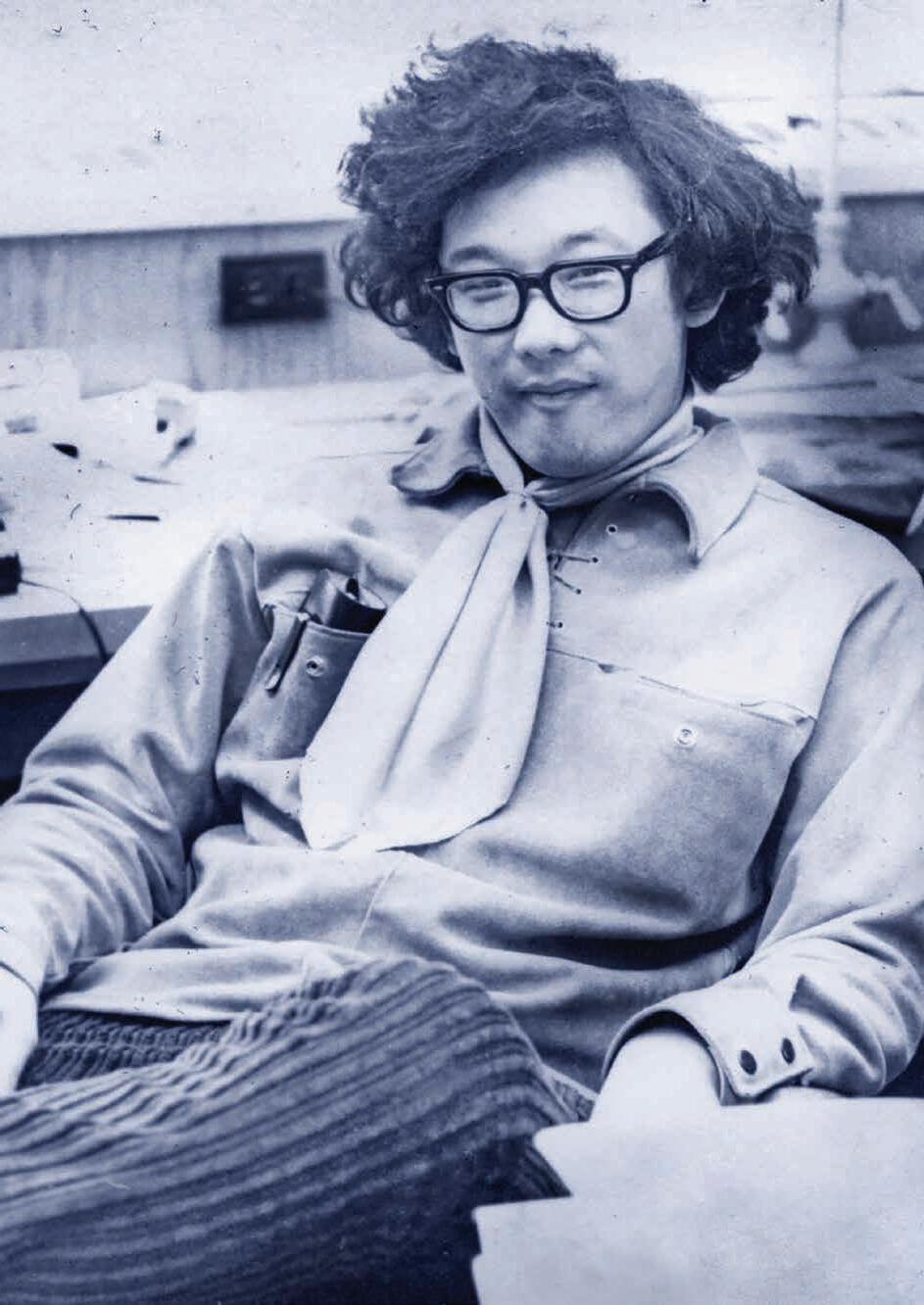

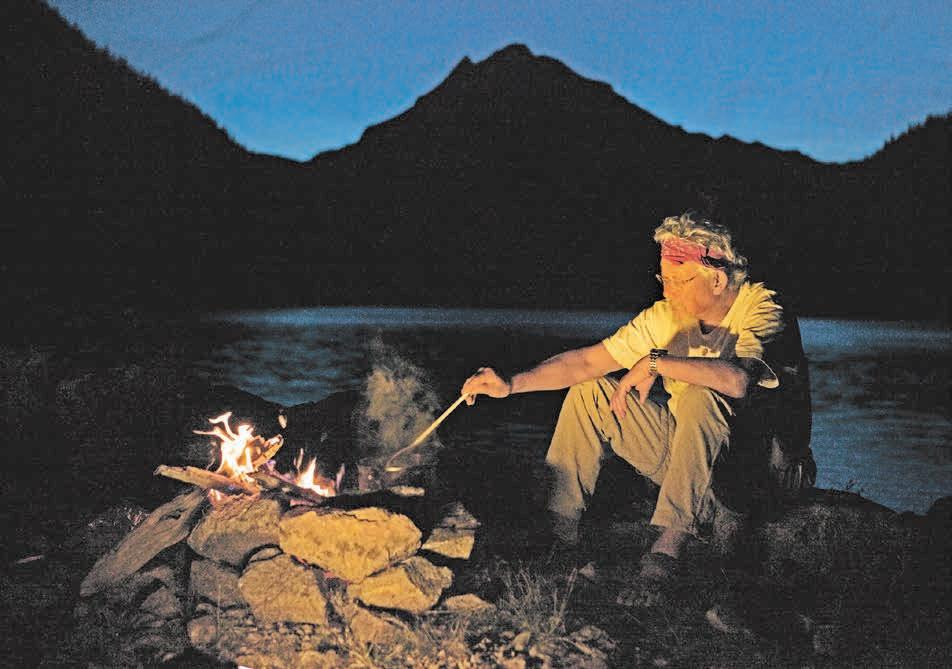
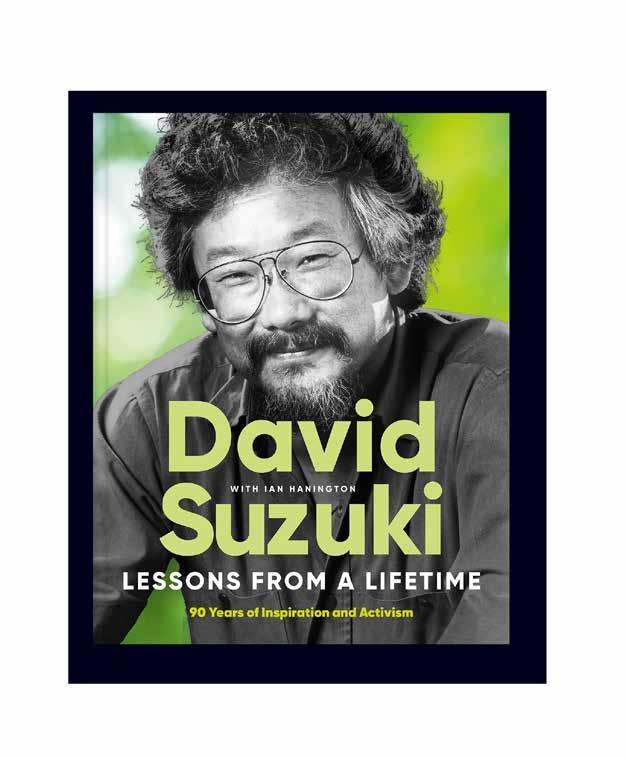
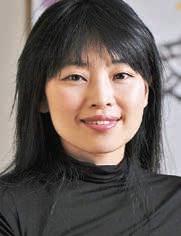
Growing up as a lonely outsider, David Suzuki was encouraged by his father to take up public speaking in high school. The rest is part of Canada’s history. See page 6




































































































Joline Martin
War Resisters: Standing Against the Vietnam War (Caitlin $26)
Will Dobud & Nevin Harper
Kids These Days: Understanding and Supporting Youth Mental Health (New Society $29.99)
Natasha Zimmers
Tiny Hiker
Illustrated by Jaimie MacGibbon (Orca $21.95)
Shelly Adams & Conner Adams
Whitewater Cooks The Food We Love (Sandhill Book Marketing $38.95)
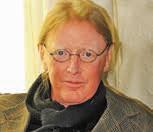
Daniel Marshall Untold Tales of Old British Columbia (Ronsdale Press $24.95)
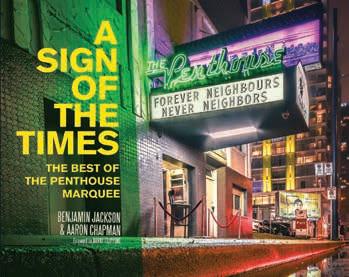
Benjamin Jackson & Aaron Chapman
A Sign of the Times: The Best of the Penthouse Marquee (Anvil $30)
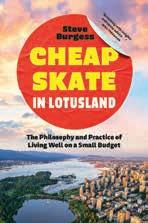
Steve Burgess Cheapskate in Lotusland: The Philosophy and Practice of Living Well on a Small Budget (D&M $26.95)

Graeme Menzies Trading Fate: How a Little-known Company Stopped British Columbia from Becoming an American State (Heritage House $29.95)
John Horgan with Rod Mickleburgh
John Horgan: In His Own Words (Harbour $38.95)
George M. Abbott
Unceded: Understanding British Columbia’s Colonial Past and Why It Matters Now (Purich / UBC Press $29.95)
reuben quinn
kiskisomitok:
to remind each and one another (Talonbooks $19.95)

n her debut memoir, The Woo-Woo (Arsenal Pulp, 2018), Lindsay Wong wrote, “It’s in the DNA and cultural beliefs of almost every village Chinese family to think they are being haunted by ghosts.” Wong returns to ghostly themes in Villain Hitting for Vicious Little Nobodies (Penguin $27.95), a horror story. It is based on an ancient belief from the Tang dynasty (618–907 CE), which still endures across Hong Kong, China, Singapore and Taiwan that no one should die unmarried as ill fortune will dog the surviving family. The remedy: bury single individuals, sometimes alive, with the dying or dead unmarried person so that they become husband and wife in the afterlife—aka, a corpse marriage. “Growing up in a suburb of Vancouver, Canada, a child of the Chinese and Hong Kong diaspora, I was always told that if I did not excel in school, thrive in a high-paying career, and marry, I’d be sold and end up in a coffin with a stranger,” says Wong. She imagines what this would be like in her tale of a contemporary woman who signs away her life for a corpse marriage. Wong also delves into class, family obligations, capitalism and female rage. 9780735242418
Without a career plan, humour writer Steve Burgess says he has blundered into a rather comfortable lifestyle. Yet his financial earnings “have ranged from briefly respectable to appalling and usually hovered just north of dire.” So how is it that he is “on cruise control” today?
The answer is frugality admits Burgess (of Scottish ancestry) in Cheapskate in Lotusland: The Philosophy and Practice of Living Well on a Small Budget (D&M $26.95). “My pantry is filled with discounts—in this kitchen, food items purchased at full retail price are as scarce as Democrats at a Wyoming barbecue.” When his favourite items go on sale, Burgess stocks up, despite living in a one-bedroom rental apartment with little storage space. If Burgess’ habits sound somewhat obsessive, they aren’t at any reality-TV-hoarding-show level. But he agrees, “my penny-pinching can get a bit weird.”
What makes this how-to manual cum confessional so compelling is Burgess’ comedic elan and storytelling ability. He also interviews other people about their money saving ways. Lots to learn here; plus, as Burgess says, “many of my habits are just weird enough to be entertaining.”
9781771624633
he little-known life of a groundbreaking woman in Barkerville’s gold rush heyday is told by Marion McKinnon Crook in Bloomsbury to Barkerville: The Life of Florence Wilson (Heritage $26.95). Florence Wilson started out in the literary world of London’s Bloomsbury district in the mid-1800s where she was a published poet. The riches of the Cariboo lured Wilson when she fell on hard times. Defying Victorian conventions, this independent woman became a saloon owner in Barkerville. But she also founded theatre groups and is
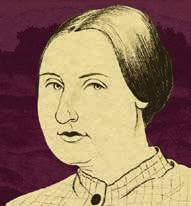
thought to be the first librarian in colonial BC. McKinnon Crook knows the Cariboo well where she worked as a public health nurse for 21 years and raised a family. Her recent bestsellers are memoirs of living, working and raising a family: Always Pack a Candle: A Nurse in the Cariboo-Chilcotin (Heritage, 2021) and Always on Call: Adventures in Nursing, Ranching and Rural Living (Heritage House, 2024). 9781772035643
An illustration of Florence Wilson. No photos of Wilson exist. A few online claim to be her (but aren’t).

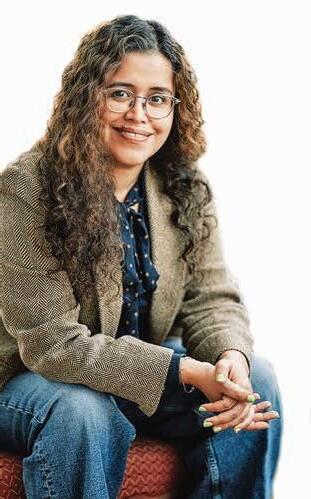
tYasuko Thanh: Winner of the City of Victoria Butler Book Prize (2017), the Atwood Gibson Writers’ Trust Fiction Prize (2016) and the Journey Prize (2009).

escended from people who have endured centuries of imperial oppressors, Victoria’s Yasuko Thanh is driven to understand it. She wrote Mysterious Fragrance of the Yellow Mountains (Hamish Hamilton, 2016), a novel about the colonial occupation of French Indochina based on her family’s history. It also led Thanh to learn about other oppressed groups. She began following Palestinian journalists on social media, including Mohammed Mansour and Hossam Shabat who documented daily life under siege in Gaza. Both were killed in Israeli air strikes.
Shabat “knew he was going to die,” says Thanh in a book she has edited, Pizza Before We Die: An Eyewitness Account in Gaza (Arsenal Pulp $19.95), written by Hassan Kanafani. Shabat had already prepared a statement to be released upon his death: “If you are reading this, it means I have been killed.” It ended with a plea: “Keep fighting, keep
telling our stories—until Palestine is free.”
For Thanh, Shabat’s words were a call to action. It was at a Palestinian demonstration in Victoria that Thanh learned of Hassan Kanafani, an architect by training who had written a first-hand account of what was happening in Gaza. “It took only a glance at the manuscript for me to see its urgency and importance. This was literary journalism; poetic in tone while also being clear-eyed, it captured Hassan’s experiences with restraint and precision.
“Given the urgency of the genocide he was living through, my plan was simple: Get Hassan’s work into the strongest shape possible, as quickly as possible,” continues Thanh. Her call to action for everyone else is: “Read this book. Hassan Kanafani risked his life to write it.”
9781834050324
Silvia Moreno-Garcia, on her website, declares she is “Mexican by birth, Canadian by inclination.” She moved to Vancouver in 2004 where she completed her master’s degree at UBC with a thesis focused on eugenics and the work of H.P. Lovecraft (1890–1937)—the American writer who is enjoying a resurgence in popularity for his works of weird, horror and speculative fiction.
Moreno-Garcia caught the writing bug and has become known for her own brand of horror and speculative fiction novels, earning awards and film deals for titles such as Signal to Noise (Solaris, 2015), Gods of Jade and Shadow (Del Rey, 2020) and Mexican Gothic (Del Rey, 2020). The latter was picked up for a limited series adaptation on the streaming service Hulu in 2020 but dropped in 2024. In 2025, a television adaptation of Moreno-Garcia’s The Daughter of Doctor Moreau (Del Rey, 2022) was in development.
Moreno-Garcia’s recent release, The Bewitching (Del Rey $29) is a multigenerational horror novel about three women across different eras who encounter witchcraft and danger.
9780593874325
n his bestselling title, Unceded: Understanding British Columbia’s Colonial Past and Why It Matters Now (Purich/ UBC Press $29.95), George Abbott details over 150 years of BC’s destructive relations with Indigenous peoples.
“I aim to better acquaint British Columbians and Canadians, particularly my fellow settlers, with how and why our province’s history of Indigenous relations unfolded as it did,” says Abbott. It was caused, he says, by “the persistence of colonial policies and prejudices from the 1850s until today.”

In particular, Abbott is concerned about past colonial and provincial leaders’ insistence on creating “very small” Indigenous reserves here, in comparison to those established by the rest of Canada; and BC’s “near absence of treaties, or even treaty discussions,” he says.
In the mid-1800s, Governor James Douglas had engaged in treaty-making, but then settler resistance reared its ugly head “ushering in the brutal racism of Joseph Trutch (first Lieutenant Governor of BC) and William Smithe (seventh premier of BC) and innumerable injustices in the century of darkness that followed.”
9780774881159
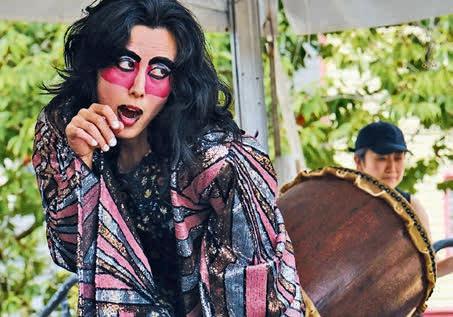
It’s hard to see evidence today that Vancouver once had a thriving Japanese neighbourhood—called Japantown by many but Paueru Gai by the Japanese immigrants who lived there on a stretch of Powell Street east of Gastown.
The internment of Japanese Canadians and the confiscation of their property during the Second World War ended this distinct ethnic area. But its memory lingered and fifty years ago, a group of organizers got together to celebrate Vancouver’s Japanese history, establishing the first Powell Street Festival. “They had no plans or expectations it would continue,” writes Emiko Morita, a third-generation mixed-heritage Japanese Canadian and editor of Return to Paueru Gai: Fifty Years of Vancouver’s Powell Street Festival (Arsenal Pulp $32.95), which contains stories and photographs about the event’s formative moments. “It seems the collective efforts to honour our ancestors’ labours and struggles of settlement brought our dispersed community together and, remarkably, catalyzed the resurgence of Japanese Canadian identity and culture.” Morita served as executive director of Powell Street Festival from 2015 to 2024.
9781834050249
Lessons From a Lifetime: 90 Years of Inspiration and Activism by David Suzuki with Ian Hanington (Greystone $40)
BY TOM HAWTHORN
That David Suzuki is turning 90 seems both implausible (he seems much younger on television) and inevitable (dude has been a public figure for more than a half-century).
He is so familiar a figure that strangers with children in tow confront him with demands he save the planet for future generations. He is a tribune in an age of anxiety. The environmentalist Bill McKibben calls him “a Paul Revere in so many ways,” and Suzuki himself acknowledges “it has been my lot in life to be a Cassandra or a Chicken Little.”
That is a lot of pressure for someone not naturally ebullient, who grew up as an outsider in a world in which he was an enemy because of his race (Canada officially labeled people of Japanese descent, including its own citizens, as “enemy aliens” during World War Two), and a scientist whose most notable achievements were not earned in a lab coat but as a communicator.
While certain right-wing foes have made him a target and while he has on occasion made intemperate pronouncements, Suzuki remains a revered figure for many Canadians. When the CBC went searching for the Greatest Canadian two decades ago, with more than one million citizens voting, Suzuki landed on the list at No. 5.
So, a landmark birthday is an appropriate time for reflection. Lessons From a Lifetime (written with Ian
Growing up as a lonely outsider, environmentalist David Suzuki was encouraged by his father to take up public speaking in high school. The rest is part of Canada’s history.
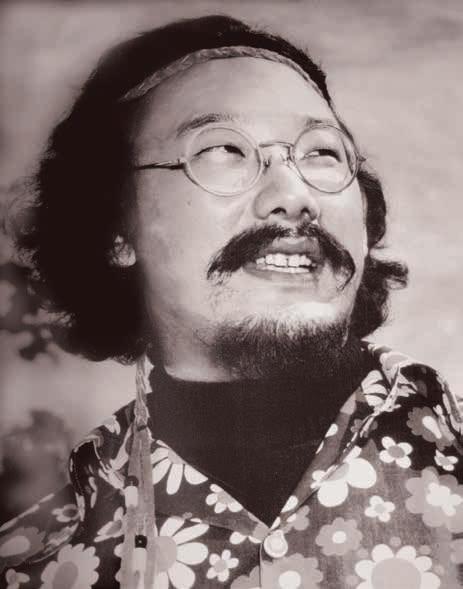
Hanington, a senior editor and writer at the David Suzuki Foundation) is a packaging of photographs, personal reflections and congratulatory letters compiled by Greystone Books in partnership with the David Suzuki Institute.
Suzuki became a well-known figure through the CBC, first on radio’s Quirks & Quarks and, especially, television’s The Nature of Things with David Suzuki, where he showed his talents as a curious investigator and compelling interviewer. (Thanks, as well, to cracker-jack crews of producers and technicians.) He had a rare ability to share his awe and wonder for science with bigger questions about how scientific developments would affect people and place.
Before becoming a broadcaster, he had enjoyed a stellar career as a fruitfly geneticist. Early on, he discovered that the ability to share knowledge with common language was not a skill shared by many fellow eggheads.
“We support science because it is a part of what it means to be civilized,” he writes, “pushing back the curtains of ignorance by revealing bits and pieces of nature’s secrets.”
His intellectual talents were matched with an empathy for social justice (again, not a skill for which scientists are known), much of which was nurtured from his own humble childhood during which his family was wrenched from its comfortingdaily routine, which he describes in a chapter titled, “My happy childhood in racist British Columbia.”
Suzuki’s parents, both born in Canada, ran a small laundry and drycleaning shop in Marpole, a blue-collar neighbourhood in south Vancouver. The family had been established in Canada for more than three decades by the time he was born in Vancouver on March 24, 1936. Before his sixth birth-
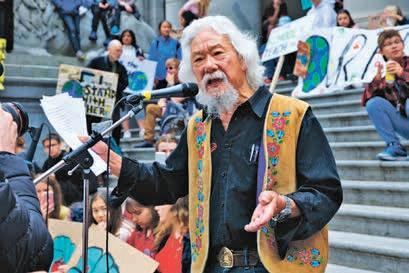
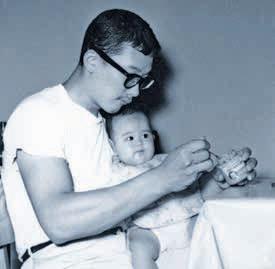
tday, the Canadian government would order the family and other Japanese Canadians to be forcibly relocated after war was declared with Imperial Japan. His father was separated from the family for a year, while his mother adapted to living in a camp in Slocan City. Young David remembers being bullied in the camp for not speaking Japanese.
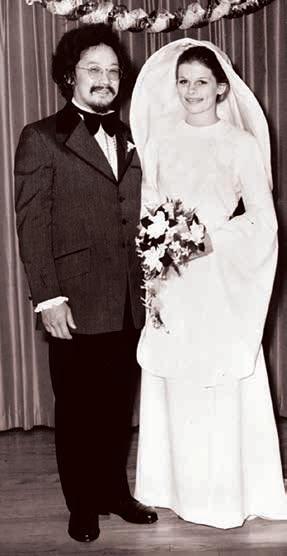
ttEven after the war ended, the government refused to allow Japanese Canadians to return to the coast. The Suzuki family wound up in farming communities in southwestern Ontario, first in Olinda and later in Leamington, a notorious “sundown” community in which Black people were expected to leave the community before nightfall.
“My loneliness during high school
was intense,” he writes. “My one solace was a large swamp that was a ten-minute bike ride from our house. But I spent most of my waking hours daydreaming, creating a fantasy world in which I was endowed with superhuman athletic and intellectual powers that would enable me to bring peace to the world and win mobs of gorgeous women begging to be my girl.”
His father encouraged David to take up public speaking in high school, which turned out to be a life-defining skill. He may have been lonely, but he was elected class president.
Later, he would admit that growing up in a racist environment left him with a self-loathing “because of my small eyes and Asian appearance,” a feeling that evaporated in the late 1960s after he taught at the University of California at Berkeley, a multicultural campus in a multicultural city, and later at the University of British Columbia.
While recording a 1982 episode about logging in Windy Bay on Haida Gwaii for The Nature of Things, Suzuki befriended a young Haida artist and carver. “ Guujaaw opened for me a window into a radically different way of seeing the world,” Suzuki writes. An Indigenous outlook where one was part of the environment instead of the Western approach of merely having a relationship with it struck Suzuki as a profound insight, guiding his approach to the world ever since.
The celebratory letters in the book border on the hagiographic: Maude Barlow (“a preacher for the biosphere”), Jane Fonda (“a poetic, soulful scientist”), ethnobotanist Nancy J. Turner (“a hero of the planet”), his second wife Tara Cullis (“I sometimes feel I’m married to a National Living Treasure”). But it is a testament to his longevity and influence that so many notables have crossed paths with him.
Suzuki’s 90th birthday is an occasion when you wish the celebrant many happy returns.
9781778403606
Tom Hawthorn’s latest book—“Play Ball!,” an anecdotal history of baseball in Vancouver—was released in 2025.
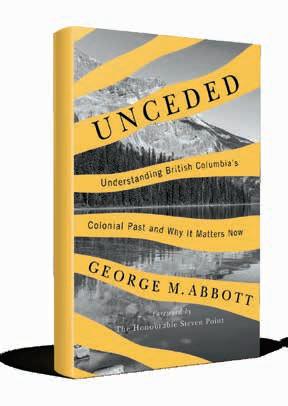
Understanding British Columbia’s Past and Why it Matters Now George Abbott; Foreword by the Honorable Steven Point Treaty commissioner George M. Abbott combines archival research with a former cabinet minister’s insider perspective to chronicle over 150 years of BC government–Indigenous relations, providing context for understanding today’s reconciliation efforts.
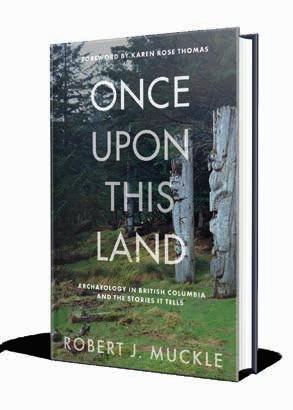
Archaeology in British Columbia and the Stories It Tells Robert J. Muckle; Foreword by Karen Rose Thomas Robert Muckle takes readers on a journey to the province’s most notable archaeological investigations, from footprints on Calvert Island left 13,000 years ago, to the body of a man frozen in ice for centuries in the Tatshenshini region, to a First World War internment camp near Fernie.
available at your local bookseller or online at ubcpress.ca
BY SONJA PINTO
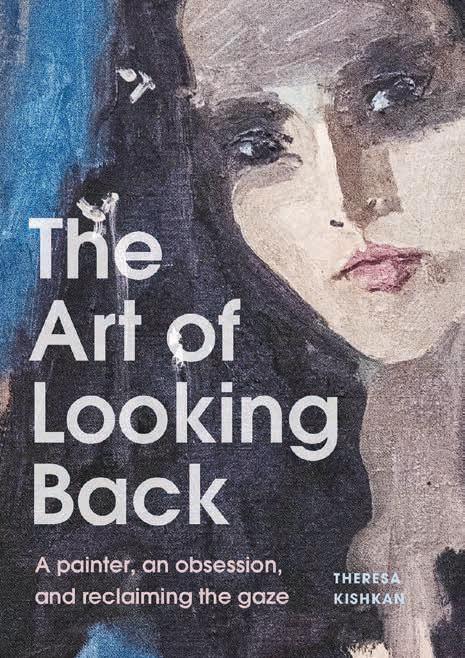
Each day when descending the staircase in her home, Theresa Kishkan comes face to face with her double: her face, decades earlier, immortalized in a painting. The face is familiar, yet somehow foreign: “It wasn’t me and yet it was, in a way,” says Kishkan.
The Art of Looking Back tells the story of this painting and how it, and dozens of others painted and sketched of her, came to be. Now in her sixties, Kishkan unravels the complex moral and psychological ramifications caused by her relationship with the painter.
Kishkan grew up in Victoria where she developed her talents as a poet and writer. Attending the University of Victoria, she became part of the local arts scene that included familiar names such as writer Robin Skelton and his wife, Sylvia Skelton. Through the Skeltons, she was introduced to a local painter who became immediately and obsessively enamored with her. So began an uneasy relationship that haunted Kishkan for decades.
She’s twenty-three years old when she meets the painter Jack Wilkinson, who is “the same age” as her father. Shortly after the meeting, Wilkinson wrote to Kishkan, saying “as you might deduce, I am enchanted.” Initially, they bond over their love of art and Kishkan describes being flattered by the older artist’s attention. Wilkinson seems genuinely interested in Kishkan’s artistic pursuits and opinions, a kind of respect that can be scarce for young women in the arts.
Kishkan describes the pressure and urgency she felt from Wilkinson for contact. “Jack wanted to see me daily,” Kishkan writes, and “he drew me obsessively.” Once, they shared a
“I
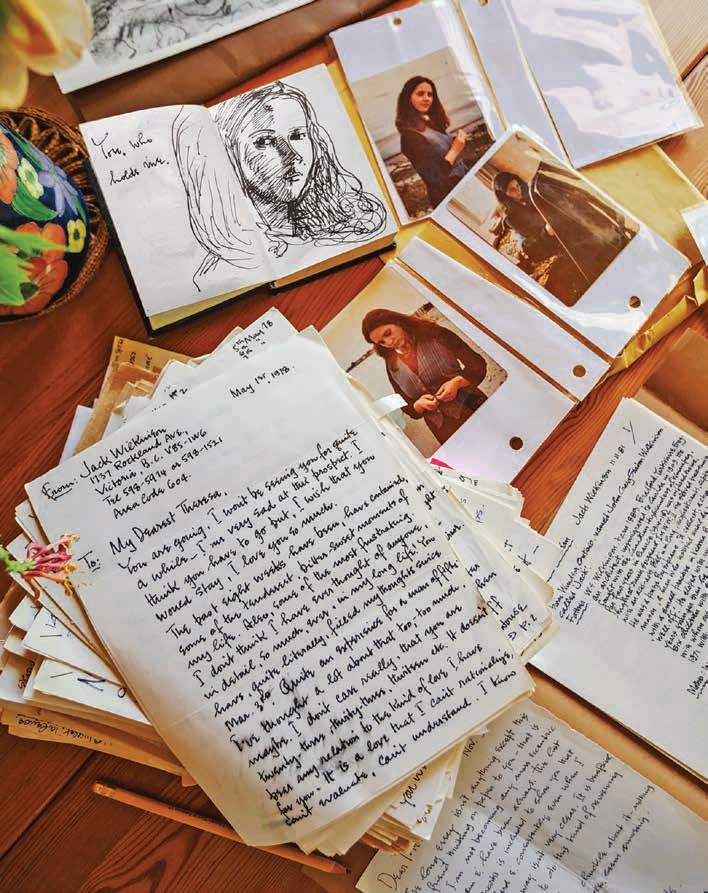
A 23-year-old poet meets a painter (the same age as her father) who lures her to be his model and muse. Over forty years later, Theresa Kishkan revisits this episode in her life.
picnic at a beach, talking of art and poetry. Wilkinson later gave her a sketch of this encounter; except in the sketch, Wilkinson portrayed himself as a naked satyr and also drew Kishkan naked, emphasizing her breasts. Kishkan includes a scan of the cartoon in this book.
Despite Wilkinson’s lust, the relationship is not romantic to Kishkan: “I was overwhelmed by his attentions
but I wasn’t attracted to him, didn’t want him as a lover.” Now in her later life, she can recognize that “I was too inexperienced to firmly decline his affections, though I did decline his physical advances.”
Jack Wilkinson was a prolific artist based in Victoria. He notably designed part of the fountain in Centennial Square, a public area adjacent to Victoria’s city hall. Wilkinson, a married
man, had a teenage child with his wife. “There was more than a whiff of scandal,” Kishkan laments. Indeed, to further complicate things, Kishkan closely resembled his daughter, who was only slightly younger than her.
as their relationship continued, so too did the drawings. “The self you saw reflected in his eyes, in Jack’s eyes, was not the self your friends saw,” Kishkan writes. Wilkinson insists that she is his “archetype,” a figure who attracts him physically and intellectually. Kishkan sometimes visited the house where Wilkinson lived with his wife and daughter. She had a good rapport with the whole family, and they seemed to enjoy her company. With insistence, Wilkinson finally convinced Kishkan to let him paint her nude in his studio—“I’d learned that he never
It is seldom that we hear from an artist’s muse ... parsing through questions of consent, naïveté, trust, power, beauty and complicity.
wanted to take no for an answer,” she says.
When Kishkan sees the nude painting now, the hesitation and discomfort of the moment seem to be smoothed away: her portrait shows “no sign of goosebumps, though you remember them on your arms the time you took off your clothes.”
Though Theresa moved abroad a year after meeting Wilkinson, that is not the end of their correspondence. He found her years later after she had married and had kids. He gifted Kish-
kan’s children some of his paintings of her, including one where she nurses her child, and wrote her a biographical essay about his life titled “My Life for Theresa Kishkan.”
Oit is seldom that we hear from an artist’s muse. Kishkan reclaims autonomy by humanizing herself to the viewer (and reader) and parsing through questions of consent, naïveté, trust, power, beauty and complicity.
Throughout the memoir are images of the paintings, sketches and letters from Wilkinson, which capture the obsessive longing that characterized his affections for Kishkan. Now, after decades have passed, the subtext of these letters is legible to her in ways that her younger self couldn’t understand.
The Art of Looking Back is an honest, tender reflection on a version of a younger self, mediated through the male gaze, and all of the complexities of emotion, power and social dynamics that come with a relationship that lives in a “grey area.” The prose is a stunning landscape of memory, archive and art that reads like a confessional. This haunting story of subversive beauty is not to be missed.
9781997702061
Sonja Pinto is a writer, photographer, and printmaker. They reside on the unceded territories of the
peoples (Victoria, BC).
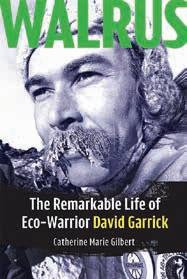
The Remarkable Life of Eco-Warrior
David Garrick
Catherine Marie Gilbert
Many people don’t know that Greenpeace was founded in Vancouver and Garrick was there! With his friend Paul Watson he shared life-altering adventures including Greenpeace’s inaugural whale and harp seal campaigns.
“An excellent chronicling of his extraordinary and exemplary life.” —Captain Paul Watson
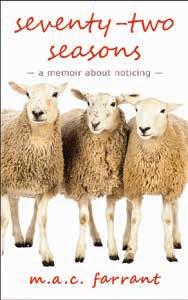
A Memoir about Noticing M.A.C. Farrant
Inspired by the Japanese practice of celebrating one feature in nature every five days, creating seventy-two seasons instead of four, Farrant, with her signature humour, embarks on a mission to focus on small spellbinding changes.
978-1-55380-743-8
The Compelling Story of Temporary Foreign Workers & Human Rights
Joe Barrett
In 2006, forty-two Latin Americans arrived to excavate tunnels for the SkyTrain. They had been promised wages far above what they would earn at home. But the reality was miserable wages, unpaid overtime and poor living conditions. And so began their fight for justice.
A Gardener Discovers the Gentle Art of Untravelling Elspeth Bradbury
A great gift for the gardener in your life. Inspired by world travellers, Elspeth sets out to explore the world that exists in her own back garden.

BY SUSAN SANFORD BLADES
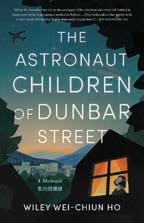
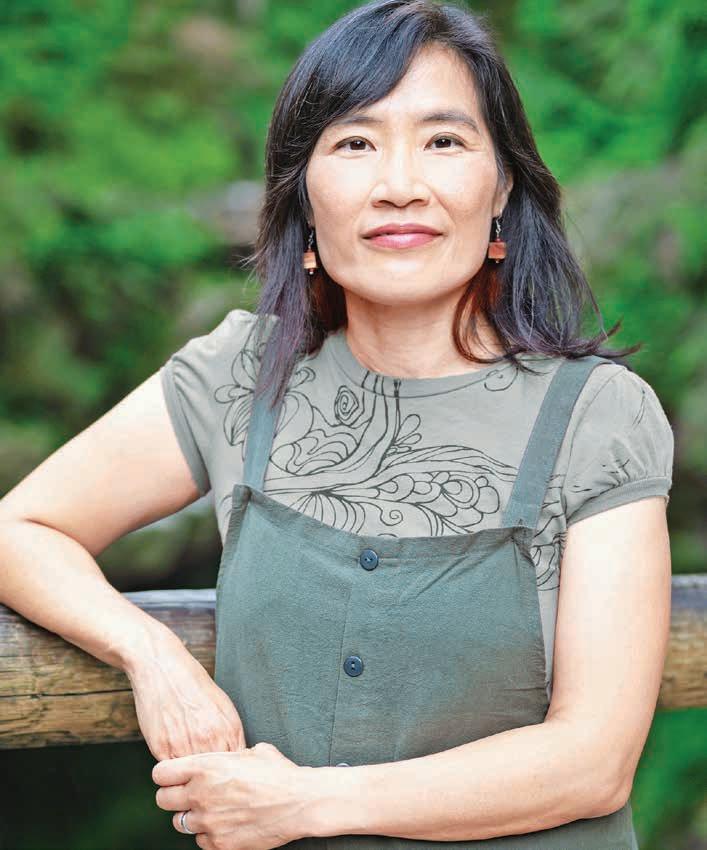
The adults of the 1980s have been labelled the “Me Generation”—one in which both parents typically worked outside the home, putting their career aspirations ahead of the needs of their children. The children of the 80s, Generation X, have been jokingly referred to as being raised on hose water and neglect. It was the era of latchkey kids and TV dinners. Wiley Wei-Chiun Ho, a child of the 80s, was not, like many Canadian children, left alone with her siblings to watch shows like Kate and Allie and The Facts of Life for a couple of hours after school. When Ho was twelve years old, her parents left her and her siblings for good, to live in Canada on their own.
Ho’s debut memoir, The Astronaut Children of Dunbar Street, tells the story of how her parents—nervous about Taiwan’s “ambiguous global identity” and in search of stability— immigrated with their children to Vancouver from Taiwan when Ho was nine years old. After staying three years and becoming Canadian citizens, her parents, still struggling to find work and to belong in a rainy, Englishspeaking land that did not recognize her father’s medical credentials, left her older brother in charge of her and her three sisters and moved back to Taiwan. There, “[t]hey would earn ten times what they could hope to make in Canada.”
Ho begins her book during the Covid era, when, as an adult, she is quarantining in a hotel room in Taiwan in hopes of seeing her dying father. From there, she guides us chronologically through her story from childhood— packing only clothes, shoes and a rice cooker (because “[r]ice is home”)—en route to Canada to her lonely, unsupervised adolescence—and back to her present-day fraught relationship with her parents. Throughout, she tackles questions of what makes a family and a home. “In Mandarin, jiā means home and family interchangeably, the two meanings intertwined and inseparable. But in Canada, I discovered that they could be separated.”
Her feelings of abandonment, and their long-term effects on her and the relationships she attempts to form throughout her life, take centre stage in the memoir. Through Ho’s in-depth exploration of her feelings, she expands her own story into one that mirrors many people’s childhoods. It speaks to the same feelings of parental disconnection that Teresa Wong’s 2024 graphic memoir, All Our Ordinary Stories (Arsenal)—about her parents, who fled mainland China for Canada in the 1970s—displayed so deftly and devastatingly through both her words and the swathes of negative space in her illustrations. As a child of the 80s myself, even though both of my parents were born in Canada and were physically with me throughout my childhood, I connected both with the Canadian cultural artifacts Ho enjoyed—the Choose Your Own Adventure novels she learned English with and
Wiley Wei-Chiun Ho’s compelling memoir of abandonment at age twelve, and the raw emotions that
led to an eating disorder.
the TV episodes of Wok With Yan her mother learned to cook with—as well as with her feelings of abandonment from parents who valued financial stability over emotional stability.
in one of the most significant sections of the memoir, during her teen years, Wiley Wei-Chiun Ho suffered from an eating disorder. She became so emaciated that her parents returned to Canada for an emergency visit to restore her to health. In the memoir, her anorexia and subsequent bulimia become a
metaphor for her adolescence. It was an exercise in depravation, a desire to stop and reverse the sudden changes happening to her. In physically vanishing, Ho wanted to disappear from her current situation and slip back into her former life as a child with parents who were there to care for her. She states a recurring theme of her childhood: “I marveled at how little I needed to survive.”
along with her emotional honesty, a strength of this memoir lies in Ho’s
vivid descriptions, which she shapes to fit her age as narrator. During her childhood, on the one camping trip her still-whole family attempted in order to be “real Canadians,” their tent was “[a] lopsided monster with orange skin.” As a teenager, we feel the dark weight of her loneliness: “I imagined my words sinking into the Pacific, swallowed by its cold sunless depths.” And as an adult, she welcomes us into the sensory richness during her visits to Taiwan: “The screaming butcher always made me flinch. I would hold my breath against the bloody smells coming off his wooden block and squeeze past the meat hooks dangling dark, dripping organs.”
The Astronaut Children of Dunbar Street is a compelling and emotionally astute look at the challenges that immigrant families face, and an inquiry into the meanings of family, home, stability and forgiveness.
9781771624794
Susan Sanford Blades’ debut novel, Fake It So Real, won the 2021 ReLit Award and was a finalist for the 2021 Ethel Wilson Fiction Prize. Her second novel, Girl on Paper, will be published by Nightwood Editions in spring, 2027.
… her anorexia and subsequent bulimia become a metaphor for her adolescence. It was an exercise in depravation, a desire to stop and reverse the sudden changes happening to her.
… her anorexia and subsequent bulimia become a metaphor for her adolescence. It was an exercise in depravation, a desire to stop and reverse the sudden changes happening to her.
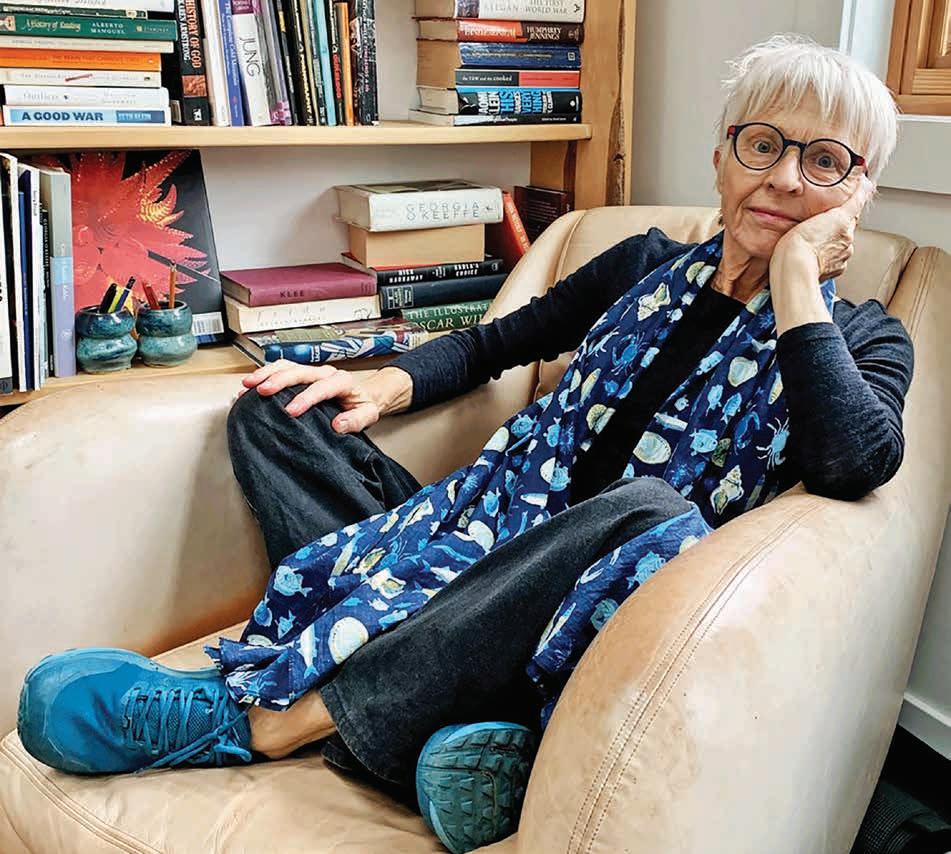
The first time I laughed out loud when reading Kathy Page ’s memoir of Parkinson’s disease was less than forty pages in. If it seems strange that I should have found a story of being taken hostage by a disease amusing, I can only credit Page’s mordant wit.
The Salt Spring Island novelist’s eleven previous books have received high honours: nominations for the Scotiabank Giller and Orange prizes and the ReLit and Governor General’s awards. All this to say that in Page’s capable hands, readers are in for not only a moving but also occasionally hilarious memoir of sudden illness and what it means in a life.
Page’s first intimations that something was not right came with a seem-
Facing a future of diminishing returns, Kathy Page’s beautiful memoir depicts her rage, despair and levity as she struggles with Parkinson’s.
ingly insignificant accident—a fall and injury to her hand. Always active, the novelist sought medical attention. Waitlists, Covid complications and potential alternate medical explanations finally resolved into the unwelcome news. Parkinson’s disease is progressive and incurable. Upon diagnosis, Page faced a future of diminishing returns: medication that would work to restore some of her limb function (until it didn’t), increasingly bothersome side effects and a guarantee of steadily reduced capacity. How can a novelist, one who was used to functioning at the highest levels to construct stories and commit them to the page, ever cope?
Page’s memoir does not sugarcoat these realities, nor does it gloss over her own rage and despair at the chang-
es she sees, as well as the ones she knows are coming. The amusing parts come not as gimmicks in an otherwise tragic story but as natural points of levity. There is the PWP (People with Parkinson’s, the acronym Page uses for herself and her fellow sufferers) “bitter joke”: a wish to remove oneself from this mortal coil before things get even worse but, with the diminishing dopamine brought on by the disease, a lack of will to carry through this intent. Suicide rates are, she notes wryly, hardly different in PWP versus the general population, perhaps due to this neat little paradox.
There’s the time her doctor asks if she has vivid dreams. “Of course not,” Page replies instantly over Zoom, only to have her husband butt in to cor-
rect her. When she subsequently asks him to note down what she says in her sleep, the resulting exchange goes like this:
“You yelled ‘You bastard! You’ve always been like this!’ I hope it wasn’t me.”
“You said no thanks it wasn’t really your thing.” (Bondage? Country music? Fermented seal meat?)
“You asked, ‘Do you want to join us?’” (In the swimming pool? In bed? A trip to Argentina?)
Of course, Page can remember none of it despite her fanciful interpolations. But what’s most charming about the voyage this writer takes us on is her undimmed sense of self. “I’m hoping my undiminished ability to judge and criticize others [means I’m not losing my faculties],” Page remarks wryly at one point. This before embarking on an extended rant about the use of the word “journey,” uttered by a luckless acquaintance to describe her cancer and remission. As someone who’s railed against this sanctimonious terminology myself, I could only smile in recognition as Page argues against baggy and unexamined metaphors,
words that strip the specificity out of tormented experience.
If Hilary Mantel, quoted in Page’s book, describes writing about illness as a “devil’s dictionary of anguish,” Page spares us the worst of it. This is a book that allows for some privacy; while her husband and friends and acquaintances from the PWP world and elsewhere are sketched, she barely mentions her adult children, an omission she later explains as being at their request. Still, the novelist doesn’t spare herself, writing about an accidental glimpse in the mirror where she realizes she’s losing so much weight that her breasts are “withered; deep creases ran like rays to the nipples.” Worse yet, Page says her eyes have “an angry, terrified glare that I found repellent yet could only alter briefly by vigorously feigning mirth.” Despite the fact that I don’t have Parkinson’s, I winced and grinned in recognition. As I’ve aged, my own increasingly bleak and forbidding expression, like a hawk disdainful of its dinner, can only fleetingly be altered by a determined expression of pleased cheer.
If Page spares others, but not herself, she also lets us in on some of the concerns that we all have. What happens to a relationship of decades when one of the partners can no longer, even figuratively, pull equal weight?
In Page’s telling, it can go a number of ways. The hulking husband of one tiny wife in the PWP support group, for example, refuses to use mobility aids, repeatedly falls and then will not let her help him up (not that, given his weight, she could). The wife must then hover beside her prostrate husband, explaining to anyone who comes to their aid that he will not accept assistance.
… this memoir has a much wider audience—all of us. It is a truism that as we age our lives will change, our capacities diminish, our abilities become less sure. In Kathy Page’s telling, however, we find an undiminished beauty in all that we are still able to see ….
Other couples grow closer. Some accept the sad reality of impairment and an inability for caregivers to bear the strain and begin to look for care homes.
There’s an elegiac tone to the last part of this memoir. Page details her struggles with typing, correcting and preparing her manuscript for publication. She briefly mentions the helpers she recruited to bring this book to press when she could no longer accomplish such tasks herself. While the need for aid came quickly to Page, it will come sooner or later to us all; the only thing we can control is the grace with which we necessarily relinquish the agency that we’ve spent the previous lifetime acquiring.
This is, as I hope I’ve already made clear, a beautiful book. I wouldn’t necessarily recommend it to someone with Parkinson’s: Page’s own discoveries about the condition are interesting to those of us to whom such hard-won knowledge is unnecessary. But details
about effects, drugs, potential treatments and the disease’s trajectory are probably already well known to those treading the same path as Page.
Perhaps a newly diagnosed person could be handed this book as a sort of touchstone, a wayfinder … here is someone who has been where you are; let her show you the path to follow. (As long as you promise not to utter the word “journey”). But I think this memoir has a much wider audience— all of us. It is a truism that as we age our lives will change, our capacities diminish, our abilities become less sure. In Kathy Page’s telling, however, we find an undiminished beauty in all that we are still able to see, even in the inevitable narrowing of the light.
9781037800887
Carellin Brooks is the author of five books, including her most recent, a poetry collection titled Learned (Book*hug, 2022). She lives in Vancouver.



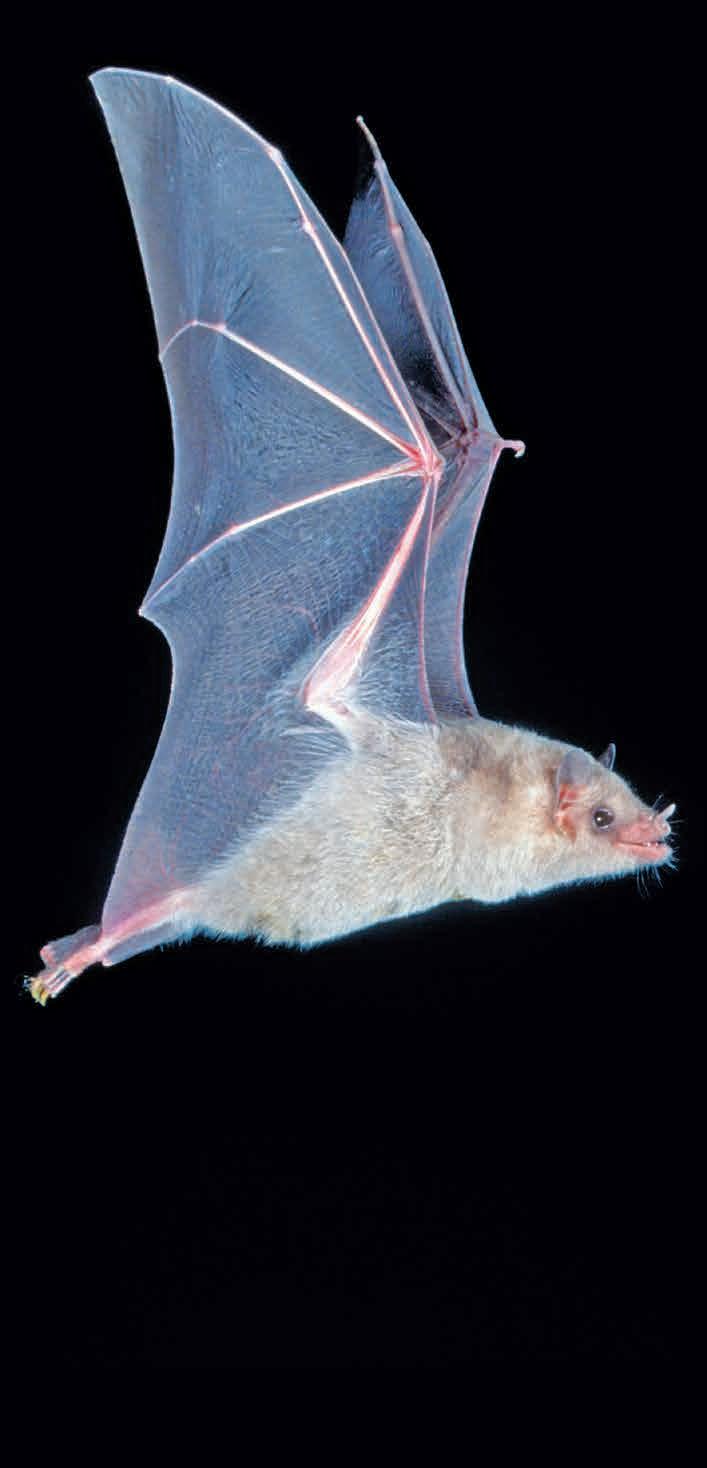
Vampire bats are good at sharing, observes Neil Griffin, which may involve throwing up blood that their fellow bats can eat.
BY HEIDI GRECO
o you suffer from chiroptophobia?
DAnd no, that’s not the fear of chiropractors, but of bats. As Neil Griffin explains in Bat Planet , the bat is not a creature to be feared, but valued. Yet if this sounds batty, I hope you’ll read on.
Part of the Orca Wild series, which always manages to convey oodles of information in an entertaining manner, Griffin’s book meets the challenge with flying colours—on bat wings no less! There’s an entire chapter on the marvels of the bat’s wings with illustrations showing how wings have evolved from the age of the prehistoric pterodactyl through to modern-day birds and bats. Griffin describes the bat wing’s lacy bone structure as resembling the shape of spider webs. While that comparison makes sense, when I look at the amazing closeup images, I also think of the delicate structure of leaves with their intricate patterns. But wings aren’t the only focus of Griffin’s explanations. His experience as a wildlife biologist has taken him across the planet and he takes readers along with him while he explains the steps scientists follow when they observe bats in their natural habitats (creatures which, incidentally inhabit every continent except Antarctica). He even gives us the reasons certain environments are best for particular kinds of bats, whether that’s the climate or the available food supply.
One of the most fascinating chapters concerns what they eat. While many North American bats make our summer outings more pleasant by eating thousands of mosquitoes, others sip on nectar and a small number even drink blood, though such a small amount— barely a tablespoon—the host animal would hardly notice.
“Blood doesn’t have many nutrients in it, and vampire bats need to feed every day or they’ll starve to death,” writes Griffin. “Fortunately, they’re good at sharing. If a hungry vampire bat returns to its colony, the other bats around it will share their food by throwing up a little bit of blood. They even remember which of their fellow bats have helped them in the past, so they can return the favor in the future with some blood barf of their own. A little gross, maybe, but very generous and a good reminder that the animals we might fear are much more complicated, interesting and beautiful when we take the time to understand them.”
Along with clearing up some of our misgivings about vampire bats which, after all, don’t even live further north than Mexico, he disentangles several other myths about bats. We learn that, contrary to many beliefs, they’re not blind, they don’t always hang upside-down, they certainly don’t all have rabies (most rabies infections in human—99%—come from dog bites), and they’re not just “flying mice” (in fact bats are more closely related to bears than mice). Sadly, we also find that bats, like so many other species on earth, are facing a number of
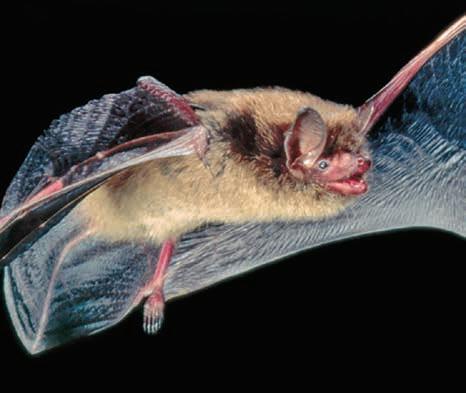
“Contrary to many beliefs, [bats aren’t] blind, they don’t always hang upsidedown, they certainly don’t all have rabies ... and they’re not just “flying mice” (in fact bats are more closely related to bears than mice).”—Neil Griffin
threats to their survival—due to habitat loss, risks from invasive species, and climate change.
Oneil griffin’s sense of humour is evident throughout, even in his bio note where he describes his day job as a teacher
who “works with the most dangerous wild animals imaginable: teenagers.”
No doubt he’s one of those teachers who knows how to make learning both memorable and fun for his students. Yet this isn’t to suggest that he ever dumbs anything down. He uses the
vocabulary of science, explaining such concepts as binomial nomenclature with accuracy and clarity. He even gives us a mnemonic for remembering the order of the terms used in classifying species. Nearly every page contains a scientific term, bolded—not only to highlight it, but to let us know it’s defined in the glossary at the back of the book. His “lessons” extend beyond the realm of science with interesting examples of art and lore from a number of cultures going back to early Egyptian and Maya civilizations that valued bats. He cites Chinese cultures which value bats as symbols of health and luck. He also relates a story from the Kanyen’kehà:ka (Mohawk) “ … about a great lacrosse game between birds and four-legged animals. Bat, with his wings, asks to join the birds, but they reject him as being too different from them. He joins the mammals instead and, through his ability to fly, helps them win the game.” All of these traditions serve to remind us of the many reasons to care about bats.
While he offers cautions about handling bats (ask an expert for help) and certainly doesn’t make them sound like good potential pets, he opens doors to understanding these fascinating creatures who are too often misunderstood by most of us and provide many benefits to their ecologies and, indeed, to mankind.
9781459841451
Heidi Greco and her partner tried building a bat house, but failed to attract any tenants. They plan to try again, this time with help from an expert at bcbats.ca.
Casual walkers and plant lovers of the Victoria area have found much to increase their outdoor pleasure in Collin Varner’s popular guidebook Trees of Victoria: A Wanderer’s Guide (Heritage, 2025) a comprehensive, full-colour guidebook identifying over 200 tree species and varieties in the provincial capital.
Now Varner has extended his reach with a companion book, Plants of Greater Victoria: An Ambler’s Guide (Heritage House $26.95). This title is another fullcolour guide to hundreds of wild plants found throughout the parks, forests, mountains, waters and urban green spaces of the Greater Victoria area including the capital region from Victoria proper to Sooke, Metchosin, Langford, Oak Bay, Uplands, Saanich and Sidney.
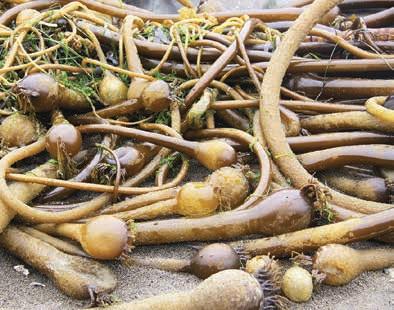
tWhat makes this corner of Vancouver Island so diverse is the warm, temperate climate that nourishes a broad range of wild native plants as well as urban green spaces. Varner features wild flowers, berries, ferns, bushes and marine plants—he even points out a number of invasive species. Information covers taxonomic origins, key characteristics, traditional uses and best viewing spots.
Varner spent over forty years working as a horticulturist/arboriculturist, including time spent at UBC’s Botanical Garden where he assumed respon-
sibility for conserving 25,000 trees across campus and taught courses in native plant studies. Based in Victoria in his so-called retirement, Varner is the author of several bestselling nature guides: The Flora and Fauna of Coastal British Columbia and the Pacific Northwest (Heritage, 2018), Edible and Medicinal Flora of the West Coast (Heritage, 2020) and 50 Keystone Flora Species of Coastal British Columbia and the Pacific Northwest (Heritage, 2024). 9781772035667
With Mother Nature as your pantry, it’s inexpensive and easy to gather the ingredients for mouthwatering dishes—just ask Linda Gabris of Prince George, a wild forager for over 60 years. Her publisher says Gabris likes “playing hide-and-seek with mushrooms.”
Her passion spending time outdoors fishing, hunting and harvesting edible wild foods has led Gabris to writing columns for BC Outdoors Magazine and British Columbia Magazine as well as authoring the bestselling Cooking Wild (OP Media, 2008). Her new foraging guide, Wild Harvest BC: A forager’s guide to edible plants of British Columbia (OP Media/Sandhill $24.95) contains over 70 recipes for cooking while on outdoor adventures. Consider options like Wild Cream of Asparagus Soup and Hazel’s Hazelnut Brittle. Beyond delicious food, the book has lessons on being responsible and sustainable in the wild.
9781777876425
Book



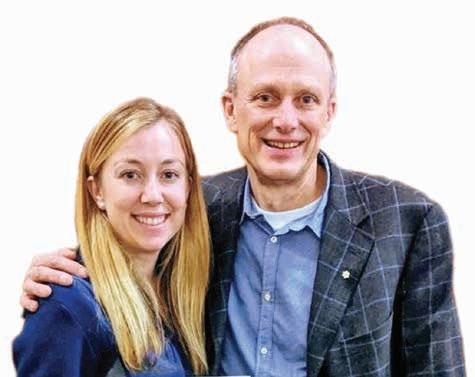
The Microbiome Master Key: Harness Your Microbes to Unlock WholeBody Health and Lifelong Vitality
by
B. Brett Finlay & Jessica M. Finlay (D&M $26.95)
BY GRAHAM CHANDLER
In 2017, B. Brett Finlay co-authored Let Them Eat Dirt: How Microbes Can Make Your Child Healthier (Greystone), a book that cautioned parents not to create hermetically sealed cocoons for their young children, “because early exposure to a wide variety of microbes is key to firing up the immune system,” he wrote.
The field is still extremely new and Finlay’s latest title, The Microbiome Master Key , co-authored with his daughter, Jessica M. Finlay, covers the latest findings about the role microbes play in all phases of our lives, starting with birth. “The moment you’re born, you receive your very first and very best birthday present: a big dose of vaginal and fecal microbes,” say the authors.
There is some surprising information about everyday life routines such as eating and drinking. For example, while drinking alcohol in excess is unhealthy, moderate consumption of red wine has been associated with health benefits including protection from cardiovascular disease and type 2 diabetes. Red wine is a component of the Mediterranean and MIND diets, both of which lessen the risk of neurological diseases such as dementia, the authors point out. Also stressed is the importance of regular exercise.
It was interesting to learn that microbes play a role in susceptibility to Parkinson’s disease, the second most common neurodegenerative disease after Alzheimer’s. Parkinson’s affects 3 to 5 percent of over-85s and is thought to start 20 to 30 years earlier in the gut. (Historically it was thought that the gut could be a source of reasoning, hence the common expressions “gut feeling” and “go with your gut”.) Most common clues to Parkinson’s are constipation and loss of sense of smell—both of which hint at microbe involvement. In fact, much of the research data point to Parkinson’s disease being associated with gut microbes before brain symptoms are noticed—a paradigm shift in thinking about the disease, say the authors. Moreover, microbes associated with the MIND diet are thought to significantly delay onset of the disease; additional studies are underway to see if and how this is associated with microbes.
“There is one number that predicts your health and life expectancy more than any other: your postal code,” the Finlays write, adding that it’s a myth longevity is determined by genetic factors. Instead, they maintain that the everyday social and physical conditions of life—where you live, who you interact with, what you eat, how often you exer-

Cell phones carry ten times more bacteria than most toilet seats. Yet, ironically, unlike the bathroom, people rarely clean or disinfect their phones.
A cluster of Escherichia coli bacteria magnified 10,000 times
Yes, many bacteria are bad for us but avoiding all microbes, even the good ones, is not healthy.
cise—can influence health and longevity to a much greater extent (about 75 percent in studies) than genes (about 25 percent).
The role played by microbes is unavoidable. “Every time you open the front door, a gust of air carries microbes into your home—as do dogs, visitors, Amazon packages, and your own body, which picked up microbes from your car, the sidewalk, your office etc. These microbes are critical, as Americans now spend about 90 percent of their time indoors,” say the Finlays. “This goes against human nature. We did not
evolve in sterile chambers or closed rooms, but rather in contact with nature. We slept on cave floors, had limited hygiene rituals, and spent most of our time outside with other people and animals.”
“We may be more productive, connected, and technologically advanced compared to our ancestors, but we’ve also alienated ourselves from many of the essential microbes that evolved with us,” they go on to say. “This shift to the sterilized indoors has had some unintended conse -
quences.” They illustrate with an example: “Children who grew up on Bavarian or Amish farms, and in close proximity to livestock had significantly lower prevalence of some allergies.”
One place where there are probably too many microbes is on our cell phones. The new research on cell phones is surprising: they are far dirtier than we might ever have expected. “They are actually vast reservoirs for bacteria—the more microbes they collect, the more microbes wind up on our hands, face, and everywhere in between…one study showed that Americans check their phones on average 144 times per day, which provides plenty of opportunities for microbes to move from our fingers and palms to our phones.” University of Arizona researchers have found that cell phones carry ten times more bacteria than most toilet seats. Yet, ironically, unlike the bathroom, people rarely clean or disinfect their phones.
There’s lots more. This volume is chock-full of results of new and fascinating research; all written and presented in easy-to-understand prose. Sidebars supplement the text where needed—many to clear up “myth versus fact.” Extensive references are presented as well as useful “Key Tips” at the end of each chapter. Read it. It could change—or possibly save— your life.
9781771624428
Graham Chandler is a Vancouverbased freelance writer.
noticing
M.A.C. Farrant learns about
dandelions,
BY CAROLINE WOODWARD
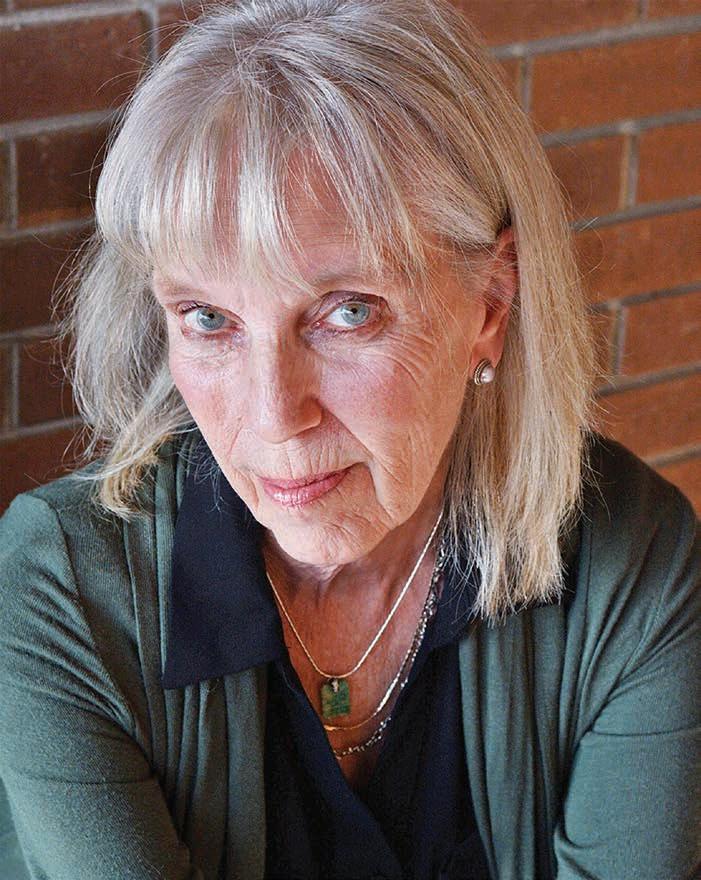
It’s unusual to call a memoir timely as well as timeless, but in the hands of short fiction master M.A.C. Farrant , SeventyTwo Seasons is just that. Eschewing traditional narrative structures, as always, Farrant decided to spend a year inspired by the Japanese concept of 72 seasons of five days each, not the usual Canadian four, annually.
“I’m hoping that noticing nature will be an antidote to the distraction of happenings in the wider world around me via a small screen. That practice has yielded nothing but despair,” writes Farrant.
She begins in mid-May, living as she does on the southern end of Vancouver Island, to welcome, observe and write about the flowering hawthorn trees. As with enjoyable essayists like the American author, Rebecca Solnit (who wrote, among other notable books, Men Explain Things to Me) and
wall lizards, rats, robins, wild cyclamen, snowdrops and waiting as she tackles the despair of life lived online with nuggets of humour and wisdom in every paragraph.
the BC writers Elspeth Bradbury and Theresa Kishkan, Farrant deftly embeds nuggets of humour, wisdom and information in every paragraph. She discovers what it means to really stop and watch the flowers bud, blossom and drop. Farrant also discovers the beauteous hawthorn flowers smell like “decomposing vegetables” but on the upside, their berries are used for jams and have a long history in medicinal heart remedies.
Onward we go, in five-day increments, learning about dandelions, wall lizards, waiting, rats, robins, urban beautification, wild cyclamen, leaves, snowdrops, the four seasons (with notes on Vivaldi in his impoverished final years, teaching orphaned girls how to play the violin, including his now-famous cycle of compositions
dedicated to the seasons), what’s in her neighbours’ blue recycling bins on the curb, cats, dogs, childhood double Dutch code language, vertebrates with hair and a hilarious account of retrieving a much-coveted boulder by four jolly men, all friends and neighbours, as well as the author’s husband.
“It was a balmy July morning, a Saturday, the tide was out, and the sky along with them, was clear and high,” writes Farrant. “They were after a huge chrysanthemum stone on the shoreline: oblong, smooth and covered with perfectly formed ‘flowers’ … Its estimated weight was two hundred pounds. It had been on the beach for years … They set off around ten that morning—the beach was two blocks away—pushing our green wheelbarrow with two six-packs of beer inside it.”
I will not spoil the outcome of this adventure by “four latter-day Tom Sawyers” but it demonstrates so well how the curiosity of Farrant leads her to doing the literary equivalent of slapstick comedy one minute followed by soulful meditation the next—the kind of meditation she had hoped to do while seated serenely on the chrysanthemum rock, eventually.
Then there is a grateful ode to a small, overgrown field, a field with poor soil, growing couch grass and “an assortment of weeds” surrounded on two sides by the inevitable blackberries, a haven for deer, mice and cats on a mission.
“The field functions as an oasis amidst a clutter of houses and roads,” says Farrant. “It’s rumoured to be owned by someone in Ontario, though we don’t know that for sure. Maybe it’s being held in trust and has been forgotten, its taxes paid automatically from a computer. Maybe no one knows it exists. If a field could escape from development, this would be the best way to do it: lie low, keep quiet; enjoy being a field that’s fallen between bureaucratic cracks.”
Farrant’s book is filled with quotes by other great minds throughout, and her acutely observed and beautifully written 73 subjects/chapters, with one extra to explain the Egyptian 360-day
Onward we go, in five-day incre ments … what’s in her neighbours’ blue recycling bins on the curb, cats, dogs, childhood double Dutch code language, vertebrates ...
calendar and the five dangerous “extra” days until it meshed with the 365-day solar calendar. All this, combined with a blazing final paragraph from the Queen of Quotes, Joan Didion, is employed by Farrant to exhort us all to seize the moment—essentially, to live our lives to the fullest. The list of sources and notes for each of the chapters is a treasure trove in itself.
Om a c farrant dedicates seventy - two Seasons to Karl Siegler, her longtime editor at Talonbooks, which has published ten of her books. To date, she has published three books of miniature fiction, one novel, four nonfiction
books, including My Turquoise Years (Greystone, 2004/Talonbooks, 2024) for which she also wrote the script for one of her two published and pro duced plays plus more than a dozen chapbooks. “Brilliant”; “Canada’s most acerbic and intelligent humour ist;” “Like a tap dancer on a tower of encyclopedias”—all apt descriptions of Farrant’s long and prolific career. This memoir is the perfect read for those of us harried and hounded by the daily news (which is pretty much all of us) who need a deep dive into contempla tion, lightness and clarity.
Caroline Woodward writes, come rain, sun or snow, in New Denver, BC.
An excerpt from Seventy-Two Seasons: A memoir about noticing by M.A.C. Farrant
Afew years ago, four middle-aged friends from the neighbourhood, all men, smoked a couple of joints and headed to the nearby beach. It was a balmy July morning, a Saturday, the tide was out, and the sky, along with them, was clear and high. They were after a huge chrysanthemum stone on the shoreline: oblong, smooth and covered with perfectly formed “flowers.” Its estimated weight was two hundred pounds. The stone was the size of a boulder, a rarity for a chrysanthemum stone. It had been on the beach for years.
I coveted that stone and had mentioned my love of it during one of our neighbourhood parties. This was during the aughts of the twenty-first century when everyone was buying concrete Buddhas—a more enlightened garden ornament, it was felt, than placing gnomes, gargoyles, winged angels or miniature lambs outside as an aesthetic statement. I wanted the chrysanthemum stone because it was beautiful (we already had the Buddha, a smiling one), but also because I had recently taken up meditation and pictured myself sitting on it beneath our Granny Smith apple tree. It was here that I planned to become, if not enlightened, then at least serene.
Because I said I wanted the stone, the four friends, my husband included, decided to get it for me. It would be an expedition, they said, dressed as they were in shorts and straw hats like four latter-day Tom Sawyers. I was delighted. They set off around ten that morning— the beach was two blocks away—pushing our green wheelbarrow with two six-packs of beer inside it. They made it back to our place three hours later, sweaty and laughing. The stone was then wrestled into its new home beneath the apple tree, and all of us stood around looking at it, pleased as anything. They wanted me to sit on it and meditate then and there as a kind of reward for their labours but, experiencing stage fright, I made them sandwiches instead.
What was so prized about this par-
ticular stone, aside from its polished surface and great size and shape, were the evenly distributed flowers across it, tiny and creamy white against the back drop of grey-green. Also called flower stones or Japanese wedding stones, the flowers of the chrysanthemum stone are actually crystallized minerals and were formed millions of years ago, which is not something easily digested timewise. But neither is thinking about the age of the earth—4.5 billion years. The stone under our tree was to become a breathtaking reminder of this fact.
Things got very spacey very quickly, which is how the four men described their efforts to carry the heavy stone up the steep stairs from the beach. This is why it took them so long, they said. They had to pause every few steps because of the head rushes—there were forty-four steps—and return to enjoying themselves on the beach, not a hard thing to do, considering. There were a couple of overhanging trees providing shade and feeding seagulls to watch, and very likely some hilarious conversations to be had.
I later discovered that chrysanthemum stones, while being rare worldwide, are fairly plentiful on the east side of Vancouver Island, which is where we live, and that they were once mined on Texada Island. They are also plentiful in China and Japan, where the stones have been venerated for eons for their healing powers and as symbols of love.
The Crystal Council, an online crystalworshipping site, published this declaration about the stone: “They are powerful life talismans that are here to assist one along their spiritual journey to help better understand your soul within.” A bit of a mouthful, for sure.

Experience an exceptional summer gathering of Canadian writers and readers, featuring
Support the Sunshine Coast Festival of the Written Arts!
Become an annual subscriber for early access and a 10% discount on festival tickets and passes.
Tickets on sale for subscribers May 25
Tickets on sale for the general public June 1







63. March 19–23
Unfortunately, the newly installed chrysanthemum stone was uncomfortable to use for meditation; it was uneven, and I kept sliding off, which was hardly the thing to be doing when you’re trying to empty your mind. So we placed the concrete Buddha on top of it as a marriage of sorts, and for all these years the pair have seemed pretty content to stay together.
Join Derek Hayes as he takes you on a fun and adventurous trip through the creation of our modernday-transportation system over water.
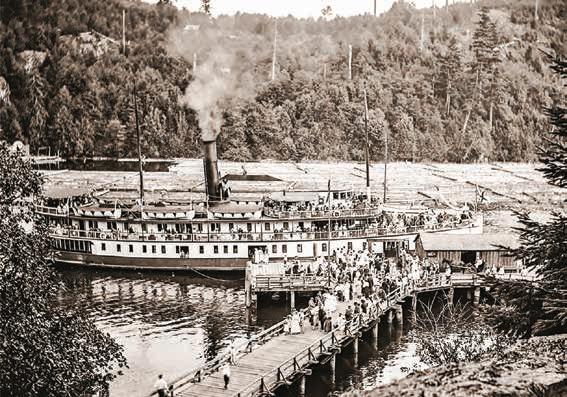
Our BC coastline stretches more than 25,000 kilometres and can boast over 40,000 islands. That’s a lot of territory to cover. For many years, coastal communities were cut off from the mainland and only accessible by water and air—there were no roads linking them to the outside world. Ferry vehicles and water taxis of many sorts became common sights to British Columbians.
Want to learn more? Check out historian Derek Hayes’ new title, Coastal Connections. It’s a source book. It’s a history book. It’s a picture book. It’s a get-smart book. It’s a fun-read book. Leave it on your coffee table. Your dinner guests will flip through it with the occasional “Well, I’ll be darned!”
Of course, those guests, and readers who have read any of Hayes’ other 19 history books will still be “darned.” Because he has a knack for digging up fascinating minutiae. Hot on the heels of his 2022 BC history/geography volume Incredible Crossings: The History and Art of the Bridges, Tunnels and Inland Ferries That Connect British Columbia (Harbour, 2022), Hayes’ new tome is a compelling complement.
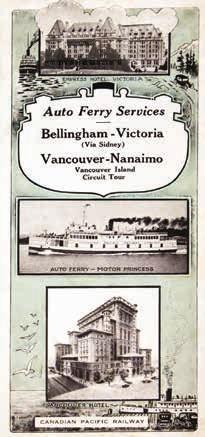
Here in BC our ferries have come a long way. Consider, for example, “taking a car on the ferry in the 1920s was a totally different experience compared with today’s easy drive on and drive off [also called roll-on, roll-off],” writes Hayes. “Many ships were designed to take freight unloaded and shipped by itself, and ships had low overhead space on the cargo deck. This necessitated expediencies such as letting the air out of tires or even removing them entirely, removing the top (if it was a convertible) or removing the windshield—basically anything that would reduce effective height.”
Those early days are a contrast to today’s experiences as well as today’s main uses of our popular coastal service. It’s easy to forget that, up to the 1950s, travel by ferries and other passenger vehicles was crucial for the movement of people, mail and goods to and from coastal communities. Sometimes, the ferries only came once a week. Social gathering opportunities and contact with the outer world was a common feature near ferry docking areas says Hayes, noting that “for many decades ‘boat day’ was a major event in the Gulf Islands, not only for the interesting activity it brought but also for residents to collect their mail. After being offloaded the mail usually had
Coastal Connections:
A History of British Columbia Ferries and Passenger Ships by Derek Hayes (Harbour $50)
BY GRAHAM CHANDLER
to be sorted, but it was worth waiting for when it was your only link to the larger world,” writes Hayes. “And the ferries were critical for economic activity. Farmers were able to sell their produce in Vancouver and Victoria only because of the ferry. Mayne Island, in particular, had a large business growing greenhouse tomatoes, which, because of longer hours of sunshine, were ready two or three weeks before those grown in the Fraser Valley.”
“Well, I’ll be darned …”
• The first regular ferry service in BC was in 1859 by a sidewheel steamer named Eliza Anderson operated by the United States Mail Service.
• The first ship to arrive on the Northwest Coast specifically designed to carry cars was in 1918.
• The MV Scenic was billed as “the only floating post office in the British Empire” from 1932 to 1968.
• The SS Canora was the only BC coastal ferry to be armed; it was fitted with a gun during World War II.
• Built in Vancouver in 1924, the MV Harbour Princess was said to be the first diesel-powered vessel on the BC coast.
• The first regularly-scheduled hovercraft service in the Americas was in 1969 from Nanaimo to Vancouver.
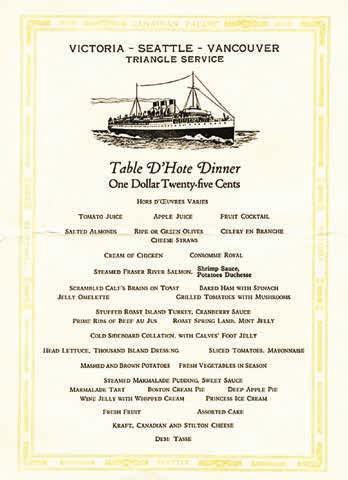
• Dinner menu items on the 1920s Victoria-SeattleVancouver Triangle route included “Scrambled Calf’s Brains on Toast” and “Calves’ Foot Jelly.”
• In 1907, Union Steamships’ Camosun became the first ship on the BC coast to have a wireless telegraph installed.
• In July 1937, Union Steamships’ Lady Rose became the first diesel-powered single-screw (i.e. singlepropeller) vessel to cross the Atlantic.
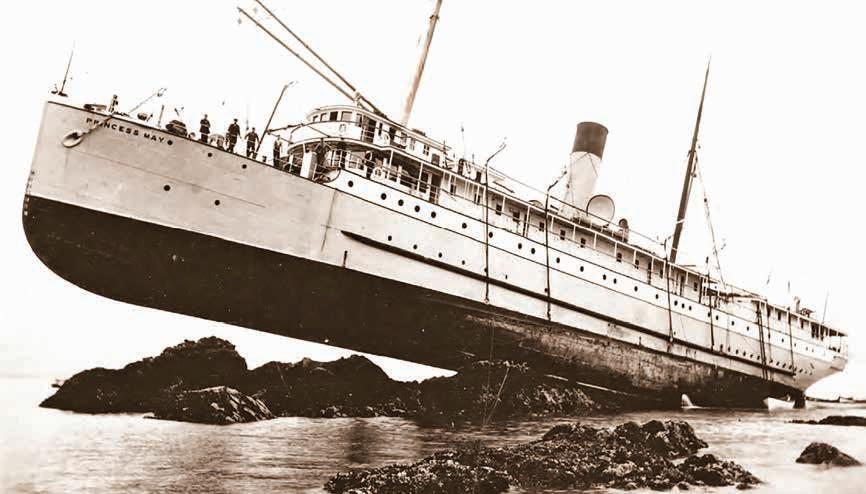
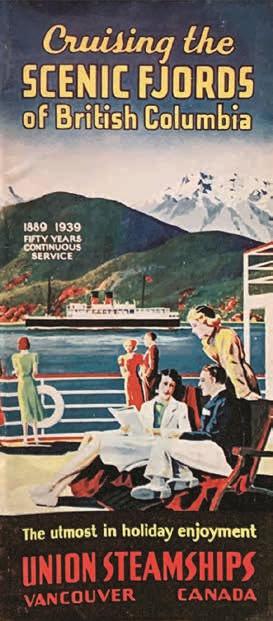
Otone of the major players in the early bc coastal shipping and ferries business was Union Steamship Company. This company certainly had marketing smarts. In addition to serving isolated settlements, logging camps, mines and mills it developed tourist destinations. Through acquisitions, Union Steamship owned destination resorts at Selma Park, Bowen Island and Sechelt. They also developed a cruise ship-style event for day trips, variously including dancing, midnight cruises and more. As well, Union Steamship’s sharp marketing staff created company picnics for businesses with clever and colourful artistic posters and other promotional campaigns. Another large company historically operating in our tricky west coast waters was Black Ball Ferries that was later taken over by the BC government in 1961. It was an early catalyst for a revolution in marine traffic. Although the company wasn’t the first to develop the concept of roll-on, roll-off vehicle loading, it was certainly its most fervent popularizer. And Black Ball was no slouch in marketing either, jumping on to the latest artistic and design trends like Art Deco with the Airstream-looking Kalakala, one of the more fascinating stories in this book. Originally a San Francisco commuter ferry called the Peralta, it was caught up in a 1933 Oakland fire and written off by the insurance company. Black Ball bought the hull and rebuilt it in Art Deco style using a new arc-welding construction method which enhanced its revolutionary streamlined styling. Returned to service in 1935 as Kalakala, it set a precedent by being the first time an Indigenous-derived name was used on a ferry. However, despite its revolutionary aspects, like many other firsts it had its share of problems.
The Kalakala had restricted vision over the bow which increased the propensity for collisions. It also had unsolvable vibration issues. Finally, increasing operational costs including load space restrictions forced its 1967 withdrawal from service. The Kalakala had an ignominious end as an Alaskan seafood processing plant.
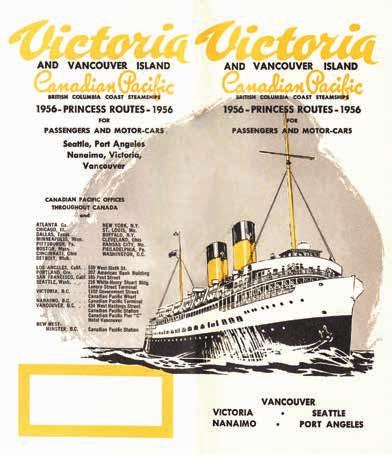
Black Ball is generally credited with bringing modern concepts to a marketplace that, early on, was “largely more sedate, with the leisurely, more formal, and often overnight services epitomized by Canadian Pacific Railway (CPR). [In contrast] Black Ball’s concept was to find the shortest route and get there as fast as possible—exactly like BC Ferries today,” writes Hayes. O
and thus was born the bc ferries of today
It was the summer of 1958 and Vancouver
Island was essentially cut off by strikes at the two main ferry providers, CP and Black Ball. Long-time BC Premier W.A.C. Bennett’s government was unable to intervene as the ferries were federally regulated. It was a tumultuous time in BC labour relations: Bennett invoked the Civil Defence Act, putting Black Ball under trusteeship. Next day saw police read the Riot Act at the ferry terminals. But it was to no effect. A full-on strike against Black Ball began on 18 July 1958. Bennett then threatened court action and a decision to create a BC government service themselves. “Many historians consider 18 July 1958 to be the origin date for BC Ferries,” writes Hayes.
But Bennett apparently had no immediate candidates with any good ideas about how to run a ferry business. So who did he call on? Why, none other but the infamous “Flying Phil” Gaglardi, and his reputation of a “let’s get at ‘er and get ‘er done” attitude. Under his leadership, BC Ferries thrived: it “spent the first half of the 1960s building large ships, and the first half of the following decade making them bigger, increasing capacity by lengthening them or adding another car deck. Passenger numbers rose rapidly. “In its first year of operation, BC Ferries carried 692,000 passengers,” writes Hayes. “By 1970 it was 5 million and by 1979 it doubled again to 10 million.”
Ofor the first time, some serious competition came from airlines: Queen Charlotte Airlines (later Pacific Airlines) began twice-daily flights to Powell River from Vancouver in July 1952—a service that became popular and could transport surprisingly large numbers of people with multiple daily flights. They were competitive, too: in 1950, flights from Vancouver to Prince Rupert were $44.85, as compared with $36.25 by sea, but the flight took 5 hours, 15 minutes whereas the sea trip took 37 to 42 hours.
Omuch of the 1990s was spent seeking faster crossings. In 1994 BC Premier Mike Harcourt and ferries minister Glen Clark announced that three totally innovative ferries would be built for the Horseshoe Bay to Nanaimo run. They’d be fast (69 km/h), aluminum two-hulled catamarans capable of carrying 250 cars and 1,000 passengers. The cost for all three was estimated at $210 million. The first, Pacificat Explorer, was demonstrated on 12 November 1998 but a long series of problems surfaced, including need for a new engine design, loading balance difficulties, sewage dumping problems and more. Unable to efficiently redesign, the project was cancelled. Final cost total came in at almost $460 million. They were auctioned off for $19.4 million. That’s just one of the many politics-related stories that Hayes covers in some detail in this volume.
Othe book wraps with a useful bibliography and recommendations for further reading. But the final sections before that are in some ways the most interesting—such as how ferry art images show creativity in photography. “The Way Ahead” section discusses the future direction of BC Ferries’ major vessels, which is threefold: larger, greener and standardized. Plans have been announced for up to seven of some of the largest double-ended ferries in the world. And, in meeting the new criteria, their engines are designed to use biofuels and will include a battery-hybrid propulsion system that will allow for full batteryelectric operation once shore-based charging systems become available.
Meticulously researched and lavishly illustrated with over 300 historical images, this tome will make your next ferry ride a whole new experience. Not to mention your coffee table.
9781998526383
Graham Chandler, a long-time freelance writer based in Vancouver, enjoys ferry travel.
cover of a Union brochure issued in 1939 commemorating the company’s 50th anniversary. The colourful artwork promoting style and
was typical ofits time.
Paperback,


BY TREVOR CAROLAN
ther than a few episodes of Reilly, Ace of Spies (1983) on PBS, the RussoJapanese War (1904-05), fought in China and adjacent waters, is rarely mentioned. Japan’s shock victory made it a world power and shady deal-making gave it all of Manchuria and Korea. Japan installed a puppet-emperor in the former and annexed the whole of Korea in 1910, remaining the colonial power until 1945. Few there have yet to forgive the brutality of Japanese rule with its attempted cultural genocide of Korean identity.
As translator, Keiko Honda acknowledges in her introduction to this memoir by her grandfather that Koreans were forced to “adopt Japanese names, speak the Japanese language, and worship at Shinto shrines … Korean history and culture were suppressed.” She adds that “Korea’s natural resources were exploited, Koreans were forced into labour camps, subjected to discrimination and violence, and often denied access to education and employment.” Worse, from 1931-1945 between 20,000 to more than 100,000 Korean women, mainly poor and some as young as 12, were trafficked as sex slaves for the Japanese armed forces and were raped and abused by 5 to 60 men daily.
With Japan’s Second World War defeat in 1945, everything changed utterly. The Koreans with their US and Soviet military occupiers retook control. More than 750,000 Japanese, drawn by economic opportunities throughout Korea, were now stranded from their “home islands.” Honda’s grandfather, Konosuke Masuda , a bank employee who had been conscripted into the Japanese army only three months before the war ended, would become a wandering refugee in what is now North Korea, a Staliniststyle dictatorship.
In later life, as Honda tells us, Masuda undertook to record his hardships and experiences as a post-war refugee. His intention, she believes, was to bear witness to “the dehumanizing nature of conflict.” His hope for humanity was that by revealing “the universal aspect of the human condition in the face of extreme adversity,” we might be inspired to transcend “the divisions between enemies and allies.”
Konosuke Masuda’s harrowing memoir bears witness to the dehumanizing nature of conflict as he escaped what is now North Korea during the last days of the Second World War in 1945.
Oon august 15, 1945, private Masuda was marshalled with his fellow Japanese soldiers and expatriates in their camp square. It was the first time any of them heard their emperor’s voice as he broadcast in complicated classic language the government’s acceptance of America’s demand of unconditional surrender. Masuda relates that soldiers were left with only a “general idea that we had lost the war.” He says that he felt a sense of relief and expected to be discharged to home and family. What he thought Koreans, Americans and Soviets might think is not clear. Soviet troops compelled Japanese officers to surrender their units in person. Not to disarm meant death, but
word leaked that disarmed troops were being taken prisoner and sent to Siberia (where many Japanese would spend up to 10 years in slave labour camps and tens of thousands died). Masuda reports how, courageously, his commanding officer insisted that since his men were mostly local recruits, they should simply be permitted to return home. With fates uncertain, when a camp guard issues three passes for a labour detail outside, after stuffing their pockets with tobacco, Masuda and two others flee. His refugee odyssey begins.
For four dangerous months, on foot, hopping railcars and, despite arrest and questioning several times, Masuda manages to escape deportation
to Stalin’s gulags and survives failed attempts to cross into American-controlled South Korea. In plain language, his modest 65-page narrative recounts tramping through small towns, past wrecked railway lines, urban chaos and dodging Soviet soldiers. The trio inch forward, encountering furtive groups of other Japanese hiding in fear. The US and Soviets have already divided Korea at the 38th parallel into separate capitalist and communist occupation zones. Masuda sees evidence at stations of a new Korean government authority emerging in the north, negative toward the Japanese and led by Stalinist hardliner, Kim Il Sung, whose pathologically antidemocratic regime continues as a family power lineage to our present time. Masuda doesn’t comment on this, although he has intimidating encounters with Red Korean security officials.
Detained in Rako-ri town, on seeing agitated Koreans with guns, Masuda fears execution. But rounded up on a train, he is moved deeply when crowds of ordinary Koreans wave sympathetically and call out farewell to the vagabond Japanese refugees. When slack security makes escape possible, he bolts. In Hamhung, Masuda notes the rise of food black markets and a Japanese refugee association actually finds him work. Survival remains day-to-day. When the fortunes of war reconnect him with an old banking friend, Masuda quickly sets off for the border with a new escape group. There’s tension as they avoid Soviet patrols in the mountains. While passing golden rice fields, they are helped by kindly Koreans at risk to themselves as Masuda recognizes. Alas, identified, the escapers are sent north again.
Obecoming a tale of refugees shunting back and forth on trains between destinations without apparent logic, Matsuda’s narrative turns hellish when Soviet soldiers make repeated night raids on the trains, seizing and raping helpless Japanese women. It’s a terrible mirror of the kidnapped Korean comfort women with the Japanese now the prey.
Doing whatever it takes—sleeping rough, avoiding typhus, suffering malaria and with unexpected Soviet help—against extreme odds Masuda is able to reunite with his family at Songjin. Repatriation to Japan might yet come. Some deeper reflection on Japan’s treatment of those it exploited, or its wartime conduct would be appreciated, but this is a survivor’s story, humbly told, of a now near forgotten time.
9781773861760
Trevor Carolan has written on Asian arts and culture for more than 40 years. He lives in North Vancouver.
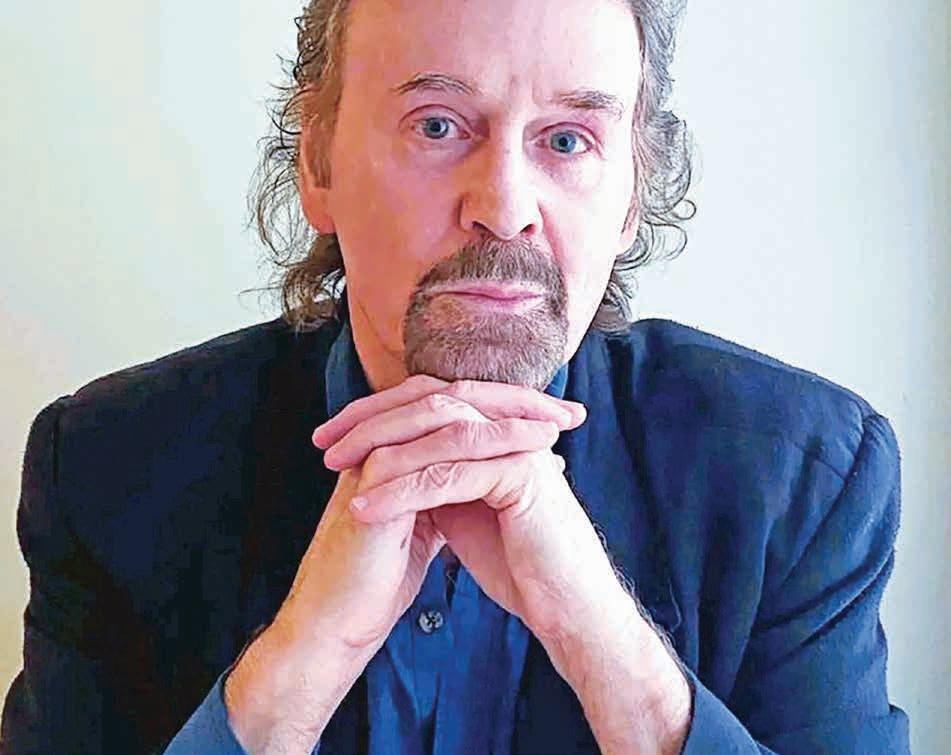
“And yet, for all Greece and other distant places have given me, I am finally nothing if not a North Vancouver poet. Leaving my home and returning to it has given me a renewed sense of the mystery of my origins.”
—Russell Thornton
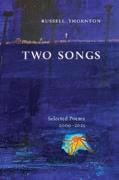
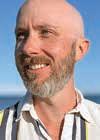
ased in North Vancouver, Russell Thornton is known for poetry that reflects on life, death and transformation. The author of nine previous poetry collections, Thornton has twice been shortlisted for major awards, including the Governor General’s Award and the Griffin Poetry Prize, and his poems have appeared widely in anthologies and international translation. His new collection gathers poems written between 2000 and 2025.
How would you describe the basis of your poetry?
I reach for lyrical intensity, though the details arise always from my own lived experience. I write about many things— my relations with others, the places I’ve lived in and visited—but it may be the landscape of North Vancouver and the surrounding area that most powerfully shapes my imagination. The mountain, forest, mist, cloud, creek, river, inlet and rain energies of my locale work their way persistently into my poems. Your work is described as having “scenes ranging from the Greek sun of the Peloponnese to the firs on Vancouver’s North Shore.” How does travel inform your poetry?
There’s a saying: “Travels are the soul of the world.” I think in travelling you sometimes enter a state of timeless-
Twenty-five years of Russell Thornton’s poems cover desire and loss, presence and absence, and negotiate the tension between life and death that defines what it means to be human.
ness—pure process, pure potential, pure relationship with whatever is before you. You move toward a promised land that seems to create itself moment by moment in the imagination.
When I was a teenager, I was desperate, as many teenagers are, to leave my familiar surroundings; I ended up going away for decades, returning for brief periods to drive a taxi. Of course, what I was really desperate for was access to parts of myself that eluded me but felt necessary for my psychological survival. And at a certain point, travelling leads beyond the personal into the deeper, shared regions of the psyche— those ancient energies common to all human beings.
In Greece I felt this repeatedly. I was struck by the power of the place—the hypnotic white light, the eerie omnipresent rock, the sea. And the people: their wild music, their gestures carrying excitation and vastness. I lived in Larissa and then Thessaloniki for three, four years and have returned several times, and feel a piercing nostalgia for these places. Greece tests a person; the culture insists that you reveal exactly who you are. You have no choice, just as the characters in ancient Greek drama have no choice in their defining moments. And yet,
for all Greece and other distant places have given me, I am finally nothing if not a North Vancouver poet. Leaving my home and returning to it has given me a renewed sense of the mystery of my origins. One image is permanent in me and encapsulates this: looking west past the Lions Gate Bridge toward the Salish Sea, where the sun blazes over open water while rain falls softly on North Vancouver. The light pours through the rain in delicate, trembling rays. That moment contains the essence of travel: the desire for transformation, the dream of creativity. That interchange of sunlight and rain is a sudden conjuration: an elemental summons of attention. So, ironically, here, more than anywhere else, I have a chance to undergo and enact the transformation that once seemed possible only in faraway settings.
You use a Nikos Kazantzakis epigraph for this collection: “Life and Death were songs…” How does this concept of “life-death songs” serve as the central theme for this collection gathered over 25 years?
When I began to write seriously, a well-known older Canadian poet said to me, “There are only two subjects worth writing about, sex and death. Even when you think you’re writing
about other things, at your best, that’s what you’re writing about.” At the time, I wondered if he was simply being provocative, but I’ve since recognized the truth of his words. Love, eros—the life force—and its counterpart, death, are the poles across which the tightrope of our lives is strung. As Nikos Kazantzakis declares in his monumental poetic sequel to Homer’s Odyssey, life and death are songs. The poems in my collection record my attempts to sing my own versions of those songs. Gathered over two and a half decades, these poems trace the ways I have tried to walk that tightrope—striving to utter both desire and loss, presence and absence, and to negotiate the tension between life and death that defines what it means to be human.
Critics have praised your “masterful lyrics” and impeccable craft that balances “living with one’s gaze on mortality and suffering” with “healing and regeneration.” How do you maintain this balance in your poems?
The “best words in the best order,” as Coleridge said; a “dream dreamed in the presence of reason,” in Tomasso Ceva’s phrase; “a room of marvels,” as Andre Breton called it—these and many other characterizations of poetry, offered by master poets both in their sayings and lyric examples, guide me in my own attempts. It seems inevitable to me that the highest levels of poetic craft enact a vision in which paradox opens its door to transcendence—where suffering and joy, hurt and healing, the material and the spiritual, mortality and the eternal move toward union and become one. 9781998526574
BY BRETT JOSEF GRUBISIC
Among his ambitious colleagues at a Human Resources department in a big corporation, mild-mannered Colin Harris is definitely a nobody. Over the years, though, he’s been listening and, if nothing else, he knows “corporate speak” lingo. He is able to get a promotion.
Near the end of Colin Gets Promoted and Dooms the World, Mark Waddell ’s delightfully macabre and funnily zany second novel, Colin holds his own with fearsome Ms. Crenshaw, his new boss. Taking a break from his signature cardigan, he’s wearing a suit as he defends his job at DE, a labyrinthine multinational corporation “that specializes in solving problems.”
Lately, Colin’s star has been on the rise at DE’s Manhattan branch and he’s learned to sell his stance. The questionable action for which he might receive a reprimand was actually not bad at all, Colin claims. It “allowed Management to dynamically optimize existing inefficiencies in human capital,” he argues, using the jargon he has learned so well. Better yet, his action provided an opportunity for “Management to evolve mission-critical functionality well beyond existing projections.”
It’s a win-win, in other words.
For Colin, the work environment is dark and antagonistic. DE, in fact, stands for Dark Enterprises, a venerable business conglomerate that Mephistopheles might have founded if he’d been entrepreneurial and hired Edward Gorey (an American writer and artist known for his illustrated books and art for PBS’s Murder Mystery shows) as a decorator. Colin’s exacting boss, who melds the cool glamour of Miranda Priestley (the tyrannical fashion magazine editor-in-chief in the film, The Devil Wears Prada) with the malignancy of Roald Dahl ’s character Grand High Witch of All the World in The Witches (George Allen & Unwin, 1983), communes with shadowy entities, travels to other realms and casts spells. And, like Ms. Priestly, Ms. Crenshaw expects her coffee exactly when she arrives at the office. For her, a minor misstep might lead to torture in a sulphurous pit. And Ms. Crenshaw is a kitten compared to DE’s otherworldly Management.
In a short time, Colin’s come a long way. In large part that’s because, of course, he’s struck a bargain—one far more consequential than Faust ever imagined.
As the novel opens, Colin’s miser-
Amusing and gruesome, Mark Waddell’s mile-a-minute plot keeps the pages turning in this novel of a mild-mannered nobody looking for a path to genuine power.
able. At Human Resources (which extracts resources like blood, tears and screams from humans), Ms. Kettering, his former boss, belittles and threatens him. His rivalrous colleagues are worse. Colin understands that it’s only a matter of days till he’s terminated (at Dark Enterprises, that means eternal torment or an exit interview that’s literally fatal).
Ocolin is used to nightmarish situations, though. Recalling when he was twelve, far from New York City and learning about how the “world really works,” Colin declares, “Most people call this experience middle school. For me it was hell.” And that first brush with the hierarchies of power and status taught him a lesson: “The system is designed
not just to elevate the few but also to ensure that most never got close to the top.”
Instead of fighting systems of oppression, Colin fantasizes about reaching the top and raining fire on those who wronged him—with no luck whatsoever, alas. Instead, he’s lonely, wants a boyfriend and is grateful for Amira, his roommate, to whom he fibs about work on a daily basis. The guy can’t seem to catch a break.
A lifetime of being overlooked and brushed off has him seething and DE, supposedly “a path to genuine power,” has turned out to be more of the same.
Then one workday he meets a solitary being, “tall and cadaverous and dressed in a three-piece suit the colour of dried blood.” The Thing, as Colin
nicknames it, offers Colin his “heart’s desire” in exchange for a “small, unimportant” favour. Well aware of fairy tales that “involved some idiot making a deal that seems too good to be true and then regrets it later,” Colin nevertheless takes up The Thing’s offer. Cue the “Dooms the World’” part of Waddell’s title.
Ovictoria resident mark waddell, who’s previous novel was The Body in the Back Garden (Crooked Lane, 2023) is nimble at balancing wildly disparate elements—a New York story backdrop, a meet-cute romance, a revenge fantasy, an apocalyptic narrative, a Faustian parable and workplace satire.
Waddell’s Dark Enterprises universe is a blackly comical bit and the author confidently runs with it for nearly 400 enjoyable, amusing and gruesome pages. He’s surely aware that the more-is-more story is as ridiculous as it is blood-soaked and his buoyant, lighthearted writing, winning cast of characters (human and otherwise) and mile-a-minute plot keep the pages turning.
The novel wraps up brightly with “a lot of unoccupied real estate” in Manhattan that is “priced to sell” and Colin…well, I’m not going to reveal that. Colin does say that his story is not the kind of story where wrongs are righted. Waddell, who knows his protagonist inside and out, grants Colin a personal development that, for better or worse, is exactly right for the end of his vengeful story.
9780593818404
Brett Josef Grubisic writes and reviews from Salt Spring Island. He is also the fiction editor at The BC Review

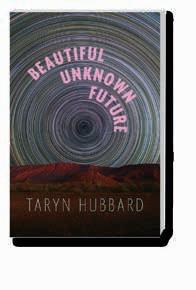
Taryn Hubbard
Written while Hubbard’s children were young, these poems hold space for messy feelings about motherhood and care, the climate crisis, family ghosts, and office dynamics.
February 27, 2026
Jenn Ashton
From her experiences as a thirteen-year-old drug dealer, a fifteen-year-old parent, and finally an award-winning writer, artist, and filmmaker, Jenn Ashton has survived it all. This work of autofiction draws on her journals.

April 7, 2026
Jónína Kirton
Weaving intergenerational trauma and its impact on health through the author’s experience of living with chronic pain and illness, these poems explore where healing might lie and how a peace might be found whether we heal or not.
April 28, 2026
Nicole Raziya Fong
SUBTEXT inquires into the language of identity formation, collaging the echoes of diasporic and colonial histories through poetry, drama, autobiography, and archival uncovering.
April 1, 2026
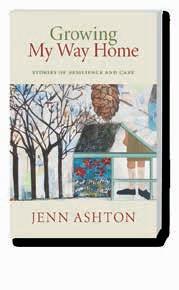
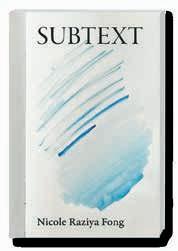
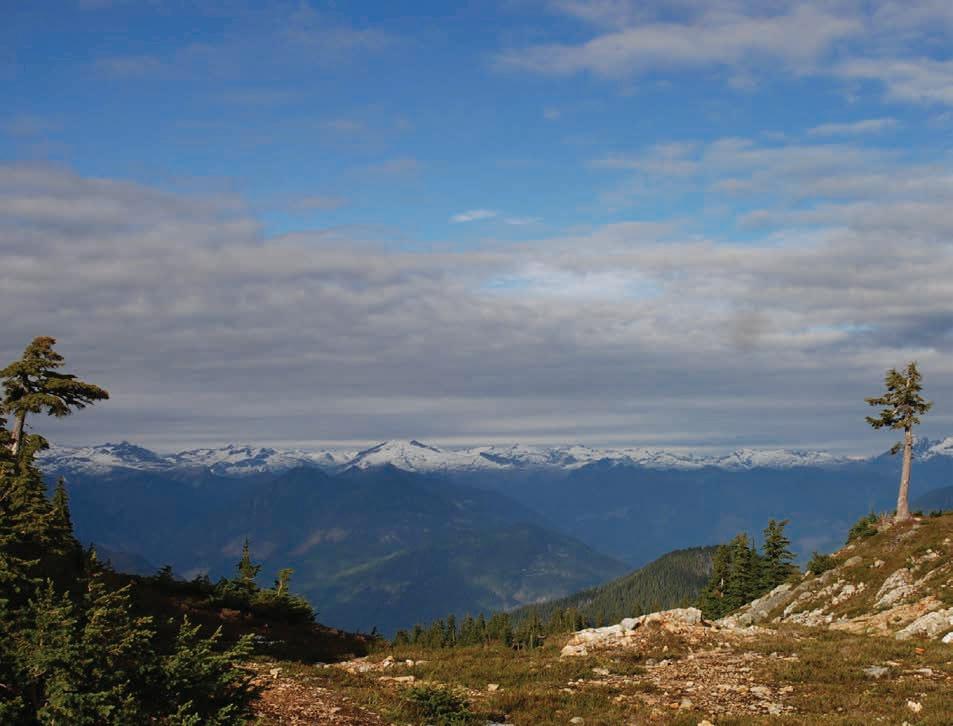
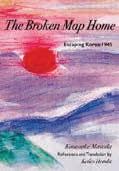
Outspoken:
A Journey from Olympic Athlete to Activist by Betty Baxter (Nightwood Editions $23.95)
BY CARELLIN BROOKS
ormer volleyball star
FBetty Baxter first became aware of the rumours in 1981. Hired just a year earlier as the first woman anywhere to coach a national sports team, Baxter weathered the media attention that followed. She never said anything about being a lesbian, not in 1980s Canada. Nobody asked and she had no plans to tell.
That all changed when the board of the Canadian Volleyball Association summoned her to a meeting. “There is a lot of talk about you being a lesbian— too much talk,” a colleague warned her, assuring her that he wasn’t homophobic himself. When Baxter asked him what the issue was with her sexuality, he responded, “Well, what parent would send their daughter to a program if they knew the coach was a lesbian?”
Despite having engaged in no inappropriate behaviour with anyone, the mere fact of her sexuality is a firing offense. Baxter consults a lawyer, who informs her that sexual orientation is not a protected ground of discrimination: in other words, the association has the legal right to fire her. “I assure you that I am the same person I’ve been as an elite athlete with this organization for over a decade,” she tells the president. After she refuses to deny her sexuality, her former coach stands up and punches the wall. “You’d never have been given this job if I’d known that!” he shouts.
Why the ire? By her own account, Baxter is a good coach and a trustworthy mentor to the young women in her care. She figures out how to motivate them, enforces the rules and helps them find joy in the game even when playing a much better team.
Baxter doesn’t belabour the point, but long before stories of abusive behaviour in sport started making headlines, it was not the predatory lesbian a young female athlete had to avoid, but the male coach who invited her into his hotel room for special oneon-one sessions on team trips. When Baxter hears the athletes’ tearful stories about one such coach—whom the young female athletes are afraid will cut them from the team if they protest—she reports him. The mostlymale athletic establishment admits her complaint isn’t the first and quietly removes him from coaching the world juniors team.
There are no criminal charges, families aren’t warned and the coach himself isn’t fired or charged with any offense. He continues to coach university athletes for years to come. As Baxter discovers later, the norms of Canadian high-performance sport mean this behaviour is almost guaranteed to go unpunished: “The elite athletes
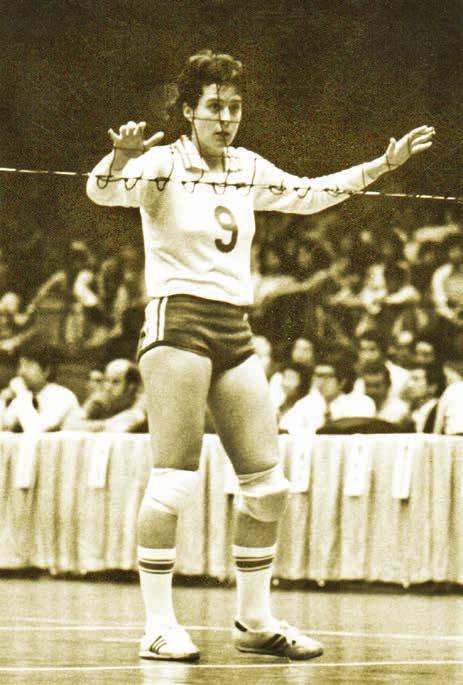
tBetty Baxter in the 1970s during her years of international success as a volleyball player.
most significant moments in the narrative tend to sneak up on the reader. Whether visiting China when foreigners were largely barred, encountering farcical amounts of trouble crossing European borders or communicating with a Bulgarian master coach without a common language, Baxter shows herself to be resourceful, intelligent and highly adaptable, but such moments do little to advance her thesis. Baxter also provides almost no context for the homophobia she experienced. Was it rampant? Rare? Everyday? As a lesbian who came of age in the 1990s, I would love to know more about the clubs, relationships and lesbian world of a decade earlier. Girlfriends and partners are only briefly mentioned in this book: most merit less than a full sentence. While Baxter might simply be protective of these women’s privacy, readers of memoirs expect some revelations about the writer’s personal life or, if they are missing, an explanation as to why.
Elite athlete and coach Betty Baxter’s memoir of battling homophobia in sports in the 1980s remains relevant, as the struggle for equality is far from over.
we interviewed about how to improve their sport experience...had one thing in common. They were compliant. They had no criticism of their governing bodies, no criticism of the programs they were offered and no criticism of their coaches,” writes Baxter. “Noncompliance often leads to a careerending moment for both athletes and coaches. The unspoken core requirement for success in sport in Canada was deference to the system...complete obedience...even if the coach’s demands were unreasonable, abusive or even illegal.”
Ooutspoken is a story that needed to be told. Not everyone is aware of the bad old days when lesbians had to conduct their entirely unexceptional love lives undercover for fear of outsize repercussions: being blacklisted, losing jobs, being denied housing or having their children taken away by vengeful ex-husbands. Baxter’s humiliating firing—she’d been in the top spot for
less than two years when she was let go—turned her away from sports entirely. The team she coached was told nothing. The girls assumed she’d simply abandoned them without a word of goodbye. It took years for Baxter to find her way back to sport, ironically through the first-ever Gay Games in San Francisco she attended with her girlfriend, Anita “In Ottawa and in Vancouver the gay bars had been in secret locations—often in dark alleys behind unmarked doorways, and when you rang a buzzer, a small slot opened to reveal an unrecognizable face behind a grate,” writes Baxter. By contrast, “hanging out in the Castro area watching the antics as women and men from cities across North America celebrated on the streets was both eye-opening and healing because everyone was out and proud and so clearly having a good time.”
This book could have benefitted from restructuring: the chronological progression ensures that the
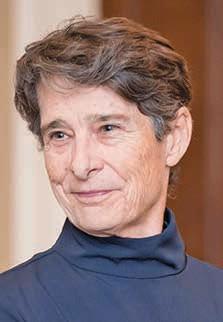
tBetty Baxter today
These are small quibbles about what is overall a compelling narrative. I learned about the mindset of athletes at the top of their respective sports, the hours and hours of training every day devoted to the pursuit of excellence and the pitfalls Baxter experienced personally. Her dedication to making sports better for women athletes shines through on every page. She continues to respond to media requests for comment about LGBTQ+ representation in sport because, as one exasperated reporter said in 2010, no other lesbian coach, athlete or administrator was willing to publicly identify herself. “I realized then that the struggle for equality in sport was far from over,” says Baxter. Indeed, as she notes in her epilogue, “there is still so much work to do.” Consider Outspoken a passing of the torch to the next generation of athletes cum advocates for equality on and off the court.
9780889715066
Carellin Brooks is a lifelong non-athlete and the author of books including Learned and Wreck Beach, now on sale at a Licorice Parlour near you.
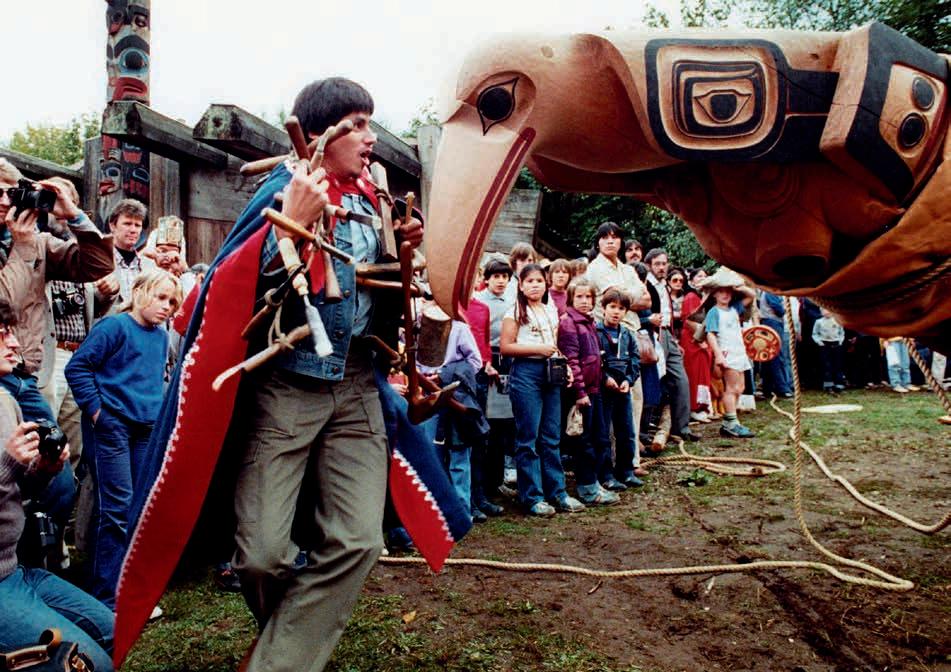
tBY ROBIN LAURENCE
When James Hart was a young boy growing up in Masset on Haida Gwaii—long before he became one of the most acclaimed and accomplished artists working on the Northwest Coast—he spent a lot of time with his maternal grandfather, his “Chinni” Geoffrey White. White was, Hart has written with unabashed pride, “the greatest fisherman on the coast for many years.”
White was also an accomplished builder of fishing boats and the shed in which he worked with his sons was a place of fascination and inspiration for his grandson. There was no electricity in their village until the early 1960s, Hart recalls, and the wood planking for the boats had to be hand-planed. “I grew up with that energy, the smells of the wood, white lead, oakum, woodchips, sawdust, the boats being finished, the launchings, the big excitement.”
It’s hard to encounter these words or to see photos of one of White’s early seiners, now “dry docked” near Hart’s home in Old Massett, without thinking portent. The eager kid who swept up the woodchips and the sawdust in his Chinni’s boatshed, who loved the scent of freshly cut wood and the energy as it was being hand-worked, grew up to be a renowned carver of memorial poles, story poles and mortuary poles, of relief panels and dance screens, of shamanic figures and ceremonial masks—and, by the way, a prolific creator of woodchips.
Hart’s son Gwaliga recounts that during his own childhood in the Hart household, his father carved compulsively—everywhere and all the time. He and his siblings were, Gwaliga says, “grounded among woodchips … in the living room, on the kitchen table, on the sofa.” Outside, he adds, the woodchip piles from all the poles Hart and his teams created near the family home were an essential element of the kids’ playground.
Gwaliga Hart’s tribute to his father forms the afterword to an ambitious and richly illustrated new book,
He came to Vancouver as a young man to work with established Haida carvers, Bill Reid and Robert Davidson, but James Hart soon set out on his own and became one of the Northwest Coast’s top artists.
7IDANsuu James Hart: A Monumental Practice
Helmed by Curtis Collins, director and chief curator of the Audain Art Museum, with a forward by businessman, philanthropist and art collector Michael Audain, an overview of Haida history by cultural anthropologist and ethnobotanist Wade Davis and a memoir chapter by the artist himself, the publication is, unexpectedly, Hart’s first. That is, it’s the first monograph wholly dedicated to Hart’s art. This, Collins explains, is because Hart has focused most of
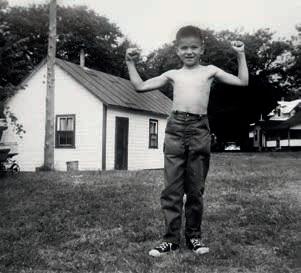
James Hart dances around the Massett Pole with a belt of tools, performing a long-standing tradition whereby carvers chase out any evil spirits before raising a pole, 1982.
his career on creating towering poles and large-scale sculptures, impossible to gather together to show inside an art gallery or museum and therefore not productive of an exhibition catalogue or companion publication.
In a sense, this book takes the place of a retrospective exhibition, spotlighting nineteen of Hart’s monumental works in wood and bronze while also juxtaposing them with references to his gold and silver jewellery and other smaller pieces. Arranged chronologically, the survey runs from his 1979 Dogfish Screen to his 2023 Tllgidgaaya Carl Hart Memorial Pole, created and raised in honour of the Harts’ youngest son, who died tragically in 2015 at the age of 25. Accompanying photos of these works are Collins’ essays examining the circumstances and, often, ceremonies around which each came into being, with discussions about thematic, material and formal elements and recurring motifs. Collins has also written a comprehensive overview of Hart’s career, including the impact on his creative practice of his assumption of the hereditary title 7IDANsuu (pronounced ee-DANsoo) and with it, a profound sense of responsibility to his culture and his community.
Among the outstanding works featured here are Hart’s 2008 Celebration of Bill Reid Pole, on display at the Bill Reid Gallery of Northwest Coast Art; his 2015-17 Reconciliation Pole, which stands on the Main Mall of the University of British Columbia; and what is probably his most political and at the same time best known accomplishment, The Dance Screen (The Scream Too), completed in 2013 and permanently installed at the Audain Art Museum in Whistler. Other poles and major commissions are situated in Ontario, Quebec, California, New York, Sweden and Switzerland. One of the revelations of the book is how many of Hart’s memorial and mortuary poles stand on Haida Gwaii. Hart’s devotion to his family, his clan and his broader community is reiterated throughout the book through both photos and texts.
full disclosure: i was involved in the hart book project in its early stages. When invited to write a short biography of the artist to close the book with, however,

tI suggested that it would be more interesting and insightful if he recounted the early years of his life in his own words as its introduction. I met with Jim a couple of times when he was visiting Vancouver, conducted a few lengthy interviews with him by phone when he was at his home on Haida Gwaii, and gave him my edits of the transcripts of those interviews. He then took over the telling, which was and is how it should be. Still, I am sorry that some of the stories Jim related to me weren’t included in the final version of this hefty publication.
Oin his memoir chapter, titled “early days,” hart, gives us a conversational account of the years between his 1952 home birth in Delkatla, a small community near Masset, and his resolution in the mid-1980s to free himself from working on other people’s projects and historical re-creations in order to pursue the design and creation of his own artworks. His story is enlivened with fond memories of family, friends and community, of his Haida mother, Joan Hart, and non-Indigenous father, James Hart, Sr., of halibut fishing with his Chinni, of odd jobs taken here and there, of feeling his way as a teenager into making art without being sure what form of expression this impulse could take until discovering in high school the immensely rich heritage of historic Haida art.
“[W]ith the realization that we had an art form, something to be proud of, this put me on a beautiful natural high,” Hart writes. “I floated about for three full days; it was surreal.” While supporting himself with manual labour jobs, Hart educated himself in the art of his ancestors through books and museum visits. Along this path, he also encountered the brilliant work of his great-great-grandfather, Charles Edenshaw, the most famous Haida artist of the 19th century. Edenshaw, a hereditary chief, worked prolifically and tirelessly in the aftermath of the 1862 smallpox epidemic—a near-apocalypse that killed 93% of the Haida population. (His masterful carvings in wood and argillite visually preserved the creatures and supernatural beings that populate Haida oral histories, including creation and transformation stories.)
There were also successive apprenticeships with the most prominent exponents of the emerging contemporary Haida art movement, Robert Davidson and Bill Reid. Hart did the finishing work on Reid’s famous sculpture, The Raven and the First Men, and assisted the elder and frequently ill artist on a number of subsequent projects. Reid, Hart writes, “hung on to me when he could have let me go many times. I guess he saw my potential.” Then he adds, “Bill taught me a few carving tricks, but mostly how to survive the city.” Arriving in Vancouver in 1979 from the small village of Masset, Hart recalls, he was entirely ignorant of escalators, elevators, rental housing, crowded beaches—and parking regulations.
Othere is a collage quality to the way the various written and photographic contributions to the book come together. Collectively, the authors situate Hart within both the ancient culture of his Haida ancestors and the demands and discourses of the contemporary art world. Anthropologist Davis traces the geomorphology and evolving natural environment of Haida Gwaii, the emergence of Haida culture some 10,000 years ago, its “essential connection to place,” its brief florescence and then almost total extinguishment following European contact, and its powerful re-emergence in the latter half of the 20th century. Art, Davis writes, “is at the very heart of Haida social, spiritual, and political life.”
Collins brings what he describes as a “curatorial” rather than anthropological view to Hart’s art, arguing that although superficially resembling historic Haida art, it reveals subtle innovations and the evolution of Hart’s own distinctive style, his own artistic expression. “James Hart,” he writes, “has developed a visual language that reaches back from Haida time immemorial to a cosmopolitan twenty-first century on the Northwest Coast.” 9781773272276
Robin Laurence is an award-winning writer and critic based in Vancouver.
ABY JENN ASHTON
Ilearned early to walk along my road in a sort of state of gratitude. It provided the counterbalance to being told by my family that I was a “bad kid.” But I was unprepared and naive and saw so many things I should never have seen. At eight, walking home from school, I turned a corner and BLAM there was a deer hanging upside down in a neighbour’s carport. At ten BLAM I came upstairs from watching cartoons in the basement and there in the hall was my mother’s buck-naked boyfriend, who would later lift me off the floor in a chokehold for something I said without meaning it. At eleven BLAM I saw the neighbour’s dog get plowed into by a speeding semi. As a young teen reading Linda Lovelace (because I would devour any book) BLAM I was changed forever. And BLAM hits you again when you are out testing the little yellow boat you’ve spent the past month refibre-glassing, only to find it’s taking on water halfway across the wide dark lake, and you realize there is no life jacket on board for the baby. Then BLAM when your new husband duct tapes your hands behind your back, puts another piece across your mouth, and heads out to the liquor store, apologizing later that it was only a joke. And as a young adult BLAM the horrors of war are delivered to your eyes by way of a Croatian medical magazine. Then BLAM your husband flushes your wedding ring down the toilet during the first week of your married life. Then BLAM BLAM BLAM I see things I should never have seen, and things have been done to me that I don’t understand, and I am powerless, and inside I’m as seething angry and afraid as a wild dog caught in a trap. What was this world?
Self- soothing became my ethos, and I stuck close to that part of my trail. But instead of having it, I was searching for it. It would come from drinking and drugs starting at a shameful age, where spurred on by my laughing parents and their friends I would take sips of beer, then graduate to quarter bottles. I would start with being allowed to lick the flavour off the end of an old port cigar and then graduate to smoking one myself. Then further studies in morning-after-party half glasses of drink leftovers with stale broken chips and warm dip. A deck of smokes with one left or maybe a funny-looking rolled one. Then the search became for
t fifteen, Jenn Ashton was a pregnant runaway who ate a lot of Kraft dinner and popcorn. At times homeless with her baby daughter, Ashton would live with several different men, one of whom was abusive enough to point a gun at her.
Little by little, Ashton learns to care for herself and her daughter. She finds strength and identity from her Indigenous ancestors. Now Ashton has written a memoir exploring how she eventually developed the courage to become an award-winning Sḵwx̱ wú7mesh writer, artist and filmmaker. Here is an excerpt.
you understand where they’ve been. You can see outside of yourself, and self is no longer a necessary adornment moving forward. You reach a tipping point, where in all the hits and misses along the road, enough bits and pieces of experience have filled you up and been made into a you-shaped being. When that point comes, you are transformed and ready for the next part of the journey, feeling a bravery that only comes from insulating your damaged
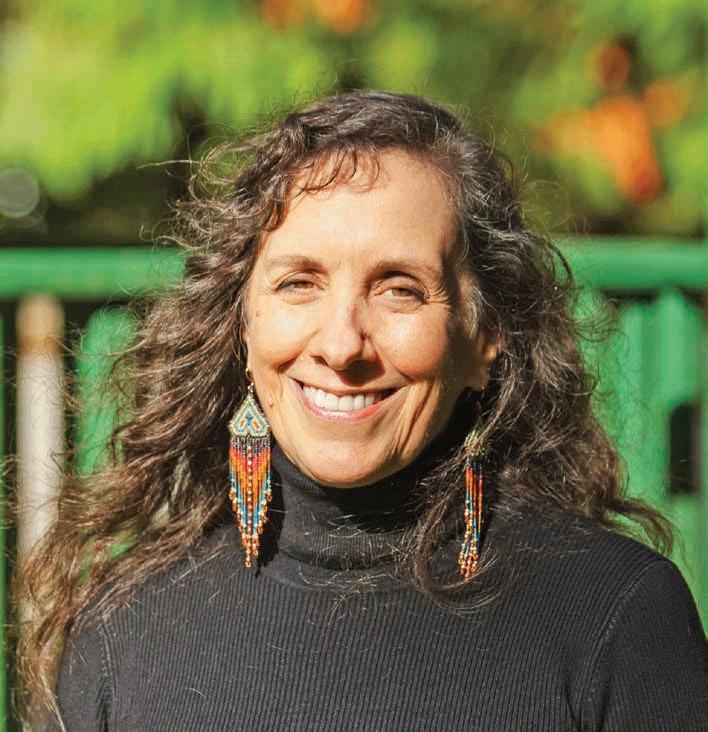
“Once you have empathy growing inside you... You can forgive anyone anything, because you understand where they’ve been.” — JENN ASHTON
the person who would fit into my TV idea of family and of a man. Grizzly Adams, Kris Kristofferson, Ted Neeley, or anyone else who looked a bit like Jesus would fit the bill. Judging on potential instead of any true asset, I would clutch onto them and try to force them into my preferred mould, hoping that after some time they would take the shape of my imagined partner, magically growing like sourdough. But they never did and instead showed their more accurate colours. All the searching left me busy, tired, damaged, and still alone.
The one thing that came unexpect-
edly from the road I walked was an empathy that can only come when your burden is so heavy it weighs you flat to the ground, but while lying there you can see slivers of light coming from under doors. And maybe there you meet a warm dog’s nose and a smiling kid, or you might see some grass covered in sweet clover, or maybe you meet another person’s gaze who is in the very same place as you.
Once you have empathy growing inside you, you can pull it up to use more and more and can use it to colour all sorts of encounters and people. You can forgive anyone anything, because
heart for many years. Where your raw woollen bandages have worn down to reveal a soft felt.
I’ve learned a secret from my Ancestors. After I spin my wool, I wet it and then slap it across the side of the outside wall of the house as hard as I can. BLAM, and BLAM again. I BLAM it until it is smaller, but softer and as strong as you would ever need it to be. Only then is it ready to be woven. It’s like needing to soak cedar bark before you use it. These days I am soaked supple and am the yellow cedar, the softest of all.
9781772017038
— Excerpt from Growing My Way Home.
BY BEVERLY CRAMP
Growing up near Comox on Vancouver Island in the 1920s and 30s, Ruth Masters developed a passion for the outdoors. She climbed Mount Becher at the age of thirteen, becoming an avid mountaineer. After college, Masters travelled to England to serve in the Second World War and later visited other parts of the world before the natural beauty of the Comox area drew her back to home.
Soon, Masters was back in the outdoors whenever she had time away from her office job as told in Ruth Masters: An Environmental Activist (Heritage $19.95) for ages 4 to 8, by Haley Healey and illustrated by Kimiko Fraser. Part of Heritage House’s Trailblazing Canadians series, this story details how Masters’ love of nature and her sense of justice led to her joining environmental groups.
“Her favourite thing to do was to fight for things she believed in,” writes Healey, adding “Ruth cared about environmental causes, like protecting nature from big business and saving wildlife from needless harm. This is called activism.”
Healey points out that being an activist takes courage when others who don’t have the same values push back in unkind ways: “Some people didn’t like Ruth and what she believed in. Someone wrecked her mailbox and others wrote negative things about her in the local newspaper. But none of this stopped Ruth from trying to protect the wilderness she loved.”
Nanaimo-based Healey is a high school counsellor, registered clinical counsellor and the bestselling author of books for all ages about extraordinary historical women and nature. Kimiko Fraser lives in Victoria and is a historian-in-training. 9781772035742
Oa common meal for many first nations across Turtle Island is hamburger soup, although the ingredients used vary. This dish can include wild sourced ingredients (such as moose meat) as well as ingredients from a grocery store (minced beef). It’s all part of contemporary Indigenous cooking as described in Hamburger Soup (Harbour $24.95), a juvenile fiction book (for ages 7 to 12) by Samantha Beynon with illustrations by Kelsey Fitzgerald. The story is told through the words of a young Nisga’a boy and his grandmother as he learns how to make hamburger soup with “Jiji” (which is what Nisga’a grandchildren call the matriarchs in their community). Other Nisga’a words are sprinkled throughout the book such as Gaak (raven), is (soapberries), mitgum anaax (flour), t’ilx (oolichan oil) and Ye’e (grandfather). Lessons about giving back to the community and celebrating the wisdom of elders are also evident. Recipes for hamburger soup and fried bread are included at the book’s end. A delightful dip into Indigenous family culture. 9781998526505
following on from barnacle bay (Greystone, 2025), the first book in the Little Habitats series by writer/
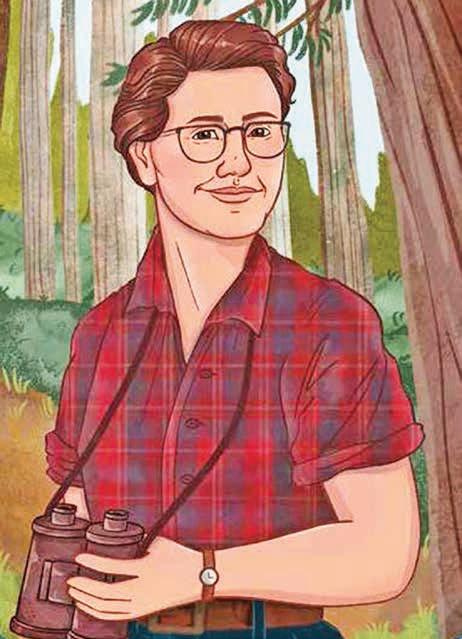
This season’s crop of stories covers heroines, Indigenous food, nurse logs, west coast animals, a curious raven and a mother and son finding a safe home.
illustrator Jana Curll, comes Fiddlehead Forest (Greystone $18.95) for ages 6 to 9, that describes the diverse ecosystem of a nurse log. The pleasure of this series is not only the exploration of unique places that are rarely the subject of nature books, but also the quirky sense of humour—using puns—that Curll employs. This graphic novel introduces lovable characters like Fern, who with her friends Millipede, Moth, Slug, Lichen and Mushroom set out to raise a fallen tree (the nurse log) back to its height. Together, they set out to find “LOG-ical” ways to restore the

tree to an upright position. Readers will never “be-LEAF” what happens. Jana Curll lives on the traditional lands of the shíshálh Nation where she finds stories from the creatures and environment of the local rainforests and the ocean.
9781778401046
an interactive way to introduce children to Indigenous Northwest Coast art is this colouring book: Raven and Friends: A Roy Henry Vickers Colouring Book for Kids (Harbour $16.95) for ages 6 to 8 which includes images of eagles, baby sea otters, jellyfish, cranes and bears. Carver, painter and storyteller, Roy Henry Vickers has published many books for young readers including his award-winning series First West Coast Books and Northwest Coast Legends Last year, Henry Vickers released his first adult colouring book, Inspired (Harbour, 2025). He lives in Hazelton.
9781998526543
before he died in kamloops in 2017, Richard Wagamese had become one of Canada’s foremost writers, winning the George Ryga Award for Social Awareness in Literature, a National Aboriginal Achievement Award and the Writers’ Trust of Canada’s Matt Cohen Award. He left behind a trove of writings that are still being published including juvenile fiction, the latest of which is The Inquisitive Raven (D&M $24.95), a picture book illustrated by Bridget George. Rueben the raven is a most energetic and curious bird and has the whole forest talking about his exploits. But then he tries to do something that will teach him a big lesson. A tale for all readers.
9781771624497
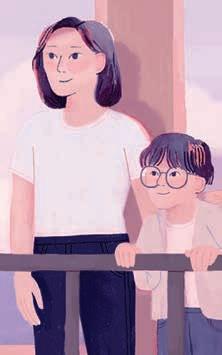
katrina chen, a bc mla from 2017—2024 who served in Premier John Horgan’s cabinet as Minister of State for Child Care, has released a picture book (for ages 6 to 8) about a mother and her young son fleeing a dangerous household, A Stronger Home (Orca $21.95), co-authored by Elaine Su and illustrated by Delphie Côté-Lacroix. “This book was inspired by the ways my own life was touched by violence,” Chen writes in an afterword. “It is based on a real story of a mother and son who had to leave home as part of their safety plan … The mother and son in this story ultimately found a way to return home. They are fortunate compared to some who have to stay in temporary shelters and struggle to make ends meet amidst their trauma.” Includes information for victims of violence wanting help.
9781459836815
Ramin, a young Pakistani Canadian in his senior year at a Muslim high school, believes being gay is haram (forbidden) in Ahmad Saber’s debut teen novel (for ages 14 and up), Ramin Abbas Has MAJOR Questions (Atheneum/Caitlyn Dlouhy $21.99). The pressure mounts when Ramin is forced to join the soccer team, training one-on-one with “Captain Handsome,” all while being blackmailed by a bully. A new friend introduces Ramin to a kinder concept of Allah, forcing him to decide which Allah lives in the little mosque in his heart. This story of a gay Muslim teen reconciling his faith with his sexuality is based in part on the author’s lived experience. Saber is a doctor specializing in rheumatology and internal medicine. 9781665960694
Ever heard of a beekeeper who named a bee? Spoken word artist and apiarist Susan Cormier calls one of her bees Bill. Cormier, who is Metis, lives on a farm in Langley that, for now, is encircled in forest. But urban development is encroaching. Cormier writes of her semi-agricultural life in her collection of essays Dead Bees Still Sting: Tales of Life at the Edge of Nature (Greystone $24.95) and describes her acreage over five seasons. She includes a cast of animals like the hand-raised quail, Birb (who likes to play peekaboo we are told), as well as several cats and dogs. Cormier produces the Vancouver Story Slam. 9781778402012

Vince Beiser has won the $70,000 Balsillie Prize for Public Policy for Power Metal: The Race for Resources that Will Shape the Future (Riverhead $32). The Vancouver-based journalist examines a major paradox of our technological age: the same lithium, cobalt and copper that enable the internet and renewable energy are driving environmental havoc, political unrest and human suffering. From Nigerian e-waste salvagers risking their lives to billionaires eyeing the ocean floor, Beiser exposes the hidden costs of the green transition and the scramble for critical minerals. Beiser’s writing has been published in Harper’s, The Atlantic and The New York Times and he has been on TV shows such as The Daily Show 9780593541708
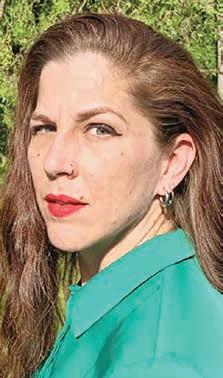
For those interested in the complicated and often tragic experience of a convict transitioning to life outside prison, Talking Reform: Making and Unmaking a Life in Canada’s Prisons (MQUP $29.95) by Dany Lacombe with Mac McKinney is a lens into criminal identity as seen through a conversation between Lacombe, an SFU sociologist, and McKinney, a reformed criminal. Together they explore how prison culture and mental health professionals influence a reformed criminal’s journey. They show how “the reform story” pushes ex-convicts to develop unrealistic stories about themselves, concluding that compassion and inclusion are important factors of hope for both incarcerated people and ex-convicts. 9780228026365
Edward Cepka grew up in Port Alberni “when it was a de facto MacMillan Bloedel company town with the second highest per capita income in Canada,” he says. “Virgin timber was still being cut, the pulp mill stench was the smell

of money.” Cepka lived that reality until leaving for UBC and later an architectural career in Vancouver. Now retired, Cepka has written his debut novel, The Atoner of Alberni: A Novel (Granville Island $23.95) about his hometown as seen through the eyes of two men: Henry Cox, an English remittance man who immigrates to Vancouver Island and makes a fortune through greed and ruthlessness; and Cox’s grandson, Larry, who wants to make amends.
9781989467770
The extinct Salish Woolly Dog was integral to Coast Salish people, including as a source of wool as Andrea Fritz tells in her picture book, Woolly Dog Warms His Family (Orca $21.95) for ages 3 – 5. Using her skills as a Coast Salish artist and storyteller, Fritz describes Sqwiqwmi’ a Woolly Dog who sets out to gather natural fibres for his human family including mountain goat wool, nettle stalks and fireweed fluff. Fritz also describes the skill of weaving, which takes enormous amounts of time and wool to create a blanket for just one person, making blankets an important item in Coast Salish culture. Some Hul’q’umi’num words are employed.
9781459836303
Setting out on an eleven-day road trip in 2022 through rural America with his two sons—a journey at the heart of his nonfiction title, Spying on America (Goose Lane $26)—Bill Gaston turned his Canadianized gaze on the country of his birth after having spent most of his life being raised in Winnipeg, Toronto and North Vancouver before settling in Victoria. A longtime professor at the University of Victoria and former editor of Canada’s oldest literary journal, The Fiddlehead, Gaston has published novels, short fiction, nonfiction and plays. 9781773104652
Following on from her debut poetry collection Desire Path (Talon, 2022) about life in the suburbs from girlhood to motherhood, and her novel The Very Good Best Friend (Now or Never, 2025), Taryn Hubbard’s second poetry collection, Beautiful Unknown Future (Talon $19.95) examines parenting in times of uncertainty. Written while Hubbard’s children were young, the new poems describe messy feelings about motherhood and care, the climate crisis, family ghosts and office dynamics. Hubbard layers domestic life chaos with corporate world detachment to examine the joys and complexities of these competing spaces while looking to a future centred around tenderness, resilience and love.
9781772016482
As glaciers recede on mountaintops and permafrost melts in the north due to Earth’s rapidly warming temperatures, a number of Canadian poets and others from across Turtle Island comment on this phenomenon in Yvonne Blomer’s third, water-focused anthology, Sublime: Poems for Vanishing Ice (Caitlin $27). Marilyn Bowering, Kate Braid, Trevor Carolan, Katia Grubisic, Elee Kraljii Gardner, Evelyn Lau, Arleen Paré, Fiona Tinwei Lam, Tom Wayman and others examine the sublimity of ice, both as a verb (to change directly into vapor when heated, typically forming a solid deposit again on cooling) and as an adjective (excellence, grandeur or beauty that inspires admiration or awe).
9781773861784
Here’s a book that boldly positions itself at the intersection of politics, national identity and cultural defiance: Canada Is Not the 51st F**king State (Cosmic Cranium $27.99) by John Francis Hughes, a former CBC and Co-op Radio reporter, bike courier, world traveller and scholar with a doctorate from SFU’s School of Communication. Hughes brings curiosity and grit to this anthology of essays, interviews, stories and artwork by an assortment
of contributors railing against Donald Trump’s aggression toward Canada. Hughes runs Groove Cat Books and Records with his wife, Cat , in New Westminster, BC, while co-managing Cosmic Cranium Press. 9781069072610

After graduating from The Writers Studio at SFU and publishing the bestselling story Weird Rules to Follow (Orca, 2022), Kim Spencer won several writing awards. She followed up with more books about Indigenous girls including her latest, Here for a Good Time (Swift Water/Penguin $26.99). This time it’s a Prince Rupert girl named Morgan struggling with intergenerational family trauma and keeping up at school. Morgan is persuaded to go to an alternate school where she meets Nate who introduces her to new music, movies and books. Tragedy strikes at home but a fresh new start is in the offing. Spencer is from the Ts’msyen Nation in northwest BC and currently lives in Vancouver. 9781774887806
Mark Leiren-Young is known for his advocacy of orcas, sharks and octopuses. He’s also been known to care for other creatures … such as environmental politicians. During 2019 when it appeared that a Green wave might actually change Canadian politics, Leiren-Young worked as a campaign manager in a riding the federal Greens looked sure to win. Then he witnessed such terrible infighting that he despaired the Greens could ever win under the circumstances. He quit and wrote about his take on the state of Canada’s green politics in Greener Than Thou: Surviving the Toxic Sludge of Canadian Ecopolitics (Sutherland House $26.99).
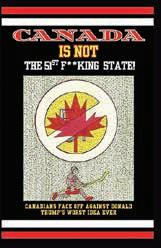
9781998365692
Book cover: Canada Is Not the 51st F**king State
Rags to Riches: The Nelson Bros. Fisheries Story (Caitlin $27)
From Where I Stand by Jody Wilson-Raybould (UBC Press $24.95)
Poor immigrants from Norway, Ritchie and Norman Nelson grew up on the West Coast where they learned about fishing from their older siblings. The two brothers began humbly in 1929, eventually growing their company into a multipronged enterprise with a large fleet of gill-netters, packers, reduction plants and canneries from Vancouver Island to Alaska. This is the story of how the Nelsons built one of BC’s most successful fishing companies.
Having shaken up federal politics when she went from being a senior cabinet minister in Justin Trudeau’s Liberal government to becoming an independent Member of Parliament, Indigenous leader Jody Wilson-Raybould has published a collection of her speeches and lectures from the past ten years. She is forthright in her analysis of Canada’s colonial past and her desire for a new era of recognition and reconciliation.
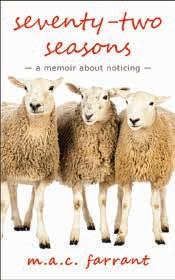
Seventy-Two Seasons: A Memoir about Noticing (Ronsdale $22.95)
Every Little Scrap and Wonder: A Small-Town Childhood by Carla Funk (Greystone $29.95)
Humour mixed with intimate observation is at the heart of M.A.C Farrant’s latest book. Her wit and playfulness sparkle with wisdom as she offers a fresh take on the Japanese practice of taking special note of one feature in nature every five days, thus creating 72 seasons in a year rather than the four. Farrant captures her experiences in this new book—an antidote to the gloom and doom in the news these days.
Poet Carla Funk grew up in a Mennonite community in Vanderhoof. After publishing five books of poetry, this is her first memoir, a paean to childhood and rural life in British Columbia. Paying tributes to both her church-going mother and her truck-driving father, she uses rich language to create the world that shaped her as a person and writer.
Growing My Way Home: Stories of Resilience & Care (Talonbooks $24.95)
Sockeye Silver, Saltchuck Blue by Roy Henry Vickers & Robert Budd (Harbour $9.95)
This emotionally truthful chronicle of Jenn Ashton’s personal journey from childhood abuse, dealing drugs at the age of thirteen and becoming a parent at fifteen to reconnecting with her Indigenous culture and becoming a filmmaker and artist. The book is based on the author’s teenage journals and fifty years of healing experiences.
With catchy rhymes married to Roy Henry Vickers signature artwork, this children’s board book is the third instalment in a series that started with Humpback! One Eagle Soaring The concepts of colours are linked to the changing seasons on the West Coast: red tones of huck leberries in summer, silver and red flashes of spawning salmon in fall, grey rain in winter, and the sprouting of green in spring.
A Fight for Justice: The Compelling Story of Temporary Foreign Workers & Human Rights (Ronsdale $26.95)
In 2006, migrant workers came to Vancouver to work on the Canada Line SkyTrain. They were promised pay higher than they could earn at home. But in truth, the wages were low, overtime unpaid and living conditions were poor. The workers joined a union, fought back— and won. Told by Joe Barrett (son of Dave Barrett).
The Survival Guide to British Columbia by Ian Ferguson (Heritage House $19.95)
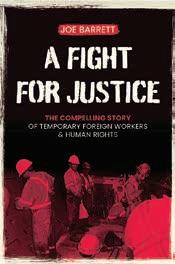
Having moved to B.C., humorist Ian Ferguson finds the place pretty – but also pretty scary. Here’s his guide on surviving everything from the province’s politics, the locals and the weather, to our food and fashion sense. Some ‘Fergusonian’ wisdom: B.C. is located – “to the left of Alberta”; speaking to B.C.’ers, means “not saying anything beyond, ‘I love trees’ and ‘forgive me’; and, you can “tell an outsider (filled with enthusi asm and interest) from a local (full of resentment and ennui).”

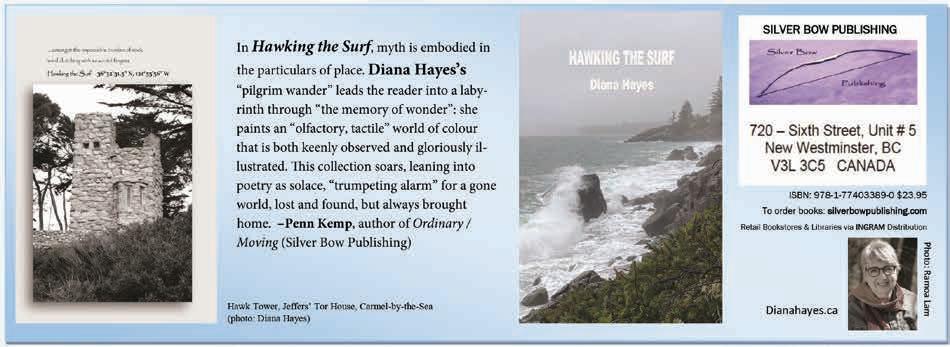
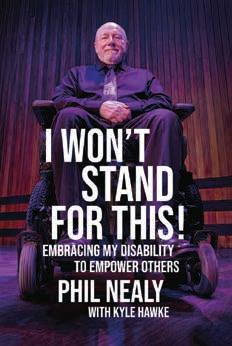
A er a spinal cord injury, Phil Nealy refused the imposed limits of his quadriplegia diagnosis. He rede ned life with a disability through resilience, self-advocacy, and persistence to achieve an independent and adventurous life — snorkeling, boating and sit-skiing.
During his time as a teacher, program facilitator, and admissions advisor, he challenged students to also think critically about limitations, perseverance, and dignity. He helped over a 1000 people to become fully employed on Vancouver Island.
Read the story of a man who is both an inspiration and a mentor.

granvilleislandpublishing.com




Peter Marcus returns with his signature blend of sharp political commentary, delivered as what might be described as verbal music.
With wit and wordplay like his A Worker’s Friend, this collection of poetry promises once again to stir thoughts on progress and revolution.


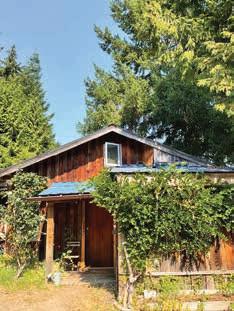

He has photos with his arm around Ringo Starr (The Beatles) and holding boots given to him by John Entwistle (bass player for The Who). They are just two of the many famous rock and roll musicians from the 1960s into the 21st century that Richmond-based Marty Kramer worked for as a tour manager and “fixer.” Now 78, Kramer shares his stories in his memoir Road Boss: Untold Stories from Entertainment’s Ultimate Tour Manager (Mosaic $24.95) written with David Wolinsky. This backstage glimpse into music history includes Frank Sinatra, Roy Orbison, Tina Turner, Neil Young and Kramer’s good buddies, Burton Cummings and Randy Bachman (The Guess Who). 9781771618083
A neurodivergent kid navigates grief and friendship in the picture book A Garden of Berries and Crows (Orca $21.95) by educator Rosalie Nyce Maeve, an autistic girl who loves crows and talks to the ghost of her late aunt meets Fern, a new student mourning the loss of her father. Through their connection, awkward at first because Fern is not neurodivergent, Maeve’s origami crows and Fern’s drawings of her father’s favorite plants bloom into living magic—and a magic garden. Nyce, also neurodivergent, has degrees in music, psychology and education and previously spent several years on the spoken word poetry festival circuit.
9781459840072
As an atheist teenager growing up in a Mormon community, Cathalynn Labonté-Smith was an outsider. Then she fell in love with a Mormon boy. What’s a lovelorn girl to do but join the Mormon church, a decision Labonté-Smith recounts in I’m Not a Mormon (Anymore): An Outsider’s Journey in Loving & Leaving the Church (Caitlin $26). She draws from the journals of her youth and includes conversations and interviews with former schoolmates, including Mormons, ex-Mormons and non-Mormons—some of whom were bullied. Labonté-Smith, who now lives in Gibsons, also explores why she ultimately left Mormonism.
9781773861814
Adopted by Hereditary Chief Charlie Mason of the Kitasoo/Xai’xais First Nation in Klemtu, Jack Plant has spent the past decade using his photography and writing as a bridge between art, conservation and human connection, particularly focusing on the Great Bear Rainforest. Spirit of the Great Bear (Figure 1 $60) is the culmination of his years observing the rare whitefurred Kermode bear—the spirit bear, a creature woven into First Nations’
Self-portrait by cartoonist

oral traditions and found only in BC’s coastal rainforest. The book also covers Plant’s intimate encounters with grizzlies, wolves, orcas and humpback whales.
9781773272856
In 2023, David Fraser of Nanoose Bay began the Jack McQueen Mystery Thriller Series about a Nanaimo-based, divorced ex-RCMP cop. McQueen is hired by an Indigenous chief whose teenage nieces are missing in Book 1, Disappeared (Ascent Aspirations, 2023). Then McQueen is asked to drop the case, but doesn’t. Soon, McQueen picks up a tech-savvy partner, Stacie Machado. Book 8, the latest in the series is titled May the Dead Forgive (Ascent Aspirations $14.95) and has someone from Jack’s past wanting to kill him. Helping Jack is Machado (now
his lover), a renewed relationship with the RCMP and a new friend—specialops, guitar-busking Norton.
9781998536030
Adrian Raeside began working as a political editorial cartoonist for the Times Colonist in Victoria in the early 1980s, eventually being syndicated in 200 newspapers. He created his comic strip called The Other Coast in 1990. He has released 20 books including kidlit, animal stories and collections of his cartoons. In The Canada Handbook (Harbour $22.95), Raeside turns his pen toward the quirks and values that shape Canadian life, drawing on decades of ferry cartoons, pet parables and political insight. Although the book is a celebration of what makes Canada and Canadians unique, due
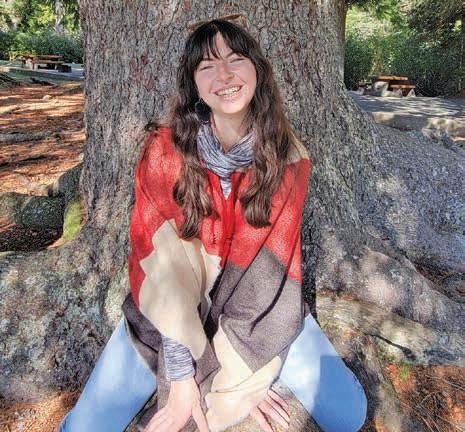
to our proximity to the USA, Raeside makes both subtle and not-sosubtle comparisons between Canada and the USA.
9781550179538
When art world egos collide, it makes for good fiction. In Pat Sullivan’s debut novel, In the Frame (Iguana Books $20.99) the fictional Toronto Art Gallery has just undergone a re-branding exercise. When TAG holds a pivotal fundraiser, disaster strikes—a rambunctious kids’ camp and a tour of artloving naturists wander into the gallery on the very same night. Sullivan grew up in Cornwall, Ontario, and studied English at York University, later obtaining her Master’s in Art History from Queen’s, which led to her career as an educator at the Art Gallery of Ontario and at the Agnes Etherington Art Centre, Kingston. She now lives in Vancouver.
9781771807333
Rooted in British Columbia but shaped by a childhood between mountains and ocean in South America, Mila (only uses one name) is a traveller, storyteller and food enthusiast who has visited more than 30 countries and lived in four. Balancing a full-time career with a deep commitment to exploration, Mila believes adventure doesn’t require abandoning responsibility—only intention and the courage to show up. That philosophy fuels 30 Under 30: Exploring 30 Countries Before 30 (Adventurelicious $21.99), a travel memoir and practical guide that blends personal stories, cultural insight and hard-earned lessons on travelling smarter rather than richer.
9781069887818
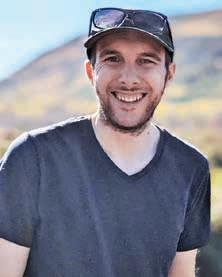
Raised on a family farm in Alberta, Ryan Uytdewilligen acted in afterschool productions, later worked in radio and print journalism and then attended Vancouver Film School to study creative writing. Working with illustrator Charlotte Cho, a graduate of Emily Carr University of Art + Design, Uytdewilligen created the picture book The Next Big Pigs (Heritage $12.95), for ages 7 to 9, about Mikey, a farm kid who wants to perform. Lucky for Mikey he discovers his three pigs can talk and even dance. Together, the foursome plans a Broadway show. But will they get off the farm in time to avoid the evil Mr. Baconmaker?
9781772035766
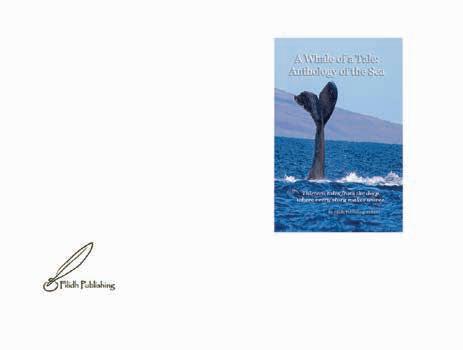


Vancouver’s Vikram Vij revolutionized Indian fusion cuisine in Canada. The New York Times praised his flagship restaurant, Vij’s, as “easily among the finest Indian restaurants in the world.” Vij’s latest cookbook, My New Indian Kitchen (Figure 1 $40), has 80 easyto-follow recipes that marry the flavors of Indian cuisine with elegant culinary techniques. Recipes are designed for the home chef and include dishes like Chilled Pea Soup with Fried Mint and Gnocchi with Garam Masala Tomato Sauce and Paneer. The book also traces Vij’s journey, sharing stories of the people, travels and ingredients that have inspired him.
9781773272610
A lifelong storyteller, Troy Wilson brings humour and emotional insight to Still Friends (Orca $21.95), a picture book about an unlikely bond between a dog and a silent stone girl in the park. Told from the dog’s point of view, the story explores friendship, difference and the comfort of simply being there for one another. What begins as dismissal turns into trust, as the dog learns that companionship doesn’t always look the way we expect it to. Wilson grew up immersed in books, comics and drawing, a love that carried him through an eclectic working life that has included everything from radio production and library work to caregiving and education. 9781459842571
The latest title in the award-winning series Mothers of Xsan, by Hetxw’ms Gyetxw, also known as Brett D. Huson, is The Cedar Mother (HighWater $24.95) for ages 9 to 12. The book reveals the remarkable story of the western red cedar, a tree vital to BC’s coastal ecosystems,
its role in
and healing the Gitxsan with medicinal tea. Cedar Mother, also called Nox Sim Gan, has a life cycle that spans centuries and is nourished through an unexpected connection to salmon. Illustrated by Natasha Donovan, the story culminates with the cedar’s final gift to the Gitxsan as she is carved into an Indigenous story pole. 9781774921586
The fragility of human connection is at the heart of Give Us This Day (Signature Editions $21.95), a new collection of short fiction by Terence Young . The stories also explore the weight of the past through a variety of voices and styles. Young’s subjects range from retired grandparents thrust into unexpected childcare to young labourers adrift in mines, teachers struggling to find meaning and couples at a crossroad. Young is a prolific author who recently retired from teaching English and creative writing at St. Michaels University School. He co-founded The Claremont Review , an international literary journal for young writers and, in 2008, was awarded the Prime Minister’s Award for Teaching Excellence. 9781773241616
Life coach and career coach, Ernie J. Zelinski has sold over a million books including his signature title How to Retire Happy, Wild, and Free (Visions International, 2003). Zelinski’s latest guidebook, Great Friends Rock: How to Find Them—and Keep Them! (Visions International $21.95), provides advice on such topics as discovering new places to meet new friends, enhancing the friendships you already have (including how to avoid arguments with friends), lowering the risks of bad friendships, getting rid of toxic friends and becoming a better friend yourself. Zelinski splits his time between Vancouver and Edmonton, Alberta. 9781927452127
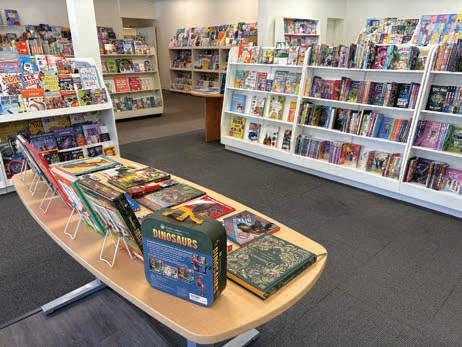


Great publication. I take the ferry just to get a copy.
Donald Fleming White Rock
by Norman Kerby Paintings by Joan Turecki
Well worth it to be a subscriber. Delivery to your door, never miss an issue, support an important literary publication. Win, win, win. Frances Peck North Vancouver
Happy subscriber here … keep up your great reviews!
Nancy Campbell Whitehorse
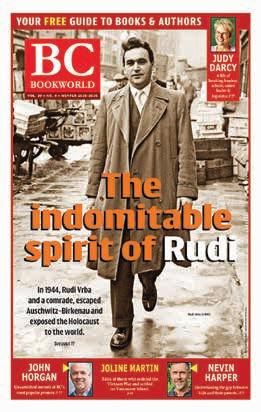
writers. All this to say: thank you for your dedication and work on this publication.
Longtime subscriber, longer-time reader, and, over the past two years, a reviewer. Here’s to 39+ more years.
Tom Hawthorn Victoria
Thank you for the quality of your interesting magazine. Whenever it arrives, everything else that should be done gets put on hold.
J. Speedie Aldergrove O
Happy to renew. I love to keep the old copies too!
Janet Naylor Pemberton
A quick note of gratitude for the coverage of my Scar/city book in the Winter issue of BC BookWorld I am hearing back from people who are not on social media, but read the paper in the libraries, or are enjoying it on the ferries. I personally find it so refreshing these days to hold a physical copy of a paper and have appreciated the support BC BookWorld lends us
Send letters or emails to:
BC BookWorld, P.O. Box 93536, Vancouver, B.C. V6E 4L7 bookworld@telus.net
Letters may be edited for clarity & length.
Daniella Elza
Vancouver O
Thank you for supporting BC’s literary community. I’ve benefited from reviews in your publication and deeply appreciate your dedication to engaging human reviewers who we know we can trust.
Barbara Black
Victoria
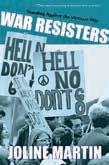
I read with great interest the article on Joline Martin’s War Resisters: Standing Against The Vietnam War. In the 1960s I lived in downtown Vancouver and was involved in the art and music scene and the folk music clubs where I met many young American musicians who came up from Seattle and Portland to play the clubs in BC. As they found out about living in Canada, they exclaimed, “What do you mean that you can just go to art school, smoke pot, play your guitar and you don’t have to join the army?” Many war resisters and peaceniks, who stayed in Canada, became my longtime friends.
King Anderson
Hornby Island
former radio book producer and broadcaster before taking over as artistic director of the Vancouver Writers Fest, Hal Wake was known for his love of words, storytelling and books. Wake died at his Cowichan Bay home on January 7, at the age of 73. Born in Montreal on June 5, 1952, Wake moved with his family to Ottawa where he later attended Carleton University. He eventually moved to Vancouver and worked for Co-op Radio, which led to a job in the mid1980s on CBC’s Morningside radio show hosted by Peter Gzowski. Wake became the program’s book producer, highlighting his growing role as a literary champion. When the VWF’s founding artistic director, Alma Lee, retired in 2005, Wake took over the role and stayed until 2017. He was also an honorary member of the Writers’ Union of Canada, served on the board of directors of the Writers’ Trust of Canada, and was a member of the jury for the Writers’ Trust’s Matt Cohen Award for the last three years.
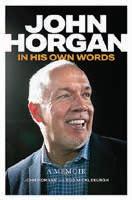
In the review of John Horgan: In His Own Words [Winter 2025-2026 issue, pages 18— 19], the final quote from John Horgan was given to his son, Evan and not directly to the co-author, Rod Mickleburgh, as the reviewer mistakenly cited. Evan Horgan had asked his father what he would want said about him after he died. Horgan responded simply, “Just tell everyone I did my level best.” Horgan died the next day.