Students explore how playing music supports mental health
McKee Contributing Writer
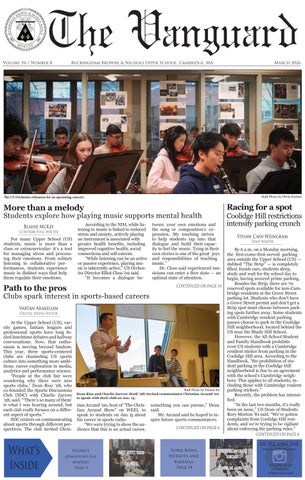
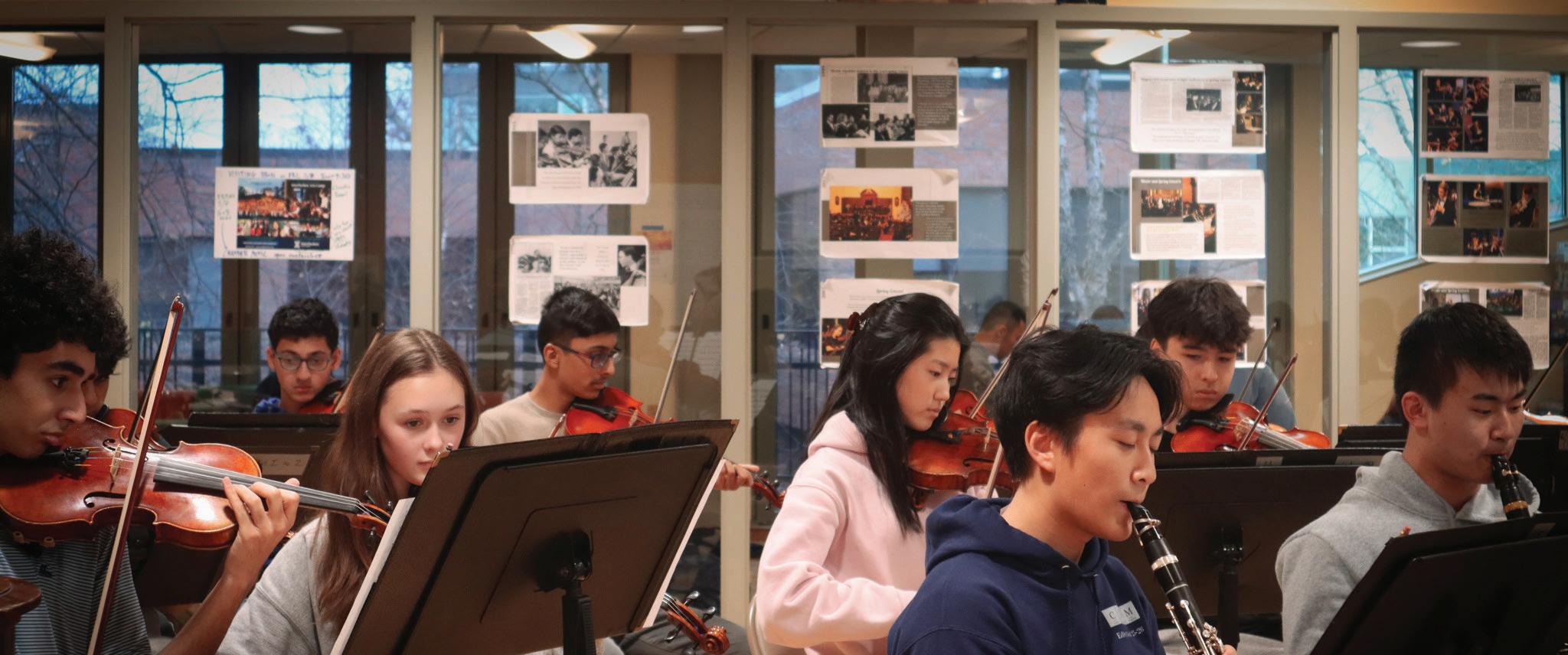
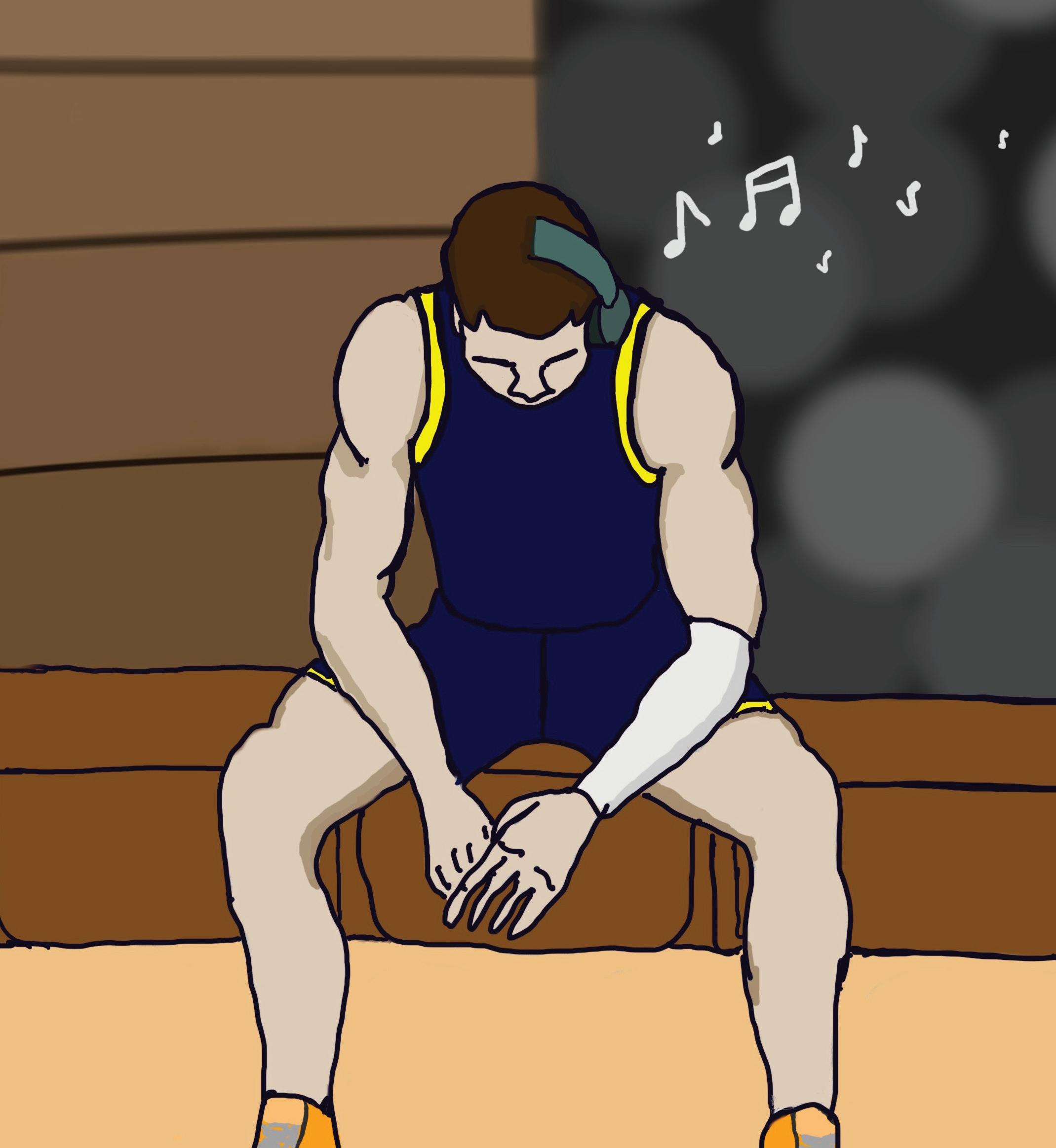
For many Upper School (US) students, music is more than a class or extracurricular: it’s a tool for managing stress and processing their emotions. From solitary listening to collaborative performances, students experience music in distinct ways that help them regulate their emotions.
According to the NIH, while listening to music is linked to reduced stress and anxiety, actively playing an instrument is associated with greater health benefits, including improved cognitive health, social connections and self-esteem.
“While listening can be an active or passive experience, playing music is inherently active,” US Orchestra Director Elliot Cless ’02 said.
“It becomes a dialogue be-
Path to the pros Clubs spark interest in sports-based careers
Vartan Arakelian Digital Media Editor
At the Upper School (US), varsity games, fantasy leagues and professional sports have long fueled lunchtime debates and hallway conversations. Now, that enthusiasm is moving beyond fandom. This year, three sports-centered clubs are channeling US sports culture into something more ambitious: career exploration in media, analytics and performance science.
“People at the club fair were wondering why there were new sports clubs,” Dean Riaz ’28, who co-founded the Sports Discussions Club (SDC) with Charlie Zarrow ’28, said. “‘There’s so many of them’ is what I was hearing around, but each club really focuses on a different aspect of sports.”
SDC centers on communicating about sports through different perspectives. The club invited Chris-
tween your own emotions and the song or composition’s expression. My teaching strives to help students tap into that dialogue and build their capacity to feel the music. Tying in their own stories is one of the great joys and responsibilities of teaching music.”
Dr. Cless said experienced musicians can enter a flow state — an optimal state of attention.
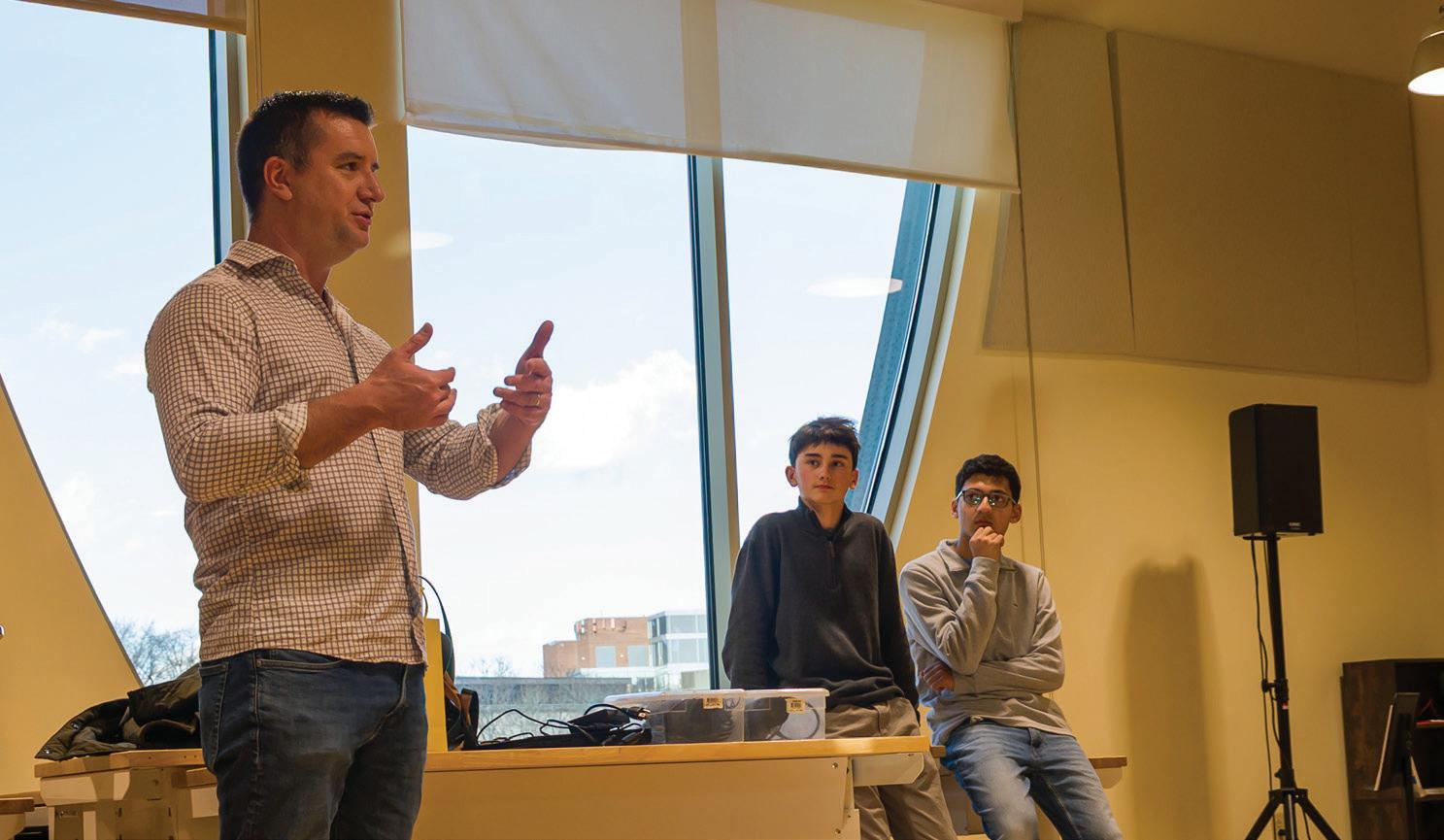
tian Arcand ’00, host of “The Christian Arcand Show” on WEEI, to speak to students on Jan. 15 about his career in sports radio.
“We were trying to show the audience that this is an actual career,
something you can pursue,” Dean said.
Racing for a spot Coolidge Hill restrictions intensify parking crunch
Vivian Cain-Weingram Staff Writer
By 6 a.m. on a Monday morning, the first-come-first-served parking area outside the Upper School (US) — dubbed “The Strip” — is completely filled. Inside cars, students sleep, study and wait for the school day to begin, having secured prime parking.
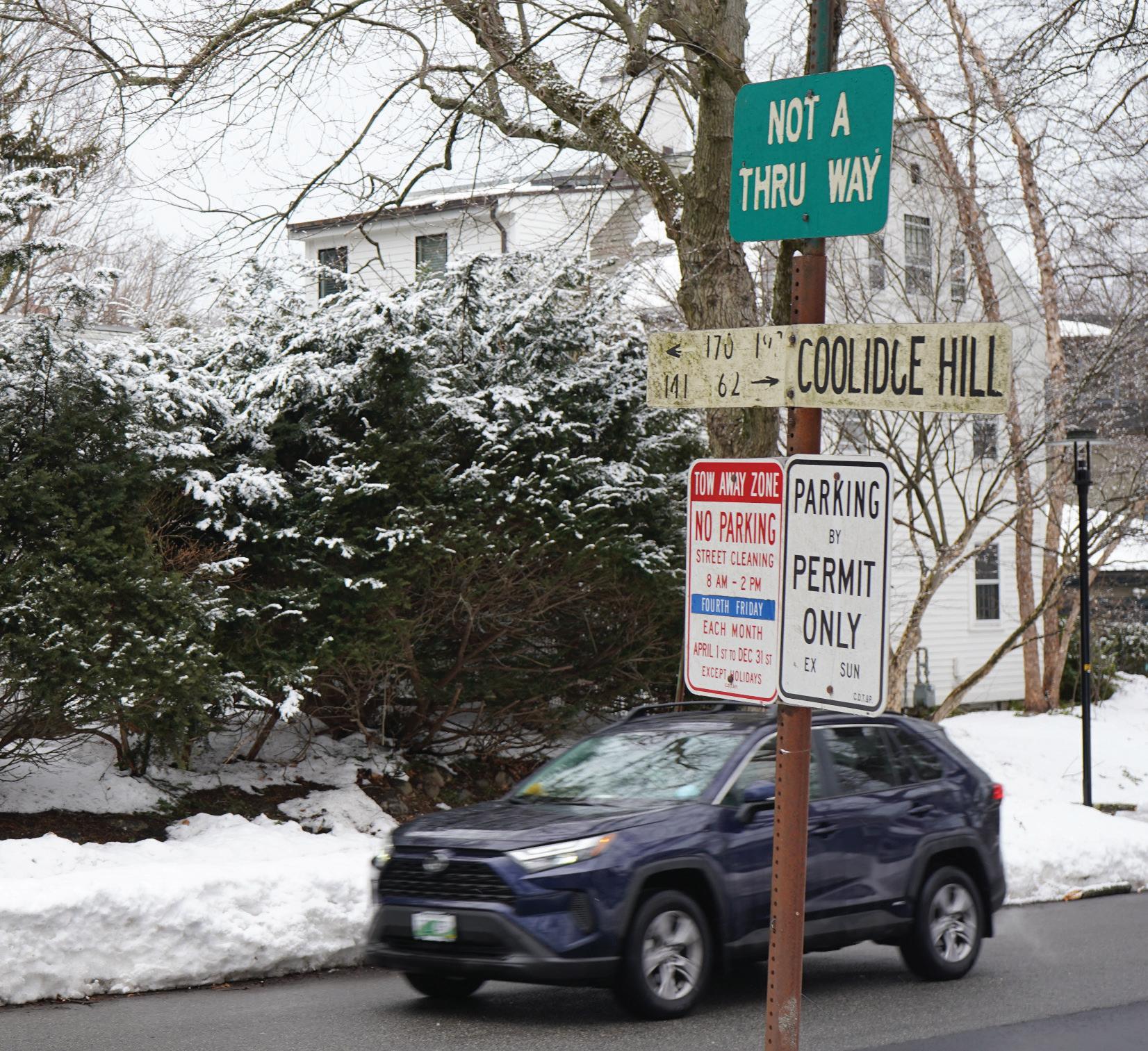
Besides the Strip, there are 70 reserved spots available for non-Cambridge residents at the Grove Street parking lot. Students who don’t have a Grove Street permit and don’t get a Strip spot must choose between parking spots further away. Some students with Cambridge resident parking passes choose to park in the Coolidge Hill neighborhood, located behind the US near the Shady Hill School.
However, the All-School Student and Family Handbook prohibits even US students with a Cambridge resident sticker from parking in the Coolidge Hill area. According to the Handbook, “the prohibition of student parking in the Coolidge Hill neighborhood is due to an agreement with the school’s Cambridge neighbors. This applies to all students, including those with Cambridge resdent parking stickers.”
Recently, the problem has intensified.
“In the last two months, it’s really been an issue,” US Dean of Students Rory Morton ’81 said. “We’ve gotten complaints from Coolidge Hill residents, and we’re trying to be vigilant about enforcing the parking rules.”
CONTINUED ON PAGE 8
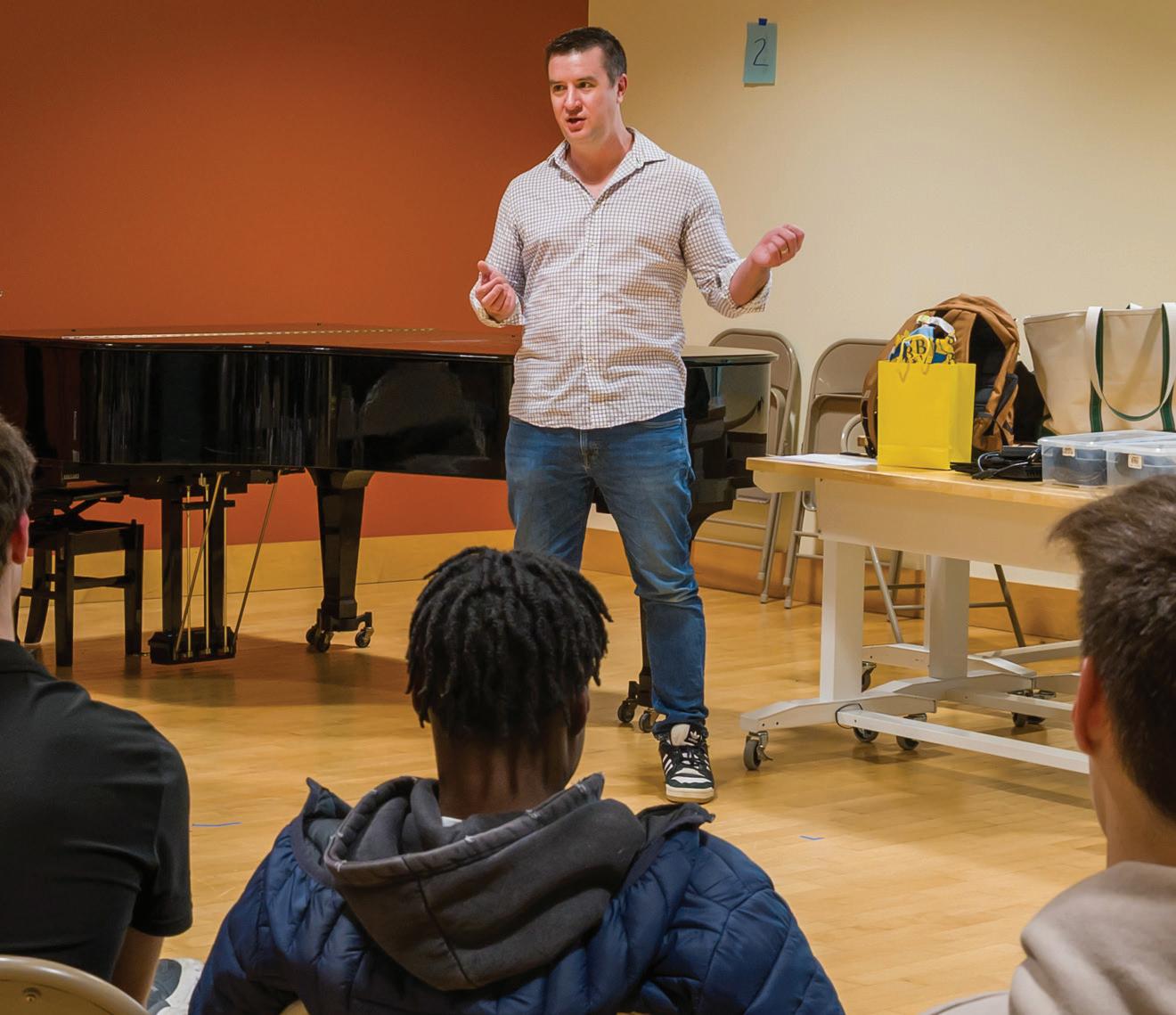
Mr. Arcand said he hoped to inspire future sports commentators.
Staff Photo by Olivia Richter
The US Orchestra rehearses for an upcoming concert.
Staff Photo by Tristan Ko Dean Riaz and Charlie Zarrow (both ’28) invited commentator Christian Arcand ’00 to speak with their club on Jan. 15.
Blaine
Editor’s farewell
It’s hard to believe my Vanguard tenure began around the time of the now-infamous freshman editorial (See — or don’t see — Volume 51, Issue 8: “Words of encouragement for the Frosh <3”). As a freshman, reading an editorial that congratulated us for our supposed naïveté was a humbling experience. Ironically, it also became my first lesson in the responsibility that comes with publishing. From my role on the Freshman Grade Council, I saw how The Vanguard’s words rippled through our community. And I figured that if I couldn’t beat The Vanguard, I might as well join it.
Turns out, journalism isn’t just about witty takedowns; it’s about helping others better understand our community and even possibly shaping it. That lesson deepened last March, when the senior team traveled to a Columbia journalism conference. Between scribbling notes with professional reporters, laughing at absurd headline examples and debating which page layout was better, we began to rethink what The Vanguard could be. We learned just as much outside of the conference, where conversations about journalism blended with everything else.
When we returned to The Vanguard, this board embraced change and learned on the fly. Together, we wrote punchier heads, redesigned pages to show-
Editorials
case student artwork, reconsidered our columns, upgraded our photos and mentored our contributors. We paid close attention to how we framed our articles and how we got more perspectives. Not every change we made worked at first, and that wasn’t our goal. What mattered was creating a culture of openness, kindness and persistence.
One of the intentional choices we made this year was leaning into the difficult topics on our community’s mind. This board approached complex issues — like student gambling, the college process, polarizing current events and burnout — with courage, thought and a willingness to listen. In a news environment that often feels loud and heated, we tried to take the temperature down and create space for nuanced coverage. I’m especially grateful for our administration’s support; they engaged with our reporting, asked thoughtful questions and trusted The Vanguard to cover sensitive topics responsibly.
Before Volume 54 comes to a close, I owe many thanks to our fantastic team. To Yancheng, for sharing the unending work that it takes to make this publication great. Your range in writing, editing, production and kindness never fails to impress me; I couldn’t have asked for a better partner in this role or a better friend to share it with. Ayana, for your
Buckingham Browne & Nichols School
80 Gerry’s Landing Road Cambridge, MA 02138 vanguard@bbns.org, vanguard.bbns.org
(617) 547-6100
Volume 54, Issue 8
Projects Editor Ayana Karthik
Opinions Editor Matthew Walsh
Editorials Editor Sonja Peetz-Larsen
On Campus Editor
Mimi Shaywitz
Off Campus Editor
Lucia Longstreet-Lipson
Features Editor
Scarlett Hawkins
Sports Editor Ethan Moran
Editor-in-Chief Gabe Cooper Managing Editor Yancheng Zhao
Arts Editor Christine Tao
Faculty Advisor Kim Whitney
Digital Media Editor Vartan Arakelian
Production Manager Carl Chen
Production Manager Charlotte Garrity
Asst. Production Manager Sydney Ruiz
Asst. Production Manager Harper Dubovik
Photo Editor Olivia Richter
Asst. Photo Editor Katy Varadi
The Vanguard’s mission is to examine and engage the school community by providing news and information about events affecting it and by featuring the diverse range of people and perspectives that comprise it. We strive for fairness and accuracy in our content, and we strive to present that content with integrity and respect.
The Vanguard is the official student newspaper of the Buckingham Browne & Nichols Upper School, which has 543 students, 96 faculty members, and 64 staff members. Affiliated with the Columbia Scholastic Press Association, the paper is a forum for differing views and welcomes comments from its readers in the form of Letters to the Editor. No anonymous letters will be printed. The Vanguard reserves the right to edit all letters for length. The Vanguard publishes eight issues per annual volume and prints between 500 and 800 copies of each issue. About 200 of those are mailed out; the rest are distributed around campus.
Staff Writers: Hailey Jiang, David Xiong, Lucy Song, Annie Zhu, Finn Konary, Aggie Grant, Olivia Bell, Jack Reinfeld, Sydney Xu, Leah Cooper, Maggie Whitney, David Zhou, Pilar Bowen-Arce, Robbie Lally, Henry Carroll, Julia Agudelo, Alice Chung, Christian Chow, Santi Cavallo, Viola Shephard, Vivian Cain-Weingram, Cata Longstreet-Lipson
Staff Photographers: Caroline Dudzinski, Ryan Figlioli, Danny West, Shirley Zhu, Hailey Jiang, Yancheng Zhao, Gabe Cooper, Azariah Zewde, Tristan Ko
Staff Artists: Izzy Doricent, Alice Wang, Lauren Li, Sydney Ruiz, Sydney Xu, Rachel Goldberg, Christine Tao, Marin MacDonald, Anthony Gao, Gabe Cooper
warmth, humor and ability to run with projects. Sonja, for articulating our editors’ ideas with clarity and confidence.
To Matthew, for carving out something entirely your own — a column that I looked forward to each issue. Vartan, for overhauling our website so efficiently. Olivia, for your eye for detail in photo editing and for making even our longest meetings feel lighter. Carl, for elevating our pages with your truly brilliant vision and creativity. Charlotte, for being the person willing to edit our final PDF beside me at 11 p.m. when I needed you and your patience most. And to Ms. Whitney for your humor, clarity and guidance and for trusting us to grow while always being there when the going got tough.
Thank you to the juniors — Lucia, Mimi, Christine, Scarlett, Ethan, Katy, Harper, Sydney and Adi — for bringing creativity, laughter and teamwork to our newsroom. It’s been so special to watch you thrive, and in the process, you helped me grow, too. I have tremendous confidence in your leadership of The Vanguard.
And thank you, reader, for shaping our volume’s 154 pages with your ideas, achievements, concerns and perspective. As you flip through our final issue, know that these pages only mean something when they’re read, shared and talked about.
When I first read that freshman editorial, I never imagined I’d be writing this one. But this paper has a way of turning readers into writers and challenges into opportunities for growth.
The Vanguard is at its best when people care enough to show up and trust that their voice belongs. So, take the chance. Write that article. Share that idea. You, like me, might be surprised by where it leads.
Gabe Cooper Editor-in-Chief Volume 54
Photos Courtesy of Ayana Karthik and Doug Zhang
One last time
This time last year, Kate Rice ’25 passed the Editorials Editor torch off to me. A valuable piece of advice she left? Listen to the “Hamilton” soundtrack before you start writing, and you’ll achieve a generational lock-in. So, in true “Hamilton” fashion, below is my take on George Washington’s farewell address. Enjoy.
Friends and fellow Knights,
The start of a new editor to administer the editorials section of The Vanguard being not far distant, it appears to me necessary, especially as we devote to the underclassmen this campus, that I should inform you of what I hope emerges within this beacon of education as we move forth to the stage of graduation.
The matter deserving of the most concern is that of a simple hope, one in which I hope to see Gerry’s Landing blanketed in an air of unadulterated merriment in our future. A grin is a rare delight in these halls, even amongst close acquaintances, and we fail to realize how a slight upturned lip is enough to drastically alter the trajectory of one’s day, thus why I hope to see growth in such delighted expressions between friends and colleagues. In similar circumstances, I do beg that we learn to dance with increased frequency, just as the Spanish educators, arts classes and proms so encourage, as a giddy sway to the hip can bring the utmost joy!
Perhaps from such delightment, the most electrifying student section will evolve, an active Knight Section and a body united by clothing being the most pertinent of effects. We would benefit tremendously from a heightened level of spirit, CommuKNIGHTY and alternate puns of increased peculiarity finding themselves replaced by a newfound intensity of school spirit.
An additional matter I wish to bring to your attention, one of which I have spoken in prior works, yet one that remains of the utmost relevance, is the domination of one voice over another, as stated by the stellar EcoBash speaker, which, parenthetically, was a salutary and delightful success. We must encourage an education in which we do not tamp down nor diffuse the beliefs of a neighbor, and in a nation where the external surroundings seem to do the opposite, we must value civil discourse and discourage such heated rivalry when not the subject of a television program.
Thus, I leave in your hands the following: Smile, dance, cheer and listen. Although rather straightforward, they leave me with a caliber of enthusiastic outlook that I have not previously held.
I thank you for entrusting me with your beliefs, voice and values throughout the course of the past twelve months, as this role has been the primary joy of my four years of higher learning.
Editorials
GAME TIME
The Mini Crossword
Campus strands
Across:
1. Finales of Spanish V Honors class
6. Heavenly rings
7. Ahead by a point
8. A member of the Quiz Bowl team, perhaps
9. What this might be in Spanish
Down:
1. Controversial subject of an upcoming school policy
2. Highway divisions
3. How one might be during a tag quiz
4. “____ it,” a response to a group parner’s work request
5. What seniors will be up to after break
Knight links
Drawing by Sonja Peetz-Larsen
Puzzle formats inspired by The New York Times
On Campus
Standing room only Winter Athletics Carnival draws rare cross-campus crowd
Christine Tao Arts Editor
On an afternoon when the stands would often be only scattered with parents and a few students, the Nicholas Athletic Center was instead packed with Middle School (MS) and Upper School (US) students cheering shoulder to shoulder. The reason? The second annual Winter Athletics Carnival.
The carnival began on Feb. 6 with two MS basketball games. Boys’ Varsity Hockey (BVH) then beat Northfield Mount Hermon School 7-2, Boys’ Varsity Basketball (BVBB) topped Groton 79-46 and Girls’ Varsity Hockey (GVH) closed out the evening, defeating Milton 3-1.
Angus McKenna ’27 observed a difference in turnout compared to an average game.
“There were more people there at the carnival than at a normal game,” he said. “I noticed a good amount of Middle School students there, and I was somewhat surprised by how late they stayed.”
Meredith Richardson ’27 watched the BVH game.
“Our widening of the early lead was pretty exciting,” she said. “The atmosphere was more energetic than that of a regular game, especially because we were winning. The size of the crowd was larger than a standard Friday night game.”
GVH forward Mary Murray ’27 watched other teams for a change.
“I had never seen some teams play before the carnival, but now, after watching them, I can apprecia-
Reading the future
te their play,” she said. “Events like these allow the spectators to witness the hard work that goes on behind
the scenes.”
Mary said the increased attendance helped GVH’s performance.
“The environment definitely felt different than usual,” she said. “It was amazing to look around and see so many people there supporting us. The carnival helped with team morale because we were more motivated to play harder. Having all those fans made us come together and play even better.”
The presence of younger students in the stands added meaning.
“Seeing younger students and fans watch me play made me feel proud to wear the BB&N jersey,” Mary said. “I felt inspired to set a good example for how to become a good player and teammate. When I was at the Middle School and I saw the girls practice around the rink, they were like celebrities. Being on the team now is a full-circle moment.”
For MS BVBB player Oliver Schneider ’30, the day felt like a preview of what lies ahead.
“There was definitely a lot of school spirit, which you don’t see as much of at the Middle School,” he said. “I love playing with the BVBB team. Those are my guys. They’re great role models to show me what a good student-athlete looks like. The carnival got me excited for my future sports career at BB&N, seeing how many people showed up to support other students.”
Senior file readers shape incoming class, gain behind-the-scenes insight
Before an applicant is admitted to the Upper School (US), their file is read multiple times, scored on a shared rubric and discussed by a committee. Among the voices weighing in are not only faculty members but students.
This year, 18 seniors served as admissions file readers, evaluating applications before participating in conversations that determined the next incoming class. Drawing on their experience as students, file readers play a unique role in the process, Chloe Rankel ’26 said.
Student readers typically spend between 30 and 45 minutes looking through an application, taking notes and writing an overall review of the student. They then attend a review meeting with three to four faculty members and two other students who read the same 30 files.
“Everyone was very open during the meetings and truly listened to what others had to say,” Chloe said. “We were all a part of the conversation, but at the end of the day, the admissions team got the final say on all applicants.”
Student file readers offer a different perspective than faculty members.
“As a current high schooler, I could understand the applicants’ feelings,” Chloe said. “Our perspective put less distance between adults and applicants. Being a student, I get to see student interactions up close with different classes, sports and peers. I have an immediate experience within student life, so I can understand what students have to do to balance their classes and sports.”
She valued getting a behind-thescenes look into an admissions process.
“My role has helped me better understand the college process,” Chloe said. “I learned how an application has many parts, and none is the sole determinant of a prospective student’s admission. All of the grades, recommendations, test scores and interviews work to showcase multiple aspects of a prospective student.”
Matthias Paulson ’26 agreed.
“It was interesting to see both sides of the admissions process because I was applying to colleges while scoring applicants to BB&N,” he said.
“When you’re reading actual files,
you start to think about how your application will be perceived and what is most important.”
File readers evaluate whether applicants will be able to handle the US academic demands.
“Because of the college process, I understand that everyone wants their application to be read, so I feel it’s only fair to spend time on theirs,” Matthias said. “I rated them on education, academics and their essays, which is like their personality and their impact. The most important part was the academics because BB&N is a pretty difficult school, so as student file readers, we needed to think about whether they would be
able to take the classes here and succeed.”
Middle School and US Admissions Counselor Kate Piacenza ’17 said collaborating with the student file readers is a highlight of her job.
“They were so passionate about giving in-depth reads and making sure they were doing the process correctly, and that showed diligence and commitment,” she said. “During the meetings, it was great to hear their perspectives on student life at BB&N and what it takes to be successful here. Having that perspective of people who are living through this experience every day has been so valuable.”
During the admissions process, student opinions are valued as much as those of faculty, Ms. Piacenza said.
“They were just other members of the committee. It always impresses me how seriously they take shaping the community of BB&N.”
Being an admissions file reader leaves students with larger skills.
“At many points throughout your life, you’ll be reading resumes or interviewing people, so it’s important to know how to do that,” she said. “Being a student admissions file reader is such a unique opportunity that prepares students for later on in their life.”
Yoyo Zou ’27 was admitted to the US for her freshman year.
“I think everyone who gets into the school is smart or athletic,” she said. “I know a lot of people apply, so the ones chosen are very qualified, and they succeed. I wasn’t aware of the student admissions file readers, but it’s helpful to have a variety of opinions, both kids and adults, in the admissions process.”
Lucia Longstreet-Lipson Off Campus Editor
Drawing by James Tao
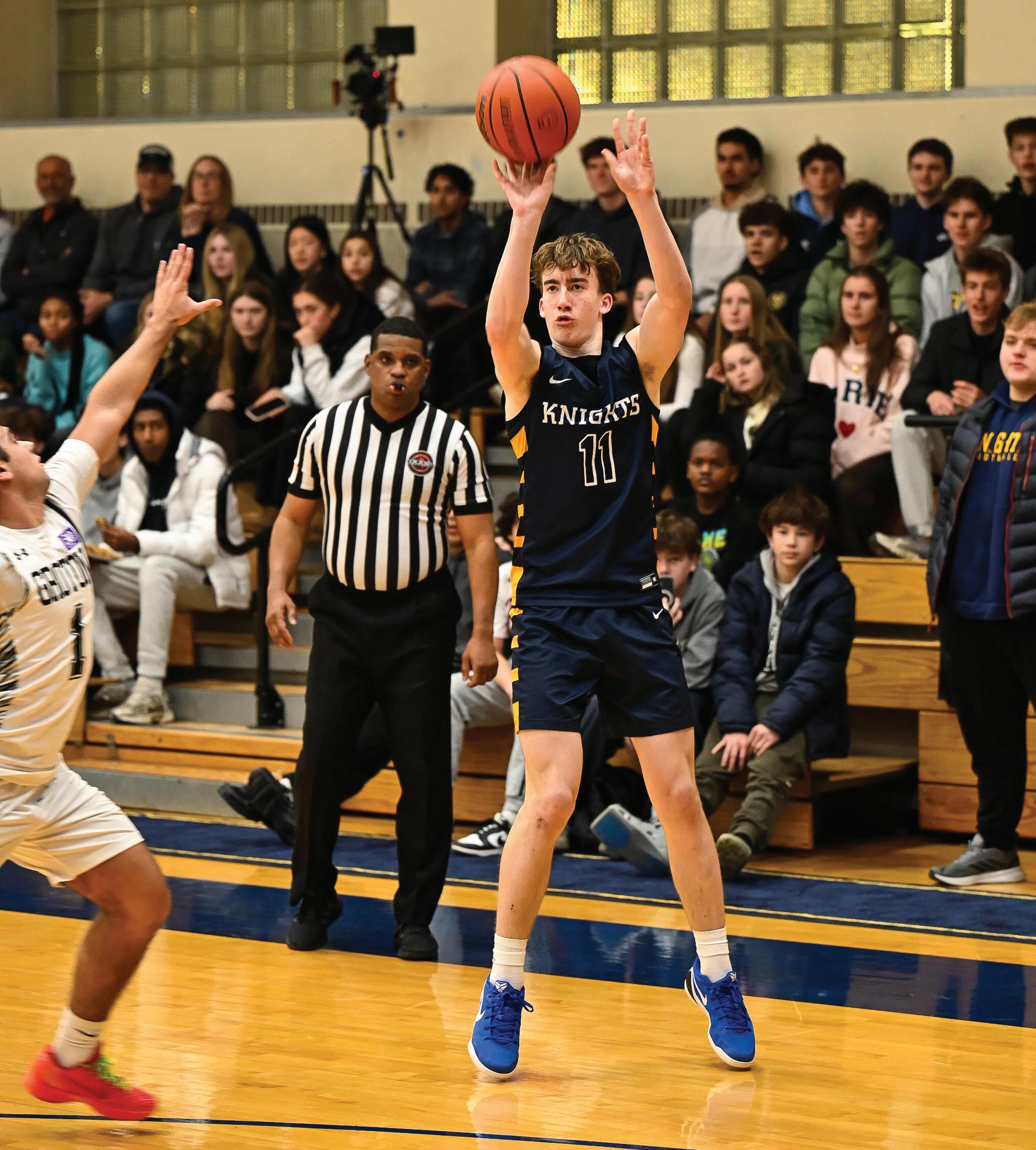
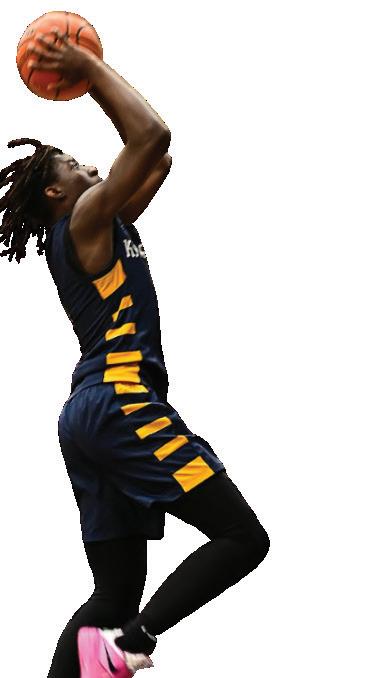
Staff Photo by Tristan Ko BVBB forward Andrew Green ’28 rises for a step-back 3-pointer during the Feb. 6 Winter Athletics Carnival.
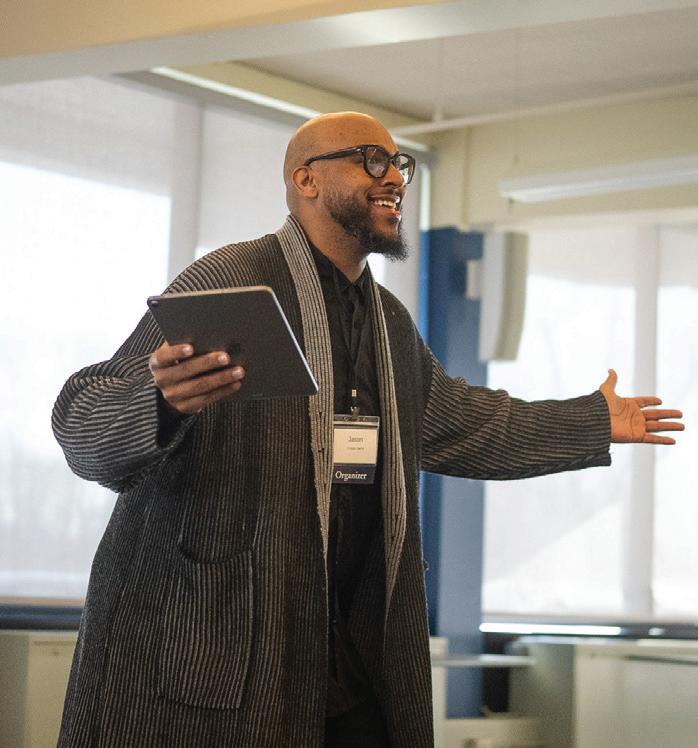
Hard conversations are everywhere, but examples of how to handle them well are harder to find. This year’s Community Day assembly featured guest speaker Jason Craige Harris, an expert on leadership and effective communication. Mr. Harris also facilitated a leadership masterclass workshop, teaching students how to approach conflict and thoughtfully engage in challenging conversations.
The hardest type of discussion stems from a disagreement, Mr. Harris said.
“I wanted students to take away the idea that it’s possible to have a hard conversation that goes well. I wanted them to walk away knowing they could be people who would embody that possibility in their everyday practice.”
Mr. Harris facilitated an activity where students practiced three skills: asking clarifying and probing questions, looping back what they heard and reframing a statement of judgment into a statement of compassion.
“My goal was to give students a place to practice the skills at a lower intensity,” he said. “I didn’t want to throw them right into the deep end.”
Katja Rankel ’28 said the activity was the most meaningful part of Community Day.
“I didn’t know many people in my workshop, so people that I am not usually comfortable with were talking to me,” she said. “It made it feel like actual conflict, and hearing feedback from my group was very useful. It was a good way to put his words into practice.” —Morgane Massard ’28
Challah making
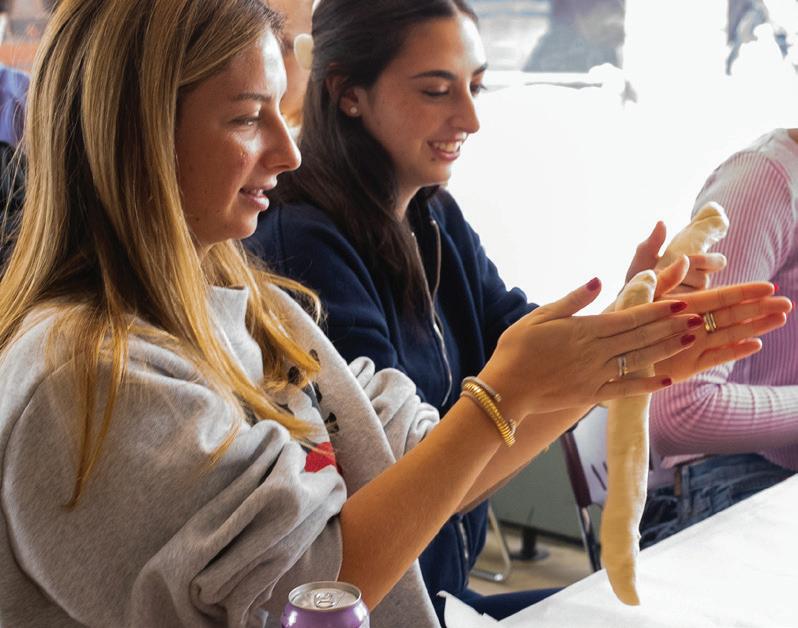
Students sat side by side in the Commons, braiding and decorating sweet challah dough. During the Jewish Cultural Club (JCC) workshop, participants also learned about the cultural significance of challah. The workshop was open to all students.
JCC Co-President Lexi Mack ’26 said the main goal for the workshop was to connect people.
“Challah-making brings people together while teaching them about the Jewish community. The point of challah is that it symbolizes community and coming together.”
The workshop offered participants a chance to try something new or share their knowledge with others.
“Eating challah on Friday nights for Shabbat is a special tradition that I have with my family,” participant and JCC member Leah Cooper ’28 said. “It was really cool to have a space to express and share our culture with other people.”
Jonathan Andreoli ’26 learned from the challah-making workshop.
“It was a great experience because I got to try something that was completely new,” he said. “Not everyone who did the workshop was Jewish, but I think everyone there had a good time and felt welcome.”
Dechlorination challenge
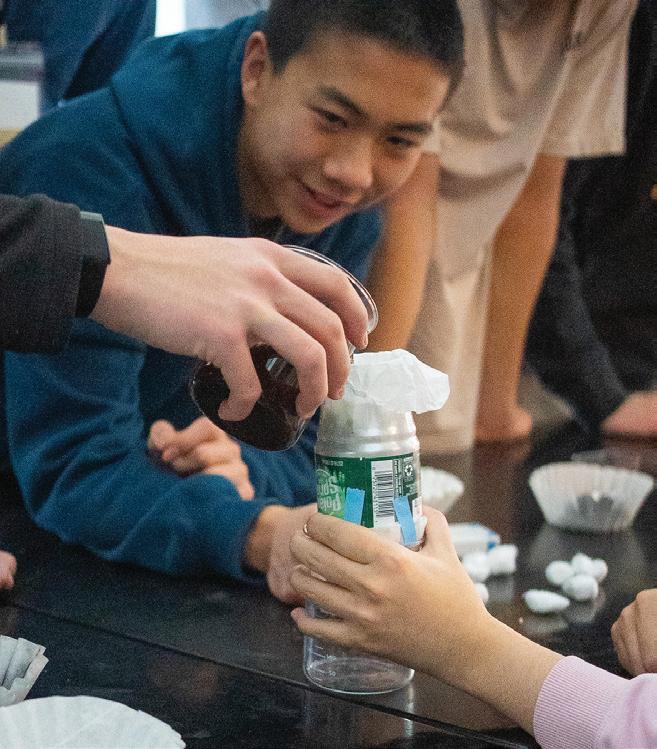
Participants in the dechlorination challenge applied their scientific learning beyond class with a hands-on exploration. Facilitated by Peilin Li, Robbie Lally, David Zhou, Matthew Wang and Tristan Ko (all ’28), the workshop guided students in developing processes to filter out chlorine, soil and other impurities from solutions.
Robbie said the idea for the workshop came from filtration activities at the Middle School.
“In eighth grade, we did filtration with other contaminants, so we decided to try that since we thought it’d be plausible and seemed like fun.”
Participants used gravel, sand, coffee filters, water bottles and activated charcoal to purify their water.
“We decided that we should try to filter out chlorine because you can easily test for how much of it you have,” Robbie said. “That way, you can see how well you’ve filtered it.”
Nathan Minn ’28 participated in the workshop.
“I thought it was an interesting concept that could come in handy if you were in the wilderness,” he said. “It was very hands-on, and we were able to complete the challenge.”
However, he wished the facilitators hadn’t initially revealed the best strategies.
“They gave away the answers and the best methods of filtration at the start, which was kind of disappointing because everyone ended up doing similar things,” he said. —Santi Cavallo ’28
Medical suturing
Blanket making
—Natalie Barouch ’29
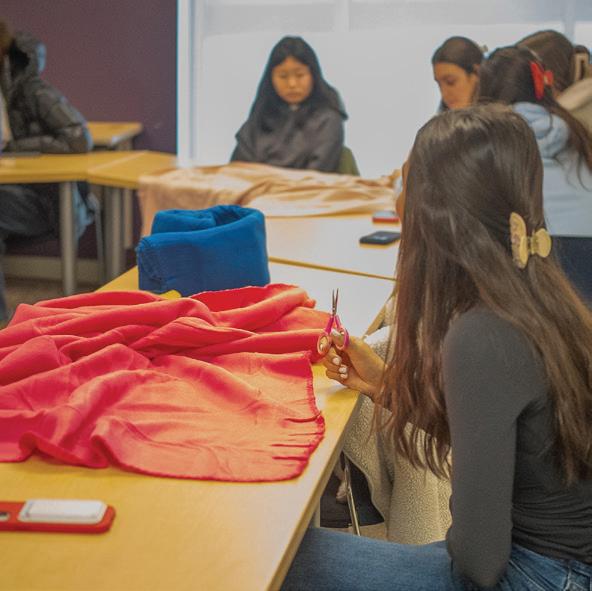
Facilitators Anshika Chadda and Viena Desai (both ’26) hosted a blanket-making Community Day workshop to create warm blankets for cancer patients. They partnered with Seams of Hope, an organization working to raise awareness about childhood cancer. Workshop participants used fleece material to make six double-sided blankets.
Anshika said she was surprised by the turnout for her workshop.
“I learned how much everyone was willing to be there. I was given a really great group of people who were willing to learn, listen and follow instructions.”
Viena helped students understand the workshop’s larger impact.
“I hope students took away an impact greater than just making the actual blankets and making something creative,” she said. “I hope they took away how the blankets are being given to the Boston community and to those who need them.”
Maggie Whitney ’28 attended the workshop.
“The most memorable part was hearing where the blankets were going,” she said. “I did not realize how necessary it was for patients to have these blankets.”
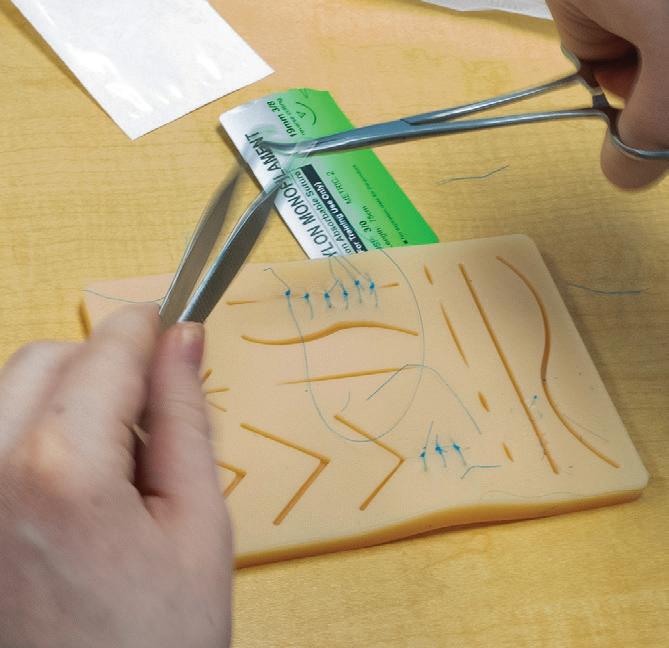
Led by Jone Abadie, Sophie Reynolds and Dylan Cooper-Ewing (all ’28), Community Day’s medical suturing workshop introduced students to the technique used to stitch up cuts and wounds. Participants learned to close cuts on fake skin using medical practice needles.
The workshop’s end result met Sophie’s goals.
“It was meaningful to see people start to get the hang of suturing and feel more confident in themselves,” Sophie said. “Hopefully, they’ll continue to pursue their interest outside of the workshop.”
Cata Longstreet-Lipson ’28 attended the workshop.
“It was interesting to see what doctors do, and it was fun to know we were doing the same thing,” she said. “It introduced me to a community of people interested in medical suturing that I didn’t know existed. I got to see different sides of people that I didn’t know they had.”
The workshop’s culture shaped Cata’s experience.
—Morgane Massard ’28
—Santi Cavallo ’28
“What stood out to me was how calm the environment felt,” she said. “It was comforting to think that everyone was figuring suturing out at their own pace without any pressure.”
Staff Photo by Katy Varadi Mr. Harris taught students how to approach difficult conversations.
Staff Photo by Katy Varadi Workshop participants test their filtration systems.
Staff Photo by Katy Varadi Sarah Hirsch and Lexi Mack (both ’26) roll challah at the JCC’s workshop.
Staff Photo by Katy Varadi US students created six blankets for Seams of Hope.
Staff Photo by Katy Varadi Students practiced suturing skills on fake skin.
On Campus
Taking the mic
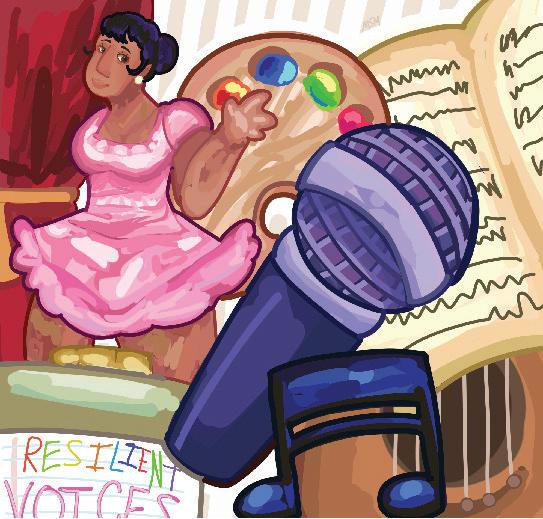
Resilient Voices, created by Nejma Reza ’23, is an annual production for students of color to express their identities through art forms including music, dancing and spoken word. This year, Lauyanne Kouame ’26 and Princess Adeoye ’27 are organizing the show, which is planned to take place April 7 and 8. —Yancheng Zhao ’26
Lauyanne
“We want Resilient Voices to be a chance for students to show a talent or share their story, who they are, their culture and their heritage.”
“For people who have music or art close to their soul, it’s very enriching to be able to express that to many people. Art is something that can be done no matter your race. It grows people’s voice when they’re able to share it and use it. I hope that’s what Resilient Voices does for people.”
“I hope the audience sees how diverse our school is and how students in our school have different stories and come from different parts of the world. In a time where differences are looked down upon, it’s very important for our school community to come together and understand that our differences are what make us special.”
Princess
“Having my race as a big part of my identity and also loving art, I found it valuable to have a conjunction of those two and use one to express the other. It was a new outlet outside of the typical art we do here.”
Inside the sports industry Guest speakers bring expertise to student clubs
CONTINUED FROM PAGE 1
“The future of this business is really in the hands of young people who are into sports and care about sports media and sports discussion. What makes my job fulfilling is that people care about it. At my 25th reunion, even though my classmates were working in strong industries, they all wanted to know about my job.
Mr. Arcand had advice for students interested in his career.
“You find your voice the more you talk,” he said. “Grab your phone, go down to watch the games of the sport you’re interested in and ask the coach, ‘Do you mind if I do play-byplay for these games up here in the stands?’ Do as many games as you can, then go back and listen to it.”
Mr. Arcand said the sports industry offers career paths beyond broadcasting.
“Pro teams have entire divisions of sports analytics, and they have a lot of say now in the sports business,” he said. “As for sports performance, teams are always looking for trainers and medical professionals to keep everybody healthy and in shape.”
While SDC explores sports commentary, the Sports Performance Club (SPC) examines the science behind athletic success. Establishedby Jack Reinfeld, Kai Veson and Kate Sullivan (all ’27), the club attended the event with Mr. Arcand.
“Students who come to our club are all disciplined and care about their sports,” Kai said. “They can learn new things to try to enhance their performance because they have that desire already.”
Kai had takeaways from listening to Mr. Arcand.
“It really showed how much he loves what he does,” Kai said. “It’s all about finding something you’re so passionate about that you will be able to go to any lengths to achieve your goals.”
Alongside SDC and SPC, the preexisting Sports Analytics Club (SAC) focuses on the data-driven side of athletics. On Jan. 29, SAC — led by Gus Inada, Brett Riley and Max Re (all ’26) — hosted Milwaukee Brewers outfielder Sal Frelick, who grew up in Lexington.
“We wanted to get a professional player’s take on sports analytics,” Gus said. “It was cool to get to hear from a professional baseball player about what he thinks about to optimize how he plays.” Analytics prompted Mr. Frelick to alter his game.
“He was one of the weaker hitters in the league in terms of how hard he hit the ball, but he changed his approach and now he’s a contact hitter,” Gus said. “Hearing how he
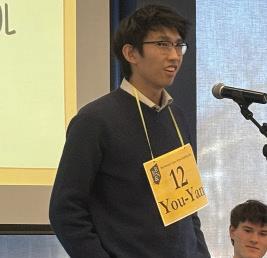
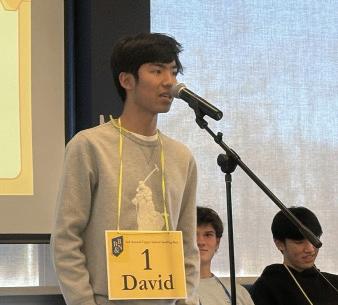
Third annual Spelling Bee
First Place: You-Yan Wang ’26
Second
Jan. 15.
found himself in the data was very inspiring.”
Talking about sports can develop skills applicable to other fields.
“We want to inspire curiosity, looking at the data to figure out why things happen,” he said. “If you build
that curiosity in sports, it can carry over into other areas of life, as well.” Together, the three clubs reflect growing student interest in sports beyond competition.
Staff Photo by Tristan Ko
Christian Arcand ’00 speaks to students about sports commentating on
Place: David Xiong ’26
Drawing by Marin MacDonald
Staff Photos by Gabe Cooper
Staff Photo by Shirley Zhu Lauyanne Kouame ’26 plays the piano while Princess Adeoye ’27 sings at Resilient Voices in May 2025.
On Campus
Alumni in the spotlight
David Sze ’84
Investing early in companies like Facebook, LinkedIn and Discord, David Sze ’84 — a venture capitalist at Greylock Partners — received the 2026 Distinguished Alumni Award.
Jennifer Pierre ’07
“BB&N had a computer room filled with TRS-80s, and you could go there and be part of their computer club,” Mr. Sze said. “If you walked around BB&N then, there would be little to no technology in the entire building, so the lab opened it up for kids like me to play, tinker, learn and get creative.”
While attending Yale University, Mr. Sze shifted his focus to the business side of technology. He moved to Silicon Valley and joined Greylock Partners in 2000.
“You’re going to strike out a lot,” he said. “That’s the nature of the business. The psychological challenge is knowing most investments won’t work but still having the conviction to swing for the ones that might change everything.”
He said assessing a company early is about people and their potential.
“At the early stages, you’re really betting on individuals and their ability to adapt. All you know is that the company two or three years from now won’t look like the company you invested in. If the founder can’t learn, evolve and change with the market, you have to be very careful.”
With AI reshaping the technological and economic landscape, Mr. Sze advised students to develop their critical thinking.
“Learn how to think, not what to think,” he said. “Develop creativity, taste and problem-solving skills: Those are the things that will matter most in an AI-driven world. Stay current: Play with the tools, experiment and explore. The students who treat new technology like a playground, the way I treated the computer lab at BB&N, will be the ones who thrive.”
—Lucia Longstreet-Lipson ’27 and Lucas Ho ’28
Tamara Coger ’07
Global climate policy is a puzzle of competing interests, shifting politics and fragile ecosystems. Tamara Coger ’07, who received the 2026 Distinguished Young Alumni Award, works at its center.
“Climate challenge is daunting, and it’s easy to feel pessimistic about it, but we know exactly what needs to be done,” she said. “Regardless of your interests and skill set, there’s some way for you to contribute.”
Ms. Coger shapes policy at the World Resources Institute’s Global Restoration Initiative.
“I manage our team that’s working with governments and supporting the locally led policy shifts,” she said. “It’s helped me understand the wide range of political and economic factors at play when you’re trying to address complex environmental and climate challenges.”
Jennifer Pierre ’07, the deputy oversight board liaison at Meta, was presented with the Lewis Bryant Award. Her work combines law, global human rights, privacy and tech policy.
“BB&N took us on a trip to Italy, and it was eye-opening,” Ms. Pierre said. “I had an interest in international affairs, but up until then, I hadn’t experienced European culture firsthand. That experience immediately instilled a travel bug for me.”
After working in Haiti and attending NYU School of Law, Ms. Pierre focused on human rights advocacy.
“When I started at a law firm with tech clients, I realized there was a strong connection between human rights and privacy, especially around surveillance and data collection,” she said. “Before, human rights frameworks were applied to real-world instances of conflict or political discourse. Here was a new way to apply those frameworks in a digital ecosystem, which felt both familiar and exciting.”
At Meta, she helps ensure content policies are applied fairly around the world by communicating them to an independent oversight board.
“I give Meta a lot of credit for allowing themselves to receive feedback from an external entity,” she said. “My role is like being a lawyer advocating on behalf of a client, but you’re not judging, you’re explaining and representing. It marries advocacy with my legal background.”
Looking back at her time at the school, one lesson stood out.
“Focus on what interests you, not a title,” Ms. Pierre said. “That curiosity has guided every step of my journey, and it continues to shape the impact I try to have in tech, law and human rights.”
—Lucia Longstreet-Lipson ’27 and Lucas Ho ’28
Gordon Lunn ’52
Gordon Lunn ’52 watched the historic United States moon landing in 1969 with more anticipation than a regular citizen. He had engineered the landing radar for the Apollo Lunar Module carrying the first astronauts to the moon.
“If the landing radar did not operate, the landing on the moon would have been aborted, so there were a lot of crossed fingers that day when the lunar module detached from Apollo,” he said.
Mr. Lunn was awarded the BB&N Medal for his career in military service and engineering innovation. After graduating from Browne & Nichols, he attended Harvard and became part of the Reserve Officers’ Training Corps program.
“The year I was commissioned, all of the distinguished military graduates were moved into the Nike missile system instead of going into the field artillery that we had trained in for three or four years,” he said.
Mr. Lunn later joined United Airlines for 35 years, modernizing their operational systems.
“It’s easy to say you can develop an online system in today’s environment, but in those days, it was a big deal,” he said. “We were early in the industry to automate a lot of the functions which had previously been done by hand.”
Mr. Lunn attributed much of his professional success to the education he received at the school.
—Viola Shephard
’28
The school helped Ms. Coger advance her career, she said. “I studied French all four years at BB&N and continued studying it in college, and that had a very direct link to job opportunities for me and allowed me to work in and travel to francophone countries.”
“My Browne & Nichols education really gave me a leg up on a lot of academic work in college and in the things that I did with my life,” he said.
By the numbers: Club leadership
Juniors
—Viola Shephard ’28
Drawings by Olivia Richter; Photos Courtesy of BB&N School Alumni Instagram
Off Campus
‘History isn’t static’ BSU explores Harlem, connects with Columbia peers for BHM
Cata Longstreet-Lipson Staff Writer
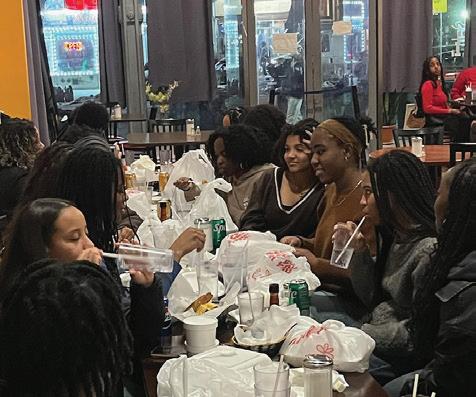
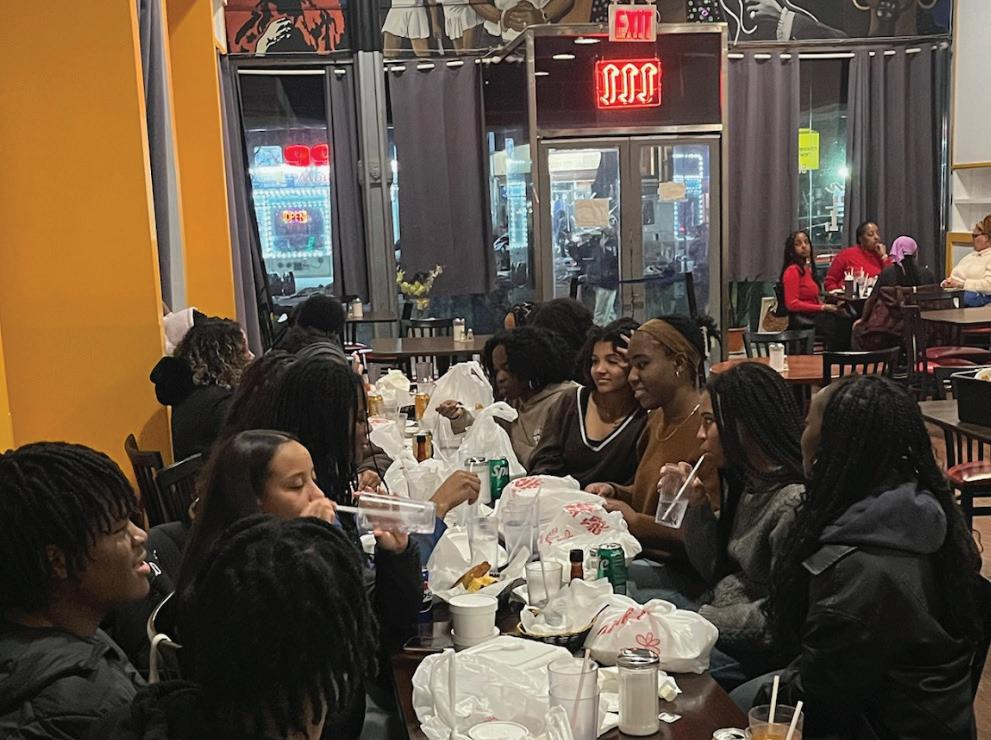
After a day of touring New York City, students from the Upper School’s Black Student Union (BSU) headed to Amy Ruth’s for a Southern-style meal. To BSU CoPresident Princess Adeoye ’27, that moment was more than just delicious food.
“It was a very good bonding moment from both sides of the table, from the freshmen all the way to the seniors,” she said.
On Feb. 15, the school’s BSU traveled to Harlem for a day-long trip exploring the city’s cultural landmarks and visiting Columbia University, where students met with the university’s Black Student Organization (BSO). Organized by Princess and fellow BSU Co-President Lauyanne Kouame ’26, the trip marked the first time the BSU traveled off campus as a group.
After taking over the presidency, Princess and Lauyanne had various ideas for a trip, including a tour of Historically Black Colleges and Universities (HBCU).
“At first, it was going to be an HBCU trip, but that’s a lot of funding, a lot of planning, a lot of time that we didn’t have,” Princess said.
The idea of Harlem came up as an alternative.
“Harlem is one of the epicenters
for Black culture, so it would also be an amazing time for students to bond,” Princess said.
On a civil rights walking tour, the group visited historic landmarks like the Schomburg Center, the YMCA where Jackie Robinson trained and the homes of Langston Hughes and James Weldon Johnson. Princess said the experience changed the way she thought about her own future.
No easy parking Students balance Handbook rules with scarce
Continued from Page 1
In 2010, the US and Shady Hill agreed to limit student parking in Coolidge Hill to minimize traffic on residential streets, Mr. Morton said.
“When students are being dropped off and teachers are coming to work, the Coolidge Hill area is really congested. The BB&N neighbors have to deal with the Shady Hill traffic anyway, so we’re not trying to add to the traffic at that point in the day.”
Students from Cambridge can park in designated resident parking spaces on Coolidge Avenue but can’t park on streets in the rest of the neighborhood.
“It’s difficult to find physical parking spaces for students to use near BB&N,” Mr. Morton said. “The hope is that most of the kids who live close enough will be able to commute and find something or walk.”
Iris Fahy ’26 lives in Cambridge.
“I usually park on Coolidge Ave, and after my commute, I have to walk another 15 minutes to school, which means I have to get up earlier,” she said.
According to school administrators, the school partnered with Boston in previous years to make Municipal Parking Lot 4, on the other side of the river, available for all students to use. Boston now limits Lot 4 to two-to-four-hour parking, making it unrealistic for students to leave their cars there during the school day.
“I wish we could go back to Lot 4,” Iris said. “It would give Cambridge students a lot more parking options.”
Cambridge resident Amanda Berlin ’26 parks on Coolidge Avenue
The meeting with Columbia’s BSO was equally valuable.
“They gave insight on the good and bad parts about being Black at Columbia,” Selena said.
Associate Director of Diversity, Equity, Inclusion & Global Education (DEIG) Patty Dei said meeting with the Columbia BSO was important for students.
“It’s one thing to hear about Black excellence but it’s another to stand outside the Schomburg Center or have lunch with BSO members at an Ivy League school like Columbia,” Mr. Dei said.
The trip served as part of the school’s celebration of Black History Month (BHM).
“It shows a real commitment to going beyond the classroom,” Mr. Dei said. “Walking through the city makes the history feel tangible.”
He said BHM carries a deeper significance to him.
“Who cares if I live, where I live?” Princess said. “The more important thing is my ideas and what I care about and what I plan to do from there.”
The visit to Columbia University gave students a firsthand look at collegiate life.
“The visit to Columbia was extremely meaningful to me,” Selena Daley ’28 said. “I now know it’s a beautiful school with a lot to offer.”
spaces near US
and walks by open spots on Coolidge Hill.
“There’s so much space,” Amanda said. “Every day when I go to my car, I see so many open spots that could be available to students. But since we can’t park there, we have to fight over the few spaces we’re actually allowed to use.”
Amanda wished for more clarity about why parking is not allowed in Coolidge Hill.
“I don’t feel like we’re bothering anyone,” she said. “We aren’t
parking in driveways, and we’re not getting in the way of neighbors. We aren’t doing anything wrong. We’re just parking.”
Sarah Baker P ’29 lives across from the Shady Hill faculty parking lot.
“I have not personally felt the effects of students parking on Coolidge Hill, partly because of where our house is located on a banked curve,” she said. “That said, I have heard some neighbors have felt frustrated when a high volume of cars in the
“To me, it’s a reminder that this history isn’t static. It’s alive in the landmarks we visit and the communities we are still building today.”
Mr. Dei said DEIG hopes to implement a trip annually, but budget realities remain uncertain.
“Our dream would be to be able to offer this trip or a trip similar to it every single year, but we also understand the realities of budget, and every year is different in an independent school.”
neighborhood prevents them from parking near their homes, welcoming daytime visitors or having home maintenance done.”
The neighborhood has limited parking.
“Coolidge Hill is a thickly settled neighborhood to begin with, so even if it weren’t flanked by two schools, it would feel quite full,” Ms. Baker said. “The streets can only accommodate so many cars while allowing residents to get in and out of our driveways, host visitors and so on. I don’t have a magic solution, but I know there are a lot of well-meaning people on both sides, and listening to each other is a great start.”
Chief Financial Officer Tara Gohlmann P ’23 ’26 ’28 said the school is focused on alleviating parking issues.
“We have not yet found a longterm solution to expand parking beyond the Grove Street athletic facility,” Dr. Gohlmann said. “We have partnered with nearby neighbors, but these partnerships are shortterm fixes as these neighbors are unwilling to commit to long-term leases.”
The administration is still looking for solutions.
“We’re willing to add shuttles in the event that we see any increase of students and faculty or staff interested in using expanded times,” she said. “Real estate near BB&N is very expensive, and the necessity for and cost of expansion to our facilities for parking would need to be carefully weighed by our Board of Trustees.”
Photo Courtesy of Ayana Karthik
Although the school’s Handbook bans parking in Coolidge Hill, some students still leave their cars there.
Photo Courtesy of Princess Adeoye BSU members share a meal at Amy Ruth’s in Harlem after touring the city.
Off Campus
Microinjections, major impact 3 students gain real-world skills with CRISPR
Mimi Shaywitz On Campus Editor
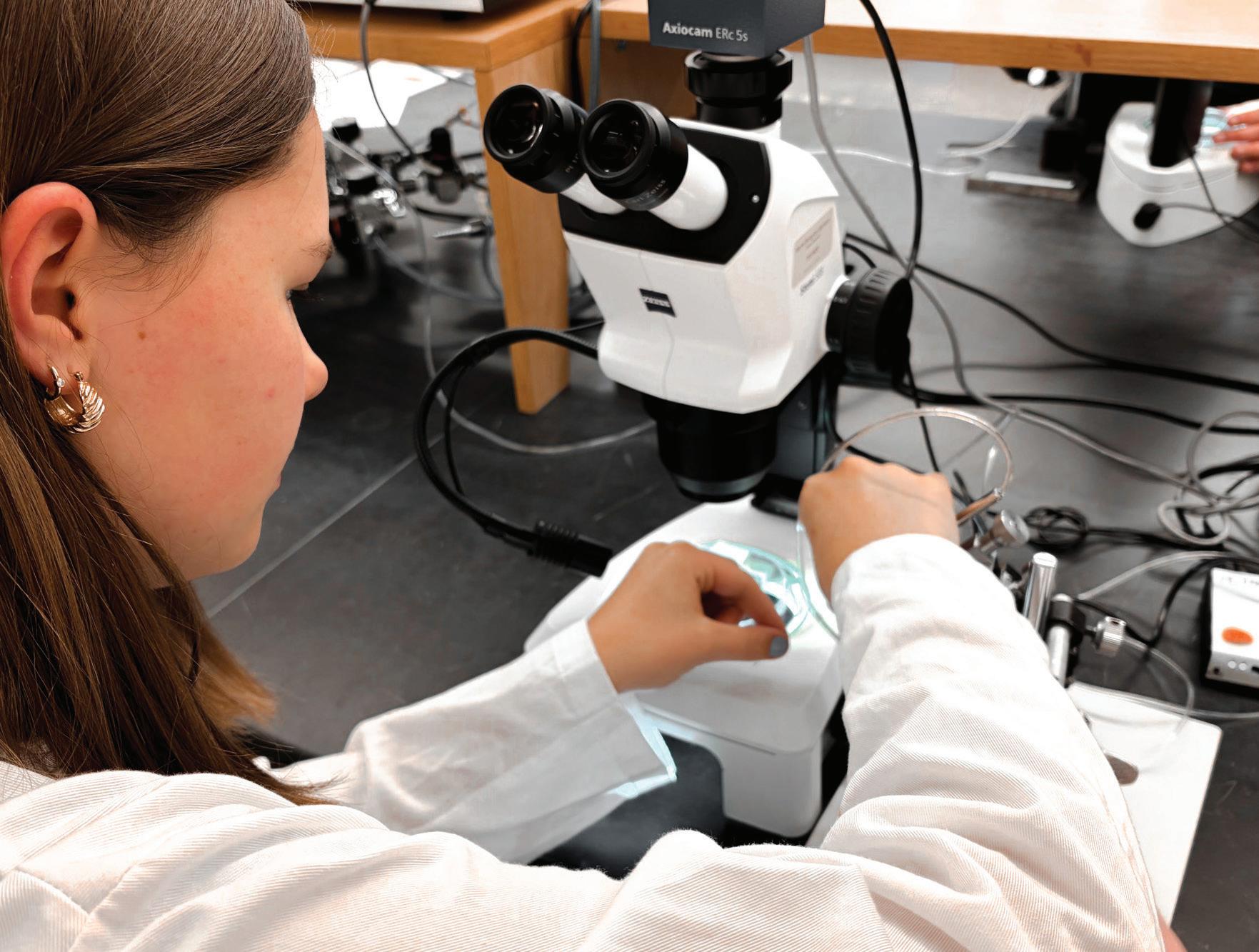
Working at the Marine Biological Laboratory in Woods Hole, Annie Zhu, Sylvie Welu and Amanda Berlin (all ’26) spent Feb. 4-7 injecting zebrafish embryos. The marine biology program provided 10 students from the Upper School (US) and Thayer with hands-on experience in CRISPR-Cas9 gene-editing technology. US Science Department Head Stephanie Guilmet and US Science Teacher Jenn Gatti organized the trip after the annual Girls Advancing in STEM (GAINS) conference did not run.
CRISPR-Cas9 allows scientists to modify DNA and has implications for medicine, agriculture and disease research.
“We do the CRISPR lab in ninth grade, but we use isolated DNA in a test tube,” Dr. Gatti said. “It is a great way to introduce students to CRISPR, but it is not the same as testing it in a real organism and then looking at the outcome once they develop like we did in this program.”
The program tested students’ lab skills, Dr. Gatti said.
“As students first started trying to inject the zebrafish with CRISPR, they all were like, ‘I can’t do this. This is too small. This is too hard. I can see my hands are shaking,’ and
Jonathan Andreoli
having the ability to try it gave them confidence that they could actually do it.”
The program helped students understand potential futures in science.
“Being able to do hands-on lab work is an incredibly important experience for students,” Dr. Gatti said. “No matter what STEM field you go into, you can learn some-
thing about what you like or what you don’t like, even if it’s not something you think you’re going to be doing directly. The three students had very different ideas of what they want to do later on, so it also introduced them to something that they didn’t know they might be interested in.”
Annie said she is curious about biotechnology.
Growing up: Senior reflections
How have you changed the most since freshman year?
I was definitely much quieter and less outgoing, and I had a smaller group of friends. As I got older, I got more confident, more outgoing, more social, and I’ve built a lot of good relationships with people in our grade.
Is there a class or achievement in high school that had a large impact on you?
My junior year English class with Ms. Mac was one of the highlights of my high school career. She encouraged everyone in that class to be confident, speak their minds and get really engaged with the material, so that was definitely a fun class.
How would you sum up your high school journey in one sentence?
Learning to appreciate and take advantage of all of the opportunities that are presented to me.
How are you feeling as your time at the Upper School comes to an end?
Especially being a lifer, I have a lot of emotions thinking about leaving BB&N since I’ve been here for most of my life. I’ll definitely miss the people, even those whom I’m not closest with.
“I’m really interested in CRISPR because of the unknown potential that it has,” she said. “I didn’t know much about marine biology beforehand because there aren’t many opportunities to learn about it, so it was also really interesting to learn how to do the different lab techniques, like microinjections, which is something that I would never be able to do normally.”
In the lab, Sylvie manipulated genes involved in the early development of zebrafish.
“The program was the first time really doing hands-on and independent lab work,” she said. “It taught me patience and to be okay with making mistakes. I was getting frustrated with myself, but in general, science and medical topics bring a lot of tedious work, and you just have to learn to be patient with yourself.”
Sylvie hopes to work in veterinary medicine.
“I’m interested in animals, and getting the opportunity to work with fish embryos was pretty unique,” she said.“Watching the fish embryos change fast was super rewarding and cool to observe because it was something I accomplished. The experience proved to myself that I can pursue being a vet.”
Sarah Hirsch Elizabeth Velander
How have you changed the most since freshman year?
I found more friends and became more comfortable with myself. I also became more comfortable with becoming friends with different friend groups. I stopped seeing others as, “Oh, they’re part of that group, so I can’t really talk to them,” and was more like, “If they’re in my class or in the hallway, why not just say hi?”
Is there a specific class or achievement in high school that had a significant impact on you?
Being with my Biv squad. I had two friends in it, and the rest were people that I didn’t really talk to, but being in an environment and introducing myself to new people that I hadn’t really talked to before was important to make new connections.
What’s a favorite memory you’ll always associate with high school?
Friday Knight Lights games with everyone sitting on the sidelines. Even if we were losing horrendously, we were still making a lot of noise. I also enjoyed sitting in the library in between classes and hearing everyone have different conversations or argue about random things, creating that sense of community.
How would you sum up your high school journey in one sentence?
Difficult but really, really fun because of the people I have in my life.
How have you changed the most since freshman year?
Looking back at freshman year, I got imposter syndrome at BB&N because I was new, and I went from a middle school where I felt smart. After coming to BB&N, I wasn’t super confident academically because everyone around me was so successful. I didn’t advocate for myself very much or have as much confidence.
How would you sum up your high school journey in one sentence? Fake it till you make it.
How are you feeling as your time at the Upper School comes to an end?
I’m definitely going to miss the people and the community. Everyone is super focused on success, but at the same time, we connect with people the most based on challenging and learning from each other. It’s a really special thing to bond with peers and friends over schoolwork and grow together through that. When there’s a math test, you get out, and everyone’s like, “What did you get on this problem?” or your whole class is freaking out about something together, moments like that where you’re all having the same struggles.
Photo Courtesy of Jonathan Andreoli
Photo Courtesy of Elizabeth Velander
Photo Courtesy of Sylvie Welu
Sylvie Welu ’26 works in the Marine Biological Laboratory in Woods Hole.
Photo Courtesy of Sarah Hirsch
Exposure to Conflict
In recent years, students have been constantly surrounded with news of national and global conflicts, amplified by the immediacy of social media and 24-hour news cycles. From contentious elections to public health crises, today’s youth have unprecedented access to information in real time. This backdrop has shaped not only what students know about the world around them but also how they process and respond to it.
The Vanguard spoke with Upper School English Teachers Dave Scrivner and Akemi Ueda about their perspectives on students growing up during a period of heightened discord.
How is the world that students are growing up in today different from the world a decade or more ago?
Dr. Scrivner: A primary difference between when I grew up and now is the devices that we all carry around, which make it more difficult for us to connect meaningfully. A lot of the research suggests these devices make people feel very alone, and when people feel alone, they can be captured by ideologies they might not fall prey to if they had stronger communities. As a high school student, it’s a scary feeling to be alone and to feel like you don’t have a group that has your back and people who see and know you. There have always been big and scary things happening in the world, but an important difference now is how we receive information about our world and what that does to us psychologically.
Ms. Ueda: It feels like every day, there’s a new crisis, and people are constantly being bombarded with that, whether through social media or more traditional forms of media. It just feels much faster paced than a decade ago, when the world didn’t feel quite as chaotic.
What worries you most about students growing up in a time of constant conflict?
Dr. Scrivner: They begin to view everything as a conflict and begin to believe that everything has to be competitive instead of col laborative or cooperative. We view people who are different from us inherently as enemies or obstacles. If we get into this mindset where there’s us and them, and that becomes the primary way that we understand the world, that mindset gets more entrenched. That said, it’s hard to extend good faith to folks whose worldview is built on the idea that all people shouldn’t have equal rights. How are young folks meant to navigate this tension: standing up for what’s right without reducing all of human experience to a zero-sum game?
Ms. Ueda: It’s upsetting to think that that’s the norm for students growing up and that violence is happening in these very graphic ways that everybody can see and hear about through video. I’m scared it will become normalized for students to the point where they think, “Oh, this is just how the world is,” and not see a more peaceful time as something that can happen and has happened.
How do we help young people stay informed without becoming desensitized?
Dr. Scrivner: If I’m a young person looking at today’s system, and I don’t think it caters to my needs or I don’t believe people in power can address the problems that actually exist, the pull to tune out would be pretty strong, right? But it’s important to remember some basic facts about our world. First, every choice has consequences, including the choice not to participate. Disengagement doesn’t make the system disappear: It just means others make decisions on your behalf. Second, we have to realize many of the tools we use carry their own politics: The medium is the message. People do need to be informed, but trustworthy news is less interesting and less stimulating than opinion-based news. If we can convey to young people that they’re being used by media platforms and algorithms in disdainful ways, they will resent that and hopefully begin to move toward sources that care more about context and less about rabid engagement.
What does “preparing students for the future” mean when the future feels unpredictable?
Ms. Ueda: A lot of it comes back to teaching students to think critically. As an English teacher, the idea of reading and consuming media in a thoughtful way feels more important than ever. Those skills are always going to be valuable and enable you to think for yourself. Because the world is unpredictable, having those skills is the most important because it allows you to think flexibly and not get ensnared into any one way of thinking.
How are current events and media’s coverage of them affecting students?
Exposure to Conflict
In addition to speaking with faculty, The Vanguard interviewed Upper School students You-Yan Wang, Jack Rossiter (both ’26) and Dylan Cooper-Ewing ’28 about their reactions to current political and social tensions.
How does seeing what’s happening in the world right now make you feel about the future?
You-Yan: It’s not a very uplifting time, when everything on the news would have been unprecedented or groundbreaking 10 years ago. What we got to do in this time is hold out hope that, in the future, stuff will turn around.
Jack: It’s just a lot more unsure. I’ve realized that recently I’ve been checking the news more than I have in the past.
Dylan: Like I want to leave the U.S. It’s getting to a point where it doesn’t feel like it’s a better place to live than anywhere else.
How do you stay informed without becoming numb?
You-Yan: That’s certainly a hard thing to do today. With every new school shooting, you just take it as an event that happened and not as something that is deeply wrong. When you hear jarring news you feel like you’ve seen before, it feels less momentous than if it were happening for the first time. Taking a step back and looking at the big picture has helped me.
Jack: It’s definitely hard because every couple of days it seems like there’s a new headline or something you have to pay attention to. It’s hard to stay up to date but also take time to process what’s going on, looking at the news and asking, “What does this mean?” or “How will this impact me and other people?” If you do that, it’s easier to digest the problem.
As a student of color, how do you feel about your future right now?
You-Yan: Where we live and at a private school, we’re sheltered from the brunt of that force against people of color and minorities in America. Thinking about unrest and violence in our upbringing, there was a shooting of a couple Asian women in a spa in Atlanta. In my town, some high schoolers then organized a couple protests, and that was inspiring to see. Even though we have so much stuff going on and violence against people of color, discrimination events of that capacity can unite people together to make their voices heard.
Dylan: I feel more scared that I’m more in danger, but there are other people who are in more danger than I am. It’s scary knowing that they hate people who I’m related to and people I love and who love me.
How do you view celebrities who speak out on politics?
You-Yan: It’s performative. When a celebrity says something, it could spark a movement amongst their fans, but it doesn’t move the needle as much as actual policy. The way society has angled itself to make statements from celebrities something they look forward to and anticipate, I think it’s a little dumb.
Jack: When it is genuine, you can tell, and celebrities should use their platform for what they feel passionate about. Just because they have this platform doesn’t automatically mean they’re right. Just because you like their music, you should still corroborate what they’re saying with your own beliefs.
Dylan: It’s made me feel a lot calmer. There are people with a platform and power who are using it to stand up against hate.
Celebrities speak out
Drawing by Alice Wang
Photos Courtesy of Cosmopolitan and Vogue
Valentine’s Day
Valentine’s Day survey results
What are your best pick-up lines?
“Did it hurt when you fell from the vending machine? Because you be looking like a snack!”
“Hey, wanna date me?”
“Do you believe in love at first sight? Or should I walk past again?”
“In chem, we’re studying thermodynamics. Hopefully, I’ll be able to figure out why you’re so hot!”
What’s something you learned from a past romantic relationship?
“It’s important to spend time with them. Communication is key. The relationship has to be like a friendship, and it should be easy to talk, hang out or sit in silence together. The relationship needs to add to your life, not be a chore.”
“If you have to constantly ask your friends how to reply to their messages, you 100% should not be with them.”
“A good relationship is not just ensured by making the other happy but also ensuring your own happiness, as well.”
“¿Qué lo que, mami?” Love
Dr. Cyr: We would see each other at social gatherings. After being friends for four or five months, we got together. How did you two meet?
Who made the first move?
Dr. Mattern: We met in our master’s program at the University of Vermont. We were in the same friend group.
Dr. Cyr: And it was a definitive yes.
What’s one thing you admire most about each other?
Dr. Mattern : We were at a party, we were dancing, and I said, “Do you like me more than just a dance?” I really wanted to make sure he liked me more than just a dance.
Dr. Mattern: Throughout our whole relationship, Dr. Cyr has been one of the most kind and thoughtful people that I know. He’s a lot quieter than I am because he’s very intentional and thoughtful with what he says, how he says it and how he interacts with people.
Dr. Cyr: And you’re a great mom. I was also going to use the word intentional, actually, because she is very intentional about how she goes about her life. I’m just very lucky that I’m a part of that.
What’s your advice to have a long-lasting, happy relationship?
Dr. Mattern: My number one piece of advice is communication. We’ve been together for 12 years, and I don’t think we’ve ever had what I would call a big argument. We’ve certainly had small arguments, but I’ve never felt angry at him for more than an hour or two, and that’s because we’re so willing to communicate when things aren’t working or when we are upset.
Dr. Cyr: On the flip side, showing gratitude for little things, like, “Thank you for doing the dishes,” goes a long way.
Dr. Mattern + Dr. Cyr
Valentine’s Day
First impressions:
Blind dates
James: She was more talkative than I thought before having a real conversation with her. From being in class with her, I thought she would have been more quiet.
Sandy: He was really nice.
Favorite part:
James: I feel like I didn’t know her very well as a person, and now, I know more about what she’s like and her personality.
Sandy: Talking with him and getting to know him.
How would you rate the date, and would you go on another one?
James: Maybe I would because I’d like to talk to her more. Out of 10, maybe a 7. I feel like 30 minutes isn’t enough time to fully get to know someone. Sandy: Maybe. I rate it a 7 or 8 out of 10.
Matthias + Whitney
What did you expect before going in?
Were you nervous?
James + Sandy
Matthias: I’m just a calm guy, so there’s nothing to be nervous about. Whitney: I was just nervous that it would be awkward with whomever I was paired up with. That wasn’t the case.
First impressions:
Matthias: I did the fall play with her, so it was nice to catch up.
Whitney: Matthias and I had done the fall play together, so we already kind of had a relationship as friends.
How would you rate the date?
Matthias: I’d give it an 8. Whitney: A 7 out of 10.
Elna + Daniella
First impressions:
Elna: I was surprised by how relaxed she was. Daniella: He was pretty forward and talkative.
How would you rate the date?
Elna: 7 out of 10. Daniella: 3 out of 10.
Ms. Alcid + Ms. Riemer
Elna: I had no idea what to expect. I had never been on a date, let alone a blind date. Daniella: I didn’t have any expectations going into it.
What were your first impressions of each other?
Ms. Riemer : Our first date was a blind date, and I was stunned at how beautiful Ms. Alcid was.
Ms. Alcid : Not was, still is.
Ms. Riemer: I was like, “I have no game, no chance.”
What is something you admire most about each other?
Ms. Alcid : I can tell Ms. Riemer anything. We’ve learned a lot, we laugh a lot and we eat a lot. We parent a lot, but we are a multiracial, multilingual household, and for the sake of our children and our families, we’ve tried to build a shared language, and that’s been a lot of cultural learning.
Ms. Riemer : Especially around food for me. Ms. Alcid is brilliant. I have not ever met somebody as creative and thoughtful. I am a pretty straightforward, linear, one-thing-at-a-time person, and she is an all-at-once, amazing person.
How do you support each other during stressful school weeks?
Ms. Alcid : Ms. Riemer’s capacity to constantly learn, humble any ego and support me no matter what. We like to go outside and listen to each other talking.
Ms. Riemer: You have to laugh at everything. Also, micro lunch dates.
Super Bowl
Last season, the New England Patriots finished 4-13 — last in their division — and fired head coach Jerod Mayo. With second-year quarterback Drake Maye under center, new head coach Mike Vrabel on the sideline and a cloud of doubt hanging over the franchise, expectations were low. Instead, the Patriots delivered one of the most dramatic turnarounds in recent memory, reaching the Super Bowl for the first time since the Tom Brady era. Although the Patriots lost 29-13 to the Seattle Seahawks, the season marked a stunning resurgence for a team many had written off. Off the field, Patriots fans, including students and teachers at school, united over the humorous Drake Maye Lover Instagram account and Ann Michael Maye’s baking recipes, turning a football comeback into a community-wide celebration. The night was capped by a halftime performance from Bad Bunny, whose set marked the first Super Bowl show performed entirely in Spanish.
“I feel proud because we came back with a completely new team, a new coach, new everything, and we still managed to play really well and make it to the Super Bowl in what a lot of people thought would be a rebuild year.”
—Valor McGrath ’28
“My friends and I talk about Ann Michael Maye a lot. With my friends, whenever we’re baking, we always talk about making a Bakemas video, sending it to each other, and we try to act like her.”
—Valor McGrath ’28
“The Patriots phrase this year was ‘We all we got. We all we need.’ It applies to the school since all we need is this BB&N community.”
—Liam Cunningham ’27
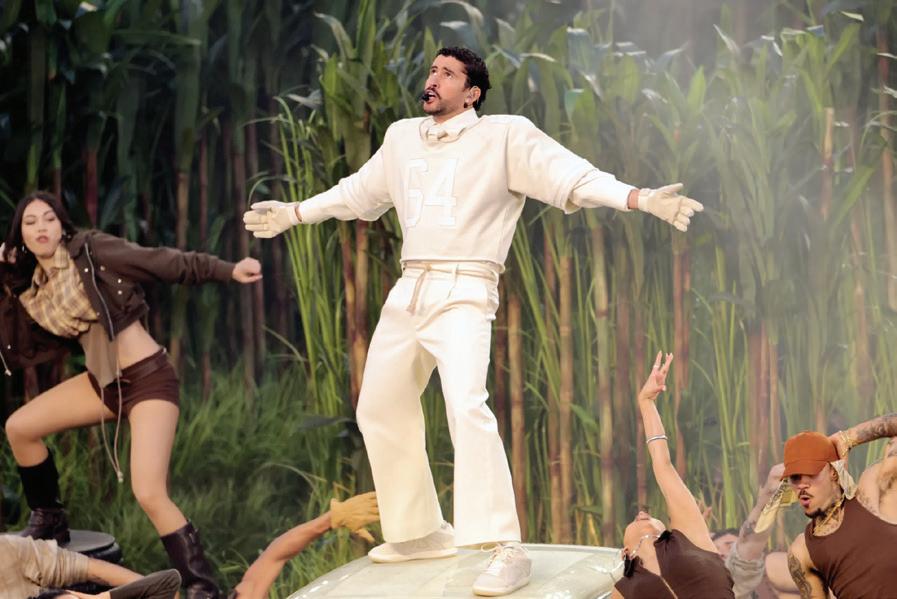
“I think a lot of people took Bad Bunny’s performance as a political statement. I don’t necessarily think it was a political statement so much as a celebration of culture and music in a way that should be present in our society and was pretty impressive. The entire set, the storyline and the various people and places represented in what he was able to do were truly amazing.”
—Upper School History Department Head Stacey Spring
Drake’s favorite: Peppermint chocolate chip cookies
Taste:
Appearance:
Ease of preparation
Moran ’27
“I really liked the halftime show because it put Latino music in the mainstream. Originally, I thought it really wouldn’t fit the liking of a stereotypical football fan: middle-aged people. But even my dad really enjoyed the halftime show. He loved the dancing and the culture that was represented.”
—Liam
“It was clear that every aspect of the halftime show was geared toward the TV audience, and it was very hard to tell what was going on during the halftime show from where I was sitting. I like Bad Bunny’s music, but they didn’t put any of the lyrics on the jumbotron, which also made it hard for non-native Spanish speakers to follow. It looked a lot cooler on TV, but in person, it was disappointing.”
“How we played was super disappointing. Energy was the most disappointing part. There were more Seattle fans, but it really felt like after a couple rough sequences from the Patriots, all the energy from the Pats fans was gone.”
Bakemas with The Vanguard
Cinnamon roll snickerdoodle cookies
These were more cake-like than they were cookie, yet it wasn’t unpleasant. The melted peppermint formed a strange gummy texture, but the chocolate chunks created a nice depth of flavor that made up for it. Decadent and unexpected.
Ease of preparation
These tasted amazing. The frosting was overly sweet, which was the only downside. However, snickerdoodle cookies always seem to foster a signature sense of coziness, so we can’t help but feel warm and comfy with these in hand. Nostalgic and yummy.
Christmas puppy chow
Taste
Appearance
Ease of preparation
This was fantastic! It was so simple, so straightforward, yet so elevated and delicious. The classic combination of chocolate and peanut butter never lets us down, and it certainly didn’t this time around. Perfect if you’re feeling snackish and in-need of a sweet treat. Simple but effective.
—Ethan
Cunningham ’27
—Zach Kesselheim ’27
—Zach Kesselheim ’27
Drawing by Marin MacDonald
Staff Photos by Olivia Richter
Opinions
Still figuring it out
A large influence for “ClayFM” was my predecessor, Keenan Billings ’25, and his album review column, “Keenly Attuned.” He ended his final piece with a meta commentary on his “thoughts as they presented themselves to [him] during B free,” so I’d like to do the same.
Growing up, I was dragged down by some sort of imposter syndrome: a feeling of inadequacy and jealousy toward my peers’ ability to effortlessly gel with any group. When I started freshman year at Marblehead High School, I wanted to connect with my brother, Tim, a senior. So I joined his all-male a cappella group (yes, the Grizzly Freakin’ Man Singers) to spend time with him before he graduated.
After the hardest physical exertion of my life at the school’s hockey tryouts, I actually made varsity as a freshman. At Marblehead, almost everyone was sorted into either the dumb, brute athlete or the unathletic, smart kid stereotype. I was trying to do both — and was terrified the hockey guys would find out I was in an a cappella group. I was standing backstage with the Grizzlies before performing at that year’s senior show, with most of the student body in attendance, when I got a Snapchat notification from the hockey group chat. Watching the video of one of the hockey seniors being hypnotized in the act before our performance, I was hit with a full-out panic attack: Everyone was going to know I was secretly in this group. I freaked out to Tim, frantically texted my parents and hyperventilated in my dad’s purple blazer and my new jeans. There were only five minutes before we were set to go out.
“If you understand that every low, every mistake, is a part of a never-ending cycle of growth that we all (even the most tenured teachers here) are in the midst of, you can find good in everything that happens.”
My brother was irked but told me I didn’t have to go out. But somehow, despite the certainty in my mind that a row of 20 hockey players would be waiting with their cameras to capture my opening rendition of a “My Singing Monsters” song, something within me forced me to go. I went out and sang my parts. We sucked as much as we usually sucked, but we were at least funny, and I was content.
When I dreadfully checked my phone later that night, I realized no one cared. I got some comments about it at practice the next morning, but they were all positive. My fear of breaking some “norm” had just been in my own head.
So I urge you to do whatever you enjoy, no matter what notion of social embarrassment you have in your head. Don’t do or not do anything because of what you think your friends will say. I write these columns knowing that, once the new Vanguard copy appears on the Commons table, I’ll get at least two comments from my friends about the goofy-looking caricature of me, and I’ll laugh it off. Sometimes, that’s embarrassing, but being able to write about a topic I want people to hear about, and see my name in print, is much more rewarding.
Lately, I’ve struggled with feeling like I don’t have everything figured out. I’m 19, doing well on paper and involved in everything I care about, but I don’t always feel the confidence I expected at this age.
I’ve realized that mindset ignores the steps I took to get here. It’s unfair to consider the last four years as futile because I don’t feel complete right now. Through journaling and conversations with my therapist and loved ones, I’ve started reshaping my perspective.
My goal is no longer to have everything “figured out” because I’ve realized no one does. What’s the fun in having everything perfect? If I strive to be perfect and solve everything, the lows become inherently and indisputably bad. Whereas, if you understand that every low, every mistake, is a part of a never-ending cycle of growth that we all (even the most tenured teachers here) are in the midst of, you can find good in everything that happens.
I’m grateful for every mistake I’ve made in the last four years. And I’m grateful for the people around me who stick with me through anything. I’m grateful that my late columns for almost every issue still get to run. Thank you to the select few who always read my column and bring it up to me because it’s made me happier than you could imagine. “ClayFM” helped me grow, and that’s all we’re here to do, right?
‘Devil-May-Care’ about free speech
I’m sure many seniors have heard me talk about the same two topics at various college fairs and visits: free speech and open discourse. In an effort to avoid edgy conversations and personal discomforts, the internet and higher education has diluted (perhaps intentionally) those two tenets essential to that whole arena, so I was very surprised to see this film on open YouTube access. Why, in this environment, would a film disparaging the limits on speech be freely available? One, “Devil-May-Care” was released almost a hundred years ago, so maybe that’s why. It seems harmless. And two, it’s not an easy watch (mostly because of the hero’s very interesting pomade). But way beneath the glitzy Roaring Twenties sensibilities is a not-soharmless message that’s stuck with me.
“You can’t just cut away true connection, that rare bond to others for which most of us spend our entire lives searching, just because of someone’s politics.”
The short version (because I’m betting most of you haven’t watched this) is this: post-1815 France, Bonapartists versus Royalists. Armand de Treville, a Bonapartist leader, escapes prison and hides as a footman at a country estate, where he promptly runs into staunch Royalist Leonie de Beaufort. She opposes everything he stands for. She also, inconveniently, begins to fall for him. You can predict the rest. Maybe you could say this is a “Romeo and Juliet” try hard, but the fascinating thing about “Devil-May-Care” is, initially, Armand and Leonie aren’t kept apart by their apparent social statuses. But when Leonie — of high status — realizes his true identity and gets to know him, she doesn’t automatically throw herself at his feet. She despises him even though their personalities match well, and she knows he would be a fair match for her. Why? Because Leonie lets politics destroy the genuine human connection she and Armand have.
“We need to be more like Armand: willing to look one another in the eye, even across political lines and have that meaningful conversation anyway.”
I guess it’s just a film, but “Devil-May-Care” touched me deeply because political division didn’t end with Bonaparte’s demise. You can’t just cut away true connection, that rare bond to others for which most of us spend our entire lives searching, just because of someone’s politics.
Armand tracks down Leonie the night before she’s set to marry someone else and looks her right in the eye, forcing her to come to terms with the fact that she’s lying to herself.
Unlike Armand, schools and colleges don’t perform grand romantic gestures, but they do decide whether they’ll en gage in or avoid disagreement. If schools are supposed to prepare us for our future, they can’t treat open dis course as a risk. A community that values education has to trust its students to engage in hard conversations and listen to others.
Else, we risk becoming like Leonie, choosing comfort over the truth and needing someone else to remind us what we already know. We need to be more like Armand: willing to look one another in the eye, even across political lines and have that meaningful conversation anyway.
Ryan Clay ClayFM
Caroline Dudzinski Caroline’s Classics
Drawing by Gabe Cooper
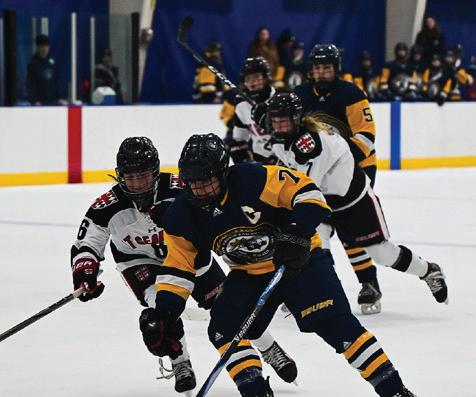
Boys’ Varsity Hockey
A year after winning just five games, Boys’ Varsity Hockey more than doubled its victories and rebuilt its identity, finishing 12–15 in its strongest season in over a decade.
Co-Captain and defenseman Ryan Clay ’26 observed a change in the team.
“The culture has been so much better this year,” he said. “It’s a winning cul ture now. We went into every game thinking we could win it. We’ve gotten our most wins in a season since 2013. It’s just a good group of guys to be around.”
Finding the team’s personality has been an important factor.
“We started the season without an identity,” Ryan said. “At a tournament at Middlesex, we started working hard and dumping the puck. That’s when we found our identity. And the games that we’ve won this year have been when we played like this.”
Defenseman Tiger Tang ’29 said the team developed camaraderie.
—Alex Berk ’29
“We played as a team,” Tiger said. “We didn’t play selfish, and we were like a family. The captains encouraged us on the ice and from the bench to cheer for our teammates. It was a great atmosphere.”
Varsity Fencing
Boys’ Varsity Squash
The only fencing team in the Independent School League, Varsity Fencing boasts three state championships in the last five years. The boys’ team finished with a 6-1 record, and the girls’ team went 6-0. Both teams placed second at the Feb. 21 Massachusetts State High School Fencing Champi-
Captain Troy Song ’26 focused on creating a cohesive environment.
“I really wanted to create a community where people, regardless of prior fencing experience, could come together and just have this shared space,” he said. “I encouraged the older and more competitive fencers to help out the younger fencers, and that helped make a strong team
Though the team works with coaches from the Boston Fencing Club, Troy had a lot of influence as a senior captain.
“I had more independence and influence over the way that I ran practices this year,” he said. “Seeing the impact of my decisions was incredibly rewarding and helped me grow as a leader.”
Eric Shao ’27 has takeaways from his experience on the team.
“It’s taught me life lessons,” he said. “For example, strength is not always about pushing forward, but sometimes it’s about taking a step back. Our community shares the same goal of excellence, and we all try to improve and help each other out.”
—Alex Berk ’29
After a winless winter last year, Boys’ Varsity Squash headed into this season with a simple goal, Co-Captain Evren Khan ’26 said: Win one match.
The team did more than that, finishing with a 5-10 record and advancing to the semifinals of the U.S. High School Team Champi-
“In last year’s regular season, we went defeated, so we did not win a single game,” Evren said. “This year, we didn’t do that, which
Team members worked to create a more competitive environ-
“We had a lot of younger players and not too many older ones, so we worked to instill knowledge, and the younger players were taking it in,” Evren said. “The guys were really nice, but we did tend to lose a lot of games. We had some close ones, so we strived to improve during practices.”
Robbie Lally ’28 said the team’s defining moments didn’t happen during matches.
“Spending time with the team, especially considering some of them won’t be there soon enough, was really fun,” he said. “All the bus rides to the games and back were some of the best parts of the season.”
—Rachel Goldberg ’28
Girls’ Varsity Hockey
Facing the departure of 11 seniors last June, a change in leadership and high expectations after winning the Independent School League (ISL) championship, Girls’ Varsity Hockey finished the regular season with an 11-11-3 record.
Co-Captain Zoe Beck ’26 said the team’s energy has in creased.
“We set a new motto this year, which was ‘all in.’ That means everybody’s showing up every day and working hard, not just on the ice but off the ice, as well.”
Zoe and Co-Captains Aggie Grant and Anika Singh (both ’26) developed their leadership.
“It was sometimes difficult because there were three voices to be heard, but all three of us were able to communicate over the course of the season,” Zoe said. “We’re hoping that our team dynamic and culture can stay strong even after we leave.” cess to its culture.
“Some of these people are going to be my best friends, and it’s a really fun group. Even when we had a 6 a.m. morning prac tice, everybody was always laughing in the locker room, and we always had music on.”
Photo Courtesy of Colin Hoffman
Staff Photo by Caroline Dudzinski
Staff
Photo by Tristan Ko
Photo Courtesy of Pierce Seth
Girls’ Varsity Squash
The Girls’ Varsity Squash team may not have a home court, but Captain Viena Desai ’26 said the team’s community makes the late nights and long bus rides worthwhile.
“Our team, in one word, is connection,” Viena said. “It’s really a great place to grow with the people around you, and I got to know people I wouldn’t have known otherwise on a much deeper level. Across grade levels, we’ve become really close because we’re on court together a lot.”
The team finished the season with a record of 4-10. One of the team’s standout moments was achieving seven victories in eight matches against Brookline High School.
“Regardless of the outcome of each game, you get the opportunity to watch your teammates and cheer them on,” Viena said. “It really helps with the dynamic of the team when everyone is super supportive of one another.”
Players learned to come into their matches with goals.
“We thought about something that we want to do in our game,” Viena said. “It’s getting a certain amount of points or trying a new shot, which is something we didn’t start with at the beginning of the season.”
JJ Lally ’28 said Viena’s leadership helped set the tone.
“She made it such a positive environment, and I really appreciated that. It lifted us all up. Almost everybody was brandnew to the sport, but by loving the game, learning as we go and continuing our team bonding, I’m very excited to see where we can go.”
Girls’ Varsity Basketball
The close-knit culture of Girls Varsity Basketball (GVBB) contributed to the team’s success in facing formidable opponents this season. GVBB ended with an 8-14 record.
Amari Kouame ’29 said the players, many of whom received ISL Honorable Mentions, maintained a strong bond and learned to play well together.
“I didn’t think we would get along as well as we did. We had our own little groups, but everyone talked, no one was excluded and the team gelled really well.”
The annual Dec. 19-20 Deerfield tournament, where the team went 3-0, was a highlight.
“We found out that Co-Captain Lucy Song ’26 got into Harvard, so we were all really excited,” Amari said. “We all went into one room and played games, and we had a lot of fun.”
Lucy agreed.
“The Deerfield tournament was a really good chance for all of us to get to know each other off the courts,” she said. “We definitely got more comfortable with each other’s playing. We started moving a lot better together, we knew where everyone was going to be and we talked a lot more.”
Lucy foresees success for GVBB.
“We worked really hard, and we were in some games against some hard teams,” she said. “We just need to work together more to really push ourselves at the end when we’re down.”
—Kate
Varsity Wrestling
“We had a great team and a great community in the wrestling room,” Varsity Wrestling Co-Captain Colin Hoffman ’27 said. “Head Coach Henry Kasdon has really good humor and a great personality, so he was able to help us bond together.”
The team improved their wrestling strategies during the
“We had a slim lineup this year, and it was tough getting a person in each weight class,” Colin said. “We had older wrestlers who joined later and were still learning.”
A highlight was the Northern New England Wrestling Championship on Jan. 31 at the Hyde School in Maine, where Co-Captain Matthias Paulson, Leo Albee, Ethan Ortega, Shirley Zhu (all ’26), Erin Yu ’27 and Colin won medals.
The team finished with a 2-18 record.
“Individually, all of the wrestlers were doing pretty well,” Leo said. “The record doesn’t really reflect what we’ve achieved.”
The team also struggled with injuries.
“We had some rough spots this year, but overall, the individuals, like me, got way better at what they do,” he said. “Everyone worked their tails off.”
—Phineas Clarke-Talhouni ’29
Boys’ Varsity Basketball
“Even though we didn’t have the best record, we had a lot of fun as a team,” Boys’ Varsity Basketball (BVBB) forward Andrew Green ’28 said. “We had really good chemistry, and that translated into the game.”
Led by Co-Captains Rohan Patel and Ben Narasimhan (both ’26), BVBB finished the season with a 7-16 record. Andrew said the team started the season with a bang, defeating Phillips Exeter Academy — the secondranked team in the nation — 70-69.
Rohan and Ben played a key role throughout the season.
“Both captains have had a very positive impact on the team,” Andrew said. “They both led in different ways. They were kind and provided motivation to us when we needed it most.”
Ben said the team has developed together.
“Year after year, it’s not just the captain’s job to grow as a leader: It’s about every player. We have grown so much as a group.”
BVBB players cultivated a strong sense of community.
“Our locker room has been a highlight of the year,” Ben said. “It has been fun being around each other, hanging out before games, after practices and whenever we can. Overall, it reflected a team that liked being around each other.”
—Scarlett Hawkins ’27
Tregay ’28
Staff Photo by Tristan Ko
Staff Photo by Tristan Ko
Photo Courtesy of Colin Hoffman
Opinions
Predict this ...
Odds are you were miserable watching Drake Maye eat dirt on national television a few weeks back. All my friends certainly were. Ah, if only I had money on the game to ease my pain! See, if I were 18 a few years back, placing a bet on the Super Bowl would be illegal — poorly regulated and probably doable — but illegal, nonetheless. In Massachusetts, 21 is the minimum age to wager on an over-advertised online sportsbook. This year, though, it was completely legal for me to put the house on the winning team’s Gatorade color being lemon-lime. State law hasn’t changed, so what gives?
Prediction markets. Out with FanDuel and DraftKings, in with Kalshi and Polymarket! You only have to be 18 to “predict” events with your wallet. If the Super Bowl got you hooked, Polymarket’s even offering the chance to wager on whether Jesus Christ will return in 2026! On prediction markets, the world is your oyster to bet on.
Except it’s not “betting,” at least in legal terms. What Kalshi and Polymarket claim to offer is an exchange of financial products tied to real-life outcomes. In other words, instead of playing against a sportsbook or casino, prediction market users buy and sell event contracts from each other. Why is it legal? Well, because it’s technically not “betting,” a domain controlled by the states. Prediction markets are regulated by the federal government’s Commodity Futures Trading Commission (CFTC). Hence, Kalshi is legal in all 50 states for 18-year-olds, but traditional gambling is not. On a spectrum of financial activities, Kalshi CEO Tarek Mansour claims his company is more like the New York Stock Exchange than DraftKings.
If you take a step back from the legalese and spend five minutes on Kalshi, however, the “it’s not betting” argument falls stunningly flat. The app lets users toggle between “prediction mode” and “sports fan mode.” The latter of the two presents moneylines and odds in an interface practically identical to FanDuel and other online sportsbooks. When “predicting,” you can stack prop bets in what Kalshi refers to as a “combo.” If you’re familiar with sports betting, that sounds an awful lot like a parlay. Despite wanting to distinguish itself as an “exchange” as opposed to a “sportsbook,” Kalshi hasn’t been very subtle with its intentions. Social media ads for the company at one point read, “BREAKING NEWS: SPORTS BETTING IN CALIFORNIA IS NOW LEGAL.” Actual sports betting is not legal in California. Here’s where prediction markets proponents may also argue that their technology serves an academic purpose. Said purpose? To predict the future.
Polymarket CEO Shayne Coplan recently boasted to Anderson Cooper on “60 Minutes” that prediction markets like his are “the most accurate thing we have as mankind right now.” Coplan’s logic relies on the “wisdom of crowds”: the theory that when you aggregate individual decisions within a group, the result is closer to reality than you might think. To some extent, prediction markets do work in this regard. Polymarket had Donald Trump winning in 2024 while pundits were still debating. Compared to analysts, bettors wager according to their true beliefs and aren’t forced to make a prediction if they’re unsure.
“If the Super Bowl got you hooked, Polymarket’s even offering the chance to wager on whether Jesus Christ will return in 2026!
On prediction markets, the world is your oyster to bet on.”
Ask most Kalshi users, though, and they’ll tell you they use the app to bet. Is Polymarket’s goal to predict the future or make billions while claiming they’re doing it?
As new prediction markets sprout with a friendlier CFTC, and as every major company under the sun (think media, tech, sports) lines up to partner with Kalshi and Polymarket, the threat of gambling-related disorders continues to loom over young adults. You can bet on anything these days. I kid you not, there’s a market on Polymarket about when the Supreme Court will accept a case regulating sports event contracts.
Imagine if The Vanguard were to unveil a prediction market for who the next school co-presidents are or how many times Ms. Keimowitz mentions “phones” at the next assembly. We’d call it absurd. We’d call it betting. The law should, too.
Louisa’s
guide to survival
To quote “The Great Gatsby,” which you have most likely read or at least SparkNoted: “I like large parties. They’re so intimate. At small parties, there isn’t any privacy.” You, my readers, are my large party. I write to you about the worst of the worst.
The funny thing about true crime, a sentence that is an oxymoron in and of itself, is that it’s hard to fathom. It’s hard to imagine how ordinary moments tilt into something that changes the course of someone’s life. These stories have no scale. They happen in kitchens, in parking lots and in bedrooms that look like yours. That familiarity is what unsettles me most.
So I write, and I presume you read, not because we expect to understand violence but because reading in a crowd — a large party — lets us look from a distance. I watch my documentaries shrouded in the comfort that I will probably die someday from natural causes.
While ignorance is often bliss, writing, reading and watching these stories has taught me that distance is an illusion. For me, true crime has never been about spectacle. It has been about proximity and about using my large party to make the unbearable feel manageable.
Being obsessed with true crime also makes me feel safe. I operate under the belief that expecting disaster disqualifies me from it. What are the odds that the noise my washing machine makes in the middle of the night is actually someone climbing through the window? Anticipation — my acute anxiety that my sister’s late arrival means kidnapping and not dodging salmon served for dinner — is my weapon.
Now, as I bid farewell, I want to thank my readers. Do you guys exist? I know for a fact that Ella Namiranian ’26 — my best friend and biggest fan — reads my columns. And Ms. Hudson, who apparently enjoyed reading about husband killers!
If you’ve made it this far into my large party, you deserve something practical. For my last column ever, I would like to impart my top three favorite true crime documentaries. Maybe you’ll eventually stumble across some free time.
While not technically a true crime, an honorable mention goes to “Free Solo.” Released in 2018, it follows Alex Honnold as he attempts the first free climb of Yosemite National Park’s El Capitan. As a former competitive rock climber, I found this documentary truly riveting and free of gruesome murders or violence. Spoiler: He stays on the wall. Honnold has recently been back in the news, receiving backlash for free-climbing a building in Taiwan. You can try to cancel a guy for not having a properly functioning frontal lobe, I guess.
Now for the podium. Third place goes to “American Manhunt: Osama Bin Laden.” This documentary, which follows the United States’ mission to capture bin Laden, is three spectacularly produced Netflix episodes that made me embarrassingly patriotic.
Second is “Athlete A.” I watched it years ago, when my family’s Wi-Fi shut off at 9 p.m. I was so riveted by the exposure of Larry Nassar and the USA Gymnastics coverup of his sexual abuse of young girls that I tiptoed to my mom’s phone, connected to a hotspot and watched long into the night. It scarred me and, for the first time, made me acutely aware of the cruelty in our world.
My favorite documentary is “The Perfect Neighbor.” I would attach a massive trigger warning to it. Like many of the documentaries I’ve written about, including how O.J.’s lawyers exploited racial tension in Los Angeles to secure a not-guilty verdict, it gestures toward broader political issues. This one is about gun control, and it will make you hate America again.
“For me, true crime has never been about spectacle. It has been about proximity and about using my large party to make the unbearable feel manageable.”
As a self-proclaimed true-crime columnist, I have some final words of wisdom. If you don’t want to be a victim in a documentary, don’t be charismatic. Definitely don’t light up the room. Maybe don’t get married if you can help it. But coming from me, as a person, take risks. Be a dissenter. Don’t let yourself be censored or overly influenced by the people around you. And don’t give in to your arguably biological instinct to be mean to your mom.
Louisa Kirk Kirk Off The Record
Drawing Courtesy of Creative Commons
Drawing Courtesy of Creative Commons
You-Yan Wang Wang Weighs In
Arts
Behind the curtain US backstage crew spends months crafting moments that last minutes
Scarlett Hawkins Features Editor
As the final curtain fell and the actors took their bows, the audience erupted in applause. Backstage, 24 students quietly dismantled sets, moved props and organized the stage for the next performance. From March 5-7, the Upper School (US) put on a production of “Mamma Mia!”
While the audience witnessed two hours of choreography and music, the backstage crew members — including stage management, stage crew, costume crew and the pit band — spent months constructing moments that lasted only minutes.
“We first brainstormed and had to look at what specific locations were needed, a two-meeting process that took three hours,” Assistant Set Director Leo Saul ’28 said. “There were so many people involved in making the decisions and process, and the audience might only see that set for five minutes.”
Backstage members met for three 90-minute rehearsals each
week, a commitment that swelled to five to six sessions a week as opening night approached.
US Arts Department Head Adam Howarth and Leo planned scenes for months that briefly appeared on stage.
“Mr. Howarth really listened to me and collaborated like we were a team,” Leo said. “We thought through presentation together, and that was a cool process and compromise to be on the same level.”
Sam Minsky ’26 and Sydney Ruiz ’27 created the set’s backdrop, which took 12 90-minute sessions.
“The painting process was the most time-consuming when making the set,” Leo said. “It’s just a background that the audience sees for a few seconds and then forgets it’s there.”
After the set was finalized, students worked on costumes, Costume Designer Ara Surati ’29 said.
“One thing the audience would never notice is all the time that goes into making stencils for each clothing item. Each item has to be printed and cut out with precision.
Tuning in to well-being
Because clothing is larger than an 8-and-a-half-by-11-inch area, it has to be lined up exactly and taped, so some pieces use 60 sheets of paper. If you make a mistake or if it wasn’t lined up correctly, the whole area has to be retaped.”
David Xiong ’26 practiced two to three hours a week for his role in the “Mamma Mia!” pit band.
“It started as a separate practice, but during rehearsals and pro -
duction, we worked directly with the actors,” he said. “You can’t just read the notes and count the beats. You have to follow what the actors are doing. There were pauses and stretches where nothing was written on the page, so musicians needed to pay attention to cues. Each production is slightly different, so there is more adaptability and playing on the fly.”
Students say making music sharpens focus, boosts emotional control
CONTINUED FROM PAGE 1
“Flow is also what athletes describe when the game slows down for them. Musicians in a flow state get a bonus cognitively because their brains latch on to the rhythmic structure of the music and help them stay in the groove.”
Salar Sekhavat ’26 plays the violin in the US Orchestra.
“Music really energizes me and bolsters my creativity, and it’s an outlet that’s always present in my daily life,” he said. “Making music asks something of you, and that is what gets you invested in the process and what makes it come alive.”
Salar said the impact of playing music differs from listening to it.
“When I’m playing music, I’m able to completely pour whatever emotions I’m feeling into the moment in combination with the piece’s own emotions and really sing out. It feels like I’m able to speak my mind. When I’m listening to music, I don’t feel as in control of my emotions as when I’m playing it.”
Gideon Coleman ’29 plays the saxophone for the freshman jazz ensemble.
“I feel more in control of my emotions when I’m actively playing
music, and I’m conscious of what I’m doing and have to be in control of my emotions to play well,” he said.
Gideon said music has its limits as a coping tool.
“Music is almost always my solution emotionally to help me through problems, but sometimes, it doesn’t help as much, and I just need to sit in my own thoughts without listening to anything.”
Drummer Matthias Paulson ’26 agreed.
“Music is one of the most consistent tools I have for resetting mentally,” he said. “I feel more in control of my emotions when I’m playing. Drumming gives me a physical outlet and lets me actively shape how I’m feeling rather than just absorbing sound.”
Matthias joined the Thursday night jazz group four years ago.
“When I’m listening to music, my mind tends to wander more, as it usually is in the background of me doing something else,” he said. “When I’m playing, my mind is much more present. I’m locked into rhythm, dynamics and the people around me, which makes it feel alive.”
Staff Photo by Olivia Richter
The “Mamma Mia!” cast rehearses Sophie’s nightmare scene.
Staff Photo by Olivia Richter
Leo Saul ’28 handles the mics, turning them on and adjusting their volume.
Drawing by James Tao
Staff Photo by Olivia Richter
Elizabeth Velander ’26 practices her lines with Cookie Nassif, Angus McKenna (both ’27) and Matias Egan ’28.
The Back Page
Winter date ideas Winter date ideas
A not-so-Super Bowl
By the time Bad Bunny took the stage at the Super Bowl, the game was already over. The Seahawks officially won 29-13, but the score doesn’t reflect just how one-sided the game felt. To add some context, according to Next Gen Stats, Bad Bunny traveled roughly 125 yards during his halftime performance, more than double the Patriots’ first-half yardage.
So what went wrong? It’s easy to point the finger at Patriots quarterback Drake Maye, who was held to just 18 net passing yards in the first half, threw two interceptions, fumbled and had his lowest PFF passing grade of the season (30.0). While it’s clear the regular-season MVP runner-up had a bad game, the true failure was the team’s inability to make gametime adjustments both offensively and defensively.
Notable Quotables
“Figure it out, but you’re going down.”
—Upper School Spanish Teacher Rosario
Sánchez Gómez to Lucy Song ’26 on a Spanish play
“That’s a Strodel move right there.” —Upper ScienceSchoolTeacher David Strodel to Matthias Paulson ’26 on stacking his withplates an shoulderinjured
“How many frees do you have? When are you even in class?”
—Kalkidan Shiferaw ’28 to Callum Sullivan ’29
“As the kids say, ‘That’s —Carolinesus.’”Dudzinski ’26 during an AP United GovernmentStatesand Politics moot court
Most alarmingly, the Patriots offensive line couldn’t stop the Seahawks’ blitz. As the game went on, the left side crumbled: Rookie left tackle Will Campbell and rookie left guard Jared Wilson each allowed two sacks. However, instead of using a tight end or running back to help block, offensive coordinator Josh McDaniels left Campbell on an island for most of the game. Campbell conceded 14 of the offensive line’s 19 QB pressures — the most by an offensive lineman in a game this season.
Similarly, although Maye did find wide receiver Mack Hollins for a 35-yard touchdown late into the game, Maye finished the first half having completed only two of five total throws of over five yards. Maye seemed afraid to throw the ball, but McDaniels never helped his confidence. Instead of calling play actions and short screen routes to help Maye beat the blitz and establish a rhythm, McDaniels had Maye sit in the pocket, take sacks and hand off the ball to surrender on third and longs. Drive after drive followed the same story, but nothing changed, and the Patriots punted on eight of their first nine drives.
On the other side of the ball, the defense also lacked adjustments. Give credit where credit’s due: The defense did have a strong first half, keeping the Seahawks to four field goals and clamping down on league-leading wide receiver Jaxon SmithNjigba. Still, the Patriots’ defense never figured out the run game. Seahawks running back Kenneth Walker III finished the game with 161 scrimmage yards and 27 carries, a performance that earned him the Super Bowl MVP. Watching the game unfold in real time, a collective groan filled the room every time Walker touched the ball. Everyone (except for the Patriots, apparently) knew what would happen. Walker would split to the sideline, break some tackles like a prime Marshawn Lynch and charge down the open field. Rather than adapt to better set the edge and contain the run, the Patriots allowed Walker to exploit the team’s soft spot for the entirety of the game, with 114 out of his 135 rushing yards coming from runs to the edge.
“Maye seemed afraid to throw the ball, but McDaniels never helped his confidence.”
While a lack of adjustments across the board contributed to the loss, it’s also important to keep in mind that the Patriots are a young, largely inexperienced team. Whether it’s the rookie pair in the offensive line, rookie wide receivers like Kyle Williams, veterans like Stephon Diggs and Mac Hollins playing their first year in the Patriots system or even Maye — who’s still only in his second season — the Patriots’ lineup was filled with fledgling players who might not have been able to make real-time adjustments even if they were called. I’m not entirely frustrated with how the Patriots’ “Cinderella story” season turned out — even if the glass slipper didn’t quite fit. If anything, the team’s unexpected ups and downs added a nice touch of nervous excitement to each Sunday afternoon and gave me some fun content to rant about through this column.
At the end of the day, the team needs to make fundamental changes this offseason, especially given the arduous journey ahead for the team next season (the sixth hardest projected schedule). If talented rookie and first-year veteran players further acclimate to the system and free agents like five-time Pro Bowl edge setter Max Crosby are brought in to tie up loose ends, I wouldn’t count out the Patriots just yet.
The Super Bowl might not have gone the way we wanted, but I believe the offseason will define this team’s future. To quote the GOAT Tom Brady with a little advice everyone should hear, even if you’re not a struggling, 319-pound Patriot left tackle by the name of Will Campbell: “Life is not about how much you succeed, it’s about what happens when you fail.”
Photos Courtesy of Ayana Karthik, Sydney Ruiz, Princess Adeoye and Denali Weaver