THE PRO CHEF OF THE YEAR 2025
Sustainability Innovator Ionel Catau showcases Emirati cuisine at Gerbou, fusing modern influences with traditional techniques

Sustainability Innovator Ionel Catau showcases Emirati cuisine at Gerbou, fusing modern influences with traditional techniques



EDITORIAL
EDITOR: Nicola Monteath nicola.monteath@cpimediagroup.com
ASSISTANT EDITOR: Blanche D’mello blanche.dmello@cpimediagroup.com
ADVERTISING
GROUP SALES DIRECTOR: Liz Smyth liz.smyth@cpimediagroup.com
SALES DIRECTOR: Gill Fairclough gill.fairclough@cpimediagroup.com
SALES DIRECTOR: Carol Owen carol.owen@cpimediagroup.com
SALES DIRECTOR: Lara Gambardella lara.gambardella@cpimediagroup.com
SALES & MARKETING MANAGER: Yash Gehlot yash.gehlot@cpimediagroup.com
prochef.sales@cpimediagroup.com
DESIGN
Froilan A. Cosgafa IV
FOR OTHER ENQUIRIES, PLEASE VISIT: www.theprochefme.com
FOUNDER CPI MEDIA GROUP Dominic De Sousa (1959-2015)
PRINTED BY Wellpack Printing Press LLC
PUBLISHED BY
Welcome to Edition 68 where the spotlight is on innovation rooted in heritage, exemplified by our cover star, Chef Ionel Catau, also our Sustainability Champion and well-deserved Pro Chef of the Year 2025. In his interview, Chef Ionel shares his sustainable approach at Gerbou, where he masterfully blends Emirati traditions with contemporary techniques.
Inside, we feature DWTC Hospitality’s fresh identity, exploring its commitment to cultural storytelling, and offer a spotlight on Polish produce meeting global market demands. Explore conversations with Tristin Farmer, where he shares the precision and vision behind Maison Dali; Nicky Van Der Walt of TANG and Jill Okkers from Tashas Group.

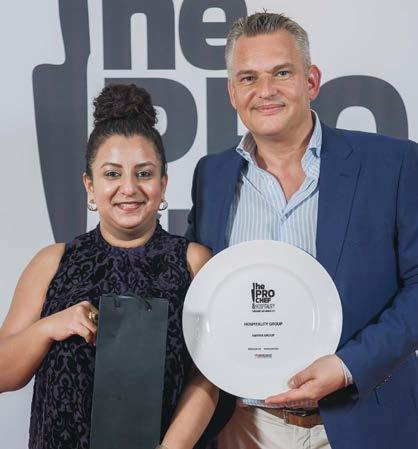
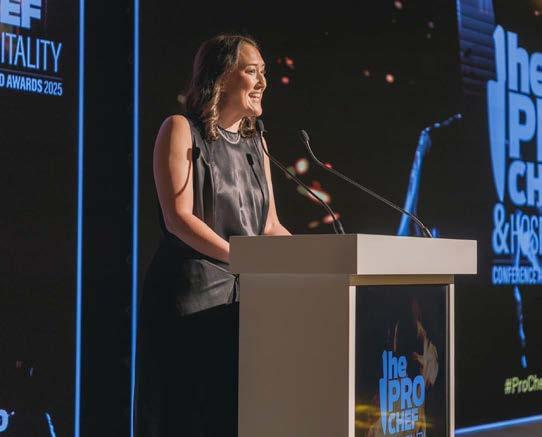
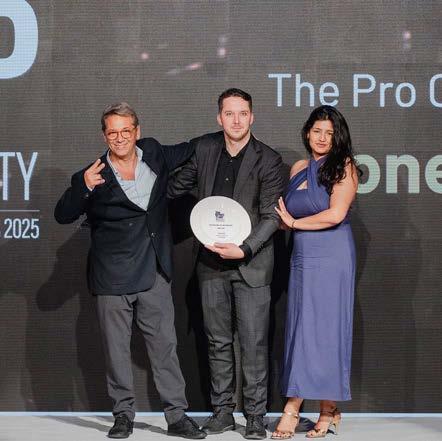
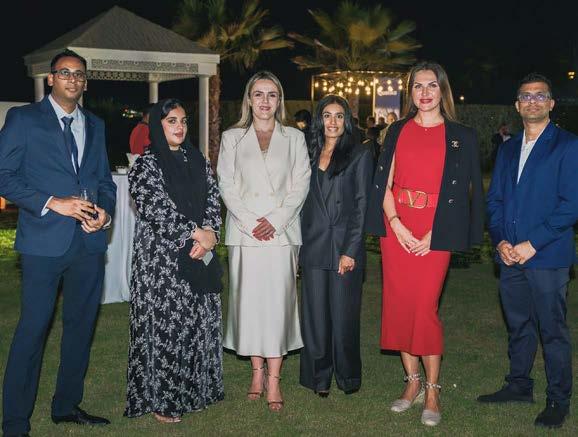
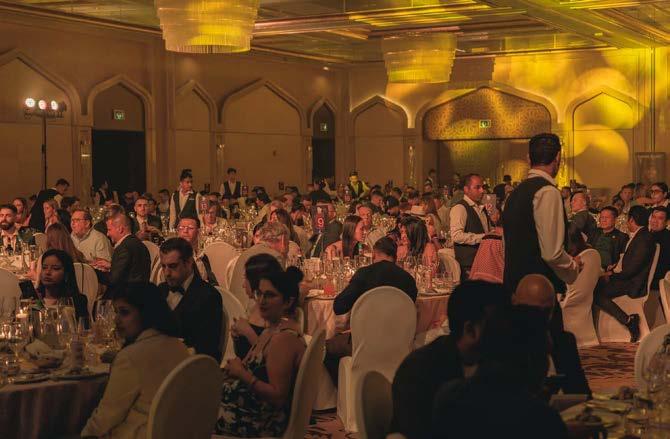
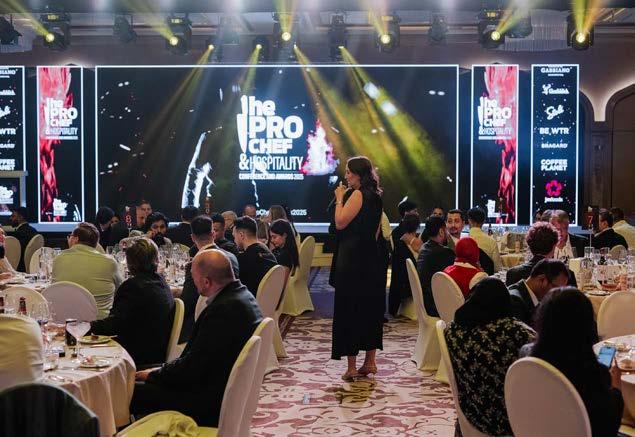
The energy and growth of our industry were palpable at The Pro Chef & Hospitality Conference and Awards 2025. The conference brought together industry leaders to discuss critical topics, from Wellbeing in the Workplace and AI Technology in operations to the importance of Ethical Sourcing. We were proud to honour regional talent later that evening, from the winning chefs in The Pro Chef Showdowns to the exceptional Stars of Hospitality and Partners & Providers who deliver memorable experiences every day.
Enjoy reading.
Editor
Head Office: Office 1307, DSC Tower, Dubai Studio City, Dubai, United Arab Emirates, PO Box 13700 Tel: +971 4 568 2993 Email: info@cpimediagroup.com
A publication licensed by Dubai Production City, DCCA
© Copyright 2025 CPI Media Group FZ LLC. All rights reserved. While the publishers have made every effort to ensure the accuracy of all information in this magazine, they will not be held responsible for any errors therein.
www.cpimediagroup.com
04 NEWS BITES
Culinary news across the Middle East
07 DINING IN THE UAE
Explore the latest menu creations and hotspots
08 24 HOURS WITH
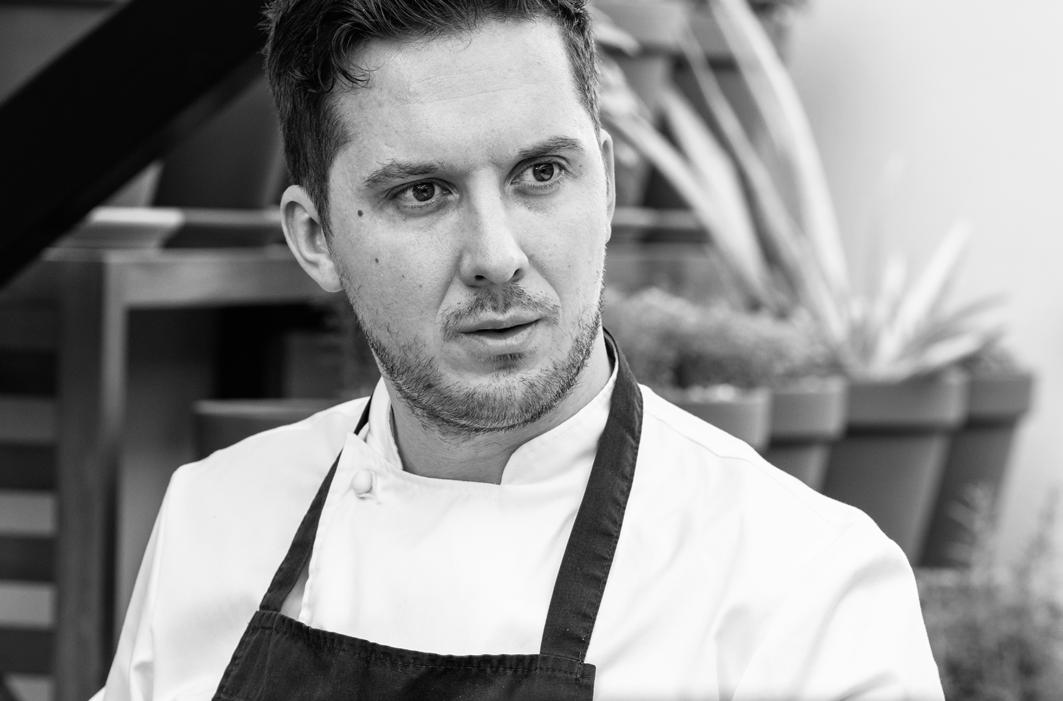
Chef Dan Birk, Executive Chef at City
Social and Row on 45, Grosvenor House, a Luxury Collection Hotel, Dubai
12 MEET THE GM
Inside the role of Fatine Nejmi, General Manager at Lion in the Sun
16 MOMENTS THAT MATTER
TANG’s CEO and Co-Founder Nicky Van Der Walt on the inspiration behind the brand’s Dubai reopening
19 A FRESH IDENTITY
How nearly 30 years of growth shaped DWTC Hospitality’s rebrand
24 POLAND ON A PLATE
Poland’s food story comes to life through farm visits, tasting sessions and a look inside the country’s modern export ecosystem
30 CHEF’S SPECIAL
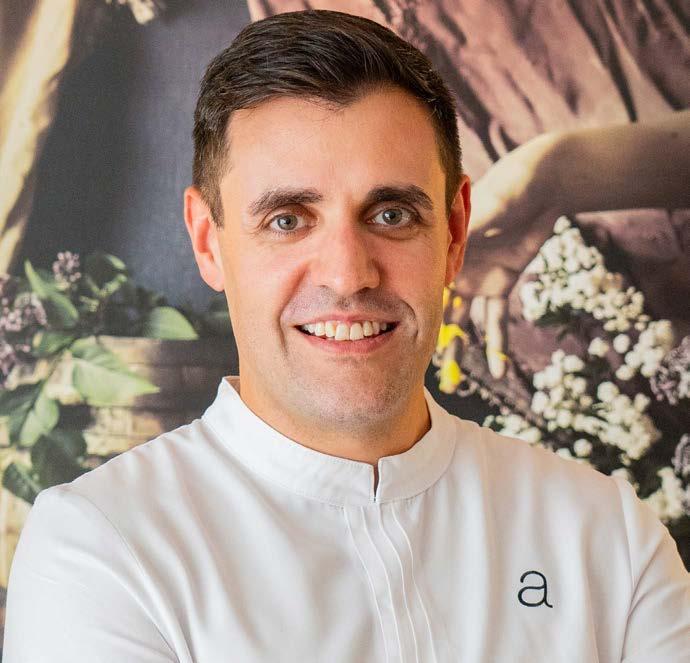
Chef Francesco Torcasio from Chic Nonna shares his signature dish
31 THE CONSCIOUS PLATE
Chef Ionel Catau, The Pro Chef of the Year 2025, shares his journey, his approach to sustainable cooking, and the inspiration behind his signature dishes
36 MAKING A MARK
Tristin Farmer shares what Maison Dali means to him
40 CHEF’S PLAYBOOK
Learn more about Jill Okkers, Culinary Director of the Tashas Group
42 THE PRO CHEF & HOSPITALITY CONFERENCE AND AWARDS 2025
An inside glimpse into the inaugural conference and the return of The Pro Chef Awards
CULINARY NEWS FROM THE MIDDLE EAST AND BEYOND
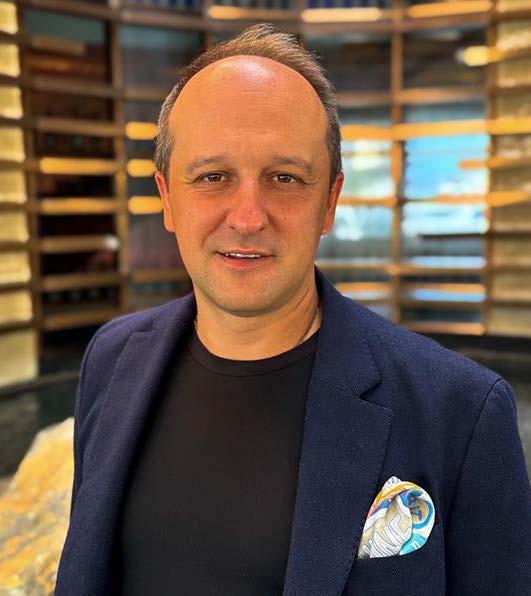
SLS Hotels & Residences has appointed Karl Kutzelnig as General Manager of SLS The Red Sea, marking the brand’s debut in Saudi Arabia under Ennismore. With over 20 years of international hospitality experience across the Middle East, Asia, Europe, and Africa, Karl will lead the resort’s launch and operations.
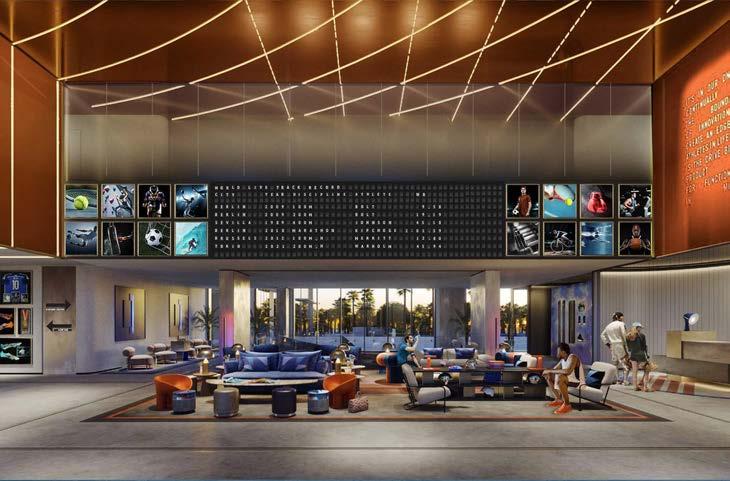
Modon Hospitality has unveiled Olympia Resort Abu Dhabi on Hudayriyat Island, a new luxury destination where active living meets relaxation. The resort offers advanced recovery facilities, including the Reboot Recovery Lounge with altitude training and next-generation biohacking tools. Guest rooms feature hypoxic technology and the Olympia Recovery Mattress to support athletic performance and restorative sleep. The property also includes holistic wellness services, organic and nutrition-focused dining, and interconnected family rooms.
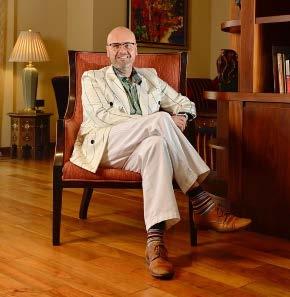
Accor has appointed Evan Harrington as Cluster General Manager for Mövenpick Resort Al Marjan Island and Pullman Hotels and Resorts Al Marjan Island, strengthening the Group’s expanding presence in Ras Al Khaimah. With close to 20 years of experience across the Middle East and Africa, Harrington will lead both properties’ operations, focusing on commercial growth, guest experience, and sustainability, while driving a unified strategy to position Al Marjan Island as a premier destination in the Northern Emirates.
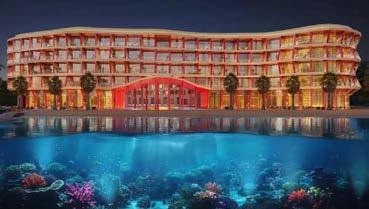
Buddha-Bar Real Estate Development has revealed designs for its first Middle East and North Africa project at The Heart of Europe, Dubai’s offshore luxury destination. Scheduled for completion in 2027, the AED3 billion (US$816 million) development will include a 162-key hotel, beach club, branded residences, and 24 Floating Residences. Interiors will blend Far Eastern motifs with contemporary finishes, deep reds, gold accents, and Asian colonial influences. Guests can expect curated soundtracks, Pacific Rim-inspired dining, a wellnessfocused spa, and beach club amenities including dual pools, cabanas, sunken lounges, and private beach access. The Floating Residences will span three levels with rooftop jacuzzis, overwater decks, and underwater bedrooms surrounded by coral reefs. The project is managed by UAEbased Yieldhaüs and forms part of The Heart of Europe’s wider expansion, which will ultimately feature 20 hotels and over 5,000 keys.
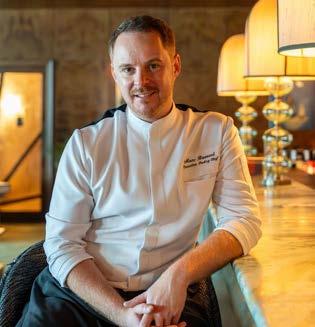
The Ned Doha has appointed Marc Razurel as Executive Pastry Chef, marking a new chapter for its pastry programme. With over 15 years of experience in Michelinstarred kitchens including Le Carré des Feuillants and Le Trou Gascon, and most recently at Le Cordon Bleu Bangkok, the French-born chef is recognised for his precision and creativity. Known for his refined chocolate work and signature citrus-inspired creations, Chef Marc will elevate The Ned Doha’s dessert offering across restaurants, events, and member experiences.
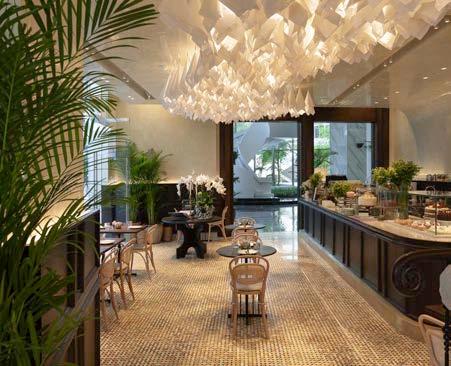
Tashas Group has opened its first café in Saudi Arabia with tashas KAFD in Riyadh’s King Abdullah Financial District, marking a significant step in its regional expansion. Founded by Natasha Sideris, the group brings its signature all-day dining concepts to the Kingdom, featuring fresh, made-to-order dishes alongside a bespoke menu crafted for Riyadh and its largest-ever dessert display.

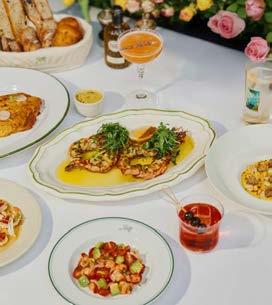
Josette is set to reopen with a profound new vision: A Season in Bloom. The brief closure this November paves the way for a evolution inspired by an elegant Parisian garden, spearheaded by Chef Burcu Cracknell and Chef Rory Duncan. Starters celebrate vibrancy and freshness, ranging from a garden-inspired Ratatouille and velvety Mushroom velouté to the truffle-infused Salade de Mais and a warm, Parisian-inspired Squids and Prawns salad with tomato jus and fresh basil. Mains showcase the tenderly grilled Épaule d’Agneau (lamb chops), an indulgent, 24-hour Côte Courte short rib with apricot and foie gras, the classic Sole de Douvres, and the IYKYK pasta, a contemporary twist on Josette’s iconic escargot. The Parisian patisserie heritage shines through in desserts, notably the playful strawberry yoghurt duet; a romantic, gendered pairing of a white yoghurt ice cream for her and a delectable chocolate treat for him, both served with berries.
Visit josette.com

Emirates Golf Club has unveiled 1988, a sophisticated café and chocolaterie at its Clubhouse. Named after the year the club turned Dubai’s desert into the Middle East’s first all-grass championship course, 1988 is led by Chef Yannick Alléno, who treats chocolate as a true culinary art, offering pralines, ganaches, and confections inspired by fine dining. Guests can also enjoy a custom Lavazza coffee blend curated by Chef Alléno, with notes of milk chocolate, honey, and coffee blossom, served alongside a perfectly paired chocolate bite.
Visit dubaigolf.com/egc/dine/1988.
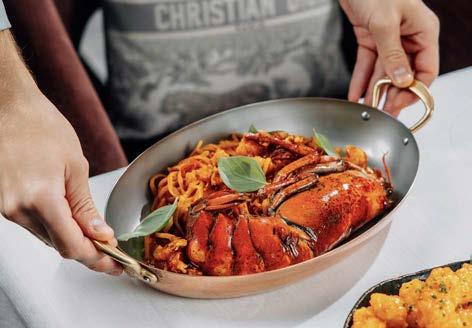
Fumée has arrived in Dubai, bringing the art of smoke and flavour to two distinct locations. At Fairmont Dubai, the steakhouse combines contemporary elegance with rustic touches, where high ceilings, warm wooden floors, candlelit tables, and soft jazz create a welcoming, romantic atmosphere. Over at District 8 in Dubai Marina, Fumée overlooks the waterfront, with rich textures, golden accents, and sculpted details inspired by Saint Basil’s Cathedral. Across both venues, the menu celebrates premium cuts and refined flavours, from Truffle Beef Tartare and 8 Hour Asado Beef Ribs to The Golden Ottoman sharing steak, Lobster Linguine al Bisque, and Mediterranean-inspired meze, finished with desserts such as Künefe with Maraş ice cream and Molten Chocolate Fondant with pistachio cream.
VisitInstagram(@fumeedubai).
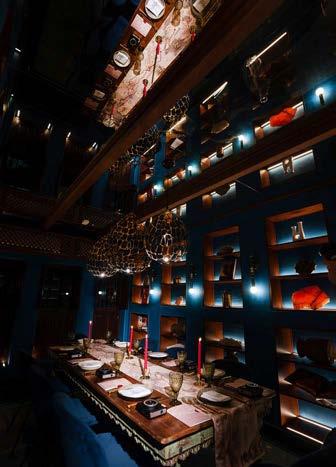
Bait Elowal, the distinguished curator of cultural destinations has unveiled Al Atlas, an exclusive supper club in Sharjah that firmly establishes the city as a cultural gastronomic destination. Inspired by Sharjah’s historic role as a major crossroads of trade, Al Atlas celebrates the emirate’s rich heritage, blending traditional Emirati elements with influences from the Silk Road.
The sophisticated experience revolves around the distinctive, undisclosed ‘A Pilgrimage of the Senses’ menu, offering guests a sensory journey through history.
Visit baitelowal.com
24 HOURS WITH
Executive Chef at City Social and Row on 45, Grosvenor House, Hotel
6:00AM
The alarm goes off and I’m up. I start brewing some coffee while the kids wake up, and breakfast gets started. Mornings are always busy and a bit chaotic. Between feeding the kids, getting them ready for school, and walking the dog, the house is full of noise and movement. Somehow, no matter how early we start, we are always running a few minutes behind.
7:00AM
Once everyone’s fed and dressed, I make my son’s packed lunch, and we jump in the car for the school run. We always listen to his three favourite songs on repeat – ‘Sunshine’ by OneRepublic, ‘Belong Together’ by Mark Ambor, and ‘How Does It Feel’ by Tom Grennan. I know every word by now but seeing him so happy makes it worth it.
8:00AM
If time allows, I’ll head to the gym for a workout. On luckier days, I’ll manage to sneak in a quick round of golf instead. Those couple of hours of quiet are so important, they give me a bit of peace before the madness of the day begins.
9:30AM
Once I’m back home, I’ll make myself a quick protein shake for breakfast, have a shower, and get my uniform ready. I like to take a few minutes to clear my mind and think through the day ahead, what ingredients are being delivered, what needs prepping, and how the team’s shaping up for service.
11:00AM
I drive to Grosvenor House and head up to Row on 45. It’s a beautiful place to work and the standards are incredibly high. So, the moment I walk through the door, I switch straight into chef mode and focus completely on what’s ahead.
12:00PM
I take a few minutes to catch up on emails and paperwork. It’s not the most exciting part of the day, but it’s part of the job. The sooner it’s done, the better and once the kitchen gets going, there’s no time for admin work.
1:00PM
Deliveries start to arrive, from fish and vegetables to meat and caviar. Quality control is key, and if anything falls short, I let the suppliers know instantly. Everything that comes through the door has to be absolutely perfect.
2:00PM
Around this time, the City Social team begin their day downstairs. We’ll have a quick chat, share a bit of banter, and check in on how everyone is doing. We run through any upcoming events or changes, make sure everyone’s ready for service, and keep the energy high between both City Social, and Row on 45.
3:00PM
The afternoon is usually filled with meetings or calls, depending on the day. It could be menu planning, upcoming events, or speaking with suppliers.
4:00PM
Before service begins, we do tastings and quality checks. Every sauce, garnish, and texture is tested and adjusted if needed. Nothing leaves the kitchen unless it’s exactly how it should be.
5:00PM
Once everything is set and ready to go, the team takes a short dinner break. The kitchen feels calm and still for a little while, it’s that quiet moment before the rush of service begins.
6:00PM
We gather for the evening briefing. I go over the covers for that evening, including any special requests and allergies. Everyone needs to be sharp, focused, and ready to deliver the best experience possible.
7:00PM
Guests start to arrive. The lights are dimmed, the music starts, and the team are all in position. The next few hours are a blur of focus and precision. Every plate, every detail, and every guest interaction matters, however we always make sure to keep it fun. When the team are enjoying themselves, the guests always feel that energy too.
8:00PM–10:00PM
Service is in full swing. The final tables arrive while others are already deep into their multi-course experience. Everyone’s completely in the zone. I’m constantly moving - tasting, adjusting, clearing, resetting - making sure each guest receives the same level of care and attention from start to finish.
11:00PM
Service starts to wind down. Guests are relaxed, finishing their evening in the Chef’s Library, and the team can finally take a breath. Everyone’s proud of the night’s work. We clean down, reset for the next day, do a quick debrief, and turn the lights off.
12:00AM
I drive home and take a moment to mentally go through the plan for the next day. Then it’s straight to bed, because 6:00AM always comes around faster than you expect.
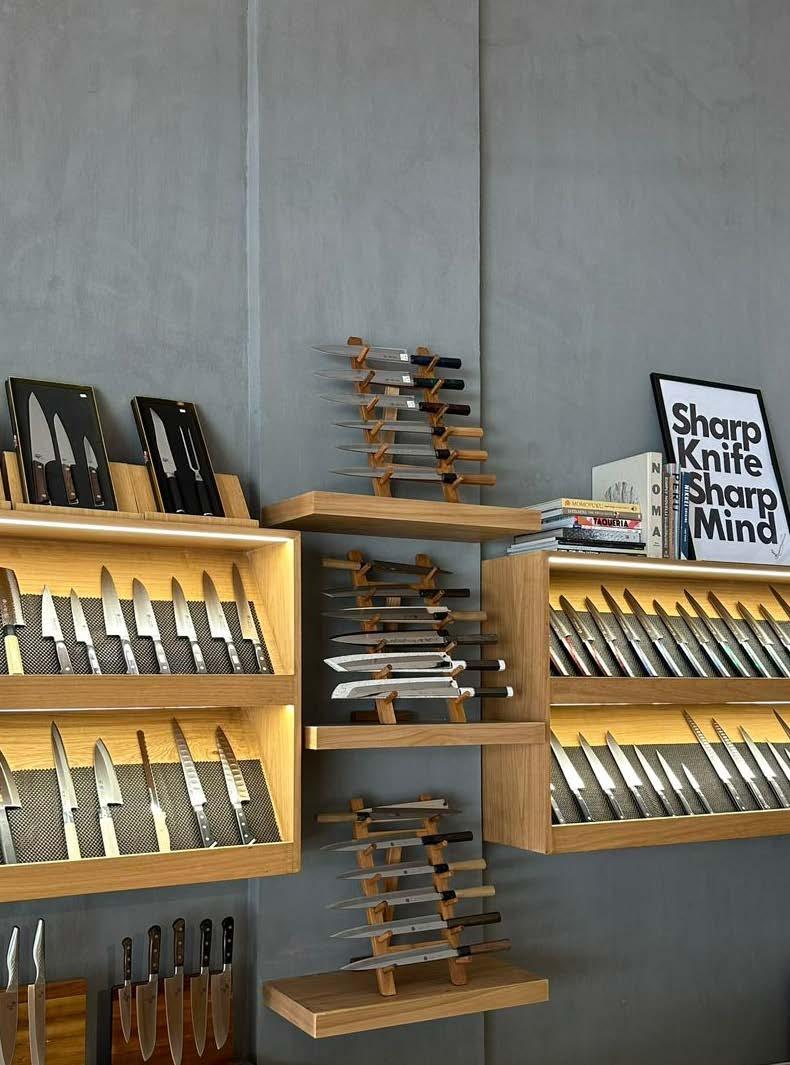
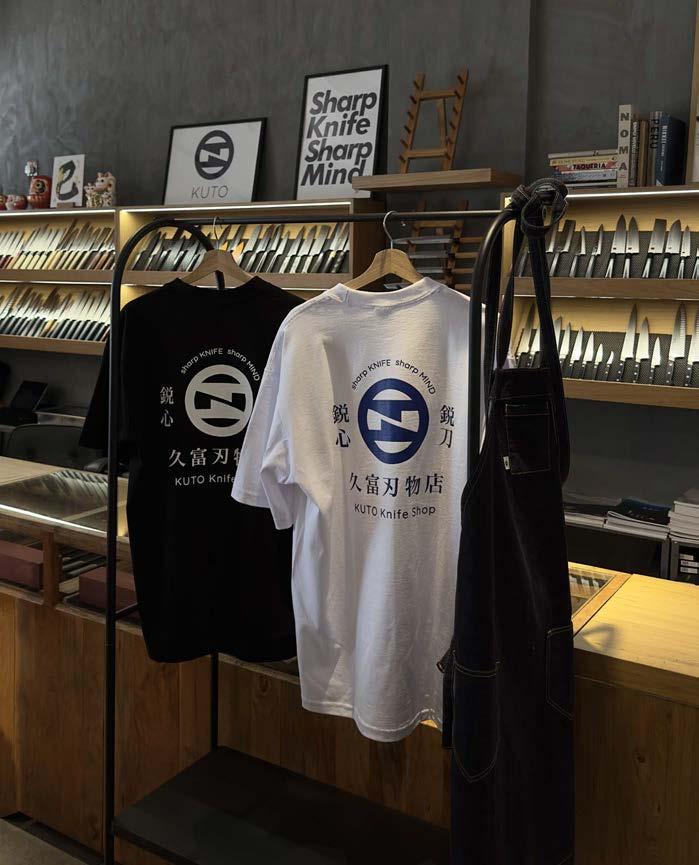
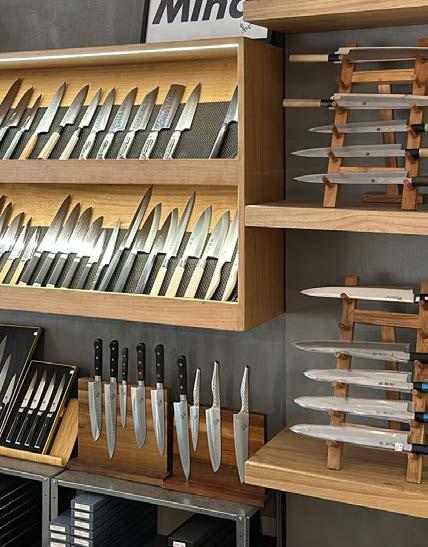
KUTO is a Japanese-owned knife shop in Dubai that treats Japanese knives the way chefs treat produce — with care and a love for the craft and tradition. Kuto’s curated range spans kitchen knives to accessories, but what really sets them apart is how they blend utility and care: you can sharpen and personalise your blade, turning a quality tool into one that’s truly yours
As the first Japanese knife shop in the UAE, what was the lightbulb moment that made you realize the GCC market specifically needed a dedicated source for high-quality Japanese blades?
Kuto actually started as a side project for Kei and his wife Fumie. Kei worked at a restaurant supply company, and in his free time, they'd visit chefs and restaurants, just showing them these knives they loved. Since Japanese knives are also renowned worldwide, a lot of chefs pushed and asked us for more. The moment it clicked was when we saw the chefs’ reactions—the excitement, the curiosity, the way they connected with the knives instantly. That’s when they realized people here really wanted authentic Japanese knives and someone to guide them in finding the right one.
What unique challenges and rewards have you found in introducing traditional Japanese knife culture and maintenance to this culinary landscape?
Many chefs here are young or just starting out, so Japanese knives can feel unfamiliar. The tricky part is teaching them the traditions and care in a way that doesn’t feel intimidating. The best part is watching that spark when they finally understand why these knives are special.
It’s the kind of moment that makes all the explaining, demonstrating, and honing worth it. We get to share something we genuinely love and see others fall in love with it too.
Choosing a knife can be very personal. How does Kuto help customers find the knife that perfectly “fits” their hand and cooking style?
A knife should feel like a part of you, not just a tool. Everyone’s hands, cooking style, and way of moving in the kitchen are different, so we spend time helping people find the knife that feels “right.” Is it the weight? The balance? The handle? We try them all, let people hold them, feel them, and eventually the right one just clicks. That connection — when the knife finally feels like an extension of yourself — is what we love helping people discover. That's why our knife shop is designed as "over the counter" style, to make the experience of buying a knife from us more personal, and curated.
Japanese knife-making often involves small, family-owned smithies. What is the process of establishing and maintaining quality assurance and ethical sourcing with the specific artisans you work with in Japan?
Knife-making in Japan is a deeply respected tradition. We work with a mix of family-owned smithies and trusted brands, always making sure the knives are crafted with care and integrity. It’s about honoring the centuries of skill behind each blade while ensuring our customers get something reliable for their kitchens. We stay in close contact with the makers, visiting about once or twice a year, to make sure each knife reflects both tradition and quality.
Given the demanding environment of professional kitchens in the GCC, what is the one essential knife care tip you believe every Kuto customer should adopt to ensure their blade lasts a lifetime?
Think of a knife like a car, no matter how fancy, it still needs care. Many people assume an expensive knife is easy to maintain, but high-quality steel needs attention. That's why we started our sharpening service where you can learn how to sharpen your knives or get in touch with us if you want private sharpening classes as well. Your knife touches the food you prepare, it helps feed people, and it’s a tool you rely on every day. Treat it well, and it’ll be with you for life.
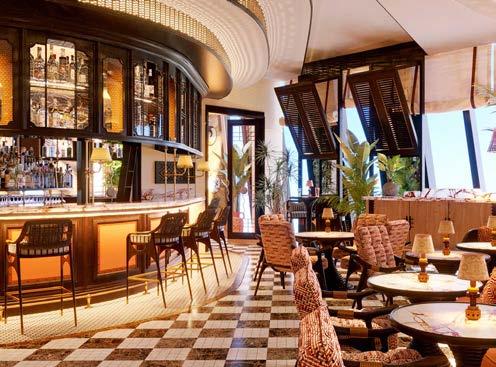
Fatine Nejmi, General Manager at Lion in the Sun, talks us through her role and responsibilities

Fatine Nejmi is a French Moroccan hospitality professional with a passion for crafting exceptional guest experiences. Warm, people-oriented, and devoted to the art of making others feel at home, Fatine earned her master’s degree in Chicago and began her career in Miami’s vibrant events scene before spending seven years with Châteauform’, managing luxury venues across Europe. Here we discuss her recent role with Majestas Group as General Manager of Lion in the Sun at the Mandarin Oriental Downtown Dubai.
Tell us about your background and previous experience. For me, being a general manager has
never been just a job, it feels like a calling. Hospitality is something that comes instinctively to me; it’s about creating spaces where people feel truly welcomed, seen, and connected. I’m incredibly honoured that Majestas entrusted me with leading Lion in the Sun, a project that represents not only a new chapter for the group, but also a new vision for Dubai’s hospitality scene. I’ve spent over a decade in the hospitality and events industry, drawn to destinations with soul and character. Before joining Majestas, I spent seven years with the Châteauform’ group, overseeing heritage properties across Europe. What defined that experience, and continues to guide me today, is the
philosophy of hosting guests as if they were in your own home. It’s about genuine warmth, attention to detail, and creating moments that feel personal rather than procedural.
In what ways have you adapted your management style to address the evolving challenges in the industry?
The industry has evolved dramatically, guests are more discerning, and teams expect leadership that listens, empowers, and inspires. My approach to management has shifted from purely operational to deeply human. I’ve learned that leadership is not about authority, but empathy. I focus on cultivating a culture of trust and collaboration, one where every team member feels valued, heard, and motivated to contribute to a shared vision. Clear communication and mutual respect are key pillars of that. This approach aligns perfectly with Majestas’ philosophy of leading through engagement, where everyone, from front-of-house to the kitchen, is part of one cohesive narrative.
What's the most challenging aspect of bridging communication between frontof-house and kitchen staff?
The greatest challenge lies in translating creativity into seamless execution. A beautiful idea in the kitchen only becomes meaningful when it’s delivered with grace at the table. To achieve that, I foster constant dialogue between teams and encourage mutual understanding. The kitchen needs to feel the rhythm of the dining room, just as the service team must understand the story behind each dish. At Majestas, we see teamwork as our strongest ingredient, the magic happens when every department moves in harmony, united by the same goal: crafting unforgettable experiences for our guests.
How do you balance the creative vision of your chefs with the financial realities of running a profitable restaurant?
It’s a balance of passion and precision. Creativity is at the heart of what we do, but it has to exist within a framework that supports sustainability and consistency. We encourage our chefs to express their artistry, but always with a clear structure in place, one that respects both quality and cost. We prioritize authenticity and excellence in every product we use. When guests feel that honesty, when they taste real ingredients, experience true hospitality, and leave with a sense of connection, the business naturally thrives. Profitability, in that sense, becomes the result of doing things the right way.
What strategies do you employ to keep your restaurant relevant and ahead of trends in a rapidly changing culinary landscape?
Dubai’s dining scene is incredibly
dynamic; every week brings something new. But while trends come and go, what endures is authenticity. For me, relevance comes from consistency, not constant reinvention. Guests seek surprise, yes, but they also crave familiarity, the comfort of knowing that every visit will meet the same level of quality and emotion. We stay ahead by truly listening to our guests, understanding how their tastes evolve, and refining our experience accordingly.
At Majestas, we don’t chase trends; we interpret them through our own lens. Our philosophy blends timeless elegance with a modern sensibility, ensuring our concepts feel current without losing their soul. Lion in the Sun embodies that, a place rooted in heritage, but alive with today’s energy.
What type of cuisine and guest experience can we expect?
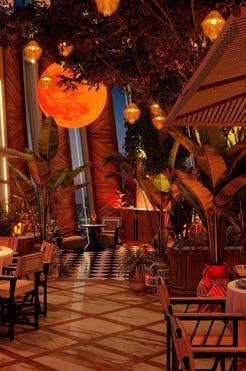
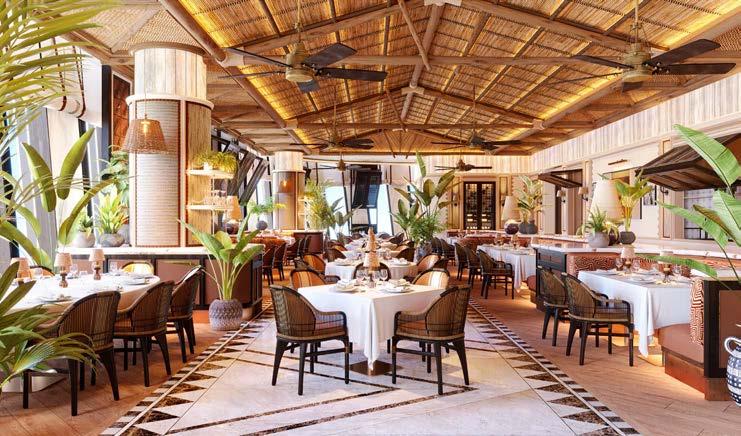
The name says it all, it’s about warmth, generosity, and light. At Lion in the Sun,
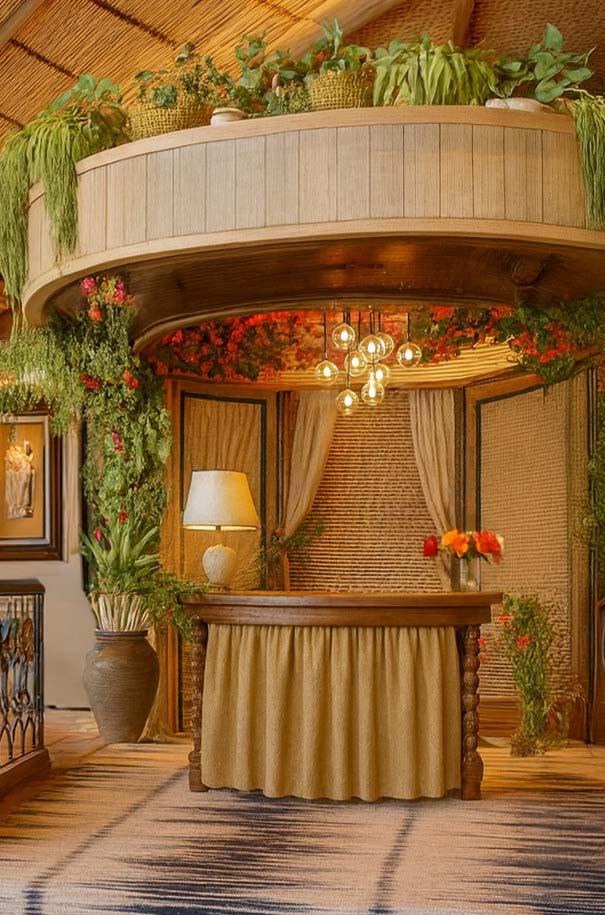
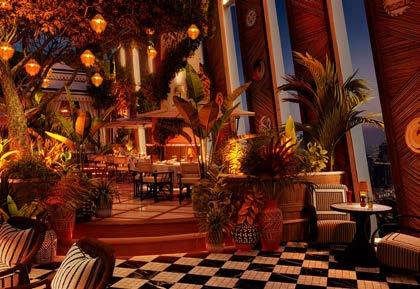
the heart of our cuisine is the open fire. It’s not just a method of cooking; it’s a symbol of connection, a place where stories are shared and memories are made. Our fine grill menu celebrates simplicity and authenticity, allowing the ingredients to shine. But beyond what’s on the plate, the essence of Lion in the Sun lies in how we make people feel. From the way we greet our guests to the rhythm of the service, everything is designed to evoke a sense of belonging.
Every detail, from the interiors to the music, from the lighting to the final farewell, tells a story of craftsmanship, soul, and togetherness. We want each guest to leave feeling they’ve been part of something meaningful, an experience that lingers long after the night ends.
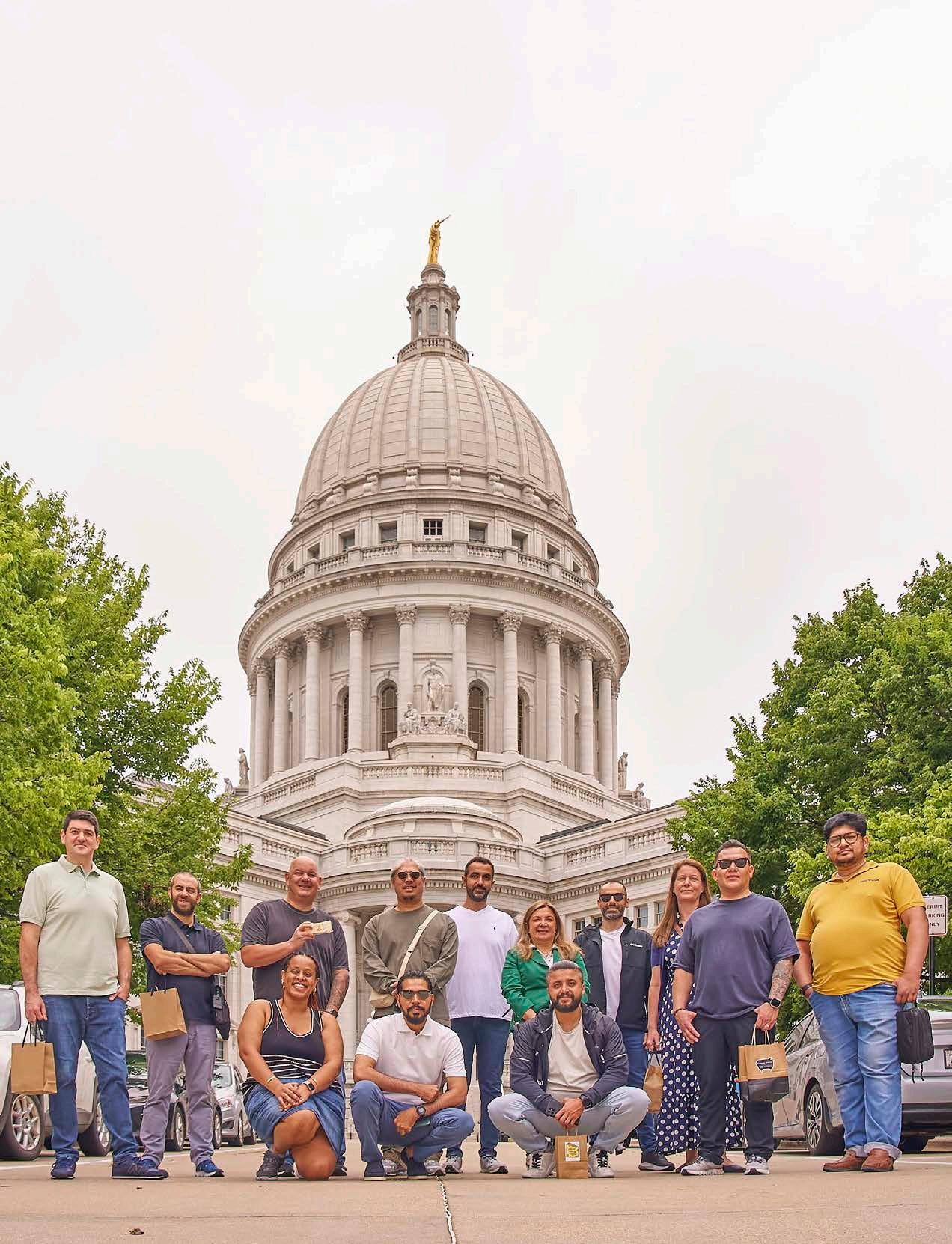
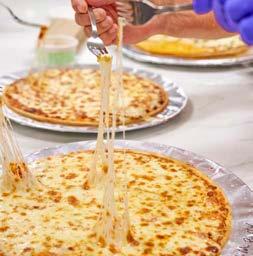
The USA Cheese Guild hosted an educational trade mission to the United States providing an unparalleled first-hand opportunity to discover the depth and breadth of the U.S. Cheese community
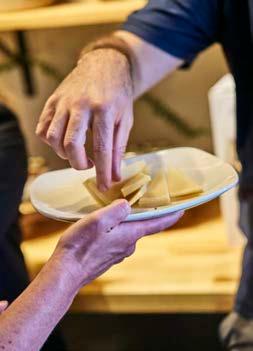
Touring and tasting their way through the scenic Wisconsin countryside, foodservice operators and culinary professionals hailing from UAE, KSA and Kuwait experienced firsthand the cheese renaissance that has propelled Cheeses from the USA into the global spotlight.
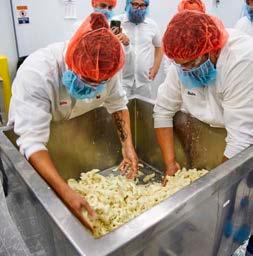
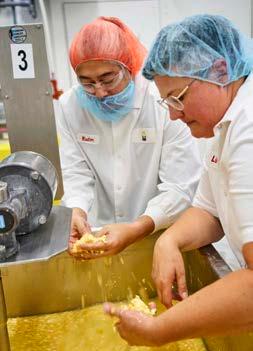
The quest for cheesemaking excellence was evident through classroom lectures at the Wisconsin Center for Dairy Research, where the participants learned about the history and heritage of cheesemaking in the United States. Afterward, the group participated in a hands-on cheesemaking lab followed by a workshop highlighting how different cheeses function across various cooking and foodservice applications.
The diversity of USA Cheeses and the small- to large-scale production was evident across the tours of multiple state-of-the art processing facilities. “I was really impressed by the diversity and innovation across the [U.S. cheese] industry,” said Rony Taouk, Head of Culinary at Americana Restaurants in UAE. “I think they craft it much better than Europeans.”
Further, connecting with U.S. cheese suppliers revealed the broad range of cheeses from mainstream offerings like cheddar and gouda to innovative American Originals like cream cheese, Monterey Jack, Pepper Jack, Colby, and several unique specialty cheeses. Seemingly offering something for everyone, USA Cheeses are also distinguished, competing and winning awards across international competitions. “U.S. cheesemakers are much more free to do whatever they like,” said Zeid Al-Ahmad, Managing Director at Chopped in Saudi Arabia. “They can be creative. They can explore new cheeses, so I think that gives them a uniqueness no one else has.”
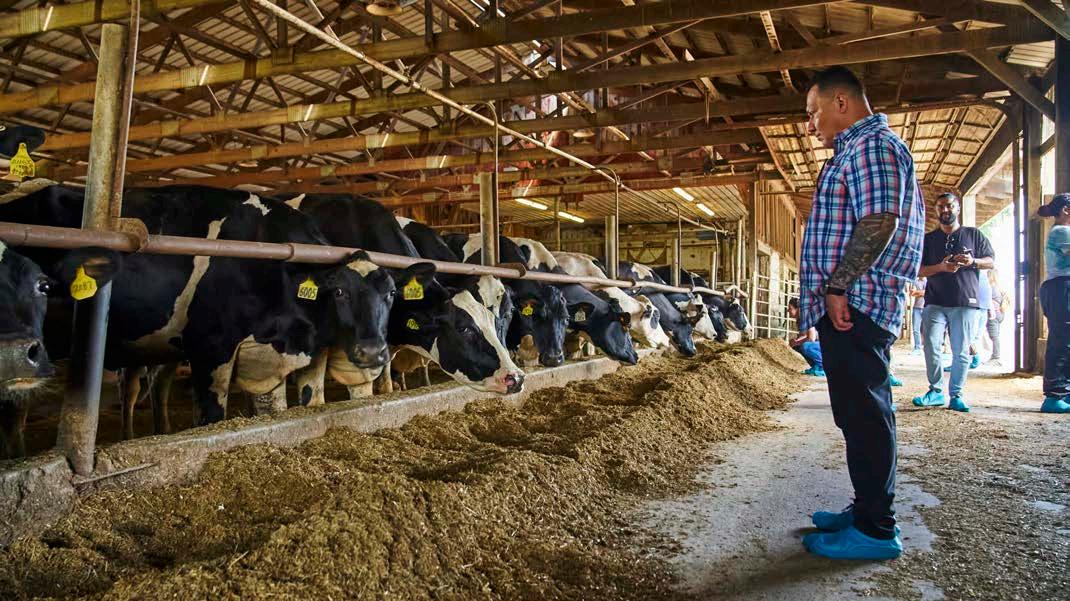
A highlight for many was touring a dairy farm and seeing how dedicated farmers are caring for their cows and the land. This commitment to year-round, efficient milk production has led the United States to be the world’s single-country largest producer of milk and the leading producer and exporter of cheese.
“Opportunities for USA Cheeses across the foodservice sector are booming throughout the Middle East region,” said Nina Halal, President & Director of the USA Cheese Guild in the Middle East. “The United States is situated to be an ideal partner to meet the growing demand for versatile, high-quality cheeses to utilize in their global culinary offerings.”
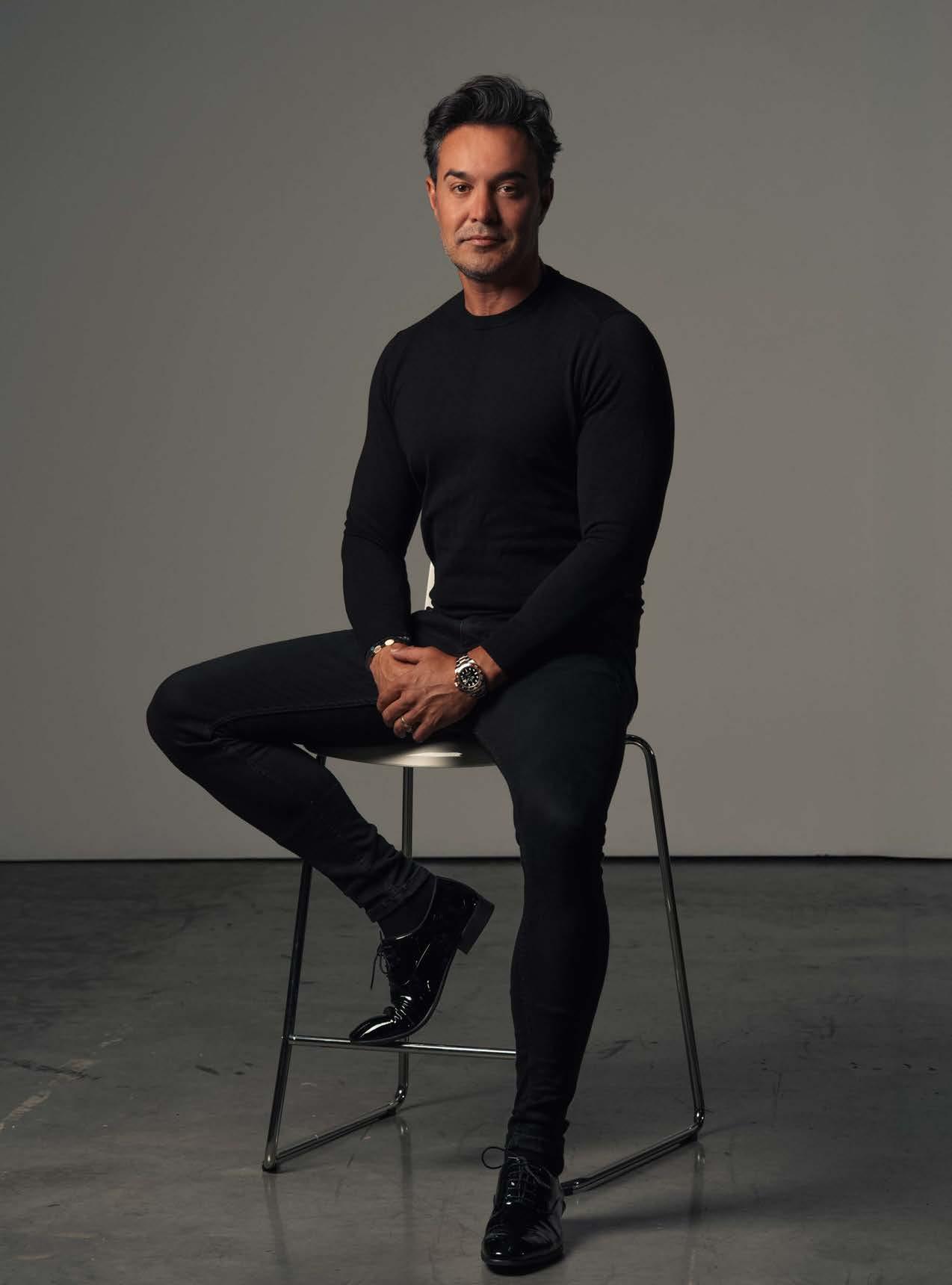
Nicky Van Der Walt, CEO and Co-Founder of TANG, shares how Dubai’s energy and diversity inspired his vision and brand overhaul
After four award-winning years in South Africa, with destinations in Johannesburg and Cape Town, Dubai was the natural next step for Nicky Van Der Walt, CEO and Co-Founder of TANG. “It’s a city that thrives on ambition, innovation, and excellence, with a global audience that appreciates world-class dining,” he says, reflecting on why the cosmopolitan energy of Dubai made it the perfect home for the brand.
Hospitality has always been Nicky’s true calling. “Sol Kerzner was a childhood hero of mine; I’ve always admired how he created destinations that defined eras. I love hotels, I love F&B, and most of all, I love people, so
it was a natural pivot. Choosing hospitality wasn’t about leaving law behind; it was about following a lifelong passion and turning that vision into a reality.”
The lessons from his first restaurant continue to shape his approach today. “The most important lesson is that consistency is the foundation of lasting success. Innovation keeps the journey exciting, but it’s consistency, delivering excellence day in and day out, that earns trust and loyalty."
Nicky has also learned that systems and procedures are essential to maintaining that consistency and control, allowing creativity to flourish within a strong operational framework.
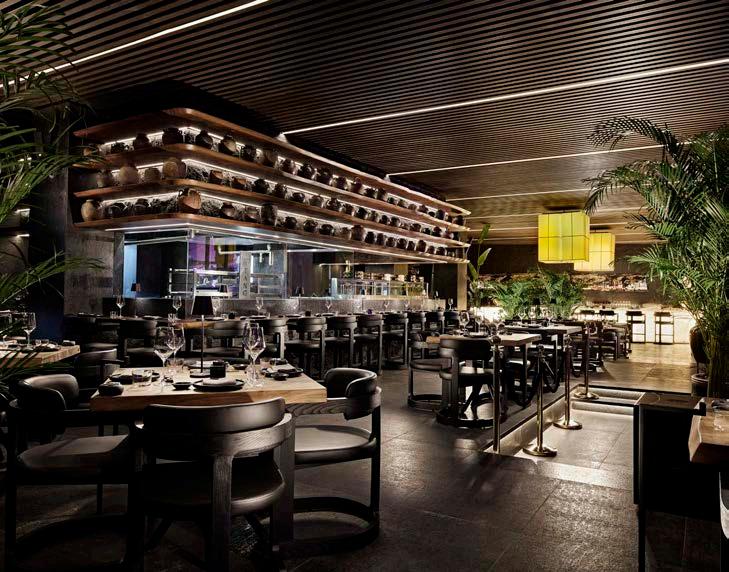
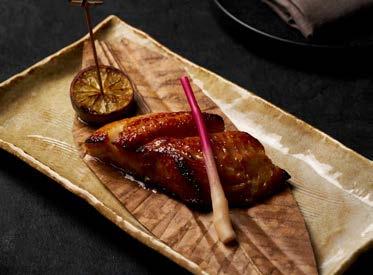
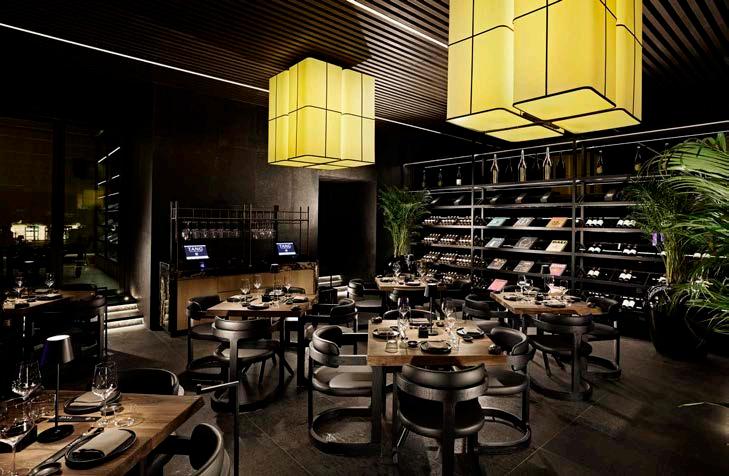
TANG is the embodiment of Nicky’s love for Asian culture and cuisine. “It’s a refined and high-energy interpretation of Japanese izakaya dining and the layered depth of modern Cantonese flavours. Every detail, from design and music to service and presentation, has been curated to immerse guests in a sensory journey.”
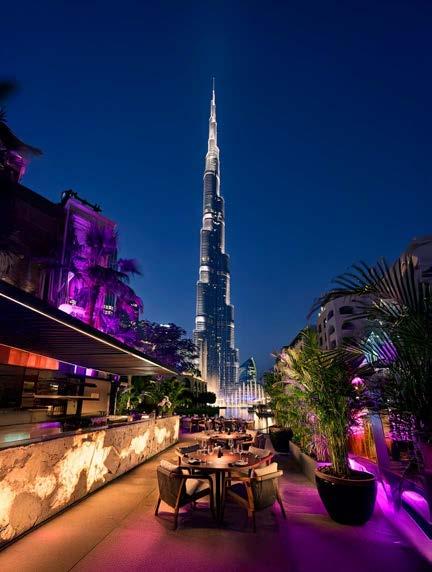
When expanding into new markets, Nicky looks for places that share TANG’s values of authenticity, innovation, and respect for craftsmanship. “The UAE embodies all of these. It celebrates diversity, luxury, and excellence in a way few other regions do. Specifically in Dubai, the cosmopolitan energy and appreciation for elevated

“The UAE celebrates diversity, luxury, and excellence in a way few other regions do, making it the perfect home for TANG and the experiences we want to create”
experiences make it the perfect home for TANG. It’s a place that rewards vision and demands quality, exactly the kind of environment in which our brand thrives.”
Even as TANG grows, its core identity remains unchanged. “TANG’s DNA is rooted in its philosophy: exceptional
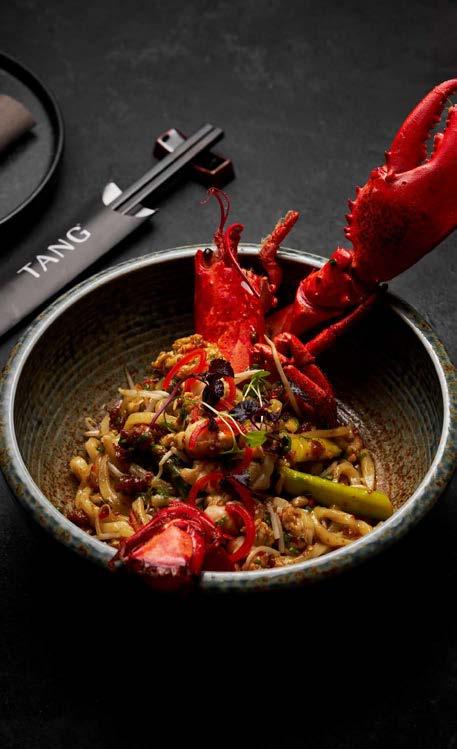
Asian cuisine within an immersive, luxurious setting. That essence never changes. What evolves are the finer details: subtle design touches, local collaborations, and curated experiences that reflect each destination’s character. It’s about balance, staying true to our core identity while connecting authentically with every new audience. That’s how TANG feels both familiar and fresh, no matter where in the world you experience it.”
Looking to the future, the brand’s ambition is global. For TANG, this is just the beginning. "Building on the success of Dubai, we’re expanding into new territories, including London, Saudi Arabia, Turkey, and the United States, each bringing its own culture, energy, and opportunity to evolve. Success to me is more than numbers or awards, it’s seeing TANG become a global name in luxury dining, known for consistency, design, and emotion. It’s creating moments that transcend borders, experiences that people remember, share, and return to.”
At this stage, Nicky is focused on family, legacy, and creating experiences that last. “My heart is in TANG, and my family keeps me grounded," he says. Every new project and challenge, is an opportunity for him to build a legacy that reflects integrity. "I’m driven by the pursuit of creating something timeless, a brand that connects people through experience and emotion. Family gives that journey purpose; TANG gives it expression.”
For aspiring entrepreneurs, his advice reflects the philosophy that has guided both him and the brand. “Be relentless in your pursuit of excellence. Stay true to your vision, and never underestimate the power of detail, because details are where emotion lives. Going global isn’t for the faint-hearted; it takes resilience, precision, and an unwavering belief in what you’re building. Surround yourself with people who inspire and challenge you, and remember that true luxury isn’t about opulence, it’s about emotion, connection, and creating moments people never forget. Never give up!”
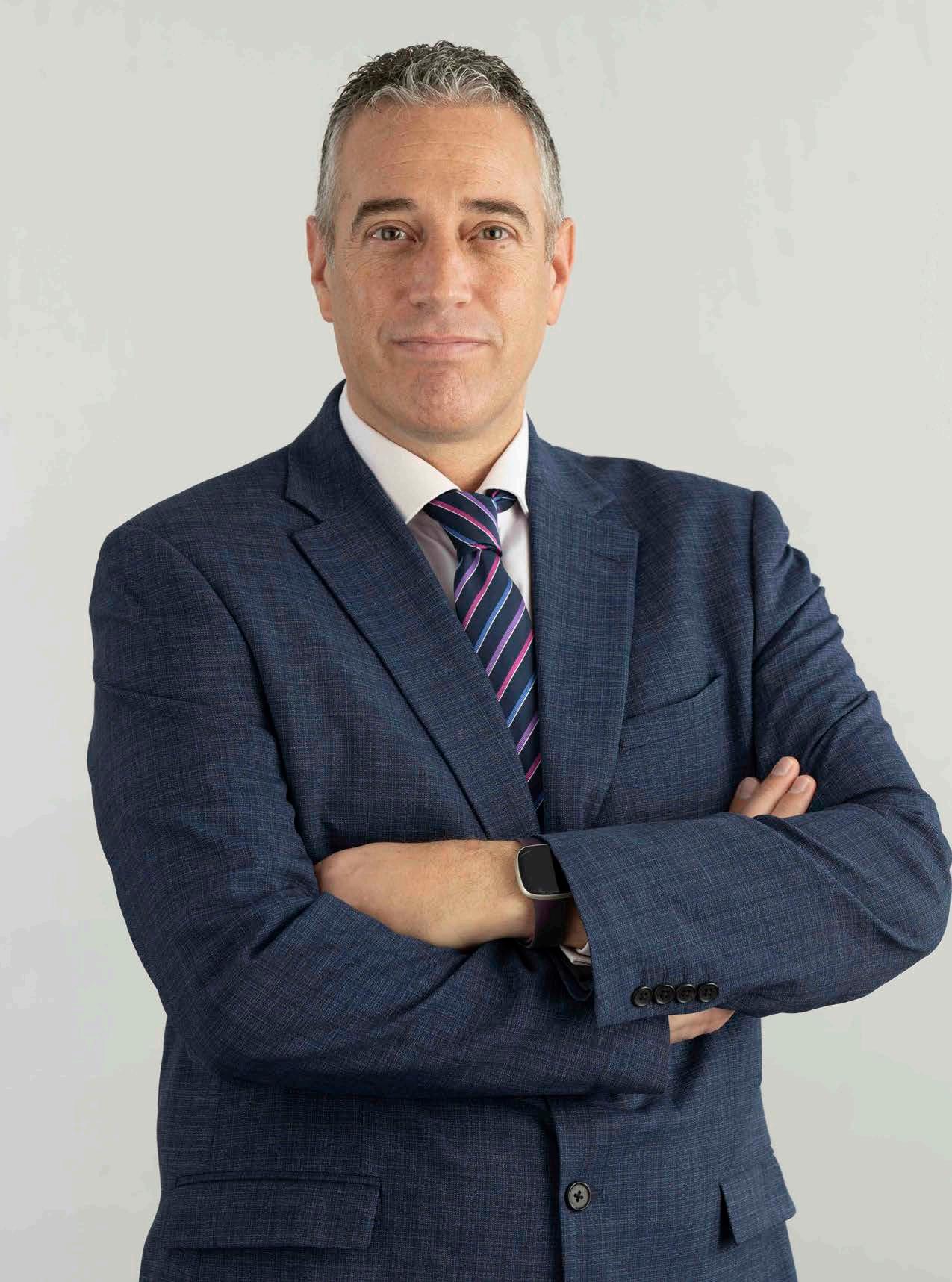
Vincent Egels, Assistant Vice President of Events at Dubai World Trade Centre, shares how DWTC Hospitality’s rebrand reflects nearly three decades of growth, innovation, and a renewed focus on culture-led dining
Can you share the journey of Hospitality by DWTC from its beginnings in 1995 to today's rebrand?
Our catering division launched in 1995, evolving into the Hospitality by DWTC brand in 2013 with a clear mission: delivering exceptional event and catering services rooted in quality and guest experience.
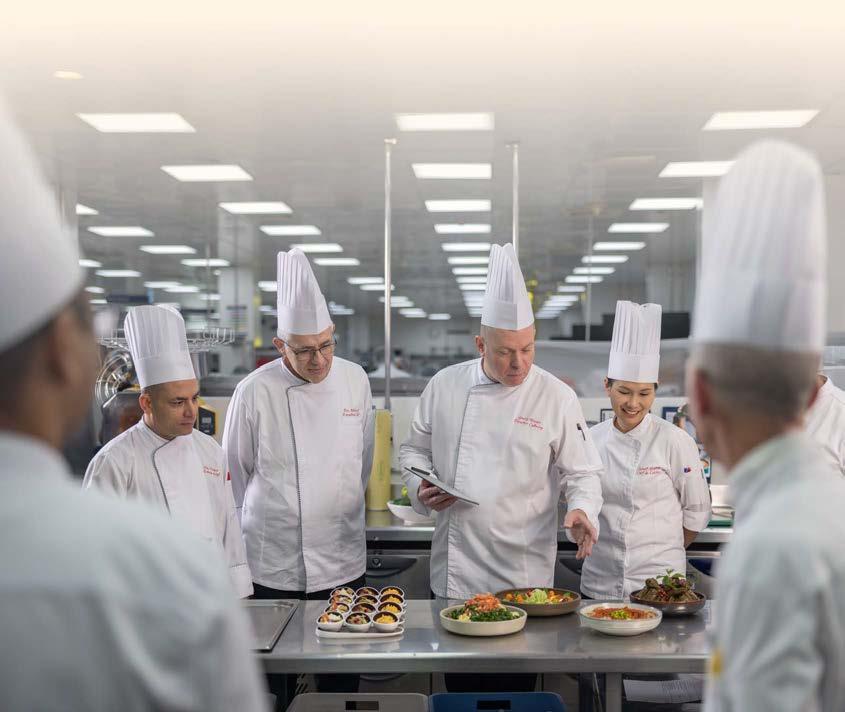
Over the past decade, we've transformed from a traditional catering services provider into a dynamic, experience-led brand - powered by our state-of-the-art 3,650-squaremetre kitchen facility. Key milestones include expanding our team to 148 international chefs, scaling our capacity to serve up to 40,000 guests daily and embedding sustainability at the very heart of our operations through a comprehensive sustainability strategy. In 2024, we served close to 1 million guests across 2,846 events, while our culinary team set a new benchmark at the Emirates International Salon Culinaire, winning 48 medals - the highest number achieved by any company that year.
The rebrand to DWTC Hospitality represents our evolution from catering provider to experience creator, positioning us for the next decade of growth in Dubai's increasingly competitive hospitality landscape.
How is DWTC Hospitality planning to celebrate and innovate Emirati cuisine through this rebrand?
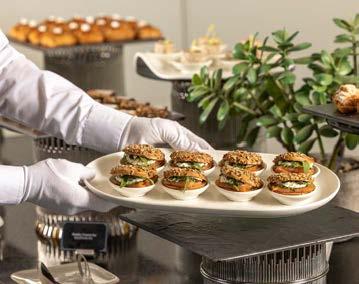
Celebrating Emirati cuisine sits at the heart of our vision. We're reimagining traditional flavours and techniques through contemporary innovation, offering guests an authentic yet forward-thinking taste of the UAE.
Our signature dishes tell the region's story, honouring heritage while embracing evolution. Under the leadership of our Director of Culinary Operations, Georg Hessler, and our team of award-winning international chefs, we're creating diverse, contemporary menus that showcase Emirati ingredients and culinary traditions alongside global influences.
We're also nurturing homegrown talent through mentorship and apprenticeship programmes, including partnerships with Dubai College of
Tourism, to shape a sustainable, locally inspired food culture. Our aim is to position DWTC Hospitality as the leader in modern Emirati cuisine by celebrating our past while shaping our future.
Sustainability and local sourcing are becoming increasingly important in food culture. How will these values influence your menu development and partnerships in the coming years? Sustainability is integral to our operations and menu development. We're forging stronger partnerships
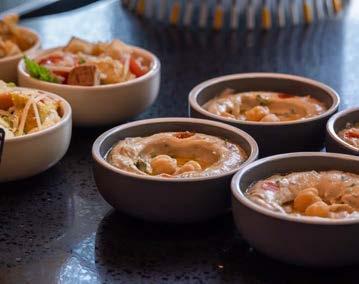
with local producers and artisans, creating a supply chain that champions community talent, celebrates craftsmanship, and reduces environmental impact.
Our Green Menu package demonstrates our commitment to sustainable catering, complemented by local ingredient sourcing and comprehensive waste management initiatives. These include our Zero Waste to Landfill Strategy, which aims to eliminate all landfill waste by 2030. In 2024, our dedicated composting programme diverted 88,000 kg of
food waste from landfills, while we repurpose cooking oil as biofuel for our hospitality service trucks.
We also partner with the UAE Food Bank to redistribute excess food from events to local communities. During Ramadan 2024, we donated 6,000 meals to communities in need. This approach ensures we're not simply reducing waste but actively contributing to food security across Dubai.
How do you plan to balance growth with maintaining your service excellence?
Growth and excellence are complementary at DWTC Hospitality. Our H1 2025 results demonstrate this balance, where we served over 527,000 guests across 1,401 events, an 11.8% year-on-year increase in guests, while maintaining our commitment to quality.
Our operational infrastructure supports scalability without compromising standards. We've nearly doubled our permanent staff to 195 and increased contracted staff by 8% to over 25,395. Working from our state-of-the-art kitchen facility, we can cater up to 40,000 guests daily while delivering fresh, highquality cuisine entirely in-house.
We measure success through guest satisfaction, loyalty, engagement, and relationship strength rather than volume alone. Our third consecutive Best Effort by an Individual Establishment award at the Emirates Salon Culinaire 2025, alongside 51 medals, evidences our continued commitment to culinary excellence as we scale.
How do you see Hospitality by DWTC influencing Dubai's wider hospitality landscape, especially in the context of cultural storytelling through food?
As Dubai's leading provider of large-scale catering services, DWTC Hospitality is uniquely positioned to shape the emirate's hospitality landscape through cultural storytelling. Our approach centres on creating meaningful, story-driven experiences that celebrate the UAE's heritage while embracing global influences. By reimagining Emirati cuisine and championing local producers, we're setting new standards for how food
can communicate cultural identity and create lasting impressions.
Our proven capability demonstrates that cultural authenticity and operational scale aren't mutually exclusive. We're showing that large-scale hospitality can deliver personalised, culturally resonant experiences.
Through initiatives like our partnerships with Dubai College of Tourism and our focus on nurturing homegrown talent, we're also investing in the future of Dubai's hospitality sector, ensuring the next generation can tell the UAE's story through food.
What challenges did you face during the rebrand, and how did you overcome them?
The primary challenge was evolving our brand identity while maintaining operational continuity across our extensive event portfolio. During the rebrand process, we continued serving hundreds of thousands of guests across diverse events, from mega exhibitions like GITEX Global and Gulfood to intimate weddings and high-profile external events.
We addressed this through careful planning and phased implementation, ensuring our culinary teams, service
staff, and operational processes remained aligned throughout the transition. Our focus remained on "Savour the Difference" – our new brand promise that reflects our evolution towards holistic experience design.
Another consideration was balancing our heritage with future ambitions. We overcame this by building upon our proven strengths, such as our awardwinning culinary team, state-of-the-art facilities, and operational excellence, while introducing innovative concepts that position us for the next decade.
Are there any collaborations with chefs, local producers, or global brands in the pipeline that you can share?
We're actively strengthening relationships with UAE producers and artisans, creating a supply chain that champions community talent while reducing environmental impact, core principles of our sustainability strategy.
We're also exploring opportunities with global and local players to elevate our offerings. Our proven track record,
including high-profile events such as the Dubai International Boat Show, Meydan Dubai World Cup, and Dubai Airshow, demonstrates our capability to deliver exceptional hospitality experiences in partnership with leading organisations.
The global events industry is evolving rapidly, with greater expectations for scale, quality, and cultural resonance. How do you see Dubai's hospitality sector staying ahead of these shifts?
Dubai's hospitality sector is uniquely positioned to lead these shifts through its combination of world-class infrastructure, cultural diversity, and forward-thinking innovation.
At DWTC Hospitality, we're demonstrating how scale and quality can coexist. Our exhibition catering more than doubled year-on-year in H1 2025, serving 132,000+ guests while maintaining the exceptional standards that earned us recognition at the Emirates Salon Culinaire 2025.
Cultural resonance comes from authenticity. Dubai's position as a global
crossroads, home to over 200 nationalities, allows us to create hospitality experiences that celebrate both Emirati heritage and international influences. This cultural fluidity is a competitive advantage, allowing us to deliver personalised, culturally resonant experiences for diverse audiences at scale.
Technology and sustainability are also crucial. We're investing in smart solutions and sustainable practices that meet evolving guest expectations while supporting Dubai's broader environmental objectives, including the UAE's Net Zero 2050 Strategy.
How do you view the next decade for event hospitality in the region?
Are there emerging global trends you believe Dubai and DWTC Hospitality are uniquely positioned to lead?
The next decade will see event hospitality evolve towards increasingly personalised, technology-enabled, and sustainabilityfocused experiences. Dubai and DWTC Hospitality are exceptionally wellpositioned to lead these key trends.
First, experience-led hospitality: Moving beyond traditional catering to create immersive, story-driven experiences that echo with modern guests. Our rebrand to "Savour the Difference" reflects this evolution. Second, sustainability at scale: Demonstrating that large-scale operations can be environmentally responsible. Our Zero Waste to Landfill Strategy and comprehensive sustainability initiatives position us as pioneers in this space.
Third, cultural authenticity: Celebrating local cuisine and ingredients through contemporary innovation. Our focus on reimagining Emirati cuisine while nurturing homegrown talent is a great model. Fourth, hybrid capabilities: Seamlessly integrating technology with personal service. Our state-of-the-art facilities and operational expertise enable us to deliver exceptional experiences across both physical and digital platforms.
With DWTC's expansion of Dubai Exhibition Centre (DEC) at Expo Citywhich is set to become the region's largest purpose-built indoor events venue - and our proven ability to serve thousands of guests daily, we're positioned to set new benchmarks for event hospitality globally while contributing to Dubai Economic Agenda D33, delivering on the vision of Dubai as one of the world's top three cities for business and trade.
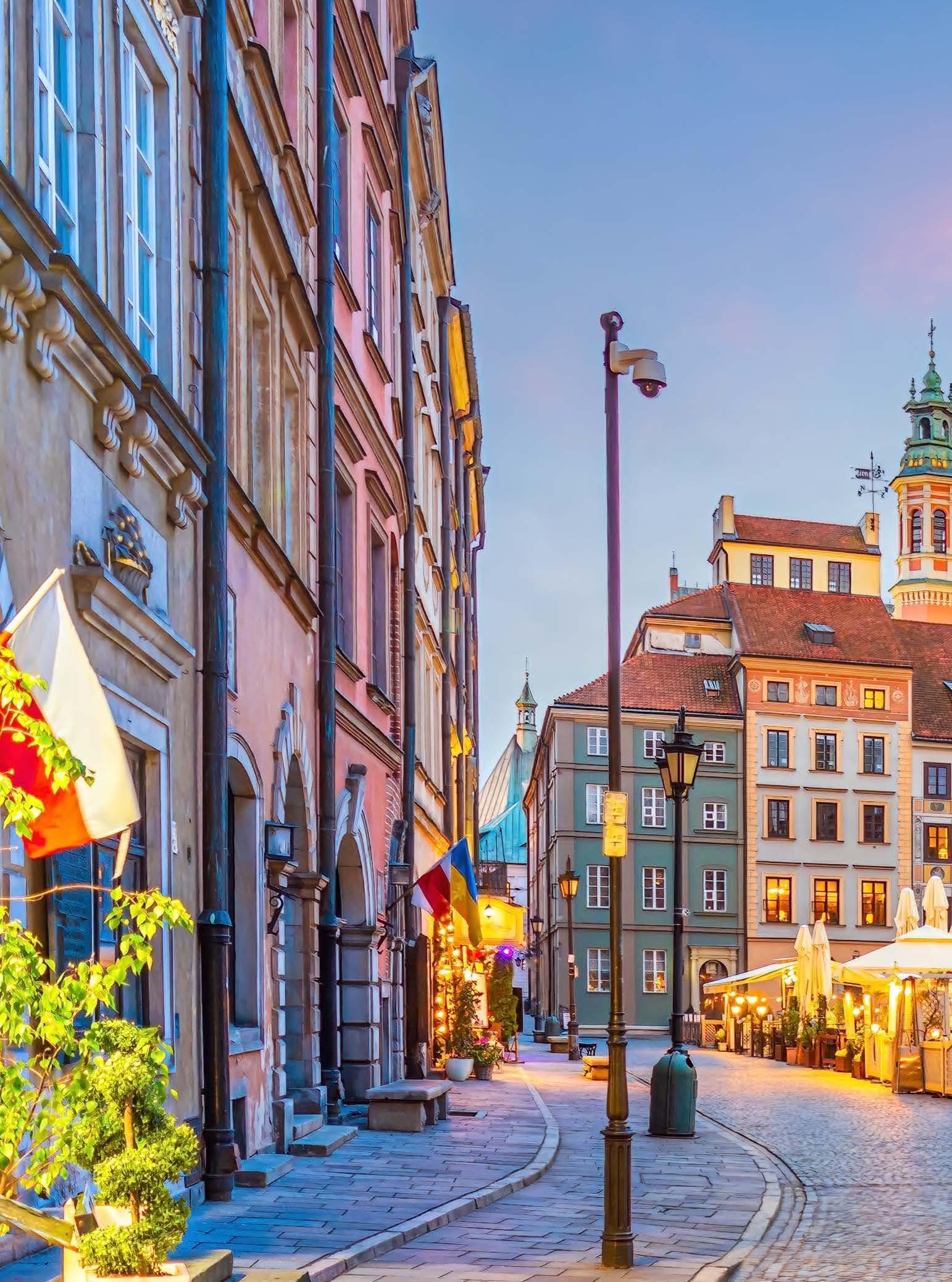
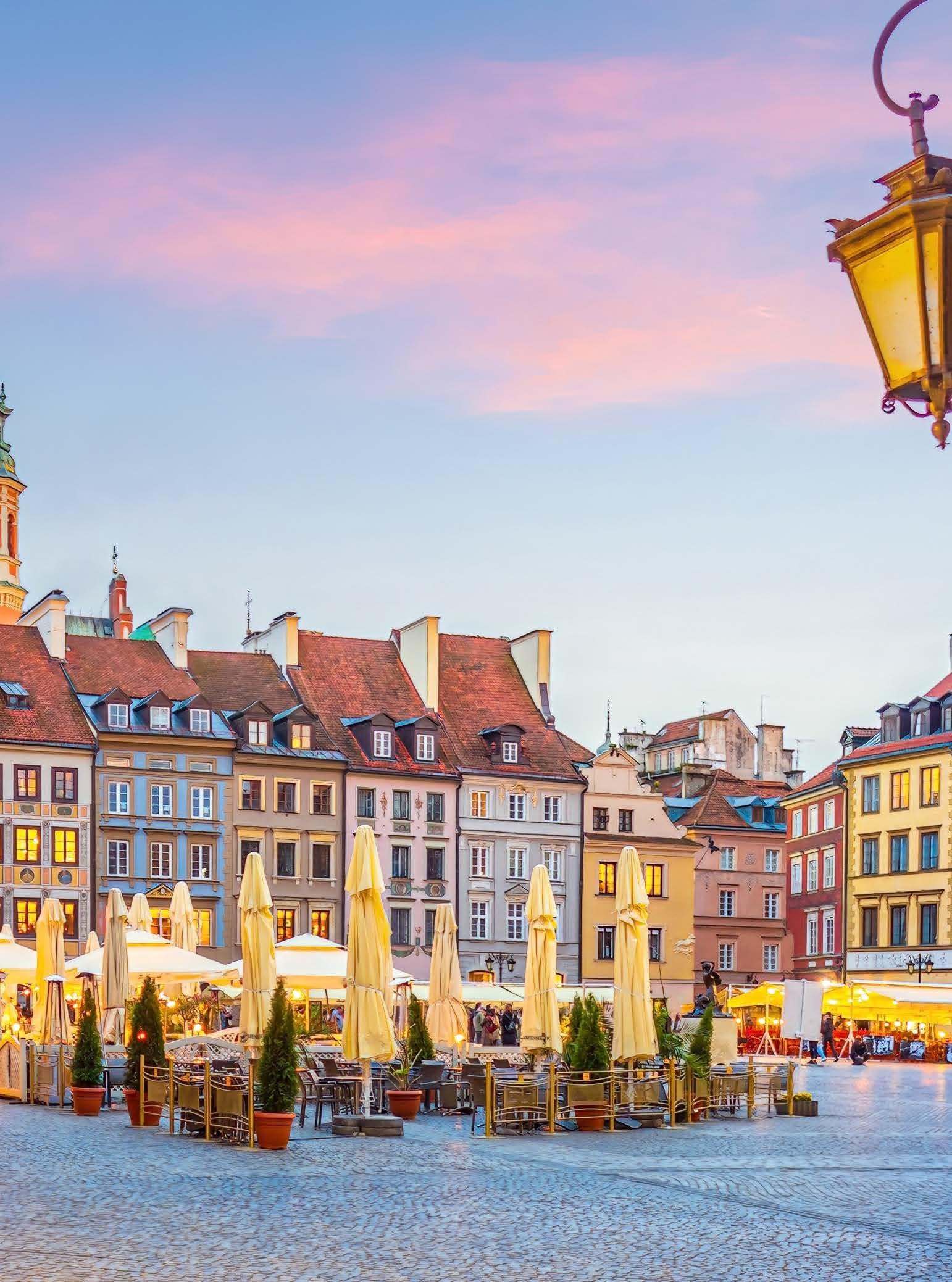
Poland’s food story is equal parts family farms, modern packing halls, and a national push for organic quality. On a study tour through Warsaw, Grójec and Poznań, Serena Marie found apples that tasted of place, and a trade fair that speaks to export-ready, EU-organic potential. For the Middle East’s food and beverage market, Poland is rooted in certified European standards
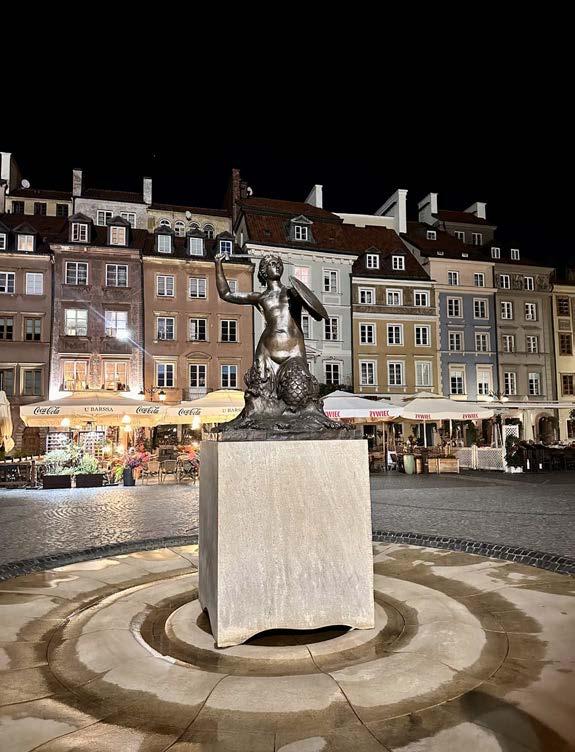
Landing in Warsaw, the city presents itself as a study in contrasts — wide Austro-Prussian boulevards and a phoenix-like old town that has been rebuilt; raw tramlines and a refined dining scene that knows how to turn humble ingredients into indulgent plates with fresh produce.
The foundation of Poland’s export strength lies in its national push for certified quality. The study tour, organised under the banner of ‘EU Organic Food – Good Choice’ and co-funded by the European Union, is key to promoting EU-organic produce in markets such as the UAE and wider GCC. Poland has prioritised education and active public-sector support, stabilising its sizeable organic sector at over thousands of certified farms. This institutional commitment is highly relevant to the Middle East market because it directly reduces risk for international buyers. When a government invests in training and consistent production, it offers a clearer route to reliable, traceable supply—a non-negotiable point for today’s refined hospitality sector.
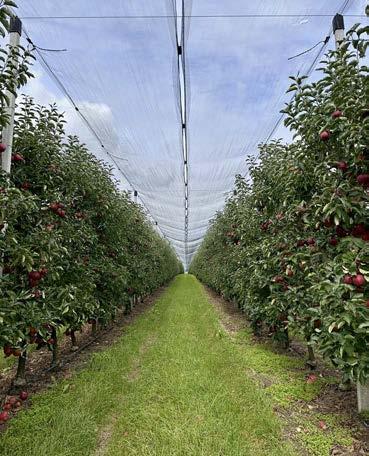
This reliability is perfectly illustrated in the low hills of Grójec - a two hours’ drive from Warsaw - hailed the ‘biggest orchard in Europe’. Here, Protected Geographical Indication (PGI) applies to apple varieties. The region's microclimate gifts the fruit bright acidity and a deeply aromatic depth that holds up in both cooking and processing. This means produce holds a special quality and reputation, and enjoy other characteristics related with this region—think, natural or human factors, such as climate, specific soil, or unalterable and traditional local methods.
Apple producer Jabłka Grójeckie reveals nearly 27 apple varieties during our visit, their most popular including the Gala, Gloster, Jonagold, Golden Delicious, Red Jonaprince, and Ligol. At the orchard, the quiet precision of harvest is visible with trellised trees and careful pruning. The microclimate – low temperatures in the nights before harvest, favourable soils –gives the fruit bright acidity (higher on average than 5% of the apples of the same variety originating from other regions), aromatic depth that hold up in both cooking and juice processing, and a very clear blush due to the higher content of pigments under the skin (mainly anthocyanins and carotenoids).
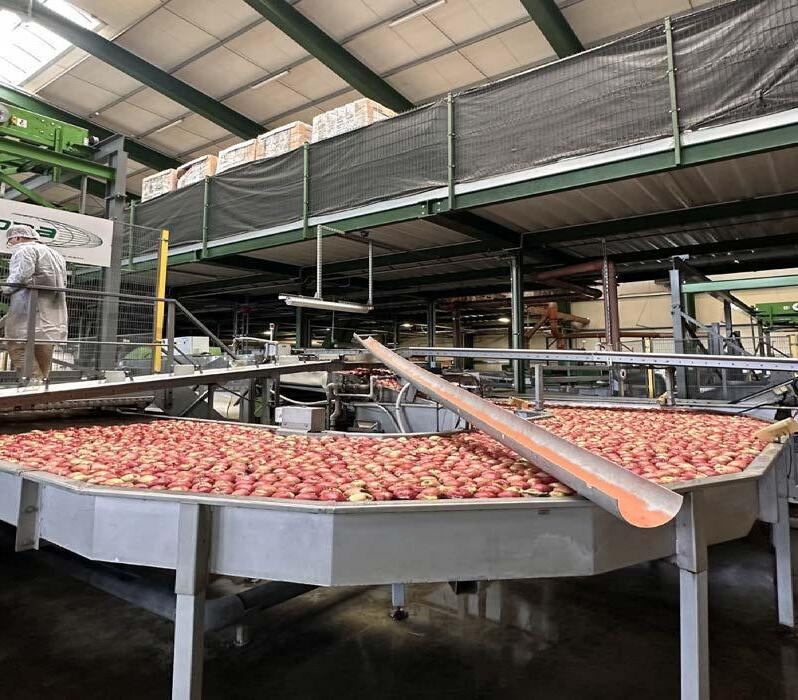
In nearby facilities, apples enter a choreography of washing, grading, and swift
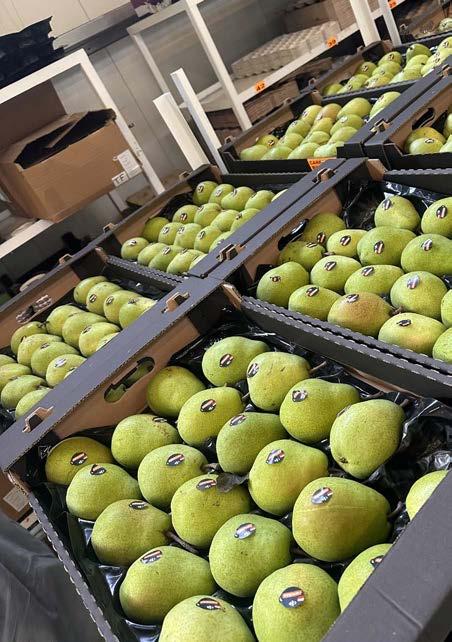
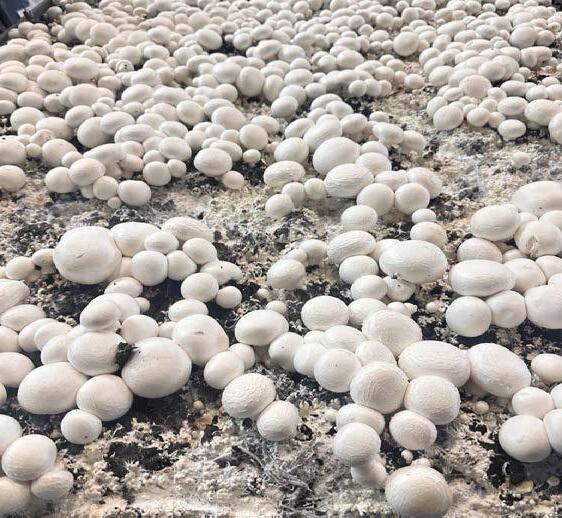
cold-storage. Producer groups such as TopFruit work to international standards such as GLOBALG.A.P., providing the assurance chefs and procurement teams require when specifying produce for high-end kitchens or institutional catering. The emphasis on traceability, cold-chain management and uniform quality is what transforms a regional fruit into an exportable commodity. Dried apple chips and chilled juices showcase the best of Poland’s orchards, thinking beyond raw fruit to convenience formats that suit different segments of the Middle East market. For chefs, the highacidic Polish varieties invite creative use:
thinly sliced in warm salads with cured meats, baked into savoury tarts, or pressed for a pairing in beverage programmes.
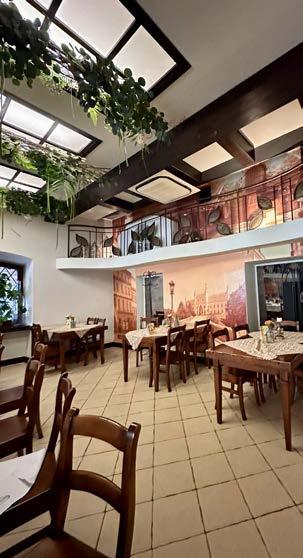
Meals throughout the tour underlined a simple truth that Polish cuisine is rooted in generosity and confident with ingredients. At Moonsfera in Warsaw, diners can tuck into hearty dishes such as Carpaccio of caramelised figs and roasted pears, raspberry ricotta with wasabi, pickled red onions, and Beef brisket pastrami. For mains, the Duck leg confit in spiced oil with Robuchon-


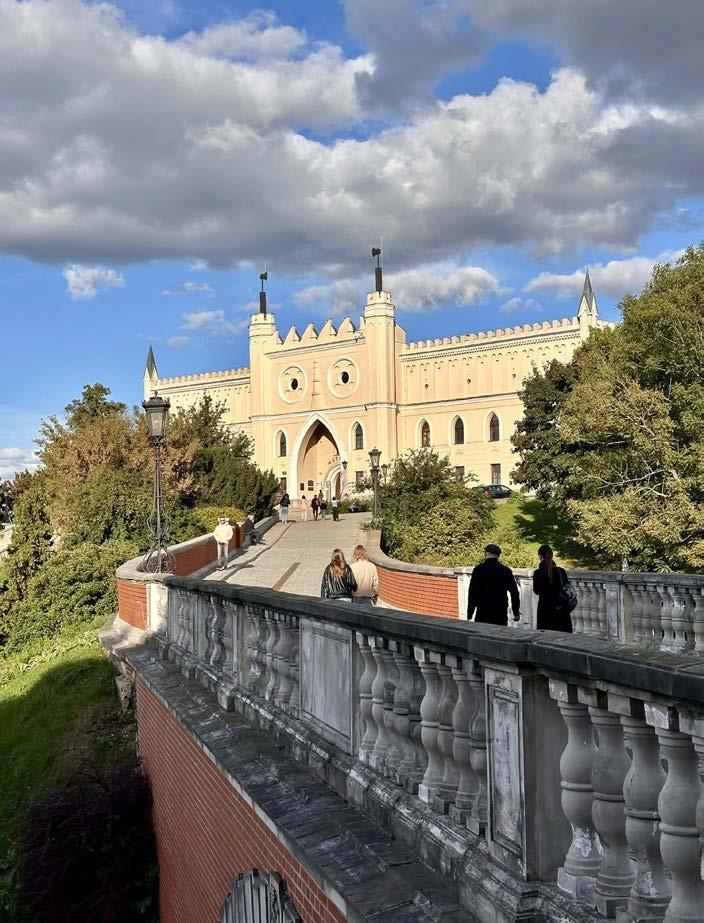
Mark your calendar for September 23-25, 2026. In Poznań, the POLAGRA fair acts as a barometer for Poland’s food sector, bringing together processors, HoReCa buyers, and technology suppliers. For anyone thinking strategically about sourcing, it’s a shortcut to understanding what Poland can reliably export, from dairy and plant-based alternatives to fruit preserves and fermented beverages. The show covered the full chain: dairy of different fat profiles, plant-based alternatives, cured meats, fruit preserves, fermented beverages, and even niche products such as caffeine gum and snail caviar. For a distributor or food service buyer, POLAGRA offers an insightful overview of what can be sourced consistently, and more importantly, how Polish suppliers are positioning themselves within EU-wide sustainability and organic frameworks. Visit polagra.pl for more information.
style potatoes, young vegetables, green pepper and nasturtium sauce allow each ingredient to shine. Warm apple pie on an oat base, with vanilla sauce, ice cream, a St. Martin's Day croissant and strawberries serve as the perfect finale for this contemporary Polish meal.
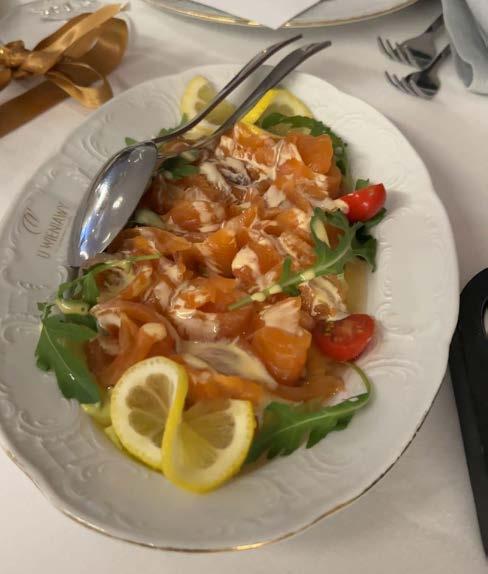
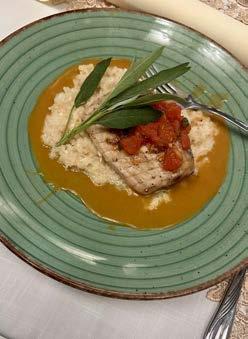
A cosy dinner at U Wieniawy features seasoned beef tartare, gravlax dressed with avocado mousse, and slices of marinated sirloin over truffle mousse with Bursztyn cheese introducing a confident modern Polish kitchen. Traditional herring dressed in linseed oil with roasted potatoes; confit duck leg served with red cabbage, dumplings and savoury rhubarb sauce; and sea bass with chanterelle sauce, baby zucchini and green pea puree, reminded me that tradition is not just nostalgia but rather ingredients, methods and techniques adapted to create modern menu items. And apples, baked and stewed, threaded through dessert was a glimpse into how deeply this fruit anchors the country’s flavour.
Restauracja Hycka in Poznan's Sródka

district, spotlights regional Wielkopolska dishes using local products from local suppliers. Our dining experience included bites of duck with dumplings, gray dumplings with cabbage, and homemade baked goods, giving us a real taste of regional cuisine.
Poland’s story is both contemporary and age-old. Family farms still matter, and so do modern packing halls, export standards, and campaigns that carry Europe’s organic message onwards. For the Middle East, Polish produce answers a set of needs: honest flavour, scalable supply, and growing organic and certification frameworks that underwrite honest consistency.
Poland’s agri-food exports have grown significantly over the last few years, backed by a processing base capable of handling scale and packaging that meets international expectations. Certification remains a key strength. GLOBALG.A.P. and EU-organic systems, alongside protected designations like Jabłka Grójeckie, give
buyers a transparent window into origin and production. For procurement teams in the Middle East, this structure matters. Polish producers are not only competitive on price but increasingly aligned with international norms on safety, sustainability, and supply documentation.
Central Europe gives it a logistical advantage for EU trade and its cold-chain and packaging infrastructure also make longer-distance exports viable. Chilled and shelf-stable products can reach the Middle East efficiently, with shipping routes increasingly supported by integrated freight operators. Price competitiveness is helped by a long farming tradition and relatively lower input costs than in some Western European neighbours. Still, the best results come through relationships – small test shipments, chef trials, and joint menu promotions help both sides calibrate quality expectations. For hotels and distributors, engaging with Polish suppliers is not just about adding a new origin but about tapping into a European food culture that values provenance, safety, and innovation.
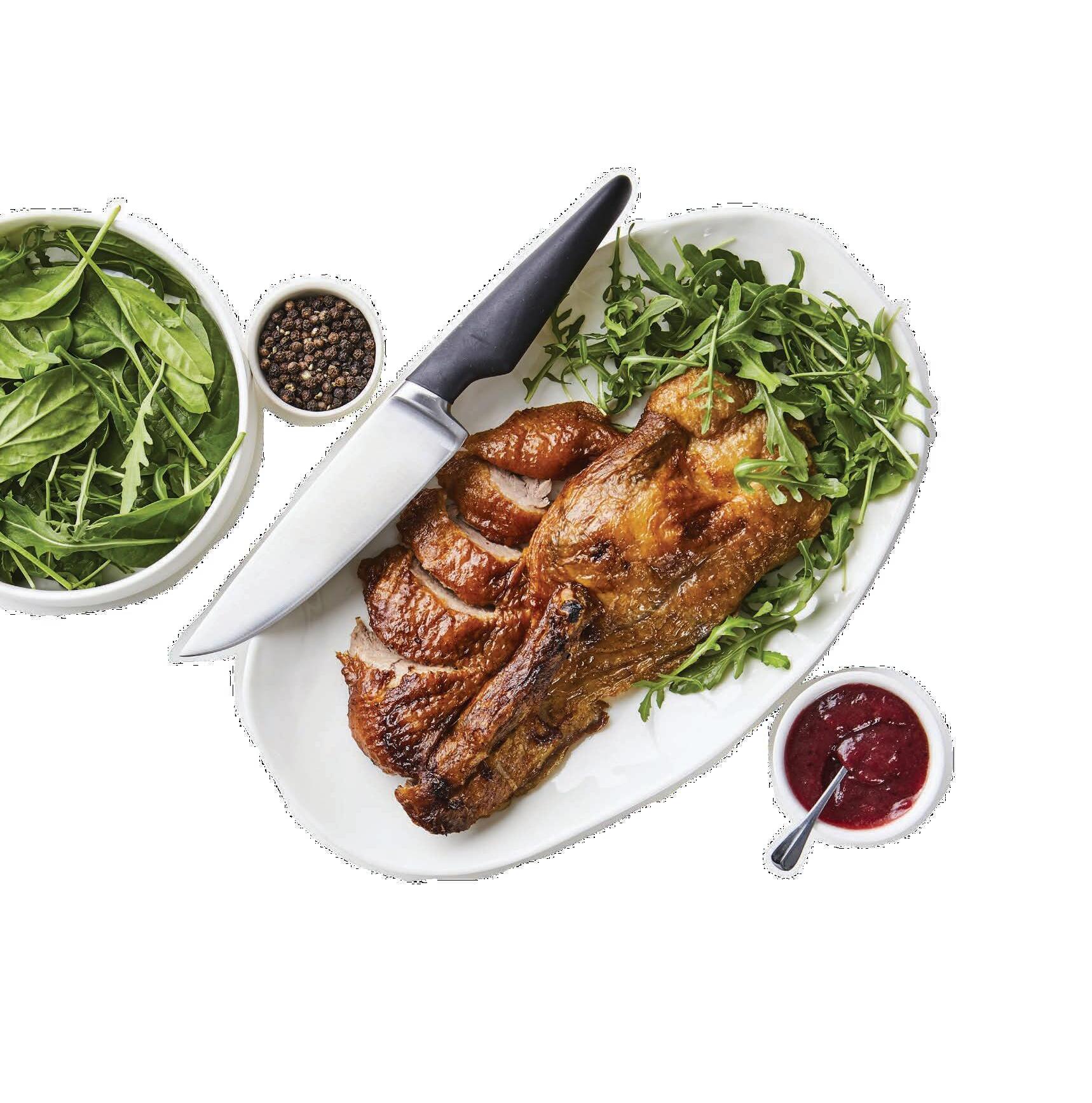

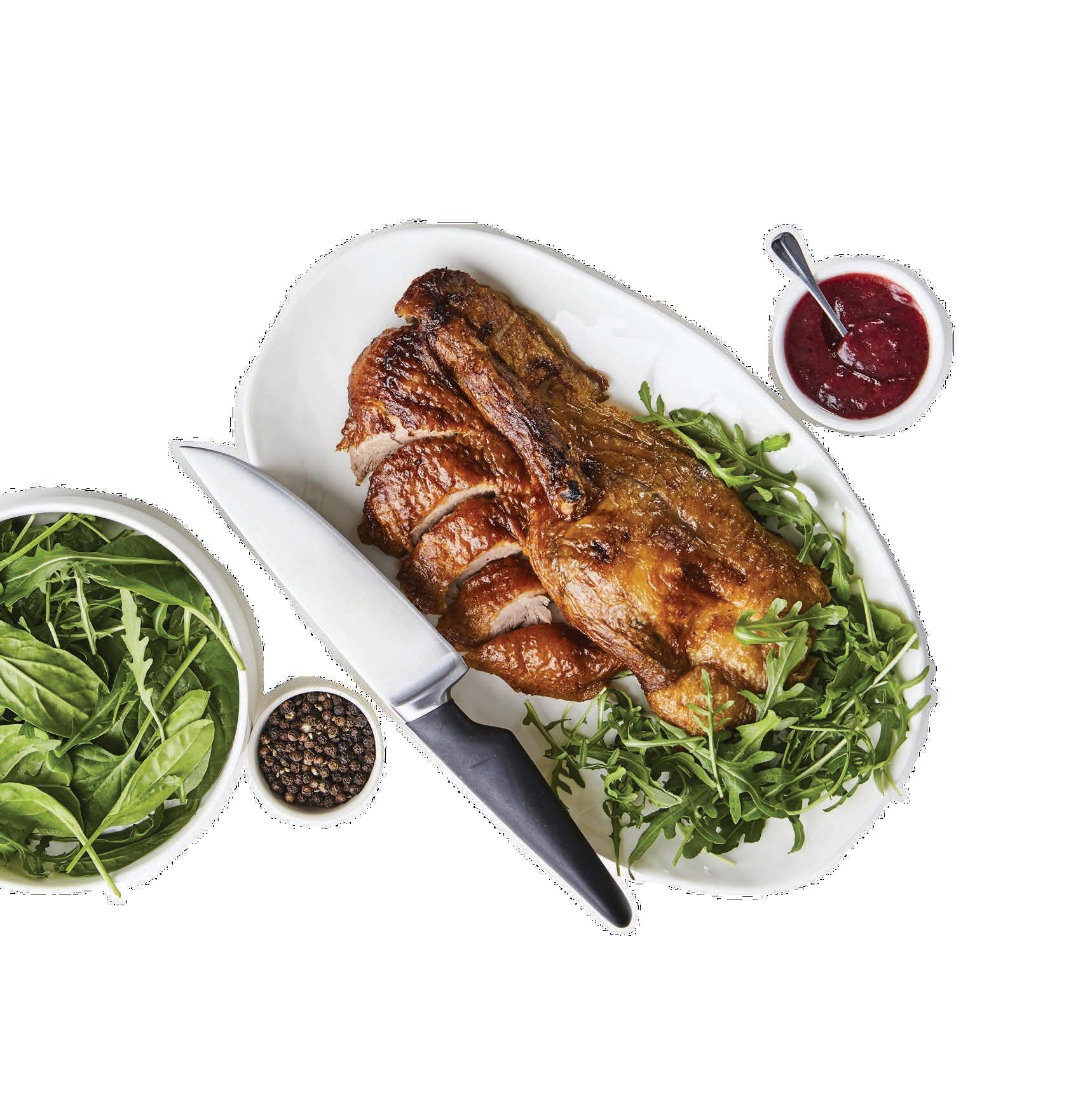
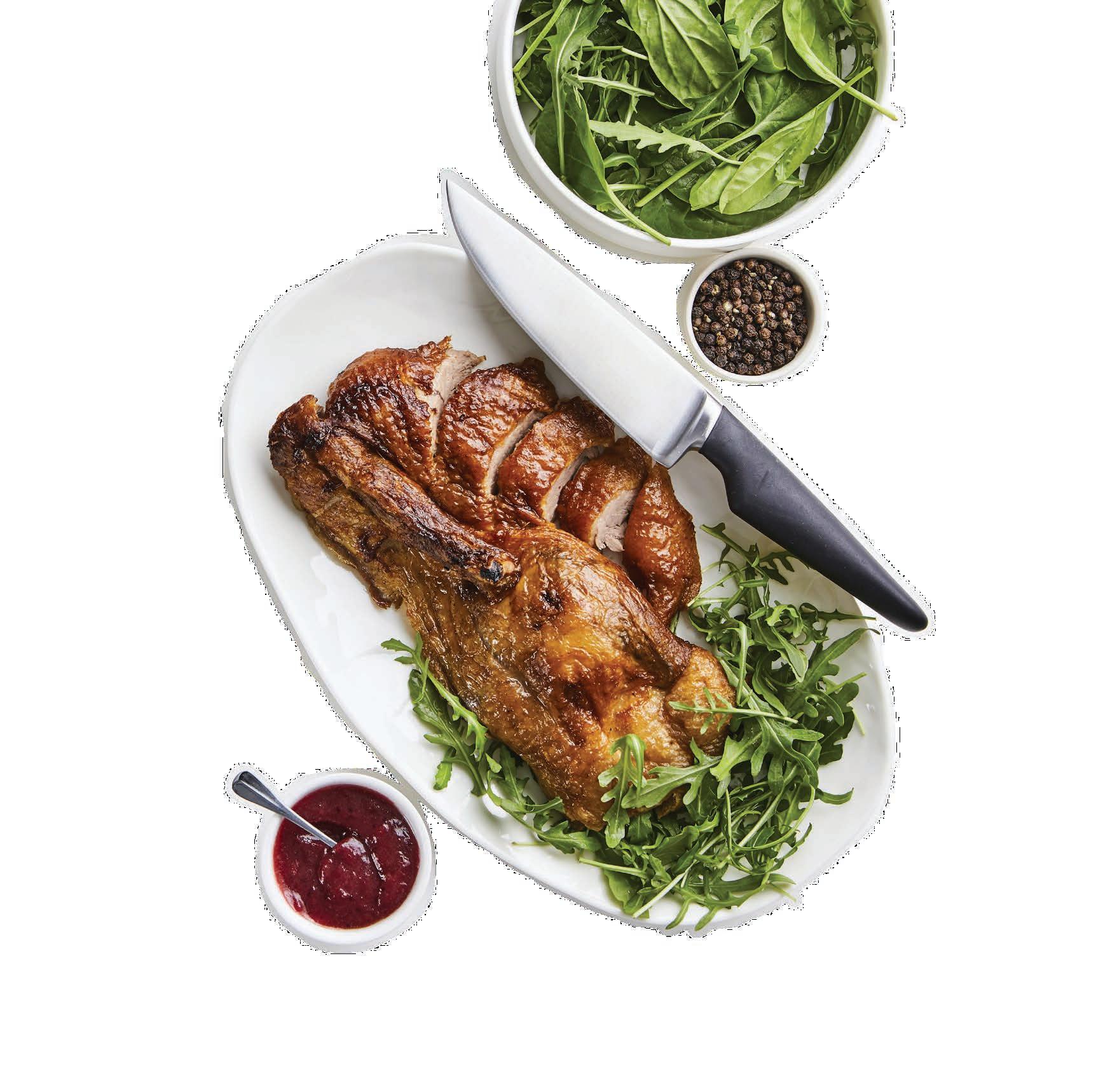
The unique Silver Hill Duck breed is award winning and famous for its succulence,

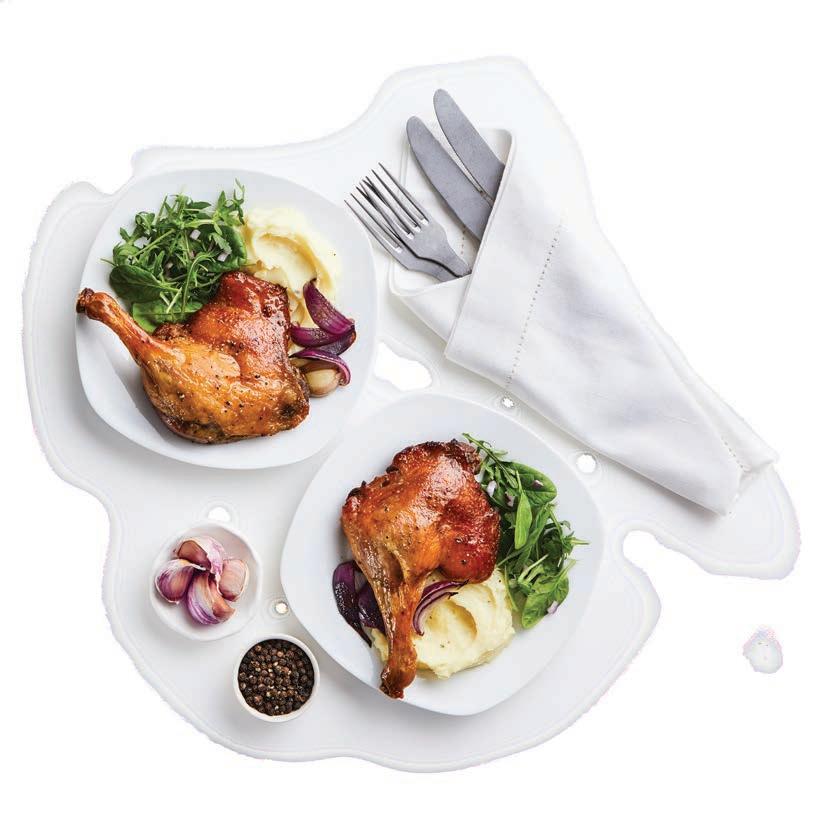

THE BEST DISHES CURRENTLY ON MENUS AT RESTAURANTS ACROSS DUBAI – AS CHOSEN BY CHEFS THEMSELVES
The culinary force behind Chic Nonna in Dubai’s DIFC, Chef Francesco Torcasio brings the soul of Southern Italy to the city’s fine-dining scene. Raised in Calabria, his cooking is deeply rooted in family traditions, heartfelt flavours, and authentic Italian craftsmanship.
What is the signature dish on the menu?
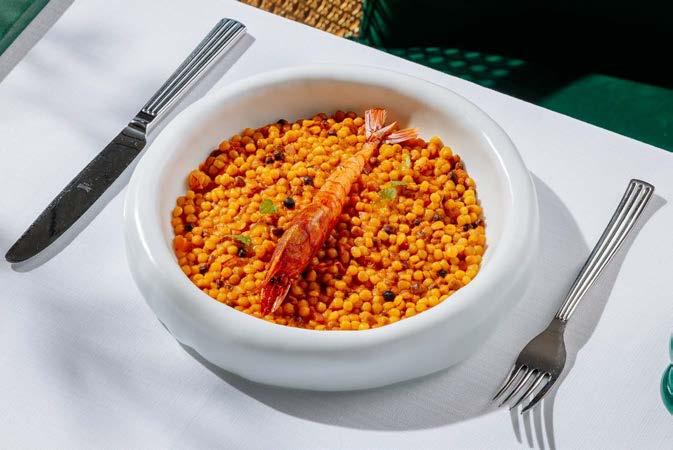
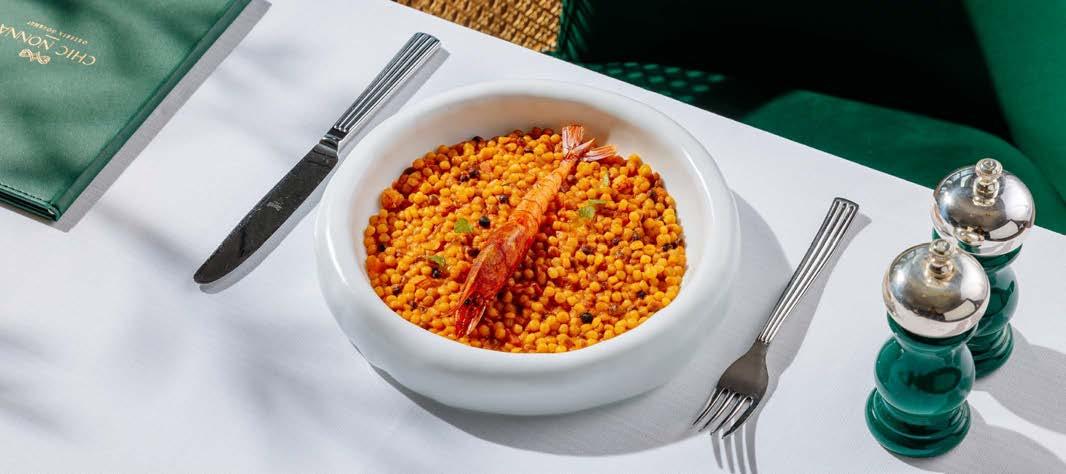
The Fregola al gambero rosso, a delicate composition of Sardinian fregola pasta paired with the prized red Mazara prawns, finished with a touch of orange gel. It’s a dish that perfectly encapsulates the balance I always strive for - simplicity, precision, and soul.
Are there any personal or cultural influences behind this dish?
Absolutely. I was born and raised in Calabria, but Sardinia holds a special place in my heart for its culinary traditions rooted in the
sea. The fregola reminds me of the humble, handmade pasta my grandmother used to prepare, rustic, comforting, full of texture. The red prawns, on the other hand, evoke childhood memories, the sun, the salt, and the passion of Italian coastal life. The orange gel ties everything together with a hint of brightness, symbolizing the warmth of my homeland. So, in many ways, this dish is a journey through Italy from the sea of Mazara del Vallo to the hills of Sardinia, all the way to my childhood table in Calabria.
Are there any unique techniques or cooking methods used in preparing this dish?
The secret lies in the balance of technique and respect for the ingredient. The fregola is gently toasted before cooking to bring out its nutty aroma, then slowly simmered in a rich prawn bisque made from the shells - nothing is wasted. The prawns are lightly cooked to preserve their natural sweetness and silky texture. The orange gel is prepared using a reduction of Sicilian oranges, bringing an unexpected layer of freshness and acidity that lifts the entire dish. Each element is treated with care, allowing the natural flavours to shine through.
What sets your version of this dish apart from others?
I think it’s the emotional layer behind it. Many chefs can prepare fregola or cook prawns perfectly, but what makes this dish unique is the story it tells. A story of my roots, my travels, and my respect for Italian produce. The pairing of the Mazara prawn’s depth with the brightness of the orange creates a contrast that is both comforting and surprising. It’s traditional yet modern, refined yet deeply personal.
What do you hope people feel or experience when they taste this dish for the first time?
I want them to feel transported, to close their eyes and taste the Mediterranean. The sun on their skin, the sound of waves, the scent of citrus in the air. I want the dish to evoke warmth, nostalgia, and joy, the kind of emotion you get from a meal cooked with love and memory. For me, Fregola al gambero rosso isn’t just a dish; it’s an invitation to experience Italy the way I remember it: authentic, passionate, and timeless.
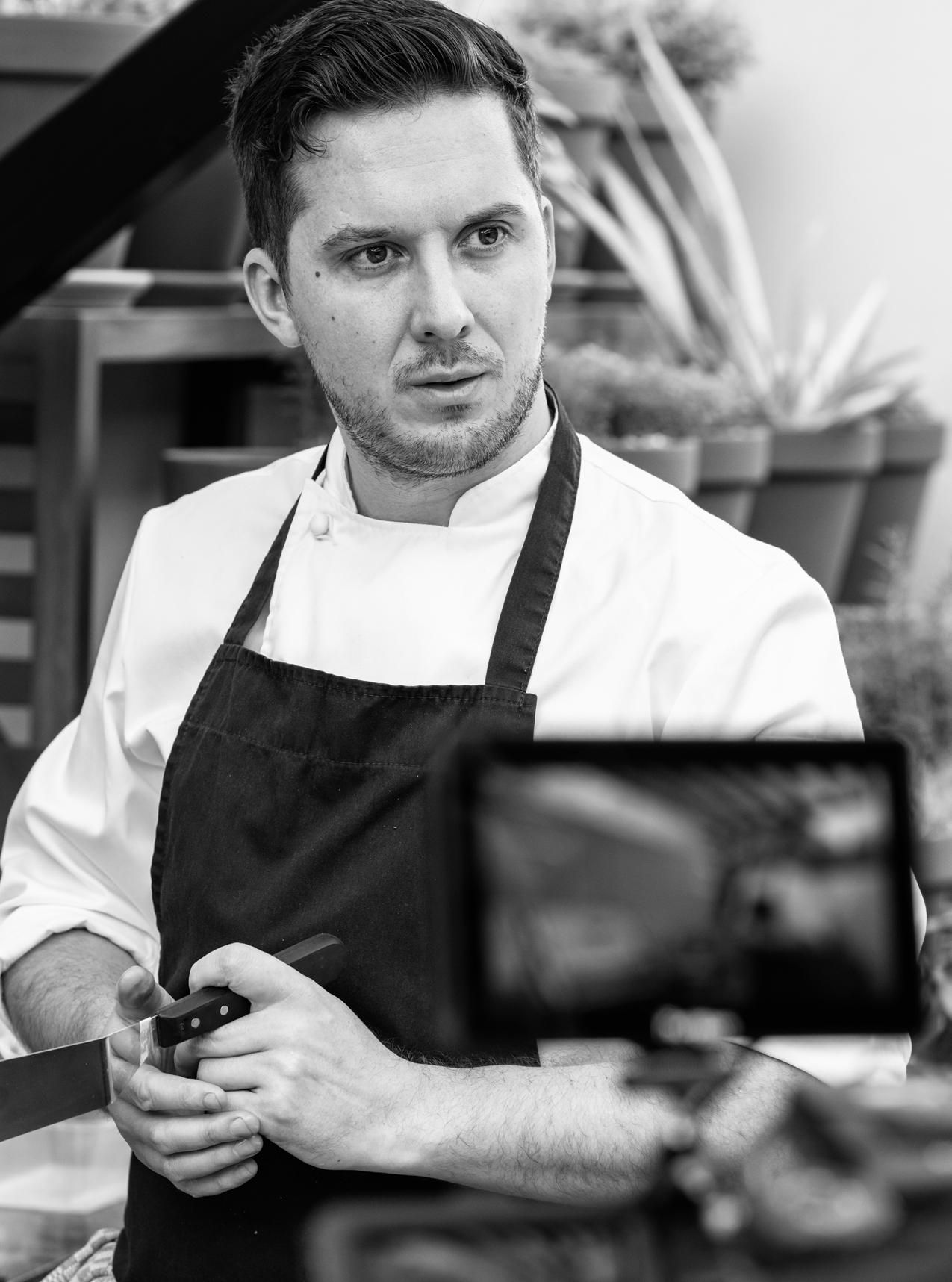
Chef Ionel Catau, winner of Pro Chef of the Year 2025, reflects on his culinary journey, commitment to sustainable cooking, and the powerful stories behind his signature dishes
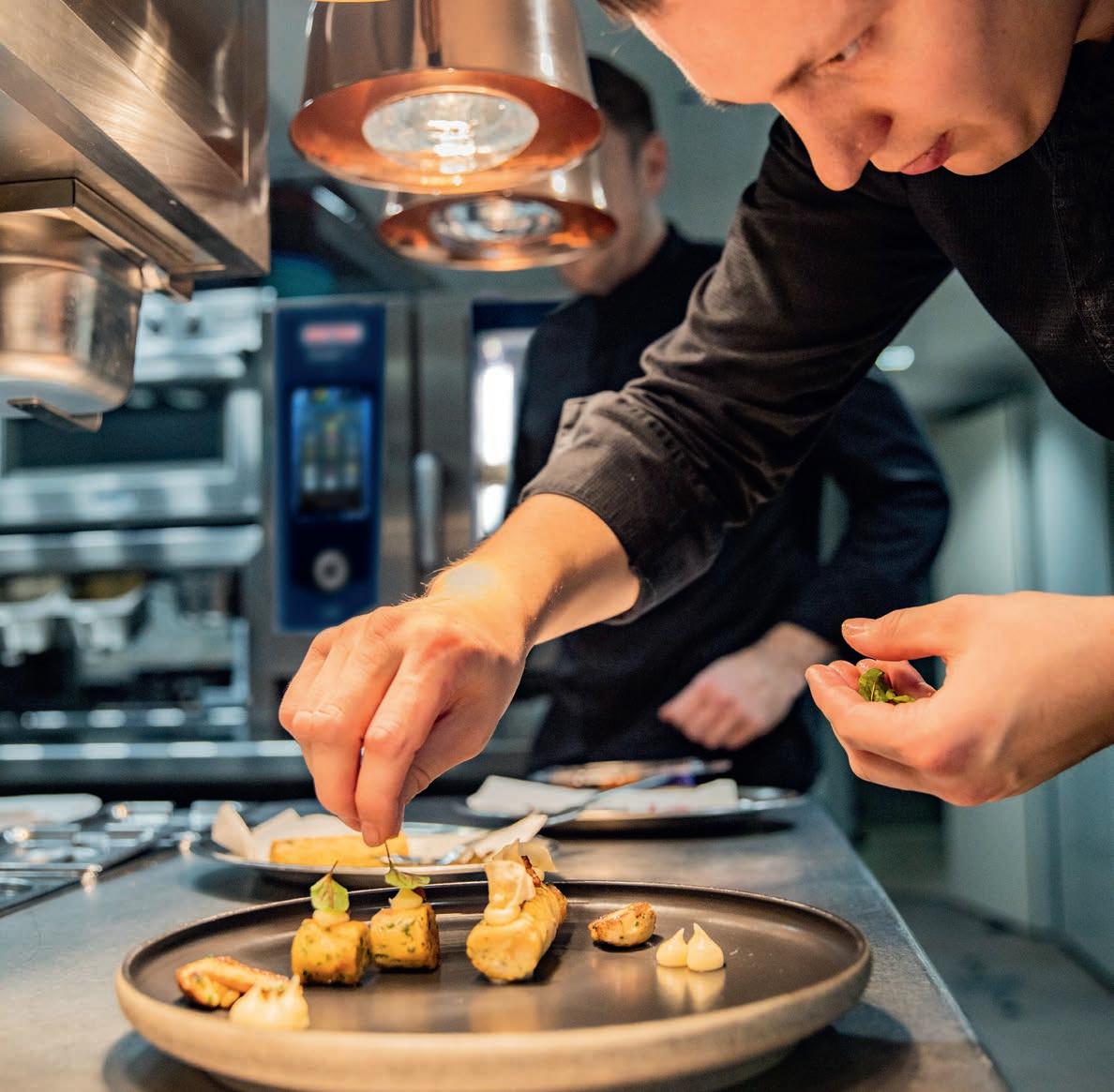
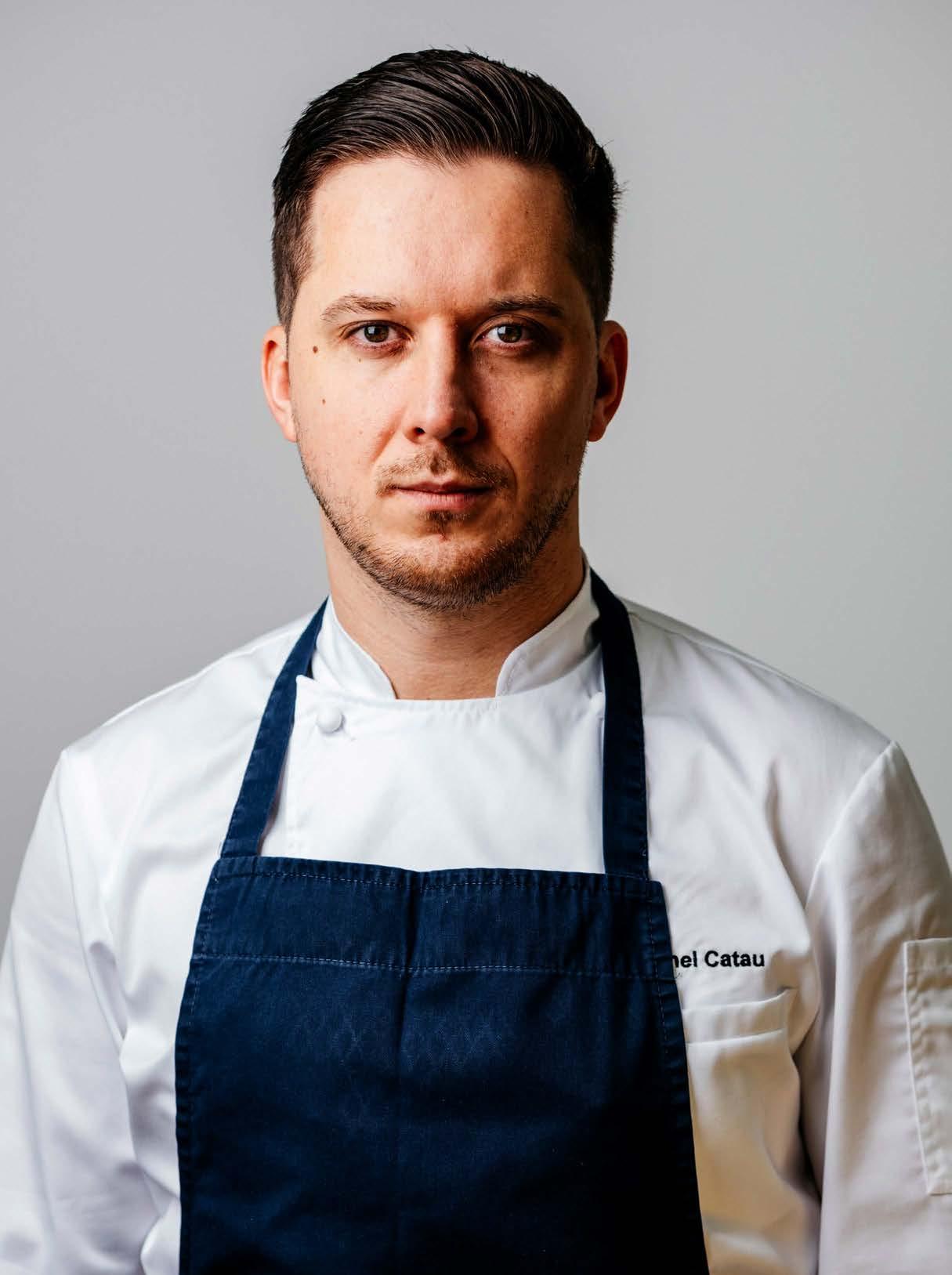
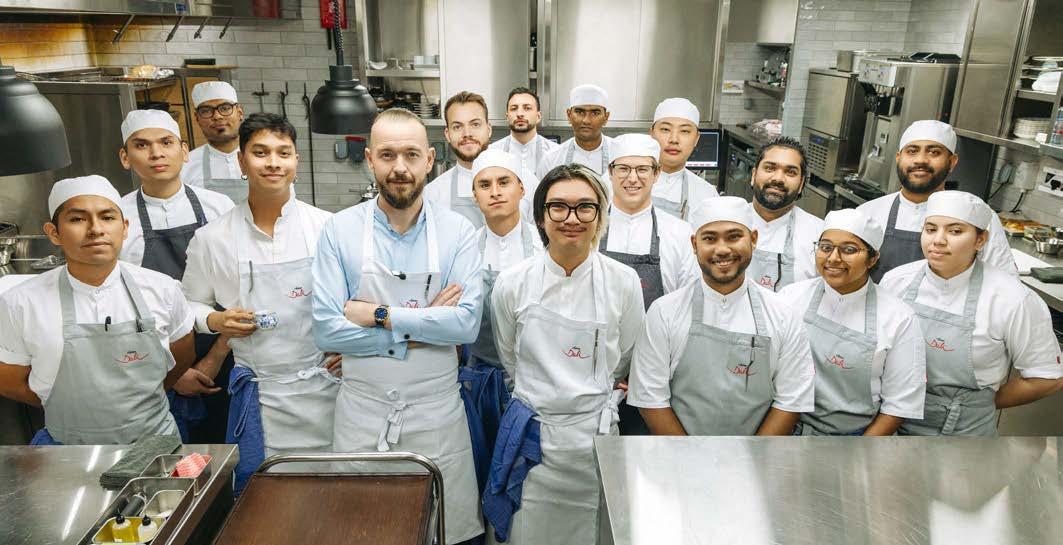
When Chef Ionel Catau was named The Pro Chef of the Year 2025 at The Pro Chef Awards on October 22, it marked a celebration of both his skill and his vision for modern Emirati cuisine. Originally from Romania, Ionel’s journey took him through some of the UK’s finest kitchens, including the Michelin-starred The Raby Hunt and Pensons at The Netherwood Estate. Reflecting on his early years, Ionel says, "From a very young age, I was a curious person with a constant thirst for learning. My earliest memories are in the kitchen - helping, tasting, and asking endless questions. When I chose cooking as a career, I knew I wanted to learn from the best." Chef Ionel tells us hard work, curiosity, and determination shaped him. "My time in Michelin-starred kitchens taught me flavour, discipline, camaraderie, and the importance of constantly challenging myself to improve."
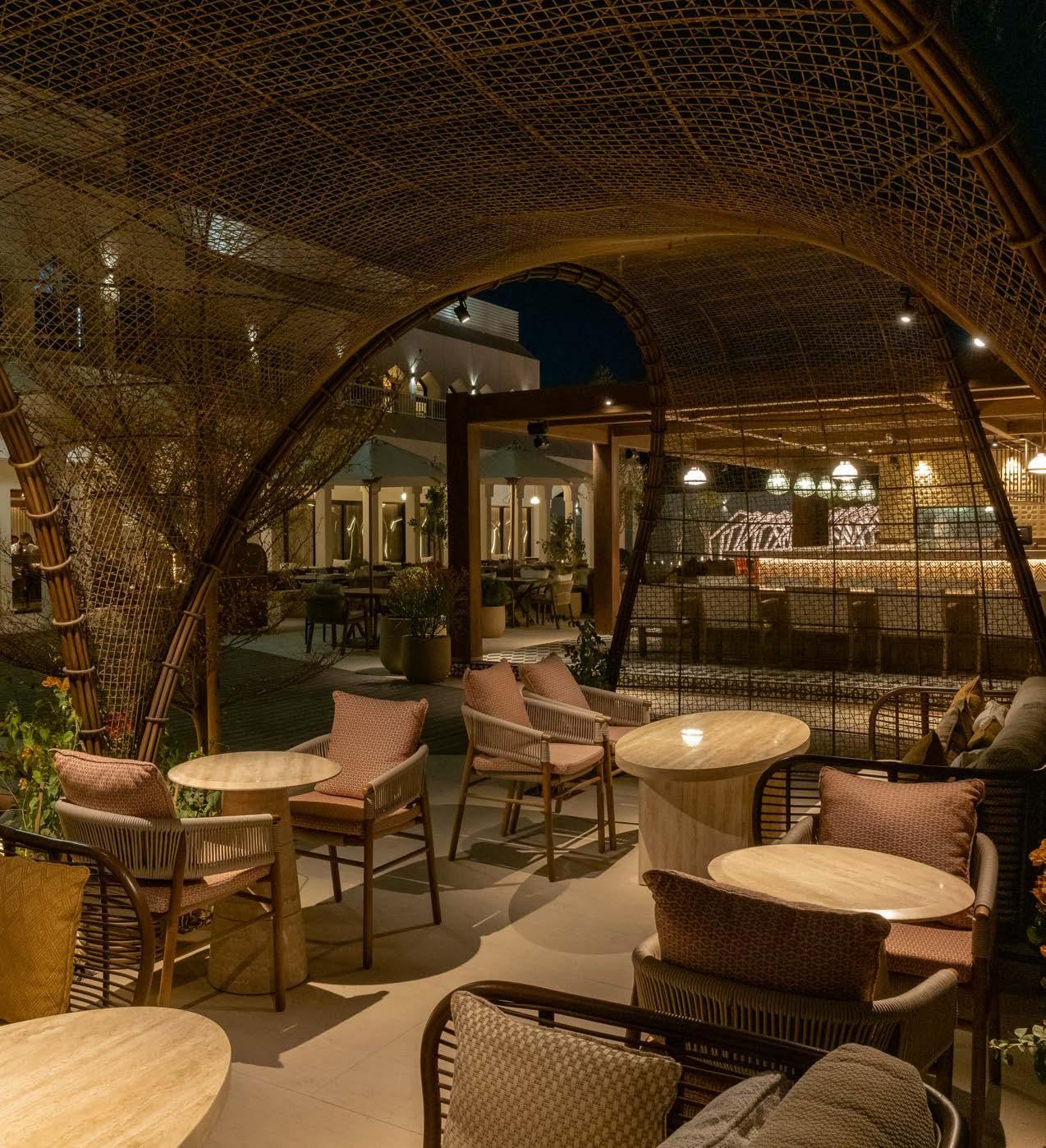
At Gerbou, he draws on traditional Emirati techniques, like pit cooking, alongside contemporary, sustainable methods. His menus tell stories of the UAE’s culture and its diverse communities, creating dishes that respect tradition while staying thoughtful and innovative. Here, he shares his journey from a curious young cook to leading one of the region’s most inventive kitchens, offering insights into the inspirations, lessons, and philosophies that guide his approach.
What lessons from your early career still guide you in the kitchen today?
The first lesson is to taste everything. I’m obsessive about it. I taste absolutely everything and stay open to new
ingredients, cuisines, and cultures because they all shape who I am. The second lesson I follow faithfully is to master my craft. I sought to learn from the best in every category, from fish and meat to sauces and pastry, and even outside the kitchen, from finance and design to marketing. At Gerbou, that same thirst for knowledge only continues to grow.
Tell us about your experience with Tashkeel.
Meeting the team at Tashkeel completely changed how I view design, architecture, and storytelling. I’ll always be grateful for their time, guidance, and patience, especially as I’m known to ask a lot of questions! They taught me how colour, shape, and proportion affect how we perceive a dish; how even naming a dish can influence emotion; and how design extends from plates and glassware to the very chairs guests sit on. I’ve been fortunate to learn from people at the top of their fields, and I continue to do so every day.
What inspired you to explore Emirati traditions like pit-cooking? When I first visited the UAE, I was deeply moved by its people, markets, and traditions. Interacting with local producers and hearing their stories gave me a sense of belonging and purpose. It inspired me to explore Emirati cooking methods and dream of showcasing them to the world.
How do you balance authenticity with innovation?
It’s one of the hardest challenges we face. We want to honour tradition, history, and people while also adding our own personality and experience. Our goal at Gerbou is to show that Emirati food deserves its place among the world’s most celebrated cuisines.
“Chefs have the power to bring people, cultures, and communities together”
The UAE is home to people from all over the world. How does that diversity influence your menus at Gerbou?
The UAE is a melting pot of cultures, and we draw inspiration from that every day, whether it’s a technique we adopt, a flavour we reinterpret, or the way we train and collaborate as a team. We stay open and curious, always learning from the community around us.

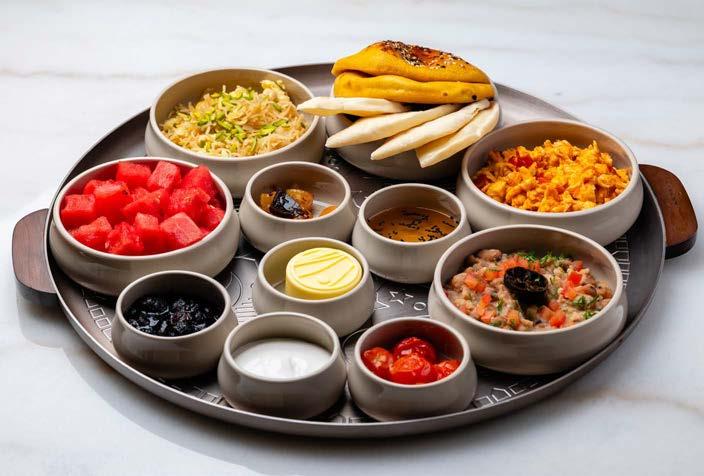
What was your vision behind the refreshed à la carte menu?
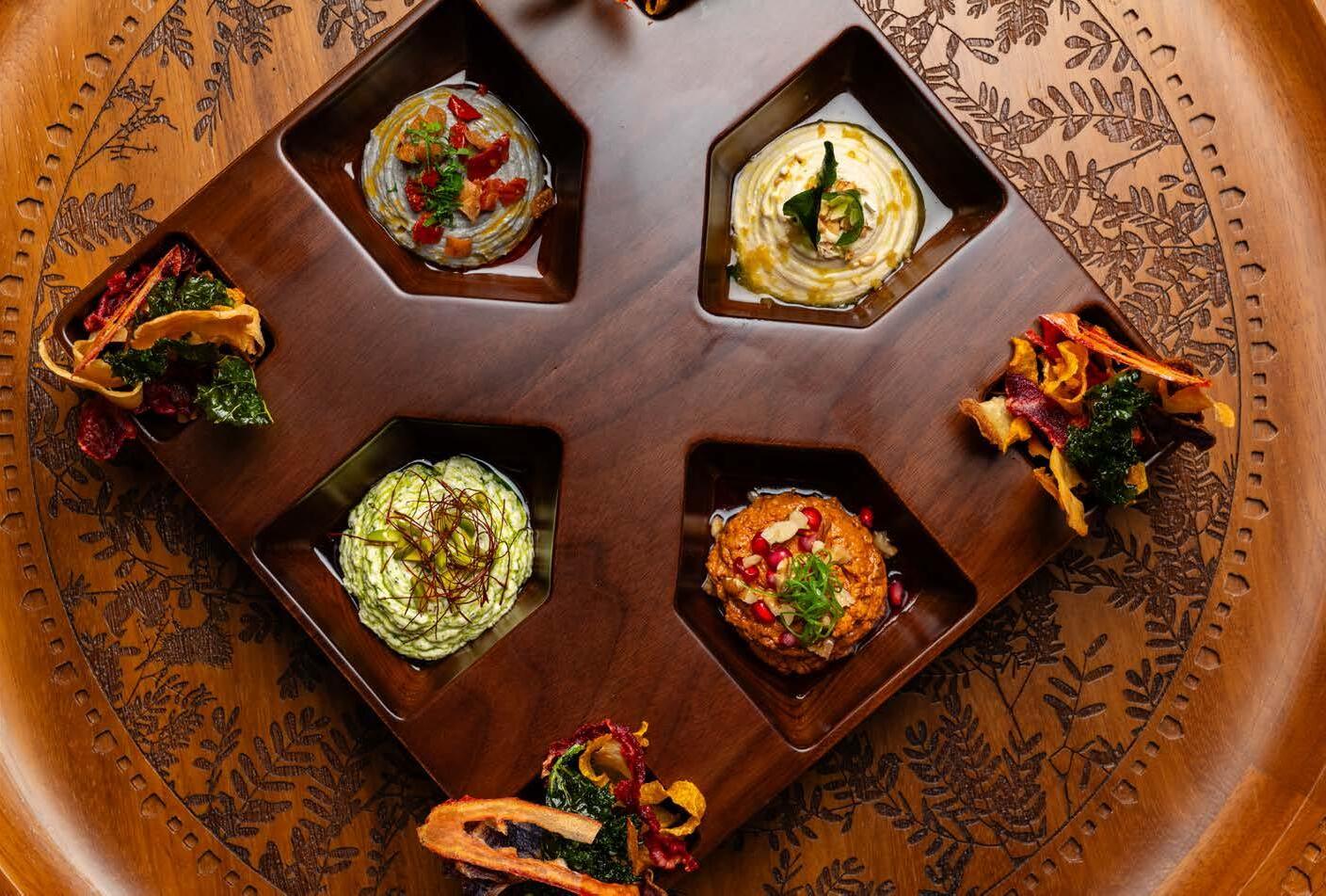
To highlight the richness and potential of Emirati cuisine. Together with my team, I wanted to showcase local ingredients in a way that feels both contemporary and deeply rooted in tradition.
Are there dishes on the menu that feel especially personal to you?
The Chicken Machboos will always be special to me. It was the first Emirati dish I ever learned to make, and it sits at the heart of our menu and culture. It also took the longest for us to perfect, alongside our house-made achar, which has become one of our signatures.
How do you approach storytelling through food at Gerbou?
Storytelling is at the core of everything we do, from the design and atmosphere to the service and food. Every detail reflects a story about the UAE and its people. We make sure flavour is at the heart of every dish we serve. Together with my talented team, we showcase the country’s finest ingredients through diverse cooking techniques inspired by Emirati traditions.
How do sustainability practices show up in your cooking?
Sustainability is one of our main pillars. We mentor the team, support and source locally wherever possible, and apply modern
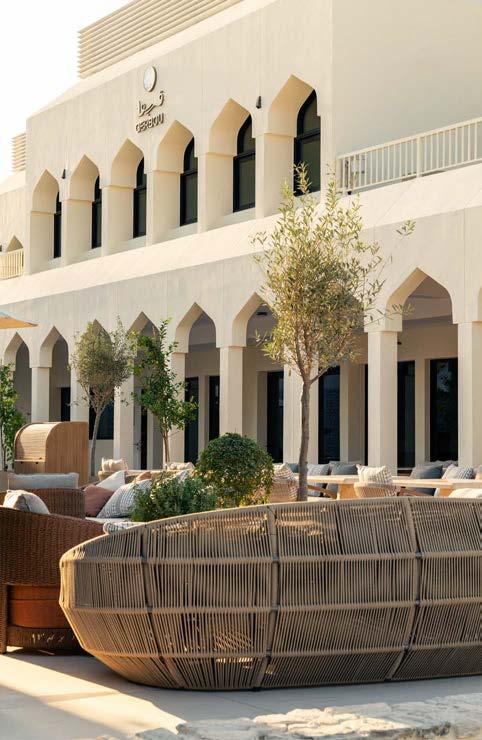
techniques to minimise waste. Whether it’s fermentation, pickling, juicing, drying, or sauce-making, we’re always searching for innovative ways to cook responsibly and build a better tomorrow.
What role do chefs play in connecting communities through food?
Food is a universal language. Through the dishes we create and the ingredients we choose, chefs have the power and the responsibility to bring people, cultures, and communities together.
What excites you most about Gerbou’s future?
I’m inspired every day by how the team continues to challenge itself and push forward. Watching their growth and how they work together as one unit to create memorable dining experiences for our guests is incredibly rewarding. My hope is that one day, we take Gerbou global and share Emirati cuisine with an even wider audience.
What do you hope guests take away after dining at Gerbou?
That they always feel welcomed, and that they leave with a genuine glimpse of what Emirati culture stands for, which is hospitality, generosity, and connection.
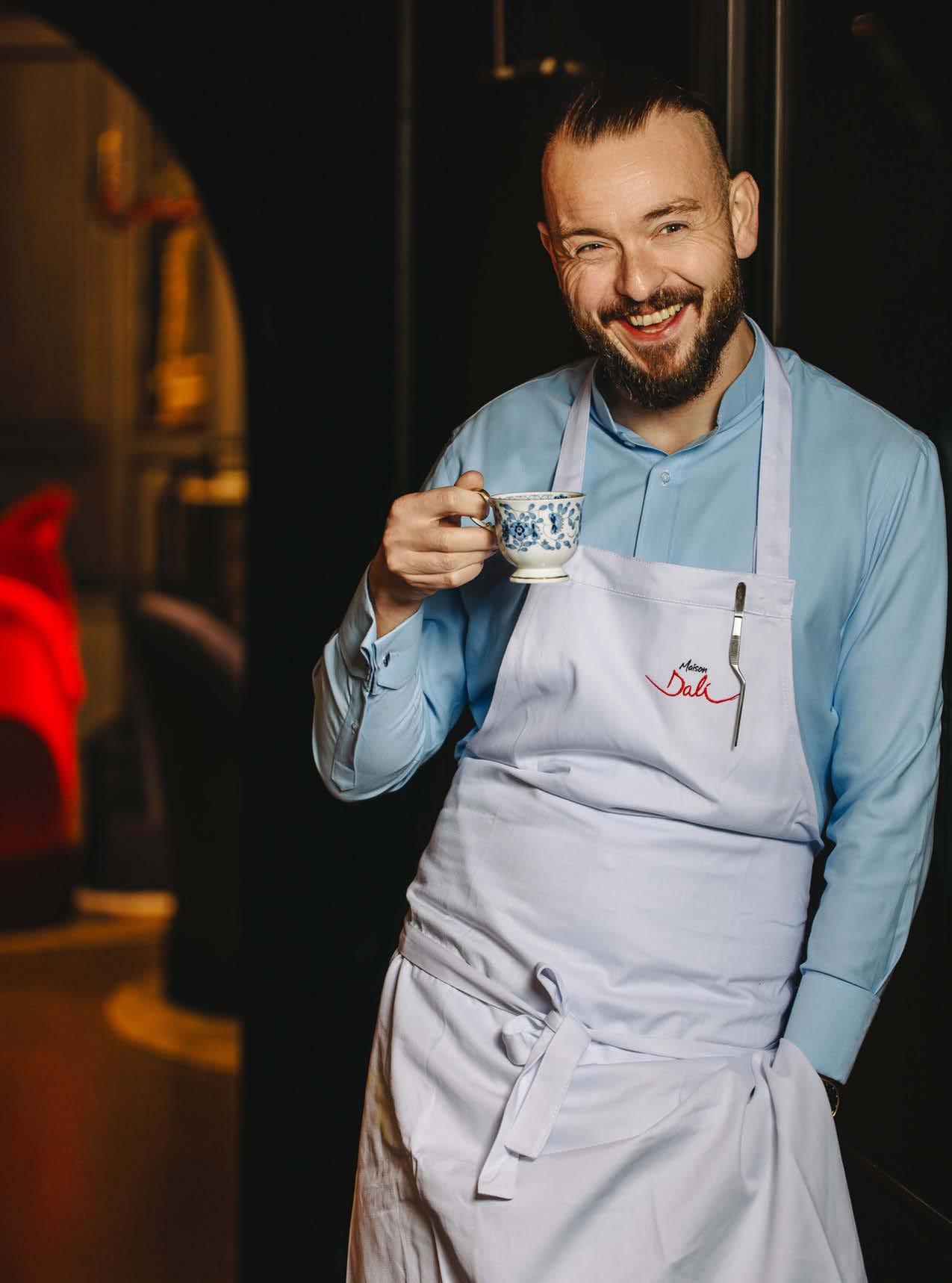
Maison Dali is both a personal statement and a professional challenge, and Tristin Farmer explains what it means to him
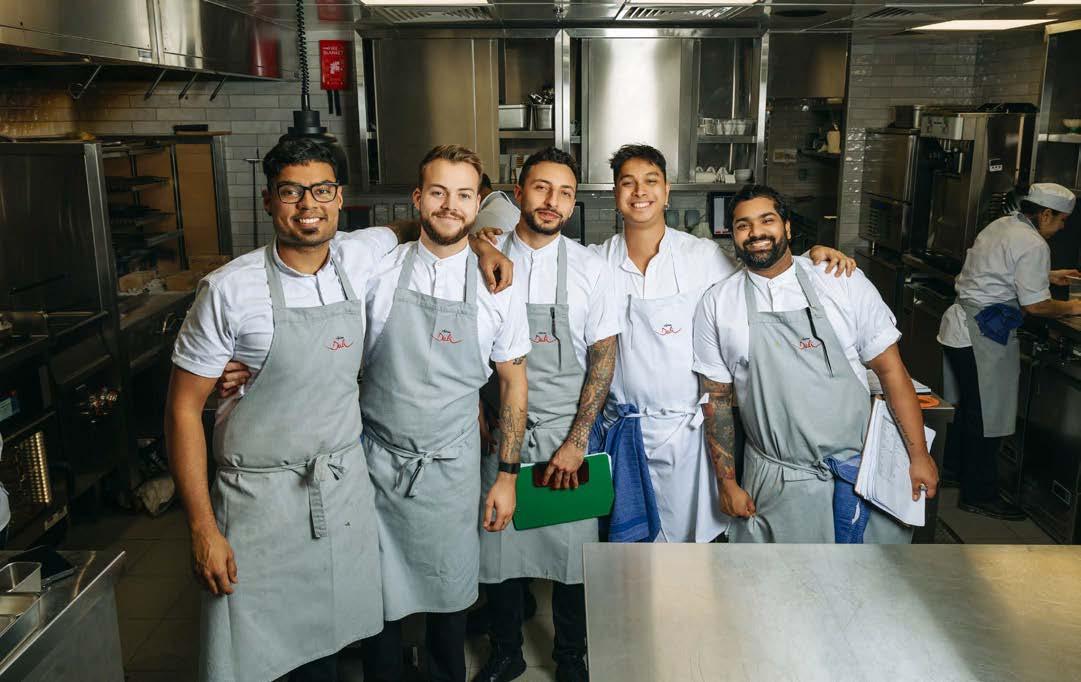
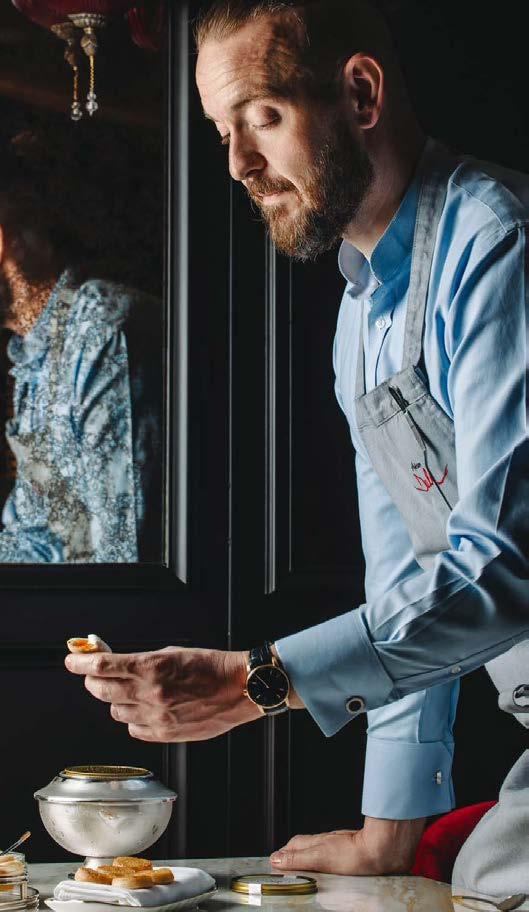
Since opening at The Opus by OMNIYAT, Maison Dali has carved out its own identity in Dubai with surrealist-inspired interiors, touches of theatre, and a menu built around precision and playfulness. Leading the kitchen is Tristin Farmer, Culinary Director and Partner at Culinary Arts Group, whose career spans Michelinstarred restaurants across Europe and Asia. Having trained in some of the most exacting kitchens, he now
“Our goal for Maison Dali is to be in the market a long time, to be fully booked, to have a constantly changing menu, and to build a team that will continue to cook by my side for many years to come”
brings that rigour and creativity into a concept that combines Mediterranean influences with Japanese technique, while drawing on fermentation, umami-rich layers, and contemporary methods.
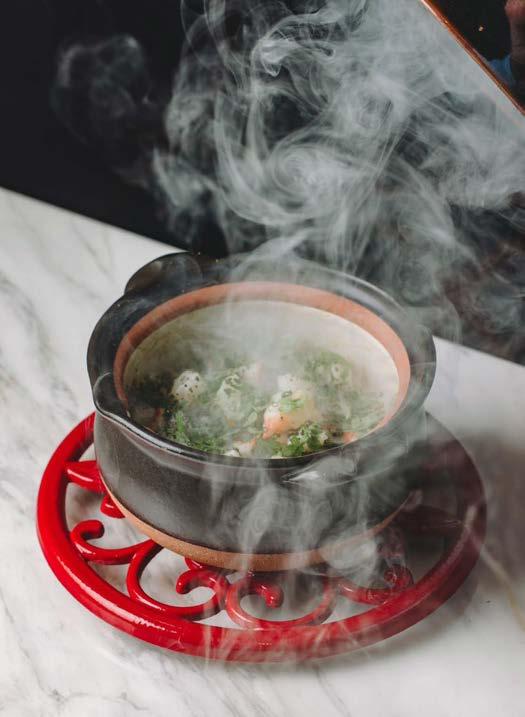
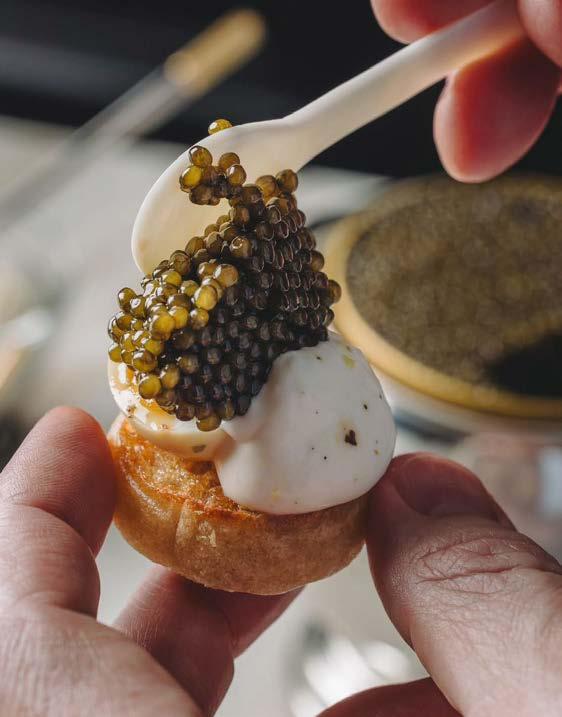
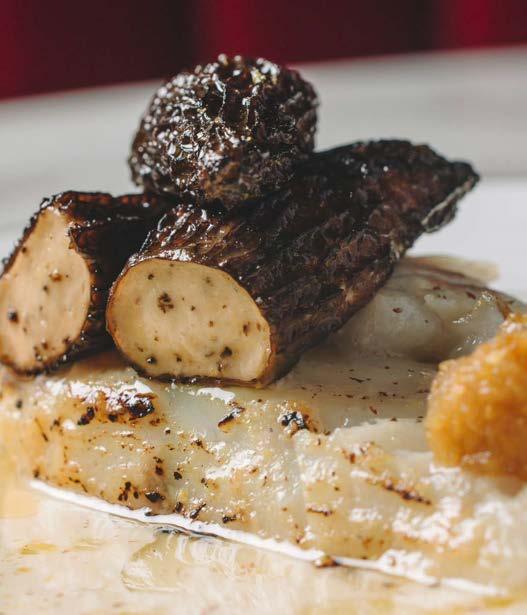
Farmer worked closely with his team over months of R&D to shape a menu that reflects both discipline and experimentation, with touches of fermentation, dry ageing, and reinterpreted classics like the tableside flambé. At the same time, he has introduced one of the city’s most thought-out non-alcoholic beverage programmes, treating it with the same structure and detail usually reserved for wine lists.
In the conversation that follows, he reflects on the long road to opening, the challenges of adapting to a larger dining room, and what it takes to keep a young restaurant moving forward in Dubai’s fast-changing market.
How would you describe the journey so far?
The journey from deciding to leave my role in Singapore to opening my first restaurant was over 2 years.
It’s been an incredible couple of years, many highs, a few lows, with lots of work, cooking, stress, and a big learning curve for me. From finding a location and designing and creating
the brand, menu development, staff training to finally opening and a whole lot more in the middle.
What was the process of creating the menu like?
The menu started in Singapore in early 2024. I spent a lot of time with my executive, Vicente; we had lots of latenight calls and meetings over coffee discussing the concept, and during 2024, we did 3 collaboration dinners. This gave us time in Dubai researching the market, speaking with chef friends, and meeting suppliers. As the year went on, the R&D was making good progress; from October, we brought in three senior chefs to work on recipes, we had a lot of cooking and tastings, and the menu was constantly evolving until we were finally happy with it. Then we started training the kitchen team and setting up our systems.
What’s your favourite dish on the menu, and why?
That’s a difficult question to answer. There are 2 dishes that come to mind - our Hokkaido Corn Salad and kombu & Szechuan. It was inspired by my time in Singapore with Mala, which means spicy and numbing. I also enjoy doing tableside flambé, bringing back the classic and making old school cool again.

How do you approach sustainability and ecoconscious sourcing?
Sustainability means many different things to me. We try to source as responsibly as possible; due to where we are located in the world and the logistics systems, a lot of our produce has to be imported.
That also means we have a responsibility towards utilising every part of every ingredient we purchase, minimising wastage. Sustainability also means being energy efficient, turning off lights and AC when not in use, having economical chillers and cooking suites that run efficiently and use less energy, and recycling as much as possible.
It's also important to reduce staff turnover and increase training. The longer the team stays, the more we strive to be better; hopefully, our food becomes better, our systems are more efficient, and we also spend less money on training and staff hiring.
What inspired the nonalcoholic beverage program?
During my time in Singapore, we started to see an increased demand for non-alcoholic beverages. As we developed drinks, we found that it was possible to tweak and adjust drinks to pair incredibly well with food. We looked at alcoholic pairings as inspiration. Why does a certain white wine work with raw seafood or fish? Why does red wine work with meat? Acidity levels in wine, structure, complexity, and tannin can elevate a dish and enhance the dining experience.
The inspiration for Maison Dali was to offer our guests drinks that would work very well for dinner, catering to different palates and pairing well with the food. The menu started with 10 drinks, “clear, light, dark.”
Meaning our service team could approach the guest and ask what their preference is, what they like, and what they are eating, very similar to how a sommelier would approach a guest looking to order wine. Served
in beautiful wine glasses, as the right temperature brings elegance and fun to dinner.
How does Maison Dali reflect where you are now as a chef?
Maison Dali is a reflection of my personality; it has a serious food side, a weird & quirky side, and also somewhere I would like to dine out and chill, enjoying good food and drinks. The vision was always to create something casual, with good cooking, ingredient focus, and complexity at its core.
What has been the biggest challenge?
Adapting to a larger dining room with an à la carte menu. Finding a balance of wanting to cook everything à la minute, perfecting details, and using the best ingredients while maintaining a brasserie feel and price point.
What are your goals for Maison Dali moving forward?
Our goal for Maison Dali is to be in the market a long time, to be fully booked, to have a constantly changing and evolving menu, and to build a team that will continue to cook by my side for many years to come. Who knows? Maybe there will be more Maison Dali in different locations in the future, but for now, our goal is to get better every day and every service and see where it takes us.
What’s next for you?
We have just finished developing our restaurant menus; we are working on weekly changing specials and adding more lines to add to our juice program. We have a few events to cook externally and also a special collaboration in December.
What’s your advice to aspiring young chefs?
Take time to learn the basics; there is no shortcut for 10,000 hours of practice. Find a good restaurant and chef you would like to work for, stay loyal, work hard, and grow within the kitchen. Be a sponge, learn, work hard, and enjoy the ride.


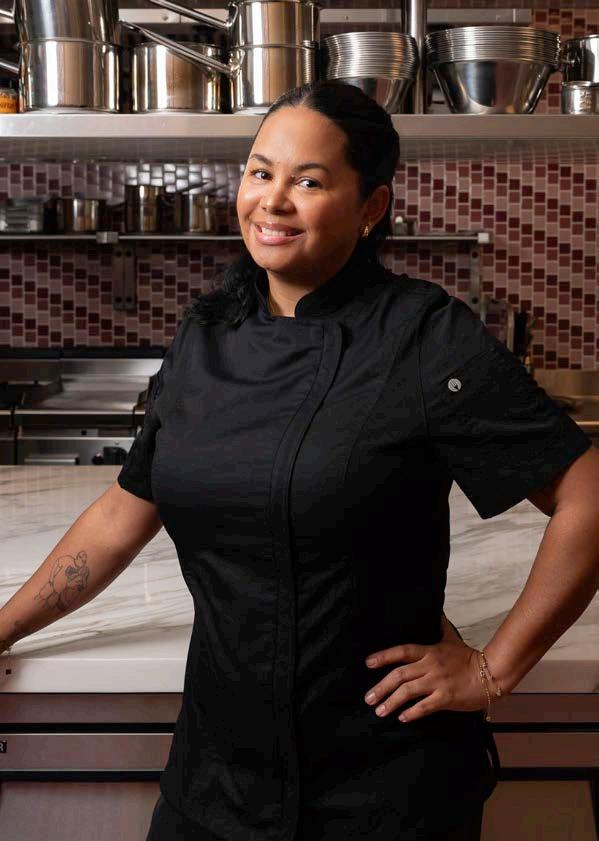
Jill Okkers, Culinary Director of the Tashas Group, is the creative force shaping the distinctive flavours across the brand’s renowned portfolio. Working closely with founder Natasha Sideris, she drives menu development, quality assurance, chef mentorship, and operational design for iconic concepts such as Flamingo Room by tashas, Avli by tashas, Café Sofi, and various global ventures. With more than two decades in the hospitality industry, her deep passion for food storytelling is reflected in her blog Food by Jill, where she explores trends and insights from her travels. Inspired by her grandfather’s cooking, Jill’s culinary philosophy blends authenticity with innovation, ensuring each brand tells its story through food.


Talk us through the Flamingo Room journey to date. Flamingo Room has always been about creating an unforgettable, over-the-top experience. When it first opened eight years ago, it was one of Dubai’s trailblazing restaurants - a space of mirrors and gold that set the stage for something extraordinary. Yet, at its heart, the food has always reflected Natashas’ philosophy: simple pleasures, the finest ingredients, and flavours that linger long after your first visit – and keep you coming back for your fifth or tenth. We’ve remained true to keeping the classics timeless, while allowing space for innovation as the menu evolves. Flamingo Room is not just about today’s experience, but about creative memories that will last for many years to come.
What's the most unique ingredient you've sourced recently, and how are you using it?
Our latest R&D has us exploring the depth of truffle. While not the rarest ingredient, white truffle remains one of the most luxurious, and we’ll be celebrating it with a bespoke menu that showcases its elegance in a variety of dishes.
The most innovative technique developed in your kitchen.
Our team is committed to advancing techniques that elevate flavour without adding unnecessary complexity. Much of what we do is still crafted to order – with very limited reliance
on pre-cooking or pre-cutting – which shapes the way we design our menus. In that sense, innovation in our kitchens isn’t always about showmanship or glamour; it’s about finding smart, thoughtful ways to respect the ingredient, enhance consistency, and bring our honest flavour the moment its’s served.
What training methods have been most effective in fostering a culture of sustainability and collaboration among your staff?
We’ve found that the best way to build a culture of sustainability is to make it part of the everyday craft. Our teams are trained to celebrate the whole ingredient, finding creative uses for what might otherwise go to waste. Collaboration comes naturally when chefs share these ideas across our different kitchens, it’s become a point of pride to see who can create the most flavourful dish from something simple and overlooked.
The most innovative dish you've created recently, and what inspired it?
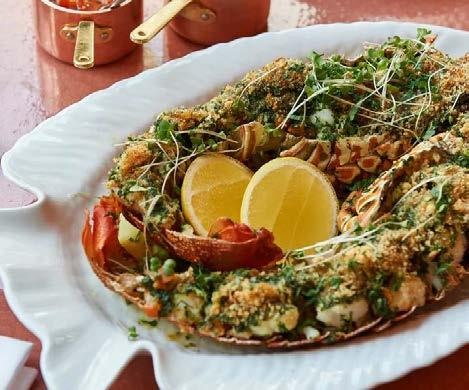
The Lobster Thermidor. I took a timeless classic and reimagined it with a touch of theatre. The dish features a delicate prawn mousse, that is mixed with tender poached lobster, cream, fresh herbs and lemon zest, this is then all encased in a delicate puff pastry shell – that is then shaped
like a lobster and baked until golden. It’s a nod to oldschool luxury dining, but with a fun play on presentation that resonates with today’s guests.
Italian Dairy Products – most of our Italian Cheese supply across the group.



The most unconventional tool in your kitchen that might surprise other chefs. It's probably not as unconstitutional as people might expect, but the tools I rely on most are a sharp and good paring knife and a metal pastry scraper. They're always at the side of my chopping board, both in the restaurant or at home. Simple, versatile, and indispensable, they remind me that the most effective tools aren't always the flashiest ones.
If you could instantly add any supplier to your network, regardless of location, who would it be and why?
We’re truly spoiled in Dubai with the level of supply and access to incredible products, there’s very little we lack. That said, being South African, I often find myself yearning for ingredients from back home, whether it’s the distinctive character of our olive oils or the complexity of vinegars produced in our landscape. But overall, I feel blessed with the abundance and quality we have at our fingertips here in Dubai.
What do you see as the biggest challenge facing the culinary industry today?
For me its balance – balancing creativity with cost, sustainability with scale, and tradition with innovation. Rising ingredient costs, labour shortages, and shifting consumer expectations mean chefs are being asked to do more with less, while still delivering experiences that feel fresh and memorable. It’s forcing us to think smarter, not just grander.
If you could design your dream chef's uniform, what would it look like?
The dream would be a black t-shirt – that has space for my sharpie, black cargo pants, a Birkenstock sneaker and obviously a black full apron. Simplicity is key.
Any new technologies or tools you've incorporated into your kitchen?
Pacojets are always high on our wish list. Thermomix’s are also up there – but I’m old school and my brain doesn’t work in digits and touch screen – so I always tend to go back to the basics. Microplanes are always a must, sharp knives, good cutting boards, a good cast iron pan, these are things that you cannot be without in the industry.
One piece of advice from your "little black book" that every chef should know?
Use good salt, oil your meat not the pan and invest in a very good chef’s knife.
Chef Middle East – a lot of our speciality imported product like creme fraiche / vanilla paste.
The Acai Spot – our acai across all our locations
NSK Fruits and Vegetables

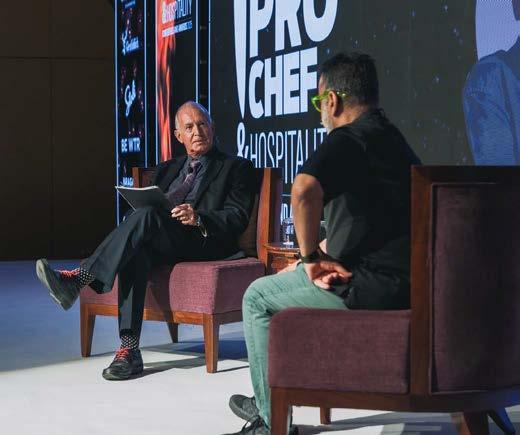
In Conversation with Vineet Bhatia MBE
The journey of Chef Vineet Bhatia — the pioneer of modern Indian cuisine and the first Indian chef to earn a Michelin star for his London restaurant Zaika in 2001 — is a testament to true grit. In our opening session and Fireside Chat, Vineet Bhatia recalled his humble origins, detailing his arrival in the UK with just seven pounds in his pocket and little more than raw ambition. His narrative is one of relentless innovation, a path on which he was honoured with an MBE (Member of the Order of the British Empire). Central to his philosophy is the continuous practice of maintaining an open mind and consistently drawing inspiration from the world around him. The discussion also offered an exclusive glimpse into his highly anticipated new venture, a restaurant concept built around the historic Spice Route. This unique venue will be situated strategically on the border of Oman and the
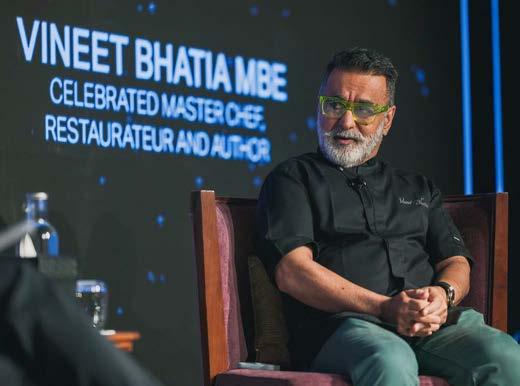
UAE, allowing the kitchen to source the freshest fish and seafood from the ocean daily. For aspiring chefs, Bhatia's advice was profound, "Make notes, learn from somewhere, get mentorship." He stressed that while culinary trends will inevitably change, a chef's basic fundamentals form the foundation that will sustain their entire career.
A Bespoke Guest Experience
Chef and consultant Colin Clague spoke about the evergreen appeal of bespoke, personal service and his ongoing commitment to the ‘neighbourhood eatery’. Once a key member of Burj Al Arab’s preopening team, Colin Clague has since led teams at Zuma Dubai and London, Jean Georges Dubai, Rüya Dubai and London, and was most recently Culinary Director at Ritz Carlton DIFC. So, what’s compelled him to become the Global Head of Culinary and Partner at The FAB Group? The chef has found a gap in the market for local venues with a more homespun, community focus, where all the family feel at home, and you’re more than just a face in the crowd. That’s why he’s shaping a more intimate, neighbourhood approach by bringing in a celebrated modern Indian restaurant brand from London. He mentioned brand
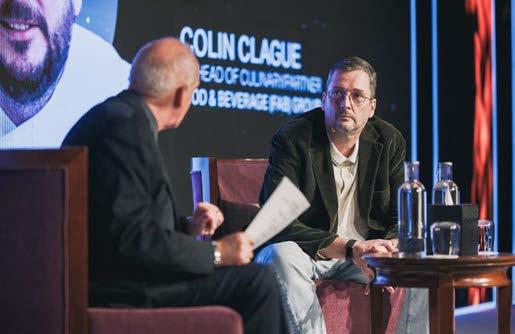
resonance can be a big help when you set out to be part of people’s everyday lives. The aim is to curate these experiences locally, a place where you will not only enjoy the cuisine, but really and truly feel part of the community too.
Wellbeing in the Workplace
• Moderator: James Knight — Award-winning chef, hospitality consultant, TV personality & podcast host
• Tatiana Antonelli Abela — Founder & Managing Director, Goumbook
• Dr. Bisi Laniyan — Clinical Psychologist; Head of Corporate Wellbeing Services & Student Development, Sage Clinics
The panel on Wellbeing in the Workplace tackled the long-overdue subject of mental health in the workplace. The consensus was clear: companies must move past their ingrained 'hustle' culture to build genuinely supportive, resilient teams. The discussion focused on highly practical, low-cost strategies for immediate implementation. The audience were urged to emphasise on the significance of establishing professional boundaries to protect personal time. Wellness starts with small, non-negotiable breaks, with Dr. Bisi recommending employees take a focused 10- to 30-minute break to breathe and reset. Beyond the workplace, panellists stressed the importance of actively engaging with life outside of work by remaining physically and socially active,
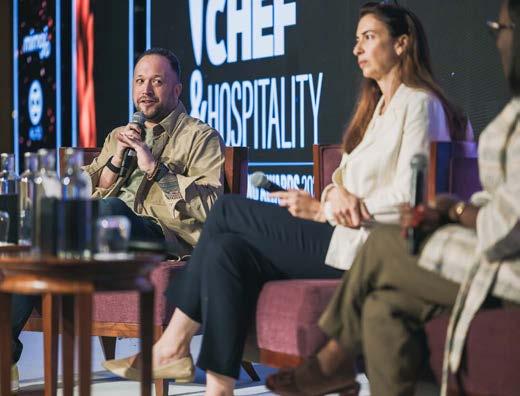
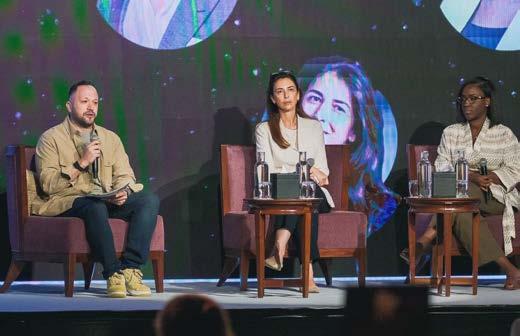
and intentionally getting out in nature whenever possible. Crucially, the session highlighted the need to normalise vulnerability in the workplace, stressing the value of encouraging staff to ask for support from a teammate or supervisor when feeling overwhelmed. Ultimately, prioritising wellbeing was positioned as the strongest business case for staff retention in the region.
Eco-Friendly Solutions & Ethical Sourcing in F&B
• Patricia Roig — Executive Chef, BOCA (Green Michelin Star)
• Nicholas Baker — Managing Director, Regional Cluster Middle East & Africa, Rational Kitchen Equipment
• Ilias Doulamis — Culinary Director, Conrad Abu Dhabi Etihad Towers & Regional Chef, Arabian Peninsula at Hilton
• Tom Allen — Culinary Director, JW Marriott Marquis Hotel Dubai
The discussion revealed a commitment to sustainability and ethical sourcing across the participating hotel groups. Ilias of Hilton reported that their teams remain highly cognisant of global environmental concerns and are actively integrating sourcing innovations. Addressing logistical challenges, Nicholas discussed strategies for transporting kitchen equipment between markets and factories, leveraging partnerships to streamline the process. Patricia described a systematic approach to waste management, employing a third-party company to handle organic waste and compost while
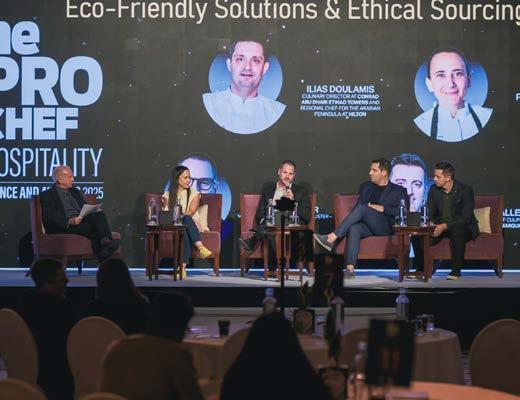
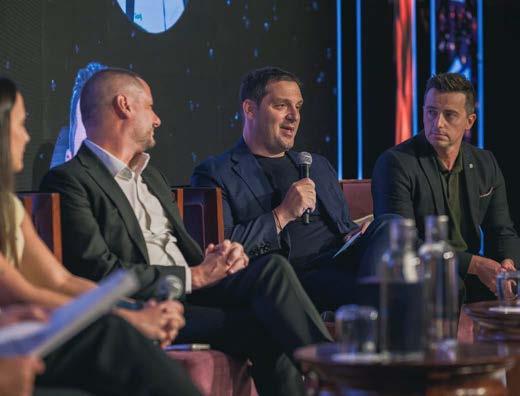
simultaneously monitoring and providing crucial data on waste levels. While acknowledging that guest interest in ethical sourcing is varied, the panellists collectively affirmed the importance of working with farmers to support their growth and ensure operational compliance with environmental standards. Ilias highlighted that their decisions are intentionally weighted toward sustainability rather than financial outcomes alone. Tom provided a compelling case study - a direct sourcing partnership with an Australian farm that secures quality produce while dramatically reducing the environmental footprint by cutting air freight through fewer deliveries.
Ultimately, the discussion made it clear that these large organisations are moving past simple compliance, embedding sustainability into their core strategy and recognising that supporting the planet and their partners is the only viable path forward.
• Colin Clague — Global Head of Culinary/Partner at The Food & Beverage (FAB) Group
• Peggy Li — Managing Partner, SpsAffinity
• Manoj Kumar — Founder, Orderific
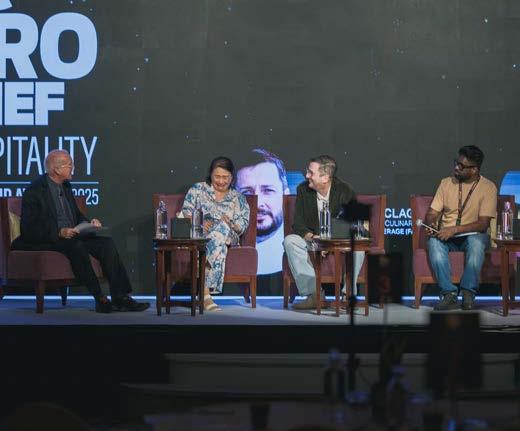
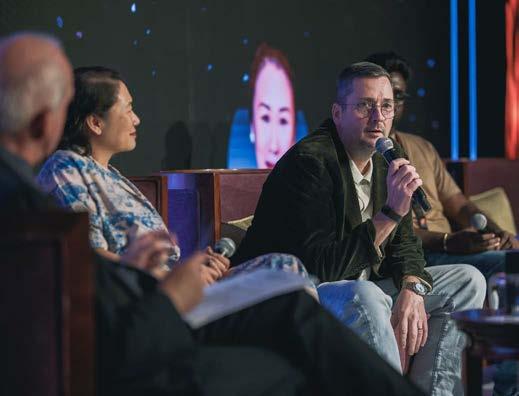
The discussion highlighted the dual reality of AI: its vast potential and limited current adoption. Manoj positioned AI as an imperative business tool, capable of transforming areas from sales forecasting and audience maximisation to optimising kitchen operations through AI pattern recognition for ingredient selection. He noted the striking statistic that only 7% of businesses (if not fewer) currently leverage this technology. Peggy detailed the immediate, practical applications of data, such as using AI to conduct precise location analysis regarding demographics, community growth, and even fair pricing of rent, offering a clear direction beyond broker input. Crucially, however, Peggy stressed the importance of human expertise and skill, echoing Colin Clague's sentiment, noting that staff must possess the finesse to handle produce and daily tasks, before integrating AI tools. While AI is a powerful aid for the procurement department, Colin and Peggy affirmed that human intervention is an absolute must. The machine provides sophisticated suggestions and analyses, but a pragmatic decision-maker is required to assess operational viability. Furthermore, they stressed that staff training is paramount - if employees and customers are not synchronised with the brand's values, the data collected will be flawed.
Expanding Brands Globally — Opportunities & Challenges
• Moderator: Sascha Dutta — Founder & Director, Foodpreneurs Collective
• Peggy Li — Managing Partner, SpsAffinity
• Dennis Tels — Global Franchise Director, Creneau
• Diana Rysbaeva — Founder, SHI Hospitality
• Yazz Abdulla — CEO, Urban Hospitality
• Massimo Vidoni — Founder & CEO, Italtouch
• Alannah Francesca — Owner/Executive Pastry Chef, Alannah’s Pastry Kitchen Manufacturing LLC
The discussion on market entry opened with Dennis discussing the need for organisational agility, the ability to swiftly identify and capitalise on emerging opportunities. Diana asserted that successful expansion is fundamentally a people-centric endeavour. Her team's extensive market research uncovered this, noting that Dubai taught them the necessity of scale, while operating in Europe conveyed the nuanced value of emotion and lifestyle. Massimo highlighted the localised challenges of market penetration, recalling the difficulty of introducing truffle in the KSA, where its appreciation was limited to
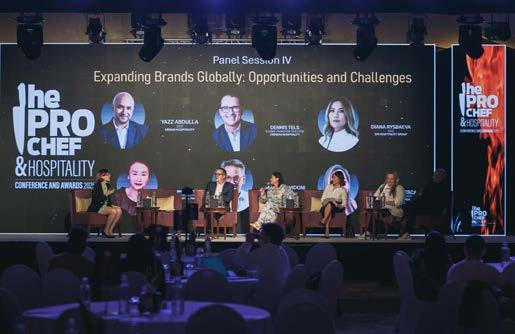
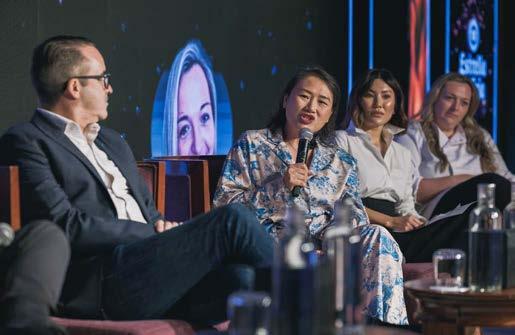
internationally-travelled locals. By contrast, Japan, already embracing trends like caviar and truffle, proved highly receptive.
Yazz detailed the multi-faceted approach to market identification. While corporate strategies rely on hard data like footfall and population density, independent brands require deeper metrics focused on cultural integration and spending habits. This dual approach informed his successful, data-driven launch of cloud kitchen operations in Germany and the UK. However, in markets like Hong Kong, the focus shifted entirely to understanding local dining habits. Alannah offered a chef's counterpoint, prioritising on-the-ground competitor analysis over abstract market reports. Diana observed that Dubai guests crave a memorable experience. Ahead of her company's expansion into Italy, the team recognised that success would hinge on impeccable service. Her strategy is to maintain the brand's core Asian luxury aesthetic and emotion while carefully adapting the tone and service execution to each unique region. Massimo and Dennis agreed, stressing that delegation is also key while expanding to new markets. Dennis warned that challenging markets like India and the KSA demand a strong, local partner - one who not only knows the business but also embodies the brand's core values, thus mitigating brand dilution. Peggy supported this view, extending the partner requirement to include ensuring accessibility of manpower too, ensuring adherence to the brand's blueprint, regardless of territory.
Technological adoption varies drastically, as Peggy noted. China is highly tech-driven, mandating QR code menus and digital payments. Conversely, resistance to the 'unhuman' touch persists in other regions, making local market sensitivity paramount. Alannah’s
culinary perspective revealed that for her brand, success ultimately hinges on taste. She cited having to increase the sweetness of recipes in the KSA to align with the local palate, confirming that culinary offerings must be rigorously tailored to regional preferences - a hard-earned lesson echoed by Yazz. The panel's final point stressed the critical necessity of securing strong legal representation before entering new territories.
• Moderator: Yazz Abdulla — CEO, Urban Hospitality
• Richard Cowling — Director of Operations, Amriya Group
• Dennis Tels — Global Franchise Director, Creneau
During the panel discussion, the central theme revolved around brand integrity, asserting that every business decision, from AI implementation to daily operations, must be rigorously measured against its ability to strengthen core values and align with the brand identity. Richard highlighted that the true brand story is told through execution, not just strategy, emphasising that technology serves as a tool to enhance the brand experience. An imperative element discussed was the focus on community, understanding groups defined by shared values and interests, and how adapting to their needs is vital. Citing his experience in Bahrain, Richard noted the power of homegrown brands rooted in local communities. Dennis agreed, advocating for focusing on current dining needs over speculating about the next generation. He used Maison Mathis as an example of successful evolution - its identity shifted from a purely Belgian menu to an all-day European concept with a strong Belgian core, demonstrating the need to continuously evolve with the community and adapt to new generations when appropriate.
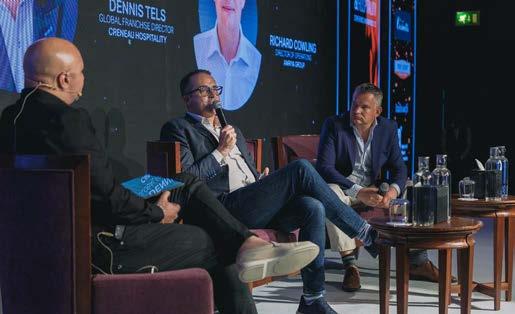
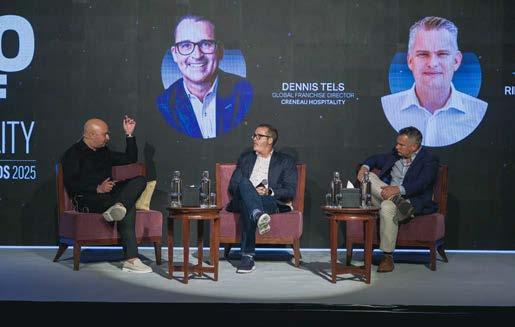
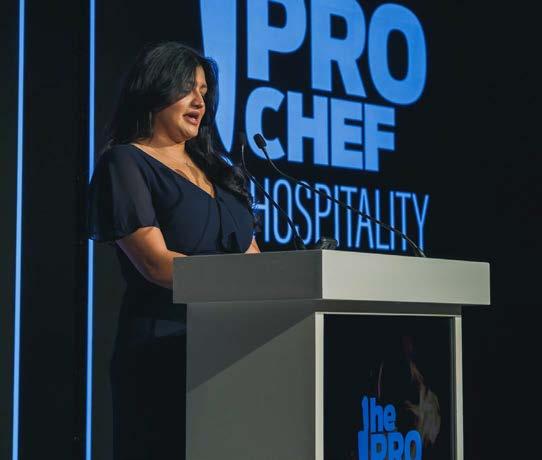
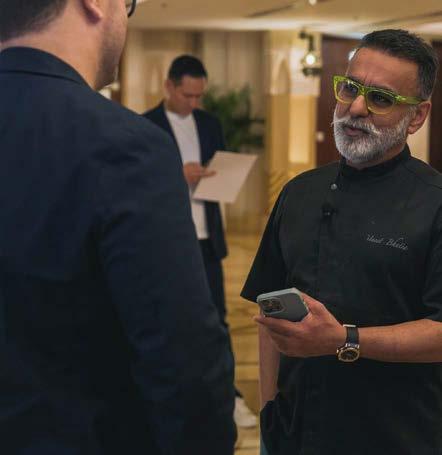

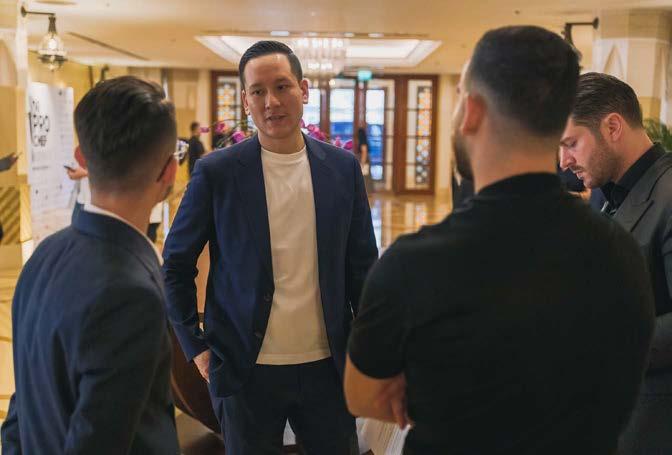
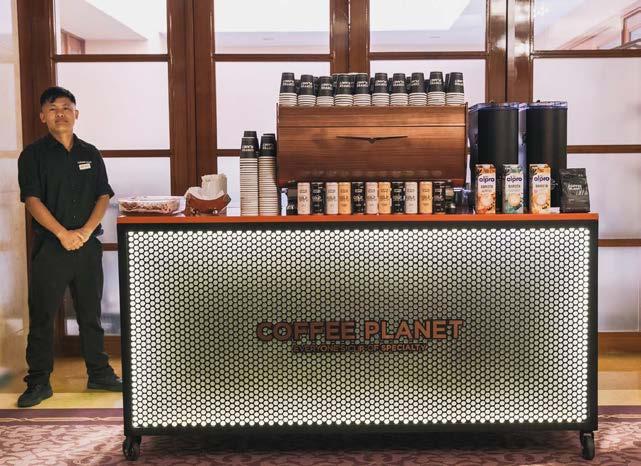

This year’s Pro Chef Showdowns brought together more than 60 of the region’s top chefs for 20 exciting cook-offs at SCAFA Dubai. Each had just one hour to turn a selection of mystery ingredients into a dish worthy of a 2025 title in their category. The atmosphere was charged with energy as chefs worked against the clock, relying on instinct, skill, and experience to deliver plates that impressed both the judges and their peers.
Participants were scored on presentation, use of ingredients, technique, creativity, and taste, with online votes from the industry also influencing the final results. The winners were revealed on October 22, 2025, at TheProChef&HospitalityAwards gala, recognising some of the most talented professionals in the region’s kitchens.
In the Middle Eastern Cuisine category, chefs cooked with Qualiko’s range of poultry, including frozen chicken shawarma, tender wings, and drumsticks. Salah Salha from Al Khaima, Le Royal Meridien Beach Resort & Spa, took first place for a dish brimming with comfort.
Rational sponsored the Arab Cuisine category, where chefs created heartfelt dishes that celebrated the essence of regional cooking. Hassan Khoder from Address Creek Harbour won the title for a dish that blended careful preparation with bold flavours.
The Seafood Specialist category, supported by Maple Crown Gourmet, saw chefs working with premium products such as wild Atlantic snow crab, jumbo spot prawns, and Digby scallops. Lalith Prasanna from Aprons & Hammers impressed the judges with a dish that let the seafood speak for itself.
Sustainability was at the heart of this round, where chefs worked with Nadura’s plant-based mince and chicken-free patties to create dishes that were both thoughtful and flavourful. Ionel Catau from Gerbou stood out for his creative approach and was named both Sustainability Innovator and The Pro Chef of the Year 2025.
Nitra provided the pantry for the Indian Cuisine category, with basmati rice, dals, saffron, and a full selection of spices. Pranav Upadhyay from Bombay Brasserie at Taj Dubai earned the win for his dish, which brought warmth and complexity together in a plate that felt true to his roots.
With tenderloin, flap steak, and cube roll from The Artesian Series, chefs had to balance flavour and technique under pressure. JefryTobingfrom Porterhouse Bar & Grill at Sofitel Dubai The Palm secured the title with a well-executed dish that drew praise.
Casinetto – Italian Cuisine Category
For the Italian Cuisine category, Casinetto supplied everything from burrata and truffle butter to Fassona beef and Parmigiano Reggiano. Fabrizio Lusenti from Belcanto Restaurant won with a dish that celebrated simple ingredients prepared with care.
Suma Gourmet – Japanese Cuisine Category
In the Japanese Cuisine category, Suma Gourmet provided wagyu tenderloins, ribs, and cube rolls, inspiring dishes built on clean lines and precision. Hisao Ueda of TakaHisa claimed the win for a dish that balanced technique and flavours.
The Plant-Based Cuisine category, supported by Beyond Meat, brought out fresh ideas using Beyond Mince, plant-based milk, and Salud avocado. Nana-Serwa Mancell from Veghana took home the title with a dish that felt grounded in her own cooking style.
The MixologyShowdown at VNYL HiFi Dubai brought eight bartenders behind the bar, working with Marie Brizard syrups, fruit purées, and tonics. Each competitor was judged on balance, storytelling, and creativity. VasileDorofeevfromCRAFTbySideHustle took the 2025 title for a drink that was both original and perfectly executed.
Italtouch sponsored The Pro Chef of the Year 2025 Award, celebrating culinary excellence through its signature range of caviar, truffle oils, salts, and pastas. The award went to Ionel Catau from Gerbou, marking a remarkable year for the chef and his team.
With Kibsons as Ingredient Partner providing top-quality fresh produce, BE WTR as Hydration Partner promoting sustainable water solutions, and JM Foods supporting as Event Partner, The Pro Chef Showdowns 2025 brought together a community built on passion. More than a competition, it celebrated the people and partnerships shaping the Middle East’s food scene and highlighted how the region continues to grow as a true force in global dining.
Take a look at the behind-the-scenes action from the Chef Showdowns!
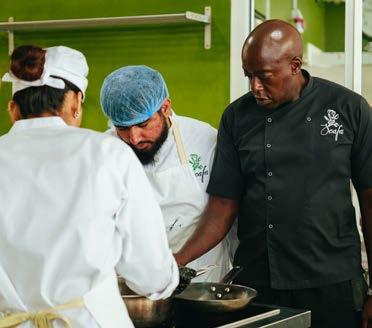
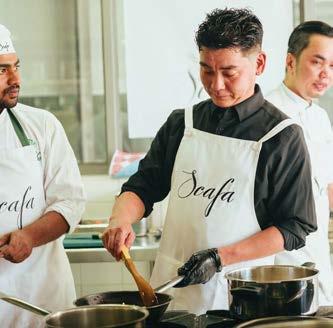
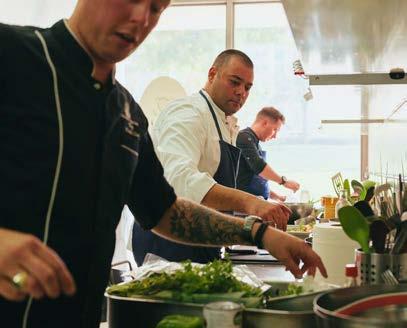
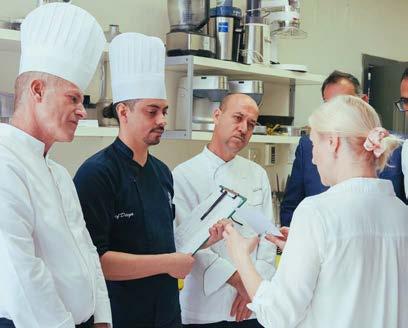
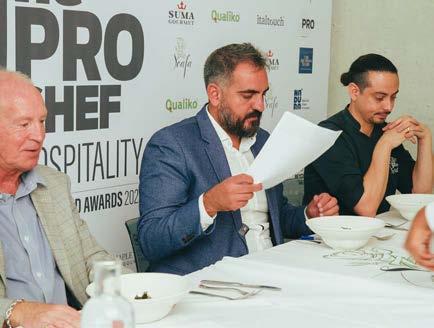

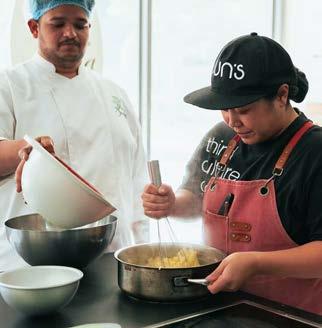
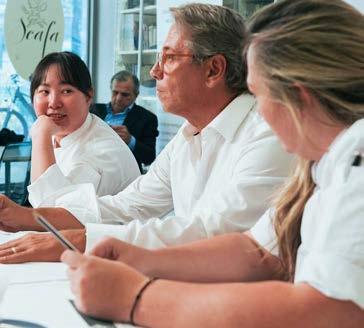
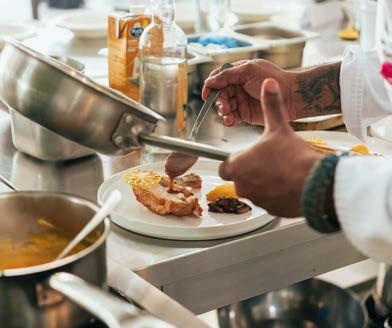

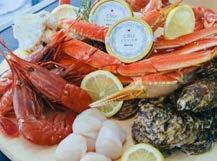

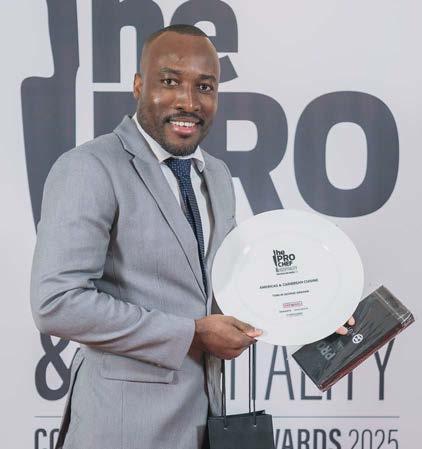
BRITISH CUISINE ARAB CUISINE
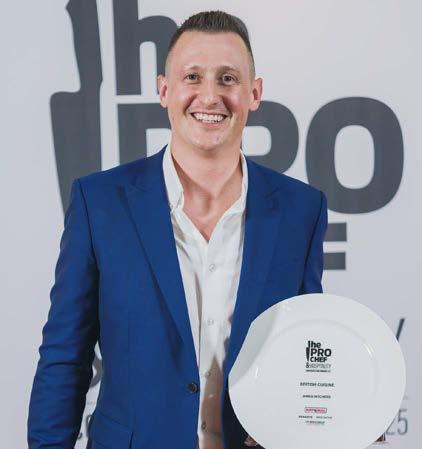
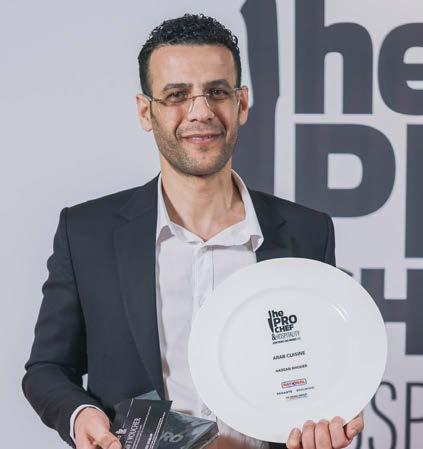
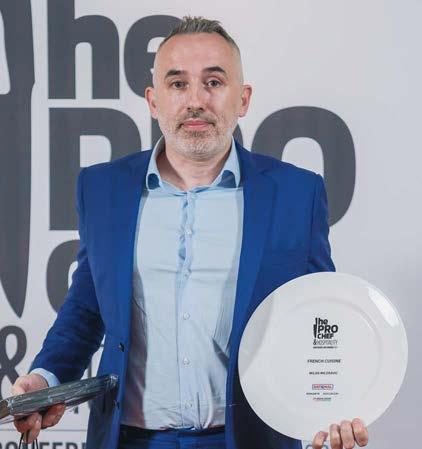
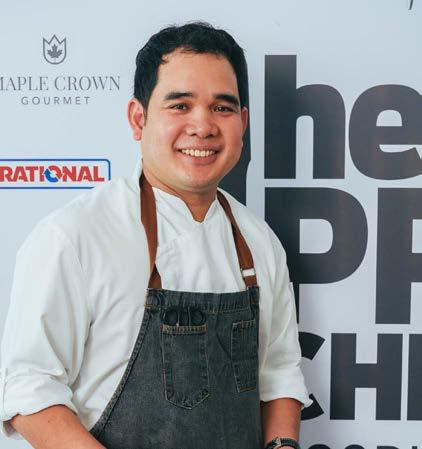
ITALIAN CUISINE
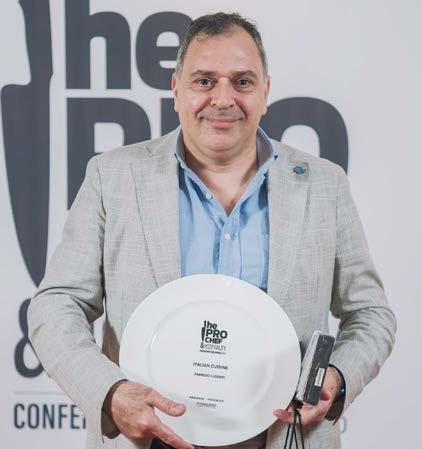
INDIAN CUISINE
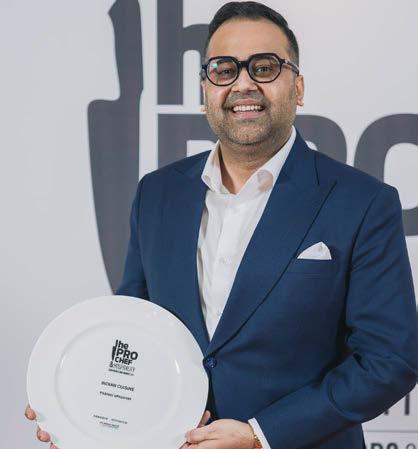
JAPANESE CUISINE
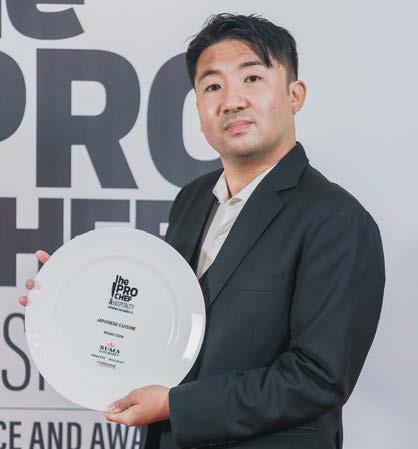
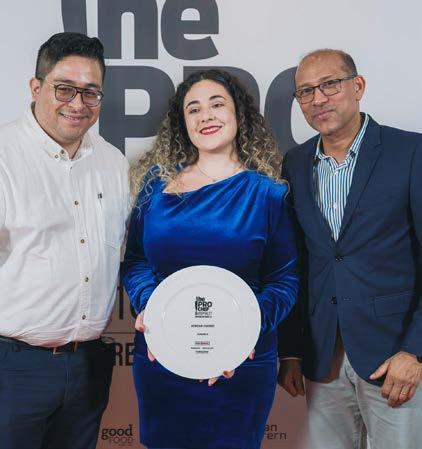
SONGMI JI
SMOKI MOTO DUBAI AT MARRIOTT RESORT PALM JUMEIRAH, DUBAI
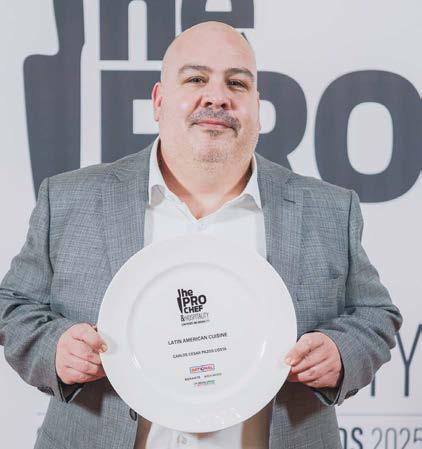
CARLOS CESAR PAZOS COSTA TORO TORO BY CHEF RICHARD SANDOVAL AT GROSVENOR HOUSE, A LUXURY COLLECTION HOTEL, DUBAI
MEDITERRANEAN CUISINE MEAT SPECIALIST
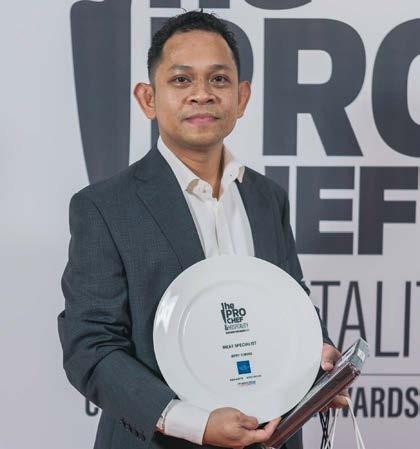
JEFRY TOBING PORTERHOUSE BAR & GRILL AT SOFITEL DUBAI THE PALM
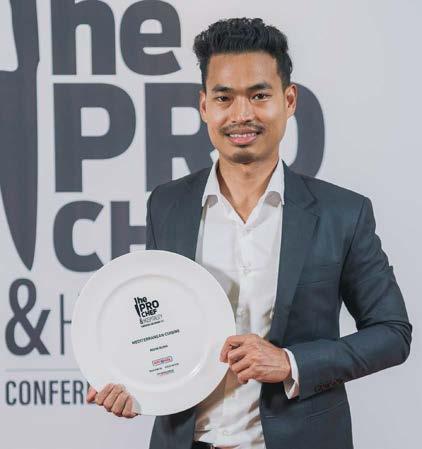
BIDYA BORO THE DISH BY CHEF SPERXOS
MIDDLE EASTERN CUISINE
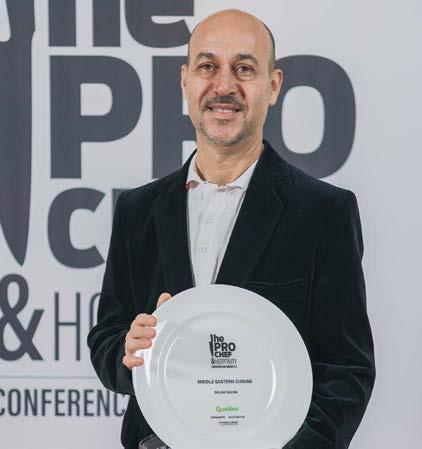
AL
PASTRY CHEF
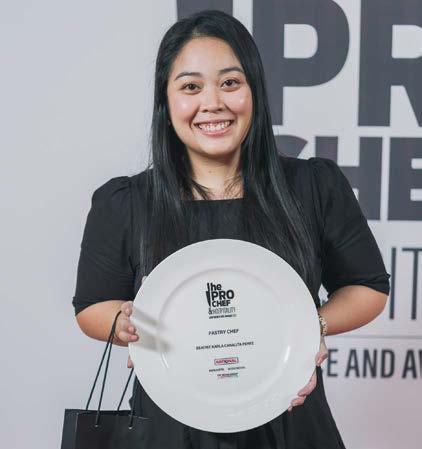
PAN-ASIAN CUISINE
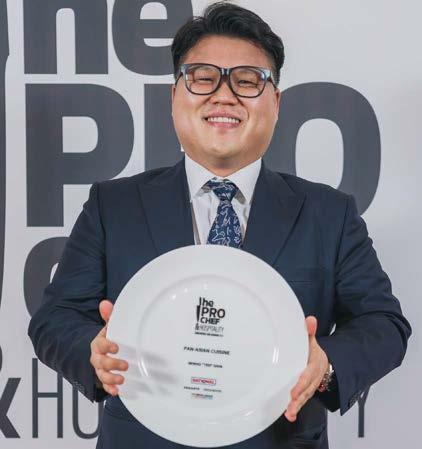
PLANT-BASED CUISINE
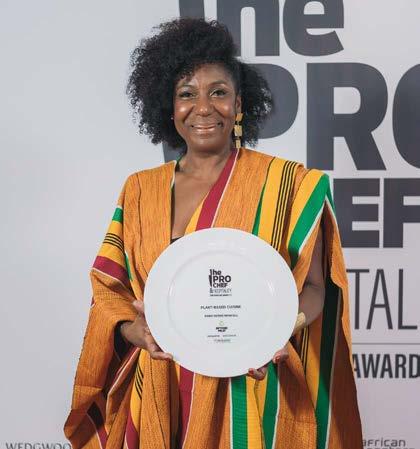
SEAFOOD CHEF
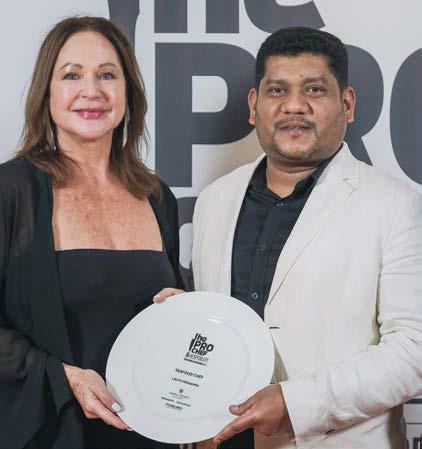
SPANISH CUISINE
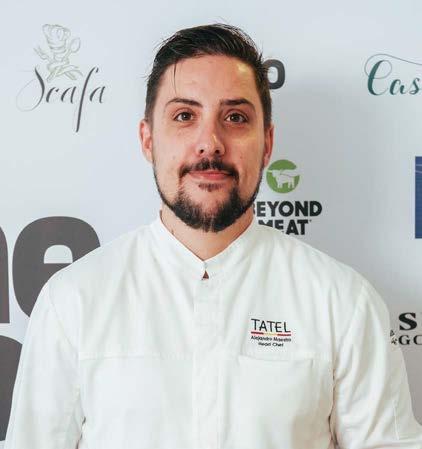
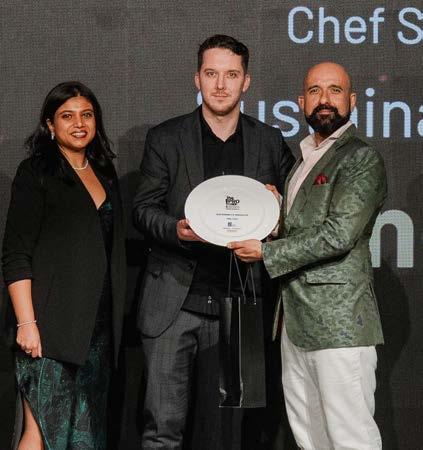
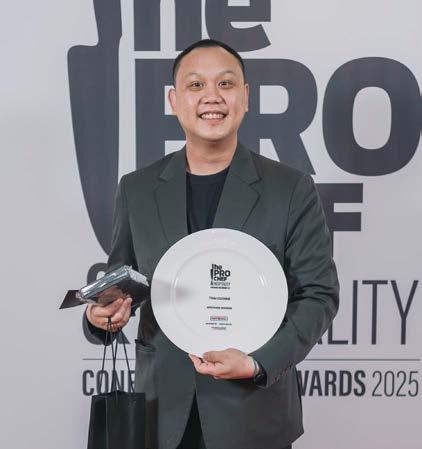
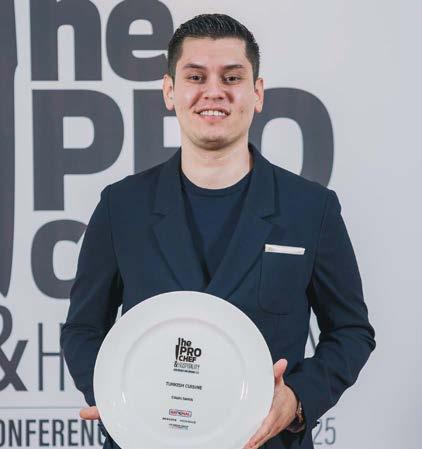
THE PRO CHEF OF THE YEAR 2025
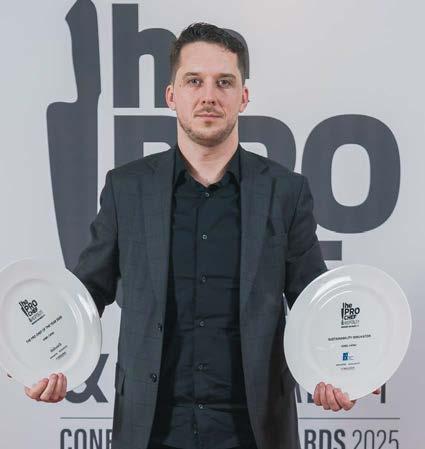
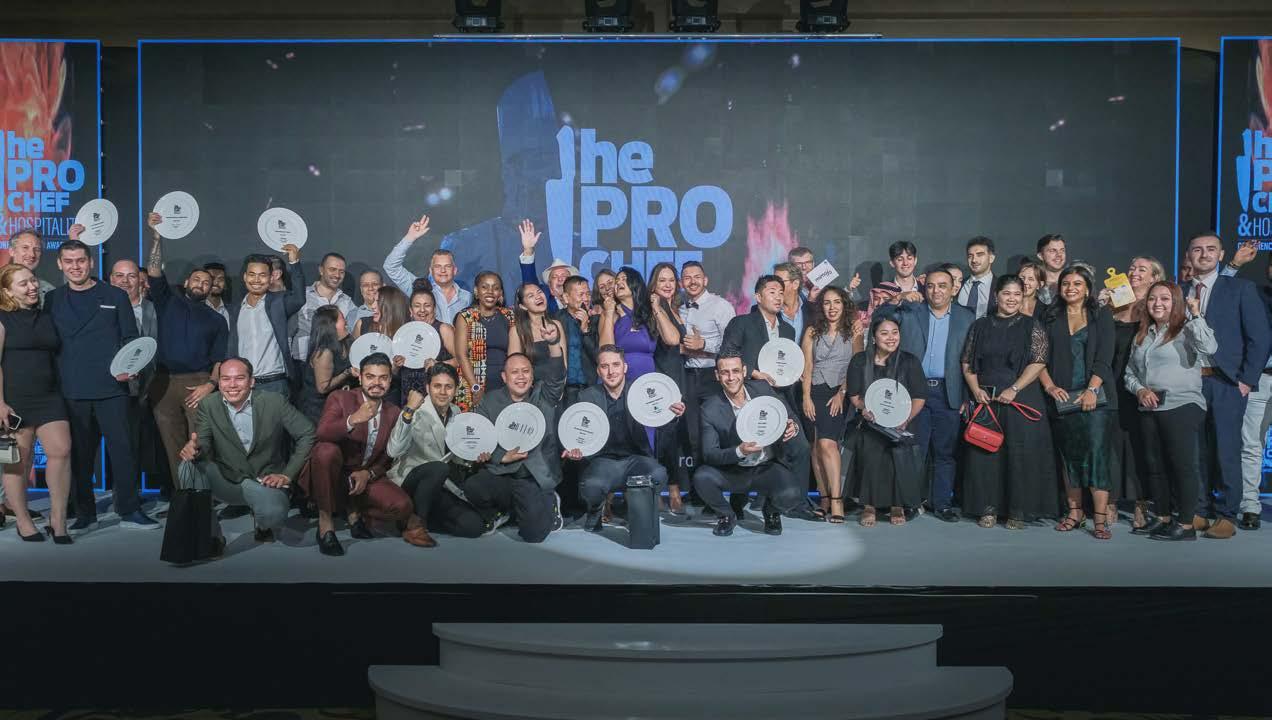
The Pro Chef & Hospitality Awards 2025 took place on 22 October at The RitzCarlton, JBR in Dubai. After a future-focused hospitality conference during the day, guests gathered on the outdoor lawn for networking at the Sampling Station zone before moving indoors for the awards ceremony.
The evening celebrated the people and partners driving the region’s culinary evolution in the post-pandemic years. From talented chefs to the Stars of Hospitality who shape every part of the guest experience, along with the Partners and Providers who support them, the event highlighted the dynamic ecosystem powering the region’s hospitality scene.
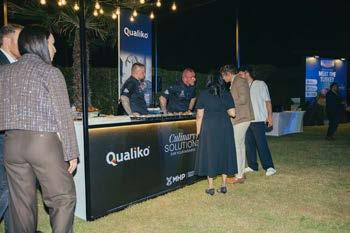
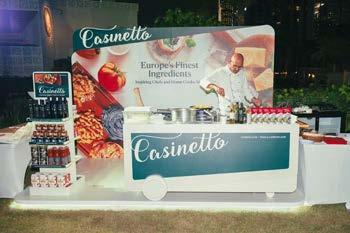
STARTER
Nadura plant-protein daikon rolls (VG)
Zucchini & kale cous-sous, spinach hummus, crispy chickpeas
MAIN COURSE
Oven roasted Qualiko chicken breast (D) (G) (C)
Parsnip, puy lentil ragout, parisienne gnocchi
Vegetarian Option
Smoked eggplant Moussaka (V) (D) (G) (N)
Lemon Greek yoghurt, roasted pine nuts, fresh Mint
DESSERT
Honey cake (G) (D) (N) (E)
Blueberry gel and salted caramel ice cream
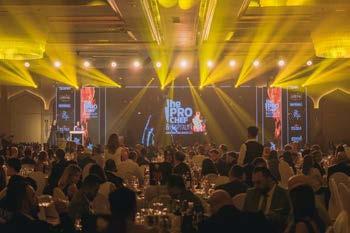
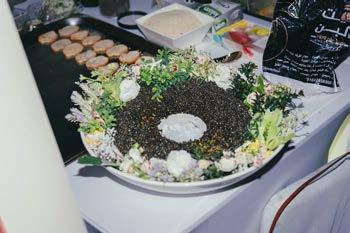
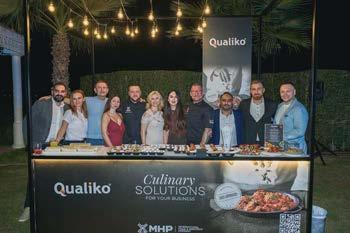













BEVERAGE DIRECTOR
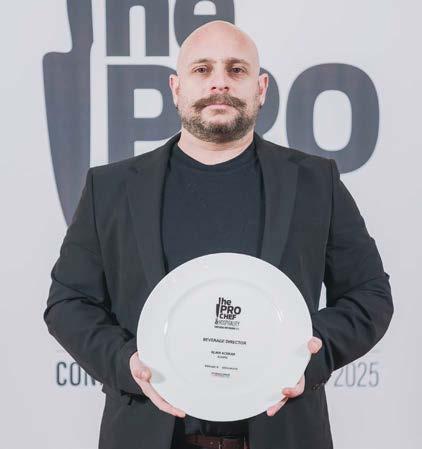
FOOD & BEVERAGE MANAGER
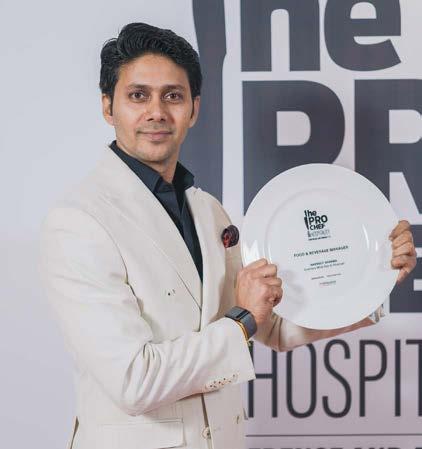
CULINARY DIRECTOR
FRONT OFFICE MANAGER
GENERAL MANAGER
MARKETING MANAGER
HOUSEKEEPING MANAGER MIXOLOGIST
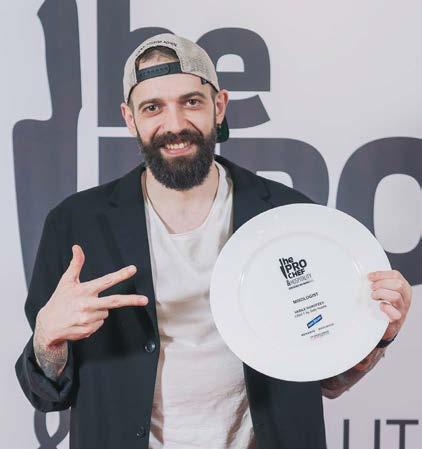
OPERATIONS MANAGER
SOMMELIER
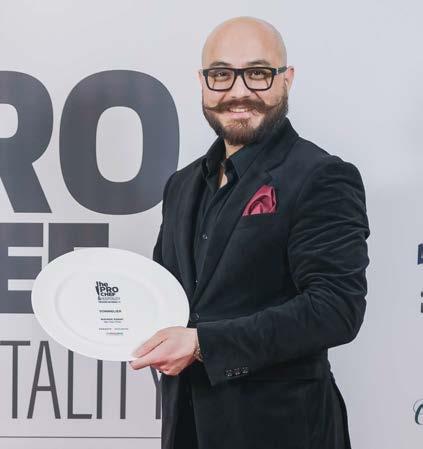
RESTAURANT MANAGER
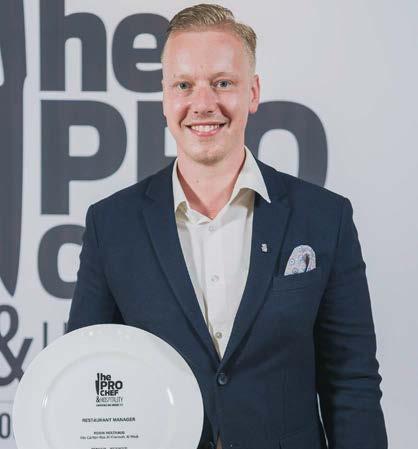
SUSTAINABILITY CHAMPION
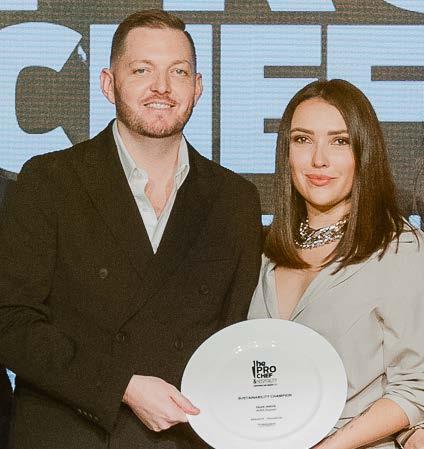
F&B AND HOSPITALITY DESIGN STUDIO
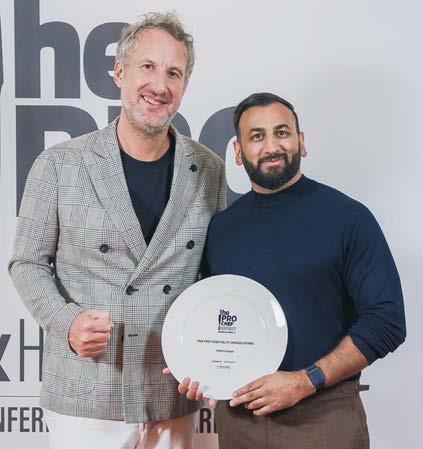
TWENTYONE06
HOSPITALITY DIGITAL AGENCY
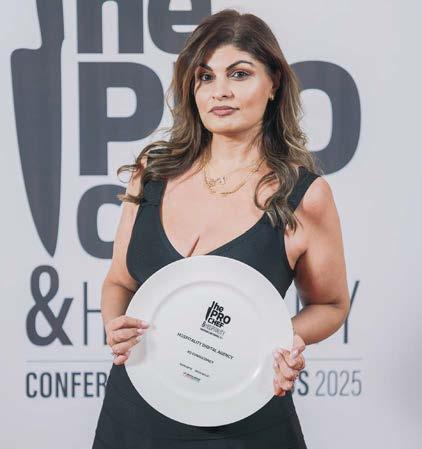
XO CONSULTANCY
HOSPITALITY GROUP