





































































The covid vibes flashbacks are intense. Airport is closed, schools have moved online, supermarkets are running out of more and more products. The uncertainty of not knowing when this is going to come to an end is a killer since it affects your life (literally!), work, education, travel plans, and a million other things.
BUT that’s where the similarities end! I’ve never been more proud of the people of Kuwait, Kuwaitis and expats alike: Instead of running for the hills, most people who were stuck outside, came back. Those who do leave, leave for a limited period of time and come back again. Everyone is so patient and supportive, and there is such an intense feeling of community and closeness that I wish we all felt all the time, not just now.
We open this issue closer to home than usual, with a feature rooted in Kuwait’s urban environment and the people sketching it. Urban Sketchers Kuwait began the way most good things do, quietly and without a plan. Three women, Dina Dajani, Moudhi Al-Essa, and Noura Al-Mutairi, have been gathering groups of people across the city to draw what is in front of them: rooftops, courtyards, the particular quality of afternoon light on an old wall. It is, at its core, an exercise in paying attention, to the city, to the people in it, and to the small details we tend to walk past without really seeing. The result is something rarer than a hobby. It is a community built around the act of showing up, together, and looking closely. Right now, that feels like exactly the kind of thing worth celebrating.
We also sit down with Azzam Fakhreddin, one of the many people behind Palestine 36 , a feature film about the 1936 Palestinian revolt against British colonial rule. For Fakhreddin, this is not a professional project. His grandfather was part of that revolt. His father was six years old when the family fled as refugees to Syria. The film is personal history made public, and his belief that cultural resistance reaches people in ways little else can is one worth sitting with, especially right now.
From local stories, we turn to something that has taken on new meaning in recent weeks. Sama X, part of Alghanim Industries, has just launched Starlink services in Kuwait, bringing satellite internet with download speeds exceeding 300 Mbps to homes and businesses across the country. When the airport is closed and the city is running on uncertainty, fast and stable connectivity stops being a luxury. It becomes the thing that keeps work going, keeps families in touch, and keeps schools functioning. The timing could not be more relevant.
On the subject of home, IKEA has launched an Interior Design Service that is worth knowing about. Led by Diana Sabouni and a team of trained interior designers, the service offers everything from a free initial consultation to full room planning, 3D visualization, and in-home styling. The design fee is redeemable against product purchases, which makes it genuinely accessible. We got a look at some of the completed projects, and a laundry room that functions like a small miracle of spatial planning was, unexpectedly, our favorite.
We close with the all-new Toyota RAV4, launched here by Mohamed Naser Al Sayer & Sons. This is a full model transformation, not a refresh, built around Toyota’s 5th generation hybrid system. No external charging required. The hybrid does the work quietly in the background, the way good engineering tends to.
Stay safe and happy reading!
Ahmed El-Adly
The bazaar team...
Boss
Ahmed El-Adly
Editor
Alia Al Duaij
Operations Manager
Ihab Youssef
Content Manager
Yasmine El Charif
Design
Shadi Mofeed
Staff Writer/Online Media
Yasmin Gamal
Israa Odeh
Hanan Othman
Sarah Sharif
Communications
Hala Y. Sharara
Syndicates & Sources
Fast Company
LA Times
MCT International
Newsweek
Printing
MIDADPACK

www.bpaww.com


Urban Sketchers Kuwait is what happens when three women decide that slowing down to really look at a city is worth making a community around.
Dina Dajani, Moudhi Al-Essa, and Noura Al-Mutairi are building something quiet, lasting, and entirely their own.
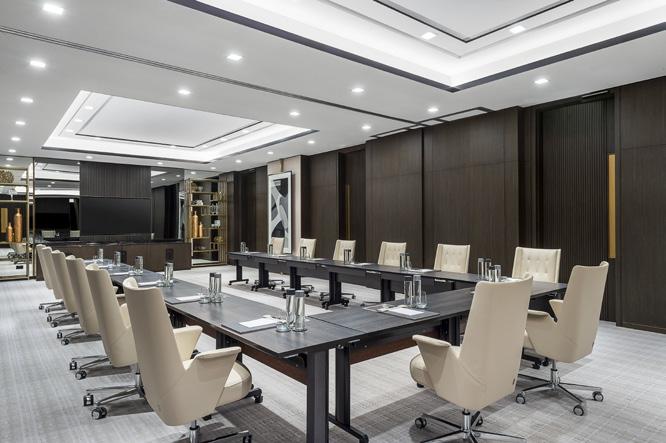
Spring at Waldorf Astoria Kuwait is built for slowing down. From family staycations with Oscar the Bear to afternoon tea at Peacock Alley and restorative spa rituals, April at the hotel is a quiet invitation to stop rushing through the moments that matter most.
Sama X, part of Alghanim Industries, is bringing Starlink’s satellite internet to Kuwait, offering highspeed, low-latency connectivity on land and at sea. For businesses, remote operations, and everyday households, reliable internet just got a great deal closer. 22
For Azzam Fakhreddin, producing Palestine 36 is not a professional project. It is a reckoning with family memory and a chapter of Palestinian history the world has largely forgotten. This is the story of why he got involved, and why it matters. 24
58
Running has moved well beyond the finish line.
H&M Move’s new marathon collection arrives as the sport becomes a ritual, a community, and a mindset. Built for training rather than spectacle, it is performance wear for everyone who shows up, pace aside.
62
Wellness and entertainment do not have to compete. Xcite Alghanim offers families the tools to build a home that genuinely supports both, from air purifiers and smart lighting to tablets, consoles, and sound systems that bring everyone into the same room.
38
Thirty years after it helped define the SUV category, the all-new Toyota RAV4 arrives in the Middle East as a full model transformation. Sharper outside, more considered within, it is still built around the same idea that started it all: life is better when you keep moving.
52
&Other Stories enters Spring 2026 with a collection built on contrast. Slouchy volumes meet structured silhouettes, acid tones soften into pastels, and the rules quietly dissolve. The result is a wardrobe that feels instinctive, modern, and very much your own.



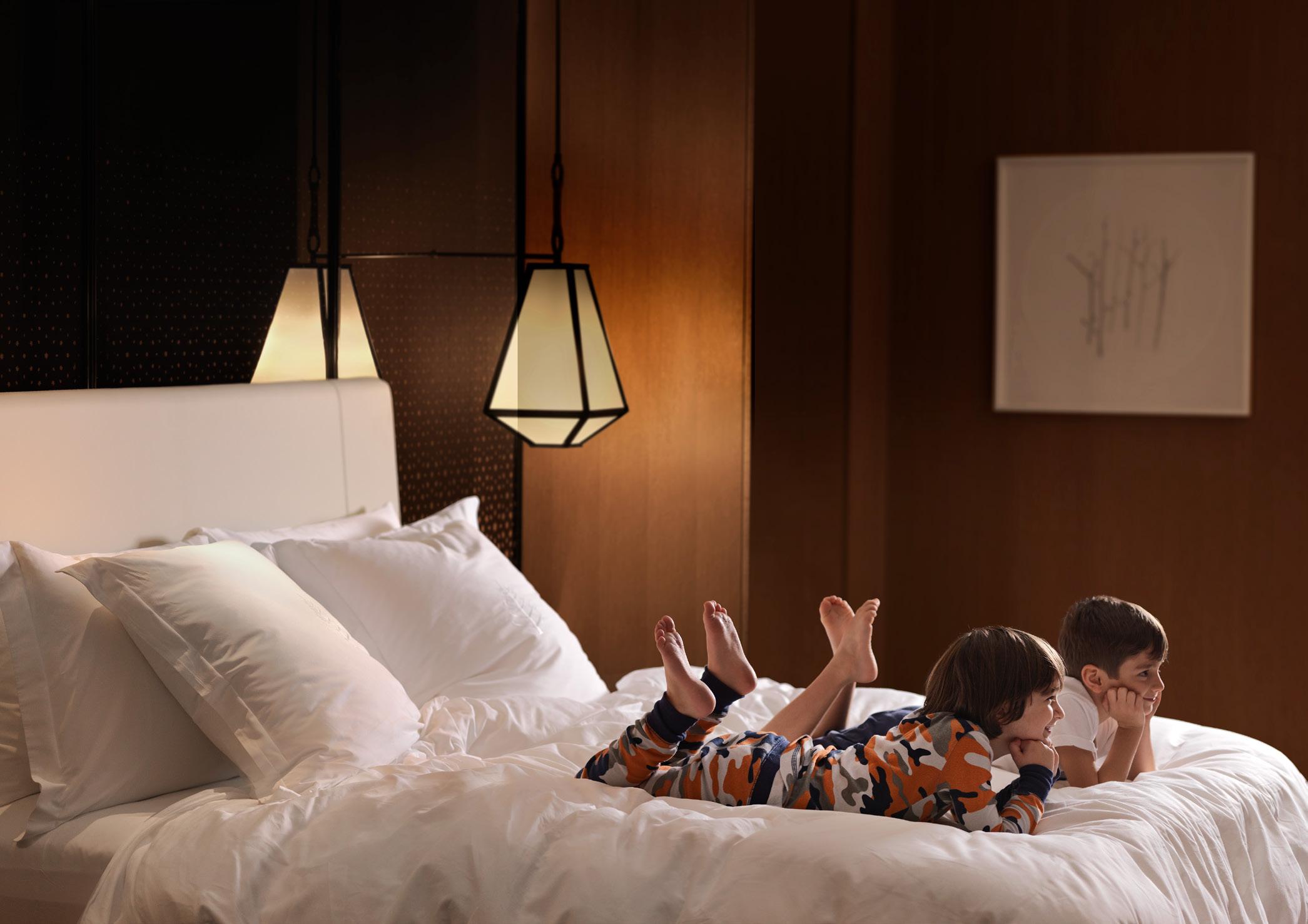
Enjoy�a�connecting�room�for�your�children�up�to�12�at�half�the�rate,� with�their�breakfast�included�
#1
What: @zuanart_
Info: Artisanal Fragrance House
Editor’s Note: You don’t need to find your new signature scent, because you can create it yourself

#3
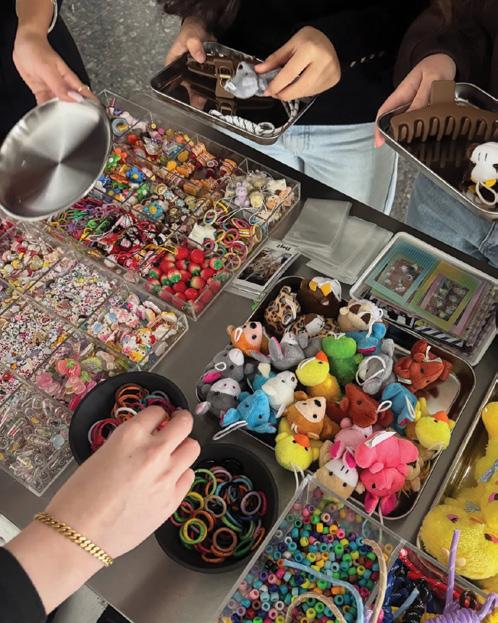
What: @7bayyt
Info: Popup concept that helps you create your own trinkets
Editor’s Note: We love making our own keepsakes
#2
What: @wear.milknhoney
Info: Cozy tanks, PJ sets and loungewear
Editor’s Note: Cozy and cute, a match made in heaven
#4
What: @tin.kuwait
Info: Freshly made baked goods
Editor’s Note: We came for the cookies and stayed for the tins, or was it the other way round?

#5
What: @pavao.kwt
Info: Sweet and savory treats
Editor’s Note: We are totally guilty of wanting to treat ourselves




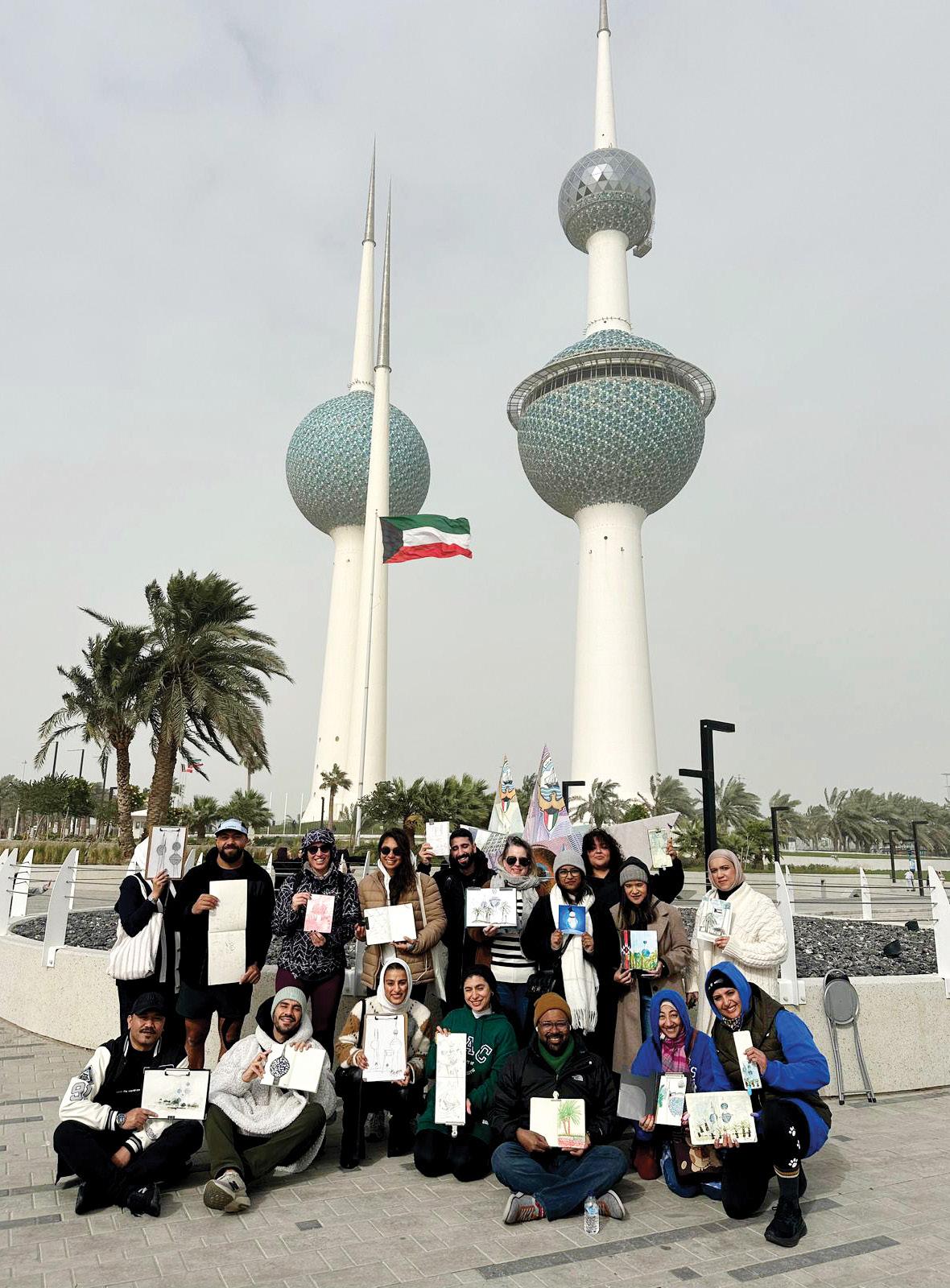
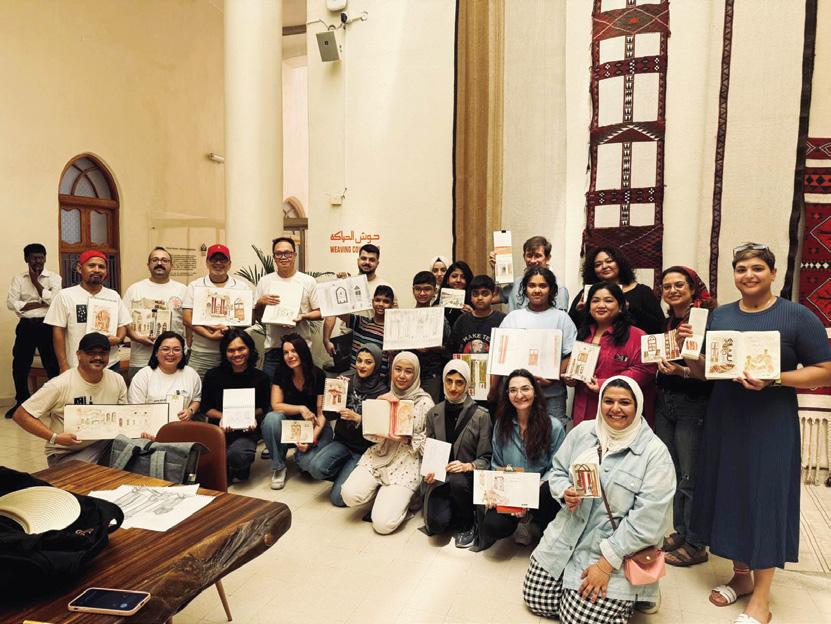
Meet Dina Dajani, Moudhi AlYetama and Noura Marafi who are drawing Kuwait one outing at a time, and quietly building a community around every sketch
By bazaar Staff
There is a particular kind of stillness that descends when a group of people sit down together to draw. Not silence, exactly. There is still the sound of the city around them, traffic, birds, the distant hum of a coffee machine, but there is an underlying buzz of energy that is almost imperceptible. The pace slows. Eyes move differently, tracing a roofline or the way afternoon light falls across an old stone wall. Hands follow. This is what an Urban Sketchers Kuwait outing looks and feels like, and once you understand it, it becomes difficult to walk past a building in this city without really stopping to look.
Urban Sketchers Kuwait, known as USk Kuwait, is the official Kuwaiti chapter of a global nonprofit community founded in 2007, dedicated to the art of on-location drawing. No working from photographs. No recreating from memory. You draw what is in front of you, as you see it, in the time you have. The result is not just a sketch. It is a record. A specific moment in a specific place, filtered through a specific pair of eyes, uniquely created by human hands. Behind the Kuwait chapter are three women: Dina Dajani, an interior designer and art educator who has been the driving force from the beginning; Moudhi AlYetama, a pediatrician who has kept a semi-daily creative journal for years; and Noura Marafi, a clinical dietitian and certified trainer who arrived as a student and never really left. Together, they are building something that Kuwait did not know it needed.
Dina and Moudhi found each other the way so many creative communities begin today, through Instagram, a shared language of sketchbooks and color. “We both did it separately until we found each other,” Dina recalls, “and started going out together to sketch.” What neither of them knew at the time was that they lived on the same street. Neighbors who had been drawing the same city without knowing the other existed. They later also discovered they are both Capricorns, a coincidence Moudhi notes with evident delight.
Noura came through one of Dina’s visual journaling workshops. “I always saw myself as bad at art,” she says, “someone who doesn’t know how to sketch, until she showed me that anyone can be an artist.” She attended every course Dina offered, then showed up at a USk outing, and kept showing up. Dina describes her with quiet pride: “She dives straight in and doesn’t fuss too much, and that makes her the best learner. She hasn’t stopped sketching ever since she first started.”
When Dina applied for Kuwait to become a formal global chapter, which it officially became in June 2025, the three of them as a group made instinctive sense. “Having Moudhi and Noura, who are both Kuwaiti, meant that even if I, as an expat, leave one day, they would be here to keep
it going.” It is a practical consideration wrapped in something more tender: a community built to outlast any one person’s presence.
Ask the three of them what Kuwait looks like through a sketchbook and the answers arrive from three different angles, which is perhaps the point. Dina talks about panoramic views of Kuwait City’s skyline, about making compositional decisions, “deleting the details that create too much noise and focusing on framing the focal point.”
She describes painting an organic line and ink splashes across a page before the sketch begins, letting the composition breathe before a single building is drawn.
Moudhi sees the city in its layering. “We have a combination of old and historic alongside modern architecture. Old mud houses and mosques adjacent to high-rise buildings.” She is drawn to light: “Sometimes I’m drawn to the way light falls on a building, areas of light and shadow create visual interest.” And she draws people, despite the difficulty of it. “Sketching people is quite challenging since they are a moving subject, but placing a person or an animal in a sketch breathes life into it and creates a narrative, helps to tell the story of the time and place.”
Noura is pulled toward nature, trees, the sea, grass, the sun, and finds herself overwhelmed by too much pattern or architectural detail. Three artists, three Kuwait Cities. The sketchbook does not flatten its subject. It multiplies it.
The community that gathers around them is as varied as their individual approaches. A retired professional finding art for the first time.
A school student brought along by a parent. A doctor, a dietitian, a designer. “We are a true mix of all ages, different professions and artistic
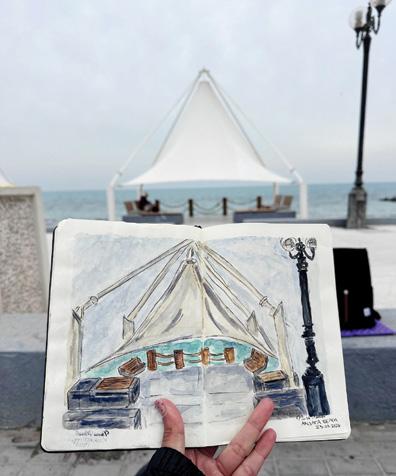
Sketch and note by Noura: A day at Anjafa beach sketching the sea, one of my favorite things to sketch. It was a cold day and that’s the lovely thing about urban sketching, you sketch through unpredictable weather, cherishing the memory and the experience!
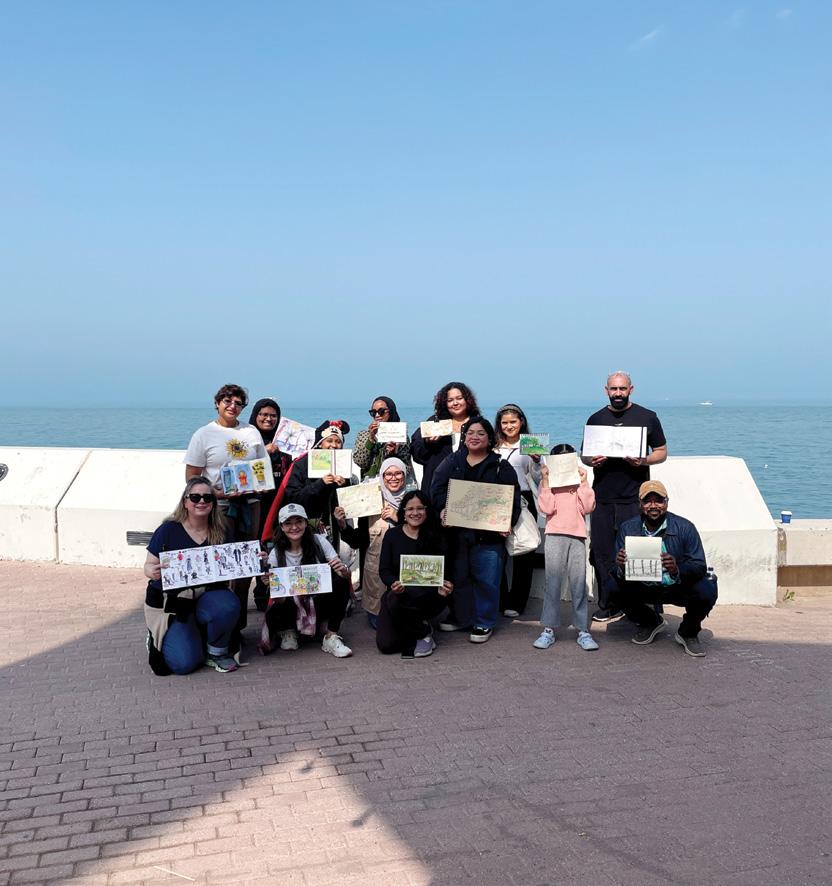
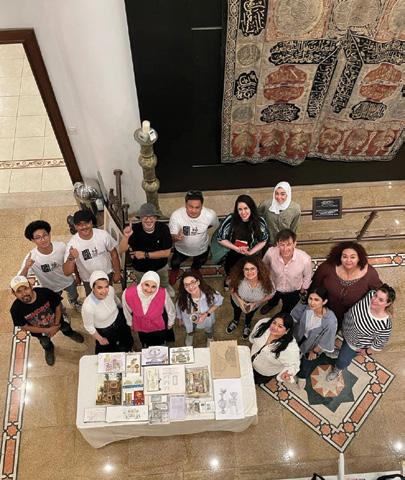
abilities,” says Dina. What brings them all to the same pavement with a pen is harder to explain, but Moudhi comes closest: “Art allows me to mentally disconnect from everyday demands and go back to the core of my being. You don’t have to have the talent or the skill. It doesn’t have to be a masterpiece. It doesn’t have to be framed or displayed. But it’s something you can do that will bring you tremendous amounts of joy.”
That is, quietly, a radical idea, that art belongs to everyone sitting on a pavement with a sketchpad, not only to those who have earned the right through formal training. It is why USk Kuwait’s meetups are open, and why the admins are warm about nervous newcomers. “If you’re too shy to sketch,” Moudhi says, “come enjoy the atmosphere and see everyone’s sketches. Maybe that will give you the motivation to try.”
Not everything about drawing Kuwait is uncomplicated. The three admins have, on more than one occasion, been approached by security in public spaces and asked to move on. Permissions have been sought and, in some cases, fees requested from a nonprofit group of people spending their weekends drawing. It is an irony not lost on them: a community trying to document the city being moved along by the city
itself. Still, they have found willing and welcoming hosts, the Tareq Rajab Museum, the DAI Amricani, coffee shops, the open skies of Kuwait’s winter coastline.
What the camera does not capture is what makes this worth fighting for. “It’s true that a camera would more accurately capture the scene,” Moudhi says, “but that’s not the goal. Sketching is a way to experience life using all your senses. When you sketch a place, you remember the sounds, the smells, the atmosphere.” And then, most precisely: “A part of who you are is reflected into your sketch. The subject you choose, the way you draw your lines, the colors you choose, it tells your story.”
We are all, in some sense, witnesses. To the streets we walk, the buildings we pass without looking up, the city that changes faster than we can immortalize it in our memories or in our camera rolls, let alone feel it. The choice to document that world, slowly, intentionally, with a pen and a sketchbook and the full attention of a human being, is not a small one. What USk Kuwait is building, outing by outing, is an archive that no algorithm will generate and no AI will replicate: Kuwait as its people actually experienced it with their senses, in real time, with their own hands.
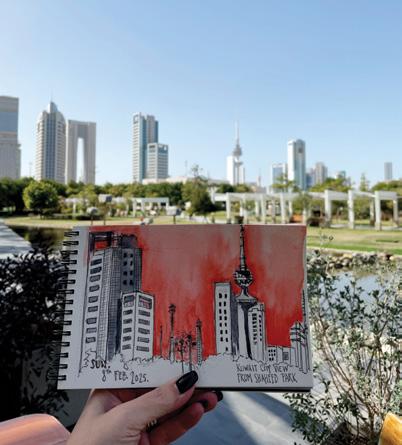
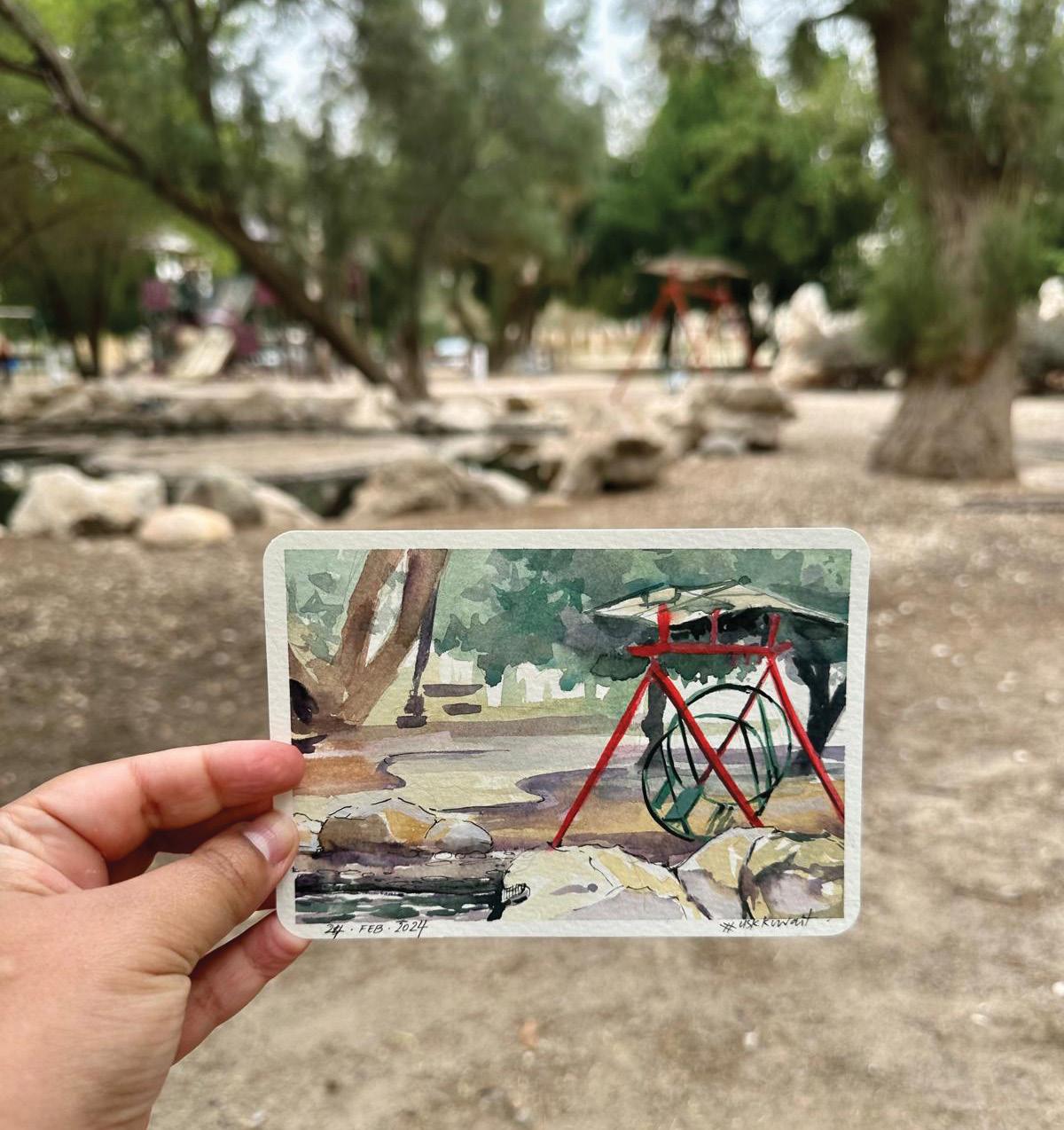
and note by Dina: Morning at
Park
of February
cafe
This is one of my favorite ways of capturing Kuwait Panoramic views of the city in black ink and then doing the sky in a striking color. A great splash of interest.
Those sketchbooks may outlast the places they record. They will certainly outlast the moment. And somewhere in them, the next generation will find not just the buildings and the shorelines and the coffee cups, but the people who thought this city was worth sitting down for.
All images are courtesy of Urban Sketchers Kuwait. Use or reproduction without permission is not permitted.
USk Kuwait can be found on Instagram at @urbansketcherskw. You can also follow Dina, Moudhi and Noura’s individual journeys on Instagram @dinadraws__, @moudhipaints and @nouraruns respectively. If you would like to host the USk community and have access to interesting spaces, exhibitions or events please get in touch with them.

By bazaar staff
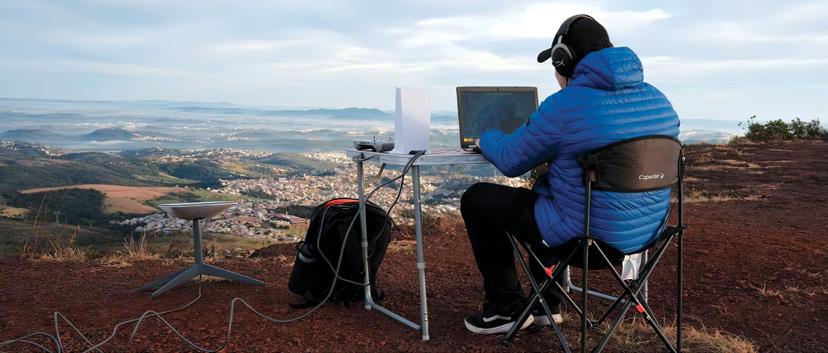
Kuwait’s connectivity landscape is entering a new phase. Sama X, part of Alghanim Industries, has officially launched Starlink services in the country, introducing one of the world’s most advanced satellite internet networks to the local market.

As an authorized global reseller, Sama X is delivering more than just access to Starlink. It is introducing a new standard of connectivity. Powered by SpaceX’s low Earth orbit satellite constellation, the service offers high-speed, low-latency internet that operates independently of traditional infrastructure, bringing reliable coverage to locations where connectivity has often been limited or inconsistent.
With download speeds exceeding 300 Mbps and latency as low as 20 milliseconds, Starlink delivers performance that rivals fibre, whether in dense urban areas, remote worksites, or at sea. It is designed to support everything from everyday streaming and cloud-based work to mission-critical operations across industries.
More importantly, Sama X is making the technology accessible. Customers benefit from a fully integrated experience that includes tailored consultations, fast delivery, professional installation, and 24/7 bilingual support in English and Arabic. The goal is to remove complexity and make advanced connectivity feel seamless.
“Bringing Starlink to Kuwait marks an important step in strengthening the country’s digital infrastructure,” said Kutayba Y. Alghanim, Executive Chairman of Alghanim Industries. “Reliable connectivity is no longer optional. It is essential for business continuity, for critical sectors, and for everyday life. This technology ensures that people and organizations can stay connected wherever they operate.”
Globally, Starlink has already redefined expectations. With more than 10,000 satellites launched since 2020 and over 10 million users

worldwide, it is now the largest low Earth orbit satellite network in operation, delivering a total capacity of approximately 450 Tbps.
In Kuwait, its impact is expected to be immediate and far-reaching. From offshore oil and gas operations and maritime fleets to hospitals, schools, and research institutions, stable connectivity plays a vital role in maintaining efficiency, safety, and realtime access to data.
At the same time, the service brings a new level of reliability to homes and businesses, enabling uninterrupted streaming, faster downloads, and smoother digital experiences across devices.
“Making Starlink available in Kuwait expands access to advanced connectivity for both businesses and individuals,” said Amit Somani, CEO of Sama X. “Our focus is on making this technology easy to adopt through fast installation and dedicated local support. Through our partnership with Xcite,
customers can access Starlink services quickly and conveniently, both online and in stores nationwide.”
Customers can subscribe directly through Sama X or via Xcite, Kuwait’s leading electronics retailer. The service operates in full compliance with Kuwait’s telecommunications regulations and has received all required approvals from the relevant authorities.
As part of Alghanim Industries’ growing focus on technology and advanced solutions, Sama X represents a forward-looking investment in the region’s digital future. The launch of Starlink in Kuwait is not just about faster internet. It is about building a more connected, more resilient, and more capable digital ecosystem.
Today, connectivity goes beyond simply being online. It shapes how people work, communicate, and move through everyday life.
For more information visit samax.com.
made to measure
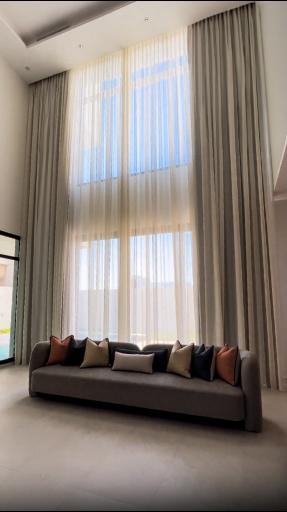

Designed, measured, and installed for you.

By bazaar Staff

For Azzam Fakhreddin, involvement in the feature film Palestine 36 is not simply a professional undertaking. It is deeply personal. The story the film tells is tied directly to his own family history and to a chapter of Palestinian history that he believes has long been overlooked. Born in Nablus and raised in Kuwait, Fakhreddin comes from an entrepreneurial family background with businesses spanning retail, real estate, and hospitality. While business has always been a central part of his life, philanthropy and cultural engagement have also shaped his path.

“Palestine is something in all of our hearts as Palestinians,” he explains. “My grandfather was part of the revolt in 1936 and also part of the struggle around 1948. So I have a very personal relationship with this history.”
That family connection runs deep. His grandfather was involved in the 1936 revolt and worked with Haj Amin Al Husseini. Fakhreddin’s father, born in 1932, experienced the consequences of that period firsthand. When the revolt was crushed by British forces, his father was only six years old when the family was forced to leave as refugees to Syria.
These personal memories helped shape Fakhreddin’s view that cultural work can play a powerful role in preserving history and identity.
“I was raised with the idea that life is not only about business,” he says. “Being part of your community and contributing to communal work is just as important.”
Cultural projects have long been part of that commitment. Fakhreddin has supported theatre productions, cultural festivals, and artistic initiatives throughout the region. He is also a founder of Friends of Jordan Festivals, an organization that promotes cultural events and music programming.
Film has always held a special place in his interests. While studying at the American University in Cairo, he explored filmmaking through coursework and developed a deep appreciation for storytelling as a form of cultural expression.
“I have always believed that storytelling and film are powerful forms of resistance,” he says. “For many years, cultural resistance has been neglected, but it has the ability to reach people in ways that other forms cannot.”
His connection to Palestine 36 began several years ago through director Annemarie Jacir and producer Osama Bawardi, longtime collaborators and friends. Jacir first shared the idea for the film nearly eight years before production began.
From the beginning, the project was ambitious. The film explores the Palestinian revolt against British colonial rule between 1936 and 1939, a period many historians consider foundational to the events that followed in Palestine.
“When Annemarie told me about the story and the scale of the project, something moved inside me immediately,” Fakhreddin recalls.
The historical moment resonated strongly because of his family’s own experience during that period. What also appealed to him was the film’s intention to tell the story on an epic cinematic scale rather than as a small independent production.
“It was not meant to be a shy independent film,” he says. “It was meant to be something epic, something that could stand alongside major historical films.”
Fakhreddin joined the project in 2020 as an executive producer. Over time his involvement expanded into a broader role as co producer. He helped raise funding, worked on marketing and distribution strategies, and played an active role in promoting awareness around the film.
The production journey itself was far from straightforward. The film was originally intended to be shot in Palestine. However, following the events of October 7 and the escalating violence in the region, the production was forced to relocate to Jordan.
Fakhreddin helped support the logistical transition, assisting in securing filming locations and coordinating aspects of the move.
“It was a very emotional period,” he says. “While we were working on the film, we were also witnessing a devastating reality unfolding.”
Despite those challenges, the production moved forward. Fakhreddin also appears briefly in the film in a small role during one of the social gathering scenes and in a segment depicting the Muslim Association.
Still, his primary contribution remained behind the scenes, supporting the film’s broader mission.
For him, Palestine 36 is not only about revisiting history but also about challenging narratives that have dominated global understanding of the region.
“One of the most important aspects of the film is showing that Palestine was always a land with people,” he says. “You see the farmers, the port workers, the families in Jerusalem, the different social classes. You see a functioning society.”
That portrayal directly counters the long repeated claim that Palestine was “a land without a people.”
The film also highlights a complex moment in Palestinian history, showing the tensions between resistance, collaboration, and colonial power structures.
One scene in particular stands out to Fakhreddin. It depicts Palestinian figures listening to the findings of the Peel Commission while realizing that British promises of fairness were unlikely to materialize.
“You see the expressions on their faces,” he says. “Some were collaborators, some were resistance fighters, and they all realize they were deceived. That moment is very powerful because it shows how history repeats itself.”
Another striking element of the film is its depiction of collective punishment against Palestinian villages, scenes that resonate painfully with contemporary events.
For Fakhreddin, cinema has the ability to bridge historical memory and present reality in a way that few mediums can.
“This is a war of knowledge,” he says. “Films reach people in ways that weapons cannot.”
The film has already received significant artistic recognition. Its cinematography, costumes, and production design have been widely praised, and the project was shortlisted for an Academy Award.
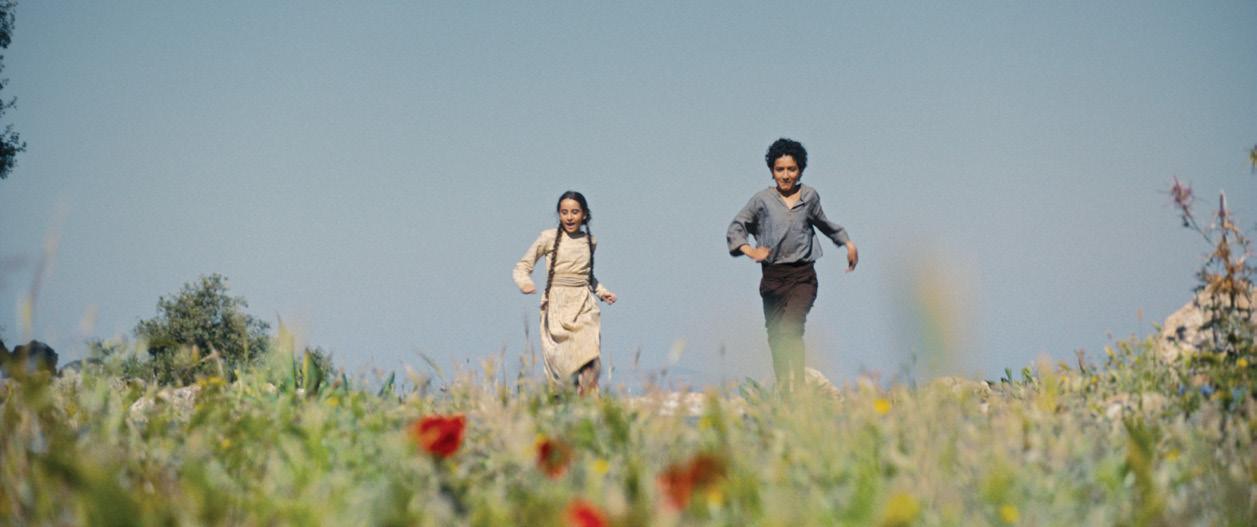
For Fakhreddin, that recognition carries symbolic significance.
“Having a film called Palestine 36 shortlisted for an Oscar shows that artistically there is something powerful here,” he says. “It is a Palestinian film, produced by Palestinians, directed by a Palestinian.”
Beyond awards, the film has sparked conversations among viewers who were previously unfamiliar with the events of the 1936 revolt.
Even among Arab audiences, many have discovered aspects of the history they had not fully explored before.
“The revolt of 1936 is rarely discussed compared to 1948 or 1967,” Fakhreddin explains. “But it was a pivotal moment. It laid the groundwork for everything that followed.”
He points out that before 1936, the Jewish population in Palestine represented only a small percentage of the overall population. By the end of the revolt and the influx of immigration during that period, the demographic landscape had shifted dramatically.
By focusing on this earlier chapter, Palestine 36 aims to broaden the historical lens through which audiences understand the Palestinian story.
Fakhreddin hopes the film will particularly resonate with younger generations.
“I want the younger generation to understand the truth of what happened,” he says. “There has been a great deal of propaganda shaping the narrative for decades.”
The film has also received support from several prominent historians, including Avi Shlaim, Ilan Pappe, and Salman Abu Sitta, who have acknowledged the film’s historical accuracy.
For Fakhreddin, that validation reinforces the film’s role as both an artistic achievement and an educational tool.
“Cinema, theatre, and cultural storytelling shape historical narratives,” he says. “When


stories are told in powerful ways, they stay with people for generations.”
Ultimately, his hope is that Palestine 36 will encourage viewers around the world to ask questions, seek knowledge, and engage more deeply with history.
“This film is about opening people’s eyes,” he says. “It is about understanding a part of history that has too often been ignored.”
Visit palestine36.com to learn more about the film and learn how you can watch it.


By bazaar staff
When everything feels overwhelming, the instinct is often to wait for the weight to lift before doing anything differently. But stress rarely lifts on its own. What tends to help, paradoxically, is not waiting for things to get better before taking care of yourself. It is taking care of yourself as a way of getting better. Small habits, consistently practiced, can quietly shift your internal weather in ways that matter.
Start with sleep. It sounds mundane, but sleep is the foundation everything else rests on. When we are chronically under-slept, our emotional resilience falls, our patience shortens, and our ability to manage anxiety diminishes significantly. A consistent bedtime, even imperfect sleep at a regular time, does more for mental health than most of the strategies we tend to reach for first. Move your body in whatever way feels accessible. You do not need a gym or a structured workout. A twenty-minute walk, some stretching in the morning, dancing alone in the kitchen: these activities reduce cortisol, increase endorphins, and shift the nervous system out of its stress response. The threshold for benefit is lower than
most people think. You do not need to run a kilometer to feel the difference.
Do one small thing each day that has nothing to do with productivity. Read a few pages of a book. Make a cup of tea and drink it without looking at your phone. Sit outside for ten minutes. These pauses are not laziness. They are the maintenance that keeps the rest of your functioning sustainable. The mind needs rest that is genuinely restful, not just distraction.
Connect with at least one person each day in a meaningful way. A real conversation, not a voice note or a forwarded meme, but an actual exchange of how you are both doing, is one of the most effective mood regulators we have access
to. We are social animals. Isolation compounds stress; connection relieves it.
Finally, practice noticing what is going well. This is not toxic positivity or denial. It is a genuine cognitive skill. Our brains are wired to register threats more readily than good things, which is useful in a crisis but exhausting over time. Deliberately noticing one or two things each day that were okay, or even good, such as a good meal, a moment of laughter, a conversation that felt warm, gently retrains this bias. Small, consistent, and over time: this is how habits work. And right now, any movement in the right direction counts.






By bazaar staff
Routine often suffers from an image problem. It is associated with boredom, rigidity, and a lack of creativity. We celebrate spontaneity and flexibility, while routine is framed as something to escape. Yet in practice, many people feel most grounded, calm, and productive when their days have a reliable rhythm. What looks repetitive on the outside often creates freedom on the inside.
Psychology has long recognized the value of routine. In The Principles of Psychology, philosopher and psychologist William James described habit as “the enormous fly-wheel of society,” noting that routines conserve mental energy by reducing the number of decisions we must consciously make. When certain actions become automatic, the mind is freed for deeper thinking, creativity, and connection.
This is why routines often feel comforting rather than confining. They provide structure in a world that is otherwise unpredictable. Knowing what comes next reduces cognitive load. The brain expends less effort managing logistics and more effort engaging meaningfully with what matters.
Modern life is saturated with choice. What to eat, what to wear, when to reply, how to exercise, when to rest. While choice is often framed as freedom, research on decision fatigue suggests the opposite. The more decisions we make, the more depleted our mental resources become. Routine acts as a quiet filter, removing unnecessary choices from daily life.
This is also why many highly creative people rely on routines. They are not limiting imagination; they are protecting it. By standardizing the unimportant parts of the day, energy is preserved for work that requires focus and originality. Routine becomes a container that supports creative output rather than stifling it.
There is a physical dimension as well. Consistent routines help regulate circadian rhythms, supporting better sleep, digestion, and mood stability. Waking, eating, and resting at roughly the same times allows the body to anticipate needs instead of constantly reacting. This predictability reduces strain on the nervous system, even if we are not consciously aware of it.
Emotionally, routines provide continuity. During periods of uncertainty or transition, familiar rituals can be grounding. A morning coffee prepared the same way. An evening walk at a familiar hour. These small, repeated acts create moments of normalcy when larger structures feel unstable. They remind us that not everything is changing at once.
Importantly, routine does not mean rigidity. Healthy routines are flexible frameworks, not strict rules. They bend when needed and resume without punishment. The benefit lies not in perfection, but in return. A routine that allows

interruption and re-entry remains supportive rather than oppressive.
Many people resist routine because they associate it with obligation rather than choice. But chosen routines are different from imposed ones. When a routine aligns with personal values and natural energy levels, it becomes a form of self-care rather than constraint. Intention makes the difference.
Routine also quietly shapes identity. Repeated actions influence how we see ourselves. Someone who walks daily begins to identify as a person who moves. Someone who writes every morning begins to see themselves as a writer. Over time, routine becomes less about the activity itself and more about the identity it reinforces.
A lack of routine can create subtle anxiety.
When every day requires renegotiation, the mind remains in planning mode. This constant adjustment can be exhausting, even if life appears flexible on the surface. Routine reduces that background mental noise.
Across cultures, repetition has long been used to create meaning and cohesion. Shared meals, daily prayers, and seasonal rituals all rely on rhythm. Routine has never been the enemy of richness. It has often been its foundation.
The beauty of routine lies in its quiet support. It does not demand attention or admiration. It simply holds the day together. When routines are thoughtfully chosen, they create a sense of ease that makes life feel more spacious, not smaller.
by Laura Chouette on Unsplash.

By bazaar staff
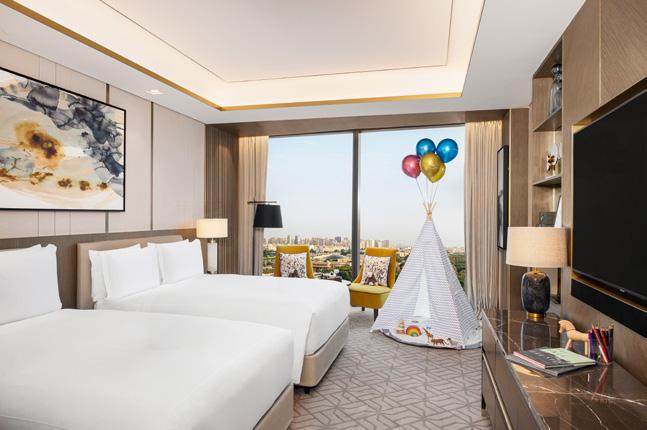
As spring settles over Kuwait City, Waldorf Astoria Kuwait opens a new season of experiences built around the things that matter most: family, rest, and the quiet pleasure of a day well spent. From family staycations and children’s adventures with Oscar the Bear to elegant afternoons at Peacock Alley and restorative spa rituals, April at the hotel is a reminder that the best moments are the ones you didn’t rush through. And this month, there is plenty to slow down for.
As spring settles over Kuwait City, Waldorf Astoria Kuwait opens a new season of experiences built around the things that matter most: family, rest, and the quiet pleasure of a day well spent. From family staycations and children’s adventures with Oscar the Bear to elegant afternoons at Peacock Alley and restorative spa rituals, April at the hotel is a reminder that the best moments are the ones you didn’t rush through. And this month, there is plenty to slow down for.
FAMILY STAYCATION AT WALDORF ASTORIA KUWAIT
Spacious connecting rooms, thoughtfully stocked amenities, and a staff that genuinely enjoys having children around, the family staycation here is designed so that no one has to compromise. Young guests receive a Kids Passport on arrival, a playful guide to exploring the hotel through activities and small discoveries that feel like adventures. The Kids Club runs a full program of games, crafts, and interactive sessions, giving children their own itinerary while parents reclaim an afternoon. Breakfast is its own ritual here. A generous Kids Corner means younger guests have plenty to choose from, and high chairs are available across all dining venues so that even the earliest risers are well looked after. The rhythm of a stay tends to settle into something easy: slow mornings, unhurried meals, evenings that stretch pleasantly. That, more than any single amenity, is what families come back for.

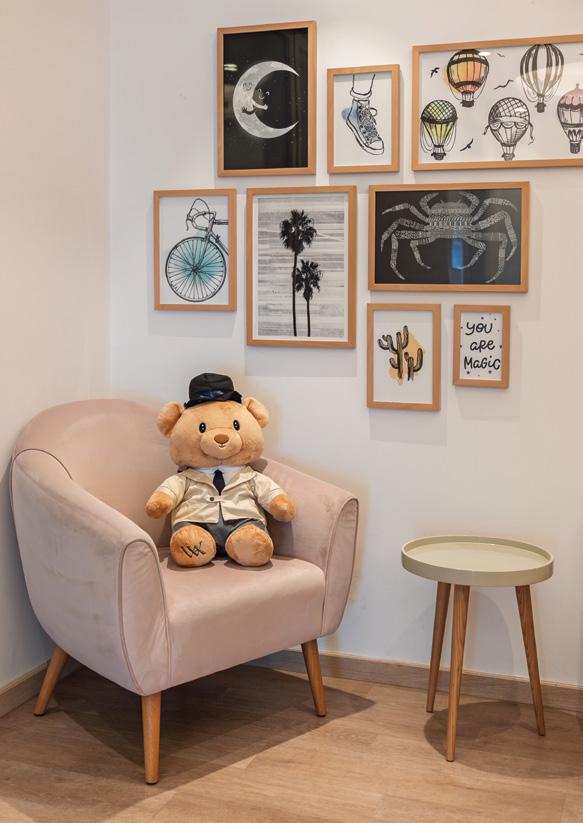
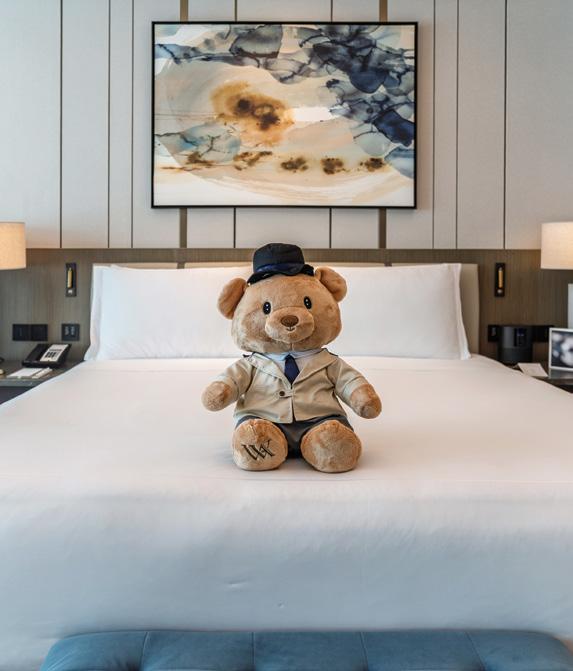
Oscar the Bear, the Waldorf Astoria’s much-loved mascot, makes his presence felt throughout the stay in the best possible way. Children delight in spotting him, and the moments that follow, photographs, impromptu hellos, a surprise appearance at just the right time, have a way of becoming the details kids retell long after checkout. Oscar isn’t a gimmick. He’s the hotel’s way of saying that younger guests are just as welcome as anyone else, and that a stay here should feel like an adventure from the very first morning.
SIGNATURE AFTERNOON TEA AT PEACOCK ALLEY
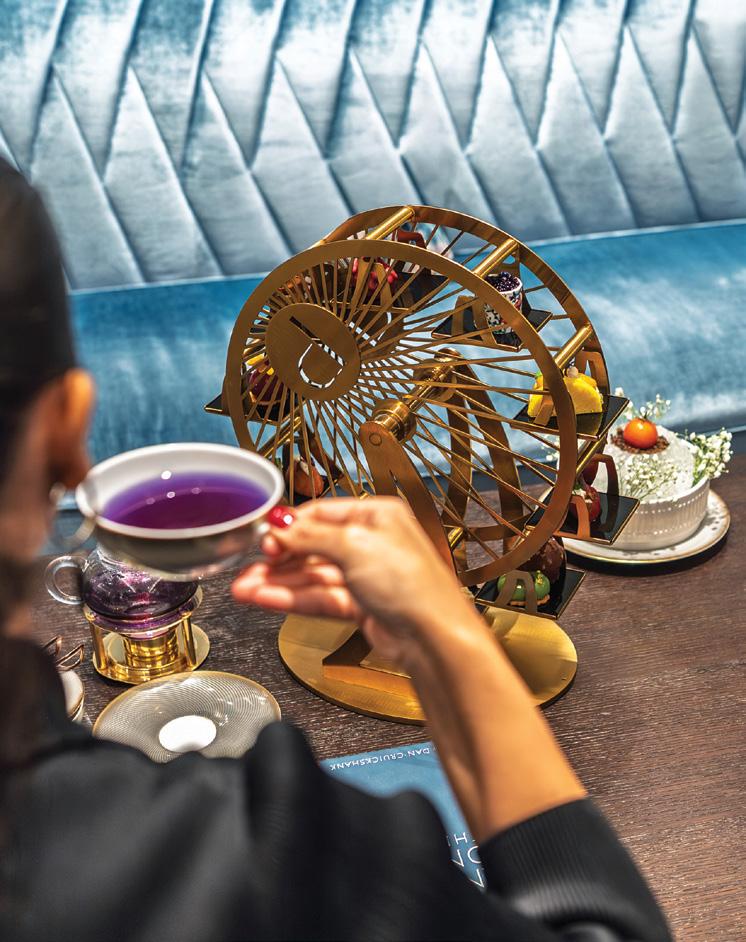
Peacock Alley has its rituals, and the Afternoon Tea is the one guests return to most. The spread moves from an amuse-bouche through savory bites and delicate pastries to warm scones with artisanal preserves, closing with a sorbet prepared tableside.
A pianist plays through the afternoon, filling the iconic lobby lounge with something unhurried and warm. The lobby light does what it always does at that hour, falls just right. It is the kind of experience that makes three o’clock feel like a destination rather than just a point in the day, and one that translates beautifully for families, with children aged six and under dining complimentary and those aged six to twelve receiving a generous discount.
Available daily, 3 PM to 11 PM. KWD 19 sharing for two, including tea.
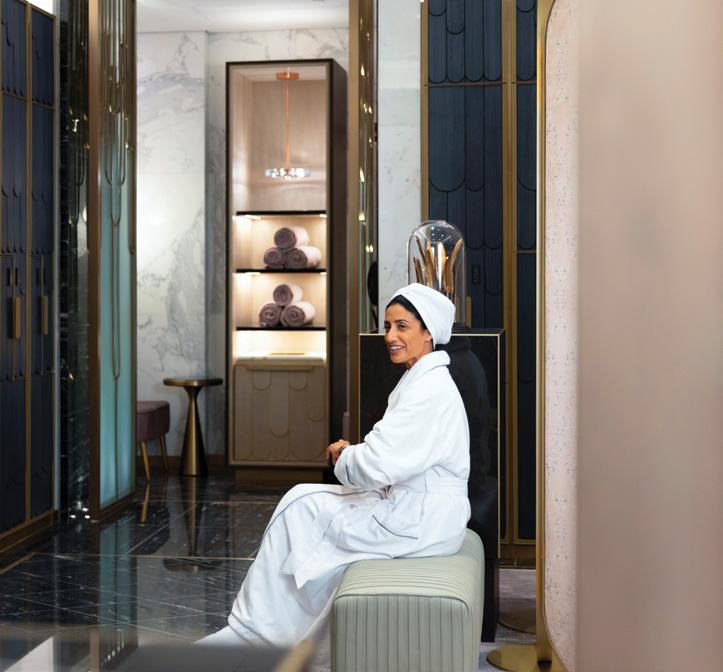
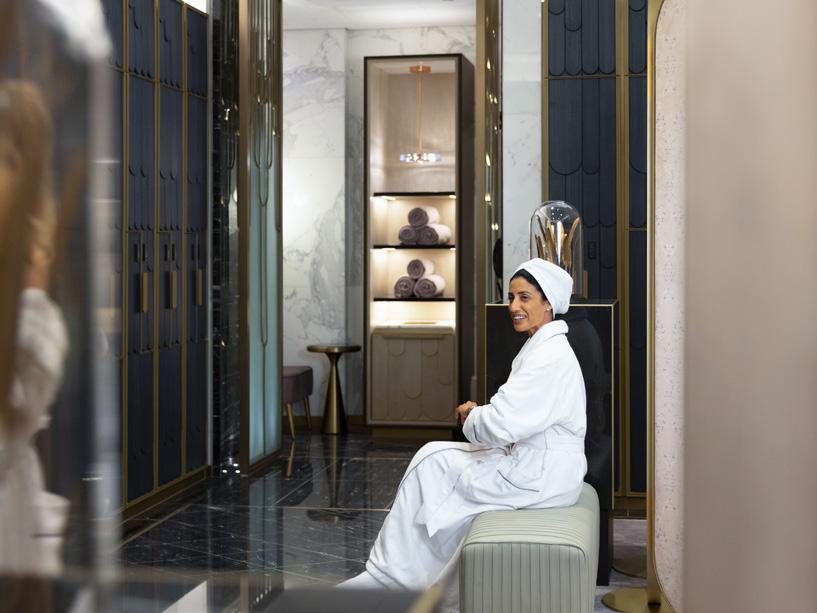
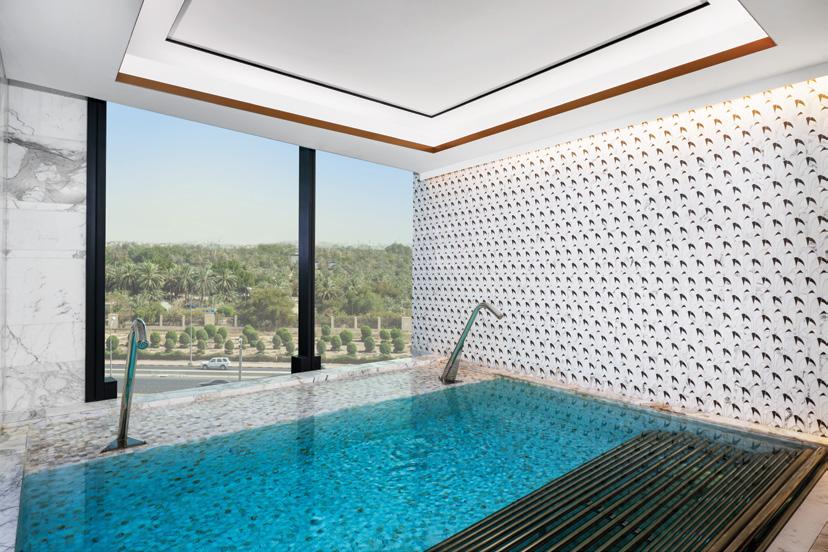
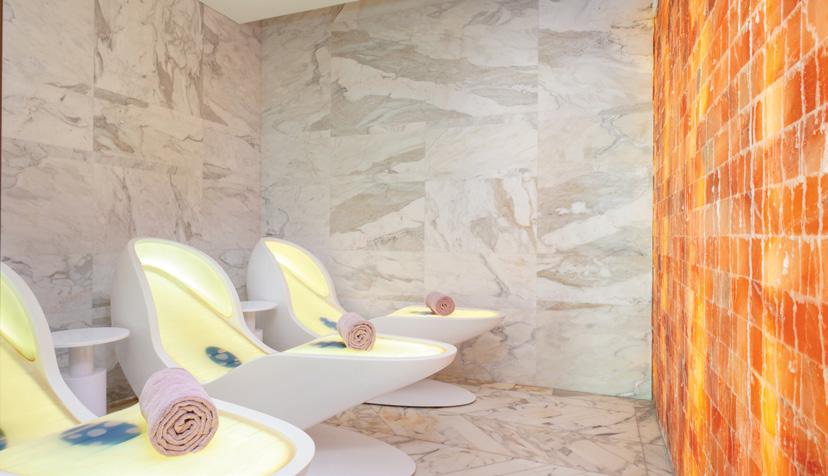
For those in need of something quieter, the Waldorf Astoria Spa offers its Revive and Renew ritual throughout April. It is built for that particular tiredness that accumulates before you notice it, the kind that a good night’s sleep doesn’t quite reach. The journey opens with a mineral-rich full body exfoliation, moves into a detoxifying body wrap, and continues with a bespoke relaxation massage that works through tension with patience and precision. It closes with a herbal tea ritual that feels less like a finishing touch and more like punctuation. Two hours, and the day before feels further away than it should.
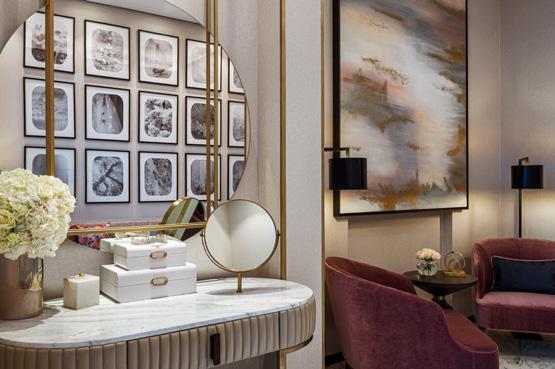
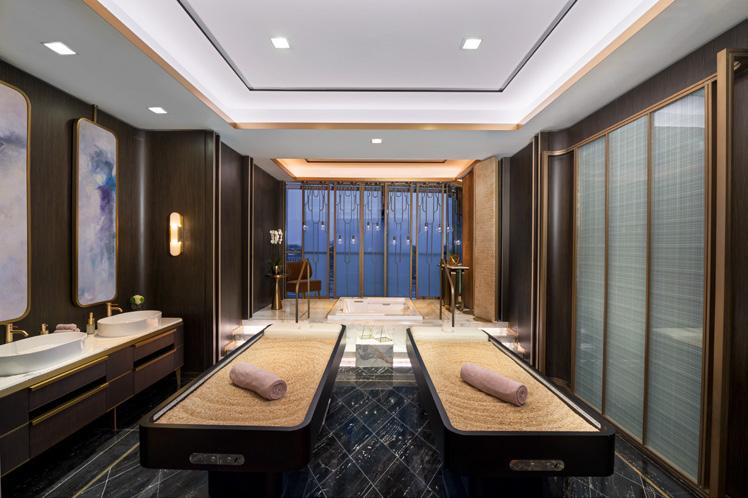
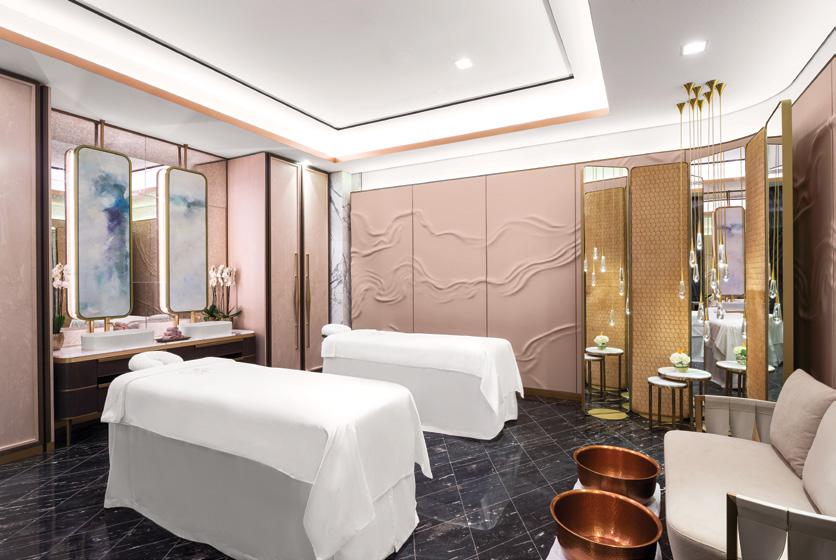
For something more private, the spa’s VIP Treatment Suite offers a sanctuary within a sanctuary. Set on the upper level, it is designed for couples or close companions seeking complete seclusion: private changing areas, a double treatment zone with warmed water pillows, a hammam, a steam room, and an elegant bathing experience. Therapists work with products from Tata Harper and AMRA, and every detail is handled with the kind of care that makes the outside world genuinely recede.
Available throughout April. 120 minutes | KWD 110.
Scan the QR code to find all Waldorf Astoria Kuwait channels and updates.


Be clear Be accurate Choose well.


Fever Guidance System provides a color-coded reading based on different levels of fever. Get results you can trust with Braun Healthcare Devices.

Ear Thermometer
Fast, gentle, easy & accurate, making it great for checking for fevers in infants & kids.

By bazaar staff
There is a particular kind of exhaustion that comes not from doing too much, but from not knowing what comes next. It is the fatigue of waiting — for news, for clarity, for things to return to something resembling normal. In Kuwait and across the region, many people have been living inside this kind of uncertainty for weeks. Schools have shifted online. Plans have been cancelled or indefinitely postponed. And beneath the surface of daily life, there is a quiet but persistent anxiety that many struggle to name, let alone address.
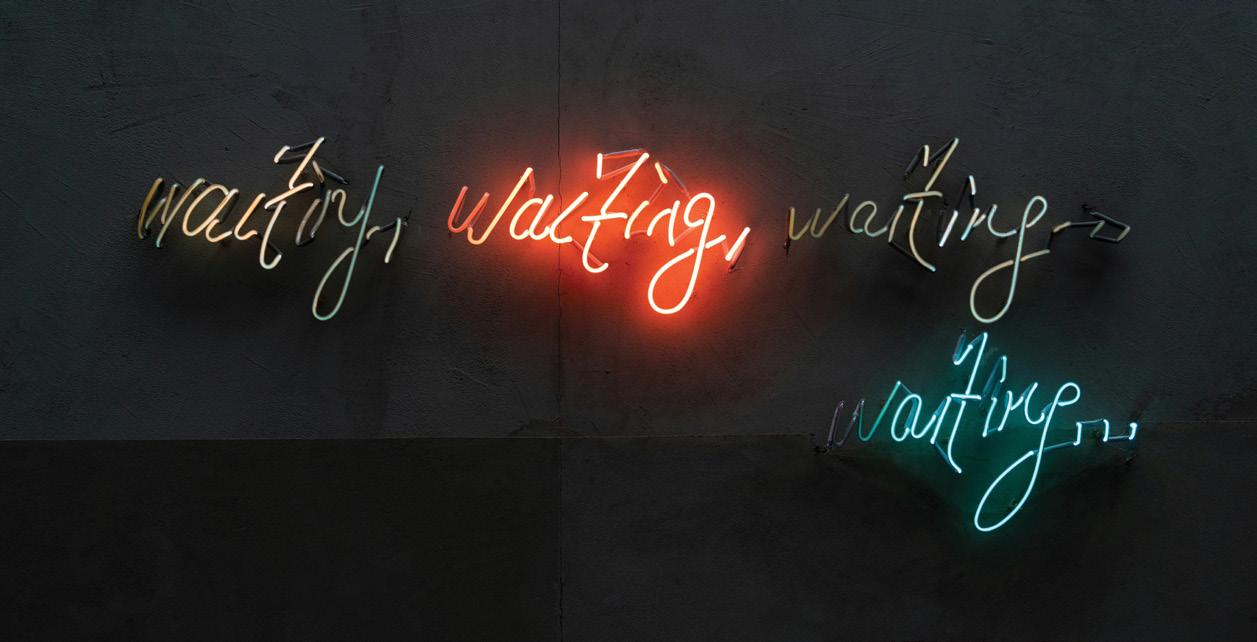
Psychologists call this state of prolonged uncertainty “ambiguous loss” — a grief without a clear ending, without a funeral, without the ordinary markers that tell us when something is over and we can begin to heal. When we lose something concrete, there are rituals to guide us through it. But when we are simply waiting — for a decision, for a change, for a situation to resolve — there is no script. We are left to manage our distress largely on our own, while also trying to function, parent, work, and hold it together.
The stress of waiting activates the same physiological responses as any acute threat. Cortisol rises. Sleep is disrupted. Concentration frays. Over time, chronic stress of this kind can affect the immune system, increase anxiety and depression, and erode our capacity for patience and connection — the very things we most need in difficult times. Understanding that what you are feeling is a normal response to an abnormal situation is the first, most important step.
So what actually helps?
The most powerful tool in uncertain times is
reclaiming a sense of control — not over the situation itself, but over your response to it. This means identifying the things within your reach and focusing your energy there. Your routine. Your sleep. The meals you cook. The conversations you choose to have. These small anchors are not trivial. They are the scaffolding that keeps you upright when larger structures feel unstable.
It also helps enormously to give your anxiety a container. Many therapists recommend setting a specific “worry window” — a defined period of perhaps twenty minutes a day where you allow yourself to think through your fears fully. Outside of that window, when anxious thoughts arrive, you can acknowledge them and redirect: “I will think about that during my worry time.” This prevents anxiety from colonising the whole day.
Limiting exposure to news and social media is equally important. Staying informed is sensible. But the cycle of checking, refreshing, and absorbing every update is not informing — it is ruminating. Try to consume news once or twice a day from a reliable source, then step away. Your nervous system will thank you.
Connection is perhaps the most underestimated tool we have. Prolonged stress is made significantly worse by isolation, and significantly better by the simple presence of other people — not to fix anything, but just to be there. Reach out to someone you trust. Tell them honestly how you are doing. Ask how they are doing. There is profound relief in being seen by another person who is also trying to hold themselves together. Finally, be patient with yourself. The prolonged nature of this stress means that good days and bad days will come without much warning. A week of coping well does not mean you have solved anything, and a rough day does not mean you are falling apart. You are navigating genuinely difficult terrain. The most honest and useful thing you can do is acknowledge that, take care of yourself with the same compassion you would offer a friend, and keep going — one day at a time.


By bazaar Staff
There are few vehicles that have shaped an entire category quite like the Toyota RAV4. Since its debut in 1994, it has quietly redefined what an SUV can be, bridging the gap between everyday practicality and a sense of exploration. Now, with the arrival of its latest generation in the Middle East, the RAV4 steps into a new era, one that feels more refined, more intelligent, and more attuned to the way we move today.

Launched by Mohamed Naser Al Sayer & Sons Est. Co. W.L.L in partnership with Toyota, the allnew RAV4 marks a full model transformation of one of the brand’s most enduring successes. The update is not simply visual. It is a complete rethinking of performance, technology, and design, built around a clear philosophy: life is an adventure.
From the beginning, the RAV4 was designed to offer something different. It combined the comfort of a passenger car with the versatility of an SUV, creating a new kind of vehicle that felt equally at home in the city and beyond it. Decades later, that same idea continues to define its evolution.
The latest RAV4 arrives with a more confident and refined exterior, offered in two distinct styles: Core and Adventure. Each reflects a different side of the vehicle’s identity.
The Core model leans into a clean, modern aesthetic, ideal for urban environments while maintaining the strong proportions expected of an SUV. The Adventure variant, on the other hand, introduces a more rugged visual language, designed for those drawn to light offroad experiences and outdoor exploration.
Inside, the focus shifts to clarity and comfort. The cabin has been thoughtfully
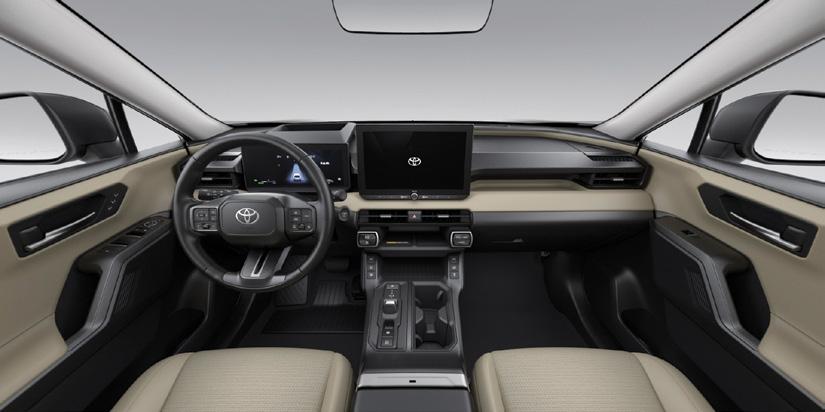
redesigned to prioritize usability, with controls and displays positioned to reduce distraction and enhance driver focus. High-quality materials and improved ergonomics create a space that feels both practical and elevated, whether navigating daily commutes or longer journeys.
Features such as a Head-Up Display allow essential information to be projected directly onto the windshield, while a panoramic moonroof introduces natural light, giving the interior a sense of openness. Every detail has been considered to make the driving experience more intuitive and more comfortable.
At the heart of the new RAV4 is Toyota’s 5th generation hybrid system, reinforcing the model’s role as one of the brand’s most accessible entry points into electrified driving.
Unlike fully electric vehicles, the hybrid system does not require external charging. It combines the familiarity of a petrol engine with the efficiency of electric power, delivering smoother acceleration, improved fuel economy, and a more responsive drive.
For drivers in the Middle East, this balance is particularly relevant. The system is designed to perform seamlessly across both city traffic and longer distances, offering efficiency without compromising on convenience or capability.
In this sense, the RAV4 continues to reflect Toyota’s broader approach to sustainability: making electrification practical, adaptable, and integrated into everyday life.
Smarter, Safer, More Connected Technology plays a central role in shaping the new RAV4 experience.
The latest iteration of Toyota Safety Sense introduces enhanced detection capabilities and expanded support across a wide range of driving conditions. Systems such as the Pre-Collision System and Dynamic Radar Cruise Control have been refined to feel more natural and responsive, helping reduce driver fatigue while improving overall safety.
Alongside this, the new Audio Multimedia system offers a more connected and customizable interface. Available with either a 10.5-inch or 12.9-inch display, and paired with a 12.3-inch digital combination meter, the system delivers sharper graphics, faster performance, and greater personalization.
Everyday functionality has also been elevated. Features such as the Panoramic View Monitor with 3D visualization and Auto Parking assist make navigating tight urban spaces easier, reinforcing the RAV4’s versatility as both a city car and a weekend escape vehicle.
Performance That Adapts Beyond design and technology, the new RAV4 has been engineered to feel more composed and capable across different driving conditions.
Improvements to body rigidity, suspension tuning, and platform refinement contribute to a smoother, quieter ride. At the same time, features such as Trail Mode enhance stability on uneven or low-grip surfaces, allowing the vehicle to transition confidently from paved roads to more challenging terrain.
These enhancements reflect a clear intention: to create a vehicle that adapts effortlessly to the rhythm of modern life, from daily routines to spontaneous journeys.


A New Expression of a Familiar Icon Customization plays a key role in the new RAV4’s identity. With a wide range of interior and exterior options, including mono-tone and bi-tone finishes, drivers can tailor the vehicle to reflect their personal style. New color introductions such as Urban Rock add a contemporary edge, while multiple alloy wheel designs further define each variant’s character.
Yet despite all these updates, the essence of the RAV4 remains unchanged.
With this latest generation, Toyota has not only refined the RAV4 but reasserted its place in a changing landscape. One that values efficiency, intelligence, and adaptability, without losing sight of experience.
As drivers across the region look toward a future shaped by innovation and evolving lifestyles, the all-new RAV4 arrives not as a departure, but as a continuation. A vehicle that understands where it came from, and where it is ready to go next. For more information visit Toyota.com.kw.
It is still a vehicle built on versatility, designed to support both the ordinary and the unexpected. It still carries the idea that movement should feel effortless, and that adventure does not always require distance, only the freedom to go further when you choose.
By bazaar staff
Most people have at least one book they return to repeatedly. The pages may be worn, the spine creased, certain lines almost memorized. From the outside, rereading can look like avoidance, a refusal to move on to something new. Psychologically, it is something else entirely. Rereading is not about a lack of curiosity. It is about comfort, meaning, and timing.
Author C.S. Lewis once wrote, “A children’s story that can only be enjoyed by children is not a good children’s story in the slightest.” Implicit in that idea is the value of return. A story changes because the reader does. Each rereading reveals something different, not because the text has shifted, but because life has.
Psychologists describe rereading as a form of emotional regulation. Familiar narratives reduce cognitive load. There is no suspense to manage, no uncertainty about outcomes. The brain relaxes into the story, allowing attention to deepen rather than scan ahead. During periods of stress or fatigue, this predictability can be soothing.
Research on reading and stress supports this effect. Studies have shown that reading can lower heart rate and ease muscle tension. Familiar books may amplify this response because they remove the effort of orientation. The mind does not need to work to understand context. It can simply inhabit it.
Rereading also offers a sense of control. In real life, outcomes are uncertain. In a familiar book, the ending is known. This predictability can feel reassuring, especially during periods of transition or instability. Returning to a known story becomes a way of anchoring oneself emotionally.
Memory plays an important role. When we reread, we are not only revisiting the story, but also the version of ourselves who first read it. A book read in adolescence carries traces of that emotional landscape. Reading it again layers new meaning onto old memory. The experience becomes both present and reflective.
Interestingly, rereading often happens during moments of change. People return to familiar books during illness, grief, relocation, or major life shifts. Psychologists suggest this is because familiar narratives help restore continuity when identity feels unsettled. The book becomes a reminder of who we have been and how we have navigated uncertainty before.
There is also a cognitive benefit. Knowing the plot frees the reader to notice details missed the first time. Language, structure, and subtext come into focus. Rereading transforms the experience from consumption to interpretation. The story grows richer, not flatter.
Children instinctively understand this. They ask for the same story night after night, not out of boredom, but mastery. Repetition helps them process fear, excitement, and morality

in manageable ways. As adults, we often lose permission to repeat, even though the need remains.
Modern reading culture emphasizes novelty. New releases, reading challenges, and productivitydriven goals frame reading as something to complete rather than return to. Rereading quietly resists that pressure. It values depth over volume and treats reading as a relationship rather than a task.
This does not mean new books matter less. Discovery expands perspective. Familiar books deepen it. Both serve different emotional and intellectual needs.
Importantly, rereading is not static. A book read at twenty speaks differently at forty. Characters once admired may disappoint. Scenes once overlooked may resonate deeply. The text stays the same, but meaning evolves.
In a culture that prizes constant forward motion, rereading can seem indulgent. In reality, it is reflective. It allows us to witness our own change. We return not because we lack imagination, but because some stories grow alongside us. And sometimes, returning is how we move forward.


By bazaar Staff
There is a moment most people recognize. You are standing in the middle of your space, surrounded by ideas, inspiration saved on your phone, maybe even a few pieces already bought, and yet nothing quite comes together. The vision is there, but the execution feels just out of reach. This is where expertise matters. Not just taste, but the ability to translate how you live into a space that actually works for you.
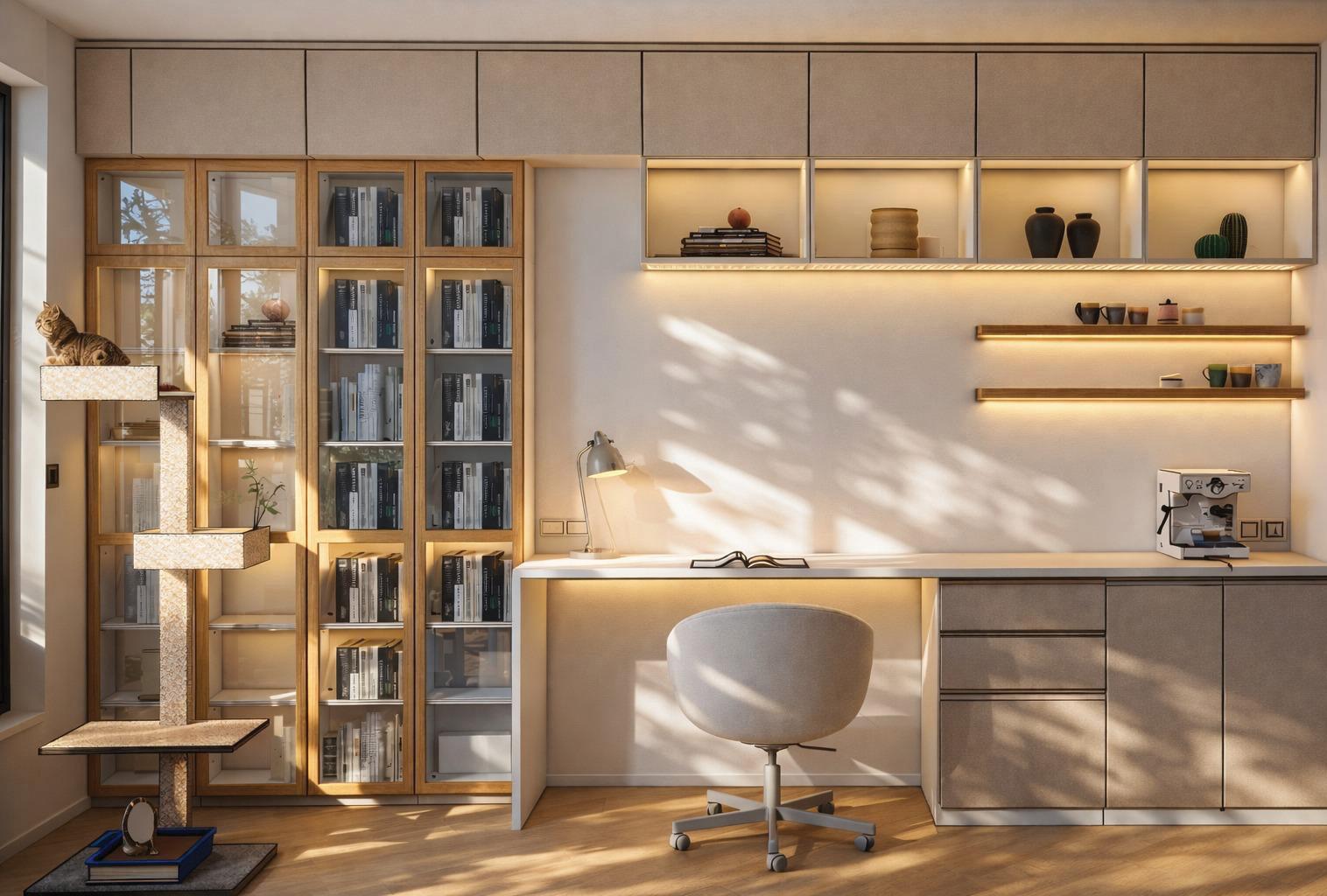
Get a creative perspective that transforms everyday elements into thoughtful design solutions.
Homes are deeply personal and often multifunctional, the need for guidance has never been clearer. Many homeowners find themselves overwhelmed by choice, unsure how to plan layouts, or hesitant to commit to decisions that shape their everyday environment. The new Interior Design Service which IKEA launched recently bridges that gap, offering something simple but powerful: expert support to design a space that is tailored for real life.
Leading the service is Diana Sabouni, Interior Design Manager, who brings over 13 years of experience with IKEA. Now heading the Interior Design Service team, she plays a central role in shaping how the service is delivered, ensuring it remains accessible, practical, and aligned with how people truly live.
We spoke with Diana to learn more about the thinking behind the service and what customers can expect. At its core, she explains, the goal is
to make design feel approachable rather than overwhelming, giving customers the confidence to move from ideas to fully realized spaces.
Supporting her is a team that reflects both technical expertise and bold inspiration. Interior designers Nameetha Dineshkumar, Mayar Khalid, and Salwa Hamdoun make up the creative team that brings clients’ visions to life using their strong educations in Interior Design and their years of experience, professional training, and practice. They are supported by sales consultant,
Ahmad Hassan, who helps the team deliver a collaborative, hands-on and effortless experience for every client.
This is not about imposing a style. It is about listening first. Whether it is a growing family, a first time homeowner, or someone simply looking to refresh their home, the team works together to create solutions that are both functional and meaningful.
What makes the Interior Design Service stand out is its flexibility. It is not a one-size-fits-all offering, but a tiered approach that meets customers wherever they are in their journey.
Let’s Talk
The first level, “Let’s Talk,” is where everything begins. This is a free consultation designed to explore ideas, understand lifestyle needs, and build a foundation for the project. “Because before we design, we connect to help our customers understand their needs and dreams,” Diana explains. It is conversational and exploratory, offering customers a chance to clarify what they want, even if they are not entirely sure yet. By the end of this stage, they walk away with a brief and a curated product collage that captures the direction of their space.
Let’s Design
For those ready to go deeper, “Let’s Design” offers a comprehensive design experience. This is where vision turns into structure, but also where the art of design truly comes into play. “Your space inspires bold impressions, together, we will create a home that truly feels like you! Our goal is helping your dreams come true,” Diana adds.
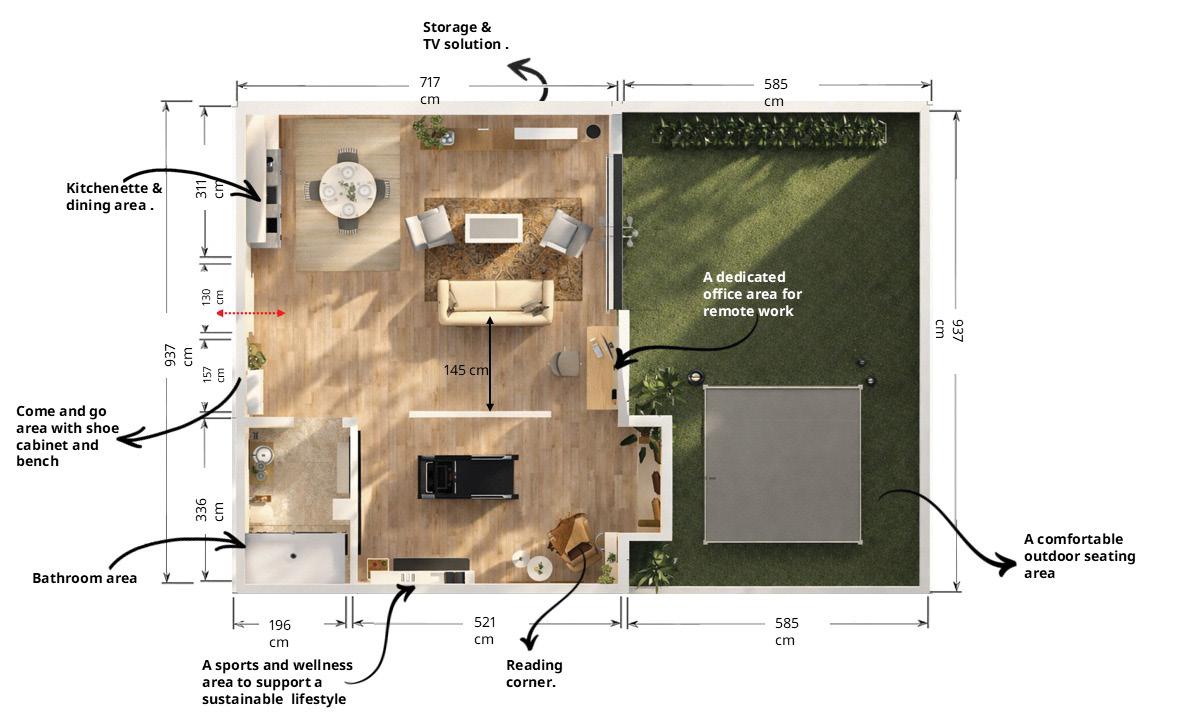
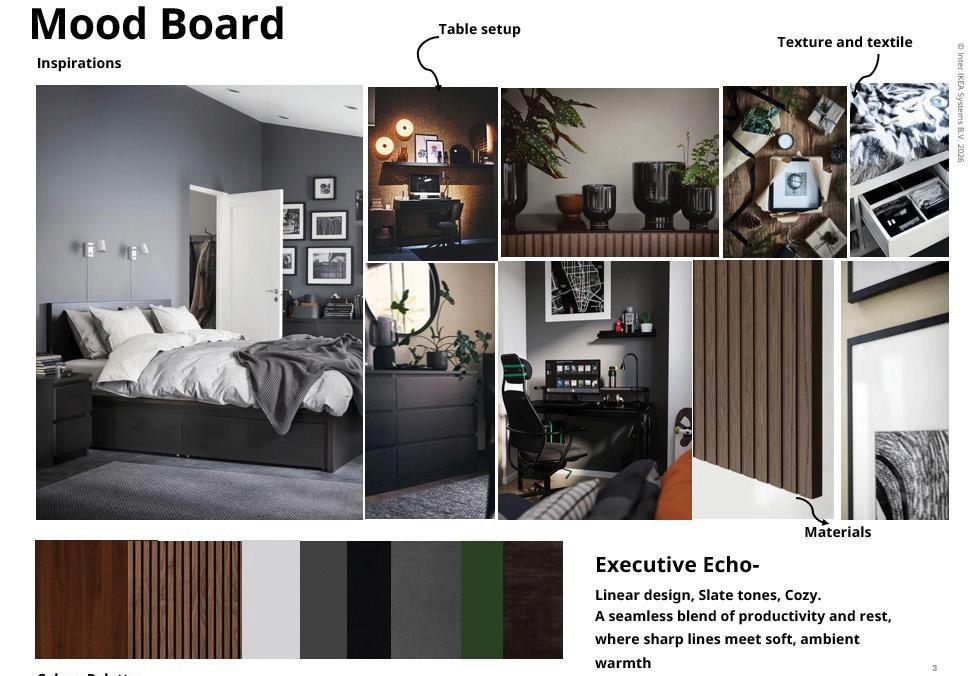
From layout planning and mood boards to 2D and 3D visualizations, lighting plans, and detailed product lists, the service covers every aspect of the design process.
Beyond the technical, the team brings a creative perspective that goes beyond what most non-designers might imagine. They make full use
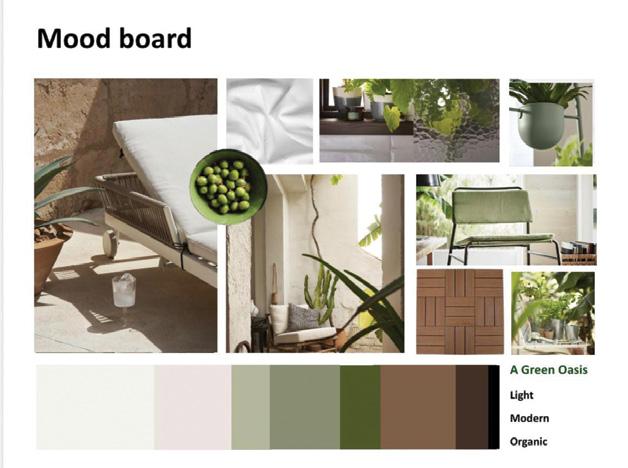
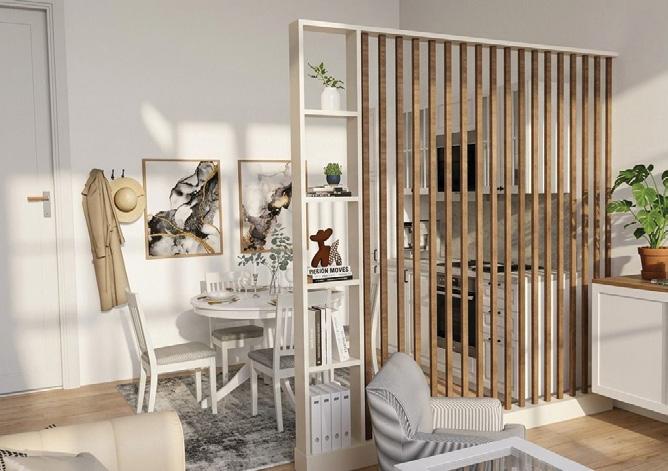
of everything at their disposal, thinking in ways that transform everyday elements into thoughtful design solutions. Bookcases can be configured in unexpected ways, shelves can be stacked to create visual rhythm and function, and even doors can be repurposed as striking wall features. It is this ability to see possibility, beyond the obvious that elevates the outcome.
The team does not limit recommendations to IKEA products alone, but also advises on finishes, flooring, paint colors, and material selections, ensuring a fully cohesive space.
Importantly, the service is highly competitive in price. In addition, the design fee will be redeemable when customers purchase the products for that space, making it not just accessible, but practical.
For IKEA Family members, the cost is even lower, making professional design support available to a wider audience without compromising on quality.
The third option, “Let’s Style,” focuses on transformation through detail. Diana explains that, “…every moment and every space deserves a little love!” and she wants to make sure that whatever the occasion, the team can make it truly special. This service brings a designer directly into the home to refine and elevate a space through styling, accessories, and carefully considered updates. What stands out is the level of sophistication it offers. This is event-level styling, executed with the same attention to detail, but at a price point that remains accessible. It allows customers to refresh their homes in a way that feels personal, polished, and seasonal.
Across all three services, the common thread is guidance. Customers are supported at every stage, with solutions that are tailored, realistic, and aligned with their budget.
While the service has only been operational for a few months, they have already completed over a dozen of designs that have helped clients see the full impact of the design service. The team shared several projects with us and we were amazed at the transformations.
Our favorites included a teen’s bedroom that went from boring to bold and exciting. The space was turned into room where the occupant could transition from sleep to study and even play, while also being a visual representation of hobbies, interests, and identity.
We were also wowed by a family living room redesign that maximized the space by prioritizing how people move through it, not just how it looks. The room is thoughtfully divided into three distinct zones: a comfortable seating area with a TV and space for gaming, a small table perfect for catching up over a snack or casual meal, and a compact home office. Smart, unobtrusive storage solutions keep everything organized without disrupting the overall aesthetic. The result is a cohesive, connected space, one where the entire family can spend the day together, each doing their own thing while still sharing the same environment.
But perhaps the most surprising transformation was a laundry room; an often neglected and unassuming area in most houses can be turned into a functional powerhouse. This is where having an interior designer who has studied spatial planning, circulation, and flow is apparent. Everything is spaced perfectly for easy reach, turning a task like laundry into an enjoyable activity because it was intelligently designed.
What the Interior Design Service from IKEA ultimately offers is not just design, but reassurance. The reassurance that you do not have to navigate decisions alone. Customers can book an appointment for an in-home visit, an online session or a meeting at IKEA, making the service flexible and convenient.
The experience is also entirely seamless. Once a design is approved, customers can complete their purchase through a single payment link, after which the team takes care of the rest. From planning to execution, everything is handled, leaving customers to simply step into their finished space and enjoy it.

Ready to experience effortlessly designed spaces by the IKEA Design Service team? Scan the code to book your appointment.
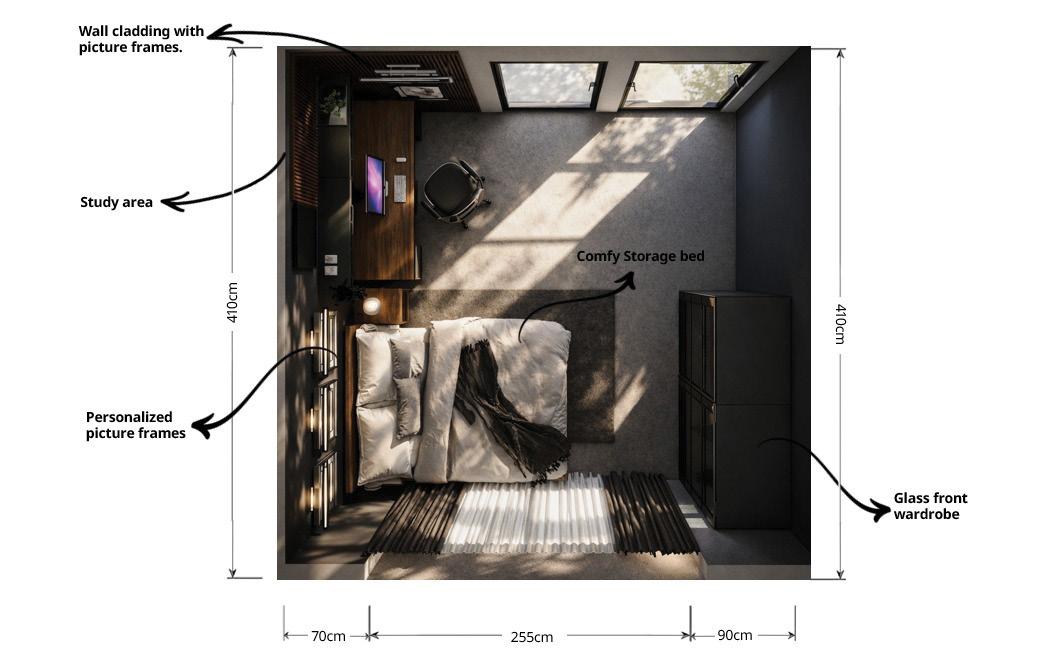
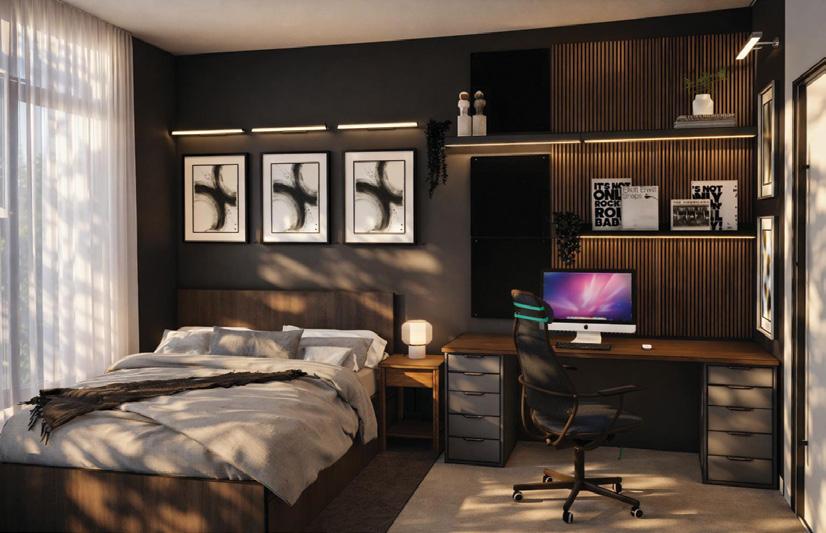











By bazaar staff
Cleaning is rarely framed as an emotional act. It is treated as a task, a chore, something to get through quickly. And yet, many people notice a distinct shift in mood after tidying a space. The air feels lighter. The mind feels calmer. This response is not imagined. Psychology suggests that cleaning affects how we think and feel in measurable ways.
One explanation lies in visual processing. The brain is constantly scanning the environment for information. Clutter increases the amount of stimuli competing for attention. Research from neuroscientists at Princeton University found that visual clutter can overload the brain, making it harder to focus and process information. When a space is cleared, cognitive load decreases. The brain relaxes.
This reduction in mental effort often translates into a sense of relief. Even small acts, clearing a table or making a bed, can create an immediate feeling of order. The environment sends a signal that things are under control, which the nervous system responds to positively.
Cleaning also provides a sense of completion. Psychologists note that finishing a task, especially one with a clear beginning and end, activates reward pathways in the brain. Dopamine is released not only when we achieve large goals, but when we complete simple, tangible actions. This is why checking something off a list feels satisfying, even if the task itself was mundane.
There is also an element of agency. Cleaning is one of the few areas of daily life where effort leads to immediate, visible results. In times of uncertainty or stress, this can be grounding. When larger problems feel abstract or unsolvable, organizing a physical space offers a sense of influence. You may not control everything, but you can control this surface, this room, this moment.
Culturally, cleanliness has long been associated with order and care. Many traditions link cleaning to renewal, whether through seasonal rituals or preparation for gatherings. These practices are not just practical. They mark transitions and create psychological readiness. A clean space often signals a fresh start.
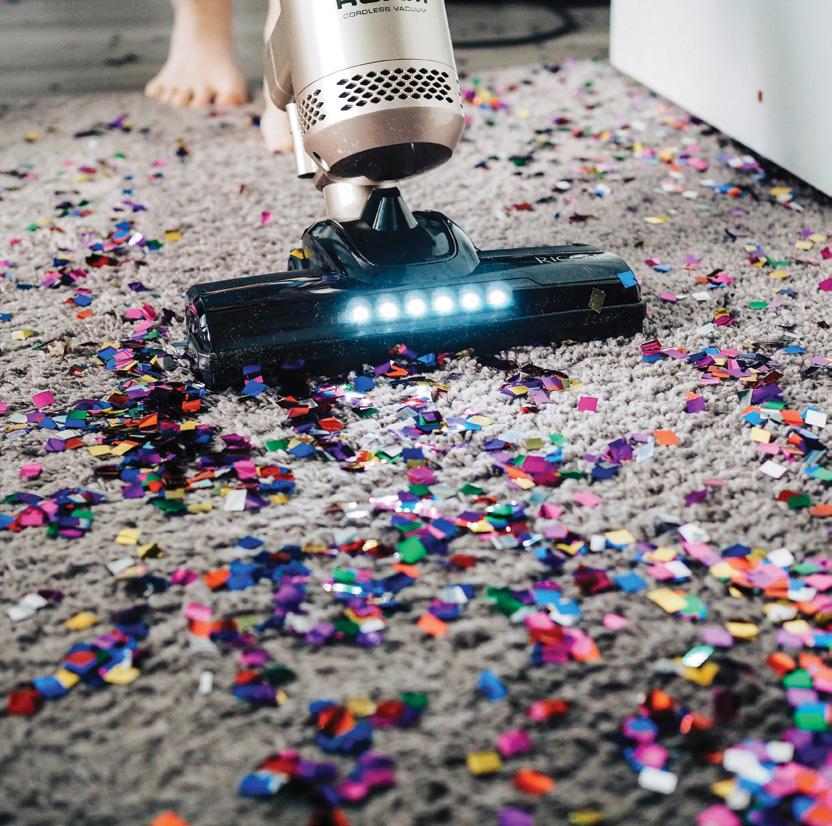
Interestingly, cleaning can also function as a form of emotional regulation. Repetitive physical actions such as wiping, folding, or sweeping engage the body rhythmically. This repetition can be calming, similar to walking or knitting. The body settles, and the mind follows.
This does not mean cleaning is always soothing. When it becomes compulsive or driven by anxiety, it can increase stress rather than reduce it. The emotional benefit lies in intention. Cleaning as care feels different from cleaning as control. The former restores energy. The latter depletes it.
Marie Kondo’s approach to tidying resonated globally because it acknowledged this emotional
layer. Her emphasis on keeping items that “spark joy” reframed cleaning as an act of discernment rather than discipline. While methods vary, the underlying insight remains useful: our relationship to objects affects our emotional state.
Cleaning can also create mental boundaries. Clearing a workspace at the end of the day signals closure. Tidying a kitchen after a meal marks transition. These acts help the brain shift modes, from work to rest, from activity to pause. Without such cues, days can blur together.
Modern life complicates this relationship. Many people live with constant visual noise, both physical and digital. Notifications, open tabs, unfinished tasks. Cleaning a physical space can become a counterbalance to this overload. It offers a form of simplicity that is increasingly rare.
Importantly, feeling better after cleaning does not mean striving for perfection. Order does
not require minimalism or aesthetic uniformity. It requires enough clarity for the space to feel supportive rather than demanding. A room does not need to be pristine to be calming. It needs to feel intentional.
The emotional lift that follows cleaning is often subtle. It is not excitement. It is ease. The mind settles into the space more comfortably. Attention flows more freely. There is less friction between thought and action.
In this sense, cleaning is not about appearances. It is about alignment. When the environment reflects care, the body responds in kind. Order outside creates permission for calm inside. And sometimes, that quiet shift is exactly what we need.

Directed By Beckham, Designed By Boss.
By bazaar Staff
There are few people in the world who have been watched as closely, for as long, as David Beckham. On the pitch, in the stands, stepping off a plane, stepping onto a red carpet: for three decades, his relationship with clothes has been observed, dissected, and imitated with a devotion that most designers would envy. What has always set him apart is not the audacity of his choices but the confidence behind them. He dresses like a man who has already decided, and that certainty is, it turns out, the most compelling thing a person can wear.

It is exactly that quality that runs through the BOSS BY BECKHAM Spring/Summer 2026 collection. Designed in close collaboration with Beckham in his role as Creative Style Director, the new wardrobe does not chase the season’s noise. It moves at its own pace, guided by a sensibility that has always prioritized longevity over novelty. Premium summer fabrics meet clean lines and a palette that travels from soft, grounded neutrals into punctuating brights. The silhouettes are elegant without being precious. The pieces are built, as Beckham’s own style has always been, to last.
Marco Falcioni, Creative Director at HUGO BOSS, has described the partnership as one shaped by Beckham’s instinct for what he calls “real versatility,” an understanding of how clothes actually function in a life that moves between boardrooms and weekends, formal occasions and quiet afternoons. That understanding is visible throughout the collection, in the way each piece is designed to do more than one thing well.
The tailoring arrives this season in two distinct registers. The first is precise and occasion-ready: an off-white double-breasted suit in a light, breathable linen blend, cut slim and paired with a crisp cotton shirt,
a blue linen-knit silk-blend tie, and a micro-patterned pocket square. Brown leather Oxford shoes close the look. It is formal dressing that does not announce itself as an effort, which is the only kind worth having. The second tailored look is a little more lived-in, but no less considered. A double-breasted charcoalgray blazer in a wool, silk, linen, and cashmere blend sits over a breathable navy linen T-shirt and pleatfront brown cotton trousers with a relaxed waistband. Leather-and-suede trainers pull the look back just enough. The message is clear: structure and ease are not opposing forces. In the right hands, they are the same thing.

Beckham’s personal approach to layering is perhaps most legible in one of the collection’s quieter combinations: a pale-beige cotton-blend cardigan over a lyocell-silk-cotton-blend shirt, worn with brown virgin-wool trousers and white leather-and-suede low-top sneakers. It is an outfit that requires no explanation and no occasion. It simply works, in the way that the best things in a wardrobe always do.
Jackets are a recurring strength. The leather jacket, a signature of the BOSS BY BECKHAM partnership across previous seasons, returns in butter-soft brown nappa leather with a refined stand collar, worn over a short-sleeved cream virgin-wool knit and brown stretch-cotton trousers.
A caramel-brown virgin-wool twill jacket makes a quieter case: minimal in silhouette, pointed in collar, with a two-way zip that keeps the styling

options open. Both pieces have the feeling of wardrobe anchors, the kind of items that make everything around them easier.
The collection’s most directional moment comes in the form of a deep turquoise cotton jacket, Beckham’s interpretation of modern workwear, trimmed with a contrasting brown cord collar and styled with brown corduroy trousers whose oversized pockets carry a utilitarian edge.
A color-blocked French terry sweatshirt and brown leather sneakers complete the picture, with a cotton canvas and suede holdall making the whole look ready to travel. Of everything in the collection, it is the piece that leans hardest into personality, and it is all the better for it.
What the Spring/Summer 2026 collection ultimately offers is a portrait of style as Beckham has always practiced it: not as costume or
performance, but as a form of self-knowledge. Knowing what you like, knowing what fits, knowing which pieces will still feel right three seasons from now. The collection is built around that kind of certainty, and it shows in every fabric choice, every silhouette, every detail that was included because it earned its place and not simply because it was new.
For a man who has been watched this closely for this long, the most interesting thing is how consistent the vision has remained. That consistency is the collection’s greatest asset, and its most Beckham quality of all.
BOSS BY BECKHAM Spring/Summer 2026 is available now on boss.com, at BOSS stores globally, and via selected BOSS wholesalers.
By Kate Bowler, Nonfiction

In this deeply personal exploration of joy, bestselling author and Duke University professor Kate Bowler challenges the idea that happiness comes from fixing everything that is broken. Drawing on her own experience with serious illness and a lifetime studying our culture’s obsession with progress, she argues that joy often appears in life’s unresolved moments. Honest, tender, and unexpectedly funny, the book offers language for the ache we all carry and invites readers to remain open to life’s surprising moments of light.
By Jim Collins, Nonfiction

Bestselling author Jim Collins examines the pivotal moments that reshape our lives and the choices that follow. Drawing on a decade of research into people navigating major turning points, he explores how individuals rebuild direction after disruption, rediscover purpose, and sustain momentum across decades. Through stories of artists, leaders, athletes, and thinkers, Collins offers a framework for understanding how a meaningful life can be continually constructed and renewed.
THOSE WHO ARE ABOUT TO DIE: A DAY IN THE LIFE OF A ROMAN GLADIATOR
By Harry Sidebottom, History

Historian Harry Sidebottom reconstructs the world of ancient Rome’s most famous fighters by tracing a single day in the life of a gladiator. Combining historical research with vivid storytelling, the book explores the training, spectacle, and brutal realities behind the arena’s carefully staged battles. Through this lens, Sidebottom reveals how gladiators became both feared combatants and powerful symbols within Roman society.
By Brianna Madia, Memoir

In this intimate memoir, Brianna Madia reflects on the tension between freedom and belonging as she balances a life of wilderness adventure with the possibility of home and partnership. Splitting her time between the desert landscapes she loves and a more settled life with her partner, she confronts questions about independence, commitment, and the meaning of purpose. Honest and introspective, the book explores how love, identity, and the search for home can reshape even the most fiercely independent spirit.
By Manil Suri,

In this deeply moving memoir, novelist Manil Suri reflects on his childhood in a crowded Bombay apartment shared by multiple families and shaped by cultural, religious, and personal tensions. The single room his parents occupied becomes both refuge and prison, shaping family relationships and the author’s understanding of identity, sexuality, and belonging. Drawing on decades of letters to his mother, Suri explores the powerful bond between parent and child and the difficult balance between duty and self-determination.
By Leah Ruppanner, PhD, Nonfiction
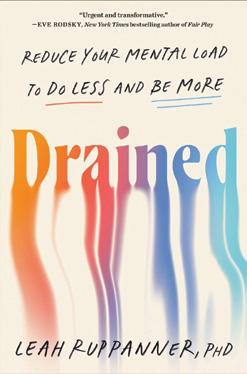
Sociologist Leah Ruppanner examines the invisible mental load that shapes modern life, particularly the constant planning, organizing, and decision-making that often falls unevenly within families and workplaces. Drawing on research and real-world examples, she explores how these hidden pressures affect well-being and productivity. The book offers practical ways to rethink expectations, redistribute responsibility, and create space for a more balanced life.

Colombian Iced Americano



Coffee notes of Caramel, Chocolate, Honey & Citrus Fruits



By bazaar Staff

& Other Stories introduces the April collection, defined by a fresh sense of expression and spontaneous ease. Contrast sparks creativity as a new perspective takes shape. Pieces are styled in unexpected pairings that feel instinctive and modern, while distinctive looks are elevated through diverse fabrications and thoughtful details. Fluid and sharp silhouettes balance one another, shaping a wardrobe built on tension, harmony, and individuality.
“This season isn’t about minimalism. It’s about contrast - pieces liberated from old rules and brought together in instinctive, unexpected ways. That tension creates a fresh kind of expression.”- Jonathan Saunders, Chief Creative Officer.
The collection comes alive by styling slouchy volume with light layering, grounded by natural textures. Eclectic, effortless, spontaneous, and full of optimism.
The silhouettes moves between structure and softness. Track pants, handkerchief dresses, and relaxed blouses introduce fluidity, while capri pants, overshirts, relaxed trenches, and parkas add a utilitarian edge. The friction between masculine and feminine runs through the looks.
A mix of soft pastel hues with acid tones, Crisp whites laying the foundation. The electric pull of chartreuse, and vivid cobalt are off-set by a combination of neutrals consisting of ecru, khaki and blush pink.
Thoughtfully chosen, transitional fabrics define the look. Silk pieces bring softness, while supple leather, linen, and crisp cotton, provide structure and ease. Designed to layer, the fabrics balance lightness with substance, shaping a wardrobe that moves effortlessly through the pre-summer season.
Choose between generous totes in light beige or dark olive leather or smaller shoulder bags in brown, cream or mint. Sculptural jewellery adds impact, alongside sleek hoops and silver rings. Pure silk scarves complete the look as versatile styling pieces.
The collection will be available globally in selected stores and at stories.com on Thursday 2 April 2026




Genre: Crime, Drama, Horror
Cast: Andrea Riseborough, Stephen Graham
Synopsis: A 19-year-old criminal named Tommy is kidnapped by a dysfunctional couple who force him into a twisted rehabilitation process designed to turn him into a “good boy.” As their disturbing methods escalate, Tommy must find a way to escape before he loses control of his own fate.

Genre: Animation, Action, Comedy
Cast: Chris Pratt, Anya Taylor-Joy, Jack Black
Synopsis: Mario leaves the familiar Mushroom Kingdom behind and ventures into space, exploring cosmic worlds and facing galactic challenges. As new dangers emerge across the universe, he must navigate strange new environments and unexpected threats far beyond anything he has faced before.

Genre: Thriller
Cast: Olga Kurylenko, Frank Grillo
Synopsis: A couple’s trust is pushed to the limit during their final “big job.” What begins as a routine plan quickly spirals into chaos when their intended victim reveals a hidden agenda that turns the situation deadly.

Genre: Horror, Comedy
Cast: Samara Weaving, Kathryn Newton
Synopsis: After surviving one deadly game, Grace and her sister Faith must now outrun four rival families competing for a powerful throne. In a brutal contest where the stakes are absolute, only one side will survive to claim victory.

Genre: Comedy, Horror, Sci-Fi
Cast: Liam Neeson, Georgina Campbell, Joe Keery
Synopsis: When a mutating and highly contagious fungus escapes from a sealed facility, two young employees find themselves trapped in the fight of their lives. With help from a seasoned bioterror operative, they must survive the most dangerous night shift imaginable to stop a global catastrophe.

Genre: Horror
Cast: Sophie Nélisse, Dafne Keen
Synopsis: A misfit group of high school students stumble upon a cursed object, an ancient Aztec Death Whistle. When they blow it, the terrifying sound summons visions of their future deaths that begin hunting them down one by one.
www.maisalghanim.com

Apple’s MacBook Neo introduces a more affordable entry into the Mac ecosystem. This 13-inch laptop runs on Apple’s A18 Pro chip and promises the brand’s signature all-day battery life in a streamlined design aimed at students and everyday users. While it skips premium features like MagSafe charging and a backlit keyboard, it still delivers the familiar macOS experience at a much lower starting price.
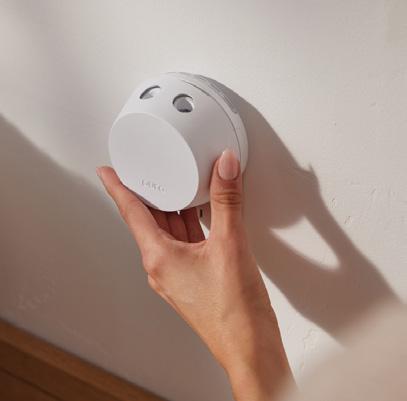
This compact smart diffuser brings customizable fragrance to any room with surprising intensity. Designed to hold two scent capsules at once, it allows users to alternate fragrances depending on mood or time of day. Controlled through the Pura app, it offers scheduling, remote operation, and automatic pause features, adding a subtle layer of luxury to everyday living spaces.

Leak Audio’s TruStream is the brand’s first dedicated music streamer, designed to pair seamlessly with its vintage-inspired Stereo 130 and Stereo 230 amplifiers. Supporting Spotify Connect, Tidal Connect, Qobuz, AirPlay 2, internet radio, and more, it also features a 32-bit ESS Sabre DAC for high-resolution audio streaming, making it a powerful centerpiece for modern hi-fi listening setups.
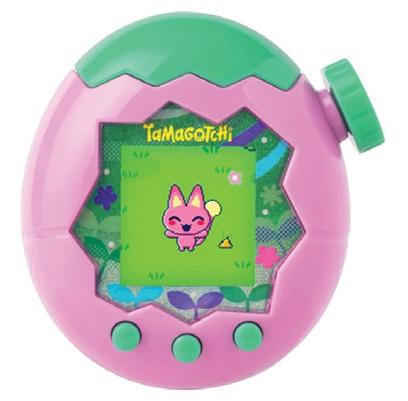
A colorful evolution of the iconic virtual pet, Tamagotchi Paradise lets players raise creatures across multiple habitats including land, sky, and water. A new zoom dial allows you to switch perspectives from viewing the entire planet to examining characters up close, while mini-games and customization options add depth to the experience. It blends nostalgia with playful new mechanics for longtime fans and newcomers alike.

The Meze Astru represents the Romanian audio brand’s most premium in-ear monitors yet. Featuring a 10mm multilayer composite dynamic driver, these earbuds are engineered to balance speed, control, and rich musical detail. With a titanium housing, detachable cables, and a goldplated balanced connector, they deliver high-end performance for serious listeners without reaching flagship price levels.
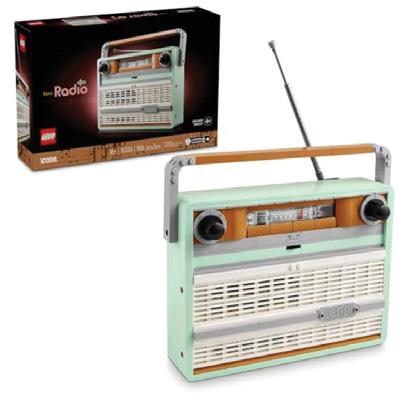
This nostalgic Lego set recreates the look of a vintage transistor radio with a clever modern twist. The 900-piece build includes a compartment that can hold a smartphone while it plays music, alongside a “sound brick” that produces retro radio effects when the dial is turned. With both digital and traditional instructions available, it offers a relaxing build and a charming display piece.

By bazaar Staff



There was a time when running was framed as punishment. Something you did to offset excess, to burn off, to make up for. Today, it reads very differently. Running has become a ritual, a social anchor, and for many, a form of therapy that fits into the margins of real life. The rise of marathon culture has only accelerated that shift, turning what was once a niche athletic goal into a lifestyle that stretches far beyond race day.
What defines marathon season now is not the finish line. It is everything that leads up to it. The early alarms, the quiet streets, the long runs that slowly build endurance and discipline. It is also the sense of community that has emerged around it. Running clubs are no longer exclusive or intimidating. They are accessible, welcoming, and increasingly woven into urban culture, offering structure, accountability, and connection.
This growing appeal is not accidental. Running meets people where they are. It requires no complicated learning curve, no expensive membership, and no rigid schedule. You can start with a single lap around your
block and build from there. In a world that often feels overwhelming, that simplicity matters.
Health plays a central role in this shift. Running is one of the most efficient ways to improve cardiovascular fitness, strengthen muscles, and support mental wellbeing. Studies consistently link regular running with reduced stress levels, improved mood, and better sleep. The rhythm of movement, the steady breath, and the repetitive motion create a meditative effect that many runners come to rely on. It is not just about physical transformation. It is about mental clarity.
There is also a deeper cultural layer at play. As conversations around wellness evolve, people are
moving away from extreme, unsustainable routines and toward habits that feel integrated and realistic. Running fits neatly into that framework. It can be solitary or social, intense or gentle, competitive or purely personal. It adapts.
The surge in popularity is also tied to visibility. Social media has played a role in reshaping the image of the runner. No longer defined by elite athletes alone, the running community now includes beginners, parents, creatives, and professionals who document their journeys in an honest, unfiltered way. The narrative has shifted from performance to participation. Showing up matters more than pace.

At the same time, brands are responding to this evolution with a sharper focus on accessibility and design. H&M MOVE’s latest running collection reflects this mindset. Created for both men and women, it is built around the realities of marathon training rather than the spectacle of race day. The emphasis is clear: performance, endurance, and comfort without compromising on style.
“Raising the standard of accessible performance wear starts with precision in the design process. From fabric weight and performance to pocket and seam placement, every detail is considered to ensure pure comfort over long distances. These details were the starting point for our Spring 2026 running collection, supporting runners across different routes and moments,” says Marie Fredros, Head of Design at H&M MOVE.
Every detail in the collection speaks to the lived experience of running. Lightweight materials reduce drag and fatigue over long distances. Breathable fabrics, such as the brand’s DryMove™ technology, help regulate temperature and manage sweat, which becomes critical during extended runs. Premium trims, reflective prints, perforated details, internal pockets, and thoughtfully designed accessories are not decorative choices. They

are functional decisions that support runners across varying conditions and times of day.
Even the color palette reflects a shift in how performance wear is perceived. A base of black, white, and light grey anchors the collection, while softer tones like blush pink, amazonite blue, and butter yellow introduce a sense of calm and individuality. The silhouettes remain minimal, but they are engineered to move with the body. From wide and fitted shorts to lightweight tanks, supportive bras, technical vests, caps, sunglasses, and tops with removable sleeves, the pieces are designed to adapt, just like the runners who wear them.
This is where the conversation around gear becomes important. Running may have a low barrier to entry, but the right equipment can significantly shape the experience. Ill-fitting clothes can cause discomfort, chafing, or distraction, all of which become magnified over longer distances. Breathability, weight, and construction matter more than aesthetics alone. When gear works with you rather than against you, it allows you to focus on the run itself.
That does not mean running needs to become expensive or exclusive. The appeal lies in balance. Accessible performance wear bridges the gap between

functionality and affordability, making it easier for more people to commit to the habit. It removes friction.
The current running boom is not just about fitness trends. It reflects a broader desire for grounding. In a fast-moving, digitally saturated world, running offers something physical, immediate, and real. It creates a sense of progress that is tangible. One kilometer becomes two. A short jog becomes a long run. Over time, those small increments build into something much larger.
Marathon culture captures that journey in its most visible form, but the real transformation happens long before the starting line. It happens in the repetition, in the consistency, in the decision to show up again and again.
Running, at its core, is simple. One foot in front of the other. But within that simplicity lies its power. It is accessible, adaptable, and deeply personal. And right now, more people than ever are choosing to make it part of their everyday lives.
The H&M MOVE running collection will be available from Thursday 26 March in selected H&M stores and online in KWT, UAE, KSA, QTR and EGY.


Hynote AI is a smart note-taking tool designed to capture, organize, and summarize information with the help of artificial intelligence. It helps users structure ideas, extract key insights from notes, and generate concise summaries, making it easier to manage knowledge and stay productive while studying, researching, or planning projects.


Song Sweeper is an iPhone app designed to clean up messy Apple Music libraries. It identifies duplicate songs across albums and editions, helps consolidate split albums, and highlights tracks you rarely play so you can remove them. The app also lets you favorite your most-played songs to improve music recommendations.

Documents X is a powerful file management and productivity app that lets you store, organize, and work with nearly any type of file in one place. It supports more than 90 file formats and integrates with major cloud services while offering tools for reading PDFs, watching videos, listening to music, and downloading files through a built-in browser.
Holly Health is a digital habit-coaching app designed to help users build healthier routines across areas like physical activity, sleep, nutrition, and mental wellbeing. It provides personalized guidance, reminders, and progress tracking while encouraging sustainable behavior change through small daily habits and evidencebased coaching.
Loggo is an AI-powered logo generator that helps users quickly create unique brand identities. By entering a few ideas or preferences, the tool generates logo concepts and design options in seconds, allowing entrepreneurs, creators, and startups to develop professional-looking branding without complex design software.
Jaadoo is a productivity app that helps you search and organize the screenshots stored on your phone. Using on-device AI, it analyzes screenshots so you can quickly find saved tweets, receipts, notes, or inspiration without endless scrolling. The app also lets you tag and manage screenshots while keeping all data processed locally for privacy.


By bazaar Staff
There is a particular kind of pressure that comes with the home being everything at once. It is the place you rest, the place you work, the place your children learn and play and occasionally lose their minds over screen time limits. Getting the balance right is less about having the perfect floor plan and more about making thoughtful choices with what you bring into your space. That is where the right technology stops being a luxury and starts being genuinely useful.

Xcite Alghanim has long been the go-to for families furnishing their homes with purpose. The range is broad enough that you can move through every room — and every need — without compromise, building a home that supports both your wellbeing and the seemingly boundless energy of the people living in it.
Start with the air. It is one of the easiest things to overlook and one of the most quietly impactful. Air purifiers from Blueair and Philips work to filter out the particulates and allergens that accumulate indoors, particularly relevant during Kuwait’s dustier months. Paired with Philips smart lighting, which adjusts colour temperature and brightness throughout the day, even the way a room feels at different hours can be shaped with intention. A warmer, dimmed atmosphere in the evening signals rest; sharper, cooler light in the morning helps everyone wake up properly. These are small shifts that, over time, add up.
For those who find that music does more for their mood than any app or supplement, a Bose speaker in the living room or kitchen transforms the background of everyday life. A morning playlist while getting the kids ready, an evening wind-down after dinner — audio quality at that level is felt more than it is consciously noticed, which is exactly the point.
When it comes to keeping children engaged, the conversation has moved well past passive screen time. Tablets from Huawei and Apple give kids access to educational apps, creative tools, and curated content that actually holds their attention for the right reasons. Gaming consoles — PlayStation 5, Xbox, and Nintendo — bring in a different kind of play, often movementbased, sometimes collaborative, and increasingly rich in storytelling and problem-solving. These are not babysitters; they are tools that, with a little parental curation, become genuinely enriching.
Family time matters here too. Movie nights and shared gaming sessions are not just entertainment — they are some of the more reliable ways families actually spend time together, in the same room, doing the same thing. Samsung and Wansa smart TVs anchor the living room as a communal space, while Sony sound systems and streaming devices from Amazon, Xiaomi, and OSN pull the whole setup together into something that feels less like a home cinema and more like a living room that simply works very well. The difference is in the detail.
What Xcite makes possible is a home that has been considered from the inside out. Not a showroom, not a tech demo, but a space where a parent can decompress after a long day and a child can be genuinely stimulated — and where those two things are not in competition with each other. The right products, chosen with care, have a way of making everyday life feel a little more like it was designed to go well.
Stay updated on the latest events, monthly promotions and offers by subscribing to the monthly newsletter on xcite.com. Follow Xcite on Instagram, Twitter, TikTok and Snapchat at @xcitealghanim, on Facebook at XcitebyAlghanim, or shop the full range at xcite.com.



(Mar 21 – Apr 19)
It is your season, and the spotlight naturally finds you. April rewards bold moves and clear intentions, especially around personal goals. Take initiative, but remember that patience strengthens momentum. What you start now has the potential to last.
TAURUS (Apr 20 – May 20)
A calm but powerful shift begins beneath the surface. April encourages you to prepare for opportunities that will soon arrive. Focus on simplifying routines and strengthening your foundations. Stability now creates freedom later.
GEMINI (May 21 – Jun 20)
Your curiosity is leading you somewhere meaningful. April favors learning, networking, and exploring new ideas that stretch your perspective. Conversations may reveal unexpected insights. Pay attention to the connections that feel natural and energizing.
CANCER (Jun 21 – Jul 22)
April brings renewed focus to career ambitions and long-term plans. You are beginning to see the results of quiet persistence. Stay steady even if progress feels gradual. Confidence grows when you trust your own timing.
LEO (Jul 23 – Aug 22)
Your perspective expands this month. Whether through travel, study, or new experiences, April encourages you to think bigger. An opportunity may appear that challenges your usual routine. Embrace it as a chance to evolve.
VIRGO (Aug 23 – Sep 22)
April highlights transformation and emotional depth. Something that once felt uncertain begins to make sense. Honest conversations strengthen trust in both personal and professional relationships. Clarity arrives when you stop overanalyzing every detail.
LIBRA (Sep 23 – Oct 22)
Partnerships take on new meaning this month. April asks you to consider what balance truly looks like in your closest relationships. A thoughtful discussion could shift dynamics for the better. Harmony grows through mutual understanding.
(Oct 23 – Nov 21)
Daily routines come into sharper focus. April is a good time to refine habits that support both your health and productivity. Small adjustments bring noticeable results. Discipline becomes the quiet engine behind your success.
(Nov 22 – Dec 21)
Joy and creativity return with fresh energy. April encourages you to express yourself more freely and follow what excites you. A passion project or hobby could unexpectedly open new doors. Trust enthusiasm as a compass.
(Dec 22 – Jan 19)
Home and family matters take priority. April encourages you to create a sense of stability that supports your long-term ambitions. A practical decision about your living space or lifestyle could bring greater comfort and clarity.
(Jan 20 – Feb 18)
Your ideas gain traction this month as communication becomes your strength. April favors writing, speaking, and sharing perspectives that inspire others. A conversation or collaboration may spark something bigger than expected. Stay open to where dialogue leads.
(Feb 19 – Mar 20)
April invites you to slow down and process the changes you set in motion last month. Reflection becomes just as important as action. Trust your intuition when something feels slightly off or perfectly right. Quiet clarity will guide your next step.