























HOUSTON LIVESTOCK SHOW AND RODEO™
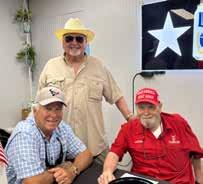
Houston Metro Go Texan Committee NASA/Clear Creek/Friendswood Subcommittee



“


“ D e r b y D a y ”







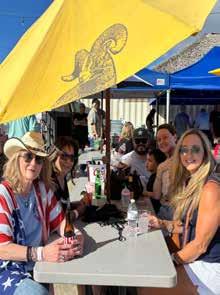
Houston Metro Go Texan Committee NASA/Clear Creek/Friendswood Subcommittee
“
“ D e r b y D a y ”

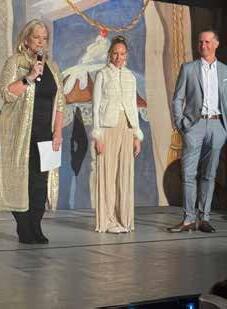

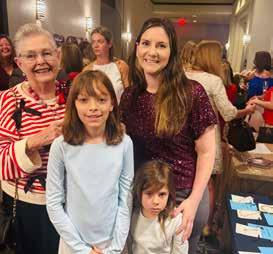


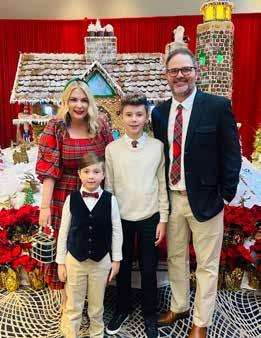








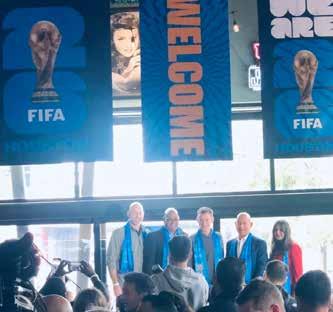
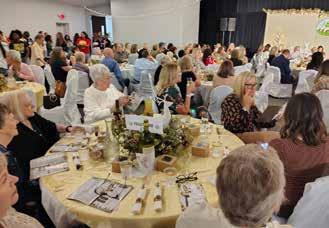



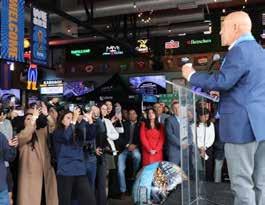


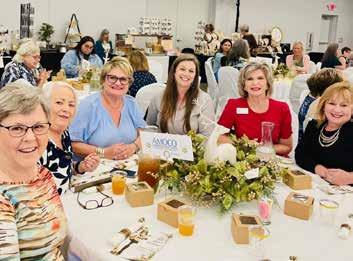
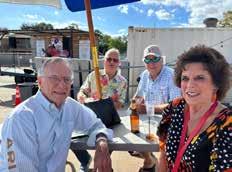
Xmas party

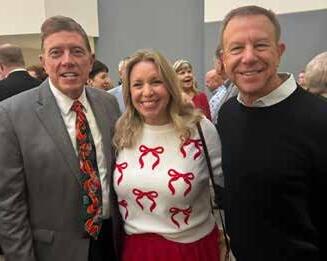


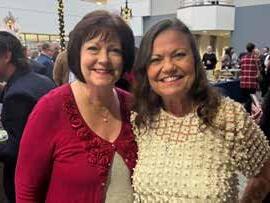
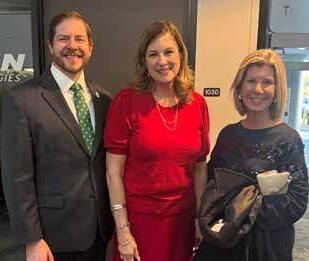

The wait is over, and the new REDSOL Wellness Club is now open in the Southshore/League City area. This state of the art Wellness Club is the creation of local dynamic businessmen Co Founder/CEO Joshua Jones and Co Founder Chase Hanson. These two high school classmates combined their entrepreneurial business skills, experience, and acumen creativity to develop a unique Wellness Club. Hanson's 10 years in the MedSpa business with Jones's solid business background makes a winning combination.
Services offered at REDSOL include Red Light Therapy, Infrared Saunas, Body Sculping and Contour, NAD+, Peptides and Weight Loss, as well as Stem Cell Therapy. At REDSOL (red.soul/n.), the slogan, “feeling good feels good”, rings true because their lifestyle is a state of optimal vitality where cellular energy radiates through your mind, body, and soul.
Because research shows that inflammation is the root of all pain and disease, "our goal is to focus on the individual with inflammation and pain issues. We want to reduce and eliminate clients' chronic pain to get back to 100%, not just 60%. Once clients get better and energized, they can go back to the activities they enjoyed," said CEO Joshua Jones.
The design of the club is modern and contemporary but also feels comfy and cozy. When you arrive, you are welcomed by their well-trained personnel.


REDSOL Wellness Club is now offering your first treatment FREE, as well as a membership for only $147.00 per month - with no limit on visits or treatments. Other packages are available, and there is no binding contract. Make REDSOL Wellness Club your New Year's Resolution for 2026. REDSOL is located at 3311 Road 518 East, Suite 200. Call us at 281-979-5152 for more information or visit us online at: redsolwellness.club.
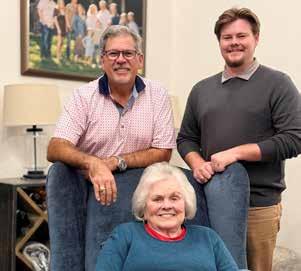
More than fifty years ago, in 1972, Bay Area entrepreneur Wanda Steel opened a home fashion business in Seabrook—at a time when few women were founding companies in the home improvement industry. Four years later, her husband Buddy Steel joined the venture, helping shape a lasting family business. What began as a small storefront serving NASA families and Clear Lake neighbors has grown into one of the region’s most respected names in home remodeling: My Flooring America.
Today, the company celebrates a milestone— the arrival of the third generation of Steel family leadership.
“We’ve always believed our business should reflect the community we serve—hard- working, locally owned, relationship-driven, and committed to doing things the right way,” says Scott Steel, second-generation owner and CEO. “Having my son Bryce join the business ensures that community-driven legacy continues for decades to come.”
Rooted in the Bay Area, Built for Today’s Customer
Though the business has expanded to eight locations across Houston and Dallas, its heart remains in the Bay Area. Early success came
from serving NASA employees and contractors who valued precision, reliability, and trust. As residential growth expanded along the I-45 corridor, the company grew alongside it, keeping Seabrook central to its identity.
“Some of our longest-standing customers worked at NASA or in the aerospace industry,” Scott notes. “Those roots shaped how we think about service, trust, and innovation."
As shopping habits evolved, so did My Flooring America. Today’s homeowners rely on online
research, digital tools, and in-home consultations. The company has refined a seamless customer journey supporting all three.
A key differentiator is its fleet of mobile showrooms, allowing customers to begin the process from home. These visits are paired with immersive showroom experiences and interactive digital visualization tools.
“It’s not just about selling flooring—it’s about meeting people where they are and building relationships,” says Bryce Steel, a recent graduate of Texas A&M who joins the family business this year. “I’m excited to build on what my dad and grandparents created while bringing fresh ideas that reflect how my generation shops and renovates.”
For Wanda Steel, watching her grandson step into the business she founded more than five decades ago is meaningful. “When I opened our first store, I never imagined three generations would follow,” she says. “Seeing Bryce join Scott reminds me why we built this business in the first place—family, faith, community, and taking care of people the right way.”
My Flooring America’s commitment extends beyond its stores. For over fifty years, the company has been involved in organizations like the Clear Lake Area Chamber of Commerce and BAHEP. Scott, along with key team members, has served in leadership roles and supported initiatives benefiting the Bay Area.
“Our community involvement isn’t a marketing strategy,” Scott says. “It’s who we’ve been since 1972—and why we’re the place where friends send friends.”
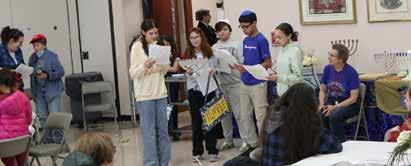
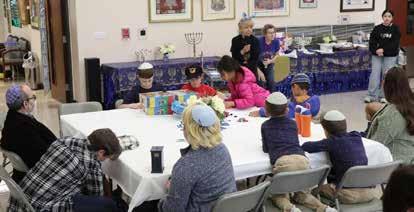
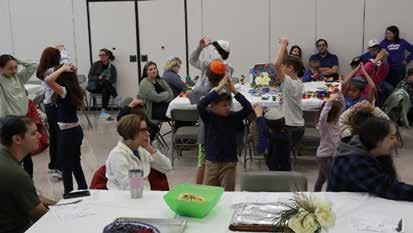
The children and parents of Congregation Shaar Hashalom's religious school welcomed the first night of Chanukah to the tunes of an electric violin as the Menorah candles were lit. The children of all ages worked together to present their special Chanukah play. After the play, there were four different craft tables set to allow the children to work with fruits and vegetables making their own special Menorahs and other Chanukah designs.
Of course, there was a table loaded with Legos for other creative endeavors. After a question and answer period, the assembled group danced and sang Chanukah songs while accompanied by the electric blue violin. Like most all joyful Jewish events, the celebration day was concluded with eating latkes (potato pancakes) and other special foods.
Established in 1969, Congregation Shaar Hashalom is the only Conservative Jewish synagogue in the Clear Lake/Bay Area. The synagogue is located at 16020 El Camino Real, Houston, TX 77062. If you would like to join us for Shabbat services on Friday evenings or Saturday mornings, please contact the office at 281488-5861 or president@shaarhashalom.org.



By Linda Grimm

Brian Alpert’s path was always destined for the aerospace industry, but his journey turned toward NASA’s Johnson Space Center during his sophomore year in college. That was when Tricia Mack, who works in NASA’s Transportation Integration Office within the International Space Station Program, spoke to his aerospace seminar about planning spacewalks, training crews, and supporting operations from the Mission Control Center in Houston.
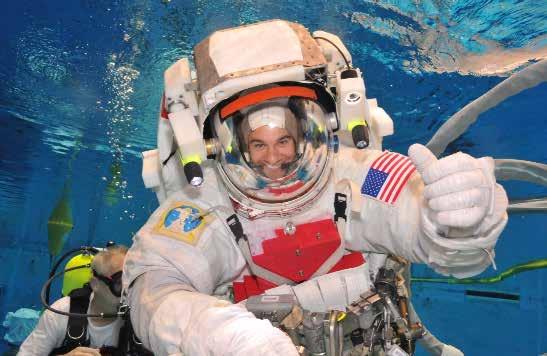
Alpert has enjoyed the opportunity to participate in several proposal reviews for Artemis program contracts as well. “NASA’s model of embracing publicprivate partnerships to achieve its strategic goals and objectives is exciting and will continue to expand opportunities in space,” he said.He applies lessons learned and skills gained from his previous roles as a spacewalk crew instructor, flight controller, and systems engineer to his current work on HLS. “I hope to pass on to the next generation that skills and lessons you learn as a student or a young employee can and will help you in your future work,” he said.
Alpert was inspired to join the agency and later earned a spot as an engineering co-op student at Johnson. “My first stop after new employee orientation was Tricia’s office,” he said.
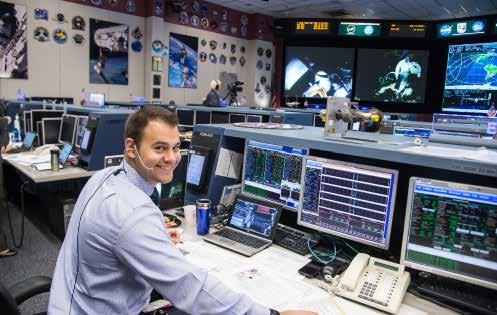
Eighteen years later, Alpert is the cross-program integration deputy for NASA’s human landing system (HLS) – the mode of transportation that will take astronauts to the lunar surface as part of the Artemis campaign. In his role, Alpert is responsible for coordinating with other Artemis programs, like the Orion Program, on issue resolution, joint agreements, data exchanges, hardware integration, and reviews. He also co-leads the Exploration Atmospheres Issue Resolution Team, assessing risks to and impacts on space vehicle atmosphere, spacesuit pressure, and operational timelines for Artemis missions.
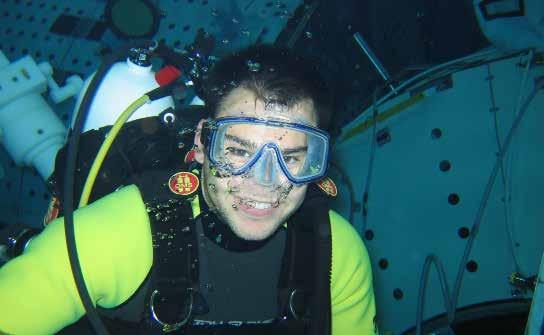
Brian Alpert routes cables in the Johnson Space Center’s Neutral Buoyancy Laboratory in preparation for a crew training run in 2011. Image courtesy of Brian Alpert Alpert’s prior NASA roles involved memorable experiences like working to address spacesuit and vehicle failures that occurred during a spacewalk on International Space Station Expedition 32. He was serving as the lead spacewalk systems flight controller in the Mission Control Center at the time and played a key role in getting NASA astronaut Suni Williams and JAXA (Japan Aerospace Exploration Agency) astronaut Aki Hoshide safely back aboard the space station.
Since Williams and Hoshide did not complete the spacewalk’s primary objective – replacing a Main Bus Switching Unit – a backup spacewalk was scheduled several days later. Alpert was on console for that spacewalk, too.
“One important lesson that I have learned through my career to date is how exceptionally talented, passionate, and hard-working everyone is here at NASA,” he said. “Whenever work gets stressful or problems get hard, there are teams of people that have your back, are willing to problem-solve with you, and can bring another perspective to finding a solution that you may not have considered.” He added that his colleagues are the best part of his job. “As much as I love what we do at NASA, what really gets me excited to come to work is all the outstanding people I get to work with every day.”
Learning how to navigate change has been an important lesson for Alpert, as well. “NASA has been through a lot of change since I became a full-time employee in 2009,” he said. “Making sure that I have clear goals for myself, my work, and my team helps us all stay focused on the mission and the work at hand and helps us prioritize projects and tasks as questions or challenges inevitably arise.”
One challenge Alpert especially enjoys? Johnson’s annual Chili Cookoff. He has participated in many cookoffs as part of the Cosmic Chili team, noting that he often dons a Wolverine costume as part of the festive fun. He also welcomes a space trivia challenge – and a chance to add to his collection of trivia trophies.
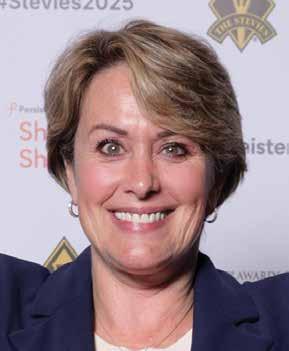
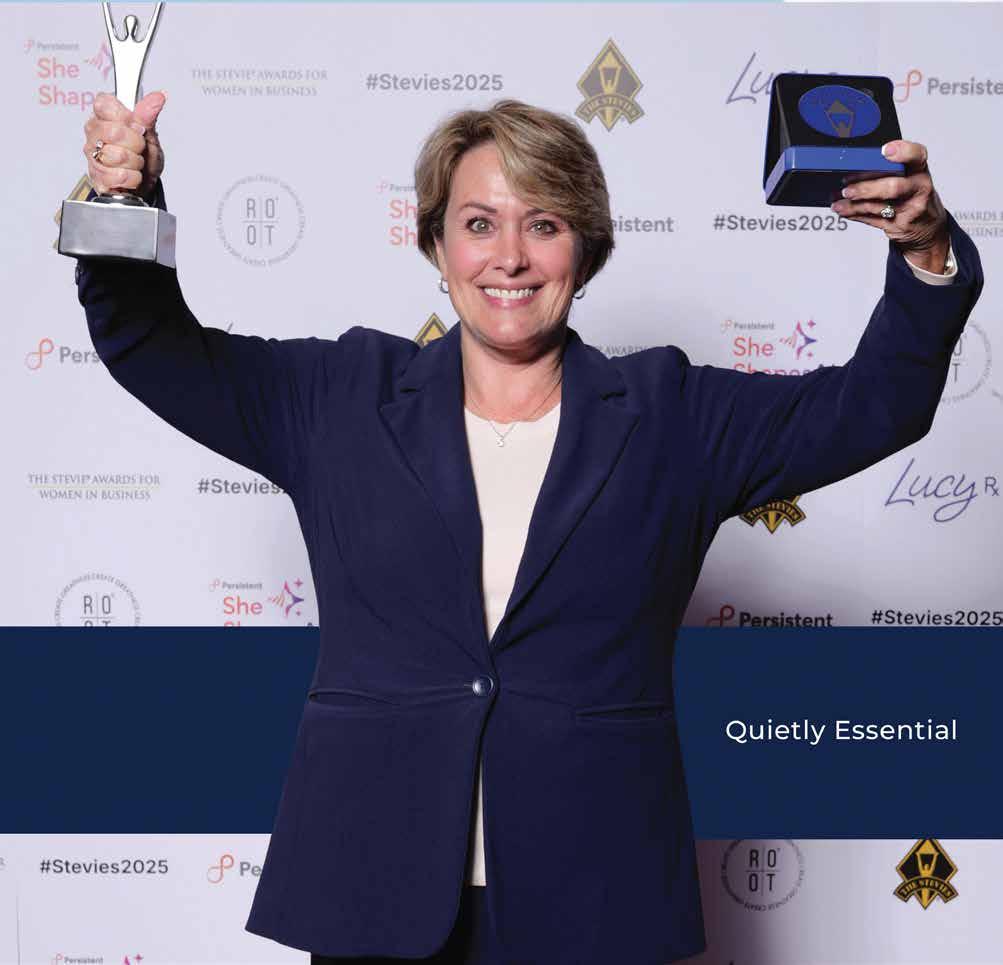
Before the world stirs, the lights in NASA Johnson Space Center’s control rooms cast a distinctive glow—soft at the edges, sharp at the core— mirroring the kind of focus and quiet intensity that define Linda Pandolph’s journey. At these hours, Pandolph often recalls her roots: a Lawton, Oklahoma, kitchen where “oyster stew nights” taught a military family’s fourth child about perseverance and making do. The contrast between those modest beginnings and her place at the helm of a space and defense innovator defines both her worldview and her company’s ethos. This is the foundation upon which Pandolph built not just a business, but a mission. It is, in every sense, Quietly Essential.
Pandolph’s leadership was forged early—by necessity and by inspiration.
At ten, she organized her first carnival, earning nine dollars and a passion for building something from nothing. Her educational path through Oklahoma State saw victories and setbacks that taught resilience and humility; lessons she distilled into a guiding principle: “Celebrate the temporary and keep the faith.” She believes in hard-won achievements, in giving more than you take, and in “the universe returning what we throw out.”
As President and CEO of LZ Technology (LZT), Pandolph leads a recognized Woman-Owned Small Business that has served NASA, the Department of Defense, and beyond for 25 years. Under her stewardship, LZT has grown to several hundred technical professionals—engineers, analysts, and innovators—who deliver essential systems engineering, software, cybersecurity, and workforce services. The company’s reputation rests on the sort of work rarely detailed in headlines: advancing Mission Control, supporting astronaut training and ground systems, managing the transfer of science and
supplies. This meticulous, behind-thescenes effort keeps missions on track— LZT truly embodies “Quietly Essential.”
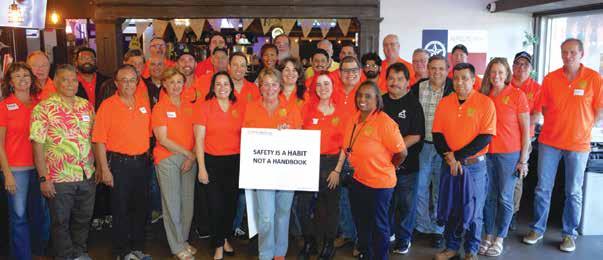
In Bay Area Houston, safety is culture. Each year, LZT hosts Safety Day, strengthening NASA’s Safety Awareness Program. Employees rally with creativity and competitive spirit; this year’s winner submitted by Jeff Hinton, “Safety is a habit, not a handbook,” now echoes through hallways. At LZT, safety is more than policy—it is shared vigilance for every crew, family, and future.
Family is the heart of LZT’s legacy. From the company’s founding, Pandolph’s children, Chase and Emily Cook, contributed and learned. Today, Chase drives business development for federal programs, while Emily shapes the company’s marketing strategy. She fondly recalls afternoons beneath her mother’s desk, unknowingly soaking up the responsibilities and rhythms of authentic leadership. Their growth from childhood bystanders to company pillars weaves the next generation of stewardship into LZT’s fabric.
Pandolph leads with the conviction that every employee must feel valued. Employees take home a honey-baked ham or turkey each Thanksgiving—a quiet reminder that their contributions truly matter. Above all, she celebrates “Shout Out for Excellence” recipients— honoring remarkable team and individual achievement with a distinctive bronze coin. It’s a small, heartfelt gesture; one that has come to symbolize the excellence and belonging at LZT, which explains an employee retention rate of 98%.
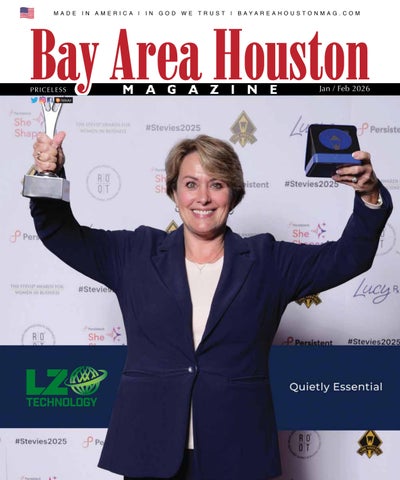
Recognition comes quietly for Pandolph, who always credits her team for the company’s success. In 2025, she earned two (international) Silver Stevie Awards for Women in Business— Lifetime Achievement and Female Executive of the Year—reflecting a culture built on collective excellence. LZT has also been named NASA Johnson Space Center Subcontractor of the Year and SBA Region 6 Subcontractor of the Year. As one of the few women leaders in her field, Pandolph champions mentorship and opportunity, supporting internships and a pipeline that has introduced over 1,200 students to aerospace careers.
LZT is integral to the Bay Area Houston ecosystem—not just for engineering brilliance, but for sustaining careers,
families, and community vibrancy. The company’s collaborative approach, with partners such as Bay Area Economic Development Partnership, the area’s leading advanced collaboration network, educators, and industry leaders, anchors what’s best about the region’s legacy while fueling the future—from Artemis to commercial space and tech innovation.
Linda Pandolph’s brand of leadership— resilient, principled, and peoplefirst—resonates across teams and communities.
While many of Linda Pandolph’s peers are contemplating retirement, she, her children, and the entire team at LZ Technology are, in truth, just getting started. Linda states, “From the leadership team to every employee, it is essential to support not only the missions they support at NASA, the intelligence communities, and the Department of Defense, but also to recognize that this is not just a family of employees; it’s a calling.”
In a fast-evolving landscape, where new threats and new frontiers are redrawing the very nature of mission support, Pandolph’s leadership remains anchored in purposeful forward momentum. LZ Technology is deliberately introducing cutting-edge
technologies into its portfolio, reflecting its belief in transforming through innovation. Among its strategic partnerships is the introduction of solutions from Quantum Interface, LLC, an Austin, Texas based company founded by Jonathan Josephson and devoted to developing advanced human-machine and humancomputer interaction technologies— especially dynamic, predictive, motionbased interfaces and immersive user experience platforms that not only change the way NASA astronauts will interact with their environment, but also transcend how the environment will interact with us.
Pandolph understands that the Quietly Essential companies of today must anticipate the needs of tomorrow’s missions, embracing the emerging technologies that will define human space exploration, national security, and everyday life itself. “We’re not winding down. We are building up— for the next era, for the next workforce, for the next giant leap,” she reflects. We stand ready to jump.
In a city that knows how to look up, Linda Pandolph’s leadership reminds us how missions lift communities when they are anchored in character. That is why LZ Technology is—and must remain—Quietly Essential to Bay Area Houston’s next chapter. Or, as she would put it, “celebrate the temporary and keep the faith.” The work ahead will demand both.


PREPARING:
By Robyn Weigelt
MAIN INGREDIENTS
2 - Filet Mignon steaks 6 oz each 8 - large shrimp
SAUCE AND SEASONING: 1 cup heavy cream 2 tbsp unsalted butter 1/4 cup of white wine 2 tbsp of fresh thyme
2 garlic cloves minced 1/2 tsp kosher salt 1/4 ground black pepper:
1- Season filets with salt and pepper
2-heat a large skillet with olive oil over medium high heat. Cook steaks 4-6 minutes on each side .( Med rare ) transfer steaks to a dish and cover with foil .
3-In the same skillet add garlic and sautéed until soft — 2 minutes
4-add lobster and shrimp 2-3 minutes
5-add white wine to deglaze the pan, scraping bits from the pan
6-stir in heavy cream,thyme Simmer 3-4 minutes until slightly thickened
7- Remove pan from heat and stir in butter until mixed and melted.
8-Spoon the Shrimp and lobster sauce over filets and serve.
Roasted Brussel Sprouts and Mashed potatoes are perfect sides for this Beautiful Romantic Meal.
Small salad of your choice and a Delicious bottle of Red Wine
By Pastor Brad Heintz
If you’re reading this in January or February, the year is still unfolding. Some of us begin with excitement and fresh energy Others step into the new year already tired, carrying unfinished business, unanswered questions, or a quiet hope that this year might feel different. That’s one reason Living Word Church doesn’t begin the year with a long list of resolutions. Instead, we invite people to choose one word — a simple, prayerful focus meant to bring clarity rather than pressure. One word to return to when life feels noisy. One word to guide decisions at home, at work, and in relationships as the year takes shape.
For 2026, our one word is Soar.
Early in the year, it’s easy to think soaring means doing more — setting bigger goals, moving faster, pushing harder. But Soar isn’t about striving. It comes from Isaiah 40:31, a verse written to people who were exhausted, discouraged, and unsure of what came next: “Those who hope in the Lord will renew their strength… they will soar on wings like eagles.”
That promise feels especially relevant at the beginning of a year, when motivation may already be mixed with fatigue. Eagles don’t soar

by flapping endlessly. They soar by catching the wind. They rise not because they work harder than other birds, but because they know when to stop fighting gravity and allow lift to do its work. That image reframes what strength looks like in January and February.
Soaring doesn’t begin with effort — it begins with trust.
The One Word practice encourages that pause. Instead of asking, What should I fix this year? we start by asking, What’s working? What’s not? What do I need — and what needs to go? Then we look up, asking God what He wants to do in us, not just what we want to accomplish. Out of that quiet reflection, one word often rises to the surface.
For some, Soar means learning to rest without guilt in a culture that celebrates busyness. For others, it means rising above fear, comparison, or self-doubt as new responsibilities emerge. For many, it looks like endurance — choosing faithfulness even when clarity hasn’t fully arrived yet.
What makes One Word different from resolutions is that it doesn’t depend on willpower. It depends on God and him speaking into our year and life. So I encourage you to get talking with God and let him speak into your year and life with your very own one word.
As this year is still new and unfolding, Soar serves as a reminder that growth doesn’t have to be rushed. Strength can be renewed. Perspective can change. And sometimes the most meaningful progress at the start of a year isn’t pushing forward — it’s learning how to rise.
Pastor Brad Heintz is the founding pastor of Living Word Church in Taylor Lake Village, Texas, a vibrant family-style, non-denominational gathering of believers who take a pure, simple and real approach to faith and life. www.LWCBA.org









By Don Armstrong
Dad likes off-roading; mom likes the luxury side of things. It may sound farfetched, but today’s SUV’s can be capable of handling both. Bay Area Houston Magazine got to drive these two, and afterwards, we said, “why not both?”
Like legendary racer Carroll Shelby, who attached his name and knowledge to the Ford Mustang, it was Bill Stroppe who was tapped to build winning Baja racers for Ford in the 60s and 70s.
The platform happened to be the Ford Bronco, and the Blue Oval boys decided it was time to recreate one for us wannabes.
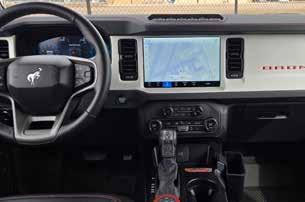
Colors and layout are remarkably similar to Stroppe’s, and this two door Bronco is begging you to climb in and take it for a spin.

INFINITI QX60
The white dash is unique and will get your attention as soon as you open the door. Seats are a nice compromise between racing and everyday comfort. Clambering into the cramped back seat takes some getting used to, but Ford makes a 4-door Bronco for those faint of heart.
Goat Mode offers everything an off roader wants when getting through the rough terrain. New electronics take care of everything else. In Big Foot fashion, 35-inch wheels, lifted suspension, Fox Shocks, and a bunch of other goodies complete its off-road ability.
The Stroppe Bronco starts at $77,630.
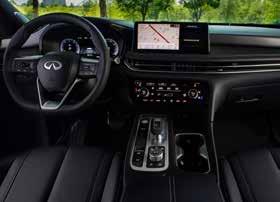
From rough and tumble to sophisticated and refined, the Infiniti QX60 offers ability and comfort. The 2026 model seems to stand out among luxury SUVs, which tend to get muddled and indistinguishable from others in the category. This 3-row holds its own.
The big Infiniti grille lets you know right away what’s coming down the street. Nothing out of line, just the right amount of eye candy in a big carry-all.
The interior is attractive: nicely designed and not too difficult to maneuver through. However, three separate screens, instrumentation, infotainment, and climate controls tend to break up the cohesiveness. Seating is comfortable and perfect for the spring road trip to Aunt Mary’s.
Power is derived from a new, variable compression turbo 4-cylinder engine that delivers its 268 horsepower through a CVT transmission. Although the horsepower seems like a good match, we found a disconnect in the drivetrain and not as smooth as we’d like. Driving style plays a part in that as mine can be a little aggressive.
Pricing on the QX60 begins at $50,200.



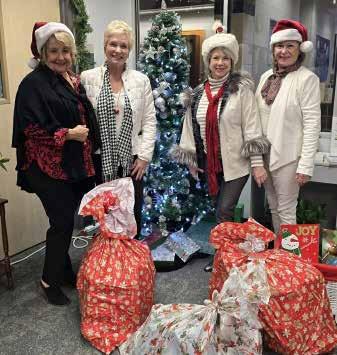

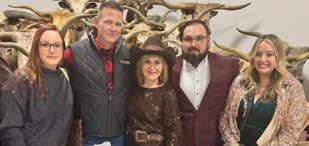
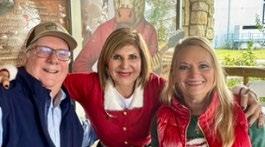
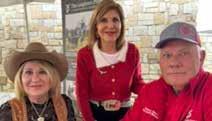
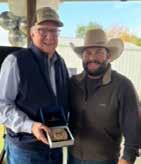
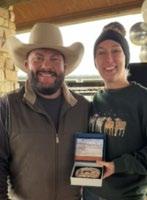
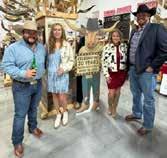
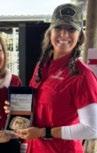
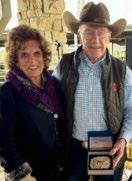
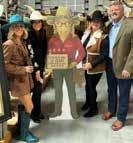
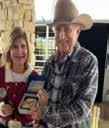
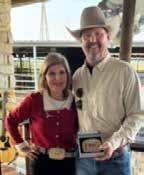
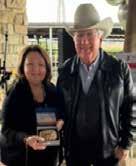
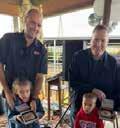
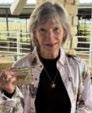
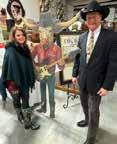
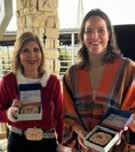
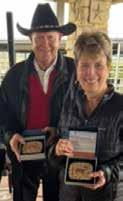
WWW Delivering Gifts to League City Elementary (above) and Lavace Stewart Elementary in Kemah (left)



























By Rob Hefner


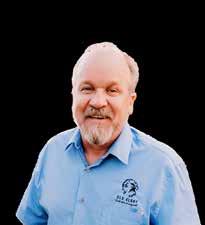




IWhat to know before it freezes (if it does)
didn’t move to Seabrook because I like cooler temperatures. I’ll take 95 degrees over 45 degrees any day. If wishes came true it would never get below 30 degrees around here, but if wishes were horses, beggars would ride. Sometimes we have to prepare for the horror of a hard freeze. Eeewww.From the perspective of a remodeler who has fixed up so many houses that froze, here are the biggest things to worry about.
1. The most important thing is to know where your water shutoff is! No matter what you do to prepare, Old Man Winter gets a vote and sometimes he wins. The first thing to do when you find or suspect a leak is cut off the water. Then call a good plumber, if you don’t know one call me and I’ll give you a number. Waiting can add another zero or two on the cost of repairs.
2.
Check insulation on any water lines outside of your home. The minimum requirement is that black foam insulation held in place by duct tape or better. A layer on top of that is better, even if its just an old towel. The idea is to block the wind more than anything else.
3. Have you looked closely at the copper bowl shaped thingie on top of the water supply line to your sprinkler system? On the bottom of that there are usually two little screws. Open them to drain water out of the copper so it doesn’t crack in the ice ($350 or more to replace). If it is designed so that you can, cut off all the water to the sprinkler and let it drain. If it’s not clear how to shut it off, insulate!
4. Leaks in cabinets are most expensive, and cabinets against the exterior walls are most at risk. While I can’t prove it, seems like a good idea to open those cabinet doors, maybe even leave a really slow drip on the faucet. I mean really slow. That may help keep just a bit of water moving through all the pipes in the house, and moving water is less likely to freeze. This all maybe be an old wive’s tale, but I always listen to old wives. Especially mine.
5. Don’t ever crack a joke about your spouse’s age like I just did. Cold can have more than one meaning.
6. Stay warm, Seabrook! Spring is right around the corner!



This handsome part Chow-Chow is a true showstopper, and it’s his fluffy, curled tail that tells the whole story. With his rich red coat and proud strut, he turns heads wherever he goes. He loves a good game of fetch and thrives on attention, soaking up every compliment like he knows he deserves it. Sweet, charming, and impossible not to adore, this boy is ready to curl his way right into your heart.
Come see us at Bay Area Pet Adoptions! We are looking for our Forever Home!
Meet Harry—This young Yorkie mix weighs in at under 6 pounds, though he insists he’s at least 50 in spirit. With his wild, wispy fur and big curious eyes, he looks a little like a tiny mad scientist who’s moments away from unveiling his latest invention (probably a crumb detector). Harry can be a bit nervous when meeting new humans, but once he warms up, his innerexplorer explorer comes out—sniffing, scouting, and investigating every corner of his world. If you’re looking for a pocket-sized adventurer with a dash of quirky charm, Harry is ready to steal your heart!


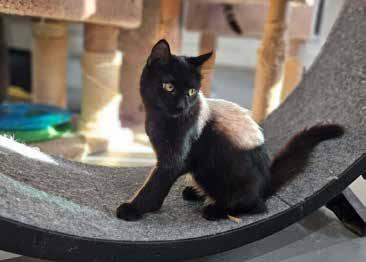
Hi! I’m Wildflower. Every day is a new adventure for me here. I love spinning on my cat wheel—it’s like a merry-go-round for kitties! I’m always up for a game or exploring every nook and cranny. Sometimes, I’m a bit goofy, tumbling over my own paws. But that just adds to the fun! If you’re looking for a sweet companion who will keep you smiling and on your toes, I’m your girl. Let’s make every day an adventure together. Why not come meet me and see how much joy we can share?


Meet Sally, an adorable 10-pound optical illusion of a dog. The front half of her body looks like she’s ready for a rock concert—while the back half looks like someone hit the “smooth” button mid-groom. Down the middle: a perfect grey racing stripe. Sally is a true lapdog through and through—24/7 shifts preferred, overtime welcomed, benefits negotiable. She’s sweet, a little shy at first, and great with other small dogs. If you’re looking for a tiny companion and devoted lap warmer, Sally is your girl!
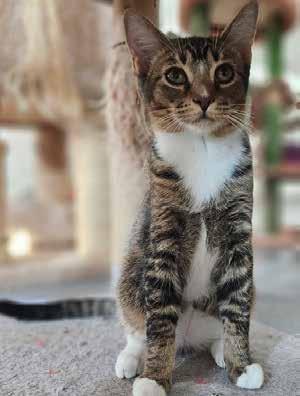

Hi! I’m Highway, a young, sweet soul nestled in a cozy corner of the shelter. My days are filled with gentle purrs and soft nuzzles against friendly hands that pass by. I’m a bit shy at first, but give me a moment, and I’ll warm up with a curious glance and a friendly chirp. I love to explore every nook around me, always curious about the world. If you’re looking for a cuddly companion who will quietly explore your world and fill it with warmth, I’m your perfect match. Let’s adventure together!
By Sumer Loggins
Space changes you. It strengthens some muscles, weakens others, shifts fluids within your body, and realigns your sense of balance.
NASA’s Human Research Program works to understand—and sometimes even counter—those changes so astronauts can thrive on future deep space missions.
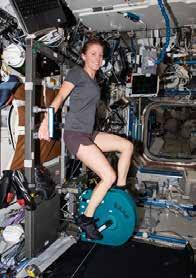
Astronauts aboard the International Space Station work out roughly two hours a day to protect bone density, muscle strength and the cardiovascular system, but the longer they are in microgravity, the harder it can be for the brain and body to readapt to gravity’s pull. After months in orbit, returning astronauts often describe Earth as heavy, loud, and strangely still. Some reacclimate within days, while other astronauts take longer to fully recover.
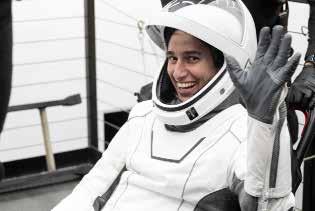
The crew of NASA’s SpaceX Crew7 mission— NASA astronaut Jasmin Moghbeli, ESA (European Space Agency) astronaut Andreas Mogensen, JAXA (Japan Aerospace Exploration Agency) astronaut Satoshi Furukawa, and Roscosmos cosmonaut Konstantin Borisov—landed in March 2024 after nearly 200 days in space. One of the first tests volunteer crew members completed was walking with their eyes open and then closed.
“With eyes closed, it was almost impossible to walk in a straight line,” Mogensen said. In space, vision is the primary way astronauts orient themselves, but back on Earth, the brain must relearn how to use inner-ear balance signals. Moghbeli joked her first attempt at the exercise looked like “a nice tap dance.”
“I felt very wobbly for the first two days,” Moghbeli said. “My neck was very tired from holding up my head.” She added that, overall, her body readapted to gravity quickly. Astronauts each recover on their own timetable and may encounter different challenges. Mogensen said his coordination took time to return. Furukawa noted that he could not look down without feeling nauseated. “Day by day, I recovered and got more stable,” he said.
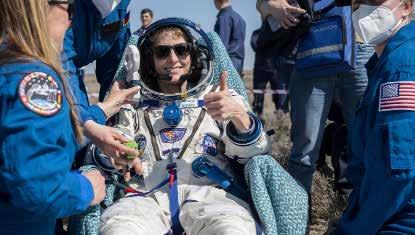
NASA astronaut Loral O’Hara returned in April 2024 after 204 days in space. She said she felt almost completely back to normal a week after returning to Earth. O’Hara added that her prior experience as an ocean engineer gave her insight into space missions.
“Having those small teams in the field working with a team somewhere else back on shore with more resources is a good analog for the space station and all the missions we’re hoping to do in the future,” she said.
NASA astronaut Nichole Ayers, who flew her first space mission with NASA’s SpaceX Crew-10, noted that the brain quickly adapts to weightlessness by tuning out the vestibular system, which controls balance. “Then, within days of being back on Earth, it remembers again—it’s amazing how fast the body readjusts,” she said.
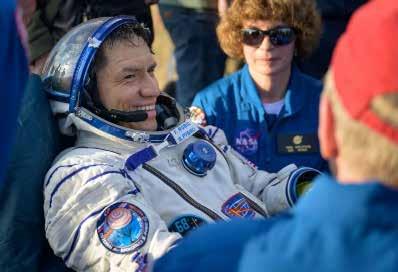
When NASA astronaut Frank Rubio landed in Kazakhstan in September 2023, he had just completed a record 371-day mission—the longest single U.S. spaceflight. Rubio said his body adjusted to gravity right away, though his feet and lower back were sore after more than a year without weight on them. Thanks to consistent workouts, Rubio said he felt mostly recovered within a couple of weeks.
Mentally, extending his mission from six months to a year was a challenge.
“It was a mixed emotional roller coaster,” he said, but regular video calls with family kept him grounded. “It was almost overwhelming how much love and support we received.” Crew-8 astronauts Matt Dominick, Jeanette Epps, Michael Barratt, and cosmonaut Alexander Grebenkin splashed down in October 2024 after 235 days on station. Dominick found sitting on hard surfaces uncomfortable at first. Epps felt the heaviness of Earth immediately “You have to move and exercise every day, regardless of how exhausted you feel,” she said.
Barratt, veteran astronaut and board certified in internal and aerospace medicine, explained that recovery differs for each crew member, and that every return teaches NASA something new. Still a Challenge, Even for Space Veterans
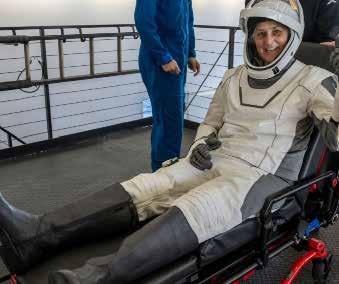
Veteran NASA astronauts Suni Williams and Butch Wilmore returned from a nine-month mission with Crew-9 in early 2025. Despite her extensive spaceflight experience, Williams said re-adapting to gravity can still be tough.
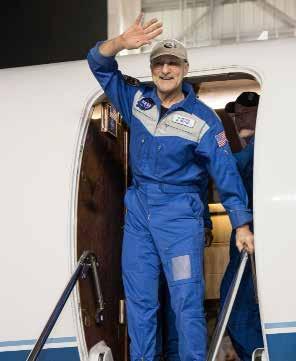
“The weight and heaviness of things is surprising,” she said. Like others, she pushed herself to move daily to regain strength and balance.invent to solve problems—and that’s one of the joys of working in the space program. NASA astronaut Don Pettit, also a veteran flyer, came home in April 2025 after 220 days on the space station. At 70 years old, he is NASA’s oldest active astronaut—but experience did not make gravity gentler. During landing, he says he was kept busy, “emptying the contents of my stomach onto the steppes of Kazakhstan.” Microgravity had eased the aches in his joints and muscles, but Earth’s pull brought them back all at once.
Pettit said his recovery felt similar to earlier missions. “I still feel like a little kid inside,” he said. The hardest part, he explained, isn’t regaining strength in big muscle groups, but retraining the small, often- overlooked muscles unused in space. “It’s a learning process to get used to gravity again.”
Recovery happens day by day—with help from exercise, support systems, and a little humor. No matter how long an astronaut is in space, every journey back to Earth is unique.
The Human Research Program help scientists understand how spaceflight environments affect astronaut health and performance and informs strategies to keep crews healthy for future missions to the Moon, Mars, and beyond. The program studies astronauts before, during, and after spaceflight to learn how the human body adapts to living and working in space. It also collects data through Earth-based analog missions that can help keep astronauts safer for future space exploration.
To learn more about how microgravity affects the human body and develop new ways to help astronauts stay healthy, for example, its scientists conduct bedrest studies – asking dozens of volunteers to spend 60 days in bed with their heads tilted down at a specific angle. Lying in this position tricks the body into responding as it would if the body was in space which allows scientists to trial interventions to hopefully counter some of microgravity’s effects. Such studies, through led by NASA, occur at the German Aerospace Center’s Cologne campus at a facility called :envihab – a combination of “environment” and “habitat.”
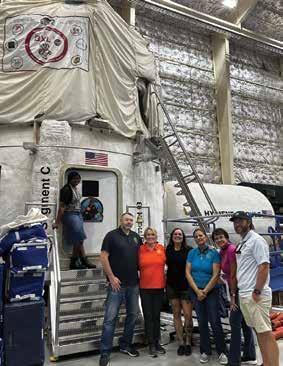
Additional Earth-based insights come from the Crew Health and Performance Exploration Analog (CHAPEA) and the Human Exploration Research Analog (HERA) at NASA’s Johnson Space Center in Houston.
Both analogs recreate the remote conditions and scenarios of deep space exploration here on Earth with volunteer crews who agree to live and work in the isolation of ground-based habitats and endure challenges like delayed communication that simulates the type of interactions that will occur during deep space journeys to and from Mars. Findings from these ground-based missions and others will help NASA refine its future interventions, strategies, and protocols for astronauts in space.
NASA and its partners have supported humans continuously living and working in space since November 2000. After nearly 25 years of continuous human presence, the space station remains the sole space- based proving ground for training and research for deep space missions, enabling NASA’s Artemis campaign, lunar exploration, and future Mars missions.






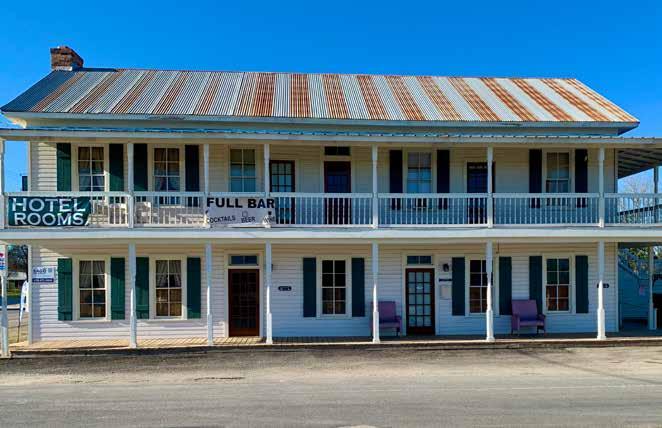
We were in the Castroville area when we heard that our friends Jack and Tess Clarkson would be playing at the grand re-opening of the old historic La Coste City Hotel. We had seen their act at various Hill Country venues over the years and always enjoyed the show, so we took a short drive to the tiny town to spend an evening of music and good beer.
The small bar area where the couple was playing was absolutely packed. Many were from this town but a good portion were people who came in just for this event. Because of the crowd, most people were sharing tables with strangers and while I am used to sitting with strangers at a bar, it seemed a bit foreign at tables. But when the band took its first break, it took only a minute or so before people began introducing themselves and engaging in lively conversations.
I am quiet by nature and it takes me a while to get actively involved in any sort of discussion. But I always listen attentively. Being a writer, I am always in search of ideas to “steal.”
A well-dressed young man was sitting with us and we began with the usual introductions and the nosy search for information. What brought you to Texas? How long have you been here? What do you do for a living? Why are you so dressed up for this casual venue? All the usual small talk. But by the second break, the conversation got deeper and more interesting.
He told us that he came to Texas after college. His dad was in the diplomatic corps and he lived in several places around the world. For a short time in his early teens they were stationed at Lackland Air Force Base in San Antonio. During that time, they were able to take family trips to nearby places in Texas and he loved every one of them. Then they had to move on.
When he was finally on his own, he decided he wanted to pick one forever spot and never have to move again. Of course, that would be Texas.
I asked whether all the moving as a kid was hard.
He responded that he didn’t really know back then because he never had anything else to compare it to. But he knew that as an adult, he didn’t want to live that way. What he really struggled with now, though, was that at this point in life, he had to live under the huge shadow his father cast. There were so many people around the world, and especially in the US, who knew who his father was and about his many accomplishments. The young man felt like everyone was expecting at least the same level of fame and success from the son, and as a result, he felt that nothing he could do would ever approach expectations.
It was at that point the band began the next set and it was 45 minutes before we could continue the discussion. But that time gave me a chance to ruminate about the way he viewed his situation. Generally, when I think about the concept of a long shadow, I imagine things like pressure to live up to the father’s level of success in the same field or an inability to develop one’s own identity and forever being best known as his father’s kid. Perhaps the reason he moved to Texas was to put some geographical distance between them, maybe find a place where his dad was less known—maybe a place where people would not put together that they were father and son. At the next break, we resumed the conversation.
He said none of those were really the case for him. He was on a very different career path than the one his father chose. He was working on developing an electronic eye that could examine its surroundings and transmit that information to an AI program. No one here in Texas viewed him as a potential government worker and his father didn’t understand what his son did, so there wasn’t much comparing going on as far as he knew. And he moved to Texas, not so much to escape his father, but because he wanted apermanent home and Texas was the best place he’d ever seen. Still, he felt doomed because his father and he shared the same name. He was afraid he would always be seen as “Junior.”
By Michael Gos
At that point the last set of the night began and Jill and I said our goodbyes and left. (We are not late-night partiers.) But for the next few days, the conversation stayed on my mind. I wondered if this young man was being reasonable in his concerns. He and his father live half a continent apart. Neither is remotely connected to the other’s work life in any way, and while they share the same name, it was a common enough name that I doubt many people would ever suspect a connection. I know I certainly didn’t. Despite doing everything he could to facilitate the separation, he couldn’t shake the feeling of being inadequate.
It seems to me, if a person is troubled by the effects of a long shadow, be it from a parent, a sibling or a co-worker, he is probably standing too close to the tree. When you are living up against the trunk, no matter the day or time, you will always be in the shadow and it may feel like you are trapped within an inescapable dimness. But move just a bit farther away from the trunk of that tree, say, by creating space geographically, by a different career choice or by creating your own set of goals and dreams, and things start to look very different. It just takes a bit of awareness to realize the darkness is no longer surrounding you.
Perhaps this young man expected to feel overshadowed and never noticed that, in truth, he really had left that place some time ago. I wonder how long it will take him to realize that. I suspect that, at some time in the future, without him being aware of it, that huge shadow will become just a bit of cool, welcome shade.
And I suspect that is really what his father intended for him in the first place.