New study documents over 600 early LGBTQ protests in US
by Cynthia Laird
Anew study released Wednesday shines a light on the hundreds of protests led by LGBTQ people in the United States from 1965 to 1973.
The study, published jointly by OutHistory and Queer Pasts, documents more than 600 LGBTQ+ direct actions, stated Marc Stein, a gay man who’s a history professor at San Francisco State University and the study’s lead researcher. Stein is the new director of OutHistory and the coeditor of Queer Pasts.
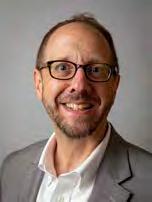
“The project, completed with the support of student researchers at San Francisco State University, can be understood as a survey of more than 600 events that Florida Governor Ron DeSantis and his allies want to cancel, censor, and closet when we teach U.S. history,” Stein stated in a news release, referring to the Republican leader of the Sunshine State and potential 2024 presidential candidate.
For the nine years studied, Stein and his research team identified 646 direct action events, averaging 72 per year. The study cites more than 1,800 media sources from the 1960s and 1970s, the release noted. According to these sources, more than 200,000 people participated in these protests and nearly 200 were arrested.
Stein noted that protests during the period took place in 20 states and the District of Columbia, “challenging the notion that these only occurred in New York, California, and a few other states,” he explained. The frequency of protests increased significantly in April 1969, two months before the well-known Stonewall rebellion in New York City, which is considered the birth of the modern LGBTQ rights movement.
Stein told the Bay Area Reporter that he and his team were unable to find the exact date of the August 1966 Compton’s Cafeteria riot in San Francisco’s Tenderloin neighborhood. The date has been lost to history, and other academic researchers over the years have also not been able to identify just when the sit-in by transgender people took place.
Last October, the California State Historical Resources Commission voted 6-0 to nominate the site of the 1966’s Compton’s Cafeteria riots for addition to the federal registry, as the B.A.R. previously reported. A month later, the San Francisco Board of Supervisors approved local landmark status for the Turk and Taylor intersection, which is near the long-closed cafeteria, as the B.A.R. noted at the time. The riots were one of the early uprisings by queer people against police harassment.
Stein said that he was able to find the date for a Compton’s demonstration, and that it took place July 18, 1966, about a month before the riots, according to an inventory of the documented protests that are part of the study. The inventory listed the demonstration as being reported on in the late Herb Caen’s San Francisco Chronicle column, the Berkeley Barb newspaper, and Cruise News and World Report, among other sources.
The federal office that oversees the National Register of Historic Places has yet to announce if it will approve adding 101-102 Taylor Street, where Compton’s Cafeteria was located, to the list. While it has not responded to an inquiry on the status of the listing, the California Office of Historic Preservation told the B.A.R. it has not been rejected.
Beleaguered Castro seeks signs of hope amid vacancies
by John Ferrannini
January’s abrupt closure of Harvey’s – the restaurant and bar named for the slain supervisor Harvey Milk, also known as the “Mayor of Castro Street” – lit a fire under mounting anxieties that San Francisco’s storied Castro LGBTQ neighborhood is in decline.

The apprehension had been growing for years, fueled by the rising number of vacant storefronts and business closures, street conditions that have similarly outraged San Franciscans across the city, and the ongoing effects of the COVID pandemic.
“I know people who don’t go to the Castro,” Cleve Jones, a longtime gay activist who was a former aide to Milk and was a co-founder of both the San Francisco AIDS Foundation and the AIDS Memorial Quilt, told the Bay Area Reporter. “They don’t want to go – gay and straight – they don’t want to see what you’ll see on Castro Street. The last time I went out in the Castro, I walked three blocks. I saw rats. I saw unconscious people sprawled on the sidewalk who’d soiled themselves. I saw a fight.”
And Jones isn’t alone. Rafael Mandelman, a gay man who holds the job Milk once held representing the Castro on the city’s Board of
Flore at
Supervisors, agreed that the neighborhood is in need of renewal.
“There’s still a lot that’s great about the neighborhood – businesses, it’s a draw for queer people, it has gay bars, some great res-


taurants – but I would have to agree with Cleve: it’s not nearly as vibrant as when I was coming out 20-30 years ago and that’s a loss not only for the neighborhood but for all who are connected to the Castro.”
SF Gay Softball League celebrates 50 years of breaking barriers
by John Ferrannini
The San Francisco Gay Softball League is celebrating 50 years of uniting the LGBTQ and athletic communities.
Steven Bracco, a gay man who is the director of communications for the league’s board, was among several players who spoke with the Bay Area Reporter on the occasion of the milestone. Bracco, who also writes for Hoodline and serves on the board of the Castro LGBTQ Cultural District, said he’s been a part of the league for 14 years. Bracco has worked at the San Francisco Fire Department since 2017.
“I joined to play sports but also to find friends and community in the Castro and in San Francisco,” he said. “It’s an amazing feat to be able to be around that long.”
The league is “one of the last gay leagues around” from the 1970s, according to league Commissioner Vincent Fuqua, also a gay man.
“It’s such a milestone,” Fuqua said. “Especially considering how things are in this world, it’s a remarkable achievement and I’m thrilled and excited.”
The league has consistently been popular with B.A.R. readers in its Besties polls. Bracco said that over the 50 years, the organization estimates that approximately 30,000 members have participated.

The new season starts March 26. “This season we will have an estimated 600-700 members,” Bracco stated.
SFGSL is open to everyone in the LGBTQ+ community and allies, Bracco explained. The league has two divisions, the Open Division and the Women’s+ Division.
Jess Graves, a lesbian who has been involved with the league for 13 years, said,“the biggest thing is community, not only as a whole, but my team as well.”
The tournaments help foster [community],” Graves said. “I think it’s the variety of teams, the flexibility over the years – for example we’re the women’s+ division because we accept anyone who identifies as a woman – and I feel the league is ahead of the game on that.”
Women have full support of the league, Graves said.
“We volunteer for Pride, we have booths where each team if they choose can send volunteers to serve drinks and make money for both the league and teams, and so that gets us interacting with people,” Graves continued.
Graves took up the game again as an adult after a brief stint in junior high school.
“I grew up playing ball in the backyard and played one year in junior high and didn’t make the team the following year,” Graves said. “I was at that point, as a tween or whatever, where I thought I sucked. I didn’t start playing again till 2001 when the dot-com bubble burst, I was out of a job and my wife left me. I started in the city league, and when I heard about the gay league through a friend of a friend, I got involved.
The all-volunteer, nonprofit league has a budget of $136,000 for the coming year, according to Bracco.
“The league collects fees from its members and their sponsor organizations, which fund softball operations,” Bracco stated. “The primary expenses of the league are field rental and setup, umpire fees, and playing equipment. In addition, the league works with corporate sponsors to help fund activities for the league members.”
Victory over police team was ‘enormous news’
During its history the softball league is perhaps best known for a game against members of the San Francisco Police Department 49 years ago.
Roger Brigham, who was a longtime gay sports columnist with the B.A.R. and has been a sports journalist since 1982, said that while he was never a member, the league’s first big impact was to “normalize and de-escalate relations between the queer community and the police community.”
Homosexuality was first legalized in the Golden State after the Consenting Adult Sex Bill was passed in 1975. It was carried by thenassemblymember Willie Brown (D-San Francisco), who would go on to become the city’s mayor. It was signed by then-governor Jerry Brown during his first stint in office. Before then, and even afterward under different pretenses, police raids of LGBTQ establishments were common.
Starting in 1973, police and gay softball teams began playing each other. The gay softball team won for the first time the following year.

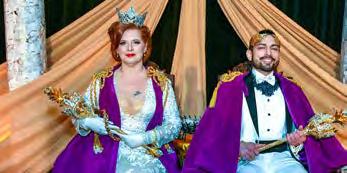
Serving the lesbian, gay, bisexual, transgender, and queer communities since 1971 www.ebar.com Vol. 53 • No. 09 • March 2-8, 2023 09 18 New SF royalty Sick beats at 'Six'’ Alpine Adventure ARTS 13 13 The
See page 5 >>
Cafe
2298 Market Street, is set to become Fisch and Flore this summer.
See
>>
John Ferrannini
page 8
See page 9 >>
San Francisco State University professor Marc Stein
Courtesy Marc Stein
The SF Fury Unleashed A team traveled to Dallas in 2022 for the Gay Softball World Series. The team took second place in the A Division.
Courtesy Steven Bracco
ARTS ARTS
Loren Rex Cameron dies
Castro merchant taps into Ukrainian art for fundraiser
 by Marijke Rowland
A Castro art gallery is using the humble postcard to help those hurt by the ongoing war in Ukraine, which recently entered its second year.
Art House SF, at 2324 Market Street just off the Noe Street intersection, has been selling colorful sets of postcards by Ukrainian artist Alyona Krutogolova since mid-January. All proceeds from the project go to the nonprofit Donum Vitae (Latin for “Gift of Life”), which buys medical supplies for Ukrainian hospitals.
Russia invaded Ukraine last February 24. Ahead of the oneyear anniversary, President Joe Biden visited Ukraine February 20 and spent more than five hours in the capital city of Kyiv, where he met with Ukrainian President Volodymyr Zelenskyy, honored the country’s fallen soldiers and saw U.S. embassy staff in the besieged country, the Associated Press reported.
Art House SF owner Max Khusid, who was born in Ukraine and immigrated to the United States 30 years ago, said he was shocked when Russia invaded his native
homeland a year ago and wanted to do something. When talking with Krutogolova, who is based in Kyiv, they decided to put on her first solo show with the gallery.
Khusid has displayed pieces of Krutogolova’s work – featuring bright, fanciful images of animals in various outfits – in the shop for the past three years.
Her solo exhibit “Spirit Animals” opened February 25 in the
Castro storefront and will run through April 2. As Krutogolova worked on creating and curating oil paintings for the show, Khusid said the idea for the Ukrainian war fundraiser came together.
“We wanted to reach out to more people,” said Khusid, who identifies as an LGBTQ advocate. “Only so many people can buy an expensive piece of artwork. But a postcard is a relatively inexpensive
format that I’ve found in the past people respond really well to. So why not bring some brightness to people’s day and at the same time help the Ukrainians?”
The gallery has raised about $600 since launching the fundraiser. Khusid said he transferred his first check to the charity in late February. The gallery has produced 500 copies of the 10-postcard sets, which sell for $15 each.
But the postcards aren’t the only way Khusid and Krutogolova hope to help their fellow Ukrainians as the war continues. The gallery will host a fundraising event March 25 for Donum Vitae that will feature Ukrainian artwork, cuisine, and other refreshments. Tickets will be required, but are not available for sale yet. Khusid said to check back with the gallery for more information soon.
Krutogolova’s work will be on display during the fundraising event, with original paintings in various sizes (ranging in price from $300 to $1,500), as well as prints and other formats available for purchase.
In an email interview translated by Khusid, Krutogolova said she has been “completely immersed”
in the war while living in Kyiv. “I hear the sounds of air raid alerts, the sounds of downed cruise missiles and drones, (and) in my area there are hits on residential buildings and infrastructure,” Krutogolova wrote. “It is difficult to find intelligible words to explain what it is like to live in a country that has been trying with all its might for a year now to defend its right to national identity, to freedom, to the future ... It’s hard, it’s very hard!”
While at first she said she couldn’t work, now Krutogolova sees her art as her way of helping with the war efforts.
“I always thought that I have cute, cheerful, decorative works that should bring joy, harmony and positivity to people’s homes,” she wrote. “But now they have a dual task, they are raising money for the Ukrainian victory, and perhaps they will save someone’s life, at least one life — it will be a lot!”
The Art House SF Ukrainian postcard fundraiser will run indefinitely, until the sets are sold out. They can be purchased in the shop or online. For more information visit www.arthousesf.com. t
Amid recount fight, trans Oakland school board member resigns
by Matthew S. Bajko
Rather than continue to contest whether he should remain serving on the Oakland school board, transgender married dad Nick Resnick has resigned from his seat. It brings to an end one of the oddest electoral fights seen in the Bay Area involving an LGBTQ candidate.

Resnick had been certified the winner of the race for the District 4
seat on the board that oversees the Oakland Unified School District on December 8, 2022. But in a shocking turn of events, Alameda County Registrar of Voters Tim Dupuis disclosed December 28 that his office had not properly counted the ballots in the contest and three others decided by ranked choice.
While the error didn’t affect the outcomes of any of the other races, it did result in Resnick incorrectly being

declared the winner of his race. Nevertheless, Resnick was sworn into office in January.
Yet the true winner of the school board seat, Mike Hutchinson, had sought the Alameda County Superior Court to declare him the victor. When tabulated correctly, the number of ballots cast for Hutchinson was 12,421, giving him 50.52% of the total vote count to win the race. Resnick had actually placed second with
12,165 votes under the ranked-choice system, for 49.48% of the vote.
Hutchinson has been serving in the District 5 seat on the Oakland school board. But he was redistricted into a new district last year and had sought the District 4 seat in order to remain on the oversight body.
As the Bay Area Reporter previously reported, Alameda County supervisors had voted in January in support of a recount of the votes cast in the Oakland school board race as well as the others impacted by the registrar’s mistake. Since then Hutchinson’s request for judicial intervention has been snaking its way through the courts.
He announced on his campaign Facebook page Tuesday, February 21, that Resnick had decided to resign and bring to an end the legal dispute over the seat.
“I want to thank Nick for his service to OUSD, for how he ran his campaign and for how he handled the unexpected and uncomfortable course of events over the last 2 months,” wrote Hutchinson. “I look forward to us working together in the future as I am sure he will continue to find ways to serve District 4, OUSD, and the community at large.”
In an email to his supporters late Wednesday afternoon, Resnick informed them of his decision to accept the fact that he had lost the race. He added that he would “congratulate my opponent” and be resigning from the school board.
“I recognize I can continue to contest this election for months and that for months we can spend precious public funds on a legal process and have uncertainty about who is ultimately going to occupy this seat. At this time, I don’t think that is what’s best for this community and I don’t think that’s going to help get our schools where they need to go,” wrote Resnick.
His being declared the winner and sworn into office means Resnick will maintain the distinction of being the first transgender person to serve on a board overseeing a K-12 public school district in California. His resignation means that once again there is only one trans man serving in an elected education post in the Golden State.
In Santa Cruz County, transgender Cabrillo Community College Board of Trustees member Adam Spickler last November officially be-
came the first transgender man elected to public office in California after winning his bid for reelection. Five years ago he was appointed to the college board in lieu of an election, since no one else ran for his Area II seat, making him the first transgender man to hold public office in the Golden State.
As for Resnick, he pledged to remain involved in the efforts to improve Oakland’s public schools so that families want to enroll their children in them.
“I don’t know exactly how I’m going to take this on over the next few years but what I do know is that I am going to commit my time, my energy, and my voice to make progress toward a day where all families will actively choose, in every segment of our community, a local public school that inspires and delights them,” he wrote. “I’m talking about schools in every corner of our city that families can’t get enough of. Our students desperately deserve for us to figure this out.”
What happens now with the vacant seat on the Oakland school board remains to be seen. According to the school district, “unless and until a court certifies a new winner of District 4, the seat is vacant.”
In a statement released February 23 the school district noted that the board members have 60 days, which would be April 22, to either appoint someone to the seat or call for a special election to be held. If there is still a vacancy by that date then the county superintendent for schools must call a special election to fill the seat. t

2 • Bay area reporter • March 2-8, 2023 t
<< Community News
Each of our communities offer a unique place where you can be yourself, live among friends and experience new adventures, all while securing your future. Explore your next steps for joining today! Communit y keeps you connected. Spring Lake Village Santa Rosa, CA 707.579.6964 springlakevillage-sr.org CA LIC. #490107656 COA#352 St. Paul’s Towers Oakland, CA 510.891.8542 stpaulstowers.org CA LIC. #011400627 COA#351 San Francisco Towers San Francisco, CA 415.447.5527 sanfranciscotowers.org CA LIC. #380540292 COA#350
Nick Resnick
Courtesy Nick Resnick
Ukrainian artist Alyona Krutogolova has designed postcards that Art House SF in the Castro is selling to raise funds for supplies for the war-torn country.
Courtesy Alyona Krutogolova
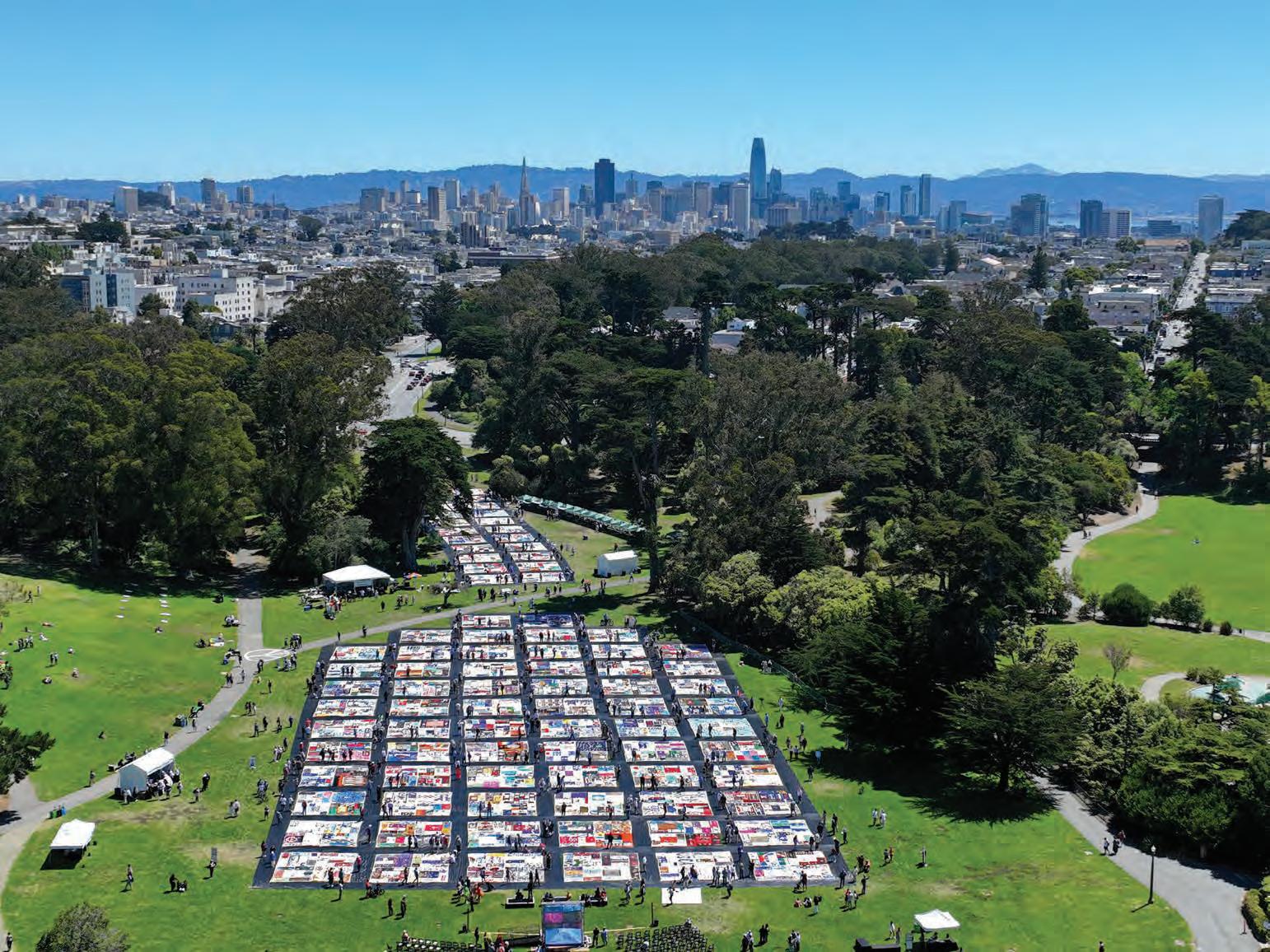
AIDS Memorial Quilt & Gilead
Together,
At Gilead, we understand that it’s going to take a combination of both science and social change to help end the HIV epidemic for everyone, everywhere. It’s only by collaborating with advocates and organizations across the country that we can reach this collective goal. Together, we’re working tirelessly to improve health equity and bring awareness to the HIV epidemic.

GILEAD and the GILEAD logo are trademarks of Gilead Sciences, Inc. © 2023 Gilead Sciences, Inc. All rights reserved. US-UNBC-1266 02/23
we can help end the HIV epidemic.
our collaborations at GileadHIV.com.
Explore
Congressional resolution honors Black LGBTQs
compiled by Cynthia Laird
Aresolution

authored by Congressmember Barbara Lee (D-Oakland) and two gay House members honored Black LGBTQ Americans as Black History Month came to a close.
Joining Lee, a straight ally, in authoring the resolution were Congressmembers Ritchie Torres (D-New York) and Mark Pocan (D-Wisconsin). All are members of the Congressional Equality Caucus, of which Lee is a founding member and current vice chair, and Pocan is the current chair.
The resolution, introduced February 27, has 32 co-sponsors, including co-leads, a news release stated. It needs to be voted on by the House.
Lee recently announced that she is running for the U.S. Senate seat being vacated by Senator Dianne Feinstein (D-California).
“For generations, we have seen the erasure of Black LGBTQI+ Americans from our history, despite all of the rich and impactful contributions these individuals have made to our culture, society, and the advancement of civil rights,” Lee stated in the release.
Torres, who identifies as Afro-Latino, added, “Black LGBTQ+ Americans have made countless and indel ible contributions to our society that have enriched our lives, informed our history, and enhanced our culture across so many industries and institutions.”
The list of those honored in the resolution is a mix of living and deceased Black LGBTQ leaders. Among those recognized are Justice Martin Jenkins, the first openly LGBTQ person to serve on the California Supreme Court after Governor Gavin Newsom
nominated him in 2020; the late Oakland A’s baseball player Glenn Burke; and Karine Jean-Pierre, a lesbian who currently serves as press secretary to President Joe Biden.

Others listed include lesbian Chicago Mayor Lori Lightfoot; queer Black Lives Matters co-founders Patrisse Cullors and Alicia Garza; and Andrea Jenkins, the first transgender woman to be elected to public office in Minnesota, where she serves on the Minneapolis City Council.
For a complete list, go to https://bit. ly/3J0pOJi
Leather district takes over ‘Dildeaux’ awards
Nominations are now open for the 51st annual Golden Dildeaux Awards, which this year have been taken over by the San Francisco Leather & LGBTQ Cultural District. A time-honored tradition in the leather community that had been produced by the Golden Gate Guards for the last 28 years, the awards are a good-humored contest for the sometimes-coveted, sometimes-embarrassing categories with suggestive subjects and names, a news release stated.
The awards also serve as a fundraiser as votes cost $1 each, with proceeds benefiting the emergency financial assistance program of PRC. Everyone is entitled to an unlimited number of votes for five nominees in 26 categories, the release stated. Some of the cheeky categories include “best sex,” “biggest pig,” and “best fister.”
The winners will be revealed the night of the Woodies Awards ceremony where they will come onstage to receive their Woody trophies. The Woodies take place Saturday, April 22, from 6 to 8 p.m. at the SF Eagle, 398 12th Street.
The leather district noted that the Dildeaux awards have a storied history. In 1974, the late Bay Area Reporter leather columnist Mister Marcus (Marcus Hernandez) founded them at the old Boot Camp Bar to raise money for the Tavern Guild Freedom Day parade float. By 1985, the awards had become a fundraiser for the old AIDS Emergency Fund (then known as the SF AIDS Fund).
In 1994, Hernandez asked the Golden Gate Guards to take on the awards, which the group did for 28 years, the release stated, building it from cardboard donation boxes in various bars to online voting and payments.
The Guards decided to dissolve last year, the release noted, at its 36th anniversary party. Members then turned over the Dildeaux awards to the leather district, which is honored to continue the tradition, officials stated.
In 2018, AEF merged with PRC.
The deadline for nominations is Thursday, March 9. Those will be revealed at the Golden Dildeaux launch party and beer bust Sunday, March 12, from 3 to 7 p.m. at the SF Eagle, after which voting begins. Balloting ends Thursday, April 20.

To make a nomination, go to https://bit.ly/3yfqVyB. For more information, go to https://sfleatherdistrict.org/gda/.
National LGBTQ coming out hotline now open
The LGBT National Help Center has launched its newest program, a coming out support hotline. According to a news release, the hotline focuses specifically on the concerns of those who are struggling with coming out issues, regardless of age or how each person defines that process. All services are free and confidential, and the hotline is staffed by LGBTQIA+ volunteers.
The LGBT National Help Center, based in San Francisco, is a nonprofit organization with a 26-year history of providing coming out services, the release stated.
Hotline volunteers would not tell someone to come out, the release noted, as that is a highly personal decision. But the peer volunteers can provide a safe space on the phone to discuss and consider a person’s physical and mental safety, as well as their options and how they might choose to move forward.
“When people in our community are considering one of the most important decisions of their lives, together we can provide critical support and care to those in the LGBTQIA+ community who are terrified to simply be themselves,” stated Aaron Almanza, executive director of the hotline.
See page 10 >>
4 • Bay area reporter • March 2-8, 2023 t Driverless is more More room to stretch out. More time to relax. More space to be you. Our driverless rides give you more freedom, time, and peace of mind. Join the waitlist and be one of the first to experience the magic of a driverless ride. getcruise.com Untitled-8 1 10/19/22 9:14 AM
<< Community News
Three Black LGBTQ leaders honored in a congressional resolution are California Supreme Court Justice Martin Jenkins, left, the late Oakland A’s baseball player Glenn Burke, and current presidential press secretary Karine Jean-Pierre.
Jenkins and Jean-Pierre, courtesy YouTube; Burke, Courtesy Oakland A’s
“When they [the LGBTQ team] beat the police department it was enormous news,” Brigham said. “Most of the time police and queers had been in the same headlines, it was because of police brutality, bar raids, and aggressive acts against our community. Putting police players, queer players on the same field added tremendous legitimacy to the queer community and put them together in a regular activity rather than eying across barricades at one another.”
The tradition of the teams playing each other continued through 1978, when the assassination of gay supervisor Harvey Milk and mayor George Moscone by former supervisor and police officer Dan White once again soured relationships between the communities.
The role the softball league has in breaking down social barriers, however, continues to this day, the players told the B.A.R.
On the one hand, being LGBTQ in professional sports is still often stigmatized. For example, baseball pitcher Solomon Bates became just the second active minor league player to come out as gay, as the New York Times reported.
“It helps build camaraderie and people’s self esteem,” Fuqua said about the league, adding the players are happy about their 50th anniversary partnership with the San Francisco Giants.
“It’s a huge thing to have a Major League Baseball team help out,” Fuqua said.
Orlando Diaz, a gay man who is the softball league’s director of business development, said that while details are in the works, “we’re definitely going to be a big part of their [the Giants’] Pride night.”
Added Fuqua: “We may also be a part of the throwing out of the first pitch as well.”


Pride Night is scheduled for June 10; The Giants organization did not respond to a request for comment for this report as of press time.

Peter Graham, a gay man who has been involved with the league since 2000, said it is his second gay softball league and that there are characteristics that make it unique from others.
“I played in Philadelphia in the league in 1995,” Graham said. “I’ve been involved in the SFGSL since 2000. When I first started playing, it was a great way to meet other LGBTQ folks who were also into sports. It’s an LGBTQ league, so we didn’t have to worry about any of the stuff going on with harassment or anything like that.”
Graham continued that he likes that the league is both friendly and serious about the game.
“SFGSL is just a really great league,” he said. “People are friendly, supportive, inclusive – but we’re also competitive too and we try to play the right way.”

Brigham said that the gay league “helped break down public prejudice against the queer community.”
“When they [straight people] see us as jocks, it changes viewpoints in the fight for acceptance,” Brigham said.
But the barriers the league tackles are also within the LGBTQ community. Fuqua said there’ve been allsober, all-drag, and all-trans teams over the years.
“This is all about making sure our members are fully included,” Fuqua said. “We have such a variety because we want people to come and grow and be themselves. We even had an all-straight team because we have a lot of allies.”
Brigham said that historically environments like the softball league, and other LGBTQ sporting leagues, have helped people feel included who either feel marginalized by, or are not attracted to, the nightlife scene.
“The greater gay sports movement came out at the same time as AIDS and sort of became an alternative lifestyle to just meeting people in the bars,” he said. Fighting for equality
But that inclusive and open attitude has not come without contro-


versy. In particular, three San Francisco players – LaRon Charles, Jon Russ, and Steven Apilado – helped to spearhead changes to the North American Gay Amateur Athletic Association’s rules to include bisexual and trans players.

The three could not be reached for comment.
When San Francisco’s team D2 made it to the NAGAAA championship in 2008, the players were questioned about their sexual orientations (players were ruled either gay or straight, with no option for any other sexual orientation or gender identity) and when one stated he was bisexual, a NAGAAA member said “this is not a bisexual world series – this is a gay world series.”
The team was disqualified on the basis it had too many non-gay players, which led to Charles, Russ, and Apilado filing suit. They were represented by the National Center for Lesbian Rights. While the three plaintiffs were men of color, two white players who were similarly questioned were ultimately ruled to be gay.
The case was settled in 2011.
“In the settlement, NAGAAA recognized that disqualifying the players from the 2008 tournament was not consistent with NAGAAA’s intention of being inclusive of bisexual players,” NCLR states on its website.
“NAGAAA now recognizes the players’ team, D2, as a secondplace winner of the 2008 Gay Softball World Series, and will award the team a second-place trophy. NAGAAA expressed regret at the impact the 2008 protest hearing process had on the players and their team. As a result of this case, NAGAAA changed its rules to be fully inclusive of all bisexual and transgender players, permitting an unlimited number of bisexual or transgender players to participate on a Gay Softball World Series team.”
Shannon Minter, a trans man who is legal director of the NCLR, stated that the nonprofit is proud of its work on the case.
“We were very honored to represent the plaintiffs in this case and to shine a light on the need to ensure that the Gay Softball League is open to all queer men – including bisexual men of color. Of course our community institutions are not perfect or immune to bias,” Minter stated. “Facing up to problems can be painful, but doing so is always better than pretending they don’t exist. These issues of exclusion and belonging are often hyper-charged for LGBTQ people because so many of us have faced trauma and exclusion. In our search for safe spaces we must be vigilant about not creating or even passively tolerating new exclusions.”
The NAGAAA did not respond to a request for comment for this report as of press time.
The upcoming season is “getting ready to start March 26,” Fuqua said, adding that a season-opening celebration will be held March 19 at the James P. Lang Athletic Fields on Cathedral Hill. Teams play usually at either Kimball Field (at Geary and Steiner streets, in the Western Addition) or Moscone Park (at Laguna and Chestnut streets, in the Marina). For more information, go to http://www.sfgsl.org/
The final day to register for the coming season is May 9, Bracco stated. For most players, the cost to do so is $95.
“The later date gives teams time to finalize rosters before the [NAGAAA] World Series and allows people to join late,” Bracco stated. “Regular season games end June 18, we typically wrap up before Pride. Then we have the End of Season Tournament on July 9.”
The world series is August 28-September 2 in Minneapolis, and the series for the women’s+ division is September 6-9 in San Diego. t
March 2-8, 2023 • Bay area reporter • 5 t From the Cover>>
<< Softball From page 1
San Francisco Gay Softball League members held a social event at league sponsor bar Blackbird that included SFGSL Vice Commissioner Lee Rankin, left; umpire and coach Marius Greenspan; development director Orly Diaz; and Commissioner Vincent Fuqua.
Courtesy Vincent Fuqua
Volume 53, Number 09
March 2-8, 2023
www.ebar.com
PUBLISHER
Michael M. Yamashita
Thomas E. Horn, Publisher Emeritus (2013)
Publisher (2003 – 2013)
Bob Ross, Founder (1971 – 2003)
NEWS EDITOR
Cynthia Laird
ARTS & NIGHTLIFE EDITOR
Jim Provenzano
ASSISTANT EDITORS
Matthew S. Bajko • John Ferrannini
CONTRIBUTING WRITERS
Christopher J. Beale • Brian Bromberger
Victoria A. Brownworth • Philip Campbell
Heather Cassell • Michael Flanagan • Jim Gladstone • Liz Highleyman • Brandon Judell

• Lisa Keen • Philip Mayard • Laura Moreno •
David-Elijah Nahmod • Paul Parish • Tim Pfaff •
Jim Piechota • Marijke Rowland • Adam Sandel
• Jason Serinus Gregg Shapiro • Gwendolyn
Smith • Charlie Wagner • Ed Walsh • Cornelius Washington • Sura Wood
ART DIRECTION
Max Leger
PRODUCTION/DESIGN
Ernesto Sopprani
PHOTOGRAPHERS
Jane Philomen Cleland • FBFE
Rick Gerharter • Gareth Gooch
Jose Guzman-Colon • Rudy K. Lawidjaja
Georg Lester • Rich Stadtmiller • Christopher Robledo • Fred Rowe
Steven Underhill • Bill Wilson
ILLUSTRATORS & CARTOONISTS
Christine Smith
VICE PRESIDENT OF ADVERTISING
Scott Wazlowski – 415.829.8937
NATIONAL ADVERTISING REPRESENTATIVE

Rivendell Media – 212.242.6863
LEGAL COUNSEL
Paul H. Melbostad, Esq.
LGBTQs needed on homeless panel
San Francisco Mayor London Breed has had a mixed record on appointments, particularly regarding the LGBTQ community. While she has nominated and seen approved many LGBTQ people over the years, there have been missteps. In 2021, she nominated four straight people (over a period of time) to the city’s Historic Preservation Commission. One of them, Christina Dikas, was rejected by the Board of Supervisors rules committee and ended up withdrawing her nomination after realizing she would not have the support of the board. This whole episode occurred when Breed chose not to reappoint two gay members of the preservation panel. Breed then nominated an LGBTQ person, Jason Wright, to the preservation panel, and he was approved.
Last year, Breed named three straight women to the school board after the recall of three commissioners. One of them, Ann Hsu, wrote a racist response on a candidate questionnaire that sunk her campaign for a full four-year term and was ousted last November. (Breed’s other two nominees, Lisa Weissman-Ward and Lainie Motamedi, were successful in their election campaigns.)
Now comes news that one of Breed’s nominees to the city’s new homelessness oversight commission, Vikrum Aiyer, a straight man, fudged his resume regarding his education
and, worse, billed U.S. taxpayers for personal expenses that totaled more than $15,000 when he worked in former President Barack Obama’s administration. Aiyer, a technology executive, now calls those actions “a grave mistake,” according to published reports in the San Francisco Chronicle and San Francisco Standard.
Breed was aware of the transgressions, which included Aiyer stating on his resume that he had a master’s degree when he left a graduate program early,
and the mayor’s office told the Chronicle that he accepted his mistakes.
Suffice it to say, Aiyer should withdraw from consideration, and failing that, the Board of Supervisors should not approve him for the post. Indeed, the Chronicle reported Tuesday that Aiyer does not have six votes that would be required for approval. This homelessness oversight commission, which was created when voters approved Proposition C last year, is brand new and needs stellar members, including those who have experienced homelessness and LGBTQ people, many of whom are impacted by homelessness, especially queer youth and trans people. Breed should nominate a qualified LGBTQ person if Aiyer withdraws or is rejected by the supervisors. (The Board of Supervisors will nominate the other three members of the homelessness commission and its picks should include an LGBTQ person as well.)
The mayor, who did not support the ballot measure that created the new oversight panel, also nominated three other people: Katie Albright, CEO of Safe and Sound; Jonathan Butler, Ph.D., a social epidemiologist and associate director of the Black Health Initiative at UCSF and executive director of the San Francisco African American FaithBased Coalition; and Sharky Laguana, the former president of the city’s Small Business Commission and nightlife advocate.
Let’s reauthorize PEPFAR
by Barbara Lee
During President Joe Biden’s recent State of the Union address, he briefly touched on a program that I helped start that has benefited people living with HIV/AIDS in countries around the world – the President’s Emergency Plan for AIDS Relief, or PEPFAR.
The president’s mention of PEPFAR touted the success of the global health initiative that just reached its 20th birthday. As I reflected on Biden’s remarks, I remembered those we have lost in the struggle against this disease, and stand in solidarity with the millions across the globe who continue to fight against it. PEPFAR was announced during President George W. Bush’s State of the Union speech 20 years prior, in 2003, but was born well before that.
In the early 2000s, I met Bush, a man whose policy I rarely agreed with over the years, including our largest disagreement over engaging in the wars in Iraq and Afghanistan. Despite our policy differences, Bush and I did connect on the shared goal of tackling the HIV/AIDS crisis.
Bay area reporter
44 Gough Street, Suite 302 San Francisco, CA 94103 415.861.5019 • www.ebar.com
A division of BAR Media, Inc. © 2023
President: Michael M. Yamashita
Director: Scott Wazlowski
News Editor • news@ebar.com

Arts Editor • arts@ebar.com
Out & About listings • jim@ebar.com
Advertising • scott@ebar.com
Letters • letters@ebar.com
Published weekly. Bay Area Reporter reserves the right to edit or reject any advertisement which the publisher believes is in poor taste or which advertises illegal items which might result in legal action against Bay Area Reporter. Ads will not be rejected solely on the basis of politics, philosophy, religion, race, age, or sexual orientation.
Advertising rates available upon request.
Our list of subscribers and advertisers is confidential and is not sold. The sexual orientation of advertisers, photographers, and writers published herein is neither inferred nor implied. We are not responsible for unsolicited manuscripts or artwork.

I had been working on this issue for decades. Upon the retirement in 1997 of the late, beloved Congressmember Ron Dellums (D-Oakland), who was a champion of global health initiatives and so many other issues of equity and justice on the global scale, I won his congressional seat. In 1999, I introduced legislation to create an “AIDS Marshall Plan for Africa” with his input and, in 2001, I brought this issue up to Bush in the Oval Office.
He asked about the beaded red ribbon I wore to the White House that day. I explained to him what was taking place in Africa and the disproportionate impact this deadly disease was having in the Black community in the United States.

Along with the Congressional Black Caucus, I worked with Bush and others in Congress – both Republicans and Democrats – to craft a global HIV/AIDS legislative package. We wrote to him in 2002, urging him to draw his attention to the crisis, saying “we cannot win the war against AIDS without greater financial resources and a clear plan of action for the United States.” He pledged the investment at his State of the Union Address, and in May 2003, we passed H.R. 1298, the United States Leadership Against HIV/AIDS, Tuberculosis, and Malaria Act. That legislation established what we now know as PEPFAR. Since then, because of bipartisan, bicameral efforts in Congress, PEPFAR has provided billions of dollars to address the HIV and AIDS pandemic.
This year is the 20th anniversary of PEPFAR and because of it, we’ve seen incredible progress towards our goal of an AIDS-free generation. But as we prepare to celebrate this milestone, we must not allow history to be misrepresented.
It was years of hard work on both sides of the aisle, from lawmakers, activists, and advocates
alike that got us to where we are today. I was proud to have been at the bill signing by Bush, which was the culmination of tough negotiations between Democrats and Republicans. Notably there was a Republican president, Democrats were in the minority in both chambers, and the bill passed the House with the votes of 205 Democrats and 230 Republicans.
People like Bush and former Senator Bill Frist (R-Tennessee) were noble partners in this effort and deserve staunch praise for their work to make this progress, as well as the staff who continue to work tirelessly behind the scenes. The efforts of warriors like the late, great Congressmember Donald Payne Sr. (D-New Jersey), former Senator John Kerry (D-Massachusetts), former House Speaker Nancy Pelosi (D-San Francisco), and artists and activists like Bono can not be forgotten either.
However, let’s make one thing clear: the creation of PEPFAR and the Global Fund would not have happened without the work of the Congressional Black Caucus and the sacrifice of countless Black HIV/AIDS activists who made extreme sacrifices for the progress we see today. There was no “white savior” in this fight, as the imagery so frequently seen of African children being cared for by white volunteers would suggest.
Systemic racism plays out in many different ways, but among the most harmful is the whitewashing of our history. As we witness the efforts to take the history of the U.S. government’s legal institution of slavery out of American history books today, we risk – yet again – seeing the denial of the stories of Black leadership in this and countless other social and political movements.
In the fight for our freedom, courageous warriors like Leonard Grimes and Sarah Parker Redmond are disregarded as abolitionists, while William Lloyd Garrison and John Brown are crowned as heroes of the movement.
In the fight for women’s rights and suffrage, Mary Church Terrell and Ida B. Wells take a backseat to the praise of Susan B. Anthony and Elizabeth Stanton.
And in the fight for reproductive freedom, the late Congressmember Shirley Chisholm (D-New York) and Byllye Avery are overlooked compared to the heroic work of Emma Goldman and Margaret Sanger.
As we begin strategizing the work we will continue to do as we approach the 20th anniversary of PEPFAR, I cannot help but think of the sacrifices made by so many over the last two decades to see the progress we’re seeing now. Globally, AIDS-related deaths have been cut by almost two-thirds, and new HIV infections have been reduced by more than half since their respective peaks. But as we saw in the COVID pandemic, there were major setbacks. Success is not inevitable; more work still needs to be done.
It’s time for us to reauthorize PEPFAR and continue its mission of saving lives and eradicating the disease. Biden mentioned PEPFAR as a success story, seeking to model after it programs to fight cancer. As much as PEPFAR should be applauded and used as a guiding light for other public health programs, its mission has not yet been completed. Until we have reached an AIDSfree generation, PEPFAR will continue to be critical in our fight against the disease.
In the same way it would be a grave mistake to try and rewrite the history of the fight against HIV/AIDS by excluding the efforts of the African American community, including the Congressional Black Caucus, it would be a mistake to rest on our laurels and not reauthorize PEPFAR. The best way to celebrate its success is by honoring it with more investment.
We must continue fighting with the global community, including Africa and the African Diaspora, as well as our broad coalition of partners to ensure an AIDS-free generation is achieved by 2030. t
Congressmember Barbara Lee (D-Oakland) is a straight ally and a founder of the Congressional Equality Caucus. On February 21 she formally announced that she is running in the primary for the U.S. Senate seat being vacated by Senator Dianne Feinstein (D-California). This piece is adapted from an essay she wrote on Medium last December. (https://medium.com/@RepBarbaraLee/dontrewrite-history-af875960f24a)

6 • Bay area reporter • March 2-8, 2023 t
<< Open Forum
Congressmember Barbara Lee waves to the crowd at the kickoff for her U.S. Senate campaign February 25 at Laney College in Oakland.
Jane Philomen Cleland
See page 10 >>
Mayor London Breed Rick Gerharter
SF gay GOP leader opposes changing city park name
by Matthew S. Bajko
The president of a group for LGBTQ Republicans has come out in opposition to changing the name of a San Francisco park site that honors the city’s last GOP leader to be elected mayor. Recreation and park officials are expected to take up a formal request to rename George Christopher Playground later this year.
As the Bay Area Reporter first reported in early February, Park, Recreation, and Open Space Advisory Committee member Ken Maley announced in January his plans to seek a new name for the park site in the Diamond Heights neighborhood. Adjacent to a shopping center with a Safeway grocery store, the hilltop greenspace has trails connecting into Glen Canyon Park.
Maley’s reason for doing so stems from Christopher supporting police raids on gay bars in the city during his mayoralty in the late 1950s. At that time such establishments were clustered in the North Beach neighborhood, attracting customers among the Beatnik residents and personnel stationed at the nearby military bases in Fort Mason and the Presidio.
But during a recent interview with the B.A.R., Log Cabin Republicans of San Francisco President Jason P. Clark said he didn’t see a valid reason for jettisoning Christopher’s name from the park site. He added that the local chapter was also unlikely to support doing so should it vote on the matter.


As for why, Clark pointed to Christopher’s record of support for several initiatives that benefited not only LGBTQ residents of the city but also people of color.
“Mayor Christopher was behind the effort to build the Diamond Heights neighborhood, and crucially, it was one of the first integrated housing developments built in San Francisco, and indeed, the entire Bay Area. Many Black and Asian citizens who were previously redlined were able to purchase in this neighborhood,” noted Clark, the Bay Area regional vice chair for the state Republican Party. “Mayor Christopher also oversaw the establishment of the Human Rights Commission here in San Francisco, whose work has helped many members of the LGBTQ+ community over the decades.”
Maley, 77, a gay man who has called the city home since 1964, had learned about Christopher’s hiring police chiefs to crack down on gay nightlife venues while doing research for a history article. It ran in the Spring 2022 edition of The Semaphore published by the Telegraph Hill Dwellers neighborhood association.
“I think it is a shame to have a park, particularly any park in the city and particularly in District 8, that is named after George Christopher,” said Maley, due to the supervisorial district now being a main nexus for the city’s LGBTQ
Political affiliation
of Castro biz owners
community as it covers the Castro neighborhood.
He expects to have filed by April a formal name change request with the San Francisco Recreation and Park Department. It would be up to the agency’s oversight commission to either reject it or approve it.
Late last month Maley, who lives near North Beach, spoke for the first time with gay District 8 Supervisor Rafael Mandelman about changing the name of the park. For him to support doing so, as he had told the B.A.R. earlier this year, Mandelman wants to see community support behind renaming the 6.8-acre park site.
Clark told the B.A.R. that he finds it problematic to remove the names of the city’s political leaders from civic sites, whether it is a city park or a public school, decades after such naming honors were approved. He pointed as an example to calls two years ago by a school board advisory group to take down the name of Democratic U.S. Senator Dianne Feinstein , a former city mayor, from one of San Francisco’s elementary schools, in addition to scores of other school names honoring past political and civic leaders. (The school board shelved its school renaming plans amid intense public backlash.)
“I think it is problematic when we apply 21st century lenses back onto things that happened more than 50 years ago,” said Clark. “It makes us forget some of the progress we have made and only focus on the negative.”
Christopher, who died in 2000 at the age of 92, had attended the dedication of the new park named after him on April 7, 1971, seven years after he had left office. Accessed from Diamond Heights Boulevard, it includes picnic areas, baseball and tennis courts, a public bathroom, and a clubhouse for a nursery school. In 2021, city
Regarding your article of February 23 article, “Many Castro businesses non-LGBTQ owned, survey finds:” Just as important, if not more so, is how many businesses in the Castro are owned and run by Republicans.
 Zeke Krahlin San Francisco
officials unveiled a $5.2 million renovation that vastly upgraded the playground but kept a few of its historic structures.
Maley in recent weeks has been in touch with the female leaders of the park’s booster group and the neighborhood association in the area. As the women told the monthly Noe Valley Voice newspaper for a story in its March issue, they want to ensure park users and nearby residents are consulted about the name change proposal prior to it being taken up by parks officials.
“I agree with Supervisor Mandelman that there needs to be a community process in the decision making about the removing of George Christopher’s name and the renaming if needed,” Betsy Eddy , president of the Diamond Heights Community Association, told the paper.
Log Cabin seeks permanent charter from state party
At the California Republican Party’s statewide organizing convention next weekend in Sacramento, Log Cabin leaders will be seeking to become a permanently-chartered organization. Since 2015, the affinity group for LGBTQ GOPers and their allies has been a chartered volunteer organization with the state party.

The California Log Cabin affiliate is believed to be the only one to have such official sanctioning by its state Republican Party, Clark told the B.A.R. But it requires the organization to seek being rechartered every two years and file paperwork confirming that there are at least 10 Log Cabin chapters throughout the state with each having a minimum of 10 members.
“If we get a permanent charter, it means we’ve been around and put in the work for a while. It also means we will no longer have to go through this reapplication process,” said Clark, who sits on the party’s statewide executive board.
He plans to be at the convention to press Log Cabin’s case with the upward of 1,000 delegates in attendance. A simple majority vote among the attendees is needed to approve the permanent charter.
“We haven’t started counting the votes, but the state party board supports it and the party chair supports it,” said Clark. “But as they say, never count your chickens before they hatch.” t
Web Extra: For more queer political news, be sure to check http://www.ebar.com Monday mornings for Political Notes, the notebook’s online companion. This week’s column reported on the annual scoring of California legislators based on their votes for LGBTQ bills.

Castro vacancies are the problem
This report on many Castro businesses being non-LGBTQ owned is a secondary problem.
The major problem in the Castro is the plethora of vacant and boarded up stores, bars, and cafes, Harvey’s being the latest to bite the dust. Frankly, I don’t care who owns these vacant businesses. Just get them up and running. Somebody. Anybody?
Planning Ahead is Simple
Planning Ahead is Simple
The benefits are immense.
Planning Ahead is Simple
The benefits are immense.
When you plan your life celebration and lasting remembrance in advance, you can design every detail of your own unique memorial and provide your loved ones with true peace of mind. Planning ahead protects your loved ones from unnecessary stress and financial burden, allowing them to focus on what will matter most at that time—you.
When you plan your life celebration and lasting remembrance in advance, you can design every detail of your own unique memorial and provide your loved
Contact us today about the beautiful ways to create a lasting legacy at the San Francisco Columbarium.

Proudly serving the LGBT Community.
One
FD
t
Politics >>
Mike Zonta San Francisco
1306 / COA 660
Loraine Ct.
San
|
Francisco | 415-771-0717 SanFranciscoColumbarium.com
ones with true peace of mind. Planning ahead protects your loved ones from unnecessary stress and financial burden, allowing them to focus on what will matter most at that time—you. Contact us today about the beautiful ways to create a lasting legacy at the San Francisco Columbarium. Proudly serving the LGBT Community.
benefits are immense. When you plan your life celebration and lasting remembrance in advance, you can design every detail of your own unique memorial and provide your loved ones with true peace of mind. Planning ahead protects your loved ones from unnecessary stress and financial burden, allowing them to focus on what will matter most at that time—you. Contact us today about the beautiful ways to create a lasting legacy at the San Francisco Columbarium. Proudly serving our Community. FD 1306 / COA 660 One Loraine Ct. | San Francisco | 415-771-0717 SanFranciscoColumbarium.com Barry Schneider Attorney at Law • Divorce w/emphasis on Real Estate & Business Divisions • Domestic Partnerships, Support & Custody • Probate and Wills www.SchneiderLawSF.com 415-781-6500 *Certified by the California State Bar family law specialist* 400 Montgomery Street, Ste. 505, San Francisco, CA The Scott W. Wazlowski Vice President of Advertising advertising@ebar.com 44 Gough Street #302, San Francisco, CA 94103 (415) 829-8937 • www.ebar.com Advertise!
The
Log Cabin San Francisco Vice President Edward Bate, left, and President Jason P. Clark hope to have the chapter permanently chartered by the California Republican Party.
Letters >>
Courtesy Jason P. Clark
For this report the B.A.R. spoke to neighborhood stakeholders about those vacant storefronts, new developments on the Harvey’s, Cafe Flore and other spaces – and signs of hope for a neighborhood renewal.
Among those signs, the former Cafe Flore (2298 Market Street) –soon to be Fisch and Flore – will be having a celebration from 11 a.m. to 3 p.m. Saturday, March 4, to say goodbye to the restaurant that opened 50 years ago and say hello to the new tenant in the space. Also, a new cannabis dispensary at 268 Church Street is set to be approved at Thursday’s meeting of the planning commission.
‘They won’t budge’
Cheryl Maloney, an agent with Vanguard Properties, is interviewing prospective tenants for at least two Castro-area properties, including the former spaces of Hamburger Mary’s (531 Castro Street) and El Capitan Taqueria (4150 18th Street). Maloney said the Castro presents unique challenges for both property owners and prospective tenant businesses.
“In the Castro it’s high rent; it’s the same rent as Chestnut Street,” Maloney said, referring to the business corridor in the wealthy Marina neighborhood. “Castro attracts young kids; people come here to party so it needs to be the right kind of fit – retail needs to be the right kind of fit, bars and restaurants need to be the right kind of fit. And the gays are a tough crowd. If you’re ostracized by the gays, you’re screwed.”
And it’s a distinctive neighborhood in a unique town. From the Gold Rush to the dot-com bust to the latest tech exodus, San Francisco is a “boom town,” Maloney said.
“Everyone exoduses, everyone comes back,” Maloney said. “I’ve seen it three times.”
And therein lies the rub: both Maloney and Mandelman agreed that the reticence of property owners to lease to new businesses now is due to the expectation of better times in the future. Maloney used the Harvey’s space (500 Castro Street) as an example. A Compass listing shows Harvey’s is for sale at $475,000. Mandelman said owner Paul Langley and his partner, Richard Dingman, are asking $17,000 rent a month.
Maloney called the current proposed rent “insane.”
“The business lost money in the current climate in the Castro,” she said.
“I’d be really leery unless I had super-deep pockets – and I’m fearless,” she added. “They know it’s a high traffic, in good times, and high-tourist area and they won’t budge.”
Mandelman said that Dingman told him the $17,000 figure is what “they [Langley and Dingman] were getting before the pandemic.”
“I did comment that seemed to me to be high and more than most businesses would pay in the current circumstances,” Mandelman said. “I am hoping they are flexible.”
Mandelman said that, in general, “I think landlords believe they should get more rent than market.”
“It creates an impasse,” he said. “At some point I have to believe the landlords will lower the rent. In the nearterm, it’s a problem for the neighborhood, it’s a problem for many neighborhoods in San Francisco, and as each landlord doesn’t lower their rent, it makes it less likely rents will return in the medium-term. It’s a collaborative thing.”
Mandelman said that while there are prospective business owners with established track records who want to open up shop in the Castro, they “have found they can’t make their concepts
work with the rent being asked.”
Mandelman called this holding pattern a problem of “collaboration.”
“Landlords seem to be OK with the appreciation they are getting from the value of the asset and do not need active use,” he said. “I think there’s several different actors who I think need to be more aggressive in renting out their spaces – though I don’t want to comment on any in particular – but it would be in the interest of the neighborhood and of all the property owners collectively because if they are ever going to collect that rent, we have to turn around the neighborhood. The neighborhood is suffering.”
The B.A.R. called the Paul Langley Co. for comment. Misha Langley (no relation to Paul) answered the phone and referred the B.A.R. to realtor Steven “Stu” Gerry for comment, except to say that the rent being asked is not “insane.”
“That’s categorically not the case,” Misha Langley said.
Gerry did not respond to a request for comment, but within minutes of the call with Langley, Gerry’s colleague, Realtor Guy Carson, called. He said that the $475,000 is for the liquor license and the “privilege” of using the space. As for rent, he denied a price had been set.
“That hasn’t been set yet,” Carson said. “That’ll be determined later.”
Carson also said he did not know if Paul Langley and Richard Dingman were legally married; they’d been married in 2004’s Winter of Love in San Francisco (those marriages were later voided by the California Supreme Court), but it’s unclear from publicly available records online if they were subsequently married in a ceremony recognized by the state of California.

A representative of the Paul Langley Co., who has since stepped away, provided the B.A.R. with a statement credited to Paul Langley about the decision to close Harvey’s. The statement read that “despite the extraordinary financial contributions from Harvey’s owner and founder, Paul Langley, to remain open for the sake of our community, the challenge of doing business in an era of high inflation, mandated benefits, lack of tourism, urban decline, and an impending recession, has caused a degree of losses that could no longer be sustained.”
The statement continued in thanking customers for their support.


“Since the pandemic, we made every effort to maintain operations in order to support our staff, our performers, and our neighboring businesses, while continuing to provide you with an experience that reflects how much we have valued your patronage for the past 27 years,” the statement continued.
“The amount of recognition, love, and support that Harvey’s received since closing our doors on January 22nd, has been simply overwhelming,” it stated. “Words can’t express how much we’ll miss you too, how grateful we are for the joy you brought, and how much we appreciate you for being such a wonderful part of Harvey’s for all this time. We don’t know what will come next for this cornerstone of the LGBTQ+ community. Whatever it is, we hope that you will cherish it as much as you have cherished your moments with us, here in the heart of the Castro. Love, Harvey’s.”
Opening this year
Harvey’s isn’t the only longtime restaurant space in the Castro to sit vacant. Cafe Flore, which first opened in 1973, quietly closed over the 20192020 holiday season.
However, it is planning on being open again this summer. Serhat Zorlu, a straight ally, announced last year he’s opening a cafe in the space. At that time, however, it was reported in Hoodline that the cafe would be open by the end of 2022.
“We’re pretty much close to getting permits,” Zorlu told the B.A.R. in February, adding that his concept is “a sustainable seafood restaurant.”
Zorlu and Castro Merchants Association President Terrance Alan, a gay man who held the lease for Cafe Flore from building owner J.D. Petras, told the B.A.R. that the permits are necessary to do construction on the inside to replace aging plumbing and electric fixtures.
Zorlu is leasing directly from the landlord, Alan said, adding that he had to give up his lease during the COVID lockdown due to the piling rent cost.
“The construction project is to update the entire facility so it’s [Americans with Disabilities Act] accessible, put in an ADA bathroom and update the 75-year-old electric and plumbing systems so it’s up to snuff,” Alan said. “It will retain its charm and be improved for the next 50 years, because this is the 50-year anniversary.”
The project will “require moving everything inside the building around” for the time being, Alan said.
“The look and feel of the building will all be retained and not taken down. Really, it’s just an interior update,” Alan continued, though there will be new outdoor heaters for the patio, too.
Zorlu said that “if everything goes well,” he’s looking for an opening in June or July.
Alan said the March 4 event will celebrate the space’s history and say goodbye to the old interior before the changes are made, as well as introduce people to Fisch and Flore. There will be finger food, but not lunch, he clarified.
And the Cafe Flore space isn’t the only one planning a renaissance. Q Bar (456 Castro Street) told the B.A.R. on February 8 that it plans to reopen in the spring.
Les Natali, a gay man who owns the former Badlands, Hamburger Mary’s, and now-closed El Capitan spaces, told the B.A.R. last month that a deal was near with gay nightclub owner T.J. Bruce (owner of Badlands Sacramento and Splash San Jose, among other haunts) for Bruce to take over the former Badlands space (4121 18th Street), saying Bruce could open a club there in as little as two months.
The former Hamburger Mary’s and El Capitan spaces both have prospective tenants, Maloney told the B.A.R. for a previous report.
However, as the B.A.R. reported last week, Natali has stopped returning the B.A.R.’s calls to ask if a Badlands deal has been signed, and Bruce said he could no longer speak on the topic.
Natali is also in the process of surrendering the nightclub’s liquor license, though Bryce Avalos, a communications analyst with the California Department of Alcoholic Beverage Control, told the B.A.R. that “If the location is able to immediately begin operations, re-activating the license could be immediate.”
Available?
Jones singled out one person he thinks is doing her best to try to ameliorate the situation.
“I think there’s some real heroes in the neighborhood, including Andrea Aiello,” Jones said, referring to the lesbian executive director of the Castro Community Benefit District. “I think she has really stepped up.”
The B.A.R. spoke with Aiello, who with Alan and the merchants’ group is spearheading the “I’m Available” campaign to let business owners know the finer points of coming to the neighborhood and which spaces are available.
(Posters for the I’m Available campaign have already appeared on the old Harvey’s space.)
“We had some grant money to do work around vacancies,” Aiello said. “We knew from previous work we’d done that brokers were not really excited about working to get vacancies filled in the Castro, pre-pandemic. It became really clear in a focus group that it was just too hard to open a business in the Castro and was more worth their time to get vacancies filled downtown. The Castro had a bad reputation for neighbors stopping projects.”
That reputation “still lingers” as
See page 10 >>
8 • Bay area reporter • March 2-8, 2023 t 415-626-1110 130 Russ Street, SF okellsfireplace.com info@okellsfireplace.com OKELL’S FIREPLACE Valor
<< From the Cover
LX2 3-sided gas fireplace shown here with Murano glass, and reflective glass liner
<< Castro From page 1
Trans photographer Loren Rex Cameron dies Obituaries>>
by Cynthia Laird
Loren Rex Cameron, a trans man whose seminal book of portraits and self-portraits of trans male bodies resonated deeply with many, died November 18, 2022 in Berkeley. He was 63.
Mr. Cameron, who went by Rex in later years, was perhaps best known for his first book, “Body Alchemy: Transsexual Portraits” (Cleis Press), which was published in 1996. It documents the process of transition and everyday lives of the author and other trans men. It was praised for its intimate yet respectful portrayal of trans men and was a double Lambda Literary Award winner that year.
Many people believe that it remains a milestone of the subject of FTM
<< Protest study


Jay Correia, a supervisor in the state office’s cultural resources pro grams, registration and project re view units, told the B.A.R. that since the Compton’s site is being nomi nated at the national level of signifi cance, rather than just the local or state level, it requires greater scrutiny in order to be approved. It is likely why the approval process is taking longer than the normal 45 days for most listings, he wrote in an emailed reply Monday.
“This is, in effect, stating that the history of this place is not significant to just San Francisco or California, but to the entire nation! National level of significance is a very high bar to achieve, and the nomination is go ing through several levels of review at the National Park Service in Wash ington, D.C.,” wrote Correia.
Dylan Weir, a bi man, worked on the LGBTQ protests project with Stein during his time in graduate school from January 2021 to Decem ber 2022, he wrote in an email. He helped Stein gather primary source documents from a variety of outlets, including many LGBTQ publica tions such as the B.A.R., the Advo cate, Daughters of Bilitis newsletters, and others.
“Finding these sources was fasci nating work, and it taught me a lot about San Francisco history as well as the dynamic of social movements,” Weir wrote. “I was especially interest ed in the constant debates within the movement over the efficacy of radi cal direct action versus more main stream political advocacy, debates that played out pretty dramatically in the pages of these publications postStonewall.”
Weir added that the most chal lenging aspect of the project was pro ducing data analytics on the list that would be included in the introduc tion. “This process involved collect ing data from the list of almost 650 actions and using that data to build an Excel spreadsheet table.”
Weir added that once that was completed, he also produced analyt ics that showed the activity during months/years – 1970 was busiest, he noted – and those with the highest participation numbers.
The report includes lists of the cit ies, states, and months that featured the largest number of LGBTQ di rect actions, along with the protests that featured the largest number of participants, the largest number of arrests, and the longest sustained ac tions during the period studied. The 20 largest actions involved more than 1,000 participants, the release stated.
Not surprisingly, San Francisco is at the top of the list, with 148 docu mented protests during the nine-year period, according to the study. It’s followed closely by New York City (142), Los Angeles (93), Washington, D.C. (43), and Chicago (40). Berke ley ranks seventh with 21. Other

documentation.
“He was such an incredibly sweet guy, and I found that he valued genuine connections,” Gabriel Haaland, a trans man and former Bay Area resident, wrote in a Facebook message to
the Bay Area Reporter. “You could see it so clearly in his eyes. It felt like there weren’t that many of us back in the early 1990s and it meant a lot to know him. I am so grateful for all that he did for our community.”
Haaland recalled a book signing that Mr. Cameron did at the old A Different Light Bookstore in San Francisco’s LGBTQ Castro neighborhood. He said that Mr. Cameron’s book helped him as a trans man.
“I literally stopped breathing for a minute when I saw his book,” Haaland wrote. “It brought such an intensely beautiful visibility that profoundly broke through so much internalized fear and insecurity within me.”
Matt Rice, another friend of Mr. Cameron’s, wrote in an email that they
had not been in touch with him for a long time and only recently found out that he had passed away.
“I knew Loren as one of the guys who attended FTM support groups that eventually became FTM International,” wrote Rice, who identifies as a pan nonbinary trans guy. “He took photos of a bunch of us in that group that became the ‘Body Alchemy’ book. Those books, which included a photo of me, were truly transformative for so many gender-diverse people who did not otherwise have access to the peer group we had built in the San Francisco Bay Area.”
Rice added that Mr. Cameron “loved his little dogs and made lots of friends in Berkeley walking them.”
An online obituary for Mr. Camer-
on noted that as well as his published work, Mr. Cameron exhibited his art in galleries and lectured at universities. In addition to “Body Alchemy,” Mr. Cameron published an online book, “Man Tool: The Nuts and Bolts of Female-to-Male Surgery,” which also contained self-portraits and photos of other trans men.
The TransGuys.com Facebook page paid tribute to Mr. Cameron, noting his photos were an inspiration to many trans guys.
According to the Digital Transgender Archive, Mr. Cameron’s papers are held in the Cornell University Library.
Mr. Cameron was born March 13, 1959. The online obituary noted that Mr. Cameron was a solitary person. He is survived by three sisters. t

March 2-8, 2023 • Bay area reporter • 9 t
Loren Rex Cameron Courtesy Facebook
California cities on the list are: Kern River (near Bakersfield), with 13, and organizations and businesses; elected officials and political candidates; the mented have been studied in-depth, as researchers return to them again smaller cities and towns,” he stated. “The Stonewall riots were important, STOP THE HATE! If you have been the victim of a hate crime, please report it. San Francisco District Attorney: Hate Crime Hotline: 628-652-4311 State of California Department of Justice https://oag.ca.gov/hatecrimes The Stop The Hate campaign is made possible with funding from the California State Library (CSL) in partnership with the California Commission on Asian and Pacific Islander American Affairs (CAPIAA). The views expressed in this newspaper and other materials produced by the Bay Area Reporter do not necessarily reflect the official policies of the CSL, CAPIAA or the California government. Learn more capiaa.ca.gov/stop-the-hate. Stop-The-Hate-4x10.indd 1 8/24/22 12:53 PM
From page 1
COVID enters its fourth year, and Aiello hopes that the campaign will help change that perception by showcasing the neighborhood as welcoming to new businesses.
The campaign’s page on the CBD website “provides a convenient onestop shop for anyone looking to open a business in the neighborhood,” the CBD stated. This includes a map of commercial, ground-floor vacancies, and information on the city departments that help entrepreneurs.
“The website has all the demographics about the neighborhood, why you’d want to be in the Castro and links to all the neighborhood associations,” Aiello said. That same website shows 66 vacant spaces, of which some have been occupied. A 2016 count by the B.A.R. had found at least 19 vacant ground floor spaces for lease and another 13 empty storefronts where businesses were trying to move in.
Aiello said the campaign spent $30,000 from a grant from the Mayor’s Office of Economic and Workforce Development.
As for how long the posters will be up, “we have not determined that yet.” When asked if she’d call the project a success, Aiello said, “it’s just started” but added that she has had positive feedback from prospective renters.
The posters, which feature an anthropomorphic cartoon character of a building with a purse and black high-heeled boots, are being put up by Ralph Hibbs, a gay man who lives in the Castro and is a member of the CBD’s retail committee.

“I have the time,” Hibbs said, adding he spends it by doing “a lot of walking around the district, verifying the data that we have is correct. ... In a lot of places, a space is vacant and the previous tenant has the lease.”
Hibbs gets joy trying to make his community a better place.
“It’s exciting watching people walk by and seeing them interact with the

<< News Briefs
From page 4
While every conversation may not end with a decision on coming out or not, the safe space and ability for callers to connect with LGBTQ peer
posters, because the posters are kind of cute,” Hibbs said. “It’s a play on a dating app. It’s pink; it’s vibrant; it caters to people’s eye. There’s a QR code.”
Hibbs said if any property owner is interested in having the poster on site, “I can be there in 15 minutes to hang the posters.”
Masood Samereie, president of
Aria Properties in the Castro, is a straight ally who is a past president of the merchants association. He said of the new campaign, “it’s good to see, but it’s not the only thing.”
“I hope it’s successful but there are challenges – cleanliness, security, and safety of the business corridor, which the city has not been able to overcome and then, when someone signs a lease, there are so many hoops they have to go through of the city bureaucracy and red tape – and that’s after they have to negotiate a deal with some, not all, but some unreasonable landlords,” Samereie said.
Samereie added that despite many meetings with city officials over the years, “we haven’t been able to make
volunteers is important, the release stated.
The hotline phone number is 1-888-OUT-LGBT (1-888-688-5428) and the dedicated website is www.lgbtcomingout.org.
that much of an impact.”
“It’s better than not having done anything so hopefully it will be successful and hopefully we’ll see more progress,” he said.
Mayor’s office responds
Jones said that the neighborhood’s current woes are from a confluence of factors, and that Mayor London Breed should get directly involved.
“This is not something that can be solved by the [Castro] Merchants Association or by Supervisor Mandelman,” Jones said. “The buildings that house the businesses of the Castro are old. They’re very old and they’re deteriorating. When you take that and the need for upgrades and you add the corrupt incompetence of DBI [the Department of Building Inspection], and landlords who think they can still charge these enormous rents, what you have is this combination of an insane permit process, astronomical rent, deteriorating infrastructure, it’s created the perfect storm.”
DBI has been plagued by scandal
Oakland veterans call for city commission
A group of Oakland veterans is calling on the city to establish a commission that would represent and advocate for their needs on issues such as homelessness, mental health, housing, and employment.
Three veterans are behind the effort: Diane Williamson, CEO of the Veterans Community Media Network; Charles Blatcher III, chairman of the National Coalition of Black Veterans Organizations; and Jeff Sheibels, a member of the American Legion National Legislative Council. Sheibels, who served in the U.S. Coast Guard, said that LGBTQ veterans in Oakland are welcome to join the effort.
Thomas V. Halloran General Manager
A native San Franciscan with 40 years of professional experience assisting families in need.
A longtime resident of the Eureka Valley, Castro and Mission Districts; a member of the Castro Merchants Association and a 25 year member of the Freewheelers Car Club. At Duggan’s Funeral Service, which sits in the heart of the Mission, we offer custom services that fit your personal wishes in honoring and celebrating a life.
We are committed to the ever-changing needs of the community and the diverse families we serve.
Please call for information 415-431-4900 or visit us at www.duggansfuneralservice.com FD44
In a news release, the three pointed out that California is home to over 1.8 million former service members, which is the largest veteran population in the U.S. According to the U.S. census, 11,585 live in Oakland. Of these, an estimated 529 veterans are homeless and over 1,000 either suffer from chronic homelessness or are at risk of becoming homeless, the release stated.
The advocates also pointed out that the VA housing program can take six
<< Editorial
From page 6
These three people seem highly qualified and deserve a fair hearing by the supervisors. They each bring a unique perspective to provide oversight to the Department of Homelessness and Supportive Housing. This city department has a $600 million budget and, until voters passed Prop C, no formal oversight. Thankfully, that is about to change.
for several years, with former employees accused of accepting inappropriate gifts and favoritism, as the San Francisco Chronicle has reported.
When asked for specifics, Jones said that “the permit process must be streamlined and made into something that can be navigated. You have to hire an expediter to get you through the process? That’s ridiculous. I don’t pretend to be an expert but I’ve heard this over and over and over from people who want to open businesses and it’s a nightmare.”
For its part, Jeff Cretan, a spokesperson for Breed, told the B.A.R. in response that “the mayor has implemented significant reforms around small business permitting in this city over the last two years,” including Prop H, the Small Business Recovery Act, and a new permit center “which has brought together all the permitting agencies under one roof (not just for small business but also for home construction and others) to improve the ease for small businesses seeking to open.”
months or longer to place a veteran in housing or to provide rental assistance. “Many of the offices, which are run by the Veterans Administration, are in the Oakland Federal Building and very difficult to get into when you are in need of assistance,” the release noted. The Oakland Vet Center is near Oakland International Airport and is not easy to get to via public transit, while the Alameda County veterans service office is located in the old Eastmont Mall, which they said is in an unsafe neighborhood. Williamson, Blatcher, and Sheibels think a city commission would be able to advise the mayor and City Council, provide a plan for reducing veteran homelessness, and assist in having the county relocate its veterans center. They would also like a VA hospital in the county, as currently veterans must seek care at the San Francisco VA, which also takes a great deal of time to travel to, they noted.
There will be a call to action Thursday, March 9, at noon at Oakland City Hall, 1 Frank H. Ogawa Plaza, to raise awareness and ask Oaklanders for their support.
For more information and to sign a change.org petition, go to https://bit. ly/3Z1DuZU.
With all the qualified people in San Francisco, the mayor should have nominated someone without Aiyer’s baggage. While he has apologized, his previous attitude for the expense billing (that it was standard practice for officials at his level) is troubling and not accurate, according to reports. Additionally, investigators found that once his credit card was reactivated, Aiyer continued to charge impermissible expenses, the Chronicle reported.
Cretan and Kathy Tang, executive director of the San Francisco Office of Small Business, said that the new small business permit specialists (https://sf.gov/location/small-business-permitting-help) have replaced the need for hiring an expediter.
“They help small business entrepreneurs with everything from the initial exploration phase, to advancing permits that are in the queue but ‘stuck’ for some reason, to the last phase (e.g., coordinating inspections) to be able to open,” Tang stated. “In addition to helping businesses navigate the city’s permitting process, our small business permit specialists are constantly looking out for ways to make the process easier. The small business permitting service is something that we have been publicizing through multiple merchant walks each week, social media, newsletters, and other outreach efforts, and we would appreciate your assistance in helping us publicize this free service as well.”
A spokesperson for DBI did not respond to a request for comment for this report as of press time. The B.A.R. could not locate small business owners who’ve had trouble opening who wished to speak about their predicaments with the city on the record.
“I think it’s fantastic there’s a new permitting center that’s one-stop shopping,” Aiello said. “At the same time, we have had high-profile vacant storefronts at key locations leased for years and they’re still empty. Why is it taking so long?”
Jones, who first came to San Francisco as a 19-year-old Arizonan, said that there are at least a few reasons for hope, though.
“San Francisco remains an incredibly beautiful city, and despite the incredible cost of living in San Francisco, it still remains the home of an enormous number of extraordinarily creative and innovative people,” Jones said. “San Francisco goes through its cycles – we’re going through another one now – but it’s still one of the most beautiful cities on earth.” t
IRS extends tax deadline in Bay Area
The IRS has announced that a previous May deadline for disaster area taxpayers in California has been extended to October 16.
Senator Alex Padilla (D-California) tweeted February 27 that most of California is included in the disaster area, a result of the winter storms in late December and January, including all nine Bay Area counties: Alameda, Contra Costa, Marin, Napa, San Mateo, San Francisco, Santa Clara, Solano, and Sonoma.
According to an IRS news release, “The additional relief postpones until October 16, various tax filing and payment deadlines, including those for most calendar-year 2022 individual and business returns. This includes: Individual income tax returns, originally due on April 18; various business returns, normally due on March 15 and April 18; and returns of taxexempt organizations, normally due on May 15.”
The new deadline also includes disaster area taxpayers in Alabama and Georgia.
For more information, the IRS release is available at https://bit. ly/3SOQ5gZ. t
Aiyer’s nomination sends the wrong message to city residents, whose taxes in large part pay for the homelessness services the commission would provide oversight over, and to the unhoused in the city who rely on the department’s programs. The city should not be inaugurating a new commission – or any oversight panel, for that matter – with a member who has so carelessly disregarded the public’s trust and taxpayers’ dollars. t
10 • Bay area reporter • March 2-8, 2023 t << Community News << Castro From page 8
the DUGGAN WeLCh fAmiLy 3434 – 17th StREEt SAN FRANCISCO, CA 94110
DUGGAN’S FUNERAL SERVICE
Posters for the Castro Community Benefit District’s “I’m Available” campaign appear on the now-shuttered Harvey’s Bar and Restaurant at 18th and Castro streets.
John Ferrannini
by Jim Gladstone
If you’ve spent any time listening to Top Forty radio or watching television talent shows like ”American Idol” and “The Voice” over the past decade or two, the nine songs featured in “Six” will feel remarkably familiar.
Not that this fan-magnet musical about the wives of Henry VIII, now at the Orpheum Theater on its first national tour, is a work of hit-list stitchery like its current Broadway peers “Moulin Rouge” and “& Juliet.”


Nor does “Six” belong to either of the two earlier strains of jukebox musical: shows with plotlines jerry-rigged around pop artists’ back catalogs (“Mamma Mia,” “American Idiot,” “Head Over Heels”); and cliché-ridden bio-musicals, as exemplified by “Jersey Boys” (and hopefully cookie-cut into oblivion by the likes of “Summer” and “The Cher Show”).
No, “Six” is something scarily different.

It is a lab-grown Impossible Jukebox: Earworms have been captured in the wild and had their musical DNA extracted, cloned, and altered juuuust enough to establish legal distinction from existing intellectual property.
In the show’s expertly crafted sound-alike pastiches with their slightly shifted riffs, writer-composers Toby Marlow, 28, and Lucy Moss, 29, have engineered not-quite-incestuous kissing cousins of smash singles by Beyoncé, Ariana Grande, Alicia Keys and other mass-appeal divas. (The Playbill openly name-checks those stars, along with Adele, Nicki Minaj and others, specifying which ones provide “Queenspiration” for each of the show’s six characters.)
The mutant tunes remain infectious. Audience members will feel an intense familiarity with each
song, even if they can’t quite put a finger on it (and can’t remember it after leaving the theater).
Modest origins
“Six” also has an instantly recognizable storytelling structure. The six wives – sung and played with fabulous panache by Khaila Wilcoxon, Storm Lever, Jasmine Forsberg, Olivia Donalson, Didi Romero and Gabriela Carrillo – are first presented to the audience as contestants in a musical competition. Each will sing of her mistreatment by the King and the crowd will select a winner. (An inevitable Girl Power twist in the script ultimately turns them into peers rather than competitors).
If openly played as parody – a sort of “Schoolhouse Rock” combo-lesson on Tudor History and contemporary feminism – the imitative songs and game show set-up of “Six” would make perfect sense.
Sick beats at ‘Six’
In fact, Marlow and Moss initially created the show as students at Cambridge University as an entry for the comedy-centric Edinburgh Fringe Festival. As one might expect, their lyrical jokes are both scholarly and sophomoric (Thoroughly researched historical characters; overworked sexual double-entendres).
It’s easy to imagine a slimmed down version of this show as a classic “Saturday Night Live” segment (John Mulaney’s Sondheim spoofs come to mind); and it’s an impressive calling card for its creators. But a full-fledged Broadway show it is not.
Yes, it’s been luxed up with production values far beyond those of its frugal Scottish debut. Costume designer Gabriella Slade has fashioned gleaming metallic mini-skirts, chain-link lingerie and stompsational boots that evoke “Game of Thrones” by way of Cher; the light-

ing (Tim Deiling) and set (Emma Bailey) are as slick as a K-Pop concert.
Orchestrator Tom Curran has fleshed out the songs with sonic whirligigs that draw on everything from EDM to “Greensleeves” (once rumored to be written by Henry VIII in honor of Ann Boleyn; in the license-free public domain); and choreographer Carrie-Anne Ingrouille is heroically inventive within the show’s narrow musical palette and requisite sextet of characters on stage at all times.
Profit vs. promise
Yet “Six” still feels like a stretched-out sketch. It’s skimpy even within 80 intermission-less minutes that include an overlong intro number and a rah-rah reprise finale/pep rally.
See page 14 >>
1895. You can almost feel the history. After dinner we took the Metro to The Moxy Hotel which hosts a weekly “Oh My Gay” Sunday tea dance. The DJ leans heavily on old school ’70s and ’80s disco hits.
Museums and swanky lodging
The next day, we visited to the Museum of Contemporary Design and Applied Arts and had lunch at Café de Grancy, followed by a guided tour of the city. With just a bit of time to recharge, we enjoyed dinner at Brasserie de Montbenon.
The next morning, we visited the Olympic Museum, then hopped a train for a day trip to Bern. Our first stop was a delightful lunch at the Restaurant Falken with Nik Eugster, who explained plans for the EuroGames taking place in Bern in July.
After lunch, we headed for a guided tour of a unique exhibit at the Natural Historic Museum of Bern. “Queer – Diversity is in our nature” showing how “normal” the gender spectrum can be. Given the atmosphere in the U.S. now, it was a joy to see children as young at five years old being taken through the exhibit by their parents.
by Rick Karlin
Switzerland is known for many things; Heidi, fondue, cuckoo clocks, and skiing. It also has a strong LGBTQ community. Believe it or not, all these things coalesce in Arosa Gay Ski Week in January. The annual gathering is very popular in Switzerland, but mostly unheard of outside of the country, even among skiers.
Switzerland’s tourism department recently welcomed a group of American travel writers to promote LGBTQ tourism in Switzerland, as well as Arosa’s Gay Ski Week. In addition to Arosa ski week, we took tours of Lausanne, Bern, and Zurich, all the while staying at five-star hotels and dining at top-rated restaurants.
We hopped on a train to Lausanne and thanks to the city’s efficient Metro system, we barely had to step outside until we came to the stop closest to
our hotel, the Lausanne Palace. A grande dame of a building, it first opened in 1915 and whispers old world luxury. Rooms are large and charming, especially for an older hotel. After we checked in, we had an hour or so to settle into our rooms and enjoy the stunning views of the sun setting across the lake in France (Evian), with more mountains in the distance.
A short walk along the lakefront led us to La Couronne d’Or, a landmark cafe in the city since
We hopped the train back to Lausanne, where we picked up our luggage and transferred to another train to Zurich. A two-hour train ride gave us an opportunity to rest in our first-class car. Our Zurich home was the five-star Dolder Grand, perched on a mountain ledge on the edge of the city. A short walk from the train brought us to the funicular (a cross between a tram and an escalator), which took us up the mountain to the elegant hotel. With its elevated location, it provides magnificent views over Zurich, the lake, and the Alps. It’s one of Zurich’s
See page 14 >>
Arosa Gay Ski Week’s Swiss mist Alpine Adventure
Scenic and gayfriendly Zurich
Schweiz Tourismus / Lukas Werlich
musical’s dangerously derivative
Tudor
Joan Marcus
The cast of ‘Six’
<< Alpine Adventure
From page 13
most famous landmarks. We settled into our rooms and reconvened at the hotel’s award-winning Restaurant Saltz for dinner.


Arosa air

The next day’s activities included a tour of the National Museum of Zurich, lunch at Restaurant Hiltl. In the evening, a ride down the funicular and a trolley delivered us to the trendy Restaurant Markthalle, a delightfully casual bistro tucked underneath a stone bridge. After dinner we grabbed a nightcap at Heldenbar.
A short ride the next day took us to Arosa, home of Gay Ski Week. We relaxed and dished during the nearly three-hour train ride up the mountain to Arosa.
There we were taken even farther up the slope to the Tschuggen Grand Hotel, a haven high above everyday life with 128 colorful rooms and a unique view of the Arosa mountains. Tschuggen’s Bergoase spa, designed by architect Mario Botta, is a Swiss landmark.
Arosa Gay Ski draws more than 600 participants. There is something for everyone, even non-skiers; classical music concerts, sunbathing at the Tschuggen hut, and après-ski, pool, ice-skating and disco parties. Event


passes are geared for everything from a full week of activities to day passes. With more than a dozen gay-friendly partner hotels, weekly rental apartments and chalets, there’s something for every wallet.
Snow bunnies
The next item on our agenda was listed as “short stroll on a prepared winter trail” to the gondola station.
The “trail” of compacted ice and snow rises at a 40-degree incline for about 500 feet. We made it to the big gondola at the Weisshorn summit, the highest peak in the Arosa region that can be reached by cable car. It’s 8,704 feet above sea level.
Lovely views, but I was distracted by the cute snow bunnies, many of whom dress in little more than underwear. I also marveled as I watched a man ski down the mountain with a parasail on his back. About halfway down the slope he unleashed the sail, took off over the trees and wove back and forth in the skies.
The fondue dinner at Restaurant Burestübli in the Hotel Arlenwald is one of the most popular events of Gay Ski week. After dinner, everyone piled out onto the streets which had been cleared for a sledding event. I had fantasies of sitting in a sleigh, all comfy and warm. Oh, no! These were little rickety wood sleds no more than
a few inches off the ground. Hundreds of alcohol-impaired folks rocketed down an icy street. To the best of my knowledge, there were no disasters.
Winter is coming
The big event the next day was the Ski Drag Race. A lack of snow the night before meant that those wanting to watch from the top of the mountain and mingle with the queens would have to hike a mile and a half up to the summit. I passed on the hike and the up-close look.
Our last night in Arosa was capped off with dinner in the cozy Alpenblick
mountain restaurant. The staff was warm and friendly. Wine flowed liberally, followed by the White Snowball farewell party at Haus Kursaal, featuring a “Heels on Ice” drag show, hot dancers, and famous international DJs.
Saturday morning, we rode down the mountain to Bad Ragaz and our last night in Switzerland. All the hotels we stayed at were five-star rated, but The Grand Resort Bad Ragaz is also home to one of the best healthcare centers in Europe and offers a unique health and spa experience. It’s been around since 1242 and is where the world’s wealthiest people come to
relax, recover, and rejuvenate. As an added surprise and the perfect ending to our trip, we were each treated to use of the private spa and a signature aroma-therapy massage.
The following morning, we checked out of the hotel and boarded a train back to Zurich. A couple of transfers later we were at the airport about take home a lifetime of memories.
www.arosa-gayskiweek.com


Read the full article on www.ebar.com.
From page 13
Though the show’s nine songs are derivative, they provide stunning, muscular moments for a cast of star quality singers. But there’s little connective tissue. “Six” is a string of conceptually linked showstoppers without enough originality or narrative scaffolding to provide real dramatic satisfaction.
Little blame should be directed at Marlow and Moss: If you were a twentysomething student whose ingenious comedy festival concoction caught the eye of the For-Profit Theater Industrial Complex, would you turn down offers to make you famous (not to mention a mint)?
No doubt the producers who express-laned “Six” to a UK tour within a single year of its Fringe origin – then to the West End, Broadway and the Norwegian Cruise Line in another few money-printing blinks of the eye – saw it ticking the boxes of would-be blockbusterdom: Appeal to young female fan base whose repeat attendance has

been the lifeblood of Broadway since “Wicked”: Check! Small cast: Check!
Single set: Check! Hamiltonian “historemix”:” Check! And the royal crowning glory: Smash hit musical genetics but no account-draining licensing fees: Checkitty blank check boom! Had the professional mentorship of Marlow and Moss been focused on theatrical art as much as on show business, “Six” might have been given room to nurture a musical voice more its own and a script that delved into human complexities rather than gleefully pushing of-the-moment hot buttons.
What might have been a minor masterpiece arrives instead as a flashy overture to its creators’ potentially substantial artistic careers.t
‘Six,’ through March 19. $66.50$263.50. Orpheum Theater, 1192 Market St. (888) 746-1799. www.broadwaysf.com
Read the full review on www.ebar.com
14 • Bay area reporter • March 2-8, 2023 t << Travel
Didi Romero as Katherine Howard (center) in the North American tour of ‘Six.’
<< ‘Six’
Joan Marcus
Left to Right: Historic Bern, The Grand Hotel in Arosa, View from the Tschuggen Grand Hotel, Grand Resort Bad Ragaz
Schweiz Tourismus
Left / Right: Arosa Gay Ski Week’s Ski Drag Race / Night Sled revelry
Both Photos: Arosa Gay Ski Week
Tschuggen Grand Hotel Arosa
Schweiz Tourismus Hannes Heinzer Fotografie / Schweiz Tourismus
Unusual duo
by Jim Provenzano
Although miles apart geographically, two conceptual art exhibits bridge the work of pioneering designers and artists. In the Mission, the David Ireland House is also home to the Capp Street Project, where the late artist’s home has been converted into an archive and ongoing art installation.
Across the Golden Gate Bridge in Sausalito, the Headlands Center for the Arts has installed a reinvented version of a bee-themed installation by Mark Thompson. For the Headland Center’s 40th anniversary, Ireland, who was one of the co-founders of the Arts Center, is being honored in both venues in works by Ann Hamilton.
To understand how insects, the military, and even accordions and dirt clods combine in thematic representation with these unusual art projects, we need to go back in time.
First, the house at 500 Capp Street, built in 1886, had long been an accordion shop before the late Ireland (1930-2009) bought it in 1975. After moving his studio to a nearby apartment, Ireland, a 1974 graduate of the San Francisco Art Institute, bought and then later turned the Capp Street house into an art exhibit of unusual materials, including stacks of wood, phone books, paint cans and even honey jars. Ireland also dug out the basement and saved some of the concrete and dirt materials from the excavation.
Today, that basement is the home of temperature-controlled archives of Ireland’s materials while the ground floor and upstairs host amusing minimal installations of objects strategically placed for a sense of curious symmetry, including one lone accordion set in a front room. The space hosts artist residencies and guest installations of other unusual objects.
A bridge not too far
Over in the scenic Headlands, in 1986, Ireland, with artist Mark Thompson and several collaborators, transformed and opened a cluster of former military buildings to artists. The campus, which was renamed Headlands Center for the Arts in 1989, amplified and extended the kind of conceptual site-specific art that Ireland developed at 500 Capp Street.
Through the past four decades, numerous artists have created work in multiple genres, including writers, painters and choreographers, during paid residencies at the facility. Along with the changing installations, the building itself has a number of artistic permanent aspects.

A commonality between the Capp Street and Headlands spaces are the
stunning textured walls stripped down, scraped and coated in a beautiful saffron-yellow color, then coated on top of the paint with a polyurethane sealant.
In the East Wing of the Headlands Center, a series of rounded benches and bleachers, designed by Ireland, welcome audiences for music performances and artist talks. Numerous signs from the building’s military days are now hung on the walls as artifacts. Even the toilets have artistically-installed walls. And in the spacious dining hall, amid an assortment of deliberately mismatched chairs, delicious food is served to patrons and guests.
The new installation in the gym on the west side of the main building is currently inhabited by Mark Thompson’s “Semaphore.” At first entrance, it’s a bit confusing because there seems to be nothing in the room. But the masked windows offer a waxy hive quality, and the humming buzz of audio is from a 1976 film made by Thompson documenting his daring experimental
artworks involving himself immersed by live bees. Projected on one wall are merely Thompson’s eyes with bees fluttering around his face. There’s definitely a spooky element to the empty gymnasium humming with the sound of insects. The installation references Thompson’s earlier


works in which the audience, safely behind a mesh screen, was able to witness his performances with the herd of bees (Sorry; no live bees this time). Meanwhile, back at the Capp Street space, a few jars of decaying honey saved by Ireland serve as a throwback to Thompson’s earlier performance works.
In both spaces, visual artist Ann Hamilton, an Ohio native and sculpture instructor, has recreated images of Ireland’s concrete and ovoid-shaped “torpedoes” into large-scale prints that hang on the walls and are recreated in a sort of zine for guests to take home.
Hamilton’s connection to the Capp Street project goes back to 1989 where she installed a most unusual work, “privation and excesses,” made up of $7,500 worth of pennies with portions covered in a coating of honey. Once again, the bees and honey reference repeats itself in the new exhibits. If all this is a bit mind-boggling, one simply has to enjoy the two disparate venues for their uniqueness. Ireland’s Capp Street facility is cozy and offers a kind of fun house quality.
Thompson’s spacious installation takes on a looming ominous quality in its very emptiness as the sound fills the space. Bridging the two, Hamilton’s torpedo prints at both spaces expand Ireland’s sculptural objects into their own sense of mystery.
While it’s best to see both spaces at some point, each of them can be enjoyed on their own.
David Ireland House
Ann Hamilton’s ‘here, there, then, now,’ a mixed media homage to Ireland’s work, as well as Ireland’s installations. One-hour guided tours Fridays 2pm & 4pm. Self-guided tour Saturdays 12 pm-5pm. 500 Capp St. (The space has an elevator, but is not fully wheelchair accessible.) www.500cappstreet.org

Headlands Center for the Arts
40th anniversary exhibits include ‘Process + Place’ and Mark Thompson’s ‘Semaphore.’ Sunday–Thursday, 12pm–5pm. (First floor is accessible; upper floor only by stairs.) 944 Simmonds Road, Sausalito. www.headlands.orgt

March 2-8, 2023 • Bay area reporter • 15
t
>> A GUIDE FOR THE HOMESICK theatre rhinoceros presents Can you confess your greatest fear to a stranger? by ken urban FEB 23 - MAR 19, 2023 tickets: TheRhino.org Theatre Rhinoceros 4229 18th St, SF in The Castro John Fisher, Executive Artistic Director America’s Premier and Longest-Running Queer Theatre
BY
PRODUCEd
TICKETS
Fine Art
DIRECTED
ALAN S. QUISMORIO
by JOE TALLY
Above: Installations at the David Ireland House
Below: Ann Hamilton’s ‘here, there, then, now’ (partial); David Ireland-designed walls, tables and benches; exterior courtyard at the Headlands Center for the
Arts
Jim
Above: Henrik Kam, Jim Provenzano, Below: Jim Provenzano Mark Thompson’s ‘Semaphore’ at the Headlands Center for the Arts
Provenzano
Welcome ‘Homesick’ t
by Jim Gladstone
Something remarkable is happening in a tiny former gallery space on 18th Street in the Castro. It’s a play called “A Guide for the Homesick” on which I’m happy to bestow a secondary title: “How The Rhino Got Its Groove Back.”

Playwright Ken Urban’s thorny, engrossing two-hander centers around a one-night encounter in an Amsterdam hotel room between Jeremy (Ian Brady), a disillusioned young Harvard grad who has been working for an NGO in Uganda, and Teddy (Jordan Covington), a stereotype-defying finance bro. Bodies and souls are bared through their brave conversations and edgy flirtations.
The script is provocative but nondidactic, braiding intellectual and emotional appeal with aplomb. And it happens to fit the Rhino’s new permanent home as if it were written for the space (Kudos to producer Joe Tally, director Alan Quismorio and stage manager Isaac Traister for devising a multi-environment set that works so well in this challenging narrow venue). It’s the kind of socially sensitive and smartly sexual work on which Theatre Rhinoceros built its reputation.
Challenging times, and content
Over the past several pandemicpunctuated years, the Rhino – the
country’s longest operating queer theater production organization – has been in a state of flux, moving its performances from space to


space while wrestling with show cancellations, sudden cast changes and an erratic selection of work that sometimes seemed more focused
on spotlighting subsections of the queer community than showcasing the highest quality scripts, not to mention the financial and audiencedevelopment woes that vex all of our non-profit theater companies.
Along with several recently announced staged readings and upcoming new work by the delightful comic monologuist Tina D’Elia, “A Guide for The Homesick” suggests that this old thespian pachyderm has at last regained its footing.
From the multiple resonances of its title to its complex handling of racial and colonial issues without ever using the words “white” or “Black,” to its incorporation of ripped-from-theheadlines topics (Evangelical American entanglements abroad) without centering or sensationalizing them, to its nuanced takes on mental illness and the psychology of repression, “A Guide for the Homesick” gives the Rhino a horn of plenty to work with.
Actors Covington and Brady dig into the material with commitment in a non-stop 90-minute performance that is no doubt both emotionally and physically exhausting (At last Sunday’s matinee curtain call, I saw tears in the eyes of both performers as they squeezed each other’s shoulders in gestures of support). In addition to their primary parts, each plays a second role, which they make clearly distinct: Overall, then, there are six pairs of characters, each whose relationships refract and shed light upon the others.
A tale of queer Jewish horror
by David-Elijah Nahmod
The new film “Attachment,” now streaming on Shudder, is a lesbian romance, a Jewish folk tale and a horror movie all rolled into one. It’s the debut offering from director Gabriel Bier Gislason. While he hasn’t made a great film, he does show a flair for good storytelling and handles the film’s complex plotline quite well.

The story begins in Copenhagen, Denmark, where washed up Danish actress Maja (pronounced Maya, played by Josephine Park) meets Leah (Ellie Kendrick), a young woman visiting from London. The two women fall for each other hard, and after only a day or two of knowing each other they find themselves heading to London together.
But before they leave Leah has what
appears to be an epileptic seizure, during which she breaks her leg.
In London, Maja quickly sees that all is not well. Leah lives in an apartment above her mother Chana (Sophie Grabol), an ultra-Orthodox Jew, and the two have a close if troubled relationship.
It appears that Chana is mentally ill, and that Leah is sticking around to help care for her.
Things start to take a creepy turn after Maja visits a Jewish bookstore run by Leah’s uncle Lev (David Dencik).
Uncle Lev shows Maja several books on Jewish mysticism and tells her about Dybuuks, Jewish demons.
As the story progresses, it appears that Chana is becoming increasingly unhinged. There’s a disturbing sequence in which the three women sit down for a Sabbath dinner. Shortly into
the meal Maja becomes violently ill after ingesting peanuts that were mixed into her food. Maja is deeply allergic.
Leah accuses Chana of deliberately trying to kill Maka, which Chana denies.
Maja and Chana also have some private conversations in which Chana urges Maja to leave for her own good.
Maja, for her part, is becoming increasingly concerned. She finds salt sprinkled in a corner of Leah’s living room as well as a prayer parchment rolled up into a hole in Leah’s wall. Maja breaks into Chana’s apartment and discovers that Chana is keeping objects which are used in Jewish mystical rituals, or witchcraft.
Something is obviously very wrong. Something terrifying is coming. Something that Maja is totally unprepared for.
Park is quite good in a role that requires her to display a wide range of emotions, but the film’s top acting honors go to Kendrick. Her seizures are terrifying, and Kendrick uses her entire body to show how much distress Leah is in. Grabol also gives a good performance as a deeply unhappy woman who is harboring a terrible secret.
“Attachment” is a quiet film with a small cast. For most of the film the only people seen are Park, Kendrick, Grabol and Dencik. They play off each other quite well and contribute to the
Bringing sexy back
In addition to offering aforementioned thematic horn of plenty, the play is also plenty horny. The frisson of attraction between the main characters is palpable from the very first scene, with subtexts buzzing around every cleverly directed movement: To even sit on a bed is to light a fuse, to kneel in anguish is an invitation for sexual healing.
The characters’ paths toward their eventual sensual nude scene feel inevitable and spine-tinglingly real. It’s been too long since a local queer theater has presented such affecting and arousing sex between characters.

Quismorio elicits strong performances from his cast, hampered only by too-frequent, too-pregnant pauses in the dialogue. The pace needs to be picked up a bit, but it’s not clear whether the actors or director are driving the intermittent doldrums. Brady makes telling use of his hands, constantly wriggling in his hoodie pockets to reveal his character’s underlying anxiety. And Covington brings full-blooded life to his second character, complete with a distinctive and convincing accent.
“A Guide to the Homesick,” provides a welcome remedy for those who’ve been missing the Rhino at its finest.t
‘A Guide for the Homesick,’ through March 19. $12.50-$25.
Theatre Rhinoceros, 4229 18th St. 415-552-4100. www.therhino.org
film’s ever-encroaching sense of dread.
The only thing in the film that doesn’t work is the quick and unconditional manner in which Chana and Lev accept the lesbian relationship between Maja and Leah. Ultra-orthodox Jews are notoriously homophobic. In the real world the relationship between the two women would never be accepted by Chana and Lev.
What does work beautifully is the love story between Maja and Leah. They clearly love each other deeply, and their love scenes are quite romantic.
As stated earlier, “Attachment” is not a great film but it is a good one, worth seeing if you’re in the mood for something different.t
www.shudder.com
16 • Bay area reporter • March 2-8, 2023
<< Theater & Film
Ian Brady and Jordan Covington in ‘A Guide for the Homesick’
Vince Thomas
Ellie Kendrick and Josephine Park in ‘Attachment’
“Listen. I wish I could tell you it gets better. But, it doesn’t get better. You get better.”
— Joan Rivers











































JOB #: GRT-19839 MAR_BAY AREA ALL IN PRINT US 101 TO EXIT 484. 288 GOLF COURSE DRIVE WEST, ROHNERT PARK, CA P 707.588.7100 PLAY WITHIN YOUR LIMITS. IF YOU THINK YOU HAVE A GAMBLING PROBLEM, CALL 1-800-GAMBLER FOR HELP. ROHNERT PARK, CA. © 2023 GRATON RESORT & CASINO IT’S All In ONE PLACE LUXURIOUS ROOMS WORLD-CLASS SPA & SALON RESORT-STYLE POOL AWARD-WINNING DINING LIVE ENTERTAINMENT One amazing destination, so many reasons to experience it.
by Laura Moreno
Long before artists like Elton John and Liberace hit the scene, LGBTQ artists have driven innovation, shaped culture and made major lasting contributions to the history of music, and always have. In celebration of this fact, Spotify introduced GLOW, a new global music program that amplifies LGBTQ artists and creators all year round.
The new GLOW hub includes not only music, but podcasts, news, and an expansive selection of themed playlists of old and new music that set just the right mood. Choose from an impressive array of playlists that feature trans artists, Black artists, soundtracks, club dance music, a multiplicity of “break up playlists,” and much more.
I was pleasantly surprised to find the GLOW hub also includes beloved oldies like the albums of the popular 1980s Spanish group Mecano, for example.
“We recognize the power of our platform to elevate, uplift, and spotlight voices that have been historically marginalized, and we’re committed to using it to drive cultural change,” Spotify announced.
In addition, the Swedish company Spotify has declared its commitment to the LGBTQ community by offering full support that will provide expert “editorial and partnership capabilities, marketing support, and charitable giving to organizations like QORDS, Astrea, Black Trans Femmes In The Arts, ChamberQueer, Allgo, It Gets Better, Youth Music, and Casa Chama.”
Progress out of the gate
In the short time since Spotify launched GLOW, the platform has already seen a significant boost to the careers of the featured LGBTQ artists. Reportedly, playlists in the main hub have already registered over 6.9 million streams and counting, offering listeners the chance to discover upcoming new LGBTQ talent.

Recently, GLOW hosted its first songwriting workshop session in Los Angeles. It included a panel discussion of featured queer musicians Leland, Isaac Dunbar, Miki Ratsula, and Arlissa along with Spotify Artist Partnership Team Manager Lisa Ritchie.
Leland, whose work has been featured on “RuPaul’s Drag Race” among other places, talked about his initial


trepidation that writing songs about same-sex relationships could get him banned from being played on the radio.

As the audience watched, Leland composed a song together with Isaac Dunbar, who gained fame by singing covers of well-known songs of gay icons.

It took a few tries, but in short order the pair had successfully laid down a minimalist beat, some fancy guitar riffs, and had collaborated on some catchy lyrics to demonstrate the songwriting process.

The hope is that such song-writing workshops sponsored by Spotify’s GLOW will help hone the skills of talented up-and-coming LGBTQ artists.
Furthermore, Leland expressed the hope that the other music industry players would take note of GLOW. “I hope they’re inspired to put queer artists in the budget at the top of the year,” he said.
Surveillance & abuses



Up until now, Spotify has earned a bad reputation with musicians for good cause. As has been widely reported, in 2014, Taylor Swift removed her entire catalogue from Spotify stating, “Music should not be free.” This was in protest of their history of exploiting artists by underpaying them and concealing their payment structure. Spotify has even been caught illegally engaging in “payola,” the old practice of pay-for-play that many in the industry thought had disappeared from the industry.
Plus, there is a worrying new trend. Digital platforms and Spotify in particular, are surveilling their listeners while claiming in public that they are


not able to illegally spy on your conversations.
But now we know this is not true.
In 2021, Spotify filed a patent for an illegal unconstitutional technology: the artificial intelligence Spotify utilizes not only spies on listeners’ conversations, but also conducts emotional surveillance and has the capability to manipulate the moods of listeners. This capability exists even though there is no need for such invasive unconstitutional technologies.
Transgender/genderqueer singersongwriter-activist Evan Greer, who is also Deputy Director of FightfortheFuture.org, wrote the song “Surveillance Capitalism,” part of the album “Spotify is Surveillance,” to raise awareness of Spotify’s privacy violations and emotion surveillance and manipulation. Fight for the Future, a non-profit organization that fights for our digital rights, is demanding that Spotify abandon its patent.
Objectively, in weighing the pros and cons of what Spotify offers listeners, buyer beware. The platform provides an intuitive easy-to-use experience with excellent features. But for music lovers who value their privacy and/or quality of sound coming through the ear buds, other digital platforms offer a better, less exploitative user experience.
Spotify has simultaneously launched Frequency, a new hub that celebrates Black artists, culture and community.t
Spotify’s GLOW is available at www.open.spotify.com
18 • Bay area reporter • March 2-8, 2023
t << Music & Coronation AUTO EROTICA PURVEYOR OF VINTAGE PORN MAGAZINES • BOOKS • PHOTOGRAPHS 4077A 18th St. OPEN EVERY DAY 415•861•5787{ { AUTO EROTICA PURVEYOR OF VINTAGE PORN MAGAZINES • BOOKS • PHOTOGRAPHS 4077A 18th St. OPEN EVERY DAY 415•861•5787{ { AUTO EROTICA PURVEYOR OF VINTAGE PORN MAGAZINES • BOOKS • PHOTOGRAPHS 4077A 18th St. OPEN EVERY DAY 415•861•5787{ { WE BUY & SELL GAY STUFF! MONDAY-SATURDAY Personals Massage>> MEN TO MEN MASSAGE I'm a Tall Latin Man. If you're looking, I'm the right guy for you. My rates are $90/hr & $130/90 min. My work hours: 10am-10pm everyday. 415- 5150594 Patrick, call or text. See pics on ebar.com StevenUnderhill 415 370 7152 • StevenUnderhill.com Professional headshots / profile pics Weddings / Events
New SF royalty crowned
Spotify is GLOWing
Various
channels on Spotify’s GLOW platform
Photo by Gooch The Imperial Council of San Francisco held its Coronation 58 Saturday, February 25, at the Hyatt Regency Hotel. This year’s theme was “Rise of the Golden Gods.” The new empress, left, is Cameron Stiehl-Munro, Her Most Imperial Majesty, the Emerald-Eyed Empress of Love and Wisdom. She was joined by new emperor Michael Anthony Chua, His Most Imperial Majesty, the Golden Fox of Unity. Their court name is the Unifying Court of Love and Transformation. The empress and emperor will now embark on a year of charitable work for the council, a longtime contributor to LGBTQ and HIV/AIDS causes.
Will Schwalbe
by Gregg Shapiro
Will Schwalbe is a gay writer who loves books. In addition to working in publishing, as an editor for Macmillan, Schwalbe is renowned for his two books about, well, books. “The End of Your Life Book Club” (2012) and “Books for Living” (2016) celebrate books and reading, while also providing readers with plenty of insight into Schwalbe himself.
“We Should Not Be Friends: The Story of a Friendship” (Knopf, 2023) may be his most personal effort. Yes, books still figure prominently, but “We Should Not Be Friends” is a memoir about two people who couldn’t possibly be more different yet became unexpectedly good friends while undergrads at Yale in the early 1980s and remained close comrades to the present day.
Gregg Shapiro: This hasn’t happened to me as a reader very often, but while I was reading your memoir, I realized that I had an experience similar to yours and Chris Maxey’s when I was in college with a classmate named Peter. This made me wonder if you have heard from other gay men who have longstanding friendships with straight men with whom they should also “not be friends.”

Will Schwalbe: I’m delighted that the memoir brought to mind a college friendship of yours that was similar. I’m very curious to hear from other

Author discusses ‘We Should Not Be Friends’
gay men who’ve had friendships with straight men like Maxey. I’ve always had lots of straight men friends, but they were nothing like Maxey. If athletic, they played tennis or maybe soccer. They certainly didn’t play rugby and belong to a frat. Ultimately, it was the hyper-jock part of Maxey’s identity – far more than the fact that he was straight – that made we think we should not be friends. That’s why my biggest hope for the book is that it causes readers to reflect on all sorts of unusual friendships, not just gay/ straight ones.
“We Should Not Be Friends” is a non-fiction book about a friendship that began in the 1980s and
continues to the present. What is it about that subject that you think appeals to writers?
Maybe it’s because when we are young, it’s natural to wonder what will become of us, and our friends. And then when we get older, it’s fascinating to contrast our hopes and expectations at that young age with what actually occurred. I think that’s the reason that many people love going to high school reunions: to see how things turned out. Which, of course, is one of the great pleasures of reading a certain kind of novel: we meet a bunch of characters and want to find out what happens to them.
So, for a writer, friendships viewed
over many years provide a great canvas, because so much can happen and change over a long period of time. Novels like “A Little Life” by Hanya Yanagihara and “Crossing To Safety” by Wallace Stegner are brilliant examples of this kind of story: friendships chronicled over decades. But I do think the novelist interests in these relationships diverge from those of someone like me who is writing memoir. First, I think of memoir as history, even if it’s a personal one. And second, I view memoir as the record of a sociological experiment. That’s because I think of life as a sociological experiment. The “7 Up” films really changed how I view our time on earth; these were the nine documentaries that followed a group of seven years olds from 1964 to 2019. We can create our own “7 Up”s. We just need to remember to check in with one another periodically. As it happens, that’s also a great way to maintain friendships, which are one of the great joys of life: chosen family. In this case, 40 years of check-ins resulted in a much richer life for me, and the material for this book.
There’s something almost hopeful about the line “Jocks and
‘Kids On the Street’ Joseph Plaster’s queer Tenderloin history
acters such as the queen, the hustler, the urban cowboy, and the body language of sexual availability.
But tried and true ways this population had developed for coping with their “performative economy” began to be seriously undermined starting in the late 2000s with the seismic changes wrought by the development of Silicon Valley.
“Gentrification was erasing a history I had come to San Francisco to claim and become a part of. I became obsessed with ‘saving’ the street’s history before it was swept away,” Plaster writes.
call “street families” resemble the moral economies common among marginalized people with limited resources.
“People living at bare subsistence create patterns of reciprocity, pool resources, and create extensive networks of kin to ensure mutual survival. Carol Stack showed how African American families living at bare subsistence in central city districts establish ‘socially recognized kin ties’ with people not related by blood to ‘maintain a stable number of people who share reciprocal obligations.’
“They are adaptive institutions developed for coping with poverty. Street families served a similar function, but with a queer twist. The kids sexualized their kin relations, produc-
by Laura Moreno
An important new scholarly book, “Kids On the Street: Queer Kinship & Religion In San Francisco’s Tenderloin” by Joseph Plaster, has unearthed queer history that has long remained hidden. Tracing the history beginning in the late 1800s, the author researched the downtown lodging house districts, temporarily home to numerous outsider youths, to document their history from the 1950s to the present time.
The book is based on 70 oral histories conducted from 2007 to 2011 in the Tenderloin District by the author in conjunction with the San Francisco’s GLBT Historical Society. In addition to personal histories, the book utilizes an interdisciplinary approach that draws upon archival, ethnographic, and humanities research to gain an understanding of the elaborate queer kinship networks and migratory patterns that enable this population to benefit from mutual aid.
The author’s ethnographic research found that many such red-light districts dot the landscape in cities throughout the country. While recent LGBTQ narratives have often centered around marriage and gay family life, the actual lived history historically
has been very different.
“I think I’m interested in Polk Street,” author Joseph Plaster writes, “because it’s a place where people who don’t fit in in other parts of the country can find a home.”
To quote from the book first chapter, “By the late nineteenth century, cities constructed these districts as zones of abandonment where the degradation and immorality associated with the poor, sexual and gender deviants, and racialized populations could be contained and cordoned off from respectable white families and homes.”
Street families
To better understand this population, the book delves into four main social phenomena: “street families,” or queer kinship networks; “street churches”; performative storytelling to help find work and deal with abuse; and migratory circuits connecting various cities. These loose structures enable this population to organize to collectively manage social trauma and confront the poverty and stigma they face every day on the streets.
Their migratory world, called the “scene,” has an energy of its own many find hard to escape. It is described by insiders as a “magnet,” “vortex,” or “whirlpool.” It is filled with stock char-
One of the most interesting aspects of this book is “the value of sociality and sexuality untethered from the nuclear family, reproduction, and the gender binary and dramatized their moral vision on the streets and boulevards in spectacular fashion.”
Joseph Plaster, PhD is Curator in Public Humanities and Director of the Winston Tabb Special Collections Research Center for the Sheridan Libraries & University Museums at JohnsHopkins University. His research has appeared in many journals, including The Public Historian, Radical History Review, The Abusable Past, and Kalfou: A Journal of Comparative and Relational Ethnic Studies, and has been supported by grants from the National Endowment for the Humanities, the Mellon Foundation, and fellowships from The New York Public Library and The Graduate Center of CUNY.
An excerpt: “Kinship and religion – the very cardinal forms of sociality that are often placed in opposition to queer world making – are common frames through which street kids expressed mutual obligations and reciprocities. The social formations my informants
theater gays love each other” in the second chapter. For a while that seemed like an impossibility, especially for people of our generation, But between your own experience, and the way the culture has changed, do you think this has become a reality?
[Laughs] well, it’s said sarcastically but I love that you found it almost hopeful. Still, while I do think it can be true now to a much greater extent than it could when we were growing up, I fear that in most high school and college cafeterias the two groups still give each other a wide berth.
Many queer kids do still contend with genuine malice from too many jocks. And I’m sure there are tons of theater kids today who – just like I did in the 1970s and 1980s – make all sorts of judgments about jocks, without bothering to get to know them. One thing that’s incredibly important to me to stress is that while Maxey was prejudiced against me, I was way more so against him. He’s a phenomenal person, a truly good person who strives to be good.t
“We Should Not Be Friends: The Story of a Friendship” by Will Schwalbe, Knopf/Penguin-Random House, $29 hardcover. www.penguinrandomhouse.com www.willschwalbe.com

Read the full interview on www.ebar.com.
ing what Lauren Berlant and Michael Warner call ‘criminal intimacies,’ relations and narratives ‘that are only recognized as intimate in queer culture,’ including ‘girlfriends, gal pals, fuckbuddies, tricks.’
“Drawing on my research, I would add, more incestuously, daddy, uncle, son, and mother – and, not least, the ‘Holy Father. People in the scene drew on these relations to elaborate a world of belonging and transformation.’ t
‘Kids On the Street: Queer Kinship & Religion In San Francisco’s Tenderloin’ by Joseph Plaster, Duke University Press, $28.95, Kindle $15.63 www.dukeupress.edu www.josephplaster.com

March 2-8, 2023 • Bay area reporter • 19
t Books >>
Author Will Schwalbe Michael Maren
Author Joseph Plaster