It was a quarter century ago but it remains one of the most notorious and horrific criminal cases in Bay Area history. The infamous San Francisco dog mauling case happened on January 26, 2001. Only the 9/11 terrorist attacks nine months later took the story off the front pages.
Next month, the dog owner convicted of second-degree murder in connection with the mauling death of lesbian Diane Whipple, 33, will be up for parole. Marjorie Knoller, now 70, has spent more than 20 years in custody. She was denied parole after her last two parole hearings in 2019 and 2023.
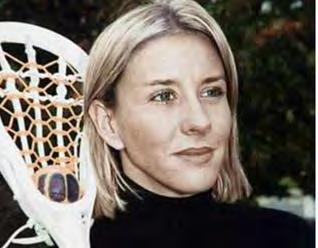
Knoller was with her two Presa Canario dogs in the hallway attack on Whipple, her neighbor, in their Pacific Heights apartment building. At the time, Whipple was the head women’s lacrosse coach at St. Mary’s College of California in Moraga and lived with her partner, Sharon Smith.
Knoller’s husband, Robert Noel, was out of town at the time of the attack. Noel died of heart failure on his 77th birthday in a nursing home in La Jolla, near San Diego, in 2018. Noel, who was paroled in 2003, served more than two years in prison following his conviction of involuntary manslaughter. Knoller was convicted of second-degree murder. Prosecutors argued that the couple knew and encouraged their dogs to be aggressive but did little to mitigate that danger.
In a “Good Morning America” interview two weeks after the killing, the couple appeared callous and unsympathetic. The interview helped cement a narrative that the couple was unremorseful, but in several subsequent interviews with the Bay Area Reporter, Noel and Knoller did express remorse for what happened.
The presiding judge in the case, now-retired San Francisco Superior Court judge James Warren, threw out Knoller’s second-degree murder conviction in 2002, just three months after the conviction.
Horizons prez Doughty to step down
by Cynthia Laird
Roger Doughty, a gay man and the longtime president of Horizons Foundation, will retire later this year, the nonprofit has announced.
The LGBTQ philanthropic organization serves as a grantmaking lifeline to queer nonprofits in the ninecounty San Francisco Bay Area, and Doughty has led it for decades.
In a Zoom interview ahead of the formal announcement January 22, Doughty told the Bay Area Reporter that after 23 years at the helm, he felt it was time to step down. He will stay on through November to ensure a smooth transition, which the board of directors has already initiated, he said.
“I wanted to give the board and organization a long runway to find the next leader and not be in a rush,” said Doughty. “The board has already put a search committee together and is about to go into contract with a search consultant.”
A news release from Horizons noted that the organization has retained NPAG, a nationally known executive search firm.
Doughty, 64, has led Horizons since 2002. He is one of the few remaining longtime leaders of an LGBTQ-focused nonprofit in San Francisco who have led their organizations for more than a decade.
“Part of it feels it is time for me to move on,” Doughty said. “It’s been an incredible privilege to do this kind of work at Horizons. I know there’s more to life than working, and it’s time to enjoy some of those other things.”
He stressed that just because he is retiring doesn’t mean he’s leaving the LGBTQ movement.
“I’ve spent 40 years in the movement and I’m unlikely to disappear from the movement,” he said. “I’m not burned out but I’ll admit I’m a little tired.”
One of those longtime remaining leaders is Lance Toma, a gay man who has been CEO of the
San Francisco Community Health Center since 2006. He has known Doughty for decades, starting when the two overlapped in the mid-1990s at the Horizons Community Services, an LGBTQ center in Chicago that later merged with the Center on Halsted, which is the city’s longtime LGBTQ center.
“I’ve known Roger even before he took over at Horizons,” Toma said in a phone interview, referring to the San Francisco foundation. “I think Roger understands what it’s like to lead a LGBT and queer community organization.”
Over the years, the San Francisco Community Health Center has received some community grants from Horizons, Toma said, though he noted the foundation tends to focus on smaller LGBTQ nonprofits, including those serving the trans and people of color communities.
“It’s a testament to Roger and Horizons Foundation that they truly understand and invest intentionally in these communities,” Toma said.
Toma also said Horizons stepped in to help the center, the San Francisco AIDS Foundation, the GLBT Historical Society, and six other nonprofits in their federal lawsuit against President Donald Trump. As the B.A.R. reported, U.S. District Judge Jon S. Tigar granted a preliminary injunction temporarily blocking the Trump administration from defunding nine LGBTQ and HIV organizations. The parties in San Francisco AIDS Foundation v. Trump are being represented by Lambda Legal Defense and Education Fund.
See page 2 >>
LGBTQ reaction mixed to SF mayor’s 1st State of the City
by John Ferrannini
San Francisco Mayor Daniel Lurie’s State of the City address January 15 was long on initiatives but short on the queer community, as it did not explicitly mention LGBTQs.
Afterward, Lurie answered some questions about the community but warned that the city’s tough budget year will make instantiating that commitment in policy more difficult.
LGBTQ leaders had mixed reactions to the State of the City address that was held at Rossi Park Ball Field in the city’s Richmond district.
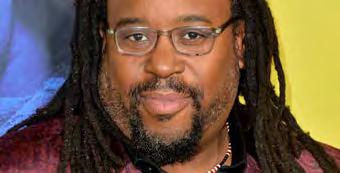
Tyler TerMeer, Ph.D., a gay Black man who’s CEO of the San Francisco AIDS Foundation, was among those in attendance. TerMeer was disappointed at the lack of a nod to the queer community.
“We are dismayed to see that the mayor did not address the LGBTQ community or any issues facing queer and trans communities despite the political attacks we are currently facing, especially the attacks on gender-affirming care,” he stated.
“He also did not address the issue of fatal overdoses, despite his many comments on improving safety, homelessness, and substance use in San Francisco. We agree that people who are struggling with substance use disorder need additional support and care, but disagree that the solution
will primarily involve increased policing, arrests, and forcing people into the criminal legal system and detox.”
Final drug overdose death numbers from last year have not as yet been released. Preliminary data from the Office of the Chief Medical Examiner shows 589 unintentional drug overdose deaths in the city through November 2025.
Lurie was adamant about the need to clean up public drug use on city streets and touted his new RESET program set to launch this spring. The RESET Center, which will be located next to the Hall of Justice, will offer an alternative to jail or hospitalization and allow people to get treatment, according to the mayor’s office.
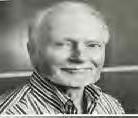
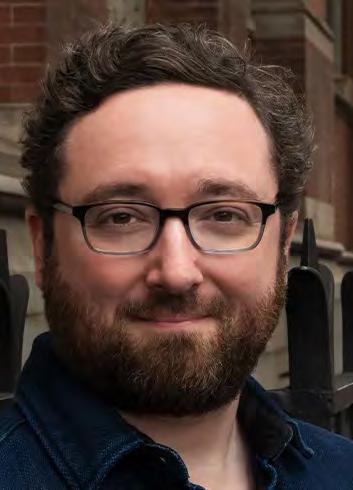
Diane Whipple, a college women’s lacrosse coach, was fatally mauled by two dogs 25 years ago.
Courtesy St. Mary’s College of CA
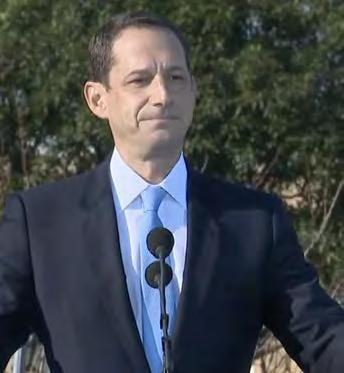
San Francisco Mayor Daniel Lurie delivered his State of the City speech January 15. John Ferrannini
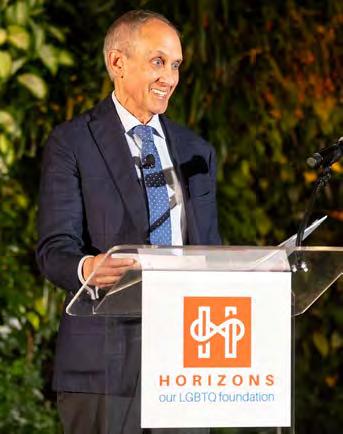
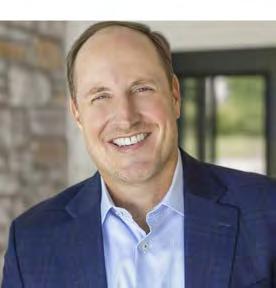
Horizons Foundation President Roger Doughty spoke at the organization’s 2025 gala.
Courtesy Onyx & Ash
On transgender health care, SF House candidates agree
by Matthew S. Bajko
Nearly a year ago Republican President Donald Trump launched his campaign to block transgender youth from the gender-affirming care that allows them to live as their authentic selves and which studies have shown greatly reduces their risk for suicidal ideation and myriad negative health impacts. His actions have led several health care providers in California to rollback their offering such care to youth under the age of 19.
More hospital systems could follow suit with the federal Department of Health and Human Services now moving to enact regulations prohibiting Medicaid funding for medically necessary health care, such as puberty blockers and hormone therapy, for trans youth under 18 and Children’s Hospital Insurance Program funds from covering this care for trans young people under 19. The agency also is moving to bar hospitals providing such care to trans youth from participating in Medicare and Medicaid.
The comment period for the public to weigh in on the proposed rules ends on February 17, and sometime thereafter it is expected that Health and Human Services Secretary Robert F. Kennedy Jr. will announce their adoption. It all stems from Trump’s January 28 executive order titled “Protecting Children from Chemical and Surgical Mutilation” aimed at ending gender-affirming care for trans youth across the U.S.
Protecting access to medical interventions for gender-nonconforming young people is one policy area where the trio of Democrats running to represent San Francisco in Congress are in alignment.
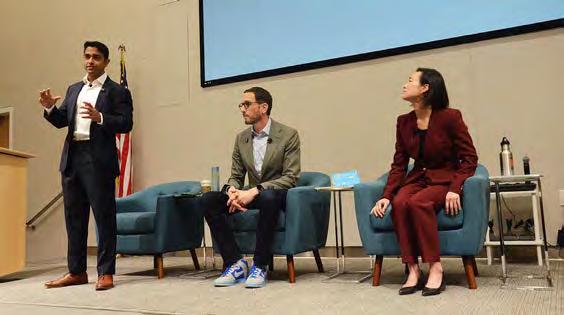
Gay state Senator Scott Wiener (D-San Francisco), District 1 Supervisor Connie Chan, and Saikat Chakrabarti, formerly chief of staff to Congressmember Alexandria Ocasio-Cortez (D-New York), all pledged their support for trans health care during their first candidate debate co-moderated by the Bay Area Reporter. Wiener, a former deputy city attorney,
Humble beginnings
Horizons Foundation began in 1980, according to a history on its website. It is the world’s first community foundation of, by, and for LGBTQ people, the website stated. Initially started as the philanthropic arm of the Golden Gate Business Association, an LGBTQ chamber of commerce, the organization “came out” as Horizons in 1988. The website noted one of its first grants was for $500 to the Lesbian Rights Project, which eventually became the National Center for Lesbian Rights. Last year the organization changed its name to the National Center for LGBTQ Rights but retained its well-known NCLR acronym, as the B.A.R. reported.
From that modest beginning, Horizons now grants millions of dollars annually to numerous LGBTQ organizations. Doughty said that last year the organization had close to $10 million in fundraising assets. Its annual report for 2023-24 noted that Horizons distributed $7 million in grants that year.
Kate Kendell, a lesbian who’s the former longtime executive director of NCLR, wrote in an email response that Horizons is crucial to the community.
“Horizons was game-changing for the LGBTQ community in the Bay Area,” stated Kendell, who is now CEO of the
called the actions the Trump administration is taking to deny trans youth access to health care unlawful.
“It’s illegal what they’re doing now to try to tell hospitals that if you provide gender-affirming care to young people you’re going to lose all your Medicare and Medicaid, that has to be litigated. It’s disgusting and it’s also illegal,” contended Wiener. “We need to make crystal clear that it’s illegal. Gender-affirming care is health care. And these kids and adults have a right to healthcare, and we need to enshrine that in law, and it’s very, very good that we’re not going to allow them to erase this community.”
Chakrabarti also called the Trump administration’s actions as going against federal law. He pledged, should he be elected to the House seat, to push for hearings on the matter.
“We should use our power of congressional oversight to go after the administration for their illegal actions on restricting Medicare, restricting access to hospitals that provide gender-affirming care,” said Chakrabarti.
Referring to her role as budget chair for the Board of Supervisors, Chan pointed to her fighting to fund services for trans and queer San Franciscans during the negotiations on the budget between the supervisors and the mayor.
Denver-based Gill Foundation. “They created an ethos around the importance of giving to community organizations, they elevated issues, they ignited the donor-activist community and they supported a wide-range of organizations that made the Bay Area a safer haven for every LGBTQ person. Roger in particular took Horizons to new levels of engagement and importance to the entire Bay Area philanthropic firmament.”
As the B.A.R. reported in December, for 2025, Horizons made a historic $1.46 million in grant awards to 66 LGBTQ nonprofits and programs across the Bay Area. Doughty said the organization operates on an annual budget of $10 million and its asset base “is pushing $75 million.” Horizons has 12 full-time staff and one part-time staff. Doughty declined to share his salary, but the 2022 IRS Form 990 listed it as $250,000.
In that tax form, Horizons listed grants that ranged from a high of $497,607 to Openhouse, the LGBTQ senior service agency, to $15,000 to Fresh Meat Productions, producers of the San Francisco Transgender Film Festival. Funding from the grants comes from Horizons’ budget as well as donor-advised funds and legacy funds the agency oversees. Most community grants to Bay Area LGBTQ nonprofits ranged from $5,000 to $20,000, according to a listing included in the tax form.
She pledged to continue that advocacy in the House.
“I say that, um, so goes San Francisco, so goes the nation. San Francisco has done what we can to provide and ensure that, um, our LGBTQ community is cared for,” said Chan, “and the two things that I have learned in San Francisco that we got to make sure that we fund, and that we actually really ensure to protect our transgender community.”
One way the city has been able to do so, noted Chan, is by funding nonprofit service providers and communitybased health clinics that care for the trans community. That needs to be replicated in the federal budget, she said.
“I will say that in San Francisco, what we have done really great is community clinic, and mobile care in neighborhoods. And that is what we have to do in the federal,” said Chan. “And what we can do with our spending bill, tweaking it, to making sure that we’re allowing additional option other than these big hospital care. Let’s fund it everywhere, let’s tweak the code, uh, or global clinics, as well as our hospital, that we can actually fund the care that our LGBTQ community needs.”
Running to succeed Pelosi
The three are running to succeed Congressmember Nancy Pelosi (D-San
The Openhouse grant was through Horizons legacy giving program, a spokesperson stated.
Some of Horizons’ grants are the result of donor-advised funds, in which the donor gives money to Horizons with the purpose of contributing it to a specific organization. The donor receives tax benefits and makes the recommendations for their charitable giving.
That’s the case for an $18,500 grant made in 2022 to Lambda Legal. While a national LGBTQ legal organization, Lambda Legal works in the Golden State and has an office in Los Angeles, Kevin Jennings, a gay man and its CEO, told the B.A.R.
In a phone interview, Jennings said he will miss Doughty when he leaves Horizons. Before heading Lambda Legal, Jennings led the Arcus Foundation, a leading global foundation advancing pressing social justice and conservation issues, including LGBTQ human rights. Prior to that, Jennings served as an official in the federal Department of Education during the Obama administration. Earlier, he founded GLSEN, an LGBTQ education nonprofit that works to prevent bullying and advance LGBTQ cultural inclusion and awareness in schools, its website stated.
“Roger Doughty is one of the great philanthropic leaders of my lifetime in the LGBTQ community,” said Jennings. “What he has done is remarkable and has set the standard.”
“He is a national treasure,” Jennings said.
Dipti Ghosh, Horizons’ Board of Directors co-chair, stated, “Roger has been an extraordinary leader for Horizons. His integrity, strategic vision, and unwavering dedication has left a mark on the foundation and communities we serve. We are deeply grateful for his leadership and wish him all the best in his retirement.”
Francisco), who opted to retire when her current term ends next January rather than seek reelection this year. Long a champion for the LGBTQ community on Capitol Hill, her successor is widely expected to continue her advocacy around issues impacting queer and trans individuals.
The top two vote-getters in the June 2 primary race will advance to the November ballot and compete for a twoyear term through early 2029. Should Wiener be elected, he would be the first LGBTQ congressional member representing a Bay Area district, while Chan or Chakrabarti would be the first congressmember of Asian descent elected from San Francisco.
Co-hosting the January 7 forum with the candidates were the Alice B. Toklas LGBTQ Democratic Club, the Harvey Milk LGBTQ Democratic Club, and the California Working Families Party. Last week, the Alice club early endorsed Wiener in the race.
During the two-hour event at UC Law San Francisco, co-moderated by online news site Mission Local, Wiener pointed to his authoring the laws establishing California as a transgender state of refuge due to Republican legislators in other statehouses restricting the rights of their state’s transgender residents. One focus has been on restricting health care for trans youth, prompting the young people and their families to seek out medical care in other states such as California.
Making sure the Golden State provides them a safe haven in doing so was the impetus behind Wiener’s legislative efforts in recent years that Governor Gavin Newsom (D) enacted into law. Wiener noted he ignored the pushback he had received from some within his own party on advocating for trans rights.
Some people in politics, noted Wiener, told him, “Don’t be so vocal about trans people. The polling isn’t there.” Yet, added Wiener, “I don’t give a damn what the polling says. I will never abandon the community. I will always go to the mat.”
Accomplishments, disappointments
Doughty said he thought his top accomplishment is the growth of Horizons, both in terms of grantmaking and funds it has brought in. “They matter because they let you do more,” he said of the fundraising. And, he noted, community institutions “didn’t start out with millions of dollars.”
He praised the many LGBTQ nonprofits that serve the Bay Area.
“I think the Bay Area has an incredible richness of nonprofits,” Doughty said. “Sometimes people lament the number of nonprofits, and I understand that, but the number is a sign of how vibrant this culture is. We create things; new communities develop their own voices.
“I see that multiplicity as a tremendous strength,” he added.
He also said that when he came to Horizons, he was “pleasantly surprised at how well organizations got along.”
“There’s an image of scrambling to be on top, and of course, organizations have self-interest,” he continued.
The release from Horizons noted that Doughty provided leadership in several key areas over the years, including the Civil Marriage Collaborative and working to fight California’s Proposition 8 same-sex marriage ban in 2008. (The ban, which voters passed, was later ruled unconstitutional by a federal court and that was upheld by an appellate court.
The U.S. Supreme Court let that decision stand, and same-sex marriage resumed in California in June 2013.)
Horizons, under Doughty’s leadership, also oversaw Give OUT Day for several years. The online fundraising event allows people to donate to their favorite LGBTQ nonprofits. Last year, as the B.A.R. reported, Horizons bowed out and handed the reins over to Minnesota-based Give MN.
Chakrabarti rejected the notion that Trump’s anti-trans stances – his campaign ran ads attacking trans rights in numerous states in 2024 – are why he was able to win a second term in the White House. He called out those “Democrats across the country currently throwing trans people under the bus,” countering that voters were more motivated by a desire for “systemic change” over anything else.
“So, we need to create a new vision of a party that is inclusive of everybody, that is gonna be better for all and creates more prosperity for all,” said Chakrabarti, pledging “I’m gonna do that and I have the experience to do that in DC.”
This year’s midterm elections provide an opportunity to also ensure Democrats in Congress will fight for the rights of trans people, noted Chakrabarti. He called for primarying those incumbents who “throw the trans community under the bus” if they seek reelection this year so LGBTQ legislation can move forward on Capitol Hill.
“The only way we’re going to get these laws passed is if we replace a whole lot of the Democratic Party, and that is something that I am calling to do. We need to primary Democrats who aren’t part of this vision for an inclusive, expansive, and prosperous society for all people, including the LGBTQ community,” said Chakrabarti.
Having congressional members not in the pocket of the moneyed class was also stressed by Chan as important to seeing progressive policies, such as backing gender-affirming care for trans youth and adults, become federal law.
“We need to take the power back from Donald Trump by and through a Democratic majority in Congress, and delivering for the American people. But we cannot take back Congress by cozying up to billionaires. We can only do that by standing up for the people. And that’s what we need to do,” said Chan. t
And Doughty is credited with his leadership in the multi-year Diversity in Philanthropy initiative, which was among the earliest efforts to increase diversity in all aspects of the country’s foundation sector.
In the interview, Doughty said that the single biggest disappointment is that it has proved “difficult to find foundations to support a national effort to tap our communities’ legacy giving, planned giving.”
That’s when people arrange for charitable organizations to receive donations as part of their estate plan. This can include cash, stock, property, or other items as specified in a person’s will or trust. Doughty has long talked about the need for LGBTQ people to embrace this type of charitable giving. Several years ago, he started approaching other philanthropic organizations in an effort to combine forces to fund promoting the idea but found little interest in doing so.
“Horizons has been working to take advantage of truly, our only multibillion-dollar opportunity,” he said. “It’s been difficult to find funders for that.”
Though Doughty said, “We have many, many very generous people in our community.”
In fact, Jennings recalled that when he was at Arcus, it did provide some financial assistance. “We worked with Roger in that capacity,” he said. “Roger came to us 10 years ago to start a national planned giving program. It was incredibly far-sighted of him.”
Jennings said that there is a large number of LGBTQ people who don’t have children, including himself. “Where do we leave our legacy?” he asked.
“Roger recognized a huge opportunity to leverage the baby boomers and Gen X to help nonprofits in perpetuity. Arcus was an early investor in that effort,” he added.
Congressional candidate Saikat Chakrabarti, left, spoke during a forum with fellow candidates state Senator Scott Wiener and Supervisor Connie Chan.
Rick Gerharter
Rainbow scholarships accepting applications
compiled by Cynthia Laird
N
ational Rainbow College Fund
has announced that students across California can now apply for its 2026 scholarship program. A news release noted that the scholarship was initially created for LGBTQ+ students who were not publicly out. This year they are open to all applicants, with an effort to reduce educational disparities for those who have faced barriers related to sexual orientation, gender identity, or gender expression.
The fund will provide up to $500,000 in scholarships for 200 Golden State students with an award of $2,500 per selected student, the release stated.
The fund is overseen by the San Diego Foundation, one of the largest community foundations in the U.S., and the largest provider of scholarships of any community foundation in California, the release noted.
“Education is a pathway to opportunity,” stated Mark Stuart, a gay
“I believe unfortunately, Mr. Noel and Ms. Knoller, that you are the most despised couple in the city,” Warren told the couple in open court at the time. “I don’t believe anyone likes you.”
“In the eyes of the people, both defendants are guilty of murder, in the eyes of the law, they are not,” Warren said.
In 2008, now-retired San Francisco Superior Court judge Charlotte Woolard reinstated Knoller’s second-degree murder conviction, ordering her to be taken into custody immediately. Knoller is serving her sentence at the Central California Women’s Facility in Chowchilla.
man who is president and CEO of the San Diego Foundation. “Many LGBTQ+ students face unique challenges – social acceptance, mental health issues, family rejection – that
Case made LGBTQ history
The case made LGBTQ history months after Whipple’s death when a San Francisco civil court granted Whipple’s partner, Smith, the right to sue for wrongful death. That court battle was fought by the National Center for LGBTQ Rights legal director Shannon Minter, a trans man.
Kate Kendell, a lesbian who was NCLR’s executive director at the time, has remained friends with Smith and noted her courageous and heroic fight in support of samesex partner rights.
“It was groundbreaking,” Kendell, now CEO of the Denver-based Gill foundation, told the B.A.R. in a phone
See page 8 >>
Prefer
inks to links?
Receive a weekly print edition of the Bay Area Reporter, San Francisco’s only LGBTQ newspaper, delivered by first class mail, every week, to your home or office.
Convenient mail subscriptions are available for 3, 6, or 12 month periods and ensure you’ll always keep up with the latest, most comprehensive coverage of national, state and local LGBTQ issues, arts, culture, and nightlife produced by California’s largest LGBTQ newsroom. 13 weeks
weeks
To begin your mail subscription, call us at 415-861-5019 or email keepintouch@ebar.com
hinder their ability to afford college. This scholarship is about making sure students can keep going, even when the cost and the pressure feel overwhelming.”
Scholarships can be used for tuition, books, fees, room and board, and other educational expenses, according to the release.
Last year, the college fund awarded $350,000 in educational funding to 140 LGBTQ+ students, the release stated. In 2023, it awarded scholarships to 50 students.
Eligible students must be California residents with financial need who plan to enroll in an accredited institution in the U.S. Full eligibility criteria and application details are at rainbowcollegefund.org/scholarship-program.
The deadline to apply is Wednesday, March 4, at 2 p.m. Pacific Time, according to the website.
Those interested in donating to the college fund can do so at rainbowcollegefund.org/donate.
Letters >>
‘Transgendered’ is not offensive
Jack London park celebrates namesake
The 150th birthday of writer, adventurer, and rancher Jack London (January 12, 1876-November 22, 1916) will be celebrated throughout 2026 at his Glen Ellen home, now known as Jack London State Historic Park that’s located in Sonoma County.
A news release noted that in his 40-year life, London accom plished an extraordinary amount. He became one of the world’s most widely read authors, writing beloved works such as “White Fang.” He explored the world, reported on major events, pursued adventure across land and sea, and built his dream ranch in Glen Ellen.
One of the activities is the 11th annual Young Writers contest, which is now accepting entries. This year, the park is doing something a little different. In celebration of London’s milestone birthday, contestants are invited to re-imagine the ending
Regarding the article “SF sheriff responds to letter about female, trans strip search” [January 15]. Please, as a transsexual activist (a real one, as in I was a co-founding member of the ACLU Transsexual Rights Committee in 1980) and yes, another term falsely asserted to be “anachronistic and offensive,” it concerns me that the Bay Area Reporter is promulgating false and politically loaded value judgments on terms that a certain segment of the TRANSGENDERED (that term is neither “offensive” nor “anachronistic”) community is pushing in their desire to create political shibboleths that disenfranchise other segments of the so-called transgender umbrella (such as actual transsexuals). This is part of a political project to enforce an ever-changing use of words on the euphemism treadmill.
Obituaries >>
Elizabeth “Liz” Clarke
April 9, 1970 – November 5, 2025
Elizabeth “Liz” Clarke lost her long battle with depression on the night of a powerful full moon. She was one of those rare souls whose brilliance could light up a room and still make everyone else feel seen. She loved deeply, and everyone in her orbit felt it.
Originally from North Carolina, Liz had classic Southern charm. Her talents were endless, her humor was priceless, and her spirit unstoppable.
Liz’s work as an activist for the dancers at the Lusty Lady, where she was known by the alias “Julep,” was instrumental in their unionization. Liz later moved on to join the California Division of Occupational Safety and Health, better known as Cal/OSHA, as a staff attorney.
She was a self-taught pastry chef, a sommelier, a crochet aficionado and craft instructor, a dancer with SF Flash Mob, and a faux drag queen named “Humidity” who performed in countless underground events including Fudgie & Vinsantos’ drag wrestling club, Smackdown. She was fearless.
A graduate of Hampshire College, Liz received her MFA from the University of Virginia, and was a graduate of UC Berkeley School of Law.
Liz is survived by her husband Kurt; their cat Sir Patrick; mother, LouAnn Clarke; father, Steve Clarke; brother, Brian Clarke; sister, Zara Katherine; and many aunts, uncles, cousins, and chosen family.
A celebration of life will be held Saturday, January 24, at 2 p.m. at Marigold, 194 Church Street, San Francisco, CA 94114. In lieu of flowers a donation to your favorite cat rescue is much appreciated. For more, see the online obituary at everloved.com/life-of/elizabeth-clarke/ obituary.
of one of his most famous novels, “The Call of the Wild” (1903). Writers will step into the final pages of the story and imagine what happens next – carrying London’s world forward through their own creative vision, the release stated. Created in 2014, the Young Writers contest encourages middle school students (grades 6-8) to exercise their writing skills by creating an original 1,500-2,000-word story inspired by the works of London.
This year’s contest rules and the entry form are available at https://tinyurl. com/2h7f65yy. Links to the 2025 winning entries are also available there.
The contest closes at 11:59 p.m. Tuesday, March 31, and winners will be announced by April 21. All stories are judged blindly by volunteers who do not work for Jack London Park Partners or California State Parks. t
This bending the knee of the B.A.R. is regrettable and should not be allowed to be unquestioned. Even if there was an apology for using the term “transgendered,” they should NOT have done so. As I said, it privileges one segment (and not all that related) over another. In fact, if anything, given who was being referenced, they could, and perhaps should, have been referred to as “transsexual,” but as I mentioned, that once proud term (and is still proudly in use by many of us) has also been falsely demonized. Please educate yourself and the B.A.R. staff to this issue of how these words are used to disenfranchise the actual transsexual population at https://tinyurl. com/37pbxa2w.
Michael Thomas October 22, 1960 – January 3, 2026
Longtime Castro resident Michael Thomas passed away of natural causes at home in Pioneer, California. He touched so many lives. Mentor. Cuddly porcupine. Generous father figure. Incredibly smart software engineer. Sailor in regattas. Double-diamond skier. Fabulous cook. Jolly host. Connoisseur of fine wine and classical music. Naughty satyr. Fierce defender of gay rights and “Winter of Love” marriage equality pioneer. Michael Thomas and Aric Olnes were together for 31 loving years and married for 21 years.
Michael met Aric in 1994 at Badlands in the Castro. They started their journey toward marriage with a 1999 California domestic partnership and then a Vermont civil union on October 18, 2001. Then came their most glorious marriage at San Francisco City Hall on February 13, 2004, which was later legally annulled. Finally, and most lovingly, was their re commitment of marriage, the le gally binding one, on July 15, 2008 at their Dolores Heights home in San Francisco. Thankfully, there’s NBC/CNN news footage of their 2004 mar riage of “The Kiss Seen ‘Round the World.” on YouTube, which can be seen at https://youtu. be/36BYHQBDcl0
August 20, 1934 – January 4, 2026
Richard A. Williams passed away January 4, 2026 at St. Francis Hospital in San Francisco.
Born in Ypsilanti, Michigan, he grew up in Wisconsin. He graduated from Northwest University and pursued an acting career for over 20 years. His favorite role was King Arthur in “Camelot.”
After teaching pottery in Baltimore, Maryland, he moved to San Francisco to follow his dream. He started teaching and doing pottery at Ruby’s Studio on Noe Street in San Francisco. He continued doing that till a few years ago.
When he moved into The Sequoias, he began painting with Art for the Elders. As he said, “I doubt I’ll develop into a Grandpa Moses, but I am having a great time.”
Burial will be private. Donations can be made to the GLBT Historical Society in San Francisco (glbthistory.org).
Michael is survived by his spouse Aric; brother Steven and his wife Sofia; nieces and nephews Elizabeth Soto, Sonia Soto, and Oliver Thomas; father-in-law Ed Assony; and countless friends and family.
San Diego Foundation President and CEO Mark Stuart
Courtesy SD Foundation
Candice (aka “Kay”) Brown Elliott Santa Rosa, California
<< Whipple
Richard A. Williams
San Mateo Pride Center looking for new space soon Community News>>
by John Ferrannini
The San Mateo County Pride
Center will be looking for a new physical location in the coming months, its executive director shared with the Bay Area Reporter in a recent phone interview. The nonprofit lost its offices last summer amid a shakeup that saw its fiscal sponsor shutter.
That center also has a new fiscal sponsor, the San Francisco Public Health Foundation.
The Peninsula center’s Executive Director Francisco “Frankie” Sapp, a disabled, biracial, queer, transgender man, said in a January 20 phone interview that he’s putting the finishing touches on a survey to seek feedback from the LGBTQ community in the county south of San Francisco. Sapp said the center will offer “some incentives to get folks to fill it out.”
“Once we have the initial data, we’re going to start looking,” Sapp said, saying tentatively that the search might begin in earnest in mid-February.
“We want feedback on what our new physical location needs to look like and what services in house we need to offer to bring them in the doors,” Sapp said.
As the B.A.R. previously reported, the center had to leave its space at 1021 S. El Camino Real in San Mateo after its fiscal sponsor, StarVista, shuttered. The Pride Center had been a project of Star Vista since its opening in 2017. Sapp said last year that the center has a budget of $1.5 million and that it serves 12,000 people annually.
Sapp said at that time that the center would be moving to a “more sustainable” new fiscal sponsor, but the identity of that organization was not disclosed.
“We weren’t ready to make that announcement,” Sapp explained.
But now, however, Sapp said that the San Francisco Public Health Foundation has stepped in. San Mateo County Board of Supervisors President Noelia Corzo was instrumental in bringing the parties together, Sapp said.
Neither the foundation nor Corzo returned requests for comment.
According to its website, the San Francisco Public Health Foundation mostly works to “develop and mobilize resources in support of the goals of the San Francisco Department of Public Health and its community partners to protect and promote health.”
While the San Mateo center is not located in San Francisco, the
public health foundation welcomes nonprofits from across the country to apply to have it serve as a fiscal sponsor, its website noted. The deal with the San Mateo center was made in the two and a half weeks between StarVista’s July 17 announcement it would be closing, and the mental and behavioral health nonprofit’s demise August 1, as the B.A.R. reported.
Center providing services
In the meantime, the “virtual doors” of the center, to use Sapp’s phraseology, are still open.
“We are still providing the vast majority of our services, so we’ve been providing our trainings, our community events – and some of this has been a mix of virtual and on-site in
the county – and we’re still providing our case management services,” Sapp said. “Right now, our therapy is on pause, as we get re-set up with our certification; but we now have a robust referral database of LGBTQ+ affirming providers, so we’ve been able to do that successfully.”
For those events and services that have to happen in person, Sapp said he has been heartwarmed by support from San Mateo County local institutions, which have allowed center operations to take place at their physical locations.
“They offered to let us use their locations for free,” Sapp said, as the center’s de facto “satellite locations throughout the county.”
Sapp hopes that some of these arrangements can continue going forward because when “serving an entire county, transportation is always going to be an issue.”
San Mateo County includes urban and suburban cities on the Peninsula, as well as more rural areas such as Half Moon Bay and Pescadero along the coast.
One location the center has held events is the Peninsula Book Collaborative at 411 Westlake Center in Daly City. For example, the center is holding a Gayme Night there at 6 p.m. January 22, it announced.
Raquel Espana, who is lesbian and queer, is the president of the collaborative’s board. Espana said that she is proud to have the center as a guest for events.
“When the Pride Center was looking for space to host their events, we were happy to offer our location,” Espana stated. “We hosted a Gayme night in October and another coming up later this week. Since we are a nonprofit bookstore and community space, we want to make sure everyone is welcome and that includes our community partners.”
Sapp was also pleased that Rae Goldman, a genderfluid San Mateo County resident, donated storage space to the center to hold what had been in its El Camino Real office until such time as the center is able to acquire a new lease. Goldman told the B.A.R. January 20, “Anything I can do to help is where I’m at.”
Asked why they made the decision to help out the center, Goldman said, “It’s an amazing resource with a bunch of amazing people, and I wanted to do what I could to help out. For the community, it’s a pillar, and I knew they could use some help given that funds are somewhat diminished. They had a lot of changes go on, and I asked how I could help. If that was one thing I could do to help them get to the next place, it’s what I wanted to do.”
Goldman said that they wanted to help alleviate the center’s burden of having to find a new space right away so that the center can find the right space best accustomed to its future needs – which is also the reason Sapp will soon be putting out that survey to ask the public what it wants to see. The center had been in its El Camino Real office for eight years, Sapp said. So many community members came to help pack up those offices last summer over the weekend of July 26-27 that the entire time set aside for moving was pretty much completed in a day, Sapp said, thanking “the community behind the community.”
The most recent IRS Form 990 for StarVista, covering the 2023-2024 fiscal year, shows it had an $18 million budget with a deficit of $667,967. The public health foundation’s IRS Form 990, also ending June 30, 2024, showed a budget of $13 million with a deficit of $2.7 million.
For more information on the San Mateo County Pride Center, visit sanmateopride.org. t
In a world that still questions who you are and where you belong. After all that, getting high quality health insurance shouldn’t be one more fight.
Covered California connects the LGBTQ+ community with friendly enrollment support that includes free, confidential help. They’ll walk you through your options, check if your doctors and medications are covered, and help you find a plan that includes you nd access to affirming care, mental health support, and the benefits that matter most to you. Because real care doesn’t come with conditions. Just compassion.
Open Enrollment is here. Enroll by January 31.
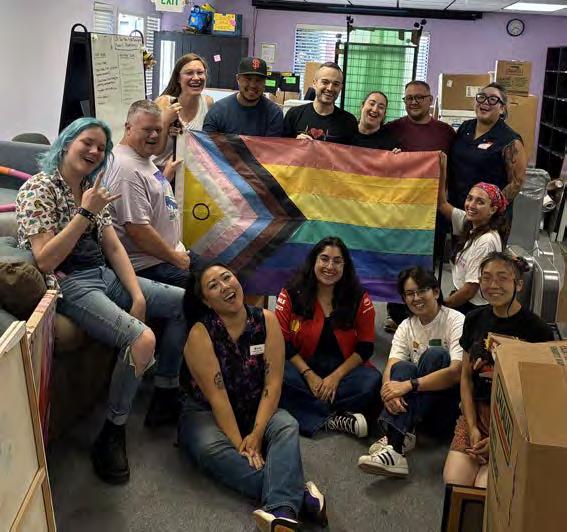
Staff and volunteers at the San Mateo County Pride Center packed up its former offices in San Mateo last summer.
Courtesy San Mateo County Pride Center
Volume 56, Number 4
January 22-28, 2026
Volume 56, Number XX Month XX-XX, 2026 www.ebar.com
PUBLISHER
Michael M. Yamashita
Thomas E. Horn, Publisher Emeritus (2013)
Publisher (2003 – 2013)
Bob Ross, Founder (1971 – 2003)
NEWS EDITOR
Cynthia Laird
ARTS & NIGHTLIFE EDITOR
Jim Provenzano
ASSISTANT EDITORS
Matthew S. Bajko • John Ferrannini
CONTRIBUTING WRITERS
Headline
We’re here, Mayor Lurie
In touting all of his accomplishments during his first year in office and his plans for the future during his January 15 State of the City address, San Francisco Mayor Daniel Lurie left out a couple of things. One was any reference to the LGBTQ community, a surprising omission considering Lurie has regularly signaled his support. The other was the HIV/AIDS community, which is understandably frustrated – as are people with other health issues – over the reality of federal budget cuts from the Trump administration, as well as nervous about what this year will hold in terms of additional fiscal reductions. Taken together, we couldn’t help but wonder if Lurie just has indifferent speechwriters or if it’s a symptom of a bigger problem. We have a message for the mayor: “We’re here.”
Lurie also could have touted the Castro Theatre’s upcoming reopening as part of his message about San Francisco’s post-COVID revival. While theater manager Another Planet Entertainment remains controversial within some circles of the community, almost everyone agrees that the theater’s return after a $41 million renovation project should be a boon for the LGBTQ neighborhood, leading to an increase in foot traffic and more business at bars and restaurants.
We should note that former mayor London Breed singled out the queer community during her State of the City remarks. In 2023, she mentioned the Castro and said the city would continue to uplift the transgender community. In 2024, Breed gave a shout out to trans women.
Christopher J. Beale • Robert Brokl
Kyle Amato • Race Bannon • Robert Brokl
Christopher J. Beale • Brian Bromberger
Brian Bromberger • Philip Campbell
Heather Cassell • Eliot Faine
Philip Campbell • Myron Caringal
Michael Flanagan • Jim Gladstone
Heather Cassell • Meg Collins • Chelsea Davis
Natasha Dennerstein • Eliot Faine
Liz Highleyman • Brandon Judell • Lisa Keen
Philip Mayard • Laura Moreno
Michael Flanagan • Jim Gladstone
San Francisco, of course, has a large and vibrant queer community. Many LGBTQ people have been instrumental in helping bring San Francisco back from the dark days of the COVID pandemic, with nightlife events and other activities. Returning the city to its pre-pandemic era is one of the subjects Lurie has talked about a lot, both during his speech and in other interviews over the past year.
San Francisco Mayor Daniel Lurie was tight-lipped about the LGBTQ and HIV/ AIDS communities at his January 15 State of the City address.
The point of a State of the City address is to give an update and propose new initiatives. And Lurie did that, minus his silence about the LGBTQ community in San Francisco. With it one of the most recognizable in the world, and its history of contributions as well as promise for the future unparalleled, we were caught off guard by Lurie’s remarks that rendered us invisible.
Liz Highleyman • Brandon Judell
David-Elijah Nahmod • Mark William Norby
JL Odom • Paul Parish • Tim Pfaff
Michele Karlsberg • Lisa Keen
Jim Piechota • Adam Sandel
Matthew Kennedy • Philip Mayard
Jim McDermott • Laura Moreno
Jason Serinus • Gregg Shapiro
Gwendolyn Smith • Charlie Wagner
David-Elijah Nahmod • Mark William
Ed Walsh • Cornelius Washington • Sura Wood
Norby JL Odom • Tim Pfaff • Jim Piechota
Joshua Polanski • Adam Sandel
Gregg Shapiro • Gwendolyn Smith
ART DIRECTION
Charlie Wagner • Ed Walsh
Cornelius Washington • Evelyn C. White
Max Leger
PRODUCTION/DESIGN
Ernesto Sopprani
ART DIRECTION
Max Leger
PHOTOGRAPHERS
Jane Philomen Cleland
PRODUCTION/DESIGN
Rick Gerharter • Gooch
Ernesto Sopprani
Jose A. Guzman-Colon
PHOTOGRAPHERS
Rudy K. Lawidjaja • Georg Lester
Jane Philomen Cleland
Rich Stadtmiller • Christopher Robledo
Rick Gerharter • Gooch
Fred Rowe • Shot in the City
Jose A. Guzman-Colon
Steven Underhill • Bill Wilson
Rudy K. Lawidjaja • Georg Lester
ILLUSTRATORS & CARTOONISTS
Rich Stadtmiller • Christopher Robledo
Christine Smith
Fred Rowe • Shot in the City
Steven Underhill • Bill Wilson
ILLUSTRATORS & CARTOONISTS
VICE PRESIDENT OF ADVERTISING
Christine Smith
Scott Wazlowski – 415.829.8937
VICE PRESIDENT OF ADVERTISING
Scott Wazlowski – 415.829.8937
NATIONAL ADVERTISING REPRESENTATIVE
Rivendell Media – 212.242.6863
NATIONAL ADVERTISING REPRESENTATIVE
LEGAL COUNSEL
Rivendell Media – 212.242.6863
Paul H. Melbostad, Esq.
LEGAL COUNSEL
Paul H. Melbostad, Esq.
Bay area reporter
Bay area reporter
44 Gough Street, Suite 302 San Francisco, CA 94103
44 Gough Street, Suite 302 San Francisco, CA 94103
Tyler TerMeer, Ph.D., a gay Black man living with HIV who is CEO of the San Francisco AIDS Foundation, attended Lurie’s address and came away disappointed. “We are dismayed to see that the mayor did not address the LGBTQ community or any issues facing queer and trans communities despite the political attacks we are currently facing, especially the attacks on gender-affirming care,” he stated.
In a roundtable with reporters last month, Lurie discussed the devastating health care cuts that are expected, but again, did not specifically mention HIV/AIDS. “The health care cuts that are coming to our city are going to just be incredibly devastating,” Lurie said. “How do we make sure we keep as many people enrolled in a more onerous process that is going to be coming down from the federal government?”
Headline
In the State of the City – Lurie’s first – he could have touted the fact that he selected Per Sia to be San Francisco’s second drag laureate. The announcement, made last fall, saw Per Sia take over from inaugural drag laureate D’Arcy Drollinger and a chance to put her own stamp on the position. A Latina trans drag performer, Per Sia is known for founding Drag Story Hour in San Francisco.
“Our city is known all over the world as a place where people are allowed to be who they want to be, love who they want to love, and live the lives they choose without fear of persecution,” Lurie stated when he announced her appointment. “I look forward to working with Per Sia to support and celebrate our LGBTQ+ community.” He should have said something similar during his speech or, even better, asked Per Sia to address the audience.
This is not about good
by Gwendolyn Ann Smith
Adecade ago, it appeared that the right-wing had found its anti-trans talking point – transgender access to restrooms. The argument was a simple one: if a trans woman could self-define as a woman, then what’s to stop a predatory man from doing the same, and assaulting women and girls with their new access to the ladies’ room?
For a while, this worked. Heck, in some small circles, it still works. It had a fatal flaw, however, sexual assault is still illegal, and laws against it apply to any person of any gender.
Out of this came a new angle. Discussing trans women in restrooms leads to transgender women in changing rooms, and from this, transgender women in women’s sports. This still has the idea of a man somehow unfairly competing against women by claiming to be transgender, while removing the obvious shortcomings.
Never mind that – outside of bad comedies –men do not go around pretending to be women to try and win at women’s sports.
In spite of that, transgender women participating in women’s sports – and note that this a distinctively trans feminine is sue – has become the cause célèbre in the fight for transgender rights over the current decade. It has overshadowed any other issue, real or imagined.
We’ve reached a new plateau in potential laws, however. In Washington state – a largely progressive state whose lawmakers have rebuffed such bills – a far-right organization called Let’s Go Washington has collected enough signatures to bring the issue to lawmakers. According to the Washington State Standard, lawmakers have three paths they can take if the submitted signatures are verified for a citizen initiative, as is the case here. They can approve the initiatives, making them law. They can reject the initiatives, sending them to the ballot for voters to decide in November’s election. Or they could pass an alternative to the proposed initiatives, and both versions would go to the ballot.
It is becoming a troubling pattern with local leaders. Last June, national parks officials canceled their Pride event in the Presidio, while this month SF Travel’s float for the New Year’s Day Tournament of Roses Parade in Pasadena sported no reference to the LGBTQ community, one of the city’s biggest tourist draws.
In this age of Trump 2.0 – it was a year ago this week that he started issuing all those horrendous executive orders seeking to erase the trans community – we expect San Francisco’s mayor would be more cognizant of this time of fear that many trans people are experiencing. And yet the agencies that help them, nonprofit and city-run alike, face budget cuts as the city grapples with a $936 million deficit.
Going forward, we hope that Lurie and his staff will keep San Francisco’s LGBTQ community at top of mind, and recognize the many contributions we have made, and the active ways we work to make the city welcoming to all. t
sports
Instead, we get a case that could pave the way for banning transgender kids – no, correction, transgender girls and women – from participating in sports.
The thing is, though, that sports bans are never going to be just about sports. By declaring that transgender women are not women in the context of women’s sports, the door is open to declare that they are not women in any circumstance. That would put transgender people under threat of losing any equal rights protections. Restroom bans would instantly be back on the table, for example.
As our government has been busy trying to force a strong split between men and women, you can quickly see where this may lead. In short, transgender women would be, at best, “unpersoned,” unwelcome in spaces they should be allowed, and under threat in all others. If the road to hell is paved with good intentions, then surely the mortar between those stones is composed of reasonable concerns.
Advertising • scott@ebar.com
Out & About listings • jim@ebar.com
Letters • letters@ebar.com
Advertising • scott@ebar.com
Letters • letters@ebar.com
Published weekly. Bay Area Reporter reserves the right to edit or reject any advertisement which the publisher believes is in poor taste or which advertises illegal items which might result in legal action against Bay Area Reporter. Ads will not be rejected solely on the basis of politics, philosophy, religion, race, age, or sexual orientation.
Advertising rates available upon request.
Published weekly. Bay Area Reporter reserves the right to edit or reject any advertisement which the publisher believes is in poor taste or which advertises illegal items which might result in legal action against Bay Area Reporter. Ads will not be rejected solely on the basis of politics, philosophy, religion, race, age, or sexual orientation. Advertising rates available upon request.
Our list of subscribers and advertisers is confidential and is not sold. The sexual orientation of advertisers, photographers, and writers published herein is neither inferred nor implied. We are not responsible for unsolicited manuscripts or artwork.
Our list of subscribers and advertisers is confidential and is not sold. The sexual orientation of advertisers, photographers, and writers published herein is neither inferred nor implied. We are not responsible for unsolicited manuscripts or artwork.
The argument seems simple. Schools and athletic conferences have divided sports into men’s and women’s categories for fairness reasons, the reasoning goes, because women are less able to excel in more physical sports, and letting someone who was assigned male at birth participate against non-transgender women would be inherently unfair. It’s the sort of argument that raises, as they call it, reasonable concerns.
Aside from being a very wealthy vein for the right to fundraise off of, this has led to a slew of anti-transgender legislation in statehouses across the country. According to the 2025 antitrans bills tracker, 1,020 bills have been filed in 49 states – Vermont is the outlier – with 126 of them being strictly sports related. Only health care restrictions and bills restricting trans acceptance in schools are more common. https:// translegislation.com/
The initiative, should it become a law, would require a genital inspection or a blood test to allow people to participate in women’s sports from public schools to beyond. It offers no similar provision targeting trans boys.
It’s worth noting, too, that this could all be moot soon. The United States Supreme Court heard arguments in both Little v. Hecox and West Virginia v. BPJ January 13. Both cases center on transgender people participating in sex segregated sports. Consider the latter of these for a moment. The BPJ in the case’s name is Becky Pepper-Jackson, a trans girl. She was 11 years old when she sued the state of West Virginia to earn the right to join a girls’ sports team. This isn’t about an elite male athlete joining a women’s team to rack up wins, but a child wanting to play team sports. Indeed, if we’re talking about “reasonable concerns” over participation in sports, you would think that “reasonable solutions” could be considered.
Likewise, this would not even serve the very women it claims to protect: Setting aside the singular victory of Lia Thomas in swimming, transgender women have not been at the heart of recent attacks against trans women in sports. Olympic gold medalist Imane Khelif is not trans. Nor is two-time Olympic gold medalist Caster Semenya. Yet both have been targeted thanks to anti-trans sentiment. Indeed, I would contend that any world-class women’s athlete – or even a well-performing girl on a high school team – would be open for challenge over such rules, and subject to invasive genital inspections when such should never be necessary.
Let’s also not forget exactly what is at stake here: we are talking about women’s sports, a category that typically only exists because men did not want women to succeed in the first place, rewarding women’s success with segregation, making men’s sports the de facto form, while limiting women to a secondary, even lesser category.
This is all inherently unfair, and to claim that trans women – regardless of ability – are automatically better than any woman in a given sport only serves to reinforce that unfairness. We can – no, should – do better for both trans and non-trans women in sports. t
Gwen Smith has never been successful in sports, but always believes in fairness. You’ll find her at www.gwensmith.com.
Illustration: Christine Smith
Screengrab from SFGovTV
Out county supervisors take on leadership roles
by Mathew S. Bajko
Two out county supervisors in the greater Bay Area region are taking on leadership roles this year for their respective boards. The pair are the latest LGBTQ electeds in Northern California to have prominent perches on governing bodies in 2026.
Santa Cruz County Supervisor Monica Martinez is now the first out LGBTQ individual and first Latina to preside as chair of her board. The queer mom won election to her District 5 seat on the central coast board of supervisors in 2024 and is now in the sophomore year of her first fouryear term.
“As the first openly LGBTQ+ and Latina person to serve as chair, I am deeply honored to take on this role and I’m grateful for the trust of my colleagues to lead the county’s primary executive and legislative governing body,” wrote Martinez in a Facebook post following her being sworn into the leadership role January 13.
At its meeting that Tuesday, the board unanimously selected Martinez to lead it and named Supervisor Manu Koenig as vice chair. They will work alongside Nicole Coburn, the county’s newly installed executive officer.
“My goal as chair is to help facilitate a healthy and respectful dialogue between the board, staff and the community that really promotes a sense of opportunity for public input and transparency in terms of our decision making,” noted Martinez at the board meeting.
Also last Tuesday in Contra Costa County, its Board of Supervisors unanimously selected gay Supervisor Ken Carlson as its vice chair for the year. He will serve alongside newly installed chair Supervisor Diane Burgis
“As I mentioned in my remarks, our county is ready to meet challenges head-on and I am determined to ensure our community remains a place of inclusivity and progress,” Carlson wrote in a note to his constituents.
“I’m honored to continue serving the residents of District IV, and in this new capacity, the county as a whole.
Congratulations to our new chair and I look forward to working together to keep moving Contra Costa forward.”
Carlson became the first out person to serve on his county board with his election in 2022 to his District 4 seat. The former city councilmember in Pleasant Hill is seeking a second term as a county supervisor this year; his winning reelection would set him up to chair his county board in 2027.
nal pressures that affect public health, civil rights, and environmental protections.” She and her supervisorial colleagues will also be focused on finalizing their county’s strategic and operational plans for 2026–2032.
“This work will guide how we prepare for climate impacts, navigate budget pressures, and protect essential services that residents rely on every day,” she noted. “I will focus on three core priorities: strengthening emergency preparedness and climate resilience, protecting access to essential services like health care and food assistance, and improving how county government shows up for residents –especially in our mountain communities – when people need help navigating complex systems.”
City leaders take on leadership roles
In the South Bay city of Sunnyvale, City Councilmember Richard Mehlinger was elected by his colleagues to serve as vice mayor this year. He is holding an official swearing-in ceremony January 27 at City Hall.
A reception will be held at 6 p.m. that Tuesday, with his taking his oath of office at 7 p.m. He is now in the final year of his freshman fouryear term, having won election to his District 5 council seat in 2022, and is expected to seek reelection this November.
“Tremendously honored to be elected Vice Mayor of the City of Sunnyvale for the coming year,” wrote Mehlinger in a Facebook post inviting people to see him be sworn into the position.
For updates on his 2026 reelection bid, visit his campaign website at https://www.kencarlson.vote/
There are now three prominent out supervisors in the region with leadership roles on their boards. Gay San Francisco Supervisor Rafael Mandelman is in his second and final year as president of his governing body, as he will be termed out of his District 8 seat early next January when the board gavel will once again be up for grabs.
Budgetary matters will be a top focus for the trio, as the federal government under Republican President Donald Trump continues to slash support for social services and other programs overseen at the county level.
The state of California is also facing a tough budgetary cycle this year, with Governor Gavin Newsom rolling out a spending plan earlier this month to close an estimated $2.9 billion budget deficit, the impacts of which will affect counties once the state budget is finalized later this summer.
Martinez warned her constituents that 2026 will be a challenging year for her board due to it having to deal with “budget constraints and exter-
As the Bay Area Reporter’s online Political Notes column had reported in September, https://www.ebar. com/story/158297 the queer and bisexual South Bay leader spent the fall recovering from the injuries he received when a car driver hit him while biking home last summer. The crash left Mehlinger, who is righthanded, with a broken left thumb and a broken right wrist.
“I am more committed than ever to building safe streets for this city,” he told the B.A.R. at the time. “People should be able to walk and bike safely in Sunnyvale, and we need to be doing more to make that a reality.”
In San Francisco, two out leaders will continue to hold the top spots on the board that oversees the San Francisco Unified School District.
Gay school board President Phil Kim and bisexual Vice President Jaime Huling were unanimously reelected to their respective positions at the oversight body’s January 13 meeting.
“I look forward to continuing our work together in service of our students and the San Francisco community,” stated Superintendent Maria Su, Psy.D., following the board’s leadership votes last week.
As for the board overseeing City College of San Francisco, gay Trust ee Luis Zamora colleagues this month to a second yearlong term as its vice president. He will serve alongside board Presi dent ed into their leadership positions at the community college board’s Janu ary 8 meeting.
The quartet of out electeds join other local leaders in cities around the Bay Area who are serving in the top leadership roles for their governing bodies, as the B.A.R. News Briefs column had noted in mid-December.
They include gay dad Ryan LaLonde being the first LGBTQ person to preside as president of the Alameda Unified School District Board of Education, and gay Councilmember Gabe Quinto being elected by his council colleagues to a third ceremonial mayoral term ahead of his seeking reelection to his council seat this fall.
LaLonde has ruled out running for a second term this fall, while Huling won election to her school board seat in 2024 and isn’t up for reelection until 2028. She and her husband, Darren, live in Glen Park with their two children, the eldest now an elementary student in a Spanish immersion program at the district.
Kim lives in the Castro LGBTQ neighborhood with his partner, Andrew, and their Dalmatian, Noe. Appointed to fill a board vacancy in 2024, Kim is running on the June 2 primary ballot to serve out the remainder of his current term through the end of the year.
Brandee Marckmann, a parent of a student in the district, has pulled papers to run against Kim in the special election. The winner will need to run on the November ballot for a full four-year term.
While Marckmann did not take part, Kim appeared at his first public candidate forum earlier this month hosted by the school advocacy group SF Parents Action. The video of the nearly hourlong event can be viewed at https://www.youtube. com/watch?v=VyXGTdwL2D8
Bay Area Reporter can help members of the community reach more than 120,000 LGBT area residents each with their display of Obituary* & In Memoriam
As Kim had told the B.A.R. late last year about his wanting to continue serving on his school board, “I am incredibly committed not just to our city but ensuring our district delivers for the kids we serve and maintains its focus on student outcomes.” t
Keep abreast of the latest LGBTQ political news by following the Political Notebook on Threads @ https://www.threads.net/@ matthewbajko and on Bluesky @ https://bsky.app/profile/politicalnotes.bsky.social.
RATES: $21.20 per column inch (black & white) $27.75 per column inch (full color)
DEADLINES: Friday 12 noon for space reservations Monday 12 noon for copy & images TO PLACE: Call 415 829 8937 or email us at advertising@ebar.com
$21.20 per column inch (black $29.15 per column inch (full color) DEADLINES: Friday 12noon for space reservations Monday 12noon for copy & images
Got a tip on LGBTQ politics? Call Matthew S. Bajko at (415) 8298836 or email m.bajko@ebar.com.
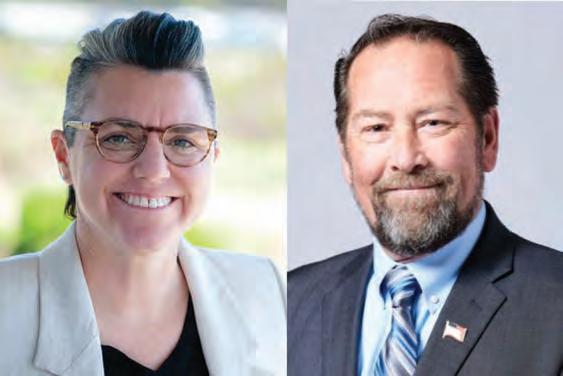
Monica Martinez, left, is the new chair of the Santa Cruz County Board of Supervisors, while Ken Carlson was selected by his colleagues to be vice chair of the Contra Costa County Board of Supervisors.
Courtesy the subjects
interview, referring to Smith’s court victory. “She was the first person ever to win a wrongful death settlement as a surviving same-sex partner. Keep in mind, this was before we had won marriage. There were domestic partner registries available, but wrongful death was not one of the benefits included. So not only did she win a legal settlement that recognized her as a surviving partner, entitled to sue a wrongdoer for wrongful death, but she then went to the state Capitol and lobbied legislators to pass the firstever measure in any state recognizing the right of a same-sex, surviving partner to sue under the right circumstances for wrongful death.”
Kendell added that Smith became “this very accidental activist and advocate in the midst of the most horrific, brutal death of her love and her partner, and I have endless respect for Sharon. That respect grew every day that I spent time with her. To this day, we are still close friends, largely because that friendship was forged in fire.”
When asked if she had any opinion one way or the other about whether
<< State of the City
From page 1
“If someone is openly using drugs on our streets, they will be arrested and brought to the RESET Center, where they will have a chance to detox and get treatment,” Lurie said. “This will also allow our police officers to get back on the beat faster.”
“Just because things have been broken for a long time does not mean they have to stay broken,” Lurie said. “San Francisco is no longer a safe haven for those who want to sell drugs, do drugs, and live on our streets.”
Budget woes
Lurie said the city faces a budget deficit of nearly $1 billion. After the speech, Lurie elaborated on the city’s fiscal situation in comments to reporters.
“We’re going to continue doing as much as we humanly can, but like every single important topic, we have less money to continue to do this work,” Lurie said to a press gaggle of reporters after his address.
He also responded to a question about the Office of Transgender Initiatives, which was placed under the city’s Human Rights Commission during last year’s budget. It will soon move from its location at the San Francisco LGBT Community Center into city offices. The office is overseen by Director Honey Mahogany, a Black trans person.
“Honey Mahogany is doing excellent work,” the mayor said. “She and I are in constant communication about how do we make sure we protect our LGBTQ+ community, our trans community. This is a safe haven for people and it always will be. We’re always going to stand up for our values no matter what dollars we’re talking about; our values will be front and center in our administration.”
Mahogany, who was traveling, and gay Human Rights Commission Executive Director Mawuli Tugbenyoh, under whose auspices Mahogany’s office now sits, did not return requests to comment. Begun as a mayoral advisory role in 2017, the office had been under the auspices of the city administrator but was moved over to HRC in 2024 by former mayor London Breed at the time of her naming Mahogany as its director.
As the Bay Area Reporter previously reported, with a two-year city deficit of $936 million to fill, and not much help, if any, expected from the federal government, Lurie is asking for $400 million in spending cuts from city departments, and said he will deliver a “responsible budget that prioritizes core services.”
In 2025 and 2024, which were also bad budget years, Lurie and his predecessor Breed were able to backfill HIV funds that had been cut from federal programs. Lurie’s office pledged it would try to do that this year, with spokesperson Kate Poltrak telling the B.A.R., “Although we haven’t seen proposed federal cuts yet,
Knoller should be paroled, Kendell responded, “I do not.”
The lead prosecutor on the case was San Francisco assistant district attorney Jim Hammer, a gay man. He prosecuted the case along with Kimberly Guilfoyle, also an assistant DA. At the time of the trial, Guilfoyle was married to Gavin Newsom, who was then a San Francisco city supervisor. The trial launched her into the national spotlight. She went on to become a cable TV host and a MAGA Republican activist. She was engaged to Donald Trump Jr. before the couple broke up in 2024. President Donald Trump appointed her to be the U.S. ambassador to Greece in December 2024. (Newsom went on to become San
we have always made our best efforts to backfill federal cuts related to HIV/AIDS and we will continue to do whatever we can to support those with HIV/AIDS.”
Affordability agenda
During his address, Lurie rolled out a new affordability agenda and touted wins from last year.
As Lurie told the B.A.R. late last year, making the city more affordable to live in is among his top priorities for his sophomore year in Room 200 at City Hall. In his address, he said, “Families are being forced to make impossible choices – delaying having children, sacrificing savings, or leaving the communities they call home. I will not let that be the future of San Francisco.”
He continued, “Today marks the beginning of a powerful effort to reduce the cost of living for San Francisco families by tens of thousands of dollars each year. Our Family Opportunity Agenda is centered on a cradle-to-career approach that will tackle the cost of housing, child care, education, food, health care, and transportation.”
Lurie then presented a suite of policies he said the Board of Supervisors is pursuing, or that he’d like them to pursue. He first thanked supervisors for passing his family housing upzoning legislation last year, and discussed “an effort to make sure every family in San Francisco has access to child care.”
“Starting this month, a family of four making less than $230,000 a year will qualify for free child care at hundreds of high-quality providers across San Francisco. And by this fall, those earning up to $310,000 a year will receive a 50% subsidy. This plan leverages unspent money and ongoing funds from a ballot measure voters passed in 2018 to explicitly fund child care. These funds will also be used to raise early educator salaries, support high-quality education, and create or expand child care facilities,” Lurie said. “This is going to remove a huge burden for working parents. And we’re not going to take four years to roll this out – we’re going to be the first major city in the nation to actually get it done.”
Francisco’s mayor and is now California’s governor and widely expected to run for president in 2028.)
Hammer told the B.A.R. that he wouldn’t necessarily be opposed to Knoller getting paroled.
“If she comes to a point of remorse and acceptance and truly acceptance and remorse and expresses sorrow, I wouldn’t necessarily be opposed to it,” Hammer said in a phone interview. “It’s not my decision. I think the most important people are Diane’s family. But I think that’s the necessary precondition.”
The former prosecutor, now in private practice, reiterated an expression of remorse would be a prerequisite for him to support Knoller’s parole.
“Because of her actions, she left Di-
He also announced a new partnership with the San Francisco Unified School District, which he described as “a new dual enrollment pilot program enabling high school students across our city to earn associate degrees and industry certifications at City College, with a guaranteed transfer to San Francisco State University.”
Lurie gave an example to illustrate what he meant.
“If you’re a high school junior and you want to be a nurse, you can pursue a Community Health Worker Certification at City College and then earn your Bachelor of Science degree in nursing at SF State,” Lurie said. “Other pathways could serve those who want to become police officers, pre-K teachers, auto technicians, chefs, and more.”
Lurie said amid the expected federal budget cuts the city will support Medicaid recipients, adding, “We’ll make sure people know how to access these resources.”
Lurie said that cutting bureaucratic red tape will help bring down costs and touted his PermitSF reforms from 2025.
“Starting on February 13, the one-year anniversary of PermitSF, residents will be able to apply for permits on our new permitting platform, enabling us to work seamlessly, with greater transparency,” he said. “But we are going to go further than that. Today, I am excited to announce that we will begin the process of combining the Planning Department, the Department of Building Inspection, and the Permit Center into one entity. For residents and small businesses alike, this will mean better coordination, time and cost savings and a more predictable permitting process, easing the way to build more housing and continue our economic recovery.”
Lurie also discussed his support for financial stabilization for the BART and Muni public transportation systems.
“We will stabilize the cost of Muni, prevent unmanageable fare hikes, and crack down on fare evasion. We will also improve and expand service so more people will want to ride Muni again,” he said. “And we’re not forgetting about BART. In partnership with our state legislators and other Bay Area leaders, we have developed a regional transit funding measure that will ensure people across the region who want to come to San Francisco to work or to play will be able to count on safe, reliable BART service.”
Lurie and city officials have a parcel tax proposal set for the November 3 ballot that would help Muni. Regional entities are working on a tax proposal for the fall ballot that would help BART, Muni, and other transportation agencies.
Lurie said San Francisco is ready to soar to new heights now that it has its mojo back, saying, “There has never been a more exciting time to be a San Franciscan. And it’s time to put our foot on the accelerator. Our recovery is underway. The work now is to make it durable, for everyone.”
ane Whipple alone to die in the hallway,” Hammer said. “So, a long, long sentence is justified in this case. But if she does show remorse, sorrow, accept responsibility, and shows contrition, then at some point, I think parole may be appropriate.”
Reflecting on the beginning of the case, Hammer noted that a grand jury that was convened in the case came back with the charge of murder for Knoller rather than manslaughter.
“I agreed with them, but I knew it would be incredibly hard, because most people don’t think about a dog mauling as a murder. Maybe a manslaughter, but not a murder. So, it was a pretty tough hill to climb,” Hammer said.
The trial was held in Los Angeles because of the extensive publicity in the Bay Area.
The jurors strongly sided with Hammer and Guilfoyle’s arguments in the case. The jury foreman, Don Newton, told the B.A.R. after the verdict that he regretted they weren’t also able to convict Noel of murder.
Knoller’s current attorney, Katey Gilbert, told the B.A.R. that if the commissioners approved parole for Knoller the earliest she would likely be released would be mid-July. Gilbert noted that the commissioners’ deci-
Lurie said his first year was one of the safest in the city’s history, adding that, “Crime citywide is down nearly 30%. Car break-ins are at a 22-year low, and traffic deaths have dropped by 42%. Homicides haven’t been this low since 1954. Applications to join the police department are up 54%, and for the first time since 2018, we are growing our ranks of officers and Sheriff’s deputies.”
As he wrapped up his address, Lurie teased that, “We’re just getting started, and we are not going to leave anyone behind,” ending with his signature, “let’s go, San Francisco.”
Reaction
Most city leaders reacted positively to the speech. District Attorney Brooke Jenkins, a straight ally appointed by Lurie’s predecessor Breed, told the B.A.R., “I think it connected to the theme of San Francisco being on the rise, as the mayor likes to say, but that we have work to do to keep moving in the right direction.”
Jane Natoli, a trans woman who is the new co-chair of the more moderate Alice B. Toklas LGBTQ Democratic Club, was also at the speech. Natoli, whom Lurie did not reappoint to the airport commission last year, said that she agrees San Francisco is on the rebound.
“I was just downtown last night and you certainly felt some of that energy,” Natoli said, adding she was “excited to hear about what they’re doing with permitting reform.”
Gay District 8 supervisor candidate Emanuel “Manny” Yekutiel said while leaving the event simply that the speech was “exciting, inspiring, motivating” for the year ahead.
One of his opponents, gay District 8 supervisor candidate Michael Trung Nguyen, had more to say. The progressive lawyer also known by his drag persona Juicy Lui watched the address remotely.
“I appreciate the mayor’s focus on the affordability, but I don’t think the mayor actually said ‘LGBTQ’ one time during his whole speech, and we know that LGBTQ people under this federal administration has been under attack and continues to be under attack, especially immigrants and especially low income folks,” noted Nguyen, “so while I appreciate the renewed focus on affordability, I think the mayor doesn’t seem to recognize that LGBTQ people face huge challenges trying to exist in the city.”
As for the child care piece, Nguyen added, “I am excited to hear that the child care program that was funded by Prop C in 2018, which was authored by [former supervisors] Norman Yee and co-sponsored by Jane Kim, is finally being more fully utilized. We were sitting on over $500 million of unused funds, so I’m grateful that the mayor is finally pushing for universal childcare, but I don’t think it’s quite universal yet. I think this is a great first start, but we need more.”
sion would first have to be reviewed by the Board of Parole Hearings and then Newsom would have the option of blocking the parole.
“Further incarceration of Marjorie serves no public safety purpose,” Gilbert said. “And the money spent keeping an elderly, wheelchair-bound, non-violent woman with medical conditions in prison seems far better spent elsewhere. She is tremendously remorseful and has worked hard in therapy to better herself.”
Smith and Whipple’s brother, Colin Kelly, did not respond to the B.A.R.’s requests for comment by press time. Both attended Knoller’s previous two parole hearings to oppose her release. After an unexplained three-hour delay after the last parole hearing three years ago, Kelly’s wife, Cayce Kelly, spoke against Knoller’s parole and said that her husband was too distraught to speak. Whipple’s aunt, Roberta Whipple, also spoke against Knoller’s parole. Knoller’s parole hearing is scheduled for February 12. The hearing is not open to the general public but the B.A.R. applied for permission to observe the hearing. The paper was granted permission to attend Knoller’s previous two parole hearings. t
Nguyen continued that artists and the working class in particular need a city that is affordable for them.
“Workers need to have multiple jobs to live in SF,” he stated. “Tech booms rightly cause anxiety around displacement, as the mayor said, so we need to figure out better ways to keep working families in SF. What about increasing the minimum wage to a living wage? Working families should be able to afford the basic necessities of life without having multiple jobs.”
Being working class in San Francisco is all about “survival,” Nguyen said.
“When young people starting out life get laid off because of AI, they are trying to survive in SF,” he stated, referring to artificial intelligence. “Why can’t we make free Muni extend to young people under 25?” (Lurie pointed out during his remarks that Muni is free for people under age 18 and those over 65.)
Fellow gay District 8 supervisor candidate Gary McCoy did not return a request to comment. Neither did sitting board President and District 8 Supervisor Rafael Mandelman, a gay man, or queer District 9 Supervisor Jackie Fielder.
Gay District 6 Supervisor Matt Dorsey stated, “I think the mayor articulated an optimistic and ambitious vision for our city, and I am grateful that he is prioritizing public safety, and ending the phenomenon of public drug use in San Francisco once and for all.”
Mandelman and gay state Senator Scott Wiener (D-San Francisco) both attended Lurie’s address. In response to the B.A.R.’s request for comment, Wiener touted his work with Lurie on public transit and public safety issues.
“Mayor Lurie is doing a fantastic job moving San Francisco in a positive direction. His leadership on public safety, housing, transit, and supporting working families has been extraordinary,” Wiener stated. “The mayor and I have worked closely over the past year to support San Francisco – particularly to shore up and protect public transit and put a stop to the sale of stolen goods on our streets and – and we will continue to do so.”
Andrea Aiello, a lesbian who is executive director of the Castro Community Benefit District, was among those in attendance.
“Mayor Lurie’s address was very inspiring,” she stated. “I loved his emphasis on affordability and keeping families in SF. Families need to live in San Francisco if the city is going to fully recover. The free child care program will go far! I also thought his emphatic support of Muni and BART was critical. He said, Muni’s recovery is non-negotiable. This is so true for the Castro, too. We need people from the East Bay, the LGBT ‘bridge and tunnel’ crowd to come back. They need a fully funded BART and Muni to do that.” t
San Francisco Mayor Daniel Lurie spoke during his State of the City address January 15.
Screengrab via SFGovTV
Marjorie Knoller sat at a table during her parole hearing in 2019. Ed Walsh
by Jim Gladstone
When Jacob Ming-Trent takes the stage at Berkeley Rep later this month in the world premiere of his solo show “How Shakespeare Saved My Life,” audiences will discover a queen’s English that’s equal parts Elizabethan and Latifahn.
“Parts of the script quote from Shakespeare,” said the acclaimed classical actor who has also appeared in contemporary pop cultural touchstones including HBO’s “Watchmen” and “Shrek” on Broadway, “but there are also quotes from Tupac and Biggie, Malcolm X and Martin Luther King, James Baldwin and Fred Hampton. It’s an urban piece. Shakespeare was an urban writer.”
Ming-Trent, who grew up in Pittsburgh, was initially asked to develop an original show for Shakespeare & Company, one of the country’s most acclaimed presenters of the Bard, where he’s played roles, including Bottom in “A Midsummer Night’s Dream” and Falstaff in “The Merry Wives of Windsor.”
The company’s summer performance season,
Andrew Lippa & Friends
by Jim Provenzano
As the creator of multiple musicals and other works, composer, lyricist and singer Andrew Lippa is possibly best known to San Francisco audiences for “I Am Harvey Milk,” his commissioned oratorio about the slain gay supervisor.
The co-creator of hit Broadway shows like “The Addams Family,” “Big Fish” and “The Wild Party,” Lippa will perform a one-night concert with Broadway actress Brittany Coleman (who recently performed locally as Bobby in the touring production of “Company”), as well as keyboardist Billy Liberatore, Tom Regouski on woodwinds (also Lippa’s husband) and members of the San Francisco Gay Men’s Chorus.
In a lively phone interview from his home in New York City, Lippa discussed his inspirations and music, but also answered the pressing question; with so much work under his belt, how will he decide which pieces of music to perform in one concert?
“I wanted to call it ‘Andrew Lippa: Every Day’s a Musical,’ because that is a song from one of my new musicals,” he said. “There’s an absurdity I recognize and it’s a strange life, but that is true in my life, that is how I spend my days; making up songs for characters in musicals.
“I’m so lucky right now. I am working on seven new full-length projects, including a Christmas movie musical that is going into production this year. And because there are so many, I thought, you know what? I want people to hear this.
“Because when the shows are ‘new,’ by the time any of these shows gets to a Broadway production or that film gets released, in the case of the film, those songs will be seven years old. I wrote them at the end of 2020, and that movie’s not going to get released until at the earliest Christmas 2027. And that’s true
about the musicals; it takes a long time. So it’s fun for me to put my performer hat on and go and share songs that I’m not singing in my musicals, but that I get to possess and perform.”
Songs old and new
While Lupa didn’t want to give away too many secrets, he did share some favorites that will be on the bill.
“There will be something from ‘I Am Harvey Milk,’ and something from “Unbreakable,” which was the follow-up to “I Am Harvey Milk” that we did in 2018. And there will be some songs from my old shows. I don’t mean old in any pejorative sense, but other shows that people know, like “The Addams Family” and ‘The Wild Party.’ There will be a few songs that
are in the trunk as it were, but a lot of new stuff.”
Lippa also mentioned the various creative outlets that he’s enjoyed in the Bay Area.
“One of the things I love about my experiences with the San Francisco Gay Men’s Chorus and my experiences in Mountain View, working with Theater Works Silicon Valley, is because that has been another artistic home for me. One of the things I love about the audiences in the Bay Area is that they are really interested in new work and new songs. They welcome what’s new and they have big open minds and open ears. And it’s really fun to share that material with audiences who really want to hear it.”
From creating new characters to
basing them off of literary works or historic figures, Lippa finds musical moments that define characters as well as fulfill a song’s needs.
“The real act of making something, the real act of being a creator, not an interpreter, but a creator, is someone who takes a thing and makes a new thing. Sometimes it’s making a new thing from whole cloth in some shows where those characters were created also by me or me and other people. The idea of giving characters voice through music and lyrics is something that is an extension of how my mind and my soul works.”
Character-driven music
“I liken it a lot to being an actor,” Lippa continued, “because I have
taught their son to love literature and learning. But they were ultimately broken, and rendered unable to raise him, by a combination of biological and societal realities. They gave him Shakespeare; then they left him with Shakespeare as a means of survival.
More questions than answers In “How Shakespeare Saved My Life,” Ming-Trent recounts developing his facility for Shakespearean language as a high school student, followed by his unlikely flight, via
been an actor for a long time, in that I have to bring myself into the room with that role and figure out who that character is, and then figure out what that character does and how they live and what they would do, how they would behave, how they would deliver that line.
“But in the case of being a writer, I also invent what they say and how they say it, and what kind of music, whether the music is in conflict with what they’re saying, or in concert with what they’re saying.”
After discussing certain musical interludes, and how repeated themes and melodies help thread a work together, Lippa offered a few more insights.
“The audience doesn’t know that musical decision, nor do they need to know that, but the composer says, ‘Oh, I’m going to do this gesture here, and then later when she sings again, what if I did that gesture but doubled the speed of it and made a different accomplishment but it’s the same rhythm?’
“The audience will never ever walk away going, ‘Oh, you know what he did in the second act?’ Nobody analyzes musicals like that, but the maker of a musical, I think, should know that because what I’m doing is I’m saying to the audience, ‘You felt this before in a different way and now I’m giving it to you in a new way, but it’s kind of the same.’ For most of us who go to see musicals, it helps you guide your feelings. And again, it goes back to my thesis, which is musicals, it’s all about feelings. I’m in the feelings business.”t
Andrew Lippa & Friends in Concert, $35-$117, (tabled cabaret-style seating) Jan. 24, 6pm, Chan National Queer Arts Center 170 Valencia Street. www.sfgmc.org www.andrewlippa.com
Greyhound, to New York City at age 17, at once clueless and hellbent on becoming an actor. The twists and turns of an unlikely career path follow in quick succession.
“The story moves very fast,” says Ming-Trent, “It keeps the audience on their toes because it goes so rapidly.”
As dizzying as his chronicle of professional success may be for audiences, it’s also proven somewhat disorienting for Ming-Trent himself.
“Am I an insider or an outsider?” he wondered. “I started as an outsider, but being Black and having the skill to do Shakespeare has made me an insider of sorts. But Shakespeare can’t carry the day. It’s opened so many doors in my life, but it’s also a gilded cage.
“I can’t tell you how many times people have heard me perform Shakespeare and come up and said, ‘You should play ‘Othello’
“I ask a lot of questions in this play. And I don’t have many answers. I want it to feel like the audience is gathering around a campfire. I hope that every night we’ll discover something together. One thing I think they’ll learn about me is that I believe in the art and spiritual power of storytelling; that storytelling can save a life.” t
‘How Shakespeare Saved My Life,’ Jan. 23-Mar. 1, $24-$114. Berkeley Repertory, 2025 Addison St. www.berkeleyrep.org
Nola Richardson, soprano
Sheehan, tenor
Left: Jacob Ming-Trent as Bottom in Folger Shakespeare Library’s ‘A Midsummer Night’s Dream.’
Right: Jacob Ming-Trent as Falstaff in Shakespeare Theatre Company’s ‘The Merry Wives of Windsor.’
Brittany Diliberto
Teresa Castracane Photography
Prolific composer, lyricist and singer performs with special guests at the Chan Center
Left: Andrew Lippa Right: Britney Coleman
by Brian Bromberger
Art as a balm for sadness and grief seems as necessary today as it did during World War I, the era profiled in the new English period drama, “The Choral” (Sony Pictures Classics) set in the fictional town of Ramsden, Yorkshire in 1916. War enthusiasm and euphoria have died down and loss is becoming a way of life, as telegrams are delivered to soldiers’ families with the worst possible news. Trains return with severe casualties, leading to almost universal suffering. What can art contribute to this crisis that decimates the youth and future of the country?
This is one of those movies where the questions posed are more riveting than its execution. It will certainly appeal to “Downton Abbey” and ”Bridgerton” fans, but it’s devoid of any suspense, meaningful character development, emotional involvement (impeded by British formality) and an anticlimactic resolution.
In the middle of World War I, Parliament has passed a conscription law calling all able-bodied men over 18 to serve in the armed forces. The leader of the town Choral Society has left to
page 11
After leaving San Francisco to travel through India and Europe, he returned in 1978 just before the murders of Harvey Milk and George Moscone, which affected him profoundly.
Because it covers the period in our history through 1986, the book documents the rise of AIDS as a matter of concern. As New York Times music critic and NYU professor Jim Farber says in his introduction:
“The tone of the book changes radically in its last quarter. That’s when we see the beginning of AIDS actions and vigils. While there was constant talk of AIDS in the gay world at the time, there was hardly
fight, so local mill owner Alderman Duxbury (Roger Allam) who funds the choral, want to put on a production of Bach’s “St. Matthew Passion,” but they need to hire a new choir director, the driven, uncompromising Henry Guthrie (Ralph Fiennes). Many find him objectionable because he’s just returned from a career in Germany with accusations of consorting with the enemy, is an atheist, and there are rumors he’s not a “family man.” In fact, he had a relationship with a German naval officer
enough said –or done– of real use outside of it.”
But AIDS does not dominate this book. What’s striking are themes that would provide the community with resilience and resistance to see us through the epidemic, like the sex positivity of leather men and women portrayed here.
Another dominant theme is the playfulness of the community with regard to gender and gender roles, a topic which is easily ignored in the era of the clone, but which shines through here as genderfuck icons provide a bridge between the era of the Cockettes and the coming academic discipline of Queer Theory.
It’s difficult to look at these photos without realizing that the unbridled
whose fate is unknown.
Because of the war, there’s a shortage of male singers, so Guthrie seeks anyone interested among the townspeople in pubs, hospitals, even a bakery, including the three seventeen-year olds awaiting their conscription call.
Guthrie auditions and finds a Salvation Army nurse, Mary (Amara Okereke) who sings ethereally like an angel, and a soldier returning from the war minus an arm Clyde (Jacob Dudman) with a beautiful tenor voice.
Hearing his stories of the horrors of the battlefield, Guthrie and his piano accompanist Horner (Robert Emms), a conscientious objector despite Guthrie’s objections, reimagine Gerontius not as a devout old man but a young wounded soldier in a gentle critique of the war.
On the day of the performance, the pompous windbag Elgar (a hysterical gay Simon Russell Beale who redeems the film’s final quarter), having been invited by Mary, objects to the changes and withdraws his permission to allow the Choral Society to perform his work. Will the concert happen?
With all the talent behind it, “The Choral” should have been a more substantial movie than it is. It’s the fourth collaboration between writer/playwright Alan Bennett (who’s 91) and theater director Nicholas Hytner.
Yet the film is scattered with too much emphasis on the romantic subplots of the boorish 17-year-olds. Even the lead, Guthrie, becomes sidelined in the film’s second half.
There’s the gay issue barely addressed. It’s so short you could easily miss it, as Fiennes simply shows a photograph of his lover with a one-
sentence commentary. Then we have Horner, who’s fallen in love with Guthrie in an unrequited crush that’s mentioned in a flash that audiences could easily miss.
All this despite Bennett and Hytner being openly gay, so it’s a letdown. Fiennes isn’t at fault and conveys some of the sadness at the core of his soul through a glance or a cross expression. He’s the stellar asset of “The Choral,” despite his underwritten character.
The big finale of the concert should be the film’s triumph, yet it fails to reach its emotional climax, because there’s little buildup or sense of conflict. Despite all these inadequacies, “The Choral” effectively conveys how music helped as a morale booster to cope with the horror enveloping the town, and that art can have value amidst tragedy.t
Read the full review on www.ebar.com.
“The Choral” screens at AMC Metreon 16 SF and Cinemark Century Daly City www.sonyclassics.com
sexual expression represented here is the kind of thing which would be censored on modern social media for offending “community standards.” There is a message here from the notso-distant past regarding fun, freedom of expression and repression here that should be taken to heart.
This is a moving and powerful collection of photos that reveal a community in transition. They are part of our collective history and deserve our attention.t
Read the full article on www.ebar.com.
powerhousebooks.com nicholasblairphotography.com
on April 2 as
We’ll also announce the results of
Call (415) 829-8937 or email
Ralph Fiennes in ‘The Choral’
Pictures Classics
Castro Street Fair, San Francisco, 1984
Nicholas Blair
<< Castro/Christopher
Dystopian landscapes
by Natasha Dennerstein
On view for the first time in the United States, P. Staff’s “The Prince of Homburg,” currently showing at Yerba Buena Center for the Arts, explores freedom, repression, desire, and the queer body through prints, sculpture, and a dream-like video installation.
The centerpiece of the installation is a 23-minute video, which alternates between nighttime scenes of a sleepwalking protagonist in a dystopic landscape, and daytime clips of scholars, activists, and artists reflecting on contemporary queer and trans identity.
The video is projected within an intimate, cabaret-style gallery, with visitors seated at café tables. The immersive installation also includes photograms and a security fence sculpture with impaled objects, both featuring items related to the video.
In a brief interview with the Bay Area Reporter, P. Staff explained the sources and inspiration for the installation.
Natasha Dennerstein: I notice you seem to be British or American. Can you tell us your connection with Germany/German literature?
This play, “The Prince of Homburg,” was just a gift from a friend. He had found it in a second-hand bookshop and said, “Hey, I think you’d enjoy this.” The process for me was then
P. Staff’s ‘The Prince of Homberg’ at YBCA
one of picking it apart, inhabiting it as a carapace, turning it into something else. It just so happens that this type of German Romanticism is rife with emotion, metaphor, the supernatural.
The play has an interesting history. It was never performed in the playwright’s lifetime; it was considered unperformable because it depicts a waking knowledge of death that was considered impossible for an actor to embody. It was popular with the Third Reich, and so wasn’t performed for many years. It’s incredibly ambiguous –or ambivalent– about who ulti-
mately has power; the individual or The State.
How very apposite for these current times. Can you briefly describe your current art practice? I make installation, video, I write a lot of poetry. I am interested ultimately, I think, in what constitutes the living and the dead; the structures that define us, and somatically and psychically perverting our integration with the environment.
Do you always work in multimedia incorporating video/film,
or is this a newer addition/development of your practice?
What I would call time-based work is usually at the center of my installations, something like a film or video, a performance, a text, or a volatile material like blood, spit, or acid. There is a lot of alive-ness in the work I make.
Many artists have a “day job.”
I have several modest income streams, as do many folk in the Bay Area. Do you have a “day job”?
I’ve had many, many day jobs: office administration, cleaning rentals, walking dogs, flyering. Nowadays I
can live from just my practice as an artist, but I don’t think it will ever stop feeling deeply precarious.
Tell us a little bit about the differences you notice between exhibiting work in the UK, in LA or here in SF.
Working in North America is like perpetually edging the apocalypse.t
P. Staff’s ‘The Prince of Homburg’ at Yerba Buena Center for the Arts, free-$10, 11am-5pm, Wednesdays-Sundays, thru June 14, 701 Mission St. www.ybca.org
Bromance turned romance
by Laura Moreno
Written by National Book Award Finalist Sonora Reyes, “The Broposal” is a heartwarming contemporary romantic comedy about a risky proposal between lifelong best friends that leads to unexpected romance.
Alejandro (Han) and Kenny are Gen Z roommates whose lifelong platonic bond is tested when they enter into a marriage of convenience to prevent Han’s deportation after he loses his sponsor. But what begins as a pragmatic solution soon spirals into a complex emotional journey that tests the boundaries of their friendship.
As they set out to fool their friends and family with their engagement, they are unprepared for the very real feelings pretending to be in love stirs up. The arrangement soon becomes a minefield of emotions for both men as feelings that have been simmering beneath the surface can no longer be ignored.
Kenny, newly free from a bad relationship, and commitment-phobic Han are relatable protagonists. Their life-like interactions make for fun and interesting reading filled with the kind of playfulness the title itself hints at.
But the novel also delves into the difference between toxic masculinity (abuse, manipulation, denial of victimhood) and healthy relationships (supportive acceptance, room for healing). In an age of friends with benefits, one might ask what the difference really is between the friendship love and being in love.
Gut-wrenching stakes
The novel’s central tension is not based on the usual anxieties found in queer romances, like the fear of homophobia, but strangely from the racism that now appears to be baked into immigration policy in America. Han’s precarious citizenship status is the primary antagonist of the novel. This is a looming, ever-present destructive villain that lends the narrative a terrifying urgency.
The loyal supportive friends find themselves in a situation that creates dissonance and endless social complications that are at once humorous,
moving, and also very serious. They must navigate immigration laws, the confusion of peers who don’t understand how “bros” suddenly became husbands, and the accompanying social scrutiny of their situation that makes them feel they are living on the verge of disaster.
The brilliance of “The Broposal” lies in its sincere grappling with the truth of the human heart. That fine line between a touching moment and social catastrophe is the space within which Sonora Reyes thrives. They skillfully depict the awkward, profound experiences of young people navigating love and identity. Reyes’ writing is reminiscent of the emotional honesty of the celebrated book, “Simon vs. the Homo Sapiens Agenda” by Becky Albertalli.
In fact, Albertalli has praised Reyes’ emotionally resonant writing:
“Sonora Reyes breathes new life into the beloved fake dating trope, infusing it with humor, gut-wrenching stakes, and palpable chemistry. It’s the bromance turned romance of my dreams.”
If “The Broposal” has a weakness, it may be that at times as the story progresses it attempts to tackle too many messy, emotional themes within too tight a timeframe, potentially overwhelming the narrative.
Another feature of this story, Reyes’ first book written for adult readers, is
that it is perhaps more explicit than many of Reyes’ fans of their YA fiction would expect, taking many readers by surprise. Nonetheless, the real chemistry between Han and Kenny keeps the story anchored and inspired.
Born and raised in Arizona, Sonora Reyes is the author of acclaimed YA works like “The Lesbiana’s Guide to Catholic School” and “The Luis Ortega Survival Club.” They love dancing, singing karaoke, and hosting the Twitter chat #QPOCChat, a monthly community-building chat for queer writers of color.
Sonora Reyes’ advice to writers?
“Make sure to give yourself downtime, and learn to say no to things if you’re overworked! I am still learning this lesson the hard way. But it’s better to turn a few things down than get burned out and not be able to write. Also, have fun with it! Find your people and remember to celebrate every milestone!”
In sum, Sonora Reyes’ “The Broposal” is a timely, creative, quirky romcom about two young amiable Latinos overcoming every obstacle to look out for each other to insure they both have a good future.t
‘The Broposal’ by Sonora Reyes, $17.99, Hachette Book Group www.hachettebookgroup.com www.sonorareyes.com
Author Sonora Reyes
Left: P. Staff’s ‘The Prince of Homburg’ Right: Artist P. Staff
Gillian Steiner
‘Starfleet Academy’ gets spatially queer
by Jim Provenzano
School’s in session for a new class of space cadets in “Star Trek: Starfleet Academy,” the latest series from the late Gene Rodenberry’s universe, this year celebrating its 60th anniversary.
With two lesbians playing instructors, and a hunk of an underdog hero in the cast, the show promises to be entertaining as well as full of tidbits and Easter eggs from previous seasons of “Star Trek.” Even the animated comedy series “Lower Decks” gets a few nods, and one of its lead voice actors, Tawny Newsome, co-wrote an episode of the new show.
The new series takes place a century after The Burn, a galaxy-wide cataclysmic event that occurred circa 3069, in which most dilithium mysteriously went inert, causing the detonation of every active starship’s warp core. The event caused widespread death and destruction, making dilithium an even more sought-after resource, and led to the near-collapse of the United Federation of Planets.
Now, in the new series’ setting, while most are young cadets, a few were able to escape death by timejumping in a “Star Trek: Discovery” storyline. So, will this jump work?
“There’s always an odd confluence of circumstances that contribute to when a show is the right time or when it’s the wrong time,” executive producer and co-creator Alex Kurtzman, told TV Guide.
Kurtzman was one of the screenwriters behind the youthful “Kelvin” big screen reboot and has overseen the franchise’s TV destiny on Paramount+.
“Once ‘Discovery’ jumped into the 32nd century and we took this very bold leap, and it was one of those things that was either going to destroy the franchise or give it brand new life. And thank god the fans embraced it,
because what it really allowed us to do was open up a whole new world of storytelling in ‘Star Trek.’”
There have been a few grumblings about the sudden leap forward that
“Discovery” made to avoid the Burn. One aspect that fans have questioned is the gender of Gina Yashere’s character, the Klingon/Jem’Hadar hybrid Cadet Master Lura Thok, who serves
as Captain Nahla Ake’s (Holly Hunter) Number One on the USS Athena. Previously, Jem’Hadar were clones who don’t reproduce, yet Lura Thok states her formal name as a “daughter” of a Klingon warrior.
“Initially, what attracted me was the sheer strength of the character,” Yashere, who’s a lesbian) said in an interview with Space.com.
“When I did my audition, I didn’t even know it was ‘Star Trek.’ They sent me a script without any reference on it. It was this ‘Full Metal Jacket’- type drill sergeant screaming at some kids. Then I found out later that it was ‘Star Trek’ and thought, ‘Wow, this is bigger than I thought.’ My brother is a mad Trekkie, so he nearly had a heart attack when he discovered I was not only going up on ‘Star Trek’ but to be a Klingon/Jem’Hadar hybrid.”
Yashere added, “The character is not just a screamy character. It’s bringing together two massive legacy tribes. It’s a new hybrid that’s never been seen before, so I’m the first of my kind.”
The cast of cadets is almost too cute,
in particular Sandro Rosta, who plays Caleb Mir, a character who falls for a Betazoid (telepathic) young woman (Zoë Steiner). Fans will no doubt enjoy his semi-shirtless moments and their romance.
Tig Nataro, whose wryly witty character Jett Reno escaped the Burn in “Discovery,” now teaches Physics at the Academy. Like Yashere, Nataro is out and married. And queer Canadian actor and standup comic Tricia Black has a small role as Lt. Rork.
Rivalries, emergencies, and of course, a hardy nemesis pervade, in the form of Paul Giamatti as Nus Braka against Hunter/Nahla Ake (their back story is presented in episode 1), making for unusual casting that works all around.
My only complaint is that yet again the landscape shots show that the entire Marin Headlands has been taken over by the Federation, which is kind of an environmental crime, but it’s fiction, for now.t
www.paramountplus.com
‘A Danger to the Minds of Young Girls’
by Tim Pfaff
Before attaining its status as one of the masterpieces of modern literature, James Joyce’s novel “Ulysses” faced a fraught censorship trial to determine whether it was a dirty book, obscene enough to suppress. Adam Morgan’s “A Danger to the Minds of Young Girls: Margaret C. Anderson, Book Bans, and the Fight to Modernize Literature” (One Signal Publishers/Atria) looks deeply into the issue of censorship while providing a long-overdue portrait of Anderson, the first woman to champion the book enough to see it, or a lot of it, into print.
The story of the 1921 trial and the people involved in its defense has been superbly relayed in Kevin Birmingham’s “The Most Dangerous Book: The Battle for James Joyce’s Ulysses” (Penguin), a book as read-
able as “Ulysses” is not, at least for most readers. It rightly salutes Sylvia Beach, the American-born owner of Paris’ Shakespeare and Company, who managed to get the whole of “Ulysses” into print in 1922, the year after the trial –and more significantly, it turned out, into the mails.
Change is slow when it happens at all. The week before the trial, the “New York Times” ran a front-page article “‘Neither safe nor decent’ to let Vermin-Infested Aliens Land,” claiming that immigrants were bringing sexual diseases into America. The anti-immigrant language grew to take in the “danger” of importing European culture.
With her then-lover Jane Heap, Margaret C. Anderson published a literary magazine called “The Little Review,” devoted to the cause of modernism in literature. Together they published “Ulysses” serially, up to the
first third of the chapter “Oxen of the Sun.” The problem was that the magazine was circulated in the US mails, landing it on the wrong side of the Comstock Law’s obscenity regulations. The remainder of “Ulysses” had to wait for Beach and Shakespeare and Company.
In the trial, Anderson and Heap were represented by attorney John Quinn, who brought three literary experts to testify before the three-judge panel. The last, English novelist and critic John Cowper Powys, deemed “Ulysses” “a beautiful piece of work in no way capable of corrupting the minds of young girls.”
Present-day readers might have to look deeply into Joyce’s novel to find passages that might qualify as obscene today. One passage in contention then is in the “Nausicaa” chapter, in which the novel’s protagonist, Leopold Bloom, masturbates (in his pants) at the sight of Gerty MacDowell, in Heap’s words “an innocent, simple, childish girl,” exposing herself to him.
But it wasn’t until 1933, when the case of United States v. One Book Called Ulysses was settled, that publishing “Ulysses” in America was safe from prosecution.
Author Adam Morgan leaves no stone unturned in his investigation of the persons, some writers, some not, some gay and some not, who figure in Anderson’s orbit.
Morgan meets his subjects with prose that matches their achievements and as often as not their foibles. The reader has the sense that he is providing, if not everything about his subjects, portraits that go far beyond thumbnail sketches. The book is intellectually satisfying without a pretense of scholarship, and there’s never a sense that the eccentricity of
his fascinating subjects is overstated or exploited.
Between the portrait gallery and his investigation of the era, he examines the literal trials of censorship. And he does so with a nod to dynamics not limited to his historical subjects but still alive in our increasingly confounding present.t
Read the full review on www.ebar.com.
Adam Morgan, “A Danger to the Minds of Young Girls: Margaret C. Anderson, Book Bans, and the Fight to Modernize Literature,” One Signal Publishers/Atria, 270 pages, $29, Simon & Schuster. www.simonandschuster.com
Author Adam Morgan
Gina Yashere as Lura Throk and Tig Notaro as Jett Reno in season 1, episode 3 of ‘Star Trek: Starfleet Academy’ on Paramount+.
John Medland/Paramount+
Left: Sandro Rosta and Zoë Steiner in ‘Star Trek: Starfleet Academy’ Right: Paul Giamatti as Nus Braka and Holly Hunter as Chancellor Nahla Ake in season 1, episode 1 of ‘Star Trek: Starfleet Academy’