With new book, Yeager aims to inspire LGBTQ candidates
 by Matthew S. Bajko
With his new book, gay former Santa Clara County supervisor Ken Yeager aims to inspire other LGBTQ individuals to seek public office. He does so by recounting his own personal journey from being a closeted background player in the South Bay’s political scene to becoming a pink-ceiling breaking out elected leader.
Yeager’s 322-page book, “RUN! My Story of LGBTQ+ Political Power, Equality, and Acceptance in Silicon Valley,” is not only biographical but also includes a chapter with recommendations for how LGBTQ candidates can mount winning campaigns. It is derived from Yeager’s own experiences on the campaign trail during his 26-year span of holding elected office.
“I felt privileged to be able to tell the story and am glad I am still alive to do it,” Yeager, 70, told the Bay Area Reporter during a phone interview to discuss the book.
Born in Riverside, Yeager first came to the Bay Area to attend San Jose State University, where in 1976 he earned a B.A. in political science and government. He worked on several campaigns, including that of former congressman Don Edwards’ reelection in 1982. He briefly lived in Washington, D.C. when Edwards hired him as his press secretary but returned to San Jose a year later.
As he recounts in the book, an incendiary editorial against an LGBTQ rights bill written by the late assemblymember Alister McAlister, a conservative Democrat, in the March 18, 1984, edition of the San Jose Mercury News led to Yeager’s coming out publicly. McAlister died in 2010. With Edwards’ support after disclosing he was gay to his boss, Yeager wrote his own editorial in response to McAlister’s and, in so doing, outed himself to readers of the newspaper.
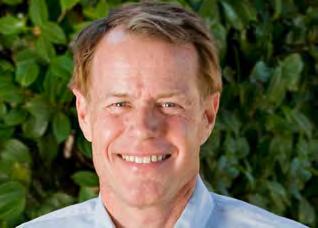
“I was a 31-year-old gay man, out to friends but not to others. I was well aware of the hatred and persecution faced by queer people, but McAlister’s condemnation was the first time I had seen someone express their view so bluntly: You, Kenneth Eugene Yeager, are so despicable that you are undeserving of any benefits provided to others by society,” writes Yeager in his book.
See page 11 >>
Effort to induct gay drag icon Sarria into CA Hall of Fame pays off
by Matthew S. Bajko
For the past eight years friends and admirers of the late José Julio Sarria, a gay man and drag queen who left a lasting impact on politics and the LGBTQ community, have sought to see him inducted into the California Hall of Fame. The Latino World War II veteran became the first known gay person to seek public office with his ultimately unsuccessful 1961 bid for a San Francisco Board of Supervisors seat.
Four years later he had founded the Imperial Court System in San Francisco and proclaimed himself Empress I of San Francisco. The philanthropic drag organization has since crowned scores of empresses, emperors, and other drag royalty while raising funds for charitable causes and now has 70 chapters in the U.S., Canada, and Mexico.

Thus, many LGBTQ community leaders and elected officials have argued for years that Sarria, born in San Francisco, was more than worthy of being in the hall. But their entreaties to the state’s governors and their wives, who oversee the selection process, each year went ignored.


Until now, that is. Sarria will be part of the hall’s 16th class inducted virtually by Governor Gavin Newsom and first partner Jennifer Siebel Newsom on Tuesday, August 22. Like Sarria, who died in 2013, all of the 2023 inductees are being

honored posthumously.
“We are thrilled to announce the newest class of inductees joining some of our state’s most revolutionary, innovative, and brightest in the California Hall of Fame,” Newsom stated. “The outstanding legacy
of this group has and will continue to embody what it means to be a Californian. There is no doubt their legacies will continue to live on and inspire millions across our state for generations to come.”
Siebel Newsom added, “The governor and I are delighted to honor the contributions of this remarkable group of visionaries. Each one of these pioneers has uniquely impacted California through their boundless creativity, perseverance, and courage — encapsulating the California dream through their lives and legacies.”
Induction amid drag backlash
Sarria’s selection comes amid a backlash against drag performers by conservatives. Republican-controlled legislatures in a number of states have passed laws banning drag events at public venues or targeted performers directly. The legislation has subsequently been challenged in court, with several federal judges finding them to be unconstitutional and blocking their implementation.
Newsom spoke out against such anti-drag laws earlier this year. It likely played into his decision to finally induct Sarria into the hall after snubbing him since becoming governor in 2019, suggested promoters of Sarria’s inclusion. He is the second drag queen named to the hall, as Newsom inducted RuPaul into it in 2019.
See page 12 >>
Long-term HIV survivors fighting for their lives all over again
by John Ferrannini
The fight against the HIV epidemic has seen a number of good milestones lately – the World Health Organization reaffirmed July 22 hat those who consistently take antiretroviral treatment and maintain undetectable viral loads don’t transmit the virus during sex. Meanwhile, among HIV-negative men who have sex with men seen at San Francisco City Clinic, PrEP use increased each year from 2014 to 2021. Gay and bisexual men who don’t inject drugs accounted for less than half of San Francisco’s new cases in 2021 – for the first time since AIDS was first recognized here more than 40 years ago.
But those who’ve acquired HIV infection tell the Bay Area Reporter that they’re still fighting for their lives.
“As HIV gets older, so are we getting older,” Hulda Brown, a 79-year-old straight ally, said in a recent interview. “We need different housing, safer housing, and chairlifts. You may need to walk with a cane. As you get older, we’ve had to adjust. We need a place to go to find services to explain to us the changes happening in our body, and how we can adapt.”

Brown, who believes she was infected in 1991, is among the first generation of people growing old with HIV infection. Since the virus that causes AIDS was first identified in 1983, Brown is on the

edge of medical uncertainties about how HIV affects older people.

“The studies don’t go to the age of 79,” Brown said. “We don’t even know what’s happening to our bodies.”
But just as importantly, Brown and the three other long-term survivors that the B.A.R. spoke with recently are also charting new territory so-
cially – not necessarily having expected to be alive this long–as well as in terms of what it means to age with dignity.
“In the 1980s, we revolutionized the health care system,” Vince Crisostomo, a 62-year-old queer Chamorro man who’s the director of aging services at the San Francisco AIDS Foundation, told the B.A.R. “Now, we need to do the same for the aging system.”

The effects of age on HIV
Dr. Paul Volberding saw his first AIDS patient on July 1, 1981 – his first day on the job at San Francisco General Hospital, and just days before an article in the Centers for Disease Control and Prevention’s Morbidity and Mortality Weekly Report alerted medical professionals the world over to an epidemic that at the time had no name, no known cause, and – then as now, no cure.
Volberding, a straight ally, later helped the hospital open its own specialized AIDS ward. Now 74, he’s a professor emeritus at the University of California, San Francisco.
Volberding told the B.A.R. that the effects of the interaction between long-term HIV infection and aging are still largely unknown.
“We haven’t followed people long enough to know exactly what the life expectancy is,” Volberding said. “Those people who are dying somewhat earlier were at a point with AIDS where they had
Serving the lesbian, gay, bisexual, transgender, and queer communities since 1971 www.ebar.com Vol. 53 • No. 33 • August 17-23, 2023 Age
Visit TheSequoiasSF.org or call 415.636.5218 to schedule a visit A Nonprofit Life Plan Retirement Community. License No. 380500593. COA #097. 02 New name for Castro club Red, White, and Royal Blue 15 The
with Pride
Former Santa Clara supervisor Ken Yeager
ARTS 06 See page 4 >> Frameline ED moves on
Courtesy Ken Yeager
José Julio Sarria will be posthumously inducted into the California Hall of Fame August 22.
Rick Gerharter
Josephine's Feast 16 ARTS
Vince Crisostomo
Vince Crisostomo, a long-term survivor of HIV, stood outside at a rally promoting the San Francisco Principles, which looks to promote policies for HIV and aging.
SF LGBTQ film festival ED Woolley departs
by J.L. Odom
San Francisco’s LGBTQ film festival is looking for a new leader.
The board of directors of Frameline issued a news release August 10 stating that Executive Director James Woolley, a gay man, was departing the media arts nonprofit after four years at the helm.
During his tenure, Woolley sought for audiences to have access to films, even when such access was more challenging during the COVID pandemic and the film festival was held online. This year’s event offered both in-person and streaming options.
Though Frameline’s release offered insight into Woolley’s next step careerwise – in a leadership role for another film festival – Woolley said in a phone interview that he can’t announce the specifics just yet due to contract restrictions and the need to have his visa approved.
“I can’t wait to tell people, but I’m just going to wait for all of that to be fully locked in before it’s announced. It won’t be very long; I’m very excited,” he said.
In a phone interview, Allegra Madsen, Frameline’s director of programming who will take over as interim executive director, talked about the festival’s years during COVID.
“James started working for the organization and then the pandemic hit, and he really had to pivot quickly and take us through some incredibly difficult times,” Madsen, a lesbian, said.
In spring 2020, the doors to San Francisco’s Castro Theatre were shuttered – locked and blocked by a tall metal fence, black security mesh, and signof-the-times murals depicting essential workers. In December, as the new year loomed, the marquee read, “Stay healthy and safe. We’ll be back soon.”
The closing of the Castro Theatre meant the postponing of long-standing events held within, such as Frameline’s
Pride Month-scheduled San Francisco
International LGBTQ+ Film Festival.
Frameline44, the 44th iteration of the acclaimed festival, was pushed to September 2020 as a showcase and featured drive-in and online film viewing options. Subsequent Framelines (45, 46 and 47) followed a similar trajectory to other public events, gradually returning to pre-pandemic format, albeit with precautions.
Said Woolley, “We’re very, very pleased with the way we got through the pandemic. We certainly tried every year to do different things and be innovative, and I felt that we came through it in a really great way.”
Woolley, who hails from Australia, joined Frameline as its executive director in 2019, approximately six months prior to the onset of COVID and its soonthereafter widespread, debilitating effects. In that role, he was able to keep the organization thriving and reaching audiences during what was an unquestionably difficult time period for film festivals.

Madsen worked closely with Woolley and shared that their visions for how to build the organization were closely aligned.
“He managed to make sure that Frameline was still very much able to reach out and connect with our local audiences,” she said. “And he did that while looking to the future and [assessing] how not only to weather the pandemic, but also how do we continue to grow as an organization. He seized every opportunity to make a big splash when big splashes weren’t easy to come by.”
The most recent festival, Frameline47, took place in June, with 47 of the 100plus queer films showing on the Castro Theatre’s large onstage screen and many attending the film viewings in person.
“When we finally had a truly postpandemic year, or at least a more returnto-normal-year [in 2023], we kept our loyal audiences and had really stellar attendance,” Woolley said. “I think there’s nothing more exciting than just to say, ‘We survived and we survived it well.’”
Castro Theatre marked its 100th year
in 2022. That same year, the theater’s longtime owner, the Nasser family’s Bay Properties Inc., announced it was partnering with the Bay Area’s Another Planet Entertainment (https://apeconcerts.com/about/) in a concerted effort to maintain and improve the popular Castro Street venue and hub of LGBTQ events. APE took over management of the historic movie palace.
Some LGBTQ film lovers and others expressed concern that the partnership would result in unwanted updates to the theater itself and an overhaul of the theater’s usual programming and LGBTQ focus, as the Bay Area Reporter has previously reported. The San Francisco Board of Supervisors approved an interior landmarking ordinance that allows APE to remove the fixed orchestra seating in favor of a flexible seating arrangement that can be adjusted for film or concerts.
Following the supervisors’ vote, the historic preservation and planning commissions on June 15 both approved a zoning ordinance that allows a condi-
tional use authorization for second floor nighttime entertainment throughout the Castro commercial district. The supervisors must still vote on that zoning ordinance, as the B.A.R. reported.
Frameline came under some criticism when it publicly backed APE’s proposed changes to the theater.
About APE, Woolley commented, “There’s not much to say, I don’t think. We’ve released a whole bunch of statements about it already, and the decision’s kind of made. I think the organization looked really closely at all the different things that were on the table, and we’re very comfortable with where we’ve landed.”
The release mentioned that the Frameline board is in the process of finding a successor for Woolley.
“We are actively engaged in an ED search, which I’m very excited to be a part of, because … I do work closely with this person,” Madsen said. “And so I’m looking forward to finding the next person whose vision aligns with the trajectory we are on and can help us continue to grow.”
As Woolley moves on, he does so with a positive view of his Frameline experience, San Francisco, and future film events.
“I found the Bay Area films scene to be so inspiring,” he said. “And there’s nothing more I want than for people to continue attending cinemas and festivals because it’s through attending these events that they thrive.”
Woolley said that financially, the nonprofit did OK through the pandemic.
“Frameline’s finances have been strong during the pandemic thanks to the generosity and engagement of the local community,” he said.
And, according to Woolley, Frameline operates on a budget of $2 million.
According to Frameline’s IRS 2021 Form 990, Woolley’s salary was listed at $98,000. t
Supes expected to vote on theater again after recess
by John Ferrannini
The San Francisco Board of Su-
pervisors has one more vote on the Castro Theatre in order for Another Planet Entertainment to commence with its plan to renovate the historic movie palace.

In June the board voted to remove an amendment that would have landmarked fixed, orchestra-style seating at the Castro Theatre. APE’s renovation plans hinge on being able to remove the fixed orchestra seating to make way for seating arrangements that can be moved in and out of the venue.
Following the supervisors’ vote, the historic preservation and planning commissions on June 15 both approved a zoning ordinance that allows a conditional use authorization for second floor nighttime entertainment throughout the Castro commercial district. No one appealed those commission votes, and now the Board of Supervisors will need to weigh in with the proposed
ordinance allowing second floor nighttime entertainment throughout the Castro commercial district.
Dan Sider, chief of staff of the city’s planning department, confirmed the upcoming vote, which will take place after the supervisors return from their August recess. Sider said that would be the case even if someone had filed an appeal.
“In other words, the project will make another appearance before the Board of Supervisors in the near future regardless of any appeal,” Sider told the Bay Area Reporter.
Zahra Hajee, a legislative aide to gay District 8 Supervisor Rafael Mandelman, told the B.A.R. that “we’re anticipating it will be brought before the board at some point during the fall post-recess.”
On June 13, the last time the theater issue went before the board, it gave 8-3
final approval to an interior landmarking of the theater that wouldn’t obstruct APE’s plans.
A week prior, at the board’s June 6 meeting, Mandelman made a motion to remove the fixed-seating amendment, which passed 6-4, with District 9 Supervisor Hillary Ronen absent. A subsequent vote on the interior landmarking was approved 9-1 with Board of Supervisors President Aaron Peskin (D3) casting the dissenting vote.
The imbroglio over the theater began in January 2022, when APE – which runs the Outside Lands music festival in Golden Gate Park and the Bill Graham Civic Auditorium downtown – was announced as the new operator of the 101-year-old Castro Theatre.
Some Castro neighborhood organizations, and LGBTQ and film groups – such as the Castro LGBTQ Cultural District and the Castro Theatre Con-

servancy – formed the Friends of the Castro Theatre Coalition in opposition to the proposed changes.
APE has stated that it will screen films about one-third of the time the theater is open, which has dismayed moviegoers and many others.
APE spokesperson David Perry told the B.A.R. that it’s confident the board will approve the ordinance.
“Another Planet is humbled by the support the Castro Theatre project has received so far, from both the public and our city partners, especially our immediate neighbors in the Castro and the LGBTQ communities,” Perry stated.
“We look forward to approval of this necessary trailing legislation as well.”
The cultural district, the conservancy, and Neighbors for a Restored Castro Theatre, a pro-APE group, did not return requests for comment for this report by press time. t
Mudpuppy’s damaged after DUI crash, SFPD says
by John Ferrannini
T he storefront of a pet grooming store in the LGBTQ Castro neighborhood was damaged after it was hit by a car, according to the San Francisco Police Department.

Mudpuppy’s earlier this year had expanded its operations into the retail space at 536 Castro Street. On August 11 a man allegedly hit that portion of its storefront and was arrested on suspicion of felony DUI, police told the Bay Area Reporter.
SFPD spokesperson Kwanjai Laokwansathitaya stated that Mission Station officers “were patrolling the 500 block of Castro Street when they observed a vehicle driving recklessly. The vehicle collided into an unoccu -
pied parked vehicle and into a building, causing damage to both. When officers attempted to contact the driver, the driver continued driving and then came to a rest on the 2300 block of Market Street, where officers detained the driver of the vehicle.”
Hector Ortiz, 37 of San Francisco, was arrested on suspicion of felony DUI with injury, misdemeanor DUI, felony hit-and-run, reckless driving, driving without a license and driving left-of-the-center, Laokwansathitaya stated.
Officers summoned medics for Ortiz and his passenger, who sustained non-life-threatening injuries, Laokwansathitaya stated.
“No one else was injured dur-
ing the incident,” Laokwansathitaya continued. “Ortiz was then transported to a local hospital and the passenger was released at the scene.”
The B.A.R. reached out to Mudpuppy’s August 14. A person who answered the phone stated that a co-owner would be in touch but, as of press time, this has not happened.
As of Monday afternoon, Mudpuppy’s west-facing window had been completely boarded up.
Anyone with further information is asked to contact the police tip line at 1-415-575-4444, or text TIP411 and begin the text message with SFPD. Tipsters may remain anonymous. t
2 • Bay area reporter • August 17-23, 2023 t
<< Community News
James Woolley, left, has stepped down as executive director of Frameline, and Allegra Madsen will assume the duties on an interim basis.
Barak Shrama Photography
The Castro Theatre was shuttered in 2020 during the COVID lockdown. It has since reopened under Another Planet Entertainment.
J.L. Odom
The Castro Theatre faces one more vote by the San Francisco Board of Supervisors to adopt a zoning ordinance.
Scott Wazlowski
A window of Mudpuppy’s was boarded up Monday after an alleged drunken driver crashed into the building.
John Ferrannini
Art project seeks to bridge Castro’s past, present Community
by John Ferrannini
Anew art installation in the Castro is seeking to bring the LGBTQ neighborhood’s history alive while at the same time enliven empty storefront spaces.
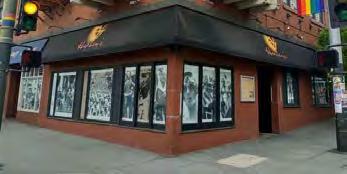
Pete Betancourt, a gay San Francisco man, is the co-founder and creative director of Castro Street Seen (https://castrostreetseen.com/). He put up the new group’s first installation in the old Harvey’s space at 500 Castro Street on June 17.
Betancourt told the Bay Area Reporter on August 7 that initially he’d been planning a documentary on the Castro’s history through photography – which he still hopes to do – and that the physical installations were conceived as a way to raise awareness about it.
“We still want to do a documentary; that’s something we’re exploring, but it just felt like it [a physical installation] was much more immediate and something we could do quickly as opposed to the pre-production and fundraising that’s needed to produce a documentary,” Betancourt said.
Harvey’s was shuttered in January, as the B.A.R. reported
A new bar and nightclub is set to open next summer in the old restaurant space, which will undergo a complete
overhaul and expansion into a vacant adjacent retail space, as the B.A.R. subsequently reported The new ownership group does plan to find a way to honor slain LGBTQ rights pioneer and San Francisco supervisor Harvey Milk in their nightlife venue.
Betancourt said that the Harvey’s location was “incredibly symbolic to be our very first installation, for so many
reasons, not just the name itself but it being Castro and 18th [streets], the heart of the Castro, and with so many windows, so much visibility, it was a beautiful starting point to launch this project.”
He initiated the project with the intention of beautifying empty storefronts; the Paul Langley Co., which owns the space, agreed just in time for Pride 2023 and installation began forthwith. The
Langley company did not return a request for comment for this article.
“I try not to use this term, but it was a series of miracles for this project to have happened,” Betancourt said. “I was taking pictures of the Harvey’s location to do a mockup and I ran into one of the [real estate] agents and quickly pitched them the concept. I think everyone on that team loved it.”
That agent, Steven “Stu” Gerry, told the B.A.R. that “nothing happens unless it goes through me.” He said the pictures will remain up as long as possible until work must begin for the next use of the 500 Castro Street space – the aforementioned bar and nightclub to be operated by a new ownership group from Beaux, as the B.A.R. previously reported.
“The Paul Langley Co. is absolutely invested in getting the community involved, and that’s why the pictures went up during the construction period,” Gerry said. “We are going to keep it up as long as we can.”
Gerry said they support anything to make the neighborhood more “visually pleasing.”
Betancourt has obtained the photos being used under an arrangement with the GLBT Historical Society, which operates the nearby LGBTQ museum space
on 18th Street, through the “standard licensing process,” according to Andrew Shaffer, director of development and communications for the society.
Photo reproductions
The project consists of life-size reproductions of photos taken in the heady days of gay liberation in the Castro in the 1970s, such as the 1977 photo “A Kiss on Castro Street” by the late Crawford Barton, whose work appeared in the B.A.R. The iconic photo shows two men kissing, with an older man and woman sitting next to them, but looking forward. The photo has been used to illustrate the change from the Irish Catholic and Scandinavian hamlet of Eureka Valley to the LGBTQ Castro district that people know today.

“That image of the kiss is one of the most iconic images,” Betancourt said. “If you’re going to show a Crawford Barton collection, it’s important to show that one.” Betancourt said that Barton’s photos are the focus of this first installation, which centers on the “exuberant” joy of the early Castro. Many of the photos come from the 1978 Castro Street Fair, which was the last one before Milk and Mayor George Moscone were assas-
See page 12 >>
Tenant complaint prompts change to Castro flag
by John Ferrannini
T here may yet be changes to the rainbow flag flying at a Castro neighborhood apartment building, after a tenant expressed to the new landlord their own issues with the flag after the landlord had demanded it be taken down.

The Bay Area Reporter reported last week that the flag was still flying at 3991 18th Street after the office of gay District 8 Supervisor Rafael Mandelman had proposed to AA Property Rentals that the flag stay, but be reinforced, after the new property managers had demanded it be taken down, citing liability and safety concerns, in their first communication with the building’s tenants.
Henry Walker, a gay man who lives in the building, is the flag’s caretaker. He said it’d been flying for decades.
But now, a tenant in the building – who does not want to be identified or comment for this report –has expressed to the landlord their preference for a smaller, Progress Pride flag, stating that the current flag flaps too loudly in the wind. The
landlord expressed this could be a suitable compromise.
Maddie Alvarez of AA Property Rentals confirmed this to the B.A.R. on August 14, saying that “with climate change, I think, we need to expect heavy winds and rains,” and that other properties had serious problems after last winter’s destruc -
tive rain and wind storms.
“I had multiple apartment buildings where things were flying off everywhere and I was worried someone was gonna get hurt,” Alvarez said. “There are beautiful flags we can put in the windows. One of the tenants suggested a smaller one. There’s two apartments and the flag is between
the two apartments. I took a video, and that flag was going, it was making a ton of noise, and so many people nowadays work from home and that has to be annoying. Ownership doesn’t have a problem if it’s a smaller flag or a progressive flag; he is worried about the safety.”
Alvarez didn’t identify who the person who owns the building is, saying it’s owned by 3991 18th Street, LLC. California public records show that the LLC is owned by Wisfe Aish.
Alvarez continued that while the tenant expressed a preference for the Progress Pride flag, the owner’s only concerns are liability and that everyone’s happy.
“All we really want is safety and harmony for all of our tenants,” Alvarez said. “We don’t have a problem with the flag at all – we don’t – we just want to be sure the people who rent from us and live in the apartments are happy and safe and that the owner is not going to be held liable. … He doesn’t care if it’s an American flag standing there: he’d still want someone responsible and liable for the American flag, the Mexican flag
FIREPLACE

or whatever flag it is. We all grew up there. We’re all from that area.”
When asked what area she means, Alvarez said “That whole area. The Castro area. I grew up at 18th and Sanchez. We have no issue with what type of flag it is. The tenant needs to be held responsible and liable for the flag.”
Walker has not returned a request for comment responding to Alvarez’s statements, but earlier he stated, “The property management company has been responsive and has acted in good faith to address our concerns, and their proposal [flying a smaller, Progress Pride flag] presents itself as an effort to make all parties happy. We definitely appreciate that. The tenants plan to get together and talk about next steps.”

Mandelman’s office, too, is hopeful.
“We’ll continue to support and encourage a resolution,” Adam Thongsavat, a legislative aide to Mandelman, stated to the B.A.R. “We’re hopeful all parties can come to an agreement and we’ll support any way we can.” t
August 17-23, 2023 • Bay area reporter • 3 t 415-626-1110 130 Russ Street, SF okellsfireplace.com info@okellsfireplace.com OKELL’S
Valor LX2 3-sided gas fireplace shown here with Murano glass, and reflective glass liner
News>>
The rainbow flag flying at a Castro apartment building may be replaced with a smaller Progress Pride flag.
Henry Walker
The former Harvey’s space at 18th and Castro streets has been enlivened with old photos of the LGBTQ neighborhood by Castro Street Seen.
John Ferrannini
severe immune deficiency, so that’s possibly one of the factors.
“Another is that the drugs we’ve prescribed have gotten less toxic, but a lot of people living with treated HIV for a number of decades were probably exposed to some of the earlier drugs that had chronic side effects–more some of the earlier drugs that might’ve caused lasting damage, like AZT, d4T, which are probably the ones that caused some of the long-term side effects.” he added. “The fat atrophy, the loss of fat in the face, was probably more due to d4T than anything else.”
The advent of highly active antiretroviral therapy, or HAART, in the mid1990s has been the most important game-changer in the fight against HIV. Without treatment, the latency period between infection and the development of AIDS was – on average – about a decade. But with treatment, the condition can be managed to the point where people with HIV can live a near-average lifespan. How close to average is what’s not certain, Volberding said.
Some early HAART treatments –and drugs like AZT that showed some effect against HIV in the 1980s (In 1987 AZT became the first HIV treatment approved by the federal government) –have had lasting effects.
People whose HIV infection had progressed to AIDS may have a worse prognosis than those who’d always had a higher CD4 count.
“I think most of us would think it probably is bad for your body to have had immune deficiency; that there probably is some degree of damage that is permanent, so we really do think people who get started on treatment –
they get cancer, and those happen at a slightly higher rate, and a slightly earlier age in life, but most people with complications that are dying aren’t dying at 35, they’re dying at 65, 70, 75, which is when people without HIV die,” Volberding said.
Volberding said two questions in particular would be helpful in unlocking a cure to HIV infection. First, when viral loads are undetectable in the blood, where is the virus?
“The amount of virus in people successfully treated is so low it’s hard to find it,” Volberding said. “There might be an occasional virus particle in the blood, in various tissues, in the lymphocytes, which are the main home of the virus, and also probably in other cells.”
Second, why does HIV affect some people and not others? Volberding said that about one in 200 people with HIV – elite controllers – have antibodies to the virus that keep the infection in check to the point where they rarely if ever develop AIDS, even without antiretroviral treatment.
“If there’s any group that gives us reason to be optimistic, it’s a small number of elite controllers: people who are healthy, who’ve been infected, but who’ve never been treated,” Volberding said, calling them a “very, very acute area of fruitful research.”
Survivors of epidemic face loneliness
While not an elite controller, Cleve Jones acquired HIV infection before it was even discovered, and hung on long enough to be on antiretroviral therapy.
In the 1980s, Jones co-founded the Kaposi’s sarcoma Research and Education Foundation – later the San Francisco AIDS Foundation – and the AIDS Memorial Quilt. But in the heady days


Jones, a 68-year-old gay man, reflected on some of the compounding issues faced by people in his age group and sexual orientation. Jones painted a picture of how homophobia, the aftermath fight against AIDS, and what was believed to be a horrifying death at a young age have left survivors lonely, exhausted, and broke.
“LGBTQ people in general – but especially gay men of my generation – the majority didn’t retain the affection and support of our biological families,” Jones said, illustrating how many older gay men lack the family support that straight people the same age often depend on.

“A great many of us spent those first two decades of the pandemic not only trying to fend off the virus, but also taking on the government, the pharmaceutical industry, and churches. We were in ACT UP, part of the quilt, created buddy programs. It was all consuming,” he said. “During that time we’d be expected to accumulate wealth and invest and prepare for the golden years, many of us did not, and though I didn’t max out my credit cards thinking I’d be dead in a week, I knew people who did.”
Jones and his friends estimate that 20,000 gay men of their generation died in San Francisco alone between the beginning of the epidemic and the advent of HAART.
“Almost everyone I knew and loved the most is gone,” Jones said. “I’m a very positive person; I’m very involved with my union work, San Francisco, Guerneville; I’m very blessed with a lot of wonderful friends – and one very special friend – but the people who knew me the best? They’re all gone.”
Asked how having an HIV infection for over 40 years affects his health now, Jones agreed with Volberding that it’s
Aging, HIV services need coordination
Jones expressed his appreciation for the AIDS foundation and Crisostomo’s work in particular. Before he was the director of aging services, Crisostomo had been program manager of the AIDS foundation’s Elizabeth Taylor 50-Plus Network.
“It really matters a great deal and has a profound and real impact on an increasingly vulnerable part of our community,” Jones said of Crisostomo’s work.
The Elizabeth Taylor 50-Plus Network is so named because the “Elizabeth Taylor AIDS Foundation was the lead funder for the 50-Plus Network with its five-year grant commitment to the program. That funding was awarded in 2015 and is now renewable on an annual basis, so the program will continue to be named in Elizabeth’s honor,” Chad Ngo, SFAF’s former communications manager, stated to the B.A.R back in 2021. The late actress established the foundation that bears her name in 1991.
“Fifty-Plus is made up of people from the AIDS generation – people who survived through the AIDS epidemic,” Crisostomo said at that time. “There’s a lot of trauma, a lot of unresolved feelings in the community.
Crisostomo has been living with HIV since 1987. He was diagnosed with AIDS in September 1995.
Shortly thereafter, HAART became available; but Crisostomo had to face a difficult choice when he was diagnosed with lactic acidosis, a potentially fatal buildup of lactic acid in the blood, which was a side effect of his medicine.
“The treatment that saved my life was also killing me,” Crisostomo told the B.A.R. “I thought ‘I can either take a chance with HIV – which I’d lived with for 10 years – or I can take this and die.’
So I stopped taking the meds. I don’t recommend that to people.”
Crisostomo kept that a secret from his doctor, until “six months later, the doctor said, ‘OK you can stop taking
Crisostomo, Brown, and Paul Aguilar – a gay, 60-year-old long-term survivor who has been living with HIV since 1988 and who was a community grand marshal in this year’s San Francisco LGBTQ Pride parade – painted their own picture of a community who are finding it difficult accessing services competent to address their needs.
Crisostomo said that the problem is two-fold: on the one hand, aging services aren’t well equipped to handle elders with HIV; on the other hand, HIV services are geared toward a younger cohort, though a majority of Americans living with HIV are over 50.
Said Brown: “Everything is geared toward younger people.”
“We have no shortage of issues we’re ple didn’t plan to live, the agencies that serve us also didn’t plan to stay around. There’s a whole lot of services that need
Brown agreed: “For example, you look for independent housing. They [AIDS groups] didn’t plan on that when they
The problem is compounded for
“The community I’m from – HIV posed to be a gay, white man’s disease,
cal care is threatened, too. As the AIDS generation hits retirement, so too are
“They are taking that wealth of knowledge with them,” Aguilar said, adding that other doctors, who didn’t see the darkest days of AIDS, often don’t get
“They didn’t understand the trauma, because all their new HIV patients were under 35,” Aguilar said. “The only people who understand are people who’ve been
Added Brown: “The people who
Aguilar echoed Jones’ remarks about cisco because their families kicked them
out because they were gay, and they built a chosen family,” Aguilar said, adding these social networks were decimated from 1981-1996. “Now, we don’t know who can take care of us.”
And the government isn’t necessarily of much help, either. Meeting other requirements, people with an HIV infection and an opportunistic infection that makes it hard to do everyday activities qualify for Social Security Disability Insurance. But that’s only available until Social Security retirement benefits begin.
“Some of us are on disability, but are going to have to go to regular [retirement] Social Security soon,” Aguilar said. “A lot of us haven’t paid into it for 30 years, because we’ve been on [Social Security] disability.”
Aguilar said he knows of people who’ve taken on full-time jobs “just to pay rent” once they lose their disability benefits.
All agreed there needs to be more research of the effects of HIV infection on the elderly; Aguilar said he agrees to every study for which he’s eligible, but Brown said that “being 79, the opportunities are few and far between” for her to participate.
Added Crisostomo: “Someone needs to do something.”
SF must be model of care
Another one of the problems is that older HIV-positive people are all too aware of the stigma the infection carries. This can be a barrier to care, too, when accessing aging services.
“People are reticent to disclose their HIV status because of the discrimination from aging services,” Crisostomo said. “They might be more used to quiet seniors who play Monopoly.”
Crisostomo, Brown, and Aguilar agreed that service providers judge them based on how service providers perceive how they acquired the virus.
“It’s like an immediate stigmatism,” Brown said. “The letters HIV is a stigma, in and of itself.”
Aguilar said many people with HIV don’t like being talked down too.
“Aging services infantilize people, and our community doesn’t appreciate that,” he said.

Added Crisostomo: “It’s like we’re fighting, in the aging world, the same fight we fought in the 1980s. … In the 1980s, we revolutionized the health care system. Now, we need to do the same for the aging system.”
In an attempt to do just that, Crisostomo and other long-term survivors drafted a statement of principles in 2020 demanding greater inclusion in policy making. It was dubbed the San Francisco Principles, a reference to the Denver Principles of 1983, when people with AIDS demanded representation and inclusion in research, care, treatment, and policymaking.
Crisostomo said that San Francisco –which set the standard for AIDS care in the 1980s – needs to get it right.
4 • Bay area reporter • August 17-23, 2023 t <<Out & Aging, presented by AARP
Paul Aguilar, a long-term survivor of HIV, stood in San Francisco City Hall on June 25, the day he served as a community grand marshal in the Pride parade.
<< HIV survivors From page 1 See page 6 >>
Courtesy Paul Aguilar
ICONIC CONCEPT

Owners reveal name of new Castro LGBTQ nightclub
by John Ferrannini
The owners of the new LGBTQ nightclub taking over the old Harvey’s restaurant location in San Francisco’s Castro district have popped the cork on the venue’s name.


It will be called BRUT Bar, Bites, and Nightclub. Its owners have also released a floor plan – designed in consultation with the design lead, the Gi Paoletti Design Lab – that incorporates the corner commercial space Harvey’s had occupied at 500 Castro Street with the retail space at 504 Castro Street that had housed smoke shop Puff ‘n Stuff. Both are owned by the Paul Langley Co.
As the Bay Area Reporter previously reported, the new ownership group – comprised of Beaux stalwarts Joshua J. Cook, Alexis Lucero, Matthew Mello, Garrett Beighton, and Realtor Marco Caravajal – signed a lease with the Langley company to take over the old Harvey’s space after it was shuttered (https://www.ebar. com/story.php?ch=news&sc=latest_ news&id=322295) in January. They also agreed to expand into the adjacent storefront that has been vacant since 2020.
Cook told the B.A.R. last month that the space will function as a bar
with a “substantial bar menu” during the day. At night the space will be transformed to include a dance floor with a similar capacity of Beaux’s –around 200. The name they chose for the business is a play on a glass of bubbly, Cook explained to the B.A.R. on August 15.
“We love the word play of BRUT,” he stated. “Giving a nod to the timelessness of a sparkling wine as well as the flirtatious spirit of a sensual experience. It’s meant to be tongue-in-cheek, entertaining and amusing.”
Gi Paoletti told the B.A.R. that her team interviewed the ownership group and asked them what they wanted.

“I study that, look at the space, what we can do, and also the budget,”
Paoletti said. “Because of the expansion, reusing the existing bar didn’t make much sense. We’re also going to include a whole new bar and add a mezzanine. When people are dancing, they like to see – they like to people watch – and they like to be seen.”
Paoletti also commented on the wordplay in the name, which allows for a play of masculine and feminine vibes.
“With the name being BRUT, we
THE SAN FRANCISCO LGBTQ+ DEMENTIA CARE PROJECT
Free live virtual training to build dementia-capable care for the LGBTQ+ community in San Francisco City and County



don’t want it to be thought of as just Brut, bubbly, but also Brut, masculine,” Paoletti said. “So it allows me to design both masculine and feminine when people are looking around.”
Further details will be revealed later – including how Brut plans to prominently honor its predecessors in the space, the Harvey’s restaurant and the old Elephant Walk. Nods to the former gay bar and the restaurant’s namesake, the late gay San Francisco supervisor Harvey Milk, had been part of the former decor.
“We’re having a lot of fun with it,” Paoletti said.
BRÜT, with an umlaut, is the name of an LGBTQ house music dance party that occurs with regular frequency in a number of places, including Los Angeles, Provincetown, Fire Island, and San Francisco, where its next iteration is at The Great Northern on September 22, the Friday before the Folsom Street Fair. Most recently, BRÜT hosted an event during the Up Your Alley fetish fair held in San Francisco in late July.
Cook stated he was “not aware of a party of that name.”
BRÜT officials did not immediately return a request for comment for this report. t
From page 6
The Alzheimer’s Association®, in partnership with Openhouse and Family Caregiver Alliance, offers free training to health and social service providers on the care needs of LGBTQ+ seniors living with Alzheimer’s disease or other forms of dementia and their care partners in San Francisco City and County. This program is funded by the San Francisco Department of Disability & Aging Services. Contact us now to schedule free training or learn more about these opportunities.
LGBTQ+ and Dementia Class (1.5 or 3 hours)


• Overview of dementia
• Understanding the needs and challenges unique to members of the LGBTQ+ community who have Alzheimer’s disease or other forms of dementia

• Sharing recommendations for working with LGBTQ individuals living with dementia and their care partners
Effective Communication Strategies Class (1 or 1.5 hours)
• Explaining the communication changes that take place throughout the course of the disease
• Decoding the verbal and behavioral messages delivered by LGBTQ individuals with dementia and respond in ways that are helpful to them
• Identifying strategies to connect and communicate at each stage of the disease
All trainings are free and available in English, Cantonese, and Spanish.
To schedule a free training or learn more, complete the form at tinyurl.com/LGBTQAlzTraining or contact Stella De La Pena at sdelapena@alz.org
“If San Francisco can’t come together to deal with our issues, I don’t know about the rest of the world,” Crisostomo said. “We are the model.”
The principles intend to apply the 1983 Nothing About Us Without Us motto of the Denver Principles to people aging with HIV.
“We need to change what it means to age,” Crisostomo said. “We’re the first generation to age with HIV. We’re the AIDS generation. It’s a new world.”
Crisostomo said that he’s helping to put together the first HIV and aging conference in Sacramento, September 18-19 September 18 is National HIV/AIDS and Aging Awareness Day.
Aguilar said it’s the fight for better services for those aging with HIV that helps him face each day anew.
“I was one of the people who told Vince I didn’t want to get up in the morning,” he said. “Act my age? I don’t know how to do that. I was not supposed to be this old.” t
This story was made possible by a grant from AARP to the News Is Out collaboration. For more stories in the Out and Aging series, go to newsisout.com/outand-aging/
WEB: https://newsisout.com/outand-aging/
6 • Bay area reporter • August 17-23, 2023 t
<< Community News
<< HIV survivors
Veteran gay rights activist Cleve Jones, second from right, a long-term survivor of HIV, led a rally in San Francisco’s Castro district in 2022.
Jane Philomen Cleland
The proposed first floor design of BRUT, set to take over the former Harvey’s space in the Castro.
Courtesy Gi Paoletti Design Lab
The old Harvey’s bar and restaurant space in the Castro will be named BRUT Bar, Bites and Nightclub when a new ownership group transforms it into an LGBTQ nightclub.
Scott Wazlowski
Help Build Meaningful, Compassionate Connections in Your Community
Shanti’s LGBTQ+ Aging & Abilities Support Network (LAASN)
Since 1974, Shanti has trained over 20,000 Bay Area volunteers to offer emotional and practical support to some of our most marginalized neighbors. LAASN offers emotional and practical support to LGBTQ+ older adults and adults with disabilities who face isolation and need greater social support and connection.
Shanti LAASN peer support volunteers:

Go through the internationally recognized training on the Shanti Model of Peer SupportTM
Make a commitment of 2-4 hours a week for a minimum of 6 months
Get matched with one client, for whom they serve as a non-judgmental source of emotional support and reliable practical help
Have one of the most rewarding volunteer experiences of their lives!
To learn more about how you can be a Shanti volunteer, contact Volunteer Services at 415-674-4751 or email acone@shanti.org. For more information about LAASN services, call 415-979-9950 or email djohnson@shanti.org.
The LGBTQ+ Aging & Abilities Support Network is made possible by funding from the City and County of San Francisco’s Department of Disability and Aging Services (DAS) and Metta Fund.
1 2 3 4
Volume 53, Number 33 August 17-23, 2023 www.ebar.com
PUBLISHER
Michael M. Yamashita
Thomas E. Horn, Publisher Emeritus (2013)
Publisher (2003 – 2013)
Bob Ross, Founder (1971 – 2003)
NEWS EDITOR
Cynthia Laird
ARTS & NIGHTLIFE EDITOR
Jim Provenzano
ASSISTANT EDITORS
Matthew S. Bajko • John Ferrannini
CONTRIBUTING WRITERS

Christopher J. Beale • Robert Brokl
Brian Bromberger • Victoria A. Brownworth
Philip Campbell • Heather Cassell
Michael Flanagan •Jim Gladstone
Liz Highleyman • Brandon Judell • Lisa Keen
Philip Mayard • Laura Moreno
David-Elijah Nahmod • Paul Parish • Tim Pfaff
Jim Piechota • Adam Sandel
Jason Serinus • Gregg Shapiro
Gwendolyn Smith • Charlie Wagner
Ed Walsh • Cornelius Washington • Sura Wood
ART DIRECTION
Max Leger
PRODUCTION/DESIGN
Ernesto Sopprani
PHOTOGRAPHERS
Jane Philomen Cleland
Rick Gerharter • Gooch
Jose A. Guzman-Colon • Rudy K. Lawidjaja
Georg Lester • Rich Stadtmiller
Christopher Robledo • Fred Rowe
Shot in the City • Steven Underhill
Bill Wilson
ILLUSTRATORS & CARTOONISTS
Christine Smith
VICE PRESIDENT OF ADVERTISING
Scott Wazlowski – 415.829.8937
NATIONAL ADVERTISING REPRESENTATIVE

Rivendell Media – 212.242.6863
LEGAL COUNSEL
Paul H. Melbostad, Esq.
CA celebrates a summer of drag
Asdrag entertainers find themselves increasingly under attack in many red states, California, not surprisingly, is tacking in the opposite direction.
The state is embracing and celebrating drag in all of its forms, from history-making leaders to exciting and emerging artists. It’s just one of the many ways in which the Golden State is leading – and leaning in – on this issue.
For us, as the nation’s oldest continuously publishing LGBTQ newspaper that got its start covering drag queens – check out our digitized early issues!
– the validation that drag artists here have received marks an important cultural milestone even as states like Florida and Texas attempt to ban drag performers, fine venues that host their events, and keep children from attending them. Some of these laws are now the subject of legal action, but the message they send is nonetheless chilling.
The year of drag laureates

Technically, promoting drag started this spring, when San Francisco Mayor London Breed named Oasis nightclub owner D’Arcy Drollinger as the world’s first drag laureate in May. As we reported at the time, this position was years in the making: naming an ambassador for the local drag community was proposed in San Francisco’s groundbreaking LGBTQ+ Cultural Heritage Strategy first released in 2018. After the COVID pandemic hit, the position became seen as a way to boost local nightlife venues and drag performers whose revenues were impacted by the global health crisis over the last three years.
Yet, by the time Drollinger was selected, the art of drag itself had come under fire from conservative politicians and other extremists. In this context, having an out, loud, and proud drag ambassador for San Francisco, long known as a beacon for queer residents and visitors, became even more important.
Drollinger has taken the position, which she will hold until November 2024, and run with it. She had a very busy Pride Month in June, attending numer-
ous functions and parties. She threw out the first pitch at the San Francisco Giants Pride Night (even baseball Pride Nights became controversial this year, as we reported earlier about the kerfuffle the Los Angeles Dodgers found themselves in by inviting, disinviting, then reinviting the L.A. chapter of the Sisters of Perpetual Indulgence, a drag philanthropic group, to receive an award at its Pride game.)
“It is pretty awesome. I am super proud and excited to, sort of, help define what this role is and does,” Drollinger told the Bay Area Reporter during a May 15 phone interview to talk about being selected. “It just makes me want to be that much more fabulous and sparkle that much more harder.”
Drollinger’s position comes with a $55,000 stipend to help cover the costs associated with it.
But Drollinger isn’t the only drag laureate in California. In West Hollywood, drag queen Pickle was formally introduced as that city’s first drag laureate July 16, which happened to be International Drag
Day. The Southern California city had been poised to name a drag laureate before San Francisco – and in fact approved the creation of the position in 2020 before its northern municipal counterpart did – but officials went back to the drawing board to seek more funding and retool the duties. It now comes with a $15,000 stipend, and Pickle is expected to serve through June 30, 2025.
Pickle has been involved in Drag Story Hour and, since 2017, has led her local chapter of the national organization. She’s also creating a drag-based curriculum tied to the state’s arts education standards so it can be used in schools, as we reported.
“I have built a career of bringing drag out of nightlife, not that nightlife is bad. Traditionally, drag was done in bars because they were safe spaces. But they are not the best spaces for the art form to thrive,” explained Pickle. “In West Hollywood, there are so many drag shows in the clubs and bars. It is great to see that come back and the commerce that brings and the tourism it brings coming back to West Hollywood. I hope to build on that.”
See page 12 >>
Together forever? Think again
by Bob Hughes
Ithought in 2023 this couldn’t happen. In the past, partners I personally knew, who wanted to be with each other forever, were ripped apart upon death by families who exercised their right to do so. During the horrifying days of AIDS it happened over and over. But in 2023? Yes, it can happen. If you don’t leave your wishes in a properly drawn up will that’s easy to find, you better believe it can happen.
Bay area reporter
44 Gough Street, Suite 302 San Francisco, CA 94103 415.861.5019 • www.ebar.com
A division of BAR Media, Inc. © 2023
President: Michael M. Yamashita
Director: Scott Wazlowski
News Editor • news@ebar.com
Arts Editor • arts@ebar.com
Out & About listings • jim@ebar.com
Advertising • scott@ebar.com
Letters • letters@ebar.com
Published weekly. Bay Area Reporter reserves the right to edit or reject any advertisement which the publisher believes is in poor taste or which advertises illegal items which might result in legal action against Bay Area Reporter. Ads will

My partner Rob died on June 30. (His last name is being withheld for privacy reasons.) We had been together for a remarkable 35 years, and shared 22 years of it here in San Francisco. But Rob had a severely damaged heart as a result of childhood Hodgkin’s disease. Radiation cured the Hodgkin’s but damaged his internal organs in the insidious slow way radiation kills. His fourth heart operation, on July 5, 2022, left him hospitalized for 360 days before he just gave up. He decided to withhold his life-saving treatments and medications and move on.
On his final day he decided he was up for a last Zoom call so he could say goodbye to his sister’s family in New York, and his brother and his family in Florida. Rob was tired and hurting, but he didn’t want to show it and he joked with his nephews and said all his goodbyes. Finally he said, “That’s it ... I need to go.” At which point his brother pointedly said, “you can’t go yet, what’s going to happen to your body?” Rob answered back what he and I had often discussed, he wanted to be cremated and his ashes spread over San Francisco Bay. The family, however, wouldn’t have it and started an argument over what they wanted done, and in the end Rob, tired and hurting, said, “Fine, just let me go.” But I knew the importance of our being together and piped up, “We need to be together when I pass.” Rob held my hand for the very last time and shook his head in agreement with a wan smile on his face – his very last smile. His brother said, “I don’t know about that. I’ll have to look into that.”
I offered to convert to Judaism if need be, knowing that in this Conservative Jewish cemetery there might be rules against burials of non-Jews. But during the watch over Rob through his final hours deep in a terminal sleep, his brother said it couldn’t happen.
And since there was no will, in the state of California the family has more say than a partner of over 35 years. And what they wanted was to have his body flown back to Florida, the state from which we came and felt very alienated from, and buried in a small cemetery far from the ocean. And so it happened. They even acted surprised when I flew back to the Sunshine State to attend the service, treating me like somewhat of a distant, not wholly-approved-of relative.
You see, Rob never really believed in the idea of marriage. He thought of it as something that heterosexuals needed that we didn’t. When he got really sick following his last operation, I proposed to him. He finally was ready to say, “I do,” but it was to happen after he got out of the hospital, which he never did. I didn’t push the matter after a cousin of Rob’s who is an attorney said that I could be accused of taking advantage of an ill man if any legal difficulties came up later.
Lo and behold a will was found 17 days after Rob died. It was found in a filing cabinet in a sealed manila envelope on which Rob wrote, “Important Legal Papers.” It was written 31 years earlier and forgotten. It named me not only as Rob’s executor but also the beneficiary of some of the things his family grabbed. Along
with it was a legal paper declaring a domestic partnership, which was notarized but not filed with the city or state. If I would have known where it was, or Rob could have told me with all his pains and medical issues, this wouldn’t have happened.
There was still time to reverse many of the actions of his brother and sister’s joint actions as co-executors, but no way to, practically speaking, bring Rob home for what he really wanted, to spend forever mingling with me in the sparkling waters of San Francisco Bay.
Don’t let it happen to you. If you care about what takes place after you die, the only way to make sure it happens is to have a legally written last will and testament. If you’re not married and you want your partner to continue to be an important part of your life when you get sick, you need to have a domestic partnership form notarized and filed with either the city or state, or even better with both. Some people act like they’ll live forever, but I wouldn’t bet on it. Don’t be like Rob and I, with him in a small cemetery across the country in Florida while I have all of San Francisco Bay. t
Bob Hughes is a gay longtime San Francisco resident. August is National MakeA-Will Month. For more information, go to https://tinyurl.com/bdxj9a6t or contact an estate planning attorney. This piece is not considered legal advice.

8 • Bay area reporter • August 17-23, 2023 t
<< Open Forum
not be rejected solely on the basis of politics, philosophy, religion, race, age, or sexual orientation.
rates available upon request.
list of subscribers and advertisers is confidential and is not sold. The sexual orientation of advertisers, photographers, and writers published herein is neither inferred nor implied. We are not responsible for unsolicited manuscripts or artwork.
Advertising
Our
Drag queens D’Arcy Drollinger, left, Pickle, and José Julio Sarria have all made the news recently.
Drollinger, Bill Wilson; Pickle, courtesy Pickle; Sarria, Courtesy Palm Springs Chamber of Commerce
Rob, who died in June, left, and his partner, Bob Hughes, posed for a photo at the beginning of their partnership in Florida.
Courtesy Bob Hughes
Gay former CA legislative staffer Ruiz seeks LA Assembly seat
by Matthew S. Bajko
F or six years in the 2010s Ari Ruiz worked for a member of the California Legislature. Come next December, the gay immigrant hopes to be serving in the state Assembly himself.

Ruiz, 33, is seeking in 2024 the open Assembly District 52 seat in Los Angeles County. The incumbent, Assemblymember Wendy Carrillo (D-Los Angeles), is running to oust from office embattled Los Angeles City Councilmember Kevin de León, her former ally. De León, caught on tape making racist comments, a recording of which was leaked last year, has ignored demands that he resign and seen several attempts to recall him fail.
The race to succeed Carrillo has attracted a number of other Democrats, including Justine Gonzalez, a bisexual transgender co-parent who lives in the Silver Lake district of Los Angeles. The 52nd seat also covers a portion of the city of Glendale, and the Los Angeles communities of East Hollywood, Los Feliz, Echo Park, Hermon, Glassell Park, Cypress Park, Highland Park, Eagle Rock, Elysian Valley, Montecito Heights, Lincoln Heights, El Sereno, and East Los Angeles.
“Never in my life, as someone who is undocumented, would I even have thought about the possibility of being on the ballot and asking people to vote for me,” said Ruiz, who rents in the El Sereno neighborhood and is an aide to Congressmember Maxine Waters (D-Los Angeles). “I have always been involved in politics and had a supporting actor or actress role in campaigns and government.”
Speaking to the Bay Area Reporter during a recent phone interview, Ruiz said he had contemplated seeking the legislative seat in 2017 when former assemblymember Jimmy Gomez won a special election for a U.S. House seat. At the time, Ruiz was serving as a district representative for then-assemblymember Autumn Burke, who would later promote Ruiz as her deputy district director.
“She told me since I had lived in the district for 17 years and had served on the neighborhood council that ‘you should run.’ I thought about it,” recalled Ruiz, who was a youth board member on the local ad visory body.
But the Dreamer, who had emigrated from Mexico at the age of 10, wasn’t a U.S. citizen, which is a requirement for seeking a legislative seat. He obtained his citizenship in 2019 and bided his time until the seat opened up again and he could vie to represent it.
“I have always lived here,” noted Ruiz, as he and his family 23 years ago had moved into the El Sereno home owned by an aunt. “We lived in a 500 foot back garage she had there.” Eventually, Ruiz’s family moved nearby into their own apartment. He is the oldest of four siblings, the youngest two sisters his mom had after she remarried. (He and his brother’s father died due to cancer when Ruiz was 7.)
“My mom did the most courageous thing to move us over here after my dad passed away,” said Ruiz. “Aside from Mexico City, this is the only home I have ever known.”
The Assembly district boundaries have been redrawn over the years, he noted, and a portion of it was part of the district that lesbian former assemblymember Jackie Goldberg represented in the 2000s. Other than that, no LGBTQ person has represented it in Sacramento, noted Ruiz, who became the first Latino president of the Stonewall Young Demo-
crats club for LGBTQ members of the party under the age of 36.
“There has been one LGBT person that I know of,” said Ruiz, who hopes to win an endorsement of his candidacy from Goldberg.
Waters and Burke are among the current and former elected leaders who have endorsed him in the race.

Ruiz also picked up the sole endorsement of the California Legislative LGBTQ Caucus this month. The affinity group for the Legislature’s 12 LGBTQ members noted he “is ready to fight and meet the needs of working-class families from Glendale to East Los Angeles.”
The district has a sizable population of both LGBTQ and immigrant residents, said Ruiz. It is also heavily Democratic, thus the expectation is that two Democrats will advance out of the March primary and compete headto-head next November for the seat.
Ruiz intends to be one of them by building up a coalition of support among different communities and demographic groups throughout the district, he told the B.A.R. He reported raising nearly $75,000 within a month of launching his campaign June 5 and plans to have an aggressive ground campaign to introduce himself to voters.
“I am a hard worker. I tell people if my competition knocks on three doors, I am knocking on six,” said Ruiz. “Right now, I have the fundraising advantage. If I keep going the way I intend to keep going, I will have enough resources to communicate with the entire district.”
Moving out of the shadow of the various political leaders he has worked for, whether as an appointee, staff member, or campaign volunteer, over the years to being the candidate himself has been a “surreal experience,” said Ruiz. Talking about himself isn’t usually part of his job, he noted.
“I am always in meetings talking about the work I have helped do with other legislators and with the congresswoman, and people will say, ‘Let’s talk about you.’ I am like, ‘Why?’ One lobbyist told me, ‘Because you are the candidate,’” recalled Ruiz. “It is very much very different having to talk about myself.”
A main motivation for why he is running to become a legislator has to do with his mom, who as an undocumented worker faced wage theft, and his brother, who had trouble accessing care for a tumor in his foot because of not being a citizen and now walks with a limp because of it, said Ruiz.
“My mom lined up at a Los Angeles County clinic every day for six months at 6 a.m. to apply for a health benefit the county offered for people undocumented because she has diabetes,” he said. “People don’t understand all of that. I lost a molar because I couldn’t afford to go to the dentist. If people don’t know those stories and nobody is talking about them, how can you represent the people who can vote for you? You
should also represent the people who can’t vote for you.”
In addition to his political experi ence, Ruiz worked for the nonprofit Barrio Action, based in El Sereno, which focuses on helping at-risk youth children and their families, and for The Laurel Foundation of Pasadena, which provides services for families affected by HIV/AIDS.

He is also a former mayoral ap pointee of the Los Angeles City Com mission for Children Youth & Their Families. Ruiz also served as a super visorial appointee on the Los Angeles County Commission on Insurance, an advisory body to the Los Angeles County Board of Supervisors.
“The Assembly, I see it, obviously, as the people’s house. It is supposed to represent every single person that lives in California,” said Ruiz. “Having lived in the shadows undocumented for so many years, I never saw government being part of my life and helping lift me up. The work I have done in the Legislature and working in the nonprofit sector have given me an unique perspective that I want to put to representing everybody.”
To learn more about his candidacy, visit his campaign site at ariruiz.com.
LGBTQ caucus endorses other out candidates

The LGBTQ caucus in recent days also endorsed two other out 2024 legislative candidates, Kathryn Lybarger and Mark Gonzalez. It has now announced endorsements for a dozen out legislative candidates running next year.
Lybarger, who lives in Berkeley, is one of two queer women seeking the East Bay’s open 7th Senate District seat that spans western Contra Costa and Alameda counties. The other is AC Transit board member Jovanka Beckles, a former Richmond city councilmember.
“I have been arrested fighting for marriage equality. As a state senator I will continue fighting to protect our rights and freedoms,” noted Lybarger, president of the California Labor Federation.
Gonzalez, who is gay, is running for the open Assembly District 54 seat in Los Angeles County. Lesbian state Senator Susan Talamantes Eggman (D-Stockton), who chairs the LGBTQ caucus, and gay Assemblymember Chris Ward (DSan Diego), its vice chair, noted that Gonzalez “has been at the tip of the spear in the fight to expand equality and justice for not only the LGBTQ+ community but people from all walks of life. He is a fearless leader who is deeply accomplished and effective at enacting change.”
There are at least 29 LGBTQ individuals who have pulled papers to seek legislative seats next year. As the B.A.R. has previously noted, it marks a record for out candidates in California, as the previous high mark was 23 LGBTQ legislative candidates who ran in 2020.
Also endorsed so far by the LGBTQ caucus are gay men Christopher Cabaldon in Senate District 3, Javier Hernandez in Assembly District 53, Jose Solache in Assembly District 62, and Joseph Rocha in Assembly District 76. Bisexual candidates Christy Holstege in Assembly District 47 and Sasha Perez in Senate District 25 also have the caucus’ endorsement, as does Lisa Middleton, a transgender candidate in Senate District 19.

The caucus also is backing lesbian Assemblymember Sabrina Cervantes (D-Corona) in the Senate District 31 race and the candidacy of her sister, Clarissa Cervantes, who is queer, to succeed her in Assembly District 58. t
Planning Ahead is Simple
Planning Ahead is Simple
The benefits are immense.
Planning Ahead is Simple
The benefits are immense.
The benefits are immense.
When you plan your life celebration and lasting remembrance in advance, you can design every detail of your own unique memorial and provide your loved ones with true peace of mind. Planning ahead protects your loved ones from unnecessary stress and financial burden, allowing them to focus on what will matter most at that time—you.
Contact
Proudly
When you plan your life celebration and lasting remembrance in advance, you can design every detail of your own unique memorial and provide your loved ones with true peace of mind. Planning ahead protects your loved ones from unnecessary stress and financial burden, allowing them to focus on what will matter most at that time—you.

When you plan your life celebration and lasting remembrance in advance, you can design every detail of your own unique memorial and provide your loved ones with true peace of mind. Planning ahead protects your loved ones from unnecessary stress and financial burden, allowing them to focus on what will matter most at that time—you. Contact
Proudly serving our Community.
t Politics >>
us today about the beautiful ways to create a lasting
at the San Francisco Columbarium.
legacy
the LGBT Community.
1306 / COA 660
Loraine Ct. | San Francisco | 415-771-0717 SanFranciscoColumbarium.com
serving
FD
One
us today about
at
serving
the beautiful ways to create a lasting legacy
the San Francisco Columbarium. Proudly
the LGBT Community.
Contact us today about the beautiful ways to create a lasting legacy at the San Francisco Columbarium.
FD 1306 / COA 660 One Loraine Ct. | San Francisco | 415-771-0717 SanFranciscoColumbarium.com
Courtesy the campaign Barry Schneider Attorney at Law •Divorce w/emphasis on Real Estate & Business Divisions •Domestic Partnerships, Support & Custody •Probate and Wills www.SchneiderLawSF.com 415-781-6500 *Certified by the California State Bar family law specialist* 315 Montgomery St , Ste. 1025, San Francisco, CA 94104 Untitled-3 1 8/14/23 9:41 AM
Ari Ruiz is running for a Los Angeles area state Assembly seat.
Lesbian Dr. Jeanne Marrazzo tapped to head NIAID
by Liz Highleyman
Dr. Jeanne Marrazzo, a world-acclaimed expert on HIV and sexually transmitted infections, has been chosen to head the National Institute of Allergy and Infectious Diseases, replacing Dr. Anthony Fauci. A lesbian, Marrazzo will be the first LGBTQ person to hold such a high-level health position.

“Dr. Marrazzo’s expertise in STIs provides exactly the lens we need to ensure there is support for a strong STI research agenda that prioritizes the development of new vaccines, antibiotics, and diagnostic tools the nation needs,” David Harvey, executive director of the National Coalition of STD Directors, said in a statement.
Dr. Lawrence Tabak, acting director of the National Institutes of Health, announced the appointment on August 2.
“Dr. Marrazzo brings a wealth of leadership experience from leading international clinical trials and translational research, managing a complex organizational budget that includes research funding and mentoring trainees in all stages of professional development,” Tabak said.
Among the largest of the 27 NIH institutes, NIAID advances the understanding, diagnosis, and treatment of infectious, immunological and allergic diseases, and spearheads the nation’s response to infectious disease outbreaks, including HIV and COVID-19. Though previously well-known in the HIV and STI fields, Marrazzo gained greater public recognition as a media expert during the pandemic.
Marrazzo, currently director of the Division of Infectious Diseases at the University of Alabama at Birming-
ham, told the Bay Area Reporter that she couldn’t comment on her goals as NIAID director until she officially assumes the position in the fall. She did say that she has a partner who is also an infectious disease physician.
A long history of HIV and STI research
Marrazzo has a long history of research in the areas of HIV, STIs and women’s and LGBTQ sexual health. She has studied infections of the female reproductive tract, antibiotic-resistant gonorrhea, STIs among people living with HIV, and PrEP and other biomedical HIV prevention technologies – including a major study of PrEP for
cisgender women. She co-founded the Lesbian/Bisexual Women’s Health Study at the University of Washington in Seattle, advocating for STI awareness and cervical cancer screening for this population.
Marrazzo, who grew up near Scranton, Pennsylvania, earned a bachelor’s degree in biology at Harvard University, a medical degree from Thomas Jefferson University in Philadelphia, and a Master of Public Health degree from the University of Washington. She is a fellow of the Infectious Diseases Society of America and the American College of Physicians. In 2022, she received the American Sexually Transmitted Diseases Association’s Distinguished
Career Award, the organization’s highest honor.
“IDSA and its members have experienced firsthand Dr. Marrazzo’s effective, engaging, and visionary leadership through her many years of service on the board of directors,” IDSA president Dr. Carlos del Rio stated. “We look forward to working with her in her capacity as NIAID director to strengthen the pipeline of [infectious disease] researchers and physician-scientists and advance groundbreaking science that will improve outbreak and pandemic preparedness, combat antimicrobial resistance and end HIV as an epidemic.”
Del Rio also noted that having held positions on the West Coast and in the South, Marrazzo has a broader view of the country than leaders who have spent most of their careers in the Northeast or Washington, D.C.
Marrazzo will oversee NIAID’s $6.3 billion budget, which funds research at universities and research organizations across the country and at 21 laboratories, including the NIH Vaccine Research Center, a news release stated.

Fauci, who led NIAID for nearly four decades since the early years of the HIV epidemic, retired at the end of last year. Since then, Dr. Hugh Auchincloss Jr. has served as acting director.
President Joe Biden has named Dr. Monica Bertagnolli, now director of the National Cancer Institute, to take over from Tabak as head of NIH, succeeding Dr. Francis Collins, who stepped down in December 2021. But Senator Bernie Sanders (I-Vermont) is holding up her appointment until Biden agrees to a plan to lower drug prices. Marrazzo’s position does not require Senate confirmation.
As medical research and public health have become more polarized in the wake of COVID, Marrazzo will need to navigate political divisions and is expected to face scrutiny from Congress and an increasingly skeptical public. Senator Rand Paul (R-Kentucky), for example, has called for NIAID to be broken up into smaller institutes.
“I believe she will be up to it as long as she stays anchored in science and evidence, and in keeping an open mind,” Fauci told the Washington Post.
The national PrEP4All organization expects that Marrazzo will prioritize disadvantaged and disproportionately affected populations.
“At a time when infectious disease threats are on the rise globally and preventive and sexual health has come under attack for women and LGBTQ communities around the world, Dr. Marrazzo’s demonstrated commitment to addressing HIV and STIs in marginalized populations will be of enormous value in ensuring that the research needs of vulnerable communities are met,” the advocacy group said in a statement.
“As public health advocates, PrEP4All looks forward to working with Dr. Marrazzo on the continued fight against HIV, along with new challenges like long COVID,” said board member Peter Staley, a longtime AIDS activist and friend of Fauci’s who served on the NIAID director search committee. Alluding to recent lawsuits challenging drug company patents on HIV medications developed with public funding, he added, “We also need a fresh look at how NIAID promotes access to its own discoveries, fully leveraging the American taxpayers’ intellectual property.” t
Sarria to be posthumously honored at SF event
compiled by Cynthia Laird
Fresh off the news earlier this week
that José Julio Sarria, a gay man and drag queen who left a lasting impact on politics and the LGBTQ community, was posthumously inducted into the California Hall of Fame, he will be honored at an event in San Francisco on the anniversary of his passing.
Sarria, who founded the Imperial Court System in 1965 and proclaimed himself Empress I, will be honored by Empress XLI Galilea and the Imperial Council Saturday, August 19, from 4:30 to 7:30 p.m. at Beaux SF, 2344 Market Street in San Francisco’s LGBTQ Castro neighborhood.

Sarria died August 19, 2013, as the Bay Area Reporter previously reported. He was reportedly 90 at the time of his passing, though there is some discrepancy on his actual birthdate, with some records indicating it was December 13, 1922. The Online Archive of California says Sarria was born December 12, 1923.
Before starting the Imperial Council, a philanthropic drag organization, Sarria, a Latino World War II veteran, became the first known gay person to
seek public office with his ultimately unsuccessful 1961 bid for a San Francisco Board of Supervisors seat.
On Monday, as the B.A.R. reported, California Governor Gavin Newsom announced that Sarria would be inducted into the California Hall of Fame in a virtual ceremony set for Tuesday, August 22. He will be named to the hall
along with several other Golden State trailblazers in an all-posthumous class of inductees, the governor’s office noted in a news release.
The Empresses Tea at Beaux is a fundraising event for the upcoming 60th anniversary of the Imperial Council of San Francisco in 2025. A flyer stated that empresses/female titleholders are asked to wear hats for the annual tradition.
SF elections dept. seeks new sticker design
The ubiquitous “I voted” stickers that San Franciscans get when they cast or mail in their ballots are likely to have a new look. The San Francisco Department of Elections is having a sticker design contest and invites city residents to participate either by submitting their own design and/or helping choose the winner.
San Francisco residents ages 18 and over can submit their sticker design until Friday, September 22.
After evaluating design submissions, a five-member panel will nominate the finalists. Then, between October 10-17, San Franciscans can select

their favorite design or choose to keep the current “I voted” sticker, a news release stated.
“We are looking forward to engaging with thousands of San Franciscans through this contest,” stated John Arntz, elections department director. “By hosting this contest, we hope to draw attention to elections and remind ev eryone to prepare for the presidential election cycle. I encourage anyone inter ested to spread the word, to submit a design, or to help choose the winner.”
The winning sticker will be issued to all San Francisco voters in the 2024 elections. The winner will receive $1,000. Second-place will receive $500, and third-place will receive $300, according to the release.
Next year, the department plans to host the “Future voter” sticker contest that will be open to local K-12 students, officials said.
For more information on the current contest, including all rules, go to sf.gov/ departments/department-elections.
SF Pride to hold ‘gratitude’ party

San Francisco Pride will hold its Gratitude party to thank volunteers and members Saturday, August 19, from 2 to 5 p.m. at the Lonestar Saloon, 1354 Harrison Street in the city’s South of Market neighborhood.
A news release stated that anyone over the age of 21 is welcome to attend. SF Pride members and volunteers will be granted free entry. For others who wish to attend, a suggested donation of $20 is requested, though no one will be turned away for lack of funds.
Small bites will be provided by Concept Kitchen, and DJs Beverly Chills and Newoncé will be spinning beats.
LGBTQ task force unveils new website
The National LGBTQ Task Force, which is marking its 50th anniversary this year, has unveiled a redesigned website with increased accessibility. The organization with a progressive bent was established in 1973 and is the oldest national political advocacy organization for the LGBTQ community, officials stated in a news release.
According to the release, the new design was conceived to offer visitors ways to become involved with the organization, the larger LGBTQ community, and the many issues advocated by the task force.
The site features updated brand colors and follows web content accessibility guidelines (level 2) for color contrast and enlarged font size. The new adjustment will also serve those with color blindness, the release noted.
10 • Bay area reporter • August 17-23, 2023 t
<< Health News
Dr. Jeanne Marrazzo has been named to head the National Institute of Allergy and Infectious Diseases.
UAB/Lexi Coon
Are you looking for a spiritual experience as unique as you? Come and see Dignity/SF, which affirms and supports LGBTQ+ folks. Catholic liturgy Sundays at 5pm, 1329 7th Avenue (Immediately off the N Judah line) dignity | san francisco Come for the service and stay for the fellowship. dignitysf@gmail.com for more details Instagram @dignitysanfrancisco † Facebook @DignitySF
José Julio Sarria, Absolute Empress I, the Widow Norton, blew out a single candle on a small cake to celebrate his 90th birthday during an Imperial Council of San Francisco sponsored evening on December 8, 2012. Joining Sarria on the dais were Empress Pansy of New York City, left, and Emperor XVI After Norton Steven Rascher.
See page 11 >>
Rick Gerharter
A man waved the Progress Pride flag during the June Pride parade.
Jane Philomen Cleland
Partner seeks answers in death of cyclist David Sexton
by Cynthia Laird
It’s been more than a month since gay San Francisco cyclist David Sexton was killed in a hit-and-run crash in the East Bay city of Richmond, and his partner told the Bay Area Reporter that he’s frustrated with the slowness of the investigation.
Mr. Sexton, 60, was killed July 1 at about 10 a.m. on the Richmond Parkway. He was en route to Napa to meet his cycling partner, Gordon Dinsdale.
“Cycling had been essential for David for decades, even cycling vacations in Europe,” his longtime partner, Bob Burnside, wrote in an email.
Burnside, a handyman known by many in San Francisco’s LGBTQ Castro neighborhood, and Mr. Sexton had lived together in an apartment at Castro and Market streets for over 30 years.
According to Burnside, a car struck Mr. Sexton and he died seconds later. The driver fled the scene, though Richmond police found the abandoned vehicle. The police have not released further information, Burnside said.
The East Bay Times reported July 6 that Richmond police had obtained an arrest warrant for felony hit-and-run and vehicular manslaughter. Police did not give information about the suspect or identify the person, the paper reported.
Richmond Police Captain Eric Smith told the B.A.R. August 15 that officers are working to apprehend the suspect and confirmed police have secured an arrest warrant.
“The case is still under investigation,” Smith said. “We do have an active arrest warrant for the person involved and haven’t been successful so far, not that we haven’t tried.”
Gay Richmond City Councilmember Cesar Zepeda offered his condolences to Mr. Sexton’s loved ones.
“Maybe all the great memories bring them comfort in this difficult time,” Zepeda wrote in a message. “I will be working to make this bike path and crossing safer for all.”
Mr. Sexton worked as a chemother-
From page 10
There is Spanish-language translation, a volunteer hub, an in the news panel, and a historical timeline.
The release stated that the task force worked closely with the Rad Campaign, a website designer.

“From book bans to drag bans to bans on gender-affirming care and the relentless attacks on the LGBTQIA+ community, Rad Campaign had one big audacious goal –to create an accessible website that serves as a safe and inclusive space where every LGBTQIA+ person or ally feels welcome and seen and is given the resources and power to get involved in some of the most important issues of our lifetime,” stated Allyson Kapin, Rad Campaign cofounder.
Task force officials were happy with the finished product.
“We’re pleased to offer a new web format that is accessible to more members of the community and our allies,” stated Cathy Renna, communications director. “The task force is grateful for our active volunteer base, and the newly updated site
<< Yeager
From page 1
Free of the burdens of the closet, Yeager became a leading voice for LGBTQ rights in the South Bay. He co-founded the Bay Area Municipal Elections Committee, known by its acronym BAYMEC, on August 13, 1984, and set about working with other LGBTQ individuals on electing straight allies to public office, and eventually, LGBTQ people.
apy nurse at Kaiser Permanente in San Francisco. He completed a physician assistant course at Stanford University, Burnside said.
Burnside said that Mr. Sexton worked in the San Francisco jail for a couple of years. He then worked at Zuckerberg San Francisco General Hospital and Trauma Center in the emergency room for a couple of years before joining Kaiser as a chemo nurse. While working at the jail Mr. Sexton wrote about his experiences, but the essays were never published, Burnside said.
“He loved his patients so he stayed a nurse though qualified for a higher position,” Burnside wrote of Mr. Sexton’s career at Kaiser.
Helen Krochik is a nurse at Kaiser who worked with Mr. Sexton. She told the B.A.R. in a phone interview that she still misses her colleague.
“David was an exceptional person, and it’s not an exaggeration,” she said. “He was very kind and very curious about everything.”
Krochik, a straight ally, said that Mr. Sexton was also loved by his patients.
The two worked in the oncology department, where things could be difficult at times.
Mr. Sexton would help Krochik, whose first language is not English, if she
offers new ways to stay in touch and get involved as advocates, participating in virtual and in person events and trainings, volunteering at the Creating Change conference, and supporting our centerpiece fundraising events like the gala and Winter Party Festival.”
This year’s Creating Change was held in San Francisco and generated some controversy, as the B.A.R. reported.

To view the new website, go to thetaskforce.org.
SF Civic Center Carnival coming up
The Civic Center Carnival, which aims to infuse the heart of San Francisco with summer fun and family entertainment, is coming up next week.
A news release from Mayor London Breed’s office stated the event runs Thursday, August 24, through Sunday, August 27, on Fulton Street between the main branch of the San Francisco Public Library and the Asian Art Museum. It will be open from 2:30 to 9:30 p.m. the first day; 12:30 to 9:30 p.m. Friday and Saturday; and noon to 8 p.m. Sunday.
Admission requires a minimum $10 purchase toward games, rides,
“I think people forget how bad things were for the queer community down here,” said Yeager about the lack of rights and political representation LGBTQs in the South Bay once had. “When 70% of the population doesn’t think gay people should have any rights at all, you know you are in enemy territory. That is the reality happening in many Southern states as Republicans have taken over the statehouses and are passing anti-LGBTQ laws left and right.”
was looking for a word to use when writing something. “His use of language was outstanding,” she added.
People at Kaiser continue to talk about Mr. Sexton and mourn his loss, said Krochik.
“I have his picture over my desk,” she said, adding that other co-workers do too.
“He trained a lot of our new nurses,” Krochik added, noting that there was turnover during the early years of COVID. “I would say that 70% of the new people that work with us were trained by him.”
Avid cyclist
Mr. Sexton was born July 31, 1962 in Cincinnati, Ohio. Burnside said that Mr. Sexton moved to San Francisco in 1990 after a traveling nurse assignment brought him to the city and he fell in love with it. Burnside and Mr. Sexton met at a house on 14th Street when both were showing friends from out of town “our gay world,” Burnside wrote.
“He biked with his bike partner, Gordon Dinsdale all over the world –Hawaii, Vienna to Venice, Crater Lake, Yellowstone, Croatia-Albania-Bosnia. He even did Vietnam,” Burnside wrote.
Mr. Sexton also completed AIDS/ LifeCycle rides and belonged to Different Spokes, an LGBTQ cycling club in San Francisco.
In fact, it was through Different Spokes that Dinsdale met Mr. Sexton, he recalled in a phone interview.
“We met in about 2011,” said Dinsdale, a gay man who retired last year as a letter carrier for the U.S. Postal Service. Dinsdale said he and Mr. Sexton took many cycling trips over the years. They particularly enjoyed Maui, Hawaii – and went there a lot – where they cycled to the top of the Haleakala Summit. It is the longest continuously paved ride in the world, which runs 69.4 miles out and back. The trail begins at the small seaside town of Paia and then climbs 10,000 feet.
“People would drive cars on the trail and look at us like we were from the moon,” Dinsdale recalled.
The pair also enjoyed cycling around Elba Island in Italy, he said.
or food for each person over 12, the release stated. The San Francisco Recreation and Park Department will distribute a limited number of complimentary passes to nonprofits serving youth in its equity zones, including the Tenderloin and South of Market neighborhoods, according to the release.
The release noted that the carnival comes on the heels of Rec and Park’s announcement of a pilot program to transform neighboring United Nations Plaza. The agency will install a street skating area, exercise equipment, and tables for chess, pingpong, and teqball. That project is scheduled to break ground in September and open roughly six weeks later.
Not everyone is happy about the plan. The San Francisco Chronicle reported that vendors at the U.N. Plaza farmers market feel squeezed out by the changes and worry they will lose customers. The Heart of the City Farmers Market has operated in the plaza area since 1981 and will move on September 6 to Fulton Plaza, which is on Fulton Street between the Asian Art Museum and Main Branch of the San Francisco Public Library, the paper reported. t
Making history
Yeager’s winning in 1992 a seat on the board that oversaw the San Jose-Evergreen Community College District marked the first time an out LGBTQ person had been elected in Santa Clara County. Yeager again made LGBTQ political history in 2000 by becoming the first known LGBTQ person elected to the San Jose City Council, and six years later he be-
See page 12 >>
A post on Different Spokes’ blog noted that Mr. Sexton “was a careful cyclist.”
“Death makes everything insignificant and at the same time also immensely valuable and cherished,” the post reads. “When a friend dies and we grieve the loss, everything else falls to the wayside and we are left to wonder what could have been. ... And then we pedal on anxiously glancing over our left shoulder.”
Burnside stated that he and Mr. Sexton enjoyed Scrabble and traveling to
the East Coast to see family and friends. The couple established a community garden on States Street in the Corona Heights neighborhood after two years of meetings, Burnside added.
In addition to Burnside, Mr. Sexton is survived by two sisters, Beth Sexton and Mary Blake; and his many friends and patients.
Two memorial services for Mr. Sexton were previously held, Burnside said.t
DISPLAY OBITUARIES & IN MEMORIAMS
The Bay Area Reporter can help members of the community reach more than 120,000 LGBT area residents each week with their display of Obituary* & In Memoriam messages.
RATES: $21.20 per column inch (black & white) $29.15 per column inch (full color)

DEADLINES: Friday 12noon for space reservations Monday 12noon for copy & images
TO PLACE: Call 415-829-8937 or email advertising@ebar.com
* Non-display Obituaries of 200-words or less are FREE to place. Please email obituary@ebar.com for more information.

August 17-23, 2023 • Bay area reporter • 11 t
Obituaries>> RECEIVE OUR FREE WEEKLY EMAIL NEWSLETTER, BREAKING NEWS, SPECIAL OFFERS, GIVEAWAYS AND MORE! Sign up! ebar.com/subscribe
David Sexton was an avid cyclist.
<< News Briefs
Courtesy Bob Burnside
“I think José’s induction, historic induction into the hall of fame is coming at the perfect time when there is a national focus and bills trying to make drag illegal in so many states,” said gay San Diego resident and civic leader Nicole Murray Ramirez, who has led the campaign in support of Sarria’s being inducted. “José is a role model that drag queens are not just about drag. Us drag queens, we put our dresses in our closets after our work. We are not just about what we wear when we entertain.”
Murray Ramirez was elected an empress of the Imperial Court in 1973 and currently holds the title of Queen Mother 1 of the Americas, Canada, United States, and Mexico. He thanked the Bay Area Reporter for its coverage over the years about the effort to see Sarria join the other Californians in the hall.
The LGBTQ newspaper of record based in San Francisco was the first to report on the campaign in 2015 and has continued to do so with each announcement of the new class of inductees. After Newsom last year, again, didn’t include Sarria in the 15th class, the B.A.R. called on him to “stop snubbing Sarria” in an editorial.
“I want to sincerely acknowledge the B.A.R., who were staunch supporters. Their editorial and coverage on this led to other media across the country getting behind this campaign,” said Murray Ramirez, who will be in San Francisco August 19 for an Imperial Court fundraiser marking the 10th anniversary of Sarria’s passing. “My heart is really full.”
Other California luminaries being inducted this year include singer Etta James, who was born in Los Angeles and died in 2012 at the age of 73; actress
<< Art project
From page 3
sinated at City Hall on November 27 of that year.
Another picture Betancourt discovered through research at the historical society’s archives, housed in downtown San Francisco, is of the late disco icon Sylvester James Jr., known professionally by his first name. Sylvester recorded the 1978 disco classic “You Make Me Feel (Mighty Real);” he died of AIDS-related complications a decade later at the age of 41 on December 16, 1988.
“I found undiscovered new images,” Betancourt said. “I was going through a folder marked ‘unidentified Black males’ and I pulled out the images and it was Sylvester. … I was just blown away and thought ‘This is incredible,’ so it easily became one of the ones for the first installation.”
San Francisco Democratic Party Chair Honey Mahogany, a Black, queer trans person, chose to pose with the Sylvester photo.
“We were really humbled when Honey Mahogany posted a portrait of herself
Editorial
From page 8
Added City Councilmember Lauren Meister, “West Hollywood has been one of the centers of drag culture for decades. Drag performers are often a thrilling attraction at many of our restaurants and bars, and West Hollywood’s drag performers take center stage in a wide range of our city’s arts and culture events.”
Yeager
From page 11
came the first out supervisor elected in the county.
Along the way there were setbacks, as he recounts in the book, from fights in the 1970s over honoring Pride events in San Jose and the repeal of the city’s LGBTQ ordinances to California voters outlawing same-sex marriage in 2008. But there were also successes, writes Yeager, such as his pushing for the creation of one of the first county-
and screenwriter Carrie Fisher, most famous for her role as Princess Leia in the “Stars Wars” movies, who was born in Burbank and died in 2016 at the age of 60; and actress Shirley Temple Black, who was living in the San Mateo County town of Woodside when she died at the age of 85 in 2014.
Another inductee is pilot and physicist Maggie Gee, a Bay Area native who died at the age of 89 in 2013. The Berkeley-born Gee was one of only two Chinese Americans among the Women Airforce Service Pilots who served in World War II.
Also part of the 16th Hall class are two sports legends. Oakland native Archie Franklin Williams won gold in the 400 meter run at the 1936 Summer Olympics in Berlin. He died at age 78 in 1993. Celebrated Los Angeles Dodgers broadcaster for 67 years Vin Scully died last year at the age of 94.
Sarria reportedly was 90 at the time of his death though, as the B.A.R. noted in a
with our installation and, as we expand to more sites, we hope to bring in more of the community and for this to be a collaboration that helps us revitalize and engage the community while helping to inform, inspire and educate the world,” said Betancourt.
Mahogany, who is the district director for Assemblymember Matt Haney (D-San Francisco), told the B.A.R. that “San Francisco’s queer history is foundational to the culture of our city and has had a global impact that deserves to be recognized.
“While I would first and foremost love to see these storefronts filled, I do love the idea of honoring the history of the Castro and many of the figures who helped make it so legendary,” Mahogany continued.
Shaffer spoke positively of the project.
“Castro Street Seen beautifully connects past and present by providing a first-hand look into the neighborhood’s history,” Shaffer told the B.A.R. “Our incredible archival holdings are used by artists, historians, and researchers from around the world who bring our vast queer past to life. The GLBT Historical
Honoring José Julio Sarria
Finally, at long last, Governor Gavin Newsom and first partner Jennifer Siebel Newsom this week announced that drag icon José Julio Sarria will be posthumously inducted into the California Hall of Fame, as we reported.
The Latino World War II veteran became the first known gay person to seek public office with his ultimately unsuccessful 1961 bid for a San Francisco Board of Supervisors seat. Four years later Sarria had founded the Im-
wide offices focused on LGBTQ issues when he was a supervisor.
By reexamining those victories in his book, Yeager said he hopes it may “give people a little bit of hope that if you can get other people to join you and create your own organizations, you can fight the religious right organizations over time and you can be successful. That is really the story of the book; once you are successful, then what are you going to do with that?”
Published by Atmosphere Press,
story last year, there is some discrepancy on his actual birthdate. He used the date December 12, 1922 and that is what is inscribed on his headstone at his burial plot at Woodlawn Cemetery in Colma.
But some records indicate Sarria was born on December 13, 1922, while several birth certificates that the José Sarria Foundation has in its collection have him being born a year later. The Online Archive of California says Sarria was born December 12, 1923 at St. Francis Hospital in San Francisco.
What is without dispute is that Sarria became famous in the 1950s performing in drag at the gay hangout the Black Cat Cafe in San Francisco’s North Beach neighborhood. He would beseech the audience members to come out of the closet, telling them that “united we stand, divided they catch us one by one.”
His pioneering life story has been featured in several movies and documentaries in recent years. Sarria was inducted into the Palm Springs Walk of Stars last December; he had lived in the nearby LGBTQ-friendly enclave of Cathedral City from 2000 to 2010.
An effort to see Sarria and two other late drag performers, Marsha P. Johnson and Sylvia Rivera, be featured on U.S. postal stamps was launched in 2020 by Murray Ramirez after he read a B.A.R. article about several stamps honoring Bugs Bunny’s 80th birthday depicting the cartoon rabbit in drag, which marked the first time American postage had featured drag imagery.
With Sarria’s induction into the hall of fame, Murray Ramirez told the B.A.R. he hopes it provides momentum for also seeing the postage stamps come to fruition. It would be another fitting honor for someone many consider to be an influential LGBTQ pioneer, he said.
Society is proud to be able to enable the creation of innumerable pieces of queer art and culture.”
Future installations will focus on the rise of Milk and the AIDS epidemic, Betancourt said. He’s been in touch with others who’ve expressed interest in installations in their storefronts, but Betancourt isn’t willing to disclose who has.
“I don’t wish to disclose specifically which ones they are at this time because it’s a lot of relationship management and trust, but really what we’re trying to do is raise awareness and fundraise,” Betancourt said. “We’re still paying off some of the costs from the original installation, which is something we did out of our own pocket. We did not get any grant money, we did receive some donations.”
Betancourt and Jonathan Deason, another San Francisco gay man who is the co-founder of Castro Street Seen, as well as its executive producer, didn’t answer a question August 15 about how much the project has cost, but Deason did state people can donate on the website castrostreetseen.com.
“As you might suspect, printing and production at this scale is quite expen-
perial Court System in San Francisco and proclaimed himself Empress I of San Francisco. The philanthropic drag organization has since crowned scores of empresses, emperors, and other drag royalty while raising funds for charitable causes and now has 70 chapters in the U.S., Canada, and Mexico.
Last year, Sarria, who died in 2013, was honored with a star on the Palm Springs Walk of Stars, but there’s been an effort underway to have Sarria inducted into the California Hall of Fame for eight years. It’s been largely led by Nicole
and dedicated to his partner, Michael Haberecht, this is Yeager’s third book he has penned. The paperback version came out on July 19, while the hardcover version will be released August 22. Its release is timed to the annual Silicon Valley Pride celebration that is taking place Saturday, August 26, and Sunday, August 27, this year.
“I will be at Pride selling the book,” said Yeager, who is again teaching a local government class for the fall semester at San Jose State.
Yeager now is executive direc-
“What people need to remember is José was an activist and advocate in the 1950s and 1960s when, in California, homosexuality wasn’t made legal until 1967. We were being sent by the stroke of a hand of a judge’s signature or your parents to mental hospitals,” recalled Murray Ramirez. “I knew many who were subjected to lobotomies and electric shock treatments. Yet José and others back then were out as advocates. We stand on their shoulders.”
Murray Ramirez expressed his gratitude to several current and former out state legislators who backed the campaign to see Sarria join the hall of fame, including gay state Senator Scott Wiener and his gay predecessor Mark Leno of San Francisco, as well as lesbian Senate President pro Tempore Toni Atkins (D-San Diego), who was one of the first people to pen a letter of support in 2015.
He also thanked Stuart Milk, the gay nephew of the late gay San Francisco supervisor Harvey Milk, for his support. His uncle, the first LGBTQ elected official in California, was posthumously inducted into the hall in 2009 as part of its fourth class by Republican former governor Arnold Schwarzenegger. In 2006, Schwarzenegger and his former wife, Maria Shriver, partnered with the California Museum to launch it.
Reacting to the news about Sarria’s induction into the hall, Wiener stated Monday that it was “long overdue.” He had chaired the California Legislative LGBTQ Caucus in 2019 and 2020 when it had urged Newsom to recognize Sarria with such an honor.
“As the founder of the Imperial Court System, Her Royal Majesty, Empress of San Francisco, José I, The Widow Norton worked endlessly to support and uplift LGBTQ people and to make San
sive. So far, we have mostly self-funded the project, because we love the Castro and want to see it come back to life,” Deason stated. “We are very grateful to have received several donations from members of our community, but not nearly enough to support the costs expended to date. We have not received any support from grants, and we are asking for the community’s help to keep this project going and continue to expand. We have some exciting plans in the works to roll out more installations, but we do need community support!”
Andrea Aiello, a lesbian who is the executive director of the Castro Community Benefit District, has been a leading advocate for the beautification of the neighborhood, as well as filling vacant storefronts The art installation has generated “nothing but positive comments from merchants and residents,” she told the B.A.R.
“I am really impressed with the high quality of the work, and his intention to put location-specific images up is genius,” Aiello stated to the B.A.R. “I appreciate Pete’s effort to include images of women and people of color in the
Murray Ramirez, who was elected an empress of the Imperial Court in 1973 and currently holds the title of Queen Mother 1 of the Americas, Canada, United States, and Mexico.

Over the past several years, as new hall of fame inductees were announced, we puzzled over why Sarria was omitted, at one point exhorting Newsom to “stop snubbing Sarria” in an editorial. We would have liked to have seen Sarria inducted earlier, but the wait turned out to be worth it because the issue of drag is now more front and center than ever
tor of the BAYMEC Community Foundation, BAYMEC’s nonprofit arm, and is the director of its Queer Silicon Valley archival project. Due to state funding secured by his former colleague on the county board and now a state legislator, Senator Dave Cortese (D-San Jose), Yeager is trying to lease a brick-and-mortar space in downtown San Jose to open an LGBTQ museum. (See story, page 13.)
It is an example of how a former political opponent can evolve into
Francisco a better and more inclusive city,” stated Wiener. “As the first gay man in United States history to run for public office, he created space for people like me to run and hold office. During the worst periods of LGBTQ persecution, Jose fought back against discriminatory treatment and advocated for the equal protection of LGBTQ people.”
Today, added Wiener, Sarria’s “courage is a reminder of the critical role that drag performers have played in the movement for LGBTQ rights, and of the power of living unapologetically as one’s authentic self. What better represents California’s values than that?”
Most years the induction ceremony is held live at the museum in Sacramento in late fall. But it is being held virtually this year because of the honorees all being inducted posthumously, similar to the 2021 ceremony held online for the posthumous honorees in the hall’s 14th class.
The induction ceremony for the 16th class will begin at 6 p.m. Tuesday, August 22, and be livestreamed via the governor’s office account on X, formerly known as Twitter.
It will also be streamed live via the California Museum’s YouTube page.
Other LGBTQ luminaries inducted to the hall have included gay artist David Hockney, lesbian tennis star Billie Jean King, gay TV star George Takei, gay San Francisco Symphony music director laureate Michael Tilson Thomas, the late lesbian astronaut Sally Ride, and the late pioneering lesbian couple Phyllis Lyon and Del Martin. Last year saw the inclusion of lesbian USA women’s soccer champion Megan Rapinoe.
To learn more about the hall and its inductees, visit its webpage at https:// californiamuseum.org/california-hallof-fame/. t
images he displays. I understand finding these images can be a lot of work; I know he is committed to this, and I look forward to seeing more diversity in the images displayed.”
Deason works by the Harvey’s location, at Vanguard Properties.
“Pete and I have known each other for more than a decade as Castro-area residents,” Deason told the B.A.R. “My background in college was in art history and I have sold real estate for the last 15 years in San Francisco,” adding that he’s “very arts oriented, and my office is across the street from Harvey’s, so it was a very natural partnership.”
Betancourt said hopefully remembering the neighborhood’s past will help reinvigorate its future as it deals with storefront vacancies and other issues.
“I was so inspired by the community of the 1970s and 1980s – how people came together, and how activists such as Harvey Milk were able to transform the world,” he said. “We’re hoping this project is a rebirth of the Castro by bringing in the community today by elevating and showcasing our history.” t
before – as is the critical importance of seeing drag stars recognized.
Sarria will be inducted Tuesday, August 22, along with several other deceased notables in an all-posthumous class this year. We’re glad Newsom and Siebel Newsom at long last decided to honor him this year.
Other cities may see drag laureates in their futures, such as New York City and San Diego. Thankfully, California is bullish on our drag artists, both living and deceased, in a way that other areas would be smart to emulate. t
a political ally. As Yeager explains in his book, when he and Cortese were competing in the 1996 Democratic primary for a state Assembly seat, Cortese’s campaign sent voters a homophobic mailer attacking Yeager. Subsequent press coverage of it likely sank both men’s bids, writes Yeager, as he placed second and Cortese third back when only the top finisher in the intraparty primary advanced to the general election.
12 • Bay area reporter • August 17-23, 2023 t << Community News
<< Sarria From page 1
<<
Nicole Murray Ramirez, left, joined José Julio Sarria at an event.
<<
Courtesy Nicole Murray Ramirez
See page 13 >>
by Brian Bromberger
It’s 51 minutes and 34 seconds before the clothes start flying off Taylor Zakhar Perez and Nicholas Galitzine. Come on, but isn’t that what intrigues you most about “Red, White & Royal Blue,” Amazon Prime’s new modern fairy (in every sense) tale rom-com that borders on the preposterous?
Perez and Galitzine are stunningly gorgeous, exhibiting a modicum of sexual tension that is the main driving force and the primary reason to watch this fun, vacuous, love-conquers-all movie. It’s the formulaic romantic comedy culture clash adapted for gay audiences. In case you have any doubt you are watching a fantasy, later in the film Texas votes Democratic in the 2020 Presidential election.
Based on queer non-binary Casey McQuiston’s
White & Royal Blue’
Gay romcom’s fluff, fun and flaws
bestselling 2019 novel, it’s the enemies-to-loverssaga between uncouth rebellious Alex ClaremontDiaz (Perez), son of the first female President of the United States (Ellen Claremont) and Britain’s stuffy snobbish Prince Henry (Galitzine), spare heir, fourth in line for the throne.
The two guys have been rivals, feuding for years. Alex, attending the swanky royal marriage of Henry’s brother Philip (the homophobic villain, complete with an Adolf Hitler haircut), fueled by drink, tussles with Henry, resulting in a two-story $75,000 wedding cake toppling over both of them.
It’s headline news in the tabloids (Buttercream Summit; a Cake-tastrophe) leading to a diplomatic incident endangering an upcoming trade agreement. Neither Madame President (Uma Thurman) nor British authorities are amused, so Alex and Henry must repair the damage by making nice in front of the cameras with sentimental
photo ops at children’s hospitals and lies manufactured for TV interviews.
And voila, forced to spend time together, they realize the other one isn’t so bad after all, that their previous disdain was a misunderstanding. What was once friction –antagonism as flirting– now ignites erotic sparks, leading to the elimination of said expensive designer shirts/pants mentioned above and quickies in public places including Paris.
Both need to repress the truth about themselves and their secret relationship, reinforced by traditional cultural and political barriers plus obligations to parents and royal duty. Predictably the romance will be outed, with Alex accepting he’s bisexual and Henry admitting he’s gay as a goose, fomenting another crisis that could upend President Ellen’s chances for reelection. Will Henry and Alex live happily ever after?
by Gregg Shapiro
These days, it seems that gay romcoms are as prevalent as right-wing religious fanatics protesting said movies. There is even a preponderance of gay Christmas movies, on the Hallmark channel, no less.
So, does “Red, White & Royal Blue” have what it takes to stand apart from the pack?

Based on the popular novel by queer writer Casey McQuiston, “Red, White & Royal Blue” isn’t just notable for its storyline involving the budding romance between Alex, the bisexual First Son of the first female POTUS, and gay British Prince Henry. “Red, White & Royal Blue” marks the directorial debut by Tony and GLAAD Media Award-winning gay playwright Matthew López (“The Inheritance” and “Some Like It Hot”). Matthew generously made time in his busy schedule for an interview in advance of the movie’s release. “Red, White & Royal Blue” premiered on Prime Video on August 11.
Gregg Shapiro: Matthew, considering your long and lauded history in the theater, was the prospect of directing your first feature film daunting, thrilling, or both?
Matthew López: Generally thrilling, occasionally daunting. But it was only daunting in that there was just a steep learning curve. I was acutely aware of the things I didn’t know, and on occasion, there were things I didn’t know I didn’t know until I had to know it [laughs], at the risk of sounding like Donald Rumsfeld. But it was mostly thrilling, and it was great fun, really. I’d do it again if they let me.
The film is directed, co-written, and executiveproduced by Matthew Lopez, playwright of the gay seven-hour Tony Award-winning opus “The Inheritance,” based on E.M. Forster’s “Howard’s End.” So you might be fooled into thinking the film’s dialogue might be sparkling.
There are some witty lines (i.e. “I went to an English boarding school. Trust me, you’re in good hands,” as they initiate sex, or, after sex: “He grabbed my hair in a way that made me understand the difference between rugby and football”), but there are many more cringe-worthy corny comments such as, “You’ve been yucking my yum all day,” or “I want to see your mouth covered in barbecue sauce and then I want to lick it off.”
One wishes Lopez had used more of the clever dialogue in the book, especially those scenes that
See page 16 >>
With actors such as Taylor Zakhar Perez and Nicholas Galitzine in the lead roles of First Son Alex and Prince Henry, “Red, White & Royal Blue” will have no trouble drawing gay men into their local multiplexes. Do you think the actors could have the same draw on straight audiences?


I hope so. I’ve spent a lifetime as an avid consumer of straight love stories, and not just because I had no other options, but because I genuinely wanted to see any of those particular films. I don’t see any reason why the stream doesn’t flow in both directions. This is as unapologetically a queer romcom as “Moonstruck” was as unapologetically an Italian romcom. It is part of what makes this movie unique.
It is inescapable, but it also is, we hope, if we’re successful and if we’re lucky, it becomes part of the larger canon of romcoms, rather than simply kept in a corner. We want as many people to see this movie as possible, but we also knew that we wanted to make a movie that was as specific as possible. We never tried to hide who we were in order to find an audience. I think that kind of specificity is what people are really desiring these days.
There are some powerful and emotional scenes in “Red, White & Royal Blue,” but the one that hit me the hardest is when Alex, son of the first female POTUS, came out to his mother Ellen, played by Uma Thurman. What was it like to work with Uma?
I adore her. She was so very happy to be in this movie, which was so wonderful. She really understood Ellen. She and I had so many won-
See page 17 >>
Director Matthew López (center) with Taylor Zakhar Perez and Nicholas Galitzine (left, right) on the set of ‘Red, White & Royal Blue’
on ‘Red, White & Royal Blue’s big romance
Instagram ebar.com/subscribe BREAKING NEWS • EXCLUSIVE CONTENT • ONLINE EXTRAS • SPECIAL OFFERS & DISCOUNTS • GIVEAWAYS
Director Matthew López
Taylor Zakhar Perez, left, with Nicholas Galitzine in ‘Red, White & Royal Blue’
‘Red,
‘Josephine’s Feast’ at the Magic Theatre t << Theater
by Jim Gladstone
Agrand buffet of ideas crowds the table in “Josephine’s Feast,” the world premiere play by Star Finch being presented by the Magic Theatre and Campo Santo through this weekend.

Over the course of a busily absorbing 90 minutes, you’ll enjoy a taste of fourth-wave feminism, a few nibbles of racial tension, forkfuls of family drama, some saucy comedy, and a dip into the supernatural.
This is a play that, while ultimately undercooked, offers plenty of fodder for post-prandial conversation. The show’s titular centerpiece is an emptynested, long-divorced, middle-class mother, played with an endearing balance of anxiety and panache by Margo Hall.
We meet Josephine home, alone, on the morning of her birthday dinner. She’s composing a presentation she plans to share over her grown daughters Sami (Britney Frazier), a theory-entangled quick-to-condescend lesbian graduate student, Amaya, a cheerful, materialistic make-up artist (Jasmine Milan Williams), her brother Tony (Donald E. Lacy, Jr.) and nephew Jaden (Tre’Vonne Bell).
Having dedicated many years to being a daughter, sister, wife, and mother, Josephine has decided to dedicate the rest of her life to herself. She’s reclaiming her time.
Quoting her grandmother’s wisdom, Josephine declares, “In order to be reborn, you’ve got to die before you die.” She’s developed a close friendship with an artist ten years her junior and found herself aspiring to new levels of creativity and personal independence.
We’ve heard this line of thinking expressed by white women on stage and screen for decades, but it’s refreshing to see it put into action in the context of an African American family. Josephine seems ready to step away from the stereotype of the soulnurturing, self-sacrificing, keeping-itall-together Mama and step fully into her own personhood.
When Josephine complains that her daughters have ceaselessly leaned on her throughout their lives, we believe her because Hall easily wins our trust with her earnest presence; not because of anything in Finch’s script. For most
<< Red, White, and...
From page 15
rely heavily on texting and phone calls to reveal the repartee and increasing affection of both characters. One gimmick that works has Alex and Henry visually together in bed while they’re texting thousands of miles away, to suggest intimacy.
The film was released with an Rrating, which is absurd, as there are
of the play, there is little beyond Josephine’s assertion to suggest her children are particularly demanding.
A vicious late-in-the-game outburst during which Sami contemptuously dismisses her mother’s hopes and dreams comes out of left field, both in terms of what’s preceded it –typical family squabbles, talk of relationship troubles, interludes of cheerful and woeful nostalgia– and in light of this elder daughter’s social justice-oriented academic background. There’s something eating Sami that “Josephine’s Feast” fails to serve up.
The two male characters are similarly underwritten. We’re happy to spend time with them because both Bell and Lacy –fueled by Finch’s wellhoned dialogue– make for humorous good company. There’s a bit of arrested adolescence to each of them, but they don’t seem particularly reliant on Josephine. A sixth character, Sami’s upbeat, sensible college friend, Lani (Teirra Allen), has similarly little dramatic function.
Other than Josephine, only Amaya –played with charming believability by Williams– has a clear and substantial story arc. She’s struggling with the possibility of ending a romantic relationship and gradually comes to realize, with her mother’s gentle help, that her fiancé shares many characteristics with her father.
Throughout the evening a mysterious storm rises outside the family home. Russell Champa’s lighting, Joan Osato’s video projections and
virtually no nude scenes (one fivesecond flash of ass), and no similar heterosexual movie would earn that same designation. The sex is purely suggestive, “filthy acts” implied more than explicitly enacted.
The way it’s photographed, we’ve a fairly good idea of what sex feat they’re engaging (i.e. Henry’s legs in mid-air with Alex striding on top of him, can lead to only one conclusion) yet it all feels perfunctory. Their pre-
Personals Massage>> MEN TO MEN MASSAGE
I'm a Tall Latin Man. If you're looking, I'm the right guy for you. My rates are $90/hr & $130/90 min. My work hours: 10am-10pm everyday. 415- 5150594 Patrick, call or text. See pics on ebar.com

AUTO EROTICA
AUTO EROTICA
Lana Palmer’s sound creating a slowbuilding, apocalyptic edginess to the proceedings, in the mode of Steven Karam’s “The Humans.”
Yet when Josephine finally makes her anticipated presentation, it’s a head-scratcher; far less life-changing than the build-up has led us expect.
Playwright Finch serves up small portions of interesting notions without enough of any one to leave you sated. Still, you’ll walk out of the theater with plenty to chew on.
‘Josephine’s Feast,’ through August 20. $30-$70. Magic Theatre, Fort Mason, 2 Marina Blvd., Bldg. D. (415) 441-8822. www.magictheatre.org
We Players’ ‘The Keeper’
Artists who work in almost any medium will empathize with Caretta
Caretta, the lighthouse keeper whose surprisingly madcap solitary existence is chronicled in “The Keeper,” an outdoor production by We Players, playing Fridays through Sundays in August at the CalShakes amphitheater in Orinda.

“You’re working in isolation and not really knowing whether what you do is connecting with anyone,” explains Ava Roy, the artistic director of We Players who plays Caretta under the direction of Britt Lauer. Then again, Roy adds, “You’re free to be a little ‘off.’ Nobody’s around to
tell you that you’re weird.”
During its debut run last summer in Alameda, “The Keeper,” was warmly received by audiences of all ages.
Noting that the show originated with her musing on Beckett and Nietzsche and “Moby-Dick” during the pandemic, Roy says it’s ironic that, “It became this wild and whimsical and welcoming thing, more surreal and absurdist. We’ve had some of our most profound reactions from six-to-eight-year-olds.”
‘The Keeper,’ through Aug. 27. Sliding scale, from $20. 100 California Shakespeare Theater Way, Orinda. (415) 547-0189. www. weplayers.org

‘Reciprocating Pumps’ at The Marsh
Playwright Dirk Alphin, a longtime fixture of San Francisco’s arts scene, helped establish legendary queer venues the Valencia Rose Cabaret and Josie’s Cabaret and Juice Joint.

The title of his new play, “Reciprocating Pumps,” set in the late 1990s, suggests the echoes and ironies in store. Zack, a gay former lifeguard, is terminally ill. On the evening he plans to end his life, he is joined by a friend he once saved from drowning.

The five-character drama plays on Saturdays and Sundays at the Marsh. ‘Reciprocating Pumps’ through Aug. 27. Sliding scale, from $20. The Marsh, 1062 Valencia St. (415) 2823055. www.themarsh.orgt
vious name-calling was more steamy than the actual mechanics of any insinuated “dirty deed.”
As for the acting, Perez and Galitzine look like swooning models who’ve just stepped out of a perfume ad. Perez is serviceable, while Galitzine acquits himself handsomely having to stand up to centuries of queer denial and royalty as prison, making it almost impossible for him to be openly who he is. In a brilliant casting twist, the homophobic King James III, bound by ancient monarchic rules, is played by Stephen Fry, one of the first British out actors, who’s also a vocal activist for LGBTQ rights. Thurman as President Ellen has one of the worst Southern twangs in recent memory (though not as awful as Tom Hank’s Colonel Parker in “Elvis”), but brazenly plays it like the campy role it is, giving gravitas to howlers like, “Honey, we need to get you on Truvada as soon as possible,” so improbably she succeeds.
Sarah Shahi excels as Zahra Bankston, the White House Deputy Chief-of-Staff who’s onto the Alex/ Henry dalliance from the get-go, playing both a kind of supportive older sister to Alex but also a steely tough nononsense crisis manager. The rest of the underused cast are miniscule with scant screen time to shine or develop. How should we construe “Red, White & Royal Blue?” It’s fun, frothy, wish-fulfillment at times cheesy fluff, an outlandish plot with absurd ele-
ments like Prince Henry appearing incognito in a Texas bar with no one recognizing him because he’s wearing a baseball hat. Imagine Prince Harry attempting to perpetrate such a stunt! We even witness Rachel Maddow playing herself, providing commentary on a phony media storm concerning the Alex/Prince Henry brouhaha. Unlike the book (recommended), we’re given no background material or insights about either character’s history or why they interact with each other the way they do. In fairness, the film never pretends to be more than what it is: the Hollywood equivalent of a Harlequin potboiler beach read, easily digestible and easier to forget.
However, there’s something faintly hypocritical about a movie urging queer liberation when both characters, despite being outed, spend almost the film’s entirety hiding who they are. Yet there’s an undeniable appeal here about two public figures who can have almost anything they want, yet being in love, are prevented from getting together by forces seemingly beyond their control.
So, it’s an enjoyable, feel-good, fiendishly addictive, smutty-lite summer entertainment and a pleasant trifling diversion in these oppressive times, as long as you don’t reflect on how implausible and unapologetically silly it all is.t
16 • Bay area reporter • August 17-23, 2023
PURVEYOR OF VINTAGE PORN MAGAZINES BOOKS PHOTOGRAPHS 4077A 18th St. OPEN EVERY DAY 415•861•5787{ {
PURVEYOR OF VINTAGE PORN MAGAZINES • BOOKS • PHOTOGRAPHS AUTO EROTICA PURVEYOR OF VINTAGE PORN WE BUY & SELL GAY STUFF! MONDAY-SATURDAY
Taylor Zakhar Perez and Nicholas Galitzine in ‘Red, White & Royal Blue’
Prime/Amazon
Britney Frazier, Tierra Allen and Jasmine Milan Williams in ‘Josephine’s Feast’
Jay Yamada
Left: Ava Roy in We Players’ ‘The Keeper Right: ‘Reciprocating Pumps’
Dirk Alphin
Q-Music: queer in your ear all year

 by Gregg Shapiro
For almost 30 years, Anohni has been a transformational artist. From performing “Cripple and the Starfish” on 1996’s various artists compilation “God Shave The Queen” to leading Antony and the Johnsons in the early years of the 21st century (releasing acclaimed albums including “The Crying Light” and “I Am A Bird Now”) to going solo on 2016’s “Hopelessness,” Anohni has always remained their distinctive creative vision.

Now, coming full circle as Anohni and the Johnsons, this has proven true once again on the stunning “My Back Was A Bridge For You To Cross” (Secretly Canadian). With its cover photo of trans icon Marsha P. Johnson to the retro soul of album opener “It Must Change” (a song with an environmental message on par with Marvin Gaye’s “What’s Going On”), Anohni is making a statement to which we should listen.
The R&B vibe on “Can’t,” “It’s My Fault” (featuring the lines, “It’s my fault/The way I broke the earth”), and “Why Am I Alive Now?,” also make these among Anohni’s most accessible songs. Even the jarring “Go Ahead,” with its Yoko Ono-style arrangement and delivery, doesn’t feel out of place here. www.instagram.com/anohni
Three-quarters of the all-female Utah-native band The Aces are queer. It’s not four of a kind, but it’s pretty good odds, regardless. The Aces’ new album, “I’ve Loved You For So Long” (Red Bull Records), features some of the catchiest and queerest songs you are likely to hear. In other


words, there’s no question that these are same-gender love (and love lost) songs, beginning with the title track, featuring the lines, “You’re taking me back babe to where it all started/ Wearing your hair up in your New York apartment.”
When lead vocalist Cristal Ramirez sings “I don’t know when I fell/She doesn’t know as well,” there’s no doubt about what she’s singing about on “Girls Make Me Wanna Die.” That same openness is found on “Not The Same,” “Person,” “Suburban Blues,” and “Attention.” Sonically, The Aces’ pop style could qualify them as a queer Haim. www.theacesofficial.com
Blue Broderick of Diners and Charlotte McCaslin of Roselit Bone don’t have much in common when it comes to their music. However, they do share something with the release of their new albums, “Domino” (Bar None) and “Ofrenda” (Get Loud), respectively (both released on black vinyl).
The albums are the first to be released following Broderick and McCaslin coming out as trans. Diners’ “Domino” album is pure power-pop with a 21st-century vibe. The 10 original songs sound like summer, regardless of the season, with highlights including “So What,” “Painted
thought, “Let’s see if he really means what he says!” He jumped at it! It didn’t take long at all for him to say, “Yes.” That was fun. Just to watch him and work with him is just a great thrill and a pleasure. It was for everybody. Everybody was really excited the day that he came on set.
Pictures,” “The Power,” “From My Pillow,” “I Don’t Think About You The Way I Used To,” and the sweet “Your Eyes Look Like Christmas To Me.”
On “Ofrenda,” Portland-based Roselit Bone has a sound that incorporates retro influences ranging from vintage rock to surf music to rock en Espanol/mariachi to girl-group pop, giving the a lbum a nostalgic quality without sounding overly familiar. It’s a highly successful and enjoyable effort that deserves repeated spins. www. lauren-records.com/artists/diners www.roselitbone.com
military. With that in mind, do you think that the characters of Alex and Henry could also have a storybook wedding?
A self-described “queer as hell fourpiece,” featuring lead vocals by Tiff Hannay, Rodeo Boys combine its rural roots, grunge, and southern twang for its distinctive sound on the album “Home Movies” (Don Giovanni Records). All of those factors combine on the poppy opener “Feel The Same.” When Hannay lets out that scream on “Sugar,” you know she’s listened to her fair share of L7 and Hole. Rodeo Boys know when to slow down the pace, as it does on “Hail Mary,” while a respectable reading of Blondie’s “One Way or Another” shows it has good musical taste in cover tunes. www.instagram.com/rodeoboysofficialt
have the wedding that they wanted if they wanted it.
Have you started thinking about your next film, theater, or writing project?
“Red, White & Royal Blue” is being released at a time when, following the passing of Queen Elizabeth and the situation surrounding Harry and Meghan, questions about the necessity of a monarchy have gotten more attention. Do you think “Red, White & Royal Blue” is a help or a hindrance in that regard?
Absolutely! I think the people the British people would support it. The British people are no different than the American people in many ways. There are, of course, great pockets of resistance to change. There is an adherence to traditionalism. I live in London, I’m a resident of the UK. The people that I know there are good and accepting people, by and large. I think that Alex and Henry absolutely could
I’ll honestly tell you that the thing I’ve been thinking about lately is getting a fair deal from the studios for writers and for actors. As a striking writer who also happens to be a nonstriking director, beyond releasing this film, my primary concern is making sure that we can go back to work with a fair contract.t <<
Matthew López
From page 15
derful conversations about her before production. I involved her in a lot of costume design decisions. She really wanted to understand this woman holistically. That scene was just so beautiful.
By the time we shot it, she and Taylor had really bonded, and they had shot a lot of scenes together at that point. It was the loveliest, warmest environment on set. I mean, it was a very lovely, warm environment on set every day, but that day you can just see in that scene the genuine affection that these two actors have for one another. It was real.
Ellen is a staunch Democrat. As a Florida native, and considering what has occurred here during the reign of the current governor, was that in any way what appealed to you about directing and co-adapting the screenplay for “Red, White & Royal Blue”?
No, I loved the story, and I didn’t give a shit what the governor of Florida thinks about it. I couldn’t care less what that man thinks, only as it relates to the health of the union. I didn’t have this story growing up. I didn’t have access to characters such as these when I was younger. It took until I was in my 40s to read it, to get a novel
that had a character like Alex, that I knew implicitly was really special.

To me, it was really powerful to read a novel that had a queer, Latine, young man at the center who was a very positive characterization of a queer Latine man, someone who was filled with hope and possibility. I wanted to bring that into the world. The politics in the novel and in the movie are a hopeful one. It’s not something that is, I hope, too much of a fairy tale.
I loved seeing out actor and writer Stephen Fry’s name in the credits at the beginning, and without giving anything away, was surprised to see him, very close to the end, in the role he plays. What did it mean to you to work with Stephen?
I’ve always been such a fan of his and really admired him greatly. We had had some sort of communication through other people over the years because he had seen “The Inheritance” in London. He got word to me, through our producers, how much he loved it.
I had been working at one point on another film that I thought I was going to make, and when he found out that I was working on it, he was like, “I’d really love to be a small part in it if you have anything.” But I never talked to him and never met him. When this role came around [laughs], we
I don’t really have an opinion one way or the other about that because I think that the movie isn’t actually about the royal family. It uses the royal family as a vehicle to tell the story of a person trapped in a circumstance.
I think the thing that is so amazing about Casey McQuiston’s novel is that Casey actually gives us a character that, historically, we haven’t had too much sympathy for. And yet, because Casey draws this character in a way that a lot of us can relate to, which is a person trapped against their own will and circumstances that they are powerless over, you really care for Henry and you really feel deeply for Henry.
I also knew that, as we were making this film, I didn’t want the audience to think about the actual royal family when they were watching the film. Because I think if they did, they would be taken out of the story. I think we use the trappings of royalty as a way to tell our story, but it doesn’t take an opinion one way or another, because that’s not what the movie is about.
The movie begins with a storybook royal wedding, but the real love story is the one between Alex and Henry. In recent years, the UK has begun taking actions such as the posthumous pardoning of thousands of gay men for gross indecency, and such, as well as Prime Minister Sunak’s recent apology to LGBT members of the
August 17-23, 2023 • Bay area reporter • 17
t Music >>
Upper Left: Anohni and the Johnsons, Blue Broderick of Diners Lower Left: The Aces
Upper Right: Roselit Bone Lower Right: Rodeo Boys
Taylor Zakhar Perez and Uma Thurman in ‘Red, White & Royal Blue’ Amazon Prime
To ‘Sur’ with love
by David-Elijah Nahmod
“Sur” was a 1970s gay porn film shot at the lush and beautiful beaches of Big Sur, California. The film starred Clay Russell, who at the time was a well-known name in the gay porn world. “Sur” was directed by Tom DeSimone, who directed dozens of gay porn films during that period, as well as R rated cult films such as “Hell Night” and “Reform School Girls.”
In “Big Sur Gay Porn,” a new short film by documentary filmmaker Ryan White, DeSimone, who is still with us in his golden years, recalls the making of “Sur.” He also relives that magical time during the 1970s when Big Sur was a gay beach populated with gay men who shed their clothes with abandon and practiced free love.

“Big Sur Gay Porn” will screen as part of the San Francisco Porn Film Festival on August 19 at 4pm. The film will also be broadcast online to a worldwide audience. In addition to directing, White co-produced the film with Alex Clausen, his creative partner.


“Big Sur Gay Porn” isn’t the first film White has made that chronicles the history of gay porn. Last year he offered “Raw! Uncut! Video!” which documented the story of Palm Drive Video, a fetish studio that offered gay men a chance to view their fantasies safely during the AIDS pandemic. In an interview with the Bay Area Re-
porter, White discussed what it is that fascinates him about the history of gay porn.
Sex & culture
“I find gay pornography inspiring because often it contains historical images of queer culture that otherwise weren’t documented,” White said. “It is a privilege to have an archive of specific people, culture and places. Gay porn films represent an early wave of queer independent film production in which LGBTQ filmmakers were actually telling their own stories and representing themselves on screen for the first time. Sex is culture in itself, but there’s also a lot of valuable cultural information and imagery beyond the sexual content of these films that allows us a rare glimpse into queer life at that time.”
“Big Sur Gay Porn” is a sweet film. In it, DeSimone freely shares his memories and shows photos of himself and long gone friends frolicking on the beach nearly 50 years ago. He expresses his sorrow about the fact that practically everyone he knew at that time is deceased. He also recalls the making of “Sur,” a long forgotten gay porn film, until now. Brief clips from “Sur” are used to bring his memories to life. There’s enough material to fill a feature-length film, but “Big Sur Gay Porn” is only eleven minutes long.
“Coming off our feature documentary ‘Raw! Uncut! Video!’ which took us five years to make, we weren’t quite ready to tackle another years-long documentary project,” said White. “So we conceived of ‘Big Sur Gay Porn’ as being a bit smaller and more focused. Something we were passionate about which would also be doable in a shorter amount of time while helping us to transition to our next documen-
tary project, a film about gay porn icon Mickey Squires.”

Permeability of


memory
The film holds a personal connection for White, as he himself grew up in Big Sur.

“So, while ‘Big Sur Gay Porn’ is about Tom’s connection to this place and the memories he has of it, this project is also very personal for me,” White said. “And this particular story allowed us to touch upon some themes that really resonated with us, such as queer aging and the permeability of memory, while also highlighting the significance of queer pornography to preserving LGBTQ histories.”
One surprise revealed in White’s film is that DeSimone dislikes “Sur.” He goes so far as to urge people not to see it, though he never says what he doesn’t like about it. According to White, DeSimone is a very prolific filmmaker who made more than 80 adult films during the 1970s and early 1980s, shooting some of these films
for as little of three thousand dollars over the course of a single weekend. When you produce that much content, White said, there are bound to be a few titles that you consider duds.
“For me, ‘Sur’ is really special because it captures a vision of Big Sur as a site of history that has largely been forgotten,” White said. “The film is beautifully shot and features some really sexy dudes, including an appearance by Val Martin, credited as Val Martinelli. It’s a porno riff on ‘Deliverance’ which makes for some entertaining moments, as well as some rather unpleasant situations. As an example of golden age pornography I don’t think it’s terrible, but it’s also not fabulous. I completely understand why Tom would rather be remembered for some of his other films.”
The San Francisco Porn Film Festival runs August 16-27 and will feature an array of films from a wide variety of genres. Screenings will take place at the Brava Theater and will include online screenings. White and his filmmaking partner Clausen will be on hand for the “Big Sur” screening to meet and greet the audience.
“We can’t wait,” said White. “We’ve produced a small forty-page book that is a companion to the ‘Big Sur Gay Porn’ short film. It includes additional interviews, reflections and images from the project. We’ll have copies with us at the festival, so if anyone wants to learn more and support our new Mickey Squires documentary, come and chat with us and grab one of the ‘Big Sur Gay Porn’ books.”t
‘Big Sur Gay Porn’ at the San Francisco Porn Film Festival, Saturday August 19, 4pm, Brava Theater, 2781 24th St, $15-$60. www.sfpff.pinklabel.tv www.brava.org
18 • Bay area reporter • August 17-23, 2023
Lost gay porn classic resurrected t << Film 3991-A 17th Street, Market & Castro 415-864-9795 Proudly serving the community since 1977. Open Daily! New Adjusted Hours Monday 8am (last seating 9:45pm) Tuesday 8am (last seating 9:45pm) Wednesday 8am (last seating 9:45pm) Thursday 8am Open 24 Hours Friday Open 24 Hours Saturday Open 24 Hours Sunday 7am (last seating 9:45pm) Going out Summertime, and the livin’ is easy, or too hot, or too foggy, or just the right amount of heat, like at The Powerhouse (see photo). But either way, you’ll adjust, and get out to enjoy some of the many nightlife and arts events, this week and every week, always at www.ebar.com Steven Underhill StevenUnderhill 415 370 7152 • StevenUnderhill.com Professional headshots / profile pics Weddings / Events
Clay Russell in ‘Big Sur Gay Porn’
“Sur” director Tom DeSimone
Jamie Stewart’s ‘Anything That Moves’
by Jim Piechota
Once in a while, a memoir comes along that is so blatantly and unapologetically honest in its depiction of sex and formative intimacy that it just begs on bended knee to be devoured, often in just one sitting.
Enthralling and titillating, but not as poetic or literary as other more refined sex biographies, comes Jamie Stewart’s “Anything That Moves,” an erotic catalog of collected memories of the non-binary performer’s sexual experiences (from the awkward to the depraved to the hilarious) throughout their childhood years into adulthood.
As the singer, composer, songwriter and originator of the San Jose experimental rock band Xiu Xiu, Jamie Stewart could have penned a memoir about the ups and downs of their stage experiences after surviving a childhood being raised by a musician father and mother who were both abusive (the typical rocker memoir, I suppose).


Instead, they share their boyhood, preadolescence, and adulthood with fans and followers through the literary grace of graphic sexual experiences that continue to inform their adulthood today.

For instance, getting caught masturbating by their mother’s best friend Joane (a sexpot blonde who had recently dyed her hair black) created a “grinding preference for black hair my entire life.”

Other boyhood dalliances are just as awkward: Stewart recalls being slowly and oddly easily penetrated by a neighbor or watching a friend (who believed a coven of witches lived inside his anus) thrust his mini-manhood into a stuffed unicorn; random anal play with bulbous knife handles, vacuum cleaner hoses, and, well, the list goes on.
One of the great personal lessons imparted by these secreted sex sessions were the author’s acknowledgment that their mother didn’t need to know about them, as they’d been prone to confessing every tiny detail to her. A tiny voice inside advised

them to just stop explaining everything: “This voice has continued to rescue me from execution my entire life.”
Amidst all the unfettered carnality, there are moments of introspection. Stewart admits to being a good, if overly “demure,” student in school, but there was a good reason to be so focused: “things were so disordered at home, it was something solid to hold onto.”
Their queer awakening arrives incrementally throughout the book as their episodes with men become more frequent, but just as raunchy and gritty as their encounters with women. There are sex club visits while they played in an Italian psych band, XXL, a hilariously depicted visit to a San Francisco bookstore “jack shack,” sessions with both dom and sub women, a half-hearted gay romance with a muscled gym rat, and a supremely emotional, gravely sobering closing chapter on their father’s suicide in 2002. When an author notes in the opening pages of their memoir that, “If we are related, please, for the love of God, do not read this book,” the temptation to turn the page is simply irresistible. This is that kind of book and that kind of experience. It’s not for the prim, the chaste, or the easily rattled. Rather, it’s created as a provocative sexual journal and a testament to how one’s sexuality and erotic experiences can enrich (or taint, corrupt, or even soothe, for that matter) an entire adulthood.
Scandalous, cringe-worthy, darkly hilarious, cathartic, and devilishly voyeuristic, Stewart’s bare-assed confessional is must-reading for those who may have used sex in the context of their own lives to counter the negative psychological effects of familial abuse. But it’s also a lusty, hardcore carnal experience for those of you who fantasize about drilling peepholes into someone else’s bedroom (you know who you are).t
‘Anything That Moves’ by Jamie Stewart; And Other Stories Press, $26.95 www.andotherstories.org


FALLARTS PREVIEW
REACH THE BAY AREA’S LARGEST LGBTQ AUDIENCE!

PUBLICATION DATE: AUGUST 31
DEADLINE: AUGUST
August 17-23, 2023 • Bay area reporter • 19
t Books >>
or email advertising@ebar.com for more information or to reserve advertising space.
ADVERTISING
24 Call 415 829 8937
Jamie Stewart
EVERYTHING YOU LOVE ABOUT THE ACADEMY. AND TONS MORE.



Sauropods were Mesozoic marvels, measuring up to 60 feet tall and weighing up to 80 tons. Discover the world’s largest dinosaurs at the world’s only aquarium + planetarium + rainforest + natural history museum. With life-size models, fossil replicas, and more.

Now open | Get tickets at calacademy.org
Every visit supports our mission to regenerate the natural world.
The World’s Largest Dinosaurs is organized by the American Museum of Natural History, New York (www.amnh.org), in collaboration with Coolture Marketing, Bogotá, Colombia. 32106-CAS-WLD-Bay Area Reporter-Roof-9.75x16-05.24.23-FA.indd 1 5/24/23 4:05 PM
