
POSTGRAD POST

4-5
6-15
In this issue
18-19
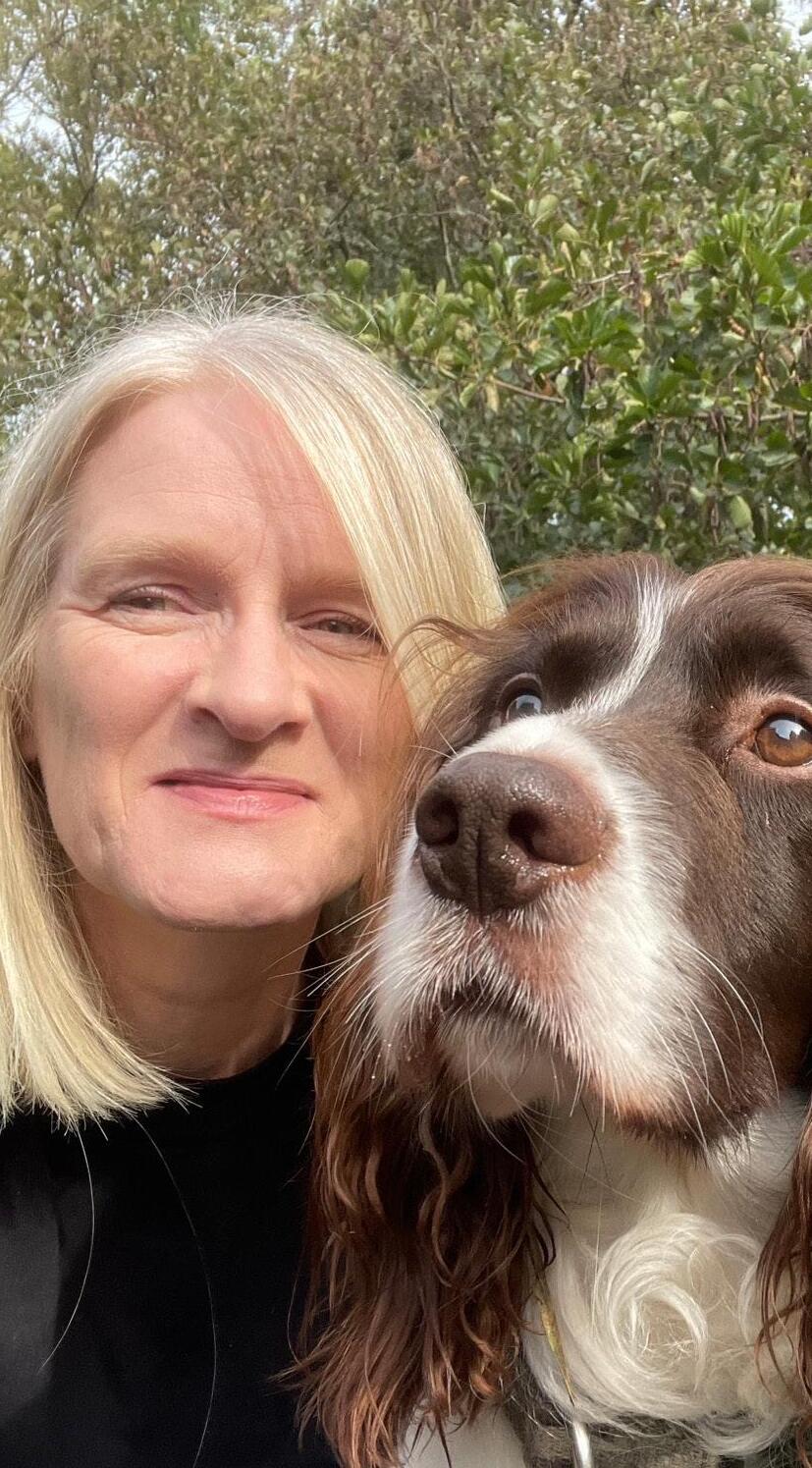
Postgrad Profile on ... Claire Yates
Study, Support, Succeed Keeping you in the loop with all things Library and Learning Services, Academic Skills, Student Wellbeing Services, and Careers and Employability
Articie: Temporality and Photographic Duration
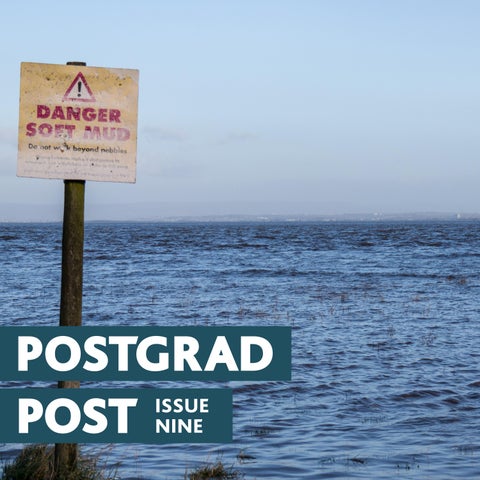
Geza Csosz talks about research project, ‘Danger Soft Mud’
20
Ask an Alum Catching up with Kathryn Clark
EDITOR
Shannon Barrett-Clayton
DESIGNER
Helen Bollen
Georgia Powell
Holly Coughlan
‘Danger Soft
by Geza Csosz
Hello Postgrads!
Welcome to the ninth edition of the Postgrad Post, our dedicated publication for all our postgraduate students. Inside you’ll find a Profile on Claire a PhD student, hear from Geza Csosz in his wonderful article, and we speak to Kathryn, a graduate of MA Writing for Young People!
Every issue, we’ll bring you an interview with a postgraduate student or member of staff who is making a positive impact on the postgrad community. In this edition we talk to Claire Yates, a PhD student.
POSTGRAD PROFILE ON ... Claire Yates
the law says they need to do if there are not enough social workers and it makes it much harder for people in need of safety and support where new people are often meeting them.
My research was qualitative, so I used interviews and focus groups to gather the data and I took a constructivist approach, meaning that I think that people interact with what is happening around them and understanding and knowledge is made up of these sense people make of these experiences together.
WHAT IS YOUR NAME?
Claire Yates
WHAT DO YOU STUDY AND AT WHAT LEVEL?
PhD
WHERE ARE YOU BASED?
Remote
IF YOU WERE EXPLAINING YOUR RESEARCH TO A CHILD, WHAT WOULD YOU SAY?
My research looks at what social workers who work in services that focus on supporting and increasing safety for people in need of help say they need to experience feelings of wellbeing at work.
CAN YOU EXPLAIN A BIT MORE ABOUT YOUR RESEARCH?
Wellbeing is really important for social workers. Employers have a duty of care towards their staff, research shows that lots of social workers experience burnout and nearly half are looking to leave. This is a role that people have worked hard to be in, and it is sad that people are not wanting to stay. It also makes it difficult for local authorities to do all the things that
My research found that there were a number of things that contributed to wellbeing at work, basic working conditions, support from the team and manager, opportunities for training, acknowledgement of work and feeling like a difference is being made. Importantly, my research found that basic working conditions, that is having basic things like a desk, a computer that worked, tea and coffee etc were in fact the foundation for other aspects of wellbeing at work. Social workers told me that where these things were in place, it made it more likely that the other aspects would be experienced too.
This had some similarities to Maslow’s hierarchy of need. Based on this, we co produced an intervention that looked at wellbeing and how social workers could have the best opportunity to experience this at work. The intervention looked like a triangle, with each section of the triangle representing an aspect of wellbeing. Each section had some prompt questions to generate conversation between most likely a social worker and manager, and provided space for individual responses and plans to be constructed together.
WHAT DO YOU ENJOY MOST ABOUT YOUR COURSE/RESEARCH?
I enjoyed most the data gathering and the co production of the intervention. This is because I was able to put to good use my social work skills of communication, listening, analysing and making sense of what was being shared.
HAVE YOU BEEN WORKING ON ANYTHING EXCITING?
For the next stage of my research, I would really like to do a pilot study initially to see how the intervention works in practice with a view to then looking at wider implementation.
FINALLY, WHAT ARE YOUR PLANS FOR THE FUTURE?
At this time, my future is entirely focused on my VIVA in June. This has been such a journey over the past 6 years which has seen me leave a full time Team Manager position in a large local authority, begin a role as Lecturer in Social Work at a University and continue to work with children and their families as an Independent Social Worker.
Welcome to ‘Study, Support, Succeed’, the section of the Postgrad Post that keeps you in the loop with all things Library and Learning Services, Academic Skills, Student Wellbeing Services, and Careers and Employability.
STUDY • SUPPORT • SUCCEED LIBRARY AND LEARNING SERVICES
The Library is here to support you throughout your postgraduate journey and can offer advice and guidance with finding and using resources and academic texts for your course and supporting you in your studies.
During term time the Library is open 8am to 10pm, with reduced hours throughout the summer.
We offer over 300 study spaces, including silent areas for independent work and group zones for collaborative projects.
You’ll also find specialist spaces across the building, including our Sensory Study Room - a calm, accessible space designed to support all students - a dedicated Postgraduate Study Room located in the Library loft, and the Adobe Creative Lab, which offers industry-standard software for digital and creative projects.
You can learn more about our spaces, services, and support by visiting the Library website.


YOUR SUBJECT LIBRARIANS
If you need help with research during your studies, your Subject Librarian is a great person to speak with. The Library’s print and online resources are quite extensive, so your Subject Librarian can help you to navigate what resources we have available and what additional resources might benefit you with your research.
You can book one-to-one meetings, either online or in-person, with your Subject Librarian. They also deliver in-class group sessions in collaboration with your lecturers. If you would like to contact them or book an online appointment, you will find their details on the Library’s subject pages.
YOUR RESEARCH
SUPPORT LIBRARIANS
Our Research Support Librarians offer one-to-one guidance and enquiry support, both online and in person, for all PhD researchers, including EdD students. They can help you make effective use of the Library’s collections, access resources beyond Bath Spa, and advise on publishing your research and managing research data or practice-based outputs. After your award, they will also support you with depositing your thesis and any accompanying materials in the University’s repositories.
You can contact Claire Drake and Becky Atkins via repositories@bathspa.ac.uk.
INTER-LIBRARY LOANS
If you need a book or journal article that the Library doesn’t hold, you can request it through our Inter-Library Loans service. This allows us to borrow items from other libraries on your behalf.
If you need help making a request, speak to us in person at the Library or the Locksbrook Student Hub, or email internp@bathspa.ac.uk.




e.downes@bathspa.ac.uk
Emily Downes
Bath Spa London
r.caddis@bathspa.ac.uk
Rory Caddis
Creative Writing; English; History and Heritage; Music; Performing Arts; Publishing; and Religions, Philosophy, and Ethics
library@bathspa.ac.uk
Melissa Hamdani
Criminology; Geography; Psychology; Sciences; and Sociology
m.collier-bandfield@bathspa.ac.uk
Melissa Collier-Banfield Education
c.kong@bathspa.ac.uk
Amy Price
Business and Management; Economics; Fashion Marketing and Management; Law; and Sports Management

a.price@bathspa.ac.uk
Helen Rayner
Art and Design; Computing; and Film and Media
STUDY • SUPPORT • SUCCEED
Meet David Rooney...
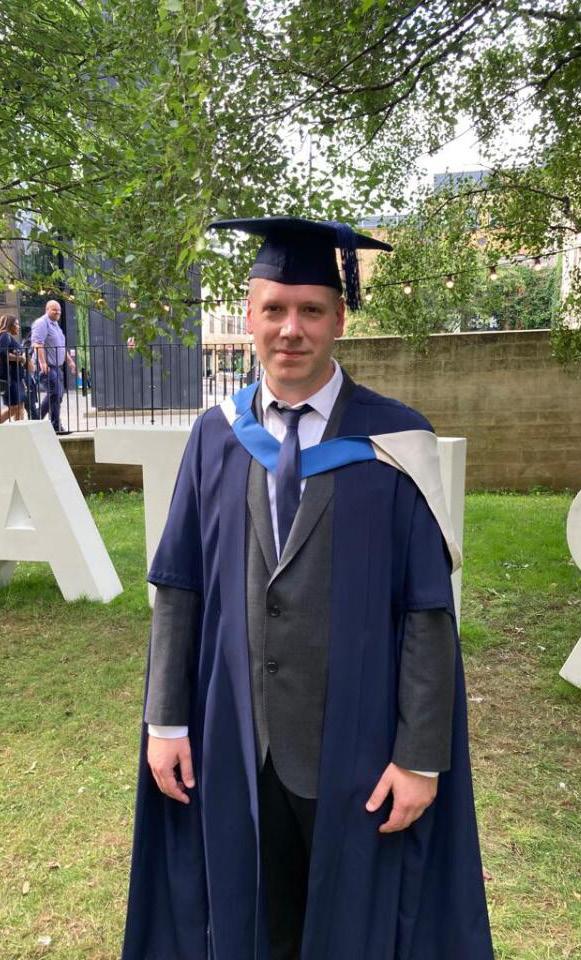
David Rooney is the Customer Services Manager at Bath Spa University Library.
Working across all subjects and campuses, David plays a key role in supporting students to access and make the most of the Library’s spaces, services and resources. A particular focus of his role is supporting disabled and neurodivergent students, helping to remove barriers to study and ensure the Library is welcoming and accessible for different ways of learning. By working closely with students and gathering feedback, David helps shape practical improvements to Library spaces and services that benefit the whole University community.
WHAT IS YOUR ROLE IN THE LIBRARY AND HOW DO YOU SUPPORT POSTGRADUATE STUDENTS?
I’m the Customer Services Manager, so I work across all subject areas rather than supporting a single course. My role focuses on helping all students access and use the Library effectively, both in terms of the physical building and our digital resources. I work closely with students who are disabled or neurodivergent, or who need adjustments to spaces, formats or systems, to help make the Library a place that works for how they study.
HOW LONG HAVE YOU BEEN IN YOUR ROLE?
I’ve worked in my current role at Bath Spa University for nearly nine years, and before that I worked in a similar customer-facing role in another academic library.
WHAT
DO YOU ENJOY
MOST ABOUT YOUR ROLE IN THE LIBRARY?
What I enjoy most is working directly with students to remove barriers to using the Library. That often starts with conversations and feedback about what works best for them. Through this, we’ve been able to introduce more comfortable seating, expand group and bookable study spaces, and make improvements to things like lighting and heating across the building. Seeing changes like these make a real difference to how students experience the Library is hugely rewarding.
IN YOUR OPINION, WHAT IS THE MOST INTERESTING RESOURCE AVAILABLE TO YOUR STUDENTS THROUGH THE LIBRARY?
One of the most interesting (and often overlooked) resources is the range of practical accessibility tools available to borrow directly from the Library. This includes reading lines, coloured overlays, largeformat keyboards, ergonomic mice, and other small adjustments that can make a big difference to studying. Finding the right tool can take a bit of trial and error, so being able to try things out for free before committing to anything helps students work out what genuinely supports the way they read, write and study.
WHAT RESOURCE DO YOU WISH YOUR POSTGRADUATE STUDENTS WOULD MAKE MORE USE OF?
The new Postgraduate Study Room. It’s only been introduced this academic year, so awareness is still growing, but it offers a dedicated, quieter space designed specifically for postgraduate study. It’s a great option if you’re looking for somewhere focused to work away from busier areas of the Library, and we’d love more PG students to know it’s there and make use of it.
WHAT ASPECT OF YOUR ROLE OR THE LIBRARY DO YOU THINK A STUDENT WOULD BE SURPRISED TO LEARN?
Students are often surprised by how much flexibility there is. We don’t expect everyone to use the Library in the same way, and we actively change spaces, systems and services based on student feedback. The Library isn’t a fixed rulebook, it’s something we keep adapting.
WHAT IS YOUR FAVOURITE PART OF THE LIBRARY?
The Sensory Study Room is a favourite. It’s a calm, flexible space designed to support students who may find busy environments overwhelming, and it’s a great example of how student feedback directly shapes what we do.
FINALLY, HOW CAN YOUR STUDENTS GET IN CONTACT WITH YOU?
We genuinely love hearing from students — whether you’ve got a question, need support, want to suggest an improvement, or even raise a complaint. The best way to get in touch is by emailing library@bathspa.ac.uk, chatting to us at the Library reception desk, or using our 24/7 online chat. If your query relates to accessibility or support needs, it will always be picked up by someone who can help and handled with care.
STUDY • SUPPORT • SUCCEED
ACADEMIC SKILLS (ASK) TEAM INFORMATION
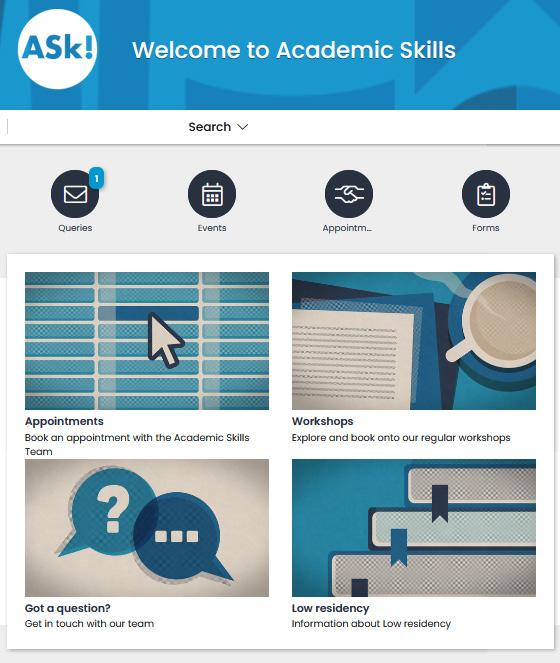
The Academic Skills (ASk) team is available to support you with your postgraduate study. Support can be useful if you are returning to university after a break or want to polish up your existing skills. More information about the service and contact details can be found on its webpage.
ONE-TO-ONE APPOINTMENTS
• You can book an appointment with an advisor for developmental feedback on your assignments, including advice on time management, planning, structure, critical thinking, academic writing and referencing.
Here’s what you need to know:
• The appointments are 45-minutes long;
• You can book an appointment, either online or in-person at Newton Park or Locksbrook, using the online booking system;
• You can book up to two appointments per assignment, or up to four for a dissertation. PhD thesis chapters are treated as individual assignments.
ACADEMIC
AND DIGITAL LITERACY SKILLS ONLINE WORKSHOPS
You can sign-up to online workshops on a range of skills, including writing literature reviews, developing critical thinking skills and using your feedback effectively.
Most workshops are suitable for all students, with some workshops aimed specifically at postgraduate students. You can book a workshop using the links on the webpage

ULTRA RESOURCES
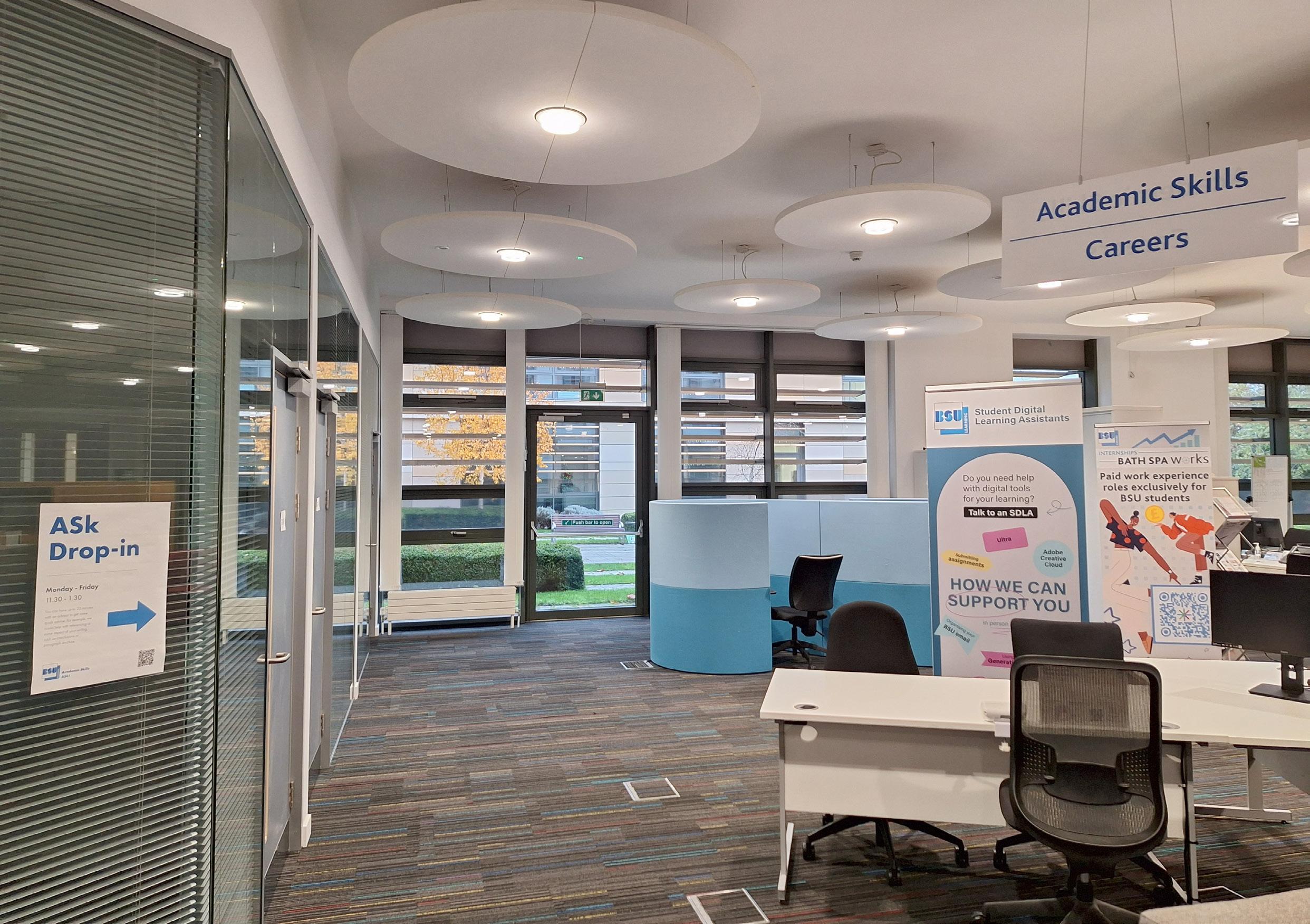
Resources in the ASk Ultra space (‘Online Resources’) offer hints and tips on a wide range of academic skills including academic writing, referencing, Maths and Statistics, digital literacy and critical thinking. There are also video recordings of workshop content, which you can view at a pace that suits you and re-watch when needed.
WRITTEN FEEDBACK
If you are on placement or on a low residency course, you can send the ASk team your draft for written feedback. Please send your draft through Queries or you can email it to academicskills@bathspa.ac.uk
STUDY • SUPPORT • SUCCEED
STUDENT WELLBEING SERVICES
Student Wellbeing Services understand how important it is to look after yourself, alongside your academic studies. We offer a range of support and services to help and enable you to thrive during your time at the University. These include:
• Cost of Living
• Support to Study
• Medical Service
• Mental Health
• Wellbeing
• The Chaplaincy
• Young Adult Carers
• Care Leavers
• Estranged Students
• Accessibility and Disability
• Events, workshops, short courses and more
If you wish to access Student Wellbeing Services you can book appointments, ask queries and view upcoming events online. You can also find more information on each of the above here.
STUDENT WELLBEING HELPLINE
The Student Wellbeing Helpline is staffed by counsellors and is there to make it as easy as possible for students to get the right advice when you need it the most. The helpline is available to all students for immediate support and advice on a wide range of topics including depression, anxiety, finances, wellbeing, bereavement, relationship difficulties, stress or anything else which may be impacting on your wellbeing.
Simply call the Helpline at any time and a professional practitioner will be there. During your call you will be able to speak about how you are feeling, explore options for further support, including internal BSU services.
Students can also download the Wisdom App, where you can video call, use live chat or ask for a callback. The app has loads of features you can explore, including a wellness tracker, tips and techniques to help manage your mental health and stay resilient during tough times. The helpline is also available in over 200 languages. Simply request to speak in a chosen language when you make a call and the advisor will connect you with someone who speaks it.
How to access the Student Wellbeing Helpline:
UK Freephone: 0800 0283766
Download the Wisdom app in your app store with this code: MHA173635
MYWELLBEING
MyWellbeing is your platform to log queries, book appointments, register for events and find out about all available services in one place.
If you have any questions about mental health, wellbeing or disability, we can provide professional advice and guidance to help you make the most of your studies and university life through MyWellbeing.

BATH SPA’S CARE DOGS
Did you know you can book to meet one of our Bath Spa Care Dogs?
Meeting one of the dogs can be a big help if you’re having a particularly stressful day, or if you feel like you just need a cuddle from a four-legged friend.
These accredited Care Dogs have adopted members of Bath Spa University staff and when they are able, come to campus to hang out with students. You can book a range of slots to meet the Care Dogs including drop ins, wellbeing walks and at many SWS events. To see when the next Care Dog event is taking place, visit MyWellbeing.
POSTGRADUATE MENTAL HEALTH
Postgraduate study offers a deeply rewarding opportunity to explore a subject in depth and achieve intellectual fulfilment. Alongside these benefits, it often involves managing significant pressure, high expectations, and periods of solitude. These experiences can be intense at times, but they also help build confidence and independence.
At Bath Spa, we understand that these challenges (and others!) can have a real impact on mental health. Postgraduate students may experience periods of anxiety, low mood, stress, or burnout, often alongside managing imposter feelings, financial pressures, or balancing family and work commitments. We regularly support students in navigating these experiences, helping them maintain their wellbeing while making the most of their academic journey.
It is not uncommon for students to feel that they should be coping, which can make it more difficult to ask for help. But seeking support is not a sign of failure — it is an important and often empowering step toward managing your wellbeing.
Student Wellbeing Services (SWS) exists to support you throughout your postgraduate journey. Whether you are looking for advice, a space to talk, or ongoing mental health support, we are here to help you thrive — not just survive.
You do not need to be in crisis to reach out. University life can be intense, and it is perfectly okay to need some extra support along the way.
STUDY • SUPPORT • SUCCEED
THE GRAD SUPPORT UNIT IS HERE TO HELP!
We wanted to remind you that you can continue to receive dedicated support for 15 months after your graduate through the Graduate Support Unit in the Careers and Employability team. The GSU can provide personalised one-to-one coaching appointments to support your career planning and professional development, along with tailored resources and practical help guides. You’ll have access to graduate jobs and opportunities, as well as specialist support for freelancing and enterprise.
Signing up takes a few seconds and can be accessed here.


EXTRA FUNDING FOR YOU DURING YOUR STUDIES
You may be eligible for a grant and bursary funding from charitable trusts and foundations to support your postgraduate study, whether you’re undertaking a PhD, PGCE, PGT, PGR…or another exciting acronym. This is often an unexplored avenue that The Alternative Guide to Postgraduate Funding can help take you through!
The guide provides relevant advice and a searchable database of charitable trusts and foundations where you can check eligibility criteria and apply for funding. Whatever you do, don’t discount yourself based on the amount of time remaining on your course, as generally speaking applications for funding can be made at any time and can be very helpful for quick fundraising.
Access to all of this advice is currently available for free for Bath Spa students using an @bathspa.ac.uk email address.
FIND YOUR NEXT JOB ON MYCAREER
There’s so much opportunity in the world, but where to begin to look? The University’s very own MyCareer website lists thousands of jobs every year, spanning graduate schemes, local vacancies, internships and freelance briefs. You can target your search based on area preferences, industry interests, and by how much you want to be seeing on your payslip. There are even opportunities that only Bath Spa students can see and apply to, meaning that you’ll have a head start on getting gainful employment.
GAIN MORE EXPERIENCE WITH A MENTOR
Some of the best have been mentored by the best. Mark Zuckerberg was mentored by Steve Jobs, Yves Saint-Laurent was mentored by Christian Dior, and J.J. Abrams was mentored by Steven Spielberg.
…Whilst the Careers team don’t have Spielberg on the books, through the mentoring scheme, MentorMe, they do have hundreds of industry professionals from all sectors who are ready to help convert your aspirations into practical steps towards the world of work.
In order to get in touch with one of the mentors and form a vital professional relationship, simply head over to the MentorMe Pathway on MyCareer to apply.
MyCareer is also a great place to access a range of brand-new resources on topics such as writing your CV, crafting a personal statement, and preparing for interviews - everything you need to take the next step in your career journey.
You can also submit your question directly to one of our Employability Coaches via MyCareer, or book an appointment to talk about your queries and concerns.

RESOURCES THAT AREN’T MERELY ACADEMIC
If you’re a researcher who’s looking to continue and develop your academic career, we highly recommend Vitae as a very useful resource that provides advice and guidance on pursuing that route. Vitae hosts a database of career story case studies and provides an insight into what researchers do to support your career management.

Following on from that, Jobs.ac.uk is an international higher education recruitment website for those wishing to work in academia. Their PhD Careers Advice section includes useful career development tools as well as practical advice on applying for academic opportunities, such as how to give a great sample lecture during an interview.

TEMPORALITY AND PHOTOGRAPHIC DURATION IN DANGER SOFT MUD
Author: Geza Csosz
Affiliation: Bath Spa University, School of Art, Film and Media
Programme: Practice-Based PhD in Visual Arts
Keywords: temporality, photography, phenomenology, duration, non-existence of the present, time-based art
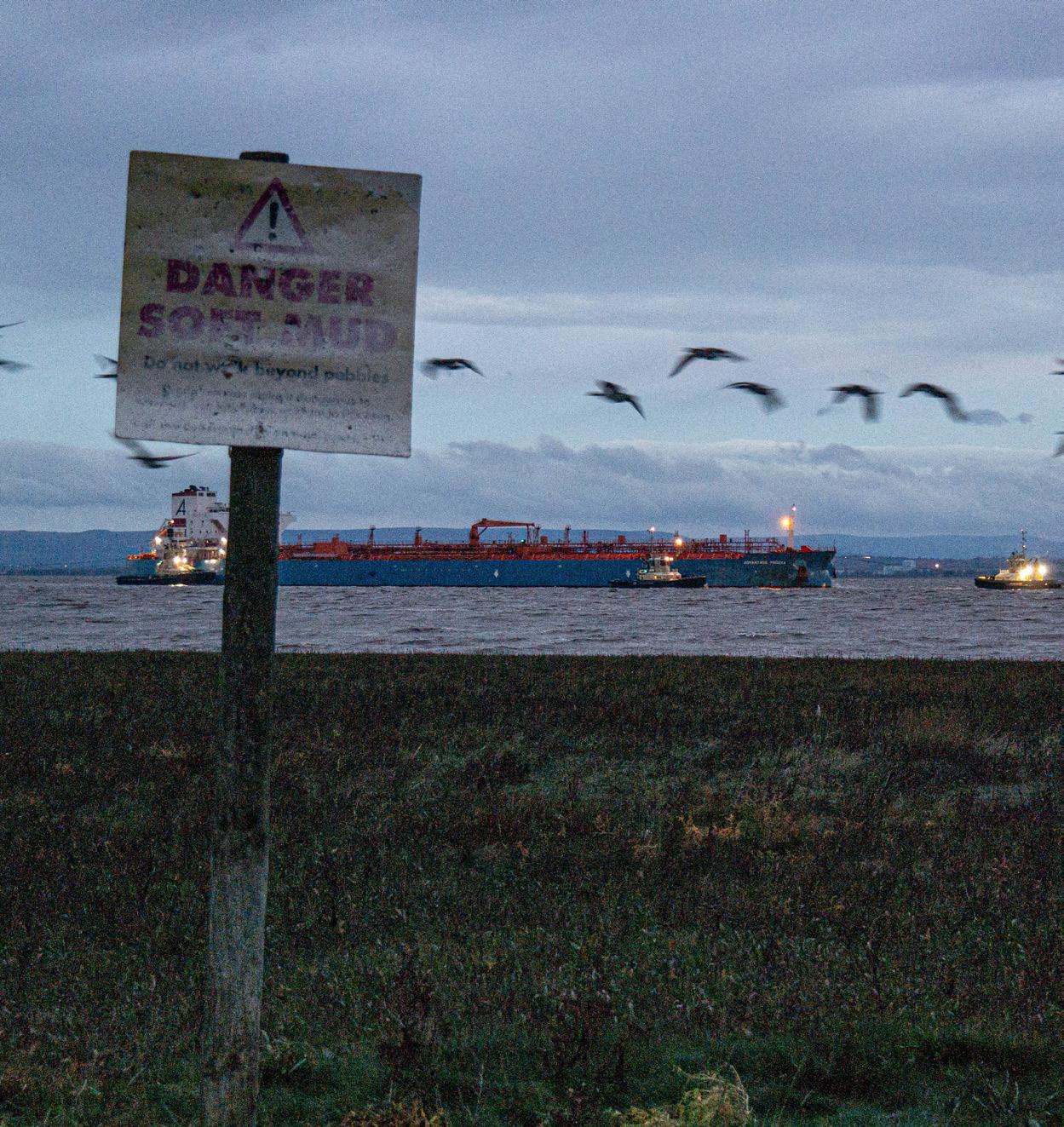
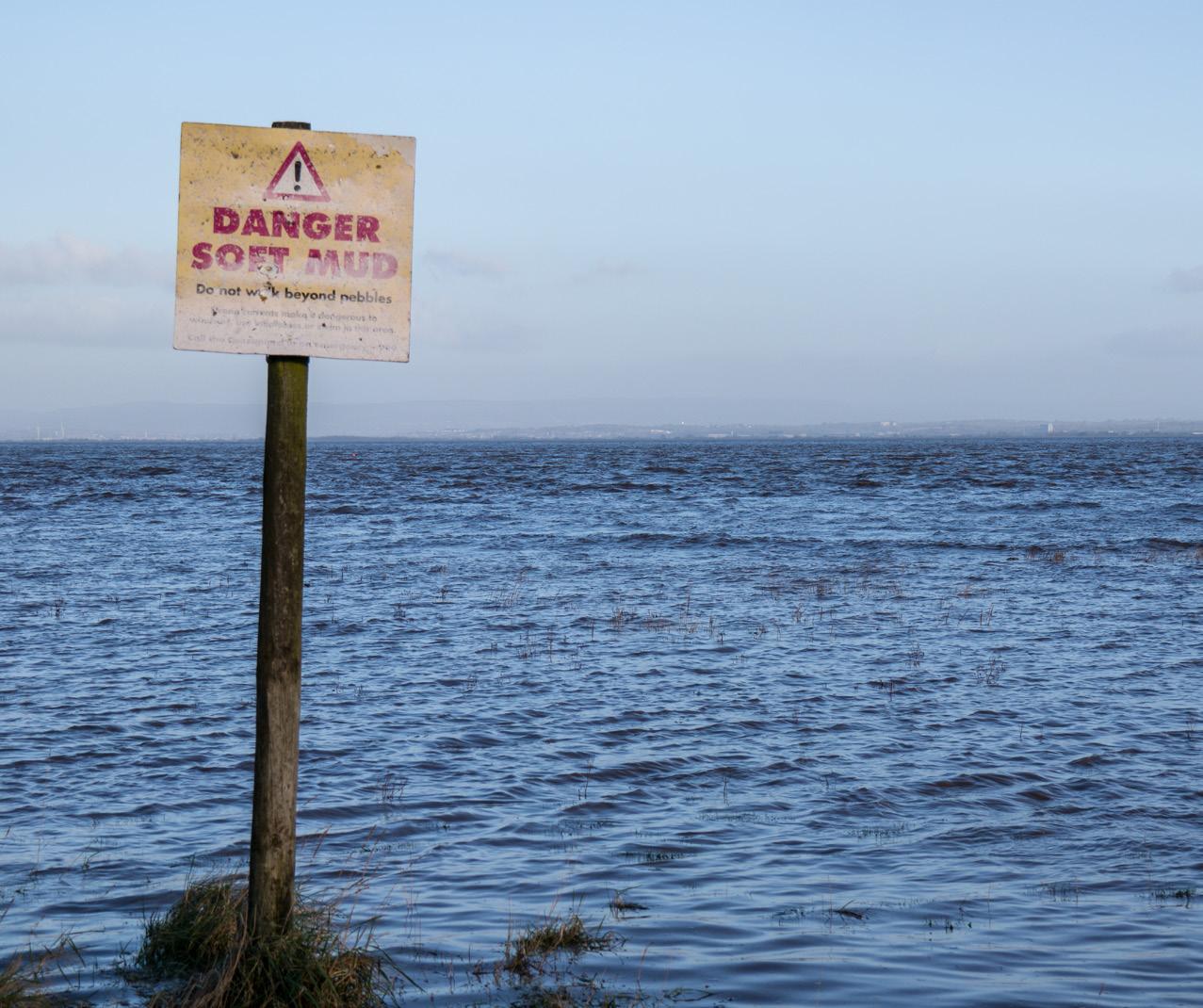
In my practice-based research project, 'Danger Soft Mud', I explore the instability of the present moment as both a perceptual and an ontological construct. Using time-based photography and video, I question whether the 'now' can ever be captured or if each photographic act inevitably reveals its own temporal impossibility. The project consists of longitudinal documentation of a single coastal sign, 'Danger Soft Mud', photographed daily from a fixed point. Over months and years, environmental changes transform the scene: tides rise and recede, mud dries and reforms, and vegetation grows and dies. While the sign appears constant, it becomes the index of change, and the attempt to preserve the present paradoxically exposes its erasure.
Philosophically, the work engages with the idea that the present does not exist as a discrete temporal unit. Both Henri Bergson's durée réelle and Edmund Husserl's retentionprotention model destabilise the notion of an instantaneous 'now', instead proposing a continuity of consciousness. In this sense, the camera does not function as a device that captures the present; rather, it dissects the continuum of becoming into artificial fragments. Each image is a temporal incision — a visible trace of what had already receded into the past by the time it was captured.
This conceptual tension links Danger Soft Mud to a tradition of artists who explore time through repetition and seriality. In On Kawara’s Today series, for example, the date of production is inscribed onto a monochrome surface, transforming each painting into a contemplation of temporal existence. Similarly, Hiroshi Sugimoto’s Seascapes condense geological and cosmic duration into static images, while Tacita Dean’s films capture the slowness of analogue time. However, Danger Soft Mud sets these philosophical reflections within a landscape of impermanence, where natural entropy is both the subject and the collaborator. The coastal sign — half warning, half monument — acts as a temporal mirror: it warns of unstable ground while marking the instability of time itself.
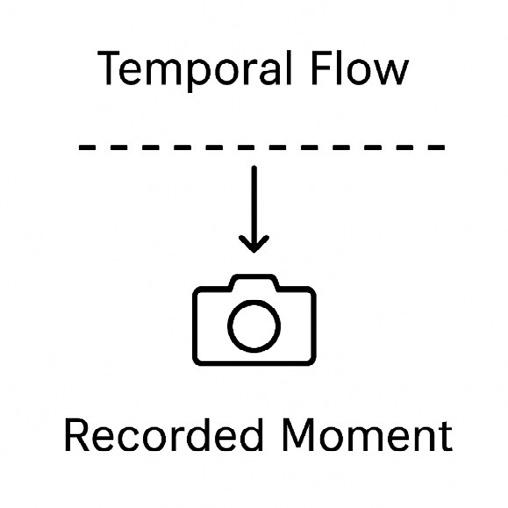
Figure 1
The accompanying diagram (Figure 1) illustrates this conceptual structure: a dashed line representing Temporal Flow above, with an arrow descending into the Recorded Moment. The photograph, situated at the intersection of these two states, represents a collapse of flow into fixity — a translation of duration into an index. However, as the project accumulates hundreds of such indices, a different temporality emerges, presenting not a collection of instants but a visual continuum of change. This accumulation becomes a cinematic gesture that transforms the photographic archive into an extended filmic event.
Ultimately, 'Danger Soft Mud' is less a documentation of the landscape than an experiment in perceiving temporal nonexistence. It embodies the paradox that, while photography seeks to preserve the present, it simultaneously annihilates it. By freezing time, it reveals the impossibility of presence — a gesture of both preservation and erasure. Through this paradox, the work reconfigures the act of looking as a temporal enquiry, offering an aesthetic and philosophical confrontation with the elusiveness of the 'now'.
My video work for this project: https://youtu.be/Bz8GQQpK_Xw
Do you have any amazing achievements?
Be sure to let us know and feature in the next Postgrad Post by emailing: studentcomms@bathspa.ac.uk
ASK AN ALUM
Kathryn Clark
WHAT IS YOUR NAME?
Kathryn Clark
WHAT YEAR DID YOU GRADUATE? 2017
WHAT COURSE DID YOU STUDY AT BATH SPA? MA Writing for Young People
WHAT DID YOU ENJOY MOST ABOUT YOUR COURSE?
I absolutely loved the whole course. I enjoyed being thrown into a creative whirlpool and the sense of community that developed very quickly.
WHERE ARE YOU CURRENTLY WORKING/WHAT ARE YOU CURRENTLY WORKING ON? CAN YOU TELL US WHAT IT INVOLVES?
As my debut novel came out last year, I am doing promotional work for that: school visits, panel events, workshops, and book signings. I’m working on my next book, another YA sci-fi novel. I work as a freelance writing mentor, editor, and creative writing teacher, supporting newbie writers through to published authors. I help with elements of craft, structuring a novel, and the publication process, on a one-to-one basis, or in small online workshops. I’m also a reader for some writing contests.
WHAT ADVICE WOULD YOU GIVE TO CURRENT POSTGRADUATE STUDENTS?
Take every opportunity you are offered as you never know where it may lead. E.g. Attend events by visiting professionals in your chosen field. Build a community with your fellow students – particularly in creative subjects, as you will go on to be there for each other for years to come.

FINALLY, WHAT WOULD YOU CONSIDER ARE YOUR GREATEST ACHIEVEMENTS SINCE GRADUATING?
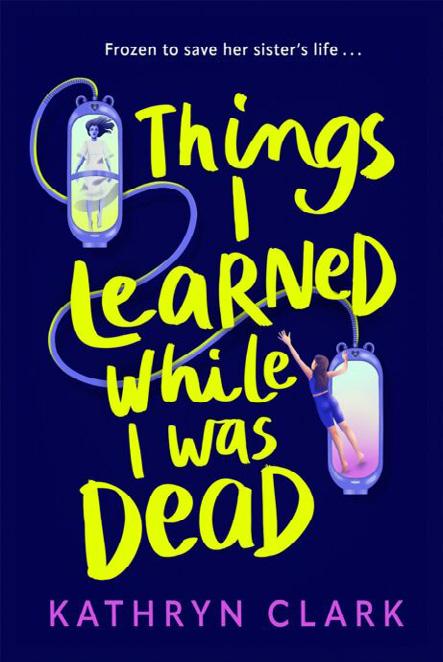
My novel Things I Learned While I Was Dead being published by Faber – even though it took nine years! And that the friends I made on the course are still in touch, sharing our writing and supporting each other’s work.
“Take every opportunity you are offered as you never know where it may lead...”
Thank you to all our amazing contributors for this issue of the Postgrad Post.
WOULD YOU LIKE TO BE FEATURED IN THE NEXT EDITION?
If you would like to be included, either in one of our regular features or as a separate article, please drop us a line at: studentcomms@bathspa.ac.uk
Would you like to include your short story, poem or any other creative work in the next issue? Let us know, we’d be happy to consider your work.