Bartłomiej Leszek
Głomski
Architecture Portfolio
Selected works 2020-2024

Bartłomiej Leszek Głomski
°21 May 2001
3rd year undergraduate student at WUT
Based in Warsaw, Poland
glomski.design@gmail.com +48 530 928 488
Education
Architecture Portfolio
Selected works 2020-2024
Bartłomiej Leszek Głomski
°21 May 2001
3rd year undergraduate student at WUT
Based in Warsaw, Poland
glomski.design@gmail.com +48 530 928 488
Education
2021-2022, 2024 - Politecnico di Milano, Italy
BSc in Architecture (exchange)
2020- onwards - Warsaw Univeristy of Technology, Poland
BSc in Architecture, Ave. 4.9 / 5.0, Chancellor's scholarship for best students
2017-2020 - Batory High School, Warsaw, Poland
IB Diploma, final score 44/45
2017-2020- Architectural Freehand Drawing Course
Labirynt School of Drawing, Warsaw
Courses
2016 - Digital Photography Course
Akademia Fotografii, Warsaw
2023-2024 - Interior designer | Freelance 3D modeler
designing private apartment spaces - preparing technical drawings for contractors, renderings, 3d models, concepts, surveing, selection of materials and products
2022 - Intern | Spatial policy department
Bureau for Architecture and Spatial Planning of the Capital City of Warsaw (summer internship)
2021 - Freelance graphic designer- Visual identity design
Polish Embassy in Bern, Switzerland (2 months)
2018-2022 - Instructor - Summer camp, Carpenter workshops organiser
Scouting Association of the Republic of Poland
2022 June - Social Media Officer
Interni Magazine, Fuorisalone Milano 2022
2019 - Organiser, Under Secretary General for Design and Supplies Warsaw Model United Nations
2017-2019 - Event Production Manager, Chief of Graphic Design department
Unique Off Festival XIII, XIV edition
2021 - Quiver Tree Design Challenge - shortlisted Savannah lodge design; Lena Olszewska, Bartłomiej Głomski
Achievements
2021 - MIES + Competition - audience award laureate Best academic project; Magdalena Niewczas, Bartłomiej Głomski
Adobe Photoshop
Profficient in Archicad Rhino 3D Autodesk AutoCAD
Adobe PremierePro Lumion Enscape MS Office 365 Intermediate in Revit, Autodesk Robot, Sketchup, Grasshopper, QGIS, Midjourney AI
Adobe Illustrator
Adobe InDesign
Location: Limpopo, South Africa
The 78 m2 cabin draws its inspiration from natural features of the project site such as the archaic baobab trees. Geometry of the baobab, its fruit and seed was inscribed in the project. Structural core, beams and blinds finished in wood allow the project to completely blend with the surroundings when at the same time the biomimicry aspects generate a silhouette that is unique and well recognizable even from distance.
Type: Competition Entry
Awards: Shortlisted
Design Team: Bartłomiej Głomski, Lena Olszewska
Date: December 2021
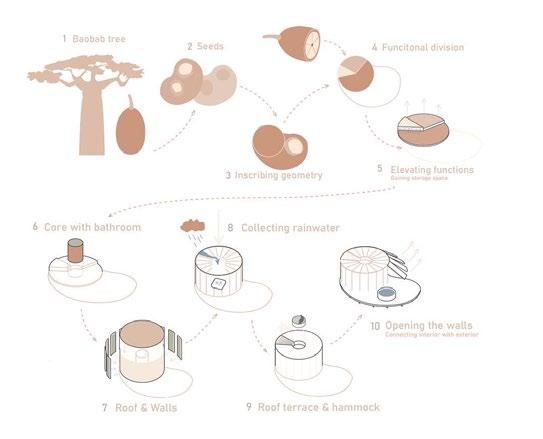
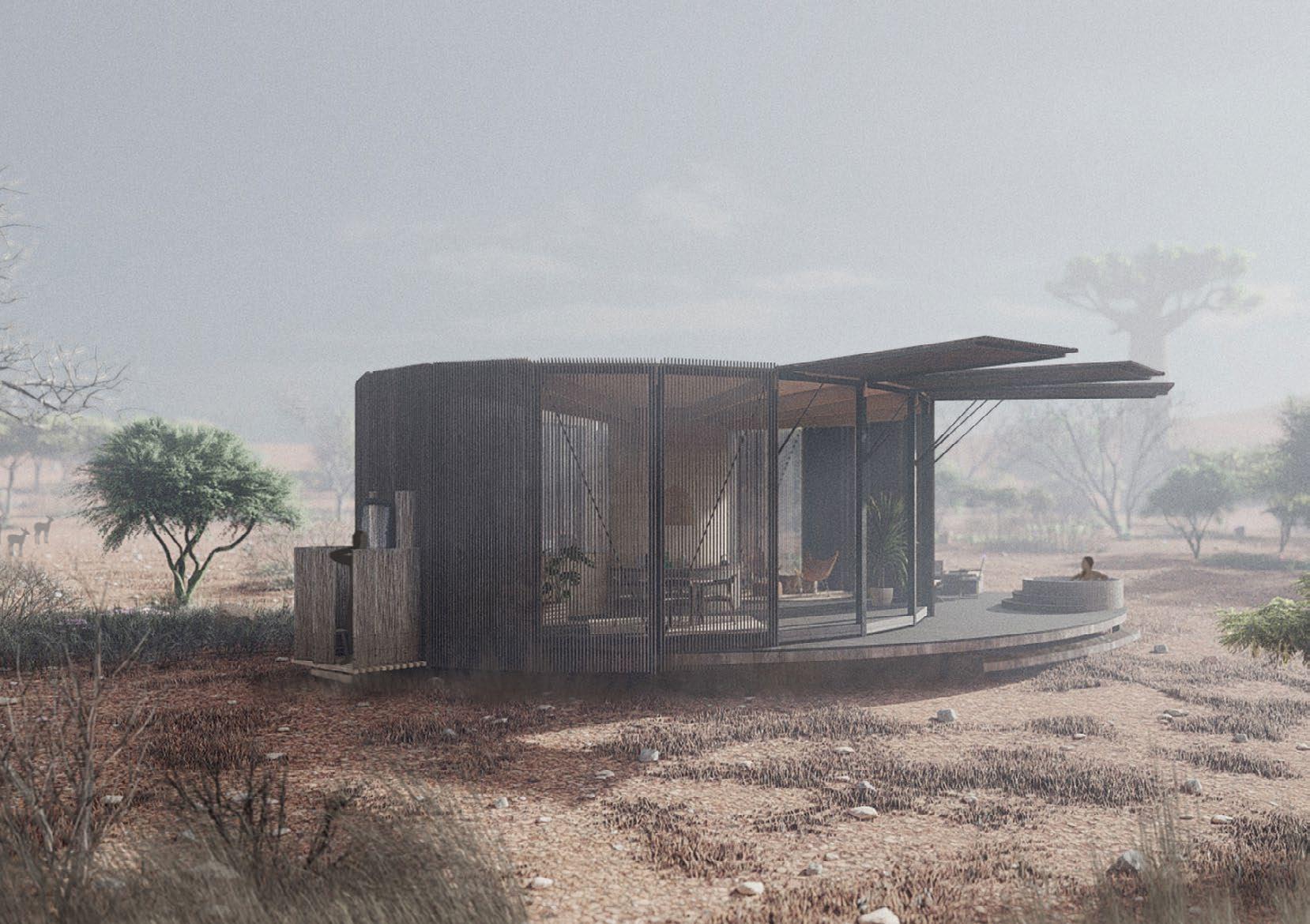
The lodge is positioned on an elevated wooden decking in order to minimise the environmental impact on the site. At the same time it keeps out unwanted guests such as snakes and insects.
All the storage for luggages and clothing is hidden in drawers under the wooden platforms. The lodge contains two small bar areas - one is attached to the core on the ground floor and the other one is located on the roof terrace (easy access to drinks and snacks on both levels).
The Location of the roof terrace gives the opportunity to admire wildlife during day and night. It also functions as an observation deck allowing for the best views of the night sky.
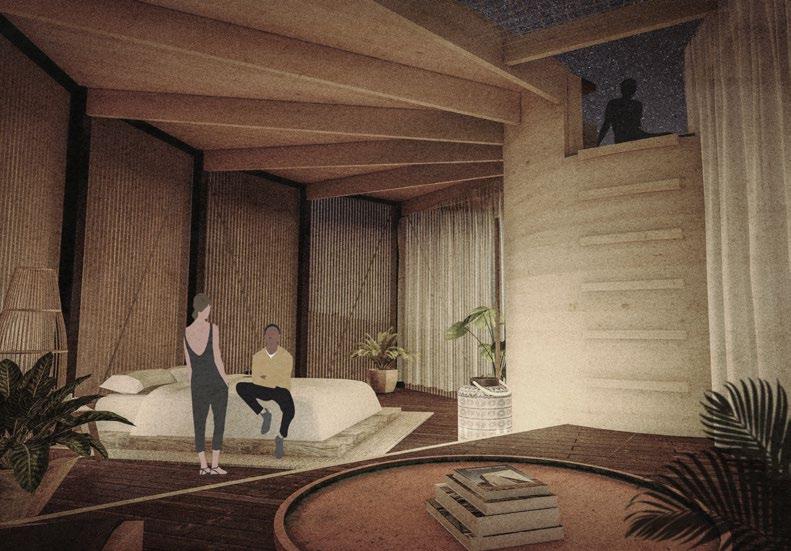
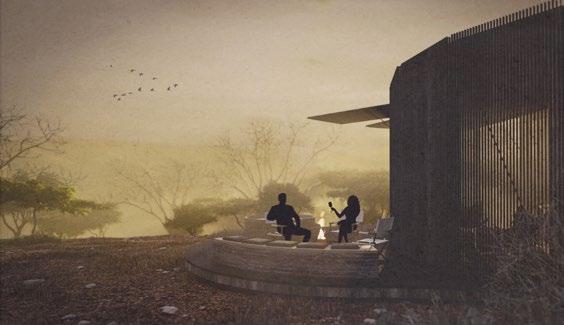
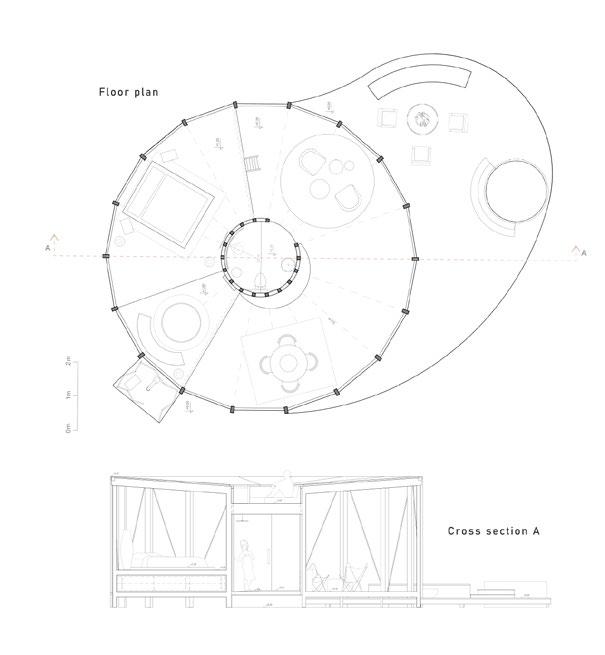
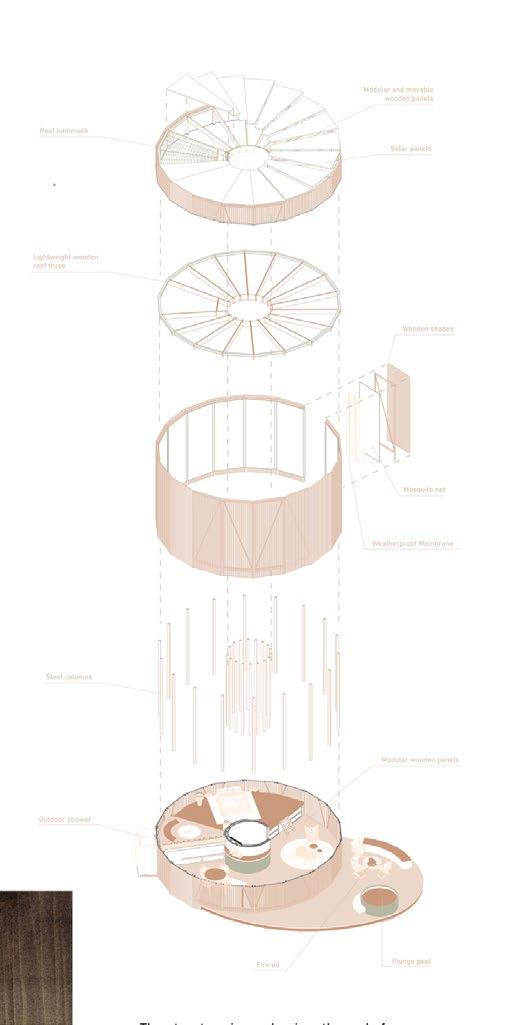
The blinds can be easily opened to show the seamless transitions from indoors to outdoors and incorporate the unique, panoramic view of the valley. Power is entirely sourced from solar panels located on the roof. Such a solution allows to supply sustainably heated water to the bathroom instantly. A slight inclination of the roof also allows for collection of rainwater. It is transferred through embedded downpipes into a water tank under the bathroom situated in the building’s central core.
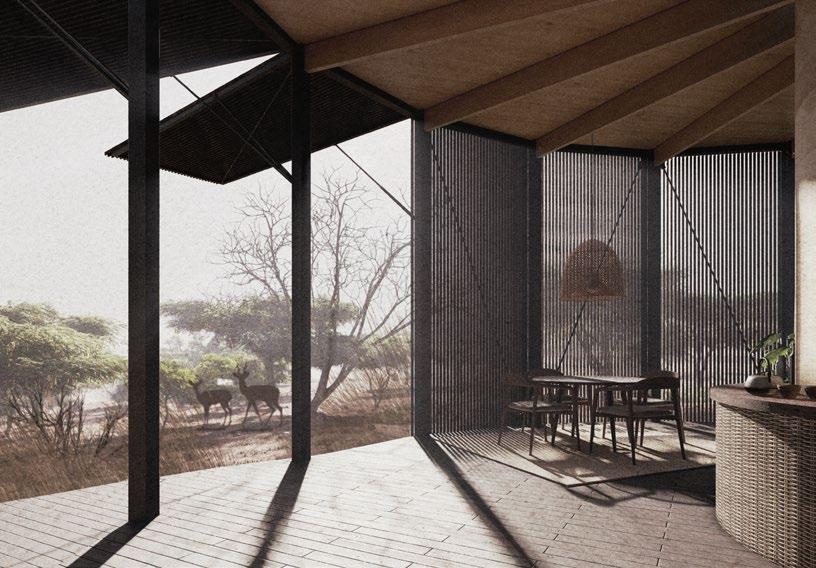
The structure is predominantly made from timber that can be easily sourced locally. It is easy to manufacture and assemble on-site in a couple of days using modular parts, larger ones prefabricated beforehand. At its entire perimeter the building is fenced with double-layered blinds that allow for air circulation. They are made of weather resistant membrane and timber cladding on an aluminum framework.
Location: Boernerowo, Warsaw, PL
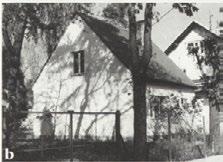
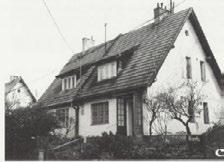
Facing the street, it preserves the scale and humble appearance characteristic for this prewar settlement, comprising of small detached and semi-detached masonry houses. From the side of the garden, the archetypal form lifts above the slightly inclined plot, inviting the garden’s greenery inside and opening its living spaces entirely towards the seemingly infinite perspective of a public park.
Type: Academic Project
Date: 4th semester, 2023
Supervision: (JEMS Architekci)
Maciej Miłobędzki, Maciej Rydz + Wiktor Gago
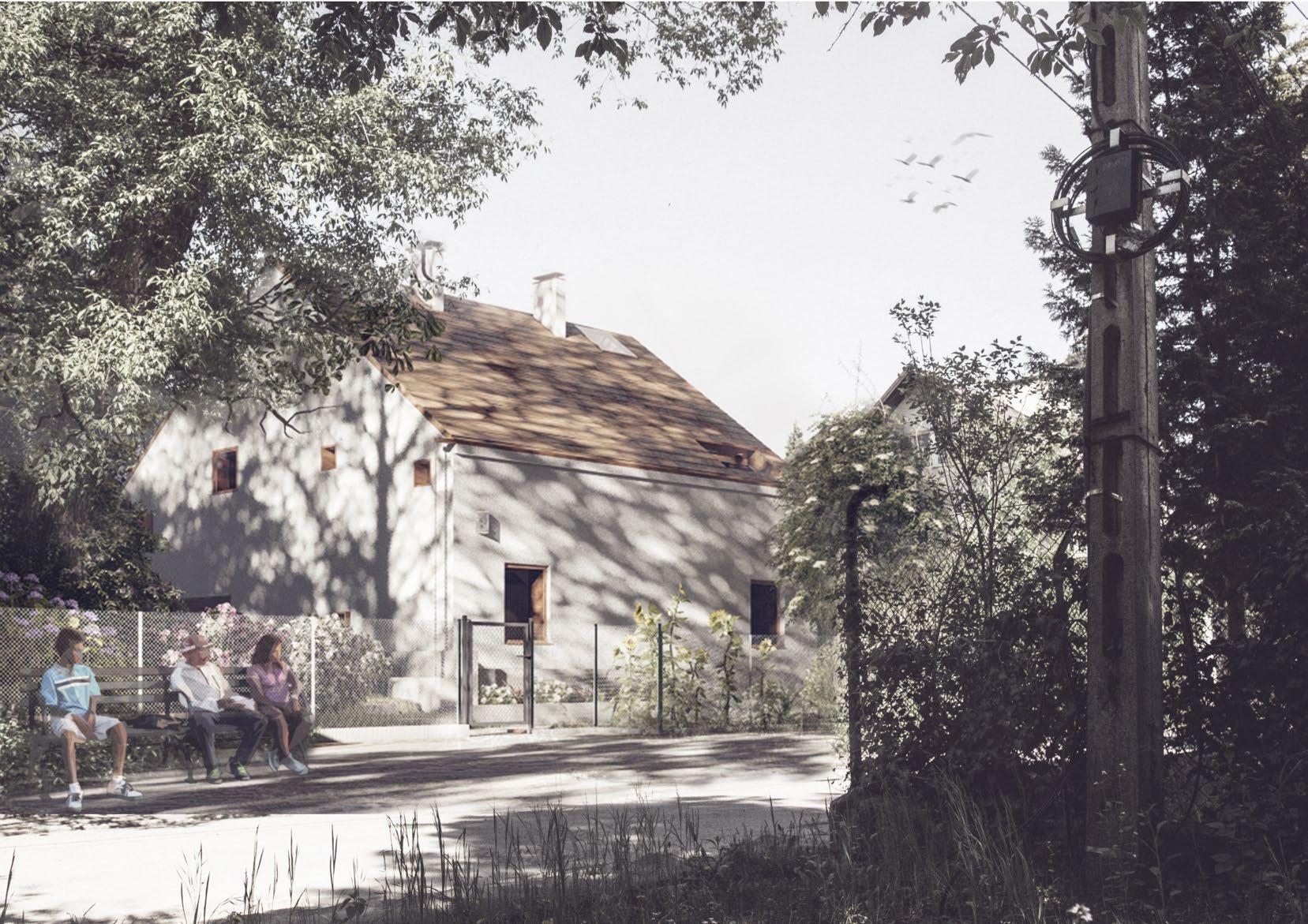
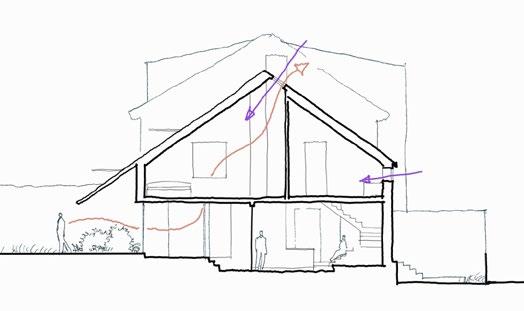
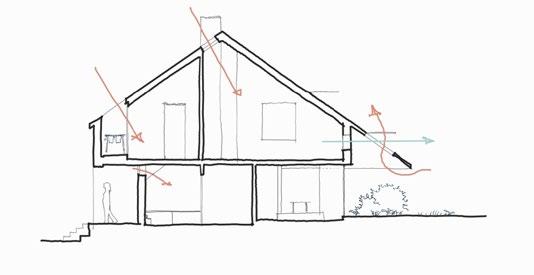
Throughout the design process natural ventilation, light and also precise framing of views were key considerations for composing openings in the CLT walls and roof slab. Adding holes to the elonlongated eave allows vegetation to thrive and creates a special microclimate in this external part of the living room.
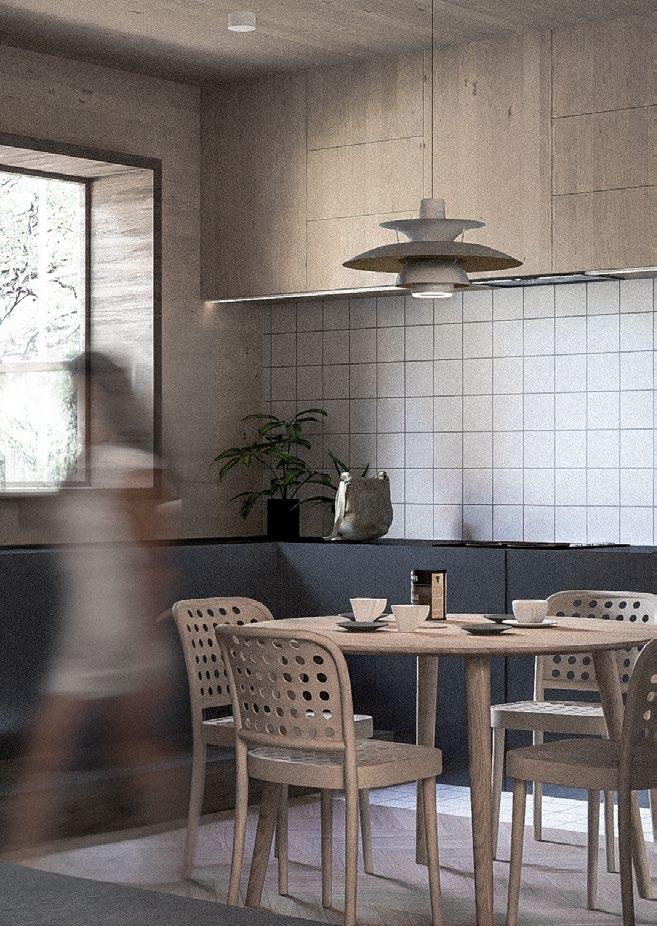

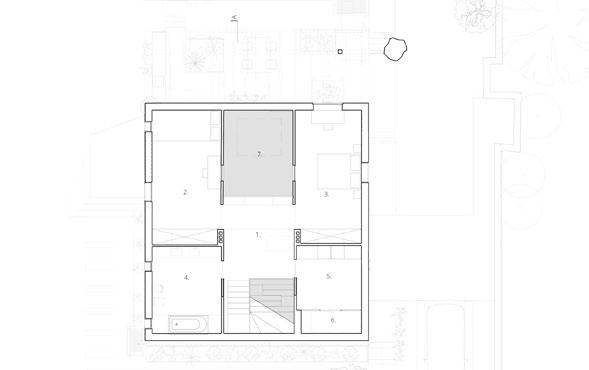
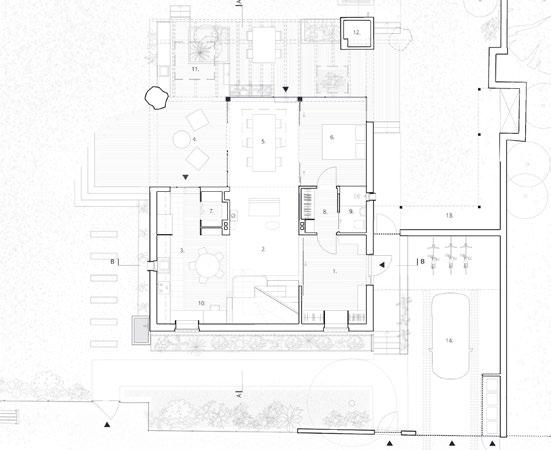

Plan of the building was organised around two centrally located chimneys, to which later all the wet and ‘servant spaces’ were attached: pantry, bathroom and kitchen. Despite resulting in a clear division of spaces, the remaining rooms of the ground floor stay open and do not hold a fixed function, thus can transform with changing seasons or throughout the family’s lifetime.
In the central part, wide and sculptural stairs were located to serve as a multifunctional piece of furniture open towards the warm living room.
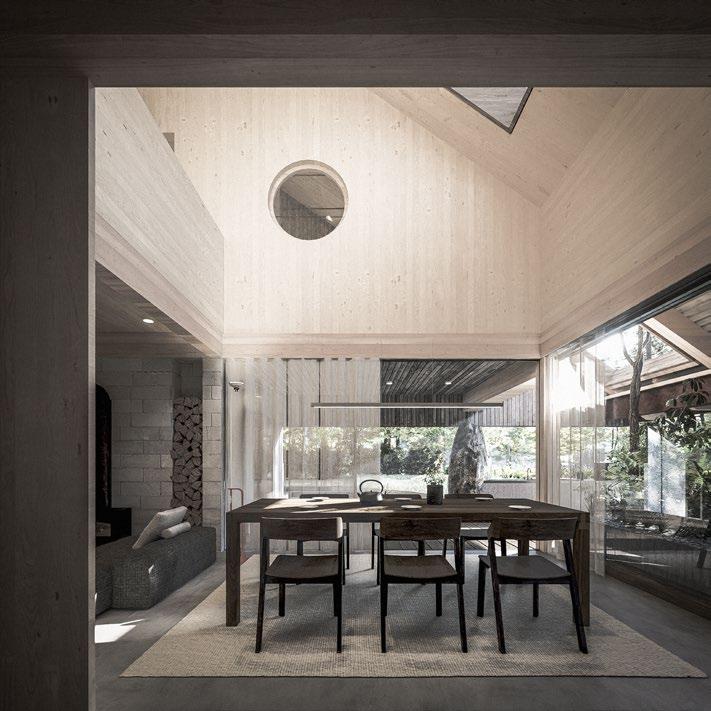
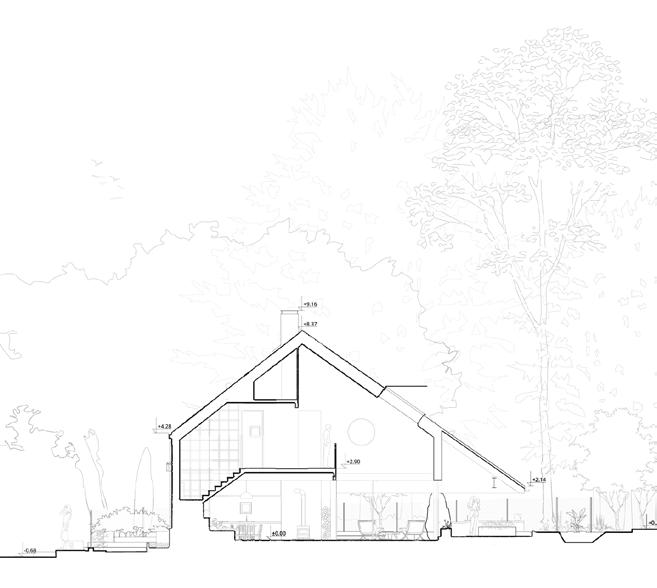
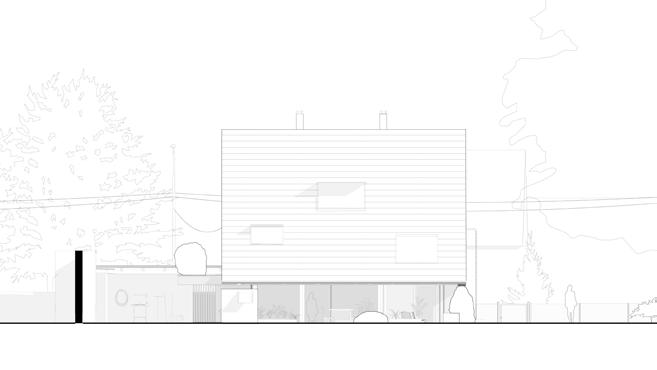
Additional distinctive features of the house are 3 glacial erratics, typical for Masovian landscapes. These boulders were inscribed into the composition not only to apply a certain order to the garden aisles, but also they serve a structural role for the strained roof overhang, supporting it and cantilevering the main purlin.
 Dining. View towards the summer kitchen.
Garden Elevation
Dining. View towards the summer kitchen.
Garden Elevation
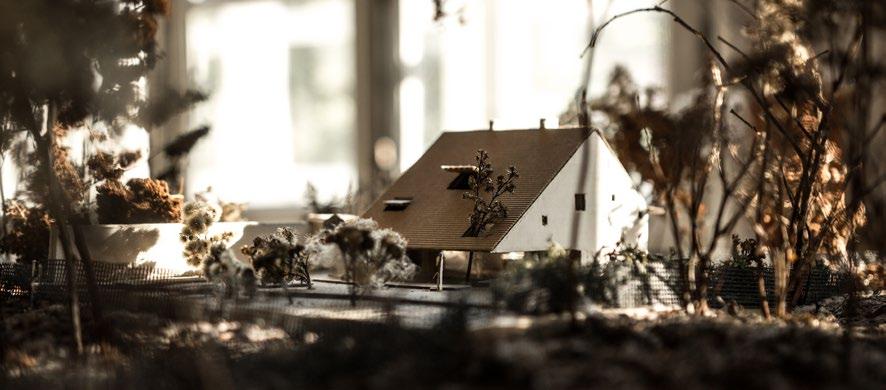
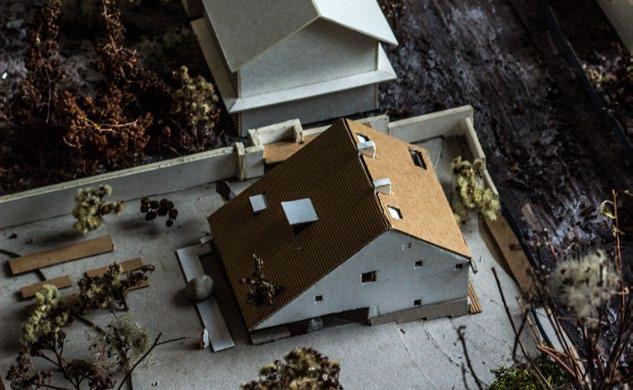
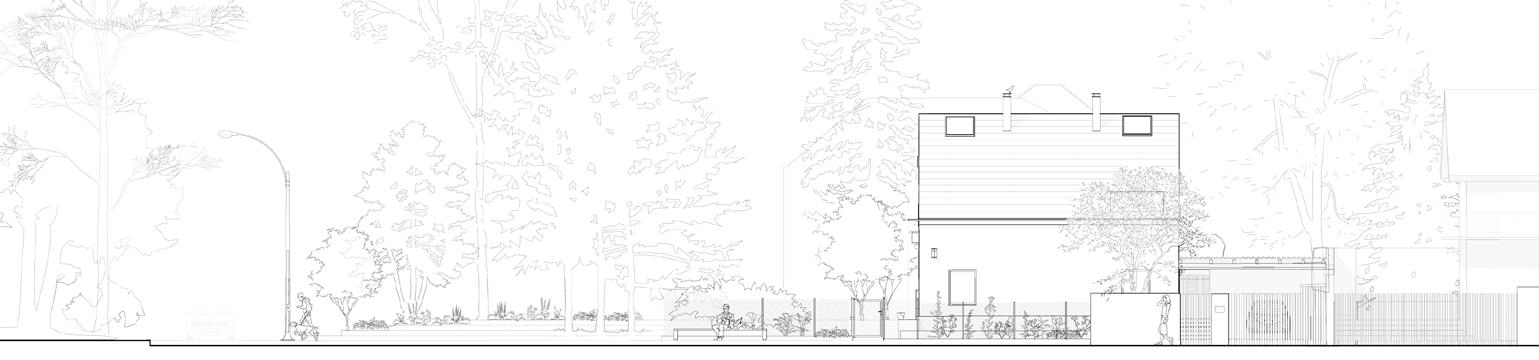
The projects is a reinterpretation of the settlement's long tradition of inhabiting in close contact with nature - by dislimining the perimiter of a house and inducing exposure of its inhabitants to climatic factors.

Location: Szczęśliwice, Warsaw, PL
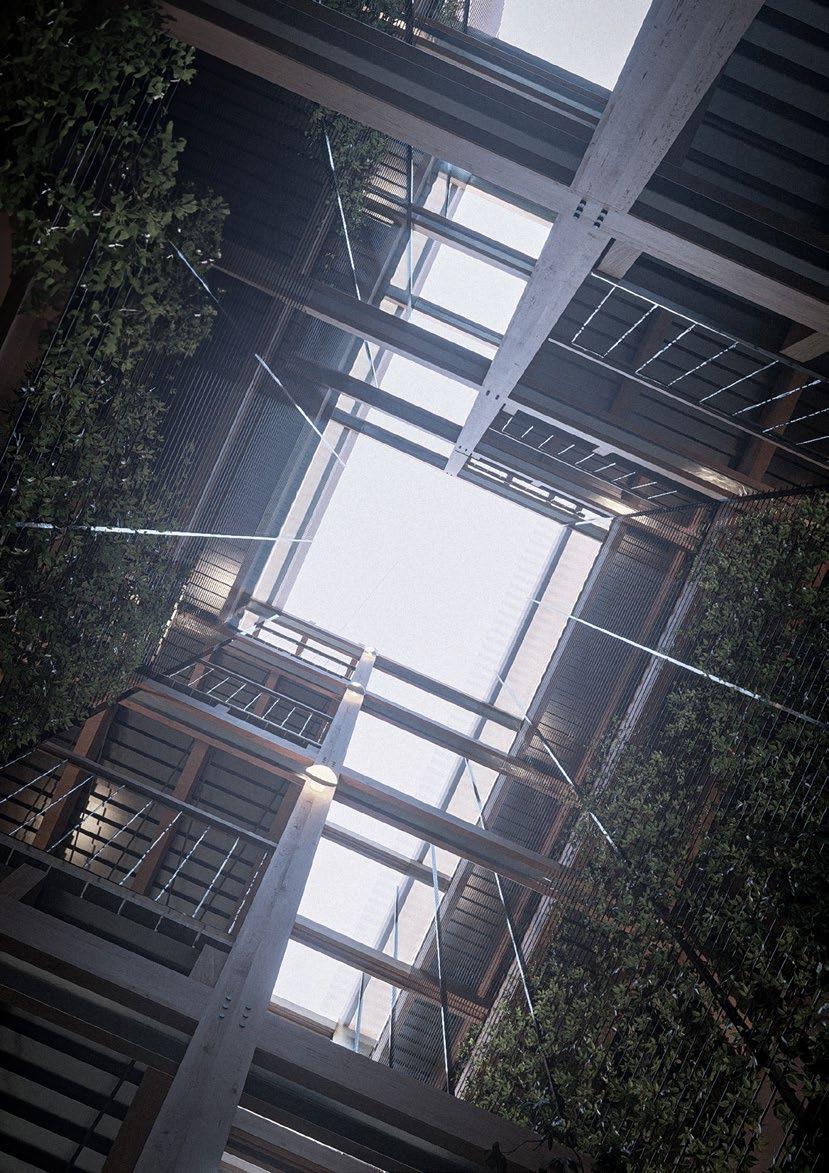
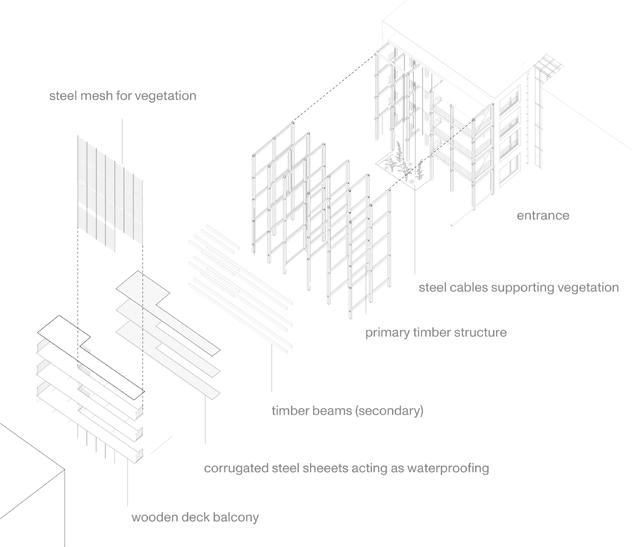
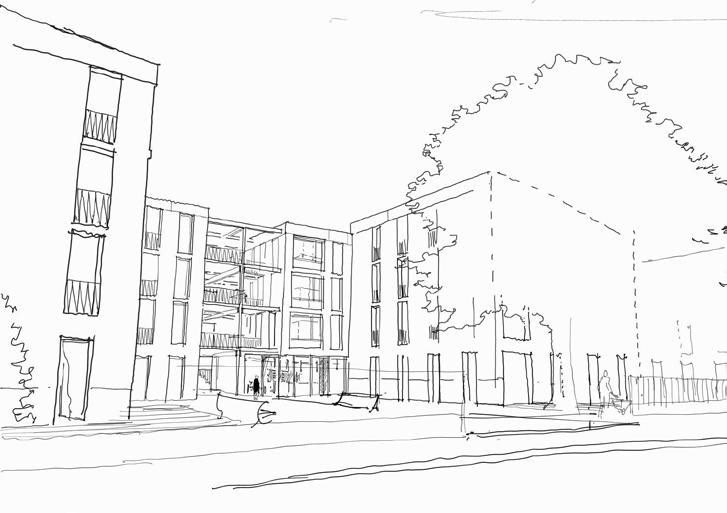
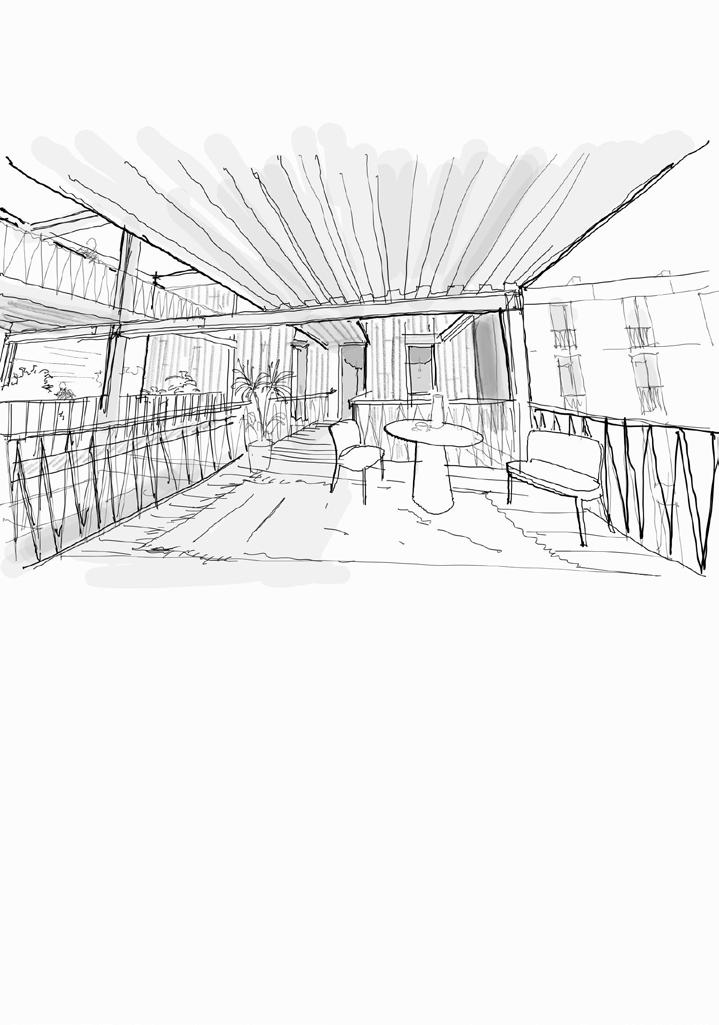
This multifamily building design in Szczęśliwice, Warsaw, addresses the challenge of balancing high building intensity while providing spacious, high-quality apartments suitable for multi-child families. The main concept involved reconciling this intensity with the surrounding detached housing morphology. It is for this reason why the proposed massing comprises three distinct units connected by narrow entry areas shaded b freestanding lightweight timber loggias - “nests.”
Type: Academic Project
Design team: Bartłomiej Głomski, Jeremi Dziedziejko
Date: 4th semester, 2023
Supervision: Łukasz Piątek, Jan Chwedczuk, Maciej Kowalczyk
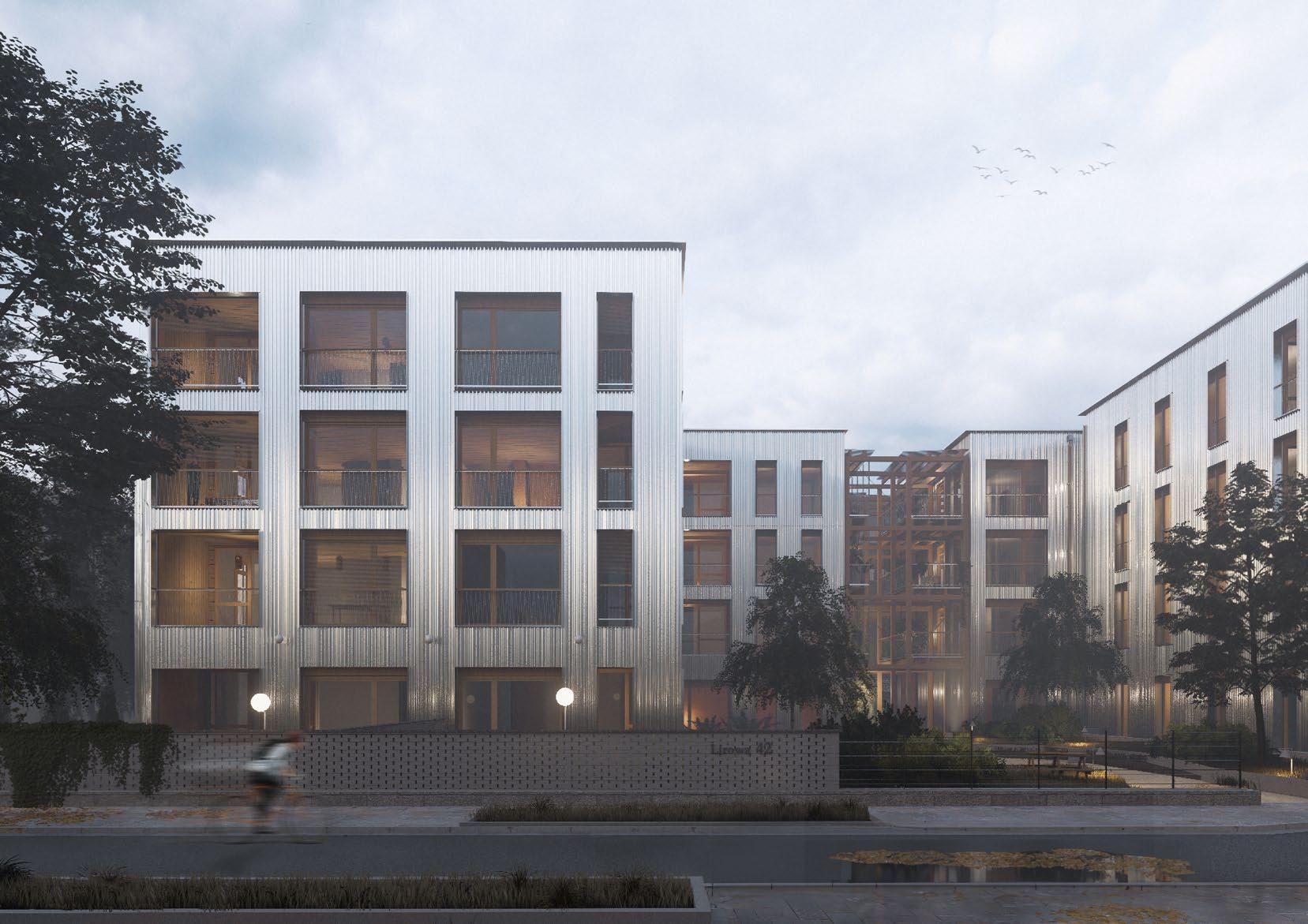

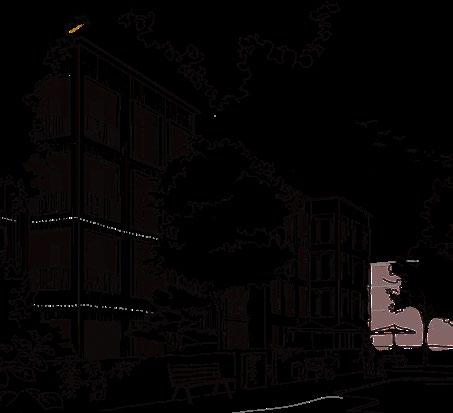
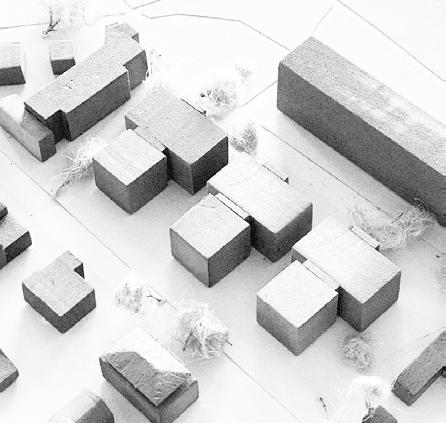
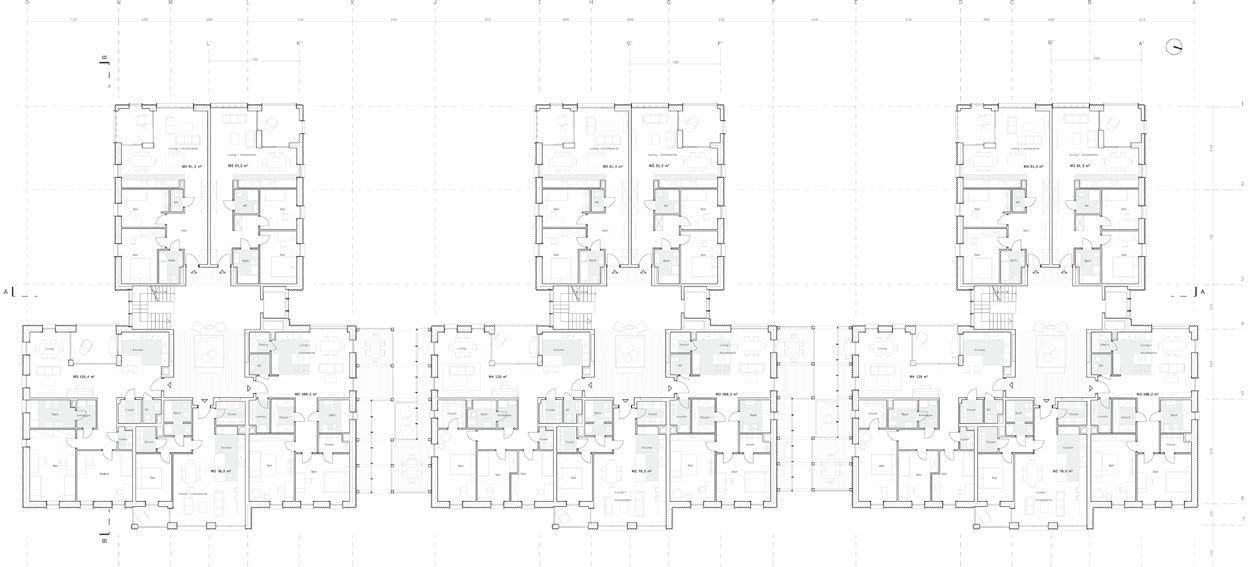
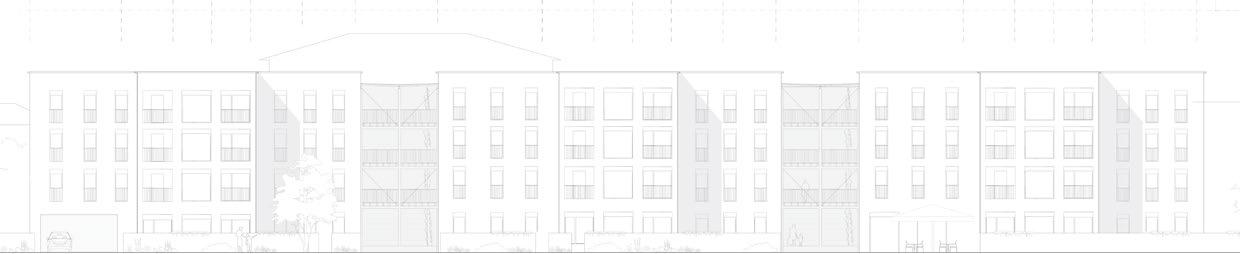
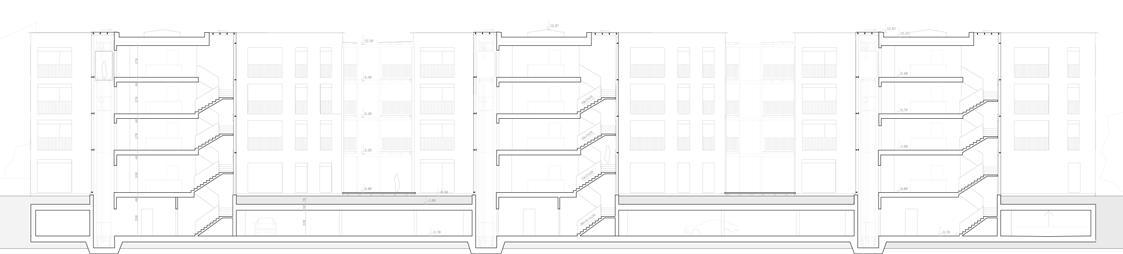
Internally, the building maximizes natural light with numerous skylights and glazings in the staircase and elevator shafts, illuminating both the large flats and common areas.
The zoning strategy involves ground-floor apartments with private gardens, some of which open onto a woonerf—a shared space between the building and the neighboring apartments block. This consideration of spatial organization caters to the needs of multi-child families while fostering a sense of community and connection with the surrounding environment.
The design is shaped by the balance between urban intensity and family-oriented living, creating a distinctive and harmonious addition to the Szczęśliwice neighborhood in Warsaw.
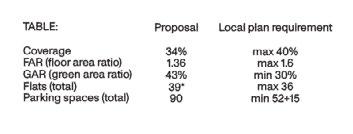
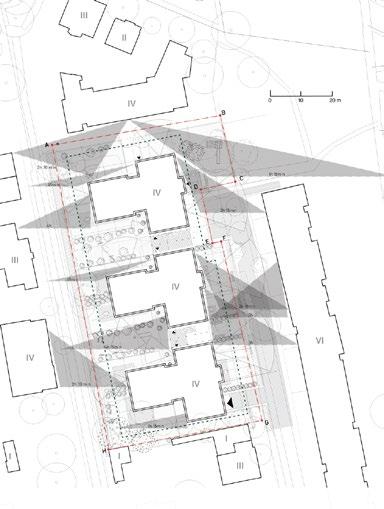
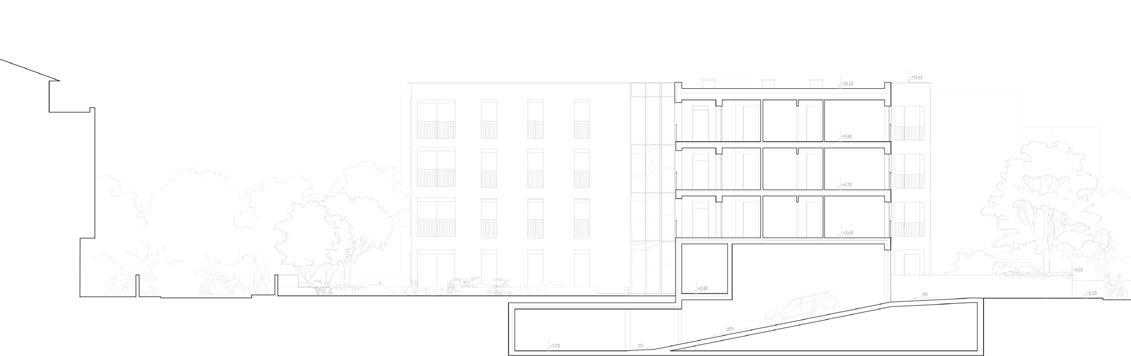

The main challange was fullfilling the sctrict sunlight and view obstruction laws which significantly affected the final shape of the building. Its form is then balancing beetwen the two confilcting scales of the naighbourhood and strict functionality of the building
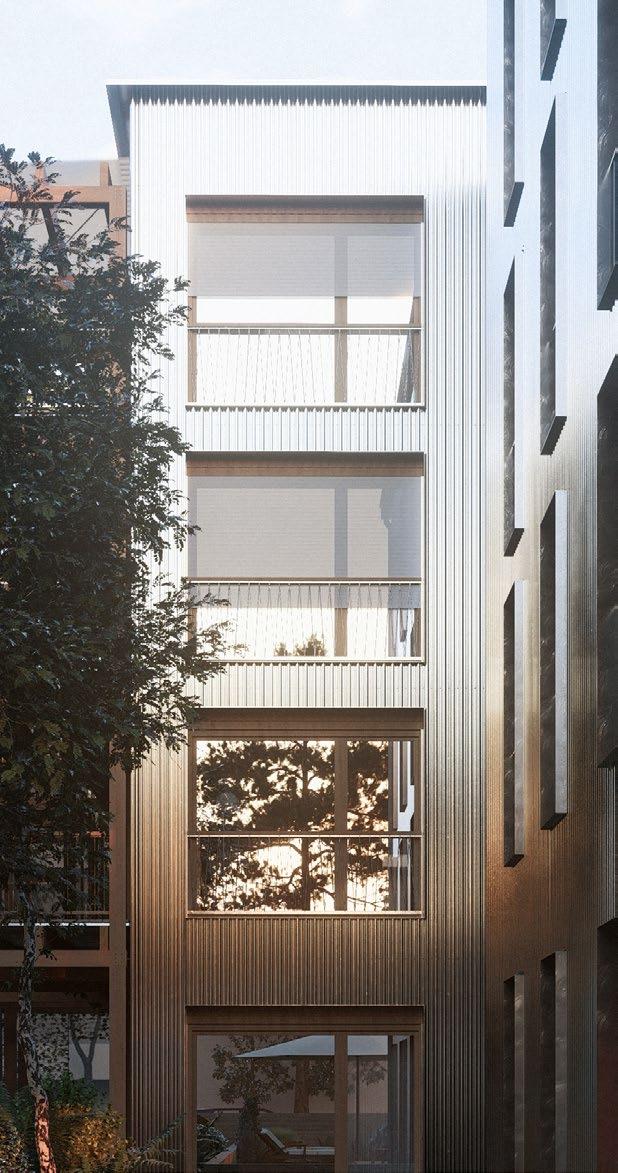
Post-industrial context of the plot, inspired the use of corrugated steel as old-native, yet contemporary material. Warm timber framing within the nests, window frames, and interior finishes are juxtaposed against the cold and shiny steel finish to create a visually striking aesthetic, all harmoniously situated amidst the extensive vegetation of the surrounding Szczęśliwicki Park.
The landscaping details utilize on-site grey cement bricks and reused perforated pavings that seamlessly integrate with both lush greenery and the steel elements.
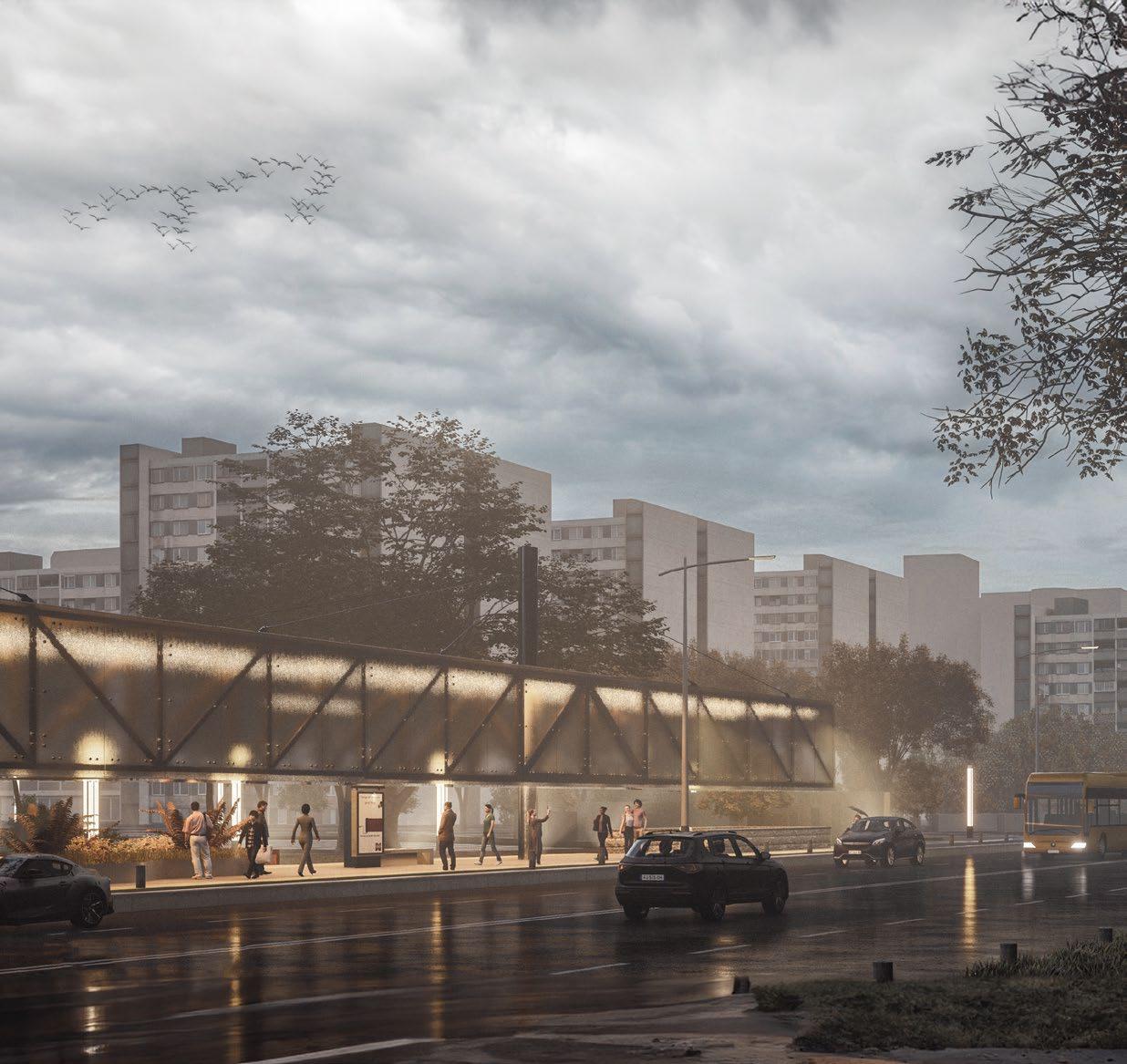
Location: Szczęśliwice, Warsaw, PL
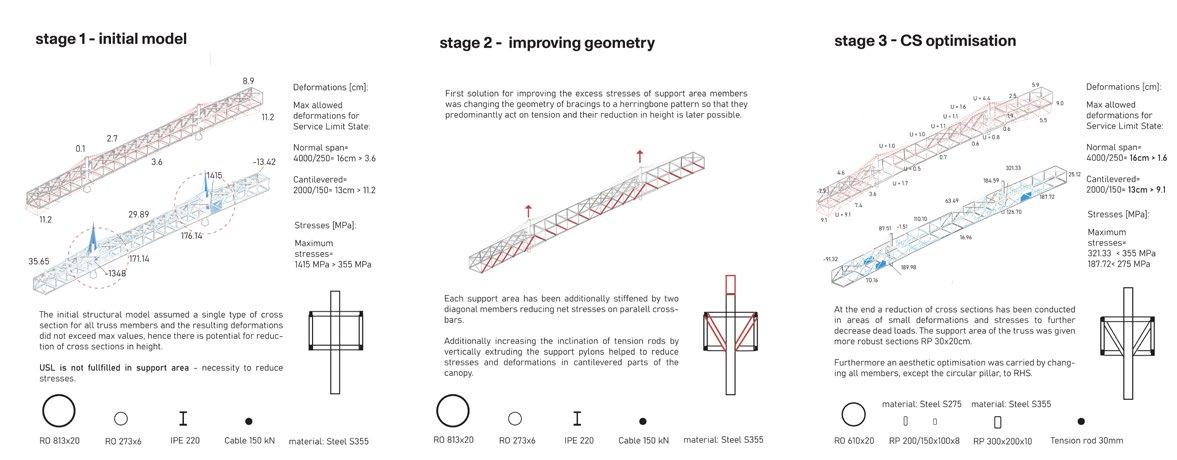
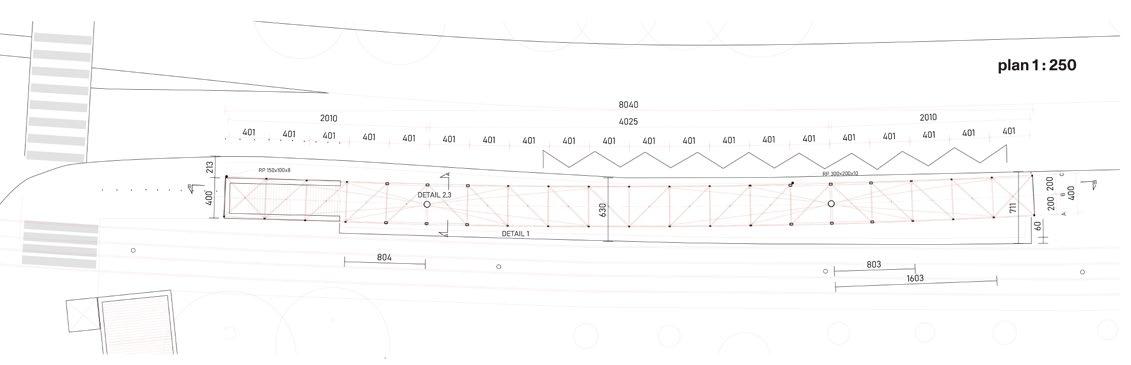
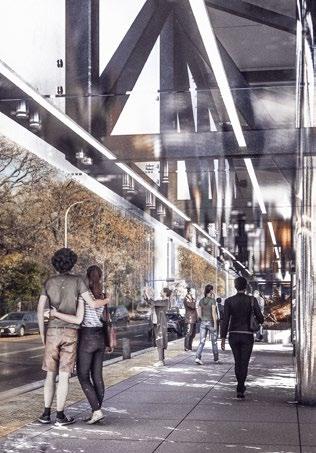
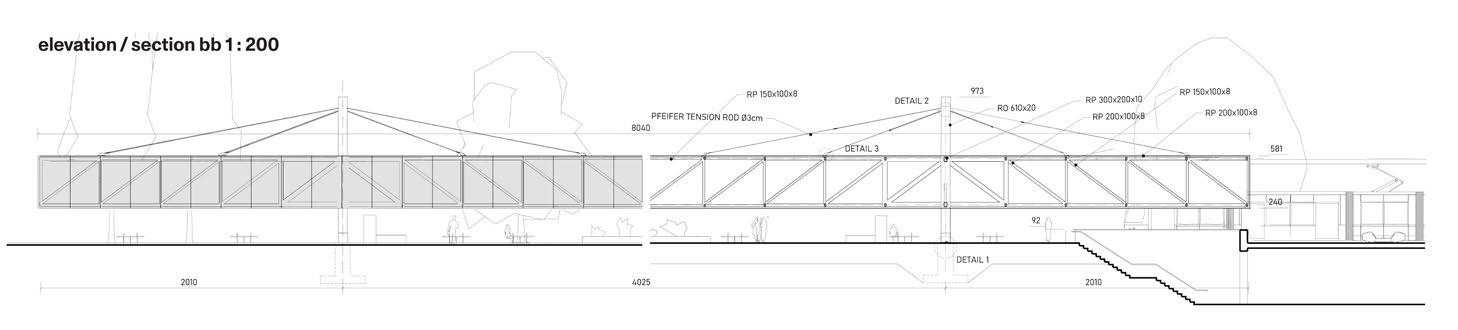
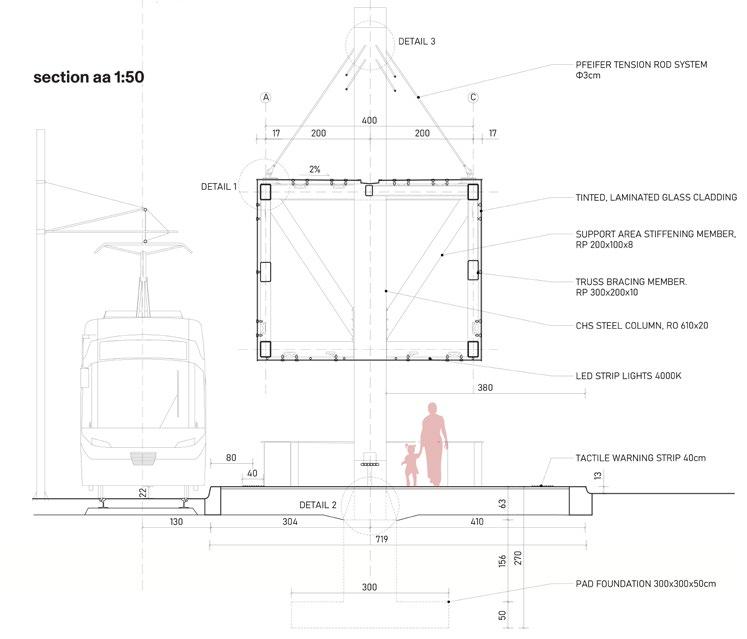
The elongated, narrow platform, shares both bus and tram stops, and is directly accessible from the metro station through an existing underpass. The main design idea was to provide a canopy sheltering both the existing stairs and the platform with as few supports as possible to save space for numerous waiting passengers.
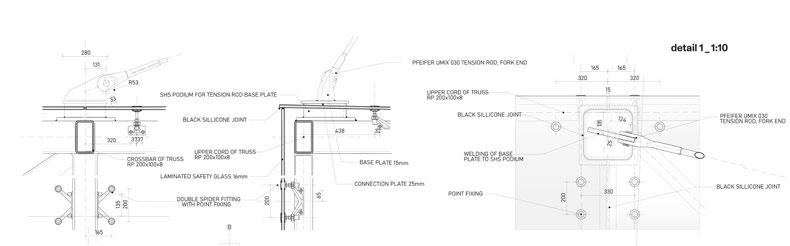
Utilizing the complicated existing infrastructure pushed the designed structure to the limit. Through the glass and steel language of contemporary metro entryways in Warsaw, the canopy becomes a new glowing focal point for the messy modernist neighbourhood.
Type: Academic project
Date: 5th semester, 2024
Supervision: Paweł Przybysz PhD, Joanna Pietrzak PhD
Theme: Structural design, public transport
Materials: steel, safety glass, chrome
Technology: cable stayed truss
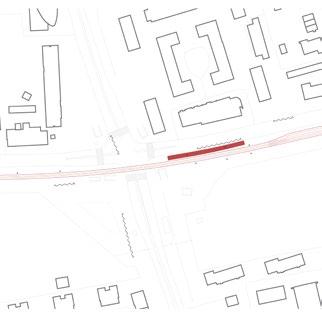
Metro Wierzbno is an important transportation node connecting vast office clusters, located in this part of Warsaw through tramways with the rest of the city by M1 metro line. Despite several investments into technical infrastructure of the crowded tramline, like new two-way trams and additional side tracks, the shelter infrastructure for office workers and tram drivers resting at the side track has been neglected.
The design response uses the humble, cubist language of modernist blocks and alludes to surrounding contemporary architecture with transparency. It also creates an urban wall for this underdeveloped public space and aims at creating a sort of beacon for the visually chaotic crossroad of great functional importance.
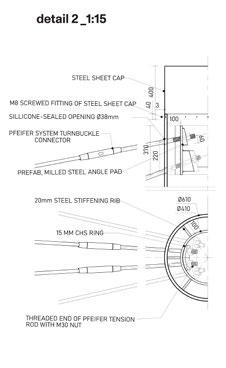
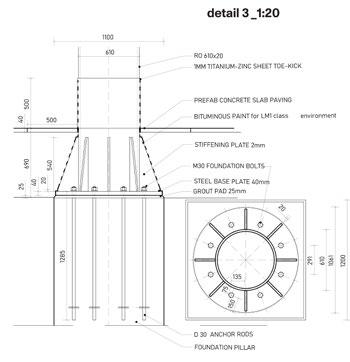
Location: Bog Całowanie Landscape Park, PL
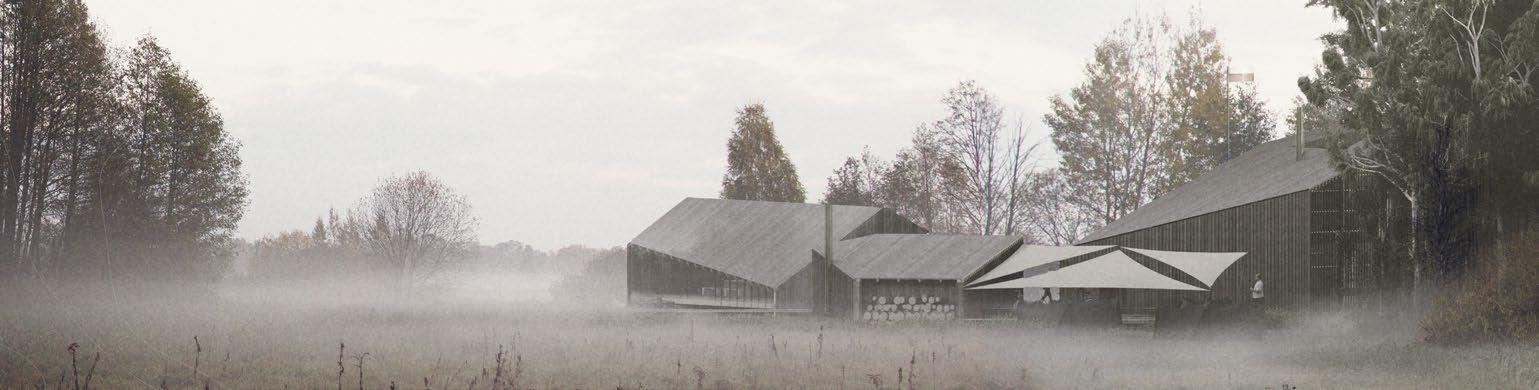
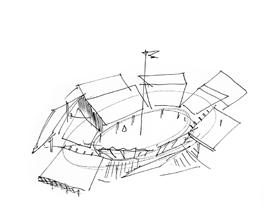
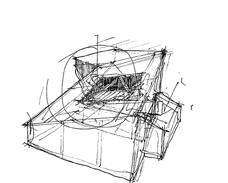
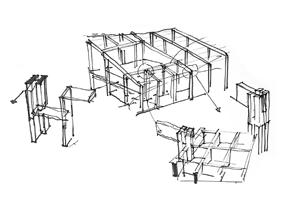
Situated in a marshy area, the scout base serves as a venue for scout gatherings and camps for young people from the surrounding counties. Scouts are hosts here, but the bog also serves as a unique field of service for them: they guide park visitors, impart knowledge about ecology and the history of the place, but also organize workshops on scouting techniques.
Type: Academic Project
Date: 3rd semester, 2022/2023
Supervision: prof. Jan Słyk
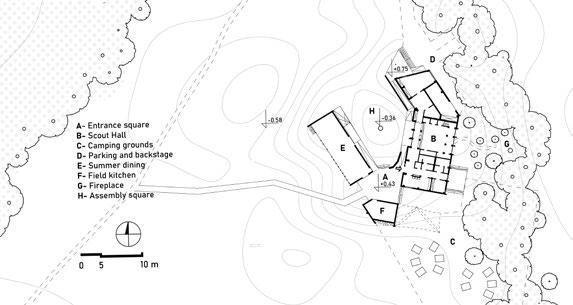
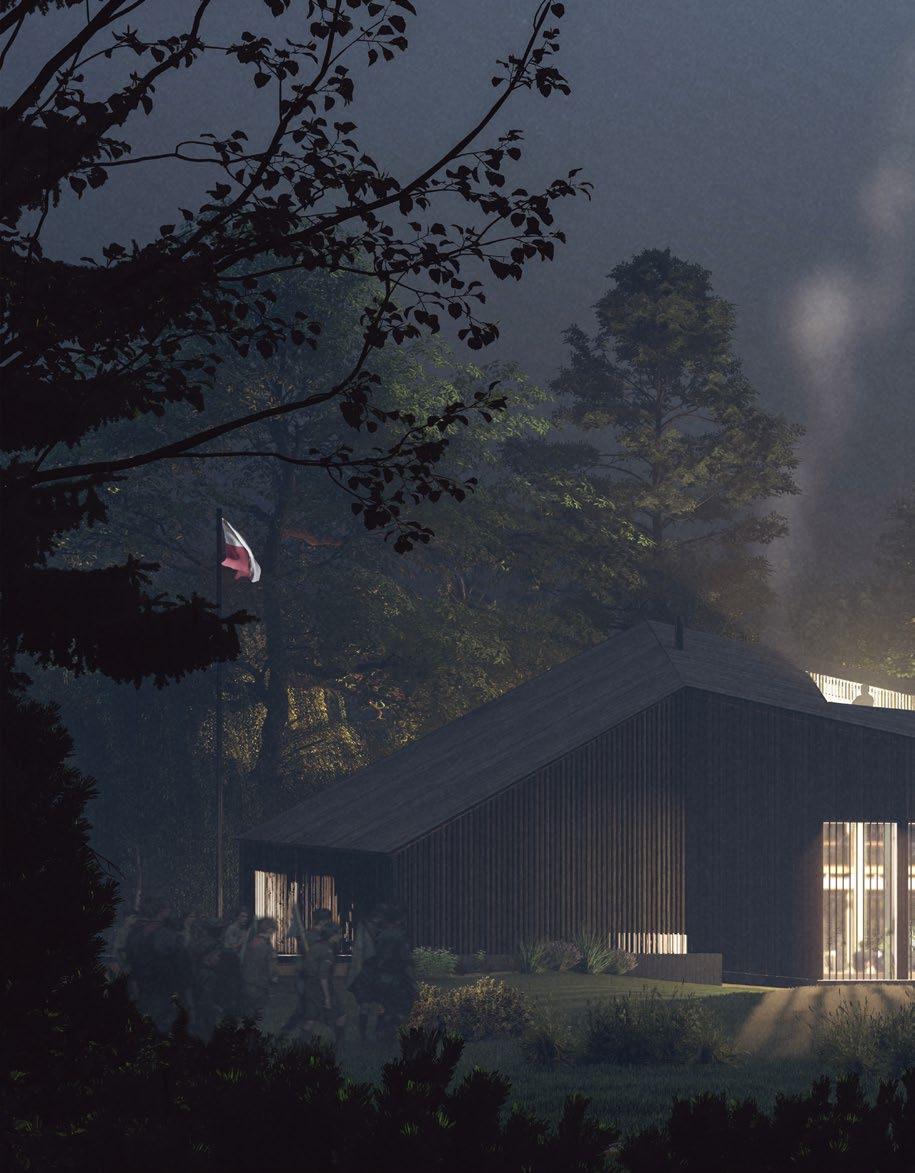
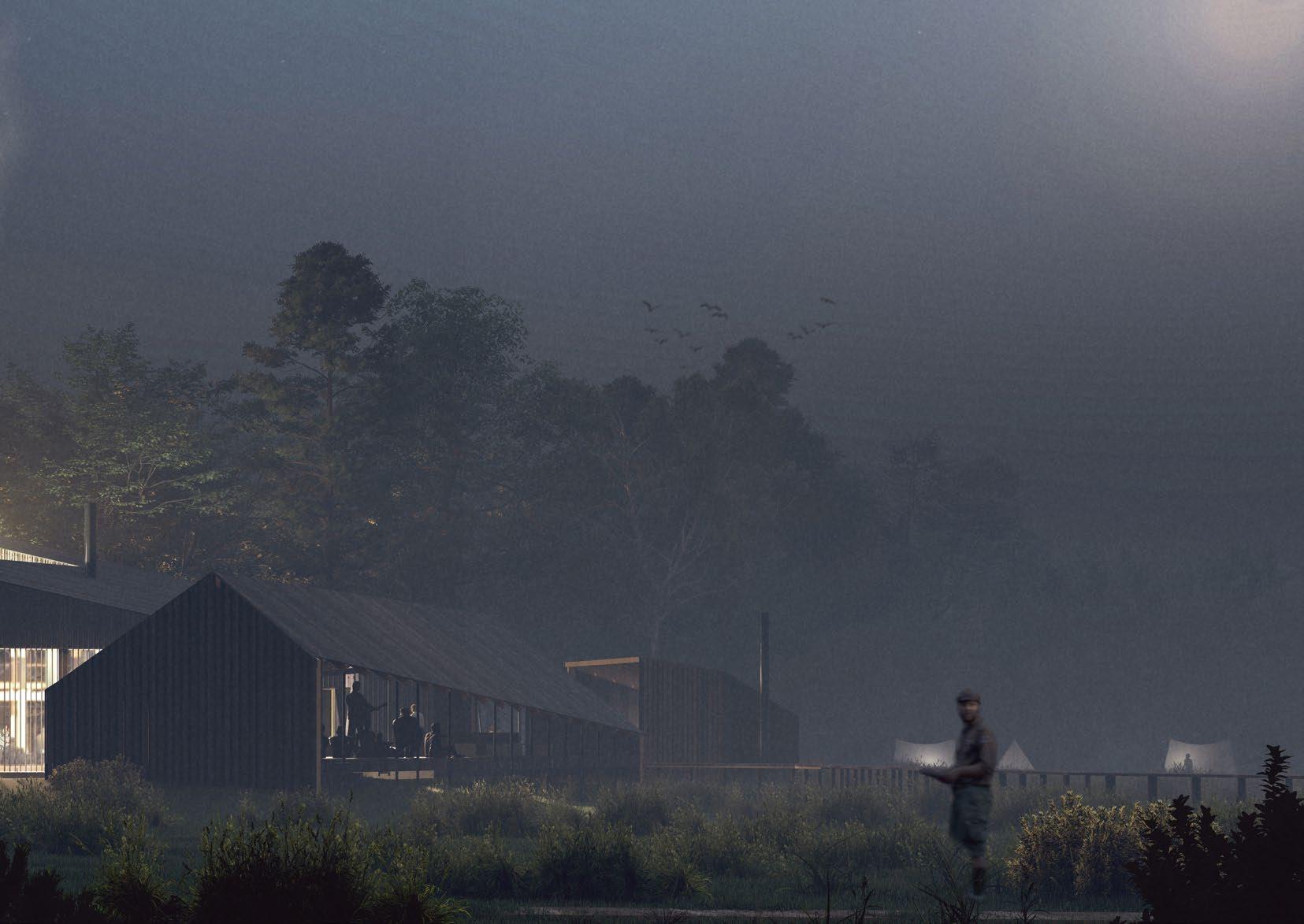


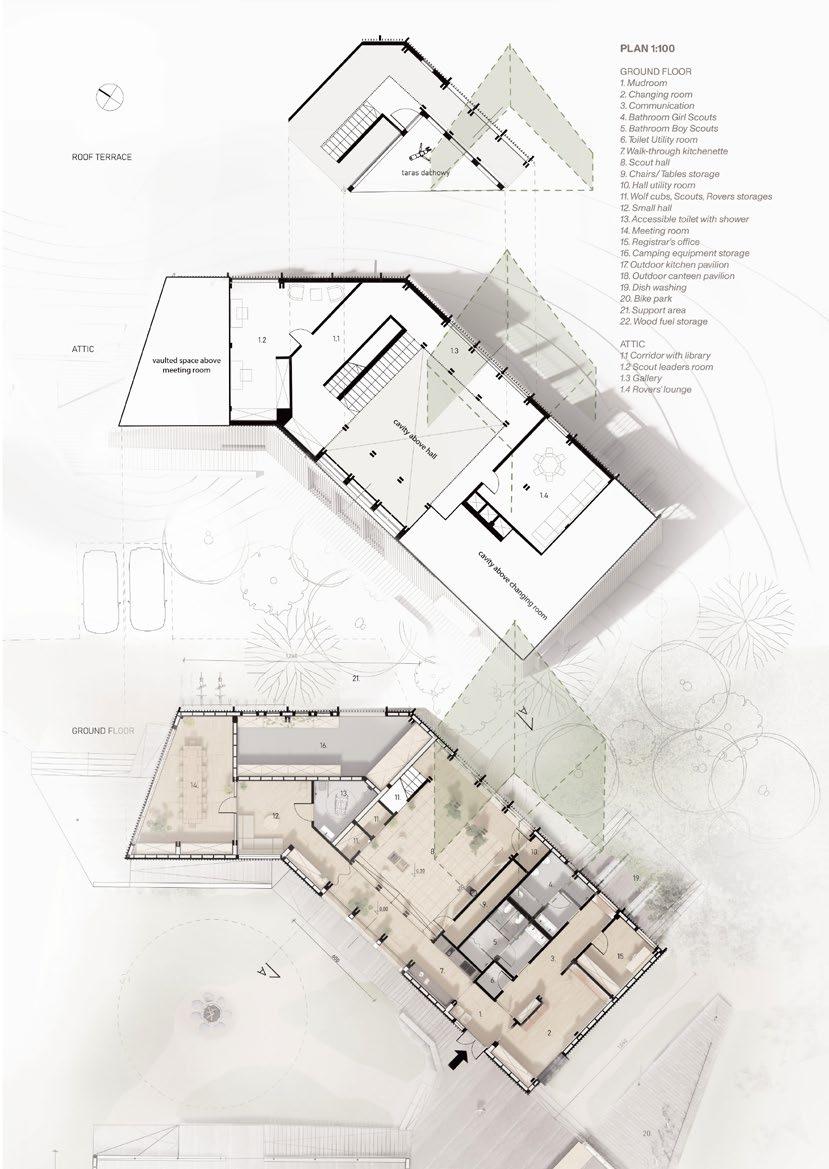
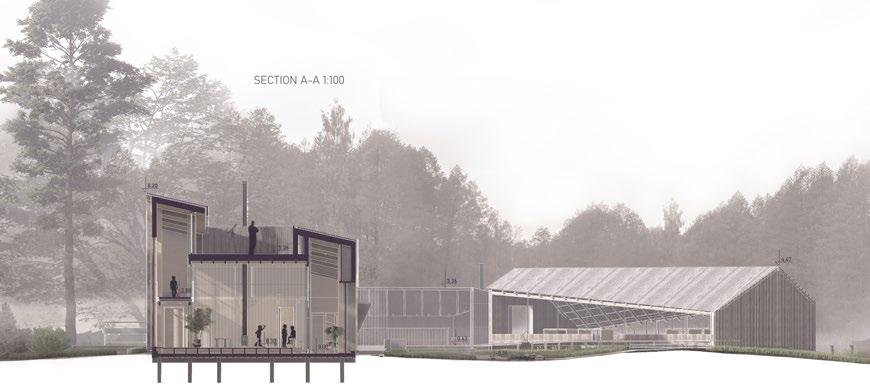
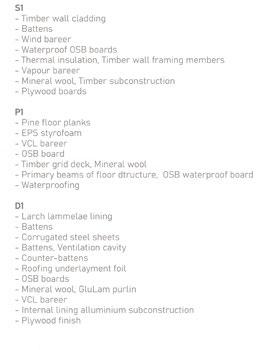
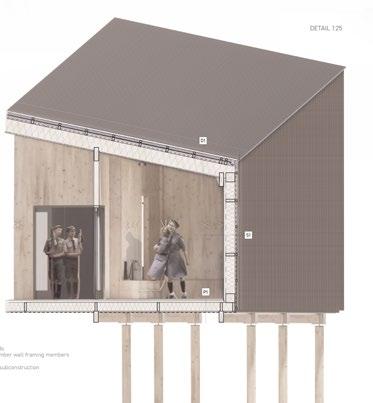
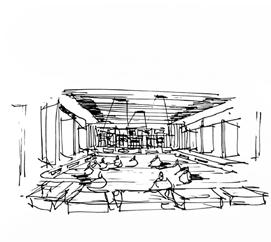
The heart of the scout hut is a bright and spatious hall, occasionally heated by a freestanding woodstove. Scouts own a lot of stuff and providing enough storage was central to the design, hence some in-floor compartments, built in cupboards and spacious chest warehouse were introduced.
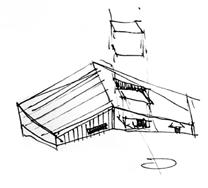
The central space is also underlined with a vertical gesture - placement of a roof terrace with night sky observatory just above it enriches the vaulted space of the attic and acts as a frame for tree canopies views.
Location: Całowanie Marsh, Masovian, PL
Located just outside of Warsaw, the cabin spans over the Swider river nearby where it joins with Mienia River, an area which adjoins the Masovian Landscape Park.
The project was inspired by our roots - the forager lifestyle of our ancestors. The main goal was creating a space for active recreation but also one that is functionally adjusted for processing and accumulation of organic goods: mushrooms, berries and herbs, naturally abundant in the Masovian forests. Our design is also an architectural divagation on the issue of sustainable management of natural resources. The bridgelike design allows for better access to crops located on both coasts of the river.
Type: Academic Project
Awards: MIES + Audience Award
Design team: Bartłomiej Głomski, Magdalena Niewczas
Date: 2nd semester, 2020/2021
Supervision: Justyna Dziedziejko/ TOPO Scape
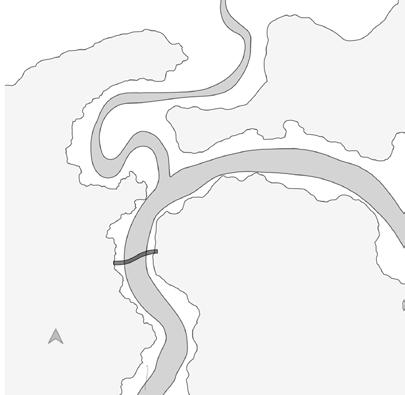
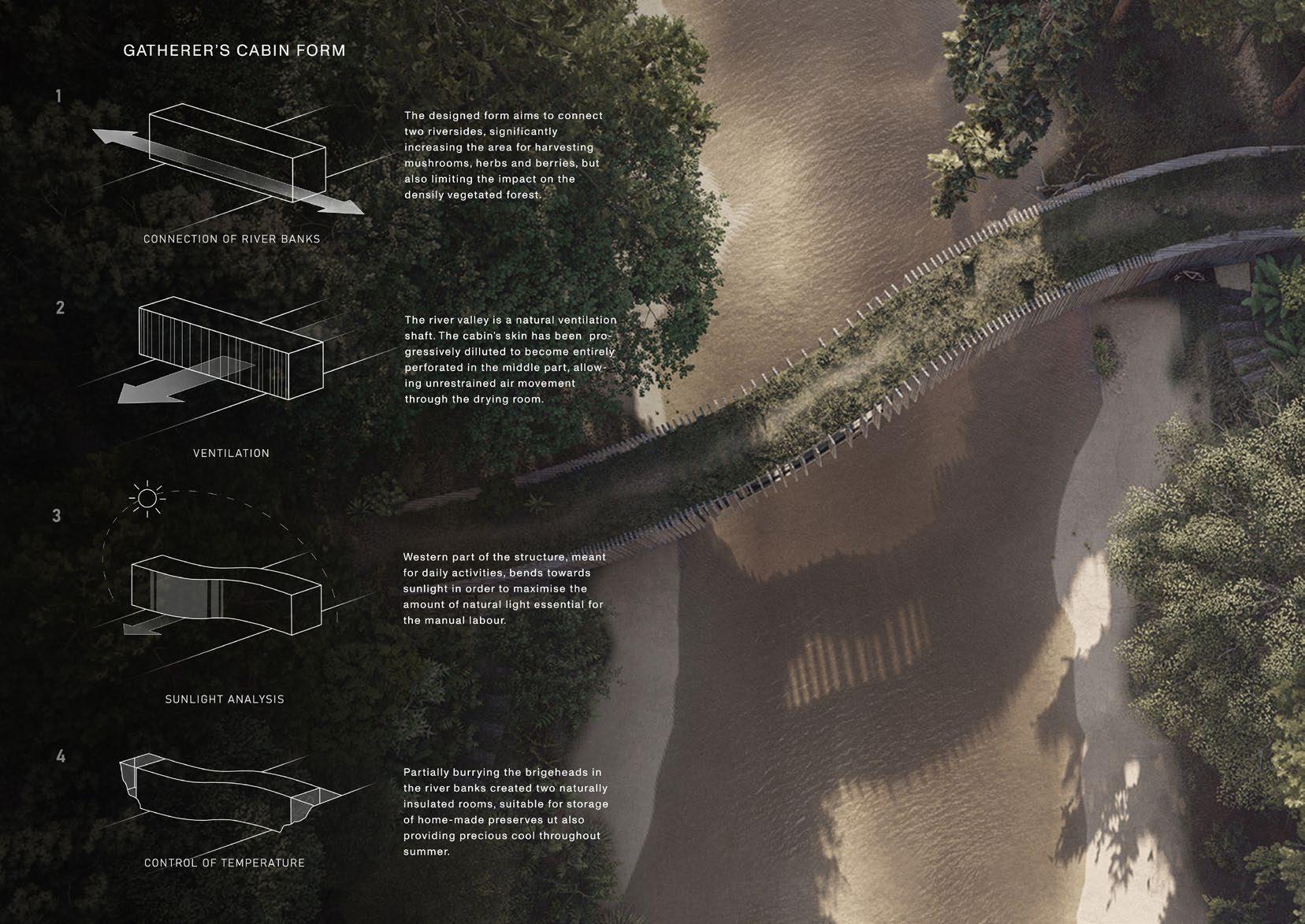
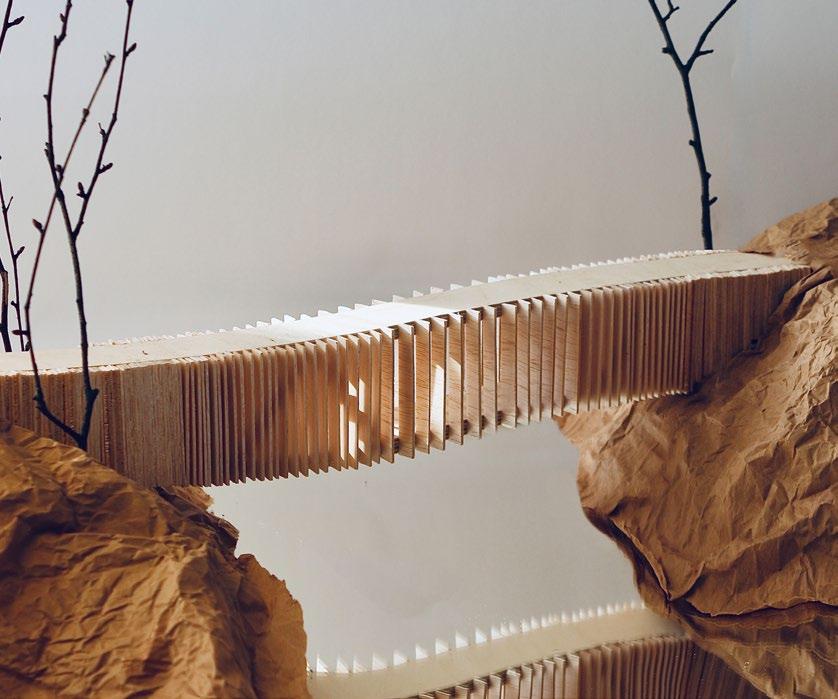
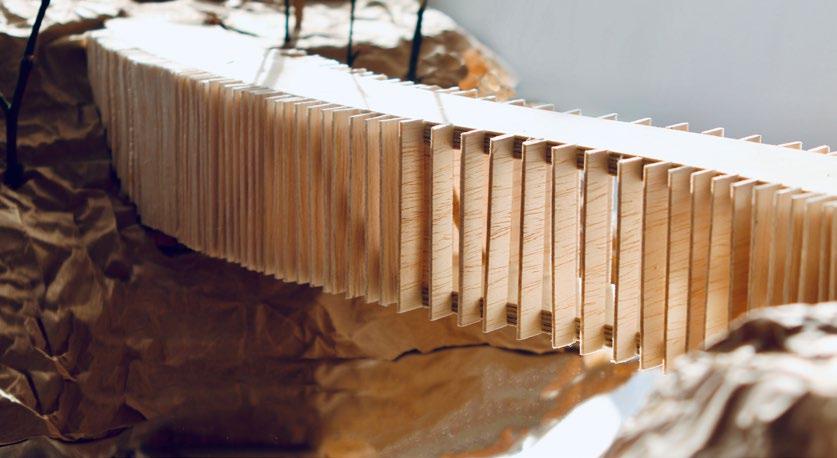
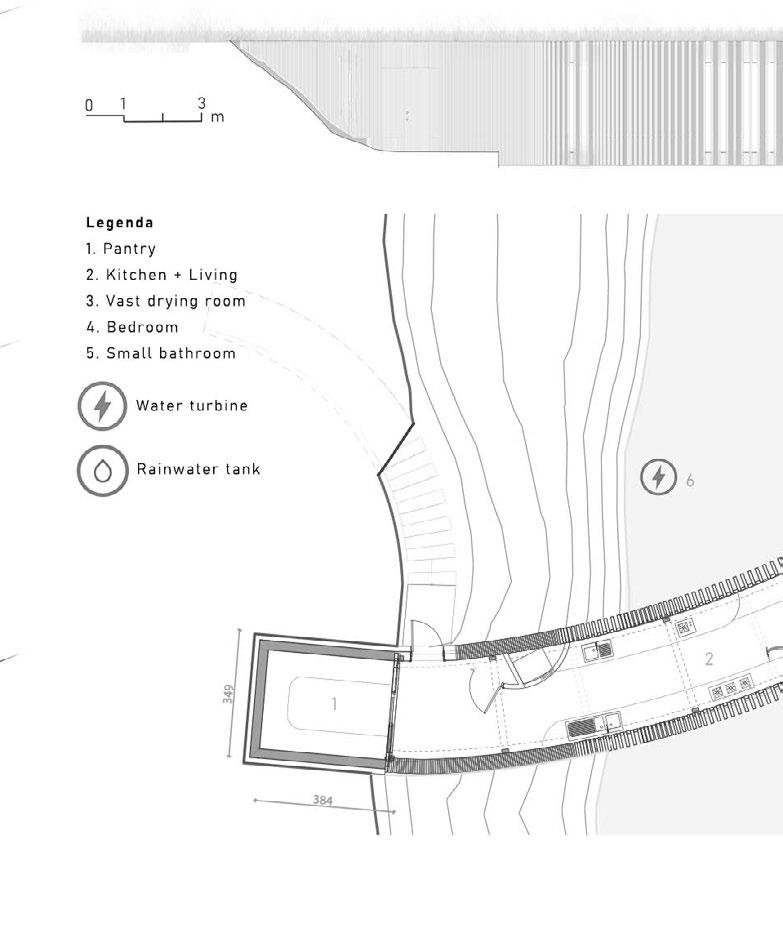
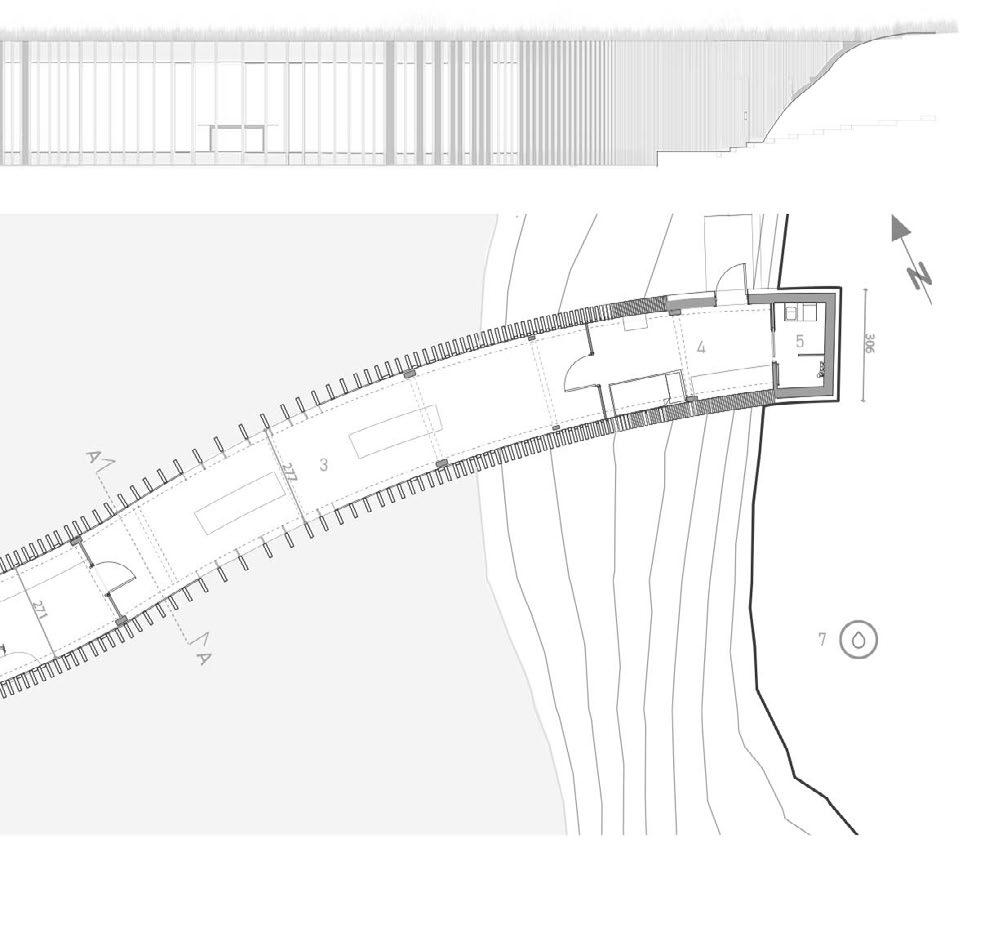
The proposed layout springs strictly from the main function, with the airy drying room as the heart of the cabin, additionally used as a workshop. It serves as a “bridge” between the sun-dappled living area, with a kitchen and pantry, and the well shaded bedroom connected with a small toilet, powered by rainwater.
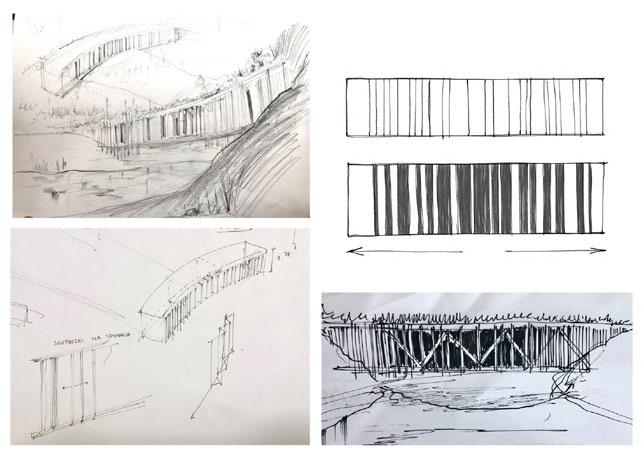
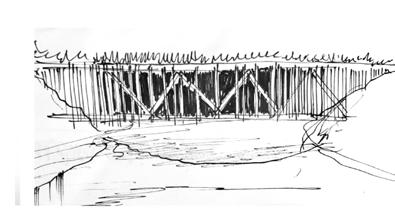
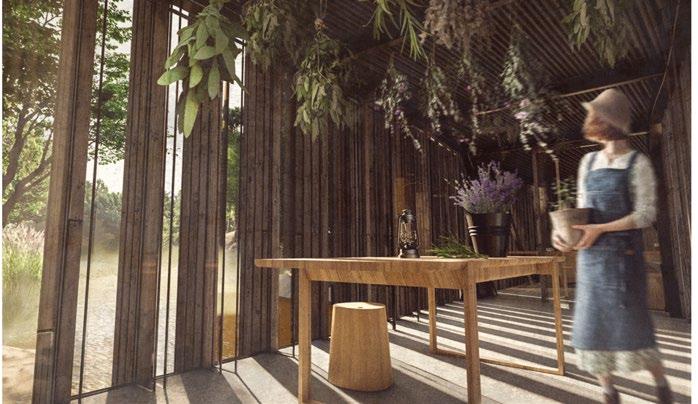
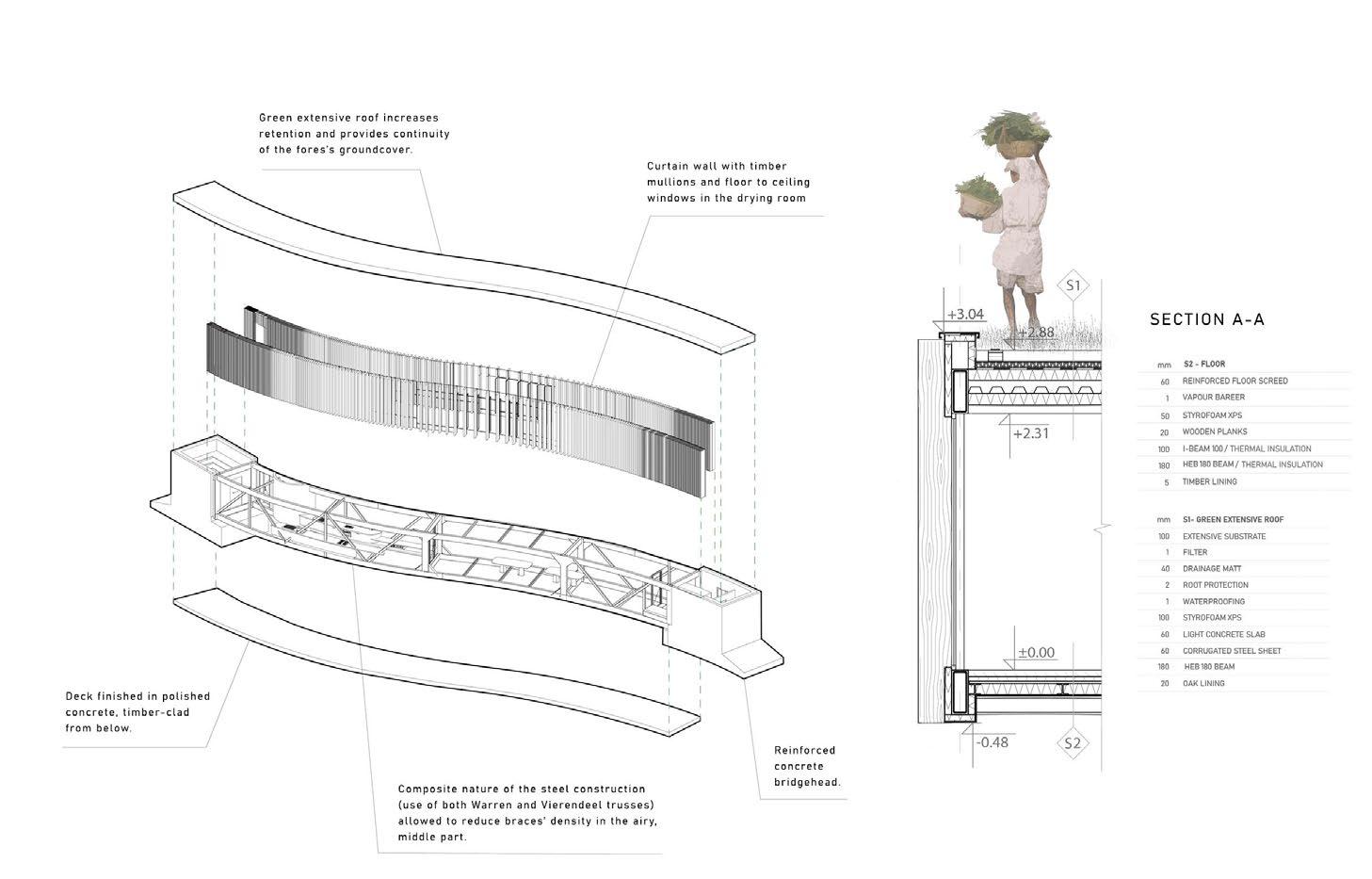
The cabin is holistically blended with natural surroundings thanks to elements such as the green roof, forming an organic continuation of the forest’s undergrowth.



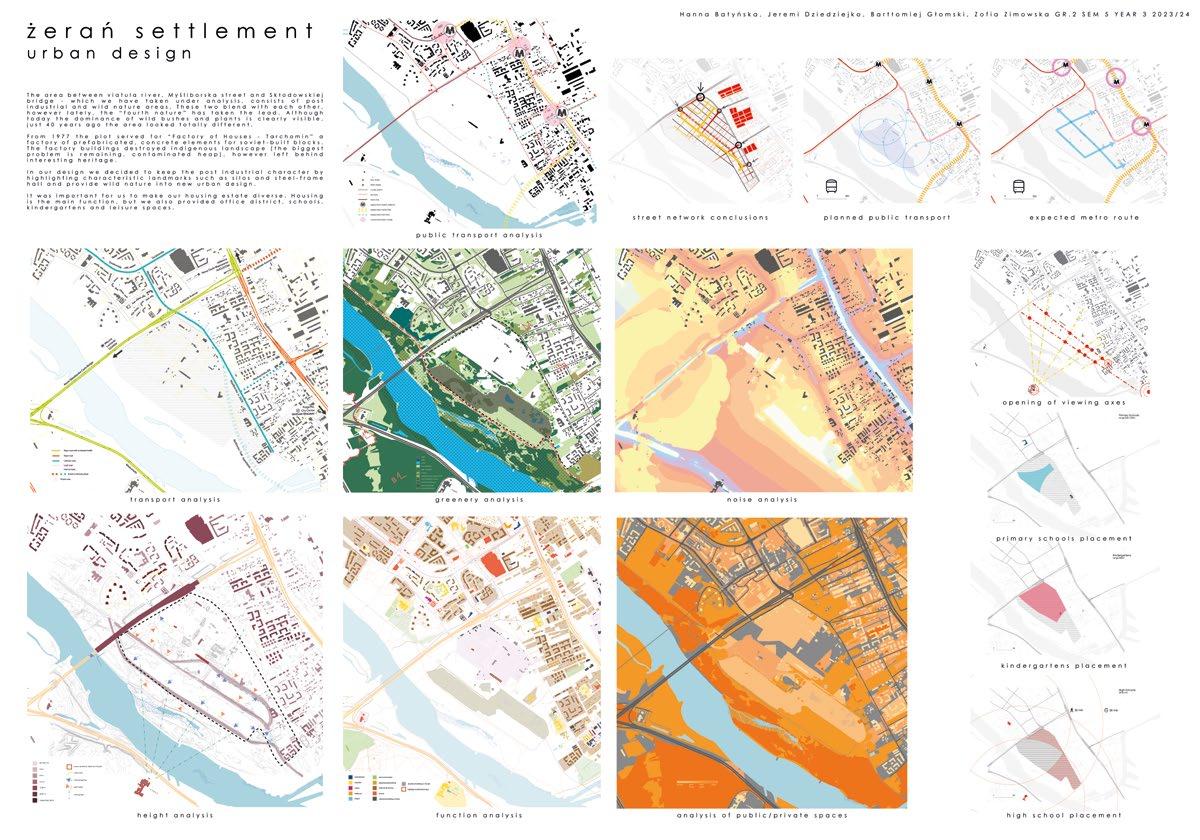
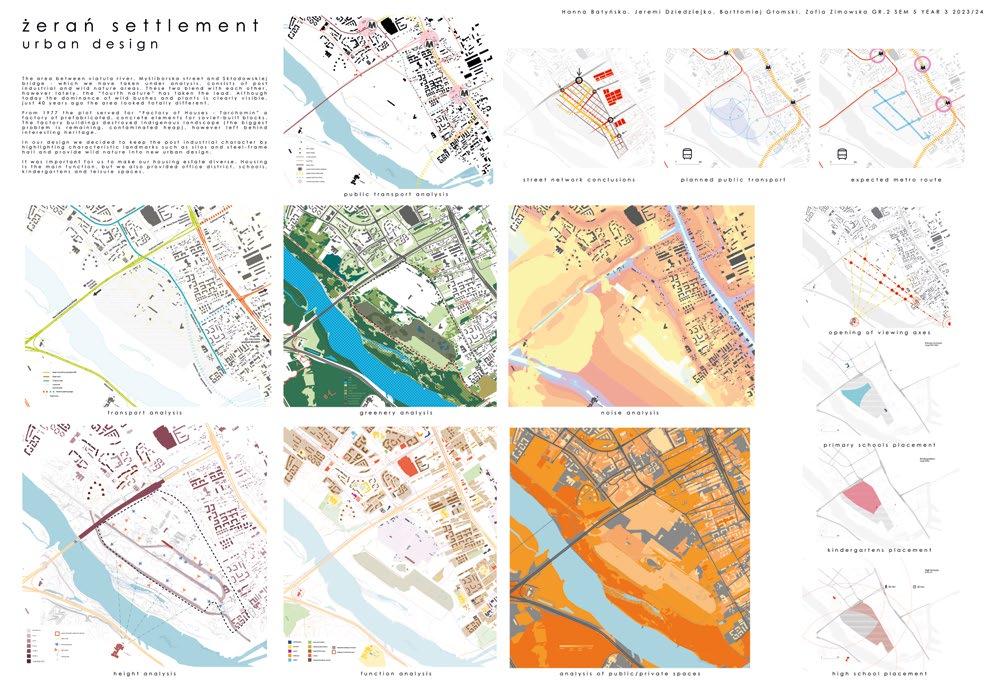
Location: Żerań, Warsaw, PL
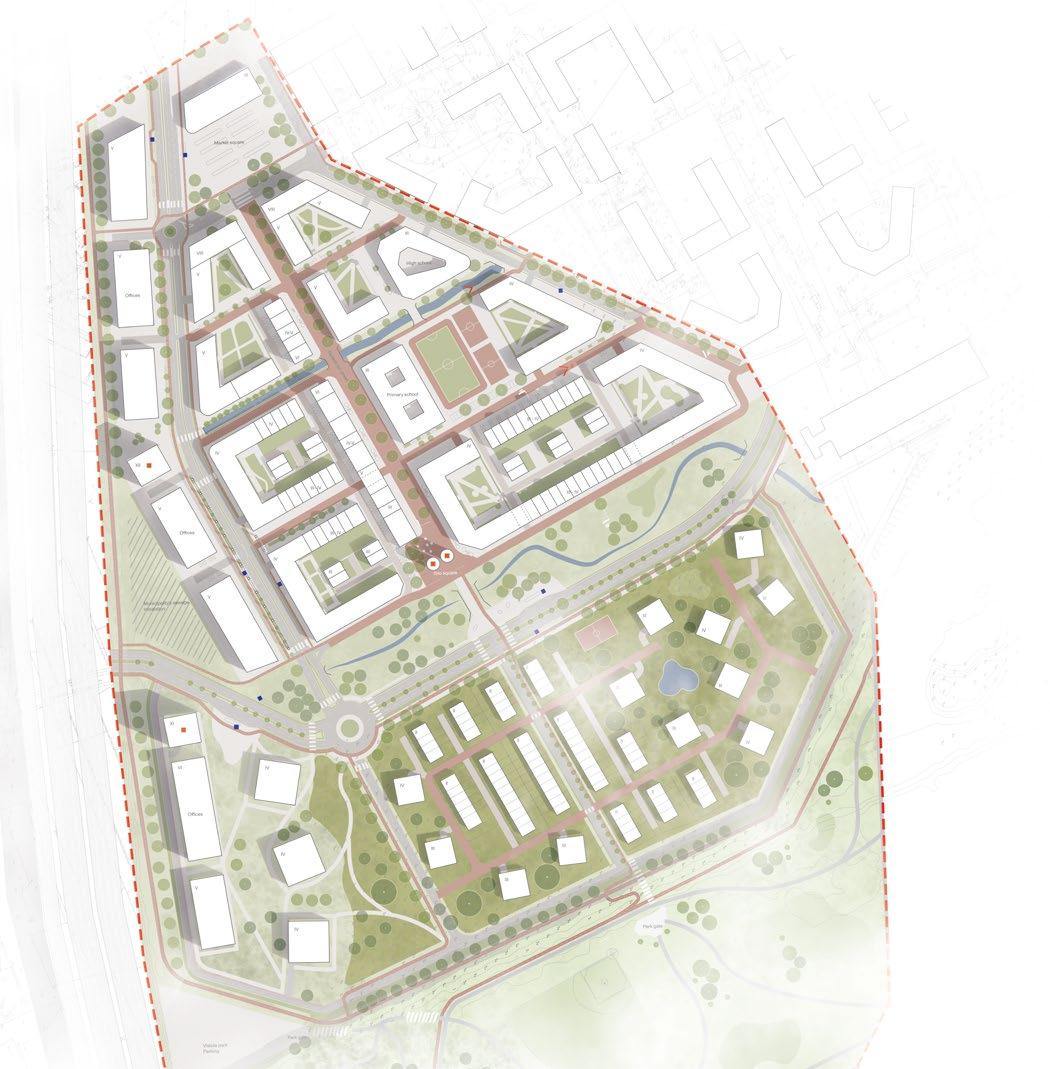
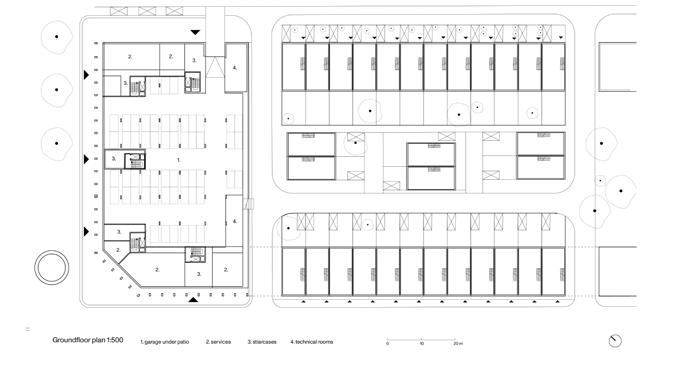
This estate is a fraction of a bigger masterplan transforming a post-industrial plot along the Vistula Valley, overcoming challenges such as expressway estacade barricades and elevation variations. The site where once large scale modernist blocks from the communist era were mass produced is the best place for a mdoel city-making endeavour characterised by density and typological diveristy creating neighbourly bonds and liveliness in the neighbourhood.
Located at a gateway to the new district the plan proposes a mixture of low rise - and high density which brings back the city’s prularism and individualism and opposes past homogenity. Factory reamianings are underlined through important streets as landmarks.
Academic Project
Theme: Urban Design, Housing Estate Masterplan References: Amsterdam Houthhavens, Ijburg 4th semester, 2023/2024
Supervision: dr Dana Matouk, dr Tomasz Majda
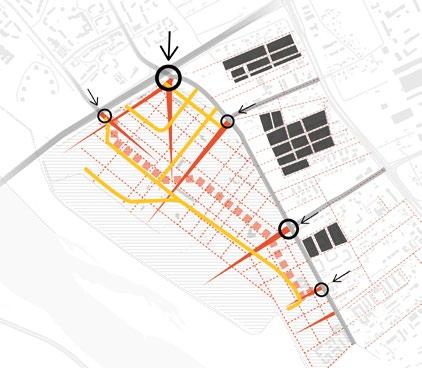
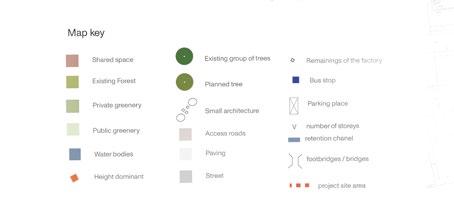
Three key walkable axes define the design: a central park with the iconic Park Pavilion,a commercial axis using silos as visual dominants.and a recreational axis enclosed by an office tower building.
To address noise pollution a strip of strategically placed office buildings not only secludes the area but also provides workspaces, attracting activity from other parts of the city. Shared streets, dense bike infrastructure, and perimeter-directed car traffic enhance the neighborhood’s cohesion. Water management integrates swales and elevated courtyards.
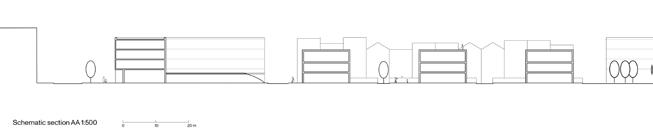
Architecturally, the project balances single and multifamily typologies, preserving industrial structures and high vegetation. There’s a housing density gradation towards the river, fostering a harmonious transition from urban intensity to the waterfront. The result is a sustainable, vibrant, and cohesive urban environment that seamlessly blends modern amenities with the historical and industrial character of the site.






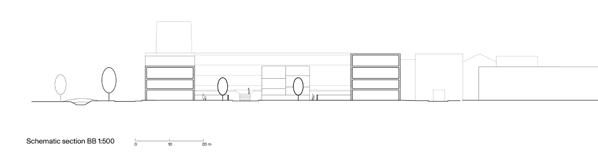
Location: Milan, IT
Type: Academic Project (Group 5)
Date: Summer Term 2022
Supervision: Marco Facchinetti, Valeria Fedeli
Context
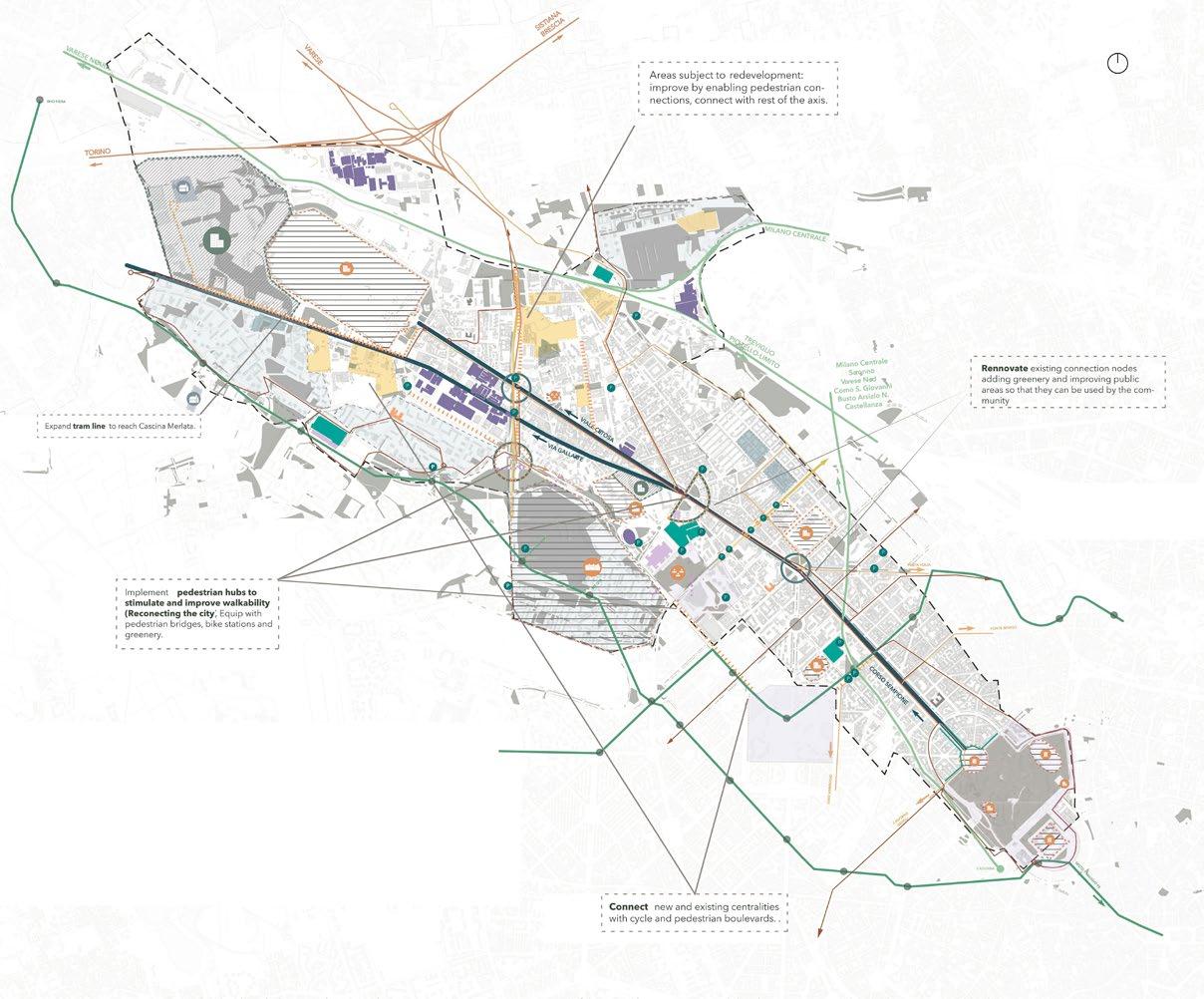
Corso Sempione, initially represented in Beruto`s 1889 plan of Milan, is a long radial boullevard followed by the Arch of Peace, Parco Sempione and Castello Sforzesco, main landmarks of the city. Nowadays through Sepmione significant connections for Milan are spread.
Main goalStrenghtening the axis
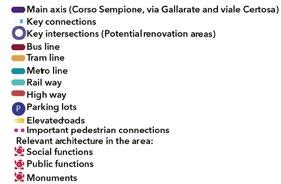
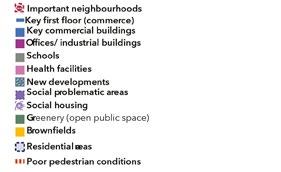
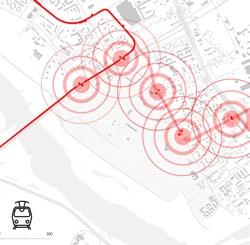
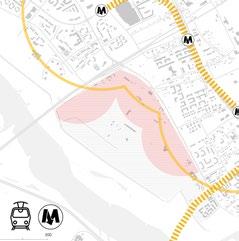
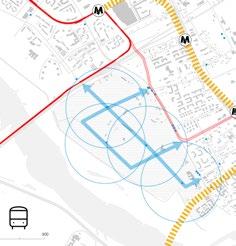
The project's aim was to use this uniqely pronounced urban establishment and improve the standard of its contemporary extentions (Sempione - GallarateCertosa) in terms of green continuity and walkability. Our strategy established a new pedestrianbased axis between Milan's restored neighbourhoods (City Life - Cascina Merlata), connecting them and creating new potential centralities on the way.