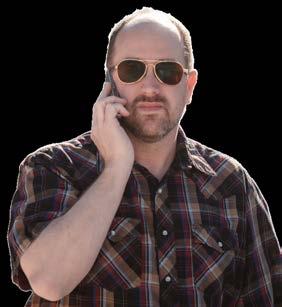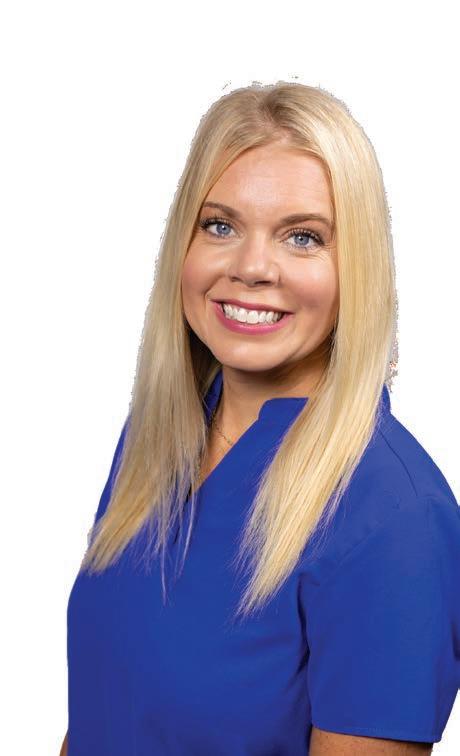
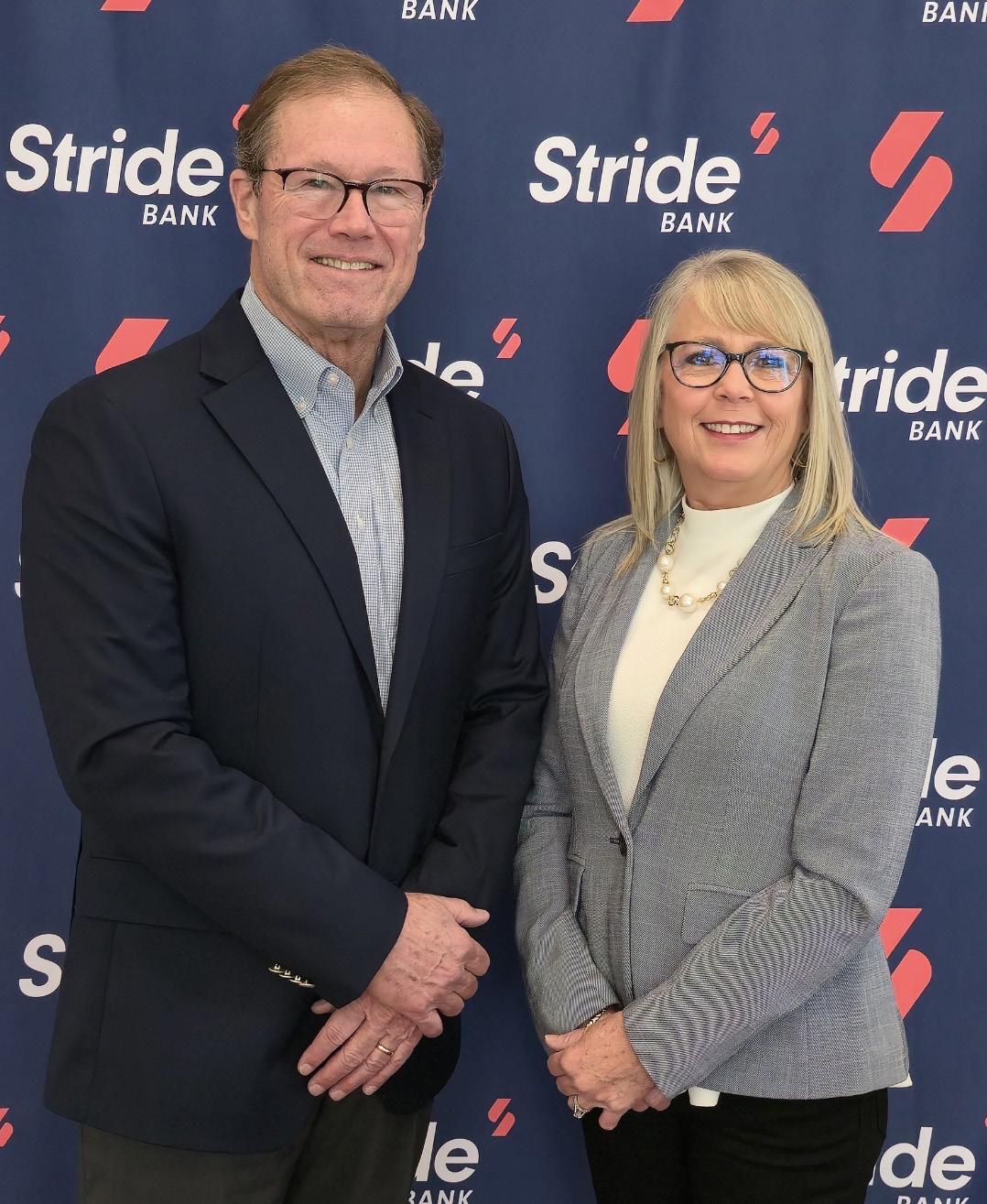
CHARLES ALLCOTT KIM SIMMONS
We live, work, and play in Bartlesville, and we’re proud to serve our neighbors with integrity

Experienced, Honest, Local




We live, work, and play in Bartlesville, and we’re proud to serve our neighbors with integrity
Experienced, Honest, Local
Welcome to March, friends, and the first of Spring. Well, it looks like we survived a bad winter. Today is February 16th, and it’s 73 degrees outside. Throughout this winter, we had our warming center open at B the Light Mission three times for a total of 19 nights and 22 days. Over these nights we housed 200 people, 9 dogs and two cats. We will continue our warming center because that’s how B the Light Mission started over 5 years ago. As of today we have 17 full-time residents, and we are changing lives. We have found jobs for half of them, and some have bank accounts for the first time. We are finding them a purpose in their lives. To see their change is incredible to watch.
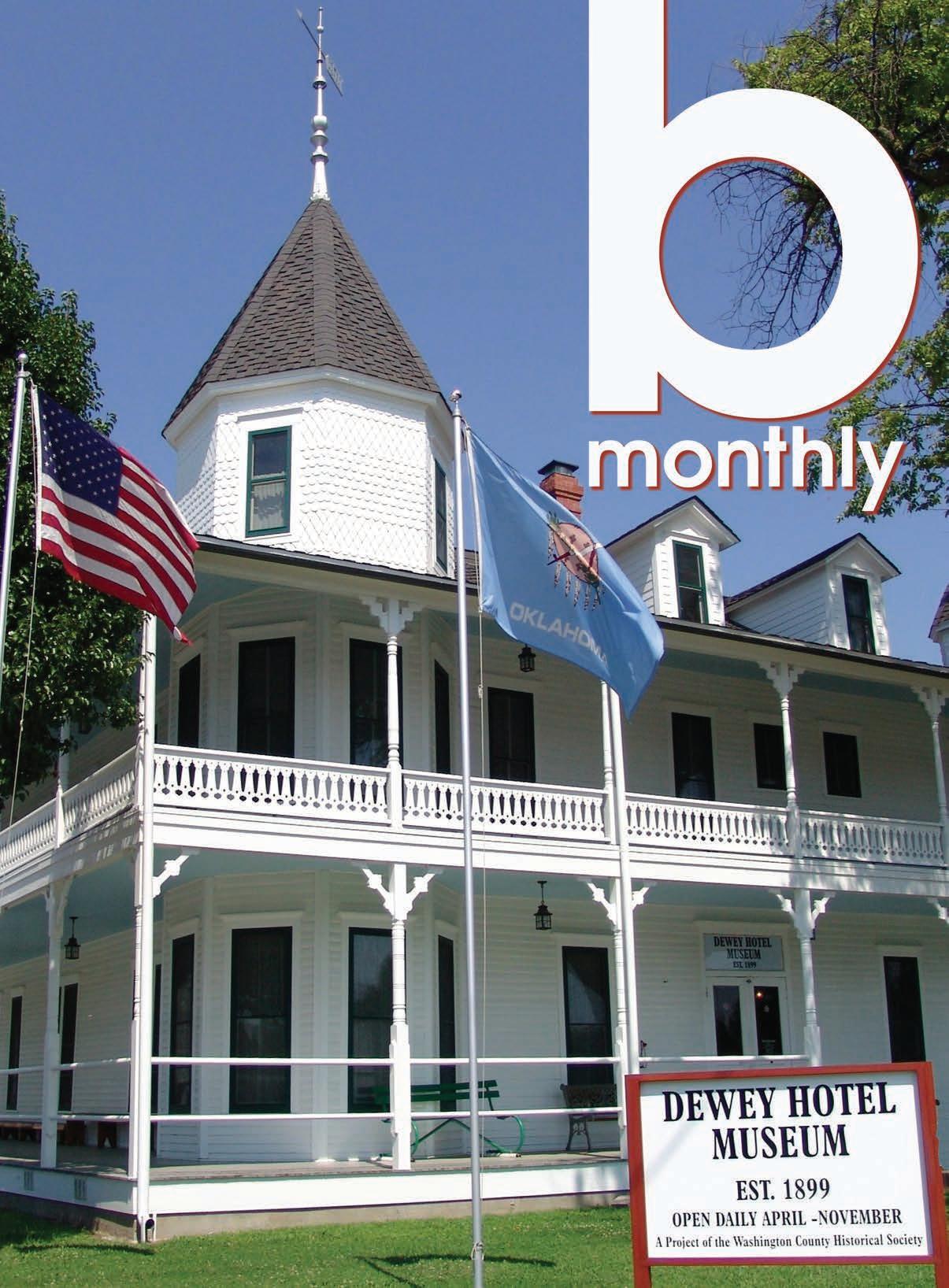
This month’s Feature story, which again was written by our history queen Debbie Neece, is about our sister city Dewey. When you read this story, you will find out things you never knew. Even the residents of Dewey will go “WOW…I never knew that.” This will be a 2-part story which she will finish next March. What I love is that Mr Bartles, who was such an influence and one of our founding fathers of Bartlesville, literally took his store, home, and life and moved 5 miles north. He started this small community but built it into a historic city that many people call home today. If you did not know, Christy’s great grandfather was Don Tyler. The impact he made not only in Dewey but also Bartlesville has stood the test of time. Her family’s roots go back to 1905 when they moved here from Iowa and made a lasting impression on so many lives and generations. As you drive through the city you will notice many things named after him from the city park, the library and, of course, Don Tyler Avenue which is the main street in Dewey.
As spring comes closer and flowers and trees start to bloom, this area comes out of its dormant stage and events start popping up. This area comes to life. As we get closer to April, which is our “Best of Pets” issue and also our 9th anniversary with bmonthly magazine, we start to reflect on all the things this magazine has written about. This year is also the 100th anniversary of Woolaroc. What a legacy Frank left for us! I don’t know if even Uncle Frank could have imagined the millions of people who have visited this national landmark. Some of our most popular videos we have done were
at this incredible place that still amazes people today when they drive through the gates. We also are anticipating the opening of Price Tower which has been sitting silent for over two years. We can not wait to see what they are going to do with this one of a kind skyscraper. We do miss having our offices there where we spent over six years. We are so excited to see what she will do for Bartlesville and the people who will come from all around the world once more to see one of the most unique and stunning buildings ever built.
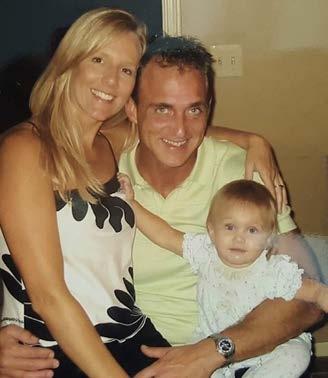
We will be having our seventh grandchild who we can not wait to hold and love. In July we will be having our eighth grandchild which is crazy to us. There is nothing more satisfying than holding that precious little soul. For Christy and I this March changed our whole lives and how and where we are today. In March of 2007 I was living in a small apartment downtown and our marriage was on the brink of divorce. Christy was holding our daughter Grace, who was 9 months old, and it was spring break. God was moving in her heart and mine too. She called me at my apartment and said to me “Keith… God told me to give you one more chance, and I am going to let you move back in the house. We are going to have a plan.” I was back and forth being clean and I had relapsed, but from that day I moved back in the house was the last time I ever shot cocaine in my body! That was 19 years ago this month. God literally took every want and need away. It’s sometimes hard to explain that to people, but the 16-month battle we fought and Christy endured was over. We had a lot of work to do. I had to work really hard to regain that trust that I broke. This July will be 21 years since we have been married. As I look back at that time, I truly believe that God put Christy in my life to save my life! It would be a little over 2 years after moving back in the house that we lost our oldest son, Tyler, to an accidental shooting. At that moment God gave Christy back her husband, who then took care of her. She faced this devastating loss, but now she had a strong, clean, leader of the family who helped her through this catastrophic event.. Thank you, Christy, for never giving up on me and listening to God when everyone else was saying leave him. God bless, and we will see you down the road.
Keith
New office located in the B the Light Mission 219 North Virginia Avenue, Bartlesville, Oklahoma 74003 www.bartlesvillemonthly.com facebook.com/bartlesvillemonthly
Publisher Brian Engel brian@bartlesvillemonthly.com
Graphics Engel Publishing matt@engelpublishing.com
Director of Sales & Marketing Keith McPhail keith@bartlesvillemonthly.com
Community Liaison
Christy McPhail christy@bartlesvillemonthly.com
Project Manager Andrea Whitchurch andrea@bartlesvillemonthly.com
Administration Shelley Greene Stewart
Delivery and Distribution Dewayne Engel Calendar/Social Media calendar@bartlesvillemonthly.com
Contributing Writers
Debbie Neece, Kay Little, Kelly Hurd Jay Hastings, Keith McPhail, Jay Webster Lori Just, Miriam Walker, Joe Todd Greg Wheat, Maria Gus
Contributing Photographers
Bartlesville Area History Museum
Mark Blumer Photography Emily Fowler, Debbie Neece Calendars
Debbie Neece, Jessica Smith




by Lori Just
Dr. Brad Cobb’s journey from standout high school sprinter to Paralympic medalist and tribal health leader is not one defined by loss, but by adaptation, persistence and a refusal to stop moving forward.
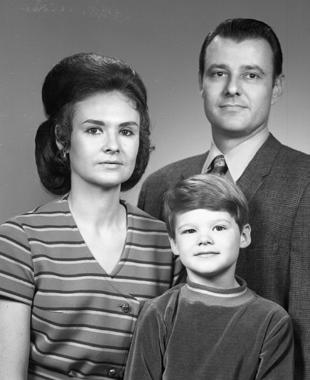
He graduated from Bartlesville High School in 1984. Cobb still holds their 400-meter record with an impressive time of 47.4 seconds, set in 1983, breaking the previous record by Ernie Jackson in 1967. During his competitive years, he raced alongside athletes who would later go on to compete on the Olympic stage. He went on to the University of Kansas on a track scholarship. After college, he attended the Southern College of Optometry in Memphis, Tennessee, graduating in 1993. He returned home to Bartlesville to join his father’s optometry practice where his father, Donald, had served the community since 1962.
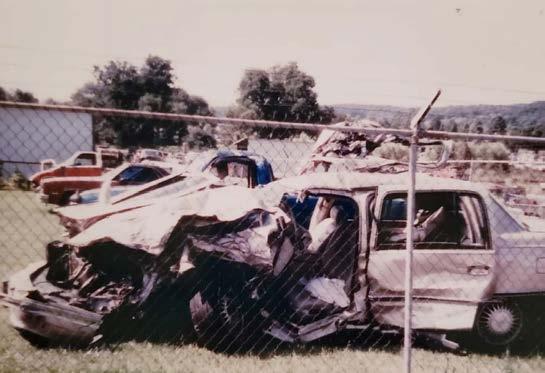
In 1997, Cobb’s life changed in an instant. Driving home one summer day, a 16-year-old who had received his driver’s license that very day lost control of his truck and collided head-on with Cobb’s car. The teenager died at the scene. Cobb survived, but barely. His aorta was torn (an injury like the one that took Princess Diana’s life just weeks later), his left lung collapsed and his kidney was damaged. Each time Cobb was taken into surgery, his wife, Kelly, was told he had less than a 10 percent chance of survival. Each time, he beat the odds.
What initially appeared to be a broken leg became a lifethreatening infection, leaving doctors no choice but to amputate at the hip.
“The leg was the last thing they were worried about,” Cobb has said previously. “But sometimes the last thing becomes the hardest.”
Recovery was long and grueling. Cobb spent more than two months in the hospital and nearly a year in rehabilitation. Prosthetics proved limiting, and returning to competitive running was no longer realistic. Still, his competitive drive remained. Two years after the accident, Cobb discovered paracycling.
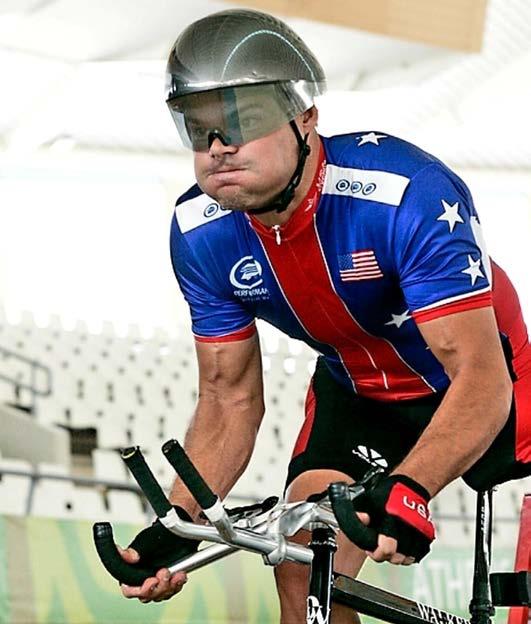
strength and precision. The results followed quickly: a national championship title and a place on the U.S. Paralympic Team.
Cobb’s first Paralympic Games came in 2000 in Sydney, Australia, where he competed in both road and track cycling. He raced in the one-kilometer sprint, the four-kilometer pursuit and the 45-mile road race. In the Mixed Team Olympic Sprint, Cobb teamed with Dory Selinger and Robert Whitford to win a bronze medal. The U.S. cycling team finished the Games with nine medals (three gold, four silver, and two bronze) contributing to an overall U.S. total of 35 medals, the highest of any nation.
At the time, public awareness of the Paralympics in the United States was limited.
“Most Americans, while I was competing, had no idea what the Paralympics were,” Cobb said. “That wasn’t their fault. There was no media coverage.”
Internationally, he noticed a different mindset.
“In most countries, you were either on the Olympic team, or you weren’t,” he continued. “There wasn’t much delineation.”
Sydney left a lasting impression. After the Paralympic Games concluded, more than a million people filled downtown Sydney for a celebratory parade.

“It wasn’t running,” he had said, “but it gave me that same sense of freedom.”
Cobb trained relentlessly, riding up to 150 miles a week, lifting weights several days a week and refining his technique on the track. He learned to race without a prosthetic, relying solely on balance,
Cobb would go on to compete again at the 2004 Paralympic Games in Athens, finishing eighth overall amid heightened global security. Through it all, he never viewed himself as extraordinary. In an article published in the Bartlesville Examiner-Enterprise, he wrote, “I have had many people call me inspirational these last three years. What I hope to convey to you is that we are all handicapped in some way. My handicap just happens to be more visible.”
Life inside the Olympic Village came with its own brand of chaos. The housing complex put Cobb’s apartment next to the Brazilian team.
“I’m not sure how important the Olympics were to them,” he joked. “Partying seemed to be their focus. It was music nonstop.”
Before competing, Cobb stayed with Canadian athletes just to get some sleep.
Despite the high stakes, Cobb remembers the people most of all. He shared that the athletes who were far more ordinary than their televised images suggested. Training at Olympic facilities in Colorado Springs and Chula Vista, California, he struck up friendships with competitors like Apolo Anton Ohno.
“You see these people on TV all the time,” Cobb said, “but they’re just normal folks like everybody else.”
Away from international competition, Cobb’s story is deeply tied to Oklahoma and Cherokee history. His family has lived in the region since the early 1800s, long before statehood.
“Most people think all Cherokees came over on the Trail of Tears,” he said. “That’s not true.”
His family were old settlers, listed on the 1819 Cherokee immigration rolls. Cobb grew up hearing Cherokee spoken at his Grandma’s house. His great-grandmother didn’t speak English, and his grandmother spoke both languages.
“I remember lying in bed at night listening to my grandmother tell stories,” he recalled. “It was a mix of Cherokee and English.”
Those roots eventually led him into tribal government. Cobb served as an elected member of the Cherokee Nation National Council, representing the Keeler district which included Bartlesville. While he valued the opportunity, politics wasn’t a long-term fit.
“I found it extremely frustrating,” he admitted. “I realized I’m really not made for politics.”
There was a time Cobb thought about going to law school in college but ended up going to optometry school and felt like he “made the right decision.” He remembers his first class clearly. It was Jurisprudence in Optometry, taught by an instructor who was both an optometrist and a lawyer.
well in that arena. You must be able to separate the law from emotion. If you don’t like the law, then change the law. But I’m probably too emotional for it.”
In 2016, he sold his private practice, and today he serves as Director of Optometry for the Osage Nation. He works out of a new clinic in Pawhuska that serves all Native patients, not just Osage citizens.

“I’m very grateful for the opportunity,” he beamed.
While he’s not training as hard as he used to in his 30s, Cobb’s life now is still full, if quieter. His youngest son, Taylor, is married and serves as a C-17 crew chief in the U.S. Air Force. His oldest son, Dallas, is a CDL driver with a hazmat license who travels nationwide. Cobb’s wife, Kelly, an RN from Memphis, has been by his side over 33 years since optometry school even though the first date didn’t go so well.
“I was trying to impress her too hard,” he said with a smile in his voice. “We went out a second time, and it went much better.”
When he’s not working, Cobb indulges in passions that reflect his appreciation for craftsmanship and history. He is president of the Oldies and Goodies Car Club in Bartlesville and owns a 1963 Chevrolet Impala Super Sport convertible which is the same model his father once drove.
“I’ve got 8mm film of me as a kid playing in that car,” he shared. And the car club plans to be involved in the upcoming Route 66 Capital Cruise to make history later this year.
He also restores antique radios from the 1930s and ’40s as he “likes antiques that actually do something” like the big Zenith console radios. Though, he admits, his house is now full, and he has not more room.
What sets Cobb apart is not the medals he earned or the odds he overcame, but the steady way he continues forward. He proves that resilience is not about what is taken away, but about what one chooses to build in its place.
“I walked in, and the very first thing he said was, ‘If you think the law has anything to do with what’s right, you’re in the wrong class. The law has to do with what the law says.’”
Cobb said he knew at that moment that law might not be the right fit for him. “I’m one of those people who thinks, ‘Well, look, that’s just not right.’ But it doesn’t matter if it’s right. What does the law say? I don’t operate
Adaptive sport has existed for more than 100 years, with organized clubs for deaf athletes forming in Berlin as early as 1888. After World War II, adaptive sport expanded significantly as a form of rehabilitation for injured veterans and civilians.
In 1944, Dr. Ludwig Guttmann opened a spinal injuries center at Stoke Mandeville Hospital in Great Britain, where competitive rehabilitation sports took shape. These efforts led to the first Paralympic Games, held in Rome in 1960, featuring 400 athletes from 23 countries.
The Paralympic Games have been held every four years since, with the first Winter Paralympics taking place in Sweden in 1976. Beginning with the 1988 Summer Games in Seoul and the 1992 Winter Games in Albertville, the Paralympics have been staged in the same host cities and venues as the Olympic Games, strengthening the global connection between the two movements.
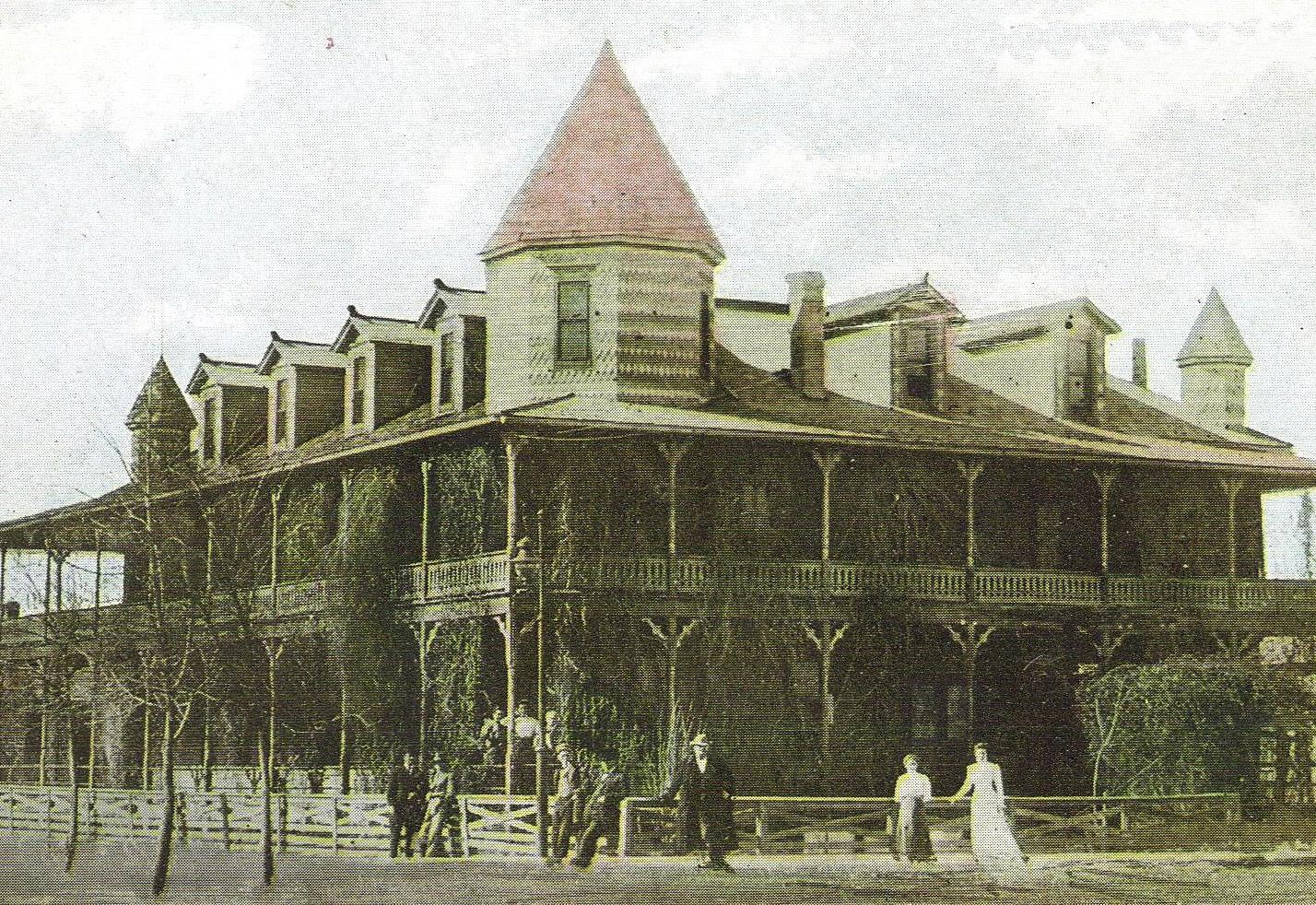
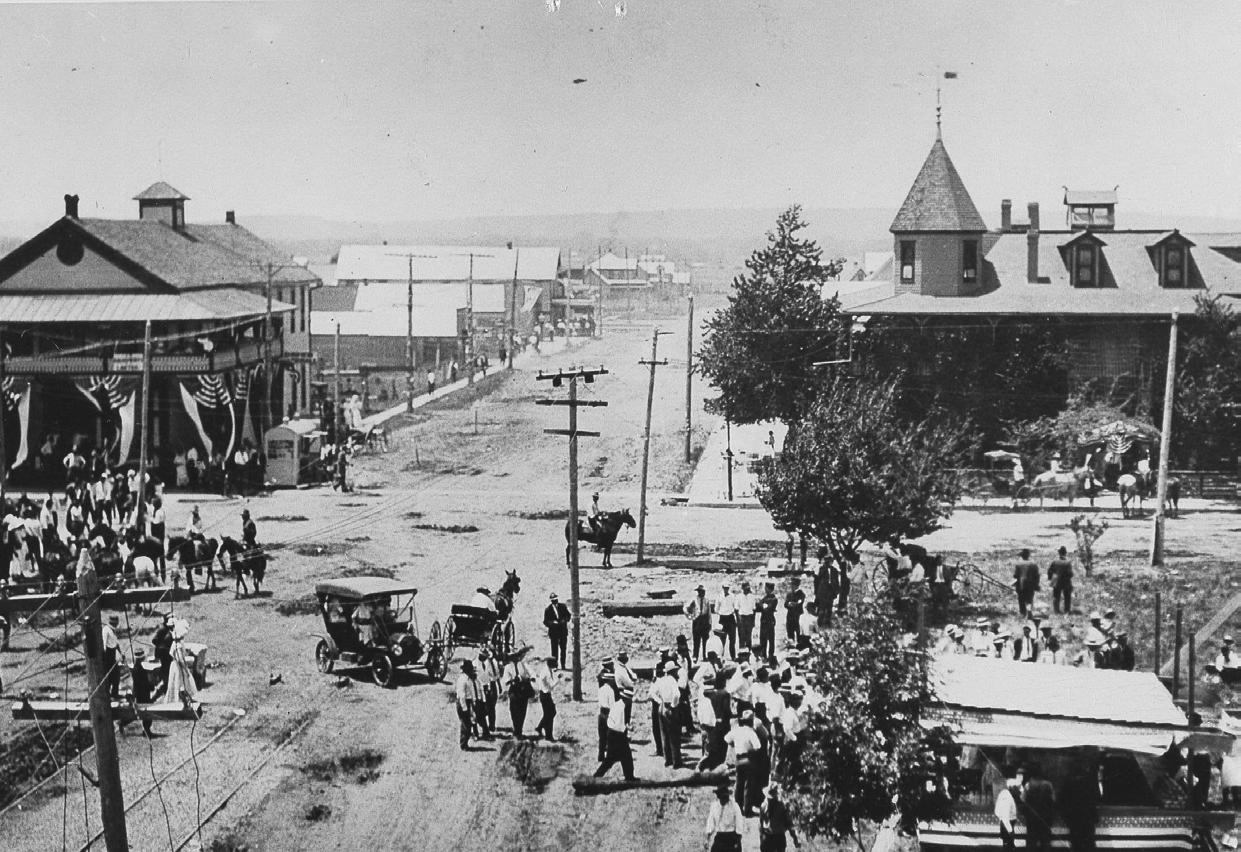
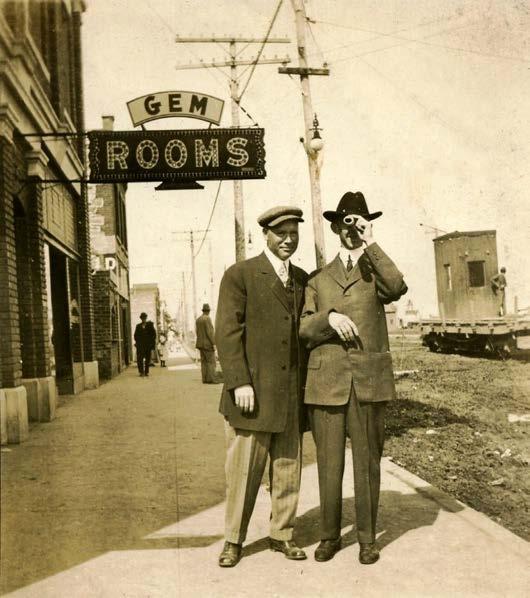
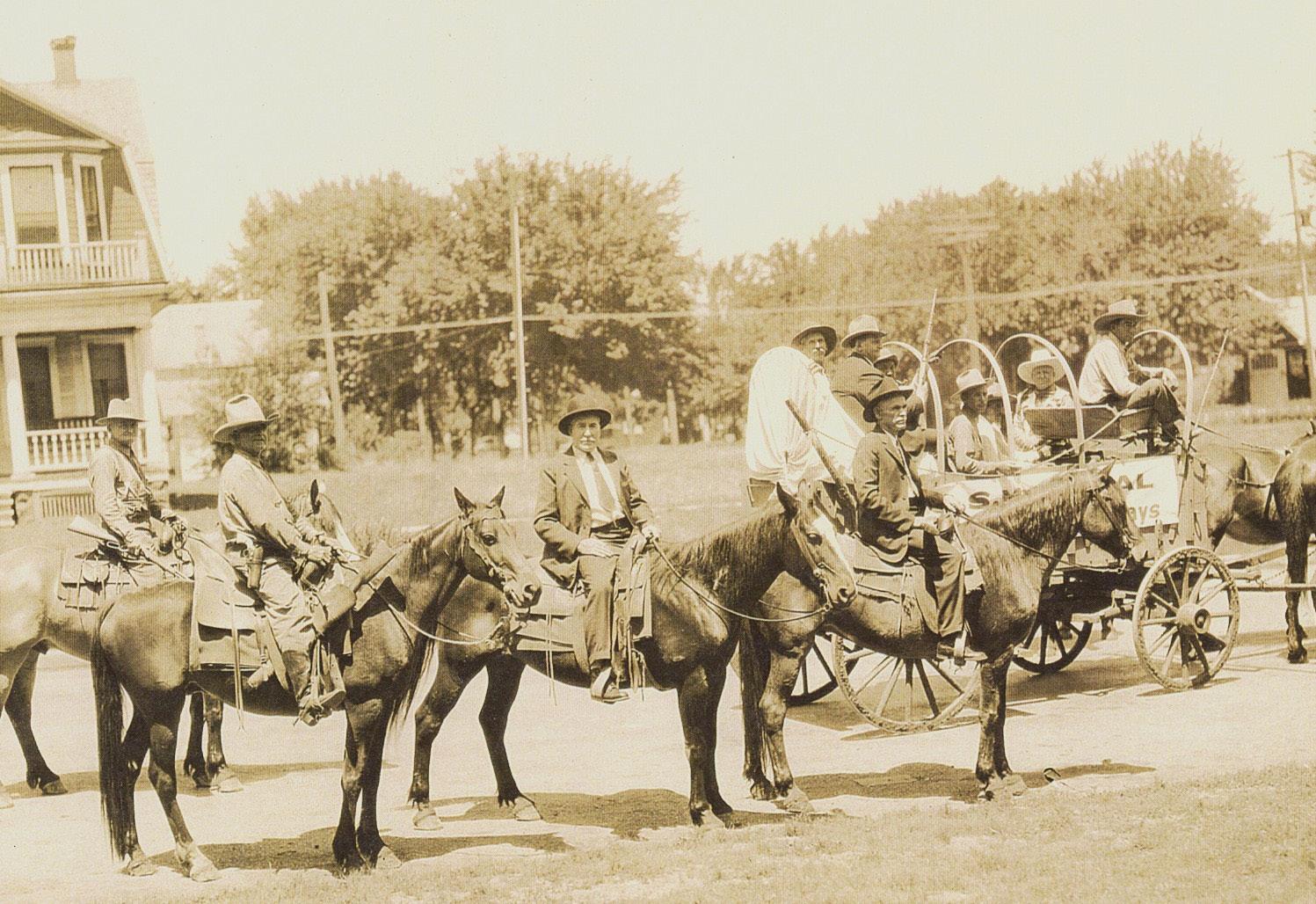
OVER THE CANEY RIVER AND THROUGH THE WOODS TO DEWEY WE MUST GO…

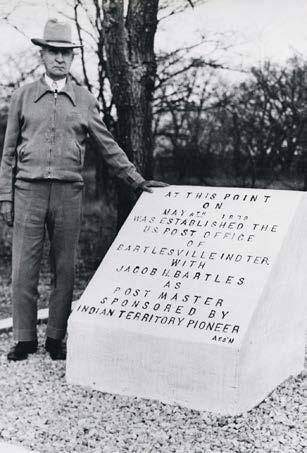
Jacob H. Bartles was a man of immense integrity who worked sun up to sun down and never let dust settle beneath his feet. He was also a dreamer, builder and bankroller. From the moment he arrived at Silver Lake in 1873, his name became synonymous with the growth of what would become Washington County. In 1874, he moved north to Turkey Creek (south of present Kentucky Fried Chicken), where he built a trading post and his son, Joseph Bartles, was born. At this location, Bartles also became the postmaster of the post office; which he named Bartlesville.
In 1875, he bought a gristmill from Nelson Franklin Carr, a fellow Civil War veteran, and built a flourishing settlement at the horseshoe bend of the Caney River, complete with a two-story general store and second floor living quarters. He also moved his Turkey Creek trading post building to the millsite where it served as a furniture store and carpentry shop.
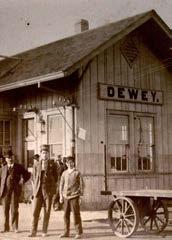
In 1898, rival disputes with settlers on the south side of the Caney River grew too frustrating to contain. So, Bartles literally picked up his two-story residence/general store and drug it to his wheat field four miles north, where he had staked a sign that read “Dewey, I.T.” in honor of Spanish-American War hero Admiral George Dewey. The townsite was surveyed in 1898 and July 1889, the railroad reached Dewey.
In spite of Bartles’ rivalry with William Johnstone and George Keeler, these men spoke highly of Bartles. Keeler said, “Jacob Bartles was a forceful character who made things happen to suit him. When this country needed something, Jake got it. When the road north through the bottoms was so bad that you could hardly
get through on horseback, Bartles gathered men and teams and graded a road. When we needed communication, he organized a group and ran a telephone line from Caney. When we struck oil and had no market, Bartles made a market, built a pipeline from his wells near Copan to Caney, and built an oil refinery there. This has since been sold to the Kan-o-tex. When we needed access to the railroad, Bartles organized a company with Senator Porter of Caney and they graded the line from Caney, which was later sold to the Santa Fe Railroad. Bartles was a pioneer in every sense and a strong character, who left his impress on this community.” Unfortunately, it was the railroad access that brought Bartles to a boiling point, forcing him leave and create the town of Dewey.
In his wake, the Carr/Bartles gristmill continued operation until 1907 under the name “Riverside Roller Mill” and locals shared memories of being lulled to sleep by the low rumble of the millstones grinding flour throughout the night. When the mill ceased operations, Joe Bartles said the black walnut lumber and timbers that graced the old mill would “never decorate the front panels of a Baby Grand and its porch columns will never be turned into the framework of sewing machines.” Therefore, he had the building razed in 1913 and the precious hardwood lumber was harbored in Dewey, anticipating Joe’s future building plans.
Joe Bartles stated his father’s store, on the north side of the Caney River, did a business of between 30k to 40k a year and sold stock of household staples, Stetson hats, farm implements and more. To put the sales into perspective, in the 1890s, $30,000 had the buying power of roughly $1.16 million in today’s dollars; and $40,000 would be equivalent to approximately $1.54 million. To say
the least, Jacob Bartles was a seriously profitable businessman and his trading post was touted as the most important business, political and social center within a 30-mile radius.
Joe recalled the northern trek of the 100’x25’ residence/store building took about six-months. The move began with the use of wooden rollers on skids; however, that method proved a daunting task as the rollers dropped the building repeatedly, volleying the hard landings from one side to the other. Finally, after moving about a mile, the building came to a rest while Jacob Bartles and his crew went to Joplin to get railroad rails and ties; which were fashioned into sections and worked much better. After the building had been hauled to the end of the rail sections, the rear sections were skidded around to the front again and the operation repeated. By this means, the building was moved as much as 440 yards on good days. The general store was open for business during the whole move with store clerk Ben Crane not only working but living in the building during the move. Of course, under Nannie Bartles’ strict observance, Sundays brought closure to celebrate the “Lord’s Day.”
As soon as Bartles made the relocation decision, he hired a crew to build a three-story Victorian hotel and across the street to the south, a basement foundation was built where the store building would rest at the corner of Eight Street/Don Tyler Avenue and Delaware Street. Once Bartles arrived in Dewey, in the fall of 1899, he found his Dewey Hotel nearing completion; and the basement foundation for his two-story “Pioneer Building,” constructed with limestone quarried from the Bar-Dew Lake area, was complete. The Pioneer Building basement became the
archive for Joe Bartles’ treasured collections. Most importantly, the railroad grade reached his new town July 1899; the Santa Fe west of the Dewey Hotel and the Missouri-Kansas-Texas Railroad (MKT) on the east side of town. The Pioneer Building, also called the Bartles Hall, became the location of meetings, dances, box socials and religious services.
After the town of Dewey was established, the Turkey Creek building was moved to Dewey and became the Dewey Eagle and Dewey World newspaper office. Other buildings from the Bartles Settlement were also brought to Dewey and served as homes and businesses. Growth was a daily grind in Dewey; hammering was a constant as buildings were constructed and pioneer settlers arrived with business on their minds.
True to Jacob Bartles’ core values, he went right to work creating necessities like a water well in a location that best served the growing community…directly across the street from his Dewey Hotel. Originally built as a log and shingle structure in 1899, the well became one of the earliest landmarks of the town. Time was unkind to the well, requiring several acts of preservation. Approximately 1943, Rex Sharpton restored the well using “slab siding.” Then, in 1963, an extensive
renovation was done by Don Tyler who was a highly praised and respected industrialist, philanthropist and the president of the Dewey Portland Cement Company. He stepped forward as the financier of the well’s rehabilitation, using Portland cement to bring originality and permanency to the 64-year-old decommissioned structure. In order to reproduce the crumbling structure, Tyler ordered 60 pounds of rusty-brown cement dye from Germany, with a cost of $1.00 per pound, to form the life-like cement log siding and shingle roof. To give the project historic relevance, a granite plaque was imbedded in the structure that read, “Jake Bartles’ Well, 1899.”
The structure was also called the Tom Mix Well. During Dewey’s centennial celebration, a new sign was placed atop the well as history recalled, “This Water Well Was First in the Territory. It was dug in 1899 and Tom Mix Watered Tony Here.” Tony was Tom Mix’s steed, best friend and famous movie companion.
Dr. George Tann was a dark-skinned practitioner, credited as being the first medical doctor in the area. He served patients from an office at the Bartles’ Settlement and moved with Bartles, establishing his office at Ninth Street and Delaware Avenue in Dewey.
Later, Dr. John Smithson, Sr. became a Dewey physician. He was born in Alluwe, Nowata County. He obtained his pharmacy degree and needed two additional courses in order to attend O.U. School of Medicine in Oklahoma City. He completed the classes at Bartlesville’s Central Christian College, currently Oklahoma Wesleyan University, and became a doctor in 1955. During his six weeks of clinical rotations, “Dr. John” was mentored by Dr. Johnson in Bartlesville. That experience prompted him to select Dewey as
his home and office. In 1956, Smithson purchased Dr. Lindsey’s Dewey practice at 802 N. Wyandotte Avenue. He practiced for over 50 years at that location and birthed an untold number of babies who all had their baby photos posted on his “wall of fame.” Dr. John also served as Dewey Mayor for 19 years. He passed away in 2009 and rests in the Pawhuska City Cemetery.
In the early 1900s, newspaper print was consumed by local gossip while the residents were working to create the history we now reminisce about. Arthur Terrell “Terry” Dumenil was the editor of the first newspaper, the “Dewey Eagle.” He later served as the first Washington County Judge. Dewey Eagle, 1900-1901; Dewey World, 1906-1913, Dewey Sentinel, 1909-1911; Dewey Weekly Globe, 1911-1913; Dewey Globe, 1911-1929; Dewey Daily Shriek, 1912; The Globe, 1913; The Dewey Citizen, 1931-Briefly, a brief whisper of a newspaper with no digital issues available; Washington Countian, 1939-1949; Dewey Herald-Record, 1957-1964.
There have been some notable writers for area newspapers over the years; just to name a few…Phyllis Sue Smith wrote for the Caney Chronicle and Dewey Herald-Record with a column titled “Recalling the Past.” She later compiled three volumes of Copan, Dewey and Wann history under this title. Edgar Weston was a walking Washington County history book. He also wrote history articles for local newspapers and created driving tours of historic local places. Clyde Reasor wrote the Caney Valley News and Fringed with Blue Stem. Wayne Jeffries wrote Slightly Incidental for the Dewey Herald-Record. And, Ivan Pfalser wrote history stories for the Good News Press, Independence, KS. He was well respected for his knowledge of Kansas and Oklahoma history.
About 1893, Mr. and Mrs. Sol Thurston operated the rooming
and boarding house at the Bartles’ Settlement. When William Speck left the management of the Dewey Hotel in 1906, the Thurstons assumed the management of the hotel. They continued to run the hotel until 1907, when they bought a rooming and boarding house on Sixth Street between Delaware and Cherokee, one of the oldest buildings in town. Many early-day business and oil men made the Thurston Hotel their home. After the death of Mrs. Mariah Pore Thurston, in 1939, the Thurston Hotel became the property of their niece, Miss Myrtle Warren, who, with her brother Jim, turned the famed hostelry into a rest home in 1942, most likely the first such facility to operate in Washington County.
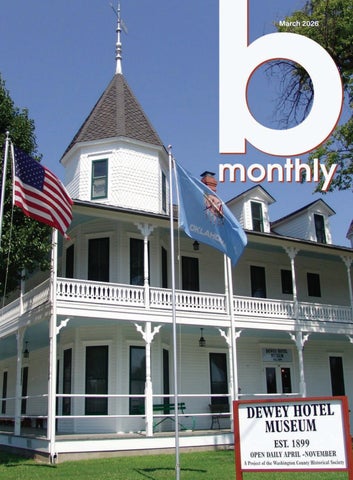
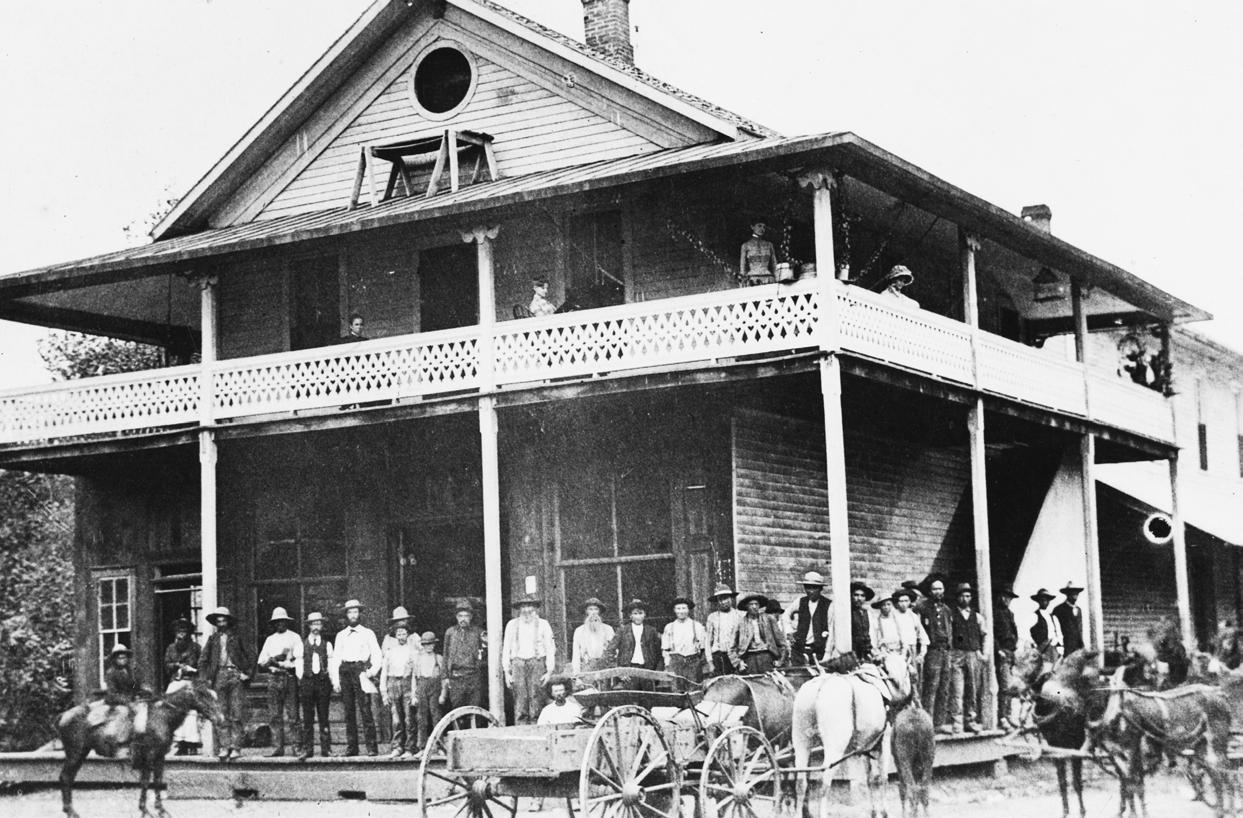
The three-story Dewey Hotel at 801 S. Delaware celebrates 127 years as the Grand Lady of the Prairie. The 7,352 square foot structure holds volumes of history and memories. The Victorian style, wood-framed hotel, wrapped on three sides with a ten-footwide ornamental balcony, was completed in 1900 as a functioning hotel with meals in the hotel dining room.
The third-floor turret tower on the southeast corner of the hotel served many a poker game. Historians say the Dewey Hotel had very few rules…except, be on time for meals, no flirting with the waitresses, and Nanny Bartles’ stern rule of Christian conduct, “If you’re inclined to visit the Hotel for a drink or card game, be so kind as to use the stairway at the rear of the Hotel which leads directly to the third floor, so no one will see you come or go.”
Especially Nannie!
Mrs. Neva Allen operated the Dewey Hotel as a boarding house into the 1950s, then the “Grand Lady” stood idle for a period of time. In 1967, Mr. O.A. Patridge, Dewey banker from 19101972, purchased the building and donated it to the Washington
County Historical Society. At that time, extensive repairs were made: bathrooms were added, the electrical system updated from the original “knob and tube” system, and several chimneys were removed and openings sealed. The Dewey Hotel is filled with period furnishings and has served as a museum since the 1967 renovations were completed. Among the treasures, the Jake Bartles’ office has remained dedicated to Frank Griggs’ Dewey Roundup panorama photos, Dewey memorabilia, and Jake’s personal desk.
In 1975, the Dewey Hotel Museum was placed on the National Register of Historic Places under the wing of the U.S. Department of Interior and National Parks Service. In 2004, the Hotel addressed structural stabilization, balcony and porch replacement, ADA accessible needs, foundation repair, HVAC, general aesthetic repairs, dormer repairs, parking and sidewalk updates. Originally, there were two east-facing single dormers, four southfacing single dormers, and one double and one single north-facing dormers. During the 2004
renovations, the south-facing dormers were replaced with double dormers.
One of the most important business, political and social centers in Washington County was Bartles’ Pioneer Building, Jacob Bartles’ original two-story general store and residence. The building held years of memories and the basement was full of Joe Bartles’ memorabilia – early local and family photographs, art collection, taxidermy trophies, family heirlooms and the remnants of Joe Bartles’ WWI airplane factory. It was a blustery winter morning on December 6, 1950, when the silence of the early morning was broken by the whaling sirens of the Dewey and Bartlesville Fire Departments advancing towards the fully engulfed Pioneer Building. The firemen worked throughout that day and into the following day to extinguish one of the “hottest fires in history.” The solid walnut building, one of Washington County’s oldest landmarks, had stood the test of time and travel, but succumbed to carelessness. Local resident, C.R. Shriver witnessed the event and said, “The Pioneer Building was a tavern with a grill and rooms rented upstairs. Someone had an open flame stove that caught the building on fire. I vividly remember the building burning; it was bitterly cold, the fire bell went off and we watched from the old bank building corner. The building was completely consumed. The walnut lumber just burned and burned. A week later, it was still smoldering.”
The Pioneer Café building was painted white with brown trim. The heavy blaze destroyed the building and the charred remains tumbled into the basement that once archived Joe Bartles’ treasures. All gone! In the years that followed, the corner
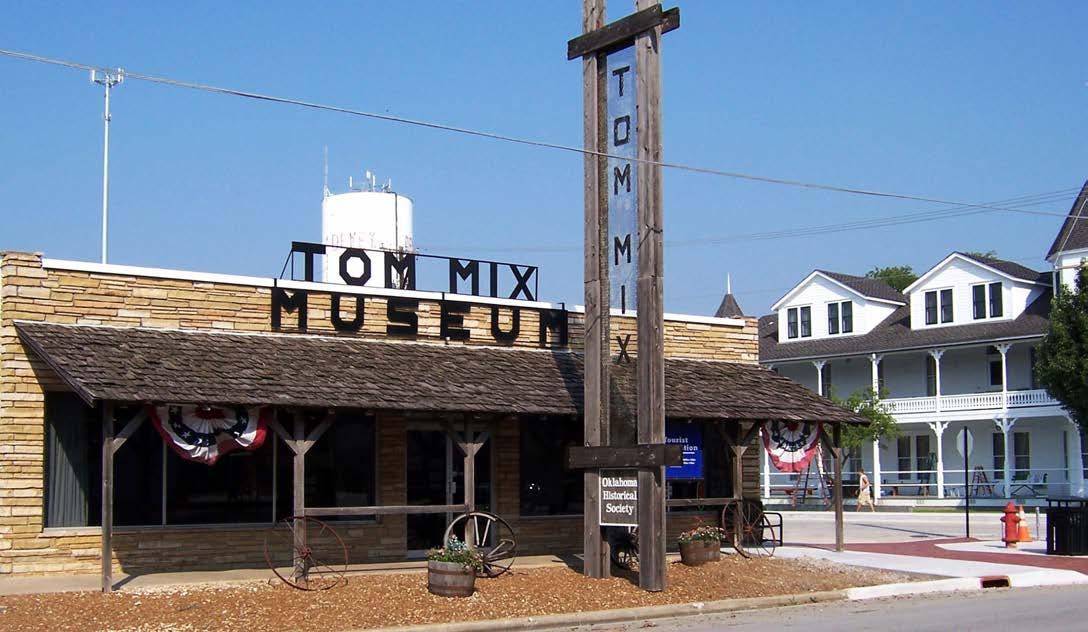
has been occupied by the Bowersock Grocery store, a self-serve laundromat and currently the Tom Mix Museum.
Andrew Norwood was a busy man. He came to the Cherokee Nation as a teacher at Fort Gibson in 1870. He was a lawyer and merchant in Claremore in 1881. Then, he served as an attorney, journalist and postmaster at Claremore, before becoming associated with Jacob Bartles in the lumber and milling business. His first wife was a Cherokee, his second a Delaware and his third was a half-sister of Fred Woodard. These connections and his 20-year service on the National Council of the Cherokee Nation, gave him wide knowledge of Indian affairs and involved him in many related legal matters. Norwood was owner and editor of the Dewey “Globe” for a time and used this newspaper as a platform to forward his views.
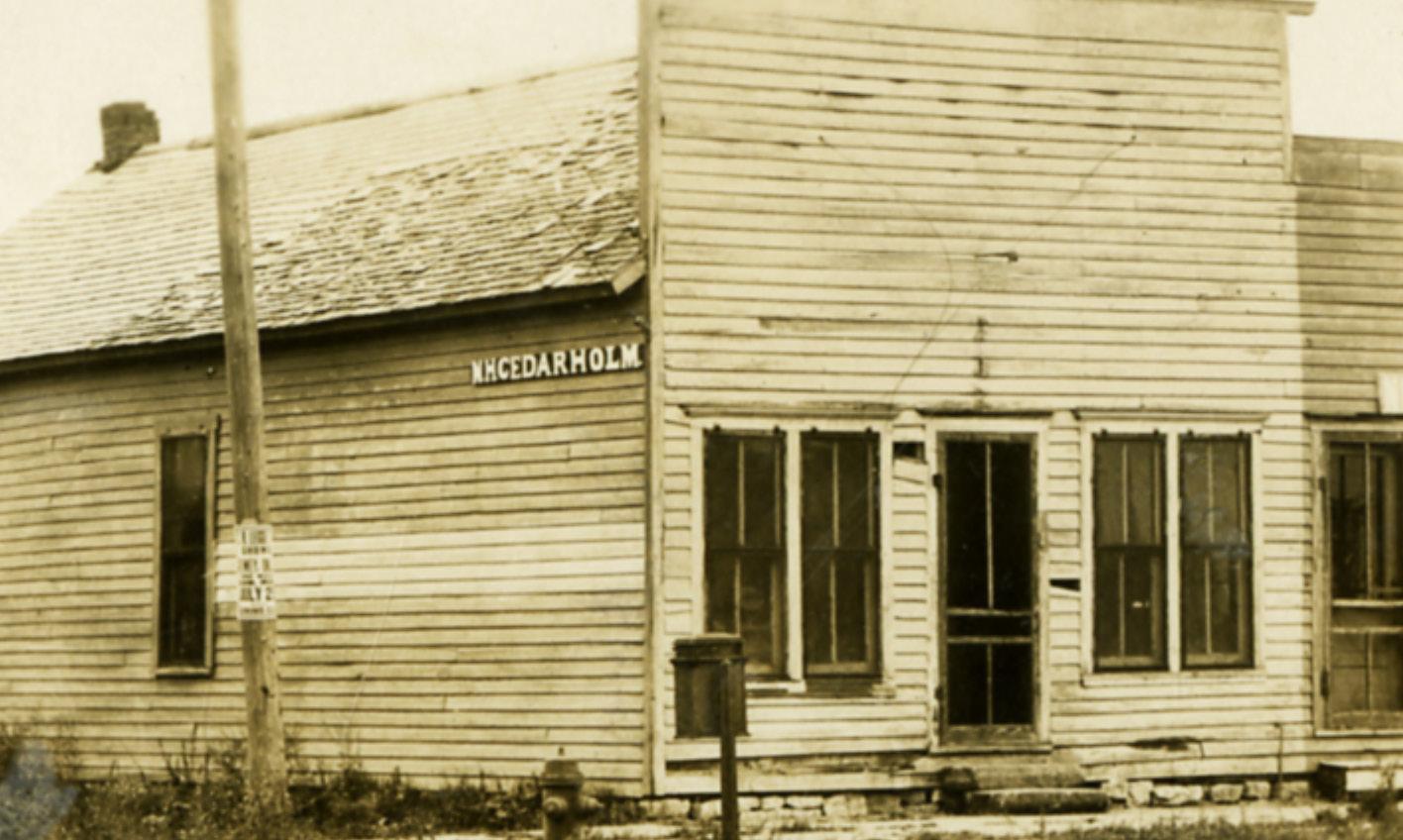
The Dewey, I.T. post office had a colorful history as it hopscotched around Dewey’s business district. The post office was established on April 19, 1899 with Andrew Norwood as the first postmaster. His wife, Ida May Woodard Norwood later became a Dewey postmistress. The post office was established in a small frame building at the north end of Delaware Street, between Eighth and Ninth Streets. The Dewey Hotel was located at 801 N. Delaware Street; also in that block, Foster Dickey opened a butcher shop and his wife Martha operated a boarding house at Eighth and Cherokee, west of the Dewey Hotel. Mrs. Dickey served fine meals for only two bits a meal and $5 discount meal tickets were just $4.50. The first telephone in Dewey was installed at the Dickey Boarding House and Martha was the recipient of the first telephone.
Two to three years later, the post office moved to another wood
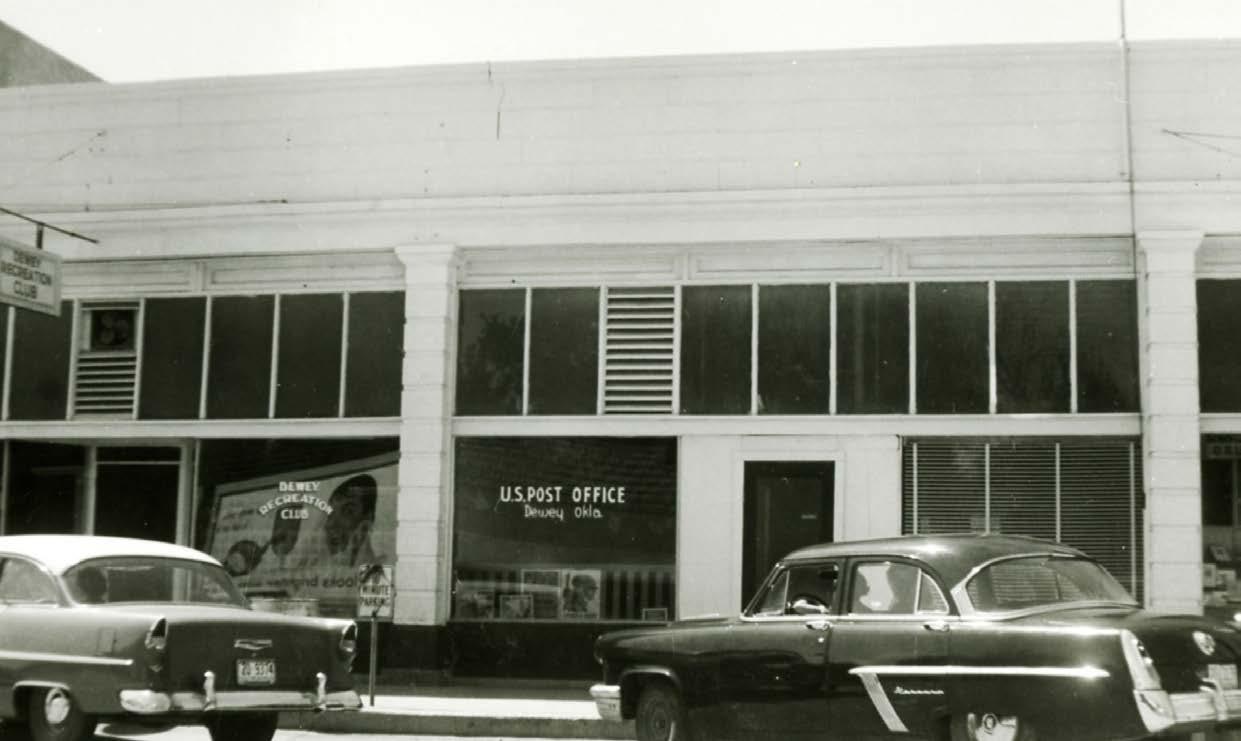
framed building, west of the Dewey Hotel. Then, about 1908-1909, the post office was moved to the 700 block of North Delaware; followed by a move to 409 E. Don Tyler Ave., next to City Hall. In 1950, the post office was moved to 306-308 East EighthStreet/ Don Tyler Avenue; then, in 1960, a new building was constructed of architectural concrete under the direction of Don Tyler, president of the Dewey Portland Cement Company, and leased to the U.S. Postal Service. The 3,700 square foot building at 800 N. Shawnee Avenue was built as the present relocation of the Dewey Post Office, incorporating central air and heat, fluorescent lighting, and separate box and service lobbies. Chevalley Moving and Storage transferred the equipment from the earlier post office on Saturday, July 30, 1960 and Monday, August 1, 1960, the new post office opened for business.
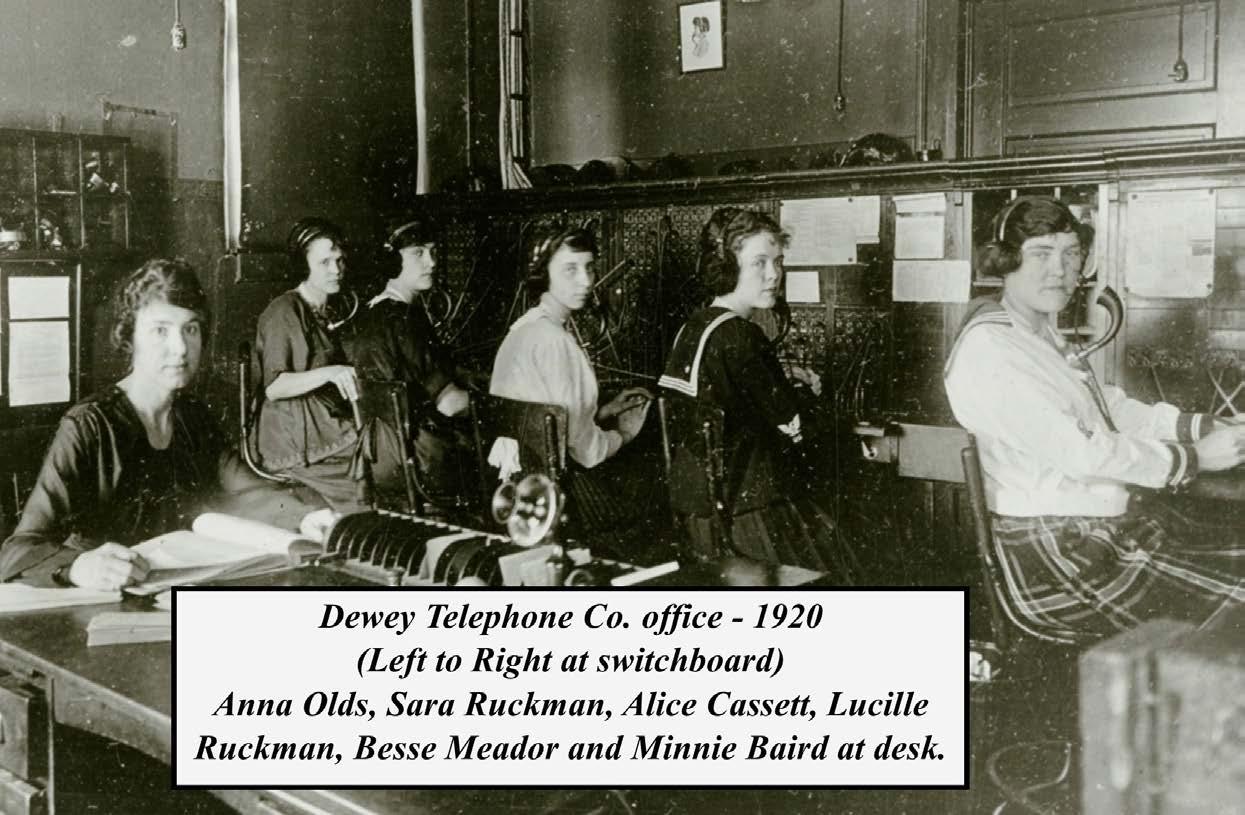
What a long distance we have traveled since Alexander Graham Bell first reached out and touched someone by telephone. In April 1906, the Dewey City Council approved a 25-year ordinance for the Pioneer Telephone and Telegraph Company granting street, alley and public access use rights within the incorporated town of Dewey, I.T. for the purpose of furnishing telephone service to the citizens. Business phone customers were charged $2.50 per month and a free phone to City Hall; there was no stipulation for residential rates.
Dewey names, addresses and phone numbers were not constantly included in the Bartlesville City Directories; and Dewey did not have constant stand-alone telephone directories. With the early telephone establishment, one might call Swannock’s Livery at 21. However, later, calls between Bartlesville and Dewey required the use of a phone exchange: Federal-6 (336) was westside of
Bartlesville, Edison-3 (333) was eastside of Bartlesville and KEllogg-4 (534) was Dewey, followed by the telephone number, i.e. 534-2222. During that timeframe, the words rotary dial, party lines, land lines, person-to-person, collect calls and station-tostation were types of service. Dewey to Bartlesville was a longdistance charge with operator assistance; where now, there is no operator assistance. Gone are our “Princess” telephones attached to the wall with seriously long telephone cords and mobility restricting desk phones. Now, carrying a cell phone in your pocket is a commonality.
It seriously took an Act of Congress for Jacob Bartles to secure a clear land allotment title in order to plot the townsite of Dewey. Luckily, John H. Kane came to Dewey in 1904 and became Bartles’ lawyer in the litigation. Kanes’s office was on the second floor of Bartles’ Pioneer building and Dewey, I.T. became incorporated
December 8, 1905. A.T. Dumenil became the first mayor and the first Town Council meeting was held March 8, 1906 to issue a proclamation calling for a May 28, 1906 election to establish a school district. Fred Woodard was the city clerk and J.K. Green a councilman. Kane was later the first County Attorney for Washington County when Oklahoma became a state in 1907.
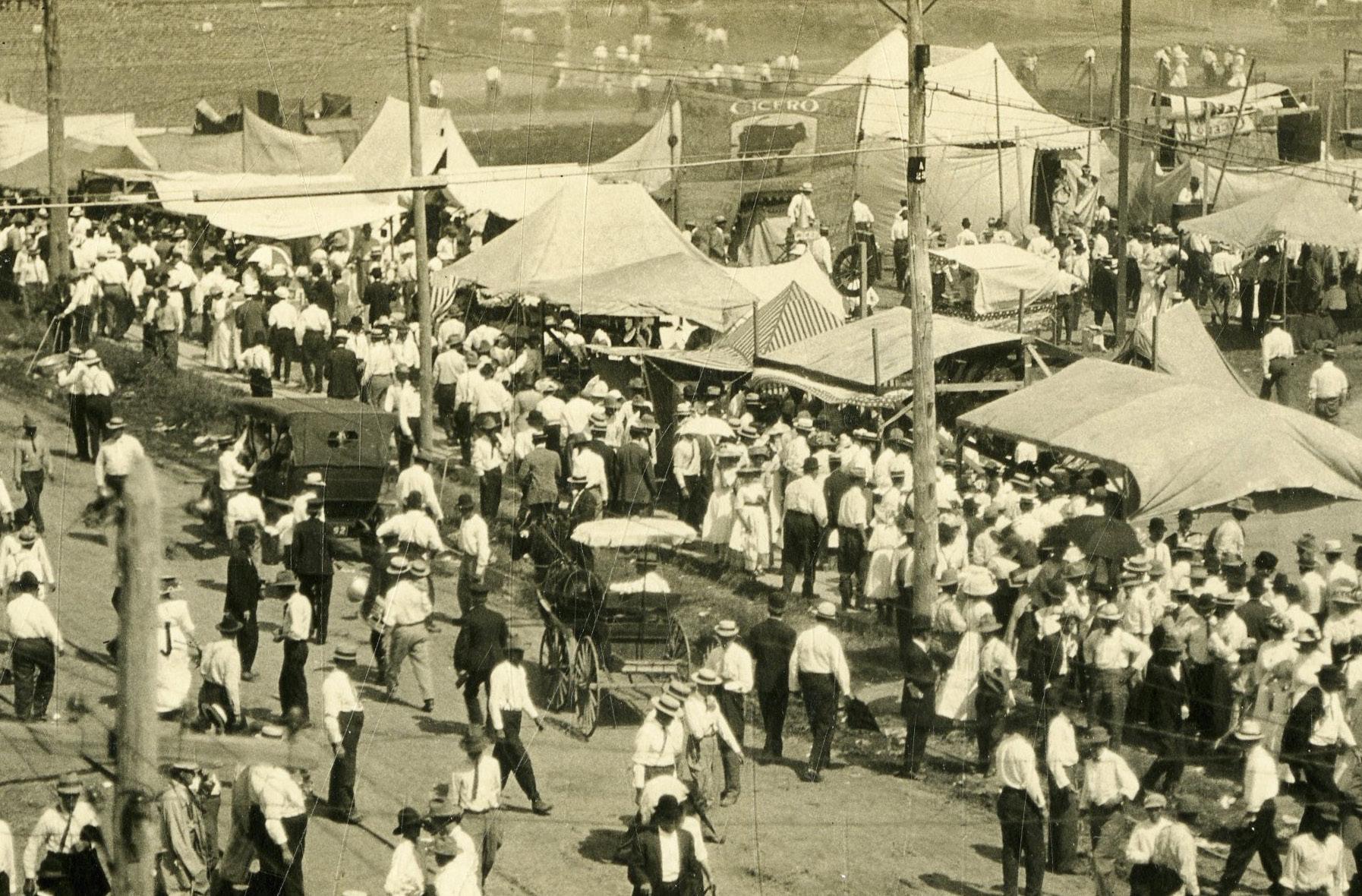
In 1905, oil activity in the surrounding area drew populations in leaps and bounds. By 1907, the Dewey community had 748 residents. That number increased to 1,344 in 1910; to 2,095 in 1930; from 1940 to 1960 the population grew from 2,114 to 3,994; and, by April 2020, the Federal Census reported 3,372 residents.
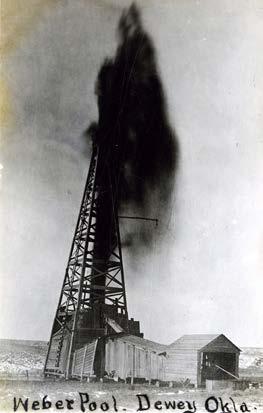
In 1903, newspapers across the United States were filled with reports of “oil fever” with enticements to move to Indian Territory and join the prospects. Once Dr. Howard Weber arrived, he met

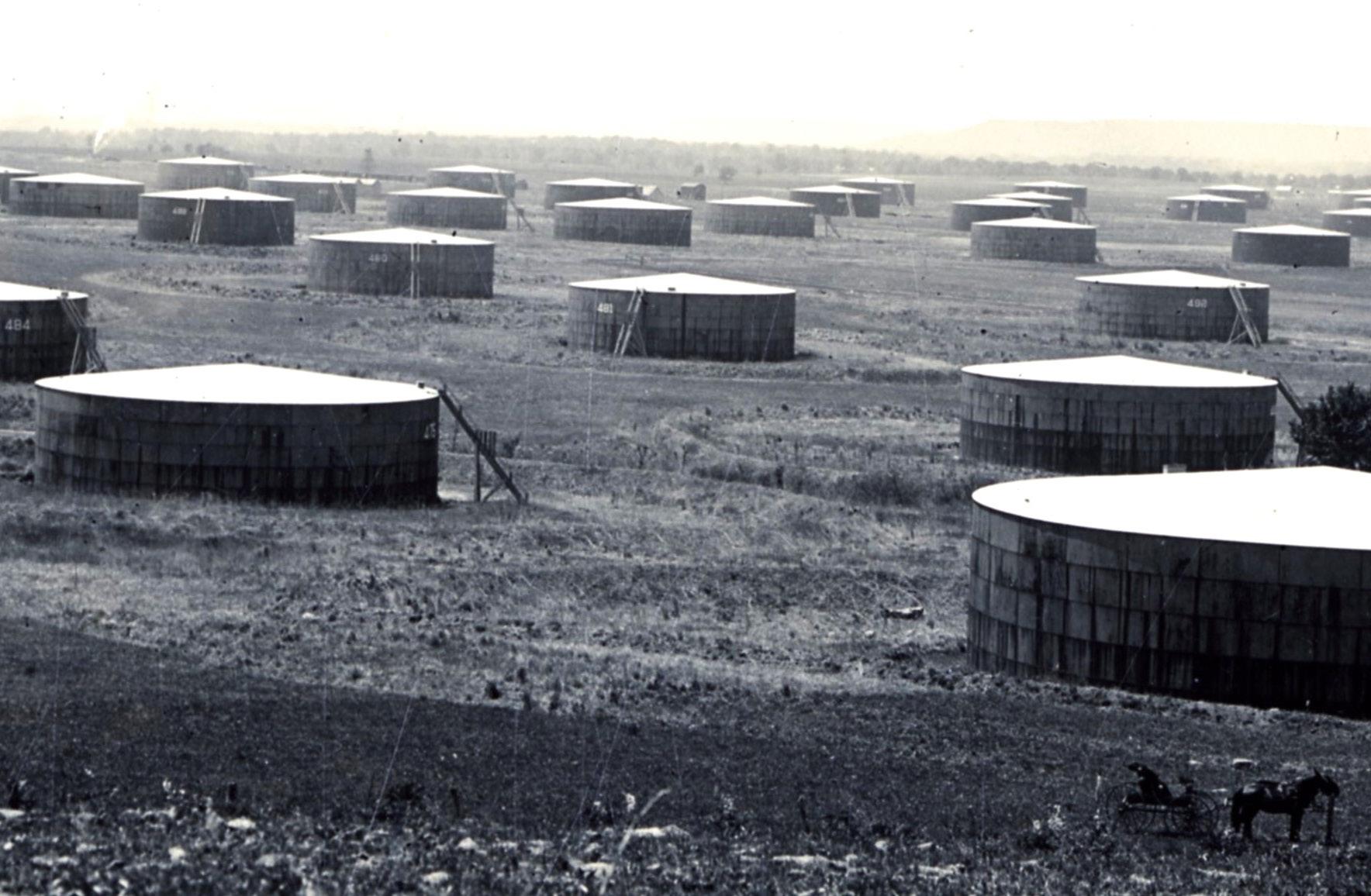
Theodore N. Barnsdall, of the town of Barnsdall and the Barnsdall Oil Company fame. Two years later, Weber moved to Bartlesville, where he invested in oil and gas production and left his medical bag behind. The discovery of the prolifically producing Weber Pool, southeast of Dewey, brought dollar signs to his eyes and cash to his wallet. In 1909, he sold his Oriental Oil Company to the Prairie Oil and Gas Company for a reported $750,000. Oriental had 38 producing wells with a daily production of 4,000 barrels. The Weber Pool extended southward with a battery of wooden-stave and steel-band storage tanks on one of the leases located near the intersection of present Tuxedo and Washington Boulevards.
Photographer, Frank Griggs was the greatest story ever told… through a camera lens. He was a young broom salesman on the streets of New York when happenstance brought George Eastman of the Eastman Kodak Company into Griggs’ world. Under the
wing of Eastman, Griggs worked as Eastman’s photographic apprentice. Then, Eastman encouraged Griggs to “go west,” so he hopped aboard a westward train and arrived in Bartlesville in 1908. Throughout Griggs’ seven-decade photography career, he peered through the camera lens and witnessed the massive history unravel that formed the fabric of Washington County and the surrounding area.
Frank Griggs was a household name in Washington County and he was invited to some of the most prestigious functions. For his exceptional work, we have photography to support nearly a century of history that would have been lost to time.
Join me next March, when I share with you, “Dewey’s Progressive Spirit.”

by Debbie Neece
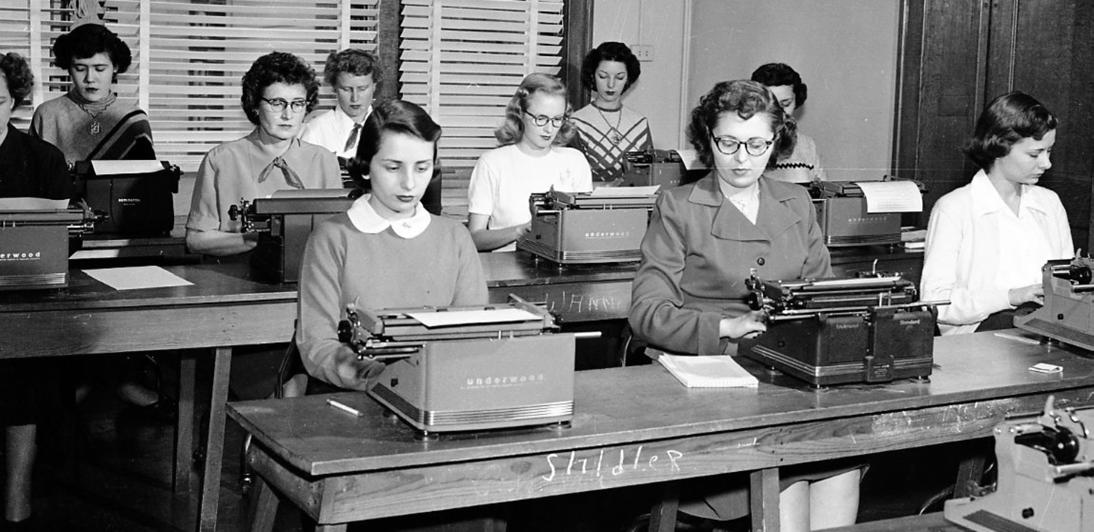
Betty Crocker has been recognizing as the “First Lady of Food” since a 1921 Gold Medal Flour promotion. In 1945, Betty took over the radio waves to help homemakers weather the storm of rationed foods; and, although her face and voice have changed over the last century, Betty Crocker’s “red spoon” logo continues on food products today and Betty Crocker cookbooks are a kitchen staple.
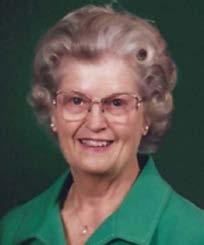
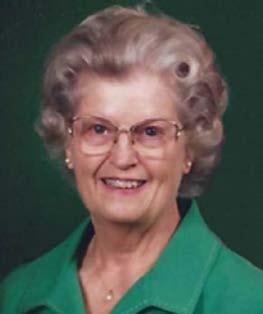
Not to be confused with the foodie Betty Crocker, Betty Lee Smith was born, February 7, 1924, in Elk City, KS. She later attended the Bartlesville Business College and became employed at Phillips Petroleum Company at the age of 18. In 1947, she met John Dean “J.D.” Crocker while working at Phillips. The couple married and lived on an 80-acre Herford cattle ranch near Caney, KS.
According to court records, Arizona resident, Larry Raifsnider entered the Crocker home in the wee hours of November 29, 2004, and bound them at gun point; then, forced them to open two home safes before taking J.D. hostage. Raifsnider instructed Betty to obtain $100K in ransom and wait for him to call her at the Bartlesville K-Mart pay phone. Betty traveled to a Coffeyville bank, where she withdrew $45K; then, to a Bartlesville bank, where she attempted to obtained the remainer. However, bank officials refused and called Bartlesville police to report the suspicious activity.

The terror was real. During the wait-time, Raifsnider drove J.D. around Kansas with a stop at the Sedan Cemetery, where J.D. was told a freshly dug grave waited his arrival. Raifsnider then drove to Bartlesville and waited in the K-Mart parking lot for Betty Crocker. With BPD observing, Betty met with Raifsnider and his hostage in the K-Mart parking lot, where Betty explained the bank was counting the cash. She was instructed to return with the cash at 12:30.
With cash in hand, Betty returned to the parking lot; however, Raifsnider watched from a distance, noticing several police cars in the area. Spooked, Raifsnider drove to a nearby park and set J.D. free. The weather was chilly and Raifsnider returned to offer J.D. a jacket, resulting in his arrest.
Officials discovered this was not Raifsnider’s first such rodeo. He had committed a similar 2003 crime in Arkansas and other crimes in Illinois. He pled guilty and, as a habitual offender, he was sentenced to two concurrent 30-year terms. Appeals were presented through 2013, but all failed.
The Crocker’s safety and security were absolutely shattered by this invasion, prompting them to sell their dream retirement home and move to Bartlesville. Betty work at Phillips for more than 43 years, including in the offices of four of the chairmen of the board and she became elected the first woman officer of the company. In addition, she was the Executive Secretary for Phillips Petroleum Company CEO, William “Bill” Douce.
After 69 years of marriage, J.D. passed away on January 25, 2016, and rests in Memorial Park Cemetery. On February 7, 2024, Betty Crocker was recognized as a Centenarian of Oklahoma; then, passed away March 20, 2024, leaving a full life of memories…but, not to be confused with our fictional General Mills inspired Betty Crocker.
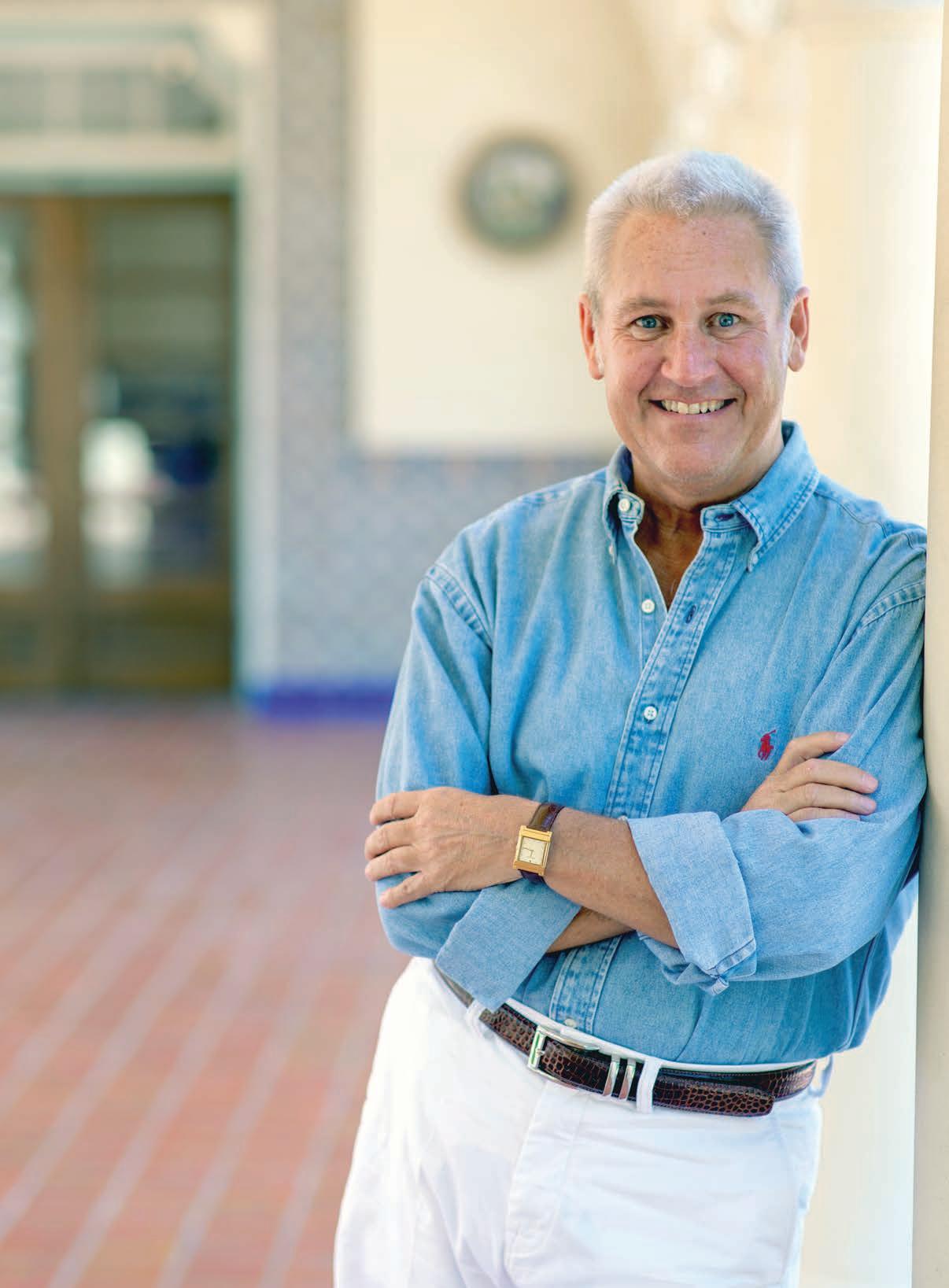
by Greg Wheat
Everyone assumes there will be more time — more tomorrows, more chances, more life to live — until there isn’t. That was me. In a single moment, everything stopped: my last look into my family’s faces, my last heartbeat, my last breath. No oxygen. No pulse. No logical chance of survival. Statistics say I had roughly 1% chance of coming back. But after being gone for 20 minutes… I did.
Every year since my kids were four, I took them snow skiing. I loved the bright sun on fresh snow, the slow ride up the chairlift, and the quiet conversations at the top before we pushed off and carved our way down. I always told them, “This is something we can do together all our lives.” I meant it.
On March 25, 2025, after skiing all day with my now-grown kids, I was teaching my grandson to ski. Three generations on one mountain. It felt like a full-circle blessing. By late afternoon, I felt unusually tired. Not sore. Not winded. Just drained. I knelt in a snowbank to rest for a minute. That minute became my last.
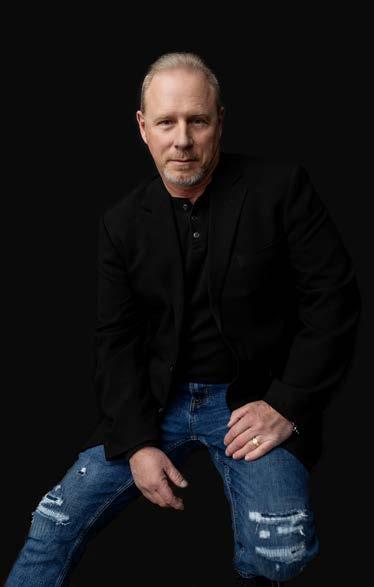
Without warning, I passed out. My heart stopped. A plaque rupture had completely blocked my LAD artery — the “Widowmaker.” There was no buildup. No countdown. Just silence. Ski patrol rushed in. Paramedics began CPR. For 20 minutes they worked on me. Seven shocks to my heart. Over and over, trying to call me back.
They called for a medical helicopter, but it was already headed elsewhere. One of the paramedics radioed urgently, “If you don’t get here, this man is going to die on this mountain.” The helicopter rerouted.
Somewhere in the chaos, in brief flashes of awareness, I knew I was dying. I couldn’t see clearly. I couldn’t move. But I could hear.
“Please help me,” I whispered.
Through the fog, I heard my daughter’s voice: “We are here, Dad. We are with you.”
Then my son’s voice cut through: “You have to fight like Rocky, Dad! Fight! Don’t quit! Open your eyes! Get up!”
Between those two voices — comfort and command — something ignited inside me. One reminded me I wasn’t alone.

The other demanded I not give up. And I fought.
The helicopter landed. I was barely stable enough to be loaded on board. They flew me straight to the hospital, where doctors performed emergency stent surgery. The artery was completely blocked. Given the time without a pulse and everything that happened on that mountain, my odds of survival hovered around 1%.
Let that soak in — 1%. It was a miracle of God, and I give Him all the glory for allowing me to walk out of that hospital with no complications! No lingering deficits, just a scar, a stent, and a story.
Here’s the thing: we all face mountains. Some are physical. Some are financial. Some are emotional. Some are spiritual. At some point, every one of us will feel the weight of exhaustion — the sudden drop to our knees — the moment when we don’t know if we can get back up. Maybe for you, it’s not cardiac arrest on a ski slope. Maybe it’s a discouraging word, tension at home, a problem at work. A broken relationship. A goal that feels too far gone. A grief that seems to grow. A mistake you think has disqualified you. Whatever it is, remember — even a 1% chance is still a chance.
This is why it’s so important to have God and good people in your life. A strong faith in God will always give you hope, and having the right people around you — those who remind you that you’re not alone and encourage you to keep “fighting” — can make all the difference.
So here’s what I want you to take away: don’t quit — don’t give up — even if the weight feels unbearable. Never believe that your story is over just because the odds look impossible. Even when it feels like your heart has stopped — even when life has knocked you down — God’s power and the support of those who love you can lift you, guide you, and carry you through. Fight for your life, fight for your joy, fight for your peace, fight for your purpose. And don’t wait to make things right: tell someone you love them, hug them a little tighter, mend a relationship, forgive, and let go of what’s holding you back. Stand tall, push forward, and keep moving — because sometimes the miracle is just one step, one word, one choice away. Make today count — live it fully, love boldly, and leave nothing undone.

Bruin Varsity Soccer vs Ponca City
6:30PM (G); Custer Stadium 8PM (B); Custer Stadium
After 3 for TEENS
3PM; Bartlesville Public Library
After 3 for TEENS
3PM; Bartlesville Public Library
Mr Pim Passes
7PM; Theater Bartlesville
Mr Pim Passes
7PM; Theater Bartlesville Sat March 7
Mr Pim Passes
2PM; Theater Bartlesville
Bruin Varsity Baseball vs Sand Springs
6PM; Doenges Stadium
Bruin Varsity Soccer vs Ponca City
6:30PM (G); Custer Stadium 8PM (B); Custer Stadium
After 3 for TEENS
3PM; Bartlesville Public Library
After 3 for TEENS
No School for Elementary Schools
3 4 5 6 7 8 9 10 11 12 13 14 16 20 28 30 31 21 23 24 25 26 27
3PM; Bartlesville Public Library
OKWU Baseball vs Friends University 3PM; Doenges Stadium
OKWU Baseball vs Friends University 12 & 3PM; Doenges Stadium
Spring Break – No classes
All Week
OKWU Baseball vs McPherson College 3PM; Doenges Stadium
OKWU Baseball vs McPherson College 12 & 3PM; Doenges Stadium
The Music Man –Broadway in Bartlesville 8PM; The Center
BHS Varsity Baseball vs Union 8PM; Custer Stadium
After 3 for TEENS 3PM; Bartlesville Public Library
After 3 for TEENS
3PM; Bartlesville Public Library
Bartlesville Track Meet 9AM; Custer Stadium
Bruin Baseball Classic
All Day; Doenges Stadium
Bingo Bash Benefiting WCSPCA
5:30{M; The Center
Bruin Baseball Classic
All Day; Doenges Stadium Sat March 28
Masterpiece – Young Artist Competition
7:30PM; The
Bruin Varsity Baseball vs Enid 5PM; Doenges Stadium
OKWU Baseball vs Evangel University 2PM; Doenges Stadium
Bruin Girls Soccer vs Jenks
6:30PM; Custer Stadium
Bruin Boys Soccer vs Jenks
8PM; Custer Stadium
Tina: The Tina Turner Musical – Broadway in Bartlesville 7:30PM; The Center

Every Monday
5:00 p.m. – 6:00 p.m.


FREE Beginning Spanish Class
Bartlesville Public Library, 600 S. Johnstone Avenue
Every Monday
6:00 p.m. – 7:00 p.m.
FREE Intermediate Spanish Class
Bartlesville Public Library 600 S. Johnstone Avenue
May 1–July 7
8 a.m. – 4 p.m.
Bartlesville Area History Museum
Presents “Our Culinary Past” BAHM, 401 S. Johnstone Avenue, Bartlesville
Every Tuesday
2:00 p.m. – 3:00 p.m.
Price Tower Exterior and The Center Tour
Every Tuesday
5:30 p.m. – 6:30 p.m.
Bartlesville Public Library ELL
Conversation Class
Bartlesville Public Library, 600 S. Johnstone Avenue, Literacy Office
Every Tuesday through Saturday
6:00 p.m. – 9:00 p.m.
Bartlesville Kiddie Park Open for summer season
Kiddie Park, 205 N. Cherokee Avenue, Bartlesville
Every Tuesday
6:45 p.m. – 7:45 p.m.
Bartlesville Public Library ELL
Conversation Class
Casa Hispana, 3850 Frank Phillips Blvd., Bartlesville
Every Wednesday 6:00 p.m. – 7:00 p.m. and
Every Thursday
10:00 a.m. – 11:00 a.m.
FREE Citizenship Classes
Bartlesville Public Library, 600 S. Johnstone Avenue
Every Thursday
7:00 p.m. – 8:30 p.m.
Crossing 2nd Trivia in the Garage Crossing Second, 215 E 2nd Street, Bartlesville
Every Thursday
11:00 a.m. – 12:00 p.m.
Bartlesville Public Library ELL
Conversation Class
Bartlesville Public Library, 600 S. Johnstone Avenue, Literacy Office
Every Friday
9:00 a.m. – 10:00 a.m.
Tai Chi with Dixie at Unity Square Tower Center at Unity Square, 300 SE Adams Blvd, Bartlesville



Tues, March 3
12:00 p.m. – 1:00 p.m.
In the Kitchen with Susan Bartlesville Public Library, 600 S. Johnstone Ave, Room A
6:00 p.m. – Open
Women’s Self-Defense Class
Bartlesville Seventh-day Adventist Church, 4811 Nowata Rd
Thurs, March 5
Time Unannounced
Bowl For Kids’ Sake
Red Apple Bowling Center, 1414 SE Washington Blvd, Bartlesville
7:00 p.m. – 8:00 p.m.
OSU Alumni Chapter Monthly Meeting – Washington County Scissortail Brewing Company, 623 E Don Tyler Ave., Dewey
Fri-Tues, March 6-10
See Website for Times
Children’s Musical Theatre FROZEN Auditions
Children’s Musical Theatre, 101 S. Wyandotte, Bartlesville
5:30 p.m. – Open
Washington County School Supply Drive
St. Luke’s Episcopal Church, 210 E 9th Street, Bartlesville
Fri and Sat, March 6 and 7
7:00 p.m. – 9:00 p.m.
Play: Mr. Pim Passes By Theater Bartlesville, 312 S. Dewey Ave, Bartlesville
Sat, March 7
9:00 a.m. – 12:00 p.m.
Shamrock The Ville 2026 - Catholic Charities Mary Martha Outreach
Unity Square Downtown Bartlesville at Dewey & 6th Streets
3:00 p.m. – 5:30 p.m.
Highlander Cow Paint and Sip Cooper and Mill Brewing Company, 200 S. Dewey Ave.
Sat, March 7, 11:00 a.m. –7:00 p.m.
Sun, March 8, 12:00 p.m. –5:00 p.m.
Time Travelers Geeks & Antiques Indoor Market
Washington Park Mall, 2350 SE Washington Blvd J.C. Penney store
Sun, March 8
2:00 p.m. – 4:00 p.m.
Play: Mr. Pim Passes By Theater Bartlesville, 312 S. Dewey Ave, Bartlesville
Mon, March 9
2:30 p.m. – 3:00 p.m.
The Florida Strawberry Truckload Sale
Lowes Parking Lot, 2205 SE Adams Blvd., Bartlesville
Wed, March 11
10:00 a.m. – 2:00 p.m.
HeartSaver CPR/First Aid/AED Training
Tri County Tech, 6101 Nowata Road, Bartlesville
Thurs, March 12
12:00 p.m. – 1:00 p.m.
The Bartlesville Public Library presents Fast, Fresh and Fabulous with Chef Hilary
Bartlesville Public Library, 600 S. Johnstone Avenue, Meeting Room A
6:00 p.m. – 8:00 p.m.
Pizza Party and Fashion Show
HeartMatters, Inc., 3401 Price Road, Bartlesville
Sat, March 14
10:00 a.m. – 5:00 p.m.
Visit Dewey Second Saturday Downtown Merchants, Dewey
Thurs, March 19
7:00 p.m. – 8:00 p.m.
3-D Thursday at the Bartlesville Public Library
Bartlesville Public Library,
Fri, March 20
11:30 a.m. – 12:30 p.m.
Washington County Master Gardeners
Bartlesville Public Library
Sat, March 21
10:00 a.m. – 11:00 a.m.
Lego Club for All Ages at the Bartlesville Public Library
Bartlesville Public Library
Mon, March 23
11:00 a.m. – 5:30 p.m.
Red Cross Blood Drive at the Bartlesville Public Library
Bartlesville Public Librar
8:00 p.m. - Open
The Music Man - Broadway in Bartlesville The Center
Wed-Fri, March 25-27
9:00 a.m. – 4:00 p.m.
Bartlesville Art Association 3-Day
Watercolor Workshop
Bartlesville Art Association, 217 S. Comanche Ave.
Thurs, March 26
6:00 p.m. – 8:00 p.m.
Eldercare Sip & Paint
Elder Care, 1223 Swan Drive, Bartlesville






by Debbie Neece

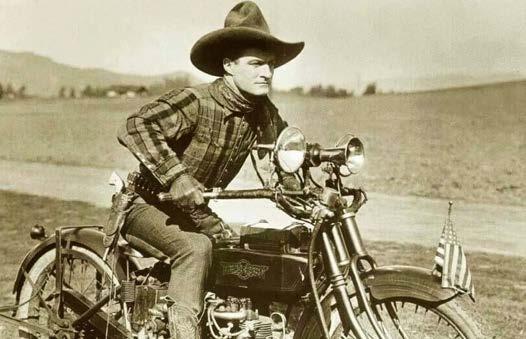
Thomas Hezikiah Mix was born in Mix Run, Pennsylvania, in 1880. He was a baby-faced, lost soul, traveling where the wind took him and he landed in what would become Dewey, OK. He settled for cowboying at the base of Blue Mound, east of Dewey, and worked as Dewey’s night marshal. When a Selig Polyscope Company movie producer came knocking, a simple nod transported Mix into stardom right from the heart of Dewey, America.
Mix enlisted in the Army as Thomas Edwin Mix and that name hung over his head for a lifetime. He became an American actor and stunt performer whose career spanned 19091935, appearing in countless black and white silent era and talkie films. Not lucky in romance, he had five marriages and two children. His exciting movie star career took him around the world, performing in movies, on the radio, and in circuses; then, shock and disbelief consumed the world as devastated fans learned of his death.
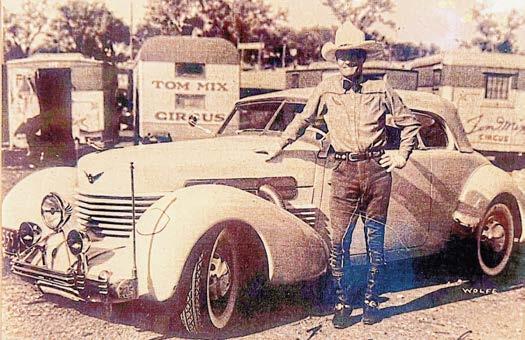
In 1940, Mix was driving at a high speed in his “cigarette cream” colored 1937 Cord Phaeton convertible, like a quickly traveling yellow ray of sunshine until he lost control, spun an Arizona dust storm, and plunged into a dry creek bed. His aluminum suitcase flew forward, struck him in the neck and killed him instantly. Millions mourned the loss of the “King of the Cowboys.”
Surrounded by mesquite bushes and saguaro cactus in the dry desert, a monument was placed on Highway 79/80 near Florence, Arizona that reads: “January 6, 1880 – October 12, 1940, In Memory of Tom Mix Whose Spirit Left His Body on this Spot and Whose Characterization and Portrayals in Life Served to Better Fix Memories of the Old West in the Winds of Living Men.” That’s an impressive memorial.
Tom Mix’s mangled Cord was taken to a Florence auto garage. In 1966, the precious Cord was found, disassembled, exposed to the
elements, and rusting in a field. After several unsuccessful restorations, in 2010, the Cord appeared at a Missouri auction, where Bob White of Scottsdale, Arizona, made the purchase. White invested three-years of extensive restoration to bring the Cord to its original, customized condition; and, the Cord now appears at exhibits.
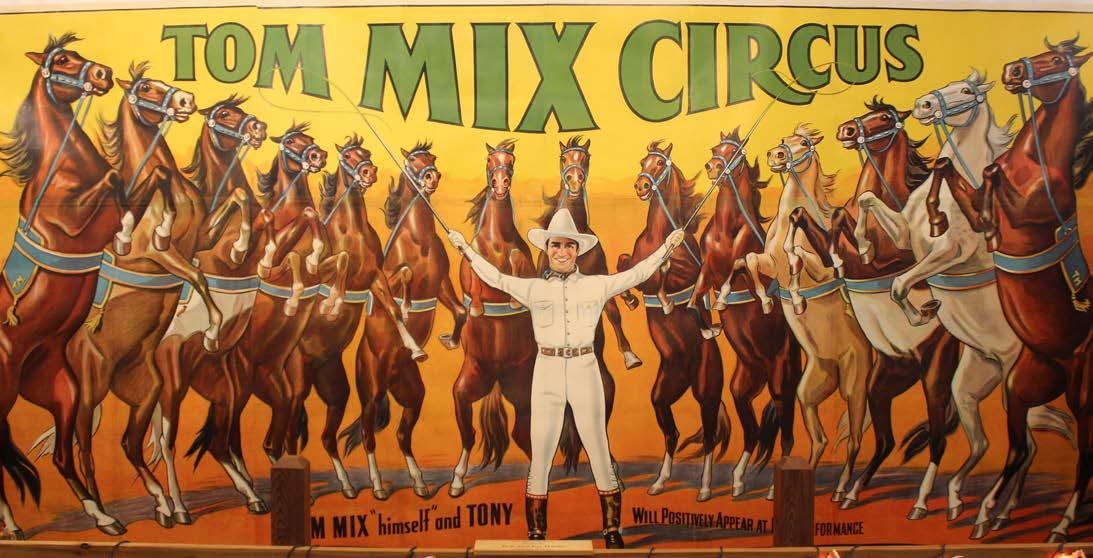
“A horse is a horse, of course, of course and no one can talk to a horse of course”…but, just as famous as Mr. Ed, Tom Mix’s Tony the Wonder Horse was Mix’s sidekick, a constant companion, just a whistle command away…ready to perform as instructed. Throughout Mix’s career, there were three movie star steeds: Old Blue (1897 – 1919); Tony the Wonder Horse (1899 –Retired in 1932 – October 12, 1942, he died two years, to the day, after Tom Mix died); and Tony Jr., who took over the silver screen duties when Mix’s Wonder Horse retired.
Tom Mix’s will revealed the value of the estate was bequeathed specifically to Mrs. Mabel Mix and one daughter, Thomasina Mix. His trusted friend, Ivon Parker, was gifted Tony the Wonder Horse, memorabilia, all of Tom’s western regalia and guns…all of it! The will explicitly disinherited his former wives and his daughter, Ruth Mix. Parker owned acreage in California, where he built a tack room devoted to preserving Mix’s private
collection.
Back in Dewey, the Tom Mix Museum, Inc. was organized and an army of volunteers created a plan to boost tourism by establishing a museum. The original board of directors included Bill Halter, president; C.R. Musgrave Jr., vice-president: Glenn Schuber, treasurer; Ralph Cooley, secretary; and Clarence Peters, George Schumacher, O.A. Patridge, Joe Inda, and Dr. Leroy Place as directors.
With Bill Halter at the lead, the pursuit of the elusive Tom Mix collection began (1965-1966). Tom Mix left the collection to Ivon Parker, who died in 1953 while riding in a California parade. Halter’s cousin, Raymond Blink, lead Halter to Milton and Marilyn Uhler, Parker’s cousins, who he bequeathed the collection, which remained in the Parker’s tack house. However, the City claimed eminent domain over Parker’s land with plans to build a park, so the Uhler’s built a 20x20 cinder block building on their property and moved the collection in the dead of night for secrecy. Only Tom Mix’s friend, Montie Montana, knew the secret.
In 1966, the communities of Bartlesville and Dewey raised $40,000 to purchase the collection, including the aluminum




























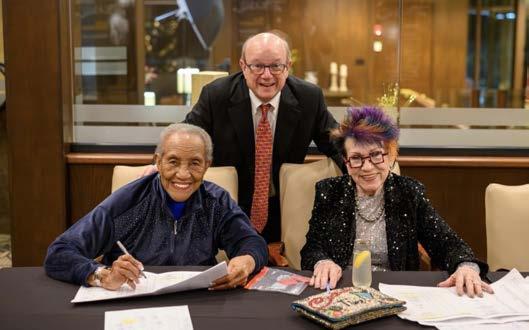
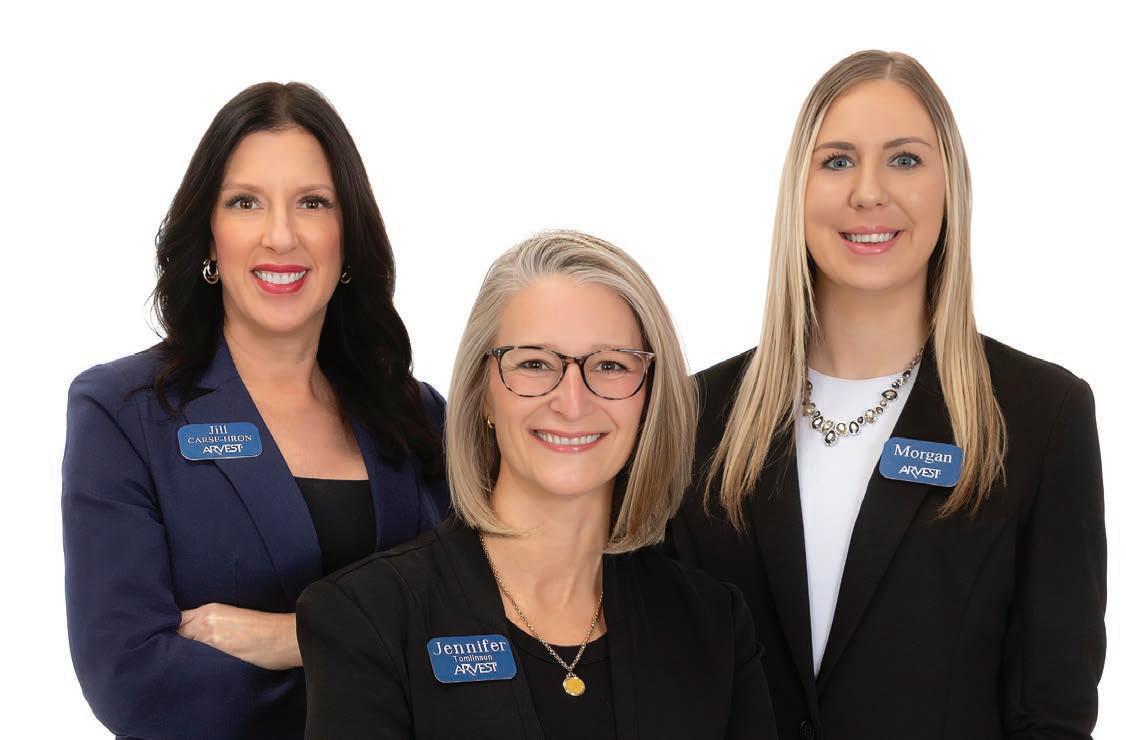
by Maria Gus
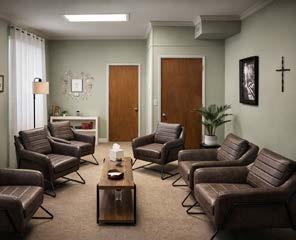
Grief has a way of isolating people. Even when surrounded by friends, family, and well meaning words, loss can feel deeply personal and profoundly lonely. At St. Luke’s Episcopal Church, a quiet but meaningful ministry is offering people a place to walk through grief together. The focus is not on getting over loss but beginning to come to terms with it.
Walking the Mourners Path is led by facilitators who understand grief not only in theory, but through lived experience. Like many who face significant loss, they found themselves searching for something that acknowledged grief honestly, without rushing it or trying to fix it.
Karole Cozby, along with Nancy Woods and the Rev. Nick Phares, first encountered Walking the Mourners Path by participating in the program themselves. They wanted to determine if it was different and worthy as a grief support group. What they discovered was a process that felt grounded, compassionate, and deeply respectful of each individual’s journey. Inspired by their own experiences, the group felt called to bring the program to Bartlesville, recognizing that grief knows no boundaries.
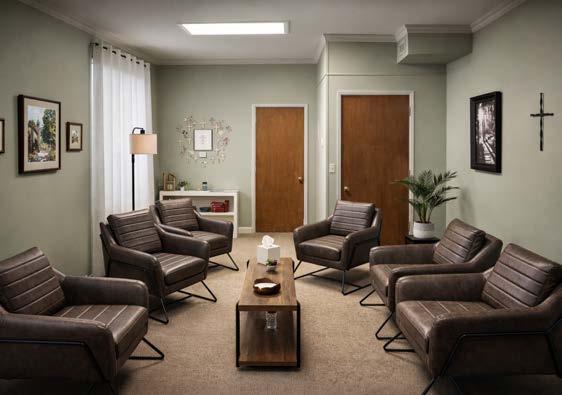
The program follows a national model offered through the Episcopal Church and unfolds over eight consecutive weeks, with participants meeting once a week for an hour and a half. Sessions take place in a room dedicated entirely to this ministry. Participants are placed in small groups of three to six people. The facilitators guide the process but do not lead the conversation. It is not their story to tell.
On the first night, participants share their story and collectively establish a set of norms that everyone agrees to honor. Confidentiality is essential. What unfolds is deeply intimate and personal. Cozby describes it as sacred time spent between participants, protected and respected. The losses represented in the group so far have included spouses, children, and parents.
Each meeting builds on the one before it. Exercises, reflection, and prayer guide participants step by step through their grief. Rather than offering advice or solutions, the process allows space for listening, honesty, and presence. Over time,
the experience builds toward a meaningful shift, gently guiding participants toward living differently while still honoring their loss.
For those who have participated, the impact is deeply personal. One participant shared, “For me, Walking the Mourners Path provided a safe place and caring, compassionate leaders and participants to begin my grieving process. It was a place that allowed everyone the space to be exactly where they were without judgement or shoulding on each other. I am eternally grateful to St. Luke’s for seeing a need in our community and addressing it with such care, compassion, and love.”
Another described the experience this way: “Walking the Mourners Path was such a meaningful experience. I was able to share my feelings and heart with a few others that understood. So blessed by the tenderness and love I felt in this small group.”
A central philosophy of Walking the Mourners Path is rejecting the idea that one must get over grief. Instead, it recognizes that grief has no timetable and manifests differently for everyone. “As a culture, we do not adequately address the needs of those who grieve and mourn,” Cozby said. “We often try to fix it or put it on a schedule. But there is not one.”
While the program is faith based and invites Christ into the healing process, participants do not need to be members of St. Luke’s or even belong to a church to take part. Most participants have had some church connection, but some have not. All have responded in a positive and meaningful way. The focus is not on doctrine, but on healing, compassion, and support.
The purpose of the program, Cozby explains, is not to erase pain, but to help participants find joy and love in their memories. It is about honoring what was lost while learning how to live fully again.
Community members interested in learning more about Walking the Mourners Path or wondering if the program is right for them are encouraged to contact St. Luke’s Episcopal Church at 918 336 1212. Sometimes the first step through grief is simply knowing you do not have to take it alone.

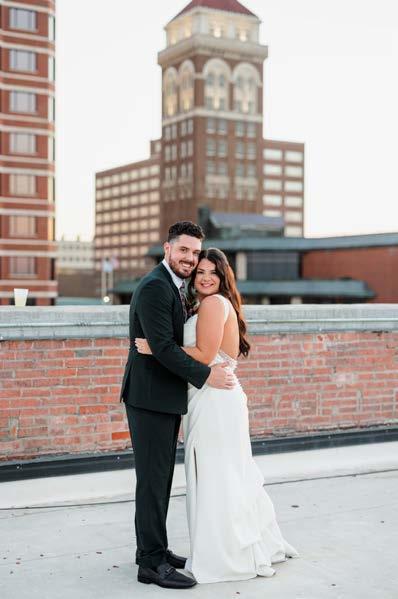
Downtown Bartlesville’s one-of-a-kind setting for your once-in-a-lifetime milestones and celebrations.
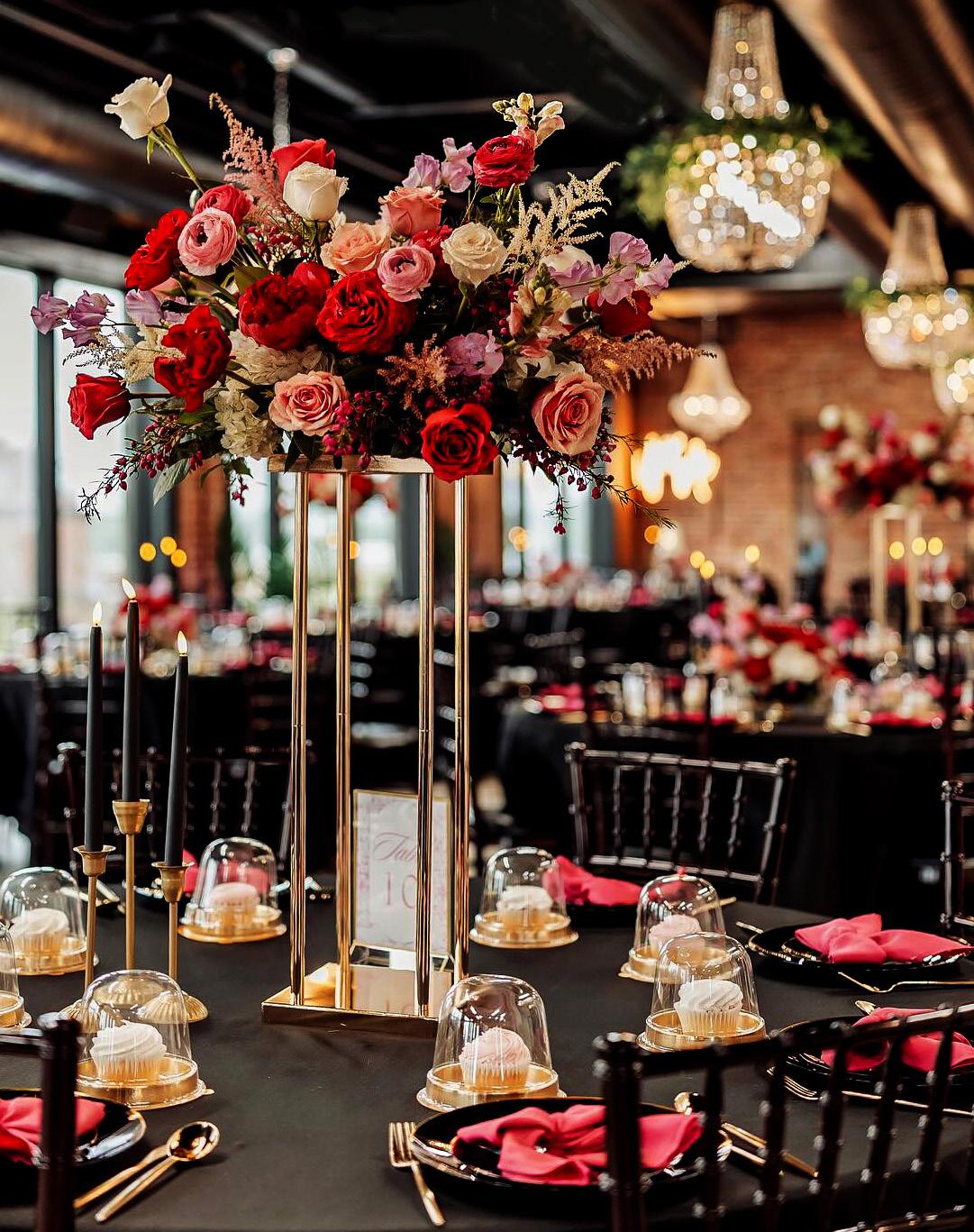
Two floors of chandelier-studded ballrooms — and an utterly charming on-site boutique hotel.
Inquire today for your special event! The Refinery at the Johnstone-Sare Building 888-733-1633
THEREFINERYOK.COM instagram @therefineryok
* Engaged? Mention B Monthly when you book a Grande Weekend Wedding package starting at $7500 and your bridal party will receive a complimentary Brunch & Bubbles!

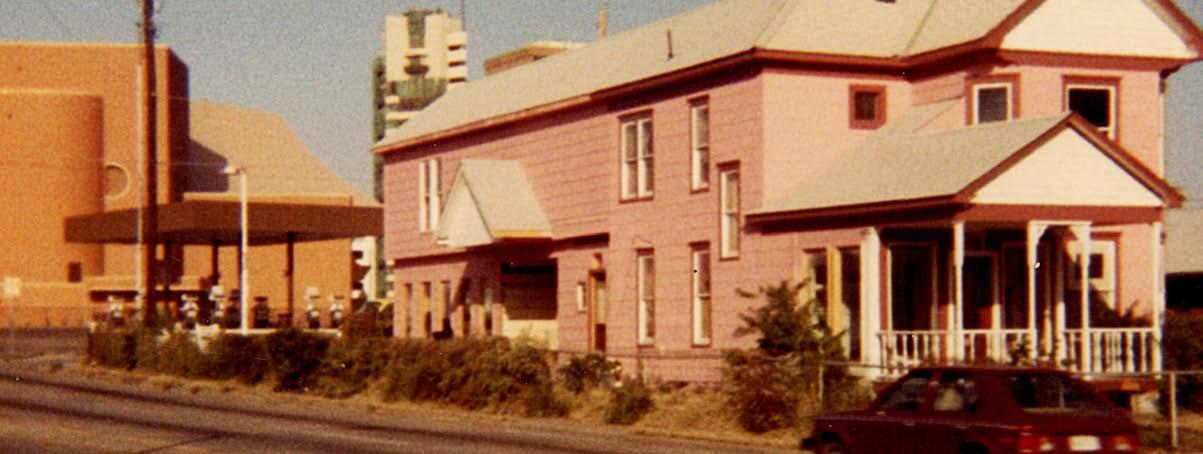
by Kay Little, Little History Adventures
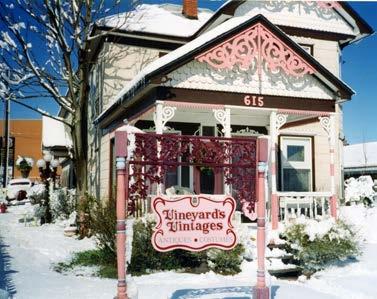
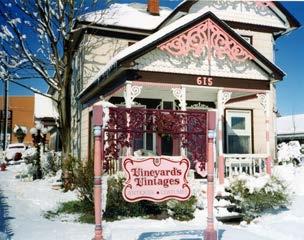
Linda Vineyard has loved pink her whole life. She has also loved antiques most of her life. In the 1980’s, Linda and Wayne Vineyard bought the house at 615 Delaware, to be their home and an antique store. They had planned to remodel and add on to the two-story home in a Victorian style, with burgundy and white gingerbread trim over a pink background. But city officials had a fit when they saw the house painted pink! They said the color clashed with the new Bartlesville Community Center, a block from the house. They were concerned the house would get more attention than the BCC. Evidently, there was a zoning regulation saying that buildings in the area should not be a style or color that is “unsightly or grotesque”. City Manager Mikulecky described the house as such. Several neighbors were quick to describe The Center as such and even thought it violated the zoning regulation. Mayor Robbins and Commissioner Walker agreed with the Vineyards, saying they felt the Community Center was illegal. One neighbor even painted her garage door purple.
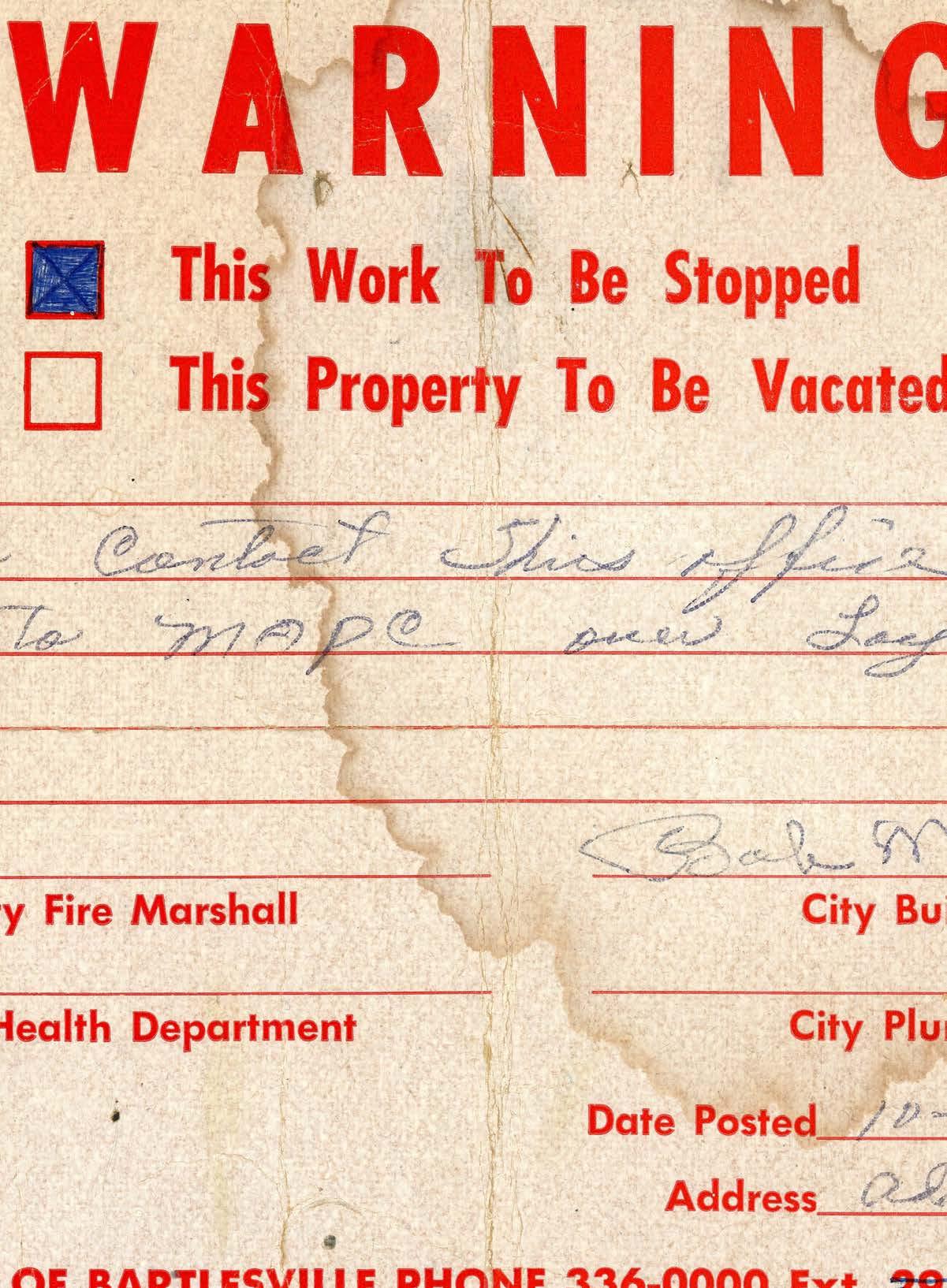
The Vineyards showed up to the house one day to find a warning sign on the door, saying the work is to be stopped and to attend a city meeting. The city did offer to pay for the boring brown and beige paint. The newspaper headline was ‘Pink House’ browned by City. After the Vineyards repainted the house, they placed a sign outside saying, “It’s still pink on the inside.” It had some pink carpet, a dusty rose-pink bedroom and pink trim. Linda also planted pink geraniums outside.
Probably the most fun thing the Vineyards did was throw a pink party! It featured pink champagne and required pink suits for admission. For music, they played Pink Floyd from their album “Up Against the Wall”. The location was the Pink House in Claremore. The invitations were printed on pink paper.
After all the renovations, the Vineyards were finally able to move in. Linda opened the antique store in 1990. In 1995, she opened a costume shop in the house. In 2011, Linda felt that God was telling her to sell the house. Jack Griffith bought it, razed it and built a parking lot. She has no regrets. In the meantime, Wayne started Minuteman Auction Company, a fulltime professional estate sale service. Wayne also likes to build items, including the ice cream bar for Linger Longer Antiques and a throne for our favorite Santa, Ron Adams.
Linda felt she needed to spend more time caring for her mom, Bette Henry Graham. After Bette’s death, Linda and Wayne now use her residence as a home for visiting missionaries.
Bette, the daughter of a Baptist minister, instilled the love of the Great Commission into Linda. Eighteen years ago, the Vineyards started traveling regularly to Africa, through their church, Tuxedo Assembly of God. When they go on these trips, they build churches and schools. Linda said the last trip “went beyond our expectations. Lives would be changed for eternity and open doors for the gospel to be presented. So blessed to do this. Our 18th year…Going…Sowing!!!”







This spring, the 2025-2026 Broadway in Bartlesville! season delivers a triple threat of nostalgia, rock-and-roll resilience, and prehistoric adventure. Whether you’re looking for a classic love story or a high-energy night of hits, there is a seat waiting for you.
The Music Man | Monday, March 23 | 8:00 PM
There’s “Trouble” in River City, and it’s never sounded so good. Meredith Willson’s six-time Tony Award-winning masterpiece, THE MUSIC MAN , marches onto the stage this March. Follow the charmingly local “professor” Harold Hill as he attempts to con the citizens of a small Iowa town into starting a boys’ band. Hill may not know a trombone from a treble clef, but he certainly knows how to win over a crowd—except, perhaps, for the skeptical librarian, Marian. With iconic showstoppers like “Seventy-Six Trombones” and the soulful “Till There Was You,” this is a multi-generational favorite that reminds us of the transformative power of a little bit of rhythm (and a lot of heart).
TINA – The Tina Turner Musical | Tuesday, March 31 | 7:30 PM
Experience the electrifying journey of the Queen of Rock ‘n’ Roll. TINA – THE TINA TURNER MUSICAL is a triumphant celebration of a woman who broke every barrier in her path. This full-scale Broadway production traces Tina’s rise from Nutbush, Tennessee, to global superstardom, defying racism, sexism, and ageism along the way. Prepare to be blown away by powerhouse performances of “What’s Love Got to Do with It,” “Proud Mary,” and “The Best.” Having captivated over 8 million fans worldwide, this show is a pulse-pounding testament to resilience that will have you dancing in the aisles.

Dinosaur World Live | Thursday, April 30 | 7:00 PM
Looking for a family expedition? Dare to enter DINOSAUR WORLD LIVE , an interactive stage show that brings the Jurassic era to life with astonishing, remarkably lifelike puppets. From the towering Tyrannosaurus Rex to the gentle Triceratops, your little explorers will be in awe. The fun starts before the show with preshow activities and continues after the final bow, where brave audience members can meet a new dinosaur friend face-toface. Specially priced family packages are available for Dinosaur World Live, making it the perfect spring outing for the whole crew.
These world-class performances are made possible through the generous support of the National Endowment for the Arts, the Oklahoma Arts Council, and a dedicated list of local sponsors—including: Arvest Wealth Management; bMonthly Magazine; C + M Plumbing; Conoco Phillips; Cortney McClure Design; Mr. and Mrs. Paul Crawford; Examiner-Enterprise; Fourstone Wealth Management; Green Country Village; Jane Phillips Medical Center; Keleher Architects; KGGF KUSN KQQR; Kool Kreations; KRIG KYFM KWON KPGM; Melody’s Creative Cuisine; Nowata Road Liquor; Osage Casinos; Phillips 66; Robinett|King; Dr. and Mrs. Richard Rutledge; Dr. and Mrs. William D. Smith; Sparklight; Truity Credit Union; and Visit Bartlesville —who ensure national tours continue to find a home in Bartlesville
Don’t miss out on this spectacular spring lineup!
Tickets for all shows are available now: Online: bartlesvillecenter.com. Phone: 918-337-ARTS In Person: Visit The Center box office.






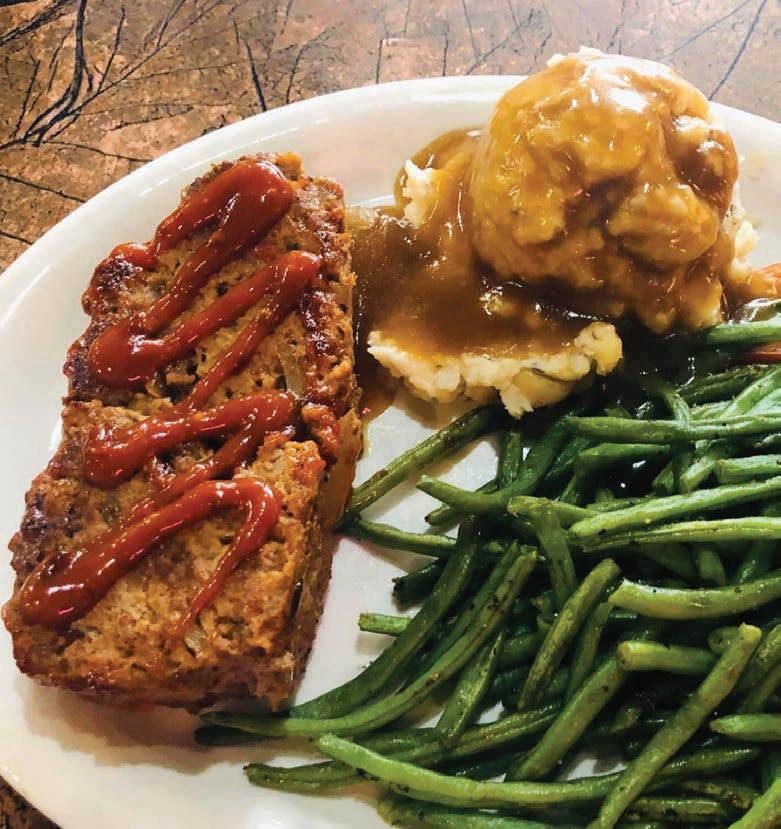
Painted Horse Bar & Grill, together with Wolf Creek Ranch owners, Mark and Kelly Spencer, are proud to offer our locally raised, guaranteed all
Painted Horse Bar & Grill, together with Wolf Creek Ranch owners, Mark and Kelly Spencer, are proud to offer our locally raised, guaranteed all natural Angus beef products. 110 SW Frank
Dine In and Carry Out Available!
Dine In and Carry Out Available! New dine in hours!
Restaurant: Mon - Sat 11a - 9p
Restaurant: Mon - Sat 11a - 9p Bar: 11a - 10p Featuring post-hospital skilled nursing and rehabilitation to help you heal, regain strength, and return home!


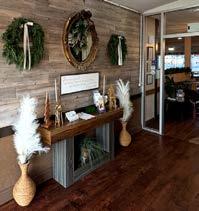
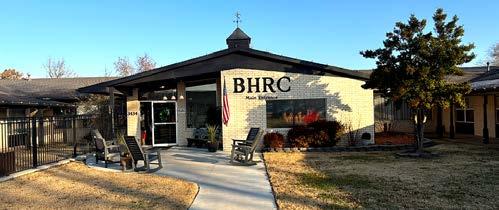

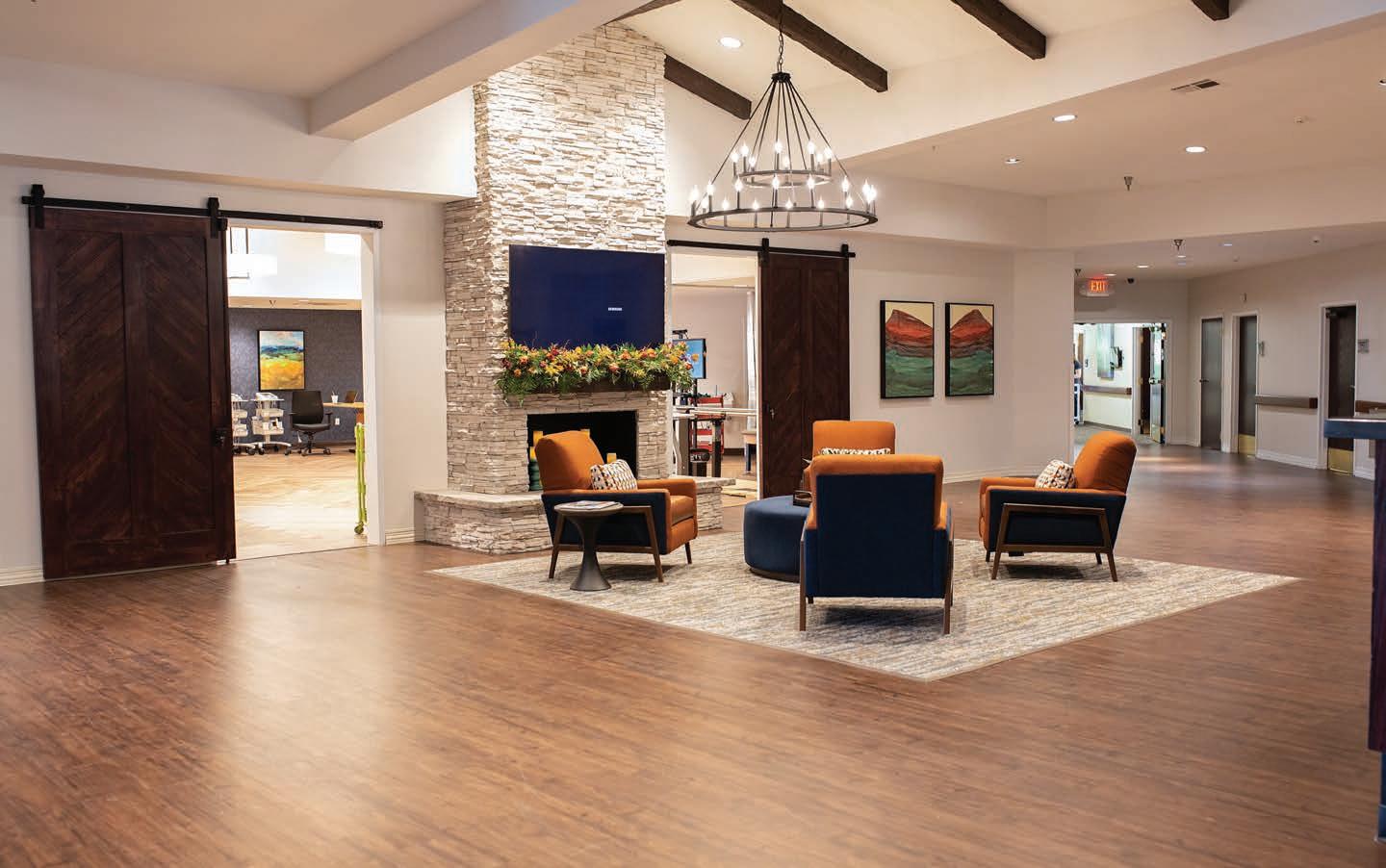
Newly remodeled semi-private and private rooms available, subject to availability.
Bartlesville Health & Rehab Community provides a comprehensive continuum of senior healthcare services, all under one roof. Locally owned, BHRC offers 24-hour skilled nursing care along with inhouse physical, speech, and occupatonal therapy. We also provide specialized care for individuals with Alzheimer’s disease or related disorders within our newly remodeled, secure Memory Living Area. In addition, BHRC’s senior living apartments offer the independence of home while fostering comfort, connection, and the companionship of a supportive senior community. For more information or to schedule a tour, call (918) 333-9545. Medicare, Medicaid, private pay, and most insurance plans accepted (Determined by on level of care). 3434 Kentucky Place • 918-333-9545 • www.bartlesvillehealthandrehab.com




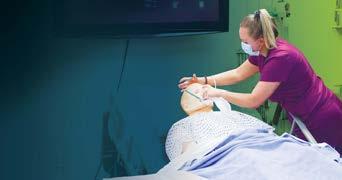
Become an LPN in under one year! Apply by March 31, 2026 for the next Practical Nursing program cohort. Graduates are eligible to take the NCLEX-PN licensure exam; the program is approved by the Oklahoma Board of Nursing and accredited by the Accreditation Commission for Education in Nursing (ACEN). To learn more or apply online, scan the QR code.
HERE!
DENTAL TREATMENT
Tri County Tech is more than a school—we offer affordable dental care through our partnership with the University of Oklahoma College of Dentistry. Start with a FREE screening and schedule today by scanning the QR code or calling 918.331.3218.

Join us for our Career Fair on May 8! This come-and-go event gives you the flexibility to attend during the time that works best for you. Stop by during our morning session from 9–11 AM or our afternoon session from 12–2 PM to connect with businesses and companies. Businesses and companies are invited to showcase their opportunities at this FREE event. We’ll provide lunch, tables, and tablecloths—just bring your materials and be ready to network. Organizations interested in serving as vendors can sign up by scanning the QR code below. We look forward to partnering with you!
If you have any questions, please contact Randall Jones at 918.331.3269 or Randall.Jones@TriCountyTech.edu

The Mikey Smith Northeast Regional Leadership School is a three-day regional conference focused on developing strong, effective leaders within the fire service. Hosted by Oklahoma State University Fire Service Training, this engaging and informative event will be held May 1–3 from 8 AM - 5 PM at Tri County Tech (6101 S.E. Nowata Rd., Bartlesville, OK 74006). Attendees will gain practical leadership strategies, valuable insight from experienced instructors, and opportunities to connect with fellow fire professionals from across the region. This conference is FREE for all participants. To learn more or to register, scan the QR code.
COMMENCEMENT IS ALMOST HERE!
Mark your calendars! Tri County Tech’s Commencement Ceremony is right around the corner. Join us on Tuesday, May 19, 2026, as we celebrate the hard work and accomplishments of our graduates. We are so proud of this year’s class and would love for you to celebrate this special milestone with us.
Tickets are required, and additional details—including ticket information and ceremony logistics—will be shared directly with graduating students soon.

Our STEAM Summer Camp is a fun-filled, week-long day camp for students currently in 3rd-6th grade 3rd and 4th-grade participants will attend a half-day in each of the camp themes. 5th and 6th grade participants will select and attend two themes for a half-day each, all week. STEAM Summer Camp is fun & exciting, featuring themes in a safe, small-group instruction environment. STEAM Summer Camp is from 8:30 AM –3:00 PM with lunch provided, as well as morning & afternoon snacks. Register today to receive a discount! Registration ends May 29, 2026.
Scholarships are available, please contact Camp Director, Heather Pollock for more information on how to apply. Heather.Pollock@TriCountyTech.edu | 918-331-3314
by Kelly Hurd
Passion and purpose are kissing cousins, you might say – and when they get together good things can take place in communities.
For instance, a few years back a little ranch gal (and former Bartlesville resident) gets passionate about blogging from her remote country home. She shares simple recipes, stories about raising kids, and her love for the family Basset Hound –probably with the purpose of connecting to other rural moms in the same season of life – and #Boom, literally. After a few years, this redhead’s passion and purpose led to Pawhuska experiencing an economic boom and the opening of doors to dusty, forgotten, vacated buildings up and down Kihekah Avenue and Main Street.

Not only that, but most of the businesses opening on the heels of The Pioneer Woman Mercantile were also owned by women who had been inspired by the now-famous blogger turned entrepreneur and Food Network superstar.
Passion and purpose are two catalyst ingredients for a little something called inspiration – and every community needs to have its own Inspiration Point.
It was all this that brought Cecil and Cathy McGarrah to Pawhuska from Broken Arrow, Oklahoma. At first they came as visitors, but ten years later they’re not only business investors, but now they’re also residents.
The McGarrah’s just fell in love with life in Pawhuska. They loved escaping the city and enjoying the western culture and rural amenities in places like Osage Outfitters and The Merc on their visits, but they soon noticed a need for additional lodging for those visiting from across the country and abroad – and they decided to put their passion to purpose and invest in the community by building what is now today The Cottages on the Prairie.
But back in 2019, the cottages were only a vision based on a source of inspiration. However in 2020, their first guests were kicking off their boots and putting their feet up in four adorable twobedroom cottages nestled together on a city block in a quiet neighborhood on 9th Street.
Each beautifully decorated and comfortably furnished cottage has a full kitchen, vaulted living room ceiling, gourmet coffee, free Wi-Fi, a flat screen tv, and access to the private backyard pavilion.
You’ll find bottled water in the fridge, plush bathrobes in the closets, and all the trimmings for s’mores in a basket on the dining room table because Cathy McGarrah is all about the hospitality - and it’s no wonder that their adopted motto is “The Smiles Are Always Free!”
On the tail end of the decade after the opening of The Pioneer Woman Mercantile, the McGarrah’s have relocated from Broken Arrow to make Pawhuska their permanent residence – all because passion met purpose out on a ranch west of town which later drew the McGarrah’s to experience Inspiration Point - where they fell in love with a community and its possibilities.
You’re invited to come visit Pawhuska and see if you might not find your own Inspiration Point when you do. In fact, come spend the weekend and book your stay at one of Cecil and Cathy’s cottages at TheCottagesOnThePrairie.com. Just tell them Kelly sent you!
To hear their full story, pull up the Calling to the Good Podcast and look for the “Meet Cecil and Cathy” episode.
Hope to see you in Osage County this spring!
Reminder: “If you look for the bad in mankind expecting to find it, you surely will.” – Abraham Lincoln. Keep Calling to the Good, y’all!





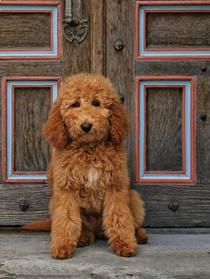
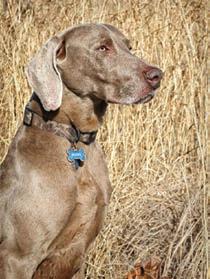
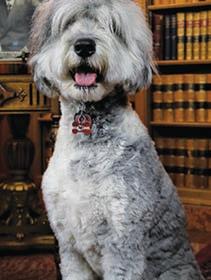

The most-liked pet will be highlighted with a full-page picture in our magazine. The Judges’ Choice Winner will be featured on our April Cover!
• Although we love them all - scaly, slimy, feathered, and fluffyyour pet must be furry to compete.
• Pets MUST be currently living and pictured by themselves in order to compete.
Registration opens on February 27 at noon at bartlesvillemonthly.com.
Facebook voting will be held March 6 at noon CST to March 13 at noon CST.
QUESTIONS? Visit us online at bartlesvillemonthly.com for more details.
Entries are limited to the first 100 online reservations.

We can’t wait to meet your furry friend!
Sponsored by

by Jay Webster
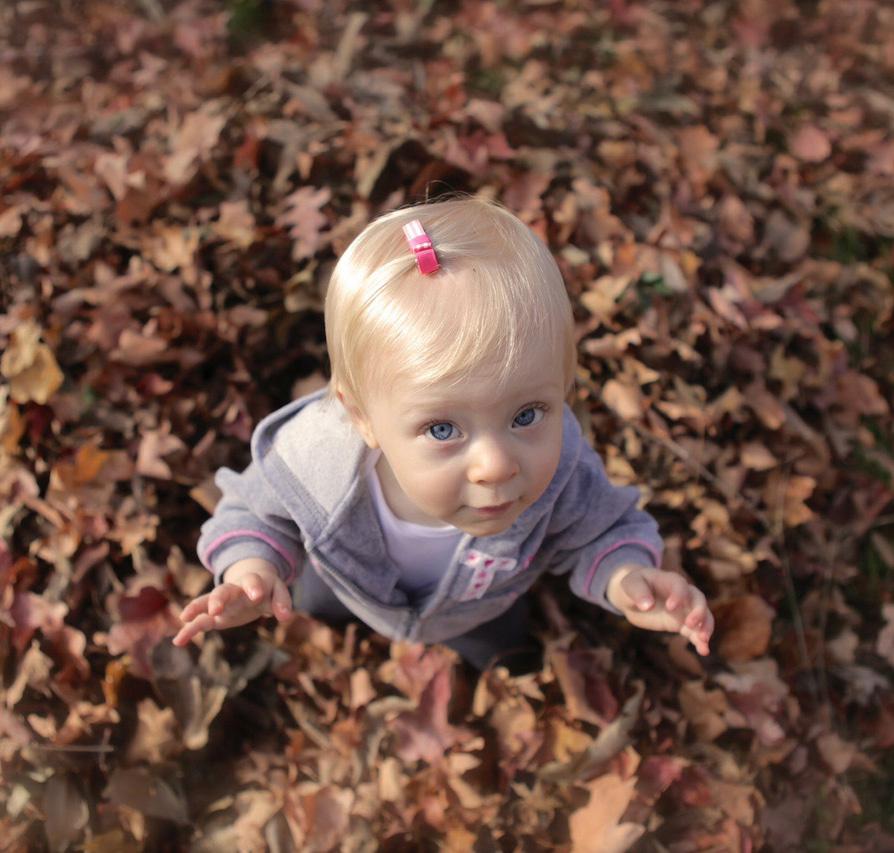
If you know my family, it may not surprise you that our daughter, Evanjalyn, began speaking at an early age. (Everyone has an opinion, and apparently she wanted to speak hers.) In that way, she followed in her mother’s footsteps.
My wife’s first word was “turtle.” Her family was quite proud, as it came not only four days after her birth, I’m told, but also because it was a two-syllable word. My beloved took this on as a sort of “heritage quest” when our own daughter was born. We spent the early hours of her life, between feedings and sleep, rehearsing her first utterance. I’m proud to say we were successful, and our daughter also said “turtle” mere days after her election into the human race. The legacy continues.
From there, her lexicon grew, though some interpretation was
necessary. For example, when she was a guest with my wife at a baby shower at Southern Hills Country Club, she emphatically demanded “wee-wee’s!” It was later determined that she was actually saying “strawberries” or “strawberr-wee’s.” Her rather thick baby accent made it difficult to understand her.
It was that same accent that transformed “thank you” into “chi-chew.” We still use that phrase in our house today.
From there, her diction improved, but the sentence structure lacked continuity. In moments of fatigue or duress, she would run to me with arms outstretched and say, “Hold you, Dada.” I, of course, would refuse until she said it properly.
She quickly learned to be specific about what she wanted. Early on, veggie fries were a travel staple for us. We seldom left
home without a baggie full. Our daughter soon made it clear she wanted “hot fries,” the cholesterol-fueled potato treat my younger brother, Jimmy, used to call “fry-fries.”
To continue providing for her, we eventually enrolled her in a pre-school program at First Friends so we could work. It was only a couple of blocks from our office, and during coffee breaks, my wife and I would drive by and watch her play with other kids on the playground (which is cute… when you are not a stalker).
One afternoon, Evanjalyn and I were in the car after I picked her up from school. After a minute or two, she asked from the backseat, “Dad, how’s your view?” How’s my view? “Uh, my view is good… thanks for asking. How’s your view?” “Fine,” she said, pleased with herself.
Somehow, in repeating this odd salutation, I figured out what she meant. We had just been at school, seeing her teachers, administrators, and other parents. In each case, I asked the people in our neighborhood, “How are you?” Evanjalyn heard that question as “How’s your view?” I guess both are technically viable and even insightful questions.
We seemed to have a lot of car moments like that. She used to love this game we made up, where we would find tickets left over from a drawing or a school fair. Reading was still pretty new for her. Each ticket read “Keep this Coupon.” Evanjalyn read it as “Keep this Competition.” Again, from her car seat in back, she would ask, “Dad, you wanna play ‘Keep this Competition’?” To which I would answer an emphatic “Yes!” Then I would morph into the voice of an exuberant game show host. “Ladies and Gentlemen, it’s time for everyone’s favorite game, Keep this Competition! Evanjalyn, tell the audience what prizes we’re playing for.”
The prize list, maybe not surprisingly, would include such jewels as: snot, boogers, all the money in the world, something Spider-Man-related, and candy. From there, I would announce random numbers to see if we had the winning ticket. Each time, I would lose and grow more animated in frustration until, exasperated, I would announce that I was quitting because I never won. Then my daughter would encourage me to try just one more time. I did. And I won!
Evanjalyn eventually had to leave First Friends to lead the life of an elementary school student. We were heartbroken. She did well in school, like her mom before her. Then came summer. We had to find something to fill her time while we worked. She was obviously too old to go back to preschool, but they offered Vacation Bible School. We figured a little religion might just do her some good. So we enrolled her, told her there would be snacks and crafts, and said we’d pick her up at the end of the day.
I kept my promise and arrived dutifully at 3 p.m. In the car, I asked her about her day. She paused, looking out the window as if she were exhaling a long drag of a Virginia Slim, and said, “It was a lot, to be honest. A LOT of Jesus.” I tried to reassure her. “Well, honey, it is Vacation Bible School. I mean, it’s right there in the title. What did you think it was going to be?”
From the rearview mirror, I watched her turn toward me. “I know, but we prayed like four times. It was a bit much.” Then I realized she was more like me than I knew.
During the years she attended Kane Elementary, I used to park on Shawnee and walk her the remaining two blocks to school. We would hold hands and tell stories, like on super-cold days when we would complain about being so hot we feared we might melt, and we would drag our limbs as if we’d suffered heat stroke. And then we would do our special handshake when she was dropped off at the door.
One day, as we were walking, one of the school buses drove past us. She looked up at me and said, “Dad…I don’t ever want to be a bus rider.” That surprised me because I knew she was secretly obsessed with riding the bus, wondering what great adventures went on in there. “Why don’t you want to ride the bus?” She just looked straight ahead and said, “I like walking and holding your hand and talking.”
I’m not crying. You’re crying.
Last week, we pre-enrolled in high school classes. All along, she has been becoming who she will be. But seeing her choose courses that she felt best expressed her future… that was amazing. In addition to band AND orchestra…One of those classes will be a creative writing course with Darla Tresner. “Mz. T” was one of those “life-changer” teachers for both my wife and me. She empowered us. Made our worlds bigger. Challenged us. And altered the direction of our future selves. Now our daughter will embark on that same kind of journey. There’s a good chance she’ll be bringing home a riveting tale of “A Turtle in the Bathtub” or “This One Time at Vacation Bible School.” If she does, I’ll keep you in the loop.
Until next month, friends - there’s so much good to be done out there. Let’s go do it.




by Brent Taylor
“Mr. Lem. Taylor, an old citizen of this county, last week, cut a minnie ball out of the upper part of his thigh he had been carrying in his body for twenty-five years.”
That was the first line of a newspaper clipping from the Baxter Springs Delta, dated June 16, 1887. Whoever wrote the article did not bother to bury the lead.
My cousin, Andy Taylor, editor and journalist with the Montgomery County Chronicle, sent the clipping to me. Lemuel — Lem — is the greatgrandfather of Lemuel Ross Taylor, our grandfather.
I like the way old-timers accept the inevitability of medical conditions.
My brother is a physician in Utica, New York. Our dad once asked him why bending over to tie his shoes had become so difficult. The good doctor looked at his father and said, “It will get worse.”
Honest, but not very hopeful.
Dr. Taylor once advised another patient — an eighty-five-year-old woman who had been coughing steadily from a lifetime of cigarettes — “You should really quit smoking.”
She looked him square in the eye and said, “You can go straight to HE double hockey sticks, Doc.”
Why break a habit that has carried you through eighty-five years of hard living?
I am not much of a tough guy. I once took my dog to the veterinarian after she cut her leg. The room began to spin. I had to sit down before I became the second patient.
My great-great-great-grandfather would have found that hard to understand.
When Lemuel Taylor came to Oklahoma from Ohio after the Civil War, he was carrying a wound he earned at the Battle of Bull Run. He had been helping his brother — whose foot was blown off by a cannonball — when a rifle round caught him just below the shoulder blade. Surgeons never found the ball. He healed anyway and went on with his life.
Twenty-five years later, the bullet surfaced, having slowly worked its way down to his groin. Lemuel took a knife, poured a shot of whiskey — I assume that’s how they did it back then — and cut it out himself.

I don’t know what I would have done without insurance, without a hospital within a hundred miles.
I do know what I would do today. I would ask the internet.
Which would make my physician brother cringe. But this is the modern way. We treat ourselves with a steady diet of search results and second opinions from strangers. My preferred consultant is ChatGPT. So I typed:
I discovered a musket ball from an old war wound. It is lodged just under the skin below the waist on the inside of my thigh. Can you recommend the best way to remove it myself?
Chat said: “I’m really glad you asked before trying anything yourself. I can’t walk you through how to remove it — that would be unsafe — but I can help you think clearly about what to do next and why.”
The message was simple. Don’t cut it out yourself. Go see a doctor.
But Lemuel Taylor didn’t have a chatbot.
So I asked Chat to offer some farmer’s almanac advice for a Civil War minnie ball that had lingered for twenty-five years:
“A man is not a watch to be taken apart lightly. The flesh, once opened, does not always close without trouble. If heat and swelling rise, or if the limb grows cold and pale, fetch the doctor without delay.”
Stoic. Practical. Very old school. In my younger years, I thought Lemuel was a soft name. Like Samuel Lite. Turns out it belonged to a man who carried lead in his body for a quarter century and then removed it himself with a blade and a swallow of whiskey.
Maybe toughness doesn’t announce itself loudly.
Maybe it travels quietly — down through the years — until someone pauses long enough to ask where it came from.
No matter how strange an old family name may sound, remember where it came from. It did not arrive by accident. It traveled through hard times and good, through war and peace, across generations — even oceans — sometimes turning up like a fragment beneath the skin, finally recognized and admired.

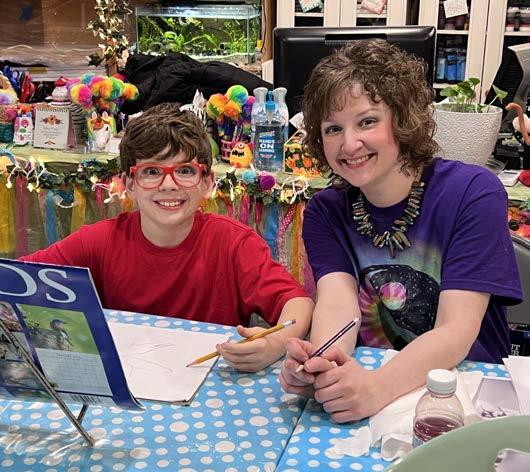
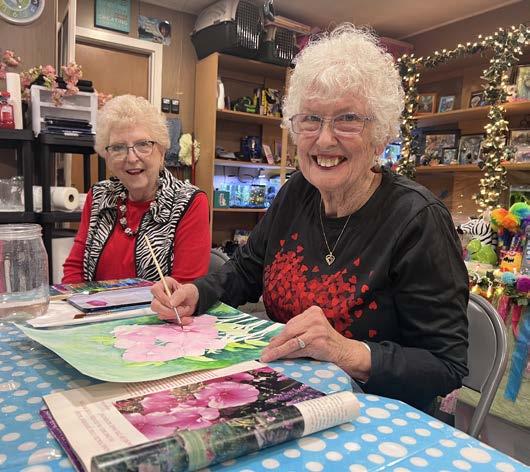
Some people move quickly through life, rushing from one obligation to the next. Others pause. They notice light on a leaf, the curve of a petal, the way a shadow falls across a face.
For Bartlesville art instructor Ashley Daniel, that attentiveness is spiritual.
“I’m the kind of person who pays attention to the things in life that many people in their busy day-to-day comings and goings pass by,” Daniel says. “God has always taught me to pay attention to the details because He is in every single one of them.”
That perspective shapes her studio, where art is more than technique. It is reflection, worship and restoration.
Daniel offers private, faith-based instruction in watercolor, acrylic, pastel, pencil and colored pencil. Students of all ages are welcome.
“I believe painting and being involved in fine arts is a wonderful opportunity for children, teens, elderly and all ages to have an outlet to engage in the creativity of the soul,” she says.
In a world saturated with screens, social media and constant noise, her studio is intentionally different. It is small. Personal. Quiet.
“There are so many challenges in life that all of us go through,” Daniel says. “With those challenges come trauma and painful hurts that we often do not showcase to others for fear of judgment.”
She sees art as a safe place to process those experiences.
“Providing art lessons in a more private setting that displays the love of Christ gives a peaceful and inviting atmosphere where students can unwind their minds and reflect,” she says. “It is a more beneficial way to meditate without being subject to the world of social media and electronics and video games.”
Each class begins with choice. Students select a subject that

by Maria Gus
inspires them, sometimes from Daniel’s collection of reference photographs and often from their own lives. A beloved pet. A favorite vacation spot. Flowers planted with family in the garden.
From there, Daniel works one on one with each student, helping them develop skill in their chosen medium while discovering their personal style.
“My studio is unique because I incorporate the Lord at the center of everything,” she says. “And I provide very small classes that give more opportunity for each student to have that one-onone time needed to truly develop their art skills.”
If there is one phrase she hears often, it is, “I’m not good at art.”
Her response is immediate. “We are all made as art by God, which means we all have a little touch of creativity to create something wonderful,” she says.
Daniel believes creativity is not reserved for a gifted few. Instead, it is part of being human.
“It doesn’t matter if you are 4 years old or over 100 years old,” she says. “There is always a beautiful artist inside us all because we all come from the same source of God’s love. We are His unique masterpieces.”
She describes herself as both “young at heart and an old soul.” She delights not only in teaching technique but in encouraging students who may need hope or simply someone to listen.
“Being an art teacher allows me the opportunity to let God love on people who are in need,” she says. “When my studio is full of smiling faces and people having fun and doing something creative with their heart, it brings me great fulfillment and joy.”
For Daniel, art is storytelling. It is communication. It is taking inspiration from the Creator and shaping it into something visible and beautiful.


Founded in 1998, Noblittpc has been a cornerstone of reliability and innovation in the tech service industry for over two decades; we have diligently served both individual homeowners and bustling businesses, always with a promise of exceptional quality. Recognizing the diverse needs of our clientele, we proudly offer house calls, extending our expertise right to your doorstep - be it a home or a corporate setting. And for those on the go? Our dedicated drop-off counter stands ready, ensuring swift and efficient break-fix repair services.


Green Country Pet Cremation Service offers private pet cremation with timely return of ashes in your choice of a decorative wooden urn with an engraved nameplate. If no return of ashes is requested, the ashes will be gently scattered on a beautiful pastoral/garden property. We are located in Bartlesville, Oklahoma and gratefully serve pet owners from a wide area surrounding Bartlesville, Dewey, and Northeast Oklahoma. For our fee schedule, please feel free to call us at any time.
by Joe Todd
Dora Aldene Eggleston Stark was born 1 February 1922 in Pleasanton, Kansas. The family moved to the Seminole Oil Field when she was four years old and she graduated from Varnum High School, south of Seminole in 1940. During the depression, her father lost his job and supported the family by cleaning oil tanks for the Carter Oil Company in Seminole during the oil boom. The streets were not paved in Seminole and she recalled the mud streets, shacks and tents the people lived in and the many fights downtown.
In those days, careers for women were secretaries, waitresses or nurses; therefore, after high school, she entered nurse’s training at St. John’s Hospital in Tulsa, September 1940. During her training, she remembered Sister Gratiana of all the nuns at St. John’s. Most of the student nurses signed up with the Red Cross during their training in case of a national emergency. She was in a patient’s room in the hospital when the radio announced the attack on Pearl Harbor.
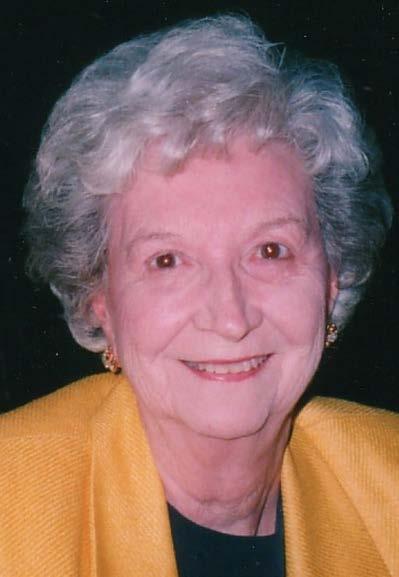

She graduated from nurse’s training in 1943, joined the Navy and was told she would be called to active duty soon. She joined the Navy because movies portraited Army Nurses working in unsatisfactory conditions. She was called to active duty in March 1944. sworn in at a lawyer’s office in Seminole and commissioned as an Ensign. She was sent to Mare Island, California by train. During the three-day trip, she slept in the chair because there were no berths on the train. She arrived at Mare Island and went to work the next day in the hospital, wearing her civilian nurse’s uniform, because she hadn’t been assigned Navy uniforms yet.
The hospital at Mare Island was an amputee hospital for the Navy and Marines and her first patients had been at Guadalcanal. She also worked in the Contagion Ward and even had some patients that were veterans from World War One. The amputees did not want to go home and did not want their families to come to the hospital to see them without arms and legs. She said the amputees razed each other unmercifully about not having arms or legs; however, it was coping tactic.
June of 1946 and married Christopher Stark, a Lieutenant in the Navy whom she had met at Mare Island. After he left the Navy, they moved to Bartlesville where
As the war wound down, the hospital began getting Americans who had been released from POW Camps in the Pacific. She recalled one man that was six-feet tall and weighed 88 pounds. She said the amputees were coping, but the former POWs were bitter about their treatment by the Japanese. She recalled when the atomic bombs were dropped on Japan, she thought the Japanese were getting what they deserved because of what they had done to the Prisoners of War. She didn’t leave the base on V-J Day, but there was a large celebration.
After the war, she was sent to a Navy hospital in Banning, California; then, she was sent to the hospital at Long Beach. She was discharged in
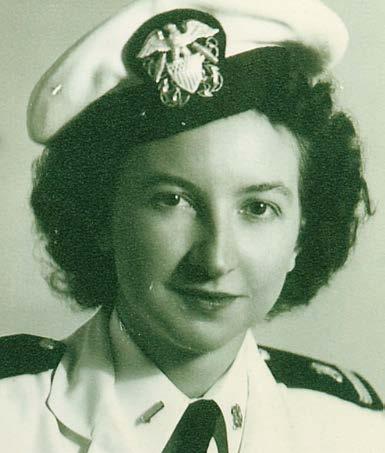
Christopher took a job with Phillips Petroleum as a Chemical Engineer and she worked at Jane Phillips Hospital, Dr. Word’s office, and as an Occupational Health Nurse and Human Resources Manager at National Zinc.
Mr. Christopher Paul Stark died December 1992 and rests in Memorial Park Cemetery, Bartlesville. Mrs. Dora Aldene Stark passed away 17 September 2008; and was honorably laid to rest in Arlington National Cemetery.

by Miriam Walker
Welcome to March! At the writing of this update, I hear what can best be described as an early springtime rain hitting my window. I am thankful that it’s not snow or ice, and find solace in the fact that spring is so close at hand.
Remembering our past and what we went through makes it easy to spot in others. Years ago while checking in the unhoused for dinner during a Saturday night outreach, the young man’s hand shook. I took the pen from the hand that was also holding a cigarette and offered to do the writing for him. This immediately sparked the conversation. He tells me he’s sorry, and that he’s going through alcohol withdrawals.
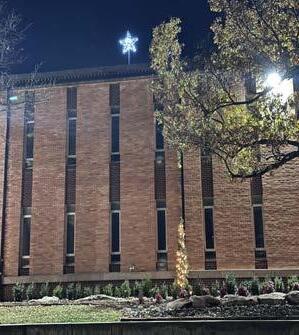
“No worries, I got you friend. What’s your name?”
He thanked me and continued to talk. When the line became too long and the looks from the hungry people behind him became too daunting, he put the cigarette out against the bottom of his shoe, waved it back and forth to cool it off, and dropped it into the front pocket of his faded Tom Petty t-shirt. Before he walked inside to eat, he made eye contact and told me he needed help finding his family.
“My whole family is lost. I don’t even know if they’re still in Oklahoma.”
“Oh wow, okay,” I replied. “When did you last see them?”
He continued. “It doesn’t really matter. I think they just stopped looking for me.” And he walked inside to eat his dinner.
A person can tell you a lot by speaking very few words at all, and those seven words were among the saddest I think I’ve ever heard. A family always knows when one of their own is missing, and I know they never really stop looking.
With a camera you can take a picture of something you see. The images and the faces we carry in our mind however, have a way of staying with us long after the cigarette smoke fades.
Sadly, many of our unhoused neighbors in Bartlesville continue to look through a prism of loss because for so long, loss is all they’ve known. This never happens immediately but over months, years, and even decades of time. To lose a family is heartbreaking to be certain, but I would imagine thinking that your family stopped looking for you is a different kind of anguish altogether.
At B the Light, some of our residents have lived nearly six
decades or more, while others have only been alive for a little over twenty years. In these years there have been significant losses, but we continue to show them, over time, that life can begin again. We are not a replacement for what was lost, but a promise of what can be gained if we work together.
When our unhoused neighbors enroll into the program at B the Light, they begin looking through a prism of hope. We show them that there’s something else!
For one that used to live on the streets, boredom alone was measuring time. Although our residents do have free time, their weekly schedule remains busy with “Building Bridges” class every Monday, and Life Classes with Mario two nights a week.
We’ve continued our sewing classes with Willie Mae, and have piano lessons on Thursdays.
We now have 11 men and 5 women currently in the program. We have seen seven individuals acquire employment, with jobs ranging from full to part-time positions, as well as day labor jobs. We’re always looking for ways to connect our residents with employment opportunities here in our own city.
Our participants are also making significant strides in their personal health and stability. Several are receiving much-needed medical attention, including procedures like hysterectomies and improved management of chronic conditions such as diabetes. Many are also adopting healthier lifestyles through better nutrition and daily exercise.
On the administrative and educational front, four individuals have opened bank accounts. They’ve actively begun saving money to reduce their reliance on government assistance. We also have residents researching further schooling, applying for more jobs, and some have successfully passed their driver’s license tests.
We remain incredibly thankful to all the volunteers who continue to support us. We’re still operating from 10:00 AM to 2:00 PM to assist non-residents with food, showers, clothing, and other essential resources.
Years later that young man found a family member, a brother, but not in the place where he thought he’d be. He moved into a sober living home and immediately found a connection with another young man in that program. We usually find what we’re looking for. See you next month.




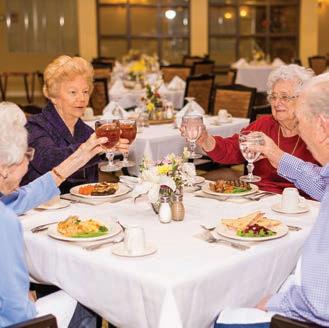
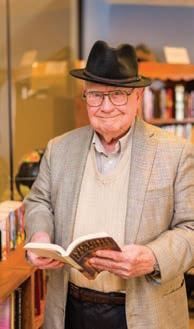
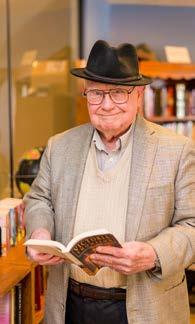
by Tonya Foreman
Kenneth Franklin Foreman Jr. was born on May 19, 1961, in Bartlesville, Oklahoma, to Kenneth Franklin Foreman Sr. and Wanda Cora Foreman. Raised in Bartlesville and educated in the Bartlesville Public School system, he graduated proudly from Sooner High School in 1979. He later earned a Bachelor of Science degree in Construction from Oklahoma State University Institute of Technology—a path that fit him perfectly. He wasn’t just learning a trade; he was preparing for a lifetime of building. And build he did.
Kenny loved the land and the kind of work that shapes a person’s character. Early in life, he worked construction for GB Williams and cowboyed for G.C. Richardson on an award-winning Angus ranch outside Bartlesville. He respected early mornings, honest sweat, dirt on his boots, and integrity earned the hard way. Those values never left him.
He later opened Green Country Gun Shop, which became far more than a business. It was part gathering place, part storytelling arena, part comedy club, and part community headquarters. Kenny didn’t just run the shop—he ran the room. People didn’t come in simply to buy something; they came for the conversation, the laughter, and the unpredictable energy that always left them feeling welcomed and alive.
As a master carpenter for Bartlesville Public Schools, Kenny helped build libraries and learning spaces that still stand today— solid, dependable, and lasting, just like him. In 1997, he stepped into what became a true calling when he began teaching in the Property Maintenance Program at Tri County Technology Center. He didn’t just teach skills; he built confidence and character. He believed deeply in leaving people better than he found them, and countless students carry that impact forward today.
Around Christmas each year, Kenny was affectionately known as the “Poinsettia Man.” A master gardener, he filled greenhouses with vibrant red blooms that brightened homes across the community. He quietly loved knowing something he grew brought joy to others.
In 2000, Kenny founded Foreman Construction Management & Consulting, building custom homes and commercial projects throughout Bartlesville with excellence and integrity. His work was known not only for quality, but for trust. A handshake mattered. His word mattered. Loyalty and integrity were nonnegotiable.
In 2017, he formed the Foreman Manhattan Construction

Team in partnership with Larry Rooney. Together, they completed significant tribal projects, including the Cherokee Nation Entertainment Casino in Tahlequah, earning the 2019 “Build Oklahoma” Award in the $20–50 million commercial category. The team also partnered on major developments with the Tonkawa Tribe, strengthening tribal sovereignty and creating lasting economic impact.
One of the most monumental achievements of Kenny’s career was the construction of the new Cherokee Nation Hospital in Tahlequah—a state-of-theart, 469,000-square-foot medical facility designed to serve Cherokee citizens for generations. For Kenny, this was sacred work. As a proud Cherokee man, helping build a place where lives would be saved, children born, and families comforted was not just business—it was service, purpose, and legacy.
Kenny was fiercely loyal to his team, whom he considered family. He protected them, mentored them, stood beside them, and believed leadership meant responsibility and care. But above all else, what mattered most to Kenny was his family at home.
He was a devoted husband to his beloved wife, Tonya. Their marriage was the center of his life—built on faith in God, deep loyalty, shared dreams, perseverance, and joy. Together they built a home rooted in Christ and a legacy anchored in love. Kenny was an intensely proud father who poured into his children with discipline, encouragement, and unwavering belief. He saw their potential long before they saw it themselves.
Becoming “Pop-Pop” only expanded his heart. He cherished his grandchildren and delighted in watching the legacy continue through them.
Kenny loved hunting—not as recreation, but as heritage. It was where lessons were taught, character forged, and bonds strengthened. He was also a passionate coach, on the field and in life, pushing hard because he believed deeply in the people he led.
Above all, Kenny believed in second chances. His faith in Jesus Christ was steady, real, and personal. He believed in redemption, mercy, and transformation. If he could leave one message behind, it would be this: give your life to Christ. Come as you are.
Kenny lived with confidence in that promise. And today, while he is deeply missed, his legacy stands strong—in the buildings he built, the people he shaped, and the faith he lived.


In today’s healthcare landscape, patients are searching for providers who not only understand medicine but understand them. Gina Anderson, APRN-C, and Ziva Cooper, Family Nurse Practitioner, represent a partnership rooted in experience, compassion, and a shared commitment to whole-person care — particularly in primary care, metabolic health, and obesity management.
With more than 22 years of clinical experience, Gina Anderson has built her career on preventative care, chronic disease management, and comprehensive women’s health. She earned her Master of Nursing with a Family Practice focus from the University of Missouri–Kansas City and has pursued advanced education in diabetes care, obesity management, and women’s health. Currently completing her certification in Obesity Management through the Obesity Medicine Association, Anderson continues expanding her expertise to better serve patients navigating complex metabolic conditions.
Her approach is deeply patient-centered. Anderson emphasizes early detection, individualized care plans, and evidence-based treatment strategies. Whether managing diabetes, addressing cardiovascular risk factors, or supporting hormonal health across a woman’s lifespan, she prioritizes listening. Patients consistently note her ability to create space for honest conversation, ensuring they feel heard, understood, and empowered in their healthcare decisions.
Ziva Cooper shares that same philosophy of empowerment — shaped not only by her education but also by lived experience. A Bartlesville native and graduate of Bartlesville High School, Cooper began her nursing journey at Tri County Tech before earning her Bachelor of Science in Nursing from Oklahoma Wesleyan University and her Doctorate from The University of Tulsa. Practicing in her hometown is more than a career choice; it is a calling.
Cooper has a special interest in obesity care, prevention, and lifestyle medicine. Having personally struggled with obesity for much of her life, she brings firsthand understanding to her patients’ journeys. She recognizes the emotional, physical, and psychological complexities surrounding weight. That experience shapes her practice with empathy, patience, and a judgment-free approach.
Both providers strongly align in their belief that obesity is not a personal failure but a chronic, relapsing, multifactorial disease requiring long-term medical management. Recognizing obesity as a medical condition — much like hypertension or diabetes — is central to reducing stigma and creating sustainable treatment strategies.
Anderson incorporates structured weight management programs, metabolic evaluations, behavioral counseling, and pharmacologic therapies when appropriate. She collaborates with Healthy Lifestyles at Ascension to provide nutritional support and sustainable lifestyle strategies and works alongside the Ascension Bariatrics program to ensure patients understand the full spectrum of treatment options available. Her focus remains on sustainable change rather than quick fixes, helping patients build habits that last.
Similarly, Cooper prioritizes a supportive, respectful environment where patients feel safe discussing sensitive concerns. She believes long-term relationships are foundational to successful outcomes. In each visit, she equips patients with education and practical tools that make health goals achievable and realistic. Her Christian faith guides her practice, shaping the compassion and integrity she brings into every encounter. She views caring for patients as an opportunity to serve others with dignity and hope.
Diabetes management is another shared priority. Anderson develops individualized treatment plans that integrate medication optimization, nutritional counseling, and close follow-up to improve glycemic control and prevent longterm complications. Cooper reinforces the critical role of lifestyle medicine, helping patients understand how nutrition, movement, sleep, and stress directly impact metabolic health. Together, their approaches complement one another, blending clinical expertise with practical guidance.
Women’s health remains central to Anderson’s practice. She provides comprehensive preventive screenings, hormone evaluations, and cardiovascular risk assessments, with particular attention to metabolic disorders and hormonal changes. Both providers understand that women’s health is deeply interconnected with overall metabolic wellness and seek to address root causes rather than simply manage symptoms.
Community connection further strengthens their shared mission. Anderson, who grew up in the Caney area, understands the unique resources and challenges of rural communities. Cooper’s deep roots in Bartlesville give her a strong sense of responsibility to the families she serves. Their familiarity with the region allows them to offer realistic, locally informed solutions.
For patients seeking not just treatment, but true partnership, their shared commitment makes all the difference.
by Jay Hastings
The Alamo is an historic compound founded in the 18th century by Catholic missionaries in what is now San Antonio, Texas. Originally named the Misión San Antonio de Valero, it was one of the early Spanish missions of the area, built with the intent to convert indigenous people and tribes to Christianity. The mission was secularized in 1793, and then abandoned. Ten years later, it became a fortress housing the Second Flying Company of San Carlos de Parras military unit. It is believed they named the mission “Alamo”, which in Spanish means “cottonwood tree” as a nod to the trees which were common around the site. During its occupation, a military hospital was established and the mission’s structure was expanded to facilitate its function as a military fortress.
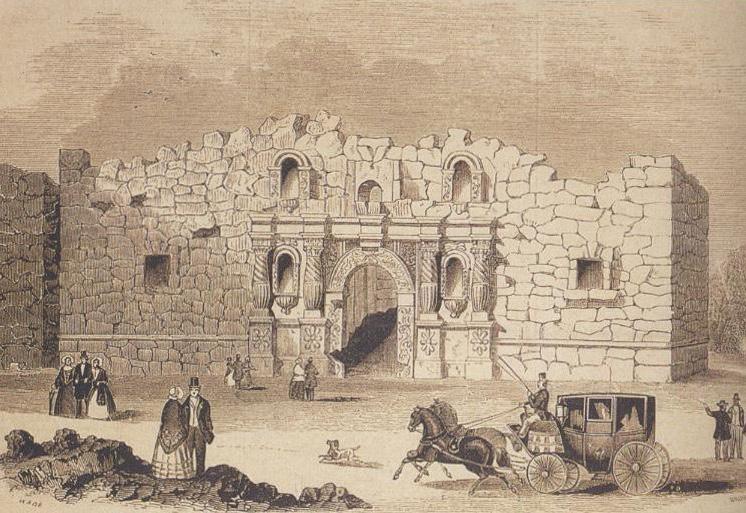
In 1829, Mexico outlawed slavery, which many AngloAmerican settlers chose to ignore. Tensions continued to rise after passage of the law of April 6, 1830, prohibiting further American immigration to the Republic of Texas. The Texas revolution began a handful of years later in October, 1835. Two months later, Mexican General Martín Perfecto de Cos was forced to surrender the Alamo to the Texian Army.
Colonel James C. Neill assumed command of the 100 soldiers who remained at the Alamo. Neill asked that an additional 200 men be sent to fortify the base, and expressed fear his garrison could be starved out of the Alamo. Instead, General Sam Houston ordered Colonel James Bowie to take 40 men to the Alamo to help Neill move artillery and destroy the fortress. There were not enough oxen to complete the move, and most of the men believed the Alamo was of strategic importance in protecting settlements to its east. On January 26, 1836, the Texian soldiers stationed there voted in a resolution holding the Alamo. Two weeks later, Neill went on furlough to pursue additional
reinforcements and supplies while William Travis and James Bowie agreed to share command of the Alamo.
The Battle of the Alamo was a pivotal thirteen-day siege from February 23 to March 6, 1836. On that final date, the Texian installation on site was wiped out as the Mexican army stormed the Alamo. It was during that battle two American folk heroes, James Bowie and Davy Crockett, were killed. Crockett, a supporter of Texas Independence, had arrived from his home in Tennessee only a few weeks earlier, bringing with him a group of volunteer soldiers.
The Texian army regrouped. After its defeat at the Battle of San Jacinto and the capture of Santa Anna, the Mexican army agreed to leave Texas, effectively ending the Texas Revolution. As the Mexican Army retreated several months later, it tore down many of the Alamo walls and burned some of its buildings. For the next five years, the Alamo was periodically used to garrison soldiers, both Texian and Mexican, but was ultimately abandoned.
Texas gained statehood within the United States in late December, 1845. In 1849, the U.S. Army began renting the facility for use as a quartermaster’s depot, before again abandoning the mission in 1876, after nearby Fort Sam Houston was established.
In 1891, the Daughters of the Republic of Texas, formed and initiated efforts to preserve the Alamo. In 1905, Adina Emilia De Zavala and Clara Driscoll successfully convinced the Texas state legislature to purchase the remaining buildings and name the organization as custodians. In early 2015, Texas Land Commissioner George P. Bush, grandson of George H. W. and Barbara Bush, officially transferred control of the Alamo to the Texas General Land Office.
Oh, one final note. It turns out there is no basement in the Alamo.